17 Choppy Baby Bang Haircuts for an Edgy Soft-Fringe Look
Choppy baby bangs bring instant personality to a haircut, pairing a deliberately short fringe with textured edges, visible separation, and plenty of movement.
Unlike a perfectly blunt micro fringe, choppy baby bangs rely on slight variations in length and a broken-up finish. They can look graphic with sleek hair, relaxed with waves, playful with curls, or deliberately edgy with shags, pixies, and wolf cuts. The short length keeps the forehead open, while the choppy edge prevents the fringe from reading as one solid horizontal line.
Before choosing a version, consider your natural texture, hairline, density, and willingness to maintain a short fringe. Baby bangs change noticeably as they grow, so the best cut is one that also works with your usual styling routine and surrounding haircut.
Quick List
- Classic Choppy Baby Bangs Hairstyle
- Choppy Baby Bangs With Long Layers Hairstyle
- Choppy Baby Bangs With Textured Bob Hairstyle
- Choppy Baby Bangs With Pixie Cut Hairstyle
- Choppy Baby Bangs With Shag Haircut Hairstyle
- Choppy Baby Bangs With Blunt Bob Hairstyle
- Choppy Baby Bangs With Wolf Cut Hairstyle
- Choppy Baby Bangs With Long Straight Hair Hairstyle
- Choppy Baby Bangs With Soft Waves Hairstyle
- Choppy Baby Bangs With Curly Hair Hairstyle
- Choppy Baby Bangs With Shoulder Length Hair Hairstyle
- Choppy Baby Bangs With French Bob Hairstyle
- Choppy Baby Bangs With Bixie Cut Hairstyle
- Choppy Baby Bangs With Thick Hair Hairstyle
- Choppy Baby Bangs With Fine Hair Hairstyle
- Choppy Baby Bangs With Brunette Layers Hairstyle
- Choppy Baby Bangs With Textured Lob Hairstyle
1. Classic Choppy Baby Bangs Hairstyle
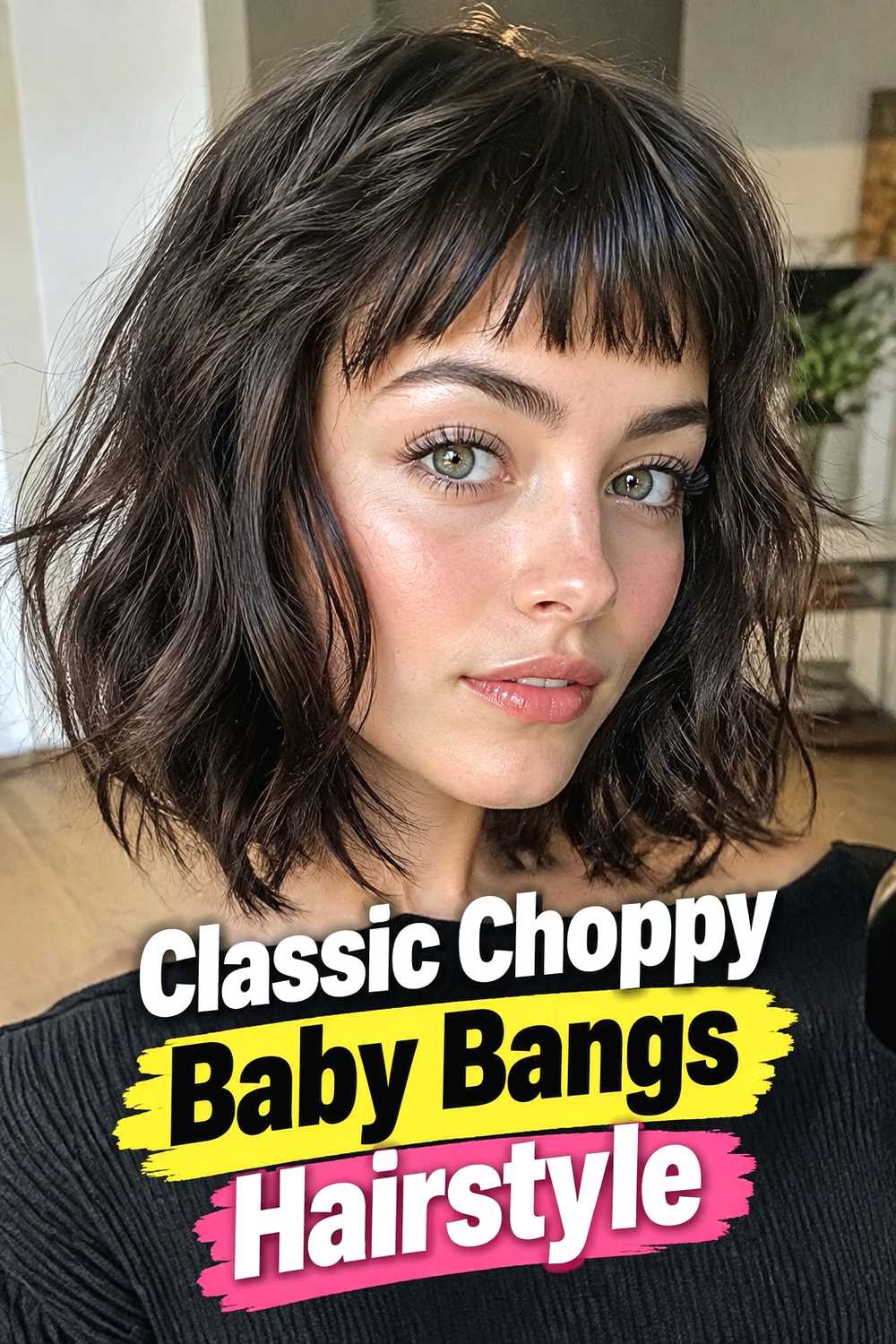
Classic choppy baby bangs sit clearly above the eyebrows with a deliberately broken-up edge rather than a perfectly straight line. Small variations in length give the fringe movement and keep it from feeling overly severe, while enough density is preserved to make the shape look intentional. This version can work with several haircut lengths because the fringe itself becomes the focal point. Straight styling highlights each textured section, while a slight natural bend softens the overall effect. The key is controlled irregularity: the ends should look piecey and light, not randomly hacked or excessively thinned. Keeping the rest of the hair relatively simple lets the short fringe stand out.
Styling Notes
Dry the fringe forward, then use your fingers to separate selected pieces rather than brushing everything into a uniform line.
Best For
Choose this version if you want a noticeable short fringe that feels textured and modern instead of sharply blunt.
2. Choppy Baby Bangs With Long Layers Hairstyle
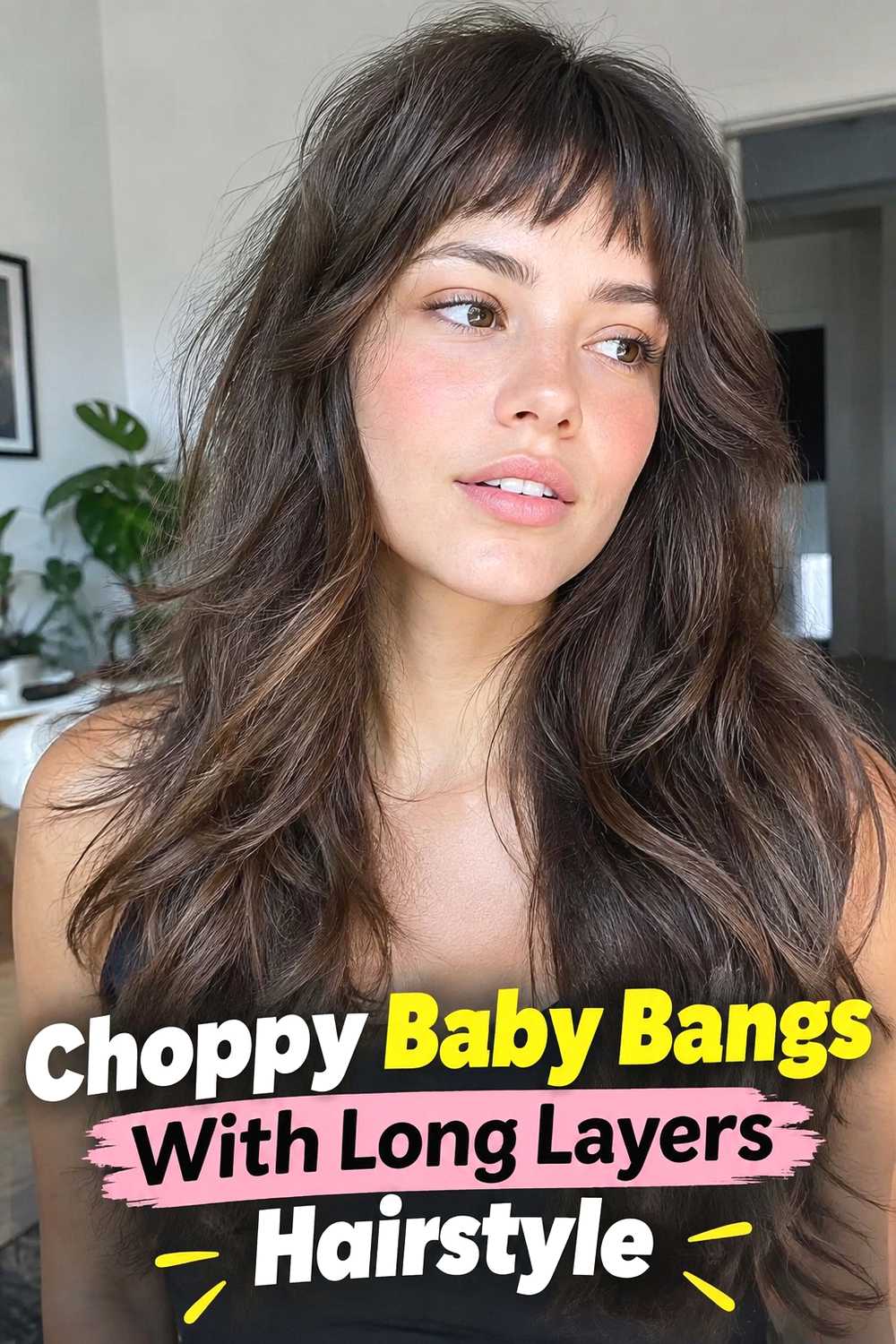
Long layers create an interesting contrast with short, choppy baby bangs by combining a compact fringe with flowing movement through the lengths. The bangs stay airy and irregular above the brows, while layers beginning farther down add softness around the shoulders and back. This balance can make the short fringe feel more wearable because the overall hairstyle still has plenty of length and movement. Face-framing pieces can remain subtle so they do not compete with the bangs. A smooth blowout emphasizes the difference in length, while loose waves create a softer finish. Preserve enough density through the ends so the long haircut does not look overly thinned beside the cropped fringe.
Why It Works
The long silhouette balances the visual impact of the short bangs, keeping the haircut dramatic at the front but soft through the lengths.
Pro Tip
Keep the fringe texture more detailed than the long layers so each part of the haircut has a clear role.
3. Choppy Baby Bangs With Textured Bob Hairstyle
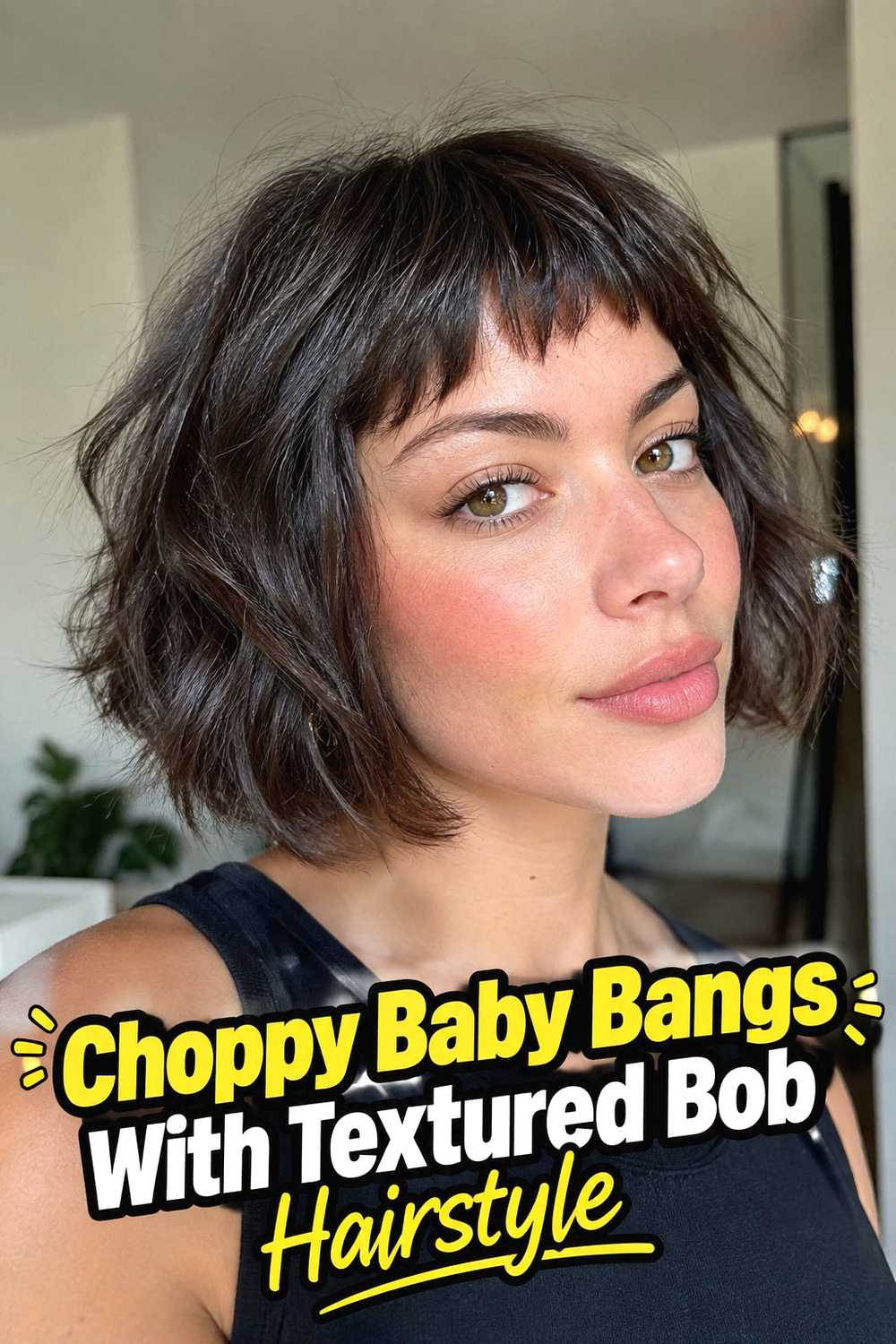
A textured bob pairs naturally with choppy baby bangs because both rely on visible movement and imperfect edges. The fringe sits short across the forehead with slight length variation, while the bob falls around the chin or jaw with soft bends and subtle layering. Rather than making every section identical, the haircut works best when a few pieces turn inward and others flick outward. This creates a relaxed, modern shape that feels less rigid than a blunt bob. The lower edge should still retain enough structure to read clearly as a bob. Lightweight styling products can define texture without making either the bangs or ends look sticky or overly separated.
Hair Type & Length
Straight, slightly wavy, and naturally textured hair can all suit this chin-to-jaw-length shape when the bob retains enough density through the perimeter.
Styling Notes
Use small bends through selected sections rather than curling the entire bob uniformly, which helps preserve the choppy character.
4. Choppy Baby Bangs With Pixie Cut Hairstyle
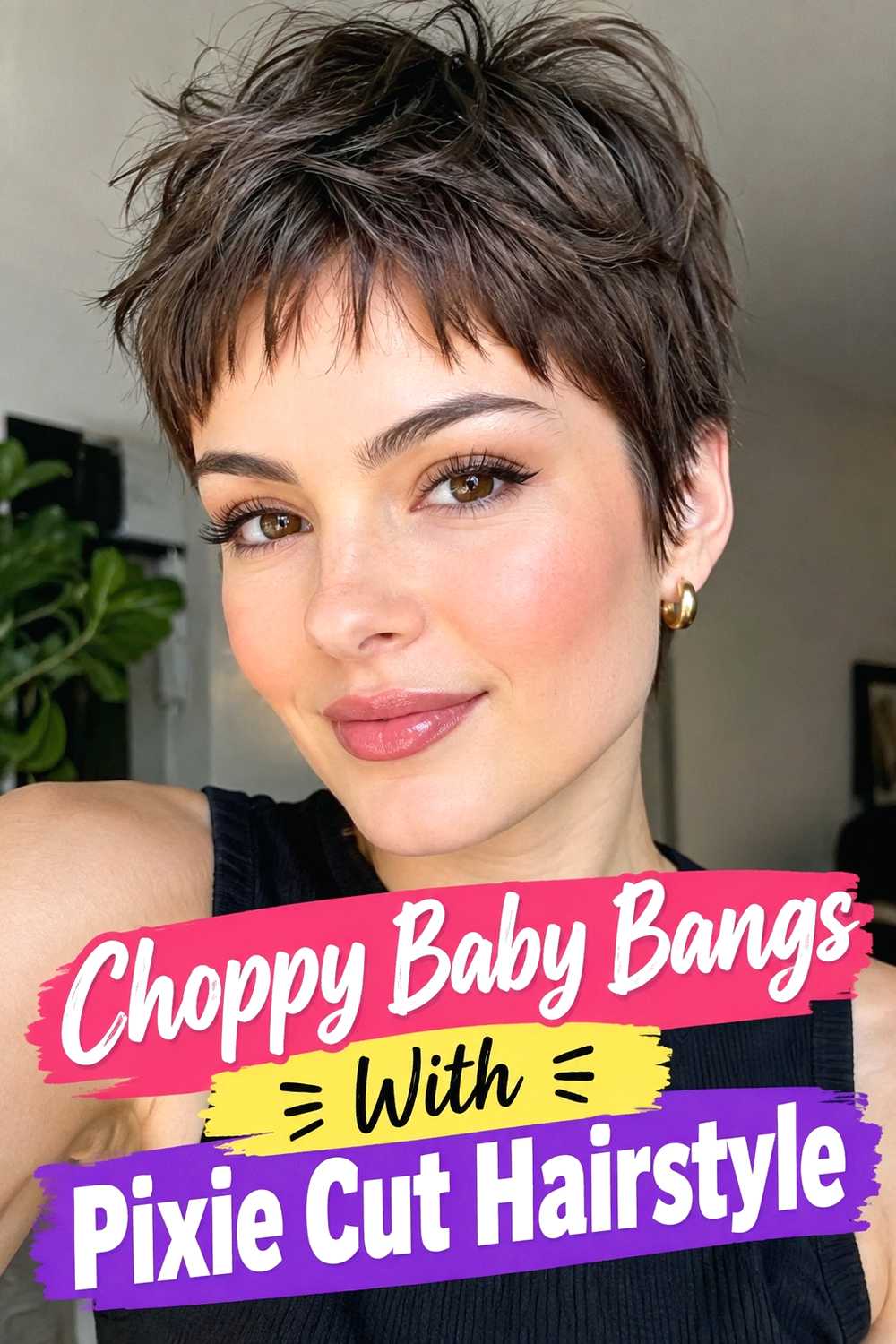
A pixie cut makes choppy baby bangs feel especially intentional because the short fringe connects directly with cropped layers around the crown and sides. The bangs can be irregular and lightly piecey, while the top retains enough length for movement and styling flexibility. Shorter sides keep the silhouette neat, allowing texture through the fringe to become the main detail. This version can be worn smooth for a sharper finish or tousled for a softer, more playful look. Because every small change in length is visible on a pixie, careful shaping matters. The fringe should look deliberately textured rather than uneven from one side to the other.
Why It Works
The compact haircut repeats the short proportions of the fringe, creating a cohesive shape with strong texture and minimal excess weight.
Wear & Maintenance
Pixies and baby bangs both show growth quickly, so regular reshaping may be useful if you want to preserve the original silhouette.
5. Choppy Baby Bangs With Shag Haircut Hairstyle
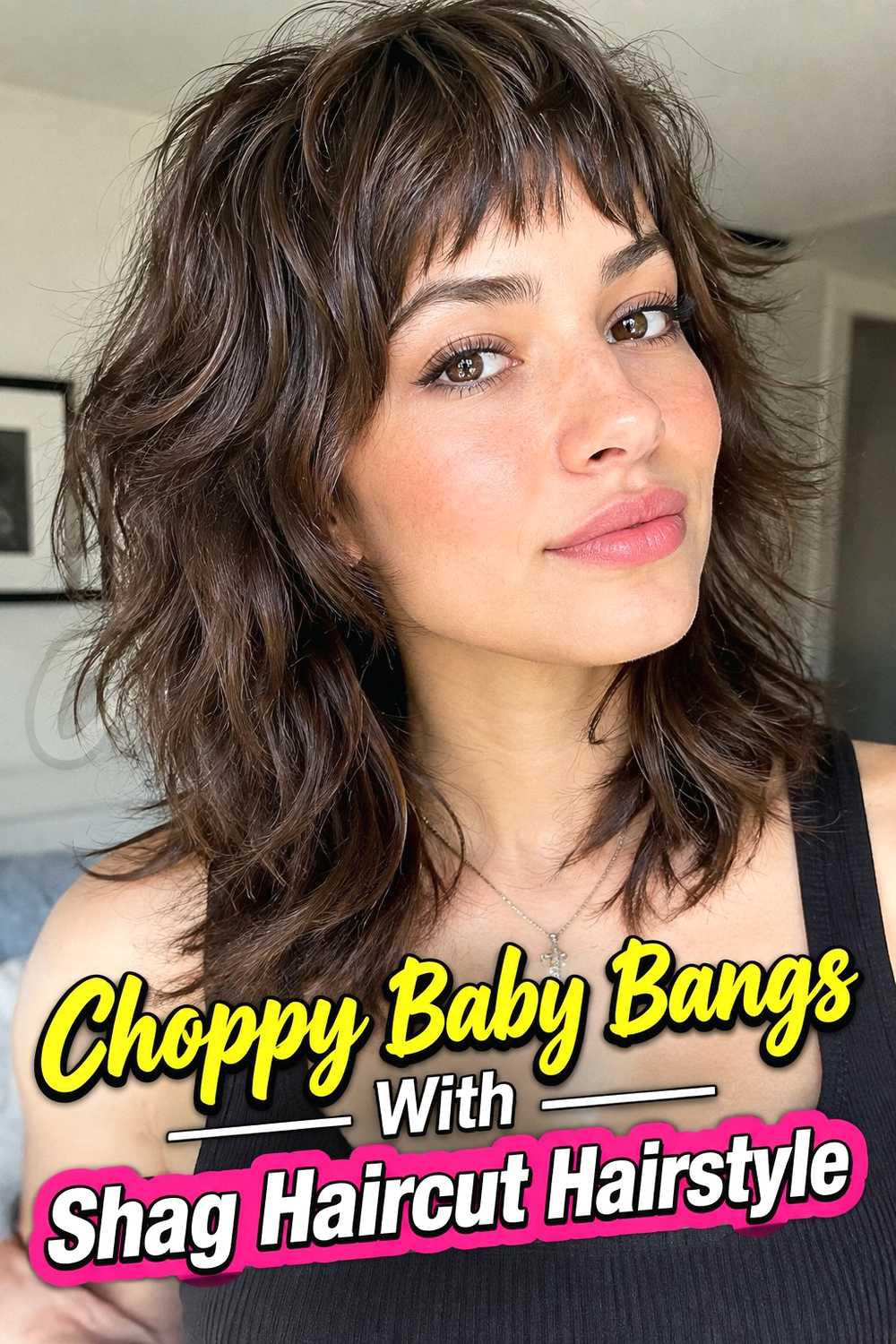
A shag haircut gives choppy baby bangs a natural home because both features celebrate separation, movement, and an intentionally undone finish. The fringe can be short, irregular, and lightly feathered, while layers around the crown create lift before flowing into longer pieces through the sides and back. Waves and natural bends make the texture especially visible, though straight hair can also create the effect with light styling. The strongest version keeps enough density at the ends to prevent the haircut from looking overly wispy. Rather than trying to make every layer symmetrical, allow subtle differences in movement to reinforce the relaxed, lived-in character of the shag.
Best For
This style works well if you prefer textured, casual hair over a highly polished or geometric finish.
Styling Notes
Use lightweight texture and encourage natural bends instead of smoothing every layer flat, which can hide the shag’s movement.
6. Choppy Baby Bangs With Blunt Bob Hairstyle
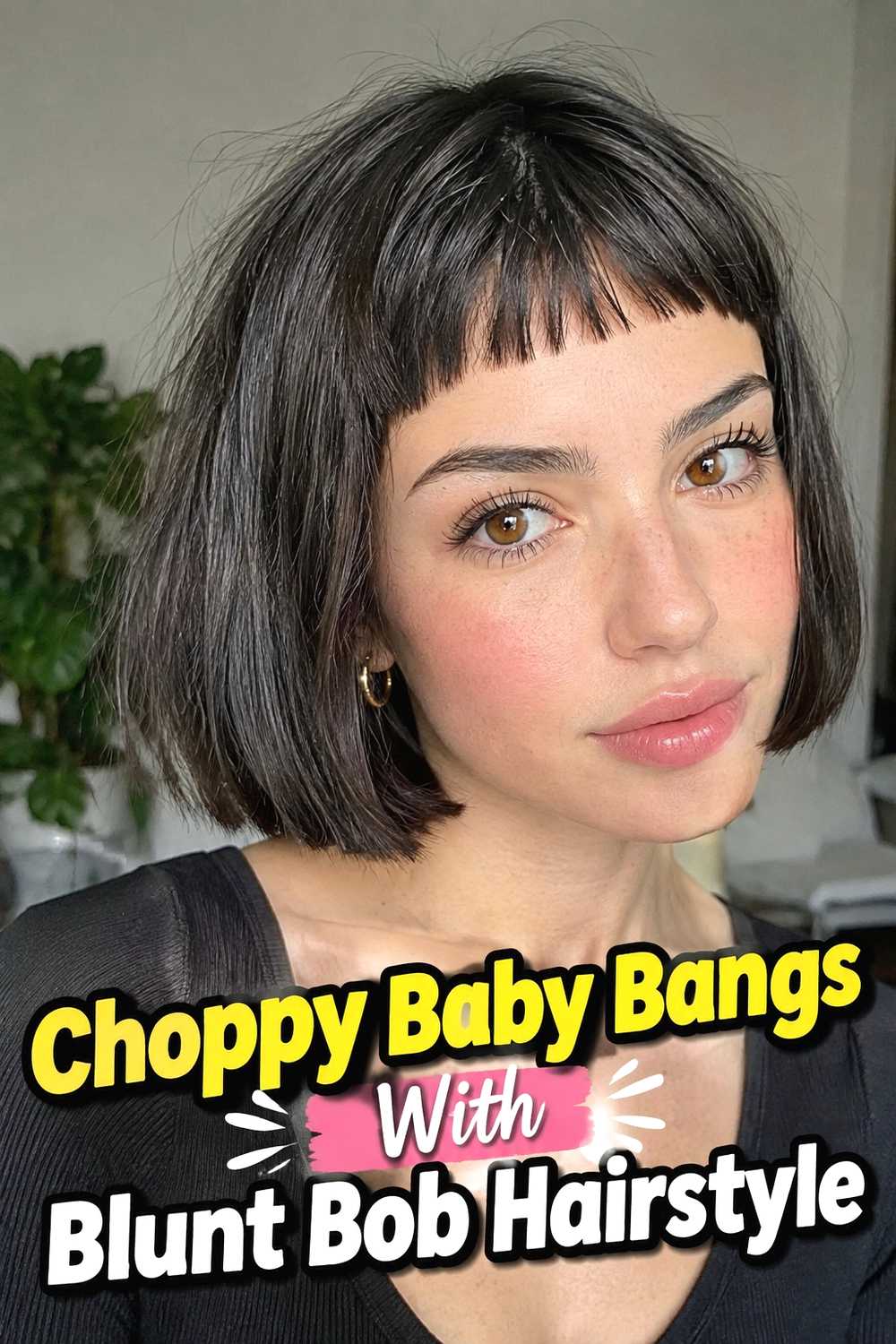
Pairing choppy baby bangs with a blunt bob creates deliberate contrast between a broken-up fringe and a clean, solid perimeter. The bob can fall around the chin or slightly below, with minimal layering through the lower edge so the shape remains strong. Above the brows, the fringe introduces small variations in length and visible separation, preventing the overall haircut from feeling too severe. Sleek styling emphasizes the difference between the precise bob and irregular bangs, while a slight bend through the ends makes the look softer. Keeping the baby fringe relatively lightweight also prevents the short front section from competing too heavily with the strong line of the bob.
Why It Works
The opposing textures create visual balance: a structured lower edge paired with a lighter, more spontaneous fringe.
Pro Tip
Keep the bob perimeter clean and let the fringe provide most of the choppiness so the haircut does not lose its defined silhouette.
7. Choppy Baby Bangs With Wolf Cut Hairstyle
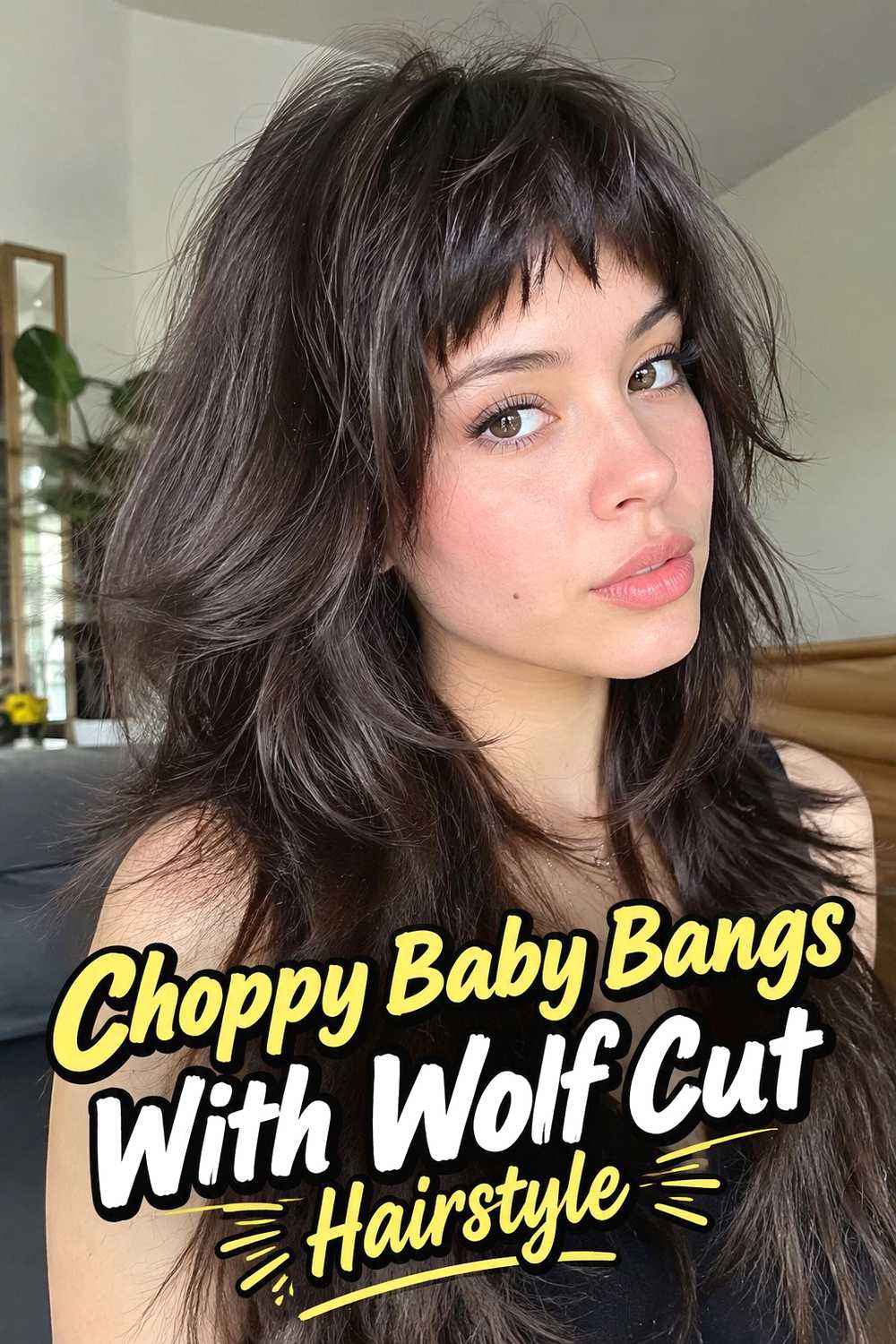
A wolf cut amplifies the edgy side of choppy baby bangs with shorter crown layers, textured sides, and longer movement through the back. The baby fringe can stay uneven and airy, visually connecting with the broken-up layers throughout the haircut. This works particularly well on hair with natural wave or bend because the texture reinforces the layered shape without needing perfect styling. The crown should have movement rather than extreme height, and the lower lengths need enough density to avoid looking stringy. Because both the fringe and haircut contain strong texture, keeping the finish touchable helps the overall style remain wearable instead of overly theatrical.
Hair Type & Length
Medium to long hair with natural texture can display the wolf-cut layering clearly, though straighter hair can achieve similar separation with styling.
Wear & Maintenance
Expect the short fringe and crown layers to change noticeably as they grow, while the longer back can often remain softer between trims.
8. Choppy Baby Bangs With Long Straight Hair Hairstyle
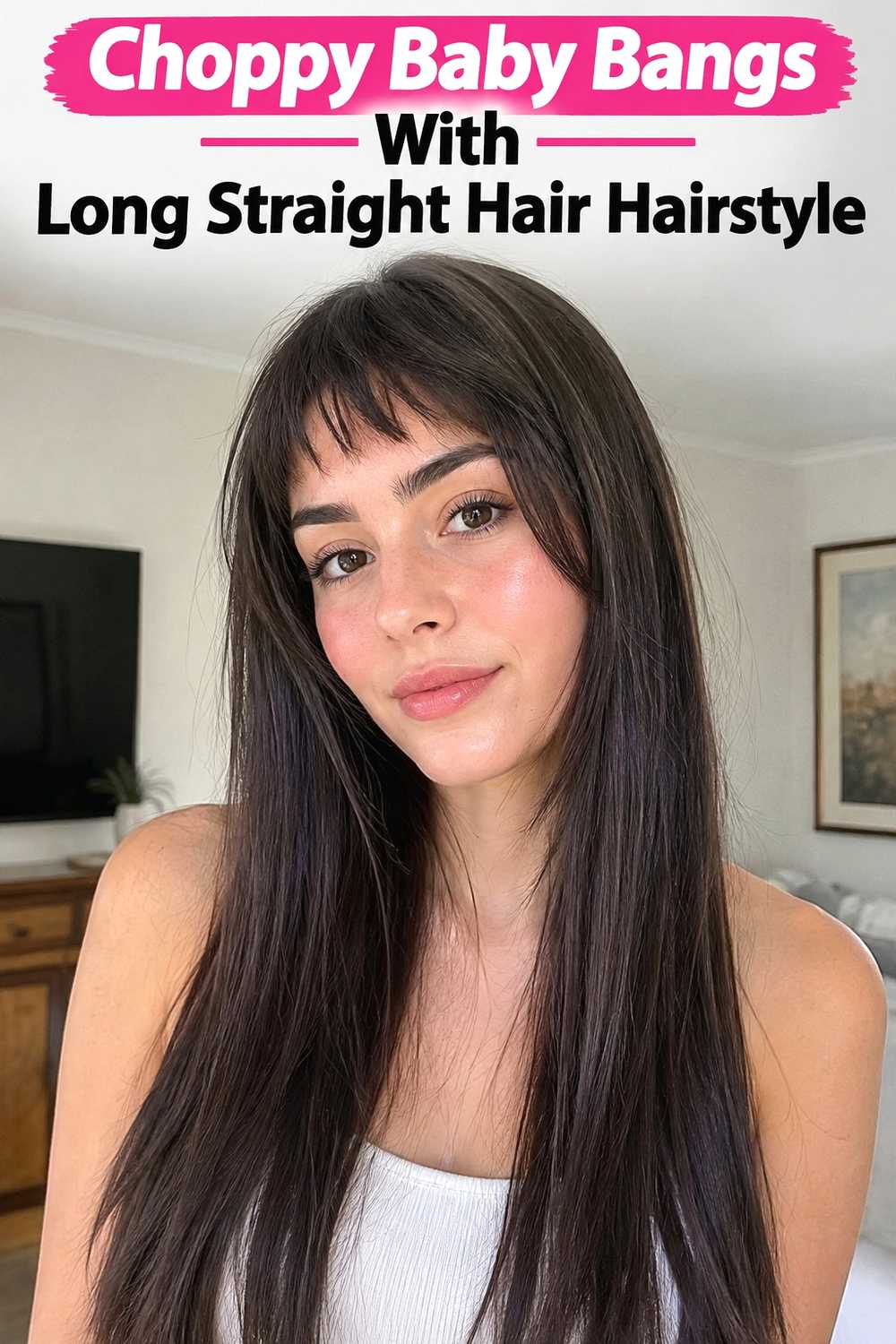
Long straight hair gives choppy baby bangs a striking graphic contrast. The lengths fall in a smooth, controlled line while the fringe sits short and irregular across the forehead, making every textured edge easy to see. Keeping the hair mostly one length or using only subtle long layers preserves the dramatic difference between cropped bangs and flowing lengths. The fringe should retain light separation rather than becoming a dense block, especially when the rest of the hair is sleek. A healthy-looking shine through the lengths adds polish, but the style should still show individual strands and natural movement. This combination feels modern without requiring complicated shaping throughout the entire haircut.
Styling Notes
Smooth the long lengths separately from the fringe, using only minimal product around the forehead so the bangs remain flexible.
Best For
Choose this style if you enjoy clean long hair but want one distinctive detail that changes the entire look.
9. Choppy Baby Bangs With Soft Waves Hairstyle
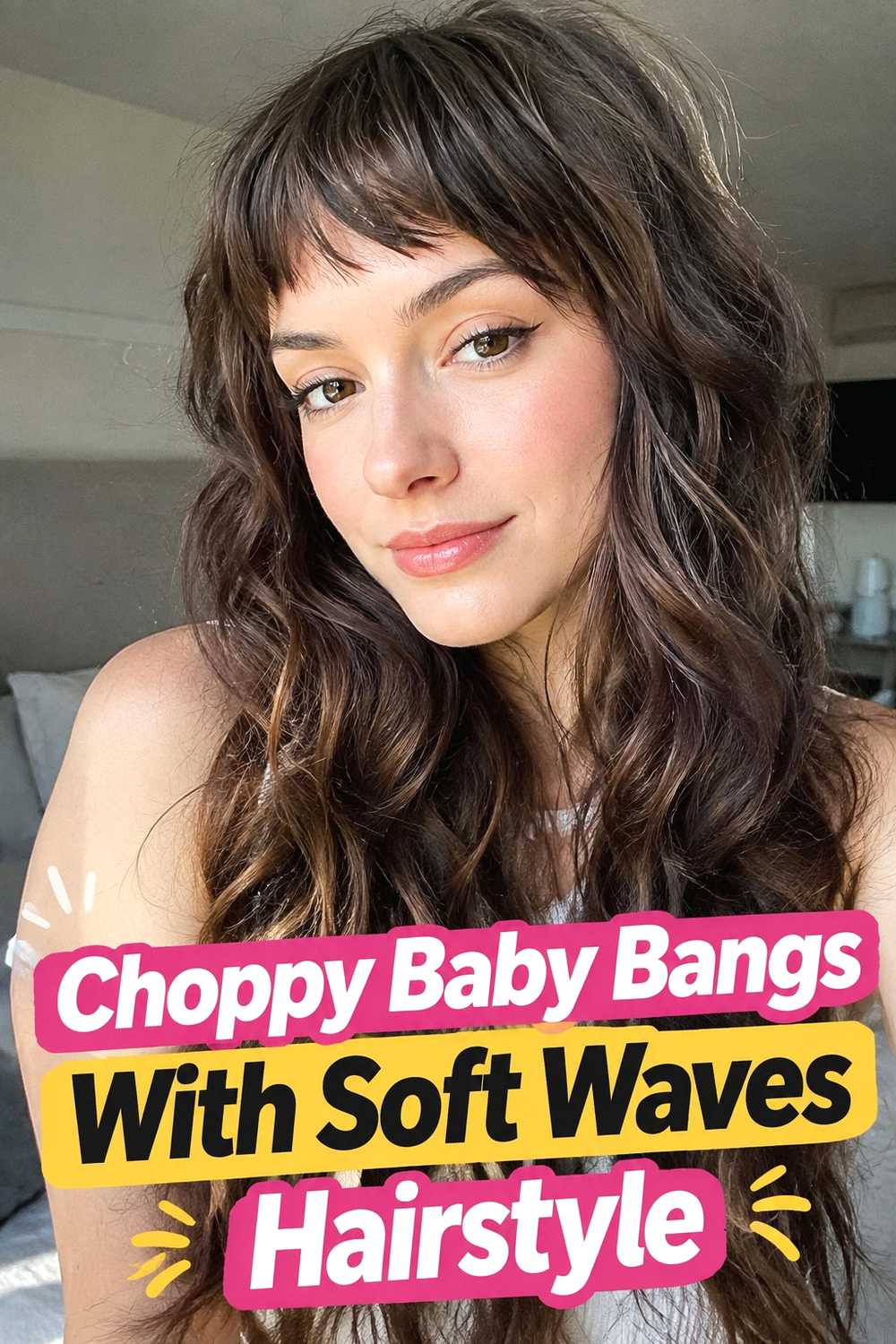
Soft waves reduce the graphic intensity of baby bangs by adding gentle movement throughout the rest of the hairstyle. The fringe stays short and choppy, with small gaps and uneven tips that keep the forehead visible. Below the face, relaxed waves create a softer rhythm that balances the cropped front. This pairing works particularly well on medium or long hair, where there is enough length for broad bends to develop naturally. Keep the waves irregular rather than perfectly matched, and avoid curling the baby bangs strongly. A slight natural bend is usually enough. The finished look should feel effortless, with the fringe providing definition and the waves supplying softness.
Why It Works
The flowing texture below contrasts with the compact fringe, making the short bangs noticeable without allowing them to dominate the entire hairstyle.
Pro Tip
Begin stronger waves below the cheekbones so the top of the hairstyle stays visually clean around the short fringe.
10. Choppy Baby Bangs With Curly Hair Hairstyle
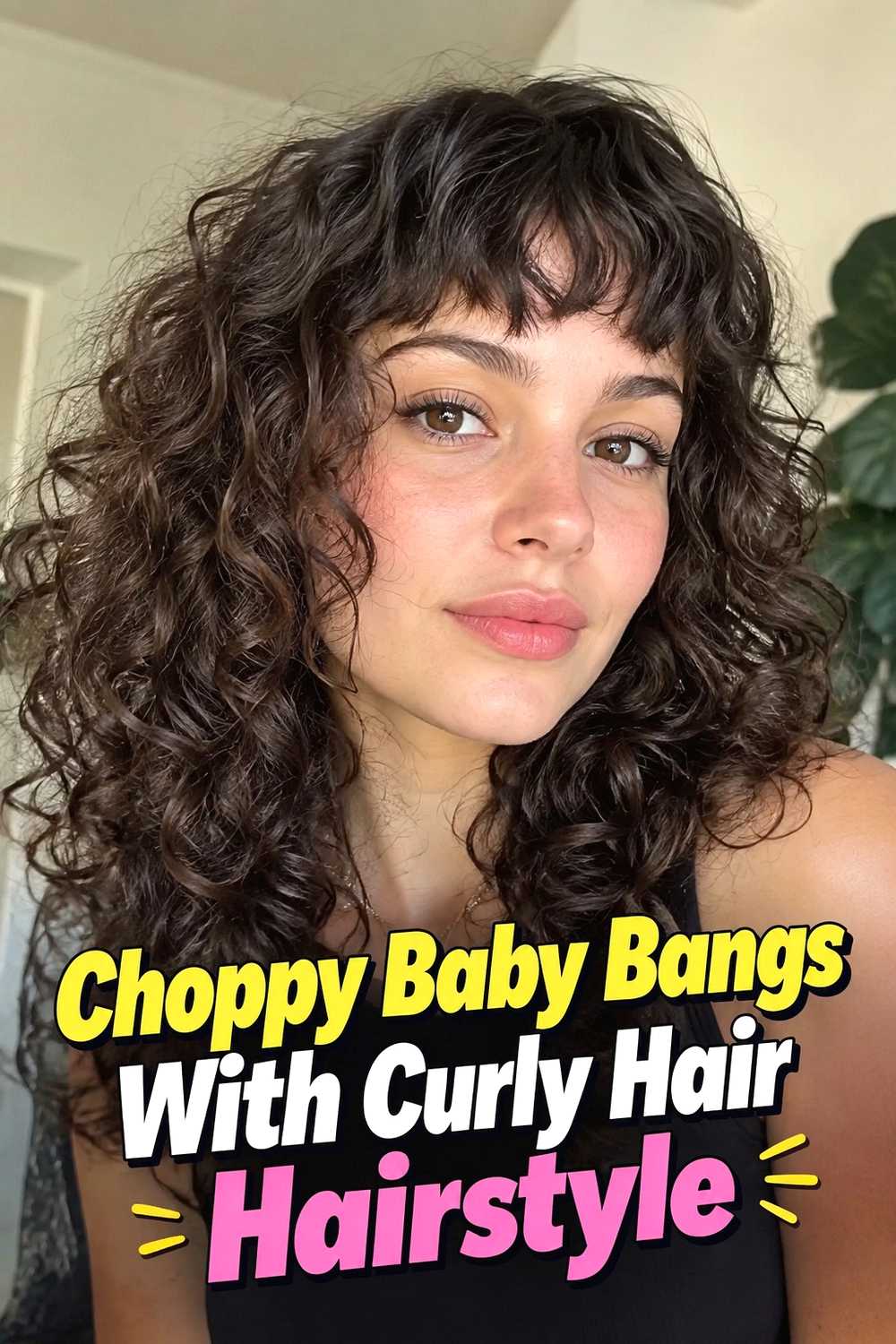
Curly hair can give choppy baby bangs a naturally irregular finish because individual curls create their own variation across the forehead. Instead of forcing a perfectly straight micro fringe, the cut should respect how each curl springs and settles when dry. Some pieces may sit slightly higher while others curve toward the brows, producing the choppy effect through natural texture. Layers through the rest of the haircut can distribute volume and help the shorter fringe connect with the overall curl pattern. Because curls shrink after drying, the bangs usually need to be approached cautiously. The finished shape should feel intentional while preserving variation in curl size and movement.
Styling Notes
Assess the fringe when the curls are dry and naturally formed rather than judging the final length from wet hair alone.
Best For
This version suits naturally curly textures when you want a short fringe that works with movement instead of being straightened into a uniform edge.
11. Choppy Baby Bangs With Shoulder Length Hair Hairstyle
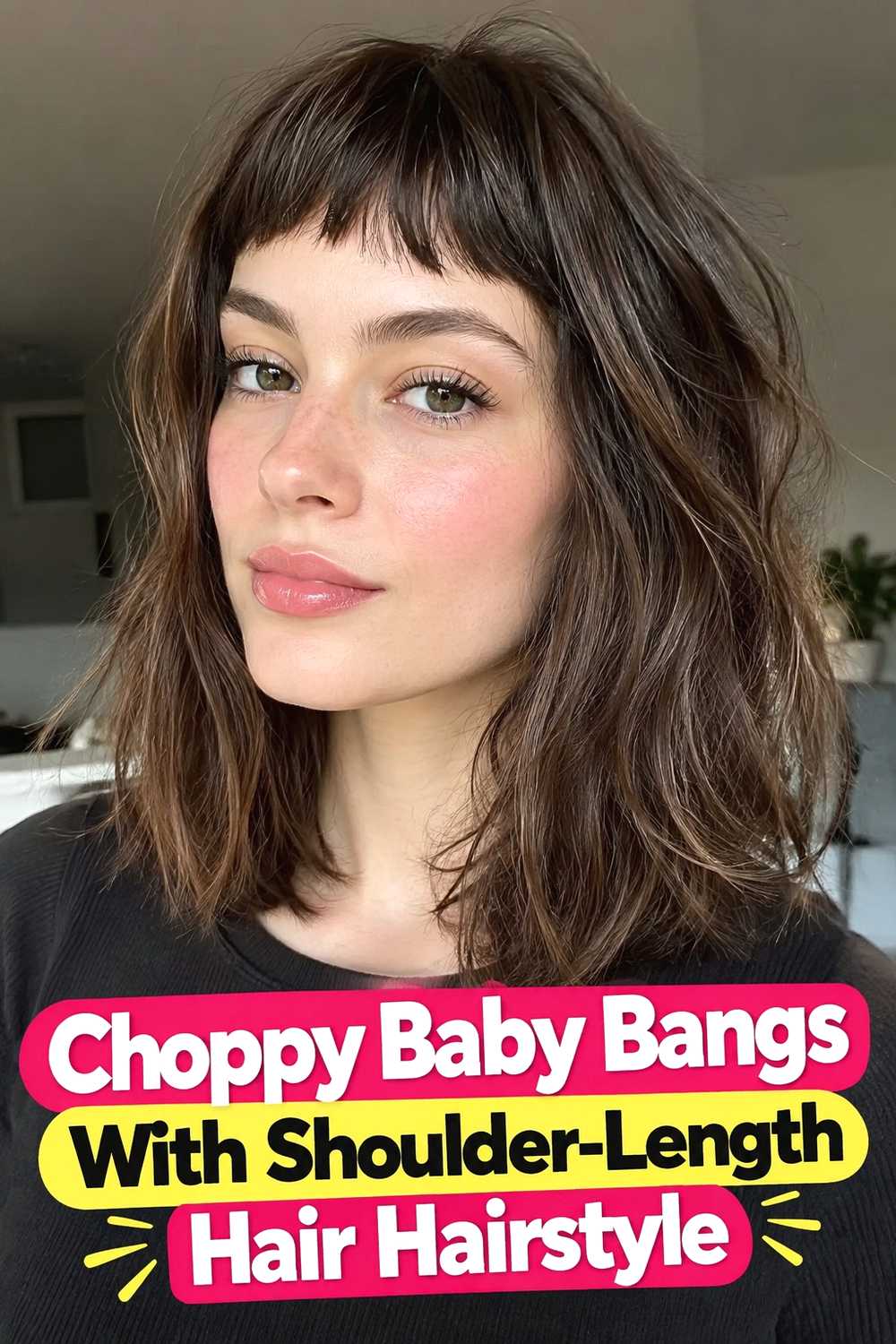
Shoulder-length hair creates a balanced middle ground for choppy baby bangs. The fringe adds a bold short detail at the forehead, while the medium-length perimeter keeps the rest of the haircut easy to style and substantial enough to balance the front. Subtle layers through the ends can create movement without turning the cut into a full shag. Straight styling makes the choppy fringe look sharper, while soft bends around the shoulders create a more relaxed finish. Because hair at this length can naturally flip where it meets the shoulders, working with those bends rather than forcing them perfectly straight often gives the hairstyle a more effortless appearance.
Why It Works
The medium length keeps the overall proportions balanced, allowing the short fringe to stand out without being paired with an extremely cropped or very long silhouette.
Wear & Maintenance
Regular trims help keep both the fringe and shoulder-level perimeter intentional as the hair grows.
12. Choppy Baby Bangs With French Bob Hairstyle
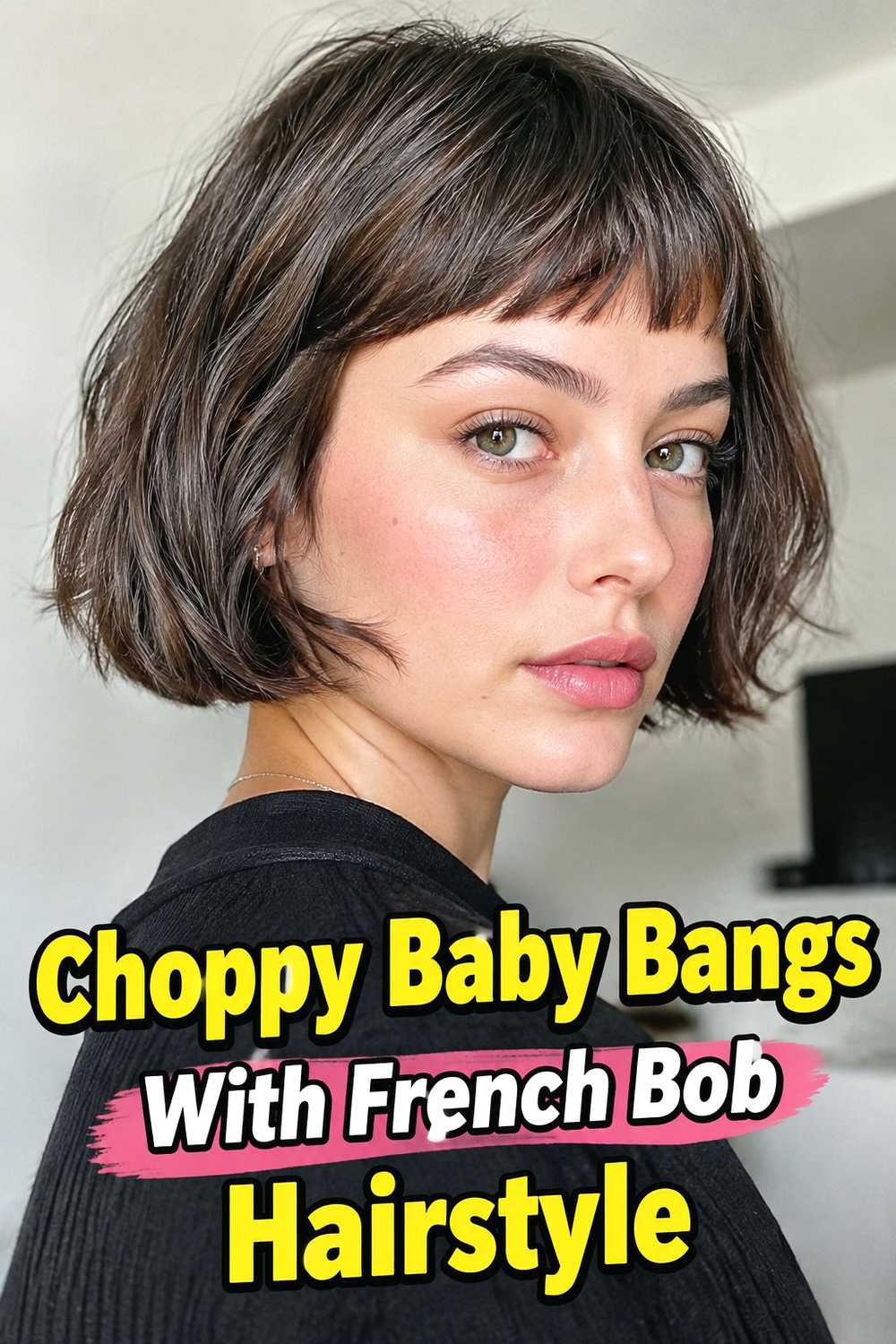
A French-inspired bob with choppy baby bangs feels compact, expressive, and intentionally imperfect. The bob can sit around the jaw or slightly above, while the fringe remains short enough to expose the brows and upper forehead. Rather than a heavy straight-across bang, small irregular sections create softness and movement. The bob itself can have a subtle natural bend or a gently tousled finish that prevents the haircut from looking overly precise. This version works especially well when the styling remains simple, allowing the silhouette and fringe to provide the character. A few natural flyaways can complement the relaxed effect as long as the overall shape stays clean.
Styling Notes
Keep the bob softly controlled rather than heavily curled, and let the irregular fringe remain the strongest texture detail.
Best For
This cut suits anyone drawn to shorter, expressive hairstyles that feel polished enough for everyday wear but not overly formal.
13. Choppy Baby Bangs With Bixie Cut Hairstyle
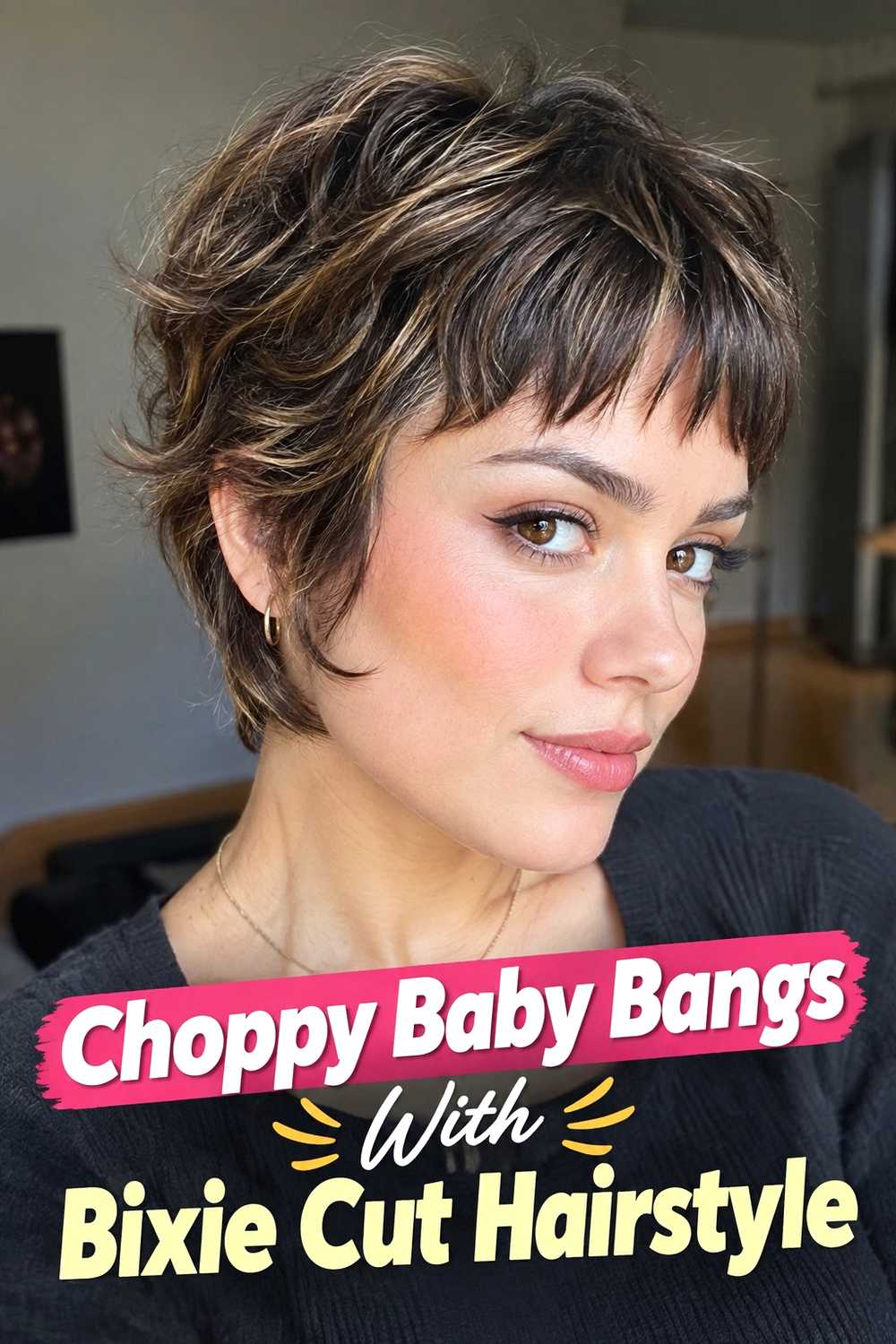
A bixie combines the cropped ease of a pixie with slightly more length and movement around the sides and back, making it a flexible partner for choppy baby bangs. The fringe can stay short and broken-up, while longer top layers provide enough texture to shift from smooth to tousled styling. Around the ears and nape, softer length keeps the haircut from feeling as closely cropped as a traditional pixie. This extra movement can make the baby bangs feel more balanced and less severe. The strongest version uses consistent texturing throughout the haircut so the fringe, crown, and perimeter feel connected rather than like separate design elements.
Why It Works
The bixie’s mix of short and slightly longer sections mirrors the varied lengths within the fringe, creating a cohesive textured silhouette.
Pro Tip
Use a small amount of lightweight styling product to define selected pieces without making the short layers stiff or greasy.
14. Choppy Baby Bangs With Thick Hair Hairstyle
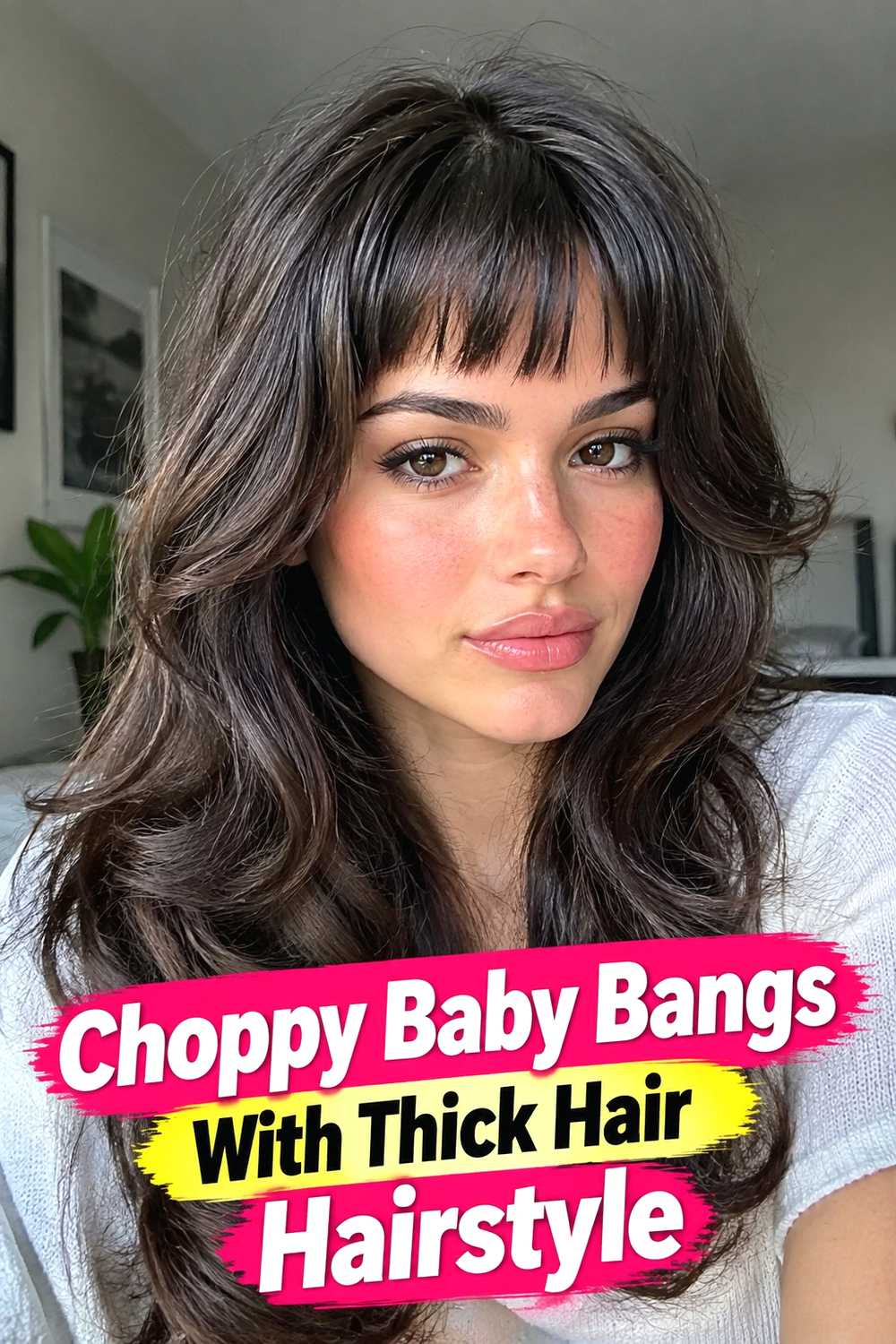
Thick hair can carry choppy baby bangs beautifully when the fringe section is controlled rather than excessively deep. Keeping the bangs short and textured reduces the appearance of a heavy block across the forehead, while small differences in length add movement. The surrounding haircut can use subtle internal layers to distribute bulk without sacrificing the naturally full silhouette. Straight, wavy, or softly textured finishes can all work, but the fringe should remain flexible enough to separate into visible pieces. Too much thinning near the roots can make thick bangs unpredictable, so softness is usually better created through careful section size and detail at the ends.
Hair Type & Length
This approach can work across many lengths, particularly when the overall haircut retains enough structure to balance the naturally dense fringe area.
Pro Tip
Keep most of the texturing near the ends of the bangs rather than aggressively removing density close to the scalp.
15. Choppy Baby Bangs With Fine Hair Hairstyle
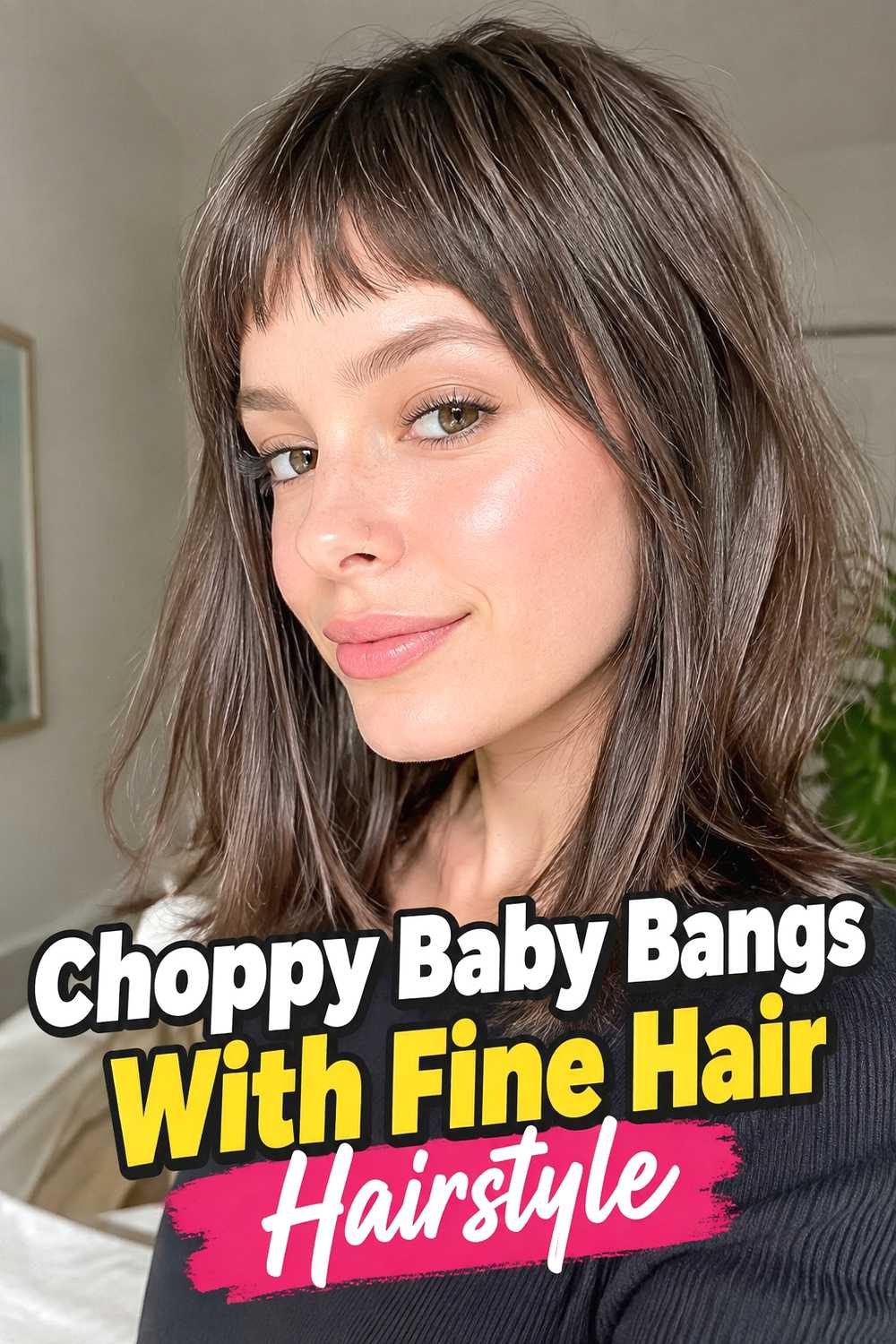
Fine hair benefits from a carefully sized baby fringe that creates texture without taking too much density away from the rest of the haircut. The bangs can be short and slightly uneven through the ends, but they should still have enough hair to read as intentional. Wide gaps or heavy thinning may make the fringe look sparse, so controlled separation is usually more effective. The surrounding hair can stay fuller through the perimeter with minimal layering, especially if preserving volume is important. Lightweight styling helps the baby bangs lift and move naturally without becoming greasy or flat. A soft bend through the lengths can add dimension without requiring extensive layering.
Why It Works
A modest bang section adds a distinctive short detail while allowing the rest of fine hair to keep as much visual fullness as possible.
Styling Notes
Avoid heavy creams or oils around the fringe, since fine baby bangs can lose separation and volume quickly when weighed down.
16. Choppy Baby Bangs With Brunette Layers Hairstyle
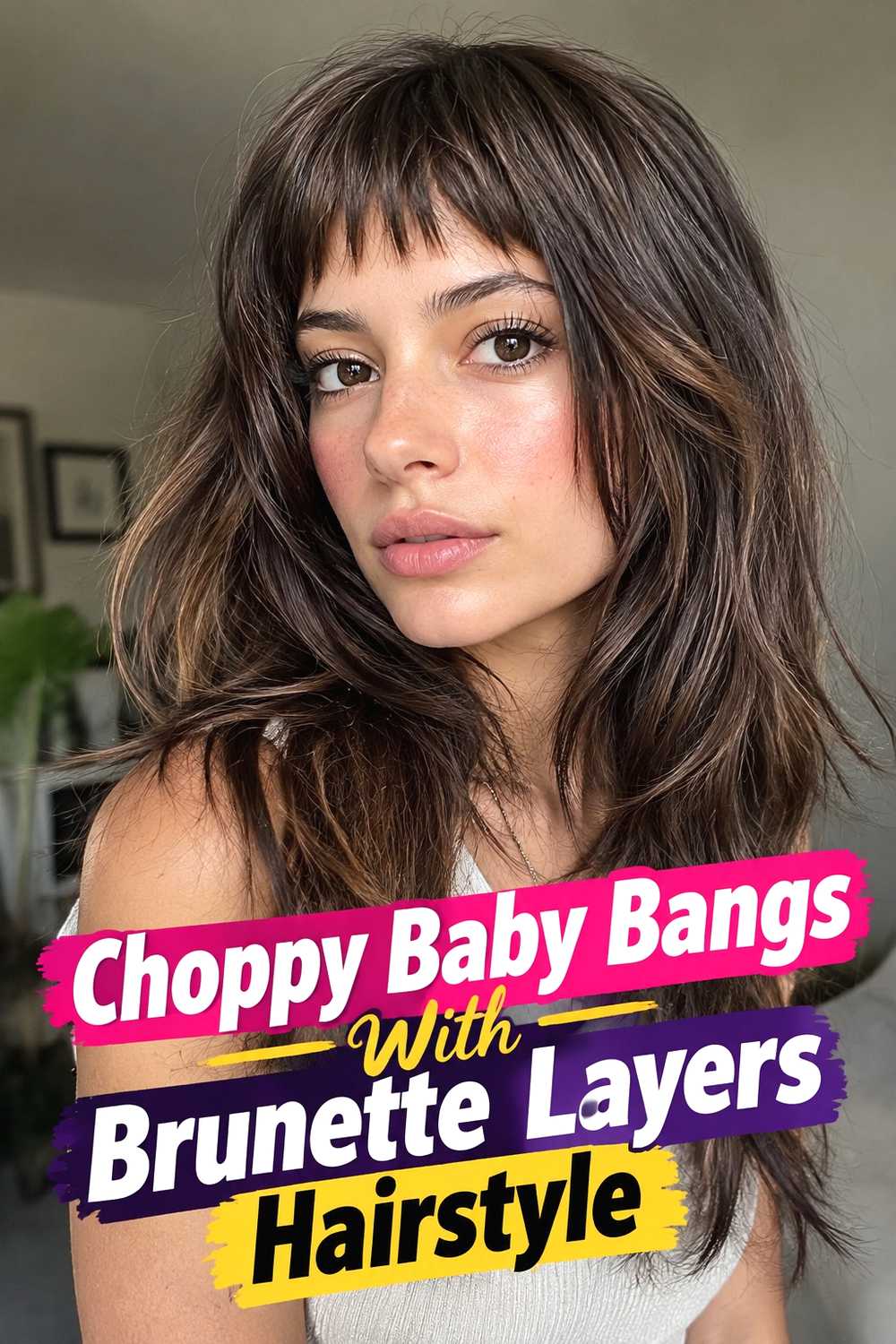
Deep brunette hair makes the uneven outline of choppy baby bangs especially visible, giving the short fringe strong definition against the forehead. Soft layering through the lengths helps darker hair show movement instead of reading as one solid shape. Face-framing pieces can begin farther down so the cropped bangs remain the most noticeable front detail, while a gentle wave or blowout reveals the longer layers. The color does not need dramatic highlights to create dimension; natural shine and changing strand direction can be enough. Keeping the fringe piecey but substantial prevents it from disappearing visually against the richer, fuller lengths of the brunette haircut.
Styling Notes
Use movement through the layered sections to reveal separation in darker hair while keeping the baby fringe relatively simple.
Best For
Choose this look if you want rich brunette color with the haircut and fringe providing most of the visual interest.
17. Choppy Baby Bangs With Textured Lob Hairstyle
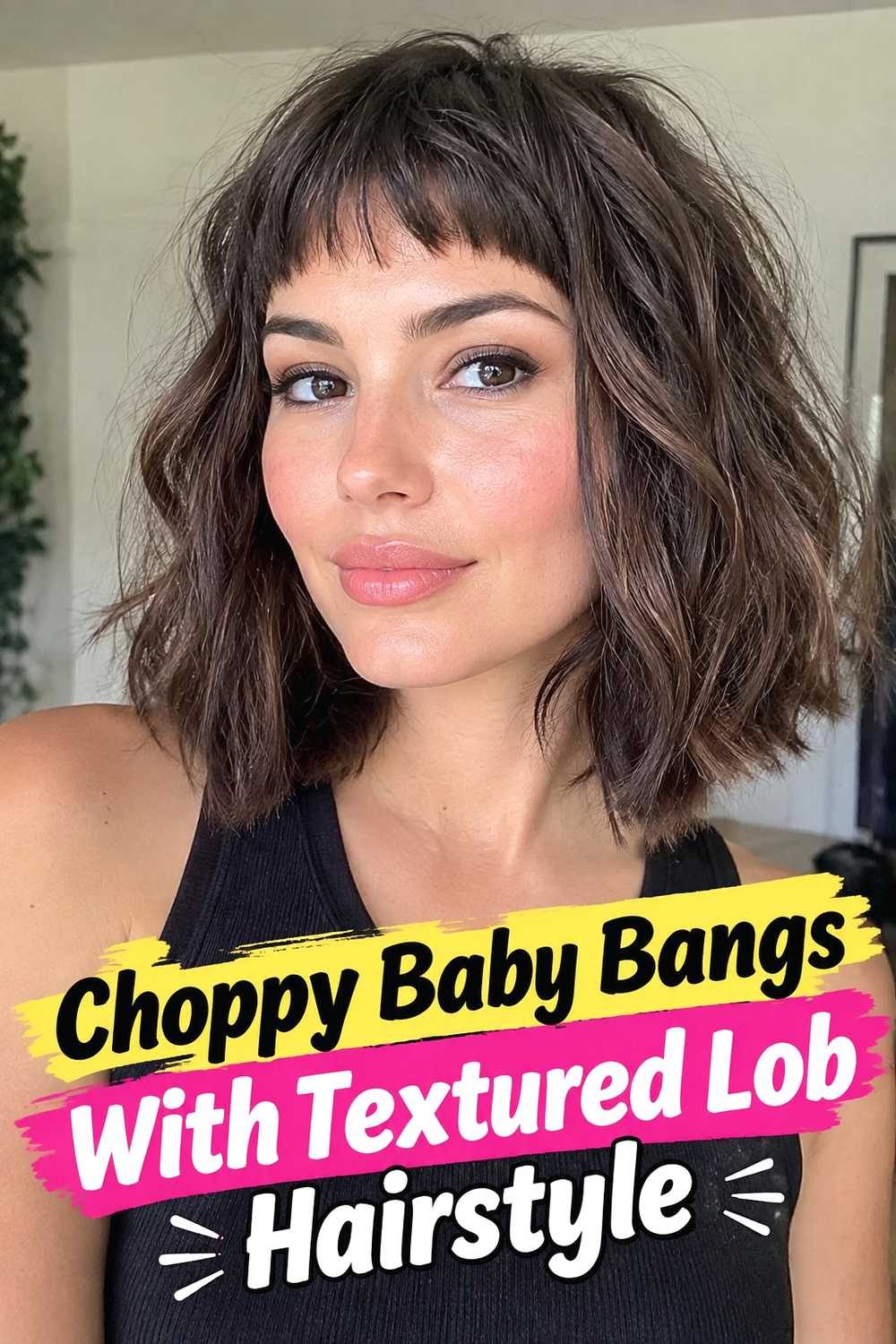
A textured lob gives choppy baby bangs enough length for versatility while still maintaining a clearly shaped haircut. The lob typically falls between the jaw and collarbone, with subtle layers or bends creating movement through the ends. Against that medium-length silhouette, the short irregular fringe becomes a strong focal point without making the entire haircut feel extreme. Natural waves, tousled straight hair, or a softly flipped finish can all work, provided the texture remains light and mobile. Keeping the lower perimeter reasonably full prevents the lob from becoming too wispy, while the bangs carry most of the sharper texturing. The result feels modern, expressive, and practical for everyday styling.
Why It Works
The lob balances short fringe with medium-length movement, offering more versatility than a bob while keeping the overall shape compact.
Wear & Maintenance
Refresh the baby bangs more often than the lob if you want to maintain their short length while allowing the longer haircut to grow more gradually.
How to Choose the Right Look
Start with the amount of contrast you want. Choppy baby bangs paired with sleek long hair or a blunt bob create a sharper visual difference, while waves, curls, shags, and textured lobs make the transition feel softer and more blended.
Your natural texture should influence the fringe shape. Straight hair displays each choppy edge clearly, wavy hair creates a relaxed finish, and curly hair needs enough length to account for spring and shrinkage. Thick hair often benefits from controlling how deep the fringe section is, while fine hair usually looks fuller when the bangs are textured carefully rather than heavily thinned.
Also consider maintenance. Baby bangs sit high on the forehead, so even modest growth changes their proportions. Pixies, bobs, and highly structured cuts may need more frequent overall reshaping, while long layers and shags can often grow out more gradually. Choose a version that fits the amount of daily styling and trimming you realistically want.
Final Thoughts
Choppy baby bang haircuts can feel soft, graphic, playful, or edgy depending on the surrounding length and texture. Pair them with a bob or pixie for a compact statement, long layers for contrast, or waves and curls for a more relaxed finish. The most wearable approach keeps the fringe intentionally textured while respecting your hair density, natural movement, and maintenance preferences.
FAQs
1. What are choppy baby bangs?
Choppy baby bangs are short bangs that sit above the eyebrows and use slight differences in length, textured ends, and visible separation rather than forming one perfectly blunt line.
2. Are choppy baby bangs the same as micro bangs?
They overlap, but the terms describe different qualities. “Baby” or “micro” refers mainly to the short length, while “choppy” describes the irregular, textured finish of the fringe.
3. Can choppy baby bangs work with curly hair?
Yes. Curly hair can create naturally varied short fringe, but the cut should account for shrinkage and be evaluated according to how the curls sit when dry.
4. Do choppy baby bangs work on fine hair?
They can. A smaller fringe section with controlled texturing can create the effect without removing excessive density from fine hair.
5. How often do choppy baby bangs need trimming?
Because they are intentionally short, growth becomes noticeable relatively quickly. How often you reshape them depends on your growth rate and whether you want to keep the fringe very short or let it evolve into a longer textured bang.
Save your favorite choppy baby bang haircuts and explore more short-fringe hairstyle inspiration before choosing your next look.