20 Wispy Cub Cut Hairstyle Ideas
Airy fringe, feather-light layers, and softly broken-up ends give these Wispy Cub Cut ideas an effortless shape with just the right amount of shaggy movement.
The Wispy Cub Cut takes the compact, layered character of the Cub Cut and softens it with finer fringe, lighter ends, and delicate separation through the surface. Instead of relying on dense layers or an aggressively shaggy silhouette, it creates movement with tapered pieces around the face, crown, jaw, and neckline.
That makes the style easy to personalize. You can keep it chin length for a compact shape, extend it toward the collarbone, emphasize natural waves, add volume at the crown, or smooth the layers for a more polished result. The right version depends on your density, natural texture, preferred fringe, and how much feathering your hair can support without losing fullness.
Quick List
- Classic Wispy Cub Cut Hairstyle
- Wispy Fringe Cub Cut Hairstyle
- Curtain Fringe Wispy Cub Cut Hairstyle
- Feathered Wispy Cub Cut Hairstyle
- Soft Wavy Wispy Cub Cut Hairstyle
- Textured Wispy Cub Cut Hairstyle
- Air Dried Wispy Cub Cut Hairstyle
- Side Parted Wispy Cub Cut Hairstyle
- Center Parted Wispy Cub Cut Hairstyle
- Chin Length Wispy Cub Cut Hairstyle
- Collarbone Wispy Cub Cut Hairstyle
- Voluminous Wispy Cub Cut Hairstyle
- Sleek Wispy Cub Cut Hairstyle
- Fine Hair Wispy Cub Cut Hairstyle
- Thick Hair Wispy Cub Cut Hairstyle
- Face Framing Wispy Cub Cut Hairstyle
- Shaggy Wispy Cub Cut Hairstyle
- Flipped End Wispy Cub Cut Hairstyle
- Glossy Wispy Cub Cut Hairstyle
- Polished Wispy Cub Cut Hairstyle
1. Classic Wispy Cub Cut Hairstyle
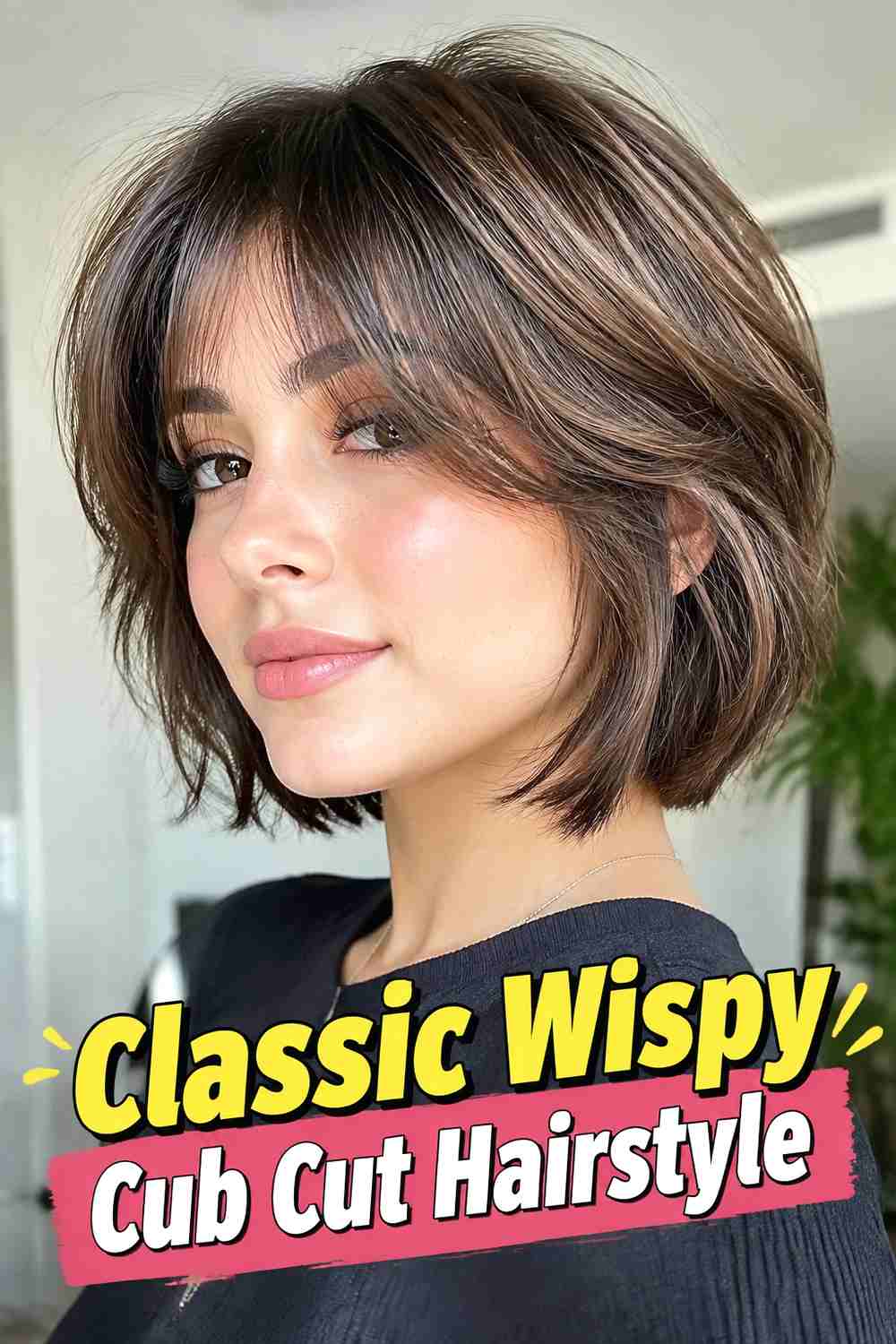
The classic version balances the Cub Cut’s short layered shape with a noticeably lighter finish through the fringe and ends. Crown layers create soft lift, while face-framing pieces taper into a compact perimeter around the jaw, neck, or upper shoulders. Instead of looking blunt, the tips separate into fine sections that move easily when the hair shifts. The effect is shag-inspired without becoming heavily choppy. This version works well if you want visible texture but still need the haircut to feel wearable on ordinary days. Keep the lower perimeter substantial enough to anchor the wispy upper layers and prevent the overall silhouette from appearing overly thin.
Styling Notes
Use a lightweight mousse or cream through damp hair, then lift the crown gently while letting the ends dry with natural separation.
Why It Works
The stronger base keeps the shape compact while lighter surface layers add the signature airy movement.
2. Wispy Fringe Cub Cut Hairstyle
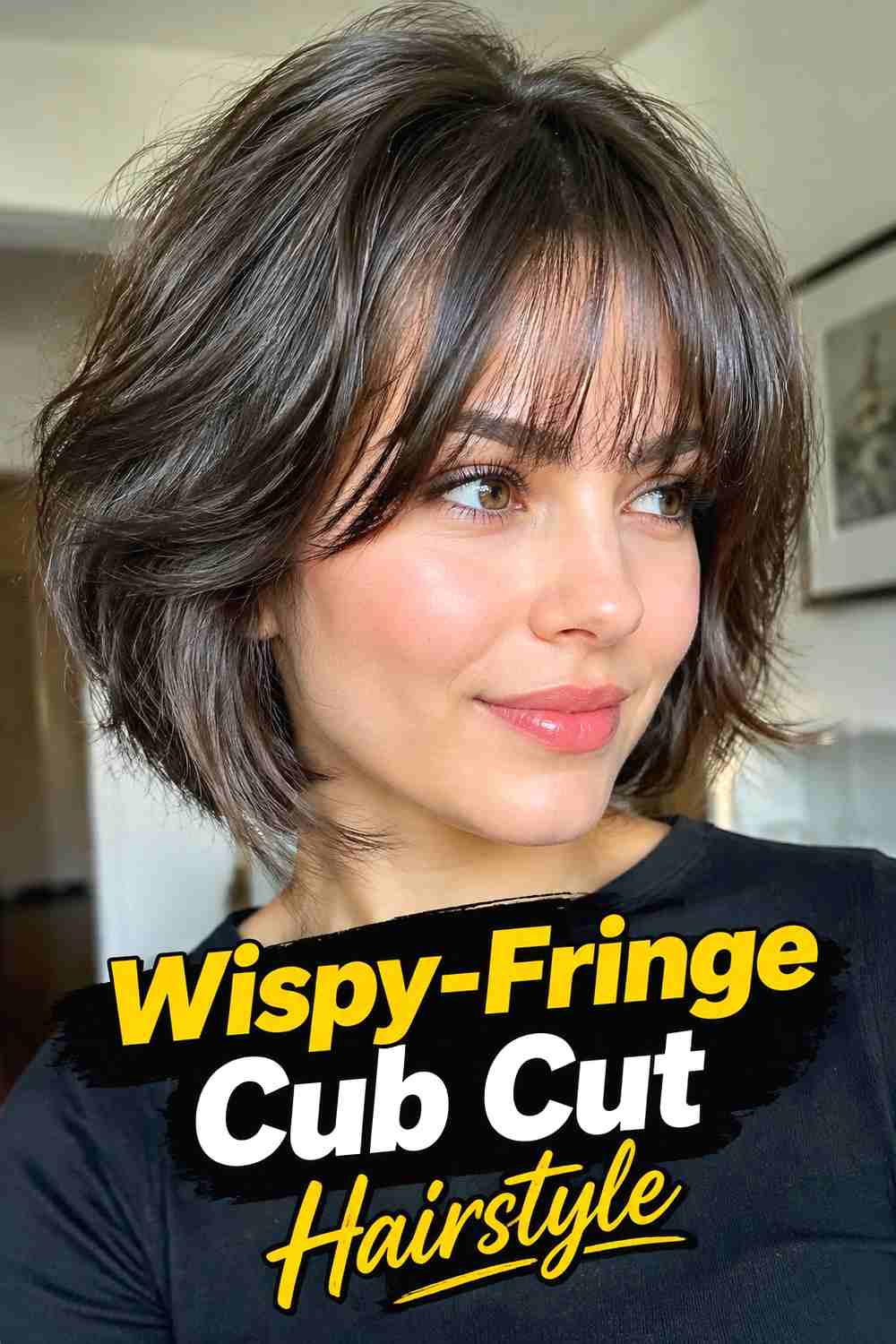
Wispy fringe is the focal point here, falling across the forehead in light, separated pieces that blend into short layers near the temples. The fringe should show small gaps instead of forming a dense curtain, which helps the Cub Cut feel softer from the front. Longer side sections gradually connect the bangs with the cheekbone and jaw layers, creating a smooth transition into the rest of the haircut. The perimeter can remain slightly fuller to balance the delicate front. This option is particularly useful if you want bangs without a heavy, graphic line. Keep styling product minimal around the forehead so the individual strands remain airy rather than sticking together.
Best For
Choose this look when you want obvious fringe but prefer a delicate, flexible finish over thick bangs.
Pro Tip
Dry the fringe with your fingers and gentle airflow instead of forcing it into a tight round-brush curve.
3. Curtain Fringe Wispy Cub Cut Hairstyle
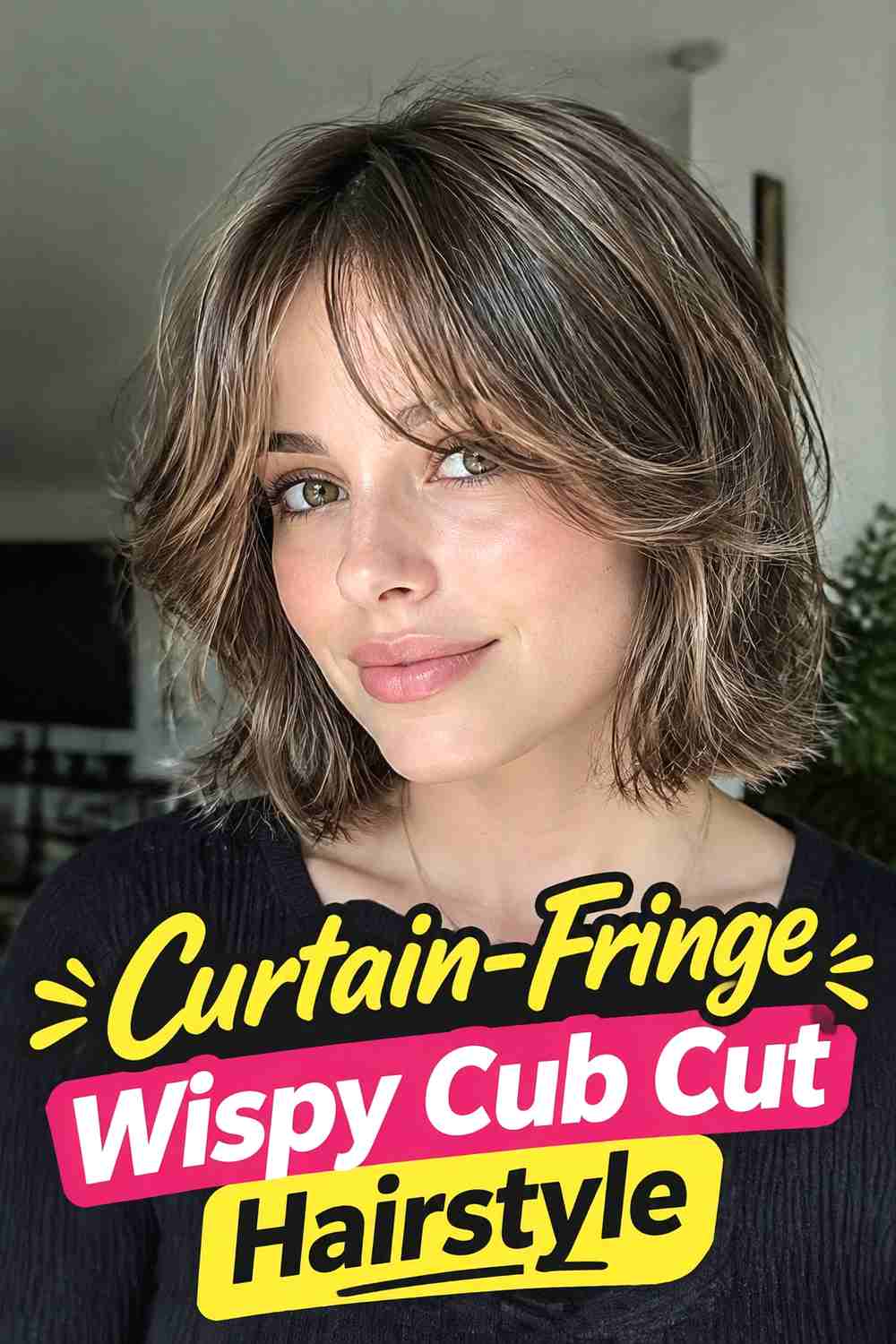
Curtain fringe gives the Wispy Cub Cut a softer opening around the forehead while preserving plenty of layered detail through the sides. The fringe parts near the center and sweeps toward the cheekbones, where longer wispy pieces blend naturally into the Cub Cut’s shag-inspired shape. The crown can retain a little lift, while the bottom stays light but substantial enough to define the haircut. This variation works especially well if you like fringe but want the option to push it aside or tuck it back. A gentle outward bend through the curtain pieces can emphasize the layered movement without making the haircut look overly styled or dramatically retro.
Styling Notes
Direct the fringe away from the face with a small round brush, then loosen it with your fingers after it cools.
Wear & Maintenance
Curtain pieces may need more frequent reshaping than the main cut to maintain a balanced opening around the forehead.
4. Feathered Wispy Cub Cut Hairstyle
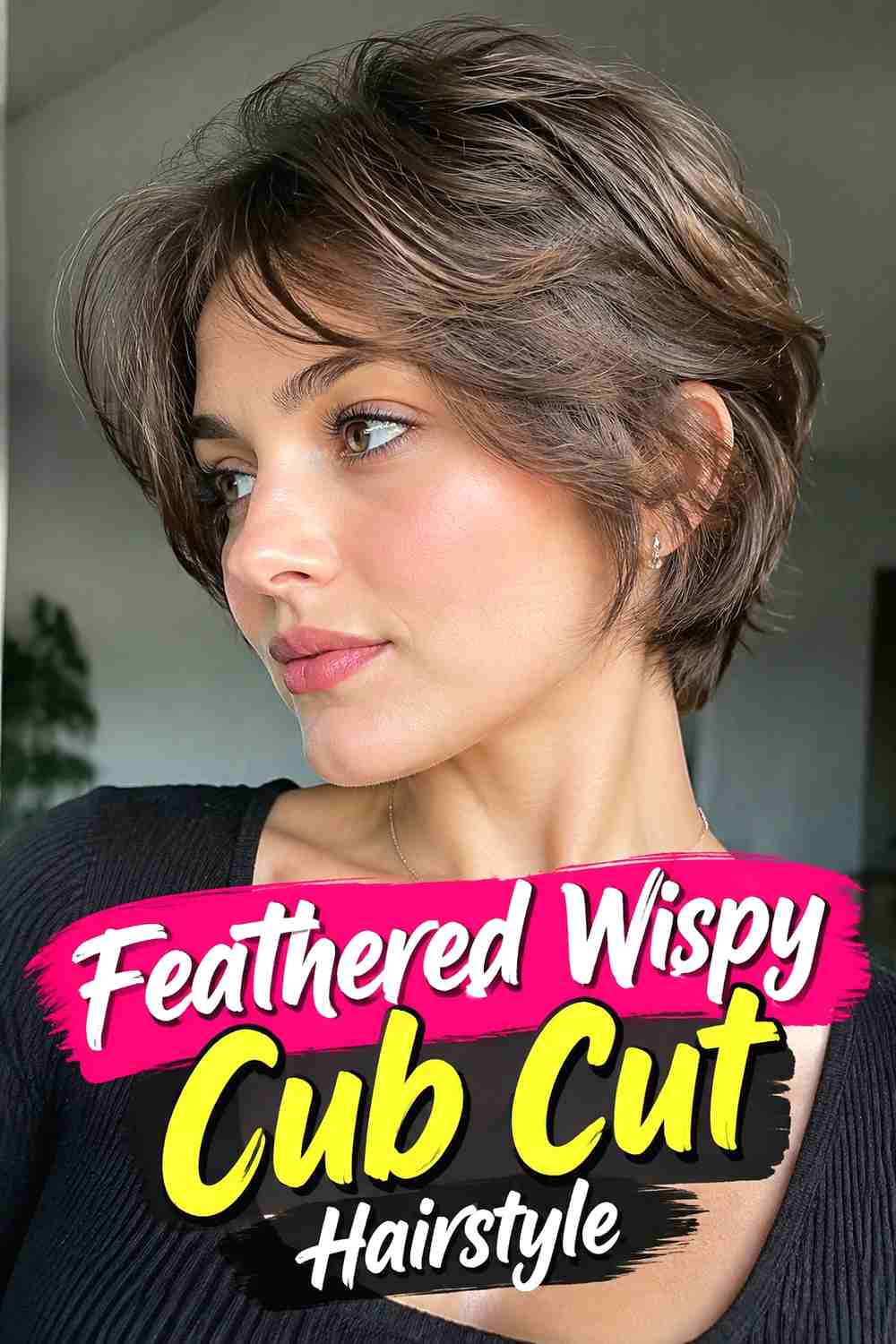
Feathering emphasizes the lightest side of the Cub Cut by softening the tips of each layer into fine, movable sections. Around the face, the shortest pieces can sweep gently away from the cheeks, while the crown layers taper into longer sections through the jaw and neck. The effect should stay fluid rather than spiky, with enough density underneath to prevent the haircut from appearing over-thinned. This version suits anyone who likes visible layer movement but wants something more polished than an aggressively shaggy cut. A round-brush finish can increase the feathered direction, while air-drying creates a more casual result with softer separation through the ends.
Hair Type & Length
Medium-density hair often handles feathering well because it can lose some weight while keeping a recognizable compact shape.
Why It Works
Tapered ends let each layer move independently, reinforcing the wispy character without making the silhouette feel rough.
5. Soft Wavy Wispy Cub Cut Hairstyle
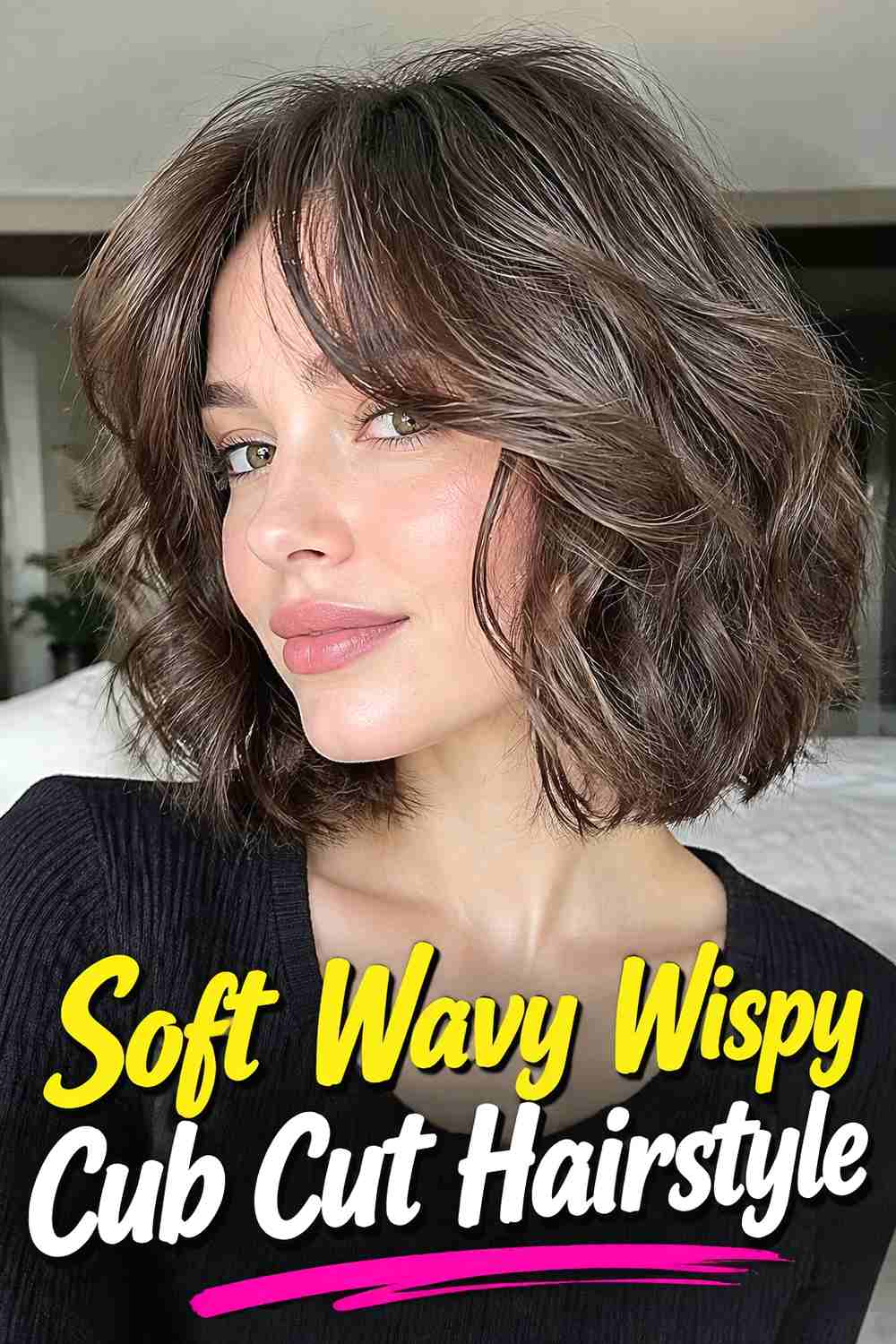
Loose waves bring out the individual layers of a Wispy Cub Cut without making the short shape overly voluminous. The wave pattern should vary slightly from section to section, allowing shorter crown layers and longer pieces near the jaw or shoulders to move independently. Fine ends help the waves transition naturally instead of forming a heavy curled perimeter. Naturally wavy hair can adapt especially well because the haircut gives existing bends room to separate. Keep the roots relatively controlled and allow most of the wave activity to appear through the sides and lower lengths. The finished style should feel light, touchable, and slightly undone rather than carefully curled.
Styling Notes
Encourage broad bends through the mid-lengths and leave some ends straighter to keep the texture airy.
Best For
Naturally wavy hair or straight hair that holds loose bends can both suit this soft, layered interpretation.
6. Textured Wispy Cub Cut Hairstyle
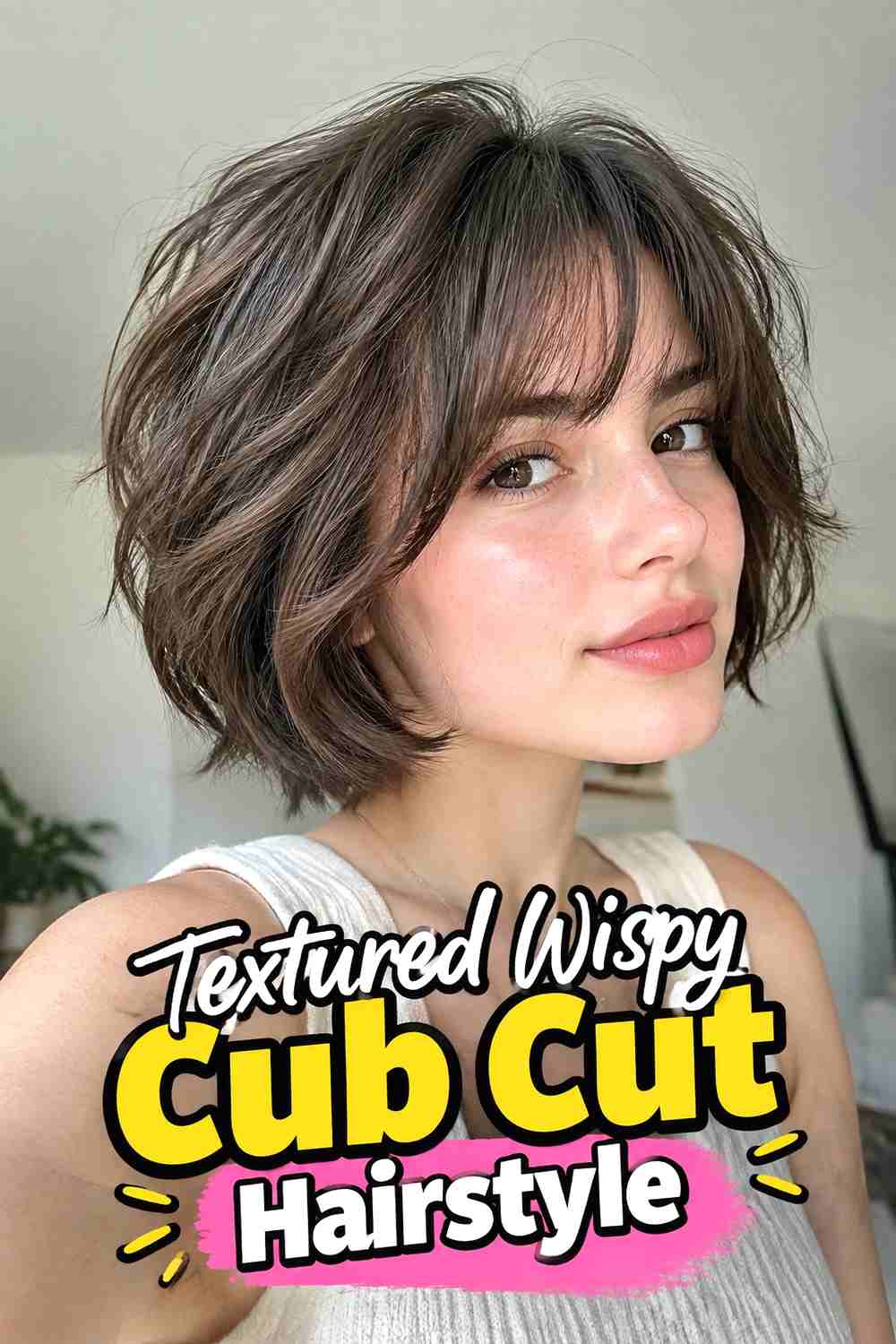
The Textured Wispy Cub Cut uses piecey separation and small bends to make the layered structure more visible. Instead of relying on a full wave pattern, individual sections shift in slightly different directions through the crown, temples, and lower perimeter. The shortest layers should look airy rather than spiky, while the bottom retains enough weight to keep the haircut compact. This version is practical if you enjoy a casual finish that still looks intentional. A lightweight texture cream or mist can help define selected pieces, but using too much can make the wispy ends feel dry and rigid. Preserve natural shine so the texture remains soft and believable.
Styling Notes
Apply product to selected outer pieces with your fingertips rather than distributing it evenly through the entire haircut.
Why It Works
Controlled separation highlights the Cub Cut’s layers while the wispy ends prevent the texture from looking bulky.
7. Air Dried Wispy Cub Cut Hairstyle
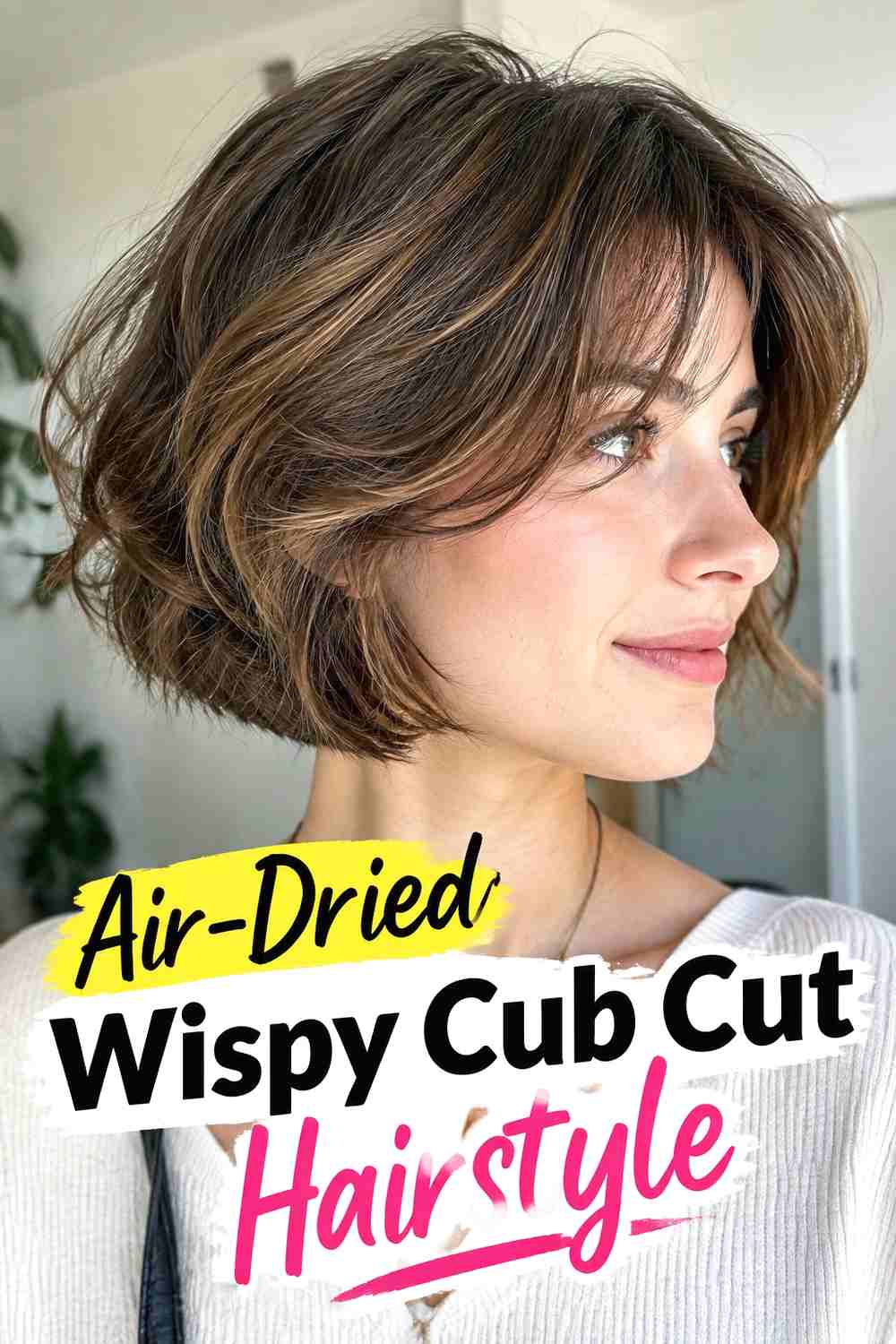
An air-dried Wispy Cub Cut makes the most of natural movement, allowing slight bends, soft flyaways, and uneven separation to become part of the finish. The cut itself should provide enough shape that the crown lifts gently and the ends fall into light pieces without constant styling. This version can work particularly well on straight-to-wavy hair that develops a little texture as it dries. Apply a light leave-in cream, arrange the fringe and part while damp, then avoid repeatedly brushing the hair. The finished look should feel relaxed but still structured, with the shorter layers creating enough movement to keep the haircut from looking flat or unfinished.
Best For
This version suits hair that already dries with manageable movement and does not require heavy smoothing to sit comfortably.
Wear & Maintenance
Refresh flattened pieces with damp fingertips and a small amount of leave-in product instead of restyling the entire cut.
8. Side Parted Wispy Cub Cut Hairstyle
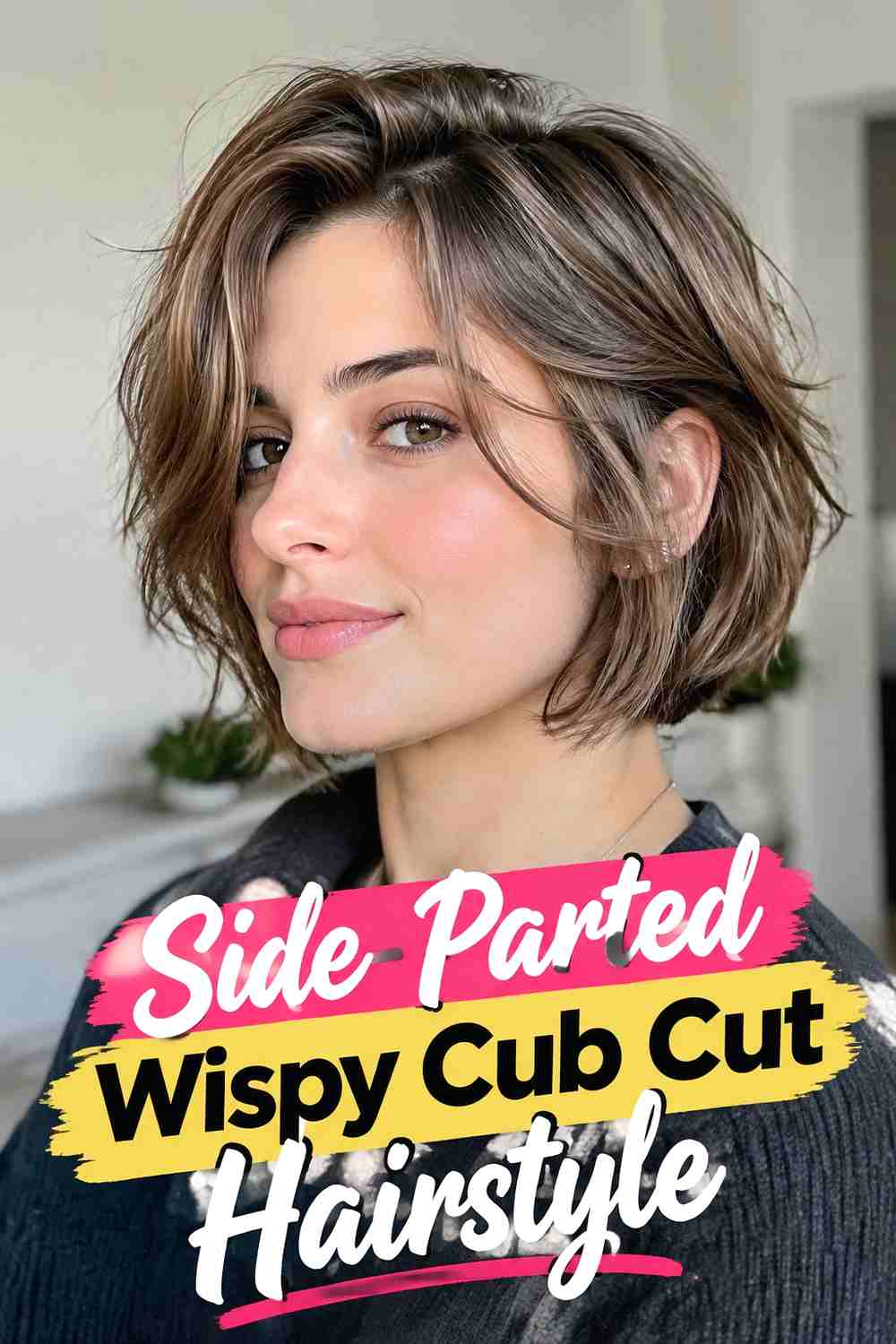
A side part shifts the balance of the Wispy Cub Cut and naturally adds volume to one side of the crown. The heavier section sweeps across the forehead before blending into wispy cheekbone and jaw layers, while the opposite side stays lighter or tucks naturally behind the ear. This asymmetry gives the haircut extra movement without requiring additional short pieces. The ends should remain tapered and soft so the fuller side does not become bulky. This is a useful variation if you like the Cub Cut’s layered texture but want a more directional front. A little root lift can strengthen the sweep while keeping the overall silhouette flexible.
Styling Notes
Set the side part while the hair is damp, then dry the fuller side away from the scalp to create natural lift.
Pro Tip
Refresh the crown and front section only when the part begins to flatten instead of restyling the whole haircut.
9. Center Parted Wispy Cub Cut Hairstyle
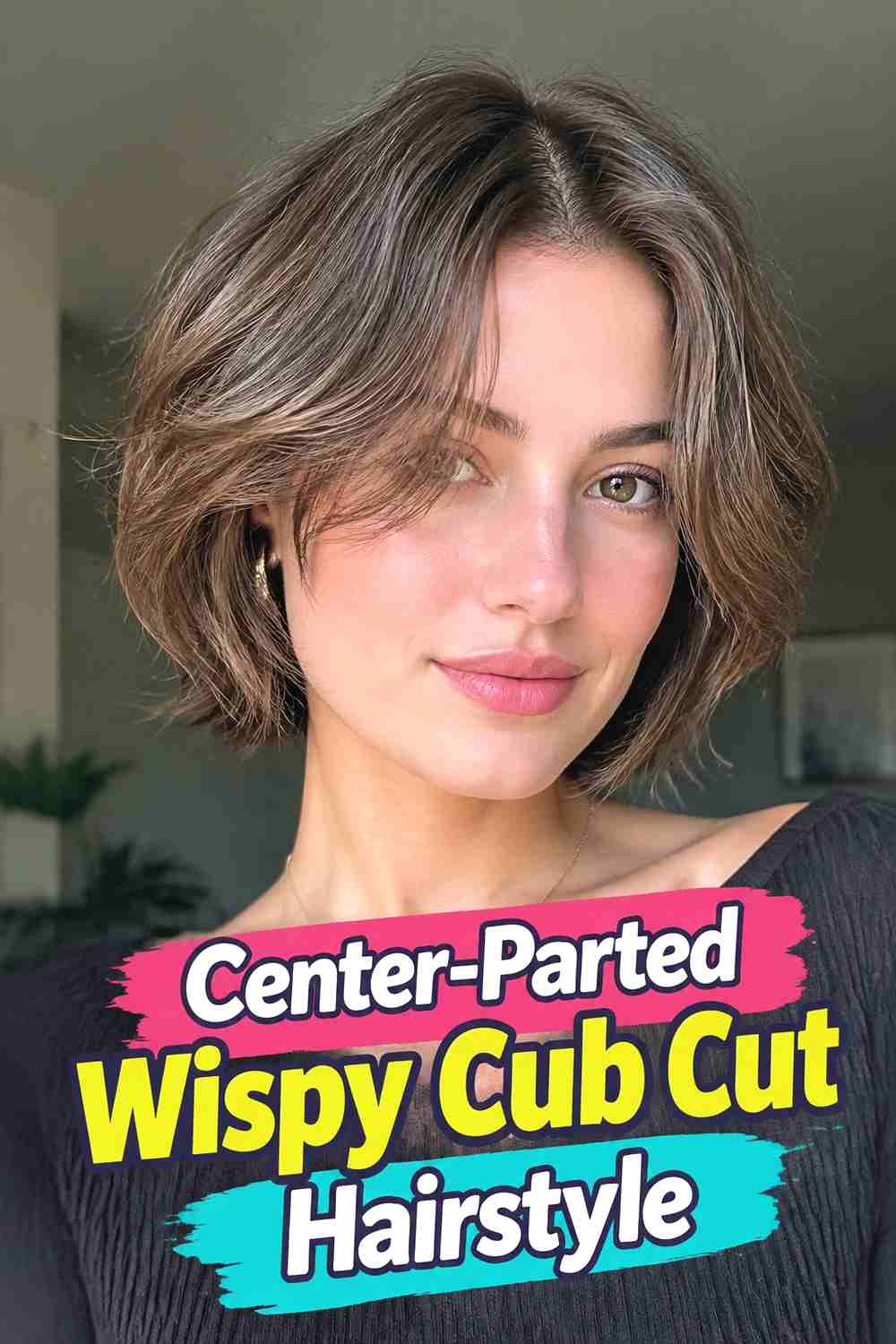
A center part gives the Wispy Cub Cut a balanced front while allowing the layered sides to frame the face evenly. Shorter pieces can begin around the cheekbones and taper into longer wisps near the jaw or neck, creating symmetry without making the haircut look rigid. A little lift at the crown keeps the center part from appearing flat, while subtle separation through the perimeter adds softness. This version works well if you want the actual haircut to be more noticeable than the styling. Keep the two sides similar but not perfectly identical; a little natural variation helps the wispy finish look believable and keeps the Cub Cut from feeling overly controlled.
Best For
This approach suits hair that falls evenly on both sides and can maintain light movement around the front.
Styling Notes
Style each side separately, then loosen the ends with your fingers for softer, less mirrored movement.
10. Chin Length Wispy Cub Cut Hairstyle
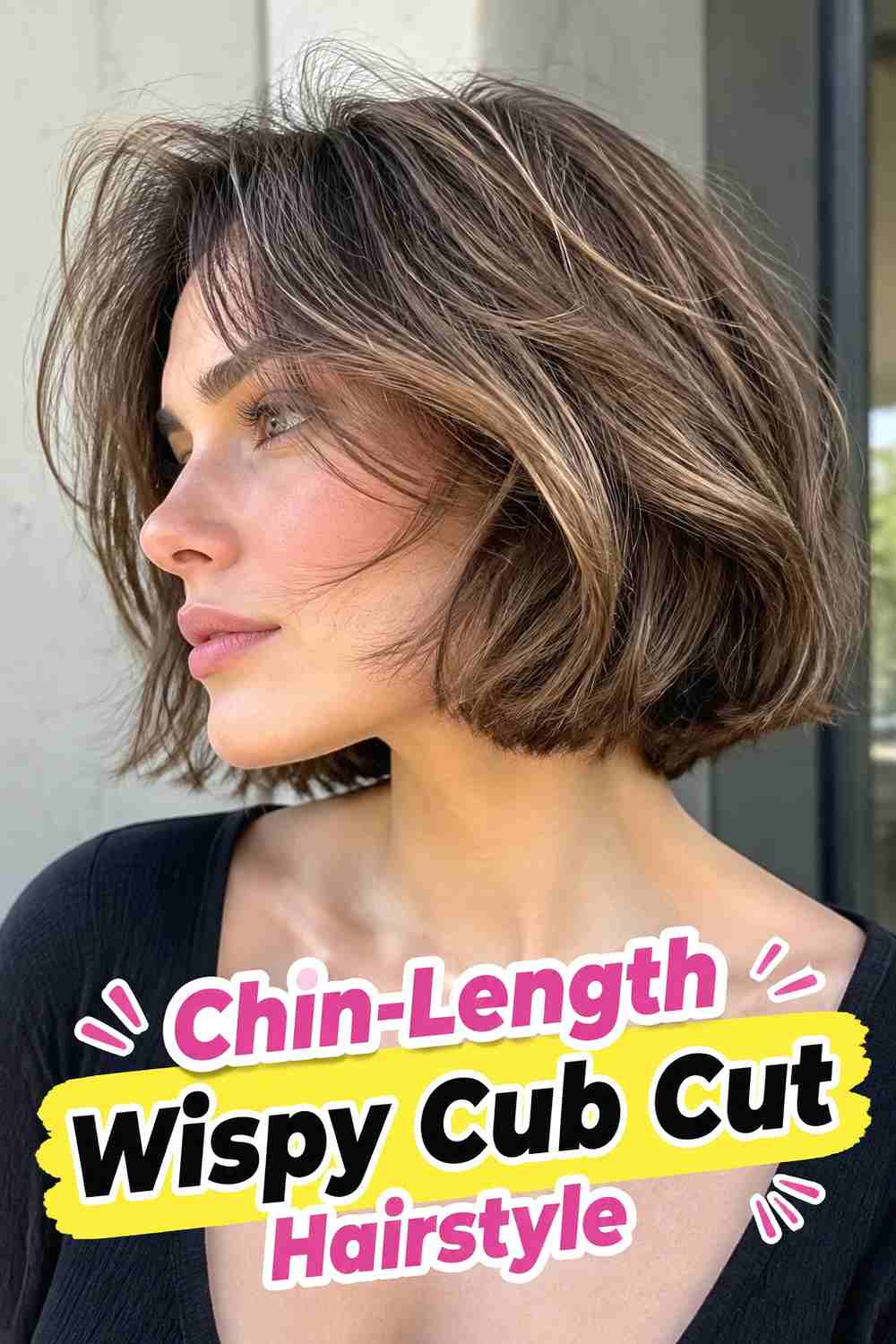
A chin-length Wispy Cub Cut creates a compact silhouette with enough room for visible layering around the crown and jaw. The longest sections finish close to the chin, while shorter pieces through the sides and top provide lift and separation. Because the overall length is short, the ends should be feathered carefully; removing too much weight can make the perimeter appear thin. A wispy fringe or soft face framing can make the front feel even lighter without overwhelming the haircut. This version is a good choice if you want a clearly short layered style that feels more relaxed than a traditional bob but still keeps a recognizable outline.
Best For
Choose this option if you want a short, mobile shape that still retains enough perimeter weight to look intentional.
Wear & Maintenance
Regular shaping helps preserve the balance between the short crown layers and chin-length outer sections as the haircut grows.
11. Collarbone Wispy Cub Cut Hairstyle
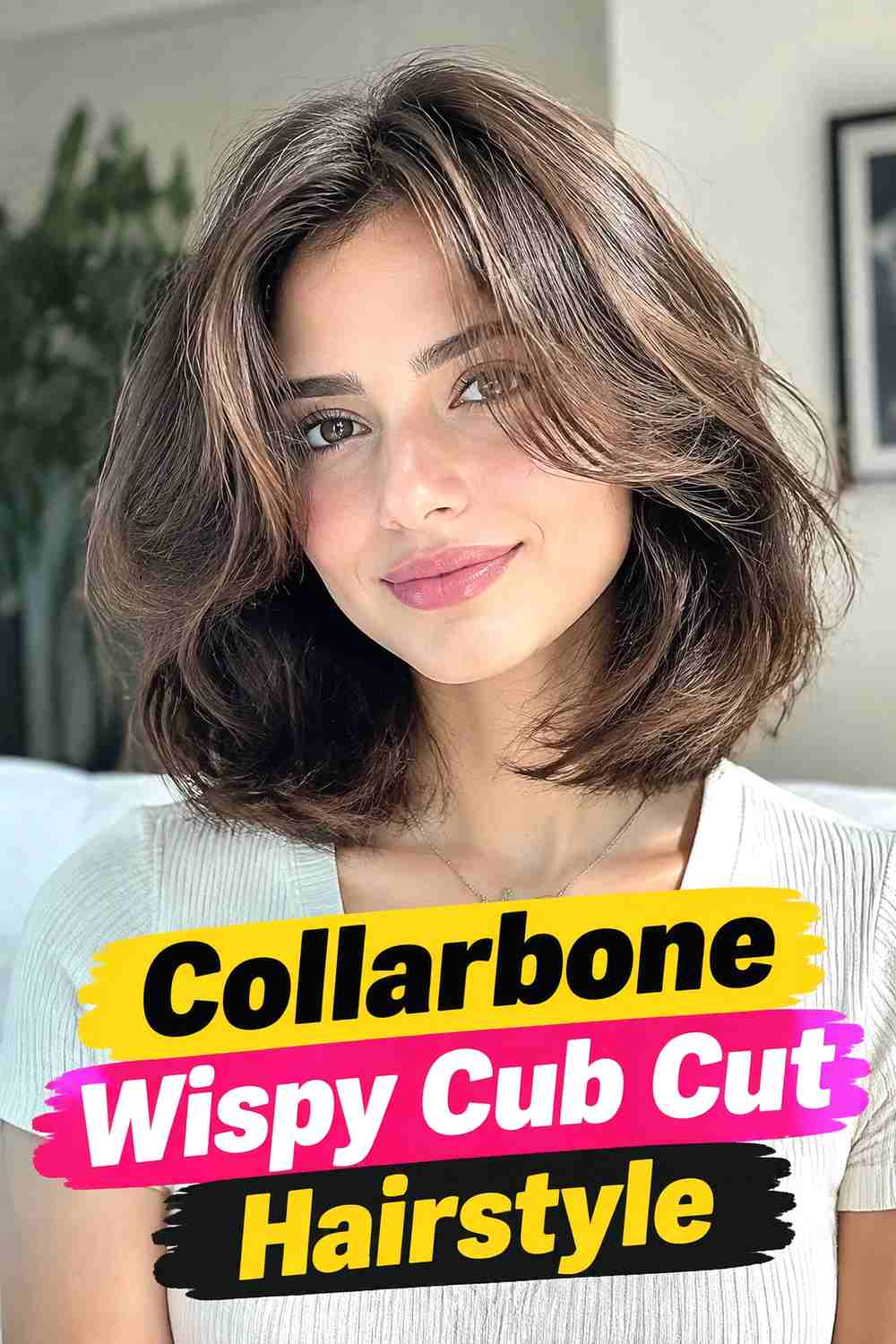
The Collarbone Wispy Cub Cut extends the shape into a softer, more versatile length while maintaining airy crown layers and tapered ends. The longest sections graze the collarbone, giving the haircut enough room for waves, tucks, half-up styling, and loose movement. Shorter layers around the face and crown preserve the Cub Cut character, while the longer base prevents the silhouette from feeling too cropped. Wispy ends are especially useful at this length because they keep the perimeter from looking heavy against the shoulders. This version works well if you want shag-inspired movement but prefer more styling flexibility than a jaw- or chin-length cut provides.
Hair Type & Length
Medium-length hair with enough density to support layered movement is especially suited to this variation.
Pro Tip
Keep the longest perimeter relatively full so the lighter upper layers do not make the haircut look overly thin.
12. Voluminous Wispy Cub Cut Hairstyle
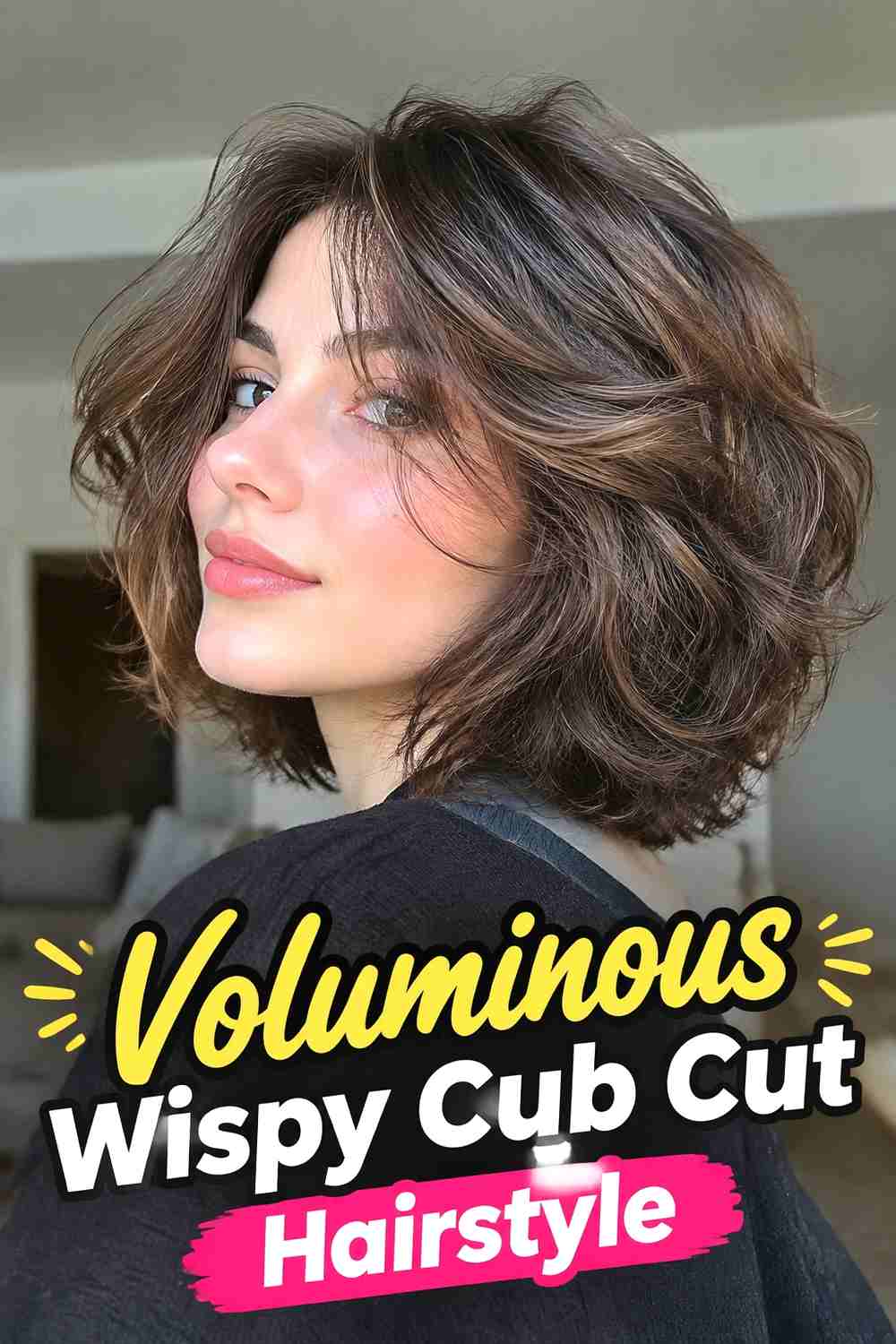
The Voluminous Wispy Cub Cut puts extra emphasis on lift through the crown and upper sides while preserving delicate movement through the ends. Shorter layers naturally rise away from the scalp during blow-drying, creating an airy silhouette that narrows toward the lighter jaw or neck sections. The volume should stay flexible rather than teased, since a stiff crown can overpower the wispy character. A light mousse or root spray is usually enough to create body. This variation can look especially effective with curtain or wispy fringe because the front blends easily into the lifted crown. Keep the lower lengths softer and less expanded to maintain balance.
Styling Notes
Build root volume first, then shape the shorter layers lightly and leave the wispy perimeter loose.
Best For
Medium-density hair that responds well to root lift can achieve this fuller shape without excessive product.
13. Sleek Wispy Cub Cut Hairstyle
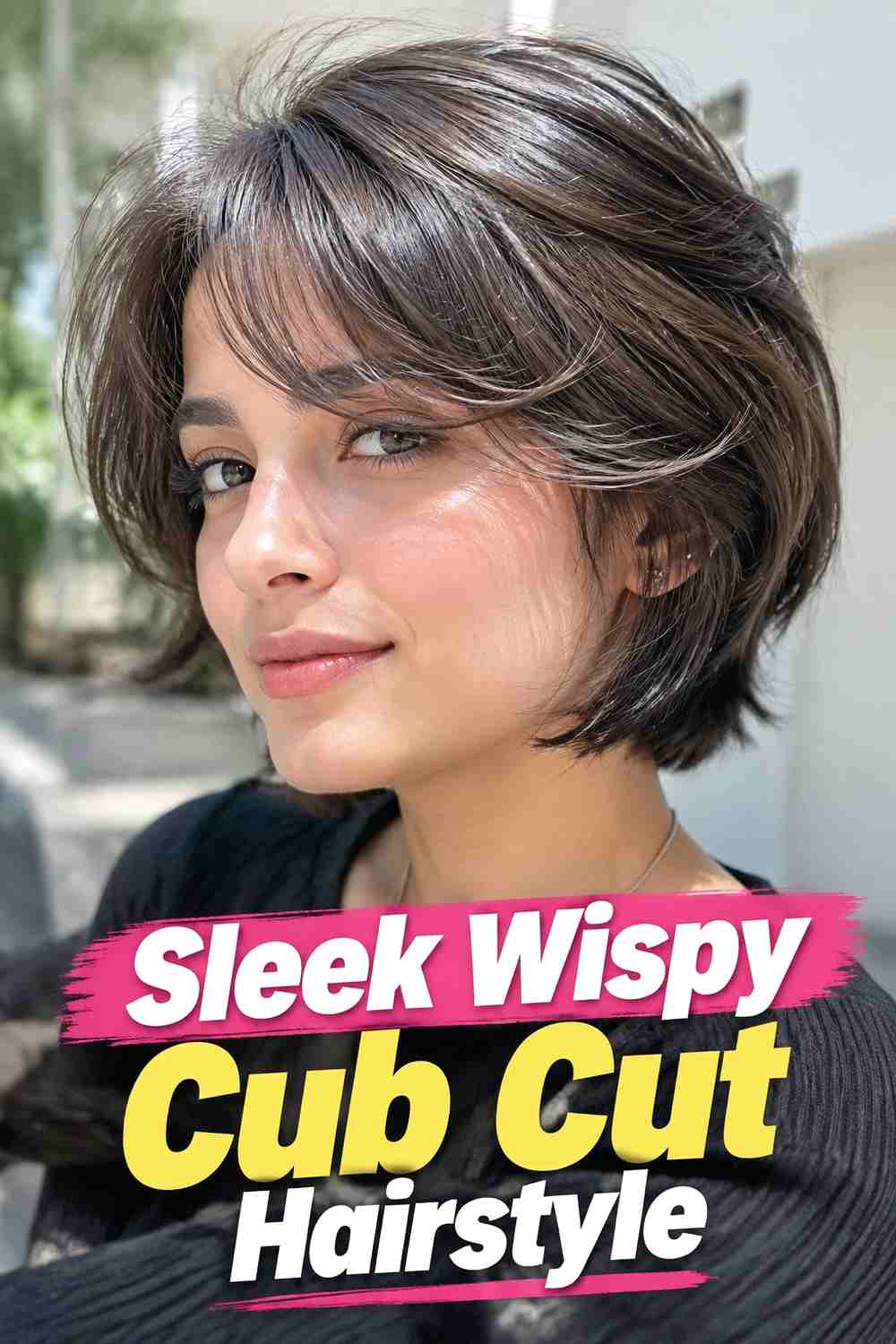
A sleek finish shows the Cub Cut’s actual structure while keeping the ends airy and separated. The crown and sides are smoothed enough to reveal the progression between shorter and longer layers, but the haircut should not be pressed completely flat. Near the perimeter, fine wispy tips soften the otherwise polished surface and preserve the shag-inspired character. This version works well if you like the shape of a Cub Cut but prefer a cleaner finish for work or events. Use lightweight smoothing products so individual strands remain visible, and keep a little lift at the roots. The contrast between sleek lengths and delicate ends gives the style its modern edge.
Styling Notes
Smooth the surface with directional blow-drying, then separate the ends gently instead of flat-ironing every tip into one line.
Why It Works
The polished body reveals the layer pattern while the fine perimeter keeps the haircut light and textured.
14. Fine Hair Wispy Cub Cut Hairstyle
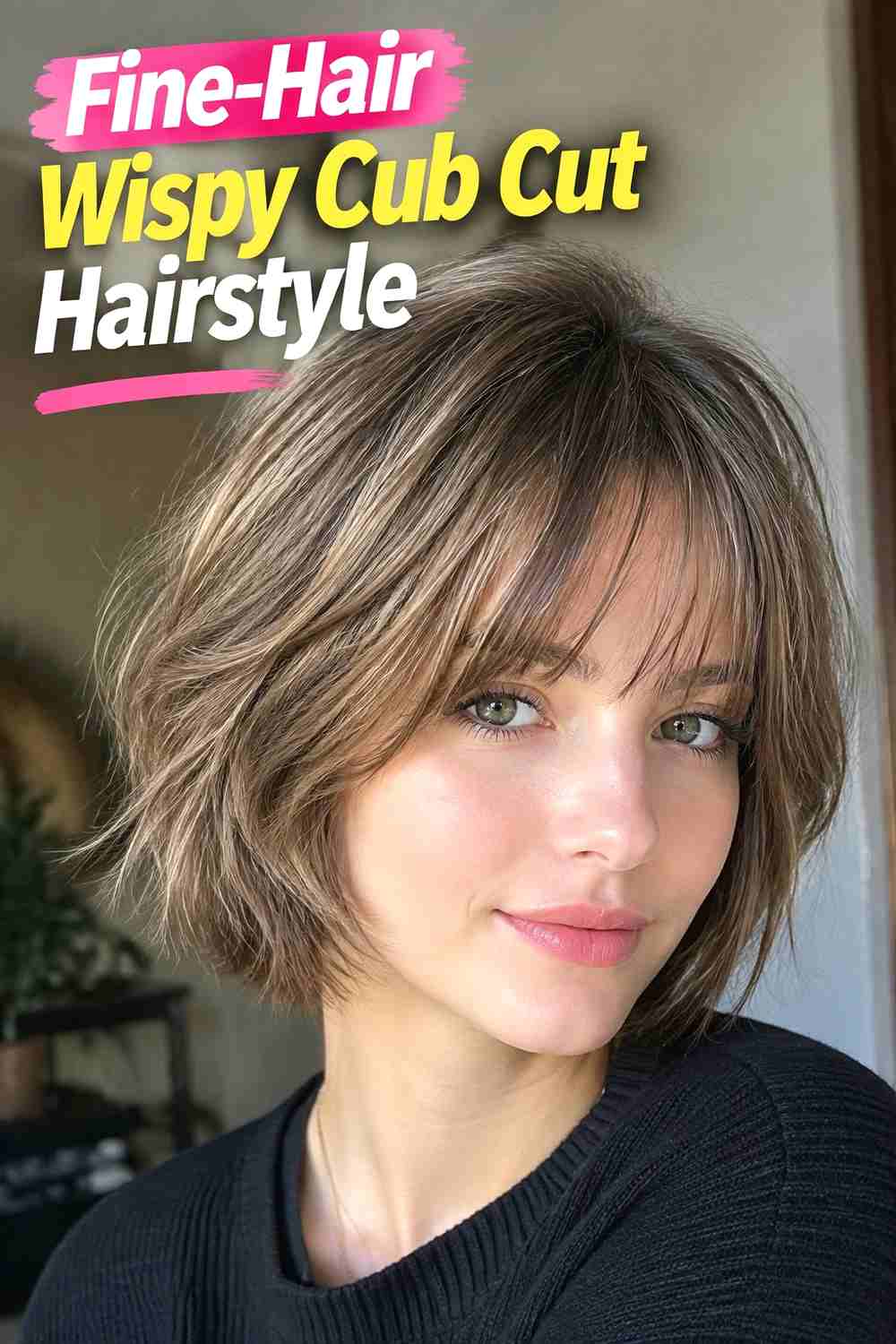
Fine hair needs a careful balance in a Wispy Cub Cut because too much feathering can reduce visible density. Keep the crown layers relatively long, concentrate the strongest movement around the face, and preserve a fuller perimeter through the lower sections. A light wispy fringe can work beautifully if it does not remove too much hair from the front. Gentle root lift adds dimension, while the ends should be softened only enough to avoid looking blunt. Lightweight mousse or spray is preferable to rich creams. The finished cut should feel airy but not sparse, using strategic layering to create movement rather than relying on aggressive thinning throughout the whole shape.
Styling Notes
Apply volumizing product near the roots and use very little product through the ends so they stay light.
Pro Tip
Ask for restrained wispy layering and a stronger lower perimeter if maintaining fullness is your priority.
15. Thick Hair Wispy Cub Cut Hairstyle
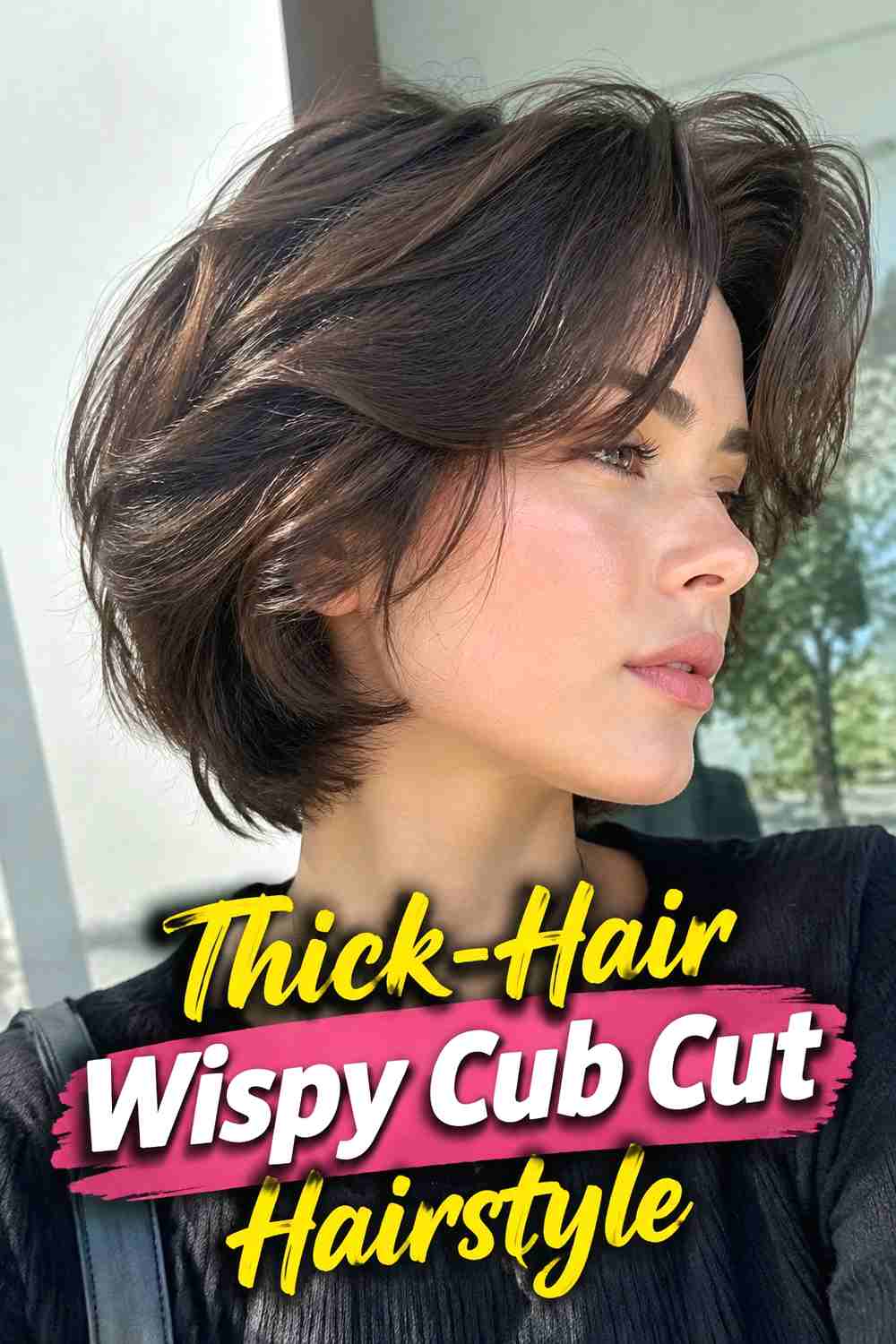
Thick hair can support plenty of layered movement, but the wispy finish works best when weight is removed strategically rather than everywhere. Internal layers can reduce heaviness through the middle sections, while the surface retains enough density to stay smooth. Around the face and perimeter, tapered pieces create the delicate movement that defines this version. The crown can be layered more noticeably if extra lift is desired, but the haircut should still settle naturally instead of expanding too widely. This approach is useful if a blunt short cut feels bulky. Ask for softness and targeted weight removal rather than aggressive thinning that might create frizz or unpredictable puffiness.
Hair Type & Length
Dense straight, wavy, or moderately textured hair can work well when internal weight is balanced carefully.
Pro Tip
Keep most of the wispy detail around the surface and perimeter while preserving enough interior support for a controlled shape.
16. Face Framing Wispy Cub Cut Hairstyle
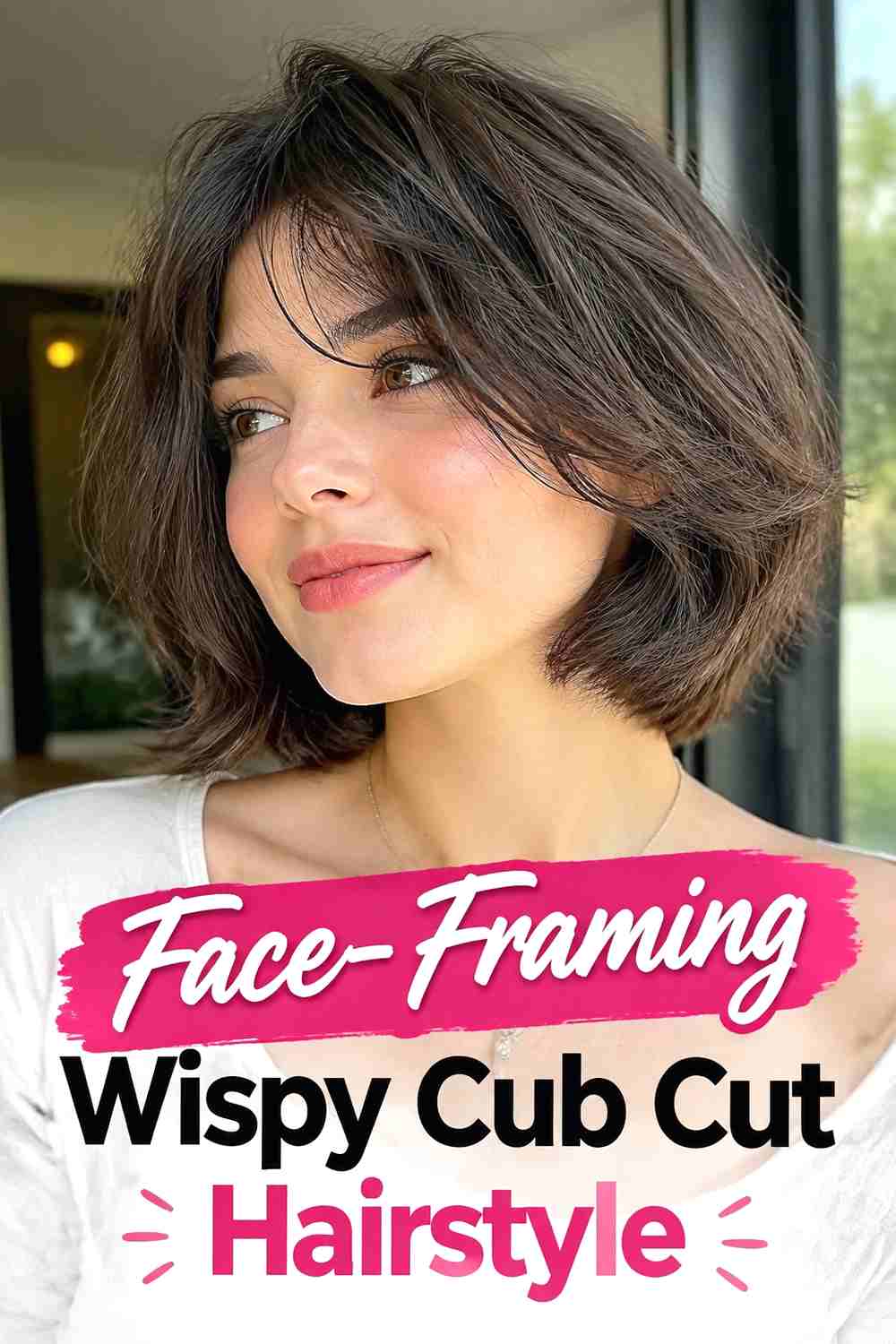
Face-framing layers make the front of the Wispy Cub Cut especially expressive. Shorter pieces begin around the cheekbones and taper through the jaw before joining the longer sections near the neck or shoulders. The tips remain fine and movable, creating a soft frame that shifts naturally when the hair is tucked or pushed back. The crown can stay lightly layered, but the most noticeable detail belongs around the front. This version works well if you want to refresh a compact cut without adding heavy bangs. A subtle outward bend through the shortest pieces helps reveal the layering, while the lower lengths can remain more relaxed and understated.
Styling Notes
Shape the front pieces away from the face with a small round brush, then soften the curve with your fingers.
Why It Works
Concentrating the wispy movement around the face adds dimension while preserving more density through the back.
17. Shaggy Wispy Cub Cut Hairstyle
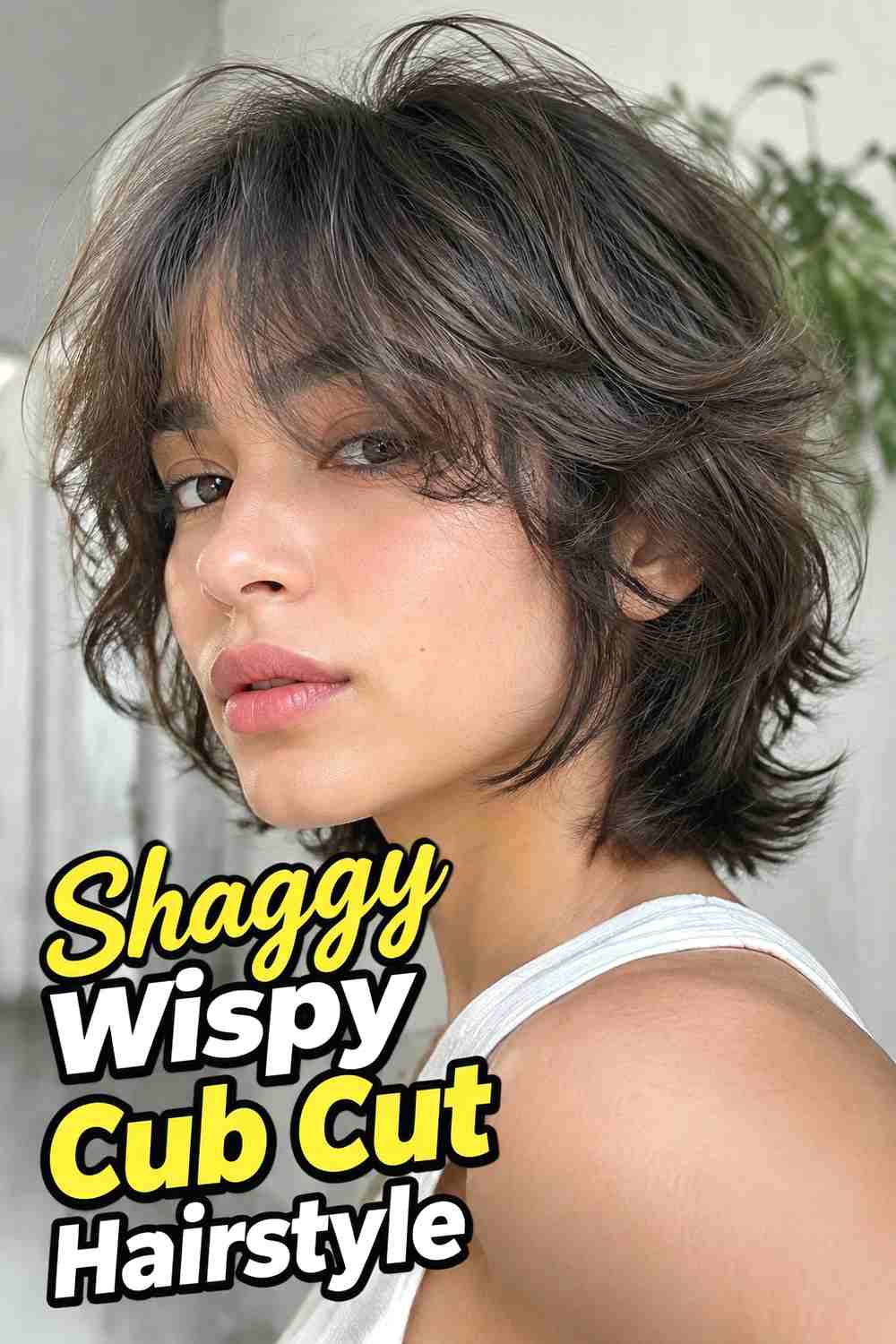
The Shaggy Wispy Cub Cut adds more visible separation through the crown and perimeter while keeping the individual ends soft. Layers are slightly more pronounced than in the classic version, giving the haircut a tousled, lived-in outline without pushing it into an extreme wolf cut. Fine fringe or short face-framing pieces can blend naturally into the shaggy sides, while the lower perimeter remains light and irregular. This version is ideal if you prefer texture that does not need to look perfect throughout the day. A small amount of flexible styling cream can emphasize selected pieces, but the haircut should retain a mix of defined and softer sections.
Best For
Medium-density straight-to-wavy hair often supports this extra separation without losing too much fullness.
Pro Tip
Avoid defining every layer equally; the mix of soft and stronger pieces is what keeps the shaggy finish natural.
18. Flipped End Wispy Cub Cut Hairstyle
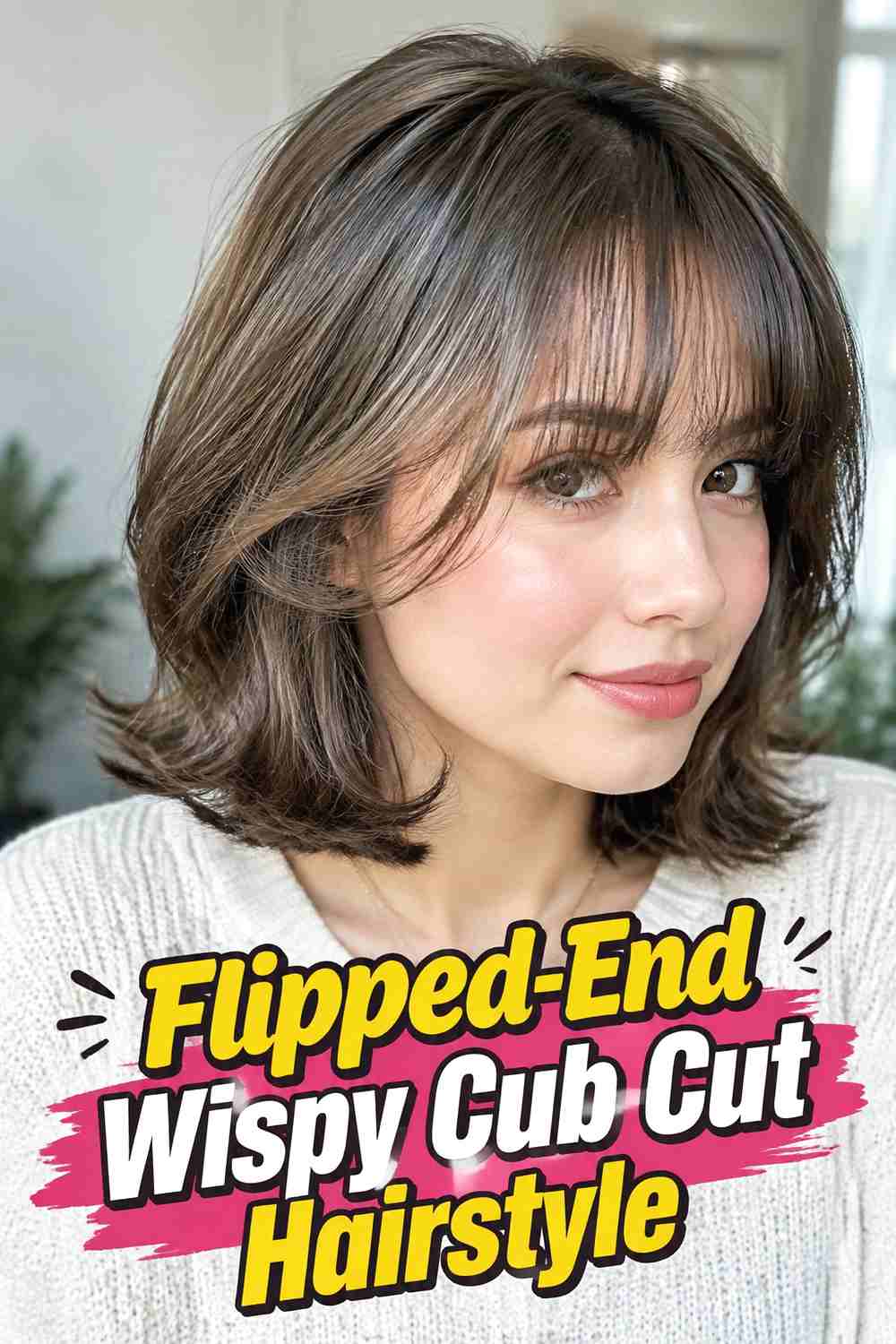
Flipped ends bring playful direction to the Wispy Cub Cut by turning selected lower sections gently outward. The crown and upper layers stay soft and textured, while the perimeter lifts away from the neck or shoulders in light, feathered pieces. Because the ends are already wispy, the flick should remain flexible rather than forming one thick, uniform curve. This version works especially well at chin or collarbone length, where the ends have enough room to move visibly. A round brush or quick flat-iron turn can create the shape, but leaving some pieces neutral prevents the result from looking overly retro or carefully set.
Styling Notes
Flick only selected outer pieces and keep the rest softly separated for a more modern, irregular finish.
Best For
Choose this option if you want extra movement at the perimeter without changing the layered structure of the cut.
19. Glossy Wispy Cub Cut Hairstyle
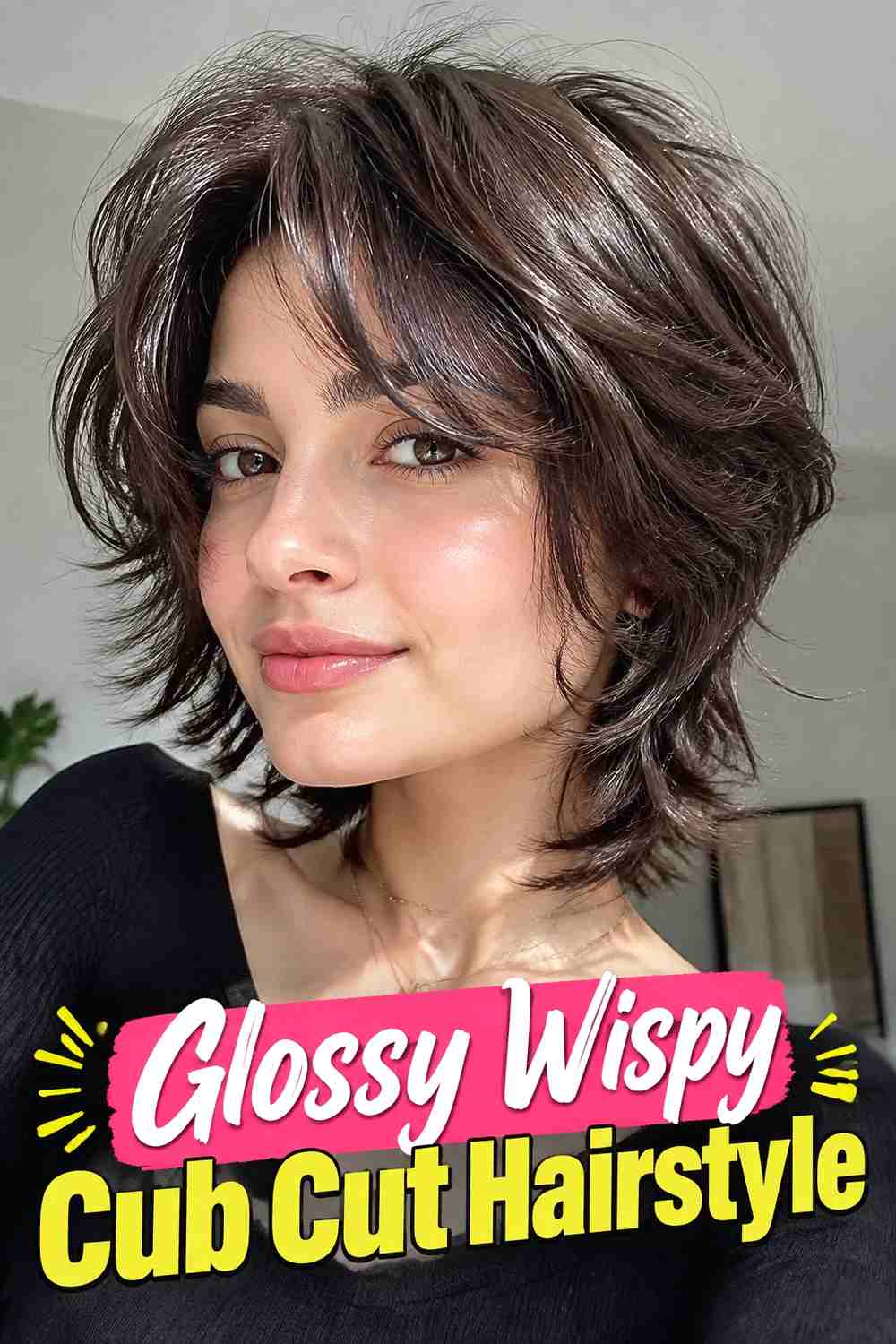
The Glossy Wispy Cub Cut combines a light shag-inspired silhouette with a healthier-looking reflective finish. Rather than coating the hair heavily, use just enough serum or shine mist to smooth the surface while preserving the fine separation at the ends. The crown can stay softly lifted, and the face-framing pieces should remain visible so the haircut does not collapse into one sleek shape. This variation is particularly effective when you want wispy texture to look polished rather than dry. Keep shine products away from the roots if your hair flattens easily, and concentrate them through the mid-lengths and tips where light can emphasize the movement most naturally.
Styling Notes
Complete the shape first, then add a small amount of finishing serum to the surface and visible wispy ends.
Wear & Maintenance
Refresh frizz with a light smoothing pass instead of repeatedly layering more shine product onto short hair.
20. Polished Wispy Cub Cut Hairstyle
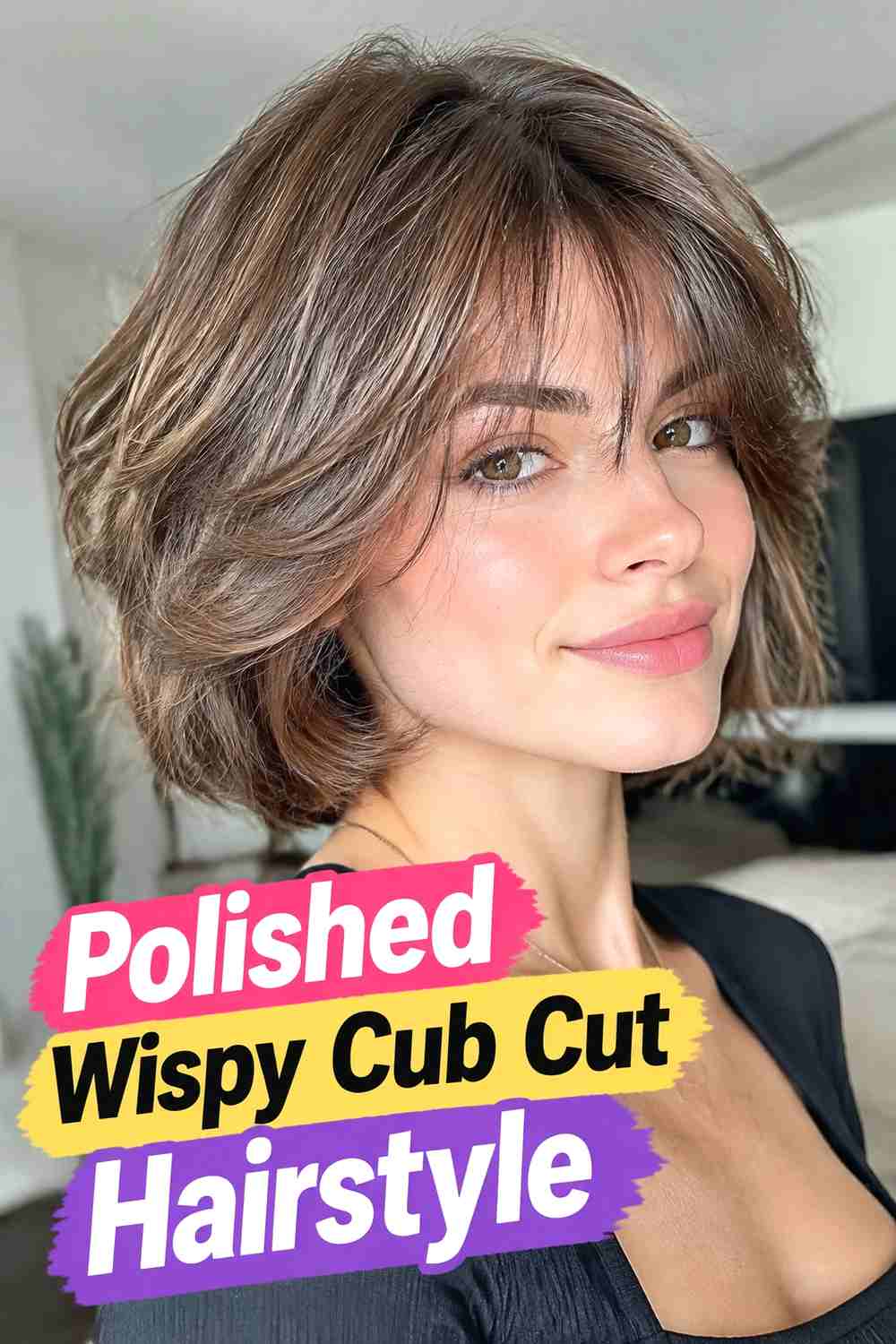
The Polished Wispy Cub Cut keeps the haircut’s airy character while giving the surface a cleaner, more controlled finish. Shorter crown and face-framing layers are smoothed into gentle movement rather than left heavily tousled, while the tapered ends retain enough separation to keep the Cub Cut recognizable. A soft blowout can create light root lift and subtle bends without turning the shape into a rounded bob. This version works well for occasions when you want a shag-inspired haircut to look more refined. The strongest result balances smoothness with texture, leaving visible strands and flexible movement rather than relying on stiff hold or perfectly uniform placement.
Styling Notes
Blow-dry the crown with gentle lift, smooth the sides, and separate the ends with your fingers after the hair cools.
Why It Works
Controlled styling sharpens the silhouette while wispy tips preserve the softness and movement that define the haircut.
How to Choose the Right Look
Start with length. Chin-Length versions make the Cub Cut compact and clearly short, while Collarbone variations offer more styling flexibility and a softer grow-out. If you want the wispy effect concentrated near the face, choose Wispy-Fringe, Curtain-Fringe, or Face-Framing options.
Your density should guide how much feathering you use. Fine hair generally benefits from fewer short layers and a stronger lower perimeter, while thick hair can support more internal weight removal and tapered pieces. Naturally wavy hair works especially well with Soft Wavy, Textured, Shaggy, and Air-Dried versions.
Styling time matters too. Air-Dried and Textured looks can be relatively relaxed, while Voluminous, Sleek, Glossy, and Polished versions need more deliberate shaping.
Finally, decide how delicate you want the ends to feel. Feathered and Flipped-End styles make the perimeter more noticeable, while Classic and Polished versions keep the wispy finish subtler and easier to adapt.
Final Thoughts
The Wispy Cub Cut is a versatile way to combine compact length with soft shag-inspired movement. Delicate fringe, tapered ends, and airy layers can make the shape feel lighter without turning it into an aggressively thinned haircut. Choose the amount of feathering according to your density, and let your natural texture guide whether the finish should be wavy, sleek, tousled, or polished.
FAQs
1. What is a Wispy Cub Cut Hairstyle?
A Wispy Cub Cut is a short-to-medium layered haircut with Cub Cut structure and lighter fringe, tapered ends, and delicate separation through the crown, face, and perimeter.
2. Does a Wispy Cub Cut need bangs?
No. Wispy or curtain fringe complements the haircut, but a side part, center part, or longer face-framing layers can create the look without traditional bangs.
3. Can fine hair wear a Wispy Cub Cut?
Yes, but the wispy layering should be restrained. Keeping a fuller perimeter and avoiding excessive thinning can help fine hair maintain visible density.
4. Does a Wispy Cub Cut work with thick hair?
Yes. Thick hair can support more layering and internal weight removal, but the surface should retain enough density to keep the cut smooth and controlled.
5. Is a Wispy Cub Cut easy to style?
It can be. Air-dried and naturally textured versions may need relatively little daily work, while sleek, voluminous, glossy, or polished finishes require more deliberate styling.
Save your favorite Wispy Cub Cut hairstyle ideas for your next salon visit, and share the looks that best match your texture, density, and preferred styling routine.