17 Ivy Braids Hairstyle Ideas for Lived-In Texture
Relaxed roots, textured lengths, and intentionally imperfect finishes give Ivy braids their distinctive lived-in look without the ultra-sleek feel of classic box braids. Current beauty coverage uses “Ivy braids” for a loose, intentionally fuzzy braid style that became widely discussed after hairstylist Susan Oludele created a version on Zazie Beetz in 2025. The look starts from familiar individual braiding techniques but emphasizes loose roots, little or no slicking gel, natural texture, and an undone finish rather than crisp uniformity. Allure notes that Kanekalon or Afro-kinky braiding hair can be used depending on how textured you want the result. Allure That gives the style plenty of room for variation. Length, braid thickness, parting, color, accessories, and secondary styling can all change while the relaxed-root character remains recognizable. The recent “Ivy braids” label should also be understood as a trend name rather than a claim that loose or distressed braiding itself has no earlier history. YouTube
Quick List
- Classic Loose Root Ivy Braids Hairstyle
- Jumbo Ivy Braids Hairstyle
- Medium Length Ivy Braids Hairstyle
- Long Flowing Ivy Braids Hairstyle
- Side Part Ivy Braids Hairstyle
- Center Part Ivy Braids Hairstyle
- Half Up Ivy Braids Hairstyle
- High Ponytail Ivy Braids Hairstyle
- Low Ponytail Ivy Braids Hairstyle
- Loose Bun Ivy Braids Hairstyle
- Beaded Ivy Braids Hairstyle
- Gold Cuff Ivy Braids Hairstyle
- Afro Kinky Texture Ivy Braids Hairstyle
- Ombre Ivy Braids Hairstyle
- Face Framing Ivy Braids Hairstyle
- Mixed Braid And Twist Ivy Braids Hairstyle
- Statement Extra Long Ivy Braids Hairstyle
1. Classic Loose Root Ivy Braids Hairstyle
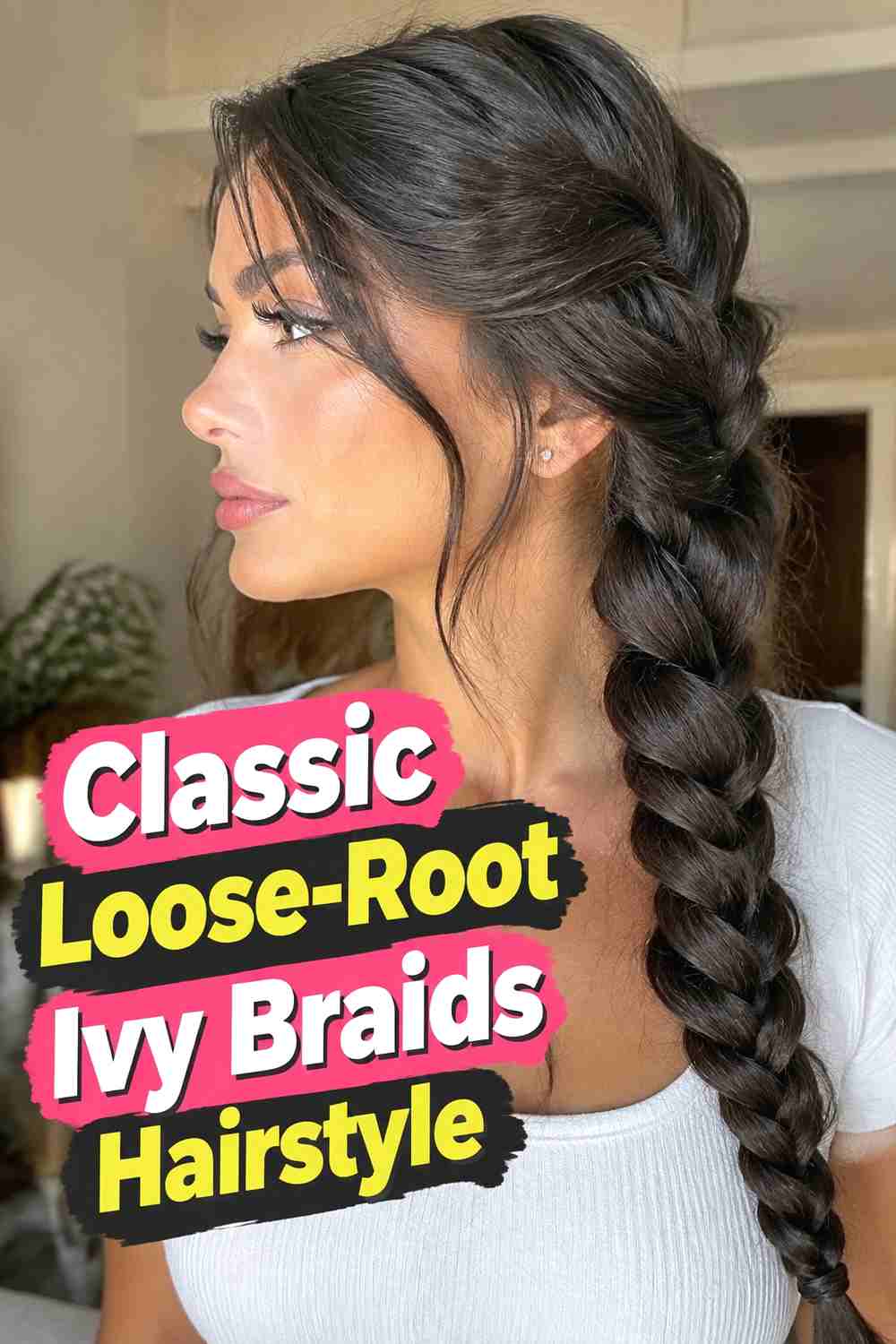
The Classic Loose-Root Ivy Braids Hairstyle puts the defining texture front and center. Individual braids begin with a deliberately relaxed grip so the roots retain softness instead of forming sharply slicked, highly controlled squares. Through the lengths, slightly distressed texture keeps each braid from looking perfectly uniform. The effect should feel intentional and wearable rather than simply old or unraveling. Medium-width braids make the contrast between fuzzy roots and structured lengths especially easy to see, while natural black or deep brown shades keep attention on the texture. Current descriptions of Ivy braids consistently emphasize this loose, lived-in quality as a key distinction from more polished box-braid finishes. Allure
Styling Notes
Skip excessive smoothing at the roots if you want the recognizable Ivy finish; neat sectioning and ultra-slick roots are not the main goal here.
Why It Works
The relaxed construction gives the braids immediate softness and allows natural texture around the scalp to remain visible.
2. Jumbo Ivy Braids Hairstyle
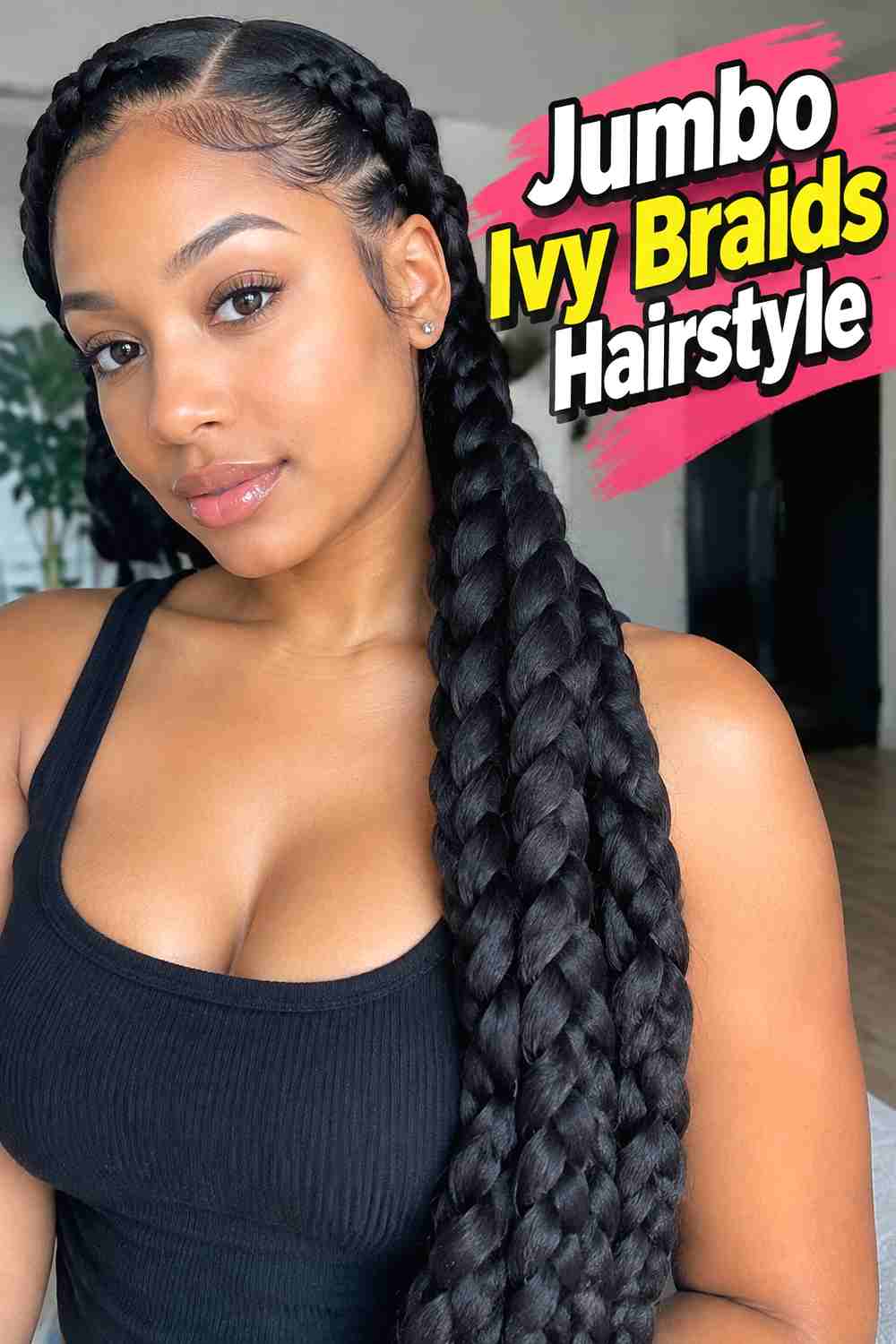
The Jumbo Ivy Braids Hairstyle enlarges each individual section, creating fewer but more substantial braids with a bold textured silhouette. Because Ivy braids are meant to look less rigid than traditional polished box braids, jumbo sizing works best when the roots stay soft and the added hair has visible texture rather than a perfectly silky surface. Larger braids also make every irregularity more noticeable, so slight variation in thickness can actually complement the deliberately undone mood. The lengths can fall around the chest or shoulders depending on preference. Keep the number of accessories limited so the chunky braid texture remains the visual focus, and avoid making the roots unnecessarily tight simply to support the larger sections.
Hair Type & Length
Added braiding hair can create substantial length and fullness, but the weight should still feel comfortable at the roots.
Pro Tip
Ask for the jumbo sections to look relaxed rather than oversized and tightly anchored; the Ivy effect depends more on softness than precision.
3. Medium Length Ivy Braids Hairstyle
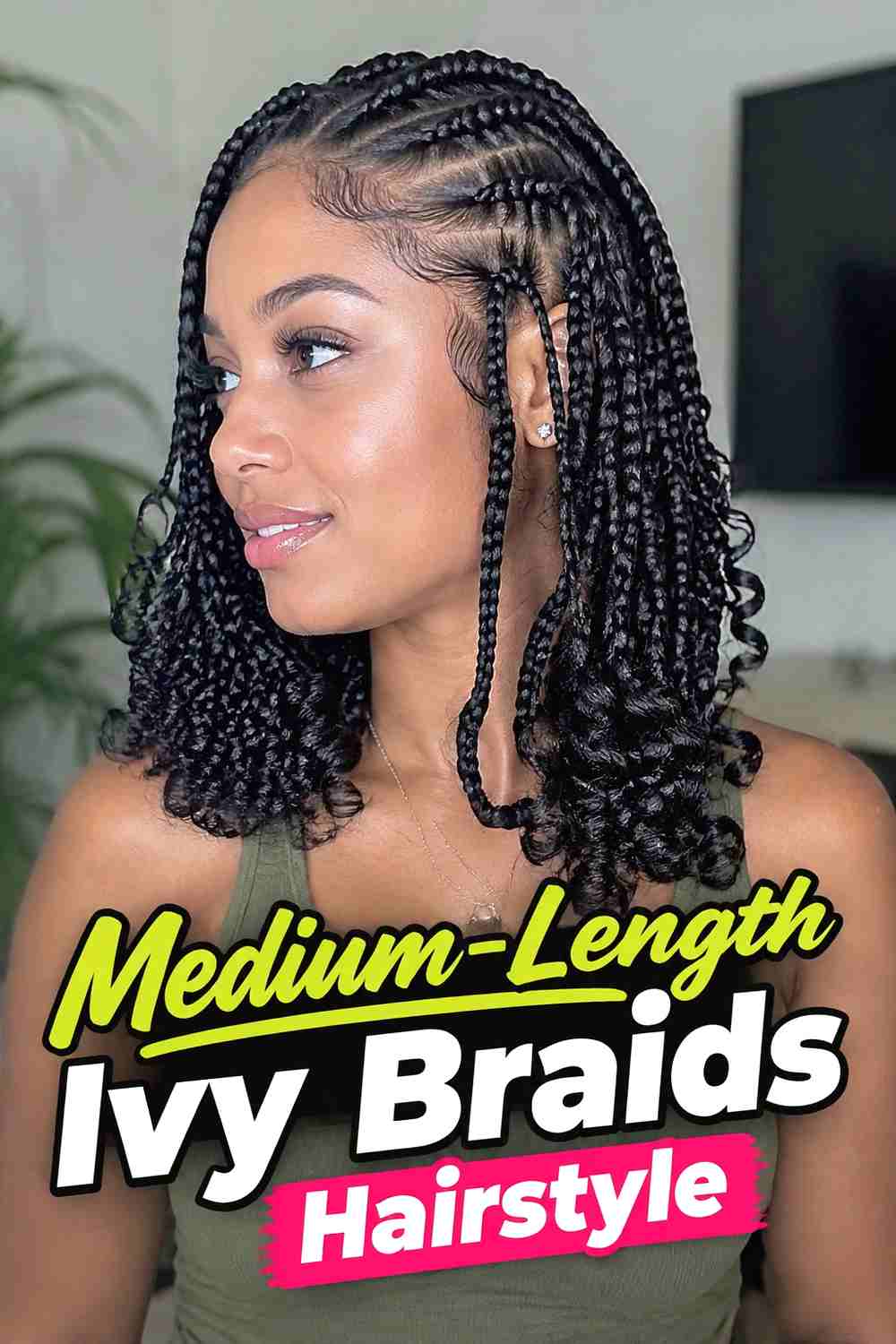
The Medium-Length Ivy Braids Hairstyle brings the lived-in texture into a practical shoulder-to-chest silhouette. Shorter lengths reduce some of the visual weight associated with very long braid installations while still leaving enough room for the distressed texture to develop through each braid. A slightly uneven finish at the lower lengths can complement the style, provided the ends still look intentional and secure. This length also makes it easier to wear the braids completely down without overwhelming the face or outfit. Medium-sized sections maintain visible separation at the roots, and a natural brown or black shade keeps the look understated. The result feels relaxed, modern, and versatile enough for everyday styling.
Best For
Choose this version if you want the characteristic fuzzy-root finish without committing to waist-length or extra-long braids.
Wear & Maintenance
Protect the braids from unnecessary friction at night while accepting that a little softness and fuzziness are part of the intended appearance.
4. Long Flowing Ivy Braids Hairstyle
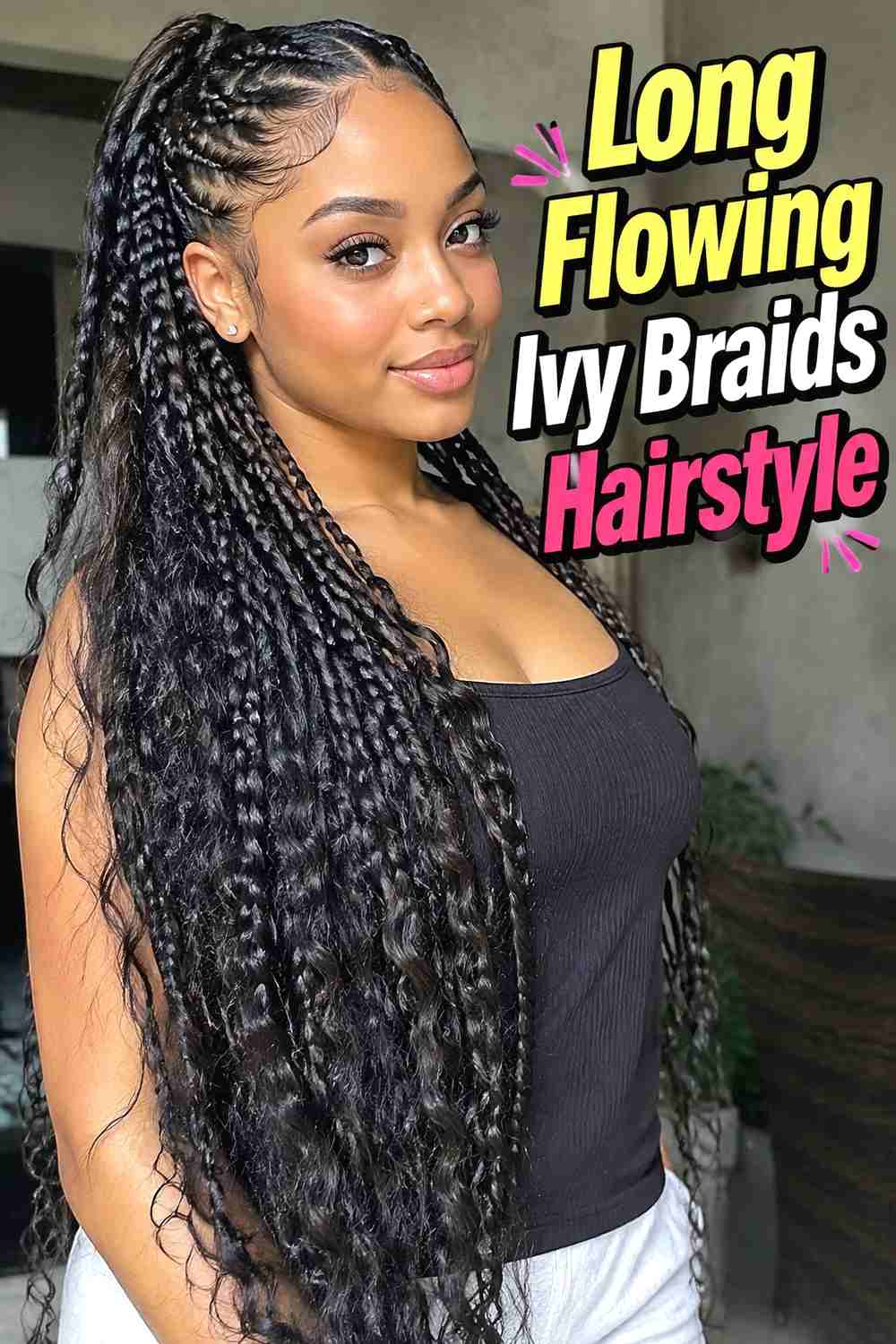
The Long Flowing Ivy Braids Hairstyle uses extended length to exaggerate the casual movement that makes this braid trend distinctive. Loose roots transition into individual braids that fall well below the shoulders, with subtle roughness and variation preventing the lengths from looking overly polished. Keeping the braids medium or slightly narrow helps longer installations move more freely, while textured braiding hair can create a fuller, more organic surface. Because the style already makes a statement through length, minimal accessories usually keep it balanced. Extra length also gives you more options for later styling, including low ponytails and half-up shapes, but avoid piling heavy braids too tightly on the scalp if comfort begins to suffer.
Styling Notes
Keep the longest sections proportionate to your braid thickness so the installation does not feel unnecessarily heavy.
Why It Works
Extended length shows the imperfect braid texture clearly and creates fluid movement without needing curls or loose boho strands.
5. Side Part Ivy Braids Hairstyle
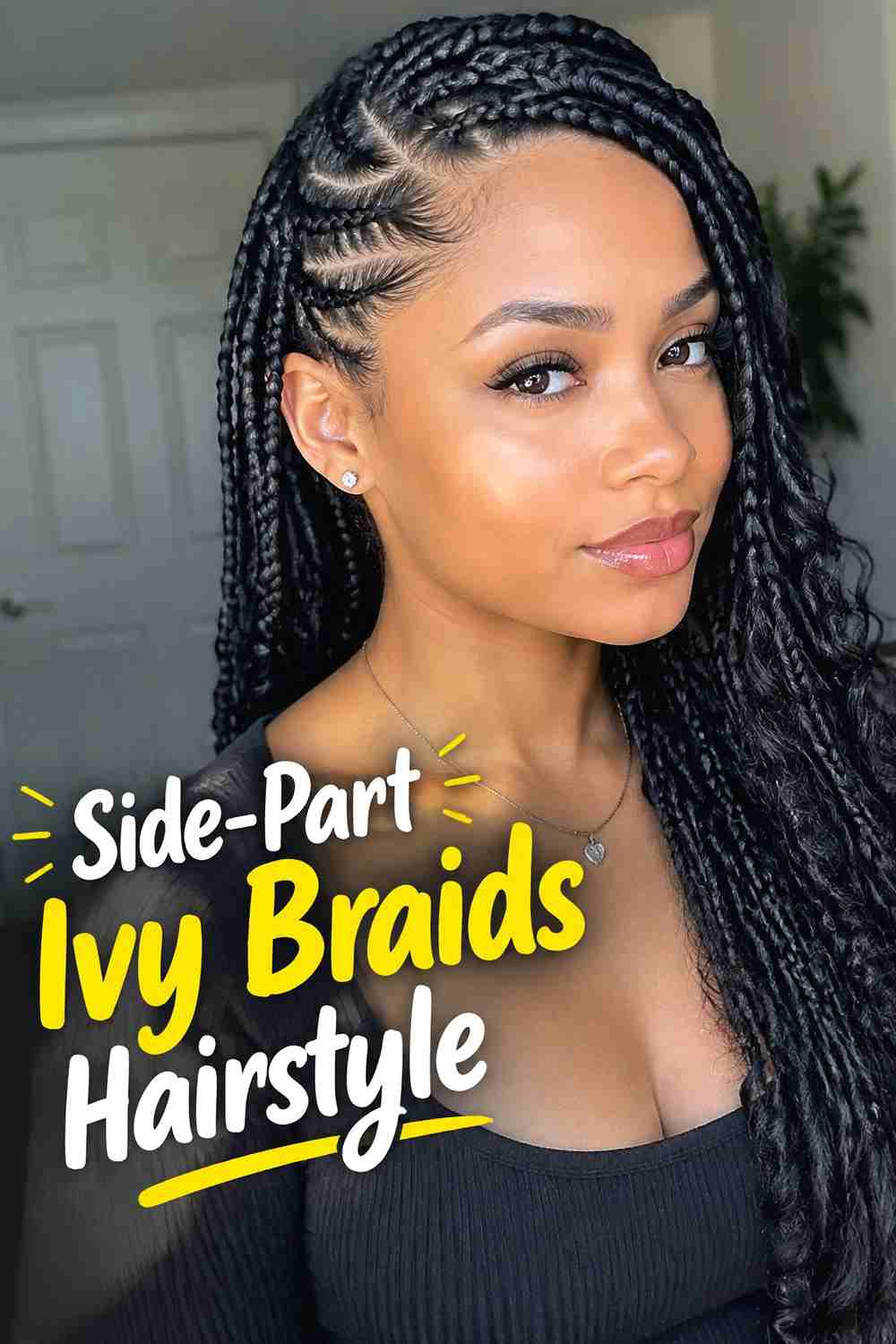
The Side-Part Ivy Braids Hairstyle uses directional placement to give the loose-root texture an asymmetrical shape around the face. Instead of arranging the braids in an evenly centered fall, more of the length is encouraged toward one side, creating a sweeping front while the opposite side remains slightly more exposed. Because Ivy braids already have relaxed roots, the part does not need the razor-sharp finish associated with sleek braid styles. A naturally visible scalp line is enough to establish the direction while preserving the lived-in character. Medium or long lengths work particularly well because the braids have enough weight to maintain the side sweep. The result feels casual, flattering, and easy to rearrange throughout the day.
Styling Notes
Avoid forcing the braids permanently across one side with excessive tension; use their natural fall to establish the part instead.
Best For
This variation suits anyone who prefers asymmetry or likes wearing braids swept over one shoulder.
6. Center Part Ivy Braids Hairstyle
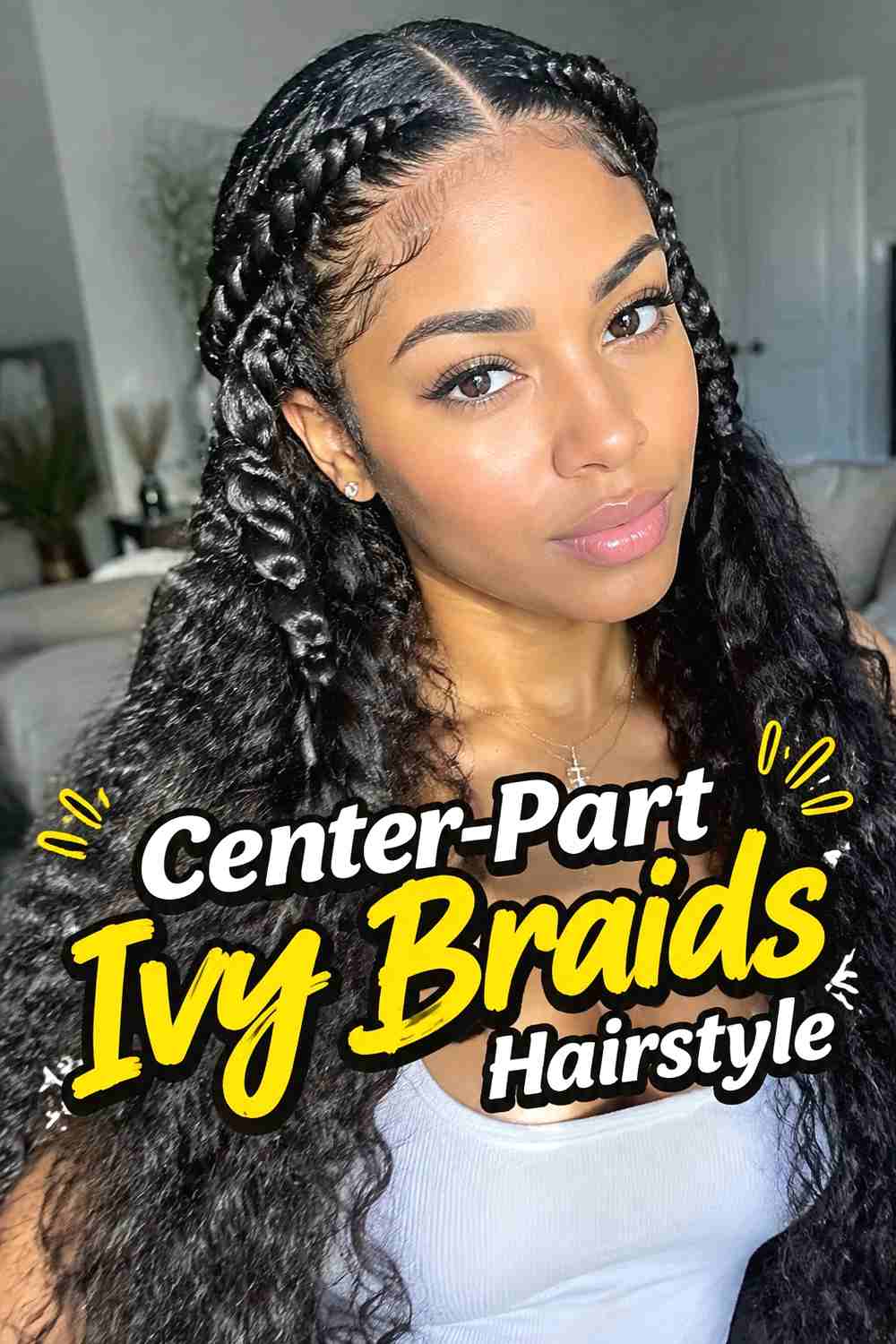
The Center-Part Ivy Braids Hairstyle creates front symmetry while allowing the actual braid texture to stay deliberately imperfect. A recognizable middle division guides the braids down both sides of the face, but the roots remain soft rather than gelled flat. That balance gives the style structure without removing the relaxed quality that defines Ivy braids in current beauty coverage. Allure Medium-width braids are particularly effective because they create enough separation for the part to remain visible while still forming a substantial frame around the face. The lengths can stay fairly uniform or feature subtle variation in texture. This is a strong choice if you want a straightforward silhouette that makes the loose-root construction easy to appreciate.
Why It Works
The clean overall symmetry contrasts with the fuzzy, imperfect braid texture, giving the hairstyle both order and softness.
Pro Tip
Keep the center line recognizable without trying to make every surrounding section identical in size.
7. Half Up Ivy Braids Hairstyle
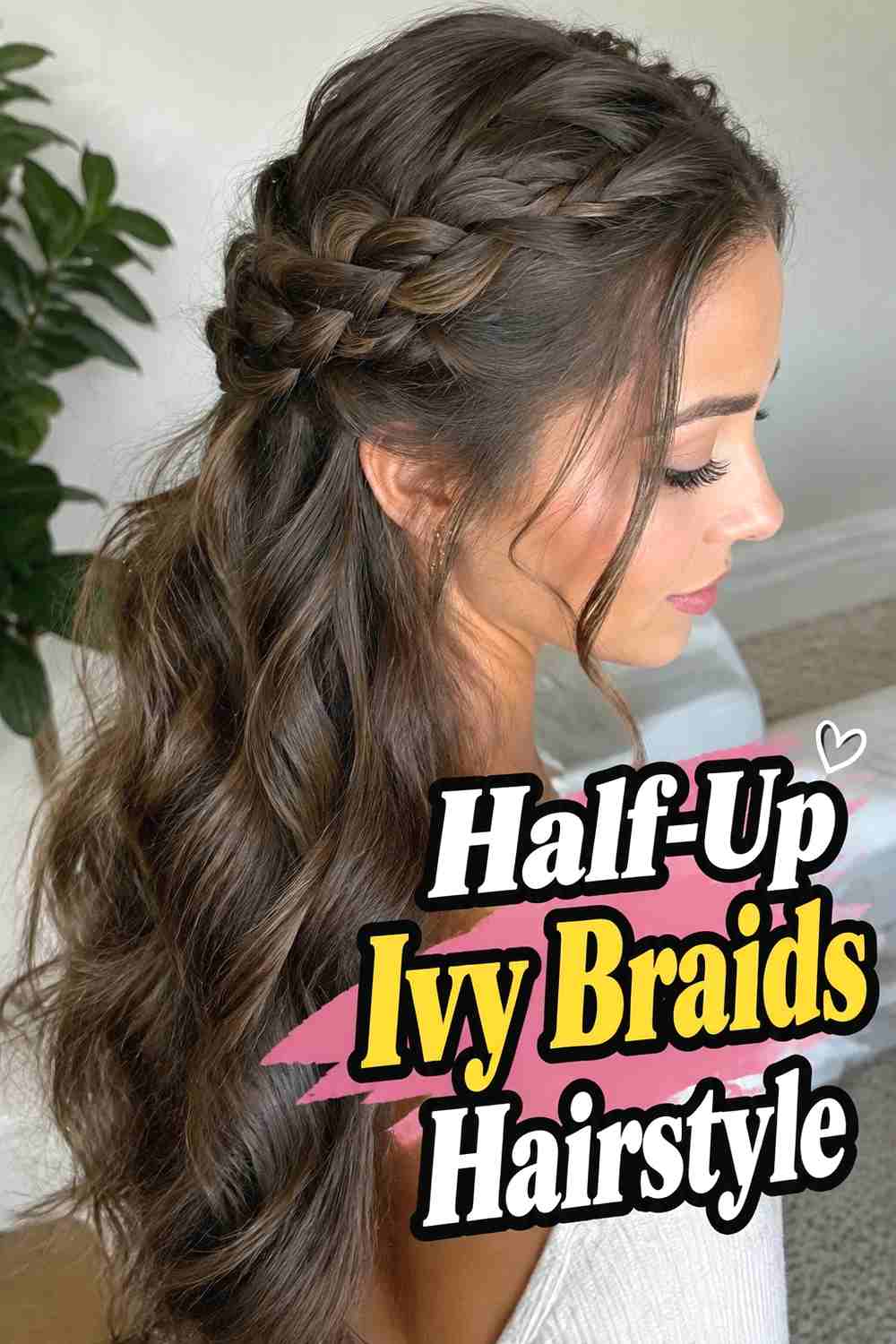
The Half-Up Ivy Braids Hairstyle gathers part of the installation away from the face while allowing most of the textured braids to remain down. The upper sections can be secured into a loose mini ponytail or softly wrapped knot, leaving the lower braids to fall naturally over the shoulders and back. Because the roots are intentionally relaxed, the half-up section should also avoid looking tightly pulled or heavily slicked. A slightly elevated shape gives the crown definition without erasing the lived-in finish. This option is especially useful for longer Ivy braids because it changes the silhouette without hiding the texture that makes the installation distinctive. Keep the elastic comfortable and avoid repeatedly tightening it throughout the day.
Styling Notes
Gather only enough braids to define the half-up shape and leave a little softness near the hairline and crown.
Best For
This is an easy option when you want your braids off the face while still showing most of their length.
8. High Ponytail Ivy Braids Hairstyle
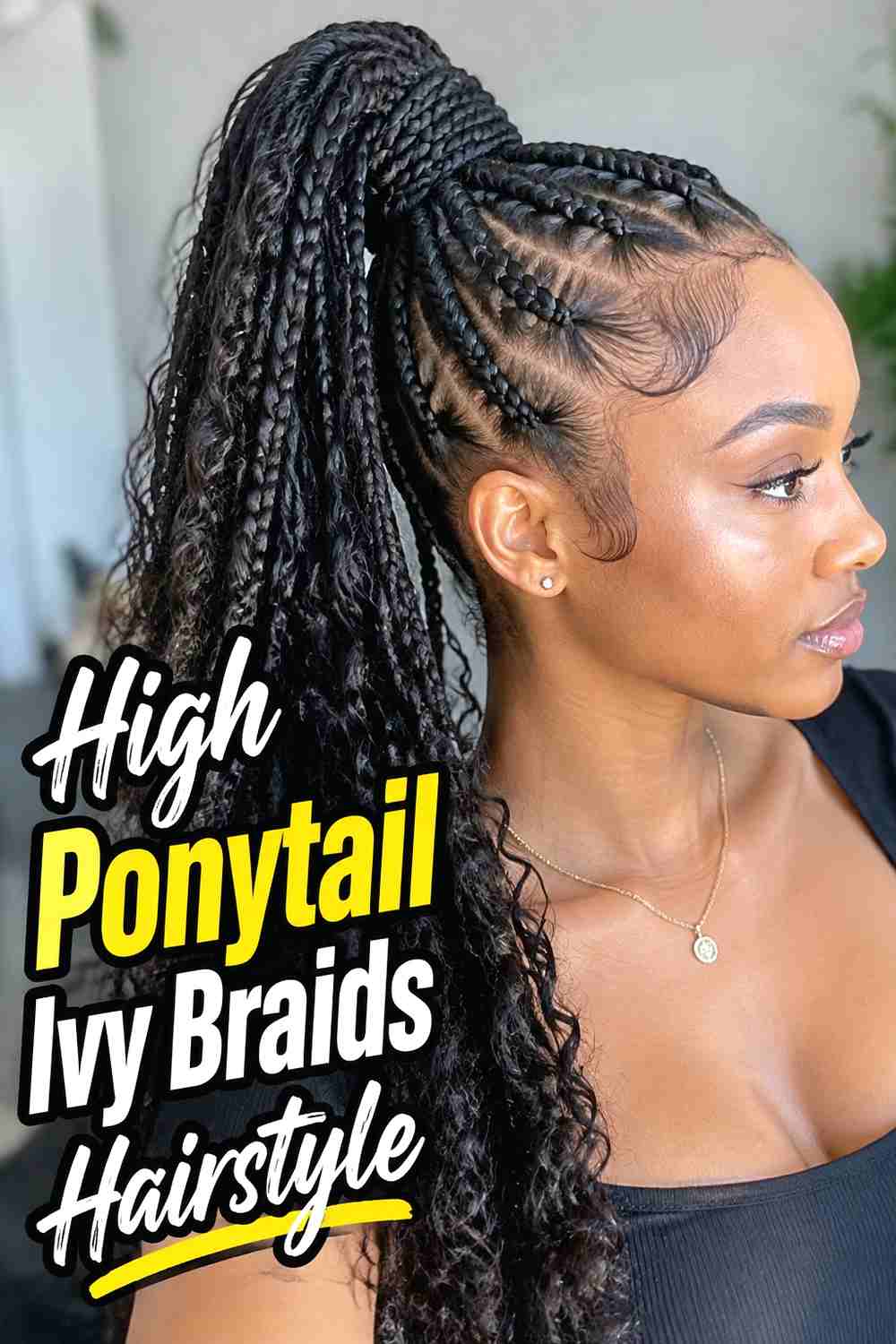
The High Ponytail Ivy Braids Hairstyle lifts the textured lengths toward the crown, creating a more dramatic silhouette while keeping the imperfect braid surface visible. Rather than slicking every root into the ponytail, allow the upper sections to maintain some looseness so the style still reads as Ivy braids instead of a highly polished braided ponytail. Longer, lighter braids are usually easier to gather than very thick or heavy sections. A few braids can remain near the front if you prefer a softer frame. Because raising an entire braid installation can place additional weight at the ponytail base, comfort should guide how high and tight you position it. The finish should feel secure without creating unnecessary pulling.
Wear & Maintenance
Use a wide, supportive tie or braid-friendly elastic and take the ponytail down if the lifted weight becomes uncomfortable.
Pro Tip
Keep the ponytail base slightly relaxed rather than repeatedly tightening it for an ultra-snatched effect.
9. Low Ponytail Ivy Braids Hairstyle
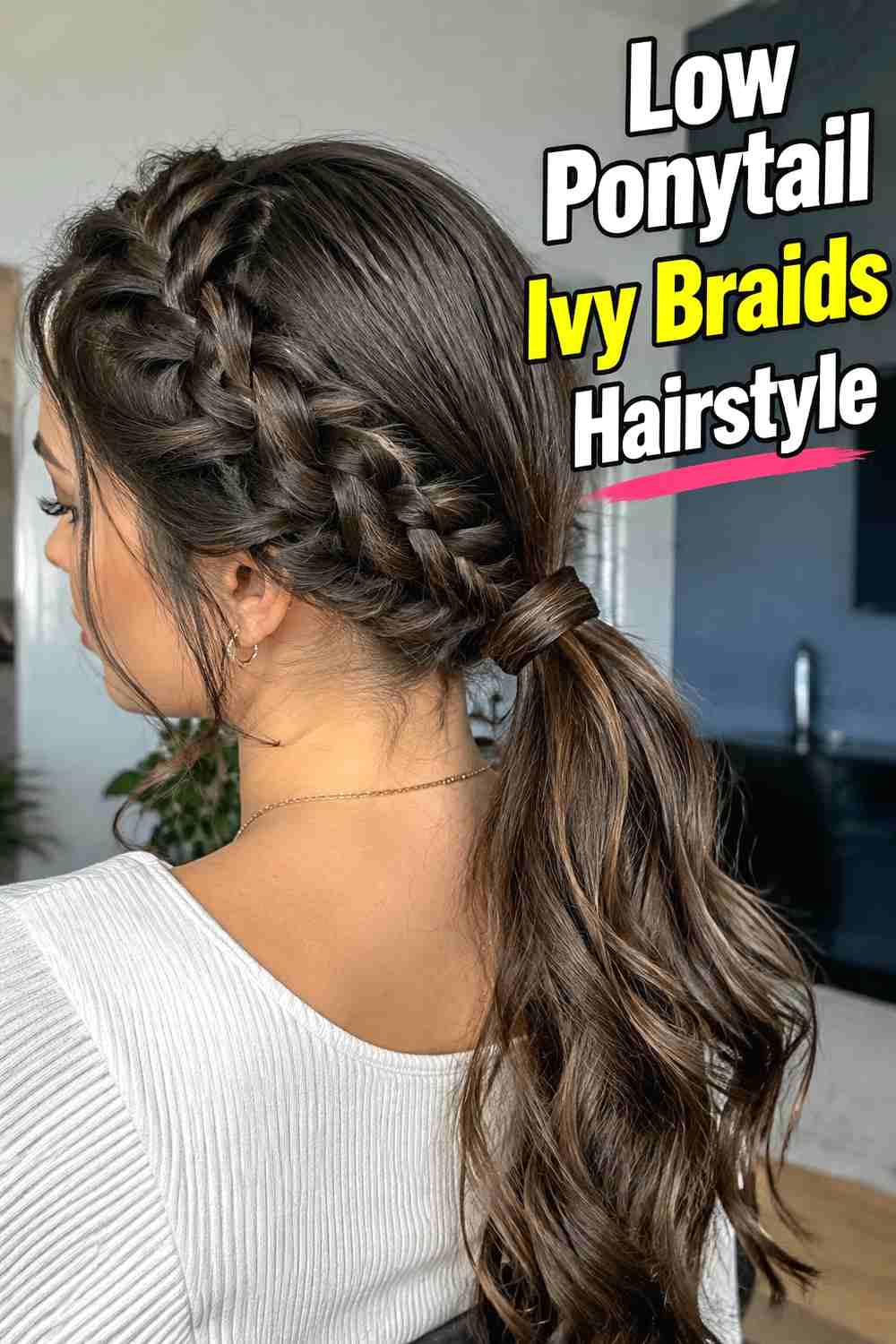
The Low Ponytail Ivy Braids Hairstyle keeps the installation gathered near the nape for an easy, understated finish. This placement works naturally with the style’s lived-in quality because the braids do not need to be tightly redirected upward or smoothed against the scalp. The roots can remain softly textured while the lengths are collected with a simple tie, cuff, or wrapped braid. Long and medium Ivy braids both work well, with the lower placement allowing the braid texture to remain visible from behind. A center or side part can be preserved at the front depending on preference. The result feels simple enough for daily wear while still looking intentional, especially when one braid is wrapped around the base to conceal the elastic.
Styling Notes
Gather the braids in the direction they naturally fall so the ponytail does not create unnecessary pulling near the front sections.
Why It Works
The low placement complements the relaxed roots and keeps the braid movement soft rather than highly structured.
10. Loose Bun Ivy Braids Hairstyle
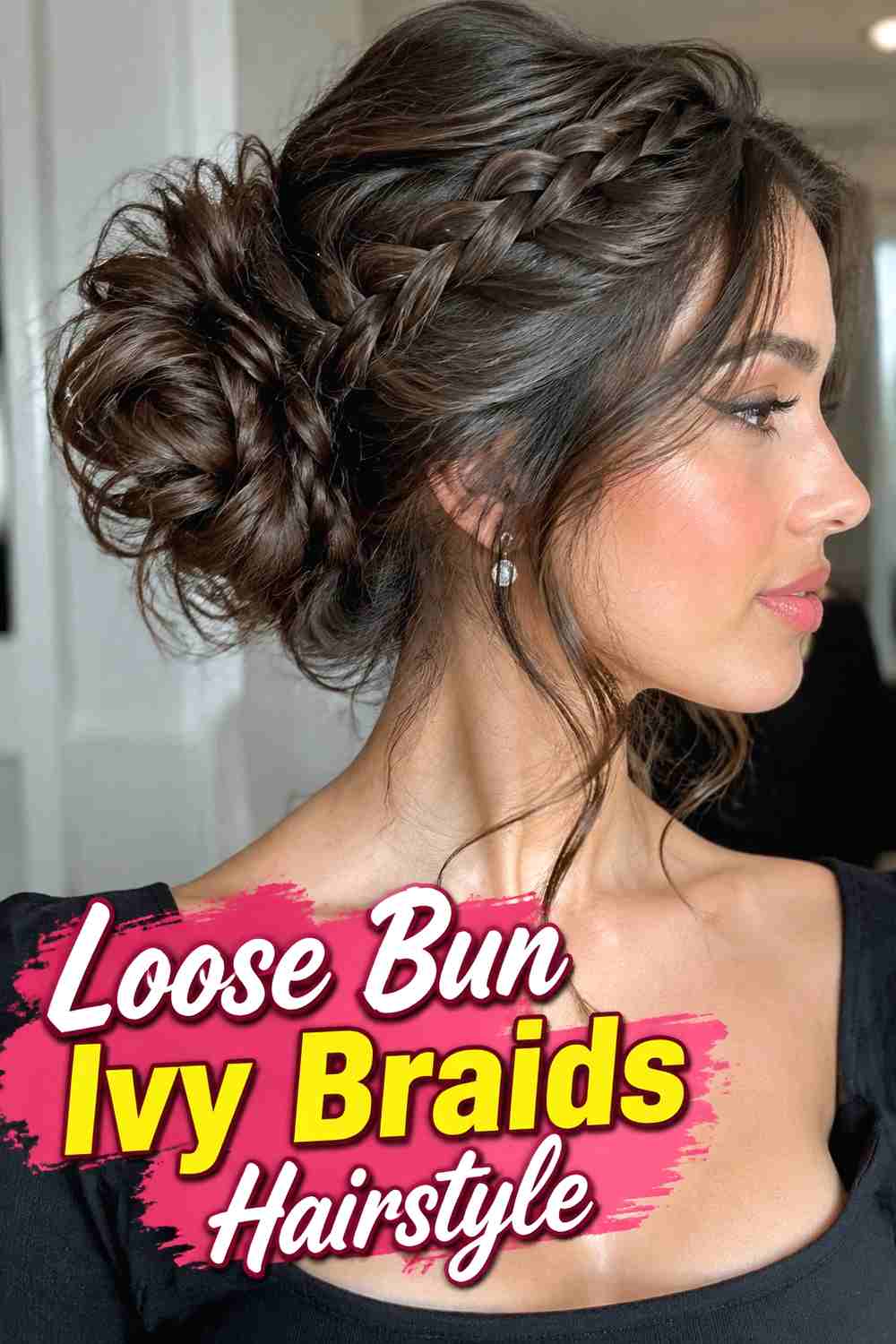
The Loose Bun Ivy Braids Hairstyle coils the textured lengths into a soft updo while leaving the roots and outer edges intentionally relaxed. Rather than creating a perfectly compact braided bun, the shape can sit slightly loose at the crown or nape with a few braid ends subtly visible. The result should remain secure, but the surface does not need to look uniformly smooth. This approach works best on braids light enough to wrap comfortably without creating excessive weight in one concentrated area. A high loose bun feels bold and casual, while a lower placement gives the same braids a softer profile. Because the Ivy texture is part of the appeal, avoid flattening every fuzzy section with strong gel before forming the bun.
Best For
Use this style when you want the length lifted away from your shoulders without turning the installation into a rigid formal updo.
Wear & Maintenance
Distribute the bun’s weight with multiple anchor points rather than relying on one very tight elastic.
11. Beaded Ivy Braids Hairstyle
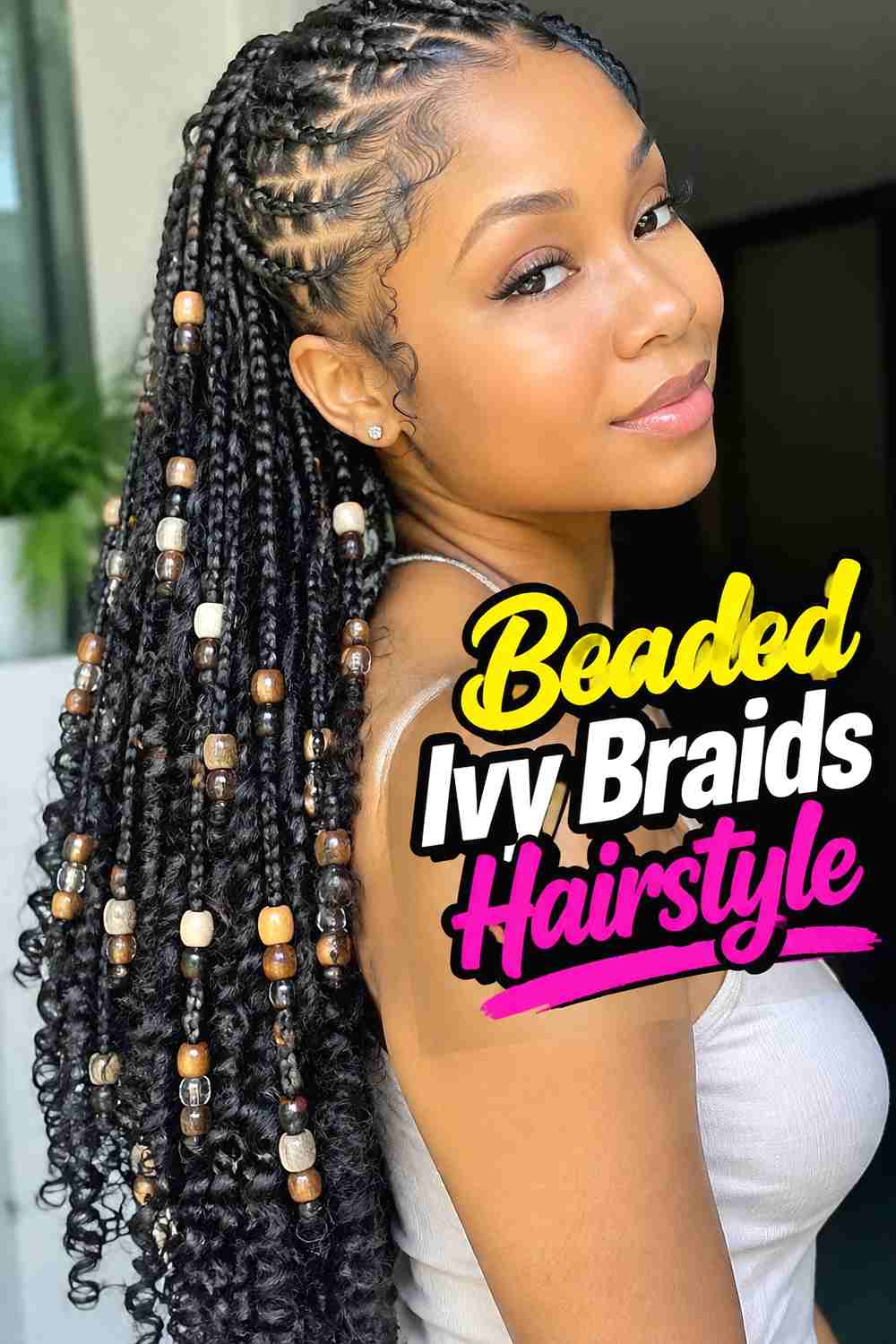
The Beaded Ivy Braids Hairstyle adds small decorative details while preserving the relaxed root texture as the primary feature. Beads can be placed near selected ends or spaced along only a few braids, creating subtle highlights instead of turning every section into an ornamented strand. Wooden, metallic, clear, or tonal beads each produce a different mood, but lighter accessories may be more comfortable if the braids are already long. The slightly distressed surface of Ivy braids contrasts nicely with polished bead finishes, giving the style both softness and definition. Keep bead placement selective so the installation does not lose its effortless character. The result can feel personal and decorative while remaining recognizably loose and lived-in.
Styling Notes
Attach beads only to secure sections and check that their openings do not snag fuzzy braid fibers.
Pro Tip
Use a few strategically placed beads rather than decorating every braid if you want the Ivy texture to stay visually dominant.
12. Gold Cuff Ivy Braids Hairstyle
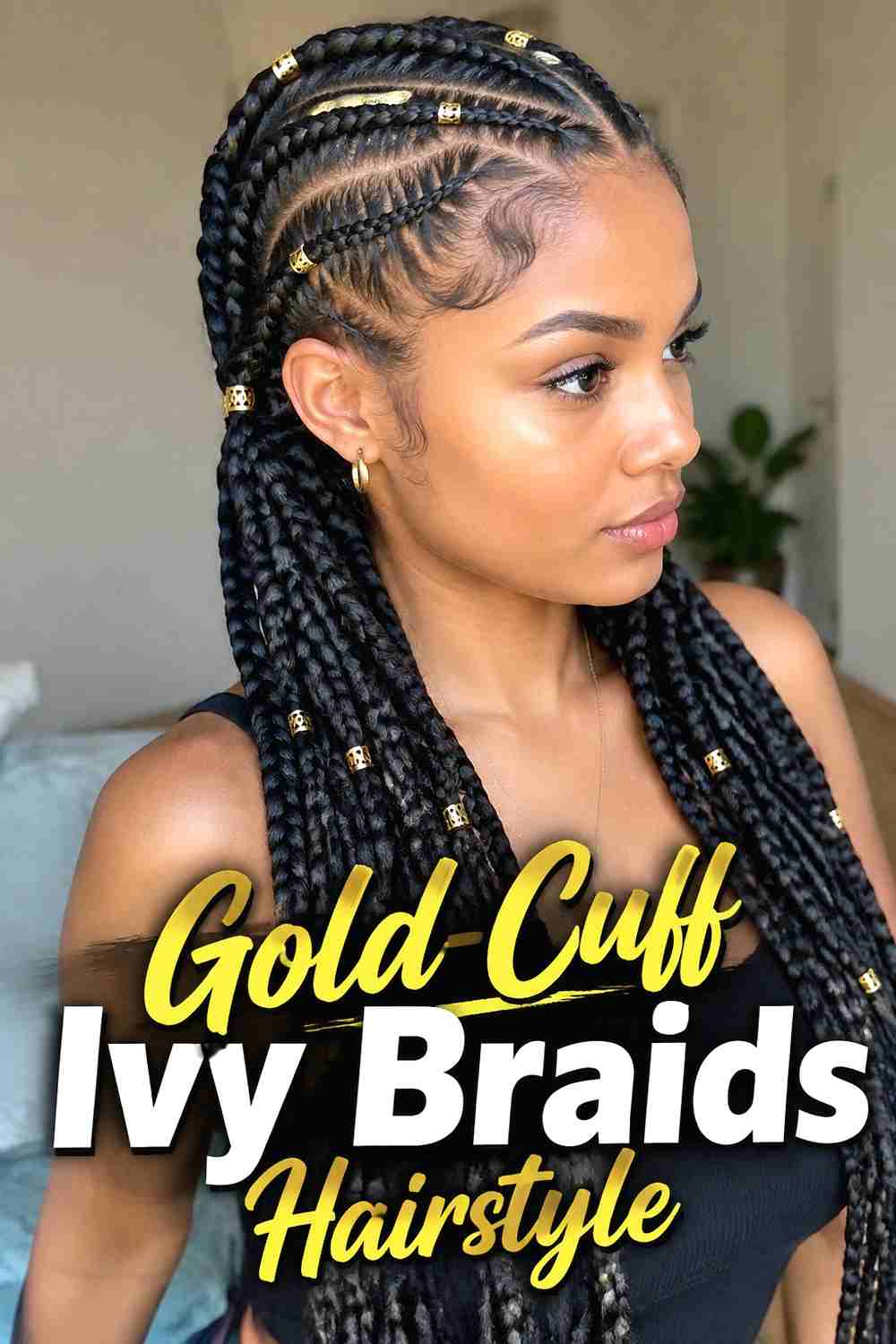
The Gold-Cuff Ivy Braids Hairstyle brings small flashes of metallic detail to the deliberately undone braid surface. A handful of cuffs can be clipped around selected braids at different heights, creating contrast between the smooth metal and the fuzzier textured lengths. Dark braiding hair makes warm gold particularly visible, while brown or auburn shades can create a softer tonal effect. Because Ivy braids are meant to feel casual and unforced, scattered cuffs generally suit the style better than a perfectly repeated accessory pattern. The relaxed roots can remain completely untouched, allowing the decorative interest to sit farther down the braids. This is an easy way to change an existing installation without altering the underlying braid structure.
Why It Works
The metallic accents provide precise points of shine against a hairstyle whose beauty comes from softness and irregular texture.
Wear & Maintenance
Check cuffs periodically to make sure rough edges are not catching loose fibers or natural strands.
13. Afro Kinky Texture Ivy Braids Hairstyle
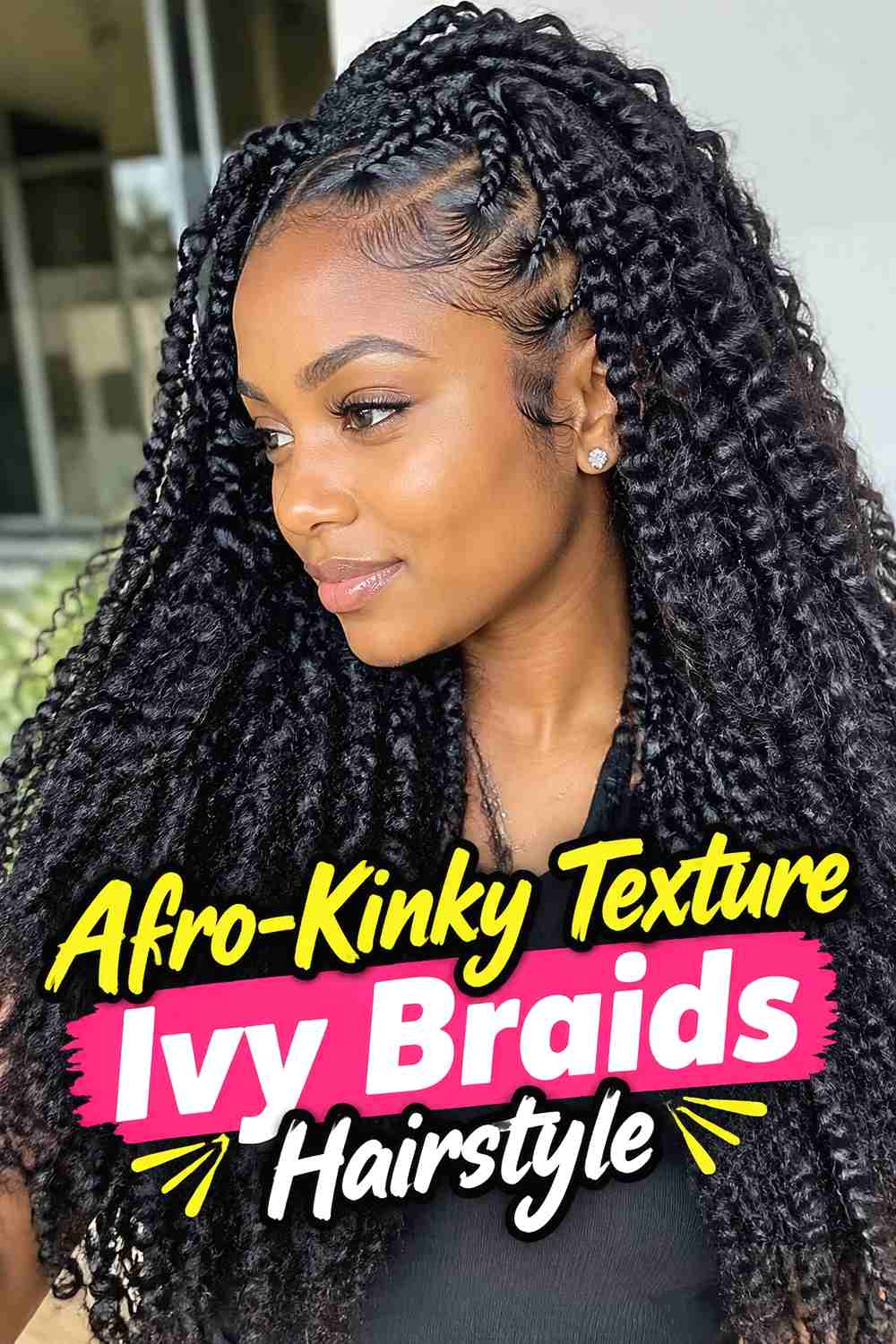
The Afro-Kinky Texture Ivy Braids Hairstyle intensifies the fuzzy, tactile quality by using textured added hair rather than very smooth braiding fiber. Allure specifically notes Afro-kinky hair as an option for a more textured Ivy braid result. Allure The braids can look fuller and more matte, with visible texture from the roots through the lengths instead of appearing smooth below a fuzzy base. Medium sections often provide enough structure to keep each braid recognizable while allowing the fiber’s natural character to show. This variation works especially well in natural black and brown shades, where light catches the irregular surface softly. The finished style should look dimensional and intentionally textured rather than heavily brushed or artificially frizzed.
Hair Type & Length
The choice of added hair strongly influences the final surface, so discuss whether you want subtle fuzziness or a visibly kinky, distressed finish.
Pro Tip
Keep the braid tension even but relaxed enough that the textured fiber does not become compressed into an overly smooth rope.
14. Ombre Ivy Braids Hairstyle
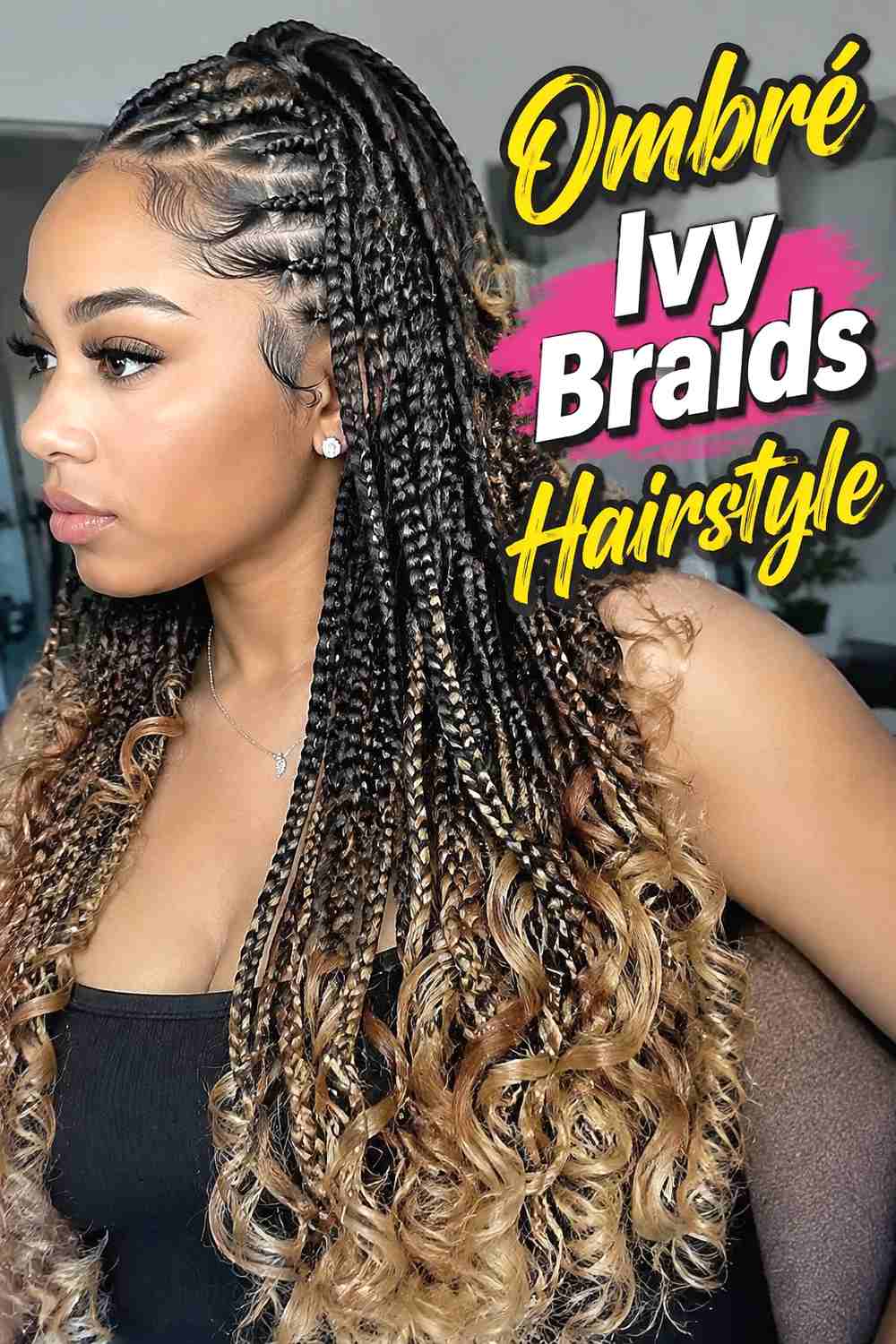
The Ombré Ivy Braids Hairstyle combines lived-in texture with a visible color transition through the lengths. Dark roots can move gradually into warm brown, copper, burgundy, honey, or another complementary shade, letting the color change emphasize each braid’s movement. Because the texture is already intentionally imperfect, a blended ombré generally feels more cohesive than abrupt blocks of unrelated color. Medium or long lengths provide the most space for the gradient to develop, while loose roots keep the installation recognizable as Ivy braids rather than conventional polished ombré box braids. The color itself becomes the decorative feature, so accessories can stay minimal. Keep the tonal transition consistent enough that the overall hairstyle still feels unified.
Styling Notes
Decide where you want the color shift to begin before installation so the gradient appears balanced around the entire head.
Why It Works
The color transition draws attention down the braid lengths while the relaxed texture prevents the result from feeling overly precise.
15. Face Framing Ivy Braids Hairstyle
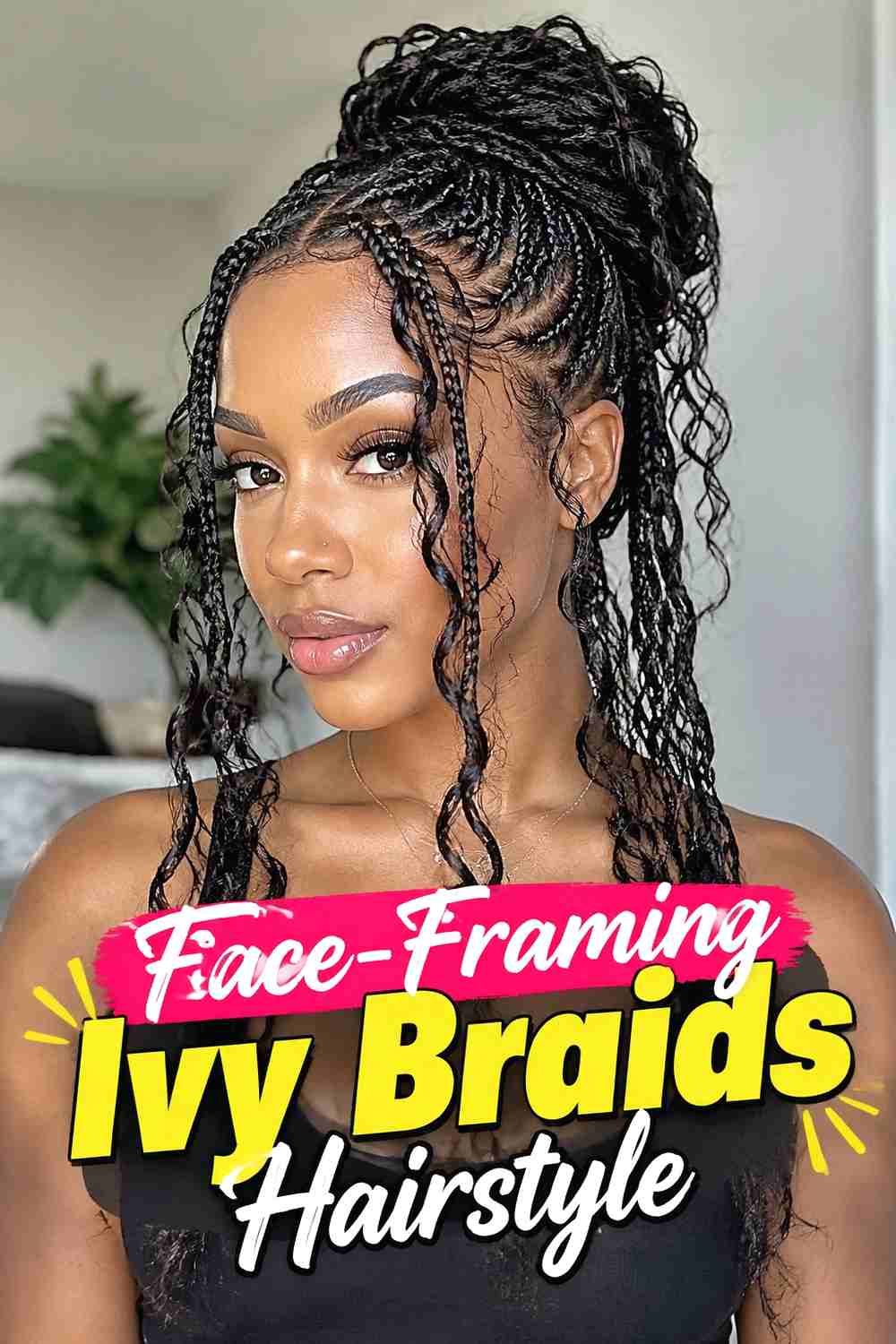
The Face-Framing Ivy Braids Hairstyle positions several loose braids around the front so they fall naturally near the cheeks and jawline. Instead of immediately sweeping all sections away from the face, the front braids remain part of the silhouette and emphasize the relaxed root construction. Medium or slightly narrower braids work especially well because they move easily without creating too much bulk around the temples. A side part can make the frame asymmetric, while a middle part creates a balanced curtain effect. The front sections should remain comfortable and flexible rather than anchored tightly simply to control their placement. This variation feels especially natural with the Ivy aesthetic because the style’s intentional softness is visible immediately from the front.
Best For
Choose this version when you want the loose-root texture to be noticeable from portraits and front-facing angles, not only from the back.
Styling Notes
Let the front braids follow their natural fall instead of repeatedly repositioning them into a rigid frame.
16. Mixed Braid And Twist Ivy Braids Hairstyle
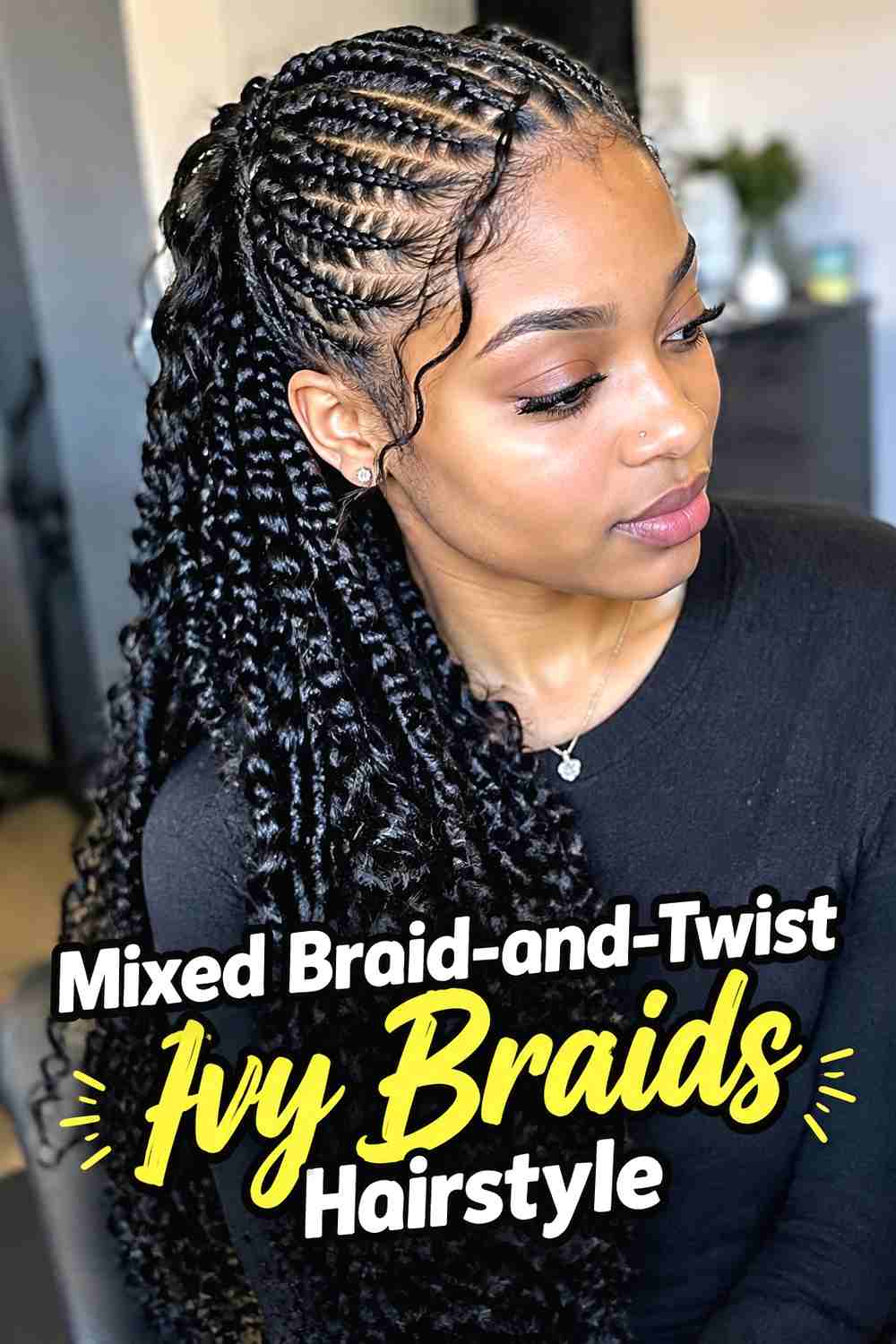
The Mixed Braid-and-Twist Ivy Braids Hairstyle adds deliberate variation by combining individual braids with a limited number of two-strand twists. A recent braid discussion about similar distressed styles illustrates how loose braids and Marley-style twists can visually overlap, so this version works best when the mixture is treated as an intentional adaptation rather than presented as the single defining Ivy construction. Reddit Keep the same fuzzy, relaxed root character across both textures so the finished installation feels cohesive. Afro-kinky or Marley-like fibers can make the twists blend naturally with distressed braids. The contrast is most effective when braids remain dominant and twists appear as secondary texture rather than dividing the hairstyle into two unrelated halves.
Why It Works
Changing the weaving method in selected sections adds depth while the shared relaxed root finish keeps the hairstyle visually unified.
Pro Tip
Choose one main texture and use the other sparingly if you want the style to remain easy to read from a distance.
17. Statement Extra Long Ivy Braids Hairstyle
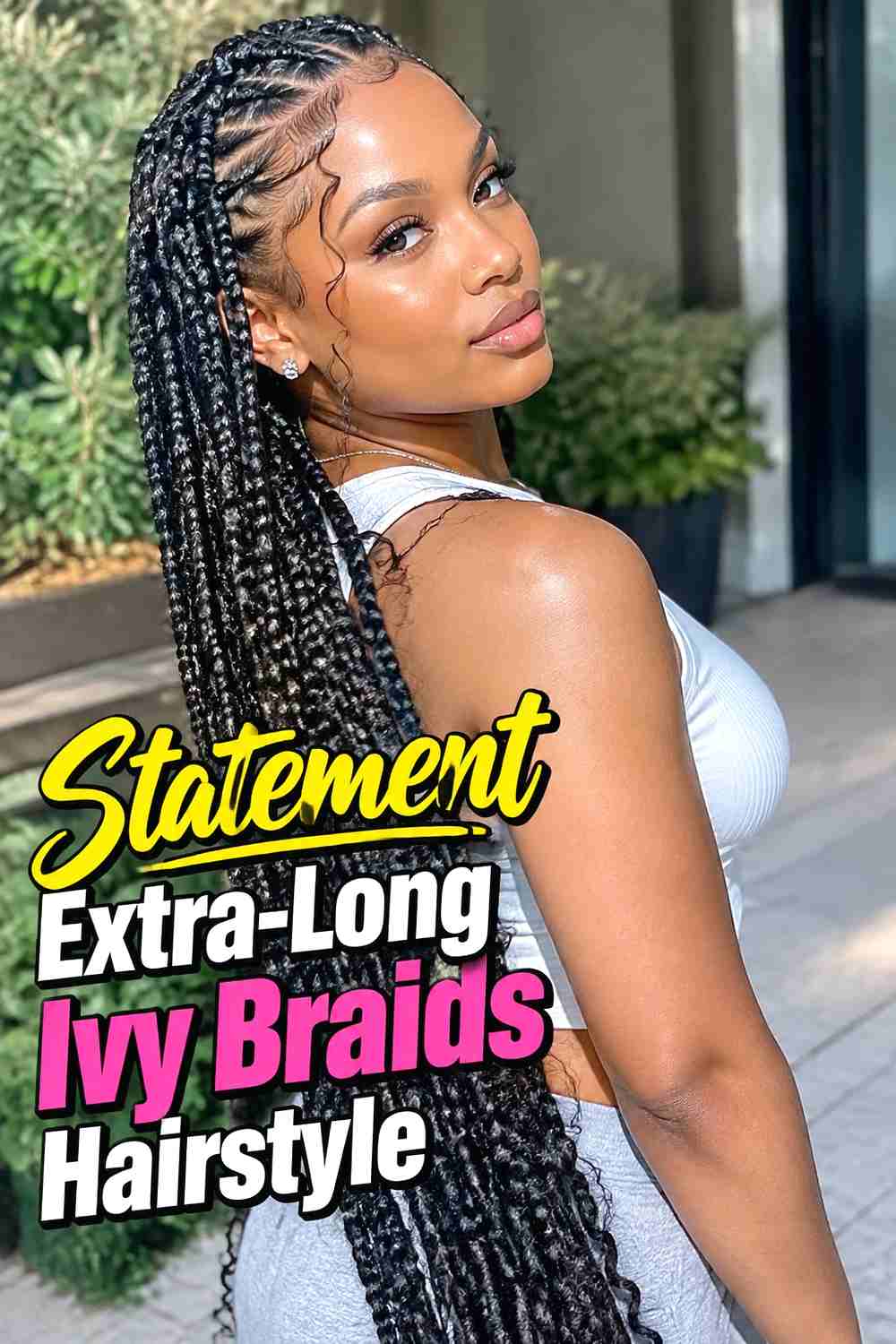
The Statement Extra-Long Ivy Braids Hairstyle takes the trend’s relaxed texture into a dramatic waist- or hip-length silhouette. Extended braids create substantial movement, making the slightly irregular, undone surface particularly noticeable as the hair shifts. Keeping individual sections medium or relatively narrow can prevent the overall mass from becoming visually too heavy, although actual comfort should determine how much added hair is appropriate. The roots remain loose and naturally textured rather than tightly slicked, staying consistent with current descriptions of Ivy braids. Allure Because length provides enough impact by itself, simple natural shades and few accessories often create the strongest finish. The result feels expressive while maintaining the trend’s effortless character.
Wear & Maintenance
Consider the total weight before choosing extreme length, and avoid repeatedly piling the entire installation into tight elevated styles.
Best For
This version suits anyone who wants the Ivy braid texture to become a full-length statement rather than a subtle everyday detail.
How to Choose the Right Look
Start with how strongly you want the lived-in effect to show. Classic Loose-Root Ivy Braids and Afro-Kinky Texture Ivy Braids make softness and fuzziness central to the hairstyle, while center-part or medium-length versions give that texture a more organized overall silhouette. Length affects both appearance and practicality. Medium braids feel lighter visually and are easier to leave down, while extra-long Ivy braids offer dramatic movement but involve more added hair. Jumbo sections create a bolder shape with fewer individual braids, whereas narrower sections provide more movement and styling flexibility. Next, think about secondary styling. Half-up looks, low ponytails, and loose buns can change the installation without removing its relaxed character. High ponytails can also work, but avoid unnecessary tension simply to achieve a very sleek finish. Finally, use accessories selectively. Beads, cuffs, and ombré color can personalize Ivy braids, but the defining appeal is their intentionally loose, textured character. If a style feels painfully tight or uncomfortable, it should be adjusted regardless of the intended aesthetic.
Final Thoughts
Ivy braids stand apart from highly polished braid trends because softness is intentional rather than something that must be hidden. Current beauty coverage describes loose roots, minimal slicking, visible texture, and natural movement as central to the look. Allure From medium lengths and jumbo sections to ponytails, accessories, and Afro-kinky texture, the most convincing variations keep that lived-in character recognizable while adapting the silhouette to personal style and practical comfort.
FAQs
1. What are Ivy braids?
“Ivy braids” is a recent trend name for intentionally loose, lived-in individual braids with fuzzy roots and less emphasis on slick, highly polished sectioning. Beauty coverage credits hairstylist Susan Oludele with popularizing the current look and name after styling Zazie Beetz in 2025. Allure
2. How are Ivy braids different from traditional polished box braids?
The main visual difference is finish. Ivy braids intentionally keep roots loose and textured, while polished box braids often emphasize sharper parts, smoother roots, and more uniform braid surfaces. Allure
3. What braiding hair can be used for Ivy braids?
Allure reports that regular Kanekalon braiding hair can be used, while Afro-kinky hair creates an even more textured result. The best choice depends on the surface and fullness you want. Allure
4. Can Ivy braids be styled into ponytails and buns?
Yes. Once installed, they can be gathered into half-up styles, low ponytails, high ponytails, or loose buns. Keep the secondary style comfortable so it does not defeat the relaxed character of the roots.
5. Are Ivy braids supposed to look fuzzy?
Yes—the intentional fuzzy, lived-in appearance is central to how current beauty sources describe the trend. That said, “Ivy braids” is a recent trend label, while loose and distressed braiding techniques have broader histories that should not be erased by claims of completely new invention. Allure Save your favorite Ivy braids hairstyle ideas for your next braid appointment or inspiration board, and explore which length, texture, and finish best fits your routine.