14 Retro Thin Headband Hairstyles
Thin headbands, flipped ends, softly lifted crowns, and polished ponytails bring retro hair inspiration into easy, wearable hairstyles with modern charm.
Retro thin headband hairstyles work because a narrow accessory can instantly change the silhouette without covering much of the hair. Positioned close to the hairline, it can create a crisp mod effect; pushed slightly farther back, it can emphasize crown volume, a bouffant, or a softly rolled updo. The hairstyle around the band determines whether the result feels playful, glamorous, polished, or relaxed.
This collection draws on recognizable retro-inspired shapes while keeping the construction wearable rather than costume-like. Compare crown height, fringe placement, flipped or curved ends, ponytail position, and how much structure you want around the face. The styling approach follows the supplied hairstyle standards for realistic texture, believable volume, and practical accessory placement.
Quick List
- Mod Center Part Thin Headband Hairstyle
- Sixties Crown Lift Thin Headband Hairstyle
- Flipped Ends Thin Headband Hairstyle
- Retro High Ponytail Thin Headband Hairstyle
- Vintage Bob Thin Headband Hairstyle
- Side Swept Sixties Thin Headband Hairstyle
- Retro Half Up Thin Headband Hairstyle
- Bouffant Thin Headband Hairstyle
- Retro Low Ponytail Thin Headband Hairstyle
- French Roll Thin Headband Hairstyle
- Brigitte Inspired Thin Headband Hairstyle
- Retro Curtain Fringe Thin Headband Hairstyle
- Polished Pageboy Thin Headband Hairstyle
- Vintage Side Roll Thin Headband Hairstyle
1. Mod Center Part Thin Headband Hairstyle
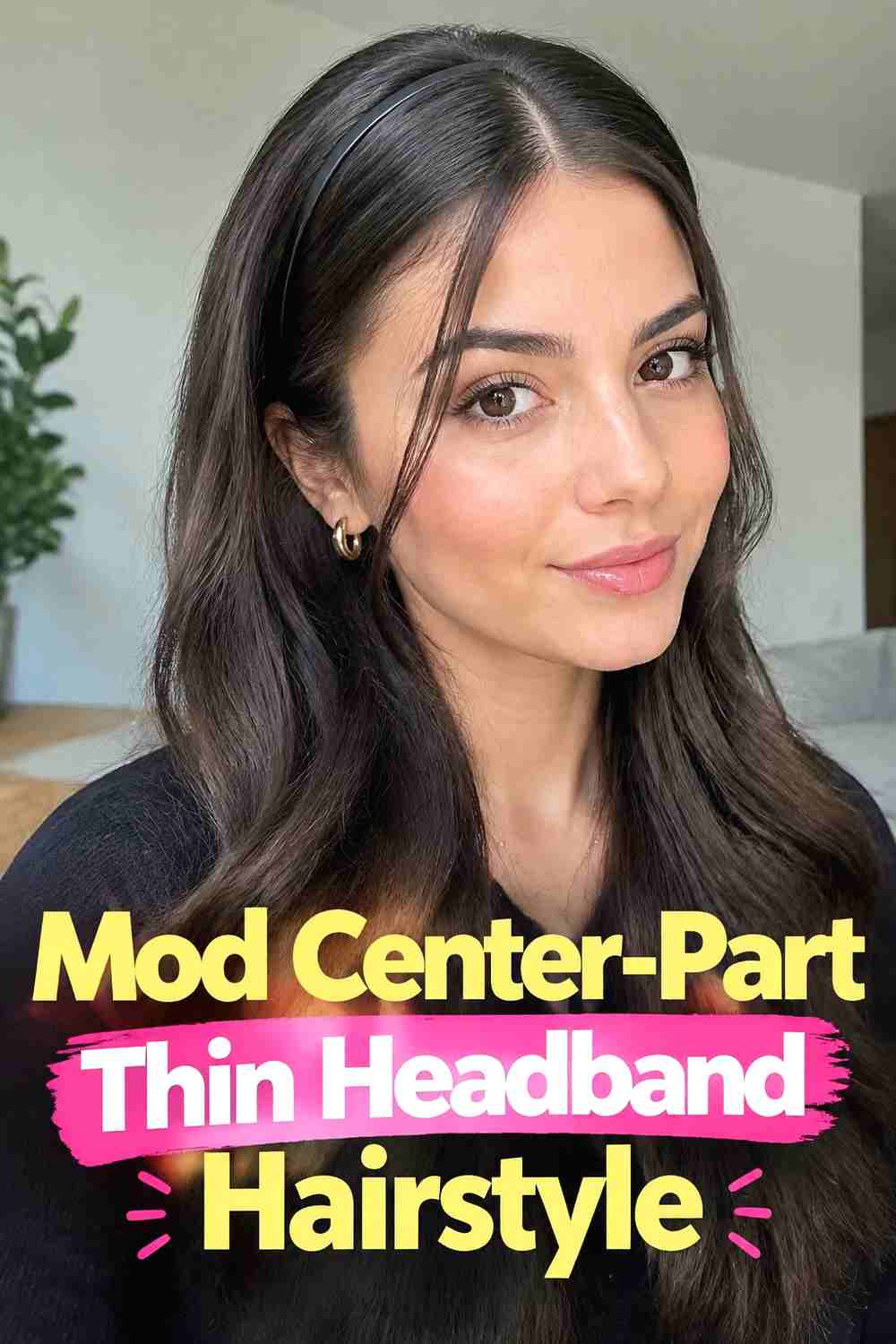
The Mod Center-Part Thin Headband Hairstyle has a clean, graphic feel that nods to 1960s styling without requiring exaggerated volume. Create a precise center part and keep the lengths smooth, straight, or gently curved at the ends. Position a narrow headband just behind the front hairline so the center part remains clearly visible before the band begins. Black, white, navy, red, or tortoiseshell-inspired designs strengthen the retro mood while keeping the overall shape simple. Tuck the sides behind the ears for an especially crisp finish, or leave them loose if you want a softer silhouette. This style works beautifully on bobs, lobs, and longer hair because the accessory emphasizes symmetry without hiding the haircut.
Styling Notes
Keep the crown smooth but not pressed completely flat. A small amount of natural lift helps the band look integrated instead of sitting sharply above the hair.
Best For
Choose this style for everyday retro outfits, work, dinners, themed events, or simple looks where a single mod-inspired accessory is enough.
2. Sixties Crown Lift Thin Headband Hairstyle
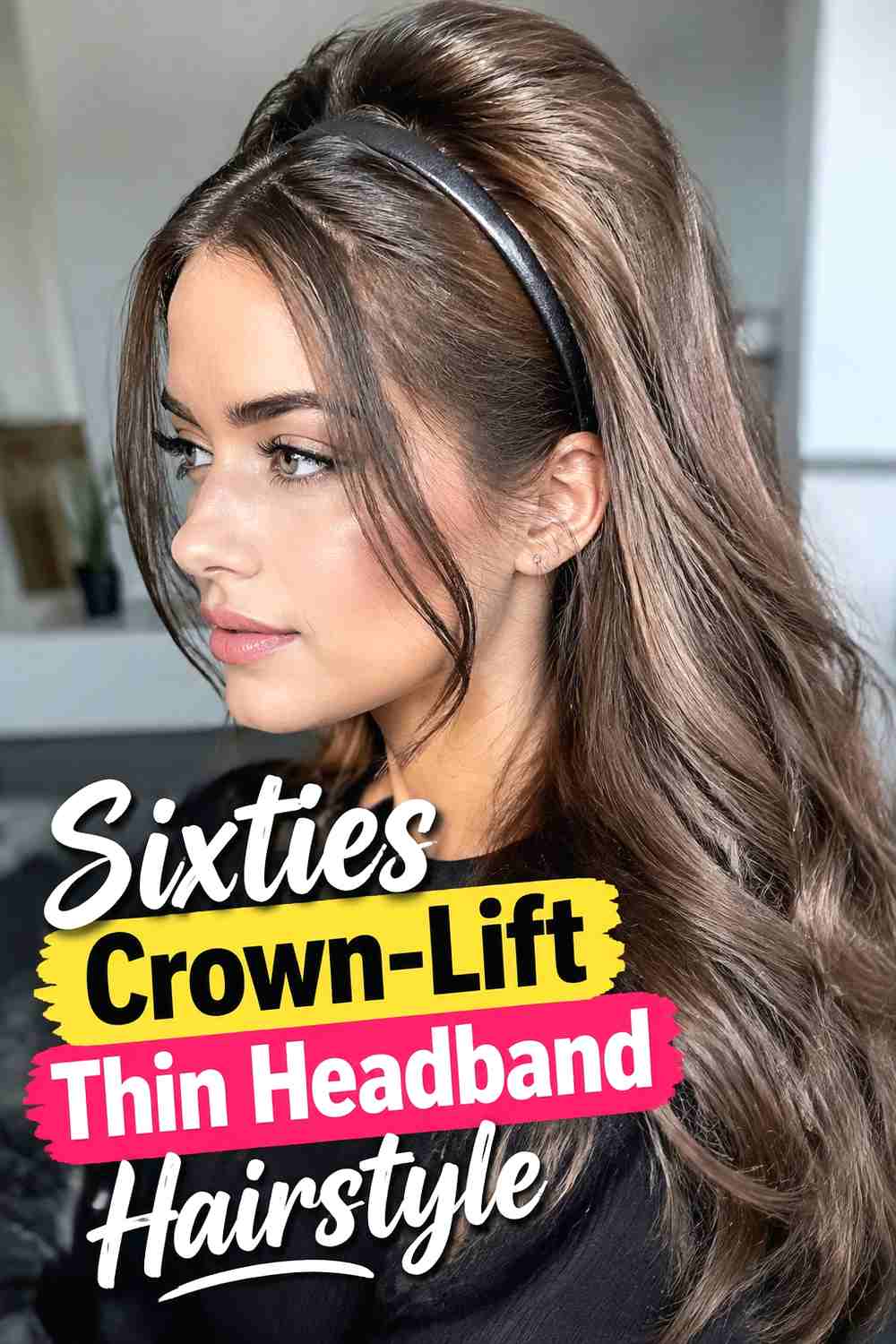
The Sixties Crown-Lift Thin Headband Hairstyle uses controlled height behind the band to create a recognizable vintage profile. Begin with a small section at the crown and add gentle volume underneath, smoothing the outer layer so the surface remains polished. Place a thin headband near the front of the head, allowing the lifted section to begin immediately behind it. Leave the lengths straight, softly curved, or lightly waved depending on your haircut. The volume should feel rounded rather than sharply teased, which keeps the result wearable for modern settings. Medium and long hair provide the easiest foundation, although a longer bob can also carry a smaller version of this shape.
Why It Works
The thin band creates a visual boundary between the smooth front and lifted crown, making moderate volume look more intentional and distinctly retro.
Pro Tip
Backcomb only the underside of the crown section. Excessive teasing can make the visible surface difficult to smooth and create more height than the style needs.
3. Flipped Ends Thin Headband Hairstyle
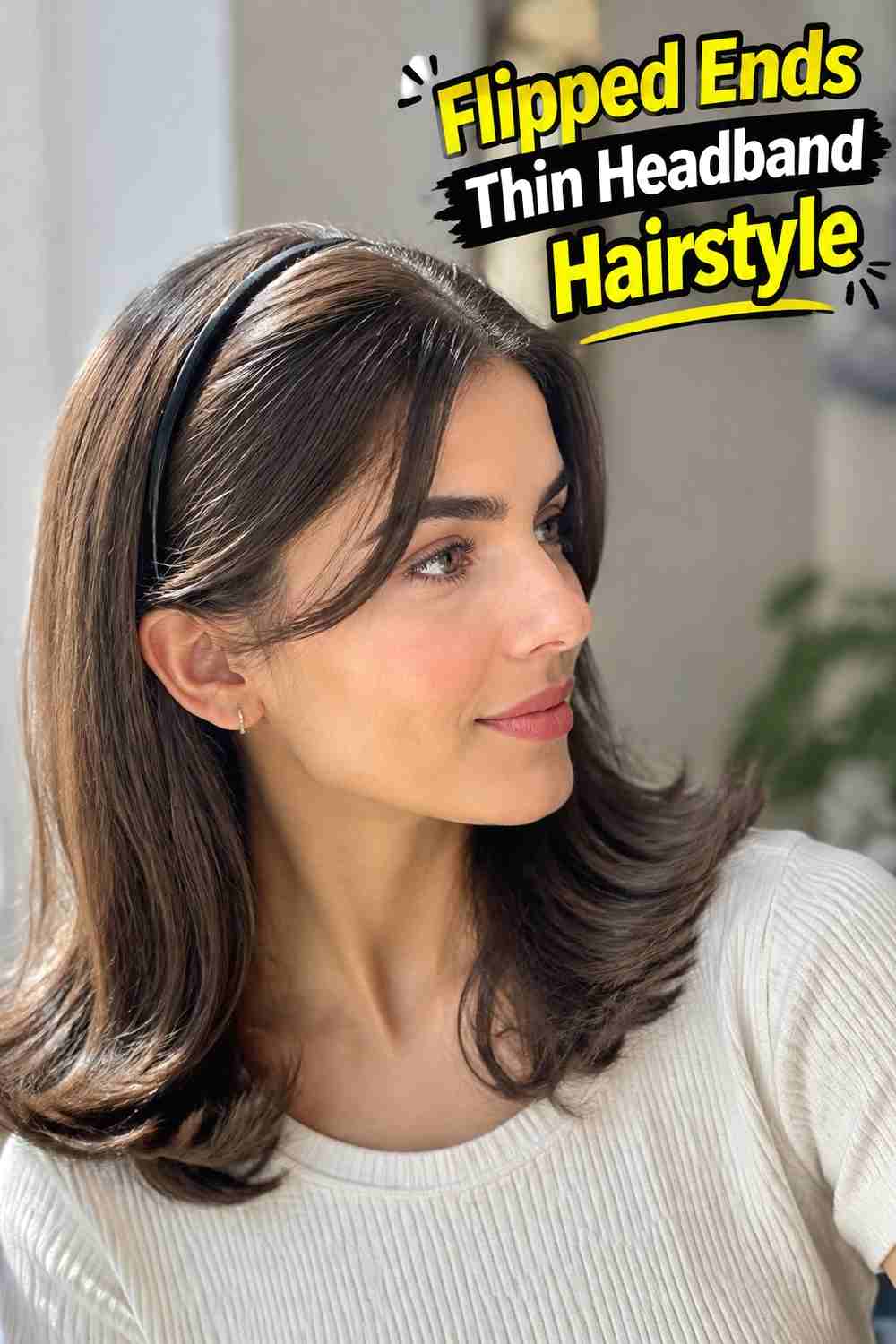
The Flipped Ends Thin Headband Hairstyle brings retro character through the perimeter rather than the crown. Style the hair smooth from the roots through the mid-lengths, then turn the ends outward to create a clean, noticeable flip. Add a thin headband just behind the hairline so the top stays controlled while the ends provide most of the movement. This approach works particularly well on shoulder-length cuts, lobs, and medium hair because the flipped shape remains easy to see. A solid black, white, pastel, or jewel-tone band can emphasize the vintage influence without making the hairstyle feel overly themed. Keep the flips soft and consistent rather than creating stiff, sharply sprayed points.
Styling Notes
Shape the ends with a round brush or styling tool, then let them cool before adding finishing product. This helps the flip hold without excessive stiffness.
Best For
This look suits retro-inspired daytime outfits, parties, dinners, photo sessions, or anyone who wants vintage influence without teasing or a complicated updo.
4. Retro High Ponytail Thin Headband Hairstyle
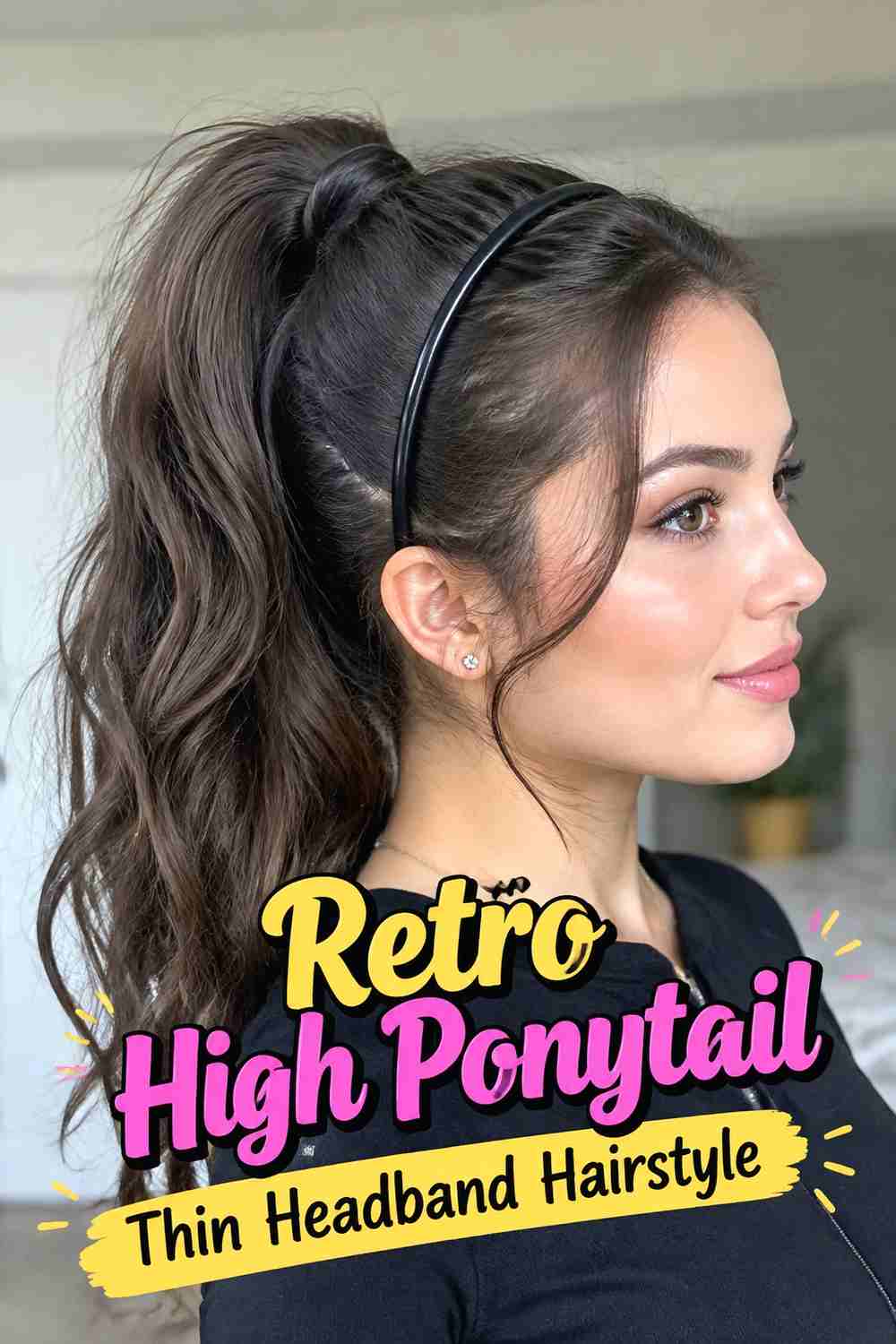
The Retro High Ponytail Thin Headband Hairstyle combines lift, movement, and a clean front section for a playful vintage-inspired finish. Gather the hair into a high ponytail and secure it firmly, then smooth the upper sections without eliminating all crown volume. Place a slim headband behind the hairline to keep the front neat and add a strong graphic accent. The ponytail can remain straight, curve gently at the ends, or feature a subtle outward flip for extra retro character. Wrapping a small strand around the elastic gives the base a more polished appearance. Keep the ponytail lively rather than overly stiff so the silhouette still feels modern and comfortable for everyday wear.
Wear & Maintenance
Secure the ponytail independently before adding the band. This allows you to reposition the accessory without changing the ponytail height or tension.
Best For
Try this style for casual parties, retro-inspired outfits, daytime events, dates, or looks that need something more energetic than loose hair.
5. Vintage Bob Thin Headband Hairstyle
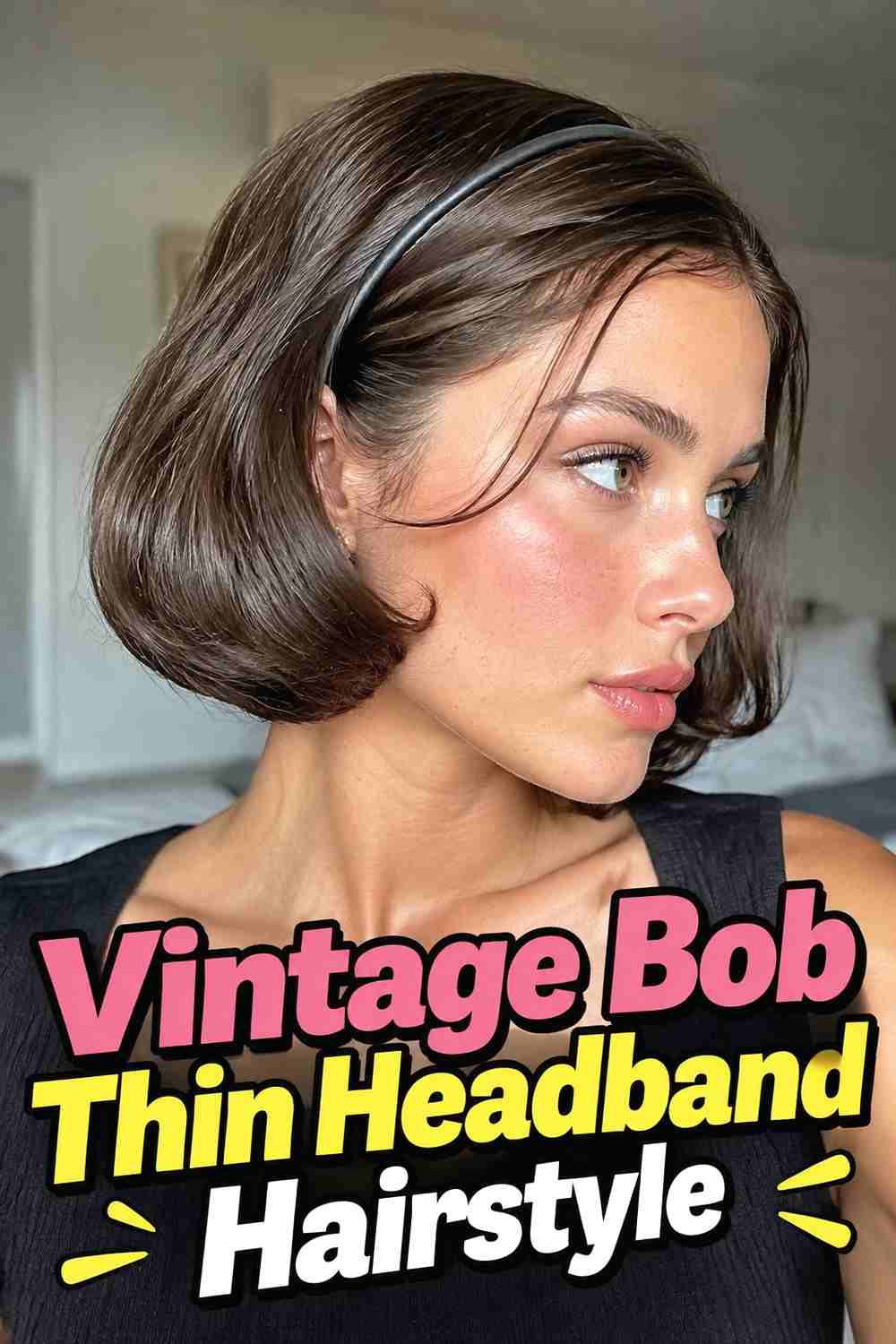
The Vintage Bob Thin Headband Hairstyle makes a short cut feel polished through curved ends and precise accessory placement. Style a chin-length bob or lob with a smooth surface and softly rounded perimeter, then place a narrow headband a little behind the hairline. The band can sit over a center part for a mod-inspired effect or accompany a soft side part for a more classic finish. Tucking one side behind the ear adds asymmetry and reveals earrings, while leaving both sides loose keeps the silhouette fuller. The key is preserving the bob’s recognizable outline rather than allowing the headband to push too much hair backward. Simple solid colors or tortoiseshell-inspired finishes work especially well.
Why It Works
A bob already has a strong vintage-friendly shape, so the thin headband adds period character without requiring extra volume or elaborate pinning.
Pro Tip
Choose a headband narrow enough to complement the haircut. A bulky accessory can overpower the compact silhouette and hide too much of the crown.
6. Side Swept Sixties Thin Headband Hairstyle
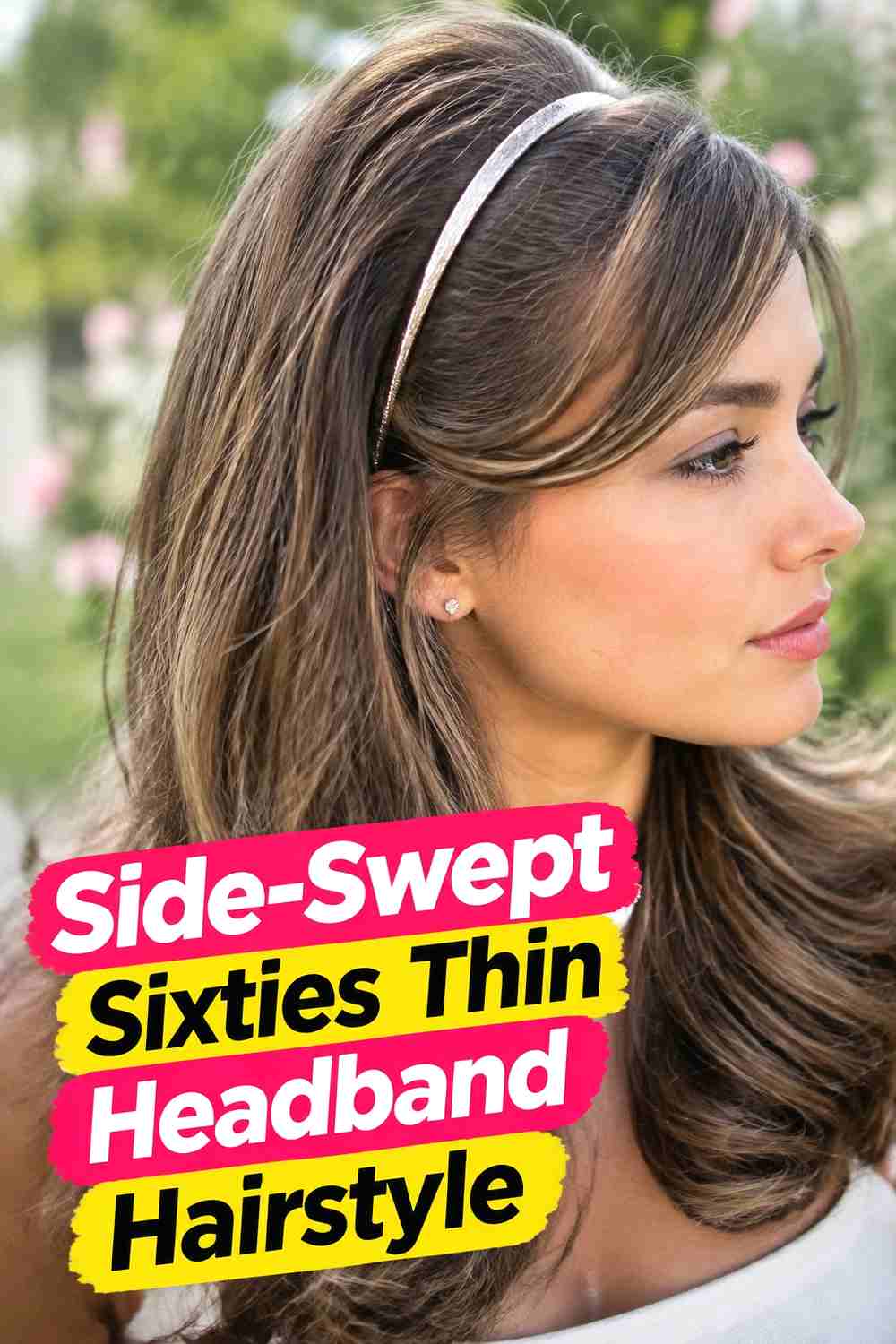
The Side-Swept Sixties Thin Headband Hairstyle mixes crown softness with an asymmetrical front for a glamorous but wearable effect. Create a side part and sweep the fuller section across the forehead or toward one temple, keeping the movement soft rather than heavily sculpted. Add moderate lift through the crown and position a thin headband behind the front sweep. Let the lower lengths stay straight, softly curled, or gently flipped according to your preference. The combination of side movement and subtle height gives the hairstyle a vintage profile without requiring a full bouffant. Medium and long hair work particularly well because there is enough length to balance the volume above.
Styling Notes
Secure the side sweep discreetly if necessary before adding the headband. This prevents the front section from shifting when the accessory is repositioned.
Best For
This style is a strong option for dinners, weddings, parties, vintage-inspired events, or elegant outfits that benefit from a little retro drama.
7. Retro Half Up Thin Headband Hairstyle
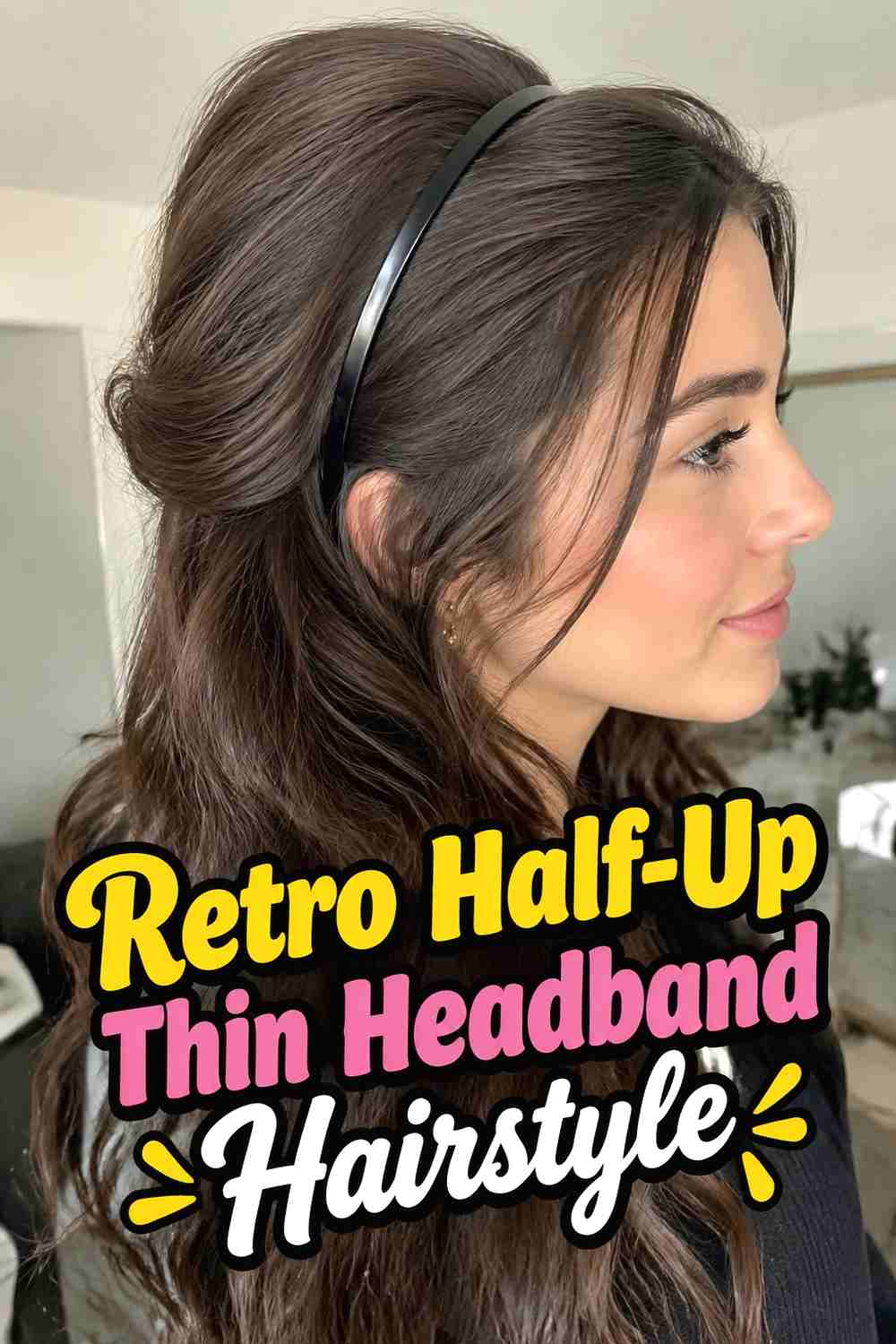
The Retro Half-Up Thin Headband Hairstyle creates a softly lifted upper section while leaving the majority of the hair loose. Gather hair from the temples and crown toward the center back, pushing it slightly forward before securing to create rounded volume. Place a thin headband near the hairline so the lift begins behind it. The lower lengths can remain straight, softly waved, or turned outward at the ends for more vintage character. Avoid gathering too much hair, since a narrow half-up section preserves softness around the sides and keeps the style balanced. A simple satin, velvet, plastic, or metallic band can shift the look from playful to elegant without changing the underlying construction.
Why It Works
The half-up structure provides retro crown height while keeping the lengths loose enough for movement and a lighter, more contemporary finish.
Wear & Maintenance
Secure the half-up section with pins or a small elastic first. The headband should frame the volume rather than hold the gathered hair in position.
8. Bouffant Thin Headband Hairstyle
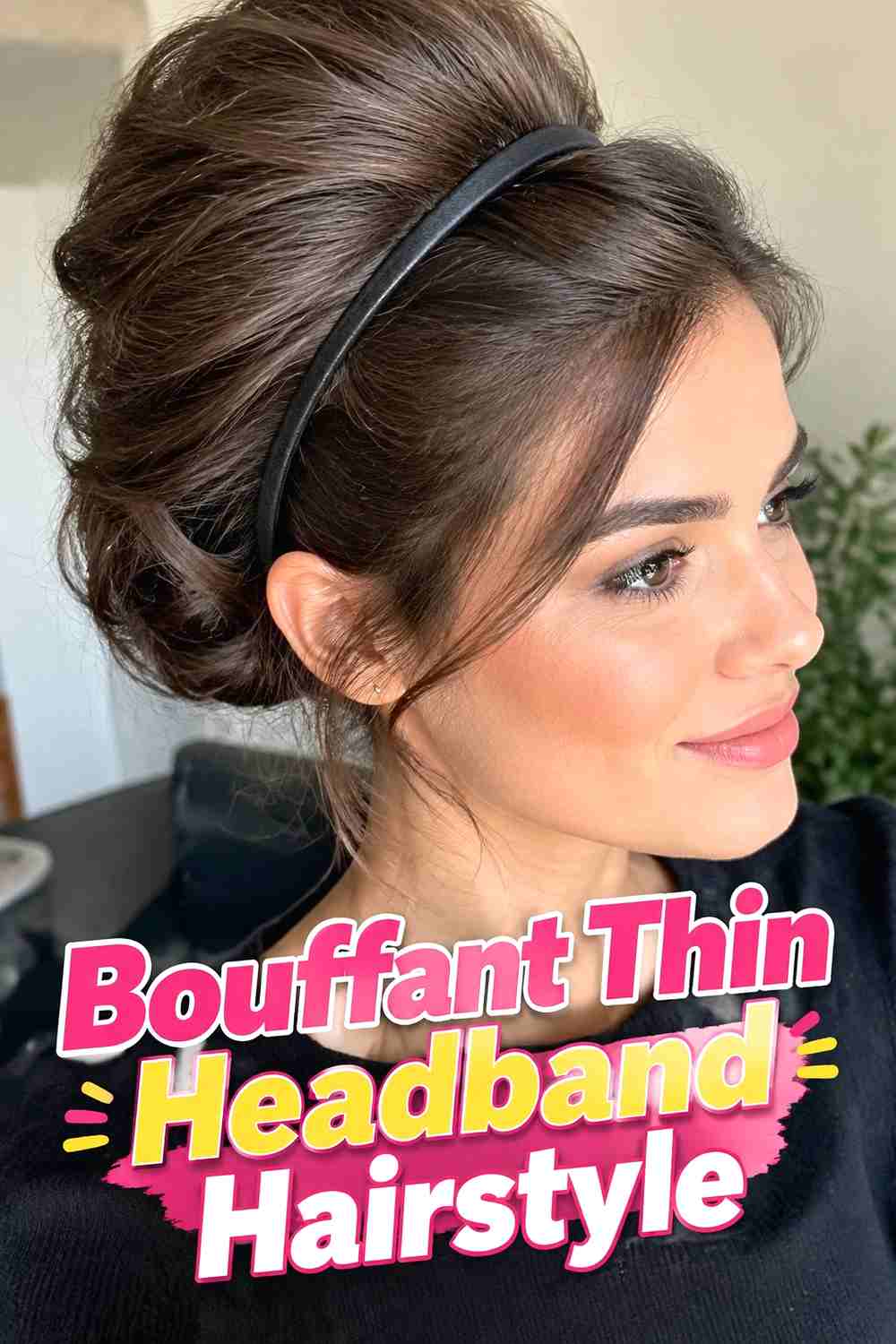
The Bouffant Thin Headband Hairstyle makes crown volume the main visual feature. Build lift through the upper back section by lightly backcombing underneath, then smooth the surface into a rounded shape. Place the thin headband near the front to create a clear division between the flatter hairline and fuller crown. Leave the remaining hair loose, tuck it into a low style, or curve the ends outward depending on how formal you want the result. The most wearable version keeps the height moderate and the surface soft rather than creating an oversized, rigid dome. A narrow black, velvet, satin, or jewel-tone band gives enough contrast to emphasize the silhouette.
Styling Notes
Shape the bouffant gradually and check it from the side. The crown should rise smoothly from the headband rather than forming an abrupt bump.
Best For
This look suits vintage-inspired weddings, evening events, formal dinners, themed parties, or anyone who enjoys noticeable retro volume.
9. Retro Low Ponytail Thin Headband Hairstyle
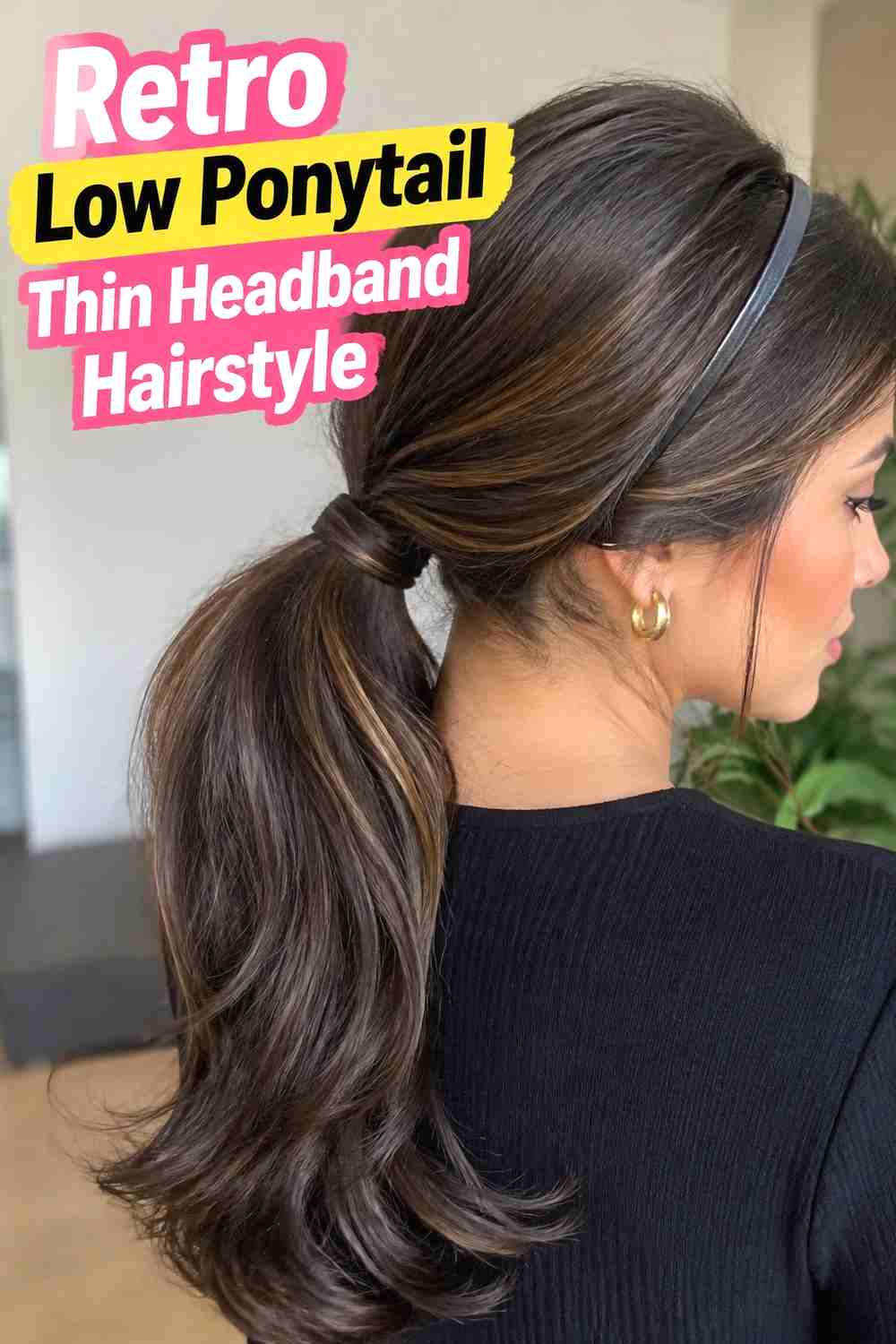
The Retro Low Ponytail Thin Headband Hairstyle uses a low gathered shape and controlled crown volume for understated vintage polish. Create a center or soft side part, add a little lift at the crown, and gather the lengths at the nape. Wrap a section of hair around the elastic for a refined base, then place a narrow headband near the hairline. The ponytail can stay smooth or curve slightly at the ends to reinforce the retro influence. Leave a couple of fine face-framing pieces loose if you want a softer result. Because the silhouette stays low and compact, this hairstyle is comfortable for longer wear and works easily with structured dresses, collared shirts, or tailored outerwear.
Why It Works
The low ponytail keeps the style practical while crown lift and a slim band add just enough period-inspired structure to make it distinctive.
Best For
Choose this option for office events, dinners, travel, retro-inspired everyday outfits, or occasions when a high ponytail feels too playful.
10. French Roll Thin Headband Hairstyle
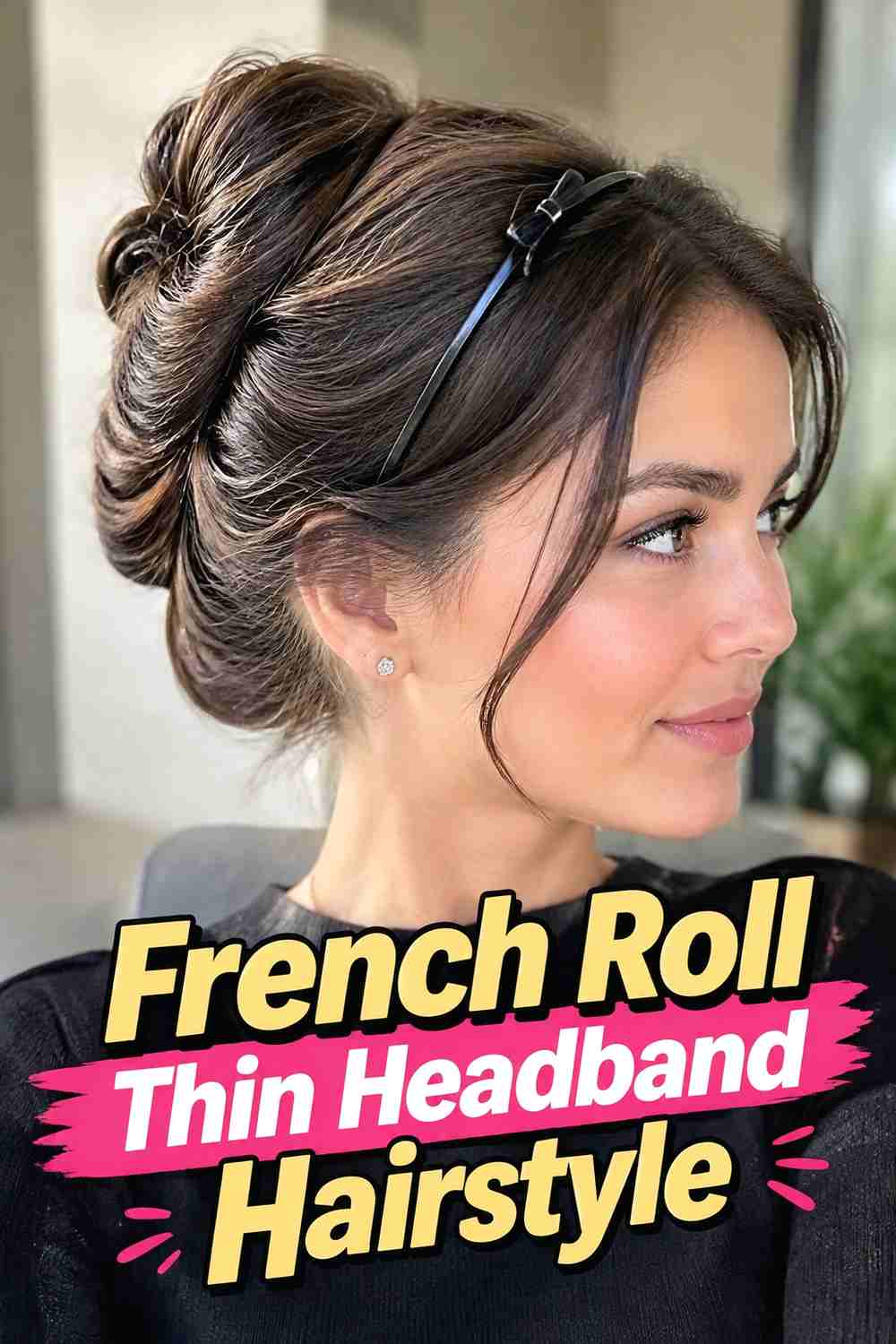
The French Roll Thin Headband Hairstyle combines a classic updo with a slim accessory for a refined vintage-inspired finish. Sweep the hair toward the center back, roll the lengths inward, and tuck the ends into the structure before securing it with pins. Add moderate softness through the crown, then place a thin headband behind the hairline to frame the polished roll. A simple black, satin, pearl-accented, or metallic band works particularly well because the updo already provides plenty of shape. Keep the sides controlled but not severely pulled back, and release one or two light pieces at the temples if a softer finish is desired.
Wear & Maintenance
Build and pin the roll completely before positioning the headband. Keeping the two elements independent makes later adjustments much easier.
Best For
This style suits weddings, formal dinners, vintage events, receptions, and occasions where a structured updo complements the outfit.
11. Brigitte Inspired Thin Headband Hairstyle
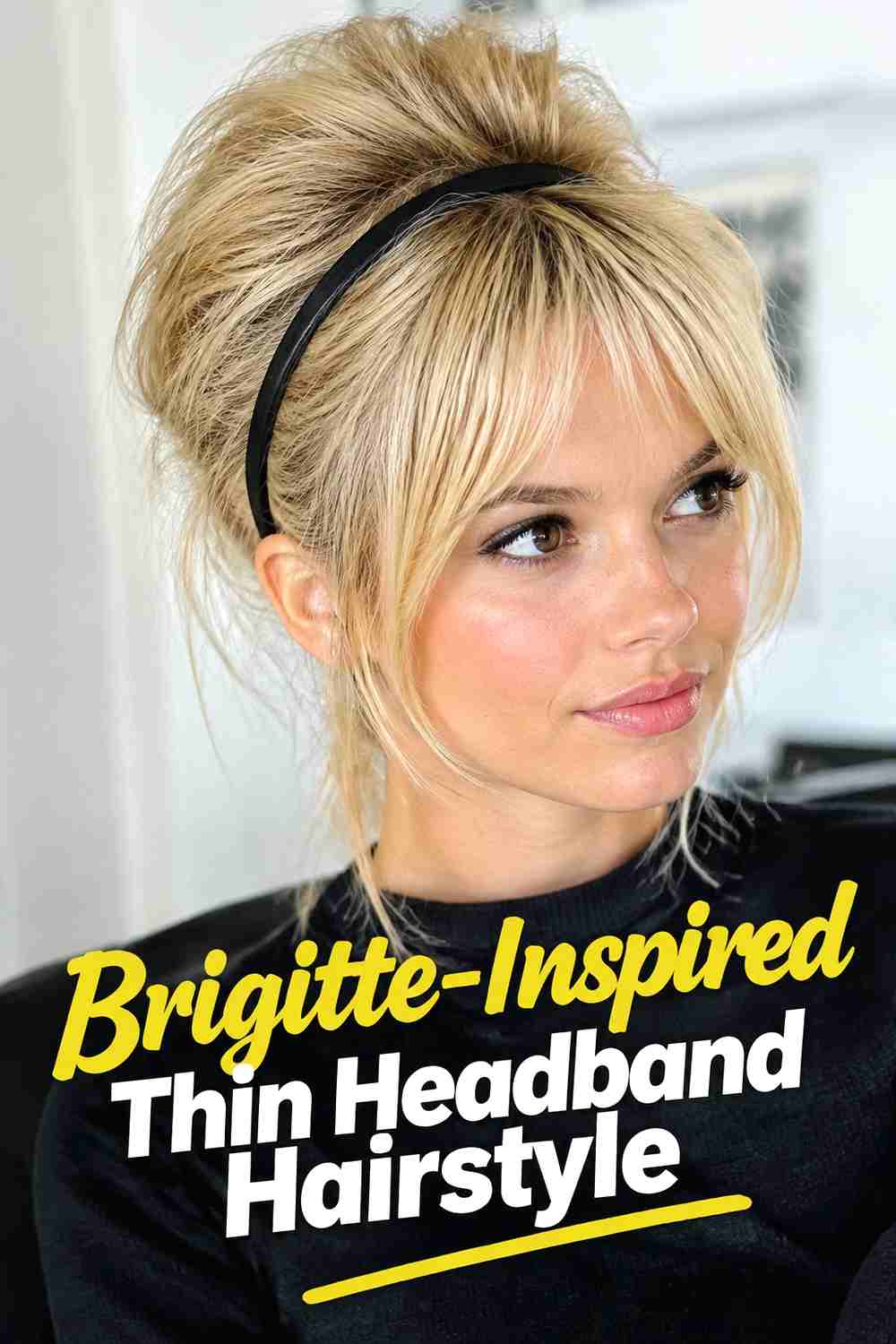
The Brigitte-Inspired Thin Headband Hairstyle centers on tousled crown volume, a soft front, and relaxed lengths. Create moderate lift at the crown, then smooth only the outermost surface so the hairstyle retains a slightly undone texture. Position a narrow headband behind the front section, leaving a few face-framing strands or soft fringe pieces loose. The lower lengths can remain straight with natural movement or carry loose bends through the ends. Avoid making every section perfect; the appeal comes from balancing visible volume with an effortless finish. A simple black or neutral band is especially effective because it adds structure without competing with the softness of the hair.
Styling Notes
Keep the teasing concentrated around the crown rather than throughout the entire head. This preserves movement through the lengths and avoids unnecessary bulk.
Pro Tip
After finishing, loosen one or two sections gently with your fingertips so the style does not look overly sprayed or rigid.
12. Retro Curtain Fringe Thin Headband Hairstyle
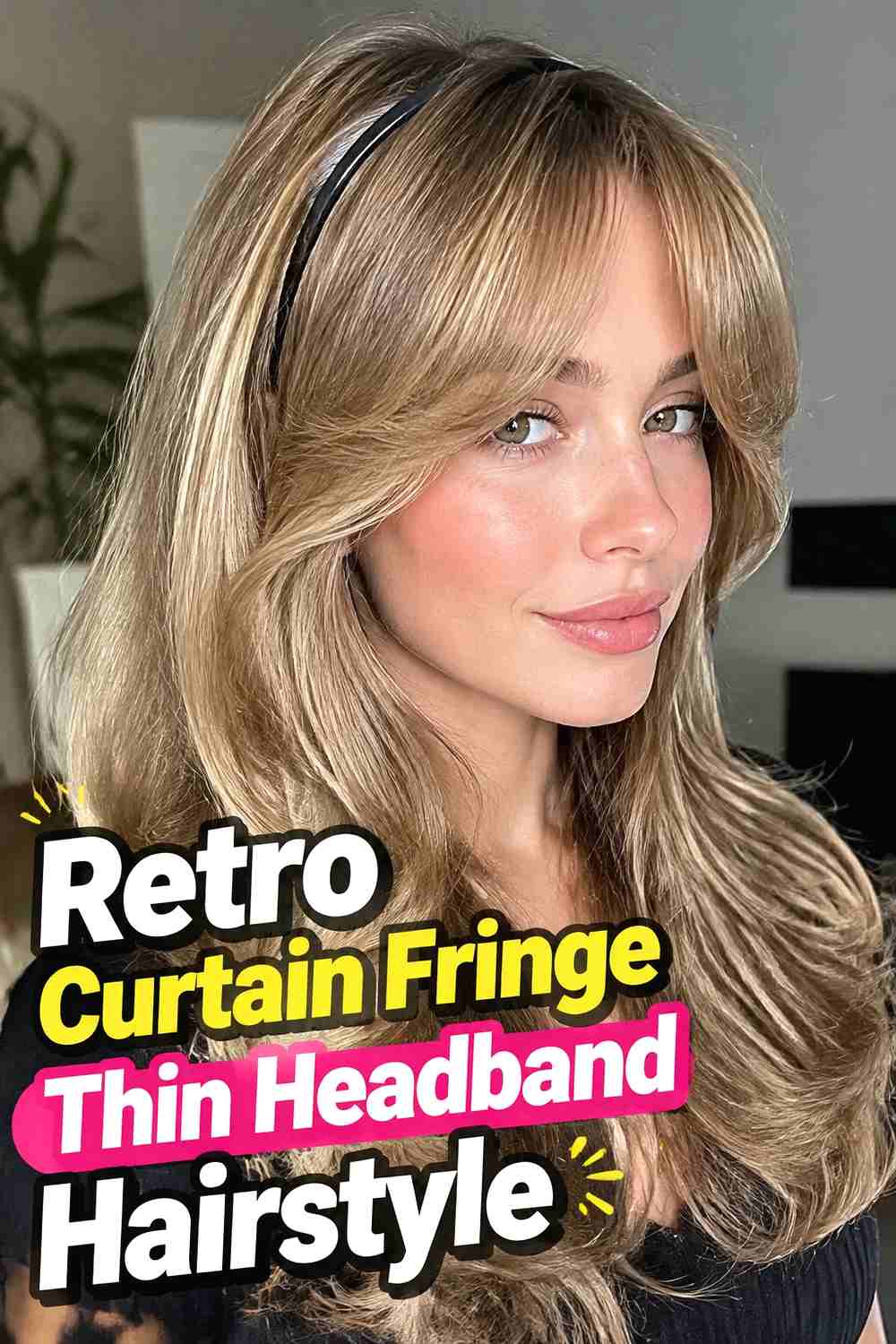
The Retro Curtain Fringe Thin Headband Hairstyle uses a parted fringe to soften the face while the accessory controls the longer sections behind it. Shape the curtain fringe so it curves outward from a center part, then place the thin headband behind the shortest pieces. Leave the remaining hair smooth with gentle crown lift and softly turned or flipped ends. The combination creates visible movement around the face without sacrificing the clean line of the band. It works especially well on medium and long layered cuts because the fringe blends naturally into longer face-framing sections. Keep the headband simple so it supports the vintage silhouette instead of competing with the fringe.
Why It Works
The curved fringe gives the front of the hairstyle softness, while the band creates a crisp boundary before the fuller crown and longer lengths.
Pro Tip
Style and cool the fringe before putting on the headband. Moving the band repeatedly afterward can flatten the carefully shaped front pieces.
13. Polished Pageboy Thin Headband Hairstyle
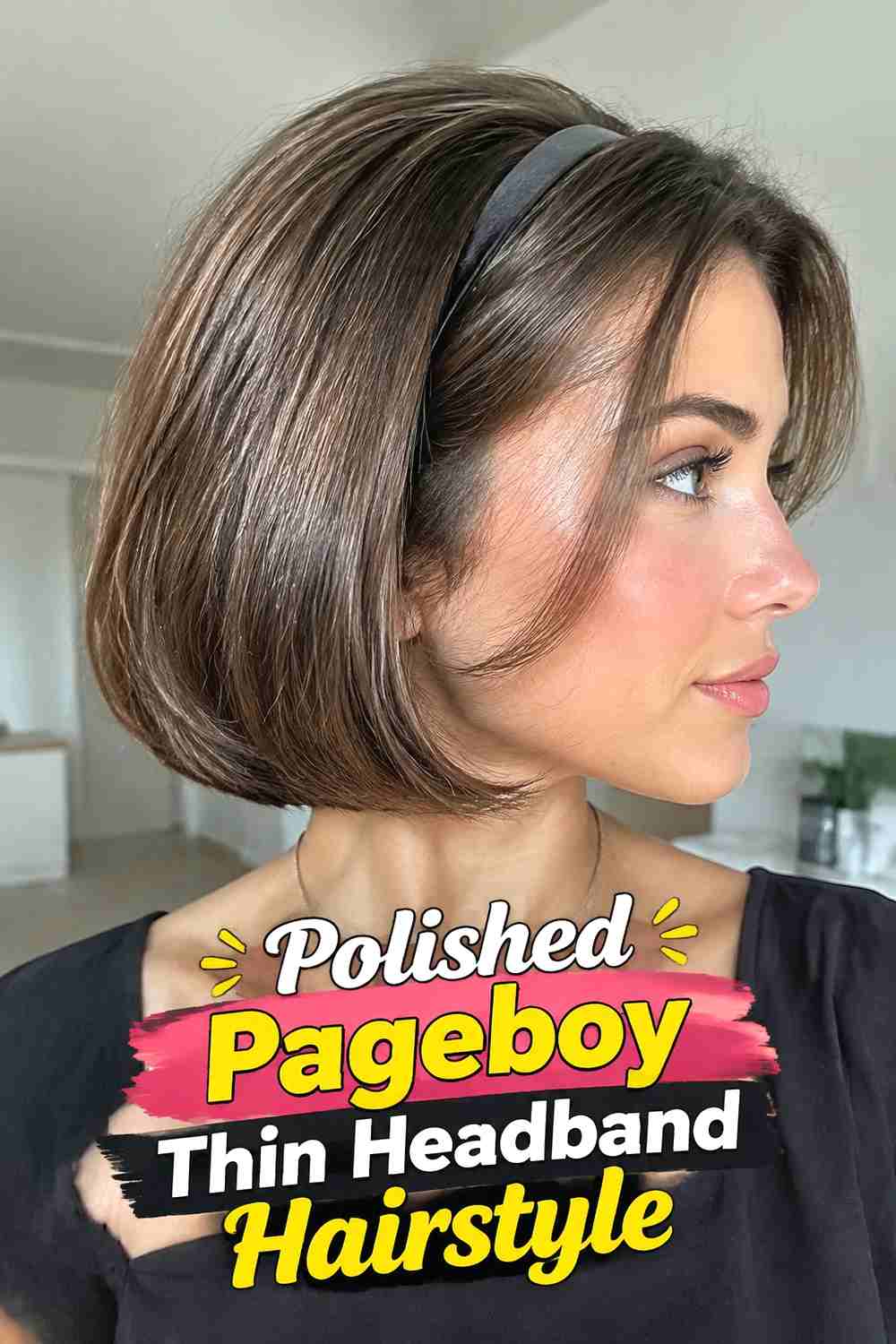
The Polished Pageboy Thin Headband Hairstyle emphasizes a smooth rounded silhouette with neatly curved ends. Style a short or medium-length cut so the perimeter turns gently inward, creating a controlled shape around the jaw or shoulders. Add a narrow headband slightly behind the hairline and keep the crown smooth with only minimal volume. A clean center or side part can remain visible in front, depending on how graphic you want the finish. Because the pageboy shape already carries a strong retro influence, avoid adding multiple accessories or excessive teasing. A plain black, white, red, navy, or tortoiseshell-style band provides enough contrast while allowing the curved haircut to remain the main feature.
Hair Type & Length
Short bobs, longer bobs, and shoulder-length cuts with enough weight to hold a smooth curve are especially well suited to this style.
Styling Notes
Concentrate shaping on the ends rather than over-smoothing the roots. This keeps the rounded perimeter polished while preserving natural strand detail.
14. Vintage Side Roll Thin Headband Hairstyle
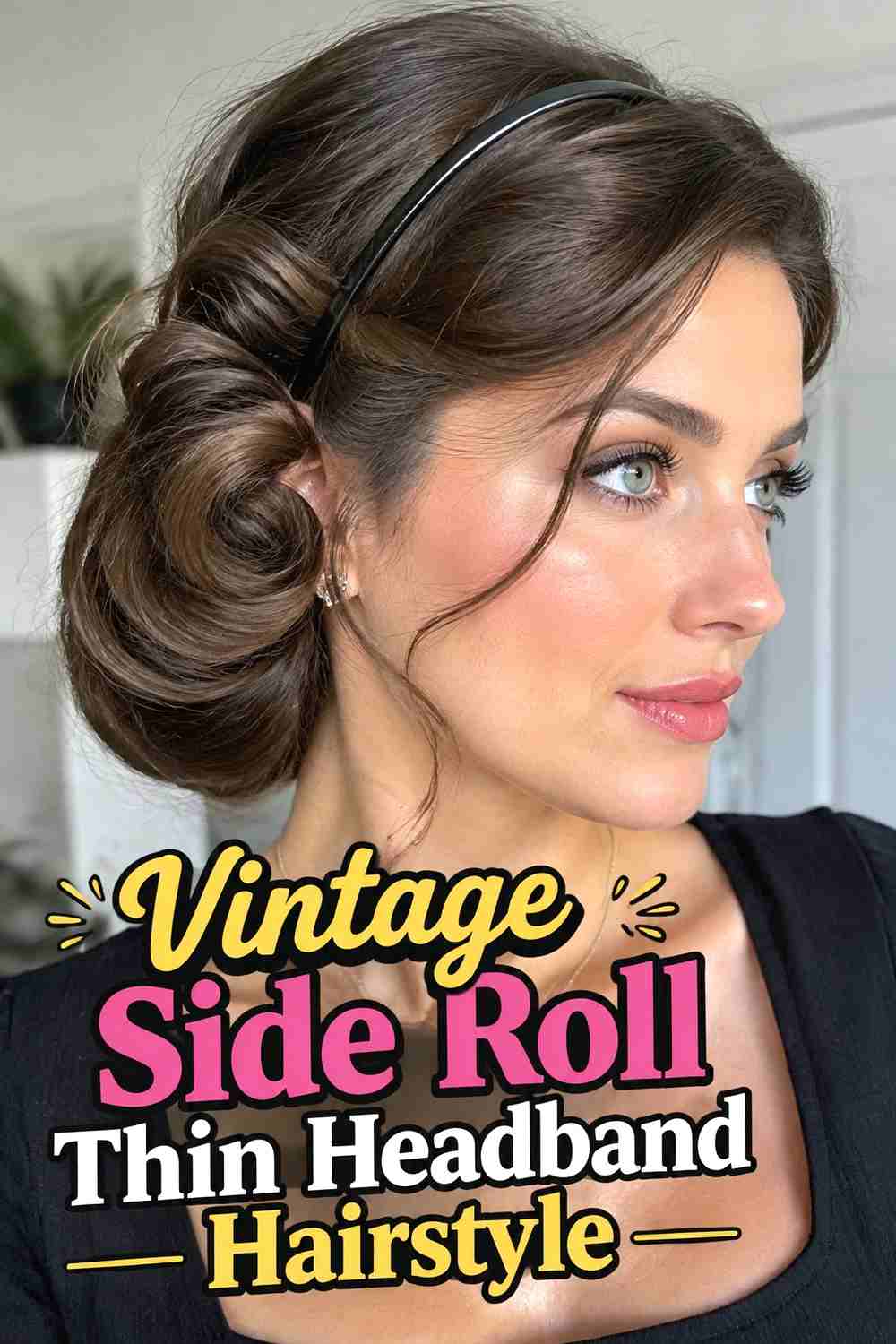
The Vintage Side Roll Thin Headband Hairstyle introduces one sculpted section without turning the entire hairstyle into a formal period recreation. Create a side part, take the front section from the heavier side, and shape it into a soft roll directed away from the face. Secure the roll discreetly, then place a thin headband slightly behind it so the accessory frames rather than covers the detail. The remaining hair can stay loose, gather into a low ponytail, or form a compact bun depending on the occasion. Keep the roll smooth but not excessively stiff, with enough natural texture to make the hairstyle believable. This approach creates a clear vintage focal point while remaining adaptable to modern outfits.
Styling Notes
Form the side roll first and secure it firmly before adding the band. A hidden pin underneath provides more reliable support than the accessory itself.
Best For
This hairstyle works well for vintage-themed parties, formal dinners, weddings, photo sessions, or occasions where one distinctive retro detail feels more wearable than a complete period updo.
How to Choose the Right Look
Start with the type of retro silhouette you prefer. Mod center parts, pageboy shapes, and vintage bobs feel sleek and graphic, while bouffants, crown lifts, and Brigitte-inspired looks create more volume. Ponytails and half-up styles sit between those extremes, giving you retro character without committing to a full updo.
Hair length matters too. Bobs and shoulder-length cuts are ideal for flipped ends and rounded pageboy finishes. Medium and long hair give you more room for high ponytails, low ponytails, French rolls, half-up volume, and side rolls.
Think about styling time and hold. Flipped ends and crown volume may need heat styling and light hairspray, while a simple mod headband or vintage bob can require much less preparation. Formal rolls need secure pins underneath, since the headband should remain decorative rather than structural.
Finally, choose a band that suits the hairstyle’s scale. Slim black and white bands create the strongest mod effect, while satin, velvet, tortoiseshell, metallic, or jewel-tone bands can make the same retro silhouette feel softer or dressier.
Final Thoughts
Retro thin headband hairstyles can feel vintage without looking like a costume when the proportions stay controlled. Try flipped ends or a center part for an easy everyday reference, add crown lift for more unmistakable 1960s character, or pair a slim band with a French roll for formal polish. Keep the hair texture believable, choose one strong retro feature, and let the headband provide the finishing line.
FAQs
1. Which thin headband hairstyle has the strongest 1960s look?
A crown-lift, bouffant, or retro half-up style paired with a narrow band creates one of the clearest 1960s-inspired silhouettes.
2. Can retro thin headbands work with short hair?
Yes. Vintage bobs, pageboy cuts, mod center parts, and short styles with flipped ends all pair naturally with thin headbands.
3. How do I create retro volume without making my hair too big?
Backcomb only the underside of a small crown section, smooth the surface, and build height gradually. Moderate rounded volume usually feels more wearable than exaggerated teasing.
4. Which headband colors look most retro?
Black, white, red, navy, pastels, tortoiseshell-inspired patterns, and classic jewel tones can all work. The best choice depends on the decade-inspired silhouette and outfit.
5. Can I wear a retro thin headband hairstyle to a formal event?
Yes. A French roll, bouffant, polished low ponytail, or elegant side roll can create a formal retro-inspired finish while still looking modern.
Save your favorite retro thin headband hairstyle, share the looks that inspire you, and explore more vintage-inspired ways to style simple hair accessories.