12 Minimal Thin Headband Hairstyles
A slim headband can make even the simplest hairstyle look intentional, polished, and modern without adding bulky accessories or complicated styling.
Minimal thin headband hairstyles work best when the accessory supports the shape of the hair rather than becoming the entire focus. A narrow black, metallic, neutral, or tortoiseshell-style band can sharpen a center part, keep short layers controlled, or add a clean finishing line to loose hair.
These looks also work across different textures and lengths. Straight hair creates a sleek backdrop, waves introduce softness, and curls add volume behind the delicate accessory. For the most minimal finish, keep extra clips and decorations to a minimum and focus on clean placement, comfortable hold, and natural-looking movement.
Quick List
- Sleek Center Part Thin Headband Hairstyle
- Straight Bob Thin Headband Hairstyle
- Low Ponytail Thin Headband Hairstyle
- Soft Waves Thin Headband Hairstyle
- Low Bun Thin Headband Hairstyle
- Tucked Lob Thin Headband Hairstyle
- Minimal Half Up Thin Headband Hairstyle
- Smooth Blowout Thin Headband Hairstyle
- Side Part Thin Headband Hairstyle
- Natural Curls Thin Headband Hairstyle
- Polished Chignon Thin Headband Hairstyle
- Face Framing Layers Thin Headband Hairstyle
1. Sleek Center Part Thin Headband Hairstyle
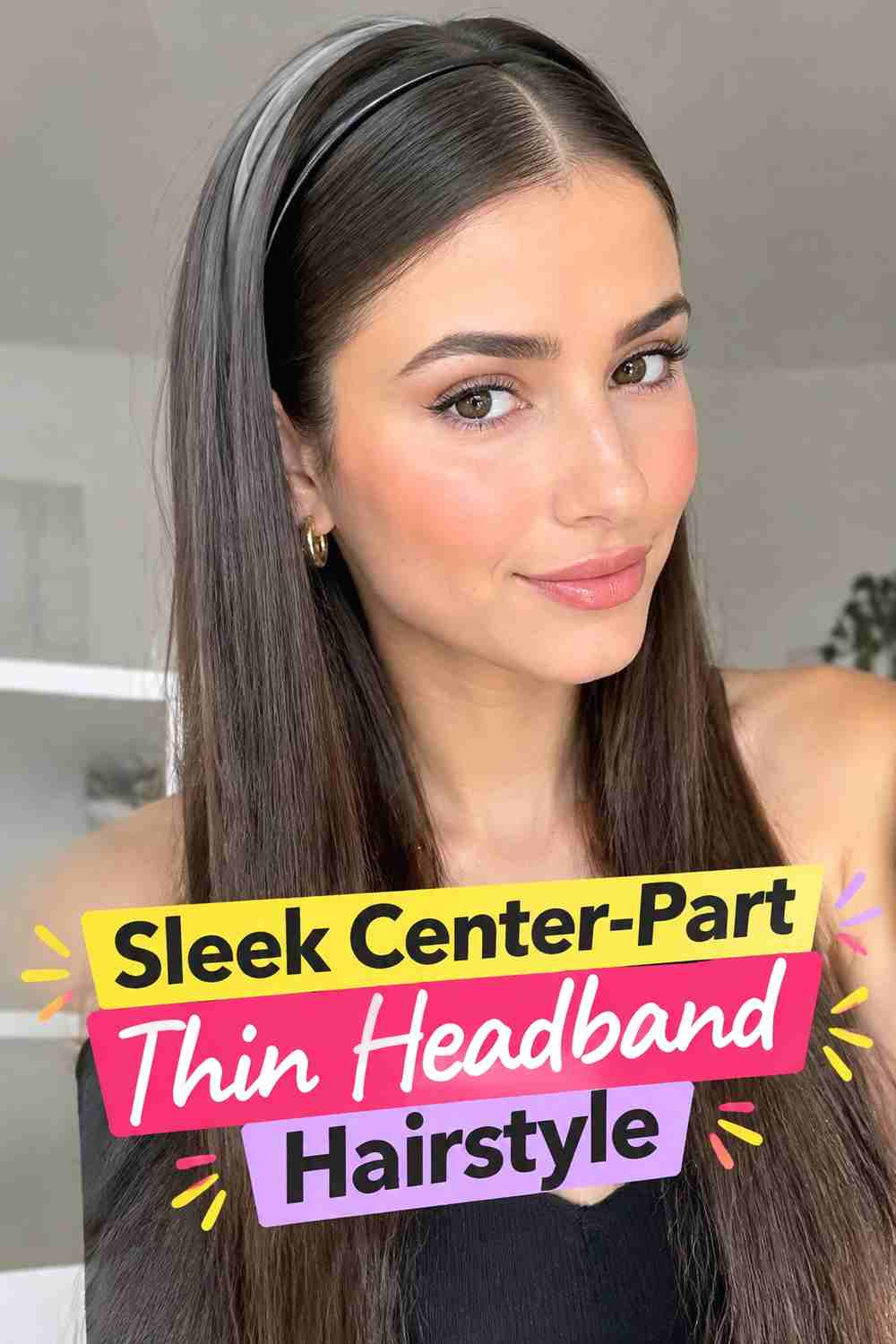
The Sleek Center-Part Thin Headband Hairstyle is built around symmetry and clean lines. Create a precise middle part, smooth the hair on both sides, and position a slim band slightly behind the hairline so the part remains visible. The lengths can stay straight, fall naturally behind the shoulders, or curve gently inward at the ends. A narrow black or tortoiseshell-style band gives the look an especially understated finish because it defines the crown without covering much hair. Keep some natural movement through the lengths instead of flattening everything completely. This style works particularly well when you want an accessory that looks polished enough for work or dinner but still feels simple for everyday wear.
Styling Notes
Use a light smoothing product only where needed around the part and hairline so the finish stays sleek without becoming stiff.
2. Straight Bob Thin Headband Hairstyle
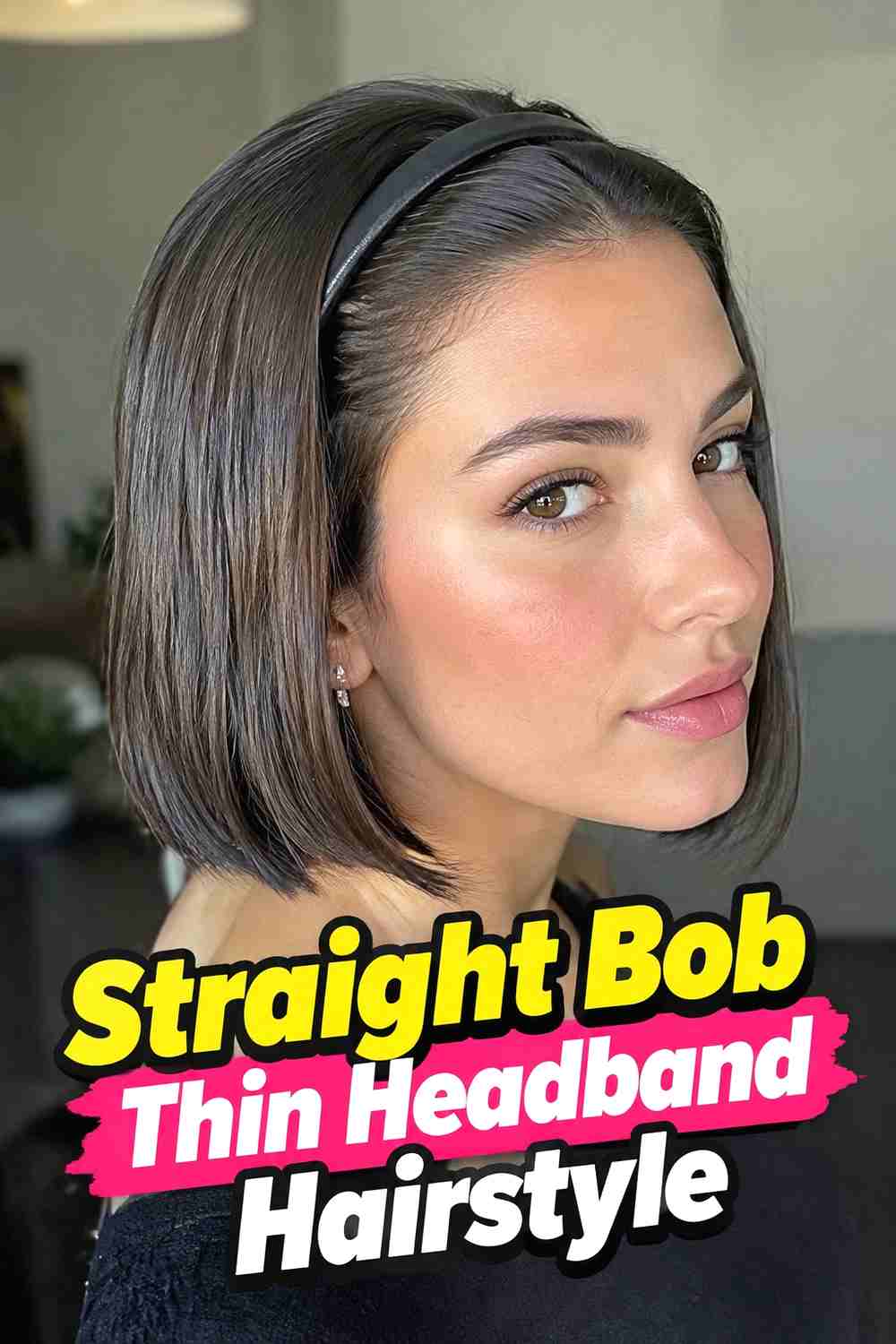
The Straight Bob Thin Headband Hairstyle highlights the clean outline of a shorter haircut instead of hiding it beneath a large accessory. Style a chin-length bob smooth and straight, leaving the ends blunt or softly curved inward. Place a narrow headband just behind the hairline, then tuck one or both sides behind the ears if you want an even sharper silhouette. Since the bob already provides structure, the accessory should remain simple and lightweight. A thin neutral band keeps attention on the haircut, while a subtle metallic finish adds just enough contrast for dressier outfits. This style works particularly well when the hair has natural shine and the ends are kept neat and clearly defined.
Hair Type & Length
Chin-length bobs and shorter lobs are ideal, especially when the cut has a strong line that remains visible around the accessory.
3. Low Ponytail Thin Headband Hairstyle
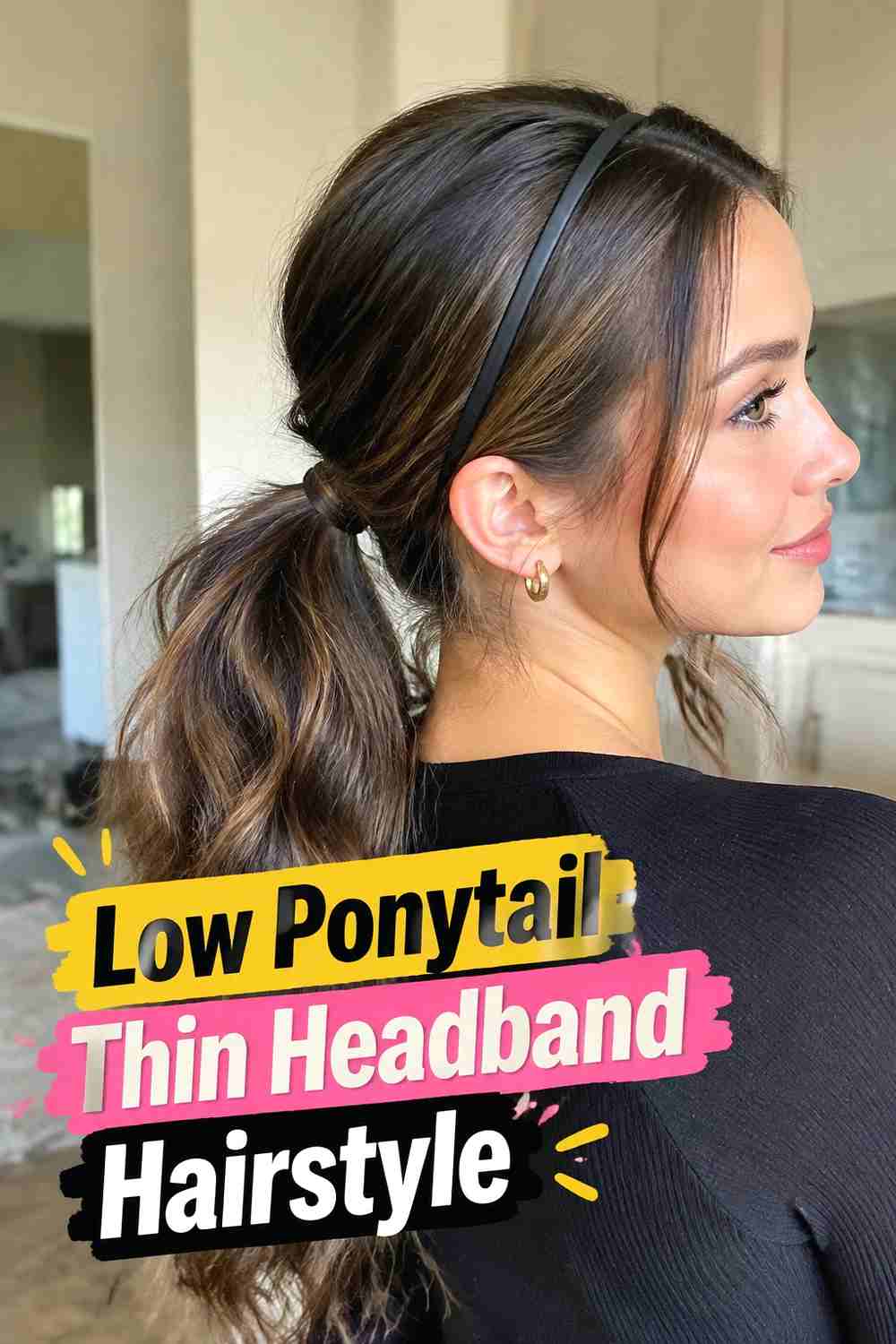
The Low Ponytail Thin Headband Hairstyle turns a basic gathered look into something more refined without increasing styling time very much. Part the hair in the center or softly to one side, place the narrow headband across the crown, and secure the lengths into a low ponytail at the nape. Straight hair gives the cleanest effect, although a gentle bend through the ponytail can soften the shape. Keep the crown relatively smooth so the headband remains clearly visible, but avoid pulling the hair excessively tight. You can also wrap a small section around the ponytail elastic for a more finished result while still keeping the overall hairstyle minimal and easy to wear.
Best For
This style works for workdays, errands, travel, dinners, and occasions where you want controlled hair without committing to a full updo.
4. Soft Waves Thin Headband Hairstyle
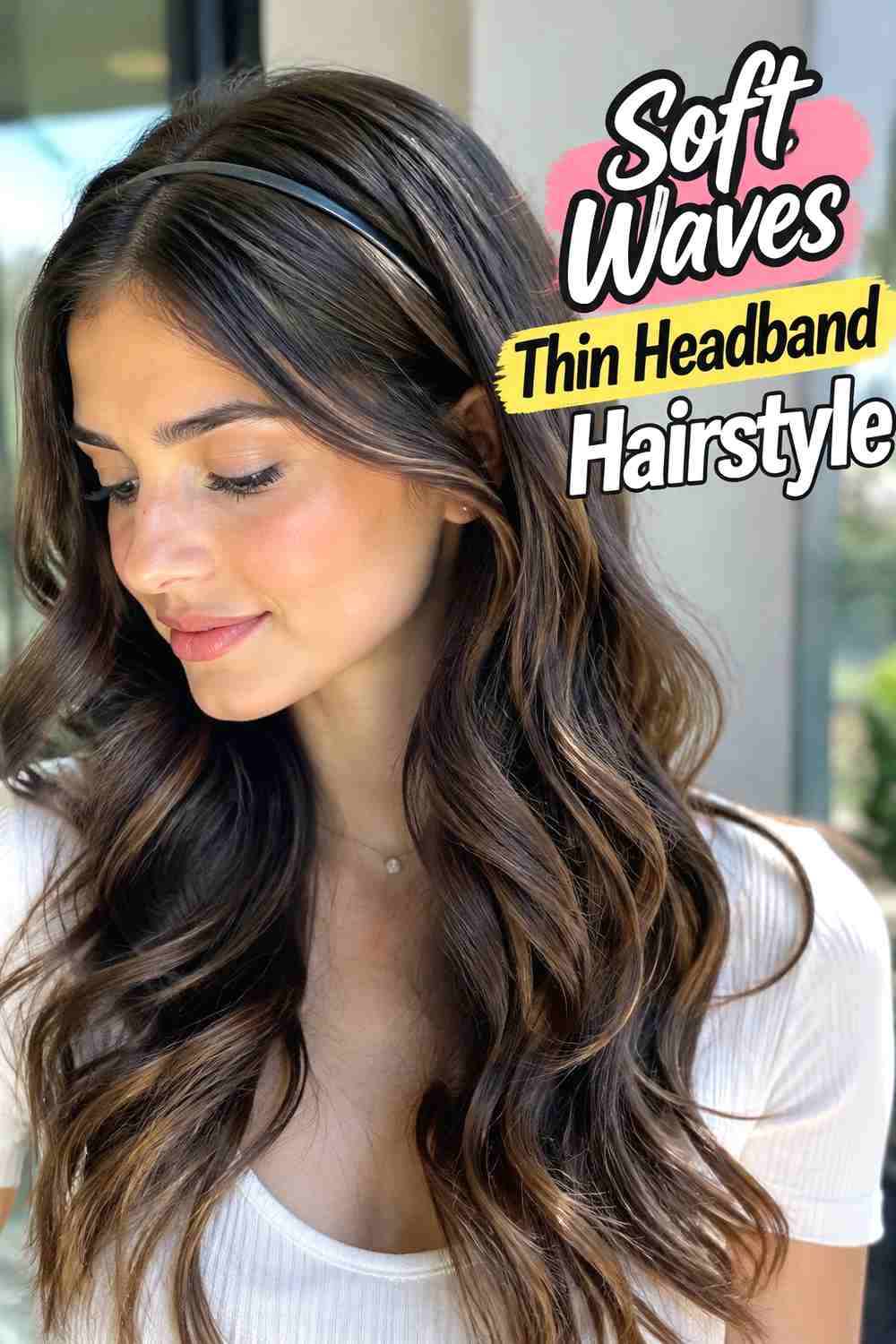
The Soft Waves Thin Headband Hairstyle combines a delicate accessory with gentle movement through the lengths. Create broad waves rather than tight curls, keeping the root area smoother so the headband has a clean place to sit. Position the band slightly behind the hairline and let the waves fall naturally around the shoulders. A few subtle face-framing pieces can remain in front if you prefer softness, while sweeping everything behind the band creates a more polished finish. The narrow accessory provides just enough contrast against the textured lengths without competing for attention. This is an easy option when fully straight hair feels too simple but you still want the overall style to remain understated.
Styling Notes
Keep the wave pattern relaxed and slightly varied; overly uniform curls can make an otherwise minimal hairstyle feel much more formal.
5. Low Bun Thin Headband Hairstyle
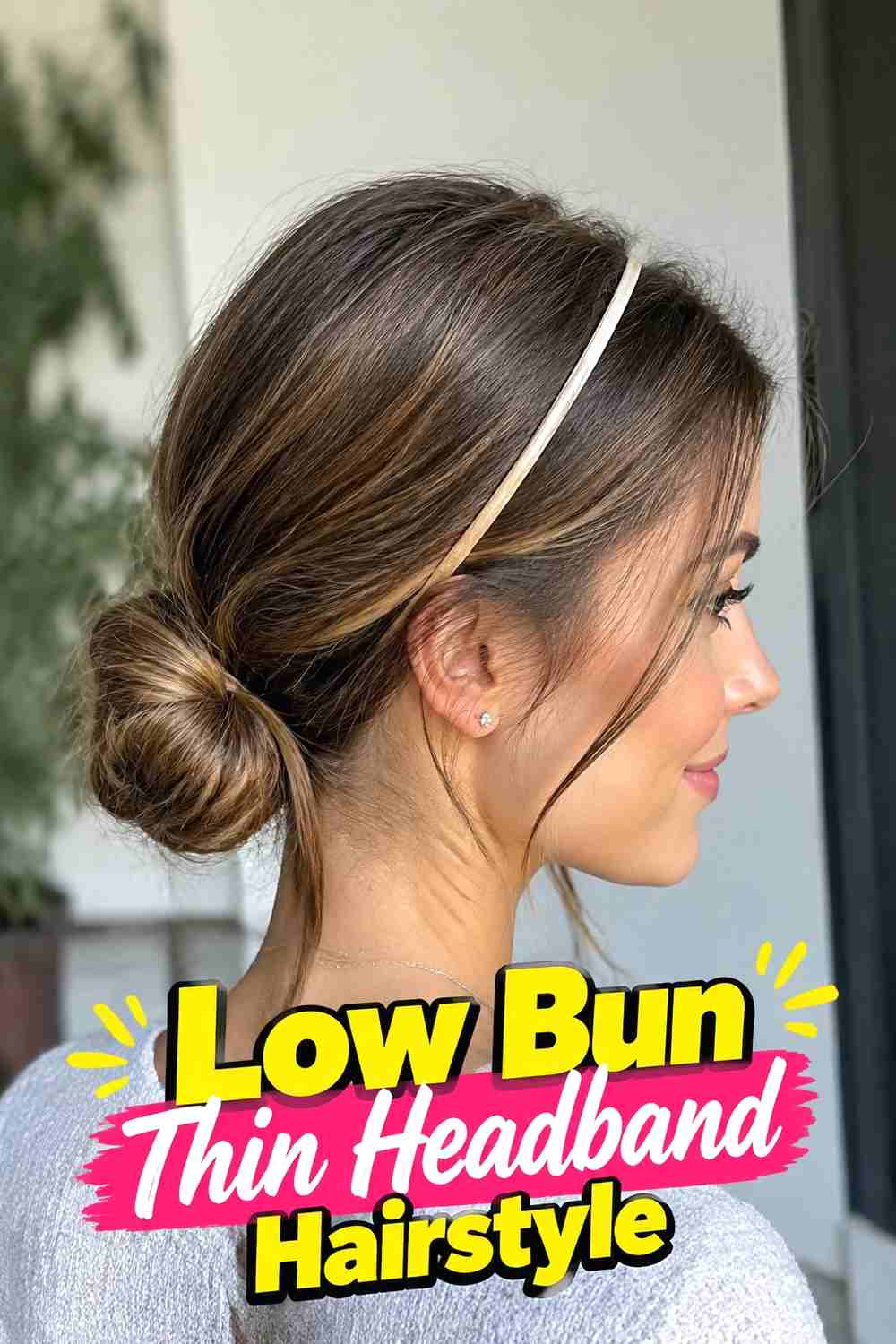
The Low Bun Thin Headband Hairstyle has a clean silhouette that works especially well when you want all the hair off your shoulders. Gather the lengths at the nape, twist them into a compact bun, and secure the shape with an elastic and hidden pins. Add the thin headband near the front as the only visible accessory. A center part creates a modern finish, while a soft side part gives the same bun a gentler appearance. Leave the crown smooth or lightly relaxed depending on your preferred level of polish. Since the bun provides all of the structure, the headband can stay delicate and comfortable rather than needing to grip the hair tightly.
Wear & Maintenance
Secure the bun completely before adding the headband so both elements can remain comfortable and independent throughout the day.
6. Tucked Lob Thin Headband Hairstyle
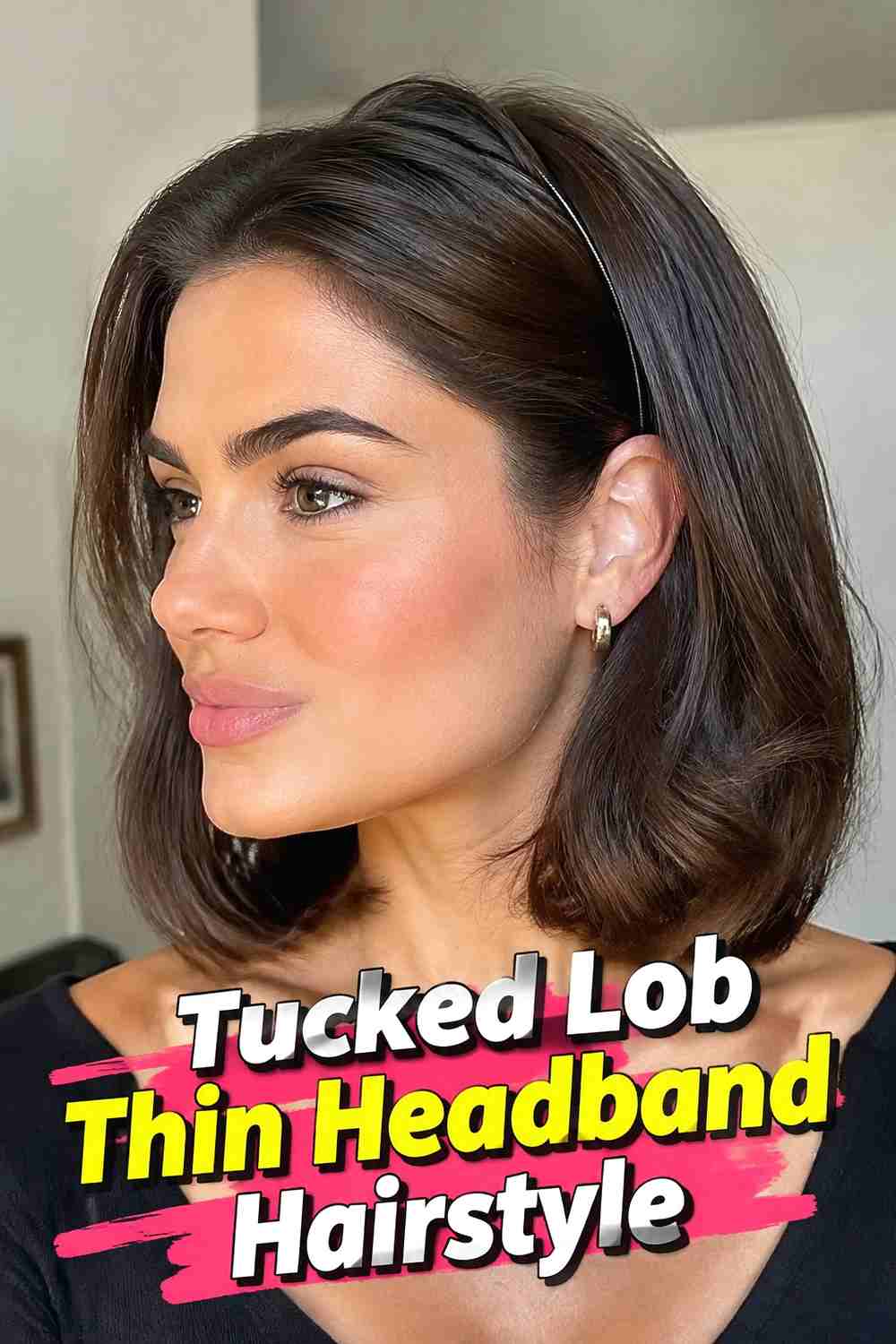
The Tucked Lob Thin Headband Hairstyle gives shoulder-length hair a neat, uncomplicated shape. Style the lob straight or with a soft bend, then place the headband just behind the front hairline and tuck both sides cleanly behind the ears. This exposes the jawline and keeps the haircut’s length visible while giving the crown a defined finish. The style is especially effective with a slim dark or neutral band because the accessory does not interrupt the simple outline of the lob. If your cut includes shorter front layers, allow one or two pieces to remain loose instead of forcing every strand behind the ears. The finished look should feel effortless, light, and intentionally uncluttered.
Why It Works
The tucked sides reduce visual bulk while the thin band gives the crown structure, making the hairstyle look finished with very little extra styling.
7. Minimal Half Up Thin Headband Hairstyle
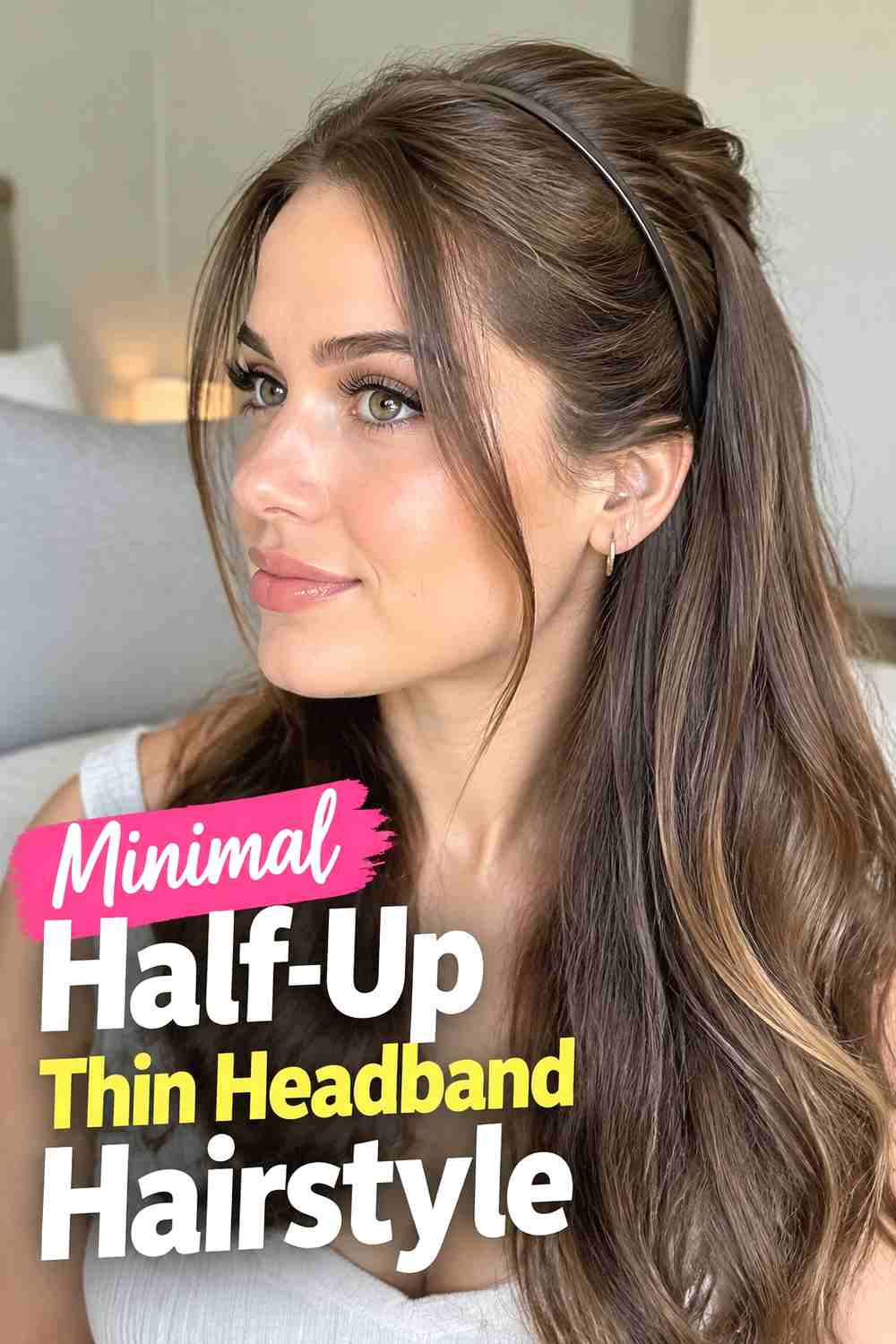
The Minimal Half-Up Thin Headband Hairstyle adds gentle shape at the back while keeping most of the hair loose. Gather a small amount from the sides and crown, then secure it discreetly at the center back without creating an oversized ponytail or bun. Add the thin headband at the front, leaving enough space for a little natural volume behind it. Straight hair creates a crisp version, while soft waves make the look more relaxed. The key is keeping the half-up section small so the hairstyle stays minimalist instead of becoming heavily styled. This option is useful when you want hair away from the face while still showing the length and movement of the lower sections.
Styling Notes
Use a small clear or hair-colored elastic at the back so the thin headband remains the only obvious accessory.
8. Smooth Blowout Thin Headband Hairstyle
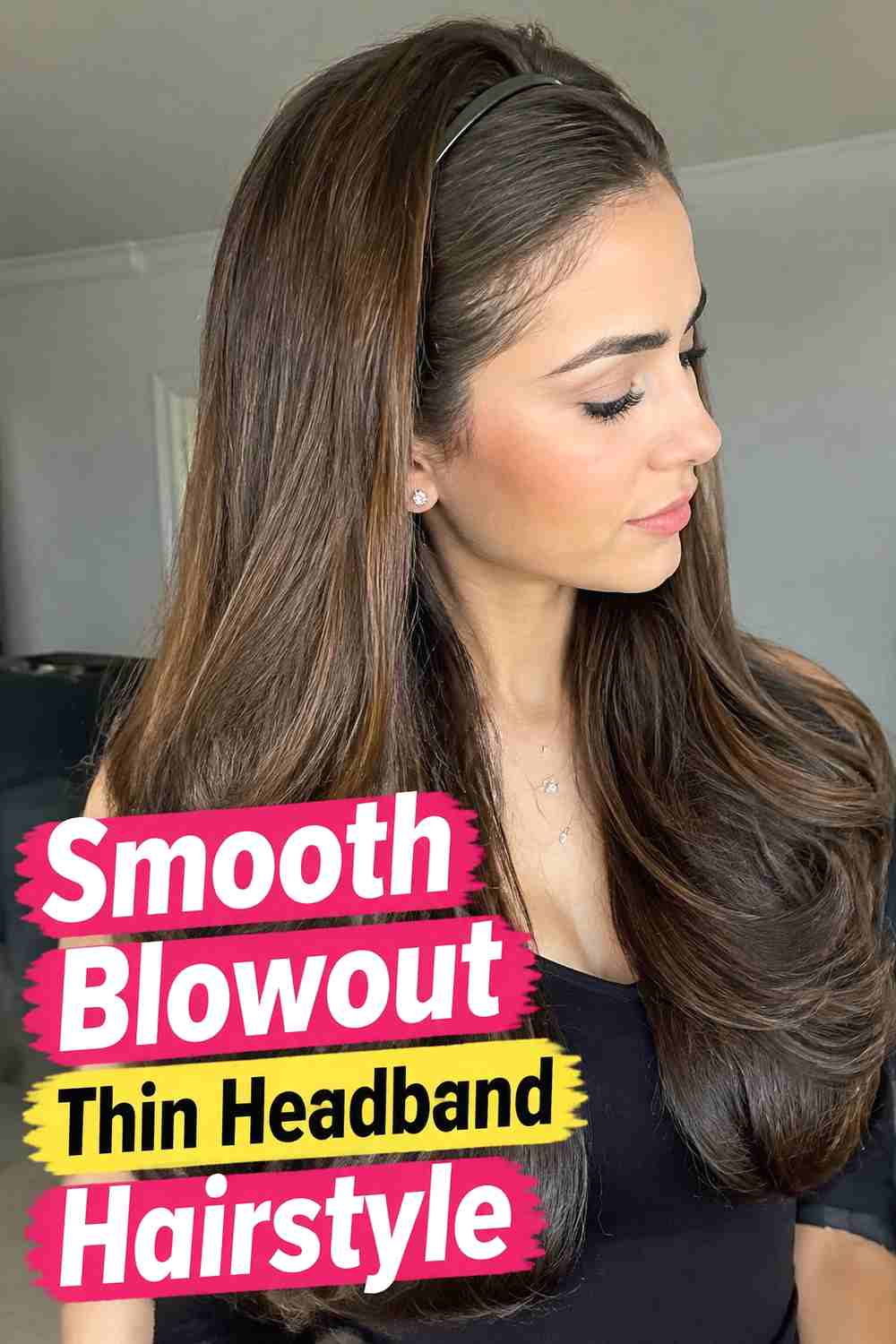
The Smooth Blowout Thin Headband Hairstyle lets healthy-looking movement and rounded ends carry most of the visual interest. Style the hair with a smooth root area, light lift through the crown, and softly curved lengths. Once the blowout has cooled, slide a thin headband into place several centimeters behind the hairline. This placement controls the front without removing the natural volume that makes a blowout look polished. A narrow band in a similar tone to your hair keeps the effect understated, while a subtle metallic version provides a little contrast. Medium and long layered hair works particularly well because the accessory frames the crown while the movement remains concentrated through the lower lengths.
Pro Tip
Add the headband after the style has fully cooled so the front sections retain their shape instead of flattening immediately.
9. Side Part Thin Headband Hairstyle
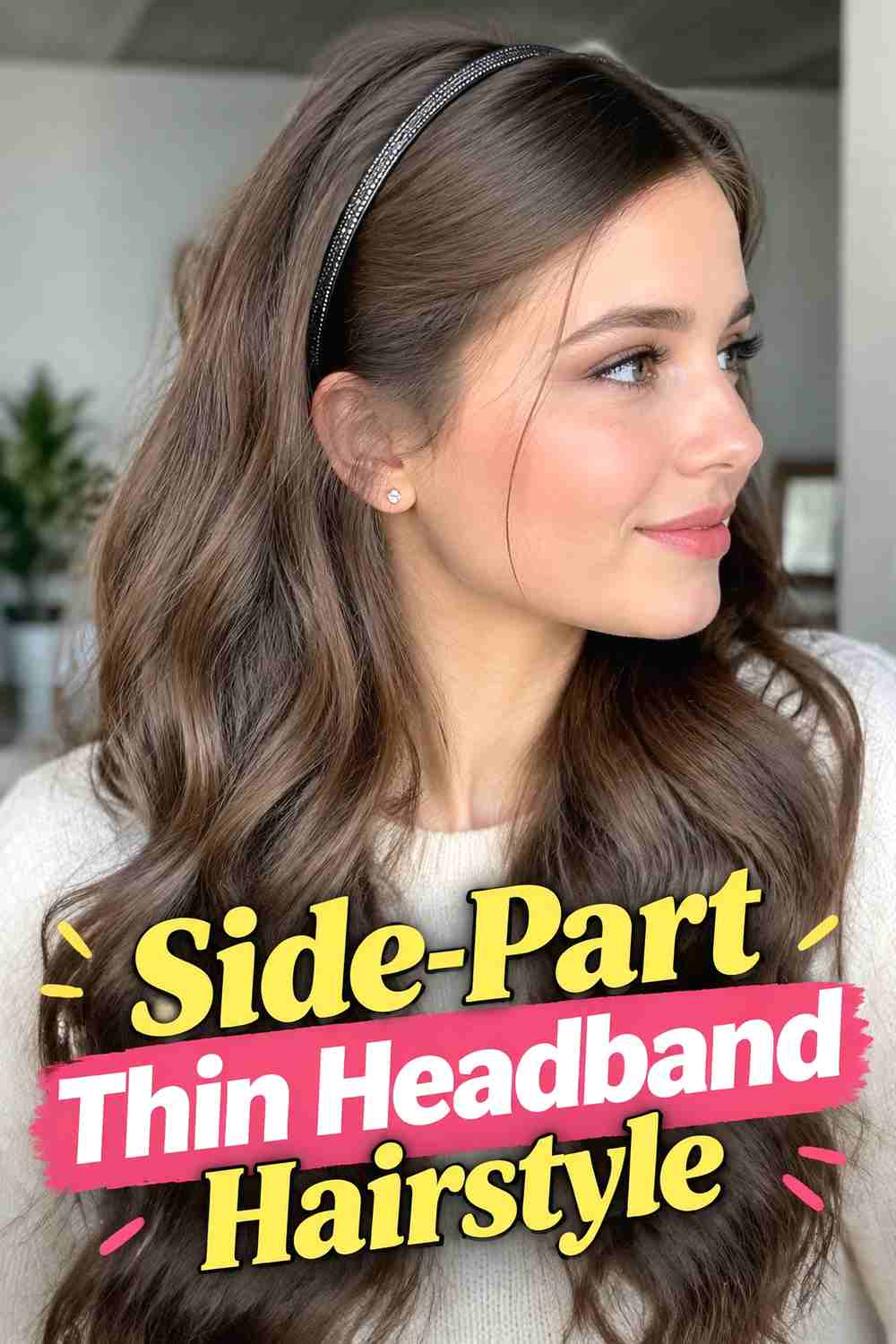
The Side-Part Thin Headband Hairstyle introduces subtle asymmetry while preserving a simple, clean overall shape. Create a defined side part and allow the heavier section to sweep naturally across the forehead or temple. Position the narrow band just behind that front section so the part stays visible. The remaining hair can be worn straight, softly waved, or tucked behind one ear depending on your preferred finish. This approach works on bobs, lobs, and longer lengths because the accessory does not depend on a particular haircut. A plain band gives the most minimal effect, especially when the hair itself has enough shine and movement to provide visual interest without additional clips or decorative details.
Best For
This look transitions easily from daytime outfits to dinners or casual events without requiring a major restyle.
10. Natural Curls Thin Headband Hairstyle
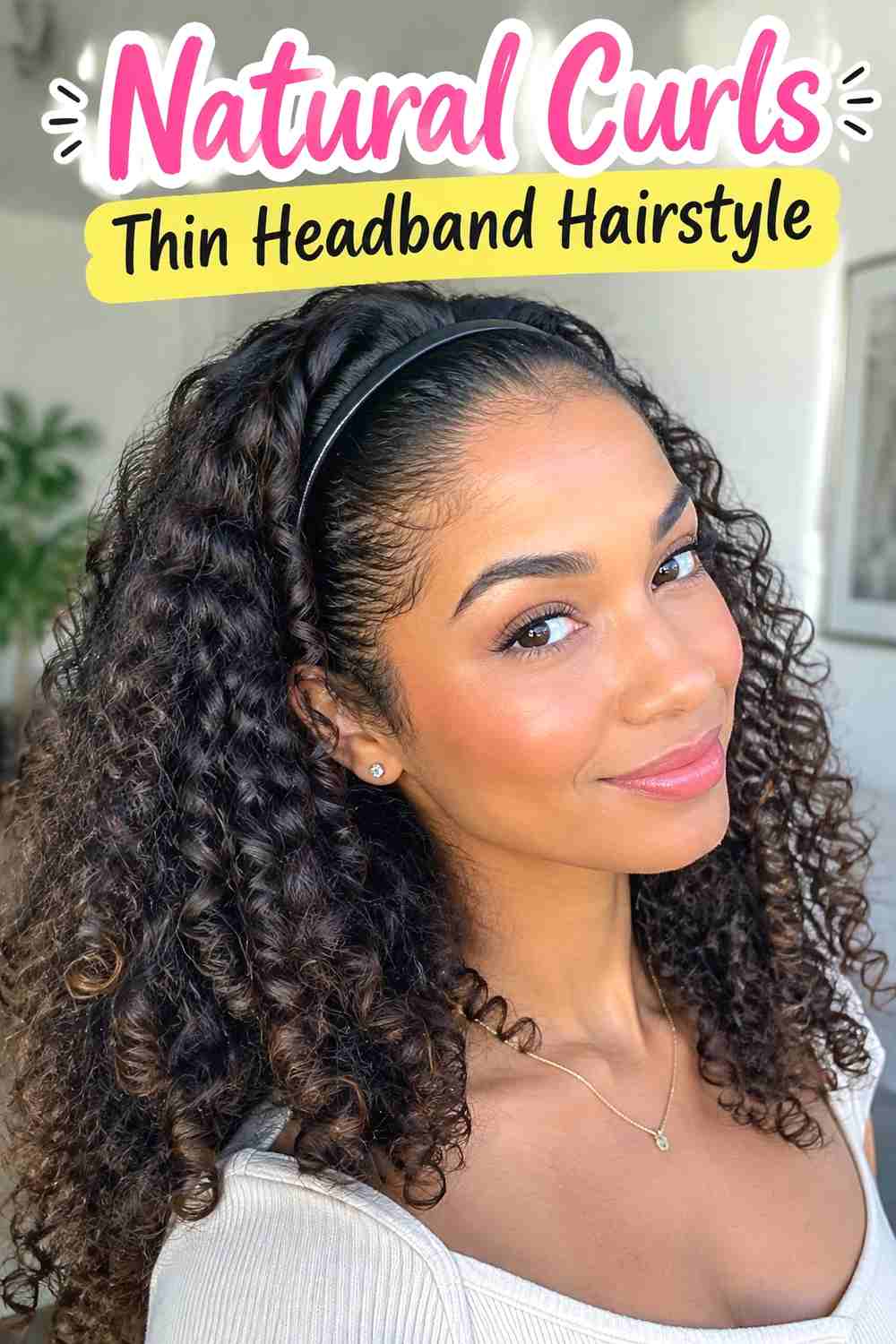
The Natural Curls Thin Headband Hairstyle uses a delicate band to frame texture without flattening it. Define or arrange your curls as usual, then place a flexible narrow headband slightly behind the hairline. The goal is to guide a small amount of hair away from the face while preserving the fullness through the crown and sides. A few curls can remain free around the temples if you prefer a softer frame. Because natural texture already provides plenty of detail, an understated band usually creates the most balanced result. This style works with shorter curls, rounded medium lengths, and long curly hair as long as the accessory sits comfortably without excessive pressure.
Styling Notes
Place the headband after the curls are dry or mostly set so the band does not disturb freshly formed curl definition.
11. Polished Chignon Thin Headband Hairstyle
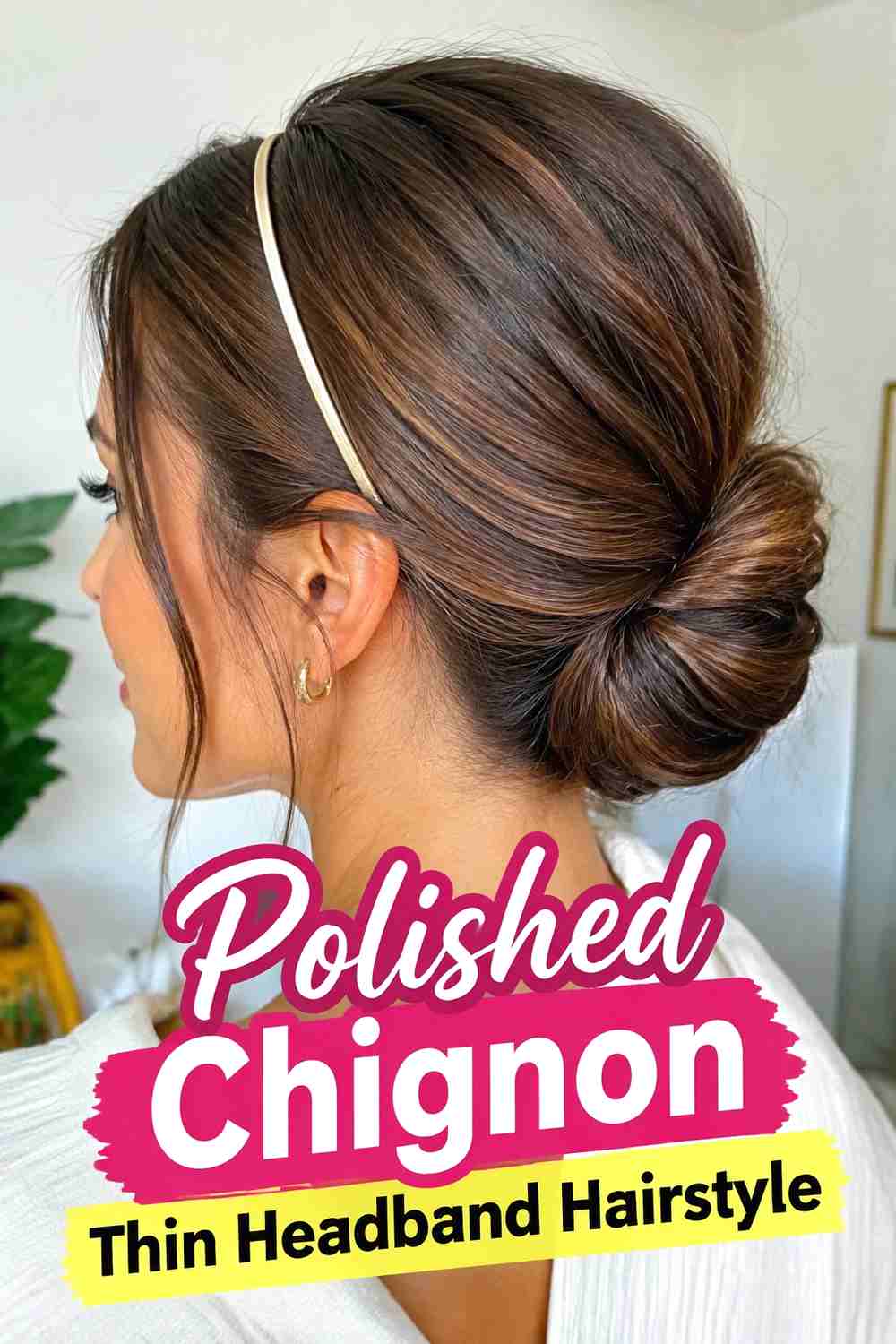
The Polished Chignon Thin Headband Hairstyle is a refined interpretation of minimal styling. Part and smooth the hair, gather it low at the nape, and form a rounded chignon with the ends tucked neatly underneath. Once the updo is secure, position a slim headband across the crown for a precise finishing line. The combination works because both elements are simple: the chignon provides a clean shape at the back, while the headband quietly defines the front. Keep additional pins hidden and avoid decorative clips so the silhouette stays uncluttered. A small amount of volume through the crown can prevent the style from appearing too flat, especially on fine or very straight hair.
Best For
This polished option works for weddings, formal dinners, office events, and occasions where understated elegance suits the dress code.
12. Face Framing Layers Thin Headband Hairstyle
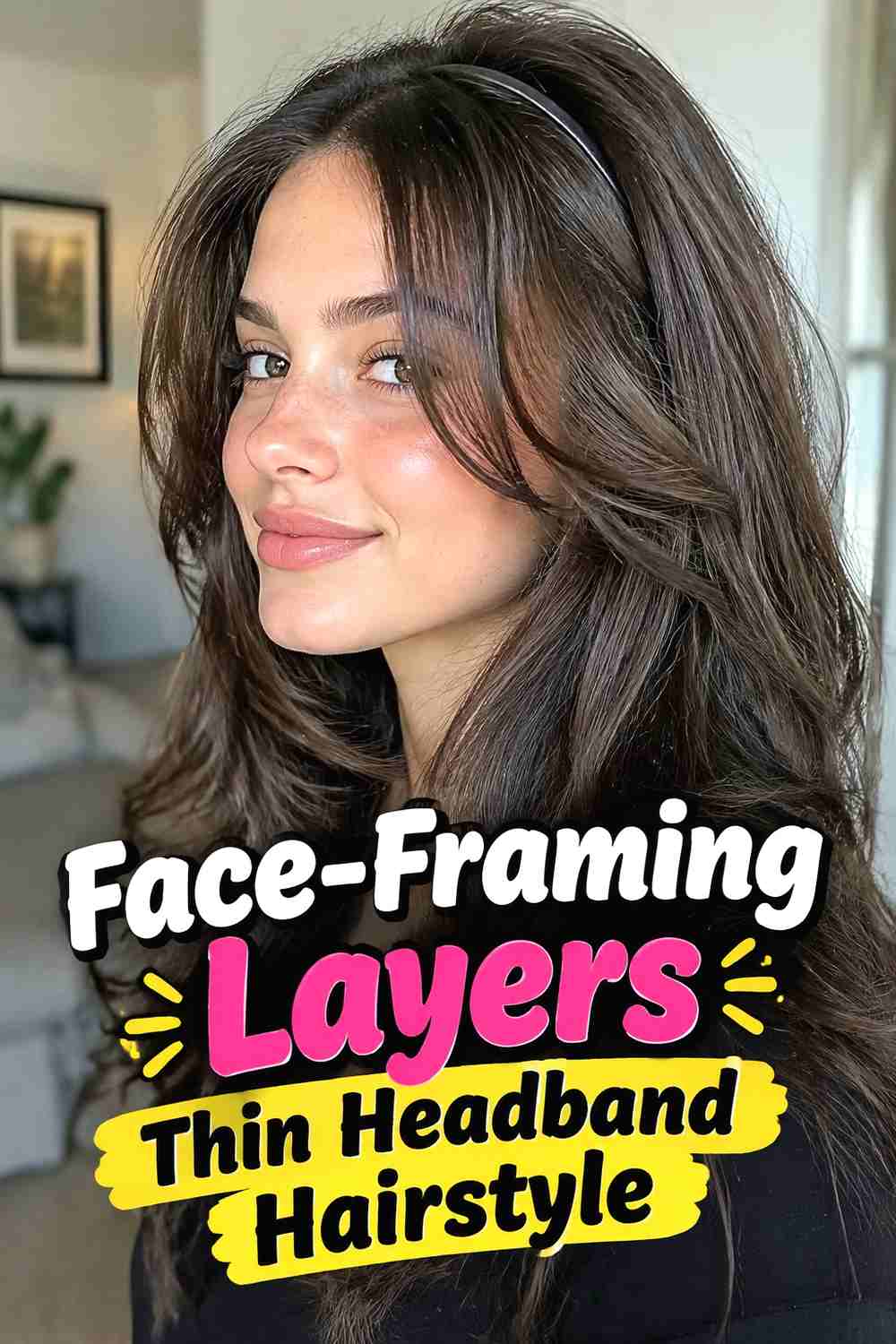
The Face-Framing Layers Thin Headband Hairstyle keeps shorter front pieces visible while the accessory controls the rest of the crown. Separate the layers around the cheeks and jaw first, then slide a thin headband behind them so those pieces stay free. Style the remaining hair straight, blown out, or with subtle bends, allowing the front layers to blend naturally into the longer sections. The result has more softness than a fully swept-back headband look but still feels clean because the number of loose pieces is intentional. This works especially well on medium and long layered cuts where the shorter sections already provide movement without requiring added curls, braids, or decorative accessories.
Styling Notes
Choose the face-framing sections before placing the headband rather than pulling random pieces forward afterward, which can make the crown look less controlled.
How to Choose the Right Look
Start with your haircut and natural texture. Short bobs and lobs work especially well with tucked and side-part styles, while medium and long hair offers more options for ponytails, half-up looks, blowouts, buns, and chignons. Natural curls can stay almost completely loose with the headband used only to frame the front.
Next, decide how polished you want the finish. Sleek center parts, low buns, and chignons create the cleanest silhouette. Soft waves, blowouts, and face-framing layers feel more relaxed while still keeping the accessory minimal.
Comfort and grip matter too. A thin headband should stay in position without pressing painfully around the temples. If your hair is very smooth, a band with gentle internal grip may stay more reliably than a slick rigid style.
Finally, keep the rest of the accessories restrained. Minimal headband hairstyles look strongest when the narrow band has a clear purpose and does not compete with multiple visible clips, bows, or pins.
Final Thoughts
Minimal thin headband hairstyles prove that a small accessory can make a noticeable difference without overwhelming the hair. Whether you prefer sleek lengths, natural curls, a polished bun, or soft waves, focus on clean placement, comfortable hold, and a hairstyle that already works with your natural length and texture.
FAQs
1. What hairstyles look best with a minimal thin headband?
Straight bobs, low ponytails, soft waves, blowouts, buns, chignons, curls, and simple half-up styles all pair naturally with slim headbands.
2. How do I keep a thin headband looking minimal?
Choose a simple shape and understated finish, then avoid adding several other visible hair accessories to the same hairstyle.
3. Can thin headbands work with short hair?
Yes. Bobs and lobs look especially polished with narrow headbands because the accessory adds definition without hiding the haircut.
4. Can I wear a thin headband with curly hair?
Yes. Position a flexible band slightly behind the hairline so it frames the curls without flattening the natural volume.
5. How do I stop a thin headband from slipping?
Choose a comfortable band with gentle grip, avoid excessive slippery products near the roots, and place the band where the shape of your head naturally supports it.
Save your favorite minimal thin headband hairstyles, share the looks you love, and explore more simple accessory ideas for effortless everyday hair.