18 Stretch Headband Hairstyles for Natural Hair
Stretch headbands make natural hair styling easy to switch up, framing curls, coils, puffs, twists, and textured updos without hiding their shape.
A stretch headband can be a useful finishing piece for natural hair because its flexible shape works with different levels of volume. It can sit neatly behind a wash-and-go, frame a full puff, add contrast to twists, or give an updo a more finished appearance without requiring an elaborate accessory arrangement.
The best look depends on your length, density, curl or coil pattern, and the amount of tension you find comfortable. Some styles leave nearly all of the texture free, while others gather it into buns, ponytails, or puffs. Whatever you choose, the headband should complement the hairstyle rather than needing to compress the hair tightly to stay in place.
Quick List
- Wash And Go Stretch Headband Hairstyle
- High Puff Stretch Headband Hairstyle
- Low Puff Stretch Headband Hairstyle
- Curly Fro Stretch Headband Hairstyle
- Half Up Puff Stretch Headband Hairstyle
- Coily Bob Stretch Headband Hairstyle
- Pineapple Stretch Headband Hairstyle
- Twist Out Stretch Headband Hairstyle
- Braid Out Stretch Headband Hairstyle
- Curly Low Bun Stretch Headband Hairstyle
- Mini Twists Stretch Headband Hairstyle
- Flat Twist Crown Stretch Headband Hairstyle
- Stretched Fro Stretch Headband Hairstyle
- Side Swept Curls Stretch Headband Hairstyle
- Curly Ponytail Stretch Headband Hairstyle
- Two Puff Stretch Headband Hairstyle
- Textured Updo Stretch Headband Hairstyle
- Tapered Natural Stretch Headband Hairstyle
1. Wash And Go Stretch Headband Hairstyle
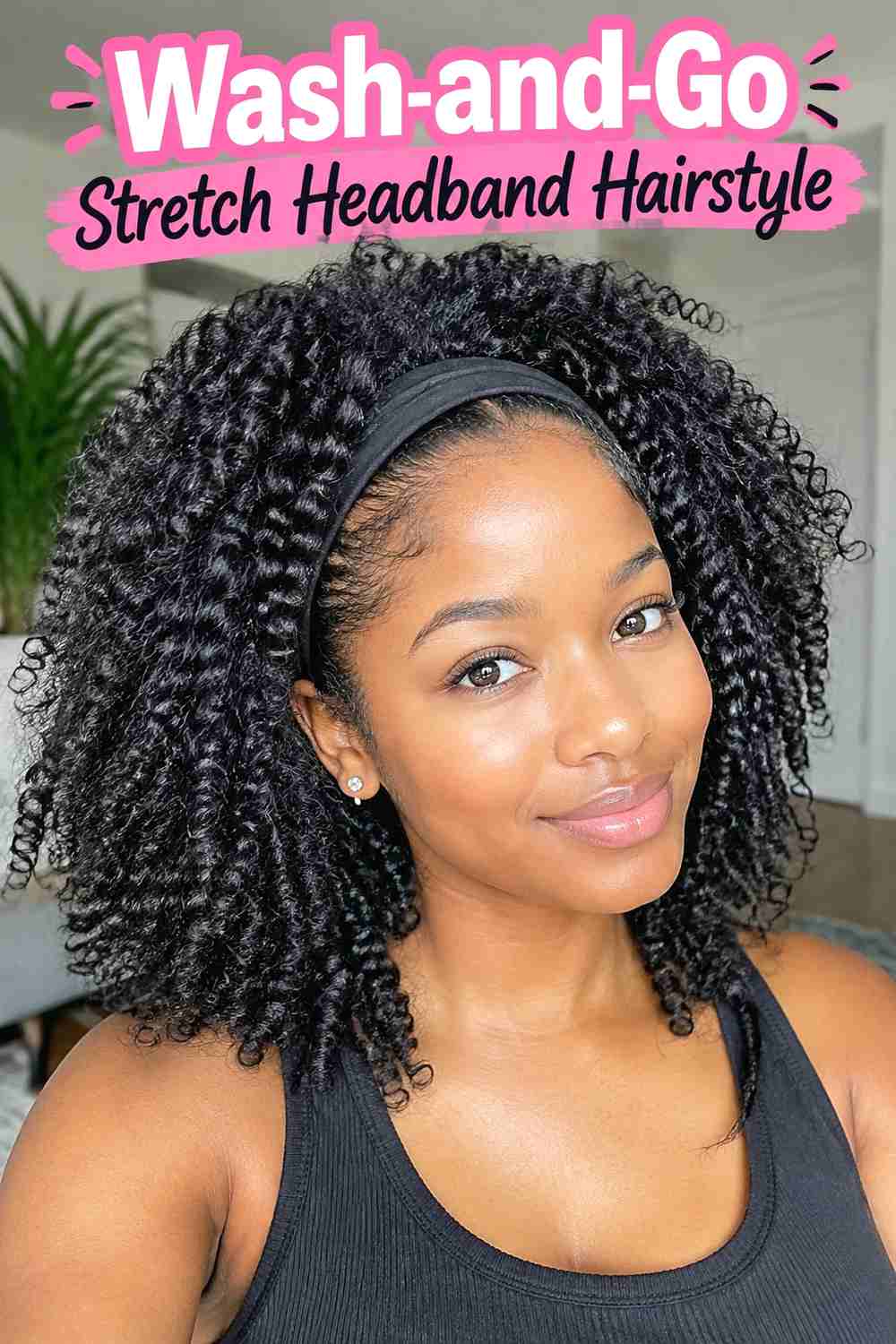
The Wash-and-Go Stretch Headband Hairstyle keeps the natural curl pattern completely recognizable while giving the front a clean, defined frame. Style and dry your wash-and-go as usual, then place a flexible headband slightly behind the hairline instead of pushing it deeply into the crown. This lets the curls remain full through the top and sides while gently directing shorter front pieces away from the face. You can leave a few coils around the temples for softness or move everything behind the band for a clearer silhouette. The look works across different lengths because the accessory does not depend on a ponytail or bun. Keep the band comfortably fitted so the curls retain their natural dimension.
Styling Notes
Add the headband once the curls are dry or mostly set so the fabric does not flatten freshly formed curl clumps around the front.
2. High Puff Stretch Headband Hairstyle
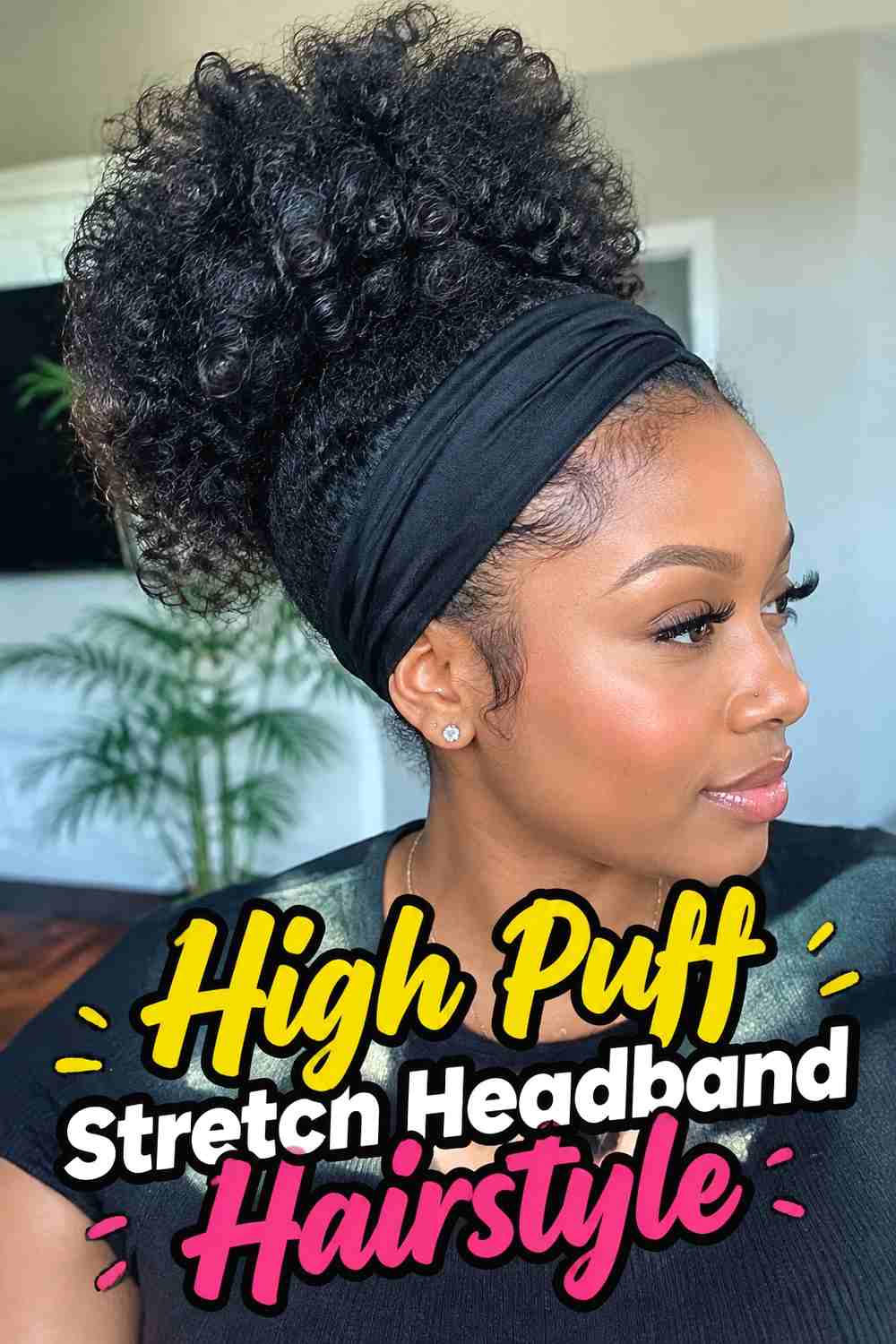
The High Puff Stretch Headband Hairstyle makes volume the focal point while using the accessory to create a neat transition around the hairline. Gather the hair toward the crown with a soft tie or adjustable band, keeping the tension comfortable enough that the puff stays full rather than overly stretched. Place the stretch headband near the front, leaving some space between it and the puff for visible crown dimension. Fluff the ends gently with your fingers and arrange individual curls or coils where needed. A slim band creates a delicate frame, while a slightly wider one produces stronger contrast. This style works especially well when you want your natural texture completely visible but prefer a little extra control around the face.
Best For
Try it for everyday styling, dinners, parties, casual events, or days when you want a high-volume look without a complicated updo.
3. Low Puff Stretch Headband Hairstyle
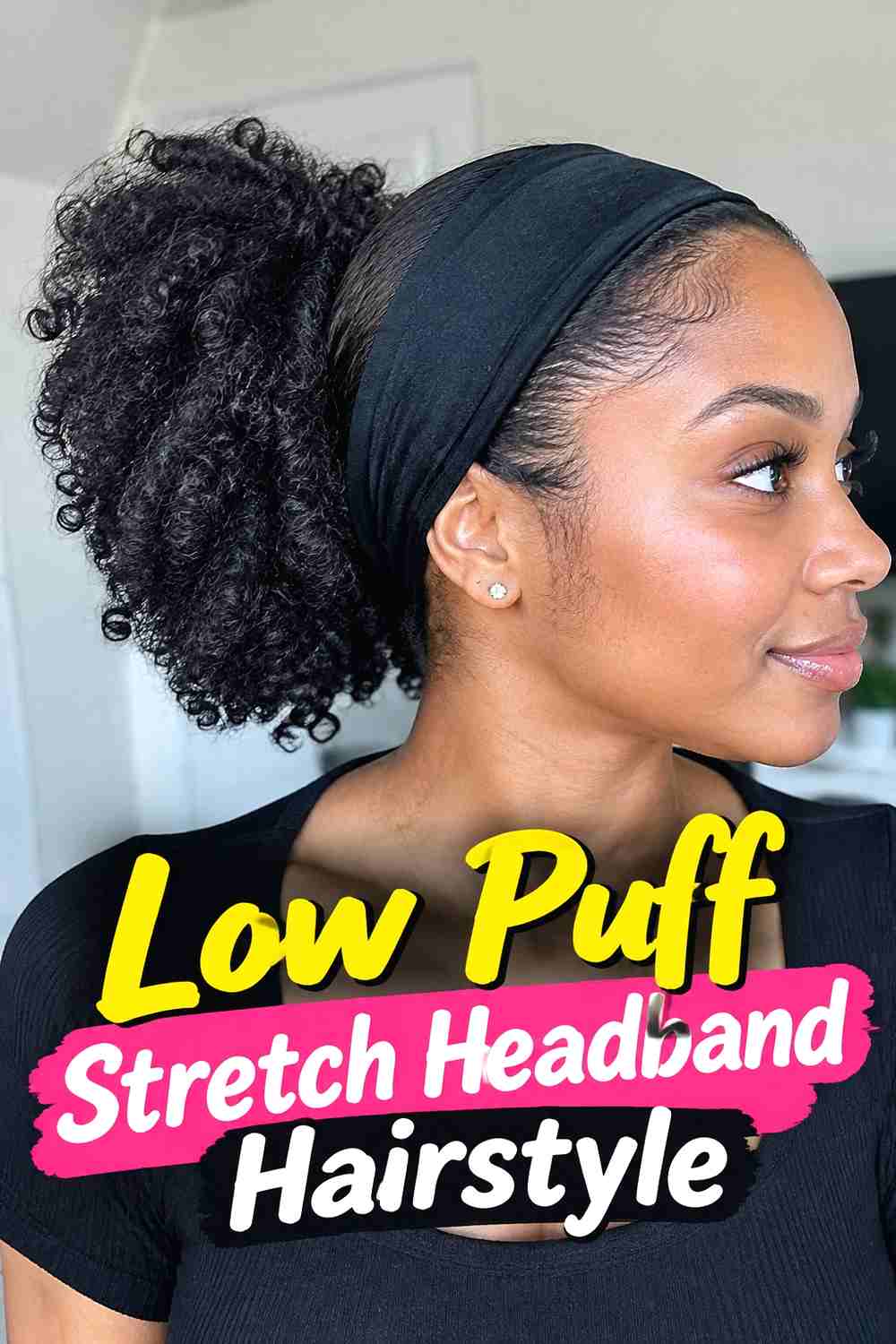
The Low Puff Stretch Headband Hairstyle places fullness near the nape for a softer profile and a more relaxed overall shape. Guide the front and sides backward without excessively stretching the texture, then gather the hair into a low puff using a comfortable tie. Add the headband around the crown, allowing it to define the front while the rounded texture remains prominent at the back. This can be an especially useful alternative when a high puff feels too tall or when you want less volume at the crown. A few curls near the ears can soften the look, while a smoother front makes it feel more polished. Keep the puff loose enough to retain its natural texture and dimension.
Wear & Maintenance
Adjust the puff base if the style loosens rather than repeatedly tightening the headband against the hairline.
4. Curly Fro Stretch Headband Hairstyle
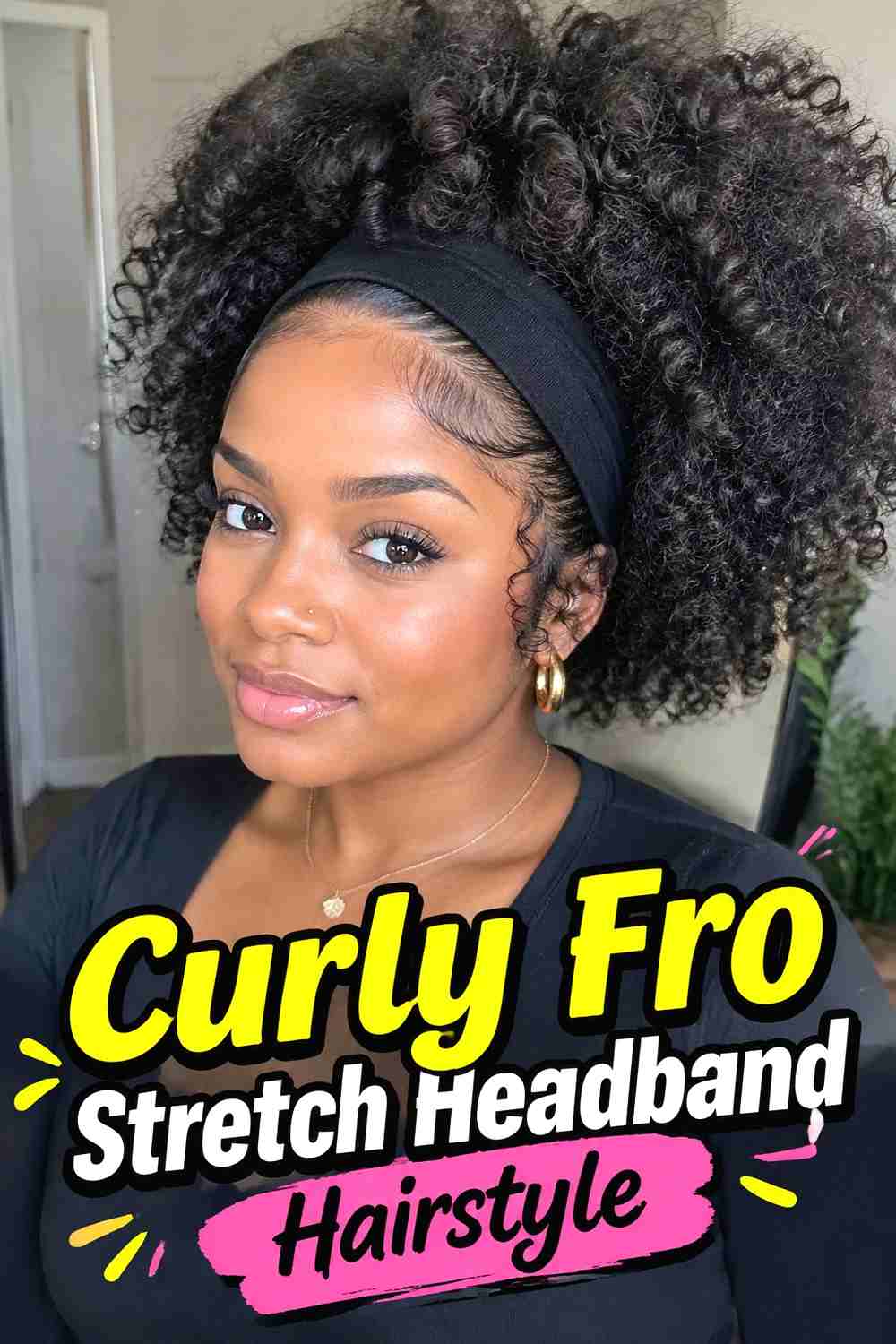
The Curly Fro Stretch Headband Hairstyle celebrates a full rounded silhouette while adding only a simple line of fabric near the front. Shape the hair into your preferred fro, preserving natural volume through the crown and sides, then slide a flexible headband into place just behind the hairline. The goal is not to flatten the shape but to create a subtle border between the face and the textured fullness behind it. A few short curls can remain free near the temples for softness. This look adapts well to different curl and coil patterns because the final silhouette depends on your density, length, shrinkage, and how much the hair has been separated or fluffed.
Why It Works
The band provides structure without hiding the fro’s texture, so the natural shape remains the strongest visual element.
5. Half Up Puff Stretch Headband Hairstyle
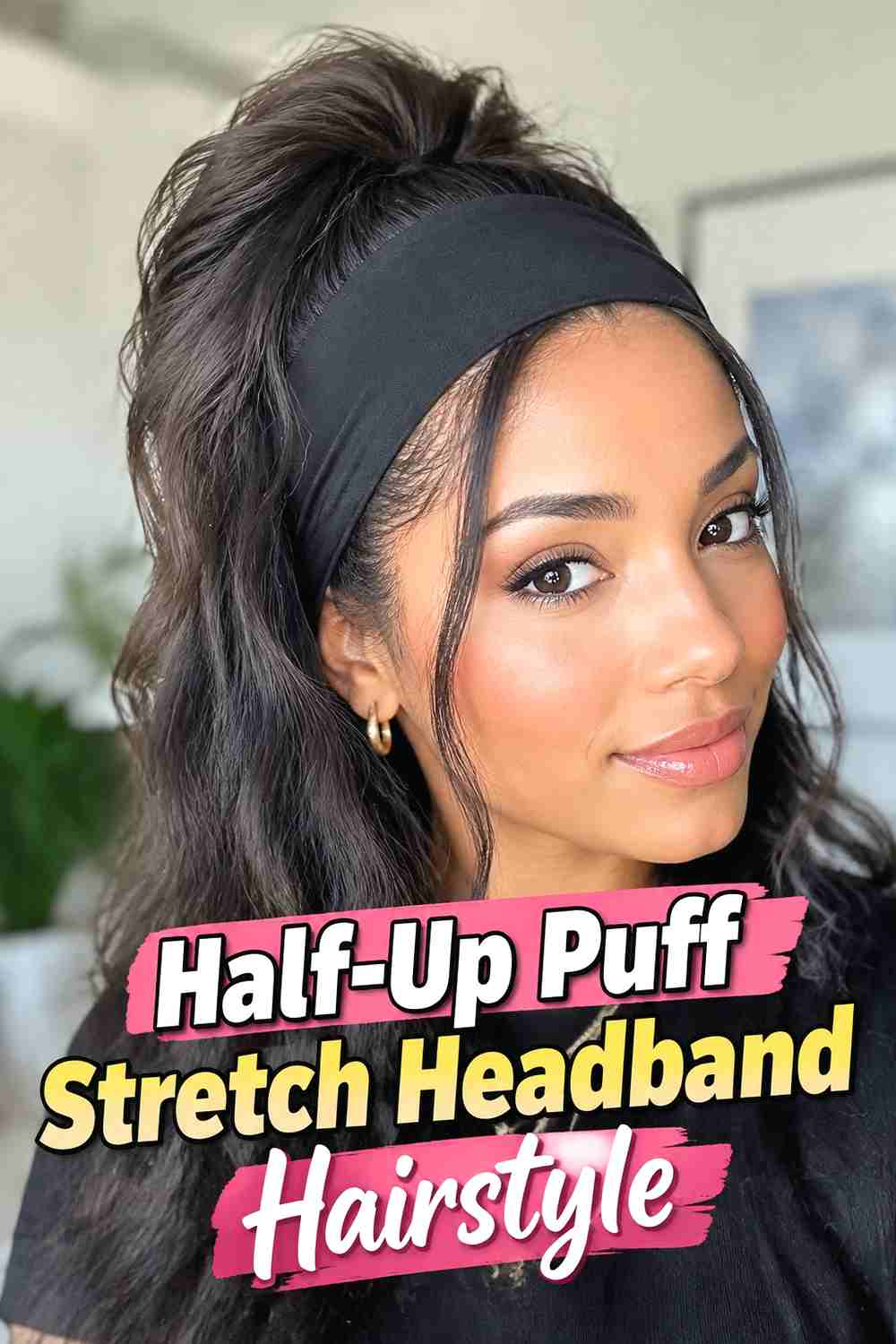
The Half-Up Puff Stretch Headband Hairstyle creates height at the crown while allowing the lower curls and coils to remain loose. Separate an upper section of hair and gather it into a small puff, leaving the remaining length free through the back and sides. Add the stretch band near the hairline to organize shorter pieces and give the front a cleaner finish. This combination is especially attractive on medium and long natural hair because it shows two distinct levels of volume without requiring an elaborate style. Keep the upper puff proportional to the loose section so neither area overwhelms the other. The lower hair can remain defined, stretched, or softly fluffed depending on your preferred finish.
Styling Notes
Secure the half-up puff independently before positioning the band so both parts of the style can be adjusted without pulling on each other.
6. Coily Bob Stretch Headband Hairstyle
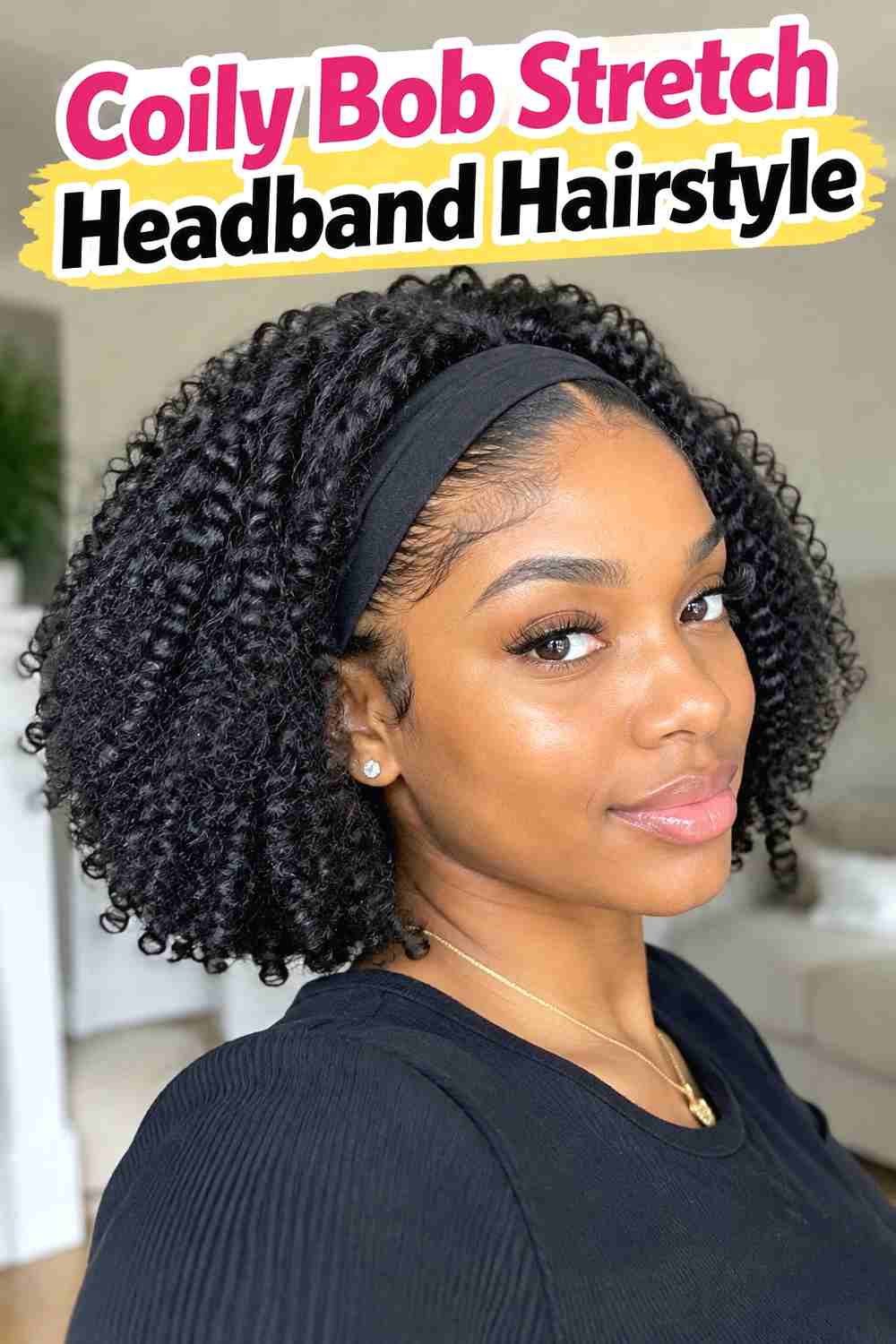
The Coily Bob Stretch Headband Hairstyle frames a shorter rounded cut without covering the shape that makes it distinctive. Define the coils or let them settle into their natural silhouette, then place a narrow or medium-width stretch band slightly behind the front hairline. Short pieces can remain visible in front for a softer effect, or the whole front can be guided backward for a cleaner outline. The accessory looks especially balanced when the bob retains fullness around the sides rather than being flattened close to the head. Because shorter natural hair already has a strong shape, a simple solid or lightly textured band usually provides enough detail without making the hairstyle feel crowded.
Hair Type & Length
This look works particularly well with chin-length natural cuts, curly bobs, and shorter rounded coil shapes.
7. Pineapple Stretch Headband Hairstyle
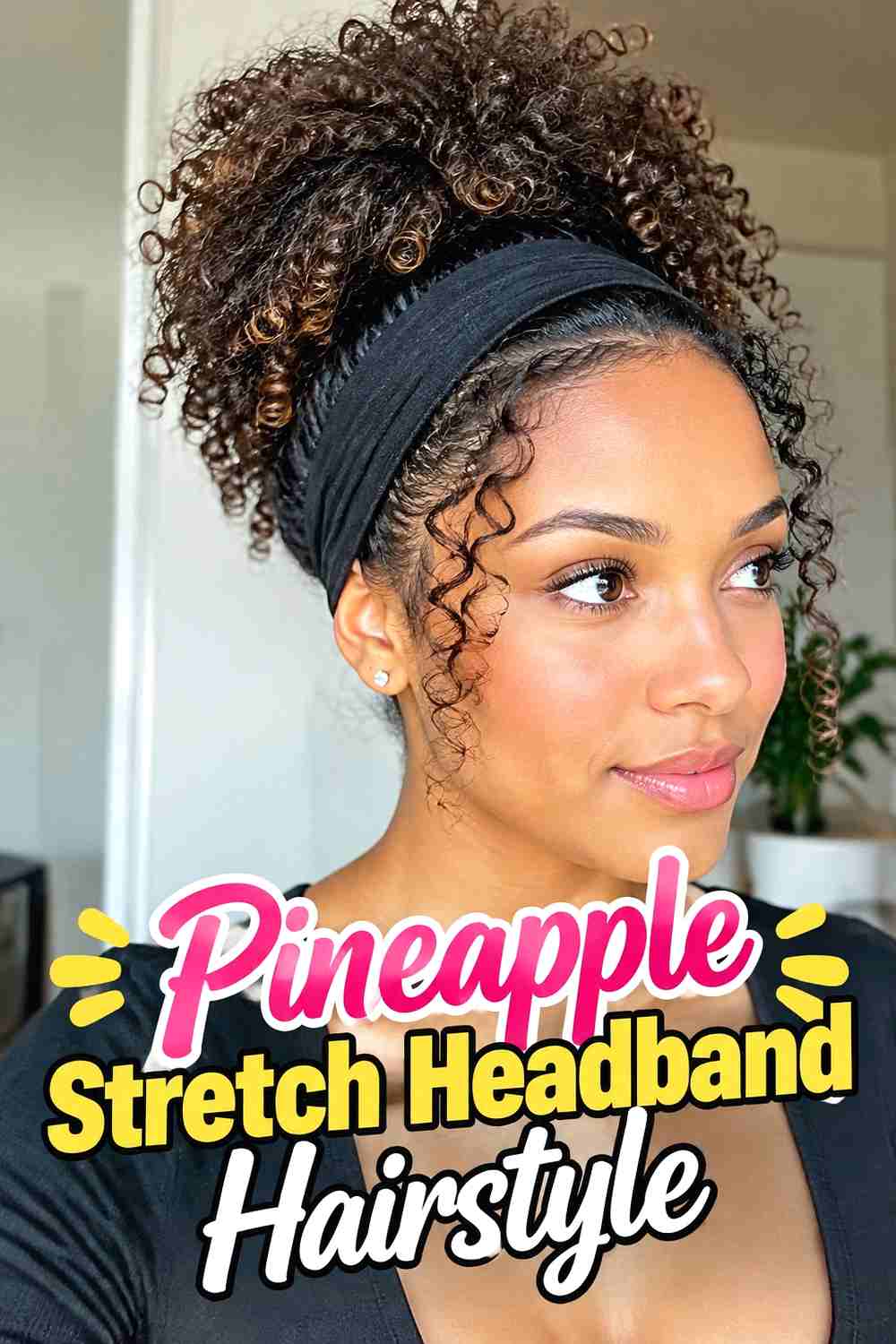
The Pineapple Stretch Headband Hairstyle gathers longer curls high while allowing them to spill freely toward the front and sides. Bring the hair loosely toward the top of the head using a soft scrunchie or tie, keeping the gathering point relaxed enough that the curl pattern remains visible. Add the stretch headband around the front to define the hairline below the cascading texture. Depending on length, the curls can fall toward the forehead or fan outward around the crown. This style has a playful silhouette and works particularly well when you want to emphasize height. Avoid forcing shorter sections into the gathering point; leaving a few soft pieces around the perimeter can make the result feel more natural.
Pro Tip
Shape the pineapple after securing it by moving individual curl sections rather than tightening the base repeatedly.
8. Twist Out Stretch Headband Hairstyle
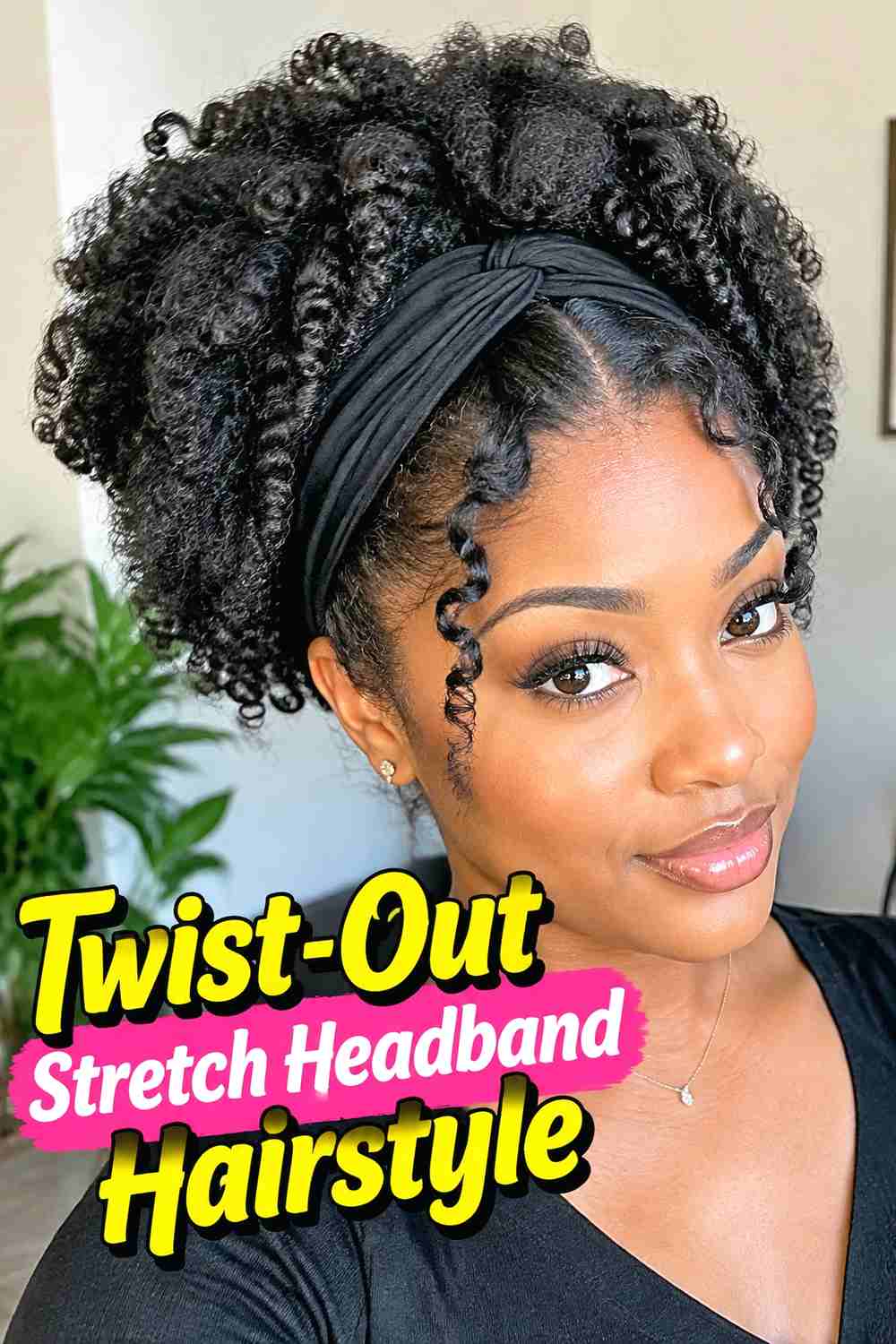
The Twist-Out Stretch Headband Hairstyle combines defined, elongated texture with a simple accessory that keeps the front organized. Once the twists have been unraveled and separated to your preferred fullness, position the stretch band slightly behind the hairline. Leave the twist-out completely loose for maximum volume or gently push more of the front section backward for a rounded silhouette. The visible pattern through the lengths gives the hairstyle enough detail that the headband can remain understated. Medium and long natural hair usually provides the most movement, although shorter twist-outs can create an equally attractive compact shape. Handle the texture gently when placing the band so the definition around the crown does not become overly disturbed.
Styling Notes
Finish separating and fluffing the twist-out before adding the accessory so you do not need to manipulate the texture repeatedly afterward.
9. Braid Out Stretch Headband Hairstyle
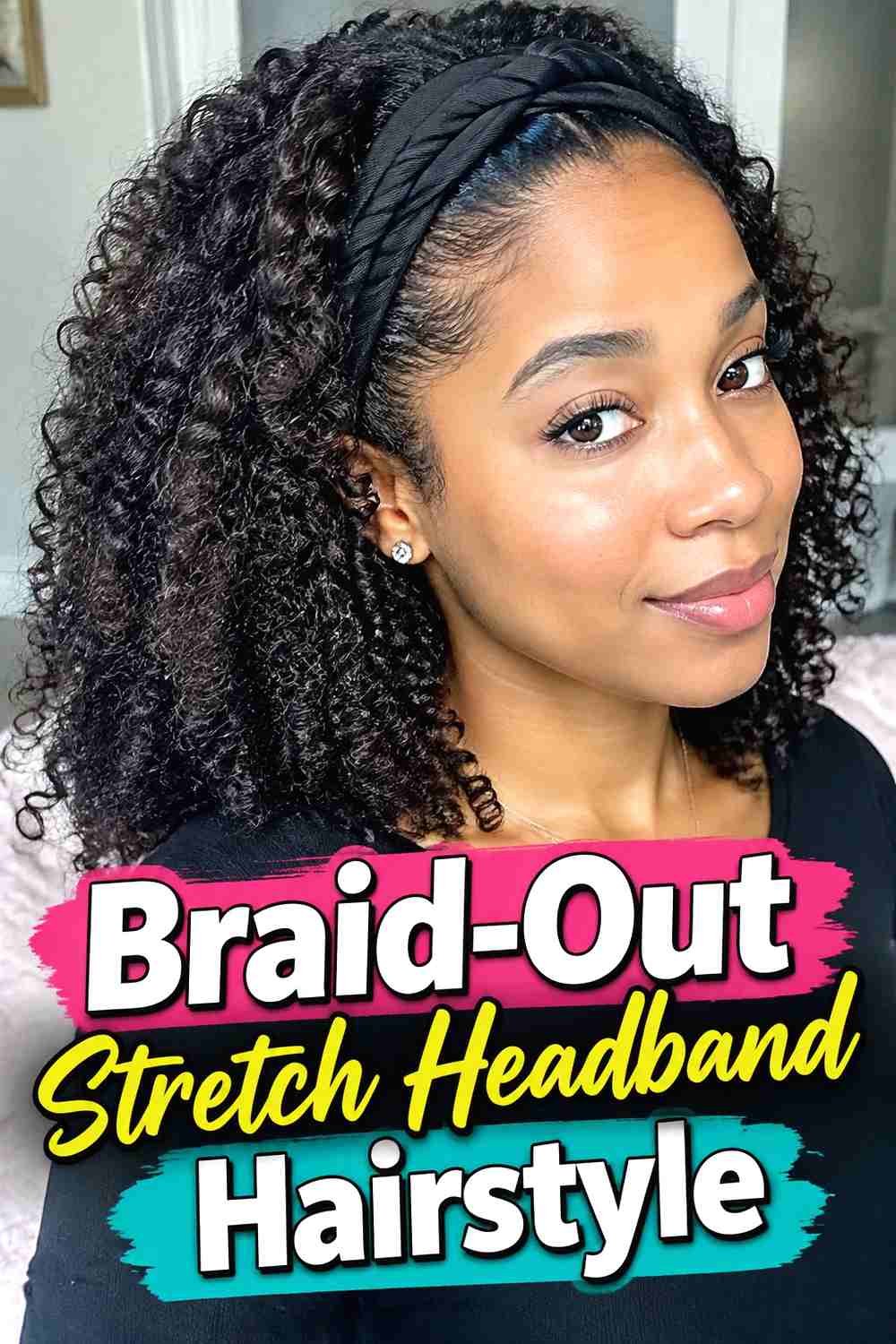
The Braid-Out Stretch Headband Hairstyle highlights softly crimped or waved natural texture while creating a clean frame near the forehead. After taking down the braids, separate the hair only as much as needed to reach your preferred fullness. Slide a stretch band behind the front section and let the patterned lengths fall naturally around the head and shoulders. Compared with a tighter curl pattern, the elongated braid-out texture can produce a wider, softer silhouette that pairs especially well with a simple fabric band. You can keep the crown full or gently guide the roots backward beneath the accessory. Avoid over-brushing the finished texture, since visible variation and separation help the braid-out retain its character.
Why It Works
The smooth band contrasts with the textured lengths, giving the style definition without requiring additional braids, clips, or decorative pieces.
10. Curly Low Bun Stretch Headband Hairstyle
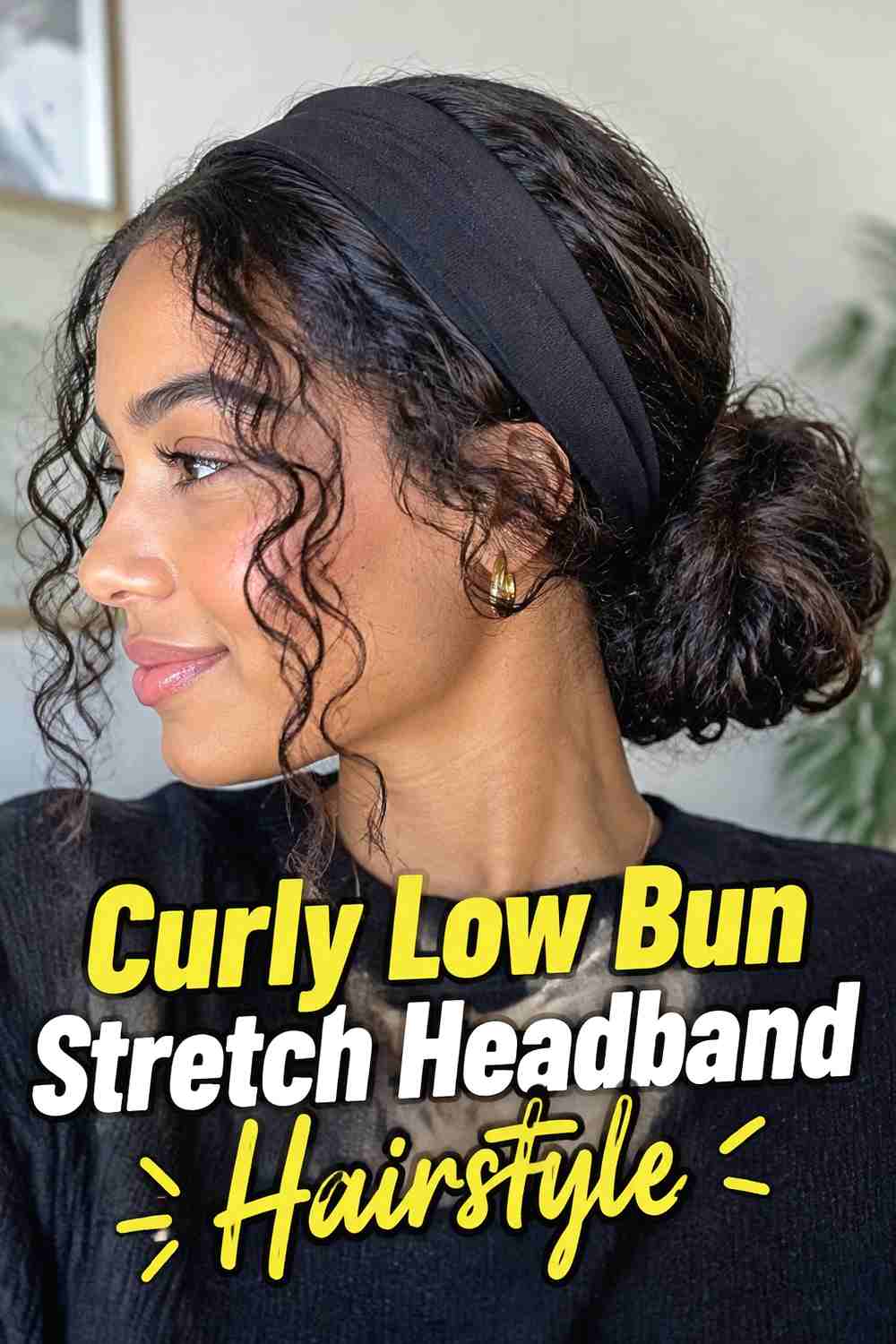
The Curly Low Bun Stretch Headband Hairstyle gathers natural texture into a polished shape while still allowing visible curls and coils to remain part of the finish. Bring the hair toward the nape and pin or wrap sections into a low bun, keeping the outer surface softly textured rather than perfectly smooth. Add the stretch band across the crown once the bun is secure. A few curls around the temples or ears can stay free for softness, while a cleaner front creates a more formal look. The low placement can feel especially balanced on dense or longer natural hair because the weight stays close to the neck rather than sitting high on the crown.
Best For
This style suits work, dinners, weddings, special events, or any occasion where you want natural texture within a more controlled updo.
11. Mini Twists Stretch Headband Hairstyle
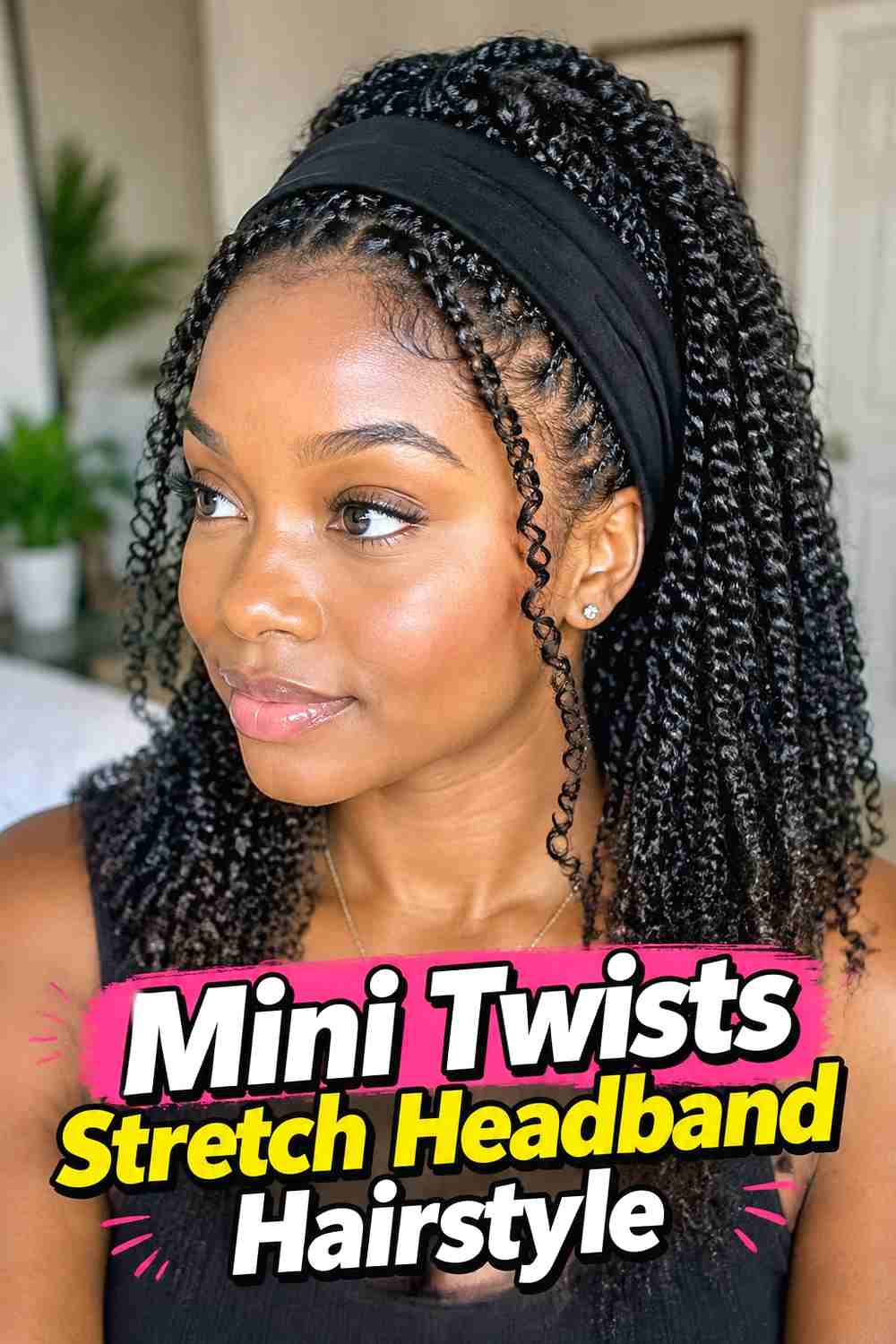
The Mini Twists Stretch Headband Hairstyle refreshes an existing twisted style without changing its length or parting. Wear the twists loose, move them into a half-up arrangement, or gather them gently at the back, then add a flexible stretch band near the front. Because mini twists already create plenty of texture and visual detail, a simple headband usually looks more balanced than an ornate one. You can leave several twists around the face or sweep all of them behind the accessory for a cleaner outline. The band also changes the silhouette quickly when you want variety without redoing the twists. Choose a fit that sits securely while allowing the twist roots to remain comfortable.
Wear & Maintenance
Avoid pushing a tight band repeatedly over the same sections; position it gently and let the twists provide most of the hairstyle’s structure.
12. Flat Twist Crown Stretch Headband Hairstyle
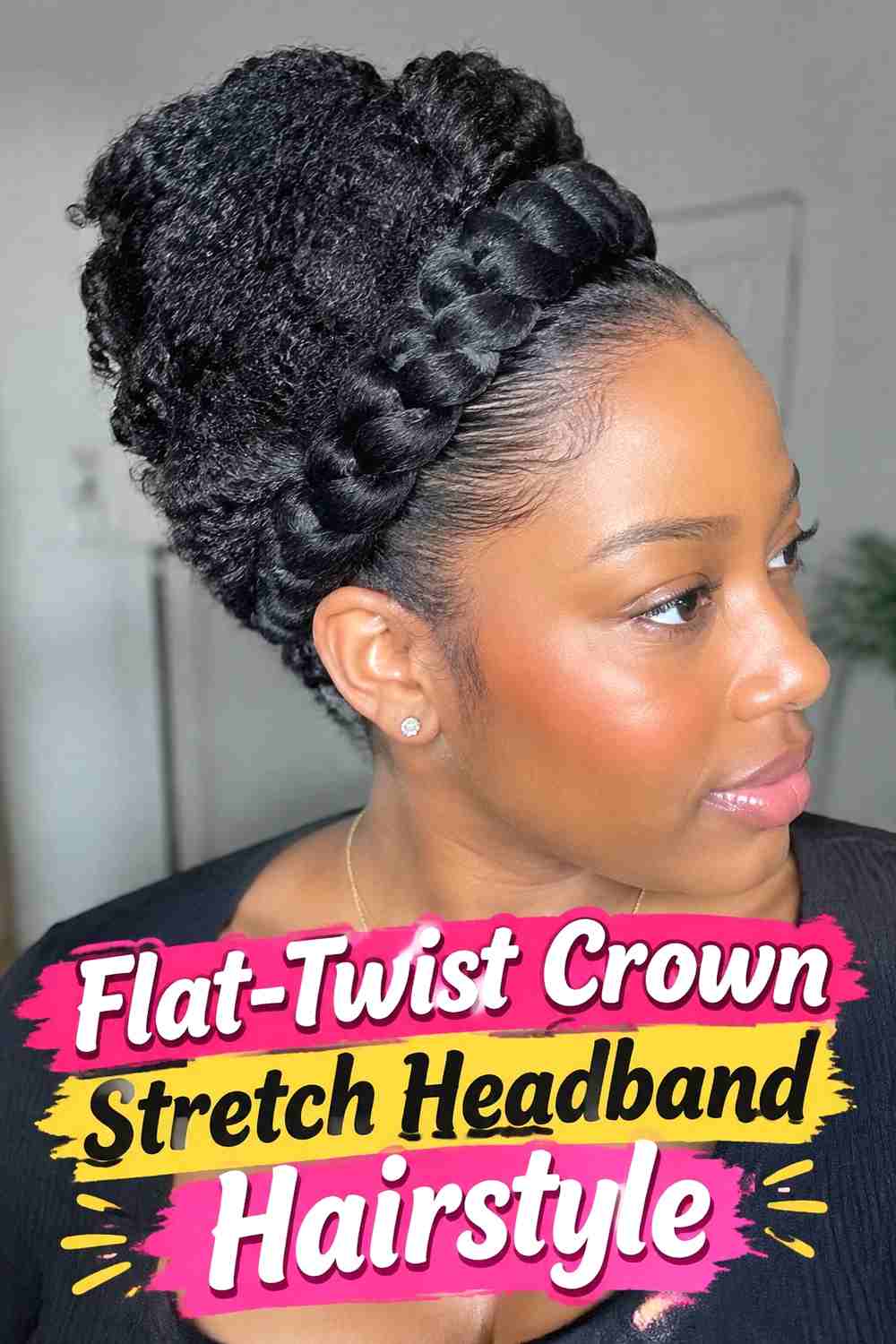
The Flat-Twist Crown Stretch Headband Hairstyle layers an accessory over structured detail near the sides of the head. Create one or two flat twists beginning near the temples and direct them backward, then leave the remaining hair loose, gather it into a puff, or pin it into a low style. Position the stretch band so it complements the twists rather than covering them completely. A narrow band can sit just ahead of the twisted sections, creating several visible lines around the crown. This style works well when you want a little more structure than a basic wash-and-go but still want plenty of natural texture visible. Keep the twists comfortable and avoid using the band to increase their tension.
Styling Notes
Finish the flat twists first, then test the band at several positions to find one that keeps the braided detail clearly visible.
13. Stretched Fro Stretch Headband Hairstyle
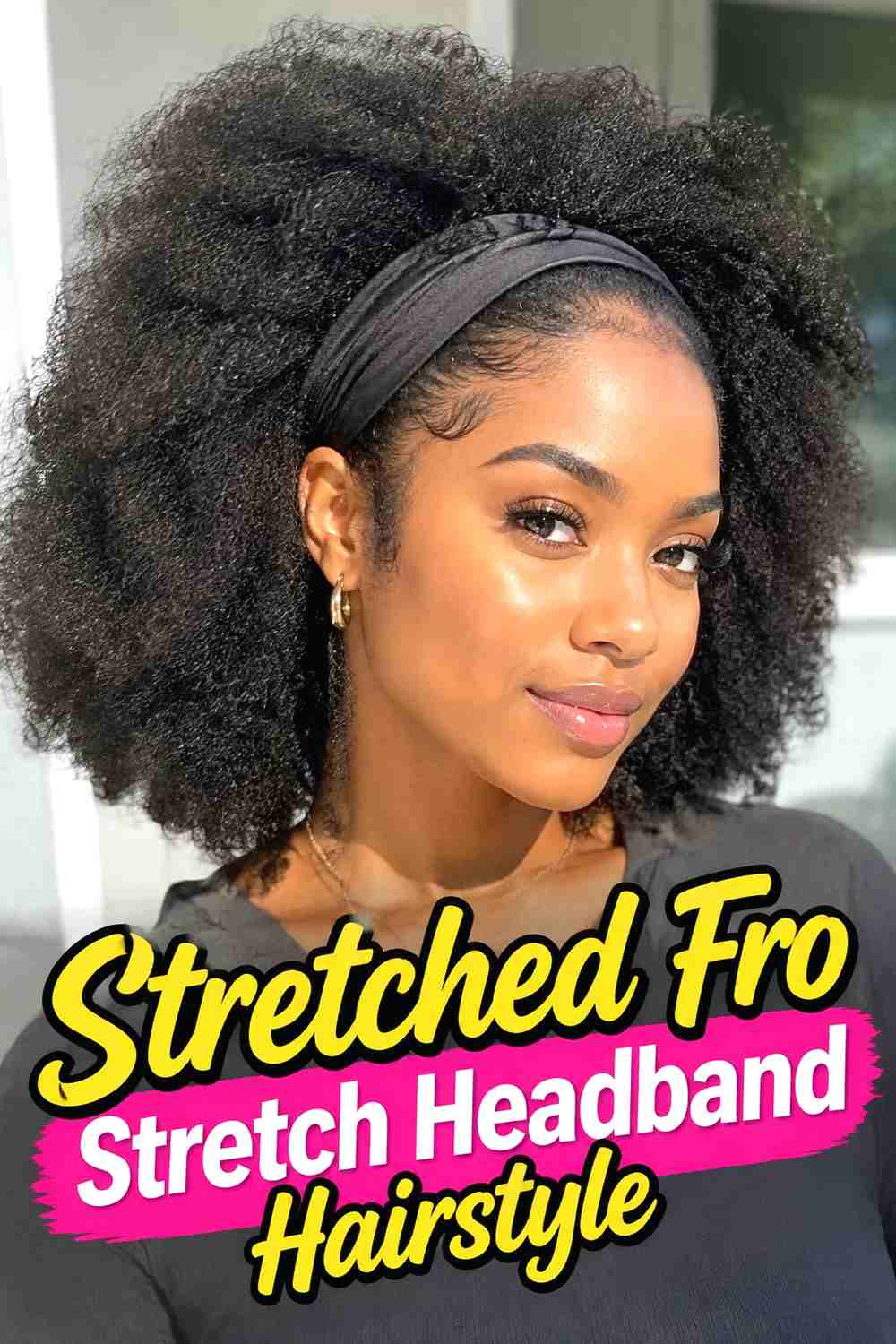
The Stretched Fro Stretch Headband Hairstyle creates a larger, elongated silhouette while maintaining obvious natural texture. Whether the hair has been stretched using twists, braids, banding, or another preferred method, shape the lengths outward and upward before adding the band. Position the stretch headband close to the front or farther back depending on how much volume you want above the forehead. The elongated texture can make the hairstyle look fuller without requiring a high puff or gathered base. Allow the ends to retain variation rather than shaping them into an unnaturally perfect outline. A simple band gives the textured shape a clean reference point without competing with its size.
Best For
Choose this look when you want substantial volume and length visibility while keeping the hairstyle completely free rather than gathered.
14. Side Swept Curls Stretch Headband Hairstyle
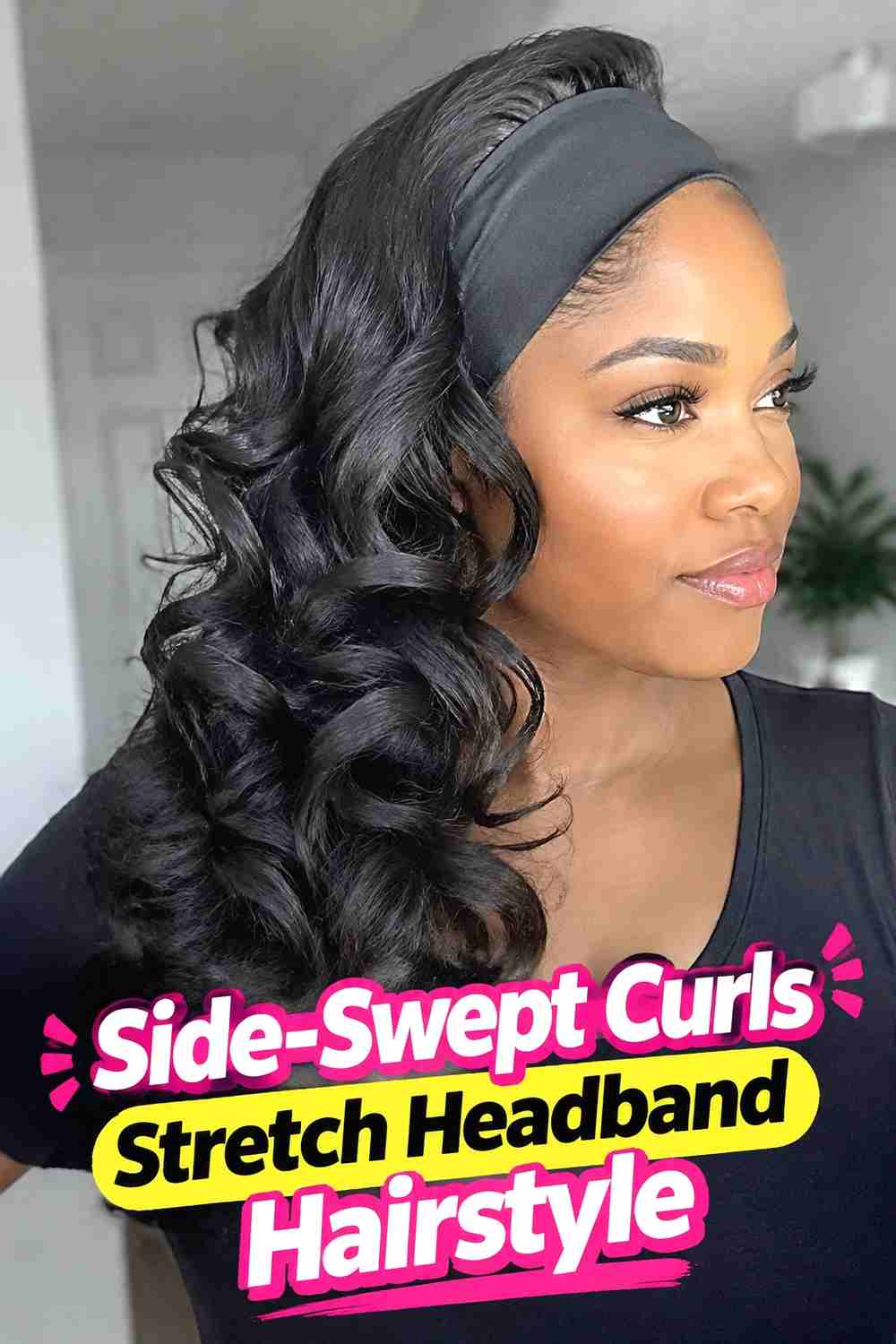
The Side-Swept Curls Stretch Headband Hairstyle directs the texture toward one side for a more dramatic, asymmetrical silhouette. Create or follow a natural side part, then guide one section gently backward while allowing the opposite side to remain fuller. Add the stretch band near the crown, keeping it comfortable enough that the curls maintain lift around it. Longer natural hair can fall over one shoulder, while shorter curls can simply build extra volume on one side. A hidden pin can help secure the smoother side if needed so the band does not have to provide all the hold. The finished look combines visible curl definition with a clean accessory line across the crown.
Pro Tip
Anchor the swept side independently if your hair is dense, allowing the headband to sit lightly rather than being pulled tight for support.
15. Curly Ponytail Stretch Headband Hairstyle
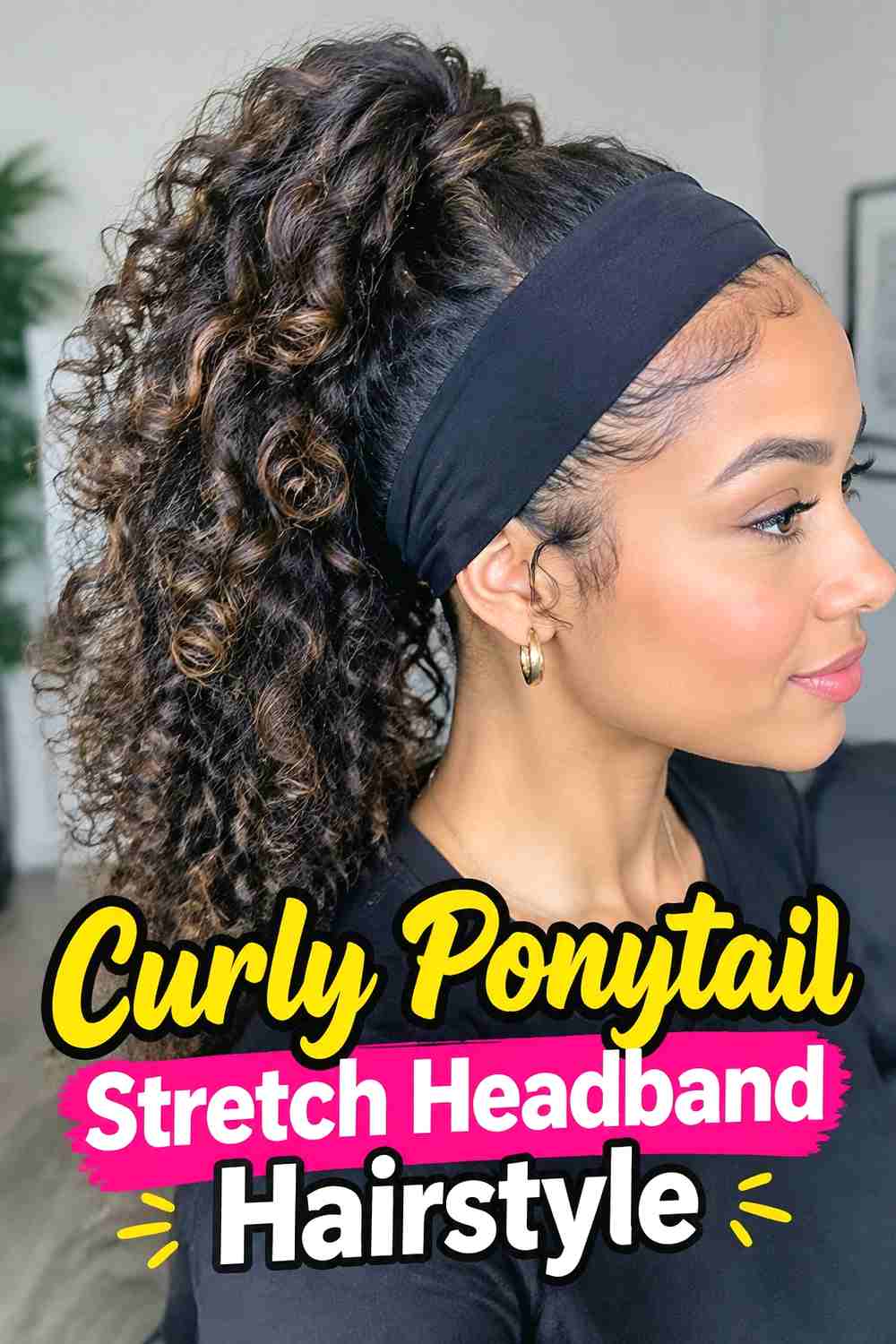
The Curly Ponytail Stretch Headband Hairstyle gathers the lengths while keeping the texture of the ends completely visible. Choose a low, mid-height, or higher ponytail based on your hair length and preferred amount of lift. Secure the ponytail with a soft tie, then add the stretch band near the hairline to create a defined frame around the face. Keep the ponytail loose enough that curls and coils retain their spring rather than being stretched flat from root to end. A few pieces near the temples can remain free if desired. This style works particularly well when you want something faster than a bun but more controlled than wearing all of the hair loose.
Wear & Maintenance
Let the ponytail tie carry the weight of the gathered hair so the stretch headband remains comfortable throughout the day.
16. Two Puff Stretch Headband Hairstyle
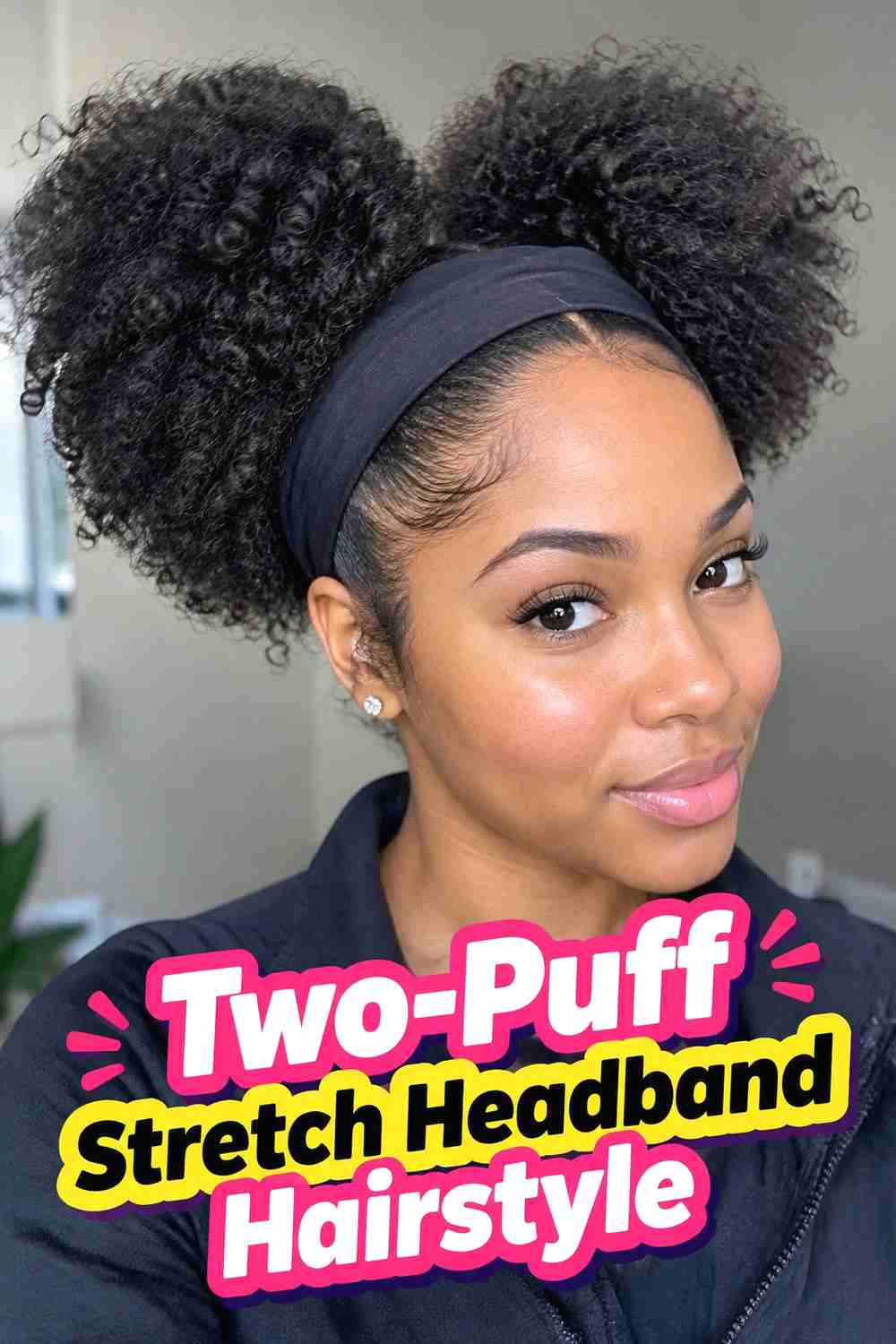
The Two-Puff Stretch Headband Hairstyle creates a balanced, playful shape by dividing natural hair into two sections. Make a center part and gather each side into a puff at matching or slightly offset heights, keeping both bases comfortably secure. Add the stretch band across the front so it frames the puffs without covering the part entirely. This style works with coils, curls, twist-outs, and braid-outs, giving you flexibility in the texture of each puff. Smaller puffs create a neat everyday finish, while fuller shapes make the silhouette more expressive. Keep the band simple if the puffs already have significant volume, allowing the natural texture to remain the main focus.
Styling Notes
Shape each puff with your fingers after securing both sides so you can balance their size without repeatedly tightening the bases.
17. Textured Updo Stretch Headband Hairstyle
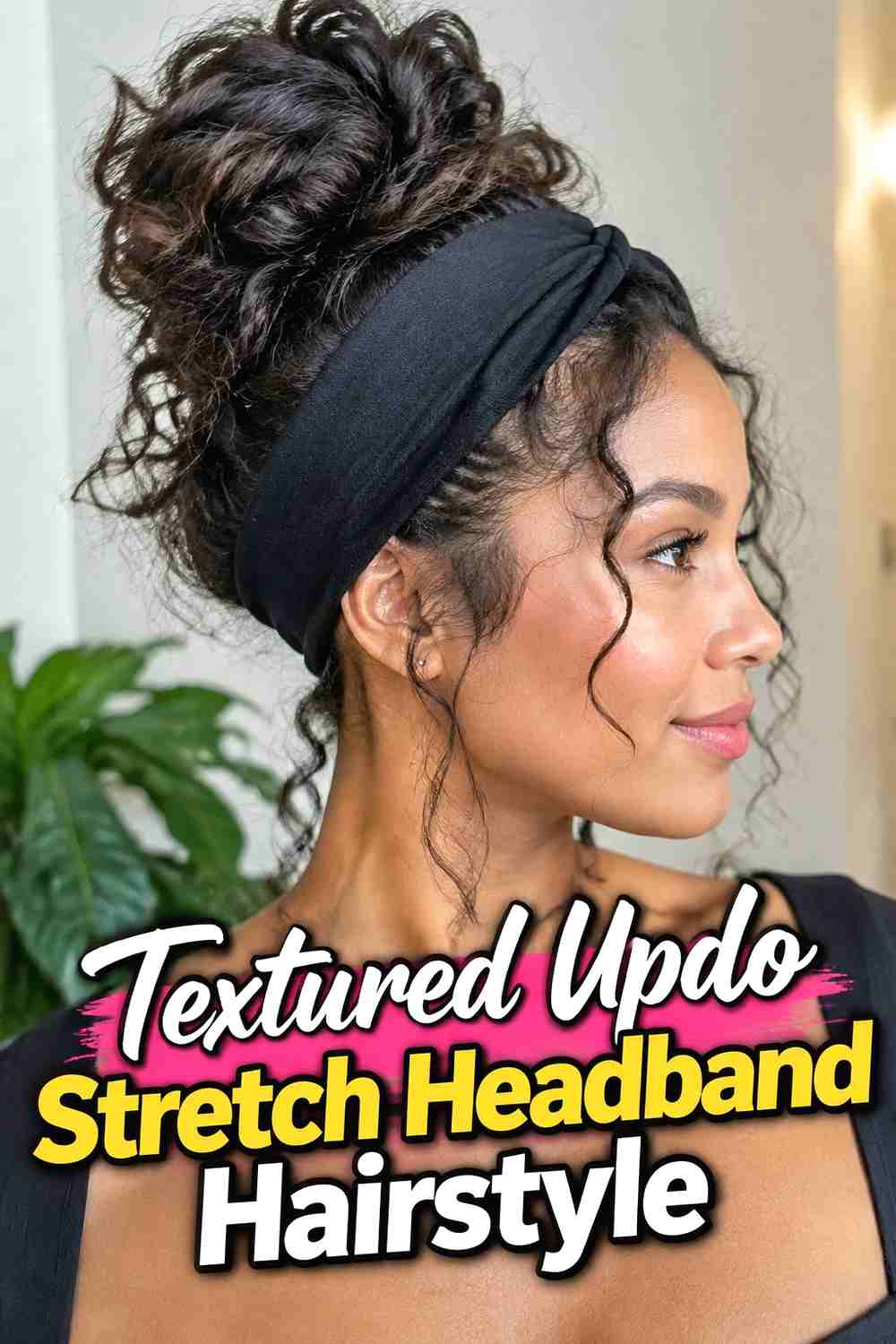
The Textured Updo Stretch Headband Hairstyle brings curls, coils, or stretched natural hair upward while preserving visible texture across the finished shape. Pin sections toward the crown or center back, overlapping them so the updo feels dimensional rather than compressed into one smooth bun. Once the structure is secure, position the stretch headband near the front to create a clear frame. Leave a few defined curls or coils around the perimeter if you want a romantic effect, or keep the edges cleaner for a more formal finish. Medium and long natural hair provide plenty of material for the updo, while shorter lengths can create a compact version with carefully placed pins.
Best For
This elevated style works beautifully for weddings, celebrations, dinners, photos, and occasions where you want your natural texture incorporated into a formal-looking updo.
18. Tapered Natural Stretch Headband Hairstyle
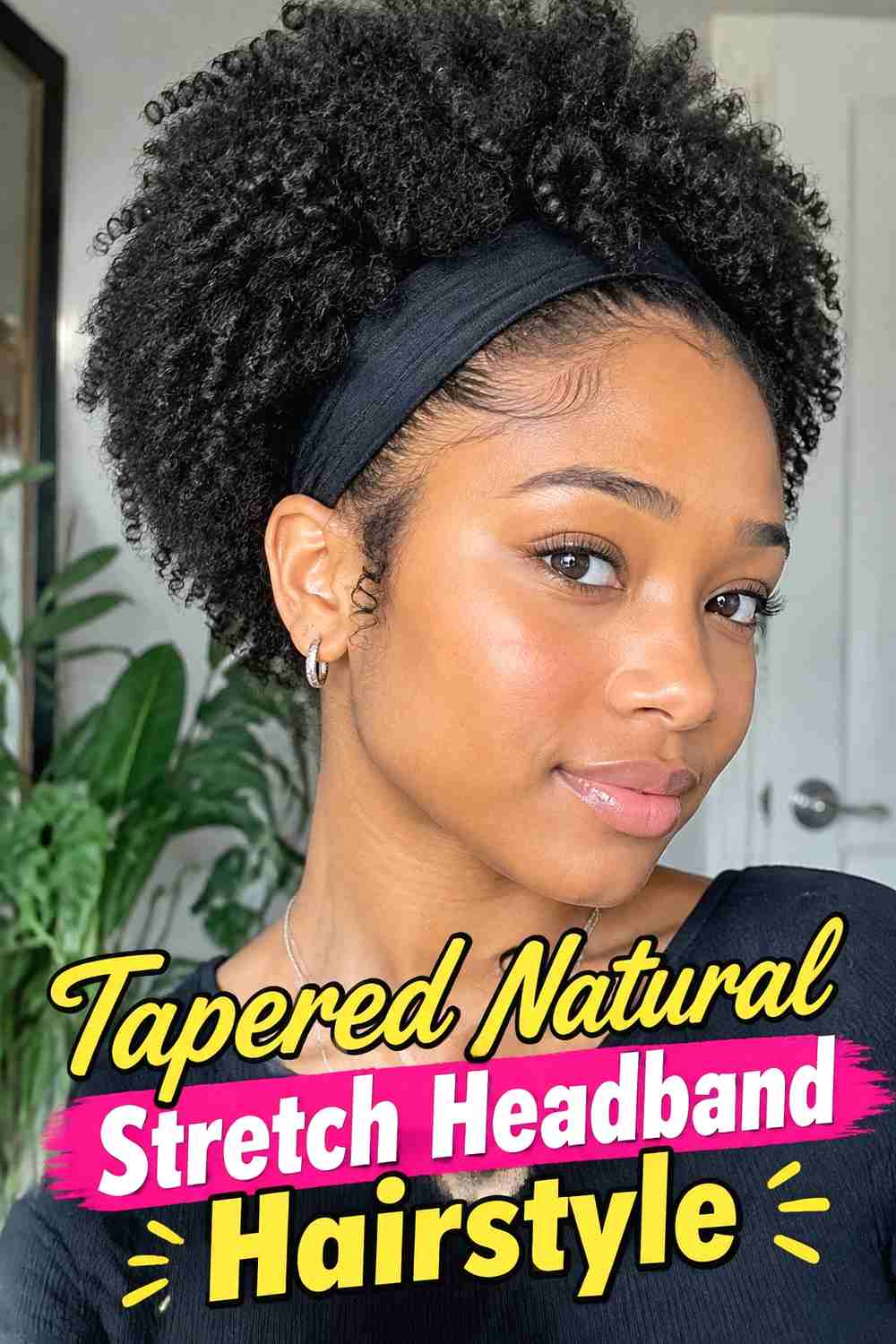
The Tapered Natural Stretch Headband Hairstyle uses a flexible accessory to highlight the contrast between shorter sides and fuller texture on top. Style the upper curls or coils into their natural shape, then position a slim stretch band near the hairline where it can define the front without covering too much of the cut. Depending on your length, the top can stay tightly defined, softly fluffed, or directed slightly to one side. Because a tapered cut already has a strong silhouette, avoid an oversized band that would hide the transition between the sides and crown. A simple solid fabric keeps the focus on the haircut’s shape, curl pattern, and visible texture.
Why It Works
The headband adds a clean horizontal detail while leaving the tapered silhouette and fuller crown clearly visible from multiple angles.
How to Choose the Right Look
Start with your natural texture and current style. If you are wearing a fresh wash-and-go, twist-out, or braid-out, a stretch headband can simply frame the front without changing the pattern. Mini twists and flat twists already provide structure, so a simple band is usually enough to refresh the look.
Length and density will also shape your options. Short natural hair works beautifully with coily bobs, tapered cuts, and full fro shapes. Medium and long hair offers more flexibility for puffs, ponytails, pineapples, buns, and textured updos.
Think carefully about tension. The band should sit securely without feeling uncomfortably tight around the hairline, temples, or ears. Dense hair may need separate ties or pins to support gathered styles rather than relying on the headband.
Finally, choose the finish based on your routine. Loose textured styles are quick once the hair is set, while buns, flat twists, and updos require more sectioning and securing.
Final Thoughts
Stretch headbands can work across many natural hairstyles because they add structure without needing to hide curls, coils, twists, or volume. Use one to frame a wash-and-go, sharpen a puff, refresh mini twists, or finish a textured updo. Comfortable placement and a hairstyle that supports itself will usually give you the most wearable result.
FAQs
1. Are stretch headbands good for natural hair?
Yes. A comfortably fitted stretch headband can frame curls, coils, twists, puffs, and updos while leaving much of the natural texture visible.
2. Can I wear a stretch headband with a wash-and-go?
Yes. Add it after the curls are dry or mostly set and place it gently behind the hairline to avoid flattening the front unnecessarily.
3. Which stretch headband hairstyle is easiest for natural hair?
A wash-and-go, curly fro, or twist-out with a simple headband is especially easy because the underlying texture can remain almost completely unchanged.
4. Can stretch headbands be worn with twists?
Yes. Mini twists and flat-twist styles pair well with stretch headbands, especially when the band is positioned without covering the twist detail.
5. How tight should a stretch headband be on natural hair?
It should feel secure but comfortable. Avoid bands that create painful pressure around the temples, ears, or hairline or require the hair to be pulled excessively tight.
Save your favorite stretch headband hairstyles, share the natural-hair looks you love, and explore more easy accessory ideas for curls, coils, and textured styles.