15 One-Side Hair Drape Hairstyles for Asymmetric Sweater Dresses
One-side hair drapes echo the directional lines of asymmetric sweater dresses, creating an effortlessly styled balance of exposed neckline, movement, and softness.
Asymmetric sweater dresses already create a strong visual direction, whether the neckline slopes, one shoulder sits higher, or the knit construction wraps diagonally across the body. Draping the hair predominantly over one shoulder can complement that shape while leaving the opposite side cleaner and more open. The hairstyle does not have to be dramatic; even a gentle side sweep can make the outfit feel more intentional.
The right version depends on hair length, natural texture, volume, and how much contrast you want between the hairstyle and dress. Sleek drapes emphasize clean lines, loose waves soften structured knits, and fuller curls create a more dressed-up effect. Also consider which side of the garment has the most interesting neckline detail so your hair enhances rather than hides it.
Quick List
- Deep Side Part Polished Drape Hairstyle
- Soft Wave One Shoulder Drape Hairstyle
- Sleek Straight Side Drape Hairstyle
- Loose S Wave Side Drape Hairstyle
- Face Framing Side Swept Layers Hairstyle
- Glossy Hollywood Side Drape Hairstyle
- Airy Blowout One Side Drape Hairstyle
- Textured Long Layer Side Drape Hairstyle
- Tucked Behind Ear Side Drape Hairstyle
- Soft Curl Cascade Side Drape Hairstyle
- Low Volume Casual Side Drape Hairstyle
- Ribbon Wave One Shoulder Drape Hairstyle
- Feathered End Side Drape Hairstyle
- Off Center Swept Side Drape Hairstyle
- Natural Texture One Shoulder Drape Hairstyle
1. Deep Side Part Polished Drape Hairstyle
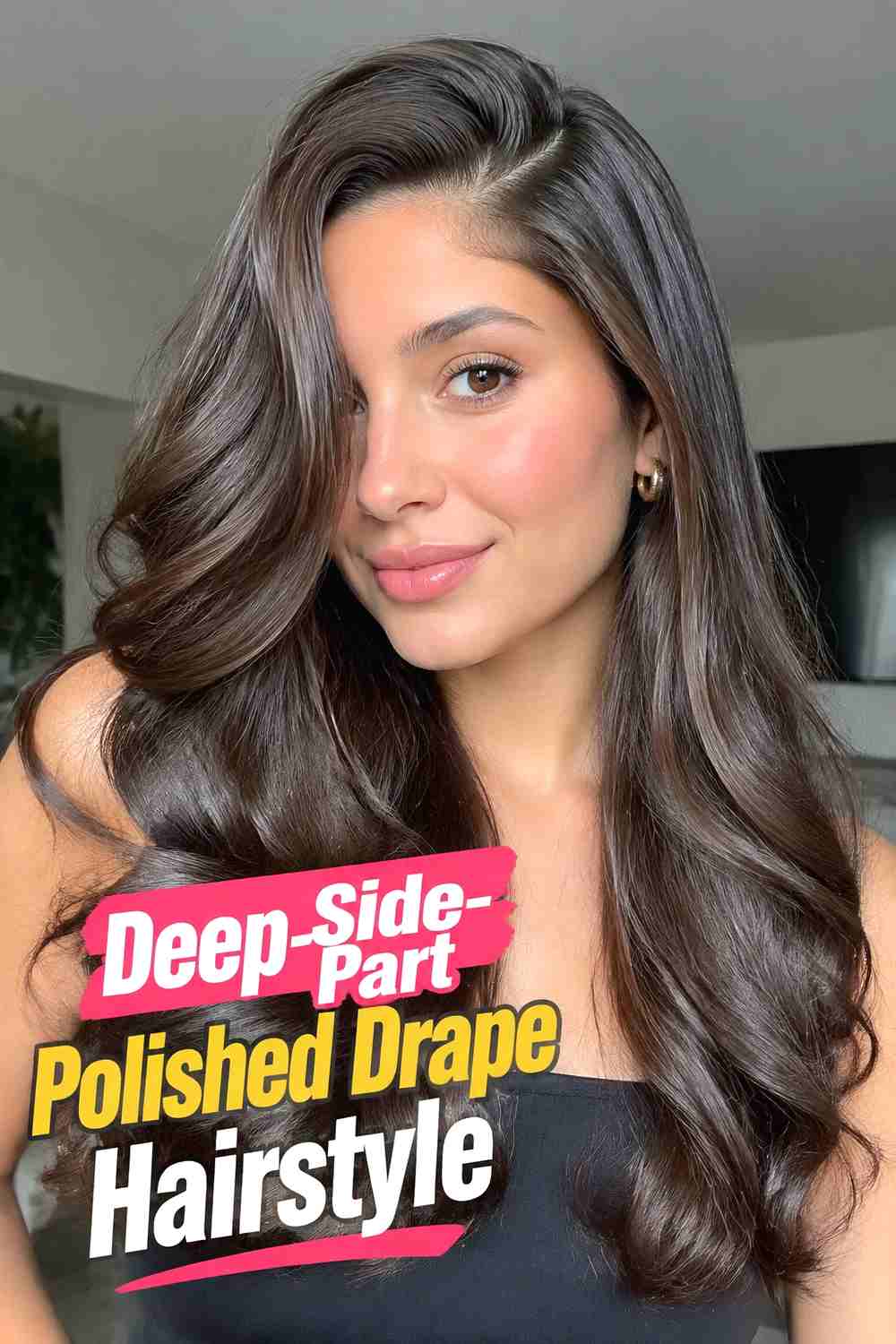
A deep side part creates an immediate directional sweep, making it one of the most natural partners for an asymmetric sweater dress. The fuller side of the hair crosses the crown smoothly before falling over one shoulder in a controlled drape, while the opposite side stays relatively open. This gives the hairstyle enough asymmetry to echo the garment without looking overly matched. A polished surface works especially well with fine-gauge or structured knits because it provides a clean contrast to visible ribbing or texture. Long hair and medium-to-thick density make the drape easy to maintain, but finer hair can achieve the same effect with less weight and a touch of root lift near the part.
Styling Notes
Create the part before blow-drying so the roots learn the final direction. Smooth the lengths toward the chosen shoulder and use flexible hold rather than stiff spray.
Why It Works
The strong diagonal part visually continues the asymmetry of the dress while the open side keeps the neckline from becoming hidden under too much hair.
2. Soft Wave One Shoulder Drape Hairstyle
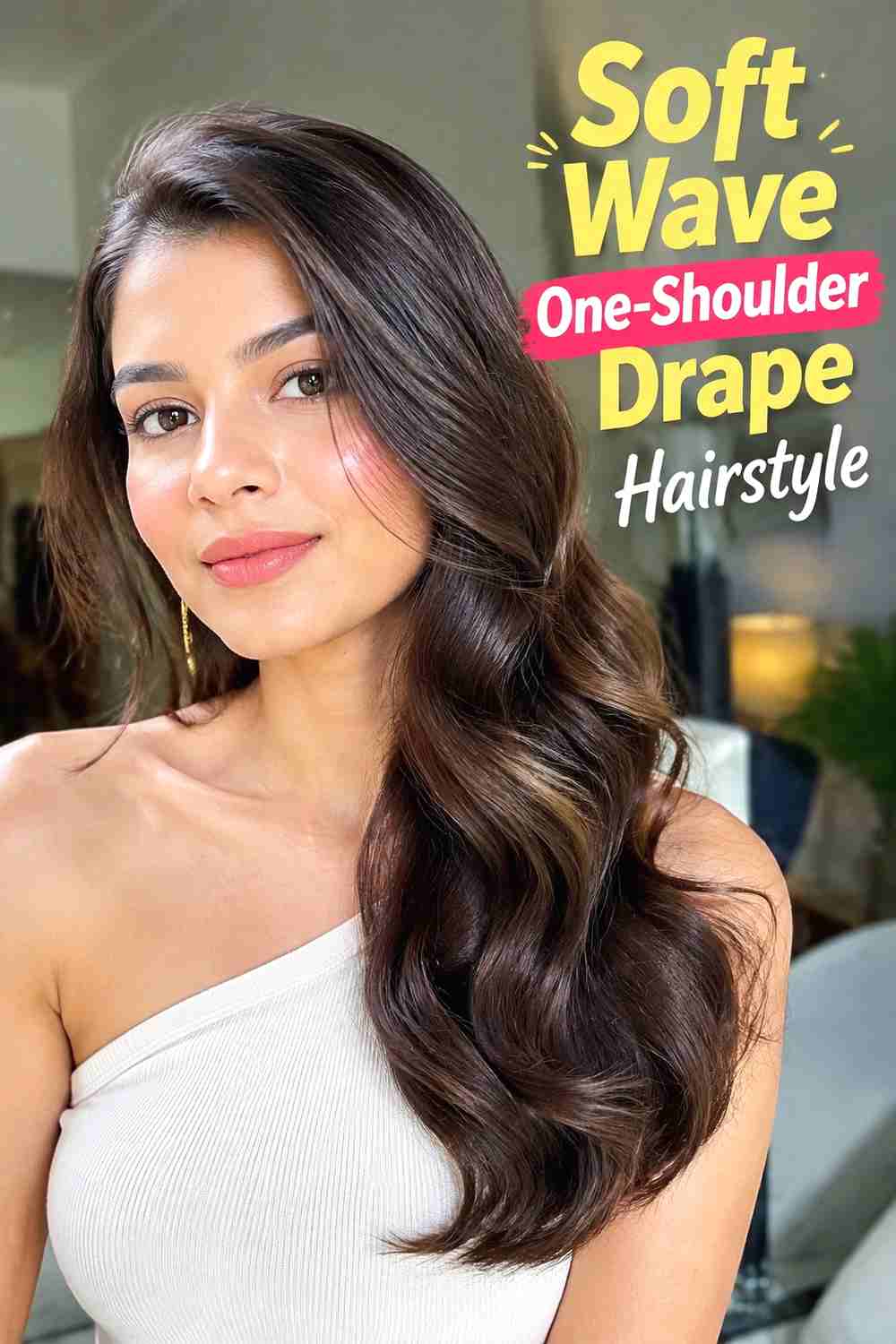
Soft waves give a one-shoulder drape enough body to look deliberate without turning the hairstyle into formal curls. Most of the hair is gathered loosely toward one side, where broad waves create movement from around the mid-lengths downward. The exposed side can be tucked behind the ear or simply swept back, depending on how much of the sweater dress neckline you want to reveal. This style is particularly attractive with fitted or softly draped knits because the flowing hair contrasts with the fabric without overpowering it. Keeping the crown natural and avoiding excessive teasing helps the look stay contemporary. Long layers can also make the wave pattern appear lighter and more dimensional.
Hair Type & Length
Medium to long hair works best for a visible shoulder drape. Straight, wavy, and loosely curly textures can all adapt to the look with different amounts of styling.
Pro Tip
Direct the waves toward the same shoulder as they cool. This helps the hair settle into one cohesive drape instead of gradually separating across the back.
3. Sleek Straight Side Drape Hairstyle
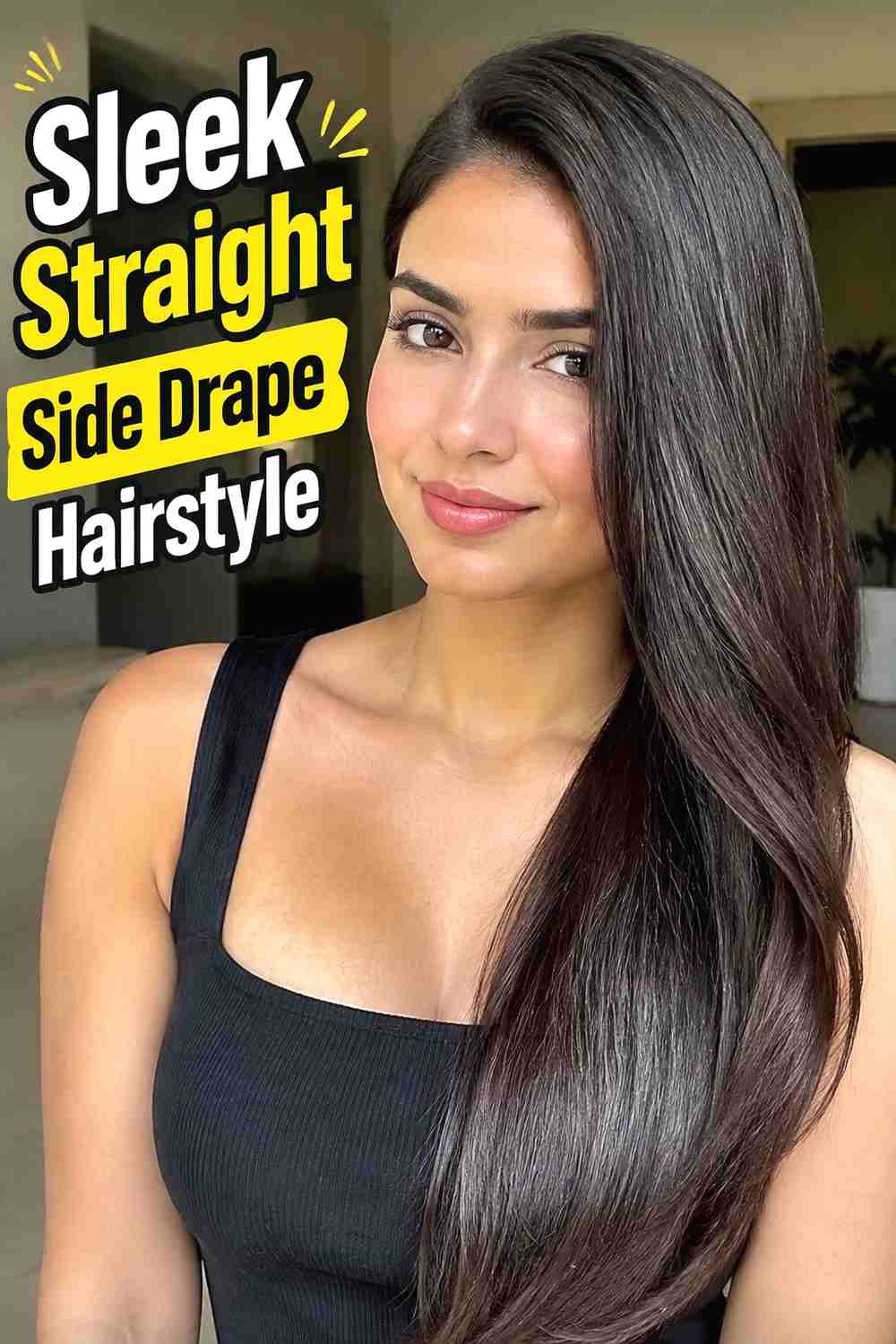
A sleek straight side drape is ideal when the sweater dress already has strong lines, dramatic ribbing, or an architectural neckline. The hair stays smooth from roots to ends and is directed over one shoulder in a clean sheet, creating a minimalist silhouette that feels intentional rather than severe. A center or shallow side part can work, but the important detail is controlling the hair so the open shoulder remains clearly visible. This style looks especially polished when the ends are freshly shaped and the surface has natural-looking shine. Because straight hair shows every section clearly, it benefits from even tension during styling and from lightweight products that smooth flyaways without removing all movement.
Best For
This version works particularly well for naturally straight or easily smoothed hair and for anyone who prefers a refined, low-volume finish.
Wear & Maintenance
Keep a small comb or brush nearby if static becomes noticeable against knit fabric. A tiny amount of anti-frizz product through the ends can also help maintain the clean drape.
4. Loose S Wave Side Drape Hairstyle
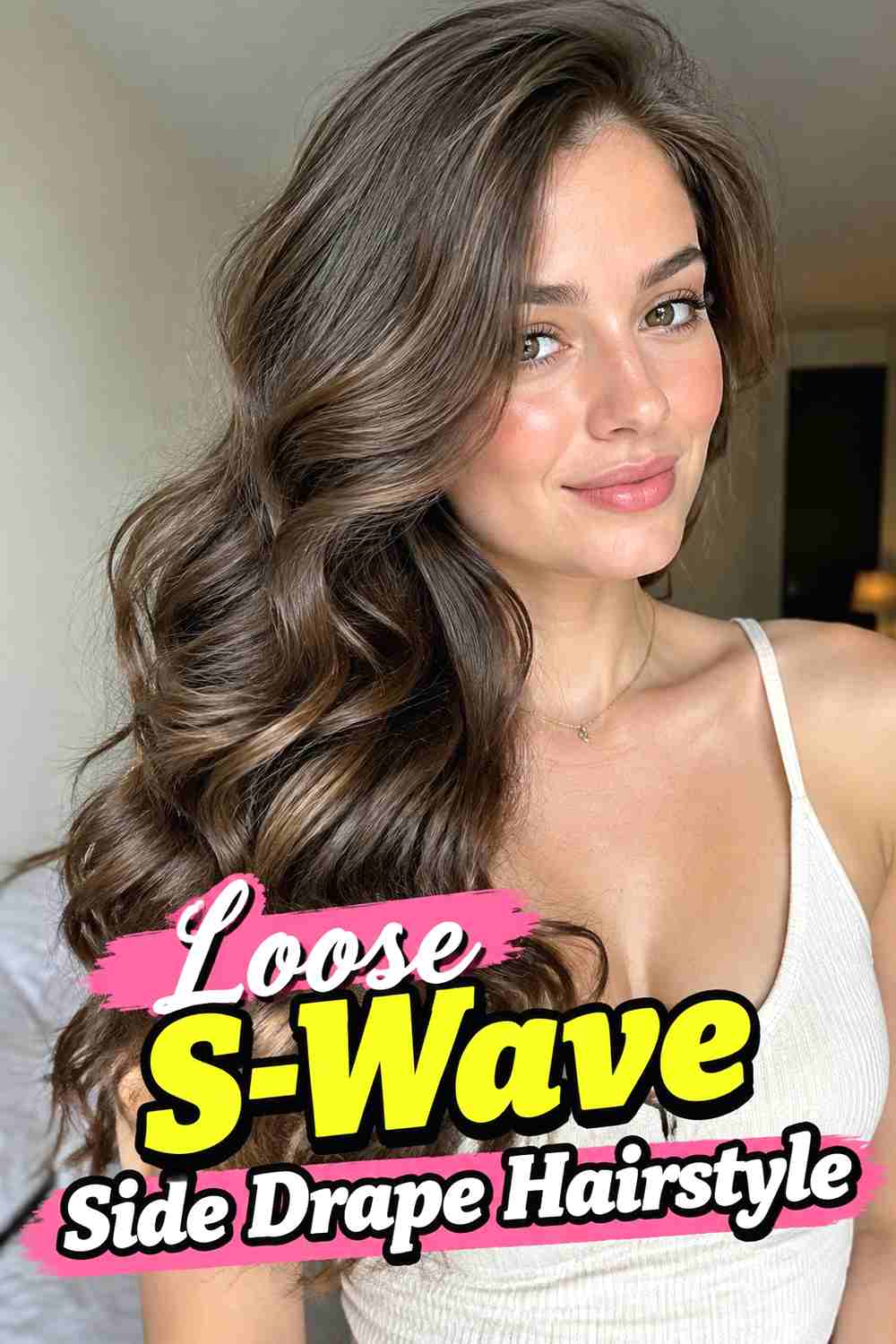
Loose S-waves create a relaxed side drape with more shape than straight hair but less structure than traditional curls. The pattern should flow in broad, alternating bends through the mid-lengths and ends while the root area stays relatively smooth. Once the hair is moved to one side, those bends stack naturally and create a textured cascade over the shoulder. This can soften the sharper angles of an asymmetric sweater dress, especially when the garment has a fitted or diagonal neckline. The exposed side stays visually clean, which helps the dress retain its asymmetrical effect. A slightly imperfect wave pattern generally looks more modern than identical, carefully sculpted bends throughout every section.
Styling Notes
Alternate a few bend directions through the lengths but keep the front pieces flowing away from the face. Loosen the finished texture with your fingers after it cools.
Why It Works
The broad wave pattern adds softness against structured knitwear without introducing excessive volume around the head or neckline.
5. Face Framing Side Swept Layers Hairstyle
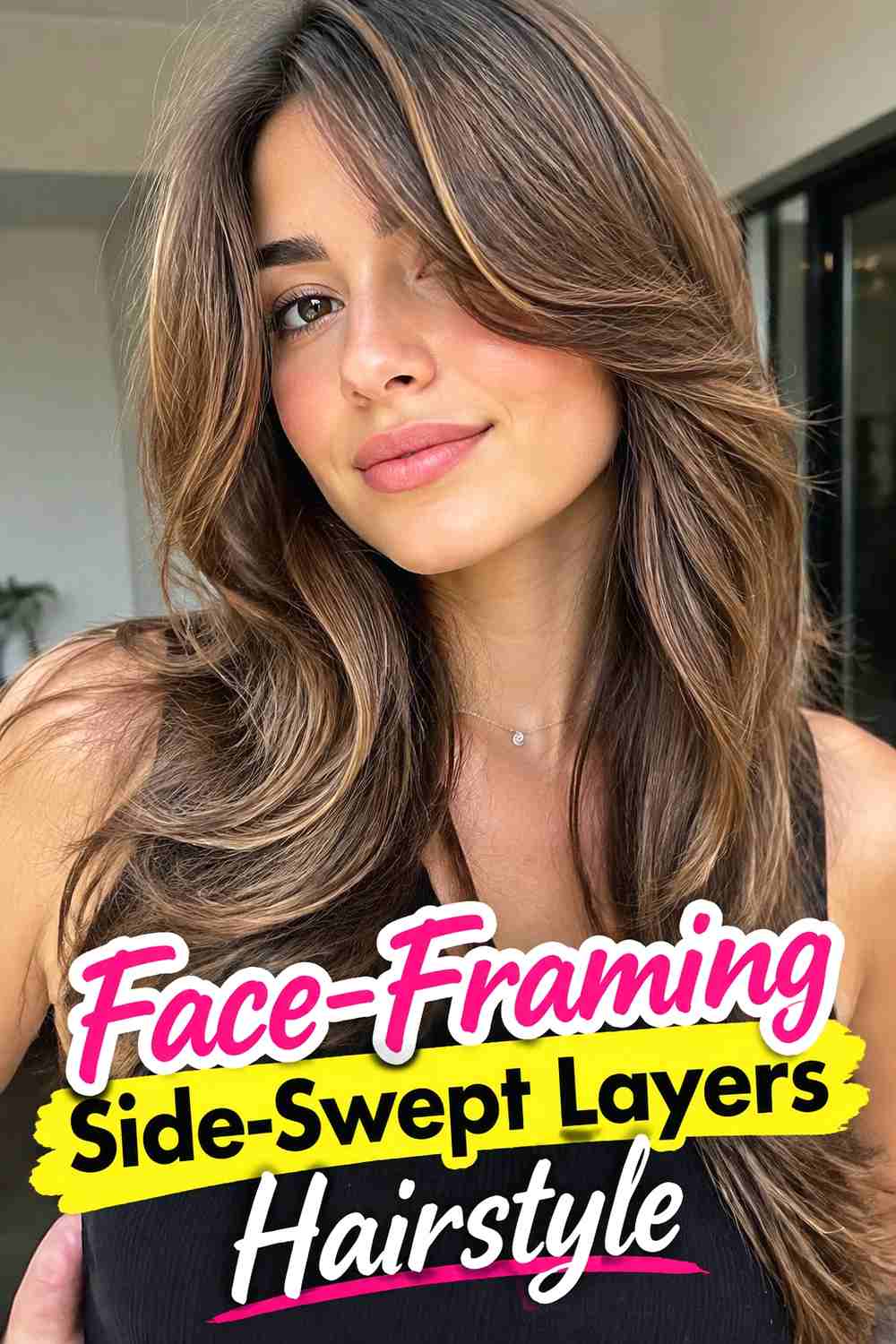
Face-framing layers create a lighter one-side drape because shorter pieces can sweep diagonally across the front before blending into the longer hair over one shoulder. This helps the hairstyle feel shaped rather than simply moved to one side. The shortest layers can begin near the cheekbones, jaw, or collarbone depending on how much movement you want around the face. With an asymmetric sweater dress, the layered sweep can visually connect the face to the directional neckline while leaving the opposite side relatively bare. A soft blowout highlights the separation between layers, but the style also works with natural movement. It is especially useful for long hair that tends to look heavy when gathered into one solid section.
Hair Type & Length
Medium-density and thick hair often show the layered separation most clearly. Fine hair can use fewer front layers to keep the overall drape looking full.
Pro Tip
Style the shorter front pieces first, directing them toward the same side as the main drape so they blend naturally rather than falling back across the face.
6. Glossy Hollywood Side Drape Hairstyle
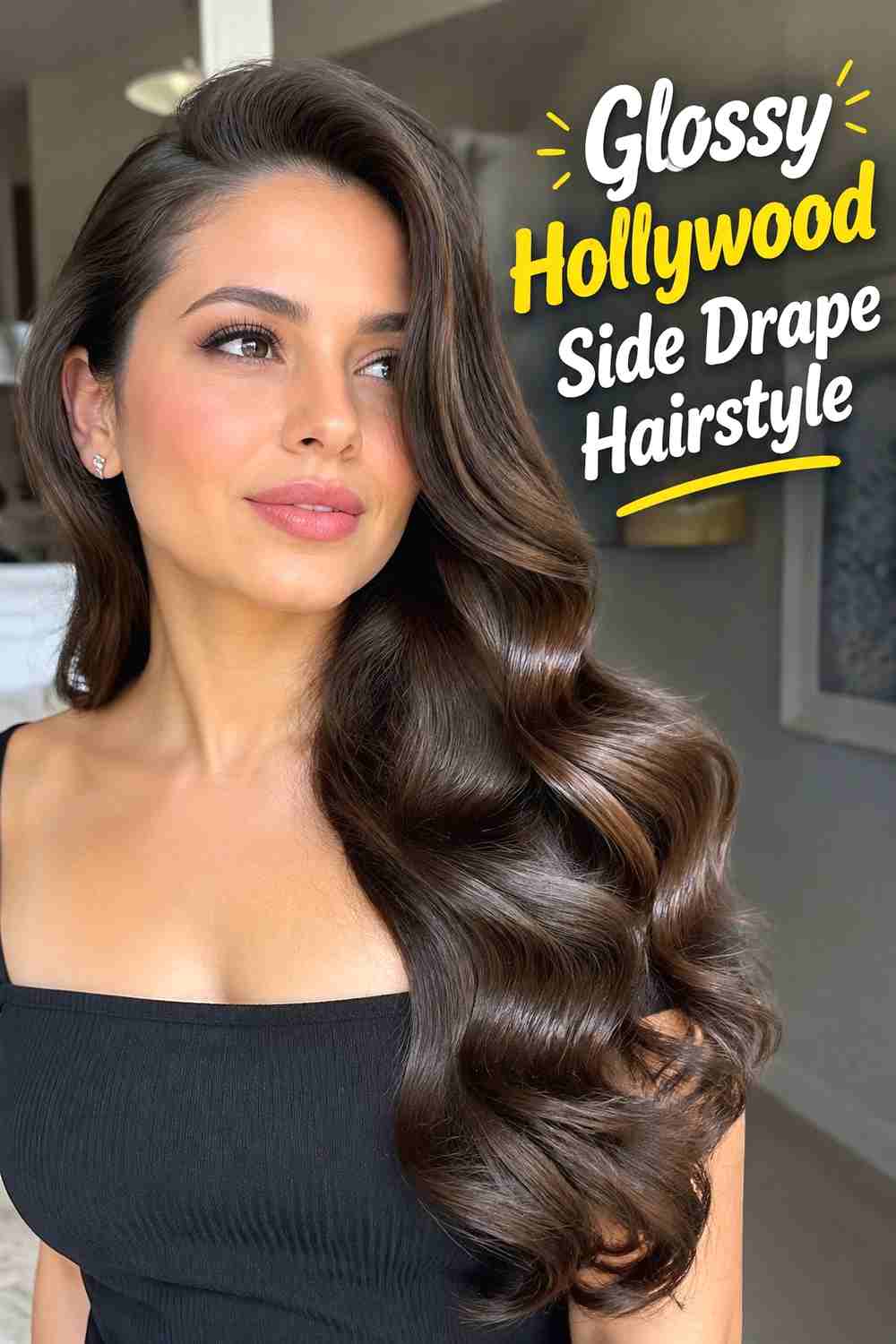
A glossy Hollywood side drape brings a more formal finish to asymmetric knit dressing. The hair is arranged in smooth, connected waves and swept over one shoulder, creating a continuous curved pattern with a polished surface. The opposite side is usually tucked back or secured discreetly so the hairstyle holds its dramatic shape. This works particularly well with sweater dresses designed for evening wear, especially when the neckline has a sculptural or one-shoulder detail. The key is keeping the waves broad and fluid rather than overly stiff. A defined side part reinforces the vintage-inspired direction, while modern texture and restrained shine stop the finished look from feeling costume-like or excessively formal.
Styling Notes
Curl sections in a consistent direction, let them cool completely, then brush them together gently until the wave pattern becomes smooth and connected.
Wear & Maintenance
Discreet pins behind the exposed side can help maintain the drape. Use enough hold to support the shape but avoid saturating the surface with heavy hairspray.
7. Airy Blowout One Side Drape Hairstyle
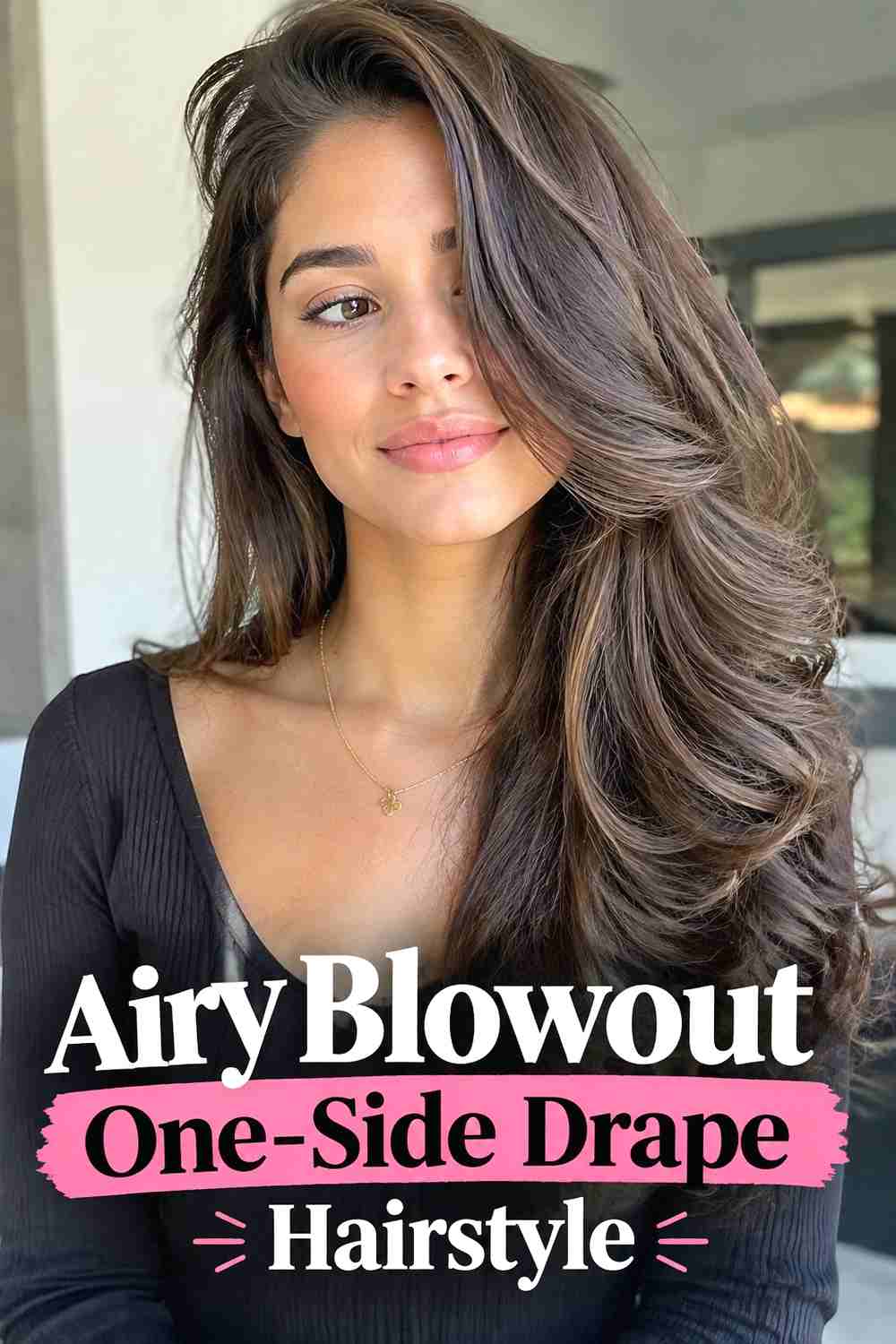
An airy blowout gives a one-side drape softness, bounce, and visible movement without relying on defined curls. The crown has gentle lift, the face-framing pieces curve outward, and the longer lengths roll into loose rounded bends as they fall over one shoulder. This fullness can balance an asymmetric sweater dress that has a narrow or body-skimming silhouette, adding dimension without hiding the garment’s directional neckline. The exposed side should remain cleaner so the overall styling still reads as intentionally asymmetrical. Medium and thick hair naturally support the volume, although finer hair can use larger sections and lightweight root lift to create an airier finish without making the ends look sparse.
Best For
Choose this look when you want movement and polish but prefer the softness of a blowout over the definition of individual waves or curls.
Styling Notes
Lift the roots with a round brush, then direct the mid-lengths and ends toward one shoulder as each section cools. This encourages the hair to fall naturally into the final drape.
8. Textured Long Layer Side Drape Hairstyle
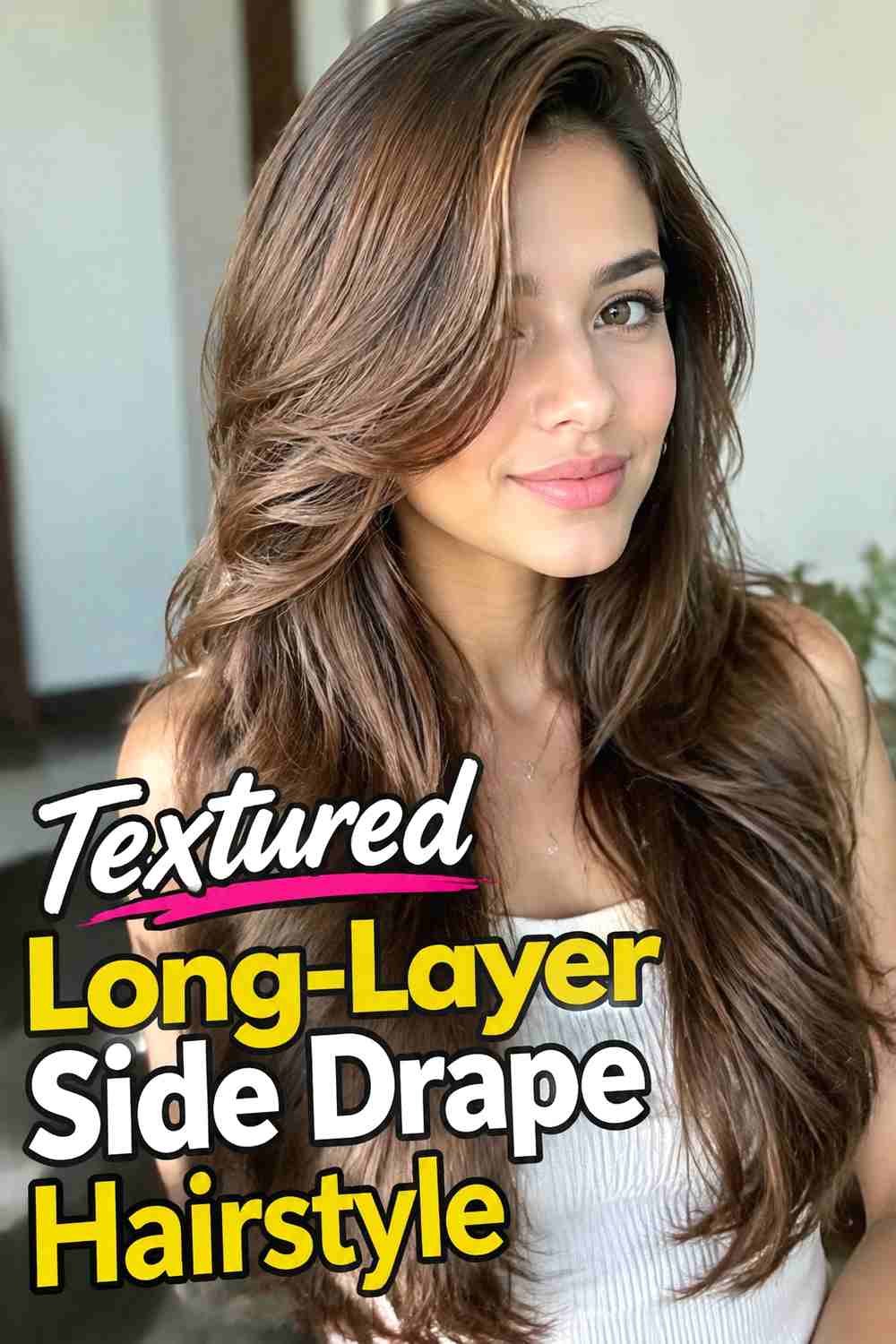
Long layers make a side drape feel less dense by creating staggered movement through the lengths. When the hair is shifted over one shoulder, shorter layers fall at different points and prevent the lower section from becoming one heavy block. A lightly textured finish works especially well with chunky or tactile sweater dresses because the hair and knit can complement each other without needing identical levels of volume. The root area can stay smooth or slightly lifted depending on the outfit. Natural bends, softly tousled ends, and visible strand separation give this look an easy quality, making it practical for daytime styling while still feeling more intentional than simply moving all the hair to one side.
Hair Type & Length
This style suits medium to long layered hair and works particularly well when there is enough density for the shorter sections to remain full at the ends.
Why It Works
Layering creates visual breaks within the drape, helping the hairstyle stay light beside textured fabric and preventing too much bulk from collecting on one shoulder.
9. Tucked Behind Ear Side Drape Hairstyle
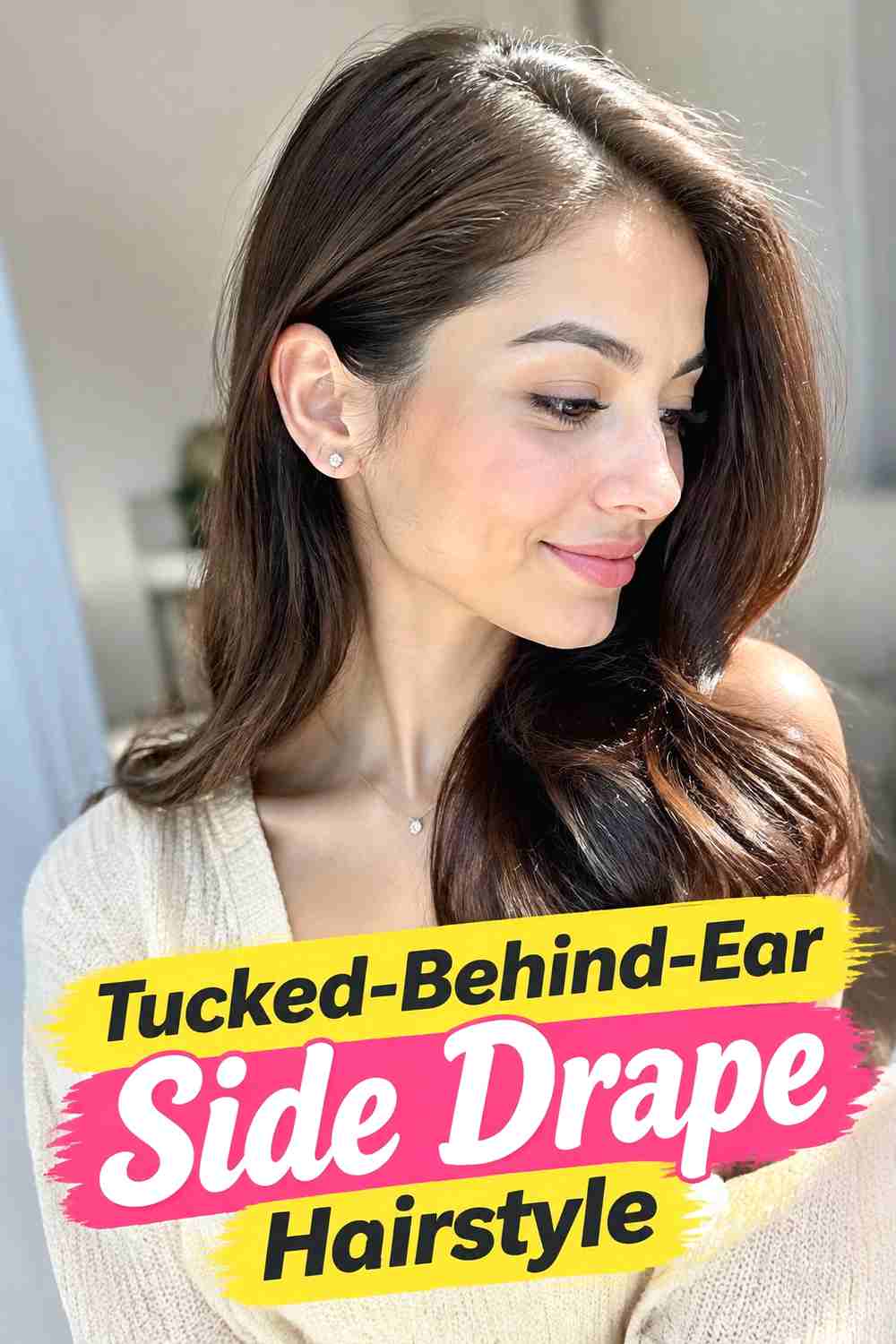
The tucked-behind-ear side drape creates a crisp contrast between one open side and one fuller side. Hair on the exposed side is smoothed neatly behind the ear, while the remaining lengths are guided across the back and over the opposite shoulder. This makes the asymmetry immediately visible and can be particularly useful when the sweater dress has an interesting shoulder seam, diagonal collar, or neckline detail worth showing. The draped side can be worn straight, softly waved, or lightly curled depending on the mood of the outfit. Because the ear tuck does much of the visual work, the rest of the styling can stay relatively simple, making this an accessible option for everyday wear.
Styling Notes
Use a small amount of lightweight smoothing product around the tucked section. If needed, secure it behind the ear with a discreet pin hidden beneath the top layer.
Best For
This look is especially practical when you want the garment’s asymmetric neckline to remain visible without putting the hair fully up.
10. Soft Curl Cascade Side Drape Hairstyle
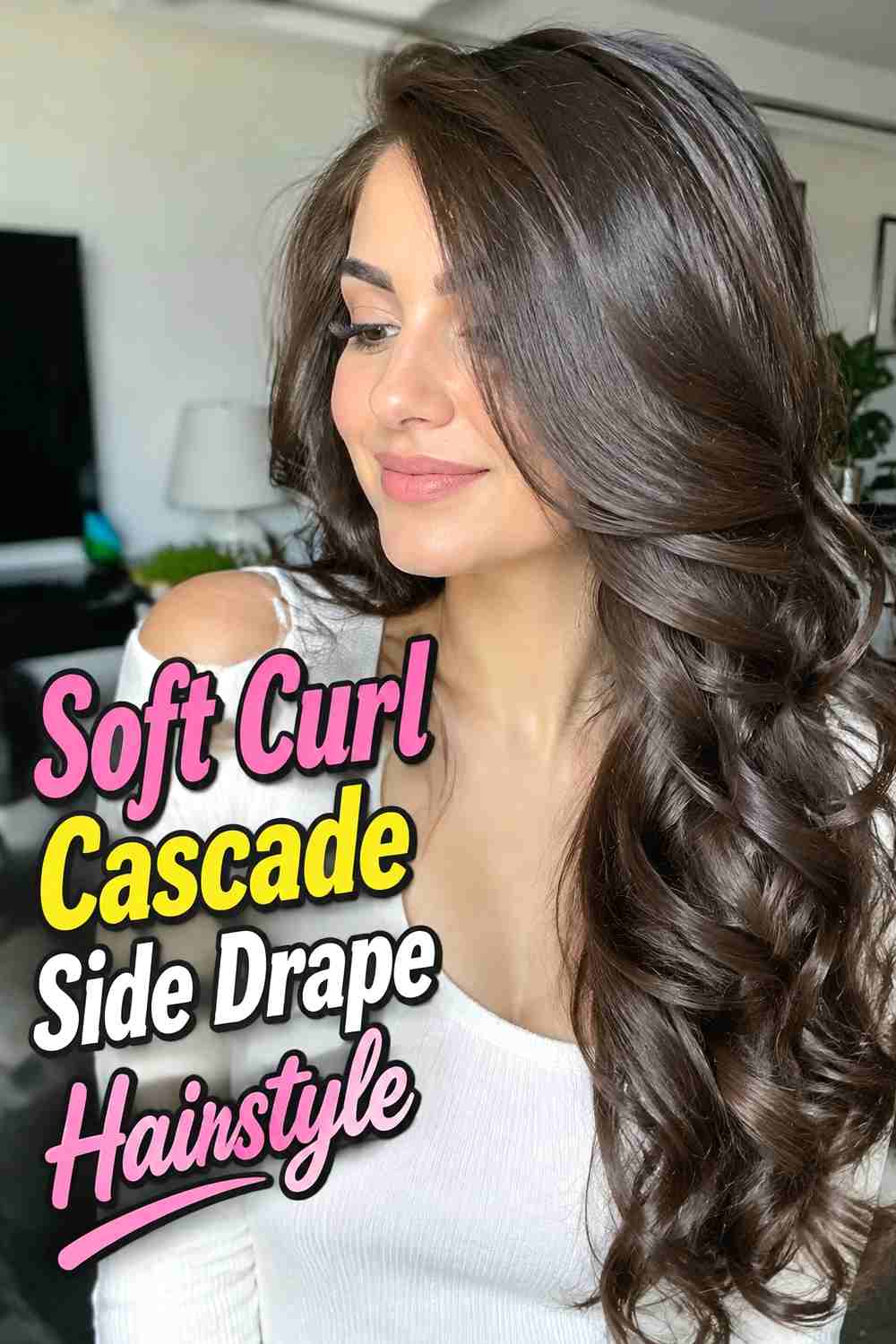
A soft curl cascade creates more fullness through a one-side drape while still maintaining a romantic, wearable shape. Instead of tight spirals, the curls should be broad and varied so they stack naturally over the shoulder without appearing rigid. The crown can remain smooth with a modest side part, allowing the volume to build gradually through the mid-lengths and ends. This makes the hairstyle a strong option for an asymmetric sweater dress worn to a dinner, celebration, or seasonal event. The open side keeps the outfit from feeling crowded, while the fuller draped side adds softness and movement. Long layers help distribute the curls so the overall silhouette stays balanced rather than bottom-heavy.
Hair Type & Length
Medium to long hair provides enough length for the curls to cascade visibly over one shoulder. Naturally curly hair can adapt beautifully by defining and directing existing texture rather than reshaping every section.
Pro Tip
Let curls cool before moving them to one side. Repositioning warm curls too early can stretch them unevenly and reduce definition.
11. Low Volume Casual Side Drape Hairstyle
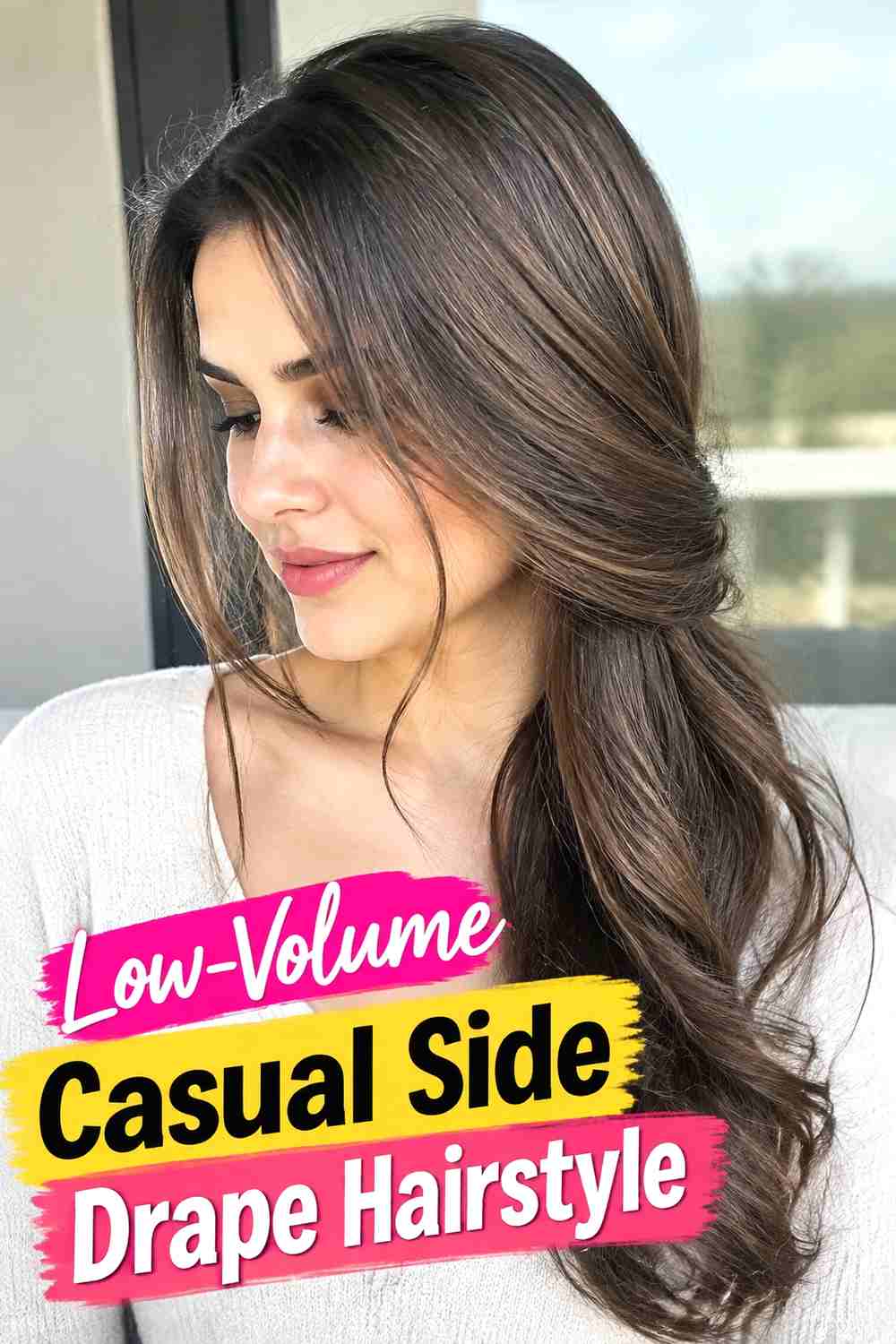
A low-volume side drape offers the easiest interpretation of this styling idea. The roots stay close to their natural position, the lengths remain mostly smooth, and only a few soft bends or pieces of natural texture are encouraged through the ends. Hair is then moved casually over one shoulder without creating an exaggerated part or formal finish. This understated shape works well with relaxed asymmetric sweater dresses, especially soft ribbed, brushed, or slouchy knits. Because the hairstyle does not rely on heavy volume or carefully formed curls, it can feel believable for everyday wear. The open side still gives the outfit visual structure, while the draped side keeps long hair present without dominating the entire look.
Wear & Maintenance
Flexible hold and a light smoothing cream are usually enough. Avoid over-styling the roots, since the relaxed silhouette depends on maintaining natural movement.
Why It Works
The restrained volume allows the sweater dress to remain the stronger design element while the hair quietly reinforces its asymmetrical direction.
12. Ribbon Wave One Shoulder Drape Hairstyle
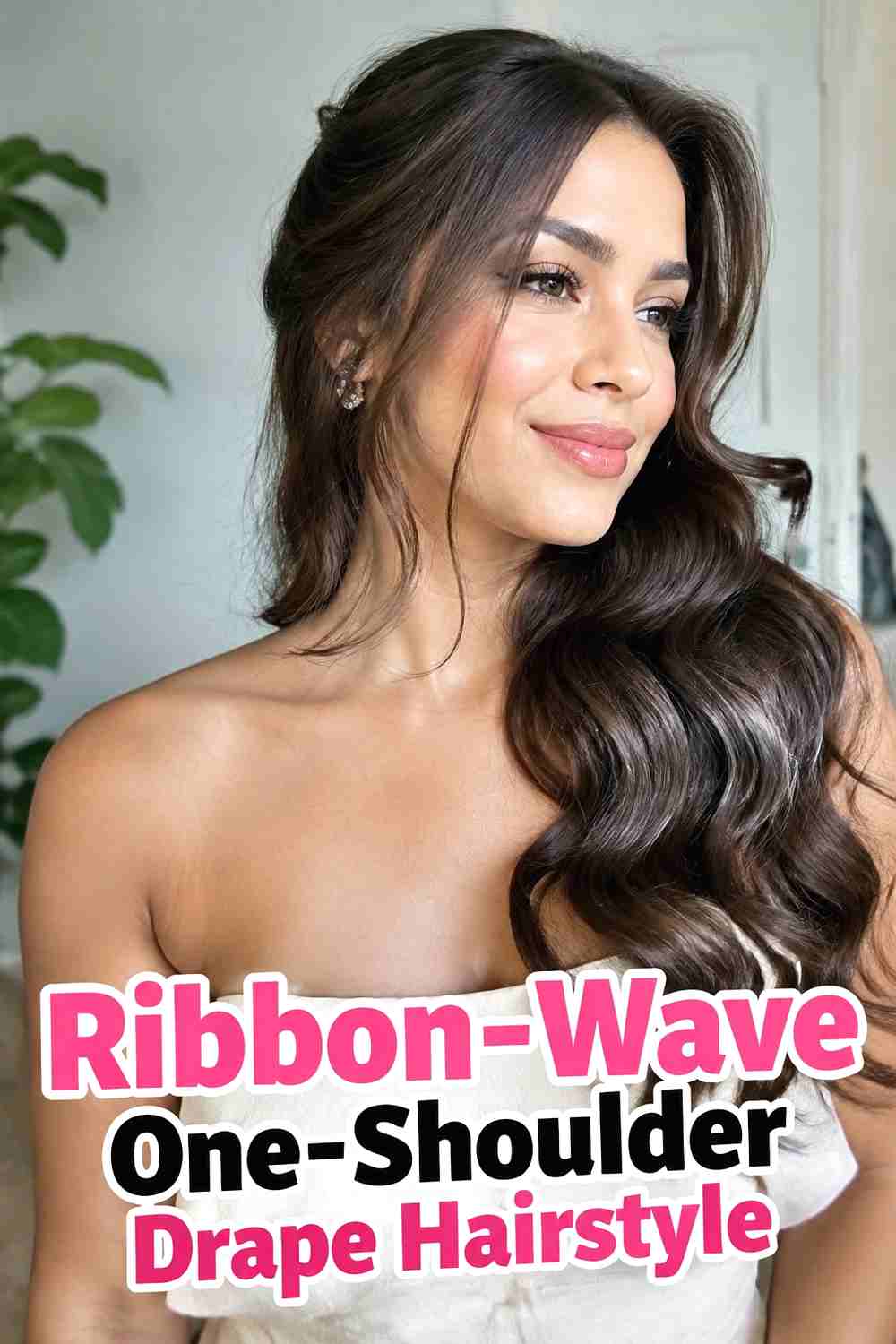
Ribbon waves create elongated curves that flow smoothly over one shoulder rather than forming rounded curls. The pattern is especially effective on long hair because each bend can stretch through several inches, producing movement while preserving an elegant vertical silhouette. When paired with an asymmetric sweater dress, the waves provide a soft directional line that complements sloped necklines and off-center design details. The top section can remain sleek or lightly lifted, depending on how polished you want the result to feel. Since the waves are open and fluid, the hair does not look overly dense when gathered to one side. A few separated ends keep the final texture modern and prevent the drape from appearing too sculpted.
Styling Notes
Use a large barrel and keep the wrap loose. Avoid curling all the way to the roots; beginning lower creates the elongated ribbon effect that defines the style.
Best For
This option suits long hair when you want visible movement and an elegant drape without the fullness of traditional curls.
13. Feathered End Side Drape Hairstyle
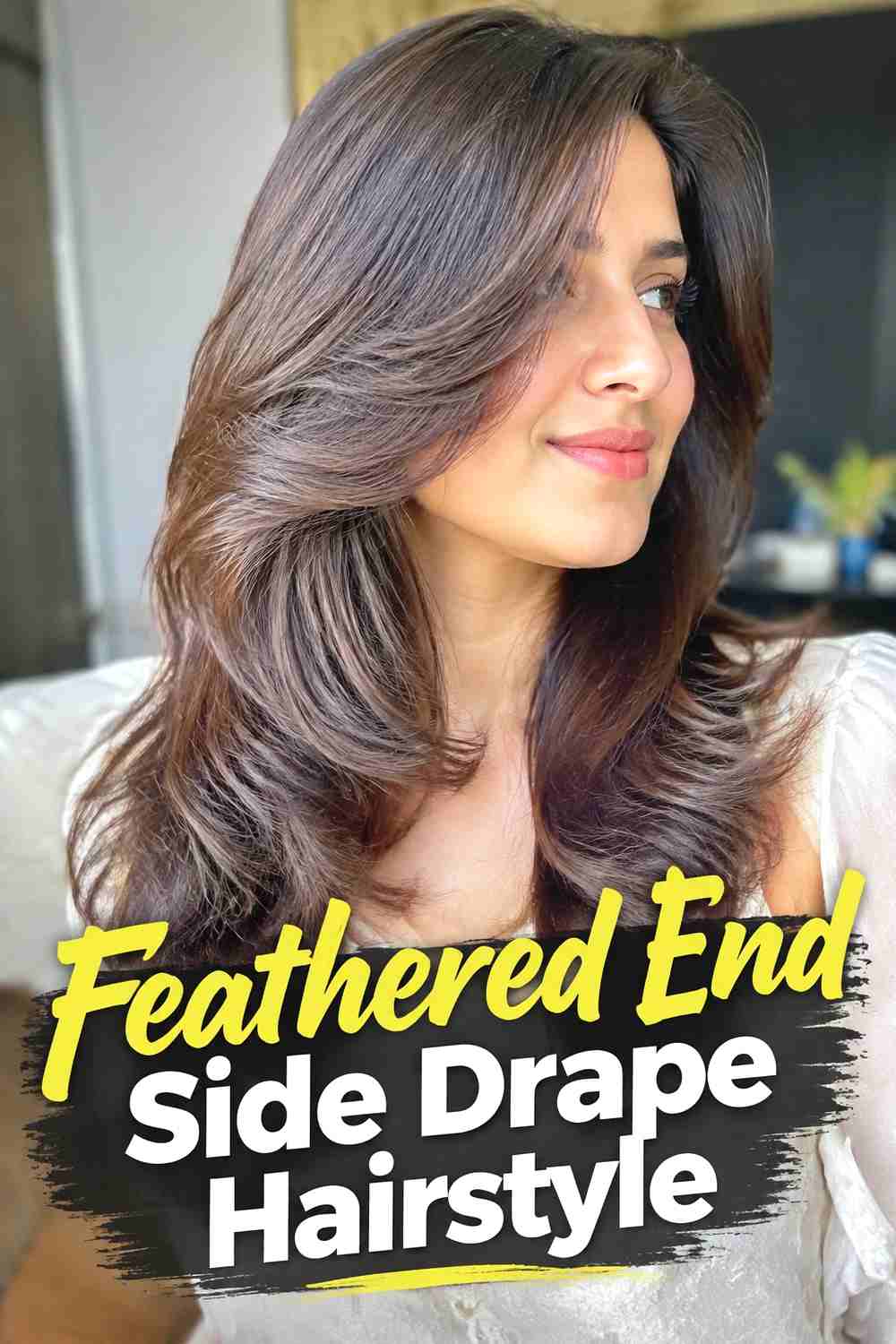
Feathered ends give a side drape an airy finish by creating small directional changes near the lower lengths. The upper hair can remain smooth, while long layers gradually fan outward as they collect over one shoulder. This makes the drape look lighter and more separated, which is particularly useful with substantial knit fabrics that already carry visual weight. An asymmetric sweater dress with a clean neckline can benefit from the soft movement because the hair introduces texture without covering the opposite shoulder. The finish works well with a blow dryer and round brush rather than a curling iron, making it a good option for someone who enjoys polished movement but does not want obvious waves or curls.
Styling Notes
Curve the lower layers outward individually and keep the bends broad. Sharp flips can feel too retro, while soft feathering maintains a contemporary finish.
Wear & Maintenance
Because the movement sits mainly at the ends, refreshing only a few visible sections can restore the style without reworking the entire head of hair.
14. Off Center Swept Side Drape Hairstyle
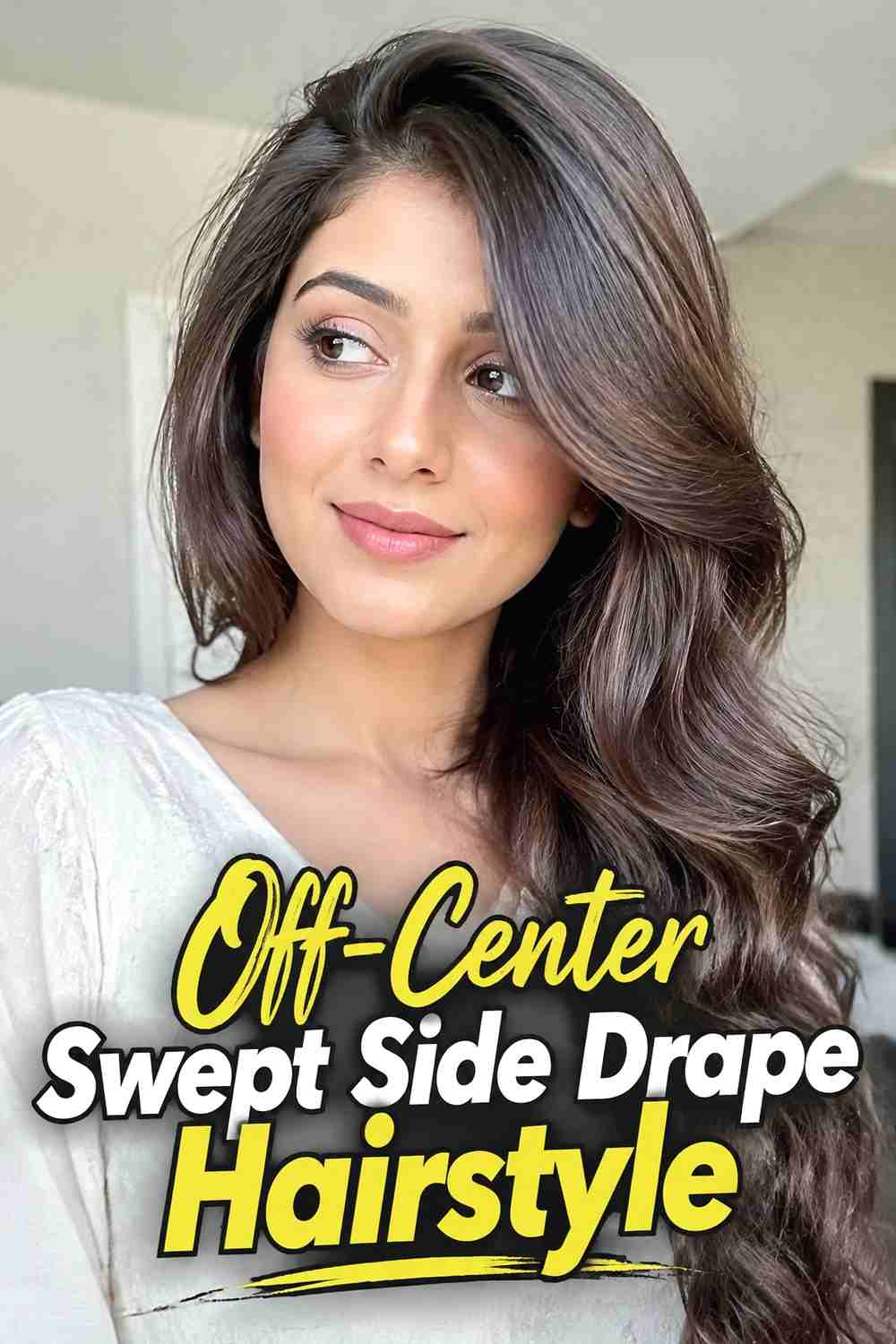
An off-center part creates a softer directional effect than a deep side part while still encouraging the hair to fall predominantly toward one shoulder. This makes the hairstyle useful when you want asymmetry without a dramatic shift in crown volume. The longer side can be smoothed, lightly waved, or blown out, while the opposite side is guided behind the shoulder to keep the neckline visible. Paired with an asymmetric sweater dress, the slightly uneven part mirrors the outfit’s directional quality without competing with it. This style also adapts easily to different face-framing lengths, making it a practical choice when the haircut already has subtle front layers that naturally move to one side.
Best For
This approach works well if you normally wear a center part but want a side-draped effect without completely changing the way your roots naturally fall.
Pro Tip
Shift the part only an inch or two from center and direct the heavier side diagonally backward before bringing the lengths over the shoulder.
15. Natural Texture One Shoulder Drape Hairstyle
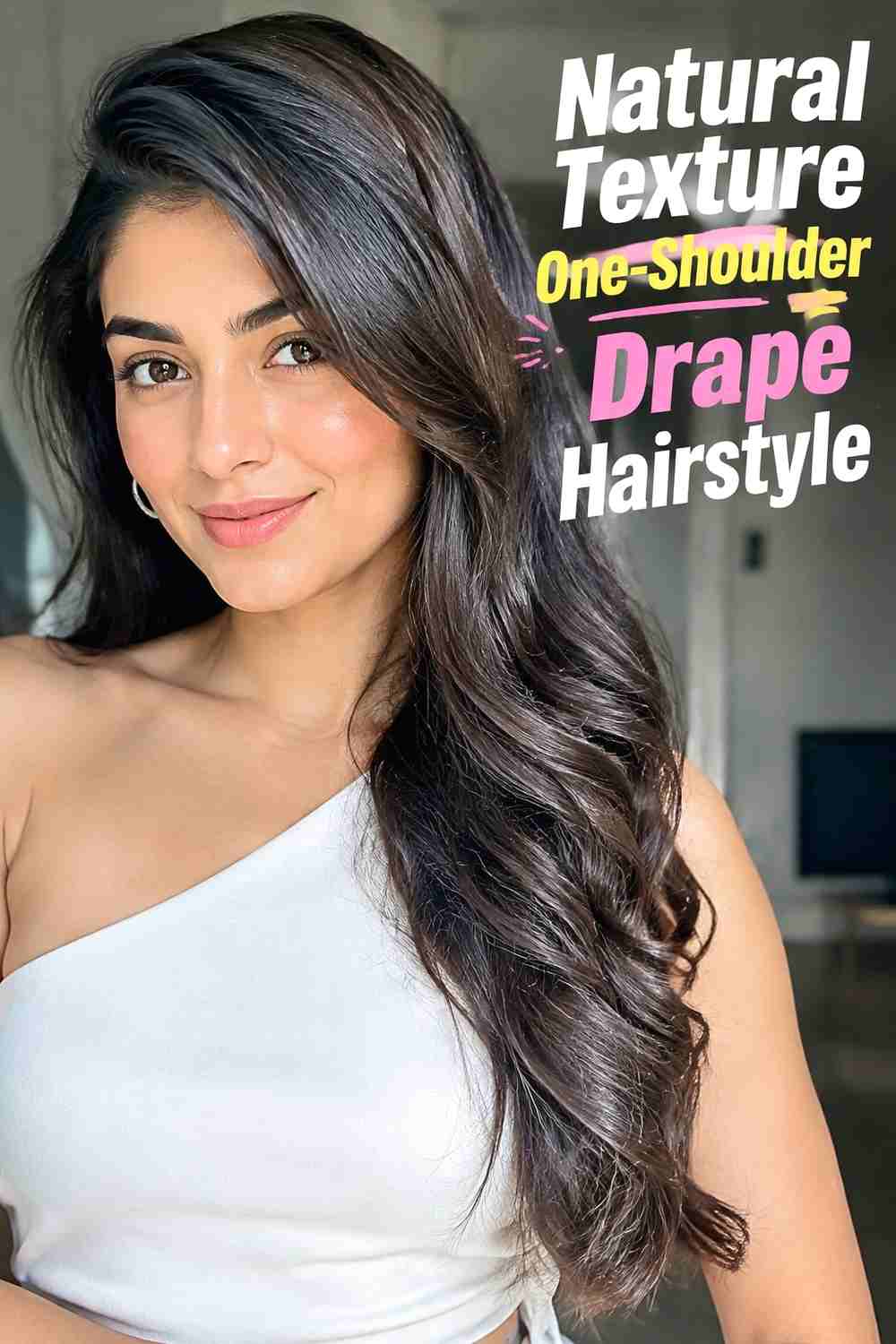
Natural texture can create one of the most effortless one-shoulder drapes because the hair already carries individual movement and variation. Waves, curls, or coils are directed primarily toward one side while the opposite side remains more open, either through a gentle sweep, tuck, or discreet pinning. The goal is not to flatten the texture but to organize it so the asymmetric placement feels intentional. This pairs beautifully with sweater dresses because natural volume can contrast with smooth ribbing or complement chunkier knits. The exact shape will depend on shrinkage, density, and curl pattern, so the most wearable version is one that works with the hair’s existing structure rather than forcing every section into uniformity.
Hair Type & Length
Wavy, curly, and coily textures can all use this placement. Medium to long lengths make the shoulder drape more obvious, although shorter textured hair can create a similar directional effect.
Pro Tip
Arrange the hair after it is mostly dry so the texture keeps its natural shape. Use pins only where necessary rather than compressing the entire exposed side.
How to Choose the Right Look
Start with the neckline of the asymmetric sweater dress. If one shoulder, diagonal collar, or sculptural seam is the main feature, drape the hair toward the opposite side so the design remains visible. If the dress is simpler and the asymmetry comes from the hem or wrap construction, you have more freedom to choose the side that naturally suits your part and hair growth pattern.
Next, consider texture and volume. Sleek straight drapes and tucked styles create the cleanest contrast with chunky or visibly textured knits. Soft waves, feathered ends, and ribbon bends work well when the dress has a smoother finish. Fuller curls and airy blowouts can balance body-skimming silhouettes, but they may feel heavy beside oversized knits if too much volume collects around the shoulder.
Hair length and density also affect comfort. Very thick long hair can become heavy when moved entirely to one side, so long layers or partial pinning may make the drape easier to wear. Fine hair can benefit from an off-center or deeper side part that creates a little extra fullness before the lengths are swept over.
Finally, think about hold and maintenance. Formal Hollywood waves need stronger structure, while casual drapes and natural texture can tolerate movement throughout the day. Choose a finish that suits the occasion and the amount of restyling you realistically want to do.
Final Thoughts
One-side hair drapes are especially effective with asymmetric sweater dresses because both elements rely on directional balance. A sleek side sweep can keep the outfit refined, loose waves can soften structured knitwear, and textured or curled drapes can bring more movement to simple silhouettes. The most convincing look is usually the one that reveals the dress’s strongest neckline detail while working naturally with your hair length, density, and texture.
FAQs
1. Which side should I drape my hair on with an asymmetric sweater dress?
Usually, drape the hair away from the most interesting shoulder or neckline detail so that part of the dress stays visible. Your natural part and comfort can also guide the choice.
2. Does a one-side hair drape need a deep side part?
No. Deep side parts create a stronger effect, but off-center and even center parts can work if the lengths are directed mainly toward one shoulder.
3. How can I keep thick hair on one shoulder?
Long layers can reduce bulk, while discreet pins at the back or behind the exposed ear can help control the direction without making the hairstyle look heavily secured.
4. Can naturally curly hair work with a side drape?
Yes. Instead of straightening or reshaping every curl, preserve the natural texture and concentrate on directing the overall silhouette toward one shoulder.
5. What is the easiest one-side drape for everyday wear?
A low-volume casual drape or tucked-behind-ear side drape is usually easiest because both styles rely more on placement than on detailed curling or structured volume.
Save your favorite one-side drape, share the ideas with someone planning a sweater-dress look, and explore more hairstyle inspiration for directional winter outfits.