16 Under-Scarf Mid-Length Wave Hairstyles for Peacoat Outfits
Soft mid-length waves tucked around a winter scarf create an easy, polished balance with structured peacoats while keeping texture visible around the face.
Peacoats bring crisp lapels, strong shoulders, and a structured winter silhouette, while scarves naturally add volume around the neck. Mid-length waves work well with both because they provide softness without producing the heavy bulk that longer hair can create beneath layers. By controlling where the waves begin and deciding which pieces stay outside the scarf, you can keep the hairstyle visible without crowding the coat.
The best version depends on hair density, scarf thickness, and how much texture you want around the face. Low waves and soft bends feel streamlined, while airy blowouts and layered waves add more movement. You can tuck most of the lower lengths beneath the scarf, let selected ends peek out, or leave face-framing pieces free for a lighter finish.
Quick List
- Soft Center Part Under Scarf Waves Hairstyle
- Loose Side Part Scarf Tucked Waves Hairstyle
- Low S Wave Under Scarf Hairstyle
- Brushed Out Mid Length Scarf Waves Hairstyle
- Face Framing Scarf Peek Waves Hairstyle
- Airy Blowout Mid Length Waves Hairstyle
- Ribbon Wave Under Scarf Hairstyle
- Deep Side Part Mid Length Waves Hairstyle
- Feathered End Scarf Tucked Waves Hairstyle
- Natural Texture Under Scarf Waves Hairstyle
- Glossy Soft Bend Scarf Hairstyle
- Tucked Behind Ear Scarf Waves Hairstyle
- Soft Layered Under Scarf Waves Hairstyle
- Low Volume Peacoat Waves Hairstyle
- Ends Peeking Under Scarf Waves Hairstyle
- Soft Curtain Wave Scarf Hairstyle
1. Soft Center Part Under Scarf Waves Hairstyle
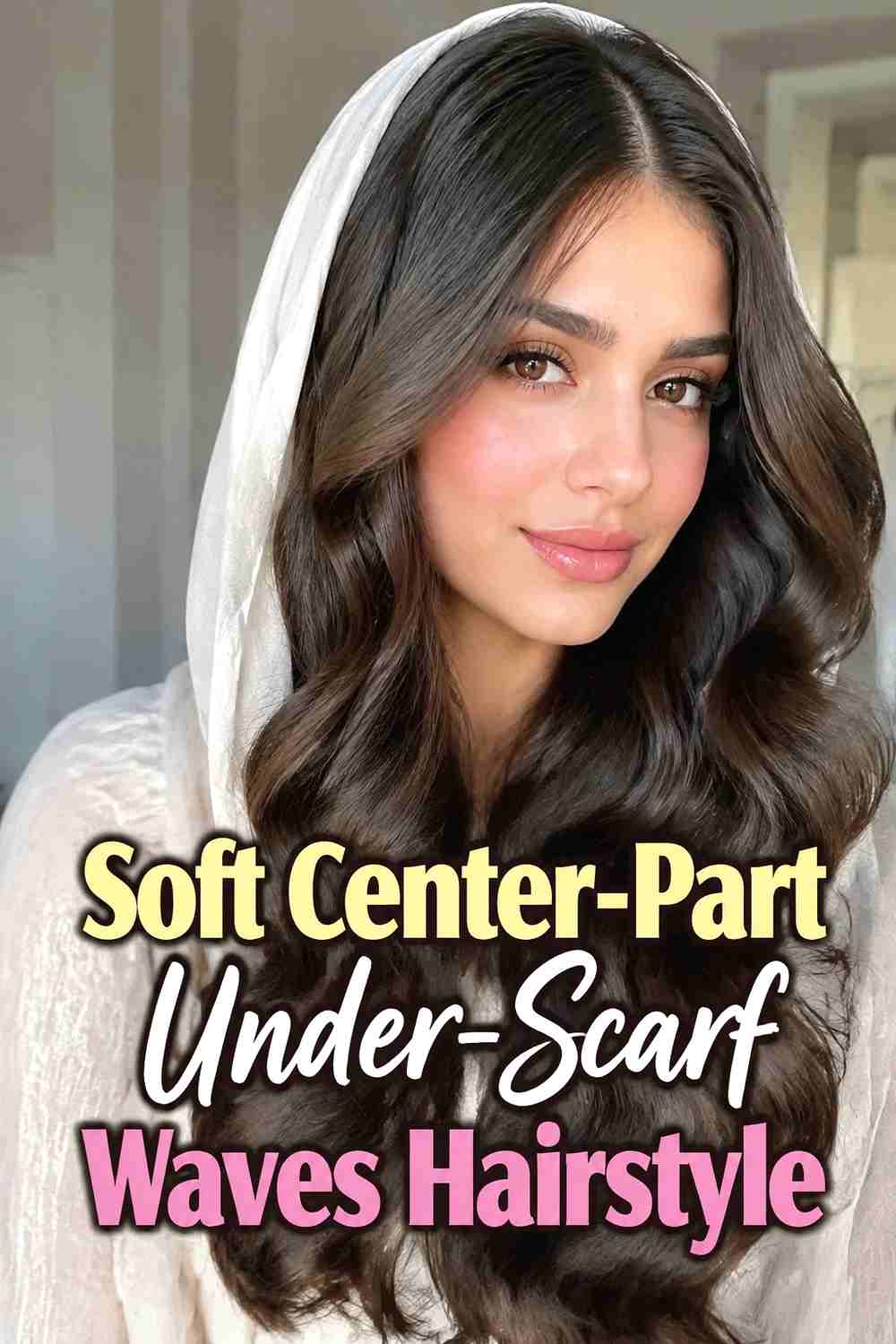
A soft center part gives mid-length waves a balanced frame while the scarf contains some of the lower hair around the neck. The visible sections can begin with gentle bends near the cheekbones or jaw, then develop into wider waves through the ends. This placement pairs especially well with a classic double-breasted peacoat because the symmetry of the hair echoes the coat without looking rigid. Keeping the crown relatively smooth prevents unnecessary volume above the scarf, while a few natural flyaways preserve a relaxed winter feel. The style works particularly well when the hair sits between the shoulders and upper chest, giving enough length for visible texture without creating a large mass beneath the scarf.
Styling Notes
Create the center part before adding the scarf and keep the front waves broad. Tuck the lower sections loosely so the scarf does not completely flatten the texture.
Best For
This look suits straight, wavy, and softly textured mid-length hair when you want an easy symmetrical style that still feels polished.
2. Loose Side Part Scarf Tucked Waves Hairstyle
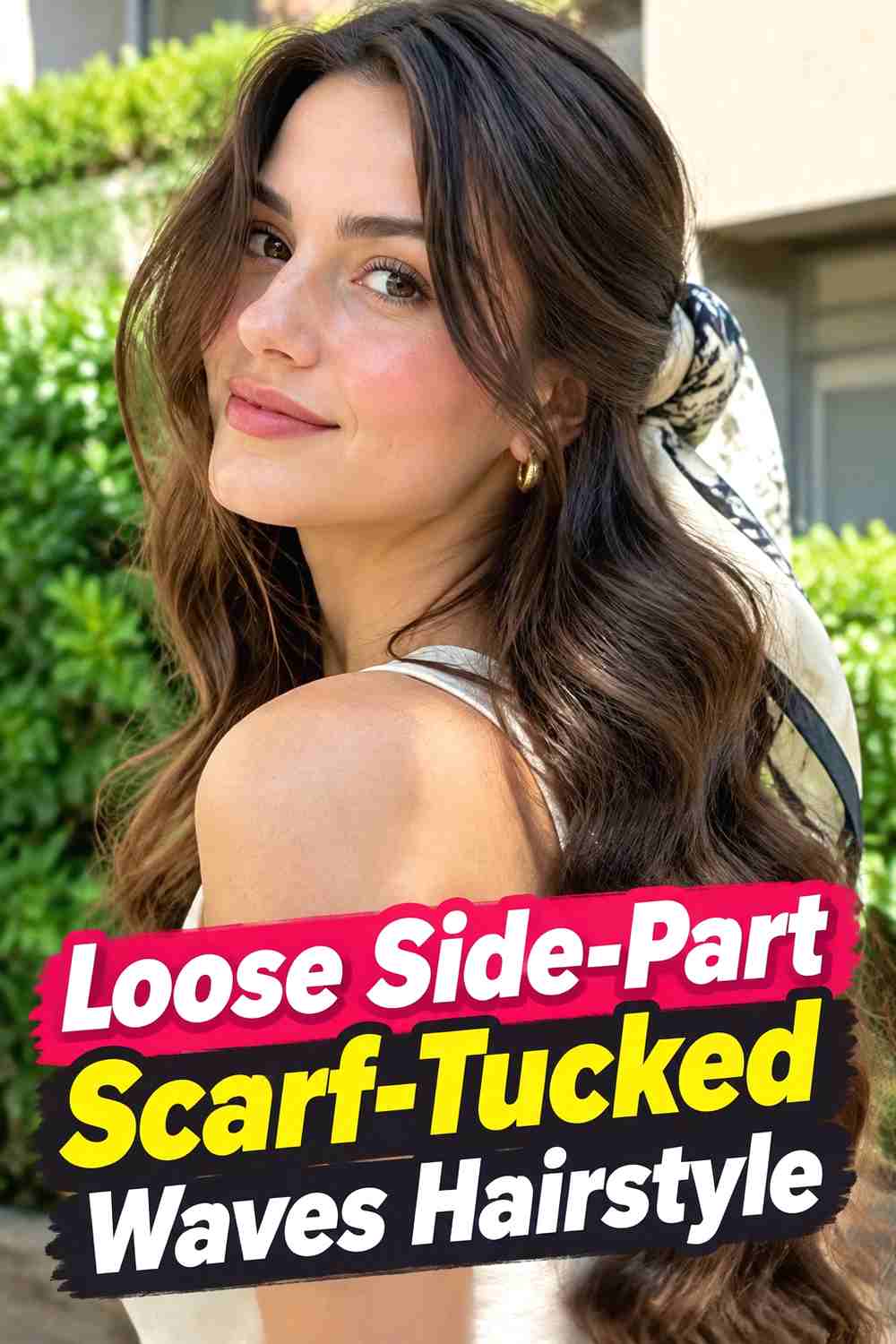
A loose side part introduces gentle asymmetry while the lower waves disappear partially beneath the scarf. The fuller side can sweep softly across the forehead before forming relaxed bends around the jaw and shoulders, while the lighter side stays close to the head. This gives the hairstyle enough movement to soften a structured peacoat without competing with its lapels. The tuck should remain relaxed rather than tightly pressed into the scarf, allowing a few curved pieces to shift naturally as you move. Medium-density hair shows the effect clearly, while thicker hair may feel more comfortable with only part of the lower length tucked and the rest sitting outside the scarf.
Wear & Maintenance
After removing the scarf, shake out the lower sections gently with your fingers. Avoid brushing immediately if you want the wave pattern to remain visible.
Pro Tip
Position the scarf after the waves have fully cooled so the front sections are less likely to lose their shape.
3. Low S Wave Under Scarf Hairstyle
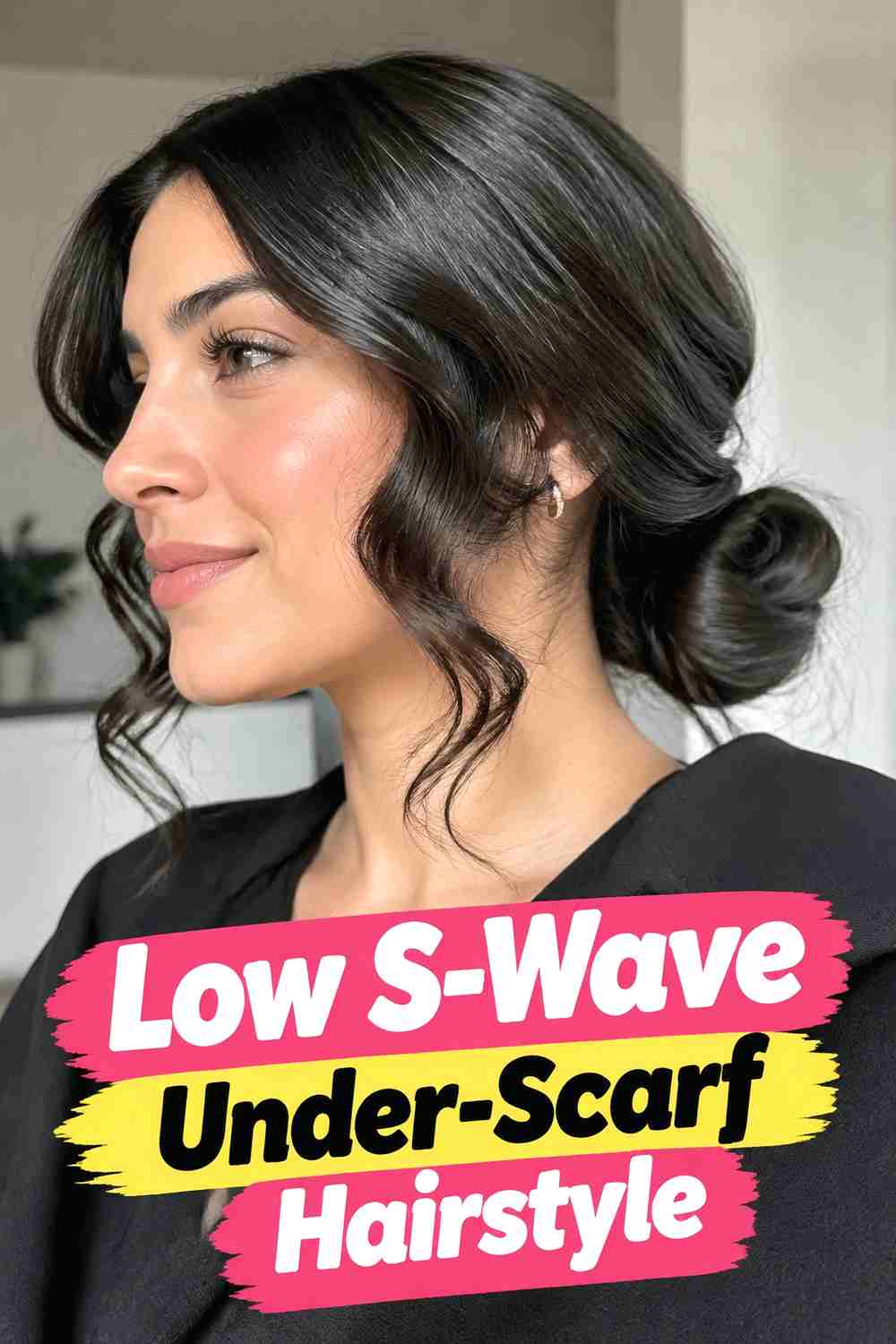
Low S-waves keep the upper half of mid-length hair relatively smooth before introducing broad bends farther down. That makes the style especially practical with scarves because the texture begins near the point where the hair meets the coat rather than building volume close to the face. Against a fitted peacoat, the controlled top looks clean while the lower waves add softness around the collar and shoulders. The bends should alternate gently instead of forming complete curls, and a few straighter ends can keep the result contemporary. This hairstyle is also a good option when the scarf is thick, since the lower pattern can remain visible at the sides even if some of the length becomes tucked underneath.
Styling Notes
Begin the bends around jaw or shoulder level and use wide sections. Keep the roots natural so the scarf and coat remain the strongest structural elements.
Why It Works
The low placement gives the hair movement without adding excessive bulk exactly where the scarf already creates volume.
4. Brushed Out Mid Length Scarf Waves Hairstyle
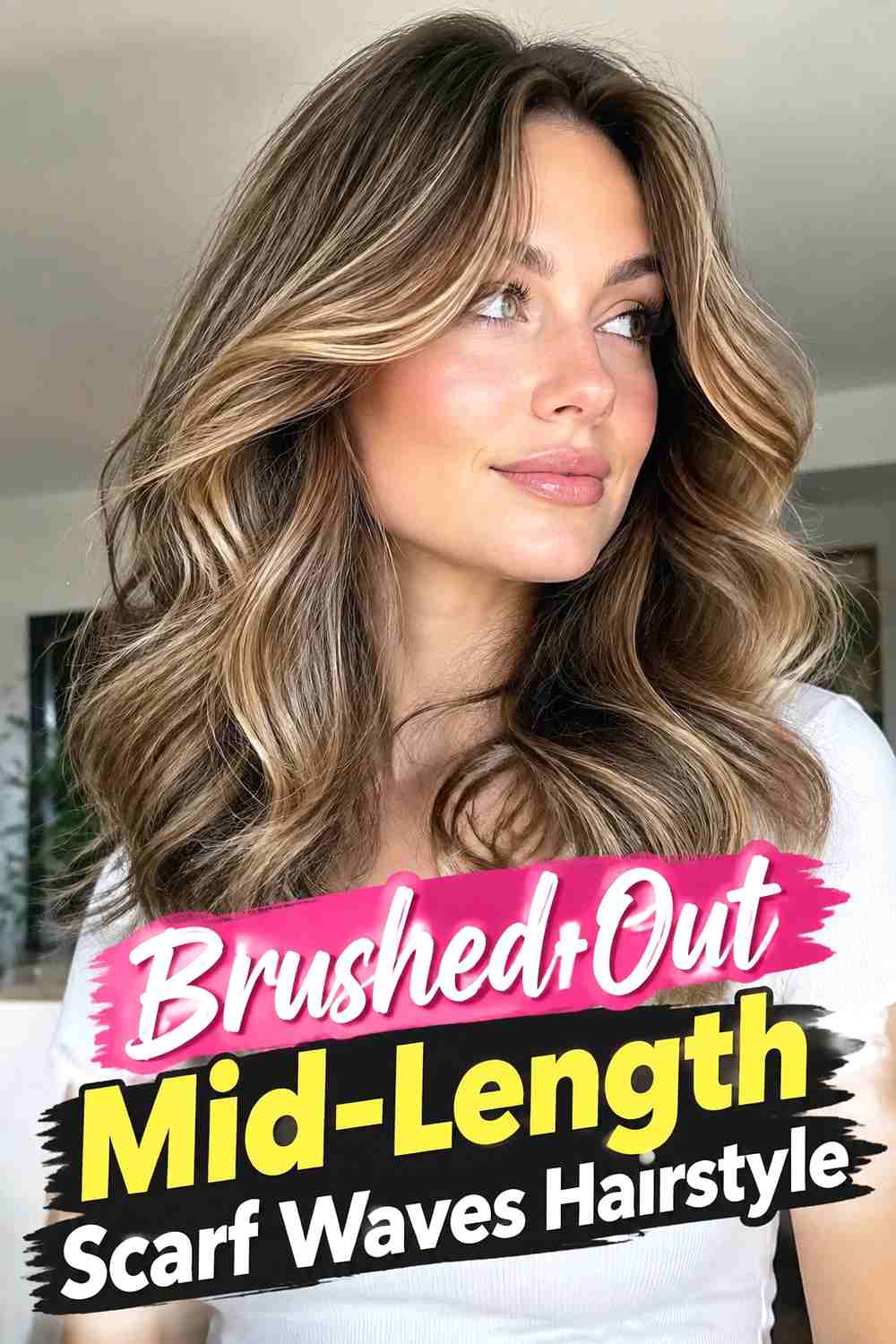
Brushed-out waves create a plush, blended texture that complements the soft surface of a winter scarf while still contrasting with a structured peacoat. The hair is initially curled in larger sections and then gently brushed so individual curls merge into broad waves. At mid-length, this creates enough fullness to look intentional without overwhelming the shoulders. The scarf can sit beneath some of the ends or loosely cover the back section, leaving the front waves visible. A smooth crown keeps the silhouette balanced, especially when the coat has wide lapels or a high collar. This finish can move easily from daytime dressing to a more polished evening outfit.
Styling Notes
Let the curls cool completely before brushing. Blend only until the pattern looks soft and connected rather than brushing until the hair becomes almost straight.
Best For
This style works well for medium-density and thick hair when you want a slightly dressier finish without defined ringlets.
5. Face Framing Scarf Peek Waves Hairstyle
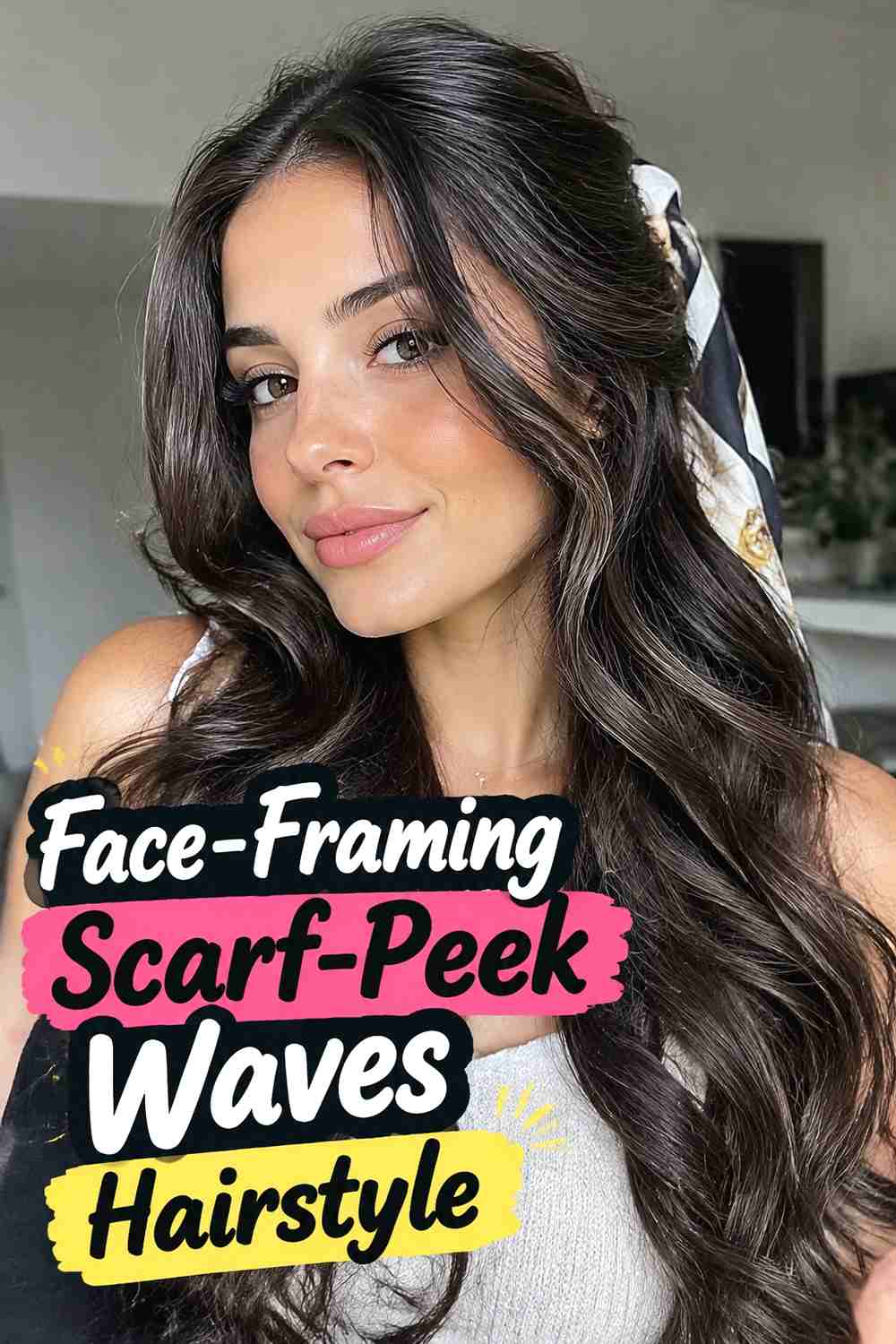
Face-framing waves stay deliberately outside the scarf while most of the lower hair sits behind or beneath it. The front sections can begin around the cheekbones or jaw and curve away from the face, creating a visible detail even when the scarf covers much of the remaining length. This works especially well with a buttoned peacoat because the hairstyle opens the face while the coat and scarf create a more enclosed winter silhouette below. Longer front layers make the effect easier to achieve, since they can form soft waves without behaving like short bangs. The result feels practical and polished, with just enough visible movement to keep the hair from disappearing into winter layers.
Hair Type & Length
Layered mid-length hair works particularly well, especially when the shortest pieces reach at least the jaw or collarbone.
Why It Works
Leaving selected front waves visible creates separation between the face and scarf, helping the overall outfit feel lighter around the neckline.
6. Airy Blowout Mid Length Waves Hairstyle
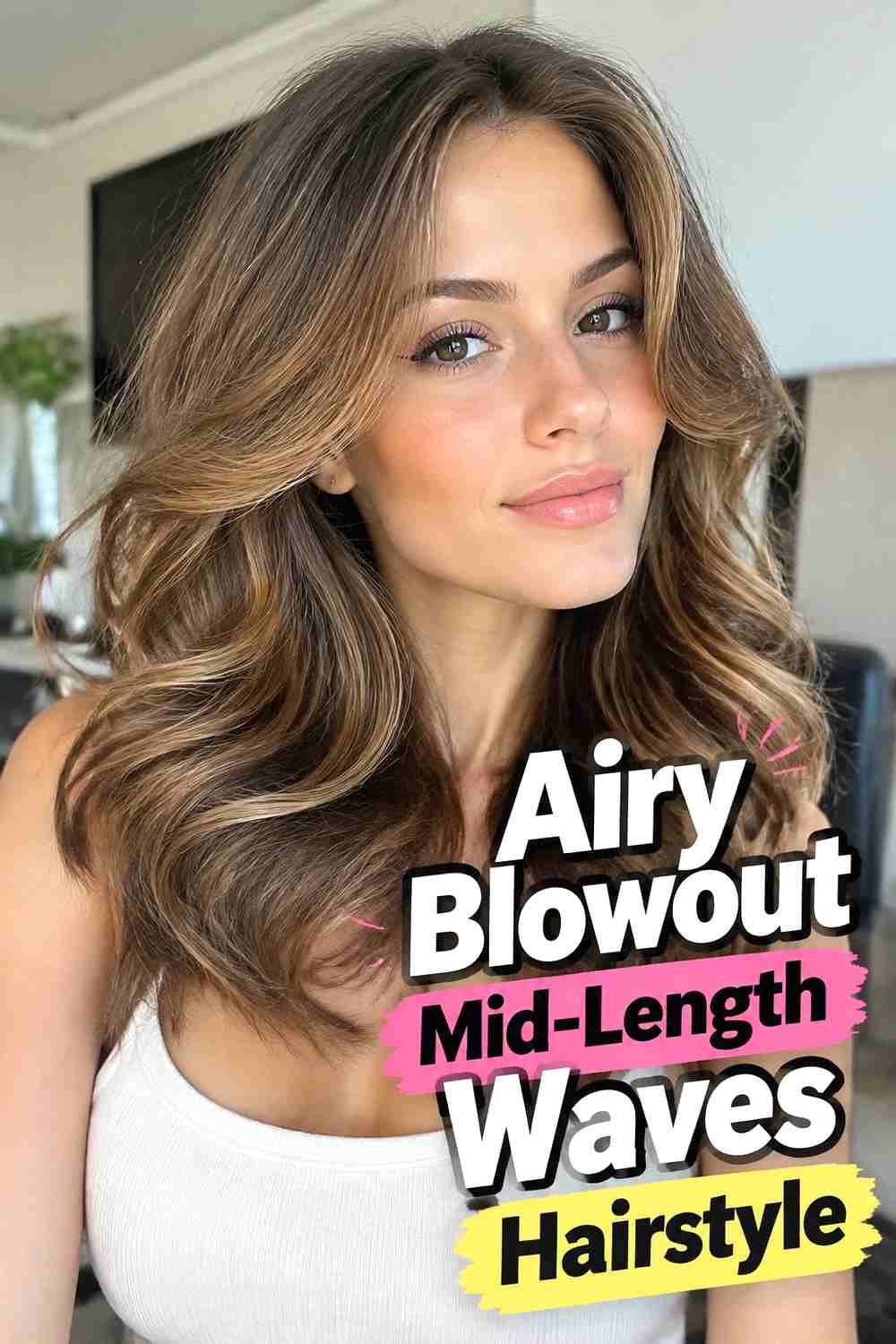
An airy blowout combines subtle root lift with rounded mid-length waves, creating a soft silhouette above and around a scarf. The front pieces curve outward, while the ends develop loose, open bends rather than tight curls. This style can balance the sharper construction of a peacoat beautifully, especially when the coat has a fitted waist or strong shoulder line. Because the hair is mid-length, the volume remains manageable even when some sections rest against the scarf. The key is keeping the blowout light and flexible rather than heavily teased. Medium and thick hair generally support the shape easily, while finer hair can use larger sections and lightweight styling products.
Styling Notes
Use a round brush to create lift through the crown and broad bends through the ends. Let the hair settle before arranging the scarf around it.
Pro Tip
Keep most of the volume above the scarf rather than compressing the blowout tightly beneath it.
7. Ribbon Wave Under Scarf Hairstyle
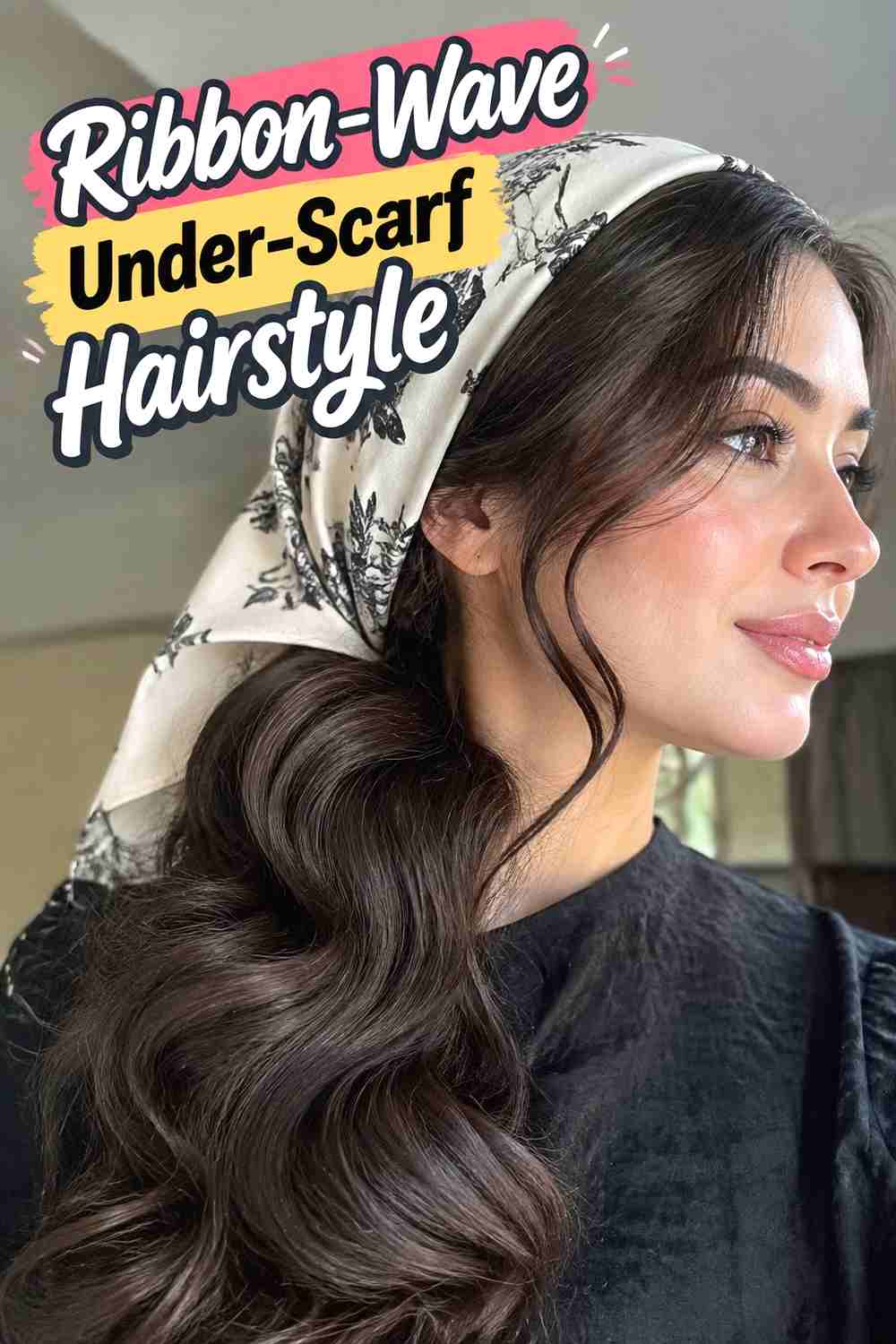
Ribbon waves create elongated curves that remain visible even when some of the hair sits under a scarf. The smoother upper section flows into stretched waves around the mid-lengths, producing movement without making the hairstyle unusually wide. That streamlined texture works especially well with peacoats because it softens the structured outerwear while preserving a long vertical line around the face and shoulders. A center or slight side part can both work, depending on your natural growth pattern. Leaving the ends relaxed helps the waves move easily against the scarf instead of forming rigid curls that flatten awkwardly beneath the fabric.
Styling Notes
Use a larger curling barrel and wrap sections loosely, beginning below the roots. Leave a small portion of each end less curled for a relaxed finish.
Best For
This option is useful for straight or gently wavy hair when you want clear texture without a high-volume curled look.
8. Deep Side Part Mid Length Waves Hairstyle
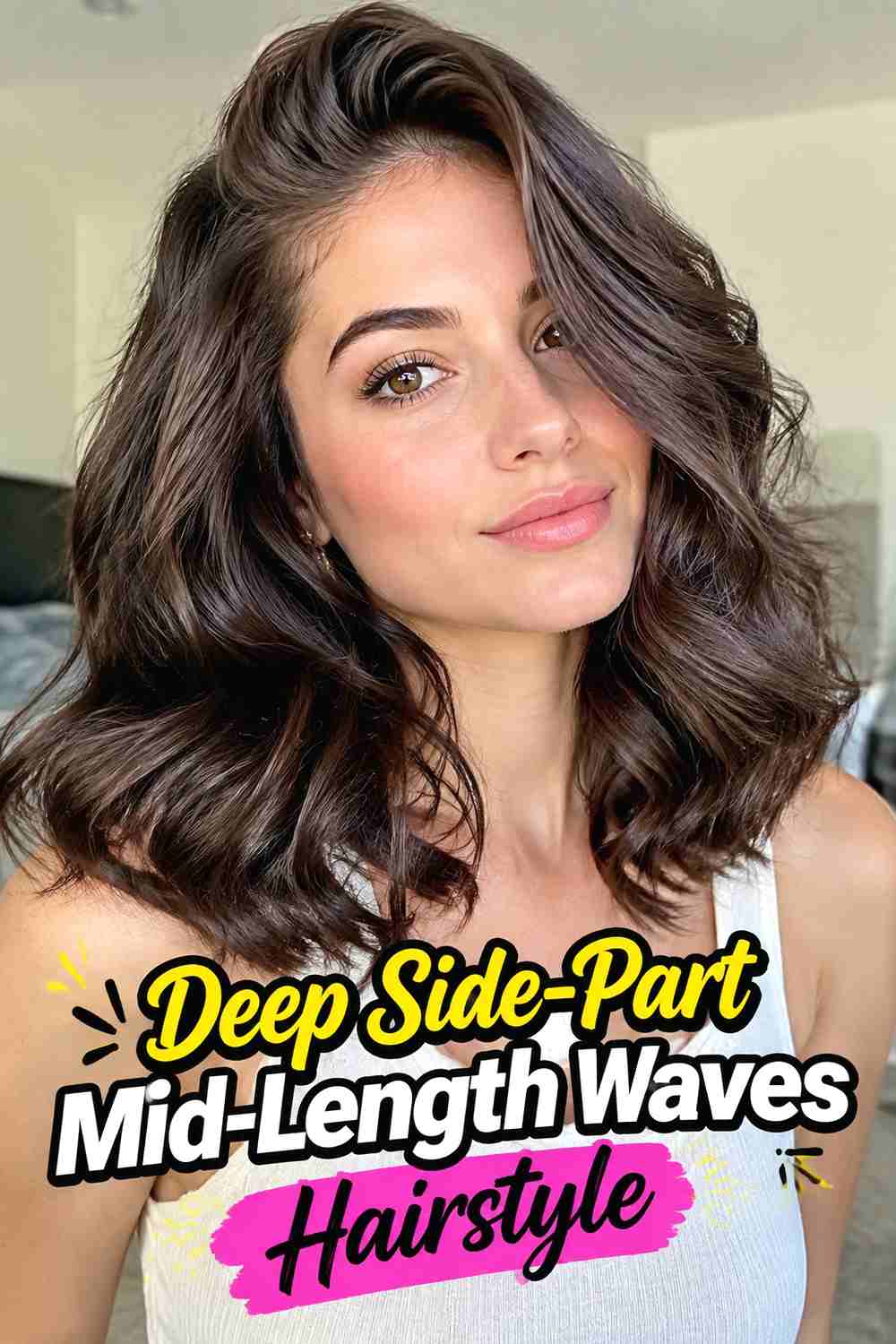
A deep side part adds immediate direction to mid-length waves and creates a stronger contrast with the symmetrical lines of a traditional peacoat. The heavier side carries more volume and can form broad waves across the cheek and shoulder, while the lighter side stays tucked back or partially beneath the scarf. This helps keep one side of the coat collar visible while still giving the hairstyle noticeable movement. The roots should retain natural lift without becoming overly high, and the wave pattern can become looser toward the ends. This style works particularly well when the scarf is wrapped simply rather than tied into a large knot, leaving space for the fuller side of the hair.
Styling Notes
Set the side part before drying or waving the hair. Direct the front section away from the face so it does not collapse into the scarf.
Why It Works
The asymmetry creates visual interest around a classic peacoat silhouette while the scarf keeps the lower length neatly contained.
9. Feathered End Scarf Tucked Waves Hairstyle
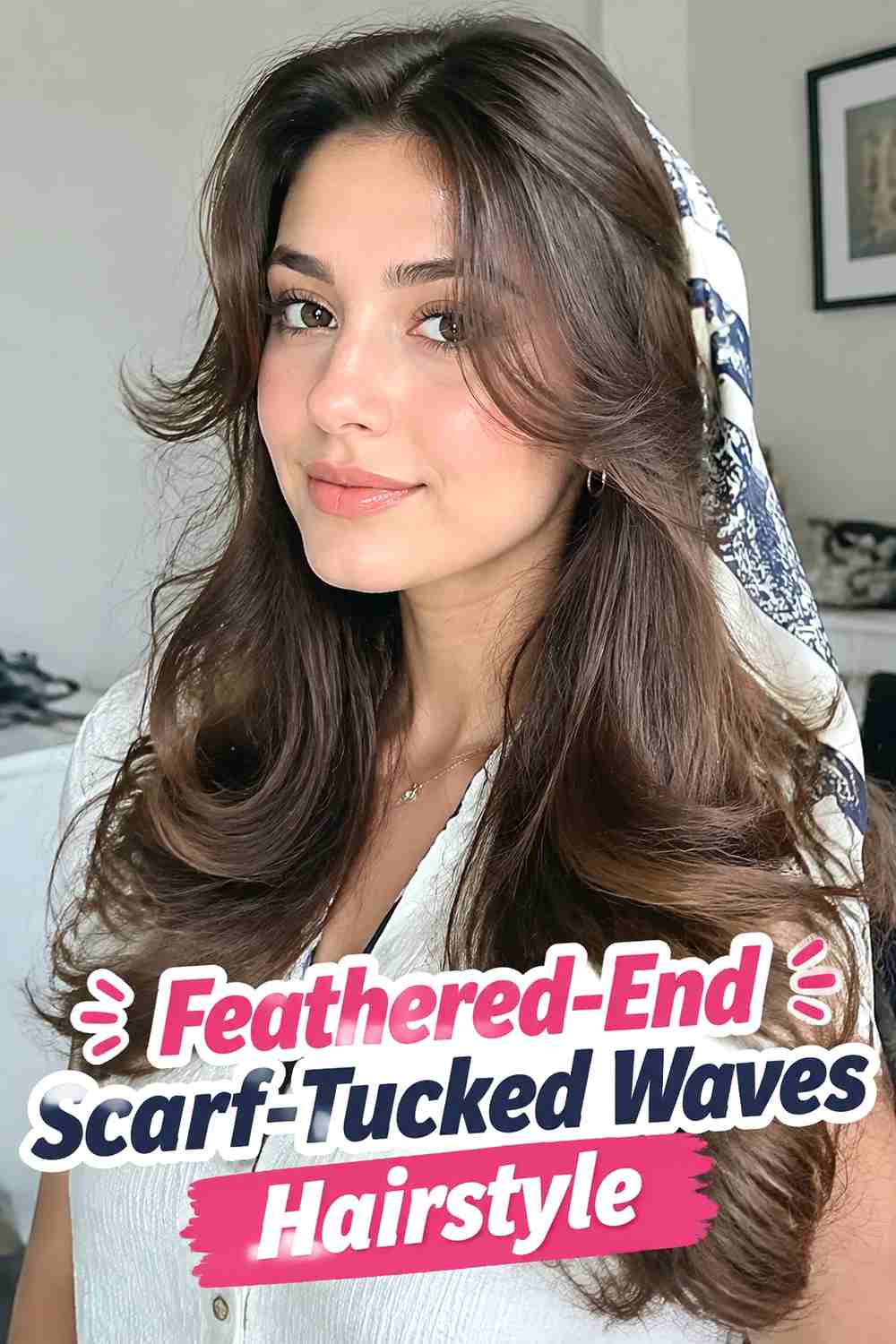
Feathered ends add small outward movements to softly waved mid-length hair, preventing the lower sections from looking too compact beneath a scarf. The upper hair can stay smooth with subtle bends through the sides, while the ends separate and flick gently around the coat collar. This works especially well with thick or ribbed scarves because the feathered perimeter remains visible even if much of the back section is hidden. The movement should be broad rather than sharply flipped so the overall look stays contemporary. Medium and thick hair show the separated ends clearly, while fine hair can use fewer layers to retain a fuller outline around the shoulders.
Styling Notes
Use a round brush on the final few inches and direct selected ends outward. Keep the feathering irregular so it blends naturally with the waves.
Wear & Maintenance
If the scarf flattens the lower sections, refresh only the visible ends rather than restyling the entire head.
10. Natural Texture Under Scarf Waves Hairstyle
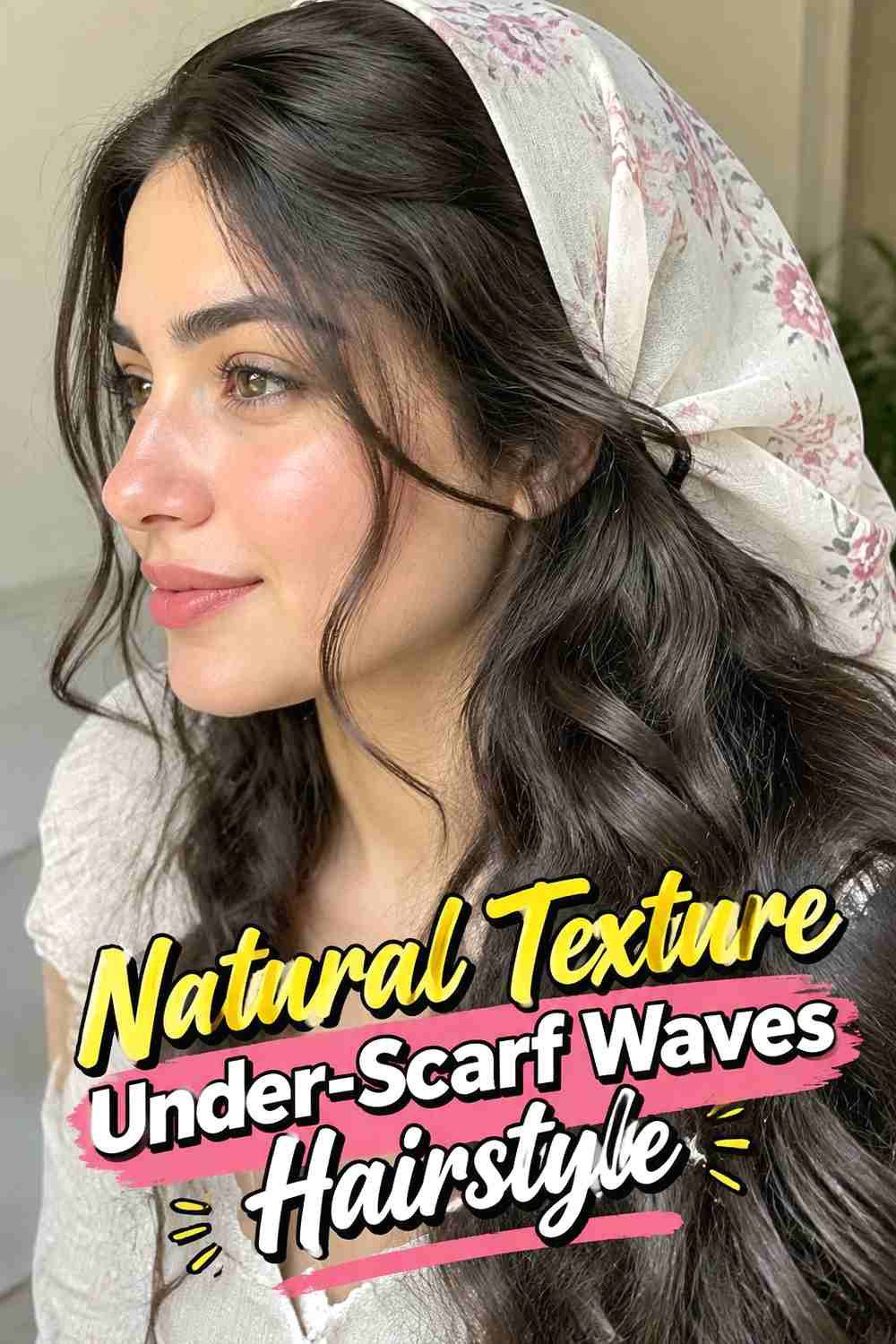
Naturally wavy hair can work beautifully beneath a scarf when the texture is organized rather than overworked. The crown follows its normal pattern, while broader waves remain visible around the temples, cheeks, and sides of the coat. Some lower sections can sit beneath the scarf, but leaving a few textured ends free helps maintain the hairstyle’s natural shape. This approach pairs particularly well with casual wool peacoats because both the outfit and hair retain a relaxed, practical quality. The goal is not to force every wave into the same direction; believable variation keeps the texture soft. Hair density should determine how much is tucked, since thicker waves may feel more comfortable with only the back section contained.
Hair Type & Length
This look is designed for naturally wavy and softly curly mid-length hair. Adjust the tuck according to density and how snugly the scarf is wrapped.
Pro Tip
Arrange the scarf after the texture has fully settled so you can see which sections naturally want to remain outside.
11. Glossy Soft Bend Scarf Hairstyle
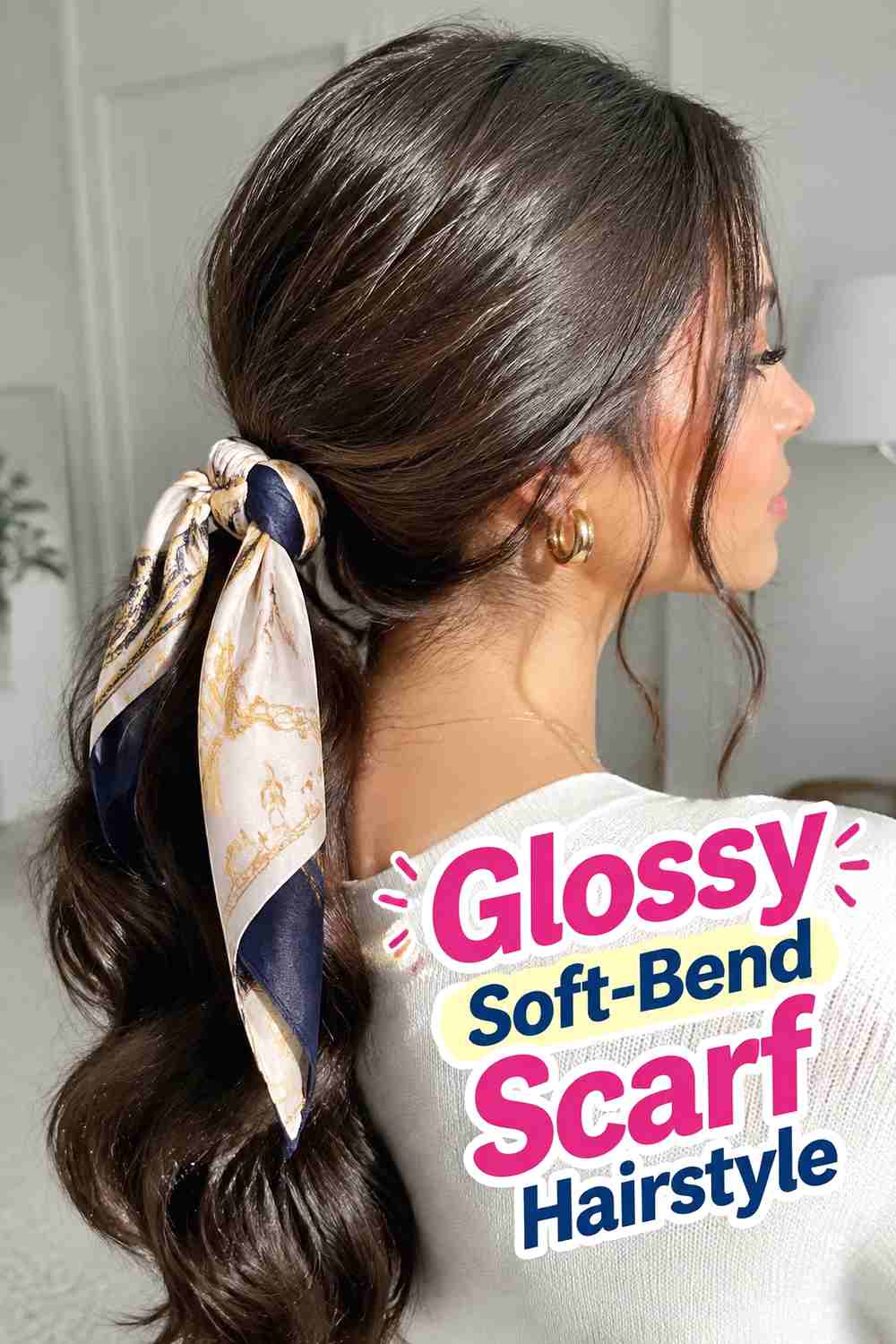
A glossy soft-bend finish keeps the hairstyle sleek through the upper section while adding one or two gentle curves through the mid-lengths and ends. The minimal texture gives mid-length hair enough shape to avoid looking flat without creating extra bulk beneath the scarf. This polished approach suits a tailored peacoat particularly well, especially when the coat is worn for work or a more refined daytime outfit. A center or soft side part can both complement the clean finish. Shine should remain natural rather than mirror-like, with visible strands and movement. The scarf can lightly contain the back section while the front bends remain free around the jaw and shoulders.
Best For
Straight and gently wavy hair can achieve this style easily, particularly when you prefer understated movement to full curls or textured waves.
Styling Notes
Shape broad bends with a round brush or gentle straightener rotation, concentrating on the visible front and side sections.
12. Tucked Behind Ear Scarf Waves Hairstyle
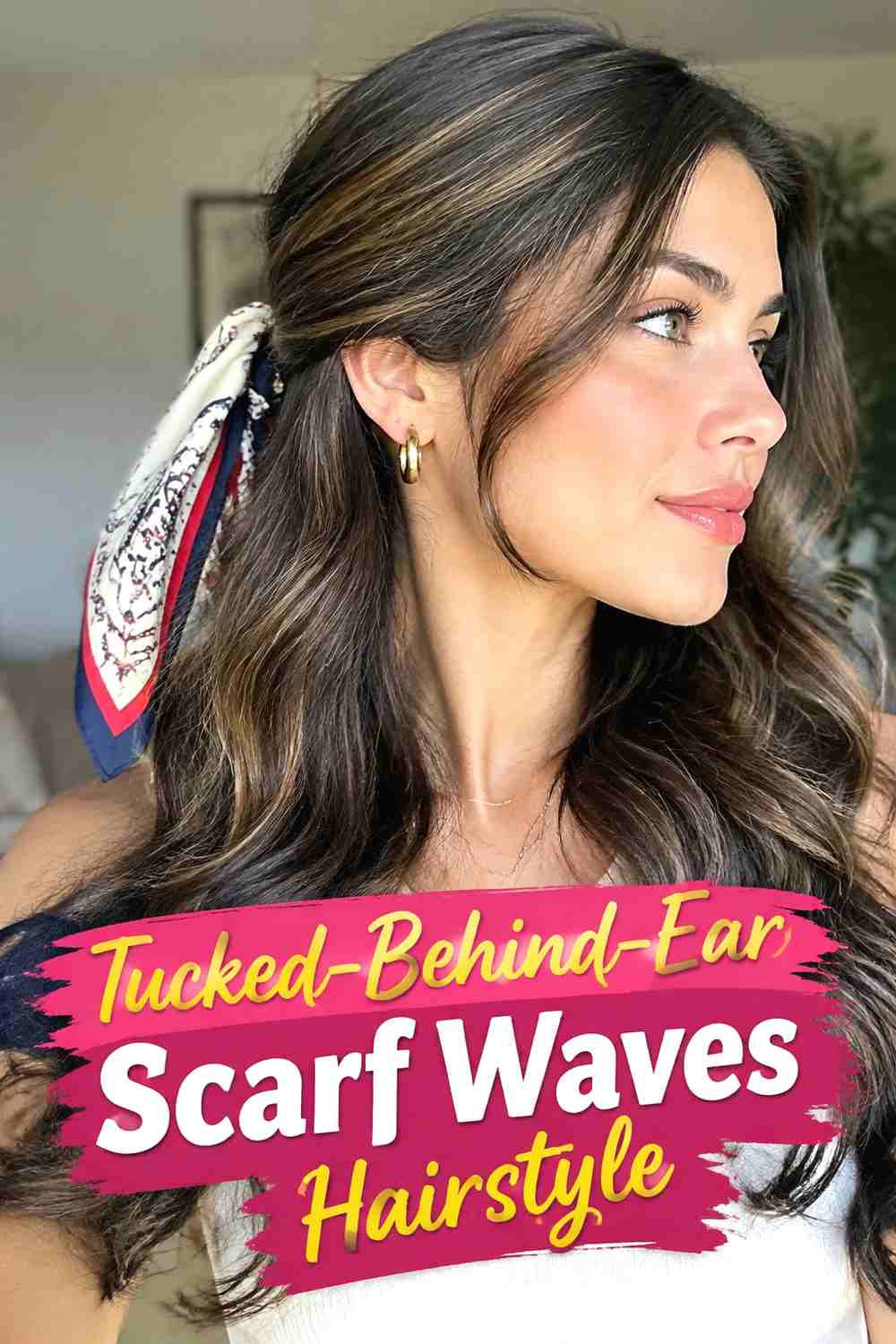
Tucking one side behind the ear gives soft mid-length waves a clean, practical shape beneath winter layers. The opposite side remains fuller, with gentle waves falling toward the jaw and shoulder, while the tucked side leaves more of the scarf and peacoat collar visible. This asymmetric placement works especially well when the scarf is wrapped once around the neck and does not leave much space for hair on both sides. The waves can stay broad and natural rather than highly defined because the ear tuck already provides a clear styling detail. If the hair is thick, keep the tucked section relatively narrow so it sits comfortably without creating pressure behind the ear.
Styling Notes
Smooth the tucked section lightly and use a discreet pin if needed. Keep the fuller side loose so the hairstyle does not become overly controlled.
Best For
This is a useful everyday option when you want your hair down but need a little more space around a bulky scarf and peacoat collar.
13. Soft Layered Under Scarf Waves Hairstyle
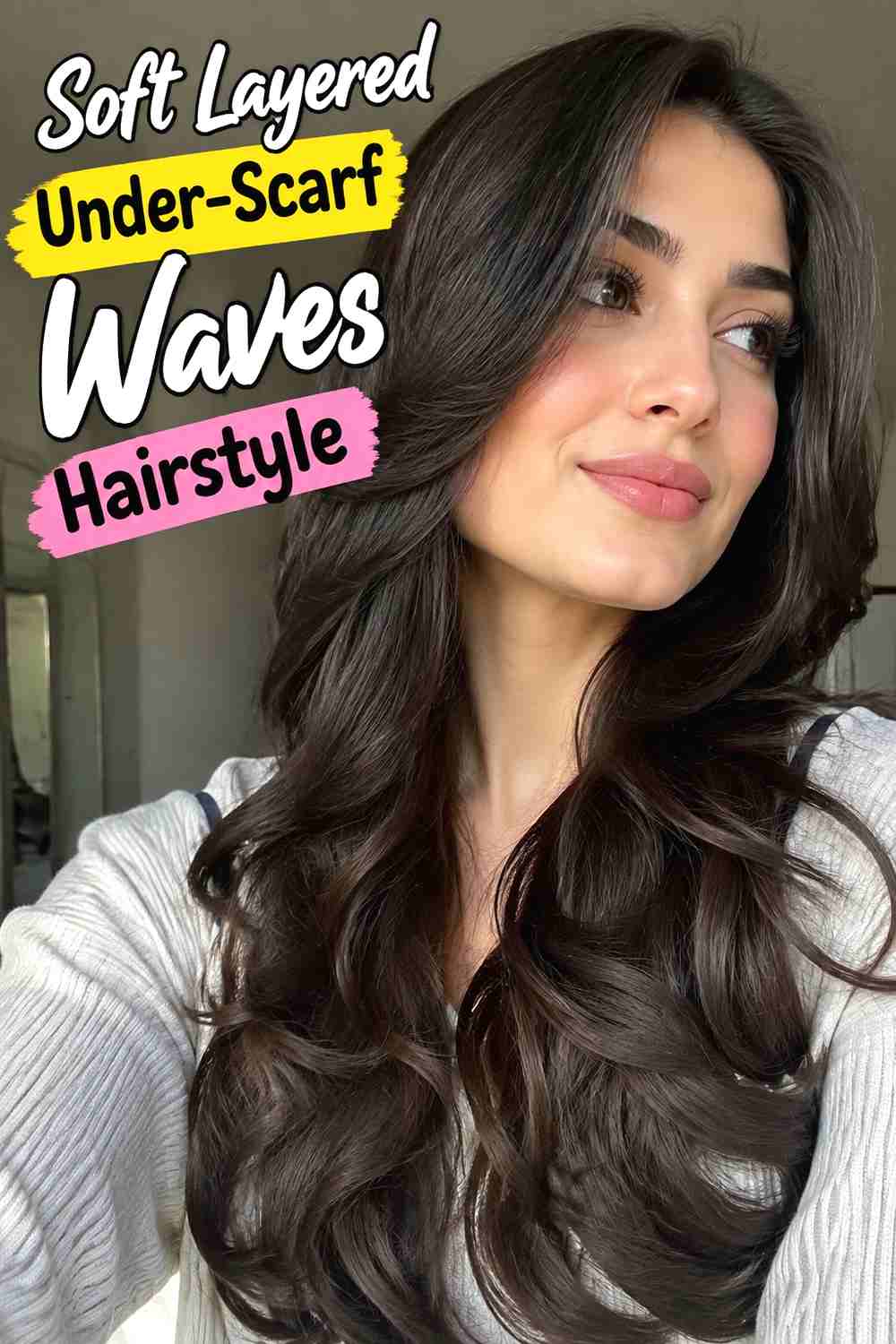
Soft layers give mid-length waves different levels of movement, which helps the hairstyle remain visible even when a scarf covers part of the lower section. Shorter pieces can curve around the cheekbones or jaw, while longer layers develop broader waves toward the shoulders. The staggered lengths prevent all the hair from collecting into one heavy shape beneath the scarf. This works particularly well with structured peacoats because the lighter hair movement contrasts with the coat’s defined construction. Medium-to-thick hair can support several layers, while finer hair may look fuller with fewer internal cuts and more shaping concentrated around the front.
Hair Type & Length
Mid-length layered hair with straight, wavy, or softly textured patterns can all adapt well to this style.
Why It Works
Different layer lengths keep visible movement around the face even when the scarf hides some of the lower hair.
14. Low Volume Peacoat Waves Hairstyle
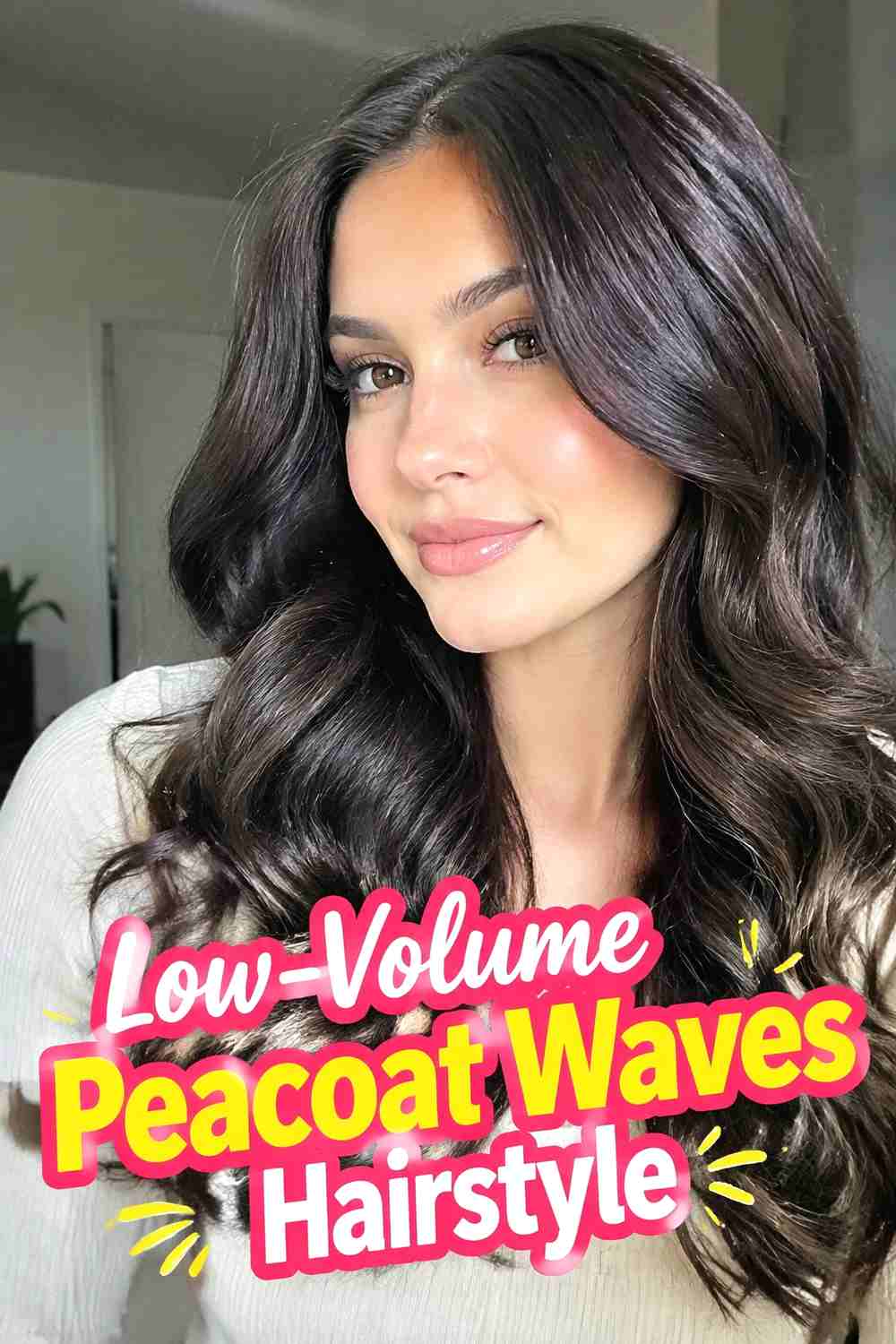
Low-volume waves keep the roots and crown close to their natural shape while adding gentle bends through the mid-lengths. The restrained silhouette works especially well with thick scarves and double-breasted peacoats because it does not create another layer of bulk around the upper body. The waves can begin near the jaw and soften gradually toward the ends, with one or two sections left nearly straight for natural variation. This style feels practical for commuting, workdays, or casual winter outfits where elaborate volume would be difficult to maintain. Fine-to-medium hair often suits the approach particularly well because the wave pattern adds movement without requiring teasing or heavy styling products.
Best For
Choose this look when comfort, easy scarf placement, and a streamlined coat silhouette matter more than dramatic hair volume.
Wear & Maintenance
Use flexible hold through the waves and keep root products minimal. The hairstyle should still move naturally when the scarf is adjusted or removed.
15. Ends Peeking Under Scarf Waves Hairstyle
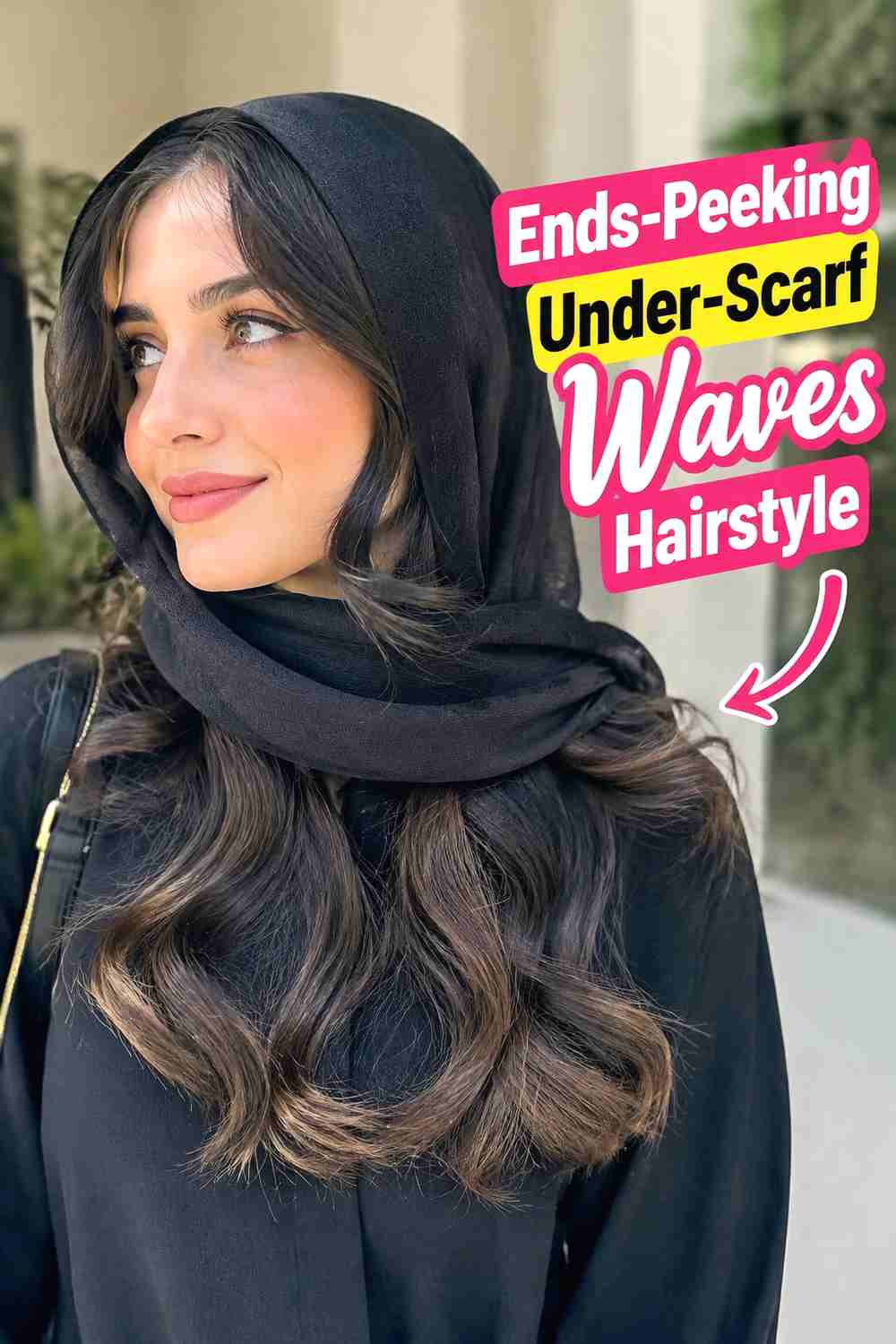
This style intentionally allows a few softly waved ends to peek from beneath the scarf, creating an effortless layered effect with a peacoat. Most of the hair is loosely tucked around the back and sides, but selected ends remain visible near the coat collar or upper chest. The exposed pieces can carry gentle S-bends or relaxed curves, giving the hairstyle movement without requiring every strand to stay outside the scarf. Mid-length cuts are especially well suited because the ends naturally fall close to the neckline. The arrangement should look slightly irregular rather than perfectly mirrored, as uneven placement makes the tuck feel more believable and comfortable.
Styling Notes
Arrange the scarf first, then gently pull out a few curved ends. Avoid extracting large sections, which can make the under-scarf placement lose definition.
Why It Works
The visible ends keep the hairstyle connected to the outfit while the scarf contains most of the length and reduces bulk.
16. Soft Curtain Wave Scarf Hairstyle
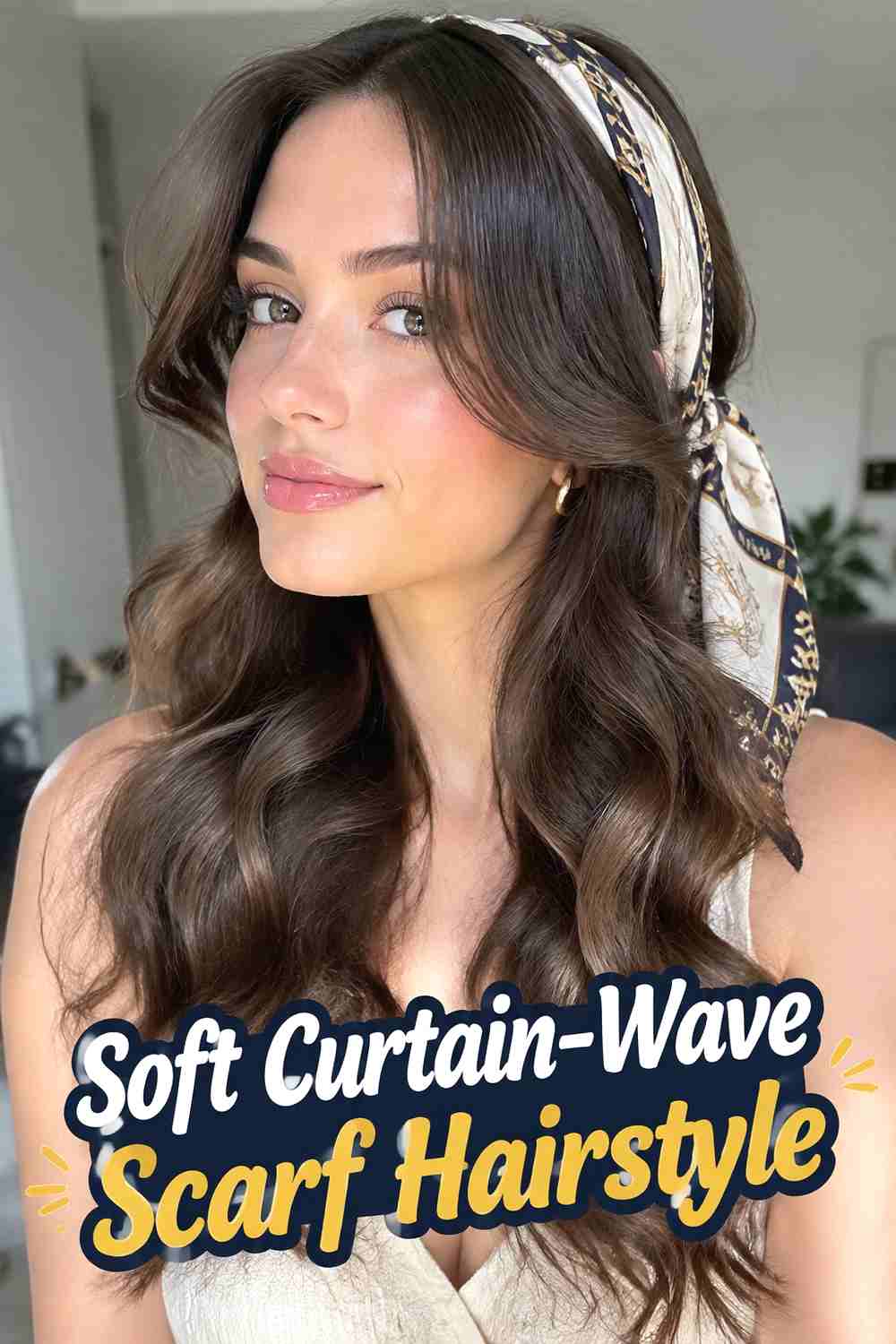
Soft curtain waves create an open frame around the face while the lower lengths sit naturally beside or beneath the scarf. Longer front pieces sweep away from a center or near-center part, then blend into broad waves through the mid-lengths. This keeps the face visible even when a peacoat collar and scarf create substantial coverage around the neck. The curtain effect works particularly well when the shortest front sections reach the cheekbones or jaw, since they remain long enough to move naturally without behaving like short bangs. A light, flexible finish helps the waves maintain their shape while still allowing the scarf to shift comfortably during wear.
Styling Notes
Dry the front pieces forward first, then redirect them away from the face. Keep the lower waves loose enough to sit comfortably around the scarf.
Best For
This look suits layered mid-length hair when you want a soft face-opening effect without relying on high crown volume.
How to Choose the Right Look
Start with your scarf thickness. A large blanket scarf or chunky knit already creates substantial volume around the neck, so low S-waves, glossy soft bends, or low-volume waves can keep the hairstyle balanced. With a slimmer scarf, airy blowouts, brushed-out waves, and deeper side parts have more room to show.
Next, consider where your waves begin. Texture that starts near the roots creates more fullness around the head, while waves beginning at the jaw or shoulders leave the upper silhouette cleaner. If you have a structured peacoat with wide lapels, lower wave placement often keeps those details more visible.
Hair density should guide how much you tuck. Fine hair can usually sit beneath a scarf without creating discomfort, while thick hair may feel better with only the back portion contained. Layered cuts also make it easier to leave face-framing pieces outside.
Finally, think about how often you remove the scarf. Brushed-out or heavily styled waves may need a little reshaping after compression, while natural texture, soft bends, and low-volume waves tend to tolerate movement more easily. Choose a look that works both with the scarf on and after you take it off.
Final Thoughts
Under-scarf mid-length waves are an easy way to soften the structured lines of a peacoat without creating excessive bulk around the neckline. Choose lower bends for a streamlined finish, layered or curtain waves for more face framing, or natural texture when you want minimal restyling. Keeping the tuck loose and allowing a few visible pieces around the face or ends usually creates the most relaxed, wearable result.
FAQs
1. Should mid-length hair go under or over a winter scarf?
Either works. Tucking some of the hair beneath the scarf reduces bulk, while leaving selected front waves or ends outside keeps the hairstyle visible.
2. Which waves work best with a bulky scarf?
Low S-waves, soft bends, and low-volume waves are practical because most of their texture sits below the root area and does not add unnecessary fullness around the neck.
3. How can I stop a scarf from flattening my waves?
Let the waves cool fully before putting on the scarf, keep the tuck loose, and reshape compressed sections gently with your fingers after removing it.
4. Do under-scarf waves work with thick hair?
Yes. Instead of tucking everything, try placing only the back or lower section beneath the scarf while leaving lighter front pieces free.
5. Which style is easiest for everyday peacoat outfits?
Natural texture, low-volume waves, soft bends, and tucked-behind-ear waves are practical options because they require less precision after the scarf shifts.
Save your favorite under-scarf wave hairstyle, share these peacoat outfit ideas, and explore more cold-weather hair inspiration for polished everyday looks.