18 Long Hair One-Side Knit-Scarf Tuck Hairstyles
One-side scarf tucks give long hair an effortless winter shape, combining visible movement on one side with a cozy, controlled tuck on the other.
A knit scarf can become part of the hairstyle when long hair is deliberately placed beneath it on one side while the remaining lengths stay visible. This creates an asymmetrical silhouette that feels practical for cold weather but still looks styled. Depending on the finish, the exposed side can be sleek, waved, layered, or softly blown out while the tucked side stays neat around the neck.
The best version depends on hair density, scarf thickness, natural parting, and how much length you want visible. Thick hair may feel more comfortable with only part of the back section tucked, while finer hair can often sit beneath the scarf more easily. Consider movement, static, comfort, and whether you prefer a clean side sweep or a looser, more textured drape.
Quick List
- Soft Side Part Scarf Tuck Hairstyle
- Sleek One Side Knit Scarf Tuck Hairstyle
- Loose S Wave Side Tuck Hairstyle
- Deep Side Part Long Scarf Tuck Hairstyle
- Ribbon Wave One Side Tuck Hairstyle
- Face Framing Scarf Peek Layers Hairstyle
- Glossy Straight One Side Tuck Hairstyle
- Airy Blowout Side Scarf Tuck Hairstyle
- Brushed Out Wave Side Tuck Hairstyle
- Tucked Behind Ear Scarf Drape Hairstyle
- Feathered End One Side Tuck Hairstyle
- Natural Texture Side Scarf Tuck Hairstyle
- Low Bend Long Side Tuck Hairstyle
- Soft Curtain Layer Scarf Tuck Hairstyle
- Ends Peeking Side Scarf Tuck Hairstyle
- Low Volume One Side Scarf Hairstyle
- Layered One Shoulder Scarf Tuck Hairstyle
- Polished C Bend Side Tuck Hairstyle
1. Soft Side Part Scarf Tuck Hairstyle
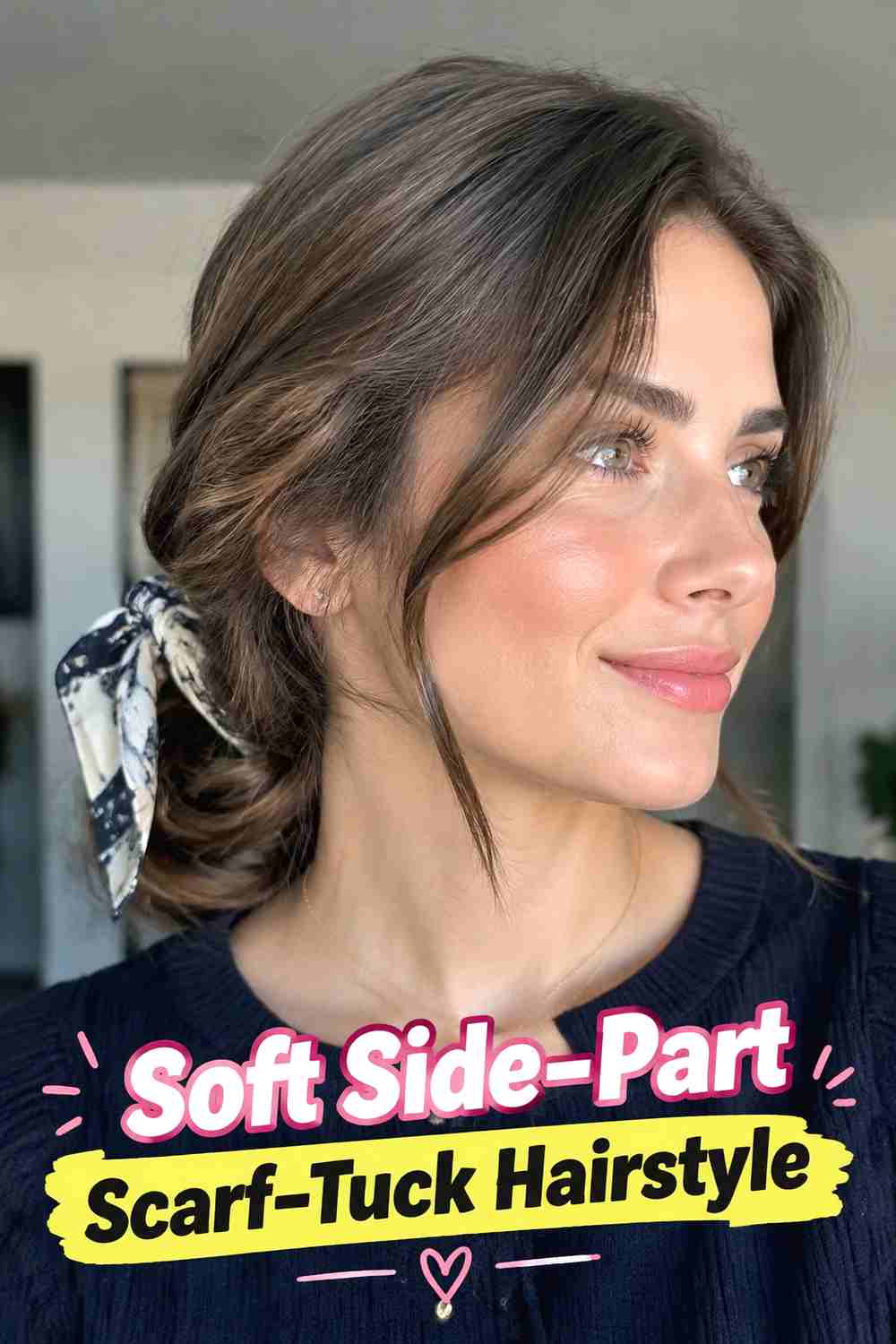
A soft side part creates gentle direction before the hair is tucked beneath the scarf on one side. The fuller side remains visible, falling in long, relaxed lengths over the opposite shoulder, while the lighter section disappears neatly beneath the knit. This gives long hair a clear asymmetrical shape without requiring a dramatic part or heavy styling. A slight bend through the exposed lengths keeps the finish fluid, and the scarf naturally controls some of the bulk around the neck. The style works especially well with medium-density hair and softer knit scarves that can hold the tuck without compressing the hair too tightly.
Styling Notes
Create the part first, then arrange the lighter side beneath the scarf. Leave a little looseness near the neck so the hair can move naturally.
Why It Works
The tuck reduces bulk on one side while the exposed length keeps the hairstyle visually soft and balanced.
2. Sleek One Side Knit Scarf Tuck Hairstyle
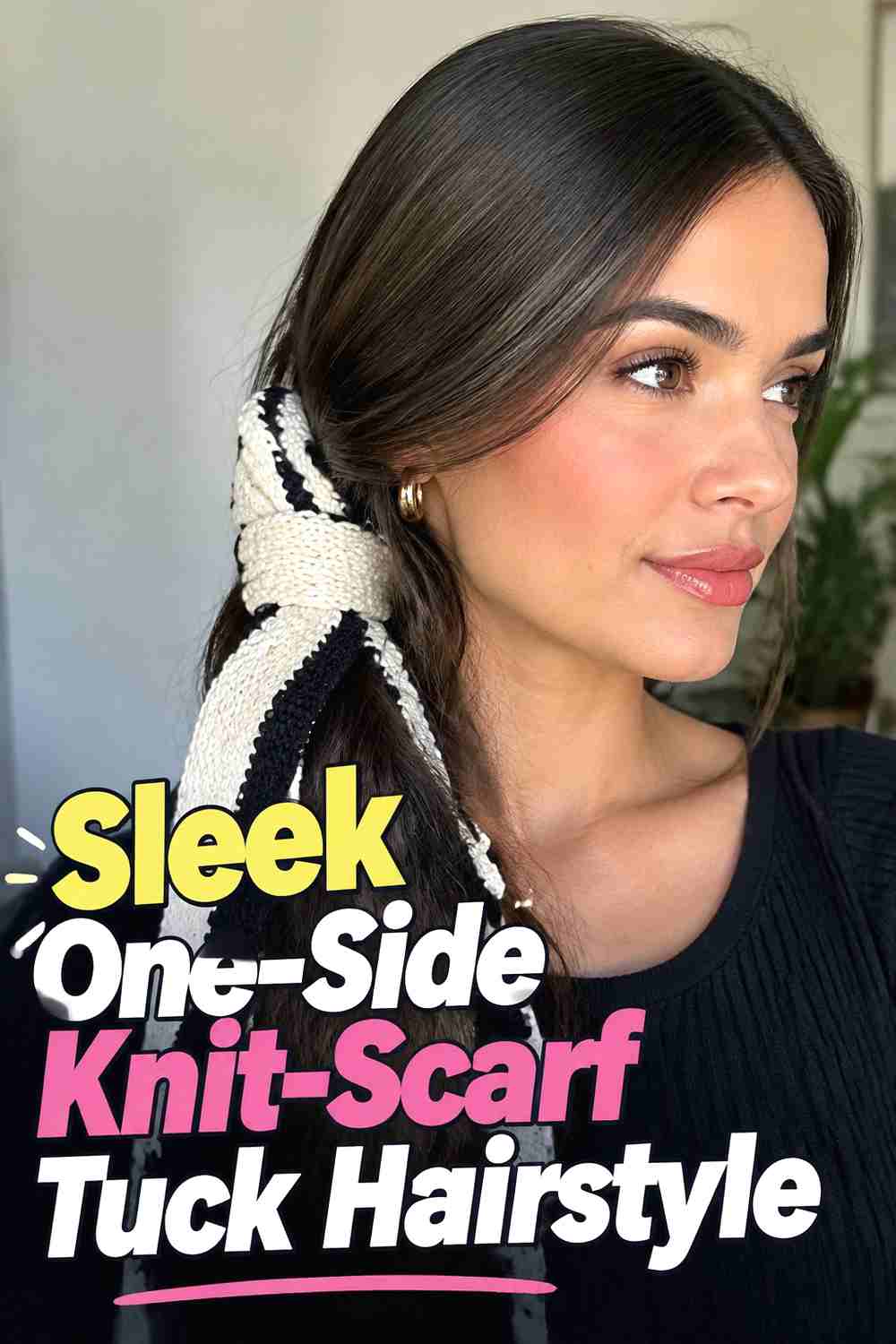
A sleek one-side tuck gives long hair a clean, polished winter silhouette. The visible side falls smoothly over one shoulder, while the opposite section is guided beneath the scarf so the neckline looks less crowded. Straight or softly smoothed hair works especially well because the contrast between the exposed glossy length and the concealed side becomes immediately visible. A center or shallow side part can both support the look, depending on your natural growth pattern. The finish should retain strand detail and soft movement rather than appearing overly flat. This is a particularly useful option with structured coats or minimalist knitwear where a simple hairstyle complements the outfit better than full curls or high-volume texture.
Hair Type & Length
Straight and gently wavy long hair can achieve this look easily. Thick hair may need a smaller tucked section for comfort.
Pro Tip
Use smoothing product lightly through the visible mid-lengths and ends rather than saturating the roots.
3. Loose S Wave Side Tuck Hairstyle
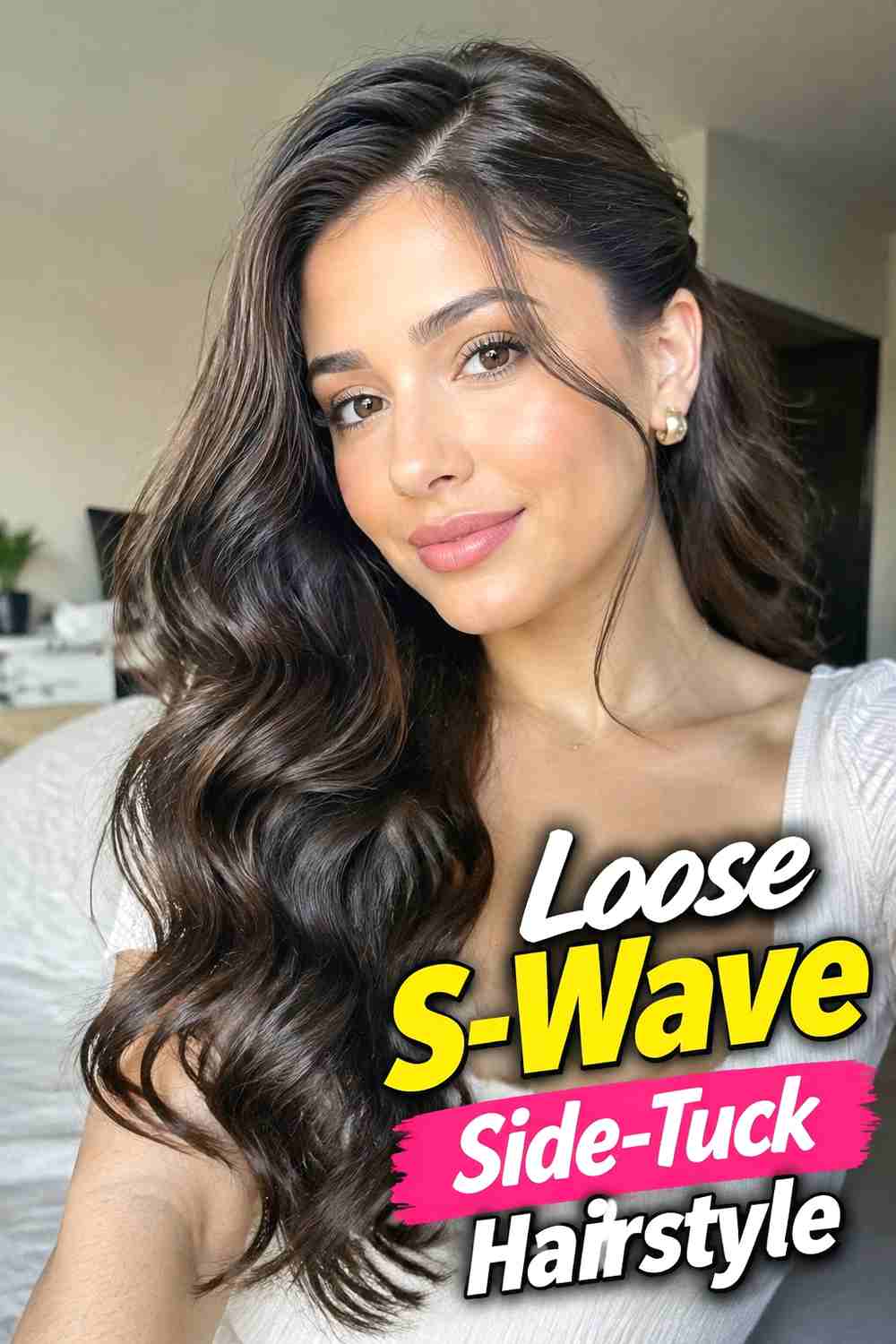
Loose S-waves make the exposed side of long hair look fluid and dimensional while the opposite section remains tucked beneath the scarf. The bends can begin around the jaw or shoulders, keeping the crown relatively smooth so the scarf does not compete with extra root volume. Broad, slightly irregular waves feel especially natural in winter styling because they retain movement even when the hair brushes against knit fabric. The tucked side should stay relaxed rather than tightly compressed. This look works well when you want visible texture without full curls, and it can be especially flattering on long layered hair because the wave pattern reveals different lengths through the exposed side.
Styling Notes
Shape broad bends through the visible side and let them cool before positioning the scarf. Avoid creating identical waves in every section.
Best For
This style suits straight or wavy long hair when you want soft movement without a voluminous blowout.
4. Deep Side Part Long Scarf Tuck Hairstyle
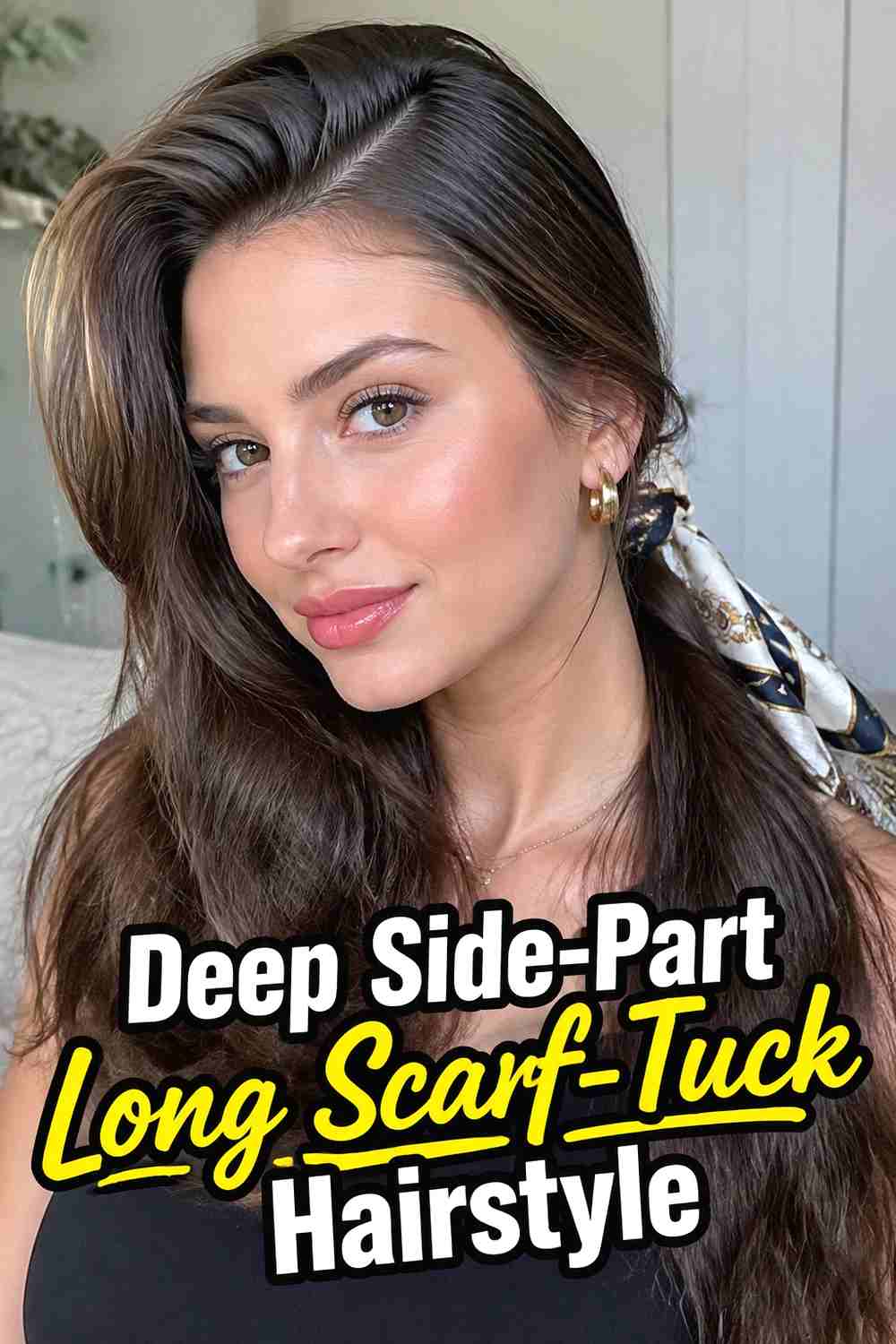
A deep side part makes the one-side scarf tuck more dramatic by creating a fuller sweep across the crown. The lighter side can be tucked almost completely beneath the knit, while the heavier section travels diagonally across the head and down over the opposite shoulder. Long hair gains natural lift from the part without needing extensive teasing, and a soft bend through the lower lengths prevents the larger section from looking too dense. This style pairs well with simple scarves because the hair itself becomes the main directional feature. If your hair is very thick, keeping part of the heavier section behind the shoulder can make the overall arrangement easier to wear.
Why It Works
The strong part adds height and direction while the scarf keeps the opposite side controlled and visually open.
Wear & Maintenance
Use flexible hold at the roots and avoid over-securing the tucked side, especially if the scarf will be adjusted often.
5. Ribbon Wave One Side Tuck Hairstyle
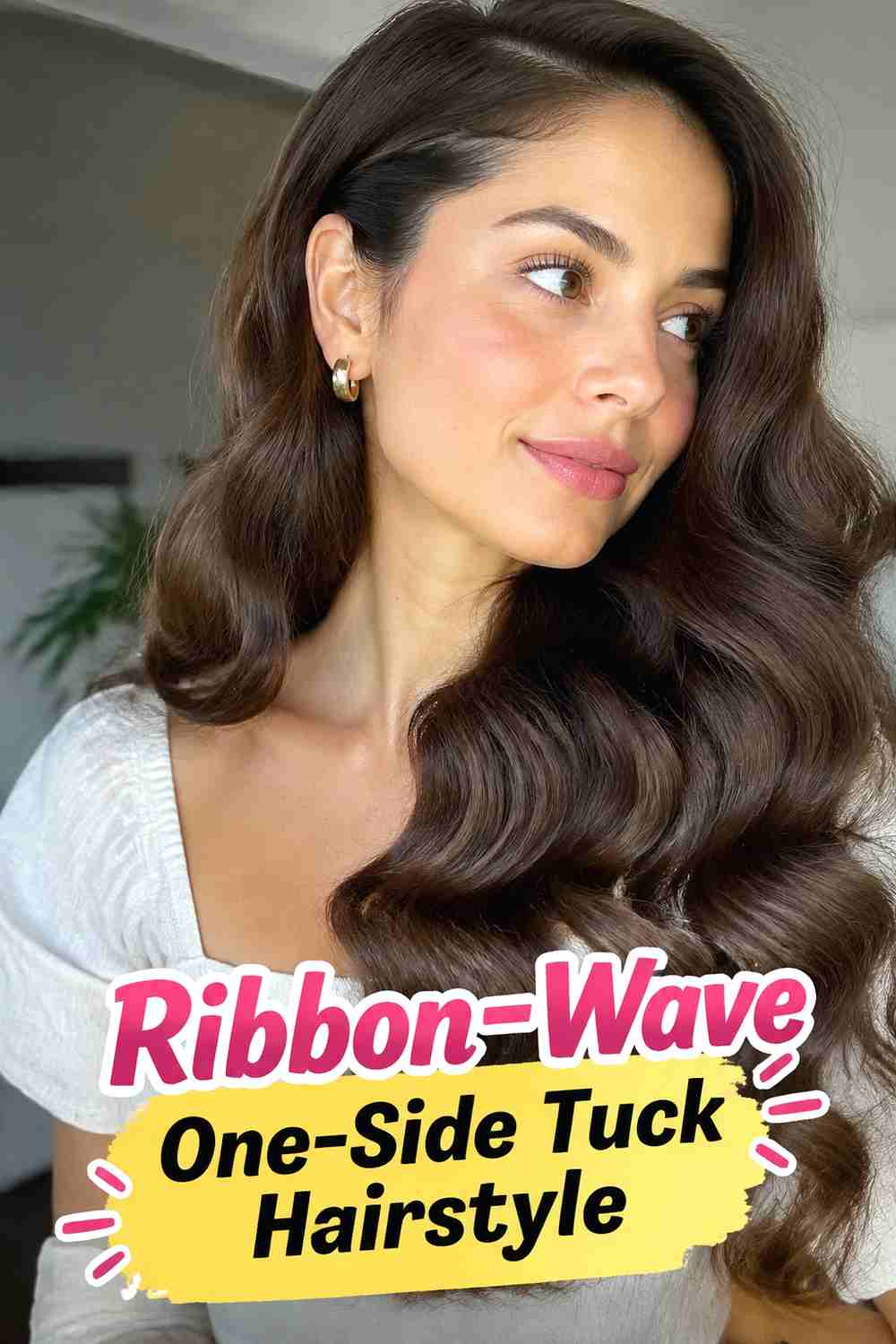
Ribbon waves create elongated curves through the exposed length while one side stays tucked beneath the scarf. The wave pattern stretches rather than coils, so the hairstyle retains a long, narrow silhouette that works well with winter layers. A smooth upper section keeps the scarf area neat, while the visible waves begin lower and travel toward the ends. This is especially attractive on very long hair because the stretched pattern has enough space to develop. The tucked side can remain simple and nearly straight, allowing the exposed section to carry most of the movement. Leaving the ends slightly relaxed also helps the texture look modern rather than overly formal.
Styling Notes
Use a large barrel and wrap the exposed sections loosely. Begin below the roots and leave some ends less curled.
Best For
Choose this look when you want noticeable texture that still preserves the impression of maximum hair length.
6. Face Framing Scarf Peek Layers Hairstyle
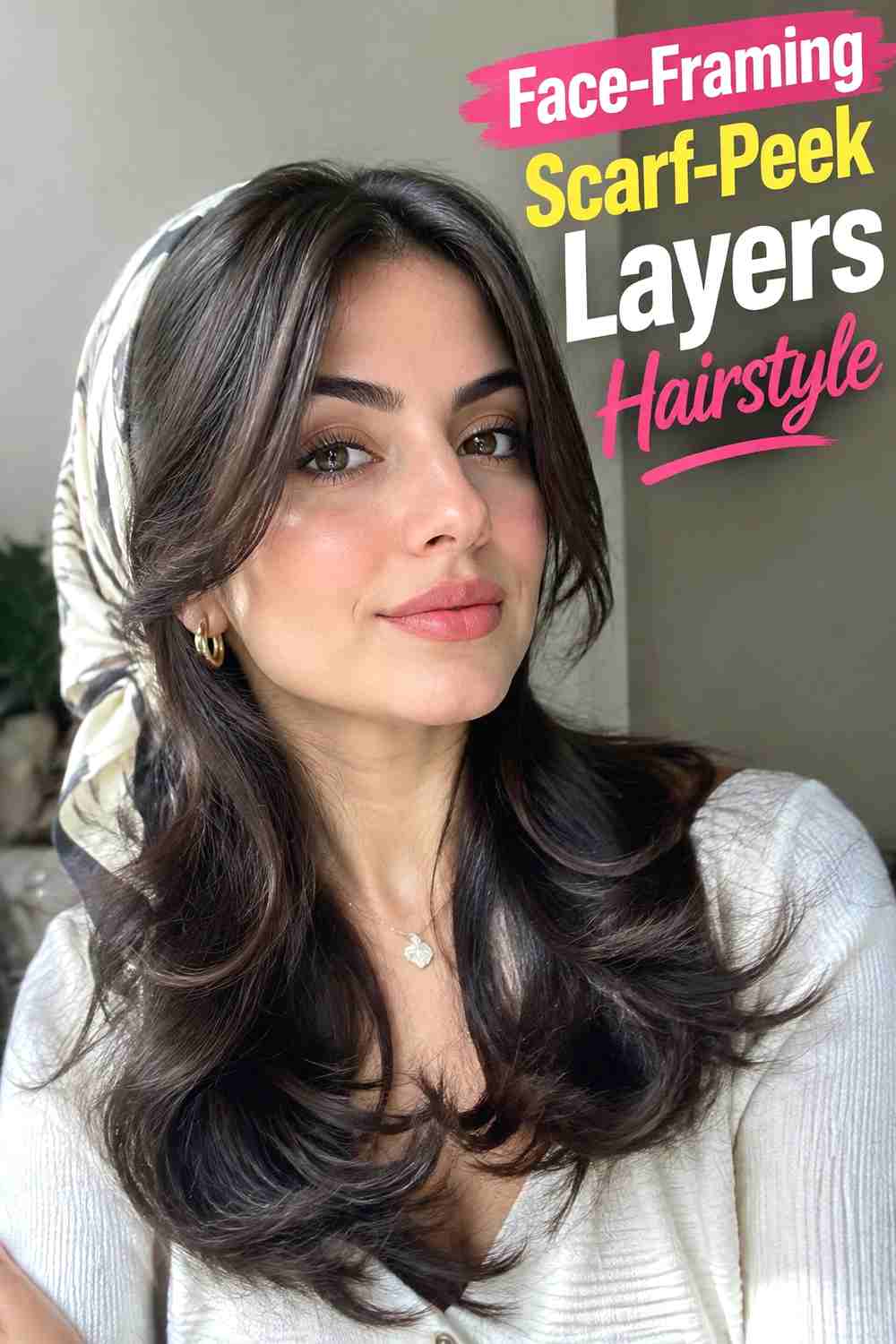
Face-framing layers stay visible around the cheekbones, jaw, or collarbone while the longer hair on one side is tucked beneath the scarf. These shorter pieces create softness around the face and prevent the scarf from becoming the dominant feature near the neckline. The opposite side can remain long and loose over the shoulder, creating a layered asymmetrical effect. This works particularly well on cuts with curtain layers or long front shaping because the visible pieces naturally separate from the lower lengths. A gentle outward bend keeps them from collapsing into the knit. The hairstyle can feel polished without requiring the entire head of hair to be waved or curled.
Hair Type & Length
Long layered hair works best, especially when the shortest front pieces are still long enough to move naturally.
Why It Works
Visible framing sections connect the face to the exposed long hair while keeping the scarf tuck light and intentional.
7. Glossy Straight One Side Tuck Hairstyle
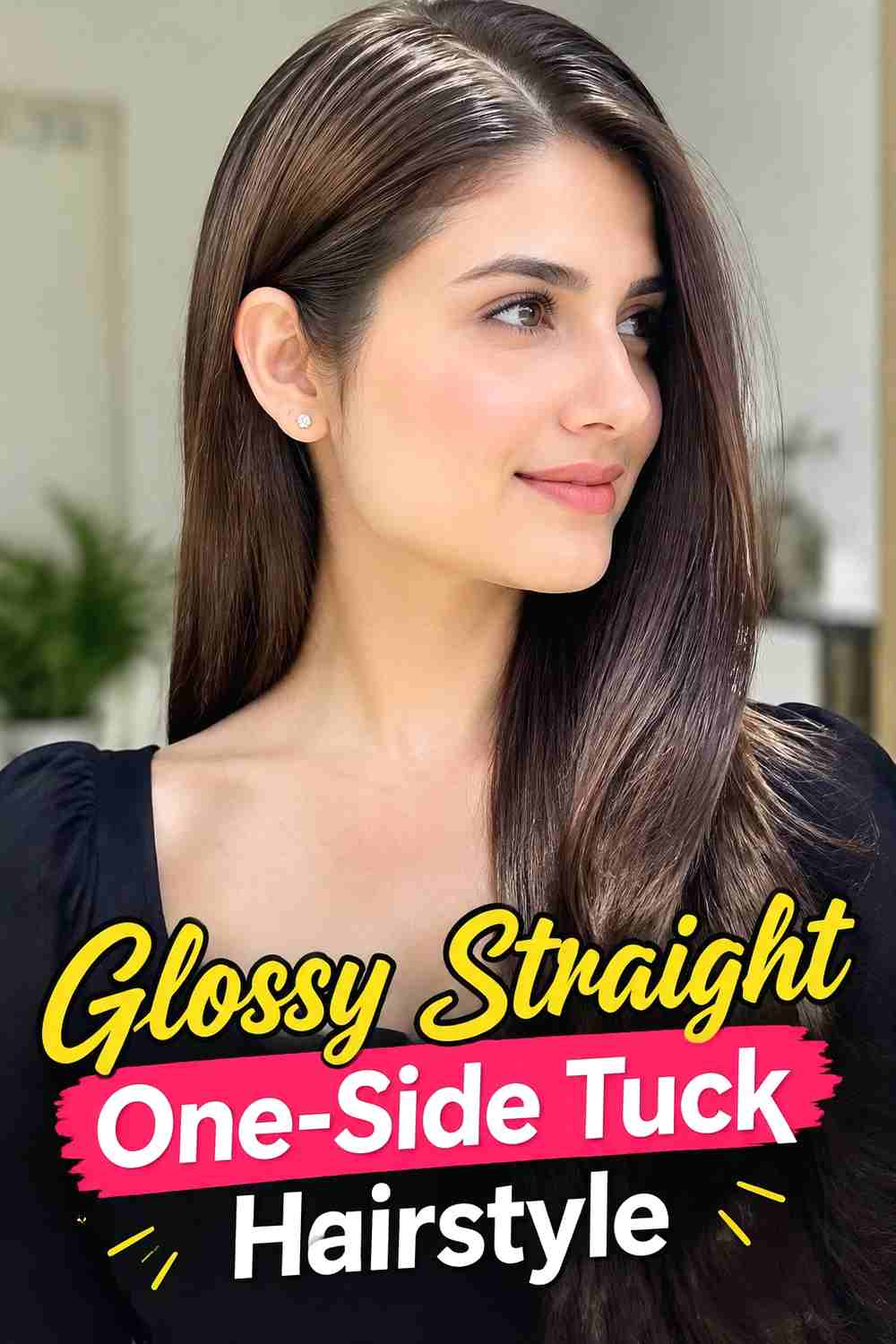
Glossy straight hair creates a striking contrast between one long exposed section and one concealed scarf-tucked side. The smooth surface makes the asymmetry clear, while the length provides drama without relying on texture or volume. A center or softly offset part can keep the crown clean, and the visible side may fall fully forward or partly behind the shoulder depending on how much hair you want over the outfit. This style looks best when the ends are neat and the shine remains natural rather than overly reflective. Because knit scarves can create static, the finish benefits from light control products that smooth flyaways without making the strands heavy.
Wear & Maintenance
Keep a small comb or brush available if static develops where the hair meets the scarf. Adjust only the visible side when needed.
Pro Tip
Let the scarf hold the tucked section rather than using excessive pins, which can make long straight hair look unnaturally fixed.
8. Airy Blowout Side Scarf Tuck Hairstyle
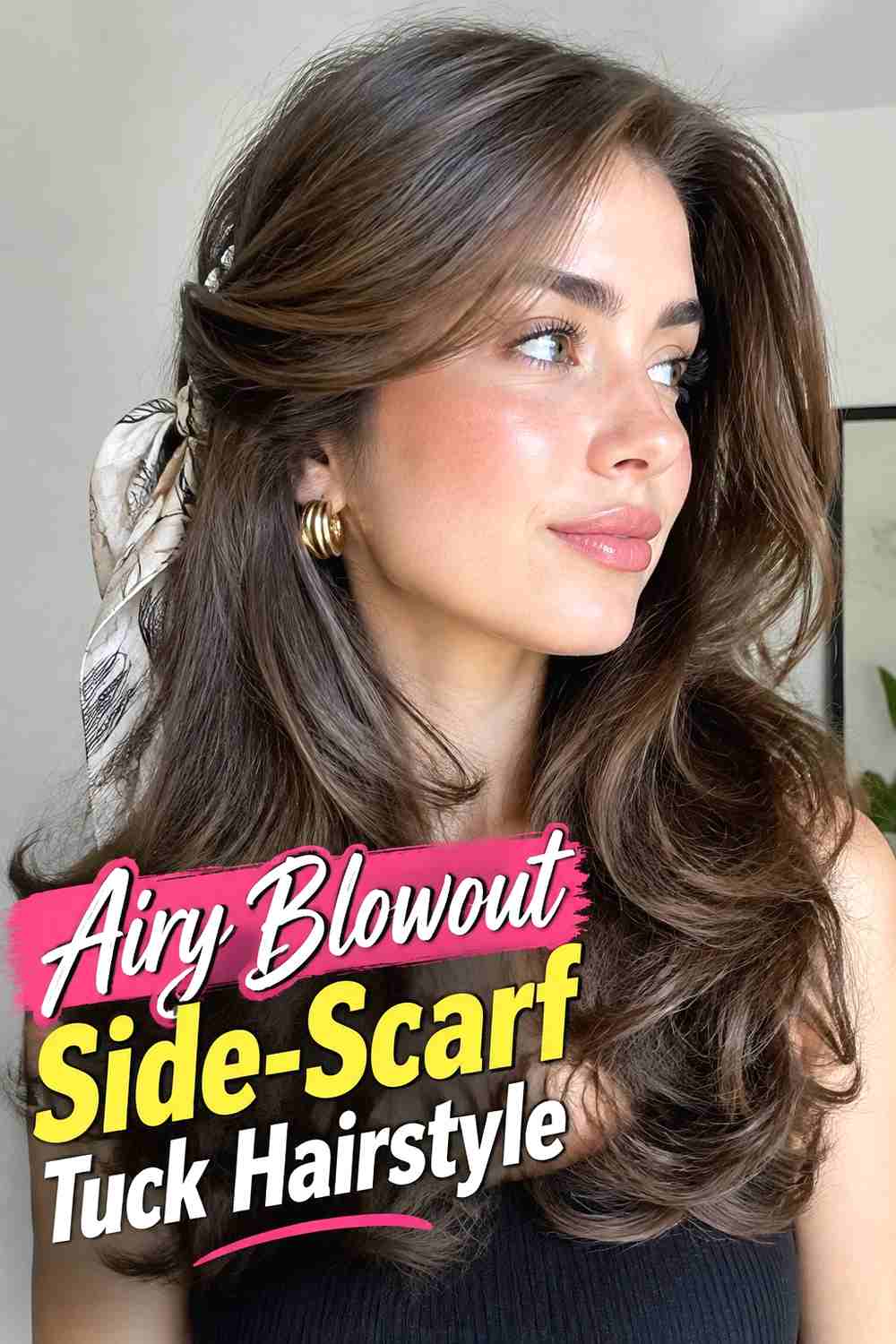
An airy blowout gives the exposed side bounce and rounded movement while the scarf contains the opposite section. The crown receives soft lift, the front pieces curve away from the face, and long layers roll into broad bends through the visible length. This creates a fuller winter look without allowing volume to build equally on both sides of the neck. The scarf tuck becomes especially useful on thick hair because it keeps the silhouette from becoming too wide. The result should stay touchable, with some separation between layers and a few natural flyaways. This style works beautifully when you want a polished coat-and-scarf outfit without committing to defined curls.
Styling Notes
Complete the blowout before arranging the scarf and let the sections cool fully. Direct the visible layers toward the open shoulder.
Best For
Medium-to-thick layered hair usually supports the airy shape most easily.
9. Brushed Out Wave Side Tuck Hairstyle
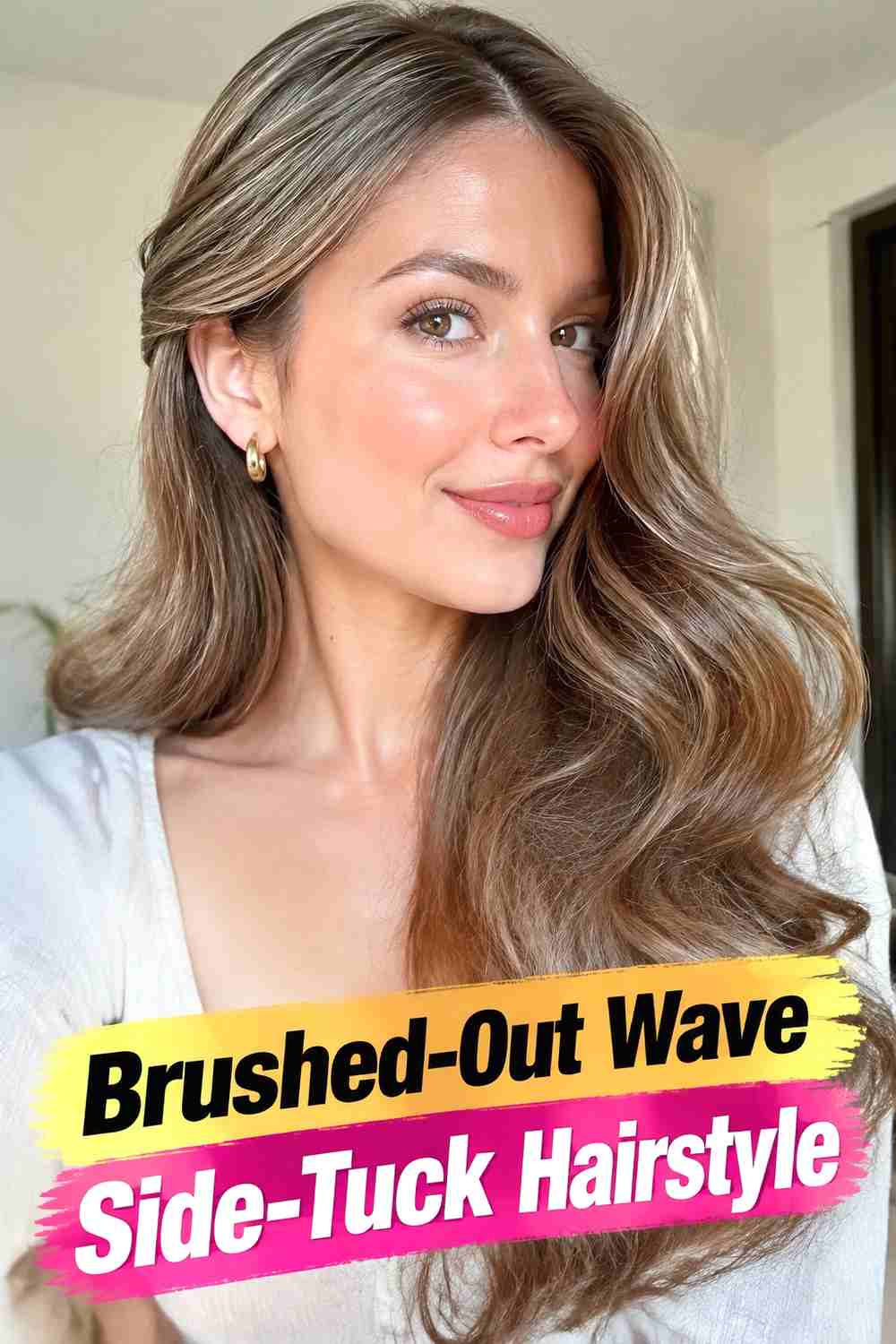
Brushed-out waves create a plush, continuous texture through the exposed side while the scarf contains the lighter section. The hair is curled first, then softly blended so the pattern becomes wide and flowing rather than separated into individual curls. This produces a polished finish that works well for dinners, seasonal gatherings, or dressier winter looks. Keeping the crown smooth prevents the hairstyle from becoming overly voluminous around the scarf. Long layers can make the wave pattern feel lighter by creating several levels through the exposed cascade. The tucked side can remain nearly straight, since only a small portion may be visible near the temple or ear.
Styling Notes
Brush only after the curls have cooled, starting at the ends and working upward until the texture becomes smooth and connected.
Wear & Maintenance
If the scarf compresses the hidden section, focus on refreshing the visible wave rather than recurling the entire hairstyle.
10. Tucked Behind Ear Scarf Drape Hairstyle
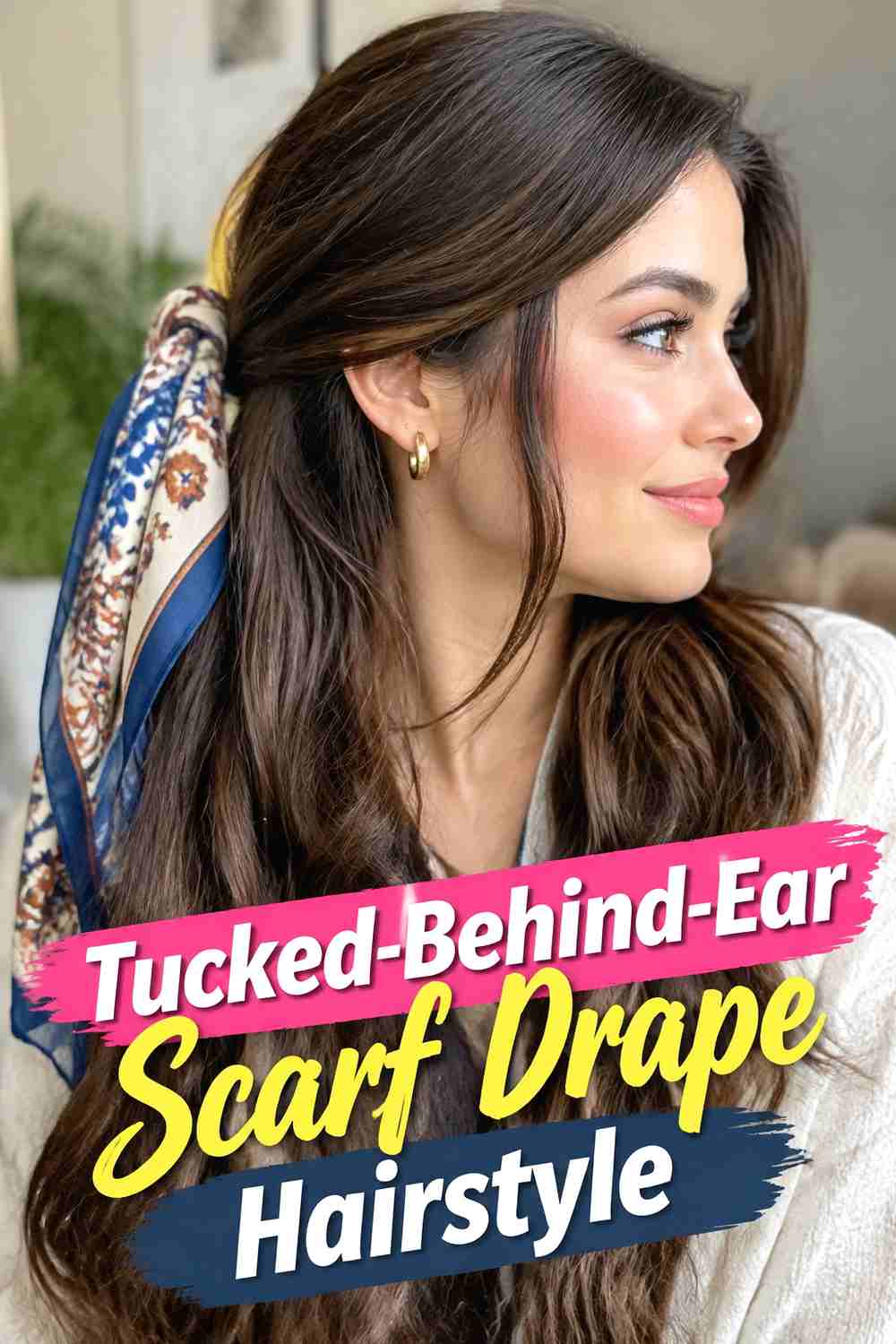
This variation combines an ear tuck with a one-side scarf tuck for an especially open, controlled silhouette. Hair on the lighter side is smoothed behind the ear before continuing beneath the scarf, while the heavier side drapes long and loose over the opposite shoulder. The ear tuck reveals more of the cheek, jaw, and scarf texture, making the asymmetry look intentional even when the exposed length is worn relatively straight. Soft waves or natural bends can be added to the draped side for movement. This style is also practical when the scarf sits high around the neck, since it keeps hair from becoming trapped between the cheek and fabric.
Styling Notes
Keep the behind-ear section narrow and secure it discreetly only if necessary. Let the draped side retain natural movement.
Why It Works
The open side provides a clean visual break while the opposite side showcases the full length of the hair.
11. Feathered End One Side Tuck Hairstyle
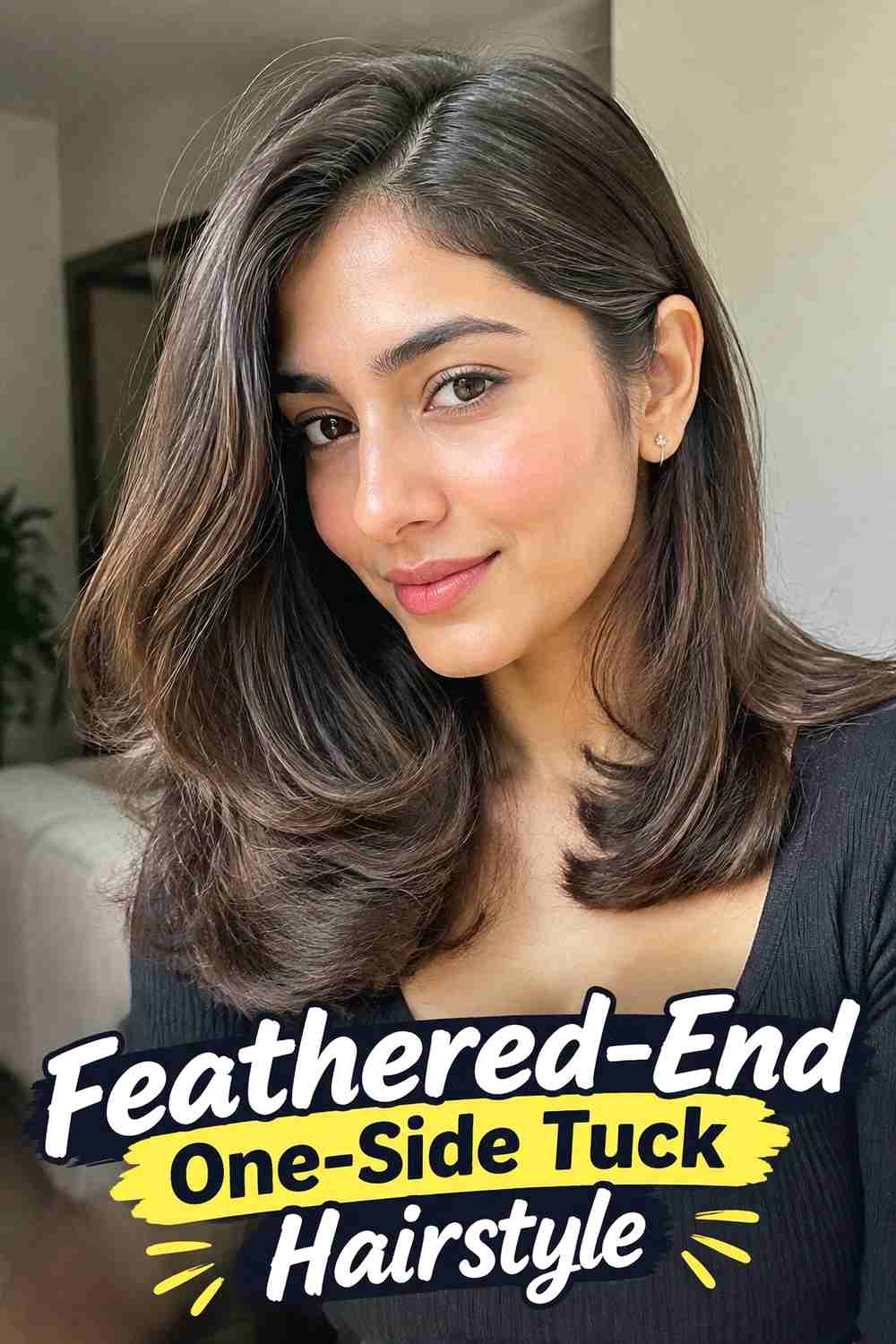
Feathered ends give the exposed side of long hair a lighter perimeter while the opposite section stays tucked beneath the scarf. Most of the upper length remains smooth, then longer layers begin curving outward as they approach the shoulders and chest. This creates separation against coats, sweaters, and knit accessories without turning the hairstyle into full waves. The feathering should look broad and soft rather than sharply flipped, especially on very long hair. Medium and thick hair generally show the layered ends most clearly, while fine hair may look fuller with fewer feathered sections. The scarf helps control some of the overall volume, making the lighter ends more noticeable.
Styling Notes
Use a large round brush on the visible lower layers and guide them outward gently. Vary the direction slightly for a natural finish.
Best For
This option is useful when you want movement mainly through the ends rather than around the roots or face.
12. Natural Texture Side Scarf Tuck Hairstyle
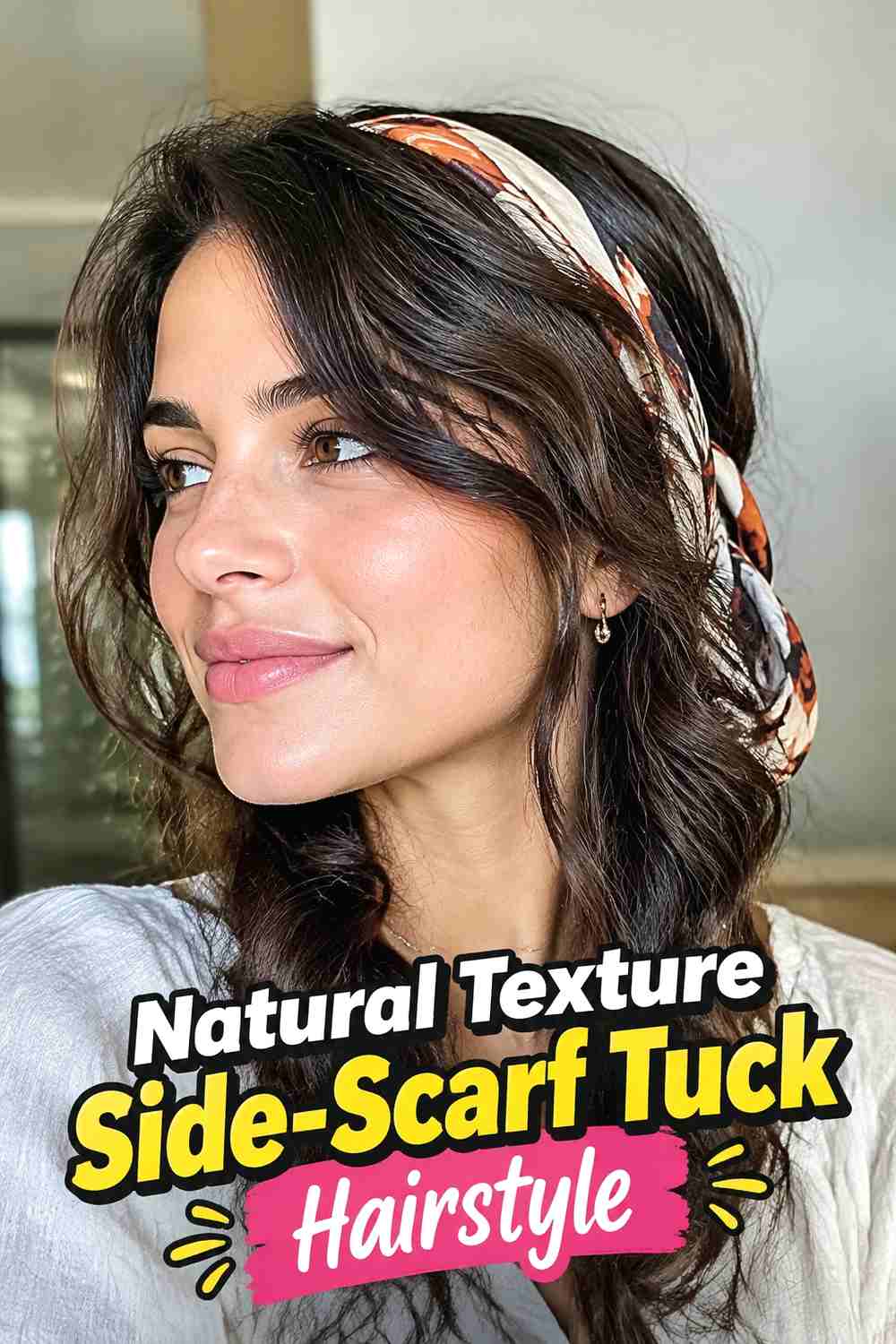
Natural waves, curls, or coils can be arranged into a one-side scarf tuck without flattening the existing texture. The goal is to guide part of the hair beneath the scarf while allowing the opposite side to retain its natural volume and pattern. Depending on density, it may be more comfortable to tuck only the back or lower section rather than forcing half the hairstyle into the knit. A few curls or waves can remain free near the tucked side to soften the transition. This approach works best when the scarf placement follows the hair’s natural movement instead of trying to create perfect symmetry or uniform curl direction.
Hair Type & Length
Long wavy, curly, and coily textures can all use this placement. Adjust how much hair is tucked according to density and shrinkage.
Pro Tip
Arrange the scarf after the texture has settled so you can preserve the most defined visible sections.
13. Low Bend Long Side Tuck Hairstyle
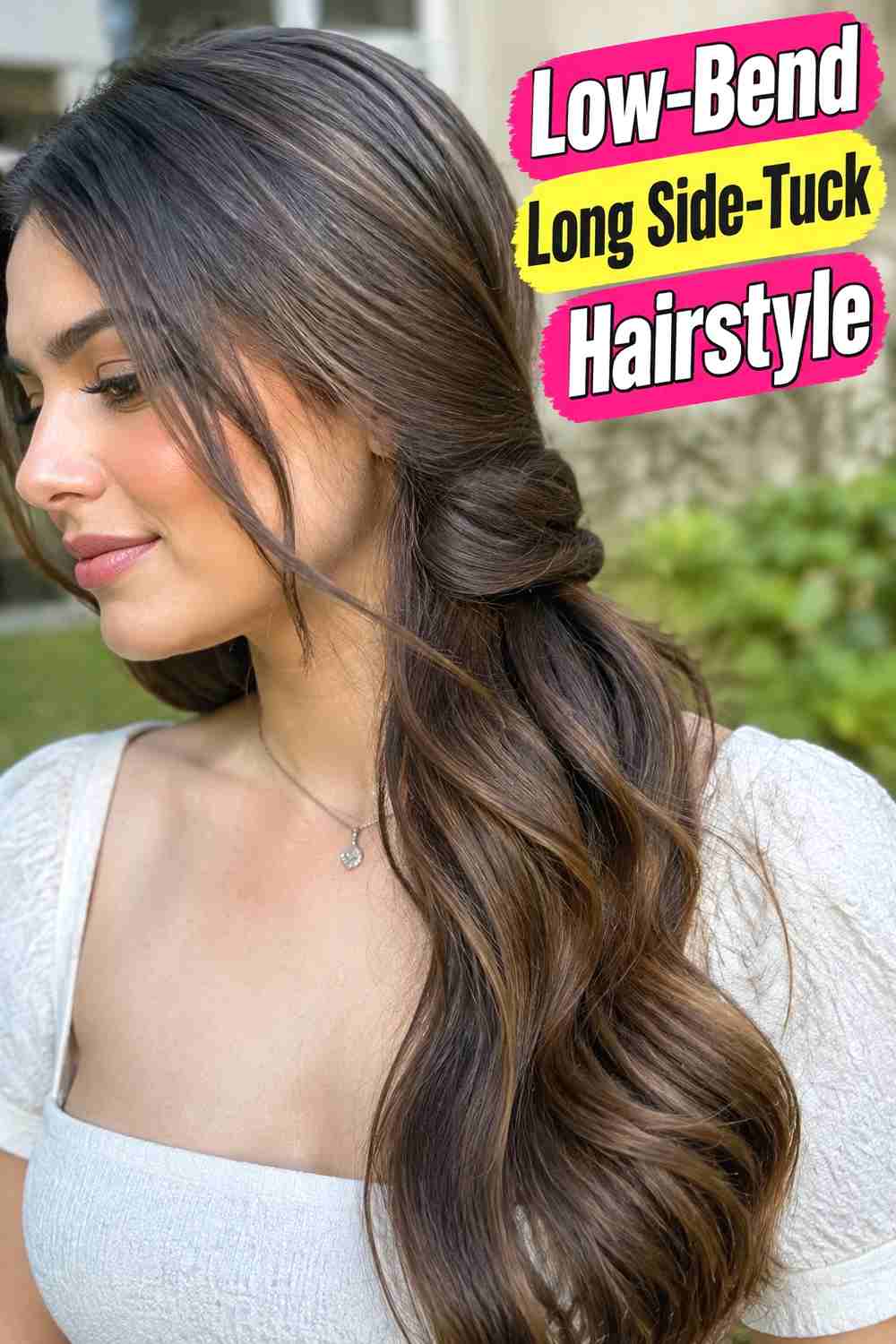
A low-bend side tuck keeps the crown and upper lengths sleek while introducing broad curves farther down the exposed side. The opposite section disappears beneath the scarf, leaving the low bends clearly visible over one shoulder. This is a practical choice when you want a styled finish that remains easy to manage beneath winter accessories. The bends can begin around chest level on very long hair, preserving the smooth line near the face and neck. Straight and gently wavy textures adapt particularly well to the look. Keeping the ends slightly relaxed helps the movement feel modern and prevents the lower section from becoming too structured.
Best For
Choose this style for long straight or softly wavy hair when you prefer low-volume movement and a neat scarf area.
Styling Notes
Shape only the lower visible section with a large barrel, round brush, or gentle straightener bend.
14. Soft Curtain Layer Scarf Tuck Hairstyle
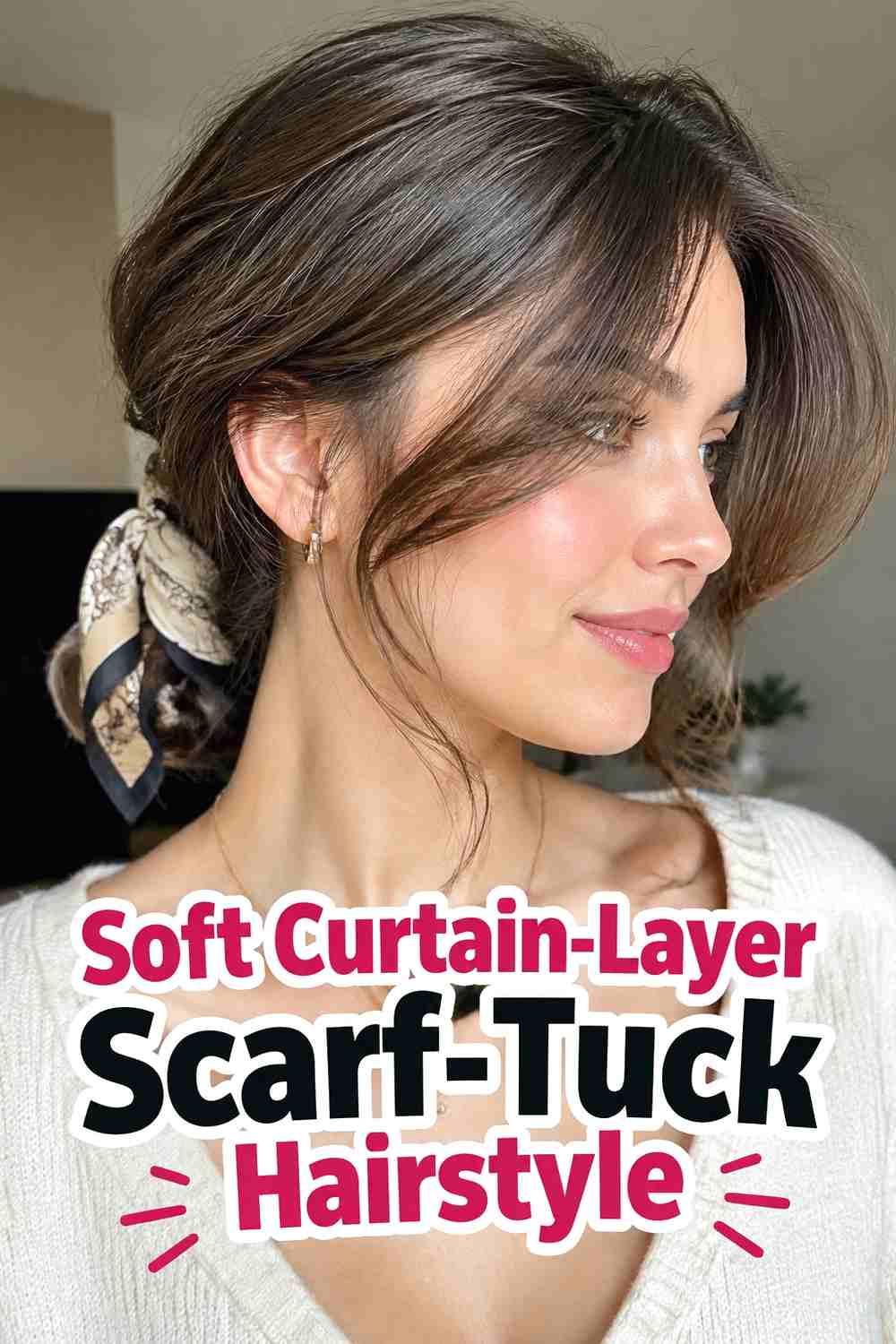
Soft curtain layers create movement around the face while one side of the longer hair is tucked beneath the scarf. The front sections part gently and sweep toward the cheekbones or jaw before blending into the exposed and tucked lengths. On the open side, the curtain layer can curve outward and join the longer drape; on the scarf side, a smaller piece can remain visible to keep the tuck from looking too severe. This style feels especially balanced with chunky knit scarves because the airy front sections create space around the face. The layers can be styled with a round brush or allowed to follow a natural soft wave.
Styling Notes
Dry the front pieces forward first, then redirect them outward before arranging the scarf. Keep the tuck loose enough that the layers remain visible.
Why It Works
The curtain pieces soften the asymmetry and keep the scarf from enclosing the face too heavily.
15. Ends Peeking Side Scarf Tuck Hairstyle
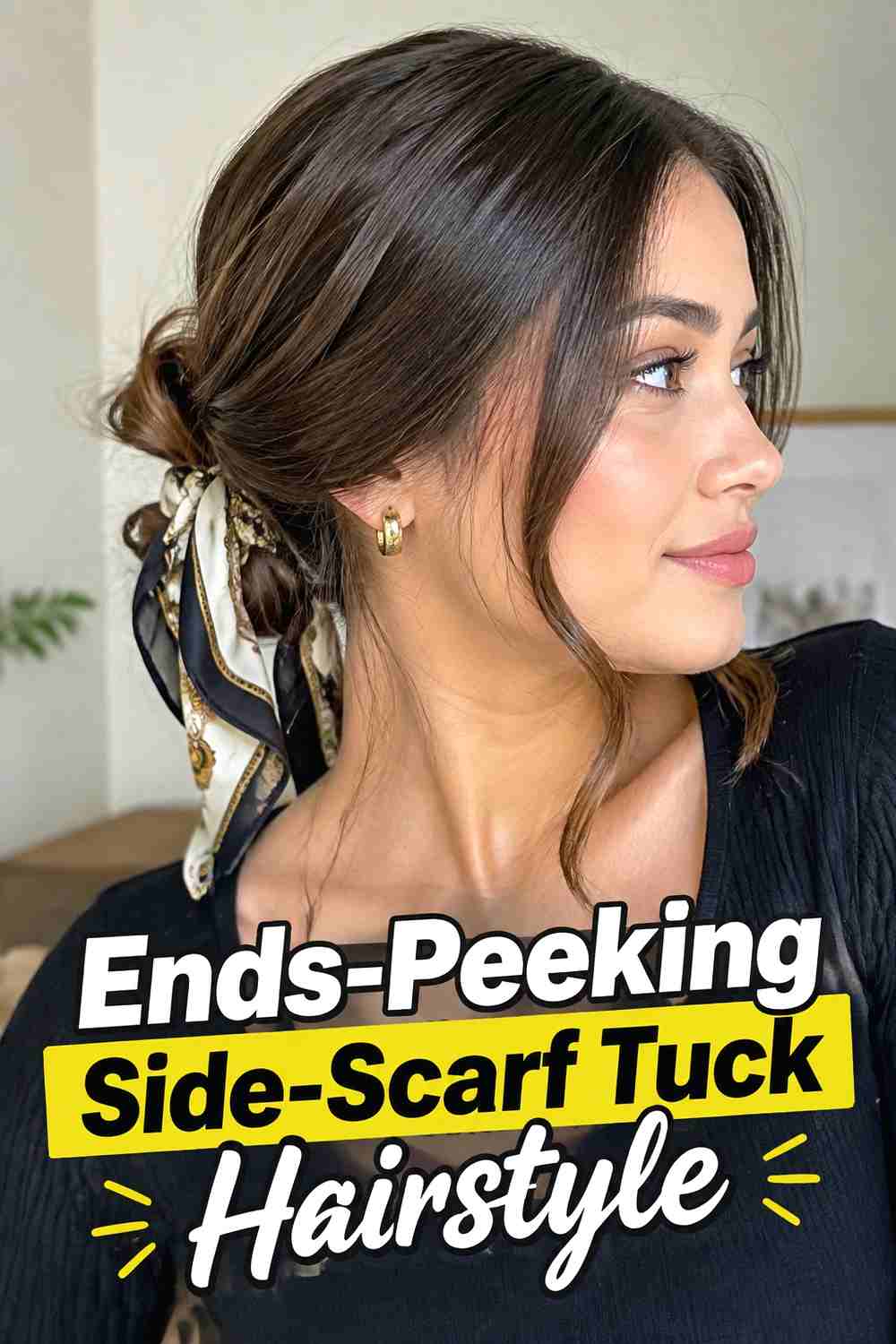
This relaxed variation allows a few long ends to emerge from beneath the tucked side of the scarf. Most of that section stays hidden, but selected strands peek out near the shoulder or chest with a soft wave, bend, or straight finish. The opposite side remains fuller and more visible, maintaining the clear one-side emphasis. This works especially well when the scarf is thick enough to hold the hair naturally but not so tight that it traps every strand. The slightly imperfect placement makes the look feel casual and believable. Long layered hair is particularly suitable because shorter pieces naturally escape as the scarf shifts during wear.
Wear & Maintenance
Let the visible ends move rather than constantly retucking them. Their irregular placement is part of the relaxed effect.
Pro Tip
Pull out only a few pieces after positioning the scarf instead of trying to arrange every exposed end in advance.
16. Low Volume One Side Scarf Hairstyle
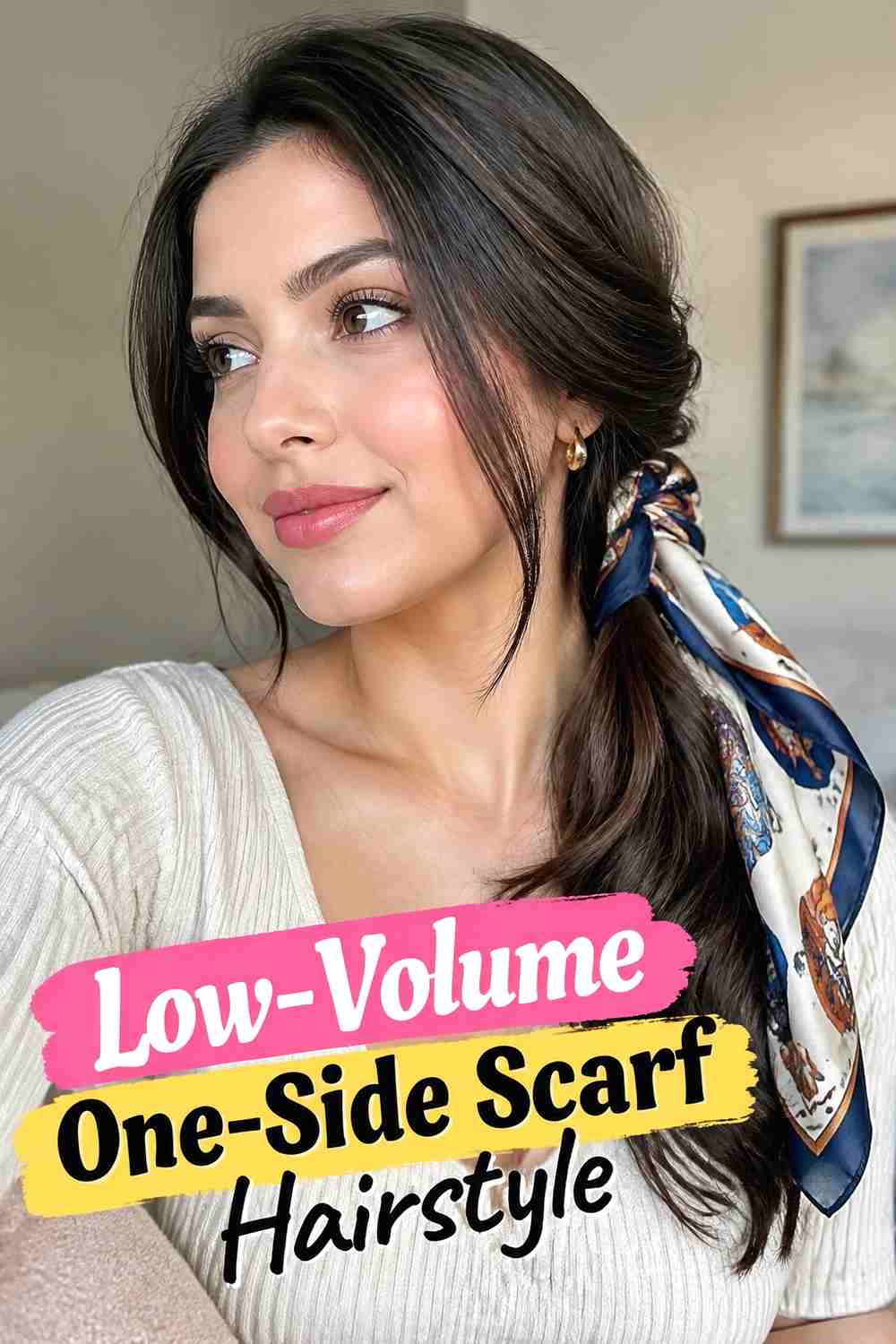
A low-volume one-side scarf style keeps the roots close to their natural position while directing most visible length toward one shoulder. The opposite side is loosely tucked beneath the scarf, creating asymmetry without dramatic height or wave definition. Gentle bends through the ends can prevent the exposed section from appearing too flat, but the overall effect remains calm and understated. This is particularly useful for everyday winter dressing when the scarf and outerwear already provide plenty of texture and volume. Fine-to-medium hair often suits the look naturally, while thicker hair may need a smaller tucked section to keep the scarf comfortable.
Best For
This style works well for commuting, casual outings, and situations where you want long hair down without elaborate styling.
Wear & Maintenance
Use minimal root product and flexible hold through the exposed lengths so the hair remains easy to rearrange throughout the day.
17. Layered One Shoulder Scarf Tuck Hairstyle
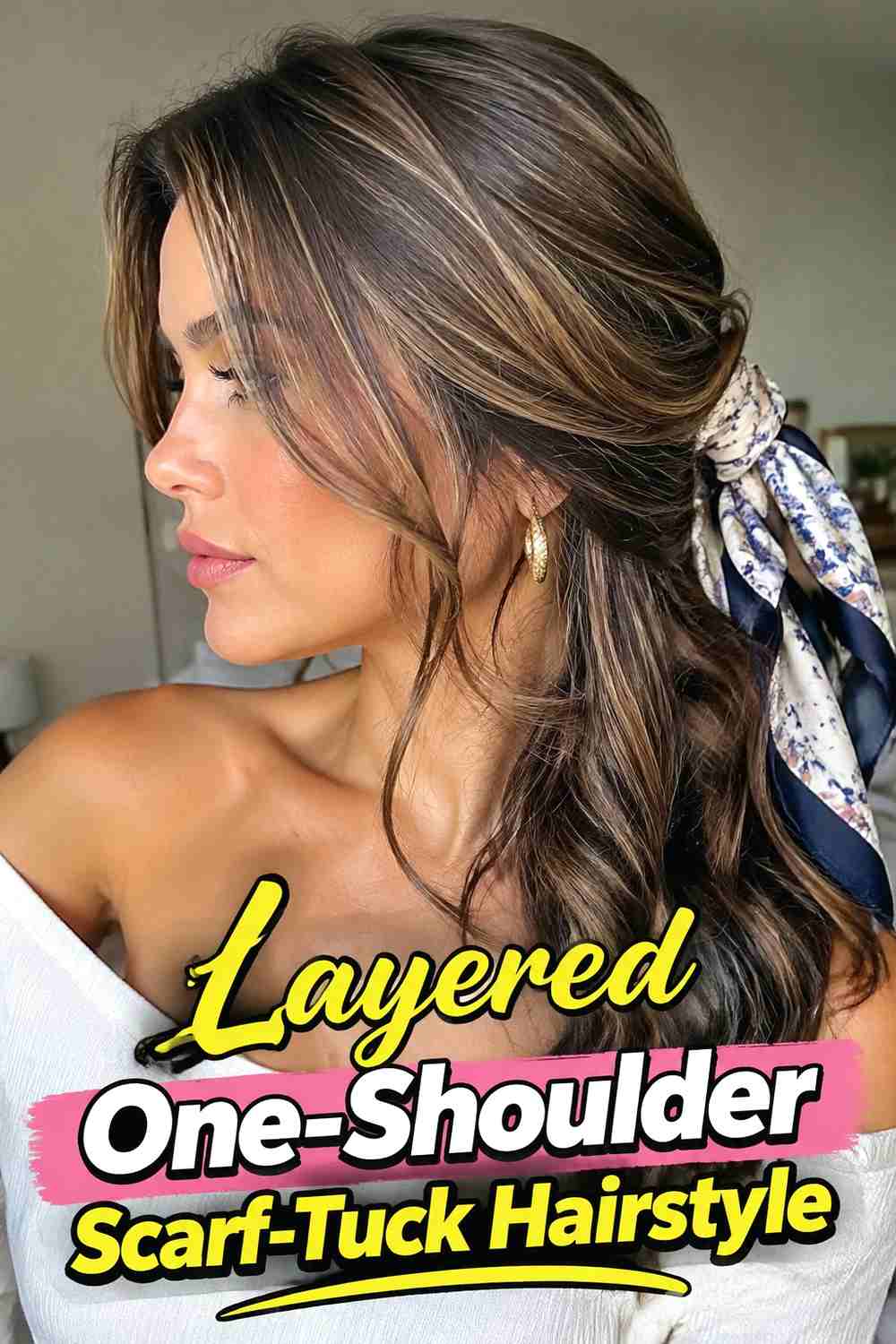
Long layers create a cascading one-shoulder shape while the scarf contains the opposite side. Shorter layers sit higher near the face and shoulders, while the longest sections continue down the chest, producing visible depth without requiring tight curls. A soft blowout or loose wave can emphasize the staggered lengths, especially on medium-to-thick hair. This placement works well when you want the exposed side to feel full and styled while keeping the scarf side clean. The layers also reduce the sense of heaviness that can occur when very long hair is moved entirely over one shoulder.
Hair Type & Length
Long layered hair with medium or thick density shows the cascading structure most clearly. Fine hair may benefit from fewer internal layers.
Why It Works
The staggered lengths make the one-side drape feel lighter while the scarf keeps the opposite side visually controlled.
18. Polished C Bend Side Tuck Hairstyle
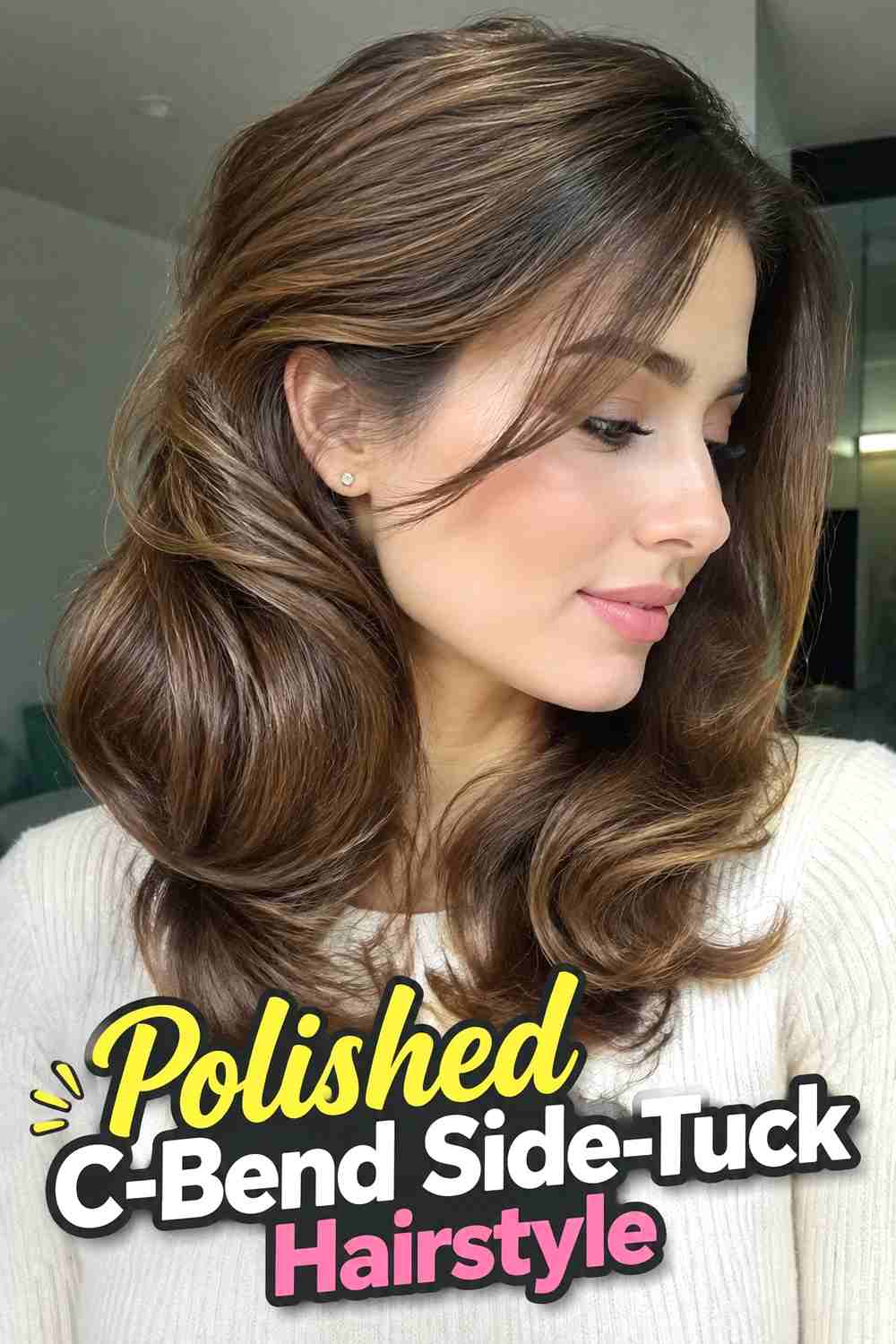
A polished C-bend gives the exposed length one broad, elegant curve while the opposite section stays tucked beneath the scarf. Most of the hair remains smooth, with the bend appearing through the lower third or near the ends. This restrained movement pairs especially well with refined winter outfits because it adds shape without creating full waves or curls. A soft side part can reinforce the asymmetry, while natural shine keeps the visible section looking polished. The scarf tuck prevents the hairstyle from feeling too symmetrical and also helps long hair sit comfortably around bulky outerwear. The bend can turn inward for a classic finish or slightly outward for more separation.
Styling Notes
Use a large round brush or gentle straightener rotation on the lower visible section. Keep the curve broad and smooth rather than sharply flipped.
Best For
Straight and softly wavy long hair tends to show the clean C-shape most clearly.
How to Choose the Right Look
Start with scarf thickness and comfort. A lightweight knit scarf can hold a larger section of hair without feeling crowded, while a chunky scarf may be more comfortable with only the back or lower portion tucked. Very thick or highly textured hair usually benefits from a partial tuck rather than compressing one entire side.
Next, decide how much asymmetry you want. A deep side part, one-shoulder layered drape, or brushed-out wave creates a stronger directional effect. Low-volume styles, soft side parts, and simple C-bends feel subtler and work well for everyday wear.
Texture also matters. Straight hair highlights the clean difference between the exposed and concealed sides, while S-waves, ribbon waves, and blowouts create more movement. Curly and coily hair can use natural volume as the main feature while the scarf tuck provides control on the opposite side.
Consider face framing as well. Curtain layers, cheekbone pieces, and ear tucks can prevent a large scarf from making the neckline feel crowded. Finally, think about how often you will remove or adjust the scarf. Softer, less structured finishes usually recover more easily after compression than highly polished waves.
Final Thoughts
One-side knit-scarf tucking is an easy way to make long hair feel intentionally styled while keeping winter layers comfortable. Sleek lengths create a clean finish, waves and blowouts add movement, and face-framing layers keep the scarf area light. Choose the amount of tuck according to your density, texture, and scarf thickness, and leave enough looseness for the hair to move naturally throughout the day.
FAQs
1. Which side should I tuck my hair under the scarf?
Use the side that feels most comfortable with your natural part, or tuck the lighter side if you want the fuller section of hair to remain visible.
2. Can thick long hair work with a one-side scarf tuck?
Yes. A partial tuck is often more comfortable, with only the back or lower section placed beneath the scarf while the rest stays free.
3. How do I keep the scarf from flattening my hair?
Let styled waves or bends cool fully before putting on the scarf, and keep the tuck loose rather than pressing the hair tightly against the neck.
4. Which one-side scarf style is easiest for everyday wear?
Low-volume, sleek, low-bend, and tucked-behind-ear styles are practical because they depend more on placement than detailed curling.
5. Can naturally curly or wavy hair use this tuck?
Yes. Preserve the natural texture on the exposed side and adjust how much hair goes beneath the scarf according to density and comfort.
Save your favorite one-side scarf tuck, share these long-hair winter ideas, and explore more cold-weather hairstyle inspiration for cozy layered outfits.