12 70s Curtain Bangs Hairstyle Ideas
Big feathered movement, center-parted fringe, and softly flipped layers give 70s curtain bangs their unmistakable mix of volume, movement, and easy glamour.
The classic 70s curtain-bang shape opens through the center and sweeps outward, often connecting into feathered face-framing layers. The overall effect can range from a dramatic blowout with strong crown volume to a lighter, wispy interpretation that keeps the retro influence without requiring a full vintage set.
When choosing a version, compare your bang length, natural texture, density, layering, and willingness to style the front regularly. Longer pieces are easier to blend and grow out, while shorter sections create a more obvious retro frame. Good results still depend on believable movement, natural strand separation, and a shape that works with your actual haircut.
Quick List
- Classic 70s Feathered Curtain Bangs Hairstyle
- Farrah Inspired Curtain Bangs Hairstyle
- Voluminous Blowout Curtain Bangs Hairstyle
- Long Layered 70s Curtain Bangs Hairstyle
- Soft Shag Curtain Bangs Hairstyle
- Retro Flip Curtain Bangs Hairstyle
- Wispy 70s Curtain Bangs Hairstyle
- Center Part Feathered Curtain Bangs Hairstyle
- Shoulder Length 70s Curtain Bangs Hairstyle
- Wavy 70s Curtain Bangs Hairstyle
- Curly 70s Curtain Bangs Hairstyle
- Glossy Modern 70s Curtain Bangs Hairstyle
1. Classic 70s Feathered Curtain Bangs Hairstyle
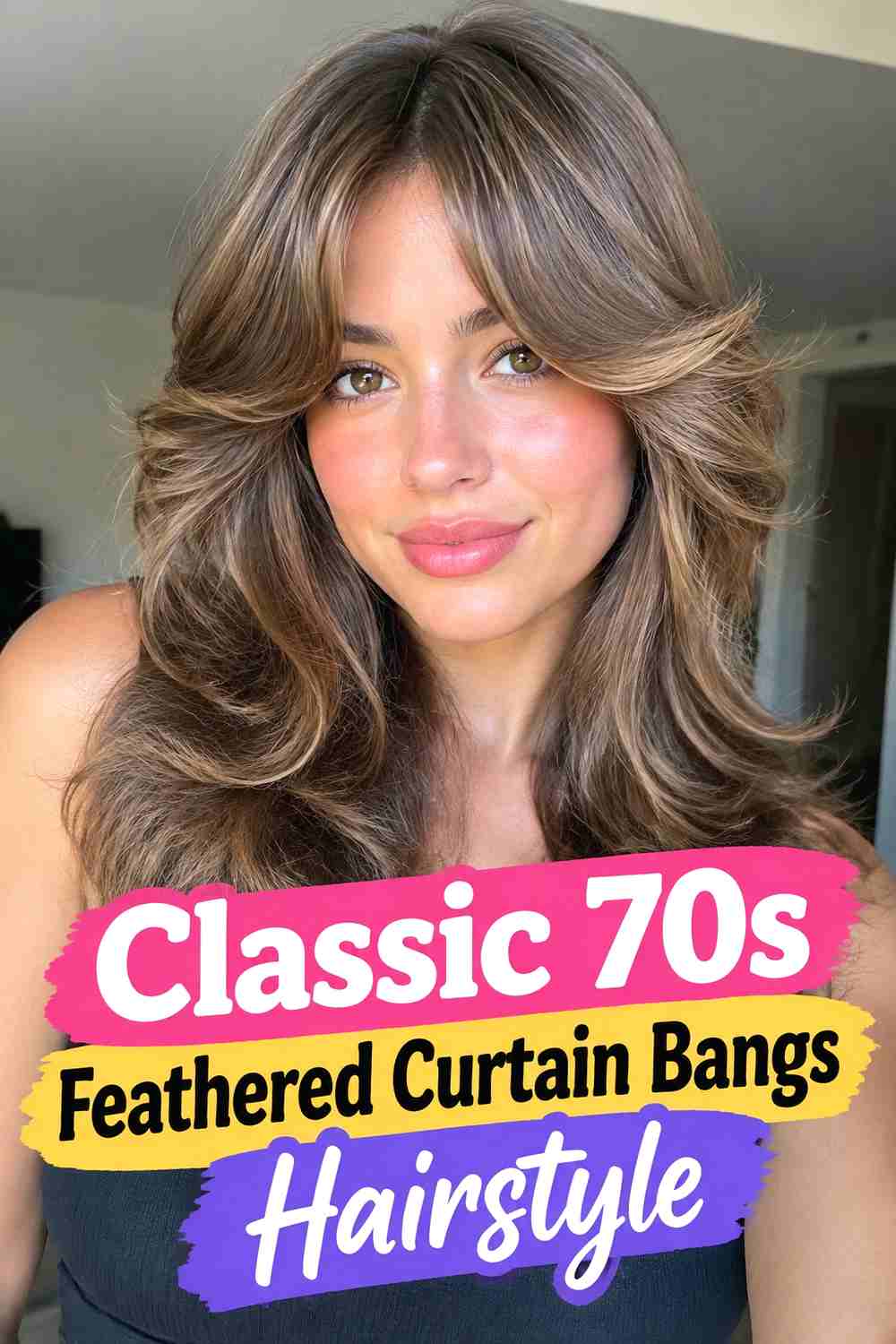
The Classic 70s Feathered Curtain Bangs Hairstyle uses a center opening, visible root lift, and outward-sweeping front sections that blend directly into feathered layers. The bangs should feel airy rather than heavy, with the shortest pieces framing the upper cheeks before longer sections flow toward the jaw. Medium and long hair offer enough space for the feathering to continue naturally through the sides. A rounded blowout makes the retro direction clearer, but the finished shape should still move freely instead of looking heavily set. Keep a little irregularity between sections so the hairstyle feels wearable today rather than overly costume-like. Natural shine and separated ends help the layered movement remain visible.
Styling Notes
Direct the front sections away from the face with a round brush, then let them cool before gently separating the feathered layers.
Best For
Choose this look if you want a recognizable 70s silhouette with balanced volume and a classic center-parted fringe.
2. Farrah Inspired Curtain Bangs Hairstyle
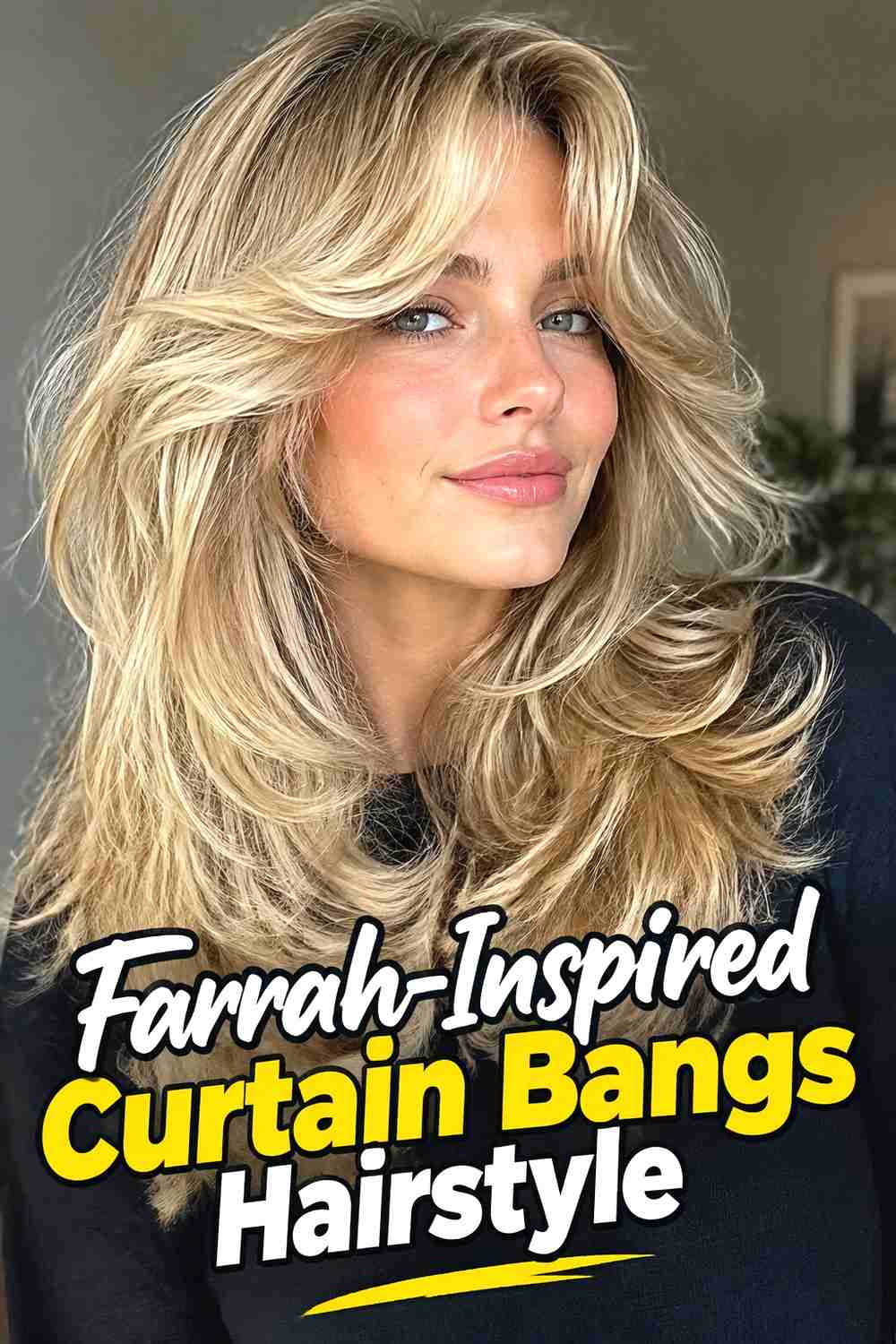
The Farrah-Inspired Curtain Bangs Hairstyle leans into dramatic outward movement around the cheeks and temples, with the surrounding layers continuing the same feathered direction. The curtain pieces lift away from the forehead before curving back, creating a broad open frame around the face. Long or medium-long layered hair works especially well because each section can fall at a different level, giving the style its characteristic cascading effect. Volume through the crown supports the front, but the hair should not feel stiff or over-teased. The ends can turn outward more noticeably than in a modern blowout, yet keeping some natural variation prevents the finish from looking too theatrical.
Hair Type & Length
Medium-long to long hair with clear face-framing layers creates the easiest foundation for this fuller feathered shape.
Pro Tip
Style the shortest front layers first and use them as a guide for the direction of the longer sections.
3. Voluminous Blowout Curtain Bangs Hairstyle
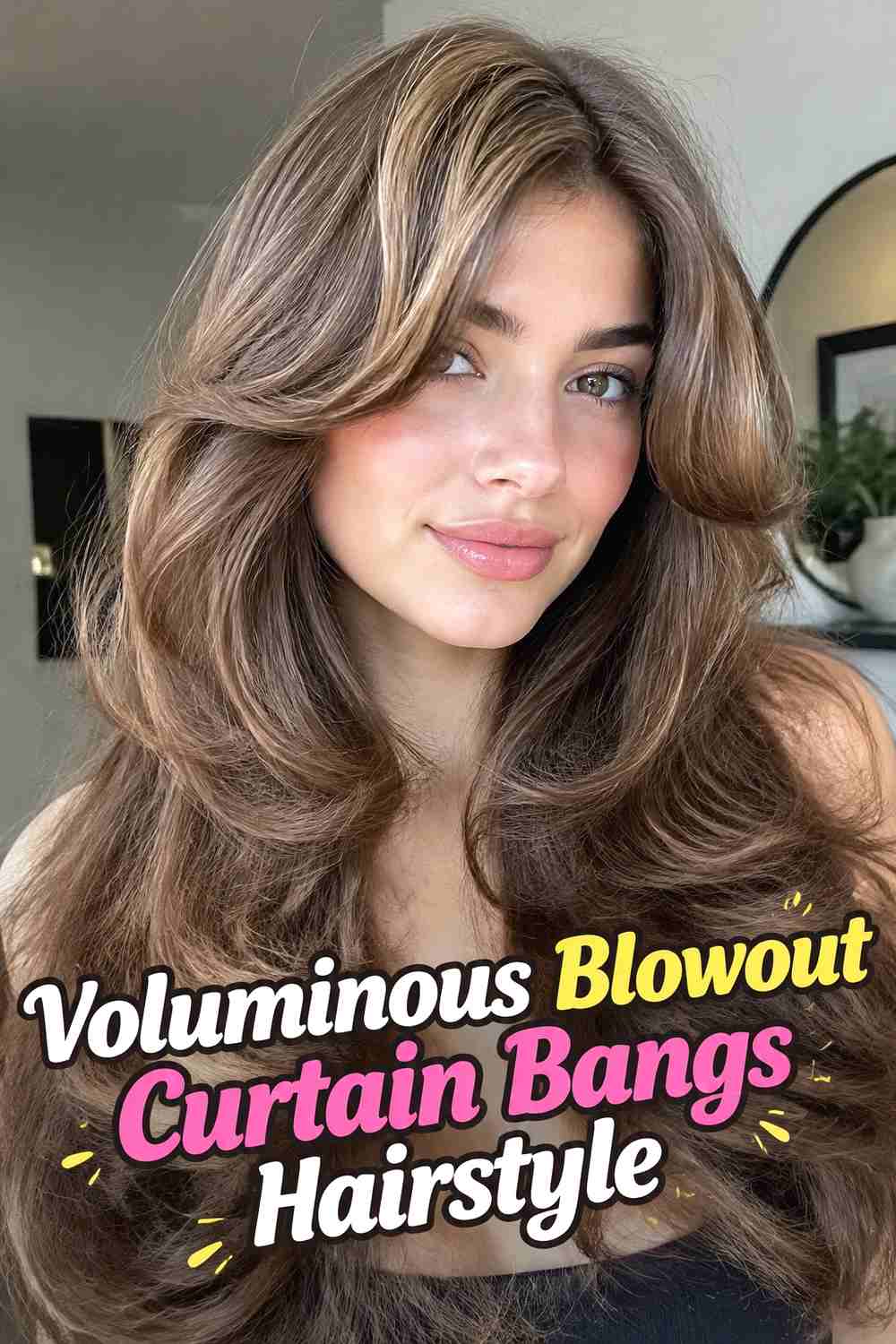
The Voluminous Blowout Curtain Bangs Hairstyle combines a lifted fringe with full-bodied movement through the rest of the hair. The bangs rise softly at the roots, open through the center, and curve away from the forehead before melting into rounded side layers. Unlike a sharply feathered finish, this version keeps the movement broader and smoother, giving the 70s influence a plush blowout effect. Medium to long hair with some layering holds the shape most naturally. The crown should have enough lift to balance the fringe without turning into an exaggerated bump. Keep the ends bouncy and flexible, allowing sections to overlap naturally instead of arranging every layer into the same perfect curve.
Styling Notes
Work with large round-brush sections through the main lengths and slightly smaller sections around the face for stronger definition.
Wear & Maintenance
Refresh the roots and curtain pieces when needed rather than rebuilding the entire blowout each time volume softens.
4. Long Layered 70s Curtain Bangs Hairstyle
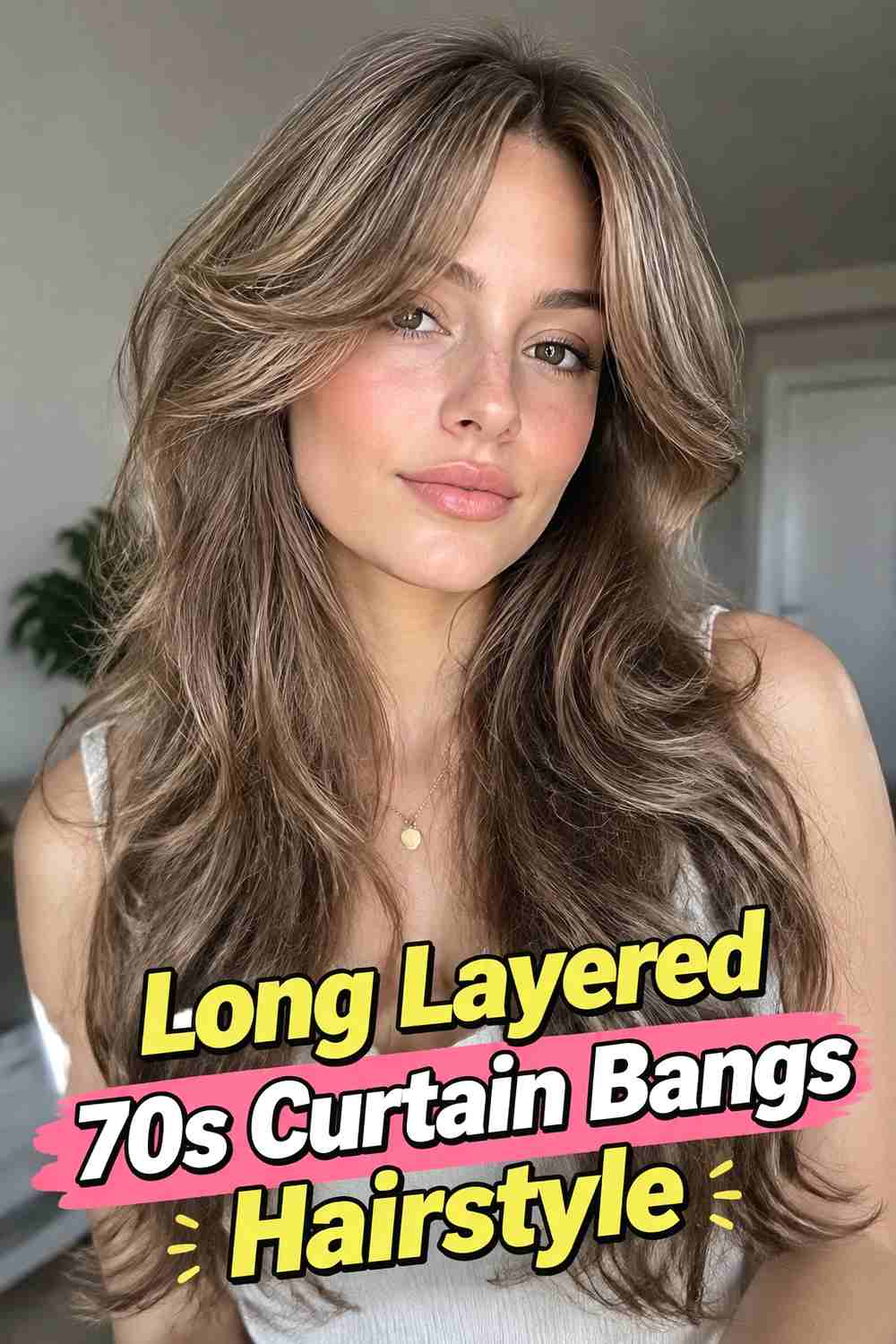
The Long Layered 70s Curtain Bangs Hairstyle blends a swooping fringe into long cascading layers, giving plenty of movement without sacrificing overall length. The bangs usually begin around the cheekbones, opening from the center and flowing into layers that continue toward the jaw, shoulders, and lower lengths. This gradual transition creates the feathered feeling associated with 70s hair while keeping the haircut versatile enough for everyday styling. Straight hair can show the layering clearly, while a blowout or soft waves amplify the retro effect. The key is maintaining enough density through the ends so the long layers still look healthy and substantial rather than thin or overly shredded.
Why It Works
The extended layers carry the curtain shape through the entire haircut, making the fringe feel integrated instead of added on.
Best For
This is ideal if you want retro face framing while keeping medium-long or long hair as the main feature.
5. Soft Shag Curtain Bangs Hairstyle
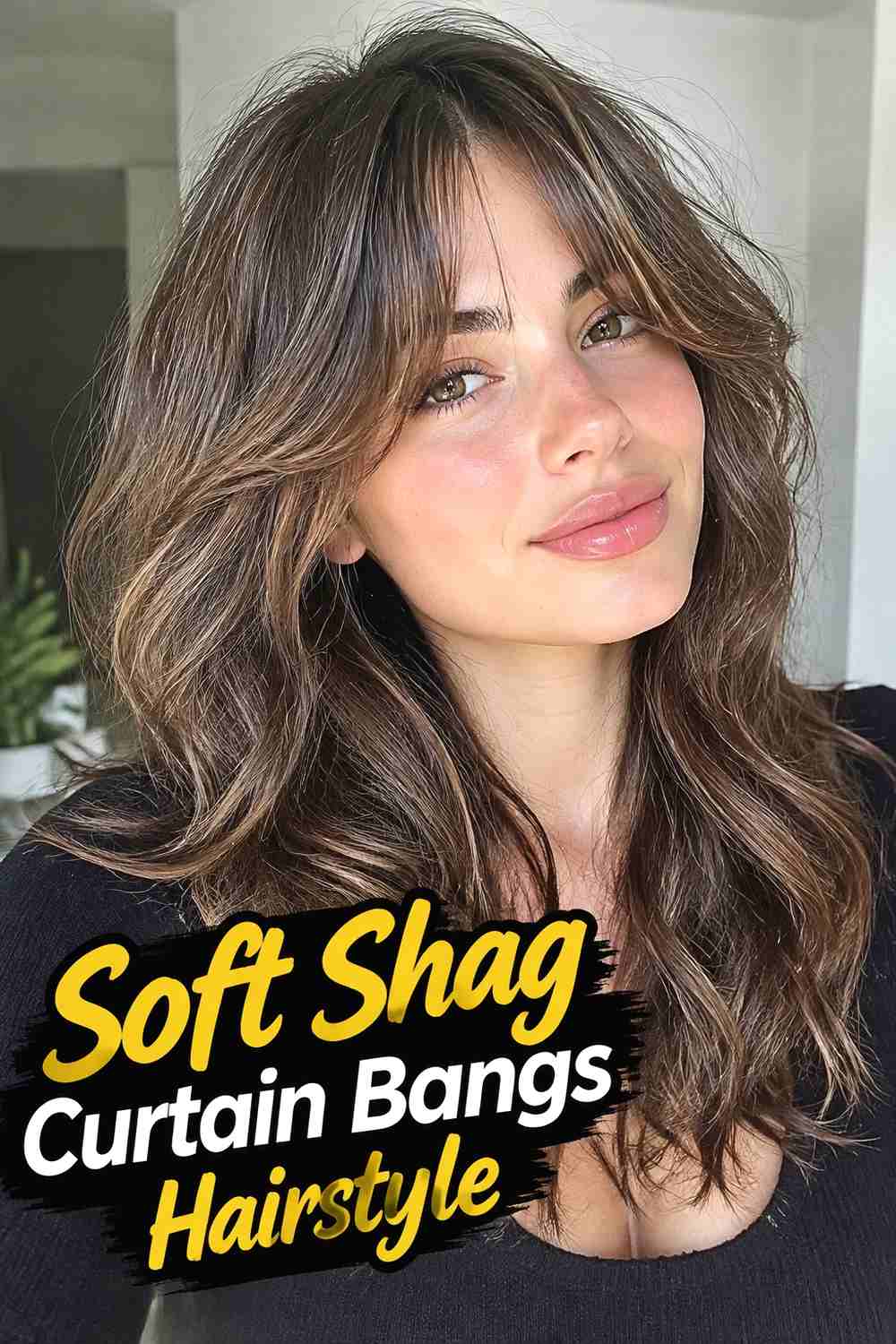
The Soft Shag Curtain Bangs Hairstyle gives the 70s curtain fringe a more relaxed, textured foundation. The bangs open through the center but remain lighter and slightly irregular, blending into shorter layers around the temples and crown. Instead of a smooth salon blowout, the rest of the hair can carry natural bends, loose waves, or gently tousled texture. This style works particularly well on medium lengths where layered movement can develop without becoming overly bulky. The shag influence should feel soft rather than aggressively choppy, with enough connection between layers to keep the silhouette cohesive. A little flyaway texture can actually support the look, provided the overall perimeter still feels intentionally shaped.
Styling Notes
Use fingers or a loose brush-out to preserve separation between layers rather than smoothing everything into one continuous wave.
Best For
Choose this option if you prefer an undone retro feel and want curtain bangs that work with natural movement.
6. Retro Flip Curtain Bangs Hairstyle
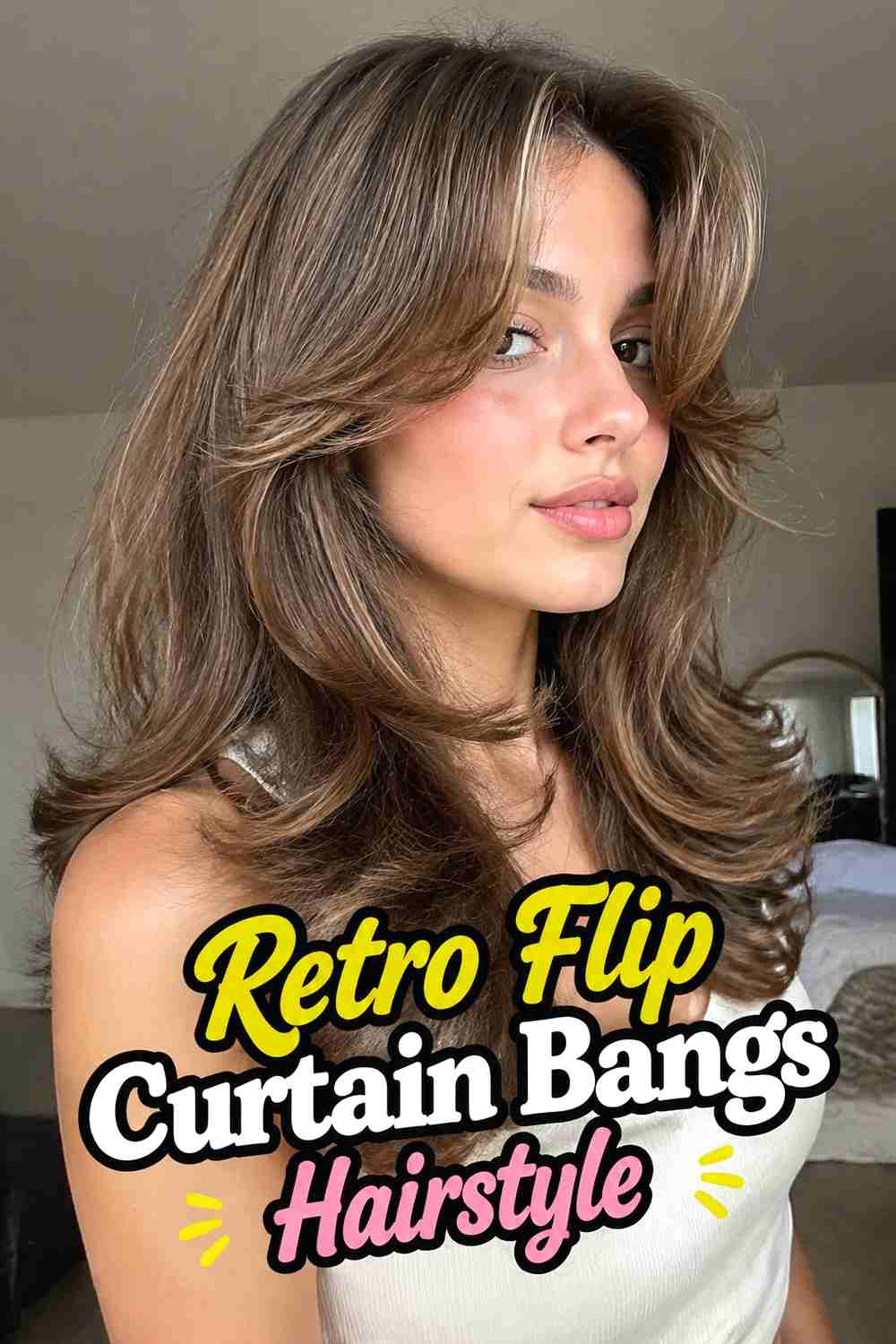
The Retro Flip Curtain Bangs Hairstyle connects outward-sweeping fringe with flipped movement through the visible ends. The bangs lift near the center and sweep toward the temples, while shoulder or collarbone layers turn gently away from the neck for a playful vintage finish. This creates a stronger retro impression than simple curtain bangs without requiring extremely high volume. Medium-length layered cuts are particularly effective because the flip remains easy to see and does not become weighed down by excessive length. Keep the curves broad rather than tightly curled. The front and ends should appear related through direction, creating one continuous outward-flowing silhouette instead of separate styled sections.
Why It Works
The repeated outward movement through both fringe and ends gives the entire hairstyle a clear 70s rhythm.
Pro Tip
Vary the strength of the flip slightly between sections so the finished shape keeps believable movement.
7. Wispy 70s Curtain Bangs Hairstyle
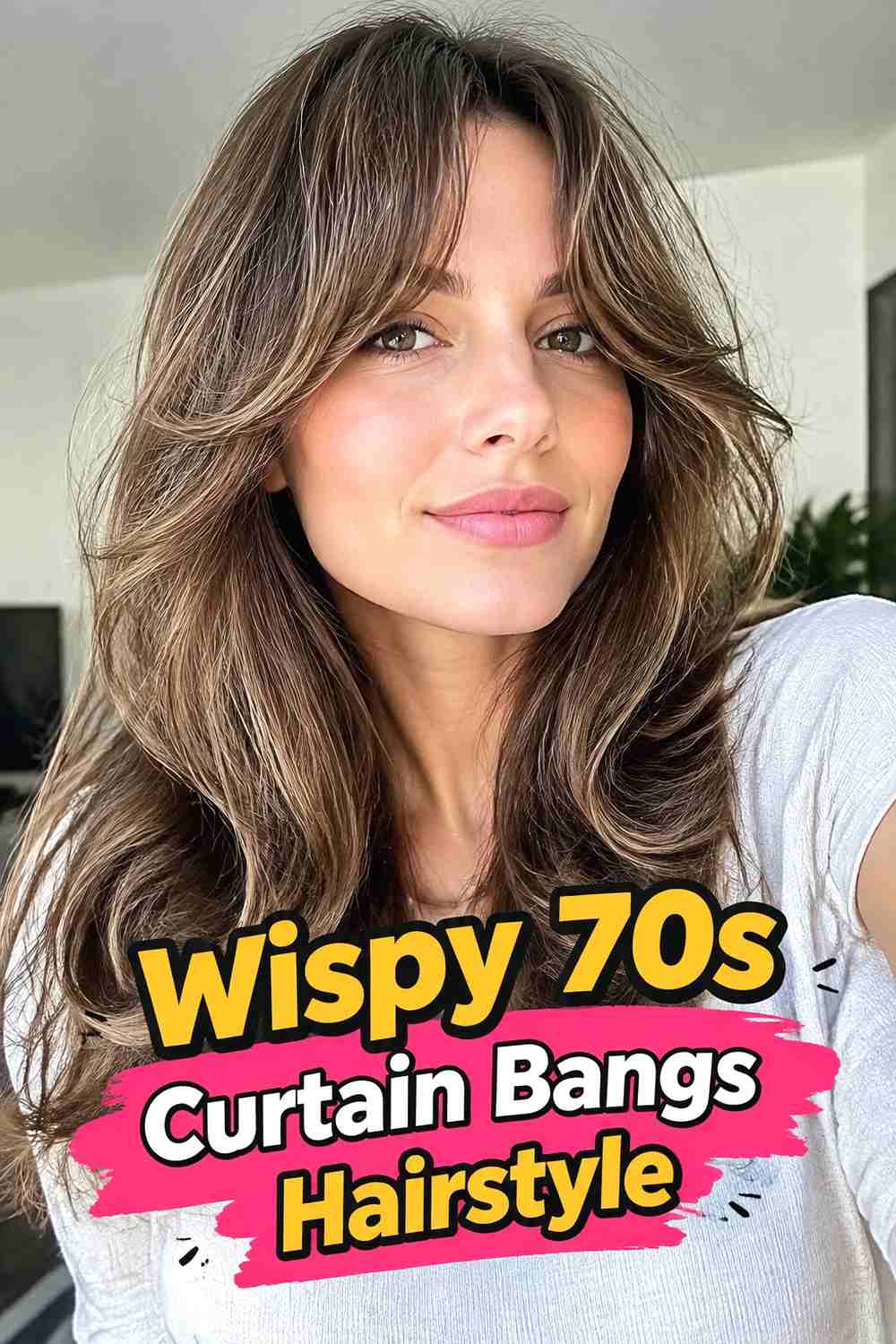
The Wispy 70s Curtain Bangs Hairstyle offers a lighter interpretation of retro fringe, using smaller sections and visible separation instead of a thick, dramatic sweep. The center stays open while fine pieces curve toward the cheekbones and blend into longer face-framing layers. This can be especially useful on fine or medium-density hair because the bangs create movement without removing too much weight from the rest of the haircut. Pair the fringe with a subtle blowout or soft feathered ends to maintain the 70s influence. Avoid heavy styling creams near the forehead, since wispy sections can quickly clump together and lose their airy character. The finished look should remain soft, flexible, and lightly lifted.
Hair Type & Length
Fine to medium-density hair can create this naturally, while thicker hair may need a carefully controlled fringe section.
Styling Notes
Use gentle tension and finish by separating the bangs with your fingers rather than brushing them into a solid curtain.
8. Center Part Feathered Curtain Bangs Hairstyle
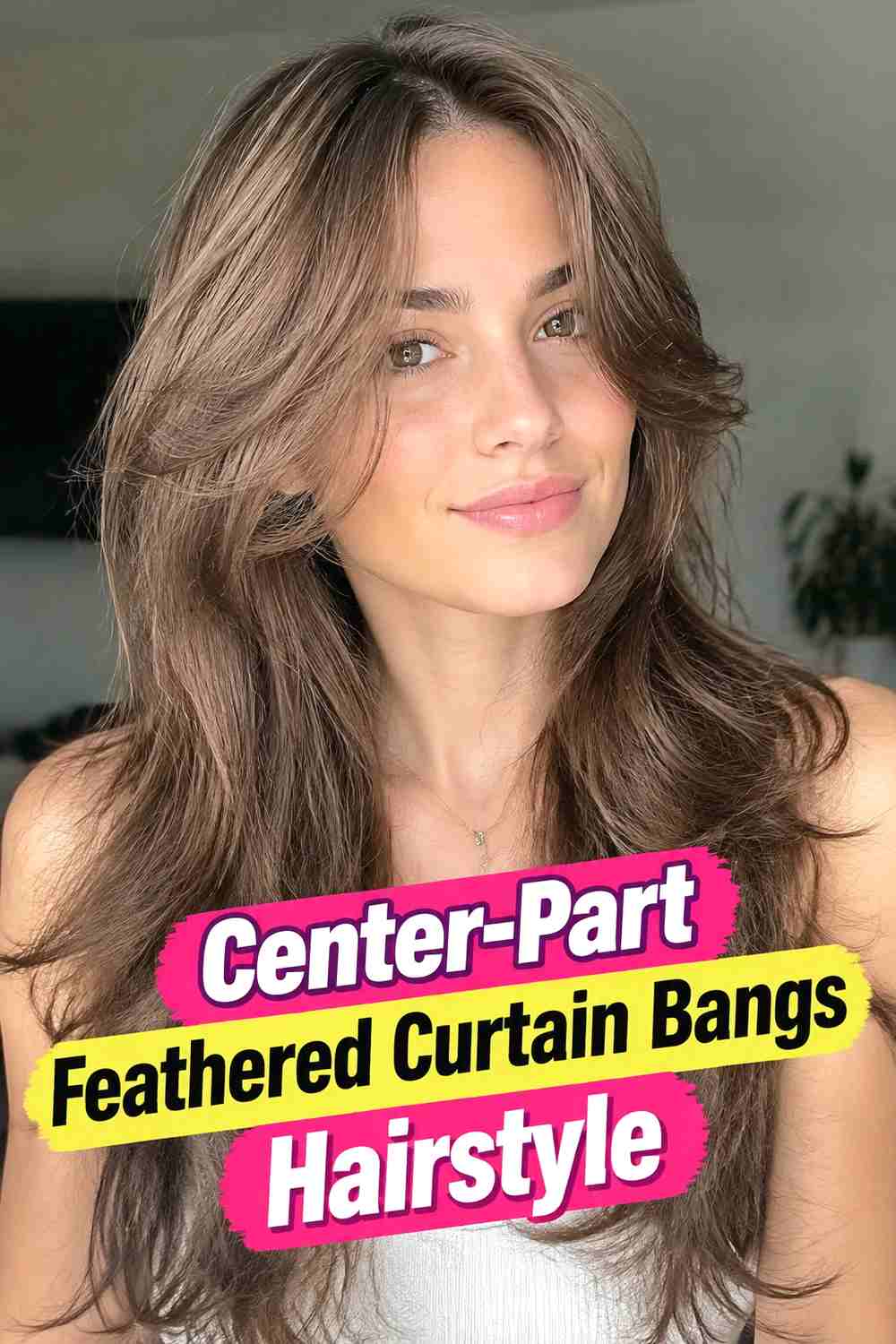
The Center-Part Feathered Curtain Bangs Hairstyle emphasizes symmetry through a clear middle part and evenly balanced outward movement. Each side of the fringe lifts slightly at the root and sweeps toward the cheekbones before blending into feathered side layers. The surrounding hair can be shoulder length or longer, but visible front layering helps the shape feel complete. This version has a polished retro character because the center opening stays defined even as the ends remain light and mobile. Avoid pressing the roots flat, since a little air near the part helps create the signature curtain effect. The two sides do not need to be perfectly identical; slight variation keeps the finish natural.
Why It Works
The centered structure gives the feathering a strong visual anchor while keeping the face open.
Best For
Try this look if your hair naturally parts near the middle and you enjoy a balanced, unmistakably retro frame.
9. Shoulder Length 70s Curtain Bangs Hairstyle
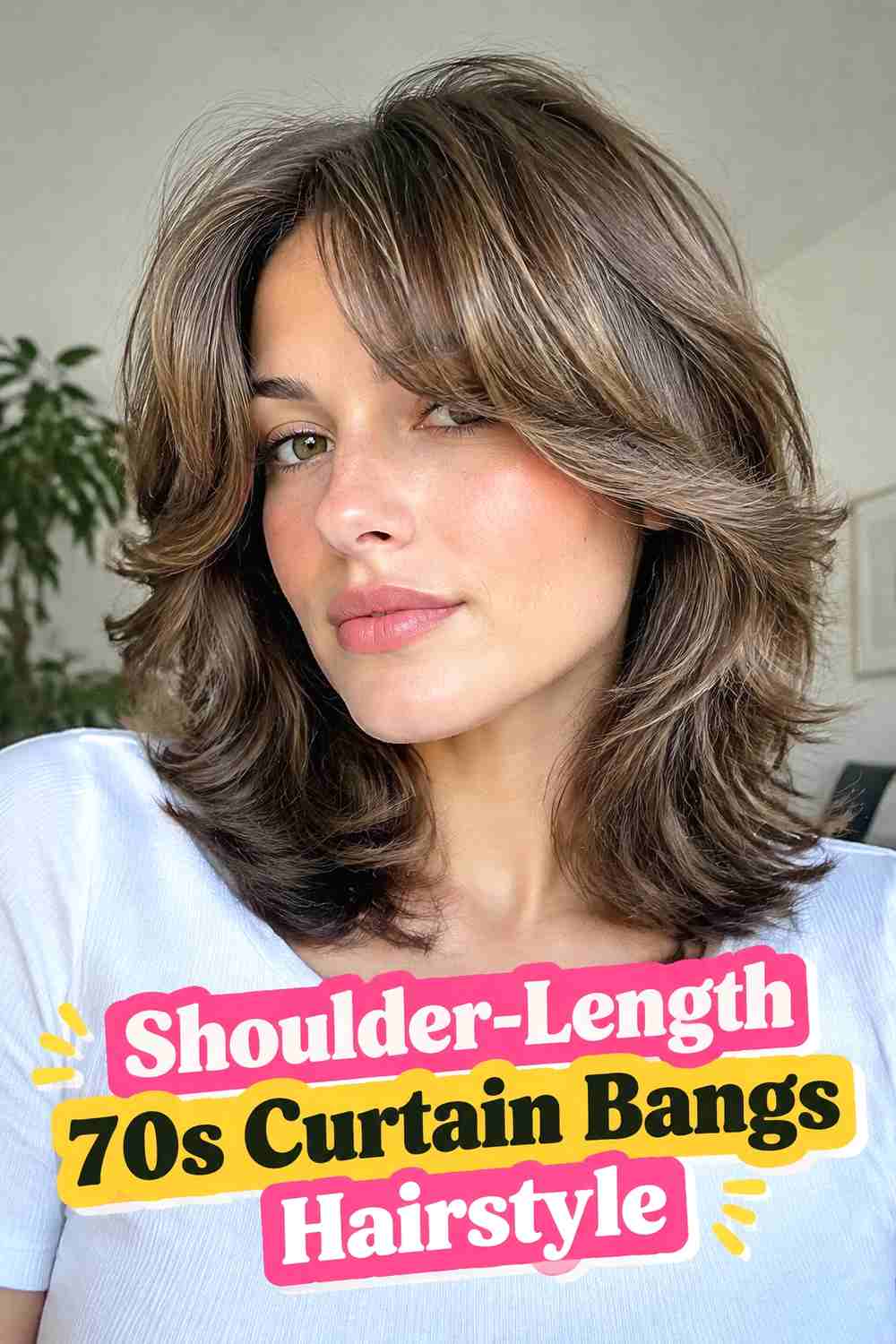
The Shoulder-Length 70s Curtain Bangs Hairstyle brings retro movement to a practical medium cut. The bangs part near the center and sweep outward, then merge into front layers that continue toward the shoulders. Keeping the overall length moderate makes the feathered detail easier to see because the bangs are not competing with extremely long hair. A rounded blowout can add body, while softer waves create a more casual finish. Light layering through the sides prevents the cut from forming a heavy block and gives the outward movement somewhere to travel. The perimeter should still retain enough fullness to keep the style looking healthy, especially on fine or medium-density hair.
Hair Type & Length
This works especially well from the base of the neck to the shoulders, with layering adjusted to natural density.
Wear & Maintenance
Refresh the fringe and visible front layers first; the back can often remain simpler without weakening the 70s effect.
10. Wavy 70s Curtain Bangs Hairstyle
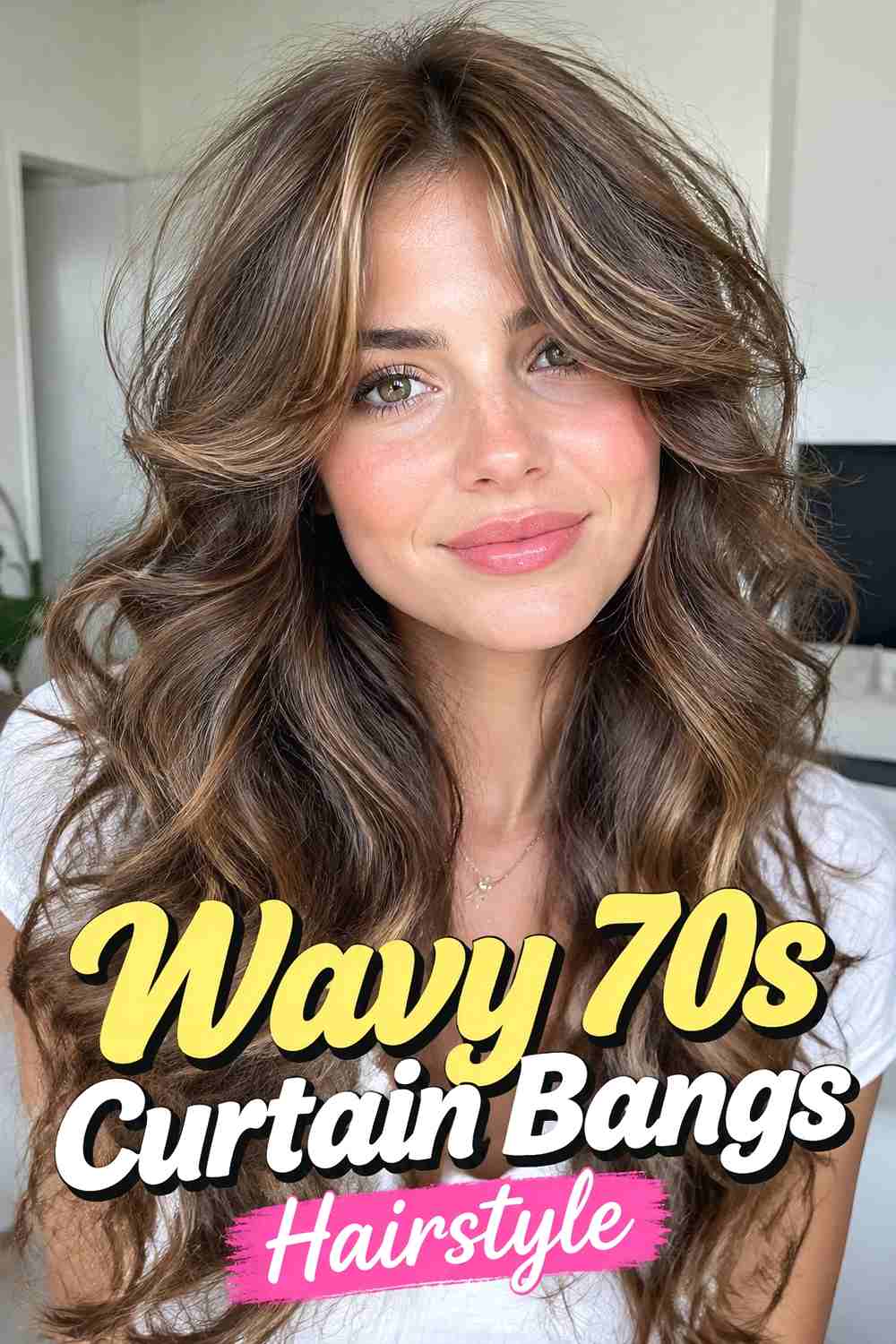
The Wavy 70s Curtain Bangs Hairstyle blends a center-opening fringe into broad, relaxed waves for a softer retro effect. Rather than making every front layer sharply feathered, allow the bangs to curve outward and connect into natural-looking bends through the sides. This creates movement without the highly structured finish of a full blowout. Naturally wavy hair can be especially well suited because small differences in texture help the style feel effortless. Medium and long cuts both work, particularly when front layers allow the fringe to transition smoothly into the wave pattern. Keep the crown lightly lifted and avoid over-defining the ends, since the 70s mood comes from flowing volume rather than perfect curls.
Styling Notes
Shape the fringe separately, then blend it into the existing waves with your fingers instead of brushing everything into one texture.
Best For
Choose this version if you want retro curtain bangs with a softer, more relaxed everyday finish.
11. Curly 70s Curtain Bangs Hairstyle
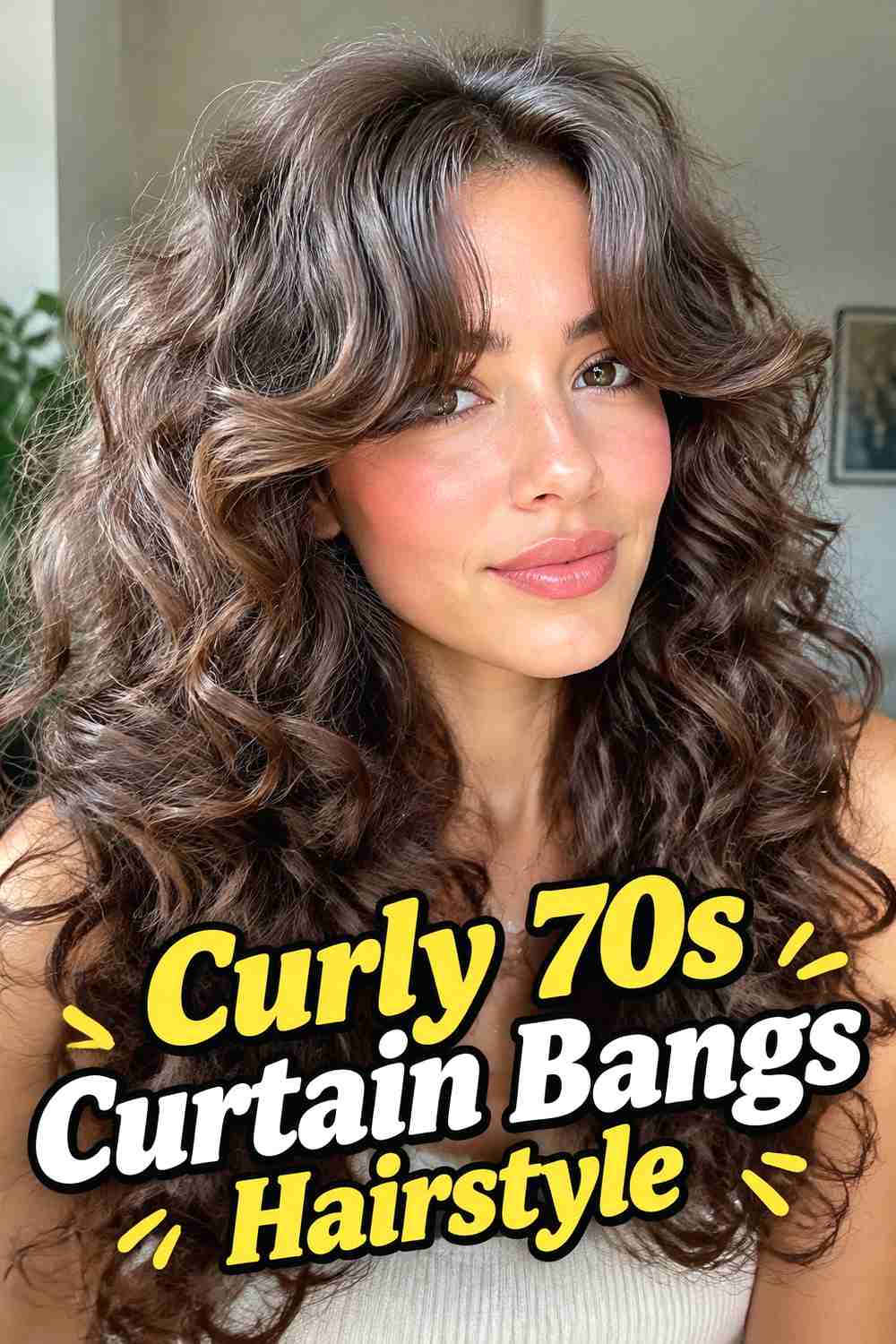
The Curly 70s Curtain Bangs Hairstyle adapts the open, feathered concept to naturally curly or coily texture. The fringe is shaped to separate near the center, with curls moving outward toward the sides rather than being forced into a smooth blowout. Shorter curls can frame the forehead and upper cheeks, while longer pieces connect into layered volume around the face. Shrinkage is an important consideration, so the final bang length should be judged when the hair is dry and styled in its usual pattern. Preserve natural curl variation and avoid brushing everything into uniform fluff. The 70s influence can come through the broad silhouette and layered outward shape while the curls remain authentically textured.
Hair Type & Length
Curly and coily textures can both work, provided the fringe is cut with shrinkage and natural spring in mind.
Pro Tip
Arrange the center opening while the curls are damp so the pattern dries in a direction that supports the curtain shape.
12. Glossy Modern 70s Curtain Bangs Hairstyle
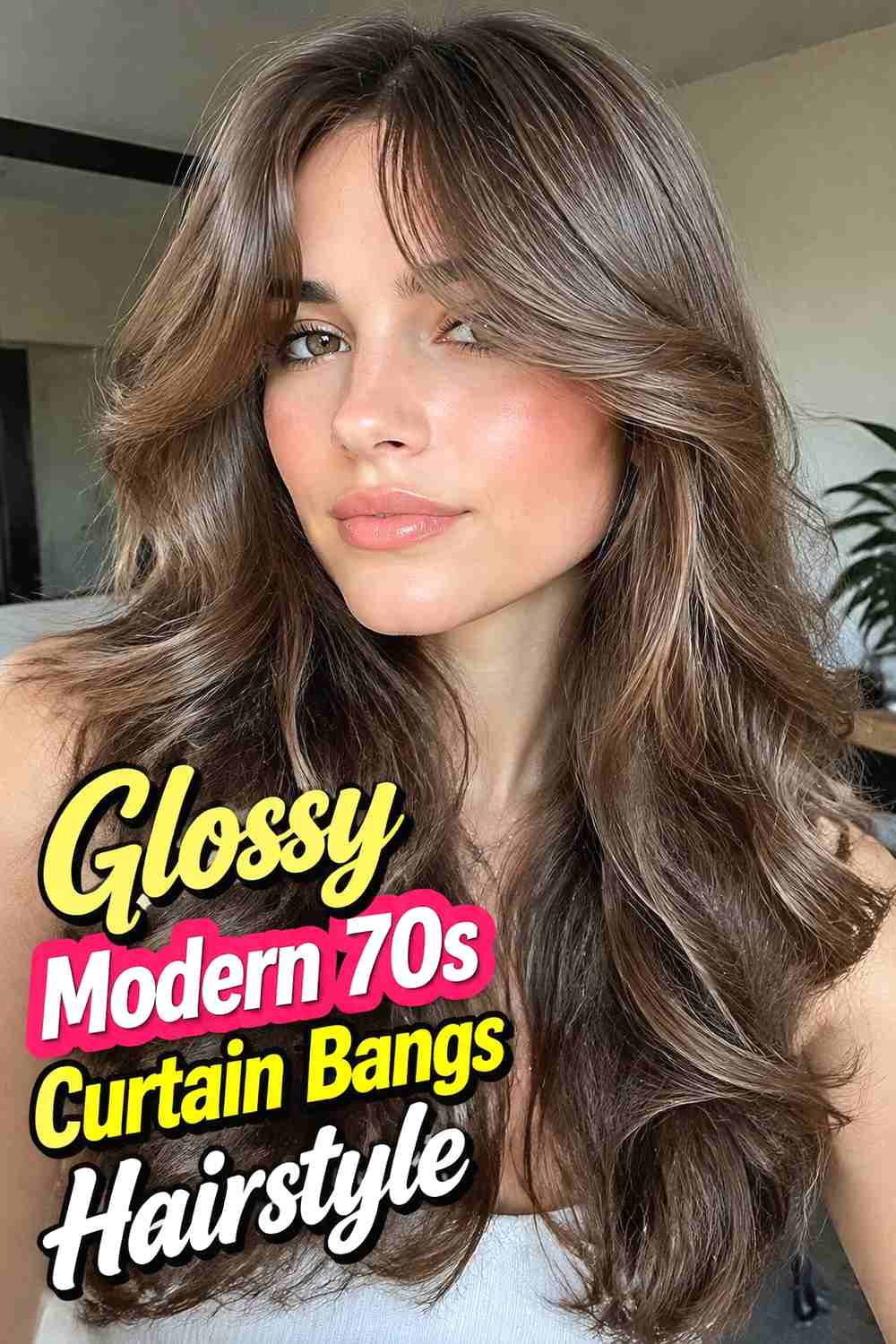
The Glossy Modern 70s Curtain Bangs Hairstyle keeps the recognizable center-parted sweep but reduces some of the exaggerated volume for a cleaner update. The bangs curve away from the face with controlled lift, blending into polished layers that remain smooth and reflective through the mids and ends. This approach works especially well if you like retro inspiration but prefer contemporary styling with less teasing and fewer dramatic flips. Medium and long hair both suit the look, particularly when the front layers remain soft and connected. Keep the shine concentrated through healthy-looking lengths while preserving enough separation at the fringe to show individual strands. The finished shape should feel sleek, movable, and clearly inspired by 70s feathering.
Styling Notes
Create the outward bend mainly through the front layers and keep the remaining hair smoother for a cleaner contrast.
Why It Works
It preserves the signature 70s curtain movement while fitting easily into a more minimal modern styling routine.
How to Choose the Right Look
Start with how strongly you want the 70s influence to show. For maximum feathering and volume, the Classic 70s Feathered Curtain Bangs Hairstyle, Farrah-Inspired Curtain Bangs Hairstyle, and Voluminous Blowout Curtain Bangs Hairstyle create the most obvious retro silhouettes. Wispy, wavy, and glossy modern versions offer a softer reference.
Length matters too. Shoulder-length hair works beautifully with flips and shaggier layers, while long hair gives feathered sections more space to cascade. Fine hair often benefits from lighter fringe sections and fewer layers, whereas thick hair can support fuller curtain bangs and stronger feathering.
Natural texture should guide the styling method. Straight hair shows polished layers clearly, waves create easy movement, and curls can preserve their own pattern while maintaining a center opening.
Finally, consider maintenance. Dramatic blowouts need more regular reshaping, while longer curtain pieces and softer shaggy versions are generally easier to refresh and grow out.
Final Thoughts
70s curtain bangs are defined less by one exact cut than by their open center, outward movement, and connection to layered texture around the face. They can look dramatic and feathered or soft and modern while keeping the same retro foundation.
Choose a version that suits your density, natural texture, length, and normal styling habits. The most wearable result will preserve the signature swoop without requiring the hair to remain perfectly set all day.
FAQs
1. What makes curtain bangs look specifically 70s?
More root lift, outward feathering, visible face-framing layers, and a fuller blowout or flipped finish usually make curtain bangs read more strongly as 70s-inspired.
2. Do 70s curtain bangs work on shoulder-length hair?
Yes. Shoulder-length cuts give the bangs enough surrounding length for feathered layers and flipped ends while keeping the retro shape easy to see.
3. Can curly hair wear 70s curtain bangs?
Yes. Curly hair can keep its natural pattern while the fringe is shaped to open near the center and move outward into layered volume.
4. How do I get the feathered curtain-bang effect?
Lift the fringe at the roots, direct each side away from the face, let the shape cool, and lightly separate the sections so the movement stays airy.
5. Are long 70s curtain bangs easier to maintain?
Often, yes. Longer pieces blend more easily into layers, can be tucked away when needed, and generally offer a softer grow-out than shorter fringe.
Save your favorite 70s curtain bangs hairstyle ideas, share the looks you love, and explore more feathered hair inspiration for your next retro-inspired refresh.