17 Soft Baby Bangs With Curly Shag Haircuts
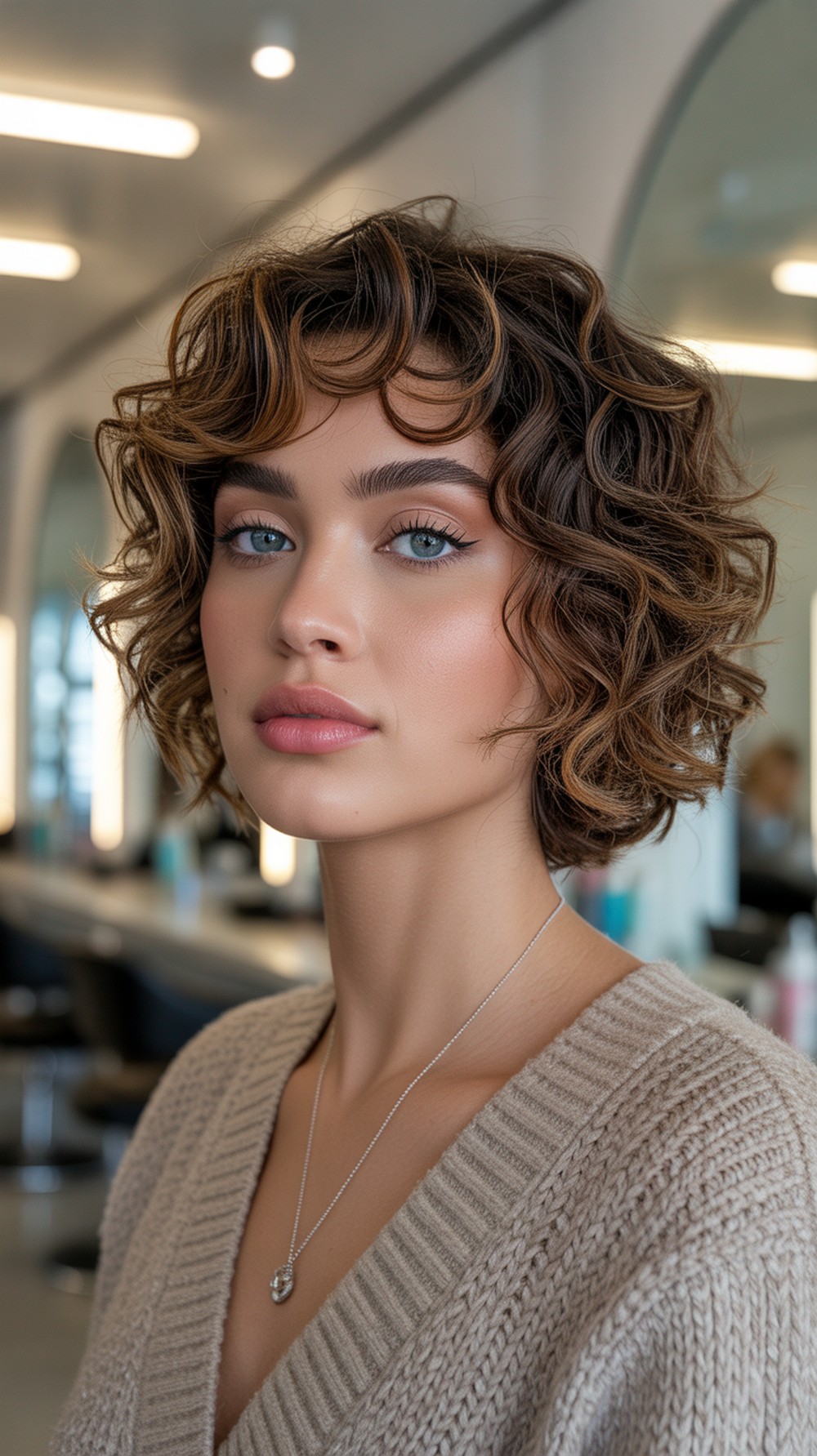
Soft baby bangs and a curly shag create an airy, textured pairing with playful fringe, layered movement, and plenty of natural curl personality.
Curly shag haircuts already rely on movement, separation, and layered volume, so adding baby bangs can make the shape feel even more intentional. The short fringe creates a defined focal point at the forehead while the longer curls around it keep the overall look soft rather than severe.
The details matter when choosing this combination. Bang length, curl shrinkage, density, crown volume, and the amount of layering can completely change the finished effect. Some versions feel light and wispy, while others lean into fuller curls, retro volume, or a more tousled finish.
Quick List
- Soft Rounded Baby Bangs Curly Shag Hairstyle
- Wispy Baby Bangs With Layered Curly Shag Hairstyle
- Micro Baby Bangs With Short Curly Shag Hairstyle
- Air Dried Baby Bangs With Natural Curly Shag Hairstyle
- Soft Baby Bangs With Shoulder Length Curly Shag Hairstyle
- Piecey Baby Bangs With Tousled Curly Shag Hairstyle
- Feathered Baby Bangs With Voluminous Curly Shag Hairstyle
- Soft Baby Bangs With Long Curly Shag Hairstyle
- Choppy Baby Bangs With Defined Curly Shag Hairstyle
- Rounded Baby Bangs With Retro Curly Shag Hairstyle
- Soft Baby Bangs With Coily Shag Hairstyle
- Baby Bangs With Face Framing Curly Shag Hairstyle
- Side Swept Baby Bangs With Curly Shag Hairstyle
- Soft Baby Bangs With Fine Hair Curly Shag Hairstyle
- Soft Baby Bangs With Thick Curly Shag Hairstyle
- Soft Baby Bangs With Curly Wolf Shag Hairstyle
- Soft Baby Bangs With Messy Curly Shag Hairstyle
1. Soft Rounded Baby Bangs Curly Shag Hairstyle
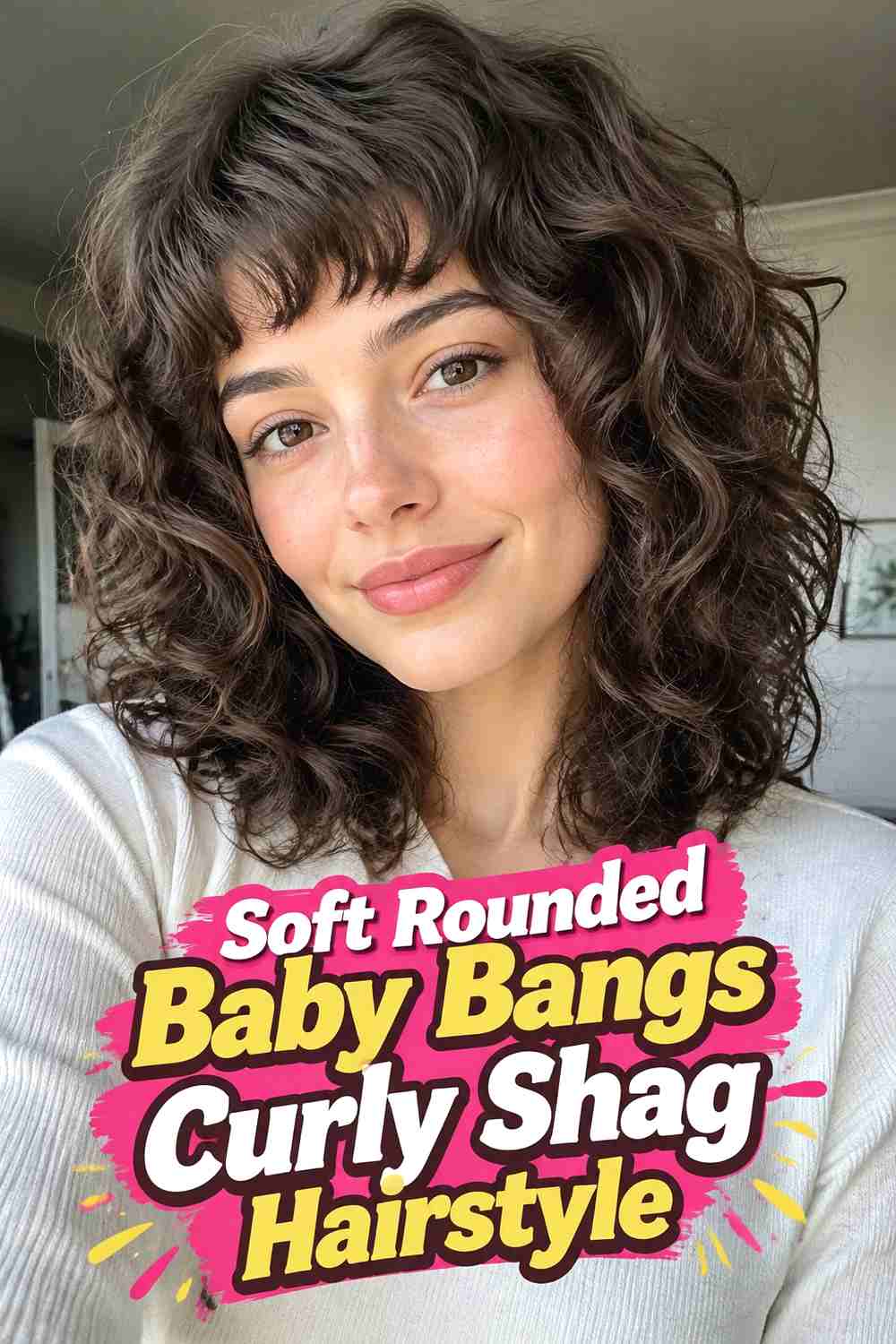
Soft rounded baby bangs create a gentle curved line across the forehead while connecting naturally with the shorter curls around the temples. Paired with a curly shag, the fringe feels balanced by airy crown layers and progressively longer curls through the sides and back. The key is keeping the bangs textured rather than cutting them into a dense, rigid block. Allowing a few small gaps between curl clusters gives the fringe movement and prevents it from overpowering the rest of the haircut. This style can work especially well when the shag has a rounded overall silhouette, because the curved fringe echoes the shape of the layers without looking overly precise.
Styling Notes
Style the bangs in small curl groups and let them settle naturally before separating. Overstretching them while wet can make the finished length difficult to predict once they shrink.
2. Wispy Baby Bangs With Layered Curly Shag Hairstyle
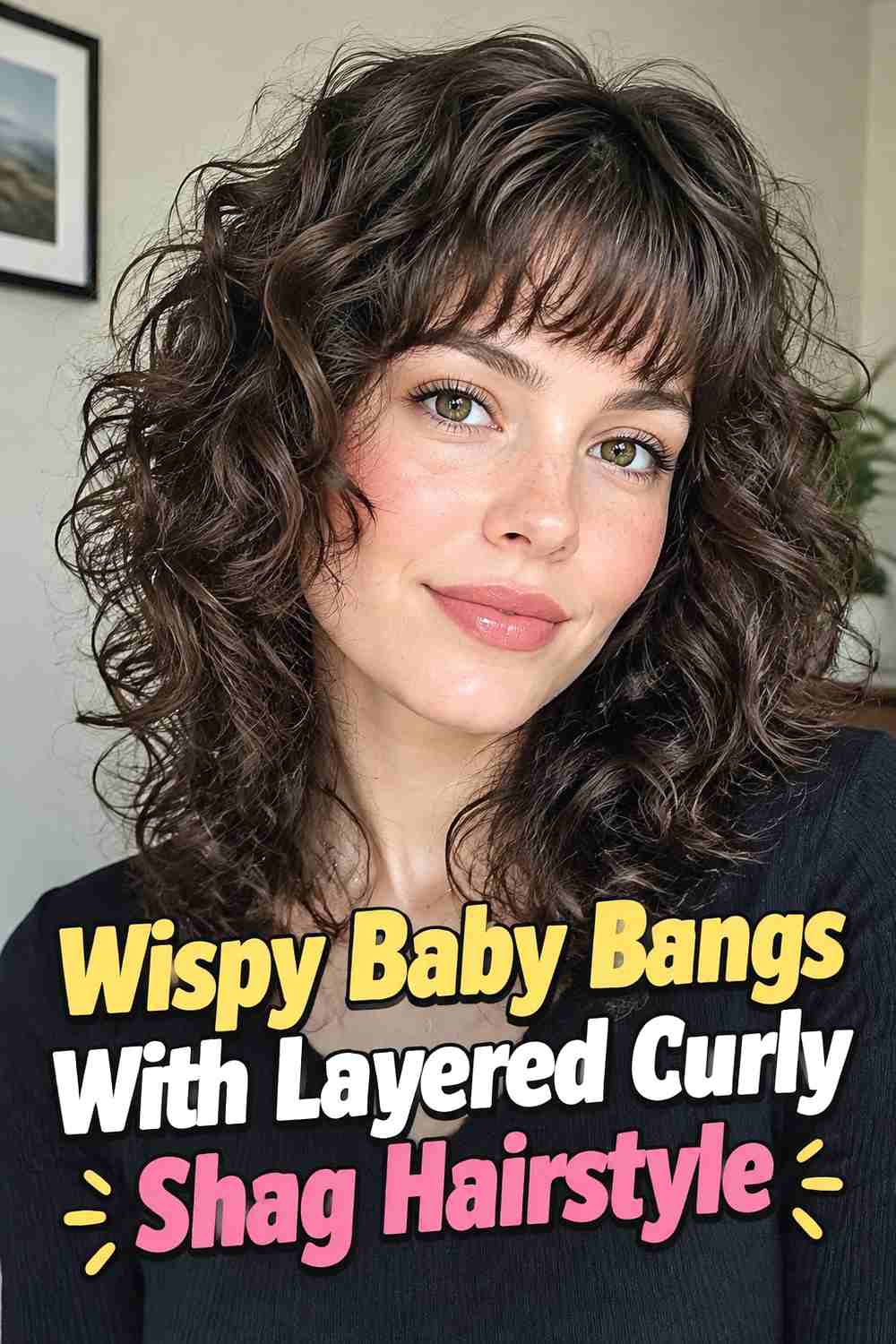
Wispy baby bangs bring a lighter feel to a layered curly shag by leaving deliberate space between the shortest pieces. Instead of creating one continuous fringe, the curls fall across the forehead in soft, irregular sections that connect into face-framing layers near the cheekbones. The shag can carry medium-length layers through the crown and sides, giving the curls lift without making the perimeter too thin. This variation is useful for anyone who likes the idea of short bangs but does not want a heavy front section. Keeping the fringe slightly uneven in texture allows the curl pattern to remain visible and gives the haircut a relaxed finish that works well air-dried or lightly diffused.
Best For
This version suits curl patterns that naturally separate into smaller groups and can also be adapted for medium-density hair where a thick fringe might remove too much fullness from the front.
3. Micro Baby Bangs With Short Curly Shag Hairstyle
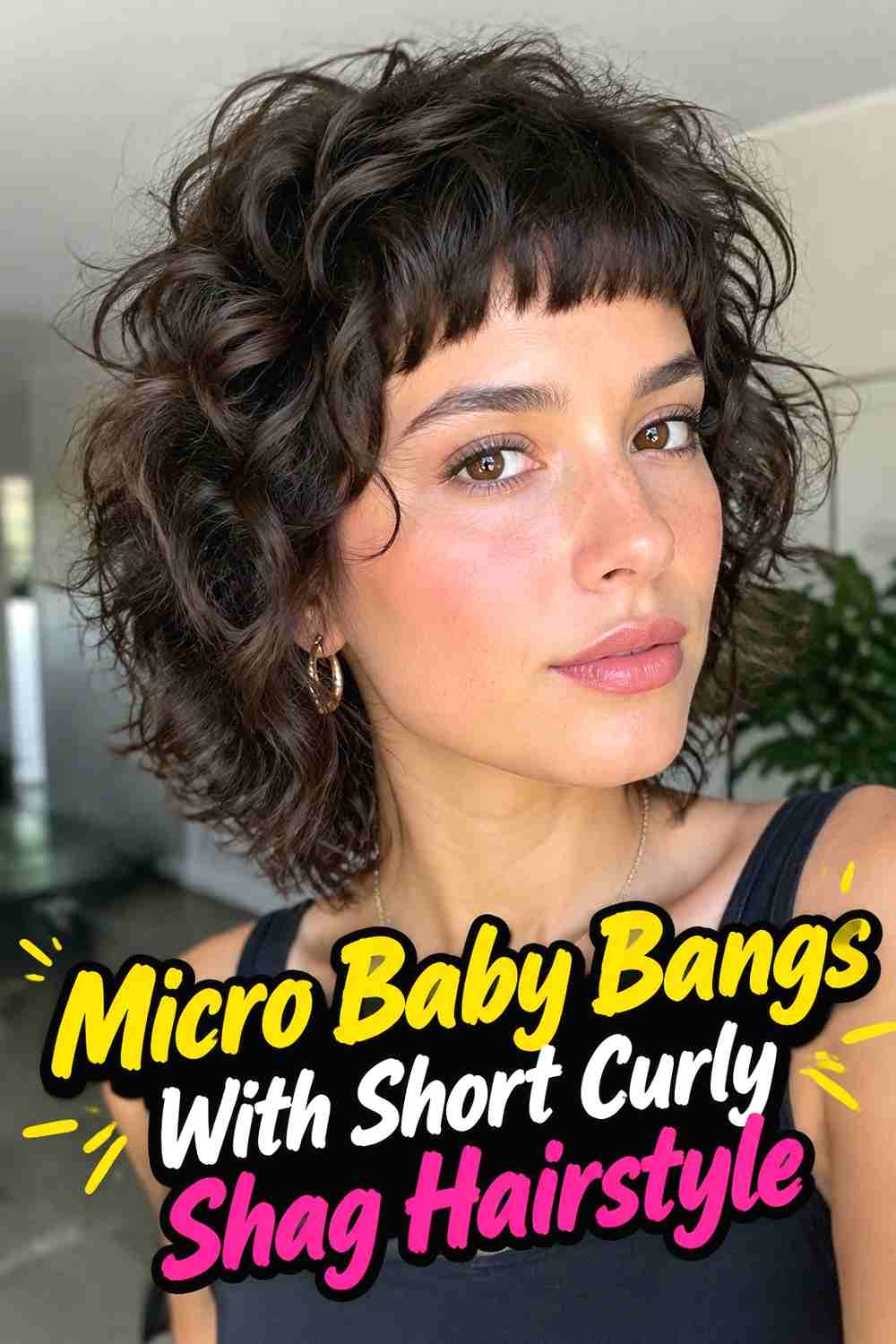
Micro baby bangs create a stronger, more graphic contrast against the loose movement of a short curly shag. The fringe sits noticeably above the brows, while compact layers around the crown, ears, and nape build a lively shape around it. Because curly hair can shrink significantly after drying, the final bang length should be planned with the natural curl pattern in mind rather than judged only while the hair is stretched. Keeping a little irregularity along the edge prevents the micro fringe from looking too blunt. The short shag underneath can stay soft and rounded, with enough length in the crown to preserve spring and movement instead of becoming a close crop.
Wear & Maintenance
Very short bangs show growth quickly and may need more frequent reshaping than a longer fringe. Their appearance can also change noticeably between freshly styled and fully shrunken curls.
4. Air Dried Baby Bangs With Natural Curly Shag Hairstyle
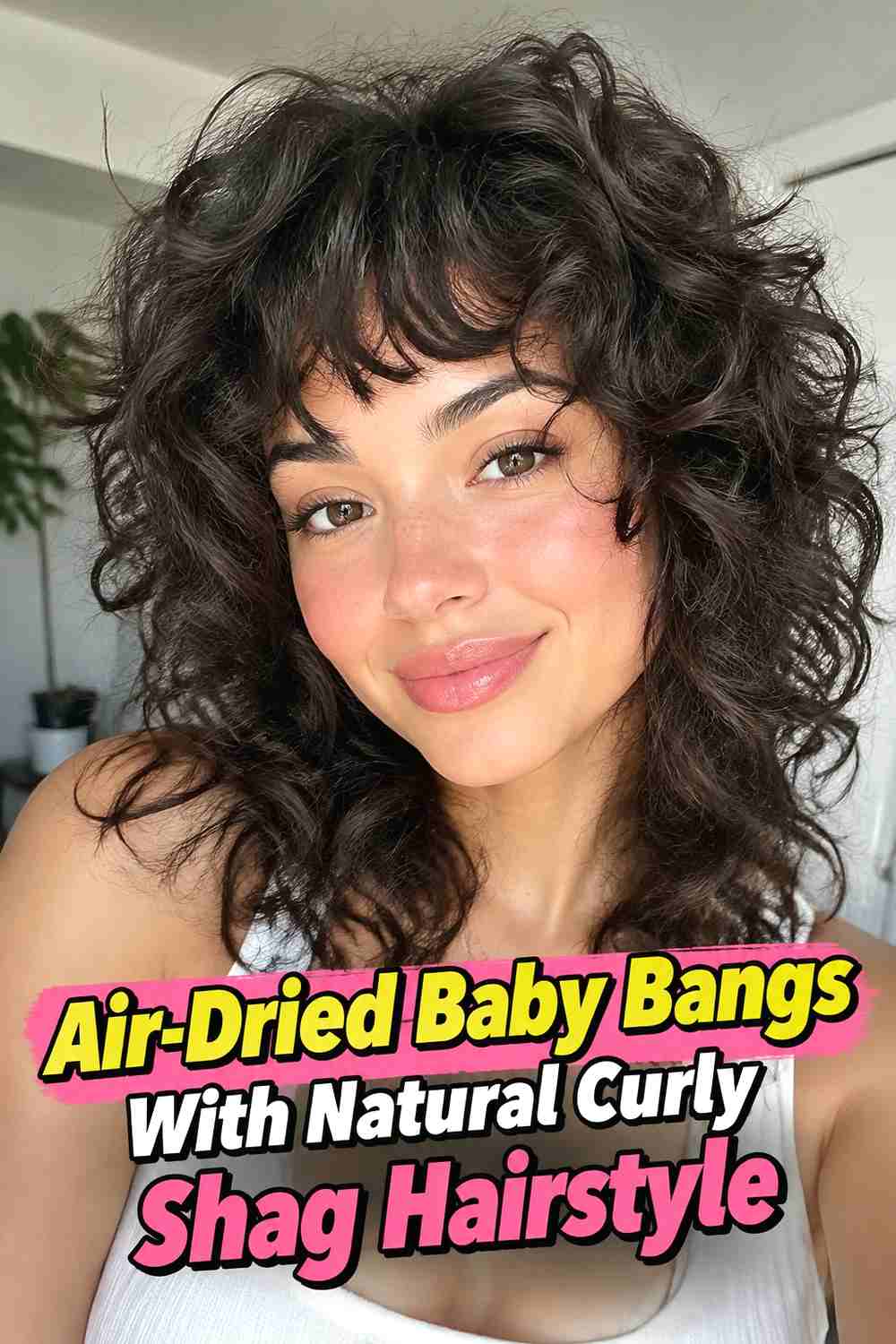
An air-dried curly shag lets the natural curl pattern determine much of the finished shape, making soft baby bangs feel relaxed rather than overly styled. The fringe can consist of short curl clusters that sit lightly across the forehead, while the rest of the haircut uses layers to encourage lift at the crown and movement through the perimeter. This approach works best when the cut respects how the hair normally shrinks, bends, and groups after washing. Rather than forcing every curl to look identical, slight differences in shape add character. The shag should retain enough weight at the ends to avoid looking overly wispy while still allowing the upper layers to expand naturally.
Pro Tip
Have the fringe assessed in its dry or nearly dry state before finalizing the length, especially if your curls shrink substantially after washing.
5. Soft Baby Bangs With Shoulder Length Curly Shag Hairstyle
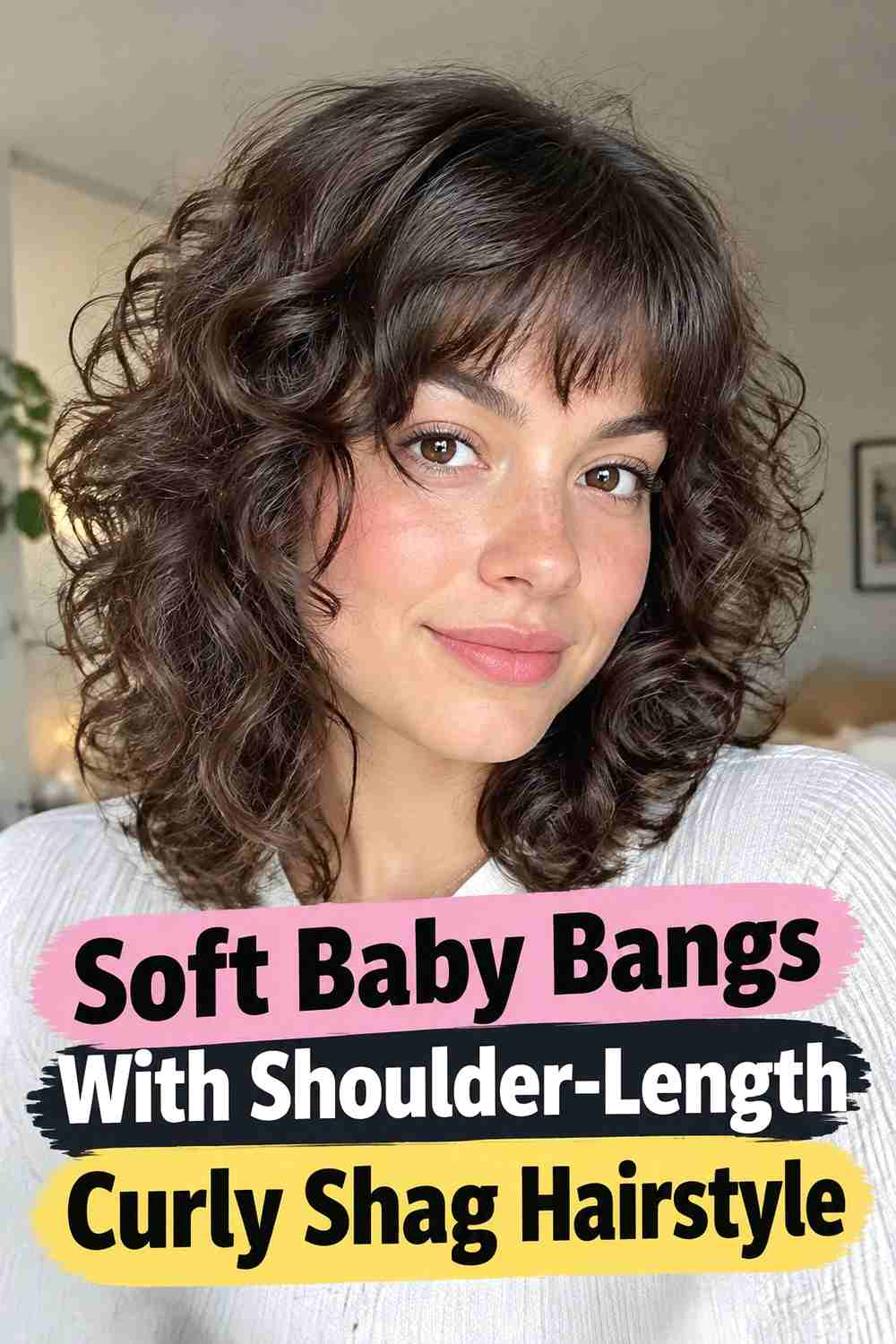
A shoulder-length curly shag offers enough length for dramatic movement while still keeping the layered silhouette easy to see. Soft baby bangs add a compact focal point at the front, creating contrast with longer curls that fall toward the shoulders. The most flattering balance usually comes from connecting the fringe into shorter face-framing pieces rather than leaving an abrupt gap between the bangs and the rest of the hair. Crown layers can provide lift, while the lower lengths retain enough density for a full perimeter. This version is versatile because it can appear more polished with defined curls or more casual when the texture is expanded and slightly tousled.
Hair Type & Length
This cut works particularly well for medium-length curls that have enough spring to support visible layering. Denser hair may benefit from thoughtful internal weight removal rather than excessive thinning at the ends.
6. Piecey Baby Bangs With Tousled Curly Shag Hairstyle

Piecey baby bangs suit the deliberately undone character of a tousled curly shag. Instead of forming a smooth fringe, the bangs separate into small curved sections that reveal glimpses of the forehead between them. The surrounding haircut can include uneven-looking but carefully planned layers, with extra movement through the crown and sides. A few curls may fall forward while others turn outward, creating a relaxed shape that does not depend on perfect symmetry. The key is maintaining enough structure around the perimeter so the haircut still reads as intentional. This version looks especially natural when the curls retain some softness and frizz rather than being styled into highly uniform ringlets.
Styling Notes
Use your fingers to position the fringe and larger layers rather than combing everything into place. A light curl cream or mousse can support shape without removing the tousled finish.
7. Feathered Baby Bangs With Voluminous Curly Shag Hairstyle
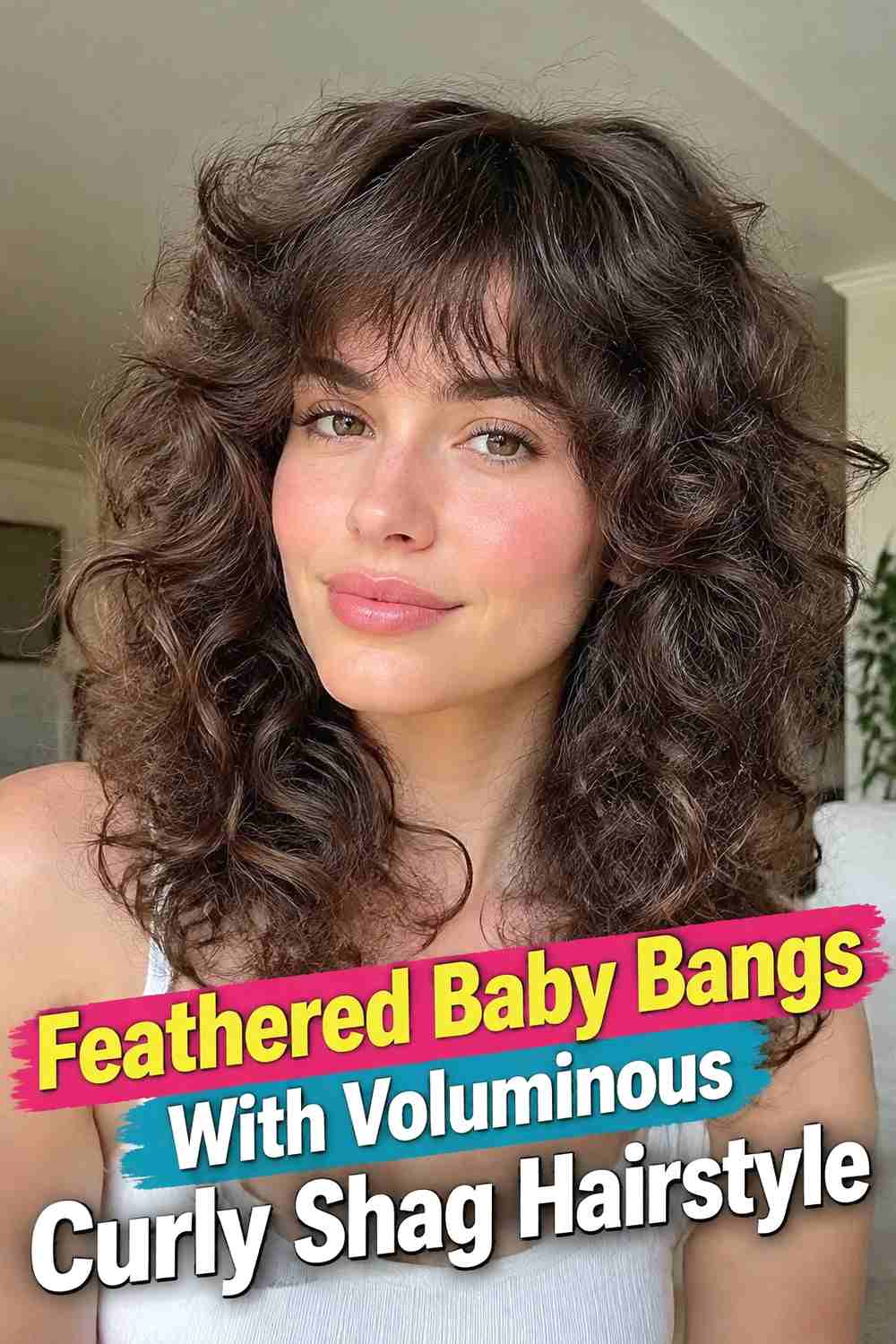
Feathered baby bangs create a soft transition from a short fringe into the fuller volume of a curly shag. The front pieces are lightly graduated so they move from shorter curls near the center toward slightly longer sections at the temples. Behind them, crown layers build height and allow the curls to expand outward without creating a heavy triangular shape. This version works especially well when the haircut is intended to feel full and airy rather than compact. The bangs should stay light enough to move independently from the rest of the style, while the longer layers maintain a strong silhouette. Diffused styling can enhance the volume while preserving the separation between individual curl groups.
Why It Works
The shorter fringe keeps the front open while the fuller crown supplies balance, giving the haircut volume without concentrating all of the weight around the sides.
8. Soft Baby Bangs With Long Curly Shag Hairstyle
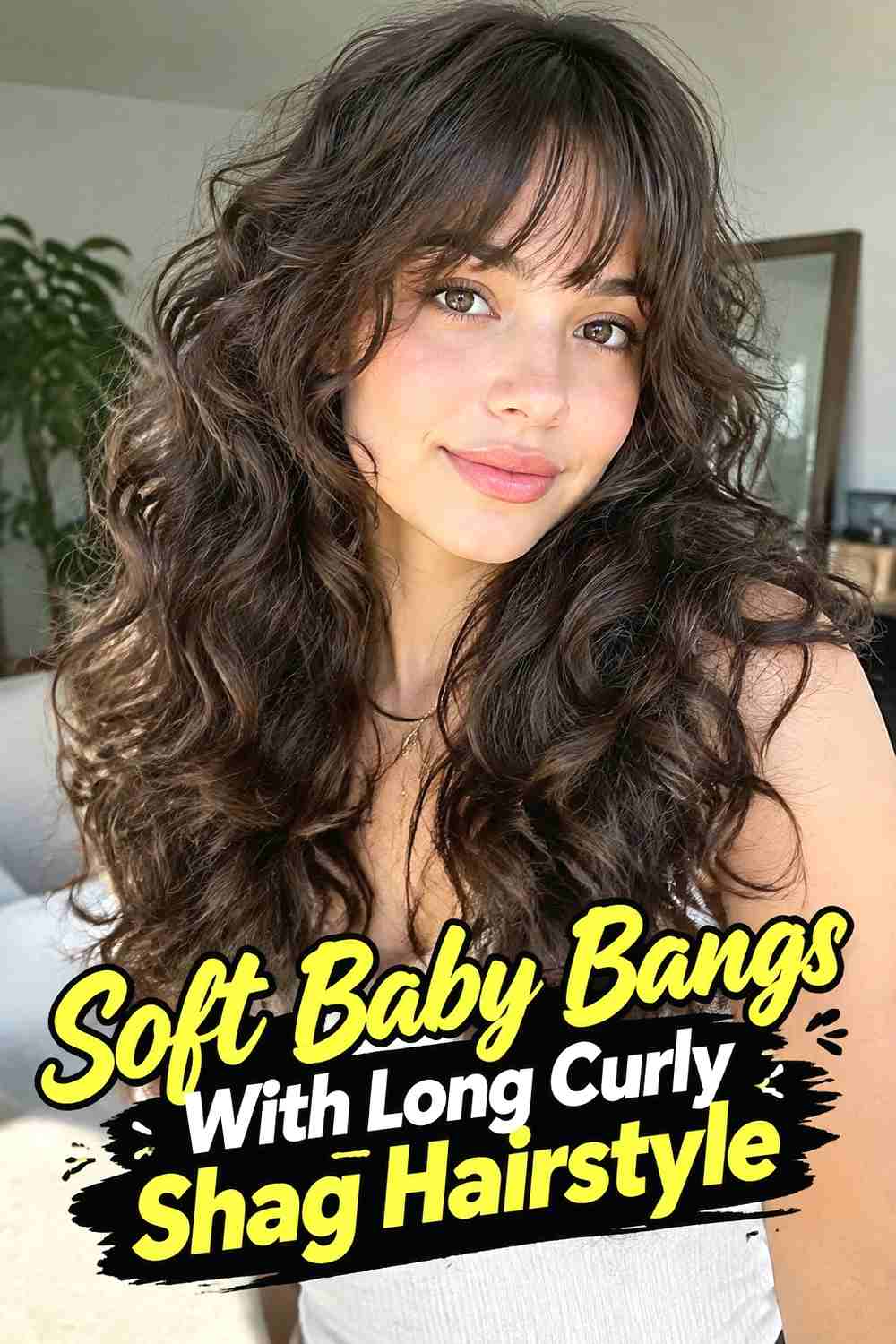
Long curly hair can still carry a strong shag shape when the upper layers are short enough to create movement. Adding soft baby bangs increases that contrast by placing the shortest curls at the forehead while allowing the longest pieces to fall well below the shoulders. Face-framing layers help bridge the distance between those extremes, preventing the fringe from looking disconnected from the rest of the cut. The overall effect can feel romantic and slightly bohemian, especially when the curls have natural variation in size and direction. Maintaining enough density through the lower lengths is important, since overly aggressive layering can leave long curly hair looking thin toward the ends.
Wear & Maintenance
Long shags need enough conditioning and detangling care to keep the ends manageable, while the baby bangs may require more frequent small trims to preserve their intended length.
9. Choppy Baby Bangs With Defined Curly Shag Hairstyle
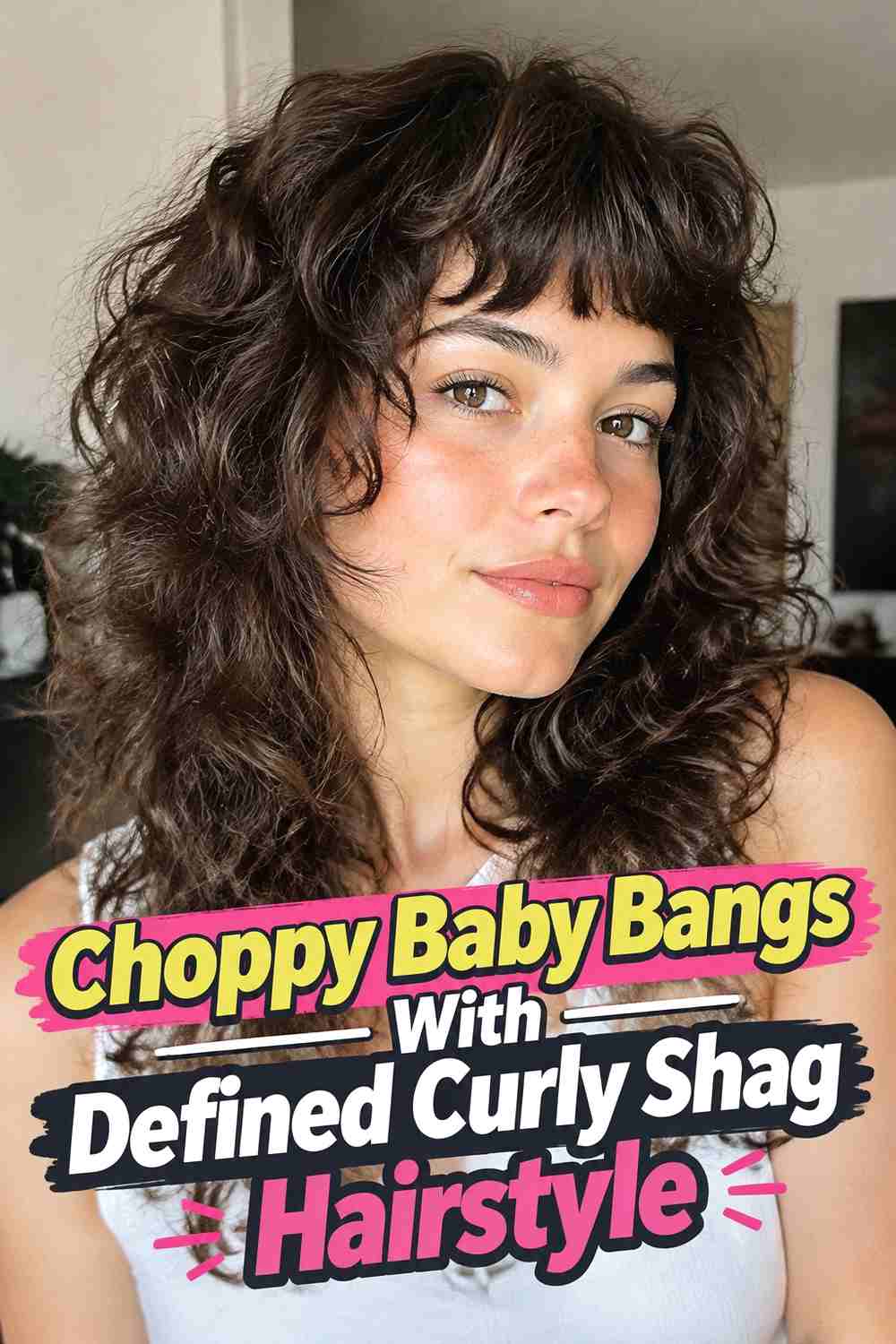
Choppy baby bangs give a defined curly shag a more graphic edge without requiring the fringe to be completely blunt. Short pieces can vary slightly in length, creating a broken line across the forehead that mirrors the layered texture throughout the haircut. In contrast, the surrounding curls can be carefully defined so individual spirals remain visible from the crown to the perimeter. This mix of deliberate fringe texture and polished curl definition keeps the style interesting from multiple angles. The layers should support the natural curl pattern instead of breaking it up excessively. A rounded or slightly elongated shag silhouette works well, depending on how much volume you prefer around the sides.
Styling Notes
Define the main curls first, then shape the fringe separately. This makes it easier to keep the baby bangs light and choppy instead of blending them into one heavy curl cluster.
10. Rounded Baby Bangs With Retro Curly Shag Hairstyle
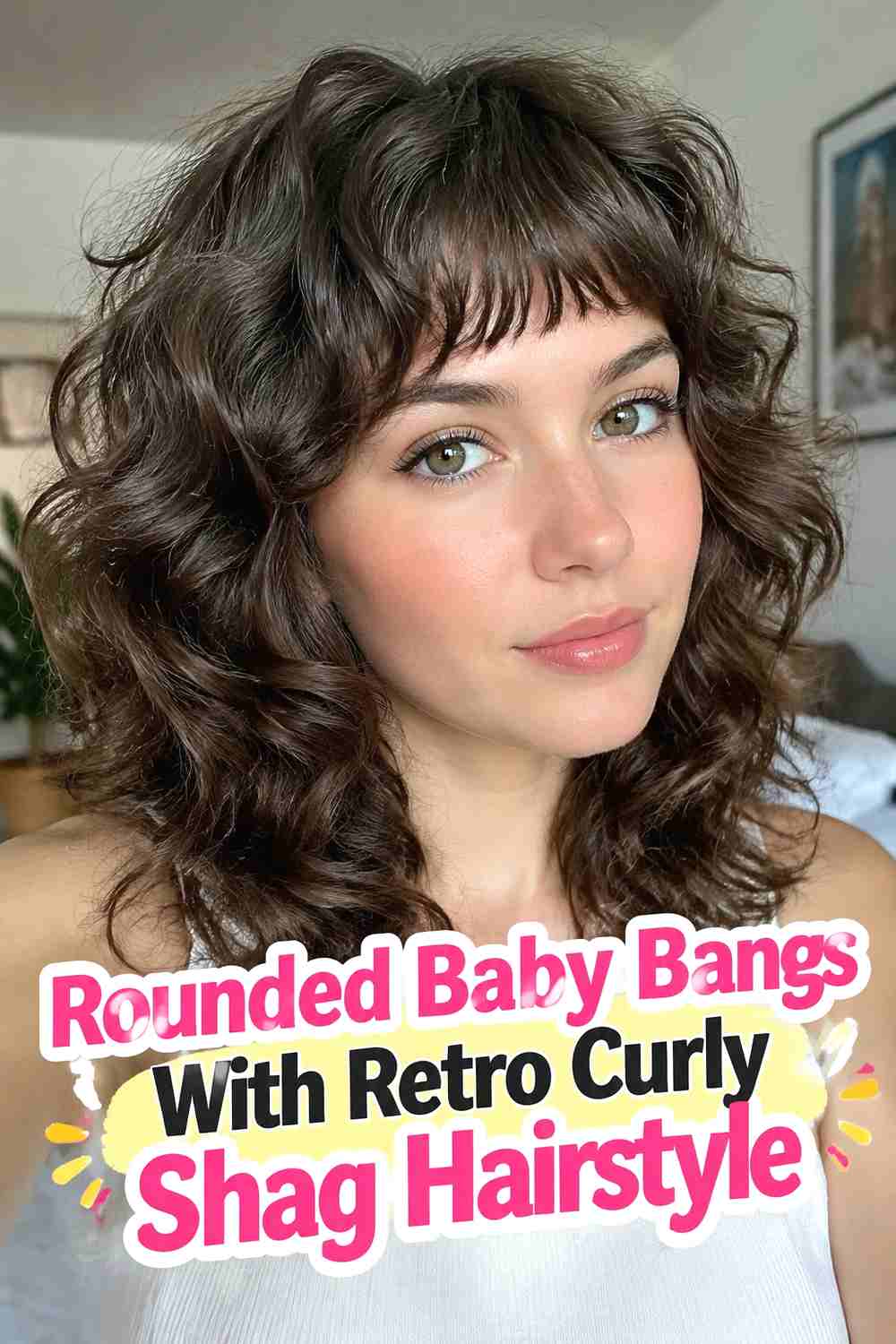
A retro curly shag leans into fuller crown volume, rounded sides, and expressive texture, making rounded baby bangs a natural match. The fringe sits short across the forehead with a softly curved outline, while the surrounding curls build outward through layered sections around the temples and cheekbones. Longer pieces toward the back can create a subtle vintage-inspired taper without turning the cut into a strict historical replica. The look feels most convincing when the curls retain natural variation and touchable volume rather than a heavily set finish. Slightly expanded texture can make the silhouette appear fuller, while leaving a few defined ringlets near the face keeps the overall shape from becoming too diffuse.
Best For
Choose this variation if you enjoy noticeable volume and a retro-inspired silhouette rather than a sleek or tightly controlled curly haircut.
11. Soft Baby Bangs With Coily Shag Hairstyle
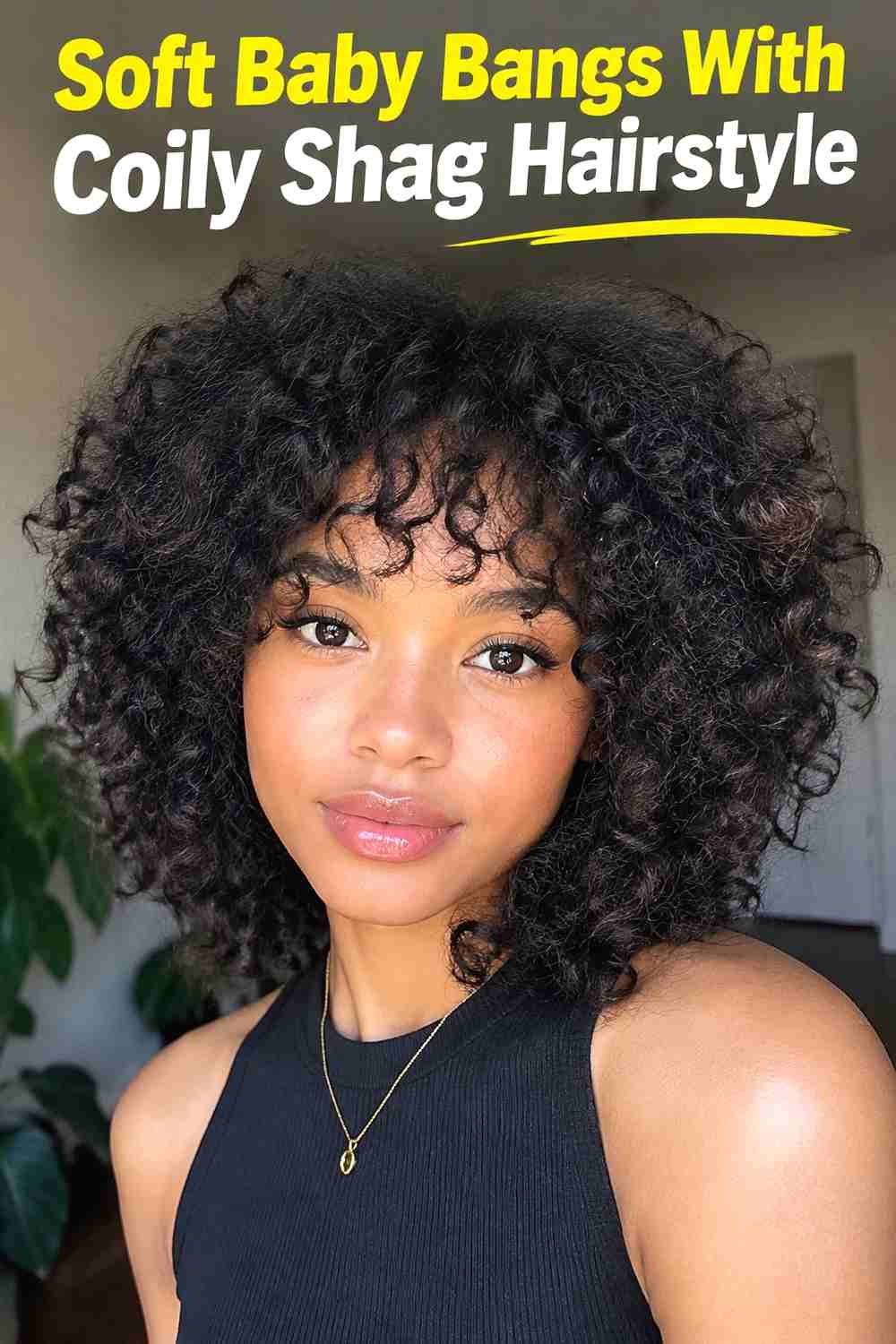
A coily shag with soft baby bangs relies on careful layering that respects shrinkage and natural density. The fringe can sit in small coils across the forehead, while shorter crown sections create lift and longer pieces maintain fullness through the sides and back. Because tighter coils may contract significantly, the shape should be designed around the hair in its normal worn state rather than only when stretched. The bangs do not need to form a perfectly even line; a softly irregular edge often works naturally with coily texture. Preserving enough weight through the perimeter is also important, particularly when the hair is fine or medium in density, so the shag retains substance alongside its layered movement.
Hair Type & Length
This style is especially suited to coily textures that can maintain visible shape at shorter lengths. The exact fringe length should be customized according to shrinkage and coil tightness.
12. Baby Bangs With Face Framing Curly Shag Hairstyle
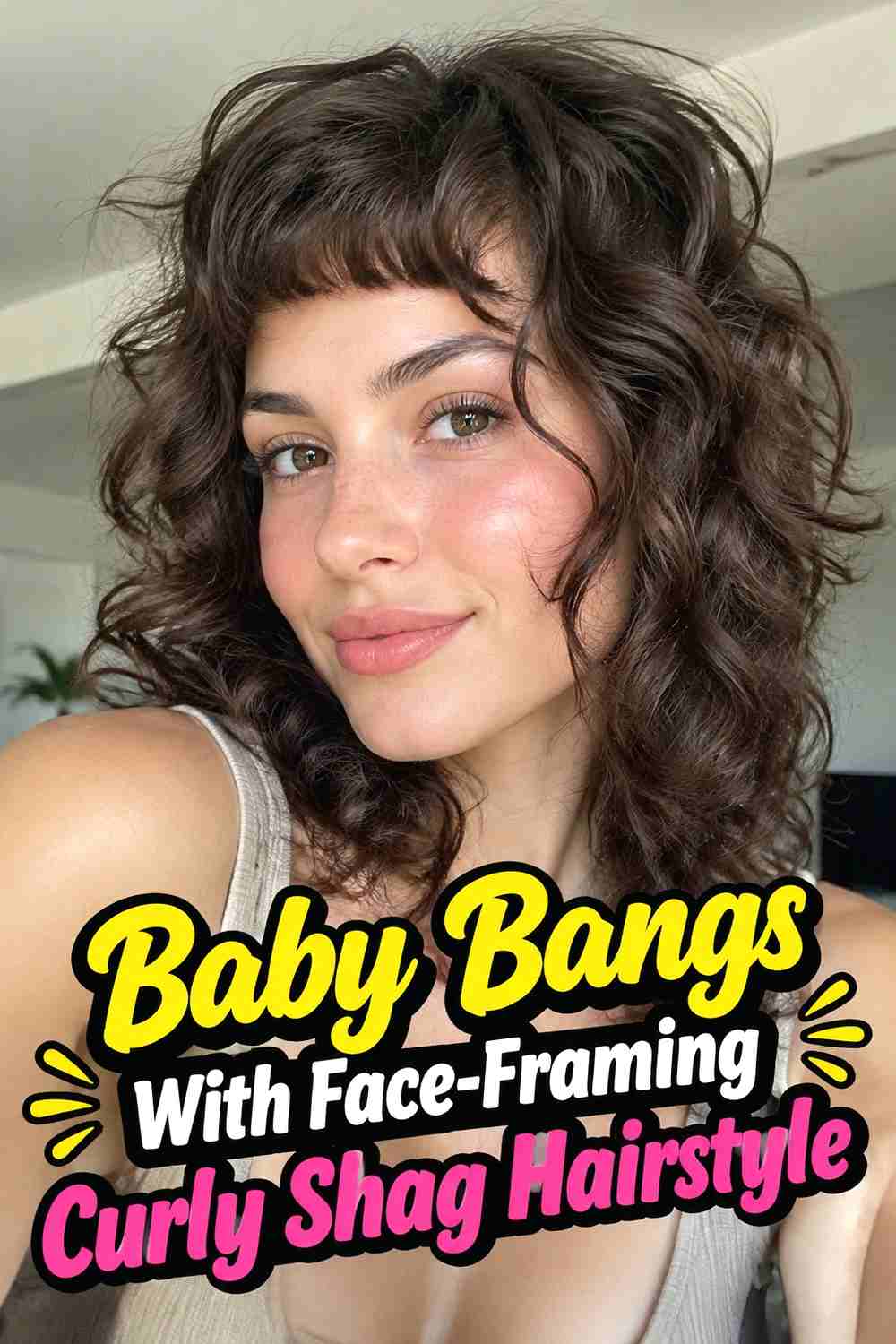
Face-framing layers create a smooth visual bridge between baby bangs and the longer body of a curly shag. The shortest fringe curls sit above the brows, then gradually lengthen around the temples, cheekbones, and jaw before merging into the main layers. This progression keeps the haircut cohesive and can make the front feel softer than a baby fringe paired with one-length sides. The rest of the shag can remain medium or long, with enough crown layering to encourage lift and separation. This version is particularly versatile because the face-framing curls can be styled forward for more texture or directed outward when you want a more open appearance around the face.
Why It Works
Graduated front layers connect the very short fringe to the longer haircut, reducing abrupt transitions and giving the whole shag a more fluid silhouette.
13. Side Swept Baby Bangs With Curly Shag Hairstyle

Side-swept baby bangs offer a softer alternative to a straight-across short fringe. The bangs remain compact in length but are encouraged to fall slightly toward one side, creating an asymmetrical front that works naturally with a layered curly shag. This can be especially useful when the hair already has a strong growth direction or off-center part. Layers around the crown and temples should reinforce that movement instead of fighting it, allowing the curls to flow diagonally across the front before opening into the fuller shag shape. The finish can stay soft and casual, with a few shorter pieces sitting independently rather than forcing every bang curl into the same direction.
Styling Notes
Set the fringe in its preferred direction while damp, then avoid excessive repositioning once dry. Curly baby bangs often hold their shape better when styled with the natural growth pattern.
14. Soft Baby Bangs With Fine Hair Curly Shag Hairstyle
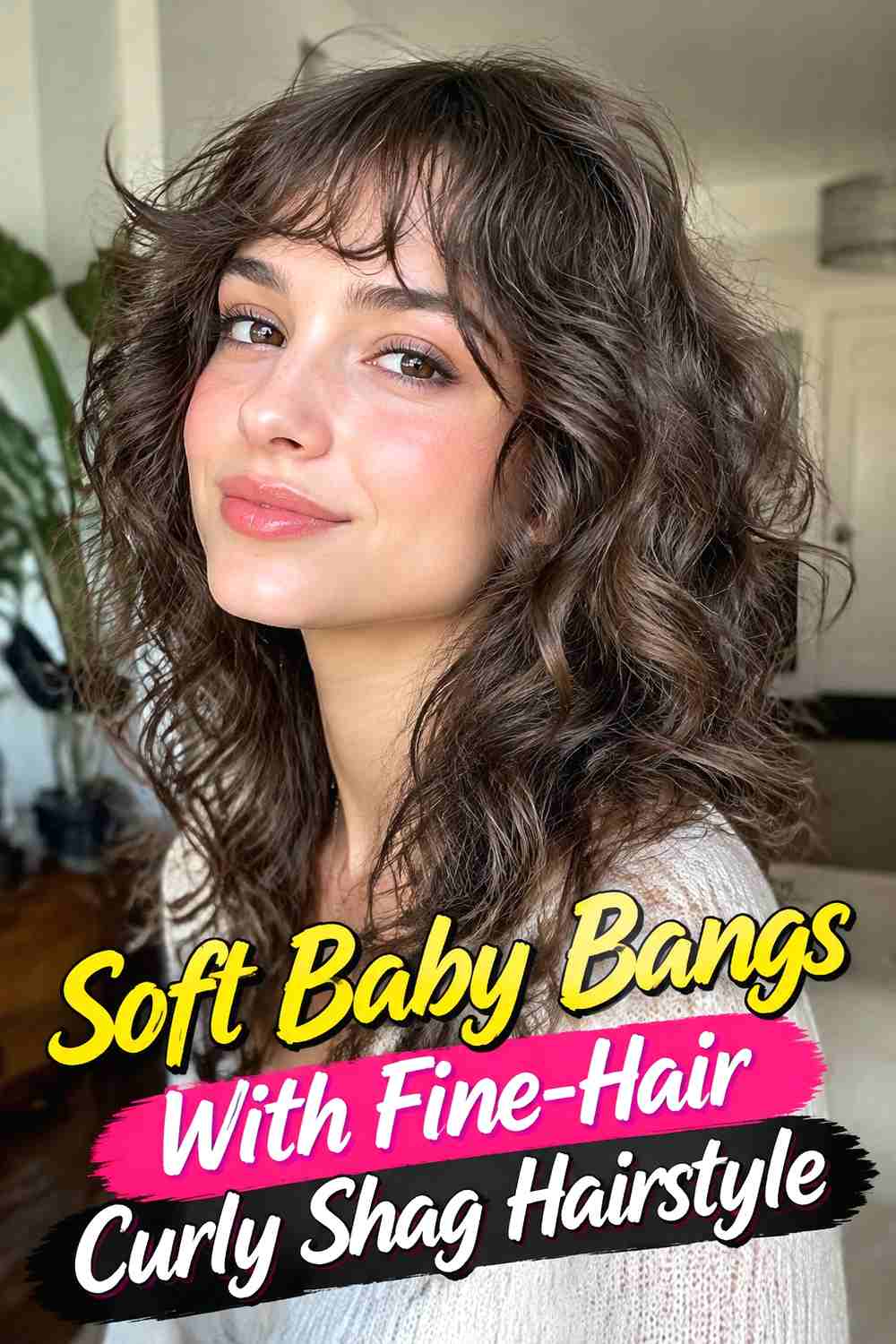
Fine curly hair can wear a shag successfully when the layers are placed with restraint. Soft baby bangs create definition at the front without requiring a large amount of hair, while selective crown layers can encourage movement and lift. The key is avoiding excessive thinning throughout the lower sections, since too many short pieces may reduce the visual density of the perimeter. Keeping the bangs airy and slightly separated can also prevent them from appearing heavy in comparison with the rest of the hair. A shorter or medium shag often works well because the reduced length can help curls spring upward. Lightweight styling products are useful for supporting definition without flattening the finer texture.
Pro Tip
Ask for fewer, strategically placed layers rather than maximum texture. Preserving enough weight can make fine curls appear more substantial while still delivering the shag silhouette.
15. Soft Baby Bangs With Thick Curly Shag Hairstyle
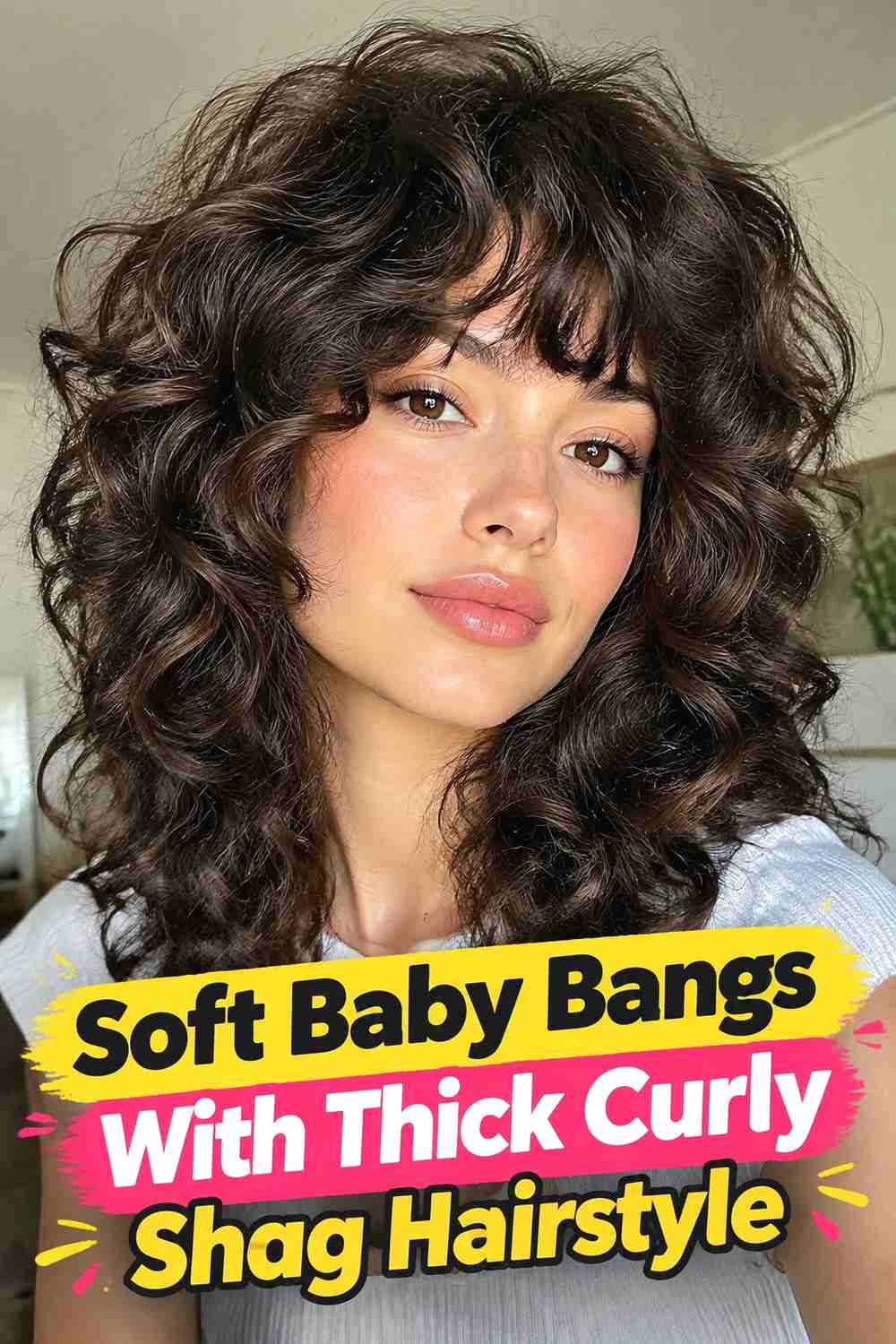
Thick curly hair gives a shag plenty of natural volume, but thoughtful layering is important to prevent the silhouette from becoming excessively wide or heavy. Soft baby bangs remove some visual weight from the front while introducing a light, textured focal point above the brows. Through the crown and interior, strategic layers can encourage movement and reduce bulk without leaving the ends overly thin. The face-framing sections should connect smoothly with the fringe so the front maintains balance against the fullness of the rest of the hair. This version can look especially dramatic when the natural curl pattern is allowed to expand, creating a strong layered shape with visible depth from roots to ends.
Hair Type & Length
Dense curls can support more internal layering than fine hair, but the exact amount should depend on curl pattern, shrinkage, and how much overall volume you want to keep.
16. Soft Baby Bangs With Curly Wolf Shag Hairstyle
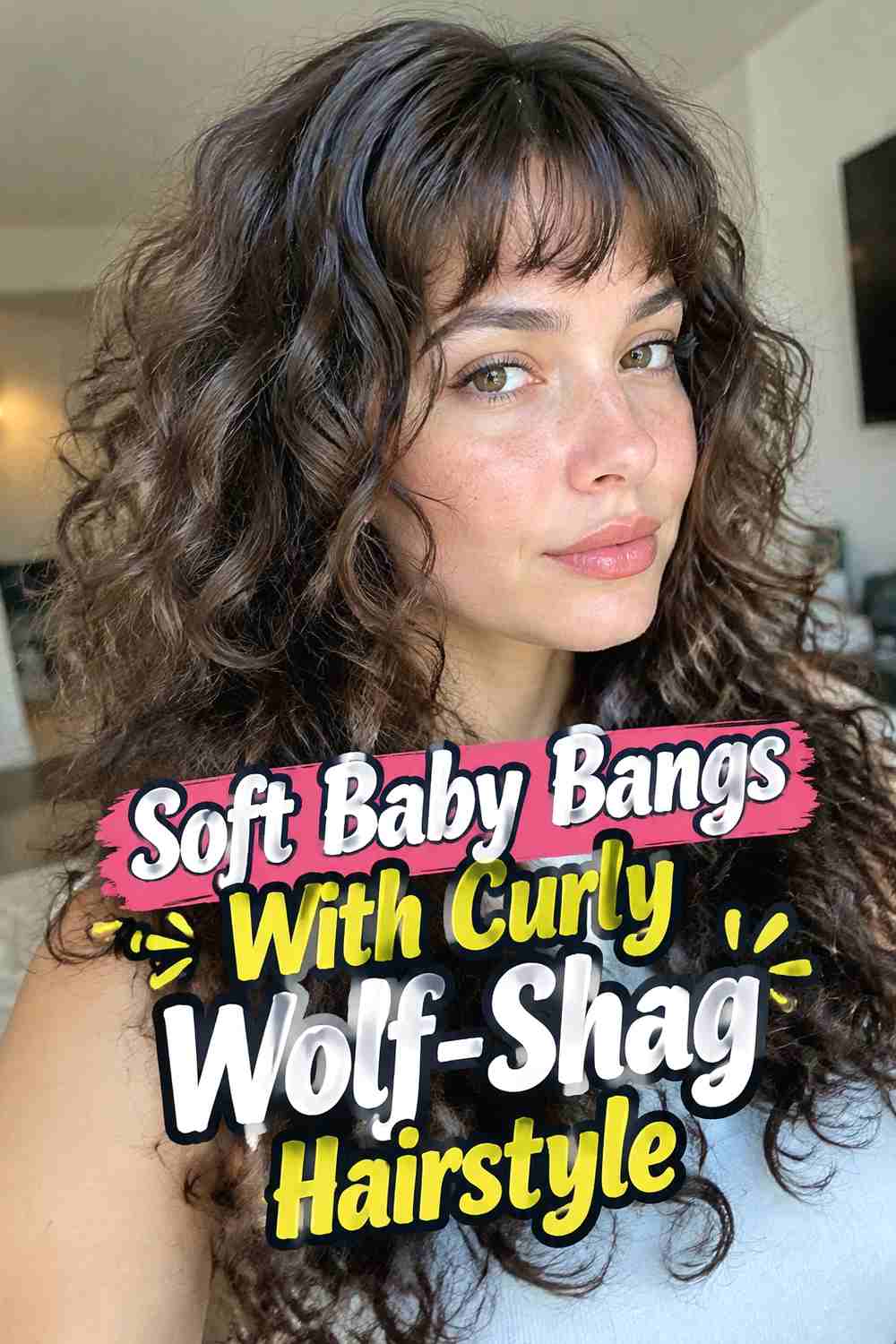
A curly wolf-shag combines the crown-heavy layering of a shag with a slightly more exaggerated difference between shorter upper sections and longer lower lengths. Soft baby bangs complement that contrast by creating an even shorter point at the front. The crown can stay lively and full, while the sides narrow gradually into longer curls around the neck and shoulders. Keeping the baby bangs soft rather than blunt prevents the haircut from feeling overly harsh against all that texture. This version works best when the layers are adapted to the natural curl pattern instead of copied from a straight-haired wolf cut. The goal is controlled movement, not disconnected pieces or excessively thin ends.
Best For
This look suits anyone who wants a more dramatic layered silhouette with visible crown volume and length remaining through the lower sections.
17. Soft Baby Bangs With Messy Curly Shag Hairstyle
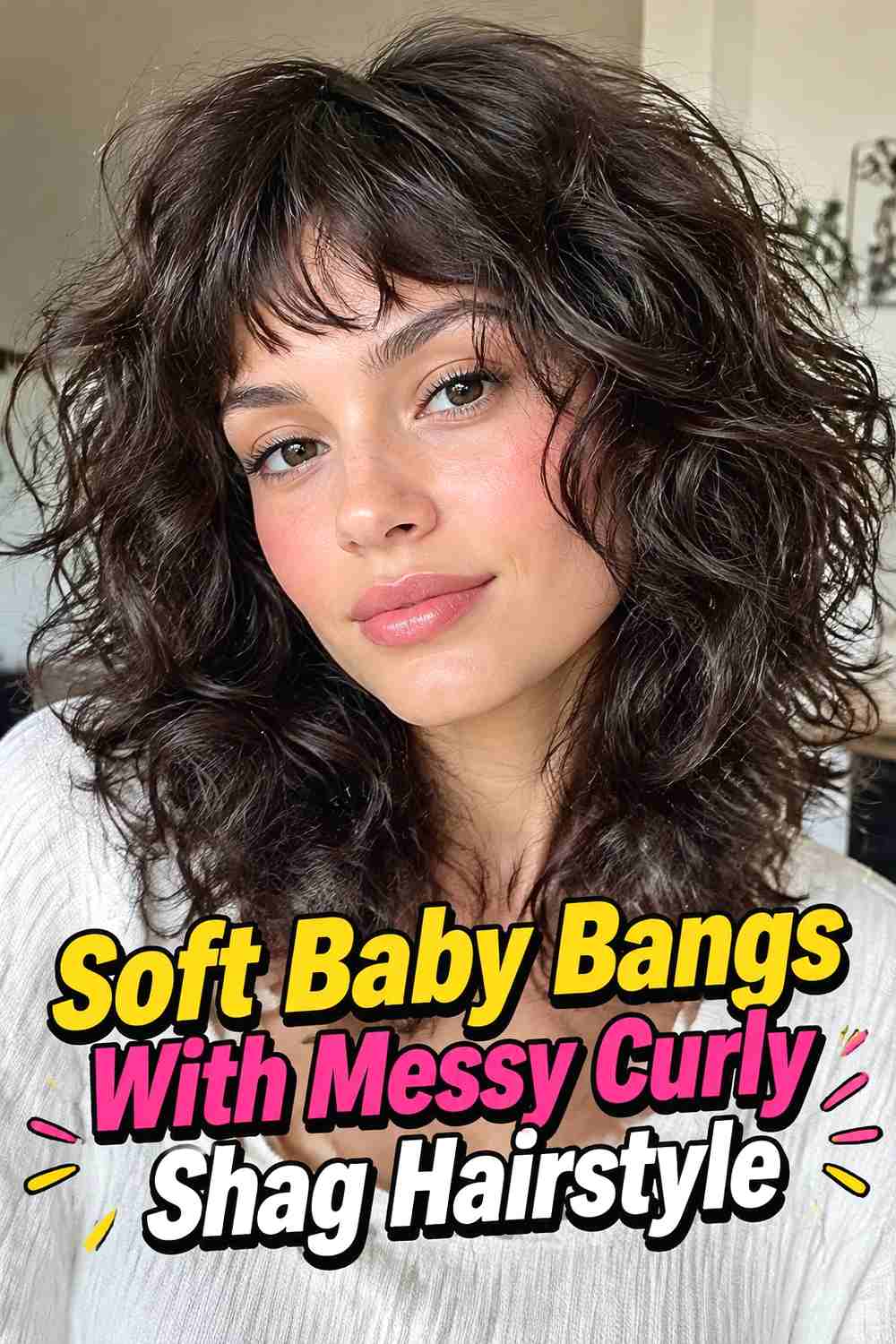
A messy curly shag celebrates imperfect separation, natural volume, and movement, making soft baby bangs an easy finishing detail. The fringe can fall in uneven little curls across the forehead while the rest of the haircut expands through short crown layers and longer textured pieces. Some curls may be more defined than others, and a small amount of natural frizz can help the style feel relaxed instead of overworked. The haircut still needs structure beneath the apparent messiness, particularly around the face and perimeter, so the silhouette holds together. This version is a good reminder that a curly shag does not need every strand meticulously styled to look intentional and expressive.
Styling Notes
Use minimal manipulation once the hair is dry. Gently fluff the roots and separate only a few curls to build volume while keeping the organic, slightly undone texture intact.
How to Choose the Right Look
Start with your natural curl pattern and shrinkage. Tighter curls and coils may require more length in the baby bangs than expected when wet, while looser curls can sometimes sit closer to their stretched length. Planning the fringe around its fully dry position helps avoid making it shorter than intended.
Next, consider density. Fine curly hair generally benefits from fewer layers and a lighter fringe so the perimeter keeps enough fullness. Thick hair can support stronger crown layering and more internal weight removal, although the ends still need enough density to maintain a balanced shag shape.
Length changes the overall mood as well. Short curly shags feel lively and compact, shoulder-length versions offer versatility, and long shags create a more dramatic contrast between the baby bangs and lower lengths. If you like volume, feathered, retro, wolf-shag, and thick-hair versions provide plenty of lift. For a softer finish, try wispy, face-framing, or side-swept bangs.
Finally, think about styling time. Air-dried and messy shags embrace natural variation, while defined curls may require more deliberate product application and sectioning. Choose the version that fits how you realistically wear your hair most days.
Final Thoughts
Soft baby bangs can give a curly shag extra personality without taking away from its natural movement. The best version depends on how short you want the fringe, how much volume your curls naturally create, and how dramatic you want the layering to feel. Keep shrinkage, density, and everyday styling habits in mind so the finished cut looks intentional both freshly styled and on ordinary wash days.
FAQs
1. Can curly hair really work with baby bangs?
Yes. Baby bangs can work beautifully with curls when their length is planned around shrinkage and the natural curl pattern rather than cut according to stretched hair alone.
2. Are baby bangs difficult to maintain with a curly shag?
They can require more frequent small trims than the rest of the shag. Daily styling may be simple if the fringe is cut to follow your natural curl direction.
3. What length curly shag works best with baby bangs?
Short, shoulder-length, and long shags can all work. Shorter cuts emphasize the fringe, while longer shags create a stronger contrast between the compact bangs and flowing layers.
4. Can fine curly hair wear a shag with baby bangs?
Yes, but lighter layering is usually more practical. Preserving density through the perimeter and keeping the fringe soft can help the haircut avoid looking overly thin.
5. Should curly baby bangs be cut wet or dry?
Because curl shrinkage can change the finished length significantly, evaluating the bangs in their natural dry state is especially useful when determining how short they should ultimately be.
CTA
Save your favorite soft baby bang and curly shag ideas, share the looks you love, and explore more textured haircut inspiration for your next style.