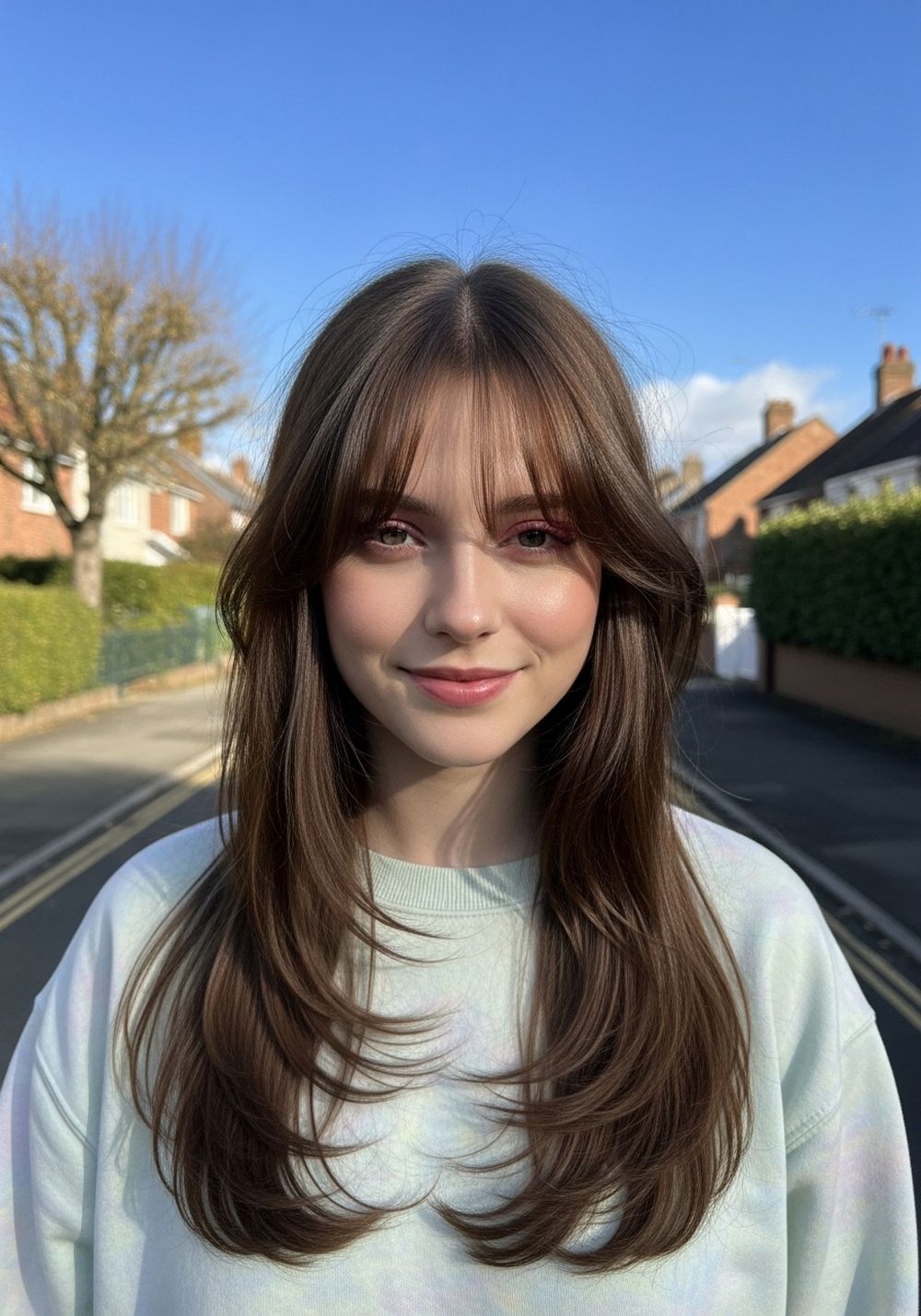
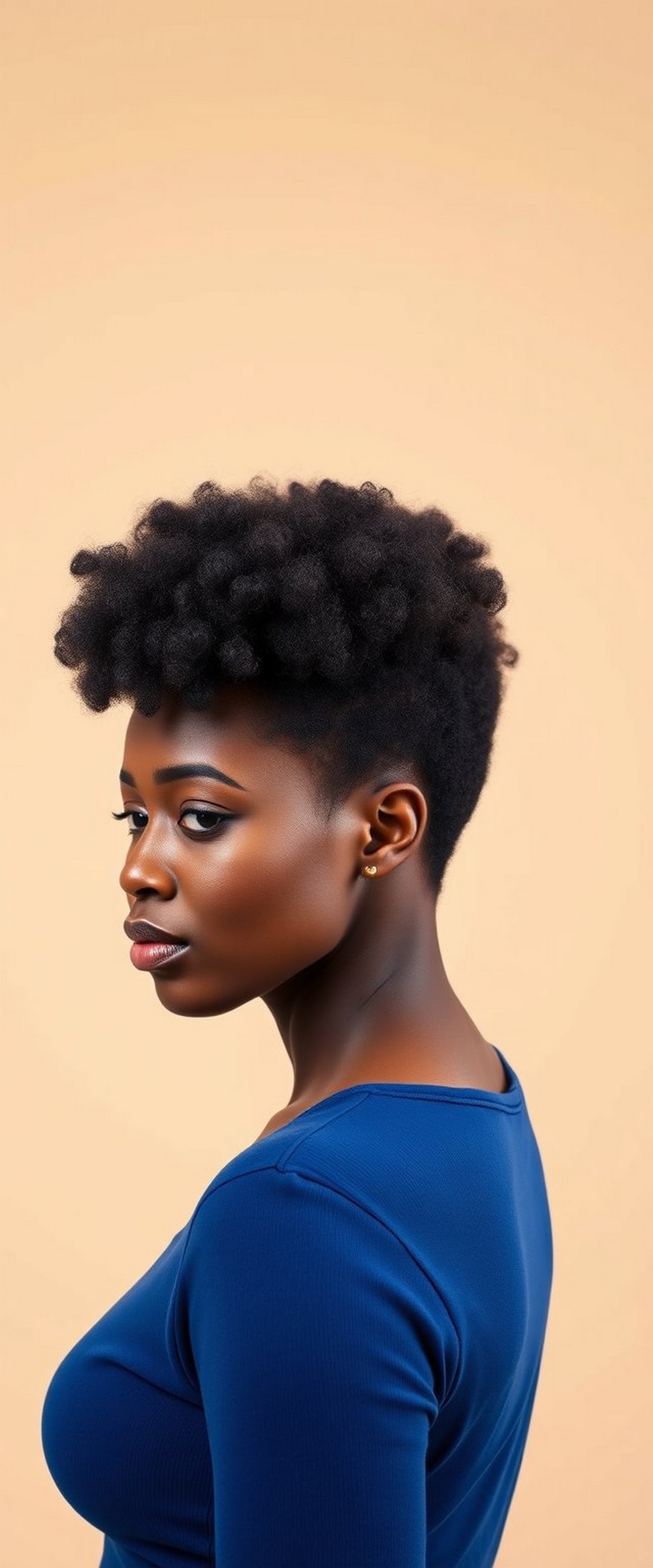
13 Octopus Haircut Ideas for Fine Hair
Airy crown layers and longer flowing ends make these fine-hair octopus cuts playful, dimensional, and easier to wear without sacrificing too much fullness.
The octopus haircut is recognized by its fuller, rounded upper section and longer layers extending below it, creating a shape that loosely resembles a head with flowing tentacles. On fine hair, that contrast needs a lighter touch so the shorter crown pieces create movement without leaving the lower lengths sparse.
The best versions preserve density where it matters. A strong perimeter, longer tentacle layers, restrained crown shaping, and carefully selected fringe can give fine hair the octopus silhouette without excessive thinning. Length, natural texture, root volume, and daily styling time should guide how dramatic you make the shape.
Quick List
- Soft Octopus Cut With Airy Crown Layers Hairstyle
- Shoulder Length Octopus Cut Hairstyle For Fine Hair
- Long Octopus Cut With Wispy Tentacle Layers Hairstyle
- Octopus Cut With Curtain Bangs Hairstyle
- Octopus Cut With Wispy Bangs Hairstyle
- Face Framing Octopus Cut Hairstyle For Fine Hair
- Subtle Octopus Cut With Full Ends Hairstyle
- Side Parted Octopus Cut With Crown Volume Hairstyle
- Straight Octopus Cut With Soft Layers Hairstyle
- Wavy Octopus Cut With Piecey Layers Hairstyle
- Rounded Crown Octopus Cut Hairstyle For Fine Hair
- Octopus Lob With Lightweight Layers Hairstyle
- Tousled Octopus Cut With Feathered Ends Hairstyle
1. Soft Octopus Cut With Airy Crown Layers Hairstyle
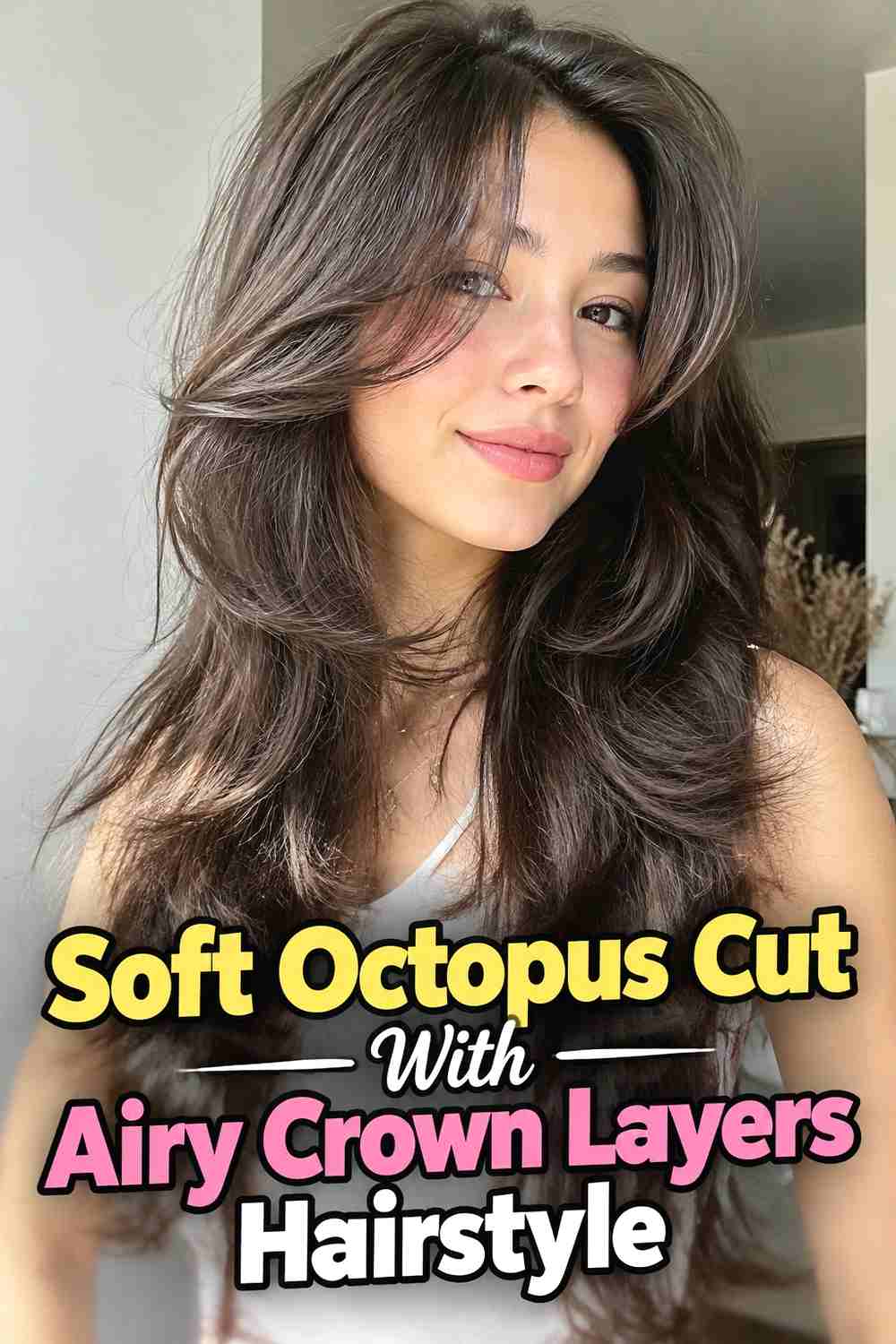
A soft octopus cut is one of the easiest ways to adapt this layered shape to fine hair. Instead of creating a dramatically disconnected crown, the upper layers stay light and blended, adding gentle lift before flowing into longer pieces below. The ends should remain relatively substantial so the haircut still looks full from the back and sides. Face-framing sections can begin near the cheekbones or jaw to reinforce the rounded upper silhouette without taking too much density from the perimeter. A soft blowout helps the crown expand slightly while the longer layers fall more vertically. The result keeps the octopus influence visible but avoids an overly shredded or sparse finish.
Styling Notes
Lift the crown with a medium round brush while keeping the lower lengths smoother and less voluminous to emphasize the two-part silhouette.
2. Shoulder Length Octopus Cut Hairstyle For Fine Hair
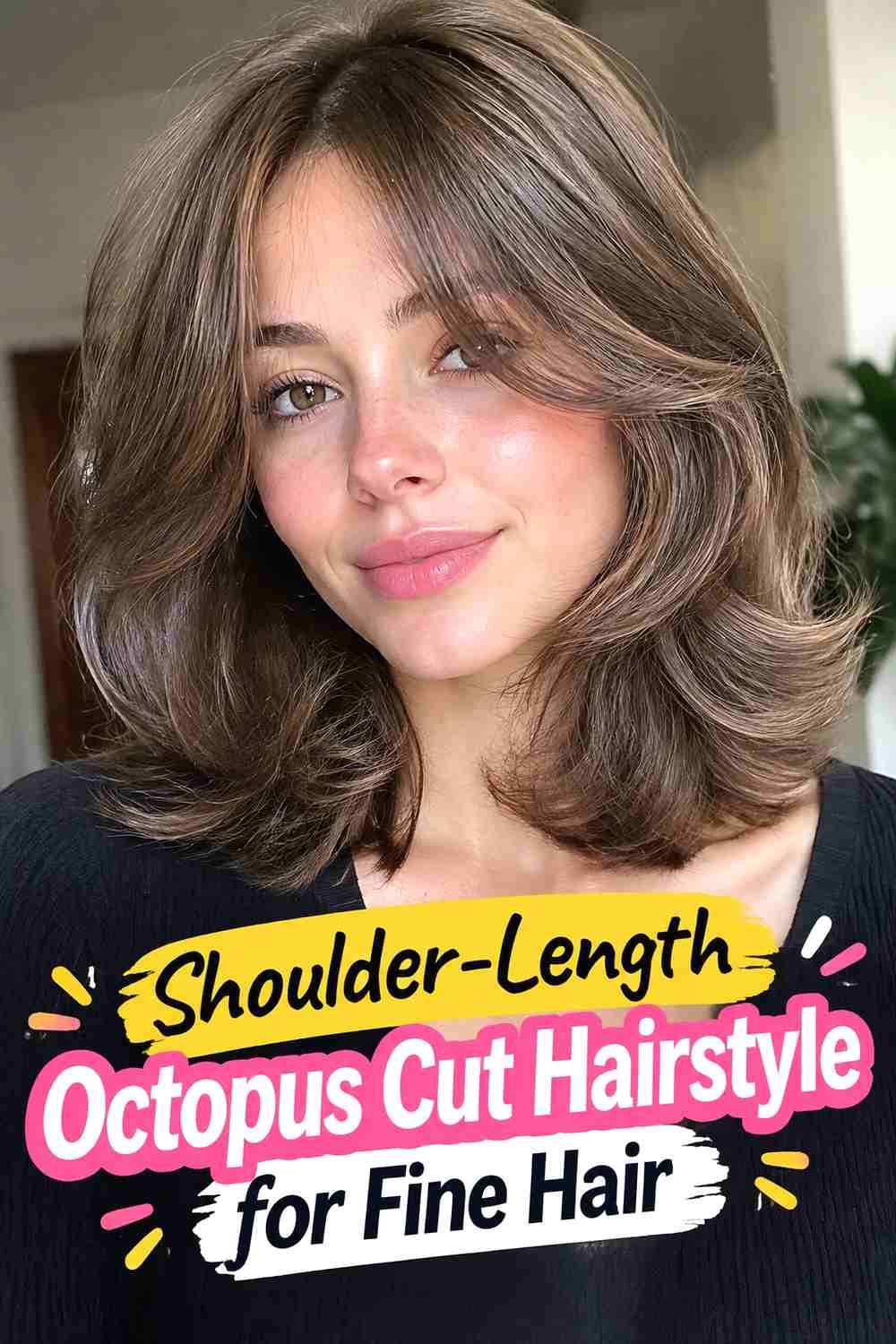
A shoulder-length octopus cut keeps the contrast between the fuller top and longer lower pieces compact enough to work well on fine hair. Crown layers can sit around the cheekbones and jaw, then gradually transition into a shoulder-skimming perimeter that retains useful weight. This length avoids the drag that very long hair can place on finer roots, helping the upper section maintain some natural lift. The tentacle-like ends should remain soft and separated rather than aggressively thinned. Slight outward bends through the upper layers can make the shape more visible, while the lower section stays straighter or gently textured. It is a practical choice if you want noticeable layering without maintaining long lengths.
Best For
This version suits fine hair that benefits from a lighter overall length but still needs enough perimeter density to look substantial.
3. Long Octopus Cut With Wispy Tentacle Layers Hairstyle
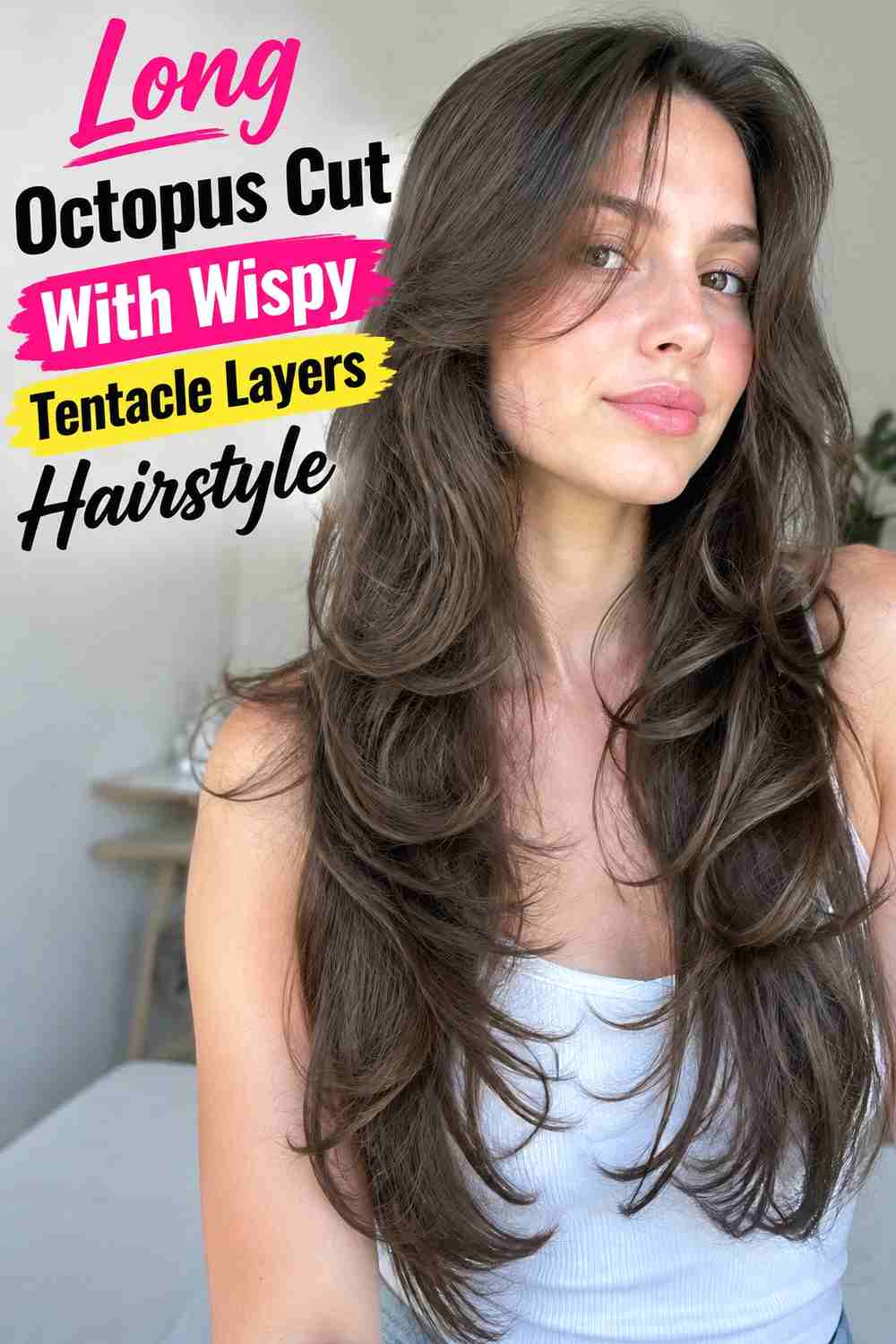
A long octopus cut creates stronger contrast between a shaped crown and flowing lower lengths, but fine hair needs careful layering to keep the ends from looking sparse. The wispy tentacle pieces should be long, connected, and concentrated mainly through selected sections rather than cut throughout the entire perimeter. Crown layers can begin around the jaw or collarbone instead of very high on the head, creating movement without removing too much density. A soft bend through the shorter pieces helps distinguish them from the longer hair underneath. Leaving the longest sections relatively full maintains the impression of length while still giving the haircut the separated, flowing finish associated with the octopus shape.
Pro Tip
Ask for fewer, longer lower layers instead of extensive thinning if keeping the ends visibly full is a priority.
4. Octopus Cut With Curtain Bangs Hairstyle
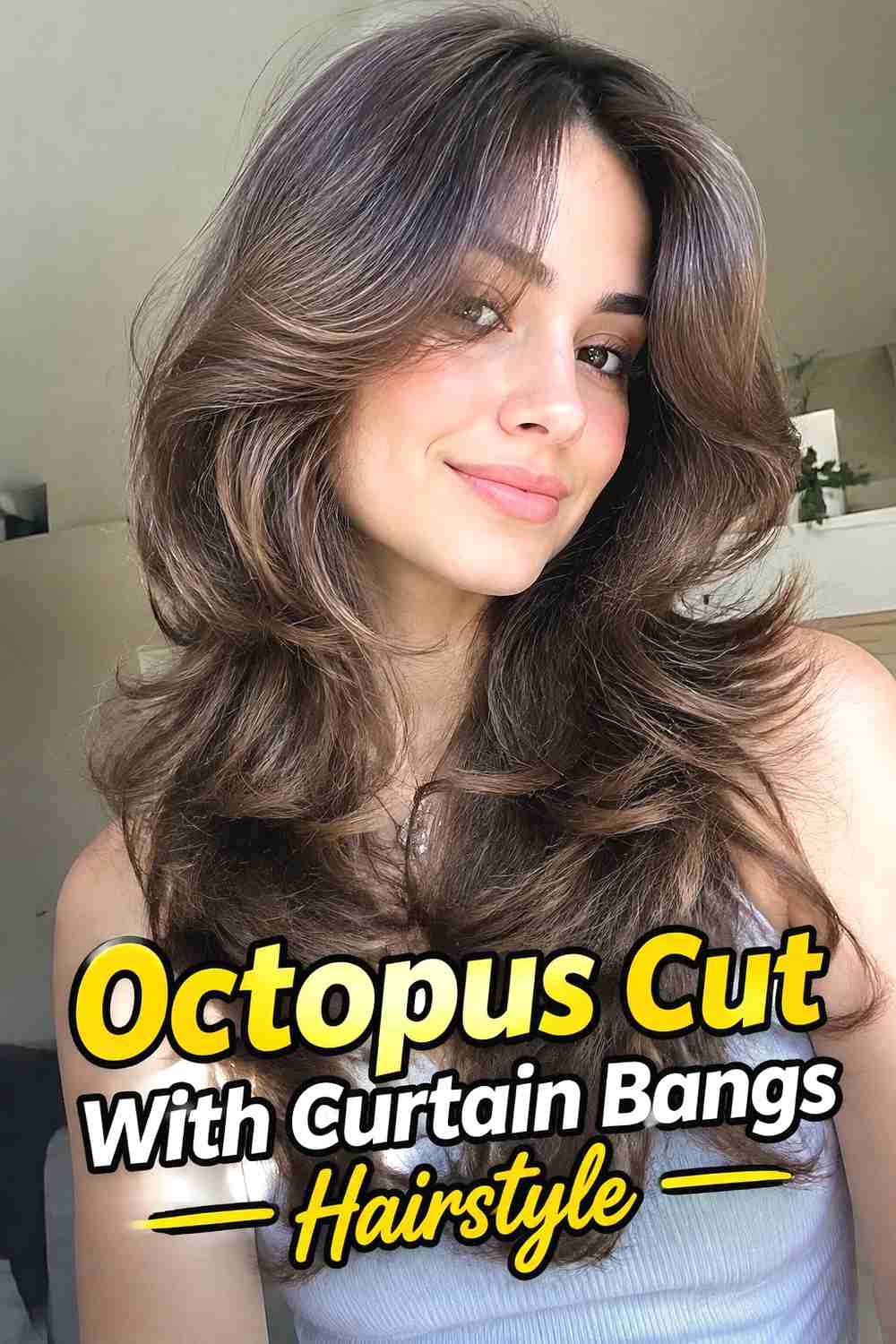
Curtain bangs complement an octopus haircut because their sweeping outer edges can flow directly into the rounded crown layers. On fine hair, keeping the fringe airy prevents too much density from being removed from the temples and sides. The shortest center pieces can sit near the brows, while longer sections stretch toward the cheekbones before joining the main layering. Crown pieces should remain soft and movable, and the lower lengths can stay comparatively full. A blowout that directs the curtain fringe and upper layers away from the face makes the octopus silhouette clearer without requiring excessive volume. This version provides plenty of front movement while preserving a stronger perimeter through the back.
Wear & Maintenance
Curtain bangs grow into the surrounding face-framing layers relatively smoothly, although occasional trims help maintain their intended center length and sweep.
5. Octopus Cut With Wispy Bangs Hairstyle
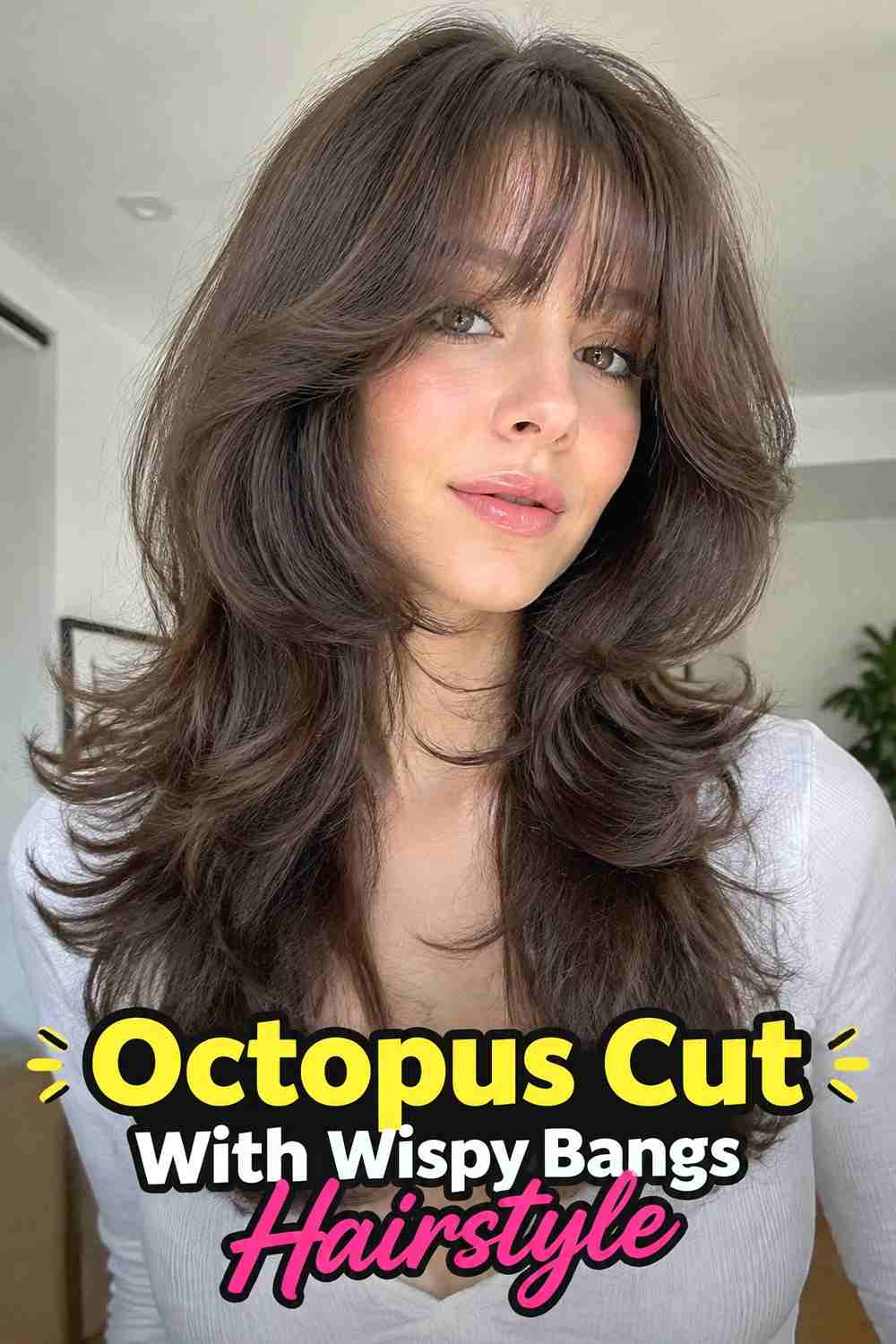
Wispy bangs give the octopus cut a light front detail that works particularly well with fine hair. A small fringe section can fall softly around the brows without taking a large amount of hair away from the crown. Behind it, shorter layers create the fuller upper portion of the haircut, while longer pieces extend toward the shoulders or below. The transitions should feel intentional but not sharply disconnected, especially if the hair is naturally straight. Keeping the lower edge relatively dense balances the lighter fringe and crown texture. This cut can be styled with a smooth finish for a cleaner interpretation or softly tousled to bring out more separation between the layers.
Why It Works
The light fringe adds detail without using much density, leaving more hair available to maintain fullness through the crown and perimeter.
6. Face Framing Octopus Cut Hairstyle For Fine Hair
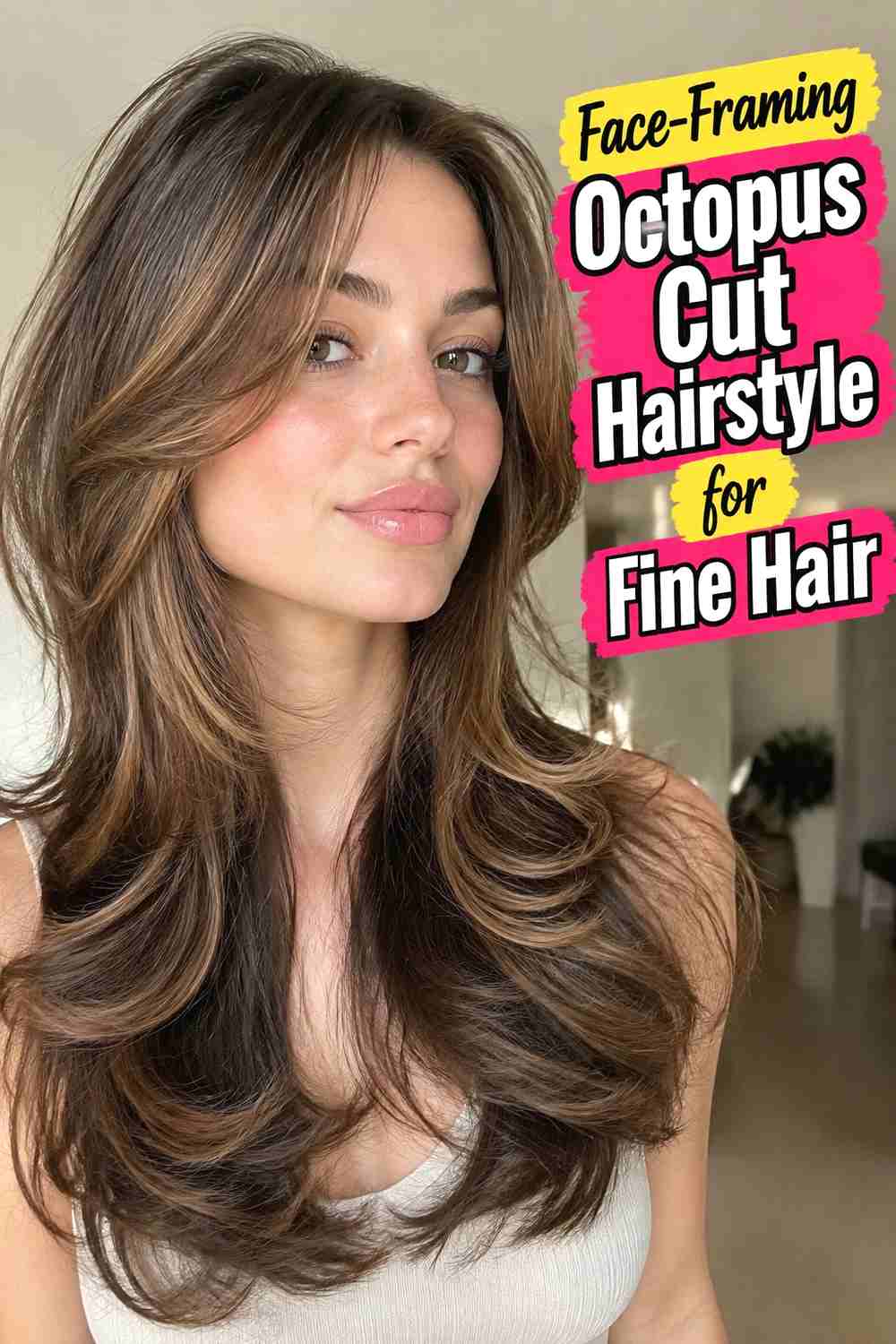
Face-framing layers can create much of the octopus effect without heavily layering the entire head. Shorter pieces around the cheeks, jaw, and collarbone build a rounded upper frame, while the back stays longer and fuller. This placement is especially useful on fine hair because it concentrates movement where it is visible without sacrificing too much density from the lower perimeter. The front sections can be styled outward to create width around the upper shape, while the longest strands remain smoother underneath. The cut feels less dramatic from the back than a traditional octopus style, but the face-framing view still delivers the distinctive short-over-long effect in a more wearable, density-conscious way.
Best For
Choose this variation if you want obvious movement around the face while keeping most of your length and thickness through the back.
7. Subtle Octopus Cut With Full Ends Hairstyle
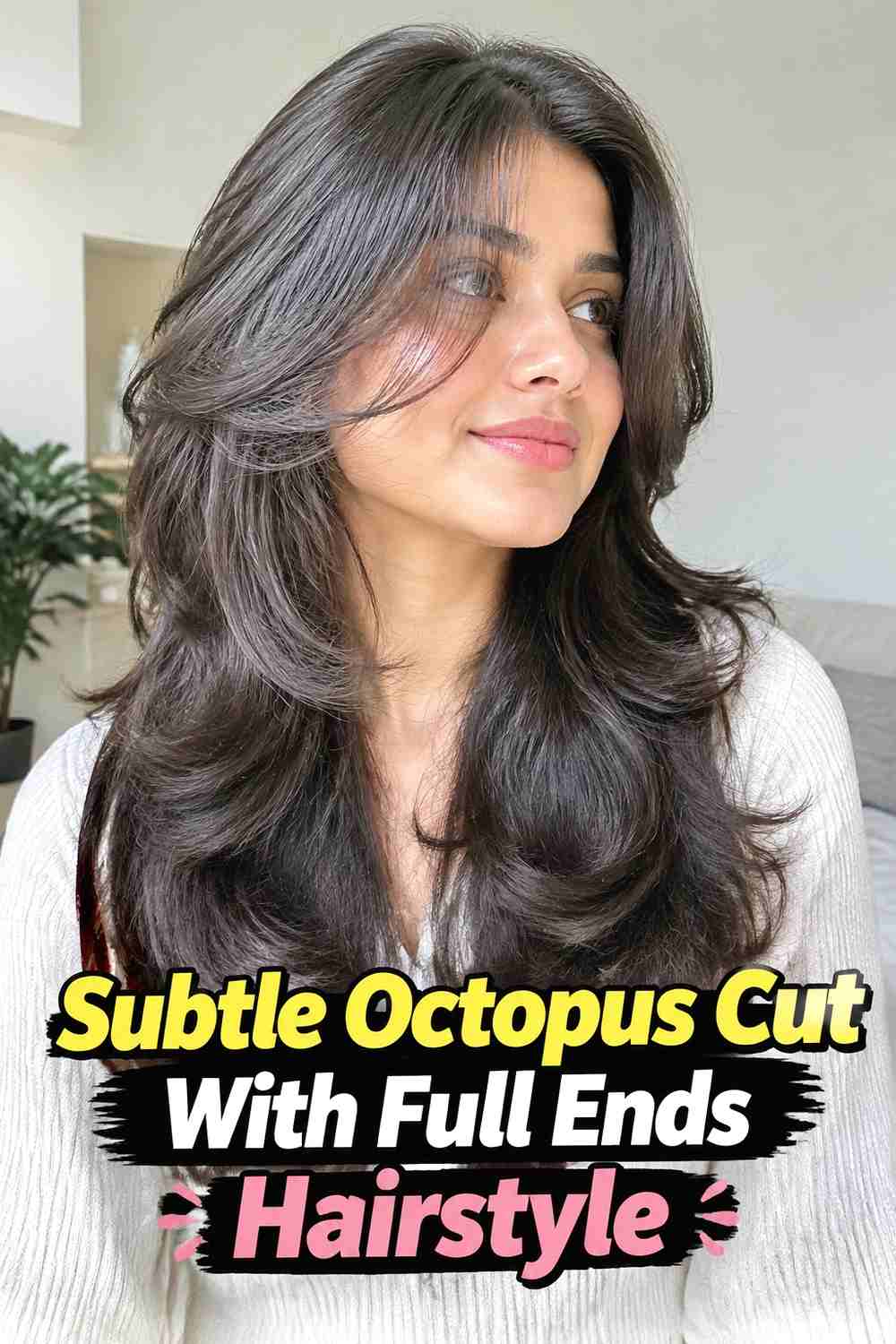
A subtle octopus cut keeps the upper layering restrained and places extra emphasis on maintaining full-looking ends. The crown may have only a few shorter pieces for lift, while longer layers begin lower around the jaw or shoulders. Instead of heavily feathered tentacles, the bottom maintains a stronger perimeter with selected sections extending into softer points. This is a particularly practical interpretation for fine hair because it captures the general rounded-top, elongated-bottom silhouette without removing unnecessary weight. Styling can make the octopus effect more visible: a round-brush blowout adds movement through the crown, while the ends can remain straighter and more compact for contrast.
Why It Works
A stronger perimeter protects visual density, while modest upper layering supplies just enough movement to reference the octopus shape.
8. Side Parted Octopus Cut With Crown Volume Hairstyle
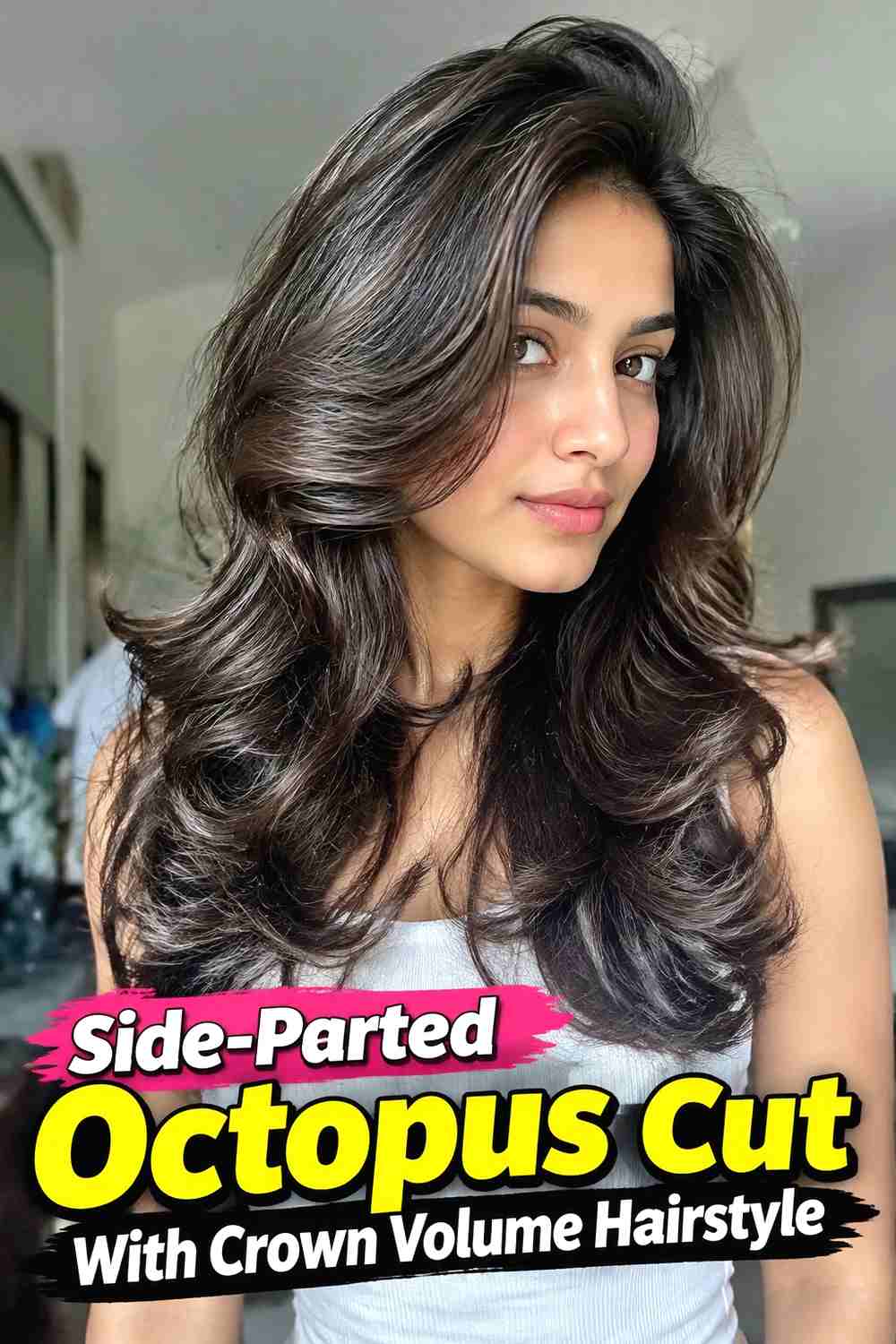
A side part can create additional lift through the crown, which makes it useful for fine hair that tends to sit flat. The heavier side gains natural height, while short upper layers help the crown form the rounded top associated with an octopus cut. Longer pieces below can remain sleek or softly bent, creating a visible difference between the fuller upper section and narrower lower lengths. The layering should stay controlled around the lighter side so it does not appear sparse when tucked behind the ear. This version works particularly well with a blowout because the side part and crown shaping can produce noticeable volume without requiring extreme teasing or very short layers.
Styling Notes
Set the side part before drying and lift the roots on the heavier side, then keep the lower lengths smooth to maintain contrast.
9. Straight Octopus Cut With Soft Layers Hairstyle
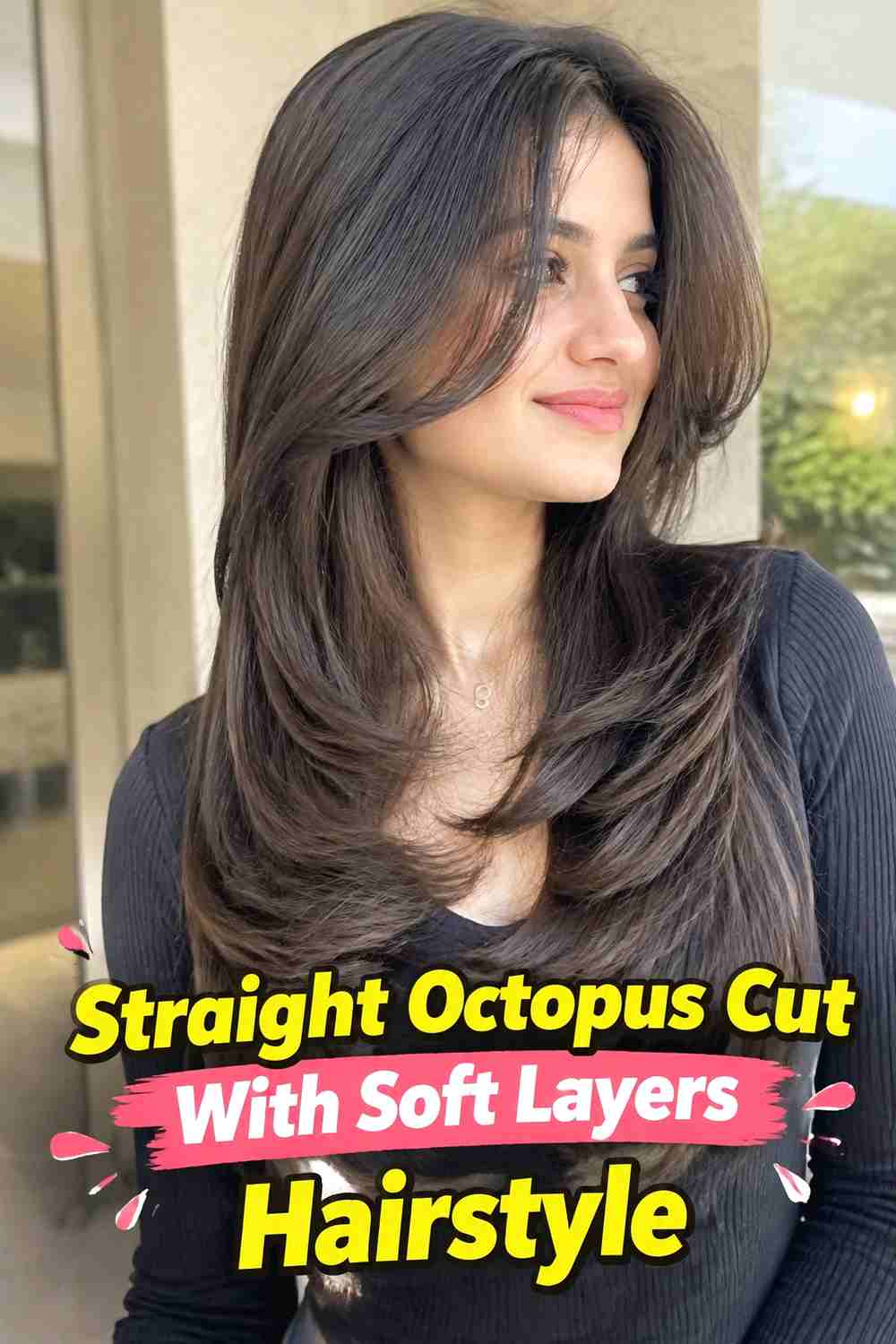
Straight hair shows the structure of an octopus haircut clearly, so fine strands need exceptionally smooth layer transitions. The crown should have enough shorter pieces to create shape without leaving obvious shelves, while longer sections underneath provide the signature extended silhouette. Keeping the lower perimeter full is especially important because straight styling makes thin ends easy to see. The face-framing layers can curve slightly inward or outward, giving the top movement while the remaining hair hangs more vertically. This version has a cleaner, more graphic quality than a wavy octopus cut and works best when the layering is precise, connected, and restrained rather than aggressively razored.
Pro Tip
If you wear your hair straight most days, ask for blended upper layers and minimal thinning through the longest sections.
10. Wavy Octopus Cut With Piecey Layers Hairstyle
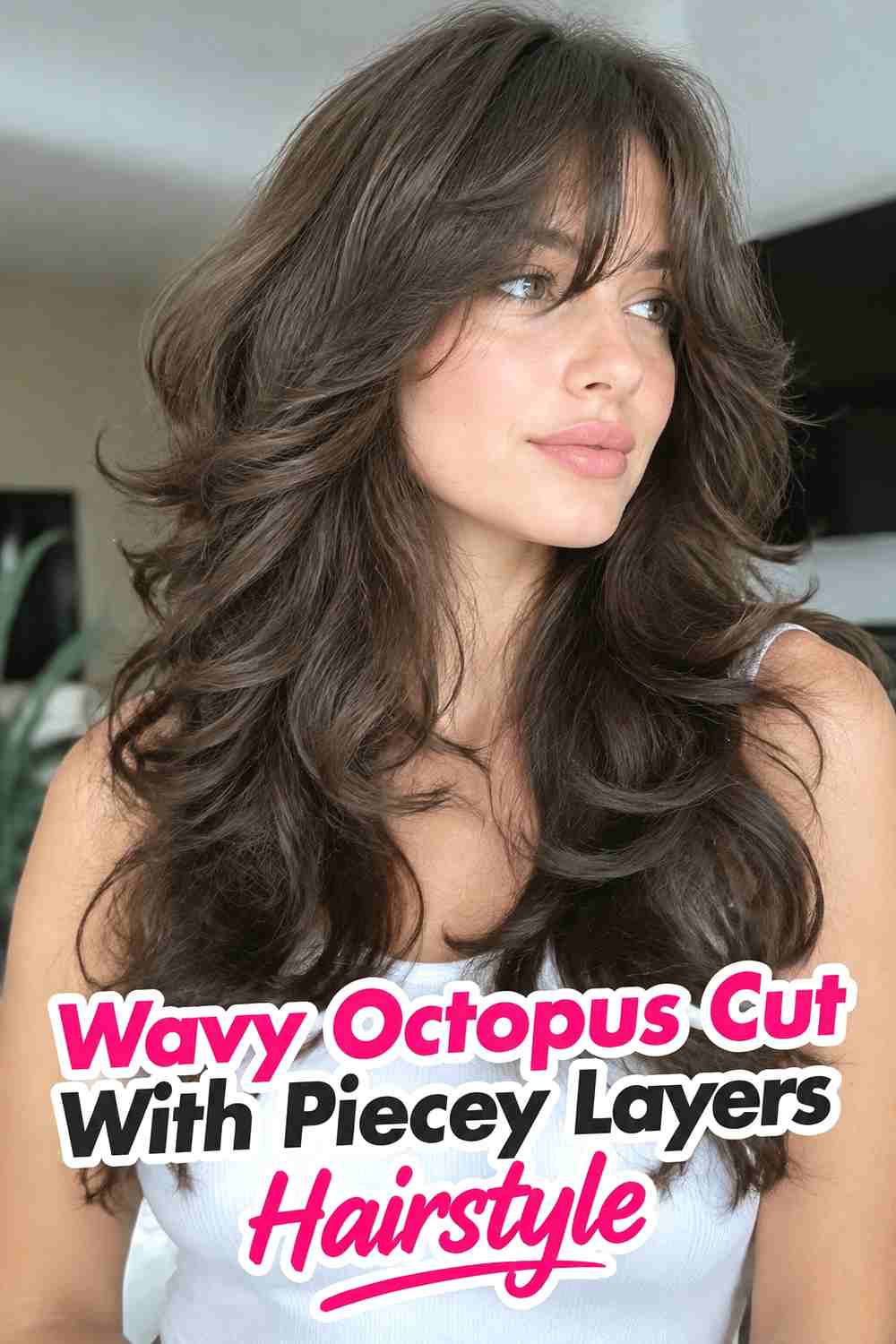
Soft waves can make an octopus cut look fuller because the bends create separation and movement between fine strands. Piecey crown layers form a lighter rounded shape near the top, while longer sections create narrower waves below. This natural contrast emphasizes the haircut without requiring an extreme difference in length. The ends should still retain enough density so the waves do not separate into overly thin sections. Loose, irregular bends work better than tightly uniform curls because they allow the various layer lengths to remain visible. A small amount of lightweight mousse can support the wave pattern and crown movement without weighing down the finer texture or making the ends stringy.
Hair Type & Length
Fine hair with a natural bend or soft wave can adapt especially well because the texture helps create dimension between shorter and longer layers.
11. Rounded Crown Octopus Cut Hairstyle For Fine Hair
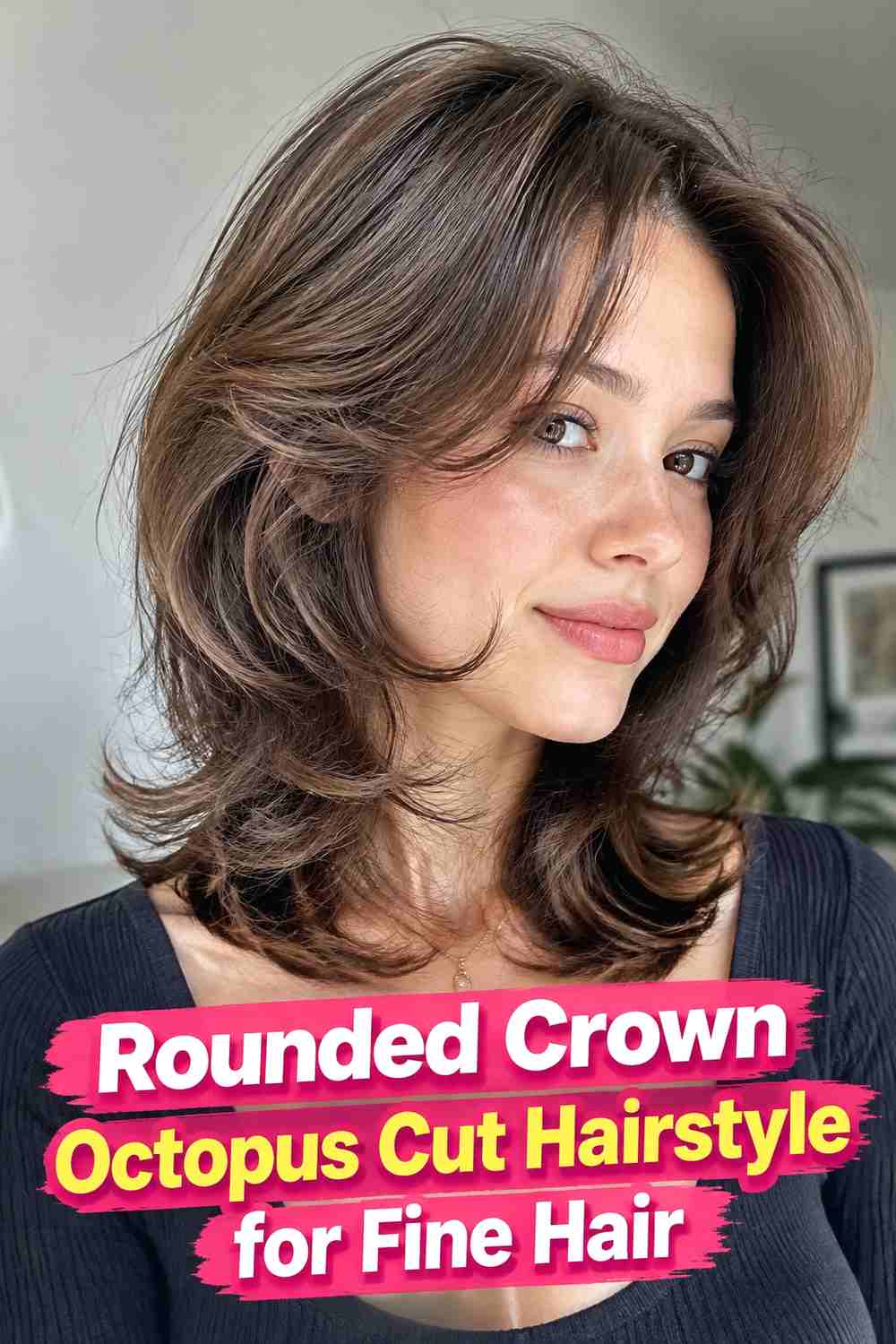
A rounded crown is one of the defining features of an octopus cut, but on fine hair it should be created with shape rather than excessive short layering. Gentle graduation through the top can give the hair a fuller contour, while longer pieces below fall close to the neck and shoulders. Face-framing sections may curve outward to reinforce the rounded shape before blending into the narrower lower layers. The result should look softly sculpted rather than heavily stacked. Root lift and a broad blow-dry curve can enhance the crown on styling days, while the underlying haircut still maintains enough lower density to look balanced when worn straighter.
Styling Notes
Use broad, gentle curves through the crown rather than small curls, which can make the short layers appear more disconnected from the long pieces.
12. Octopus Lob With Lightweight Layers Hairstyle
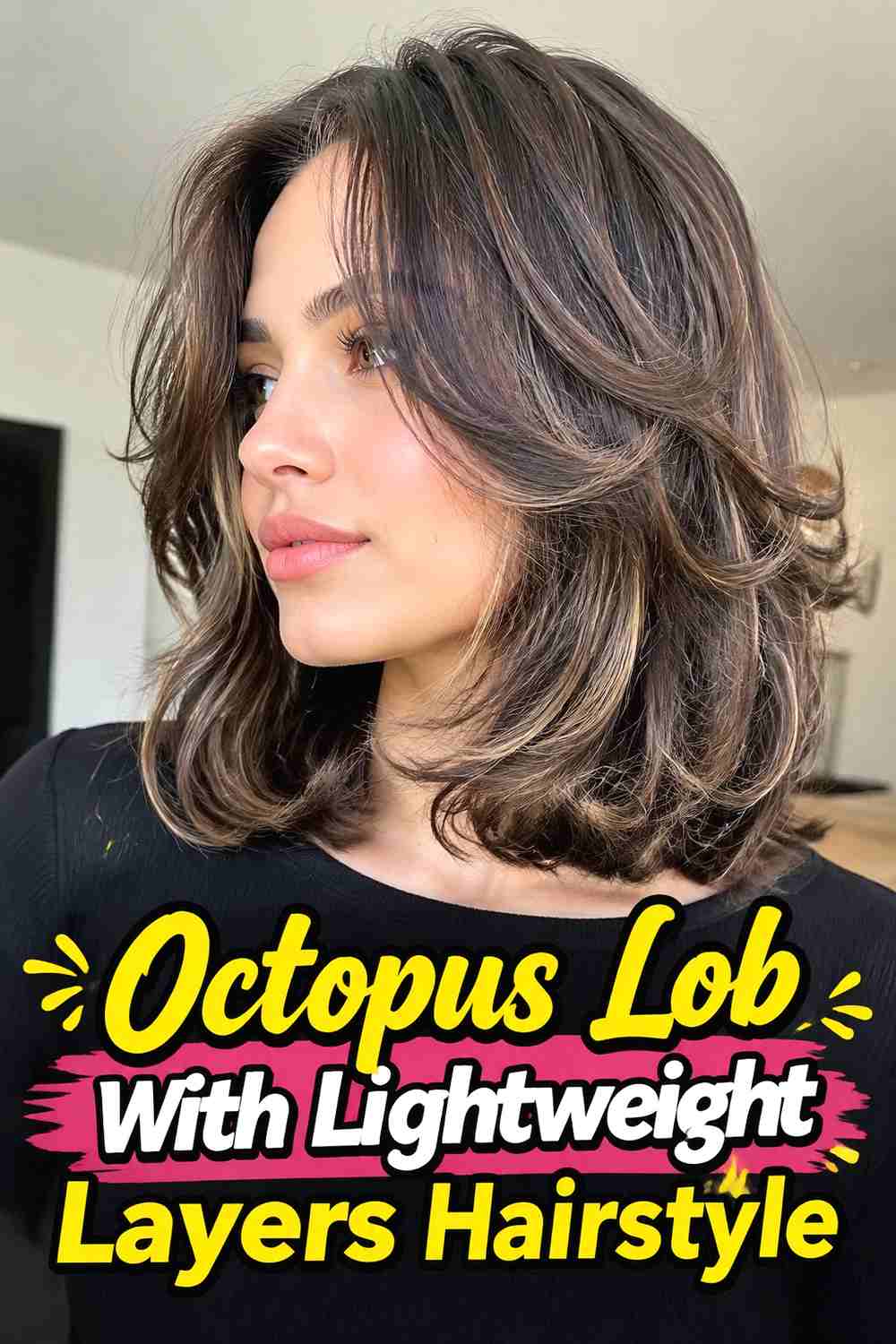
An octopus lob compresses the layered concept into a medium-length haircut, making it easier for fine hair to retain body. The upper section can sit around the jaw with light, rounded layers, while the lower pieces extend toward the collarbone. Because the difference in length is smaller than on a long octopus cut, the shape feels softer and easier to grow out. The perimeter should remain substantial, with lightweight layering focused mostly around the crown and front. This cut works well with a subtle blowout, soft waves, or a straighter finish, giving you several styling options without needing extensive length or dramatic thinning to make the octopus structure visible.
Best For
This is a useful choice if you want the octopus aesthetic in a more compact, fine-hair-friendly length that preserves movement and fullness.
13. Tousled Octopus Cut With Feathered Ends Hairstyle
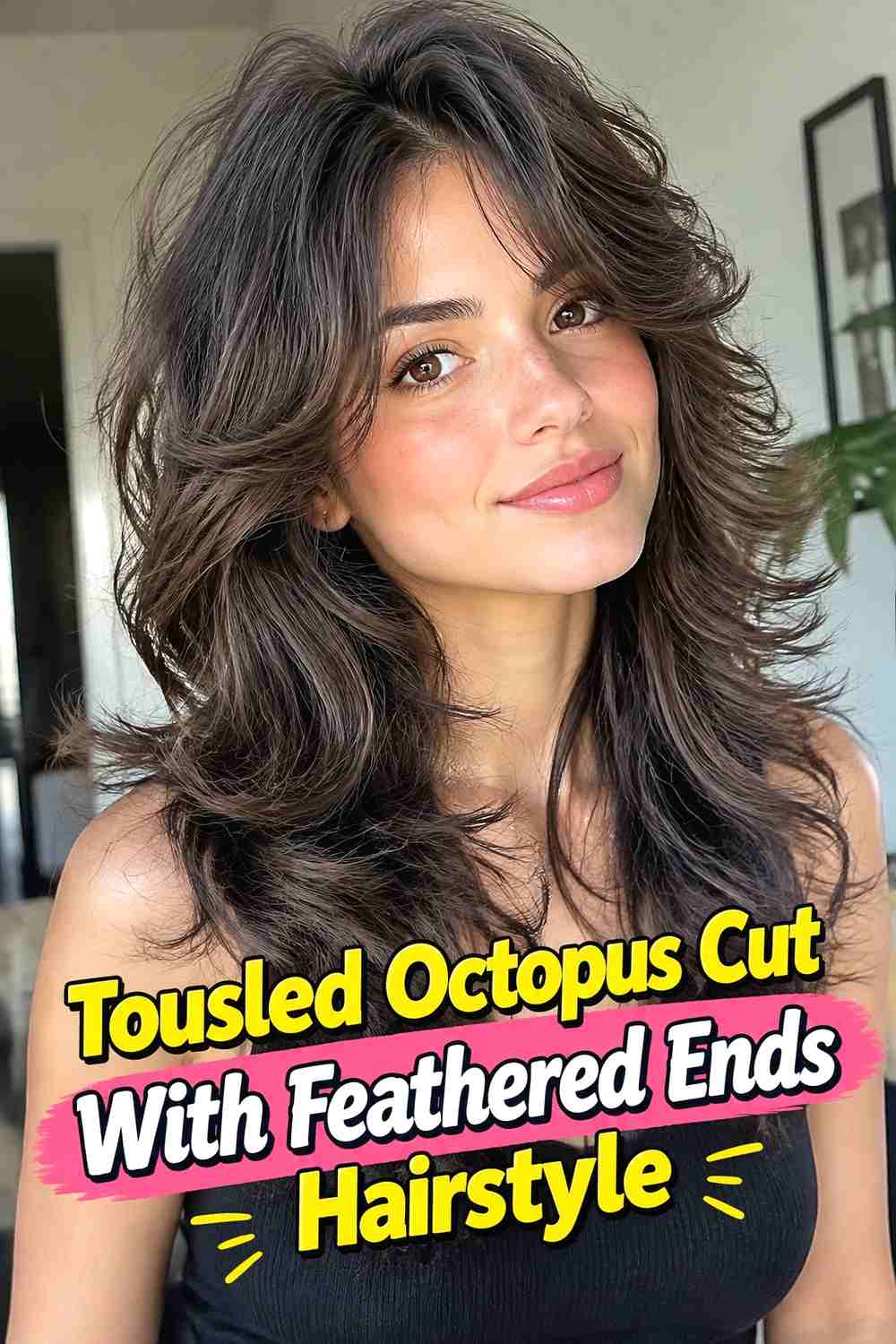
A tousled octopus cut uses loose separation and softly feathered ends to create a more relaxed version of the layered silhouette. Short crown pieces can move in slightly different directions, producing airy volume without requiring perfect styling. Through the lower lengths, selected sections taper into lighter points while enough strands remain full to prevent the perimeter from looking thin. Slight bends or natural texture help distinguish the upper and lower layers, making the cut appear more dimensional. Fine hair benefits from keeping the feathering selective rather than applying it everywhere. The finished result should feel touchable and imperfect, with a little movement around the face and crown balancing the longer, narrower pieces underneath.
Wear & Maintenance
As feathered sections grow, they blend more softly into the lower lengths, while occasional reshaping helps maintain the rounded crown and separated ends.
How to Choose the Right Look
For fine hair, start by deciding how much density you can comfortably give up to layering. A subtle octopus cut, octopus lob, or face-framing version preserves more weight, while a long cut with stronger tentacle layers creates a more dramatic silhouette.
Length also matters. Shoulder and collarbone cuts can help fine hair feel lighter at the roots, making crown volume easier to achieve. Very long versions need restrained layering so the bottom does not become overly thin.
Consider your texture and normal styling habits. Straight hair makes every layer visible, so blended transitions are important. Natural waves can create extra separation and make a softer octopus shape look more pronounced. If you regularly blow-dry, rounded crown layers and curtain bangs offer plenty of styling movement.
Above all, avoid removing weight simply for the sake of texture. Fine hair generally benefits from strategic layering rather than extensive thinning.
Final Thoughts
An octopus haircut can work on fine hair when the shape is created thoughtfully. The key is balancing a light, rounded crown with lower lengths that still look substantial. Softer face framing, longer tentacle layers, restrained bangs, and a stronger perimeter can give you the playful octopus silhouette without making the hair look unnecessarily sparse.
FAQs
1. Can fine hair wear an octopus haircut?
Yes. Fine hair can wear an octopus cut when the layering is restrained and enough density is preserved through the perimeter and longest sections.
2. What makes an octopus haircut different from a shag?
An octopus cut typically emphasizes a rounded, fuller upper section with longer, narrower layers underneath, while a shag usually distributes layered texture more broadly throughout the haircut.
3. What octopus cut length works best for fine hair?
Shoulder and collarbone lengths are practical because they reduce weight while leaving enough length to show the short-over-long structure. Longer versions can also work with lighter layering.
4. Should fine hair be heavily thinned for an octopus cut?
Usually not. Strategic layering is more useful than aggressive thinning because excessive weight removal can make the ends look sparse.
5. Do bangs work with an octopus haircut on fine hair?
Yes. Wispy or light curtain bangs can blend naturally into the crown layers without using as much density as a very heavy fringe.
CTA
Save your favorite octopus haircut ideas, share the styles you love, and explore more layered haircut inspiration for fine hair.