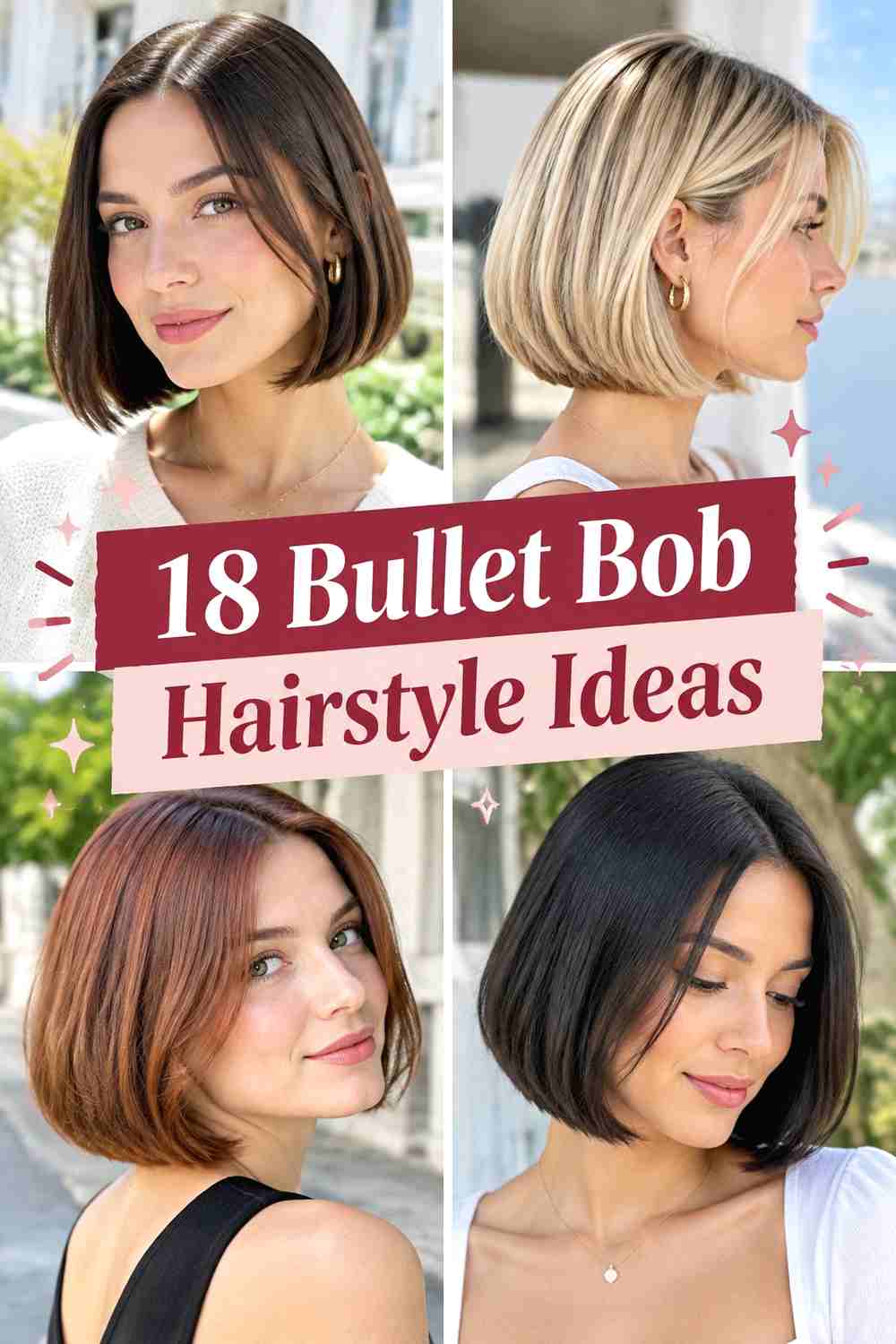
12 Deep Side-Part Bob Ideas for Round Faces
A deep side part adds asymmetry and movement to a bob, creating a strong styling detail that works beautifully with sleek, wavy, layered, or textured lengths.
For round face shapes, a bob can be adjusted through length, part placement, volume, and the direction of the front sections. A deep side part naturally creates an uneven line across the top, while longer pieces near the jaw or collarbone can add vertical movement to the overall silhouette.
The best choice still depends on hair texture and density. Fine hair may look strongest with a fuller perimeter, while thick hair often benefits from subtle internal layers. Waves can soften an angled cut, curls create natural height and movement, and sleek styling makes asymmetry more obvious. These ideas range from compact chin-length bobs to longer face-framing lobs.
Quick List
- Deep Side Part Angled Bob Hairstyle
- Deep Side Part Wavy Lob Hairstyle
- Deep Side Part Chin Length Bob Hairstyle
- Deep Side Part Layered Bob Hairstyle
- Deep Side Part Textured Bob Hairstyle
- Deep Side Part Blunt Bob Hairstyle
- Deep Side Part A Line Bob Hairstyle
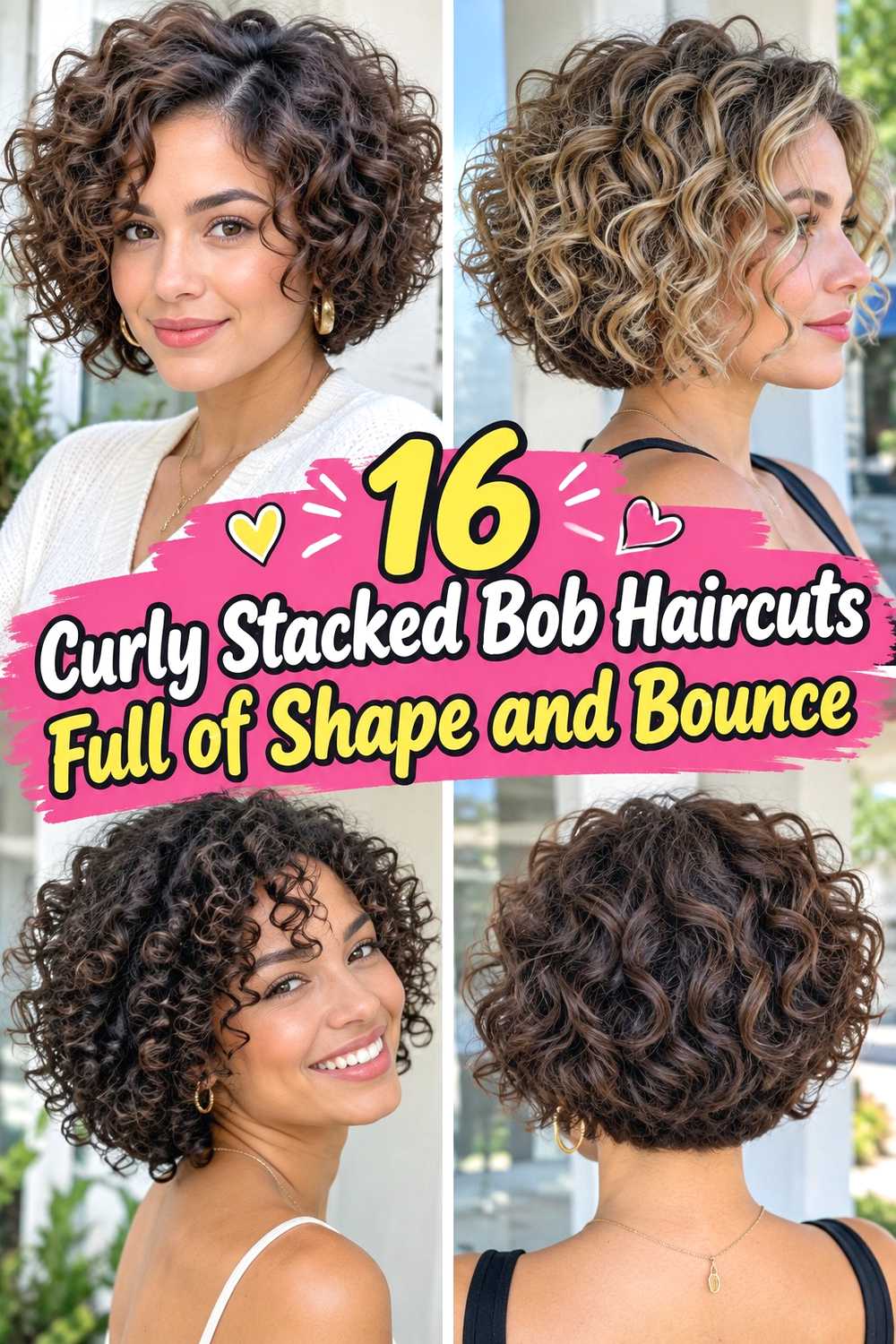
- Deep Side Part Curly Bob Hairstyle
- Deep Side Part Feathered Bob Hairstyle
- Deep Side Part Tousled Bob Hairstyle
- Deep Side Part Long Bob With Face Framing Layers Hairstyle
- Deep Side Part Sleek Asymmetrical Bob Hairstyle
1. Deep Side Part Angled Bob Hairstyle
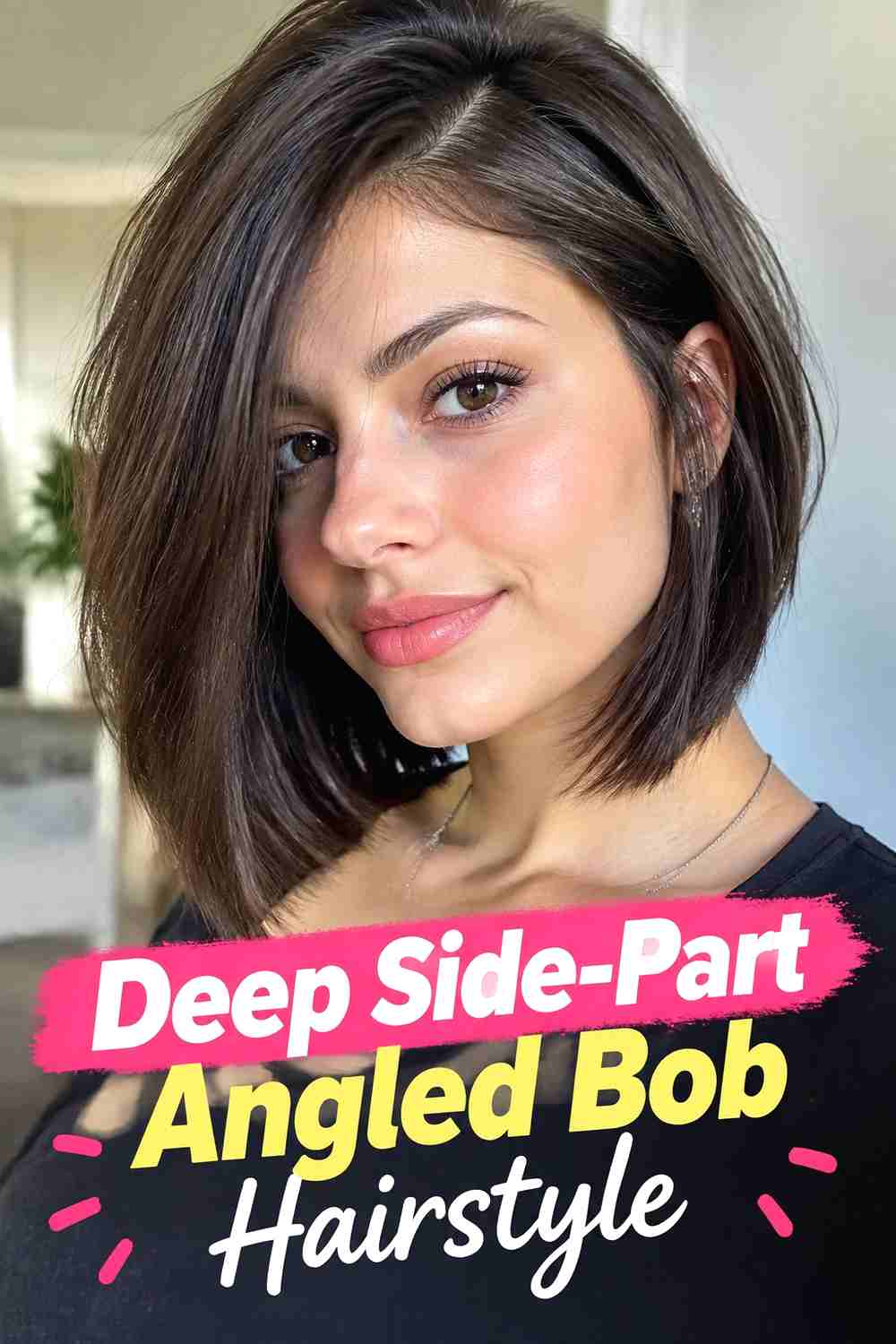
An angled bob pairs naturally with a deep side part because both features create directional movement. The back can sit slightly shorter while the front extends toward or below the jaw, giving the haircut a clean diagonal line. Moving the part noticeably to one side adds lift at the crown and allows the heavier front section to sweep across the temple. This combination can create a more elongated visual flow without requiring extreme graduation. Straight hair shows the angle clearly, while a gentle bend softens it. Keeping the front sections substantial rather than heavily thinned helps the haircut retain enough structure to make the asymmetrical part and forward length easy to see.
Styling Notes
Lift the roots lightly on the heavier side and keep the front length smooth or softly bent rather than curled tightly inward.
2. Deep Side Part Wavy Lob Hairstyle
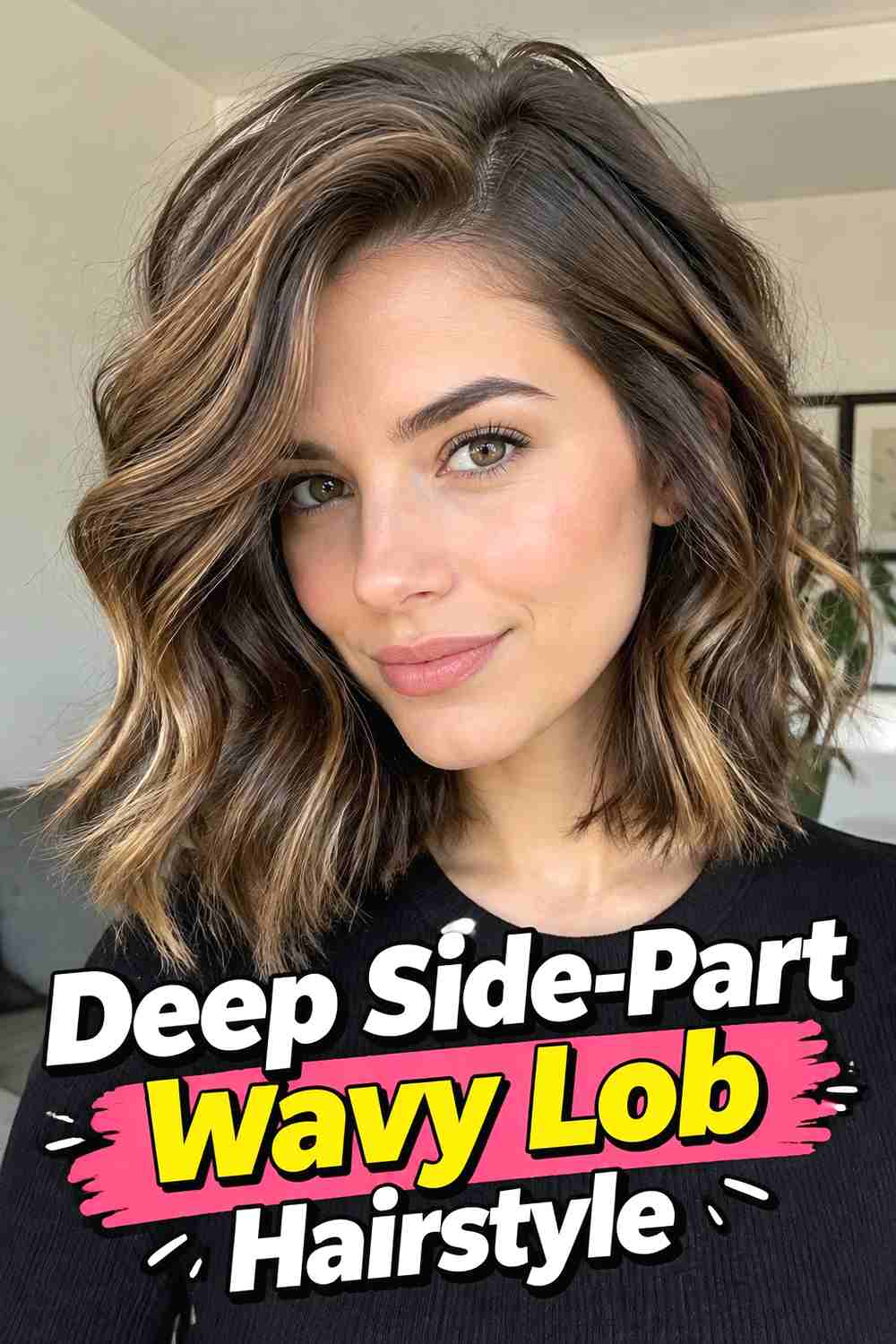
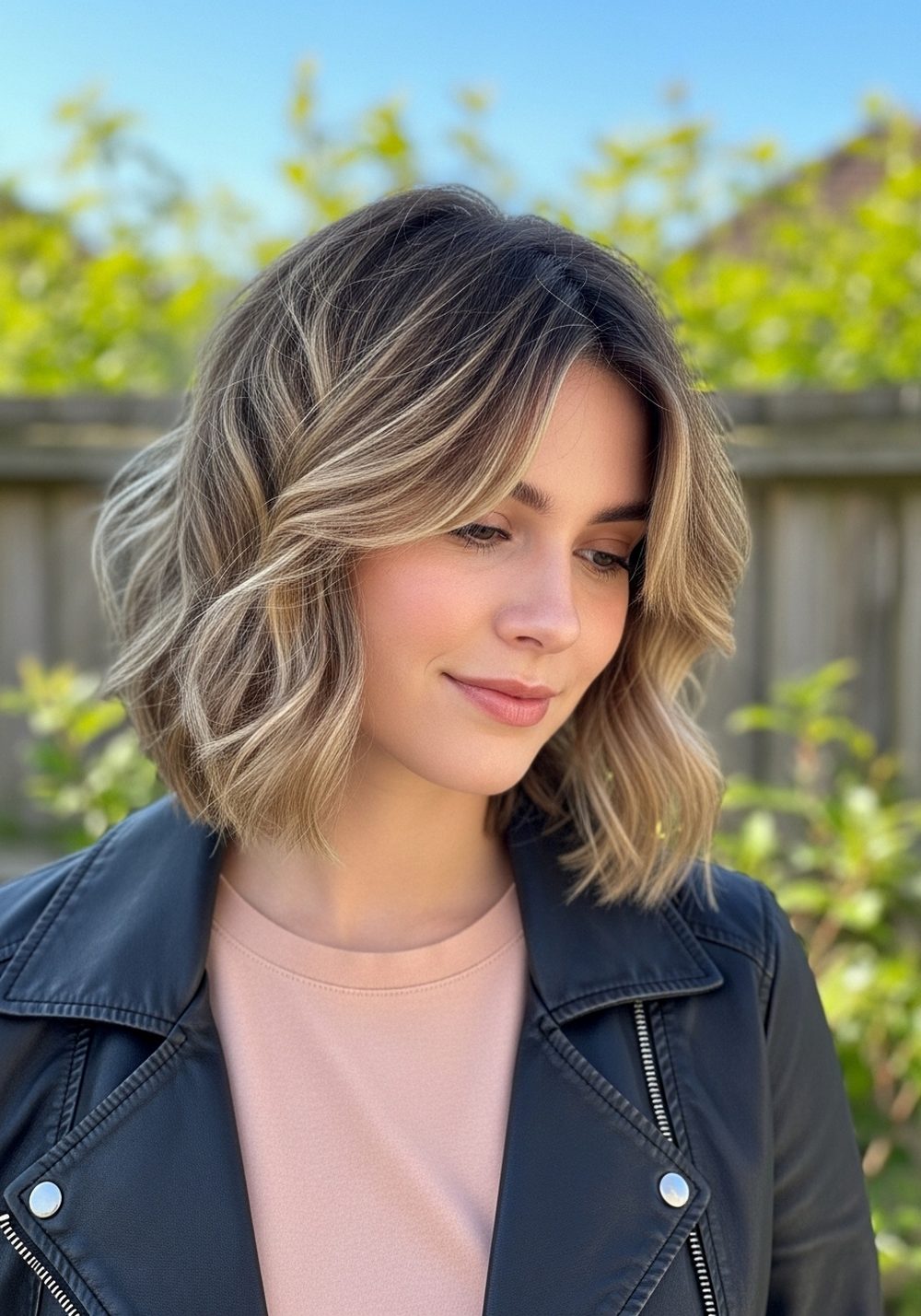
A wavy lob offers extra length below the jaw, making it a versatile choice when you want movement without a very short silhouette. The deep side part shifts volume toward one side, while broad waves break up the outline and keep the haircut relaxed. Length around the collarbone gives waves enough room to stretch, creating soft vertical movement instead of concentrating all the volume near the cheeks. Long internal layers can help dense hair move more freely, while finer hair may benefit from a simpler perimeter. The front section can sweep across the forehead or tuck behind one ear, giving the style two distinct looks without changing the actual cut.
Best For
Choose this version if you want a side-part bob effect with enough length for ponytails, clips, and easy loose-wave styling.
3. Deep Side Part Chin Length Bob Hairstyle
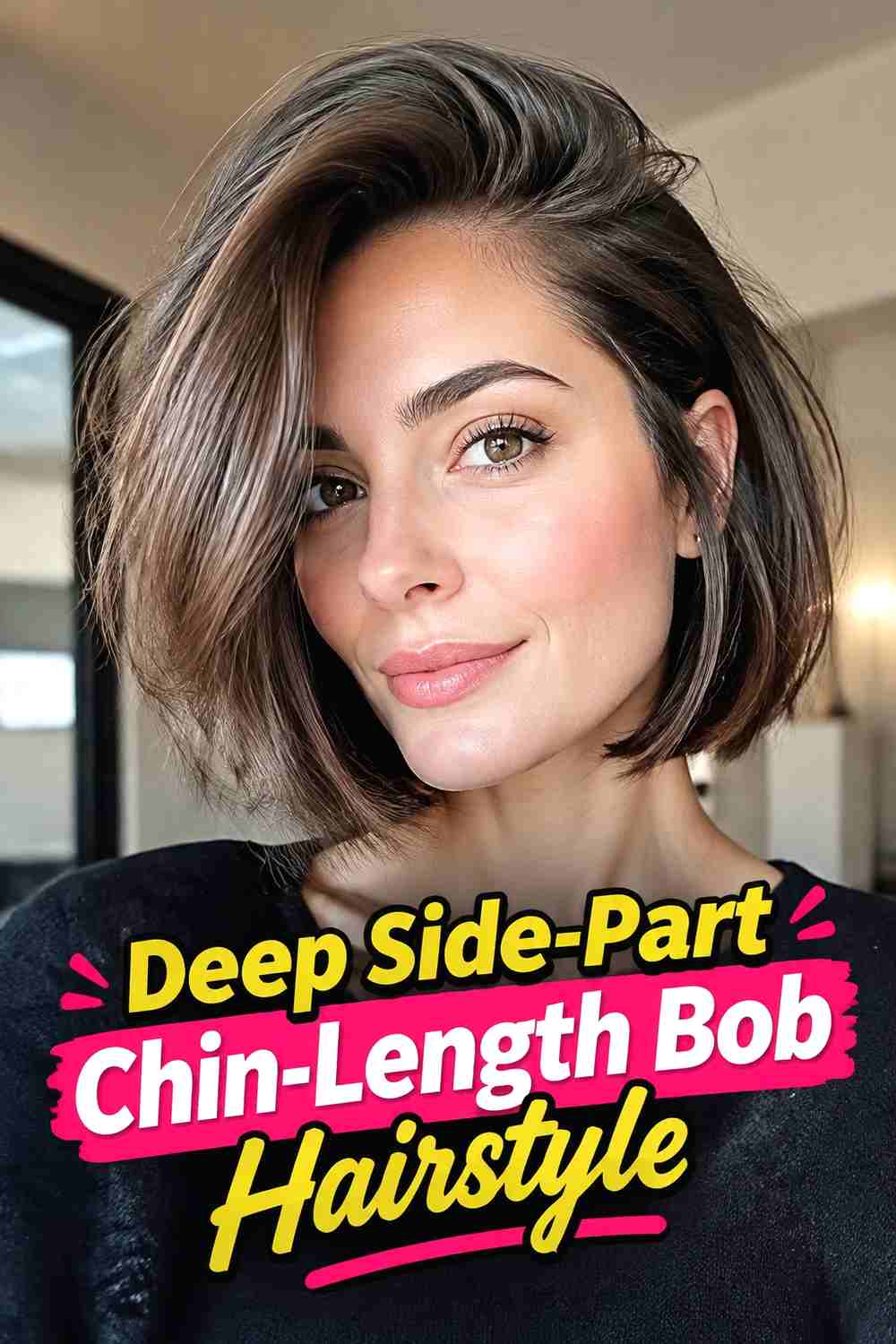
A chin-length bob creates a compact, polished shape, while the deep side part prevents the silhouette from feeling too symmetrical. The heavier side can fall slightly forward beside the jaw, with the opposite side tucked behind the ear for contrast. Keeping the ends softly textured rather than dramatically rounded helps the cut feel modern. Because the length sits close to the face, volume placement matters: gentle root lift at the part can add height, while avoiding excess width at the lower sides keeps the shape balanced. Straight and lightly wavy textures both work well, though very dense hair may need discreet internal weight removal to prevent the perimeter from becoming bulky.
Wear & Maintenance
The chin-level outline is easy to notice as it grows, so regular reshaping may be useful if you want to preserve the shorter proportion.
4. Deep Side Part Layered Bob Hairstyle
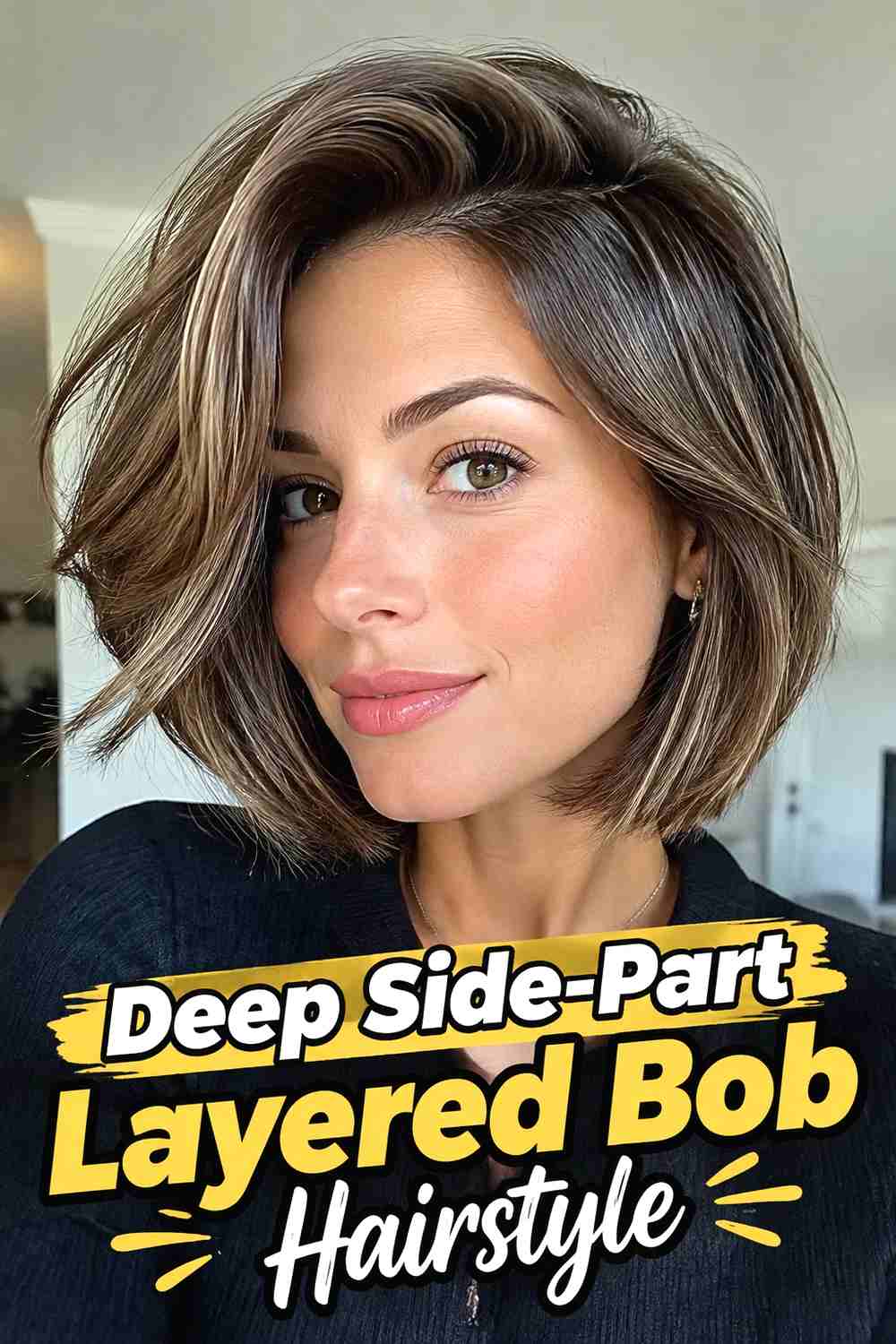
Layers can add movement to a deep side-part bob without making the haircut overly shaggy. Longer sections through the crown and sides create soft separation, while face-framing pieces can begin near the lower cheek or jaw and blend into the main length. The side part naturally lifts the heavier section, giving those layers more room to move. Keeping the shortest layers away from the widest part of the cheeks can help maintain a longer visual line through the style. This version works particularly well on medium-density straight or wavy hair that needs movement but still benefits from a clear perimeter. A soft blow-dry or loose bend is usually enough to show the layer pattern.
Why It Works
The off-center volume and connected layers create movement in different directions, preventing the bob from reading as one uniformly rounded shape.
5. Deep Side Part Textured Bob Hairstyle
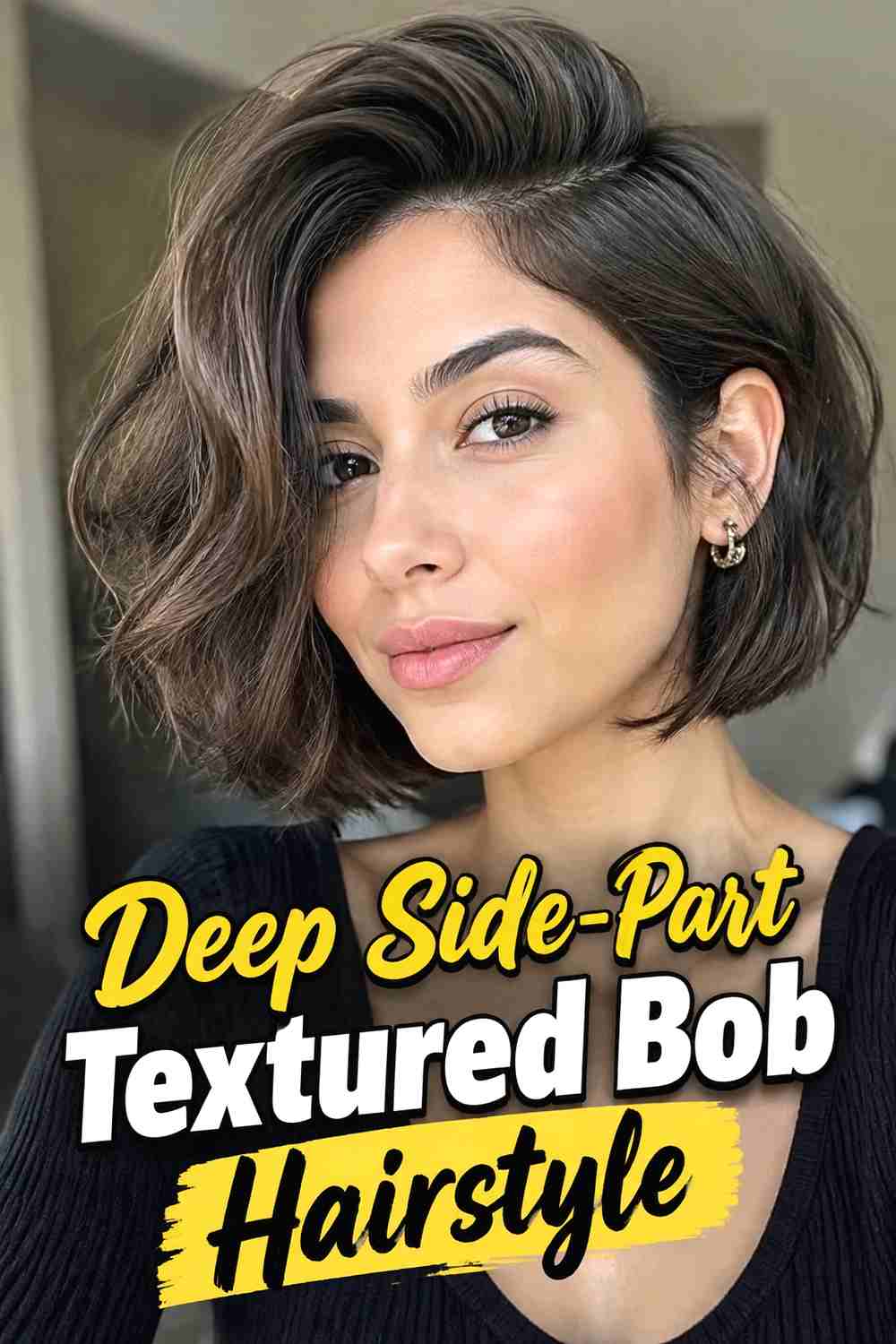
A textured bob gives the deep side part a more relaxed, modern finish. Instead of a perfectly smooth perimeter, the ends are lightly broken up and the surface has enough movement to create visible separation. The heavier side of the part can carry a loose bend across the forehead, while the opposite side sits flatter or tucks neatly behind the ear. This imbalance works especially well with natural wave or slightly tousled styling. Keeping the bob around the lower jaw or neck provides enough length for texture without allowing the ends to become overly wide. The finished result should feel airy and intentional, with individual pieces moving independently rather than forming one solid curve around the face.
Styling Notes
Use a small amount of texture cream through the ends and keep crown products light so the side-part lift remains natural.
6. Deep Side Part Blunt Bob Hairstyle
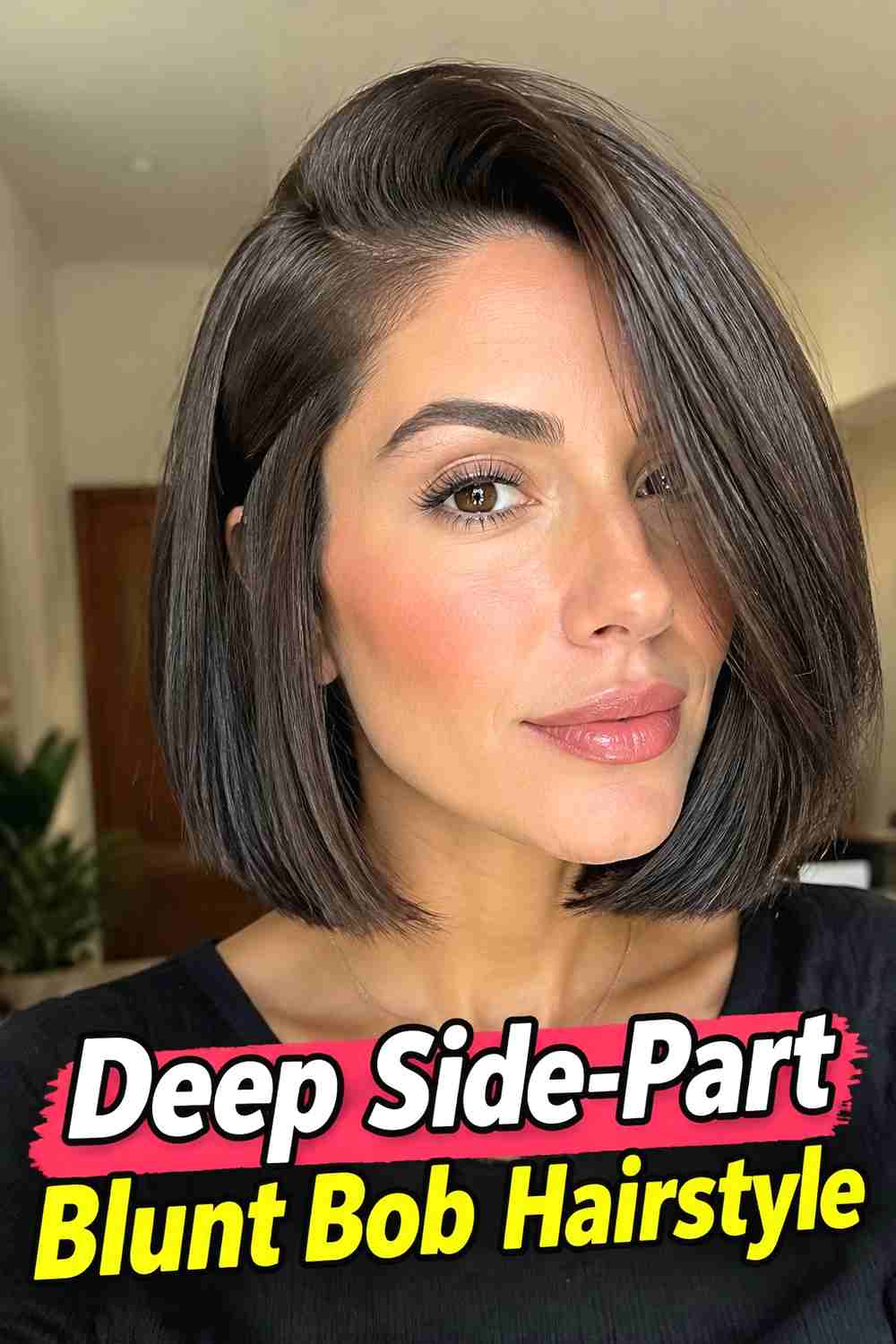
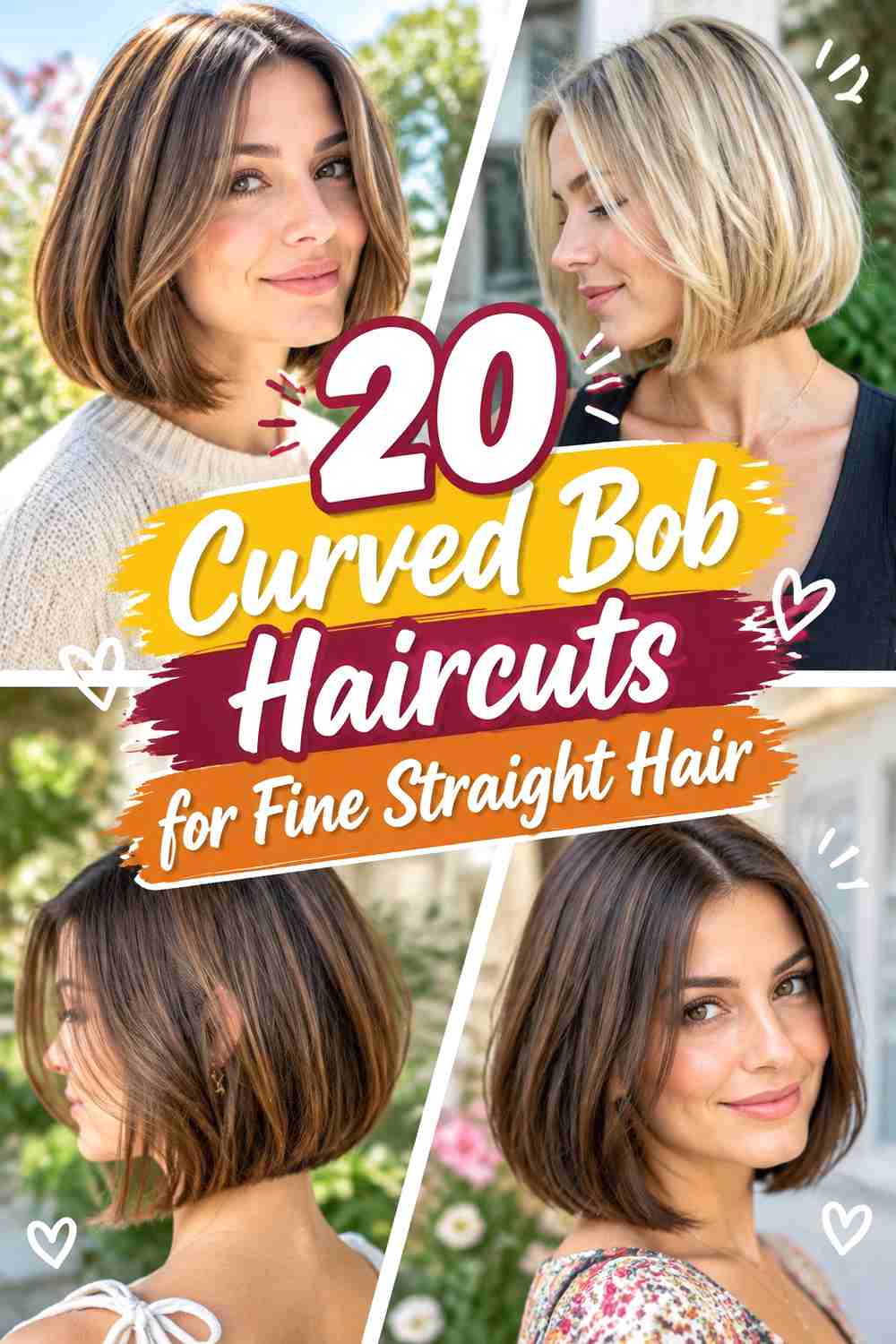
A blunt bob creates a strong lower edge, making the deep side part the main source of softness and asymmetry. The clean perimeter can sit just below the jaw or closer to the shoulders, depending on how much length you want. On the heavier side, the front section can sweep diagonally across the temple before falling beside the face, while the opposite side remains more open. This approach works especially well for fine-to-medium hair because the blunt baseline preserves visual density. A perfectly rounded blow-dry is not necessary; keeping the ends straighter can create a cleaner vertical direction. Minimal internal shaping may be added if the haircut feels too dense without weakening the perimeter.
Best For
This style suits anyone who likes a fuller-looking baseline and a sleek, simple haircut with strong part placement rather than extensive layering.
7. Deep Side Part A Line Bob Hairstyle
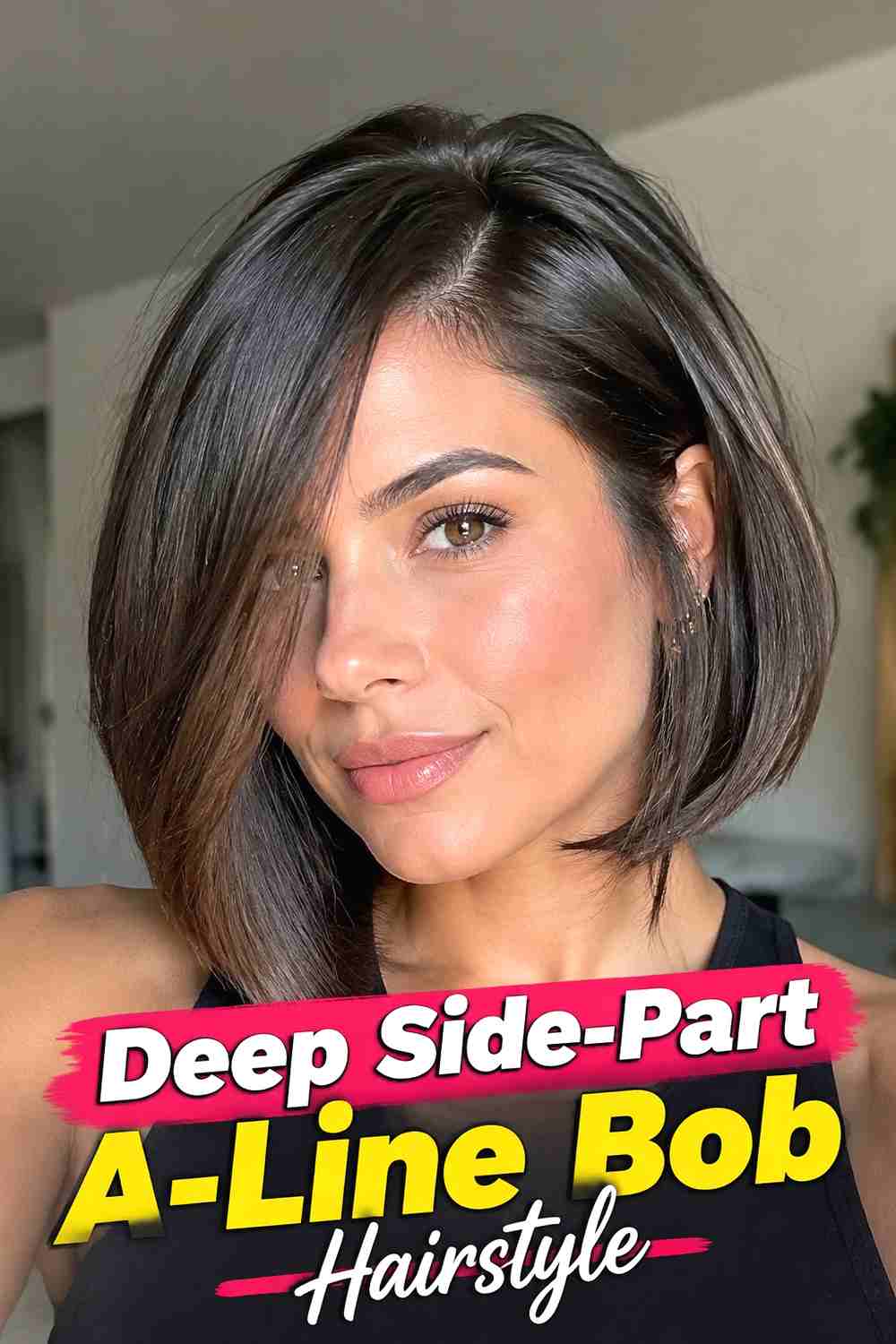
An A-line bob combines a shorter back with gradually longer front pieces, and a deep side part makes that forward movement even more noticeable. The heavier side can fall toward the collarbone or jaw, while the shorter side reveals more of the cheek and ear. A gentle rather than extreme angle keeps the cut wearable and allows natural movement to soften the shape. Medium and straight-to-wavy hair types often display the graduation clearly. For thicker hair, internal weight removal can prevent the front from becoming too dense. The key is preserving enough length through the front so the diagonal part and A-line perimeter work together instead of competing for attention.
Pro Tip
Keep the graduation low and smooth if you want the cut to grow out more softly than a sharply stacked A-line bob.
8. Deep Side Part Curly Bob Hairstyle
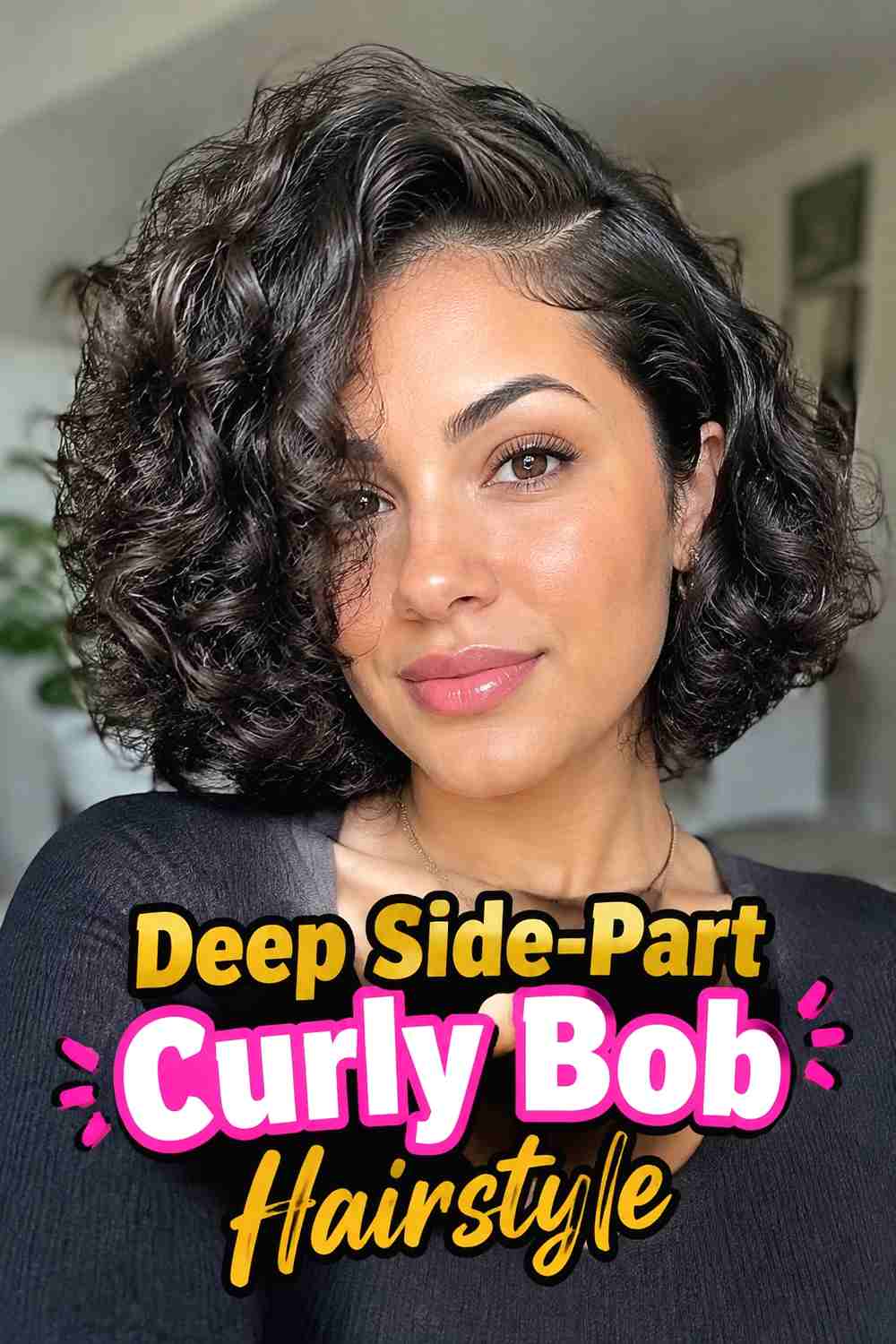
A deep side part can give a curly bob natural height and an appealing uneven distribution of volume. Instead of trying to make both sides match, the heavier side can carry fuller curls while the lighter side sits closer to the head or tucks behind the ear. The bob may fall between the jaw and shoulders, with layers shaped around the natural curl pattern to prevent excessive bulk at the lower edge. Longer front curls can create vertical movement beside the face, while lift near the part draws attention upward. Shrinkage should be considered carefully when choosing the final length, since curls may sit noticeably shorter once dry.
Hair Type & Length
This version works best when the haircut is designed around the natural dried curl pattern rather than shaped only on stretched or wet hair.
9. Deep Side Part Feathered Bob Hairstyle
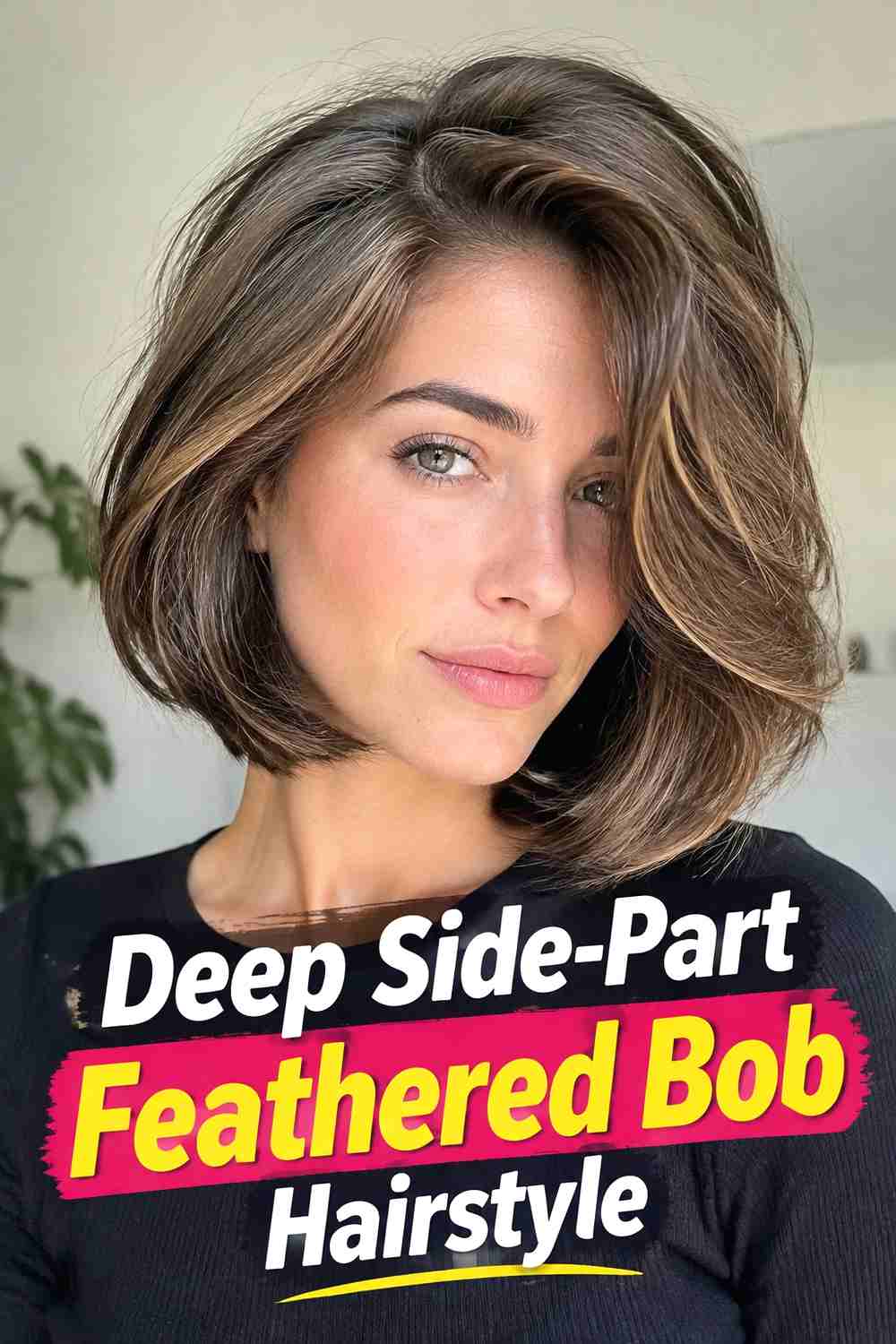
Feathered layers create soft movement away from the face, giving a deep side-part bob a lighter, more flowing finish. The front section on the heavier side can sweep across the forehead and then curve outward near the cheek or jaw, while longer layers continue that direction through the sides. Keeping the feathering subtle helps the style feel modern rather than overly flipped. A neck- to shoulder-length bob gives enough space for the layers to move without losing the overall shape. Straight or softly wavy hair responds especially well to this approach. The lighter side can be tucked behind the ear to make the asymmetry of the part even more visible.
Styling Notes
Use gentle airflow and a medium brush to guide the front away from the face without creating excessive roundness through the lower sides.
10. Deep Side Part Tousled Bob Hairstyle

A tousled bob uses irregular bends and soft separation to make the deep side part feel effortless rather than highly styled. The heavier side can have a little extra root lift, while the rest of the hair falls in loose, uneven waves around the jaw or shoulders. Some sections may turn inward and others outward, preventing the silhouette from becoming uniformly round. Light layering through the lower half can help the texture move without removing too much density. This version works particularly well on naturally wavy hair because slight unpredictability becomes part of the look. Keeping the ends relaxed rather than tightly curled gives the haircut a more elongated, lived-in finish.
Wear & Maintenance
The undone texture is forgiving between trims, though the overall bob length may still need reshaping once the perimeter grows noticeably longer.
11. Deep Side Part Long Bob With Face Framing Layers Hairstyle
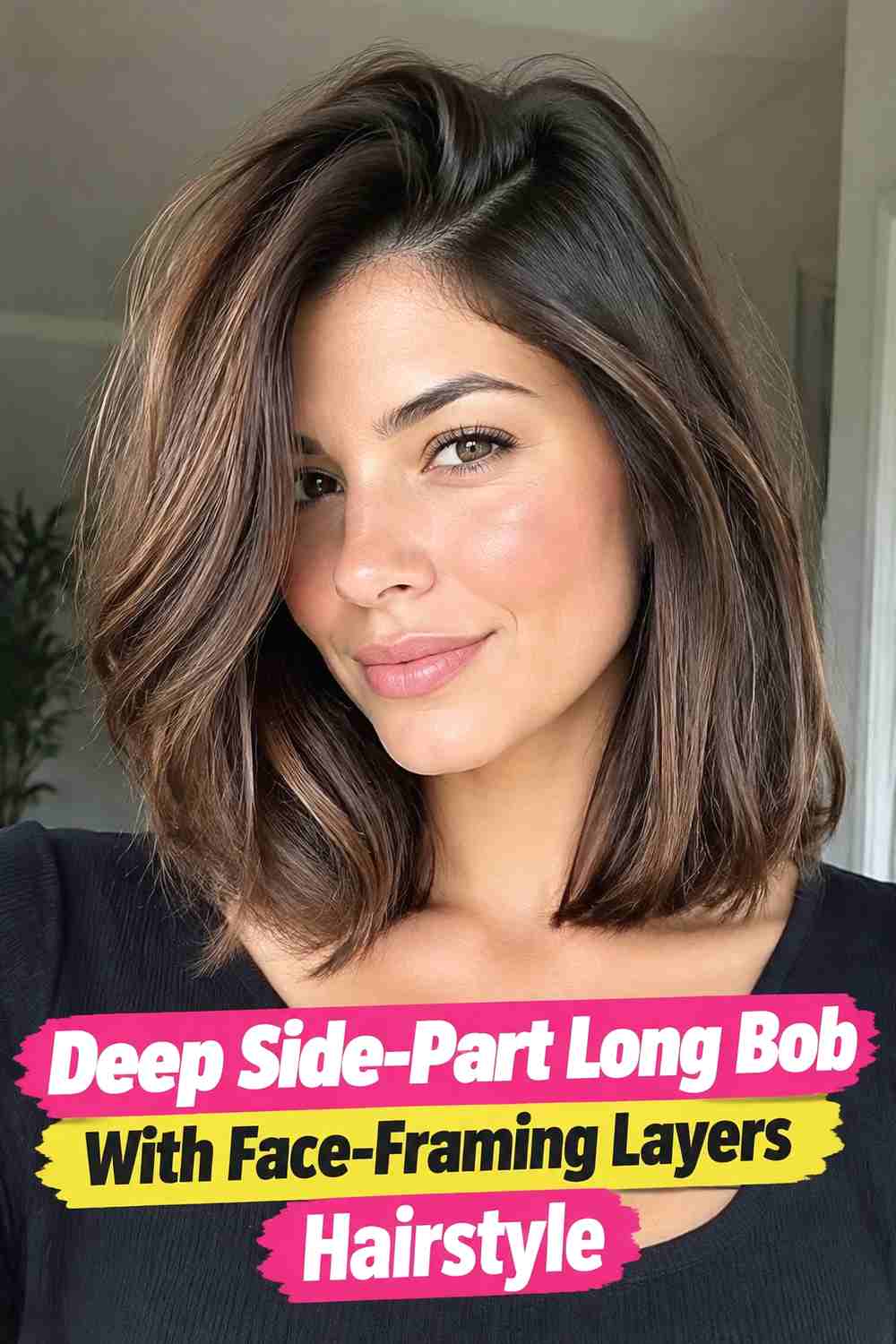
This long bob combines collarbone length with strategic face-framing sections, giving the deep side part plenty of room to create movement. The shortest front layers can begin around the chin and gradually blend into the longer perimeter, while the back remains relatively simple. Shifting the part deeply to one side allows the fuller section to sweep diagonally across the forehead before falling into the face frame. The extra length keeps most of the volume below the jaw and offers plenty of styling flexibility. Waves can emphasize the layers, while a smoother finish makes the gradual length transition more obvious. This is a practical option if you prefer a softer change over a short, compact bob.
Why It Works
The longer perimeter and diagonal front sweep create multiple vertical and angled lines while keeping the haircut versatile enough for everyday styling.
12. Deep Side Part Sleek Asymmetrical Bob Hairstyle
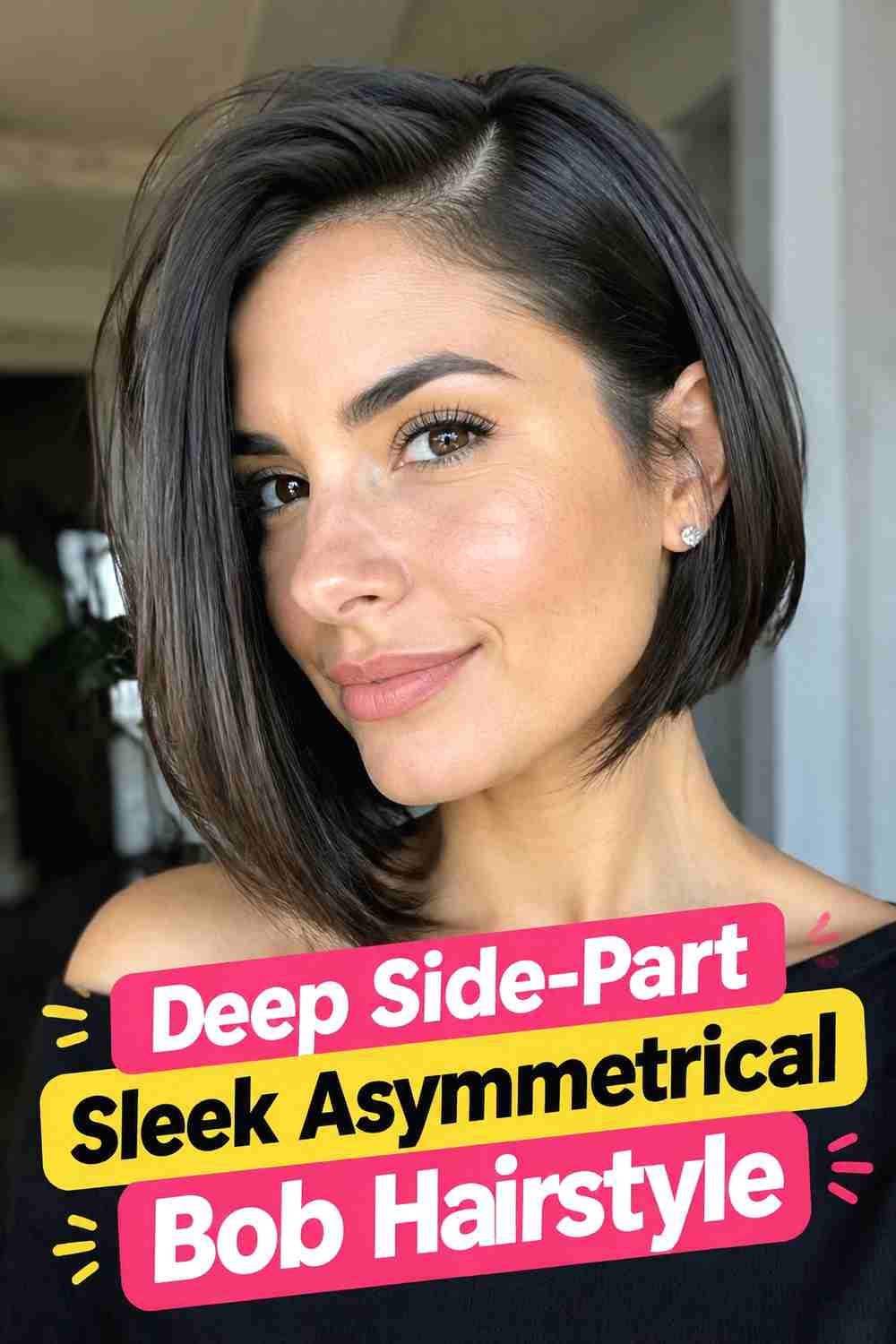
A sleek asymmetrical bob creates the strongest directional look in this collection. One side can sit slightly longer than the other, while the deep part emphasizes that difference by placing more hair over the longer section. The smooth finish makes the asymmetry easy to see, so the length contrast does not need to be extreme. Keeping the ends near the jaw or below it creates a clean silhouette, while a subtle inward or straight finish prevents extra width. This style is particularly effective on straight hair or hair that can be smoothed easily. A neatly tucked shorter side can highlight the design and give the heavier side a stronger, more dramatic sweep.
Styling Notes
Use lightweight smoothing product through the mids and ends, but keep root product minimal so the part retains natural lift rather than looking flat.
How to Choose the Right Look
Start with length. Chin- and jaw-length bobs create a more compact shape, while collarbone lobs place more movement below the jaw and offer greater styling flexibility. If you prefer to pull your hair back regularly, a longer bob is usually the more practical choice.
Then consider where you want volume. A deep side part naturally creates lift on the heavier side, so you may not need many short crown layers. If your hair is thick, internal shaping can control excess bulk without making the surface look overly layered.
Texture also matters. Straight hair shows blunt, A-line, and asymmetrical shapes clearly. Wavy hair works well with layered, textured, and tousled bobs, while curls benefit from shaping that respects shrinkage and natural volume.
Finally, decide how much daily styling you want. Sleek asymmetrical and sharply angled cuts usually need more deliberate finishing, while wavy lobs and textured bobs can work well with softer, less precise styling.
Final Thoughts
A deep side part can give a bob instant direction and asymmetry without requiring an extreme haircut. For round face shapes, the most wearable options usually balance root lift, longer front lines, controlled side volume, and a length that suits your natural texture. Whether you prefer sleek, wavy, blunt, curly, or layered styling, choose the version that fits your normal routine rather than relying on constant reshaping.
FAQs
1. Is a deep side-part bob suitable for a round face?
It can be. A deep side part creates asymmetry and can shift volume upward or to one side, while bob length and layering can be adjusted to suit the overall look you prefer.
2. What bob length works well with a deep side part?
Chin, jaw, neck, and collarbone lengths can all work. Longer bobs generally offer more styling flexibility, while shorter bobs create a stronger, more compact silhouette.
3. Should a round face avoid a chin-length bob?
Not necessarily. A chin-length bob can work well when the part, perimeter, and volume are balanced. A slightly longer front section or softer texture can change the overall effect significantly.
4. Can curly hair wear a deep side-part bob?
Yes. A side part can create natural lift and asymmetry in curls, but the cut should account for shrinkage, density, and where the curl pattern naturally expands.
5. Is a deep side-part bob high maintenance?
It depends on the cut. Wavy lobs and softly textured bobs can be fairly relaxed, while sleek asymmetrical or sharply angled versions may need more frequent styling and reshaping.
Save your favorite deep side-part bob idea, share it with your stylist, and explore more bob haircut inspiration for your next salon visit.