15 Arched Fringe Hairstyle Ideas
A gently curved fringe can transform the front of a haircut, adding polished definition while still leaving plenty of room for texture and movement.
An arched fringe follows a soft curved line across the forehead, usually sitting slightly shorter near the center and becoming a little longer toward the outer edges. That subtle change in length helps the fringe connect naturally with the temples and side sections instead of ending in one completely straight line.
The effect can be dense and graphic, light and wispy, softly feathered, or adapted to waves and curls. Before choosing a version, consider your hair density, natural growth pattern, preferred fringe length, and how often you are willing to style or trim the front.
Quick List
- Classic Arched Fringe Hairstyle
- Soft Arched Fringe Hairstyle
- Full Arched Fringe Hairstyle
- Wispy Arched Fringe Hairstyle
- Blunt Arched Fringe Hairstyle
- Feathered Arched Fringe Hairstyle
- Layered Arched Fringe Hairstyle
- Side Swept Arched Fringe Hairstyle
- Center Part Arched Fringe Hairstyle
- Wavy Arched Fringe Hairstyle
- Curly Arched Fringe Hairstyle
- Sleek Straight Arched Fringe Hairstyle
- Bouncy Blowout Arched Fringe Hairstyle
- Shoulder Length Arched Fringe Hairstyle
- Long Hair Arched Fringe Hairstyle
1. Classic Arched Fringe Hairstyle
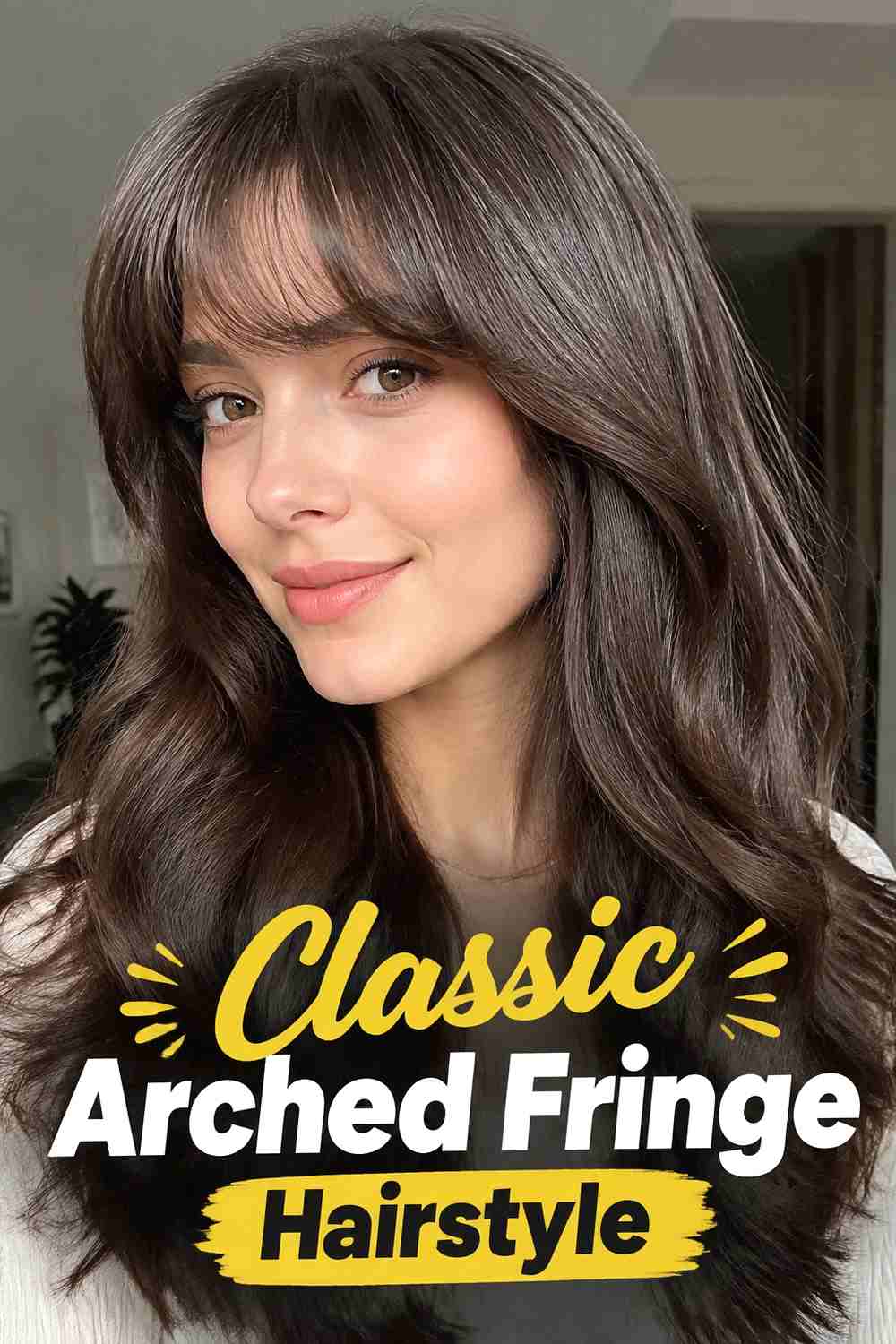
Classic Arched Fringe Hairstyle keeps the shape simple and easy to recognize. The center of the fringe sits slightly shorter, while the edges gradually extend toward the temples, creating a soft curve that follows the forehead rather than forming a perfectly straight line. A medium-density fringe gives enough weight for the arch to remain visible without making the front feel overly heavy. This version works particularly well with straight or softly wavy hair, and it can pair with bob, medium, or longer lengths. Blow-dry the fringe first after washing, directing it forward before gently shaping the sides so the curve stays smooth and connected.
Styling Notes
Use a small round brush or flat brush with controlled airflow. Too much curl can turn the soft arch into a rolled fringe.
2. Soft Arched Fringe Hairstyle
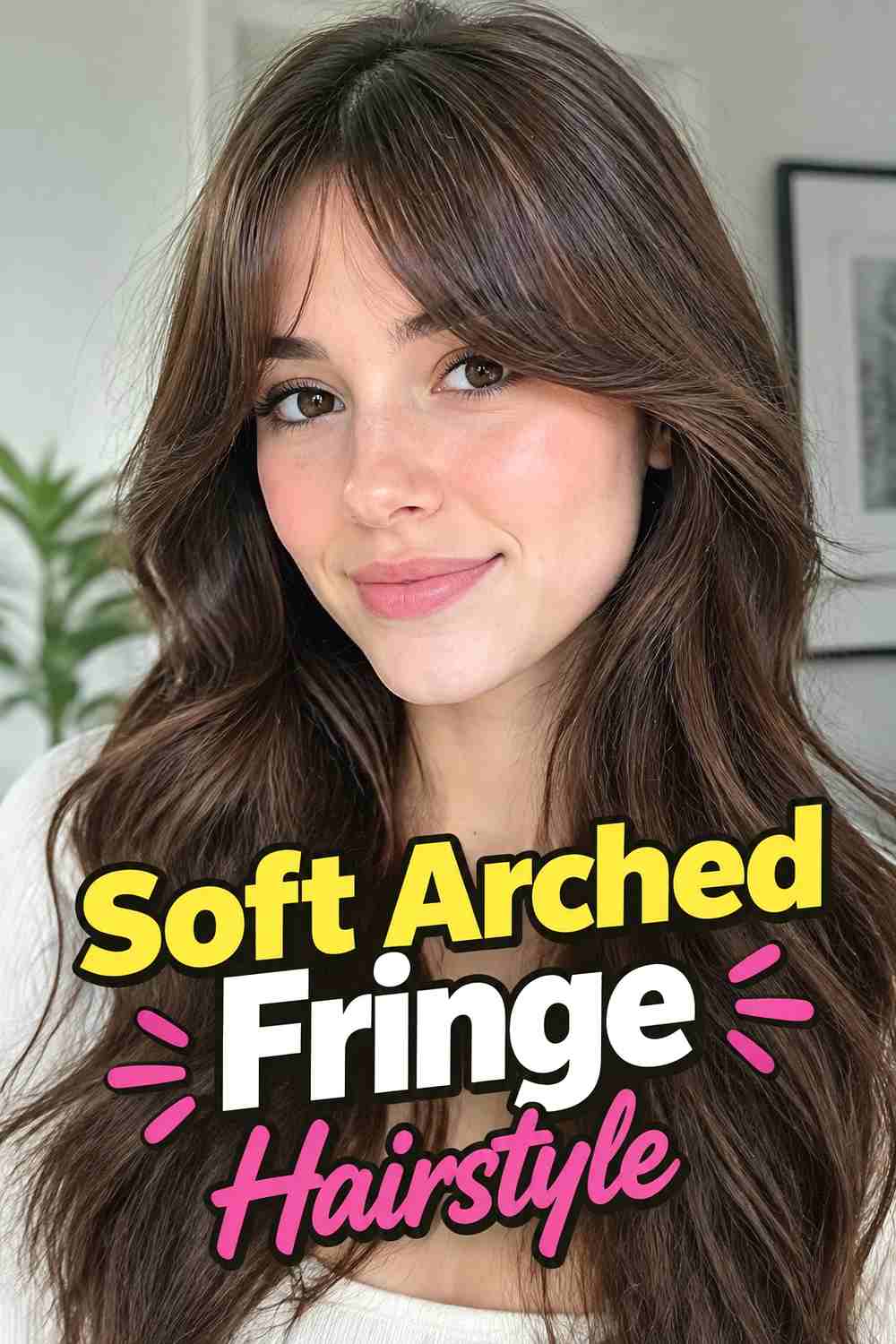
Soft Arched Fringe Hairstyle creates the same curved outline with lighter edges and less rigid definition. The middle can graze the brows while the outer sections become gradually longer and blend toward the temples. Instead of appearing sharply cut, the fringe has a touch of softness at the ends, making it easier to pair with relaxed layers, natural waves, or understated everyday styling. This version is useful if you want a noticeable fringe without the graphic quality of a heavier bang. Keep the cutting line controlled but avoid excessive density. Styling with fingers or a flat brush can preserve the gentle curve while preventing the fringe from looking too perfectly set.
Best For
This option works well for anyone who wants a defined fringe shape with a softer, more flexible finish.
3. Full Arched Fringe Hairstyle
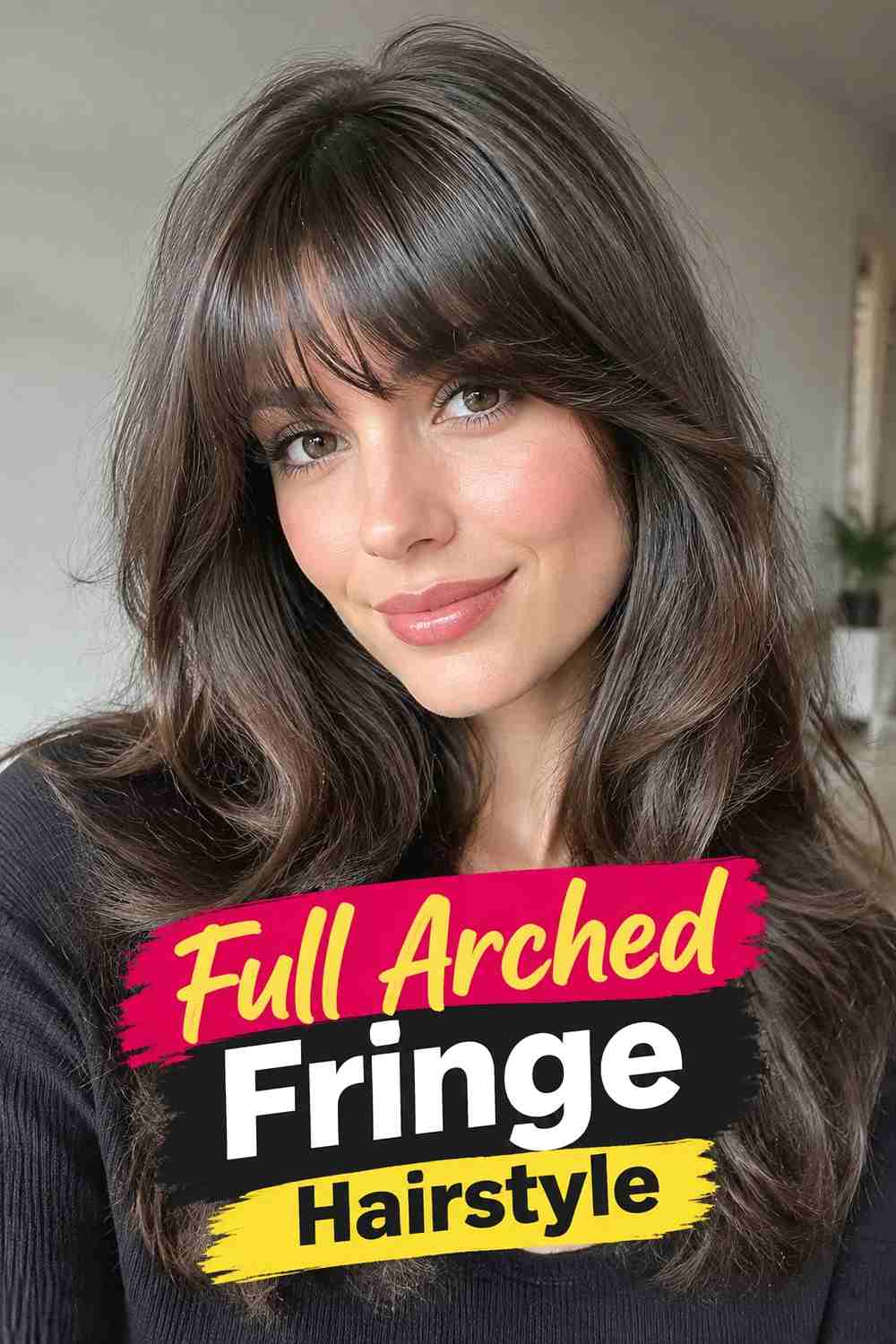
Full Arched Fringe Hairstyle uses more hair to create a dense, polished front that makes the curved outline the main feature. The fringe sits strongly across the forehead, then becomes subtly longer toward the temples so the edge follows an arch instead of a straight horizontal line. Medium-to-thick hair can support this density particularly well without removing too much fullness from the rest of the haircut. Because the fringe is substantial, the surrounding hairstyle can stay relatively simple—sleek lengths, a compact bob, or soft waves all work. Blow-dry the bangs immediately after washing and keep heavy oils away from the forehead so the full section stays fresh and separated.
Wear & Maintenance
Denser bangs usually need more frequent refreshing because natural oils, humidity, and growth can change their shape quickly.
4. Wispy Arched Fringe Hairstyle
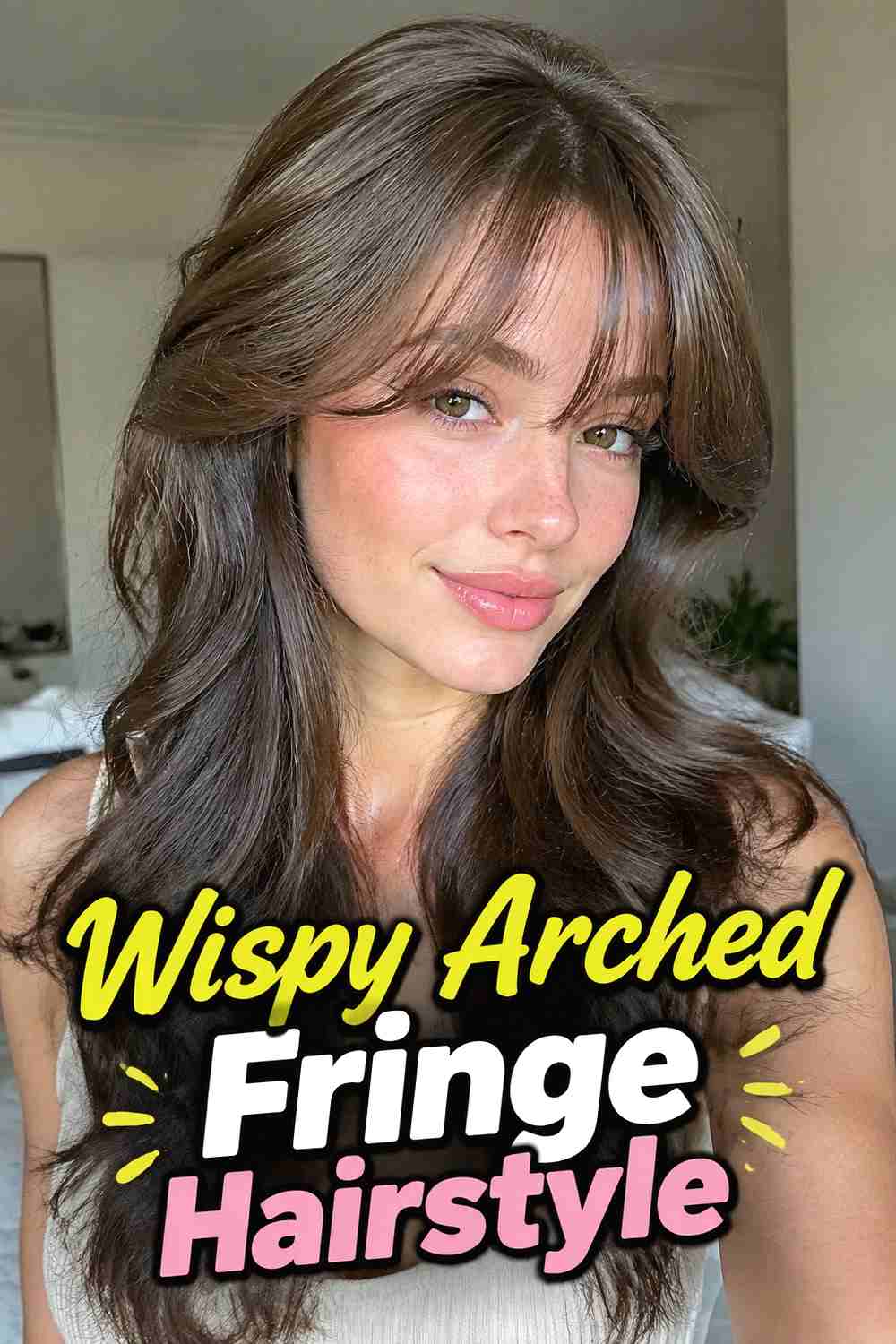
Wispy Arched Fringe Hairstyle uses a narrow, lightweight section of hair to create the curved outline with visible separation between strands. The center remains slightly shorter, while fine pieces along the outer edges extend toward the temples and blend into the surrounding hair. This airy approach can suit fine-to-medium hair because it adds a front detail without removing too much density from the rest of the haircut. Small spaces across the fringe are intentional and help the style feel softer. Dry the bangs lightly with fingers or a small brush, then use minimal product. Heavy creams or oils can collapse the separation and make a delicate fringe appear greasy or overly clumped.
Hair Type & Length
Fine and medium-density hair can wear this version especially well when the fringe section is kept modest.
5. Blunt Arched Fringe Hairstyle
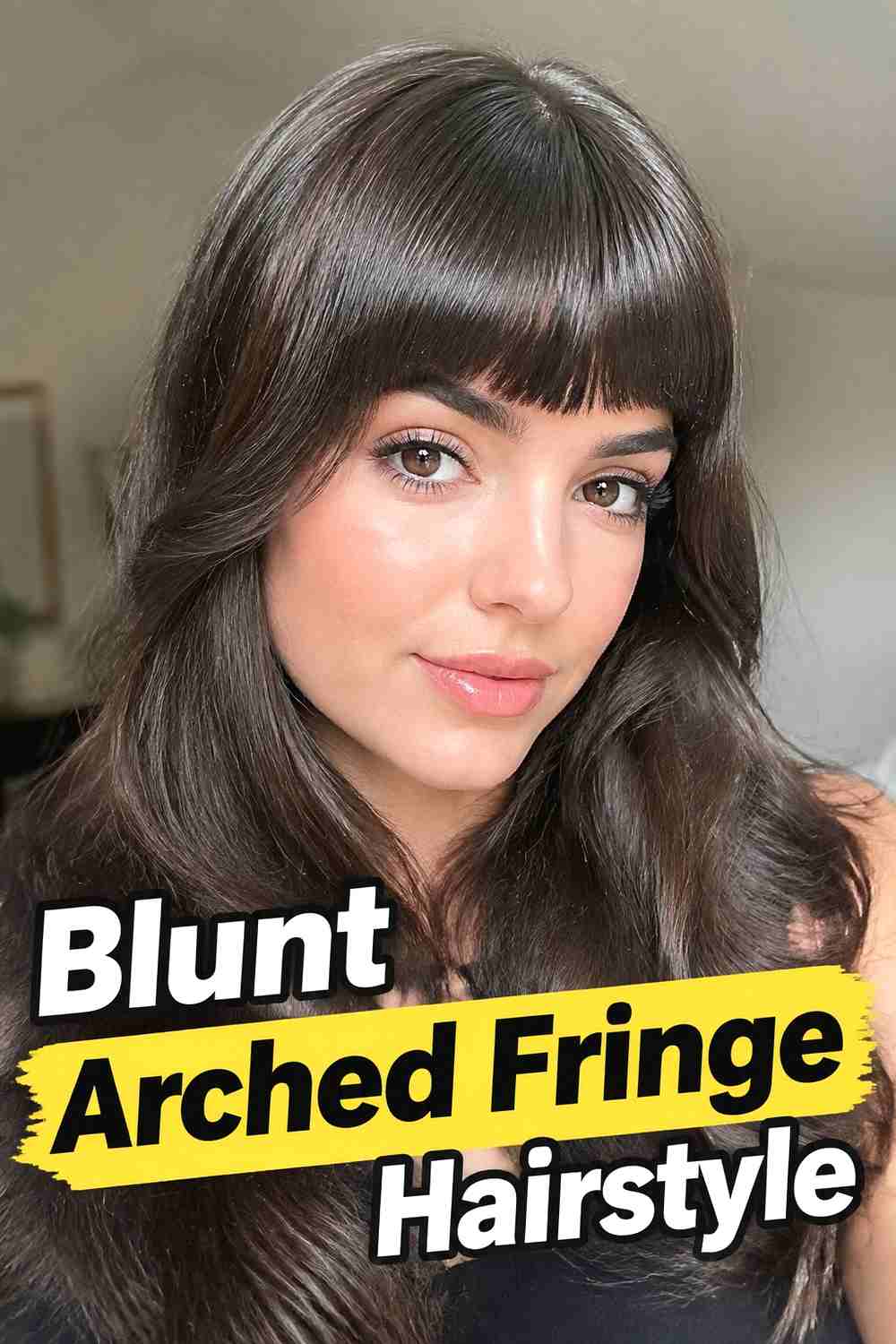
Blunt Arched Fringe Hairstyle combines a solid cutting line with a gently curved shape. Instead of soft, feathered ends, the fringe edge remains dense and clearly defined, but the line still rises slightly through the center and lengthens toward the sides. This creates a stronger, more graphic finish than a wispy or softly textured arch. Straight and smooth hair shows the shape most clearly, while medium or thick density provides enough weight for a substantial edge. Pair it with a blunt bob for maximum precision or longer hair for stronger contrast. Styling should stay simple: keep the fringe smooth, preserve a little natural bend, and avoid over-rounding the ends.
Why It Works
A solid edge makes the arch immediately visible while the longer outer sections prevent the fringe from looking completely boxy.
6. Feathered Arched Fringe Hairstyle
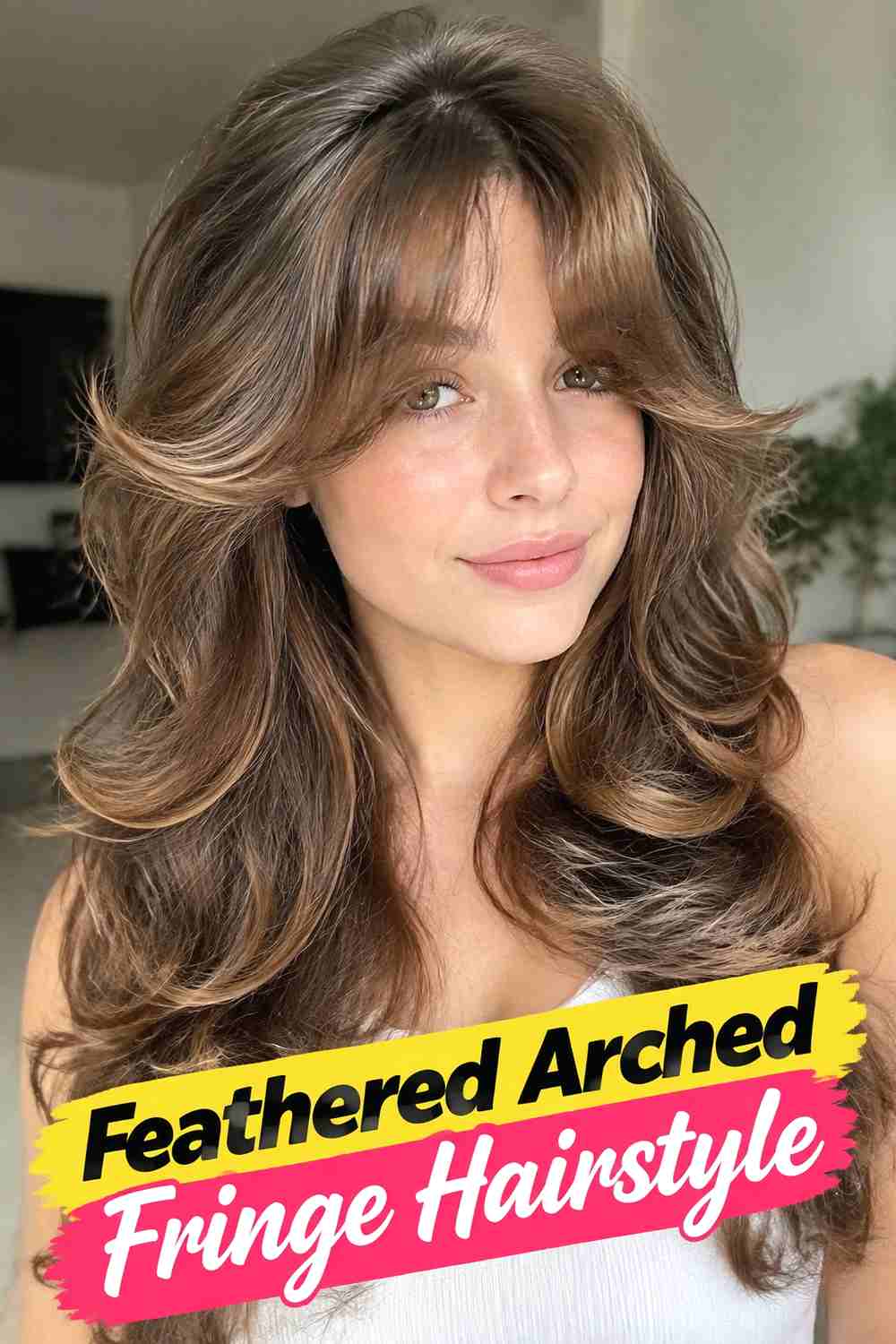
Feathered Arched Fringe Hairstyle adds gentle outward movement through the longer edges of the fringe. The center remains relatively compact, while the side pieces become progressively longer and sweep toward the temples or cheekbones. That small amount of feathering makes the fringe feel connected to face-framing layers without turning it into full curtain bangs. It works especially well with medium and long layered hair, where the outer sections can continue naturally into the surrounding shape. Use a small or medium round brush to direct the sides slightly away from the face, but keep the center more relaxed. The finished result should feel airy and curved rather than heavily flipped.
Styling Notes
Keep the strongest movement at the outer edges so the center still reads clearly as an arched fringe.
7. Layered Arched Fringe Hairstyle
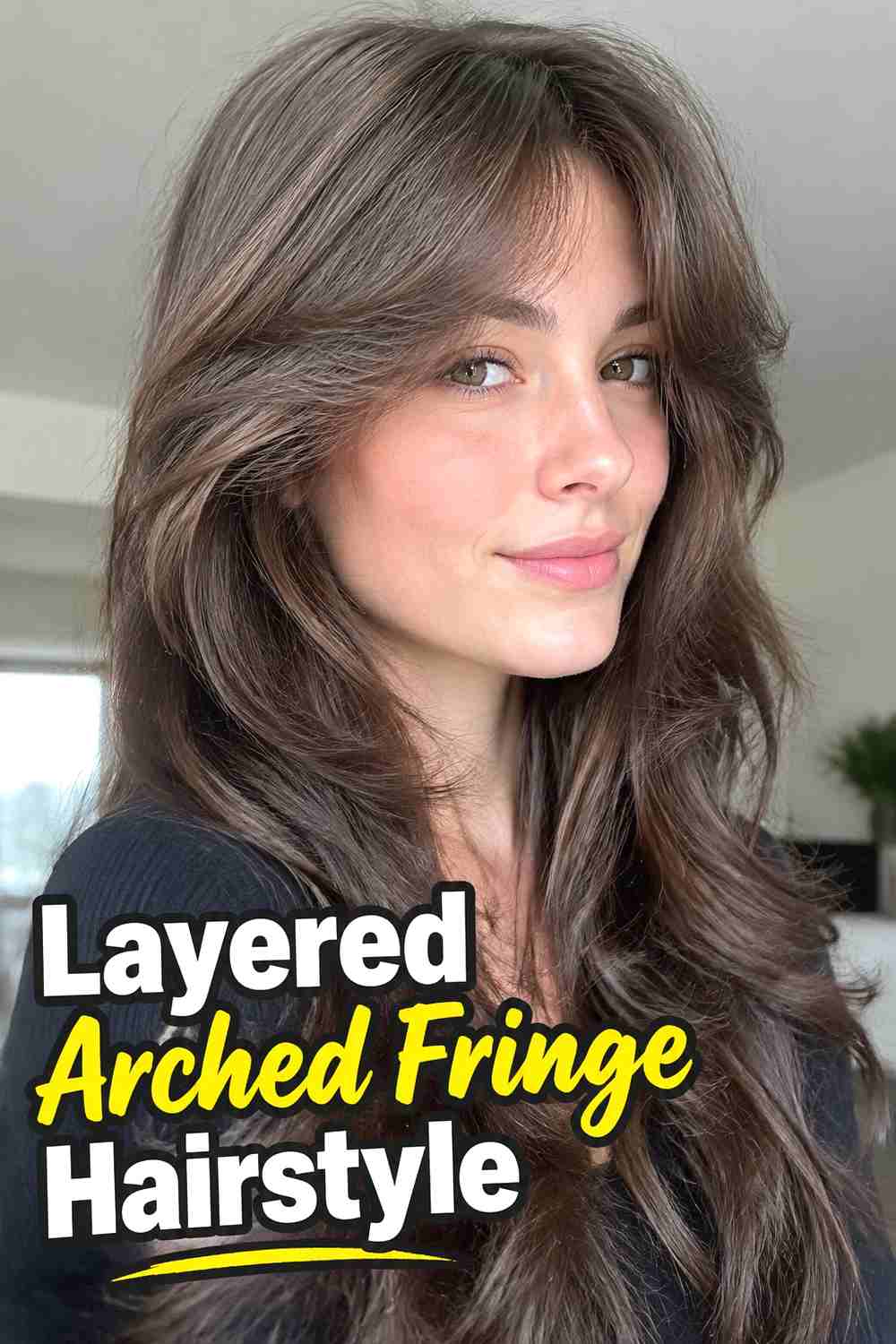
Layered Arched Fringe Hairstyle continues the fringe shape into longer face-framing sections, creating a smoother connection between bangs and haircut. The middle remains shorter, while the outer sections move through progressively longer lengths around the temples, cheekbones, and sides. This approach works particularly well when the rest of the hair already contains layers, since the fringe becomes part of the overall movement instead of a separate detail. Straight styling makes the progression visible, while waves soften the transitions. Ask for blended connections rather than sudden jumps between the fringe and longer pieces. Keeping the rest of the perimeter fuller can balance the extra movement around the front.
Why It Works
Repeating the gradual length change beyond the fringe gives the front a continuous, connected silhouette.
8. Side Swept Arched Fringe Hairstyle
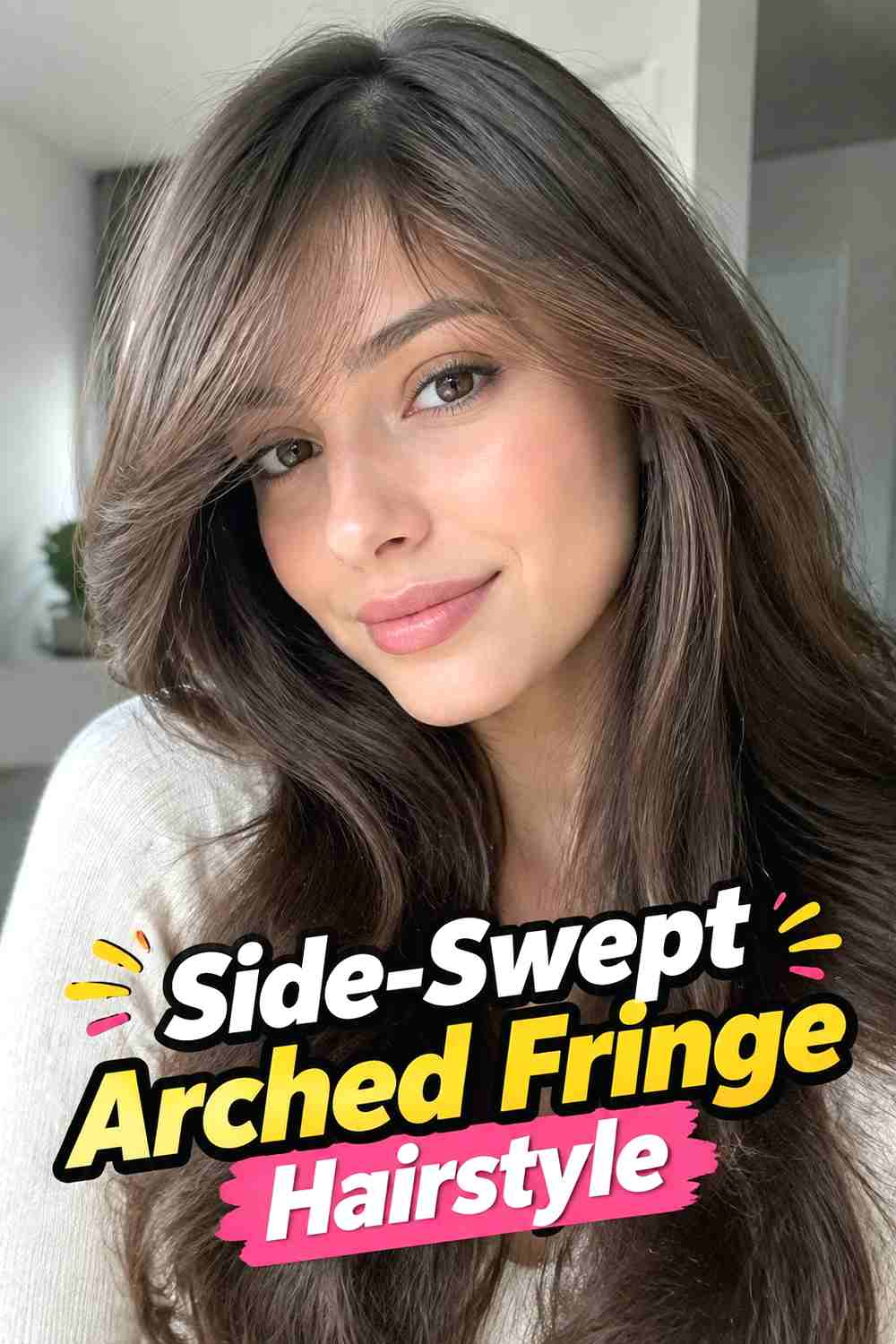
Side-Swept Arched Fringe Hairstyle shifts the curved fringe slightly toward one side instead of wearing it fully forward. The shorter center remains visible, but the hair moves diagonally across the forehead and becomes longer through the outer edge. This can be a practical variation when your natural part or growth pattern makes a perfectly centered fringe difficult to maintain. The side sweep also softens the structured arch and gives the front more movement. Pair it with straight, wavy, or lightly layered hair and use flexible hold rather than strong hairspray. A small brush can guide the fringe while damp, helping the shape follow its intended direction before it dries.
Best For
This version suits anyone who prefers an asymmetrical front or naturally has a stronger growth direction around the hairline.
9. Center Part Arched Fringe Hairstyle
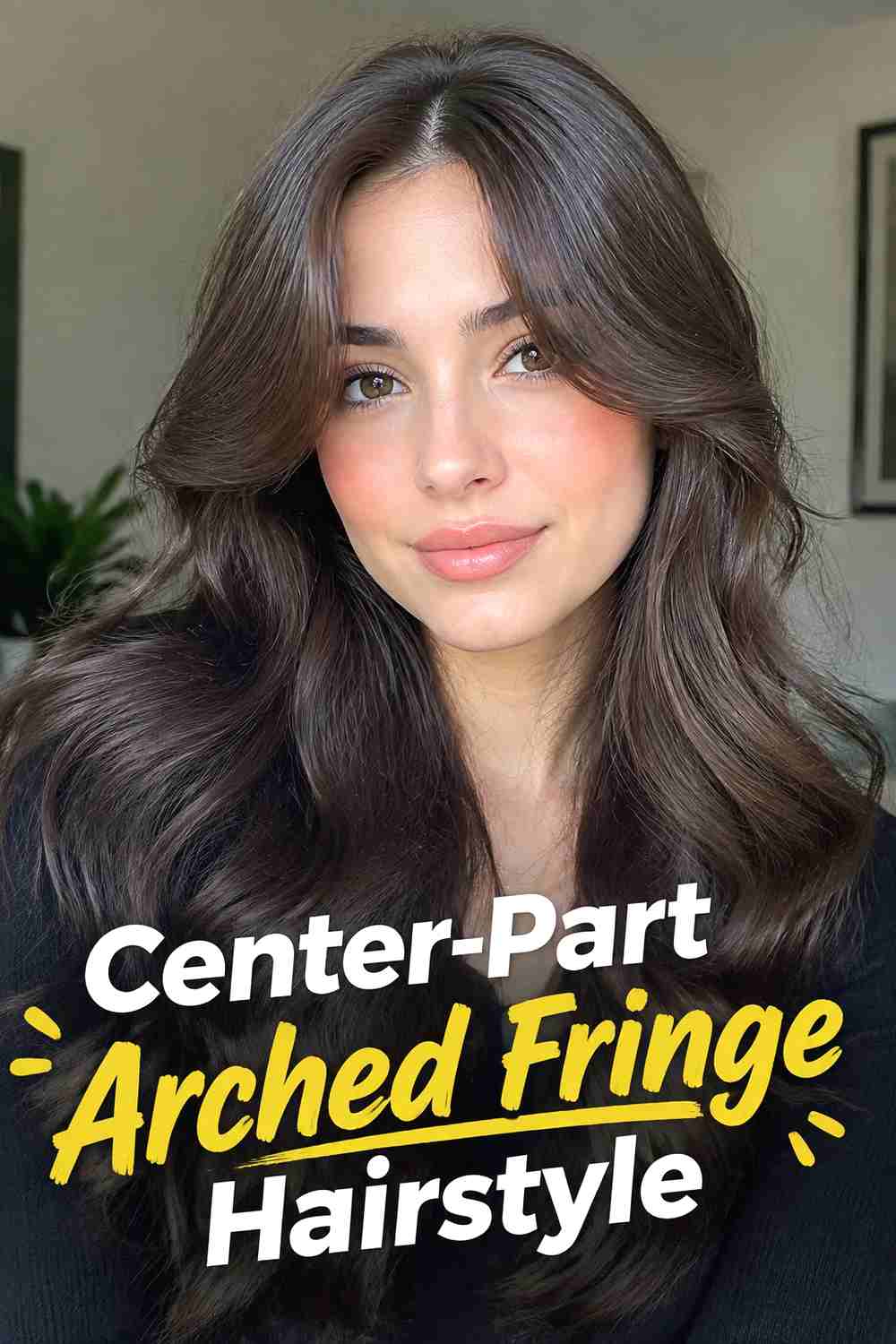
Center-Part Arched Fringe Hairstyle allows the fringe to open slightly through the middle while preserving the curved outline at the sides. The center pieces remain short enough to show that it is still a fringe, but they separate gently instead of lying completely across the forehead. The outer sections lengthen toward the temples, creating a soft bridge between an arched bang and a curtain-style finish. This version can be useful during the growing-out stage or for anyone who likes a little forehead visible. Dry the fringe from side to side before encouraging the central opening. Avoid creating an overly sharp part, since a softer split keeps the shape flexible and natural.
Wear & Maintenance
As the bangs grow, this version can transition smoothly into longer face-framing pieces with relatively minor reshaping.
10. Wavy Arched Fringe Hairstyle
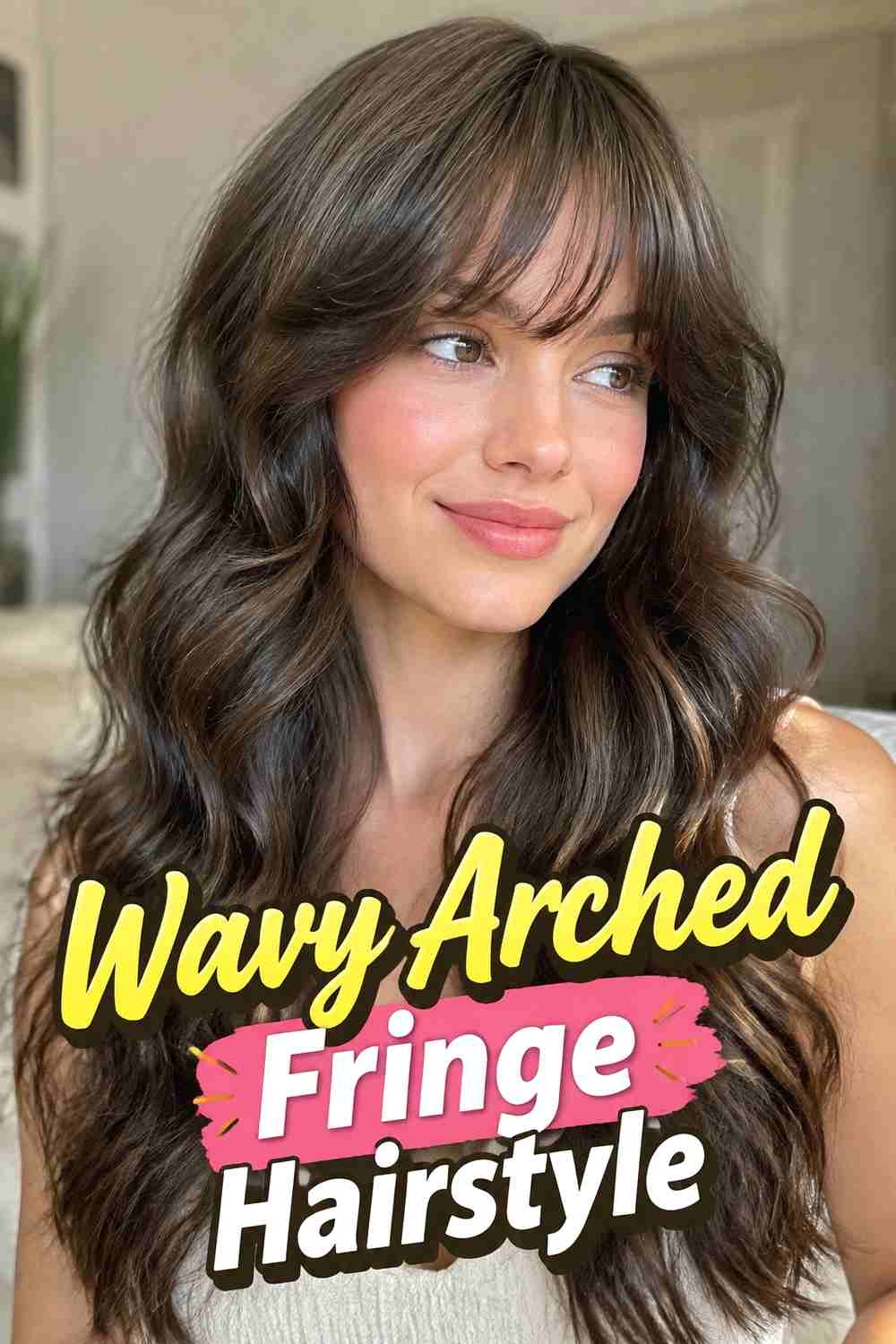
Wavy Arched Fringe Hairstyle adapts the curved shape to hair with natural bends and movement. The fringe does not need to form a perfectly smooth line; instead, the overall length progression creates the arch, with slightly shorter pieces toward the center and longer sections near the temples. The surrounding waves can stay loose and irregular, while the fringe is kept a little more controlled so its shape remains recognizable. Lightweight mousse or wave cream can enhance texture without weighing down the front. If using a curling tool, avoid forming identical bends through every piece. Natural variation makes the wavy fringe look softer and more believable.
Pro Tip
Style the fringe separately from the longer waves so its curved outline remains visible instead of disappearing into the surrounding texture.
11. Curly Arched Fringe Hairstyle
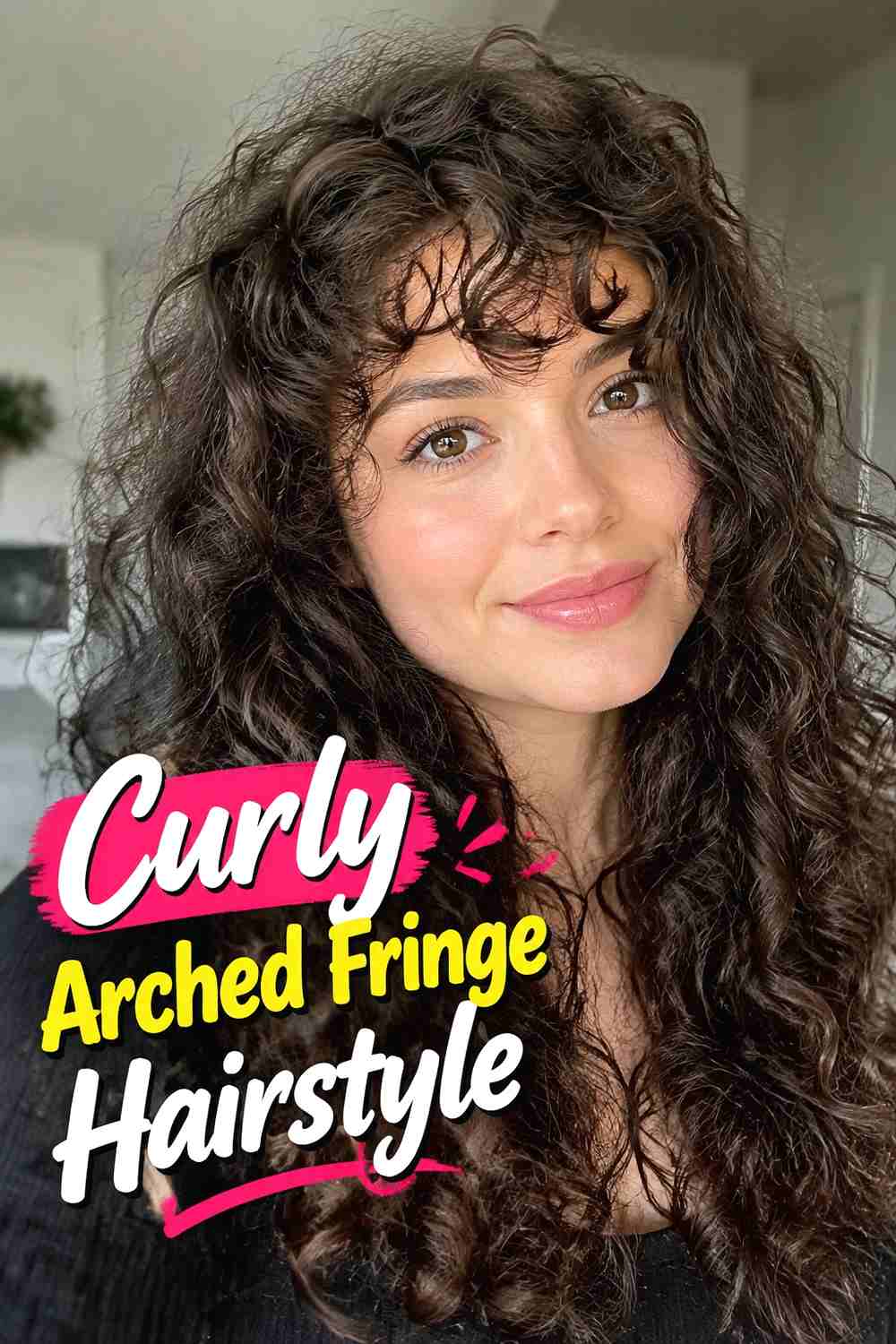
Curly Arched Fringe Hairstyle creates the same curved front using natural curl groups instead of a smooth cutting line. The center curls finish slightly shorter, while the outer curls gradually sit lower toward the temples, producing an arched silhouette when dry. Because individual curls shrink differently, the shape should be planned around the natural pattern rather than relying only on wet or stretched length. Longer side curls can connect the fringe into the rest of the haircut and help avoid an abrupt edge. Use lightweight curl cream or gel, then air-dry or diffuse. Let the curls maintain their natural grouping instead of separating every strand into an artificially uniform fringe.
Hair Type & Length
Shrinkage, curl pattern, and density should determine the exact cutting length so the finished fringe lands where intended.
12. Sleek Straight Arched Fringe Hairstyle
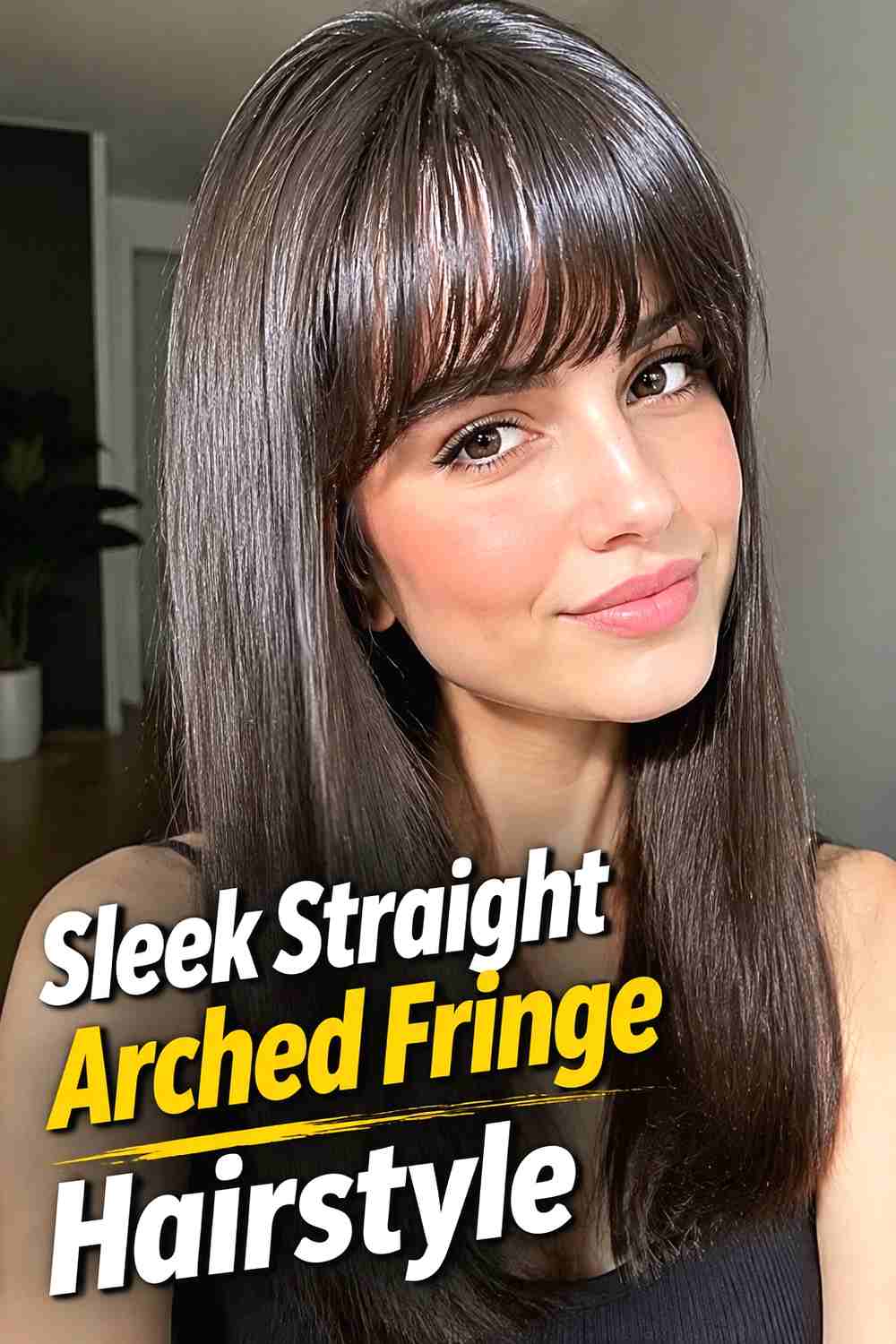
Sleek Straight Arched Fringe Hairstyle places maximum emphasis on the precision of the curved fringe. Smooth lengths create a clean backdrop, allowing the shorter center and subtly longer sides to stand out clearly. Because straight styling exposes the cutting line, careful blending around the temples is especially important. This version can pair with a bob, lob, or longer haircut, but the surrounding shape should remain relatively polished so the front feels cohesive. Apply heat protectant before smoothing the hair, and use a small brush on the fringe rather than flattening it heavily with a straightener. A tiny natural bend keeps the arch soft instead of rigid.
Styling Notes
Avoid pressing the fringe completely flat against the forehead. Slight lift at the roots helps the curved edge fall more naturally.
13. Bouncy Blowout Arched Fringe Hairstyle
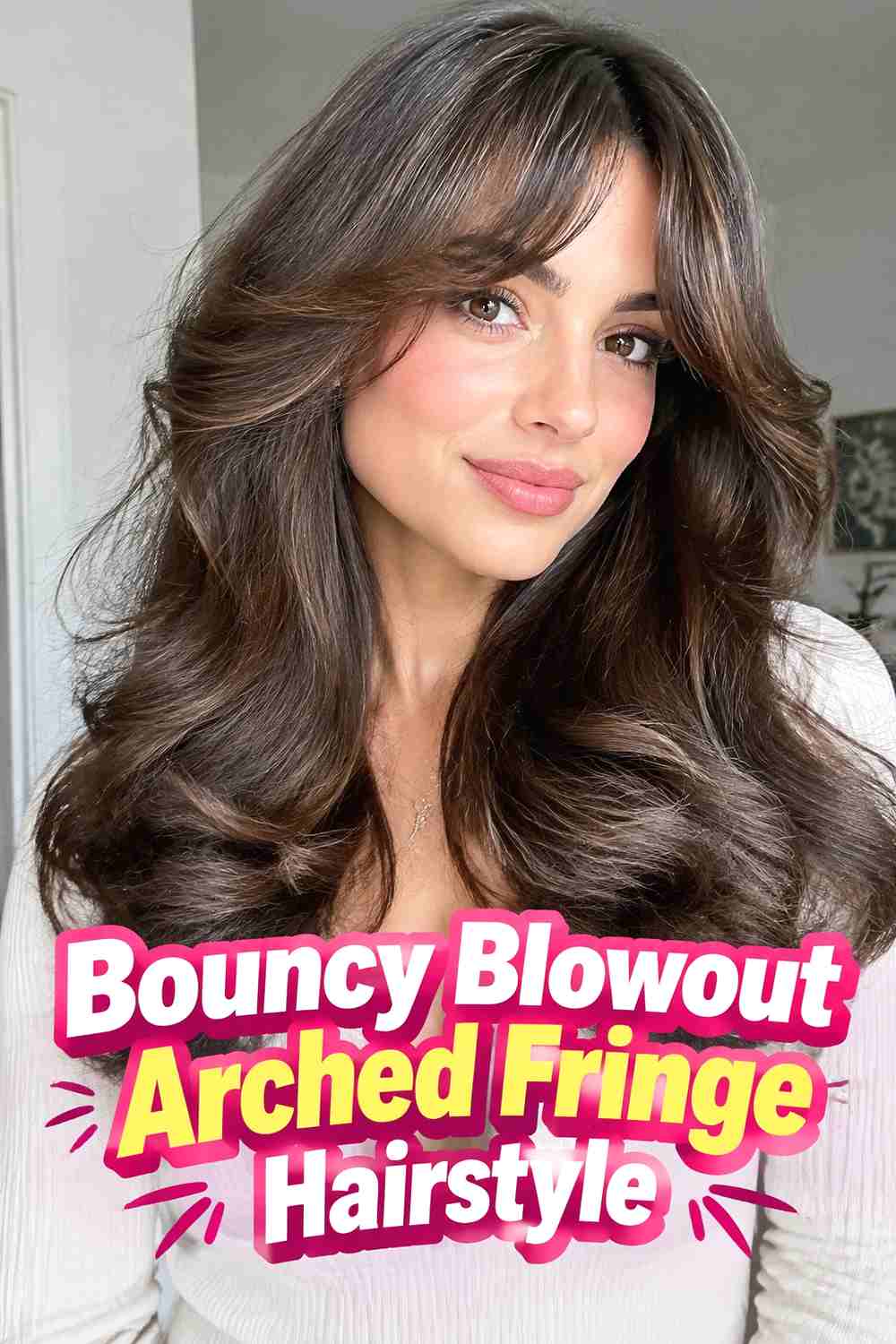
Bouncy Blowout Arched Fringe Hairstyle combines a controlled curved fringe with fuller movement through the rest of the hair. The center bangs stay smooth and softly rounded, while the longer outer pieces sweep toward the temples and connect into broad, lifted layers. This creates a polished contrast between a defined front and a more voluminous silhouette behind it. Medium and thick hair can hold the finish particularly well, though finer hair can create a lighter version with targeted root lift. Style the fringe first with a smaller brush, then switch to a larger brush for the lengths. Once everything cools, loosen the shape so the volume stays soft and touchable.
Pro Tip
Keep the fringe smoother than the surrounding blowout so the arch remains distinct instead of blending into one large curl.
14. Shoulder Length Arched Fringe Hairstyle
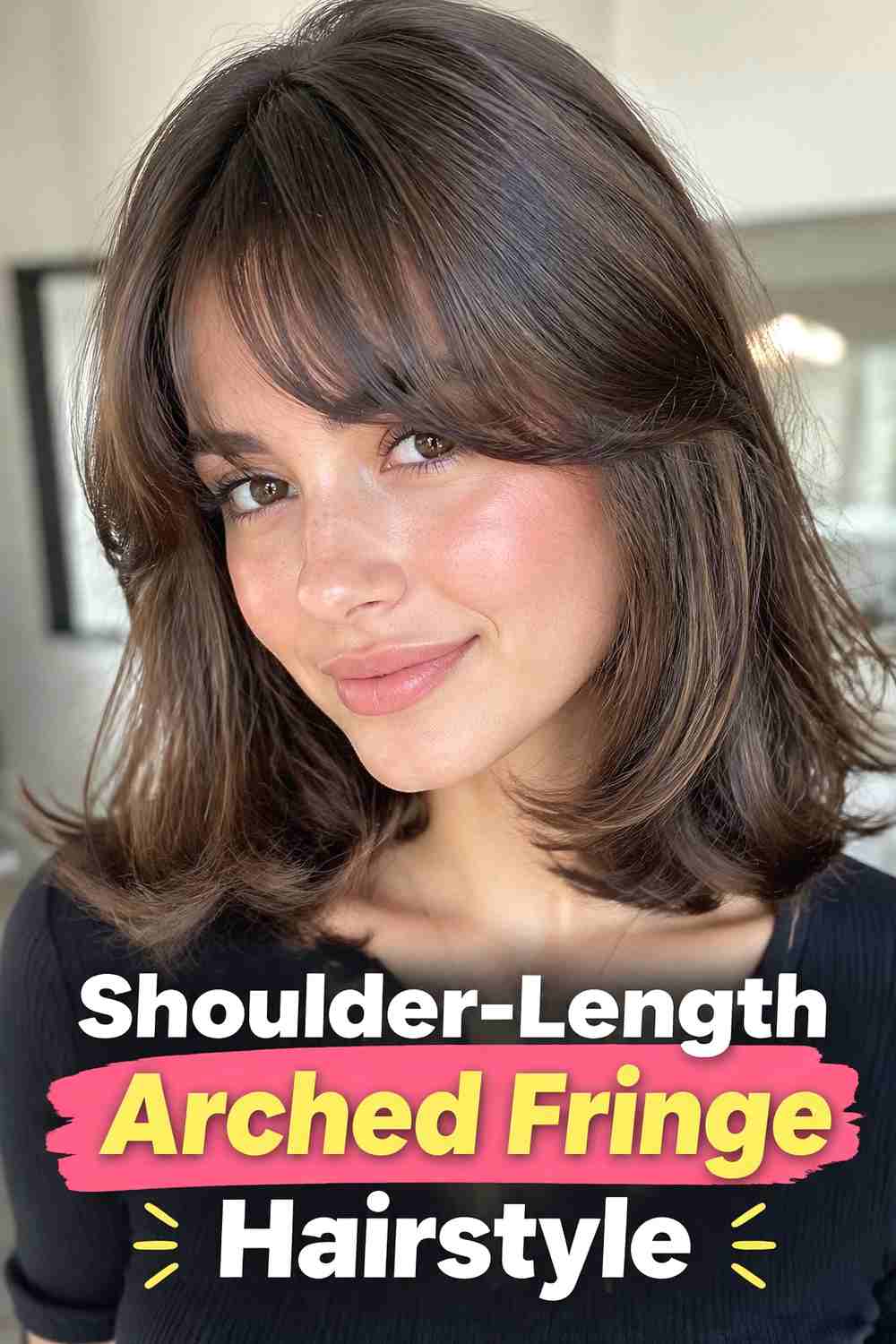
Shoulder-Length Arched Fringe Hairstyle pairs the curved front with a practical medium-length cut that sits near the shoulders or collarbones. The compact length keeps the fringe visually connected to the rest of the hairstyle, especially when a few longer pieces around the temples blend into subtle face framing. Straight, wavy, and softly layered finishes can all work, giving this combination plenty of flexibility. A fuller perimeter can balance a denser fringe, while lighter bangs pair nicely with more layered ends. The front usually benefits from quick styling after washing, but the shoulder-length hair itself can remain relatively simple. This makes the look polished without demanding a complicated full-head routine.
Best For
Choose this combination if you want a noticeable fringe change while keeping the overall haircut versatile and easy to style.
15. Long Hair Arched Fringe Hairstyle
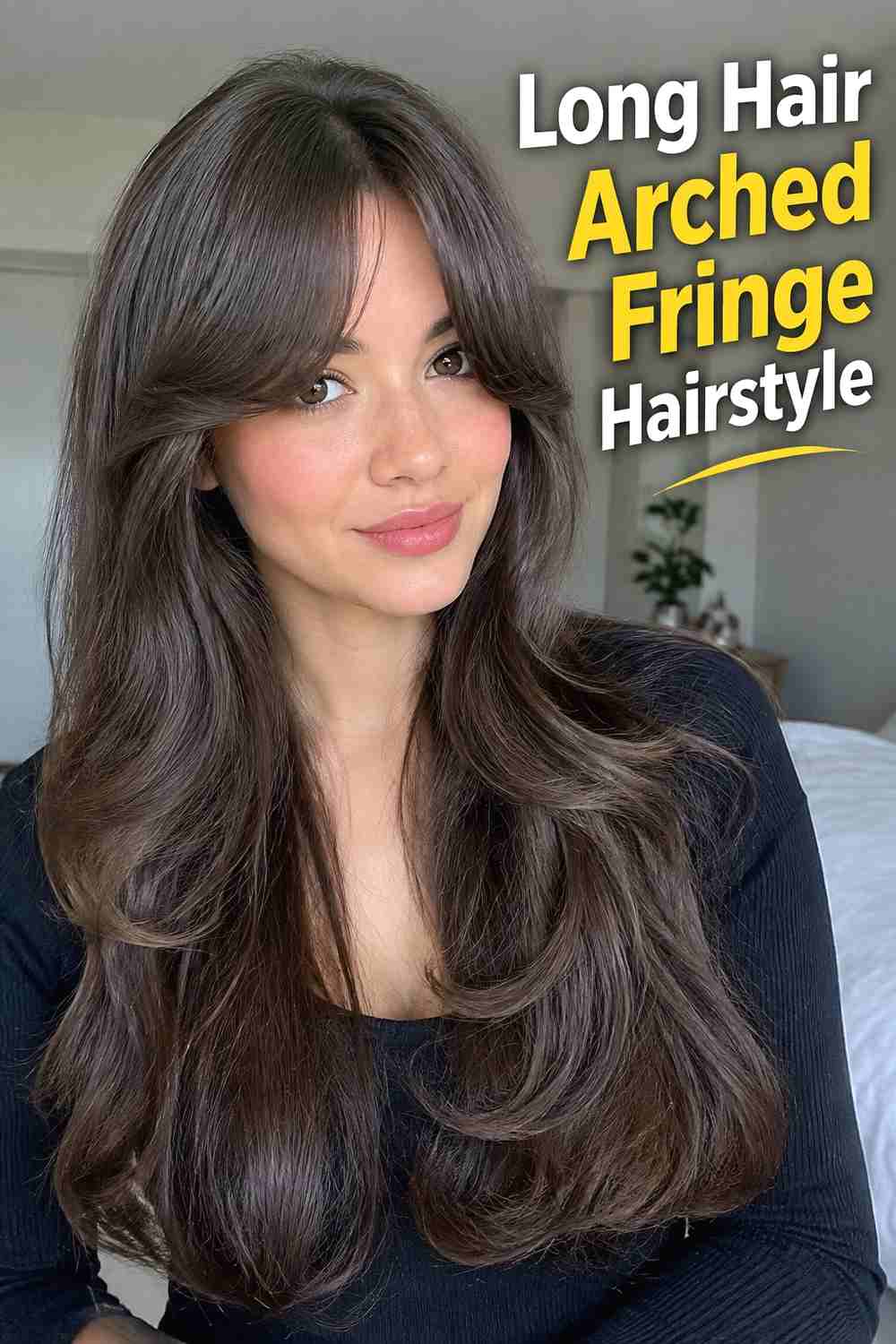
Long Hair Arched Fringe Hairstyle creates strong contrast between a defined curved fringe and substantial length through the rest of the hair. The shorter center bangs frame the forehead, while longer outer edges blend toward the temples and can continue into long face-framing layers. Keeping those connections smooth is important so the fringe does not appear detached from the lengths. This version can be worn sleek, waved, or blown out, making it especially adaptable for people who want to preserve long hair while changing the front significantly. Keep the back layers restrained if fullness is a priority, then use the fringe and front pieces to create most of the visible movement.
Why It Works
The fringe creates an immediate change around the face while allowing nearly all of the overall hair length to remain intact.
How to Choose the Right Look
Start with density. A full or blunt arched fringe uses more hair and creates a stronger statement, while soft and wispy versions preserve more density through the front and are easier to blend into fine hair.
Next, consider your natural texture. Straight hair shows the exact curved line most clearly, so precision matters. Waves can soften the arch, while curls require individualized length placement because each curl may shrink differently. If your hair has strong cowlicks or grows naturally to one side, a side-swept version may be easier to maintain than a perfectly forward fringe.
Length and maintenance matter too. Shorter, denser fringe needs regular reshaping to preserve the curve. Center-part and feathered versions can transition more easily as they grow. If you enjoy polished styling, sleek or blowout finishes emphasize the arch; for a softer routine, wavy or curly interpretations can work with more natural movement.
Final Thoughts
An arched fringe adds structure without relying on a completely straight or heavy bang line. By keeping the center slightly shorter and extending the outer edges, the fringe can follow the forehead more naturally and connect into the rest of the haircut. Choose the density, texture, and length that suit your hair’s natural behavior and the amount of fringe maintenance you realistically enjoy.
FAQs
1. What is an arched fringe?
An arched fringe is cut in a gentle curve across the forehead, typically sitting slightly shorter toward the center and becoming longer toward the temples.
2. Is an arched fringe the same as curtain bangs?
No. Curtain bangs usually open more noticeably through the center and extend farther along the sides, while an arched fringe still forms a recognizable bang across the forehead.
3. Can curly hair have an arched fringe?
Yes. The curved silhouette can be created with curls, but the stylist should account for shrinkage and individual curl patterns when determining each section’s length.
4. Are arched bangs good for fine hair?
They can be. A light or wispy arched fringe uses less hair and can add shape around the face without taking too much density away from the rest of the haircut.
5. What should I ask for at the salon?
Ask for a softly curved fringe that is slightly shorter through the center and gradually longer toward the temples. Bring reference images showing your preferred density and finished length.
Save your favorite arched fringe hairstyle ideas, share them for your next salon appointment, and explore more fringe inspiration for a fresh front-of-hair update.