15 Coily French Roll Hairstyle Ideas
Coily French rolls combine sculpted updo structure with visible natural texture, creating elegant shapes that can feel polished, soft, romantic, or creatively modern.
A French roll does not have to mean smoothing every strand into a rigid twist. On coily hair, the rolled shape can preserve texture, fullness, and natural dimension while still keeping the lengths tucked neatly away. Changing the roll height, front section, parting, or twist pattern can produce a noticeably different finish.
Before choosing a version, consider your available length, density, preferred tension, and how much texture you want visible. Some rolls work best with lightly stretched hair for easier tucking, while others look beautiful with more of the natural coil pattern left intact around the crown or front.
Quick List
- Classic Coily French Roll Hairstyle
- Side Part Coily French Roll Hairstyle
- Center Part Coily French Roll Hairstyle
- Textured Coily French Roll Hairstyle
- Low Coily French Roll Hairstyle
- High Crown Coily French Roll Hairstyle
- Flat Twist Coily French Roll Hairstyle
- Side Twist Coily French Roll Hairstyle
- Curly Front Coily French Roll Hairstyle
- Tucked End Coily French Roll Hairstyle
- Pinned Coily French Roll Hairstyle
- Double Coily French Roll Hairstyle
- Asymmetrical Coily French Roll Hairstyle
- Soft Halo Coily French Roll Hairstyle
- Minimalist Coily French Roll Hairstyle
1. Classic Coily French Roll Hairstyle
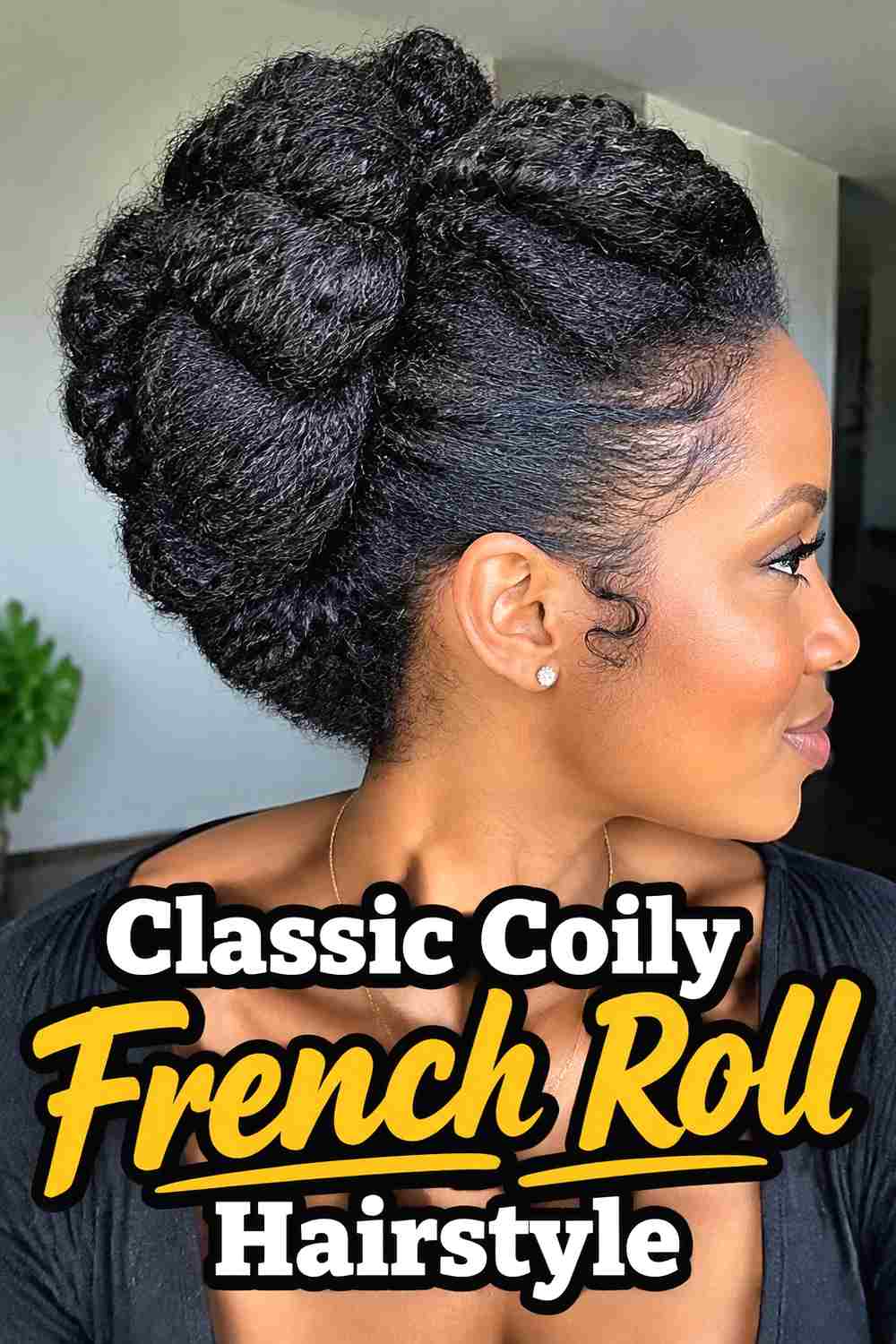
The classic coily French roll gathers the hair upward from the nape and folds it inward into a vertical roll, while preserving enough texture to keep the style soft and dimensional. Instead of flattening every section, gently guide the sides toward the center and let the natural density create fullness through the roll. The top can be tucked neatly or left slightly rounded for a softer finish. This version works especially well on medium to long coily hair with enough length to fold securely. Keep pins hidden inside the roll whenever possible so the silhouette looks continuous rather than visibly constructed from multiple fasteners.
Styling Notes
Build the roll from the nape upward and pin as you go. Securing the lower section first gives the upper hair a stable foundation for tucking.
Best For
This timeless version works for professional settings, dinners, weddings, ceremonies, and other occasions where a textured updo feels appropriate.
2. Side Part Coily French Roll Hairstyle
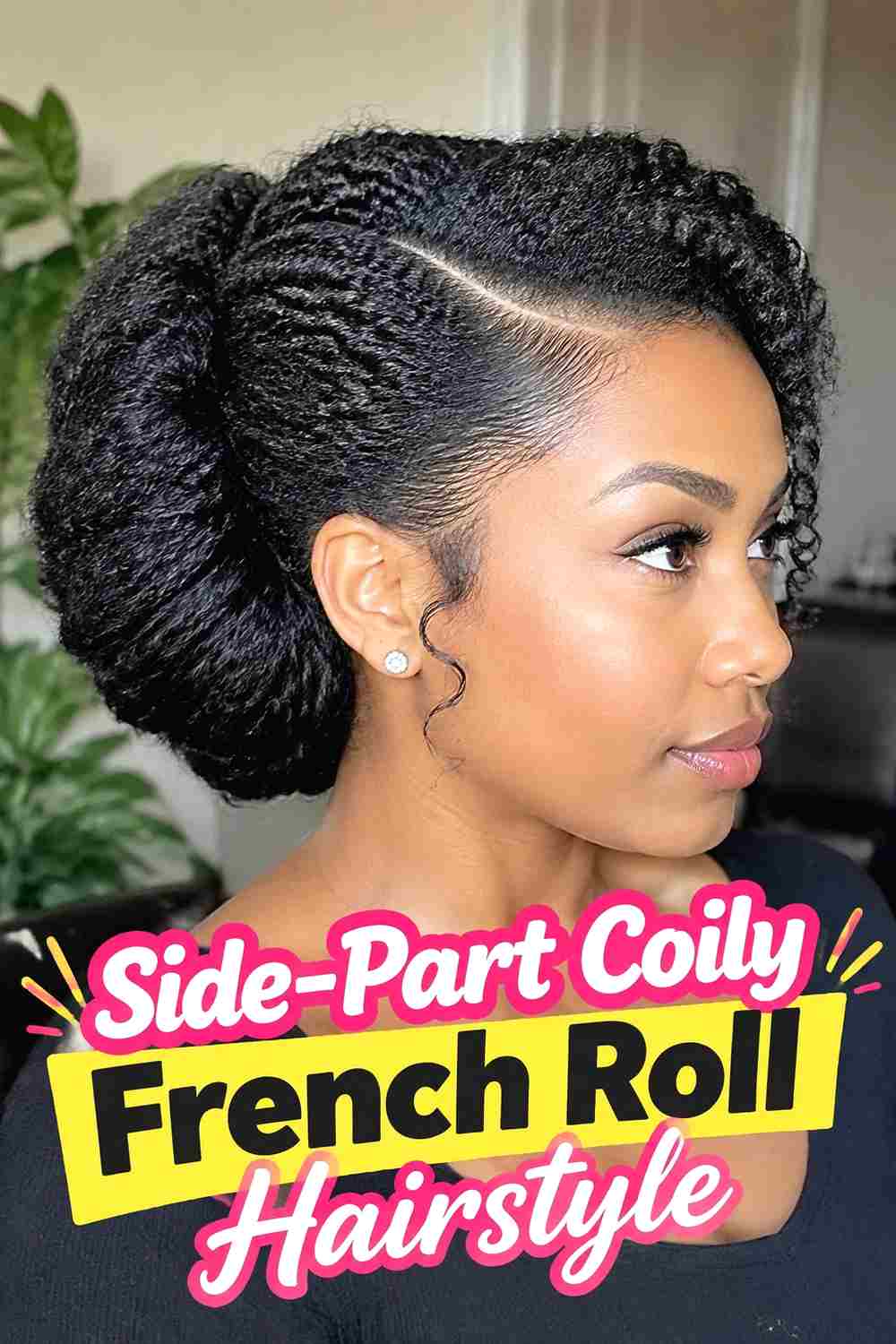
A side part adds movement to the front of a coily French roll before the hair transitions into the vertical updo at the back. The larger section can sweep softly across the temple, while the smaller side stays closer to the head and directs naturally into the roll. Keeping some natural root texture prevents the front from looking disconnected from the coily structure behind it. The roll itself can stay medium in height and moderately full so the side-part detail remains visible. This is an elegant option when you want a more directional front without leaving loose curls or adding decorative accessories.
Why It Works
The side part breaks up the symmetry and gives the eye a clear path from the front section toward the tucked roll at the back.
Pro Tip
Set the side part before gathering the hair so the front naturally falls in the intended direction instead of being repositioned after pinning.
3. Center Part Coily French Roll Hairstyle
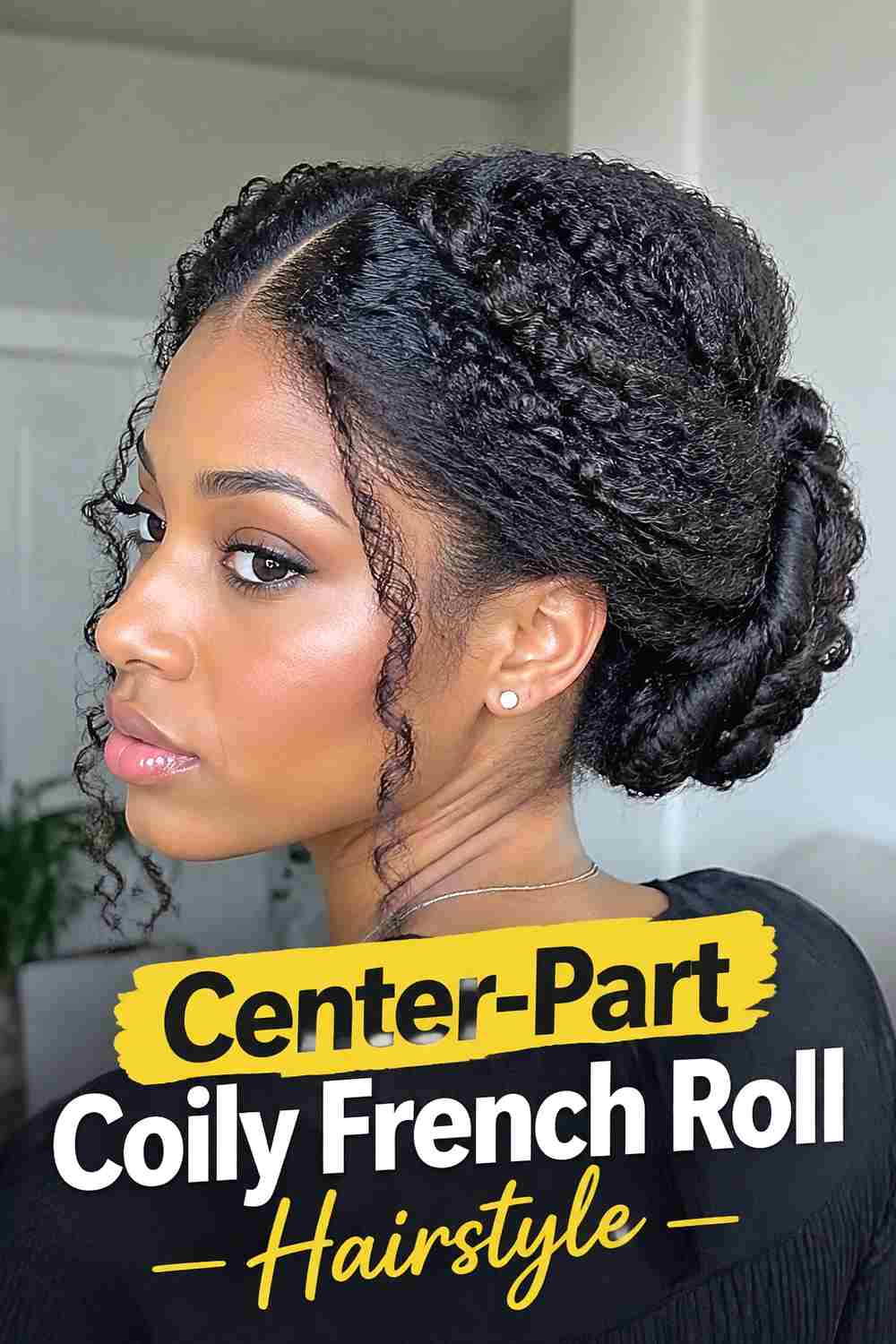
A center part gives the coily French roll a balanced front view, with both sides moving evenly toward the back before joining the tucked vertical shape. This version can feel especially polished when the part is clean but the roots retain a little natural fullness. Instead of pulling each side completely flat, guide the hair backward with moderate tension so the texture still reads as coily and soft. The back roll can be narrow and refined or slightly fuller depending on density. Matching the front sections visually helps the center part feel intentional, although natural variations in volume keep the style from appearing overly rigid.
Best For
This balanced look works particularly well for formal events, work, portraits, and occasions where a symmetrical updo complements the outfit.
Styling Notes
Start with the center line, then gather equal-looking sections from both sides before building the roll so the front stays visually balanced.
4. Textured Coily French Roll Hairstyle
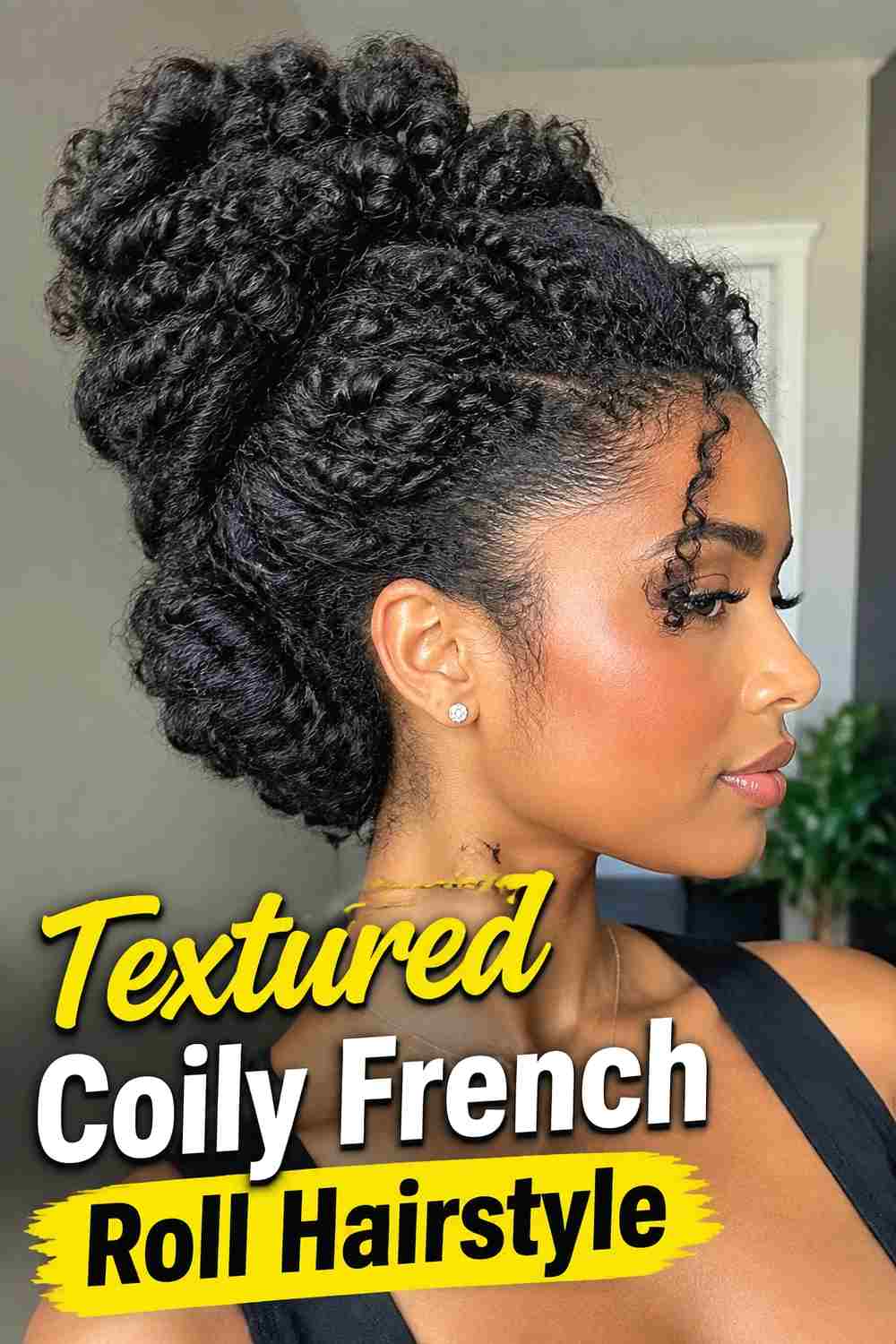
The textured coily French roll deliberately keeps more of the natural pattern visible instead of smoothing the hair into a highly polished surface. Coils and small bends can remain noticeable along the sides and upper roll, giving the updo a soft, dimensional finish. The structure should still be secure, but the outer surface does not need to appear perfectly uniform. This approach works especially well on dense hair because the natural fullness helps create a substantial vertical shape without heavy padding. Focus on the overall silhouette rather than controlling every flyaway, and tuck the ends into the center so the texture remains the main visible detail.
Why It Works
Visible texture softens the formal structure of a French roll and helps the updo feel connected to the natural coil pattern instead of disguising it.
Wear & Maintenance
Protect the roll from friction and refresh only loosened sections rather than repeatedly smoothing the entire surface.
5. Low Coily French Roll Hairstyle
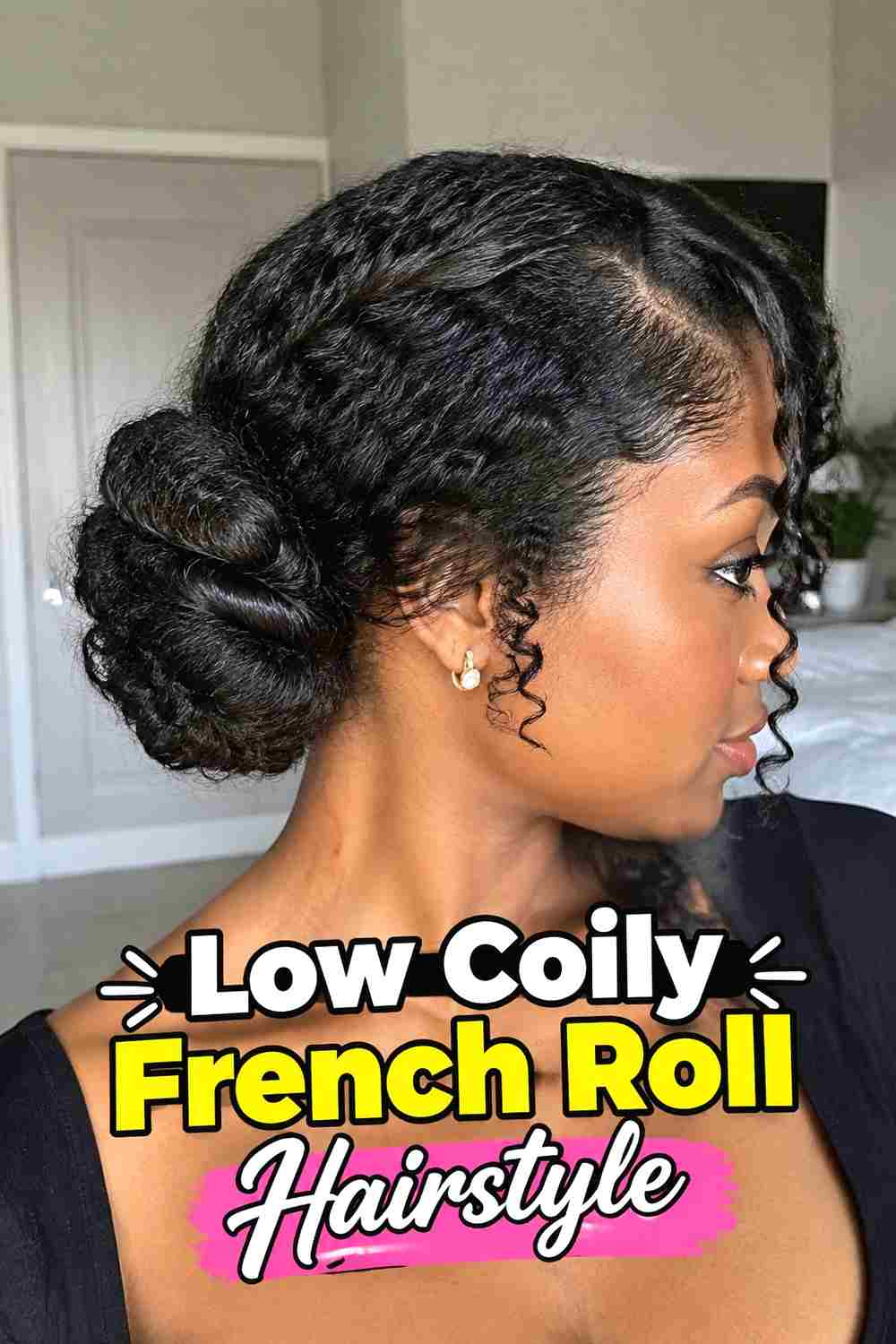
A low coily French roll concentrates the tucked shape closer to the nape rather than extending high toward the crown. The result is a compact, understated updo with a softer profile from the side. Hair from the temples and sides can sweep backward into the lower roll, while the crown keeps a small amount of natural lift so the style does not look flattened. This placement can be especially comfortable if you prefer less height or want an updo that works easily with hats or simple accessories before and after an event. Keep the roll slightly above the neckline to reduce rubbing against collars.
Best For
This lower placement suits work, dinners, casual celebrations, and anyone who prefers a French roll with a quieter silhouette.
Pro Tip
Anchor the first pins near the nape and build upward only as much as needed to contain the ends securely.
6. High Crown Coily French Roll Hairstyle
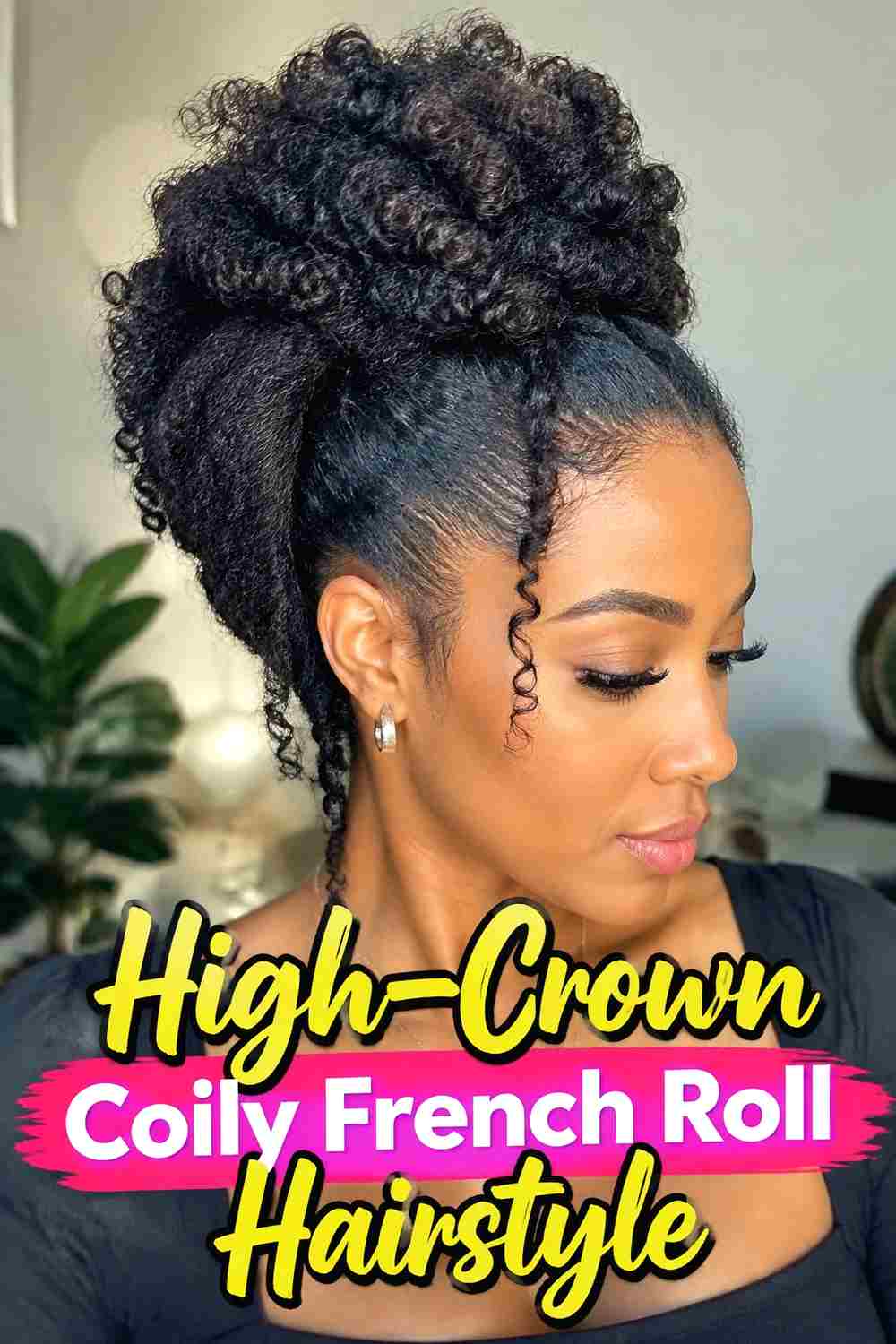
The high-crown version extends the French roll upward and uses extra fullness near the top to create a taller, more dramatic silhouette. Rather than compressing the crown, preserve a rounded section of volume before tucking the ends into the upper portion of the roll. The sides can stay relatively controlled so the height remains the main feature. This look works particularly well on dense or longer coily hair because there is enough material to create visible elevation without relying on an oversized accessory. Keep the crown connected to the roll so the style reads as one continuous shape rather than a separate puff attached to the back.
Hair Type & Length
Medium to long, dense coily hair provides the easiest foundation for building a higher roll with visible crown fullness.
Styling Notes
Create the vertical roll first, then adjust the crown volume gradually so you do not make the top larger than the structure can support.
7. Flat Twist Coily French Roll Hairstyle
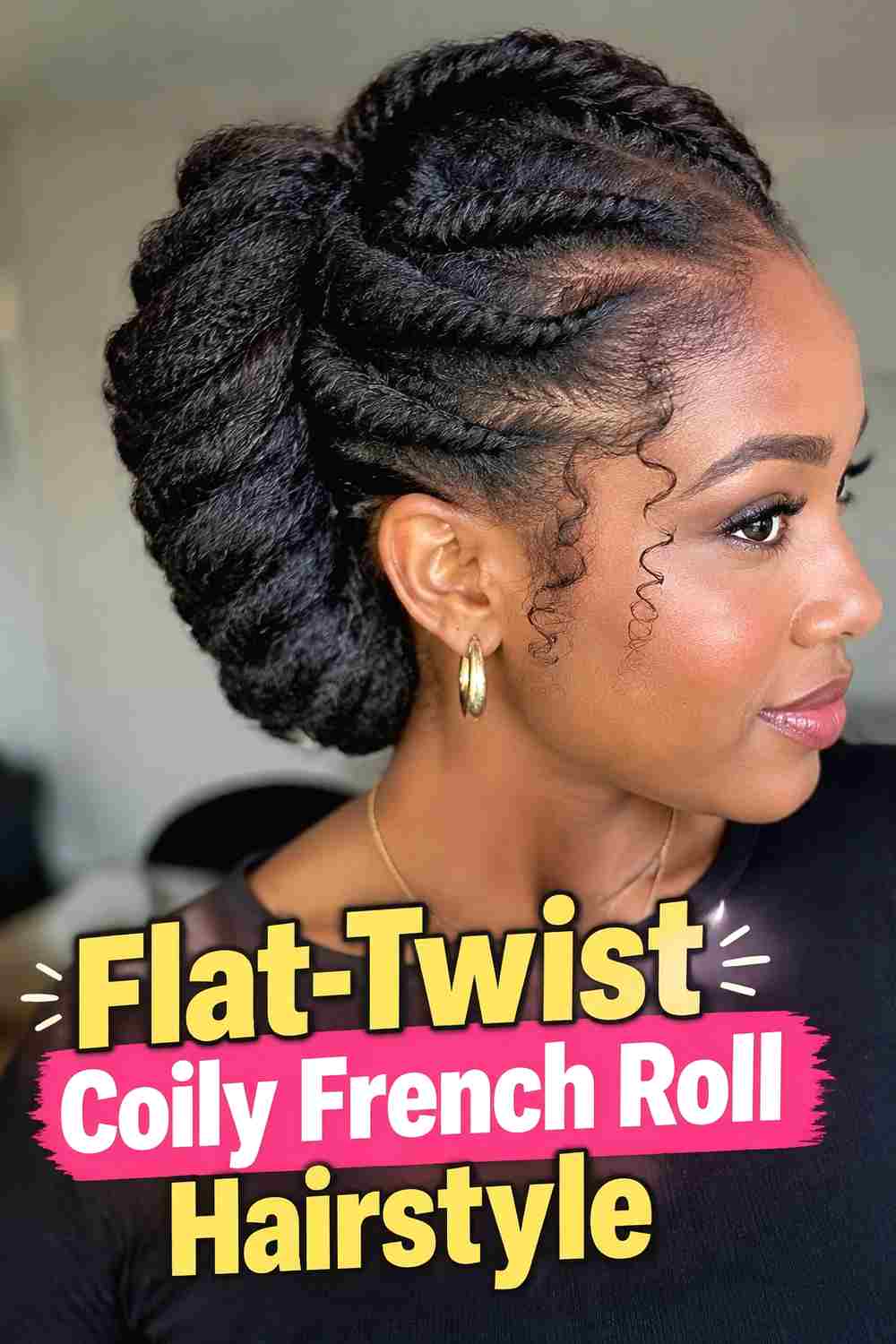
Flat twists along the sides give a French roll extra texture and direction while keeping the central back section clean. One or more flat twists can travel from the temples toward the rear, where their ends disappear into the vertical roll. This gives the hairstyle visible detail from the side without requiring beads, clips, or decorative pins. Keep the twist tension comfortable and allow the sections to remain slightly full so they complement the coily roll instead of looking overly tight. The back can stay softly textured, creating an attractive contrast between the controlled twist paths and the fuller tucked section.
Why It Works
Flat twists naturally guide hair toward the center back, making them both decorative and structurally useful for forming a secure French roll.
Pro Tip
Finish the flat twists before constructing the roll so their ends can be hidden neatly inside the central tucked section.
8. Side Twist Coily French Roll Hairstyle
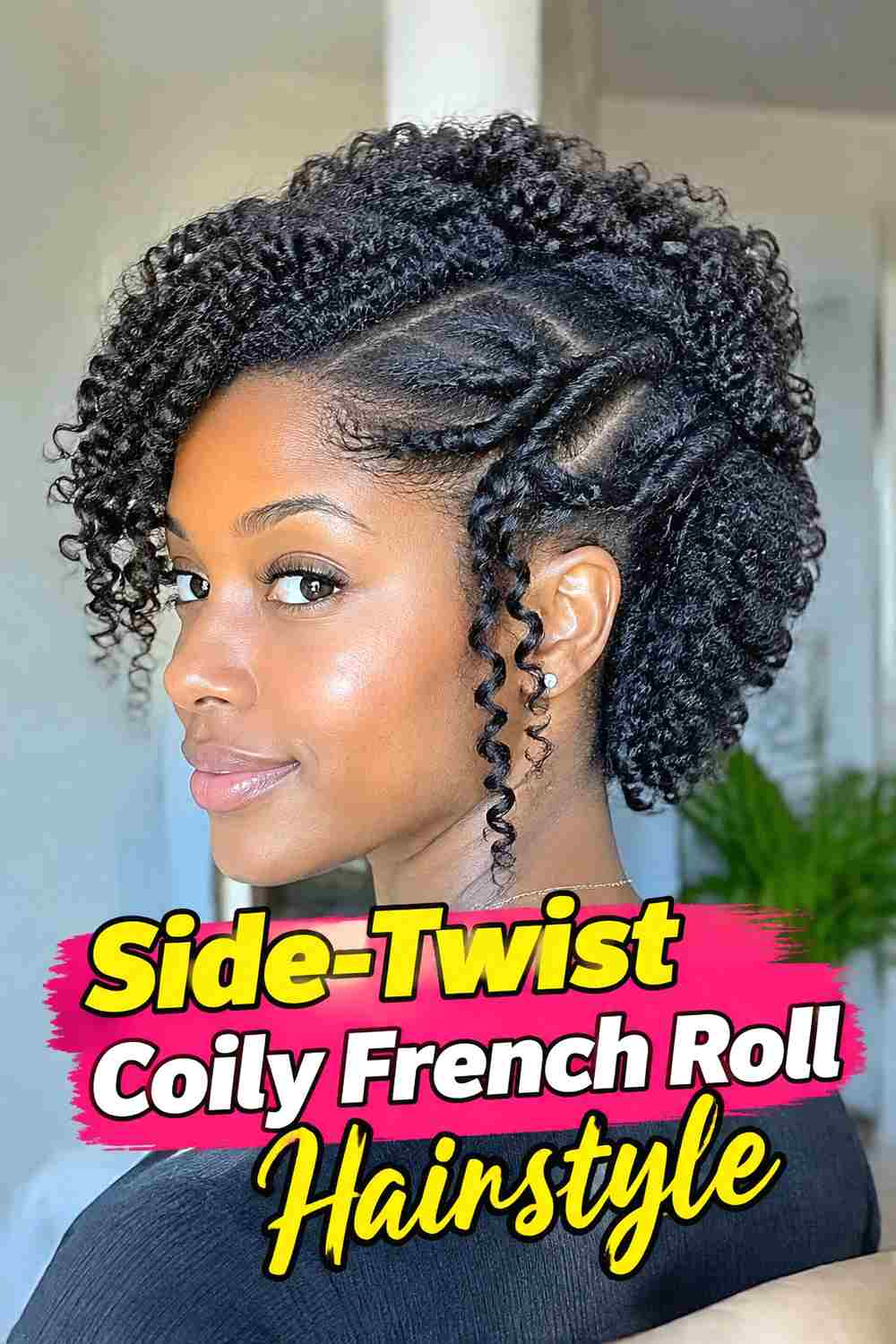
A side-twist French roll concentrates one larger twist along a temple or side panel before blending it into the back updo. Unlike multiple narrow flat twists, this version uses a broader rope-like or softly rolled section as a single decorative feature. The opposite side stays simpler, allowing the twist to stand out clearly. At the back, the hair folds into a medium French roll with enough texture to connect naturally to the side detail. This asymmetrical placement can make the hairstyle feel more contemporary without changing the classic vertical roll structure. Keep the side twist soft enough to show fullness rather than pulling it tightly against the scalp.
Styling Notes
Shape the side twist first and temporarily pin it near the back, then incorporate its end as the French roll is formed.
Best For
This look suits dinners, parties, creative formal events, and anyone who wants a visible detail without a highly intricate full-head pattern.
9. Curly Front Coily French Roll Hairstyle
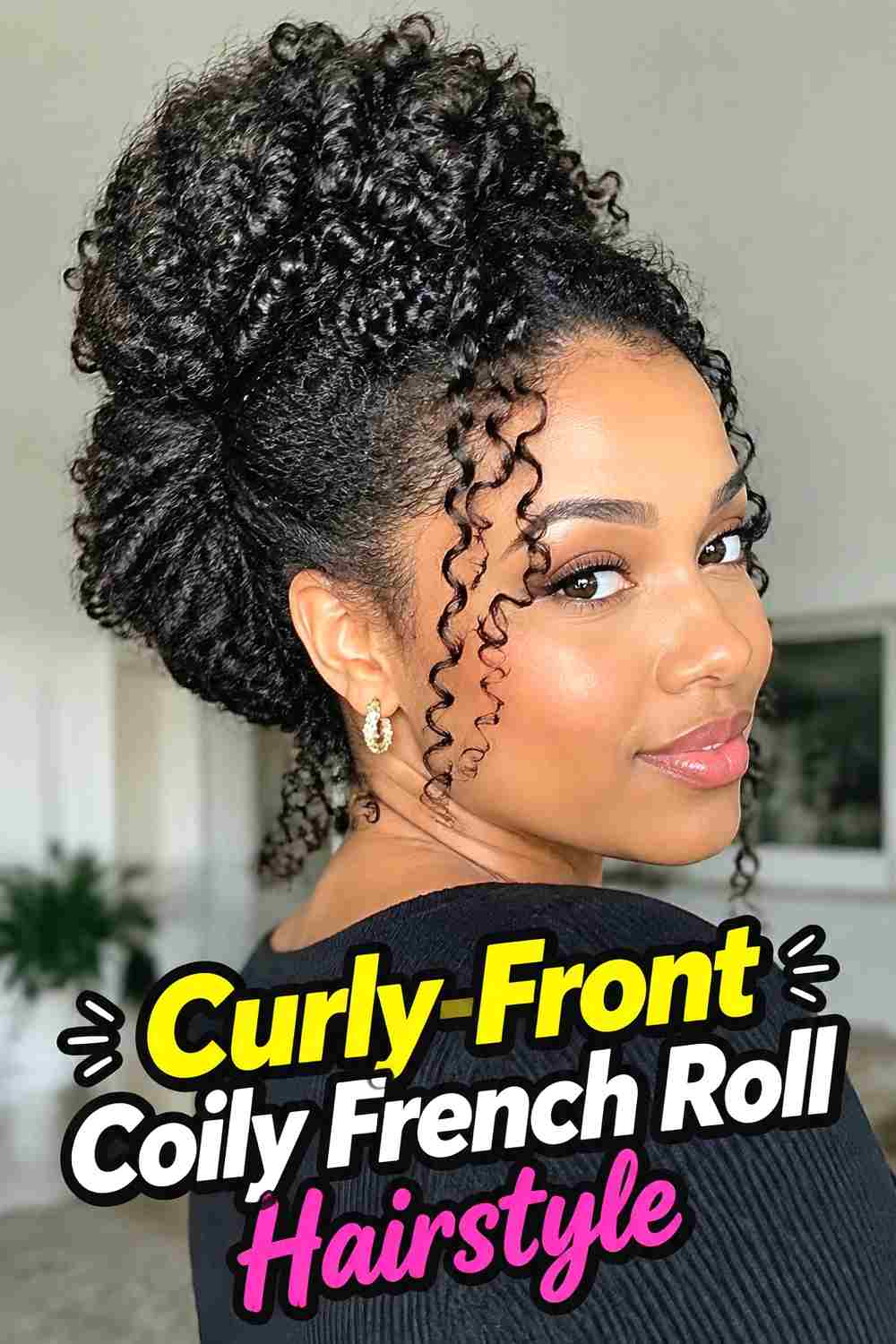
Leaving several defined coils free at the front gives the French roll a softer, more romantic appearance. The main body of the hair is tucked vertically at the back, while selected front pieces remain loose around the forehead or temples. These curls should look intentional and well defined rather than like sections that escaped the pins. Keeping the roll relatively clean helps the loose front texture become the focal point without making the entire style feel unfinished. This variation works especially well when the front of the hair naturally forms attractive coils or when shorter layers are difficult to include securely in the roll.
Best For
This version is well suited to weddings, dinners, parties, and events where a completely slicked-back updo might feel too formal.
Wear & Maintenance
Refresh only the loose front coils if they lose shape, leaving the pinned roll untouched when it remains secure.
10. Tucked End Coily French Roll Hairstyle
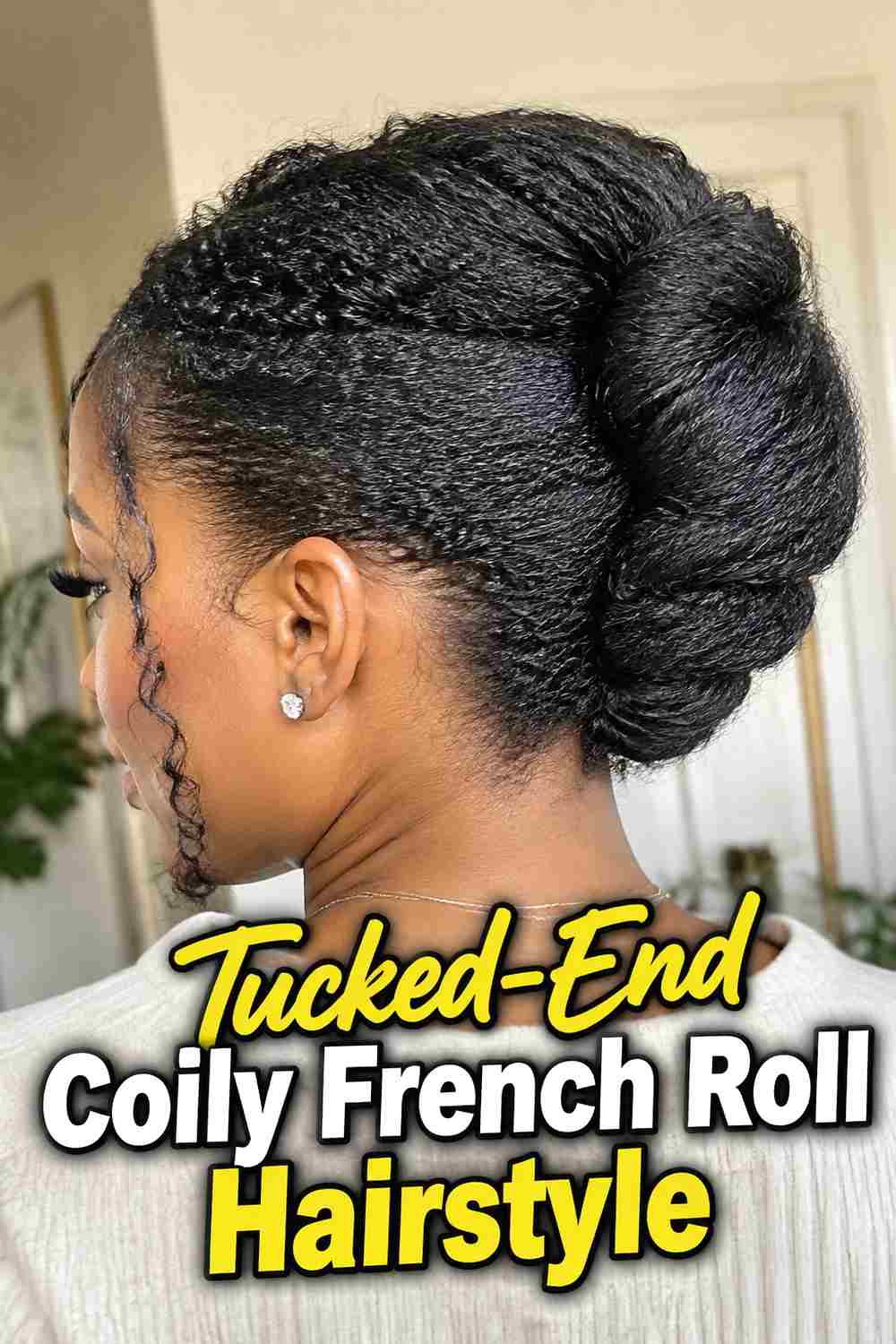
The tucked-end French roll focuses on creating a seamless finish with every loose end hidden inside the central fold. Hair is gathered toward the middle back, rolled inward, and pinned so the outer surface remains continuous from the nape toward the crown. This clean construction can still preserve natural coily texture, especially if the hair is lightly stretched rather than fully smoothed. The key is distributing bulky ends throughout the interior instead of forcing them all into one spot. A well-balanced tuck prevents noticeable bumps and allows the roll to keep a smooth vertical shape without losing the softness that textured hair naturally provides.
Styling Notes
Tuck smaller groups of ends into different areas of the roll rather than pushing all the hair into one central pocket.
Pro Tip
Insert pins through the inner fold where possible so the outer surface stays clean and the fasteners remain discreet.
11. Pinned Coily French Roll Hairstyle
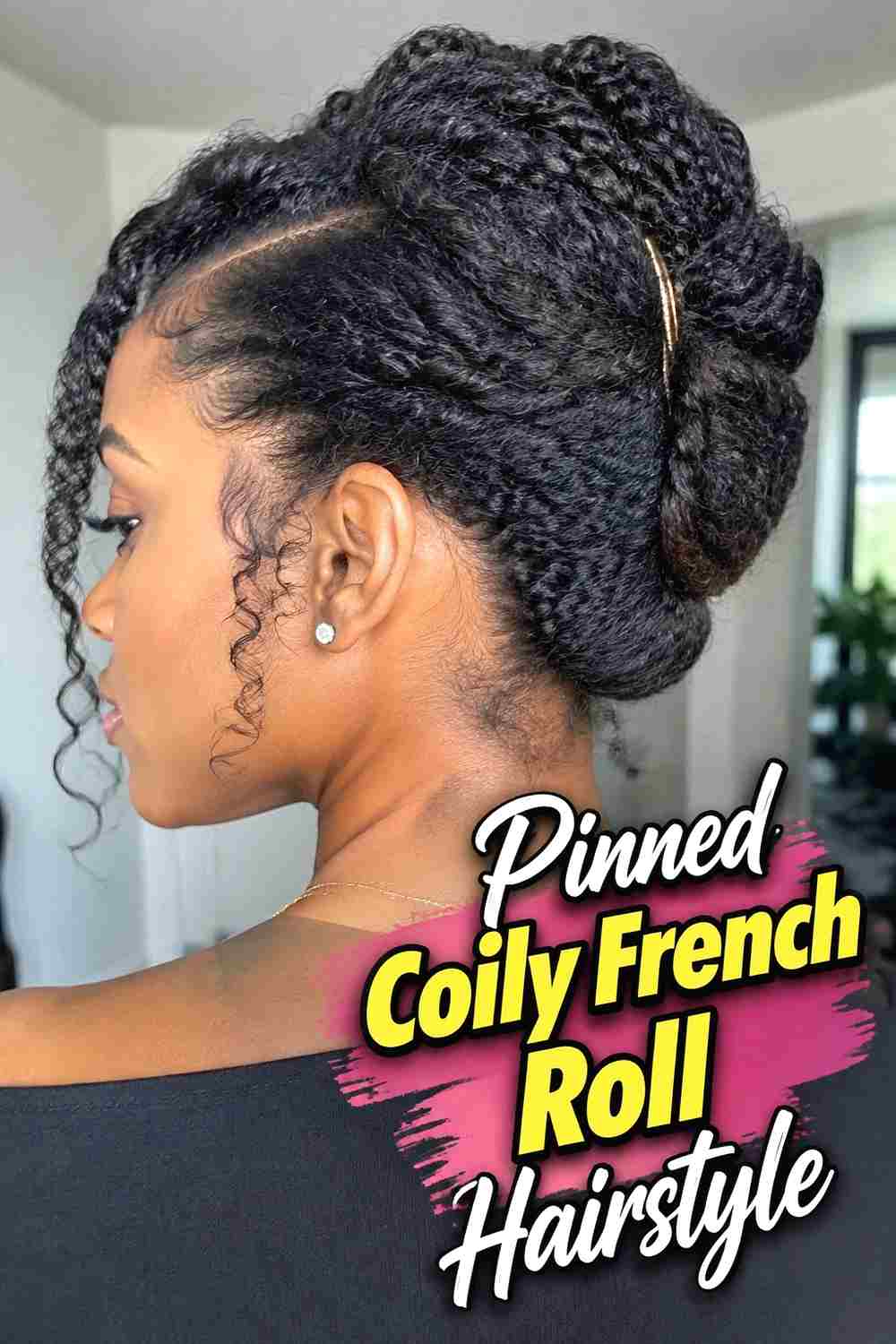
The pinned coily French roll uses visible decorative pins as part of the design instead of hiding every fastener. A row of coordinated pins can follow one side of the roll, trace the center seam, or accent the lower portion near the nape. The hair itself should remain the main feature, so choose a limited number of accessories and leave plenty of natural texture visible around them. This approach is useful when you want an easy way to dress up a classic roll without changing its basic construction. Keep the pins functional as well as decorative so they contribute to holding the tucked shape securely.
Best For
This variation works well for celebrations, weddings, dinners, and events where a small metallic or pearl-like accent complements the outfit.
Styling Notes
Place decorative pins only after the roll is structurally secure, so you are not relying on ornamental pieces to hold the entire hairstyle.
12. Double Coily French Roll Hairstyle
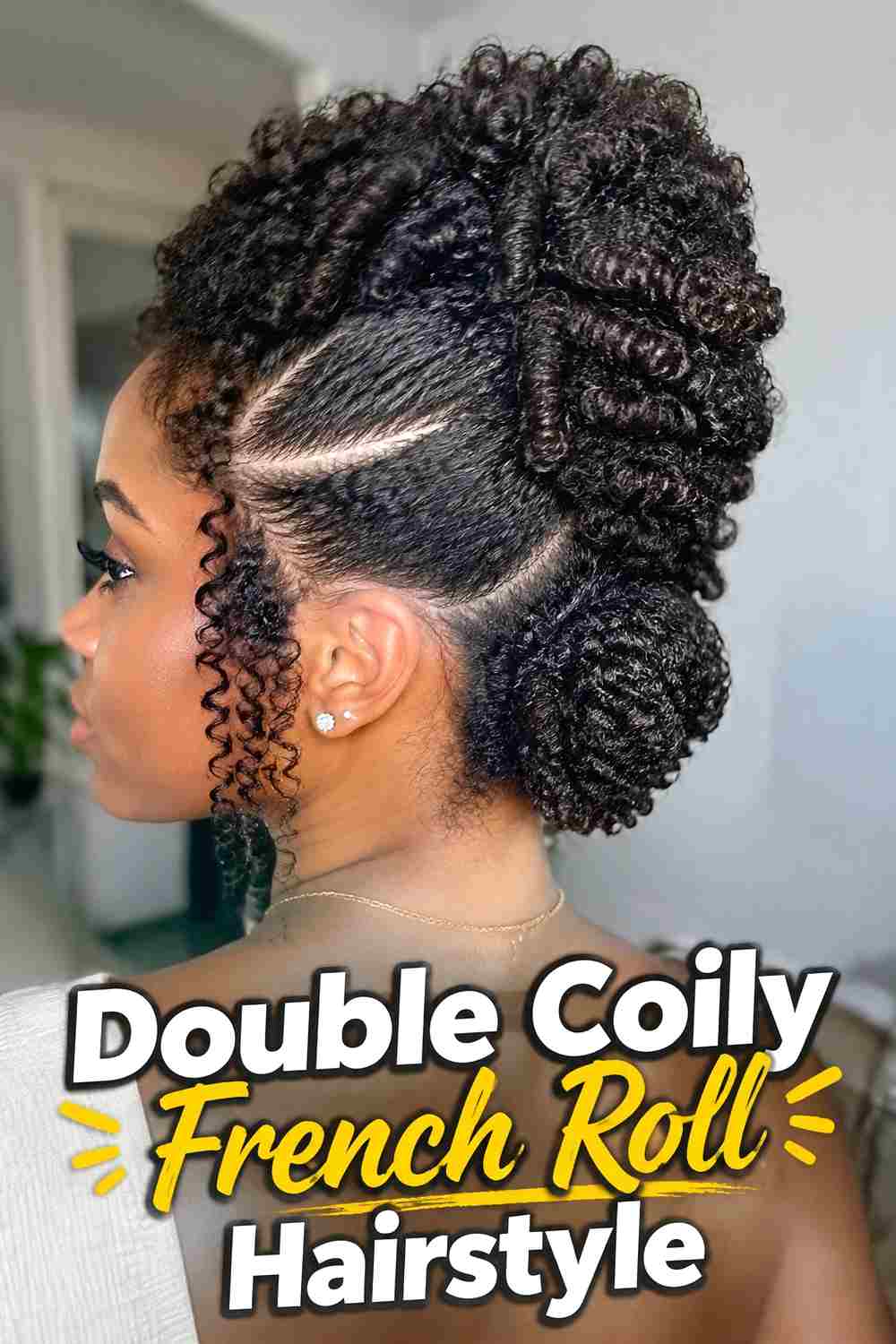
A double coily French roll divides the hair into two vertical rolled sections that meet or sit closely together at the back. Each side is folded inward toward the center, creating a mirrored pair of textured rolls rather than one larger central twist. The result has extra structure while still keeping the hair tucked neatly away. This style benefits from fairly even sectioning, especially if you want both rolls to appear similar in size. Natural texture can remain visible along the outer surfaces, helping the double pattern feel soft rather than severe. Secure each side independently before adjusting the meeting point between them.
Hair Type & Length
Medium to long coily hair with enough density to divide into two substantial sections works particularly well for this design.
Pro Tip
Build one roll at a time and compare them before final pinning so you can adjust fullness without dismantling both sections.
13. Asymmetrical Coily French Roll Hairstyle
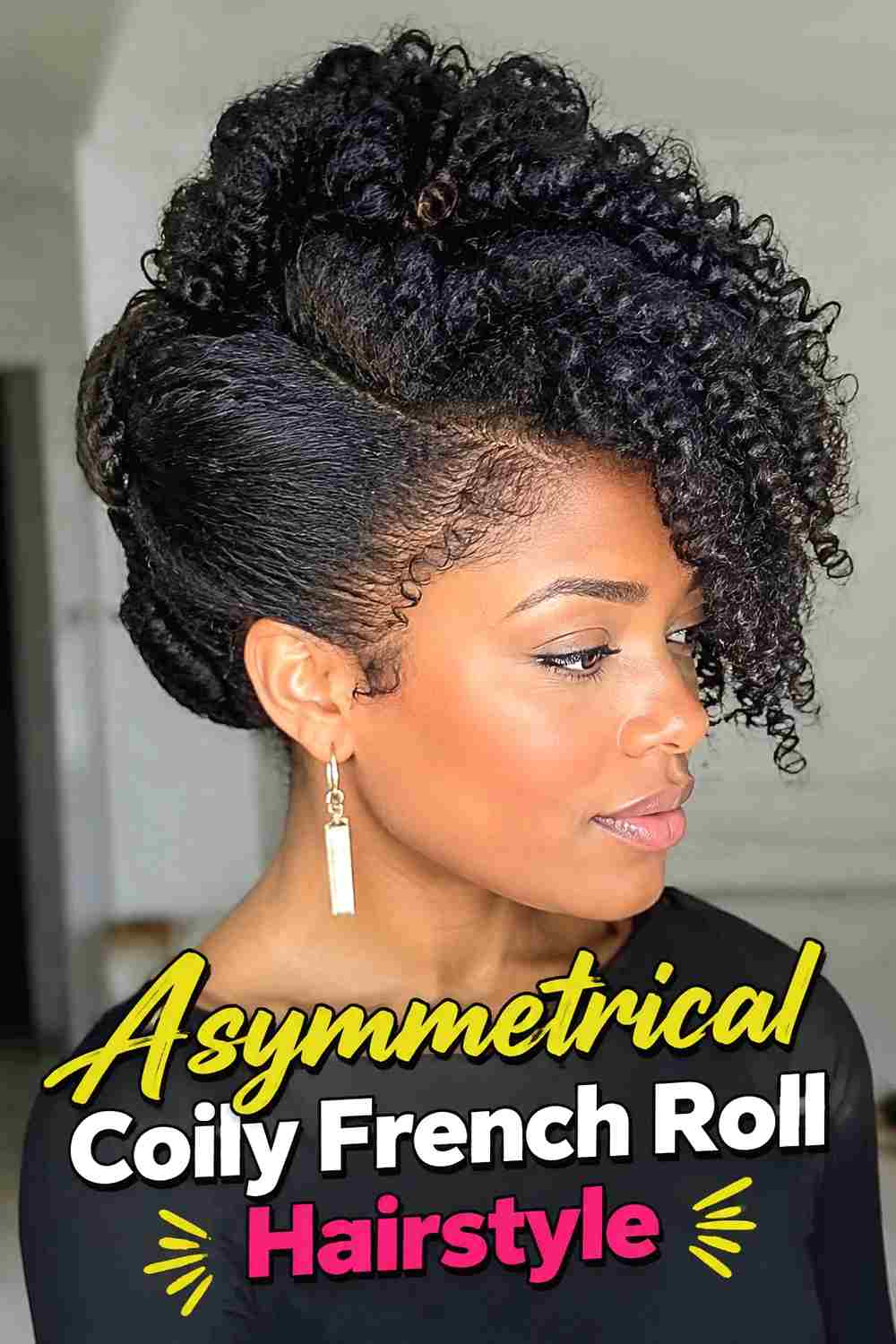
The asymmetrical coily French roll shifts the main tucked section slightly away from the center, creating a more directional profile. Hair can sweep diagonally from one side before forming a vertical or gently angled roll closer to the opposite side of the back. The front may also follow the same imbalance with a deeper part or fuller section near one temple. Keep the roll substantial enough to look intentional rather than accidentally off center. This variation works beautifully when you prefer updos that feel less traditional but still keep the hair securely tucked. Natural texture helps soften the geometry and makes the shifted placement feel organic.
Why It Works
Moving the roll off center creates visual movement while preserving the recognizable tucked structure of a French roll.
Styling Notes
Choose the roll position before gathering the hair so every section can be directed naturally toward the same off-center anchor point.
14. Soft Halo Coily French Roll Hairstyle
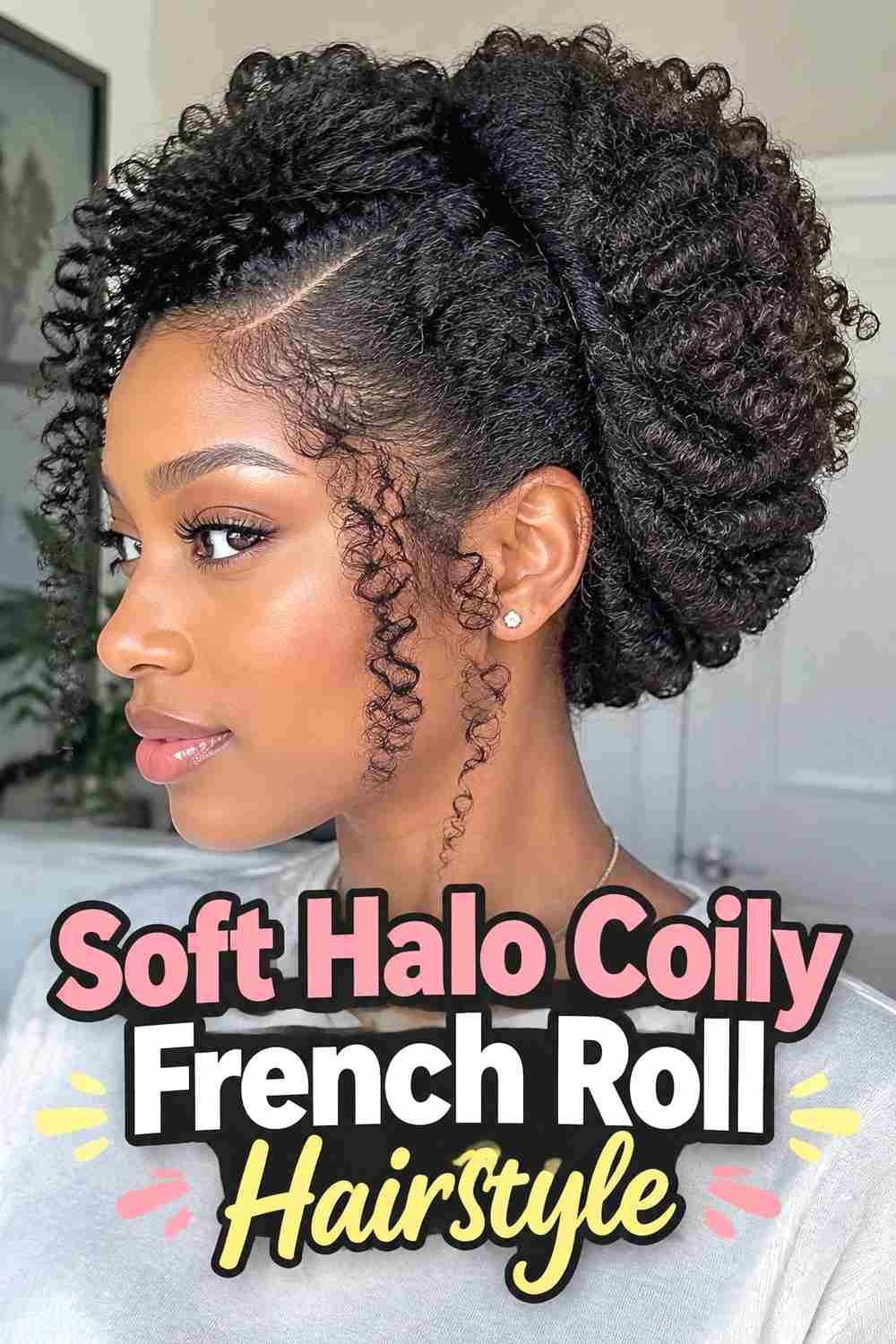
A soft halo detail brings gentle crown-like volume around the perimeter before the hair finishes in a French roll at the back. Instead of pulling the sides straight toward the center, guide them in a curved path around the head so the front and temples retain a rounded frame. The hair then narrows toward the back, where it folds into the vertical roll. This gives the hairstyle a graceful transition from soft perimeter volume to a more structured central updo. Keep the halo moderate rather than oversized so it does not compete with the roll, and let natural coily texture remain visible throughout both sections.
Best For
This style works well for weddings, formal celebrations, portraits, and occasions where you want a softer alternative to a sleek French roll.
Pro Tip
Shape the halo before securing the final roll so you can balance the front volume with the height at the back.
15. Minimalist Coily French Roll Hairstyle
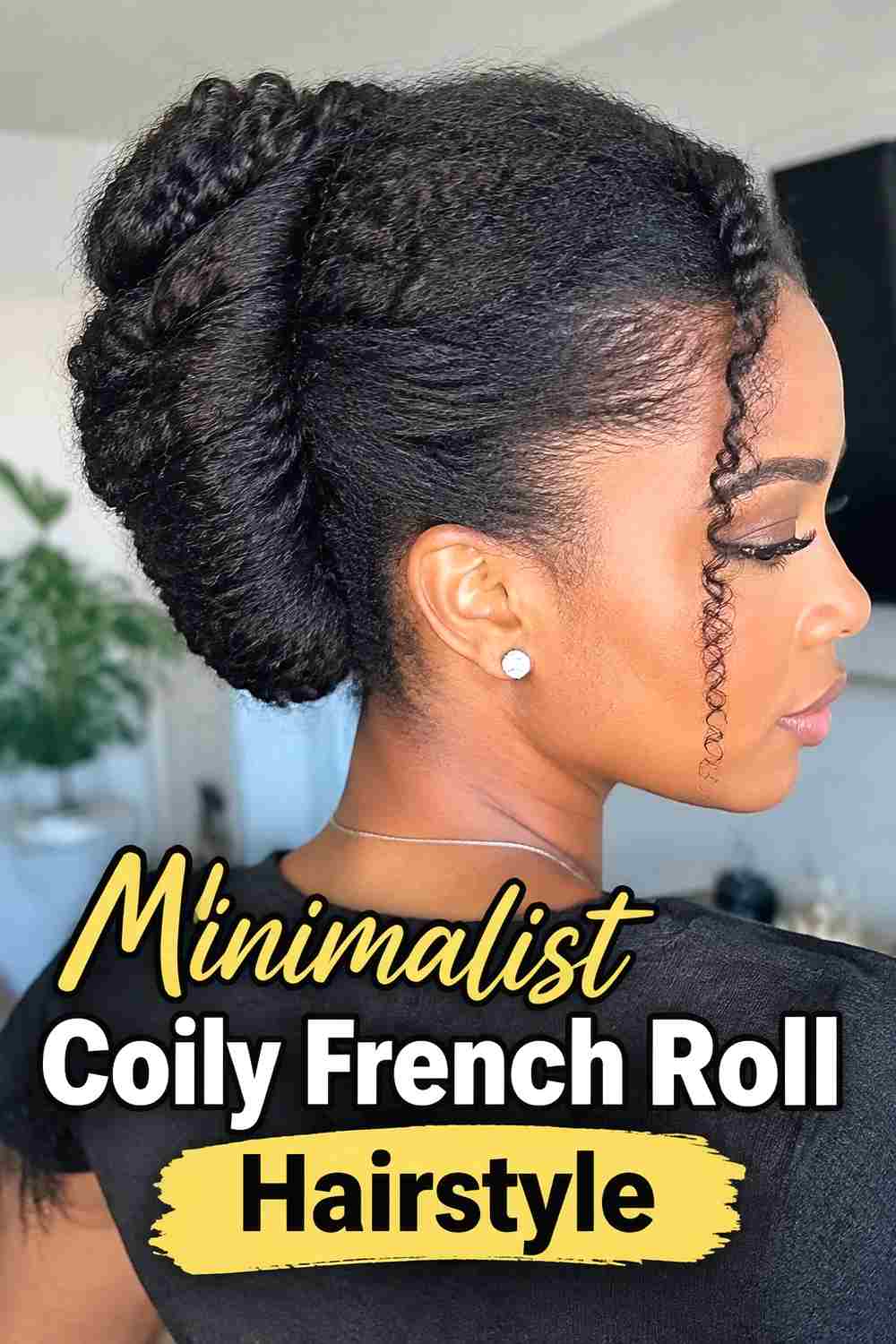
The minimalist coily French roll keeps the styling simple: one clean vertical tuck, comfortable tension, and no additional twists or decorative accessories. The texture remains visible enough to prevent the updo from looking overly rigid, while the overall silhouette stays narrow and uncluttered. Rather than manipulating every coil, focus on smoothing only the sections needed to form a secure fold. This makes the style a practical option for everyday polished wear or for occasions when you prefer understated hair. The roll can stop around mid-head height, with the upper ends tucked neatly inward so the shape remains balanced from the side and back.
Why It Works
The pared-back construction lets the natural texture and distinctive vertical roll provide all the visual interest without competing details.
Best For
Choose this version for work, simple formal outfits, everyday updos, or any setting where understated styling feels most appropriate.
How to Choose the Right Look
Start with the amount of texture you want visible. A textured, curly-front, or soft halo roll keeps more of the natural coil pattern on display, while tucked-end and minimalist versions create a cleaner silhouette. If you prefer extra design detail, flat twists, side twists, or decorative pins can add interest without changing the core French-roll structure.
Next, consider height. Low rolls feel compact and understated, while high-crown versions create more vertical drama. Medium-height classic rolls offer an adaptable middle ground that works across many occasions.
Parting changes the front view as well. Center parts create symmetry, side parts add direction, and asymmetrical rolls shift the entire balance of the hairstyle. Longer or denser hair can support fuller rolls, while shorter lengths may be easier to manage with a lower or more compact tuck.
Whatever version you choose, keep tension comfortable and distribute pins through the interior of the roll rather than relying on one heavily secured point. A stable, evenly supported updo is easier to wear than a roll that feels tight in one area.
Final Thoughts
Coily French rolls can be sleek, textured, high, low, twisted, or softly romantic while keeping the same elegant tucked foundation. The most useful approach is to choose your preferred front detail and roll height first, then build the updo around your natural density and available length. Preserving some visible texture can make the finished roll feel polished without losing the character of coily hair.
FAQs
1. Can coily hair be styled into a French roll?
Yes. Coily hair can form a French roll while retaining visible texture, and lightly stretching the hair may make gathering and tucking easier when extra length is needed.
2. Does a French roll need completely straight or smooth hair?
No. The defining feature is the rolled and tucked shape at the back, not a perfectly smooth texture. Coils, bends, and natural fullness can remain visible.
3. How can I secure a coily French roll?
Build the shape gradually with pins placed inside the fold, distributing support from the nape upward instead of relying on one cluster of pins.
4. Can I leave curls out at the front?
Yes. A few intentionally defined front coils can soften the style and create contrast with the structured roll at the back.
5. Which coily French roll is easiest for everyday wear?
A classic, low, or minimalist roll is often simpler because it uses fewer decorative sections and focuses on one secure tucked shape.
Save your favorite coily French roll ideas, share the styles that inspire you, and explore more elegant textured-updo inspiration for your next look.