14 French Wispy Bangs for Fine Hair
Light, softly separated French bangs can add movement around the face while preserving the natural fullness and flexibility of fine hair.
French wispy bangs can work particularly well with fine hair because the fringe does not need to be cut from a large, dense section. A lighter approach keeps more hair available through the sides and lengths while still creating visible shape around the forehead, eyes, and temples.
The most flattering version depends on how much density your hair has at the front, your preferred bang length, and the haircut surrounding the fringe. Fine hair can easily look sparse if too much layering is added, so a thoughtful balance between airy texture and retained weight is important. These ideas range from minimal fringe to layered bobs, waves, and easy updos.
Quick List
- Classic French Wispy Bangs For Fine Hair Hairstyle
- Airy French Wispy Bangs Hairstyle
- Piecey French Wispy Bangs Hairstyle
- French Wispy Curtain Bangs Hairstyle
- Feathered French Wispy Bangs Hairstyle
- French Wispy Bangs With Soft Layers Hairstyle
- French Wispy Bangs With A Fine Hair Bob Hairstyle
- French Wispy Bangs With A Textured Lob Hairstyle
- Long Fine Hair With French Wispy Bangs Hairstyle
- French Wispy Bangs With Face Framing Layers Hairstyle
- French Wispy Bangs With Soft Waves Hairstyle
- French Wispy Bangs With A Bouncy Blowout Hairstyle
- French Wispy Bangs With Low Ponytail Hairstyle
- French Wispy Bangs With Low Bun Hairstyle
1. Classic French Wispy Bangs For Fine Hair Hairstyle
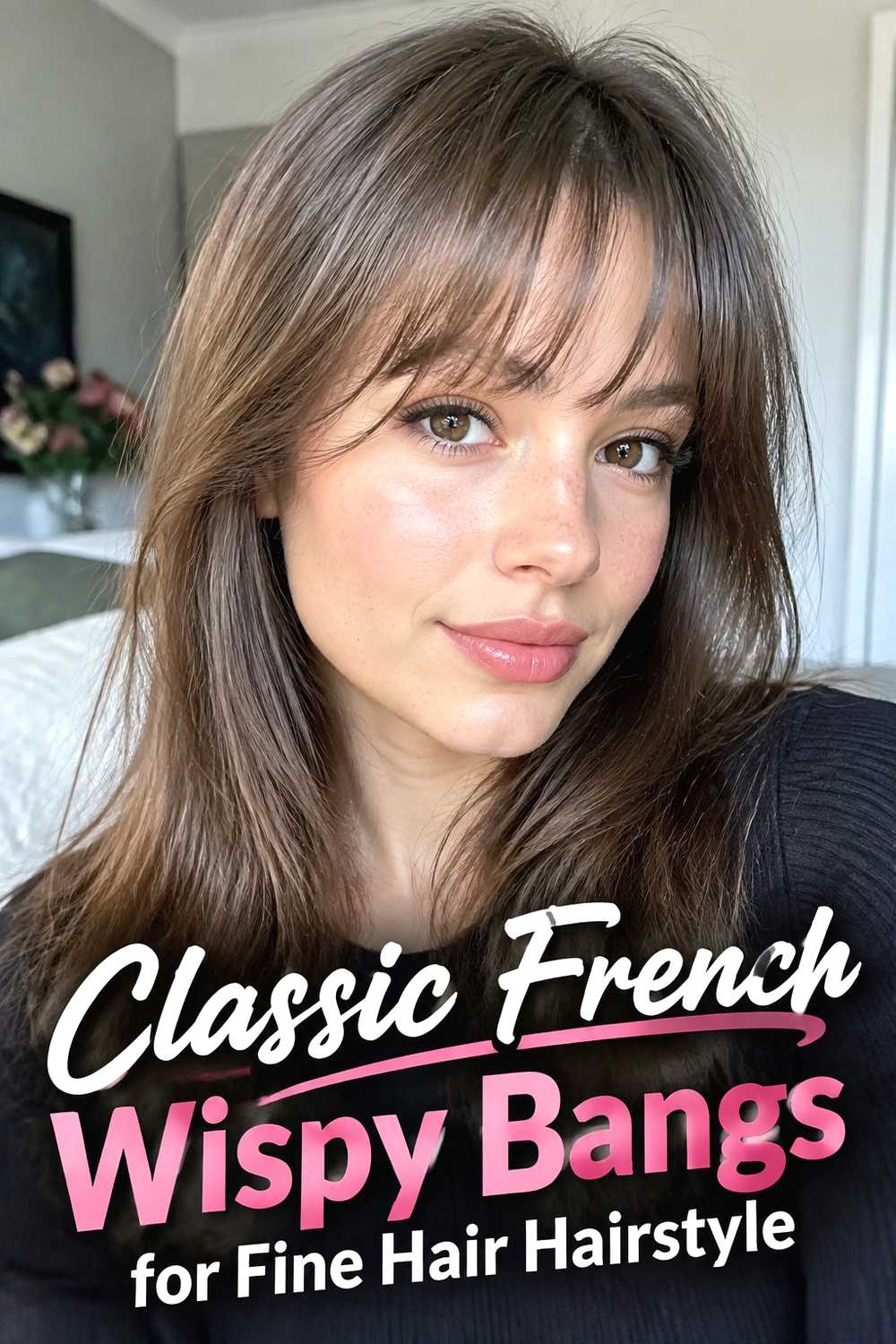
Classic French wispy bangs use a light section of hair across the forehead rather than a dense, blunt fringe, making them a practical option for finer textures. The center can sit around brow level while the edges gradually lengthen toward the temples, creating a soft transition into the rest of the haircut. Small gaps between strands keep the fringe airy and prevent it from removing too much visual fullness from the sides. This style works especially well with shoulder-length or longer hair that retains some weight through the perimeter. The key is restraint: taking too large a fringe section can make fine hair feel thinner elsewhere, while a smaller section creates definition without sacrificing density.
Styling Notes
Use low heat and gentle airflow, moving the fringe from side to side before letting it settle naturally into place.
Best For
This version suits fine hair that needs a visible fringe while preserving as much overall fullness as possible.
2. Airy French Wispy Bangs Hairstyle
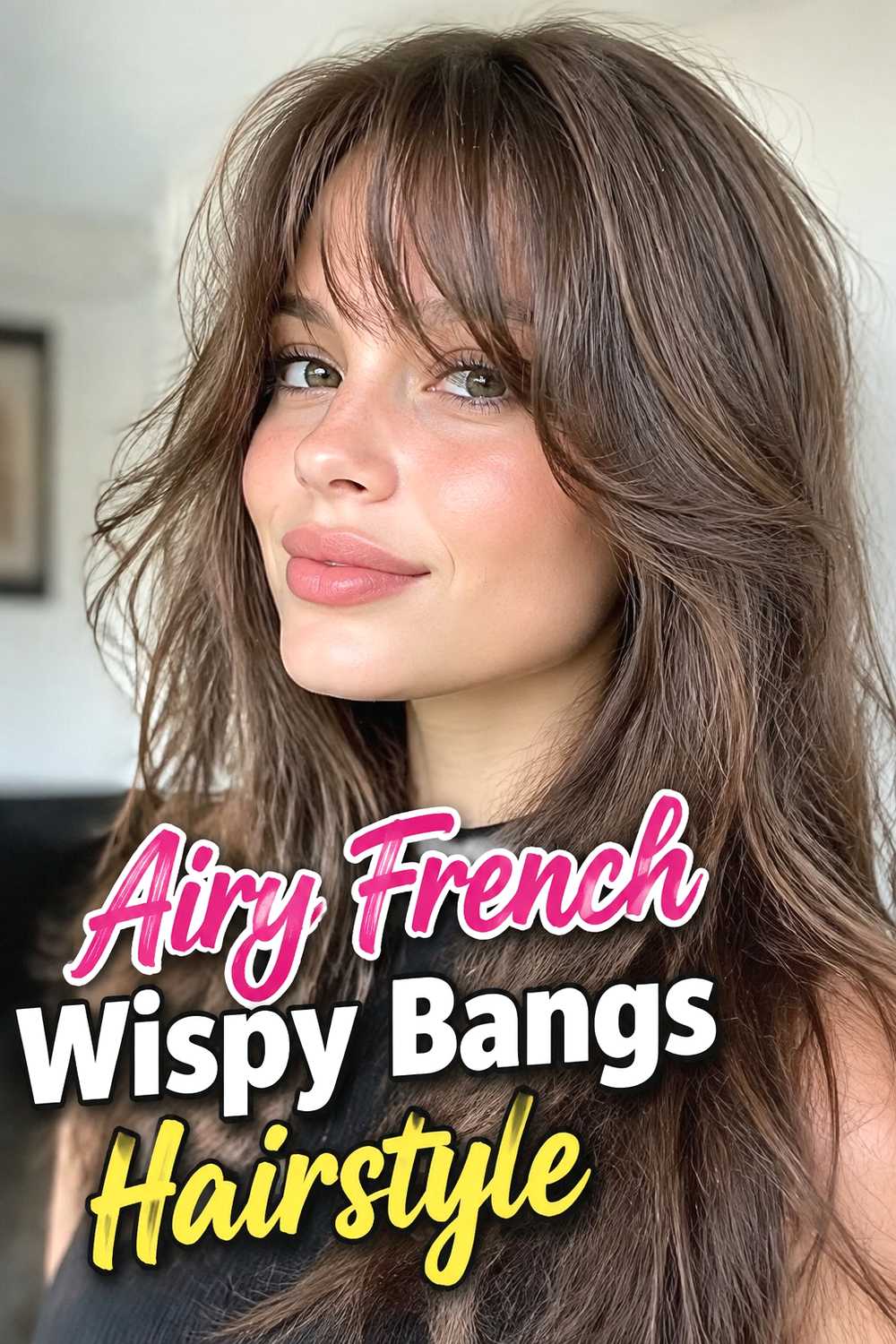
Airy French wispy bangs take the lightweight fringe concept even further, using a minimal amount of hair to create a barely-there veil across the forehead. Instead of forming a continuous line, the strands fall in fine sections with plenty of skin visible between them. This can be particularly effective on fine hair because it works with the existing density rather than trying to imitate a thick fringe. Slightly longer outer strands can connect the bangs to the sides and keep the center from looking isolated. Styling should remain simple, since heavy creams or strong hairspray can collapse the movement and make the small sections clump together.
Why It Works
Minimal density creates visible face framing without taking excessive hair away from the rest of the haircut.
Pro Tip
Start with a smaller fringe section and add density only if needed; removing too much hair from fine lengths is harder to reverse.
3. Piecey French Wispy Bangs Hairstyle
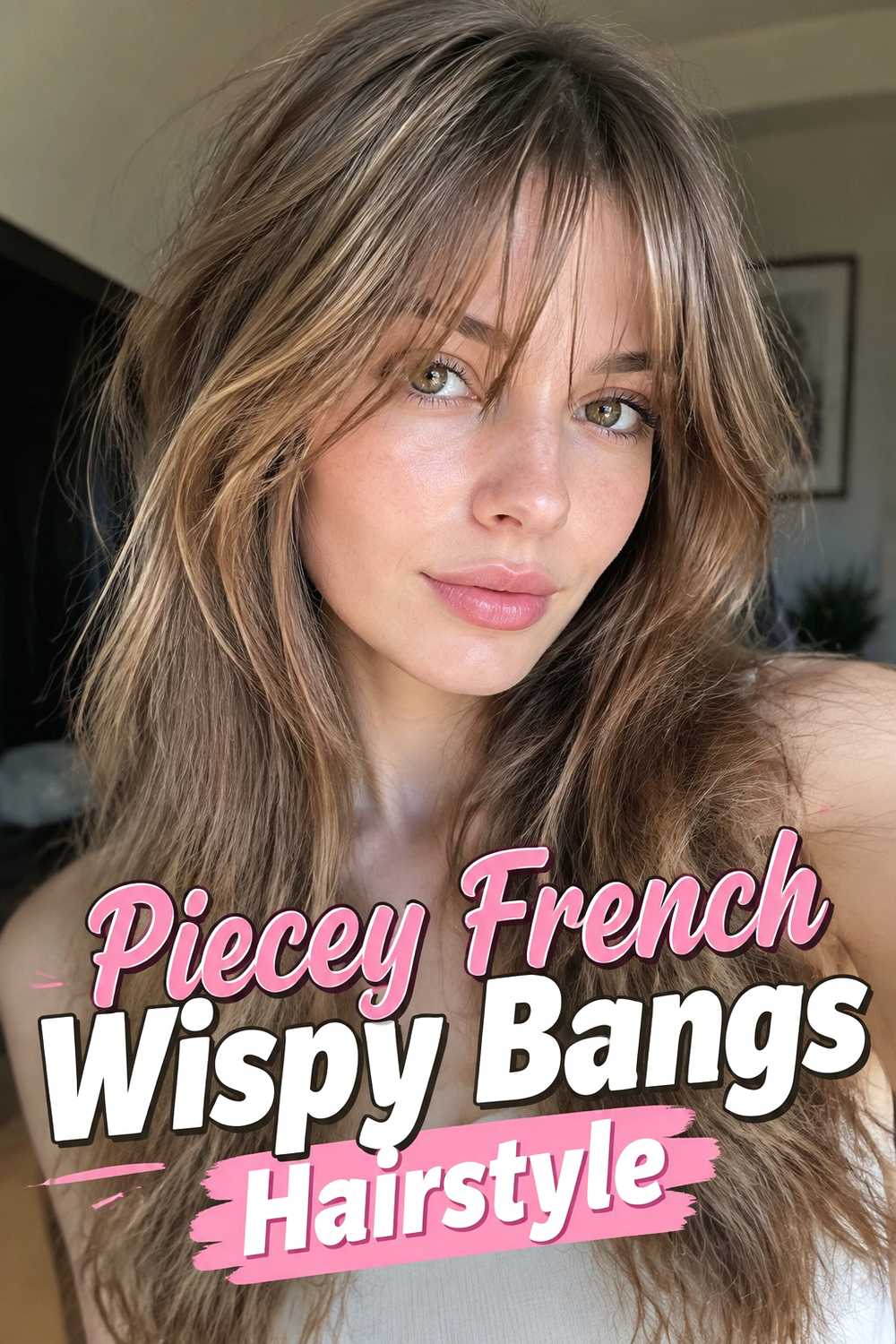
Piecey French wispy bangs use deliberate separation to make fine strands look intentional rather than sparse. Small groups of hair sit across the forehead with soft irregularity, while longer pieces around the temples create a natural connection to the haircut. This style can work with straight or slightly wavy fine hair because the fringe does not depend on heavy volume. A tiny amount of lightweight styling product can help define the tips, but it should be applied sparingly to avoid making the bangs appear greasy. Pairing the fringe with a clean perimeter or softly layered cut helps preserve enough density through the lengths while still giving the front visible texture.
Styling Notes
Apply any styling product mainly to the ends of the bangs rather than the roots to preserve lift and separation.
Best For
Choose this version if your fine hair naturally falls into separated pieces and you want that texture to look deliberate.
4. French Wispy Curtain Bangs Hairstyle
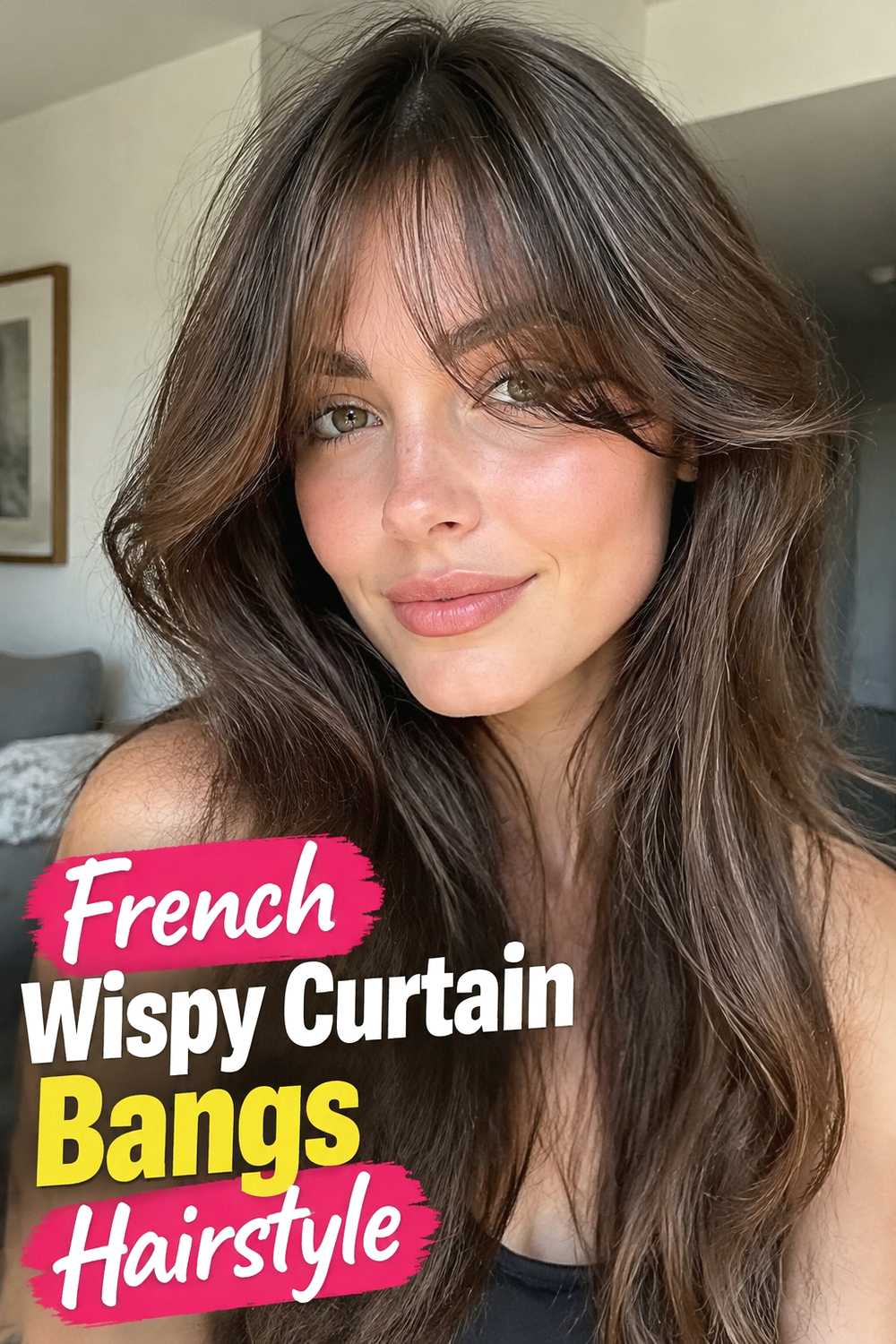
French wispy curtain bangs combine a softly parted center with fine face-framing pieces that lengthen toward the cheekbones. For fine hair, the key is keeping the center section light instead of carving out a large traditional curtain fringe. A few wispy strands can still cross the forehead while the longer edges sweep outward, giving you flexibility to wear the bangs forward or open. This longer shape can also be practical during grow-out because the sides blend naturally into layers. Avoid over-thinning the ends, since fine hair generally benefits from preserving some weight. A gentle blow-dry is usually enough to encourage the center separation without creating exaggerated volume.
Why It Works
The longer sides provide movement and versatility while the small central section preserves density through the rest of the hair.
Wear & Maintenance
The outer pieces can transition into face-framing layers as they grow, while the shorter center may require more frequent shaping.
5. Feathered French Wispy Bangs Hairstyle
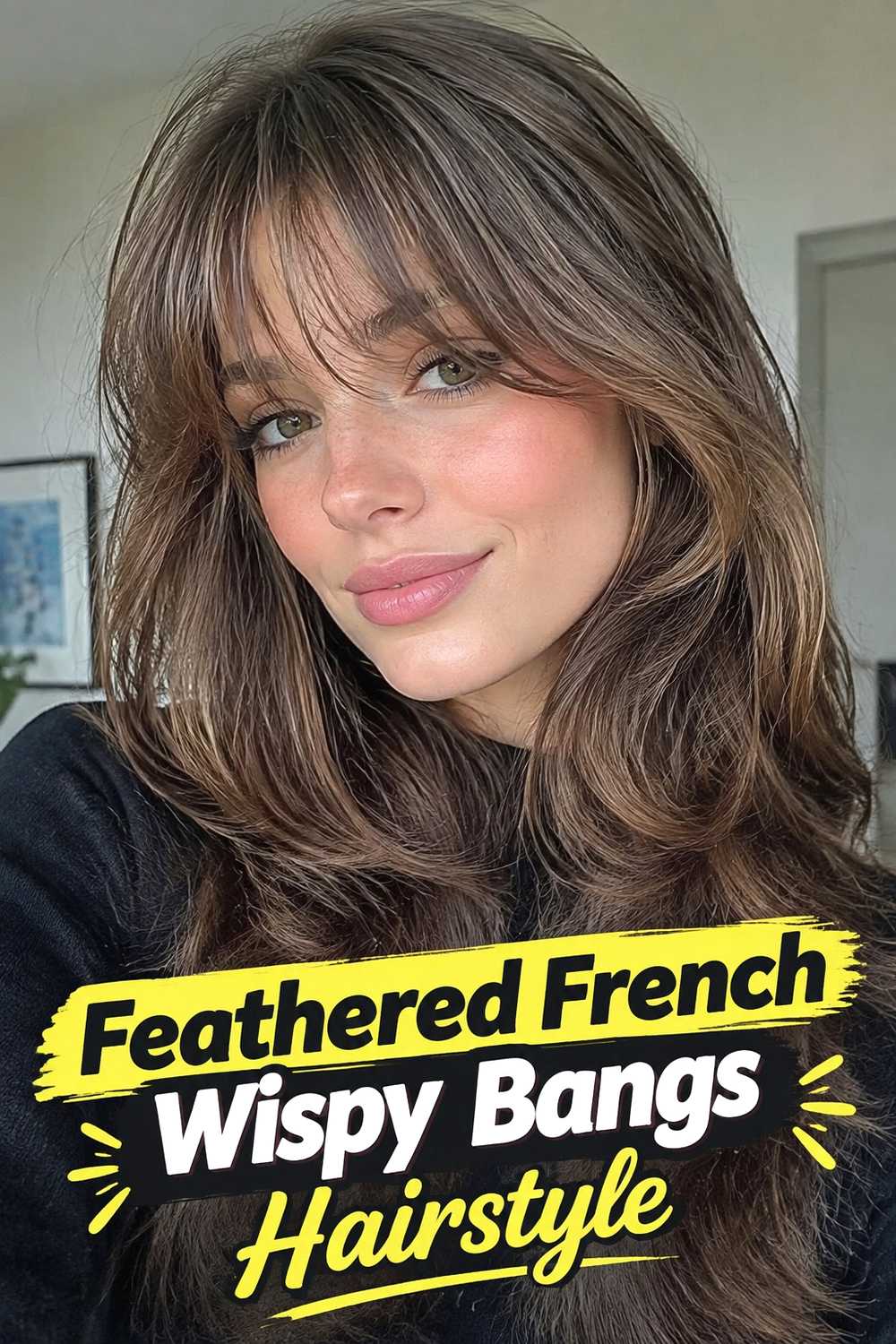
Feathered French wispy bangs create soft outward movement through the ends without requiring a thick fringe. The central strands remain fine and light, while slightly longer pieces near the temples angle away from the face. On fine hair, this directional styling can create a sense of movement without relying on excessive layering or teasing. The feathering works especially well with shoulder-length cuts and longer hair because the outer bang pieces can blend into the surrounding shape. Keep the finish flexible rather than heavily sprayed. Fine strands can become stiff very quickly, and the appeal of this style comes from the way the fringe shifts naturally rather than remaining perfectly fixed.
Styling Notes
Use a small brush or fingers to guide the outer pieces away from the face while keeping the center relatively straight.
Pro Tip
Avoid thinning the tips excessively; light directional styling can create feathering without removing too much density.
6. French Wispy Bangs With Soft Layers Hairstyle
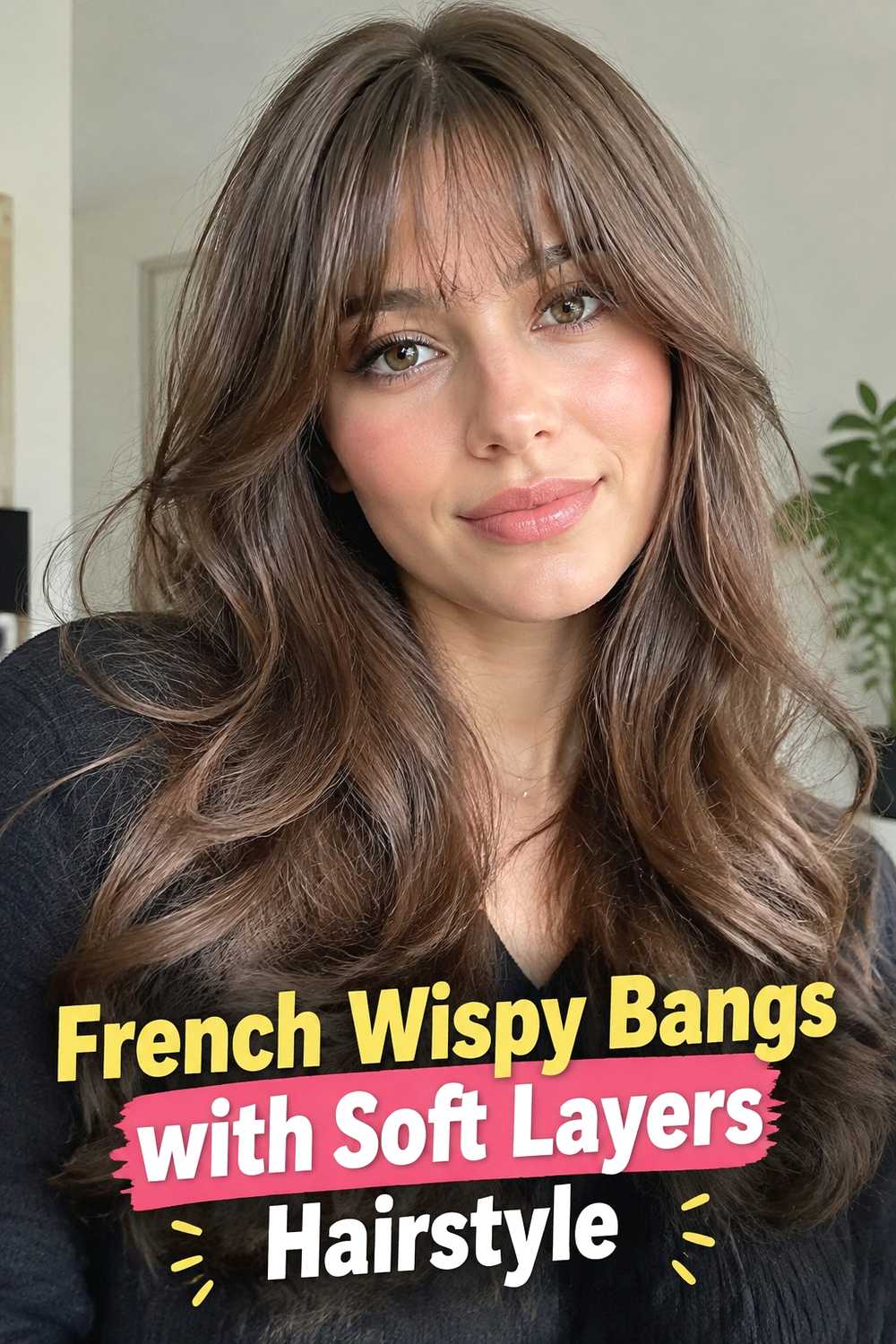
French wispy bangs with soft layers create movement through fine hair without relying on dramatic, heavily carved sections. The bangs stay delicate across the forehead, while longer layers begin farther down the haircut to preserve fullness through the perimeter. This balance is important because too many short layers can make fine hair appear less substantial. Gentle layering around the face can connect the fringe to the rest of the style and prevent it from looking disconnected. A smooth blowout or subtle bends will reveal the layers without making the ends look overly thin. Medium and long lengths usually provide the easiest canvas for maintaining both softness and visible density.
Hair Type & Length
Medium-to-long fine hair works particularly well because the length allows subtle layering while keeping weight through the lower sections.
Why It Works
Strategic layers add movement around the fringe while leaving enough hair through the ends for a fuller-looking silhouette.
7. French Wispy Bangs With A Fine Hair Bob Hairstyle
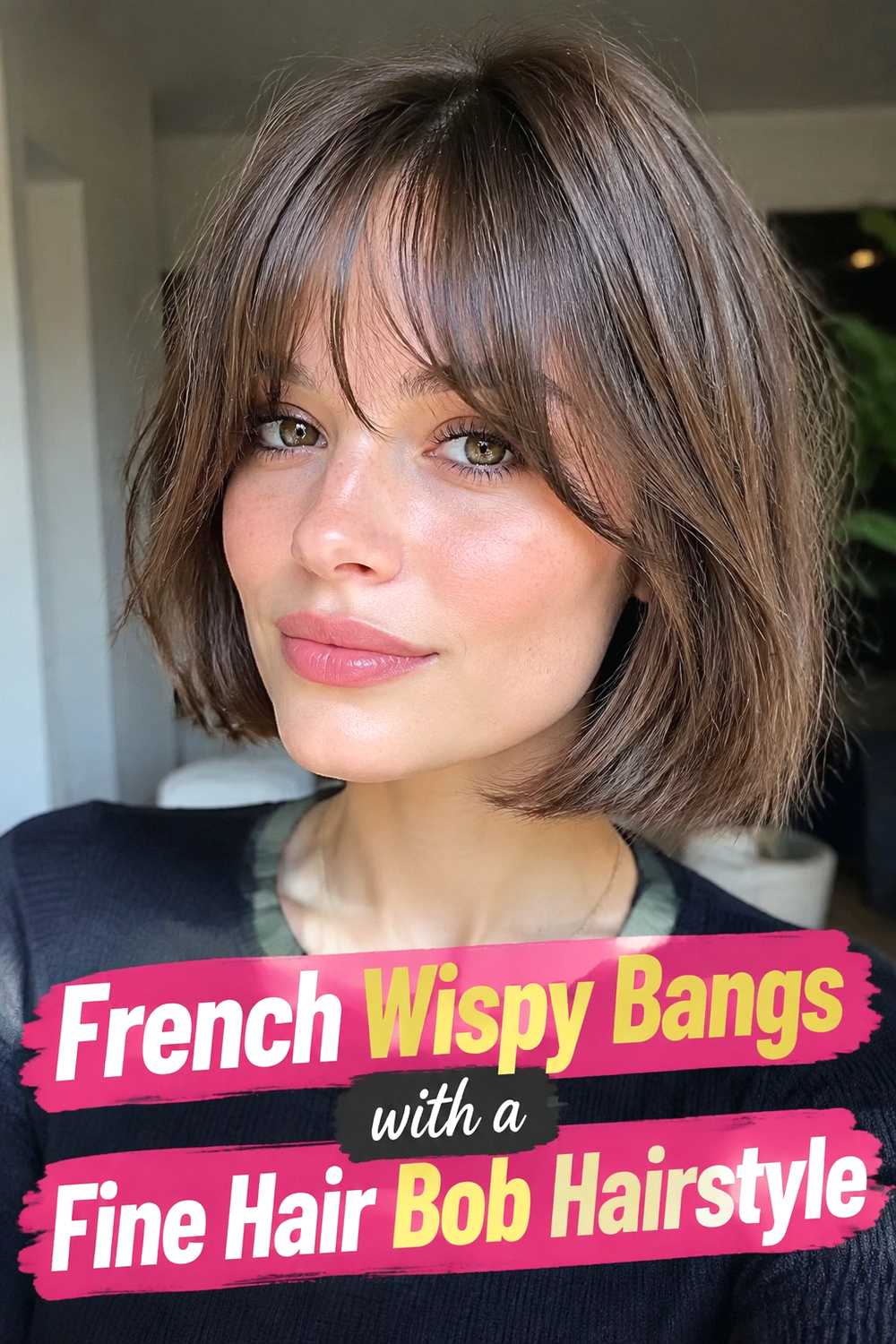
A fine-hair bob with French wispy bangs uses a stronger perimeter to balance the delicacy of the fringe. Keeping the bob relatively blunt around the chin or jaw can preserve visual weight through the ends, while the bangs provide softness across the forehead. This contrast works especially well when the hair is straight or has a slight natural bend. Instead of adding extensive layers, a little internal movement can keep the bob flexible without sacrificing its fuller baseline. The fringe should remain modest in density so the front does not take too much hair away from the sides. A smooth, light-reflective finish can also make the clean bob shape appear more defined.
Why It Works
A solid bob perimeter helps fine hair retain visible fullness while the airy fringe adds movement around the face.
Wear & Maintenance
Regular trims help prevent the ends from losing the clean, compact line that gives this fine-hair bob its structure.
8. French Wispy Bangs With A Textured Lob Hairstyle
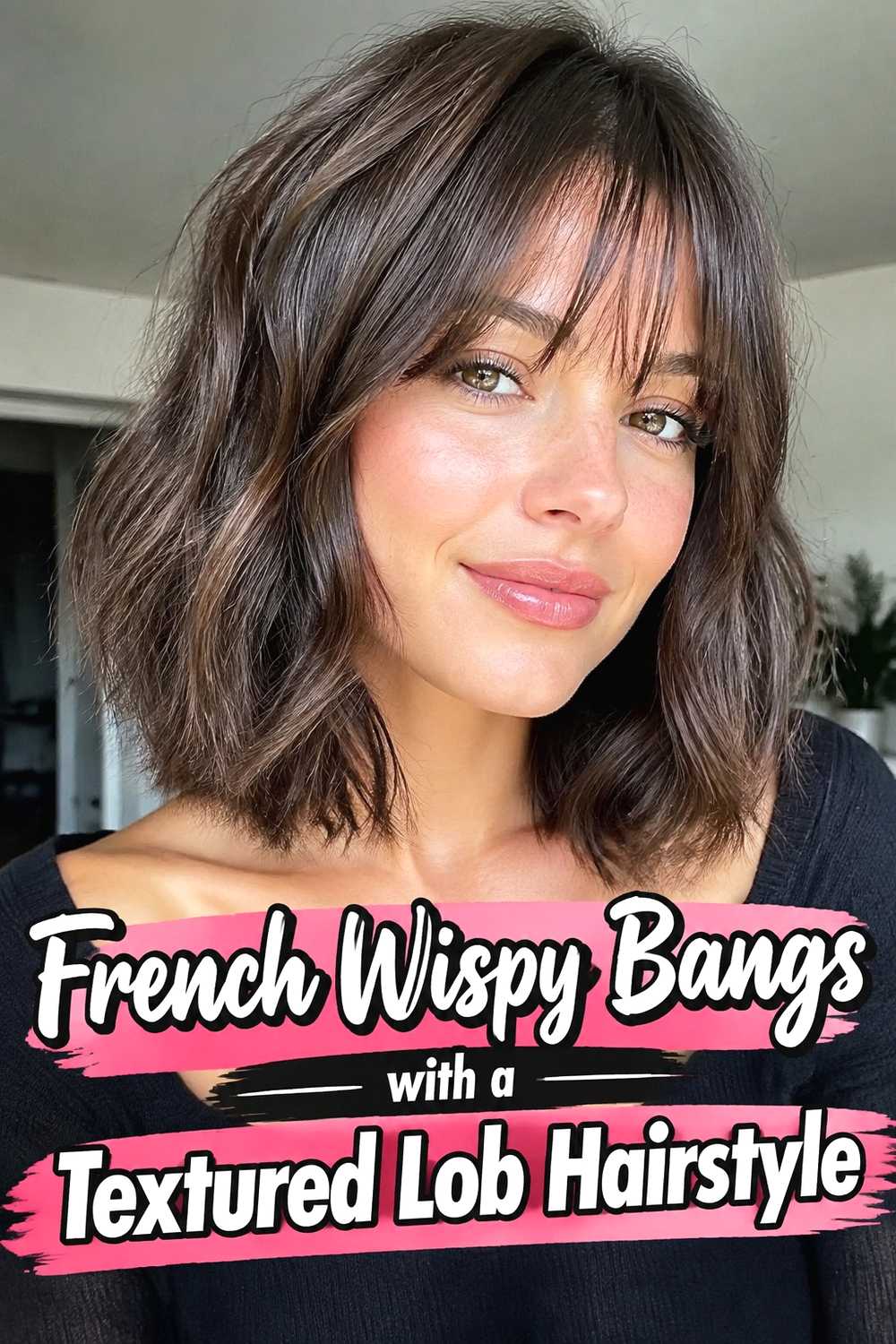
A textured lob provides more length than a classic bob while still offering enough shape to keep fine hair from hanging flat. French wispy bangs add a soft focal point at the front, and subtle texture through the mid-lengths creates movement without removing too much density from the ends. The lob can sit around the shoulders or slightly above them, giving you enough length for ponytails and low buns. Gentle bends rather than tight curls are often enough to reveal the texture. For fine hair, the most important detail is maintaining a reasonably substantial perimeter so the overall style stays balanced against the light, delicate fringe.
Styling Notes
Add a few loose bends through the mid-lengths while leaving some ends straighter to keep the lob looking modern and full.
Best For
This style suits fine hair that benefits from movement but still needs enough length and perimeter weight for versatility.
9. Long Fine Hair With French Wispy Bangs Hairstyle
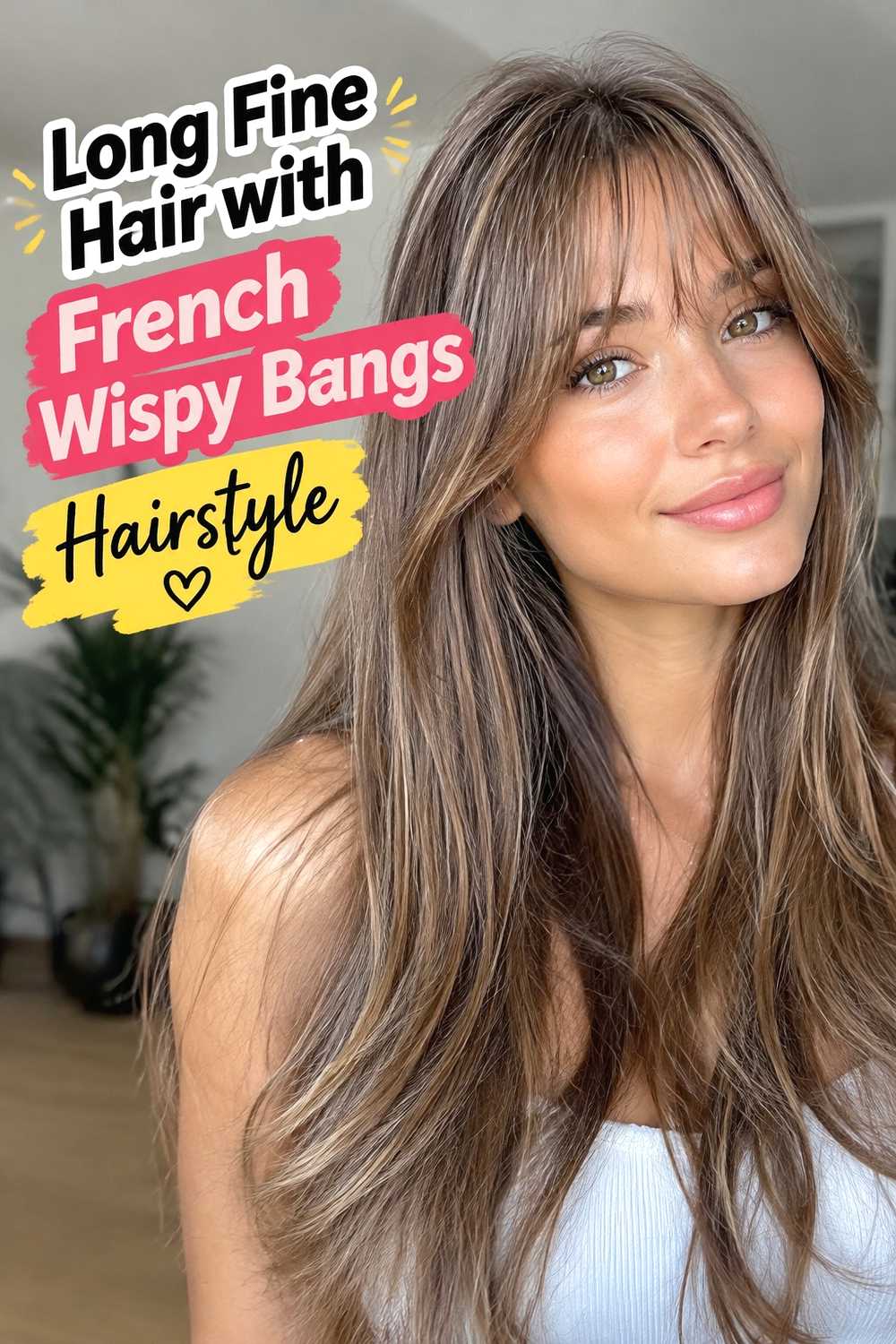
Long fine hair can pair beautifully with French wispy bangs when the lengths retain enough weight to avoid looking overly feathered. The fringe creates definition around the forehead and eyes without requiring major changes to the rest of the haircut. Slightly longer temple pieces help connect the bangs to the sides, while the lower lengths can remain mostly one length or use very restrained layering. Soft bends add movement and can make the haircut feel less flat without removing density. Because long fine hair can become weighed down easily, lightweight styling is usually more effective than heavy creams or oils, particularly around the roots and fringe.
Hair Type & Length
This look works best when long fine hair retains a reasonably full perimeter rather than being heavily layered from crown to ends.
Pro Tip
Keep most layering below the face-framing area if preserving fullness through the lower lengths is a priority.
10. French Wispy Bangs With Face Framing Layers Hairstyle
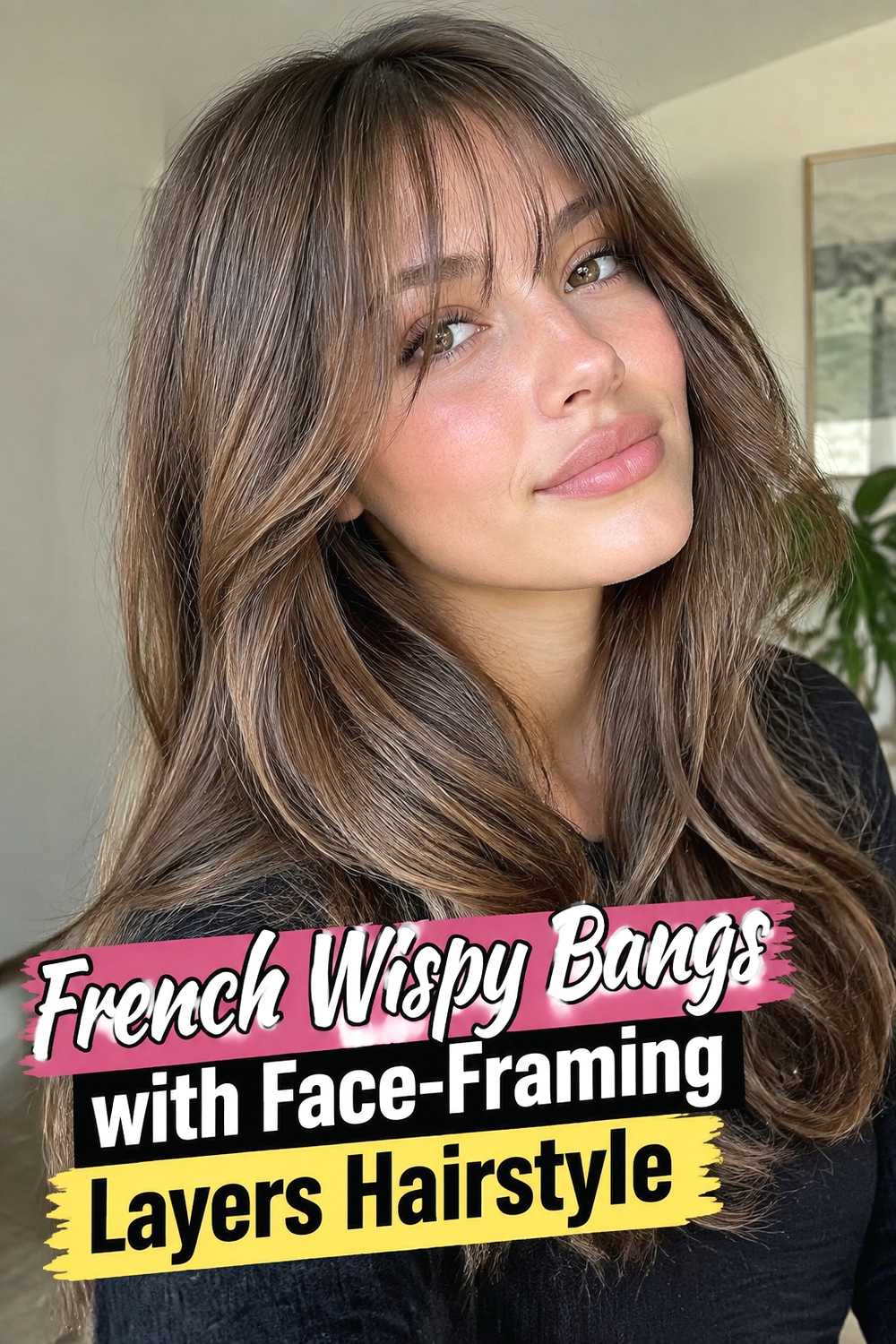
Face-framing layers can connect French wispy bangs to fine hair without requiring layers throughout the entire haircut. The central fringe stays light, while slightly longer sections around the cheekbones and jaw create a gradual transition into the main length. This localized layering provides movement near the face but leaves the back and lower perimeter relatively full. It is a useful strategy when you want more shape than a one-length cut offers but do not want to sacrifice too much density. A soft blowout can turn the longer front sections away from the face while allowing the central bangs to remain relaxed and lightly separated.
Why It Works
Concentrating layers around the front creates shape where it is most visible while preserving weight through the rest of fine hair.
Styling Notes
Use a small amount of lift at the roots and curve the longer framing pieces outward rather than heavily curling the central fringe.
11. French Wispy Bangs With Soft Waves Hairstyle
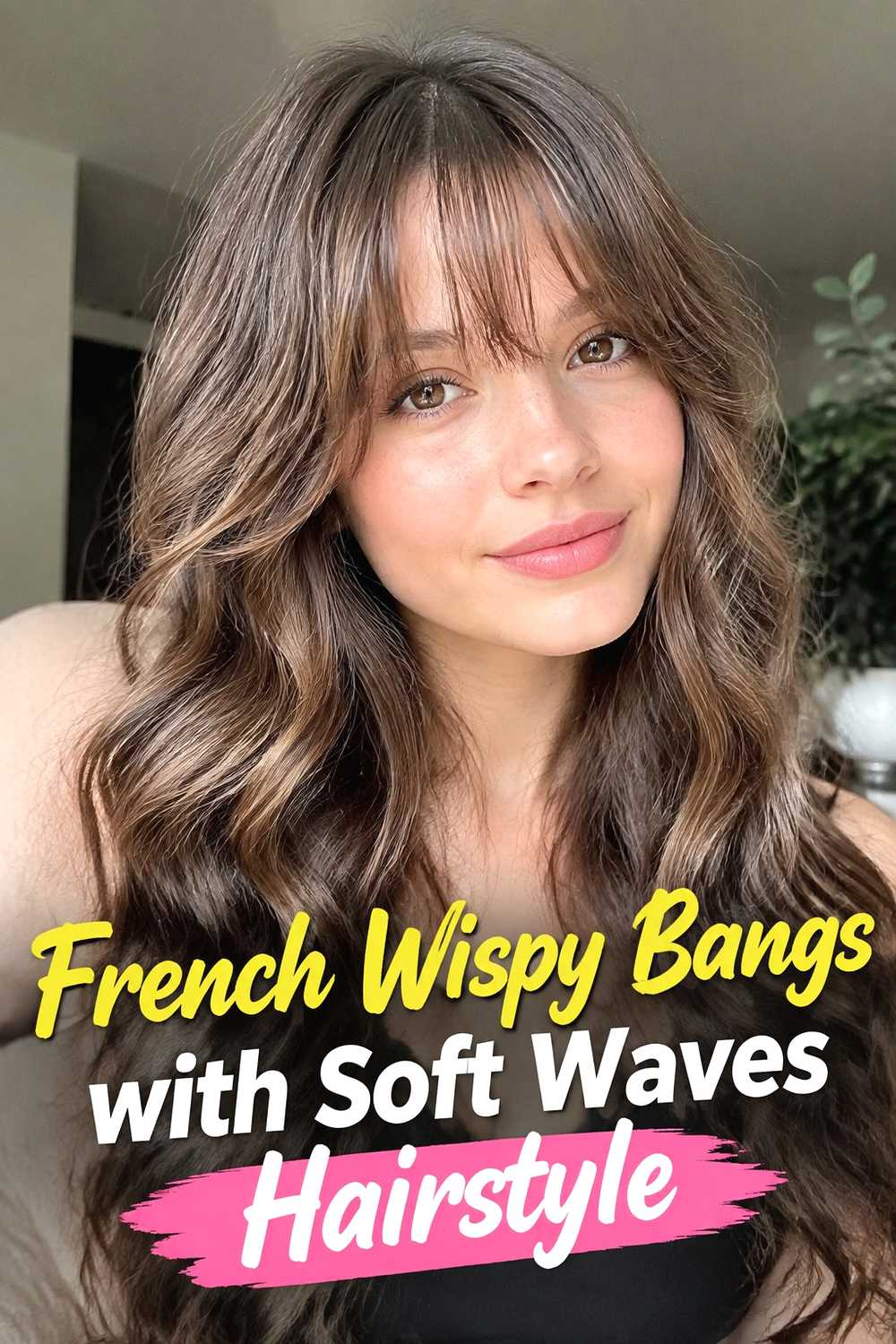
Soft waves can give fine hair more visible movement while French wispy bangs keep the front delicate and relaxed. The best effect comes from broad, loose bends rather than tightly curled sections, which can separate fine hair too much and make the ends appear thinner. Keep the bangs comparatively smooth with only a gentle bend so they remain distinct from the textured lengths. Shoulder-length and longer hair offer enough space for a few waves without overwhelming the natural density. This combination is especially useful when straight fine hair tends to sit close to the head but you still want styling that feels soft rather than highly voluminous.
Styling Notes
Use fewer, larger bends and avoid curling every section identically so the lengths keep a natural, airy finish.
Best For
Choose this look when you want movement through fine hair without using extensive layers or high-volume styling.
12. French Wispy Bangs With A Bouncy Blowout Hairstyle
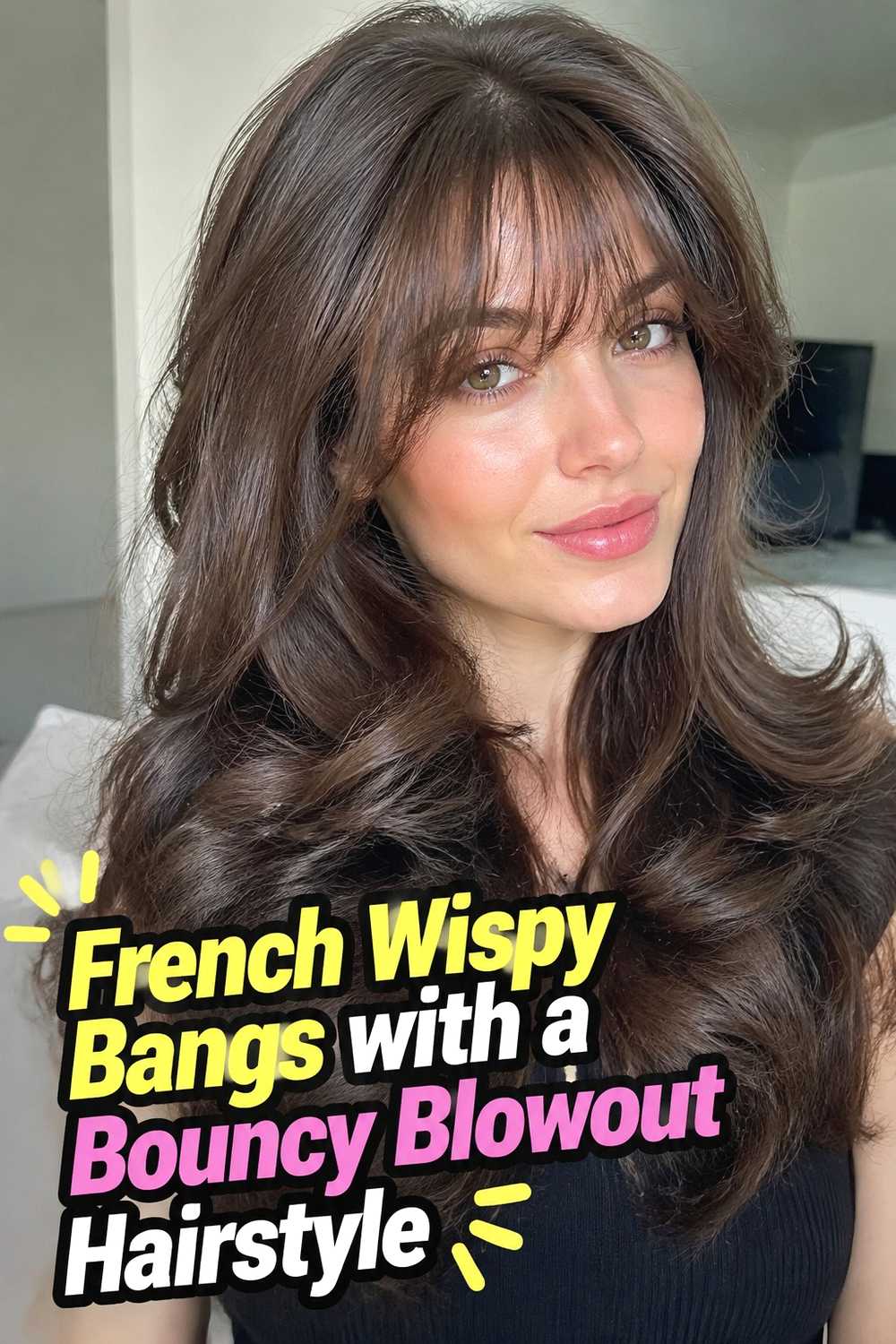
A bouncy blowout can add lift and shape to fine hair while French wispy bangs keep the front from becoming overly full. The main lengths can be styled with a round brush to create root lift and curved ends, while the fringe receives much lighter tension so it stays separated and flexible. Medium and long cuts with minimal layering usually hold this balance well because the ends retain enough weight to look substantial. Avoid applying too much smoothing product before blow-drying, as fine hair can lose volume quickly. The goal is polished movement rather than extreme height, with the airy fringe acting as a soft contrast to the fuller lengths.
Styling Notes
Concentrate round-brush volume through the crown and lengths, using a smaller amount of tension across the bangs.
Pro Tip
Allow the hair to cool in its lifted shape before separating the sections for a softer, longer-lasting finish.
13. French Wispy Bangs With Low Ponytail Hairstyle
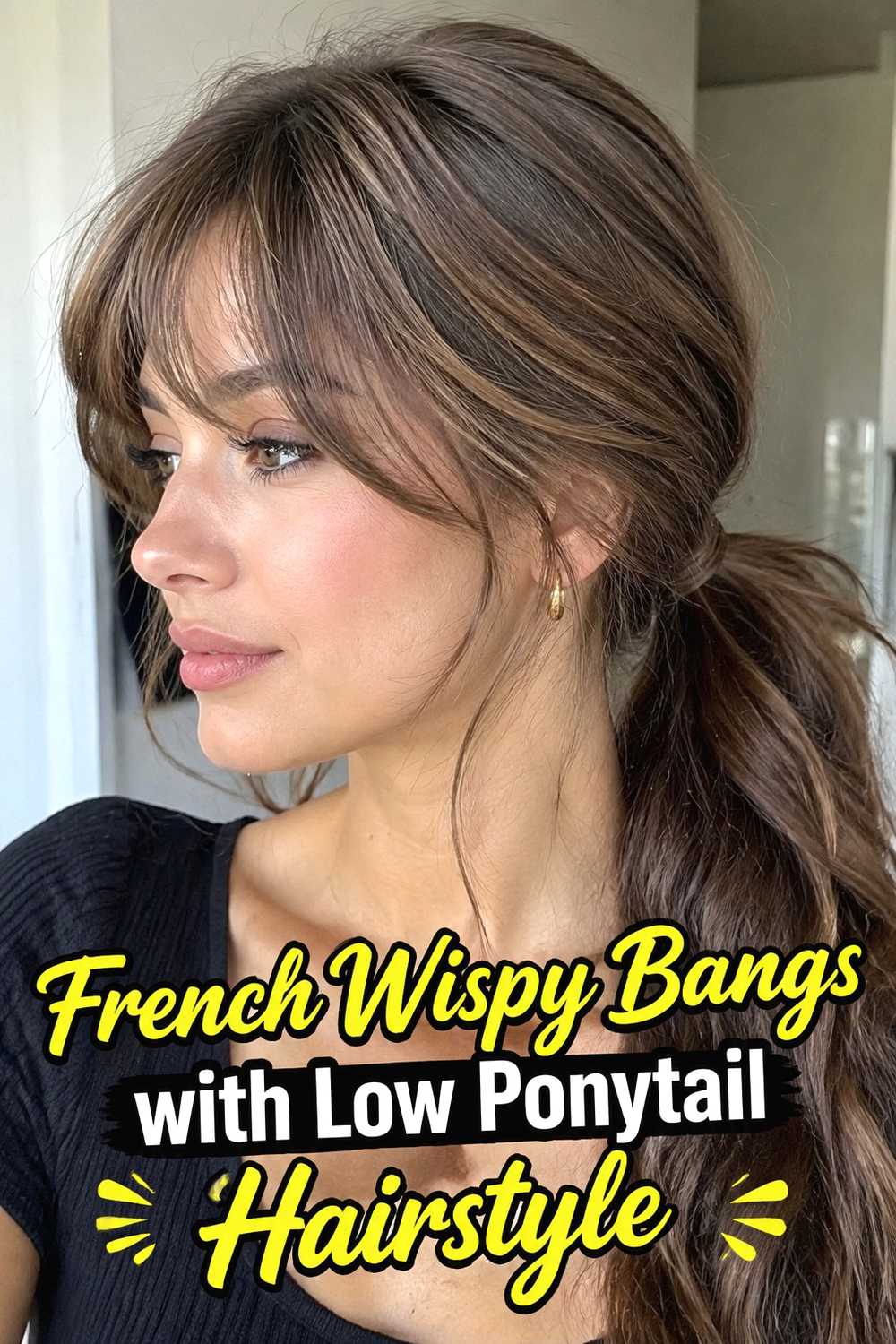
French wispy bangs give a low ponytail more detail around the face without requiring additional volume through fine hair. The lengths can be gathered neatly at the nape while the bangs remain loose, with slightly longer temple pieces helping connect the fringe to the pulled-back style. Keeping the ponytail low reduces tension around the front and allows fine strands to sit more naturally. A little lift at the crown can prevent the style from looking overly flat, but heavy teasing is unnecessary. This hairstyle is especially useful for days when you want the hair contained while still showing the softness of the fringe and the shape of the haircut around the face.
Why It Works
Pulling the lengths back makes the wispy fringe more noticeable while keeping the styling simple and lightweight.
Wear & Maintenance
Use a small, secure elastic and avoid excessive tension that can flatten the crown or pull delicate front pieces out of position.
14. French Wispy Bangs With Low Bun Hairstyle
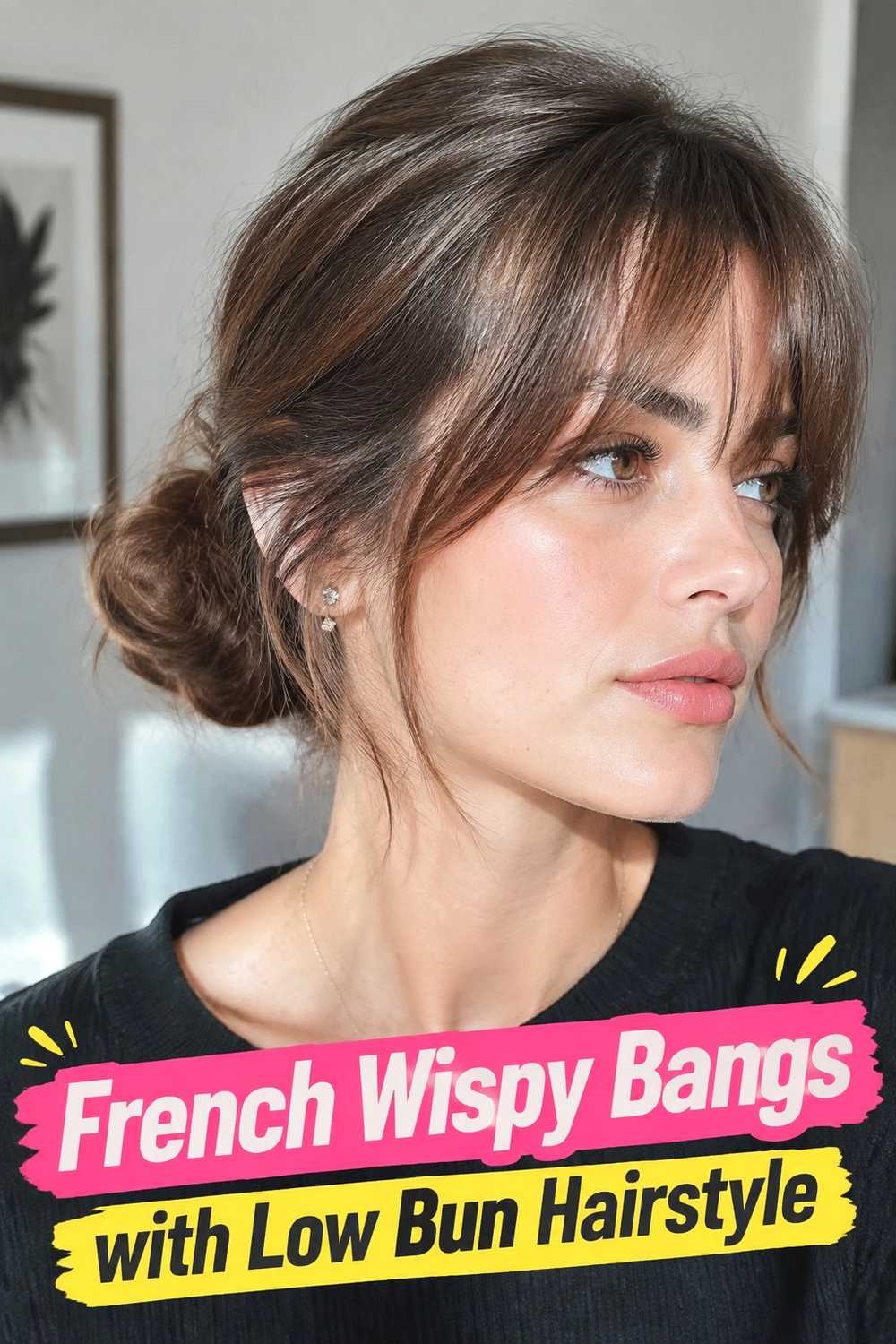
A low bun pairs naturally with French wispy bangs on fine hair because the gathered lengths create a clean silhouette while the fringe provides softness at the front. The bun can stay compact rather than oversized, which works realistically with finer density and avoids the need for excessive teasing. Slightly longer pieces at the temples can be left loose to create a gradual transition from the fringe into the updo. A smooth or gently textured crown both work, depending on the occasion. Build the bun with secure folds or twists instead of forcing artificial volume, and keep the bangs lightweight so the finished look remains balanced, believable, and easy to wear.
Styling Notes
Secure the bun first, then arrange the fringe and temple pieces so you can judge how much softness the finished updo needs.
Best For
This style works well for events, workdays, or everyday updos when you want fine hair contained without losing face-framing detail.
How to Choose the Right Look
For fine hair, start with the amount of fringe density you can comfortably spare. Airy French Wispy Bangs Hairstyle and Piecey French Wispy Bangs Hairstyle use minimal hair, while French Wispy Curtain Bangs Hairstyle spreads more of the fringe toward the sides for a longer, flexible shape.
The surrounding haircut also matters. French Wispy Bangs with a Fine Hair Bob Hairstyle preserves fullness through a stronger perimeter, while French Wispy Bangs with Soft Layers Hairstyle and French Wispy Bangs with Face-Framing Layers Hairstyle add movement without requiring heavy layering everywhere.
If volume is your priority, a bouncy blowout or soft waves can add shape temporarily without removing density. For low-maintenance styling, longer curtain-inspired bangs can be easier to tuck away as they grow. Avoid excessive thinning, heavy styling products, and too many short layers if preserving fullness is important.
Final Thoughts
French wispy bangs can suit fine hair especially well when the fringe section stays light and the rest of the haircut preserves enough weight. Whether you choose an airy fringe, blunt bob, textured lob, soft waves, or a simple updo, aim for movement without over-thinning. A conservative starting point also gives you more flexibility to adjust the fringe density later.
FAQs
1. Are French wispy bangs good for fine hair?
They can be a practical choice because they require less hair than a thick blunt fringe. Keeping the bang section modest helps preserve density through the rest of the haircut.
2. Should fine hair bangs be heavily thinned?
Usually, excessive thinning can make an already light fringe appear sparse. Soft point cutting or carefully tapered ends can create movement without removing unnecessary density.
3. What haircut works well with French wispy bangs on fine hair?
Bobs, lobs, long hair with restrained layers, and cuts with targeted face-framing sections can all work well. The best choice depends on how much fullness you want to preserve through the ends.
4. How can I add volume to fine hair with wispy bangs?
Use lightweight root lift, a soft blowout, or broad waves through the lengths. Keep heavy products away from the fringe and roots so the hair does not collapse.
5. Are longer French wispy bangs easier for fine hair?
Longer curtain-style versions can be flexible because they blend into face-framing layers and can be tucked away more easily, while shorter fringe creates a stronger visible bang effect.
Save your favorite French wispy bangs for fine hair, share them with someone considering a lighter fringe, and explore more soft haircut inspiration.