19 Lace Braid Ponytail Hairstyles
Lace braids bring intricate detail to a simple ponytail, creating polished styles that can feel sporty, romantic, elegant, or softly undone.
A lace braid is especially useful around the hairline because new hair is generally incorporated from one side of the braid rather than both. That directional construction allows the braid to follow the temple, crown, or side of the head before flowing naturally into a ponytail.
The final look can change dramatically depending on ponytail height, texture, braid placement, and tension. A tight side braid paired with a high pony feels crisp and energetic, while a loosened crown braid with waves creates a softer finish. These 19 ideas offer distinct ways to use the same braiding technique without making every ponytail look alike.
Quick List
- Classic Side Lace Braid Ponytail Hairstyle
- High Lace Braid Ponytail Hairstyle
- Low Lace Braid Ponytail Hairstyle
- Double Lace Braid Ponytail Hairstyle
- Crown Lace Braid Ponytail Hairstyle
- Messy Lace Braid Ponytail Hairstyle
- Sleek Lace Braid Ponytail Hairstyle
- Curly Lace Braid Ponytail Hairstyle
- Wavy Lace Braid Ponytail Hairstyle
- Dutch Lace Braid Ponytail Hairstyle
- Reverse Lace Braid Ponytail Hairstyle
- Diagonal Lace Braid Ponytail Hairstyle
- Wrapped Lace Braid Ponytail Hairstyle
- Half Crown Lace Braid Ponytail Hairstyle
- Bubble Ponytail With Lace Braid Hairstyle
- Voluminous Lace Braid Ponytail Hairstyle
- Face Framing Lace Braid Ponytail Hairstyle
- Textured Bridal Lace Braid Ponytail Hairstyle
- Braided Base Lace Braid Ponytail Hairstyle
1. Classic Side Lace Braid Ponytail Hairstyle
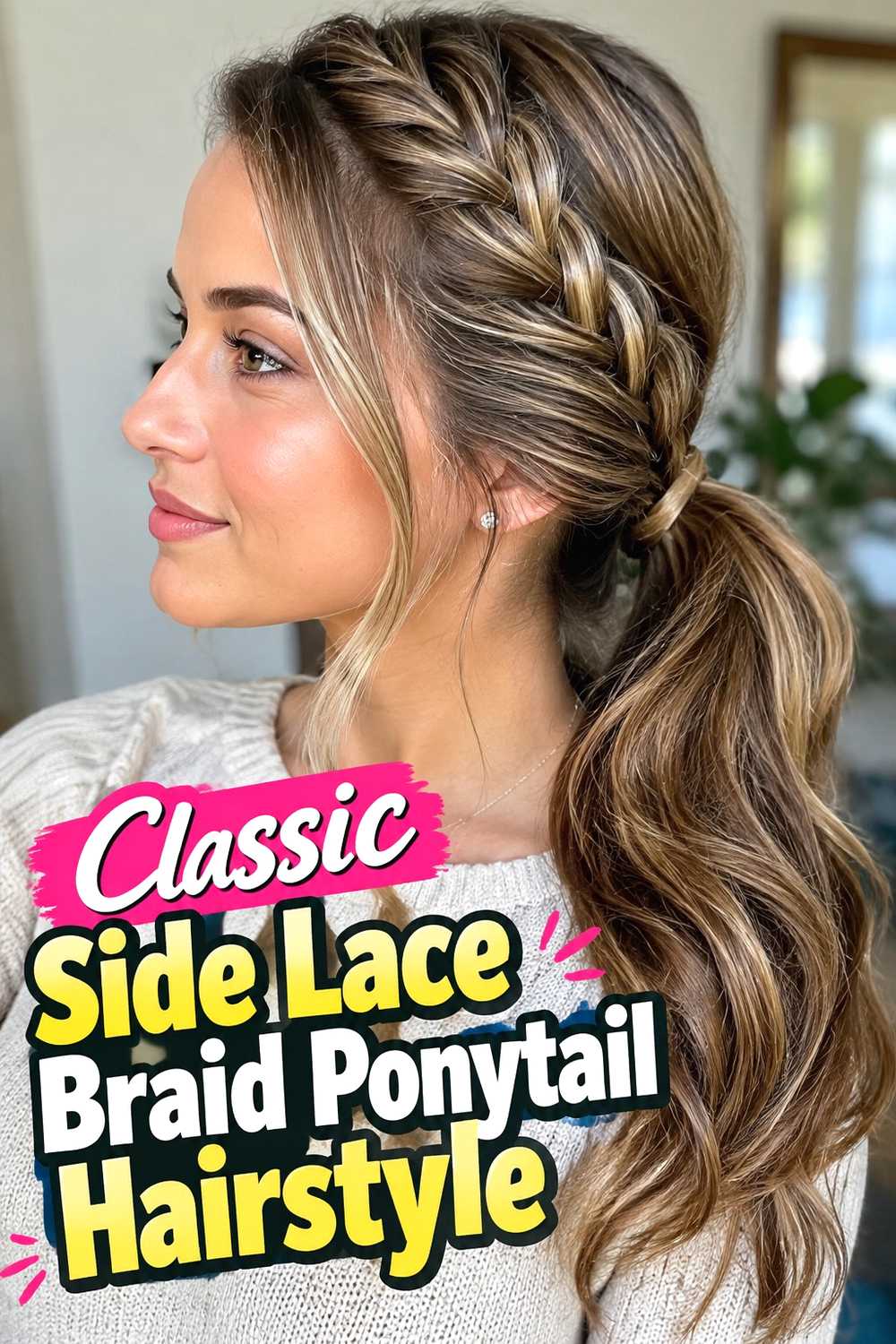
The Classic Side Lace Braid Ponytail Hairstyle is an easy introduction to the technique because the braid follows a clear path from the front hairline toward the back. Begin near one temple and create a lace braid that picks up hair along one edge as it travels above the ear. Once the braid reaches the ponytail area, combine it with the remaining hair and secure everything together. A mid-height ponytail keeps the look versatile, while softly curved ends prevent it from feeling overly formal. Keep the braid defined enough to show its pattern, but avoid pulling it so tightly that the surrounding hair loses all softness.
Styling Notes
Maintain consistent section sizes as you move toward the back. This helps the lace pattern stay even and prevents one section from becoming noticeably thicker than the others.
Best For
This variation works well for everyday styling, casual events, and anyone learning how to transition a lace braid into a ponytail.
2. High Lace Braid Ponytail Hairstyle
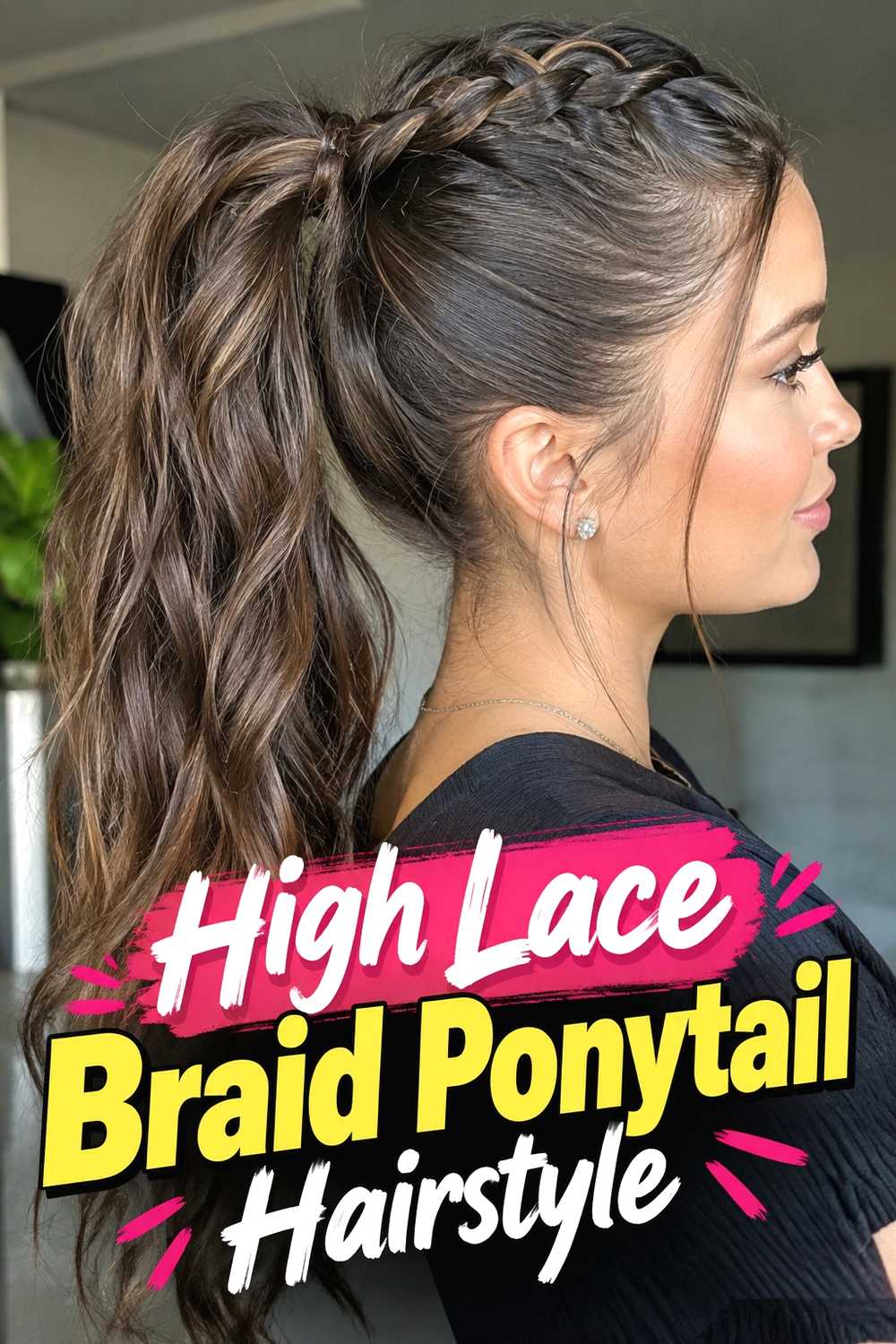
A High Lace Braid Ponytail Hairstyle places the ponytail near the crown, creating a lifted silhouette with plenty of visible movement through the lengths. The lace braid can begin beside the forehead and travel diagonally upward, eventually disappearing into the ponytail base. Keeping the braid relatively snug helps it stay neat beneath the higher tension needed for the ponytail. Once secured, the tail can remain sleek, softly waved, or curled for extra volume. A small wrapped section around the elastic gives the base a cleaner finish. Because the style directs the hair upward, it works best when the braid and ponytail are planned together rather than created as two completely separate elements.
Styling Notes
Establish the ponytail position before finishing the braid so you know exactly where the braided section needs to end.
Wear & Maintenance
Avoid excessive tension around the hairline. A high pony can feel secure without being pulled uncomfortably tight.
3. Low Lace Braid Ponytail Hairstyle
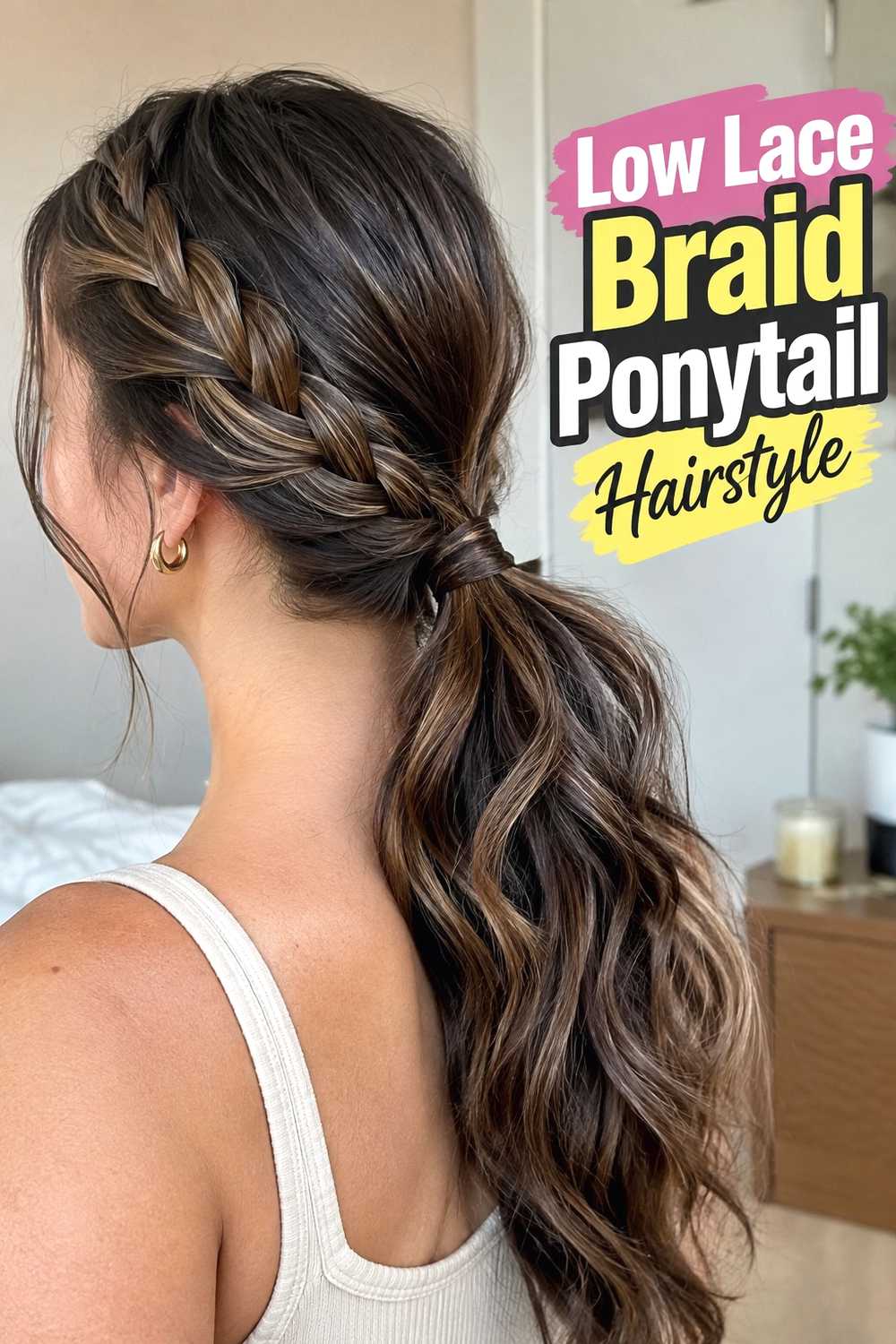
The Low Lace Braid Ponytail Hairstyle keeps the entire design close to the nape for a softer, more understated finish. A braid can trace one side of the head from the temple toward the back before joining a low ponytail just above the neckline. Because the placement is relaxed, a little crown volume and gentle texture through the sides can complement the style beautifully. The ponytail itself may stay straight for a polished look or include loose waves for something more romantic. Keep the braid visible by allowing it to sit slightly above the ponytail rather than burying it under surrounding sections. A wrapped base can conceal the elastic without making the style feel too formal.
Why It Works
The lower placement reduces the sporty feel of a traditional ponytail while still keeping the hair neatly gathered away from the face.
Pro Tip
Gently loosen the outer edge of the braid after securing the ponytail if you want a fuller appearance without rebuilding the entire style.
4. Double Lace Braid Ponytail Hairstyle
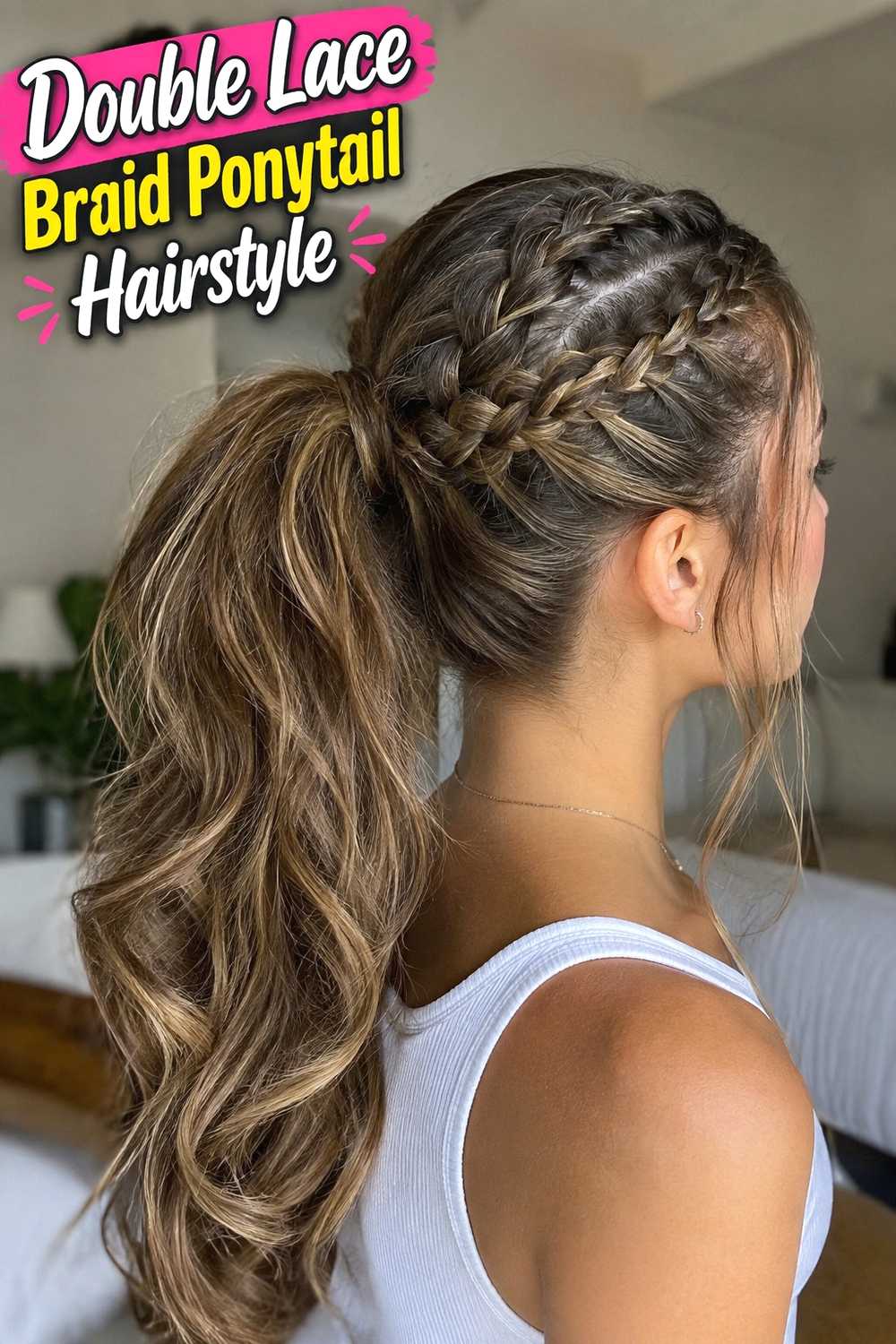
The Double Lace Braid Ponytail Hairstyle uses two separate braided sections for extra definition around the head. One option is to create matching lace braids along both temples and guide them backward until they meet at the ponytail base. Another is to place two parallel braids on the same side for a more directional effect. Keep the braid widths relatively consistent so one does not visually overpower the other. A simple ponytail works best underneath because the double braiding already provides plenty of detail. For a softer finish, slightly loosen the braid edges and add gentle bends through the ponytail. For something sharper, keep every section smooth and compact.
Styling Notes
Divide the hair carefully before braiding so both lace sections have enough hair to maintain their structure without competing for the same strands.
Best For
This option suits medium-to-long hair where there is enough surface area to show two distinct braid paths clearly.
5. Crown Lace Braid Ponytail Hairstyle
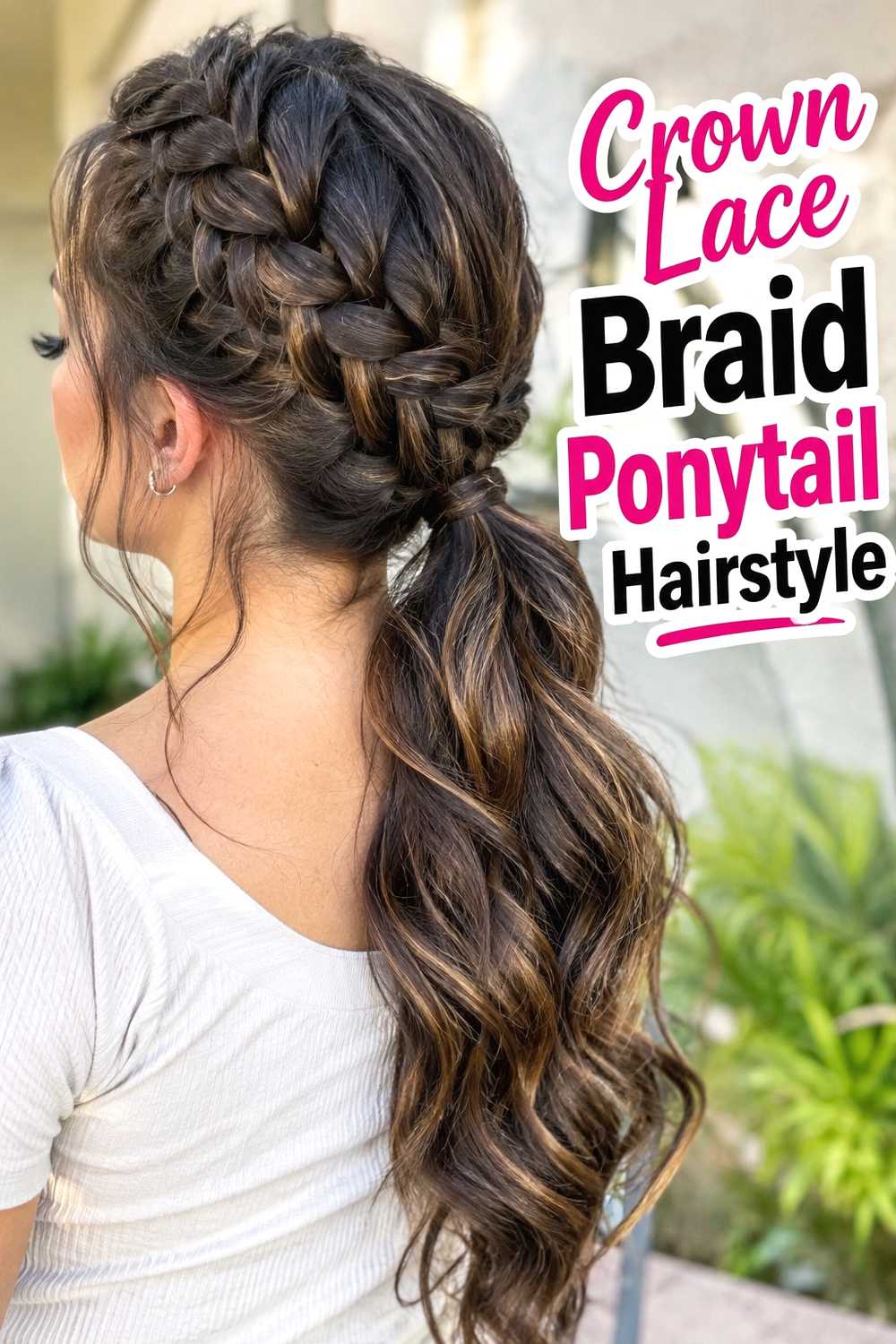
The Crown Lace Braid Ponytail Hairstyle uses the braid almost like a headband, following the upper hairline or crown before connecting to the ponytail. Starting near one temple, guide the lace braid across the top or around one side of the head while adding hair from the crown-facing edge. The rest of the hair remains loose until everything is gathered at the back. A mid or low ponytail helps keep the crown braid visible instead of pulling it too sharply upward. This style can feel polished when kept smooth or romantic when the braid is gently widened. Soft volume through the ponytail complements the rounded line of the crown particularly well.
Hair Type & Length
Medium and long hair provide enough length for the crown section to travel comfortably before joining the ponytail.
Pro Tip
Do not borrow too much hair from the lower sections while braiding. Preserving density underneath ensures the final ponytail still looks full.
6. Messy Lace Braid Ponytail Hairstyle
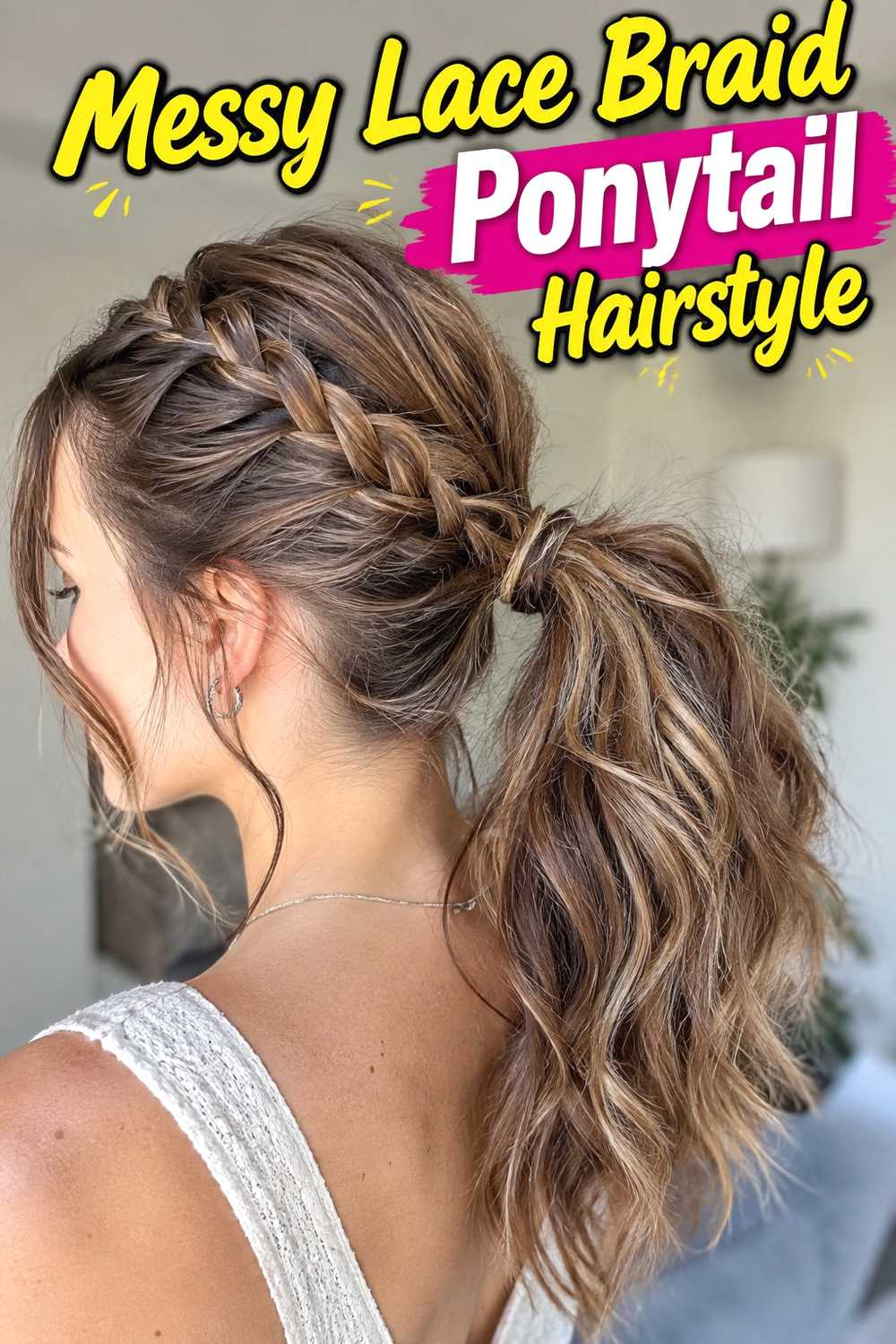
A Messy Lace Braid Ponytail Hairstyle intentionally combines visible braid structure with a relaxed overall finish. Create the lace braid neatly first, then soften it by gently pulling at the outer loops rather than braiding loosely from the beginning. Gather the remaining hair into a ponytail without smoothing away every natural bump or piece of texture. A few face-framing strands can remain loose, and the ponytail looks especially natural with imperfect waves or lightly tousled ends. The key is making the looseness appear controlled: the braid should still be recognizable, the elastic should remain secure, and the style should not look as though it is simply falling apart.
Styling Notes
Build the structure before creating the softness. A secure braid and ponytail give you more freedom to loosen selected areas afterward.
Best For
Choose this style for casual occasions, outdoor events, or days when a perfectly polished ponytail feels too formal.
7. Sleek Lace Braid Ponytail Hairstyle
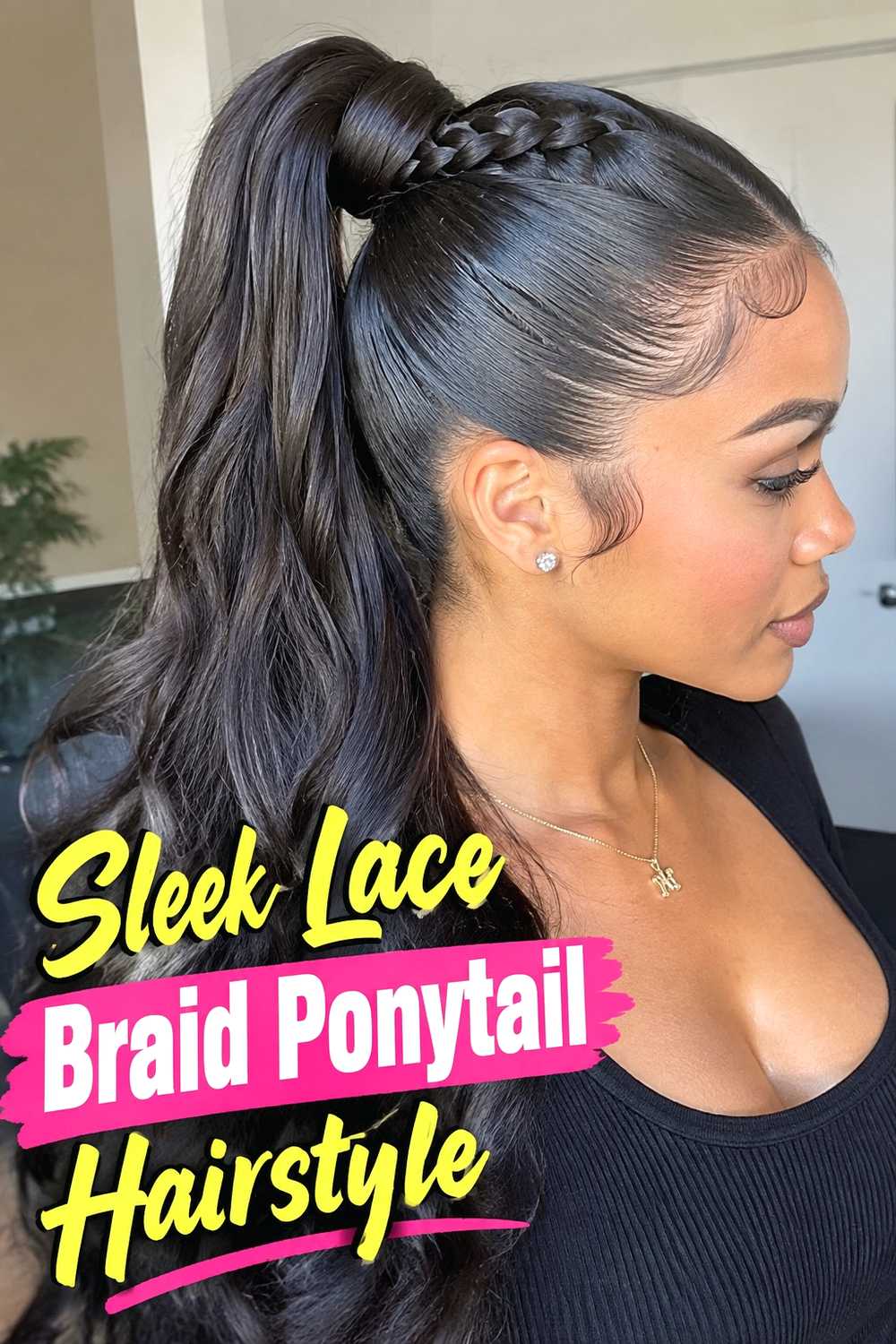
The Sleek Lace Braid Ponytail Hairstyle keeps both the braided section and the surrounding hair smooth, controlled, and sharply defined. Start with a clean part and construct a narrow lace braid along one side, keeping the sections compact and close to the head. The remaining hair can be brushed into a mid or high ponytail with minimal surface texture. A straight, glossy ponytail reinforces the streamlined effect, while wrapping a small section around the elastic gives the base a finished appearance. Because there is little intentional softness to disguise inconsistencies, clean sectioning matters here. The braid should transition into the ponytail without creating a bulky bump where the two structures meet.
Styling Notes
Smooth each new section before adding it to the braid so flyaways do not interrupt the crisp lace pattern.
Why It Works
The narrow braid introduces detail without breaking the clean silhouette, making this an effective option when you want a polished ponytail with more interest.
8. Curly Lace Braid Ponytail Hairstyle
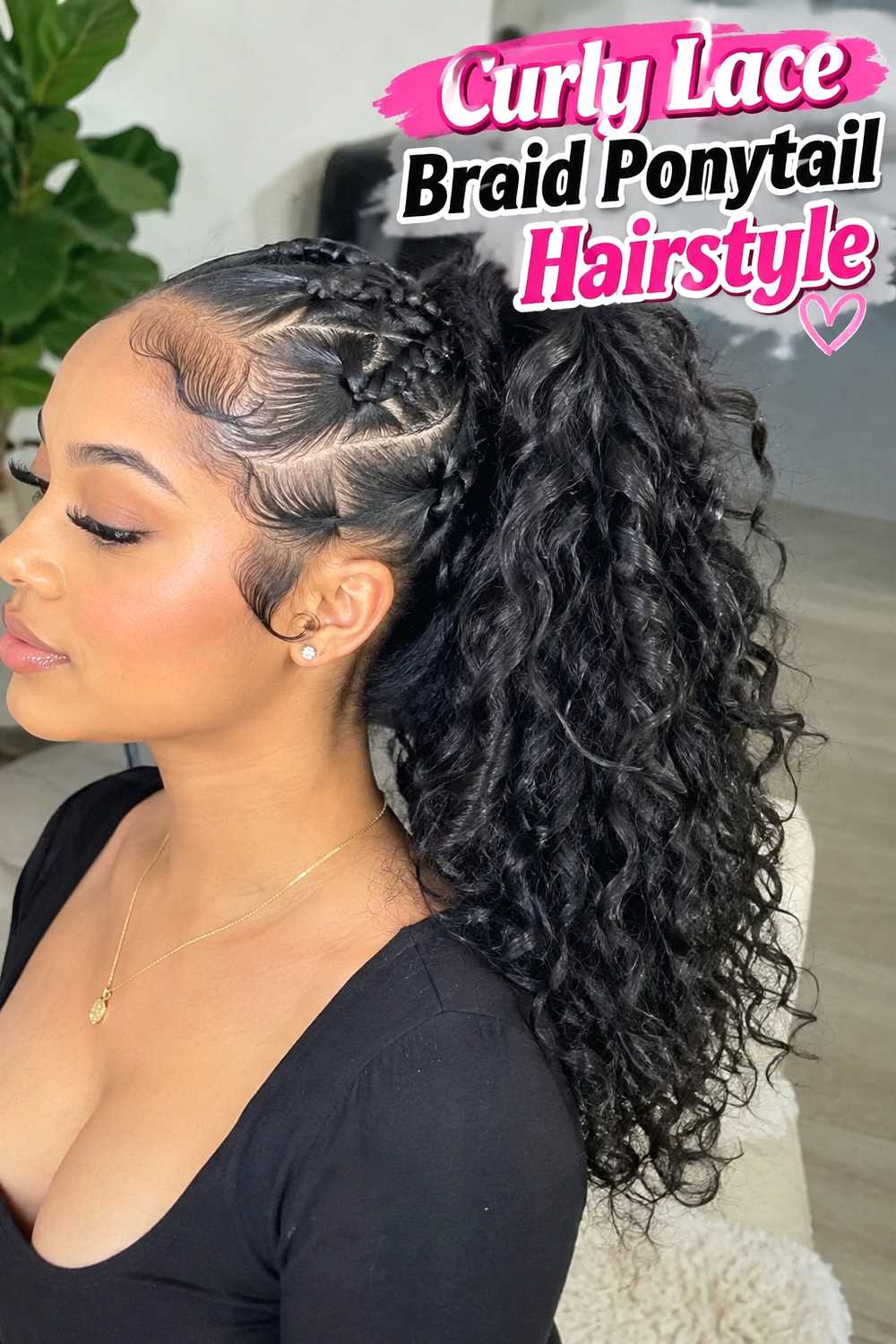
The Curly Lace Braid Ponytail Hairstyle lets defined curls become the main source of volume while the braid adds structure around the hairline. Create a lace braid along one side or across the crown, working with manageable sections rather than trying to flatten all of the natural texture. Gather the rest of the hair into a ponytail that preserves the curl pattern through the lengths. The contrast between the more controlled braided area and the full curly tail gives the hairstyle dimension. Depending on density, the ponytail can sit high for dramatic volume or lower for a softer silhouette. Avoid repeatedly brushing established curls, especially after the braided section has been completed.
Hair Type & Length
This approach works particularly well with naturally curly and coily hair that has enough length to gather comfortably into a ponytail.
Pro Tip
Separate the section intended for the lace braid before defining the rest of the curls so you do not have to disturb finished curl groups later.
9. Wavy Lace Braid Ponytail Hairstyle
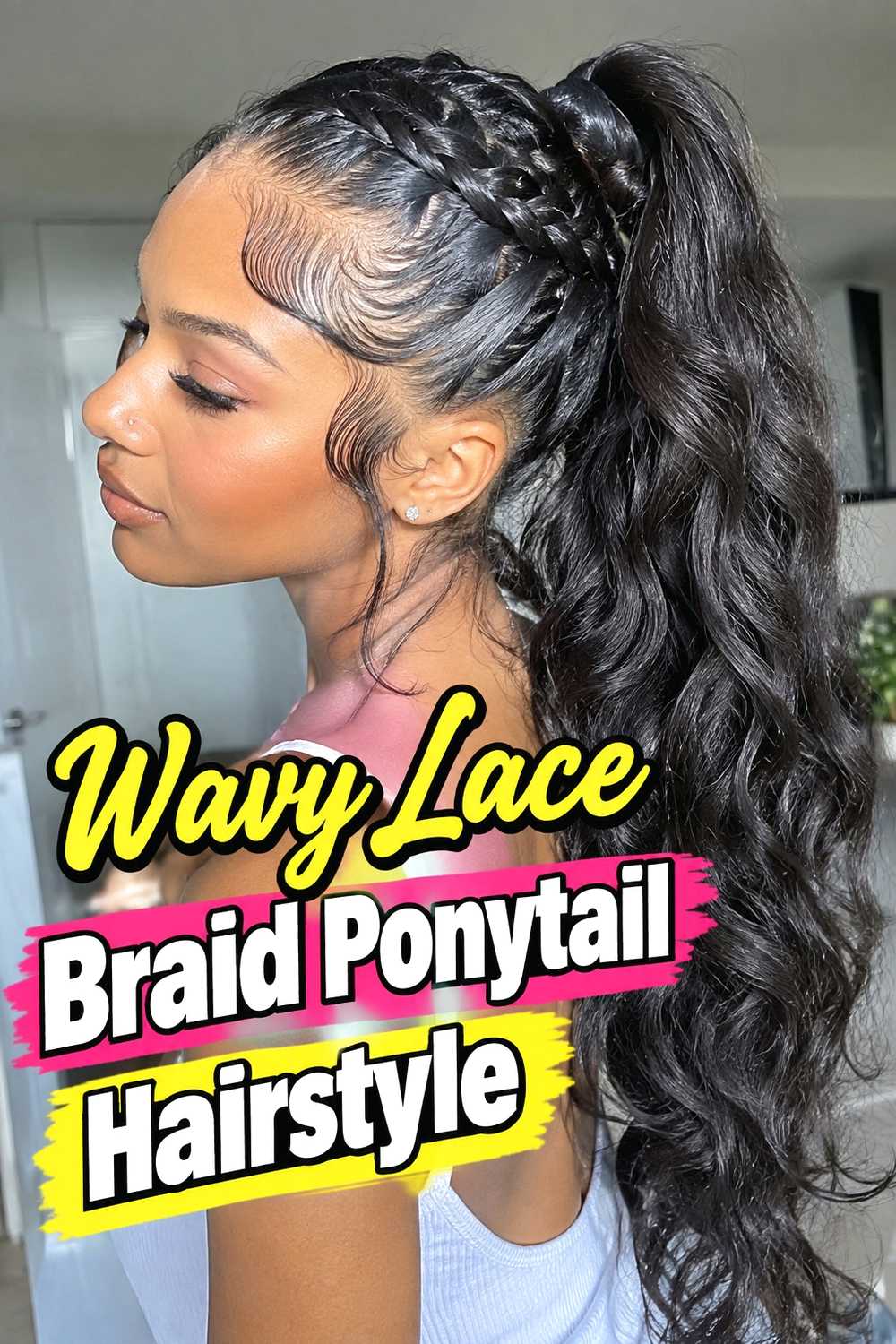
A Wavy Lace Braid Ponytail Hairstyle balances braided detail with soft movement through the gathered lengths. The lace braid can trace the temple or travel around the crown before blending into a mid-height ponytail. Instead of leaving the tail completely straight, add broad, irregular waves that move naturally rather than forming identical curls. A few soft pieces around the face can echo that texture if you want a more relaxed result. This version is particularly versatile because the braid keeps the front controlled while the waves prevent the ponytail from feeling severe. Slightly widening the braid can also help its texture remain visible next to the fuller, more dimensional ponytail.
Styling Notes
Finish the braid before adding final definition to the ponytail waves. This makes it easier to keep the front neat while preserving movement through the tail.
Best For
This style transitions easily from daytime wear to dinners, parties, and other occasions where you want something polished but not overly formal.
10. Dutch Lace Braid Ponytail Hairstyle
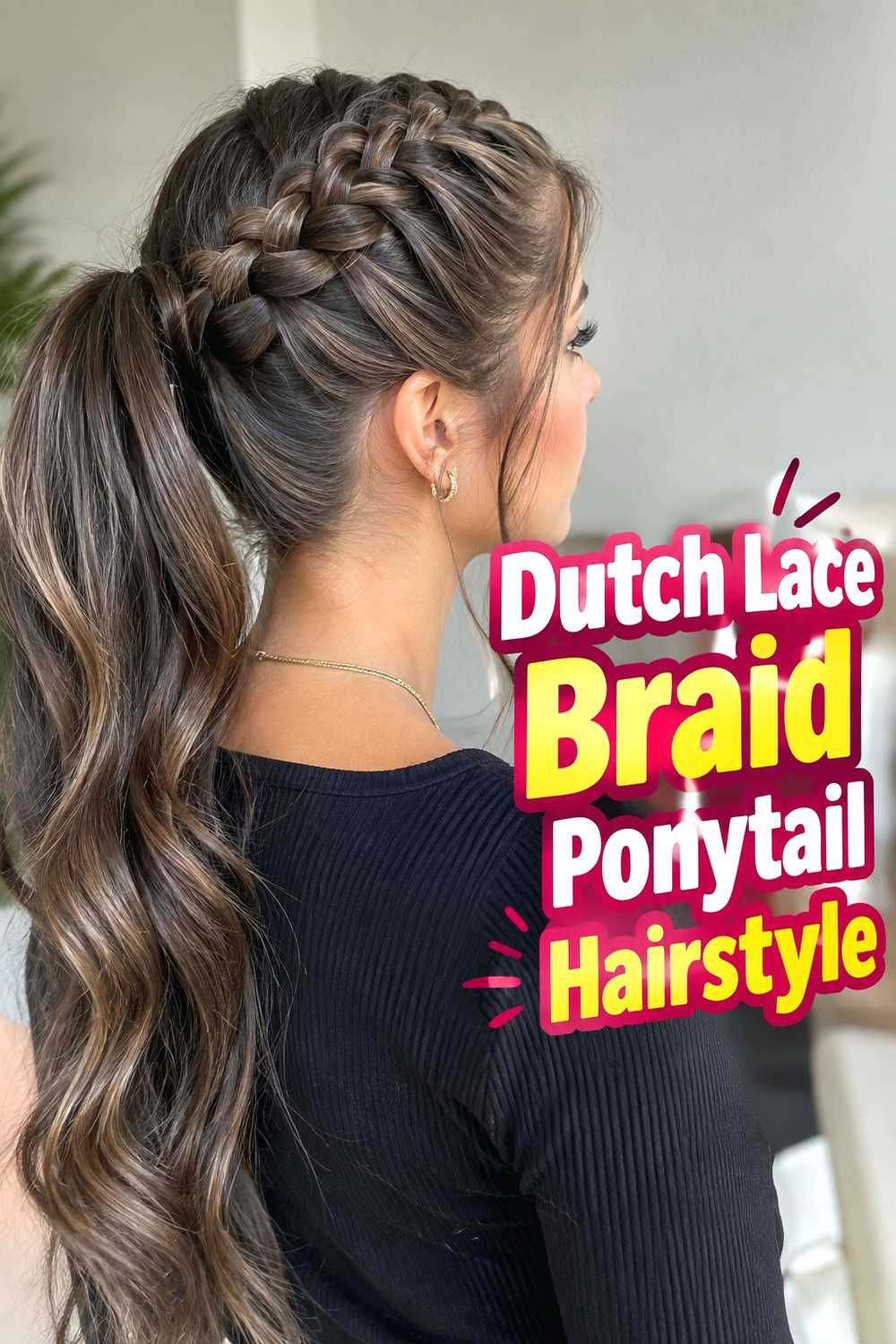
The Dutch Lace Braid Ponytail Hairstyle makes the braided section appear more raised by crossing strands beneath rather than over during the braid. When adapted as a lace braid, new hair is still introduced from only one side, allowing the braid to follow the hairline while maintaining a pronounced surface texture. Guide it from the temple toward the back and incorporate it into a ponytail at your preferred height. Because the Dutch structure already looks dimensional, the ponytail can remain fairly simple. Slightly pulling apart the braid afterward creates more width, while leaving it compact produces a sharper athletic finish. Keep the transition point smooth so the raised braid flows naturally into the base.
Styling Notes
Maintain firm, even tension while constructing the braid. Uneven tension can make the raised pattern twist unpredictably as it travels around the head.
Why It Works
The outward braid structure creates stronger contrast against the surrounding hair, making the lace technique more visible from a distance.
11. Reverse Lace Braid Ponytail Hairstyle
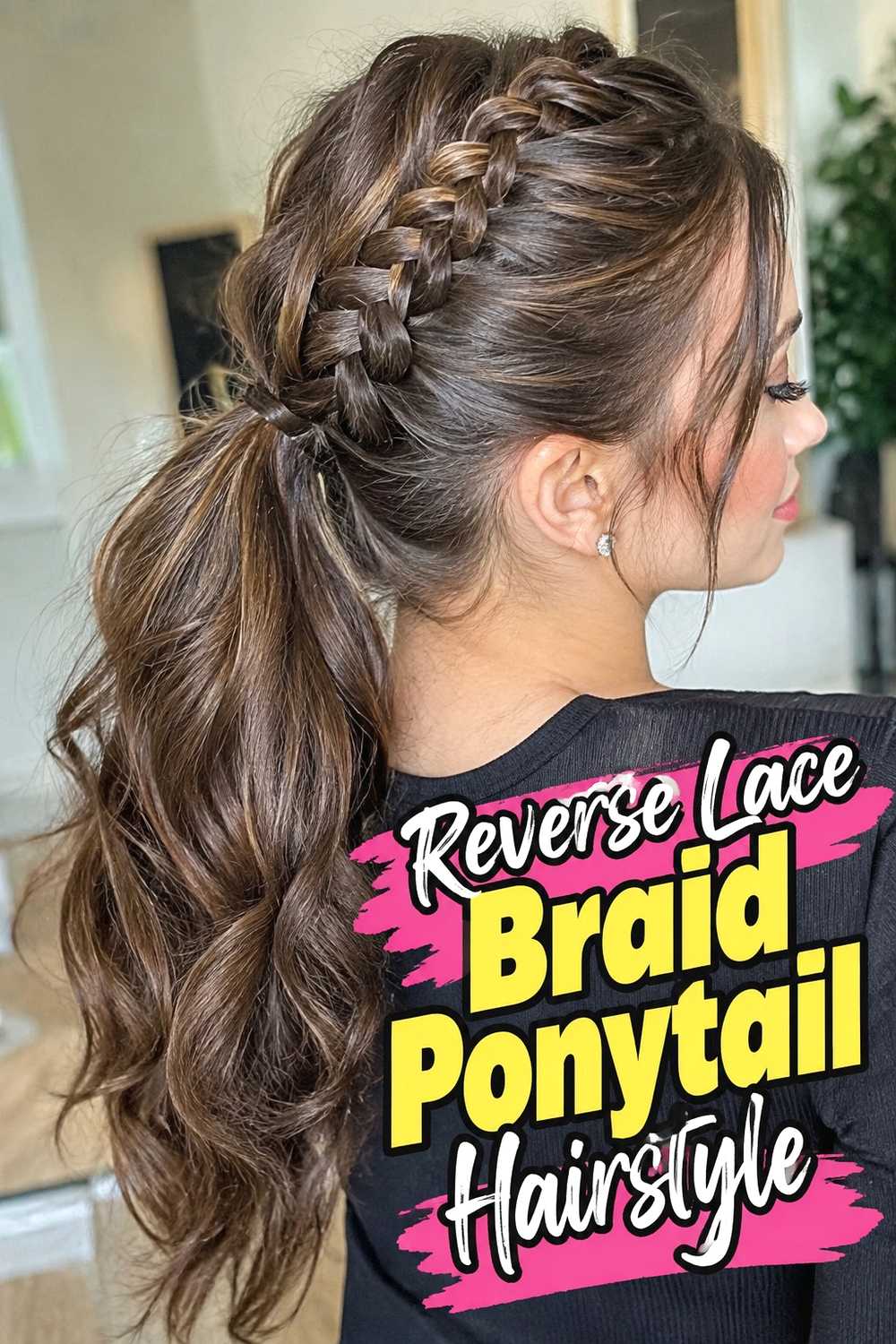
The Reverse Lace Braid Ponytail Hairstyle changes the usual direction by beginning lower on the head and guiding the braid upward toward the ponytail. A section near the nape or behind the ear can be braided diagonally while hair is added from one side, eventually meeting a mid or high ponytail. This positioning makes the detail most visible from the side or back and gives the hairstyle an unexpected finish from angles where ponytails are usually simple. Keep the braid snug enough to follow the upward direction without sagging. A smooth ponytail emphasizes the reversed braid path, while soft curls can make the overall result feel more playful and dimensional.
Hair Type & Length
Medium or long hair is generally easier to manage because the upward braid needs enough length to reach the ponytail base without excessive tension.
Pro Tip
Tilt the head slightly forward when braiding near the nape. This can make the section easier to access and keep the upward path cleaner.
12. Diagonal Lace Braid Ponytail Hairstyle
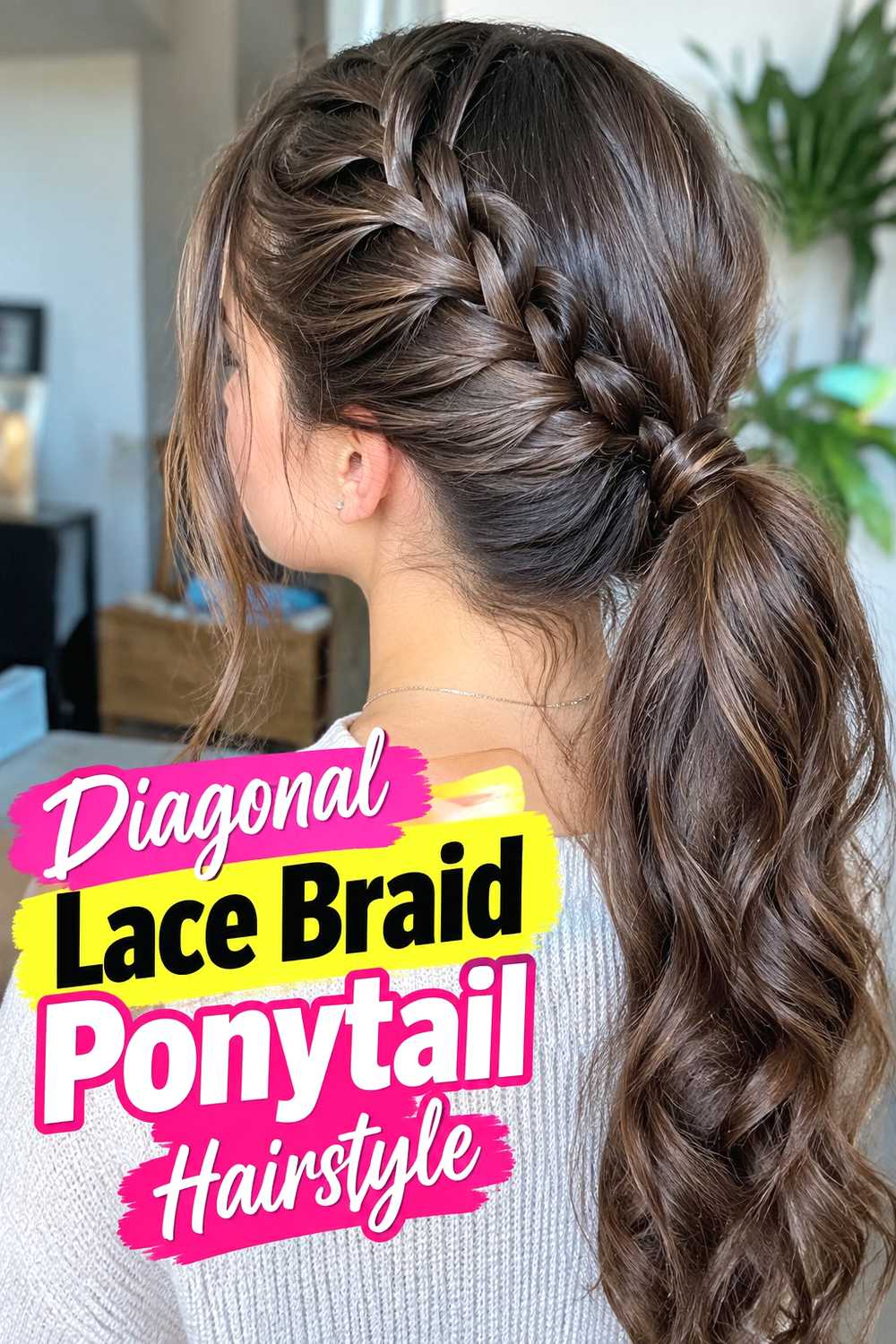
A Diagonal Lace Braid Ponytail Hairstyle creates movement across the head by allowing the braid to travel at an angle rather than following the hairline horizontally. Start near the front on one side and direct the braid across the back toward the opposite ponytail position. The diagonal path can make a simple ponytail look more complex without adding several separate braids. Keep the sections neat enough that the changing direction remains obvious, and avoid allowing the braid to drift accidentally downward. A side or low ponytail often completes the diagonal line most naturally. Loose waves through the tail can soften the geometry while preserving the braid as the main structural feature.
Styling Notes
Decide the end point before you start. Visualizing the diagonal line helps you choose where each new lace-braid section should be added.
Best For
This variation is ideal when you want the hairstyle to look interesting from the back as well as from the front and sides.
13. Wrapped Lace Braid Ponytail Hairstyle
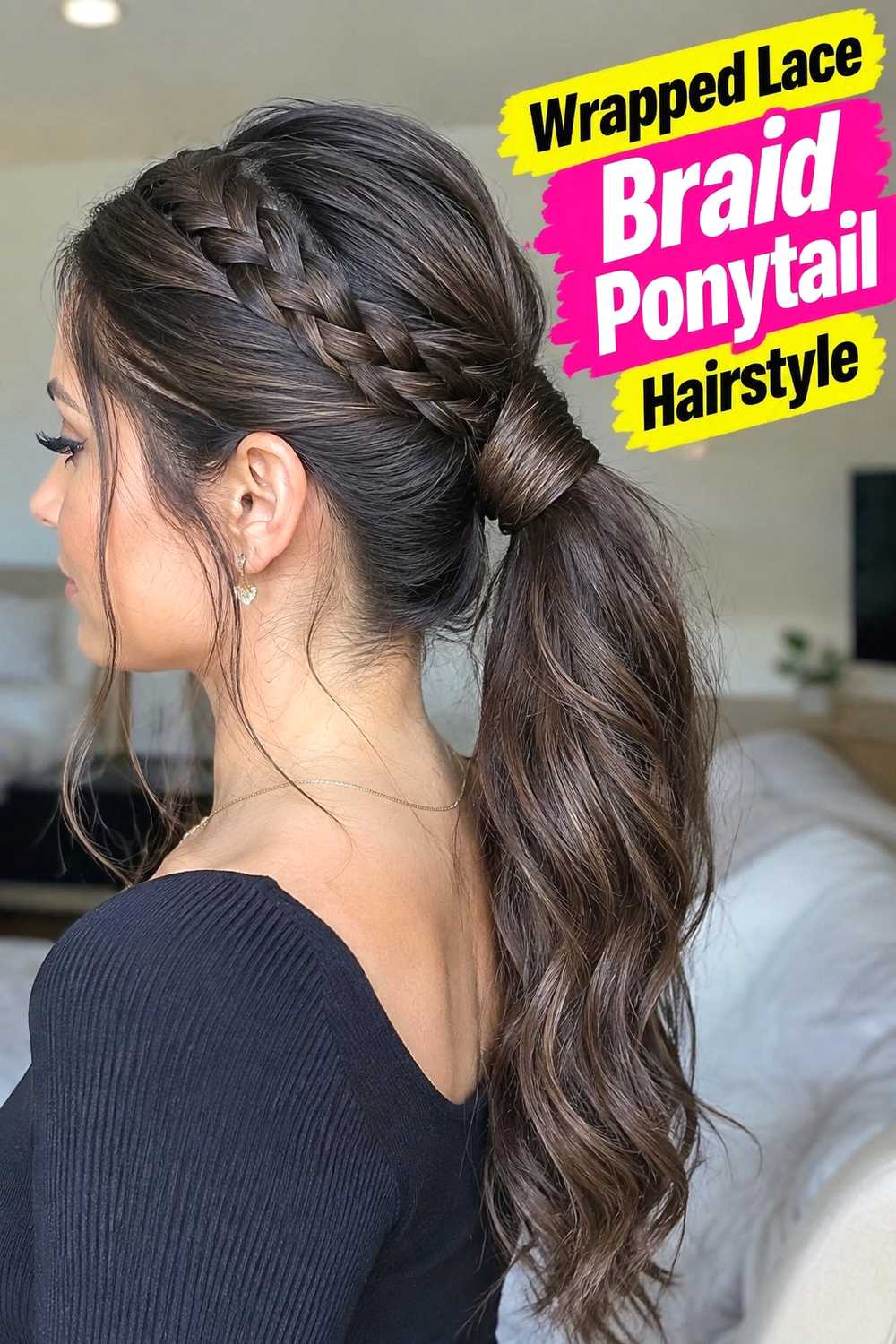
The Wrapped Lace Braid Ponytail Hairstyle uses the braid itself as part of the ponytail base. After creating a lace braid from the temple or side of the head, continue it far enough to reach the gathered ponytail, then wrap the braided length around the elastic before pinning the end underneath. This creates a decorative transition between the braided front and the loose tail while hiding the fastening point. Keep the wrap proportional to the ponytail base; too many layers can create unnecessary bulk. The ponytail may stay sleek or take on loose waves depending on the finish you prefer. A slightly widened braid makes the wrapped detail especially easy to see.
Styling Notes
Secure the main ponytail independently before wrapping the braid. The braid should decorate and cover the base rather than serve as the only support.
Pro Tip
Pin the braid end underneath the ponytail where it is hidden but still easy to remove without disturbing the entire style.
14. Half Crown Lace Braid Ponytail Hairstyle
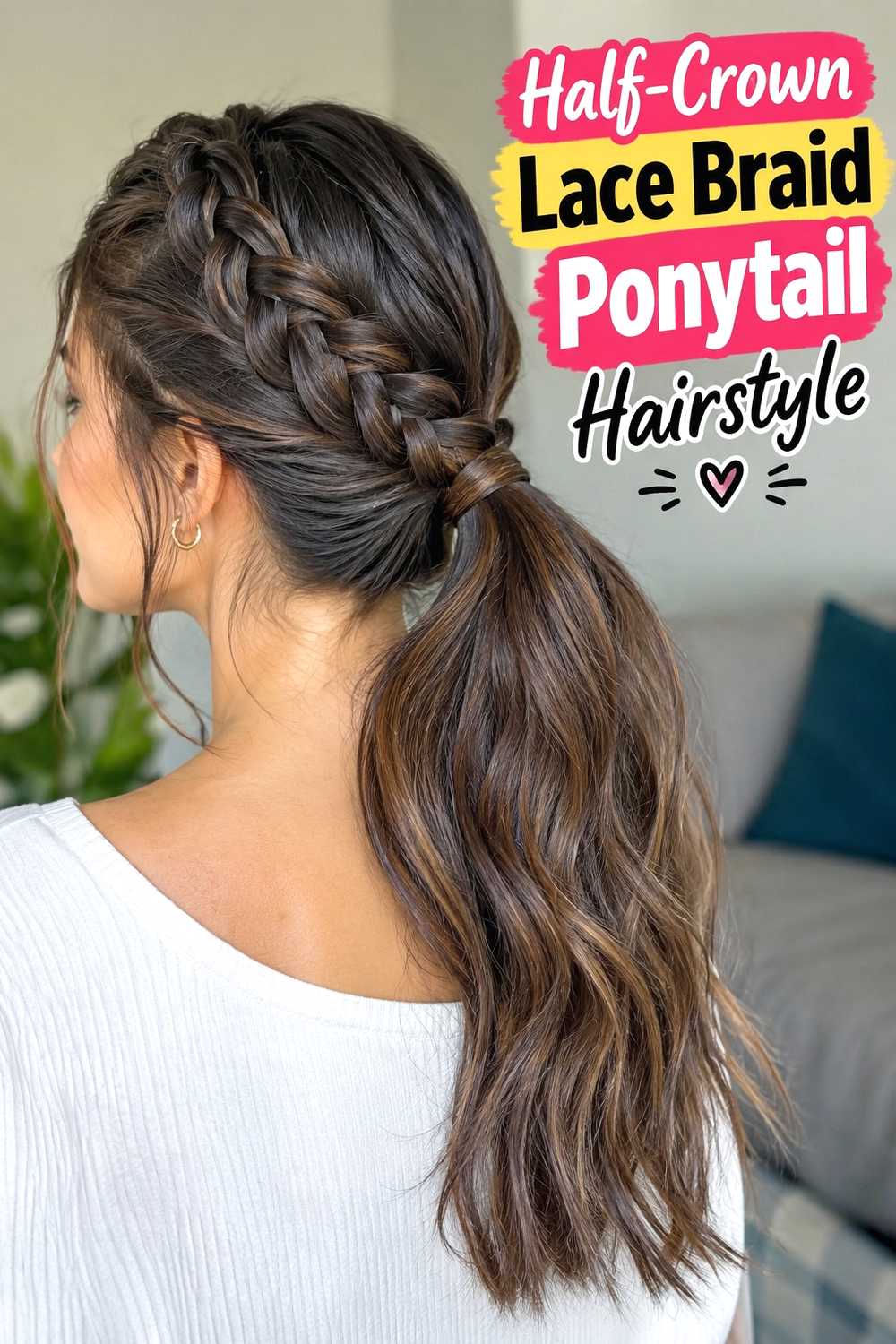
The Half-Crown Lace Braid Ponytail Hairstyle creates a partial halo around the upper head without continuing the braid all the way across. Begin near one temple and follow the curve of the crown toward the back center, adding new hair only along the upper edge. Stop the braid where the ponytail will sit and secure everything together. This leaves the opposite side smoother and simpler, creating an attractive asymmetry. A gently loosened braid and softly textured ponytail produce a romantic result, while tighter braiding and straight lengths give the same structure a cleaner finish. Keeping a little crown lift beneath the braid prevents the upper shape from appearing overly flat.
Why It Works
The partial crown adds interest without surrounding the entire head, making the braid noticeable while preserving a light, open silhouette.
Wear & Maintenance
Use a few hidden pins around the braid if needed so widening the loops does not loosen the entire structure.
15. Bubble Ponytail With Lace Braid Hairstyle
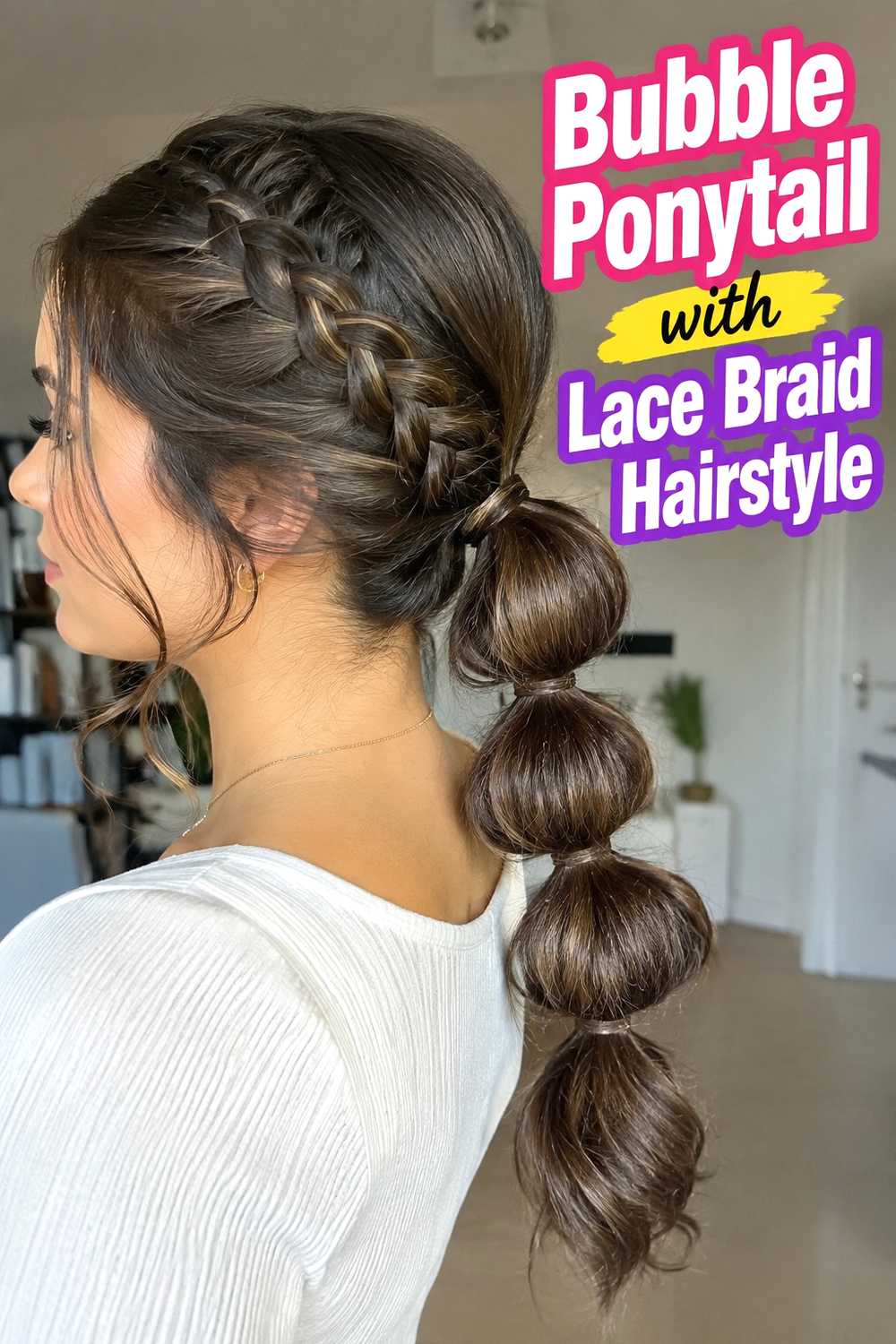
The Bubble Ponytail with Lace Braid Hairstyle combines two distinct textures in one playful design. A lace braid follows the side or crown before joining a secure ponytail, then additional elastics are placed down the tail at regular intervals. Gently pull each section outward to create rounded bubble shapes while keeping the spacing consistent. The braid provides detailed texture near the head, while the segmented ponytail adds volume through the lengths. Because both elements attract attention, keep the front relatively simple and avoid adding too many extra accessories. The bubbles can remain compact for a polished effect or be widened more generously for a fuller, softer silhouette.
Styling Notes
Form the ponytail first and make sure the base is secure before creating the bubble sections. Adjust each bubble gradually so their sizes stay visually balanced.
Best For
This version works best on longer hair, where there is enough ponytail length for several distinct sections to form.
16. Voluminous Lace Braid Ponytail Hairstyle
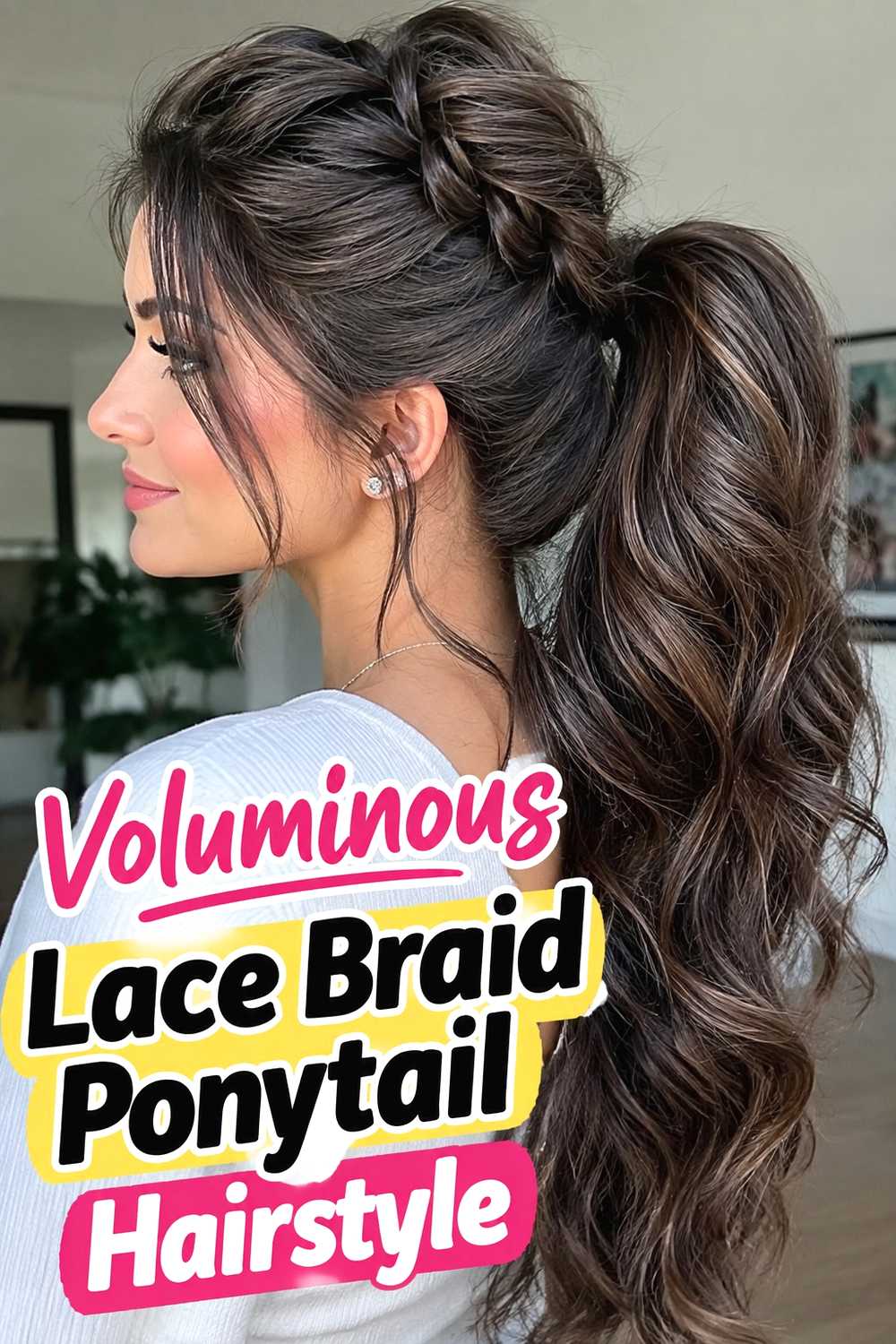
A Voluminous Lace Braid Ponytail Hairstyle focuses on fullness at both the crown and through the ponytail. Keep the lace braid slightly wider and more relaxed so it does not disappear next to the larger silhouette. The braid can travel from one temple toward the back while the upper crown retains controlled lift. Once everything is gathered, add volume through curls, waves, or naturally dense texture in the tail. The base should remain secure even though the finished style looks soft. Avoid excessive teasing around the braided section, since too much surface texture can obscure its pattern. Instead, build the volume mainly at the crown interior and through the ponytail lengths.
Styling Notes
Create the braid before adding significant crown volume. This gives you cleaner sections and reduces the chance of tangling already-textured hair.
Hair Type & Length
Medium-to-long hair with moderate or high density works especially well, although finer hair can achieve a fuller appearance with careful wave placement.
17. Face Framing Lace Braid Ponytail Hairstyle
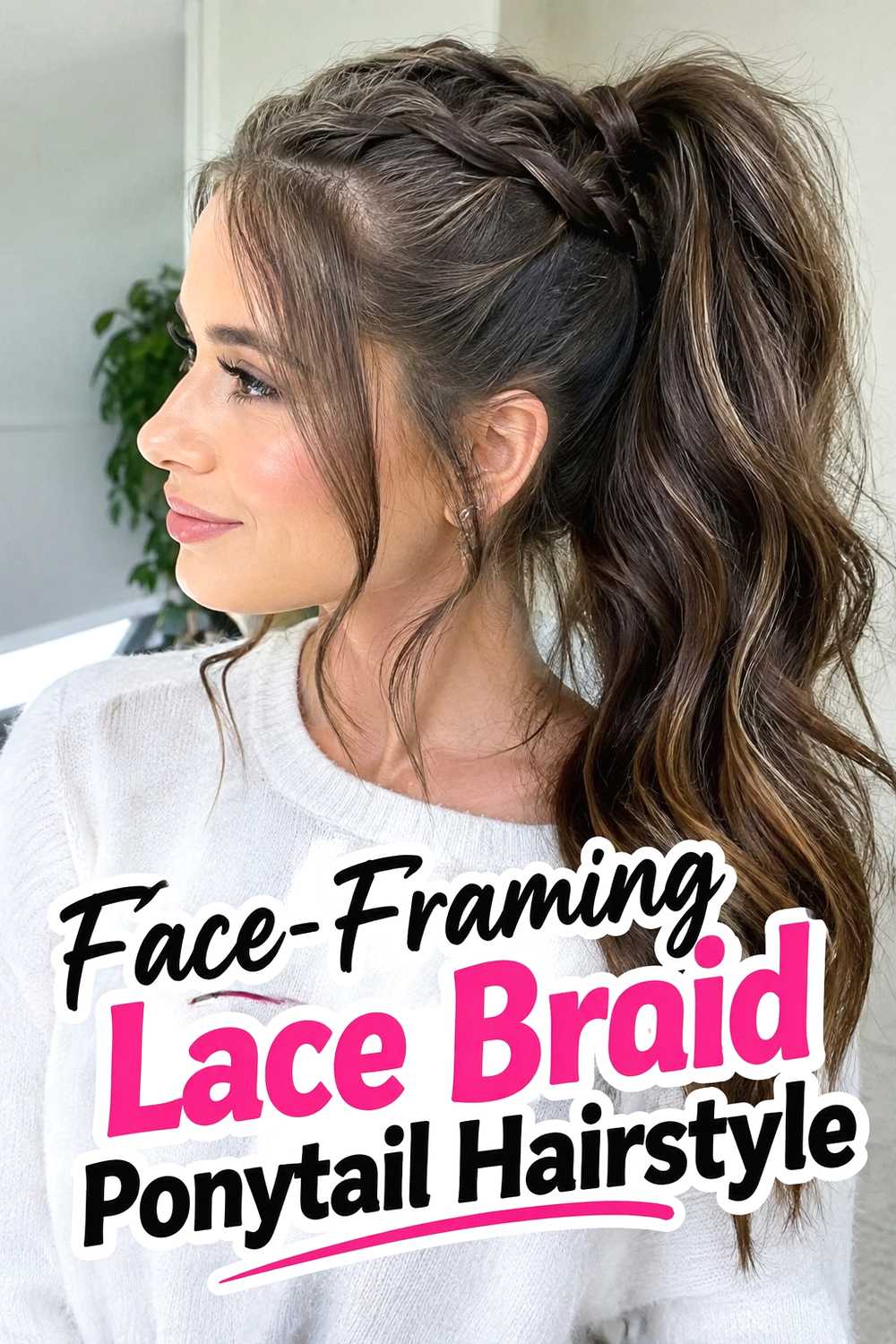
The Face-Framing Lace Braid Ponytail Hairstyle keeps deliberate softness around the front while still using a structured braid. Before beginning, separate a few fine pieces near the hairline and leave them out of the braid. Create a lace braid slightly behind those sections, directing it toward a mid or low ponytail. The loose pieces can remain straight, gently curved, or softly waved depending on the overall finish. This layered approach prevents the braid from sitting directly against every edge of the face, making the style feel less severe. Keep the face-framing strands selective rather than pulling out random pieces afterward, which can accidentally weaken the braid or make the front look untidy.
Styling Notes
Choose the face-framing sections before braiding and clip them away temporarily. This keeps their placement intentional and protects the braid structure.
Best For
This variation suits romantic, casual, and event styling where you want a ponytail that feels polished but still soft around the front.
18. Textured Bridal Lace Braid Ponytail Hairstyle
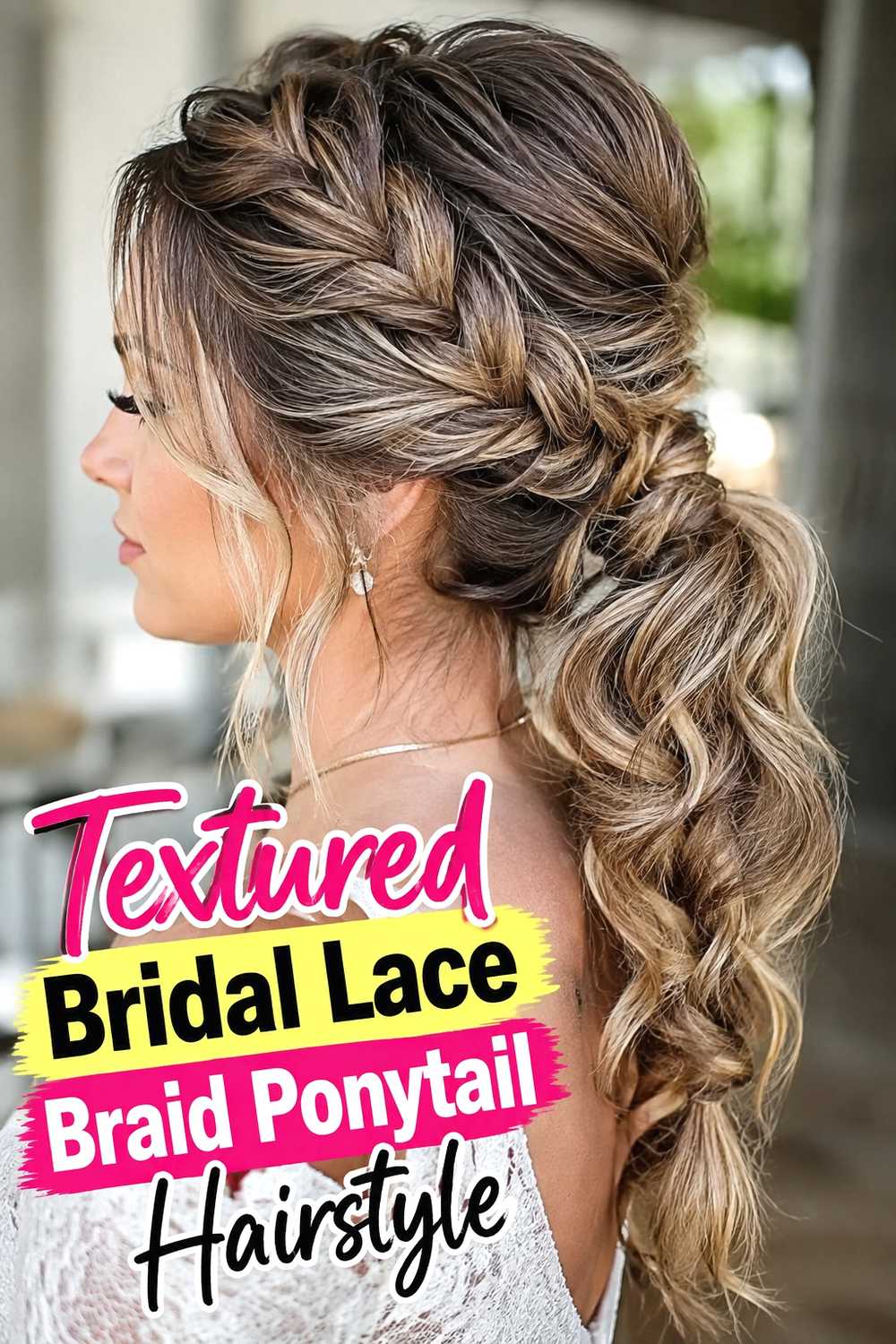
The Textured Bridal Lace Braid Ponytail Hairstyle pairs a prominent braid with controlled softness for a polished event-ready finish. A wider lace braid can curve from the temple around the crown before meeting a low or mid ponytail. Gently pulled braid loops create dimension, while the remaining hair can be styled into defined waves or curls that give the tail a fuller appearance. Keep the crown softly lifted and the transition into the ponytail smooth so the hairstyle looks cohesive from every angle. Decorative pins or delicate accessories can be added if desired, but the braid should remain visible rather than being completely covered. Secure the main structure before adding any finishing details.
Wear & Maintenance
Use pins and elastics as the structural foundation so the braid and ponytail remain secure independently of decorative accessories.
Pro Tip
Photograph the hairstyle from the side and back during styling. This makes it easier to check whether the braid remains visible around the crown.
19. Braided Base Lace Braid Ponytail Hairstyle
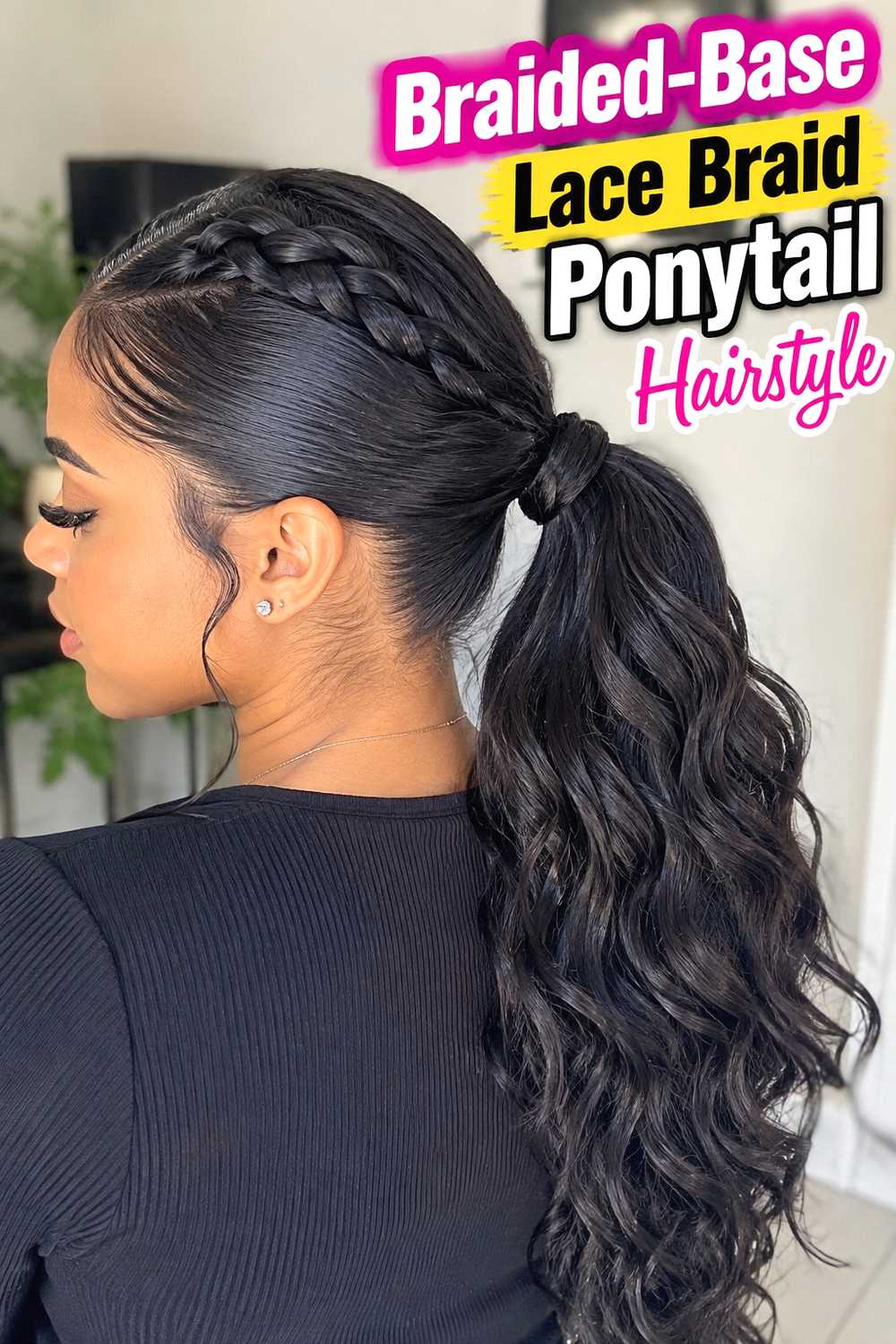
The Braided-Base Lace Braid Ponytail Hairstyle concentrates detail exactly where the braid meets the ponytail. Create a lace braid along the side and guide it toward the gathered hair, then continue braiding a short section around or just beneath the base before pinning it securely. This produces a structured transition that can replace a simple hair wrap around the elastic. The ponytail itself can remain sleek, wavy, or curled, depending on how much contrast you want between the base and the lengths. Keep the braided portion compact enough to avoid creating a bulky knot. The finished effect should look integrated, with the lace braid naturally leading into the decorative base.
Styling Notes
Secure the ponytail with a strong elastic first, then build the braided detail around the fastening point without reducing the ponytail’s stability.
Why It Works
Concentrating the braid near the base creates a defined focal point and gives an otherwise simple ponytail a more finished, intentionally styled appearance.
How to Choose the Right Look
Start with ponytail height. High ponytails feel lifted and energetic, while low ponytails create a softer, more understated silhouette. Mid-height styles provide the most flexibility if you want the lace braid to remain clearly visible from the side.
Next, consider braid placement. A side lace braid is straightforward and versatile, crown and half-crown versions add more visual detail, and diagonal or reverse braids make the hairstyle more noticeable from the back. If you want maximum texture, double braids or a Dutch lace braid create stronger definition.
Hair texture should influence the finish rather than being hidden. Straight hair works beautifully for sleek styles, waves soften the look, and curls can add substantial volume to the ponytail while still allowing the braided section to provide structure.
Also think about styling time and hold. More complex options such as bubble ponytails, braided bases, double braids, and bridal versions require additional sectioning and securing. For faster styling, a classic side braid or low lace braid ponytail is easier to maintain.
Finally, balance the braid with the ponytail. A wide, loose braid pairs naturally with a fuller textured tail, while a narrow, compact lace braid complements sleek lengths and cleaner finishes.
Final Thoughts
Lace braids can turn a basic ponytail into a hairstyle with clear direction, texture, and detail without requiring the entire head to be braided. The most wearable version depends on how much structure, volume, and styling time you want. Keep the braid proportional to the ponytail, secure the base independently, and adapt the finish to your natural texture for a result that feels polished and believable.
FAQs
1. What is a lace braid?
A lace braid is a braid in which new hair is typically added from only one side as the braid progresses. This allows it to follow the hairline, crown, or another specific path across the head.
2. Can a lace braid be combined with a high ponytail?
Yes. Guide the braid upward toward the planned ponytail position and incorporate it into the base once it reaches the crown.
3. Do lace braid ponytails work with curly hair?
Yes. The braid can provide structure around the head while the natural curls remain visible and full through the ponytail.
4. How do I make a lace braid look fuller?
After securing the braid, gently pull on the outer loops in small increments. Work gradually so you widen the braid without loosening its foundation.
5. How can I keep a lace braid ponytail secure for an event?
Secure the ponytail and braid with reliable elastics and hidden pins before adding decorative pieces. A strong structural base is more dependable than relying on accessories for hold.
Save your favorite lace braid ponytail hairstyle, share the ideas you love, and explore more braided ponytail inspiration for your next look.