12 Loop Ponytail Hairstyle Ideas
From sleek low loops to soft textured twists, these loop ponytail hairstyles turn a simple tie-back into something polished and memorable.
A loop ponytail offers an easy way to change the shape of a traditional ponytail without committing to a complicated updo. Instead of pulling the hair completely through the final wrap of an elastic, part of the length stays folded into a loop. That simple detail can look sleek and architectural, soft and casual, or deliberately voluminous depending on the placement and finish.
The best version depends on your hair length, texture, density, and how polished you want the final result to feel. Some styles rely on a smooth surface and controlled tension, while others look better with natural waves, curls, loose strands, or added texture. These ideas explore different heights, finishes, accessories, and construction details while keeping the recognizable loop ponytail shape.
Quick List
- Classic Polished Loop Ponytail Hairstyle
- Low Sleek Loop Ponytail Hairstyle
- High Loop Ponytail Hairstyle
- Messy Textured Loop Ponytail Hairstyle
- Twisted Loop Ponytail Hairstyle
- Braided Base Loop Ponytail Hairstyle
- Half Up Loop Ponytail Hairstyle
- Curly Loop Ponytail Hairstyle
- Side Swept Loop Ponytail Hairstyle
- Double Loop Ponytail Hairstyle
- Ribbon Wrapped Loop Ponytail Hairstyle
- Soft Wavy Loop Ponytail Hairstyle
1. Classic Polished Loop Ponytail Hairstyle
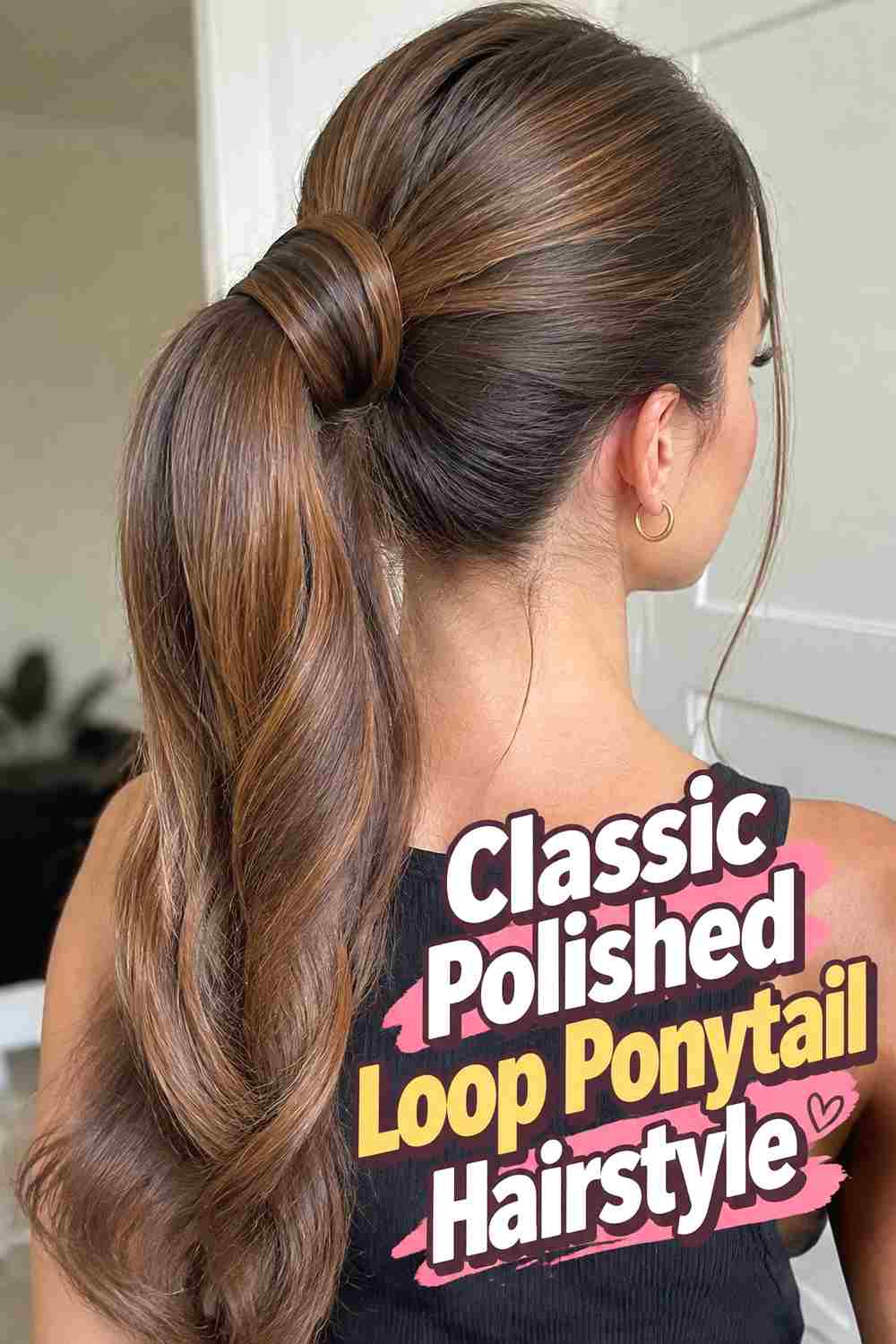
The Classic Polished Loop Ponytail Hairstyle keeps the familiar simplicity of a ponytail while giving the back a more sculpted shape. Hair is gathered around the middle of the head and pulled only partway through the final elastic wrap, creating a smooth, rounded loop with the remaining ends tucked or directed neatly underneath. A controlled surface makes the loop itself the main feature, while a little natural root volume prevents the style from looking overly tight. This version works especially well when you want an everyday hairstyle that feels more deliberate than a regular ponytail but still takes relatively little time to create.
Styling Notes
Brush the hair into position before forming the loop, then adjust its width gently with your fingers. A small section wrapped around the elastic can make the finish look cleaner without changing the basic construction.
Best For
Medium to long hair usually gives enough length to form a visible loop while leaving manageable ends. Straight, softly wavy, and blow-dried textures can all suit this polished version.
2. Low Sleek Loop Ponytail Hairstyle
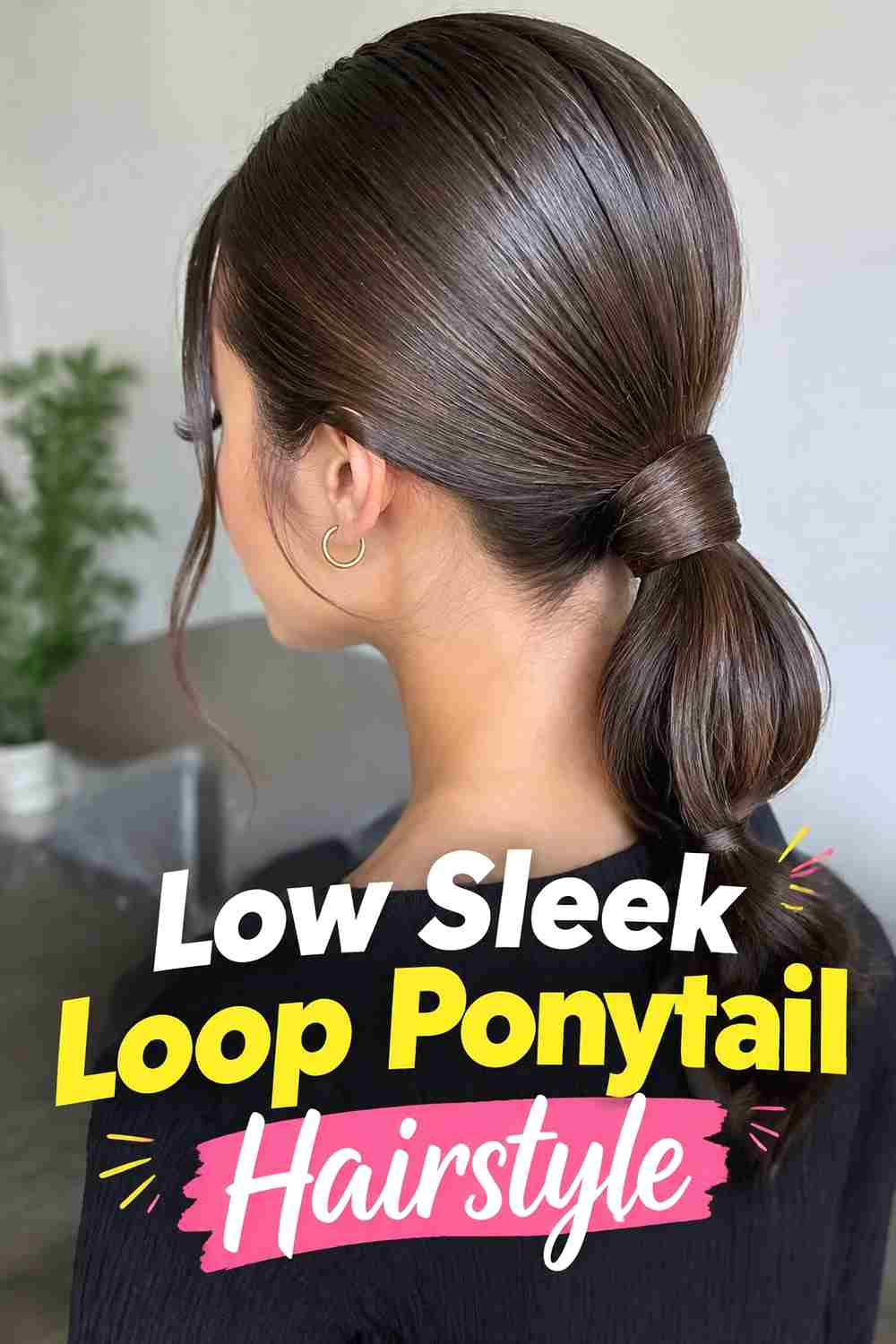
The Low Sleek Loop Ponytail Hairstyle sits close to the nape for a minimal, refined finish. The low placement gives the folded ponytail a compact silhouette and allows the smooth crown to remain an important part of the look. Instead of making the loop oversized, keeping it neat and controlled creates a modern shape that pairs easily with workwear, simple dresses, or understated evening outfits. Hair with enough length to fold comfortably will be easiest to secure. Because a low loop rests near clothing and the neck, keeping the ends tucked and the elastic stable can also help the style stay tidy through several hours of wear.
Why It Works
The contrast between a smooth crown and a rounded folded section gives the hairstyle definition without requiring elaborate braiding or pinning.
Wear & Maintenance
Use even rather than excessive tension at the nape. If short layers escape around the sides, a small amount of flexible styling product can smooth them while preserving natural movement.
3. High Loop Ponytail Hairstyle
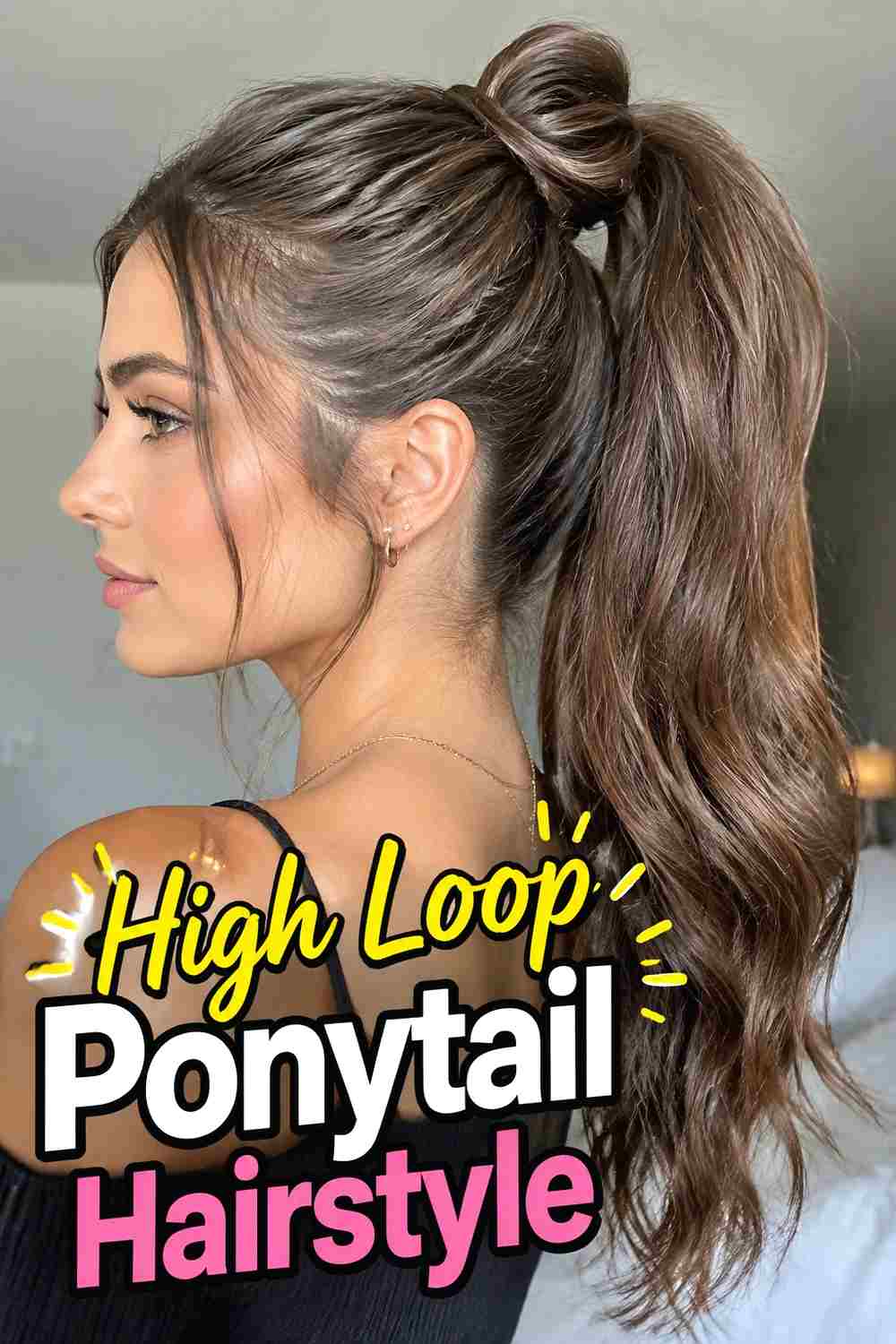
The High Loop Ponytail Hairstyle lifts the folded section toward the crown, giving the overall shape more energy and visible volume. Gathering the hair higher makes the loop easier to see from the front and side, especially when it is gently widened after securing. The remaining ends can point downward, fan slightly around the base, or be wrapped discreetly around the elastic depending on how polished you want the finish. This placement can feel sporty with a natural texture or more fashion-forward when the crown is sleek. Longer hair generally produces a fuller loop, while medium lengths can create a smaller, perkier shape that still feels intentional.
Styling Notes
Start with a secure high ponytail position before making the final loop. Adjust the loop only after the elastic feels stable so you do not accidentally loosen the entire base.
Pro Tip
For softer volume, loosen the loop a little at each side rather than pulling only from the center. This helps the folded section stay balanced.
4. Messy Textured Loop Ponytail Hairstyle
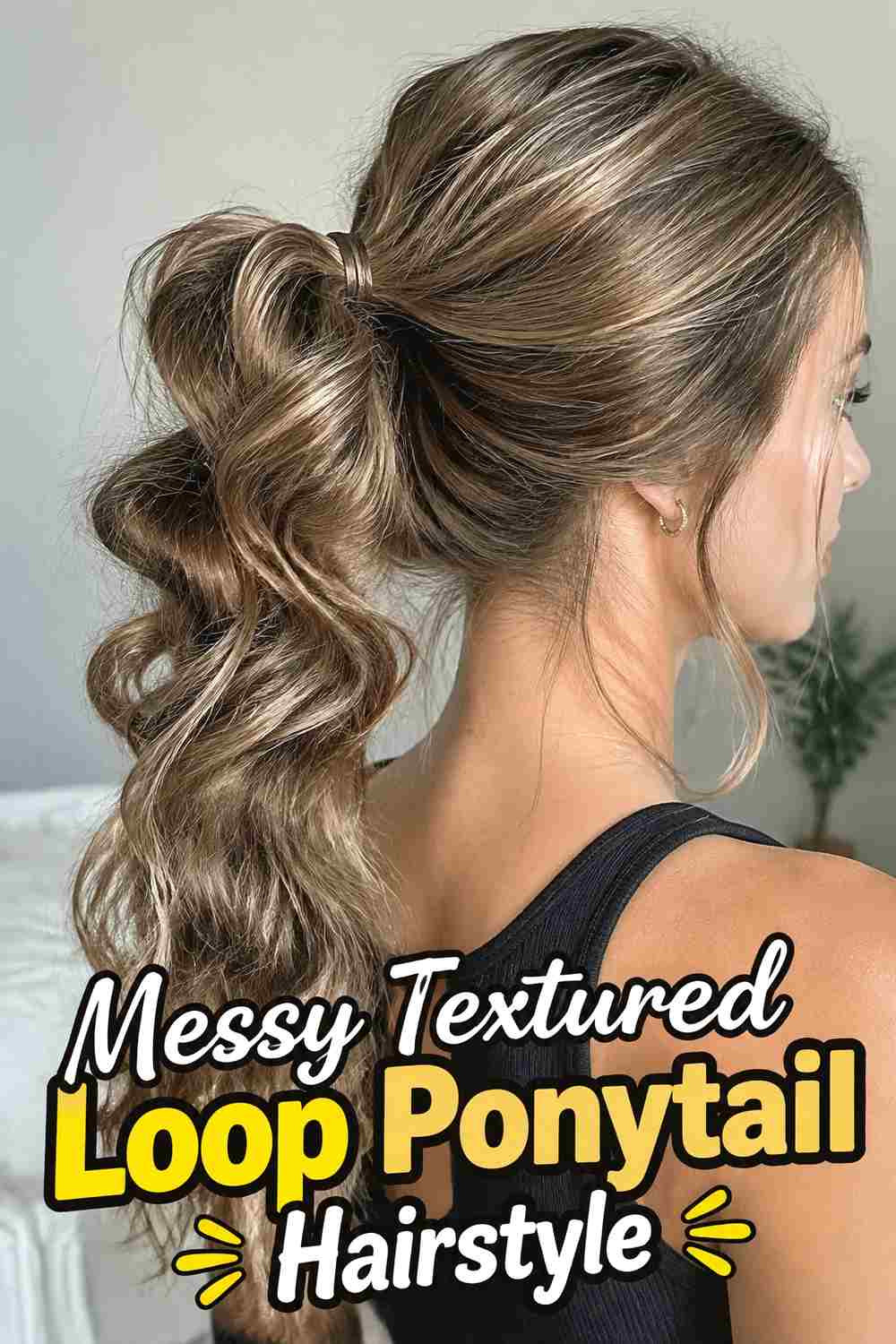
The Messy Textured Loop Ponytail Hairstyle trades a perfectly smooth finish for airy volume, separated strands, and a relaxed silhouette. A little wave or pre-styling texture gives the loop more body and makes small imperfections look intentional rather than unfinished. The crown can be gently loosened after the ponytail is secured, while a few natural pieces around the hairline soften the overall shape. This variation is useful when you want an easy weekend, casual-event, or second-day hairstyle that does not depend on every strand staying perfectly aligned. The key is controlled looseness: the base should still feel secure even when the surface looks soft and slightly undone.
Hair Type & Length
Medium to long wavy hair works naturally with this finish, while straighter textures can gain grip and dimension from loose bends or a light texturizing product before styling.
Wear & Maintenance
Avoid repeatedly pulling at the loop once it is shaped. Make small adjustments at the crown and edges so the hairstyle stays relaxed without losing its anchor.
5. Twisted Loop Ponytail Hairstyle
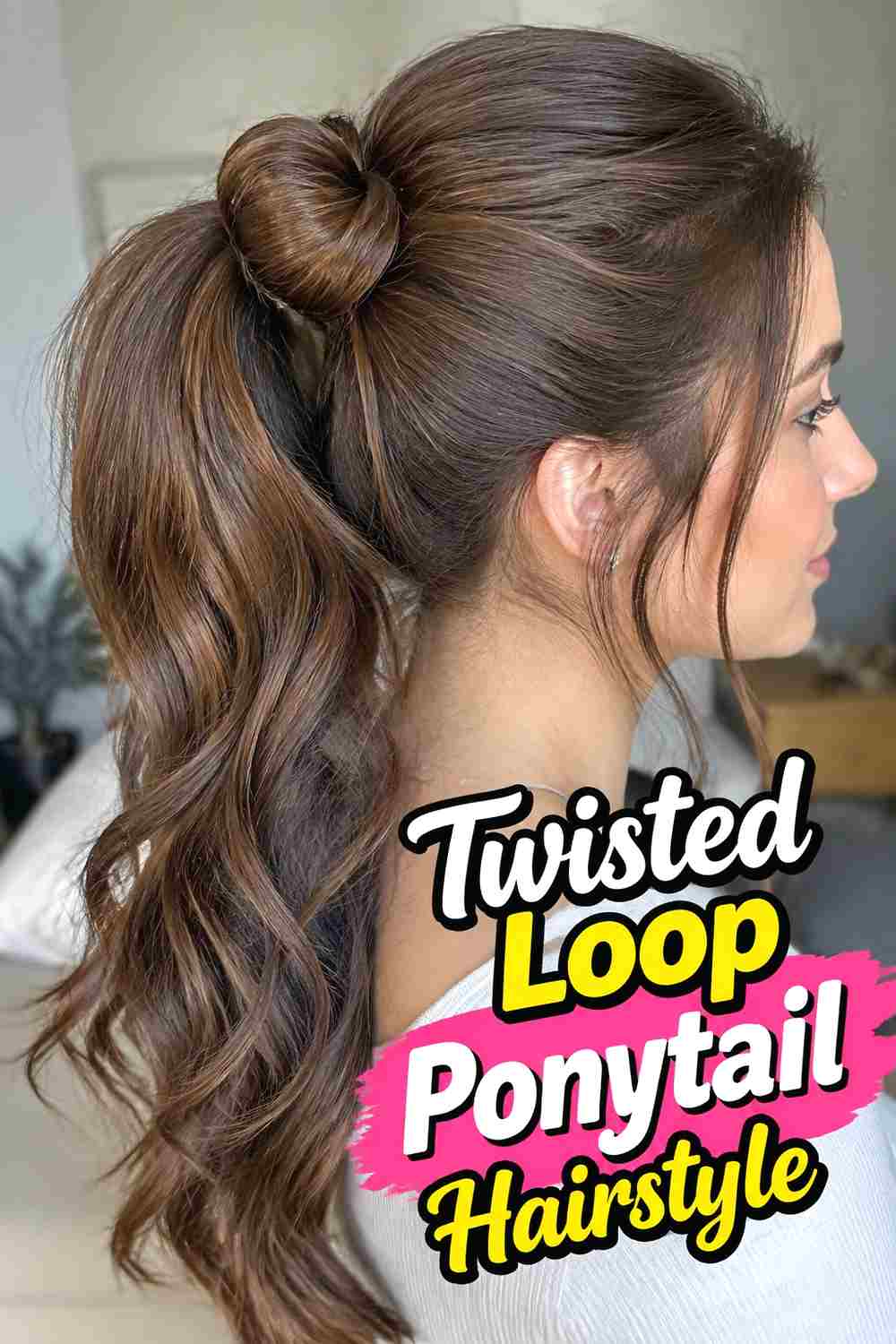
The Twisted Loop Ponytail Hairstyle adds movement around the base before the hair folds into its rounded ponytail shape. Side sections can be twisted back toward the gathering point, or the ponytail itself can receive a gentle twist before the final loop is secured. Either approach creates extra definition without turning the hairstyle into a full braided updo. The twist looks especially attractive when individual strands remain visible instead of being flattened into one solid section. This version can transition easily from daytime to a casual dinner or event, and it offers a useful way to incorporate shorter front layers that might otherwise slip free from a standard ponytail.
Styling Notes
Keep the twists firm enough to hold their pattern but not so tight that they look rope-like or pull uncomfortably at the hairline. Pin them near the elastic before shaping the loop if extra security is needed.
Why It Works
The directional lines of the twists lead the eye toward the loop, making a simple folded ponytail look more detailed from the sides and back.
6. Braided Base Loop Ponytail Hairstyle
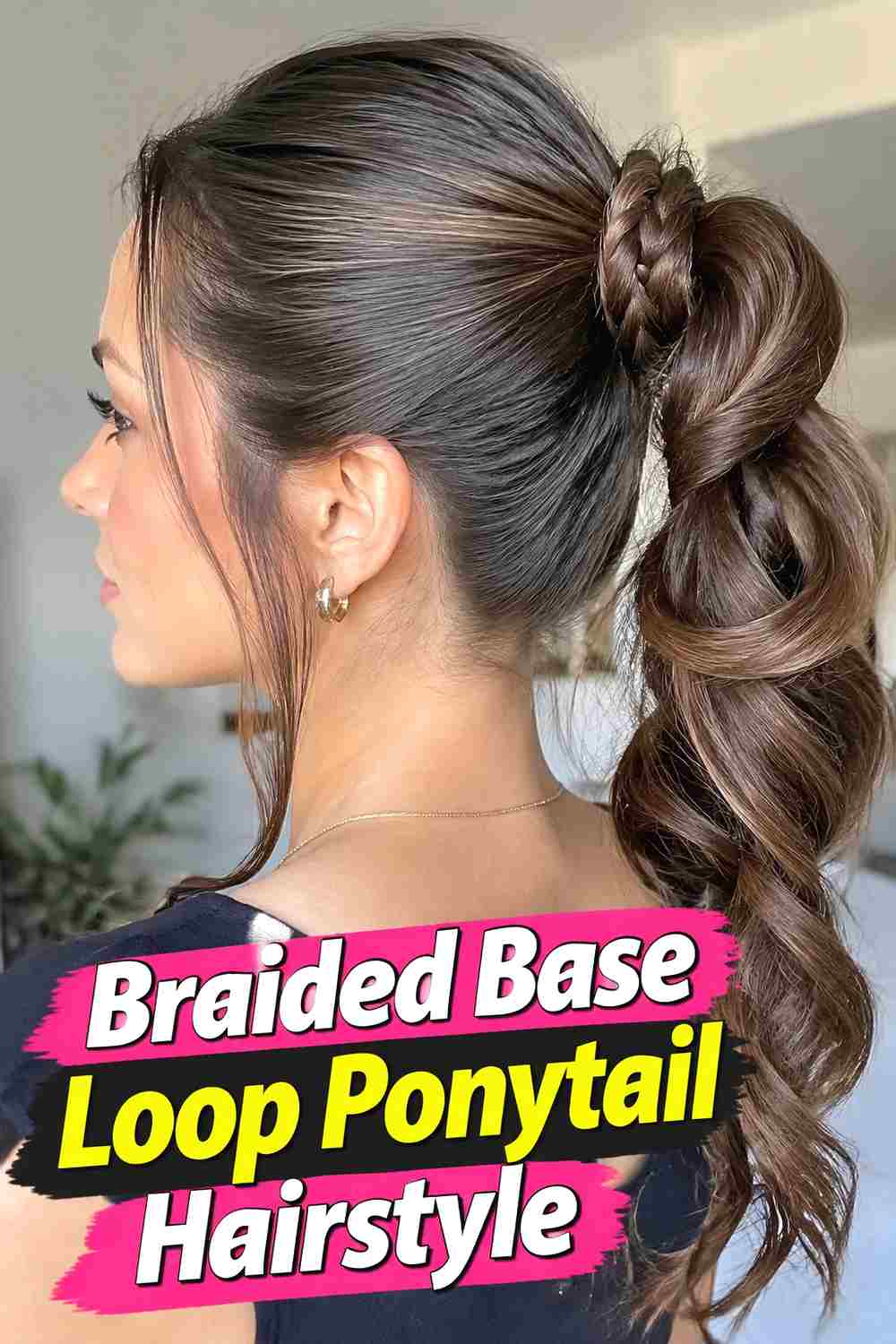
The Braided Base Loop Ponytail Hairstyle combines a compact braid detail with the clean shape of a folded ponytail. A narrow braid can be created from a small section near the base, then wrapped around the elastic so the fastening point becomes part of the design. Another option is to braid one side section and guide it into the ponytail before forming the loop. Keeping the braid proportionate is important because an oversized braid can compete with the loop itself. The finished style has more visual texture than a classic loop ponytail while remaining practical enough for everyday wear, parties, or occasions when you want a hairstyle that looks thoughtfully finished from behind.
Best For
Medium and long hair provide enough working length for both the loop and braided detail. Hair with some natural grip can make the braid easier to control.
Pro Tip
Secure the decorative braid with a small pin underneath the ponytail rather than directly on top of the loop so the attachment stays discreet.
7. Half Up Loop Ponytail Hairstyle
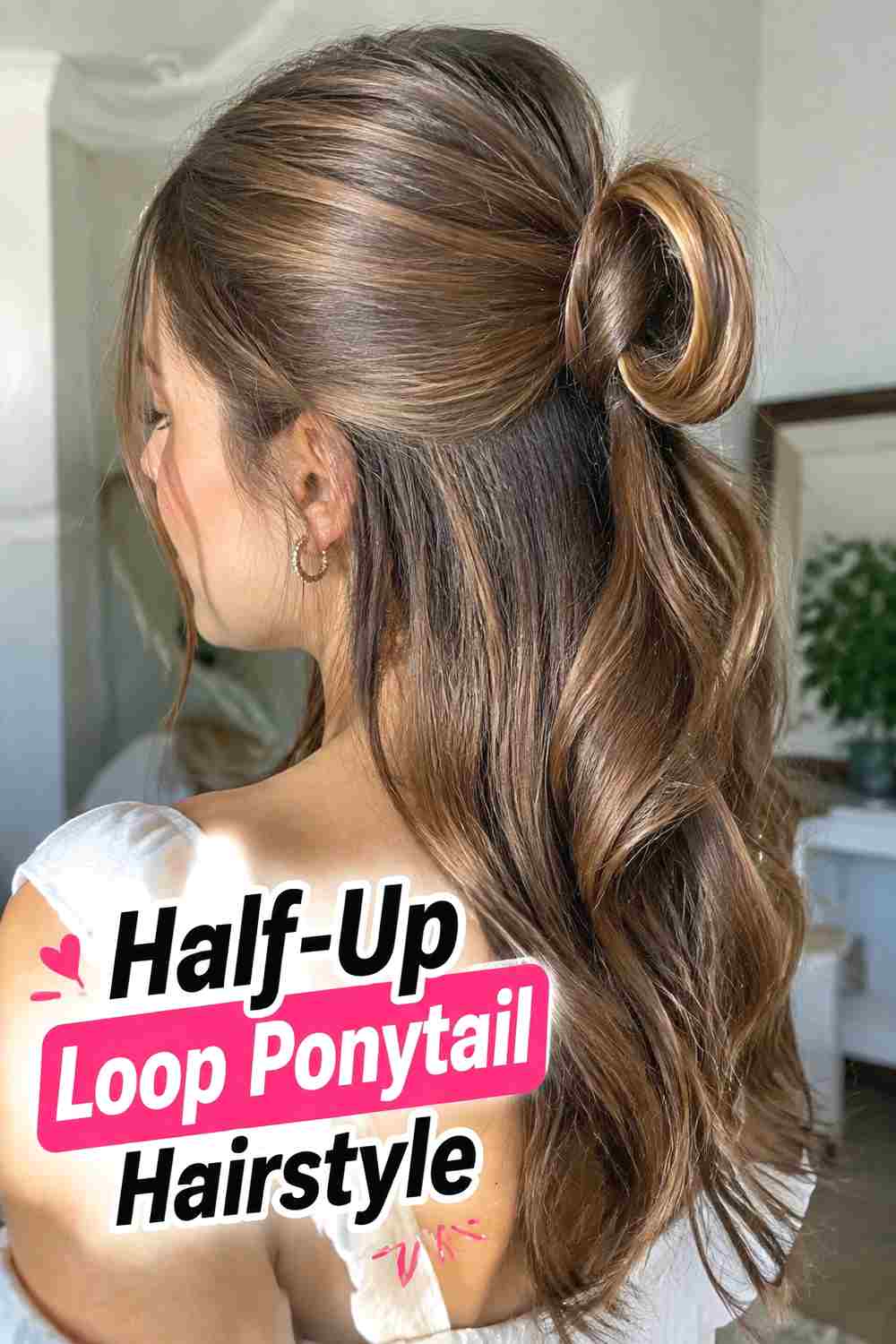
The Half-Up Loop Ponytail Hairstyle keeps the lower lengths loose while turning the upper section into a small folded ponytail. Because only part of the hair is gathered, the loop can sit neatly at the back of the crown without feeling heavy. The loose lengths underneath provide contrast and allow natural waves, curls, or straight texture to remain visible. This is a particularly versatile choice for medium or long hair because it adds structure around the face while preserving movement through the ends. A slightly relaxed loop gives the style a soft everyday feel, while a smooth crown and more defined fold can make the same idea suitable for a dressier setting.
Hair Type & Length
This approach works across many textures as long as the top section is long enough to fold through an elastic. Layered hair may benefit from leaving the shortest pieces loose around the face.
Styling Notes
Take an even section from both sides so the loop sits centrally. Avoid gathering too much hair, which can make the half-up fold bulky compared with the loose lengths.
8. Curly Loop Ponytail Hairstyle
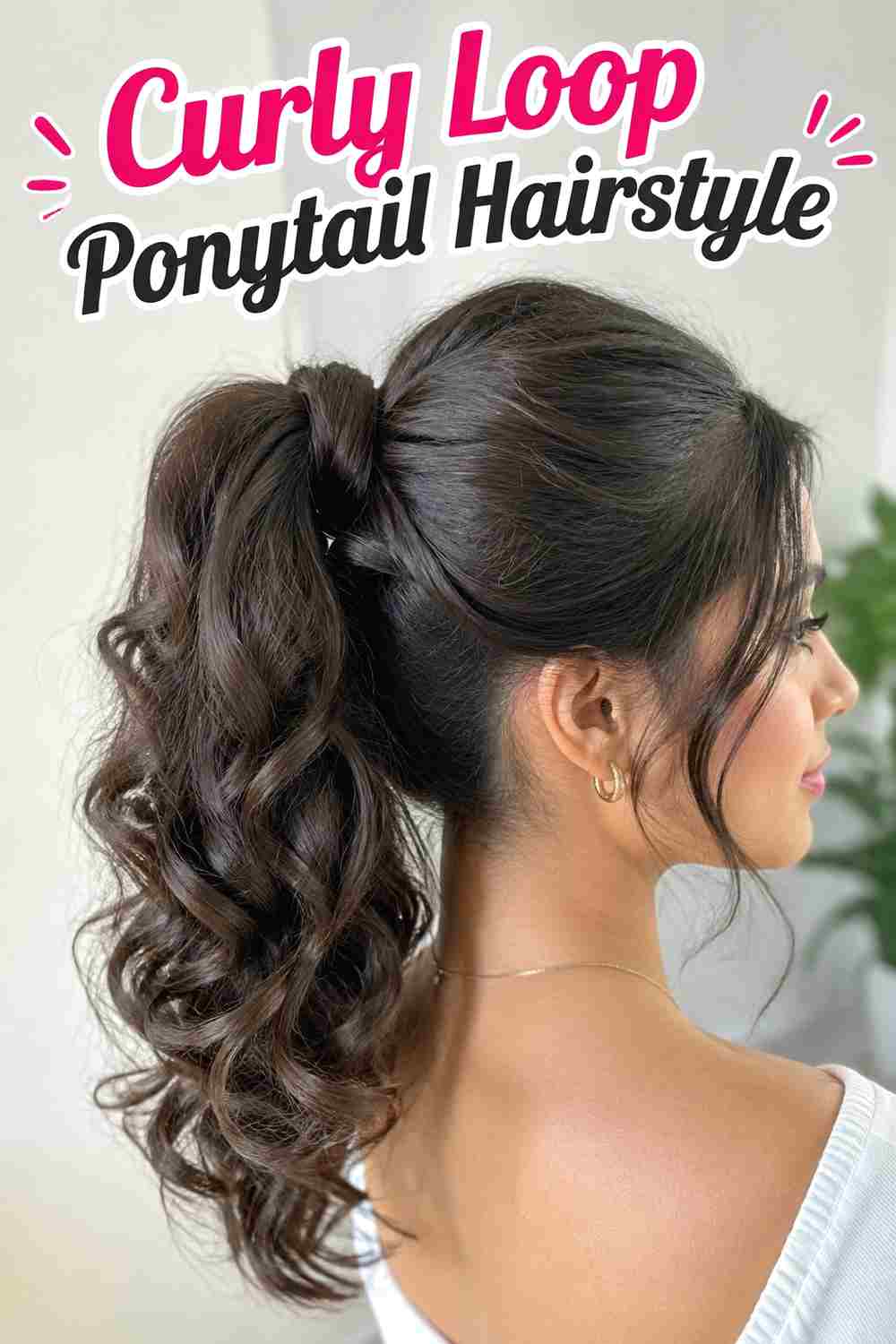
The Curly Loop Ponytail Hairstyle uses natural curl pattern and volume to give the folded section a fuller, more dimensional appearance. Rather than brushing the surface completely smooth, preserving visible curls around the crown and loop helps the hairstyle feel cohesive. The ponytail can be positioned at mid-height or slightly higher, then folded through a supportive elastic while allowing selected curls to sit naturally around the loop. Depending on density and length, the shape may look more rounded and cloud-like than a loop created on straight hair. Gentle handling is important because repeatedly pulling or separating the folded section can disturb curl definition and create unnecessary frizz.
Why It Works
Curls naturally create variation in shape, making even a simple loop ponytail look textured from multiple angles without requiring extra decorative elements.
Wear & Maintenance
Use a hair tie that provides dependable hold without needing excessive tension. Shape the loop with your fingers and leave well-defined curls intact whenever possible.
9. Side Swept Loop Ponytail Hairstyle
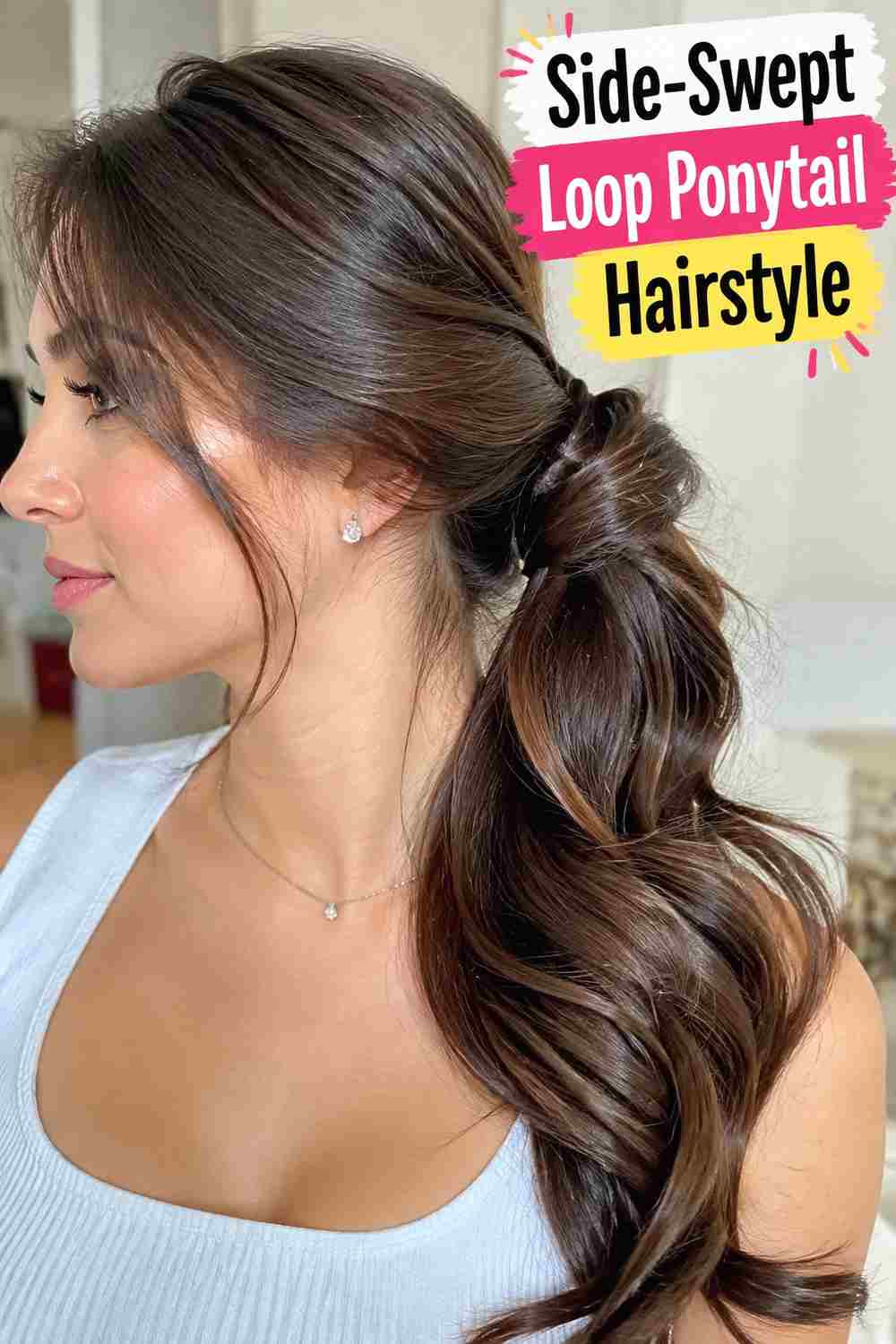
The Side-Swept Loop Ponytail Hairstyle shifts the gathering point slightly away from the center, creating an asymmetrical shape that feels softer than a standard back ponytail. The loop can rest behind one ear or closer to the side of the nape, with the folded hair angled so it remains visible from both the front and profile. A gentle side part complements the direction of the style and can make the transition into the ponytail feel more intentional. This look is especially effective with smooth waves or lightly textured lengths because movement keeps the off-center placement from appearing rigid. Secure positioning is important so the loop does not gradually slide farther to one side.
Best For
Medium to long hair offers enough length to create a substantial loop while still allowing the side placement to sit comfortably.
Styling Notes
Gather the ponytail just behind the ear rather than directly beneath it. This placement usually keeps the loop visible without making it interfere with the jawline or shoulder.
10. Double Loop Ponytail Hairstyle
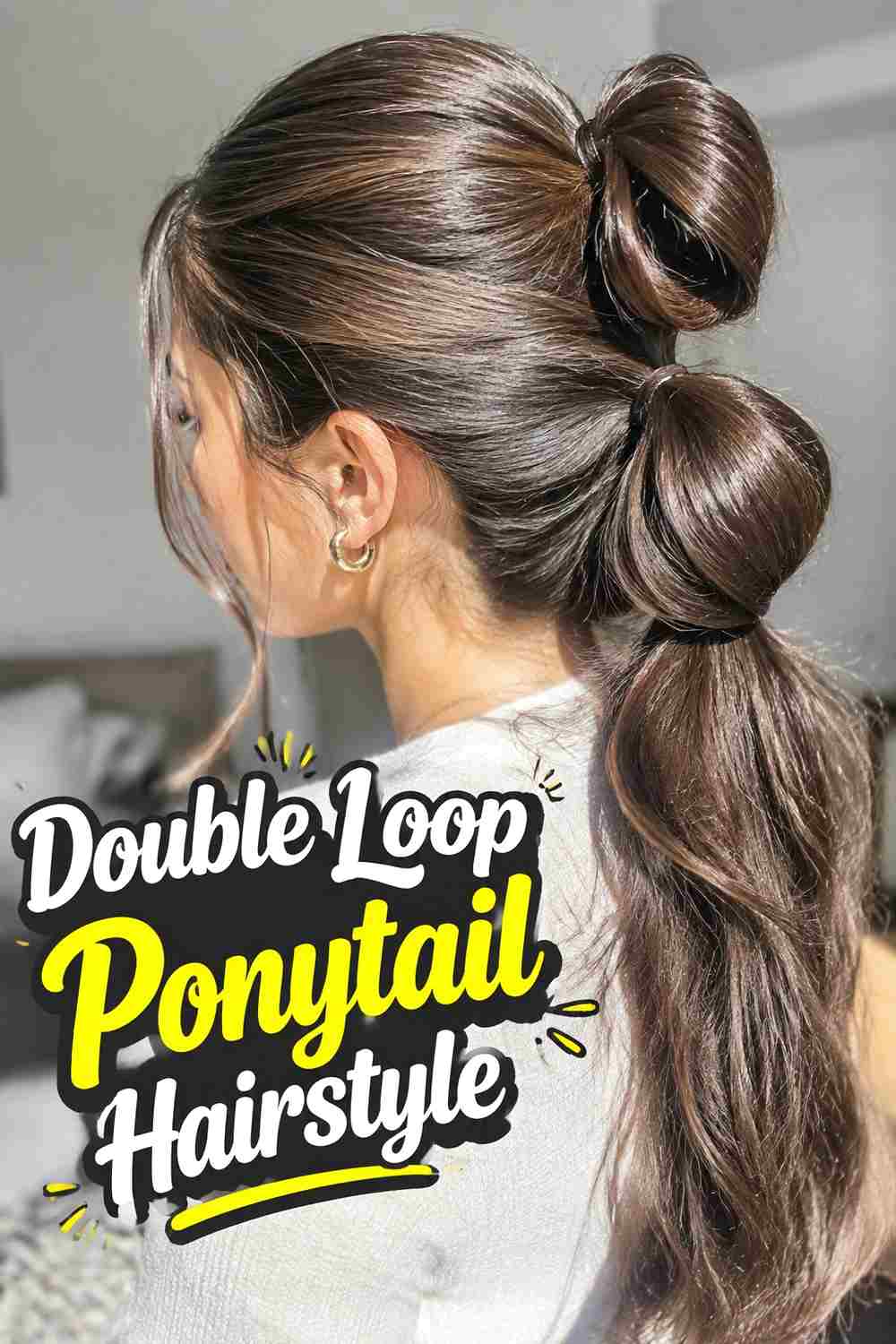
The Double Loop Ponytail Hairstyle uses two folded sections to create a more graphic shape at the back of the head. One approach is to divide a ponytail into two sections and secure each into a small loop, positioning them side by side for a bow-like but still distinctly hair-focused finish. Another option is to stack one loop above the other for a narrower vertical silhouette. The style requires a little more control than a single loop because both sections need to look balanced and remain firmly anchored. Keeping the loops moderate in size makes the result wearable rather than overly decorative, while visible strand texture prevents the shape from looking stiff.
Styling Notes
Create both loops from similarly sized sections and adjust them in small increments. Hidden pins near the center can help hold the loops in position without flattening their volume.
Best For
Longer hair is particularly useful because it provides enough length to form two distinct folds while still allowing the ends to be concealed neatly.
11. Ribbon Wrapped Loop Ponytail Hairstyle
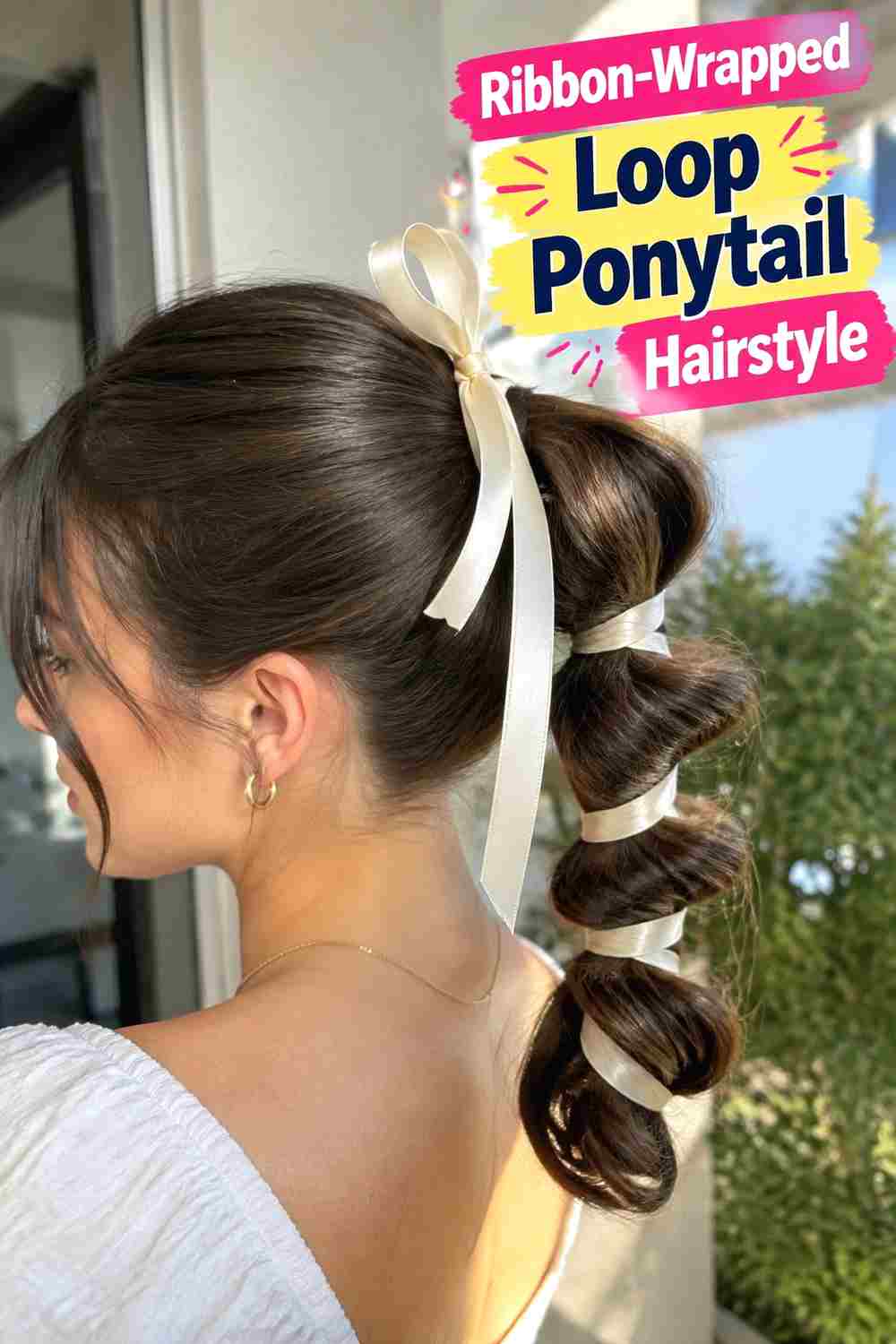
The Ribbon-Wrapped Loop Ponytail Hairstyle uses a simple accessory to highlight the base of the folded ponytail. After the loop is secured, a slim ribbon can be wrapped around the elastic once or twice and tied into a small knot or restrained bow. The accessory adds color and texture without needing to change the actual construction of the hairstyle. A satin ribbon creates a dressier finish, while cotton, velvet, or grosgrain can make the look feel more casual or seasonal. Keeping the ribbon narrower than the loop helps the hair remain the main feature. This variation works especially well when the rest of the hairstyle is relatively simple and softly polished.
Wear & Maintenance
Anchor the ponytail securely before adding the ribbon so the accessory is decorative rather than responsible for holding the hairstyle together.
Pro Tip
Choose a ribbon that contrasts gently with the hair color and outfit. Leave the tails short enough that they do not overwhelm or hide the folded section.
12. Soft Wavy Loop Ponytail Hairstyle
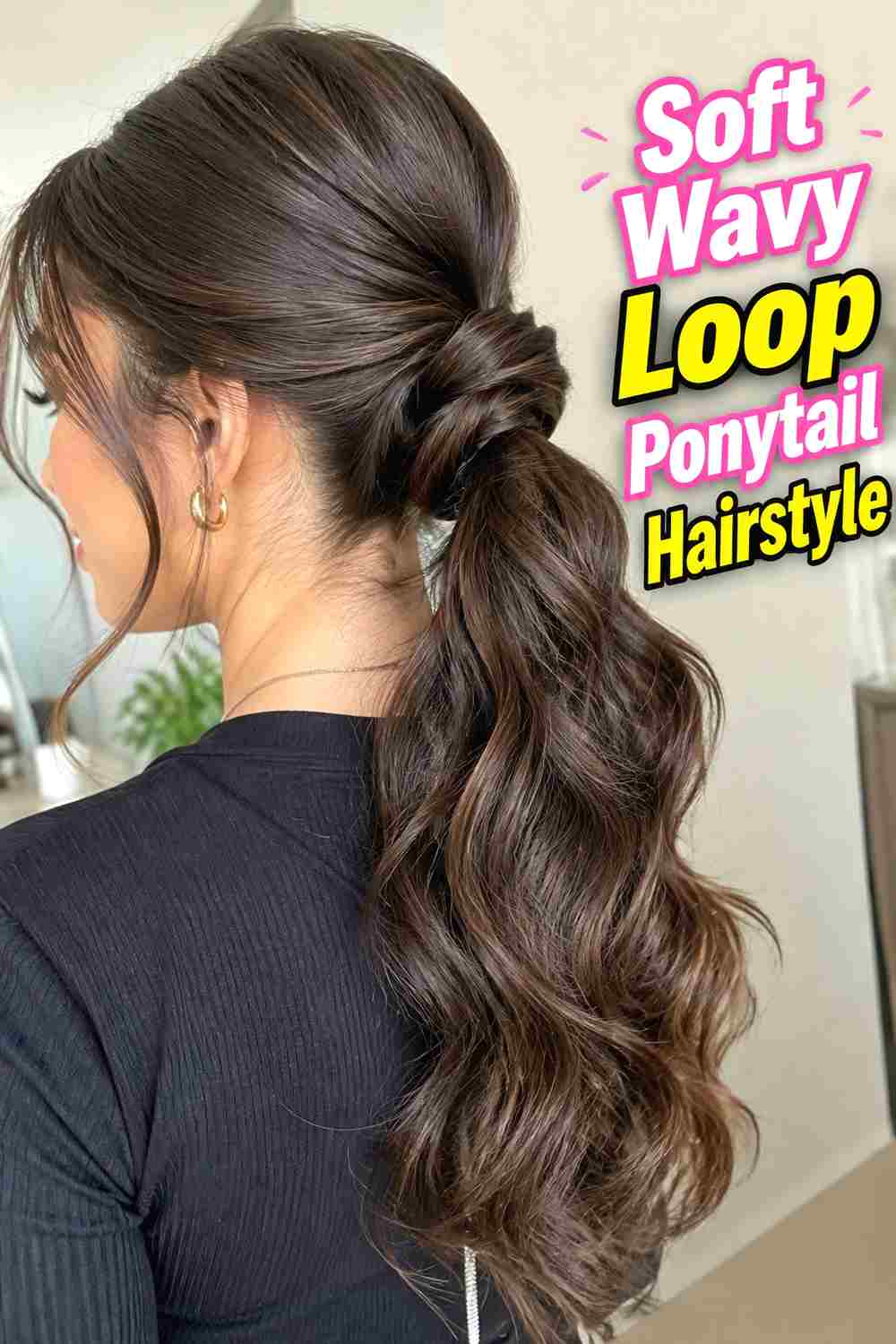
The Soft Wavy Loop Ponytail Hairstyle combines loose bends with a relaxed folded shape for a romantic but still wearable finish. Waves create natural dimension through the crown and give the loop more softness than a completely straight base. Instead of flattening every strand before gathering the ponytail, maintain some movement and let a few delicate pieces frame the face if they fall naturally. The loop itself can be slightly widened for fullness, with the remaining ends softly curved rather than tightly tucked. This version suits casual gatherings, date-night looks, and understated events where a formal updo might feel too structured. It also photographs beautifully because the waves catch light from several angles.
Styling Notes
Create loose waves before gathering the ponytail so the texture remains continuous through both the crown and folded section. Handle the finished loop lightly to preserve the pattern.
Best For
Medium to long hair with natural waves is ideal, though straight hair can achieve a similar finish with soft bends added before styling.
How to Choose the Right Look
Start with your hair length and the amount of hair available to fold. Medium-length hair often creates smaller, tighter loops, while longer hair allows a broader loop or extra details such as twists, braids, ribbons, and double sections. Hair density also changes the silhouette: thicker hair can create substantial volume with very little adjustment, while finer hair may look better with a compact loop that is gently widened rather than pulled dramatically.
Texture should guide the finish instead of being treated as something to hide. Straight or blow-dried hair naturally suits the Classic Polished, Low Sleek, and High Loop options. Wavy hair works beautifully with the Messy Textured and Soft Wavy versions, while defined curls can become the main feature of the Curly Loop Ponytail. If your hair has several textures, a softer style can make those variations feel intentional.
Consider styling time and hold as well. A basic loop ponytail can be very quick, while braided, twisted, ribbon-wrapped, or double-loop variations need a little more placement and pinning. For long wear, choose a secure elastic and avoid making the loop so large that its weight pulls on the base. For shorter periods or casual occasions, you can use softer tension and leave more natural movement around the crown.
Finally, match the finish to the occasion. Sleek low loops have a clean, understated appearance, textured loops feel relaxed, and detailed versions add enough interest for parties or special plans without becoming full updos. The best choice is the one that works with your existing texture and feels comfortable once secured.
Final Thoughts
Loop ponytails prove that a small change in technique can create many different silhouettes. Start with a classic or low loop if you prefer clean styling, choose waves or texture for a softer finish, or introduce braids, twists, and accessories when you want more detail. Adjusting the size and placement of the loop to your actual length and density will usually produce a more natural result than trying to force every version into the same shape.
FAQs
1. What is a loop ponytail hairstyle?
A loop ponytail is created by pulling the hair only partway through an elastic during the final wrap, leaving the length folded into a loop instead of pulling it completely through like a standard ponytail.
2. How long does hair need to be for a loop ponytail?
Hair generally needs enough length to gather securely and fold back through the elastic. Many medium-length styles can form a small loop, while longer hair provides more room for larger or more detailed versions.
3. How can I keep a loop ponytail from falling out?
Use an elastic with dependable grip, secure the base before adjusting the loop, and avoid pulling the folded section too wide. A few discreet pins can reinforce heavier or more detailed styles.
4. Can curly or textured hair wear a loop ponytail?
Yes. Curly, coily, and wavy textures can create especially dimensional loops. Keeping some natural texture visible and minimizing unnecessary brushing can help the hairstyle retain its character.
5. Can a loop ponytail work for a dressy occasion?
It can. A sleek low loop, twisted version, braided-base style, or ribbon-wrapped loop can look more refined when the crown is neatly finished and the fastening point is intentionally concealed or decorated.
Save your favorite loop ponytail ideas and explore more hairstyle inspiration whenever you want an easy way to refresh your everyday look.