20 Metallic Headband Ponytail Ideas
Metallic headbands give ponytails a polished edge, adding clean shine and structure to sleek, curly, textured, and softly voluminous styles.
A metallic headband can do more than simply keep hair away from the face. A slim silver band adds a minimalist accent, a wider gold piece creates a stronger statement, and sculpted or stacked styles can transform a simple ponytail into something noticeably more styled. Changing the ponytail height and texture further alters the effect.
Before choosing a look, compare the width and flexibility of the headband with your hair density and desired volume. Slim bands are easy to pair with detailed textures, while wider metallic pieces usually look best against simpler hair. Make sure the ponytail itself provides the main hold so the headband can remain decorative and comfortable.
Quick List
- Sleek High Metallic Headband Ponytail Hairstyle
- Low Polished Metallic Headband Ponytail Hairstyle
- Curly Crown Metallic Headband Ponytail Hairstyle
- Voluminous Mid Height Metallic Headband Ponytail Hairstyle
- Side Part Metallic Headband Ponytail Hairstyle
- Bubble Metallic Headband Ponytail Hairstyle
- Braided Metallic Headband Ponytail Hairstyle
- Half Up Metallic Headband Ponytail Hairstyle
- Chain Link Metallic Headband Ponytail Hairstyle
- Wide Band Metallic Headband Ponytail Hairstyle
- Minimal Silver Metallic Headband Ponytail Hairstyle
- Gold Accent Metallic Headband Ponytail Hairstyle
- Textured Low Metallic Headband Ponytail Hairstyle
- Sculpted Crown Metallic Headband Ponytail Hairstyle
- Long Wavy Metallic Headband Ponytail Hairstyle
- Short Curly Metallic Headband Ponytail Hairstyle
- Slicked Back Metallic Headband Ponytail Hairstyle
- Face Framing Metallic Headband Ponytail Hairstyle
- Stacked Band Metallic Headband Ponytail Hairstyle
- Retro Lift Metallic Headband Ponytail Hairstyle
1. Sleek High Metallic Headband Ponytail Hairstyle
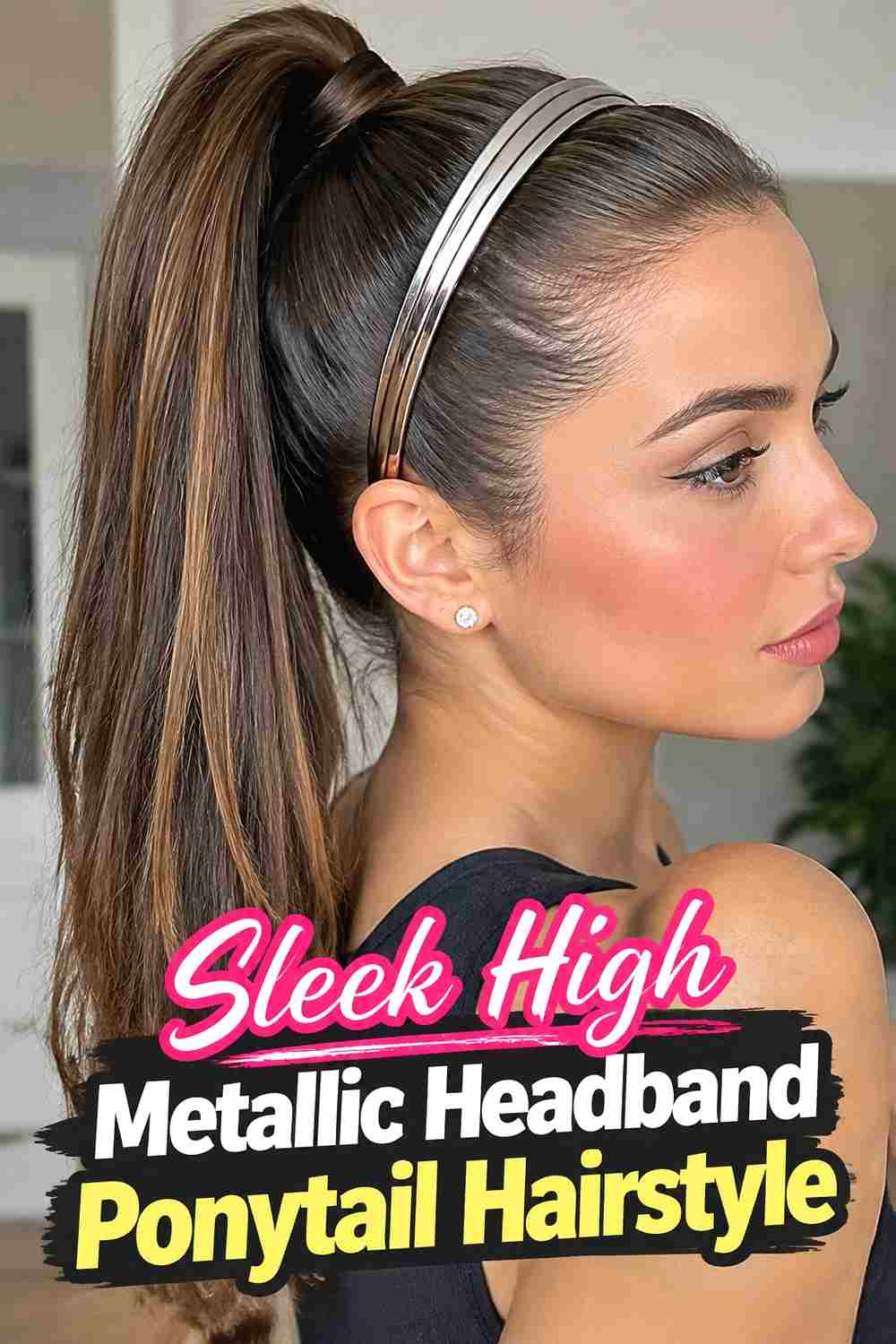
A sleek high ponytail gives a metallic headband a clean background and makes the accessory visible from the front and profile. Gather the hair near the crown, keeping the surface smooth but still natural-looking, then add a narrow metallic band a short distance behind the hairline. The ponytail can fall straight or carry a gentle bend through the ends, but keeping the lengths relatively streamlined helps the metal detail stand out. Silver gives a cool minimalist finish, while gold adds warmth. Leave a little natural dimension at the crown instead of pressing the hair completely flat, especially if the headband has a firm structured shape.
Styling Notes
Secure the ponytail before positioning the headband so each element can be adjusted independently without changing the tension of the other.
2. Low Polished Metallic Headband Ponytail Hairstyle
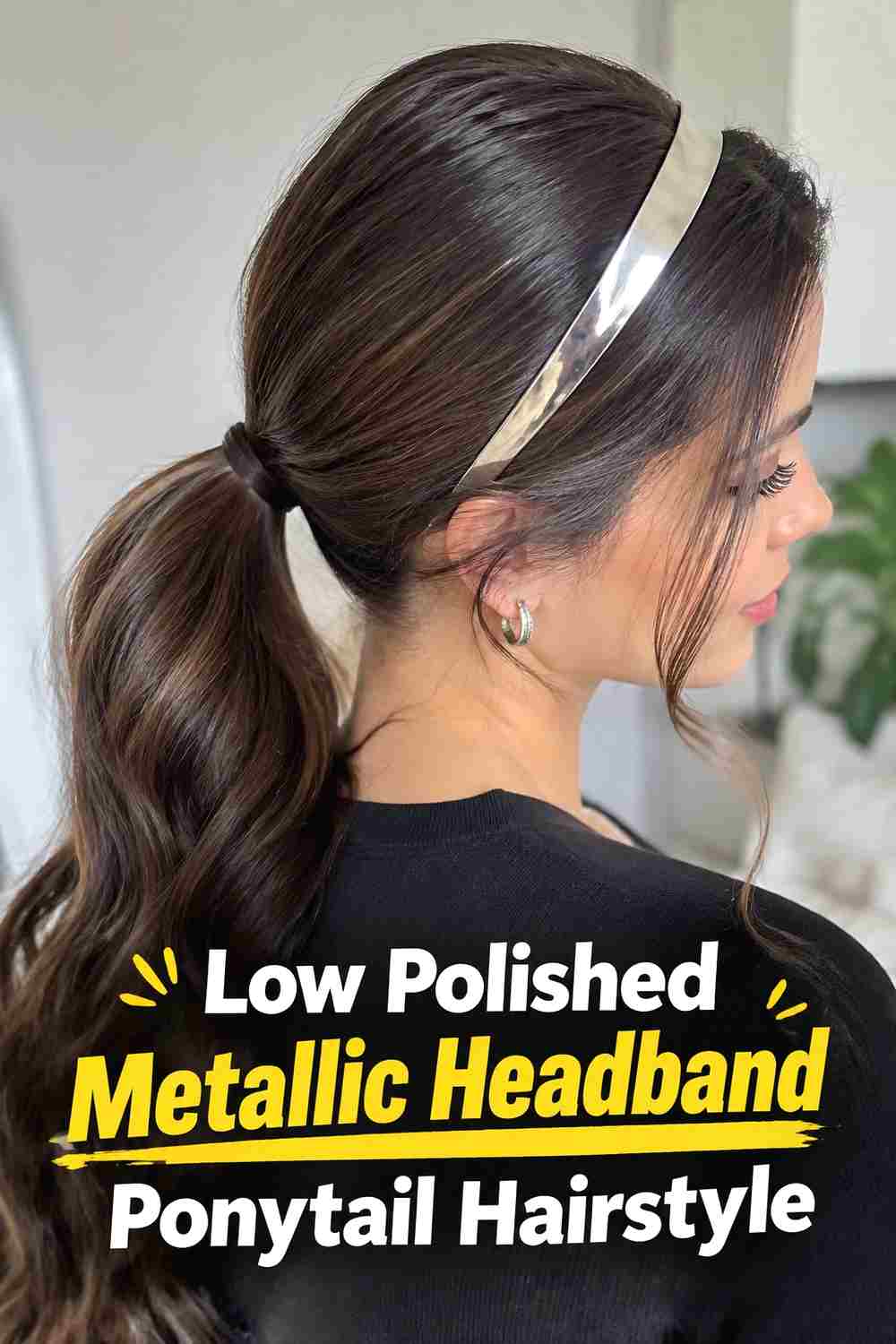
A low ponytail feels elegant and understated when paired with a slim metallic headband. Smooth the hair toward the nape, secure the ponytail, and position the band close enough to the hairline to create a clear reflective accent without dominating the hairstyle. A center part beneath the band can make the front feel structured, while no visible part creates a cleaner swept-back look. Keep a small amount of crown lift so the profile remains dimensional. The ponytail itself can stay straight, softly waved, or slightly curved at the ends. This combination is especially effective when you want a polished hairstyle that still feels simpler than an updo.
Best For
This look transitions easily between work events, dinners, ceremonies, and other occasions where a restrained metallic accessory feels appropriate.
3. Curly Crown Metallic Headband Ponytail Hairstyle
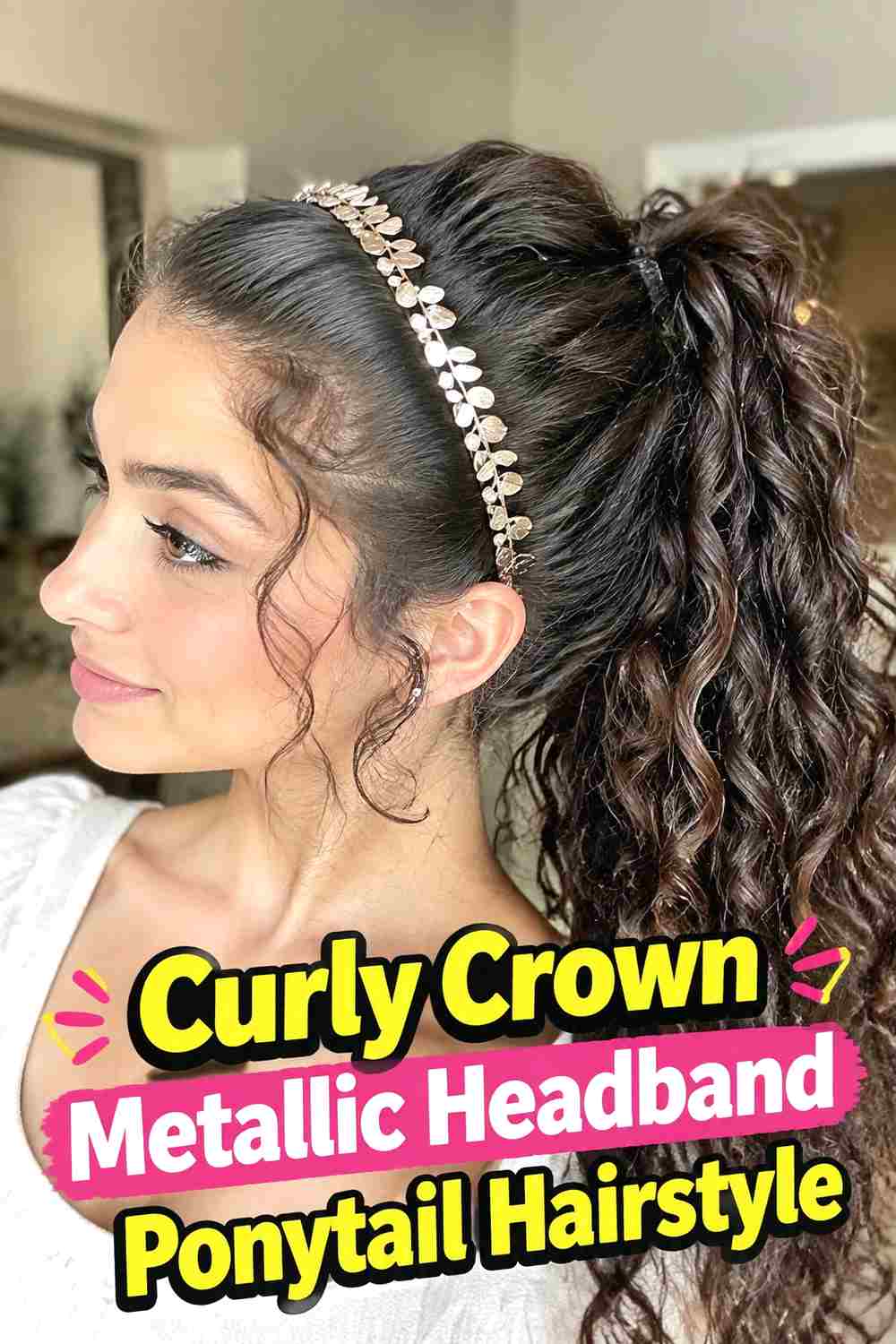
Full curls create beautiful contrast against a smooth metallic headband, especially when the ponytail sits high enough for the curl cluster to rise behind the accessory. Gather the hair near the crown without flattening all of the root texture, then position a slim or medium-width band across the front. Let the ponytail retain its curl definition and natural variation, arranging only sections that need better balance. The front can remain softly controlled while the back stays voluminous. Avoid choosing an extremely wide headband if the curls are already dense and dramatic, since a narrower piece usually keeps the hairstyle from feeling crowded.
Hair Type & Length
Medium to long curly or coily hair with enough density to form a visible high ponytail works especially well with this contrast.
4. Voluminous Mid Height Metallic Headband Ponytail Hairstyle
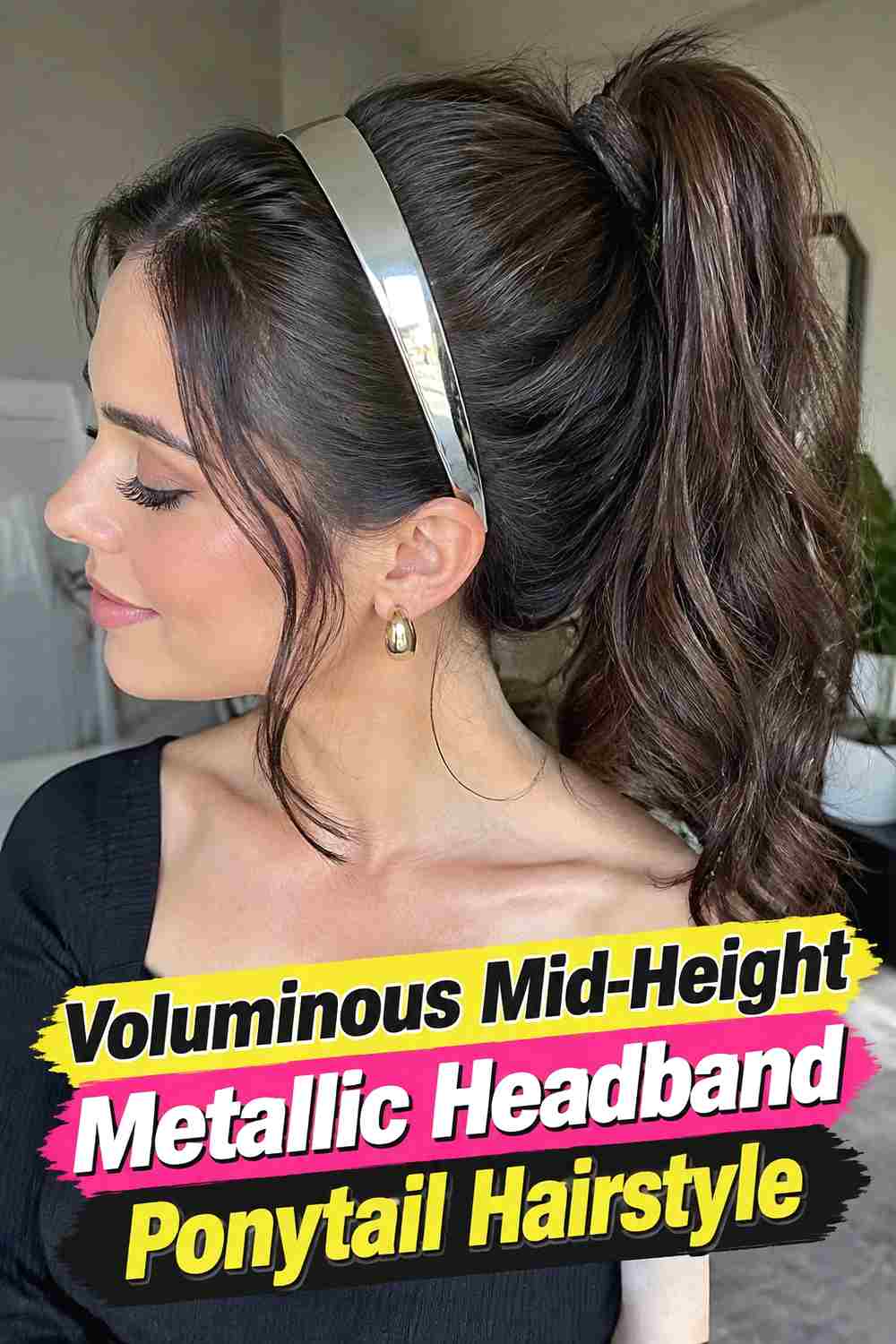
A mid-height ponytail gives you room for crown volume without pushing the hairstyle too high. Build gentle lift behind the headband, gather the hair around the middle back of the head, and leave the ponytail fluffy, waved, or softly curled. The metallic band creates a crisp line at the front while the crown transitions into a fuller silhouette behind it. This version works particularly well when you want the accessory visible but do not want a highly slicked finish. Keep the band narrow enough to leave the crown volume unobstructed. The ponytail should have enough width to balance the lifted top without looking overly teased or stiff.
Styling Notes
Shape the crown first, secure the ponytail second, and place the headband last so you can preserve the intended lift instead of flattening it accidentally.
5. Side Part Metallic Headband Ponytail Hairstyle
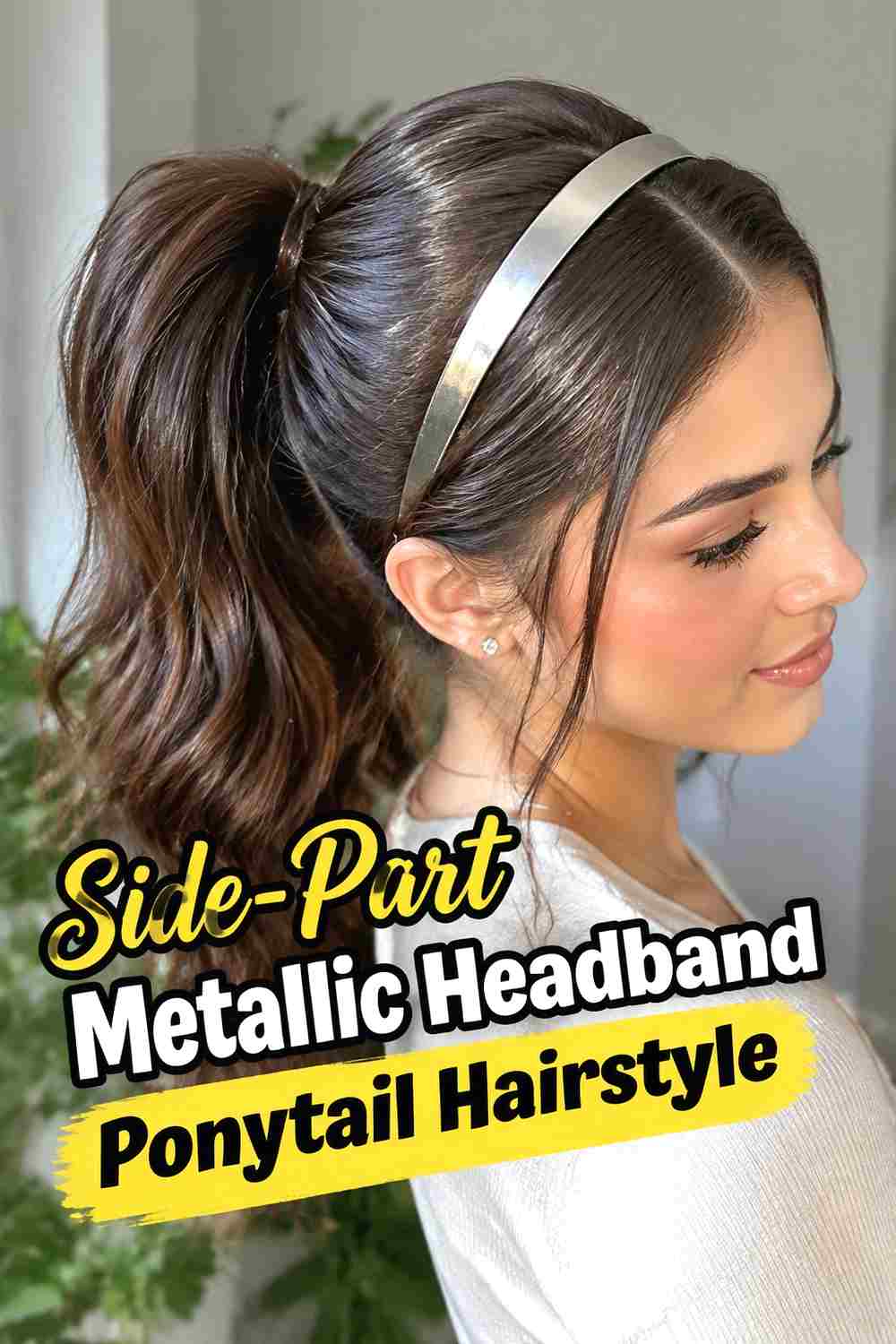
A visible side part beneath a metallic headband creates subtle asymmetry at the front while the ponytail keeps the overall style controlled. Establish the part before adding the accessory, then position the band so it follows the head naturally without completely hiding the line. Gather the hair into a low or mid ponytail, allowing the fuller side of the part to retain a touch of softness. This style works with straight, wavy, or lightly textured hair and can feel especially polished with a thin gold or silver band. Avoid placing the headband too close to the part if it causes the hair to bunch unevenly along one side.
Why It Works
The side part introduces direction, while the headband and ponytail provide clean structure that keeps the asymmetry looking intentional.
6. Bubble Metallic Headband Ponytail Hairstyle
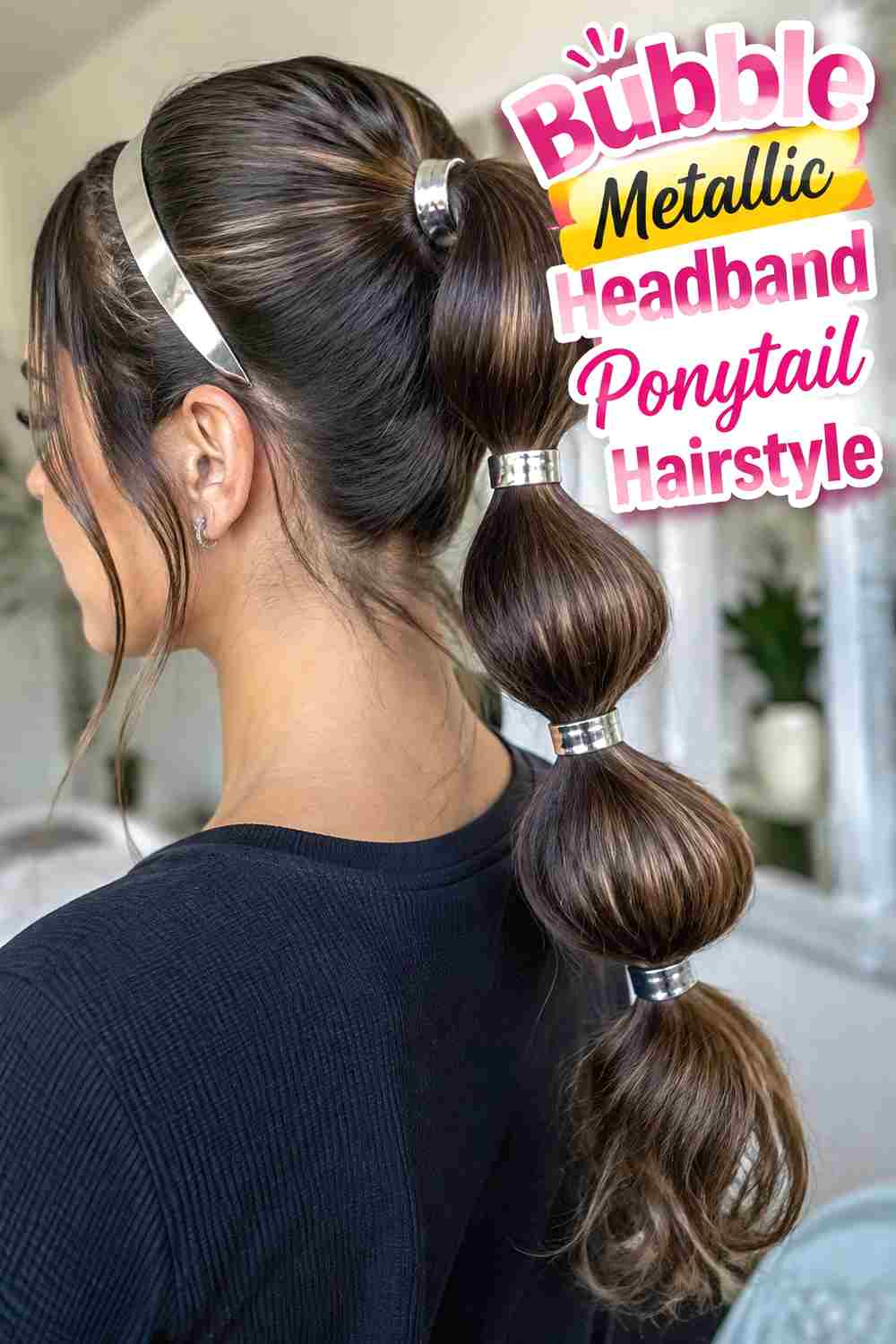
A bubble ponytail combines repeated rounded sections with the clean shine of a metallic headband. Create a high or mid ponytail, add elastics down the length, and gently expand the hair between them until the bubbles look balanced. Keep the headband simple so it does not compete with the detailed ponytail. A slim polished metal band works especially well because it adds just one reflective line at the front. Keep some natural root lift behind the accessory rather than flattening the crown completely. This version is particularly useful when you want a modern hairstyle with visual interest through the lengths but still prefer an uncluttered front.
Styling Notes
Finish the bubble sections before adding the headband so you can adjust the ponytail freely without disturbing the accessory.
7. Braided Metallic Headband Ponytail Hairstyle
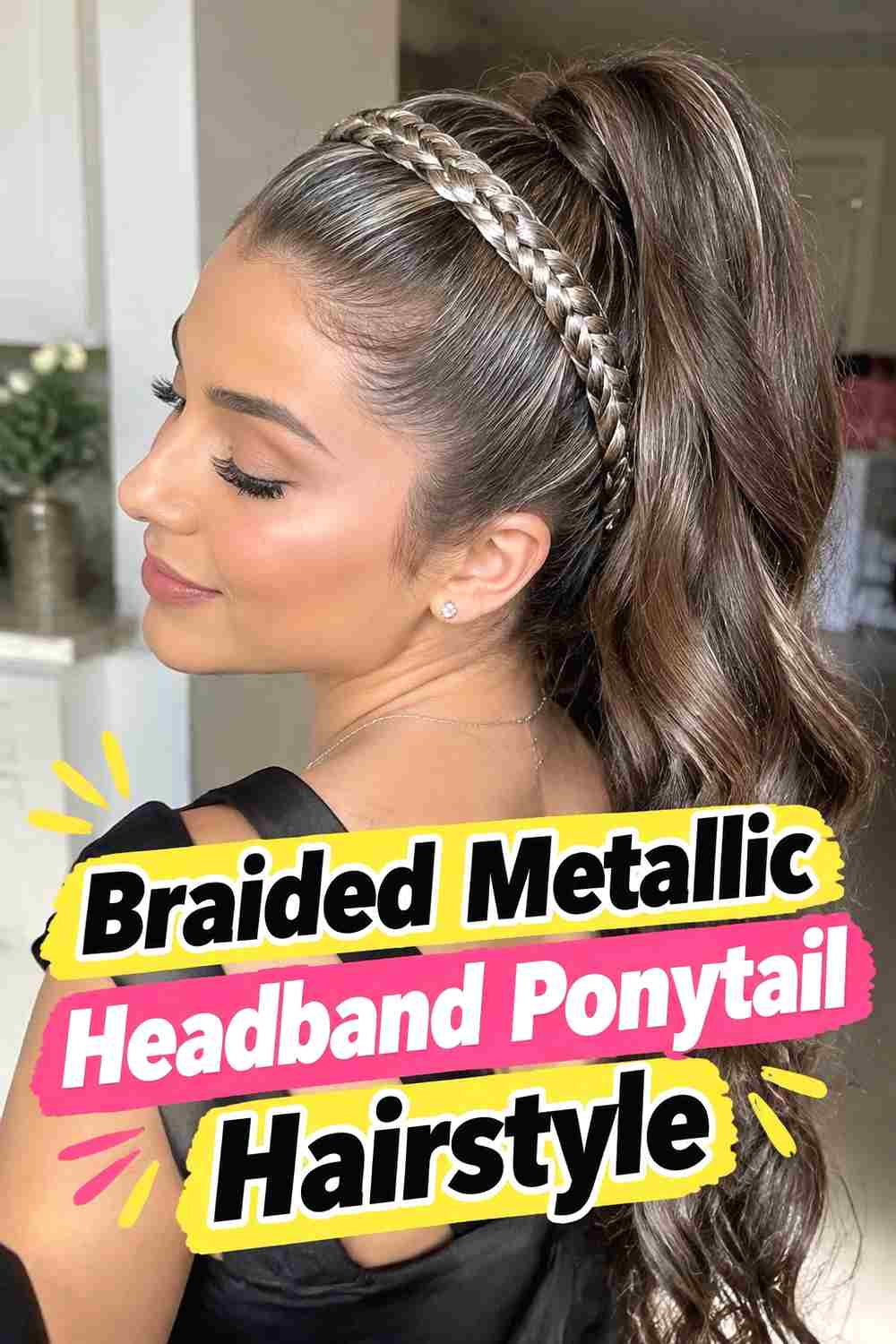
A braided ponytail introduces woven texture while a metallic headband adds a smooth, reflective contrast at the front. Secure a mid or high ponytail, braid the lengths, and gently widen selected outer sections if you want a fuller result. Position a slim metallic headband behind the hairline so it frames the face without overpowering the braid. Gold can create a warmer, more decorative finish, while silver keeps the style cooler and more minimal. Keep the scalp area relatively simple because the braid already provides plenty of detail. The ponytail base should remain secure enough that adjusting the headband does not change the tension or direction of the plait.
Best For
This combination works well for parties, dinners, celebrations, and polished daytime looks where you want texture without wearing the hair fully up.
8. Half Up Metallic Headband Ponytail Hairstyle
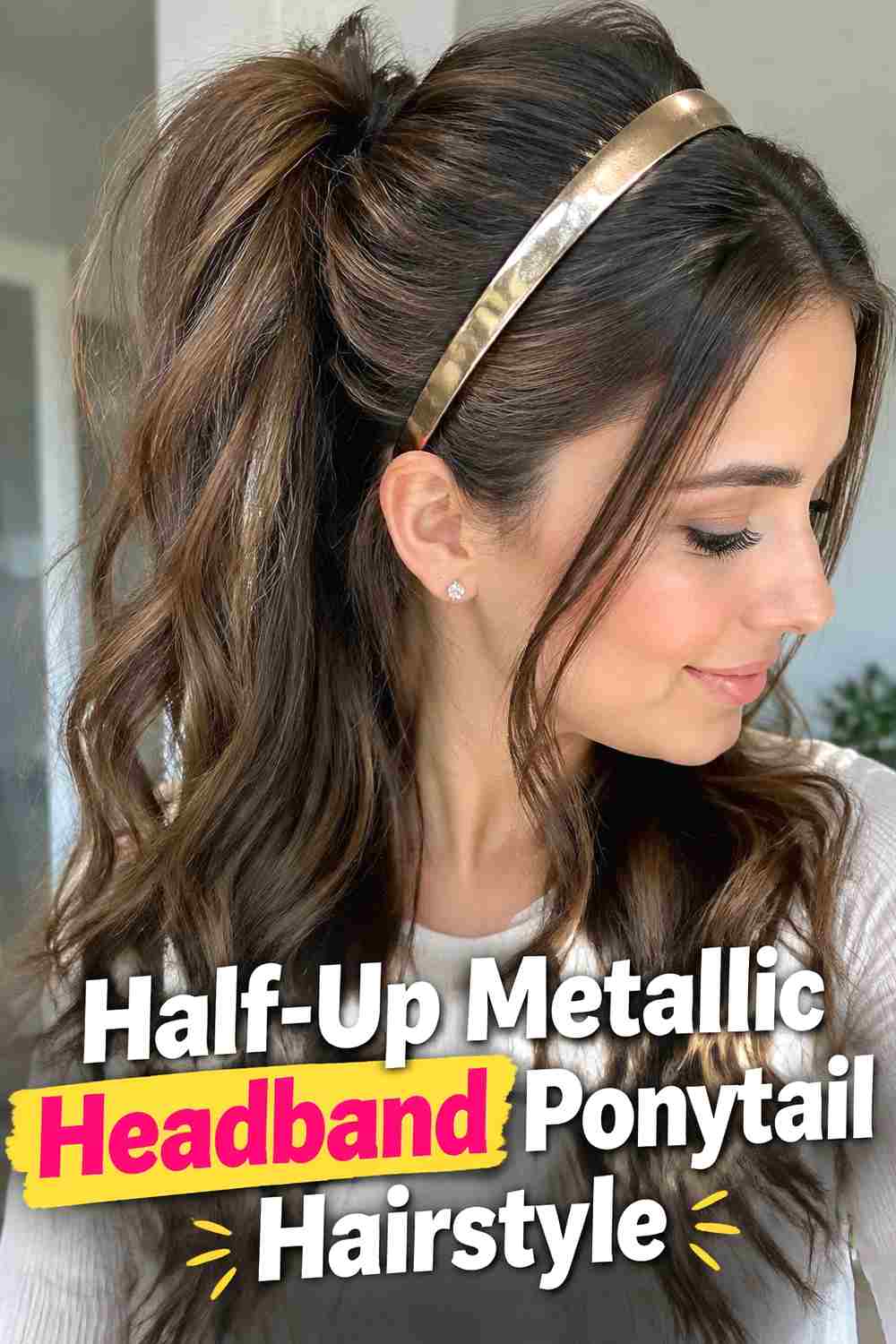
A half-up ponytail allows the metallic headband to open the face while leaving most of the hair loose. Gather the crown section into a small ponytail and position the headband a little behind the hairline, keeping enough space between the accessory and ponytail for soft crown lift. Straight, wavy, curly, and coily textures can all work as long as the half-up section remains proportionate to the loose lengths. A thin metallic band usually suits this style best because the hair already has two visible layers. Keep the ponytail light and flexible rather than pulling a large portion of the hair upward, which can reduce movement underneath.
Pro Tip
Choose the half-up section before placing the headband so the accessory does not interfere with clean, comfortable sectioning.
9. Chain Link Metallic Headband Ponytail Hairstyle
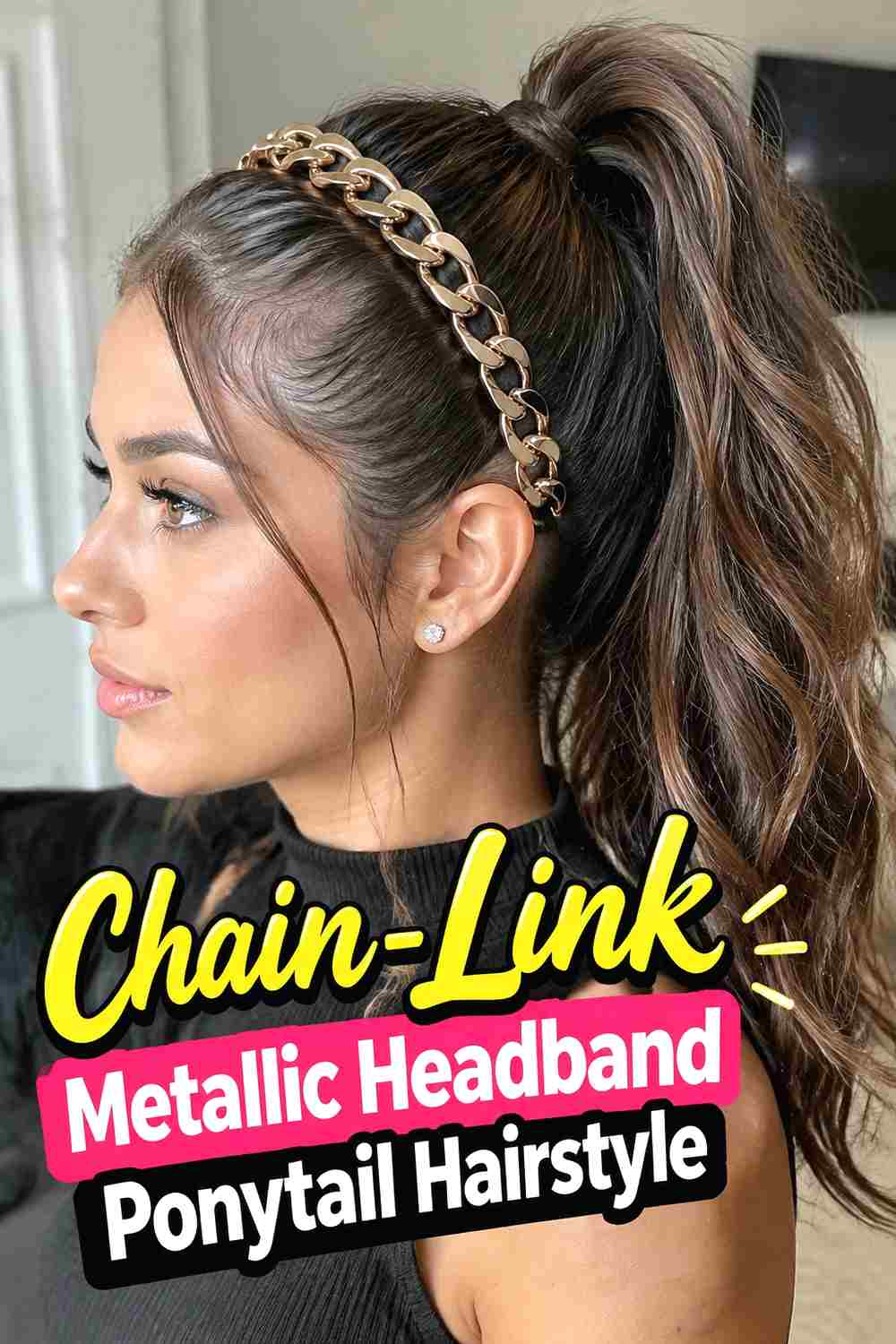
A chain-link-inspired metallic headband creates a stronger accessory statement, so pairing it with a relatively simple ponytail keeps the overall look balanced. Gather the hair into a low or mid-height ponytail and keep the surface smooth or softly textured. Position the linked band across the front where its repeating metal shapes remain visible. Avoid adding several other accessories, since the headband already provides substantial detail. A straight ponytail emphasizes the graphic quality of the metal, while gentle waves soften it. Make sure any linked sections lie flat against the head rather than catching loose strands, especially around the temples and above the ears.
Wear & Maintenance
Check that the links or decorative joints feel smooth and comfortable against the hair and scalp before wearing the headband for an extended period.
10. Wide Band Metallic Headband Ponytail Hairstyle
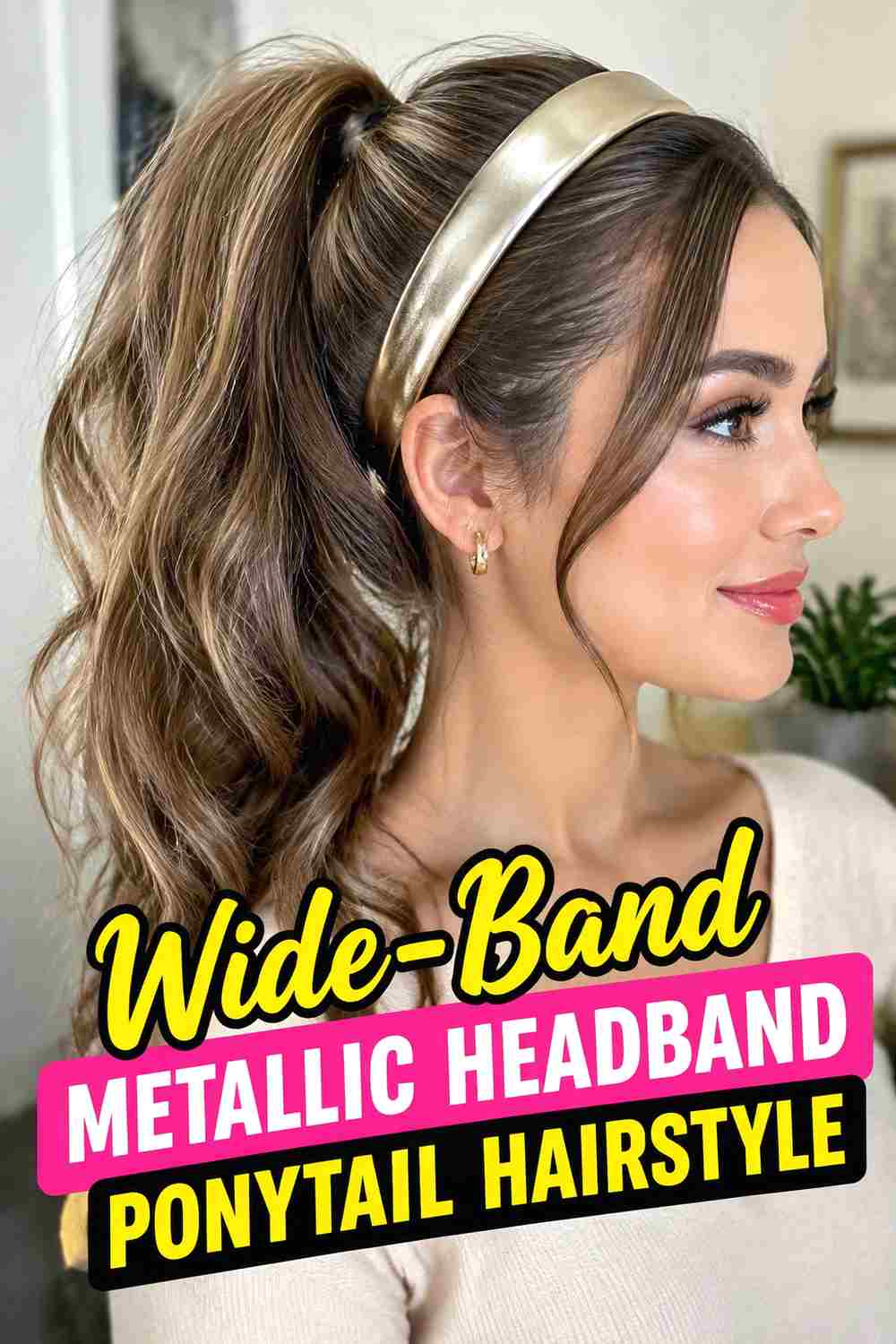
A wider metallic headband creates an immediate focal point, so the ponytail underneath can stay relatively simple. Position the band farther back from the hairline than a very thin design, then gather the hair into a smooth low or mid-height ponytail. The wider surface catches more light and can look especially striking in brushed gold, silver, or softly hammered finishes. Keep the crown controlled enough that the band sits evenly without wobbling. Because the accessory already has visual weight, avoid an overly complicated ponytail unless the hair is very long. Soft waves or straight lengths usually provide enough movement while keeping the overall silhouette balanced.
Why It Works
The broad metallic surface acts almost like jewelry for the hair, giving a simple ponytail enough visual interest without extra clips or decorative ties.
11. Minimal Silver Metallic Headband Ponytail Hairstyle
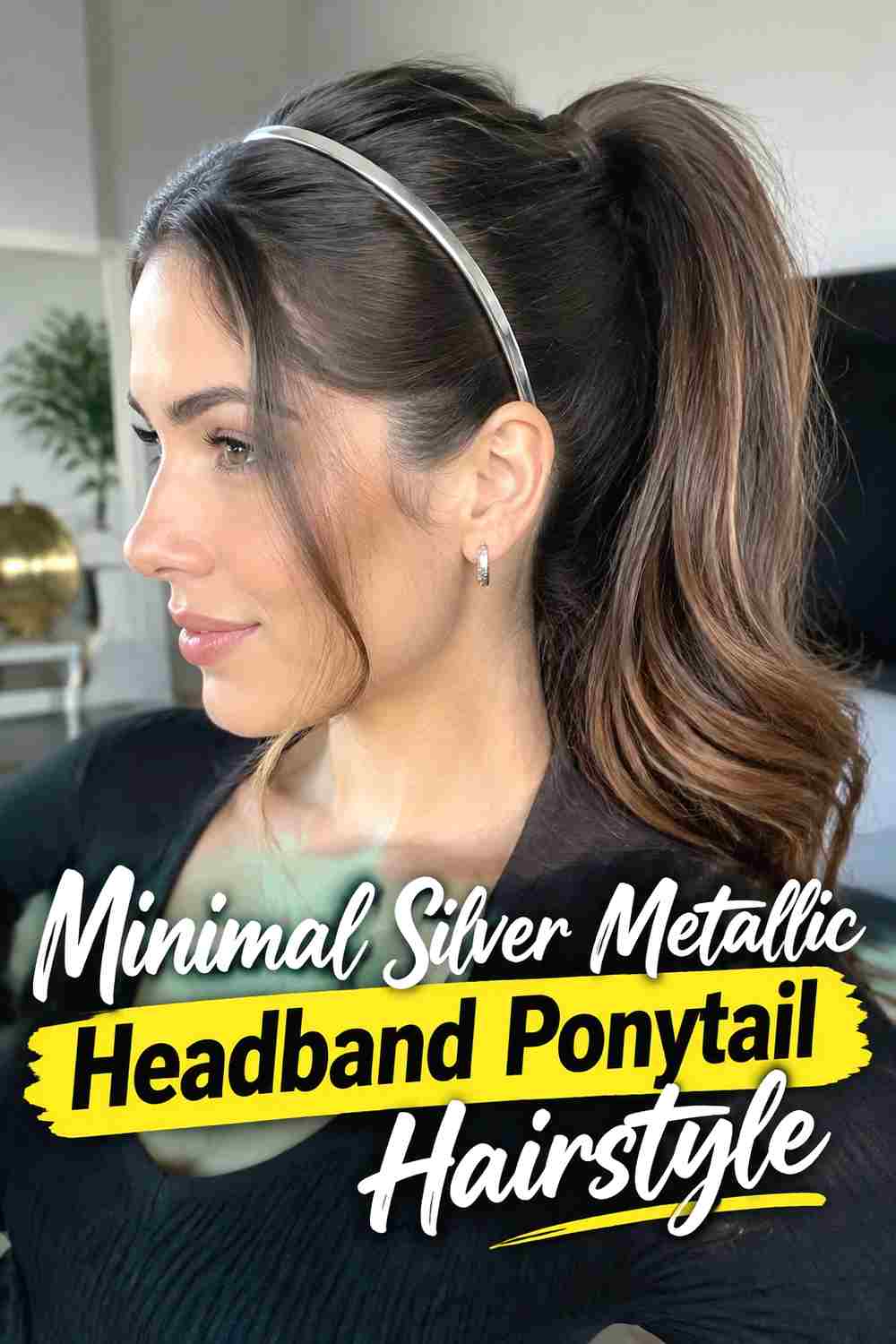
A slender silver band creates one of the cleanest versions of this look. Gather the hair into a neat low or mid ponytail and keep the surface softly polished, then place the narrow silver headband just behind the hairline. The cool metal works particularly well when you want the accessory to be visible without becoming the main focus. Leave natural strand detail and a little movement through the ponytail so the hairstyle does not feel overly rigid. Straight lengths, loose waves, or a subtle curl at the ends can all work. This is also a good option when earrings or clothing already provide stronger decorative elements.
Best For
Choose this style for minimalist outfits, office events, dinners, or any look where one subtle metallic line is enough to finish the ponytail.
12. Gold Accent Metallic Headband Ponytail Hairstyle
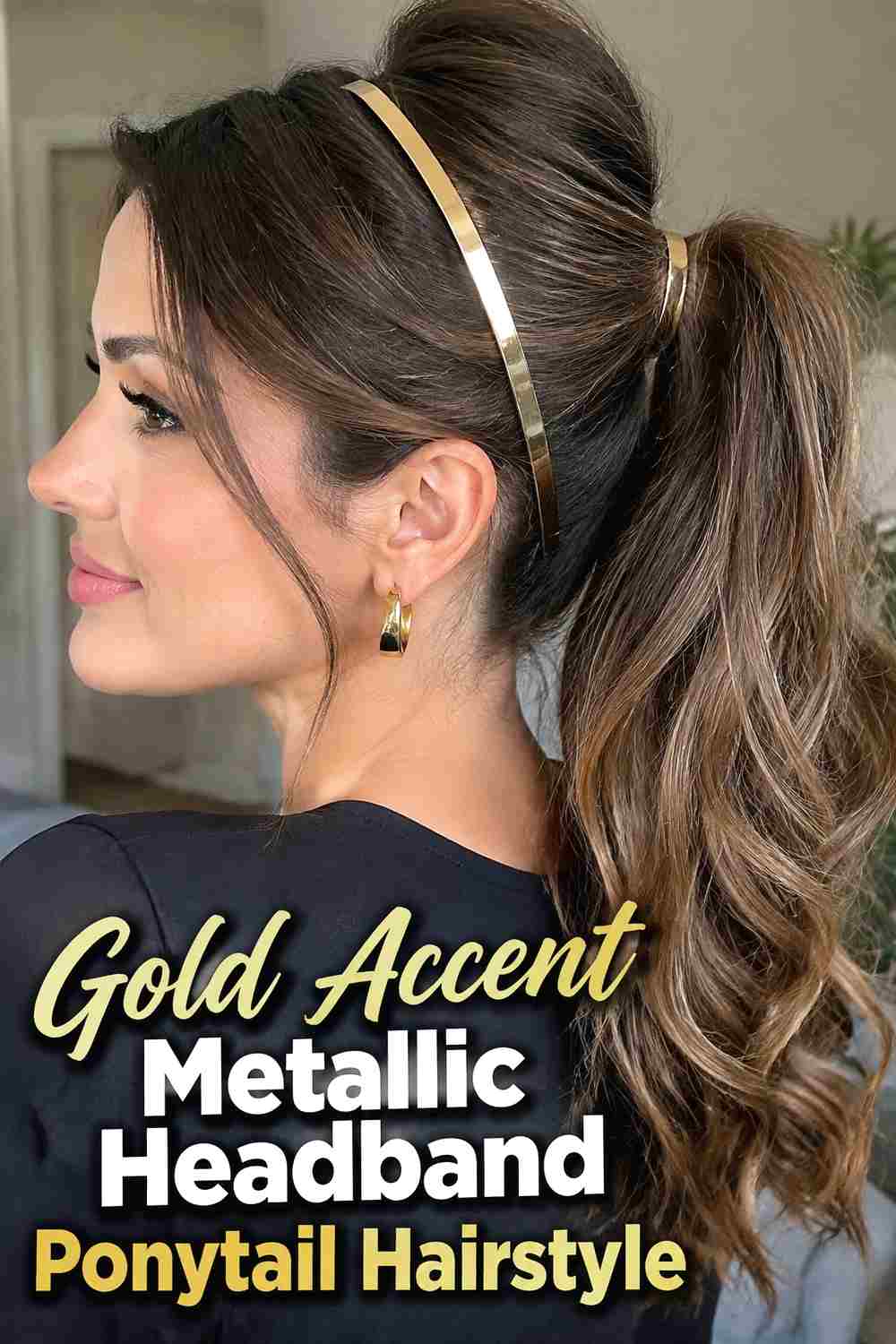
A gold headband adds warmth and creates a more decorative finish than a minimal silver band. Pair it with a smooth high, mid, or low ponytail depending on the silhouette you prefer, keeping the front relatively simple so the metal remains clear. A brushed-gold or softly textured band can feel less formal than a highly polished piece, while still catching light attractively. Let the ponytail have some movement through soft waves or a gentle bend. If the headband is ornate, keep the ponytail base clean and avoid additional gold clips or ties that might make the styling feel overly coordinated.
Styling Notes
Choose one dominant metallic accent and let it carry the look. The ponytail can stay simple, soft, and wearable around it.
13. Textured Low Metallic Headband Ponytail Hairstyle
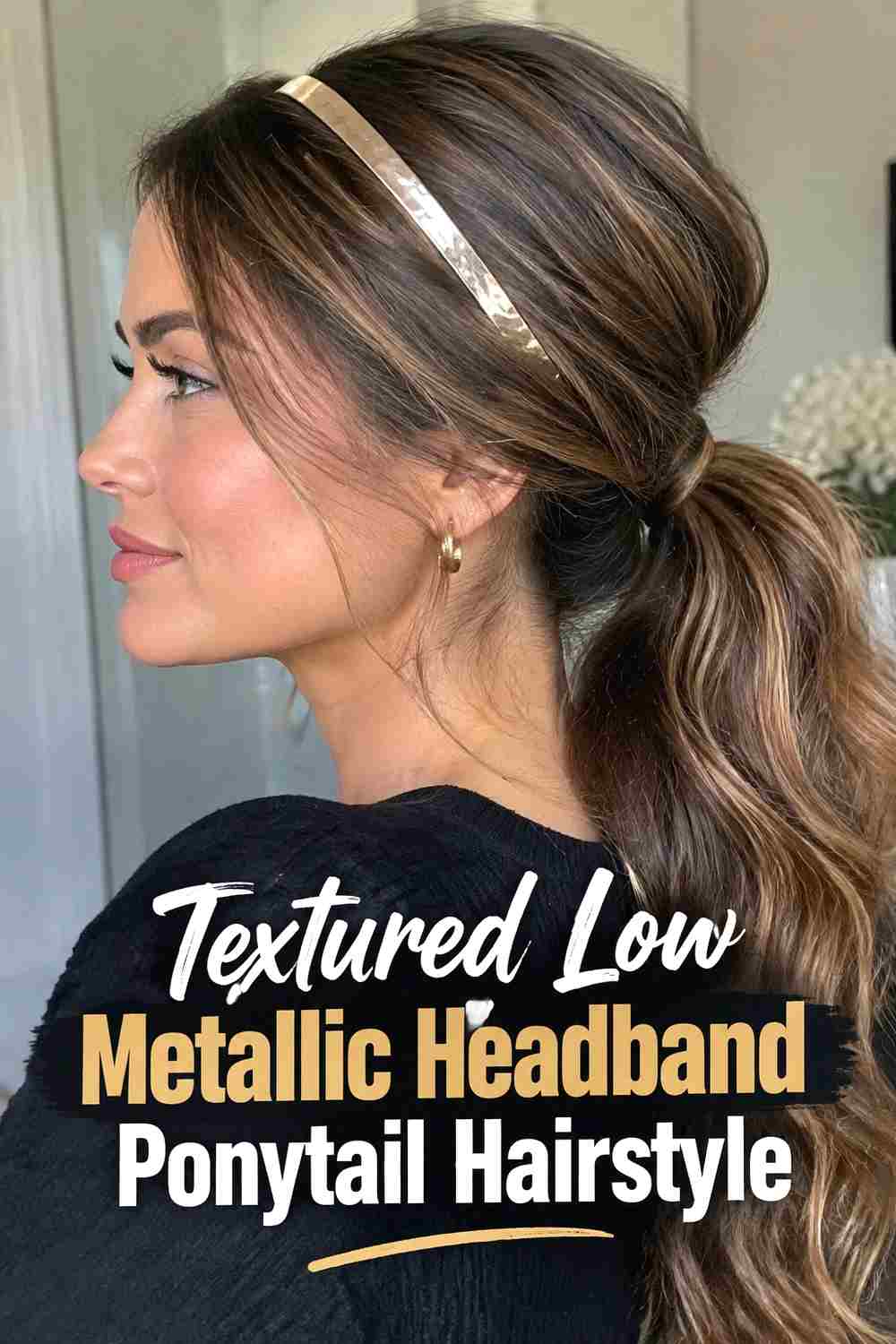
A textured low ponytail gives the polished headband a softer, more casual background. Gather waves, curls, coils, or lightly tousled hair at the nape without brushing away all of the natural volume, then add a slim metallic band at the front. A few intentional face-framing pieces can remain loose if they suit the overall shape. Keep the ponytail itself broad and touchable-looking rather than tightly compact. The contrast works particularly well with a smooth silver or gold band because the clean metal line stands out against a softer surface. Avoid positioning the band so tightly that it removes all lift from the crown.
Best For
This relaxed version suits brunches, vacations, casual dinners, and events where you want an accessory detail without a highly formal finish.
14. Sculpted Crown Metallic Headband Ponytail Hairstyle
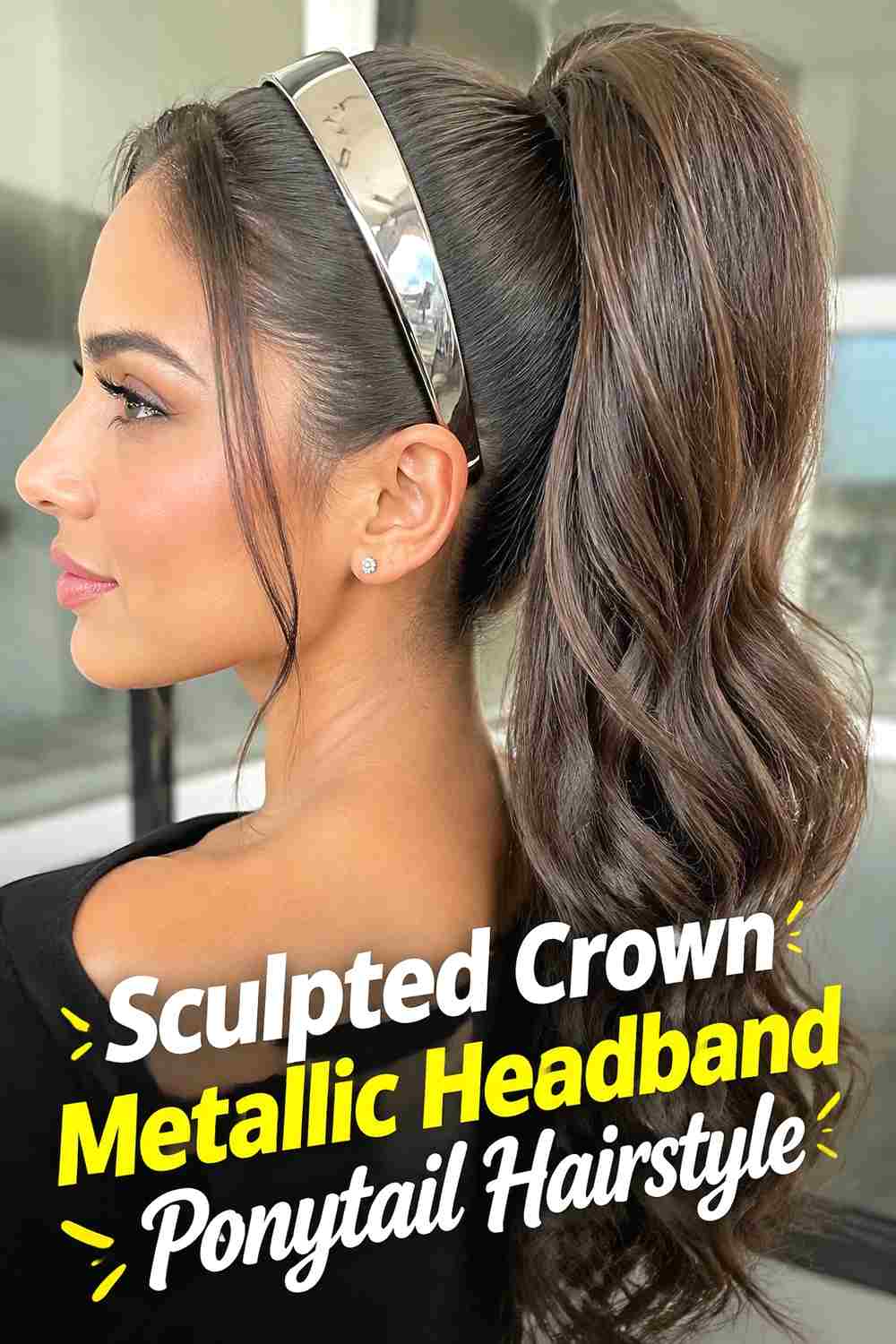
A sculpted crown creates controlled height directly behind the metallic headband, giving the ponytail a slightly dressier silhouette. Build soft volume through the upper back of the head, smooth the outer surface, and secure a mid or low ponytail. Position the headband in front of the lifted crown so it acts as a clear boundary between the flatter front and fuller back. A thin or medium-width metallic band usually works best because an oversized piece can hide too much of the sculpted shape. Keep the ponytail relatively streamlined to balance the crown volume. The finished result should feel structured but still natural rather than heavily teased.
Styling Notes
Create and secure the crown shape before placing the headband. Once the band is on, use only light fingertip adjustments to preserve the smooth outer surface.
15. Long Wavy Metallic Headband Ponytail Hairstyle
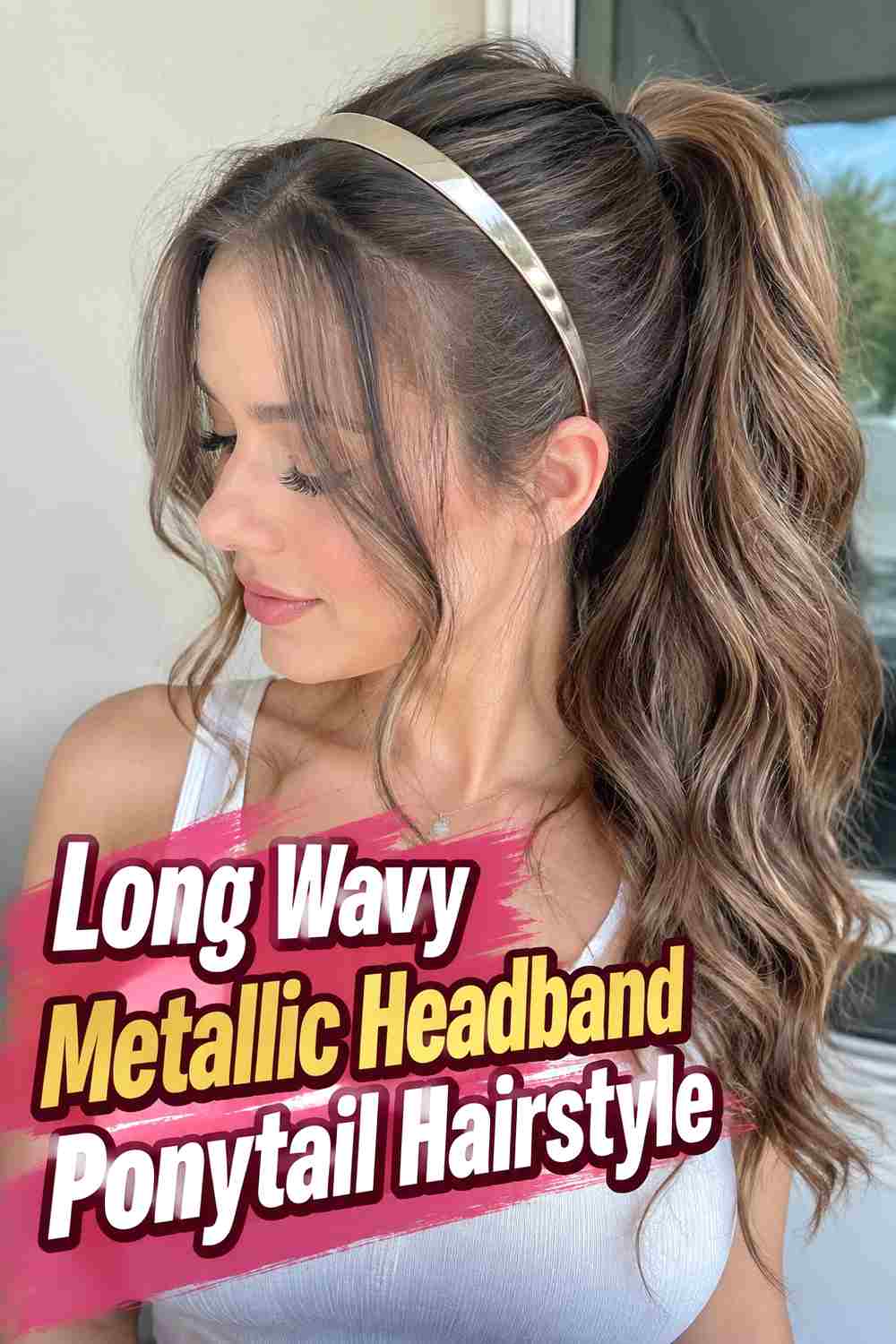
Long waves give a metallic headband ponytail softness and movement without sacrificing polish. Gather the hair into a mid or high ponytail and let broad waves fall through the length, keeping them separated enough to show texture without becoming overly fluffy. Add a slim metallic headband near the front so the clean reflective line contrasts with the flowing ponytail. This version works especially well when the hair is long enough for several wave bends to remain visible below the tie. Keep the crown lightly lifted rather than extremely sleek, particularly if you want the overall mood to feel romantic instead of sporty.
Hair Type & Length
Medium-long and long hair provides the clearest cascading effect, especially when the ponytail has enough length to display several soft waves.
16. Short Curly Metallic Headband Ponytail Hairstyle
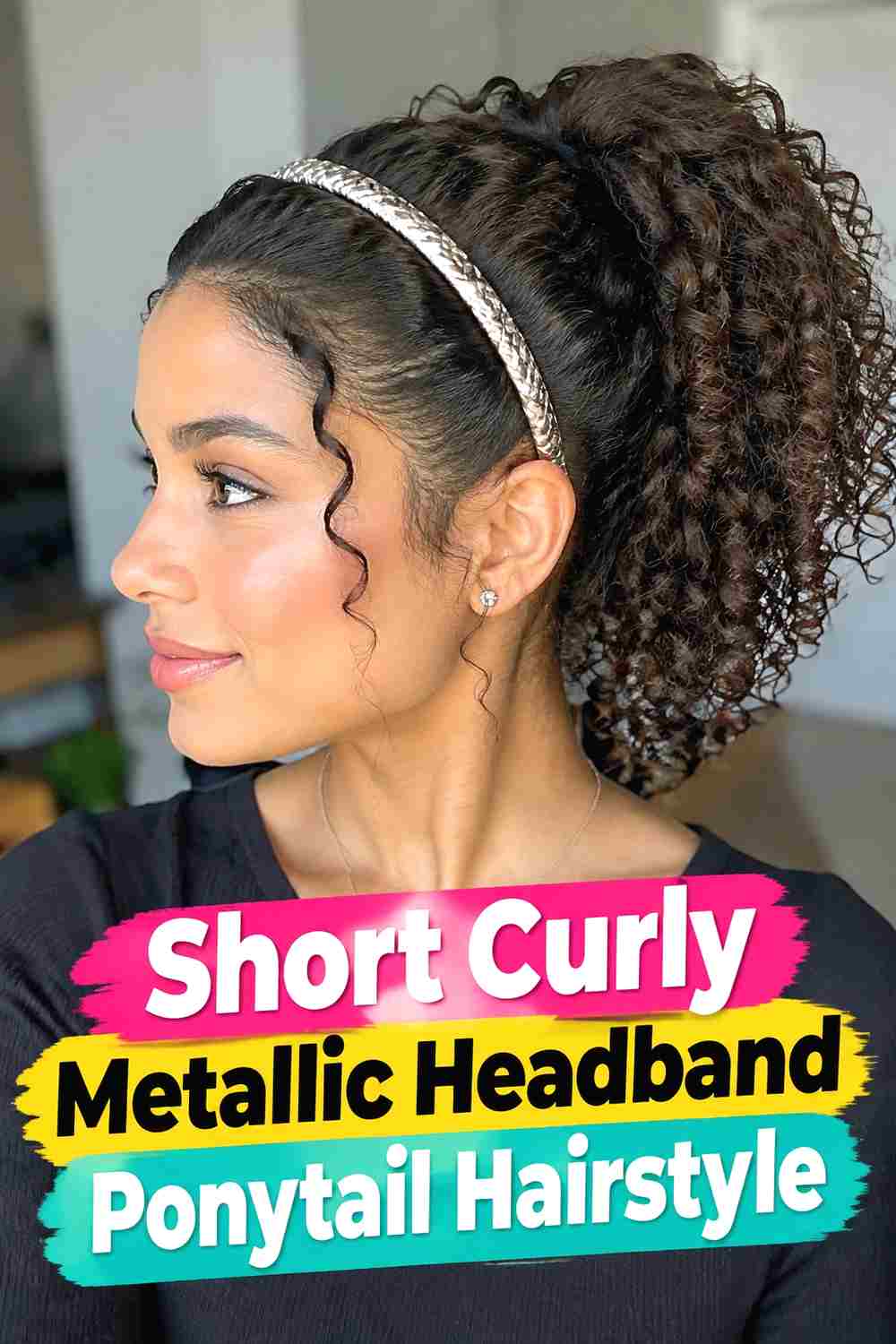
Shorter curly hair can still create a lively ponytail when gathered high enough for the curl cluster to remain visible. Secure the hair where it naturally reaches comfortably, allowing shorter perimeter pieces to stay soft rather than forcing them into tension. Position a narrow metallic headband across the front to organize the silhouette and highlight the curls behind it. A small ponytail with springy texture can look especially balanced with a slim silver or gold band because neither element overwhelms the other. Preserve the curl pattern at the ends and lift flattened sections after securing the ponytail. The finished look should feel compact, textured, and intentionally simple.
Pro Tip
Let shorter pieces remain naturally loose where needed. Excessive pinning can make a short curly ponytail look more rigid than the texture requires.
17. Slicked Back Metallic Headband Ponytail Hairstyle
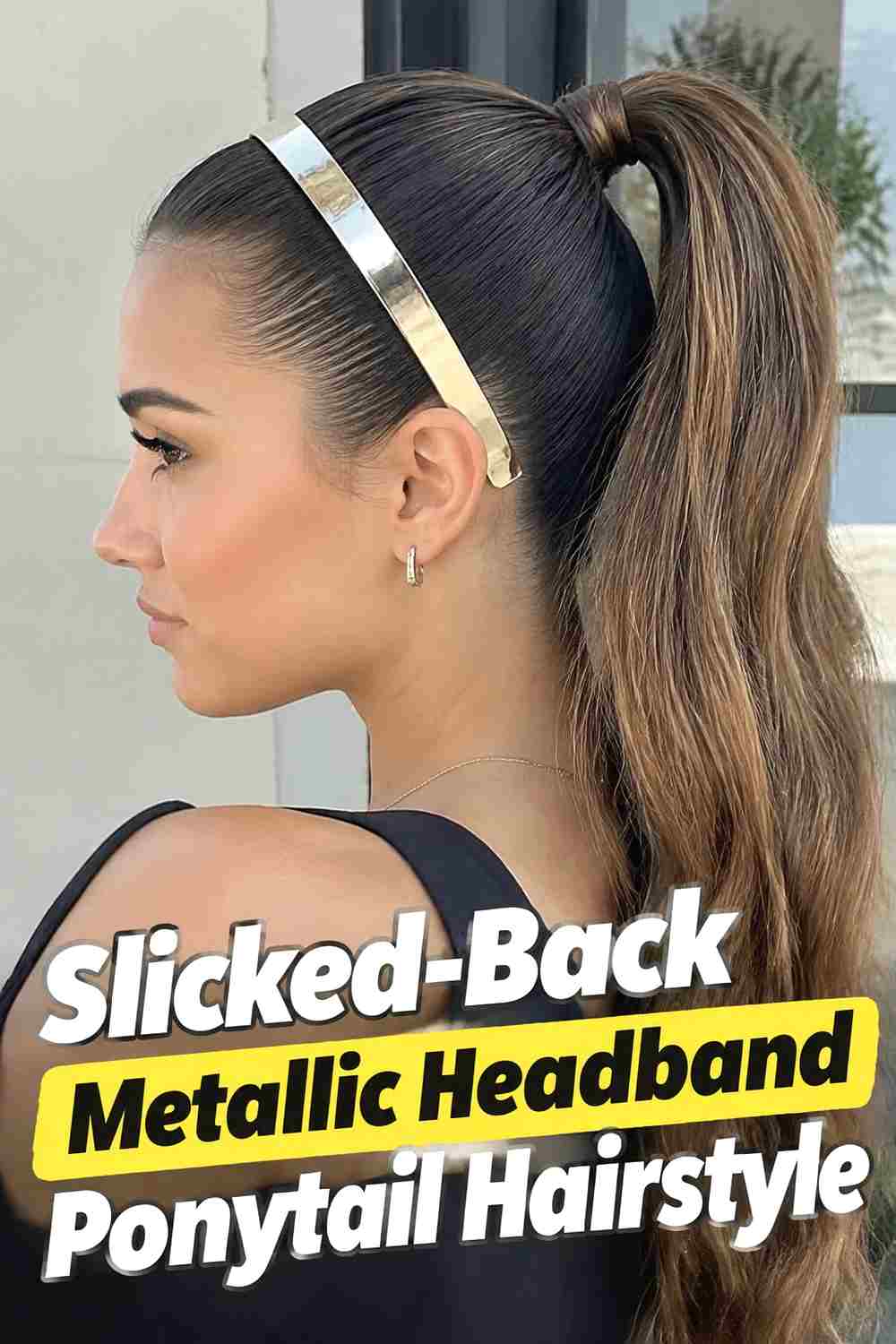
This style creates strong contrast by combining a controlled front with a clear metallic headband and streamlined ponytail. Direct the hair backward, secure it at your preferred height, and position the band over the smooth surface near the front. Keep the finish polished but avoid making the hair look coated or unnaturally stiff. A simple gold or silver band usually creates enough impact because the slicked-back surface gives it a very clean backdrop. The ponytail can stay straight or have a gentle curve through the ends. This version is particularly effective when you want the headband to function almost like a piece of minimal jewelry.
Wear & Maintenance
Make sure the band grips comfortably against the smooth hair rather than sliding backward, and avoid excessive tension around the temples.
18. Face Framing Metallic Headband Ponytail Hairstyle
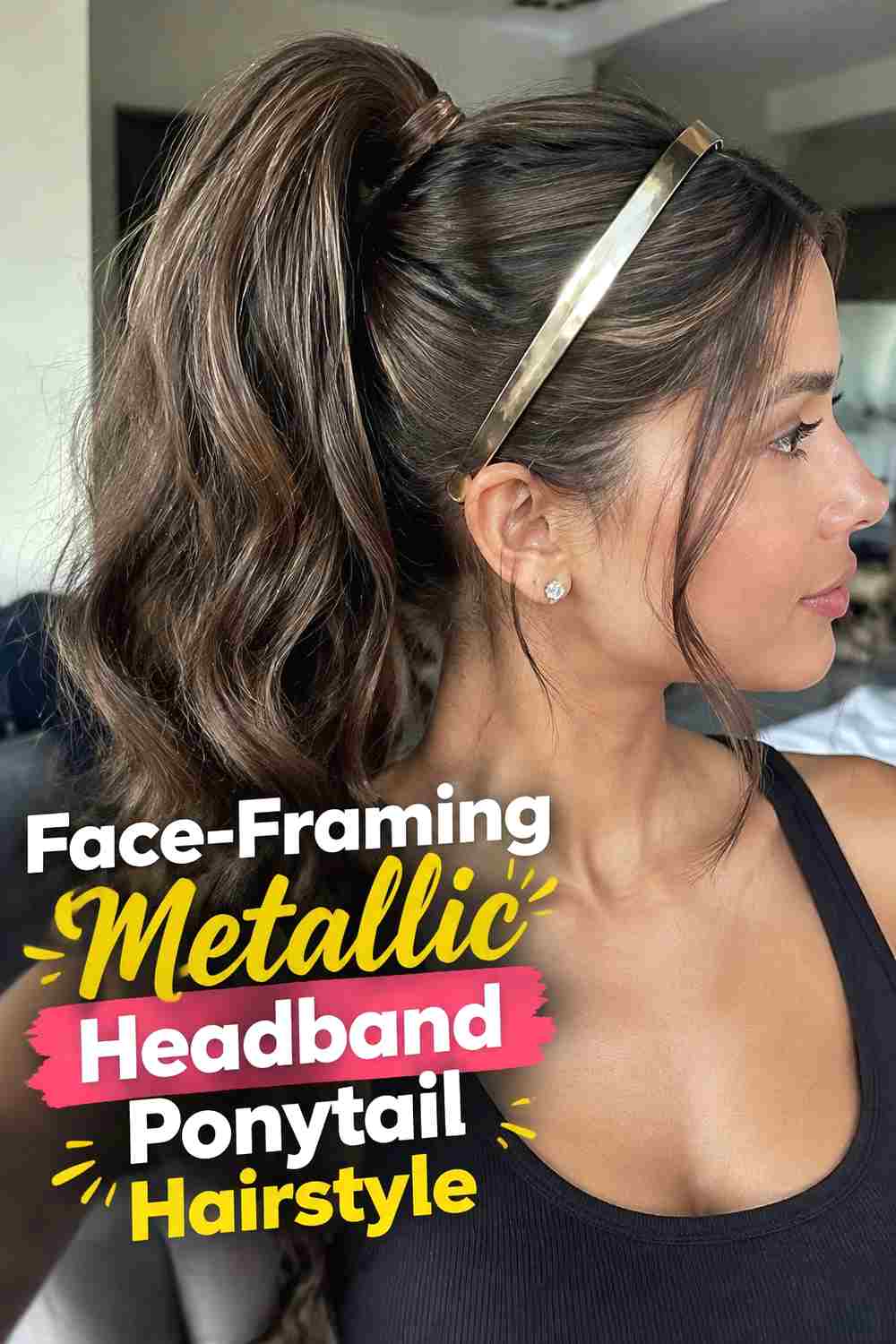
A face-framing ponytail leaves a few intentional pieces loose in front of the metallic headband, creating a softer alternative to fully swept-back styles. Choose the front sections first, then secure the rest of the hair into a mid or low ponytail. Position the headband behind those loose pieces so it remains visible while the strands frame the temples and cheeks. Soft waves work especially well, but straight or curly textures can also create a flattering layered effect. Keep the face-framing sections light enough that they do not hide the accessory. The contrast between loose front pieces and controlled ponytail structure gives the hairstyle movement without making it feel messy.
Styling Notes
Separate the front strands before adding the headband so you do not have to pull them through or around the accessory afterward.
19. Stacked Band Metallic Headband Ponytail Hairstyle
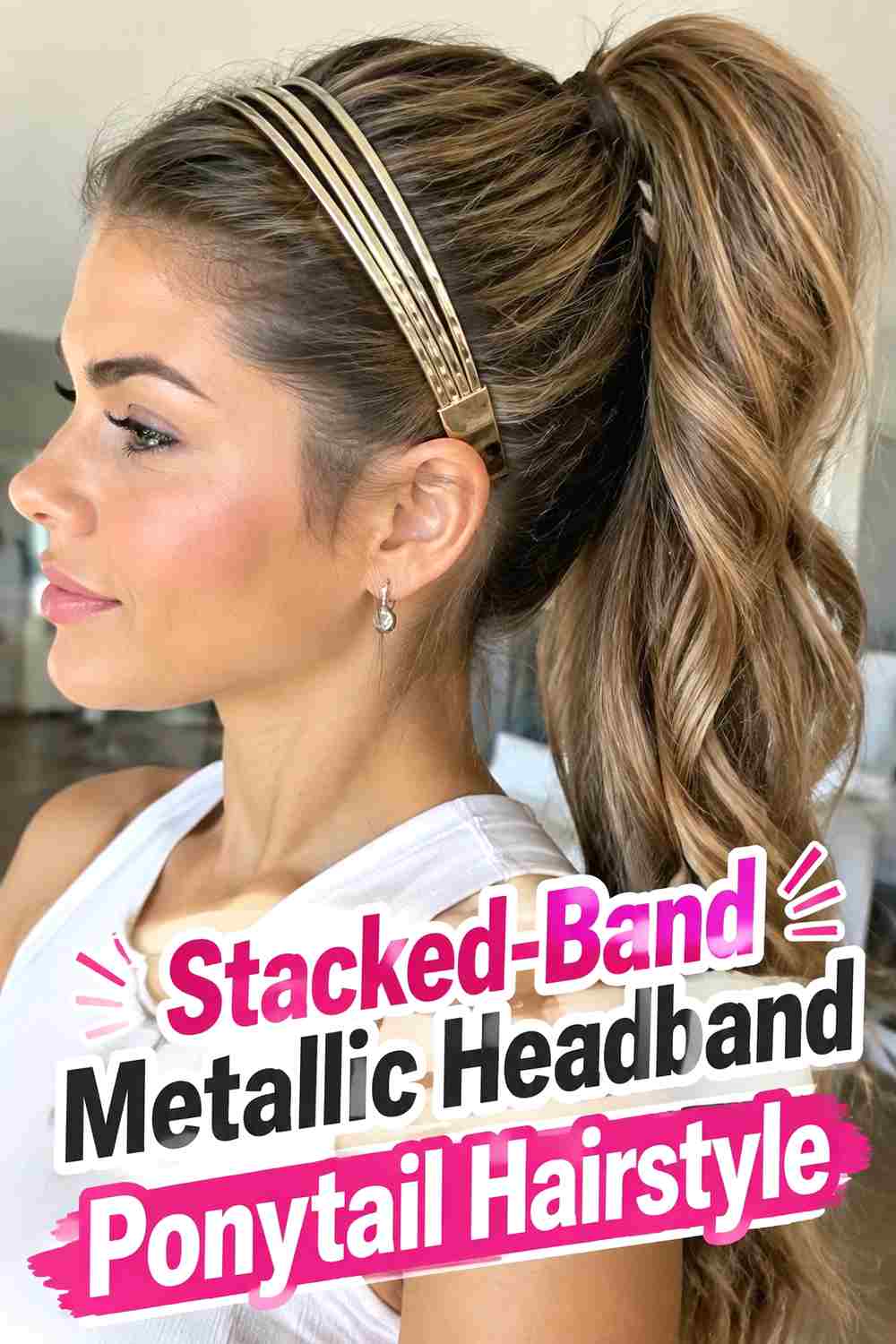
Using two slim metallic headbands creates a stacked effect with more visual interest than one wide piece. Position the bands close together or leave a narrow gap between them, then pair the accessory arrangement with a simple mid or low ponytail. Mixing two similar finishes, such as polished and brushed silver, creates subtle depth, while using gold and silver together produces stronger contrast. Keep the hair relatively streamlined so the doubled bands remain the focal point. Avoid adding several other metallic accessories, since the stacked headbands already provide enough shine. The bands should both feel comfortable and sit securely without creating pressure at the temples.
Why It Works
Two narrow bands add dimension while still allowing plenty of hair to remain visible, making the effect lighter than one oversized statement headband.
20. Retro Lift Metallic Headband Ponytail Hairstyle
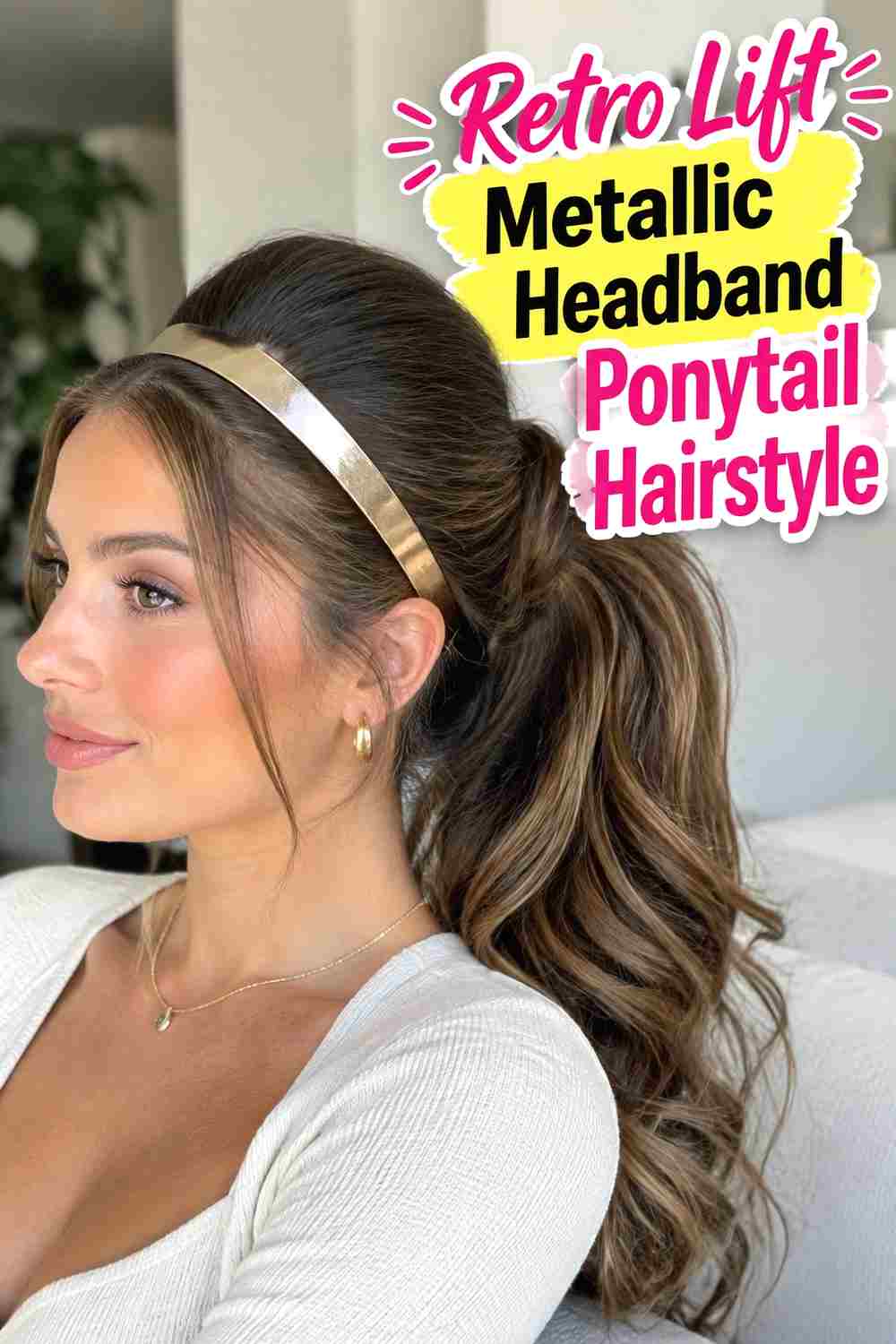
A retro lift places soft crown height behind the metallic headband and pairs it with a lively ponytail for a vintage-inspired silhouette. Keep the front relatively smooth, position the band behind the hairline, then build gentle volume at the crown before gathering the hair into a mid or high ponytail. The lengths can flip slightly at the ends, carry loose waves, or remain softly curved for movement. A gold or silver band with a clean rounded shape works well because it adds polish without making the look costume-like. Keep the crown lift controlled and smooth on the surface rather than heavily teased or exaggerated.
Best For
This version is ideal for parties, retro-inspired outfits, date nights, and occasions where you want a ponytail with more personality than a basic swept-back style.
How to Choose the Right Look
Start with the headband width. Thin metallic bands feel subtle and work well with curls, braids, bubble ponytails, and textured hair. Wider bands make a stronger statement and usually pair best with simpler ponytails where the accessory has enough visual space.
Next, choose your ponytail height. High ponytails feel energetic and make the metallic band visible from more angles. Mid-height versions create a balanced everyday silhouette, while low ponytails feel more understated and polished.
Texture changes the mood significantly. Sleek hair creates sharp contrast against metal, while curls and waves soften the effect. Braids and bubbles already provide substantial detail, so a simple headband usually keeps those styles balanced.
Consider crown volume as well. A flat, slicked-back crown produces a minimalist finish, while sculpted or retro lift creates a more dimensional profile behind the band.
Finally, prioritize comfort. A metallic headband should sit securely without pressing heavily at the temples or behind the ears. Let the ponytail elastic provide the structural hold and use the headband primarily for shape and decorative shine.
Final Thoughts
Metallic headbands can make a ponytail feel noticeably more finished without adding much styling time. A narrow silver band keeps things minimal, gold adds warmth, and wider or stacked designs create a stronger accessory moment.
Choose the band width, ponytail height, and texture as a coordinated combination rather than treating each detail separately. When the accessory feels proportional and the ponytail stays comfortable, the finished style can look polished while still remaining easy to wear.
FAQs
1. Do metallic headbands work with ponytails?
Yes. They pair well with high, mid-height, low, curly, braided, bubble, and half-up ponytails, depending on the width and shape of the band.
2. Are silver or gold metallic headbands more versatile?
Both can be versatile. Silver gives a cooler, cleaner effect, while gold adds warmth. The best choice depends on the hairstyle, outfit, and other accessories.
3. Can metallic headbands work with curly hair?
Yes. A slim metallic band can create attractive contrast against curls and coils while helping keep the front organized without hiding the texture.
4. How do I keep a metallic headband from slipping?
Position it on hair with enough natural grip, avoid overly slippery product at the roots, and choose a band that fits comfortably without needing excessive pressure.
5. Which ponytail looks best with a wide metallic headband?
Simple low, mid-height, or sleek ponytails usually give a wide headband enough space to remain the focal point without competing with complicated texture.
Save your favorite metallic headband ponytail ideas, share the looks you love, and explore more accessory-focused hairstyle inspiration for your next style.