14 Midi Shag Hairstyle Ideas
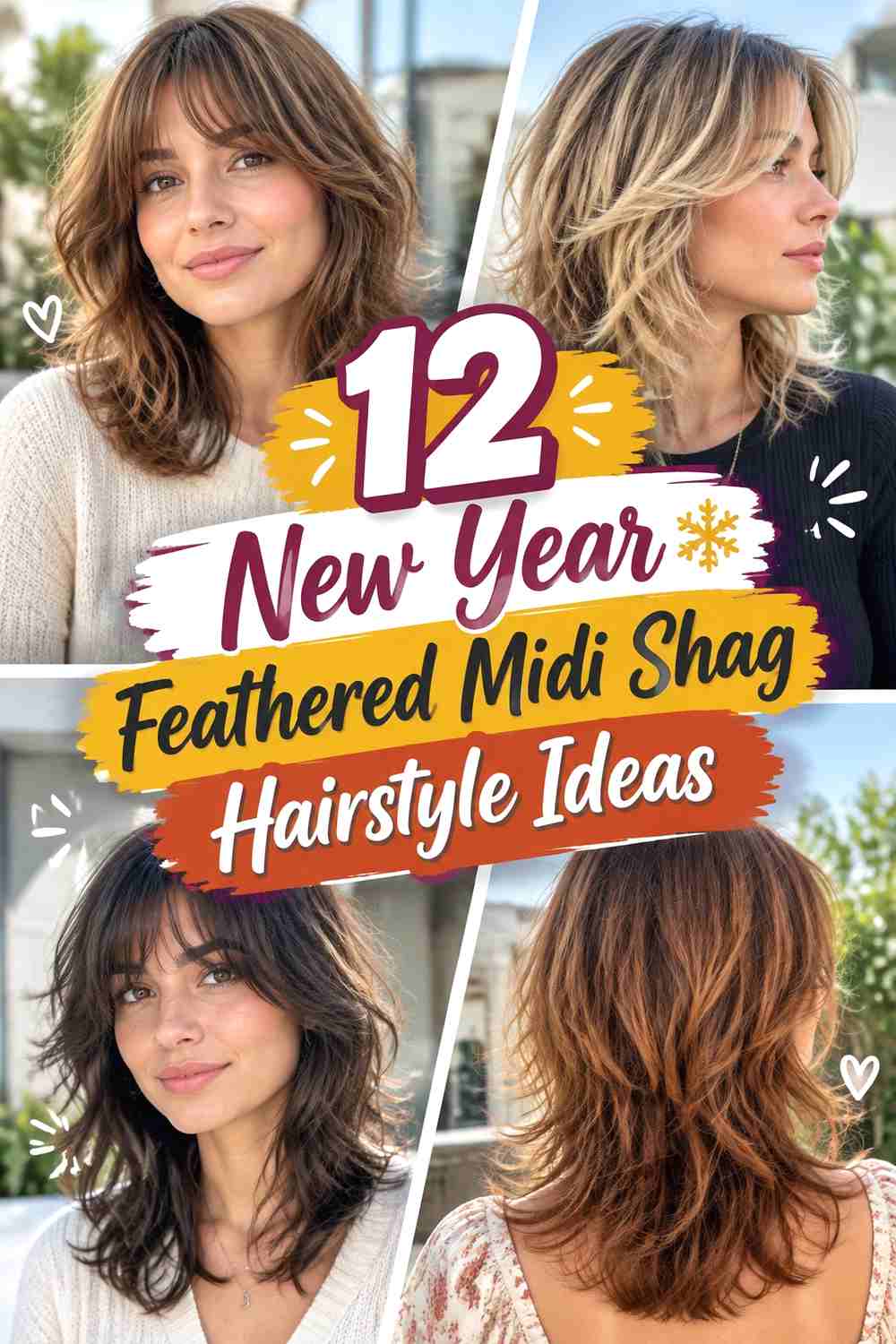
Midi shag hairstyles blend layered movement with a wearable medium length, creating soft texture, airy volume, and plenty of options for bangs, waves, curls, or polish.
A midi shag usually sits somewhere between the shoulders and upper chest, giving the layers enough room to move without the extra weight of very long hair. Its signature look comes from shorter pieces through the crown and face that gradually transition into longer sections, creating separation, lift, and a slightly undone silhouette.
The best version depends on your natural texture, density, fringe preference, and styling routine. Some midi shags look strongest with soft waves and air-dried movement, while others benefit from a smooth blowout or defined curls. Compare how much layering, crown volume, and face framing you actually want before choosing your cut.
Quick List
- Classic Midi Shag Hairstyle
- Curtain Bangs Midi Shag Hairstyle
- Wispy Fringe Midi Shag Hairstyle
- Center Part Midi Shag Hairstyle
- Deep Side Part Midi Shag Hairstyle
- Soft Wavy Midi Shag Hairstyle
- Curly Midi Shag Hairstyle
- Feathered Midi Shag Hairstyle
- Choppy Layered Midi Shag Hairstyle
- Face Framing Midi Shag Hairstyle
- Air Dried Textured Midi Shag Hairstyle
- Voluminous Blowout Midi Shag Hairstyle
- Sleek Soft Midi Shag Hairstyle
- Retro Inspired Midi Shag Hairstyle
1. Classic Midi Shag Hairstyle
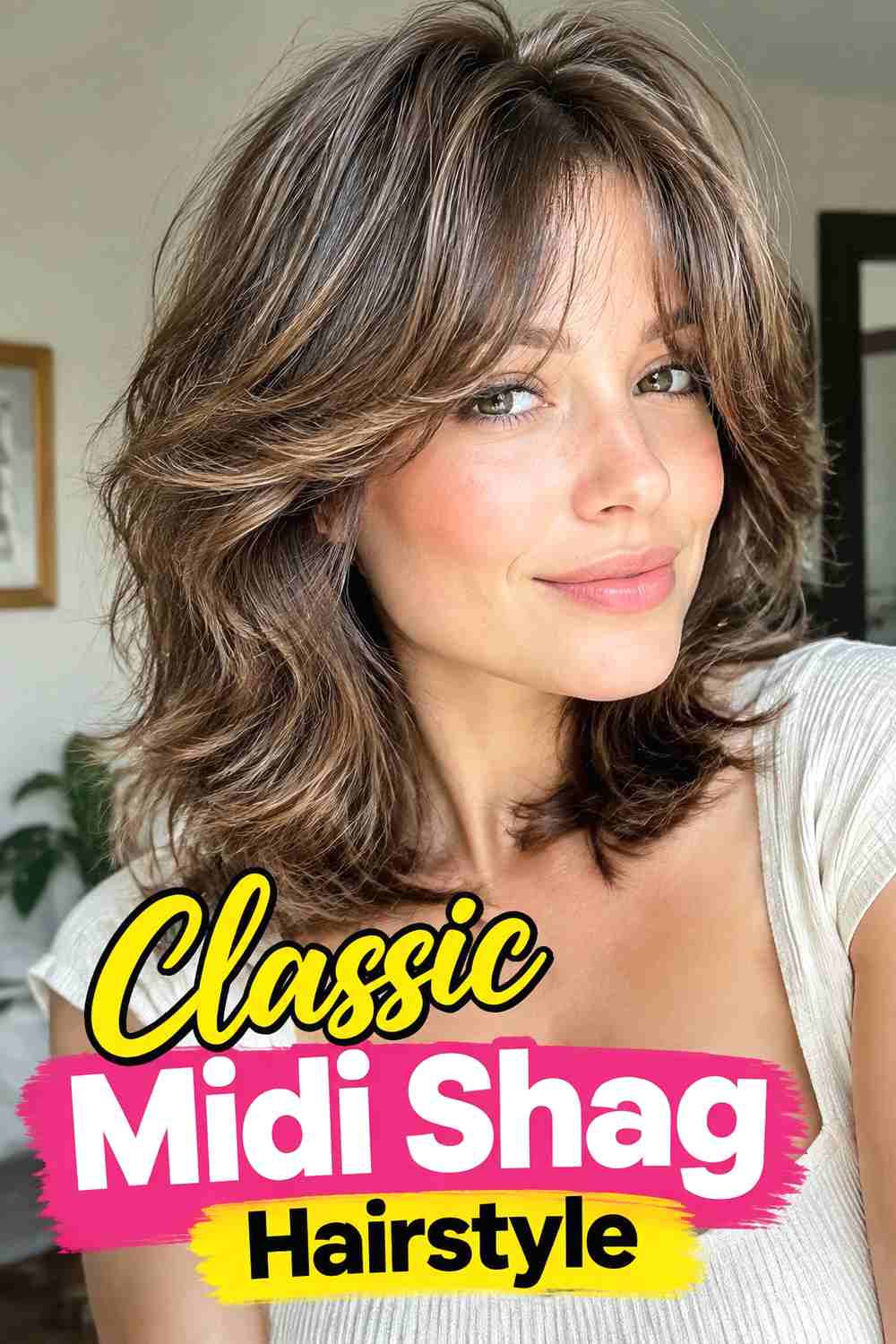
The classic midi shag keeps the length around the shoulders or upper chest while layering the crown, sides, and ends to create easy movement. Shorter pieces through the top prevent the haircut from feeling heavy, while longer layers preserve enough density through the lower section for a balanced silhouette. The overall effect should look airy rather than aggressively chopped, with visible separation that still feels connected from root to end. This version works particularly well when you want a shag that can shift between natural texture and more polished styling. A soft bend through the mid-lengths helps reveal the layers without turning the haircut into a fully curled look.
Styling Notes
Use light lift at the crown and encourage the ends to move in slightly different directions rather than shaping every layer identically.
Best For
This is a versatile starting point if you want classic shag movement without extremely short crown layers or a dramatic fringe.
2. Curtain Bangs Midi Shag Hairstyle
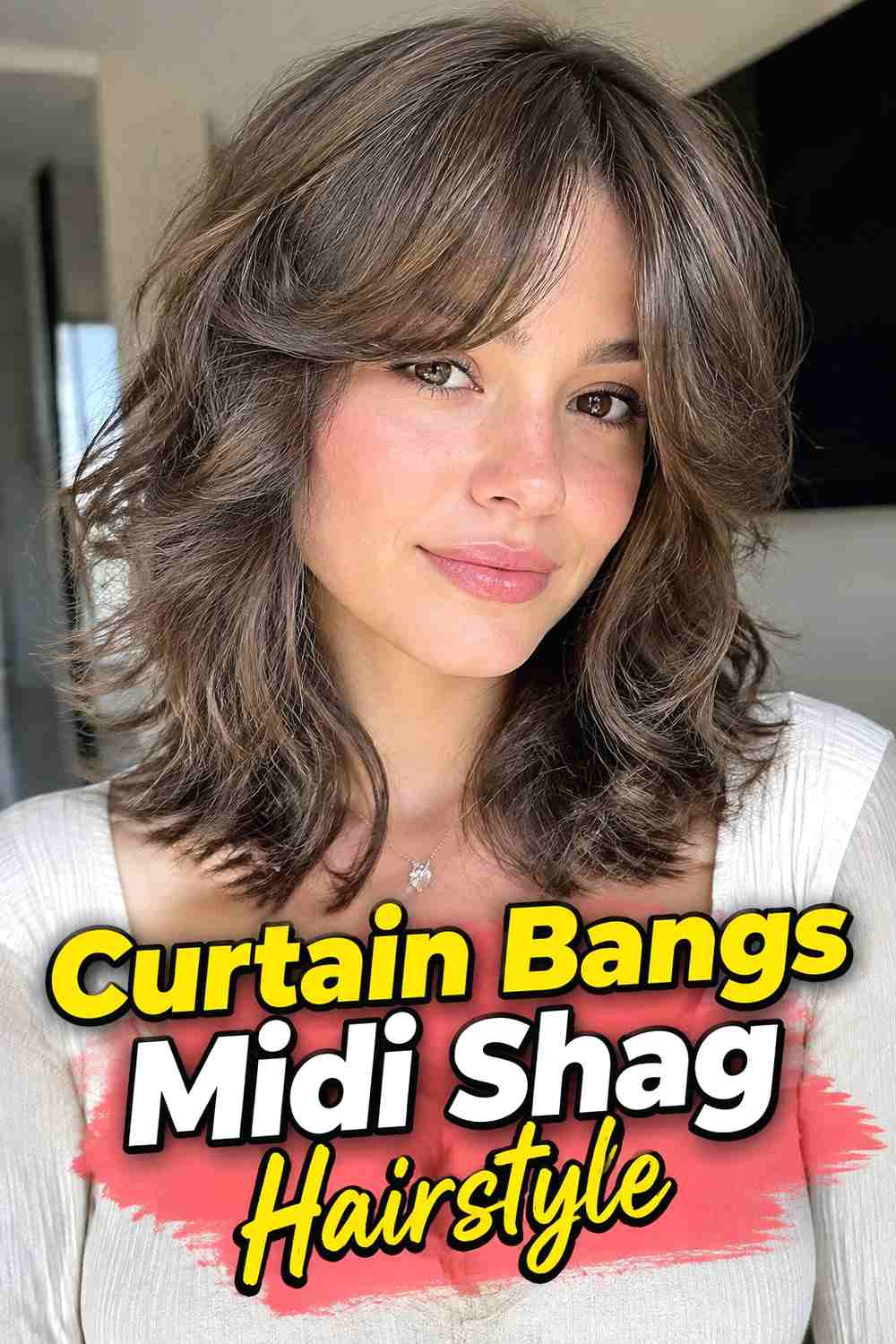
The curtain bangs midi shag creates a continuous layered frame from the center of the forehead through the cheeks and into the longer sides. The fringe opens naturally around the face, while slightly shorter crown sections add lift behind it. At midi length, the lower layers still have enough weight to keep the haircut from becoming overly fluffy, so the result can feel soft and balanced. The bangs work best when they blend gradually into the surrounding sections rather than ending as a separate heavy fringe. This variation is especially appealing if you want a shag with noticeable front movement while preserving styling flexibility, since longer curtain bangs can be worn parted, swept outward, or blended back.
Styling Notes
Direct the bangs away from the center with a gentle bend, then style the surrounding layers more loosely so the front does not look overly set.
Wear & Maintenance
Curtain bangs usually need occasional reshaping to maintain their opening point and connection with the longer face-framing layers.
3. Wispy Fringe Midi Shag Hairstyle
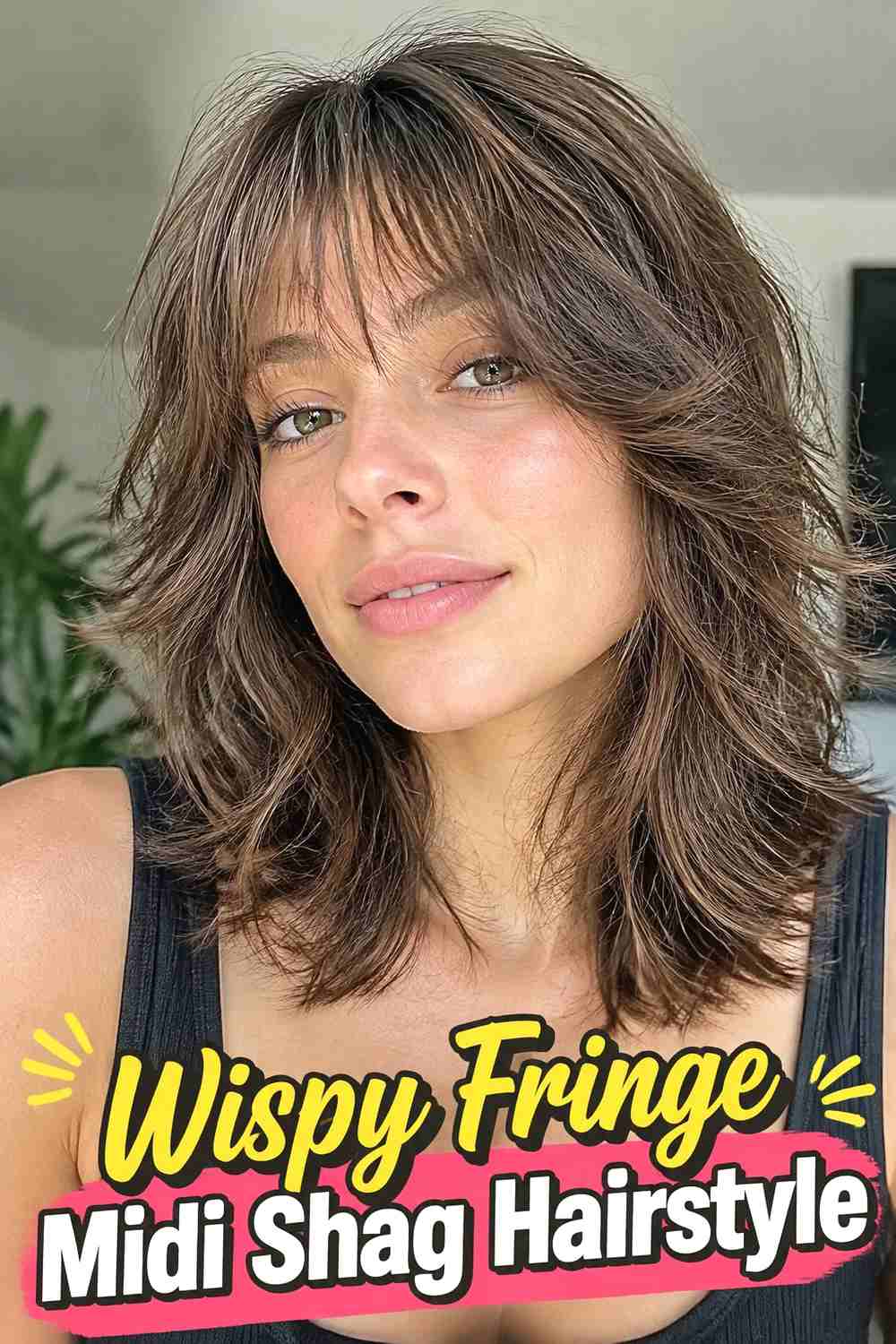
A wispy fringe midi shag pairs lightweight bangs with scattered layers through the crown and sides, creating a softer alternative to a dense shag fringe. Small sections of forehead remain visible between the bangs, which helps the front feel airy even when the surrounding haircut has plenty of texture. The fringe can transition into cheek-level layers that continue toward the shoulders, while the longer perimeter remains full enough to support the shape. This variation works well if you like the personality of a shag but do not want a thick line of bangs. The strongest result keeps the fringe flexible and slightly separated rather than heavily curled or flattened against the forehead.
Why It Works
A lighter fringe complements the movement of the shag without creating too much visual weight around the forehead.
Pro Tip
Dry the fringe first with minimal tension, then use your fingers to separate it once completely dry for a softer finish.
4. Center Part Midi Shag Hairstyle
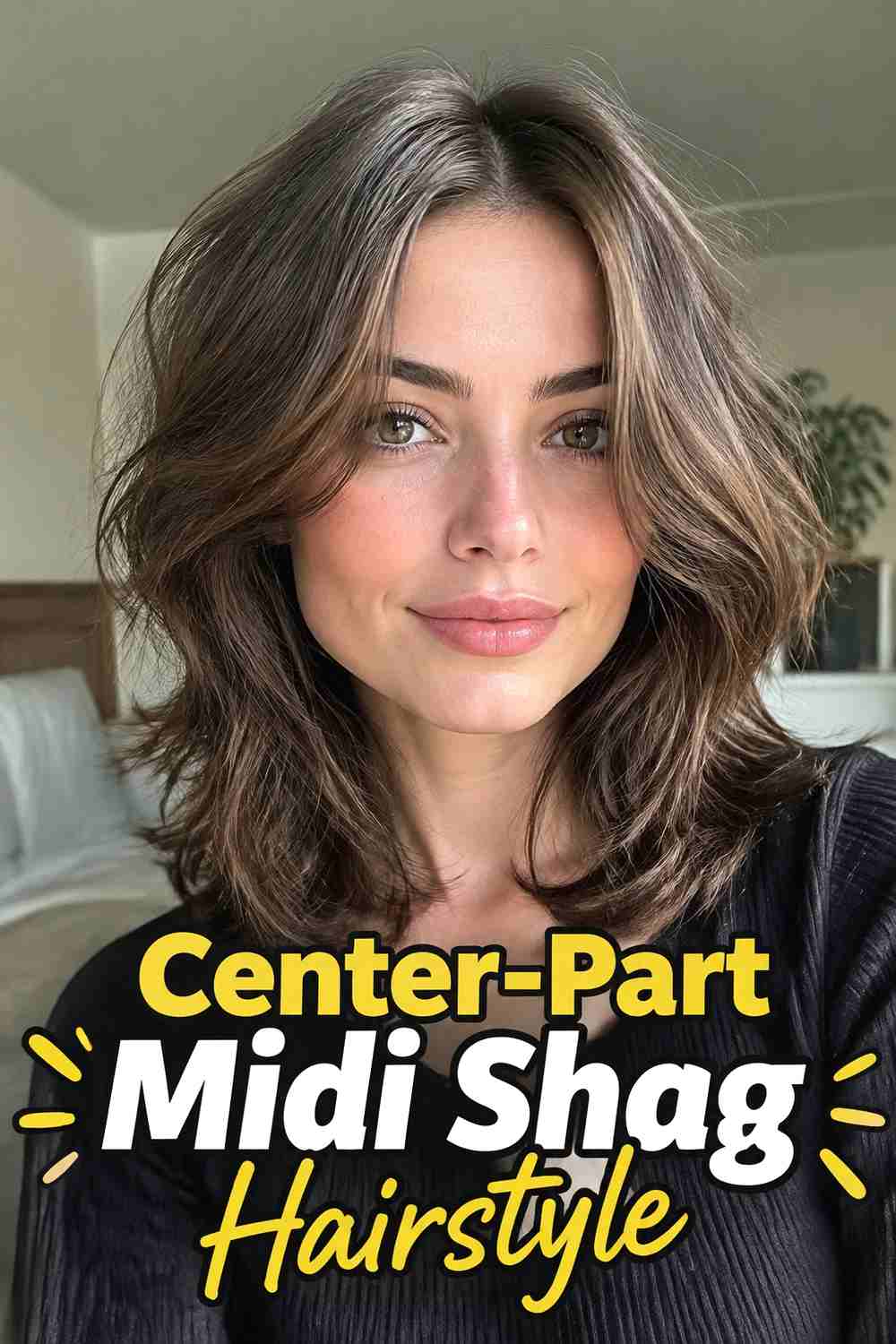
The center-part midi shag creates a more balanced, open front while keeping the layered texture concentrated around the sides and crown. Face-framing pieces can begin around the cheekbones or jaw and fall symmetrically into longer sections, giving the haircut movement without relying on bangs. The centered part also allows the shorter crown layers to lift naturally on both sides, especially when the roots are not pressed completely flat. This version can look polished with a blowout or more relaxed when worn with natural texture. Keeping the lower perimeter reasonably substantial helps the haircut retain its midi silhouette instead of becoming overly thin toward the ends.
Styling Notes
Encourage similar movement on both sides of the part, but avoid making every layer perfectly mirrored. Slight variation keeps the shag feeling natural.
Best For
Choose this version if you prefer an open forehead and want the face-framing layers to provide most of the front detail.
5. Deep Side Part Midi Shag Hairstyle
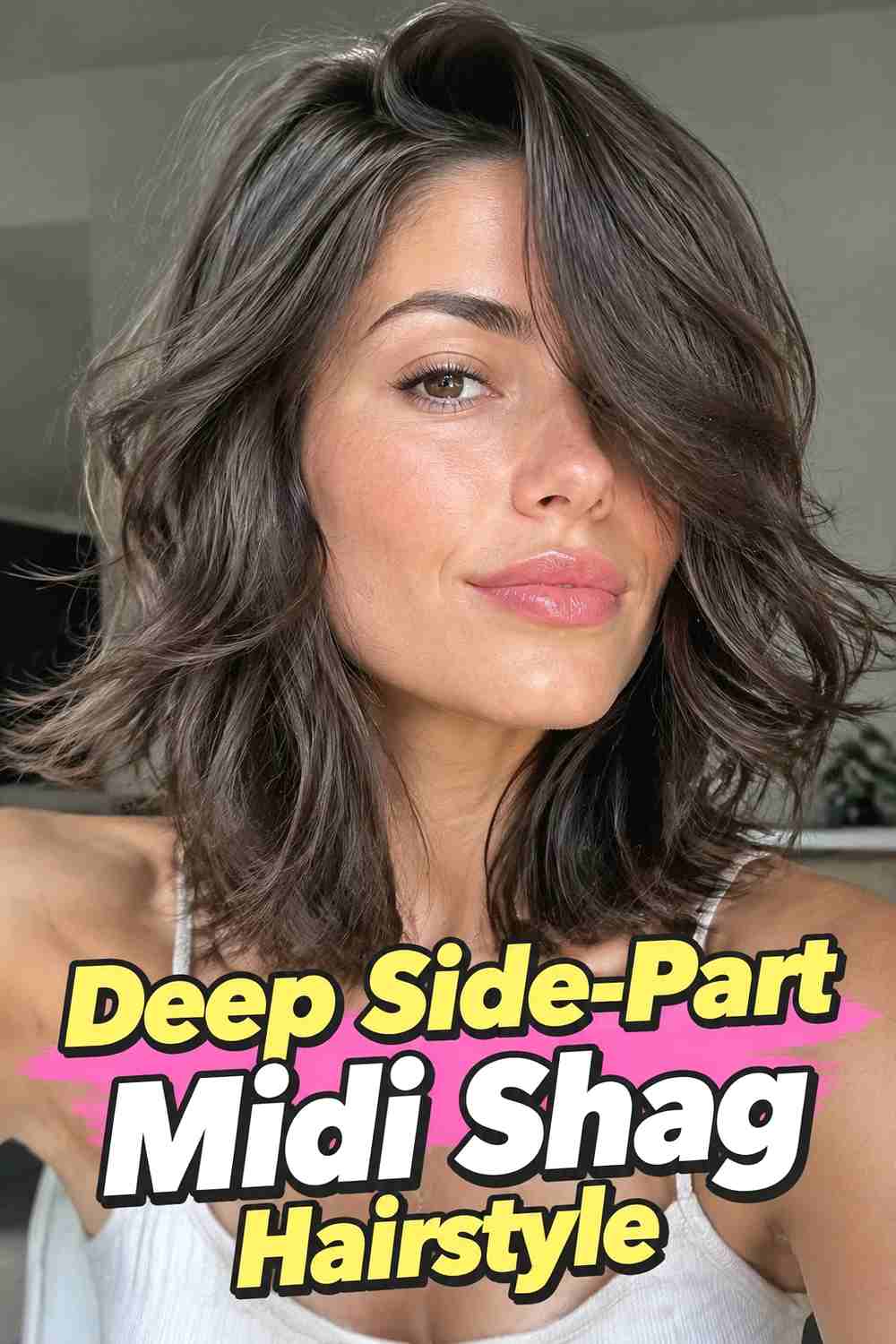
A deep side-part midi shag shifts the haircut’s volume toward one side, giving the layers extra lift and directional movement. The heavier section can sweep across the forehead before breaking into cheek- and jaw-level pieces, while the lighter side sits closer to the head or tucks behind the ear. This creates natural asymmetry without needing dramatically different lengths on each side. The midi perimeter keeps the overall silhouette grounded, so the extra crown volume does not make the haircut appear too top-heavy. This variation works particularly well if your hair naturally prefers an off-center part or if you enjoy a more dramatic front profile without committing to full bangs.
Why It Works
The deep part immediately adds lift and movement, helping the shorter shag layers stand out without requiring extra teasing.
Pro Tip
Set the part before drying so the roots settle naturally into the fuller side instead of being forced across afterward.
6. Soft Wavy Midi Shag Hairstyle

The soft wavy midi shag lets natural-looking bends emphasize the layered structure without making the haircut appear overly styled. Waves through the mid-lengths help shorter and longer sections separate visually, while a little crown lift keeps the overall shape from becoming flat. The ends can move in mixed directions, creating the slightly undone finish associated with a shag. This style works especially well on naturally wavy hair, where thoughtful layering can support the existing pattern rather than requiring daily curling. At midi length, there is still enough weight to keep the waves from expanding too widely, making the finished silhouette textured but manageable.
Hair Type & Length
Naturally wavy medium-length hair can display this style especially well, though straight hair can be given loose bends for a similar effect.
Styling Notes
Encourage varied wave direction and avoid creating identical bends across every section, which can make the shag look too uniform.
7. Curly Midi Shag Hairstyle
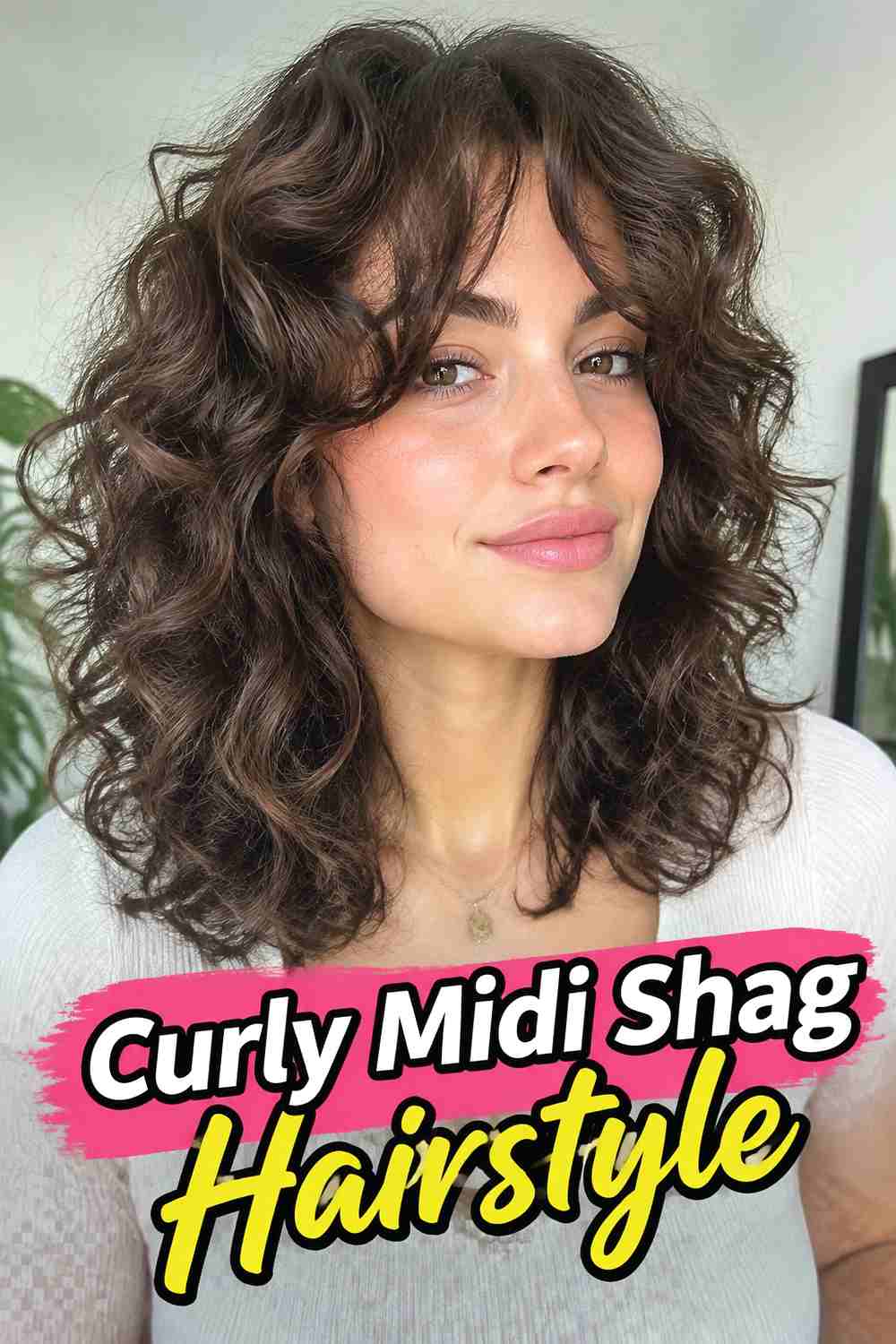
The curly midi shag uses graduated layers to distribute volume through the crown, sides, and lower lengths instead of concentrating all the fullness at the bottom. Shorter curls around the face can create a rounded frame, while longer sections preserve the midi length below. Because curls shrink differently depending on pattern and density, layer placement should account for how the hair sits when dry rather than relying only on stretched length. The overall silhouette can be softly rounded with extra lift at the crown, but enough weight should remain through the lower sections to prevent a thin perimeter. This version celebrates natural curl definition while keeping the haircut visibly layered and mobile.
Hair Type & Length
Curly hair benefits from layer placement tailored to curl pattern, shrinkage, density, and the desired dry length.
Why It Works
Layering can spread curl volume more evenly through the silhouette while allowing individual ringlets and coils to remain visible.
8. Feathered Midi Shag Hairstyle
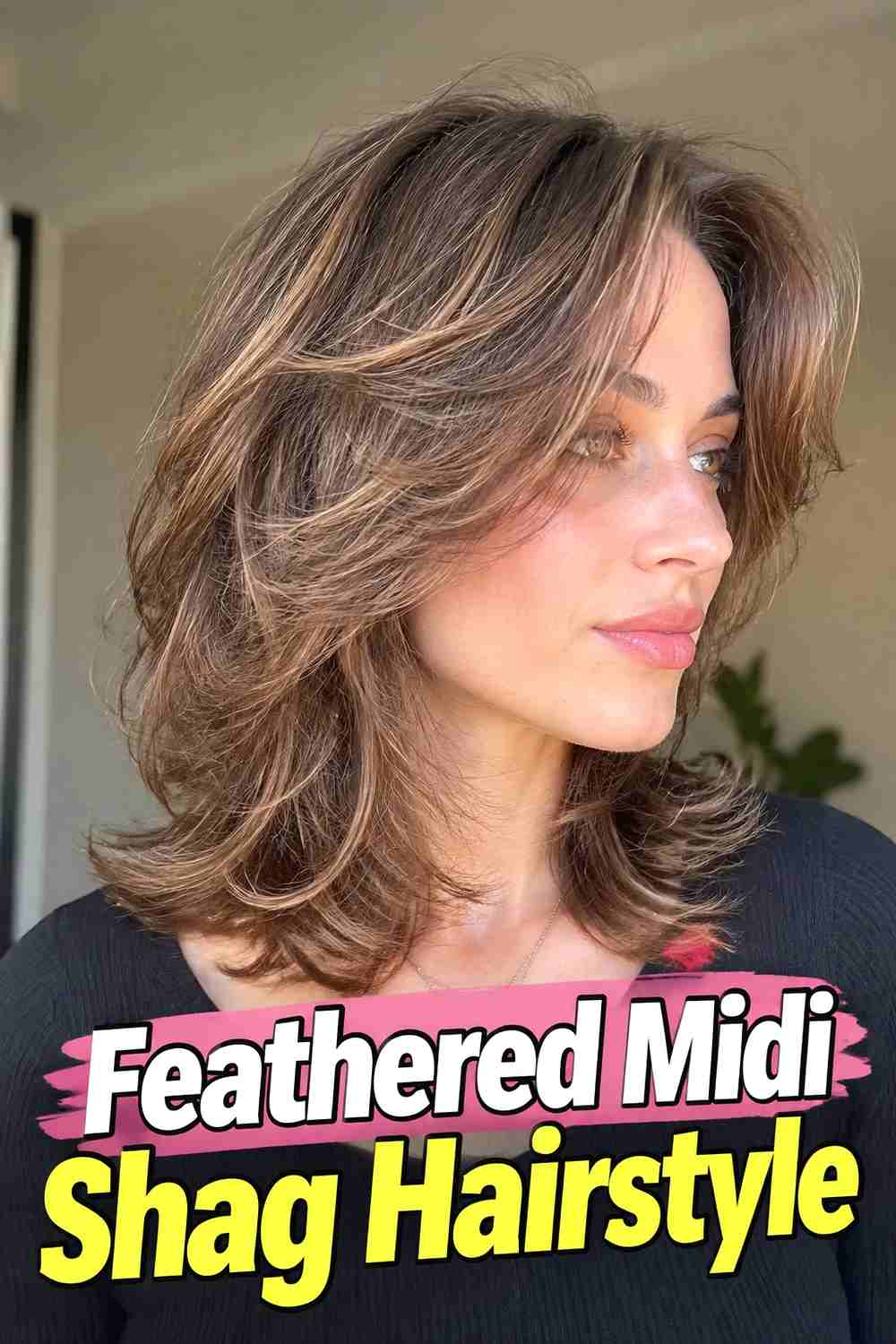
The feathered midi shag softens the edges of each layer so the hair sweeps outward and backward rather than sitting in chunky sections. The front can begin with cheek-level pieces that fan away from the face, while crown layers add light lift and the lower lengths remain fluid. This approach gives the shag a slightly retro mood without requiring extreme volume or very short top layers. The feathering should stay subtle enough that the haircut still feels modern and wearable. A smooth blow-dry can make the effect more obvious, while naturally textured hair will create a softer interpretation with less defined direction through each layer.
Styling Notes
Use a round brush to turn selected face-framing and upper layers outward, leaving some sections straighter so the finish stays relaxed.
Best For
This variation suits anyone who likes visible movement around the face but prefers softer ends over chunky, heavily separated layers.
9. Choppy Layered Midi Shag Hairstyle
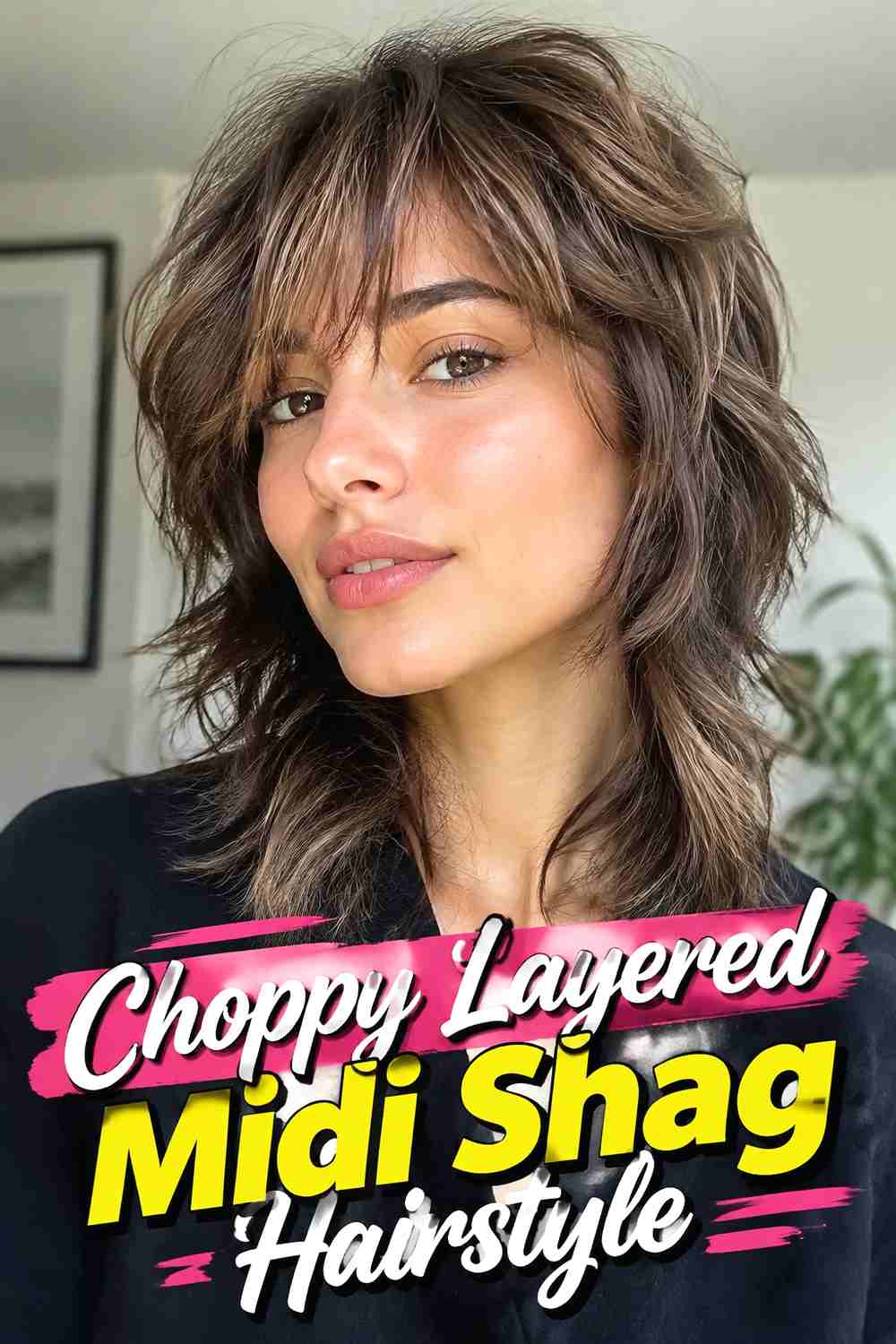
The choppy layered midi shag creates stronger separation between sections, giving the haircut a piecey, deliberately textured finish. Shorter crown layers can sit above longer side pieces, while the ends show visible irregularity rather than forming one smooth perimeter. The key is keeping enough overall density that the haircut looks dimensional instead of thinned out. This variation can work particularly well on straight or wavy hair because the individual layers remain easy to see, especially with light separation through the ends. The midi length balances the more dramatic layering by providing enough lower length to anchor the silhouette and prevent the style from becoming overly short or mullet-like.
Why It Works
More visible separation makes the shag structure obvious and gives the haircut a stronger casual, lived-in personality.
Wear & Maintenance
As the layers grow, occasional reshaping helps maintain the intentional choppiness instead of letting the sections blend into one length.
10. Face Framing Midi Shag Hairstyle
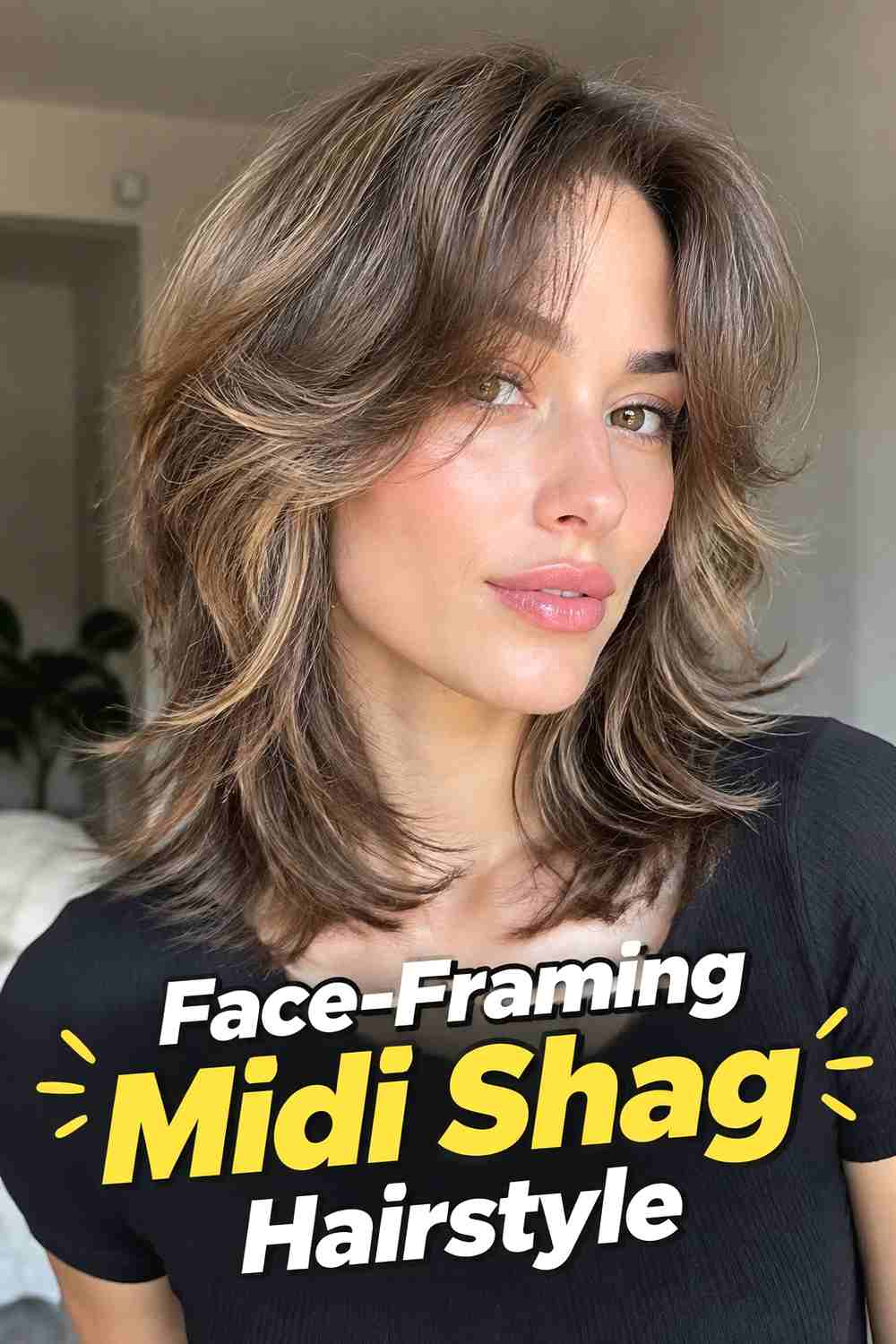
The face-framing midi shag concentrates the shortest layers around the front while keeping the back somewhat longer and fuller. Pieces can begin near the cheekbones or jaw and progress gradually toward the shoulders, creating visible movement whenever the hair turns or falls forward. The crown may have gentle layering rather than dramatic lift, making this option softer than a heavily shagged cut. It is a useful choice if you want the effect of a shag mainly around the face but prefer to preserve density through the back. Styling the front pieces with slight bends can emphasize the shape, while the rest of the hair can remain relatively natural and understated.
Best For
This approach works well if you want noticeable layering from the front without removing a large amount of weight throughout the entire haircut.
Pro Tip
Choose the shortest face-framing point carefully, since cheekbone-, jaw-, and chin-level pieces create noticeably different front silhouettes.
11. Air Dried Textured Midi Shag Hairstyle
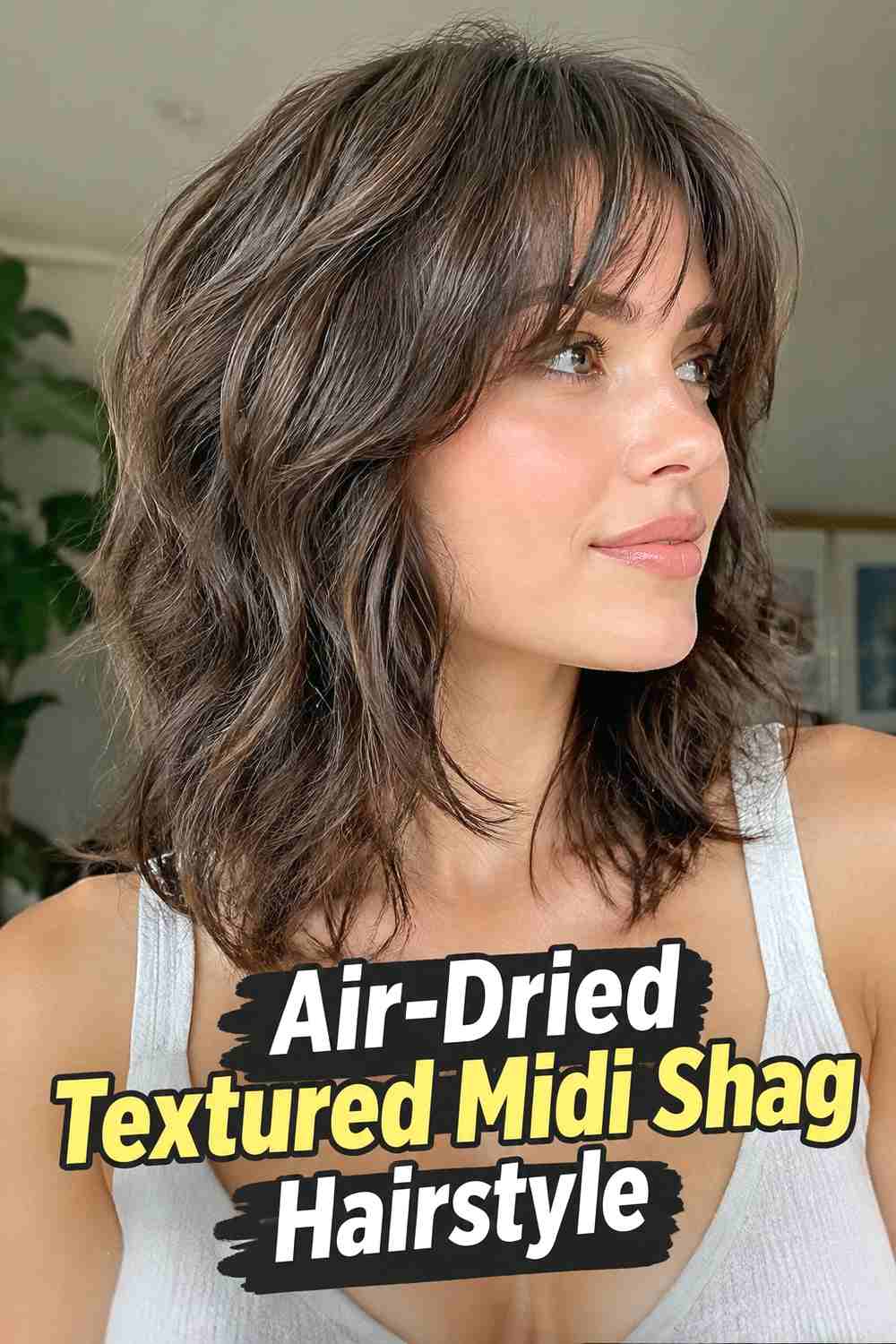
The air-dried textured midi shag is designed around a relaxed finish, allowing the haircut’s layers to support natural bends, waves, or irregular movement without a precise blowout. Crown pieces can lift slightly as they dry, while the lower lengths settle into a soft, uneven texture that makes the shag feel effortless. This approach works best when the layer pattern complements the hair’s natural behavior instead of depending on heat styling to create shape. The ends should retain enough density that the air-dried finish still looks intentional rather than sparse. A small amount of finger separation can reveal individual layers once the hair is dry without disturbing the overall natural texture.
Styling Notes
Encourage the hair’s existing pattern while damp, then avoid excessive handling as it dries so natural texture can form without unnecessary frizz.
Why It Works
A well-placed shag can use natural movement as part of the finished look, reducing the need for every layer to be deliberately shaped.
12. Voluminous Blowout Midi Shag Hairstyle
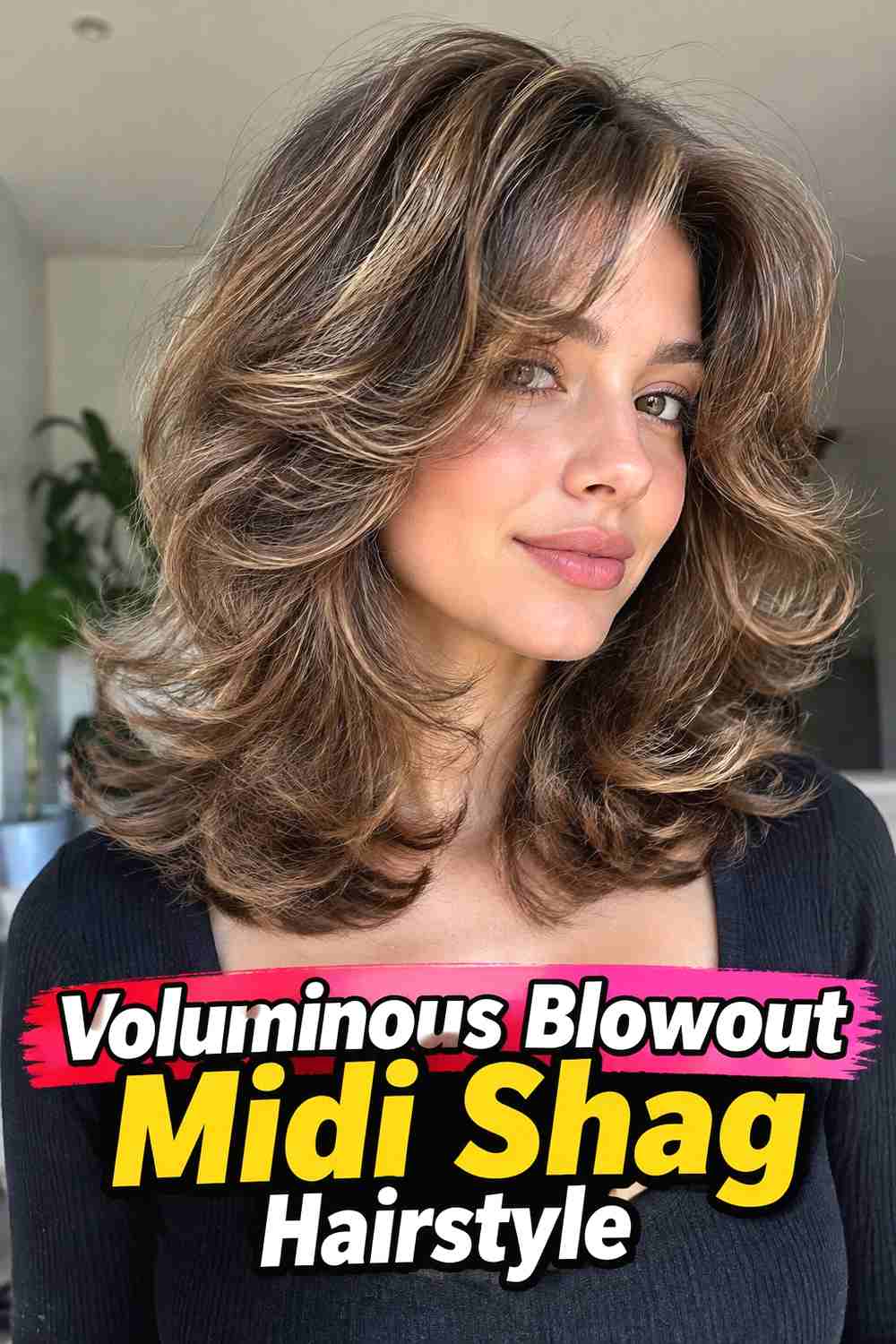
The voluminous blowout midi shag turns the layered structure into a fuller, more polished silhouette by lifting the roots and curving the lengths with a round brush. Shorter crown sections gain noticeable height, while face-framing pieces sweep outward and longer layers create broad movement around the shoulders. The result should feel airy rather than stiff, with enough separation for the shag character to remain visible beneath the smoother finish. At midi length, the hair has enough weight to keep the blowout controlled while still allowing substantial bounce. This version can make the haircut appear especially dimensional, but it generally requires more deliberate styling than air-dried or softly wavy alternatives.
Styling Notes
Use broad brush sections and lift at the roots, then allow the layers to cool in their shaped direction before lightly separating them.
Best For
Choose this finish when you want maximum visible movement, crown lift, and a more polished interpretation of a shag.
13. Sleek Soft Midi Shag Hairstyle
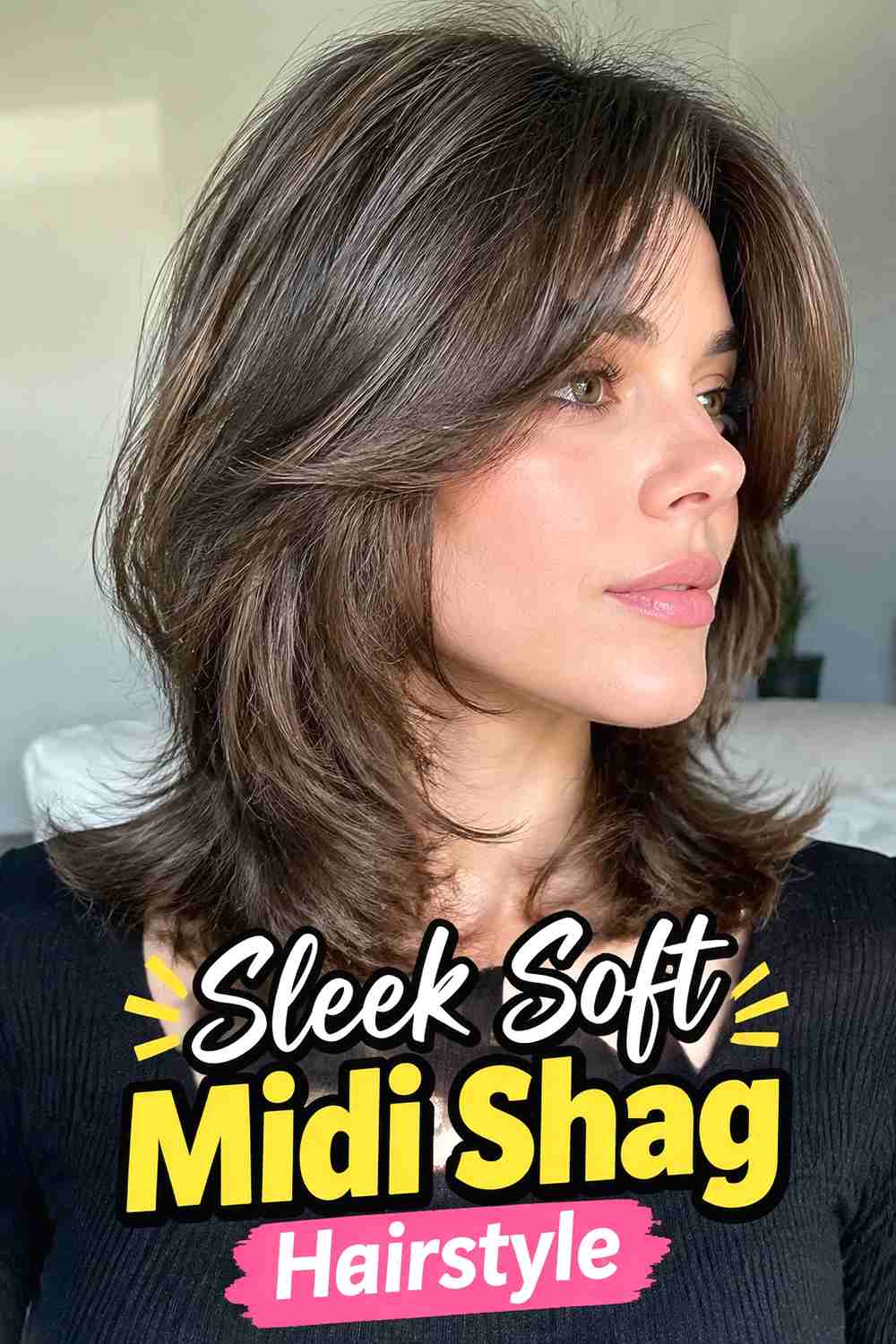
The sleek soft midi shag proves that layered shags do not always need a tousled finish. The hair stays relatively smooth through the mid-lengths while the layers create subtle movement around the face and ends. Crown sections can remain lightly lifted instead of completely flat, preserving the haircut’s dimension without making the surface messy. This style works particularly well when the layers are blended enough to flow together but still distinct enough to avoid looking like a conventional one-length cut. A slight bend through selected ends keeps the finish soft rather than pin-straight. The result feels refined while retaining enough texture and separation to remain recognizably shag-inspired.
Styling Notes
Keep the body smooth but avoid flattening every layer. A small amount of root lift and soft end movement helps preserve the shag silhouette.
Why It Works
The cleaner surface highlights the shape of the layers while offering a more polished option for days when you do not want a heavily tousled finish.
14. Retro Inspired Midi Shag Hairstyle
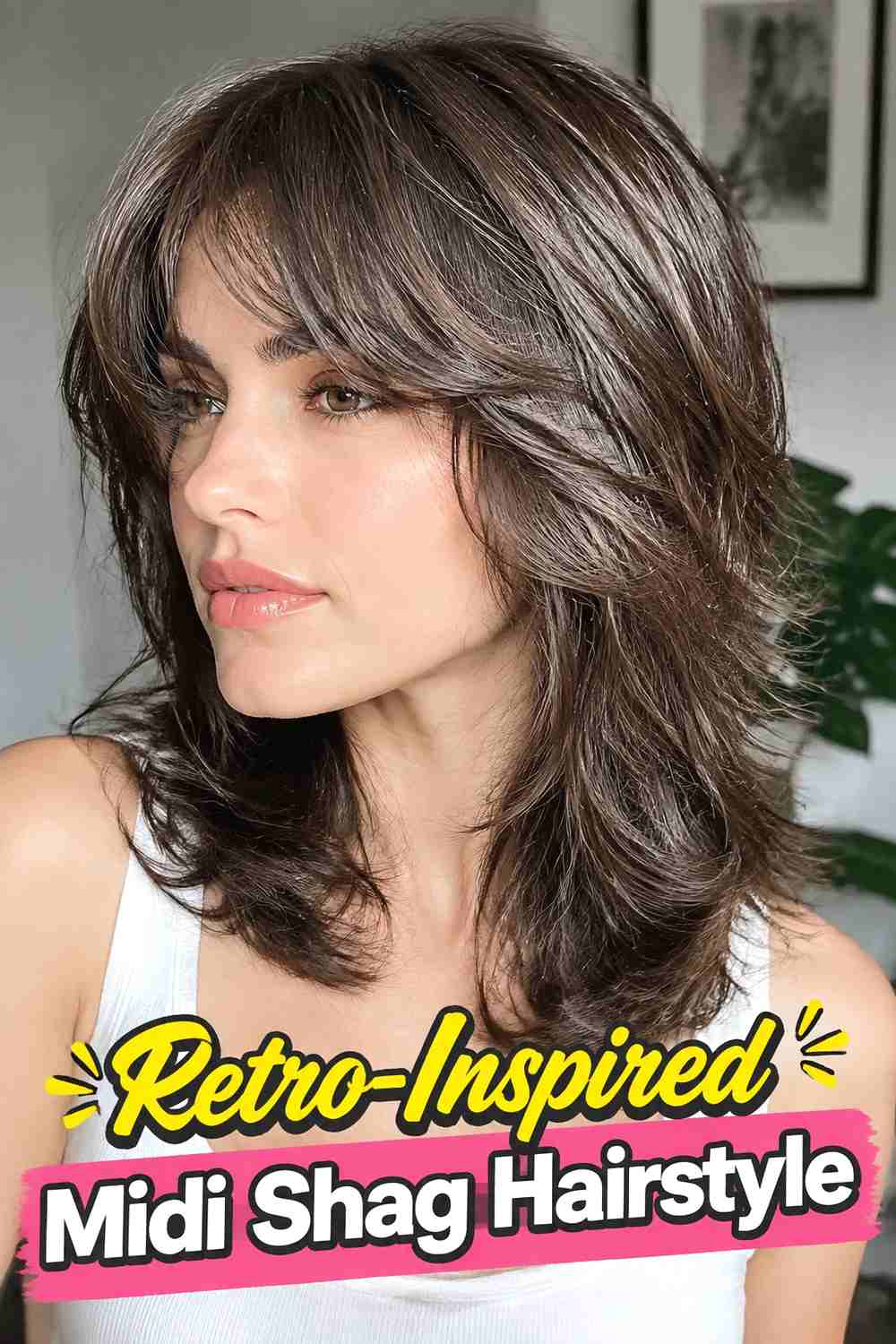
The retro-inspired midi shag combines crown volume, feathered face-framing pieces, and a softly flipped perimeter for a noticeable vintage influence. Shorter upper layers can lift away from the head, while the sides sweep backward and the midi lengths keep the silhouette from becoming too short or overly dramatic. The look works best when the movement feels broad and airy rather than tightly curled. A curtain-like fringe or open front can reinforce the retro effect, but the haircut should still have enough softness to feel wearable today. Keeping some pieces straighter among the feathered layers prevents the finish from looking overly styled or costume-like.
Styling Notes
Concentrate outward movement around the face and upper layers, then keep the lower lengths softer so the shape remains balanced.
Best For
This variation is ideal if you enjoy vintage-inspired volume but still want a practical medium-length haircut with modern softness.
How to Choose the Right Look
Start with how much layering you want. A classic or face-framing midi shag keeps the shape relatively soft, while choppy and feathered versions make the layers more visible. If you want significant lift through the top, a voluminous blowout or retro-inspired shag creates the clearest crown movement.
Texture should guide the cut rather than be treated as an afterthought. Wavy hair can make a midi shag look naturally undone, while curls need layers positioned with shrinkage and density in mind. Straighter hair often shows the layer structure clearly and can shift between sleek, feathered, and blowout finishes.
Think about fringe commitment as well. Curtain bangs blend easily into the sides, while a wispy fringe creates a more obvious front detail and may need more frequent trimming.
Finally, be realistic about styling time. An air-dried textured shag can work with natural movement, while a polished blowout requires more deliberate shaping. Choose the version that still looks intentional on ordinary days, not only immediately after styling.
Final Thoughts
Midi shag hairstyles offer plenty of texture without sacrificing the versatility of medium-length hair. By changing the fringe, parting, layer placement, and finish, the same basic cut can feel soft, curly, polished, retro, or deliberately choppy.
For an easy introduction, consider a classic, wavy, or face-framing midi shag. If you prefer a stronger statement, curtain bangs, choppy layers, feathering, or a full blowout can make the layered structure much more visible.
FAQs
1. What is a midi shag hairstyle?
A midi shag is a medium-length layered haircut, usually around the shoulders to upper chest, with shorter crown and face-framing sections that create movement and texture.
2. Can a midi shag work on curly hair?
Yes. Curly hair can work well with a midi shag when the layers account for curl pattern, shrinkage, density, and the desired dry silhouette.
3. Does a midi shag need bangs?
No. Bangs are optional. Center-part and side-part versions can use face-framing layers instead, while curtain or wispy bangs create a stronger shag-inspired front.
4. Is a midi shag high maintenance?
It depends on the finish. Air-dried and naturally wavy versions can be relatively relaxed, while polished blowouts and carefully styled fringes usually require more regular shaping.
5. How is a midi shag different from ordinary medium layers?
A shag generally uses more visible layering through the crown and face, creating greater texture, separation, and movement than a softly blended conventional layered cut.
Save your favorite midi shag hairstyle ideas, share the looks that inspire you, and explore more layered haircut inspiration for your next style.