18 Natural Hair Rolled Tuck Hairstyle Ideas
Natural hair rolled tuck hairstyles turn texture into a beautiful sculpted feature, blending soft volume, tucked ends, twists, and elegant updo shapes.
A rolled tuck works by guiding sections of natural hair inward and securing the ends so the style forms a smooth or textured roll rather than leaving the length loose. The finished silhouette can sit low at the nape, rise toward the crown, sweep asymmetrically, or incorporate twists and accessories for extra detail.
The best version depends on your length, density, texture, and preferred level of polish. Some rolled tucks look strongest with visible coils and airy volume, while others use cleaner parting and a smoother front. Before choosing, consider how much pinning you are comfortable with and whether you want a compact everyday shape or a fuller occasion-ready updo.
Quick List
- Classic Low Rolled Tuck Natural Hair Hairstyle
- Side Part Rolled Tuck Natural Hair Hairstyle
- Center Part Rolled Tuck Natural Hair Hairstyle
- Flat Twist Front Rolled Tuck Natural Hair Hairstyle
- Side Twist Rolled Tuck Natural Hair Hairstyle
- Double Roll Natural Hair Tuck Hairstyle
- Soft Crown Rolled Tuck Natural Hair Hairstyle
- Low Nape Rolled Tuck Natural Hair Hairstyle
- Asymmetrical Rolled Tuck Natural Hair Hairstyle
- Face Framing Rolled Tuck Natural Hair Hairstyle
- Textured Rolled Tuck Natural Hair Hairstyle
- Voluminous Rolled Tuck Natural Hair Hairstyle
- Mini Twist Accent Rolled Tuck Natural Hair Hairstyle
- Scarf Accented Rolled Tuck Natural Hair Hairstyle
- Gold Cuff Rolled Tuck Natural Hair Hairstyle
- Floral Pin Rolled Tuck Natural Hair Hairstyle
- Sleek Front Rolled Tuck Natural Hair Hairstyle
- Soft Romantic Rolled Tuck Natural Hair Hairstyle
1. Classic Low Rolled Tuck Natural Hair Hairstyle
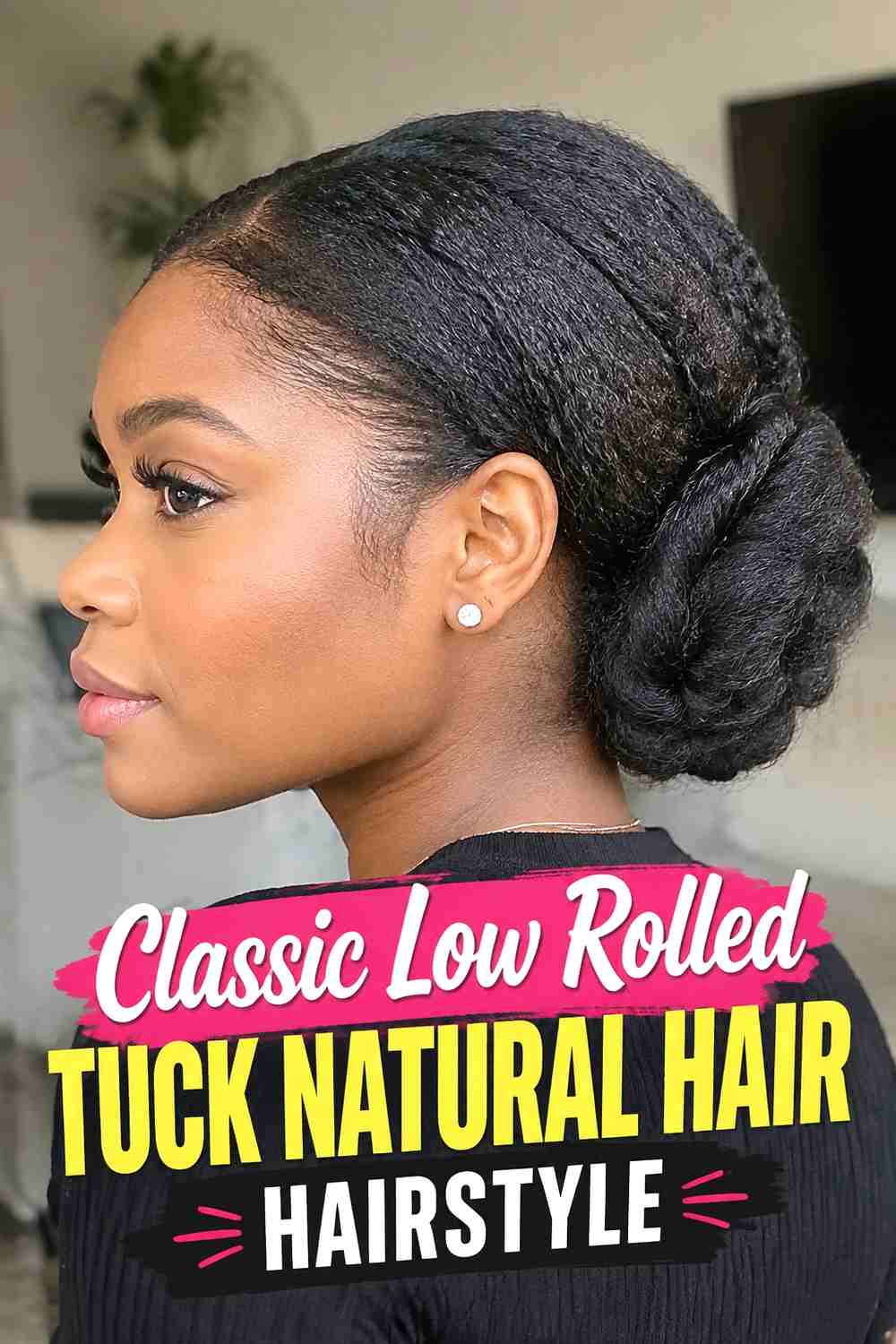
The classic low rolled tuck gathers natural hair toward the nape and folds the lengths inward to create a rounded, horizontal roll. It has the polished effect of a traditional updo while still allowing the hair’s natural texture to remain visible across the surface. The shape can be neat and compact or slightly fuller depending on density and length. Instead of forcing every strand flat, lightly guiding the sides toward the back helps the roll feel softer and more natural. This is a versatile starting point if you are new to rolled styles because the low placement makes the tucked section relatively easy to see and adjust while pinning.
Styling Notes
Form the roll in small sections rather than trying to tuck all the hair at once. Crossed pins can help support heavier areas while keeping the visible surface uncluttered.
Best For
This variation works especially well for medium to longer natural hair that can fold inward comfortably without excessive stretching.
2. Side Part Rolled Tuck Natural Hair Hairstyle
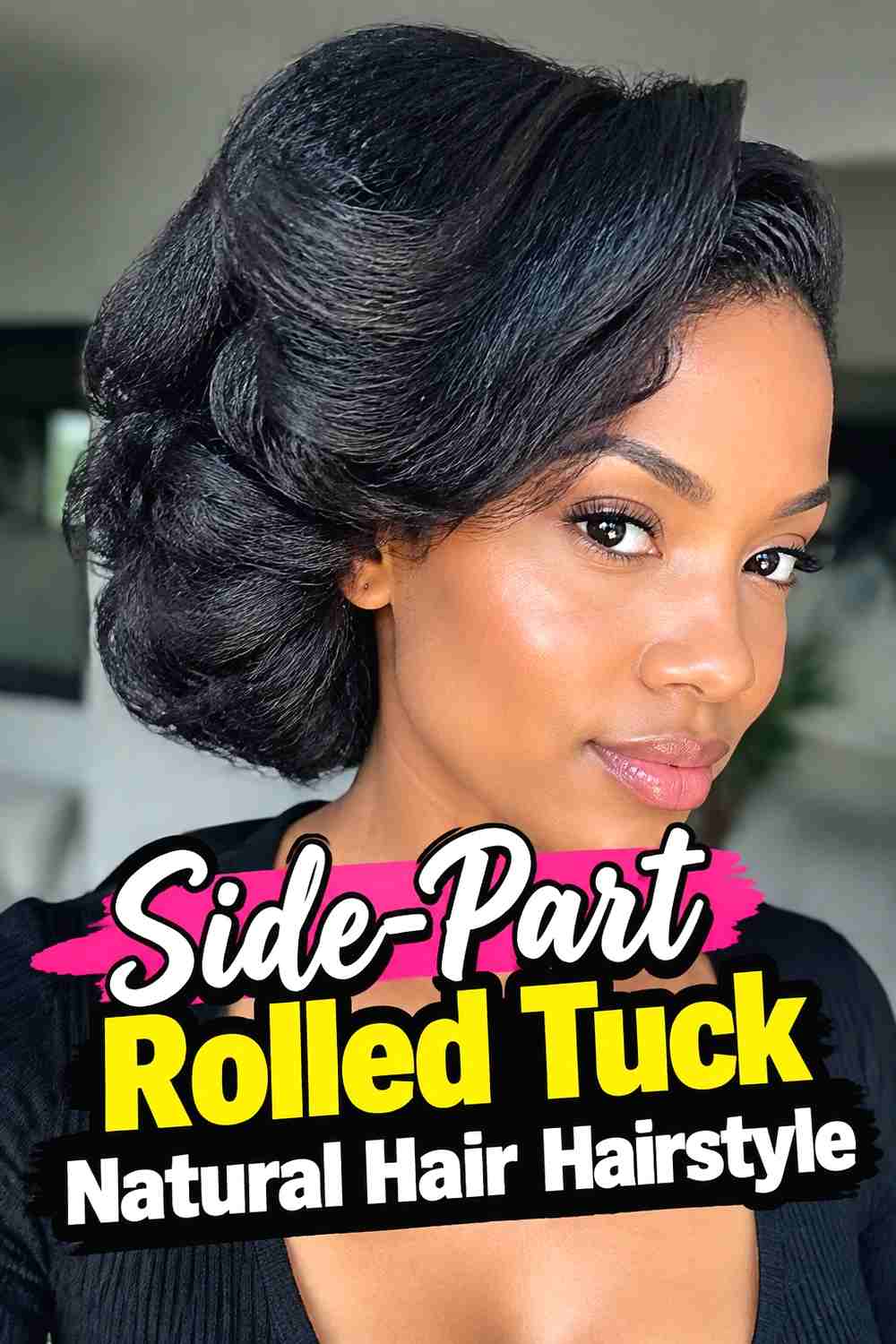
A side-part rolled tuck adds movement across the front before the hair transitions into the tucked section at the back. One side naturally carries more fullness, creating an asymmetrical front view even when the roll itself remains centered. The part can be crisp or softly defined depending on how polished you want the style to appear. Natural coils and waves can remain visible near the roots, while the lower lengths are guided inward to form the roll. This variation is useful when a fully brushed-back updo feels too severe. The side part creates an intentional direction that works well with earrings and open necklines while still keeping the majority of the hair contained.
Why It Works
The off-center part breaks up the symmetry and adds visual movement without requiring extra accessories or a complicated roll pattern.
Pro Tip
Create the side part before you begin pinning so the fuller front section can settle naturally into the direction of the tuck.
3. Center Part Rolled Tuck Natural Hair Hairstyle
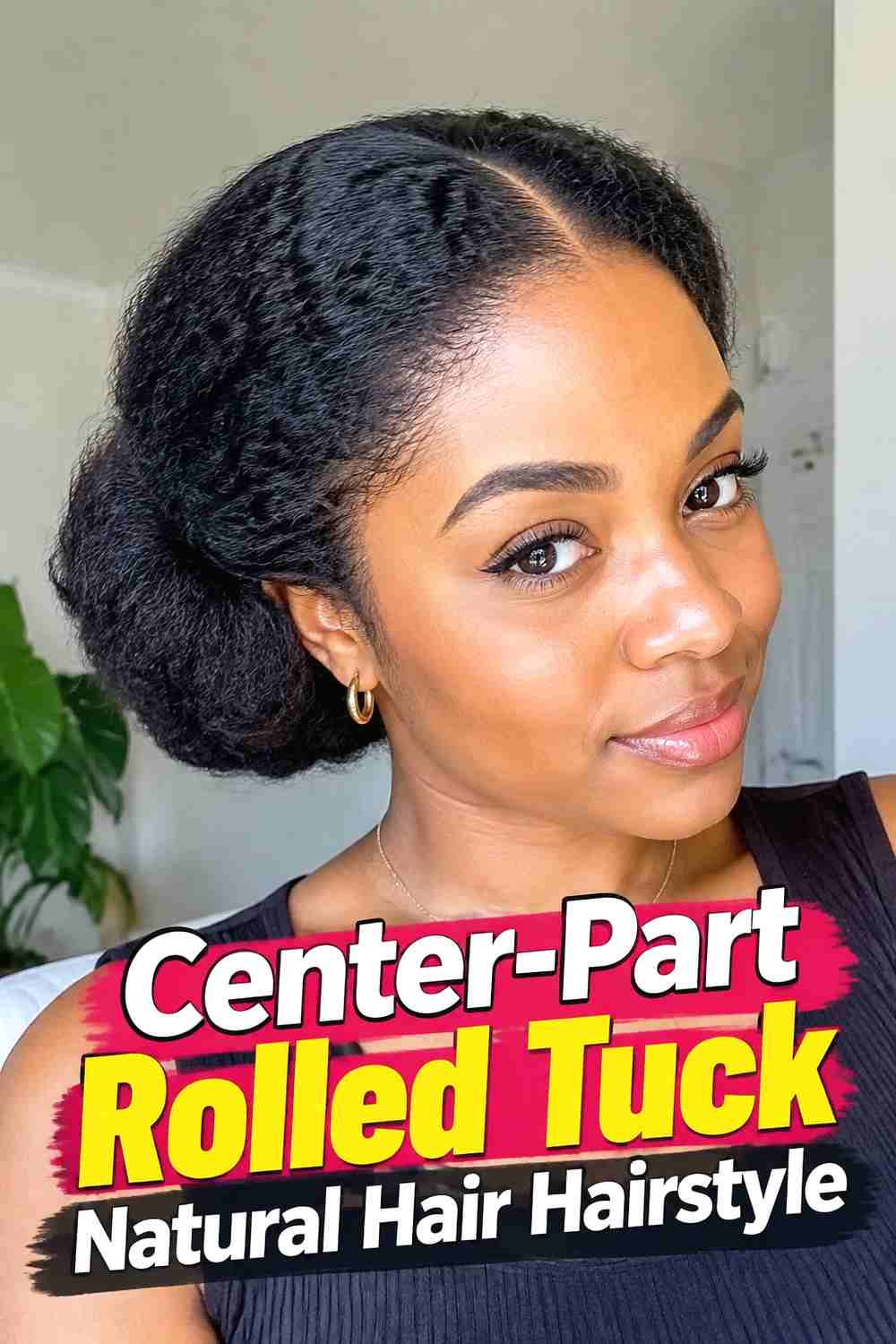
The center-part rolled tuck creates a balanced front profile by dividing the hair evenly before directing both sides toward the back. The symmetry gives the hairstyle a clean structure, while natural texture keeps it from looking rigid. Each side can be softly smoothed or left slightly full near the roots, depending on the finish you prefer. At the back, the lengths are rolled inward and tucked to create one continuous shape at the nape. This style can look especially striking when the center part is visible from the forehead through the crown. Keeping both sides similar in volume helps the roll feel balanced, but the texture does not need to be perfectly identical.
Styling Notes
Work on both sides in alternating steps so you can compare their volume as you go rather than completing one side before the other.
Best For
Choose this style when you prefer a symmetrical updo with a clearly defined part and a tidy low finish.
4. Flat Twist Front Rolled Tuck Natural Hair Hairstyle
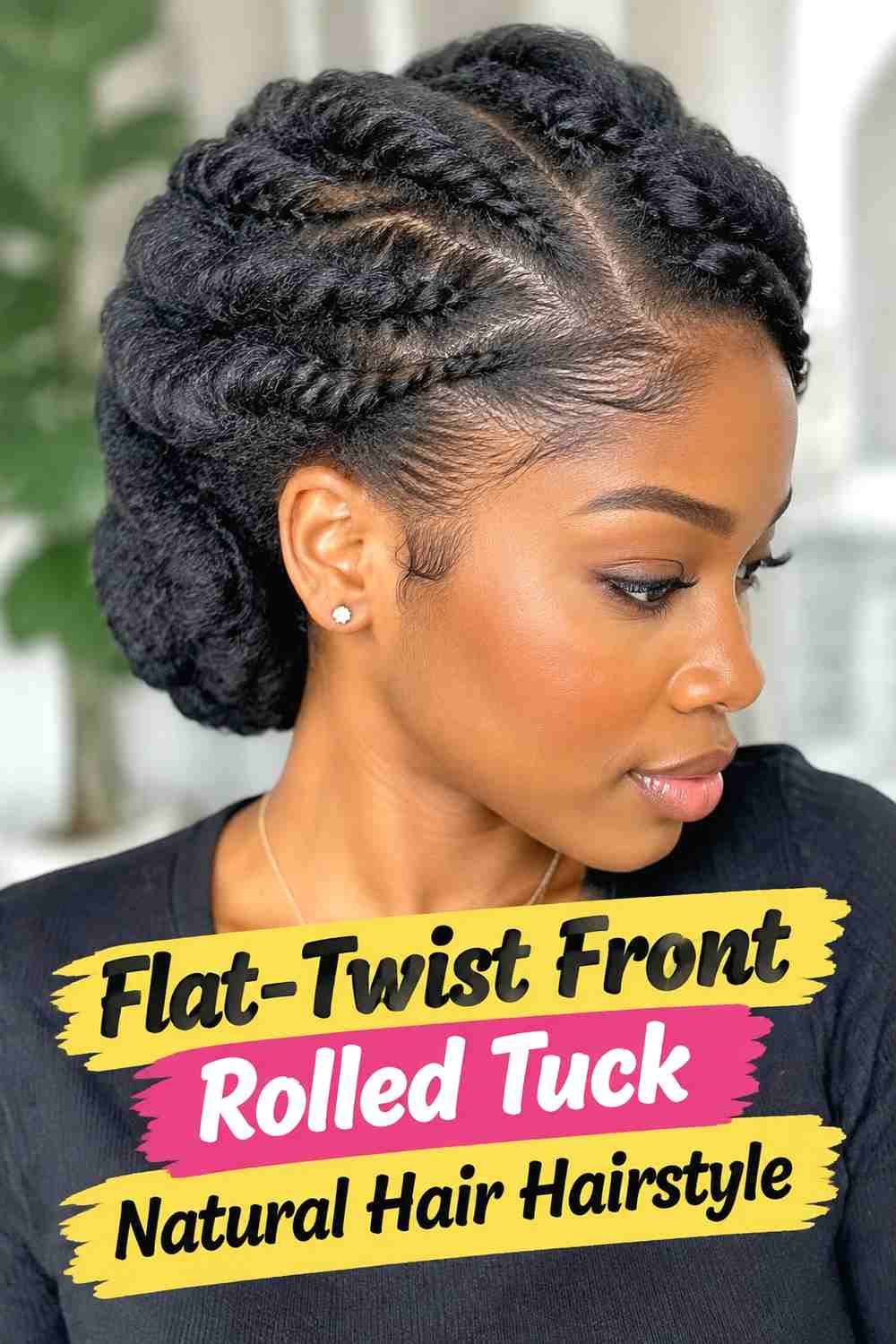
The flat-twist front rolled tuck adds structured detail before the hair reaches the main updo. One or more flat twists can begin near the hairline and travel backward, where they blend into the rolled section. The contrast between the defined twist pattern and the broader tucked roll makes the hairstyle look intricate without requiring decoration throughout the entire head. This idea works particularly well when you want the front to stay organized while still preserving natural texture through the rest of the style. The roll can remain low and horizontal or angle slightly upward toward the crown. Keep the flat twists secure but comfortable so they complement the updo instead of feeling overly tight.
Hair Type & Length
Curly and coily textures with enough length to flat twist and fold inward can create particularly clear definition in this design.
Styling Notes
Finish the flat twists before forming the roll so their ends can disappear neatly inside the tucked section.
5. Side Twist Rolled Tuck Natural Hair Hairstyle
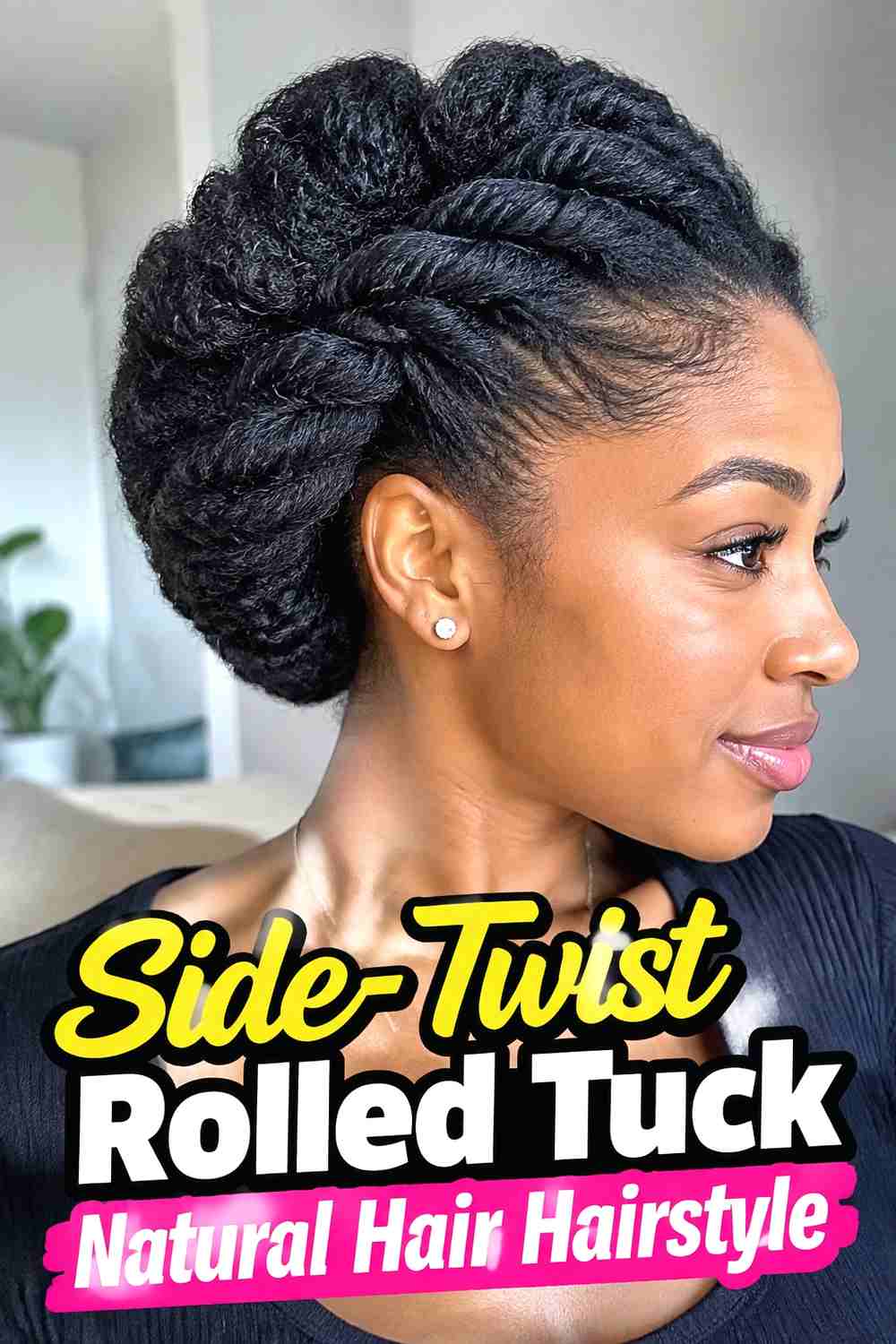
A side-twist rolled tuck uses one prominent twist as a directional feature along the temple or side of the head. The twist travels toward the back and disappears into the larger rolled section, creating a smooth transition between detail and volume. Keeping the opposite side simpler helps the twist remain the visual focus. You can make the accent broad and softly textured or tighter and more defined depending on your hair density and preferred finish. The rolled portion should still look substantial enough to balance the side detail. This version offers a practical way to change a basic tucked updo without adding several complicated sections or relying on decorative accessories.
Why It Works
A single side twist creates a strong design feature while keeping most of the hairstyle simple and easy to read visually.
Best For
This is a useful option when you like asymmetry but still want a polished tucked finish at the back.
6. Double Roll Natural Hair Tuck Hairstyle
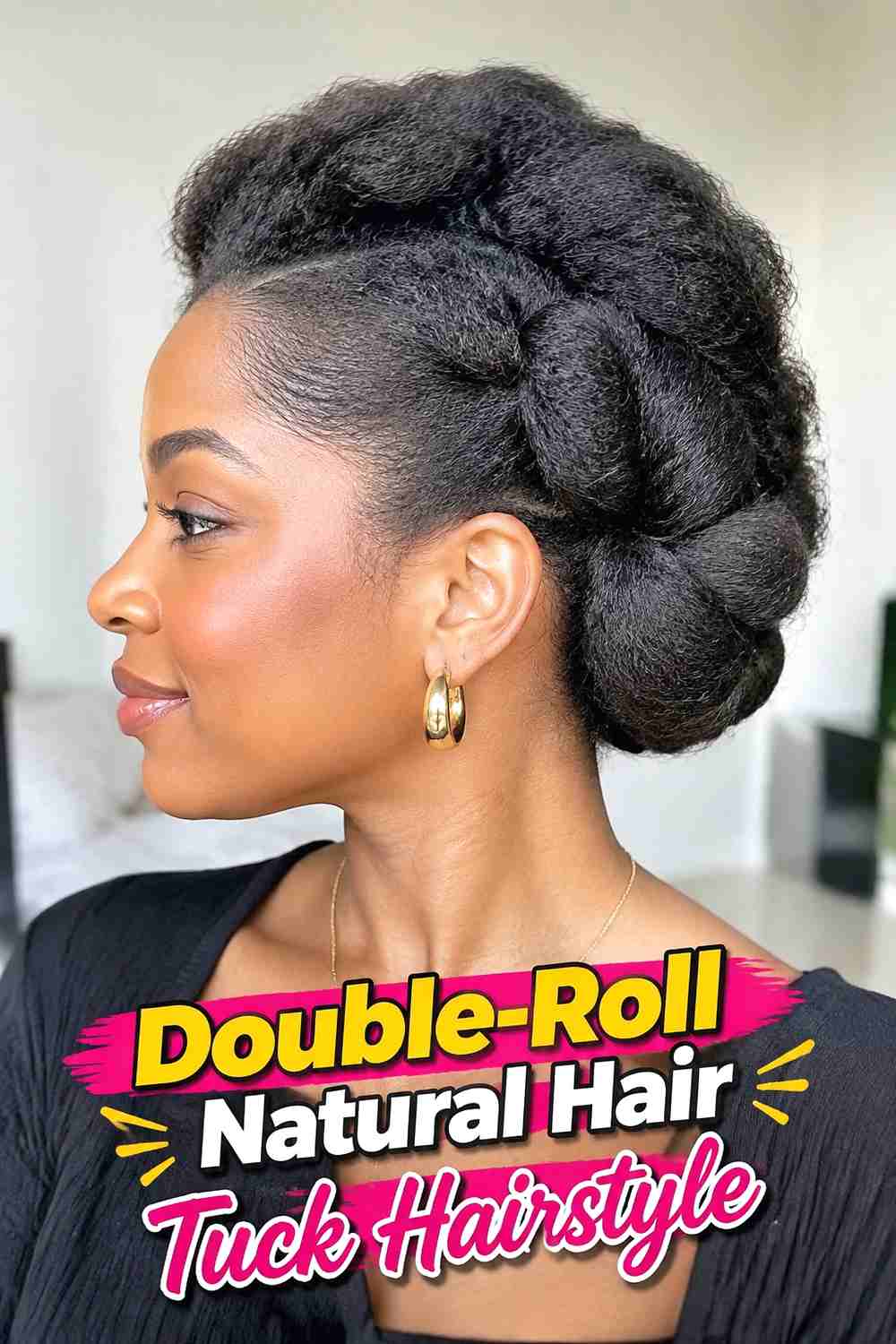
The double-roll natural hair tuck divides the updo into two distinct rolled sections rather than forming one continuous tuck. The rolls may meet vertically through the center back or sit side by side near the nape, depending on hair length and the desired shape. This separation gives the hairstyle extra dimension and can make thick natural hair easier to manage because the volume is divided between two sections. Each roll should feel balanced with the other, though slight differences in texture can keep the look natural. The result is sculptural without being overly elaborate, especially when the front remains softly arranged and the pins stay hidden beneath the rolled sections.
Styling Notes
Divide the hair evenly before rolling so one section does not carry significantly more weight than the other. Secure each roll independently for better control.
Why It Works
Splitting the hair into two sections creates visible structure while making a dense head of hair easier to tuck and pin securely.
7. Soft Crown Rolled Tuck Natural Hair Hairstyle
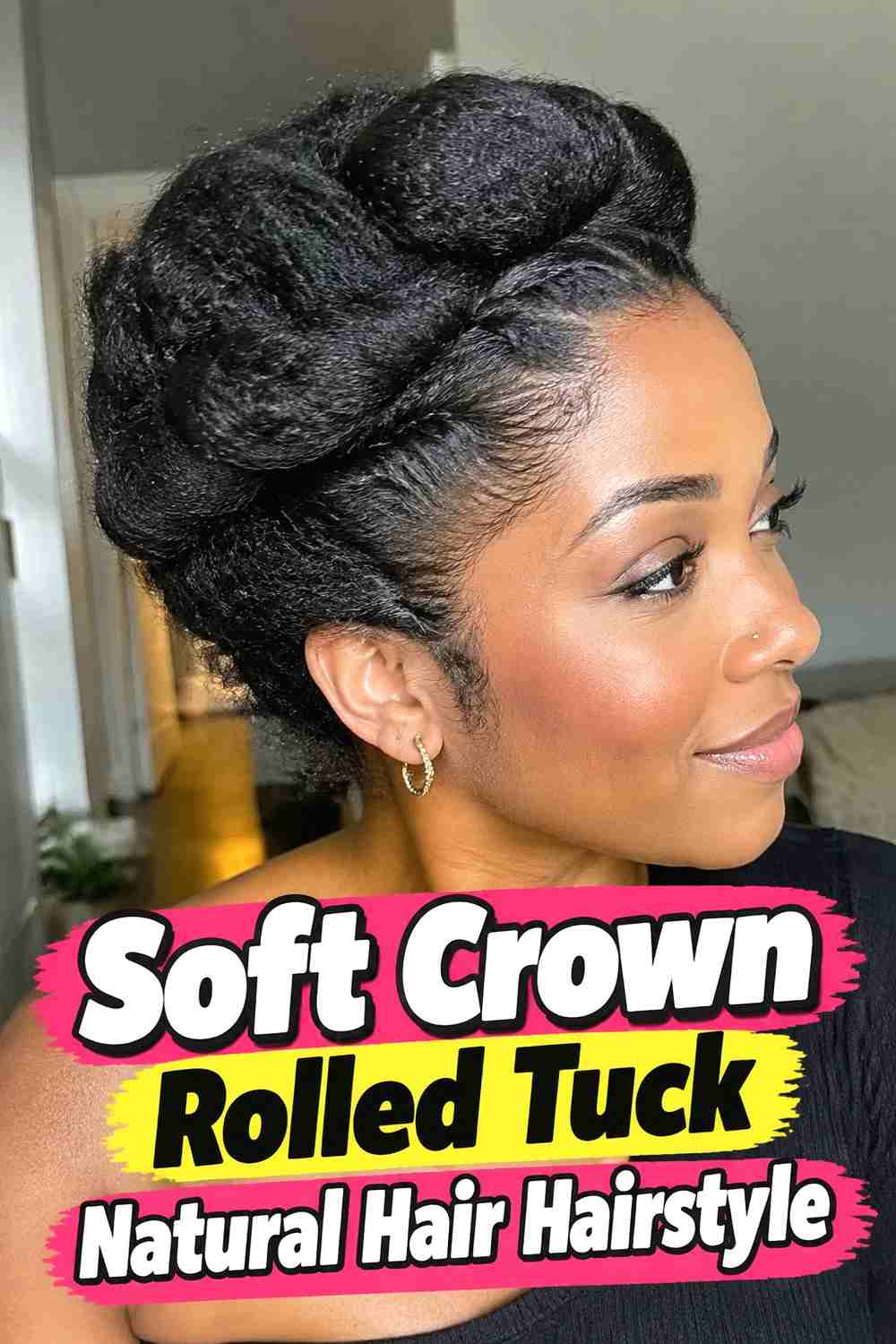
A soft crown rolled tuck lifts the shape slightly higher, allowing controlled volume through the upper back of the head before the ends disappear into the roll. The result is more elevated than a traditional nape tuck but still softer than a high formal updo. Natural root texture can remain visible, helping the crown feel full rather than heavily smoothed. The sides should transition gradually into the central roll so the hairstyle keeps a continuous silhouette. This variation can be particularly attractive when you want a little height without teasing or creating exaggerated volume. The finished shape feels graceful from the side because the crown rises gently before curving inward toward the tucked ends.
Styling Notes
Build volume through positioning rather than pulling the roots upward too tightly. Pin the roll after you are satisfied with the crown height.
Best For
This look works well for medium to long hair and for occasions where a slightly elevated updo feels more appropriate than a very low tuck.
8. Low Nape Rolled Tuck Natural Hair Hairstyle
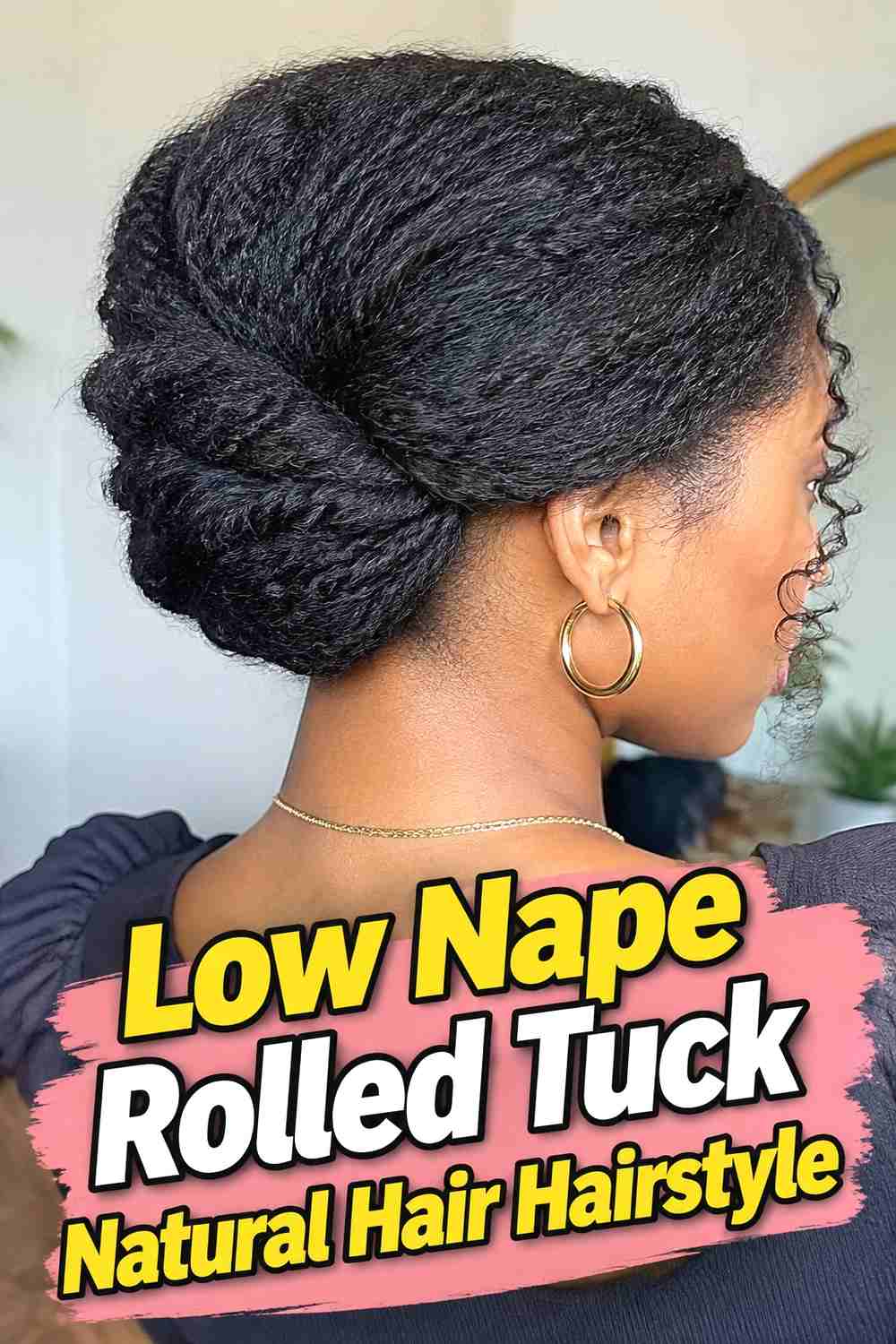
The low nape rolled tuck keeps the entire updo close to the neckline for a compact, understated silhouette. Rather than building height through the crown, the hair is directed downward and folded inward just above the nape. This placement highlights the neck and lets the natural surface texture remain the main decorative element. It can be worn with a side part, center part, or softly brushed-back front, making it one of the most adaptable rolled styles in the collection. Because the roll sits low, longer hair may need to be folded more than once before pinning. The goal is a secure shape that looks smooth enough to feel deliberate without flattening all visible texture.
Wear & Maintenance
Check the pins at the nape if the roll begins to loosen, especially with dense or longer hair. Reinforce the specific section instead of tightening the whole style.
Why It Works
The low placement creates an elegant shape with minimal height, making the hairstyle easy to pair with both casual and dressier outfits.
9. Asymmetrical Rolled Tuck Natural Hair Hairstyle
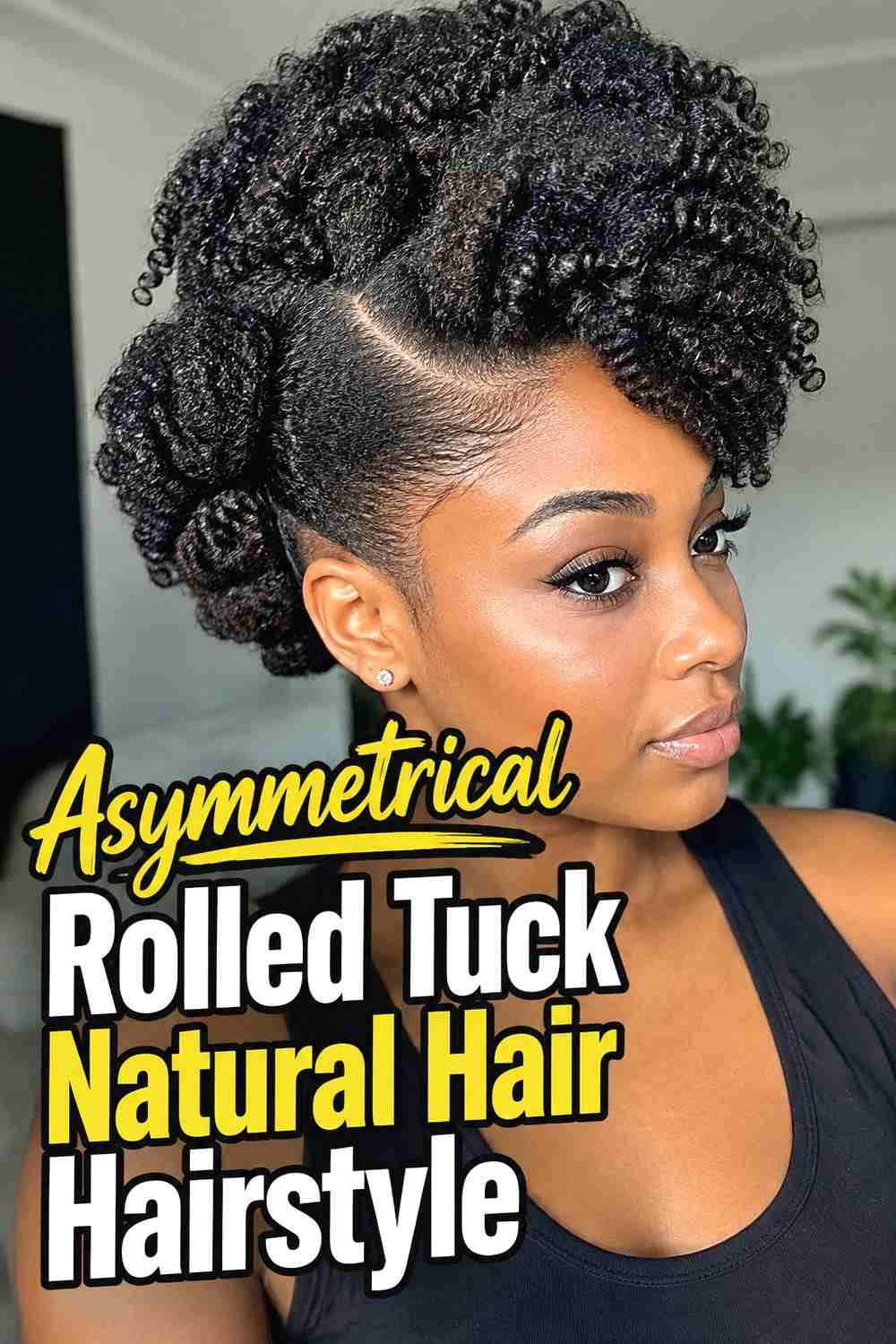
An asymmetrical rolled tuck shifts the main volume away from the exact center, allowing the roll to rise higher on one side or taper diagonally across the back. That change in placement creates a more directional silhouette while preserving the tucked-updo concept. One side may look fuller and more sculptural, while the opposite side remains smoother and closer to the head. Natural texture makes the uneven shape feel soft rather than severe. This variation works well if you enjoy hairstyles that look different from each profile. The key is making the imbalance deliberate: the roll should follow a clear diagonal or side-focused line instead of appearing uneven because of loose pinning.
Styling Notes
Choose the fuller side before you begin rolling and direct your sections toward that point consistently so the asymmetry remains intentional.
Best For
This option suits anyone who wants a more modern, sculptural interpretation of a traditional natural hair tuck.
10. Face Framing Rolled Tuck Natural Hair Hairstyle
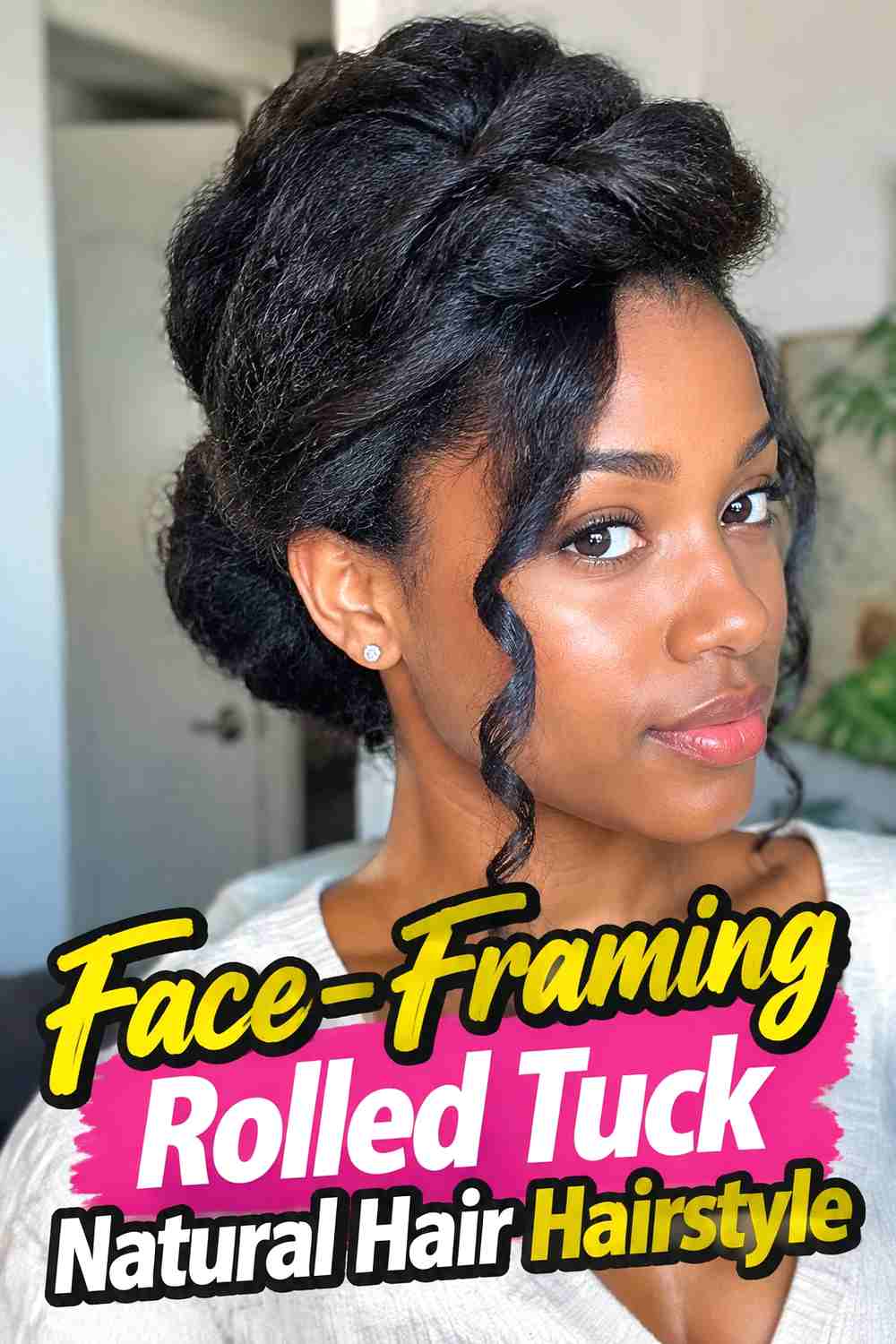
The face-framing rolled tuck leaves a few selected curls, coils, or softly stretched pieces free around the front while the rest of the hair is folded into a low updo. Those loose sections make the hairstyle feel relaxed and help connect the structured roll with the natural texture around the face. The pieces do not need to match perfectly; slight differences in curl shape can make the finish look more organic. Keep the main roll secure and visible so the hairstyle still reads clearly as a tuck. This design is especially appealing when you want an updo for photos, dinners, or special occasions but prefer something softer than a completely swept-back front.
Styling Notes
Choose the face-framing pieces before rolling the rest of the hair. Pulling them out afterward can disturb the pinned sections near the temples.
Why It Works
The loose pieces soften the updo while the rolled back keeps the overall hairstyle elegant and contained.
11. Textured Rolled Tuck Natural Hair Hairstyle
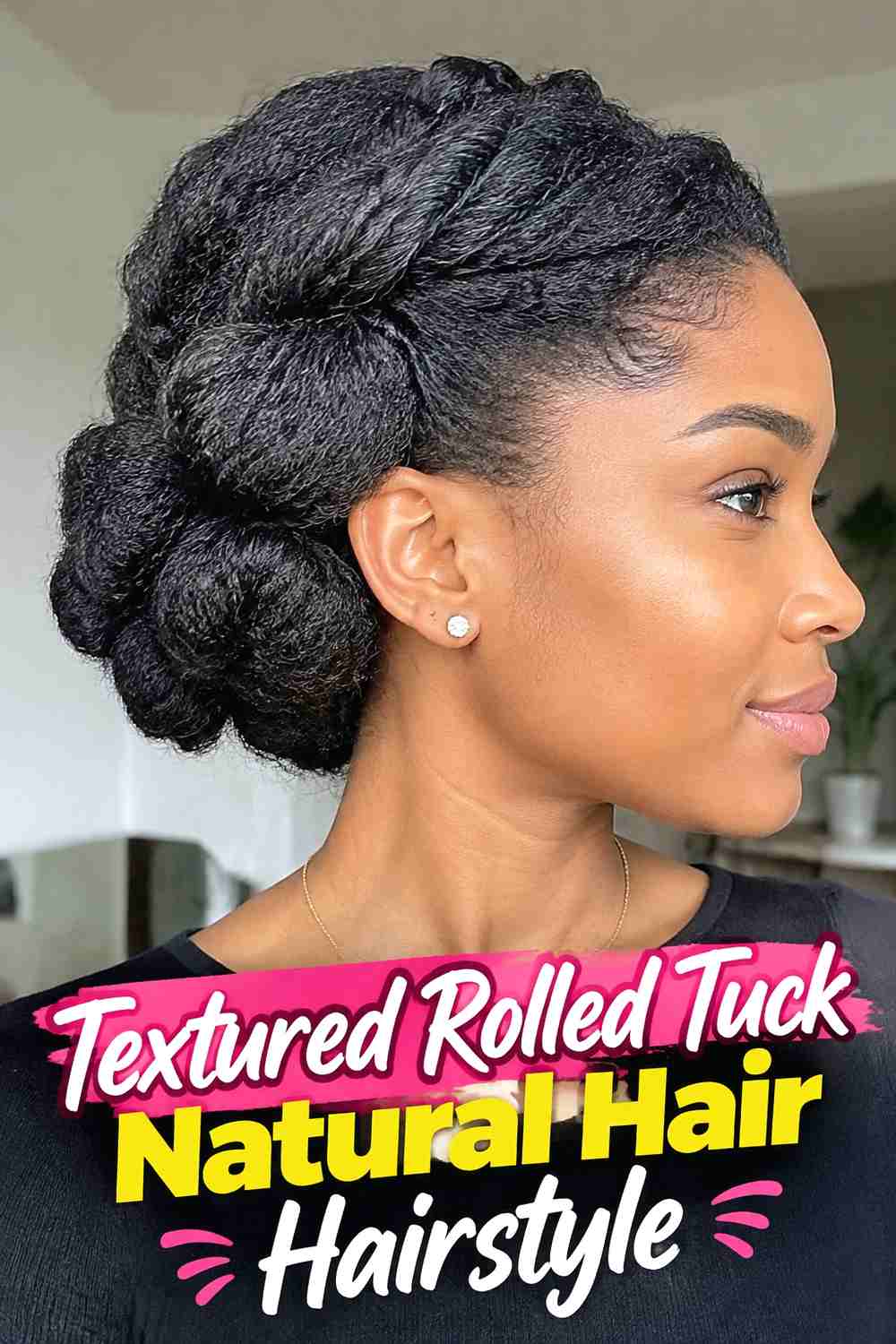
The textured rolled tuck emphasizes the natural surface of the hair instead of smoothing every section into a uniform finish. Visible coils, soft ridges, slight flyaways, and small variations in fullness can all contribute to the final look. The roll itself remains clearly defined, but the hair feeding into it is allowed to keep some natural dimension. This makes the style especially effective on curly and coily textures where the surface pattern adds interest without additional accessories. Rather than brushing repeatedly, use your fingers to guide the sections into place and pin only where support is needed. The result feels intentional and polished while still looking recognizably natural from every angle.
Why It Works
The hair’s existing texture supplies detail and volume, so the style does not depend on an ultra-sleek surface to look finished.
Pro Tip
Smooth selectively around areas that need control while leaving most of the visible texture intact for a fuller, more dimensional result.
12. Voluminous Rolled Tuck Natural Hair Hairstyle
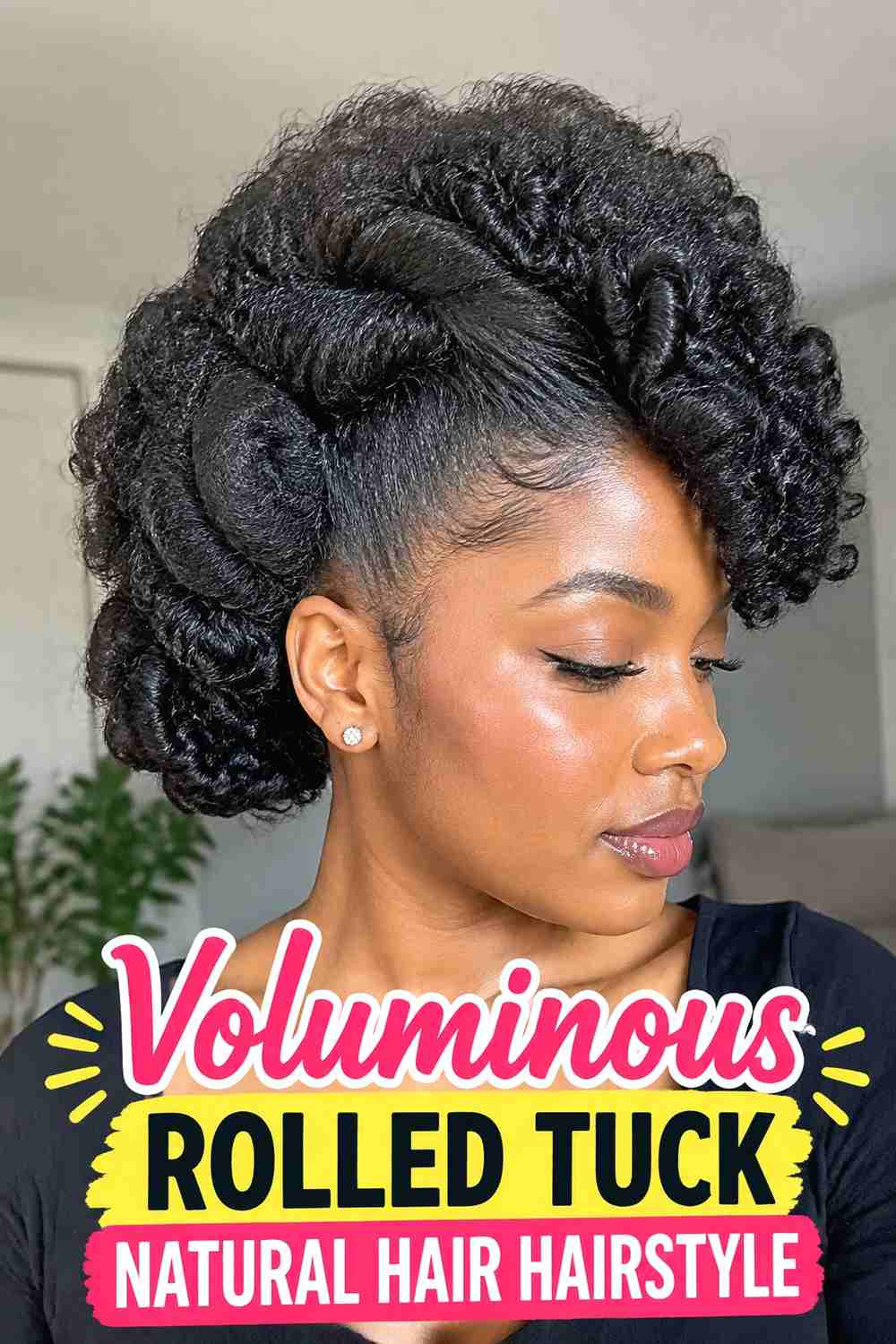
The voluminous rolled tuck uses the hair’s density to create a larger, rounded updo with noticeable fullness through the back and crown. Instead of compressing the roll close to the head, the lengths are folded inward with enough space to keep the shape airy. This can produce a dramatic silhouette without adding complicated braids or multiple accessories. Thick natural hair is particularly well suited to the look because the volume comes from the hair itself. Balance matters, however: the roll should feel evenly supported so one section does not sag or carry all the weight. A few well-positioned pins can create structure while allowing the visible surface to remain soft and expansive.
Hair Type & Length
Dense medium-to-long natural hair can create the fullest silhouette, although smaller rolls can achieve the same concept on less dense hair.
Wear & Maintenance
If the updo feels heavy, distribute the roll across a wider area rather than concentrating all the hair at one narrow anchor point.
13. Mini Twist Accent Rolled Tuck Natural Hair Hairstyle
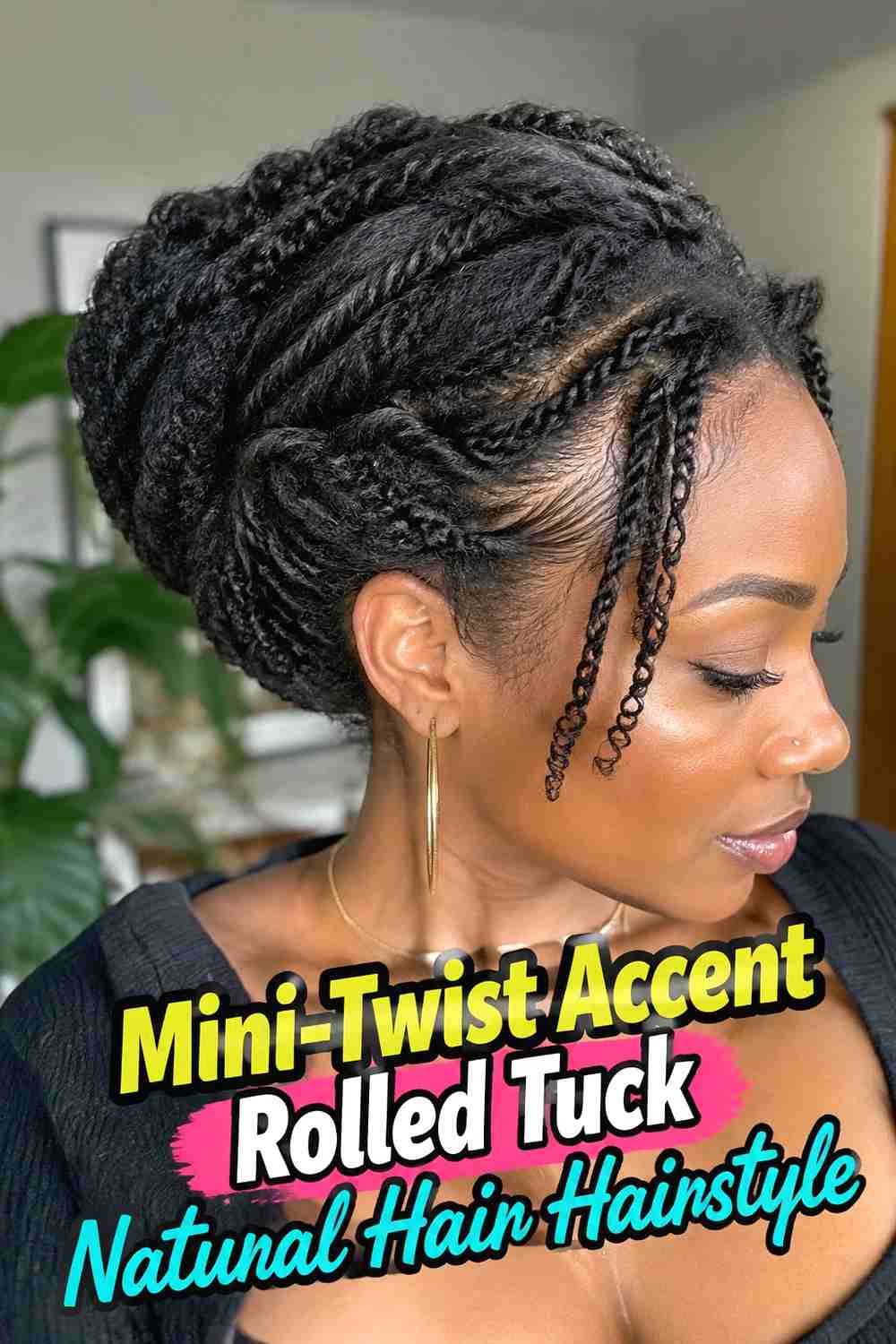
The mini-twist accent rolled tuck combines a broad tucked updo with a handful of smaller twists positioned near the front or sides. The twists introduce fine detail that contrasts nicely with the larger rolled shape at the back. You can use two or three accents along one temple, create symmetrical twists on both sides, or direct them toward the roll so their ends disappear completely. Keeping the number limited prevents the hairstyle from becoming visually busy. The rest of the hair can stay textured and softly arranged, allowing the mini twists to act as highlights rather than the main structure. This is an easy way to personalize a classic tuck while maintaining a clean overall silhouette.
Styling Notes
Complete the mini twists first and guide their ends toward the area where the roll will sit, making them easy to hide during the final tuck.
Best For
This version works well when you want extra front detail without committing to a fully twisted or braided updo.
14. Scarf Accented Rolled Tuck Natural Hair Hairstyle
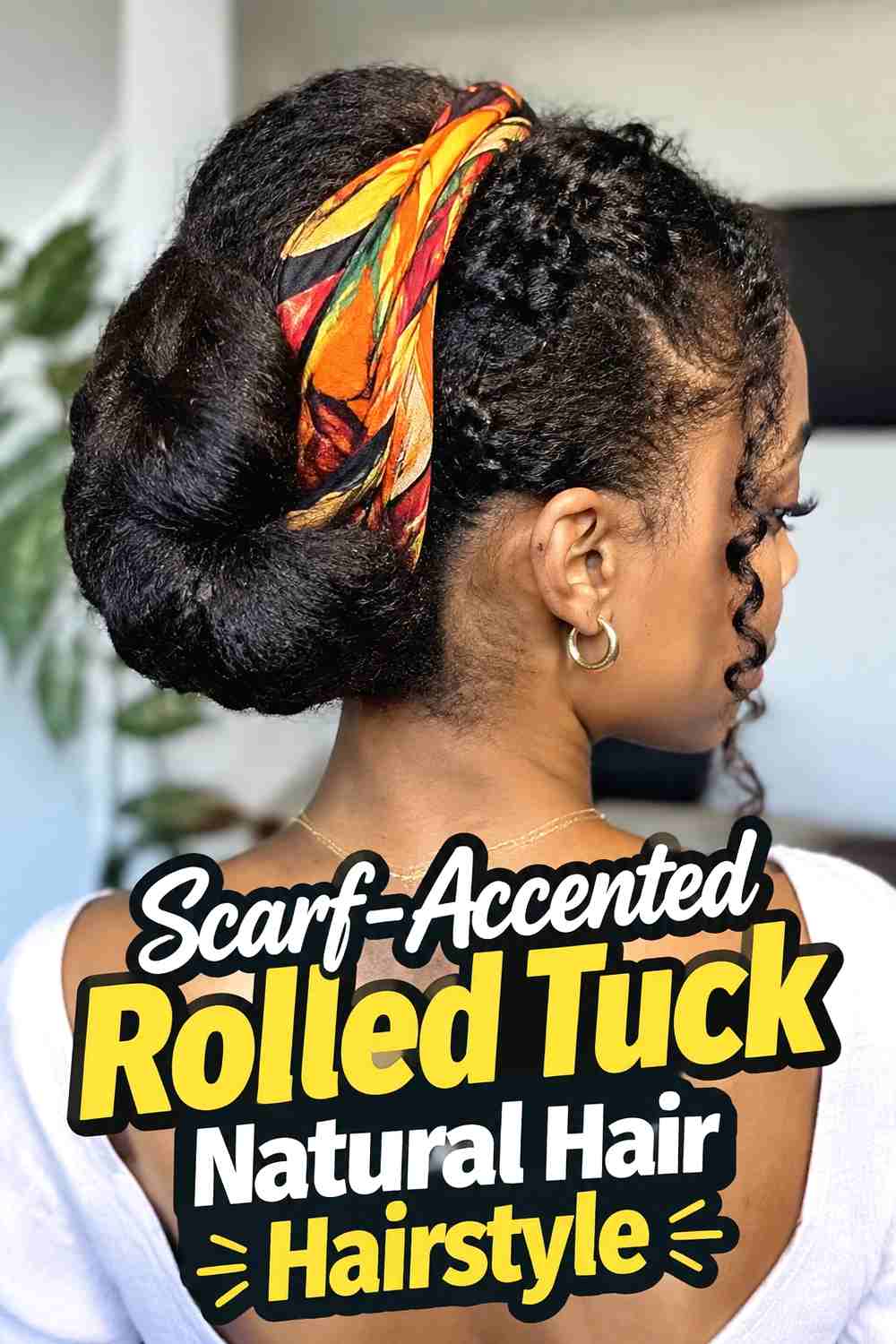
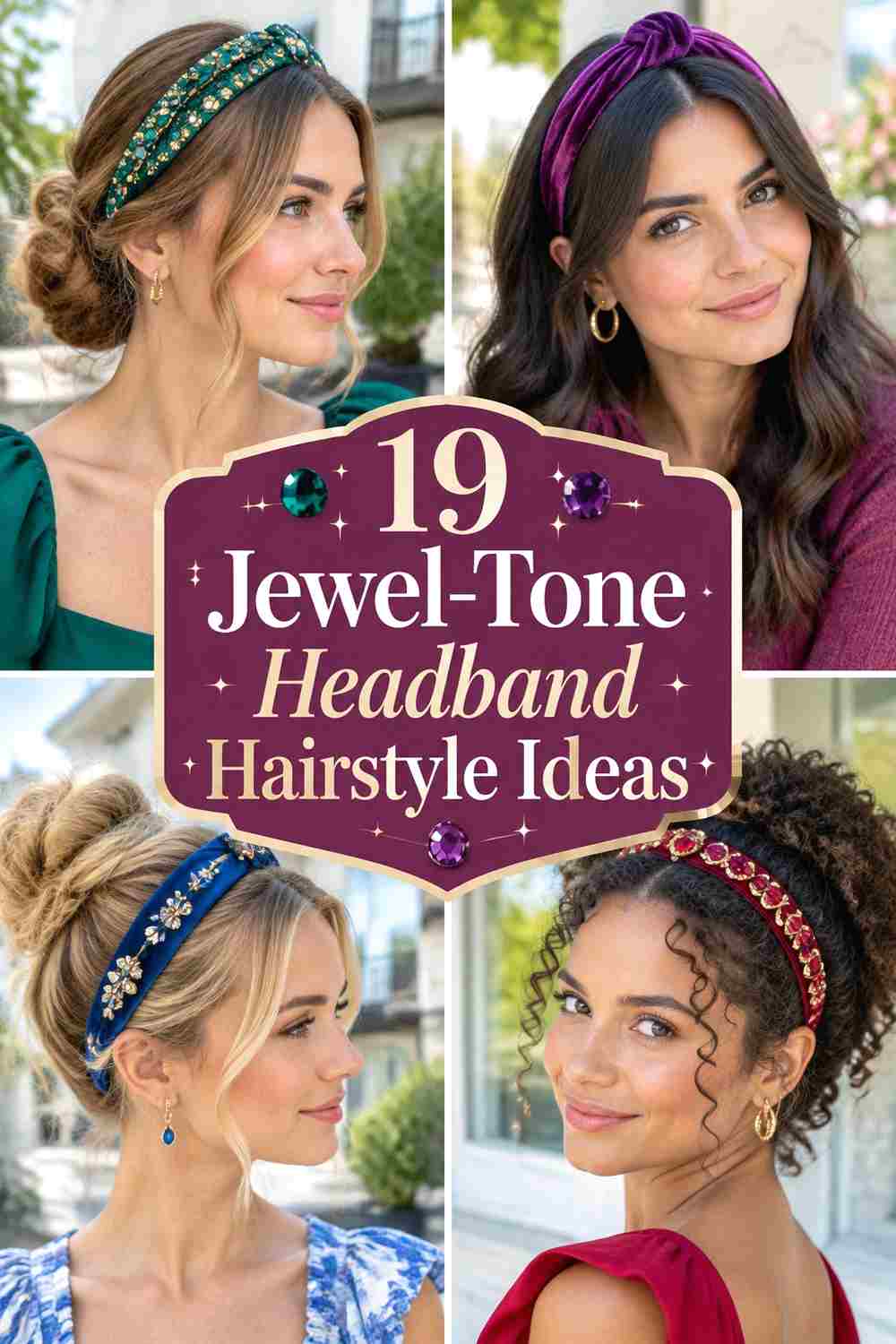
A scarf-accented rolled tuck adds color and pattern to the updo without covering the texture that makes the rolled shape distinctive. A narrow scarf can sit along the front like a headband, wrap subtly around the base of the roll, or finish with a small knot near the nape. Lightweight fabric tends to work best because it adds visual interest without overwhelming the hairstyle. The tuck itself should be completely secure before the scarf is added, allowing the accessory to remain decorative rather than carrying the weight of the hair. Coordinating the scarf with an outfit can turn a simple natural hair updo into a more intentional look for weekends, travel, or casual events.
Styling Notes
Secure the roll first, then position the scarf. This gives you more control over tension and helps keep the accessory from shifting the pinned shape.
Pro Tip
Choose a narrow or medium-width scarf so the rolled texture remains visible instead of being hidden beneath too much fabric.
15. Gold Cuff Rolled Tuck Natural Hair Hairstyle
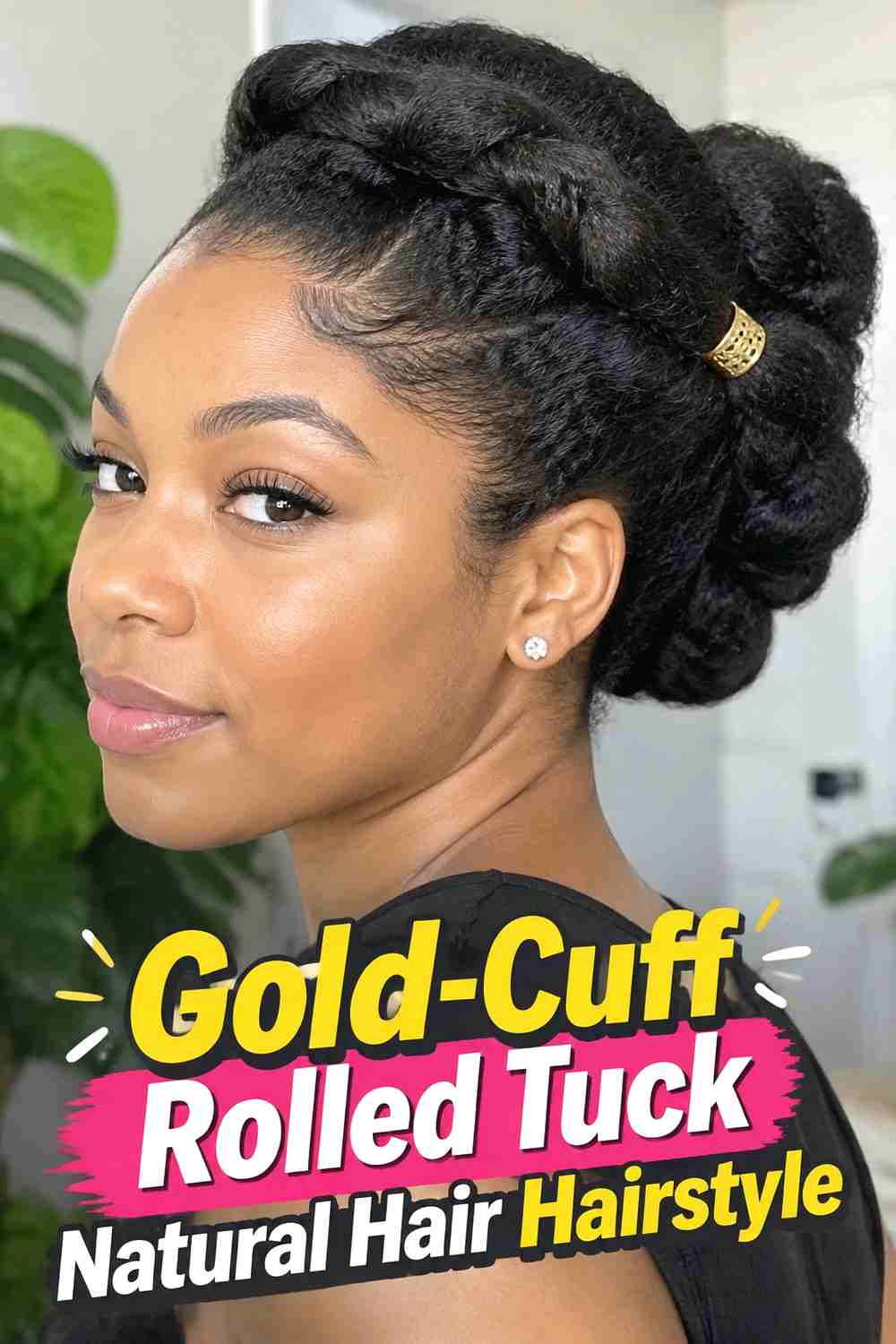
The gold-cuff rolled tuck uses a few metallic accents to highlight twists or small sections leading into the main roll. Rather than placing cuffs randomly throughout the hair, concentrating them near one side or along a defined twist creates a cleaner, more refined effect. The warm metallic detail stands out beautifully against dark natural hair while the broad rolled section keeps the hairstyle grounded and elegant. Because cuffs are decorative, they should not be relied on to hold the tuck together. Use discreet pins for support, then add the accents once the shape is finished. The result can feel dressy without requiring a large accessory, making it suitable for celebrations, dinners, or polished evening looks.
Best For
This variation works especially well when you want a small amount of shine while keeping natural texture and the rolled silhouette as the main features.
Wear & Maintenance
Check that each cuff sits securely on its section and does not catch nearby strands when adjusting the updo.
16. Floral Pin Rolled Tuck Natural Hair Hairstyle
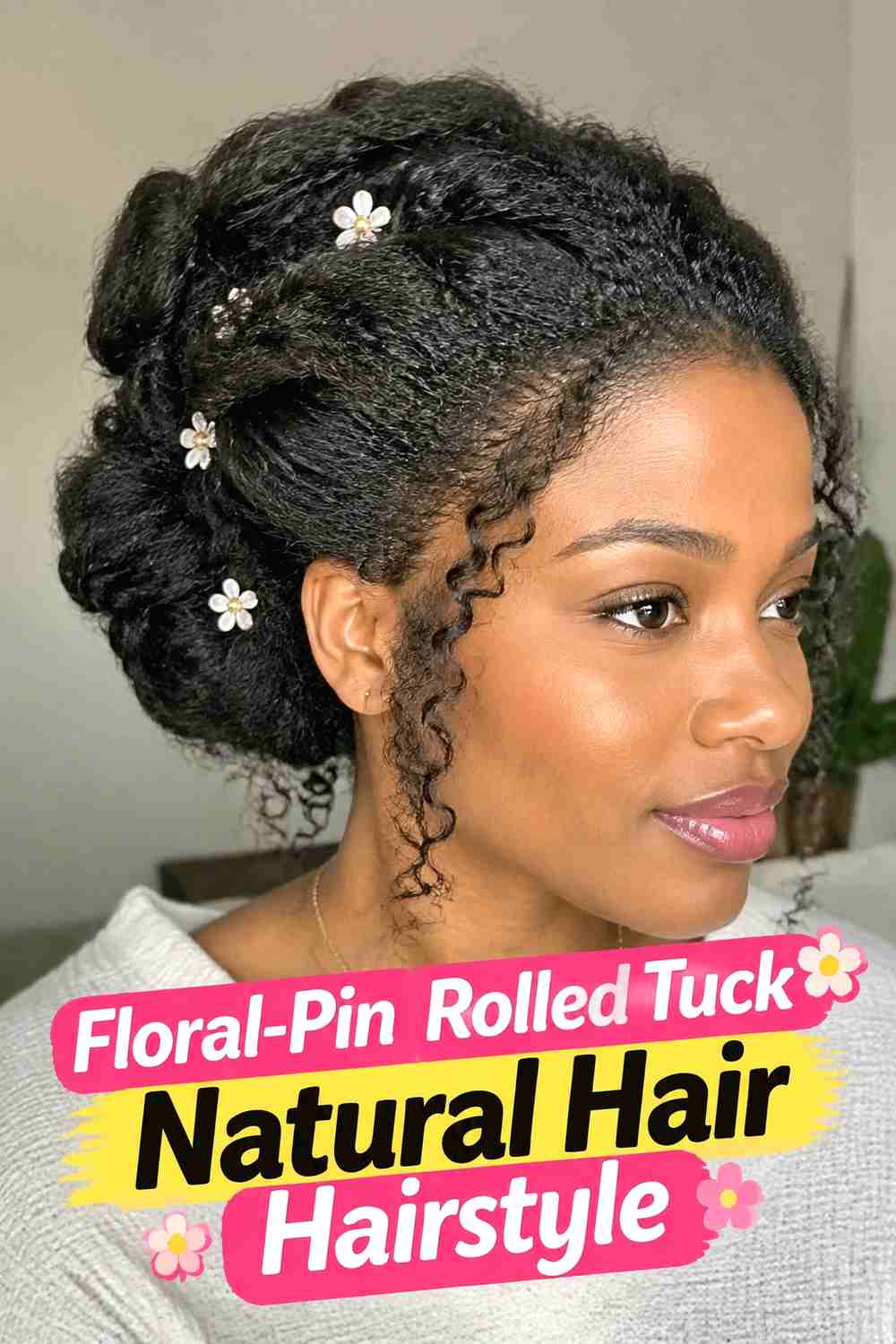
The floral-pin rolled tuck turns a simple natural hair updo into a soft occasion style by adding a few carefully positioned floral accents. Small pins can sit along one side of the roll, cluster near the nape, or mark the point where a twist blends into the tuck. Using only a few pieces keeps the overall design fresh and prevents the accessories from covering the texture. The flowers should complement the shape rather than determine it, so complete the rolled updo before deciding where decoration is needed. This approach works especially well with a softly textured or slightly voluminous roll because the accessories can nestle between sections without making the hair look overly formal.
Styling Notes
Start with one focal floral pin and add smaller accents only if the hairstyle still feels balanced. Leave the central roll clearly visible.
Best For
Consider this variation for weddings, garden events, celebrations, photos, or any occasion where a subtle decorative detail suits the outfit.
17. Sleek Front Rolled Tuck Natural Hair Hairstyle
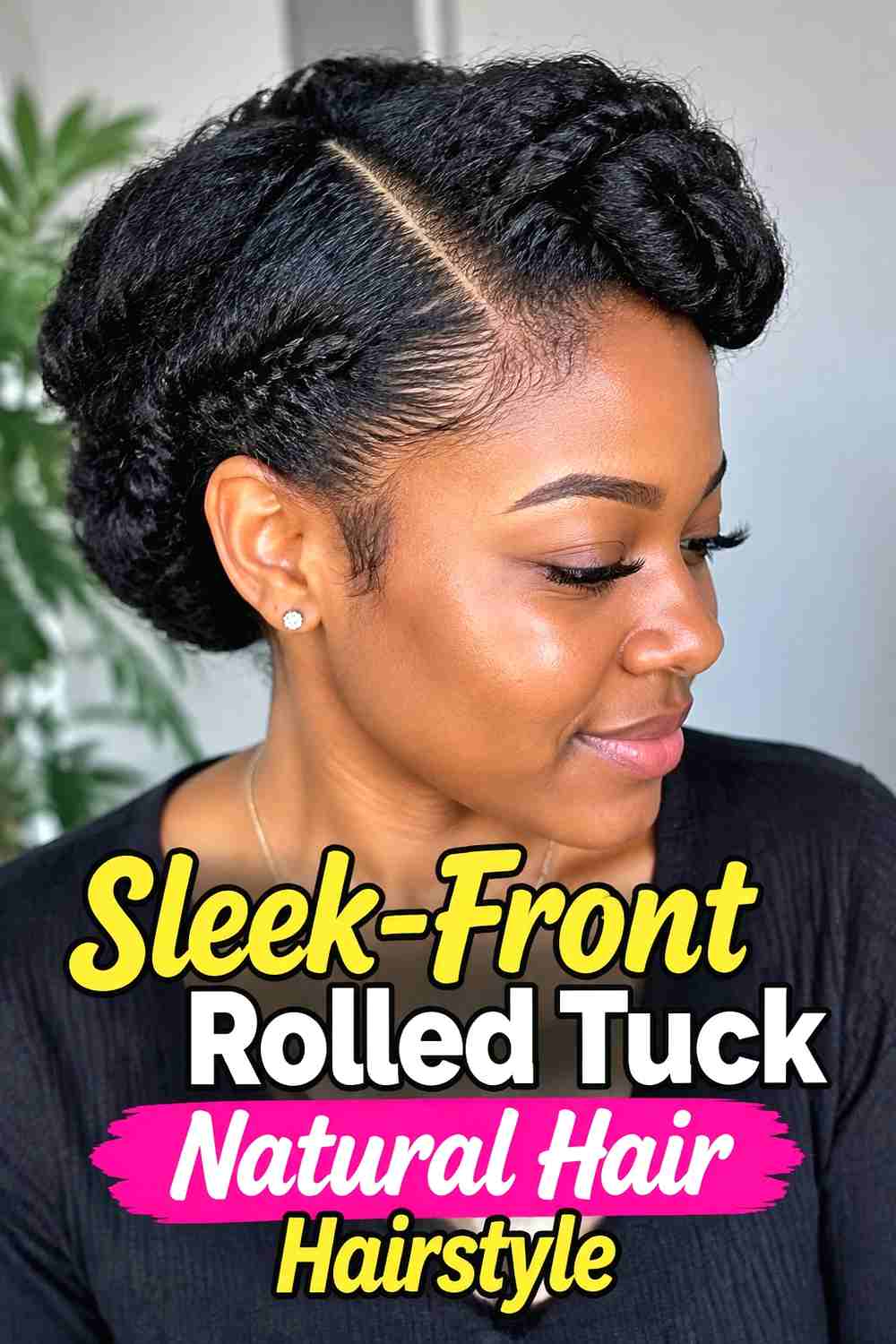
The sleek-front rolled tuck contrasts a smoother hairline and crown with a fuller, textured roll at the back. The front can be arranged with a clean side part, center part, or swept-back shape depending on your preference. The goal is controlled polish rather than making the hair look unnaturally flat. As the hair reaches the back, the lengths fold inward to create a rounded tucked section with enough volume to balance the cleaner front. This variation works well when you enjoy a more refined updo but still want the texture and density of natural hair to remain visible in the finished style. Keeping the transition gradual helps the smooth and textured areas feel connected.
Styling Notes
Smooth only the visible front sections that need extra control, then handle the back more lightly so the roll maintains its natural fullness.
Why It Works
The contrast between the clean front and dimensional back creates a polished silhouette without requiring every section to have the same finish.
18. Soft Romantic Rolled Tuck Natural Hair Hairstyle
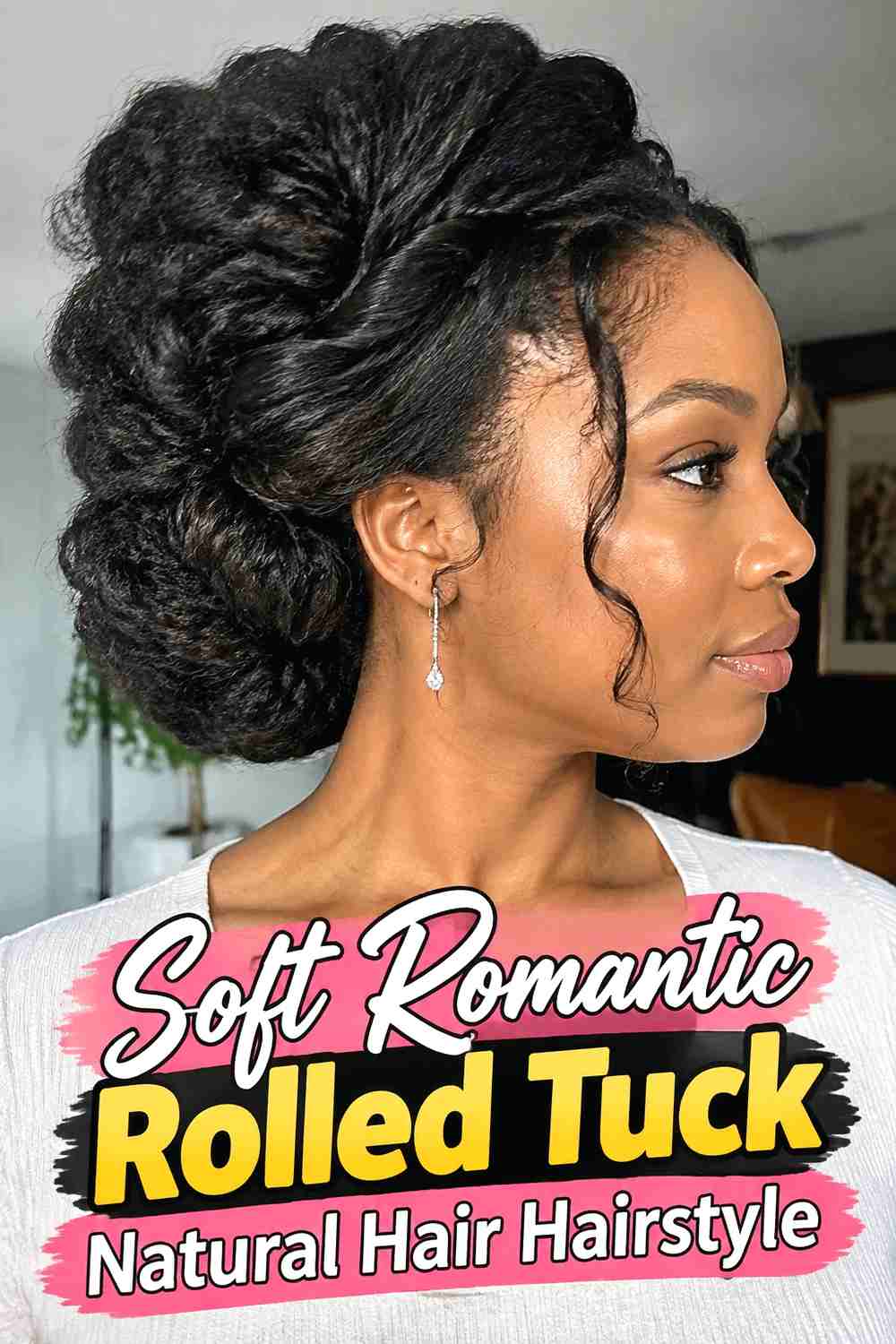
The soft romantic rolled tuck combines a gently rounded back with subtle crown volume and a few relaxed details around the front. Instead of aiming for perfectly uniform sections, the roll can show slight changes in texture and fullness that make the updo feel more natural. Loose curls near the temples, a soft side part, or a small twist can add movement without competing with the main shape. The tuck should remain secure but not overly compact, allowing enough dimension for the hairstyle to look graceful from the side and back. This version is especially versatile for dinners, celebrations, photos, or formal events when you want natural texture to remain part of the finished look.
Styling Notes
Secure the basic roll before loosening selected areas. Adjusting only a few sections helps create softness without weakening the structure of the updo.
Best For
This style is a strong choice when you want an elegant natural hair updo that feels softer and less rigid than a highly sculpted formal roll.
How to Choose the Right Look
Begin with your hair length and density. Medium and long natural hair usually provides enough length for a full inward roll, while shorter sections may be easier to incorporate through twists, smaller tucks, or a compact nape-level shape. Very dense hair can create beautiful volume, but dividing the updo into sections may make pinning more manageable.
Next, decide how polished you want the front to look. A center part, sleek front, or clearly defined side part creates more structure. Textured, face-framing, and romantic versions allow extra softness around the roots and hairline.
Consider the placement of the roll as well. A low nape tuck produces a compact silhouette, while a crown-level or voluminous roll creates more height. Asymmetrical and double-roll versions add structure if you want something less traditional.
Accessories should support the overall mood rather than hide the hairstyle. Scarves work well for casual looks, while floral pins or metallic cuffs can make the same basic tuck feel more occasion-ready.
Finally, prioritize stability and comfort. Use enough pins to support the shape, but avoid pulling sections tighter simply because the roll shifts. Repositioning or dividing a heavy section often provides a more comfortable result than concentrating everything at one anchor point.
Final Thoughts
Natural hair rolled tuck hairstyles can range from compact everyday updos to voluminous, detailed occasion styles. A different part, twist pattern, roll placement, or accessory can change the entire look while keeping the same basic tucked construction.
For a simple starting point, try a classic low or nape-level roll. If you prefer more detail, experiment with flat twists, mini twists, asymmetry, accessories, or face-framing texture. The strongest version is one that works with your natural density and length while remaining secure and comfortable.
FAQs
1. What is a natural hair rolled tuck hairstyle?
It is an updo where sections of natural hair are rolled inward and the ends are tucked underneath, creating a rounded or sculpted shape instead of leaving the lengths loose.
2. What hair length works best for a rolled tuck?
Medium to long hair generally provides the most flexibility, but shorter natural hair may still work in smaller rolls or sectioned tucks if enough length is available to fold and pin securely.
3. Can a rolled tuck work on curly and coily hair?
Yes. Curly and coily textures can create beautiful volume and surface detail in a rolled tuck. The hairstyle can be worn textured rather than completely smoothed.
4. How do I keep a rolled tuck secure?
Form the roll in manageable sections and use discreet pins to anchor each area. If one section feels heavy, divide or reposition it instead of relying on a single tight anchor point.
5. Can I accessorize a natural hair rolled tuck?
Yes. Scarves, floral pins, cuffs, and small decorative clips can work well. Add them after the main updo is secure so they remain decorative rather than providing the primary hold.
Save your favorite natural hair rolled tuck hairstyle ideas, share the looks that inspire you, and explore more textured updos for your next style.