18 Stretch Headband Hairstyles with Long Hair
Stretch headbands make long hair easier to shape, adding a clean frame to loose lengths, polished ponytails, relaxed braids, buns, and half-up styles.
Long hair gives you plenty of options for wearing a stretch headband because the accessory can control the front while leaving the length loose, braided, twisted, or gathered. A soft fabric band can feel sporty and practical, while a smooth or printed version can make the same hairstyle look more polished.
The main things to compare are headband width, grip, hair texture, volume, and how much of your length you want contained. Low ponytails and buns work well when you need control, while loose hair and half-up looks keep the length visible. The most wearable styles let the band support the silhouette without flattening the roots or replacing the elastics and pins that should provide the real hold.
Quick List
- Classic Loose Length Stretch Headband Hairstyle
- Sleek Low Ponytail Stretch Headband Hairstyle
- Half Up Stretch Headband Hairstyle
- High Ponytail Stretch Headband Hairstyle
- Side Braid Stretch Headband Hairstyle
- Low Bun Stretch Headband Hairstyle
- Face Framing Layers Stretch Headband Hairstyle
- Braided Ponytail Stretch Headband Hairstyle
- Crown Lift Stretch Headband Hairstyle
- Center Part Stretch Headband Hairstyle
- Twisted Half Up Stretch Headband Hairstyle
- Bubble Ponytail Stretch Headband Hairstyle
- Low Side Ponytail Stretch Headband Hairstyle
- Long Waves Stretch Headband Hairstyle
- Claw Clip Stretch Headband Hairstyle
- Top Knot Stretch Headband Hairstyle
- Double Braid Stretch Headband Hairstyle
- Retro Long Hair Stretch Headband Hairstyle
1. Classic Loose Length Stretch Headband Hairstyle
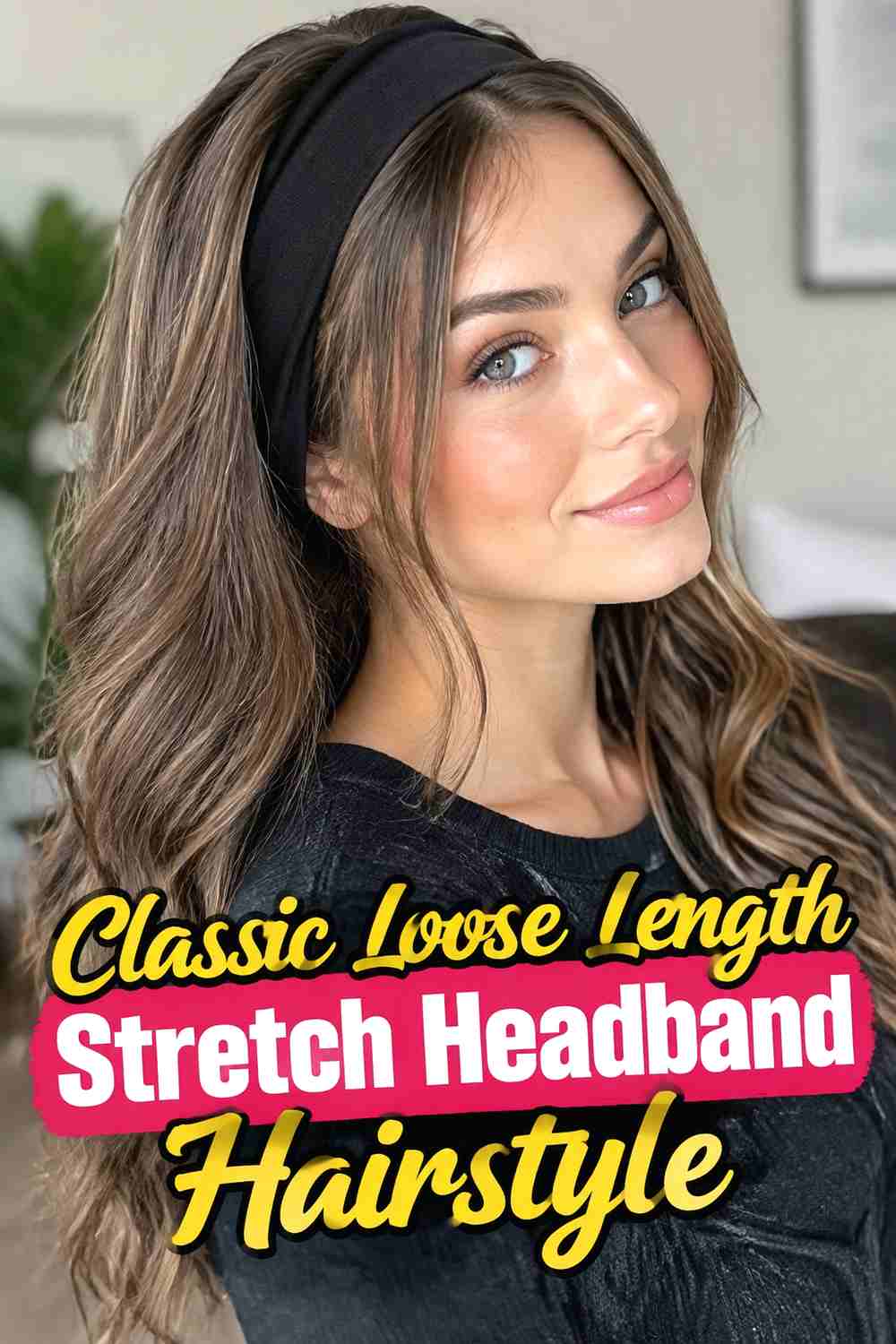
The Classic Loose Length Stretch Headband Hairstyle is the simplest way to combine a comfortable fabric accessory with the impact of long hair. Style the lengths straight, softly waved, or in their natural texture, then position the stretch band slightly behind the hairline. Let the hair fall freely over the shoulders or down the back so the length remains the main feature. A medium-width band usually creates enough definition without covering too much of the crown. Keep a little natural lift behind the accessory rather than pulling the roots completely flat. Solid neutral bands feel minimal, while rich colors and prints can turn this very easy hairstyle into a stronger outfit detail.
Styling Notes
Arrange the hair before sliding the band into place. Repeatedly moving a stretch band over finished lengths can create flyaways and disturb the surface.
Best For
This look is ideal for everyday wear, errands, travel, casual workdays, or anytime you want your long hair loose but kept away from the face.
2. Sleek Low Ponytail Stretch Headband Hairstyle
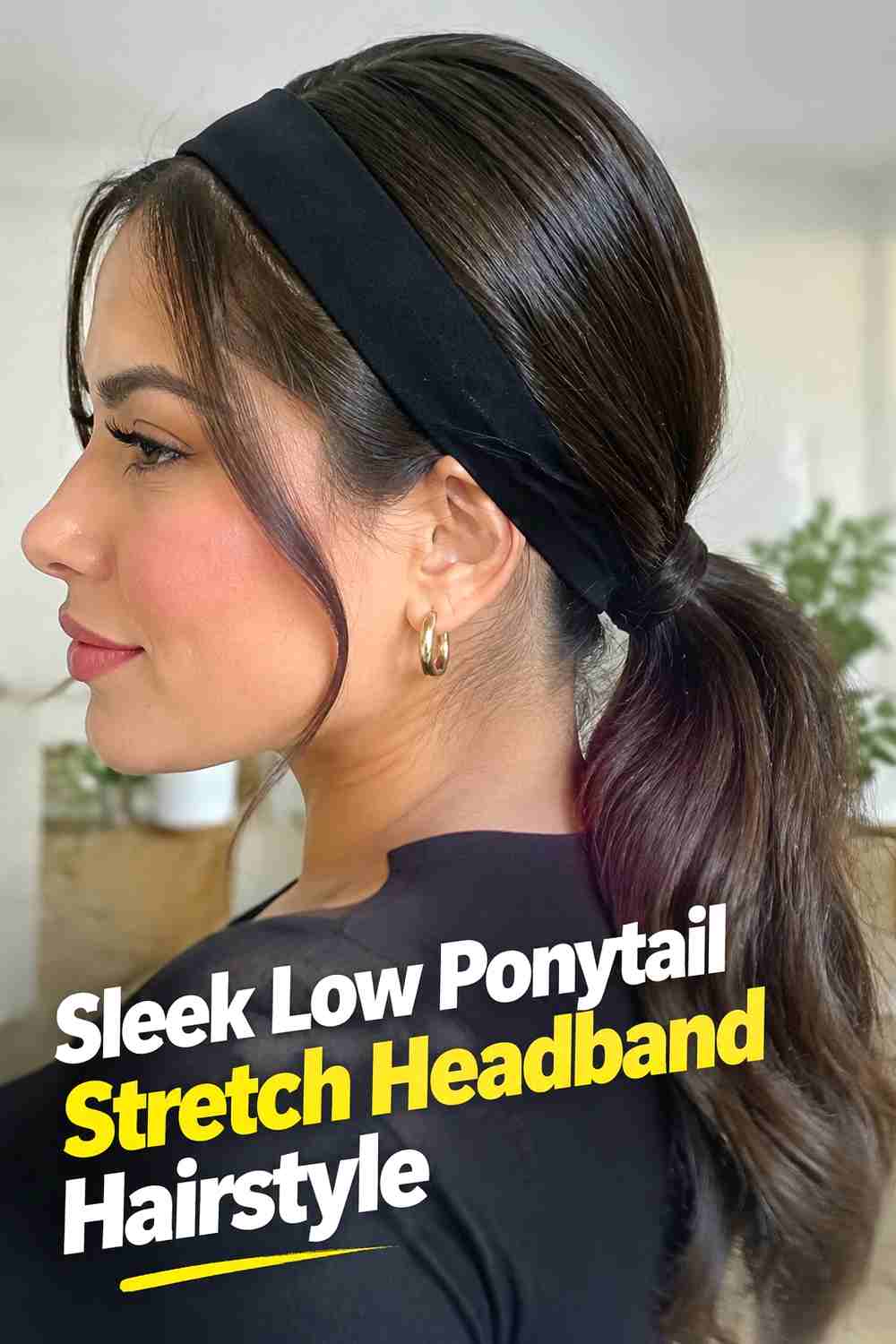
The Sleek Low Ponytail Stretch Headband Hairstyle gives long hair a controlled silhouette without hiding its length. Smooth the front and sides gently, gather the hair at the nape, and secure it with a strong elastic. Place the stretch headband behind the hairline so it frames the polished upper section while the ponytail remains long and visible. Straight hair creates the cleanest effect, although soft waves through the tail can make the look more relaxed. Wrap a small strand around the elastic if you want a finished base. Avoid making the front excessively tight; a little softness near the crown keeps the style comfortable and prevents the band from looking pressed against the scalp.
Wear & Maintenance
Secure the ponytail first and treat the headband as a separate accessory. This makes it easier to adjust the band without loosening the gathered hair.
Best For
Choose this style for office wear, commuting, travel, dinners, or days when loose long hair feels impractical.
3. Half Up Stretch Headband Hairstyle
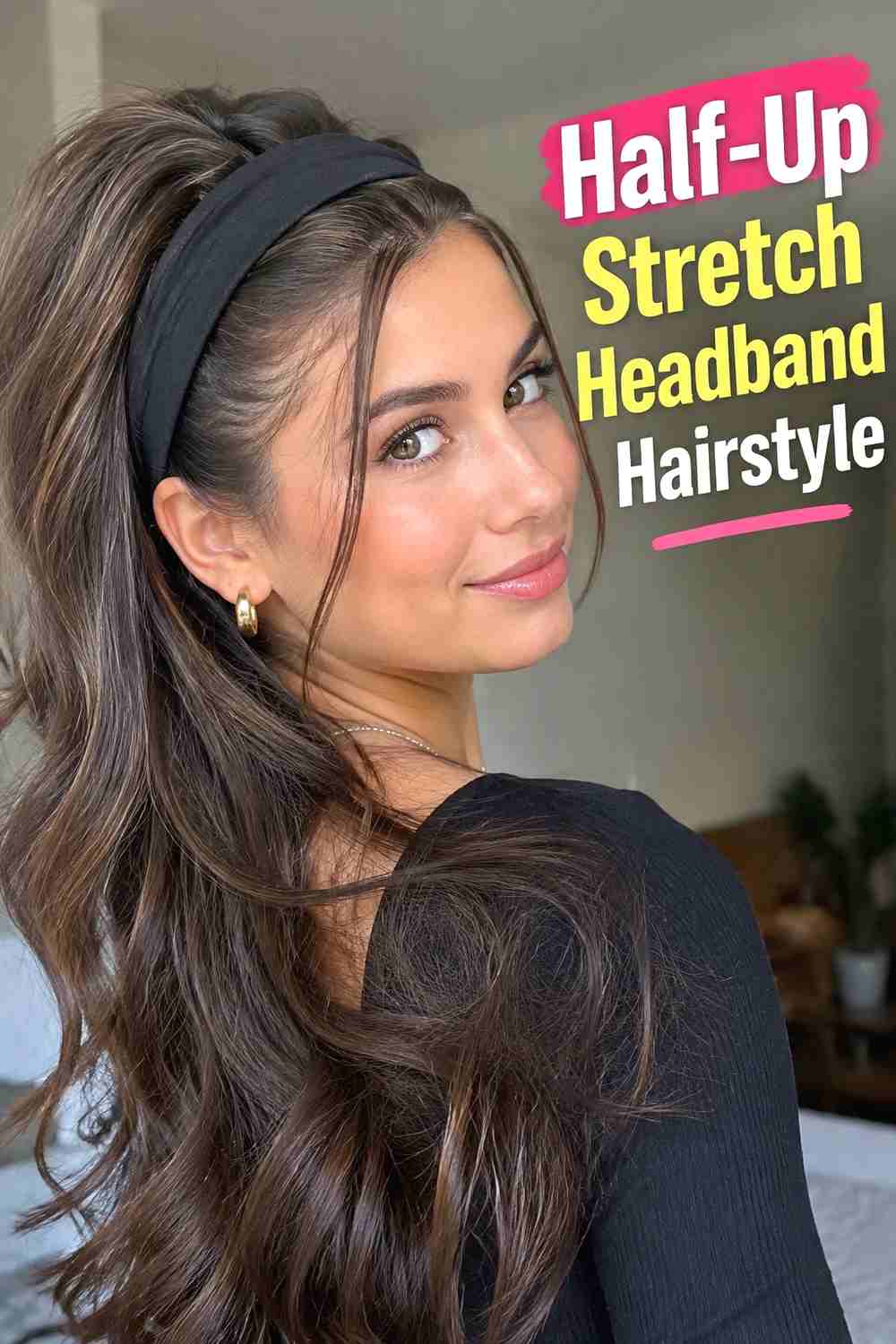
The Half-Up Stretch Headband Hairstyle offers a useful balance between loose length and controlled upper sections. Gather hair from both sides toward the center back, keeping the section relatively narrow so plenty of fullness remains around the sides. Secure it with an elastic, clip, or pins, then position the stretch band near the front hairline. Long straight hair gives the style a sleek finish, while waves or natural texture create more softness below the gathered section. Keep a little crown height so the fabric band does not make the top appear flat. This hairstyle is especially practical when you want front sections controlled but still want most of your length visible from the back.
Why It Works
The headband manages the hairline while the half-up section provides additional structure, leaving the lower lengths free to move naturally.
Pro Tip
Finish the half-up section before adding the band so you can adjust either element without disturbing the other.
4. High Ponytail Stretch Headband Hairstyle
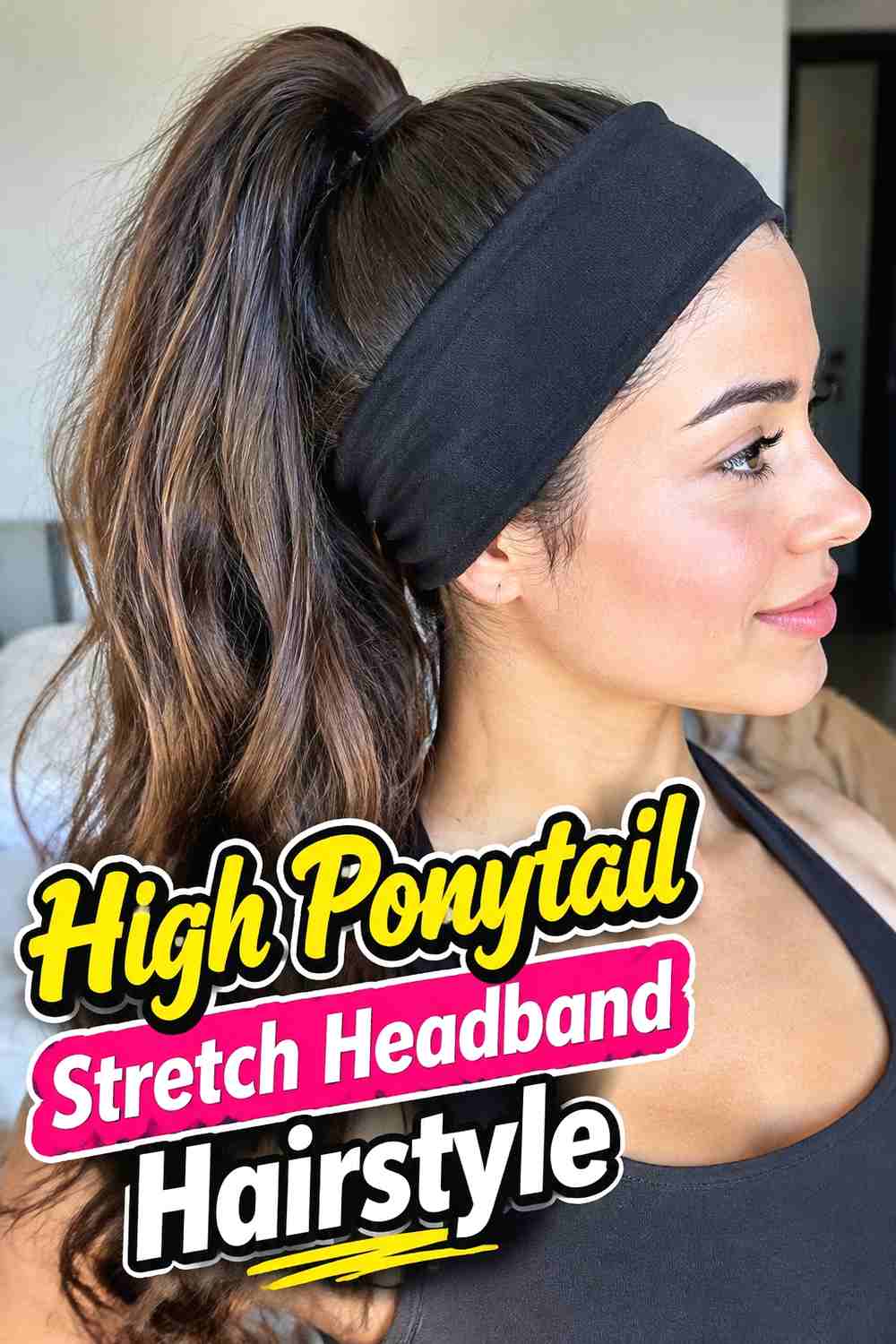
The High Ponytail Stretch Headband Hairstyle creates an energetic shape while keeping very long hair away from the shoulders and face. Brush or gather the hair upward into a secure ponytail, maintaining comfortable tension around the hairline. Place the stretch headband near the front after the ponytail is secured, allowing it to control shorter strands and add a defined frame. The tail can stay straight, naturally textured, or softly waved depending on your preferred finish. For a polished variation, wrap a small section around the elastic. For something more casual, keep the base simple and let the length move freely. The headband should remain snug but never tight enough to create pressure.
Wear & Maintenance
Use a supportive elastic at the ponytail base, especially with thick or very long hair. The headband should not carry any of the ponytail’s weight.
Best For
This look works well for active days, casual events, travel, warm weather, or outfits that suit a sporty, lifted hairstyle.
5. Side Braid Stretch Headband Hairstyle
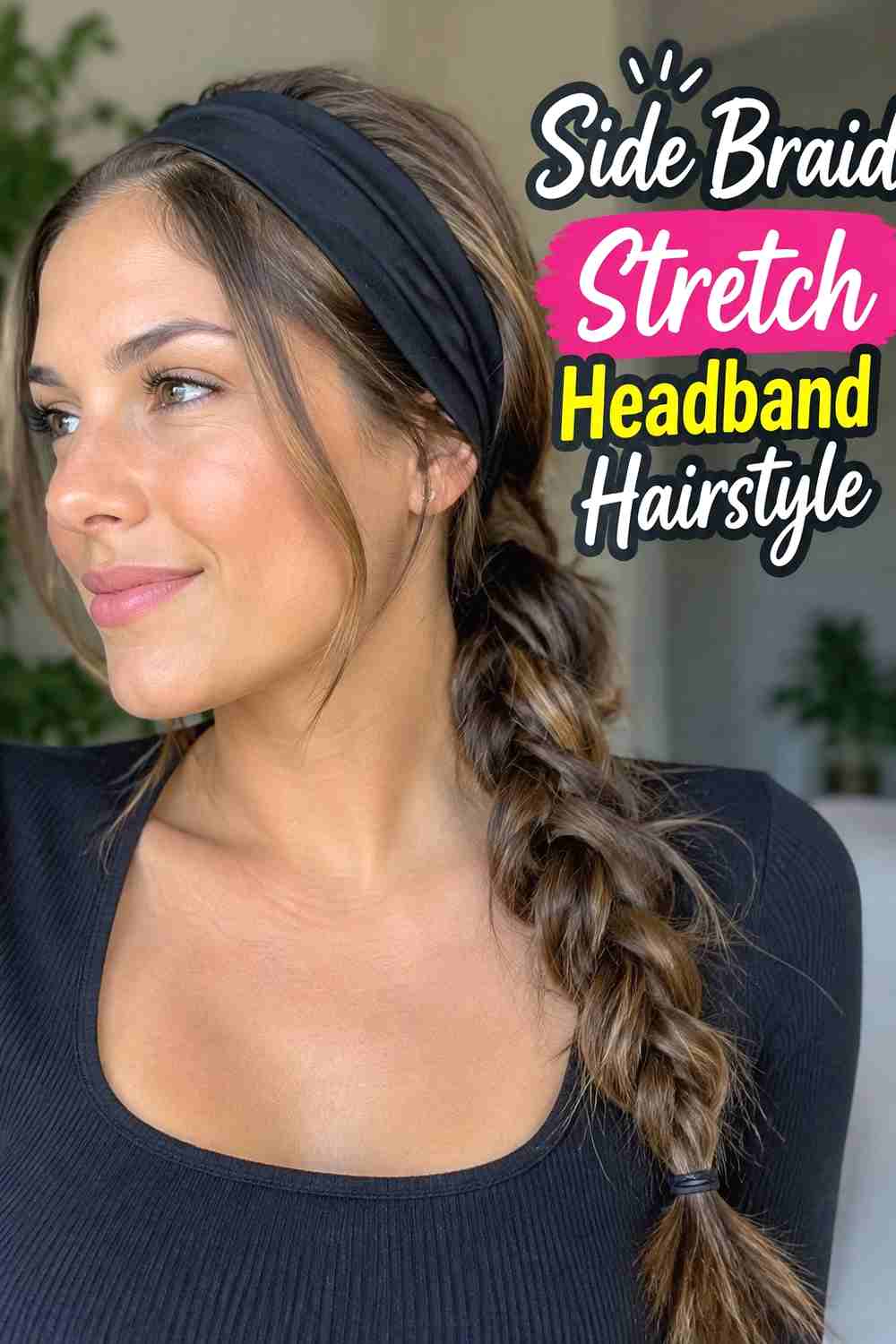
The Side Braid Stretch Headband Hairstyle is a practical way to control long lengths while keeping the braid visible from the front. Position the headband first, then sweep the hair over one shoulder and create a loose three-strand braid beginning below the ear. Keep the crown smooth or gently lifted depending on how polished you want the result. A softer braid feels relaxed and romantic, while a tighter, cleaner plait creates a more practical finish. Long hair works particularly well because the braid can remain substantial even when positioned to one side. Let one or two small face-framing pieces stay loose if you prefer softness around the headband rather than a completely open hairline.
Hair Type & Length
Long and extra-long hair provides the easiest foundation, especially if you want the braid to extend well below the shoulder.
Pro Tip
Secure the hair near the nape with a hidden elastic before braiding if the entire style tends to shift toward the back.
6. Low Bun Stretch Headband Hairstyle
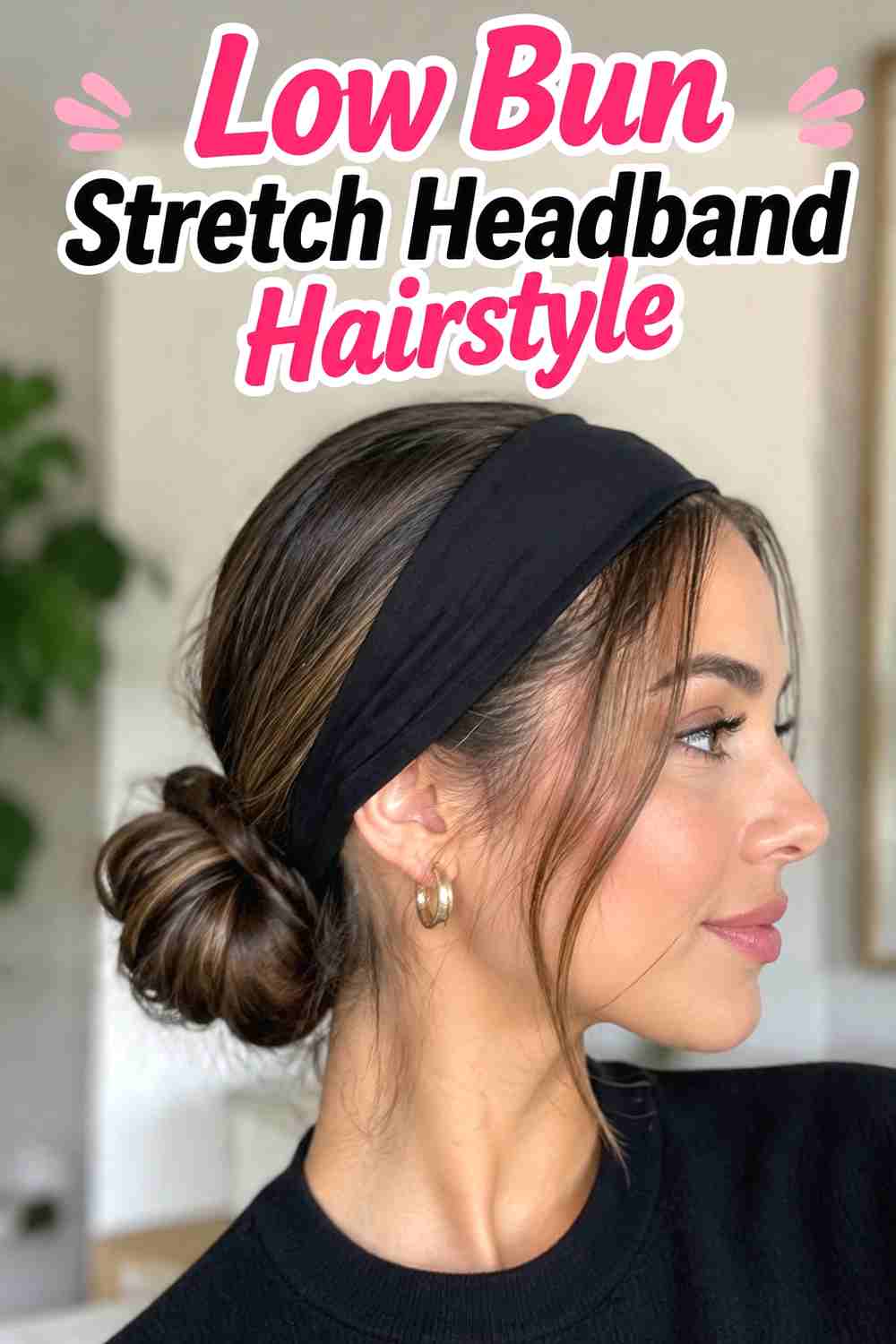
The Low Bun Stretch Headband Hairstyle keeps long hair completely contained while maintaining a relaxed, practical appearance. Gather the hair at the nape and twist or coil the length into a compact bun, tucking the ends securely rather than making the shape unnecessarily large. Once the bun is stable, add a stretch headband around the front hairline. The broad fabric gives the style a casual frame, while the low bun prevents bulk through the crown. Leave the front smooth for a clean look or release a few shorter pieces around the temples. This combination is particularly useful on busy days when you need long hair controlled for several hours without wearing a high, heavy updo.
Wear & Maintenance
Secure the bun independently with pins or an elastic before adding the band. This prevents the fabric accessory from shifting under the weight of long hair.
Best For
Try this look for work, errands, travel, casual dinners, or days when comfort matters more than elaborate styling.
7. Face Framing Layers Stretch Headband Hairstyle
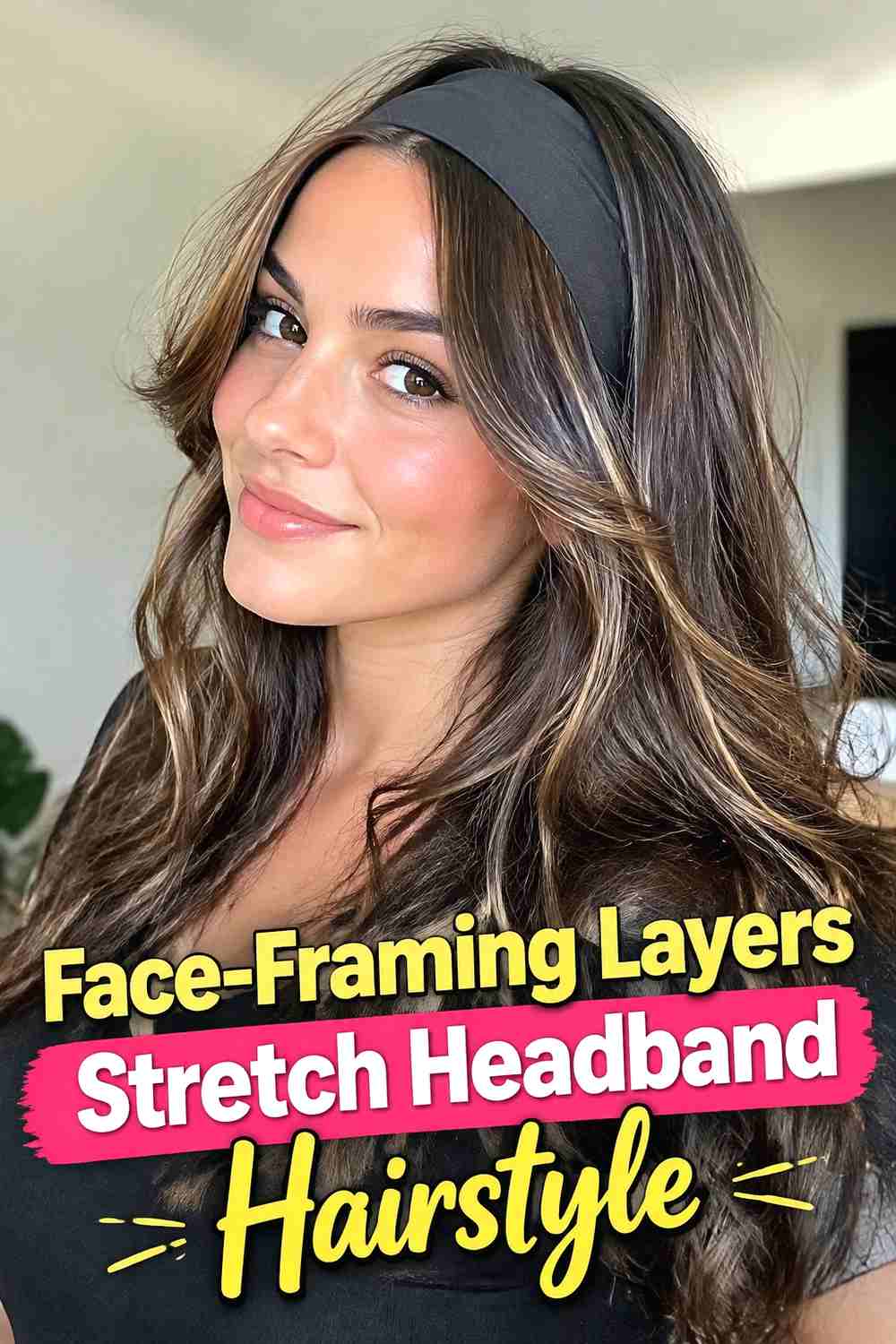
The Face-Framing Layers Stretch Headband Hairstyle keeps shorter front pieces visible while controlling the rest of long hair. Style the hair in its natural texture or smooth the lengths, then separate the layers you want to leave around the face. Position the stretch headband behind those pieces so they can curve naturally along the cheekbones or jaw. The remaining length can stay completely loose, making the look easy to wear with layered cuts. Avoid pulling too many strands forward; a few intentional sections usually create a cleaner effect. This approach gives you the practicality of a headband without creating a fully pushed-back silhouette and works especially well when your haircut already includes graduated front layers.
Styling Notes
Choose the face-framing pieces before putting on the headband. Pulling random sections forward afterward can make the placement look uneven.
Best For
This style works well for casual outfits, work, lunches, travel, and everyday looks where you want some softness around the face.
8. Braided Ponytail Stretch Headband Hairstyle
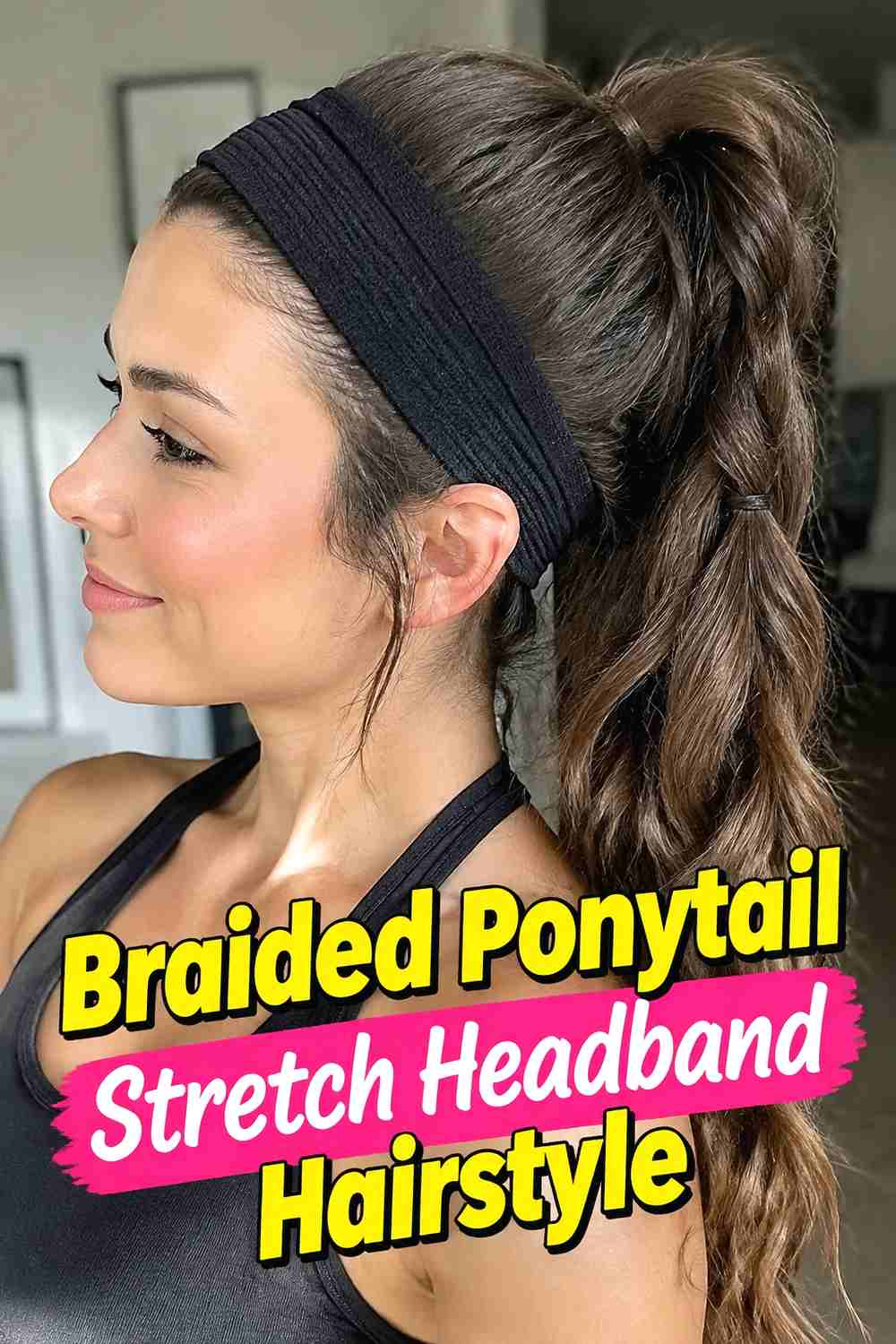
The Braided Ponytail Stretch Headband Hairstyle gives very long hair a secure shape that remains easy to manage. Gather the hair into a low or mid-height ponytail and secure it firmly, then braid the entire length using a classic three-strand pattern. Add the stretch headband near the hairline to control shorter pieces and create a clean upper silhouette. You can keep the braid smooth for a sporty effect or gently loosen the outer sections for more softness and width. Because the ponytail base and braid are secured separately, the hairstyle stays practical even with heavy or thick hair. A solid band keeps the finish streamlined, while a print can make the simple construction feel more playful.
Wear & Maintenance
Use elastics at both the ponytail base and braid end so the structure does not depend on the headband.
Why It Works
The braid shortens and controls the visual length while the fabric band keeps the front neat, making this especially useful for extra-long hair.
9. Crown Lift Stretch Headband Hairstyle
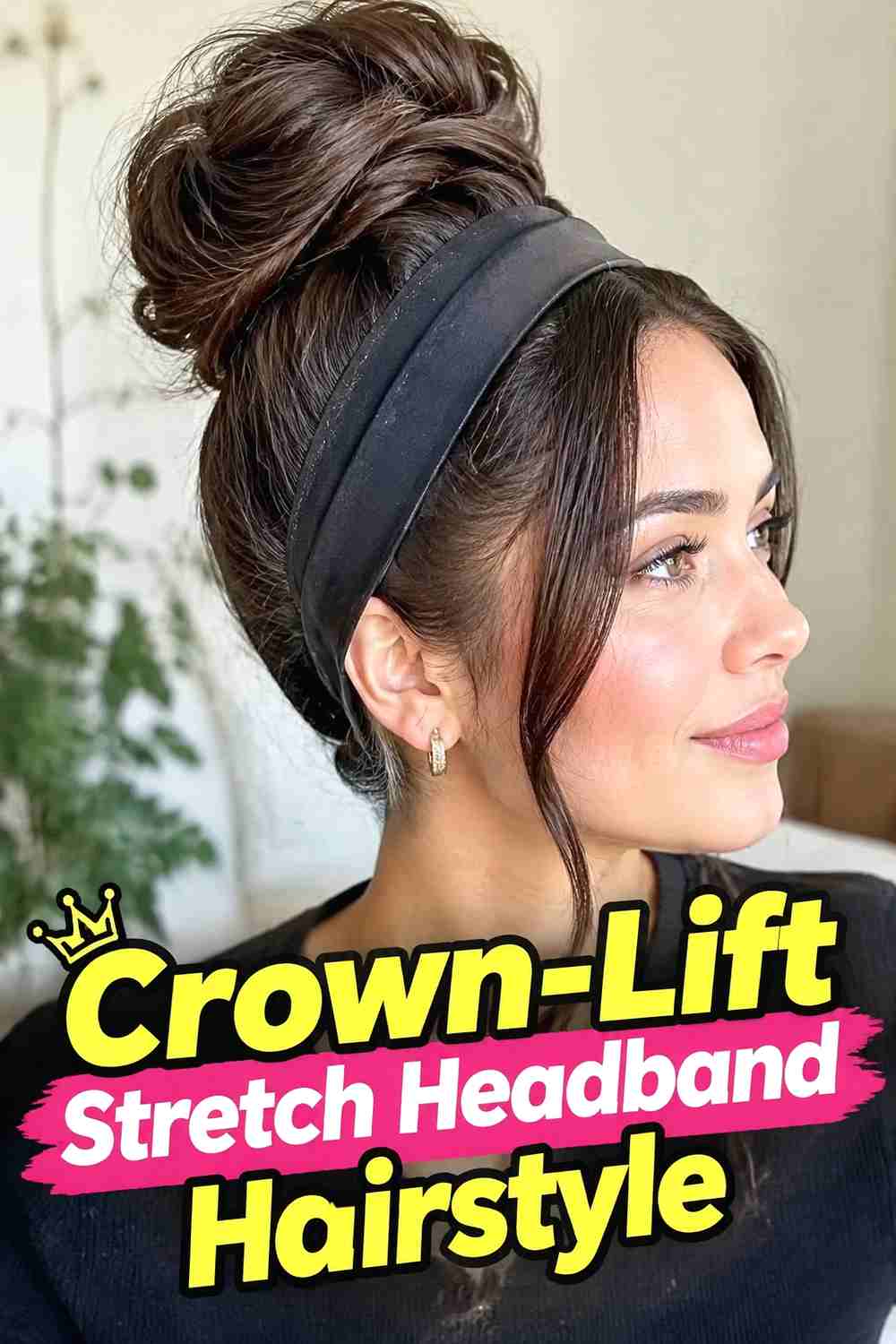
The Crown-Lift Stretch Headband Hairstyle adds controlled height behind the accessory so long hair does not appear overly flat from the side. Place the stretch band near the front, then gently lift the roots immediately behind it using your fingers or light styling at the crown. Leave the lengths straight, waved, or naturally textured so the hairstyle maintains movement below the extra height. The volume should remain moderate and softly rounded rather than heavily teased. A wide or medium-width band can create a clear visual transition between the smooth front and fuller crown. This is an easy way to change the profile of loose long hair without braiding, curling, or gathering the entire length.
Styling Notes
Concentrate lift at the roots and avoid aggressively backcombing the lengths. The goal is a natural crown shape rather than a rigid bump.
Pro Tip
After placing the band, gently adjust the crown with your fingertips instead of repeatedly sliding the accessory backward.
10. Center Part Stretch Headband Hairstyle
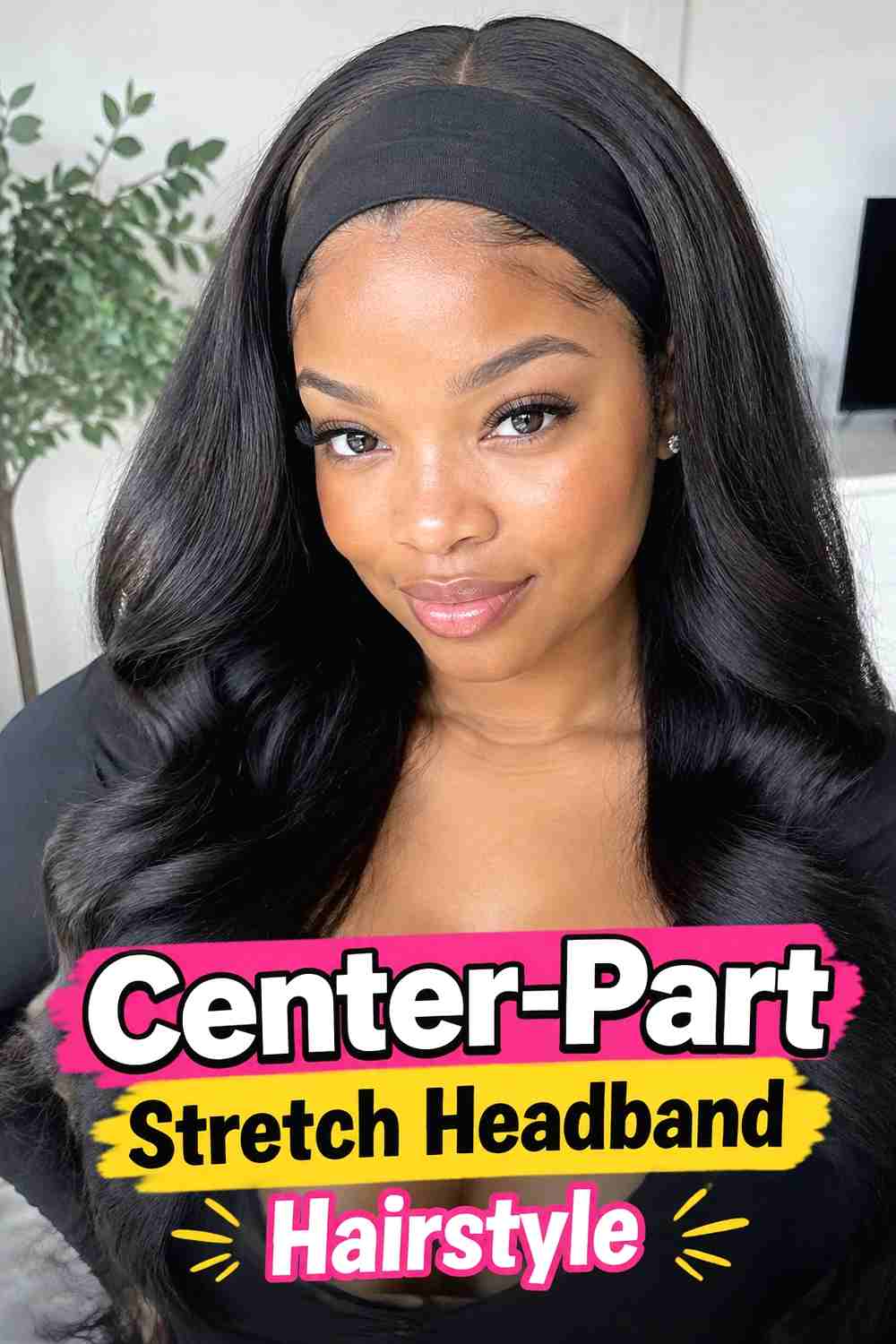
The Center-Part Stretch Headband Hairstyle gives long hair a clean, symmetrical appearance while leaving the part visible in front of the accessory. Create a precise center part, smooth or define the lengths, and place the band slightly behind the hairline. The hair in front can stay sleek and close to the head, while the sections behind the band retain a little natural volume. This arrangement works with straight, wavy, curly, and textured long hair because the symmetry comes from the parting rather than a specific curl pattern. Neutral fabric creates a minimal look, while brighter colors or prints provide contrast. Keep both sides balanced so the headband sits evenly across the crown.
Why It Works
The visible center part makes the placement look deliberate, while the stretch band keeps longer front sections controlled without hiding the overall texture.
Best For
This is a simple choice for everyday wear, casual events, workdays, shopping, or relaxed weekend outfits.
11. Twisted Half Up Stretch Headband Hairstyle
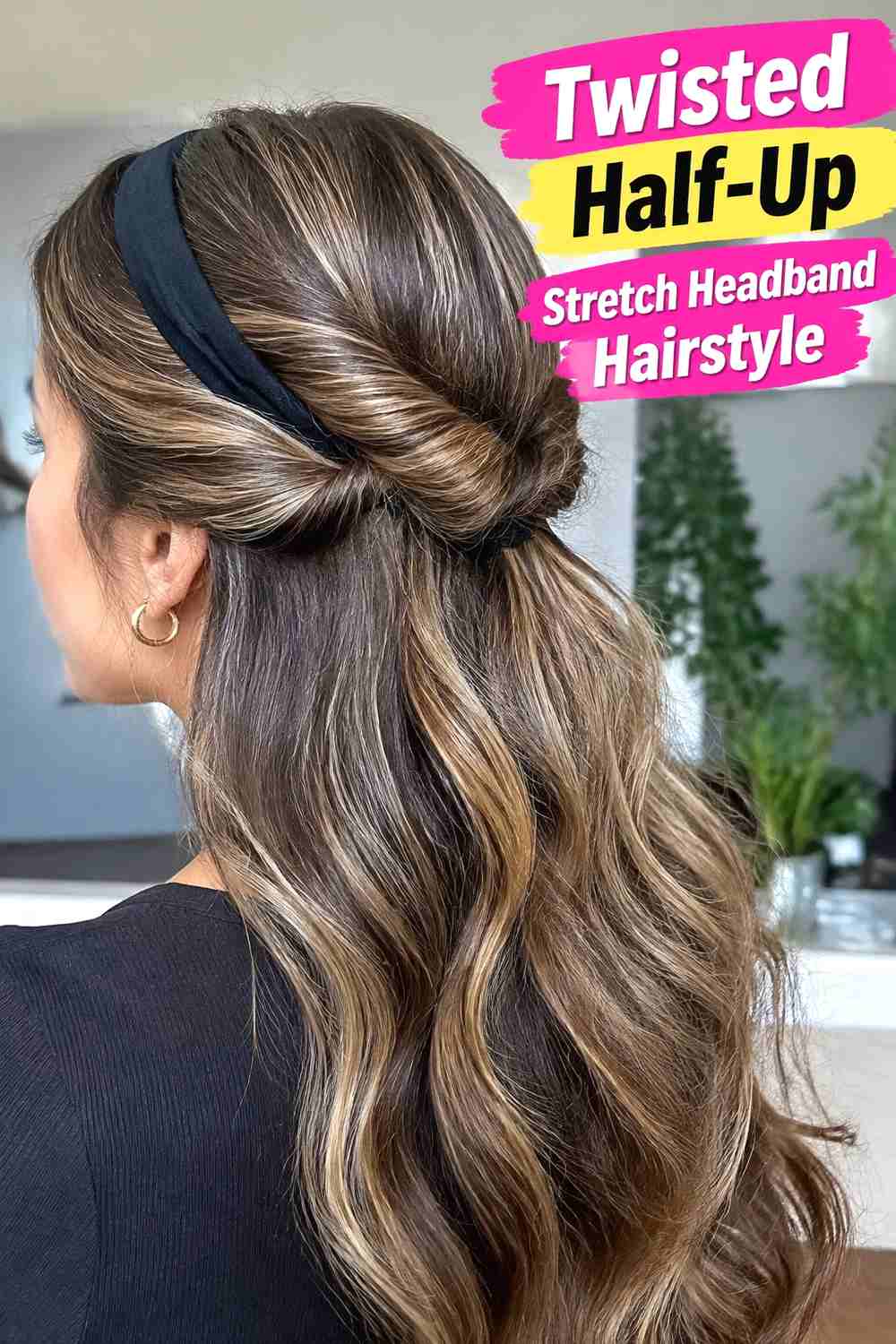
The Twisted Half-Up Stretch Headband Hairstyle adds detail through the upper back while allowing most of the long hair to remain loose. Take a section from each temple, twist both pieces away from the face, and secure them together at the center back. Keep the twists wide and relaxed rather than rope-tight, then add the stretch headband near the hairline. Straight hair makes the twisted sections easy to see, while waves and curls create a softer blend between the gathered and loose areas. Preserve some height through the crown so the front accessory does not flatten the silhouette. This style feels more detailed than a standard half-up look while still being easy enough for everyday wear.
Styling Notes
Complete and loosen the twists before positioning the headband. Adjusting them afterward may shift the accessory or disturb the crown.
Best For
Try this hairstyle for dates, casual parties, lunches, weekend events, or days when plain loose hair feels too simple.
12. Bubble Ponytail Stretch Headband Hairstyle
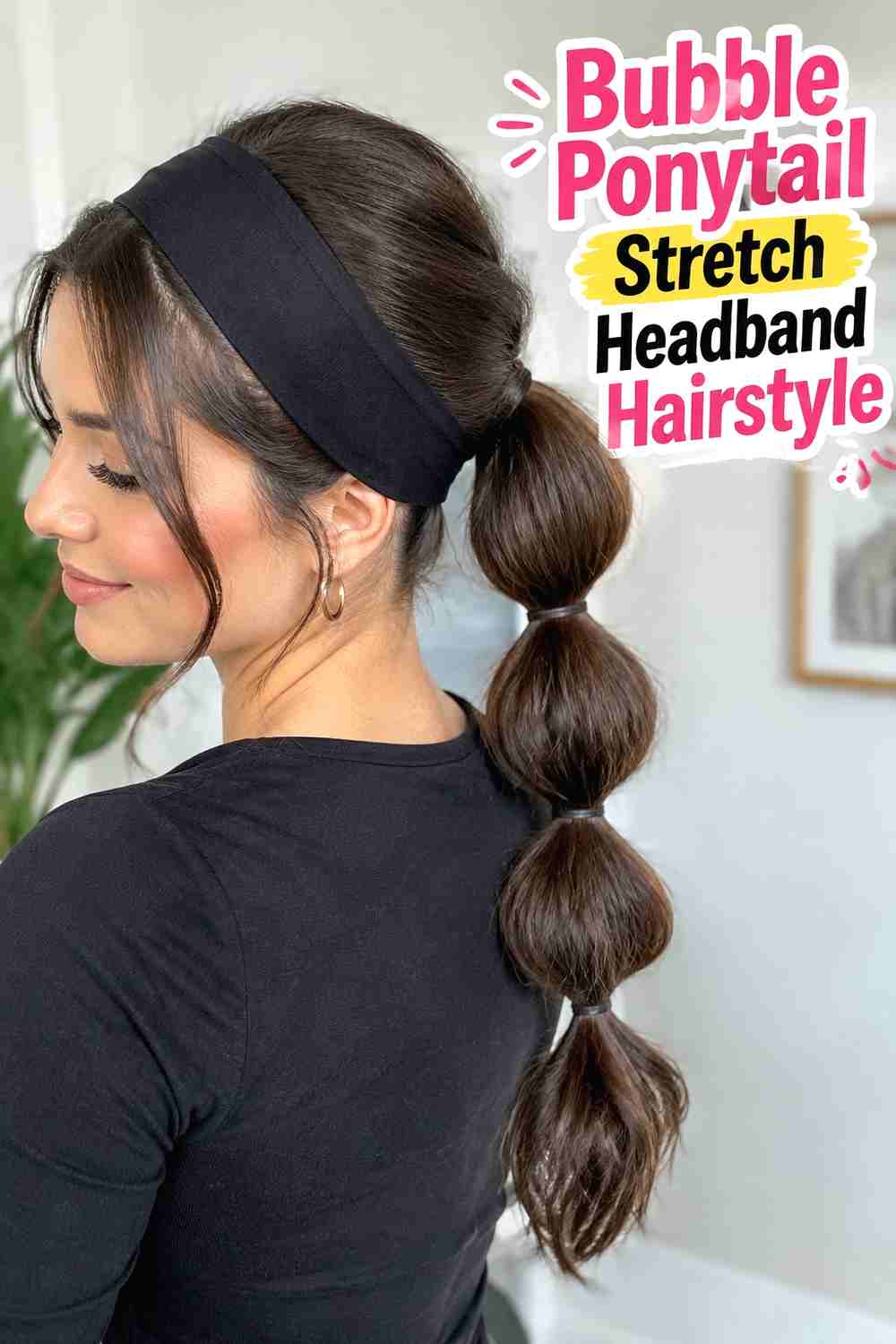
The Bubble Ponytail Stretch Headband Hairstyle adds a playful structure to long hair while keeping the front clean and controlled. Gather the hair into a low or mid-height ponytail, then place small elastics down the length at even intervals. Gently expand the hair between each elastic to form rounded bubbles, keeping their size balanced rather than excessively large. Position the stretch headband near the hairline once the ponytail is finished. This style works especially well on long and extra-long hair because multiple sections can be created without shortening the ponytail too much. The fabric band gives the front a simple frame, allowing the bubble pattern to remain the stronger detail at the back.
Hair Type & Length
Longer hair creates the clearest result, although medium-long lengths can form a shorter version with two or three bubbles.
Wear & Maintenance
Adjust all bubble sections before applying finishing product so their size remains consistent through the length.
13. Low Side Ponytail Stretch Headband Hairstyle
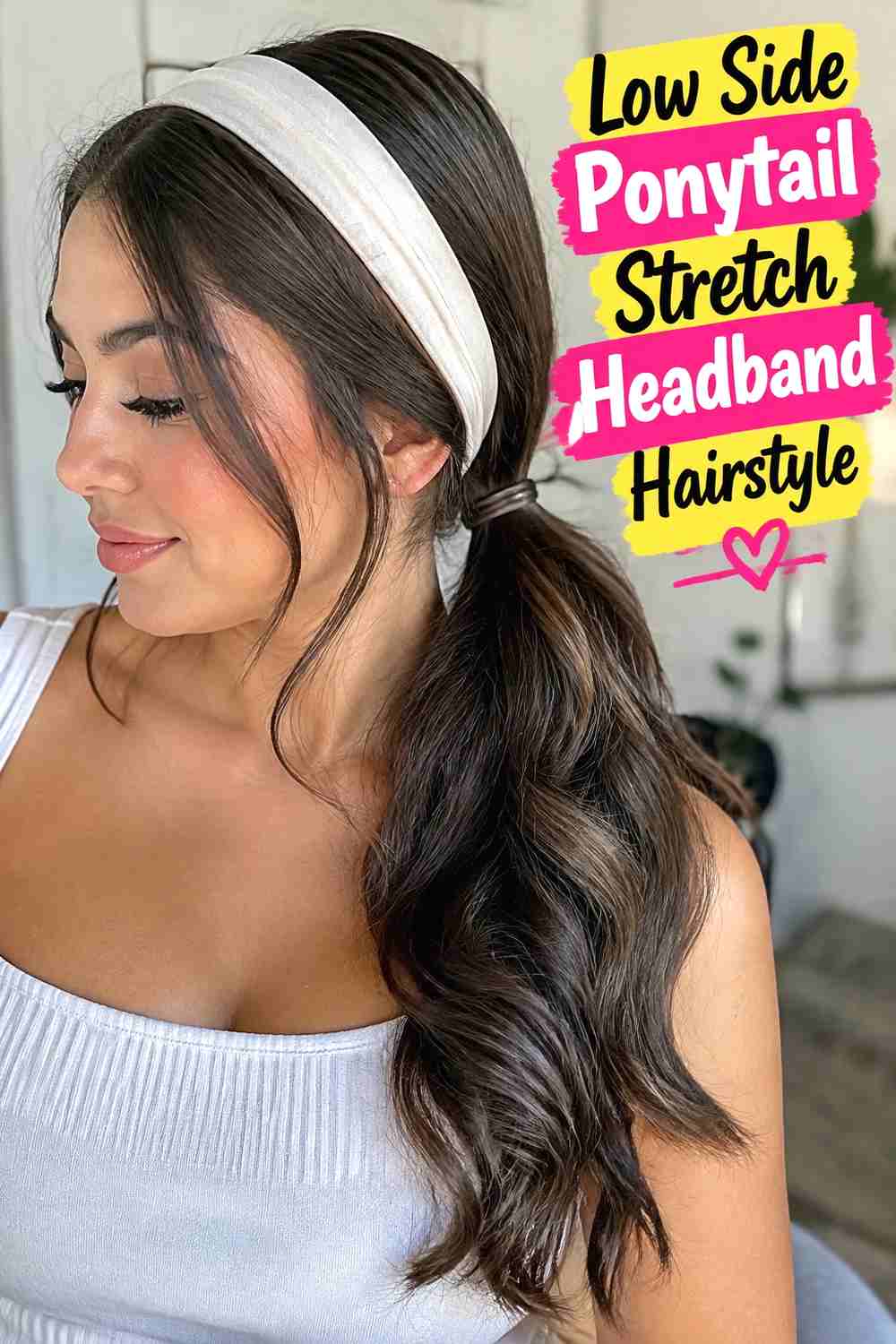
The Low Side Ponytail Stretch Headband Hairstyle introduces asymmetry while keeping long hair gathered and easy to manage. Position the stretch band around the front, then sweep the lengths toward one shoulder and secure them near the side of the nape. Keep the ponytail sleek for a polished effect or add soft bends and natural texture for a more relaxed finish. A little crown softness helps balance the side placement, especially with very long hair that can create more visual weight below the shoulder. Leave a small face-framing piece loose on the opposite side if desired. The result is comfortable and distinctive without needing braiding or a complicated updo.
Why It Works
Moving the ponytail to one side gives long hair direction and keeps the length visible from the front while the headband frames the upper silhouette.
Best For
This style works for casual dinners, dates, daytime events, travel, or relaxed occasions where you want more interest than a centered ponytail.
14. Long Waves Stretch Headband Hairstyle
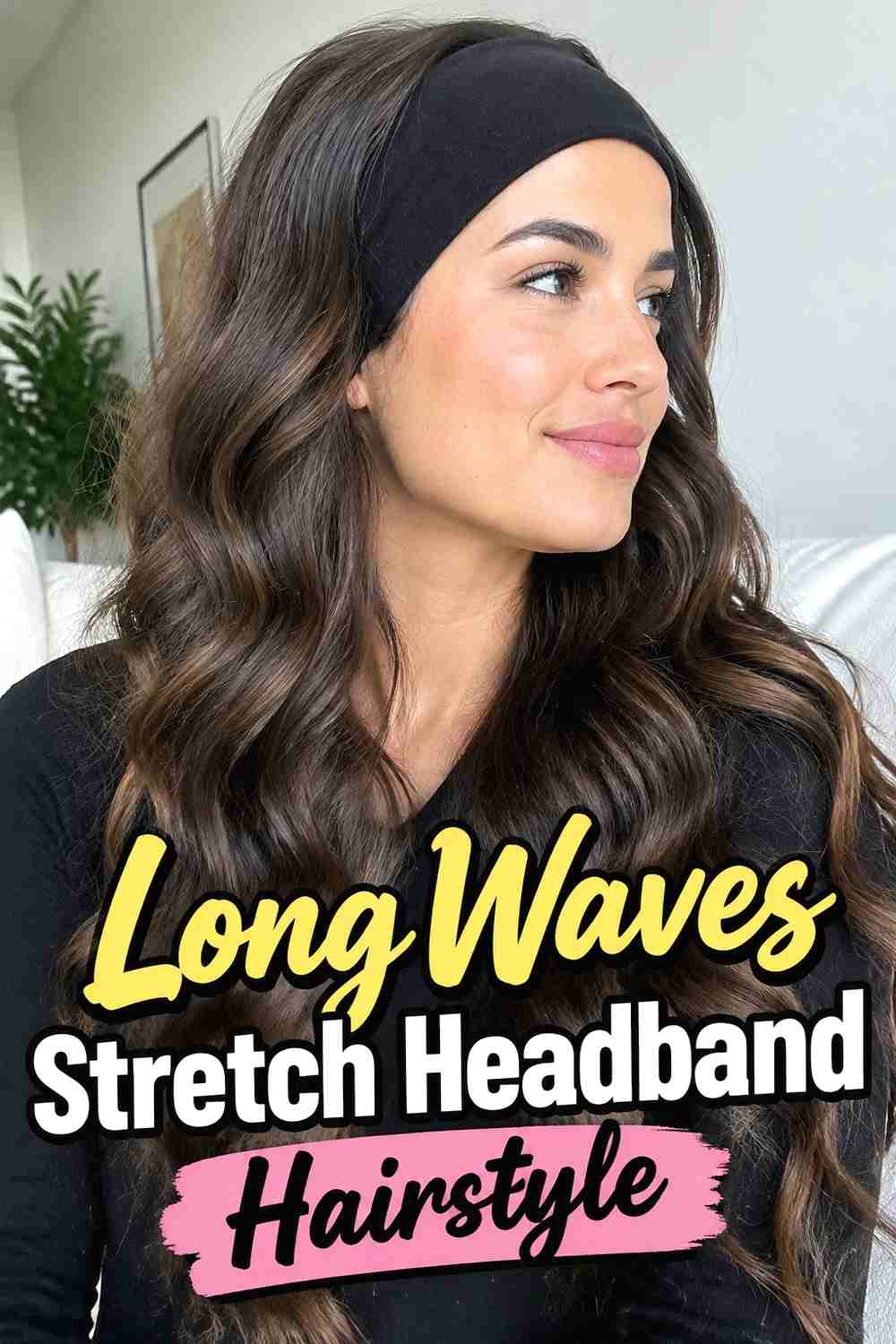
The Long Waves Stretch Headband Hairstyle keeps most of the hair completely loose while using the accessory to define the front. Create broad, natural-looking waves through the mid-lengths and ends, leaving some variation rather than forming identical curls. Place the stretch band slightly behind the hairline and gently arrange the waves around the shoulders and back. A little root lift behind the band keeps the crown from appearing compressed. This look is especially effective on long layered hair because the waves reveal movement through different lengths. Choose a smooth solid band for a polished result or a printed fabric style when you want the accessory to contribute more color and personality.
Styling Notes
Finish the waves before putting on the headband and avoid repeatedly repositioning the fabric, which can create flyaways around the crown.
Best For
Choose this look for brunches, casual parties, vacations, everyday outfits, or events where you want the length fully visible.
15. Claw Clip Stretch Headband Hairstyle
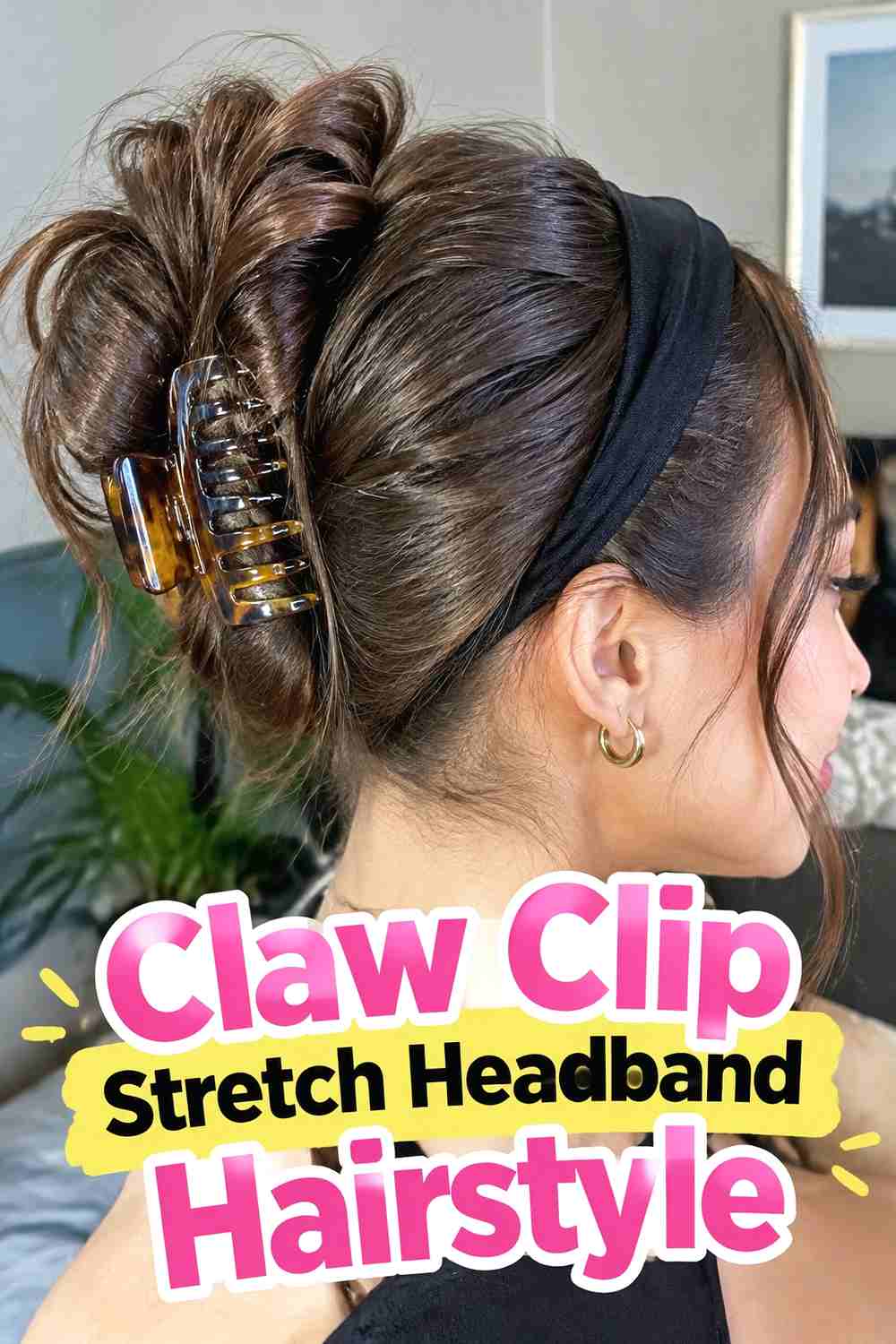
The Claw Clip Stretch Headband Hairstyle combines two practical accessories without hiding the length completely. Gather the hair at the back and twist it upward, then secure the middle of the twist with a strong claw clip. Depending on your length, let the ends fall over the clip or fold them loosely into the twist. Add the stretch headband around the front to keep shorter sections away from the face and create a cleaner crown. The band and clip should function independently, allowing each to be adjusted without weakening the other. This is particularly helpful for thick or very long hair when a casual bun feels too heavy but completely loose lengths are inconvenient.
Wear & Maintenance
Choose a claw clip large enough for your hair density. The stretch band should only manage the front sections, not compensate for an undersized clip.
Pro Tip
Keep the back twist slightly relaxed so the clip does not pull excessively at the roots during longer wear.
16. Top Knot Stretch Headband Hairstyle
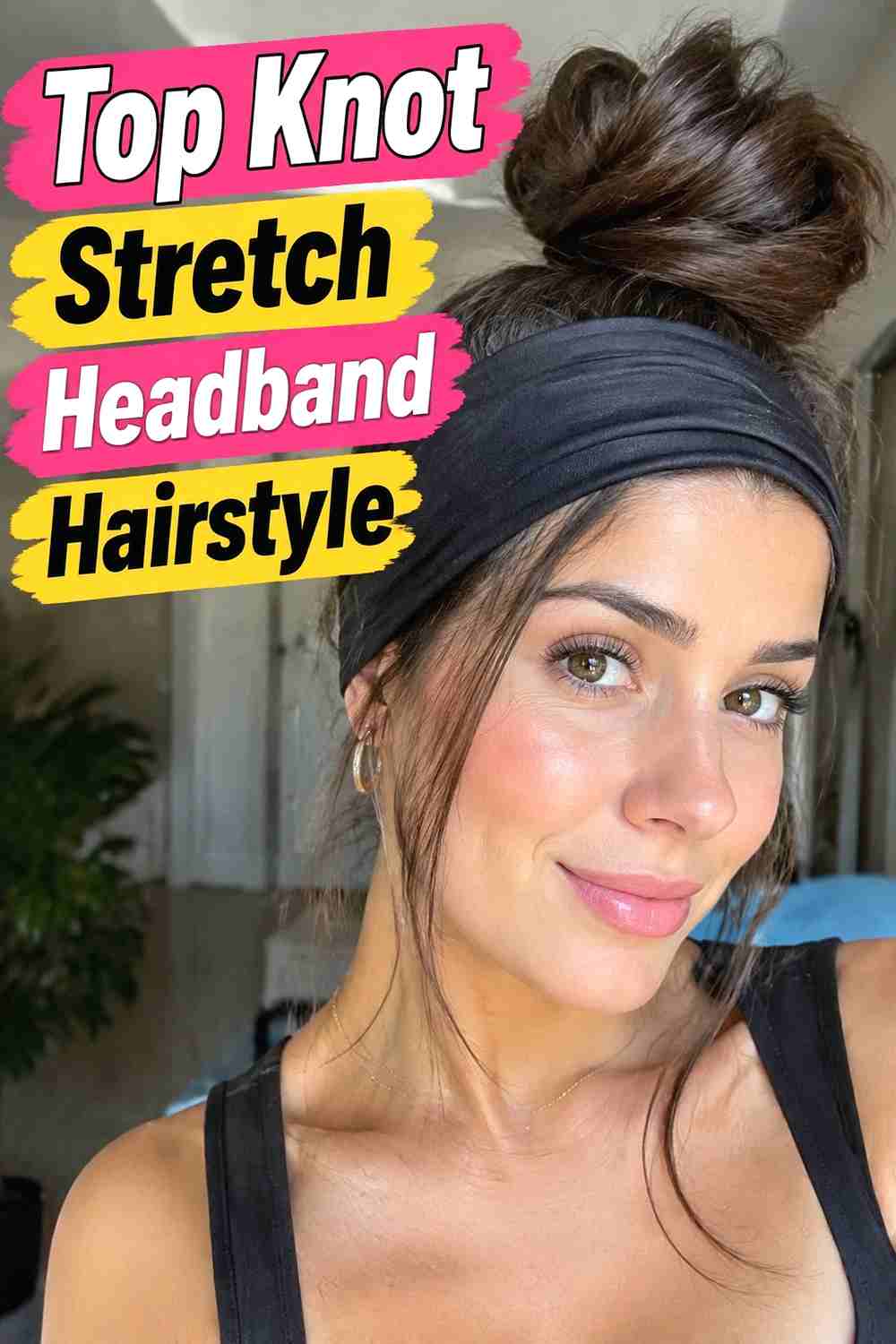
The Top Knot Stretch Headband Hairstyle gathers long hair high while using a fabric band to create a neat, comfortable frame around the hairline. Pull the hair upward, secure it in a ponytail, and form a knot or bun that sits securely at the crown. Tuck the ends neatly without forcing the bun to become excessively large. Add the stretch headband after the top knot is stable, allowing it to catch shorter pieces around the temples and nape. Keep the band moderately wide so it balances the height of the bun. A smooth front creates a sporty finish, while a few soft pieces around the ears can make the hairstyle feel more relaxed.
Wear & Maintenance
Use an elastic and pins that can support the weight of long hair before placing the band. This reduces pressure around the hairline.
Best For
This look is practical for warm days, active schedules, travel, casual weekends, or anytime you want all of your length off the neck.
17. Double Braid Stretch Headband Hairstyle
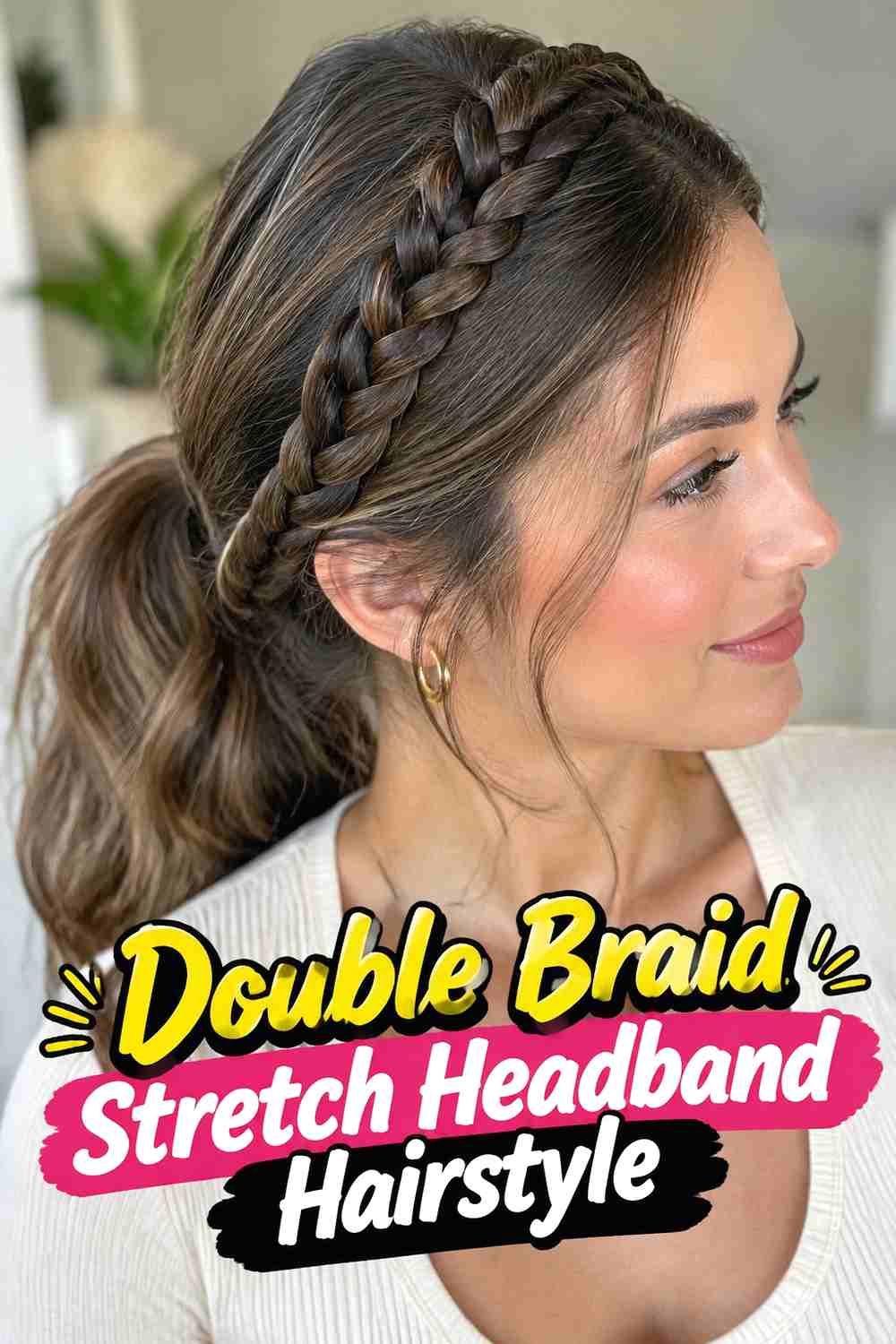
The Double Braid Stretch Headband Hairstyle divides long hair into two sections for a youthful, practical look. Place the stretch band around the front, create a clean center or soft middle part behind it, and divide the lengths evenly. Braid each side into a classic three-strand plait, securing the ends with small elastics. Keep the braids smooth for a sporty finish or loosen them slightly for more softness. The headband helps control short pieces while the two braids distribute long, heavy hair more evenly than one large braid. This works especially well for very long hair and can be adapted with straight, wavy, or textured lengths before braiding.
Hair Type & Length
Long and extra-long hair gives each braid enough length and fullness to create a balanced silhouette.
Pro Tip
Check both braid starting points in a mirror so they sit at a similar height and do not pull unevenly behind the ears.
18. Retro Long Hair Stretch Headband Hairstyle
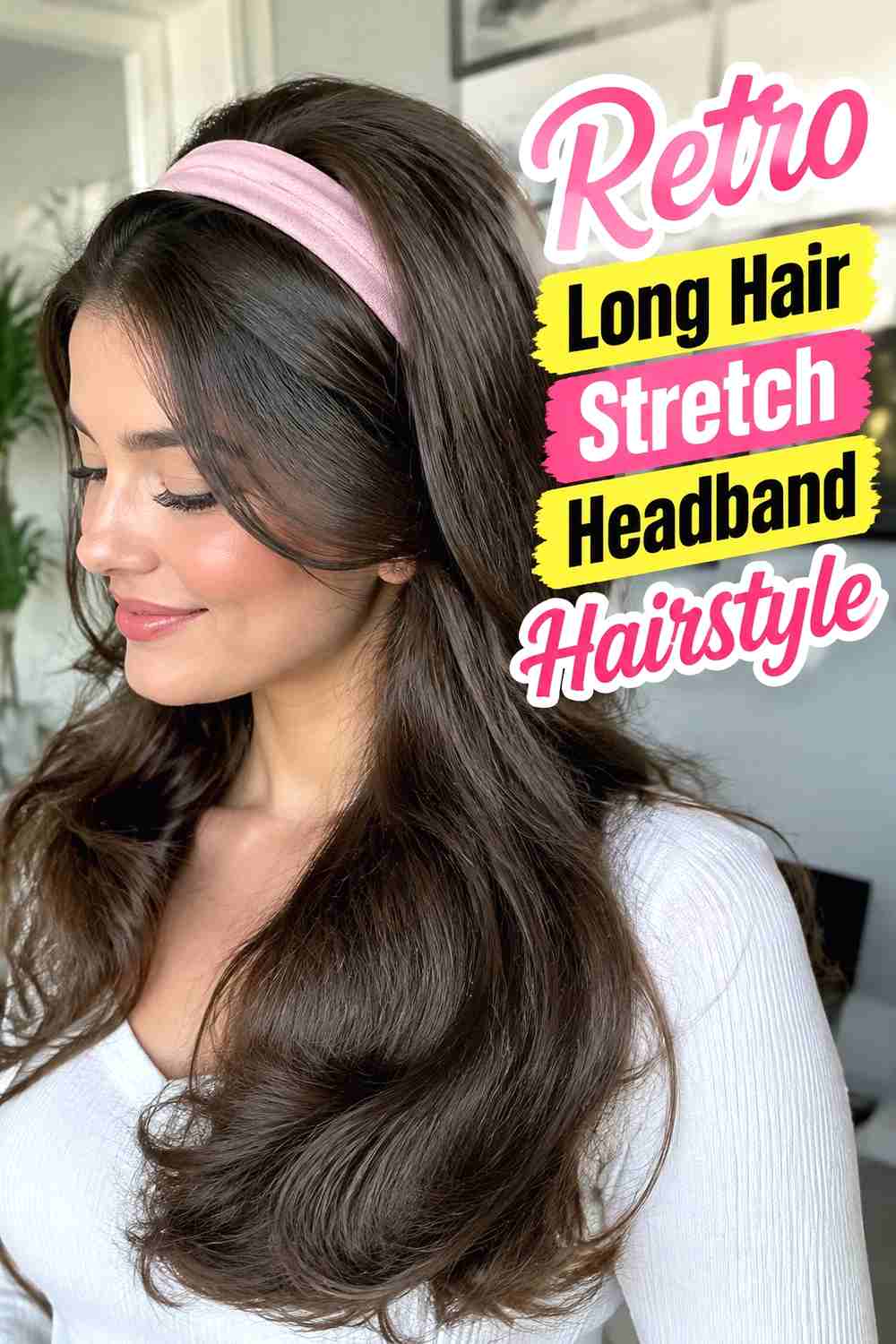
The Retro Long Hair Stretch Headband Hairstyle uses moderate crown volume and flowing lengths to create a vintage-inspired silhouette. Position a broad stretch band close to the hairline, then add gentle lift immediately behind it so the crown rises softly without becoming an exaggerated bouffant. Leave the long hair straight with turned ends, softly waved, or naturally textured depending on the retro mood you want. Black, white, jewel-tone, striped, and graphic fabric bands can strengthen the vintage effect. Keep the surface touchable and avoid excessive hairspray so the hairstyle still feels modern. The combination is especially effective on long hair because the extended lengths balance the extra height around the crown.
Styling Notes
Build the crown gradually and keep the visible surface smooth. The volume should connect naturally to the long lengths rather than forming a separate bump.
Best For
This look suits retro-inspired outfits, parties, photo sessions, casual events, or anyone who enjoys vintage volume with comfortable modern accessories.
How to Choose the Right Look
Start with how much of your long hair you want contained. Loose-length, center-part, wave, and face-framing styles leave nearly all of the hair down. Half-up and twisted styles provide moderate control, while ponytails, braids, buns, and top knots keep considerably more length secured.
Next, consider hair density and accessory width. Thick or voluminous hair can balance a broader stretch headband, while finer long hair may look more proportional with a moderately wide band. Whatever the width, the fabric should sit securely without feeling painfully tight around the temples, ears, or hairline.
Styling time also matters. Loose headband looks can be finished quickly, while bubble ponytails, braids, twists, and buns require more sectioning. If your hair is very long or heavy, secure gathered styles with elastics, clips, or pins before adding the headband.
Finally, match the finish to the occasion. Solid neutral bands feel simple and practical, printed versions add casual personality, and smooth satin-look fabrics can make ponytails, waves, and buns feel more polished.
Final Thoughts
Stretch headbands work particularly well with long hair because they can control the front without limiting what you do with the length. Leave your hair loose for the easiest look, add a half-up section for more shape, or choose a braid, ponytail, bun, or top knot when you need greater control. Keep the band comfortable, secure heavier styles independently, and let your natural texture and movement remain visible.
FAQs
1. Are stretch headbands good for long hair?
Yes. They help keep front sections controlled while allowing long hair to remain loose or be styled into ponytails, braids, buns, twists, and half-up looks.
2. How do I stop a stretch headband from sliding on long hair?
Choose a comfortable band with enough grip, position it where the roots have some texture, and avoid applying very slippery products where the fabric will sit.
3. Which stretch headband hairstyle is easiest for very long hair?
A low ponytail, side braid, braided ponytail, or simple loose-length style is usually easy to manage because each keeps the construction straightforward.
4. Can I wear a stretch headband with a bun or top knot?
Yes. Secure the bun or top knot first with elastics and pins, then add the headband as a separate accessory around the hairline.
5. What width of stretch headband works best with long hair?
Medium and wider bands both work well. Fuller or thicker hair can visually balance a broader band, while finer hair may suit a moderately wide style that does not overwhelm the crown.
Save your favorite stretch headband hairstyle, share the looks you love, and explore more easy ways to style long hair with comfortable accessories.