18 Tucked Jaw Bob Hairstyle Ideas
Jaw-skimming length and a simple ear tuck give these short bob ideas a clean, polished shape that can shift from sleek to softly undone.
A tucked jaw bob combines a compact, jaw-grazing bob with styling that lets one or both sides sit neatly behind the ears. Current tucked-bob interpretations range from one-length to lightly layered shapes, while jaw-length bobs typically finish around the jawline itself.
That simple foundation leaves plenty of room for variation. A blunt perimeter can make the shape feel sharper, waves add casual movement, fringe changes the front completely, and a double tuck exposes more of the haircut’s outline. Before choosing a version, think about your natural texture, whether your front pieces stay comfortably behind the ears, and how often you want to smooth or reshape a short perimeter.
Quick List
- Classic Tucked Jaw Bob Hairstyle
- Center Part Tucked Jaw Bob Hairstyle
- Deep Side Part Tucked Jaw Bob Hairstyle
- Blunt Tucked Jaw Bob Hairstyle
- Soft Layered Tucked Jaw Bob Hairstyle
- One Side Tucked Jaw Bob Hairstyle
- Double Tucked Jaw Bob Hairstyle
- Micro Bang Tucked Jaw Bob Hairstyle
- Curtain Fringe Tucked Jaw Bob Hairstyle
- Sleek Glass Tucked Jaw Bob Hairstyle
- Textured Tucked Jaw Bob Hairstyle
- Wavy Tucked Jaw Bob Hairstyle
- Curly Tucked Jaw Bob Hairstyle
- French Inspired Tucked Jaw Bob Hairstyle
- Rounded Tucked Jaw Bob Hairstyle
- Asymmetrical Tucked Jaw Bob Hairstyle
- Flipped End Tucked Jaw Bob Hairstyle
- Polished Volume Tucked Jaw Bob Hairstyle
1. Classic Tucked Jaw Bob Hairstyle
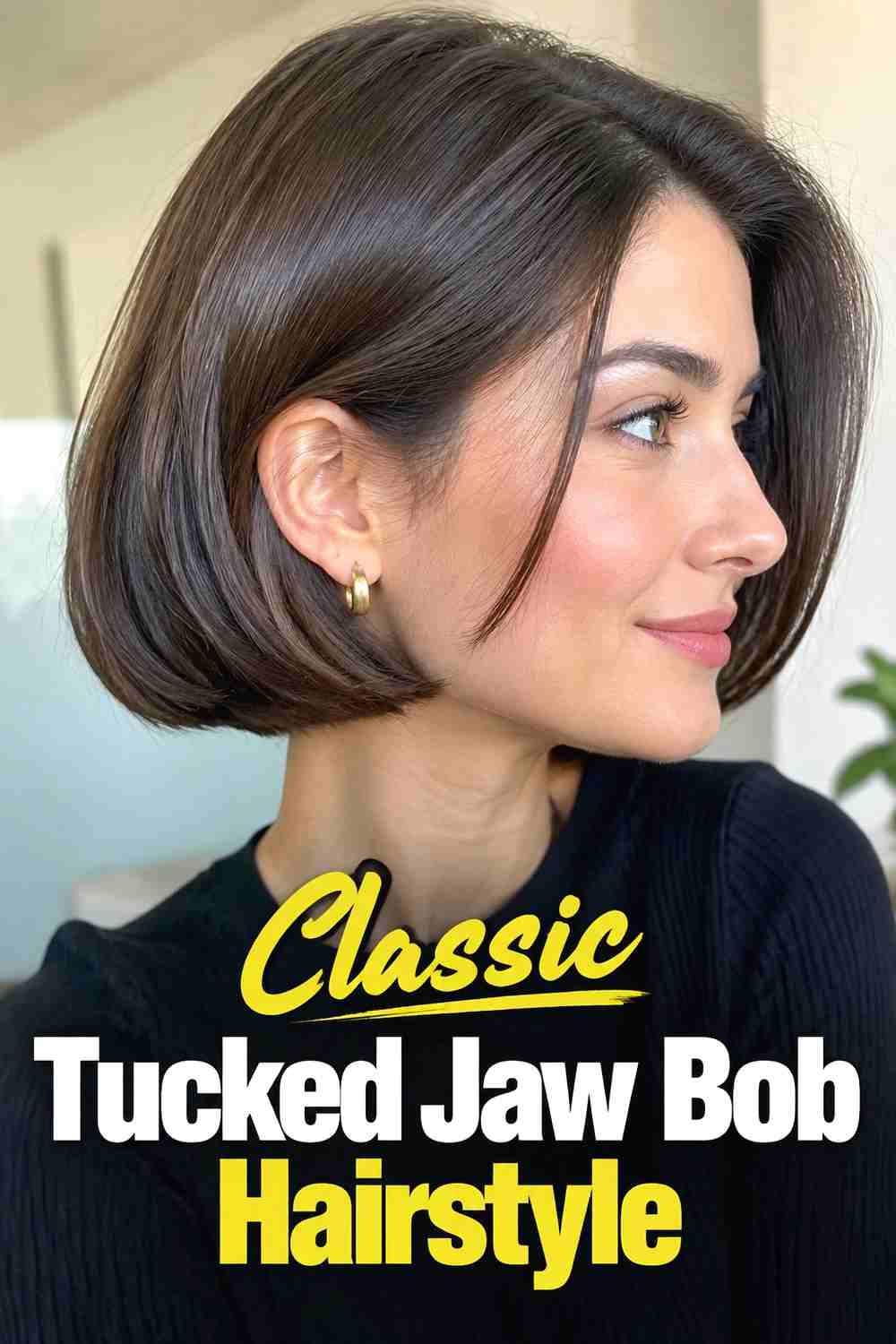
Classic Tucked Jaw Bob Hairstyle keeps the formula clean: a compact bob ending around the jaw, a softly solid perimeter, and front sections long enough to slide naturally behind the ears. The tuck exposes the jawline and ears while making the remaining hair appear slightly fuller through the back and sides. Straight and softly wavy textures can both carry the look, although the exact perimeter may need subtle internal weight removal on dense hair. Wear both sides tucked for a neat finish or release one side when you want more face framing. A light smoothing cream helps control flyaways without making the short shape look stiff or overly lacquered.
Styling Notes
Blow-dry the front sections backward before tucking them. Training the direction while the hair is warm helps the pieces sit behind the ears with less product.
2. Center Part Tucked Jaw Bob Hairstyle
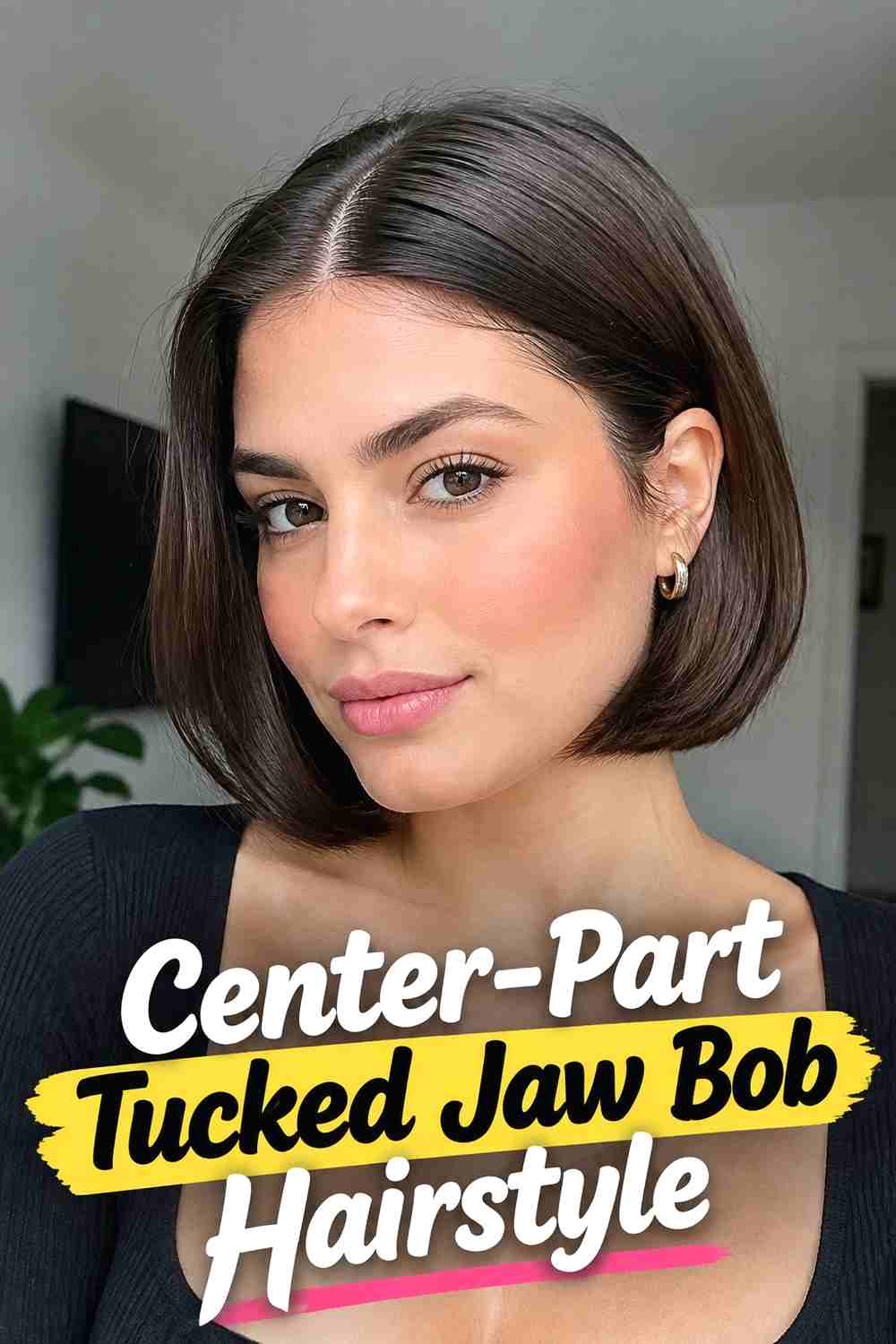
Center-Part Tucked Jaw Bob Hairstyle creates a balanced, minimal silhouette by dividing the hair evenly and tucking both front sections behind the ears. The jaw-length perimeter stays clearly visible, making precision at the ends an important part of the look. This version can feel especially polished on straight or slightly wavy hair because the symmetrical part reinforces the clean geometry. Fine hair may benefit from a solid baseline, while thick hair can use restrained internal texturing to keep the sides from puffing outward. Keep a little root lift around the center part so the style does not collapse flat against the scalp, and use only enough hold to keep the tuck secure.
Best For
Choose this version when you like symmetry, an open face, and a bob whose perimeter remains one of the main visual features.
3. Deep Side Part Tucked Jaw Bob Hairstyle
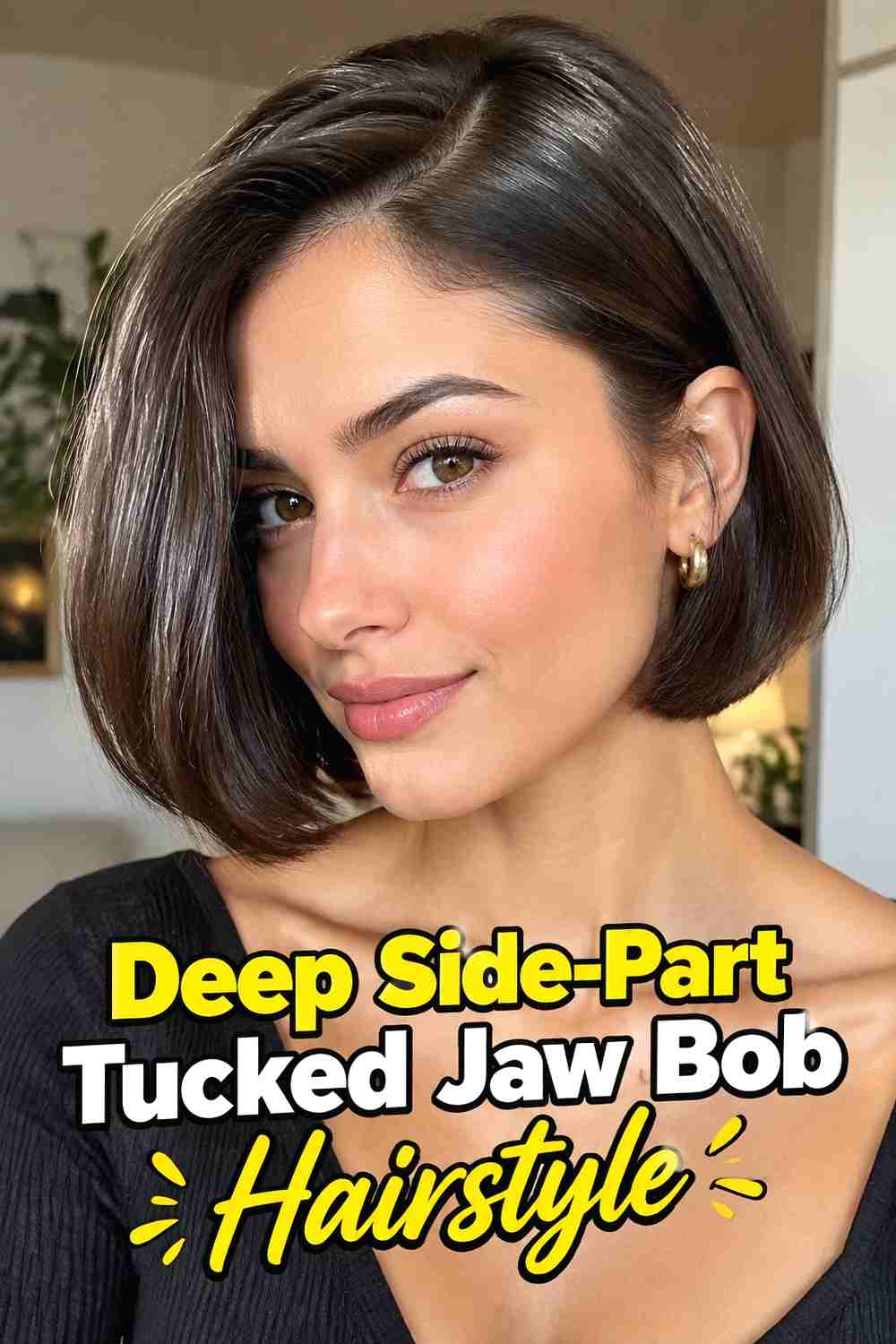
Deep Side-Part Tucked Jaw Bob Hairstyle shifts the balance toward one side, creating more root lift and a stronger sweep through the front. The lighter side can tuck tightly behind the ear while the heavier side falls closer to the cheek or is loosely tucked for a more polished finish. This difference gives a simple jaw-length bob a little extra drama without requiring complicated layering. Straight, wavy, and medium-density hair can adapt easily, though very dense hair may need controlled weight removal underneath. Blow-dry the heavier side upward and across before smoothing the ends, then keep the tucked side neat with a small amount of flexible styling cream.
Why It Works
The side part changes the silhouette without changing the fundamental haircut, making it an easy way to add volume and directional movement.
4. Blunt Tucked Jaw Bob Hairstyle
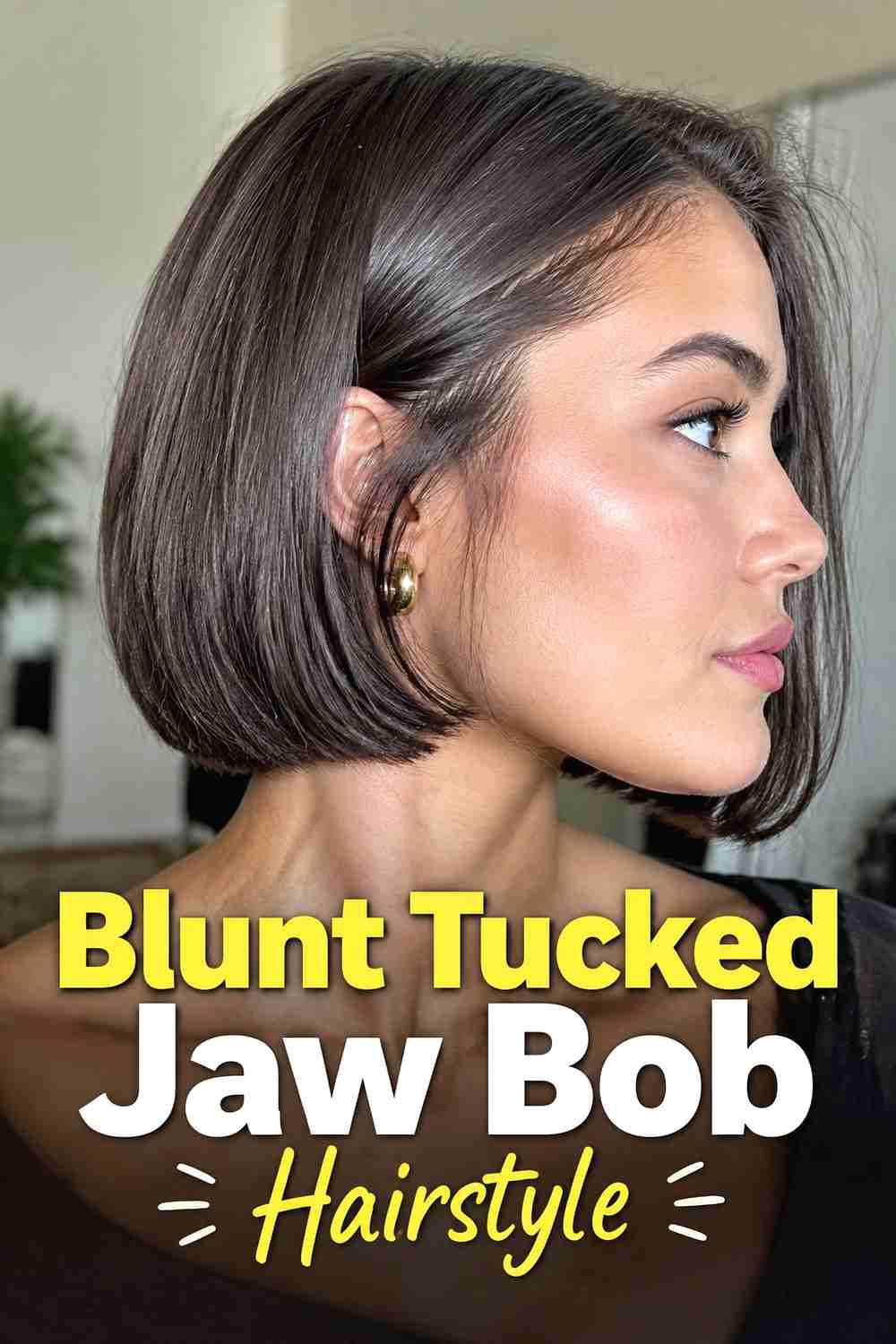
Blunt Tucked Jaw Bob Hairstyle uses a strong, nearly one-length perimeter to emphasize density and make the jaw-skimming line unmistakable. Tucking the front behind the ears exposes that clean edge instead of hiding it beneath loose face-framing sections. The look is particularly effective on fine-to-medium straight hair, where a solid baseline can give the ends a fuller visual weight. Dense hair may need subtle internal removal while preserving the outer edge. Styling should stay simple and controlled: smooth the surface, keep a small amount of movement at the roots, and avoid curling the ends so heavily that the blunt shape disappears. A shine serum can finish the style without adding stiffness.
Hair Type & Length
Fine and medium-density hair often suits this version particularly well, provided the ends remain strong and are not excessively texturized.
5. Soft Layered Tucked Jaw Bob Hairstyle
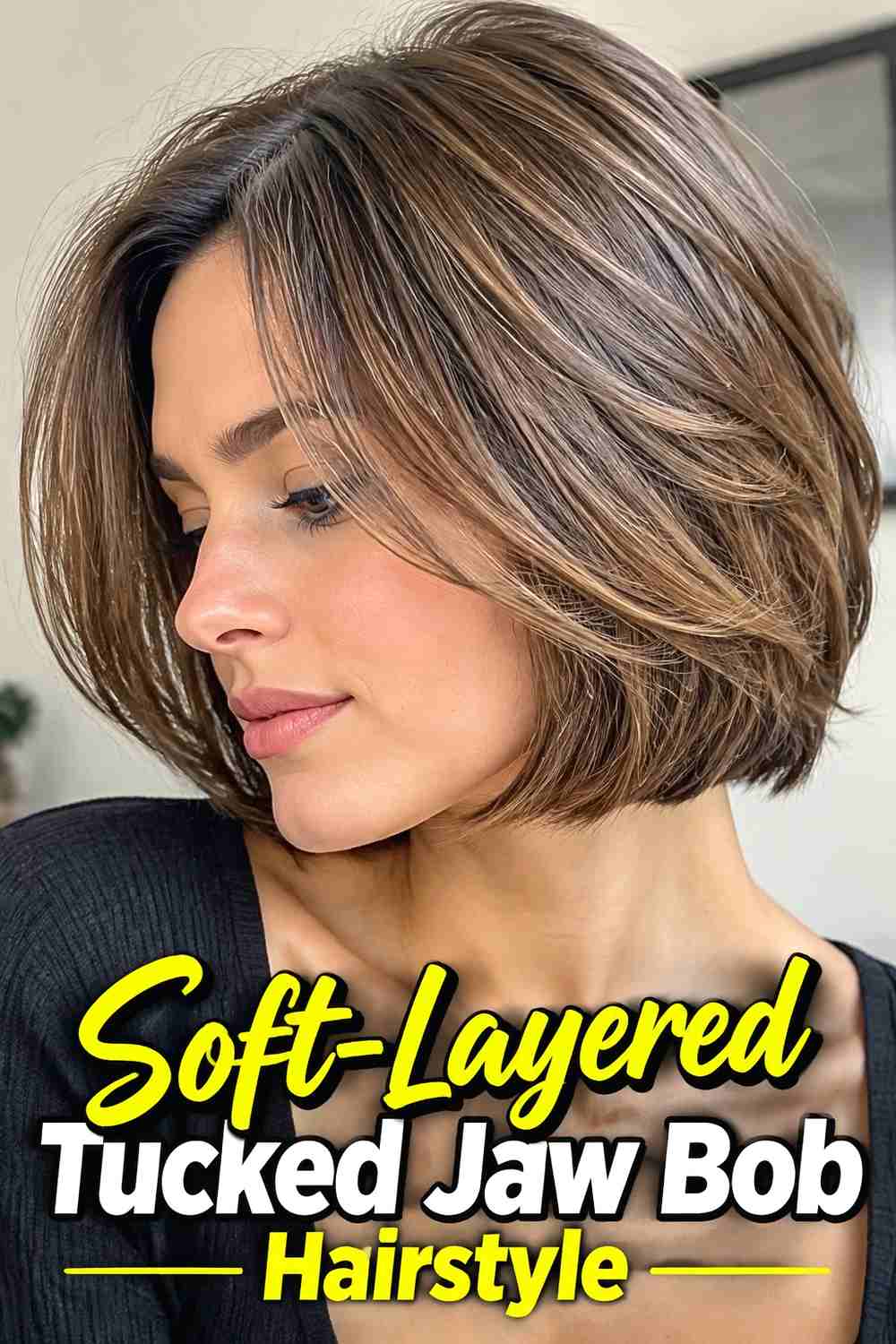
Soft-Layered Tucked Jaw Bob Hairstyle loosens the traditional bob shape with discreet internal layers and gentle movement around the ends. The perimeter still lands near the jaw, but the cut feels less rigid than a blunt one-length version. Longer front pieces remain tuckable, while subtle layering behind the ears prevents the style from feeling bulky once the sides are secured. This approach works well for medium or thick hair that needs movement without a visibly choppy finish. Let the texture fall naturally or add loose bends with a small iron, keeping the result soft rather than tightly curled. The layers should support the tuck and overall silhouette instead of creating short pieces that spring out around the ears.
Why It Works
Internal movement makes a compact bob feel lighter while leaving enough length at the front for a secure, clean tuck.
6. One Side Tucked Jaw Bob Hairstyle
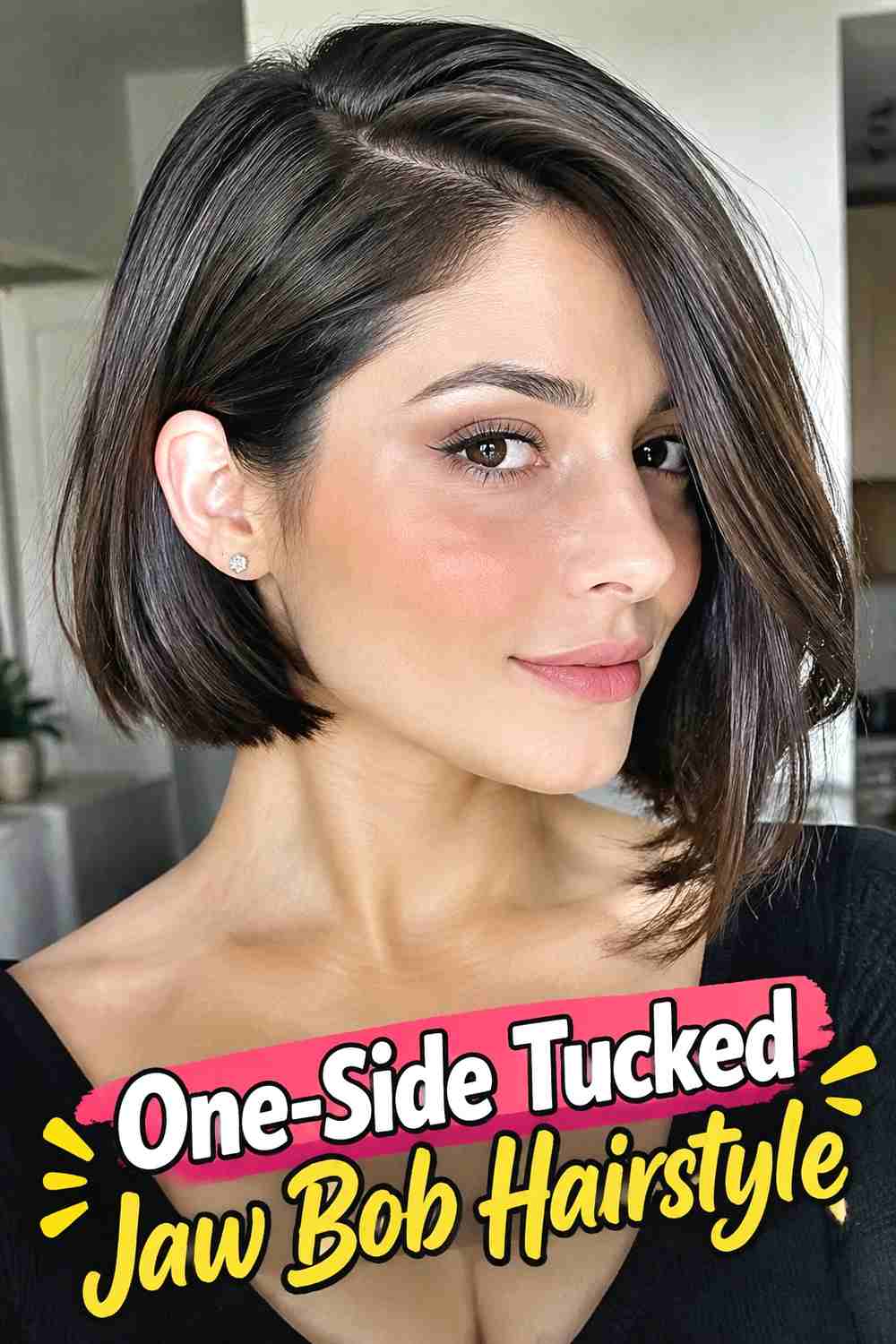
One-Side Tucked Jaw Bob Hairstyle uses asymmetrical styling rather than an asymmetrical cut. One side stays behind the ear, revealing the cheek and jaw, while the opposite side falls naturally forward for softer framing. The contrast gives a simple short bob more personality and works especially well with a side or slightly off-center part. Straight hair creates a cleaner distinction between the two sides, while gentle waves make the effect more relaxed. Keep the tucked section smooth and close to the head, but allow the loose side to retain natural movement. This version is useful when you want the polished character of a tucked bob without exposing both sides of the face.
Styling Notes
Choose the side your hair naturally prefers to tuck behind the ear. Working with its growth pattern usually gives a cleaner result with less hold product.
7. Double Tucked Jaw Bob Hairstyle
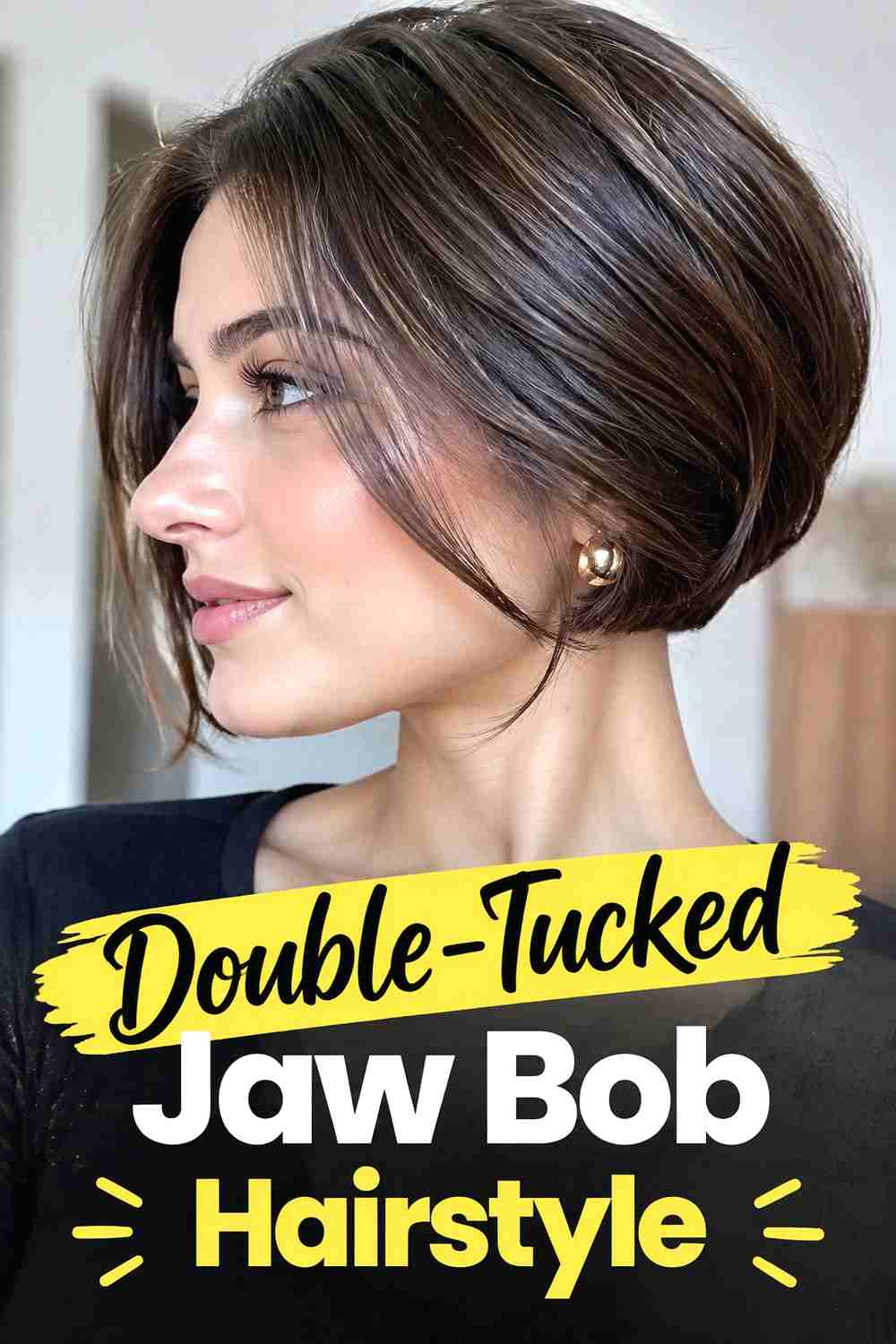
Double-Tucked Jaw Bob Hairstyle places both front sections behind the ears for the cleanest and most open version of the look. With the front removed from the face, attention shifts to the jaw-length perimeter, crown shape, and nape. This makes precise cutting especially important because the structure cannot hide behind loose pieces. The style works nicely with fine-to-medium hair and can also suit thicker textures when internal bulk is carefully managed. A slight bend through the ends prevents the bob from looking severe, while subtle crown lift keeps the silhouette balanced. For stronger hold, a discreet pin behind each ear can secure the tuck without becoming part of the visible hairstyle.
Wear & Maintenance
Front length matters. If the sides are cut too short, they may continually spring free instead of sitting comfortably behind the ears.
8. Micro Bang Tucked Jaw Bob Hairstyle
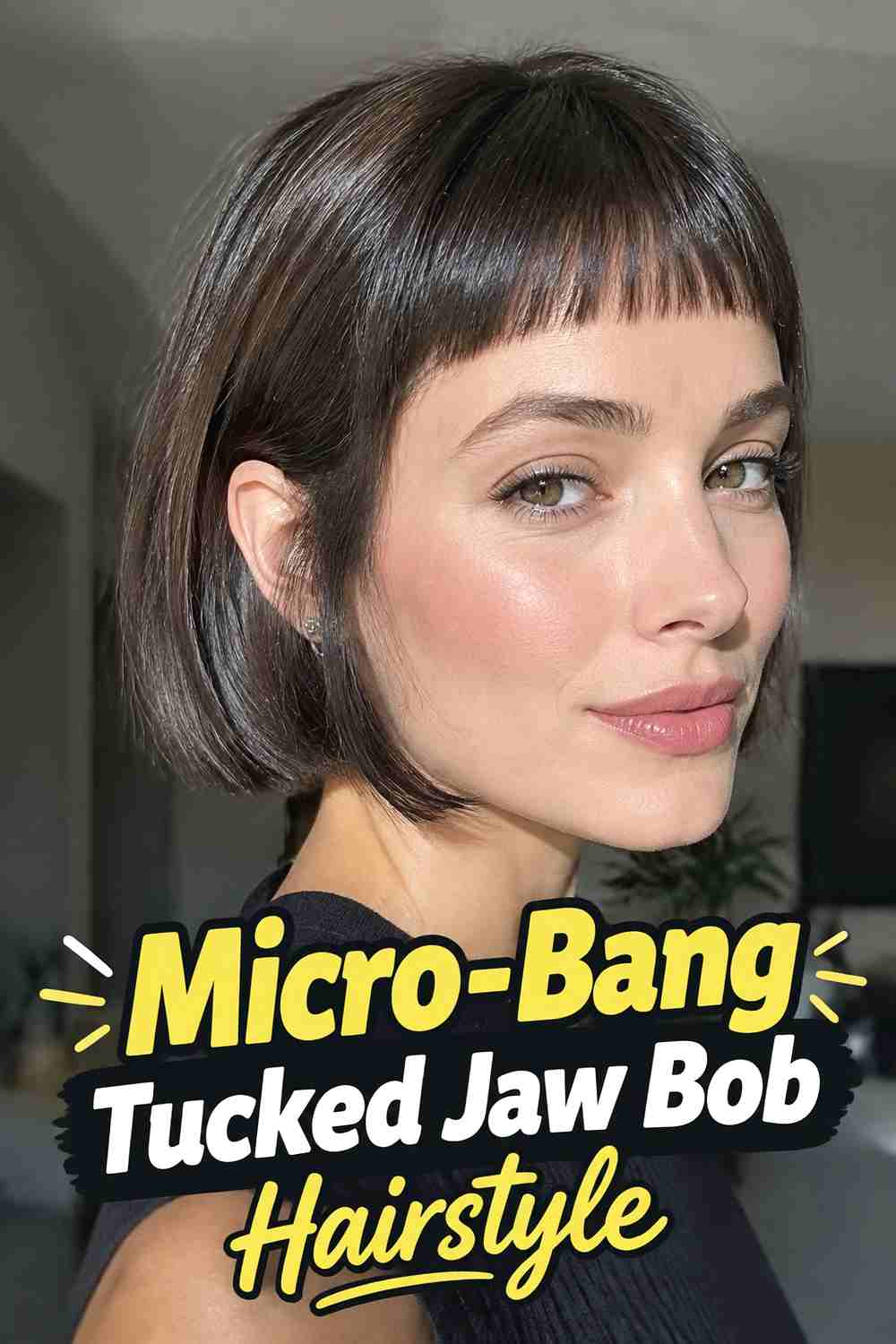
Micro-Bang Tucked Jaw Bob Hairstyle pairs a jaw-skimming bob with a short fringe that leaves plenty of forehead visible. Because the sides are tucked behind the ears, the micro bangs become the main framing element, creating a graphic contrast between the short front and solid lower perimeter. Straight or lightly textured hair can show this geometry particularly clearly. Keep the bangs light enough to move but deliberate enough to read as a defined fringe. The remaining bob can stay blunt or use minimal internal layers depending on density. Styling is straightforward, but the fringe requires attention because a short length reveals growth, cowlicks, and unevenness more quickly than longer bangs.
Pro Tip
Discuss natural forehead growth patterns before committing to the final fringe length, particularly if the hair lifts strongly at the roots.
9. Curtain Fringe Tucked Jaw Bob Hairstyle
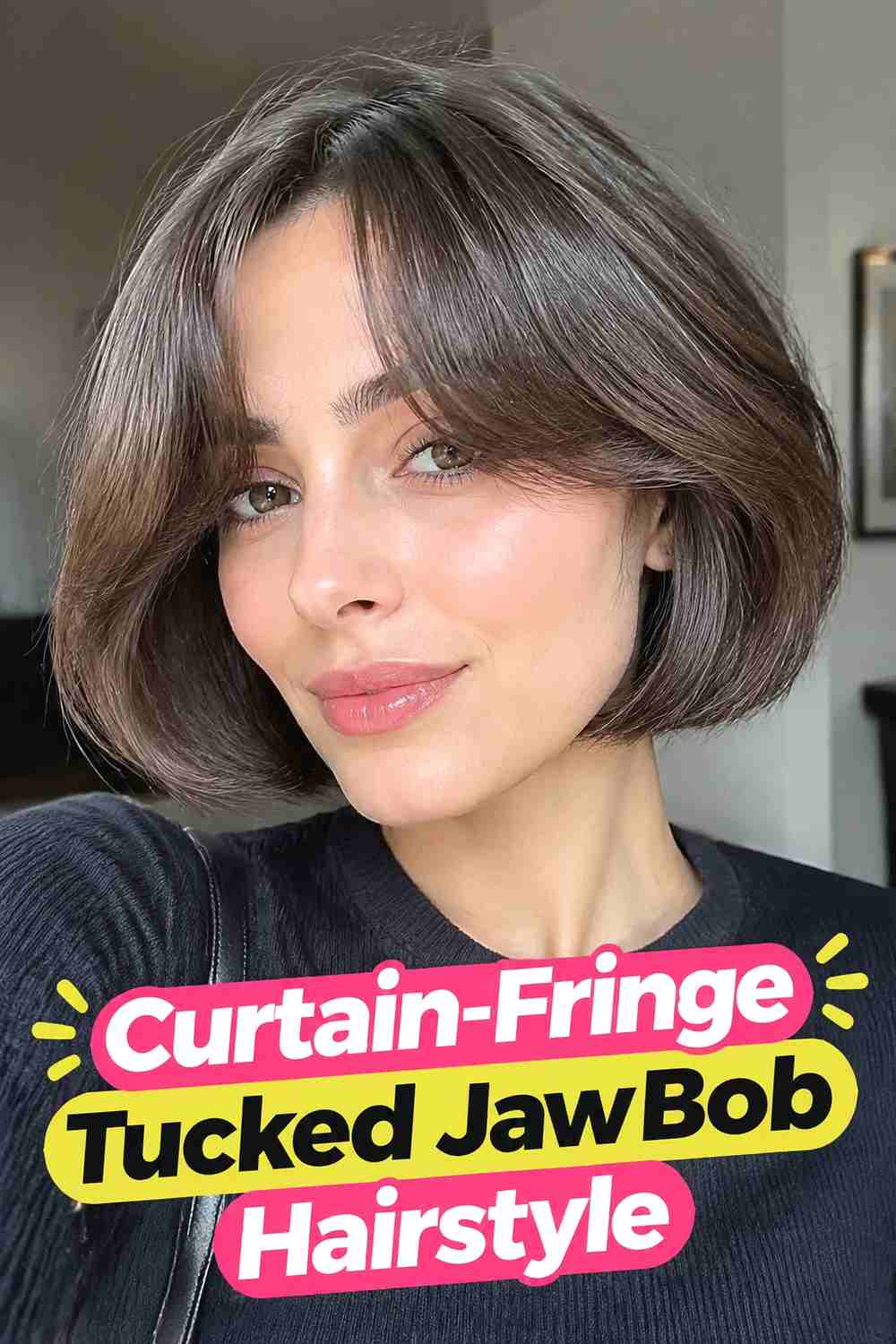
Curtain-Fringe Tucked Jaw Bob Hairstyle softens the clean ear-tucked silhouette with a divided fringe that remains loose around the forehead and temples. The outer fringe pieces can curve toward the cheekbones while the longer side sections slip behind the ears, creating visible layers without losing the tidy bob outline. This version is a good compromise if a fully exposed face feels too severe. Straight and wavy textures can both wear it, and the fringe fullness can be adjusted according to density. Dry the bangs first, moving them from side to side before settling the part. Then tuck the longer pieces and leave the curtain fringe free so the front retains movement.
Best For
This option suits anyone who likes a defined bob perimeter but wants soft framing around the eyes and forehead.
10. Sleek Glass Tucked Jaw Bob Hairstyle
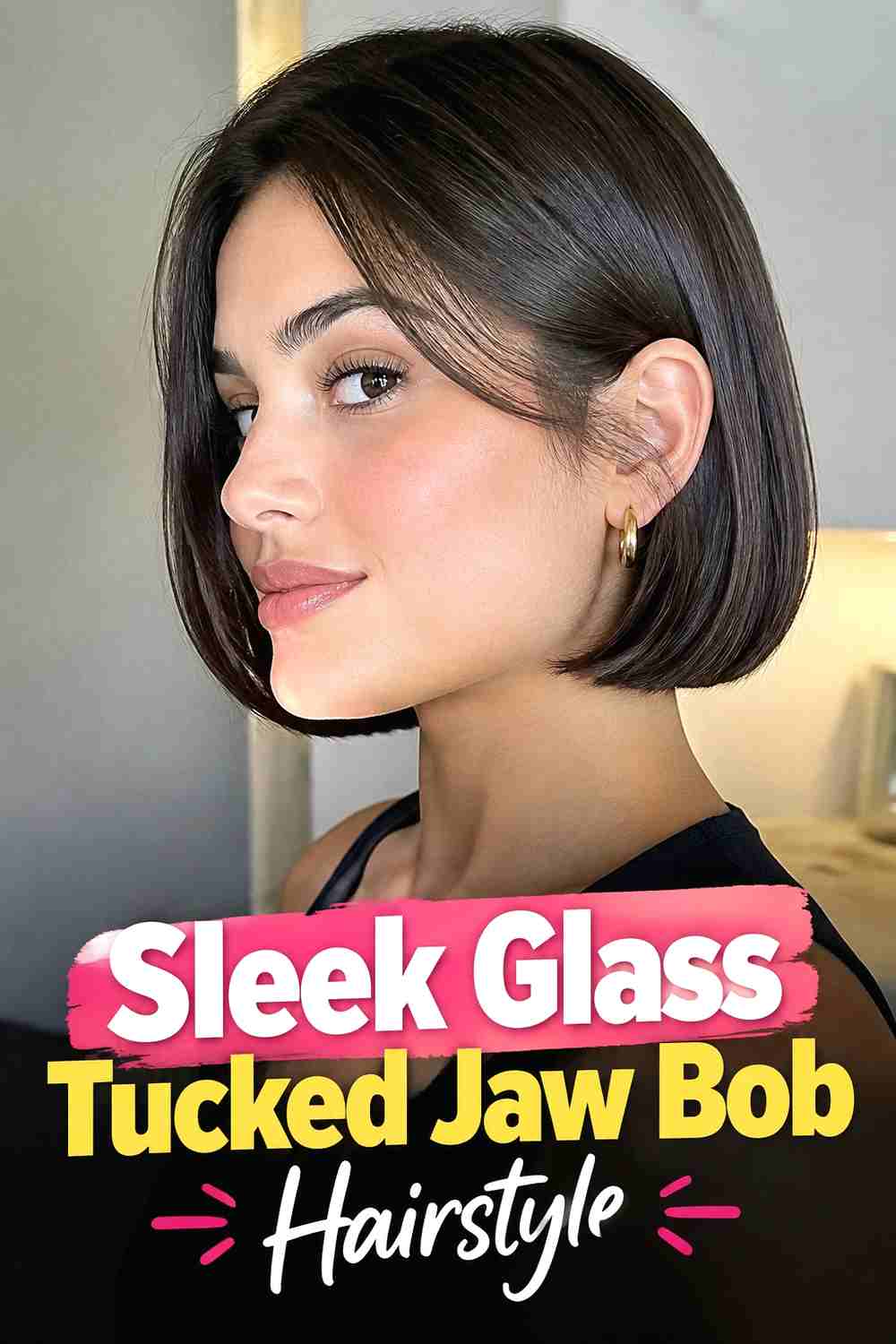
Sleek Glass Tucked Jaw Bob Hairstyle focuses on smoothness, shine, and a precise jaw-length line. Both sides can be tucked behind the ears so the reflective surface and compact shape remain uninterrupted. The finish looks strongest on straight or easily smoothed hair, although the haircut itself can be adapted to other textures. Keep the perimeter dense rather than heavily feathered, and avoid excessive volume at the sides. A flat brush or straightening tool can refine the shape after heat protectant is applied, followed by a very small amount of serum. The goal is polished shine with visible individual strands, not a coated or rigid finish that removes all natural movement.
Styling Notes
Apply finishing product mostly through the mid-lengths and ends. Too much serum at the roots can make a compact bob lose freshness and lift.
11. Textured Tucked Jaw Bob Hairstyle
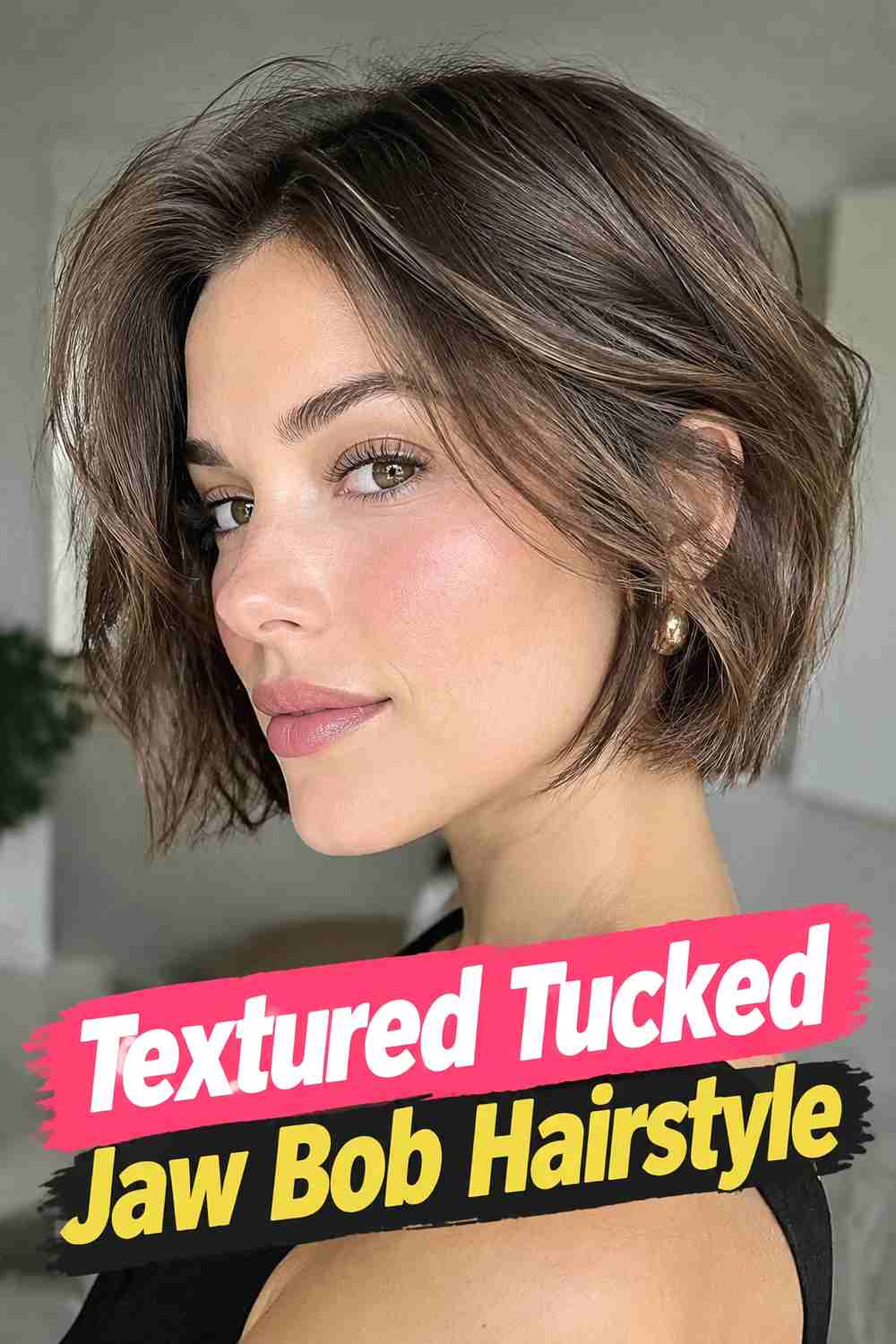
Textured Tucked Jaw Bob Hairstyle introduces piecey separation and irregular movement while preserving a recognizable jaw-length outline. The front remains long enough to tuck behind one or both ears, but the surface is intentionally less sleek than a classic bob. Subtle point cutting or internal layering can help sections move independently without shredding the perimeter. This finish works particularly well with naturally straight-to-wavy hair that already has a little bend. Use a light texture spray or paste, focusing on selected ends rather than coating the full haircut. Once the sides are tucked, loosen a few pieces around the crown so the hairstyle feels casual and touchable rather than tightly controlled.
Why It Works
The ear tuck provides visual structure, allowing the rest of the bob to carry more separation and texture without looking messy.
12. Wavy Tucked Jaw Bob Hairstyle

Wavy Tucked Jaw Bob Hairstyle balances a compact cut with soft bends that make the perimeter appear less severe. Loose waves can begin around the mid-lengths, while the pieces nearest the ears stay smooth enough to tuck securely. The combination works well for naturally wavy hair because the tuck controls the front while allowing texture through the sides and back. If creating waves with heat, alternate their direction and avoid curling every section identically. Leaving a few straighter ends keeps the result modern and relaxed. A lightweight mousse or texture spray can support the bends, but flexible movement is more important than firm hold for this easy, everyday version.
Styling Notes
Keep the wave pattern softer directly above the ears. Bulky bends in that area can make a secure tuck more difficult.
13. Curly Tucked Jaw Bob Hairstyle
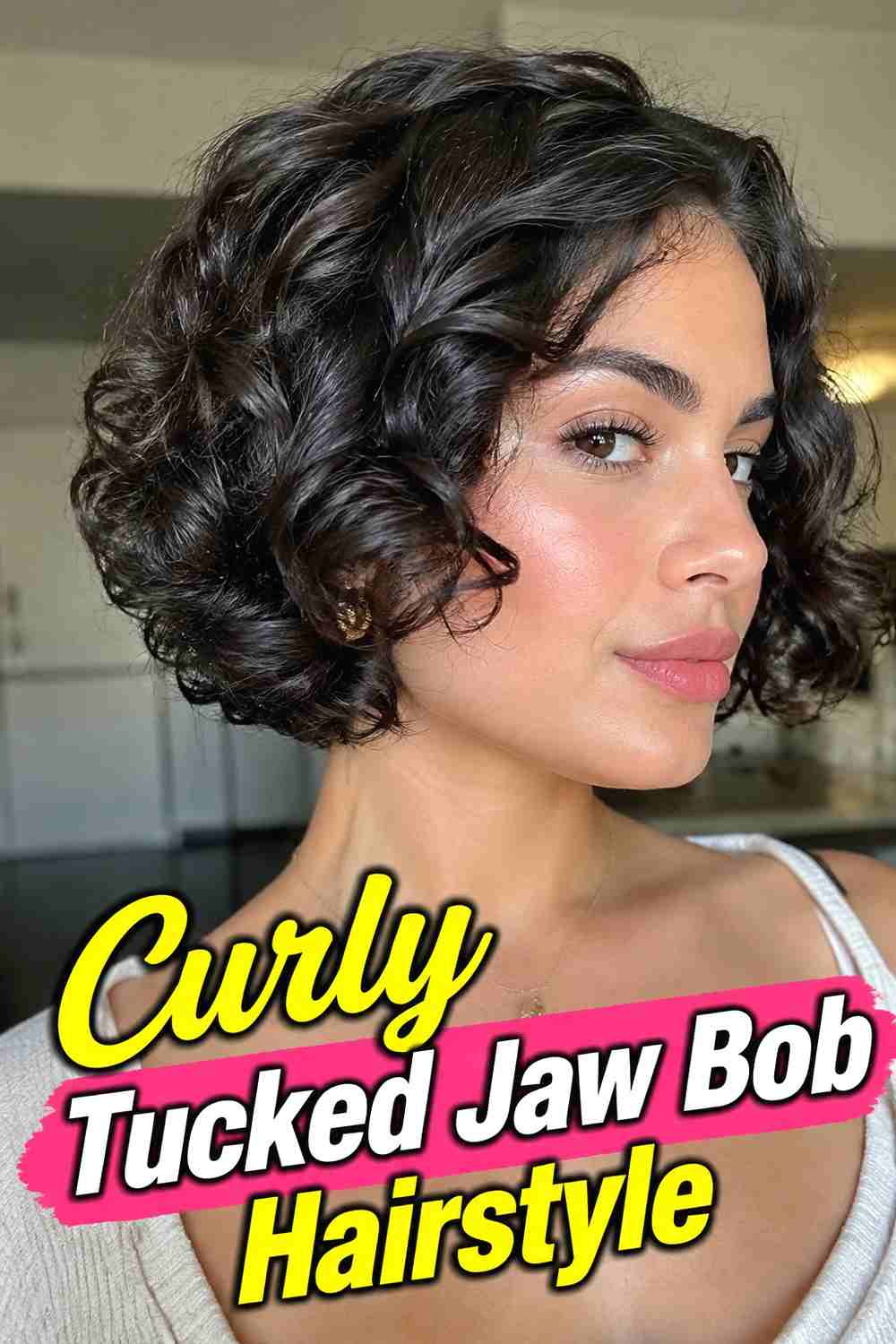
Curly Tucked Jaw Bob Hairstyle adapts the short silhouette to natural curls while keeping enough length around the front for a practical ear tuck. Instead of forcing every curl to sit at the exact jawline, the cut should account for shrinkage so the dry silhouette finishes in the intended area. Carefully placed layers can distribute volume while leaving the lower shape recognizable as a bob. Tuck one side for an asymmetrical finish or both sides when the curl pattern allows it comfortably. Lightweight curl cream or gel can support definition without weighing down the short shape. A small hidden pin can help secure curls that naturally spring forward around the ear.
Hair Type & Length
Curl pattern and shrinkage should guide the exact cutting length. What reaches the jaw when wet or stretched may sit noticeably higher once dry.
14. French Inspired Tucked Jaw Bob Hairstyle
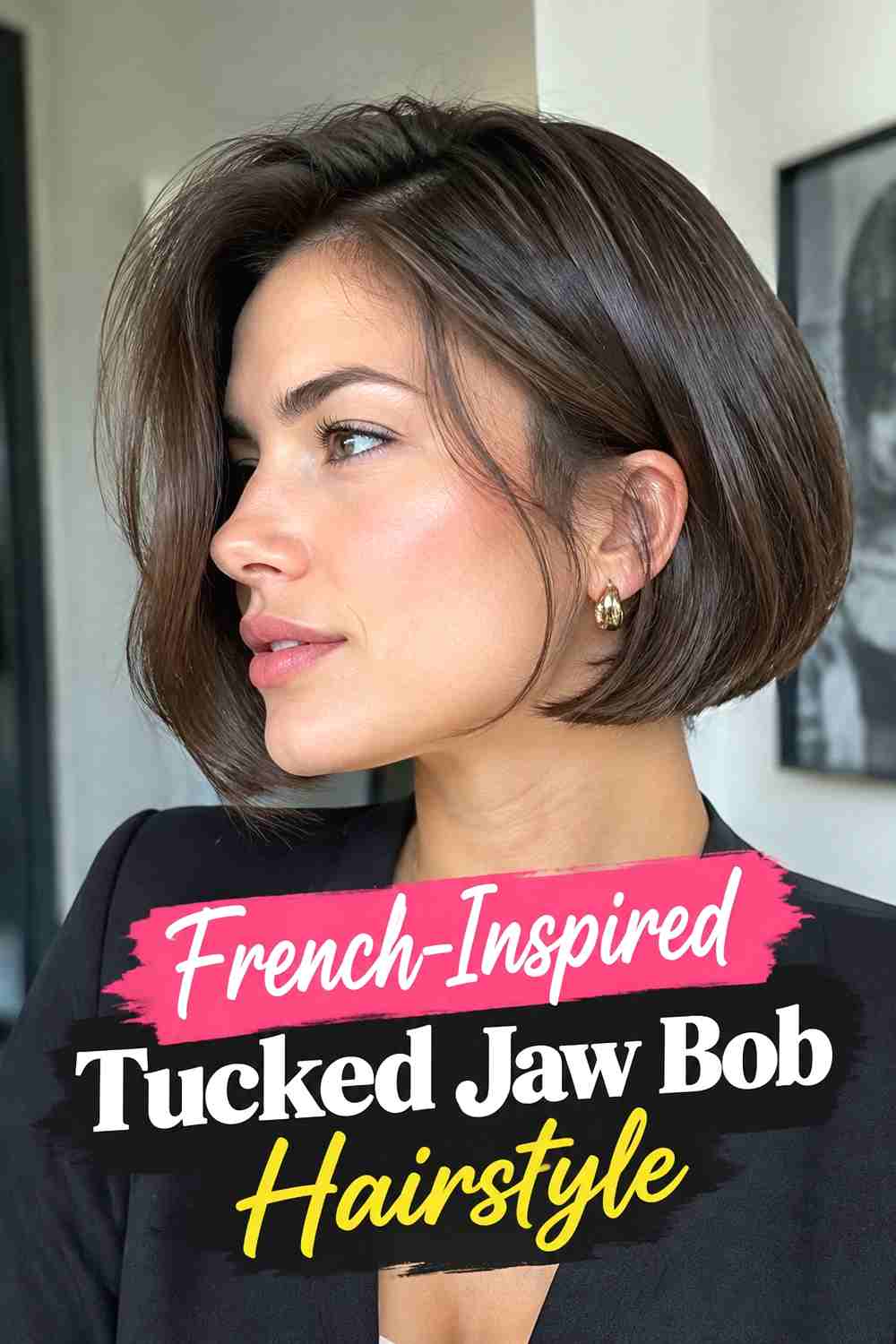
French-Inspired Tucked Jaw Bob Hairstyle keeps the jaw-grazing shape compact but allows a slightly undone finish through the surface. The perimeter can remain fairly solid while light texture, an imperfect part, and a few relaxed bends prevent the bob from looking overly formal. One side tucked behind the ear gives the style an effortless asymmetry, while the loose side can fall naturally toward the cheek. A delicate fringe can also be added, though it should blend with the uncomplicated mood rather than dominate it. This version suits straight and gently wavy textures particularly well. Use minimal product and resist polishing every flyaway—the charm comes from balancing a deliberate haircut with relaxed styling.
Best For
Choose this version if you want a defined short bob that still feels casual, flexible, and slightly undone during everyday wear.
15. Rounded Tucked Jaw Bob Hairstyle
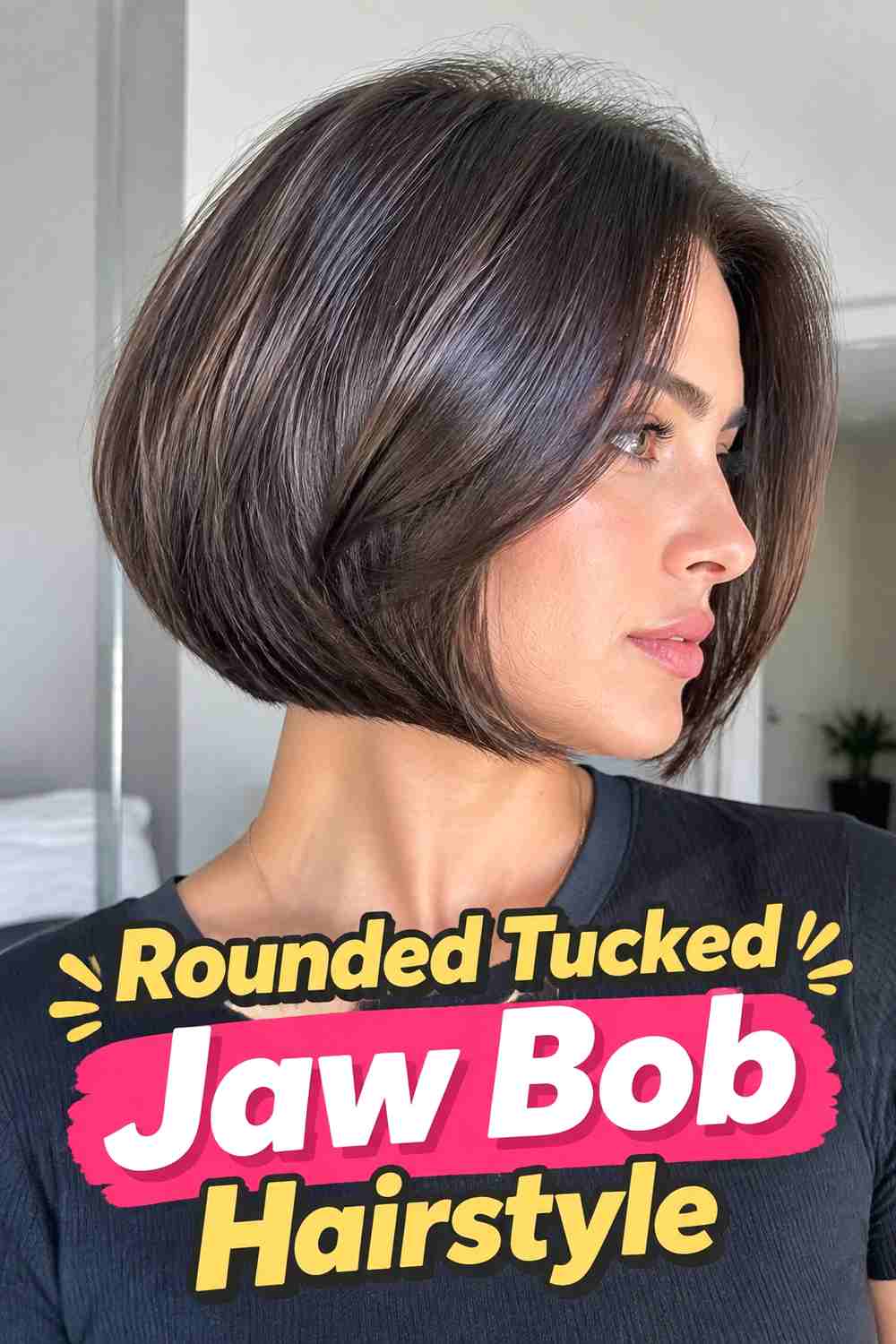
Rounded Tucked Jaw Bob Hairstyle uses a gentle inward curve to create a smooth, sculpted silhouette around the head. The ends sit close to the jaw instead of kicking outward, while the sides tuck neatly behind the ears to reveal the compact shape. This approach can work especially well on straight or softly wavy hair with enough density to hold a clean curve. A restrained amount of internal layering can prevent the shape from becoming bulky, but the outer perimeter should stay cohesive. Blow-dry with a round brush, directing the ends slightly inward rather than creating a pronounced curl. The finished result should appear softly contoured and polished rather than rigid or helmet-like.
Styling Notes
Build the inward bend gradually. Over-rounding the ends can make the bob look dated and reduce the crispness of the jaw-length perimeter.
16. Asymmetrical Tucked Jaw Bob Hairstyle
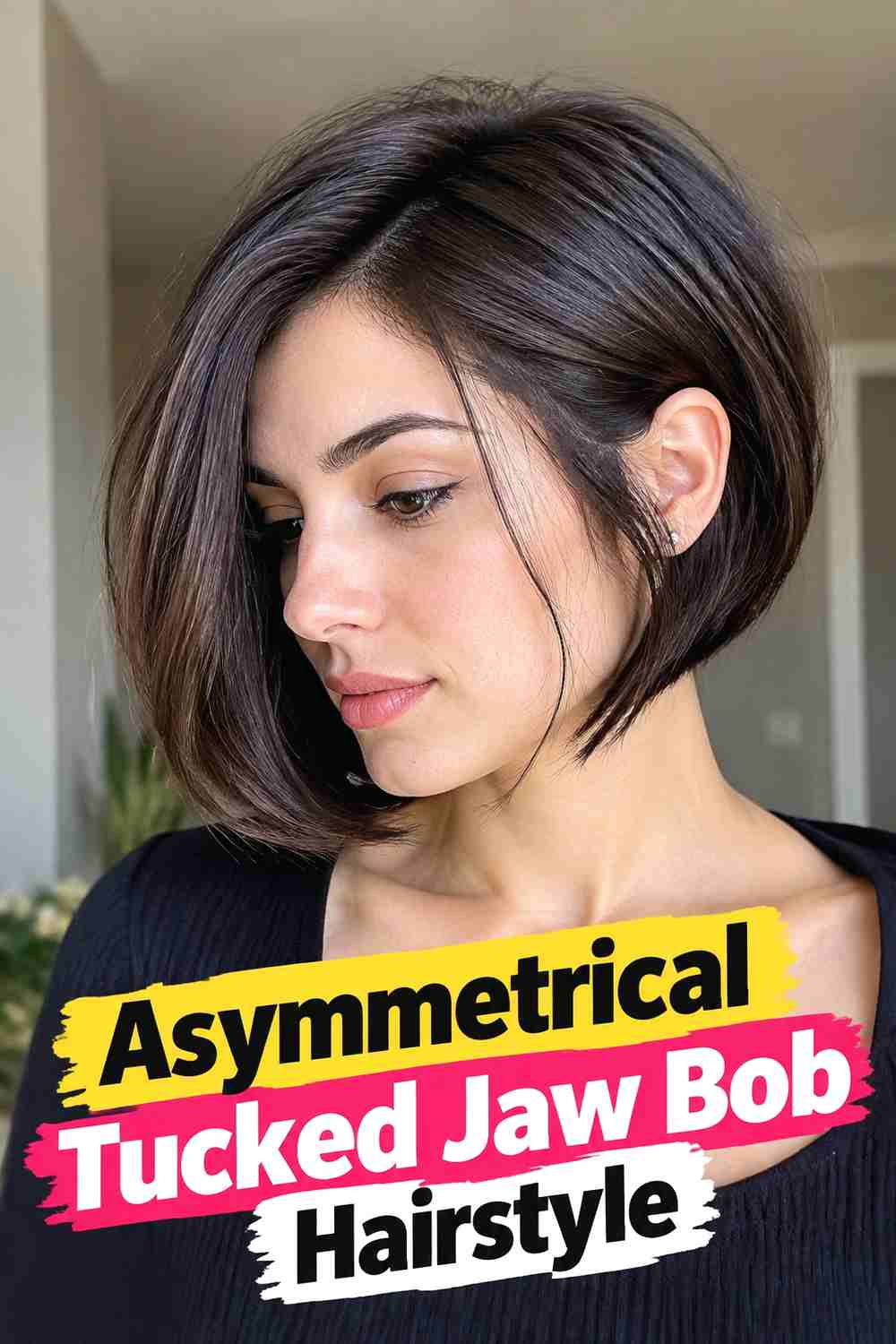
Asymmetrical Tucked Jaw Bob Hairstyle uses a subtle length difference to give the compact bob a more directional finish. One side may sit slightly shorter or tuck more tightly behind the ear, while the opposite side extends a little farther toward the jaw. The imbalance should be deliberate but wearable, with the back connecting cleanly between the two sides. Straight and lightly wavy textures make the difference easy to see, though the amount of asymmetry can remain modest for a softer effect. Styling one side sleek and leaving the longer side loose emphasizes the shape without requiring extra volume. Regular perimeter trims help preserve the intentional angle as the bob grows.
Why It Works
The length difference creates interest while keeping the overall cut simple, compact, and easy to recognize as a jaw bob.
17. Flipped End Tucked Jaw Bob Hairstyle
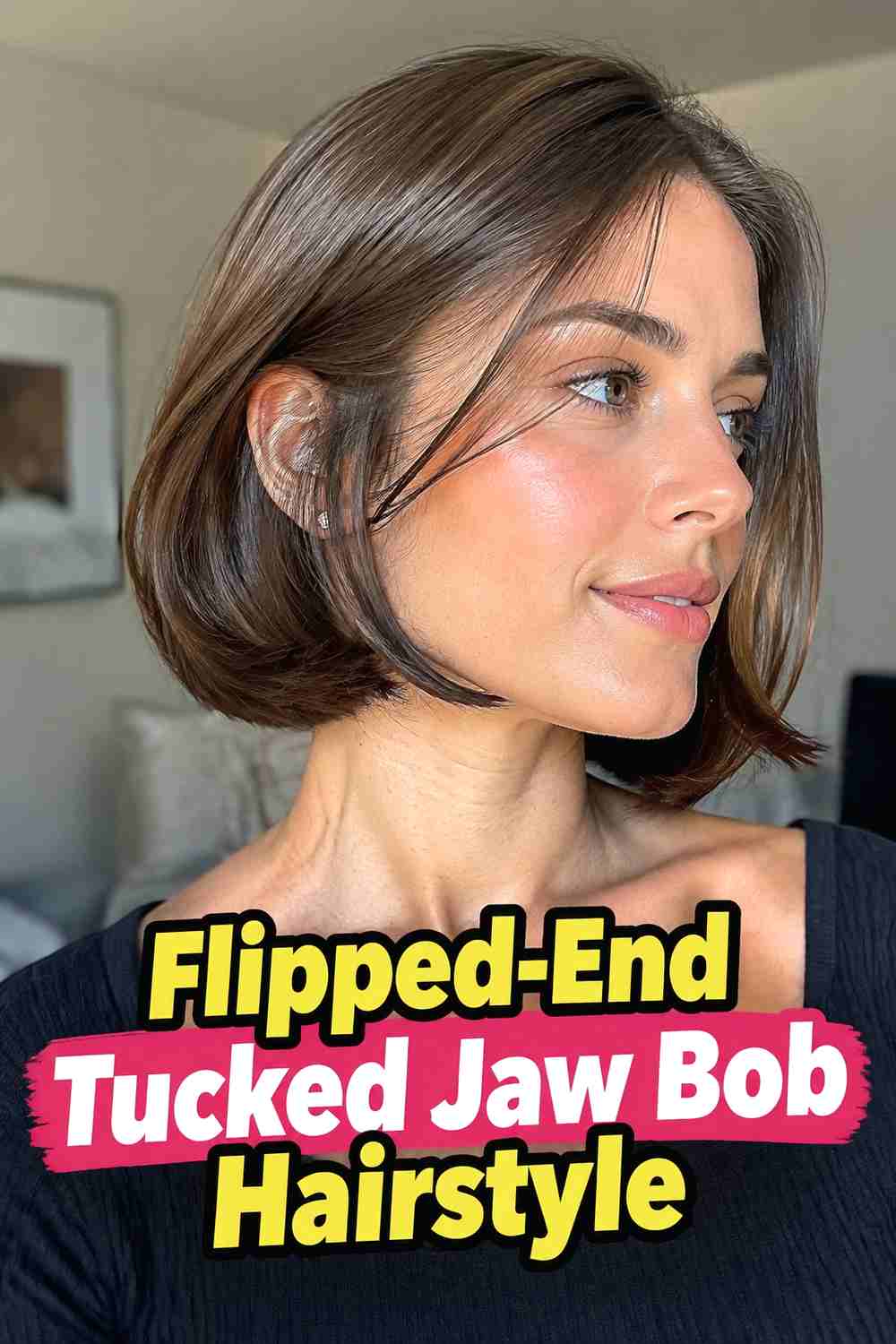
Flipped-End Tucked Jaw Bob Hairstyle gives the short cut a playful finish by turning selected ends slightly outward instead of curving everything under. The front pieces can remain tucked behind the ears while the back and lower side sections carry the flip, creating a clean contrast between a controlled upper silhouette and livelier ends. Straight-to-wavy hair that holds a bend is particularly suited to this version. Use a small round brush or straightener to direct only the final inch or two outward, avoiding a full curl through the mid-lengths. A flexible spray can maintain the movement while allowing the ends to soften naturally as the hairstyle is worn.
Pro Tip
Keep the flips slightly varied rather than perfectly matched. Small differences make the finish feel modern instead of overly set.
18. Polished Volume Tucked Jaw Bob Hairstyle
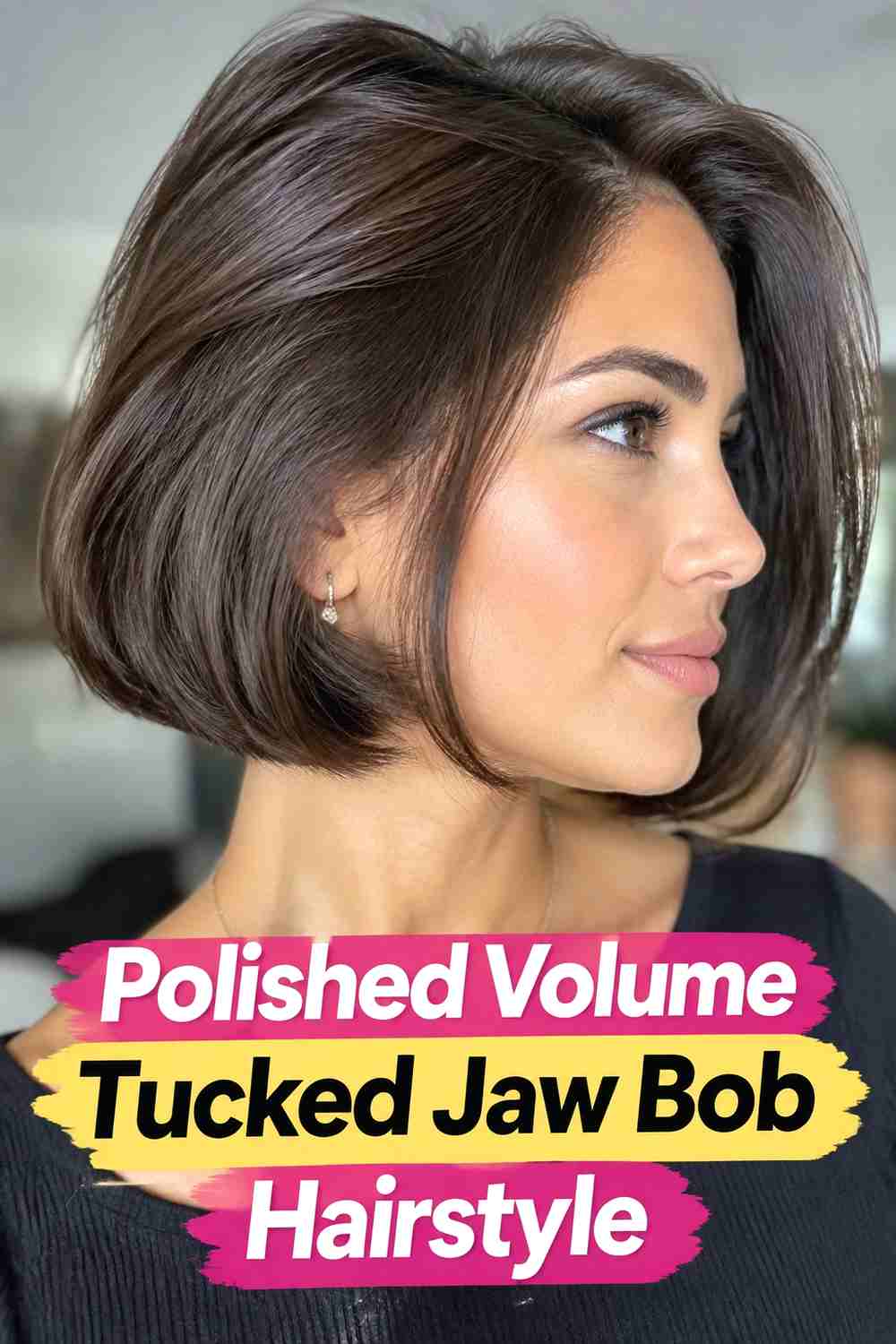
Polished Volume Tucked Jaw Bob Hairstyle adds controlled lift at the crown while keeping the sides smooth enough to sit comfortably behind the ears. The extra height prevents a short jaw bob from looking flat, yet the perimeter remains clean and compact. Medium-density hair can often hold this balance naturally, while fine hair may benefit from a lightweight root product. Blow-dry the crown upward with a small or medium round brush, then direct the front sections backward for the tuck. Avoid building excessive width around the ears, since that can work against the sleek profile. Finish with flexible hold so the crown maintains shape without losing softness or natural strand movement.
Best For
This version works well when you want a refined, fuller-looking finish while keeping the recognizable simplicity of a tucked jaw bob.
How to Choose the Right Look
Start with the perimeter. If you want maximum density and a crisp outline, a blunt, glassy, or center-part version keeps the jaw-length line highly visible. If your hair is thick or naturally textured, a softly layered, wavy, curly, or textured variation can remove enough weight to make the short shape easier to manage.
Next, decide how exposed you want the face to feel. A double tuck opens both sides, while a one-side tuck keeps more softness around the opposite cheek. Curtain fringe offers additional framing, and micro bangs create a stronger graphic detail without interfering with the ear tuck.
Consider daily styling as well. Sleek and rounded versions usually need more deliberate smoothing, while textured, wavy, curly, and French-inspired finishes can tolerate natural variation. For the tuck itself, make sure the front pieces are long enough to sit behind the ear comfortably. Product can help, but a haircut that naturally supports the styling direction will generally be easier to wear.
Final Thoughts
The tucked jaw bob gets much of its character from a simple combination: a compact jaw-length perimeter and front sections that can move cleanly behind the ears. From blunt and glassy to curly, wavy, or softly layered, small changes in texture and fringe can make the same basic shape feel completely different. Choose a version that works with your density, natural movement, and preferred amount of daily styling.
FAQs
1. What is a tucked jaw bob?
A tucked jaw bob is a short bob that finishes around the jaw and is styled with one or both front sections behind the ears, creating a clean and open silhouette.
2. Does a tucked jaw bob need to be blunt?
No. A blunt perimeter emphasizes the compact shape, but soft internal layers, waves, curls, or light texture can also work as long as the bob retains its jaw-length outline.
3. How long should the front pieces be for an ear tuck?
They need enough length to reach securely behind the ear without constantly springing forward. The exact length depends on your ear position, texture, shrinkage, and growth pattern.
4. Can curly hair wear a tucked jaw bob?
Yes. The cutting length should account for curl shrinkage, and some curls may need a discreet pin or light styling product to stay securely behind the ear.
5. Is a tucked jaw bob high maintenance?
The styling can be simple, but a short perimeter shows growth relatively quickly. Regular reshaping helps keep the jaw-length line and tuck looking intentional.
Save your favorite tucked jaw bob hairstyle ideas, share them for salon inspiration, and explore more polished short-bob looks for your next cut.