30 Clavi-Cut Haircut Ideas for Fall 2026
The clavi-cut is fall’s polished in-between length, pairing collarbone-grazing ends with soft movement, glossy texture, and endless styling possibilities.
Sitting around the collarbone, the clavi-cut gives you much of the styling flexibility of medium hair while keeping the clean, intentional shape associated with a bob. For fall 2026, that versatility fits especially well with the season’s broader move toward softer layers, wearable texture, easy movement, and hair that looks polished without appearing heavily styled.
The best version depends on more than the exact length. Compare how much weight you want around the ends, whether your natural texture benefits from layering, how often you plan to heat-style, and whether fringe works with your daily routine. From blunt glossy cuts to airy curls, face-framing layers, and richer fall color, these ideas show how different a collarbone-length shape can feel.
Quick List
- Soft Blunt Clavi-Cut Hairstyle
- Face-Framing Layered Clavi-Cut Hairstyle
- ’90s Blowout Clavi-Cut Hairstyle
- Center-Part Sleek Clavi-Cut Hairstyle
- Lived-In Wavy Clavi-Cut Hairstyle
- Curtain Bangs Clavi-Cut Hairstyle
- Wispy Bangs Clavi-Cut Hairstyle
- Side-Part Voluminous Clavi-Cut Hairstyle
- Soft Shag Clavi-Cut Hairstyle
- Curly Clavi-Cut Hairstyle
- Coily Rounded Clavi-Cut Hairstyle
- Air-Dried Textured Clavi-Cut Hairstyle
- Flipped-End Clavi-Cut Hairstyle
- Inward-Curved Clavi-Cut Hairstyle
- Italian-Inspired Clavi-Cut Hairstyle
- French-Girl Clavi-Cut Hairstyle
- Butterfly-Layer Clavi-Cut Hairstyle
- Invisible-Layer Clavi-Cut Hairstyle
- Choppy Layered Clavi-Cut Hairstyle
- Fine-Hair Fullness Clavi-Cut Hairstyle
- Thick-Hair Debulked Clavi-Cut Hairstyle
- Deep Side-Part Clavi-Cut Hairstyle
- Micro-Bangs Clavi-Cut Hairstyle
- Bottleneck Bangs Clavi-Cut Hairstyle
- Warm Brunette Clavi-Cut Hairstyle
- Copper-Toned Clavi-Cut Hairstyle
- Beige Blonde Clavi-Cut Hairstyle
- Espresso Gloss Clavi-Cut Hairstyle
- Soft Auburn Wavy Clavi-Cut Hairstyle
- Tucked-Behind-the-Ear Clavi-Cut Hairstyle
1. Soft Blunt Clavi Cut Hairstyle
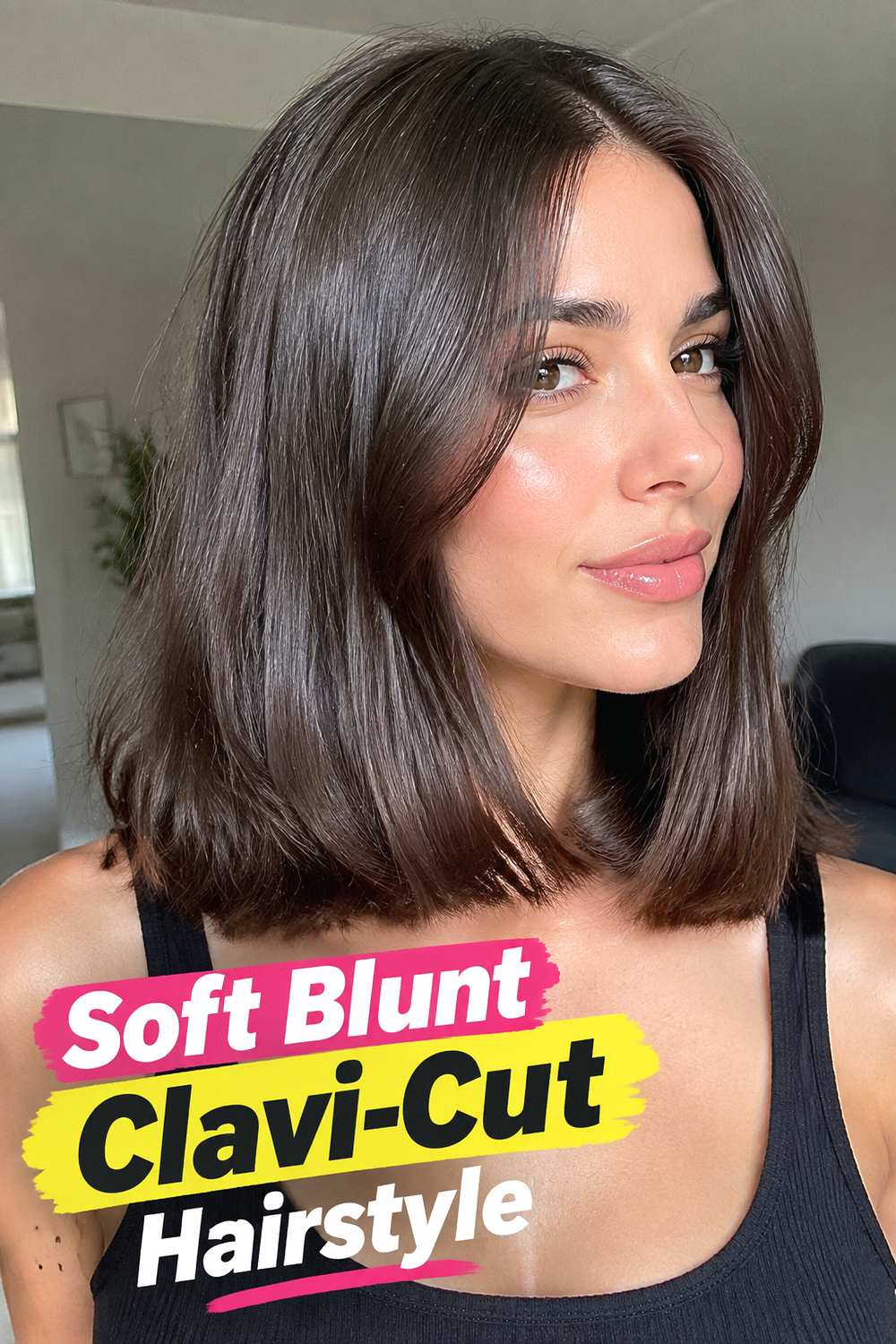
A soft blunt clavi-cut keeps the bottom edge substantial without making the haircut look severe. The ends land near the collarbones in a clean line, while tiny amounts of internal softening allow the hair to move instead of sitting like a solid block. This shape can make straight or gently wavy hair appear fuller, especially when the perimeter is kept dense. For fall, it looks especially polished with a smooth blow-dry and a touch of bend rather than pin-straight styling. Because the cut has minimal visible layering, the condition of the ends becomes part of the look, so regular trims and lightweight finishing products help preserve its crisp silhouette.
Hair Type & Length
This approach works particularly well for fine-to-medium strands and hair that naturally falls straight or with a loose wave. Ask for a collarbone-level perimeter with only enough internal texture to prevent stiffness.
Wear & Maintenance
Use a heat protectant before blow-drying, then finish with a small amount of serum through the lower lengths. Avoid heavy oils near the roots if you want the shape to retain airy movement.
2. Face Framing Layered Clavi Cut Hairstyle
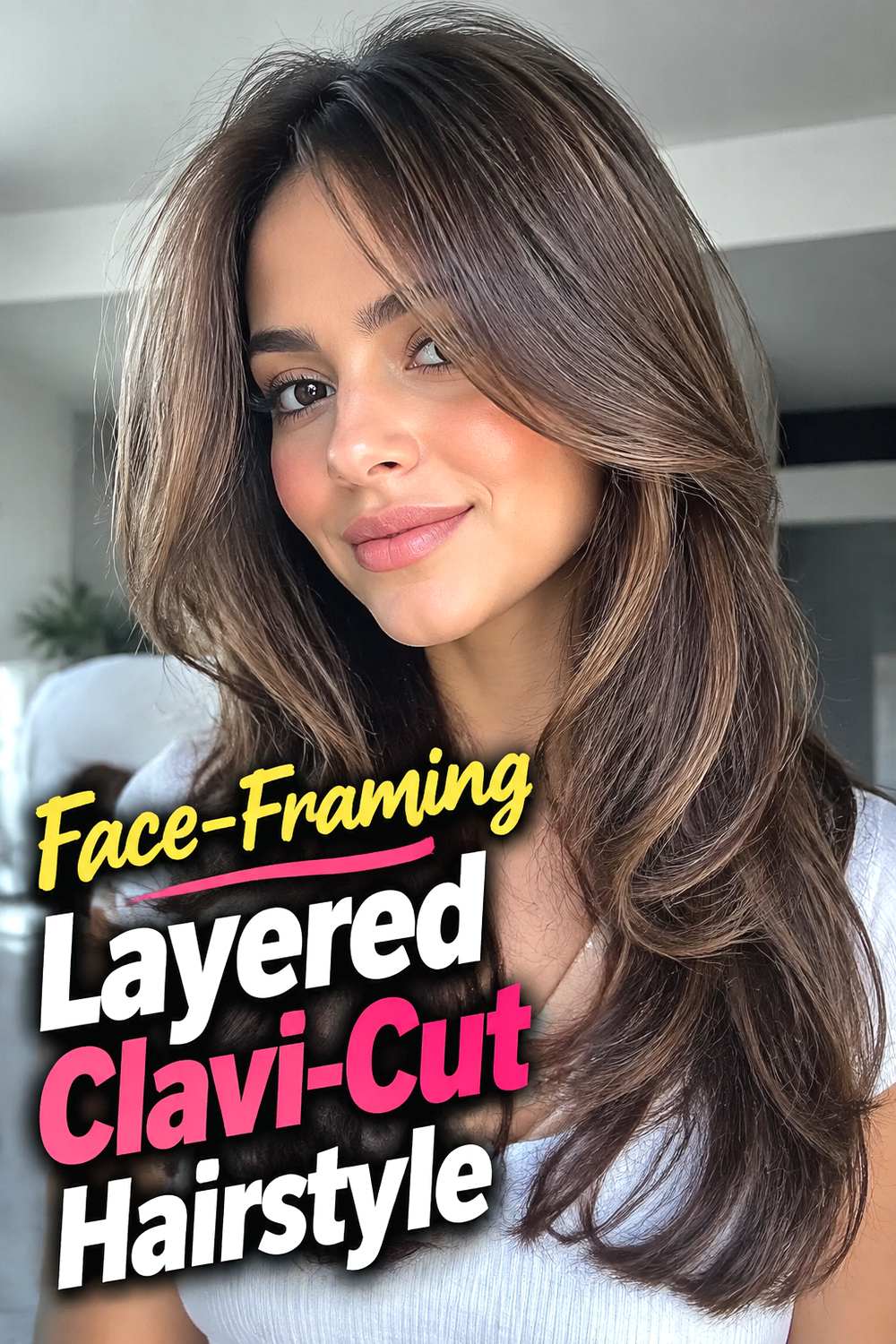
Face-framing layers give a classic clavi-cut more movement without sacrificing the reassuring fullness of a medium-length perimeter. The shortest pieces can begin around the cheekbones or jaw, then blend gradually into collarbone-level ends. That creates a soft frame around the face and encourages the front to sweep naturally when styled with a round brush. It is a useful choice if a one-length cut tends to feel flat around your features but you still want enough length for a ponytail or loose updo. Keep the layers connected rather than sharply stepped for a fluid finish that can be worn smooth, softly waved, or mostly air-dried.
Why It Works
The shorter front sections introduce movement exactly where it is most visible, while the longer back maintains density. This makes the haircut feel noticeably refreshed without requiring an aggressive overall chop.
Pro Tip
Ask your stylist to discuss the starting point of the face frame while your hair is dry. Cheekbone, jaw, and chin-level layers create noticeably different effects once the hair moves.
3. 90s Blowout Clavi Cut Hairstyle
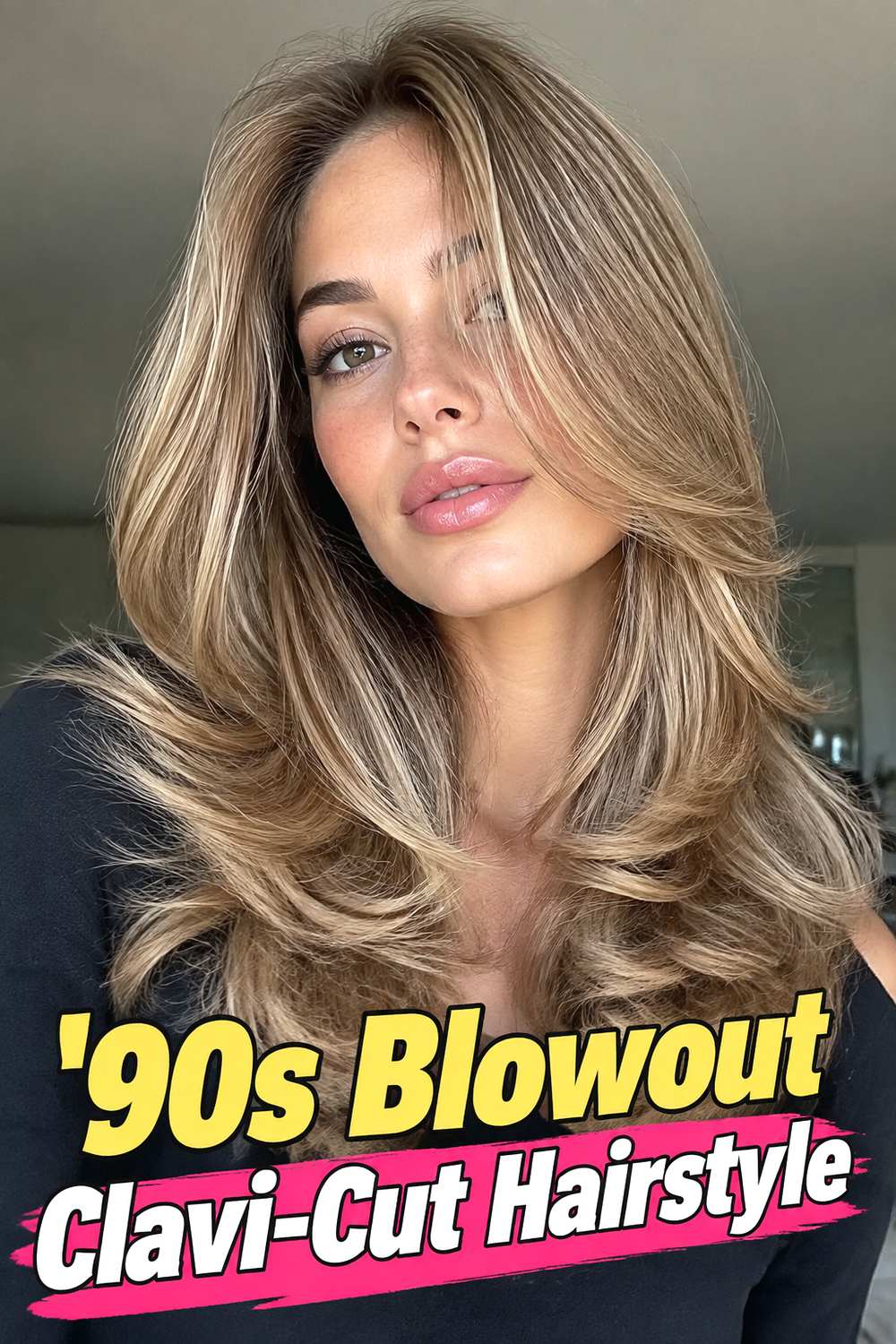
The ’90s blowout clavi-cut turns collarbone-length hair into a fuller, glamorous shape with lifted roots and softly curved ends. The cut itself can stay relatively simple, but long blended layers give the blowout room to expand without creating thin or feathery tips. A center or slightly off-center part keeps the finish modern, while broad sections around the face can be directed away for that recognizable swept-back movement. The style works especially well for evenings, events, and days when you want your haircut to feel more dressed up. For a believable finish, aim for bounce and softness rather than perfectly identical curls through every section.
Styling Notes
Dry the roots first for lift, then use a medium or large round brush through the lengths. Velcro rollers can help the front sections cool in a lifted shape without requiring tighter curls.
Wear & Maintenance
Humidity can soften a blowout quickly, so lightweight hold is more useful than coating the hair with heavy spray. Brush through once the shape has cooled to keep the finish touchable.
4. Center Part Sleek Clavi Cut Hairstyle
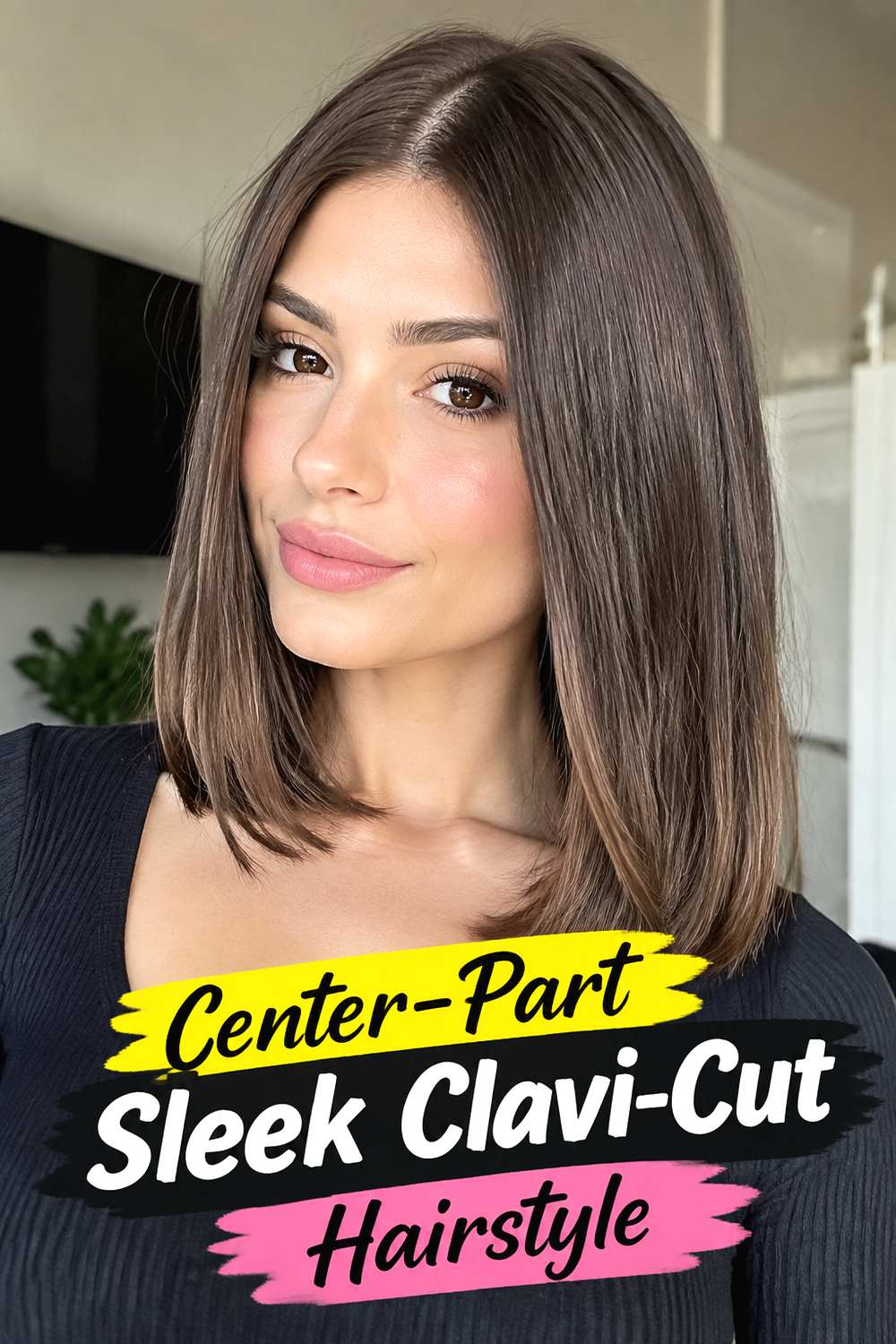
A sleek center-part clavi-cut puts the emphasis on precision, shine, and a strong collarbone-grazing outline. The center part creates symmetry, while a smooth surface makes the ends look deliberately sharp and healthy. This is an especially effective variation if you like minimalist styling or want a medium haircut that can shift easily between workwear and evening looks. The key is keeping the hair sleek without pressing away every bit of natural body. A little root lift and a gentle curve through the last inch of the ends prevent the style from appearing flat. Clean sectioning and controlled heat make a bigger difference here than using lots of finishing product.
Best For
Straight and slightly wavy textures are the easiest to wear in this finish, although other textures can achieve it with appropriate smoothing techniques and heat protection.
Pro Tip
Rather than repeatedly passing a flat iron over the hair, smooth small sections with controlled tension. Fewer deliberate passes can help preserve movement and minimize unnecessary heat exposure.
5. Lived In Wavy Clavi Cut Hairstyle
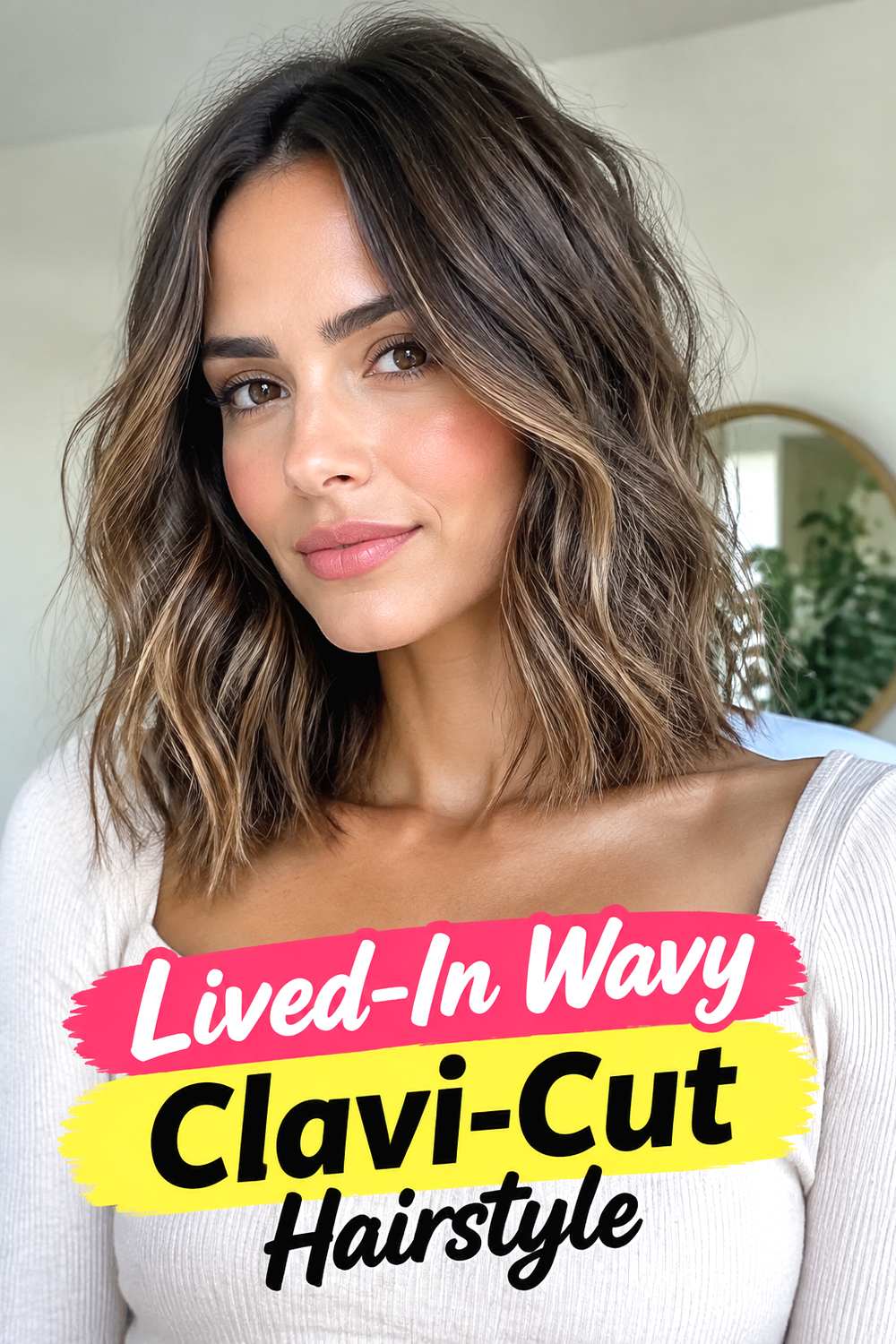
The lived-in wavy clavi-cut is intentionally relaxed, with loose bends that break up the collarbone-length outline and give the haircut an effortless fall feel. Instead of uniform curls, the texture should alternate slightly in direction and remain straighter near the tips. That irregularity makes the haircut look naturally worn rather than freshly curled. A few subtle layers can help waves sit lightly, but the perimeter should retain enough weight to keep the clavi-cut shape recognizable. This style is easy to dress up with shine spray or make casual with a dry texturizing product, making it useful for anyone who wants one haircut that can move between polished and undone.
Styling Notes
Create bends through the middle lengths rather than curling from root to tip. Leaving the final inch or two straighter keeps the result modern and avoids turning the cut into a traditional curled lob.
Best For
Natural waves, medium-density hair, and straight hair that holds a loose bend are especially suited to this variation.
6. Curtain Bangs Clavi Cut Hairstyle
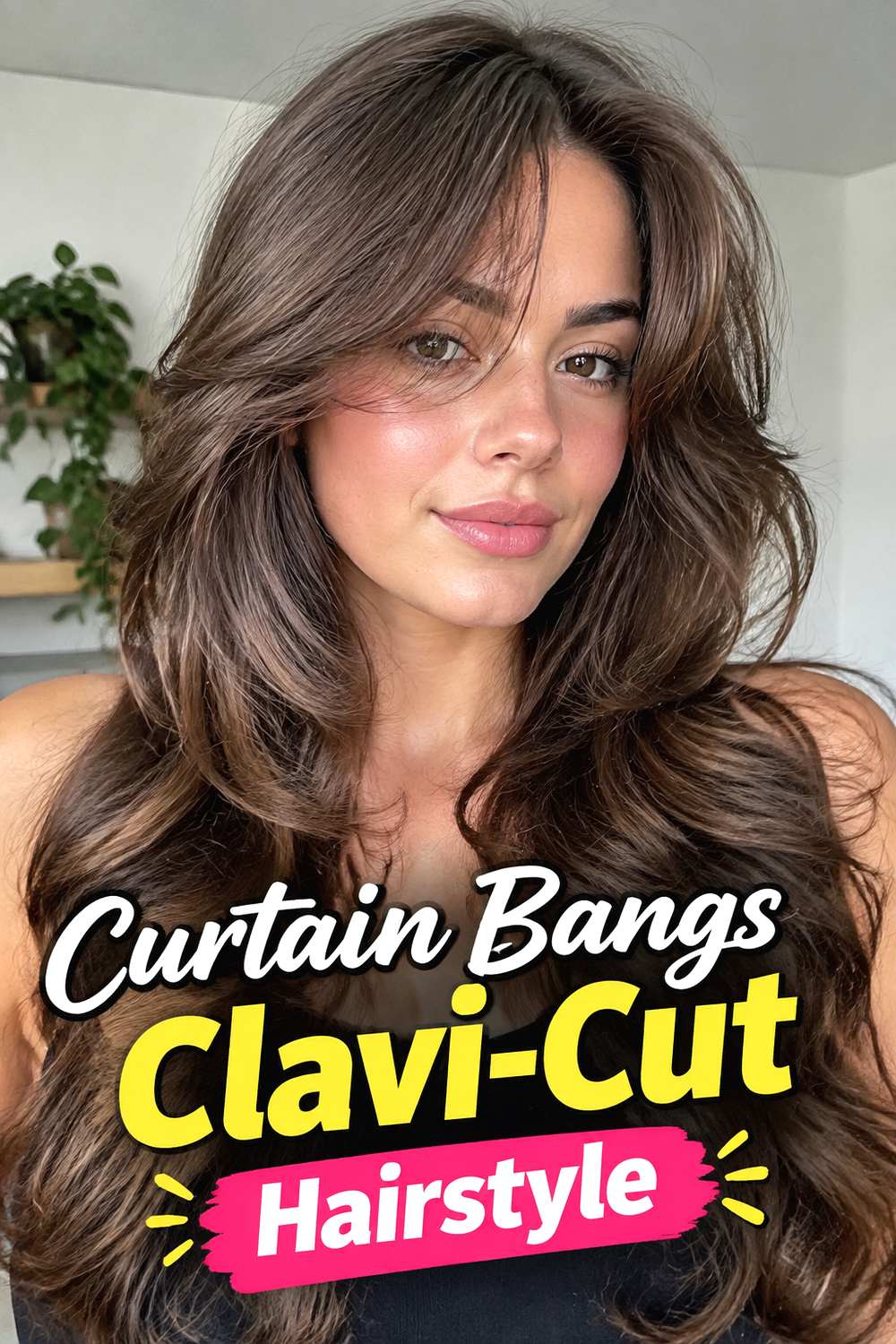
Curtain bangs soften a clavi-cut by creating a shorter focal point around the eyes and cheekbones while the rest of the hair stays comfortably around the collarbone. The fringe can open through the center and lengthen gradually toward the sides, blending into face-framing pieces instead of ending abruptly. This makes it easier to tuck the bangs away or incorporate them into a ponytail as they grow. The combination looks especially good with loose movement because the fringe and longer lengths can curve in opposite directions. For fall, it offers a noticeable update without sacrificing the practical versatility of medium-length hair.
Wear & Maintenance
Curtain bangs need less rigid upkeep than a straight-across fringe, but the shorter center pieces may still require quick morning reshaping. Dampening only the fringe and blow-drying it can be enough.
Pro Tip
Ask for the shortest part of the bangs to be tailored to your preferred level of eye or cheekbone exposure rather than choosing a standard length.
7. Wispy Bangs Clavi Cut Hairstyle
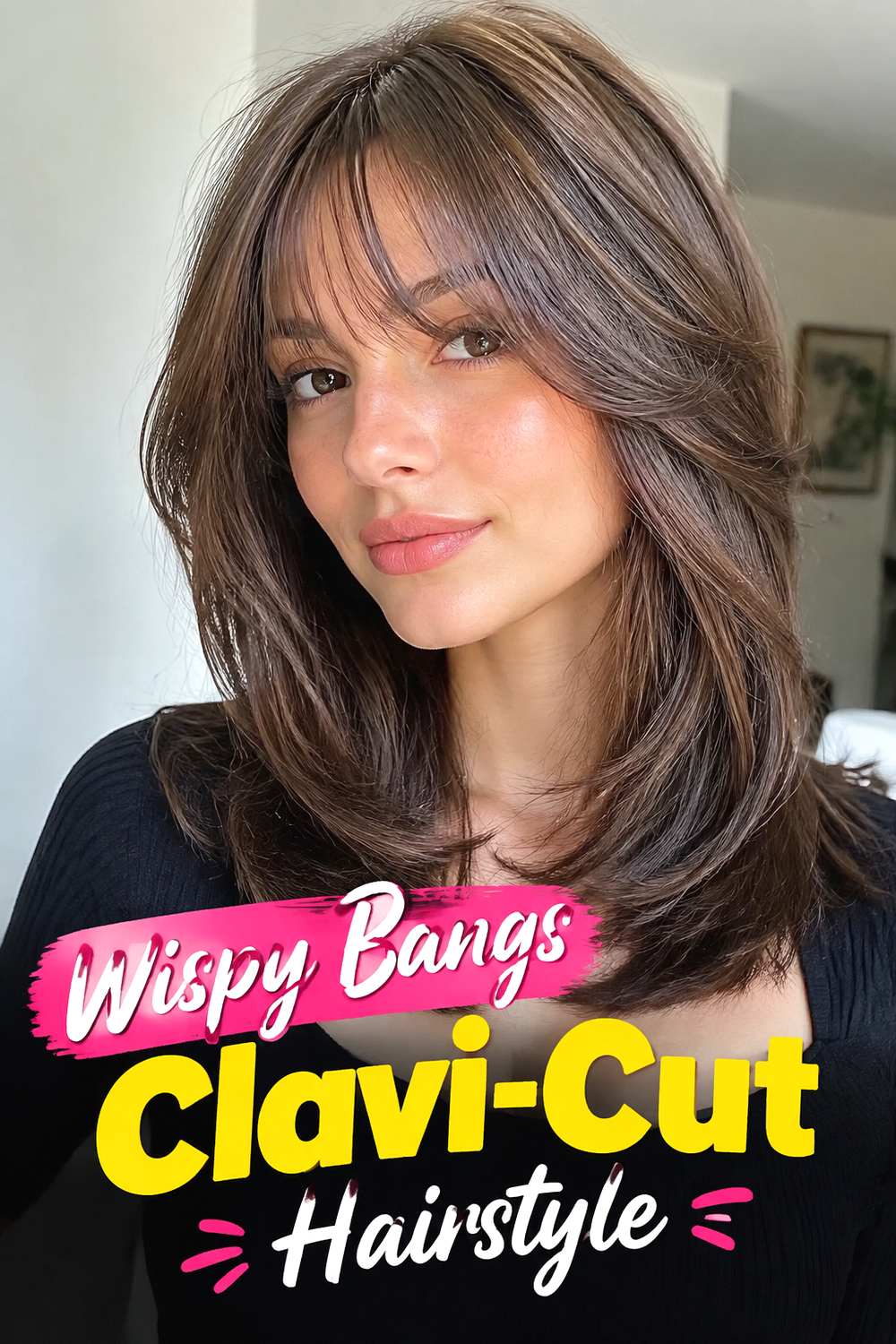
A wispy-bangs clavi-cut feels light around the face while keeping the body of the haircut smooth and substantial. The fringe is deliberately airy, allowing small glimpses of the forehead instead of forming one dense horizontal line. Combined with collarbone-length ends, it creates an easy contrast between softness at the front and structure through the bottom. This version can be particularly appealing if you want to experiment with bangs but worry that a heavy fringe will dominate your features. The wispy pieces also work nicely with a casual bend or natural texture. Keep them separated and flexible rather than loading them with strong-hold products that can make the fringe clump.
Styling Notes
Blow-dry the fringe soon after washing because shorter pieces can set quickly. A small round brush or gentle side-to-side drying motion can keep the roots from splitting too dramatically.
Best For
This fringe is useful for anyone who wants visible softness without the density or maintenance of a heavy full bang.
8. Side Part Voluminous Clavi Cut Hairstyle
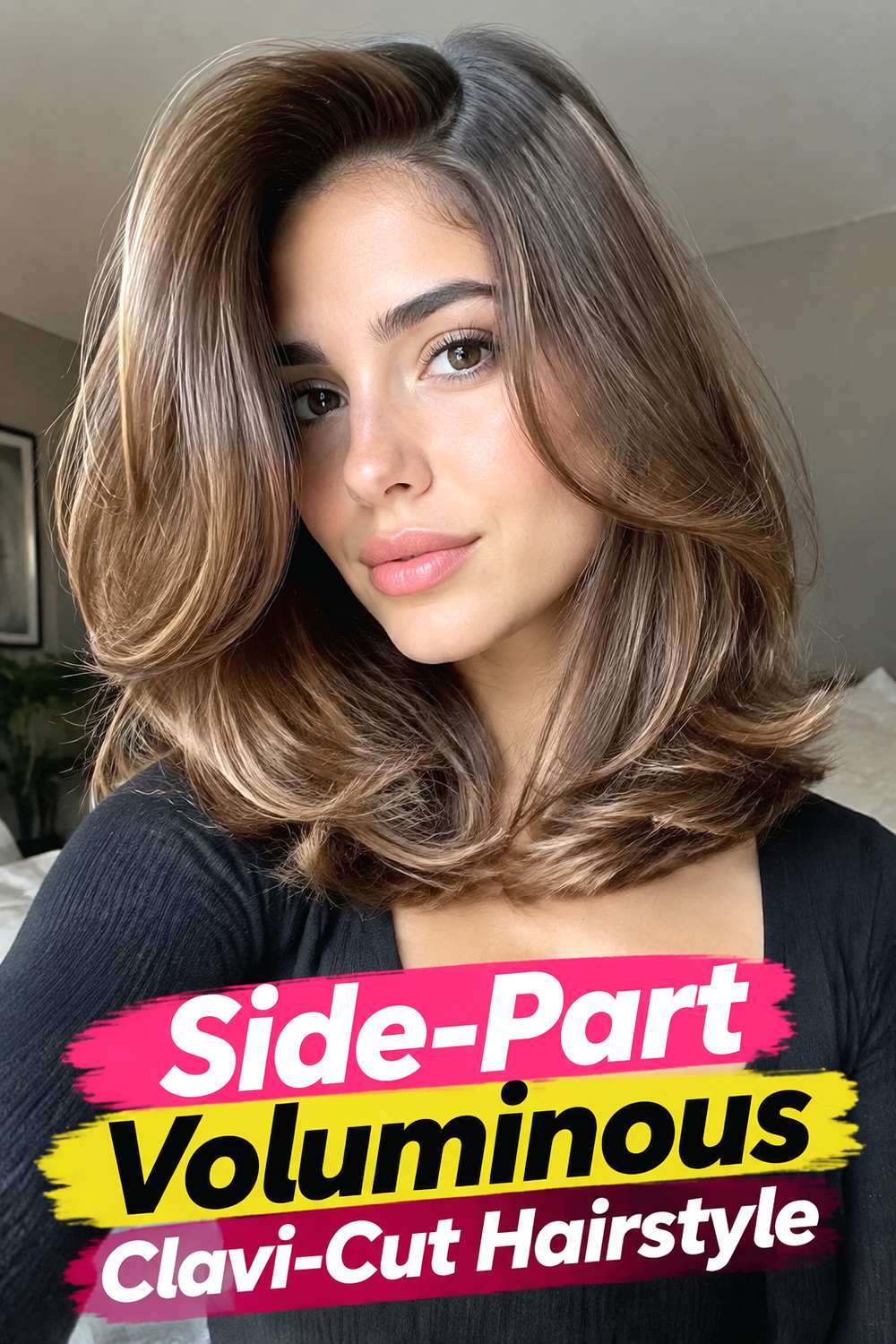
A voluminous side part gives the clavi-cut instant drama while leaving the overall haircut straightforward and wearable. Shifting the part slightly or deeply to one side builds natural lift at the crown and lets the heavier side sweep across the forehead. Long layers can support that fullness, especially when they are concentrated around the front rather than cut heavily throughout the ends. The style looks polished with a blowout but can also work with natural waves if the roots are encouraged upward while drying. Because the collarbone length keeps the silhouette grounded, the volume feels glamorous without becoming oversized. It is an easy choice when you want a more noticeable evening version of a medium cut.
Why It Works
Changing the part alters the distribution of weight without requiring a new haircut. It can make familiar collarbone-length hair look immediately fuller and more sculpted.
Pro Tip
Allow the roots to cool in the opposite direction from where you normally part your hair, then flip them back. This simple change can create longer-lasting lift.
9. Soft Shag Clavi Cut Hairstyle
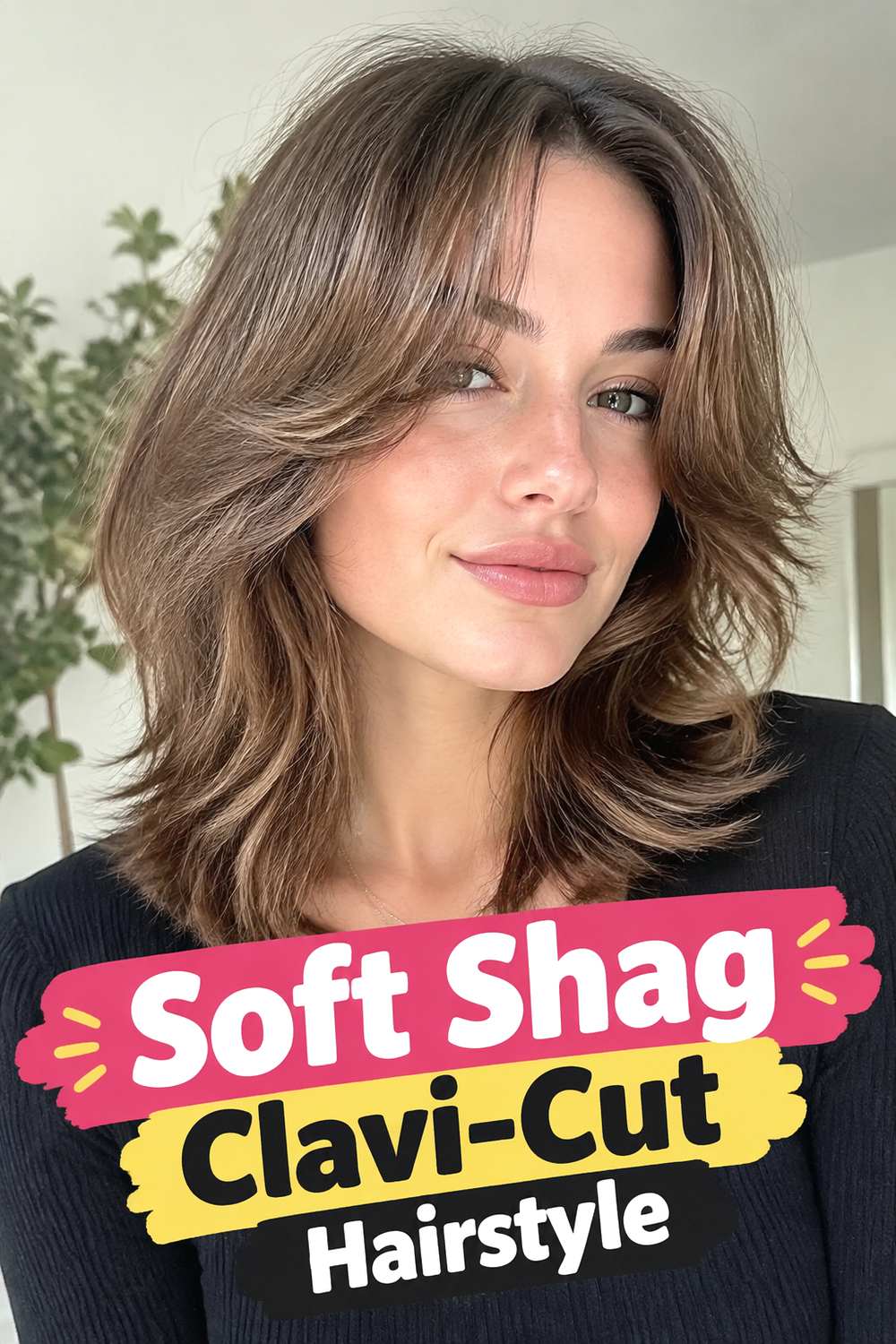
The soft shag clavi-cut adds airy layering and subtle separation without pushing the haircut into an aggressively choppy shape. The crown carries slightly shorter layers for lift, while the perimeter remains long enough to graze the collarbone and preserve versatility. Around the face, blended pieces create movement that can be worn forward, tucked back, or swept into a loose fringe effect. Unlike a heavily razored shag, this version relies on softness and gradual transitions, making it easier to style for everyday wear. It works particularly well when you want natural texture to do much of the work, since bends and waves help reveal the layers without needing a perfectly finished blowout.
Hair Type & Length
Wavy and textured hair can bring out the layered shape naturally. Straight hair can also wear it well but may need a little styling to emphasize separation and movement.
Wear & Maintenance
The grow-out is forgiving, but the crown layers should not become disconnected from the perimeter. Schedule reshaping when the top begins to feel heavy or the face frame loses definition.
10. Curly Clavi Cut Hairstyle
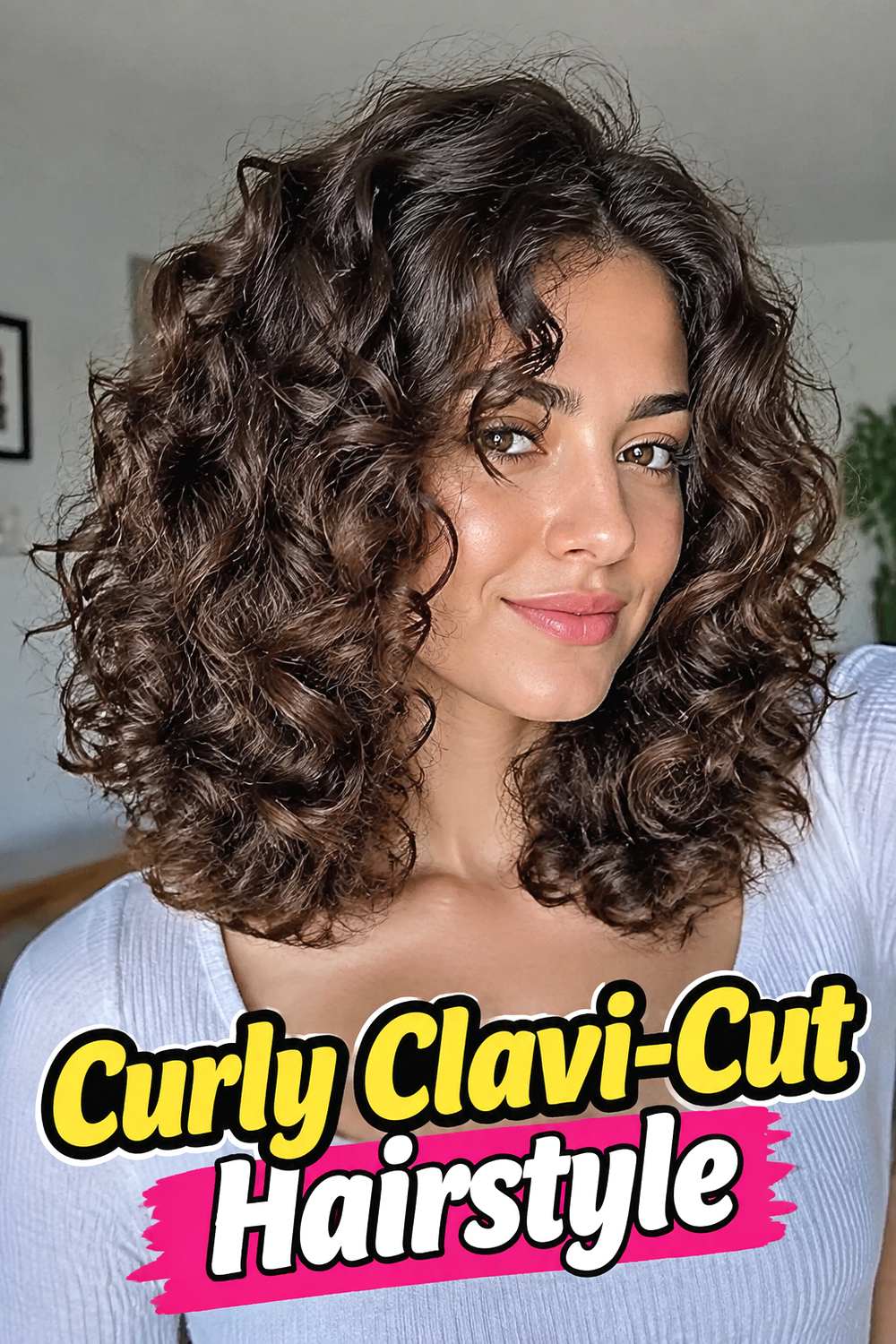
A curly clavi-cut balances a defined collarbone-length shape with enough layering to let individual curls spring freely. Because curls contract at different rates, the finished outline matters more than forcing every strand to sit at exactly the same measured length. Strategic shaping can prevent excessive bulk at the bottom while preserving fullness through the sides and crown. The result should feel rounded and lively, with natural curl variation rather than a perfectly uniform pattern. This medium length gives curls room to form while remaining manageable and versatile. It can also provide enough length for partial updos, clips, and low ponytails when you want the hair away from your face.
Best For
This version suits naturally curly textures that benefit from controlled shape but still need enough length for curl formation and movement.
Pro Tip
Discuss shrinkage with your stylist before choosing the final collarbone target. The haircut may need to be left longer when wet so the dry result lands where you expect.
11. Coily Rounded Clavi Cut Hairstyle
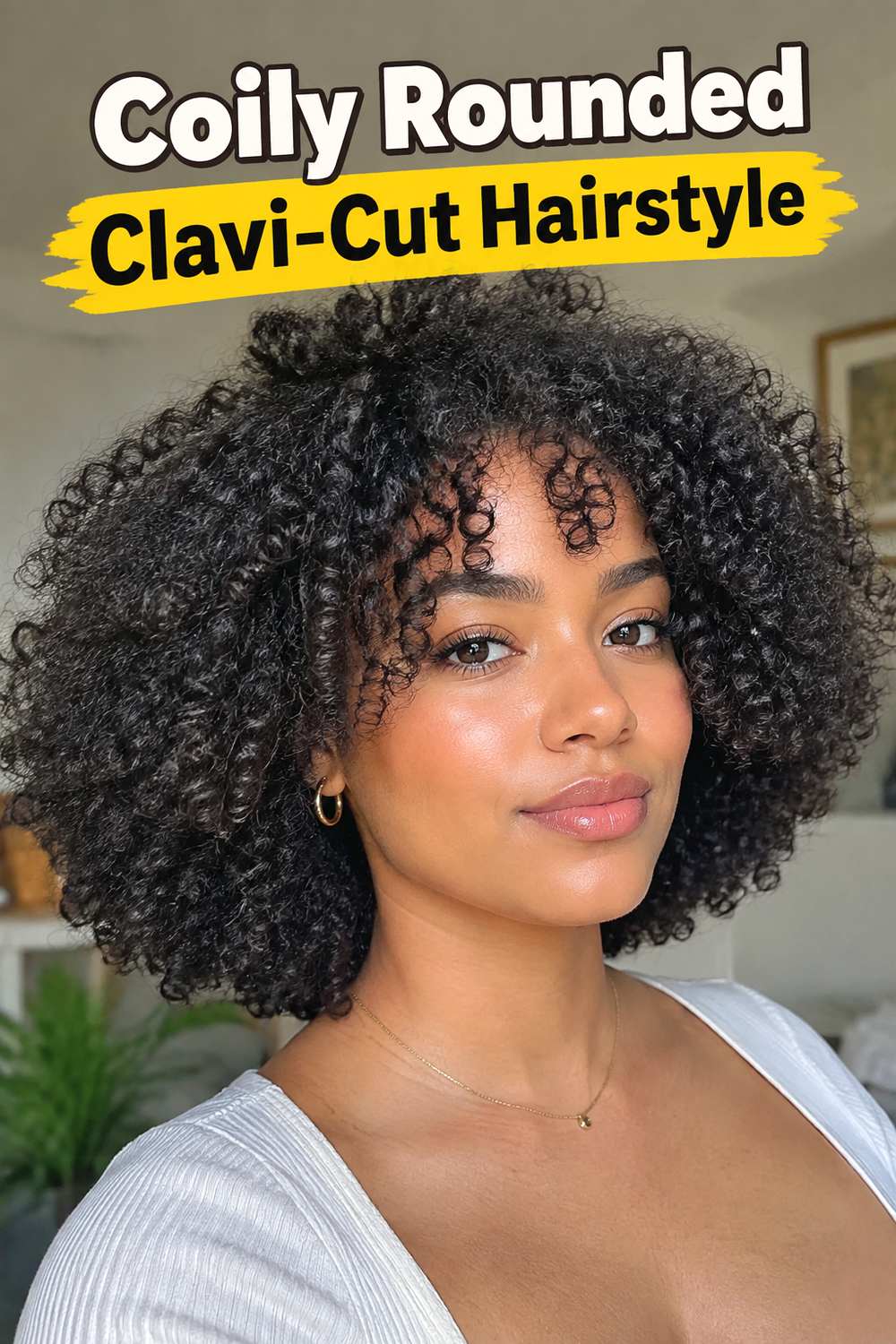
The coily rounded clavi-cut uses intentional shaping to create a balanced silhouette around the shoulders while celebrating natural density and spring. Instead of leaving all the weight at one level, carefully placed layers can build a fuller crown and softly rounded sides, with the longest coils settling toward the collarbone. The exact dry length will vary according to shrinkage, so this cut is more about the final shape than a rigid wet measurement. It looks especially striking when definition remains touchable and individual coils retain their natural variety. A rounded clavi-cut can feel polished enough for work or events while still giving textured hair room to move naturally.
Hair Type & Length
Coily and tightly curled textures benefit from a shape designed around their dry behavior, density, and shrinkage rather than a one-size-fits-all layering pattern.
Wear & Maintenance
Moisture and gentle handling are important for preserving definition. Refresh only the sections that need it rather than repeatedly saturating and restyling the entire haircut.
12. Air Dried Textured Clavi Cut Hairstyle
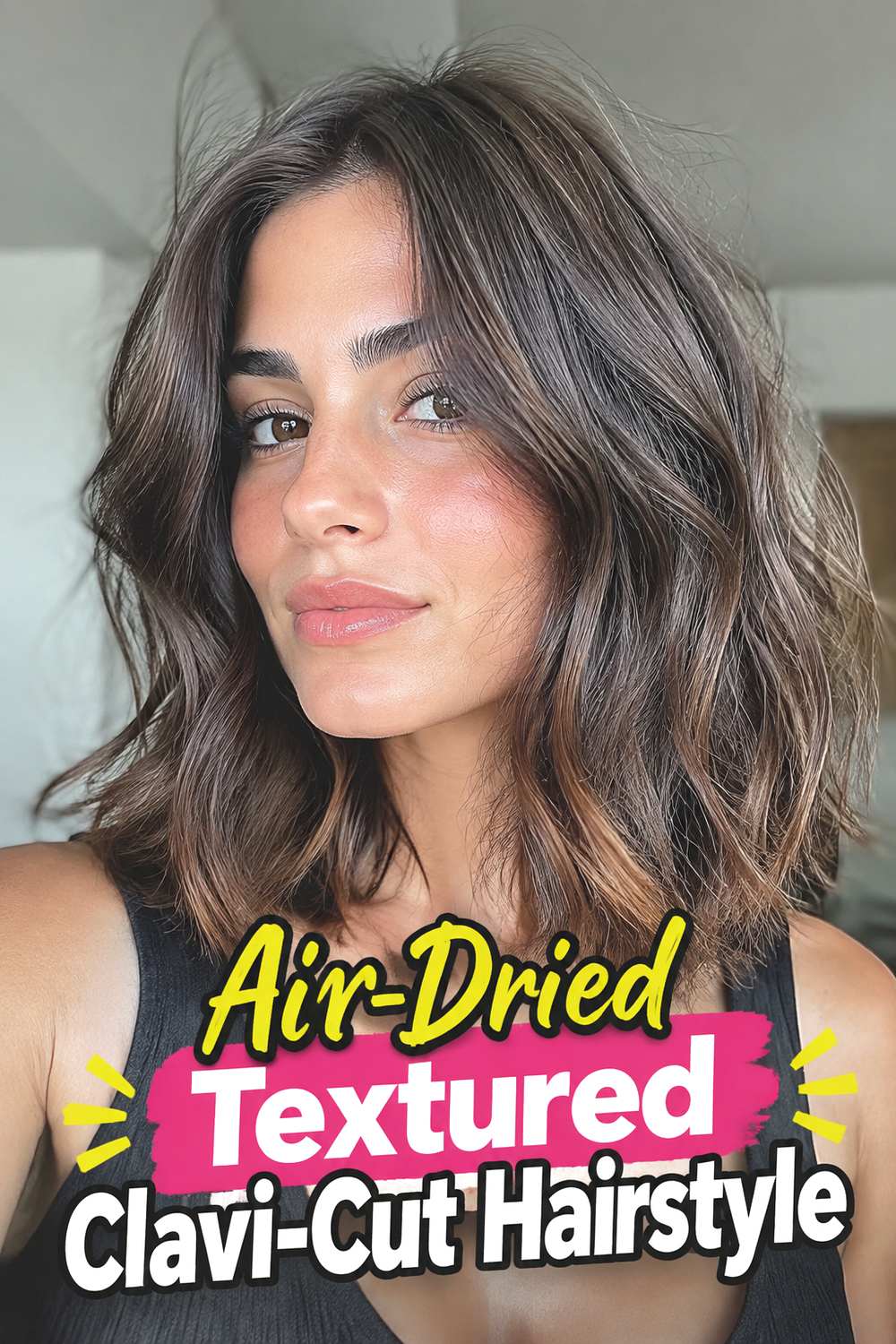
An air-dried textured clavi-cut is designed to look good without forcing every strand into a polished finish. The cut works with slight bends, natural waves, irregular texture, and a little frizz instead of treating them as flaws to eliminate. Subtle internal layering can remove heaviness while keeping the outer shape close to one length, which helps the ends maintain a strong collarbone-level presence. This approach fits especially well into busy routines because the haircut carries much of the structure on its own. A lightweight leave-in or texture cream can encourage definition, but the finish should still feel soft, flexible, and unmistakably natural.
Why It Works
The shape respects how hair actually dries, reducing the need to recreate a salon blowout every morning. That makes the haircut easier to maintain between wash days.
Pro Tip
Before committing, show your stylist how your hair behaves when naturally dried. The most useful layering pattern depends on where your texture expands, bends, or falls flat.
13. Flipped End Clavi Cut Hairstyle
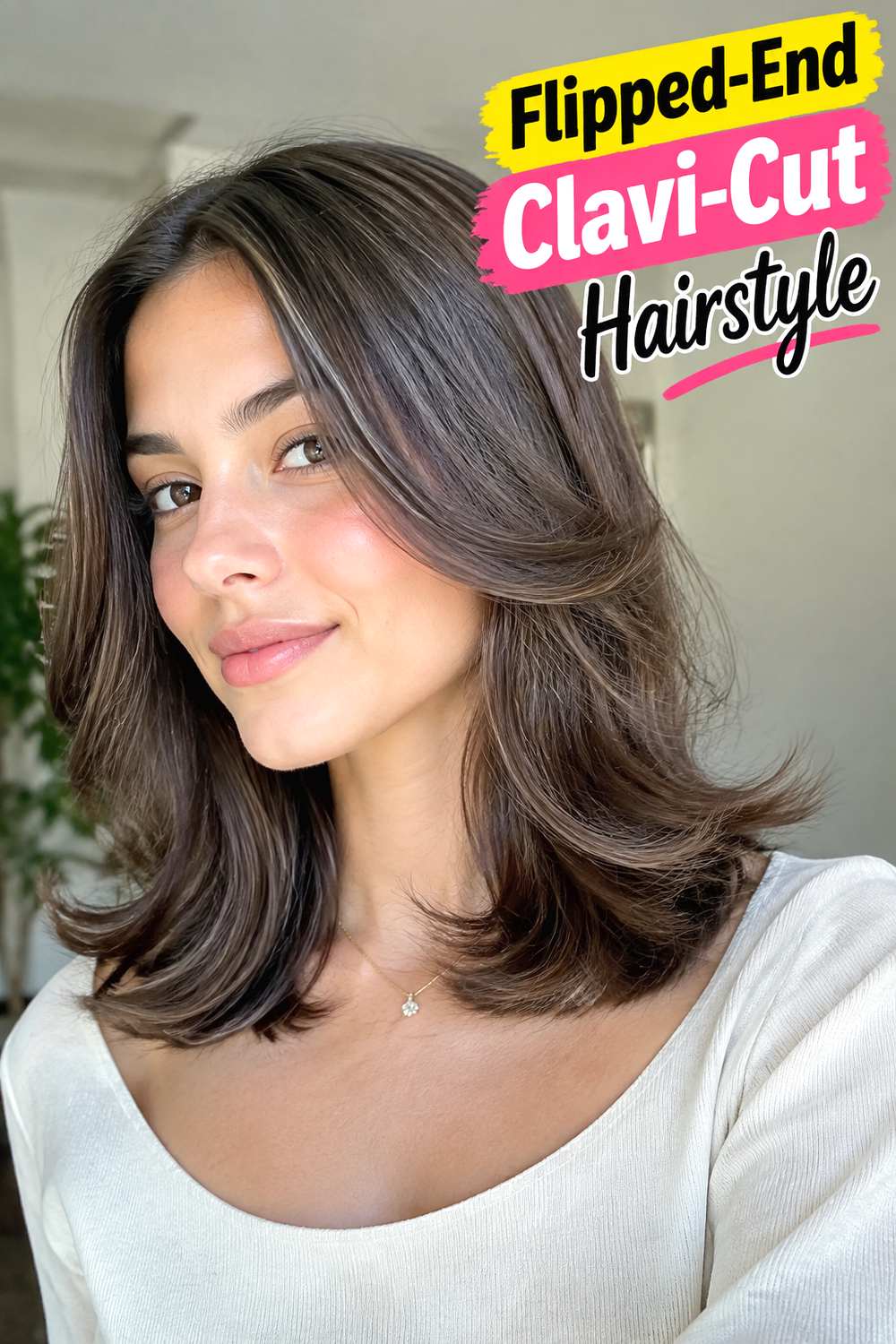
The flipped-end clavi-cut brings a playful finish to a clean medium-length haircut. Instead of curling inward, the last inch or two turns gently away from the neck, creating movement right at the collarbone. The effect can feel subtly retro without becoming costume-like when the rest of the hair remains smooth and softly voluminous. A blunt or lightly layered perimeter gives the flip enough density to show clearly, while face-framing pieces can be styled outward for a connected silhouette. This is a useful choice when you like polished hair but want something more animated than straight ends. It also pairs beautifully with jackets, high necklines, and structured fall outfits.
Styling Notes
Use a round brush or flat iron only through the ends, rotating outward rather than curling the entire length. Keep the bend broad and loose for a modern result.
Wear & Maintenance
The flip may relax during the day on very straight hair. A light flexible-hold spray at the ends can help without creating a stiff edge.
14. Inward Curved Clavi Cut Hairstyle
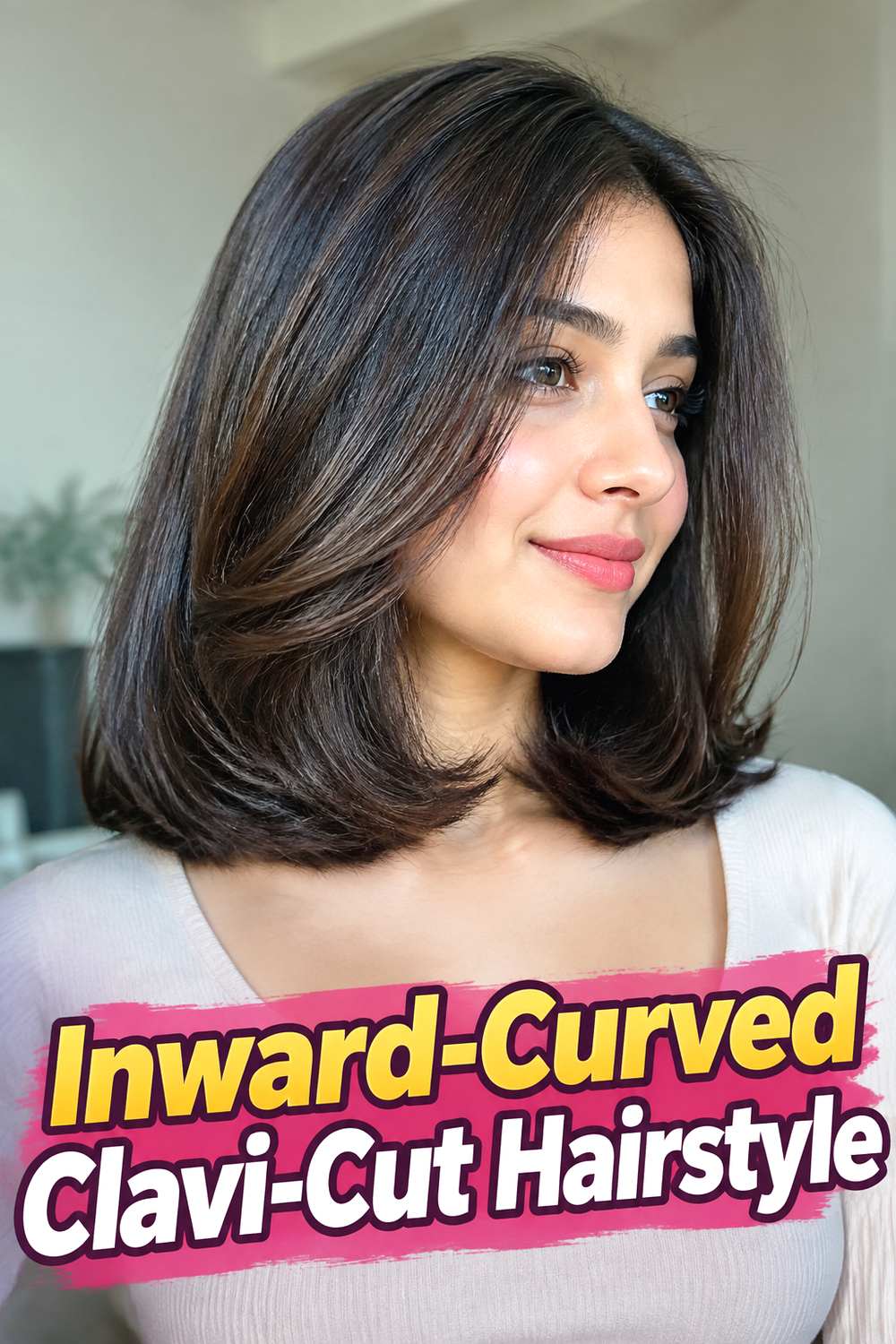
An inward-curved clavi-cut has a smooth, controlled silhouette that follows the line of the neck and shoulders. The ends are styled under with a broad bend rather than a tight curl, giving the haircut a refined finish that works especially well with clean one-length or subtly graduated shapes. Around the face, the curve can begin higher to create a gentle contour toward the jaw. This is a polished option for anyone who prefers classic movement over tousled texture, and it makes healthy-looking ends a major feature of the style. The collarbone length prevents the rounded finish from feeling too short or rigid while still giving the cut a clearly defined outline.
Styling Notes
A large round brush can create the curve during blow-drying. Work in sections and roll only enough to guide the ends inward rather than forming a full barrel curl.
Best For
Straight, smooth, or easily stretched textures show the continuous curved outline most clearly.
15. Italian Inspired Clavi Cut Hairstyle
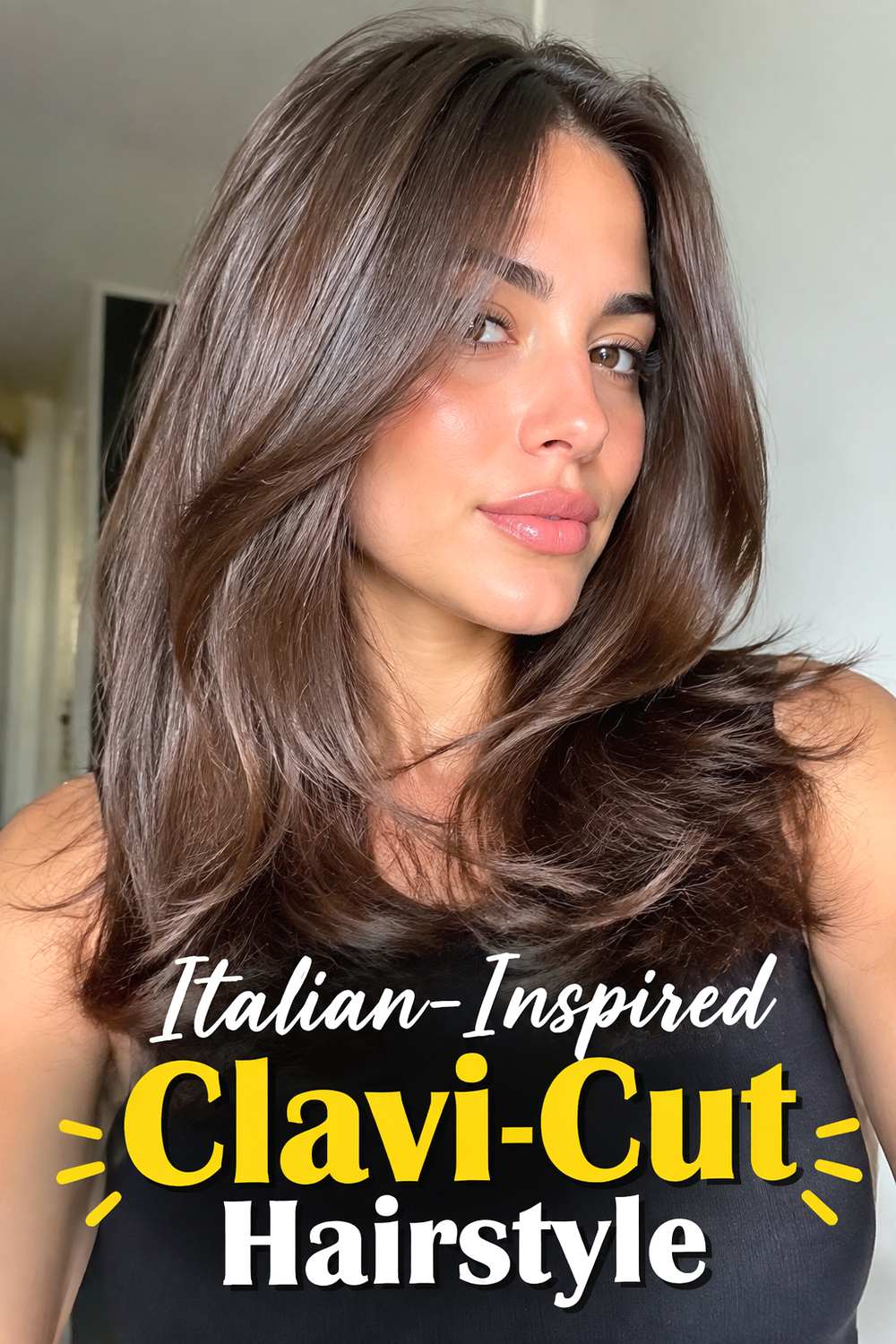
The Italian-inspired clavi-cut focuses on density, softness, and understated luxury. The ends sit full around the collarbone, while restrained internal layering gives the haircut movement without breaking up the rich perimeter. Styled with a broad blowout or loose bend, it develops a fluid, expensive-looking silhouette that still feels relaxed enough for daily wear. This direction aligns well with the longer, transitional midi shapes appearing in fall 2026 coverage, where healthy ends and manageable movement are taking priority over aggressively layered finishes. The look works particularly well when the hair has enough weight to swing naturally and is finished with shine rather than stiff hold.
Why It Works
The substantial outline makes the hair appear intentional and polished, while the collarbone length remains versatile enough for ponytails, clips, and different partings.
Pro Tip
Ask for interior movement rather than obvious short layers if you want to preserve the plush, full-ended effect.
16. French Girl Clavi Cut Hairstyle
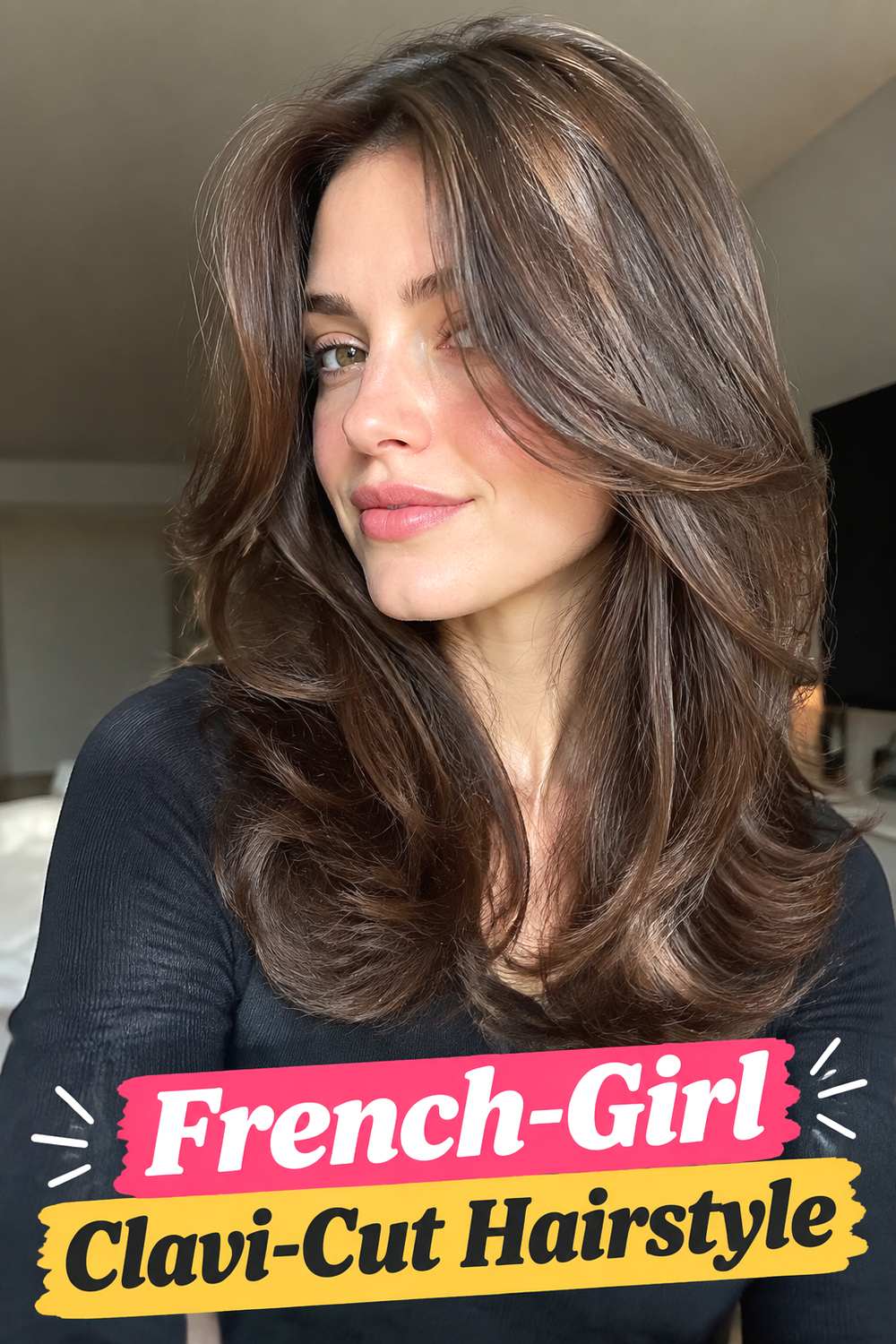
A French-girl clavi-cut pairs collarbone length with deliberately imperfect movement, giving the haircut a softer and less “finished” personality. The ends can remain slightly piecey, while long, subtle face-framing sections break up the front without creating a dramatic layered effect. Styled with natural bends or a loose wave, it feels chic without looking overly constructed. A relaxed fringe can be added, but the haircut also works beautifully with a simple center part. The appeal comes from allowing a little asymmetry, texture, and air into the style rather than smoothing every strand into place. It is especially practical if you prefer hair that still looks good as a blowout gradually loosens.
Styling Notes
Use your natural texture as the starting point. Add only a few strategic bends where the hair needs movement rather than curling every section identically.
Wear & Maintenance
This finish grows out gracefully because it does not depend on geometric perfection. Keep the perimeter healthy and let small variations in texture remain visible.
17. Butterfly Layer Clavi Cut Hairstyle
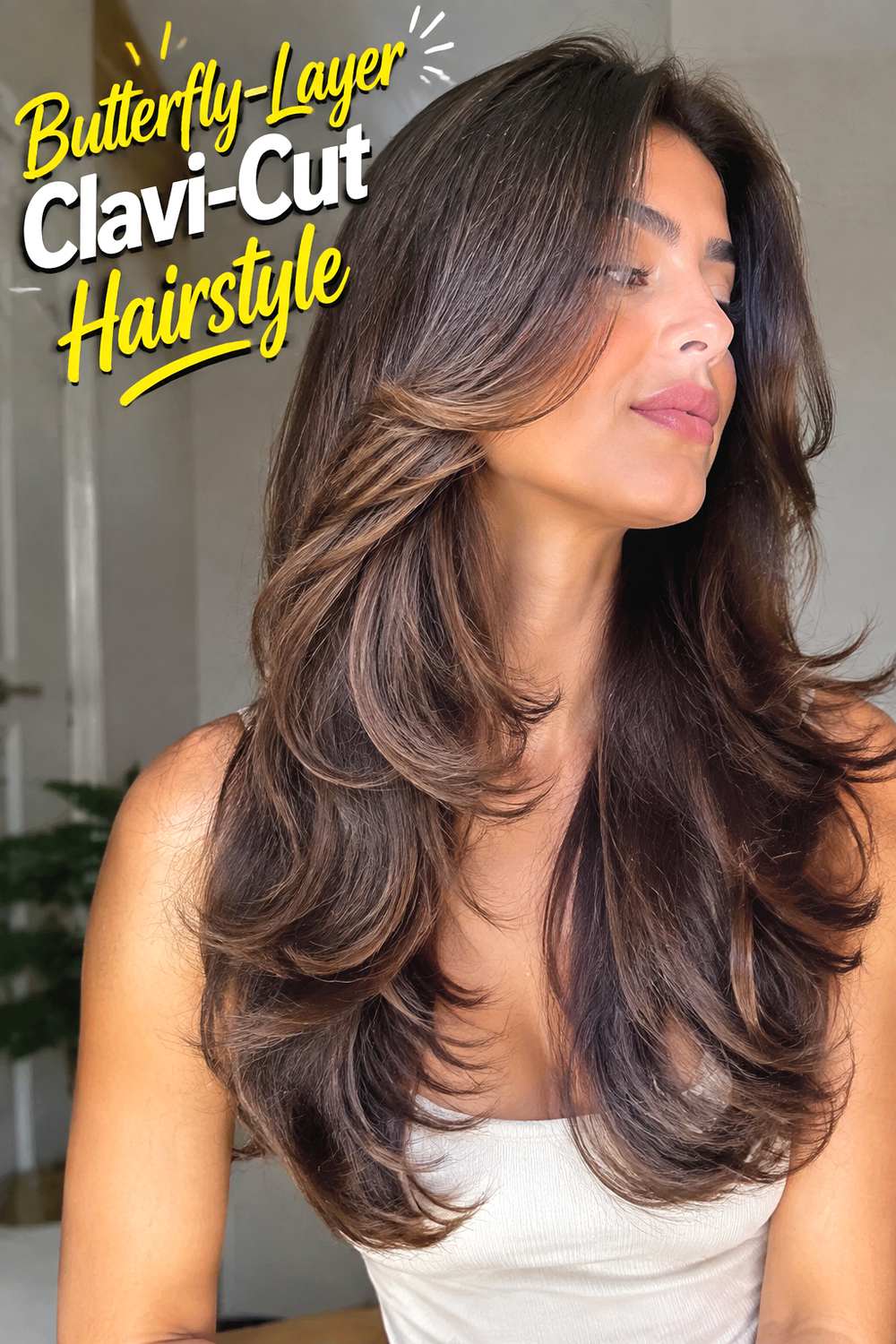
Butterfly-inspired layering gives a clavi-cut a lifted, sweeping silhouette while retaining a clearly medium-length base. Shorter layers around the cheekbones and jaw move away from the face, then blend into longer sections that reach the collarbone. The effect is more noticeable than a simple face frame because the layers are designed to create multiple levels of airy movement. At this shorter overall length, restraint is important: too many short pieces can make the ends feel thin. With balanced layering, however, the haircut gains bounce and a flattering sense of width around the face. A round-brush blowout makes the layered structure especially visible.
Best For
Medium-to-thick hair usually provides enough density to support several layers while keeping the perimeter full.
Pro Tip
If your hair is fine, ask for a simplified butterfly effect concentrated around the front instead of layering heavily through the entire haircut.
18. Invisible Layer Clavi Cut Hairstyle
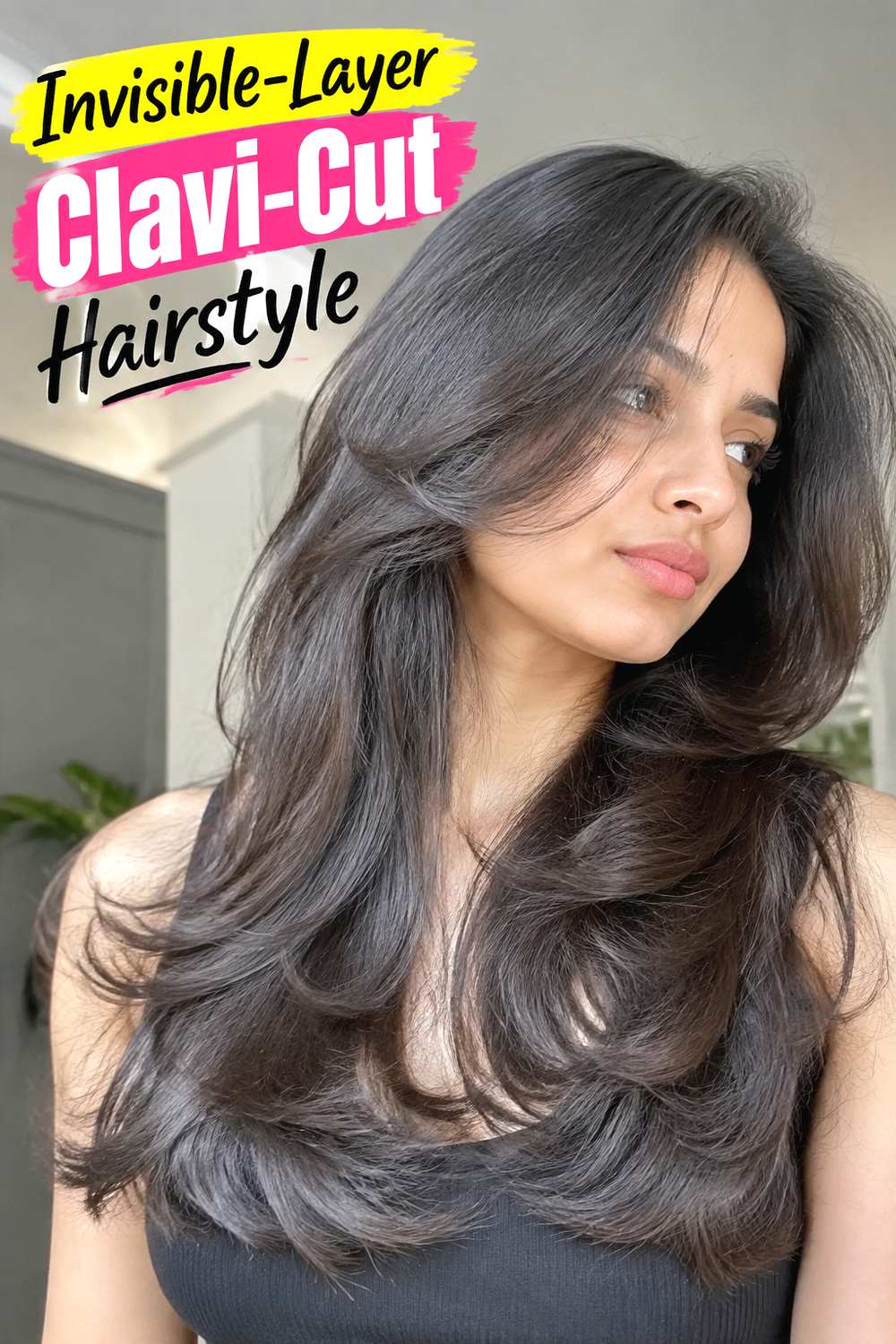
Invisible layers are ideal when you want movement without looking obviously layered. In this clavi-cut, the exterior remains smooth and nearly one length, while subtle shorter sections hidden inside remove weight and encourage the hair to swing more freely. The technique can make a dense collarbone cut feel lighter without creating choppy surface pieces, and it also allows loose waves to form with less bulk. When worn straight, the overall outline still looks clean and substantial. This makes the style particularly versatile for anyone who changes finishes frequently. One day it can look sleek and minimal; the next, those concealed layers can help a wave pattern appear softer and more dimensional.
Why It Works
Internal layering changes how the haircut moves rather than dramatically changing how the outer silhouette looks.
Hair Type & Length
Medium and thick hair can benefit most when a one-length clavi-cut feels too heavy, although the amount of weight removed should be customized carefully.
19. Choppy Layered Clavi Cut Hairstyle
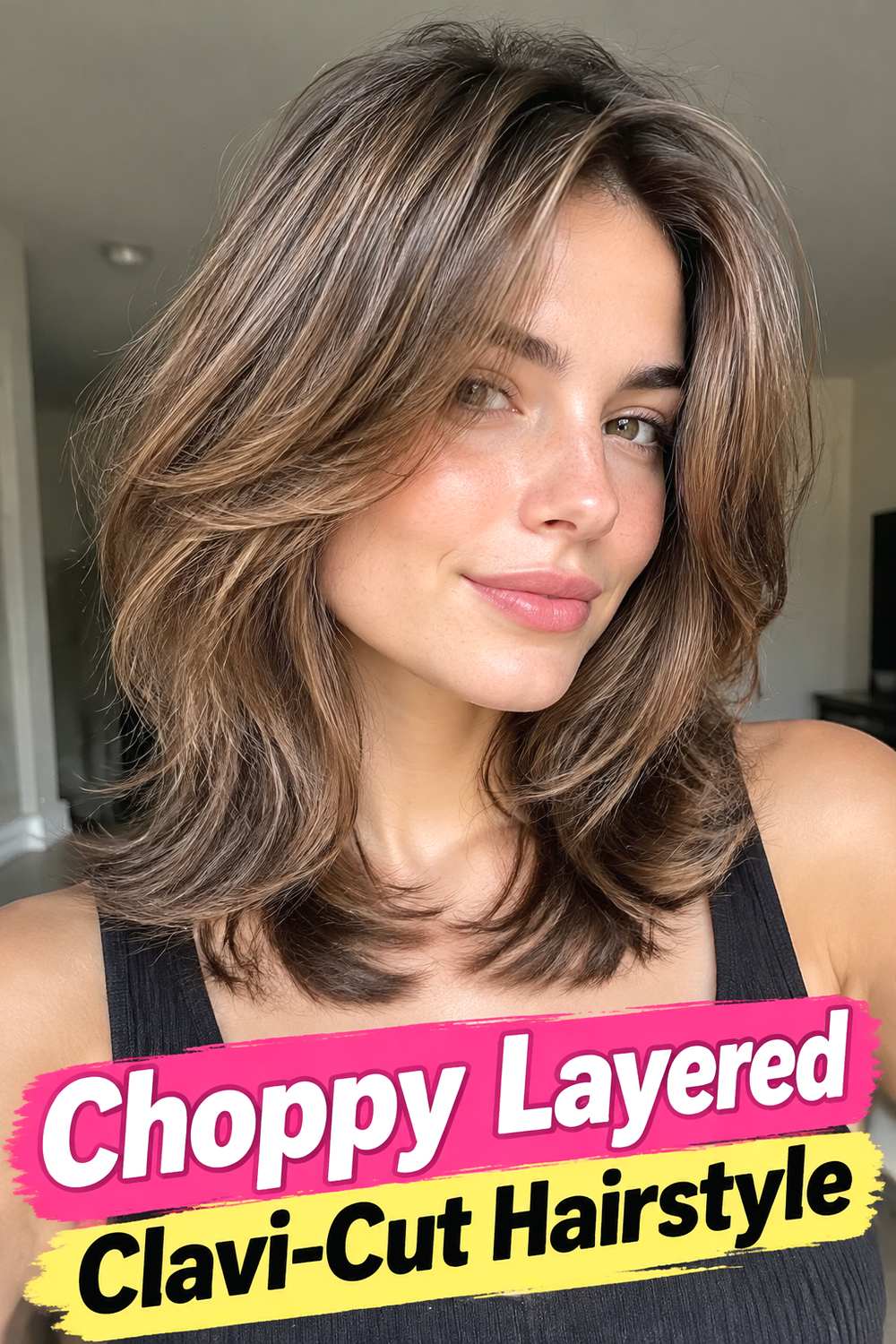
The choppy layered clavi-cut creates deliberate separation through the mid-lengths and ends, giving a classic collarbone shape a more energetic edge. Visible layers should vary enough to create texture but still connect into the overall perimeter, preventing the haircut from looking accidentally uneven. This version works particularly well with piecey waves, natural bends, or a softly tousled finish because movement highlights each layer. It can be a great option if smooth, one-length cuts tend to feel too conservative for your style. The key is preserving enough density at the bottom so the collarbone length still looks intentional. A lightweight texturizer can enhance definition without making the ends dry or fuzzy.
Styling Notes
Twist or bend selected sections rather than styling everything uniformly. A little contrast between smoother and more textured pieces makes the layers more visible.
Wear & Maintenance
Choppy cuts lose their definition once the layers grow and merge. Occasional reshaping helps preserve the separated, intentional finish.
20. Fine Hair Fullness Clavi Cut Hairstyle
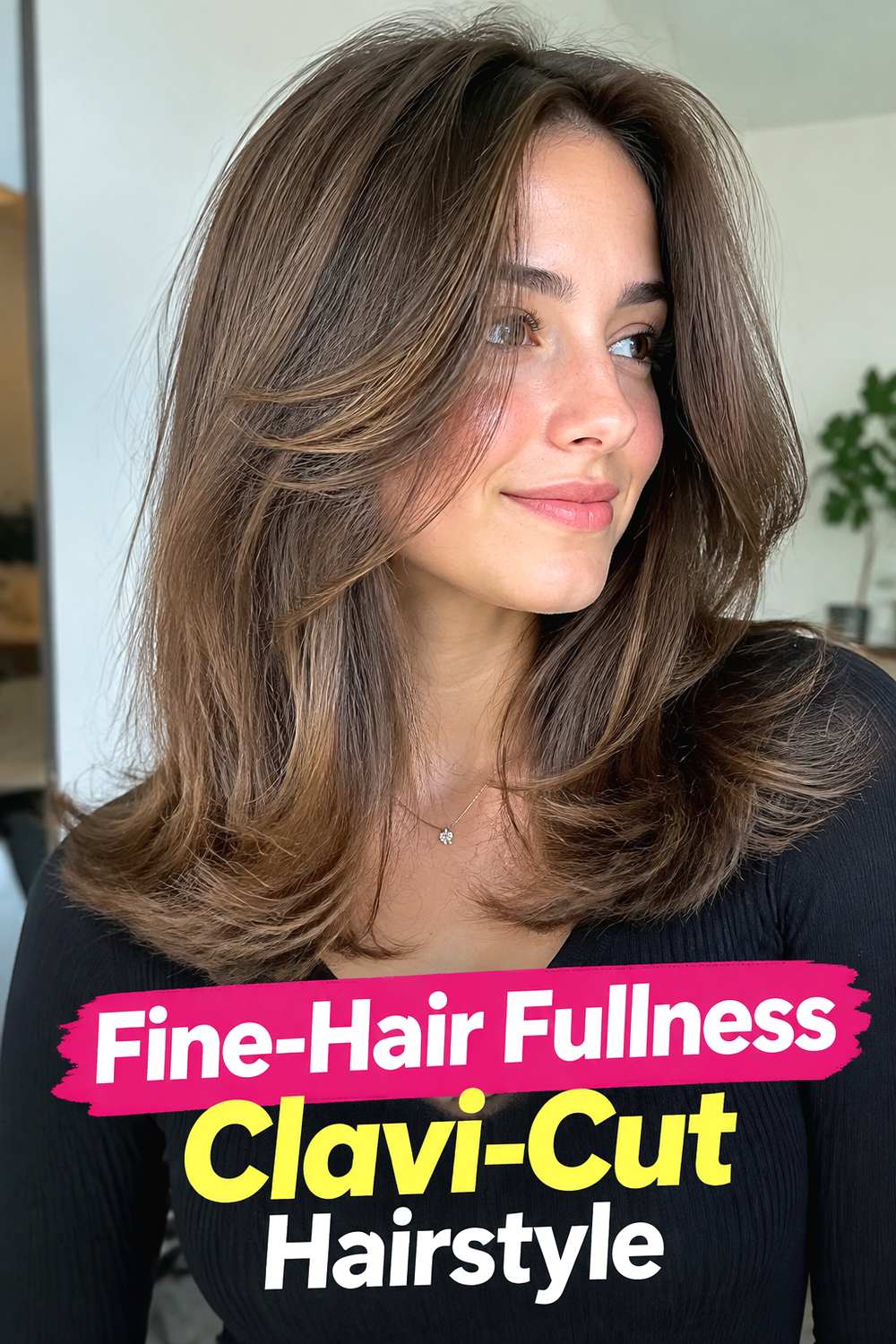
A fine-hair fullness clavi-cut relies on a strong perimeter and restrained layering to create the appearance of denser ends. Keeping most strands close to the same collarbone length prevents the lower section from becoming transparent, while a few carefully placed front pieces can add movement without sacrificing body. A slight bend or airy blow-dry can lift the roots and create space between strands, making the shape feel fuller. Avoid cutting too many short layers simply to chase volume; they can sometimes remove the very density you want to preserve. This haircut looks especially polished when the ends are regularly trimmed and styling products remain lightweight enough to avoid collapse.
Why It Works
The relatively compact shape concentrates the hair’s density around one visual line, helping the ends appear more substantial.
Pro Tip
Apply volumizing products primarily at the roots and use finishing oils sparingly. Fine hair often needs lift and movement more than extra surface coating.
21. Thick Hair Debulked Clavi Cut Hairstyle
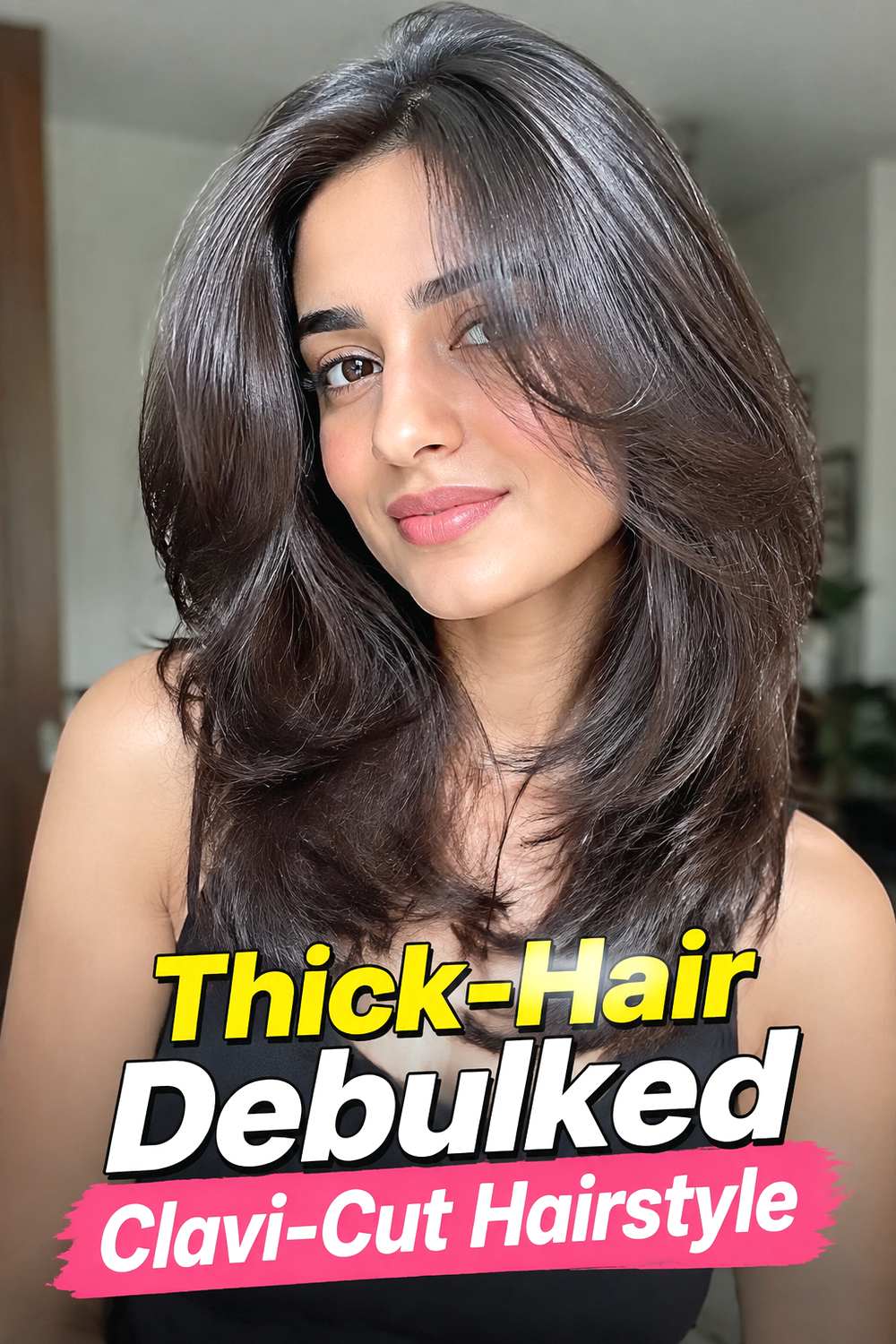
The thick-hair debulked clavi-cut keeps the richness of dense hair while removing enough internal weight to stop the collarbone area from becoming overly triangular or bulky. Rather than relying on numerous visible layers, a stylist can reduce mass through carefully positioned internal shaping that lets the outer surface remain smooth. The result should still feel full, just easier to move and style. Long front sections can frame the face without contributing too much width at the sides. This variation works well worn straight, waved, or naturally textured because the underlying cut has enough breathing room to settle into different finishes instead of expanding into one heavy block.
Hair Type & Length
Dense medium-to-thick hair is the natural fit, especially when a traditional one-length lob feels heavy around the shoulders.
Pro Tip
Avoid asking simply for “lots of thinning.” Discuss where the bulk actually sits so weight can be removed strategically without leaving wispy ends.
22. Deep Side Part Clavi Cut Hairstyle
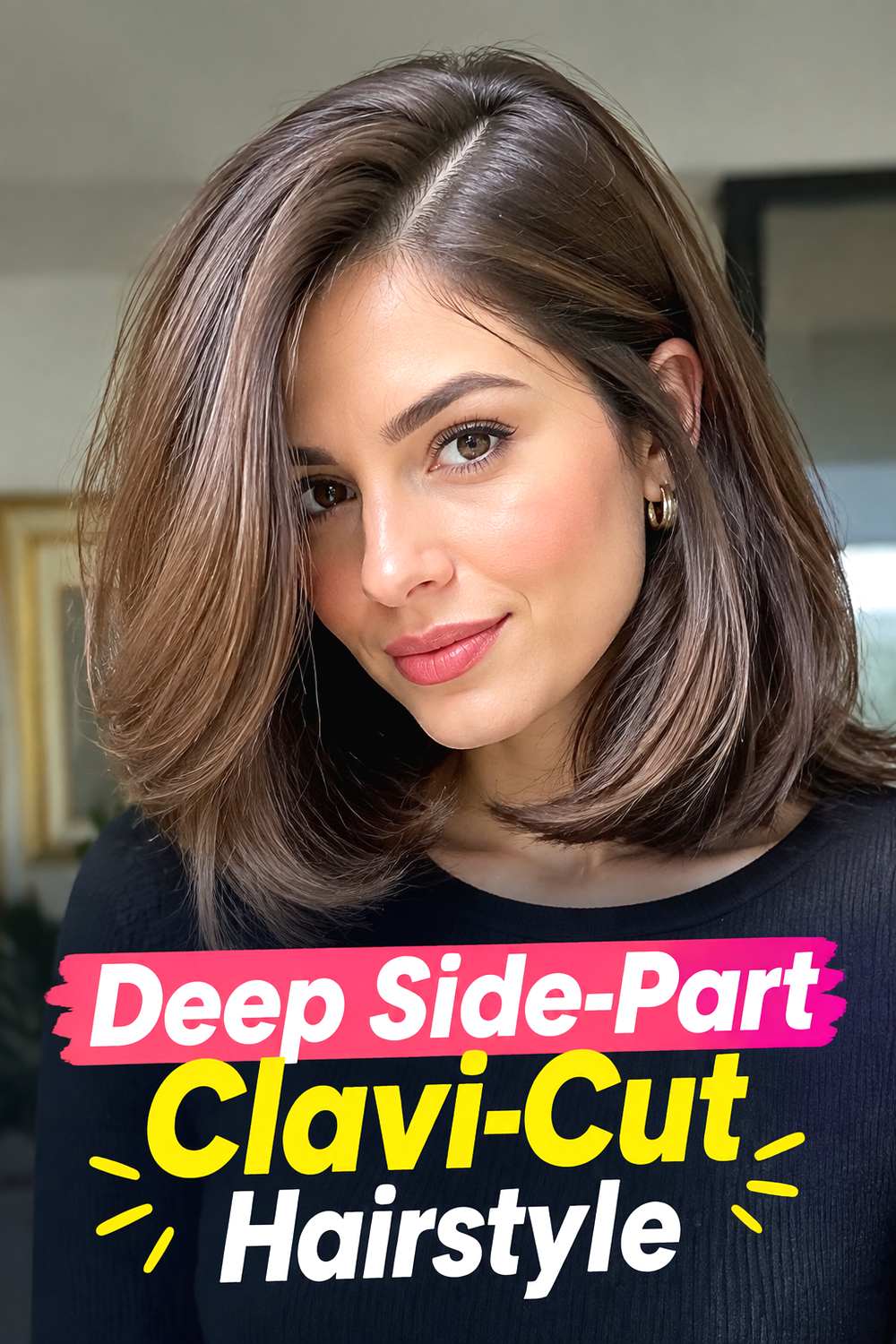
A deep side part changes the personality of a clavi-cut without changing much of the actual haircut. By moving the part noticeably away from the center, the top gains an asymmetrical sweep and extra lift, while one side falls closer to the cheek or tucks neatly behind the ear. A mostly blunt perimeter makes the contrast especially chic because the dramatic part is balanced by a clean collarbone-length outline. This styling direction works with straight hair, waves, and curls, although the final volume will vary by texture. It is also an easy way to refresh a familiar medium cut for dinners, events, or photos when your everyday center part feels too predictable.
Styling Notes
Set the part while the roots are damp if you want a cleaner, longer-lasting sweep. Direct the heavier side up and over rather than flattening it against the scalp.
Best For
Anyone who wants a visible styling change without adding fringe, shortening the cut, or committing to more layers can experiment with this approach.
23. Micro Bangs Clavi Cut Hairstyle
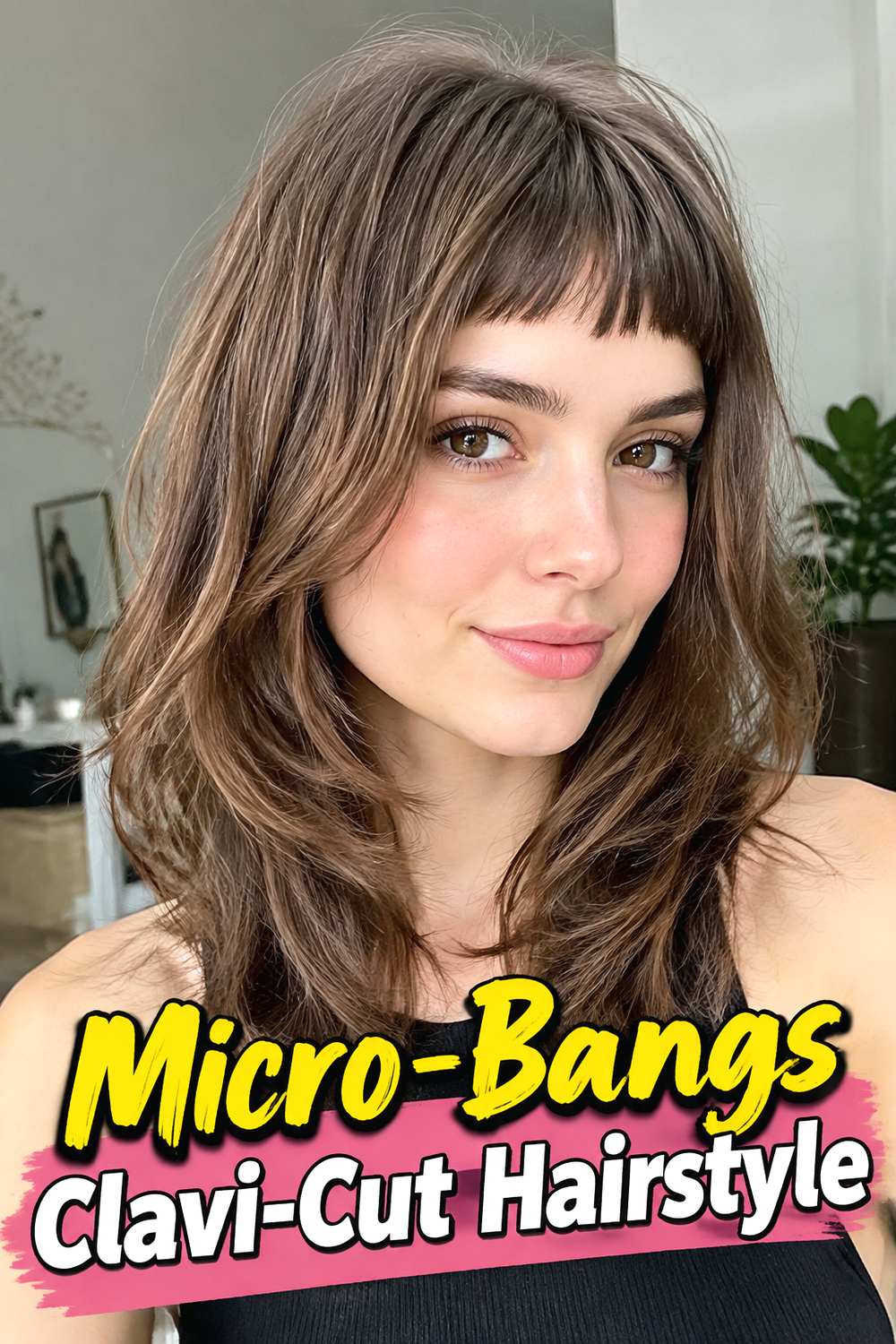
Micro bangs create a bold focal point against the longer, calmer proportions of a collarbone-length cut. The fringe stops noticeably above the brows, drawing attention to the upper face while the rest of the hair maintains enough length to soften the overall effect. For fall 2026, very short bangs have emerged as one of the season’s more directional fringe ideas, but they require more commitment than curtain or wispy bangs. Keeping the clavi-cut itself relatively simple prevents the combination from becoming visually overloaded. Wear the lengths sleek for contrast or add gentle waves if you prefer a softer, more playful interpretation.
Wear & Maintenance
Because a micro fringe is intentionally short, small changes in length are noticeable. Expect more frequent fringe trims than you would with longer curtain bangs.
Pro Tip
Consider your natural hairline and cowlick pattern before cutting. Very short bangs provide less length for redirecting stubborn growth patterns.
24. Bottleneck Bangs Clavi Cut Hairstyle
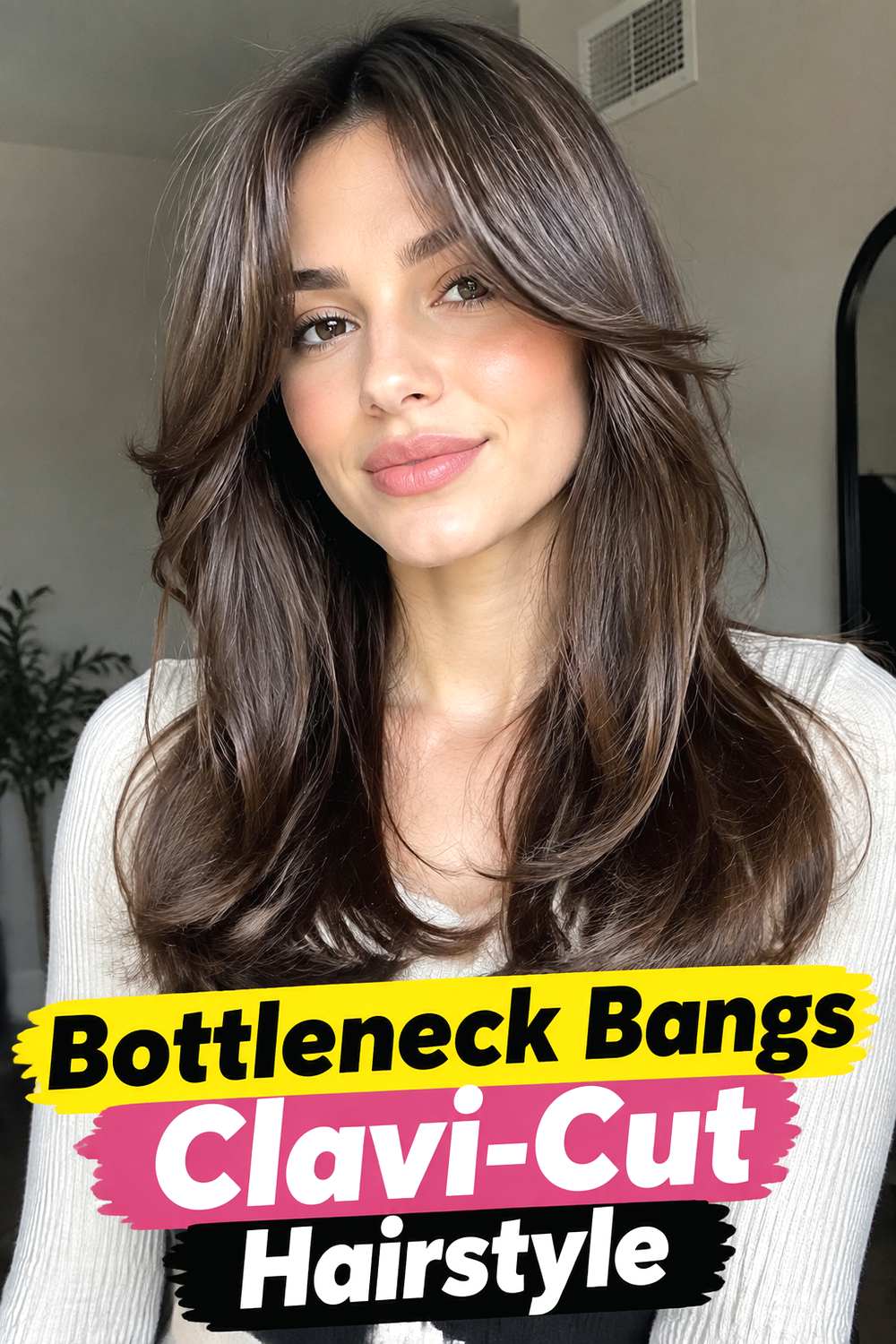
Bottleneck bangs pair beautifully with a clavi-cut because their shape naturally expands from a shorter center into longer cheek-skimming sides. That transition connects easily to collarbone-length hair, making the fringe feel integrated instead of separate from the haircut. The center can sit around the brows while the edges curve outward and blend into face-framing sections. This creates softness around the eyes and cheekbones without covering as much of the forehead as a dense full fringe. Loose waves emphasize the gradual shape, while a smooth blowout makes it look more polished. It is a versatile middle ground if you like bangs but want some ability to sweep them aside.
Styling Notes
Direct the center forward while drying, then sweep the longer side pieces away from the face. Treating the fringe as several sections creates the characteristic tapered shape.
Wear & Maintenance
The longer outer pieces offer a forgiving grow-out, although the shorter center will need occasional trimming to keep the intended proportions.
25. Warm Brunette Clavi Cut Hairstyle
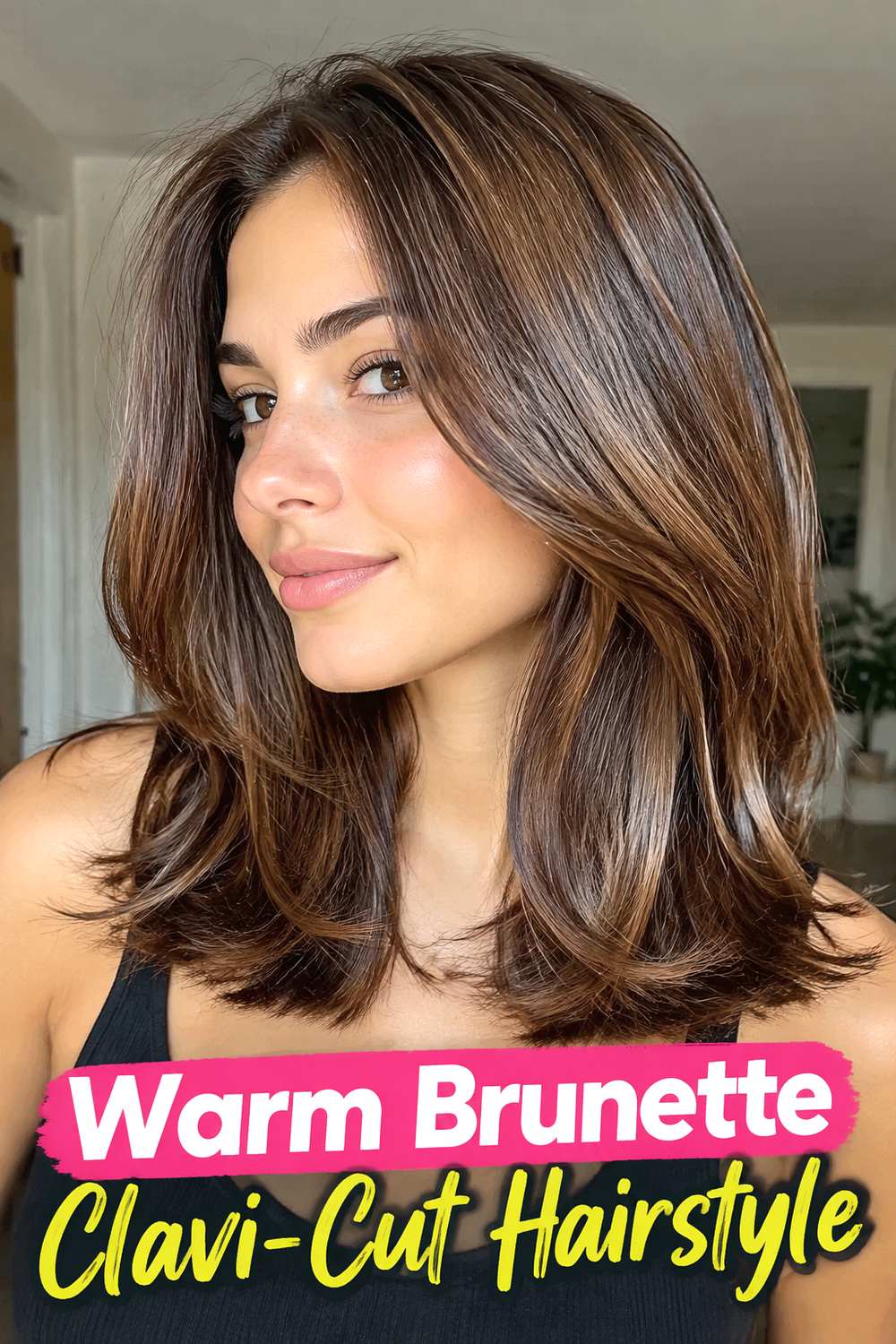
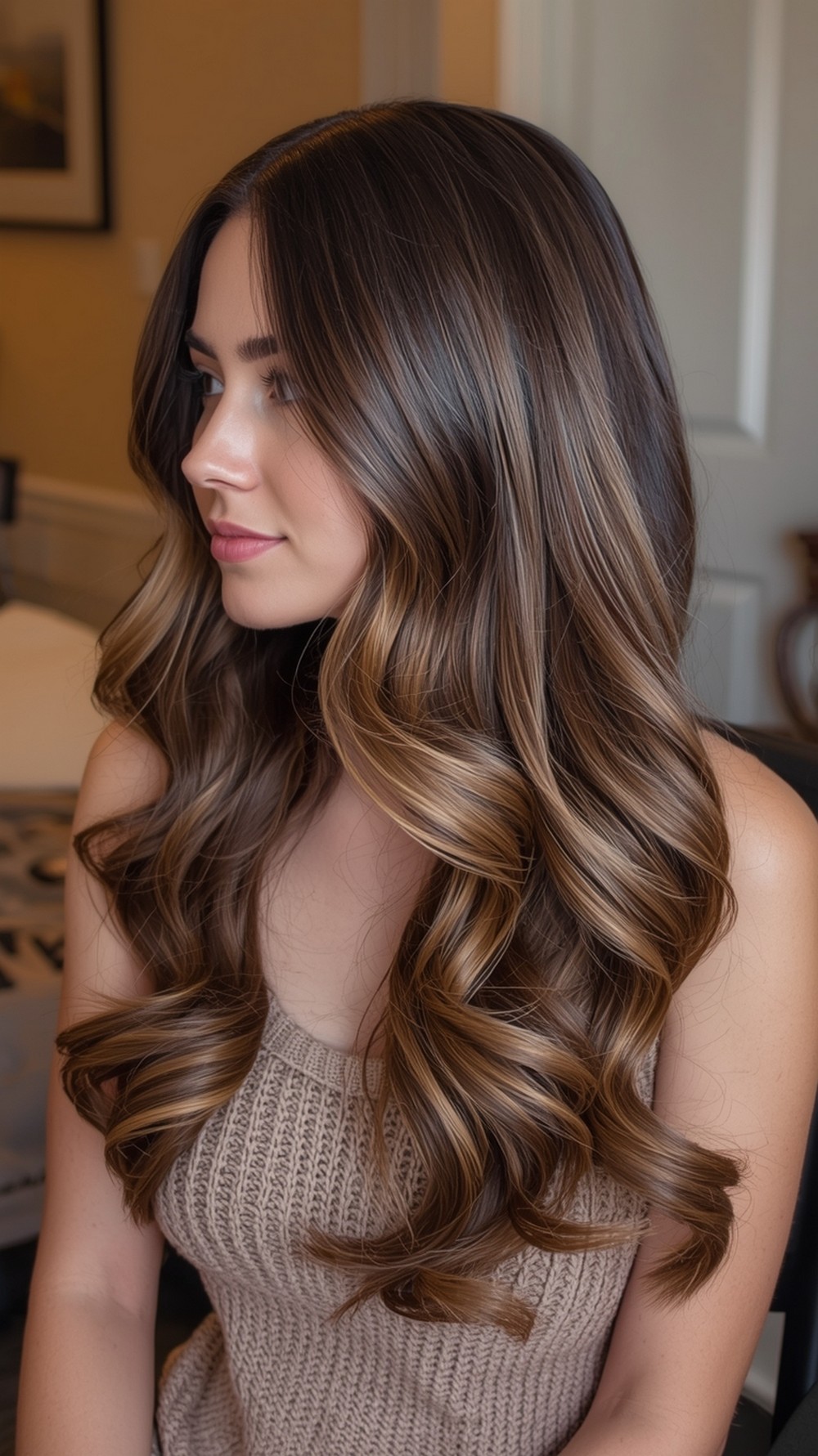
A warm brunette clavi-cut lets color and shape work together for an understated fall update. Think rich brown with subtle warmth rather than sharply contrasting highlights, paired with a collarbone-level cut that reflects light across a smooth surface. Soft layering can introduce enough movement to reveal tonal variation without making the color appear striped. This look works beautifully with gentle waves because each bend catches slightly different light, but a glossy straight finish can be equally effective. For anyone who wants a seasonal change without dramatically altering length, refreshing the tone while maintaining a wearable clavi-cut can create a noticeable result with relatively little change to the overall silhouette.
Why It Works
Rich brunette tones complement the polished, healthy-ended appearance of a medium cut, particularly when the surface remains smooth enough to reflect light.
Wear & Maintenance
Use color-safe care appropriate for your hair and avoid excessive heat when possible, since a glossy finish depends heavily on maintaining the condition of the strands.
26. Copper Toned Clavi Cut Hairstyle
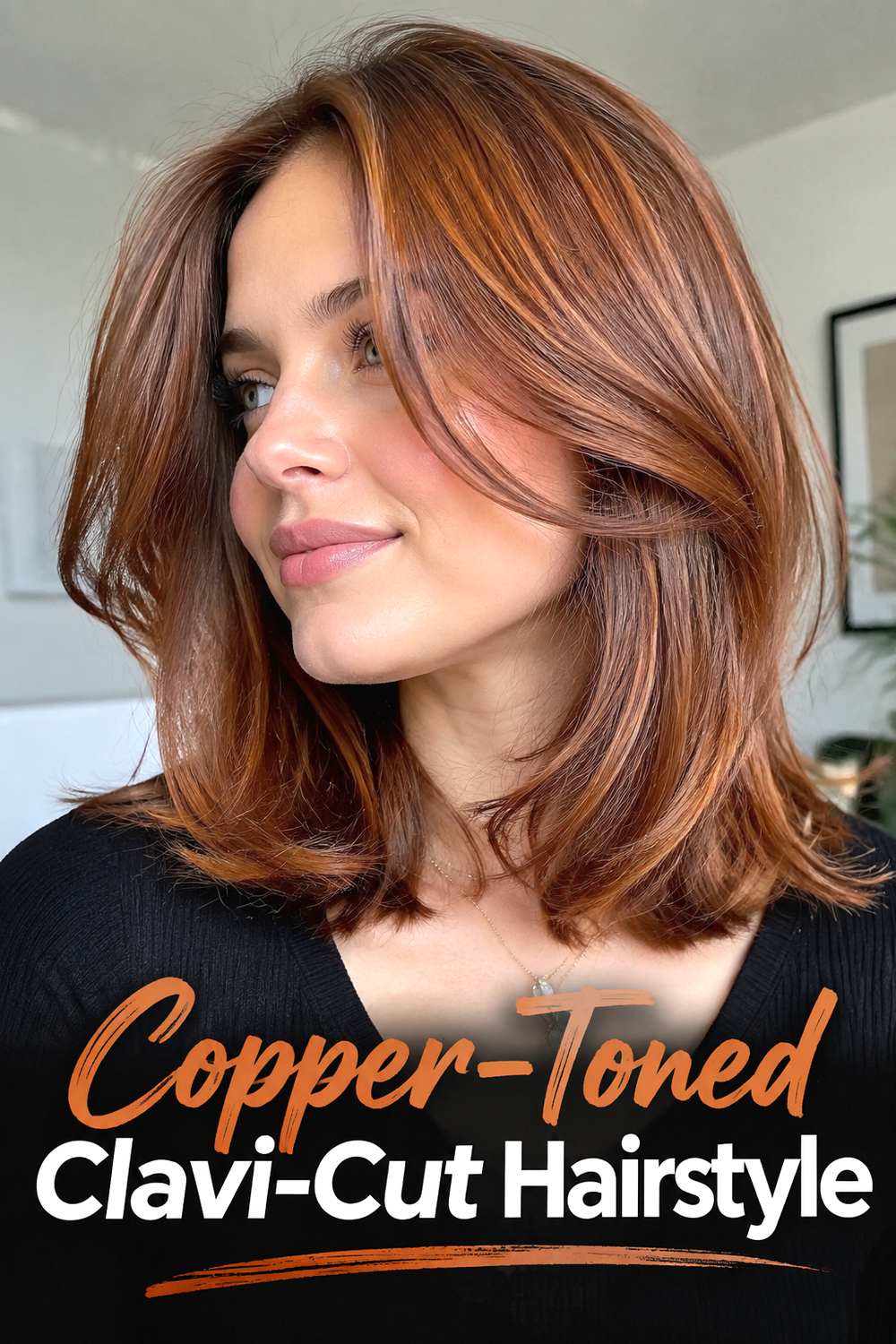
A copper-toned clavi-cut combines a strong medium-length silhouette with the warmth traditionally associated with autumn color palettes. The shade can range from soft ginger to deeper burnished copper depending on your starting color, complexion, and desired maintenance level. A lightly layered collarbone cut works especially well because movement exposes different facets of the tone rather than presenting one flat block of color. Loose bends enhance that dimensional effect, while blunt ends keep the shape modern. Because red and copper families can require thoughtful upkeep, the most wearable version is one you can maintain realistically rather than choosing intensity based only on the first-day salon result.
Best For
This is a strong option for anyone who wants the haircut itself to stay versatile while allowing color to provide the seasonal statement.
Wear & Maintenance
Discuss fading, refresh options, and at-home care with your colorist before committing, particularly if your desired copper is significantly different from your natural base.
27. Beige Blonde Clavi Cut Hairstyle
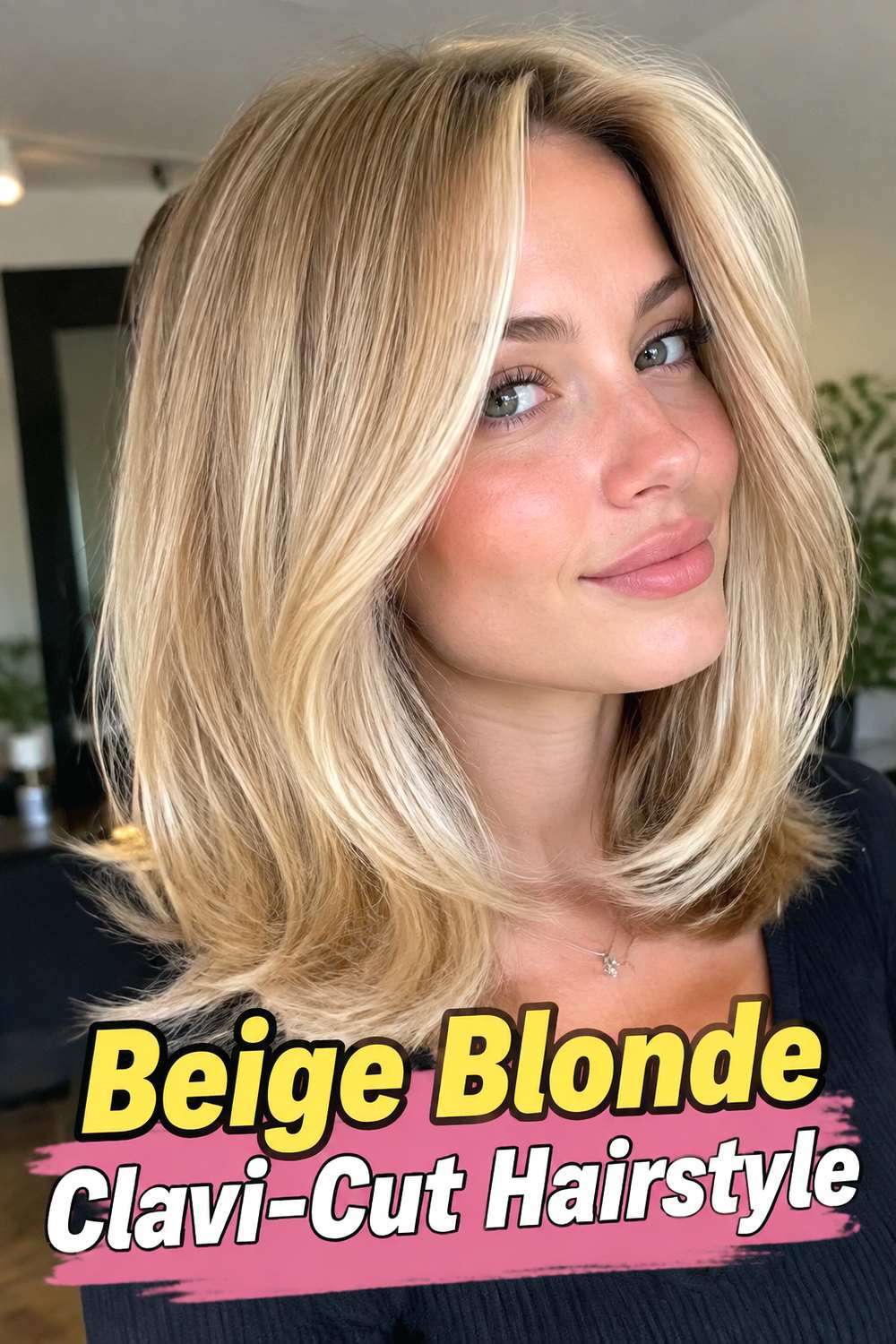
The beige blonde clavi-cut offers a softer take on blonde for fall, using creamy, neutral-looking dimension rather than extremely icy contrast. Collarbone-length hair provides enough surface area to show tonal variation while remaining compact enough to keep the ends looking substantial. Subtle face-framing brightness can emphasize the movement around the front, while a blended root can make the grow-out feel less abrupt. Pair the color with smooth waves or a gentle blowout to show shine and depth instead of relying on a heavily textured finish. For the most believable result, the blonde should work with your existing base and hair condition rather than requiring constant high-impact lightening.
Why It Works
The softer color direction complements fall wardrobes while the clavi-cut keeps the overall look fresh, clean, and versatile.
Wear & Maintenance
Prioritize conditioning and heat protection, especially on lightened lengths. Healthy-looking ends are particularly noticeable in a blunt or softly layered collarbone cut.
28. Espresso Gloss Clavi Cut Hairstyle
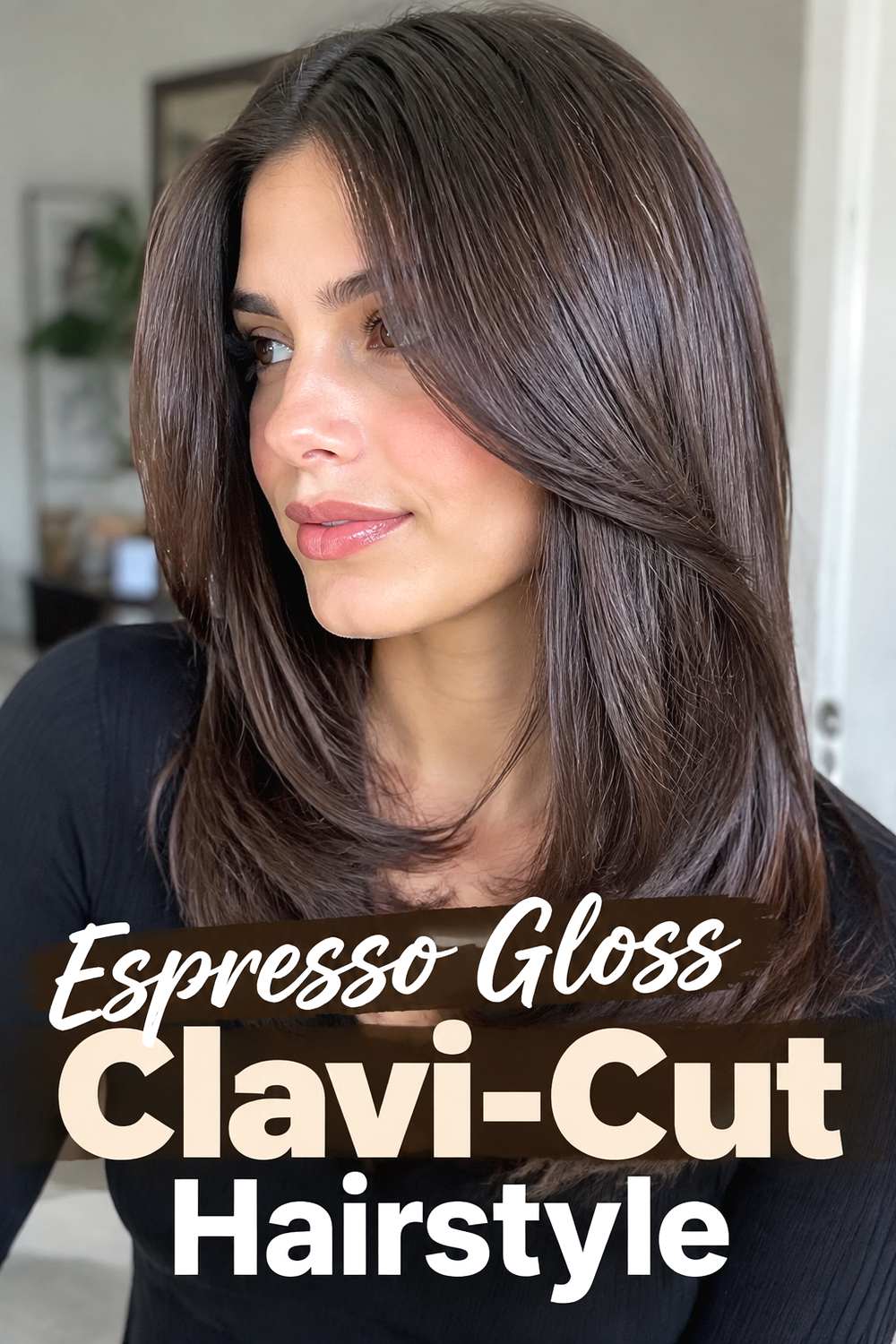
An espresso gloss clavi-cut makes deep brunette color the centerpiece of a simple, reflective silhouette. The near-solid depth creates a rich visual effect, while the collarbone length keeps the haircut modern and easy to style. A blunt or minimally layered shape is especially effective because the smooth surface gives light a broad area to reflect from, making shine more noticeable. This style does not need elaborate curls; a straight blowout, slight bend, or tucked side can be enough. The result feels sophisticated and seasonal without depending on high contrast. It is an appealing route for anyone who prefers depth, polish, and healthy-looking hair over obvious highlights or dramatic layering.
Styling Notes
Use smoothing products sparingly and concentrate shine-enhancing formulas through the mid-lengths and ends rather than saturating the roots.
Pro Tip
Bring reference photos that show your preferred brunette depth in both indoor and natural light, since very dark shades can read differently depending on illumination.
29. Soft Auburn Wavy Clavi Cut Hairstyle
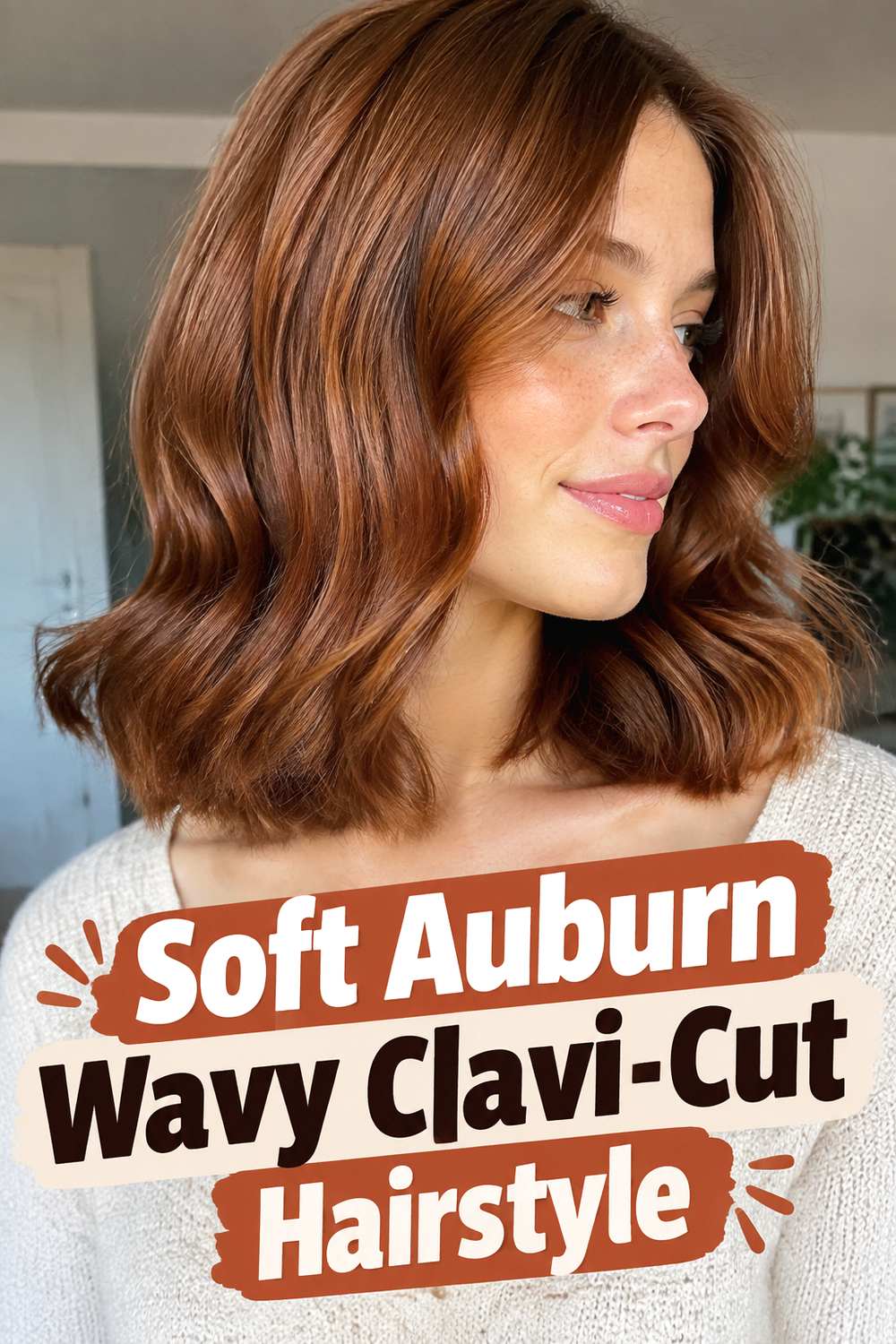
A soft auburn wavy clavi-cut combines warm red-brown color with loose movement for a particularly autumnal finish. The collarbone length gives waves enough room to form while keeping the overall silhouette compact and polished. Instead of sharply defined curls, use broad bends that reveal the color’s changing warmth as the hair catches the light. Long, blended layers can help thicker hair move, while finer hair may benefit from keeping most of the perimeter intact. The auburn itself can be muted or richer depending on your natural base. This look works especially well for someone who wants a noticeable seasonal shift that still feels softer than a vivid copper or bright red transformation.
Best For
It suits anyone drawn to warmer color who also prefers a relaxed, touchable finish rather than highly structured styling.
Wear & Maintenance
Use gentle color-care products and limit unnecessary heat. When styling waves, allow some pieces to remain softer so the finish looks naturally varied.
30. Tucked Behind The Ear Clavi Cut Hairstyle
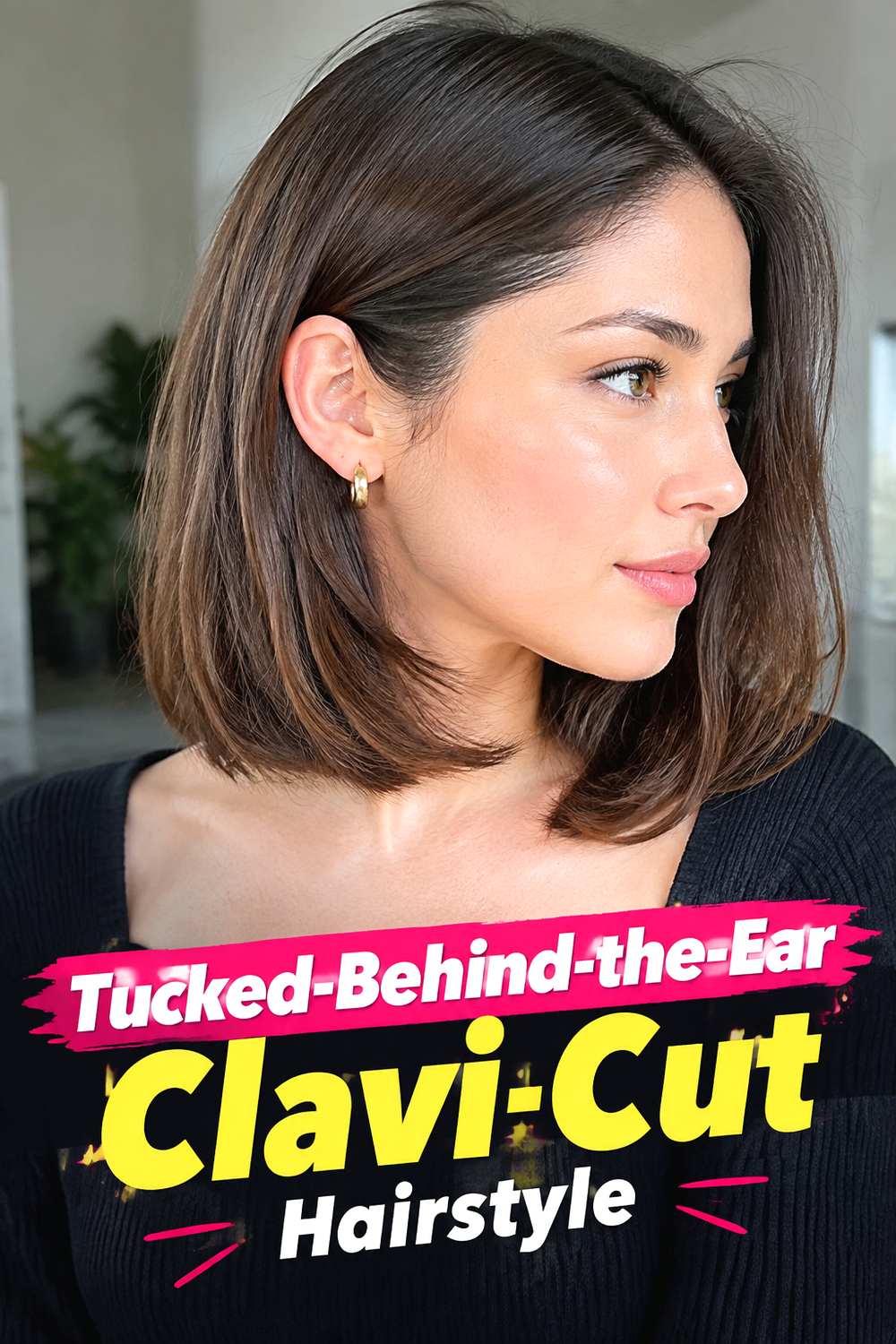
The tucked-behind-the-ear clavi-cut proves that a small styling detail can completely refine a medium haircut. The basic shape stays clean and collarbone-length, often with subtle internal movement or a few face-framing pieces. One or both sides are then tucked back, revealing the cheekbones, jawline, and the neat outline of the cut. It works particularly well with slightly imperfect texture because the tuck provides structure without requiring the entire head to be sleek. Fall 2026 trend coverage has emphasized relaxed, easy-to-wear bobs that can be air-dried or tucked behind the ears, making this simple finish especially relevant.
Why It Works
The tuck instantly opens the face and gives soft texture a deliberate focal point. It also helps show earrings, collars, and other fall accessories without changing the haircut.
Pro Tip
If shorter pieces constantly slip forward, use a tiny amount of flexible styling cream near the side section rather than coating the whole haircut with strong hold.
How to Choose the Right Look
Start with your natural texture and how much styling time you realistically want to spend. Straight or fine hair often benefits from stronger perimeters, restrained layering, and finishes such as the soft blunt, sleek, flipped-end, or fine-hair fullness clavi-cut. Waves can handle more visible movement, making lived-in, French-girl, soft shag, and air-dried variations easy to personalize. Curly and coily hair should be shaped around dry movement, shrinkage, and density rather than copied from a straight-hair reference without adjustment.
Then compare maintenance. Fringe creates an immediate change around the face, but micro bangs need considerably more frequent attention than curtain or bottleneck bangs. Blowouts and sleek finishes require more heat styling, while soft shag, natural curl, and air-dried shapes can make everyday texture part of the finished look.
Think about fullness as well. Fine hair usually looks denser when too many layers are avoided, while very thick hair may move better with discreet internal weight removal. If volume is your priority, consider a side part, butterfly-inspired layers, or a ’90s blowout. If you prefer controlled polish, a blunt, curved, Italian-inspired, or espresso-gloss finish may feel more natural to your routine.
Finally, consider comfort and occasion. A collarbone cut should still allow the styling options you regularly use, such as low ponytails, clips, tucked sides, or partial updos. Choose the version that works on an ordinary weekday, not only in a perfectly styled salon photo.
Final Thoughts
The clavi-cut works so well for fall 2026 because collarbone length leaves room for both change and practicality. You can keep it blunt and glossy, introduce soft layers, work with curls and coils, add fringe, or use warmer seasonal color without losing the versatility of medium-length hair.
Narrow the list by choosing your preferred perimeter first, then decide how much layering, fringe, texture, and daily styling you actually want. A small adjustment in those details can turn the same basic length into something minimal, romantic, voluminous, textured, or distinctly polished.
FAQs
1. What exactly is a clavi-cut haircut?
A clavi-cut is a medium-length haircut designed to fall around the clavicle or collarbone area. It sits between a traditional bob and longer mid-length hair, giving you a defined silhouette while retaining enough length for ponytails, clips, waves, and other styling options.
2. Is a clavi-cut good for fine hair?
Yes, especially when the perimeter remains relatively full. Fine hair can look denser with a blunt or softly textured collarbone edge and limited layering. Too many short layers may reduce the appearance of fullness, so the cut should be customized to your density.
3. Can curly hair wear a clavi-cut?
Absolutely. The important part is accounting for curl pattern and shrinkage when choosing the finished length. A curly clavi-cut may use strategic layers to balance the silhouette and prevent excess weight while allowing individual curls to form naturally.
4. Which bangs work best with a clavi-cut?
Curtain, wispy, bottleneck, and micro bangs can all work, but they create different maintenance levels and moods. Curtain and bottleneck bangs offer softer blending and easier grow-out, while micro bangs create a sharper statement and usually require more regular trimming.
5. How often does a clavi-cut need trimming?
There is no single schedule that suits every hair type. A precise blunt cut or short fringe may need reshaping sooner, while softer layers and lived-in textures usually tolerate more growth. Book a trim when the perimeter loses its intended shape, the ends feel worn, or your layers stop moving as designed.
CTA
Save your favorite clavi-cut ideas for your next salon visit, share the looks that fit your fall style, and explore more hairstyle inspiration before choosing your final cut.