13 Waist-Length Hairstyles With Chunky Winter Scarves
Waist-length hair and chunky winter scarves can coexist beautifully when the hair is controlled, separated, or secured without losing softness and movement.
Extra-long hair looks dramatic in winter, but thick scarves add a practical challenge. Hair can bunch beneath the fabric, tangle at the nape, or become trapped between coat collars and scarf layers. The easiest solution is not necessarily putting every strand up. Strategic ponytails, braids, side drapes, tucks, and half-up styles can keep the length visible while making bulky winter accessories more comfortable.
The best option depends on texture, density, scarf thickness, and how much movement you want. Smooth styles reduce bulk, braids organize long lengths, and softly secured looks preserve a relaxed silhouette. The ideas below focus on believable hair placement, natural texture, practical control, and wearable winter styling rather than overly rigid finishes.
Quick List
- Center Part Tucked Under Scarf Hairstyle
- Low Ponytail Over Scarf Hairstyle
- Side Swept Waist Length Hairstyle
- Loose Braid Over Scarf Hairstyle
- Split Front Draped Waist Length Hairstyle
- Low Twisted Ponytail Hairstyle
- Half Up Waist Length Control Hairstyle
- Sleek Behind The Shoulders Hairstyle
- Soft Waves With Scarf Tuck Hairstyle
- Single Shoulder Braid Hairstyle
- Low Rope Braid Hairstyle
- Scarf Friendly Low Bun Hairstyle
- Loose Low Tie Waist Length Hairstyle
1. Center Part Tucked Under Scarf Hairstyle
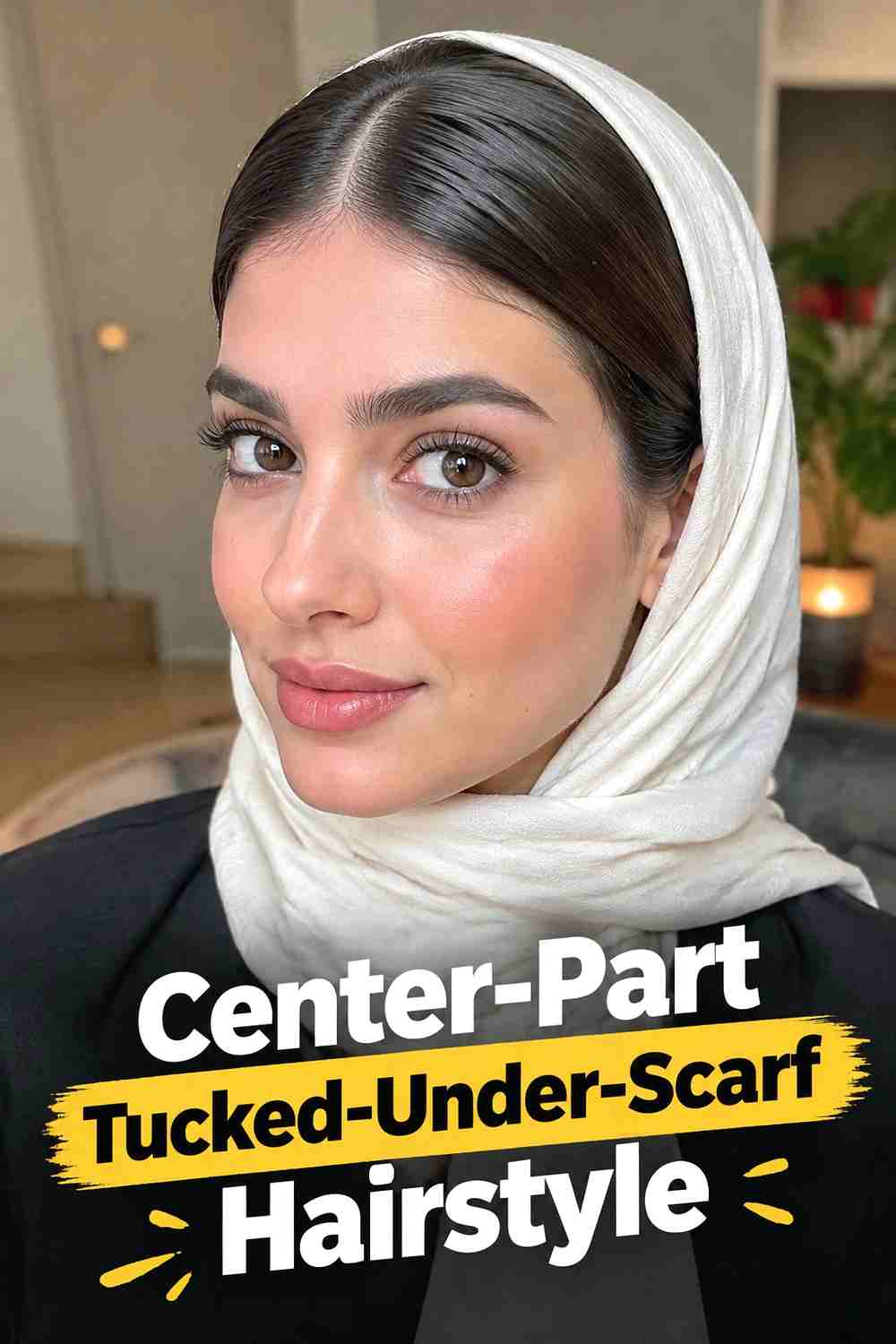
A clean center part gives waist-length hair a balanced shape while a chunky scarf provides the control. Instead of pulling all the hair forward, let the upper lengths fall naturally behind the shoulders and position the scarf over a narrow section near the nape. The lower hair can remain free beneath the scarf and coat, preserving the dramatic length without creating excess bulk around the face. Keeping the roots smooth makes the style look deliberate rather than simply trapped beneath winter layers. This arrangement is especially useful for straight or gently wavy hair because the long surface remains visible while the scarf stabilizes the section most likely to shift in windy weather.
Styling Notes
Arrange the hair before wrapping the scarf. Pulling strands out afterward can create unnecessary friction and disrupt the smooth surface.
Best For
This works well with medium-density hair and large scarves that sit comfortably around the neck without being wrapped extremely tightly.
2. Low Ponytail Over Scarf Hairstyle
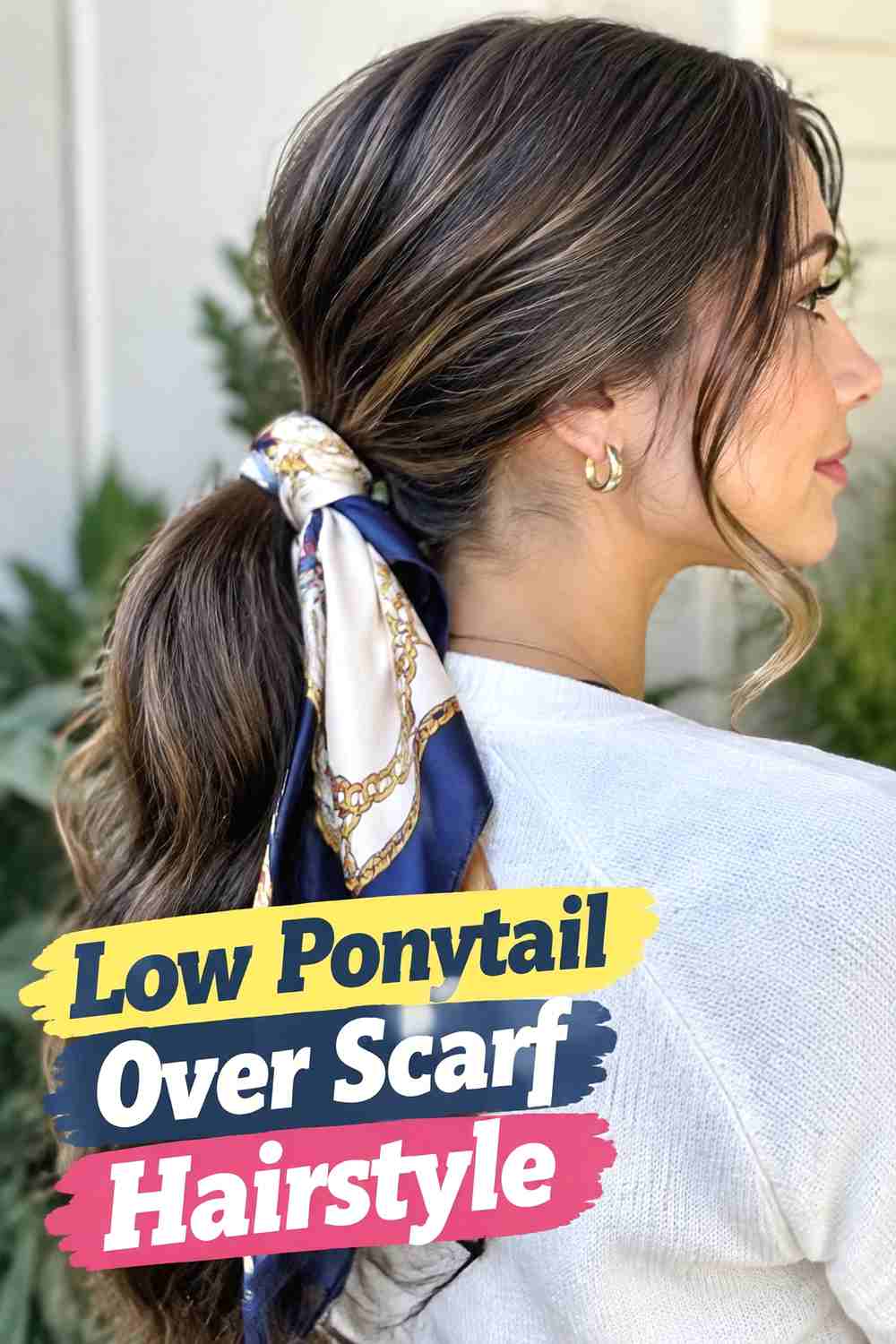
A low ponytail is one of the simplest ways to organize waist-length hair when wearing a bulky scarf. Position the tie below the scarf line rather than directly beneath the thickest fabric, allowing the ponytail to fall cleanly down the back or over one shoulder. The roots can remain softly smooth, while the ponytail itself may be straight, naturally textured, or gently waved. Because the entire length is gathered, it is less likely to become divided into tangled sections as the scarf moves. Keeping the base slightly relaxed also prevents the style from feeling overly severe and gives the hair enough flexibility to move naturally with coats and layered winter clothing.
Wear & Maintenance
A fabric-covered elastic or smooth tie can keep the ponytail secure without adding a hard, bulky point beneath outerwear.
Pro Tip
Put the scarf on first, then choose the ponytail position according to where the lower edge of the scarf naturally sits.
3. Side Swept Waist Length Hairstyle
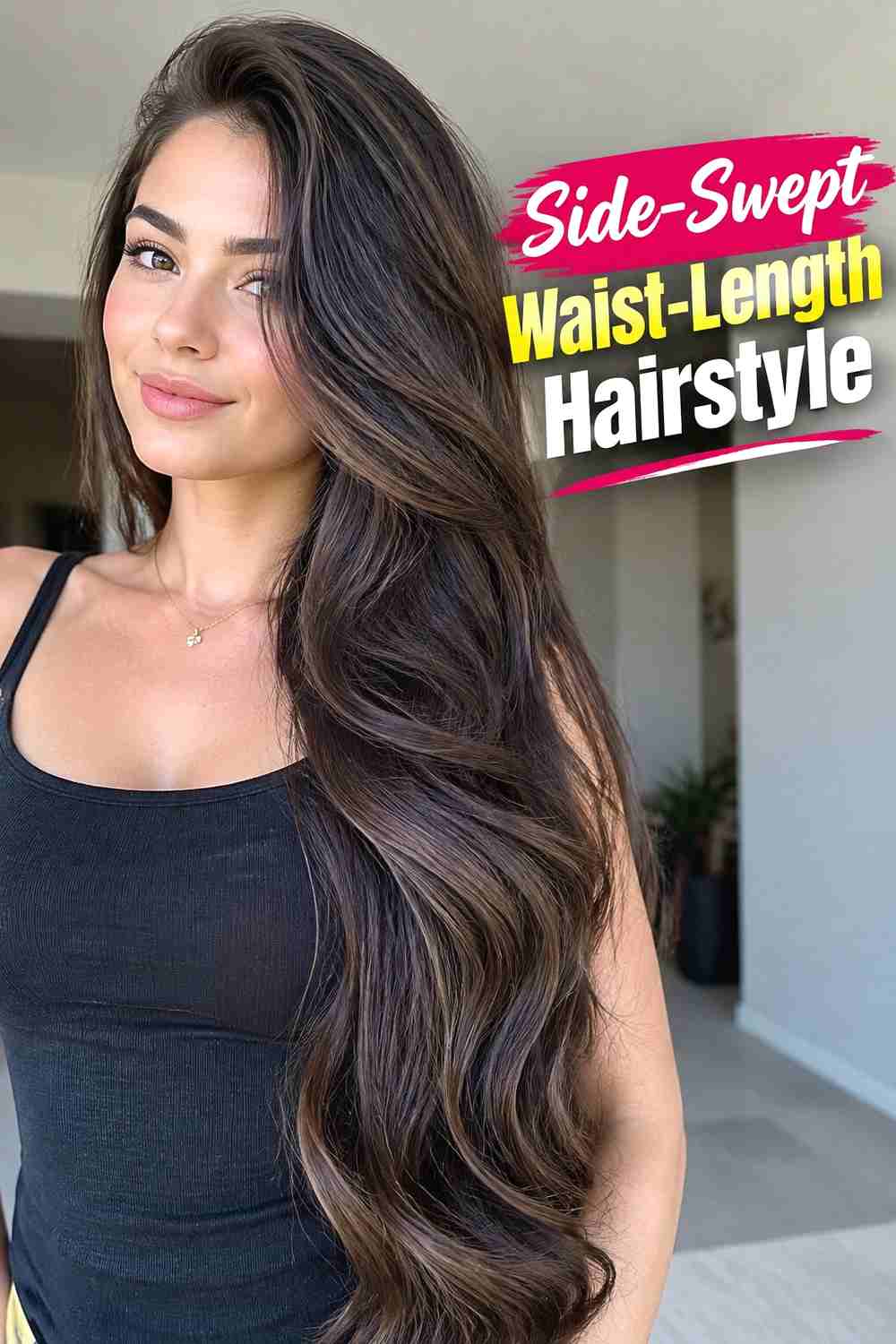
Sweeping waist-length hair to one side keeps the opposite shoulder and scarf edge relatively clear while still displaying the full length. A side part or softly redirected center part can guide the hair toward the preferred shoulder without requiring a tight tie. The result looks particularly attractive with natural waves because the long sections fall together in one controlled column rather than spreading across the front and back of the coat. For very dense hair, a concealed pin or small elastic underneath the heavier section can add stability. This style is most practical when the scarf is wrapped high around the neck but leaves enough room near one shoulder for the hair to pass comfortably.
Why It Works
Concentrating the length on one side reduces the number of areas where the scarf can rub against the hair.
Best For
It suits straight, wavy, and loosely curly hair, especially when you want visible length without wearing a full ponytail or braid.
4. Loose Braid Over Scarf Hairstyle
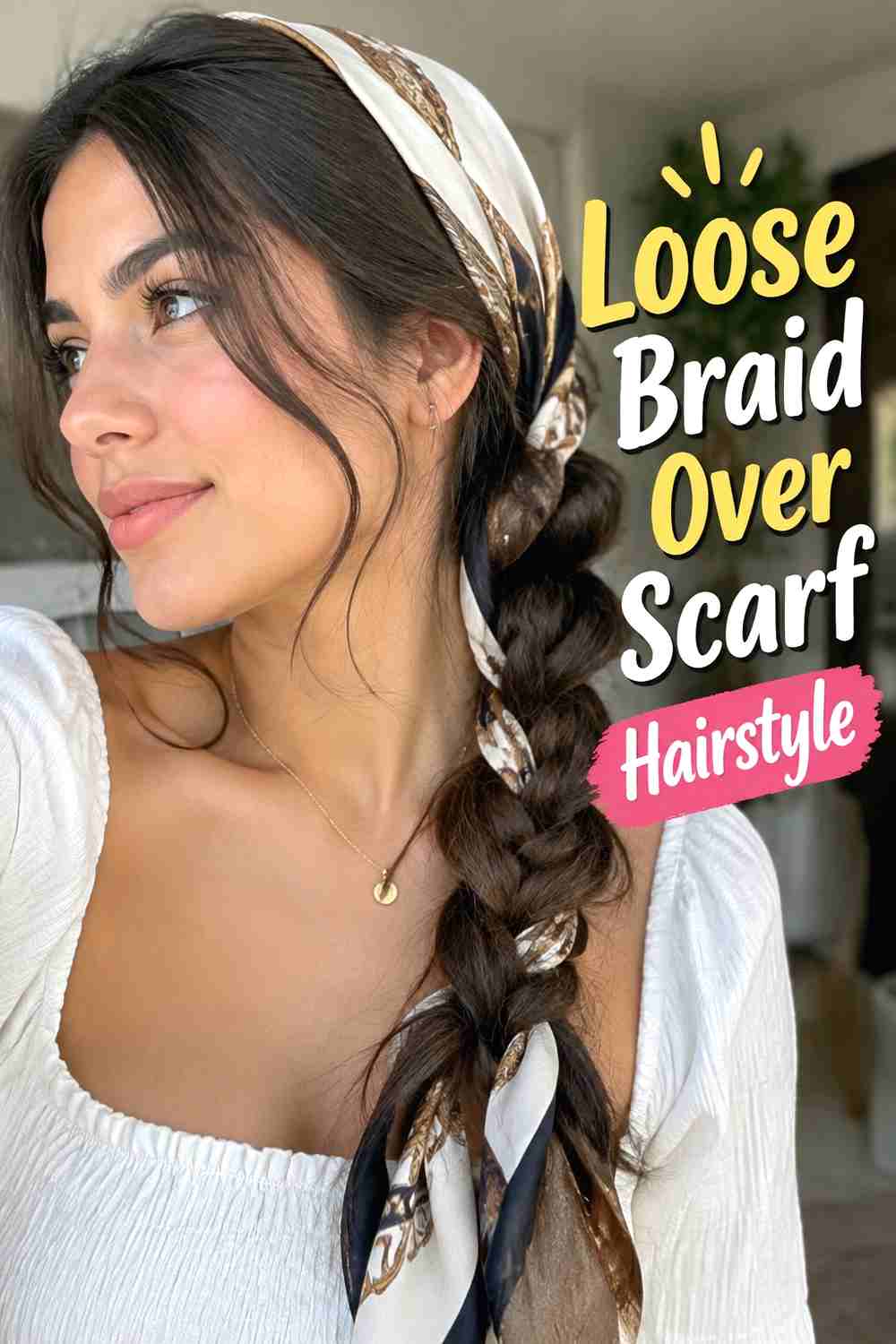
A loose three-strand braid organizes waist-length hair while keeping its texture and impressive length visible. Start the braid low enough that the scarf can sit comfortably around the neck without pressing against a bulky braided section. The upper hair can remain smooth or softly textured, while the braid travels over one shoulder or down the center of the coat. Slightly relaxed sections make the result feel winter-casual rather than overly formal, but the braid should still be secure enough to keep long strands from escaping into the scarf. This style is particularly useful for thick hair because braiding reduces the width of the loose lengths and makes them easier to manage throughout a long day outdoors.
Styling Notes
Begin braiding below the scarf edge and keep the first few crossings controlled. Loosen the outer sections only after the braid is secured.
Wear & Maintenance
A braid generally needs less rearranging than loose waist-length hair when repeatedly putting on or removing a scarf.
5. Split Front Draped Waist Length Hairstyle
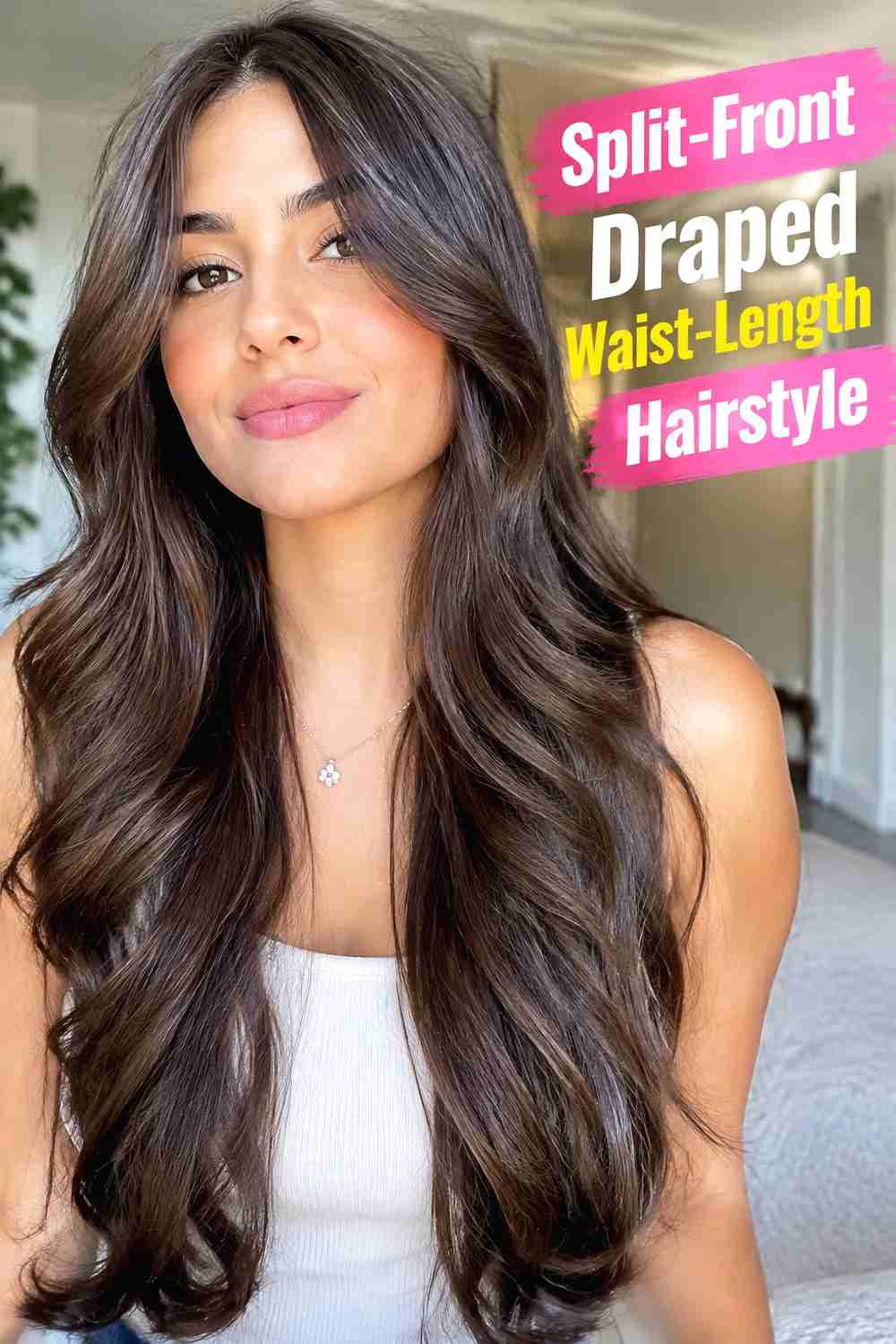
Dividing waist-length hair into two controlled front sections gives a symmetrical look while keeping the center back relatively free of loose strands. Part the hair in the middle, guide each half over a shoulder, and let the sections fall down the front of the coat. The scarf can sit between the hair and neck, allowing the lengths to remain visible instead of becoming buried beneath thick fabric. This arrangement works best when each side is kept reasonably narrow and smooth, particularly with very dense hair. Soft waves can add movement through the lower lengths, but minimizing volume near the scarf keeps the neckline from feeling crowded. The finished silhouette is long, balanced, and visually tidy.
Hair Type & Length
This style is especially effective on straight to wavy waist-length hair with enough weight to stay draped forward naturally.
Pro Tip
Keep the scarf ends slightly separated from the hair so the two long sections remain distinct rather than twisting around the fabric.
6. Low Twisted Ponytail Hairstyle
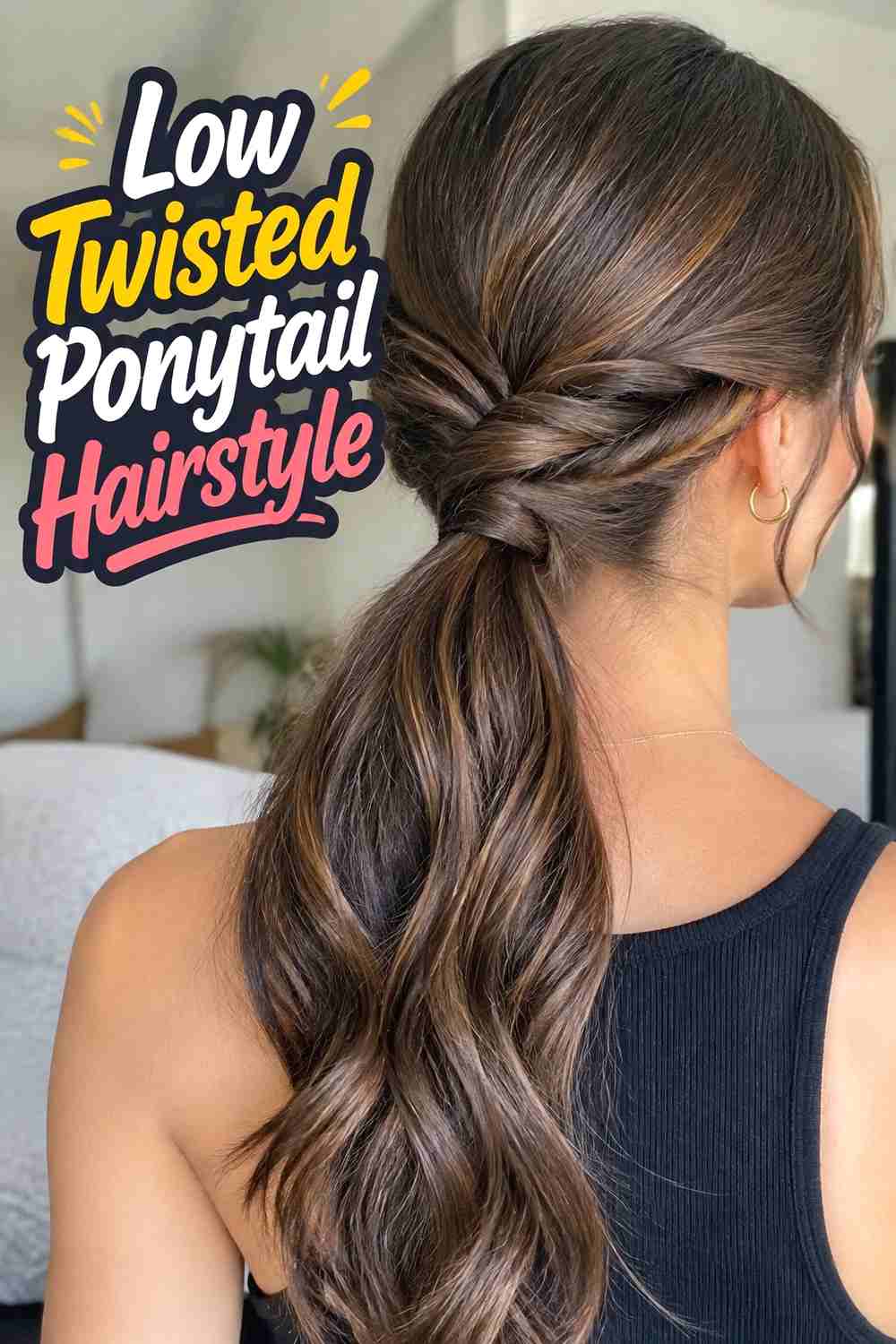
A low twisted ponytail adds detail to a practical winter style without creating extra height near a chunky scarf. Gather the hair beneath the scarf line, divide it into two sections, and twist them before securing the length. The twist reduces loose movement and keeps waist-length strands grouped together, making it useful when wind or repeated coat movement would otherwise cause tangling. The crown can remain sleek or gently relaxed depending on the desired finish. Unlike a high ponytail, the low placement avoids competing with thick scarf folds at the back of the neck. The finished style has a polished shape while still allowing the extraordinary length of the hair to remain a visible part of the outfit.
Why It Works
Twisting concentrates the hair into a narrower shape, which can be easier to position over a coat than a wide loose ponytail.
Wear & Maintenance
Secure the end well because very long twisted hair can gradually loosen as it moves against heavy winter clothing.
7. Half Up Waist Length Control Hairstyle
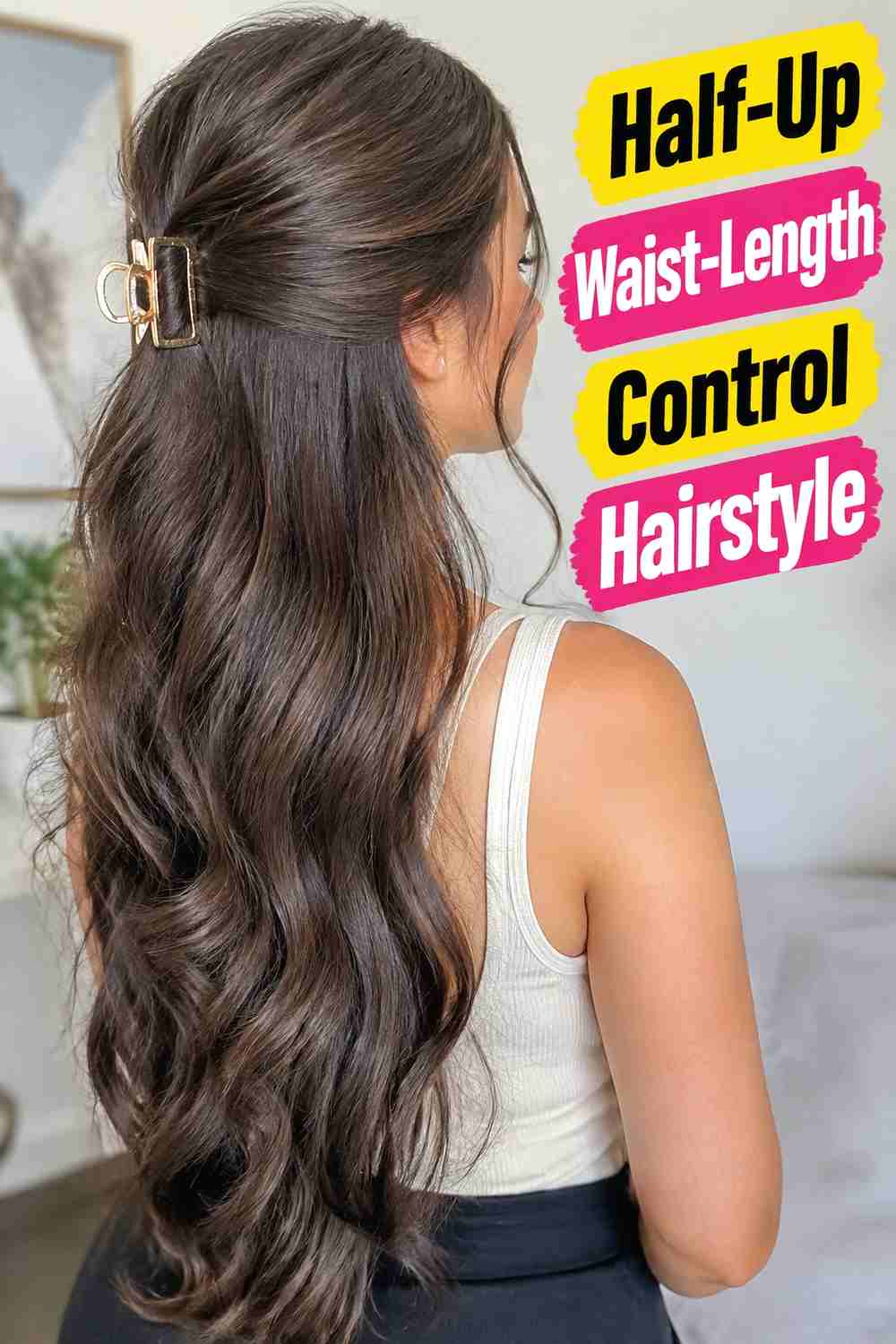
A half-up style offers a useful compromise when you want the softness of loose waist-length hair but need more control around a chunky scarf. Gather the upper side sections and secure them at the back of the head, leaving the lower lengths free. Removing those front pieces from the neckline helps reduce strands slipping into scarf folds, while the remaining hair still creates a dramatic long silhouette. The secured portion can be sleek, softly twisted, or slightly lifted at the crown depending on your texture. Keep the fastening point high enough that it does not sit directly beneath the scarf. This look is particularly effective when the lower hair has gentle waves or natural texture that you want to keep visible.
Best For
This style works across many textures and is especially helpful for people who dislike having loose front sections touching the face in cold, windy weather.
Styling Notes
Use a light, secure fastening rather than an oversized accessory if you plan to wear a hood over the hairstyle.
8. Sleek Behind The Shoulders Hairstyle
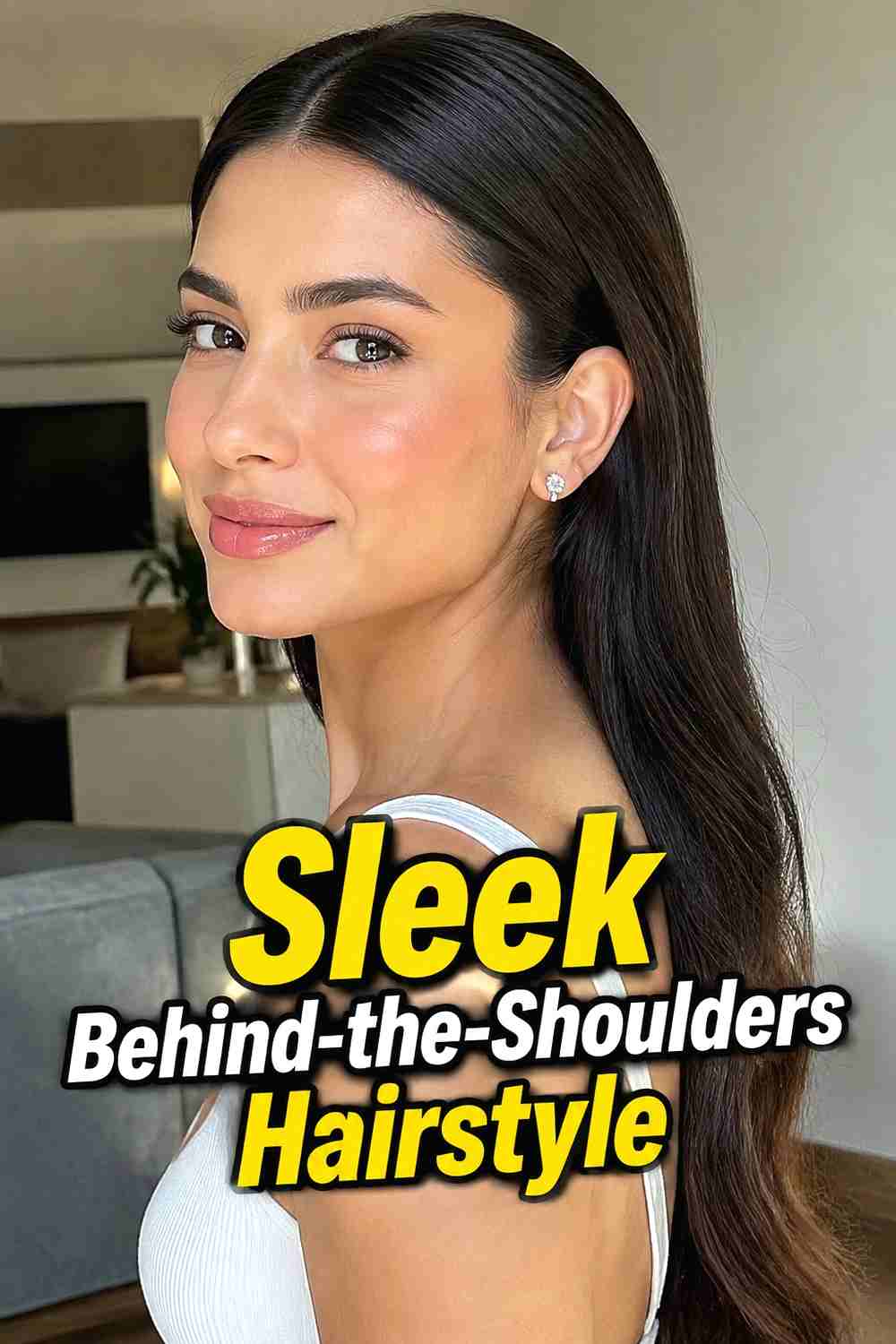
Keeping waist-length hair sleek and completely behind the shoulders creates one of the cleanest looks with an oversized winter scarf. A center or slightly off-center part maintains a polished front view, while the lengths fall in a smooth column down the back. The scarf should rest around the neck without repeatedly trapping and releasing sections of hair. Because the style relies on a streamlined surface, focus on controlled roots, realistic shine, and smooth ends rather than exaggerated flatness. Hair with a little natural weight tends to stay in position more easily. This approach also keeps the front of a coat uncluttered, making it a strong choice when the scarf itself has bold texture, fringe, checks, or oversized proportions.
Why It Works
Moving the entire length behind the shoulders separates the hairstyle visually from a thick scarf and prevents competing layers across the chest.
Pro Tip
Position the hair first and wrap the scarf afterward, checking that no small sections are caught uncomfortably at the nape.
9. Soft Waves With Scarf Tuck Hairstyle
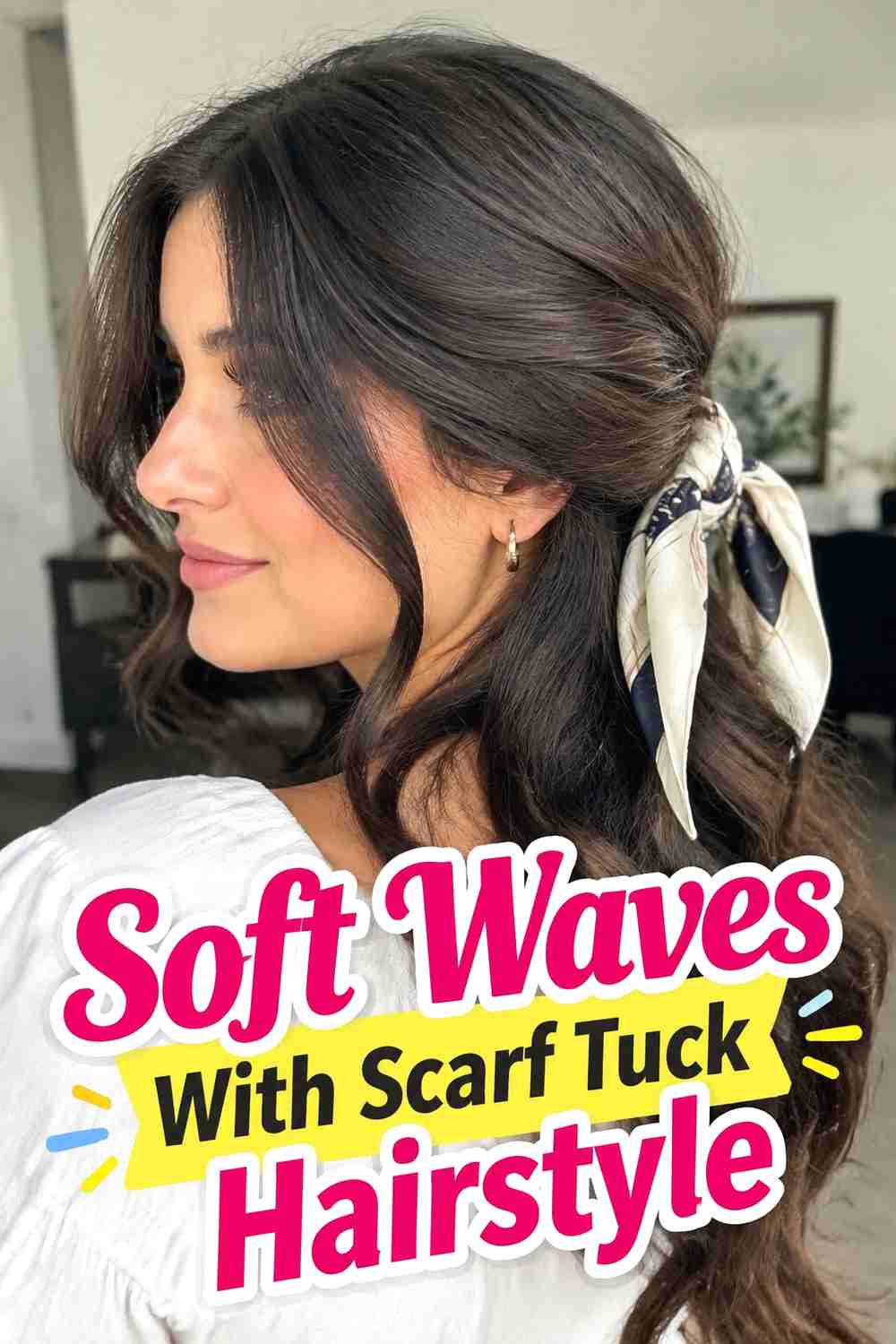
Soft waist-length waves can remain loose while a chunky scarf controls only the upper portion of the hair. Let broad waves begin below the shoulders, then tuck a small amount of hair beneath the lower scarf edge at the back to stabilize the style. Most of the length stays free, so the wave pattern remains visible and mobile. This method works better with relaxed bends than highly expanded curls because too much volume near the neck may feel bulky beneath winter layers. A few face-framing pieces can stay outside the scarf for softness, provided they are not constantly rubbing against textured fabric. The result combines romantic movement with enough structure to make very long hair easier to handle outdoors.
Styling Notes
Keep the strongest wave definition through the mid-lengths and ends rather than directly beside the scarf.
Wear & Maintenance
After removing the scarf, gently separate any compressed areas with your fingers instead of brushing through the entire style.
10. Single Shoulder Braid Hairstyle
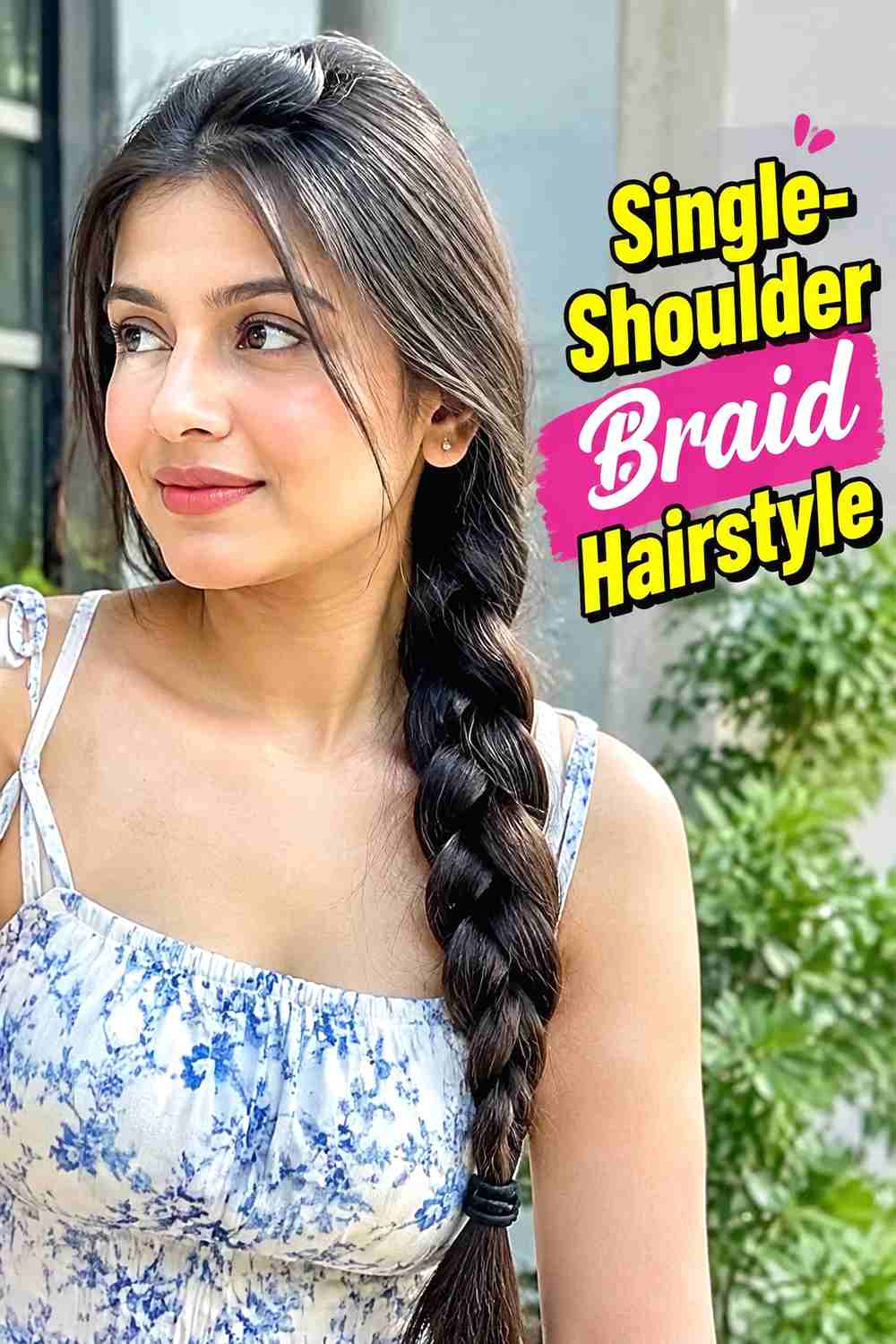
A single braid carried over one shoulder is especially effective for waist-length hair because it moves the full length away from the back of the scarf and into one manageable section. Start with the hair directed to the chosen side, then braid below shoulder level so the neckline stays relatively smooth. The braid may be neat and compact or slightly relaxed depending on hair density and personal style. Leaving a few short face-framing pieces can soften the front, but keeping most of the length contained improves practicality. The long braid creates a strong vertical line against winter coats and remains clearly visible even when the scarf is oversized, making it both decorative and functional for cold-weather dressing.
Best For
This option is particularly useful for thick or easily tangled hair that benefits from being contained during outdoor wear.
Pro Tip
Alternate which shoulder carries the braid on different days if the weight of extremely long, dense hair becomes uncomfortable.
11. Low Rope Braid Hairstyle
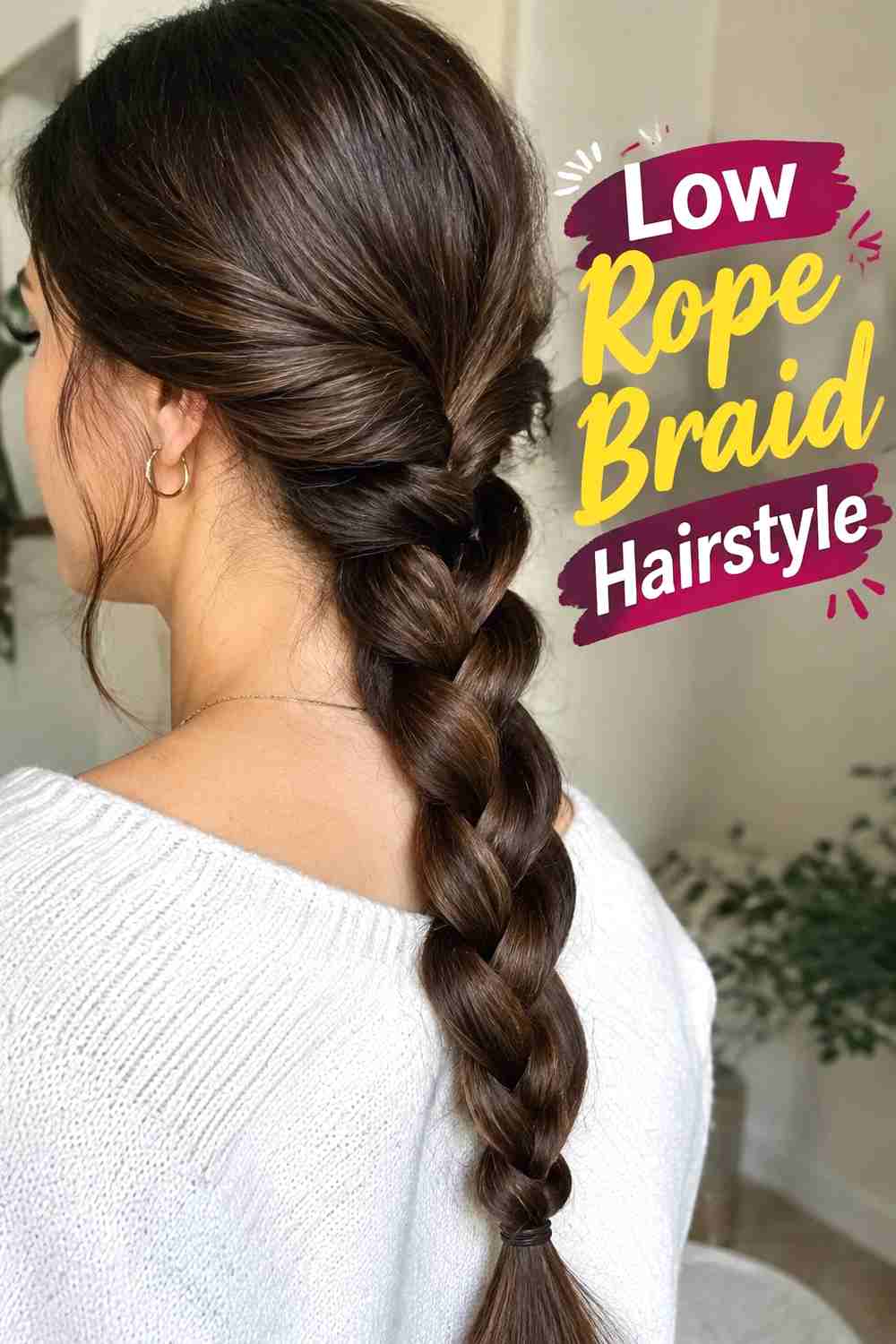
A rope braid offers a clean alternative to a traditional three-strand braid and works particularly well with very long hair. Gather the hair below the scarf, split it into two sections, twist each section in one direction, and wrap them together in the opposite direction. The resulting shape is narrow, defined, and visually striking against chunky knit accessories. Because fewer loose strands spread around the shoulders, the hairstyle can reduce friction between the hair and scarf. A smoother root area gives the braid a polished feel, while slight softness around the hairline keeps it wearable. The length of waist-length hair makes the twisted pattern especially noticeable, creating texture without requiring elaborate braiding techniques or extra accessories.
Hair Type & Length
Long straight, wavy, or stretched textured hair can all work well, particularly when there is enough length for the rope pattern to repeat clearly.
Wear & Maintenance
Check the end elastic during the day because a rope braid may loosen from the bottom if it is not secured firmly.
12. Scarf Friendly Low Bun Hairstyle
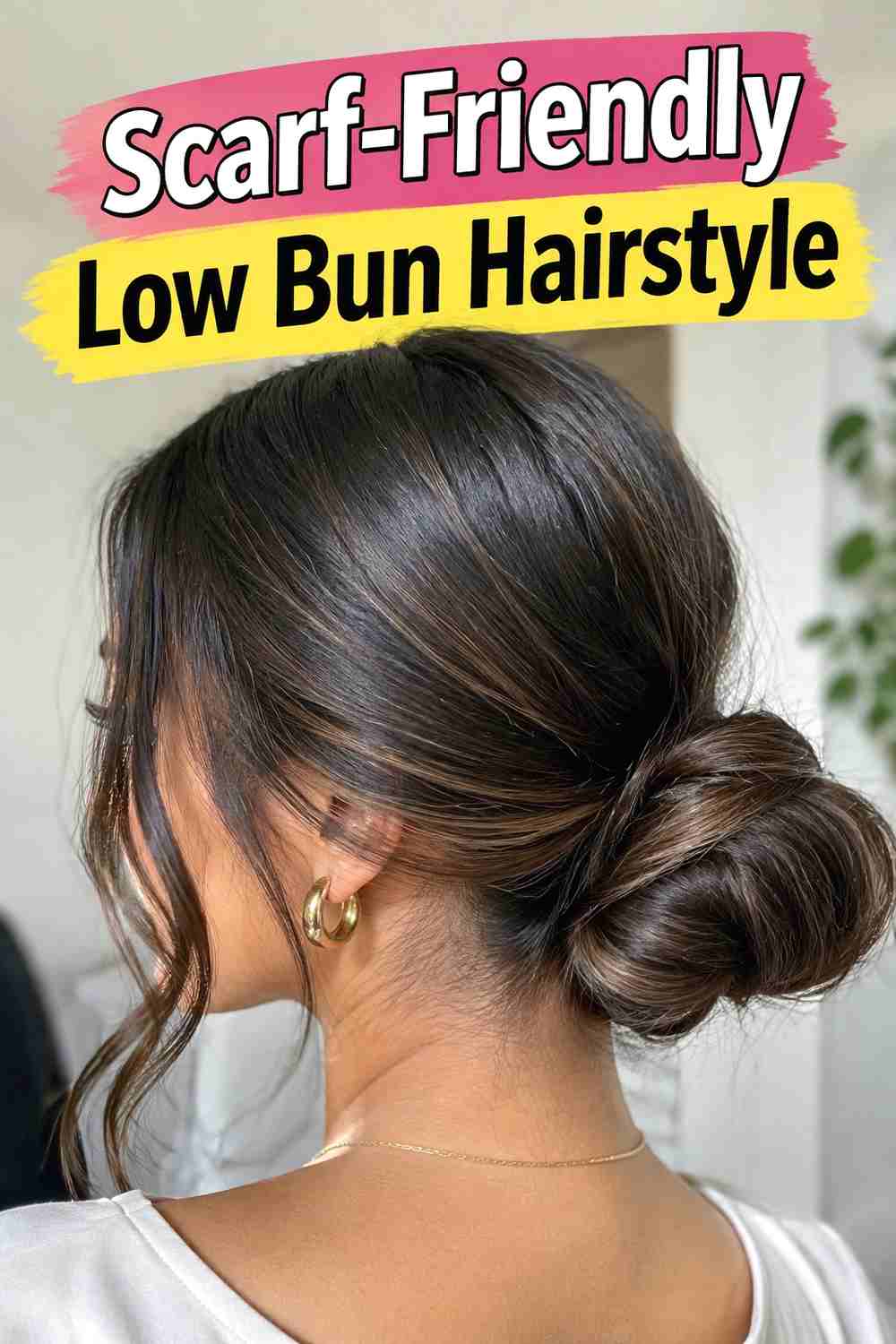
A low bun provides maximum control when you would rather keep waist-length hair completely contained around a chunky scarf. The key is placement: position the bun either just above the scarf line or low enough that it sits beneath the scarf without being compressed. Twist the long lengths into a broad, secure coil that connects naturally to the base rather than creating an oversized floating shape. This style works especially well on windy days, during commutes, or whenever loose hair would be inconvenient. A few soft pieces around the face can keep the result from looking overly formal. Because waist-length hair creates substantial bulk, distributing the coil evenly can improve comfort and help the bun sit closer to the head.
Styling Notes
Use several well-placed pins rather than relying on one accessory to support the full weight of very long hair.
Best For
This is a strong option for dense hair, active days, and scarves that cover much of the shoulders and upper chest.
13. Loose Low Tie Waist Length Hairstyle
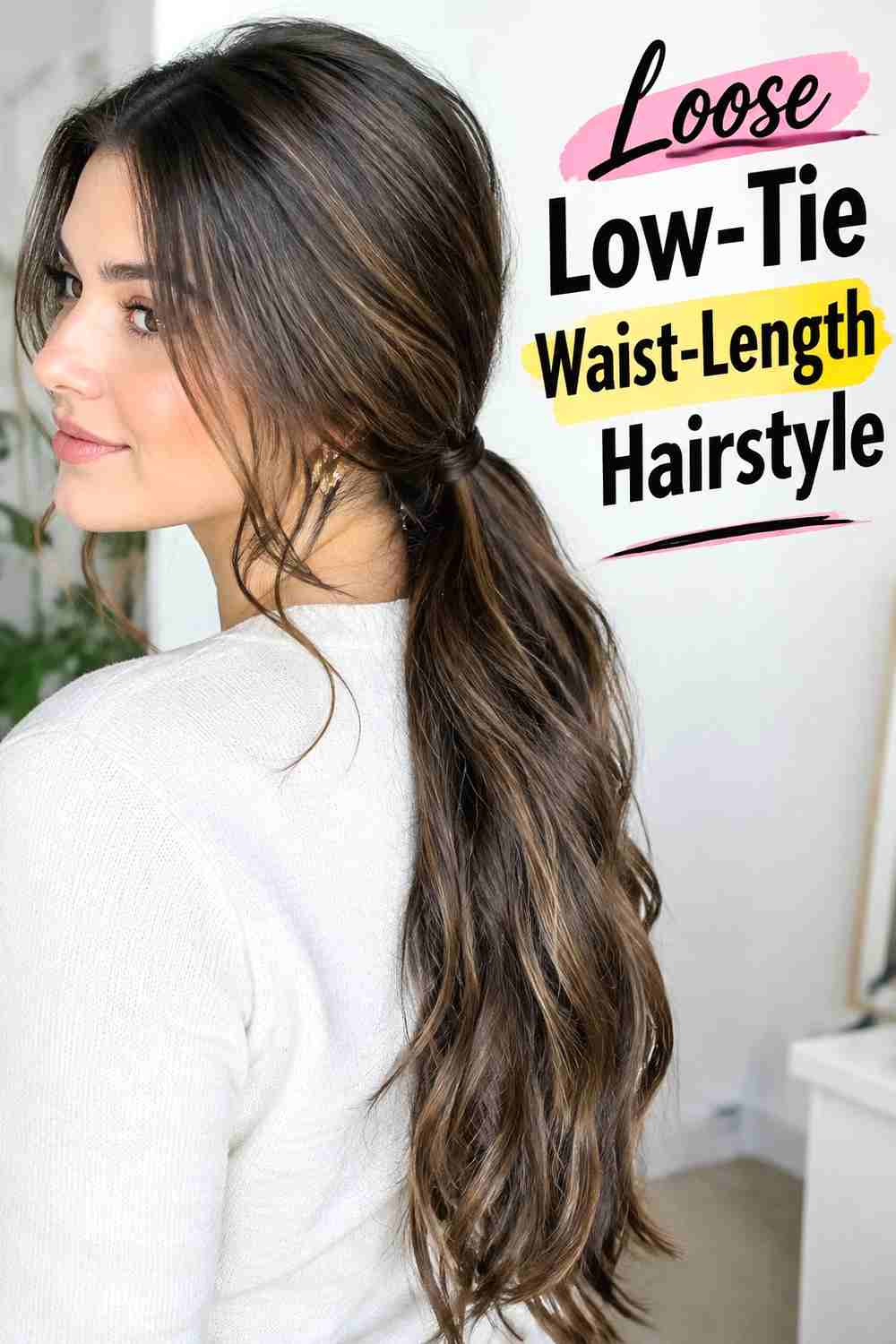
A loose low tie keeps waist-length hair gathered while preserving the relaxed appearance of wearing it mostly down. Instead of tightening the elastic close to the nape, position it below the lower edge of the scarf and secure the hair with gentle tension. The long tail can fall straight down the back or be brought over one shoulder. This approach is especially useful when you want quick control without committing to a braid, twist, or bun. Natural waves and subtle texture remain visible throughout the length, while the tie prevents individual sections from spreading across the scarf and coat. Keeping the crown softly arranged gives the style a casual winter finish that feels practical rather than overly styled.
Why It Works
The single low fastening point controls the length while allowing the hair above and below it to retain natural movement.
Pro Tip
Choose a soft tie that grips securely enough to stay in place without needing repeated tightening during the day.
How to Choose the Right Look
Start with the amount of control you actually need. If your main concern is keeping strands away from the scarf, a half-up style, side sweep, or simple scarf tuck may be enough. If your hair tangles easily or you expect wind, a braid, rope braid, twisted ponytail, or bun provides stronger containment.
Hair density also matters. Very thick waist-length hair can feel bulky when trapped directly under a chunky scarf, so styles that gather the length below the scarf line are often more comfortable. Finer hair may be easier to tuck or drape without creating excessive volume.
Consider your scarf construction as well. Oversized knits, heavy fringe, and textured fibers can interact with loose hair more than smooth, compact scarves. Finally, match the style to your day. Loose drapes work beautifully for lighter activity, while secured braids and buns usually require less rearranging during commuting, outdoor walking, or repeated coat removal.
Final Thoughts
Chunky winter scarves do not mean waist-length hair has to disappear beneath layers. The most successful styles simply control where the hair sits. Try a low braid or ponytail for reliable containment, a side drape or half-up style when you want more movement, or a bun when maximum control matters. Small changes in placement can make very long hair considerably easier to wear with winter accessories.
FAQs
1. Should waist-length hair go over or under a chunky scarf?
Either can work, but keeping most of the length outside the scarf often prevents unnecessary bunching. Small controlled sections can be tucked beneath the scarf when extra stability is useful.
2. What hairstyle gives the most control with a thick winter scarf?
A low braid, rope braid, or securely placed low bun gives the strongest control because most of the length is contained in one shape.
3. Can I wear waist-length hair completely loose with a chunky scarf?
Yes. Keeping it behind the shoulders, sweeping it to one side, or using the scarf to stabilize a small section can make loose hair more manageable.
4. Where should a ponytail sit when wearing a bulky scarf?
Usually below the lower scarf edge or clearly above it. Avoid positioning the elastic directly where the thickest scarf layers press against the neck.
5. Which styles keep very long hair visible without letting it tangle everywhere?
A single-shoulder braid, loose low tie, side sweep, or split-front drape keeps the length visible while limiting how widely the strands can move.
CTA
Save your favorite scarf-friendly hairstyle, share these ideas for winter inspiration, and explore more practical ways to style beautiful extra-long hair.