13 French Pin Low Bun Hairstyles for an Effortlessly Elegant Look
Meta Description: Discover 13 French pin low bun hairstyles, from sleek and polished styles to soft textured twists, curls, braids, and relaxed everyday updos.
French pin low buns combine understated elegance with beautiful texture, making them an easy choice for polished workdays, dinners, weddings, and relaxed weekends.
The beauty of this collection is the variety of finishes. Some styles are smooth and structured, while others highlight waves, curls, twists, loose strands, or braided details. The French pin remains visible enough to become part of the hairstyle rather than simply functioning as hidden support.
When choosing a look, compare how much natural texture you want to show, how tightly you prefer the hair secured, and whether you want a sleek or softly undone silhouette. Hair density, length, layering, and the shape of the bun also affect how securely a French pin will hold.
Quick List
- Classic French Pin Low Bun Hairstyle
- Sleek Center-Part French Pin Low Bun Hairstyle
- Soft Twisted French Pin Low Bun Hairstyle
- Textured French Pin Low Bun Hairstyle
- Braided French Pin Low Bun Hairstyle
- Side-Part French Pin Low Bun Hairstyle
- Wavy French Pin Low Bun Hairstyle
- Curly French Pin Low Bun Hairstyle
- Rope-Twist French Pin Low Bun Hairstyle
- Loop-Knot French Pin Low Bun Hairstyle
- Face-Framing French Pin Low Bun Hairstyle
- Polished French Pin Chignon Hairstyle
- Relaxed French Pin Low Bun Hairstyle
1. Classic French Pin Low Bun Hairstyle
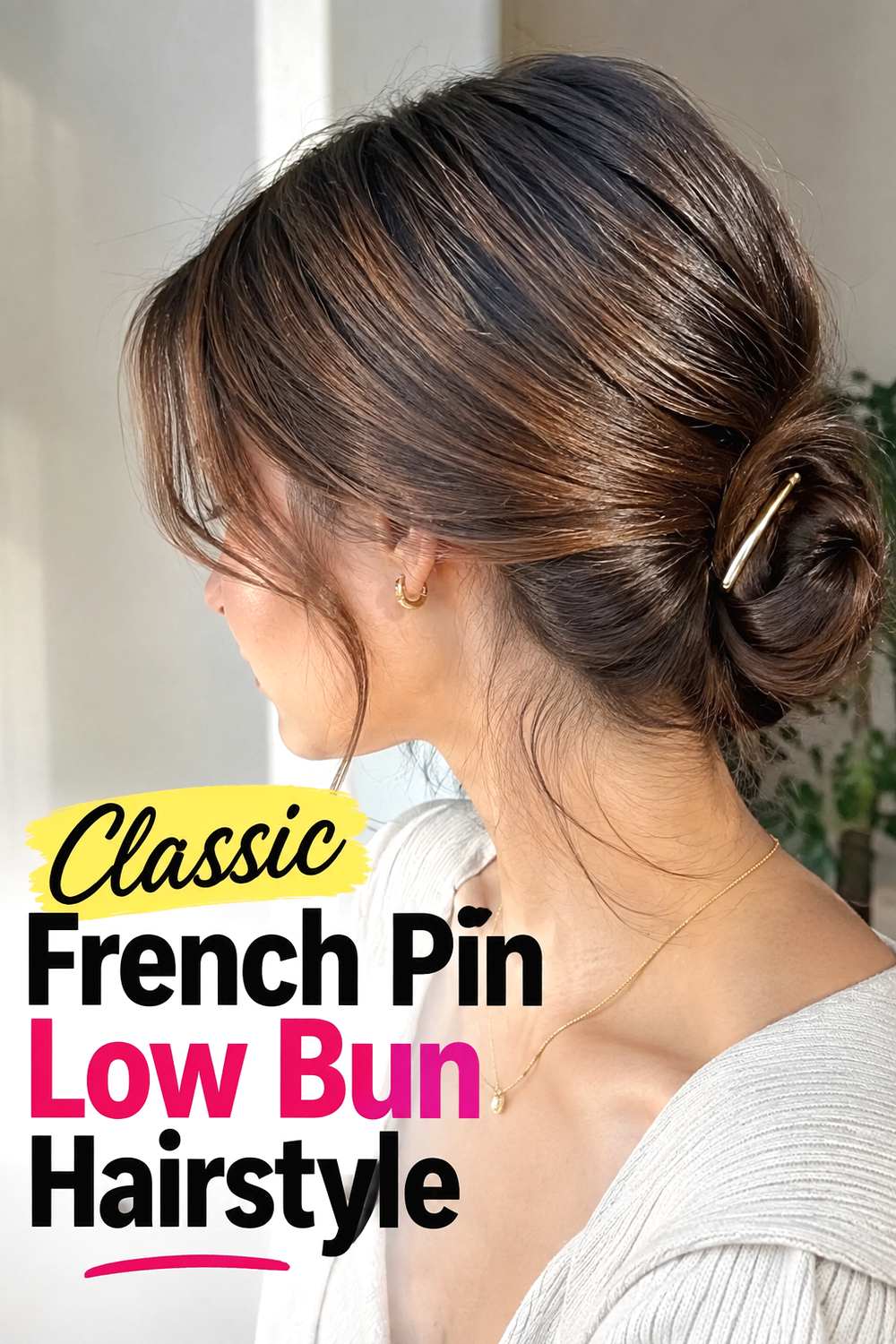
The Classic French Pin Low Bun Hairstyle keeps the silhouette simple, refined, and timeless. Hair is gathered low at the nape, twisted into a compact bun, and secured with a visible French pin that adds a subtle metallic accent. The finish can remain smooth without looking overly rigid, allowing a little natural strand separation to keep the style modern. It is especially appealing for medium to long hair that can wrap comfortably into a secure low shape. This version transitions easily from office clothes to evening outfits, making it one of the most versatile choices in the collection. A small amount of lightweight styling cream can help control flyaways while preserving natural movement.
Styling Notes
Twist the hair firmly enough that the bun holds its shape, then slide the French pin through the outer edge of the bun before catching hair close to the scalp. This helps create a secure anchor instead of simply pushing the pin through the center.
Best For
This classic finish suits anyone who wants a low-maintenance updo that feels polished without appearing formal. It works particularly well with straight, softly wavy, or smoothed hair.
2. Sleek Center Part French Pin Low Bun Hairstyle
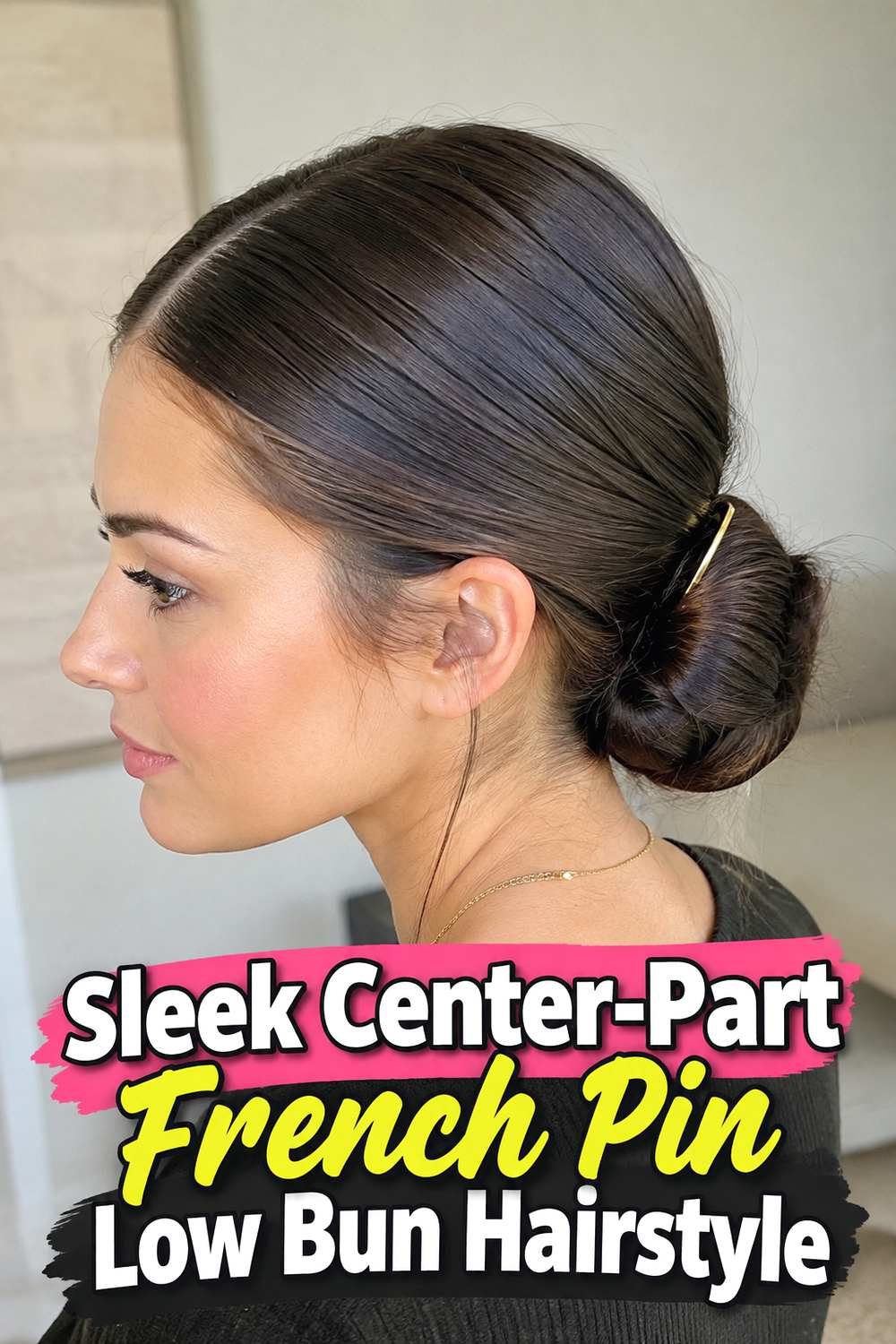
The Sleek Center-Part French Pin Low Bun Hairstyle creates a sharper, more contemporary interpretation of the traditional low bun. A clean middle part keeps the front balanced, while the sides are smoothed close to the head before the lengths are twisted neatly at the nape. The French pin introduces a minimalist decorative detail without disrupting the streamlined finish. This look works beautifully when you want the hair to feel intentional and controlled, especially with tailored outfits, eveningwear, or minimalist accessories. Because every surface is visible, the style looks best when the hair is brushed smoothly and lightly polished. Avoid excessive product, which can flatten the roots or make the finish appear stiff.
Why It Works
The precise part and low placement create strong visual symmetry, while the French pin adds just enough detail to keep the bun from looking overly plain.
Wear & Maintenance
Keep a small brush or comb available for smoothing the hairline. A light mist of flexible-hold spray can control shorter pieces while maintaining a natural-looking surface.
3. Soft Twisted French Pin Low Bun Hairstyle
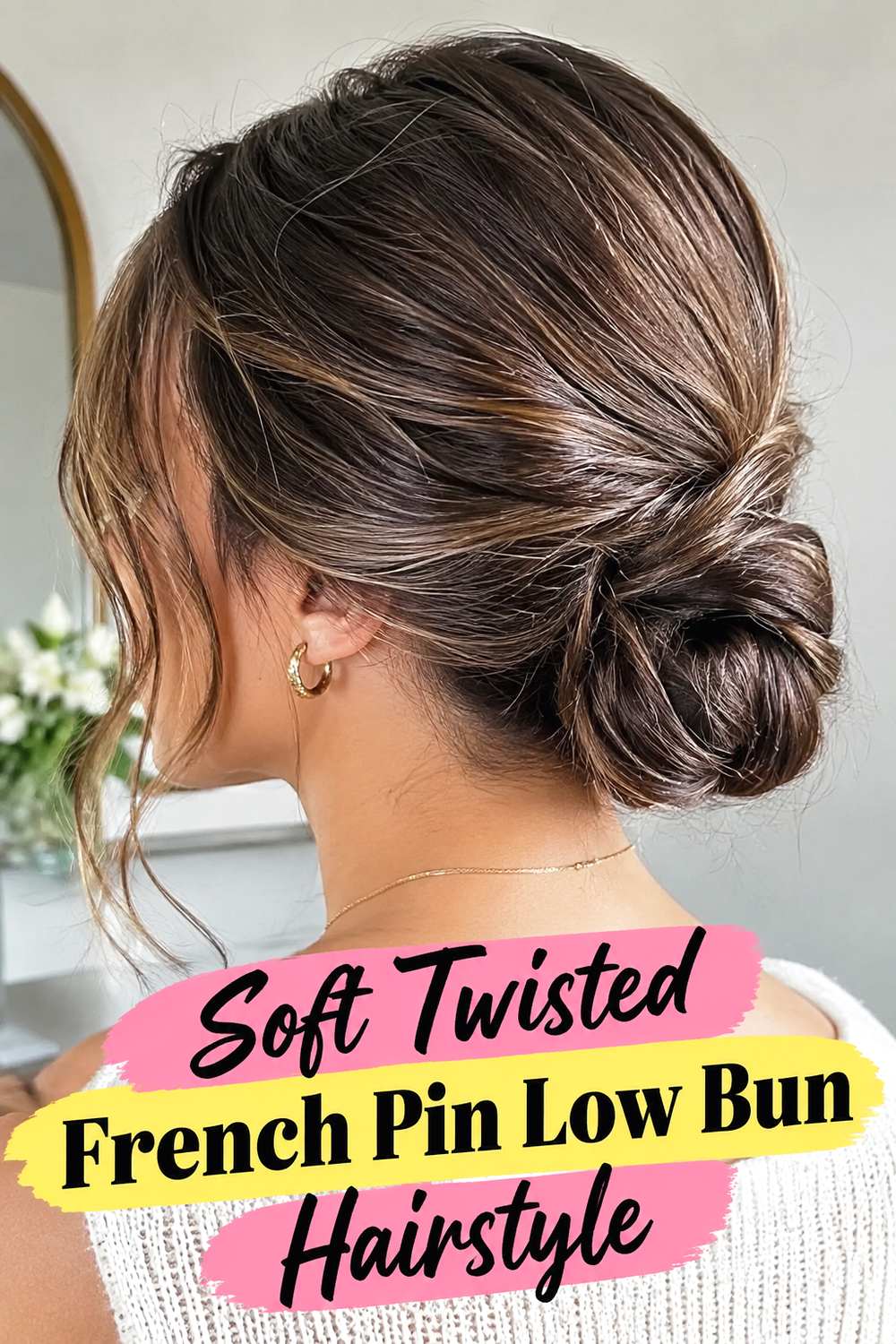
The Soft Twisted French Pin Low Bun Hairstyle uses gentle rotation rather than a tightly wrapped bun, giving the finished updo more dimension. The lengths are loosely twisted toward the nape and folded into a low bun so that subtle ridges and curves remain visible. A French pin secures the shape while becoming part of the decorative finish. This style is especially attractive on hair with natural softness or a slight wave because the texture prevents the twist from looking too severe. A few subtle imperfections can make the style feel more romantic and wearable. Keep the crown softly shaped rather than pulling every section tight, particularly if you want the updo to complement dresses, soft tailoring, or occasionwear.
Hair Type & Length
Medium-long to long hair provides enough length to build the folded twist. Fine hair can benefit from dry texture spray, while thicker hair may need a larger or stronger French pin.
Pro Tip
Build the twist before inserting the pin. Once the silhouette looks balanced, weave the pin through both the outer twist and the hair underneath for better stability.
4. Textured French Pin Low Bun Hairstyle
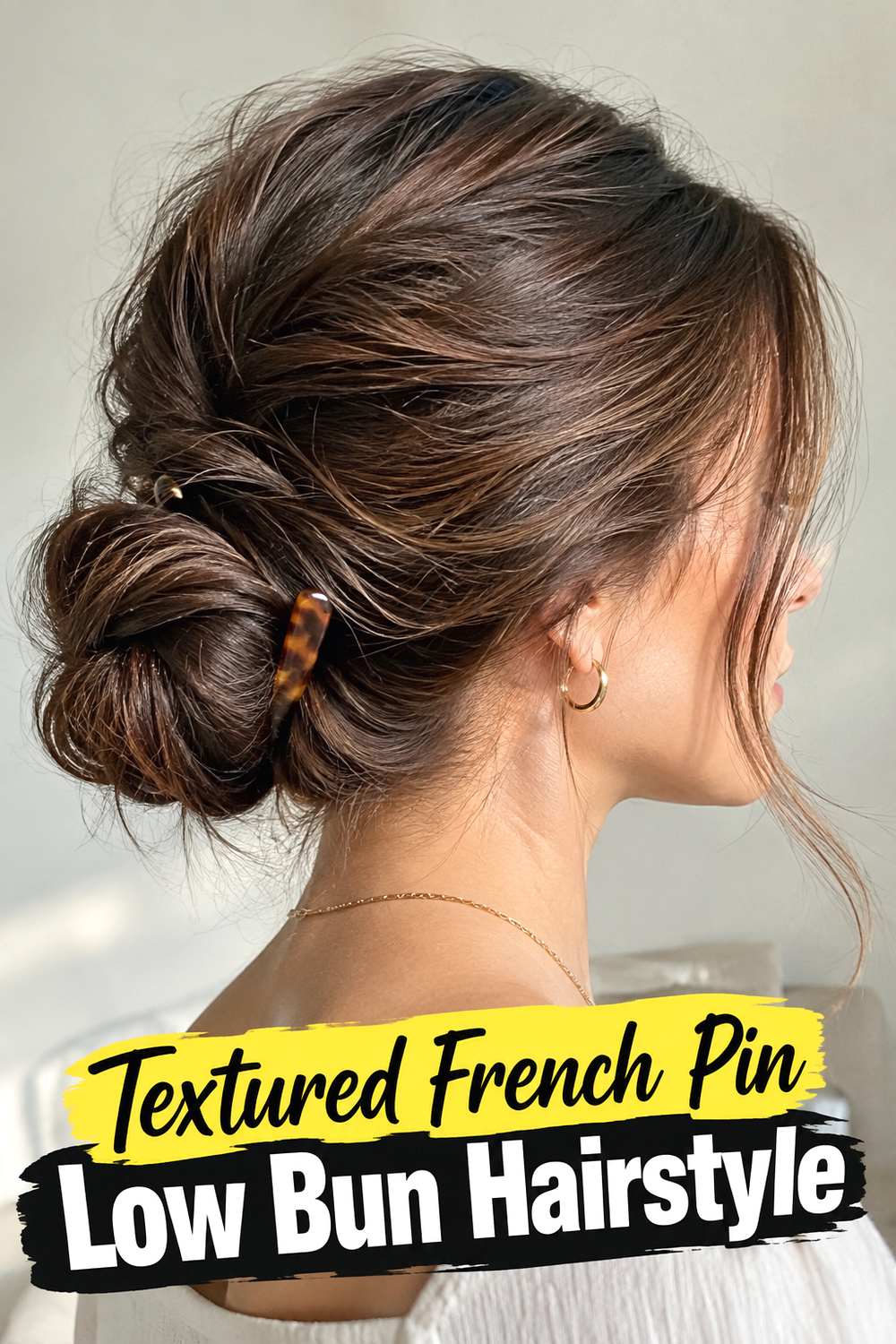
The Textured French Pin Low Bun Hairstyle embraces separation, airy volume, and an intentionally less polished surface. Instead of brushing every strand flat, the hair keeps visible texture through the crown and bun, creating a fuller shape around the nape. The French pin sits naturally within the low bun and contrasts beautifully with the soft, slightly undone finish. This style can be especially useful when freshly washed hair feels too slippery for a traditional bun, since texture products can add grip and definition. It also works well for casual events, brunches, outdoor gatherings, or relaxed evening looks. The goal is controlled texture rather than messiness, so keep the overall silhouette balanced even when individual strands remain loose.
Styling Notes
Use dry texture spray through the mid-lengths before gathering the hair. Gently loosen small sections at the crown after securing the bun instead of creating all the volume beforehand.
Best For
This style is well suited to layered, wavy, or naturally voluminous hair because subtle irregularities contribute to the finished look rather than needing to be hidden.
5. Braided French Pin Low Bun Hairstyle
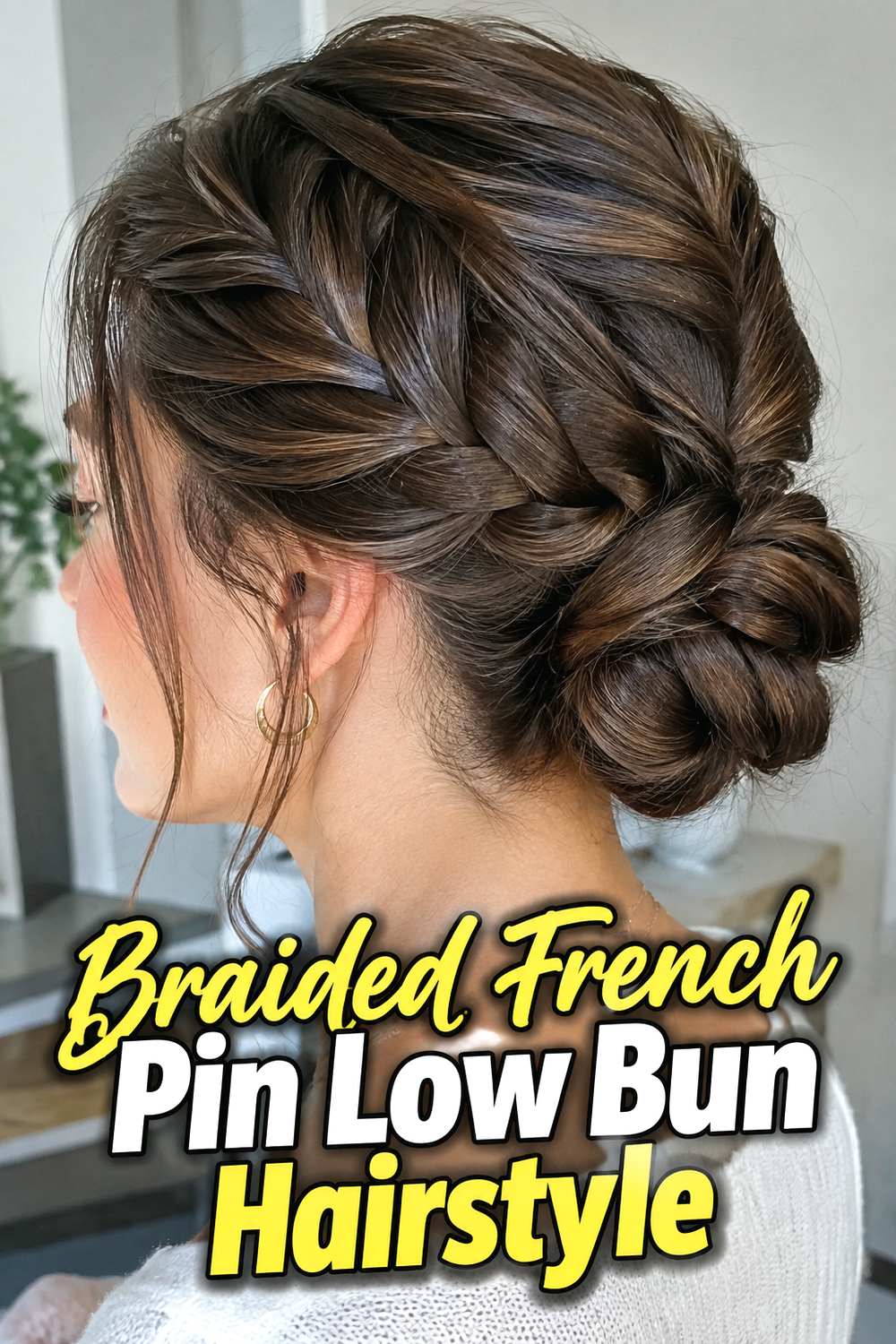
The Braided French Pin Low Bun Hairstyle combines the structure of a braid with the simplicity of a low pinned updo. The hair can first be braided loosely through the lengths, then wrapped or folded at the nape to create a bun with visible woven detail. A French pin slides through the finished shape, helping secure the braid while adding a clean accessory element. This approach gives the bun more visual interest from the back and can make long hair easier to control because the braid keeps the lengths organized. Slightly loosening the braid before wrapping it creates a fuller finish, while keeping it tighter produces a more defined pattern suitable for polished events or formal outfits.
Hair Type & Length
Longer hair works especially well because it gives the braid enough length to wrap into a noticeable bun. Medium-length hair can use a smaller braid and more compact shape.
Pro Tip
Secure the end of the braid with a tiny elastic before wrapping it. Hide the elastic underneath the bun, then position the French pin across the thickest section for support.
6. Side Part French Pin Low Bun Hairstyle
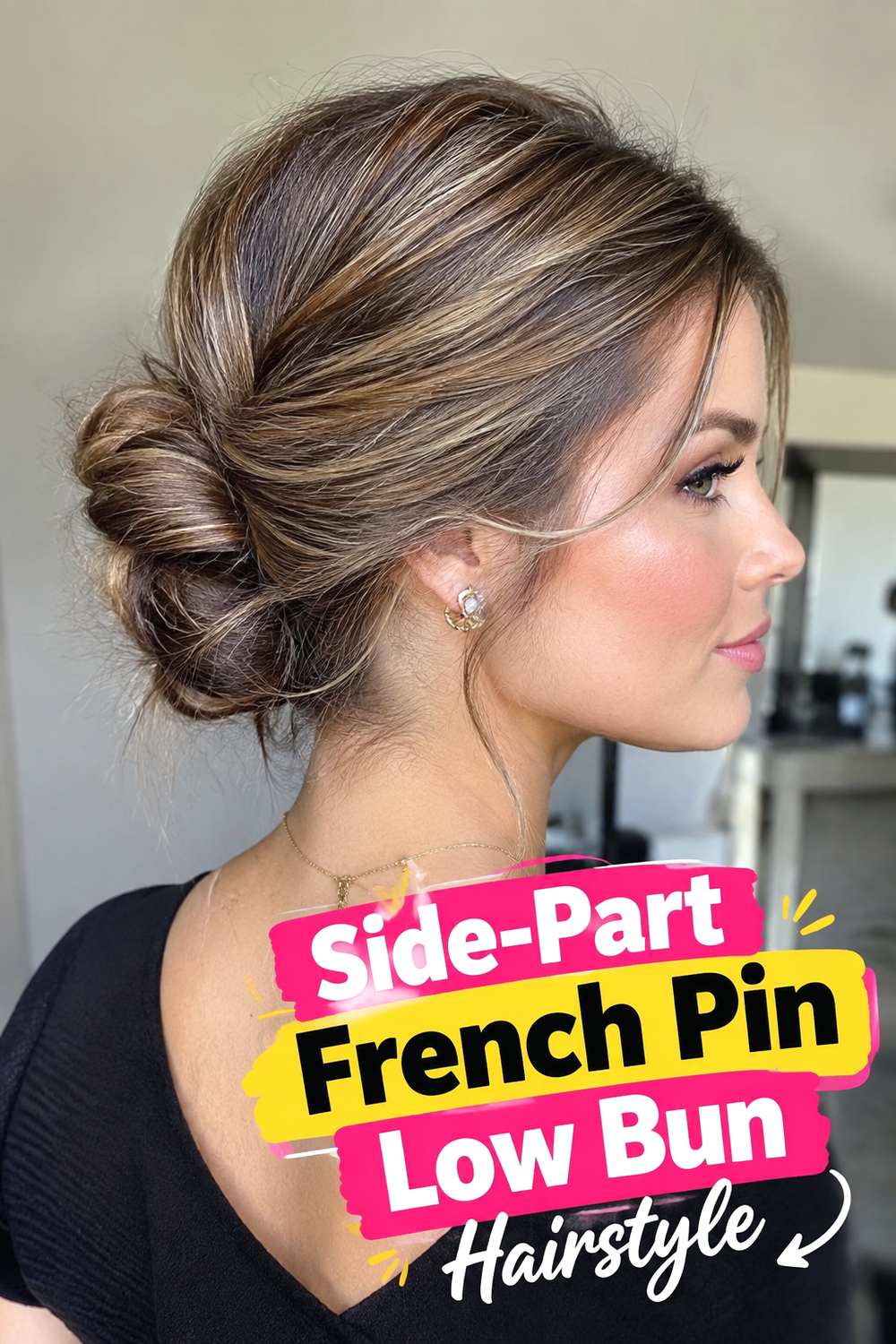
The Side-Part French Pin Low Bun Hairstyle introduces subtle asymmetry around the face while keeping the bun itself low and elegant. A defined side part allows one side to sweep smoothly toward the nape, creating a softer profile than a centered style. The lengths are gathered and twisted into a low bun before being secured with a French pin. This version can look especially flattering when paired with side-swept layers or a slightly lifted front section. It works equally well with a refined smooth finish or a touch of natural texture through the lengths. Keep the part clean but avoid pulling the sides too tightly if you want the hairstyle to retain softness and comfortable movement.
Why It Works
The diagonal direction of the side part adds visual interest before the eye reaches the bun, helping a simple pinned style feel more intentionally designed.
Styling Notes
Direct the heavier side of the part smoothly toward the bun. If shorter front pieces resist staying in place, use a small amount of styling cream rather than saturating them with hairspray.
7. Wavy French Pin Low Bun Hairstyle
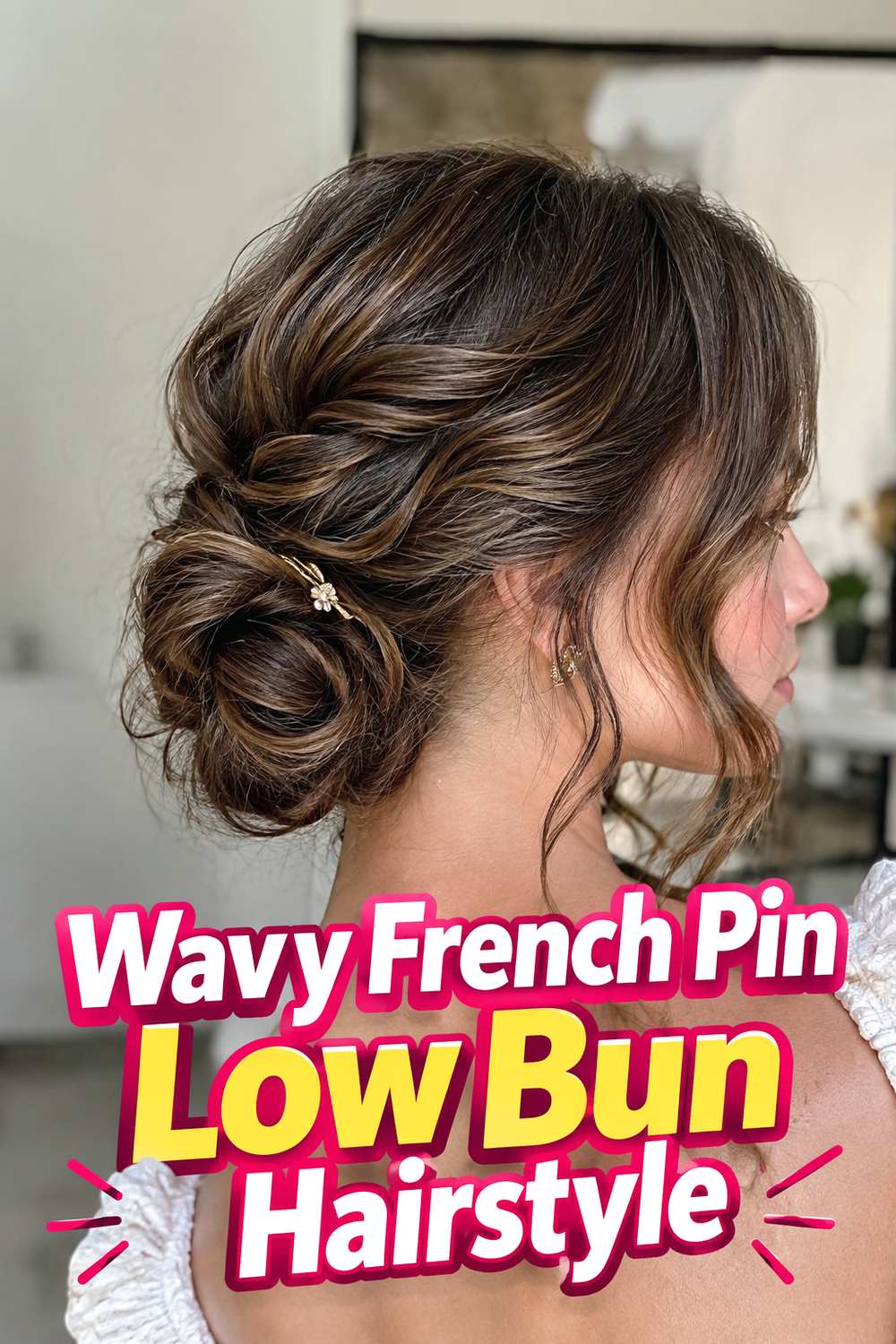
The Wavy French Pin Low Bun Hairstyle lets soft bends remain visible throughout the updo instead of smoothing them away. Loose waves give the crown natural dimension and create attractive curves as the hair gathers into the low bun. Rather than twisting the lengths extremely tightly, shape them gently so the wave pattern continues through the finished style. A French pin secures the bun while leaving the texture as the main visual feature. This option works particularly well when hair has been styled in loose waves the previous day or naturally dries with movement. It can feel romantic enough for an event yet relaxed enough for everyday wear, especially when a few delicate strands are left around the hairline.
Wear & Maintenance
Flexible-hold products are preferable to firm gels because the style depends on keeping visible movement. If the waves begin to soften during the day, the bun usually continues to look intentionally textured.
Best For
Naturally wavy hair and medium-density hair can create this look with minimal preparation, while straight hair can be loosely waved before styling for added shape.
8. Curly French Pin Low Bun Hairstyle
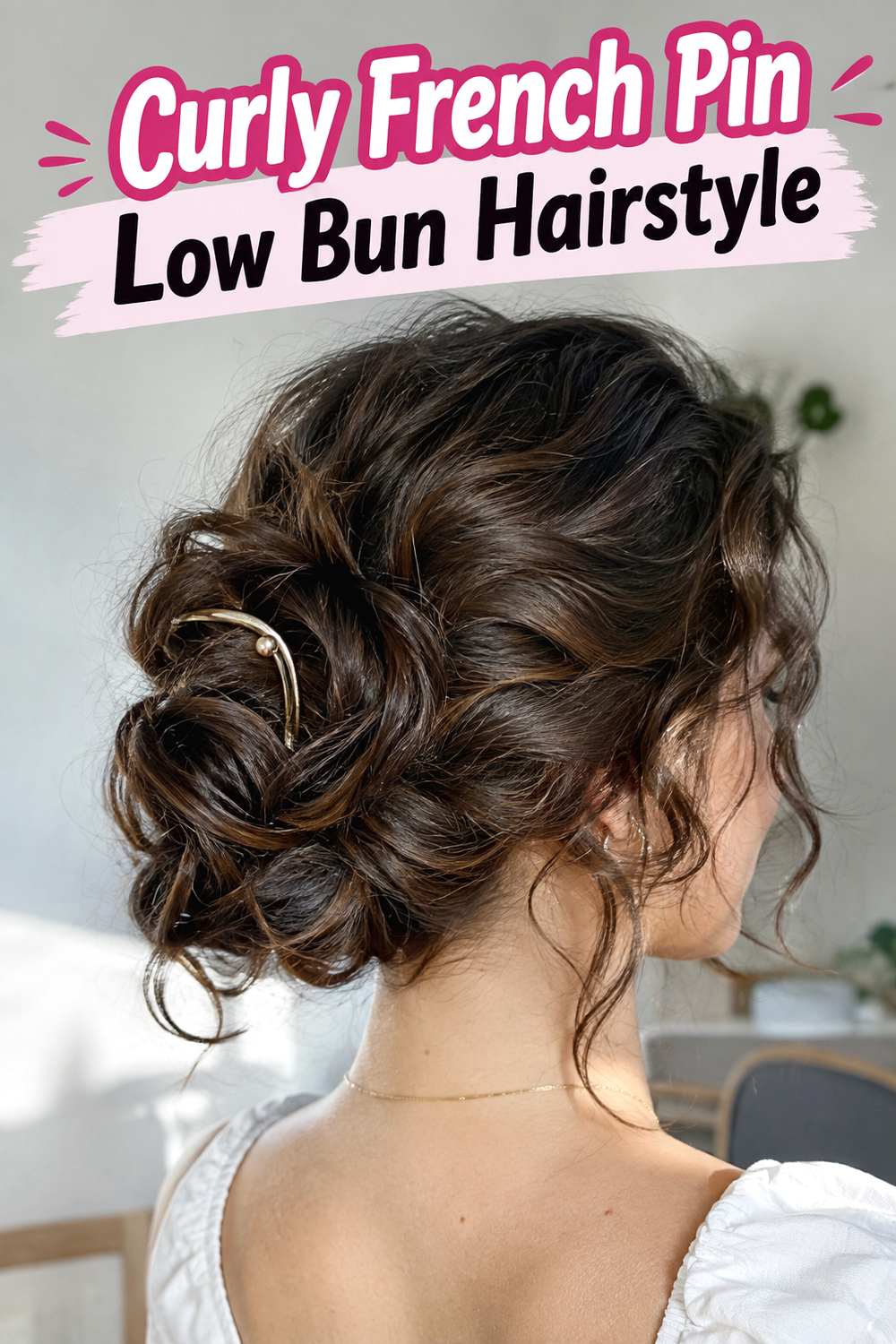
The Curly French Pin Low Bun Hairstyle highlights natural curl definition while gathering the overall shape neatly at the nape. Instead of brushing curls flat, the hair is guided backward with minimal disturbance so the crown retains texture and dimension. The curls can then be folded or loosely twisted into a rounded low bun, with the French pin securing the structure without hiding the curl pattern. This approach gives the updo softness from every angle and works beautifully when you want an elegant style that still looks true to naturally curly hair. Leave the hairline as smooth or textured as you prefer, and avoid excessive manipulation once the curls are arranged so they maintain their individual shape.
Hair Type & Length
Medium to long curly hair offers enough length for folding while still showing the natural pattern. Denser curls may require a larger pin or a few discreet supporting pins underneath.
Pro Tip
Style the curls before forming the bun and handle them gently during assembly. Working with established curl clumps helps preserve definition rather than creating unnecessary frizz.
9. Rope Twist French Pin Low Bun Hairstyle
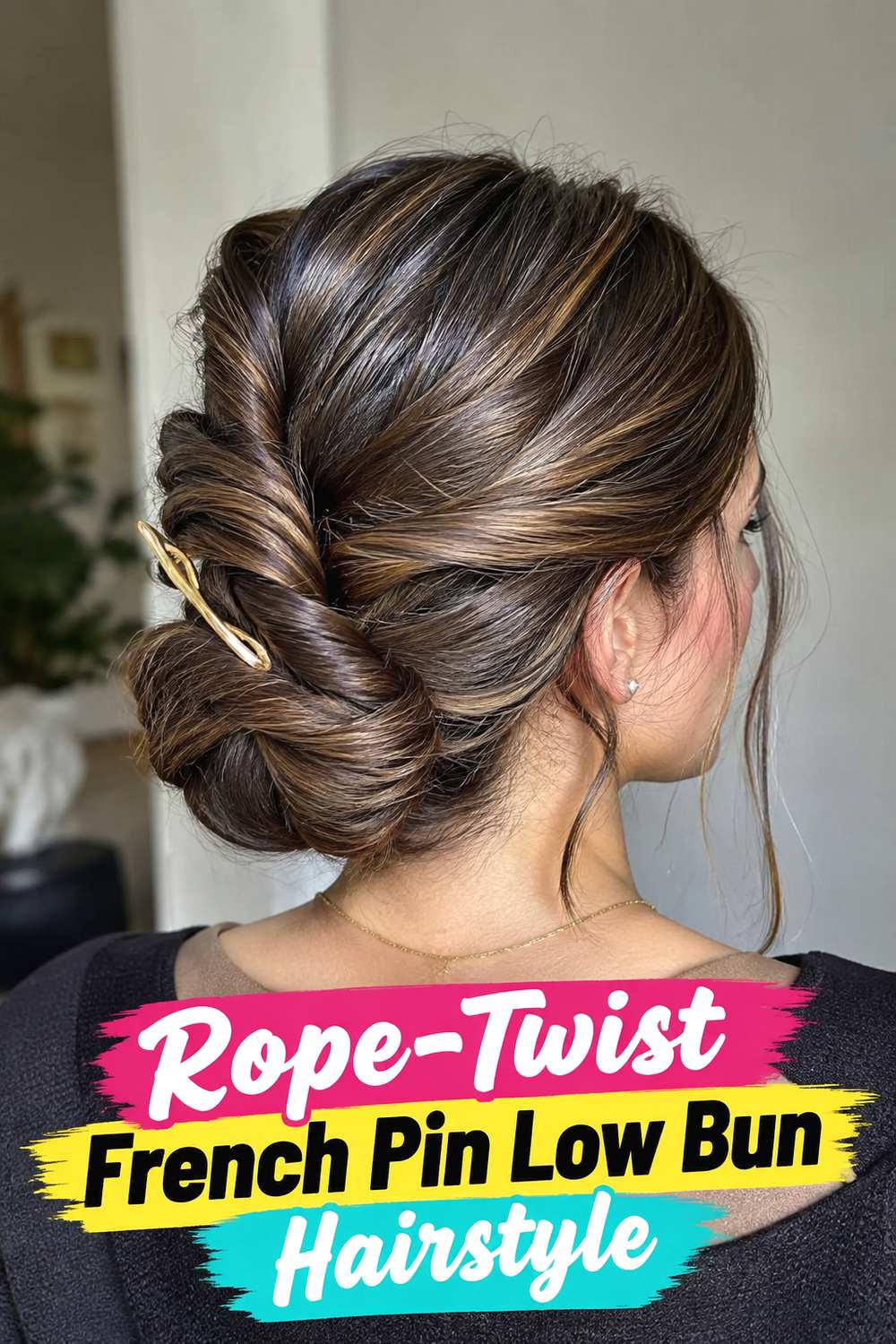
The Rope-Twist French Pin Low Bun Hairstyle creates a distinctive spiral effect through the bun. The ponytail is divided into two sections, each section is twisted, and the pieces are wrapped around one another before being shaped at the nape. This gives the finished bun visible ridges and a more architectural appearance than a basic coil. A French pin can then be inserted across the wrapped sections to reinforce the shape. The result feels polished while still showing obvious texture and craftsmanship. It works particularly well for medium to long hair with enough length to create a clear rope pattern. Keep the initial twists consistent so the finished bun looks intentional rather than uneven.
Styling Notes
Twist both sections in the same direction, then wrap them together in the opposite direction. This tension helps the rope hold its pattern before it is shaped into the bun.
Wear & Maintenance
Because the rope structure naturally creates grip, the style can feel secure without excessive product. Check that the ends are tucked fully beneath the bun before inserting the French pin.
10. Loop Knot French Pin Low Bun Hairstyle
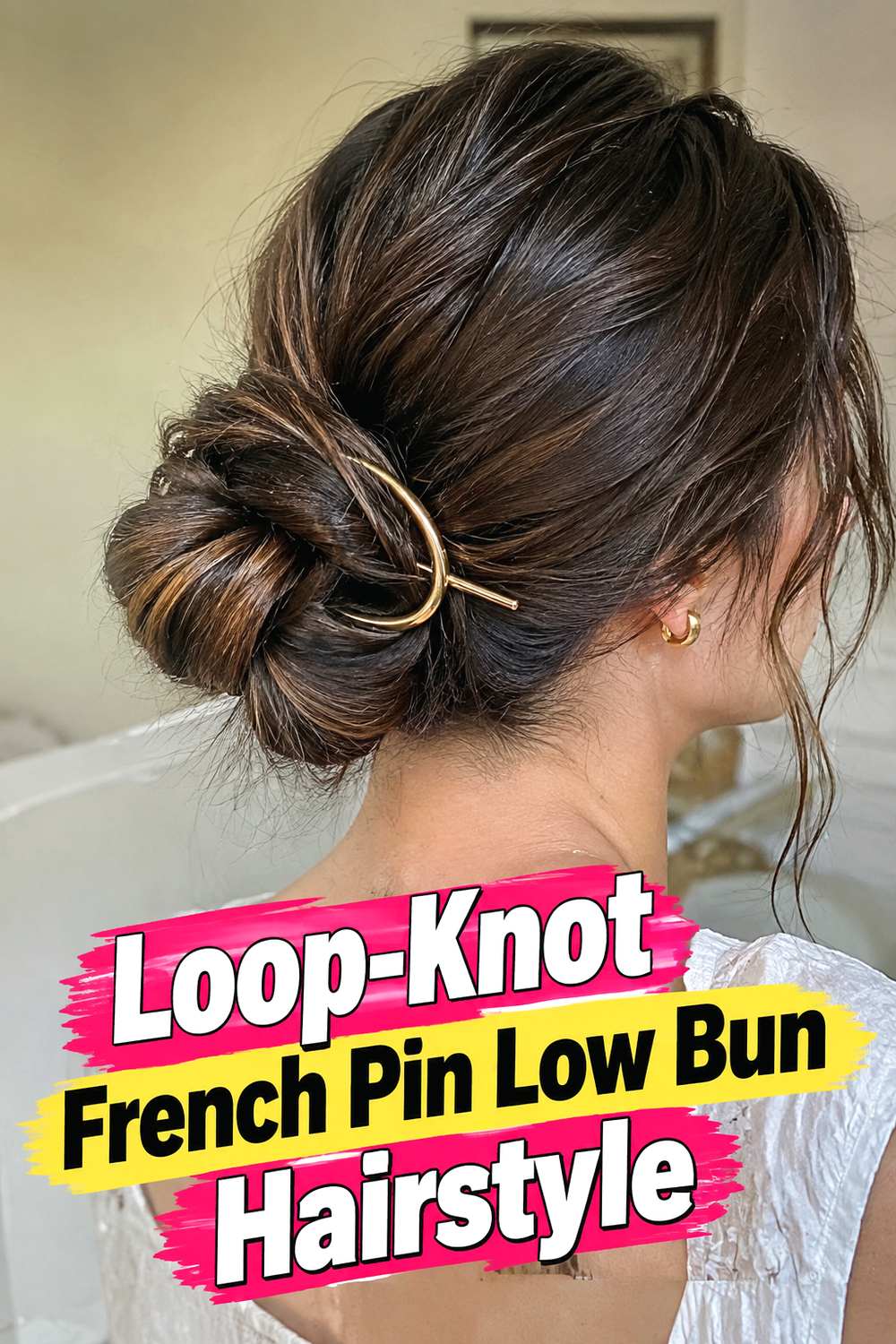
The Loop-Knot French Pin Low Bun Hairstyle replaces the familiar round bun with a folded, looped shape at the nape. Hair is pulled back low, partially folded into itself, and arranged so the center of the loop remains visible. The French pin passes through the overlapping sections to hold the knot securely while emphasizing its sculptural silhouette. This option feels modern and slightly unconventional without becoming difficult to wear. Straight or softly textured hair shows the loop especially clearly because the edges remain defined. The shape also pairs well with simple outfits and statement earrings, since the back of the hairstyle offers enough detail without additional accessories. Keep the loop compact for a sophisticated finish or slightly wider for more visual impact.
Best For
Medium to long hair with relatively even lengths is easiest to fold into a clean loop. Heavily layered ends may require discreet pins to keep shorter pieces tucked away.
Why It Works
The open loop creates negative space and a recognizable shape, giving a minimal French pin updo a stronger design element without requiring braids or complex sectioning.
11. Face Framing French Pin Low Bun Hairstyle
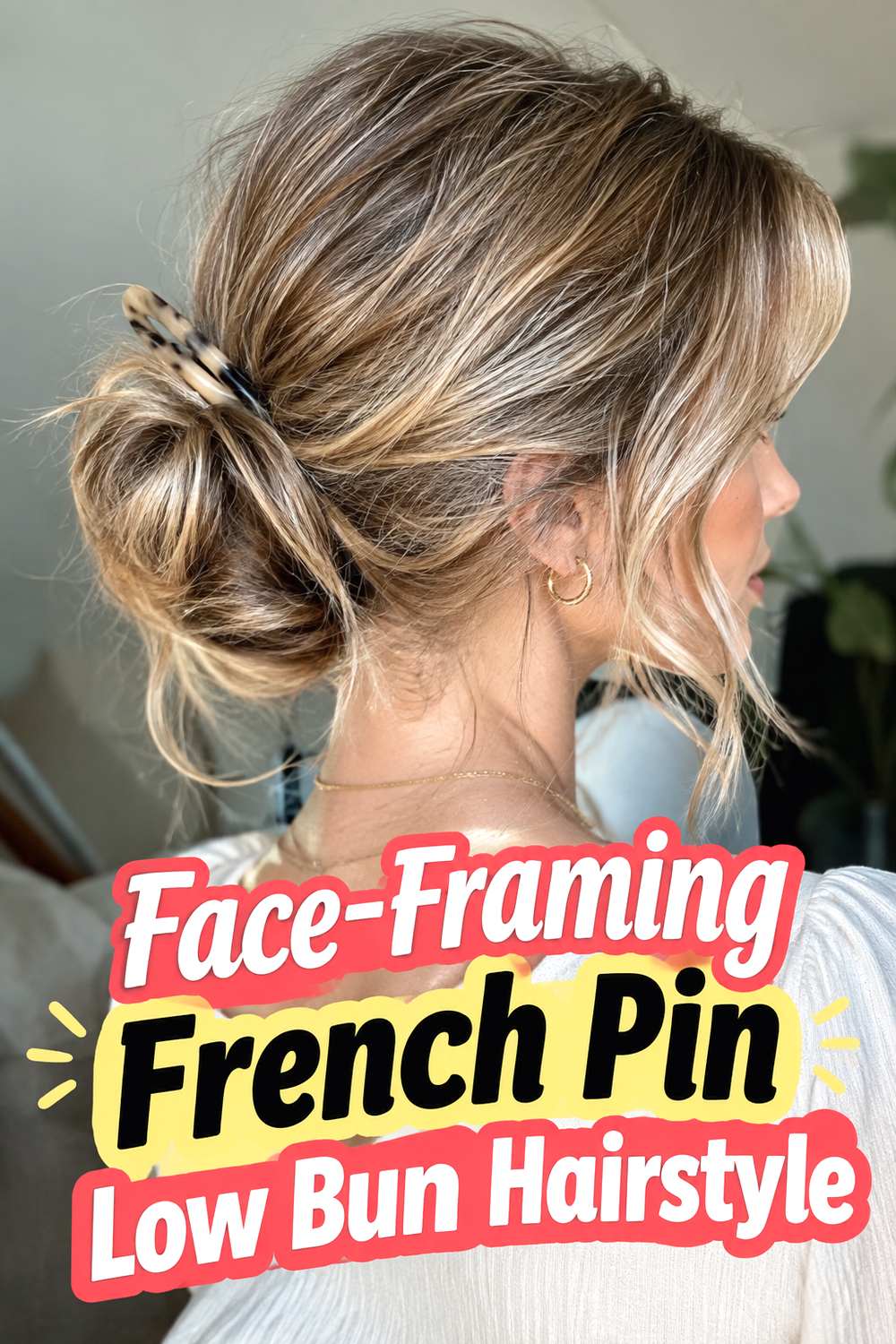
The Face-Framing French Pin Low Bun Hairstyle balances a secure low updo with a softer front. Instead of smoothing every section backward, a few intentional pieces are left loose around the temples or cheekbones while the remaining hair is twisted into a bun at the nape. The French pin keeps the back structured, while the front pieces create movement and reduce the formality of the overall style. This variation works especially well with curtain bangs, long layers, or naturally shorter sections near the face. The loose pieces should look deliberate rather than randomly pulled out, so begin with a small amount of hair and release more only if the finished bun feels too polished.
Styling Notes
Shape the face-framing strands with a gentle bend rather than a tight curl. This helps them blend naturally with the understated character of the low bun.
Best For
This version is a useful choice for dinners, weddings, date nights, and other occasions where you want an updo that feels elegant but not severe.
12. Polished French Pin Chignon Hairstyle
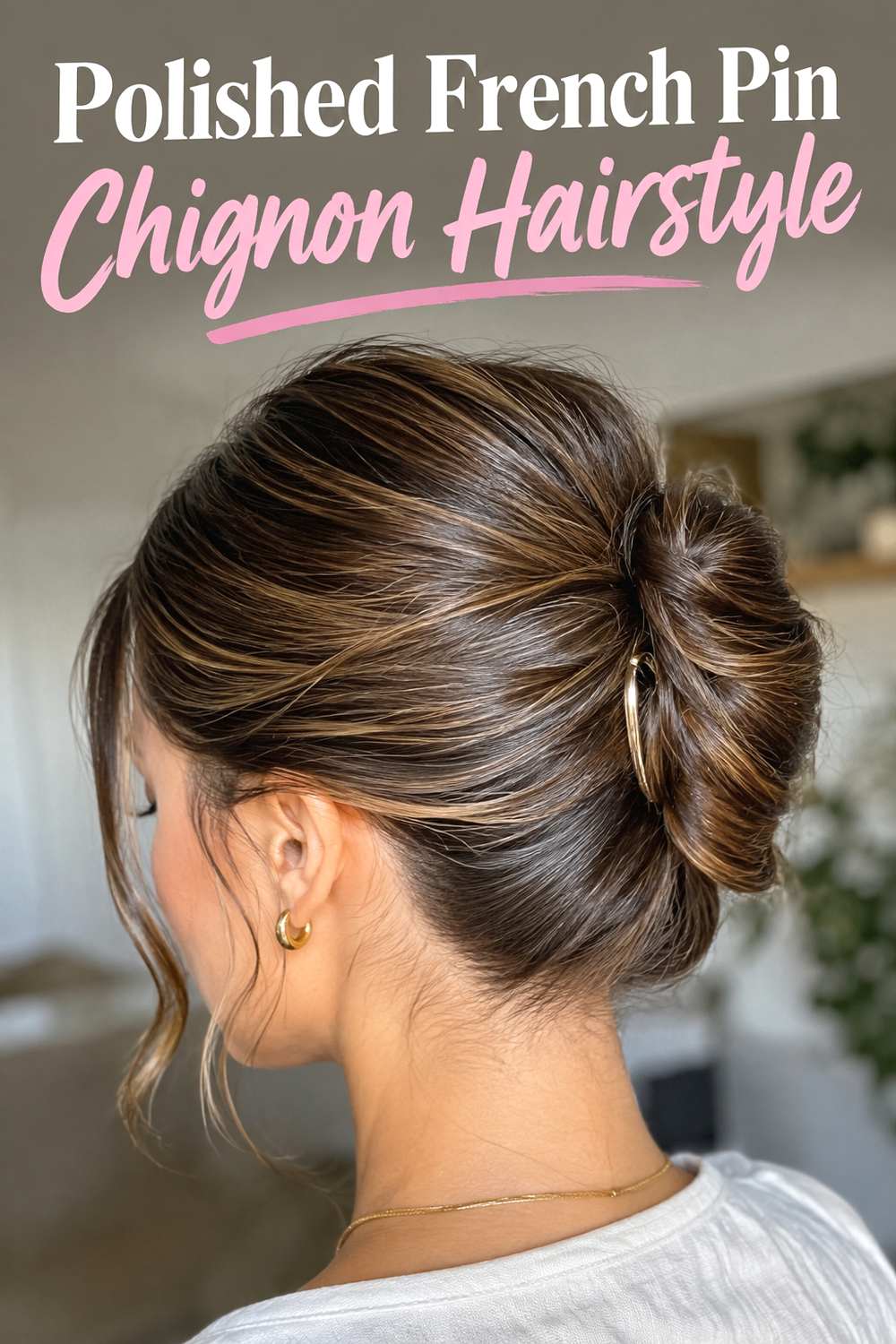
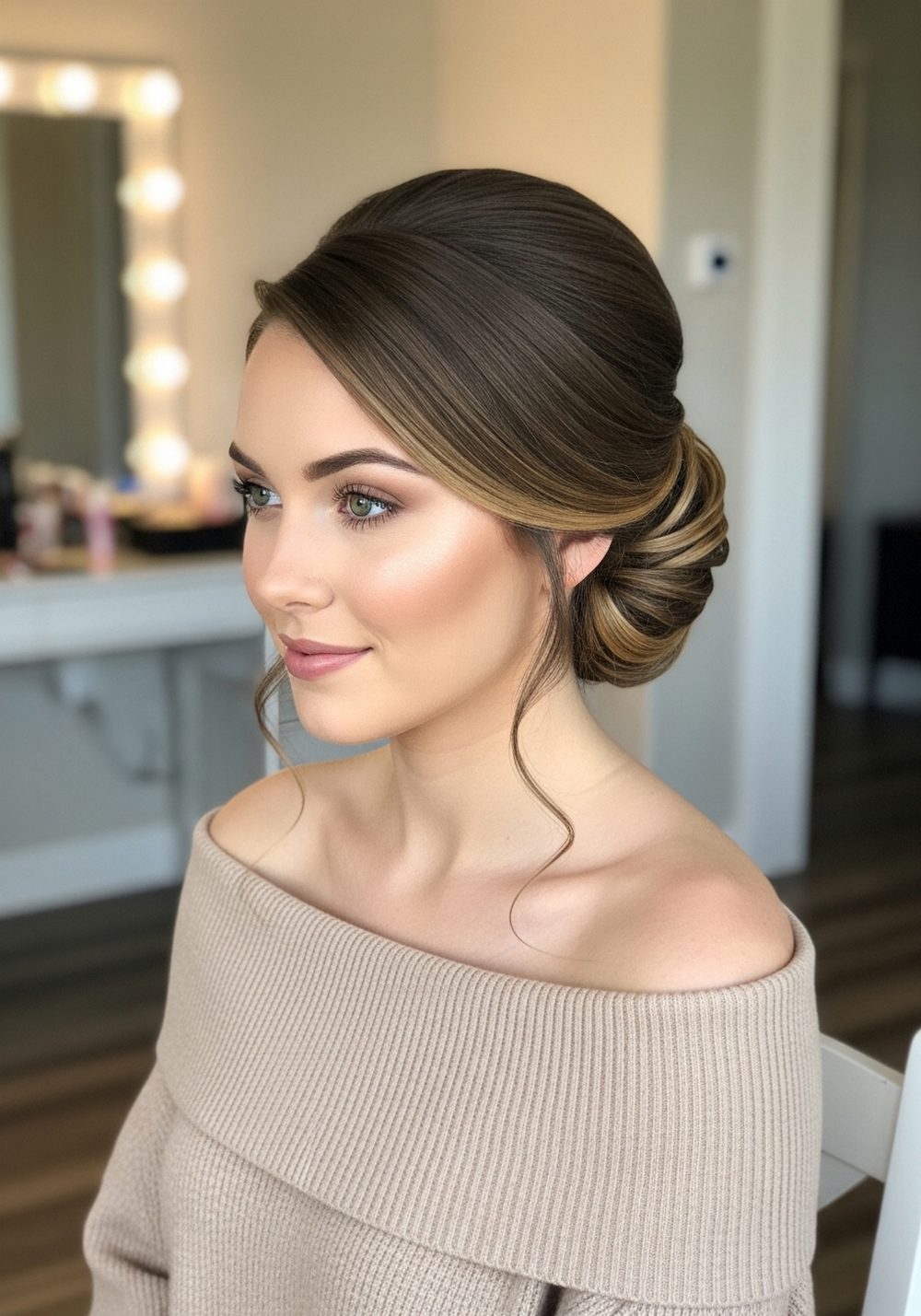
The Polished French Pin Chignon Hairstyle offers one of the most refined interpretations of the low pinned bun. Hair is smoothed toward the nape and arranged into a carefully tucked chignon with clean edges and controlled volume. The French pin is positioned as a deliberate finishing detail, often sitting diagonally or horizontally across the folded section. Unlike a tightly coiled bun, the chignon can have a broader, slightly elongated silhouette that feels classic and sophisticated. This style pairs beautifully with formal dresses, professional outfits, minimalist jewelry, and occasions where a neat finish matters. Preparing the hair with smoothing cream and careful brushing helps maintain the polished surface while still allowing realistic shine and natural strand detail.
Wear & Maintenance
Use firm but flexible support at the base so the chignon does not loosen as you move. Extra hidden pins can reinforce heavy hair while allowing the French pin to remain the visible focal accessory.
Why It Works
The clean folded shape makes the hairstyle appear sophisticated without relying on decorative elements. The French pin provides a simple accent that complements rather than competes with the chignon.
13. Relaxed French Pin Low Bun Hairstyle
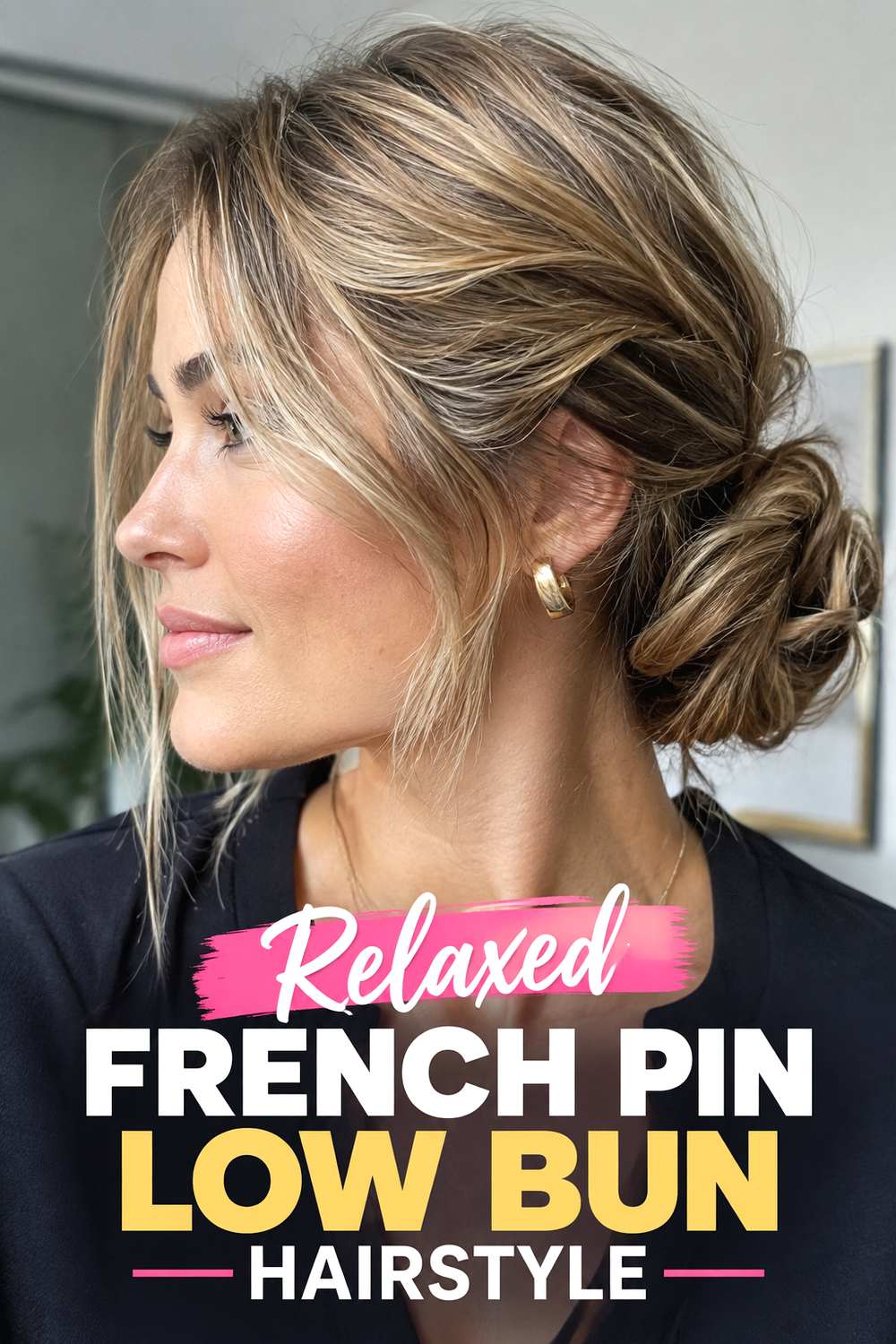
The Relaxed French Pin Low Bun Hairstyle is designed to look easy, soft, and slightly undone while remaining intentionally styled. The hair is gathered without excessive brushing, twisted loosely at the nape, and secured so the bun retains a natural, irregular shape. A few flyaways, subtle crown volume, or softly escaping ends can enhance the casual finish. The French pin gives the hairstyle just enough structure and visual polish to keep it from feeling unfinished. This version is particularly appealing for everyday outfits, casual dinners, travel days, or second-day hair. Instead of repeatedly adjusting the bun until every strand is perfect, focus on achieving a balanced silhouette and a comfortable hold that can soften naturally throughout the day.
Pro Tip
Start with less tension than you think you need. Once the French pin is secure, gently adjust the bun and crown with your fingertips rather than pulling sections out aggressively.
Hair Type & Length
Medium to long hair works well, especially when it already has some grip or natural texture. Very silky hair may benefit from a small amount of dry texture spray before styling.
How to Choose the Right Look
Start with your natural texture and the amount of styling time you want to spend. Straight or freshly smoothed hair is especially suited to the Sleek Center-Part French Pin Low Bun Hairstyle, Classic French Pin Low Bun Hairstyle, or Polished French Pin Chignon Hairstyle. Waves and curls can remain part of the design with the Wavy or Curly French Pin Low Bun Hairstyles instead of being flattened first.
Length matters as well. Medium hair usually works best with compact buns, twists, and loops, while long hair gives you more freedom for braids, rope twists, and fuller wrapped shapes. Thick hair may need a stronger French pin plus discreet backup pins, whereas fine hair often benefits from texture spray for additional grip.
For everyday wear, consider comfort and maintenance. Relaxed, textured, and face-framing options are more forgiving when a few strands move during the day. Sleeker versions generally require cleaner parting and occasional smoothing.
Also think about the finish you want. A polished bun pairs naturally with tailored or formal outfits, while textured and softly twisted looks create a more romantic or casual effect. The best option is the one that works with your existing texture and stays comfortably secure rather than requiring constant adjustment.
Final Thoughts
French pin low buns can range from sharply polished to beautifully undone, which makes the style surprisingly adaptable. If you prefer clean lines, begin with a classic, sleek, or chignon-inspired version. For more softness, explore waves, curls, texture, twists, or face-framing pieces.
Whichever variation you choose, make sure the bun connects naturally at the nape and that the French pin catches both the styled section and secure hair underneath. Small adjustments to texture, volume, and tension can make the same basic technique feel completely different.
FAQ 1: What hair length works best for a French pin low bun?
Medium to long hair is generally easiest because there is enough length to twist, fold, or wrap into a stable bun. Some medium-length styles can still work well when the bun is kept compact.
FAQ 2: Can a French pin hold thick hair?
It can, but thick or very dense hair may need a longer, stronger pin and possibly a few hidden pins for additional support. Dividing the hair into twists or folds can also make the weight easier to manage.
FAQ 3: How do I keep a French pin low bun from slipping?
Insert the pin through part of the bun first, then turn or angle it so it catches hair close to the scalp before sliding it through the remaining bun. Texture spray can also improve grip on very smooth hair.
FAQ 4: Can I wear a French pin bun with curly or wavy hair?
Yes. Curly and wavy textures can create beautiful volume and visible movement in a low bun. You do not need to straighten the hair first unless you specifically want a sleek finish.
FAQ 5: Are French pin low buns suitable for formal events?
They can be. A smooth chignon, sleek center-part bun, braided bun, or controlled twisted version can create a refined finish for weddings, dinners, professional events, and other dressed-up occasions.
Save your favorite French pin low bun hairstyles for your next styling day, and explore more updo inspiration to find the finish that suits your hair best.