15 Soft Shag Layers for Straight Hair
Soft shag layers give straight hair movement and personality without requiring the extreme choppiness or dramatic volume of a traditional shag haircut.
Straight hair makes every layer easy to see, so a softer shag depends on careful placement rather than simply adding lots of short pieces. Long face-framing sections, lightly feathered ends, subtle crown layers, and airy bangs can create texture while allowing the hair to keep a polished, touchable finish.
The right version depends largely on density and styling effort. Fine straight hair usually benefits from fewer layers and a stronger perimeter, while thick straight hair can support more internal shaping. You can also adjust the look through bangs, part placement, flipped ends, or a rounded blowout while keeping the underlying haircut wearable and realistic.
Quick List
- Soft Face Framing Shag Layers Hairstyle
- Long Airy Shag Layers Hairstyle
- Collarbone Soft Shag Hairstyle
- Soft Shag With Wispy Bangs Hairstyle
- Curtain Bang Soft Shag Hairstyle
- Fine Hair Soft Shag Layers Hairstyle
- Thick Hair Soft Shag Layers Hairstyle
- Center Parted Straight Shag Hairstyle
- Side Parted Soft Shag Hairstyle
- Blunt End Soft Shag Hairstyle
- Feathered Soft Shag Layers Hairstyle
- Minimal Soft Shag Hairstyle
- Rounded Blowout Soft Shag Hairstyle
- Flipped End Soft Shag Hairstyle
- Low Maintenance Straight Shag Hairstyle
1. Soft Face Framing Shag Layers Hairstyle
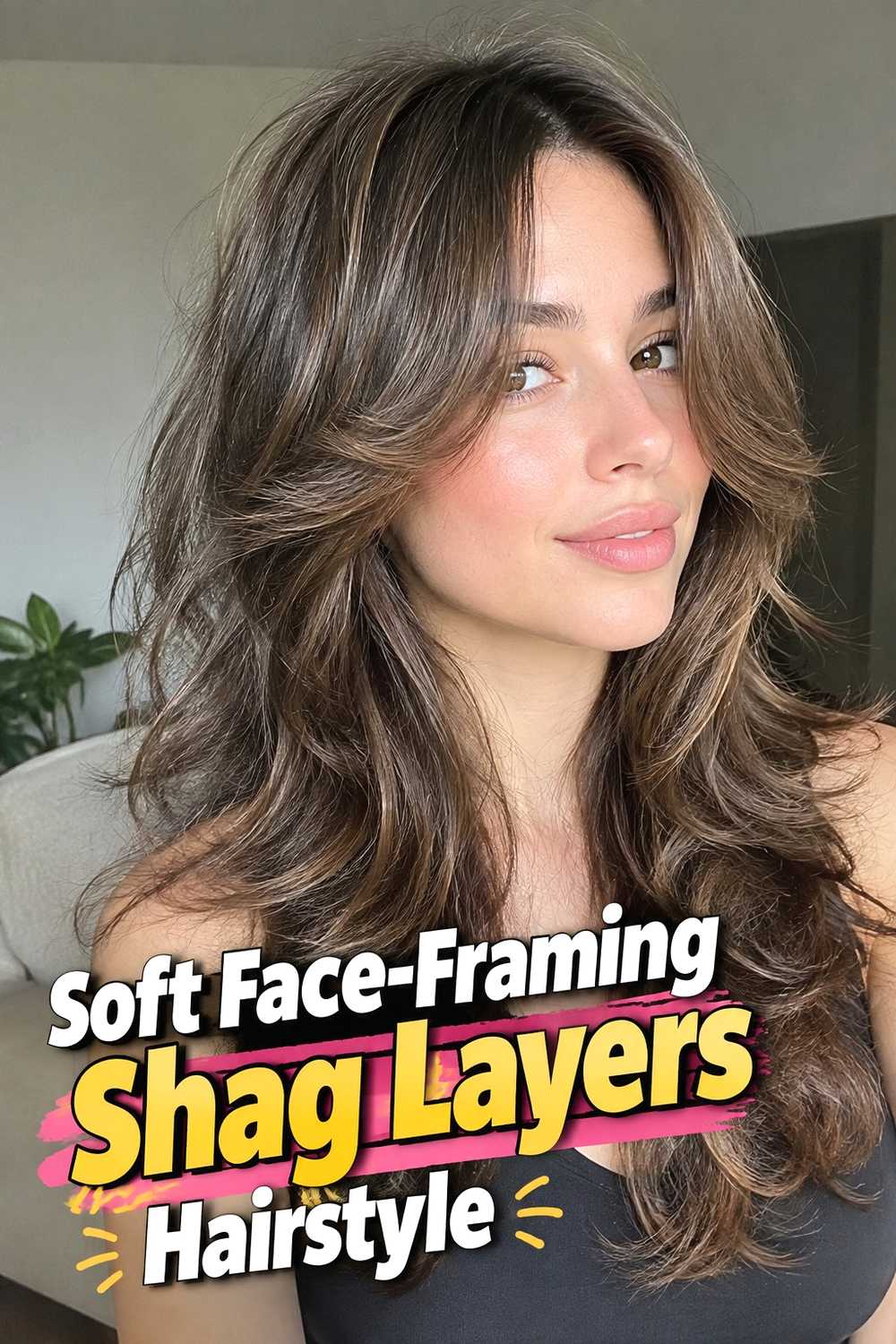
This softer shag keeps most of the haircut smooth while concentrating its texture around the face. The shortest layers can begin near the cheekbones or jaw, then transition gradually through the shoulders and longer lengths. Straight hair makes these differences easy to see, so the sections should feel blended rather than abruptly stepped. A little movement through the ends prevents the cut from looking flat, while the longer back maintains fullness and versatility. This version is especially useful if you like the relaxed personality of a shag but do not want short crown layers or a heavily textured perimeter. Styled sleek or with gentle bends, the front sections provide most of the visual interest.
Styling Notes
Blow-dry the face-framing pieces away from the cheeks with a round brush, then leave the rest of the hair comparatively smooth.
Best For
Medium-density straight hair suits this balanced version especially well because the front can be layered without significantly reducing fullness elsewhere.
2. Long Airy Shag Layers Hairstyle
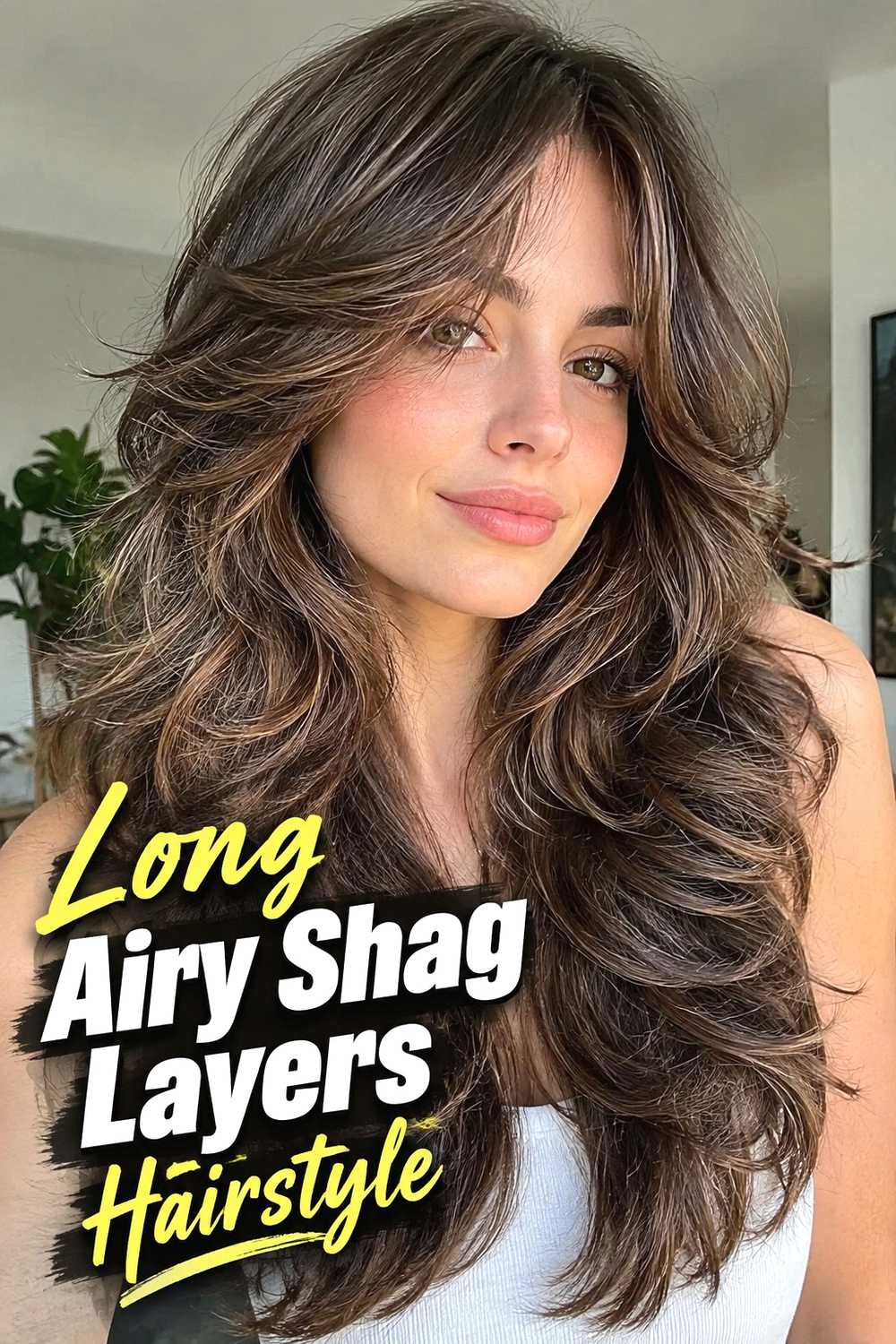
A long airy shag introduces movement throughout straight hair while preserving plenty of overall length. The crown layers remain relatively long, preventing excessive height, while shorter sections through the front and upper sides create light separation. The longest pieces can extend well below the shoulders, giving the haircut a flowing foundation that balances the layered texture above. Straight strands reveal every change in length, so gradual transitions are especially important for keeping the cut soft. A loose blowout can enhance the layered shape, but the haircut should still fall naturally when worn straight. This option offers a relaxed, modern feel without sacrificing the versatility that makes longer hair practical for everyday styling.
Hair Type & Length
Long, medium-to-thick straight hair can support this shape particularly well because there is enough density to maintain a substantial perimeter beneath the layers.
Pro Tip
Keep the shortest crown sections longer than you would in a traditional shag if you want movement without dramatic height or separation.
3. Collarbone Soft Shag Hairstyle
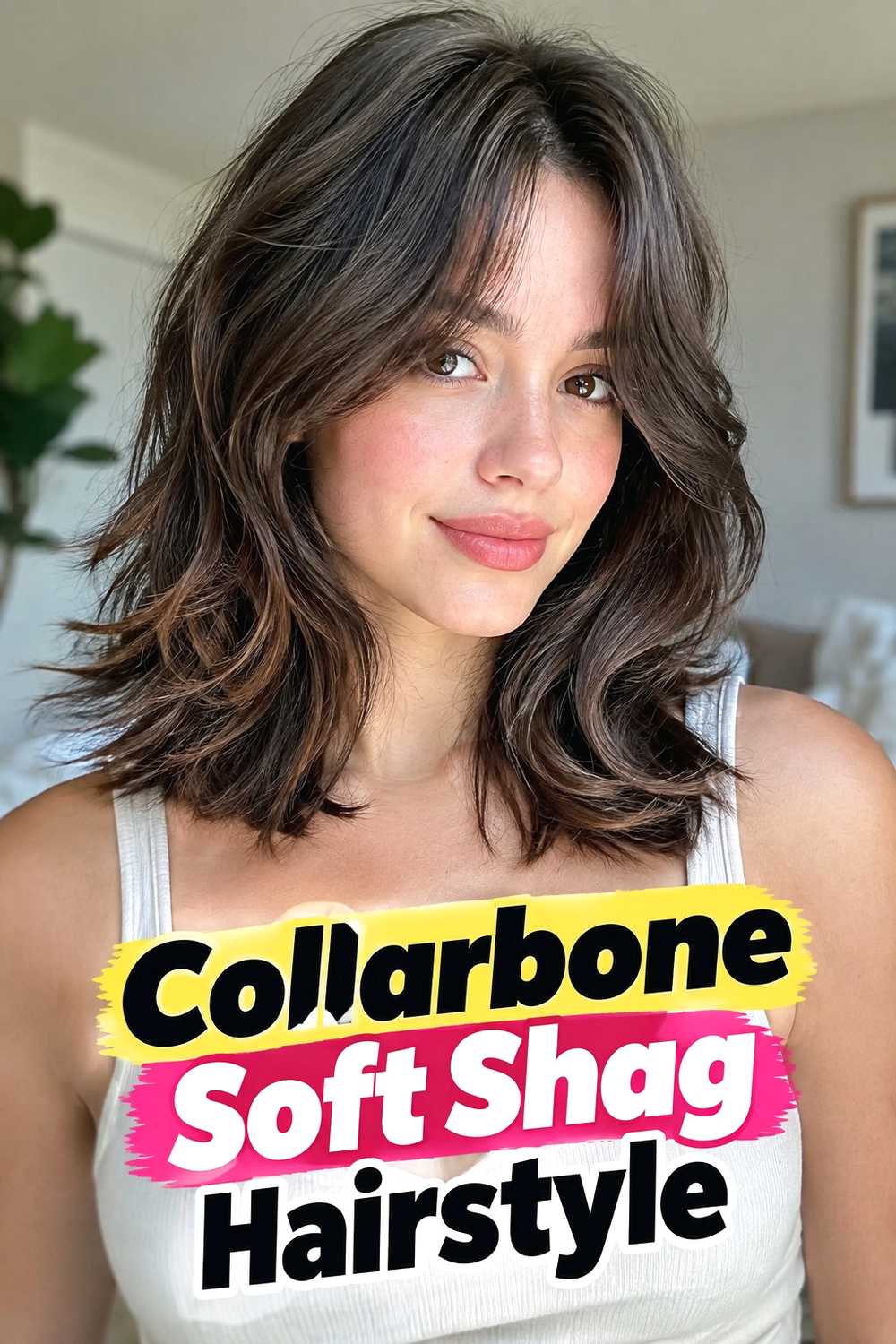
At collarbone length, soft shag layers can add movement without making the haircut appear overly chopped. The perimeter remains substantial, while subtle crown and face-framing sections create a lighter silhouette around the cheeks, jaw, and shoulders. Because straight hair naturally falls close to the head, even modest layering can make a noticeable difference. A few shorter pieces near the front can prevent the haircut from looking blocky, while longer layers through the back maintain enough weight for a polished finish. This length also offers practical versatility because it can still be tied back or tucked behind the ears. Gentle bends through selected sections reveal the shaggy structure without requiring a full textured style.
Why It Works
The collarbone length keeps the haircut manageable while giving the layers enough space to create separation and movement.
Styling Notes
Use a flat iron or large brush to add only a few bends through the mid-lengths instead of curling every section.
4. Soft Shag With Wispy Bangs Hairstyle
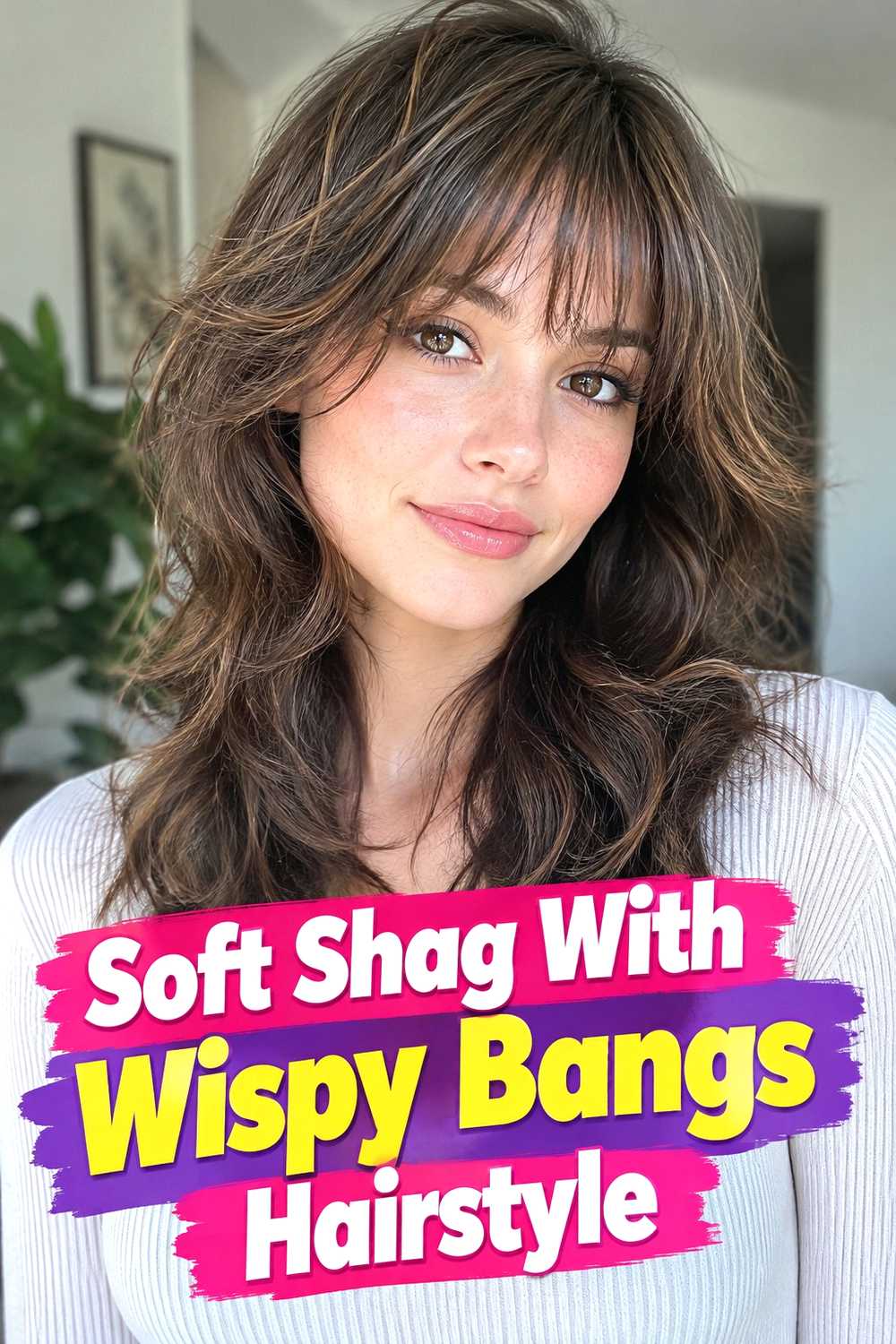
Wispy bangs pair naturally with a soft shag because their light, separated texture echoes the gentle layering throughout the haircut. The fringe can skim the brows with slightly longer sections near the temples, then blend into cheekbone- and jaw-level pieces. Through the rest of the hair, longer shag layers add movement without creating a heavily feathered finish. Straight hair keeps the fringe looking delicate and makes the transition into the side layers especially visible. The key is restraint: a narrow bang section and moderate layering preserve density while still creating noticeable detail. This version can look polished when smooth or more casual when the ends are slightly bent and separated.
Best For
This combination works well if you want a visible fringe but prefer something lighter and easier to blend than a dense blunt bang.
Wear & Maintenance
Wispy bangs may need a quick root refresh after sleeping, but their lighter structure makes them relatively easy to part or sweep aside as they grow.
5. Curtain Bang Soft Shag Hairstyle
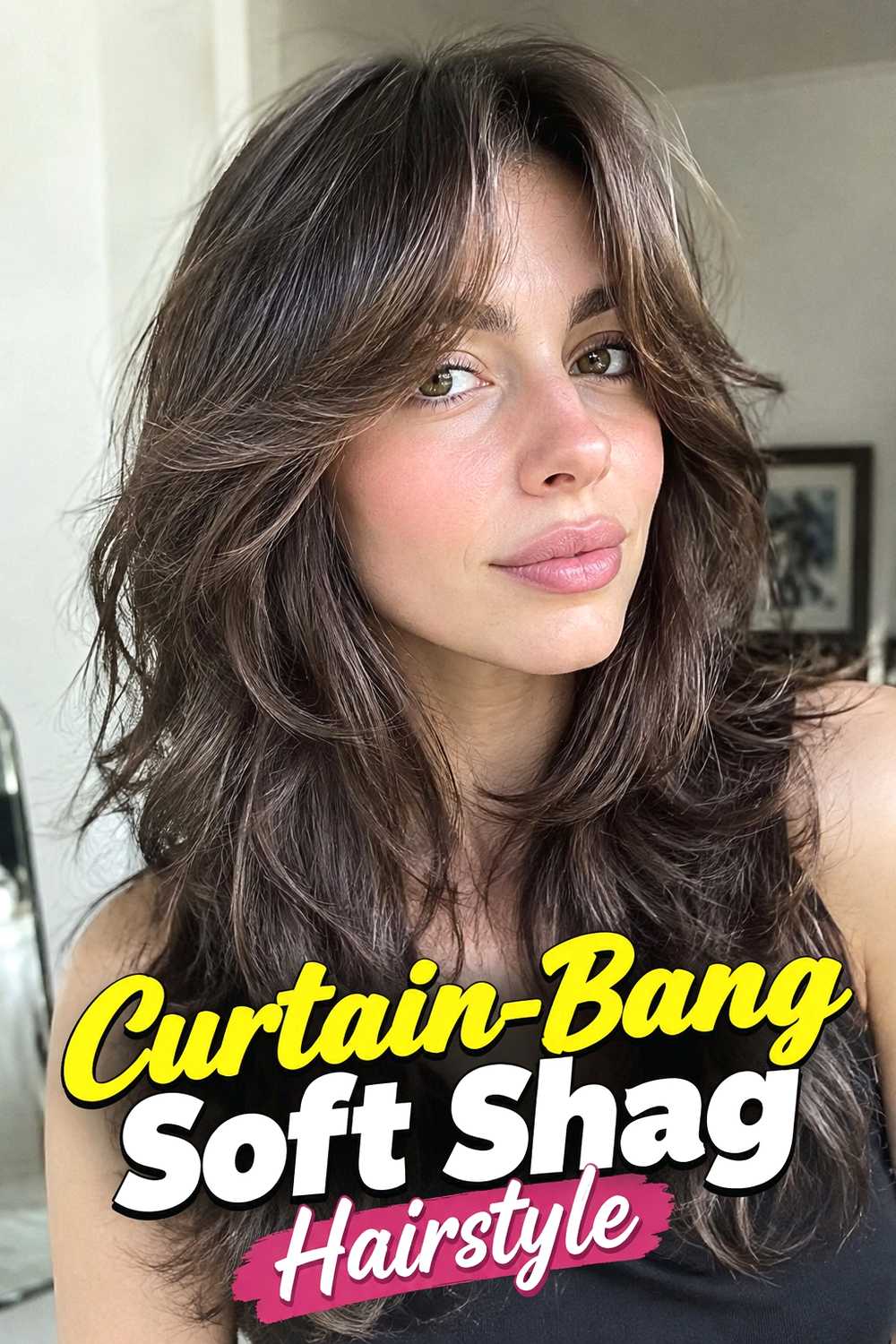
Curtain bangs give straight shag layers a clear focal point around the face. The shortest pieces can open near the center of the forehead, then lengthen toward the cheekbones and jaw before blending into the rest of the haircut. Longer crown and side layers keep the shag soft rather than aggressively choppy, while the center-opening fringe creates movement even when the remaining hair is worn relatively sleek. A round-brush blowout makes the shape more dramatic, but straight styling still shows the graduated front beautifully. This cut works especially well if you want bangs that can eventually blend into face-framing layers instead of requiring a constant short-fringe commitment.
Styling Notes
Dry the curtain bangs away from the center with a round brush, then keep the longer shag layers looser so the front remains the main focus.
Why It Works
The fringe introduces visible layering near the face while the softer back structure maintains length, density, and a more understated shag silhouette.
6. Fine Hair Soft Shag Layers Hairstyle
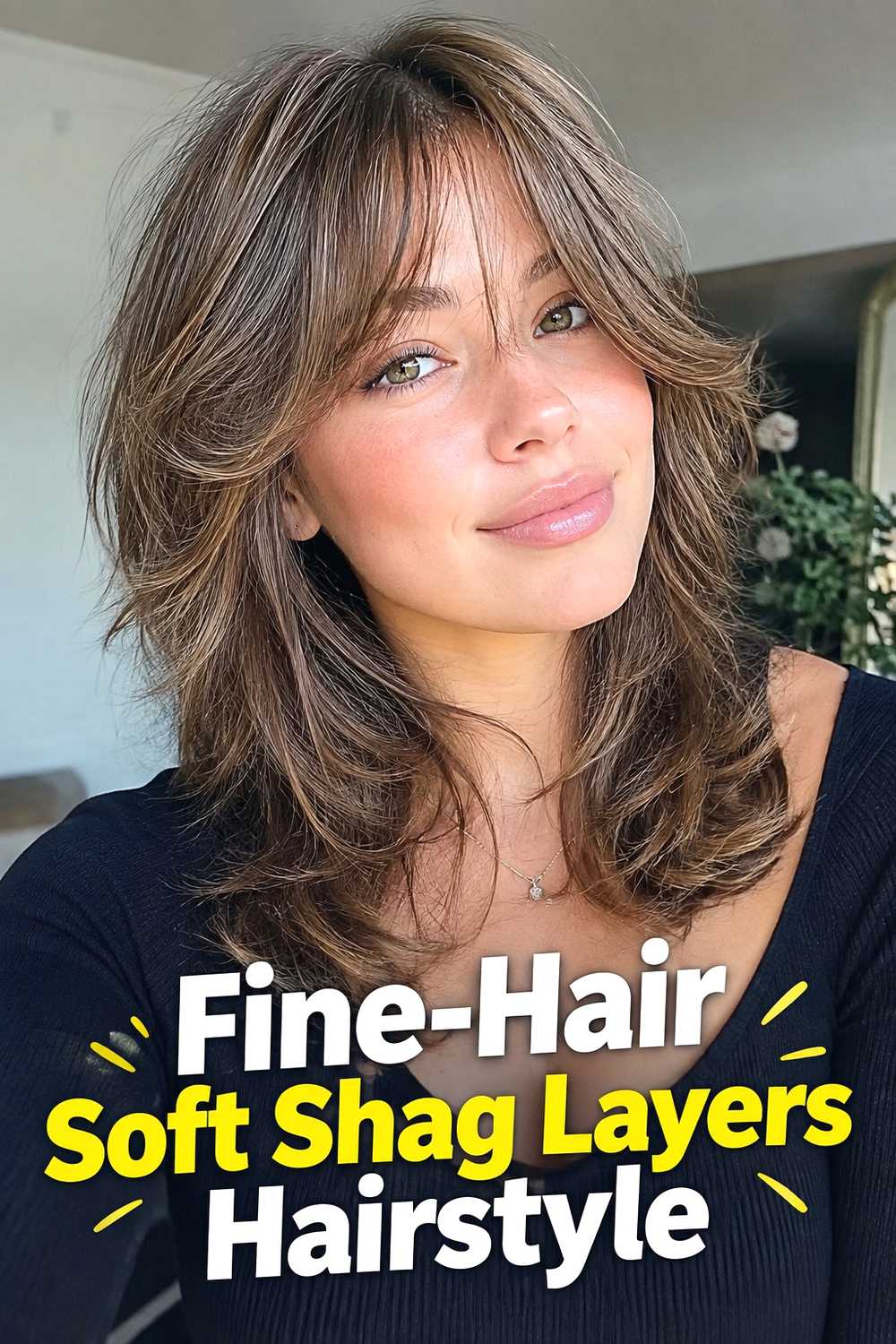
Fine straight hair needs a lighter hand with shag layering so the haircut gains movement without sacrificing too much visible density. Rather than using many short crown pieces, this version keeps most of the perimeter strong and concentrates subtle texture around the face and upper lengths. A few carefully placed layers can help the hair lift instead of hanging completely flat, while the ends remain substantial enough to look healthy and full. Straight texture makes every layer easy to see, so precise blending is more useful than aggressive texturizing. A lightweight mousse or root spray can enhance the shape without coating the hair. The final result should look airy, not sparse.
Why It Works
Restrained layering keeps more hair through the ends while introducing enough variation to prevent a completely flat, one-length appearance.
Pro Tip
Avoid excessive thinning or razor work if your ends already feel delicate; a few strategic layers can create movement with less loss of density.
7. Thick Hair Soft Shag Layers Hairstyle
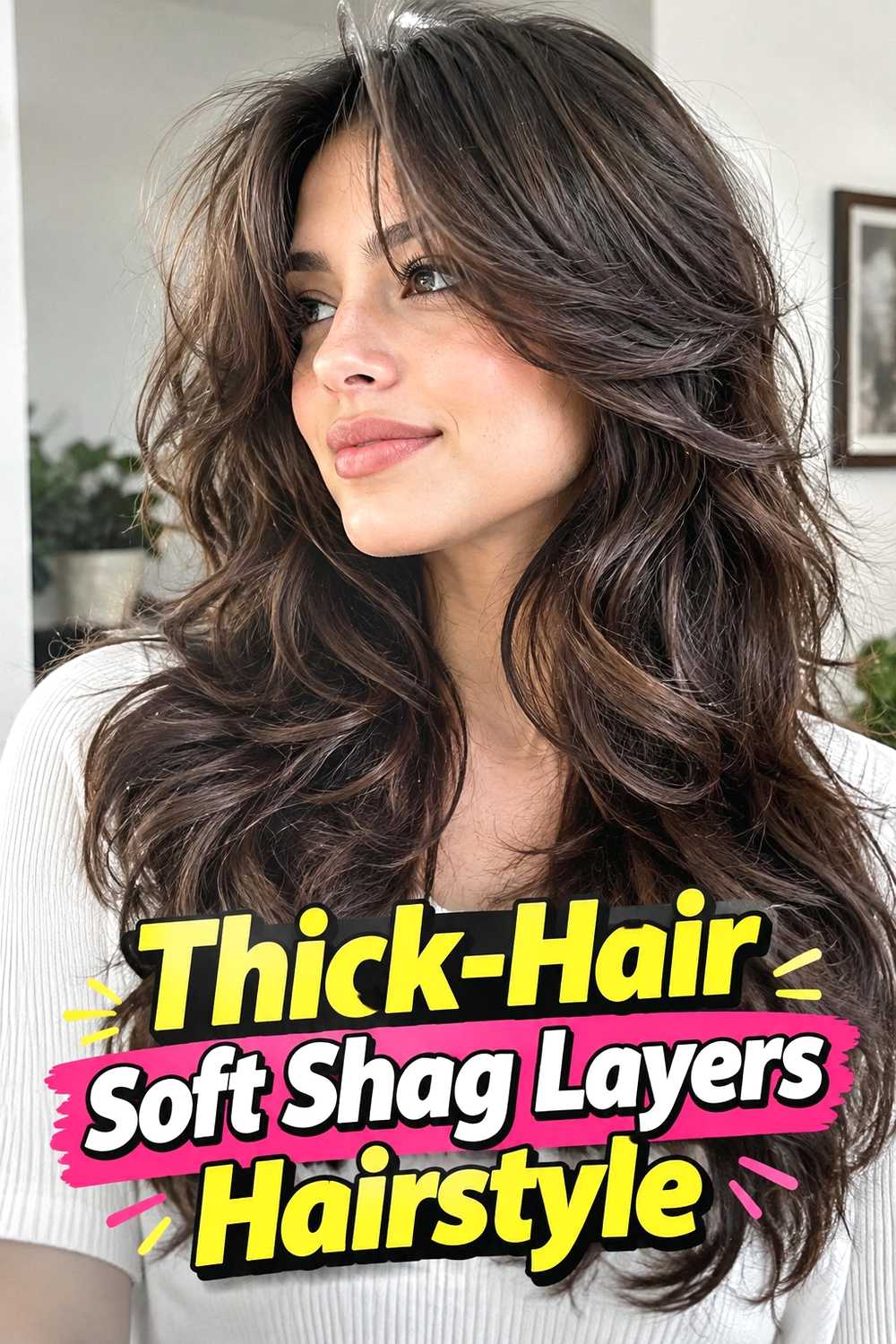
Thick straight hair can support more layering while still maintaining a substantial silhouette, making it well suited to a soft shag. Longer crown layers provide lift without becoming excessively short, while internal shaping through the sides can release weight and help the hair move more freely. Face-framing sections soften the front, and lightly tapered ends prevent the lower lengths from forming a dense block. The surface should remain smooth enough that the cut still looks polished, especially because straight hair shows any unevenness clearly. This version is ideal when one-length hair feels heavy but a highly choppy shag feels too dramatic. Controlled layering creates movement without sacrificing the richness of thick hair.
Hair Type & Length
Dense straight hair from shoulder length to long lengths can carry this structure particularly well because there is enough weight to support visible layering.
Wear & Maintenance
Internal weight removal should be controlled rather than aggressive, since too many short hidden pieces can create puffiness as the haircut grows.
8. Center Parted Straight Shag Hairstyle
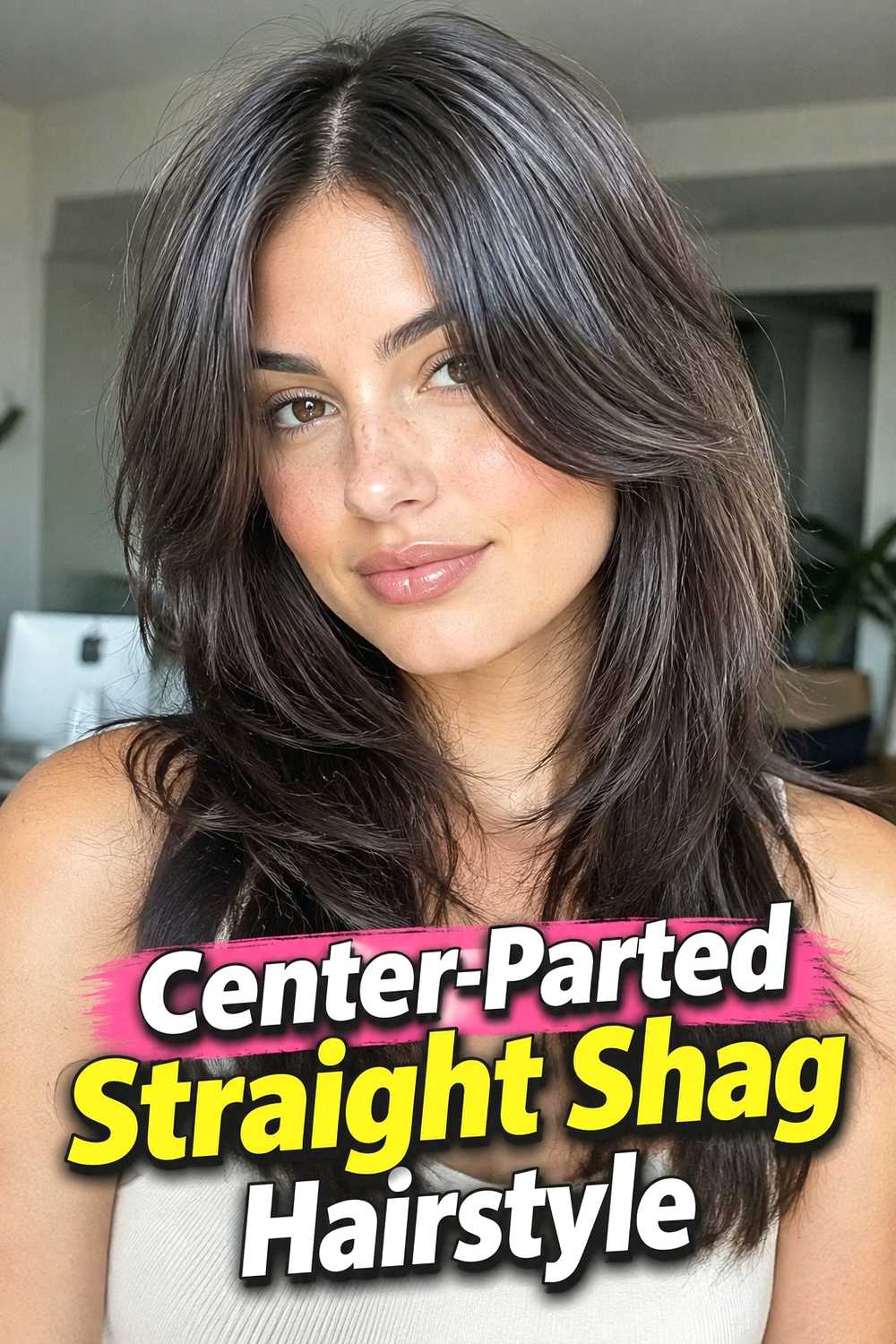
A center part gives a straight shag a balanced, symmetrical frame that makes the face-framing layers easy to see on both sides. The shortest sections can begin near the cheekbones, then lengthen gradually through the jaw and shoulders. Crown layering remains subtle, allowing the top to stay polished while the sides gain movement. Because the part creates equal distribution, the haircut looks refined even when the ends are styled with a slightly undone finish. This version works beautifully if you like a clean center part but want more texture than a traditional long-layered cut provides. Keeping the perimeter moderately full also prevents the layered front from making the entire haircut appear too thin.
Styling Notes
Direct both front sections away from the center while blow-drying, then loosen them with your fingers so the shape does not appear overly matched.
Best For
This style works especially well for straight hair that naturally falls evenly from a center part and holds a light bend through the ends.
9. Side Parted Soft Shag Hairstyle
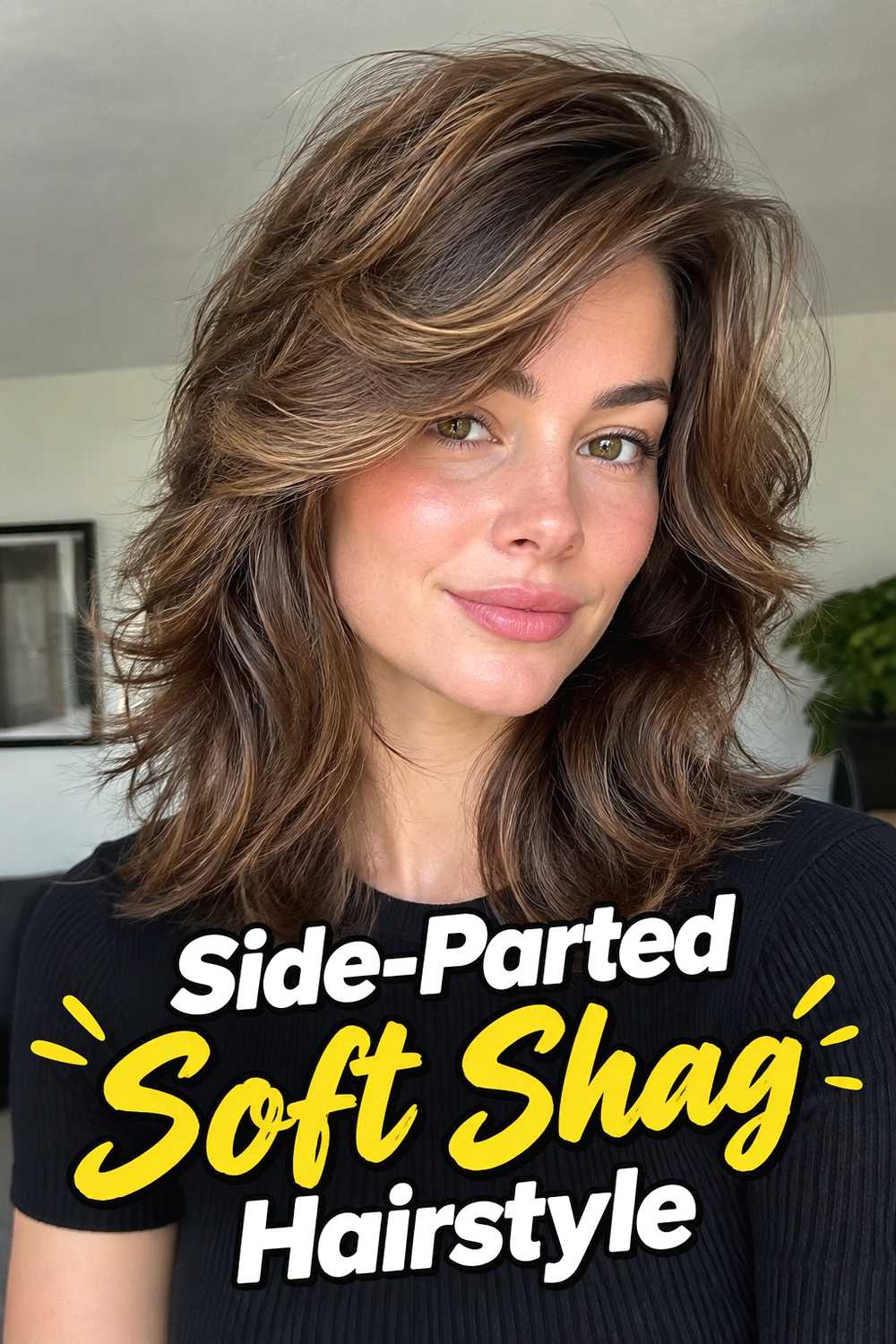
A side part brings natural asymmetry to a soft shag, creating more lift on one side without requiring very short crown layers. The fuller side can sweep across the forehead before blending into cheekbone- and jaw-level pieces, while the opposite side sits closer to the face or tucks behind the ear. The rest of the haircut uses long, subtle shag layers to create movement through straight lengths without making the perimeter overly wispy. This variation is particularly useful if your hair tends to fall flat at the roots because changing the part can instantly create more height. The overall finish remains wearable and polished while still capturing the relaxed, slightly undone character of a shag.
Why It Works
The shifted part changes volume distribution naturally, so the haircut can look more dynamic without adding excessive short layering.
Styling Notes
Establish the side part while the roots are damp, then use a light volumizing product only where extra lift is needed.
10. Blunt End Soft Shag Hairstyle
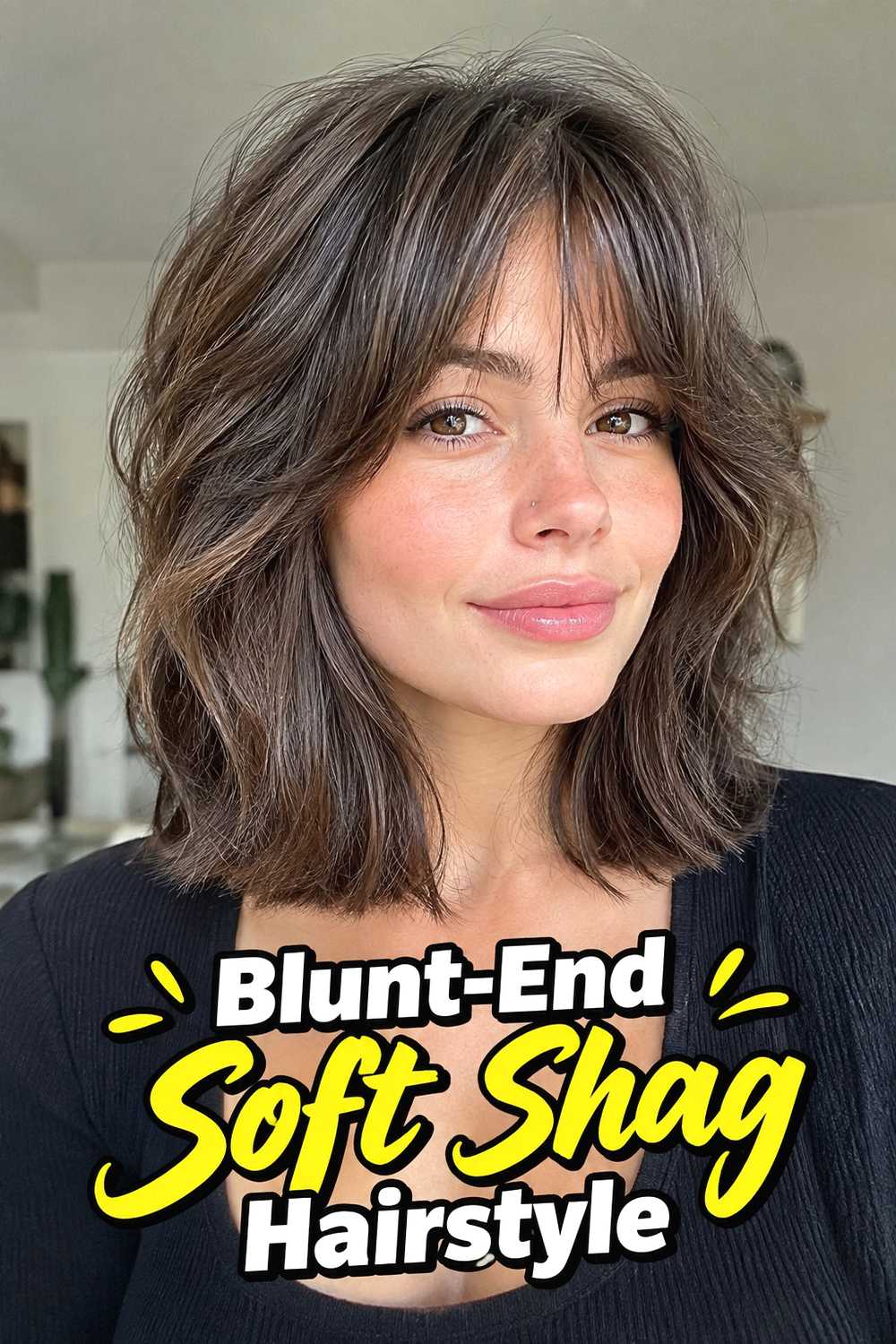
This cut combines shag-inspired layering through the upper lengths with a stronger, blunter perimeter at the bottom. The contrast allows straight hair to gain movement around the face and crown while still looking full through the ends. Subtle layers can begin near the jaw or shoulders, then blend into the clean baseline without creating thin, heavily feathered tips. This makes the style especially practical if you want the personality of a shag but prefer a more substantial lower edge. Worn sleek, the blunt perimeter becomes the main feature; with gentle bends, the upper layers become more visible. The result feels modern and controlled rather than deliberately messy or heavily deconstructed.
Best For
Fine to medium straight hair can benefit from this approach because the stronger baseline helps maintain visible fullness beneath the softer layers.
Styling Notes
Keep the ends relatively smooth and add movement higher through the haircut so the contrast between structure and softness remains clear.
11. Feathered Soft Shag Layers Hairstyle
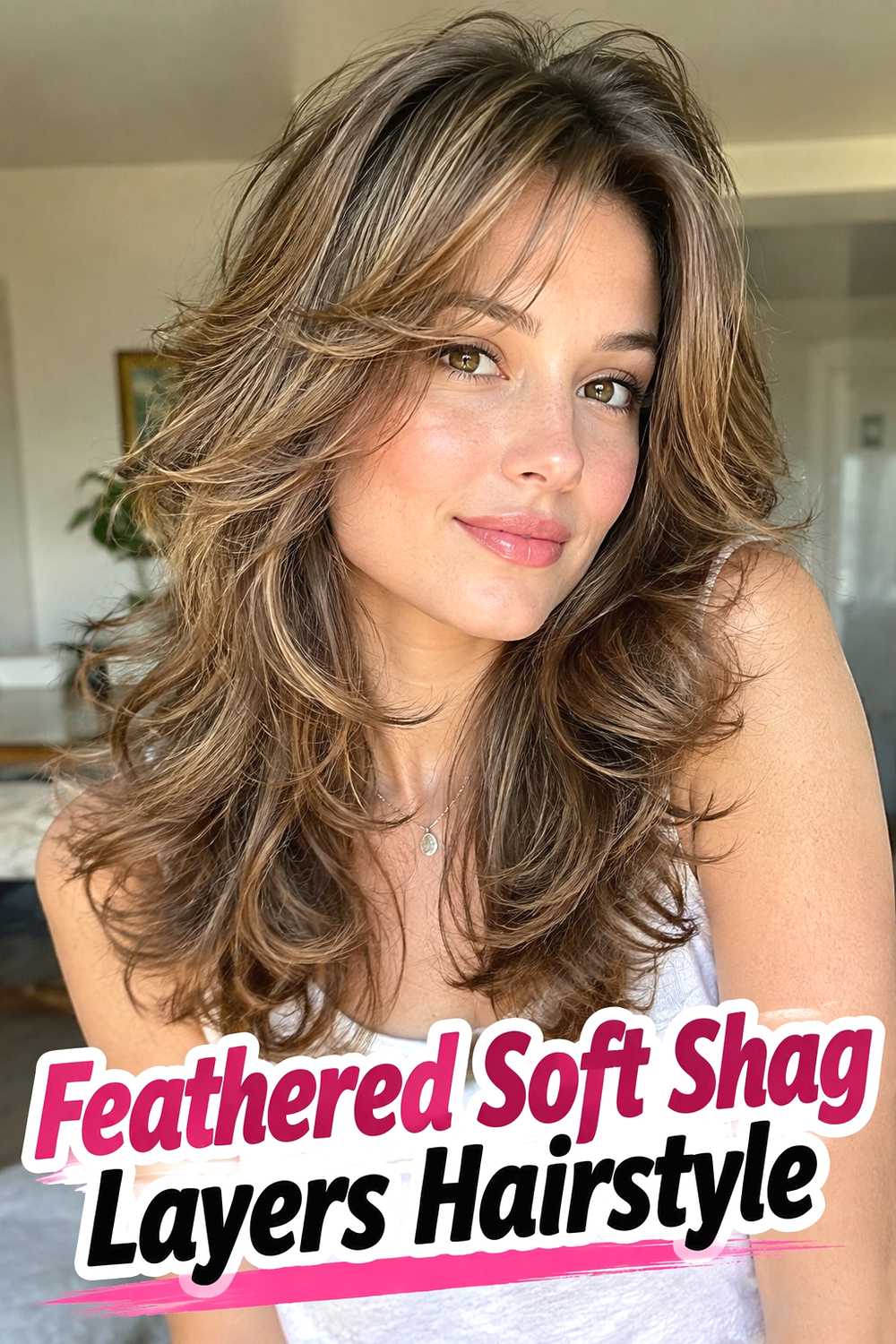
Feathered shag layers give straight hair a lighter, flowing finish by tapering the ends of individual sections rather than leaving every layer blunt. The shortest front pieces can begin around the cheekbones and sweep outward, while longer layers through the sides create a cascading effect toward the shoulders and back. Compared with a traditional shag, the crown remains less aggressive, keeping the silhouette soft and polished. A rounded blowout emphasizes the feathering beautifully, but the cut can also be worn straighter for a more understated result. This style is particularly appealing if you like visible layering but want each section to flow smoothly into the next rather than looking sharply separated.
Styling Notes
Use a medium round brush to direct the front layers outward, then add only a slight curve to the longer sections.
Best For
Medium to thick straight hair can show the feathered structure clearly while retaining enough density through the lower lengths.
12. Minimal Soft Shag Hairstyle
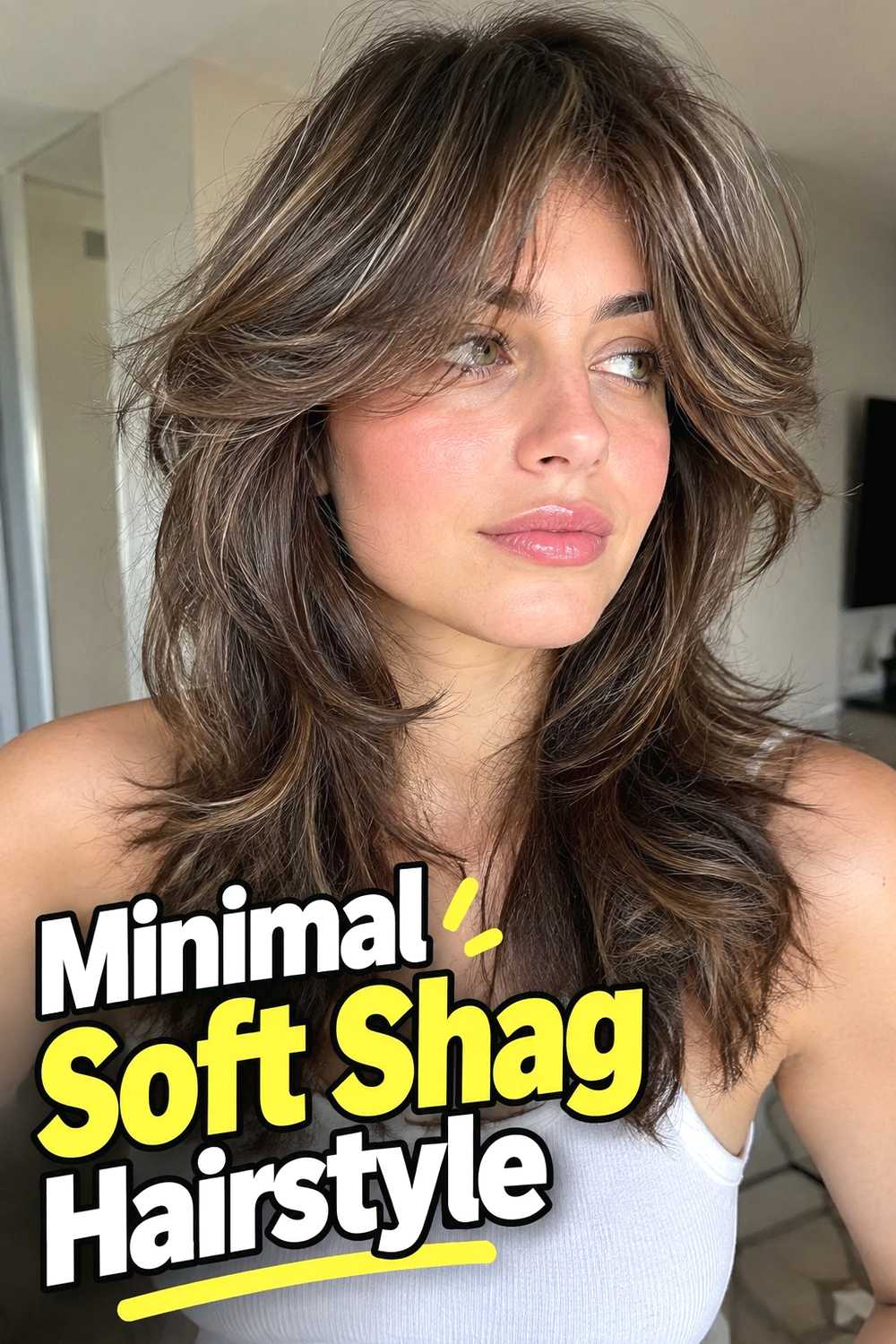
The minimal soft shag is ideal if you want only a hint of the shag silhouette. Most of the hair stays long and cohesive, while a small number of face-framing and upper layers introduce just enough movement to prevent the cut from feeling flat. The crown remains relatively smooth, and the perimeter retains substantial weight. Straight hair makes this subtle structure easy to appreciate because the layers become visible mostly when the hair moves or curves naturally around the shoulders. This version is easy to adapt to professional or low-key styling since it does not depend on dramatic separation. A polished blow-dry, simple air-dry, or light bend through the ends can all work well.
Wear & Maintenance
Because the differences in length are restrained, the haircut tends to grow out gradually and does not rely on frequent reshaping to maintain its character.
Pro Tip
Ask for the shortest layers to remain relatively long if you want a true soft shag rather than a more obvious traditional shag silhouette.
13. Rounded Blowout Soft Shag Hairstyle
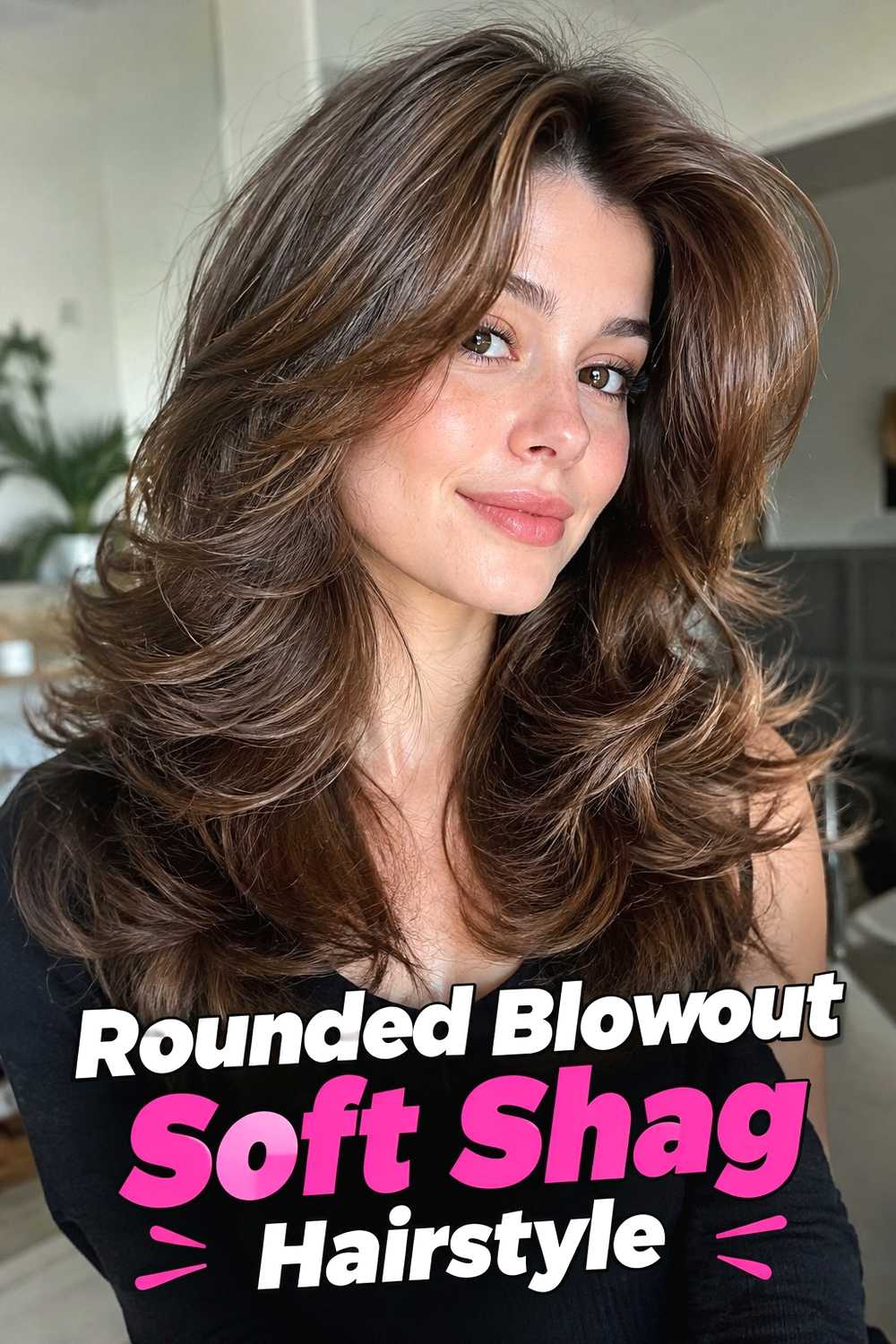
A rounded blowout gives soft shag layers extra body while keeping the finish smooth enough for straight hair. The crown can receive moderate lift, with face-framing pieces curving away from the cheeks and longer sections rolling gently through the shoulders and ends. Unlike a dramatic retro blowout, the goal is broad movement rather than tightly flipped layers. This styling reveals the different lengths without making the haircut look stiff or overly set. It works particularly well on medium to thick straight hair because there is enough density to support the lifted shape. Once loosened, the result should feel airy and touchable, with the layered structure visible through natural-looking volume and movement.
Styling Notes
Use a large round brush through the main lengths and a medium brush around the face, allowing each section to cool before loosening it.
Why It Works
The blowout adds enough bend to reveal subtle shag layers that might appear more understated when the hair is worn completely straight.
14. Flipped End Soft Shag Hairstyle
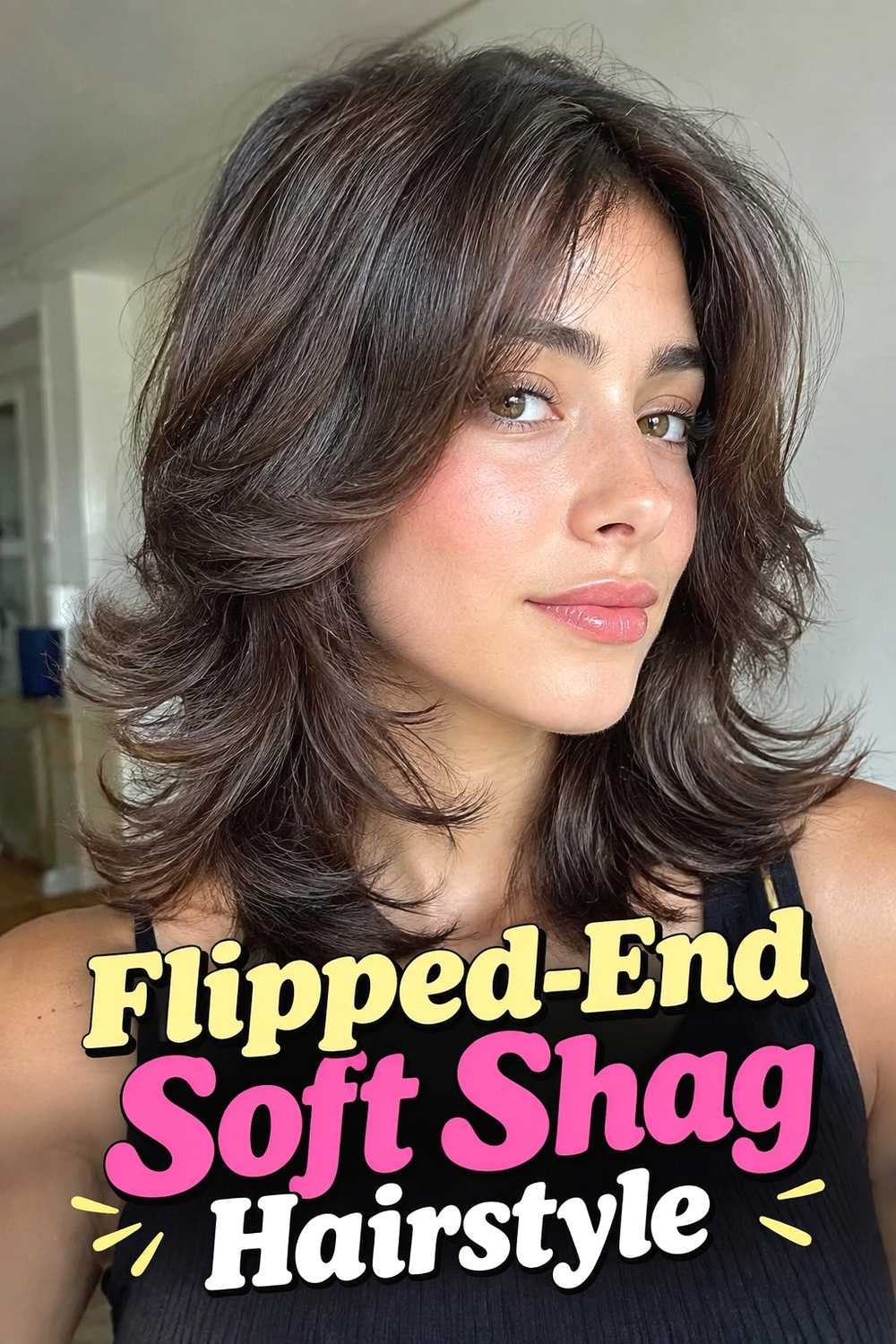
Flipped ends add a playful finish to a soft shag by emphasizing the separation between selected layers without requiring heavy texture throughout the haircut. The shortest face-framing sections can turn gently away from the face, while some shoulder-level pieces flip outward and the remaining lengths stay straighter. This mix of directions creates movement that feels relaxed rather than perfectly coordinated. On naturally straight hair, the flips are easy to control with a round brush, straightener, or hot brush, making the look adaptable for occasional styling rather than a permanent dramatic shape. Keeping the crown smooth prevents the haircut from looking overly retro and lets the movement through the ends remain the main visual detail.
Styling Notes
Flip only selected layers rather than every end in the same direction. Slight variation creates a softer, more contemporary result.
Pro Tip
Keep the bend concentrated in the final inch or two so the haircut retains its sleek straight-hair foundation.
15. Low Maintenance Straight Shag Hairstyle
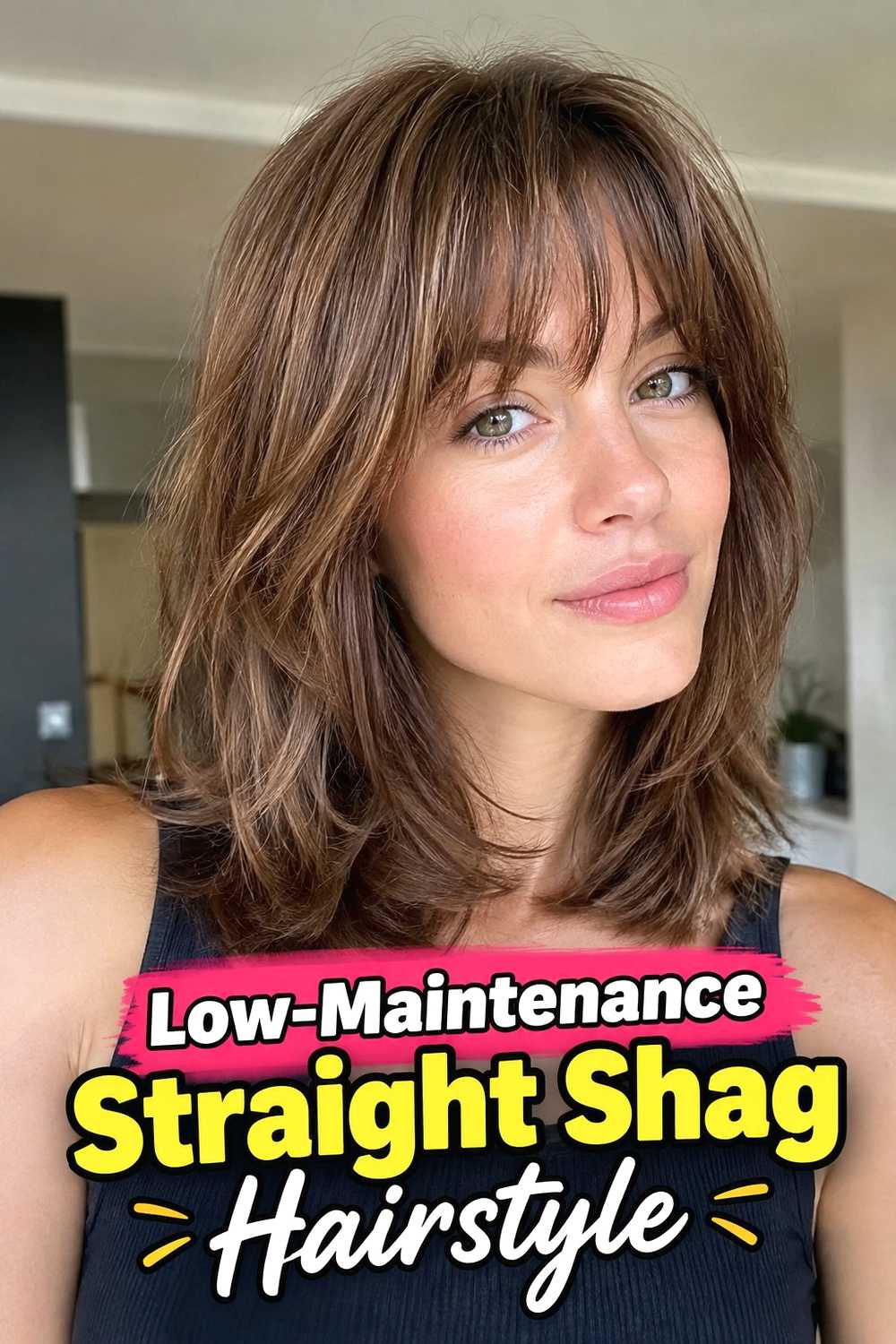
A low-maintenance straight shag uses carefully placed long layers that create shape without requiring daily curling, teasing, or extensive blow-drying. The front can feature a few jaw- or shoulder-level pieces, while the crown stays long enough to fall naturally. Through the back, subtle layering prevents the haircut from becoming completely flat while preserving an easy, smooth perimeter. This version works best when the cut follows the hair’s natural growth pattern and typical part, allowing it to settle into place after a simple dry. A small amount of lightweight leave-in product can add polish, while the layers provide enough movement on their own to keep the style from looking rigid or overly plain.
Best For
Straight hair that naturally dries smooth or with a slight bend is particularly compatible with this simpler, more wearable shag variation.
Wear & Maintenance
Longer layers usually require less daily reshaping and can grow out more softly than short crown-heavy shag cuts.
How to Choose the Right Look
Start with density. Fine straight hair usually benefits from fewer layers and a stronger perimeter, so options such as the blunt-end, minimal, or fine-hair shag can preserve more fullness. Thick straight hair can handle additional internal shaping and longer crown layers, especially if the hair tends to feel heavy.
Next, think about length. Collarbone and medium-length shags show the layering clearly, while longer versions provide more room for gradual transitions and keep greater styling versatility. If you frequently wear ponytails or updos, avoid taking too many front pieces extremely short.
Bangs also affect upkeep. Wispy bangs create a light fringe, while curtain bangs offer more length and are easier to blend into the surrounding layers over time. If you prefer less daily styling, face-framing pieces without bangs may be simpler.
Finally, consider finish. Rounded blowouts and flipped ends emphasize the shag structure, while minimal and low-maintenance versions can look good with much less styling. Choose a cut that complements how your straight hair naturally falls.
Final Thoughts
Soft shag layers can give straight hair movement without pushing the haircut into an extremely choppy or high-maintenance direction. Longer layers keep the silhouette polished, face framing adds visible shape, and bangs can bring extra texture around the front. For fuller ends, keep the perimeter strong; for more movement, introduce additional feathering or crown layering while preserving smooth transitions.
FAQs
1. Do soft shag layers work on naturally straight hair?
Yes. Straight hair makes the different layer lengths particularly visible, so a soft shag can create movement even without waves or curls.
2. Will shag layers make fine straight hair look thinner?
They can if too much hair is removed. Fine hair usually benefits from fewer layers, a strong perimeter, and subtle face framing rather than extensive short layering.
3. Can a straight-hair shag be worn without bangs?
Yes. Face-framing layers alone can create the shag-inspired effect while avoiding the additional maintenance of a fringe.
4. What is the difference between a soft shag and a traditional shag?
A soft shag generally uses longer, more blended layers and less dramatic crown separation, while a traditional shag often features stronger texture and more obvious differences between layer lengths.
5. Does a soft shag need daily styling?
Not necessarily. A well-planned version can work with naturally straight hair, although blowouts, bends, or flipped ends can make the layered structure more noticeable.
Save your favorite soft shag layer ideas, share the looks you love, and explore more straight-hair inspiration for your next cut.