17 Underlayer Halo Hair Color Hairstyles
Underlayer halo hair color adds a hidden flash of contrast beneath the top layers, revealing dimension whenever the hair moves, flips, or separates.
This coloring approach places a lighter, brighter, or contrasting shade underneath the visible surface of the hair. Depending on placement, the color can wrap around the lower perimeter like a concealed halo or concentrate near the sides and nape for a stronger peekaboo effect. When the top layer falls naturally, the contrast may look subtle; when the hair moves, the underlayer becomes much more noticeable.
The biggest choices are contrast, tone, and placement. Blonde and caramel create softer dimension, while cherry, red, pink, blue, or copper produce a more expressive finish. Before choosing a version, consider your base color, how often you wear your hair up, whether you want the underlayer visible every day, and how much color maintenance fits your routine.
Quick List
- Classic Underlayer Halo Hair Color Hairstyle
- Blonde Underlayer Halo Hair Color Hairstyle
- Caramel Underlayer Halo Hair Color Hairstyle
- Copper Underlayer Halo Hair Color Hairstyle
- Cherry Underlayer Halo Hair Color Hairstyle
- Plum Underlayer Halo Hair Color Hairstyle
- Honey Underlayer Halo Hair Color Hairstyle
- Ash Blonde Underlayer Halo Hair Color Hairstyle
- Chocolate Underlayer Halo Hair Color Hairstyle
- Red Underlayer Halo Hair Color Hairstyle
- Golden Underlayer Halo Hair Color Hairstyle
- Pink Underlayer Halo Hair Color Hairstyle
- Blue Underlayer Halo Hair Color Hairstyle
- Face Framing Underlayer Halo Hair Color Hairstyle
- High Contrast Underlayer Halo Hair Color Hairstyle
- Soft Balayage Underlayer Halo Hair Color Hairstyle
- Peekaboo Underlayer Halo Hair Color Hairstyle
1. Classic Underlayer Halo Hair Color Hairstyle
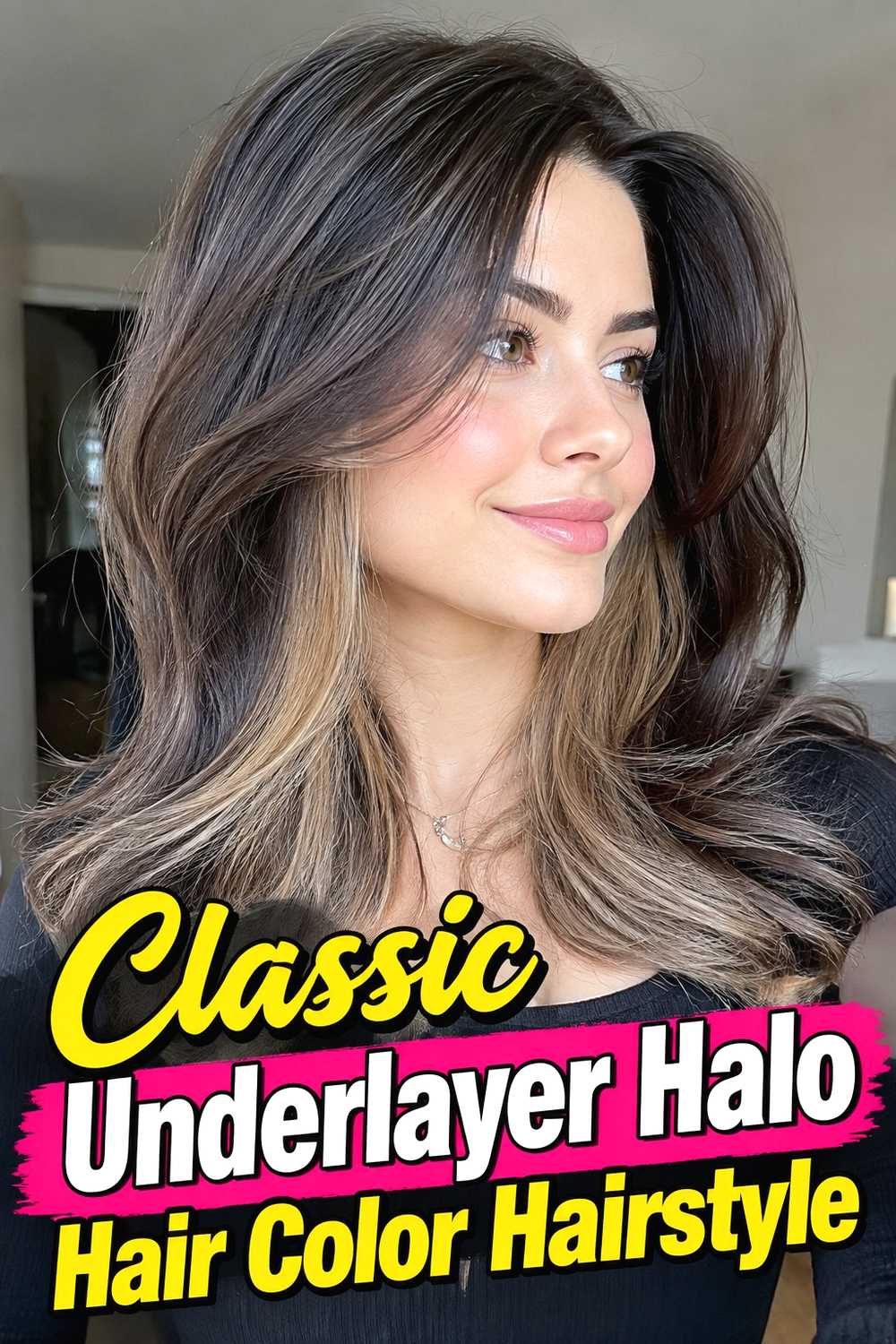
The classic underlayer halo keeps the surface color relatively uniform while placing a lighter or contrasting shade beneath the outer layer of hair. When the hair hangs straight, only small flashes may appear near the ends, sides, or nape. Once the hair moves, the hidden color becomes much more noticeable and creates a dimensional halo effect underneath. This version works beautifully on medium to long hair because there is enough length for the top layer to conceal and reveal the color naturally. Choosing an underlayer only a few shades lighter than the base keeps the finish sophisticated, while a stronger contrast creates a more obvious two-tone result.
Why It Works
The hidden placement creates visual interest without requiring the entire surface of the hair to be colored dramatically.
Wear & Maintenance
The underlayer may grow out less visibly than top-surface highlights, although tonal fading still depends on the selected color.
2. Blonde Underlayer Halo Hair Color Hairstyle
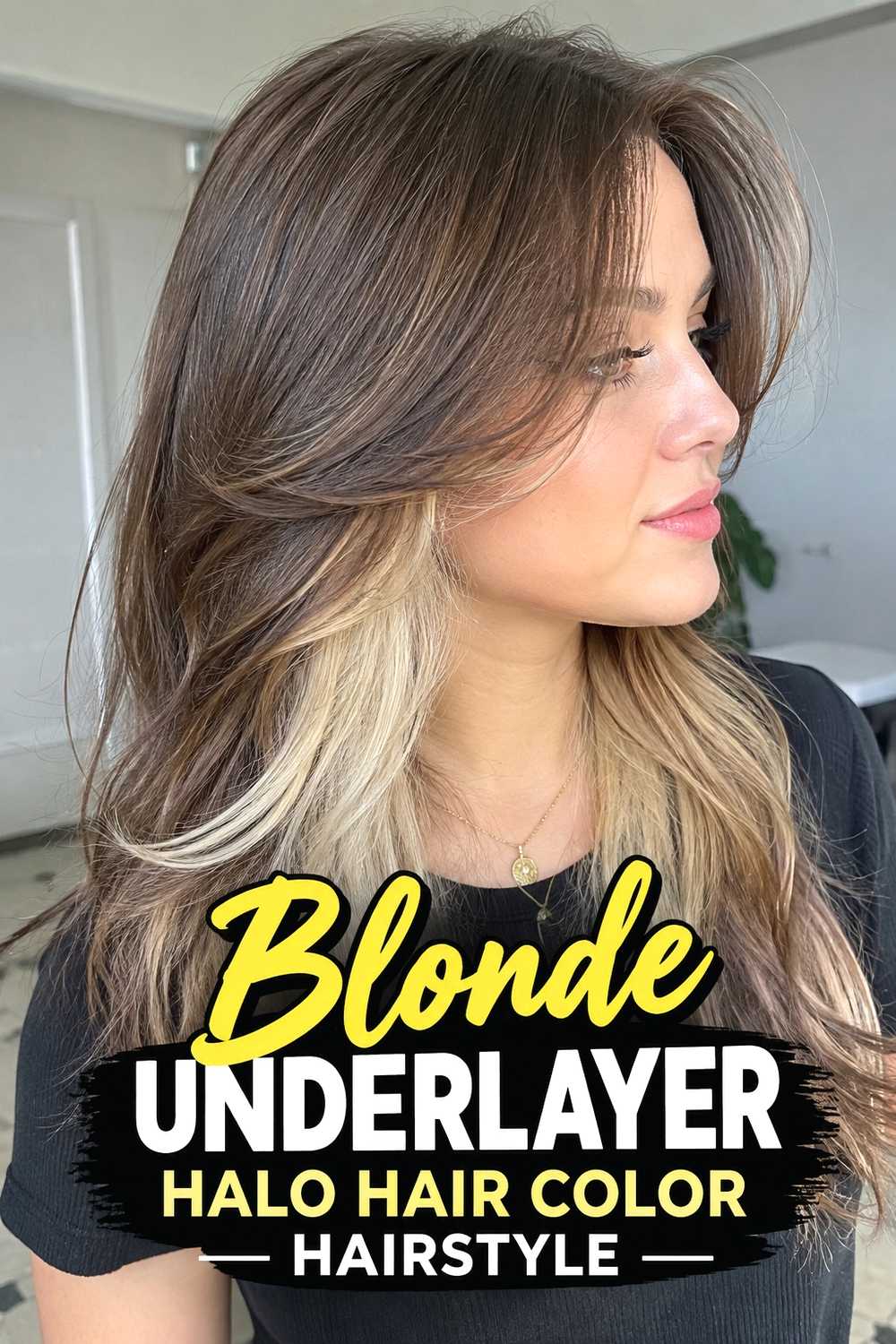
Blonde underlayer color creates a strong light-versus-dark effect when placed beneath brunette or darker blonde hair. The pale sections can wrap around the nape and sides, showing through when the hair is curled, lifted, tucked behind the ears, or tied back. A softer beige blonde keeps the contrast refined, while brighter blonde produces a more graphic halo. This placement can also add the illusion of extra dimension through layered hair because the lighter interior sections appear between darker strands. The amount of lightening needed depends on the starting color, so the final blonde tone and maintenance level can vary considerably. Keeping the top surface darker preserves the hidden quality.
Styling Notes
Loose waves, half-up styles, and tucked sections reveal the blonde underlayer more clearly than a completely flat finish.
Best For
Choose this version when you want noticeable brightness without placing blonde through the entire top surface.
3. Caramel Underlayer Halo Hair Color Hairstyle
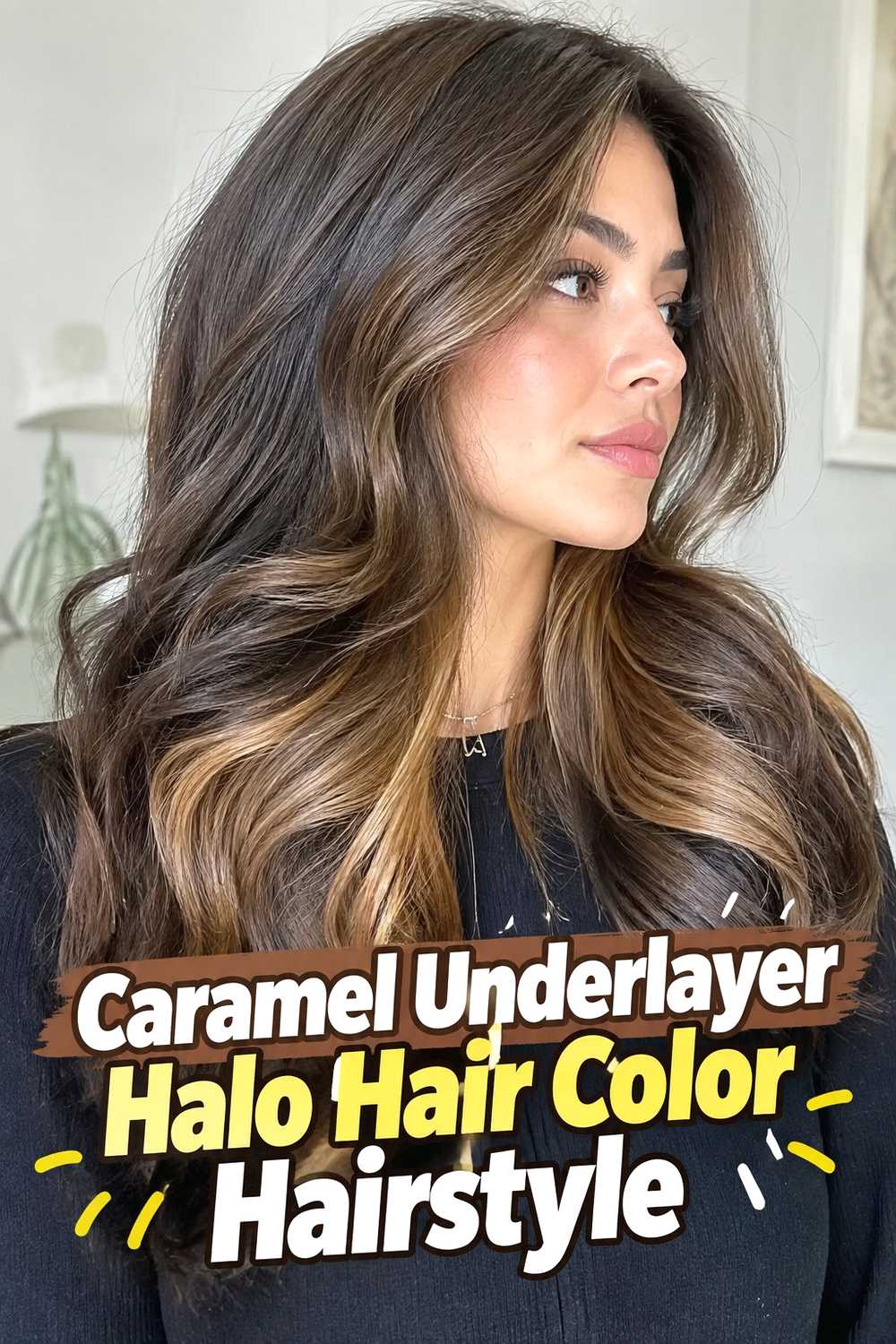
Caramel underlayer color pairs warm golden-brown pieces with a deeper brunette surface for a softer contrast than blonde. The hidden caramel can appear around the sides, nape, and lower layers, creating warm flashes whenever the hair shifts. This version is especially attractive on long waves because the bends separate the darker outer layer from the lighter interior and make the tonal difference easier to see. Since caramel remains within the brunette family, the result can feel dimensional without looking sharply two-toned. Keeping several related shades through the underlayer makes the color appear more natural. A warm gloss can help maintain the richness if the caramel pieces begin to lose depth.
Why It Works
Caramel adds brightness and warmth while staying close enough to brunette tones for a cohesive overall finish.
Wear & Maintenance
The softer contrast makes regrowth less obvious than very pale blonde placement, though warm tones may still need refreshing.
4. Copper Underlayer Halo Hair Color Hairstyle
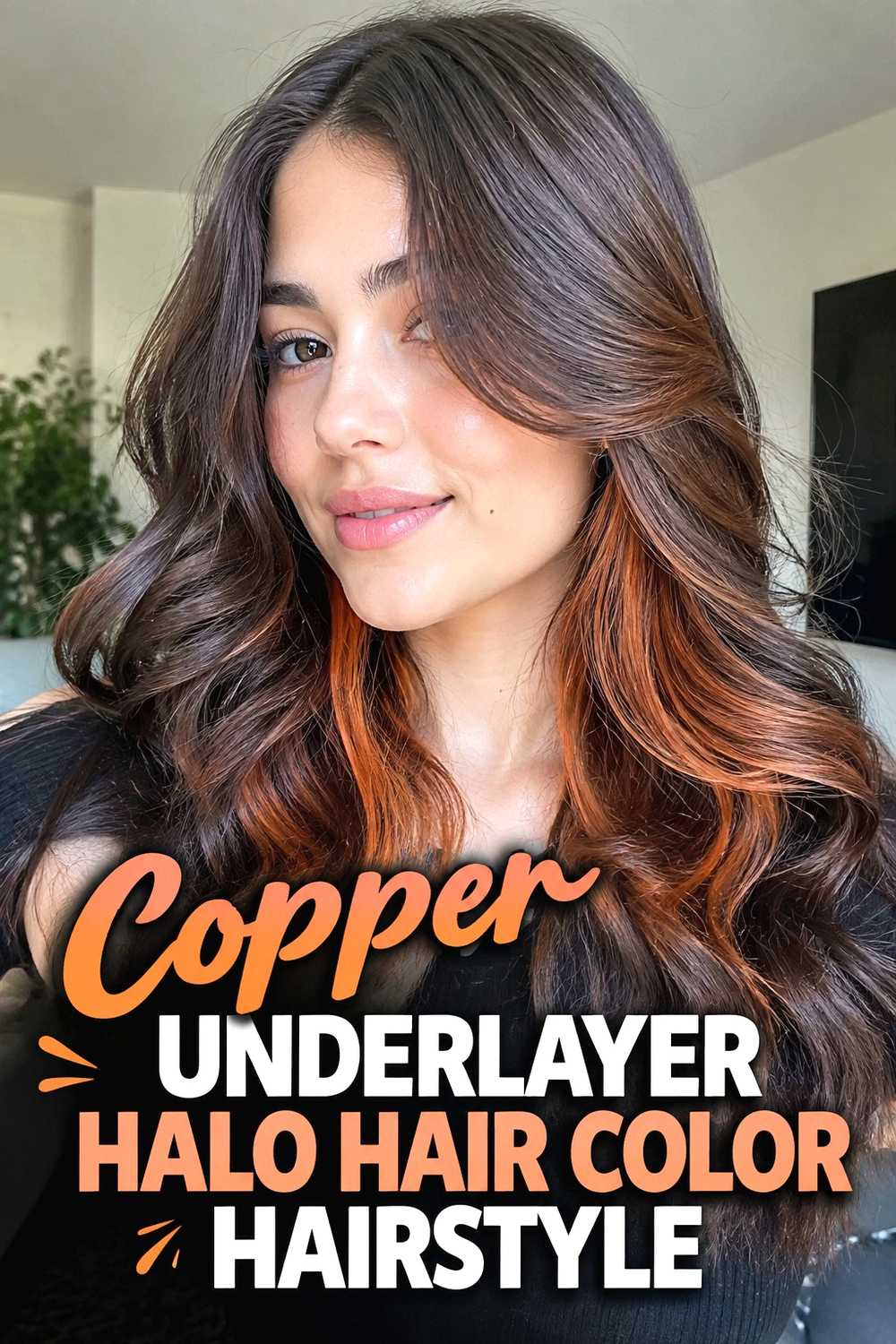
Copper underlayer color introduces orange-red warmth beneath brown, auburn, or dark blonde hair. The hidden placement allows the copper to appear in flashes rather than dominating the entire hairstyle, making it useful if you want noticeable warmth without committing to an all-over red look. On layered or wavy hair, the underlayer can show through around the shoulders and ends, creating movement and depth. A deeper copper feels rich and blended, while brighter copper produces stronger contrast. Because red and copper pigments can fade visibly, maintaining vibrancy may require more attention than neutral brunette shades. Keeping the top layer deeper also helps the underlayer retain its dramatic reveal.
Best For
This approach works well if you enjoy warm color but want the copper concentrated underneath rather than spread across the whole head.
Pro Tip
Use a deeper copper for a subtle glow or a brighter copper for a more obvious hidden-color effect.
5. Cherry Underlayer Halo Hair Color Hairstyle
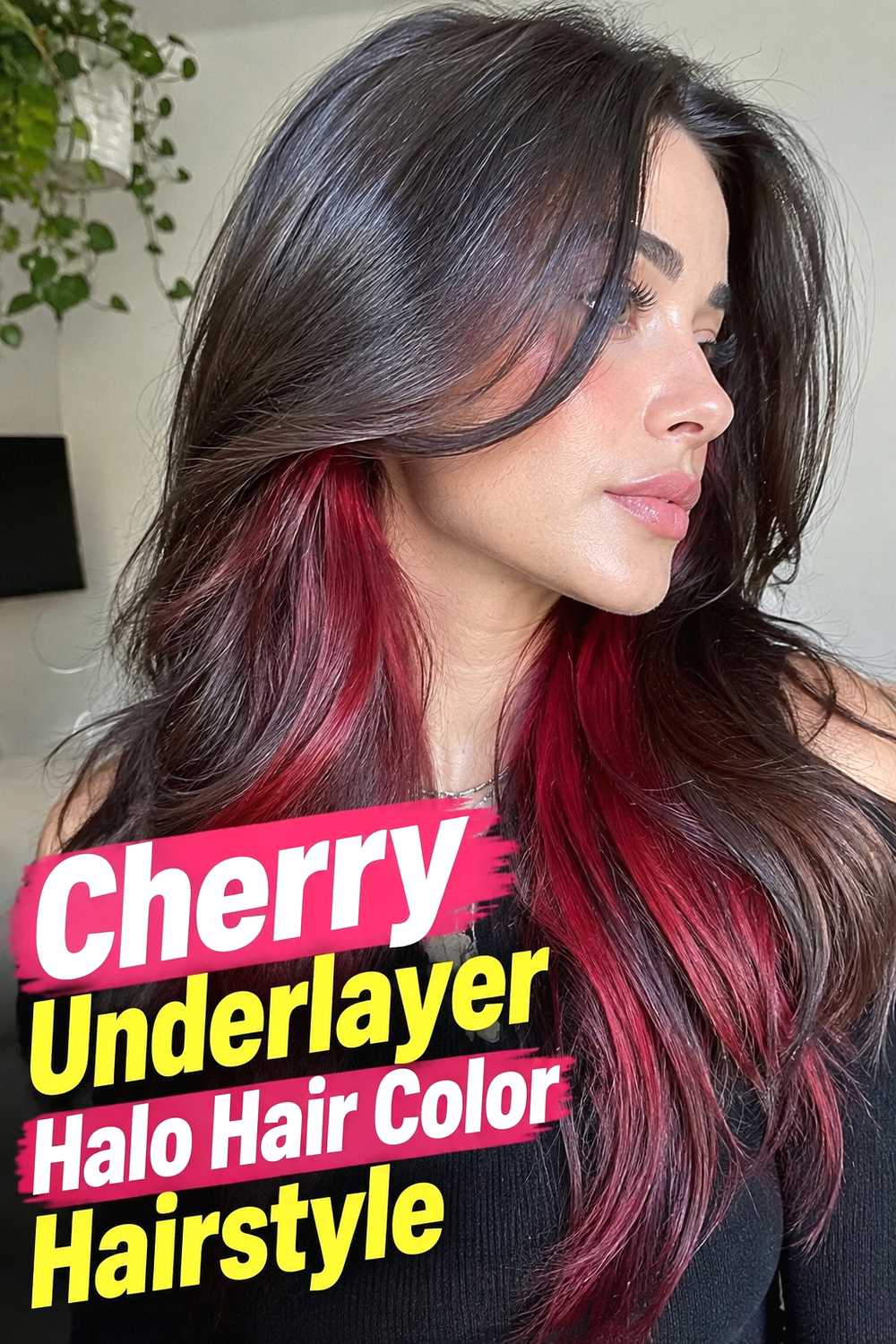
Cherry underlayer color places rich red or crimson tones beneath a darker surface, creating a bold reveal when the hair moves. Against black, espresso, or deep brunette hair, the cherry sections can appear especially saturated because the darker outer layer adds contrast. The color may remain mostly concealed when the hair is worn down, then become obvious in ponytails, half-up styles, or textured waves. This makes it a flexible option for someone who likes expressive color but does not necessarily want it visible from every angle. Cherry shades can range from dark red-brown to brighter ruby, so the intensity can be adjusted without changing the basic underlayer placement.
Wear & Maintenance
Cherry tones may soften with repeated washing, so maintaining the intended red intensity can require periodic glossing or color refreshing.
Why It Works
A dark top layer creates enough contrast for the hidden red to look vivid without covering the full surface of the hair.
6. Plum Underlayer Halo Hair Color Hairstyle
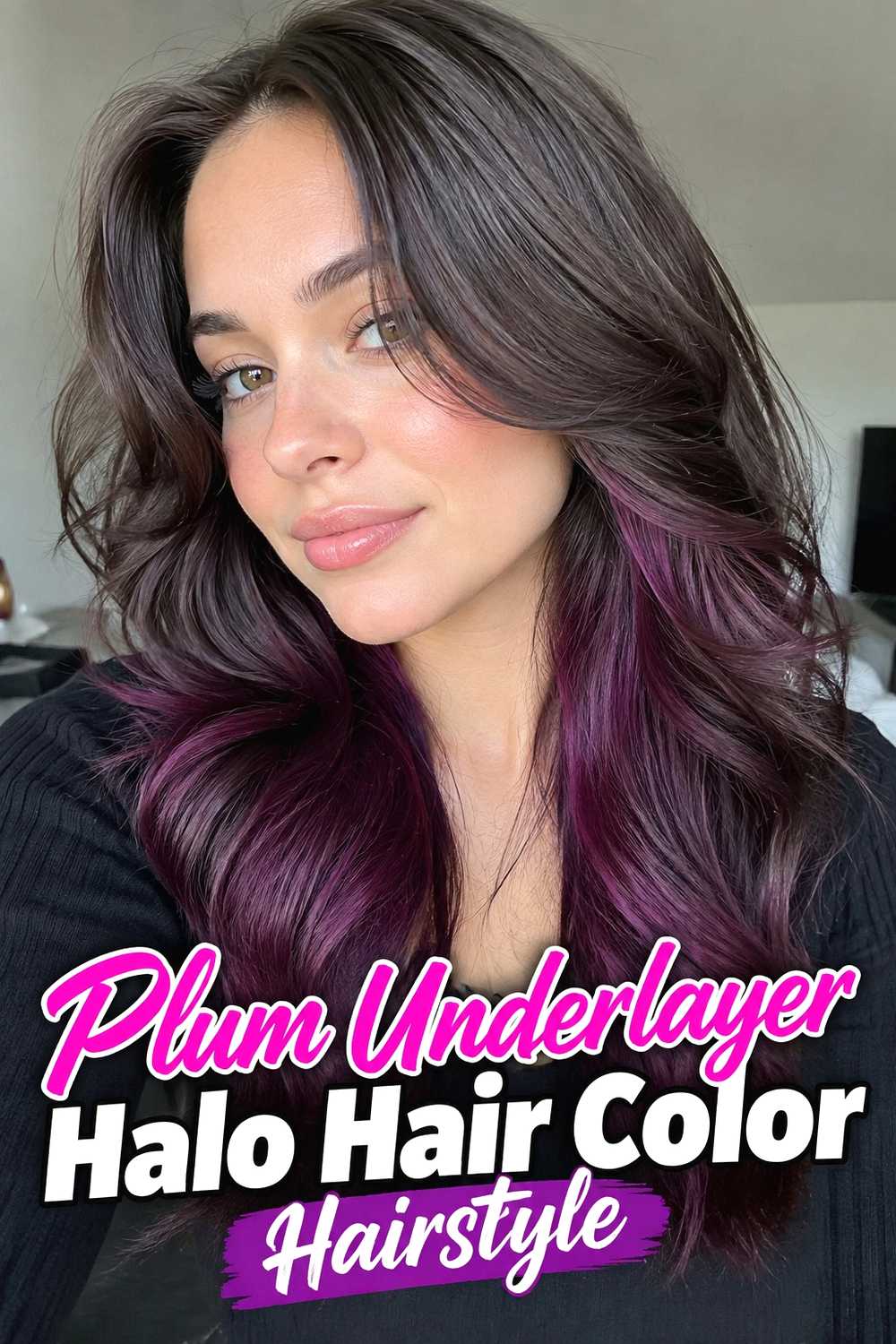
Plum underlayer color introduces a cooler violet-red tone beneath brunette, black, or burgundy hair. The color feels rich and moody rather than bright, making it a distinctive option for someone who wants an underlayer that remains deep. When the hair is straight, only subtle berry flashes may appear near the sides or ends. Waves, curls, and updos reveal considerably more of the purple-red interior. Plum also pairs naturally with darker bases because both colors share similar depth, which can make the grow-out feel less abrupt than a pale underlayer. A glossy finish helps the violet and red undertones remain visible instead of blending into one dark shade.
Best For
Choose plum if you prefer cooler berry tones and want the underlayer to feel deep rather than highly luminous.
Pro Tip
Keep enough red in the formula if you want the finished shade to read as plum rather than pure purple.
7. Honey Underlayer Halo Hair Color Hairstyle
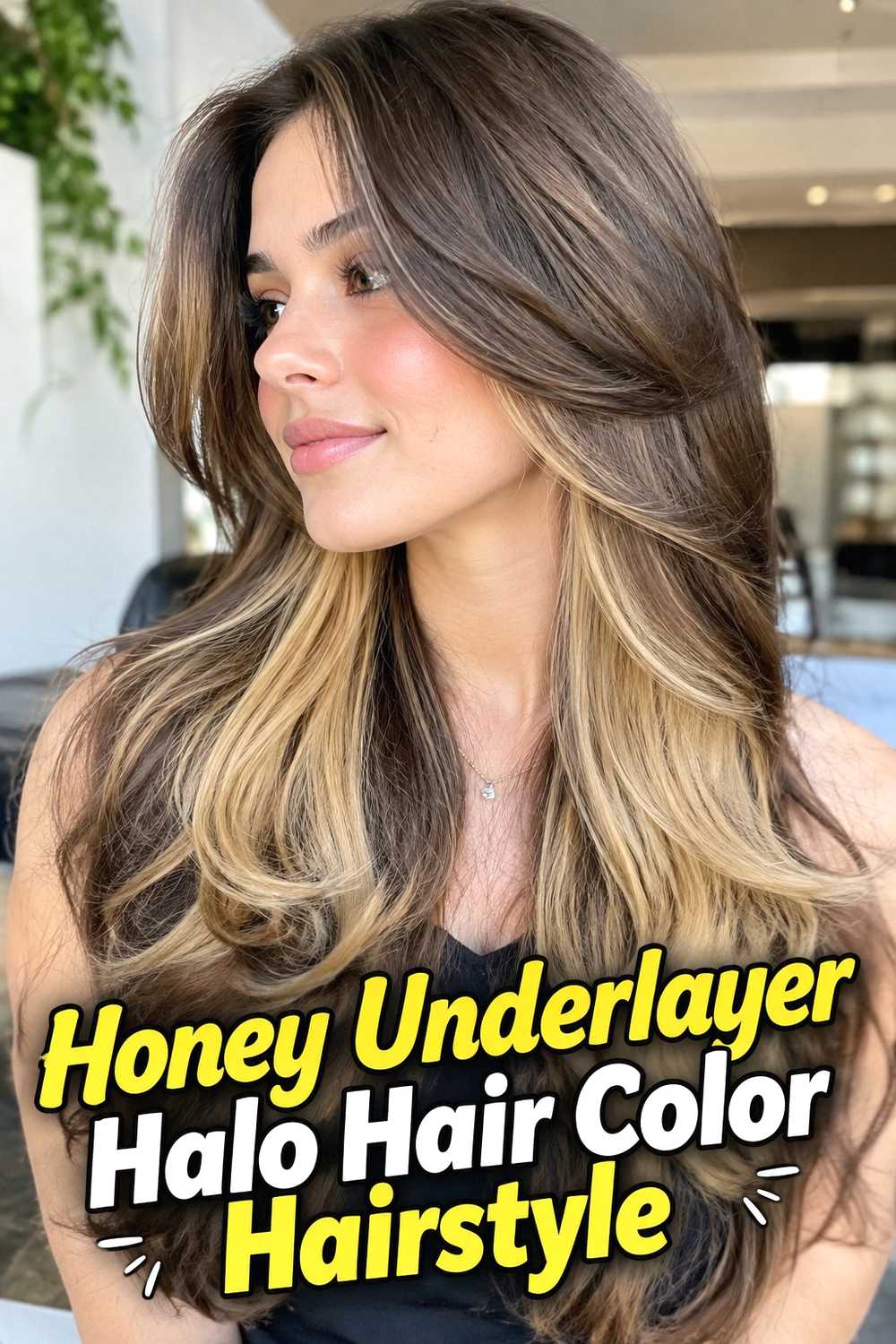
Honey underlayer color combines warm golden brightness with a deeper brown or dark blonde top layer. The result is softer than platinum but lighter and more luminous than caramel. Honey pieces can wrap around the sides and lower perimeter, appearing through movement and layered styling without covering the entire surface. This version looks particularly attractive in sunlight because the warm underlayer catches light beneath the darker hair. Loose bends and face-framing layers reveal the placement especially well. Keeping the honey tone slightly dimensional instead of one flat shade can help the effect feel more natural, while gentle root blending makes the transition easier to wear as the color grows.
Styling Notes
Waves or softly flipped ends help expose the honey underlayer without making the contrast look overly striped.
Wear & Maintenance
Warm blonde tones may become more golden over time, so occasional toning can help maintain the intended honey balance.
8. Ash Blonde Underlayer Halo Hair Color Hairstyle
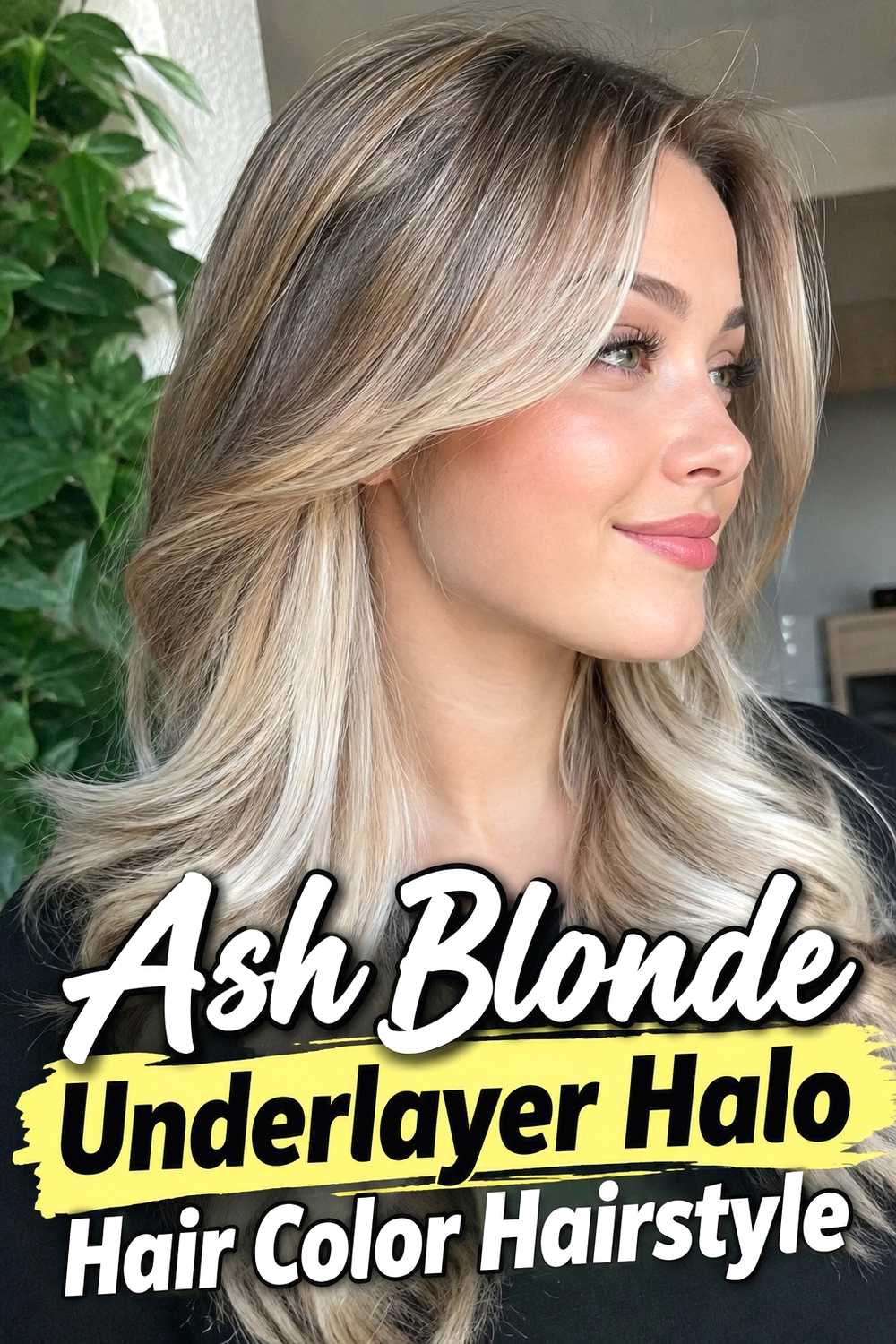
Ash blonde underlayer color creates a cool contrast beneath darker brunette or neutral blonde hair. Unlike golden or honey tones, the underlayer leans beige, smoky, or muted, which gives the two-tone effect a more subdued character. Straight hair shows the clean contrast clearly, while waves break the cool blonde into smaller flashes through the lengths. This version works particularly well if you prefer neutral or cooler color palettes and want to avoid strong yellow or copper warmth. Because lightened hair can shift warmer as toner fades, maintaining the ash direction may require more regular toning than naturally warm underlayer shades. The darker surface keeps the contrast dramatic even when the blonde remains muted.
Why It Works
The difference in both depth and undertone creates clear dimension while preserving a cool overall palette.
Wear & Maintenance
Cool blonde tones generally need periodic toning if you want to keep beige or smoky warmth under control.
9. Chocolate Underlayer Halo Hair Color Hairstyle
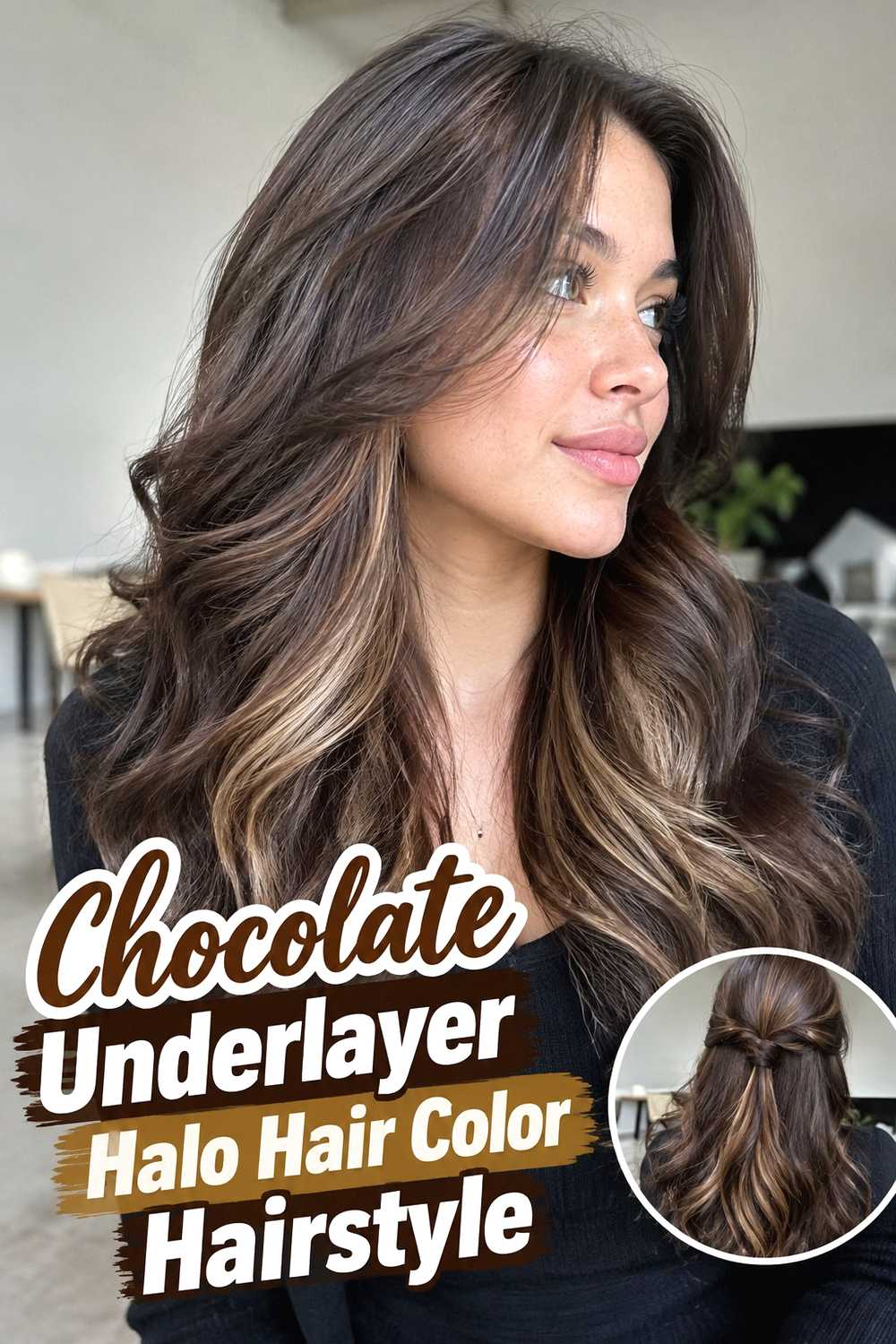
Chocolate underlayer color offers a subtle option for lighter brown, bronde, or warm brunette hair. Instead of placing a brighter shade underneath, this variation uses a deeper chocolate tone to create shadow and contrast beneath the surface. The effect becomes visible through waves, layered ends, and updos, giving the hair more depth without relying on obvious highlighting. It can also make lighter surface strands appear brighter by comparison. This version is especially useful if you prefer dimensional brunette color and want the hidden layer to look sophisticated rather than vivid. Keeping the chocolate tone glossy helps the underlayer remain intentional instead of disappearing into the surrounding brown shades.
Best For
Choose this version if you want hidden depth rather than hidden brightness and prefer an all-brunette color palette.
Styling Notes
Layered waves can reveal the darker chocolate sections between lighter surface pieces and emphasize the contrast.
10. Red Underlayer Halo Hair Color Hairstyle
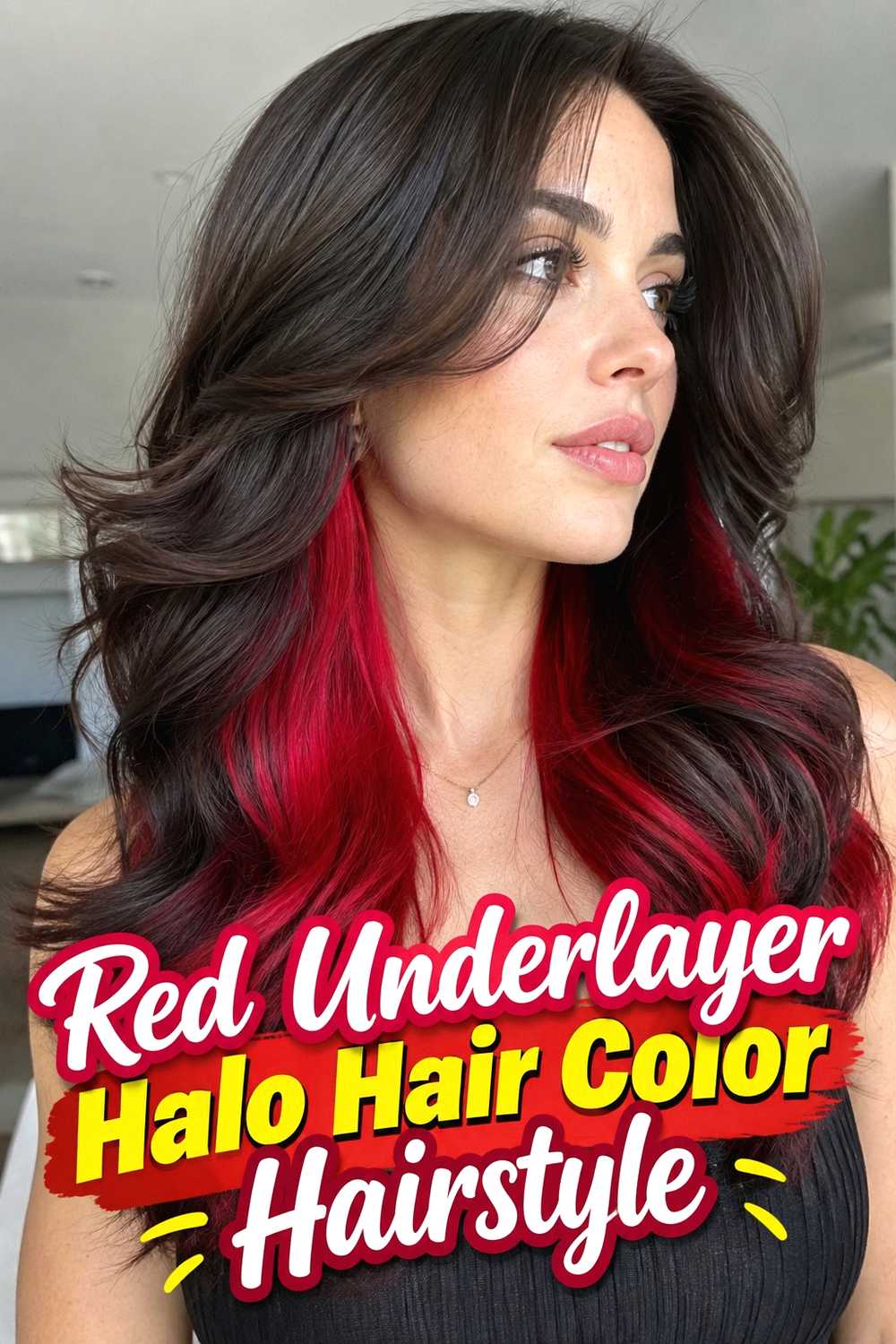
Red underlayer color creates a bold interior flash beneath brunette, black, or dark red hair. The shade can range from true crimson to deeper scarlet, depending on how dramatic you want the contrast to appear. When the hair is down, the red may show only near the nape and ends, but pulled-back styles can reveal a much larger area. This makes the placement flexible enough to shift from subtle to striking depending on styling. Keeping the surface dark also protects the overall silhouette from becoming visually overloaded. Since red pigments can fade quickly in comparison with many brunette shades, maintaining consistent saturation is one of the main practical considerations with this version.
Why It Works
The concealed placement lets a vivid color make an impact without requiring the entire head to be bright red.
Pro Tip
Choose the red intensity based on how often you want the underlayer to be visible rather than simply selecting the brightest available shade.
11. Golden Underlayer Halo Hair Color Hairstyle
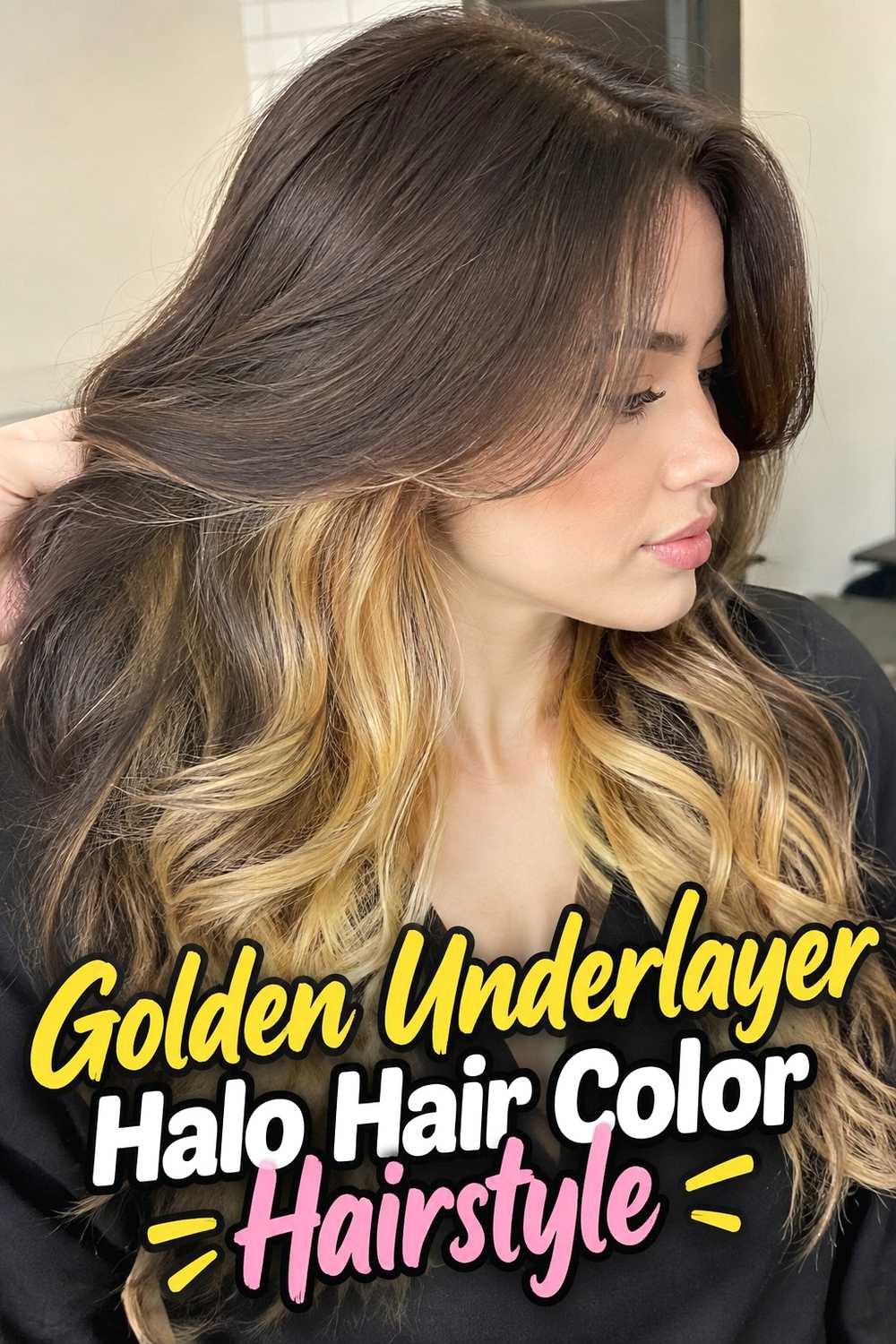
Golden underlayer color brings warm reflective brightness beneath medium or deep brown hair. Compared with caramel, it usually appears lighter and more luminous, giving the hidden layer a sunlit effect when it catches natural light. The color can be concentrated through the lower perimeter or carried slightly higher around the sides for greater visibility. Long layers and loose waves make the golden sections appear at multiple points through the hair, adding depth without turning the surface fully highlighted. This is a good option if you want noticeable warmth with less contrast than icy blonde. Keeping several tones of gold and brown through the transition prevents the underlayer from looking like a flat stripe.
Wear & Maintenance
Golden tones can become warmer as they fade, so periodic glossing or toning may help keep the color balanced.
Best For
This version suits someone who wants a bright underlayer while maintaining a warm, dimensional overall color palette.
12. Pink Underlayer Halo Hair Color Hairstyle
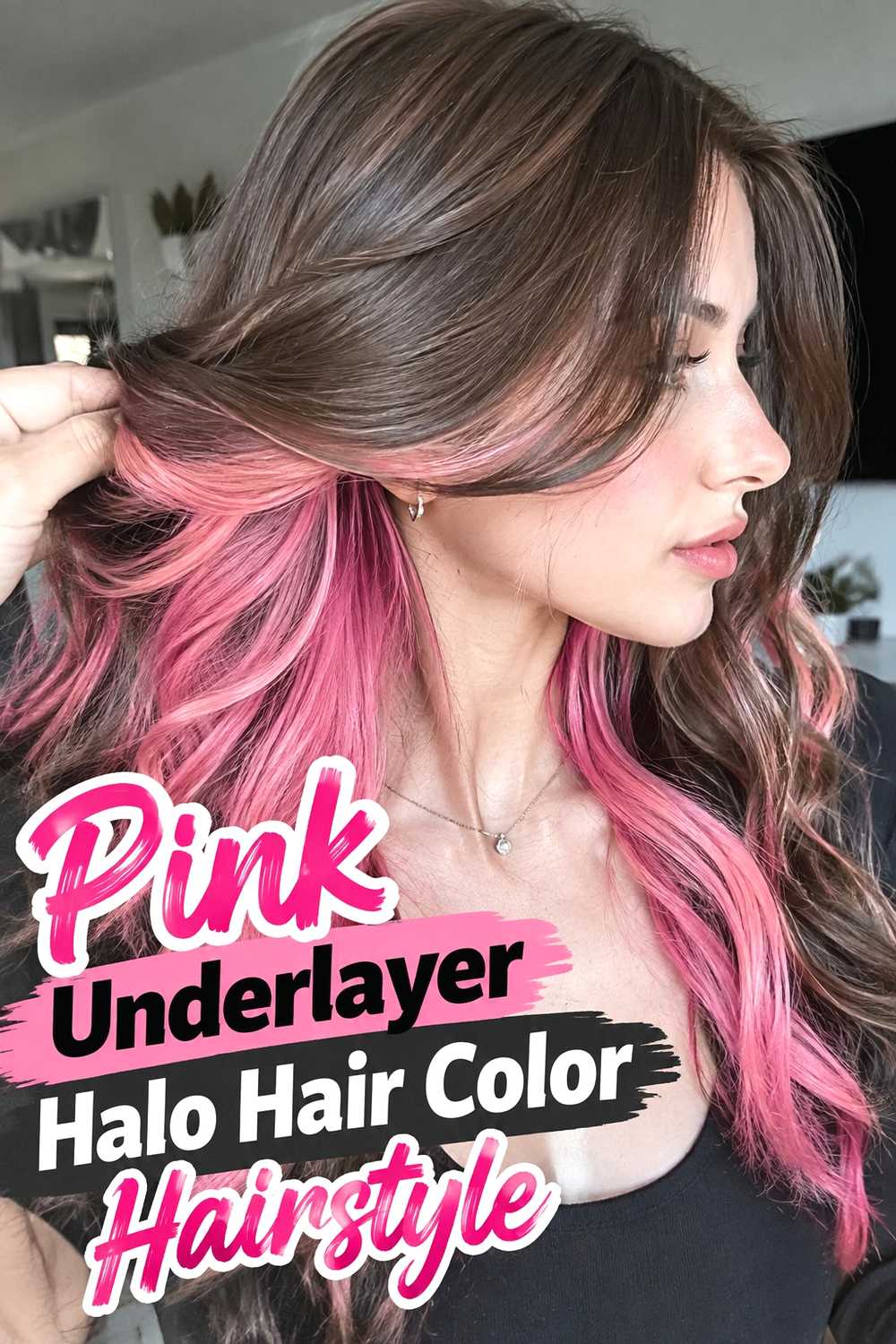
Pink underlayer color creates a playful hidden accent beneath blonde, brunette, or dark hair. The intensity can range from dusty rose and muted blush to bright magenta, depending on the starting base and desired effect. Under brunette hair, a vivid pink produces stronger contrast, while pastel pink often requires a much lighter foundation underneath. The color is particularly noticeable in braids, ponytails, half-up styles, and waves that separate the top layer. This placement allows a fashion color to remain partially concealed during everyday wear while becoming more obvious through styling. Pink pigments can fade relatively quickly, so choosing a shade that still looks attractive as it softens can make upkeep easier.
Styling Notes
Half-up styles and loose waves reveal the pink sections without exposing the entire underlayer at once.
Wear & Maintenance
Fashion shades may need more frequent refreshing, especially if you want a bright rather than softly faded pink.
13. Blue Underlayer Halo Hair Color Hairstyle
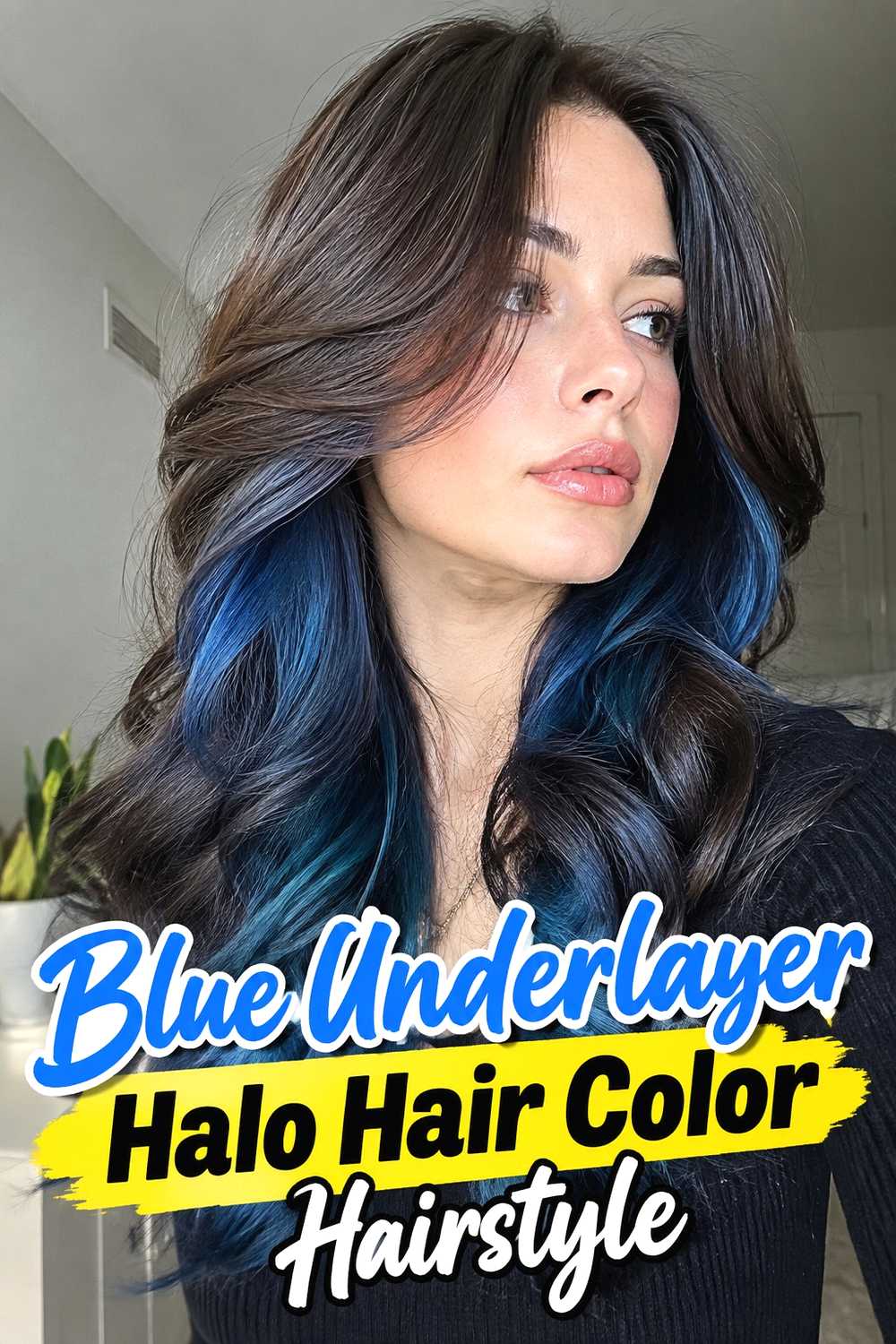
Blue underlayer color creates a cool, dramatic contrast beneath brunette, black, or lighter hair. Deep navy and teal-blue shades can remain relatively subtle under very dark hair, while brighter cobalt or electric blue produce a stronger reveal. The placement works especially well near the nape and lower sides, where the color can remain hidden until the hair moves or is tied back. Waves and layered cuts reveal flashes of blue throughout the lengths without covering the top surface. Because blue can shift in tone as it fades, maintenance depends heavily on the exact shade and starting base. A darker blue generally keeps the underlayer feeling richer and less neon.
Best For
Choose this style if you want a cool fashion-color accent that can remain partly concealed during everyday wear.
Pro Tip
Consider how the blue will fade when selecting the shade, especially if you prefer a consistently deep or saturated finish.
14. Face Framing Underlayer Halo Hair Color Hairstyle
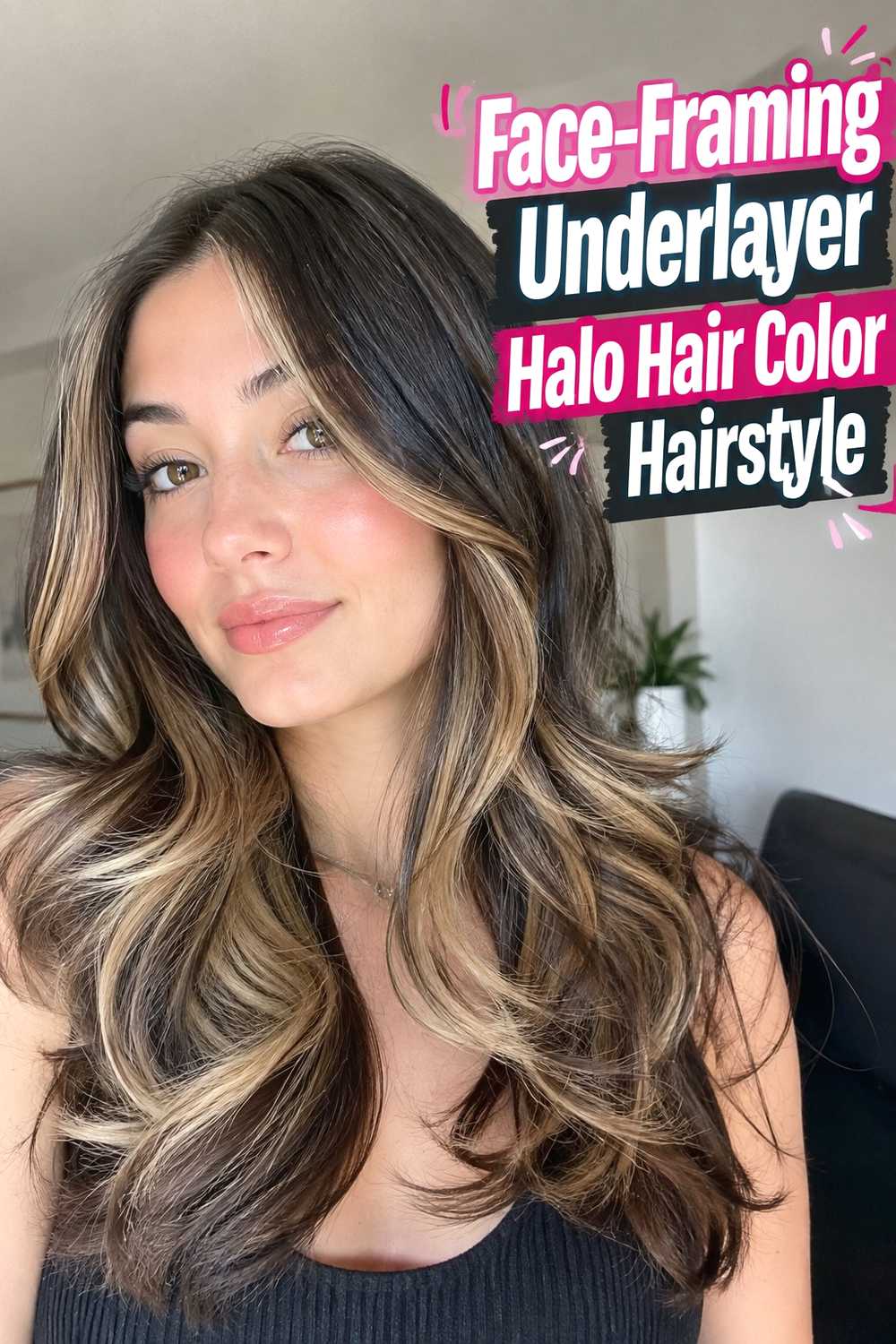
Face-framing underlayer color brings the hidden halo higher around the sides of the face, allowing more contrast to appear near the temples, ears, and jaw. The top surface can stay darker or more natural while the color underneath becomes visible when the front pieces move. This creates a hybrid between traditional underlayer color and face-framing highlights. Blonde, caramel, copper, or vivid fashion shades can all work depending on how noticeable you want the effect to be. On layered hair, the hidden color can appear beneath cheekbone and collarbone pieces, adding depth without taking over the entire front. Careful placement keeps the underlayer visible without turning it into a solid surface panel.
Why It Works
Bringing the hidden color closer to the face makes the halo easier to see while preserving depth through the top layer.
Styling Notes
Tucking the front pieces behind the ears or styling them away from the face reveals the underlayer most clearly.
15. High Contrast Underlayer Halo Hair Color Hairstyle
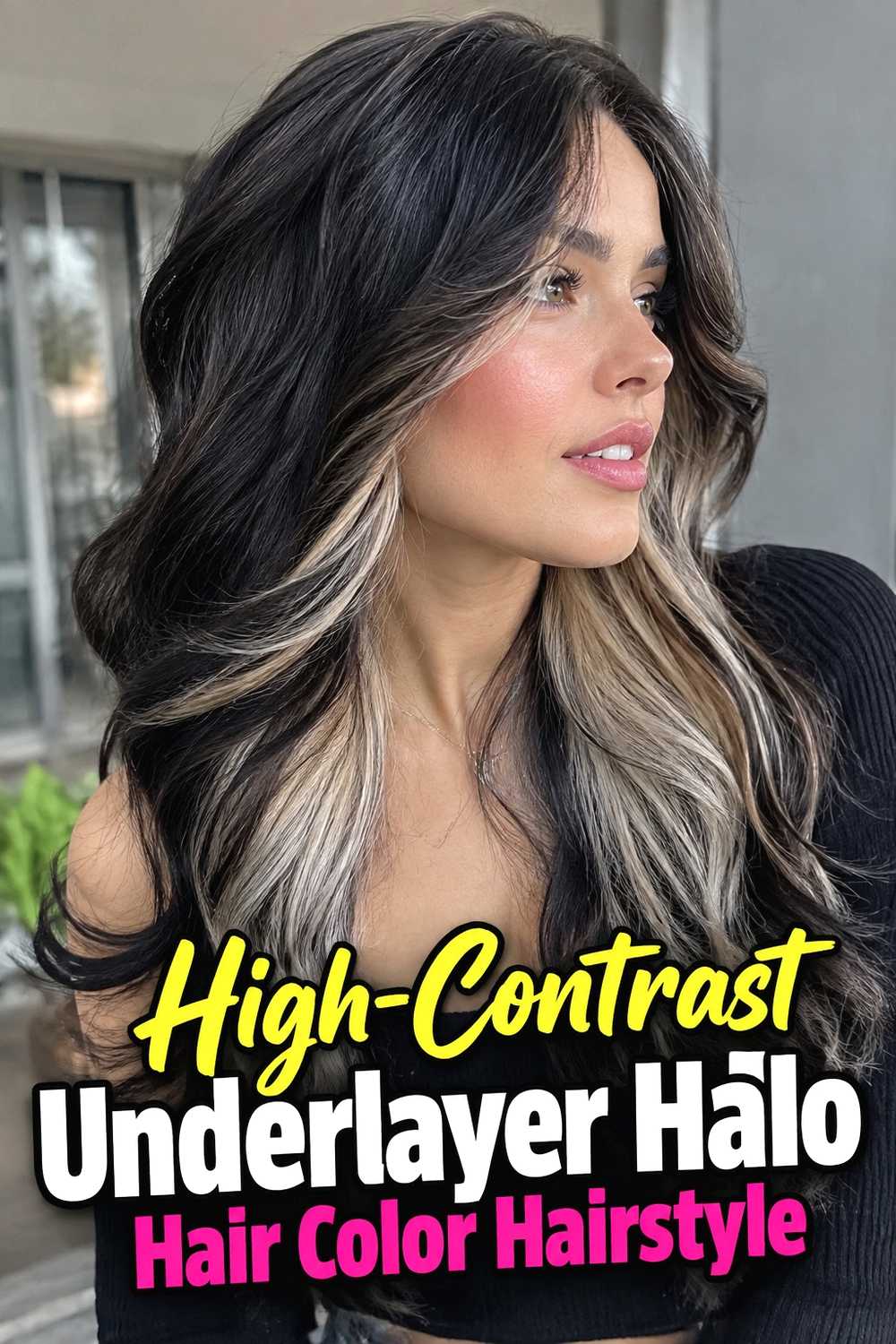
High-contrast underlayer color pairs a very dark top layer with a much lighter or brighter interior shade. Black over blonde, espresso over copper, brunette over vivid red, or dark brown over platinum can all create a striking hidden effect. The contrast becomes most obvious when the hair separates, moves, or is pulled into an updo. This version feels bolder than a blended halo because the difference between the top and underlayer is intentionally strong. Placement needs to be precise so the two colors remain visually distinct instead of muddying together. Since both regrowth and fading can be easier to notice at high contrast, this approach generally requires more deliberate maintenance.
Wear & Maintenance
Strong color separation makes tonal changes more visible, so expect more noticeable upkeep than with brunette-on-brunette versions.
Best For
This style works well if you want the underlayer to look unmistakably intentional rather than softly blended.
16. Soft Balayage Underlayer Halo Hair Color Hairstyle
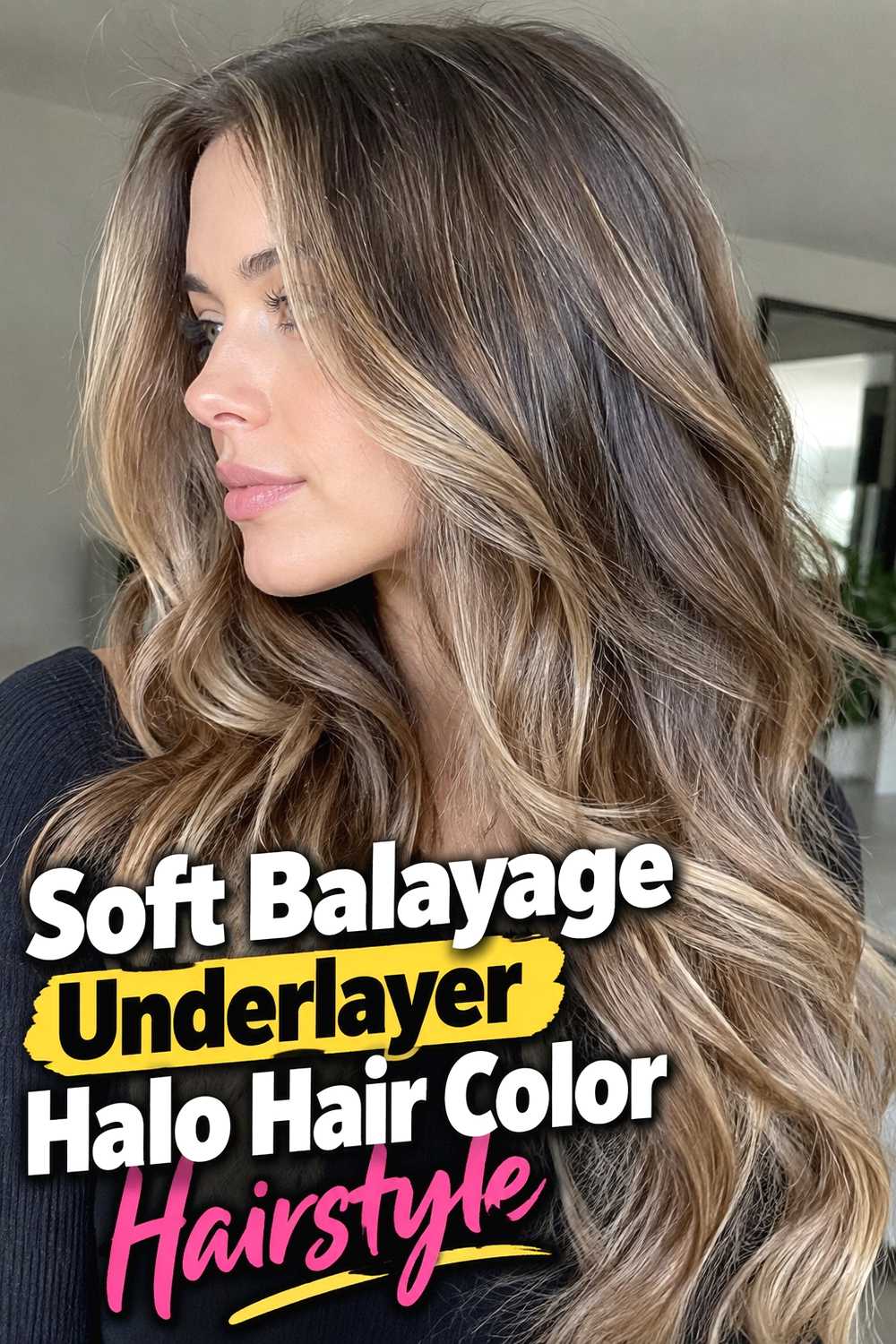
Soft balayage underlayer color blends the hidden halo through selected interior ribbons instead of creating one solid block beneath the surface. The brightest pieces may sit around the nape, sides, and lower layers, then fade into deeper sections toward the roots. This creates a softer reveal when the hair moves and can make the grow-out feel less obvious. Caramel, beige blonde, honey, and copper are especially effective for this approach because they transition naturally into brunette bases. Loose waves show the interior placement beautifully, allowing smaller flashes of light to appear through the lengths. The goal is a dimensional hidden effect rather than a sharply divided two-tone color.
Why It Works
Balayage-style placement softens the transition between the top and underlayer, creating movement without a hard color boundary.
Wear & Maintenance
The softer root transition can make regrowth easier to manage, although the lighter interior pieces may still need tonal refreshing.
17. Peekaboo Underlayer Halo Hair Color Hairstyle
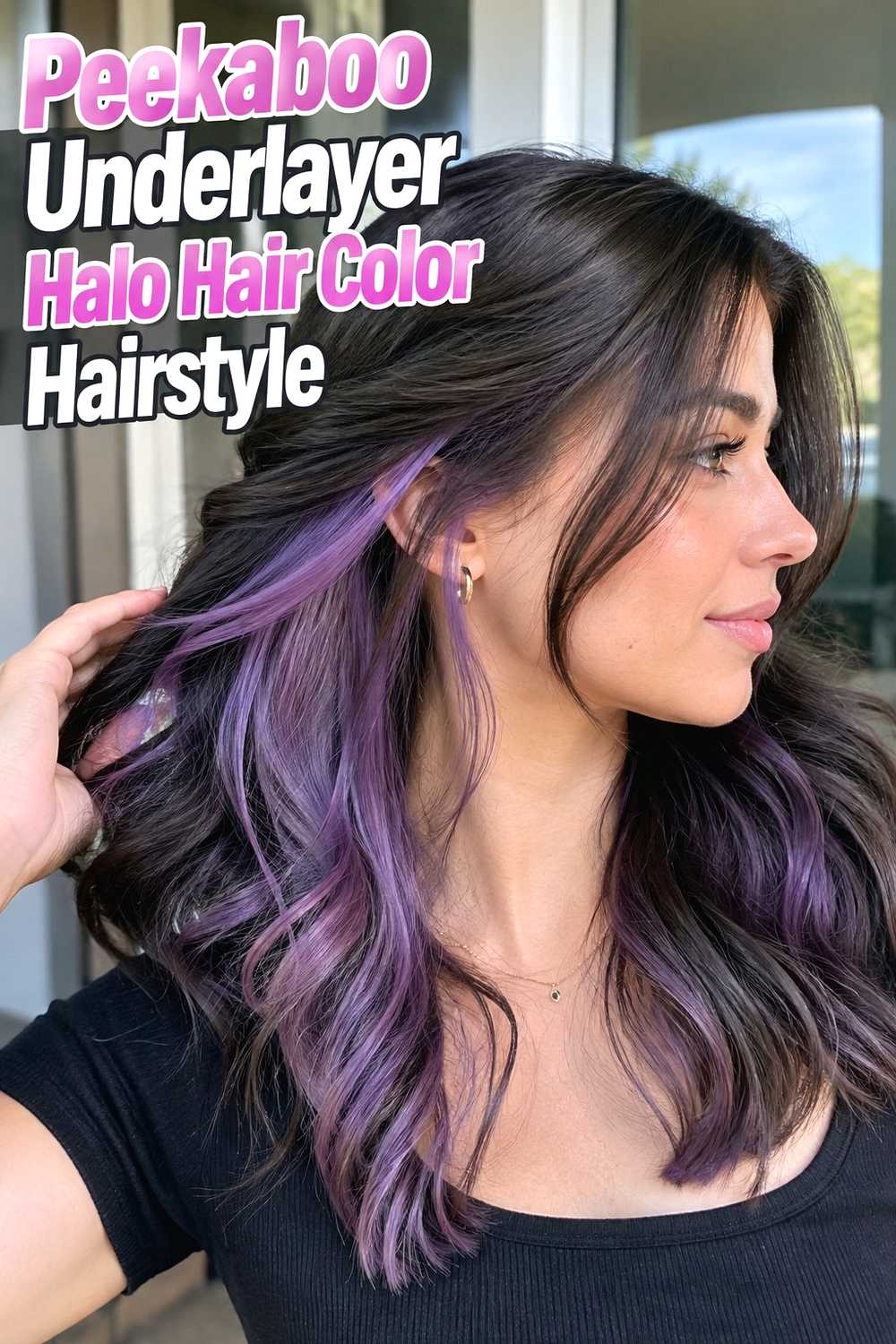
The peekaboo version makes the hidden-color concept especially playful by concentrating bold color beneath sections that can be concealed or revealed depending on styling. The top layer stays relatively uniform, while a contrasting shade sits around the nape, sides, or interior panels. When the hair is worn down, the color may appear only in small flashes. Braids, buns, ponytails, and half-up styles expose much more of it. Blonde, red, pink, blue, copper, and violet can all work depending on the desired mood. This placement is ideal if you enjoy changing how visible your color looks from day to day without altering the entire surface of the hair.
Why It Works
The hidden placement allows one haircut and color combination to shift from understated to bold simply through styling.
Pro Tip
Plan the underlayer around the hairstyles you wear most often so the color appears exactly where you want it when the hair is lifted or tied back.
How to Choose the Right Look
Start with how visible you want the underlayer to be. Caramel, chocolate, honey, and soft balayage versions create gentler contrast, while platinum blonde, vivid red, pink, blue, and high-contrast placements make the hidden color much more obvious.
Your base color is equally important. Very dark hair naturally creates strong contrast with blonde or bright fashion shades, while medium brunette hair pairs easily with caramel, honey, copper, and golden underlayers. If you want a more subtle result, staying within a few levels of your natural depth usually keeps the halo more blended.
Think about your styling habits, too. If you frequently wear ponytails, buns, braids, or half-up styles, the underlayer will be exposed more often. If you normally wear your hair loose and straight, the color may remain significantly more concealed.
Maintenance varies by shade. Brunette and caramel tones usually fade more quietly, while red, pink, blue, and very light blonde can require more frequent toning or color refreshing to maintain their original finish.
Final Thoughts
Underlayer halo hair color offers a flexible way to add dimension, contrast, or vivid color without changing the entire visible surface of the hair. Softer brunette and blonde combinations keep the effect refined, while bold reds, pinks, blues, and high-contrast shades make the hidden layer more expressive. Choose a placement and color that fit both your everyday styling habits and the amount of maintenance you realistically want.
FAQs
1. What is underlayer halo hair color?
It is a coloring technique that places a contrasting or lighter shade beneath the top layer of hair, allowing the color to appear through movement, styling, or separation.
2. Is underlayer hair color the same as peekaboo color?
They are closely related. Peekaboo color typically emphasizes hidden panels, while an underlayer halo can wrap more continuously around the lower perimeter or interior.
3. Which underlayer colors look subtle?
Chocolate, caramel, honey, and softly blended brunette or blonde tones usually create a more understated effect than vivid red, pink, blue, or platinum.
4. Does underlayer color show when the hair is down?
It can, but visibility depends on placement, hair density, layering, texture, and contrast. Some versions remain mostly hidden until the hair moves or is styled up.
5. Is underlayer halo hair color high maintenance?
It depends on the shade. Natural brunette and warm caramel tones generally grow out more softly, while vivid fashion colors and very light blonde underlayers may need more frequent refreshing.
Save your favorite underlayer halo color idea, share it for inspiration, and explore more hidden-color combinations that match your preferred contrast and maintenance level.