14 Reverse Halo Hair Color Ideas for Dimensional Contrast
Deep perimeter color meeting brighter interior pieces gives reverse halo hair color its sculpted, dimensional effect without relying on traditional bright face-framing highlights.
Reverse halo color flips conventional halo placement by creating more depth around the hairline and outer edges while keeping strategic brightness through the interior. Current salon descriptions of reverse halo contouring emphasize darker perimeter tones paired with lighter internal dimension for a softer, sculpted contrast.
That contrast can be subtle with bronde, caramel, or mushroom tones, or dramatically defined with icy blonde against brunette or black. Hair length, layering, natural texture, styling habits, and maintenance all influence how clearly the interior brightness shows, so this collection includes both blended and higher-contrast variations.
Quick List
- Espresso Reverse Halo Contour Hairstyle
- Bronde Reverse Halo Contour Hairstyle
- Vanilla Blonde Reverse Halo Hairstyle
- Chocolate Beige Reverse Halo Hairstyle
- Smoky Brunette Reverse Halo Hairstyle
- Honey Blonde Reverse Halo Hairstyle
- Copper Brunette Reverse Halo Hairstyle
- Caramel Reverse Halo Contour Hairstyle
- Icy Blonde Reverse Halo Hairstyle
- Mushroom Brown Reverse Halo Hairstyle
- Chestnut Reverse Halo Contour Hairstyle
- Golden Blonde Reverse Halo Hairstyle
- Soft Black Blonde Reverse Halo Hairstyle
- Auburn Reverse Halo Contour Hairstyle
1. Espresso Reverse Halo Contour Hairstyle
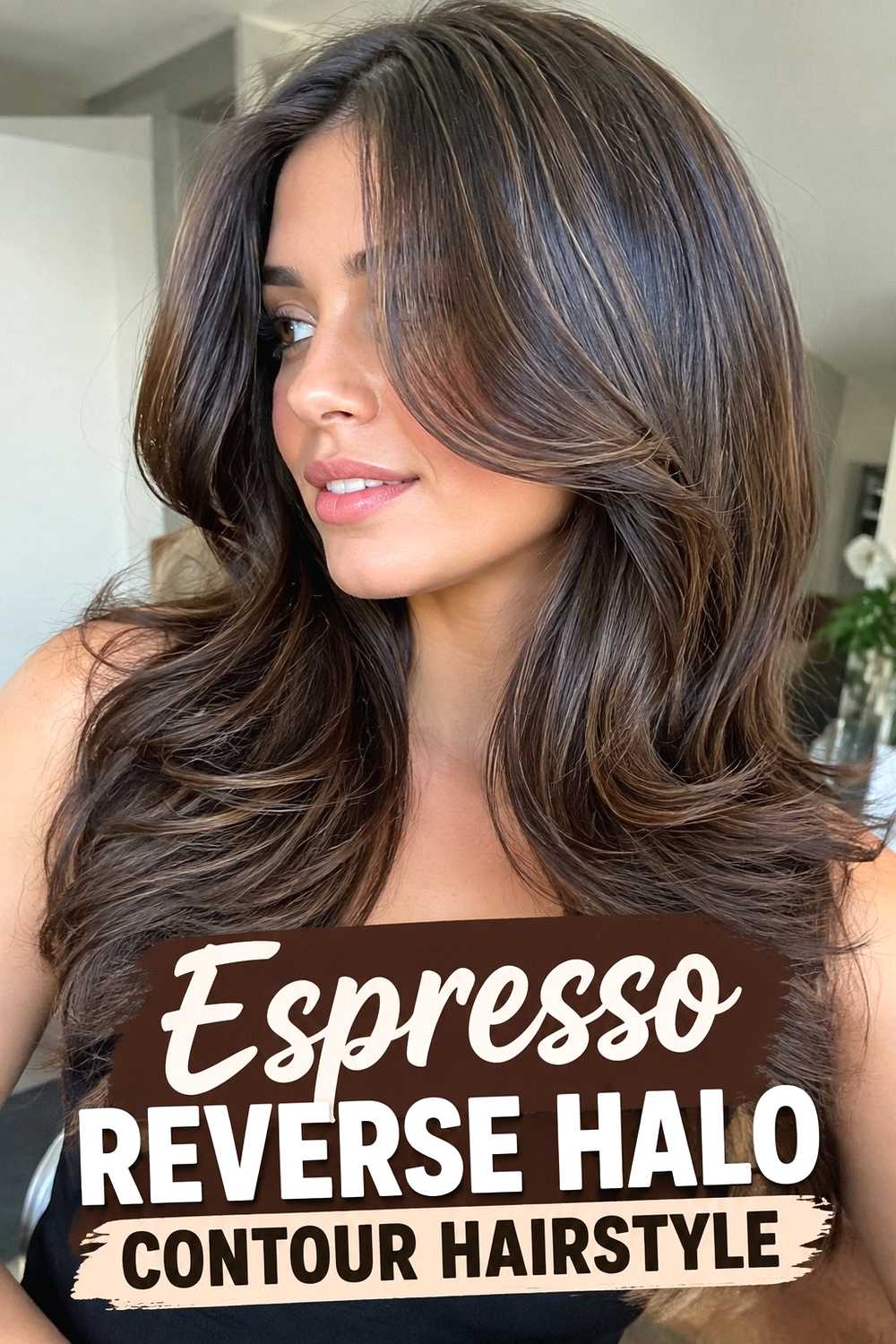
Espresso reverse halo contouring creates a polished contrast by keeping the hairline and outer perimeter a rich, dark brown while allowing lighter brunette ribbons to illuminate the interior. The darker frame gives the hairstyle visual depth without covering every strand in a deep shade. Loose bends make the internal brightness easier to see because the lighter pieces move through the darker surface in soft flashes. This combination is particularly effective on medium to long layered hair, where several levels of movement reveal the color gradually. Keeping the interior only moderately lighter than the espresso perimeter creates a luxurious dimensional result rather than an obvious two-tone block.
Best For
This version works well for brunettes who want stronger depth around the edges while preserving brightness through the lengths. Layers, waves, and rounded blowouts reveal the contrast especially well.
2. Bronde Reverse Halo Contour Hairstyle
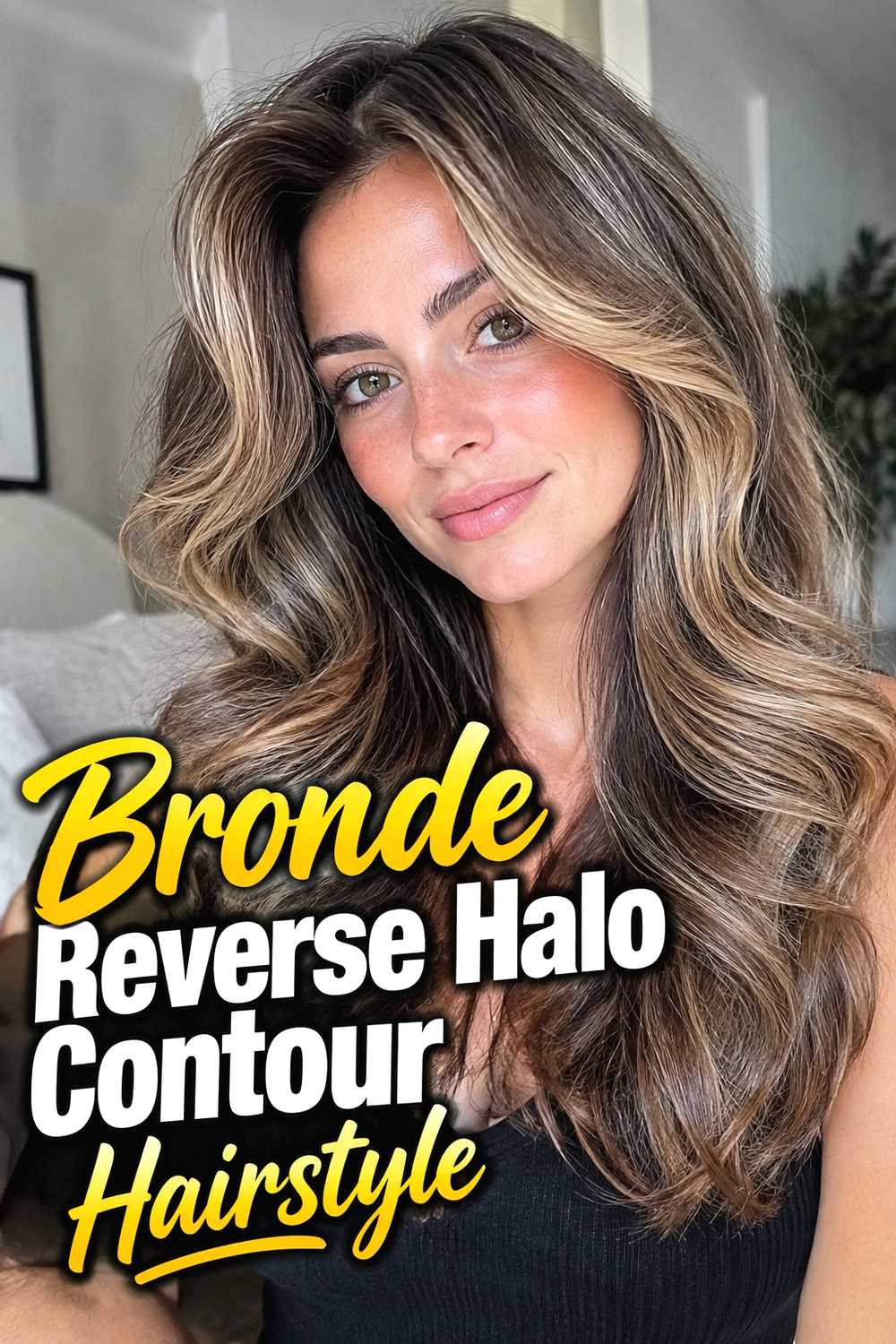
A bronde reverse halo contour hairstyle balances blonde brightness with brunette depth in a way that feels deliberately blended. Instead of highlighting the entire hairline, deeper neutral brown is placed around the outer frame while soft beige-blonde and light brown tones remain visible through the interior. The result has plenty of brightness without making the perimeter look overly light. On long layers, the bronde center becomes more noticeable as the hair separates through movement, while the darker edge keeps the silhouette defined. This is an appealing middle ground for anyone who likes blonde dimension but prefers a rooted, lived-in effect rather than a uniformly light finish.
Styling Notes
Soft waves or a voluminous blowout help the lighter interior overlap with the darker frame. Keep the bends loose so the color placement remains visible instead of disappearing into tightly packed curls.
3. Vanilla Blonde Reverse Halo Hairstyle
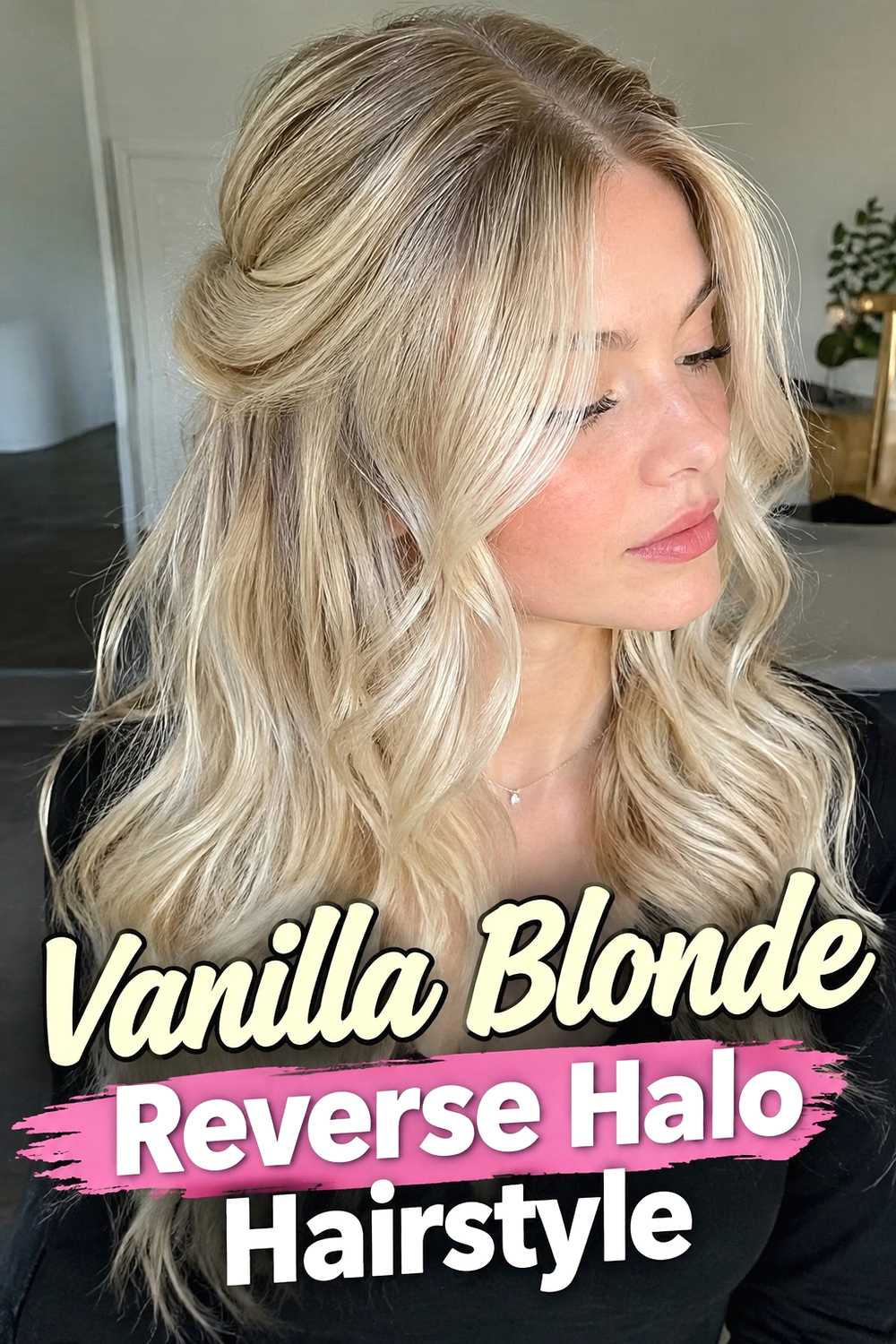
Vanilla blonde reverse halo color uses creamy pale blonde through the main interior while a slightly deeper blonde or light brunette tone contours the hairline. That darker edge creates separation without making the overall hairstyle feel dark. The contrast can look especially elegant on shoulder-length or longer hair because the vanilla sections remain dominant through the mids and ends while the perimeter adds subtle shadow. A smooth blowout produces a refined finish, while loose waves expose more of the darker framing color near the sides and nape. This approach can also make an all-over blonde feel more dimensional when someone wants depth without abandoning a predominantly bright result.
Wear & Maintenance
A pale vanilla interior may need toning to keep its intended balance. Because the darker perimeter is part of the design, preserving a clear difference between the two tones helps maintain the reverse halo effect.
4. Chocolate Beige Reverse Halo Hairstyle
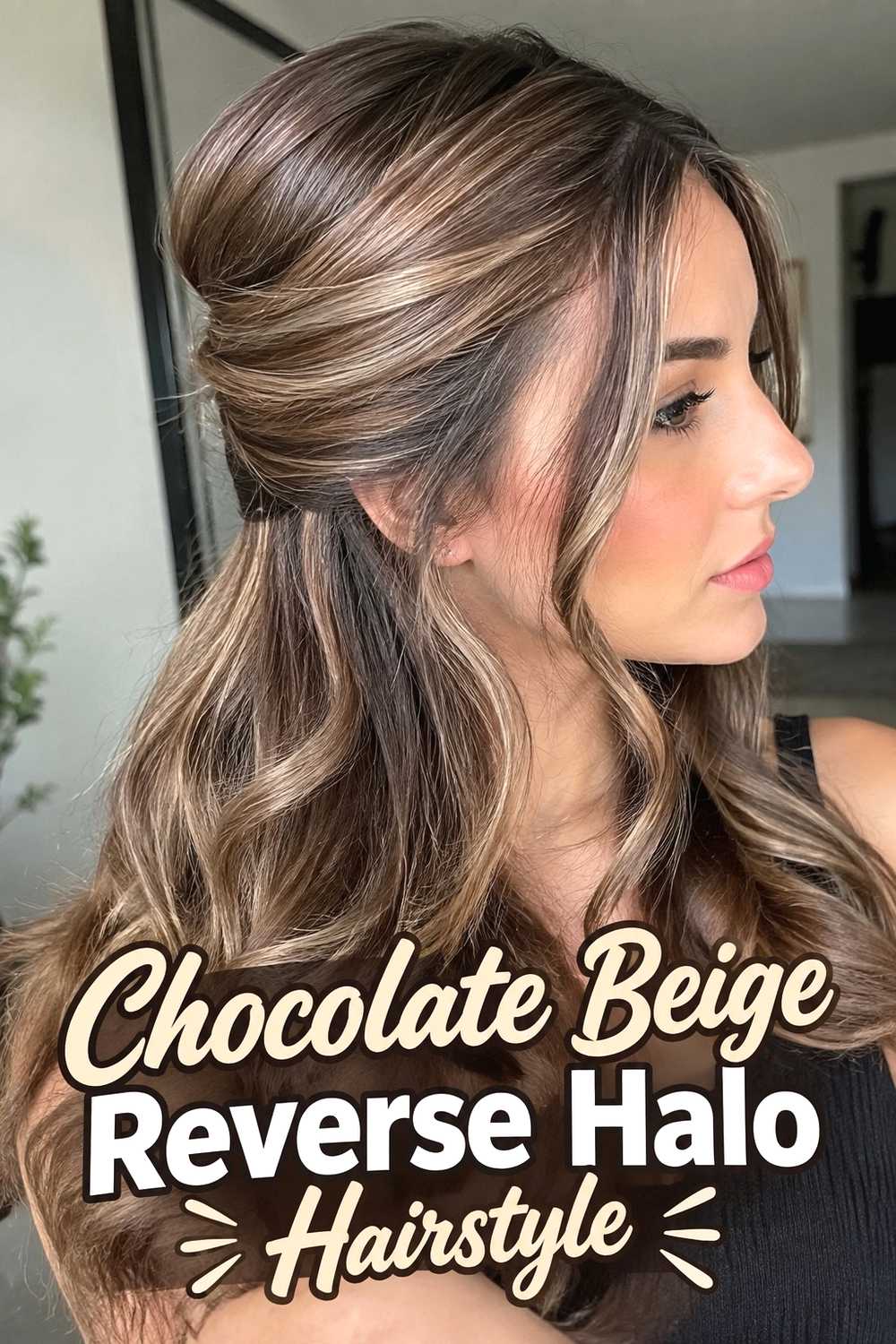
Chocolate beige reverse halo color combines a deep cocoa-toned perimeter with a lighter beige brunette interior for soft, wearable contrast. The difference is noticeable enough to create dimension but restrained enough that the hair still reads as one cohesive brunette palette. Through straight hair, the darker contour appears as a clean frame around the lighter center. Add loose waves, and beige pieces begin weaving over and under the chocolate sections, creating much more visible movement. This variation is especially flattering on layered medium or long hair because the haircut naturally exposes multiple levels of color. A gradual transition between the two shades keeps the result polished rather than striped.
Why It Works
Chocolate and beige tones share enough warmth to blend naturally while still offering visible depth. It is a useful choice when dramatic black-and-blonde contrast would feel stronger than desired.
5. Smoky Brunette Reverse Halo Hairstyle
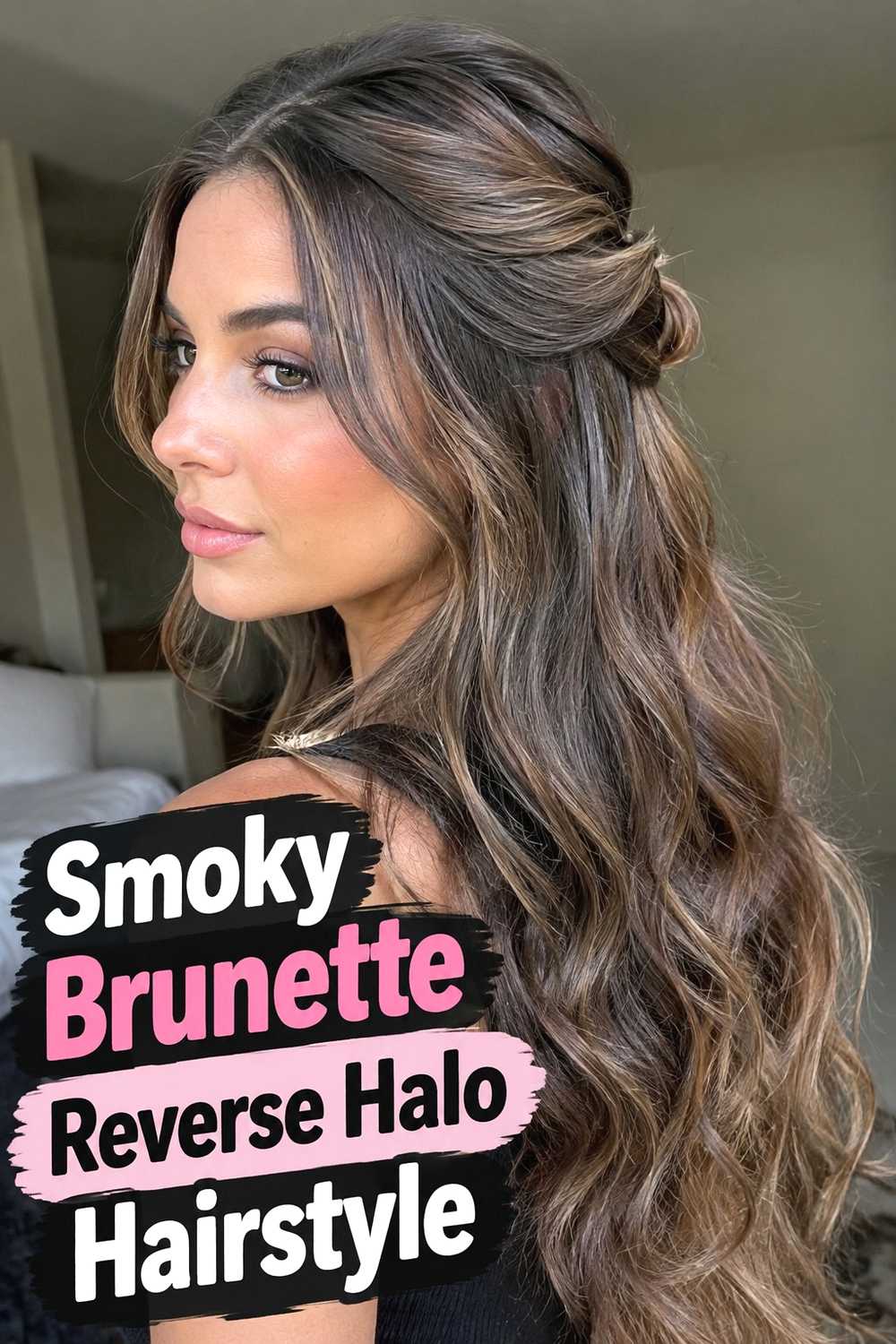
Smoky brunette reverse halo hair color takes a cooler approach, using charcoal brown or deep neutral brunette around the edges with softer taupe-brown brightness through the interior. The muted palette creates dimension without leaning strongly golden, copper, or red. When styled straight, the outer depth gives the haircut a clean, sculpted outline while the central sections appear softly illuminated. Waves reveal even more contrast as the taupe ribbons move outward from beneath the deeper perimeter. This color direction pairs particularly well with modern layered cuts and smooth lobs because the placement emphasizes structure rather than obvious streaks. The finish should stay diffused, with no abrupt line between dark and light sections.
Hair Type & Length
Shoulder-length and longer cuts provide enough room for the smoky tones to blend gradually. Both straight and wavy textures can work, though layered movement makes the internal brightness easier to notice.
6. Honey Blonde Reverse Halo Hairstyle
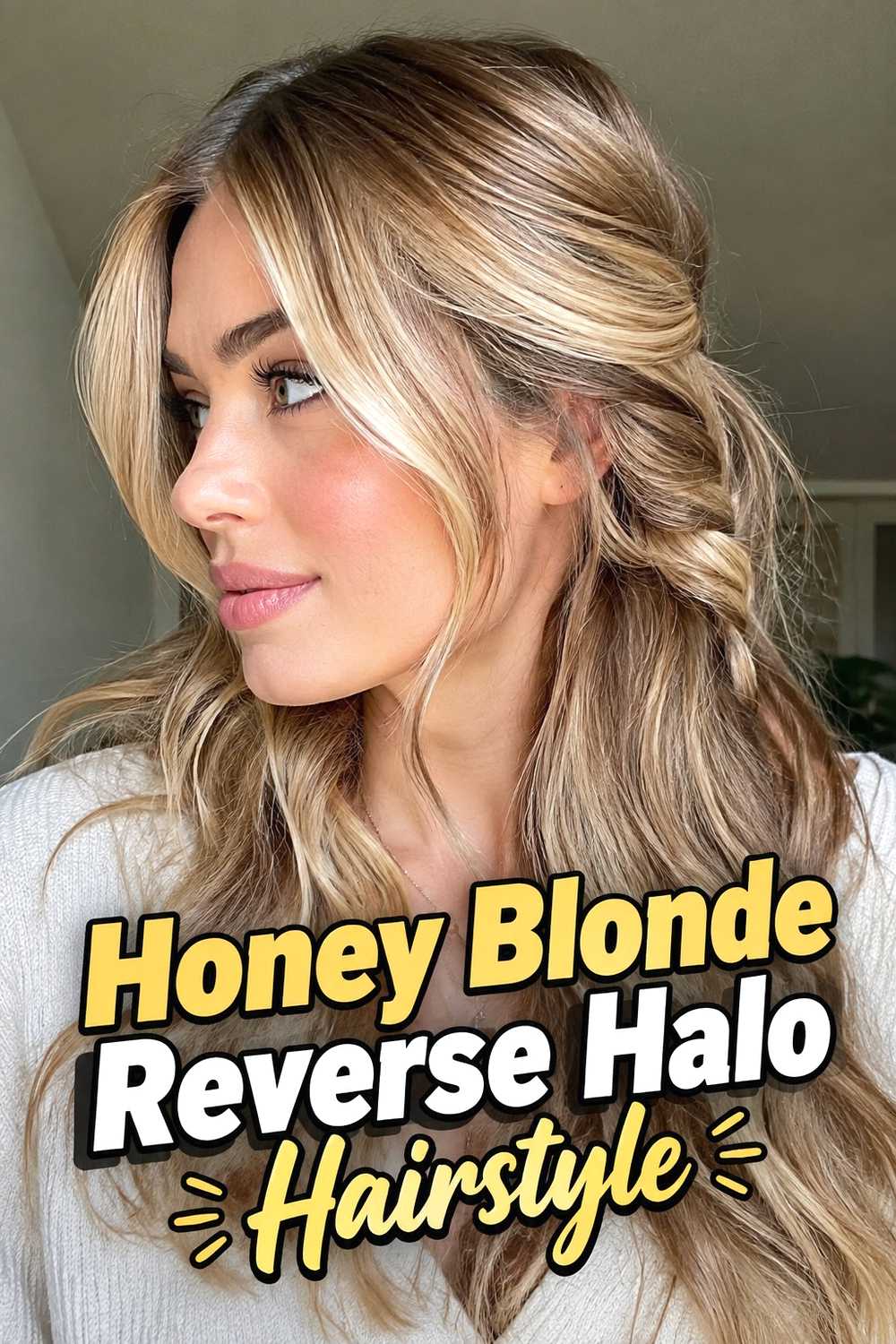
Honey blonde reverse halo color keeps warm golden brightness through the interior while surrounding it with a slightly deeper caramel or brunette perimeter. The darker contour prevents the blonde from appearing flat and gives the hairstyle a warmer, more dimensional outline. On long hair, the honey sections can remain highly visible through the mids and ends while the deeper color hugs the face, sides, and neckline. The effect becomes particularly attractive with soft waves, which allow golden pieces to sweep across the shadowed outer sections. This is a strong option for someone who enjoys warm blonde but wants more depth than traditional full highlights or an evenly light hairline would provide.
Pro Tip
Keep the perimeter depth soft rather than overly opaque if you want a blended finish. A gradual shift from deeper edges into honey-colored lengths creates a smoother transition as the hair grows.
7. Copper Brunette Reverse Halo Hairstyle
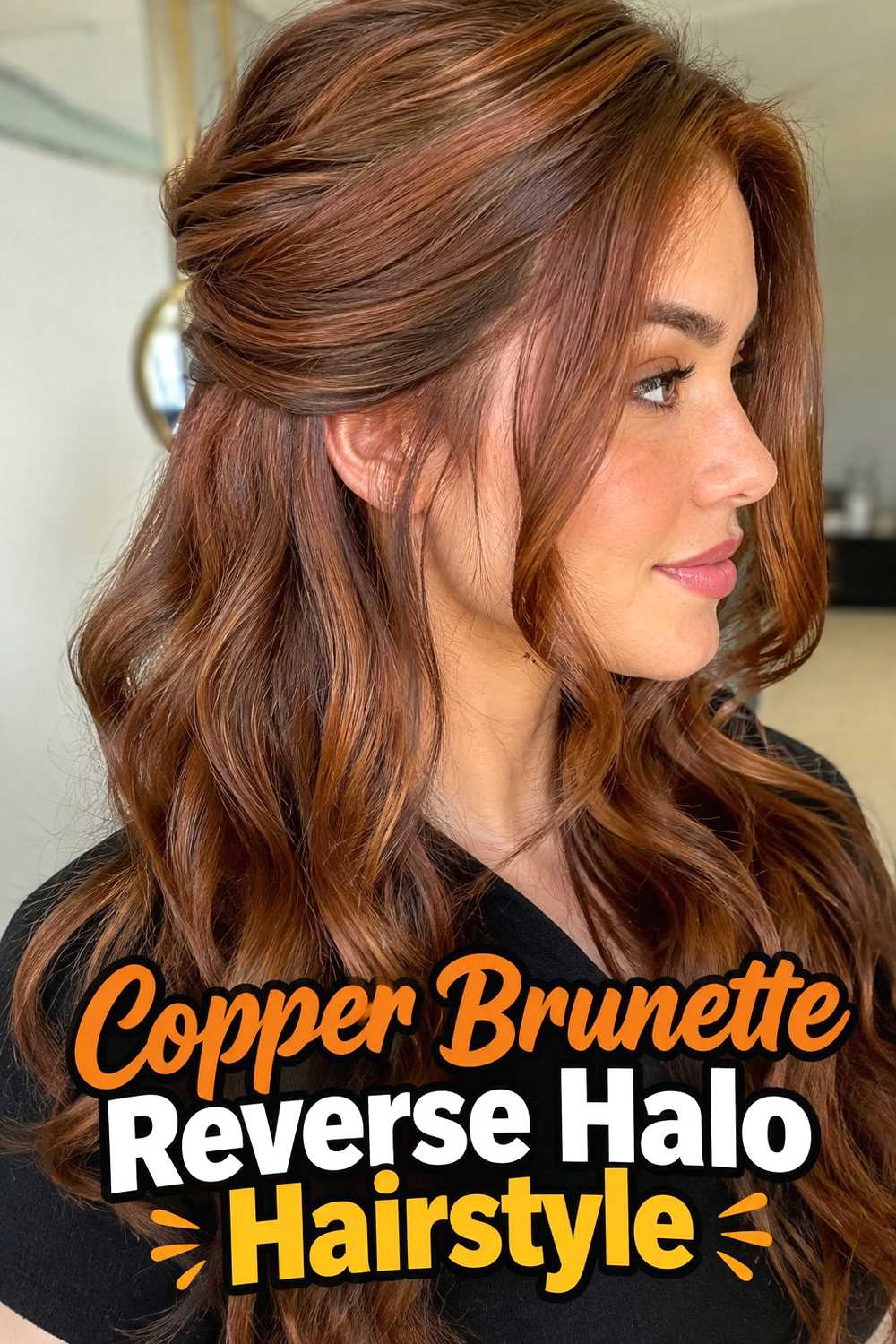
Copper brunette reverse halo color brings warmth into the interior while using richer brown around the perimeter to frame the hairstyle. Instead of bright blonde, the illuminated sections lean copper, cinnamon, or warm auburn, making the contrast colorful without feeling disconnected from a brunette base. The darker outline becomes especially visible around the temples and nape, while interior copper sections catch natural light through the lengths. Waves amplify the warm dimension because each bend reveals a different balance of brown and copper. Medium and long layered cuts give this combination plenty of room to move, while a glossy finish helps both shades appear richer and more intentional.
Wear & Maintenance
Copper tones can soften over time, so the warm interior may need periodic refreshing. Choosing a copper depth reasonably close to the brunette perimeter can make fading look more gradual.
8. Caramel Reverse Halo Contour Hairstyle
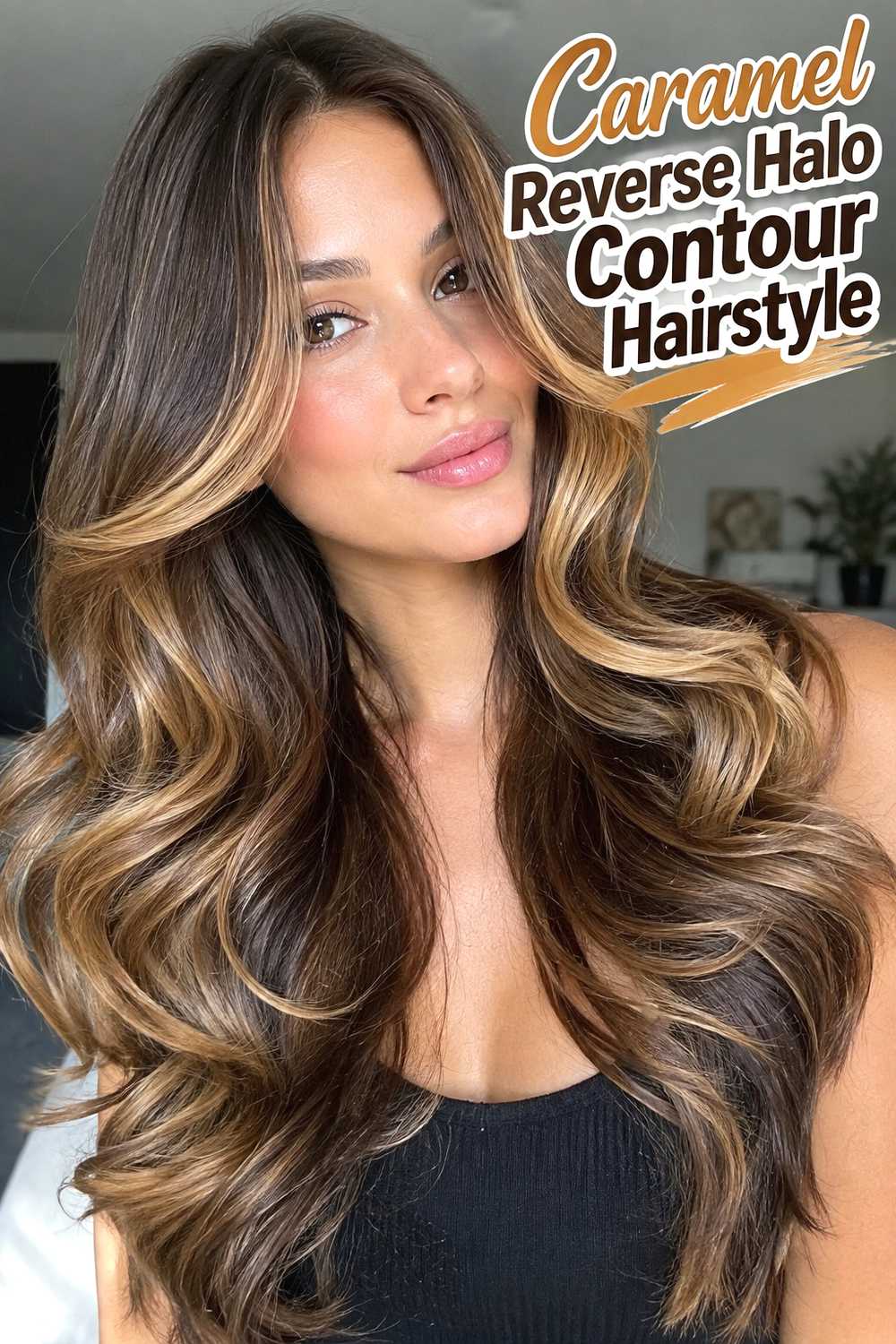
Caramel reverse halo contouring creates a naturally warm dimensional effect by pairing deeper brown around the hairline with caramel brightness inside the hairstyle. The darker edge adds definition, while the caramel sections keep the overall result luminous and soft. Because the tones are relatively close, this version can look understated when the hair is smooth and much more dimensional when it is waved or layered. Long face-framing pieces are particularly useful because they allow both the shadowed perimeter and brighter interior to appear in the same area without relying on a conventional blonde money piece. The finish works best when the caramel is blended rather than arranged in thick, isolated bands.
Best For
Choose this approach if you want visible warmth and depth without an extreme contrast. Brunette bases with medium or long layers give the caramel interior plenty of natural movement.
9. Icy Blonde Reverse Halo Hairstyle
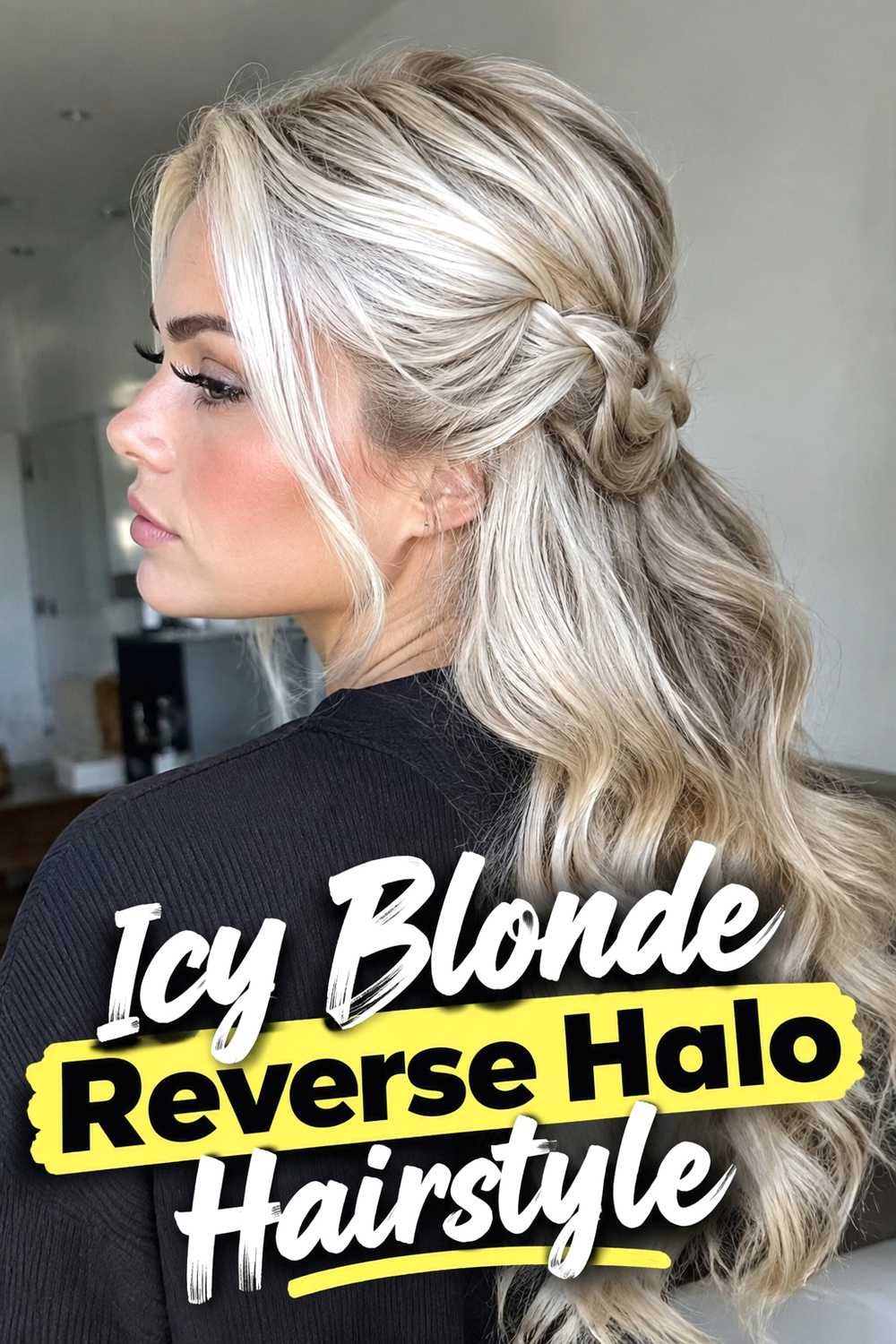
Icy blonde reverse halo hair color offers one of the boldest interpretations of the technique. Pale, cool blonde dominates the interior while a deeper ash brown or brunette perimeter creates a sharply defined frame. The darker hairline makes the blonde center appear even brighter, particularly when the hair is worn smooth or tucked behind the ears. Loose curls create a different effect, allowing dark edge pieces to travel through the icy lengths in narrow ribbons. Because reaching an icy tone can require substantial lightening depending on the starting color, the condition of the hair matters when planning this combination. A softly blended boundary keeps the look graphic without appearing accidentally disconnected.
Wear & Maintenance
Cool blonde usually requires more toning than deeper brunette shades. Maintaining both the pale interior and darker perimeter separately may also be important when preserving crisp contrast.
10. Mushroom Brown Reverse Halo Hairstyle
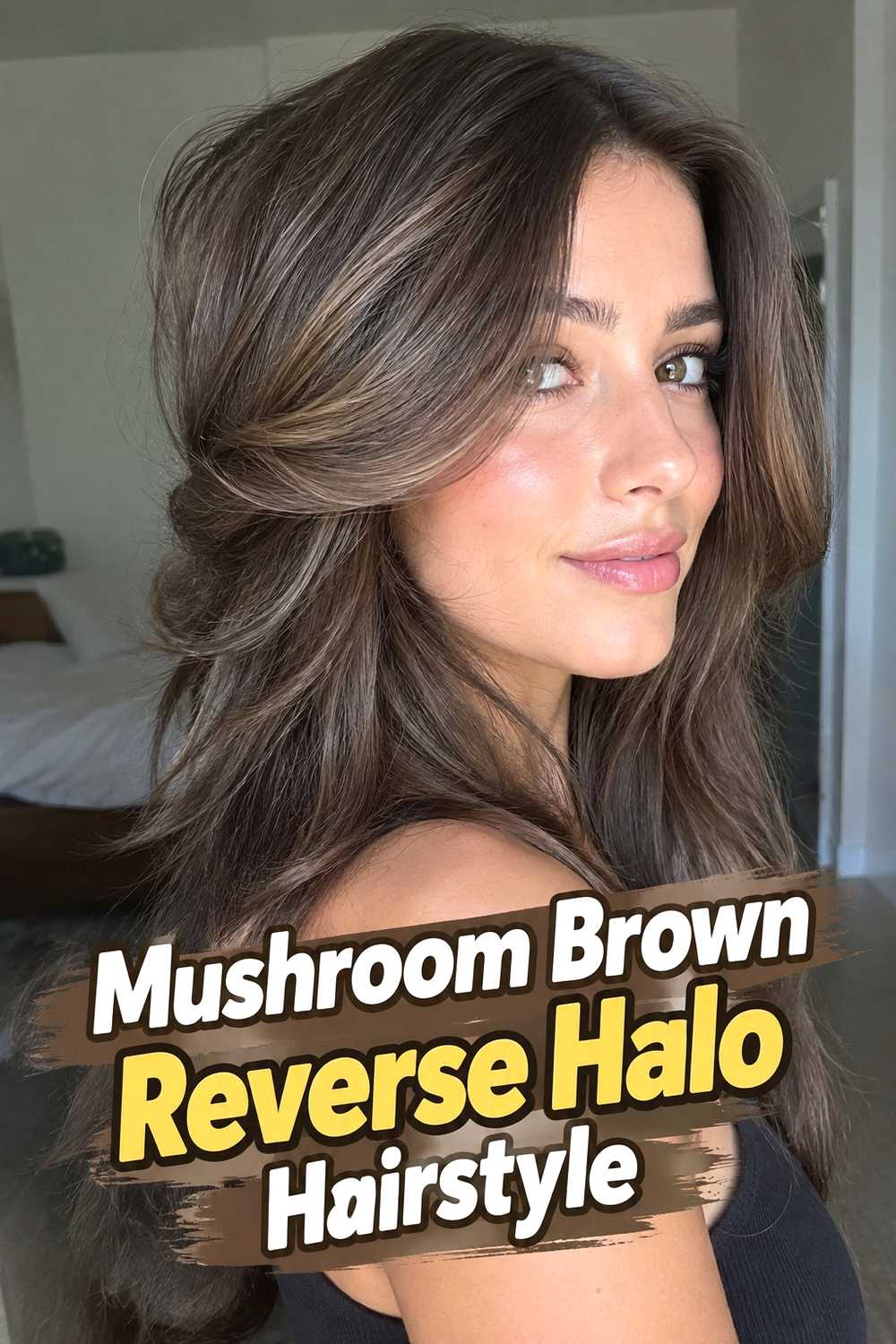
Mushroom brown reverse halo color uses understated ash-brown shades to create a low-key version of the trend. A deeper cool brunette forms the outer contour, while mushroom, taupe, or muted light brown sits through the interior. The subtle difference between the colors makes the effect sophisticated rather than dramatic, especially on straight hair where the tones can appear almost seamless. Add waves, and the lighter mushroom pieces begin to show more clearly through the shadowed perimeter. This palette complements layered lobs and longer cuts because the cooler shades emphasize shape and movement without introducing obvious warmth. The key is preserving enough depth difference that the reverse halo remains visible in natural light.
Styling Notes
A smooth curved blowout emphasizes the darker outline, while airy waves make the mushroom interior more obvious. Both finishes can work without needing heavy texture or complicated styling.
11. Chestnut Reverse Halo Contour Hairstyle
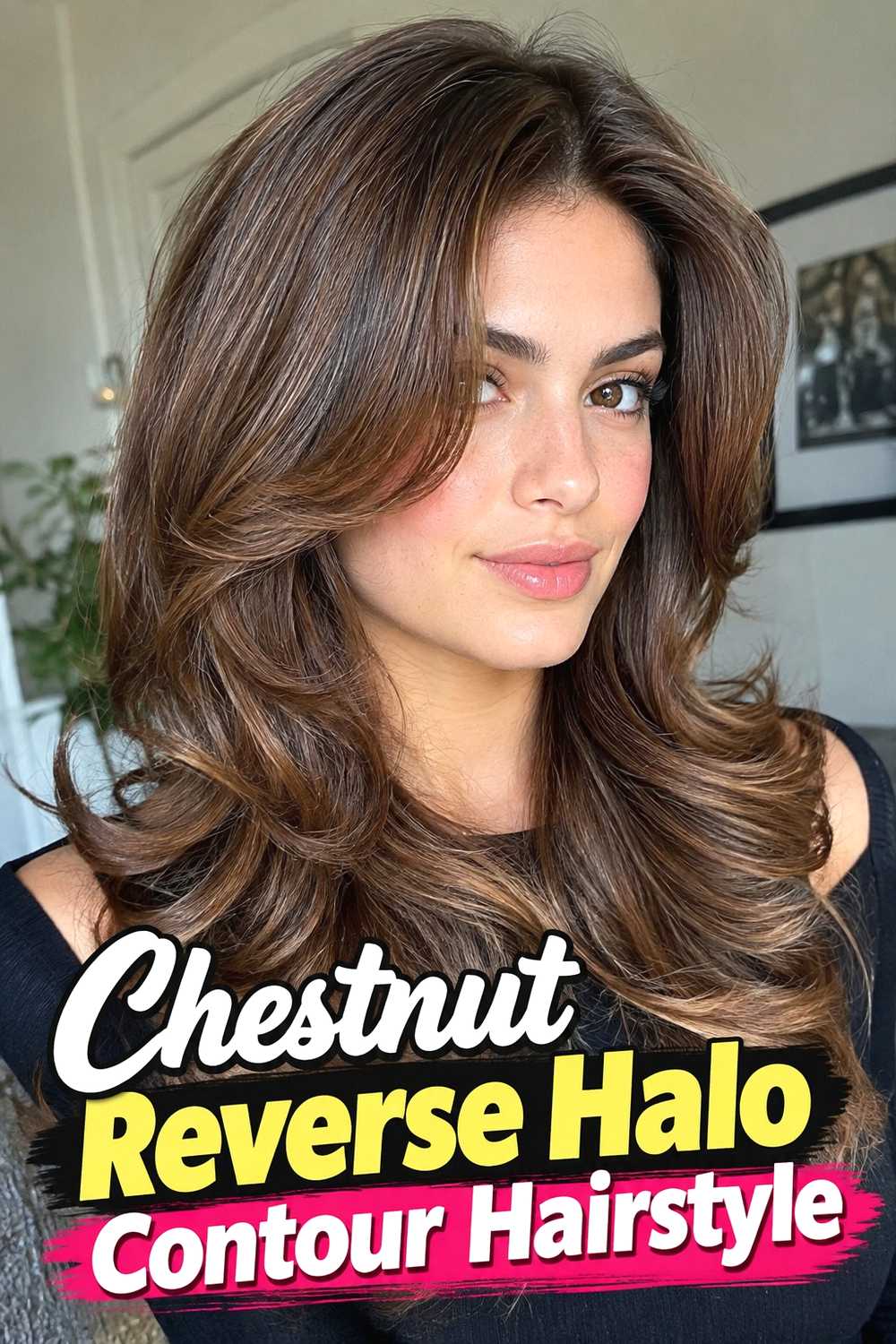
Chestnut reverse halo contouring gives brunette hair a rich, softly warm finish by using deeper chocolate brown around the perimeter and red-brown chestnut tones through the center. The difference is less dramatic than blonde against brunette, but natural light brings out the warmth and makes the interior appear noticeably more dimensional. On layered hair, chestnut sections move outward around the mids and ends while the darker hairline continues framing the overall shape. This makes the technique particularly suitable for anyone who wants to experiment with warmer color without committing to a bright copper or red transformation. Soft waves enhance the contrast while still keeping the palette refined and cohesive.
Why It Works
Chestnut introduces warmth without moving too far from a traditional brunette range. The darker perimeter provides enough shadow for the warmer center to stand out without creating a severe color break.
12. Golden Blonde Reverse Halo Hairstyle
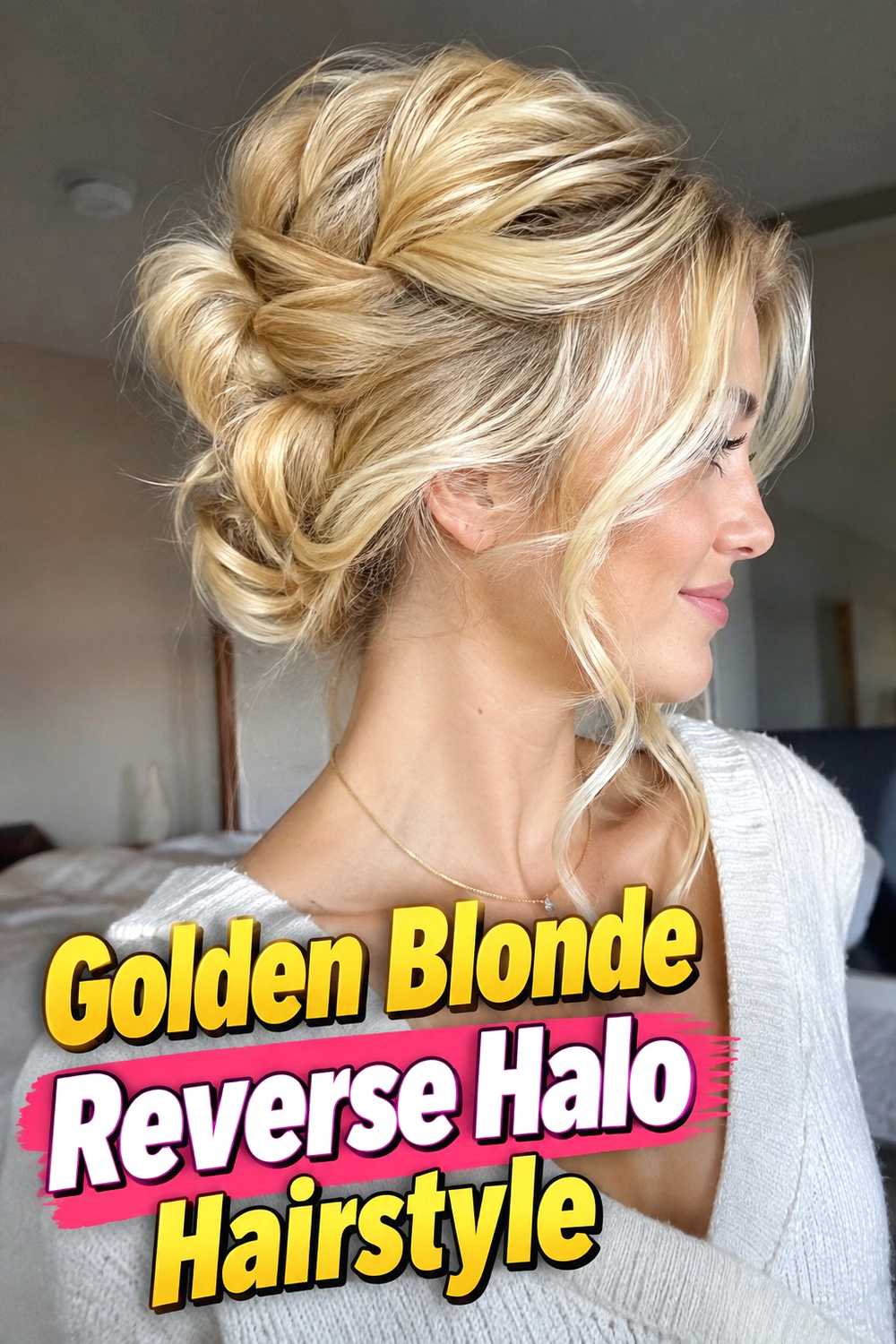
Golden blonde reverse halo color uses a luminous blonde interior surrounded by deeper golden brunette or dark blonde along the outer frame. Unlike an icy version, this palette keeps warmth throughout the hairstyle, so the contrast feels sunny and blended rather than stark. The deeper perimeter can add visual depth around the sides and nape while preserving plenty of brightness through the crown, mids, and ends. Long, flowing layers show this combination particularly well because the golden blonde moves across the shadowed sections as the hair shifts. A soft blowout produces a polished look, while beachy waves make the separation between the two tones noticeably more dynamic.
Hair Type & Length
Medium to long hair provides enough surface area for the interior blonde to remain prominent. Layered, wavy, or naturally textured hair can make the reverse contour easier to see from several angles.
13. Soft Black Blonde Reverse Halo Hairstyle
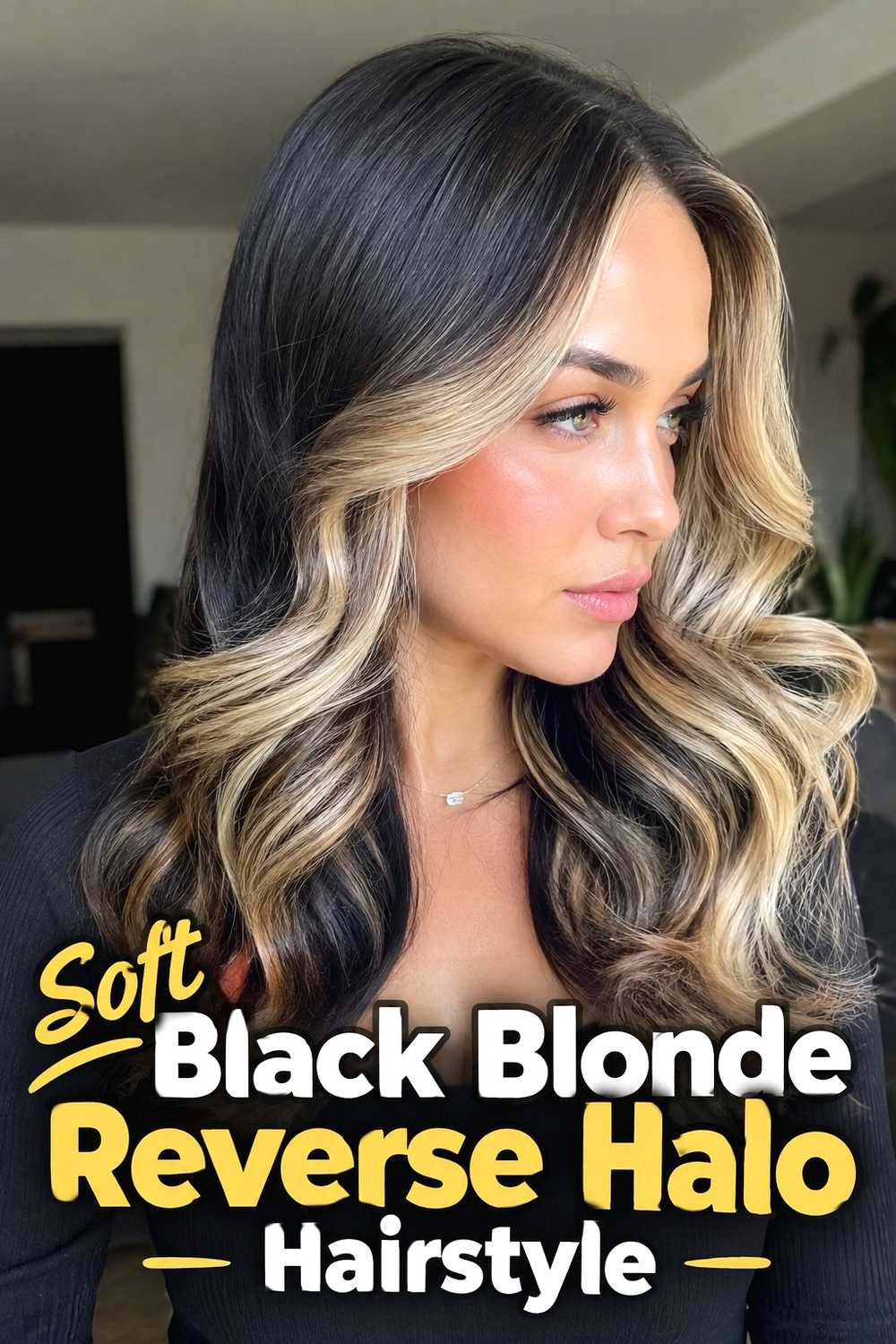
Soft black blonde reverse halo color creates dramatic contrast by framing a bright blonde interior with a soft black or near-black perimeter. The design is graphic but can still look polished when the transition is intentionally blended rather than forming a hard stripe. Straight styling clearly displays the darker outer frame, while waves mix black and blonde pieces through the sides for a more dimensional finish. Because very dark and very light colors require different maintenance, this look suits someone comfortable with a more noticeable color commitment. It can be especially striking on medium-length layered hair, where the ends allow blonde sections to remain visible while dark perimeter pieces define the silhouette.
Pro Tip
Discuss color placement carefully before combining very dark and pale shades. Strategic separation and a controlled transition can help the contrast look deliberate and make future maintenance easier to plan.
14. Auburn Reverse Halo Contour Hairstyle
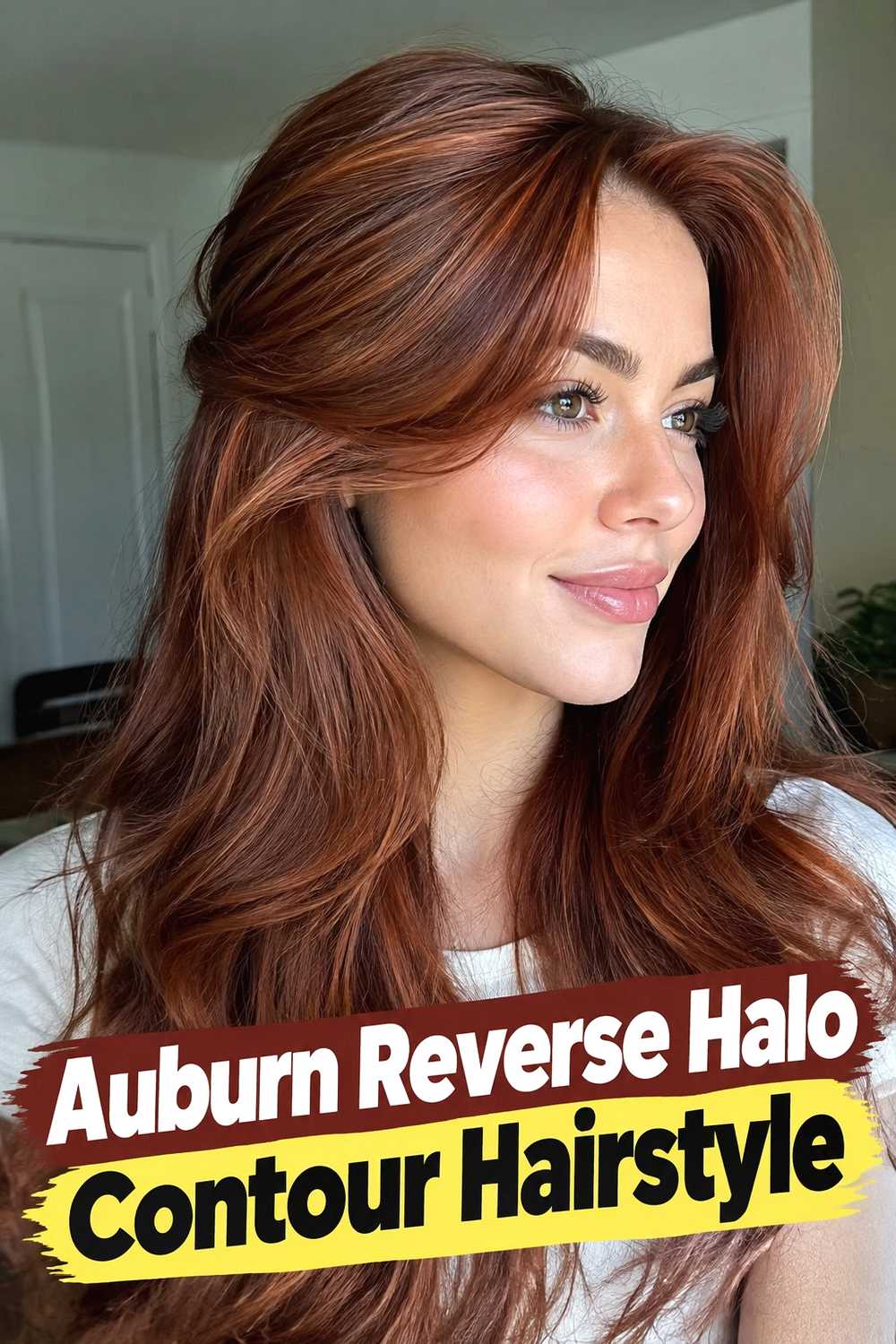
Auburn reverse halo contouring gives the technique a rich red-brown interpretation, using deeper brunette around the outer edge with glowing auburn through the interior. The color remains sophisticated because both tones share depth, yet the warmer center becomes increasingly visible whenever the hair catches sunlight or moves through waves. On long layers, auburn pieces can sweep across the darker contour for a dimensional, almost lit-from-within effect. Medium lengths also work well when the cut has enough movement to expose both shades. This is an appealing alternative to blonde-based reverse halo color for anyone who prefers warmth, richness, and softer contrast while still wanting a clearly structured color placement.
Wear & Maintenance
Auburn pigments may gradually lose intensity, so gloss or color-refresh services can help maintain the warm interior. A deeper brunette perimeter can make the transition appear softer as the color evolves.
How to Choose the Right Look
Start with contrast. Espresso with softer brunette, chocolate with beige, mushroom brown, and chestnut combinations create relatively subtle reverse halo effects. Icy blonde against brunette or soft black with blonde makes the perimeter-and-interior structure much more obvious.
Next, consider your existing hair color. Staying within a few tonal levels of your current base may create a softer transformation, while moving from very dark hair to a pale blonde interior can involve considerably more lightening. Your stylist can evaluate what is realistic for your current color history and hair condition.
Length and texture influence visibility too. Long layers and loose waves expose several tones at once, while sleek straight hair makes the perimeter contour easier to recognize as a defined frame. Bobs and lobs can also work, but placement becomes especially important because there is less length available for blending.
Finally, think about upkeep. Neutral brunette and bronde versions usually create softer visual grow-out, while icy blondes, vivid copper, and very high-contrast combinations may need more regular toning or refreshing. Pick the effect that suits both your preferred finish and the amount of color maintenance you realistically enjoy.
Final Thoughts
Reverse halo hair color is all about balancing strategic darkness with interior illumination. A soft brunette combination can create understated dimension, while blonde, copper, or high-contrast versions make the reverse placement much more visible. The strongest choice is the one that complements your existing base, haircut, styling routine, and realistic maintenance preferences.
FAQs
1. What is reverse halo hair color?
Reverse halo contouring generally places deeper color around the hairline or perimeter while maintaining brighter tones through the interior, essentially reversing the bright outer framing associated with traditional halo contouring.
2. Can reverse halo color work on blonde hair?
Yes. A blonde base can use deeper blonde, bronde, or brunette around the perimeter while preserving lighter blonde through the center for a more dimensional, lived-in appearance.
3. Is reverse halo hair color only for brunettes?
No. Brunette and bronde bases create an easy foundation for the technique, but blonde, copper, auburn, and other tonal combinations can also use the same dark-perimeter and brighter-interior concept.
4. What haircut shows reverse halo color best?
Layered medium and long cuts make the contrast easy to see because movement reveals both the perimeter and interior shades. Bobs and lobs can also show the placement clearly when the color is carefully positioned.
5. How often does reverse halo color need refreshing?
It depends on the shades and contrast level. Subtle brunette combinations may remain visually blended longer, while icy blonde, copper, vivid tones, or strong dark-light contrasts can require more frequent glossing, toning, or color refreshing.
Save your favorite reverse halo hair color ideas, share the looks you love, and explore more dimensional hairstyle inspiration for your next color appointment.