19 Architectural Braided Ponytail Hairstyle Ideas for Sculptural Detail
Geometric braids, sculpted loops, and sharply planned sections turn a familiar ponytail into a striking hairstyle built around shape, structure, and texture.
Architectural braided ponytails focus as much on construction as they do on the braid itself. Clean parting, directional cornrows, wrapped sections, stacked knots, woven panels, and carefully placed loops can give the style a strong silhouette from every angle while still preserving a recognizable ponytail.
The right version depends on your hair length, density, braid type, desired tension, and how long you want the style to remain in place. Some designs concentrate detail at the scalp and leave the tail simple, while others make the ponytail itself the sculptural feature. Comfort and secure anchoring matter just as much as visual impact.
Quick List
- Geometric Feed In Architectural Braided Ponytail Hairstyle
- Sculpted Loop Architectural Braided Ponytail Hairstyle
- Ladder Braid Architectural Ponytail Hairstyle
- Wrapped Cage Architectural Braided Ponytail Hairstyle
- Double Spine Architectural Braided Ponytail Hairstyle
- Zigzag Part Architectural Braided Ponytail Hairstyle
- Braided Mohawk Architectural Ponytail Hairstyle
- Crisscross Cornrow Architectural Ponytail Hairstyle
- Knot Stack Architectural Braided Ponytail Hairstyle
- Halo To Pony Architectural Braided Ponytail Hairstyle
- Rope Lattice Architectural Braided Ponytail Hairstyle
- Segmented Bubble Braid Architectural Ponytail Hairstyle
- Side Swept Architectural Braided Ponytail Hairstyle
- Spiral Wrap Architectural Braided Ponytail Hairstyle
- Braided Bow Architectural Ponytail Hairstyle
- Woven Panel Architectural Braided Ponytail Hairstyle
- High Crown Architectural Braided Ponytail Hairstyle
- Low Slung Architectural Braided Ponytail Hairstyle
- Sculptural Multi Braid Architectural Ponytail Hairstyle
1. Geometric Feed In Architectural Braided Ponytail Hairstyle
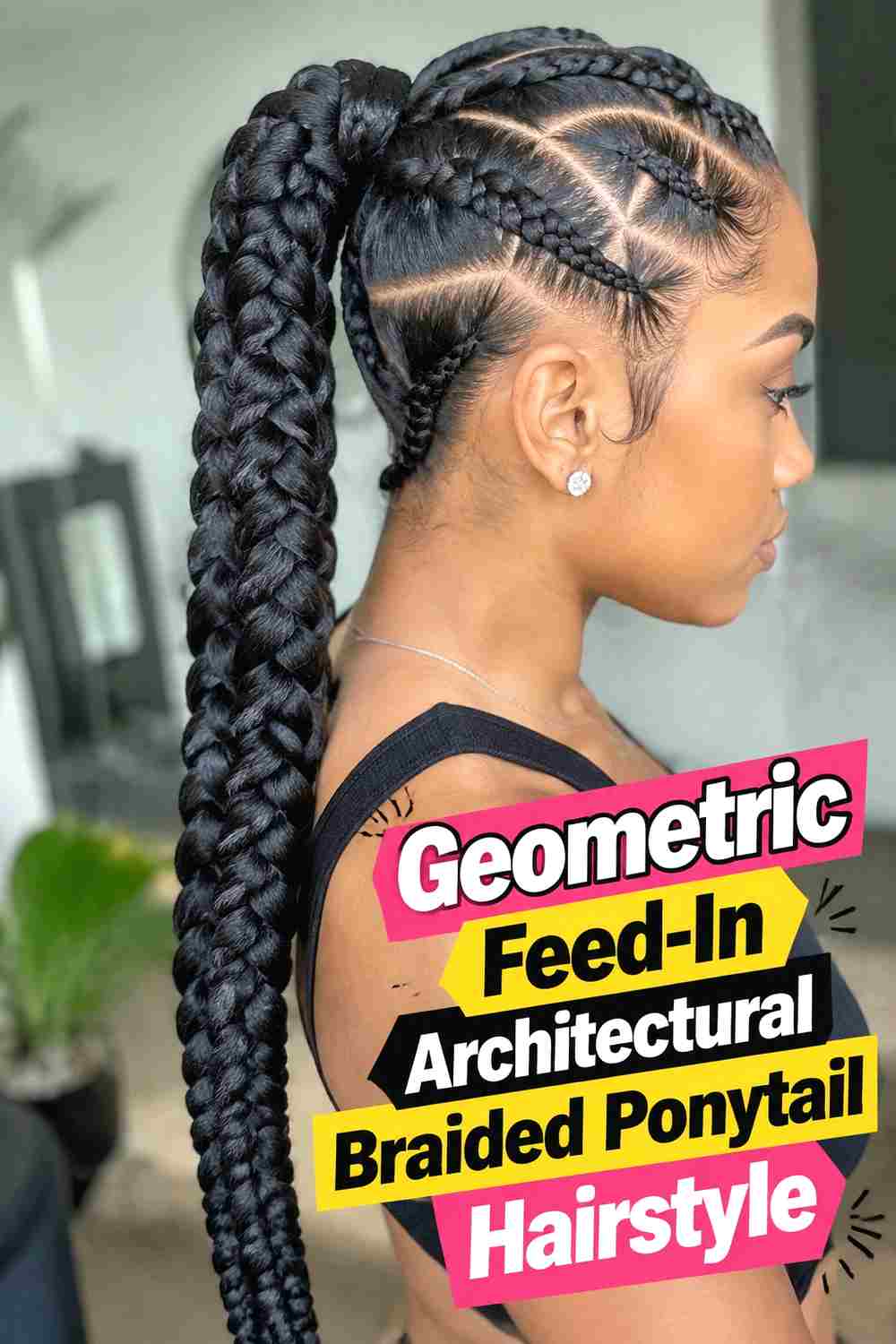
Precise feed-in braids can create an architectural foundation before converging into one polished ponytail. Instead of arranging every braid in simple parallel rows, this version uses clean diagonal or angled sections that guide the eye toward the ponytail base. Varying braid widths can make the pattern more dimensional while still keeping the scalp design easy to read. The tail itself can remain in one long braid or transition into loose, smooth lengths depending on the desired finish. Keeping the parting crisp is essential because much of the visual impact comes from the negative space between braids. The result should look structured without requiring unnecessary tightness around the hairline.
Styling Notes
Plan the direction of every section before braiding so the lines converge cleanly at one believable ponytail anchor point.
Best For
This design suits medium to long hair when you want the scalp pattern to be as important as the ponytail itself.
2. Sculpted Loop Architectural Braided Ponytail Hairstyle
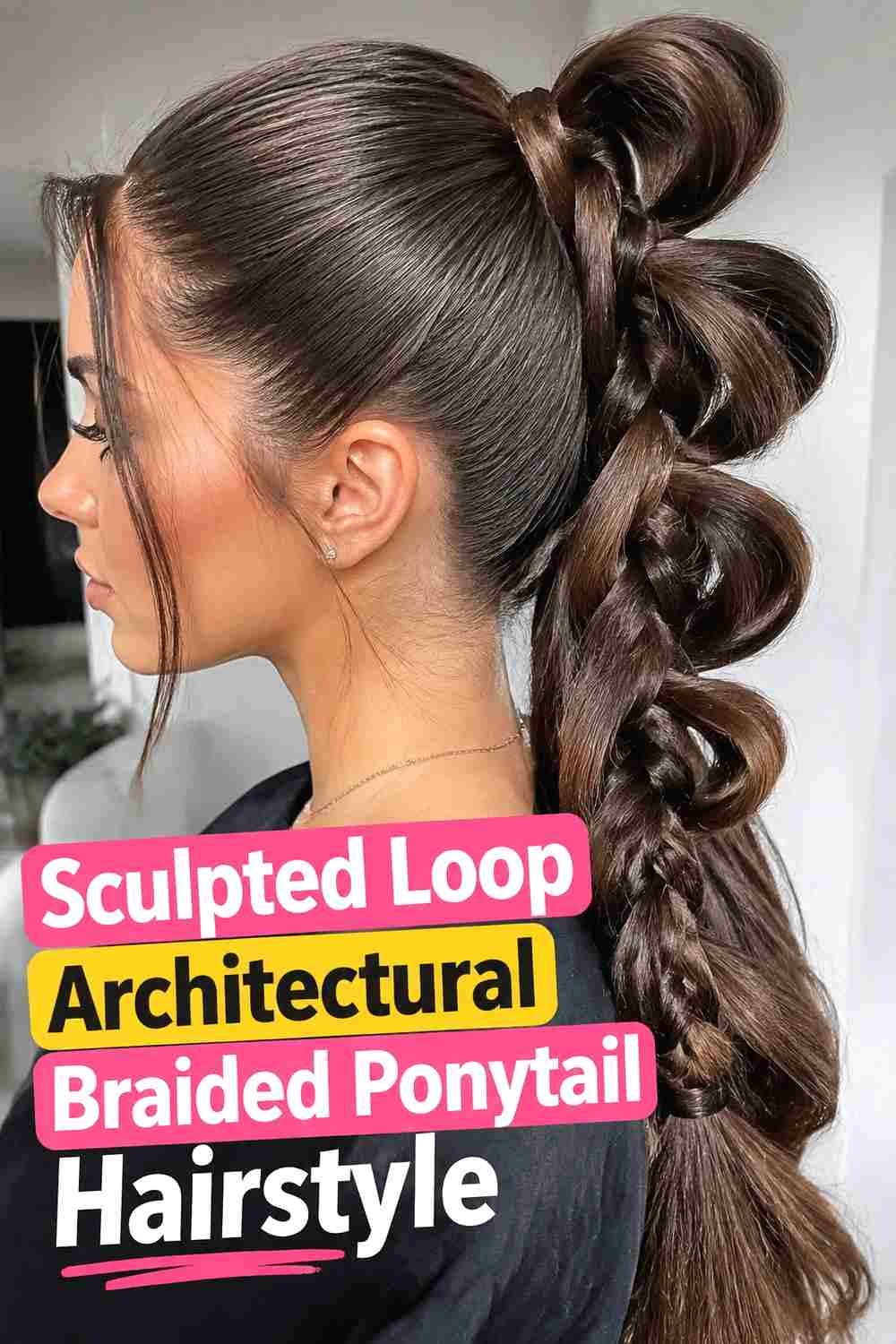
Braided loops give a ponytail an almost three-dimensional quality by introducing rounded forms above or around the base. Sections can be braided first, then shaped into controlled loops that connect securely before the remaining length falls into the ponytail. The curves should be deliberate and balanced rather than randomly folded, with enough open space between shapes for each loop to remain visible. A smooth or simply braided tail works best because it prevents the lower section from competing with the sculptural top. This look needs secure pinning and moderate tension rather than overly tight pulling. Longer hair provides more flexibility for creating loops without reducing the remaining ponytail too dramatically.
Why It Works
Rounded loops contrast with the straight direction of the ponytail, creating visible structure and depth from both the front and side.
Wear & Maintenance
Anchor each loop independently so one loose section does not destabilize the entire design during wear.
3. Ladder Braid Architectural Ponytail Hairstyle
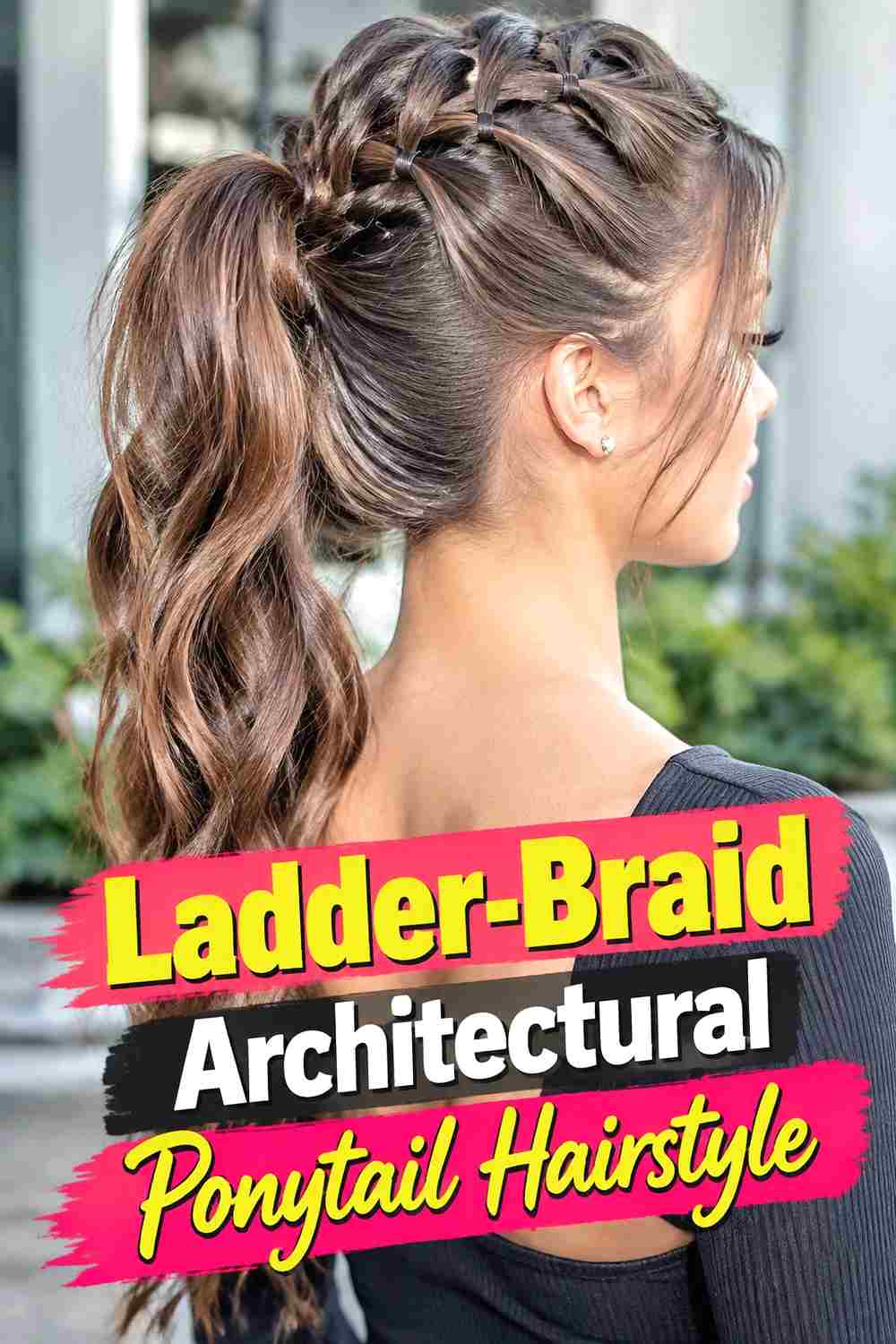
A ladder braid introduces repeated horizontal connections that make the hairstyle look engineered rather than simply woven. The design can run along one side of the head before feeding into the ponytail or appear directly within the tail itself. Keeping the sections even helps the ladder effect stay readable, while slight variation in spacing can prevent it from looking mechanically perfect. A sleek crown provides a clean backdrop for the open braid structure. Medium to long hair generally offers the easiest working length, particularly if the ladder continues down part of the ponytail. The remaining tail can stay loose, straight, or transition into a simpler braid for a more balanced overall finish.
Styling Notes
Maintain consistent tension in the connecting sections so the ladder keeps its open structure instead of collapsing inward.
Pro Tip
Let the ladder detail occupy one main area rather than repeating it everywhere, which keeps the hairstyle visually clear.
4. Wrapped Cage Architectural Braided Ponytail Hairstyle
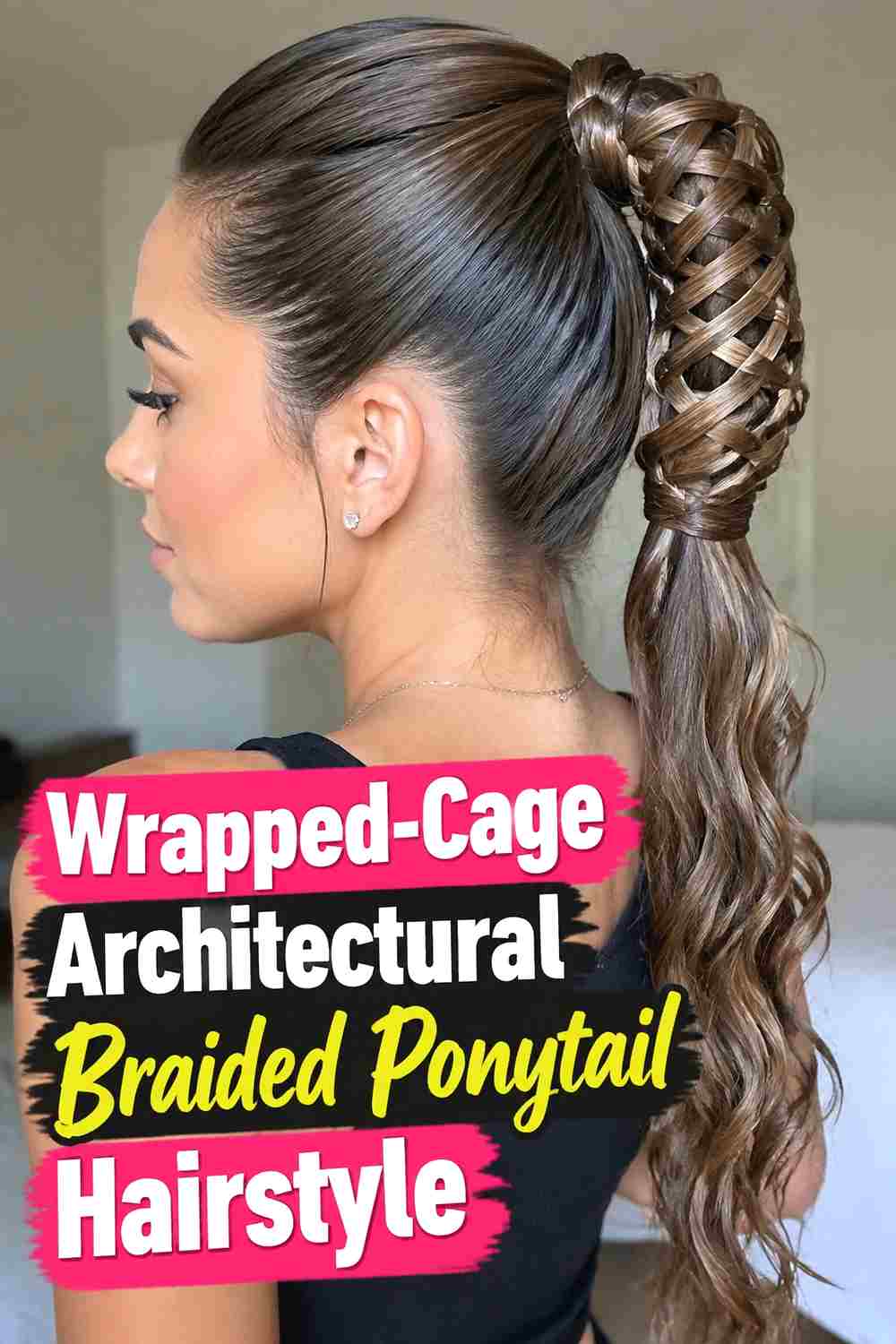
A wrapped-cage design uses slim braids to form a controlled framework around a central ponytail. Instead of letting every braided section hang independently, selected braids cross or wrap around the ponytail at measured intervals, creating a structured outer shell. The inner tail can remain straight, braided, or lightly textured, but it should stay visible through the surrounding framework. Long hair is particularly helpful because the wrapping requires enough length to form several secure points without shortening the tail excessively. The cage effect should remain open rather than overly tight, allowing natural strand detail and movement to show. Keep the base simple so the wrapped construction becomes the focal point.
Why It Works
The outer braids create depth and negative space, making the ponytail appear more dimensional without needing oversized volume.
Wear & Maintenance
Check that the wrapping sections are secure but comfortable, particularly where they cross the central ponytail.
5. Double Spine Architectural Braided Ponytail Hairstyle
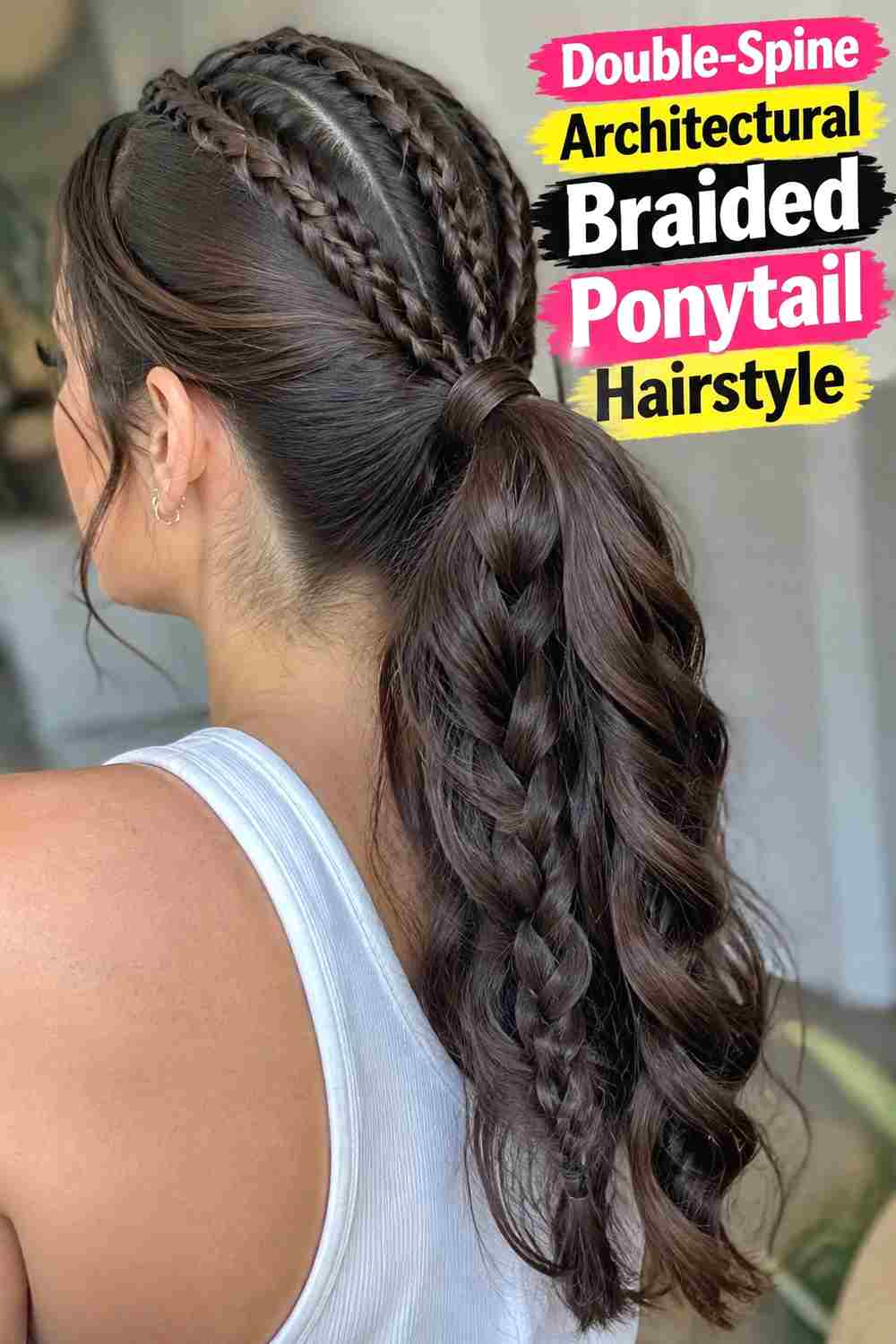
Two prominent braids running backward like parallel spines create a strong central structure before they merge into a ponytail. The surrounding hair can remain sleek or include smaller supporting braids that angle toward the main pair. This creates a clear visual hierarchy: the larger braids establish the framework, while finer sections add detail without overwhelming it. A high or mid-height ponytail usually keeps the spine pattern visible from the side and back. The tail can continue as one thick braid or divide into two coordinated braided lengths. Crisp parting is particularly important because symmetry makes the double-spine effect easy to recognize even from a distance.
Styling Notes
Keep both central braids similar in width and tension so one side does not visually overpower the other.
Best For
This style suits anyone who prefers strong symmetry and a clearly defined braided structure from the crown into the ponytail.
6. Zigzag Part Architectural Braided Ponytail Hairstyle
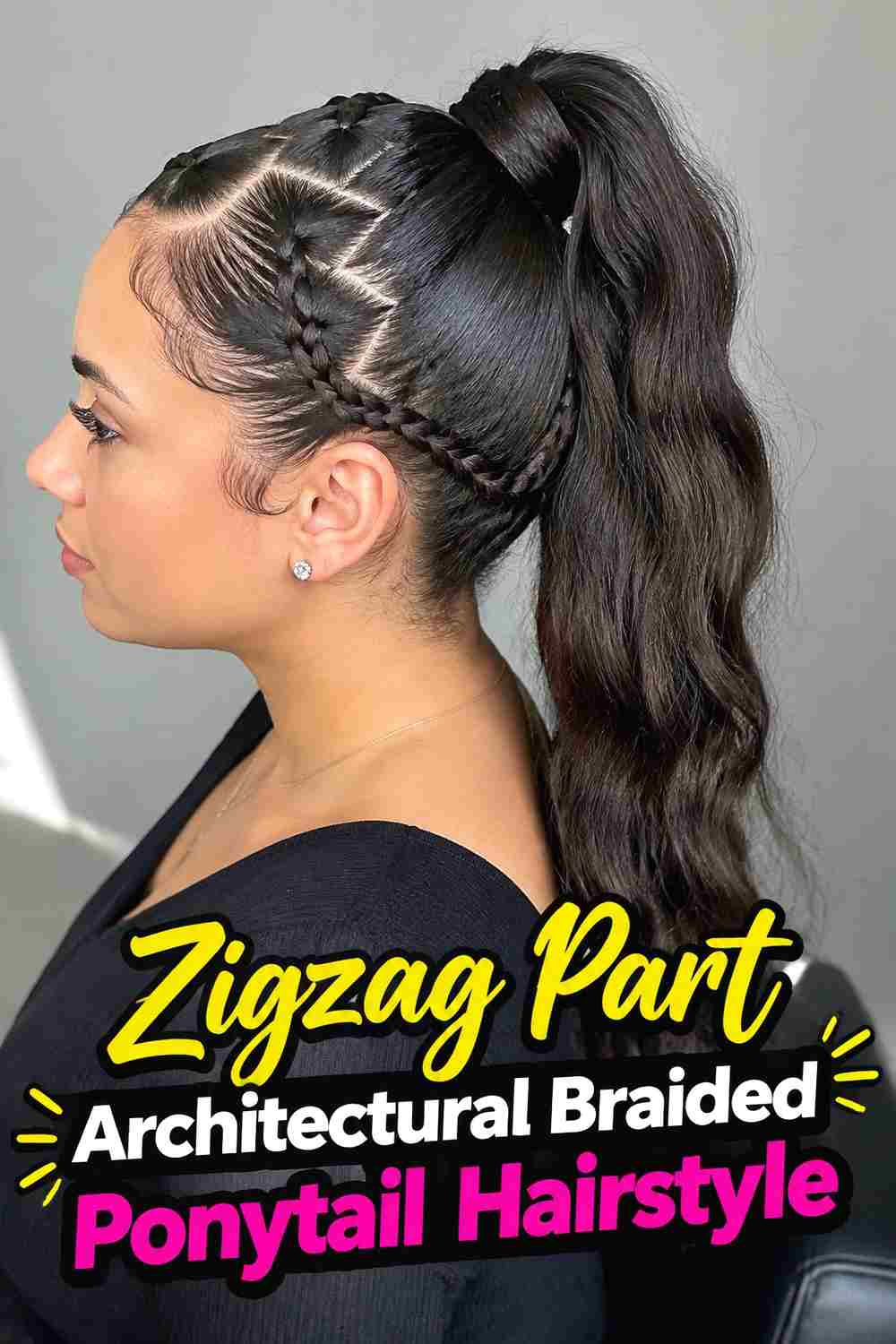
A zigzag part can become the architectural feature even when the braid pattern itself remains relatively simple. Sharp directional sections across the scalp create a graphic foundation, with each area feeding smoothly toward a central or slightly elevated ponytail. Cornrows or slim braids can follow the angles of the parting, reinforcing the geometry without adding unnecessary complexity. The ponytail may stay sleek, braided, or softly textured depending on how much contrast you want. Because the pattern relies on clear lines, avoid overcrowding the scalp with too many tiny sections. The strongest version allows the zigzag negative space to remain visible while still directing every braid toward one cohesive base.
Why It Works
The parting becomes part of the design rather than simply a functional division, giving the hairstyle visual interest before the ponytail even begins.
Pro Tip
Map the zigzag first and adjust the points before braiding, since uneven angles become difficult to correct once the sections are secured.
7. Braided Mohawk Architectural Ponytail Hairstyle
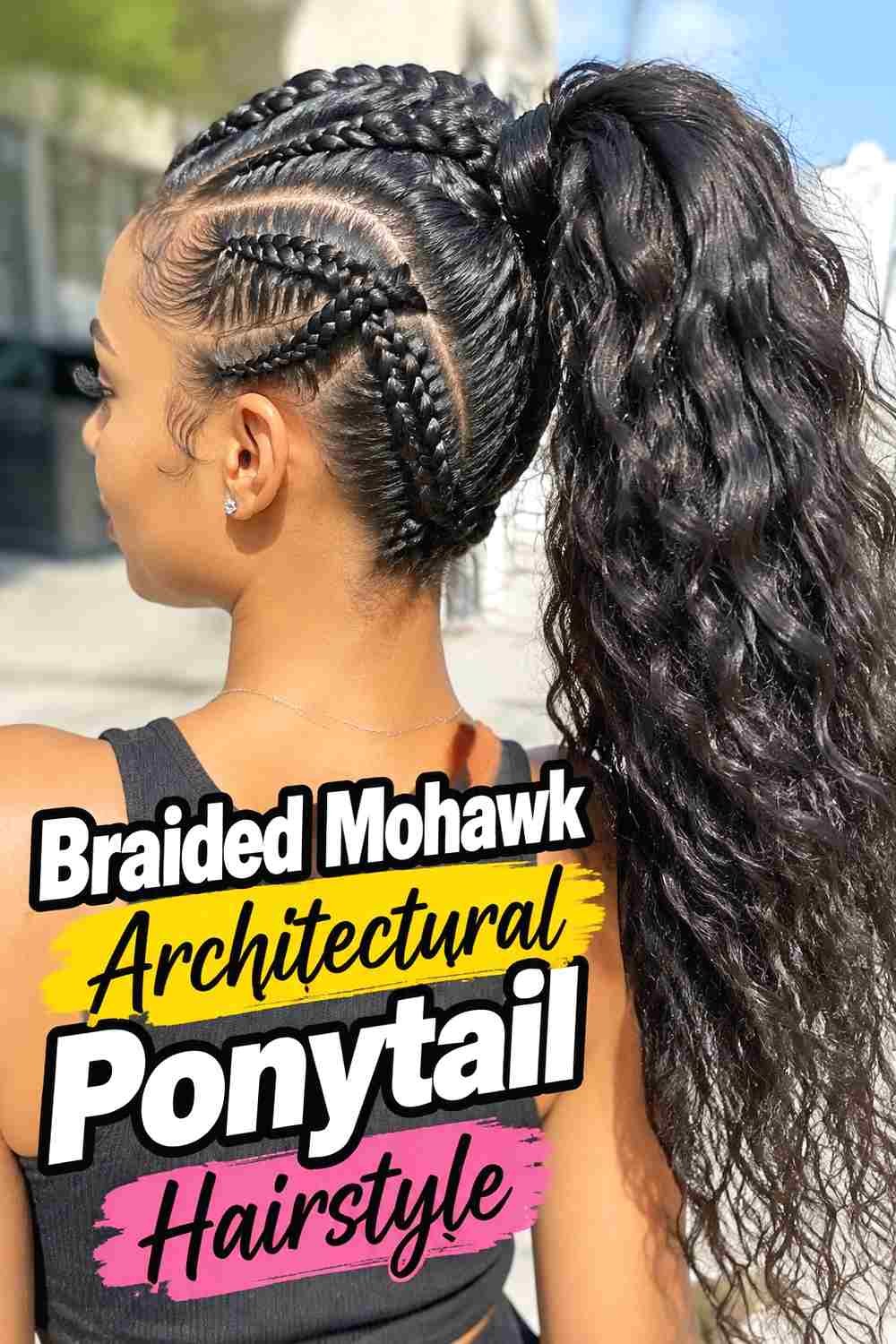
A braided mohawk silhouette concentrates height and structure through the center of the head while the sides stay sleek or tightly directed inward. One large central braid can travel from the forehead toward the crown, or multiple braided sections can be stacked along the same line before joining the ponytail. The design feels dramatic without requiring a shaved or extremely short side section. A high ponytail complements the elevated center particularly well and helps extend the mohawk direction into the tail. Keep the central structure substantial but physically believable, with each braid clearly anchored to the head. The finished hairstyle should feel sculpted rather than excessively bulky.
Hair Type & Length
Medium to long hair offers enough length to build the central braided structure and still create a visible ponytail afterward.
Wear & Maintenance
Avoid unnecessary tension along the sides; the mohawk effect comes from central height and direction, not from pulling the perimeter excessively tight.
8. Crisscross Cornrow Architectural Ponytail Hairstyle
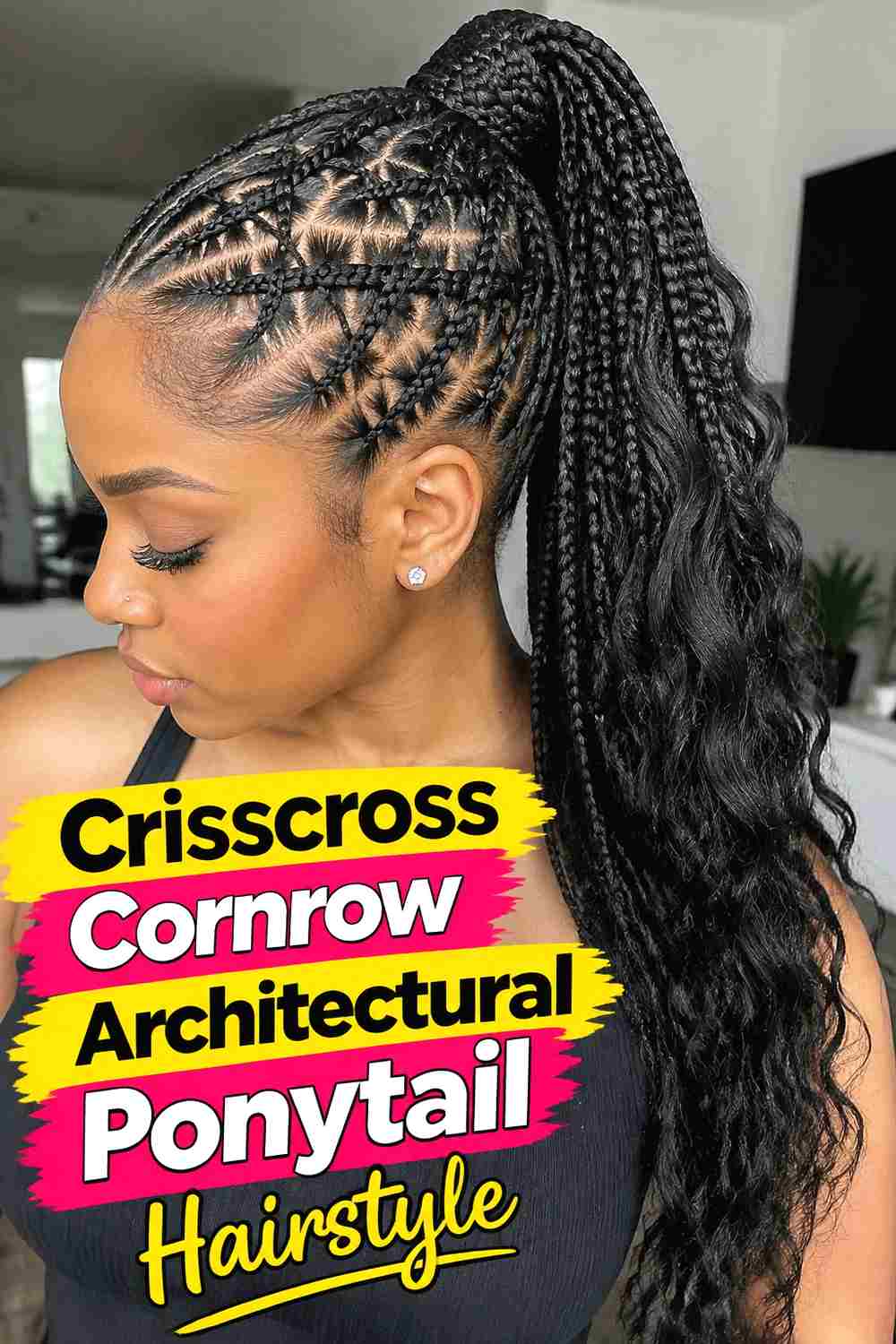
Crisscross cornrows use intersecting directions to create a woven-looking scalp pattern before the braids gather into a ponytail. Some sections can angle diagonally toward the center while others appear to pass beneath or alongside them, giving the design layered depth. The intersections need to remain visually clean so the pattern looks planned rather than crowded. A mid or high ponytail works well because it provides a natural destination for the converging braids. The tail can be left in several narrow braids or combined into one larger braid for a stronger finish. This look is particularly effective from the back, where the crossing geometry can be appreciated clearly.
Styling Notes
Use a limited number of strong intersections instead of crossing every braid, which helps the architectural pattern remain readable.
Best For
Choose this design when you want intricate scalp detail but still prefer a straightforward ponytail shape below the base.
9. Knot Stack Architectural Braided Ponytail Hairstyle
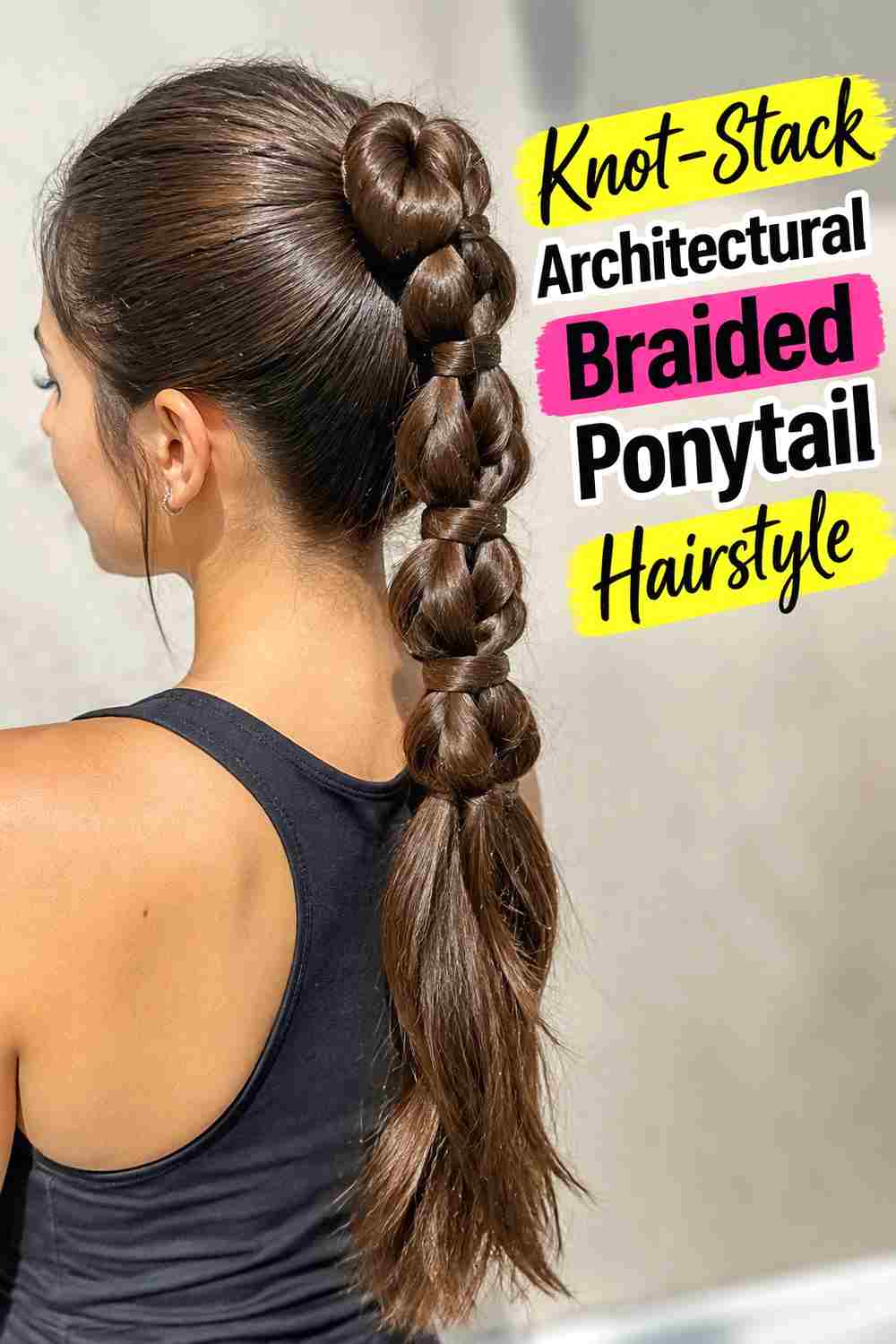
Stacked braided knots create a vertical sequence of sculpted forms before the hairstyle transitions into a ponytail. Each knot can be formed from a braided section and secured closely beneath the one above it, producing a controlled column through the back of the head. The final ponytail begins below the last knot, giving the construction a clear start and finish. This approach is especially striking on medium-to-long hair with enough length to form several shapes without making the tail too short. The knots should remain compact rather than oversized, and each one must connect naturally to the next. A sleek perimeter helps emphasize the stacked geometry.
Why It Works
Repeating the same rounded form creates rhythm and makes the hairstyle feel intentionally constructed from top to bottom.
Wear & Maintenance
Secure each knot with discreet anchors so the weight of the lower sections does not pull the upper structure out of position.
10. Halo To Pony Architectural Braided Ponytail Hairstyle
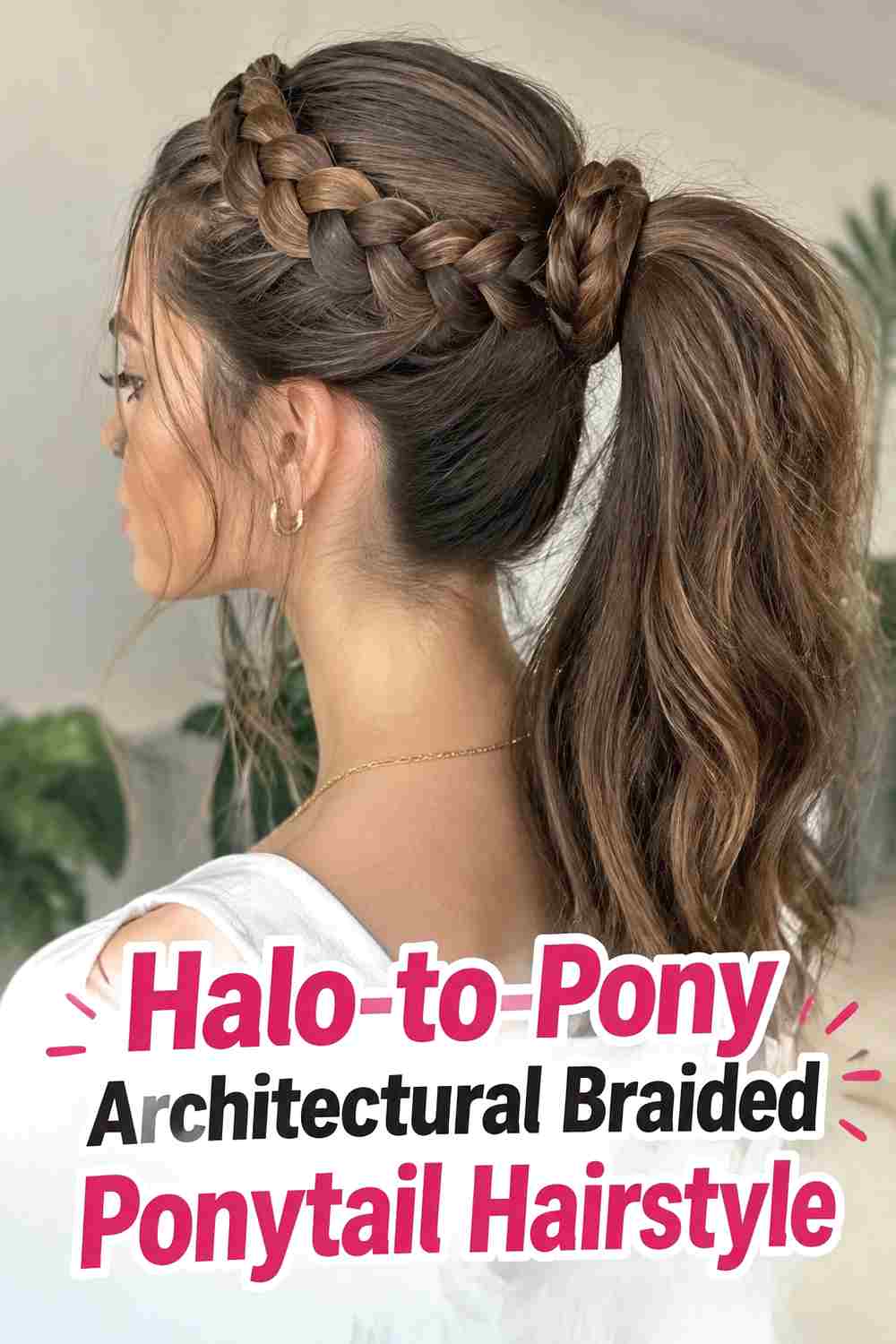
A halo braid can shift from soft and romantic to architectural when it follows a precise path before feeding directly into a ponytail. Instead of wrapping completely around the head, the braid can circle part of the crown and then descend toward one central tie point. Keeping the remaining sections smooth helps the curved braid stand out clearly. The ponytail itself can be sleek or braided, but a simpler finish usually gives the halo enough visual space. Medium and long hair work best because the braid needs enough length to travel around the crown while still contributing to the ponytail. The transition point should look seamless rather than abruptly pinned.
Styling Notes
Plan where the halo will stop before braiding so its curve can lead naturally into the ponytail base.
Best For
This style works well when you want a rounded crown detail but prefer a more structured finish than a traditional loose halo braid.
11. Rope Lattice Architectural Braided Ponytail Hairstyle
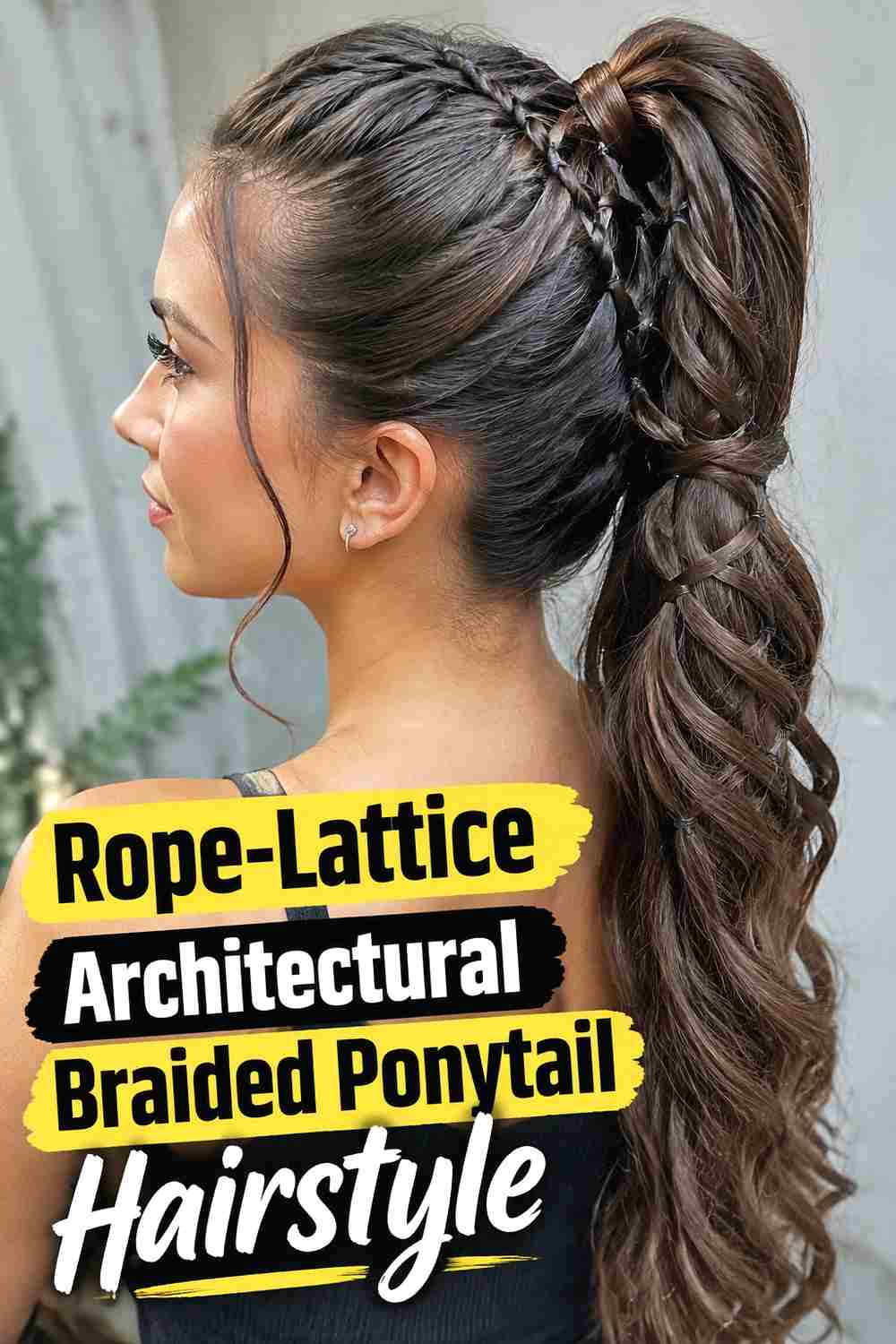
Slim rope braids can form an open lattice across the crown or around the ponytail, creating a structured pattern with clear spaces between each line. The twisted texture adds dimension without the visual heaviness of several thick braids. For a crown lattice, pairs of rope braids can cross diagonally before feeding into the ponytail. For a tail-focused version, the ropes can wrap around a smooth central length at measured intervals. The key is consistent spacing and secure connections so the lattice remains recognizable during wear. Long hair provides the most flexibility, although a shorter lattice can work beautifully on medium lengths if the design is concentrated near the ponytail base.
Why It Works
The combination of twisted texture and open negative space gives the style complexity without making the overall silhouette overly dense.
Pro Tip
Keep the rope braids slim enough that the spaces between them remain visible from a normal viewing distance.
12. Segmented Bubble Braid Architectural Ponytail Hairstyle
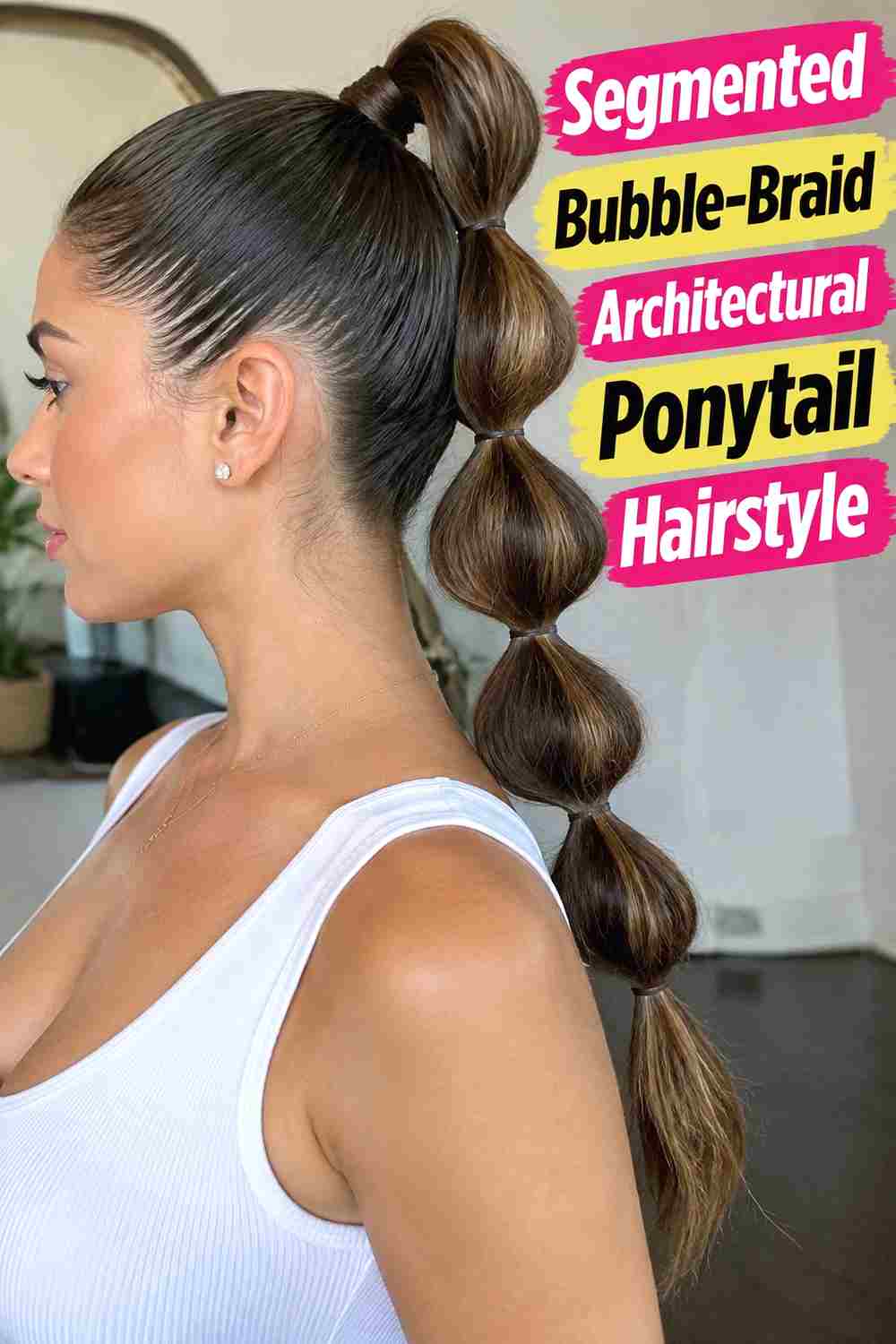
A segmented bubble braid creates architectural rhythm through repeated rounded forms down the ponytail. Start with a sleek or braided base, then add ties at measured intervals and expand each section into a controlled bubble. For a more constructed finish, one or two slim braids can run along the outside of the bubbles or wrap between segments. The proportions should stay relatively consistent, with each section maintaining enough shape to remain distinct. Long hair is ideal because several segments can be created before reaching the ends. Keep the bubbles polished rather than excessively fluffy so the ponytail retains a structured, graphic character instead of becoming soft and casual.
Styling Notes
Build each segment individually and compare its width with the previous one before moving farther down the ponytail.
Wear & Maintenance
Use secure but discreet ties at every division so the repeated structure remains intact throughout the day.
13. Side Swept Architectural Braided Ponytail Hairstyle
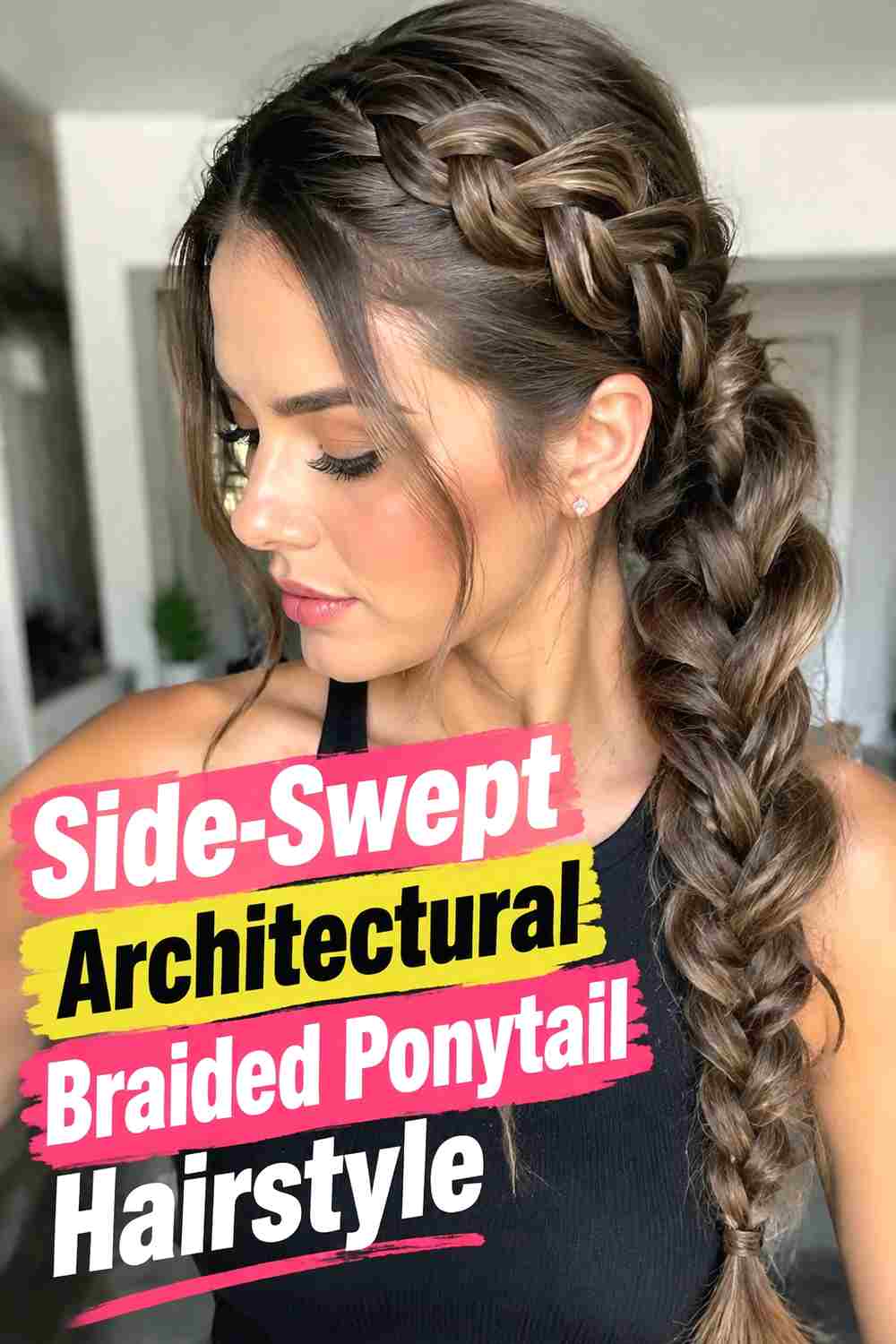
A side-swept layout creates asymmetry by directing the majority of the braided structure toward one side before gathering it into a ponytail. Several diagonal braids can travel across the crown, or one prominent braid can sweep from the opposite temple toward a low side base. The smaller side should remain cleaner so the directional movement is easy to read. A low or mid-height ponytail usually works best because it continues the diagonal flow without creating an abrupt change in direction. The tail can remain braided or smooth depending on how complex the scalp pattern is. This design can feel dramatic while still maintaining a wearable, balanced silhouette.
Why It Works
Strong directional lines guide the eye across the head and into the ponytail, creating movement without relying on extra volume.
Best For
This look suits anyone who prefers asymmetry and wants the braid pattern to be clearly visible from the front as well as the back.
14. Spiral Wrap Architectural Braided Ponytail Hairstyle
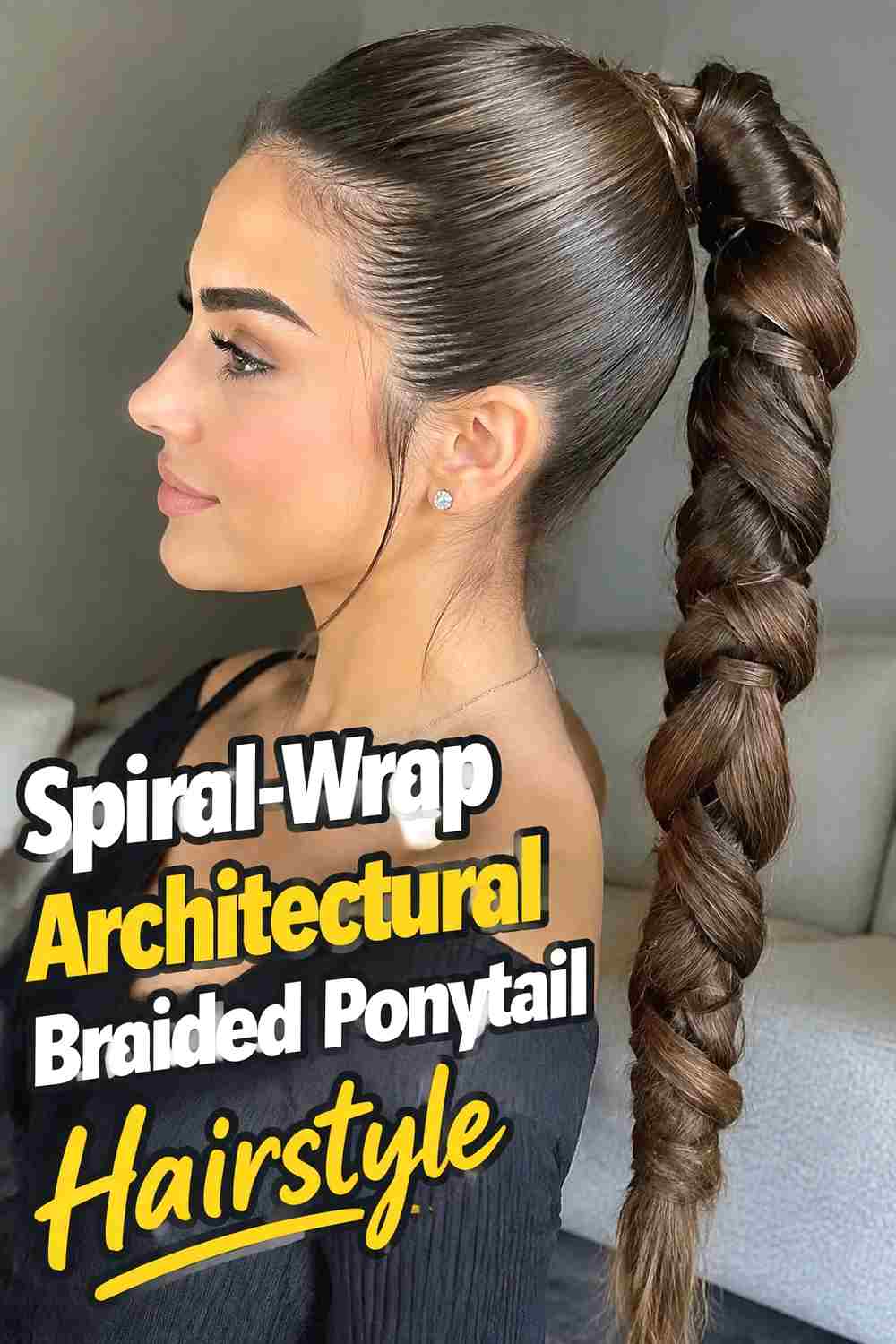
A spiral-wrap ponytail uses one or more braids to coil around a central tail in a descending pattern. The wrap should begin close to the base and continue downward with enough spacing for the inner ponytail to remain visible. A smooth central tail creates the strongest contrast, while a braided center produces a more textural finish. This design works particularly well on long hair because the spiral needs enough distance to develop gradually. Keep each turn evenly placed and securely attached so the pattern does not slide toward the ends. The crown can stay sleek or include a simple feed-in braid, but the spiraling tail should remain the main visual feature.
Styling Notes
Set the spacing of the first two wraps carefully because they establish the rhythm for the rest of the spiral.
Pro Tip
Avoid winding the outer braid too tightly around the ponytail, which can compress the central length and hide the spiral shape.
15. Braided Bow Architectural Ponytail Hairstyle
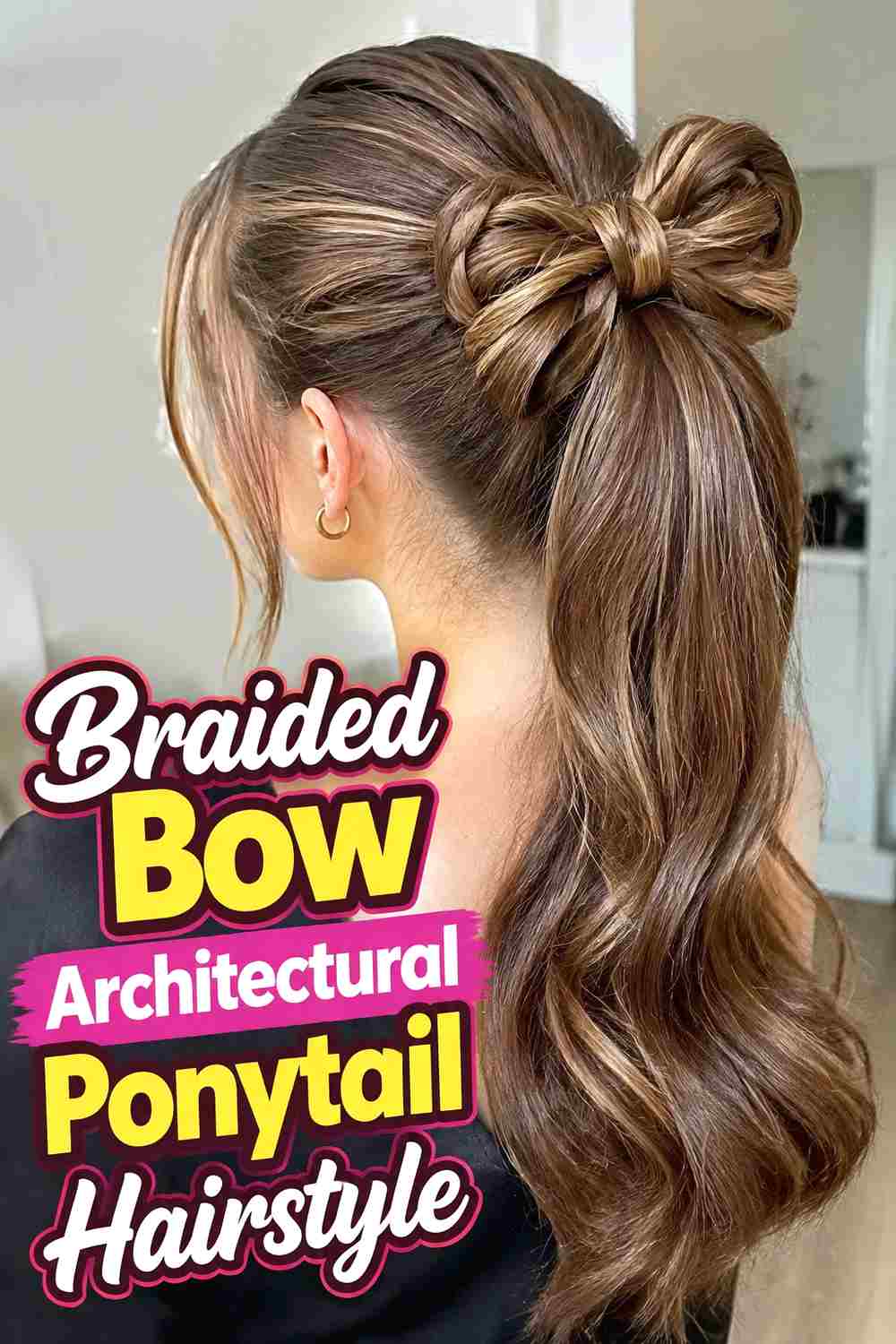
A braided bow introduces a recognizable sculptural shape directly above or around the ponytail base. Two braided loops can form the sides of the bow while a smaller wrapped section creates the center, allowing the remaining hair to fall naturally into the tail. The loops should be proportional and securely supported so they remain symmetrical without becoming oversized. A sleek crown provides the cleanest background for the bow, while the ponytail itself can stay straight, softly waved, or braided. Medium and long hair generally offer enough material to create the shape while preserving a substantial tail. The finished design should look dimensional but still physically connected to the base.
Why It Works
The bow creates a clear focal shape while the simple ponytail below prevents the hairstyle from becoming visually overloaded.
Wear & Maintenance
Secure the loops discreetly from underneath so visible pins do not interrupt the clean outline of the braided bow.
16. Woven Panel Architectural Braided Ponytail Hairstyle

A woven panel uses multiple narrow sections to create a flat, textile-like pattern across one area of the crown before everything gathers into a ponytail. The panel might sit centrally, diagonally, or along one side, depending on the desired direction. Interlaced sections should remain close enough to the scalp to show the weaving clearly while preserving comfortable tension. The surrounding hair can stay smooth so the panel reads as a deliberate architectural insert rather than part of an all-over braid pattern. A sleek ponytail works especially well because it lets the detailed crown section remain the star. Medium-to-long hair provides enough length for clean weaving and a substantial tail.
Styling Notes
Keep section sizes consistent within the woven panel so the over-and-under pattern remains visually balanced.
Best For
This option suits detailed styling when you want one concentrated area of complexity rather than braiding the entire head.
17. High Crown Architectural Braided Ponytail Hairstyle
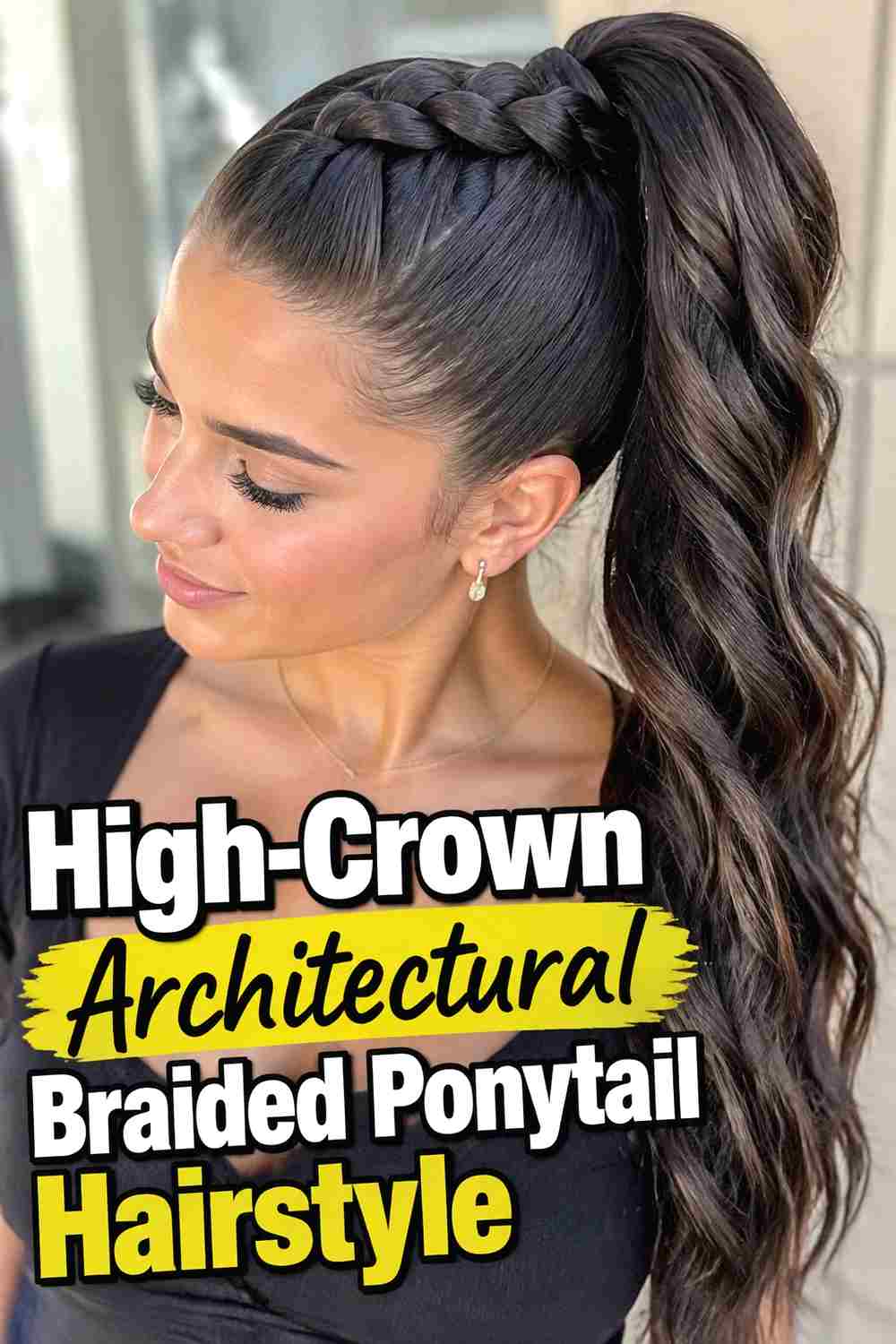
Positioning the ponytail high on the crown creates a lifted foundation for architectural braiding and makes the structure visible from several angles. Braids can rise toward the base in straight, curved, or diagonal lines, creating the sense that every section supports the elevated ponytail. The tail itself may continue as one bold braid or break into several coordinated braided lengths. Keeping the hairline and sides neat helps the upward direction remain clear. Because a high ponytail can create more tension than a lower placement, secure construction matters more than pulling the style extremely tight. The finished result should feel elevated and sculptural while remaining comfortable enough to wear.
Why It Works
The high anchor point naturally exaggerates upward movement, making directional braid patterns feel especially strong and intentional.
Wear & Maintenance
Distribute the tension across several braided sections instead of relying on one tight elastic to support the entire style.
18. Low Slung Architectural Braided Ponytail Hairstyle
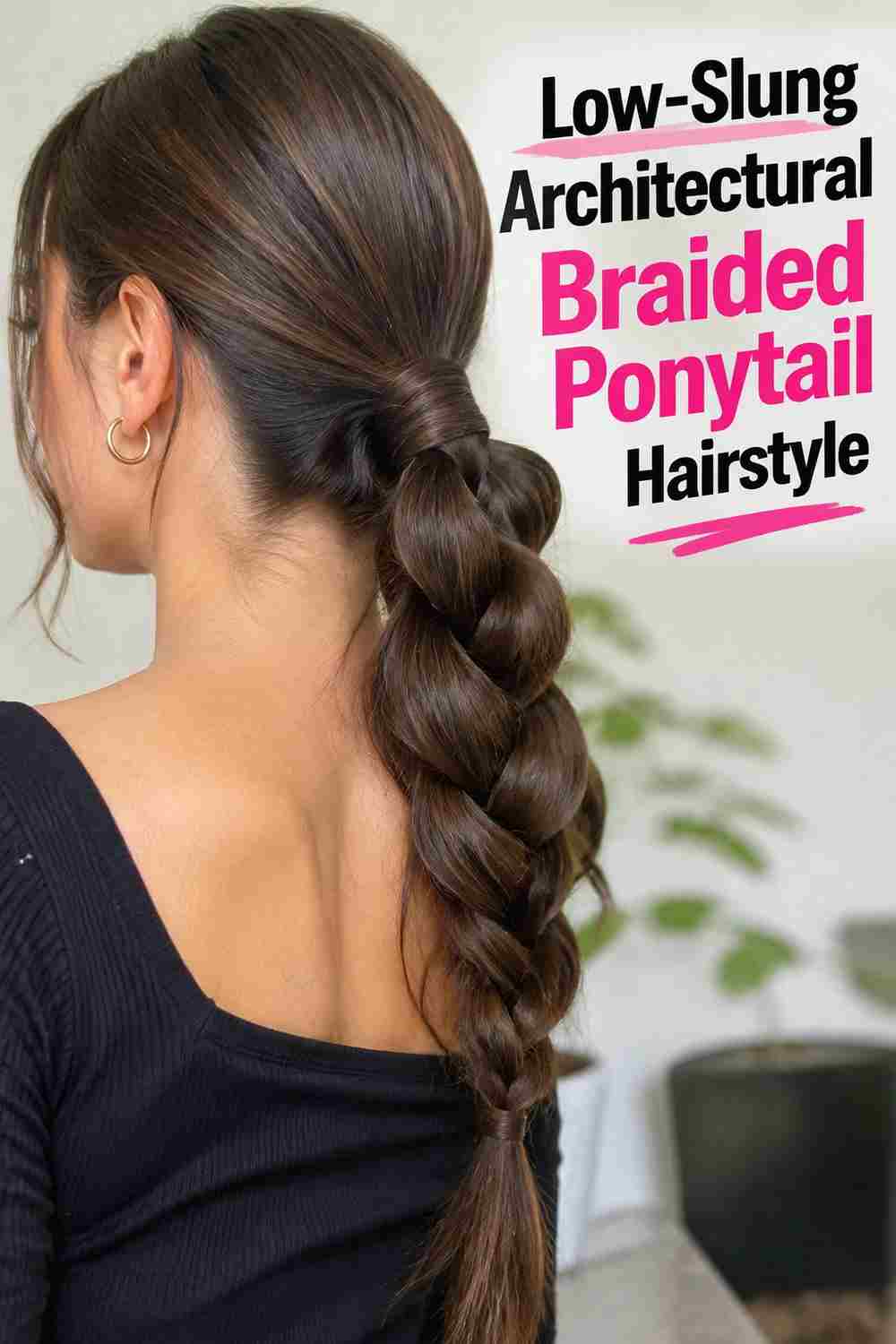
A low-slung ponytail creates a more restrained architectural look, placing the main braid structure close to the nape rather than high on the crown. Clean side sections can travel backward in geometric lines, woven twists, or narrow braids before converging at a low base. The tail may stay sleek or continue into one long braid, depending on how much detail you want below the nape. This placement is particularly effective when the crown remains smooth and close to the head, allowing the structured connections near the base to become visible. Medium and long hair work well, and the lower anchor can feel more comfortable for dense or heavy lengths.
Styling Notes
Keep the braid directions relatively flat as they approach the nape so the low base looks intentional rather than pulled downward.
Best For
Choose this version for a polished architectural style with less height and a quieter overall silhouette.
19. Sculptural Multi Braid Architectural Ponytail Hairstyle
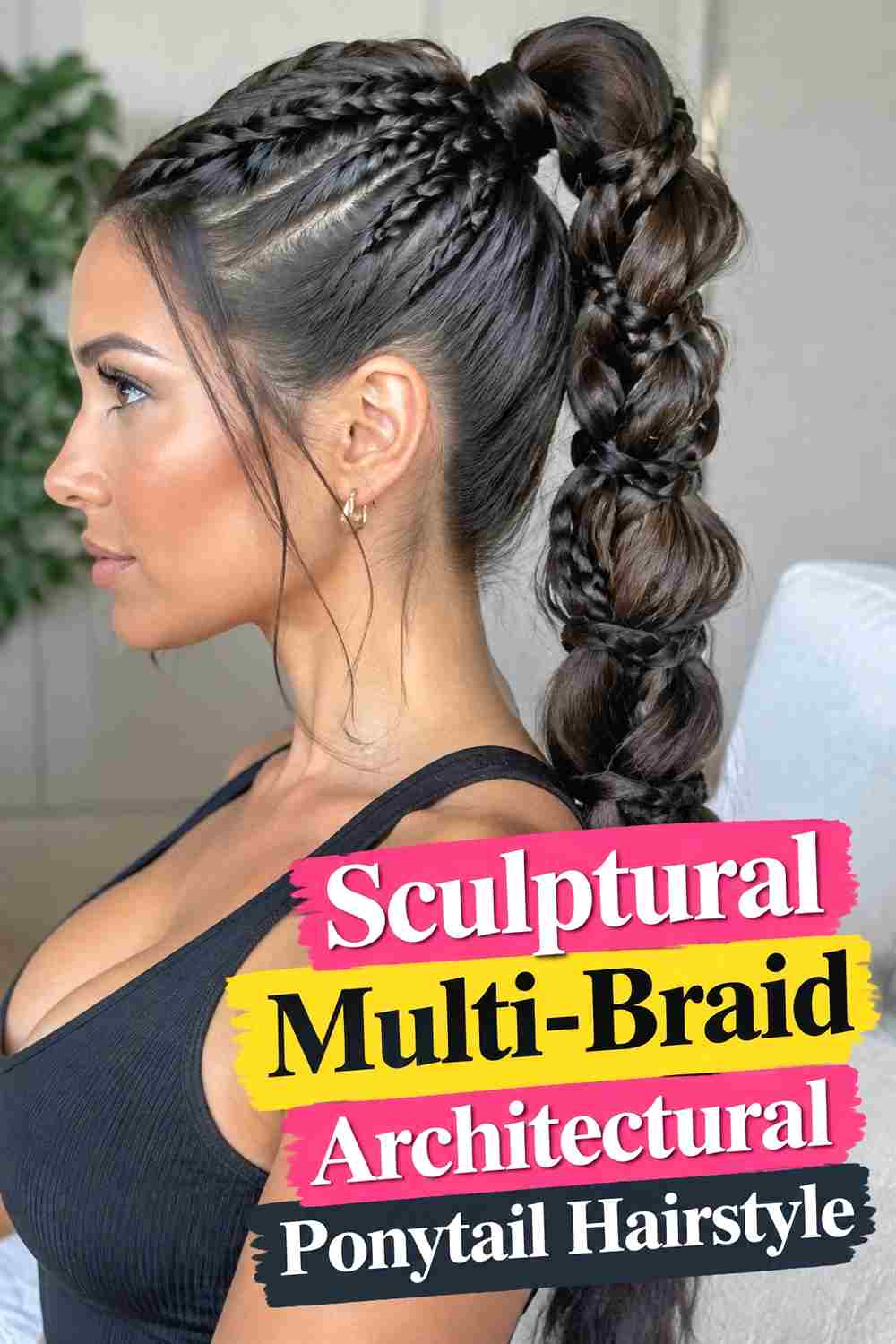
A multi-braid ponytail combines several braid types or directions into one cohesive structure. For example, narrow feed-in braids can frame a larger central braid before all sections merge into a ponytail containing rope, three-strand, or segmented details. The challenge is keeping a clear hierarchy so the style looks designed rather than crowded. Choose one dominant braid shape and use smaller braids as supporting lines. Long hair gives the most room for multiple textures, though medium lengths can concentrate the complexity near the crown and base. Clean parting and consistent tension help every component remain readable. The final silhouette should feel sculptural while still functioning as one connected ponytail.
Styling Notes
Limit the design to a few coordinated braid types and repeat key shapes so the finished ponytail maintains visual rhythm.
Pro Tip
Step back periodically while styling to check the overall silhouette instead of focusing only on individual braid details.
How to Choose the Right Look
Start with where you want the architectural detail to appear. Feed-in, zigzag, crisscross, mohawk, and woven-panel styles concentrate most of the design across the scalp. Spiral wraps, bubbles, rope lattices, and multi-braid versions move more of the structure into the ponytail itself.
Hair length also affects what is practical. Medium lengths can support strong crown geometry, high or low braided ponytails, and shorter sculptural details. Longer hair gives you more room for cages, spirals, ladders, segmented bubbles, and repeating braided structures.
Think carefully about density and comfort. Intricate designs do not need excessive tension to look precise. Clean parting, secure anchors, and balanced sectioning usually create a stronger result than pulling every braid tightly.
Finally, consider the occasion and styling time. A sleek geometric ponytail can feel polished enough for an event, while bows, loops, and dramatic lattices lean more statement-making. Choose complexity that you can maintain comfortably.
Final Thoughts
Architectural braided ponytails turn sectioning, direction, and braid placement into part of the hairstyle itself. A simple geometric feed-in pattern can feel just as intentional as an elaborate loop, lattice, or spiral construction when the lines are clean and the ponytail remains balanced. Focus on one dominant structural idea, support it with controlled detail, and keep tension comfortable so the finished look is both striking and wearable.
FAQs
1. What makes a braided ponytail architectural?
Architectural braided ponytails use deliberate geometry, repeated shapes, structural parting, loops, woven sections, or directional braids to create a clearly designed silhouette.
2. Do architectural ponytails need very long hair?
Not always. Medium hair can support detailed scalp braiding and compact structures, while longer hair provides more space for spirals, bubbles, cages, and extended braided tails.
3. Can an architectural braided ponytail be comfortable?
Yes. Precision comes from sectioning and secure construction, not necessarily extreme tightness. Balanced tension and a well-supported ponytail base are important for comfort.
4. Which architectural braid style looks most minimal?
Low-slung geometric ponytails, double-spine designs, simple feed-in patterns, and focused woven panels can all create architectural detail without excessive complexity.
5. How can I keep a complex braided ponytail from looking too busy?
Choose one main structural feature, repeat compatible shapes, keep parting clean, and simplify either the crown or the tail so both areas do not compete equally.
Save your favorite architectural braided ponytail hairstyle ideas, share them for inspiration, and explore more sculptural braid designs for your next statement look.