11 Knotted Nape Bun Hairstyle Ideas
Low placement, sculpted knots, and soft finishing details make these knotted nape buns an elegant way to keep hair secure without losing personality. A knotted nape bun sits low at the back of the head, usually close to the neckline, with sections twisted, looped, or tied into a compact bun shape. The placement keeps the silhouette understated, while the knot itself adds more visual detail than a basic low bun. The style can be sleek and precise or loose and romantic depending on your texture, parting, tension, and finishing technique. Hair length and density also matter because fuller or longer hair may need additional pins, while finer hair can benefit from gentle texture before the knot is formed.
Quick List
- Classic Knotted Nape Bun Hairstyle
- Sleek Center Part Knotted Nape Bun Hairstyle
- Soft Twisted Knotted Nape Bun Hairstyle
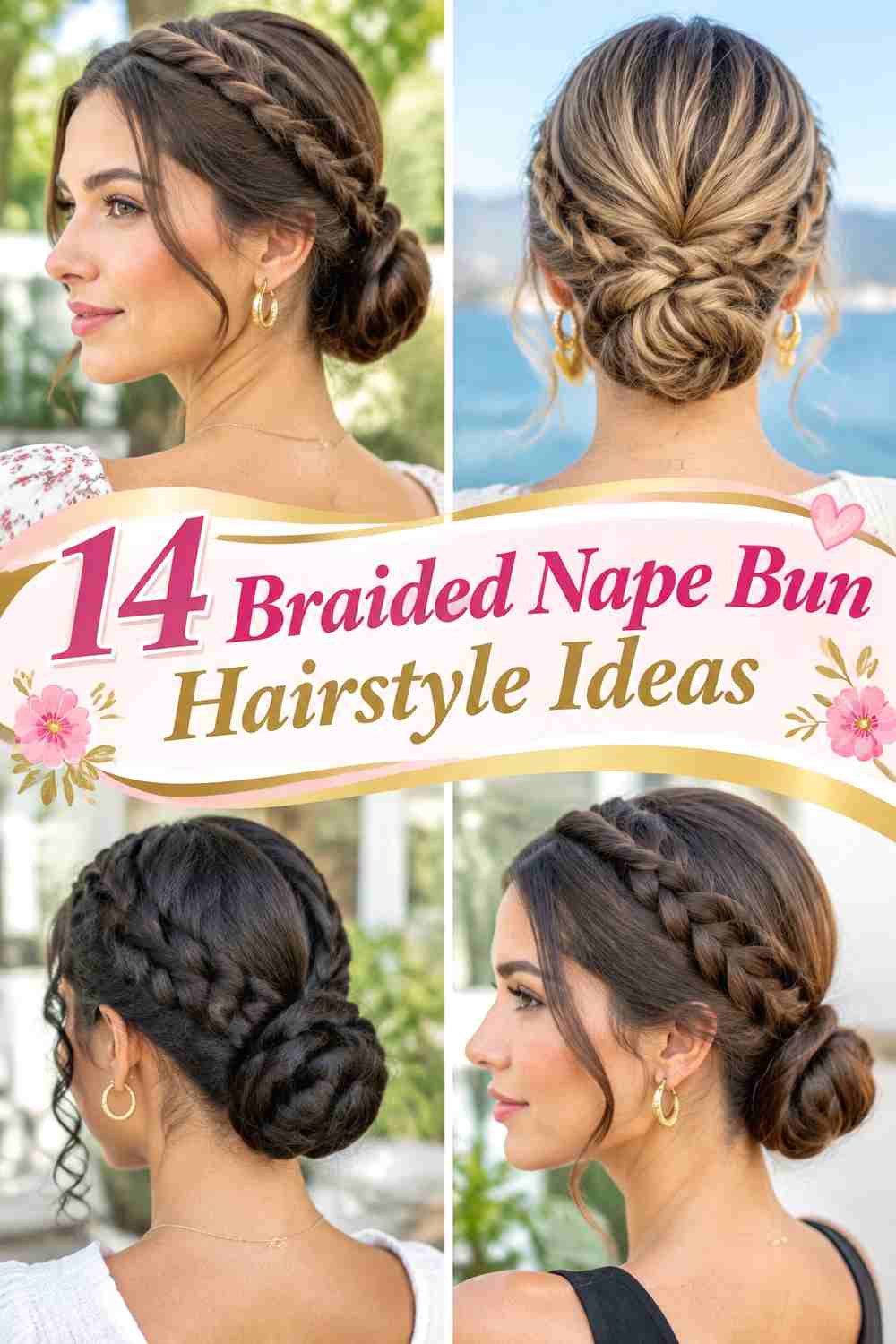
- Low Braided Knotted Nape Bun Hairstyle
- Loose Face Framing Knotted Nape Bun Hairstyle
- Side Part Knotted Nape Bun Hairstyle
- Textured Knotted Nape Bun Hairstyle
- Double Knot Nape Bun Hairstyle
- Minimalist Knotted Nape Bun Hairstyle
- Polished Event Knotted Nape Bun Hairstyle
- Romantic Loose Knotted Nape Bun Hairstyle
1. Classic Knotted Nape Bun Hairstyle
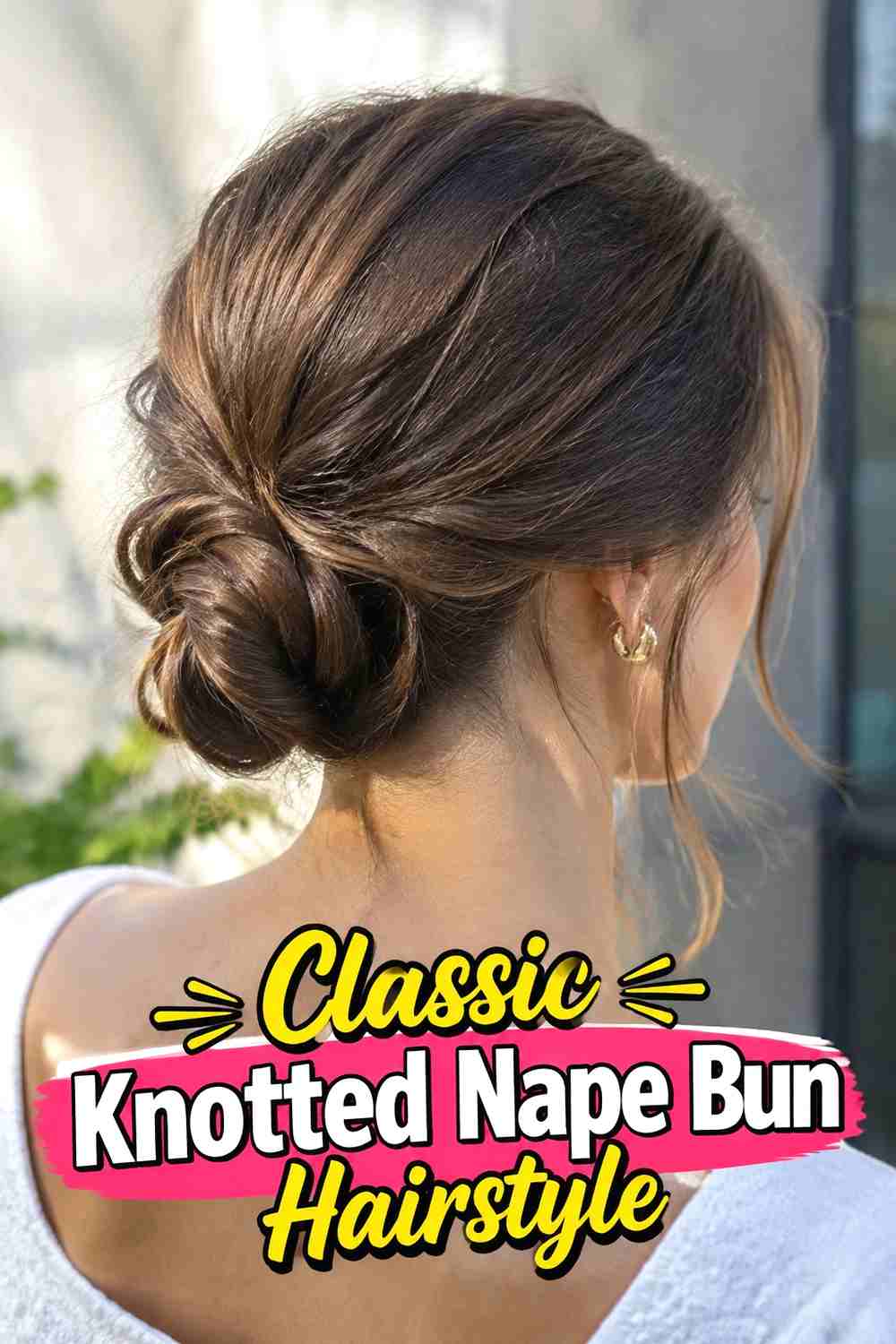
The Classic Knotted Nape Bun Hairstyle keeps the shape simple, low, and neatly centered at the base of the head. The hair is gathered close to the neckline, divided or twisted into a knot, then pinned so the ends disappear naturally into the bun. A smooth crown makes the knot the main focal point, but the finish should still show realistic strand movement rather than looking overly shellacked. Medium to long hair usually provides enough length to form the knot comfortably. Use a secure elastic as the foundation if your hair tends to slip, then add pins through the thickest part of the knot. A light flexible spray can control flyaways without making the style feel stiff.
Styling Notes
Build the knot close to the nape rather than higher on the back of the head to preserve the characteristic low silhouette.
Best For
This balanced version works well for office wear, dinners, simple events, and days when you want a clean updo without elaborate styling.
2. Sleek Center Part Knotted Nape Bun Hairstyle
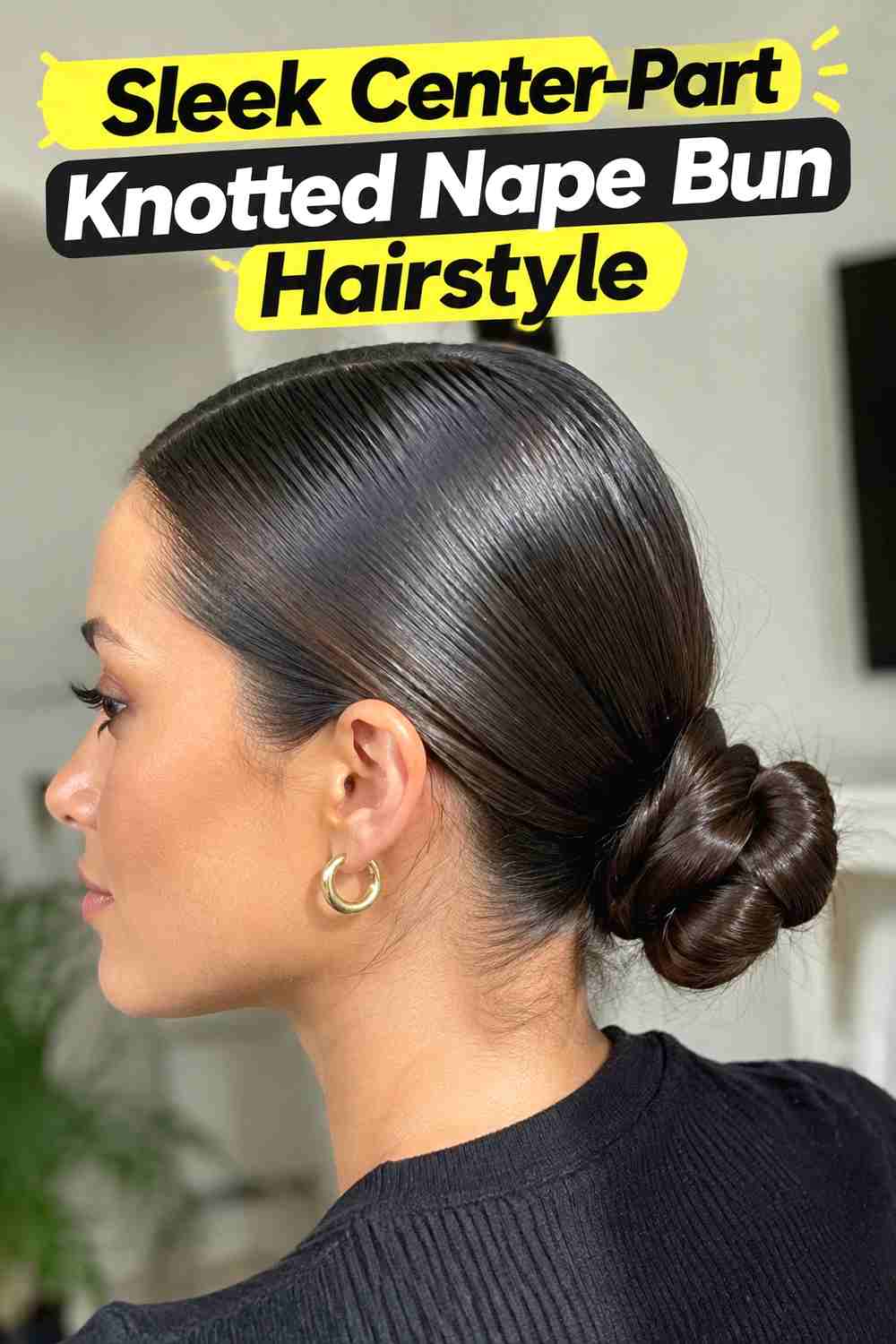
The Sleek Center-Part Knotted Nape Bun Hairstyle pairs a precise middle part with a compact low knot for a clean, modern finish. The front sections stay close to the head and travel smoothly toward the nape, creating symmetry from the hairline to the bun. This look depends more on surface control than volume, so brush the hair into place before forming the knot and work gradually with smoothing product. Keep the bun itself neat but not unnaturally perfect; a few subtle strand details help it look believable. Medium or long hair works best because the knot needs enough length to loop securely. Finish with discreet pins placed beneath the bun so the final shape stays visually uncluttered.
Why It Works
The center part reinforces the symmetry of a centered nape bun and gives the overall hairstyle a structured, minimalist appearance.
Pro Tip
Use only a small amount of smoothing cream near the roots so the hair looks polished rather than wet or heavily coated.
3. Soft Twisted Knotted Nape Bun Hairstyle
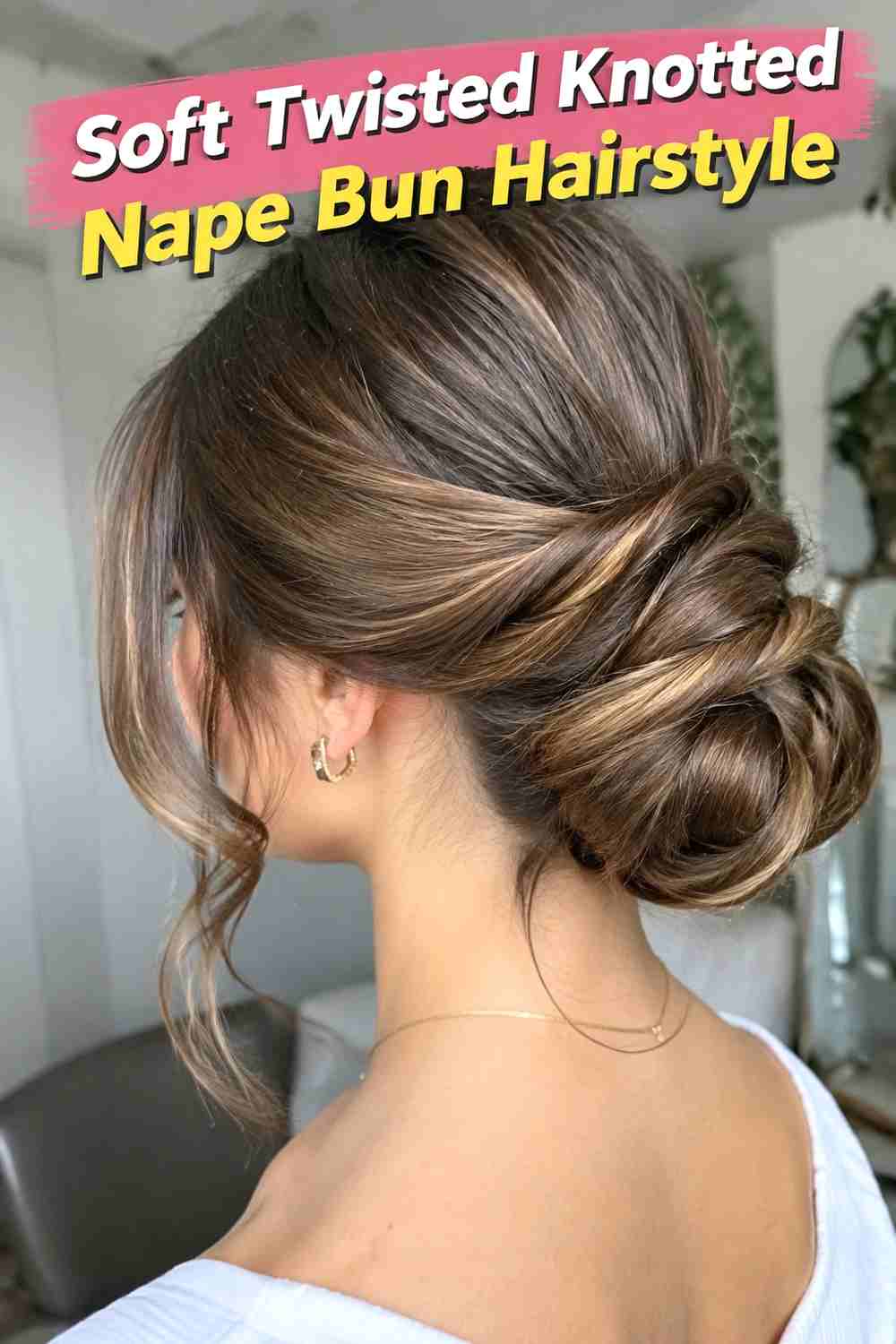
The Soft Twisted Knotted Nape Bun Hairstyle introduces visible twisting before the hair is secured into the low knot. Instead of pulling every section straight toward the nape, gently twist the sides so they create soft direction and texture across the back of the head. The twisted pieces then meet at the neckline and form the bun, making the transition into the knot feel integrated rather than abrupt. This approach works particularly well when you want an updo that feels elegant but not severe. Keep the tension moderate so the twists remain visible. A few small pins placed along the underside can support the structure while keeping the top surface clean and softly dimensional.
Styling Notes
Twist the side sections only enough to show definition. Over-tightening them can flatten the texture and make the style feel rigid.
Best For
This variation suits dinners, celebrations, and polished everyday looks where a little extra detail feels appropriate.
4. Low Braided Knotted Nape Bun Hairstyle
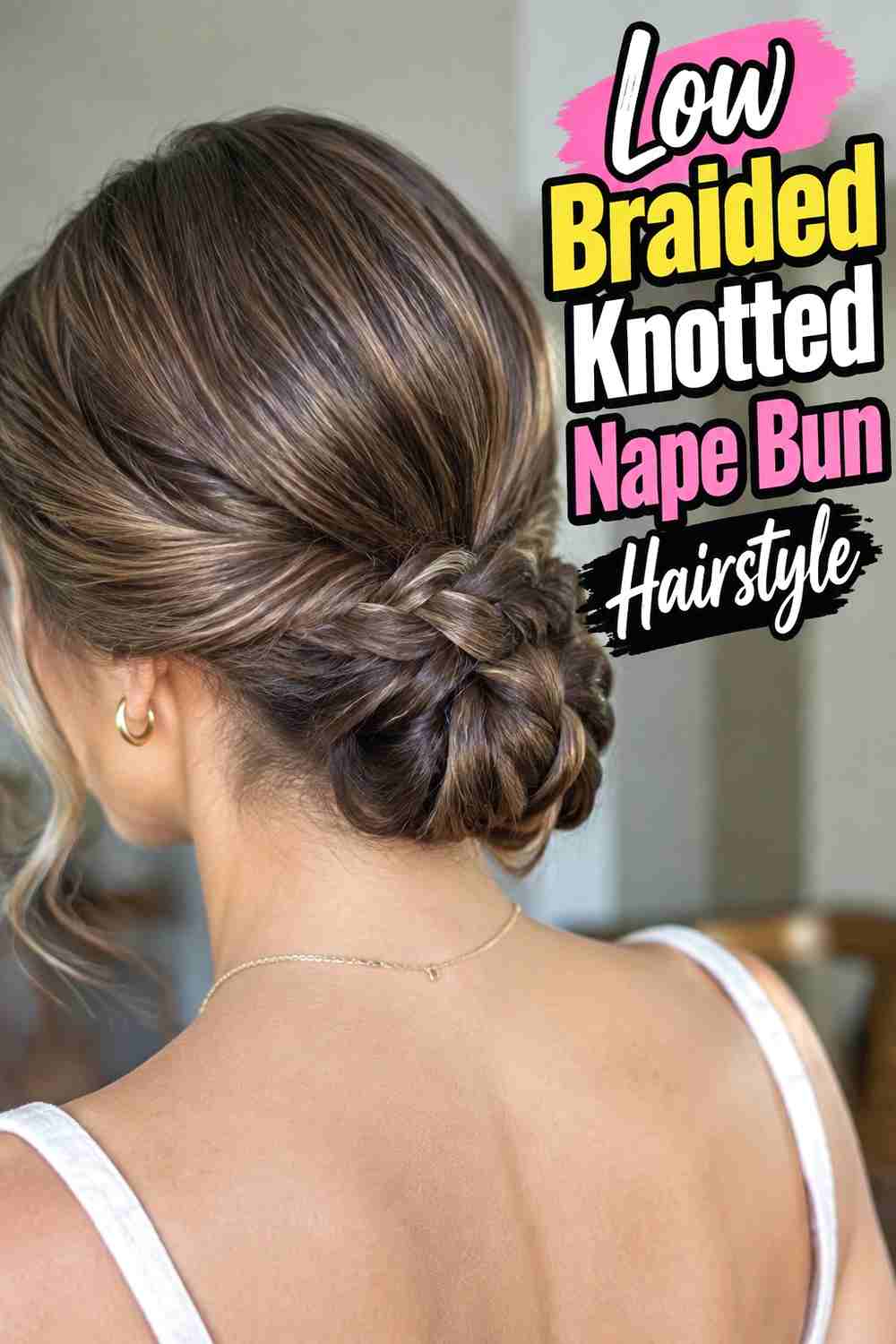
The Low Braided Knotted Nape Bun Hairstyle adds braid texture to the knot for a more intricate finish. The hair can be gathered low, braided loosely, and then wrapped or tied into a compact bun at the nape. Keeping the braid slightly relaxed allows its pattern to remain visible after it is shaped into the knot. Very tight braiding can make the final bun look smaller and less dimensional. Medium to long hair usually gives the cleanest result, particularly if the braid has enough length to wrap naturally without exposed ends. Secure the structure with pins inserted through both the braid and the base underneath. A light mist of hairspray can help control shorter pieces while preserving texture.
Hair Type & Length
Medium and long hair are easiest to braid and wrap securely, while thicker hair may create a naturally fuller knotted shape.
Pro Tip
Gently loosen selected braid edges before pinning the bun if you want more visible texture without making the style messy.
5. Loose Face Framing Knotted Nape Bun Hairstyle
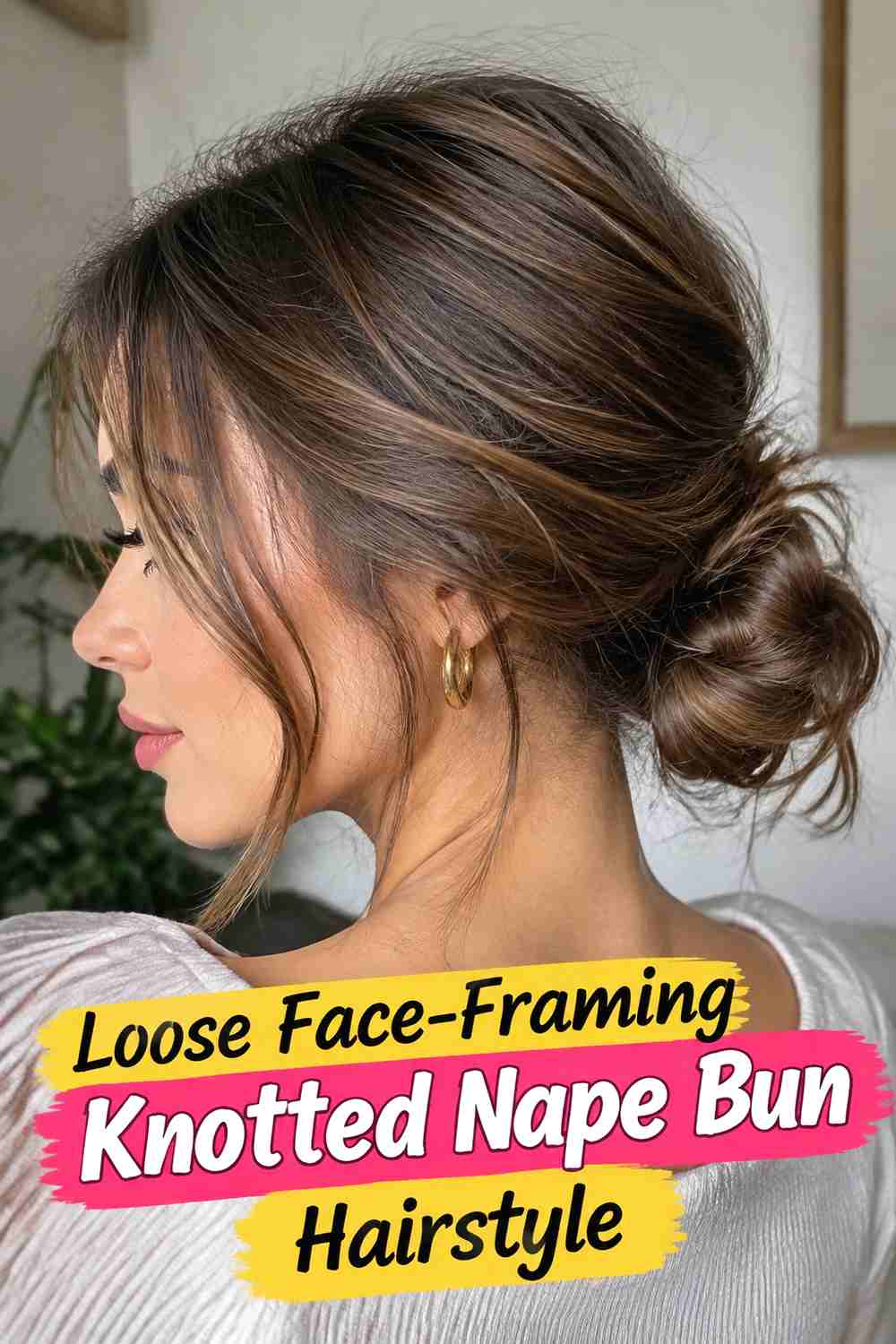
The Loose Face-Framing Knotted Nape Bun Hairstyle combines a secure low knot with softer pieces around the hairline. A few deliberate strands near the temples or cheeks reduce the formality of the bun and create movement from the front. The rest of the hair should still feel controlled enough that the style looks intentional rather than unfinished. Form the nape knot first, then adjust the front pieces so you can control exactly how much hair is released. If your layers are short, they may naturally fall forward without much effort. Keep those strands softly bent rather than tightly curled so they blend with the relaxed mood. This variation works particularly well when you want an updo that photographs softly from multiple angles.
Why It Works
The contrast between a structured low bun and loose front pieces gives the style both security and softness.
Wear & Maintenance
Keep a couple of spare pins available in case shorter layers loosen more than expected during extended wear.
6. Side Part Knotted Nape Bun Hairstyle
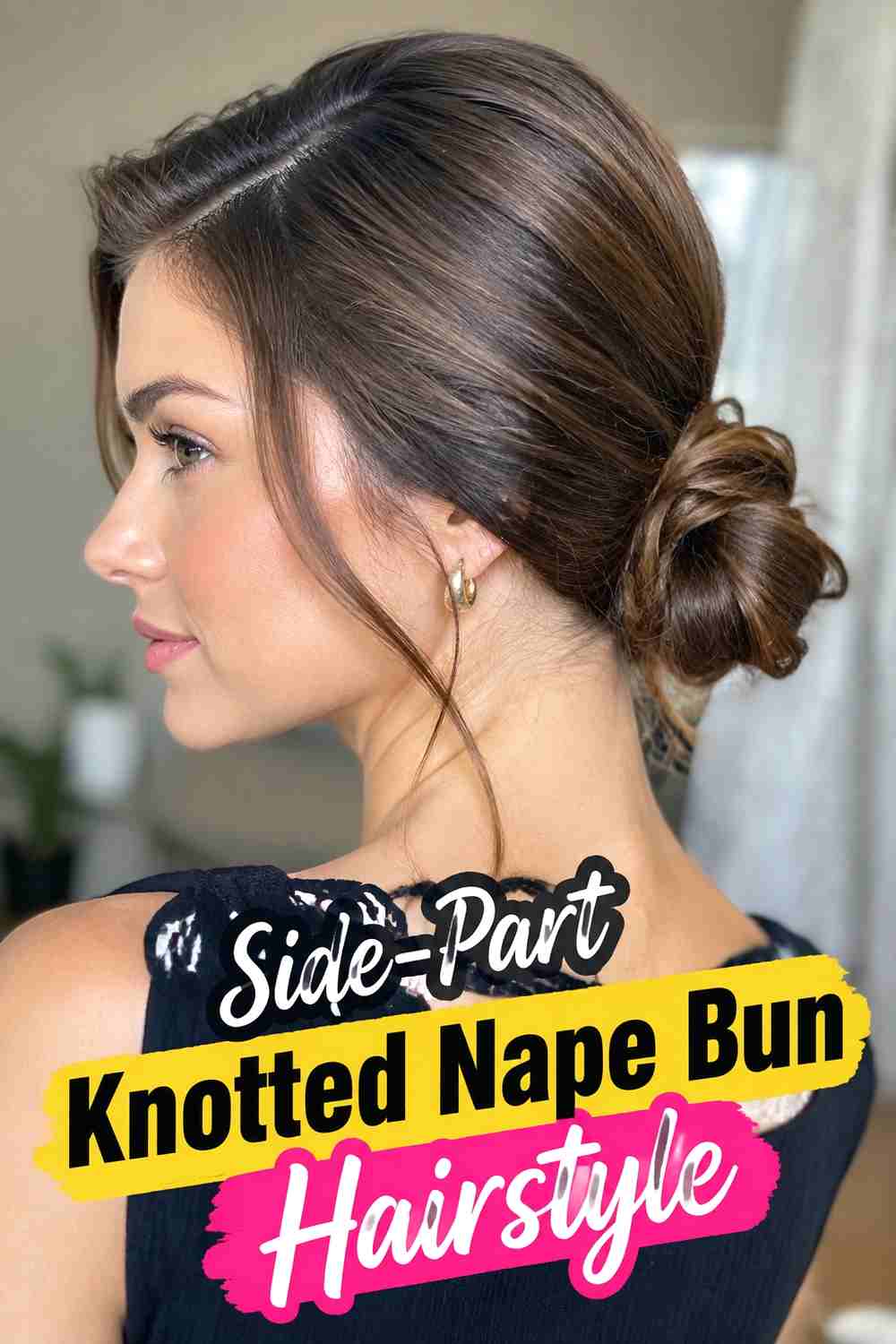
The Side-Part Knotted Nape Bun Hairstyle adds asymmetry at the front while keeping the knot positioned low and balanced at the back. A defined side part creates a gentle sweep across the forehead, which can make a simple nape bun feel more styled without adding complicated texture. Brush the heavier side smoothly toward the back and allow a little lift near the front if you prefer a softer profile. The bun itself can remain centered so the hairstyle does not become visually uneven. Secure the low ponytail foundation first if your hair is slippery, then create and pin the knot. A subtle shine product on the surface can emphasize the clean sweep without flattening the crown.
Styling Notes
Establish the side part before gathering the hair so the front sections keep their intended direction throughout the styling process.
Best For
This version works well when you want a polished low bun with slightly more movement than a strict center-part style.
7. Textured Knotted Nape Bun Hairstyle
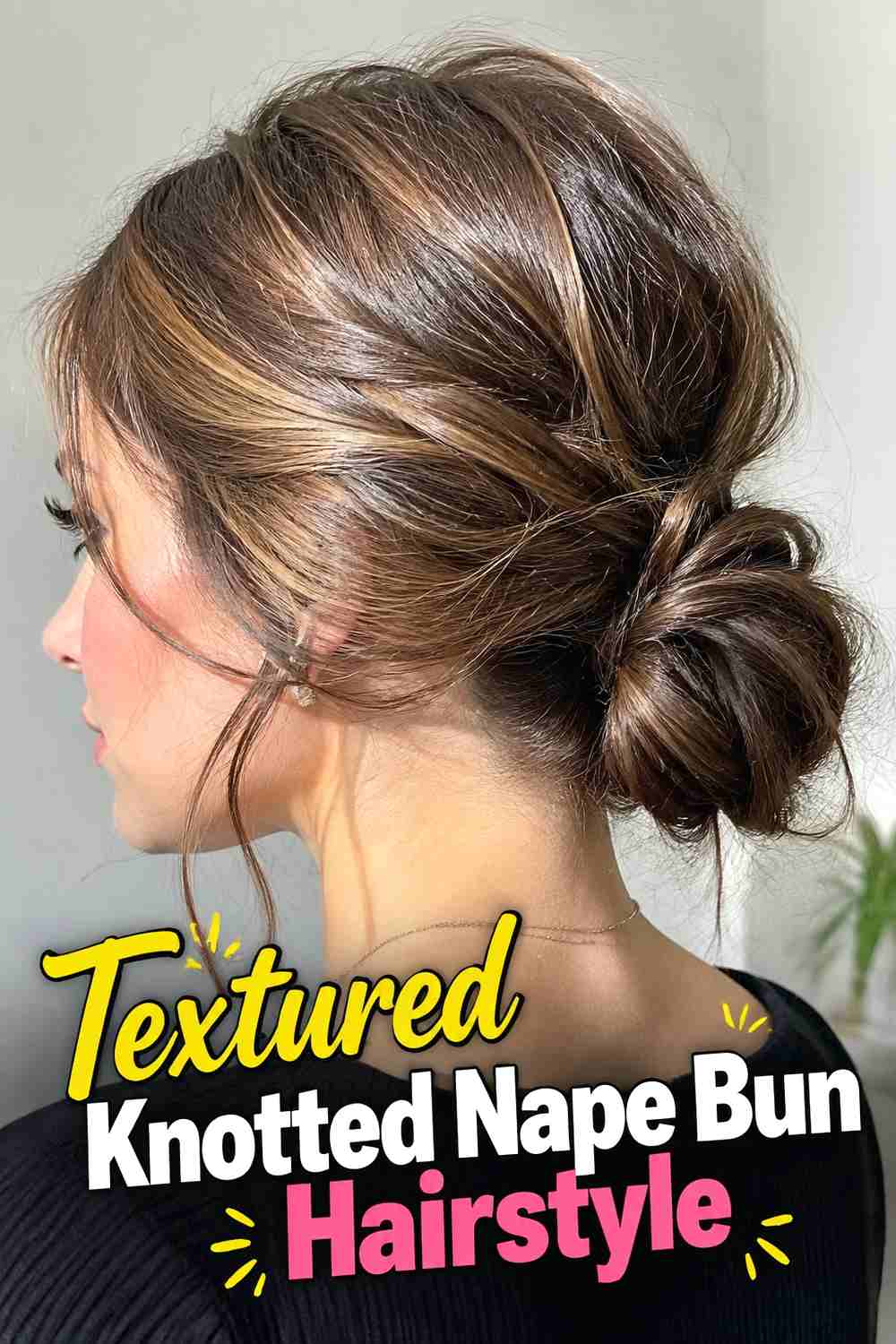
The Textured Knotted Nape Bun Hairstyle embraces visible separation, gentle volume, and a slightly less controlled surface. Instead of smoothing every strand completely flat, give the hair a little grip before gathering it so the crown and knot retain dimension. Soft waves, natural texture, or a light texturizing product can all help create this effect. The knot should remain secure at the nape, but a few subtle loops and separated strands can stay visible around its shape. This style is especially practical when perfectly sleek hair is difficult to maintain. Avoid pulling the bun apart too aggressively; the finished look should feel intentionally textured rather than loose enough to unravel.
Why It Works
Texture adds visual fullness and makes small imperfections feel like part of the hairstyle instead of something that needs constant correction.
Hair Type & Length
Medium to long hair with natural wave or added grip is especially suited to this fuller, dimensional version.
8. Double Knot Nape Bun Hairstyle
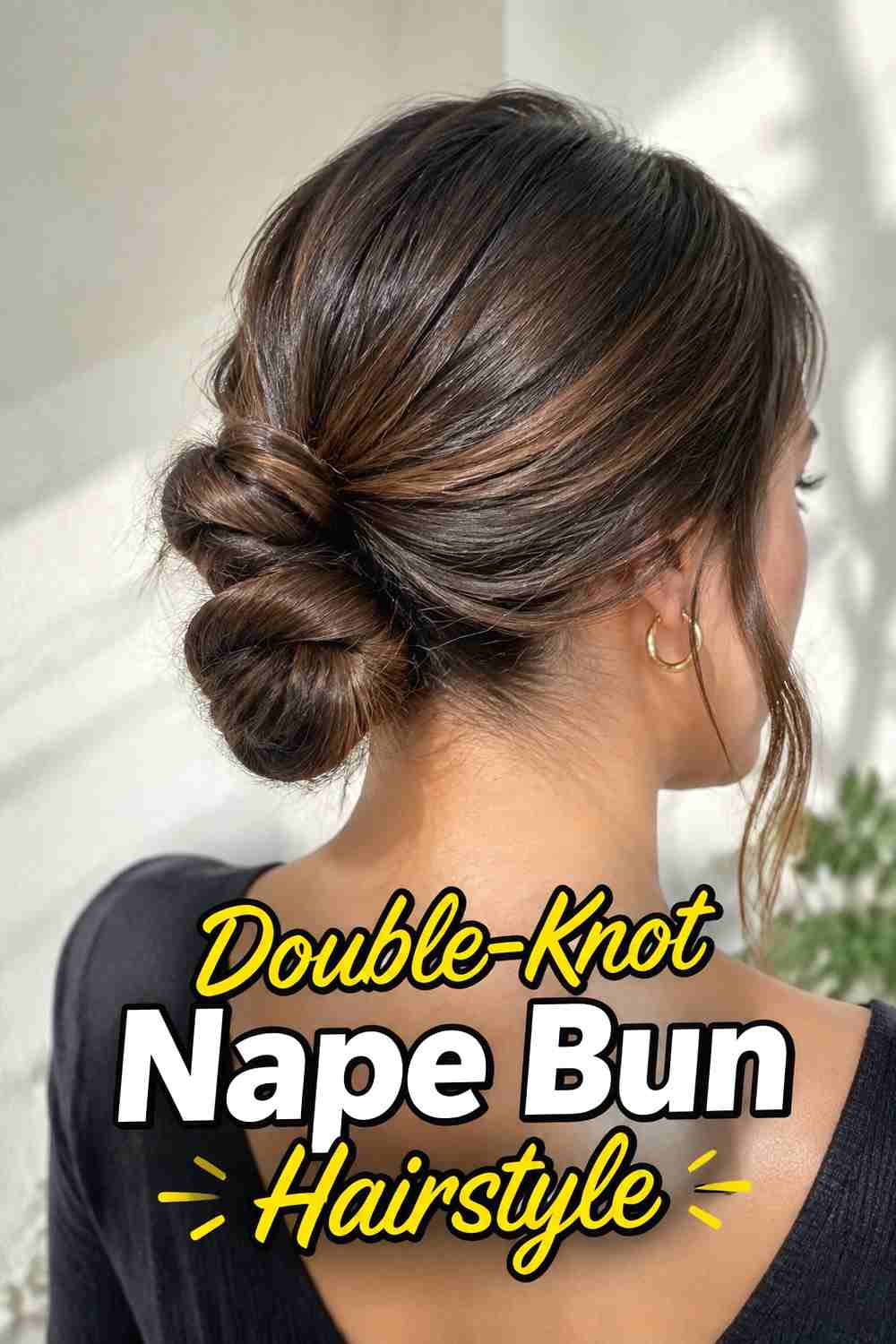
The Double-Knot Nape Bun Hairstyle creates extra structure by forming two connected knots at the neckline. Depending on hair length, the sections can be tied once and then knotted again, or divided into two compact loops that overlap at the nape. The important detail is keeping both knots close together so they read as one intentional bun rather than two separate updos. This style works best when the hair has enough length to manipulate without pulling tightly at the scalp. Use small, sturdy pins to anchor each knot independently before connecting the overall shape. Keep the crown relatively simple because the double-knot construction already provides plenty of visual interest at the back.
Styling Notes
Secure the first knot before shaping the second so the entire structure does not loosen while you work.
Best For
Choose this version when you want a low bun with stronger architectural detail but still prefer a compact silhouette.
9. Minimalist Knotted Nape Bun Hairstyle
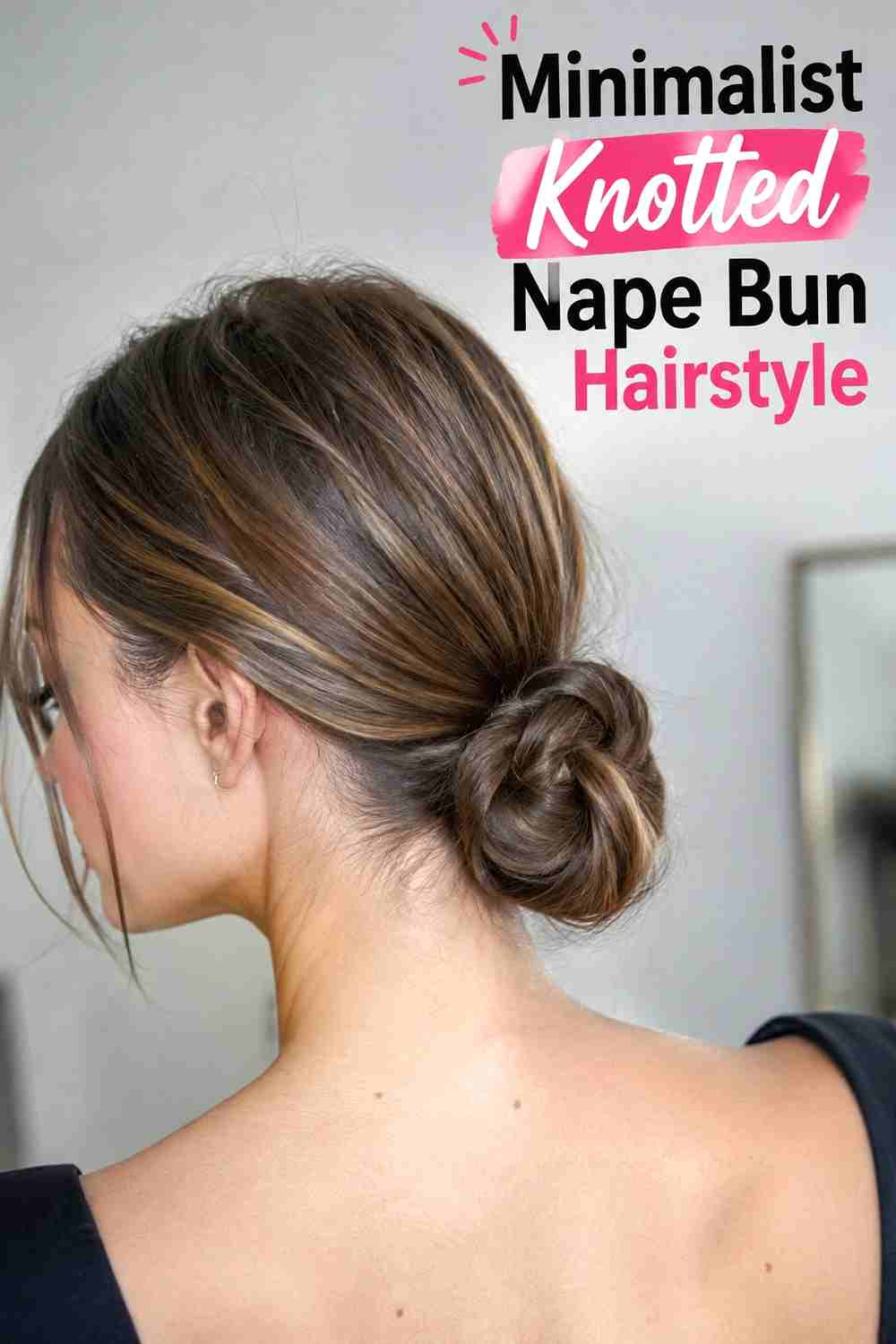
The Minimalist Knotted Nape Bun Hairstyle strips the look back to its essential elements: clean roots, controlled lengths, and one compact knot at the base of the head. There is very little added volume or decorative texture, so precision in placement matters. Gather the hair directly at the nape and keep the knot small enough to sit close to the neckline. Hidden pins maintain the uncluttered appearance, while a light smoothing product controls surface flyaways. This approach works particularly well with straight or smoothly styled hair, although other textures can be refined into the same silhouette. The finished look should feel effortless and intentional, with the shape of the knot providing the only major visual detail.
Why It Works
Reducing extra texture and volume draws attention to the clean proportions of the low knot and the neckline.
Pro Tip
Choose pins close to your hair color and insert them underneath the knot to preserve the minimal finish.
10. Polished Event Knotted Nape Bun Hairstyle
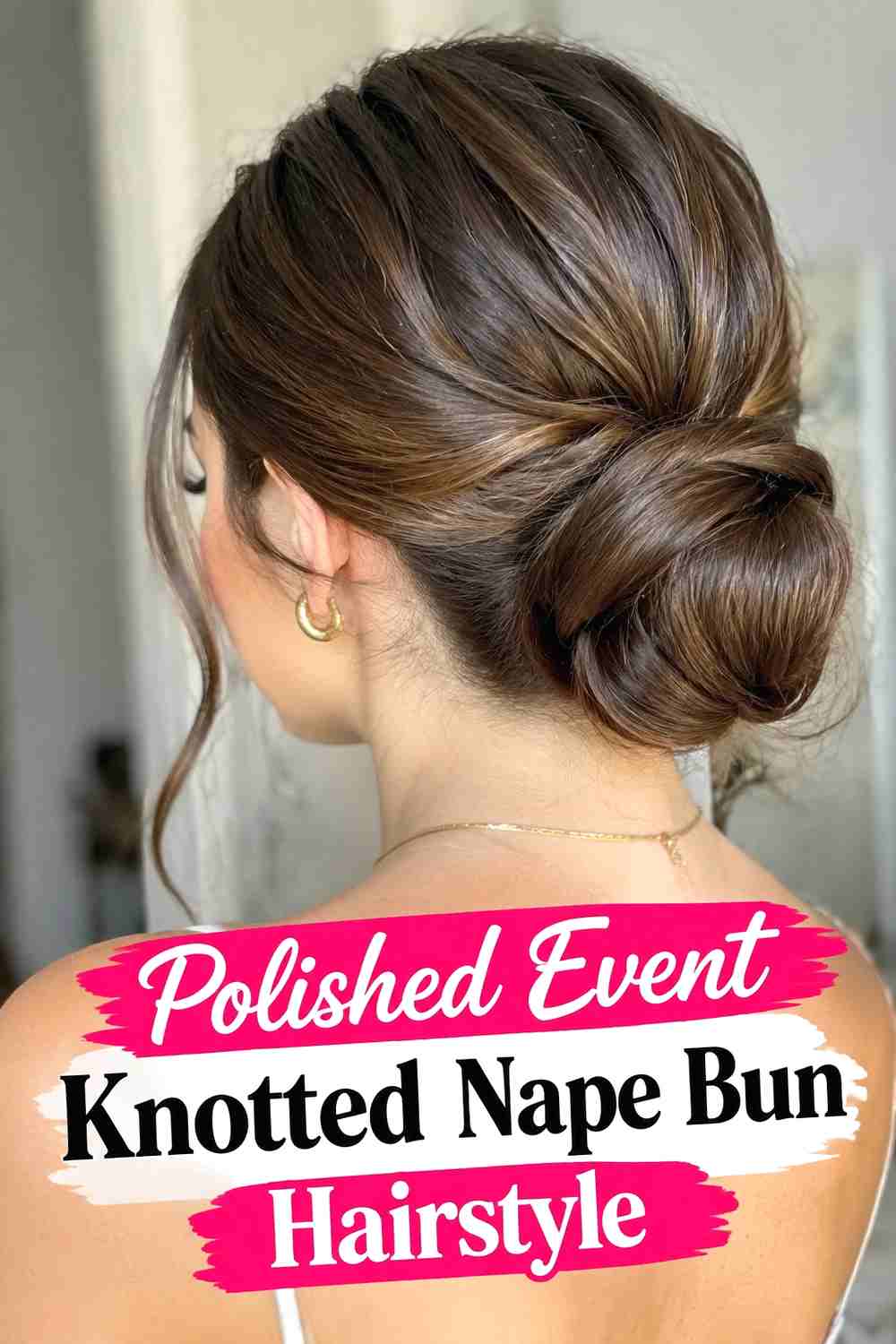
The Polished Event Knotted Nape Bun Hairstyle adds more deliberate structure and hold for weddings, formal dinners, parties, or photographs. The crown stays smooth and controlled, while the nape knot is shaped carefully so its loops look balanced from the back and sides. Start with manageable sections and create a secure base before forming the knot, especially if the hairstyle needs to last for several hours. Pins should cross through the internal structure rather than relying only on the outer edges. A flexible finishing spray can maintain the shape while allowing some natural movement. Depending on the outfit, the front can be center-parted, side-parted, or softly swept without changing the low placement that defines the style.
Wear & Maintenance
Use a secure internal pinning pattern and carry a few spare pins for minor adjustments rather than repeatedly reshaping the entire bun.
Best For
This is the most formal option for occasions where you want a refined updo that keeps the neckline and accessories visible.
11. Romantic Loose Knotted Nape Bun Hairstyle
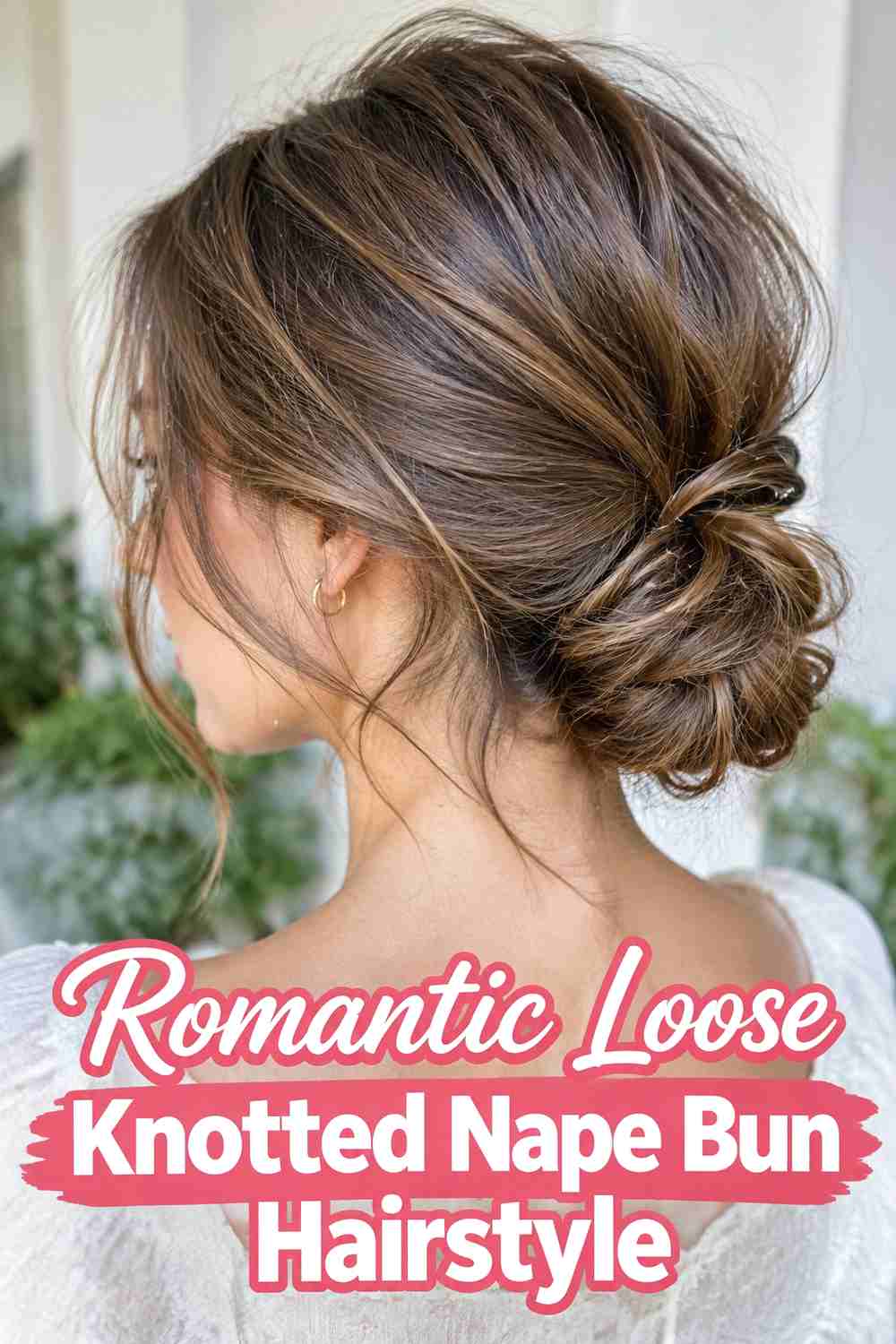
The Romantic Loose Knotted Nape Bun Hairstyle softens the low-knot shape with airy texture, gentle crown volume, and a few intentionally relaxed strands. Instead of pulling the hair tightly backward, leave a little softness over the sides and top before forming the knot at the nape. The bun can have visible loops and subtle irregularity, but it should still feel securely anchored. Face-framing pieces may be left loose and softly bent to complement the relaxed finish. This variation works well with naturally wavy hair or hair that has been given a little movement beforehand. Finish selectively rather than spraying the entire style heavily, so the hair keeps the touchable, romantic quality that distinguishes it from a more formal nape bun.
Styling Notes
Create the secure base first, then gently soften the crown and sides so you do not sacrifice stability for volume.
Why It Works
A secure low knot provides structure while the relaxed surface and face-framing pieces keep the overall look soft and approachable.
How to Choose the Right Look
Start with the finish you prefer. Sleek Center-Part and Minimalist Knotted Nape Buns are best suited to a clean, controlled appearance, while the Textured and Romantic Loose versions allow more movement and visible strand separation. If you want detail at the back, braided, twisted, or double-knot styles make the bun itself more decorative. Hair length and density also influence the result. Medium-length hair can usually create a compact single knot, while long hair offers more flexibility for braiding, double knots, and fuller shapes. Thick hair may require stronger pins and more internal anchoring, while fine hair can benefit from light texture before styling. Consider comfort and wear time as well. A tightly pulled sleek bun may feel secure but can be less comfortable for some people over many hours. Softer styles can reduce tension, provided the knot is properly pinned. For formal occasions, prioritize secure structure, balanced placement, and flexible hold. For everyday wear, a simpler knot with natural texture may be quicker and easier to refresh.
Final Thoughts
A knotted nape bun can look minimalist, textured, romantic, or event-ready without changing its defining low placement. Choose the version that suits your hair length and preferred level of polish, then adjust the part, tension, texture, and knot construction to make the style practical for your routine.
FAQs
1. How low should a knotted nape bun sit?
It should sit close to the base of the head around the neckline rather than high on the back of the head. Exact placement can be adjusted slightly for comfort.
2. How long does hair need to be for a knotted nape bun?
Medium-length hair is often enough for a simple knot, while longer hair provides more flexibility for braided, double-knot, and fuller variations.
3. How can I keep a low knotted bun secure?
Start with a stable base if needed, then insert pins through the internal structure of the knot rather than pinning only the loose outer sections.
4. Can a knotted nape bun work with naturally textured hair?
Yes. Natural wave, curl, or texture can add dimension to the bun. You can preserve that texture or smooth selected areas depending on the finish you want.
5. How do I make a knotted nape bun look softer?
Use moderate tension, leave slight volume through the crown, allow a few face-framing pieces to fall naturally, and avoid coating the hairstyle with heavy finishing product. Save your favorite knotted nape bun ideas, share the styles that inspire you, and explore more elegant low updos for everyday and special occasions.