16 Bouncy Flip Blowout Hairstyle Ideas
Big movement, airy volume, and playful flipped ends make these bouncy blowout hairstyles a fun way to give layered hair a polished but lively finish.
A flip blowout combines smooth volume through the roots and mid-lengths with ends that turn outward instead of curling fully under. The result can range from subtle and modern to noticeably retro, depending on how much lift, layering, and outward movement you create.
Length and layer placement make a major difference. Shoulder and collarbone cuts produce a compact bounce, while long layers create flowing feathered movement. Fine hair may benefit from restrained layering and root lift, while dense hair can often support more internal shaping to keep the finished blowout light.
Quick List
- Classic Bouncy Flip Blowout Hairstyle
- Soft Feathered Flip Blowout Hairstyle
- Center Part Bouncy Flip Blowout Hairstyle
- Side Part Bouncy Flip Blowout Hairstyle
- Curtain Bang Flip Blowout Hairstyle
- Long Layered Flip Blowout Hairstyle
- Shoulder Length Flip Blowout Hairstyle
- Collarbone Flip Blowout Hairstyle
- Rounded End Flip Blowout Hairstyle
- Face Framing Flip Blowout Hairstyle
- Fine Hair Bouncy Flip Blowout Hairstyle
- Thick Hair Bouncy Flip Blowout Hairstyle
- Soft Wave Flip Blowout Hairstyle
- Sleek Crown Flip Blowout Hairstyle
- Retro Inspired Flip Blowout Hairstyle
- Low Maintenance Flip Blowout Hairstyle
1. Classic Bouncy Flip Blowout Hairstyle
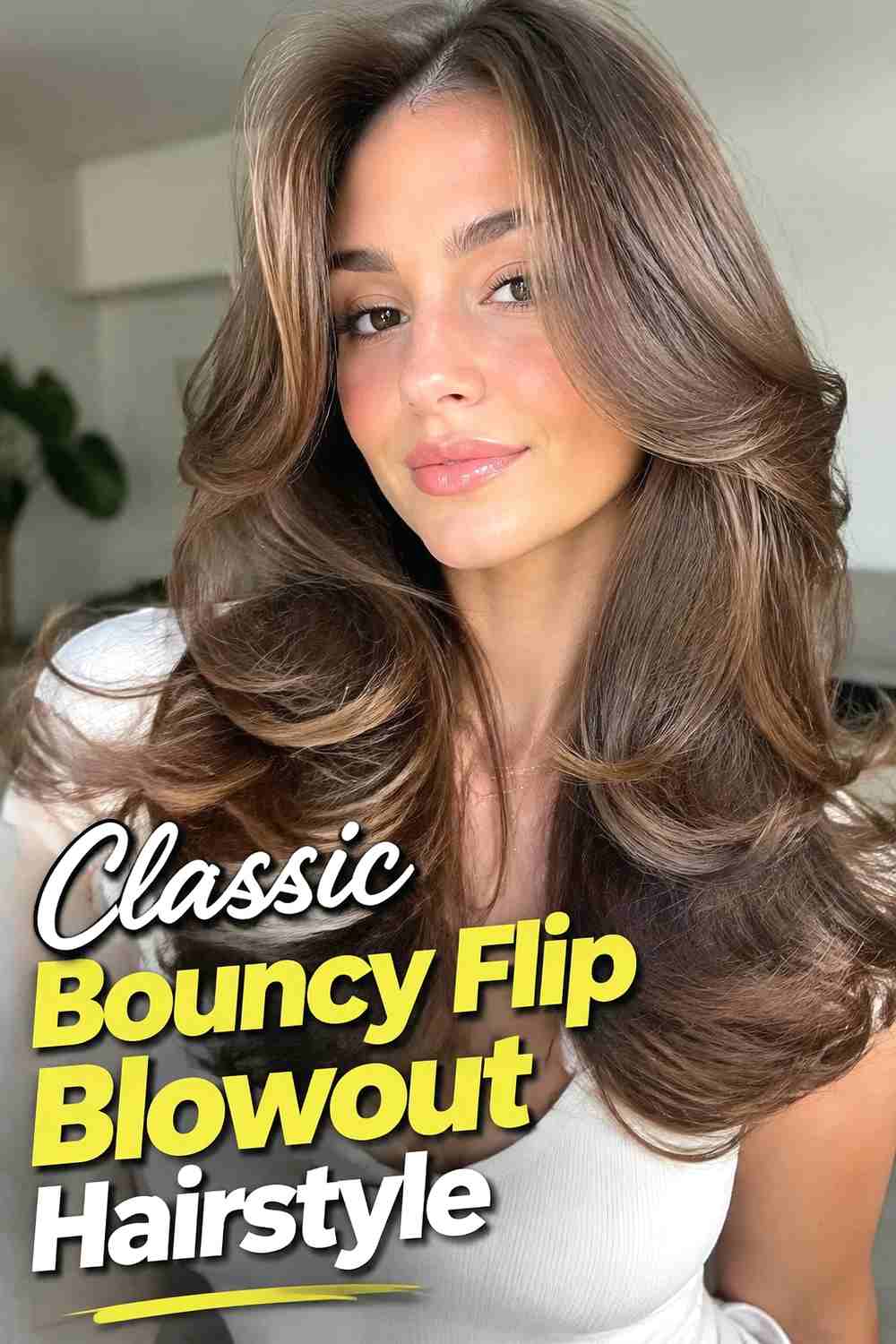
The Classic Bouncy Flip Blowout Hairstyle balances smooth volume with outward-moving ends for a polished look that still feels playful. Root lift gives the hair body, while the mid-lengths stay soft and controlled before the tips turn gently away from the shoulders. The flip can be strongest through the front and lower layers, allowing the rest of the haircut to maintain natural movement instead of forming one perfectly uniform curve. This version works especially well on layered medium to long hair because the different lengths create visible bounce. A round brush gives the cleanest result, but the finished hair should remain flexible enough to move naturally rather than holding a stiff salon-set shape.
Styling Notes
Lift each section at the root, smooth through the middle, and roll only the final inches outward to create the signature flip.
Best For
Medium and long layered hair offers enough length for visible bounce without making the flipped ends feel crowded.
2. Soft Feathered Flip Blowout Hairstyle
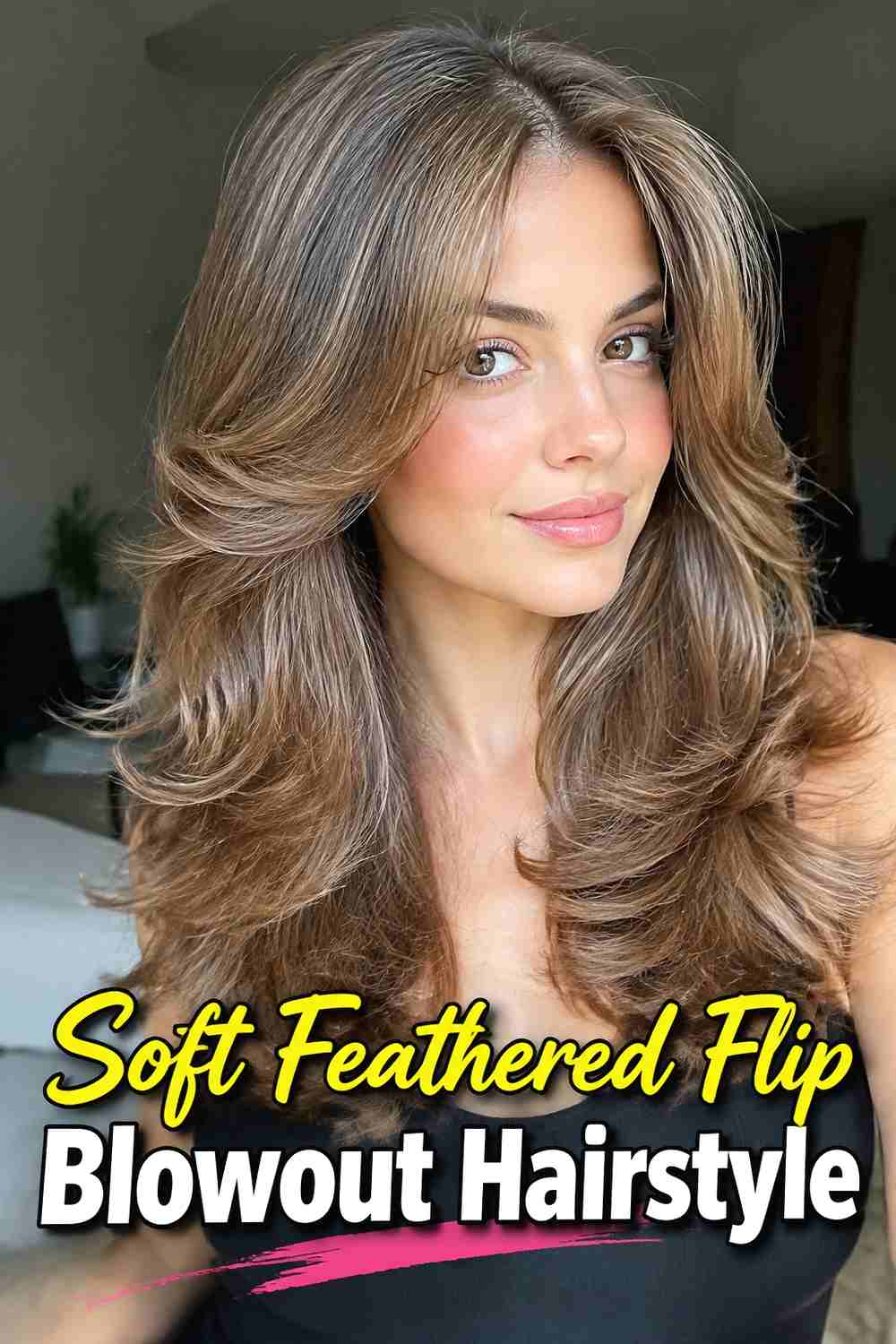
The Soft Feathered Flip Blowout Hairstyle creates a lighter finish by allowing separate layers to sweep outward at slightly different heights. Face-framing pieces can begin around the cheekbones or jaw, then gradually blend into longer feathered sections near the shoulders. Instead of one strong flip around the entire perimeter, each layer moves independently, giving the blowout a softer and more flowing appearance. Gentle crown volume supports the shape without making it overly dramatic. This style is especially attractive on straight or softly wavy hair because the feathered ends remain easy to see. Leaving a few pieces less curved helps keep the final effect current rather than overly retro.
Styling Notes
Work through the layers individually with a round brush, directing the ends away from the face while keeping the roots soft.
Pro Tip
Alternate the strength of the flip slightly between sections to create natural-looking feathered movement.
3. Center Part Bouncy Flip Blowout Hairstyle
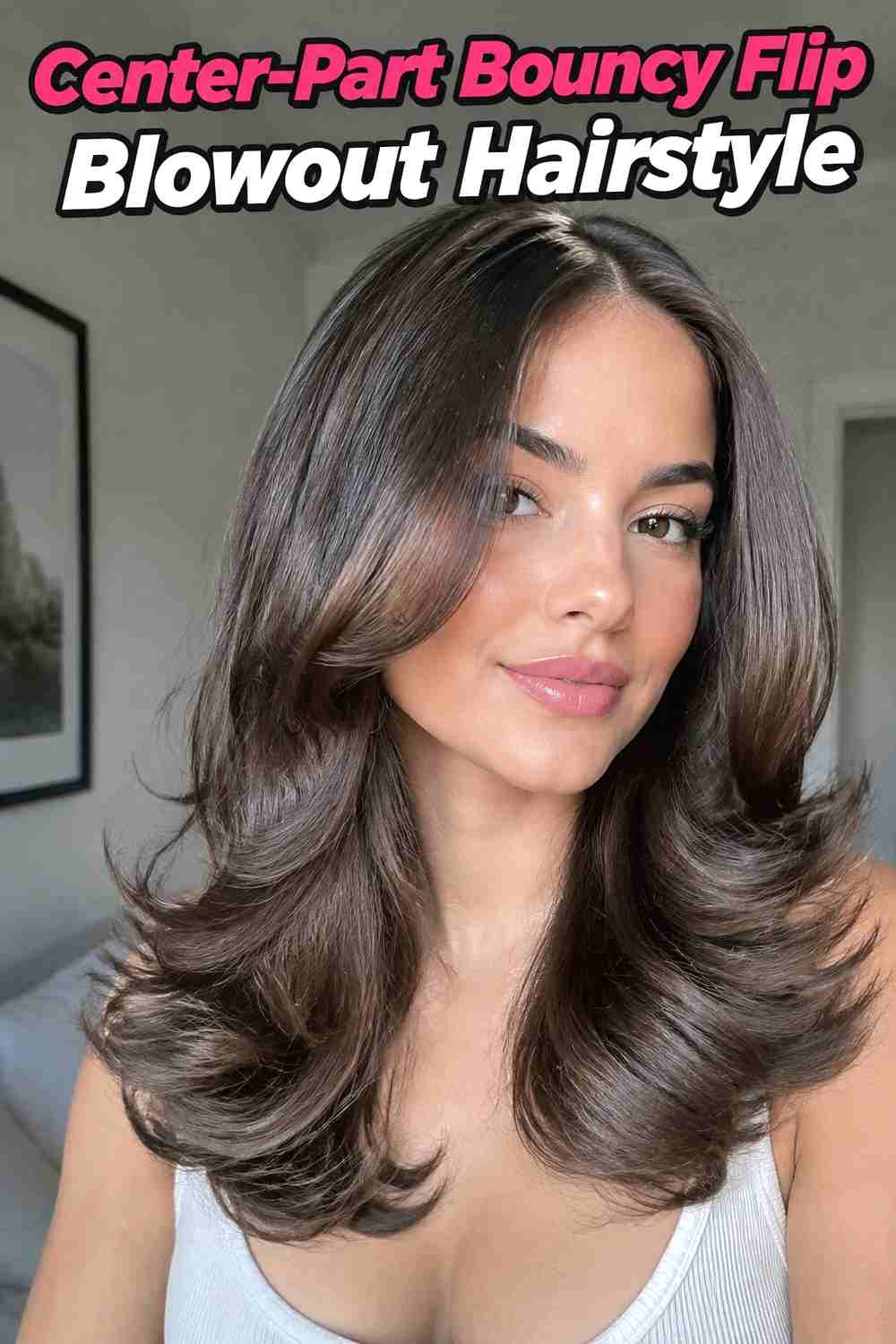
The Center-Part Bouncy Flip Blowout Hairstyle gives the blowout a balanced, symmetrical shape with volume spreading evenly from the middle. Front layers sweep away on both sides of the face, while the lower ends flip outward to create movement around the shoulders. A center part works particularly well when the haircut already contains face-framing layers because each side can mirror the other without looking too rigid. The roots should retain enough lift to prevent the middle part from appearing flat, but excessive volume is unnecessary. This version feels polished and modern, especially when the flip remains broad and soft rather than sharply curled at every layer.
Why It Works
The center part makes the outward movement on both sides clearly visible and emphasizes the symmetry of the layered blowout.
Styling Notes
Dry the front sections away from the center line and keep a gentle lift at the roots before shaping the ends outward.
4. Side Part Bouncy Flip Blowout Hairstyle
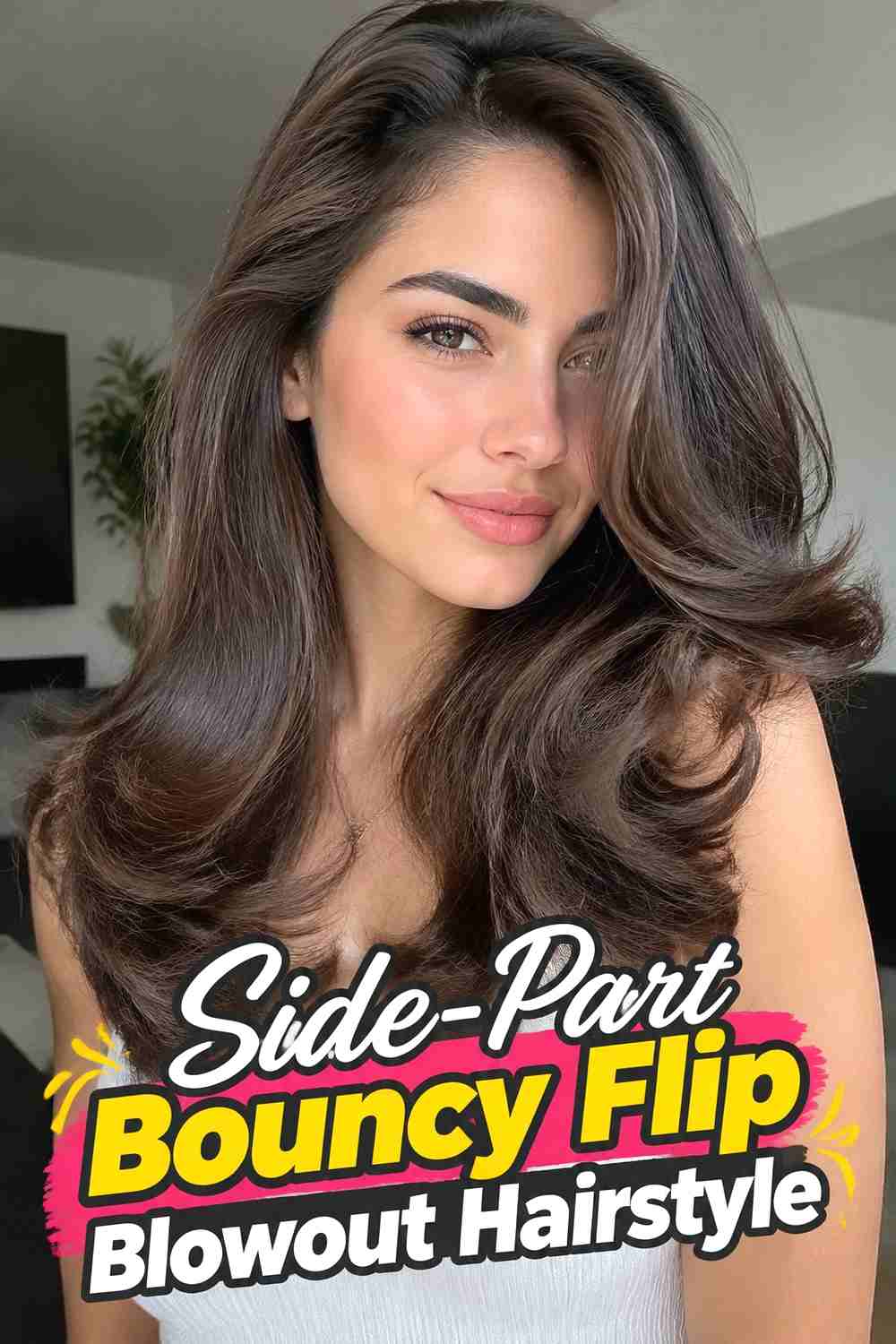
The Side-Part Bouncy Flip Blowout Hairstyle uses an off-center or deeper part to create extra lift and a more dramatic sweep through the front. Moving more hair to one side naturally builds volume near the crown, while the opposite side can sit closer to the head for contrast. The ends still turn outward, but the heavier side may create a fuller, more noticeable flip around the face. This variation works especially well if your hair tends to fall flat with a center part or if you want the blowout to look slightly less symmetrical. Soft internal layers help the volume stay mobile rather than becoming bulky through the sides.
Styling Notes
Set the side part before drying, then lift the heavier section at the root and direct the front layers away from the face.
Best For
Straight, wavy, fine, and medium-density hair can all use the shifted part to create visible lift.
5. Curtain Bang Flip Blowout Hairstyle
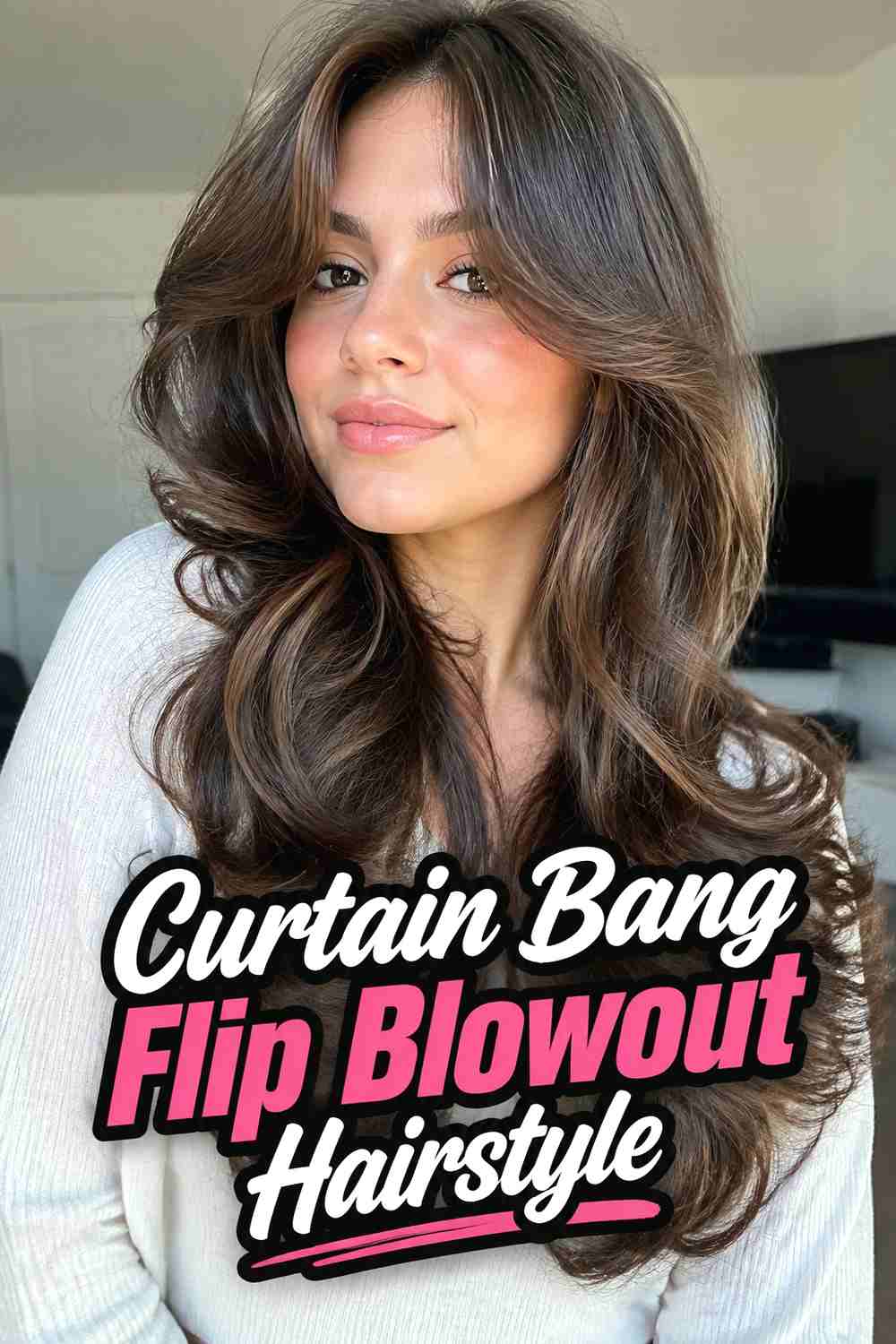
The Curtain Bang Flip Blowout Hairstyle combines center-opening fringe with bouncy outward ends for a cohesive layered finish. The curtain bangs sweep away from the forehead and connect into longer face-framing pieces, while the rest of the haircut builds toward a soft flip at the shoulders or lower lengths. Keeping the fringe airy prevents too much volume from collecting around the front. This version is especially flattering on medium and long layered cuts because the bangs can transition smoothly into the rest of the blowout. The strongest curve should usually sit through the outer fringe and ends rather than directly at the roots, allowing the hairstyle to look full without feeling overly round.
Styling Notes
Shape the curtain fringe first, directing each side away from the face, then echo that movement through the longer front layers.
Wear & Maintenance
The fringe may need a quick refresh between washes even when the rest of the blowout still holds its shape.
6. Long Layered Flip Blowout Hairstyle
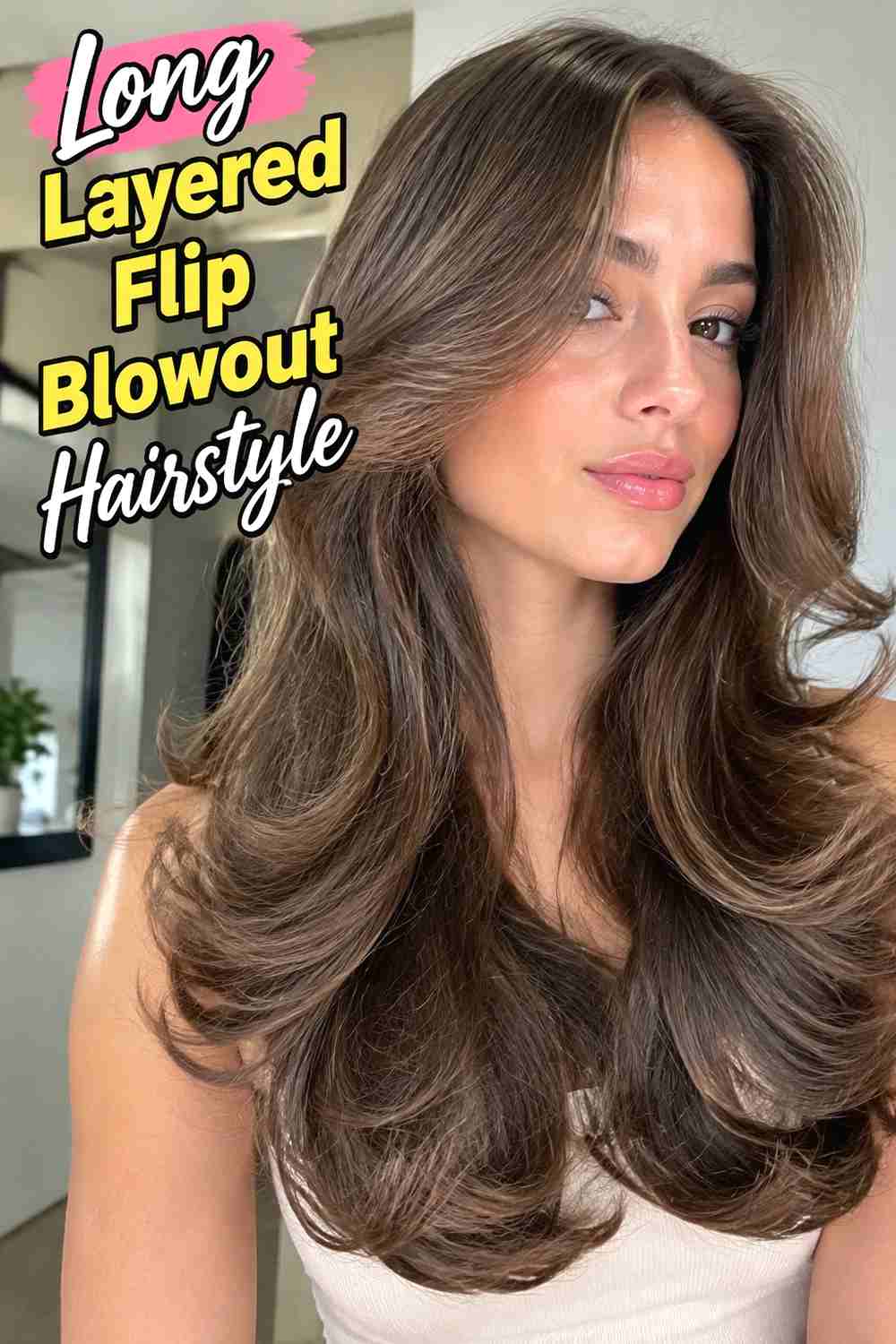
The Long Layered Flip Blowout Hairstyle stretches the flipped movement through longer hair, creating multiple levels of bounce rather than one turn at the bottom. Shorter face-framing layers can sweep outward around the cheekbones and jaw, while chest-length pieces carry softer flips farther down. This creates a cascading effect that feels lighter than styling all long hair into one dense curve. The roots can remain moderately lifted, with most of the visual impact coming from the layered ends. This style works particularly well for hair with enough density to support visible graduation, although the layers should still preserve fullness through the lower perimeter if you want the length to look substantial.
Why It Works
Long layers allow the outward movement to appear at several points through the haircut, giving the blowout depth without relying on extreme root volume.
Pro Tip
Use larger brush sections through the longest layers so the lower flips stay broad rather than tightly curled.
7. Shoulder Length Flip Blowout Hairstyle
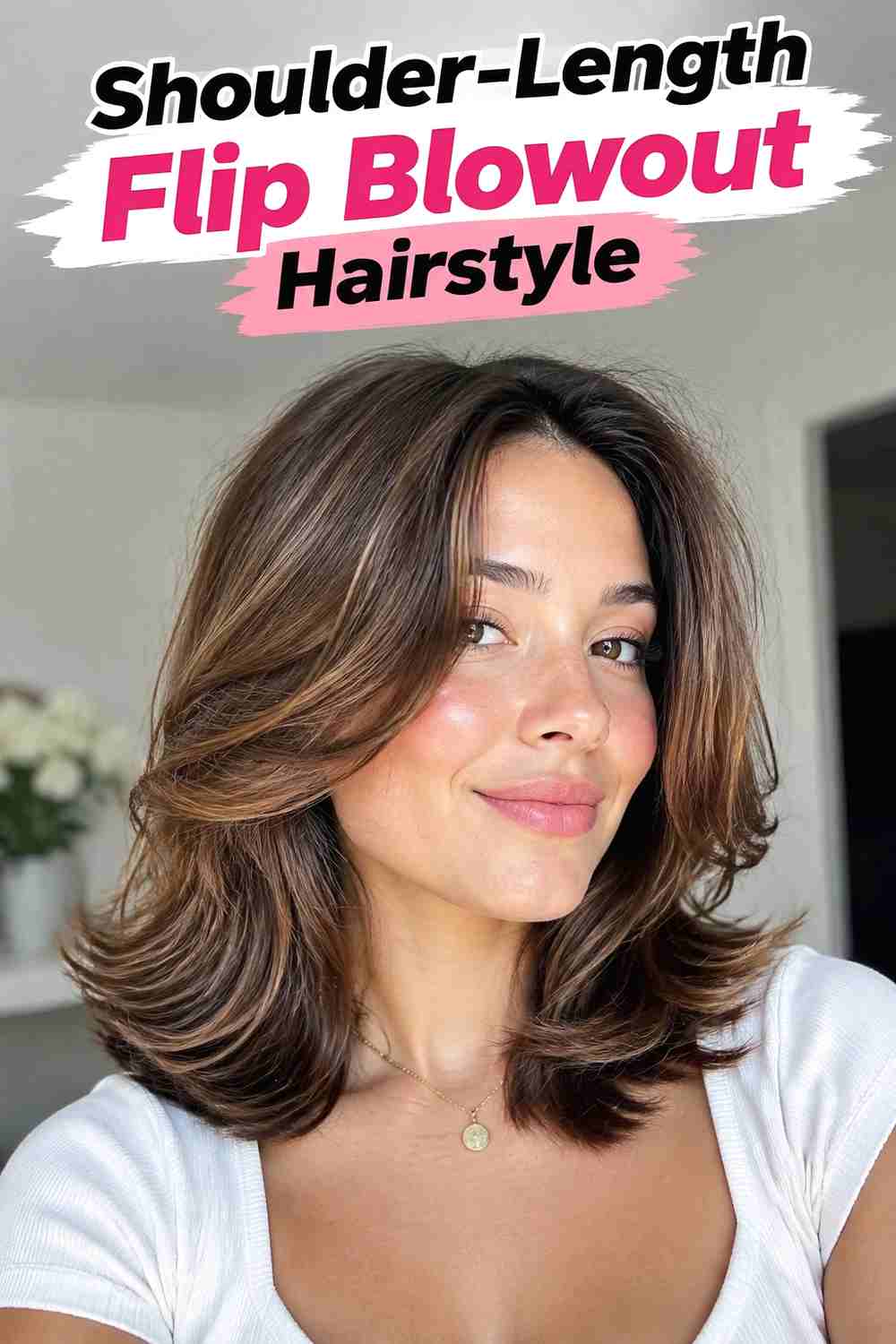
The Shoulder-Length Flip Blowout Hairstyle gives the outward ends a particularly noticeable shape because they sit close to the shoulders and naturally lift away from them. The haircut can be softly layered or mostly one length, with subtle graduation near the front adding extra bounce. Root volume keeps the silhouette from looking flat, while smooth mid-lengths create a clean transition into the flipped perimeter. This version can feel playful and polished at the same time, making it useful for everyday styling, dinners, or events. Because the length is compact, a small to medium round brush often provides enough control to shape the ends without creating an exaggerated curl.
Best For
Shoulder-skimming hair provides enough length for a visible flip while keeping the styling process relatively manageable.
Styling Notes
Concentrate the outward bend on the lower few inches and let the ends cool in position before loosening them.
8. Collarbone Flip Blowout Hairstyle
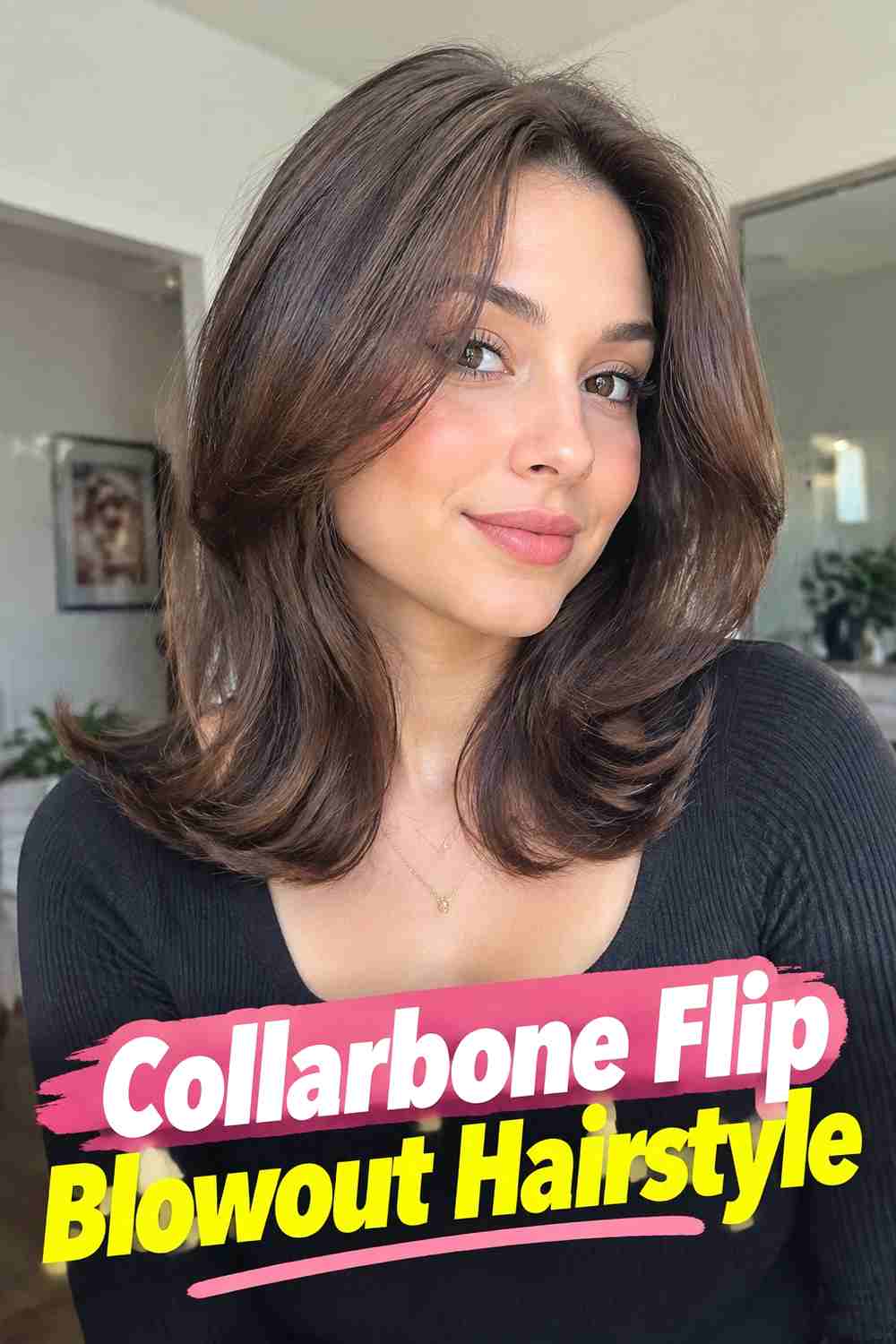
The Collarbone Flip Blowout Hairstyle offers a versatile middle ground between a short shoulder flip and a longer layered blowout. The ends reach around the collarbones, giving them enough space to move outward without resting too heavily on the shoulders. Light layers through the front and surface can create additional bounce, while the lower perimeter stays full enough to maintain a clear long-bob shape. The result can be subtle for everyday wear or more dramatic when the crown is lifted and the ends are strongly feathered. This length also preserves practical styling flexibility, since the hair can still be tied back easily when you do not want to wear the blowout down.
Styling Notes
Use a medium round brush through the lower lengths and direct the front layers slightly more outward than the back for natural movement.
Why It Works
Collarbone length gives the ends room to flip freely while retaining the versatility of medium-length hair.
9. Rounded End Flip Blowout Hairstyle
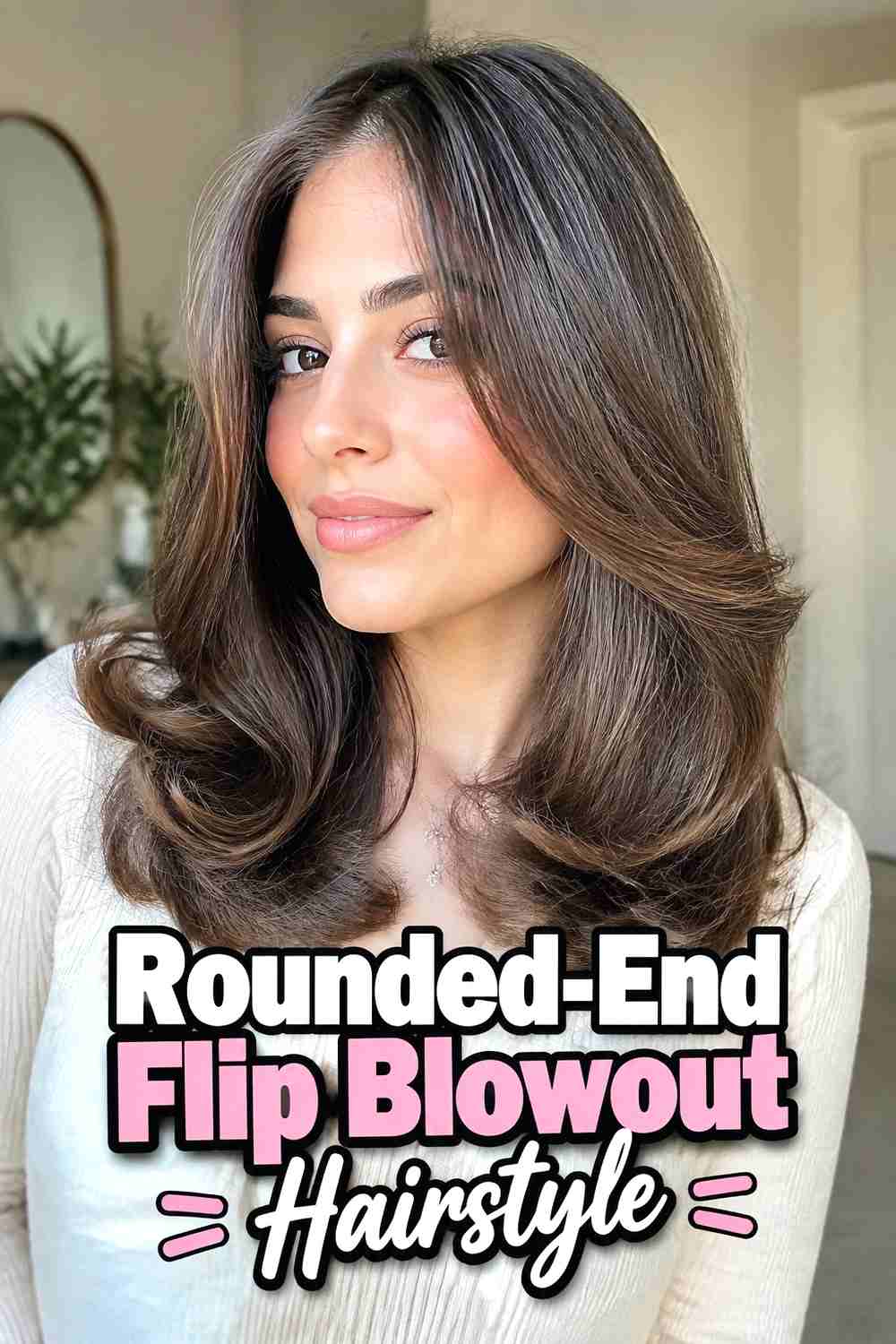
The Rounded-End Flip Blowout Hairstyle blends two directions of movement by keeping the mid-lengths softly curved before turning the tips outward. This creates a smooth, rolling transition rather than a sudden sharp flip at the bottom. The silhouette feels polished and full, but the outward ends stop it from becoming a traditional curled-under blowout. Face-framing sections can repeat the same rounded movement, creating a cohesive shape from front to back. This version works especially well when the haircut has a clean perimeter and moderate layering, since the smooth bend remains easy to see. A round brush is ideal for building the gradual curve without creating tight curls.
Styling Notes
Roll the section under slightly through the middle, then redirect the last inch or two outward before releasing the brush.
Pro Tip
Keep the final flip gentle so the rounded transition remains the main feature.
10. Face Framing Flip Blowout Hairstyle
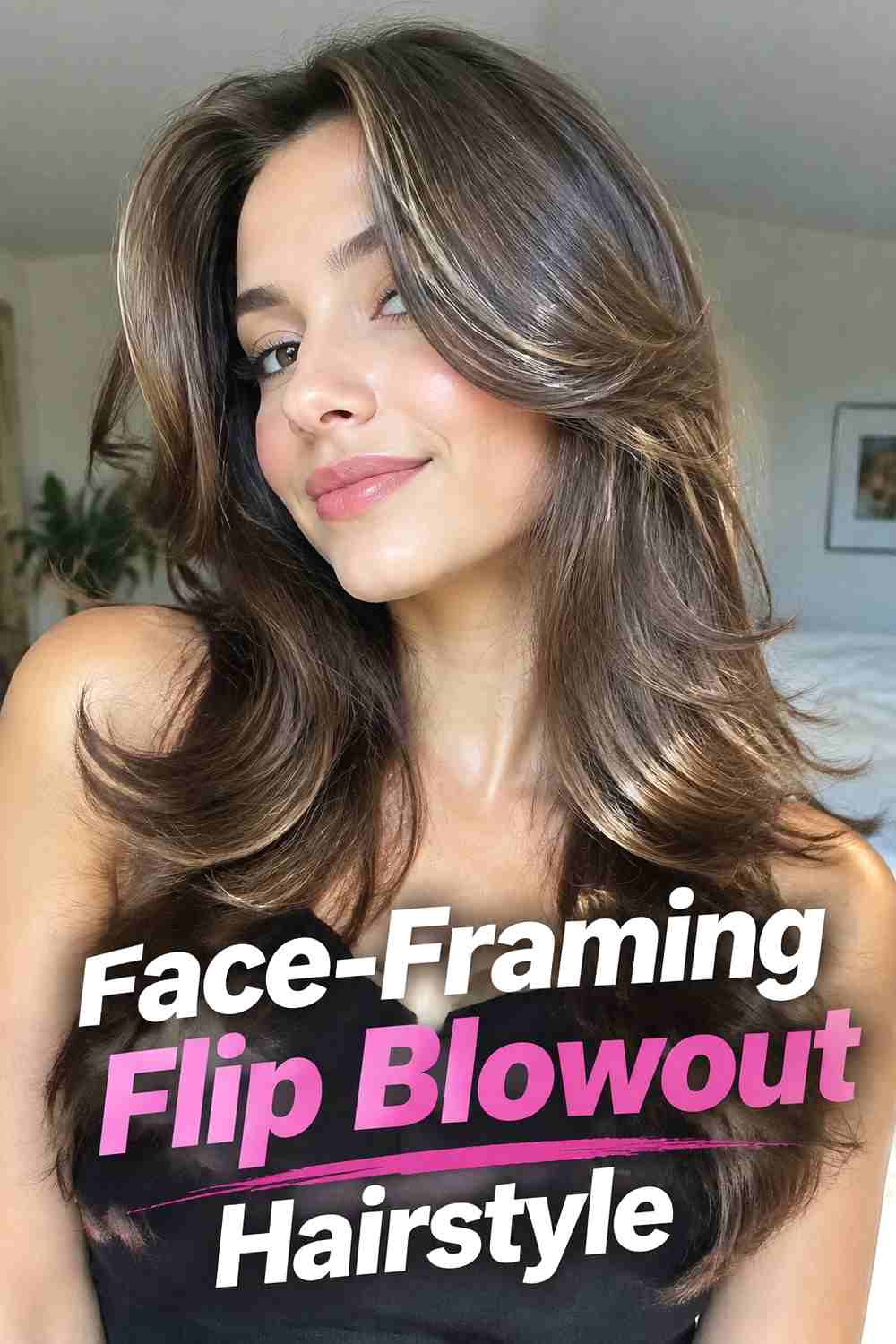
The Face-Framing Flip Blowout Hairstyle puts most of the dramatic movement around the front while keeping the back comparatively smooth. Layers beginning near the cheekbones, jaw, or chin are styled away from the face, creating broad curved sections that connect into the flipped ends below. This approach can make the blowout feel dynamic without requiring heavy layering throughout the entire haircut. The front pieces frame the face while still opening outward, and the remaining lengths provide enough weight to balance the shape. It works especially well on medium and long hair when you want visible movement but prefer to preserve fullness through the back and lower perimeter.
Why It Works
Concentrating the strongest flip around the front creates visual impact without removing unnecessary density from the rest of the haircut.
Styling Notes
Style the shortest front sections first and use progressively larger curves as you move into the longer layers.
11. Fine Hair Bouncy Flip Blowout Hairstyle
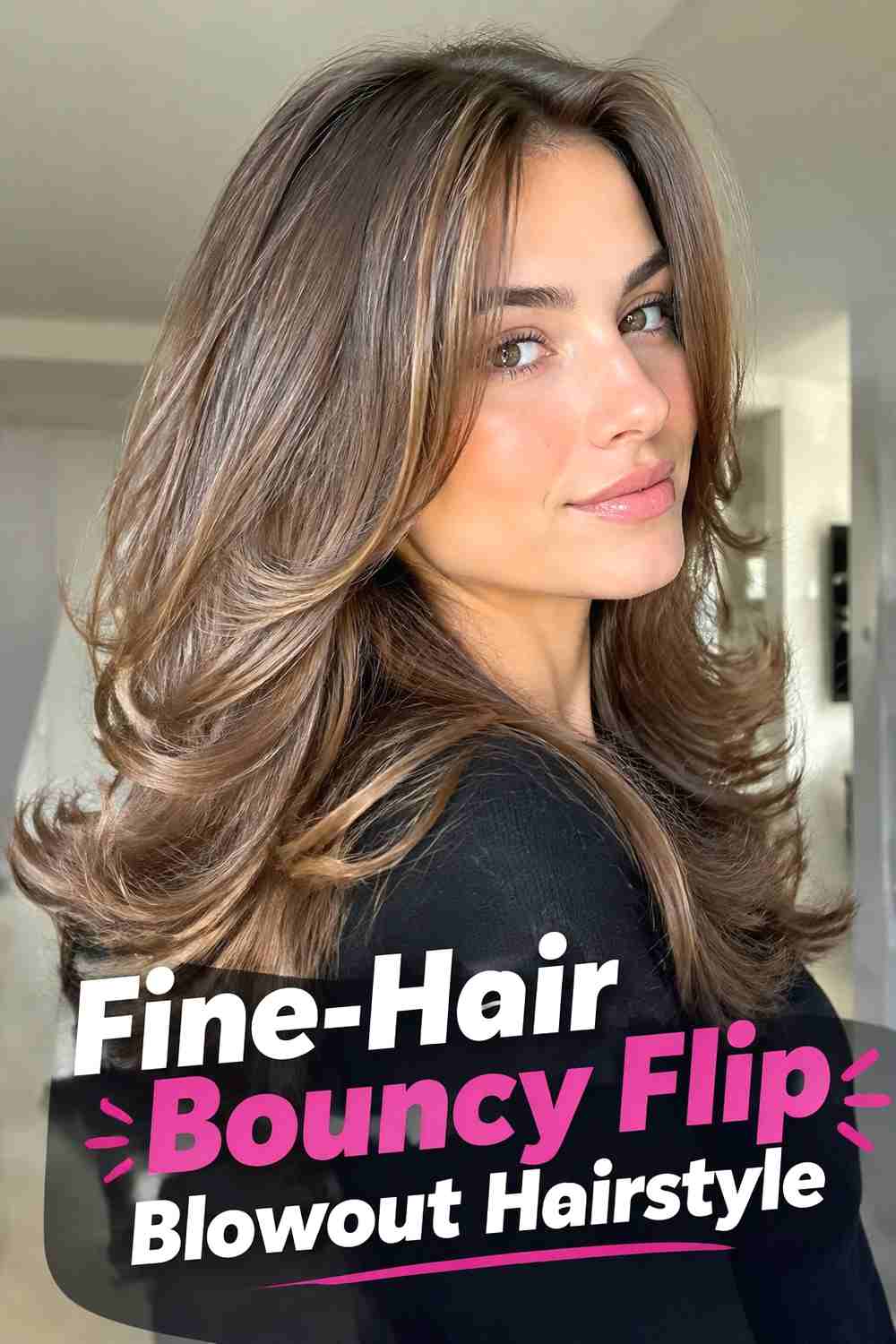
The Fine-Hair Bouncy Flip Blowout Hairstyle focuses on root lift and strategic outward bends rather than heavy layering. Keeping more density through the lower perimeter helps the hair appear fuller, while a few face-framing pieces provide enough movement for the flip to show clearly. Lightweight volumizing products can support the roots without coating the lengths, and larger sections during blow-drying can create a broad, airy finish. The ends should be turned outward gently rather than curled tightly, which can make fine hair separate into thin-looking pieces. This version works particularly well around shoulder or collarbone length, where the hair is light enough to hold bounce without losing too much visual fullness.
Styling Notes
Apply volumizing product near the roots and keep oils or heavy creams away from the crown and fringe area.
Pro Tip
Choose restrained layering if preserving a fuller-looking perimeter is one of your main goals.
12. Thick Hair Bouncy Flip Blowout Hairstyle
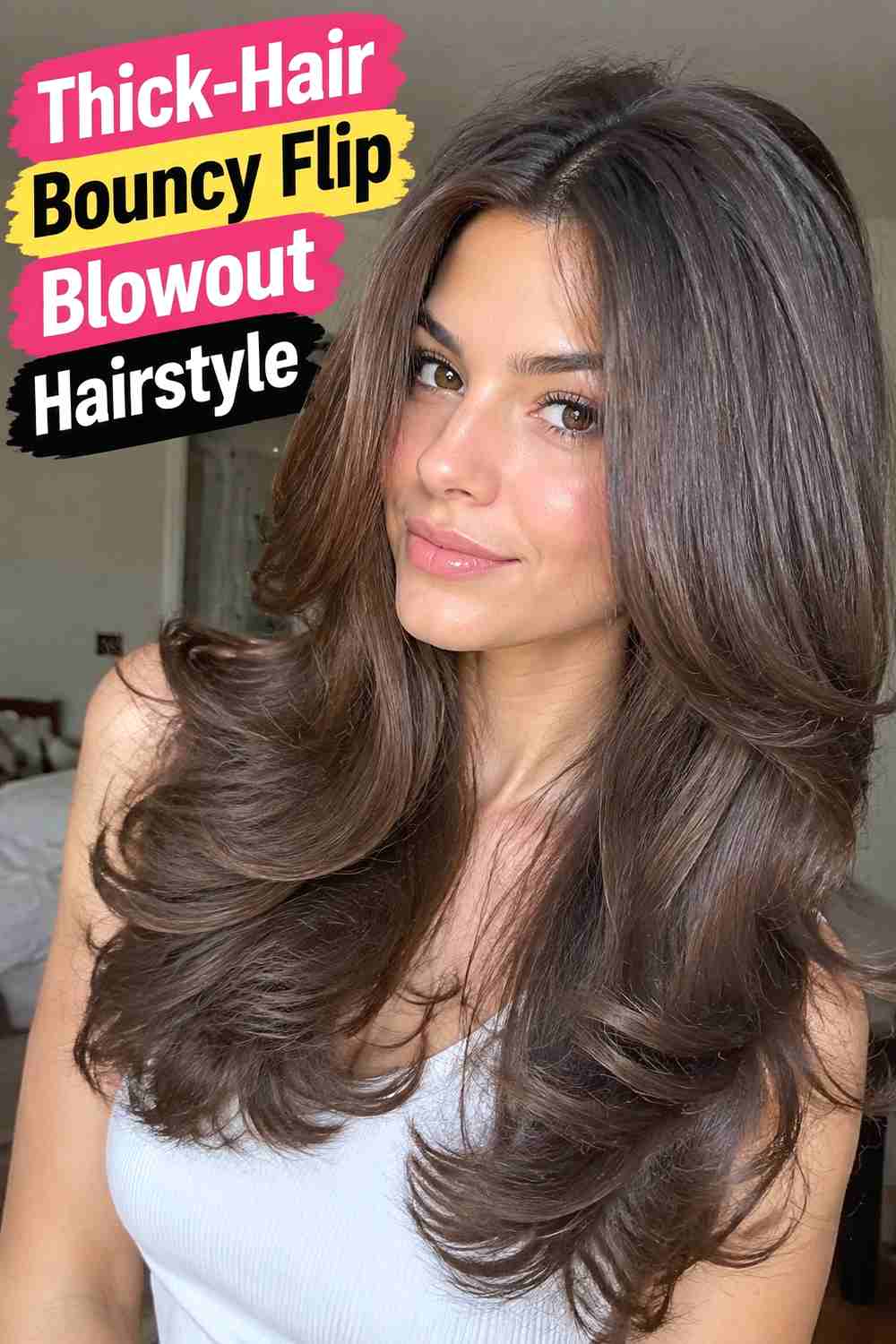
The Thick-Hair Bouncy Flip Blowout Hairstyle uses controlled layering and internal weight removal to keep dense hair moving instead of forming one heavy shape. Face-framing and surface layers can be styled outward, while the lower lengths remain substantial enough to show the richness of the hair. A strong blow-dry foundation helps smooth the mid-lengths before the flip is created, preventing the finished style from becoming excessively wide. Larger round brushes often work well because they form broad curves that suit thicker sections. The goal is to distribute volume rather than simply maximize it, creating bounce through the crown and ends while keeping the overall silhouette balanced and comfortable.
Hair Type & Length
Dense medium to long hair can support visible layered flips, especially when excess internal bulk is controlled thoughtfully.
Wear & Maintenance
Sectioning carefully during drying helps the blowout last more evenly and prevents hidden damp areas from collapsing the shape.
13. Soft Wave Flip Blowout Hairstyle
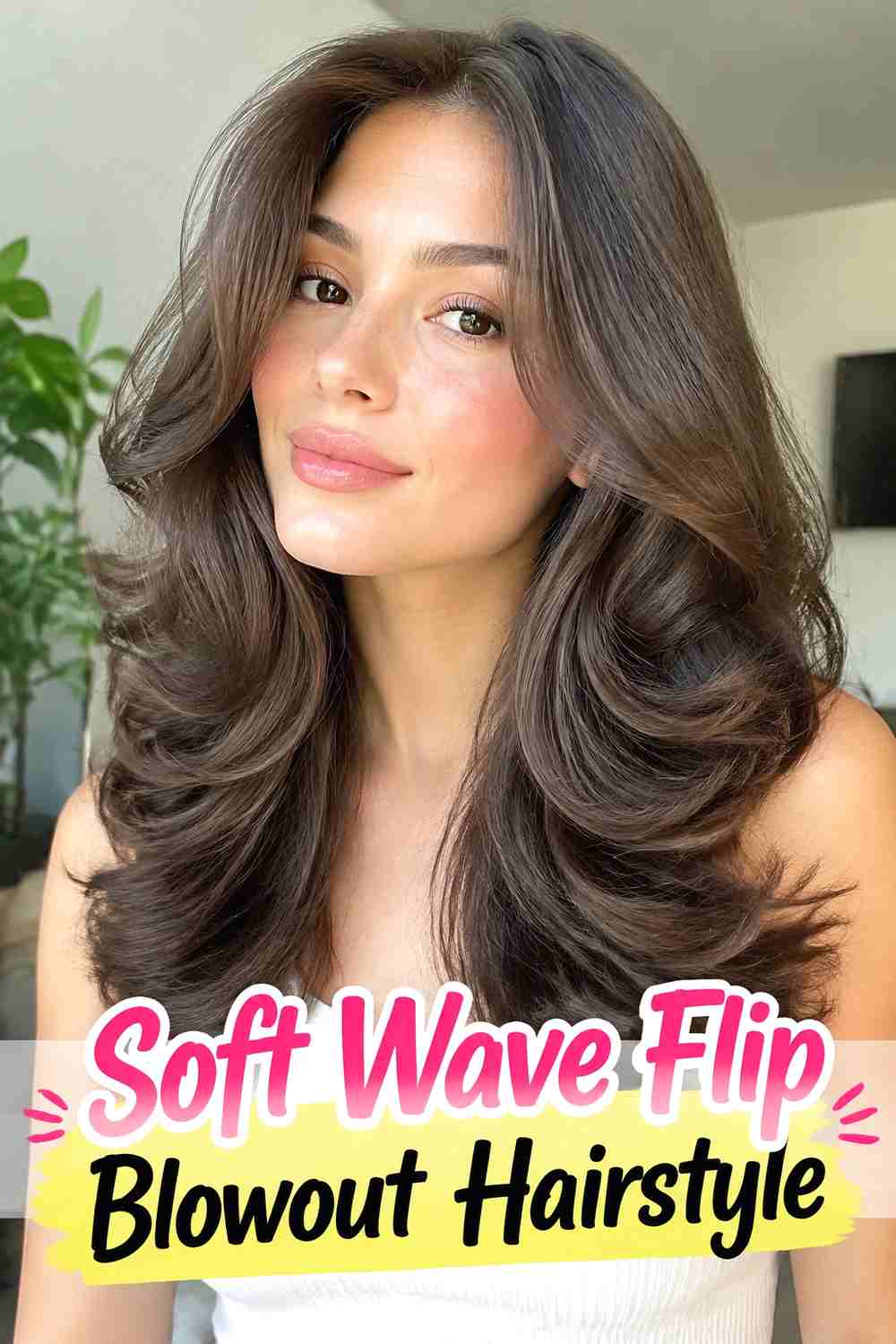
The Soft Wave Flip Blowout Hairstyle combines loose bends through the mid-lengths with outward movement at the ends. Instead of remaining completely smooth between the roots and flip, the hair develops broad S-shaped curves that add dimension and make the blowout feel softer. The waves should stay open and relaxed so they do not compete with the flipped perimeter. This style works beautifully on medium and long layered hair, particularly when the front pieces curve away from the face and the lower ends lift outward. Natural waves can provide part of the foundation, while straighter hair can recreate the texture with a round brush or a few large heat-styled bends.
Styling Notes
Create broad movement through the mid-lengths first, then finish by turning the ends outward in a consistent but soft direction.
Best For
Softly wavy and layered hair can achieve this dimensional finish without needing every section perfectly smoothed.
14. Sleek Crown Flip Blowout Hairstyle
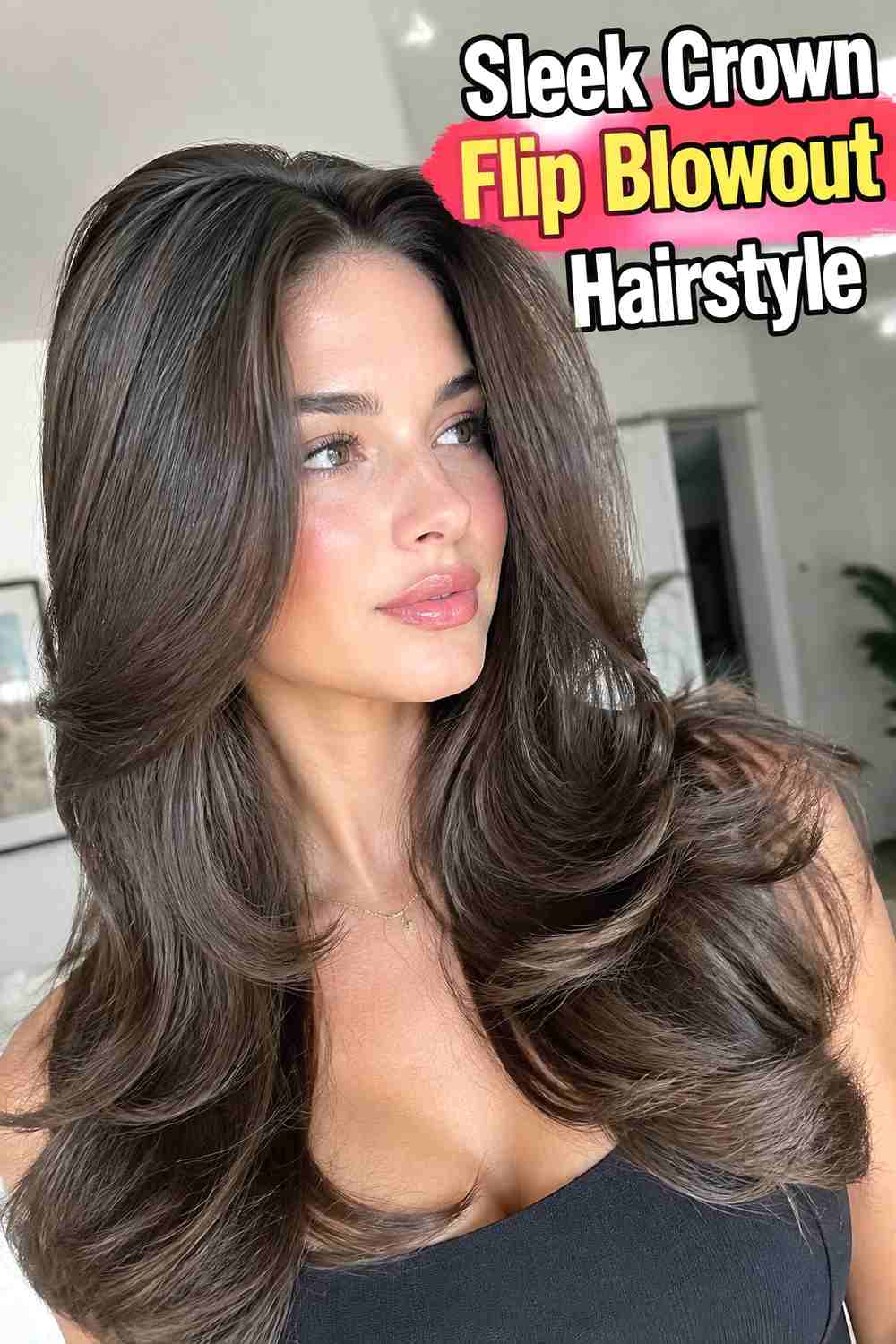
The Sleek Crown Flip Blowout Hairstyle keeps the upper portion of the hair smooth and controlled while concentrating the bounce through the lower lengths and ends. Instead of creating major root volume, the crown lies relatively close to the head with natural shine, allowing the outward flip to become the main feature. This contrast gives the style a cleaner, more modern appearance and can work particularly well with center or side parts. Layers through the lower half help the ends move without making the top look overly full. It is a useful choice if you like the playful effect of flipped ends but prefer a more restrained silhouette around the roots.
Styling Notes
Smooth the crown with low tension, then switch to a round brush through the lower sections to create the outward movement.
Why It Works
Keeping the top controlled makes the flipped perimeter more noticeable without creating excessive overall volume.
15. Retro Inspired Flip Blowout Hairstyle
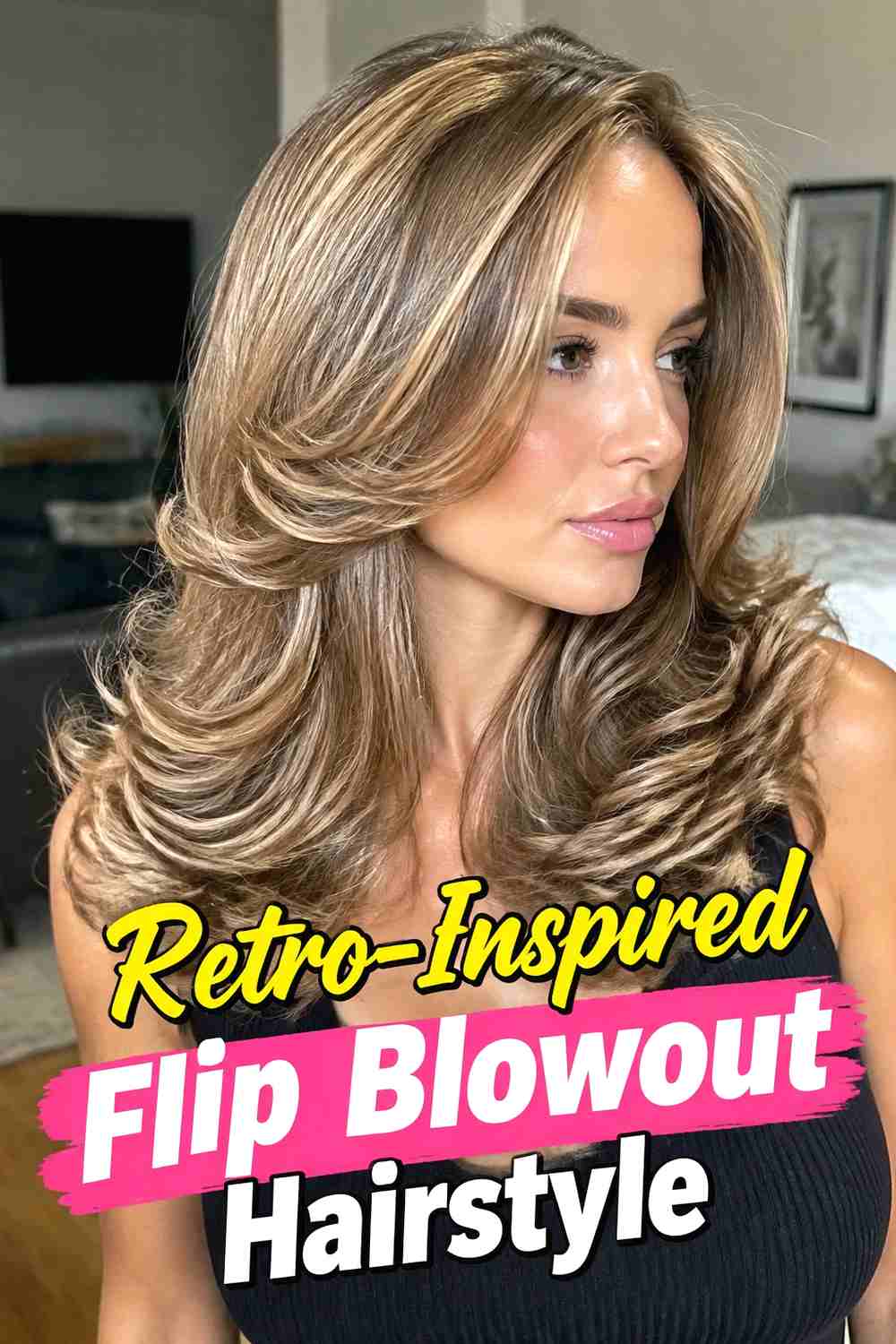
The Retro-Inspired Flip Blowout Hairstyle embraces a stronger outward curve while keeping the finish soft enough for modern wear. The roots have noticeable lift, the mid-lengths remain smooth, and the lower layers turn clearly away from the shoulders. Face-framing pieces can sweep outward in broad arcs, reinforcing the vintage-inspired movement without becoming overly sculpted. The key is avoiding a perfectly identical flip around the entire head; a few softer sections make the style feel more contemporary. Shoulder and collarbone lengths show the retro shape particularly well because the perimeter sits exactly where the outward bend can create the most visible silhouette.
Styling Notes
Use a round brush to build broad outward curves and allow each section to cool before gently breaking up the shape.
Pro Tip
Keep the finish touchable with flexible hold instead of spraying the flipped ends into a rigid position.
16. Low Maintenance Flip Blowout Hairstyle
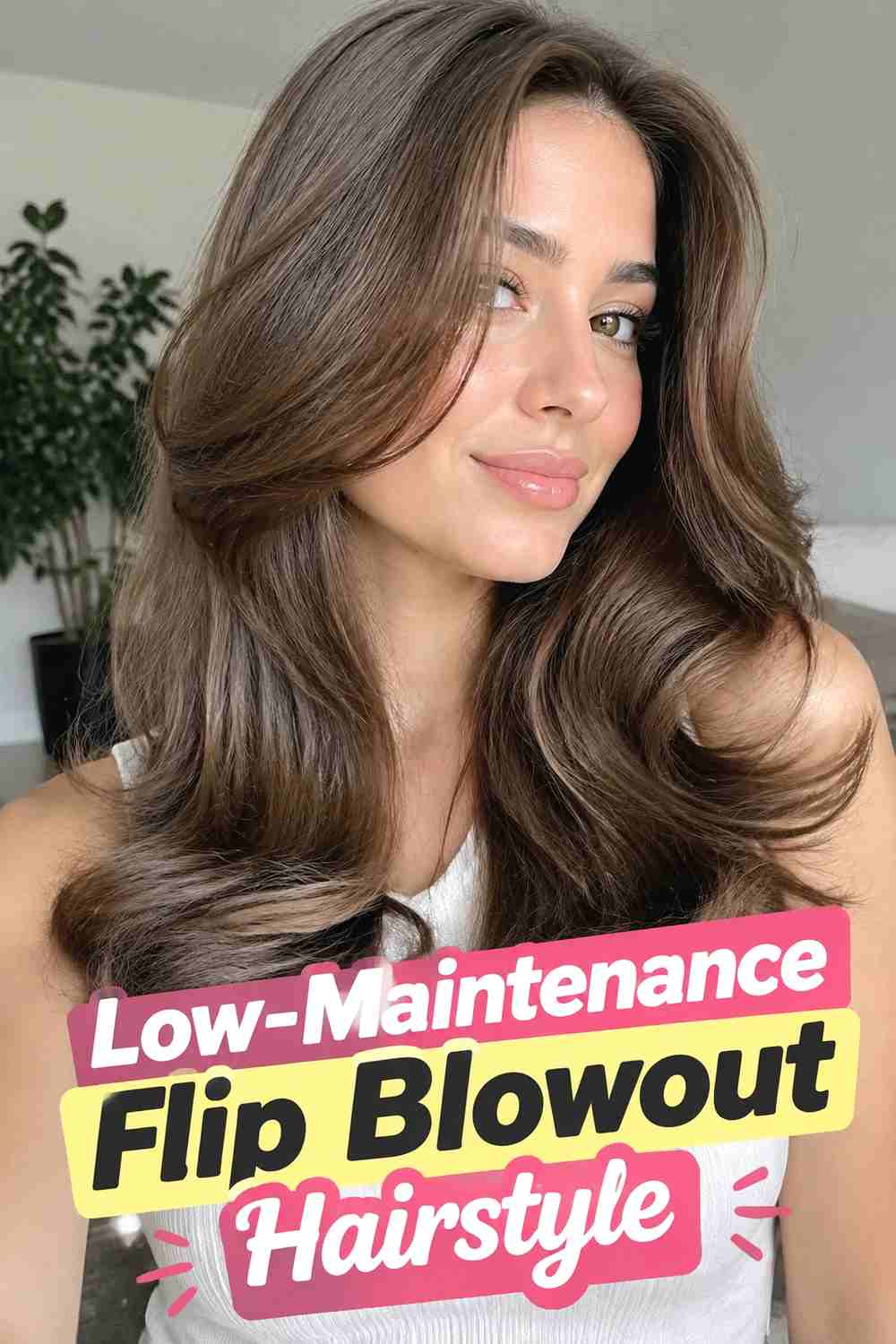
The Low-Maintenance Flip Blowout Hairstyle keeps the outward movement soft enough that the style still looks good as some of the bounce relaxes. Longer layers, a flexible part, and a moderate flip are easier to refresh than highly sculpted sections or very short feathering. Instead of building maximum root lift, focus on smooth mid-lengths and a gentle bend through the ends. The haircut can retain some natural wave or texture, making a perfectly uniform finish unnecessary. This approach works well if you enjoy a blowout look but do not want to restyle every section daily. A quick refresh around the front and perimeter can often restore the main shape.
Best For
Medium to long hair with longer layers provides a forgiving base that can maintain movement even as the blowout softens.
Wear & Maintenance
Refresh the front pieces and ends selectively instead of repeating the entire blowout when only a few sections lose their shape.
How to Choose the Right Look
Start with length. Shoulder and collarbone cuts create the most noticeable perimeter flip because the ends sit close to the shoulders, while long hair gives you more room for feathered layers and cascading movement.
Next, consider density. Fine hair usually benefits from a stronger lower perimeter, moderate layering, and root-focused volume. Thick hair can often handle more internal shaping so the finished blowout stays buoyant instead of feeling heavy through the sides.
Layer placement also changes the mood. Face-framing and curtain-bang versions concentrate movement around the front, while long layered styles distribute the flip through several levels. For a more polished finish, choose a center part, sleek crown, or rounded ends. Soft waves and feathered layers create a looser result.
Finally, think about styling effort. Dramatic retro flips and high-volume blowouts require more controlled sectioning and hold. Longer, softer flips are usually easier to refresh and can still look attractive as the volume relaxes.
Final Thoughts
A bouncy flip blowout works best when the hair has enough movement to feel lively rather than fixed. You can keep the flip subtle and polished, add feathered layers for extra motion, or lean into a stronger retro-inspired curve. Match the amount of layering and root volume to your density, then focus the strongest outward bend where your haircut naturally has room to move.
FAQs
1. What is a bouncy flip blowout?
It is a blowout that combines root and mid-length volume with ends that turn outward, creating a lively flipped silhouette instead of a traditional curled-under finish.
2. What hair length works best for a flip blowout?
Shoulder and collarbone lengths show the outward ends especially clearly, but medium and long layered hair can also create beautiful cascading flips.
3. Can fine hair hold a bouncy flip blowout?
Yes. Fine hair can benefit from lightweight root volume, restrained layering, and broad outward bends that preserve fullness through the ends.
4. How do I keep flipped ends from looking too retro?
Keep the curves broad and soft, vary the strength of the flip between sections, and avoid creating an identical outward curl around the entire perimeter.
5. Can a flip blowout work on thick hair?
Yes. Thoughtful layering and internal weight control can help thick hair move more freely while keeping the blowout balanced and bouncy.
Save your favorite bouncy flip blowout hairstyle ideas, share the looks you love, and explore more voluminous styling inspiration for your next blowout.