18 Loose-Root Cornrow Ponytail Hairstyle Ideas
Soft-rooted cornrows and statement ponytails come together in these versatile looks, offering braided structure with a slightly more relaxed, wearable finish at the scalp.
A loose-root cornrow ponytail keeps the recognizable direction and pattern of cornrows while avoiding an excessively tight-looking start. The finished style can still appear neat and intentional, but the root area has a little more softness, which can change both the visual effect and how the hairstyle feels during wear.
There are plenty of ways to customize the look beyond braid tension. Ponytail height, braid width, parting pattern, length, texture, and the treatment of the ends can completely change the silhouette. These 18 ideas range from clean everyday arrangements to more decorative statement styles.
Quick List
- Soft Center Feed Loose Root Cornrow Ponytail Hairstyle
- High Loose Root Cornrow Ponytail Hairstyle
- Low Loose Root Cornrow Ponytail Hairstyle
- Side Part Loose Root Cornrow Ponytail Hairstyle
- Jumbo Loose Root Cornrow Ponytail Hairstyle
- Small Stitch Loose Root Cornrow Ponytail Hairstyle
- Curved Part Loose Root Cornrow Ponytail Hairstyle
- Zigzag Part Loose Root Cornrow Ponytail Hairstyle
- Half Up Loose Root Cornrow Ponytail Hairstyle
- Wraparound Loose Root Cornrow Ponytail Hairstyle
- Braided Base Loose Root Cornrow Ponytail Hairstyle
- Curly End Loose Root Cornrow Ponytail Hairstyle
- Long Sleek Loose Root Cornrow Ponytail Hairstyle
- Bubble Accent Loose Root Cornrow Ponytail Hairstyle
- Face Framing Loose Root Cornrow Ponytail Hairstyle
- Crown Volume Loose Root Cornrow Ponytail Hairstyle
- Shoulder Length Loose Root Cornrow Ponytail Hairstyle
- Extra Long Loose Root Cornrow Ponytail Hairstyle
1. Soft Center Feed Loose Root Cornrow Ponytail Hairstyle
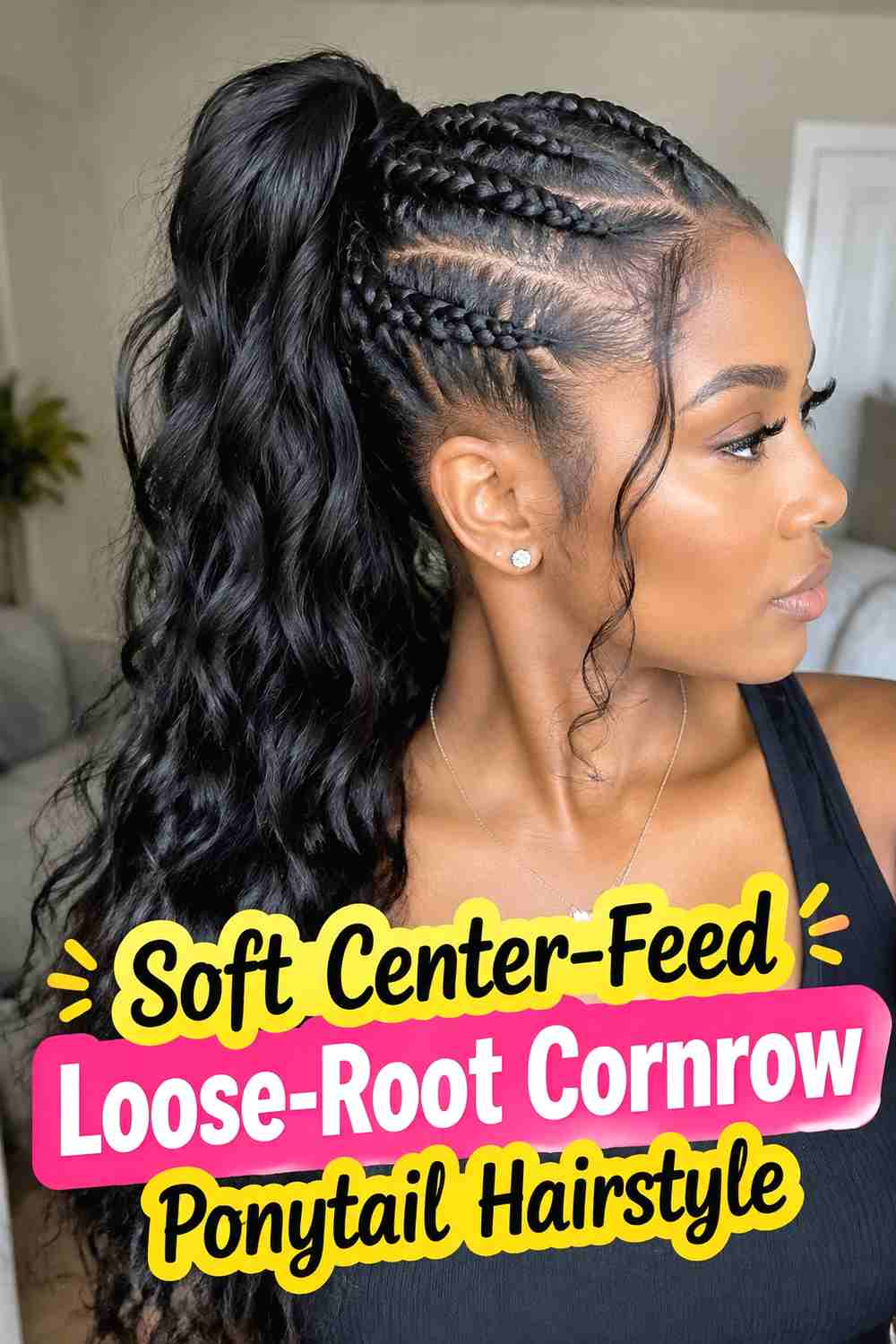
The Soft Center-Feed Loose-Root Cornrow Ponytail Hairstyle uses balanced braids that travel from the hairline toward a central ponytail base. The cornrows begin with a slightly softer-looking root area before becoming more structured through the lengths, creating a neat style without an overly pulled appearance. Equal spacing between the braids gives the top a clean rhythm, while the centered ponytail keeps the silhouette symmetrical from both sides. This version works especially well when you want the braid pattern itself to remain easy to see. A medium ponytail placement offers enough lift for movement while staying practical for everyday wear.
Styling Notes
Keep the front sections evenly spaced and direct each braid toward the same gathering point so the finished base looks intentional.
Best For
This version suits anyone who prefers a balanced cornrow pattern and a ponytail that sits neither extremely high nor low.
2. High Loose Root Cornrow Ponytail Hairstyle
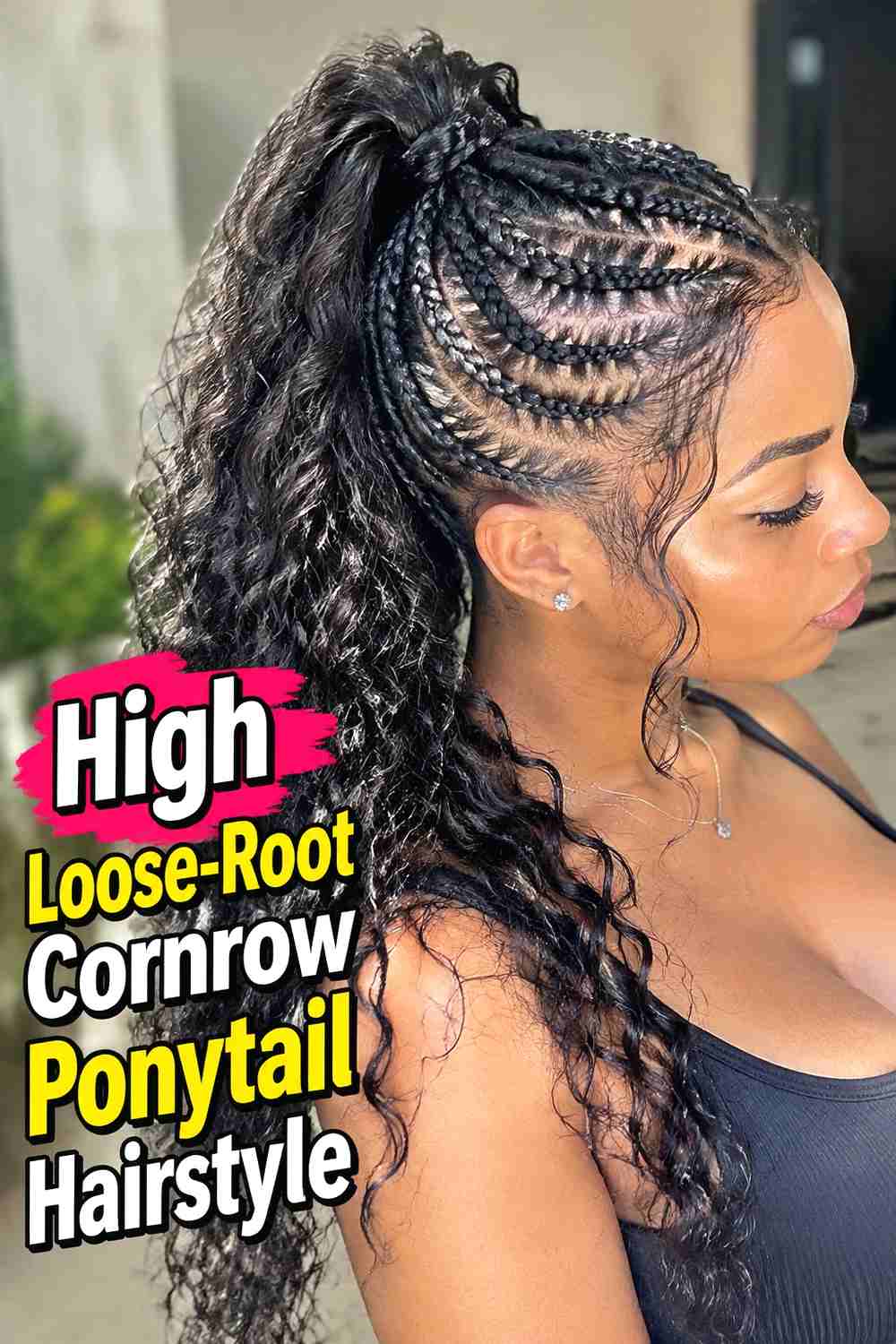
A high ponytail gives loose-root cornrows a lifted, energetic silhouette. The braids sweep upward from the hairline and sides toward a gathering point near the crown, where the ponytail can fall freely down the back. Allowing a little softness where the cornrows begin keeps the front from looking excessively rigid while the upward direction still creates a polished shape. This placement works particularly well with medium to long ponytail lengths because the height makes the hair move visibly when worn. The base should feel secure without appearing painfully tight, and the cornrow pattern should transition naturally into the ponytail rather than bunching abruptly at the crown.
Why It Works
The elevated base emphasizes the directional braiding and gives the ponytail more swing and visibility from the front and side.
Wear & Maintenance
If the base feels uncomfortably tight or produces persistent pulling, the style should be adjusted rather than simply endured.
3. Low Loose Root Cornrow Ponytail Hairstyle
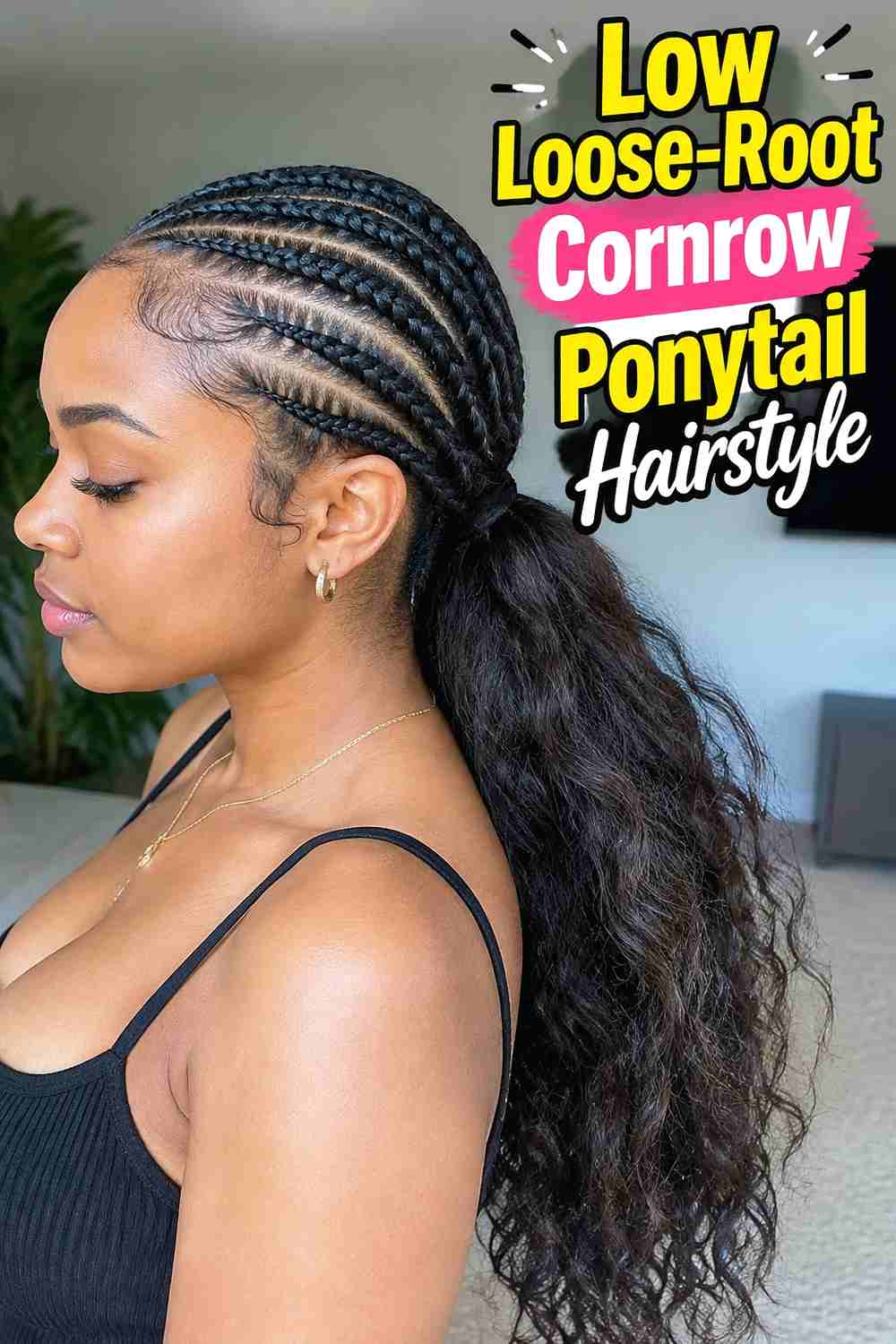
The Low Loose-Root Cornrow Ponytail Hairstyle gathers the braids near the nape for a calmer, more understated finish. Cornrows can travel straight backward or angle gently toward the low base, where the ponytail follows the natural line of the neck. The lower placement usually creates less dramatic lift than a crown ponytail, which makes the style easy to pair with simple everyday outfits or more polished occasions. A little softness at the roots keeps the scalp area from looking overly stretched. Longer ponytails create an elegant flowing effect, while medium lengths make the style feel compact and practical.
Best For
Choose this variation when you want cornrow detail without the height or stronger visual tension of a high ponytail.
Pro Tip
Position the base where it will not constantly rub against collars or accessories if you plan to wear the style for long periods.
4. Side Part Loose Root Cornrow Ponytail Hairstyle
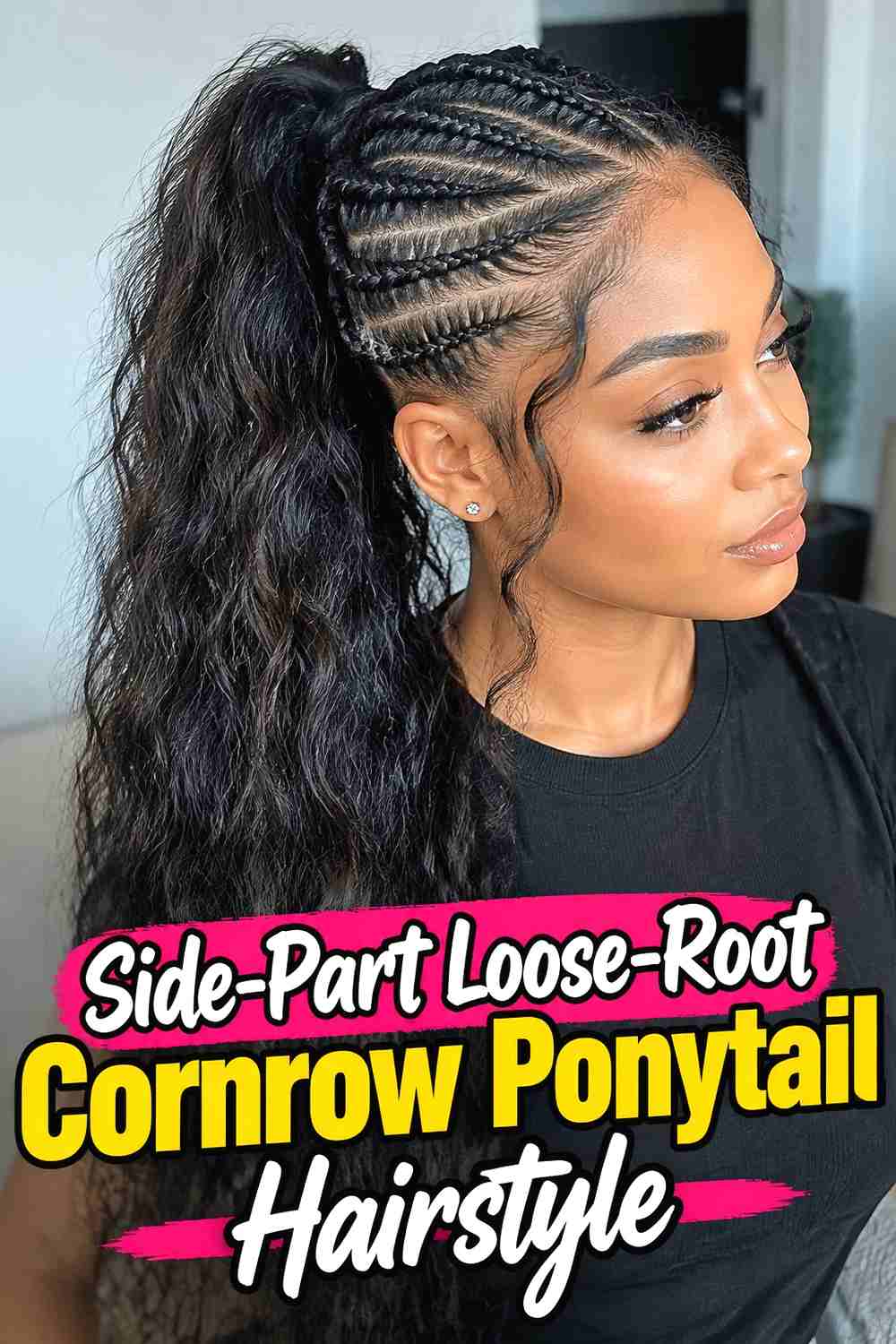
A defined side part immediately changes the balance of a cornrow ponytail by creating more visual weight on one side. The braids can follow the part before curving toward a shared ponytail base, producing a directional look rather than the symmetry of straight-back cornrows. With a loose-root approach, the hairline can retain a softer appearance even though the braid pattern remains clear and deliberate. The ponytail may sit at the center, slightly off-center, or higher toward the crown depending on the effect you want. Keeping the part clean helps the pattern read clearly, while slight differences in braid width can make the arrangement look more organic.
Styling Notes
Establish the part before sectioning the cornrows, then direct the braids so they flow with it instead of crossing awkwardly over the pattern.
Why It Works
An off-center division creates movement at the scalp even before the ponytail itself begins.
5. Jumbo Loose Root Cornrow Ponytail Hairstyle
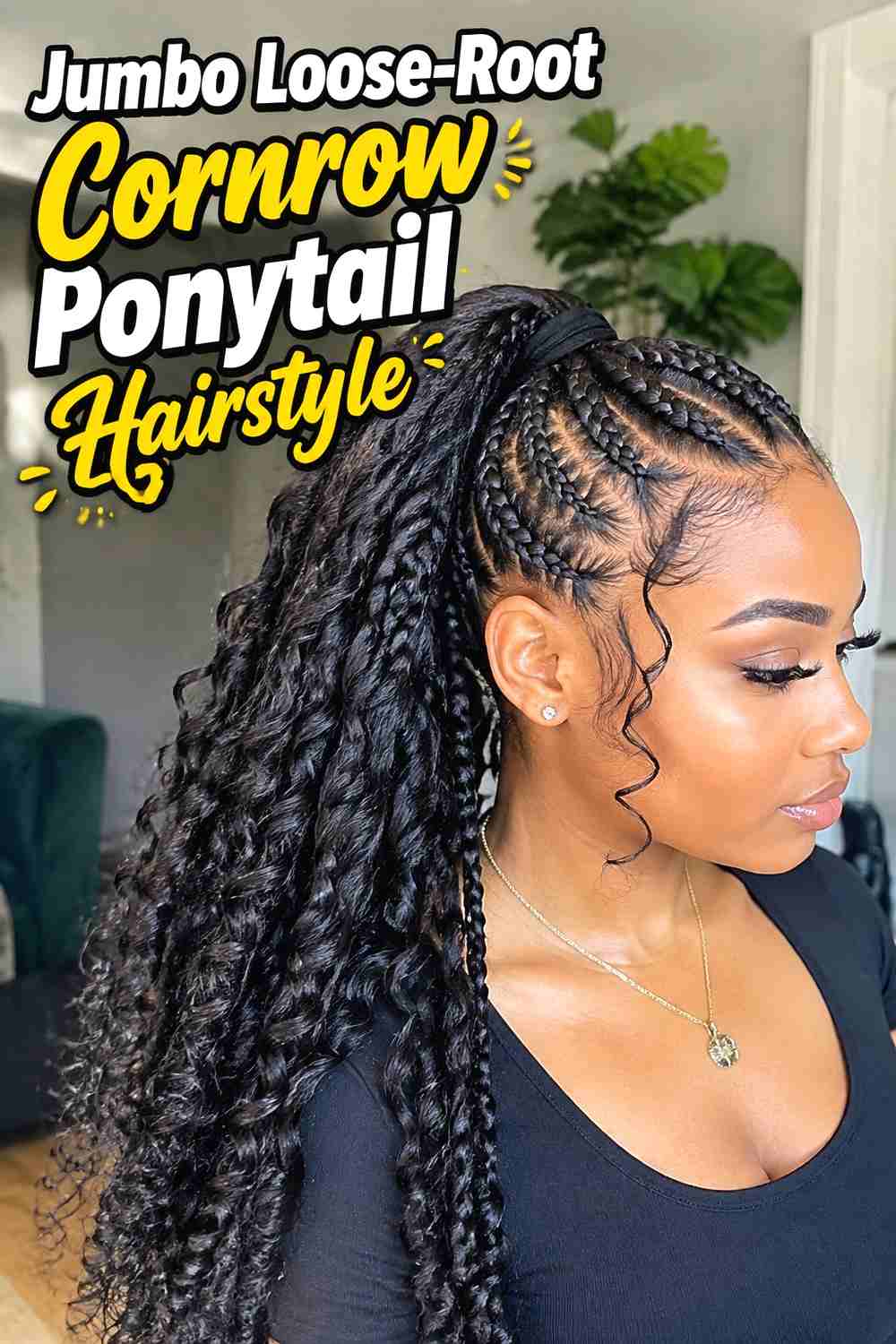
Jumbo cornrows make the braid pattern the dominant feature of this ponytail. A smaller number of broad sections creates strong lines from the front and sides toward the base, giving the style a bold, graphic appearance. Because each braid is visually substantial, clean parting becomes especially noticeable. Keeping the roots slightly softer can balance the scale of the braids and prevent the overall look from appearing overly rigid. The ponytail can remain smooth, braided, or textured depending on how much contrast you want between the scalp pattern and the hanging length. This option is particularly effective when you prefer a simpler layout with fewer individual cornrows.
Best For
This look suits anyone who likes bold braid sections and wants the top pattern to remain highly visible from a distance.
Wear & Maintenance
Large sections can place noticeable weight at the base if the ponytail is very long, so length and fullness should feel comfortable together.
6. Small Stitch Loose Root Cornrow Ponytail Hairstyle
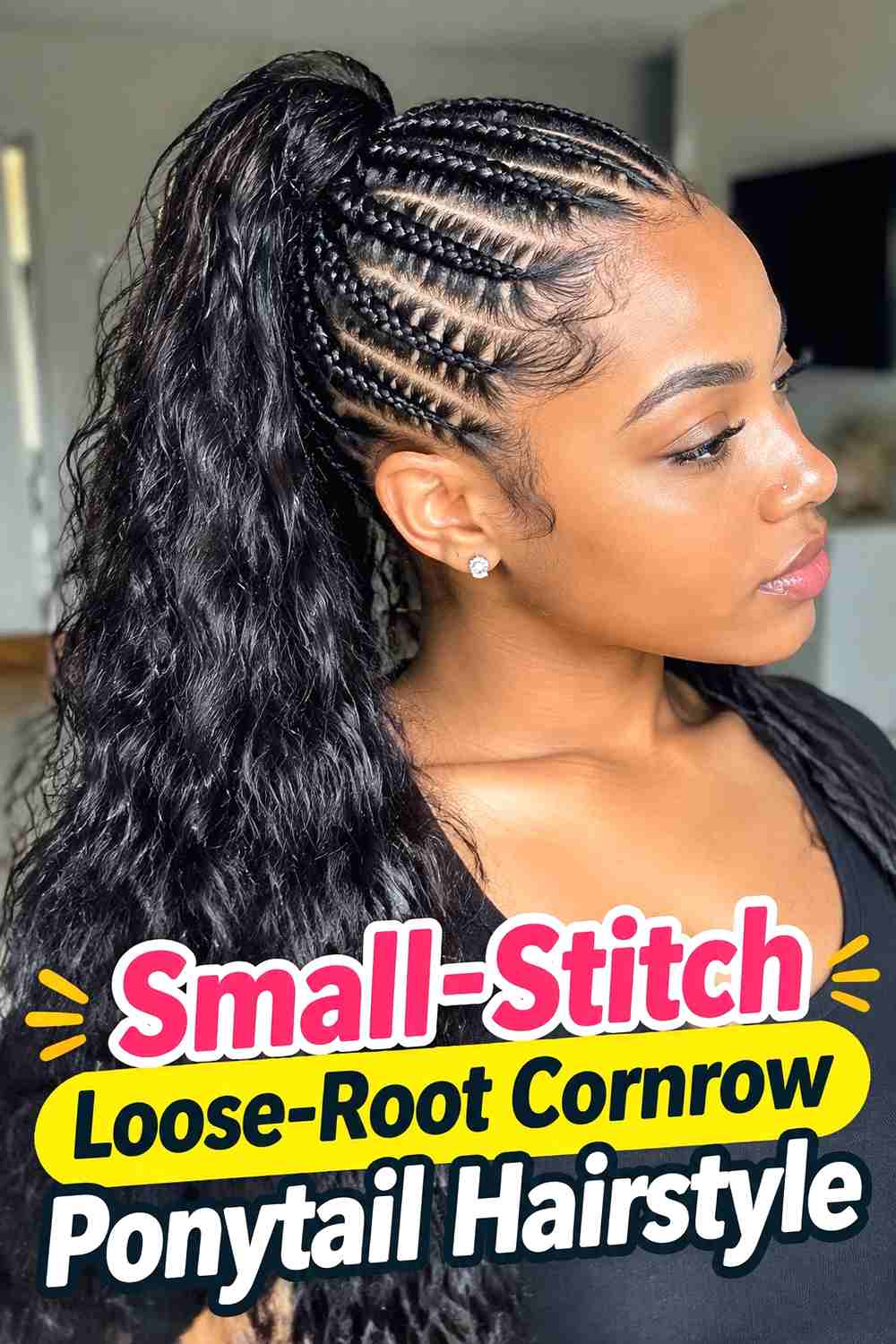
Small-stitch cornrows create a more intricate surface pattern by using narrow, closely arranged braid sections. The braids can begin with a slightly relaxed root appearance while still maintaining crisp, consistent lines toward the ponytail. This detailed finish works especially well when the ponytail itself is simple because the eye naturally focuses on the scalp design. A medium or high base makes the repeated cornrow pattern visible from several angles. Since there are more sections to create, this variation generally involves more styling time than jumbo braids. Keeping the design organized and the ponytail uncomplicated prevents the final look from becoming visually crowded.
Styling Notes
Consistent spacing matters more than making every braid perfectly identical. A clear directional pattern keeps numerous small braids looking cohesive.
Wear & Maintenance
Protect the surface from unnecessary rubbing so the smaller cornrows stay neat for as long as practical.
7. Curved Part Loose Root Cornrow Ponytail Hairstyle
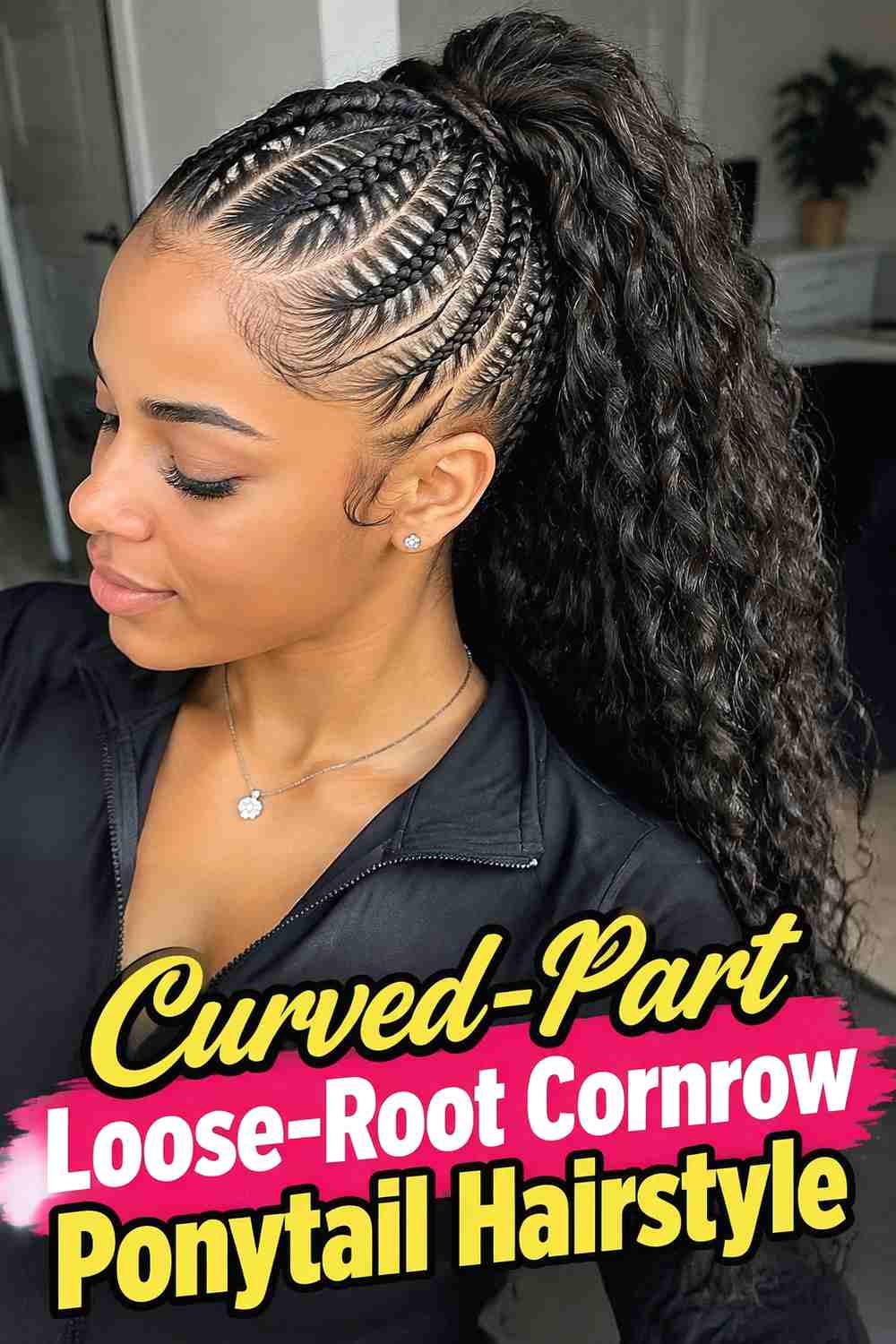
Curved cornrows introduce flowing lines across the scalp instead of relying on straight sections. Each braid can arc gently toward the ponytail base, creating a pattern that looks dynamic even when the hanging hair is simple. A soft root finish complements the curves because it keeps the design from feeling too severe. The most successful versions use a few clear, repeated arcs rather than combining too many unrelated directions. Medium braid widths make the pattern easy to recognize, while a centered or slightly elevated ponytail gives all the curves a logical destination. The hairstyle looks particularly striking from the side, where the sweeping sections are easiest to appreciate.
Why It Works
Curved parting adds visual movement to the scalp area and creates a more decorative alternative to traditional straight-back cornrows.
Pro Tip
Repeat similar curves across the head so the design feels coordinated rather than randomly sectioned.
8. Zigzag Part Loose Root Cornrow Ponytail Hairstyle
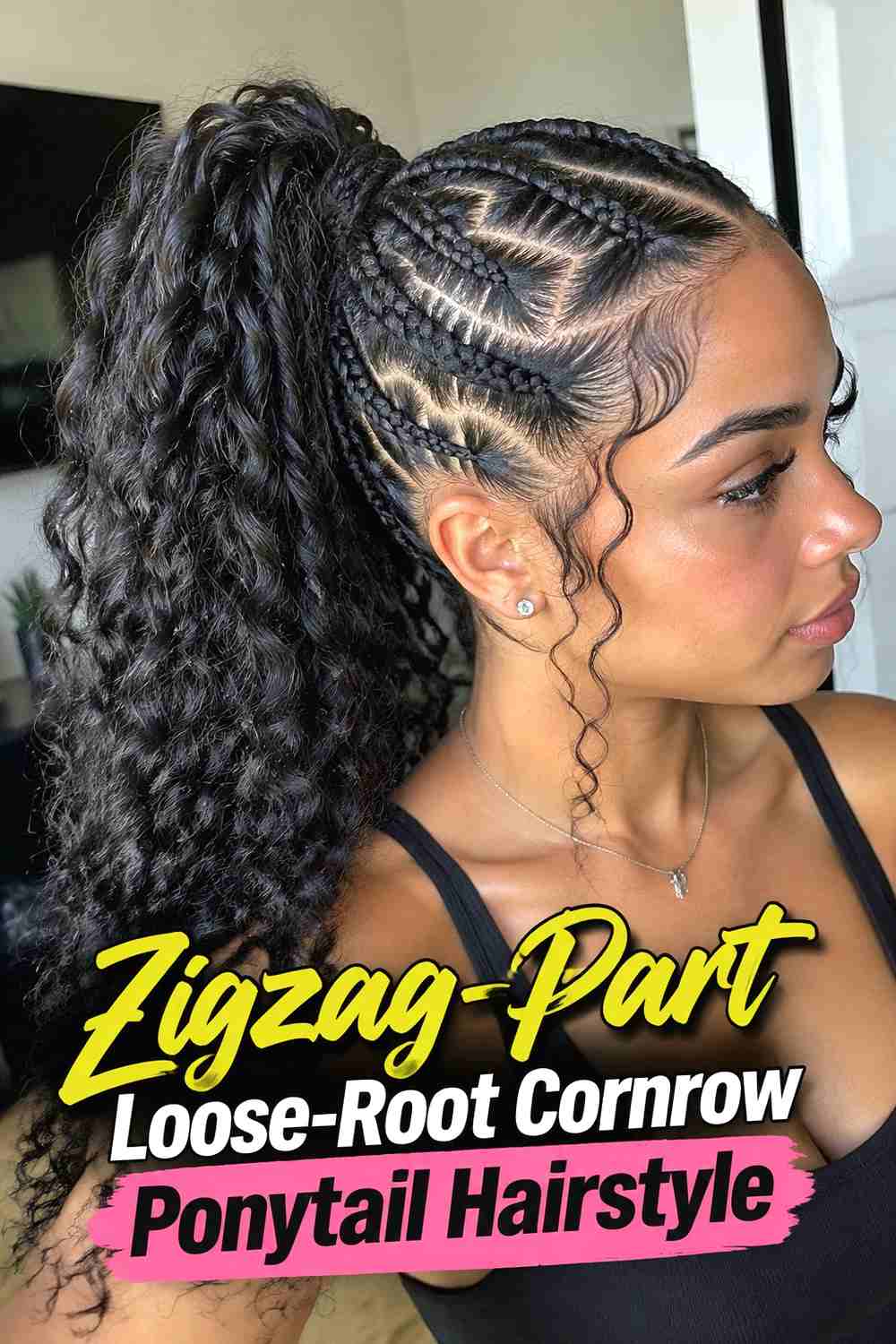
Zigzag parting gives a loose-root cornrow ponytail a sharper, more playful graphic detail. Instead of simple straight sections, selected part lines change direction in clean angles before the cornrows travel toward the ponytail base. The zigzags should remain spacious enough to read clearly rather than becoming tiny or overly complicated. A smooth ponytail provides a useful contrast because it keeps the attention on the patterned top. Softness at the beginning of the braids can make the geometric layout feel more wearable and less severe around the hairline. This design works best when the zigzag motif is repeated selectively instead of being forced into every section.
Styling Notes
Keep the angles large and clean enough to remain visible once the braids are formed along both sides of each part.
Best For
Choose this look when you want an obvious decorative detail but still prefer a recognizable cornrow ponytail structure.
9. Half Up Loose Root Cornrow Ponytail Hairstyle
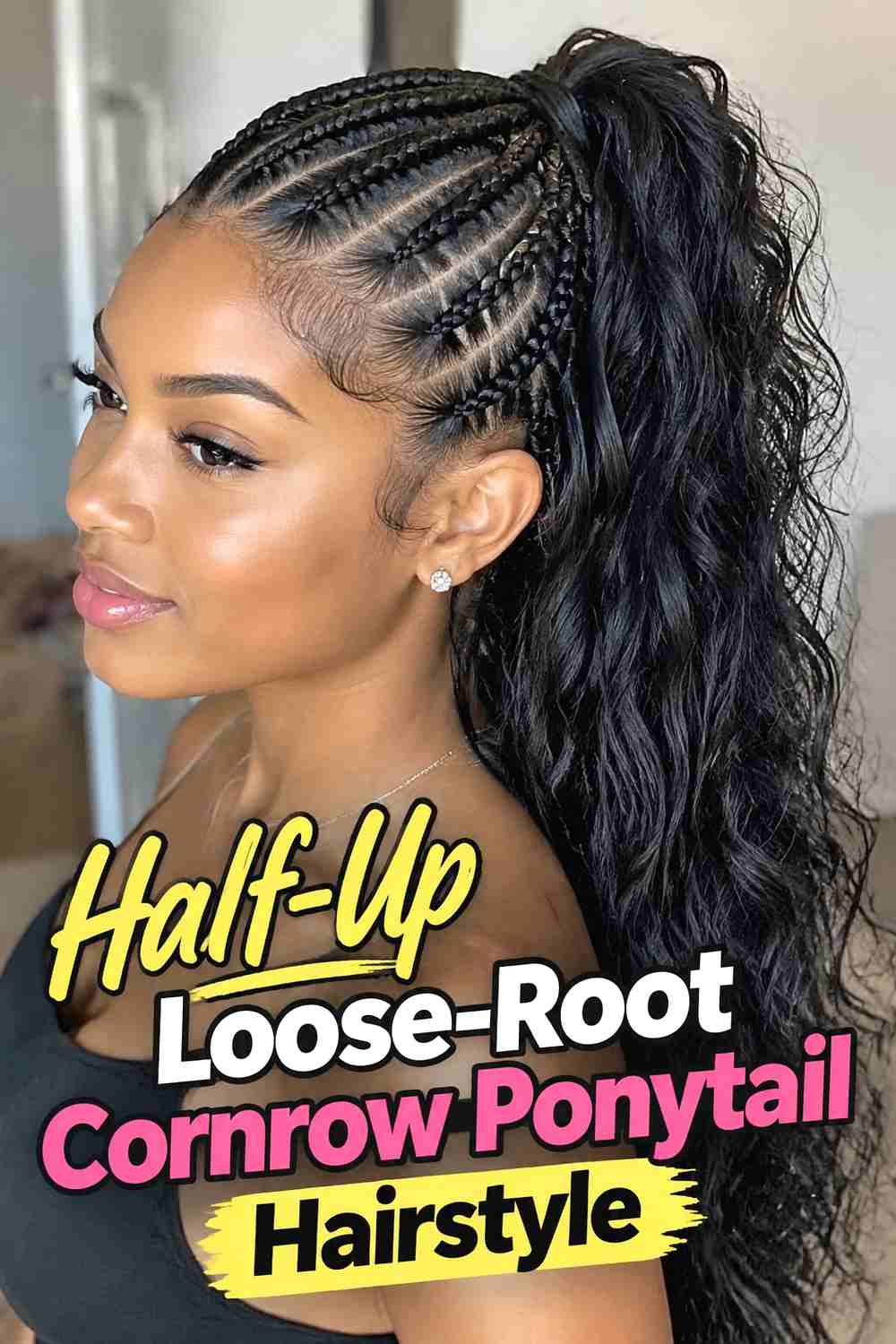
A half-up version combines cornrow structure at the upper portion of the head with loose texture through the lower sections. The top cornrows travel toward a ponytail positioned near the crown, while the hair beneath remains separate rather than being pulled into the same base. This creates a lighter, more dimensional silhouette than a fully gathered ponytail. The loose-root approach works especially well here because the transition between braided and unbraided areas feels softer. The lower section can remain naturally textured, stretched, curled, or gently defined. Keeping the top ponytail moderate in size helps maintain balance with the hair left down underneath.
Hair Type & Length
Medium and longer hair provides enough length for both the upper ponytail and the lower section to remain visually distinct.
Why It Works
The mix of braided structure and free-moving hair gives the style more texture and dimension than a fully gathered arrangement.
10. Wraparound Loose Root Cornrow Ponytail Hairstyle
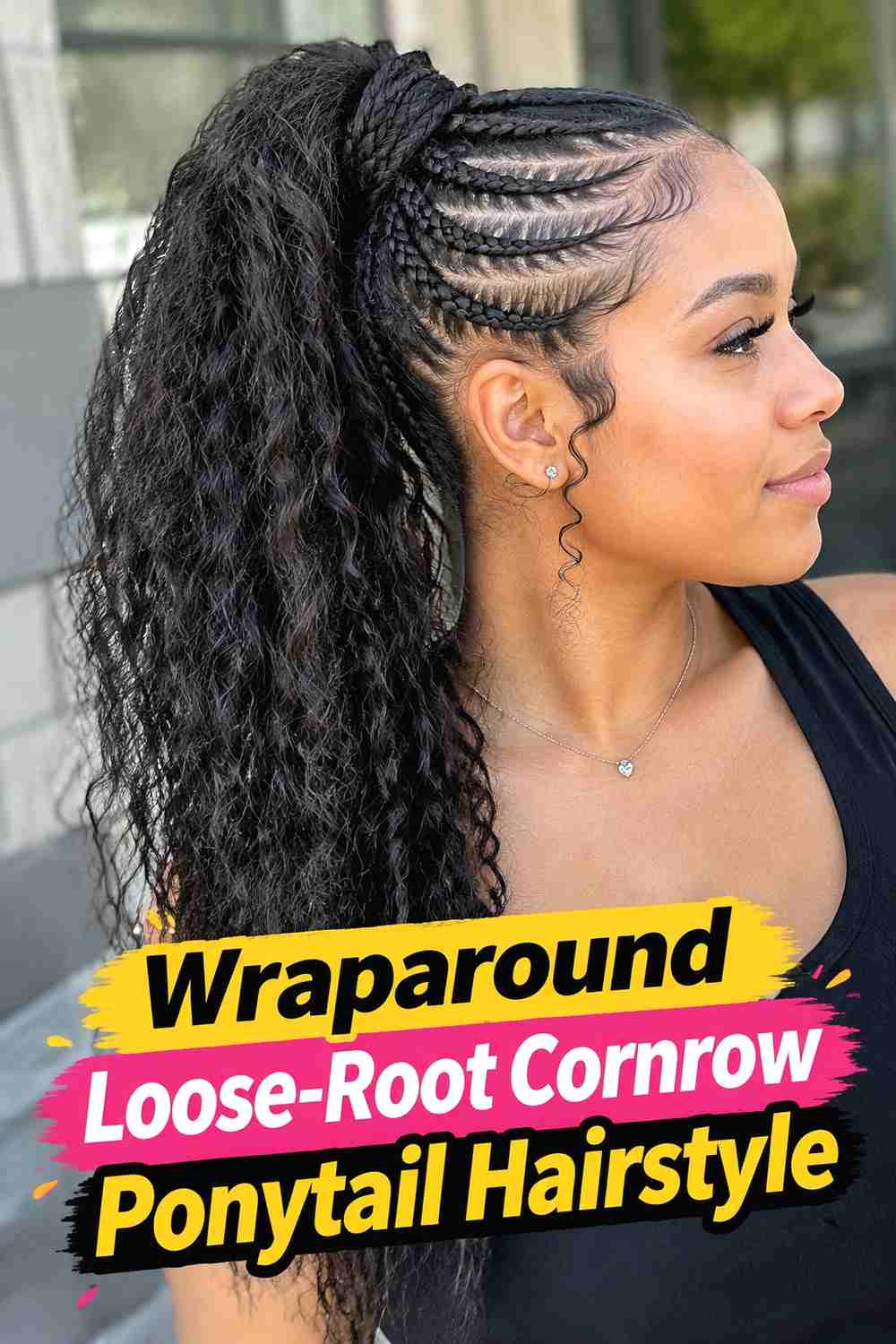
The Wraparound Loose-Root Cornrow Ponytail Hairstyle uses cornrows that curve around the head before meeting at the ponytail base. Instead of traveling directly backward, the braids follow a sweeping circular direction that makes the scalp design visible from multiple angles. A slightly looser root appearance keeps those curved sections looking fluid rather than overly pulled. The ponytail itself can stay smooth so the wrapping cornrows remain the centerpiece. This layout needs thoughtful sectioning because every braid should seem to flow naturally toward the same destination. A mid-height base usually provides enough room for the wraparound pattern to develop without making the design feel crowded near the crown.
Styling Notes
Plan the gathering point first, then build the curved sections around it so the cornrows connect naturally rather than changing direction abruptly.
Best For
This is a strong option when you want the scalp design to be as noticeable as the ponytail length.
11. Braided Base Loose Root Cornrow Ponytail Hairstyle
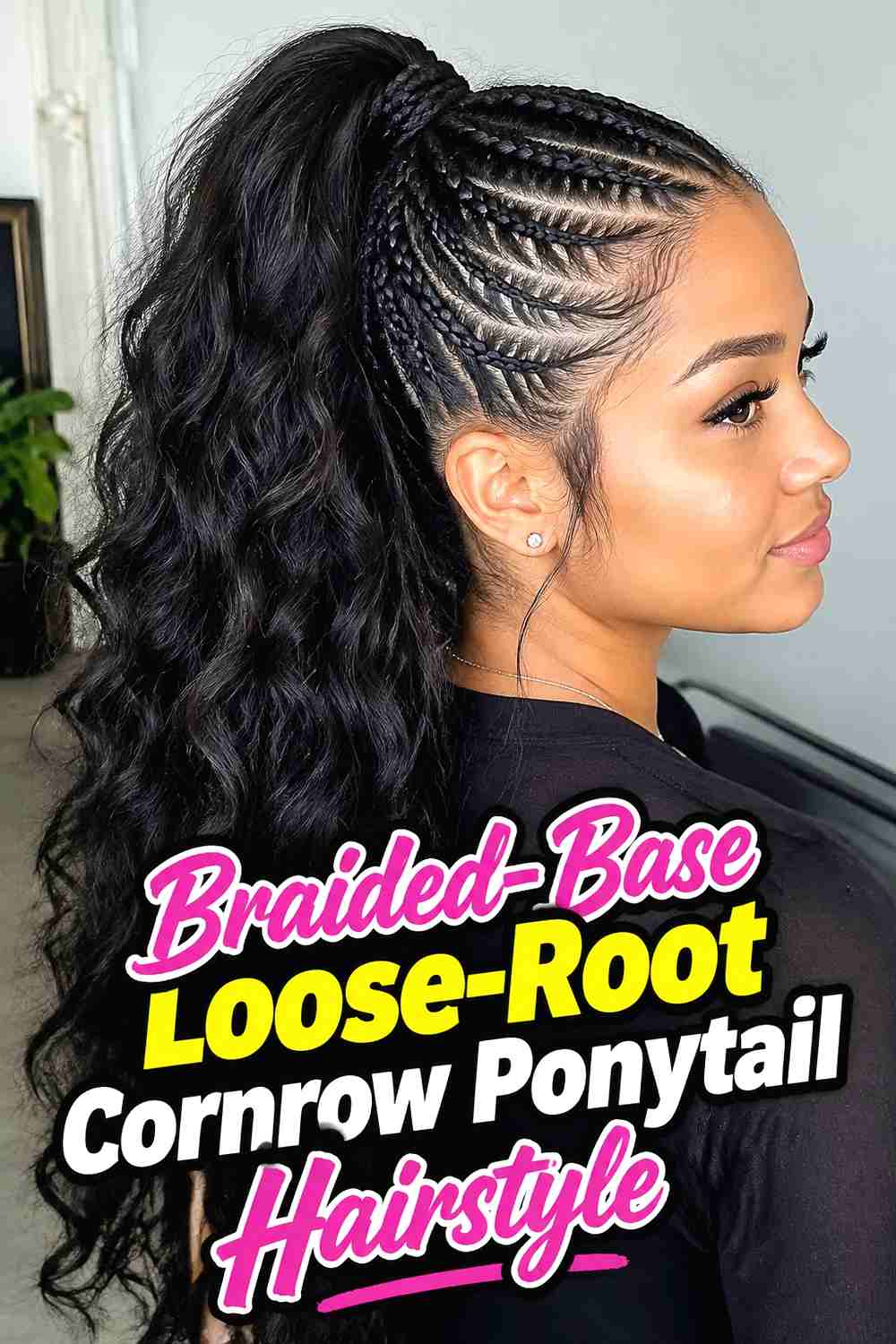
A braided base gives a loose-root cornrow ponytail an extra finished detail where the scalp braids meet the hanging length. The cornrows gather into a secure ponytail, then a braid or braided section wraps neatly around the base to conceal the attachment point. This creates a polished transition without adding complicated decoration across the entire style. The ponytail can remain loose, sleek, or lightly textured beneath the wrapped detail. Keeping the roots soft and the wrap tidy creates a pleasing contrast between relaxed beginnings and structured finishing. The braided base should sit smoothly rather than forming a large knot that overwhelms the ponytail.
Why It Works
The wrapped braid turns a functional gathering point into a deliberate design feature while maintaining a clean overall silhouette.
Pro Tip
Keep the wrap proportional to the ponytail thickness so it looks integrated instead of bulky.
12. Curly End Loose Root Cornrow Ponytail Hairstyle
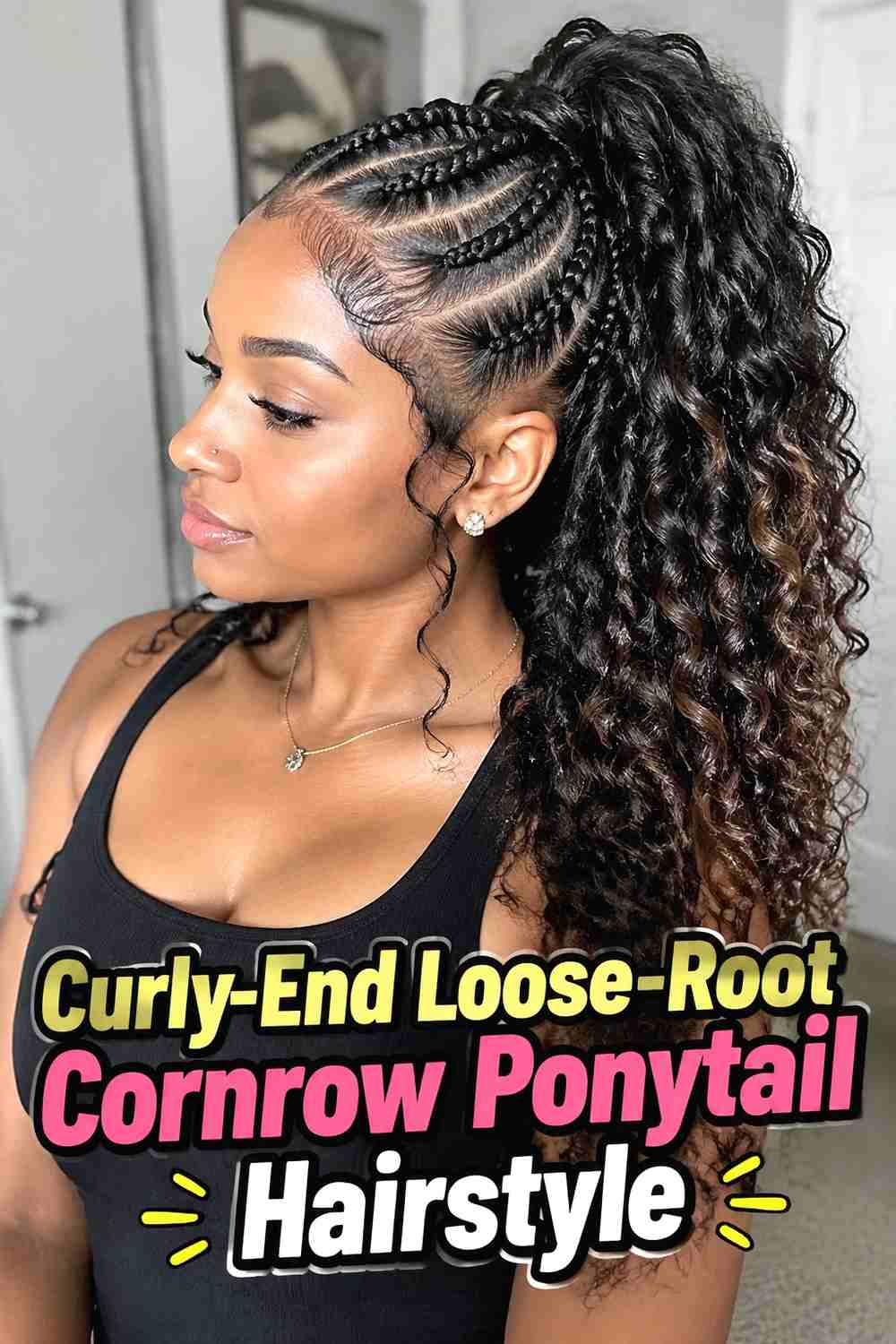
Curly ends introduce softness and bounce below the structured cornrow base. The braids direct the hair into a ponytail, but the hanging length transitions into curls or curled ends rather than staying completely straight or fully braided. This contrast gives the hairstyle movement and makes the ponytail appear fuller without changing the scalp design. A high or medium base works particularly well because the curls have room to fall freely. The loose-root effect complements the softer ends, creating a consistent relaxed quality from top to bottom. Curl size can range from broad loops to smaller spirals, but a blended pattern generally keeps the finish natural.
Styling Notes
Keep the cornrow sections neat and let the curls provide the softer visual element rather than adding too many competing details at the scalp.
Wear & Maintenance
Preserve the curled ends with gentle nighttime handling so repeated friction does not turn the ponytail into an uneven, tangled texture.
13. Long Sleek Loose Root Cornrow Ponytail Hairstyle
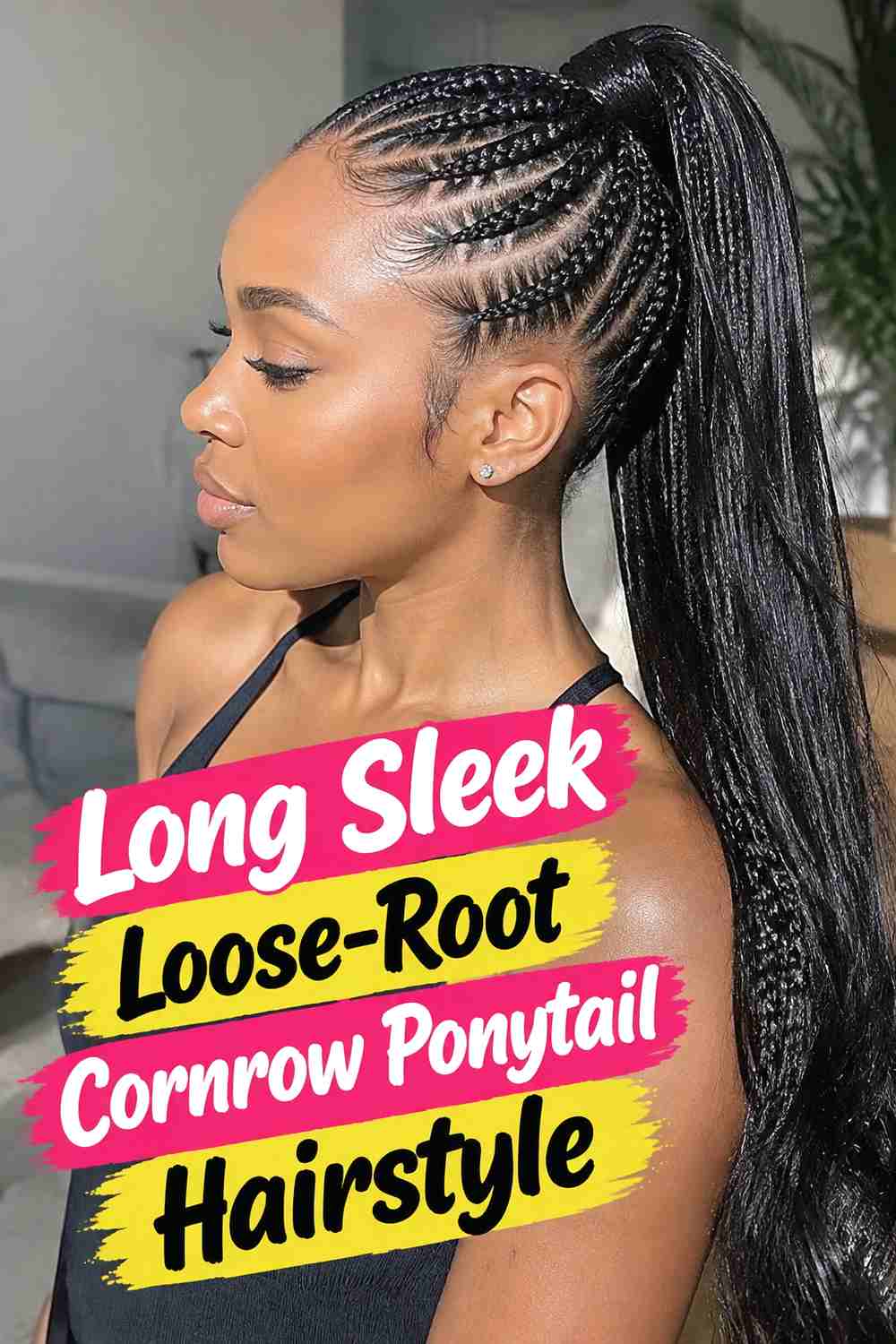
A long sleek ponytail creates dramatic length beneath a relatively simple loose-root cornrow pattern. The top can use straight-back or subtly angled braids that gather into a clean base, allowing the smooth hanging length to become the main feature. Because the ponytail is visually substantial, moderate braid widths usually create better balance than an extremely busy scalp design. The softer root area keeps the front from looking excessively pulled even though the lengths are polished. This style works best when the ponytail moves naturally and shows realistic weight rather than appearing rigid or unnaturally thick from roots to ends.
Best For
Choose this version when length and movement are your priorities and you prefer a clean braided foundation rather than an elaborate pattern.
Wear & Maintenance
Very long ponytails can feel heavier than shorter ones, so the amount of added length should remain comfortable at the base.
14. Bubble Accent Loose Root Cornrow Ponytail Hairstyle
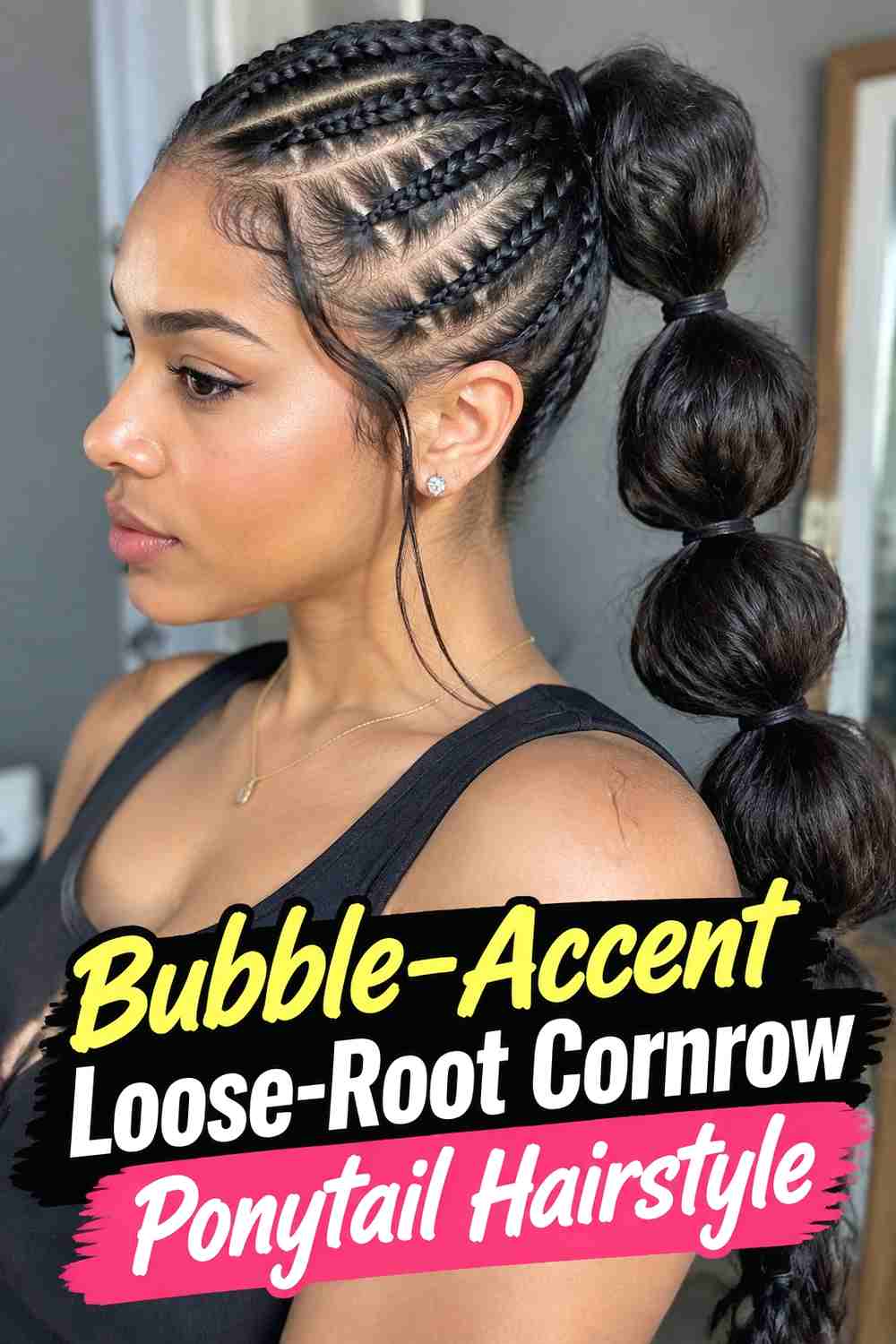
Bubble accents add playful structure to the ponytail after the cornrows have gathered at the base. The scalp area remains braided in a relatively simple pattern, while spaced ties or wraps divide sections of the ponytail into softly rounded bubbles. Keeping the bubbles loose and proportional helps the style look polished rather than stiff. The contrast works best when the cornrow design is clean enough to support the decorative ponytail without competing with it. A medium or high base gives the segmented length room to hang clearly. This variation offers an easy way to create visual interest below the scalp while preserving the recognizable cornrow foundation.
Styling Notes
Space the ponytail ties consistently, then gently expand each section so the bubbles remain soft instead of tightly compressed.
Why It Works
The segmented ponytail introduces a second texture without requiring the cornrows themselves to become more complicated.
15. Face Framing Loose Root Cornrow Ponytail Hairstyle
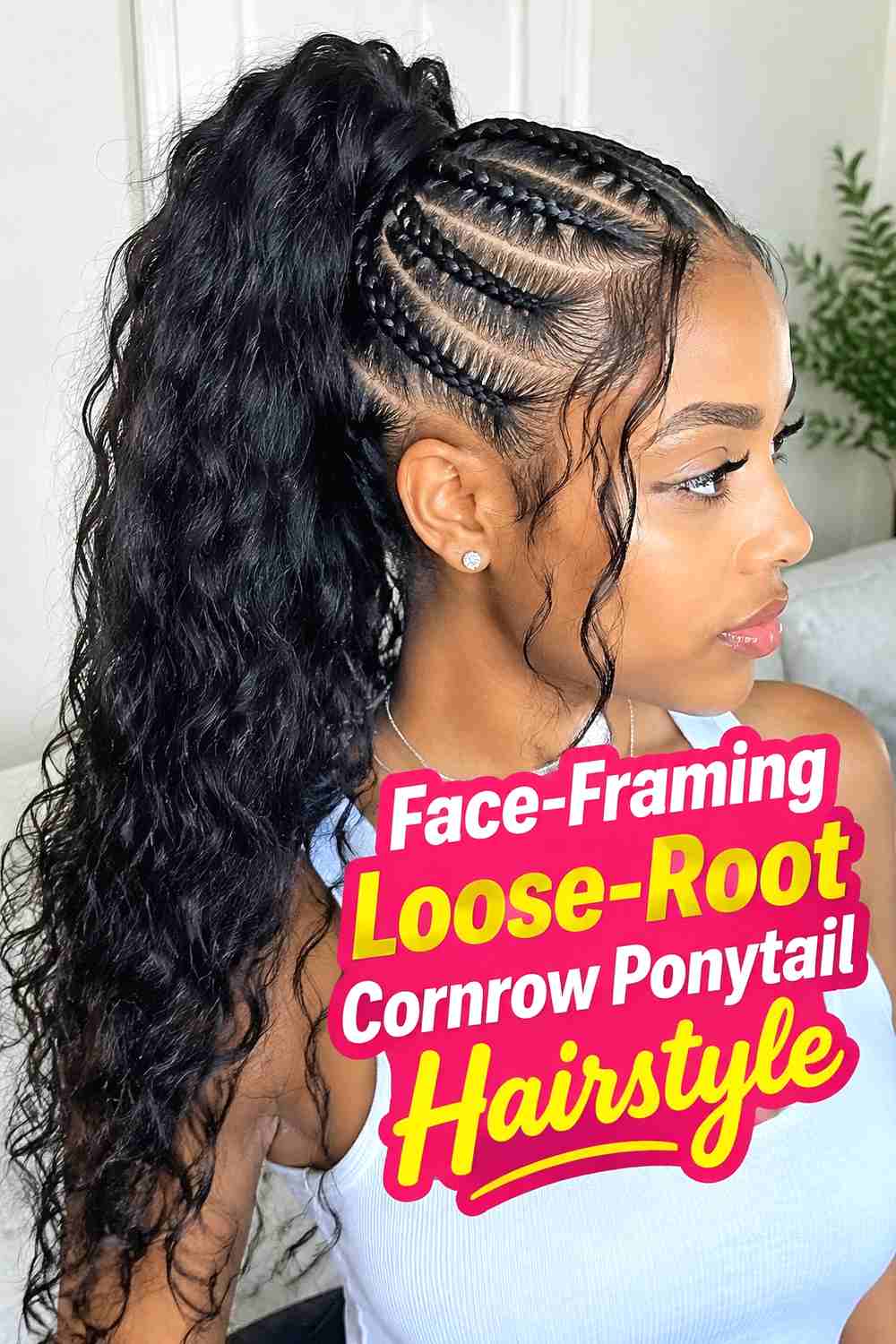
Face-framing pieces soften a cornrow ponytail by leaving a small amount of hair free around the front instead of gathering every strand into the braids. The cornrows begin slightly farther back or around the loose sections and travel toward a ponytail base at the crown or mid-head. The front pieces can remain textured, softly curled, or lightly stretched depending on the desired finish. Keeping them minimal is important because too much loose hair can obscure the cornrow pattern. This look feels especially relaxed when paired with softer roots and a ponytail that has some movement rather than an extremely rigid finish.
Best For
This option works well if you like structured braiding but want a softer front without committing to a full fringe.
Pro Tip
Keep the face-framing sections deliberate and balanced so they look like part of the design rather than strands accidentally left out.
16. Crown Volume Loose Root Cornrow Ponytail Hairstyle
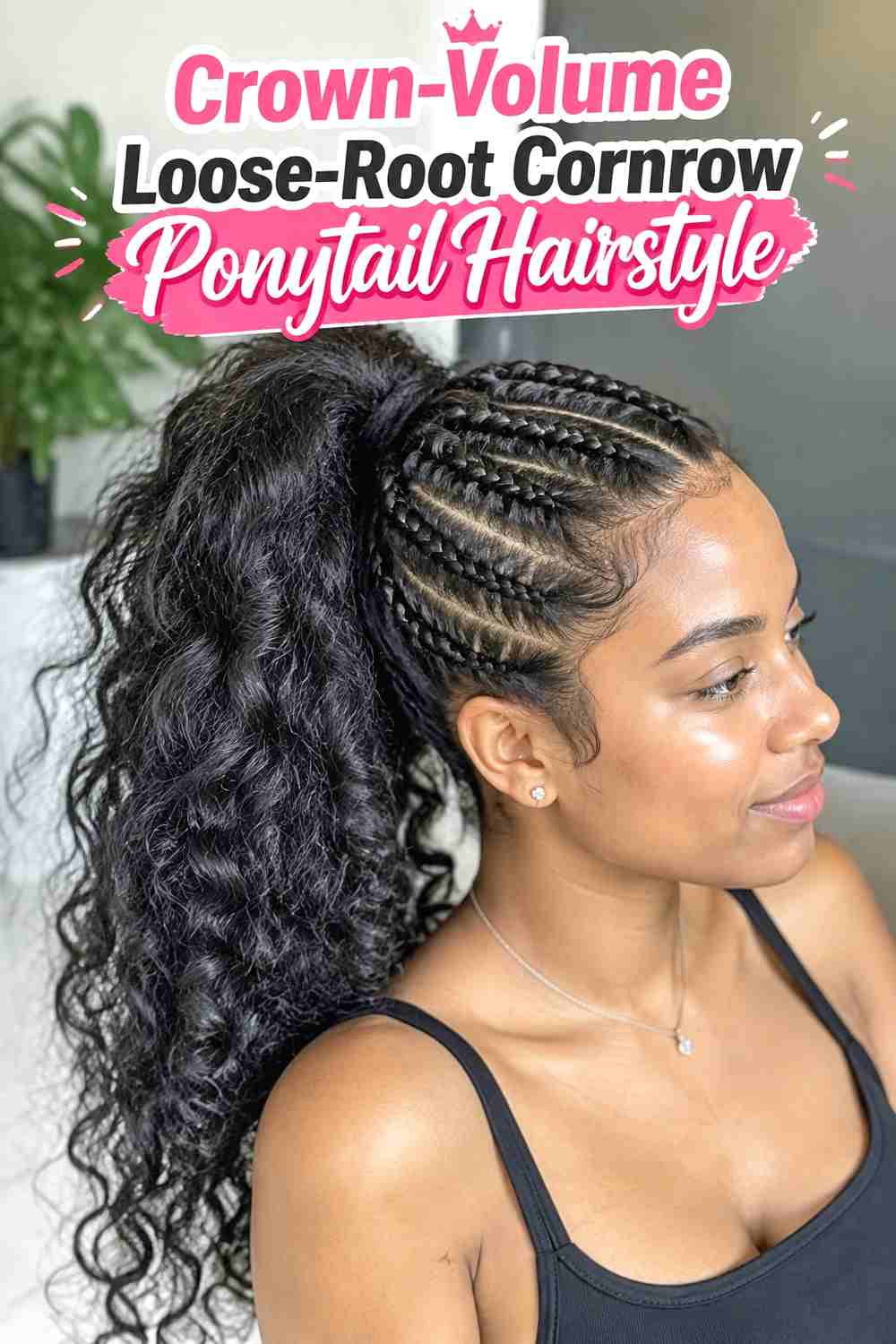
The Crown-Volume Loose-Root Cornrow Ponytail Hairstyle builds extra height where the braids meet the upper back of the head. Cornrows travel upward toward a high gathering point, and the ponytail begins with noticeable fullness before falling through the lengths. The roots retain a softer appearance so the lift comes from placement and ponytail volume rather than an overly tightened scalp. This works especially well with curly or textured ponytail lengths because the added fullness naturally reinforces the elevated silhouette. Keeping the sides neat provides contrast and makes the crown volume look intentional instead of simply oversized.
Why It Works
Concentrating fullness at the crown creates height while the directional cornrows visually support the upward movement.
Wear & Maintenance
Check that the base remains comfortable, since high-volume ponytails can add weight even when the roots are intentionally styled with less tension.
17. Shoulder Length Loose Root Cornrow Ponytail Hairstyle
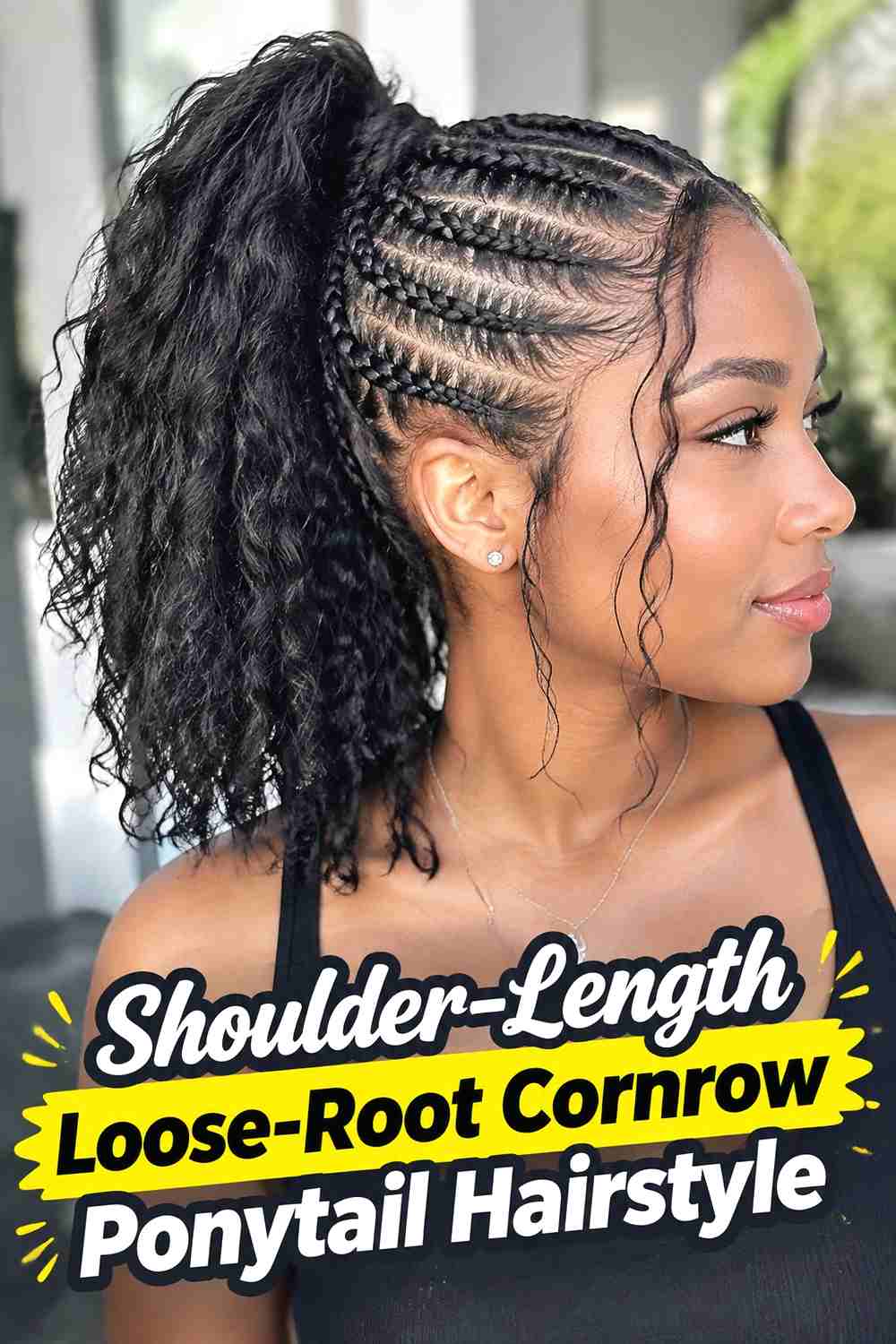
A shoulder-length ponytail creates a lighter, more compact version of the loose-root cornrow style. The braids can remain straight, curved, or slightly angled, but the shorter hanging length keeps the overall silhouette practical and easy to move. This length is particularly useful if you want visible ponytail shape without the extra weight and maintenance associated with waist-length styles. A medium or low base works especially well because the ends can fall naturally around the shoulders. The ponytail can stay smooth or carry a gentle bend, while a softly rooted cornrow pattern keeps the scalp area from appearing excessively rigid.
Hair Type & Length
This version works when the finished ponytail falls around shoulder level, whether that length comes from natural hair or an added ponytail section.
Best For
Choose it if you prefer a lighter everyday silhouette with less hanging length to manage.
18. Extra Long Loose Root Cornrow Ponytail Hairstyle
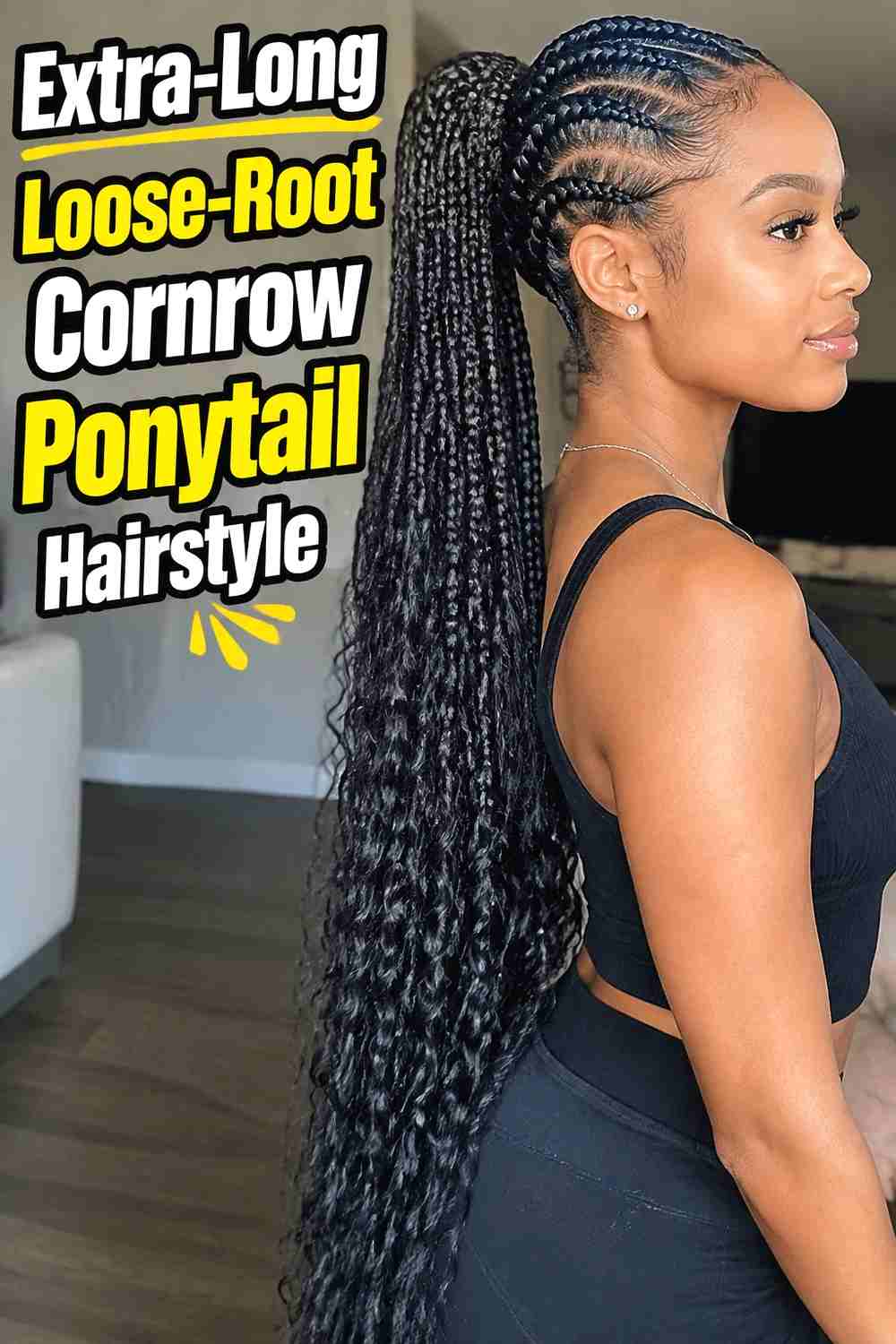
An extra-long ponytail turns the loose-root cornrow style into a more dramatic statement while keeping the scalp design relatively streamlined. The cornrows can travel straight back, curve subtly, or converge toward a high base so the length falls clearly down the back. Because the ponytail already provides strong visual impact, a simpler braid pattern usually keeps the proportions balanced. The root area should still appear natural and comfortable rather than sharply stretched. Extra length also brings additional weight and movement, so fullness should remain believable from base to ends. A gradual taper through the ponytail often creates a more realistic finish than uniform thickness throughout.
Styling Notes
Keep the scalp pattern clean and uncomplicated so the extra-long ponytail remains the obvious focal point.
Wear & Maintenance
Consider both length and weight when choosing the finished fullness, and adjust the base if the style creates persistent pulling or discomfort.
How to Choose the Right Look
Begin with ponytail placement. High versions create more lift and movement, medium placements feel balanced, and low ponytails create a softer, understated silhouette. If you plan to wear the style for long periods, comfort at the base matters just as much as the visual effect.
Next, compare braid scale and pattern. Jumbo cornrows create bold lines with fewer sections, while small-stitch braids offer more intricate detail. Curved, wraparound, and zigzag parts are useful when you want the scalp design to become a major feature instead of simply directing the hair backward.
Ponytail length and texture also change the feel of the style. Shoulder-length options are lighter and easier to manage, while extra-long ponytails create more drama but can add weight. Sleek lengths feel polished, curly ends add bounce, and bubble accents create a more decorative finish.
Finally, pay attention to root comfort. “Loose-root” should still mean the braids are secure and tidy, not unstable, but persistent pulling, soreness, or discomfort is a reason to loosen or adjust the style.
Final Thoughts
Loose-root cornrow ponytails offer plenty of visual structure without requiring every section to look tightly pulled against the scalp. Changing the height, braid size, parting design, ponytail texture, or length can make the same basic concept feel completely different.
Choose the version that fits your preferred level of detail and everyday comfort, then keep the braid pattern and ponytail weight balanced so the finished style looks intentional from every angle.
FAQs
1. What is a loose-root cornrow ponytail?
It is a cornrow ponytail styled with a slightly softer-looking start at the roots rather than an extremely tight, stretched appearance, while the braids still remain secure and clearly defined.
2. Can loose-root cornrows still look neat?
Yes. Clean sectioning, consistent braid direction, and a well-finished ponytail can create a polished result even when the root area is not styled with an overly tight look.
3. Should a cornrow ponytail feel tight?
It should feel secure, but persistent pain, strong pulling, or ongoing discomfort is a sign that the style may need adjustment.
4. Which ponytail height works best with cornrows?
High, medium, and low placements can all work. The best choice depends on the braid direction, desired silhouette, ponytail weight, and how comfortable the placement feels.
5. Can the ponytail have curls instead of a sleek finish?
Yes. Curly ends or a fully textured ponytail can soften the structured cornrows and add more volume and movement below the base.
Save your favorite loose-root cornrow ponytail hairstyle ideas for your next braided look, and share the collection when you need fresh ponytail inspiration.