15 Satin Triangle Headscarf Waves Hairstyle Ideas
Soft waves and a glossy satin triangle scarf create an effortlessly polished combination that can feel romantic, retro, relaxed, or dressy depending on how it is tied.
A satin triangle headscarf adds color and structure without hiding the movement that makes wavy hair so attractive. Worn over the crown, tied at the nape, or positioned farther back like a soft bandana, it can frame loose lengths while helping the hairstyle feel intentional.
The key is balancing the scarf with the wave pattern. Smooth S-waves create a polished look, irregular beachy bends feel casual, and fuller blowout-style waves bring more drama. Scarf size, knot placement, face-framing pieces, and crown volume also change the silhouette, so choose the combination that works with your hair length and preferred styling routine.
Quick List
- Classic Satin Triangle Headscarf Waves Hairstyle
- Center Part Satin Triangle Headscarf Waves Hairstyle
- Side Part Satin Triangle Headscarf Waves Hairstyle
- Soft S Wave Satin Triangle Headscarf Hairstyle
- Beachy Satin Triangle Headscarf Waves Hairstyle
- Face Framing Satin Triangle Headscarf Waves Hairstyle
- Long Layered Satin Triangle Headscarf Waves Hairstyle
- Half Tied Satin Triangle Headscarf Waves Hairstyle
- Low Nape Satin Triangle Headscarf Waves Hairstyle
- Crown Tied Satin Triangle Headscarf Waves Hairstyle
- Silk Knot Satin Triangle Headscarf Waves Hairstyle
- Vintage Satin Triangle Headscarf Waves Hairstyle
- Glossy Satin Triangle Headscarf Waves Hairstyle
- Voluminous Satin Triangle Headscarf Waves Hairstyle
- Romantic Tendril Satin Triangle Headscarf Waves Hairstyle
1. Classic Satin Triangle Headscarf Waves Hairstyle
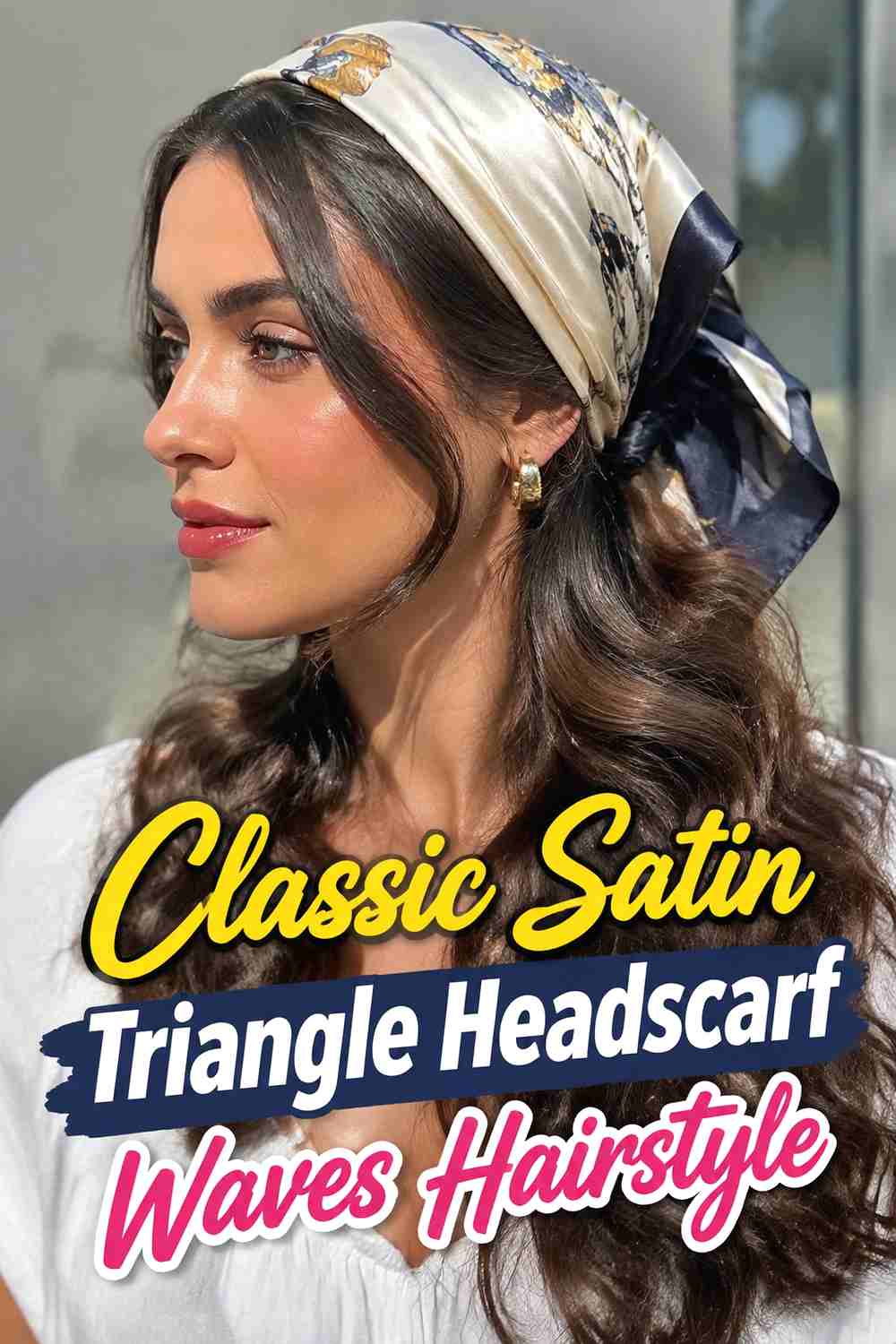
The classic version keeps the styling simple: soft waves fall freely through the lengths while a folded satin triangle scarf covers part of the crown and ties neatly at the nape. Leaving the majority of the hair visible ensures the wave pattern remains the main feature instead of disappearing beneath the fabric. Broad, relaxed bends work particularly well because they give the lengths movement without competing with the scarf’s clean shape. A few pieces around the temples can remain loose for softness. Choose a scarf that sits securely without pulling tightly against the hairline, and position the knot low enough that it does not create unnecessary bulk behind the head.
Styling Notes
Create the waves before placing the scarf, then loosen the lengths gently after tying so the fabric does not flatten the overall movement.
Best For
This easy version works for casual weekends, vacations, outdoor lunches, and everyday styling when you want a polished accessory without an elaborate updo.
2. Center Part Satin Triangle Headscarf Waves Hairstyle
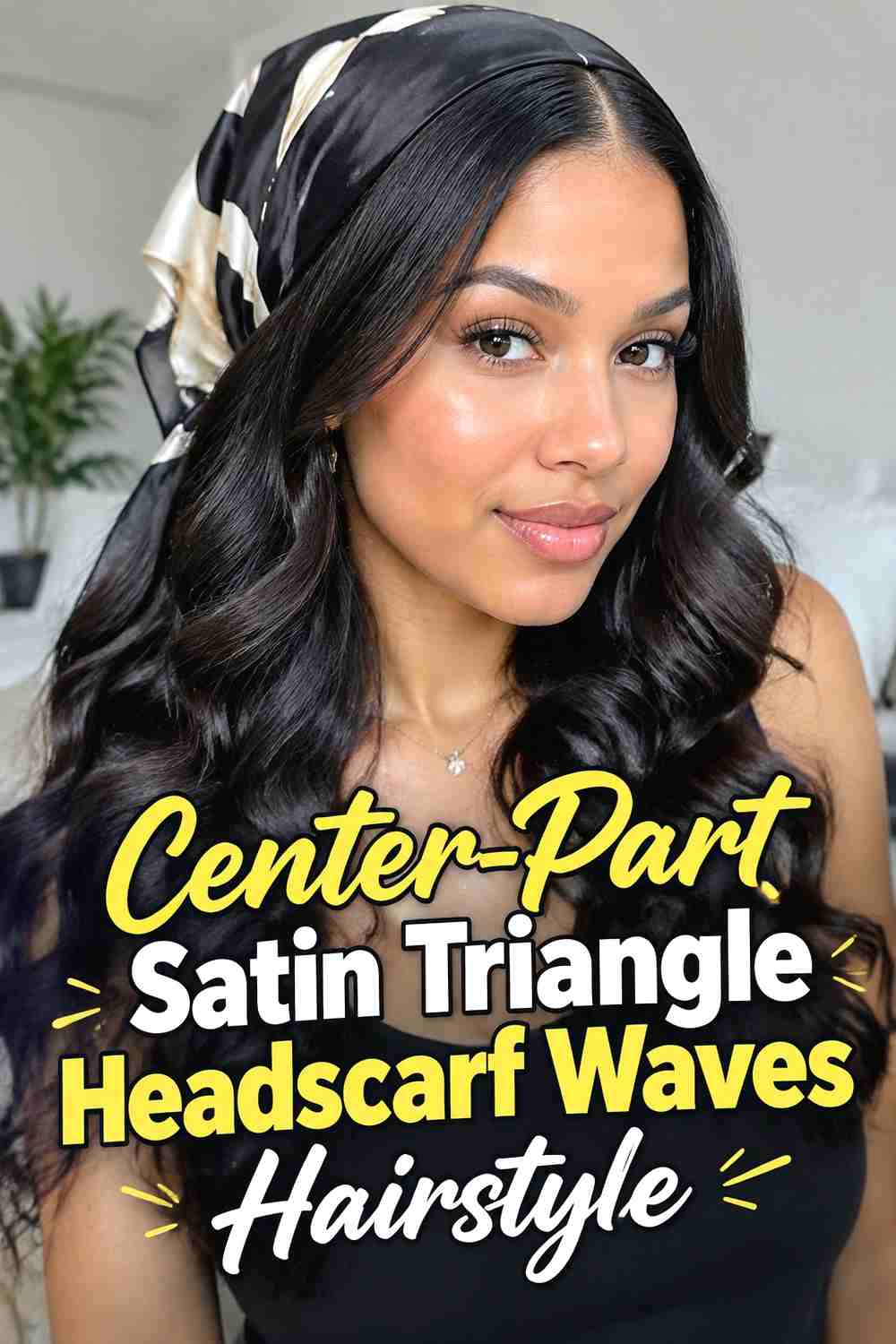
A defined center part gives this scarf-and-waves combination a balanced, modern appearance. Two softly waved front sections remain visible before the satin triangle scarf begins farther back on the crown, allowing the part to frame the face clearly. Through the lengths, broad waves maintain movement and prevent the symmetrical front from feeling too strict. The scarf can tie beneath the hair at the nape so the knot stays understated, or sit above the lower lengths for a more visible accessory moment. Avoid placing the scarf directly over the part if you want the centered shape to remain obvious. A little natural lift at the roots keeps the style airy.
Why It Works
The symmetrical part creates a clean frame while the loose wave pattern and satin texture prevent the overall hairstyle from looking overly structured.
3. Side Part Satin Triangle Headscarf Waves Hairstyle
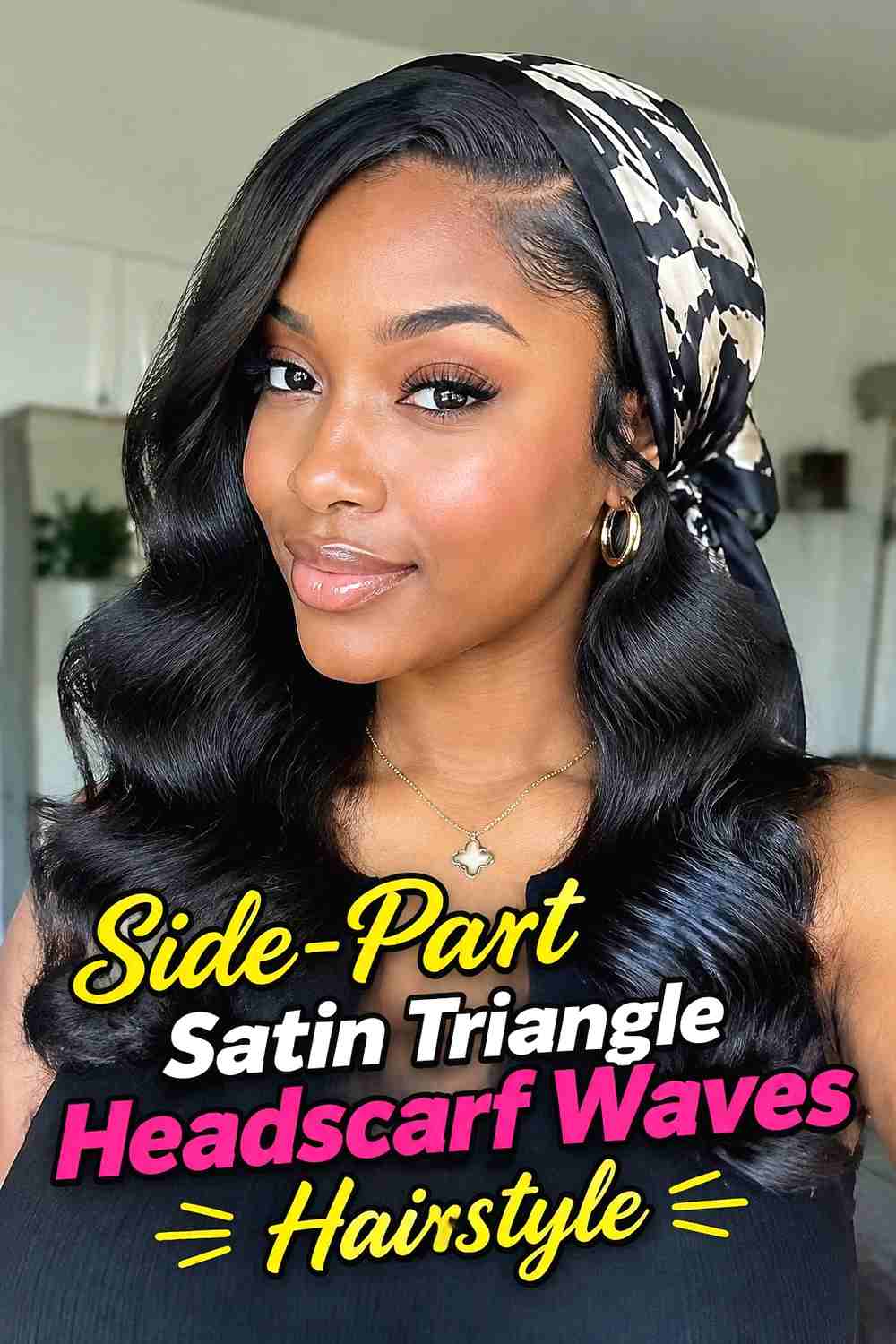
A side part introduces an elegant sweep before the scarf begins, giving wavy hair more directional movement around the face. The heavier side can curve gently across the forehead or temple, then blend into broad waves through the lengths. Position the triangle scarf slightly behind the front sections so the asymmetry remains visible instead of being covered. This approach works particularly well with medium to long hair because the side sweep can transition smoothly into the lower wave pattern. Keep the scarf knot simple to avoid competing with the stronger front shape. A soft satin finish contrasts beautifully with natural-looking waves, especially when a few individual strands remain visible along the hairline.
Styling Notes
Set the side part before tying the scarf and maintain a little root lift beneath the heavier section so the sweep does not collapse.
4. Soft S Wave Satin Triangle Headscarf Hairstyle
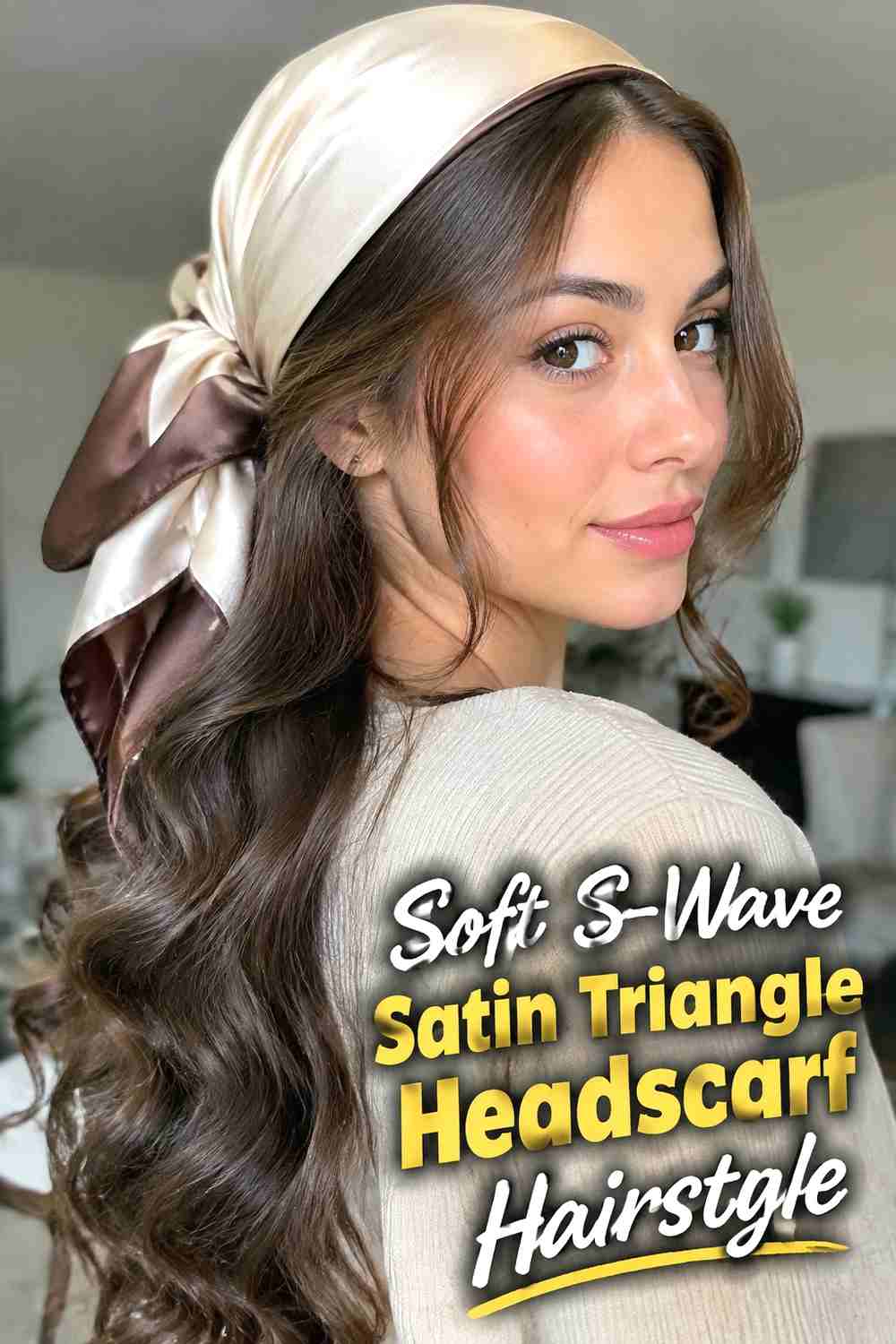
Smooth S-waves give this headscarf hairstyle a more polished finish than tousled beach waves. The lengths move in broad alternating curves, creating continuous shine and gentle dimension below the scarf. A satin triangle tied at the nape supports the refined feel because its smooth surface echoes the gloss of the styled hair. Keep the root area relatively natural and let the first bend begin around the cheekbone or lower to avoid creating excessive volume beneath the scarf. The ends can remain slightly straighter for a modern finish. This style looks especially cohesive when the wave pattern remains soft and connected rather than separating into individual ringlets.
Pro Tip
Form S-shaped bends in larger sections and brush them only lightly so the waves merge without losing their visible pattern.
5. Beachy Satin Triangle Headscarf Waves Hairstyle
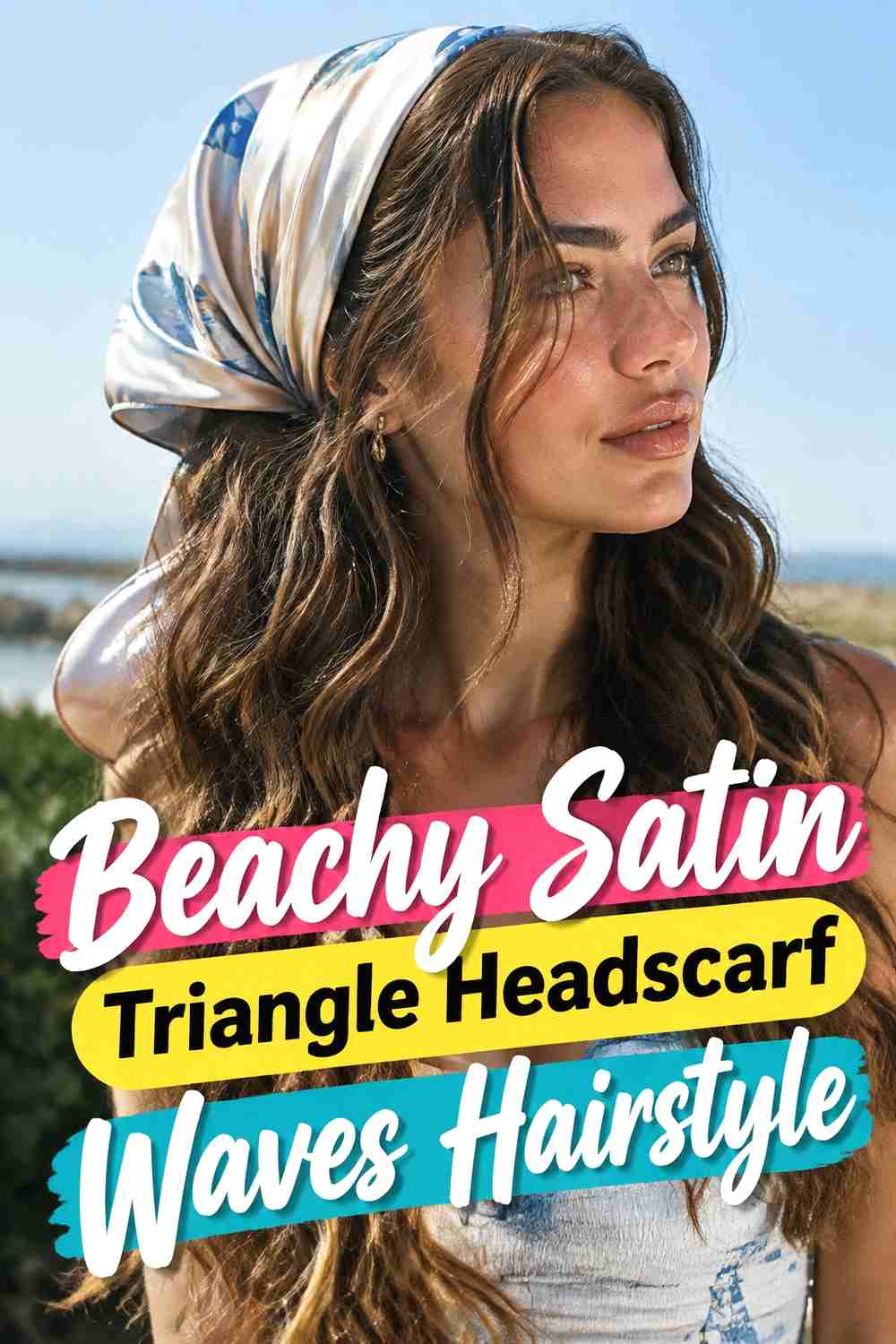
Beachy waves bring a more casual mood to the satin triangle scarf, balancing the fabric’s polished sheen with irregular, relaxed texture. The waves should vary slightly from section to section, with some bends beginning higher and others appearing mainly through the lower lengths. This natural variation keeps the style from looking overly arranged. Wear the scarf across the crown with a low knot, leaving plenty of hair loose through the back and shoulders. A few shorter sections around the face can fall freely for extra softness. Because satin can slide on very smooth hair, discreet pins underneath the scarf may help maintain placement without changing the visible design.
Wear & Maintenance
If the waves relax during the day, refresh only selected front and outer sections rather than rebuilding the entire texture.
6. Face Framing Satin Triangle Headscarf Waves Hairstyle
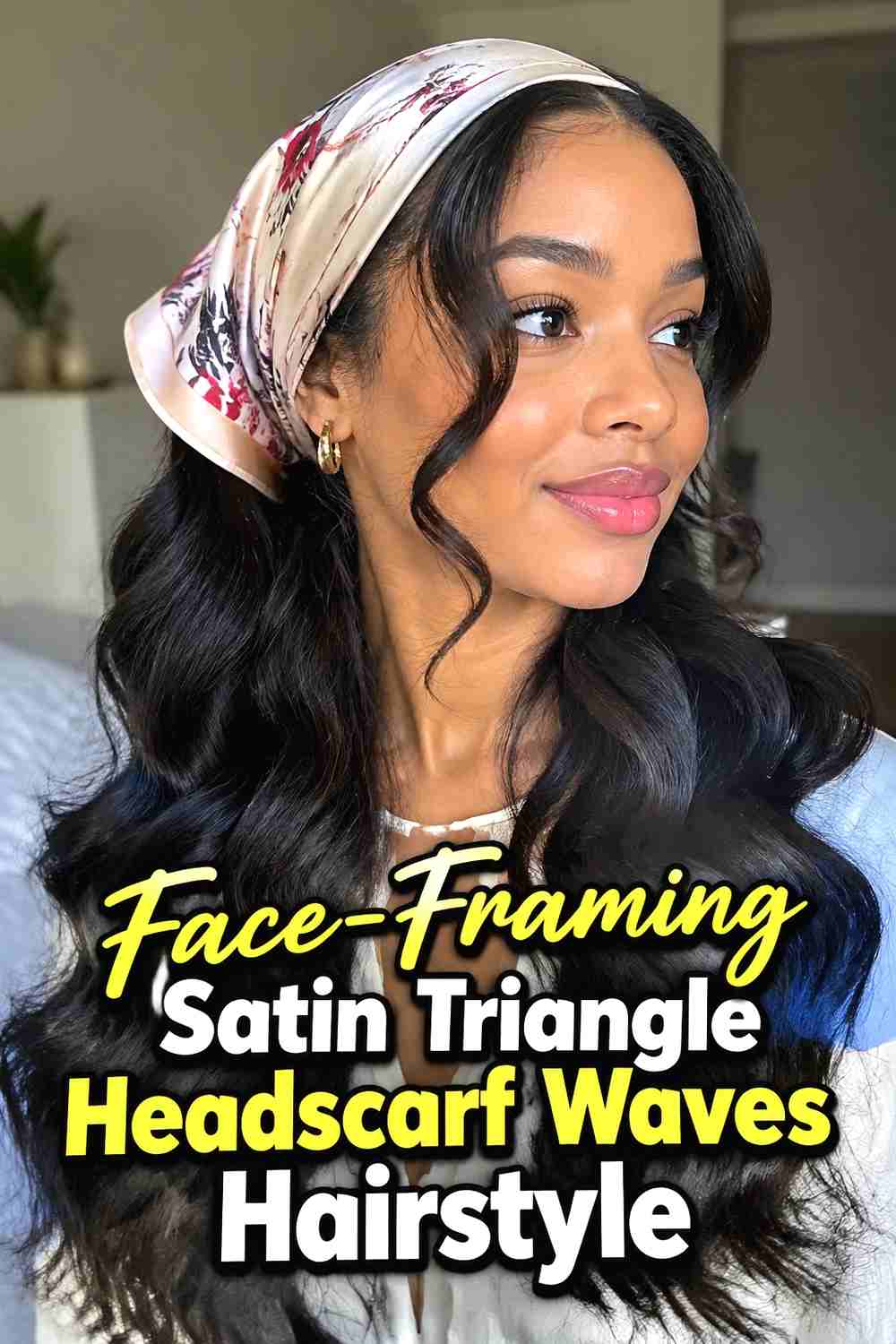
Face-framing layers add movement in front of the scarf and help connect the accessory to the loose lengths below. Shorter pieces can begin around the cheekbones or jaw, curving gently away from the face before blending into longer waves. Position the triangle scarf behind these sections so they remain clearly visible from the front. The scarf can then cover part of the crown and tie neatly at the back. This styling works particularly well on layered medium-to-long hair because the varying lengths create softness around the otherwise defined fabric edge. Keep the front pieces broad and flowing instead of curling them into narrow tendrils if you want a modern, wearable result.
Best For
Choose this variation when you want the scarf clearly visible but still prefer plenty of hair framing the face.
7. Long Layered Satin Triangle Headscarf Waves Hairstyle
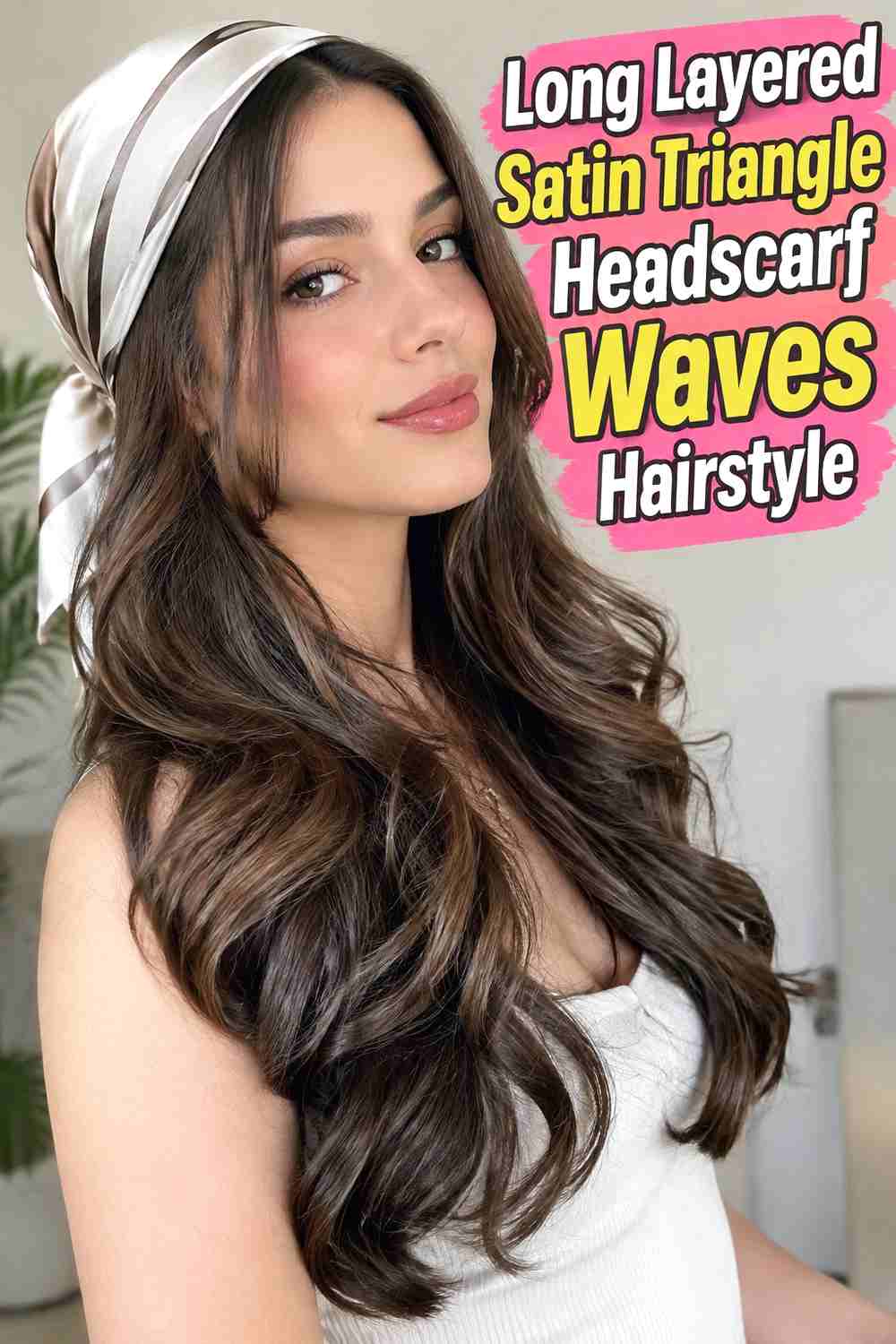
Long layers create depth beneath a satin triangle headscarf by allowing separate sections of wavy hair to move independently. The shorter layers can begin around the shoulders or chest while the longest lengths remain substantial through the back. Once waved, those layers create a cascading effect below the scarf instead of forming one dense block of hair. Keep the triangle relatively compact on the crown so it does not hide too much of the layered shape. A low nape knot works especially well because it leaves the sides and lower lengths free. This is a useful option for dense long hair that benefits from visible movement without sacrificing overall fullness.
Hair Type & Length
Long medium-to-thick hair often shows this combination especially well because there is enough density to support both layering and broad waves.
8. Half Tied Satin Triangle Headscarf Waves Hairstyle
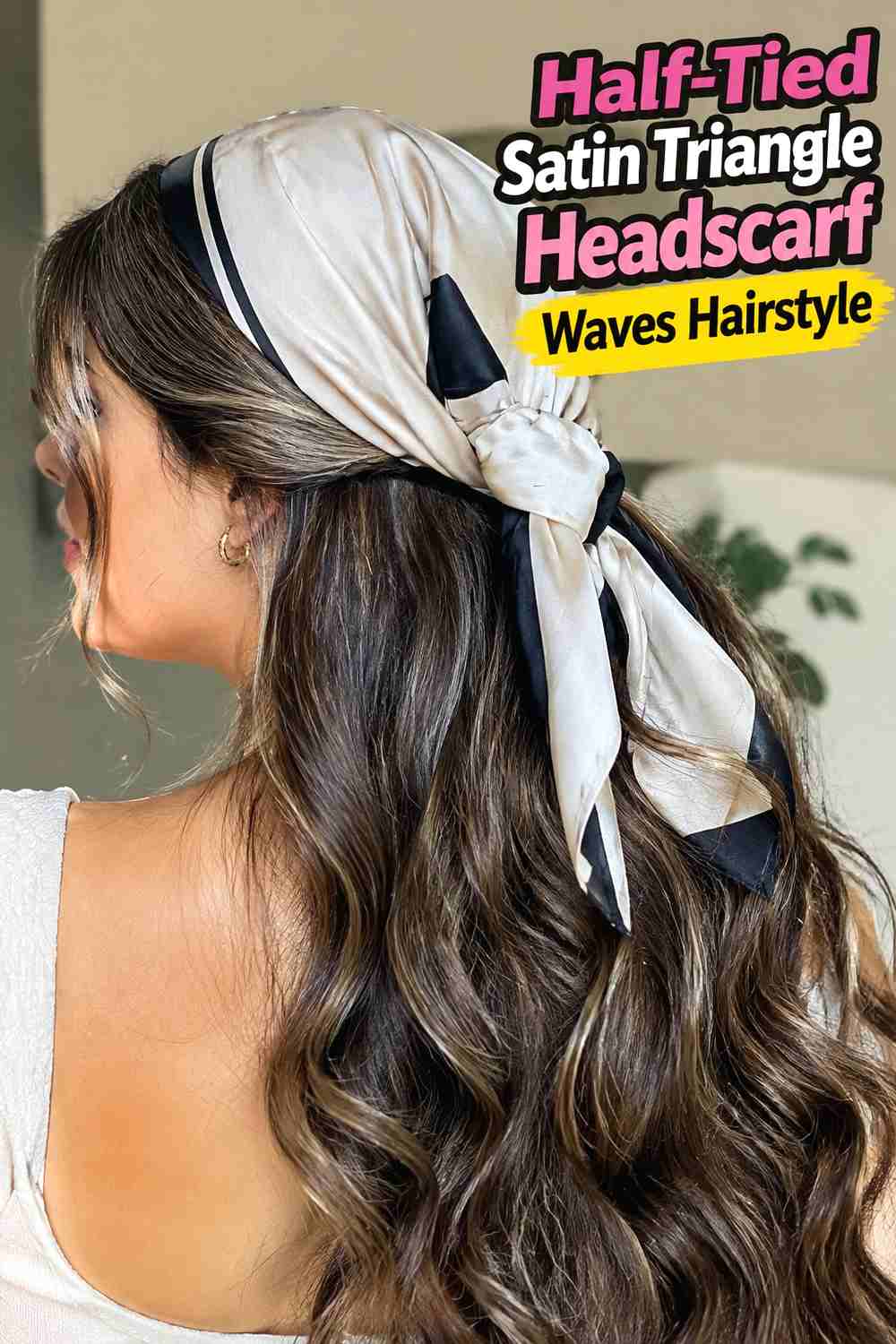
This variation uses the triangle scarf almost like a half-up accessory. The upper side sections are guided toward the back beneath or alongside the scarf, while most of the wavy lengths remain loose. The satin triangle can sit over the crown and tie around the gathered section, creating a soft focal point without turning the style into a full ponytail. Leaving the lower hair free preserves the relaxed movement and makes the scarf feel integrated rather than simply placed on top. This approach works best when the waves are soft and flexible so the gathered section blends smoothly into the lengths. Keep tension light around the temples for comfort.
Styling Notes
Gather only enough hair to stabilize the upper section; pulling too much into the scarf can reduce the fullness of the loose waves.
9. Low Nape Satin Triangle Headscarf Waves Hairstyle
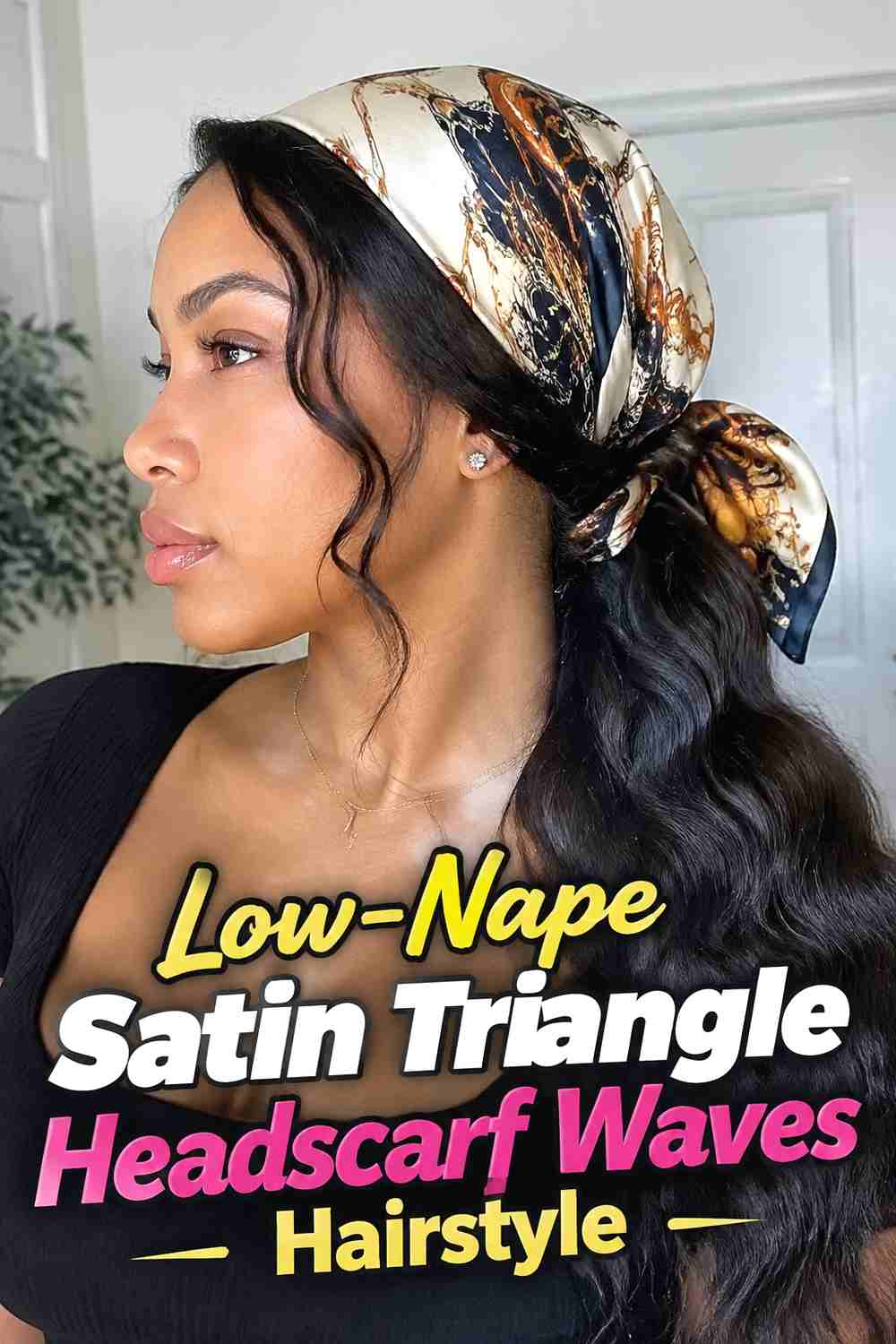
The low-nape version positions the scarf farther back, leaving more of the crown and front hair exposed. The triangle rests over the back of the head and ties close to the nape, where the knot becomes part of the silhouette without covering the upper wave pattern. This placement is especially flattering with gently lifted roots and loose waves that begin around the mid-lengths. It also provides more freedom for a center, side, or off-center part because the scarf does not interfere with the front styling. Keep the fabric smooth across the back of the head rather than bunching it excessively, which can make the scarf look bulky against flowing hair.
Why It Works
Lower placement lets the hairstyle retain more visible crown texture while still providing the color and polish of a satin accessory.
10. Crown Tied Satin Triangle Headscarf Waves Hairstyle
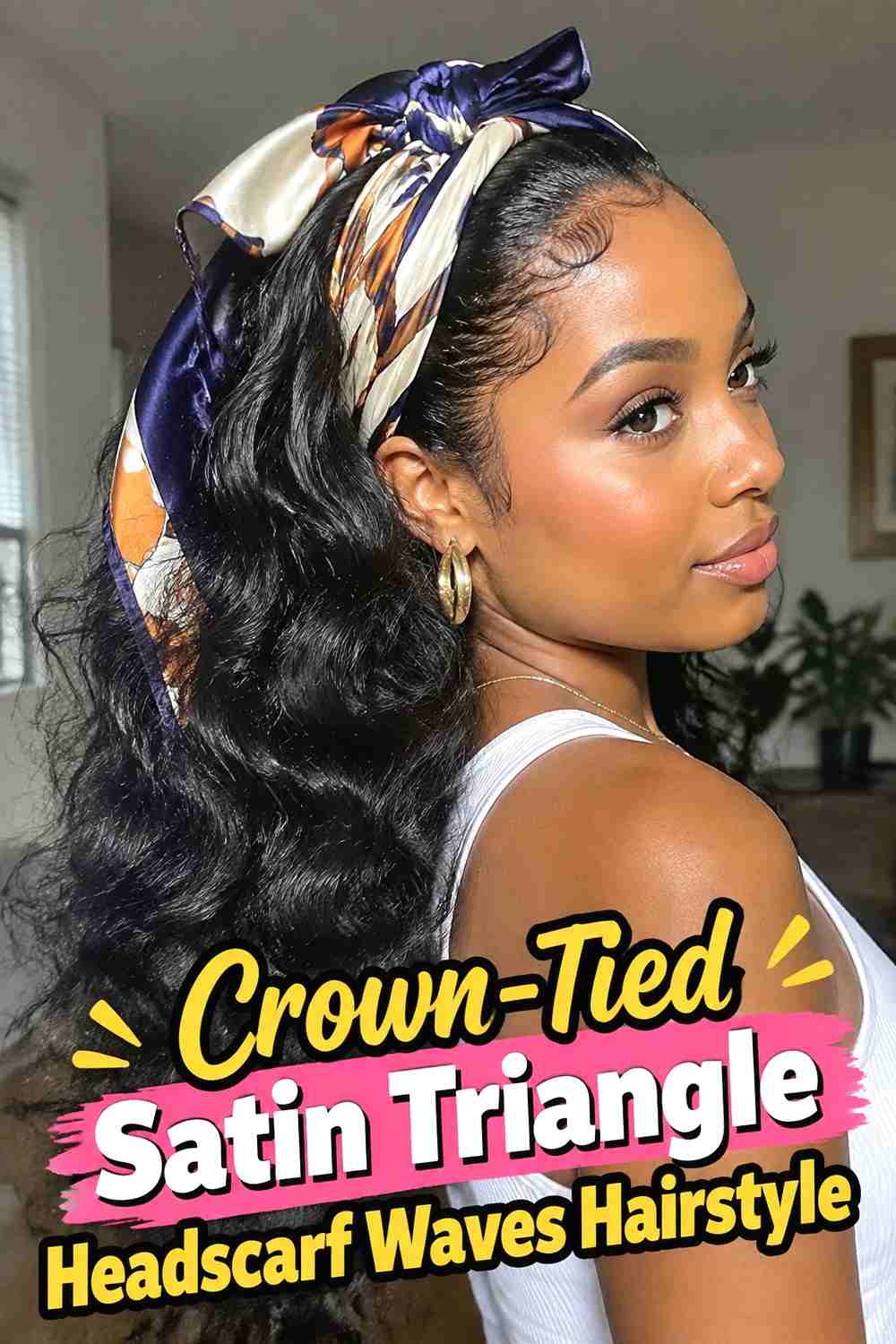
A crown-tied scarf turns the accessory into a stronger visual feature by placing the knot or crossed ends higher on the head. The remaining triangle drapes back while loose waves fall underneath, creating a playful silhouette with more detail at the top. Because the scarf already adds volume, keep the hair directly beneath it relatively controlled and concentrate movement through the mid-lengths and ends. A slightly off-center knot can feel relaxed, while a centered one looks more symmetrical. Choose a compact tie rather than an oversized bow so the scarf enhances the hair instead of overpowering it. Soft waves keep the overall look feminine and balanced.
Best For
This style works particularly well for vacations, festivals, outdoor events, and casual outfits where the scarf is meant to be a noticeable accessory.
11. Silk Knot Satin Triangle Headscarf Waves Hairstyle
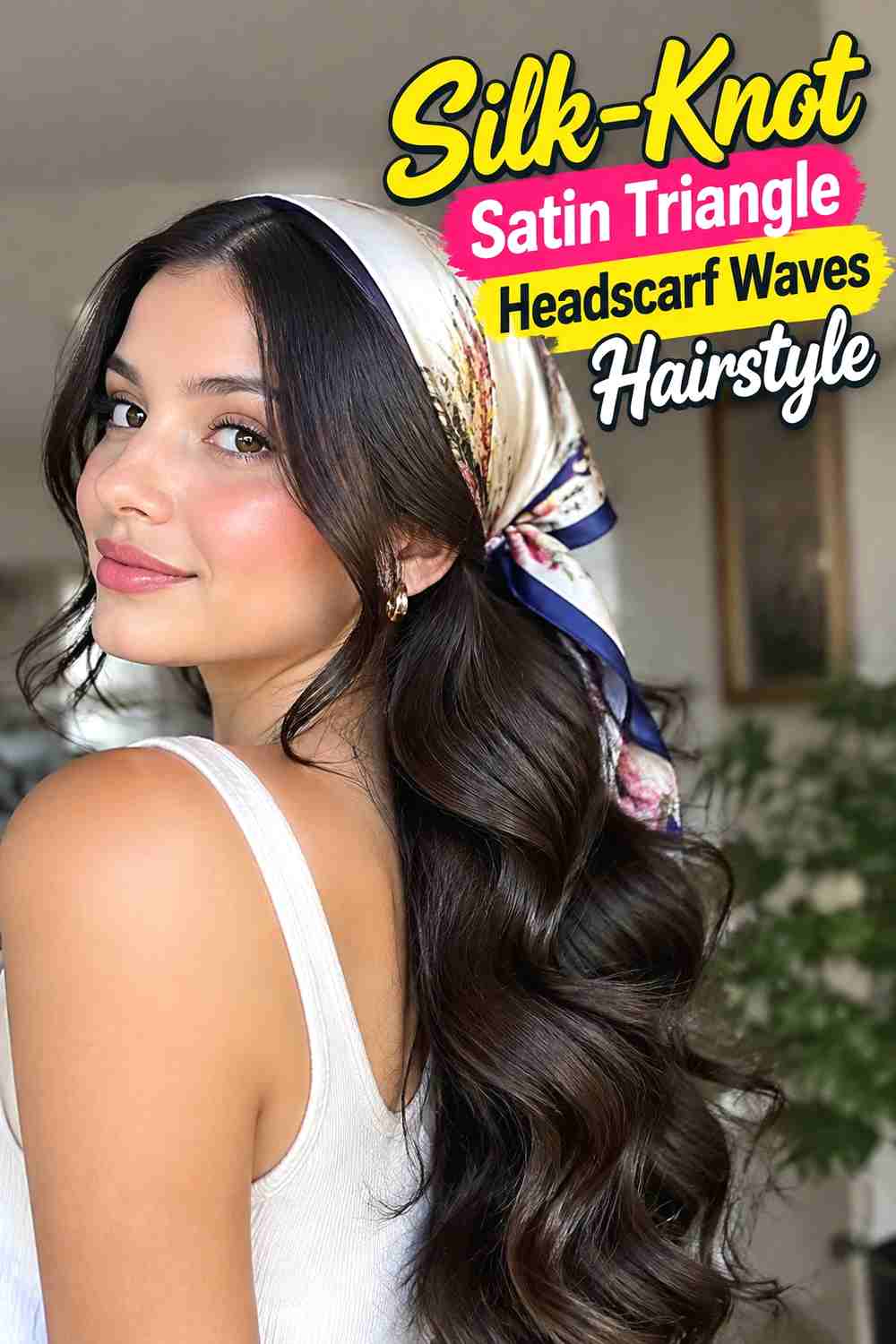
A neat silk-style knot gives the satin headscarf a refined finish while leaving the wavy lengths loose and effortless. Fold the triangle so it sits smoothly across the crown, then tie the ends into a small, structured knot near the nape or slightly to one side. The knot becomes a polished detail without hiding the hair underneath. Pair it with broad waves rather than tight curls to keep the fabric and hair visually balanced. A few loose face-framing sections help soften the scarf edge near the temples. This variation can move easily between casual and dressier settings depending on the scarf print, wave polish, and amount of shine through the lengths.
Pro Tip
Keep the knot compact and tuck the ends neatly so the scarf does not create a bulky shape underneath long hair.
12. Vintage Satin Triangle Headscarf Waves Hairstyle
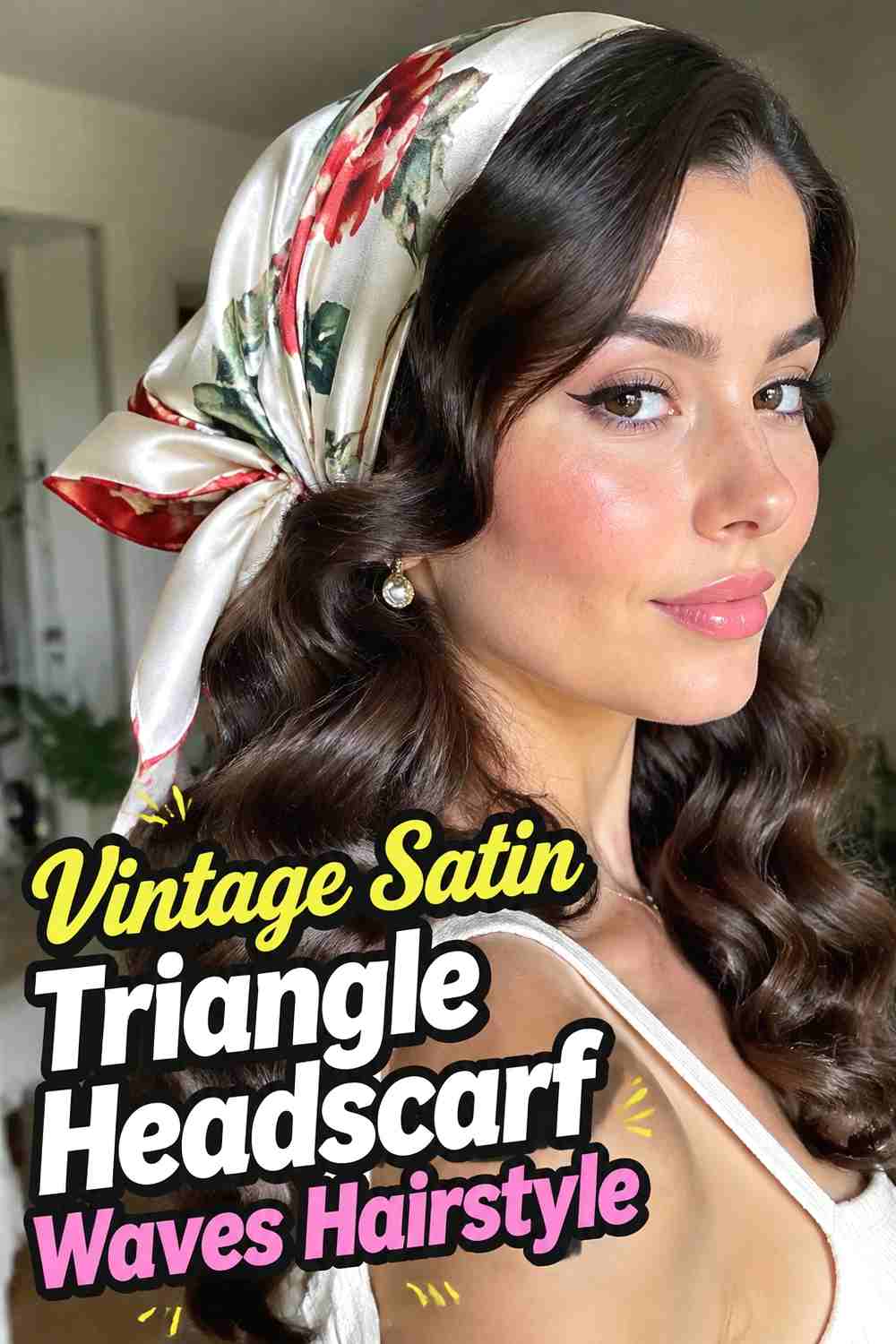
A vintage-inspired interpretation pairs softly sculpted waves with a triangle scarf positioned over the crown and tied neatly beneath the hair. The front can feature a gentle side sweep or smooth rolled bend, while the lower lengths continue into broader, softer waves. The goal is to reference retro scarf styling without creating a costume-like result, so keep the wave pattern touchable and the accessories minimal. A satin scarf with a simple print or solid color can reinforce the nostalgic mood while still looking modern. Avoid making every section perfectly uniform; a little natural movement through the ends keeps the hairstyle believable and easier to wear.
Styling Notes
Concentrate the most polished wave near the front and allow the lower lengths to become progressively softer for a modernized vintage finish.
13. Glossy Satin Triangle Headscarf Waves Hairstyle
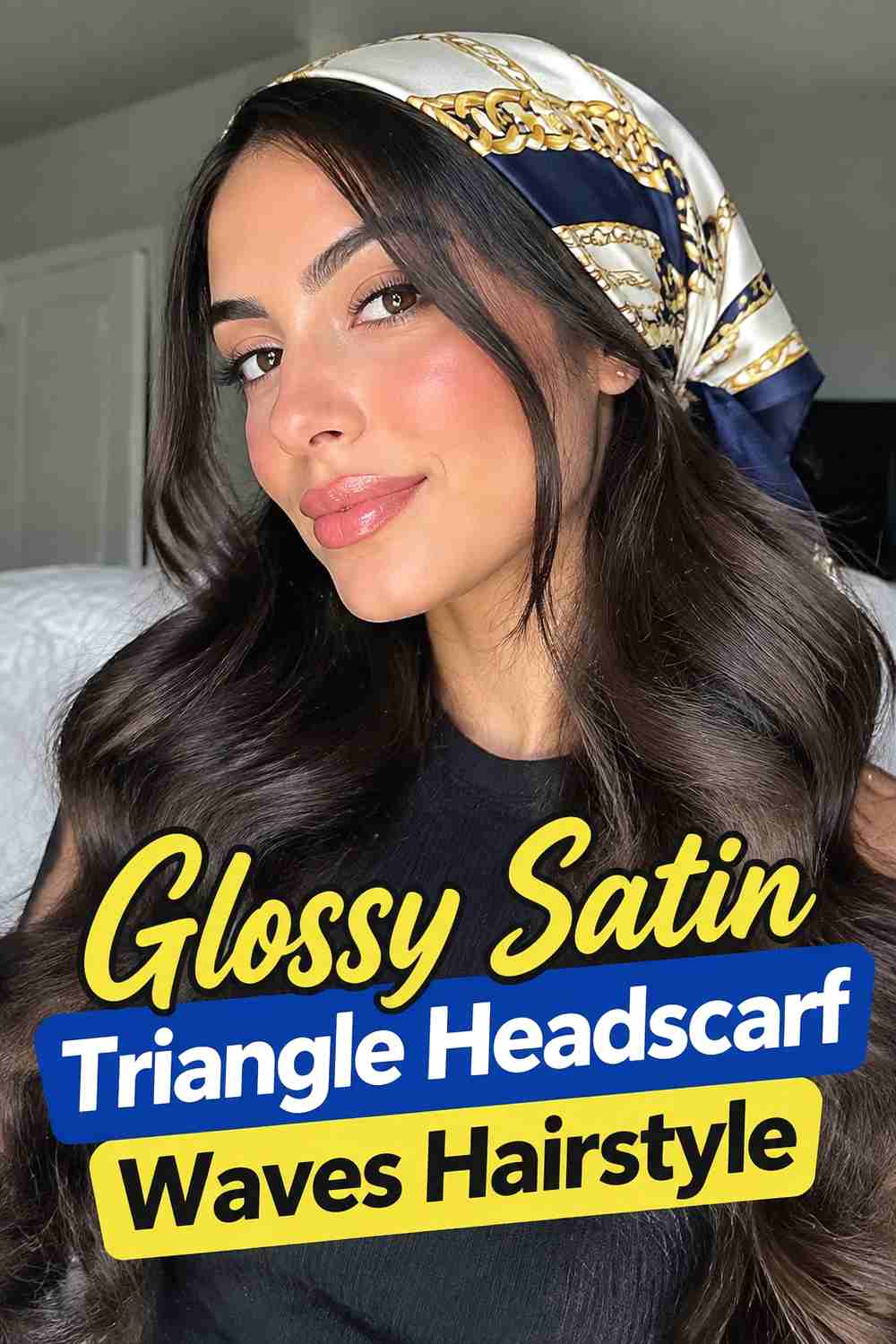
Glossy waves create a luxurious pairing with satin because both surfaces catch light without needing extra decoration. The scarf can sit smoothly over the crown while the hair below falls in broad, reflective bends with visible strand detail. Shine should be concentrated through the mid-lengths and ends rather than heavily applied at the roots, where too much product may reduce volume or make the style look greasy. A clean center or side part can both work as long as a few front sections remain visible. The wave pattern should still move naturally despite the polished finish, with flexible ends and slight variation preventing the hair from appearing molded.
Wear & Maintenance
Use lightweight shine products sparingly and handle the lengths gently after styling so the wave pattern stays smooth without becoming flat.
14. Voluminous Satin Triangle Headscarf Waves Hairstyle
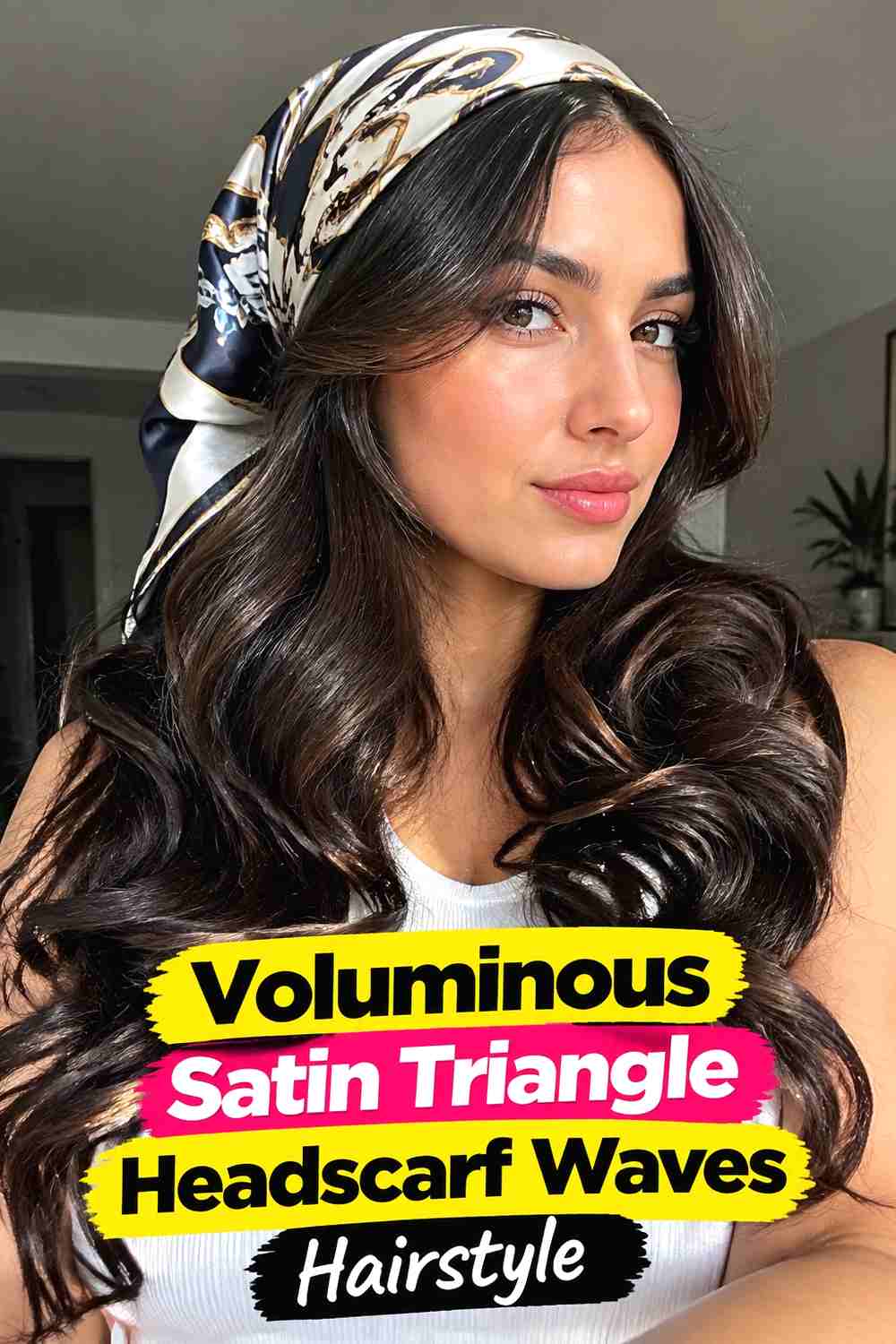
Fuller waves give the satin triangle scarf a glamorous foundation, especially when volume is concentrated through the sides and lower lengths rather than directly beneath the fabric. A little crown lift can remain visible at the front, while broad blowout-style waves create movement through the shoulders and back. Position the scarf securely but avoid pulling it tightly enough to collapse the root volume. Long layers can help distribute the fullness so the hairstyle stays airy instead of becoming triangular or heavy at the bottom. This version works particularly well when you want the scarf to feel dressier and more intentional than a casual bandana-style accessory.
Styling Notes
Build volume before adding the scarf, then gently lift any flattened outer sections with your fingers once the knot is secure.
15. Romantic Tendril Satin Triangle Headscarf Waves Hairstyle
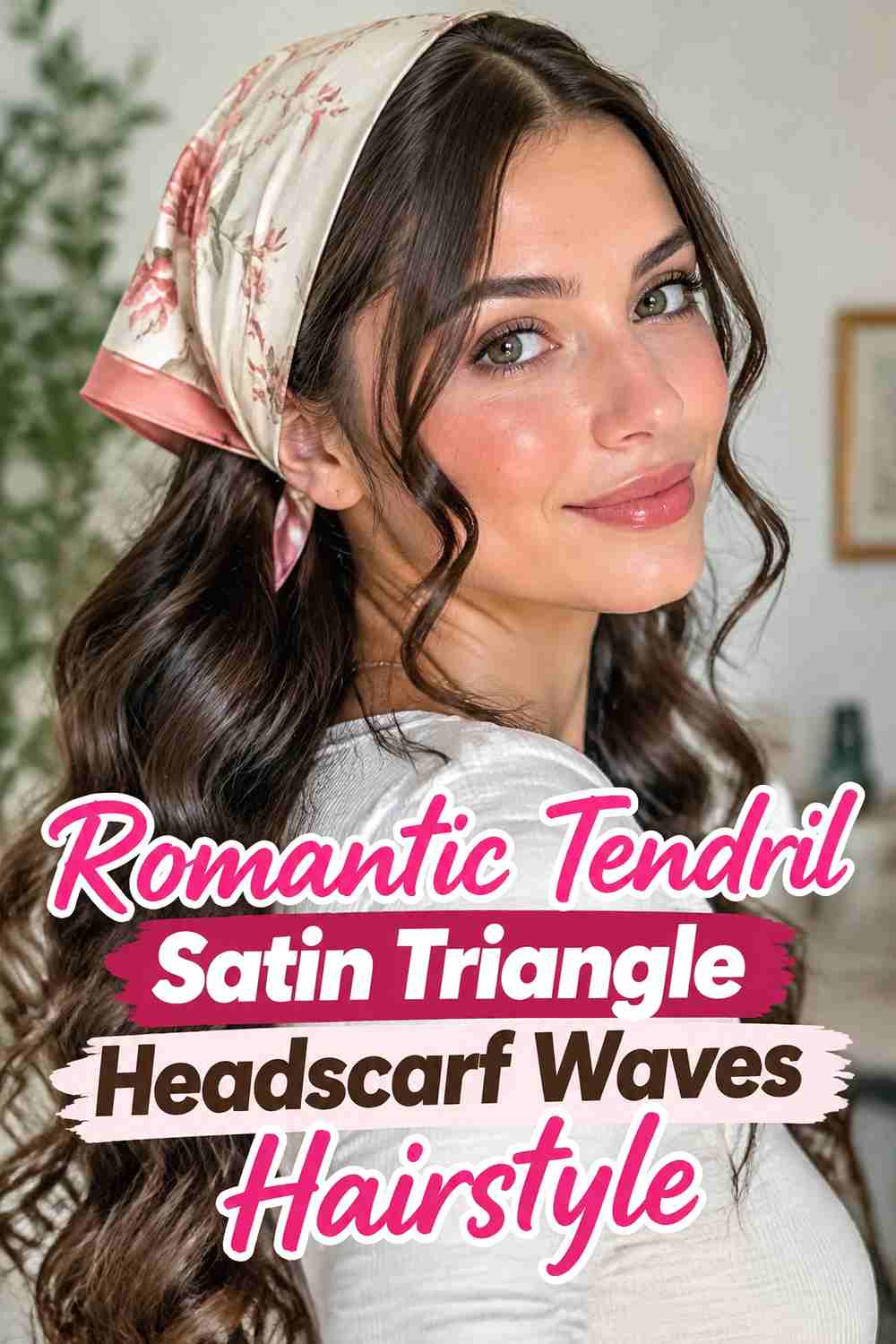
Fine tendrils around the face add a romantic finishing touch to loose waves and a softly tied satin triangle scarf. Instead of leaving large front sections outside the scarf, select only a few narrow pieces around the temples and ears and shape them into relaxed curves. The rest of the hair can fall in flowing waves through the back while the scarf sits smoothly over the crown. This creates a gentle contrast between the clean satin edge and softer face-framing strands. Keep the tendrils flexible rather than tightly curled, and make sure the main wave pattern still feels connected. A low knot at the nape helps preserve the romantic, understated silhouette.
Best For
This softer variation works beautifully for dates, garden parties, vacation dinners, bridal events, or any occasion where a relaxed feminine finish feels appropriate.
How to Choose the Right Look
Start with scarf placement. A classic crown position gives the accessory a traditional triangle-scarf shape, while low-nape placement exposes more of the roots and part. Crown-tied and half-tied versions make the scarf more noticeable, so they work well when the fabric itself is an important part of the outfit.
Next, consider your wave pattern. Smooth S-waves and glossy bends feel more polished, beachy waves look relaxed, and fuller blowout waves create more drama. Naturally wavy hair may need only light definition, while straighter textures may require heat styling or another wave-setting method.
Think about what you want around the face. Center and side parts keep the front relatively clean, while face-framing layers and tendrils create more softness. If your scarf tends to slip, discreet pins can help without changing its appearance.
Finally, balance volume carefully. A scarf naturally compresses some root area, so concentrate most fullness in the visible crown, sides, and lower lengths rather than underneath the fabric.
Final Thoughts
Satin triangle headscarves and waves work together because each adds a different kind of movement: the scarf creates a clean graphic shape, while the hair supplies softness and flow.
Choose your scarf position first, then build the wave pattern, parting, and face-framing detail around it. A simple change in knot placement or texture can make the same accessory feel casual, romantic, vintage, or polished.
FAQs
1. How should a satin triangle headscarf be worn with wavy hair?
It can sit over the crown and tie at the nape, rest farther back to expose the roots, or be tied higher as a more decorative feature. Leave enough hair visible to show the wave pattern.
2. How do you stop a satin headscarf from slipping?
Discreet bobby pins or small hidden clips can help anchor slippery satin. Position them beneath the scarf where they will not disturb the visible fabric.
3. Which waves work best with a triangle headscarf?
Soft S-waves, beachy bends, natural waves, and broad blowout waves all work. The best texture depends on whether you want the finished look to feel polished or relaxed.
4. Can short face-framing pieces stay outside the scarf?
Yes. Leaving selected layers or tendrils around the face can soften the scarf line and make the hairstyle feel more relaxed.
5. Can satin triangle headscarves work for dressier hairstyles?
Yes. Choose a polished scarf, clean knot, controlled waves, and refined placement for dinners, parties, vacations, or romantic events.
Save your favorite satin triangle headscarf wave ideas, share them for inspiration, and explore more scarf hairstyles for an easy way to refresh loose, flowing hair.