14 Tanavoho Braids Updo Hairstyle Ideas
Crown-like braids, rounded textured ends, and creative pinning give these Tanavoho-inspired updos an expressive silhouette while preserving the style’s recognizable character. Tanavoho is a traditional Malagasy hairstyle associated with Sakalava women of Madagascar. Contemporary descriptions commonly identify its distinctive crown-like arrangement, shorter braids, and full rounded or puffed ends. The ideas below are contemporary updo adaptations rather than a list of separate traditional Tanavoho styles. They keep recognizable elements such as structured braiding and rounded ends while experimenting with lifted, pinned, asymmetric, and halo-like arrangements. Because the puffed ends are central to the visual character, the strongest adaptations preserve their shape instead of hiding every end inside a conventional bun.
Quick List
- Crown Lifted Tanavoho Braids Updo Hairstyle
- High Cluster Tanavoho Braids Updo Hairstyle
- Asymmetrical Side Pinned Tanavoho Braids Updo Hairstyle
- Double Crown Tanavoho Braids Updo Hairstyle
- Half Up Tanavoho Braids Crown Hairstyle
- Twisted Halo Tanavoho Braids Updo Hairstyle
- Top Knot Inspired Tanavoho Braids Updo Hairstyle
- Low Crown Tanavoho Braids Updo Hairstyle
- Sculpted Bubble Tanavoho Braids Updo Hairstyle
- Side Crown Tanavoho Braids Updo Hairstyle
- Basket Inspired Tanavoho Braids Updo Hairstyle
- Rounded Puff Tanavoho Braids Updo Hairstyle
- Offset Crown Tanavoho Braids Updo Hairstyle
- Minimal Pin Up Tanavoho Braids Updo Hairstyle
1. Crown Lifted Tanavoho Braids Updo Hairstyle
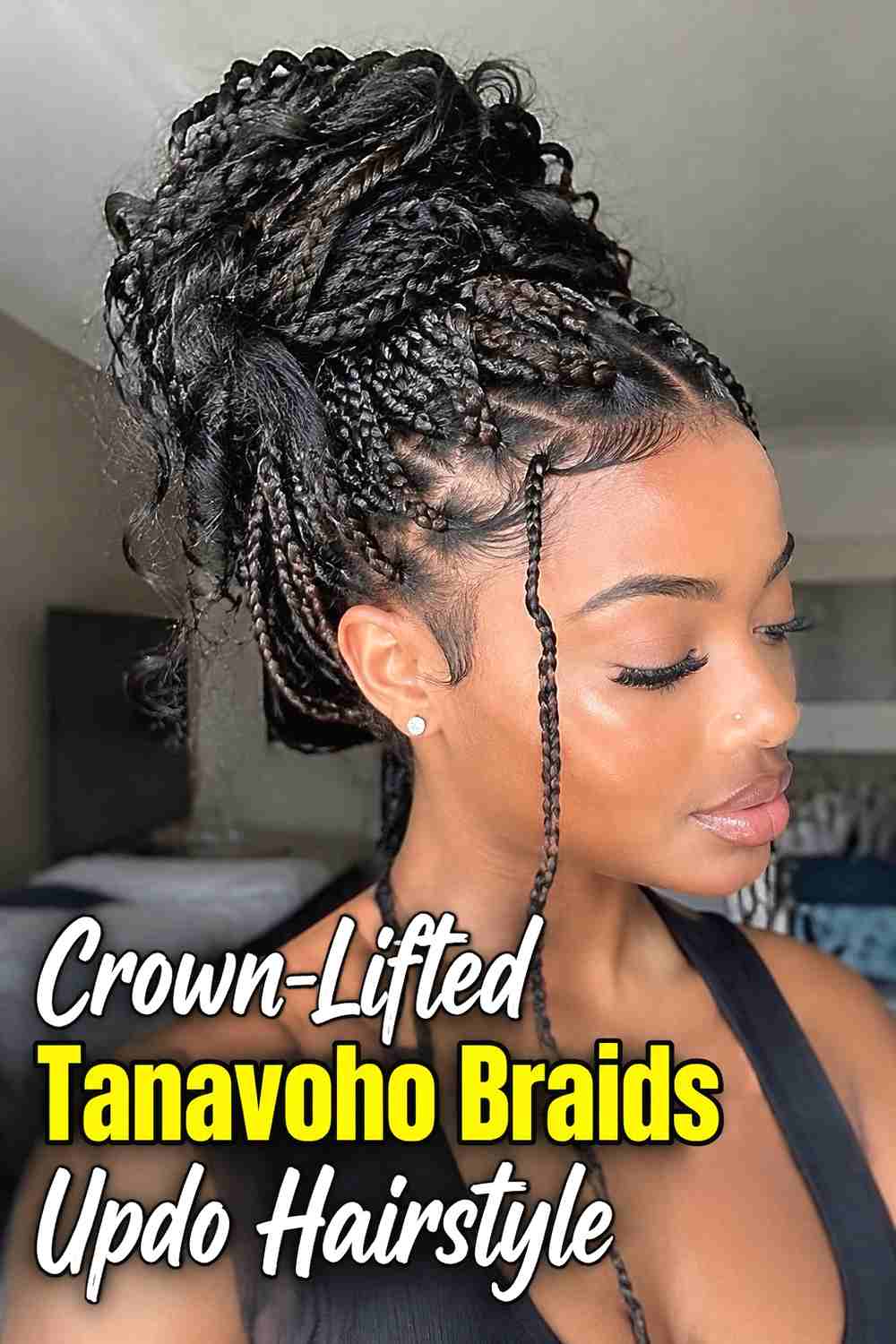
The crown-lifted version keeps the rounded Tanavoho ends clearly visible while moving selected braids upward around the top of the head. Rather than compressing everything into a conventional bun, the braids are gently directed toward the crown and anchored so the puffed ends form a soft ring of volume. A few lower sections can remain closer to the perimeter to preserve the recognizable rounded silhouette. This approach creates height while keeping the hairstyle visually connected to the traditional crown-like form associated with Tanavoho. Avoid pinning the textured ends too tightly, since flattening them removes much of the dimensional quality that makes the style distinctive.
Styling Notes
Use hidden pins or soft ties underneath the visible sections and position them between braids rather than directly through the rounded ends.
2. High Cluster Tanavoho Braids Updo Hairstyle
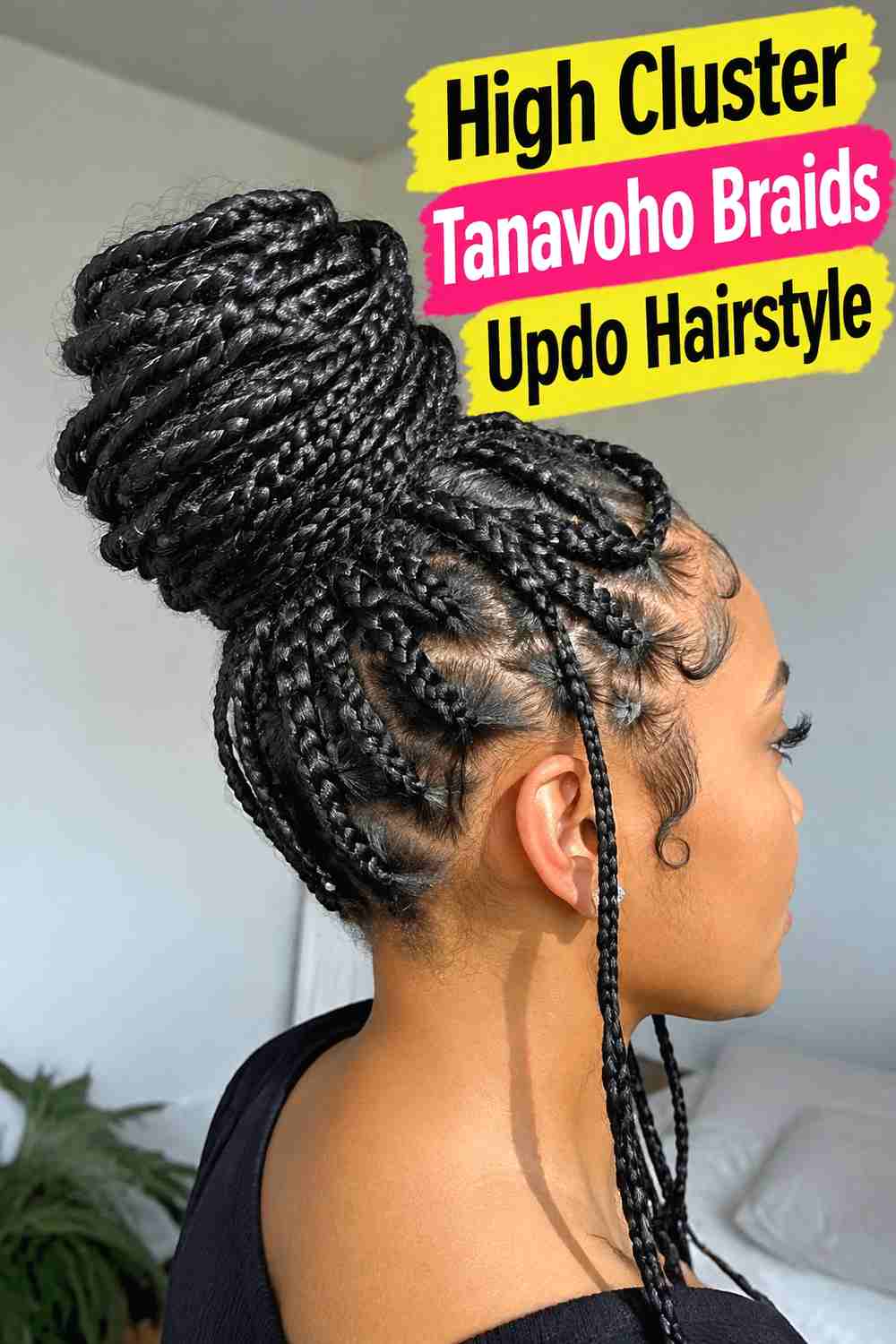
A high cluster gathers several Tanavoho braids toward the upper back of the head while allowing the rounded ends to sit as individual puffs instead of blending into one solid bun. The result is sculptural and full, with visible separation between each textured section. Keeping a few braids lower near the temples can balance the height and maintain a recognizable frame around the face. This contemporary arrangement is especially useful when you want the braid ends to become the main feature of the updo. Build the cluster gradually rather than pulling all the sections into one tight base, which can place unnecessary tension on the roots and compress the characteristic fullness.
Wear & Maintenance
Support the cluster at several points so the weight is distributed. If one central tie carries everything, the updo may feel tighter than necessary.
3. Asymmetrical Side Pinned Tanavoho Braids Updo Hairstyle
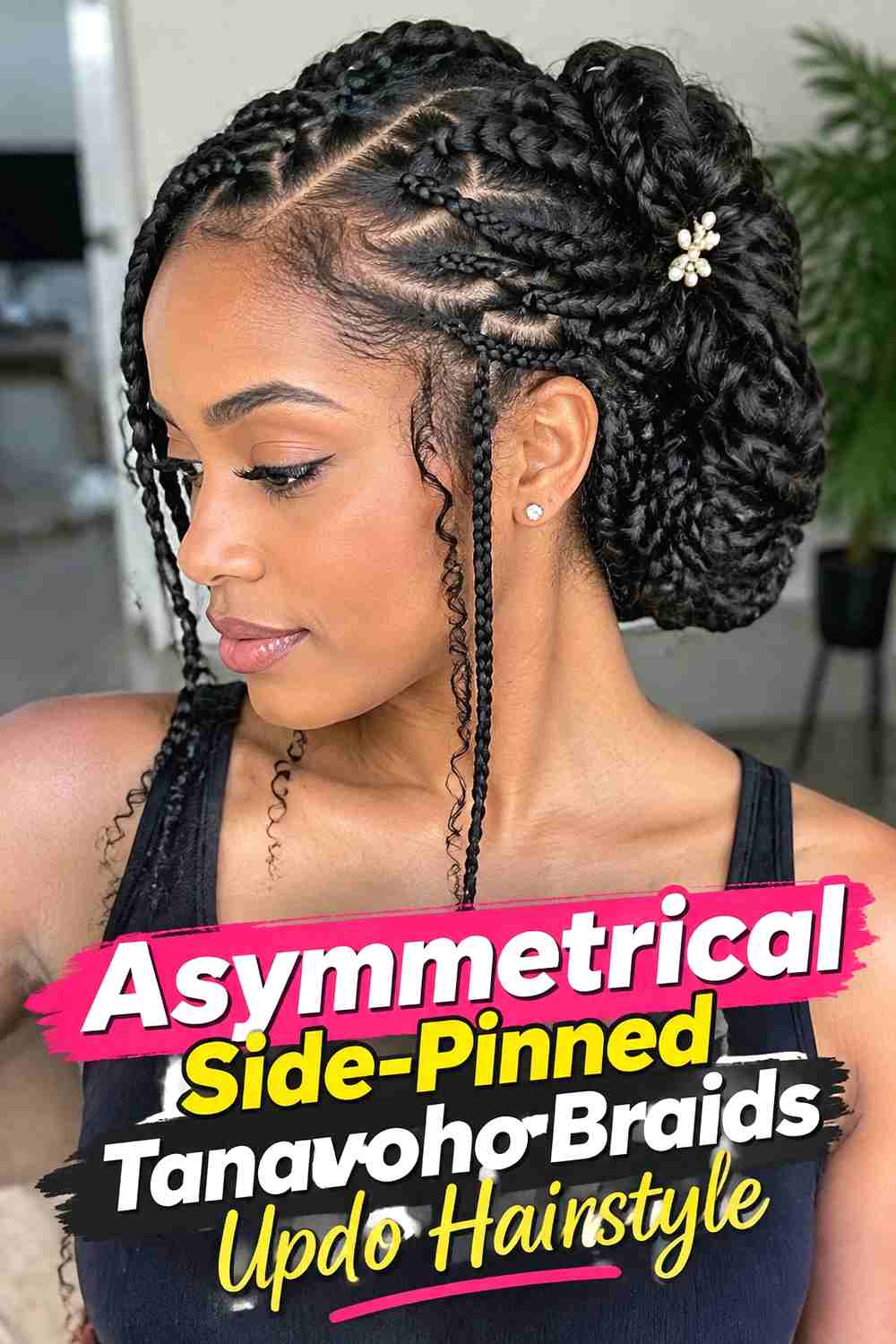
An asymmetrical side-pinned arrangement shifts most of the visible volume toward one upper side of the head. Several braids are lifted diagonally and secured so their rounded ends create a soft cluster above or behind one ear, while the opposite side remains closer to the head. The uneven placement gives the hairstyle a strong profile without changing the individual Tanavoho braid construction. It also allows every puffed end to remain visible instead of being hidden inside a bun. This style works best when the side cluster is intentionally balanced rather than simply pushed off-center. Leave enough space between the rounded ends for their separate shapes to remain recognizable.
Pro Tip
Anchor the lowest braid first, then stack the remaining sections upward. Building from the bottom creates more control over the final asymmetrical silhouette.
4. Double Crown Tanavoho Braids Updo Hairstyle
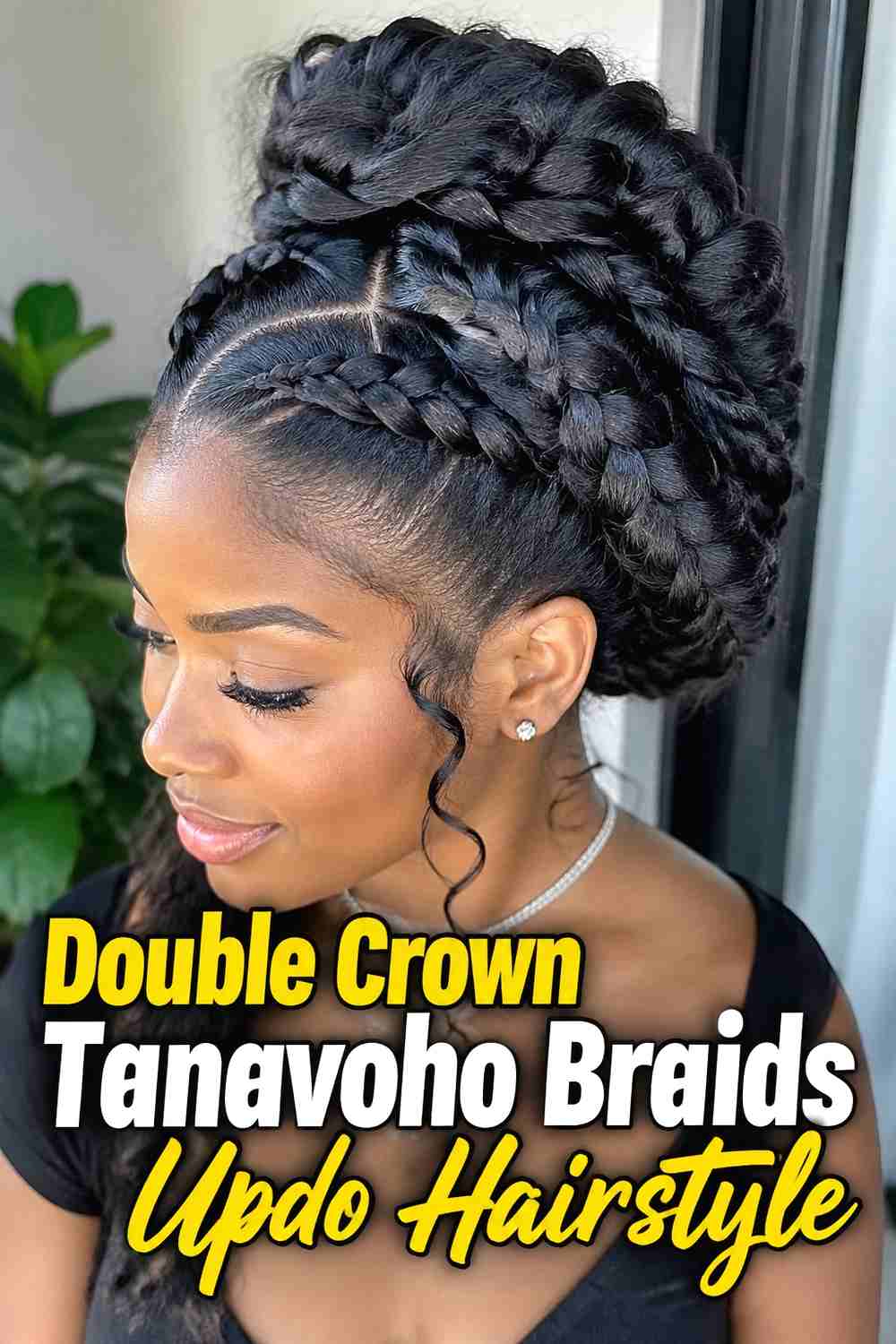
The double crown creates two levels of rounded volume by dividing the braids into an upper and lower arrangement. The upper sections are pinned into a soft ring near the crown, while the lower braids form a second curved row closer to the back of the head. This layered placement emphasizes the crown-like quality associated with Tanavoho while giving the updo greater height and dimension. Keep both rows airy enough that individual rounded ends are still easy to distinguish. The finished style should look sculptural rather than packed tightly together. This works particularly well when the braids are consistent in length and their puffed ends have similar fullness.
Why It Works
Separating the volume into two levels gives the hairstyle height without forcing every braid into one dense cluster at the top.
5. Half Up Tanavoho Braids Crown Hairstyle
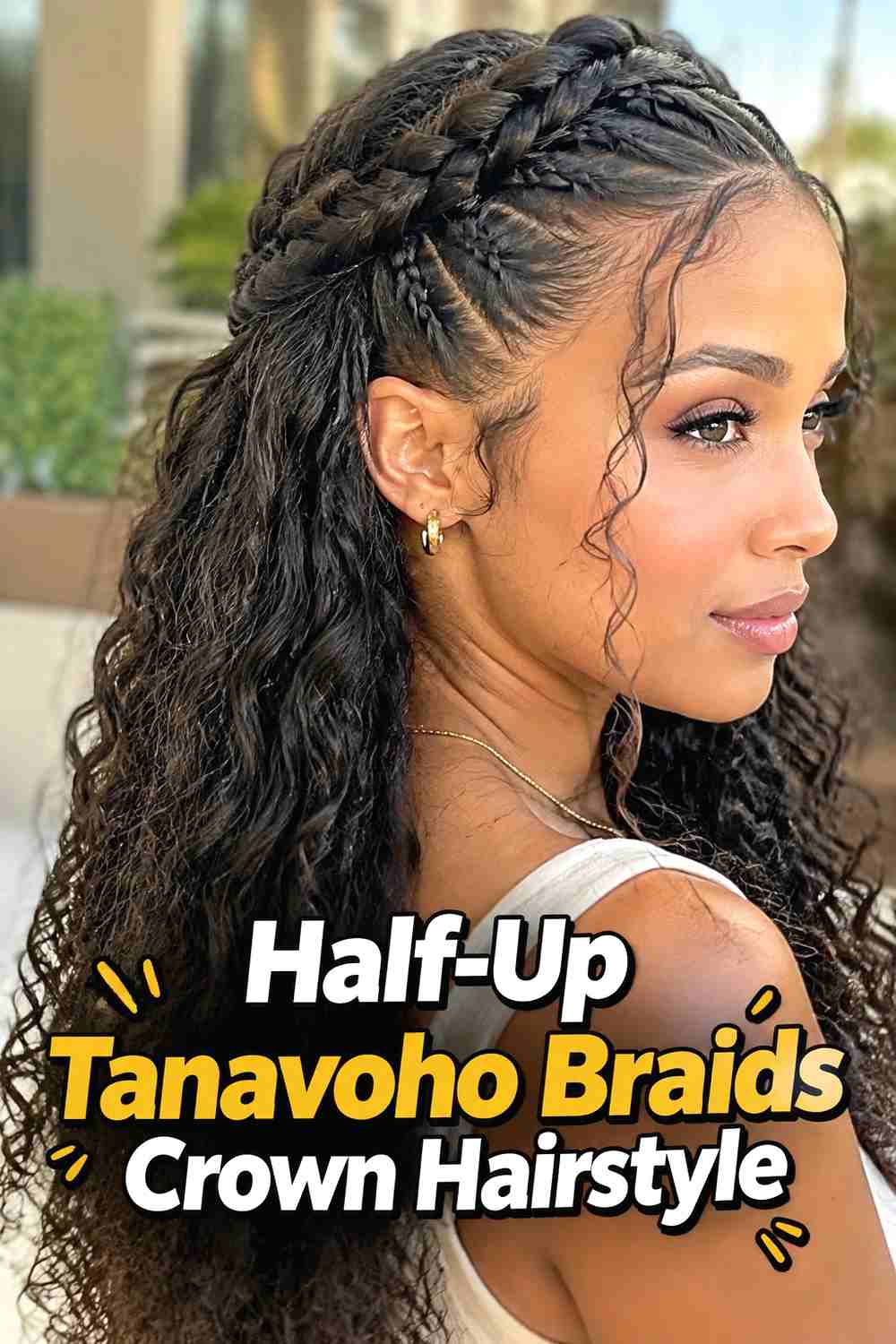
A half-up arrangement keeps part of the Tanavoho silhouette loose while lifting selected upper braids into a crown-like cluster. Take the sections around the temples and upper back, direct them toward the crown, and secure them so their rounded ends sit above the remaining braids. The lower sections continue to frame the sides and back, which makes the hairstyle feel less formal than a completely pinned updo. This approach is especially useful if you want noticeable height while preserving the original perimeter of the style. Keep the lifted sections softly arranged and avoid forcing the remaining braids flat against the neck, since their visible rounded ends are important to the overall balance.
Best For
Choose this variation when you want an updo effect without lifting every braid away from its original position.
6. Twisted Halo Tanavoho Braids Updo Hairstyle
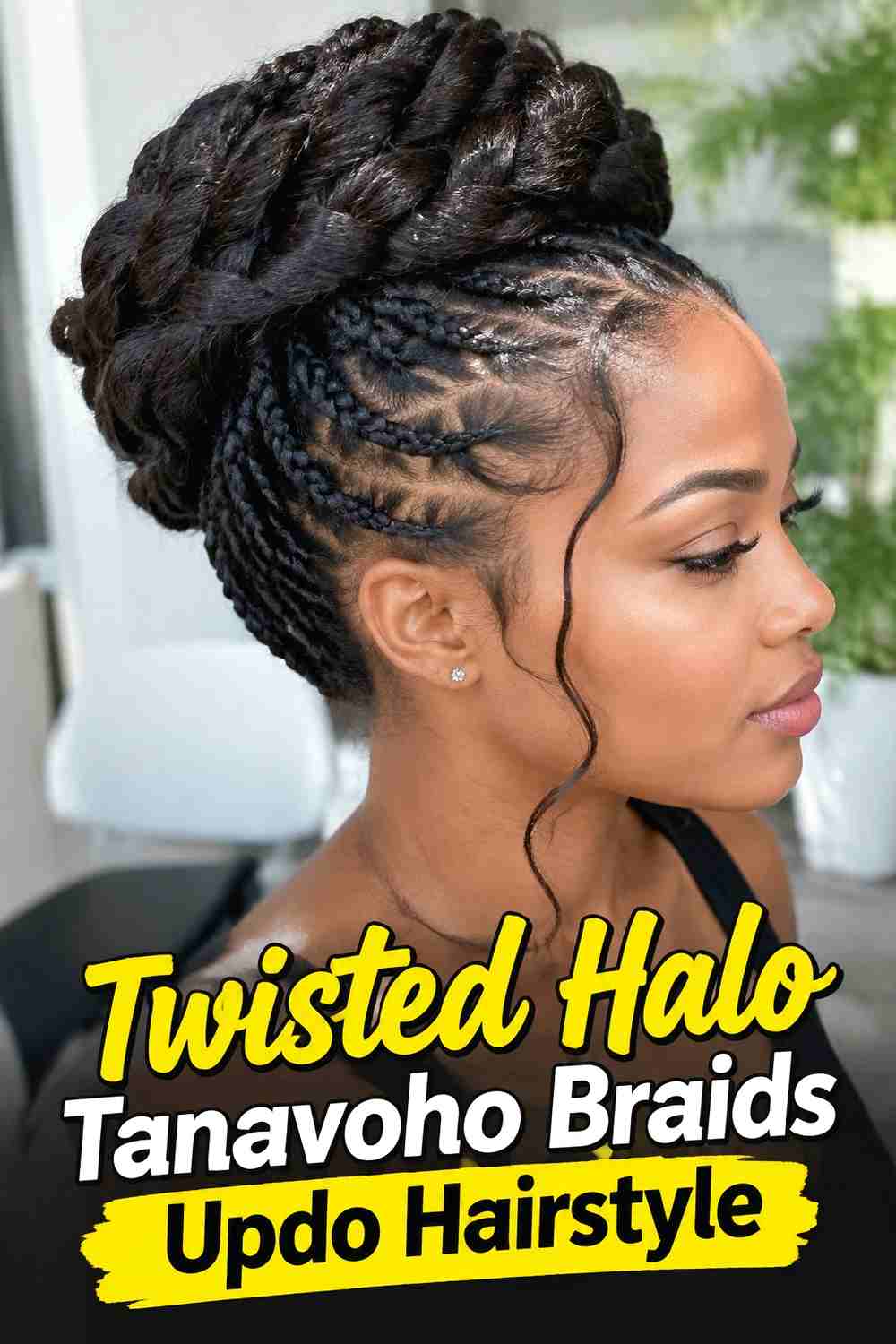
A twisted halo uses pairs or small groups of Tanavoho braids to create a circular path around the head. Instead of braiding them together again, gently cross or twist the completed sections around one another and pin them along the crown, keeping their rounded ends positioned where they can remain visible. This produces a soft halo effect that references the style’s existing crown-like silhouette without turning it into a conventional braided crown. The most important detail is preserving the dimensional puffed ends rather than tucking them completely underneath. Work with loose placement and hidden anchoring so the arrangement feels light and does not pull individual braids against the scalp.
Styling Notes
Cross completed sections gently instead of retwisting them tightly from the roots. The updo should reposition the braids without changing their original tension.
7. Top Knot Inspired Tanavoho Braids Updo Hairstyle
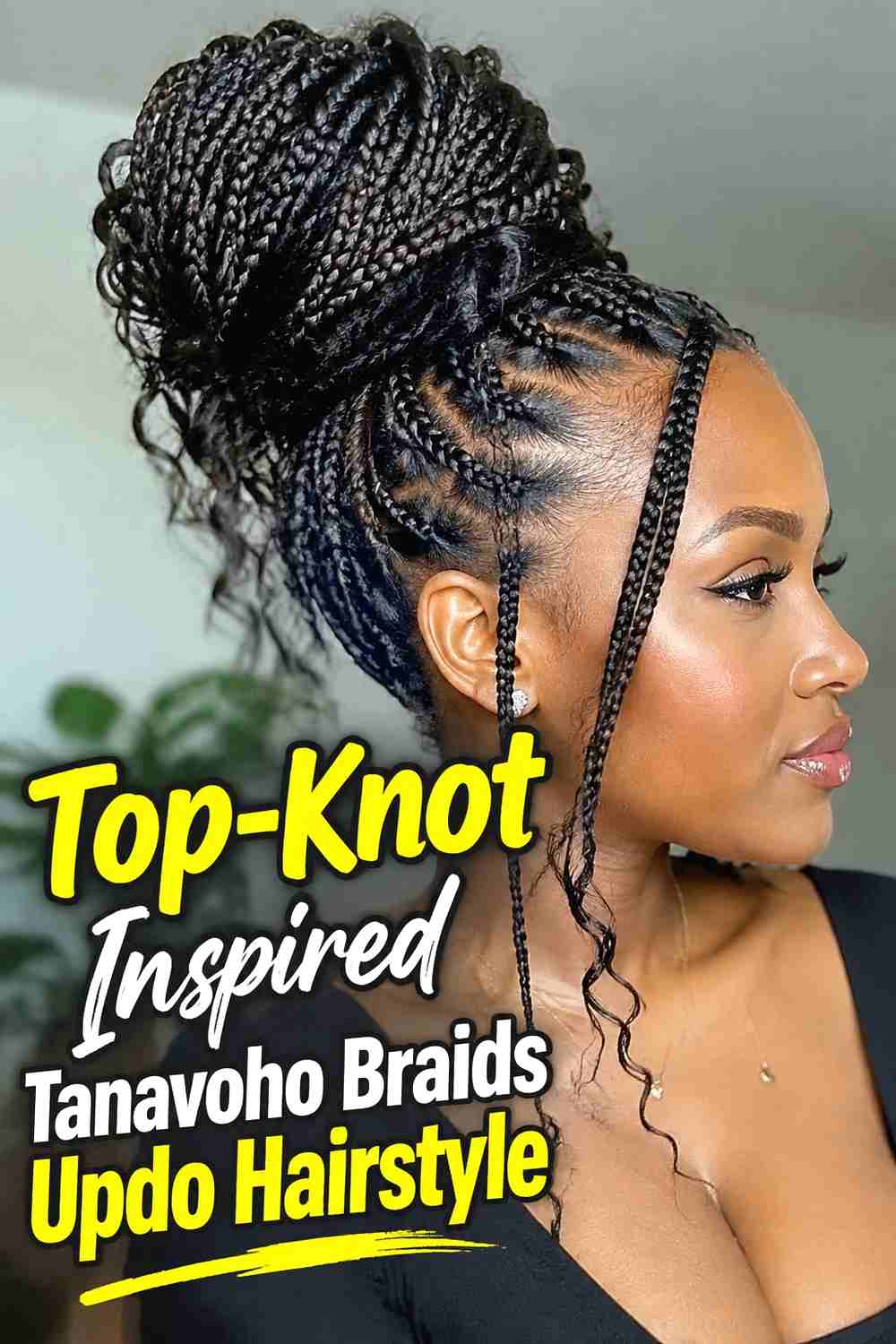
This top-knot-inspired variation gathers the braids upward but keeps the Tanavoho ends exposed as a rounded cluster rather than wrapping them into a smooth knot. Direct the braids toward the crown and secure their lengths underneath, allowing the puffed ends to spread outward in a compact burst of texture. A few front sections can sit slightly lower to soften the transition between the scalp and elevated cluster. The result has the vertical lift of a top knot but preserves the individual rounded ends that distinguish the hairstyle. Keep the base broad enough to distribute weight comfortably; an excessively narrow attachment point can create unnecessary root tension.
Wear & Maintenance
Use several hidden anchors around the crown instead of one very tight elastic. This can help distribute the lifted sections more evenly.
8. Low Crown Tanavoho Braids Updo Hairstyle
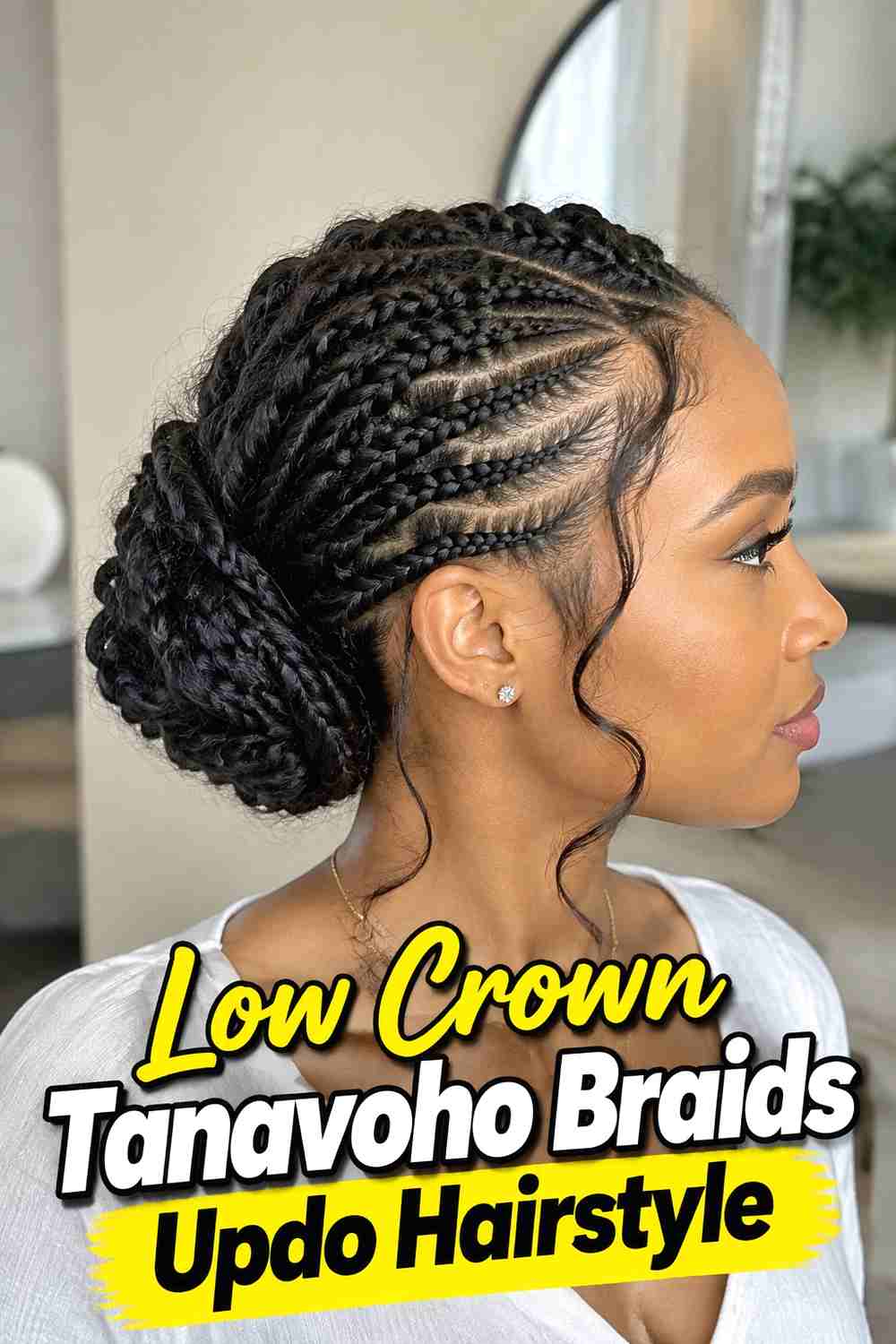
A low crown keeps the updo close to the back of the head, making it a useful alternative to higher arrangements. The braids are directed backward and gently pinned in an arc from one side to the other, while their rounded ends create a textured band above the nape. Because the volume sits lower, the hairstyle feels grounded and can be easier to balance than a tall cluster. Keep some space between individual puffed ends so the updo maintains its characteristic texture instead of looking like a single fuzzy roll. This placement can also work well when you want the hairstyle visible from the back without adding significant height at the crown.
Best For
Choose a low crown if you prefer a compact profile or want an arrangement that stays comfortably away from the very top of the head.
9. Sculpted Bubble Tanavoho Braids Updo Hairstyle
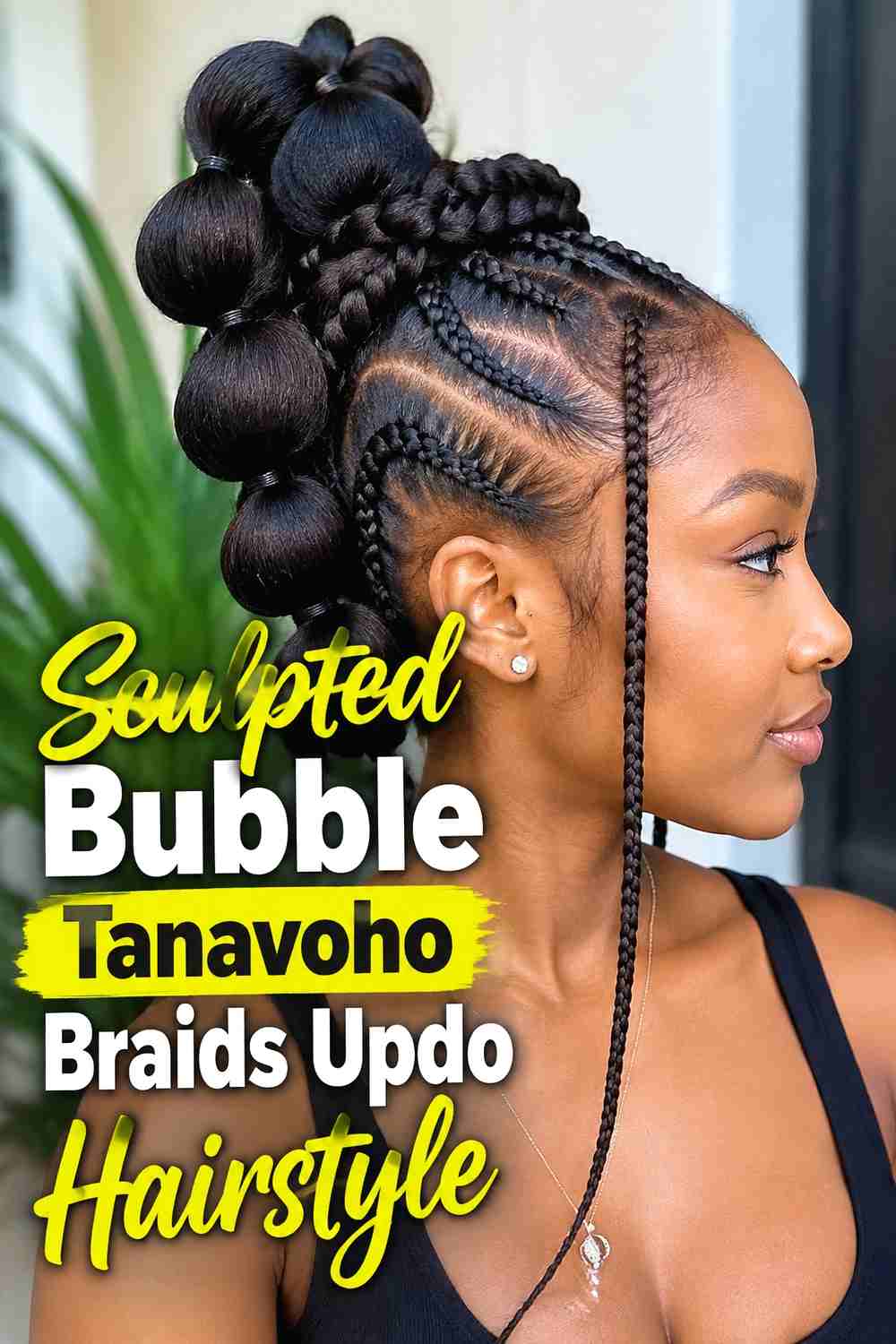
The sculpted bubble version emphasizes the rounded end shapes by arranging them into a deliberate sequence of visible puffs across the upper back of the head. Individual braids are pinned at different heights so their ends form a rhythmic pattern rather than one uniform row. Contemporary descriptions of Tanavoho frequently highlight rounded, bubble-like ends, making those shapes the focal point here instead of treating them as something to hide. Keep the arrangement balanced by alternating slightly higher and lower placements rather than stacking every puff directly together. The result should feel dimensional, playful, and clearly structured while still respecting the recognizable visual language of the hairstyle.
Pro Tip
Arrange the largest-looking puffs first, then use smaller ones to fill visual gaps instead of compressing the whole cluster into a fixed outline.
10. Side Crown Tanavoho Braids Updo Hairstyle
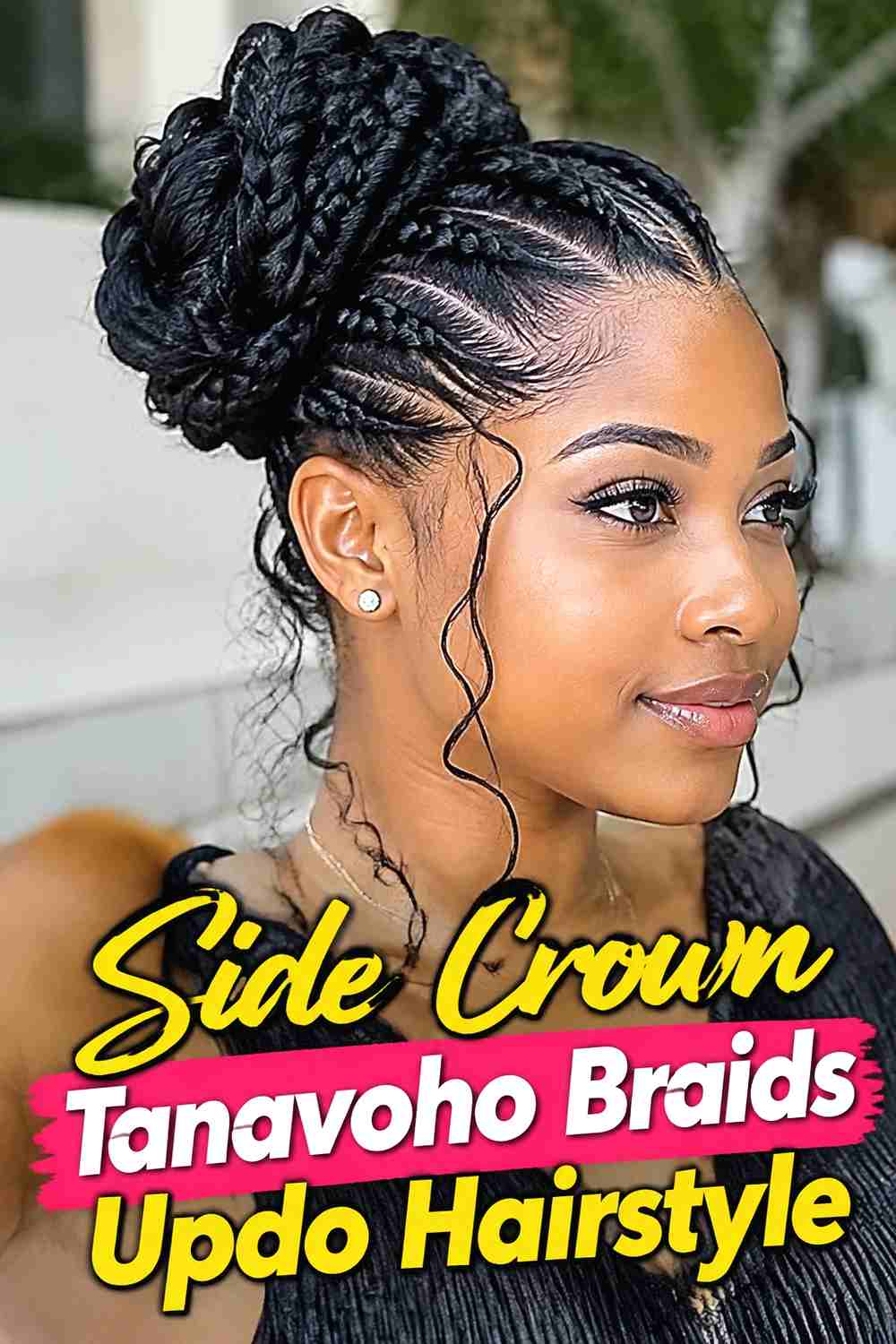
A side crown directs the braids in a curved line from one temple toward the opposite back section, creating a diagonal crown rather than a centered one. The rounded ends can gather near one side of the head, with a few positioned along the curve to make the direction of the updo easy to see. This creates asymmetry while preserving the braid-and-puff combination associated with Tanavoho. The style works especially well when the front remains relatively simple so the diagonal arrangement is not competing with extra accessories. Keep the braids comfortably placed and use hidden pins at several points along the curve rather than forcing all the tension toward one side.
Why It Works
The diagonal line creates movement around the head while keeping the distinctive rounded braid ends visible as part of the silhouette.
11. Basket Inspired Tanavoho Braids Updo Hairstyle
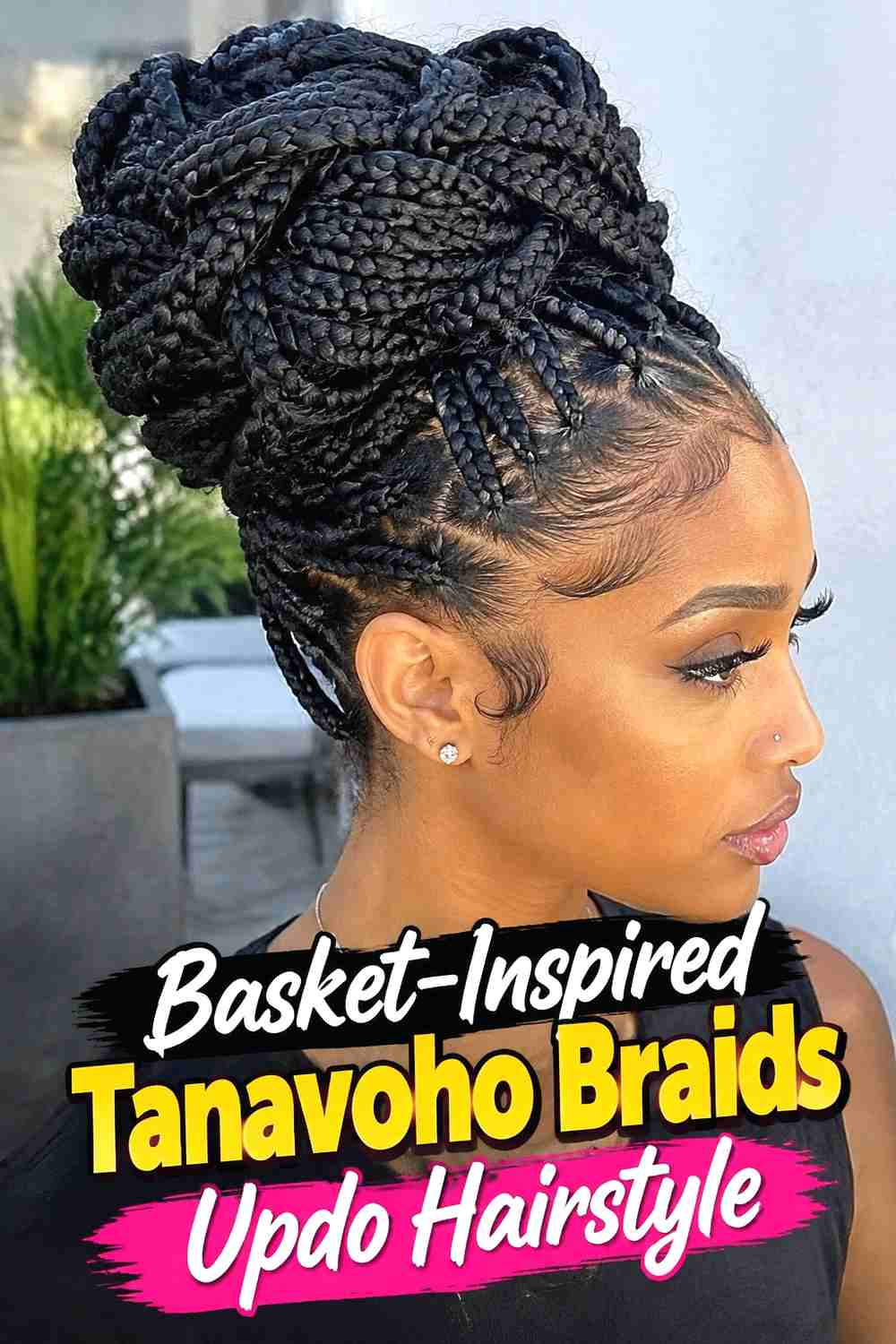
A basket-inspired updo arranges the finished braids in overlapping curved sections across the back of the head before allowing the rounded ends to remain visible around the perimeter. Modern coverage of Tanavoho notes basket-like and bubble-oriented variations, making this a natural direction for a contemporary pinned interpretation. Instead of weaving the braids tightly into a new pattern, cross them loosely enough that their original structure remains clear. The result should suggest layered woven movement without obscuring the individual braids. Keep the puffed ends along the outer edges or upper portion of the arrangement so they remain visually connected to the underlying Tanavoho form.
Styling Notes
Overlap sections rather than pulling them through one another repeatedly. Minimal manipulation helps preserve the texture and avoids unnecessary tension.
12. Rounded Puff Tanavoho Braids Updo Hairstyle
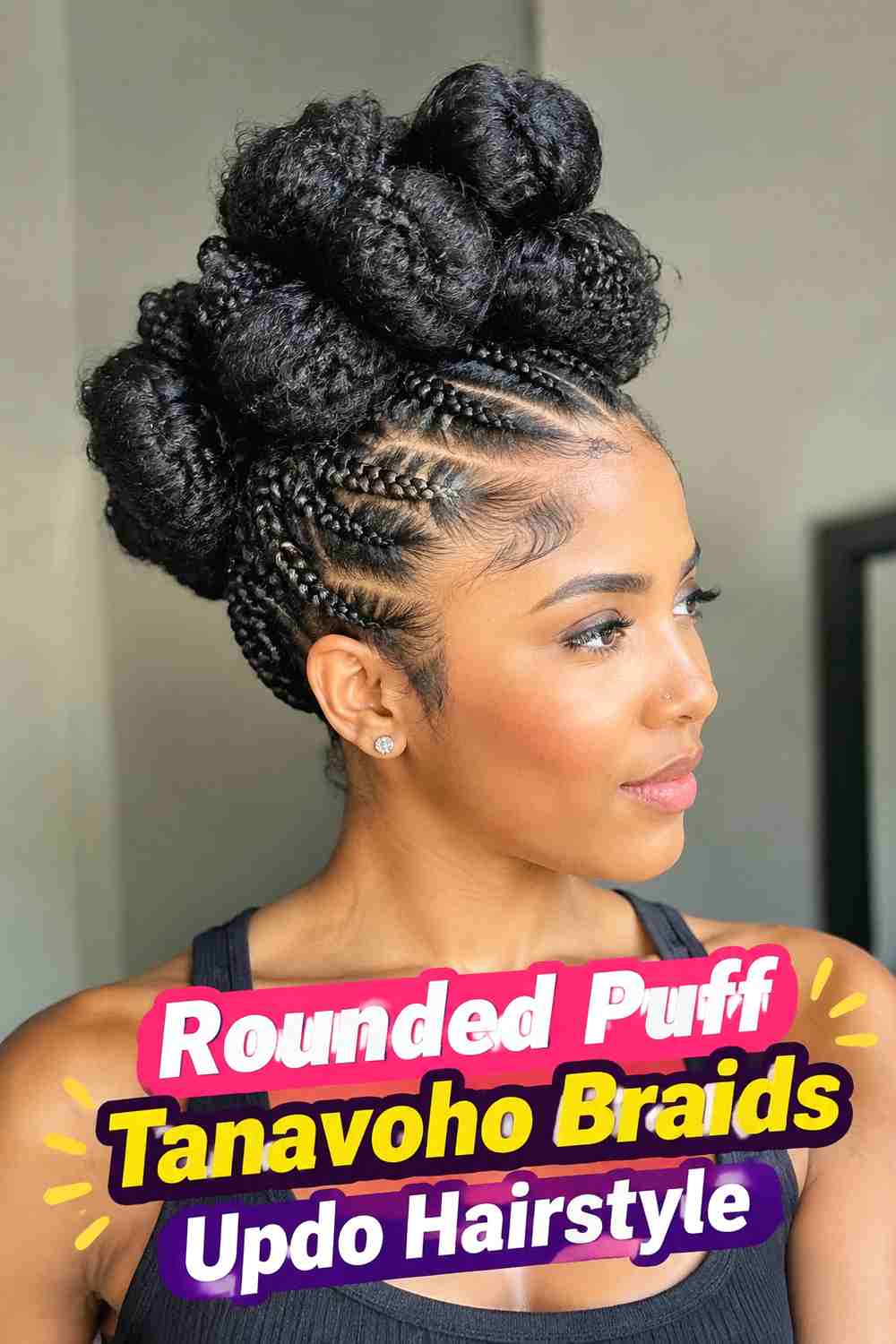
The rounded puff updo places the distinctive ends front and center by positioning them into one broad, airy shape near the crown. Each braid is lifted separately, with the braided length tucked discreetly underneath while the fuller end remains visible. The arrangement can look almost cloud-like, but it should retain enough separation that you can still see several individual rounded forms. This approach is inspired by the characteristic voluminous ends repeatedly associated with Tanavoho in contemporary descriptions and tutorials. Keep the cluster soft instead of tightly compressed and avoid excessive additional accessories, since the textured puff formation already provides a strong focal point.
Best For
This works well when you want maximum visible volume while keeping the overall updo concentrated near the crown.
13. Offset Crown Tanavoho Braids Updo Hairstyle
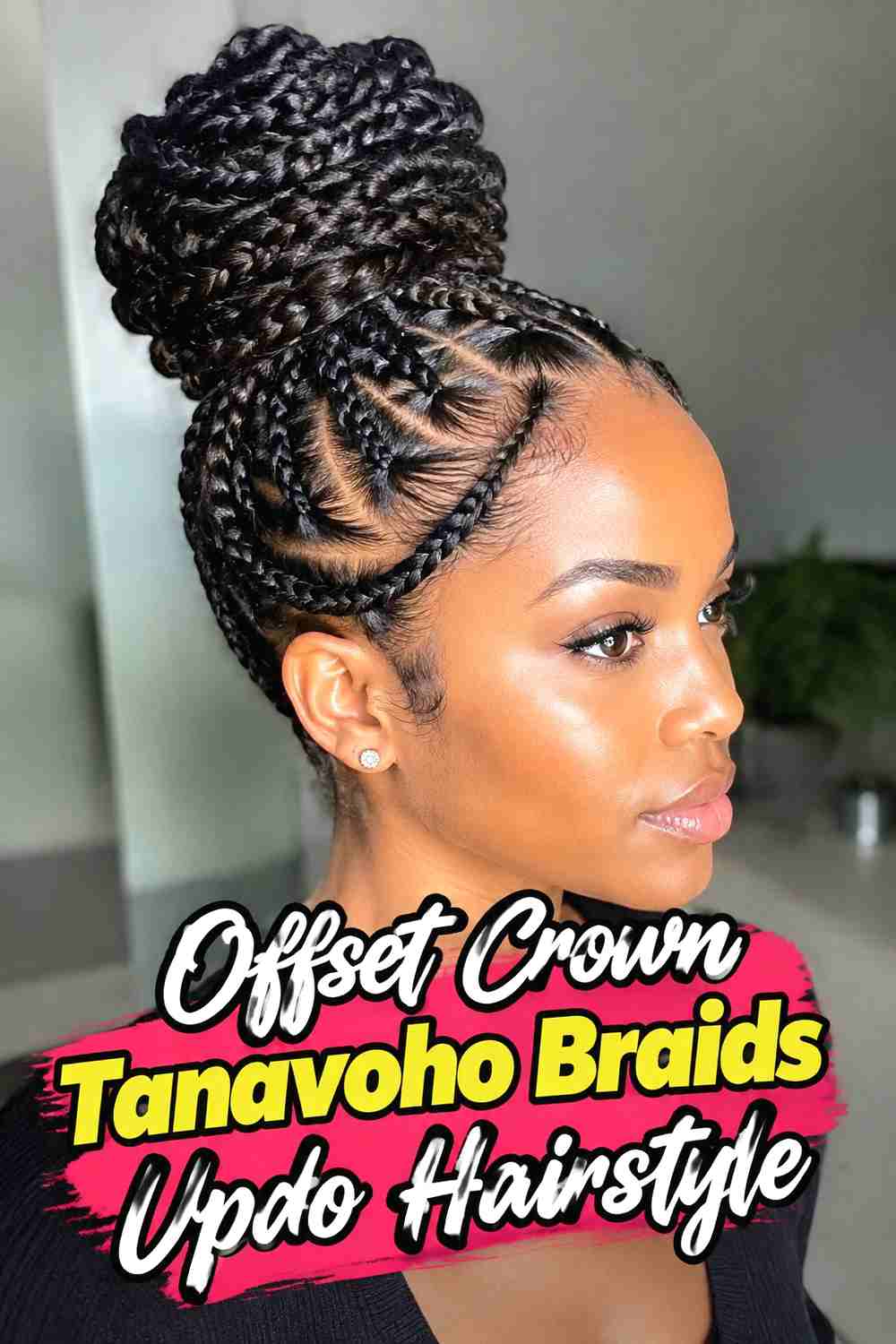
An offset crown places the main volume slightly behind and to one side of the top of the head instead of centering it perfectly. Lift the braids in small groups and secure them into a rounded arrangement, allowing several puffed ends to sit higher while others soften the outer edge. The off-center placement creates an editorial shape without requiring a completely different braid pattern. Keep the front relatively balanced so the asymmetric crown looks deliberate rather than accidental. This variation can be especially effective in profile because the shift in volume is easy to see from the side while the textured ends still preserve the recognizable character of Tanavoho.
Pro Tip
Check the silhouette from the front, side, and back as you pin. An offset crown should look intentionally asymmetric from every angle, not simply uneven.
14. Minimal Pin Up Tanavoho Braids Updo Hairstyle
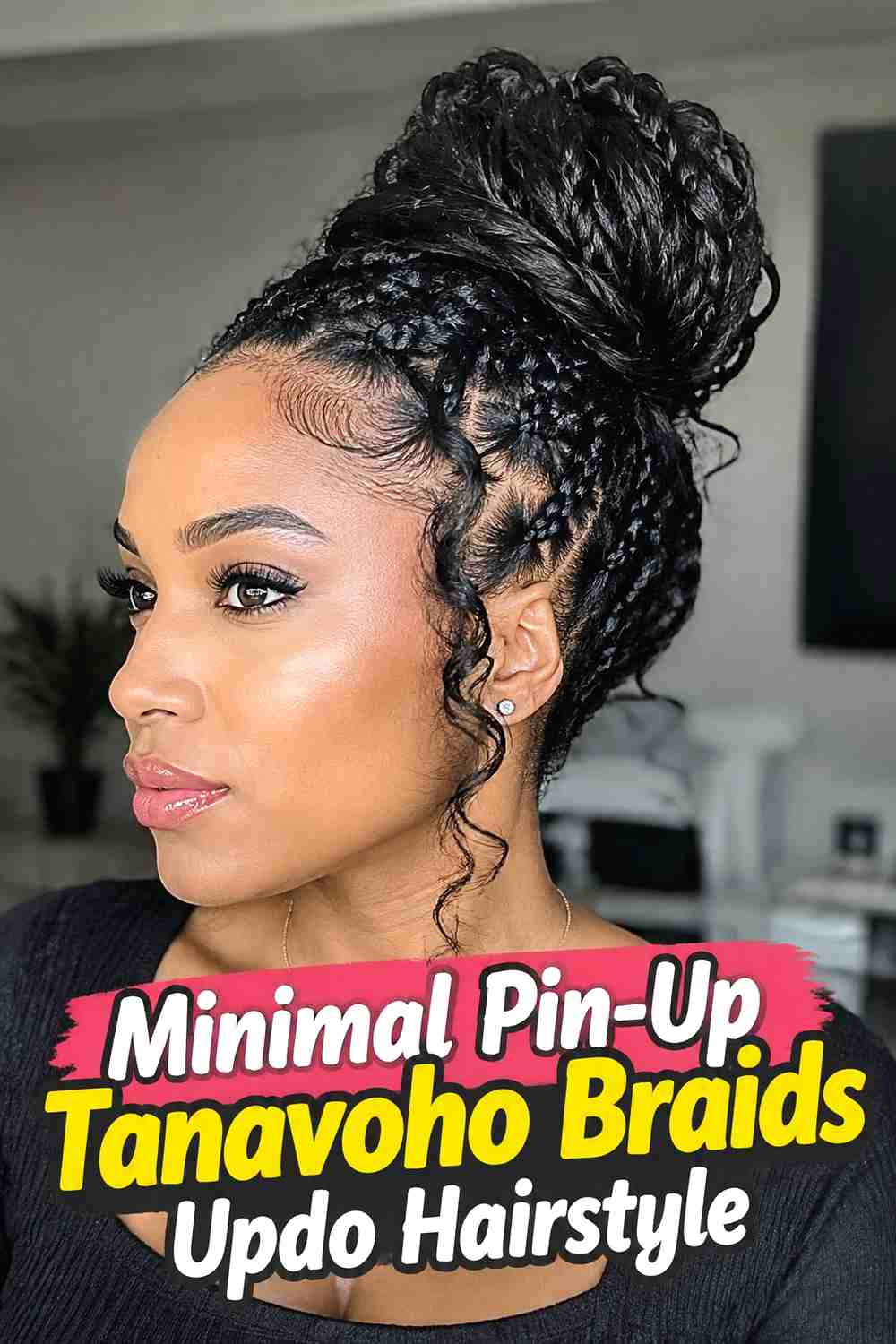
The minimal pin-up uses only a few strategic anchors to lift selected Tanavoho braids while leaving much of the original crown-like arrangement intact. Pin two or three sections upward near the temples or upper back, allowing their rounded ends to sit slightly above the remaining braids. This produces a subtle updo effect without transforming the hairstyle into a dense bun or cluster. It is a useful approach when you want to change the silhouette temporarily while keeping the distinctive puffed ends visible around the head. Because fewer sections are manipulated, the finished look can also feel lighter and less structured than more elaborate updo adaptations.
Wear & Maintenance
Use lightweight pins or soft clips that can hold the selected braids without crushing the rounded ends. Remove them gently to preserve the original shape.
How to Choose the Right Look
Begin with how much of the recognizable Tanavoho silhouette you want to preserve. Half-up and minimal pin-up styles keep more braids near their original perimeter, while high clusters, rounded puff updos, and top-knot-inspired arrangements create a stronger transformation. The rounded ends are an important visual feature, so consider where you want that volume to appear. High placement creates height, side placement produces asymmetry, and low crowns keep the hairstyle compact. If your puffed ends are particularly full, give them enough space instead of forcing them into a tight outline. Comfort matters as much as shape. Tanavoho has received renewed attention alongside braid trends favoring softer, lower-tension styling. When adapting completed braids into an updo, avoid pulling them tightly from one central point. Several distributed anchors can create shape with less concentrated tension. For a more traditional-looking silhouette, keep the crown-like arrangement and rounded ends prominent. For a contemporary editorial effect, experiment with offset crowns, side clusters, halos, and layered placements while acknowledging that these are modern styling adaptations rather than separate historic Tanavoho forms.
Final Thoughts
Tanavoho braids already have a highly distinctive structure, so an updo does not need to hide or reinvent their defining features. The most effective adaptations use the existing braids and rounded ends to create new height, direction, and balance. Whether you choose a subtle half-up crown or a sculptural puff cluster, keep comfort and cultural context in mind. Preserving the recognizable braid-and-rounded-end character gives these contemporary styling ideas a stronger connection to the Malagasy hairstyle that inspired them.
FAQs
1. What are Tanavoho braids?
Tanavoho is a traditional Malagasy hairstyle associated with Sakalava women. Contemporary descriptions commonly show a crown-like arrangement of shorter braids ending in full, rounded puffs.
2. Can Tanavoho braids be styled into an updo?
Yes. Completed braids can be repositioned with pins or soft ties, although contemporary updo arrangements should be understood as styling adaptations rather than automatically treated as separate traditional forms.
3. Should the rounded ends be hidden in an updo?
They do not need to be. The voluminous rounded ends are one of the most recognizable visual features of Tanavoho, so leaving them visible can preserve more of the hairstyle’s character.
4. How can I keep a Tanavoho updo comfortable?
Avoid pulling every braid toward one tight anchor. Distribute pins or ties around the head, keep the roots comfortable, and stop if the finished arrangement creates noticeable pulling or scalp discomfort.
5. Where does the Tanavoho hairstyle come from?
Tanavoho is rooted in Madagascar and is specifically associated with Sakalava women in contemporary cultural and beauty coverage. Save your favorite Tanavoho braids updo hairstyle ideas, share the collection for inspiration, and explore more culturally informed ways to style distinctive braided looks.
Show less