15 Stacked Angled Bob Hairstyles for a Sharp, Voluminous Look
A stacked angled bob combines lifted layers, a clean sloping silhouette, and face-framing length for a polished haircut with plenty of personality.
The stacked angled bob is defined by shorter, graduated layers through the back and longer sections toward the front. That combination can create visible shape without requiring extremely long hair, and small changes in texture, parting, or layering can make the cut feel sleek, soft, tousled, or dramatic.
When choosing your version, look beyond the angle alone. Consider how much crown volume you want, where the front pieces should fall, how often you style with heat, and whether your natural texture works better with crisp graduation or a looser finish. The ideas below show several practical ways to adapt the same core silhouette.
Quick List
- Classic Stacked Angled Bob Hairstyle
- Sleek Graduated Angled Bob Hairstyle
- Textured Stacked Angled Bob Hairstyle
- Short Nape Stacked Angled Bob Hairstyle
- Long Front Angled Bob Hairstyle
- Side Parted Stacked Angled Bob Hairstyle
- Feathered Stacked Angled Bob Hairstyle
- Wavy Stacked Angled Bob Hairstyle
- Curly Stacked Angled Bob Hairstyle
- Fine Hair Voluminous Angled Bob Hairstyle
- Thick Hair Sculpted Angled Bob Hairstyle
- Chin Length Stacked Angled Bob Hairstyle
- Shoulder Grazing Angled Bob Hairstyle
- Soft Fringe Stacked Angled Bob Hairstyle
- Polished Rounded Stacked Angled Bob Hairstyle
1. Classic Stacked Angled Bob Hairstyle
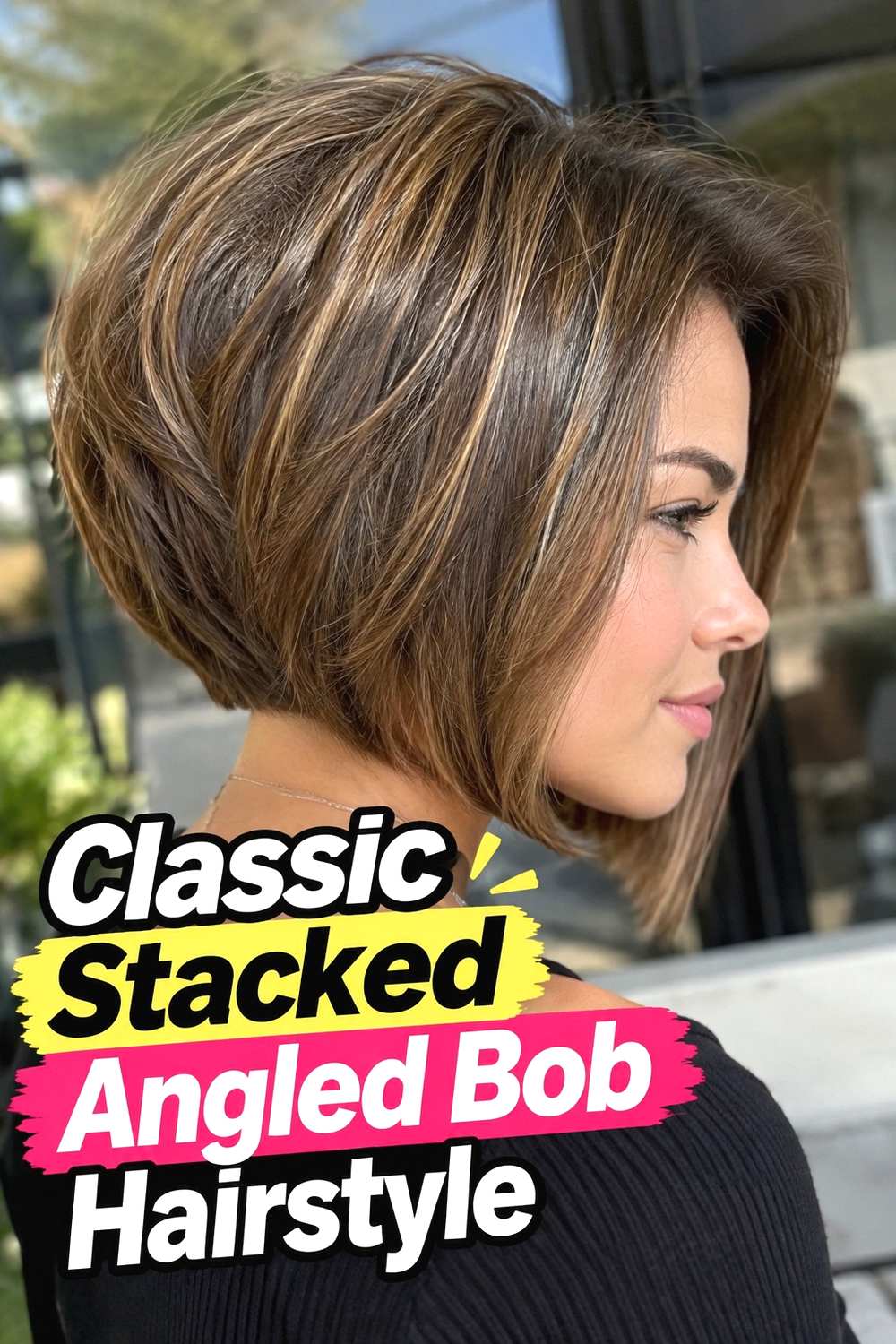
The classic stacked angled bob keeps the signature shape easy to recognize: a neatly graduated back, gentle crown lift, and front pieces that extend slightly longer toward the jaw. It has enough structure to look polished while still allowing natural movement through the ends. This version works especially well for anyone who wants a defined silhouette without pushing the angle into an overly dramatic shape. A smooth blow-dry emphasizes the graduation, but the cut can also handle a little natural texture. Regular reshaping matters because the back layers are responsible for maintaining the stacked profile as the hair grows.
Styling Notes
Use a round brush to direct the back layers inward while keeping the front sections smooth and slightly elongated.
Wear & Maintenance
A consistent trim schedule helps preserve the clean angle and prevents the nape area from becoming bulky.
2. Sleek Graduated Angled Bob Hairstyle
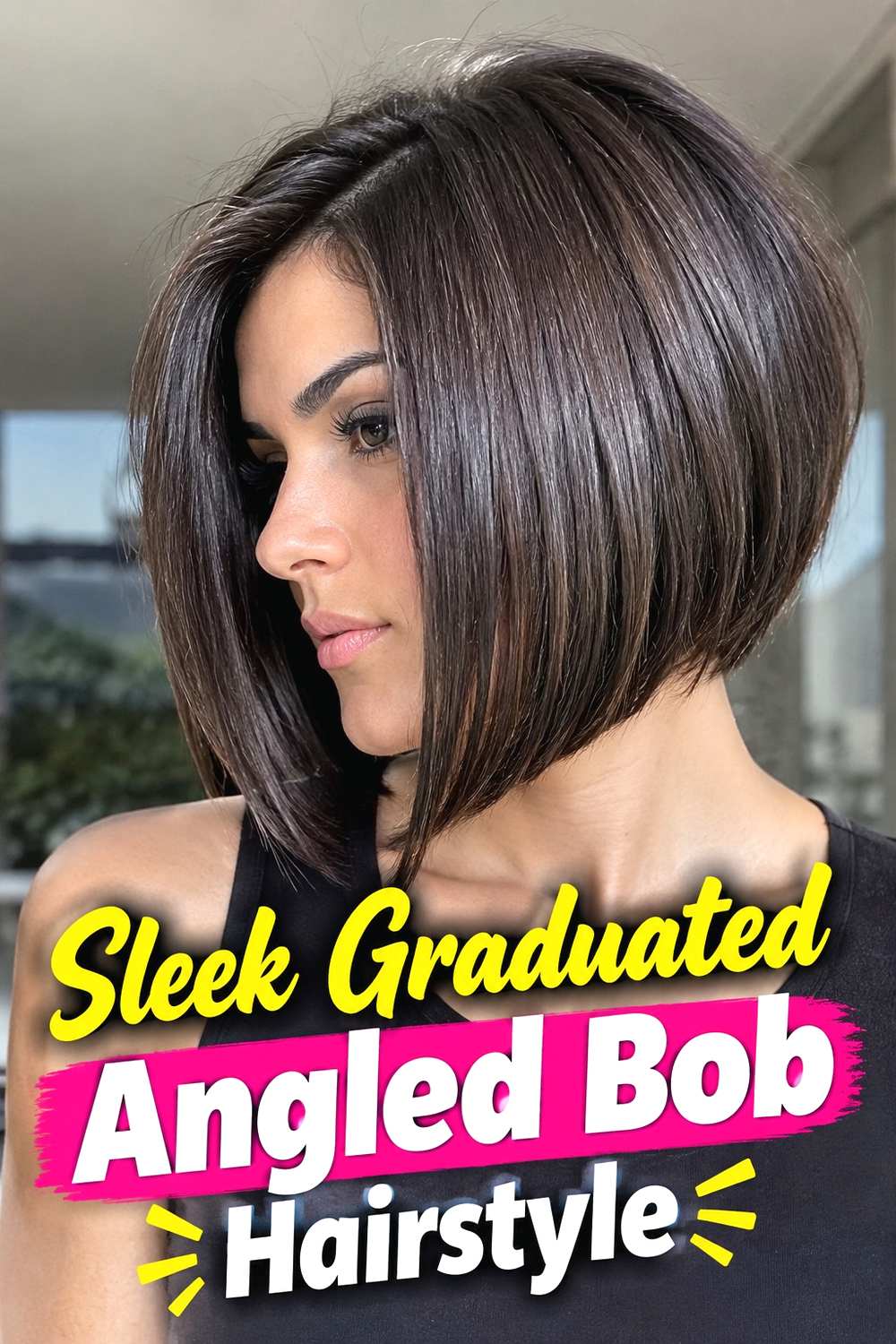
This sleek variation turns the stacked bob into a crisp, refined shape with smooth surfaces and clearly defined graduation. The back sits close to the head before building gentle volume through the crown, while the front falls in clean lines toward the chin or just below it. The straighter finish makes the angle especially visible, so precision in the cut is important. Hair that naturally dries fairly straight may need only light smoothing, while wavy textures may require more blow-drying or flat-ironing. Keep the ends softly beveled rather than completely rigid so the haircut retains movement and does not look overly stiff.
Best For
This version suits anyone who enjoys a polished finish and is comfortable spending a little time smoothing the hair.
Pro Tip
Apply heat protectant before styling and use only enough finishing product to control flyaways without flattening the stacked volume.
3. Textured Stacked Angled Bob Hairstyle
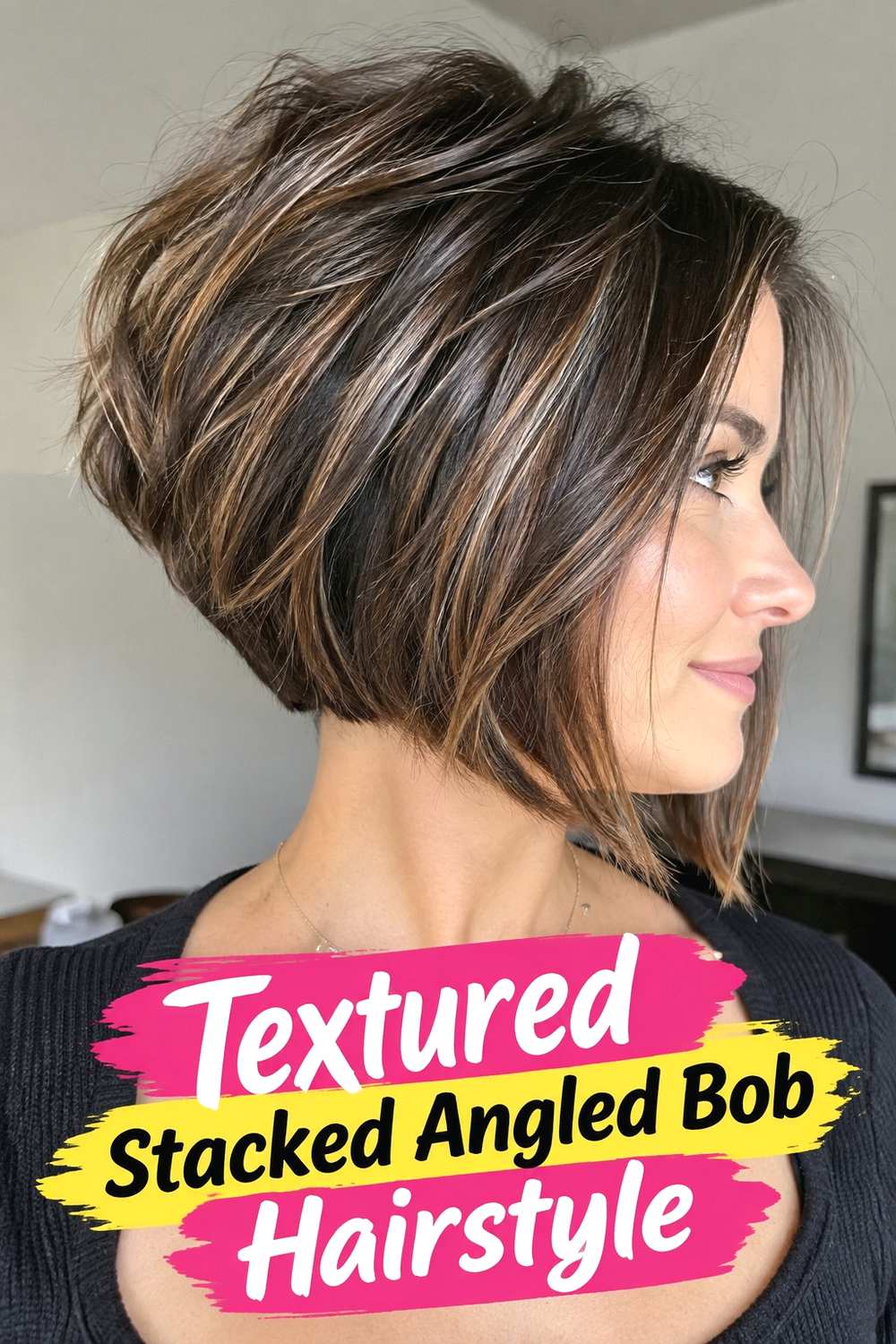
A textured stacked angled bob softens the precise geometry of the haircut with separated ends, light movement, and an intentionally airy finish. The back still has graduated layers, but they are styled with less uniformity so the shape feels casual rather than sculpted. Subtle point-cutting or internal texture can help reduce heaviness and create visible definition through the ends. This style is particularly appealing when you want the bob to look good with a quick tousle instead of a perfectly controlled blowout. It can work with straight or slightly wavy hair, although the amount of layering should be adjusted to match density and natural movement.
Styling Notes
Work a small amount of lightweight texture product through dry hair, focusing on the mid-lengths and ends instead of the roots.
Why It Works
The broken-up finish keeps the stacked silhouette noticeable while making the overall haircut feel relaxed and modern.
4. Short Nape Stacked Angled Bob Hairstyle
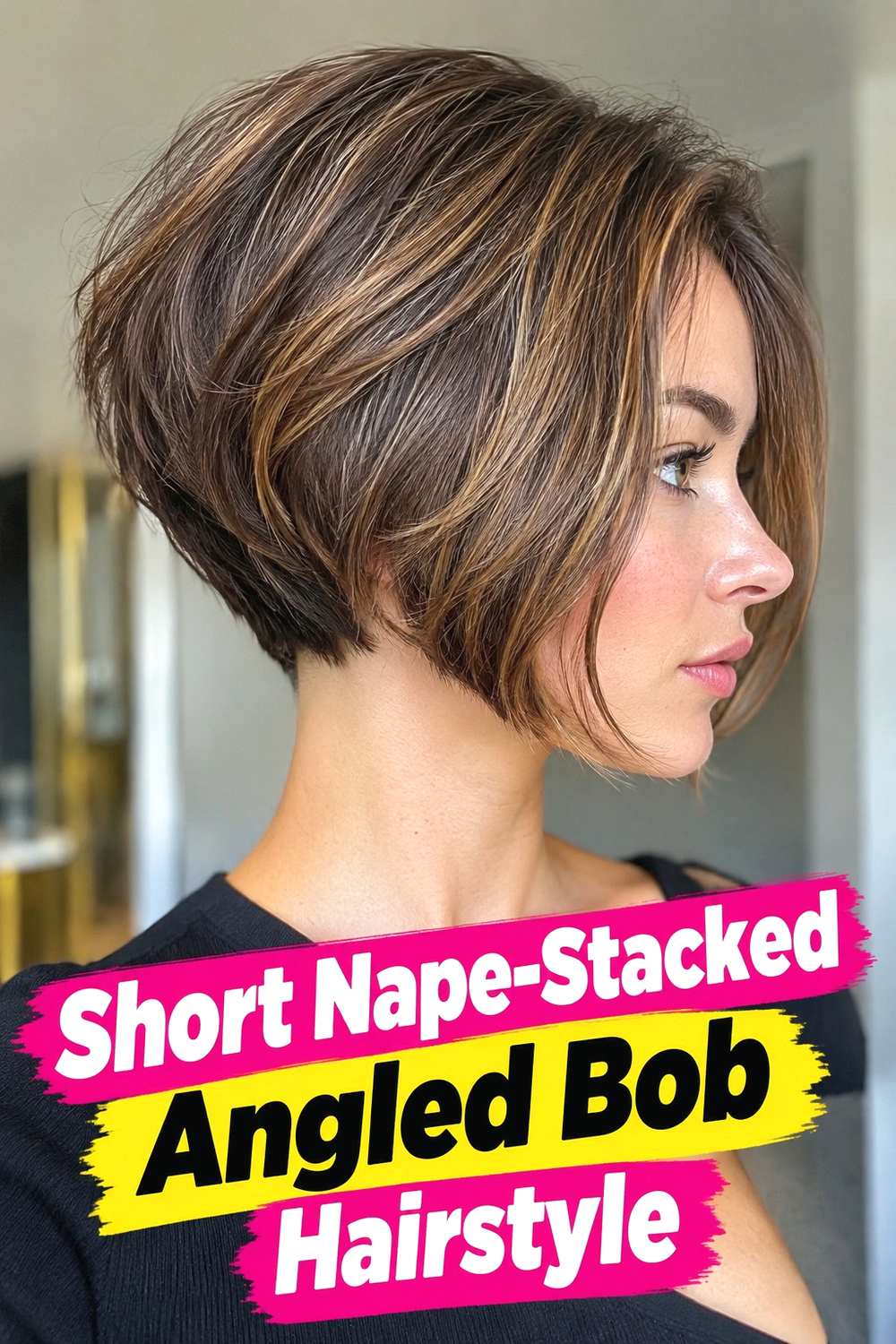
This shorter stacked bob places strong emphasis on the nape, where closely graduated layers create a compact, lifted shape. The hair gradually lengthens toward the front, giving the cut its angled profile without sacrificing the clean feel of a short haircut. Because the back is cropped higher, the neckline stays visible and the crown can appear fuller when the layers are shaped correctly. This version is practical for people who prefer less hair around the shoulders but still want more structure than a traditional short bob. It does require fairly regular trims because even a small amount of growth can change the neat outline around the nape.
Hair Type & Length
Straight, slightly wavy, and medium-density hair can display the stacked shape particularly clearly.
Wear & Maintenance
Expect the neckline and back graduation to need more frequent refreshing than longer bob variations.
5. Long Front Angled Bob Hairstyle
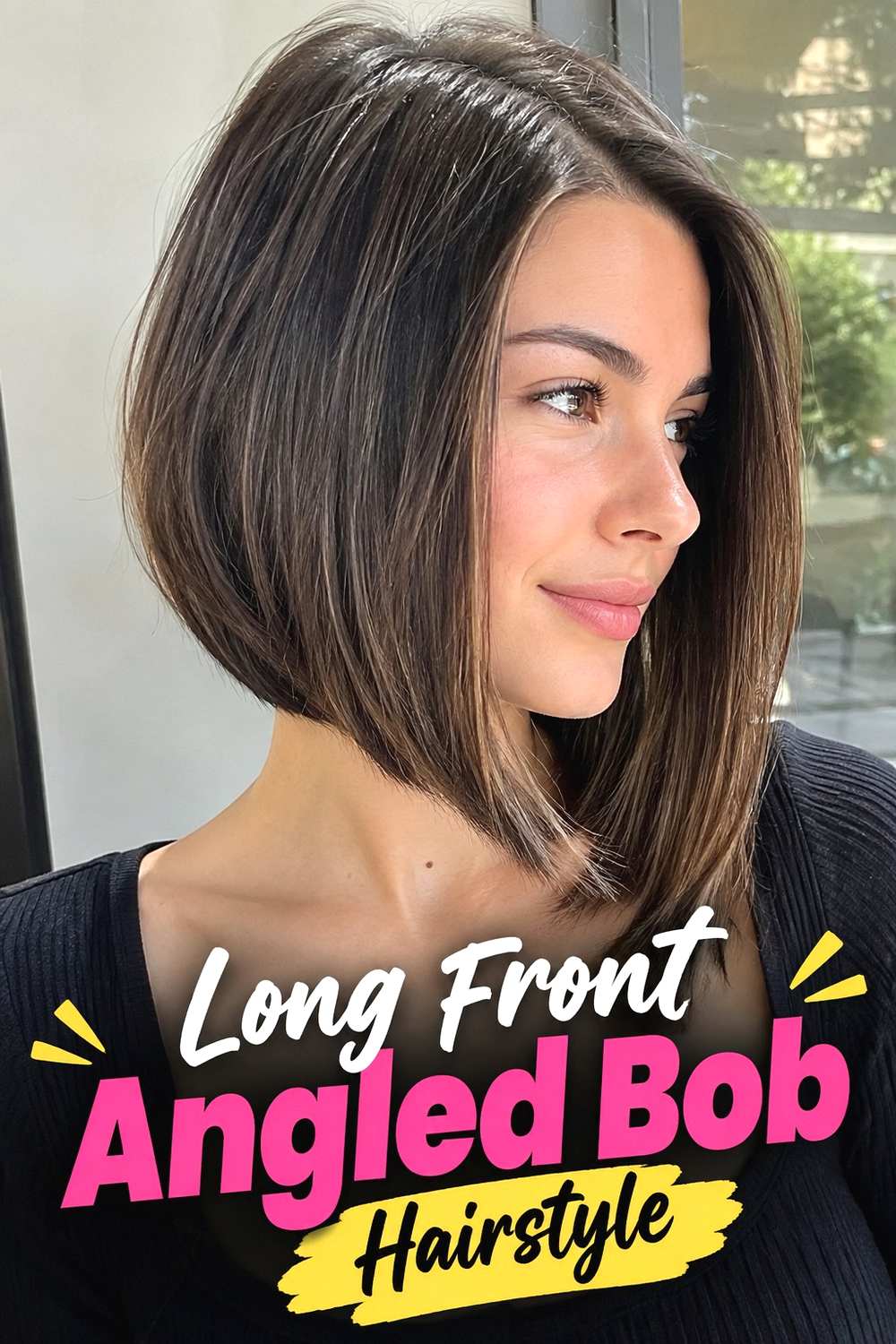
Longer front sections give this stacked bob a more dramatic slope while keeping the back compact and full. The contrast is most visible from the side, where the neckline rises and the face-framing pieces extend toward or below the jaw. That extra front length can be useful if you like the convenience of a bob but do not want every section to feel short. It also gives more flexibility for tucking hair behind the ears or creating a soft bend through the front. The key is keeping the transition smooth so the angle looks intentional rather than disconnected from the stacked layers in the back.
Styling Notes
Blow-dry the front pieces downward with light tension to highlight their length, then shape the back with a round brush for lift.
Best For
Choose this look if you enjoy a visible angled silhouette and want more face-framing length than a traditional stacked bob provides.
6. Side Parted Stacked Angled Bob Hairstyle
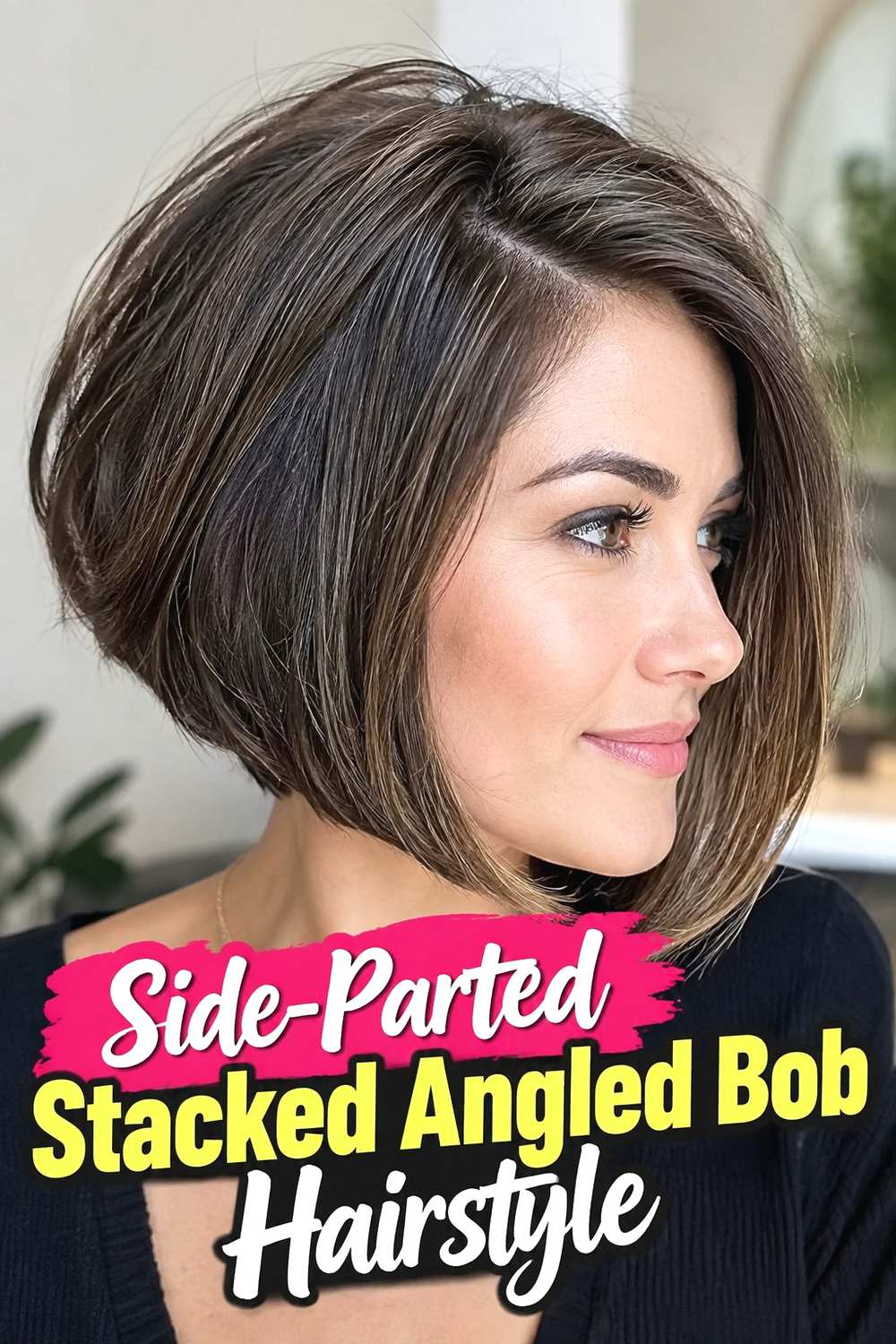
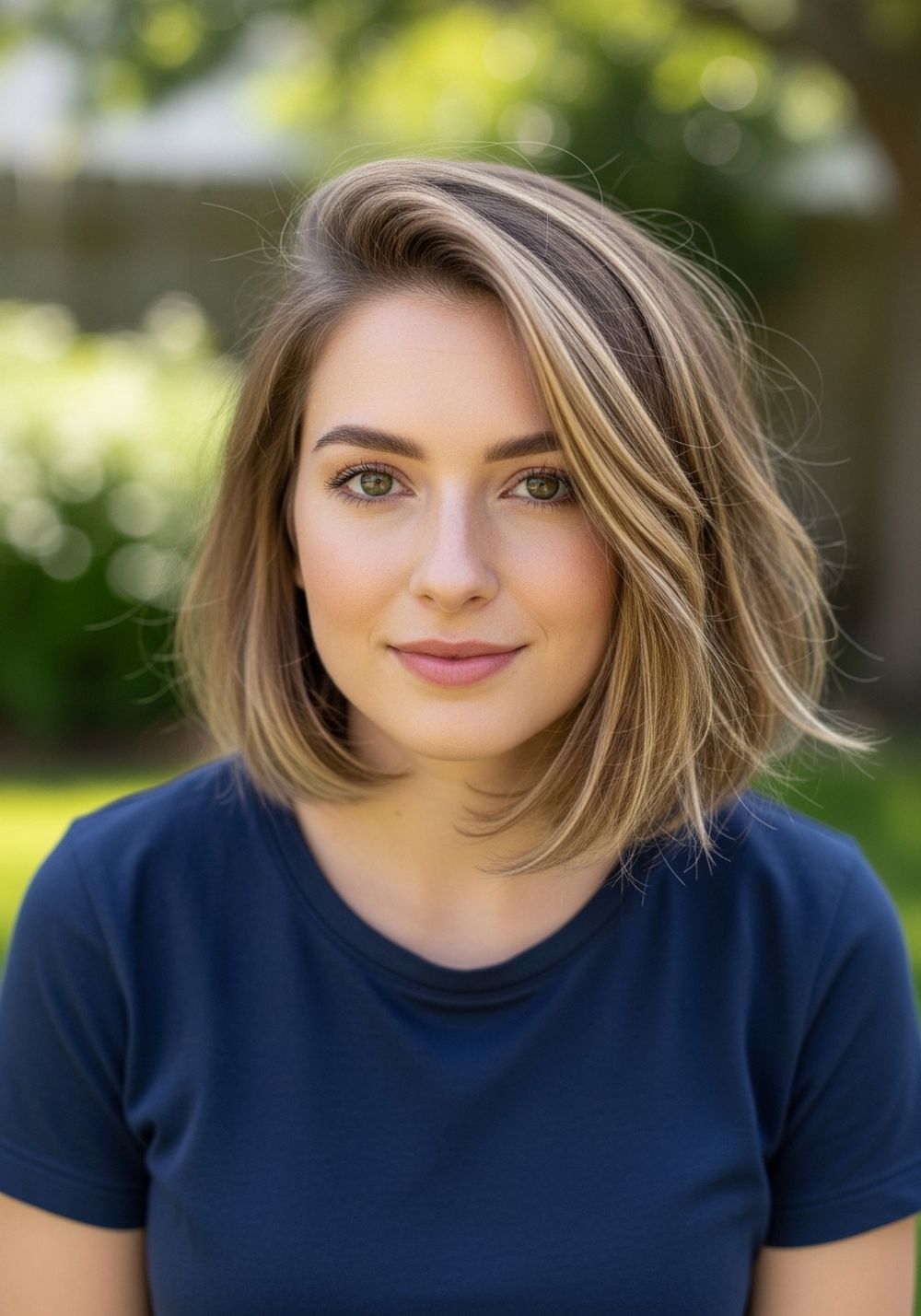
A deep or moderate side part changes the balance of a stacked angled bob by creating extra sweep and volume on one side. The graduated back still supplies the rounded foundation, while the longer top section moves diagonally across the head for a softer, slightly asymmetrical impression. This can be an easy way to refresh the haircut without changing its core structure. The fuller side can be worn smooth, tucked behind the ear, or given a subtle bend for movement. Because the part influences where the hair naturally lifts, it is worth deciding on your preferred placement before the cut is finalized so the layering supports it.
Styling Notes
Dry the roots in the opposite direction of the final part first, then flip them back for a little extra lift.
Why It Works
The side part introduces movement and visual interest while preserving the recognizable stacked and angled outline.
7. Feathered Stacked Angled Bob Hairstyle
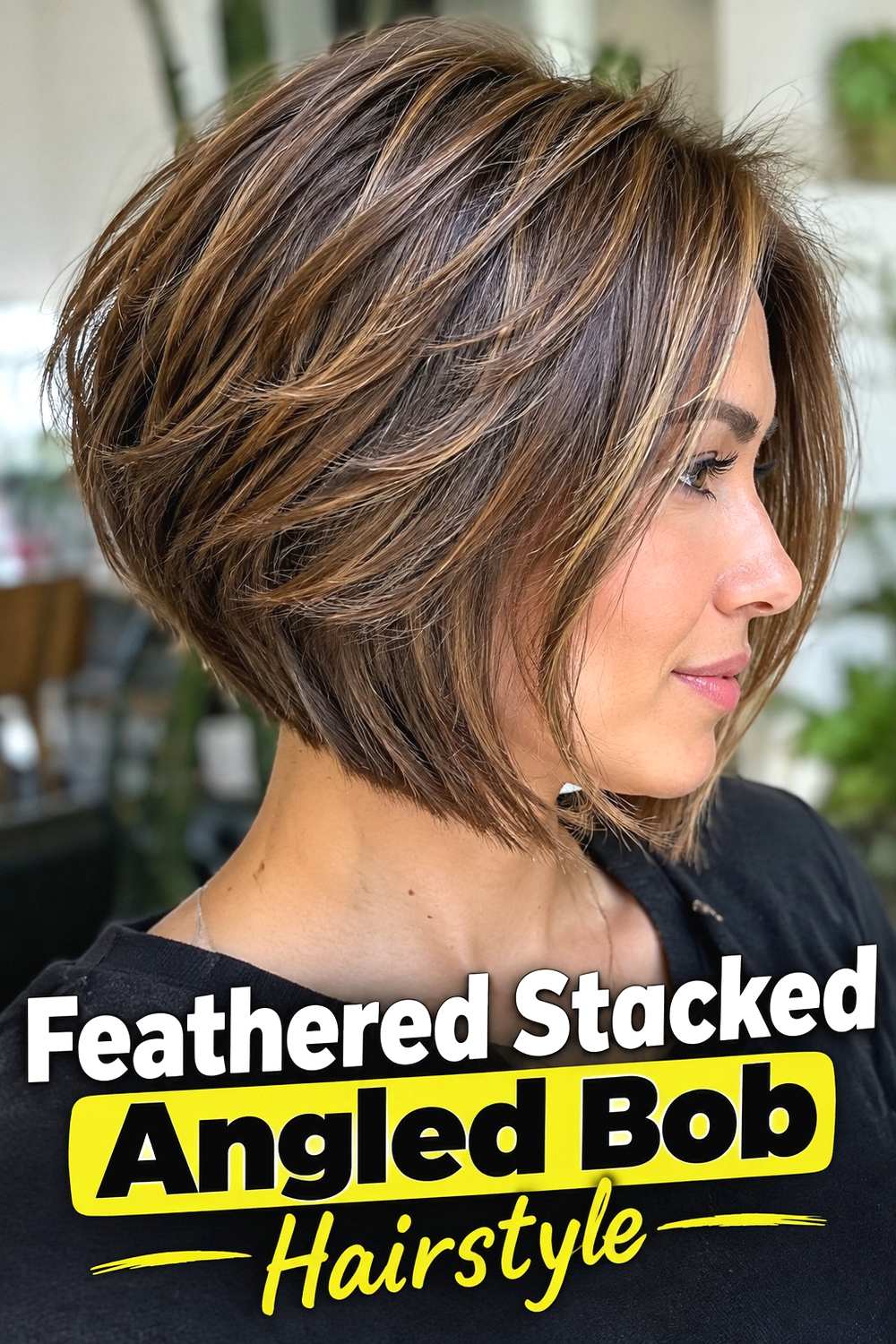
Feathered layers give the stacked angled bob a lighter, softer edge, especially around the crown and front perimeter. Instead of keeping every section smooth and compact, the ends are encouraged to separate and sweep gently away from the face. This reduces the severity of the angle and creates a more flowing silhouette while the stacked back still provides structure. The look can be especially flattering on hair with enough density to support several light layers without appearing thin at the ends. Styling does not have to be elaborate; a round brush and controlled airflow can create the feathered direction while maintaining natural movement.
Hair Type & Length
Medium-density hair with straight or slightly wavy texture usually gives feathered layers enough body to stay visible.
Pro Tip
Avoid overloading the ends with heavy serum or wax, which can collapse the airy separation that makes this version distinctive.
8. Wavy Stacked Angled Bob Hairstyle
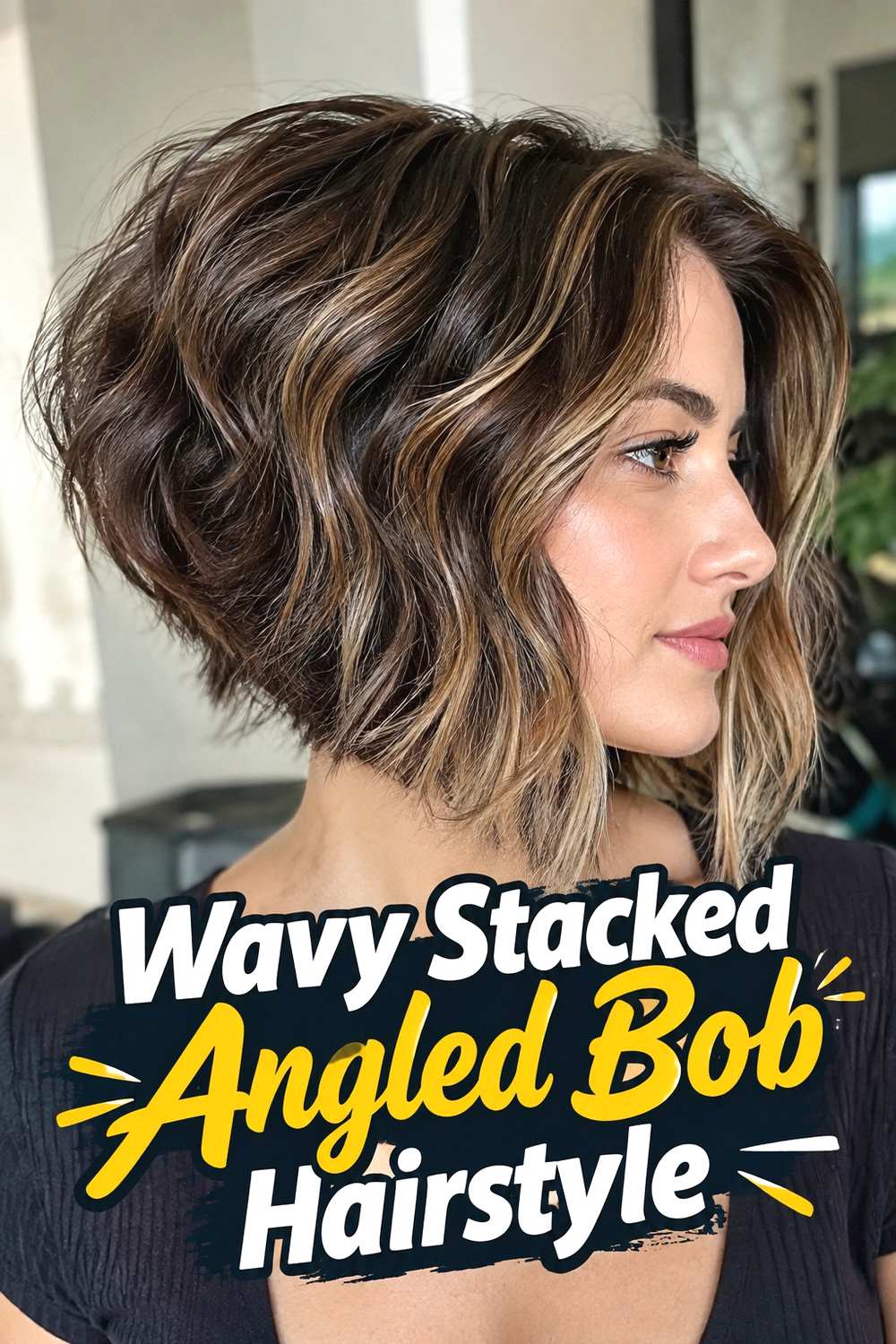
Soft waves bring movement to the stacked angled bob and make its geometric shape feel more relaxed. The graduated back creates lift underneath, while loose bends through the mid-lengths and longer front pieces give the haircut a fuller, more dimensional finish. Natural waves can work beautifully with this silhouette when the layers are cut to encourage their pattern rather than disrupt it. Straight hair can achieve a similar effect with a curling iron or flat iron used to form alternating bends. Keep the waves loose enough that the angled perimeter remains visible, particularly around the front where the extra length defines the cut.
Styling Notes
Create soft bends through the middle of each section and leave the ends slightly straighter for a modern, less curled appearance.
Wear & Maintenance
Refresh only the pieces that lose shape rather than restyling the entire bob every day.
9. Curly Stacked Angled Bob Hairstyle
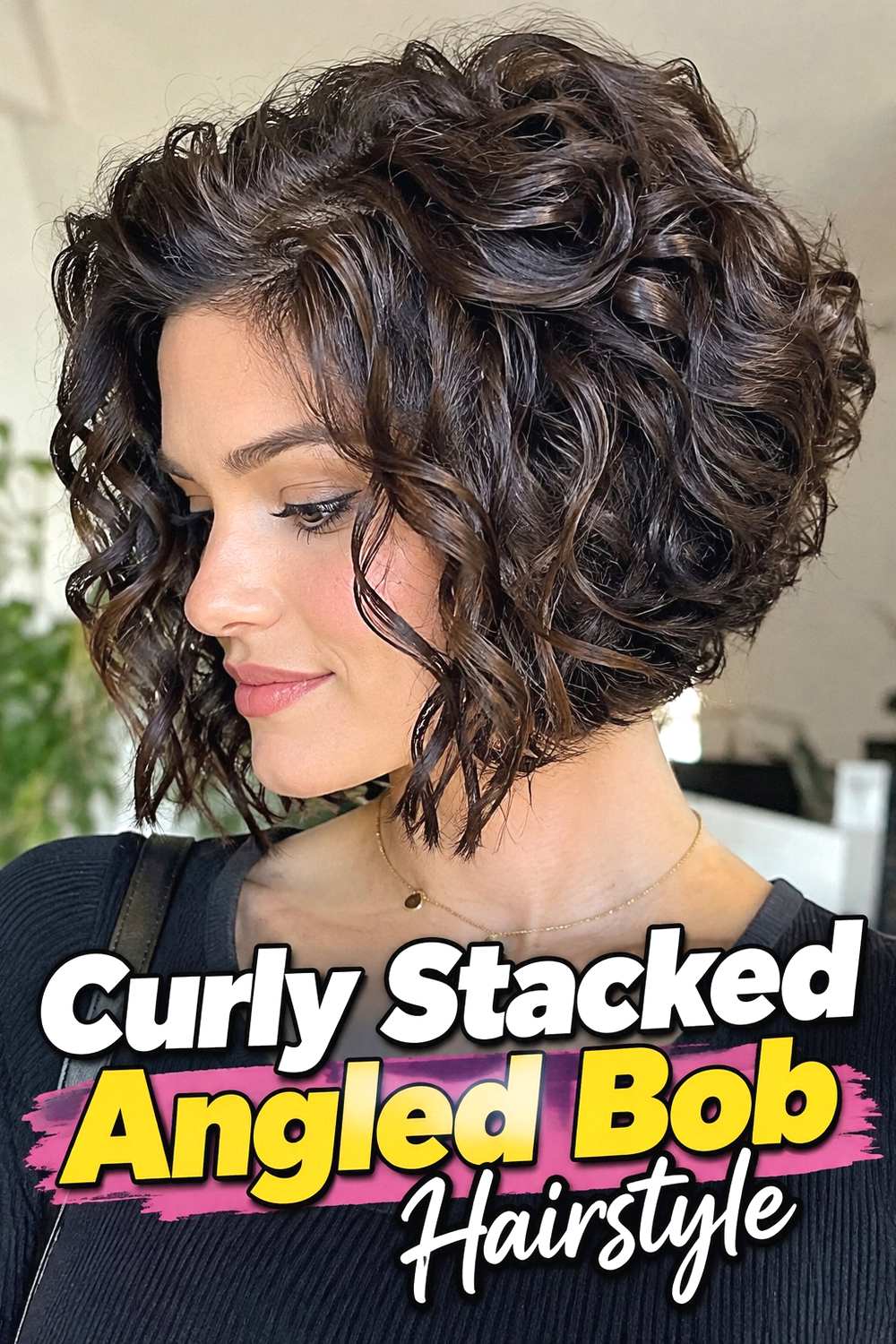
A curly stacked angled bob uses graduation to support natural volume while maintaining a distinct shorter-back, longer-front silhouette. Because curls shrink and expand differently from straight hair, the angle may appear softer, but the stacked structure can still give the back an attractive rounded lift. Strategic layering is important: too much removal can create gaps, while too little may leave dense curls feeling heavy. The best shape allows curls to sit naturally without forcing them into identical ringlets. Styling usually works well with moisture-focused curl products and minimal manipulation, letting individual curl groups form while keeping the overall outline balanced.
Hair Type & Length
This look is suited to naturally curly textures when the cut is adjusted for curl pattern, shrinkage, and density.
Pro Tip
Evaluate the front length in its naturally curled state so the finished angle does not become shorter than intended after drying.
10. Fine Hair Voluminous Angled Bob Hairstyle
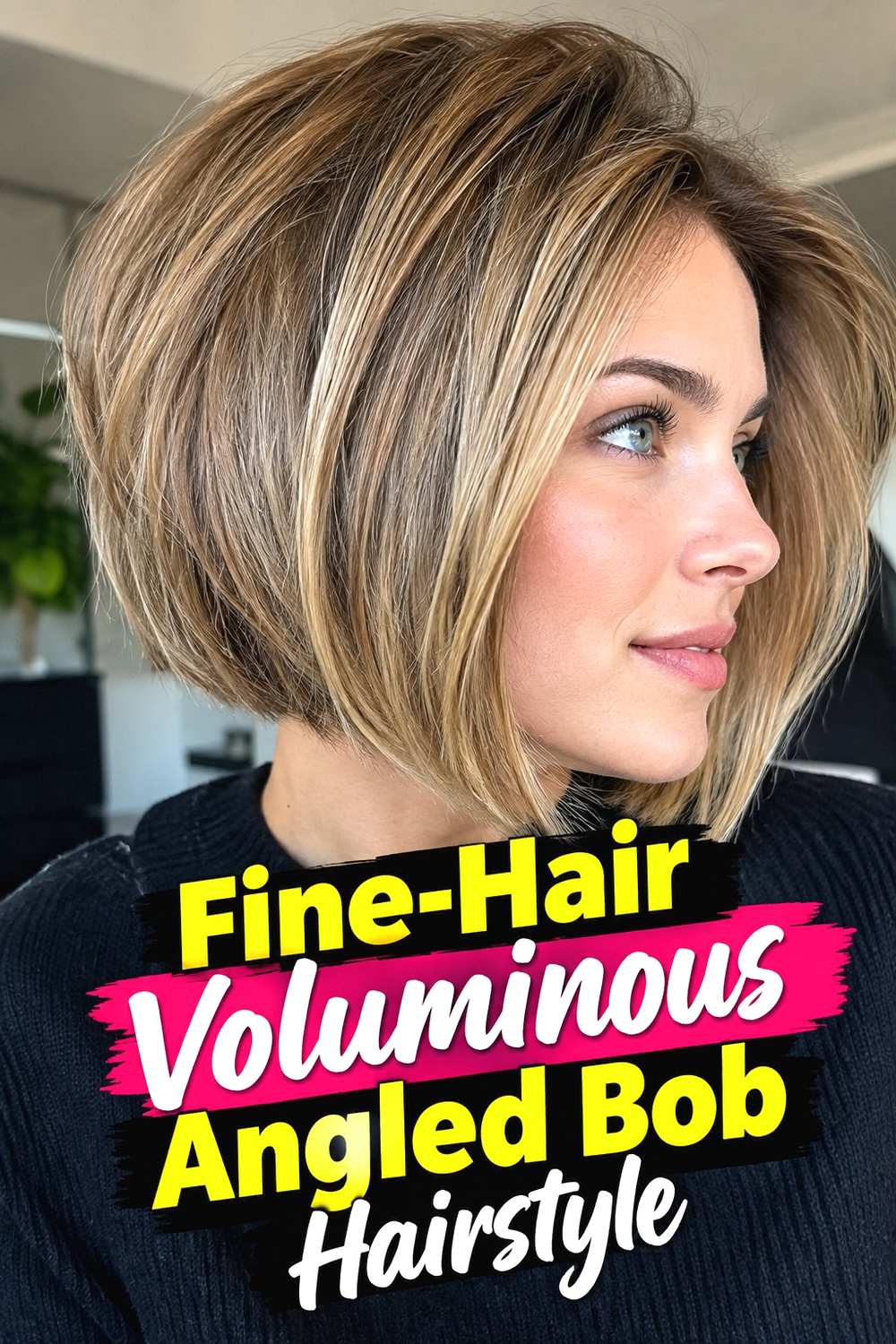
For finer hair, a carefully stacked angled bob can create the appearance of more body by concentrating shape through the back instead of relying on excessive layering. The crown is kept light enough to lift, while the perimeter retains enough density to prevent the ends from looking wispy. A moderate rather than extreme angle usually keeps the front sections looking fuller. Styling should focus on root support and movement instead of heavy texture products. A gentle blow-dry with a small or medium round brush can help create volume through the back while leaving the front smooth and clean.
Why It Works
The compact graduation builds shape where fine hair often needs it most, while a stronger perimeter helps maintain visual density.
Styling Notes
Use lightweight root-lifting products sparingly and avoid heavy oils near the crown.
11. Thick Hair Sculpted Angled Bob Hairstyle
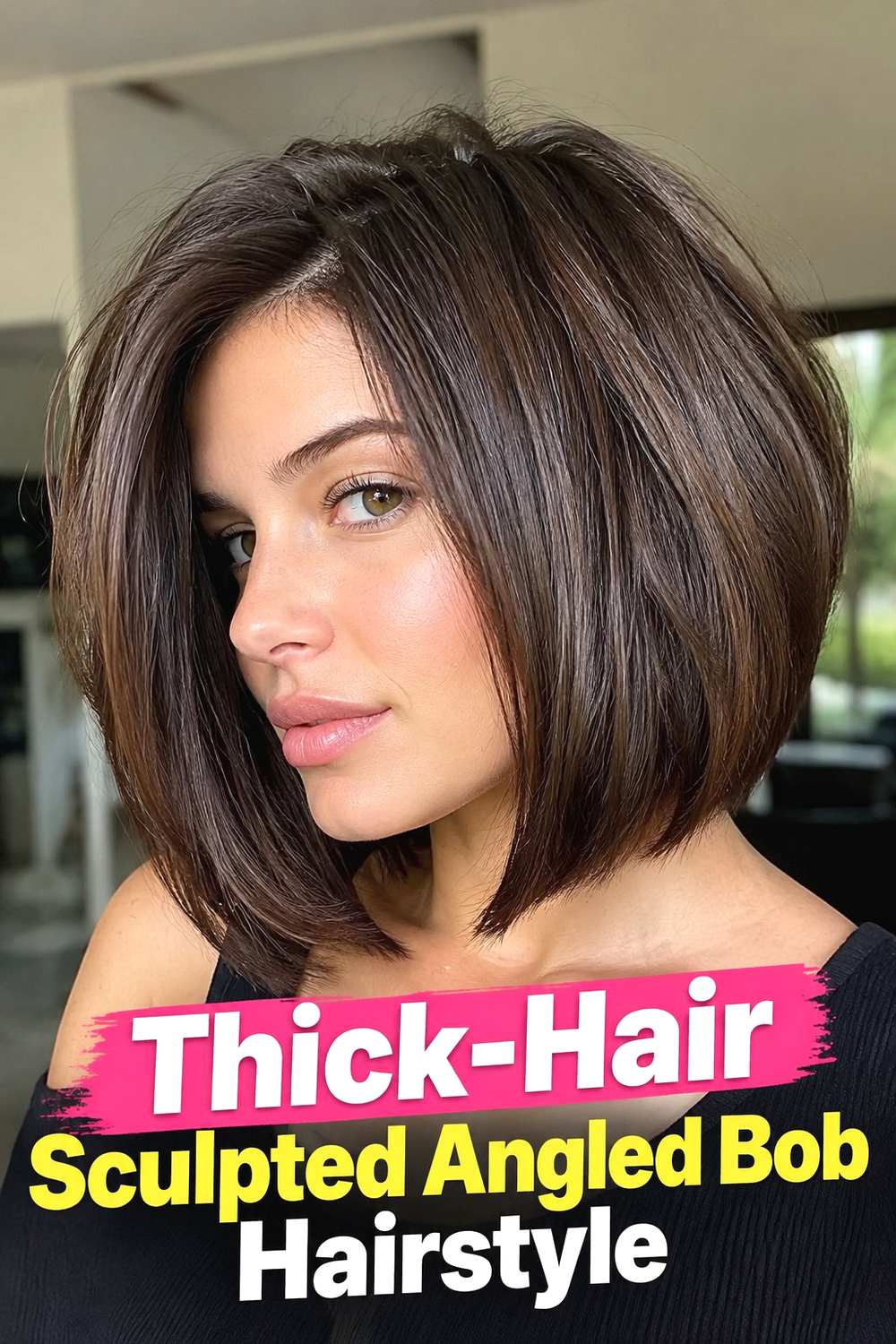
Thick hair can make a stacked angled bob look beautifully substantial, but the cut needs thoughtful weight removal so the back does not become too bulky. This sculpted version keeps the outer silhouette smooth while using internal layering to control density beneath the surface. The result is a defined angle with a rounded crown and cleaner movement through the front sections. Depending on texture, the ends can be worn sleek or softly beveled inward. The goal is not to thin the hair aggressively; it is to distribute weight so the shape feels balanced. A precise cut can also reduce the amount of daily styling needed to keep the outline controlled.
Hair Type & Length
This variation works particularly well for medium-to-thick hair that naturally holds a strong shape.
Wear & Maintenance
Ask for controlled internal weight removal rather than excessive thinning, especially around the perimeter.
12. Chin Length Stacked Angled Bob Hairstyle
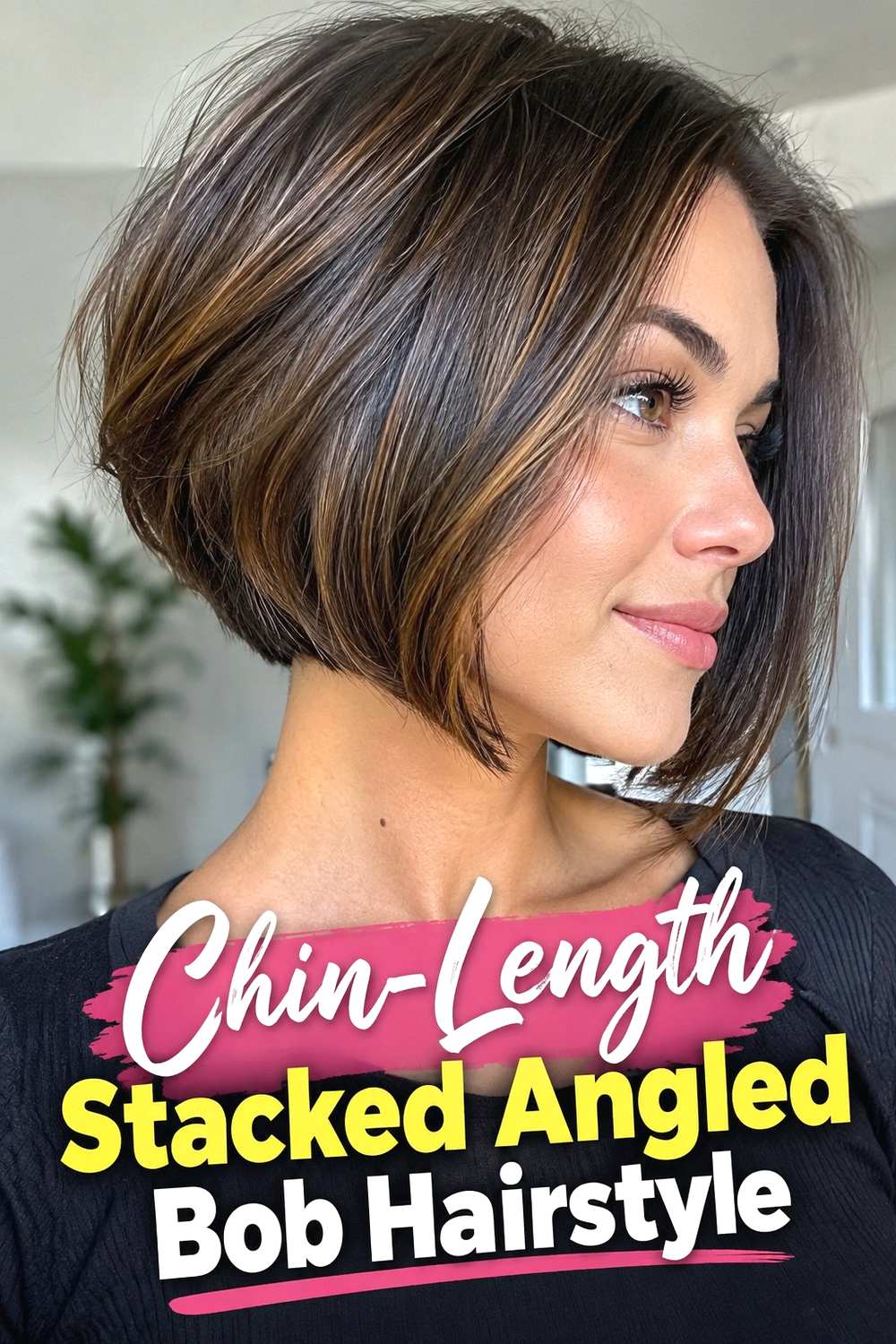
A chin-length stacked angled bob keeps the front perimeter short enough to feel fresh while still preserving a visible slope from the nape. The longest pieces typically land around the jaw or chin, framing the lower face without extending into lob territory. At the back, graduated layers create a rounded profile that gives the haircut definition from every angle. This length is versatile because it can look sleek with a polished blowout or slightly tousled with natural texture. Since the front is relatively short, careful placement is important if you like to tuck your hair behind your ears or need enough length for specific styling habits.
Best For
This is a strong option for anyone who wants a compact bob with more shape than a single-length chin-length cut.
Styling Notes
Keep the front pieces smooth and direct the back layers inward to emphasize the contrast between length and graduation.
13. Shoulder Grazing Angled Bob Hairstyle
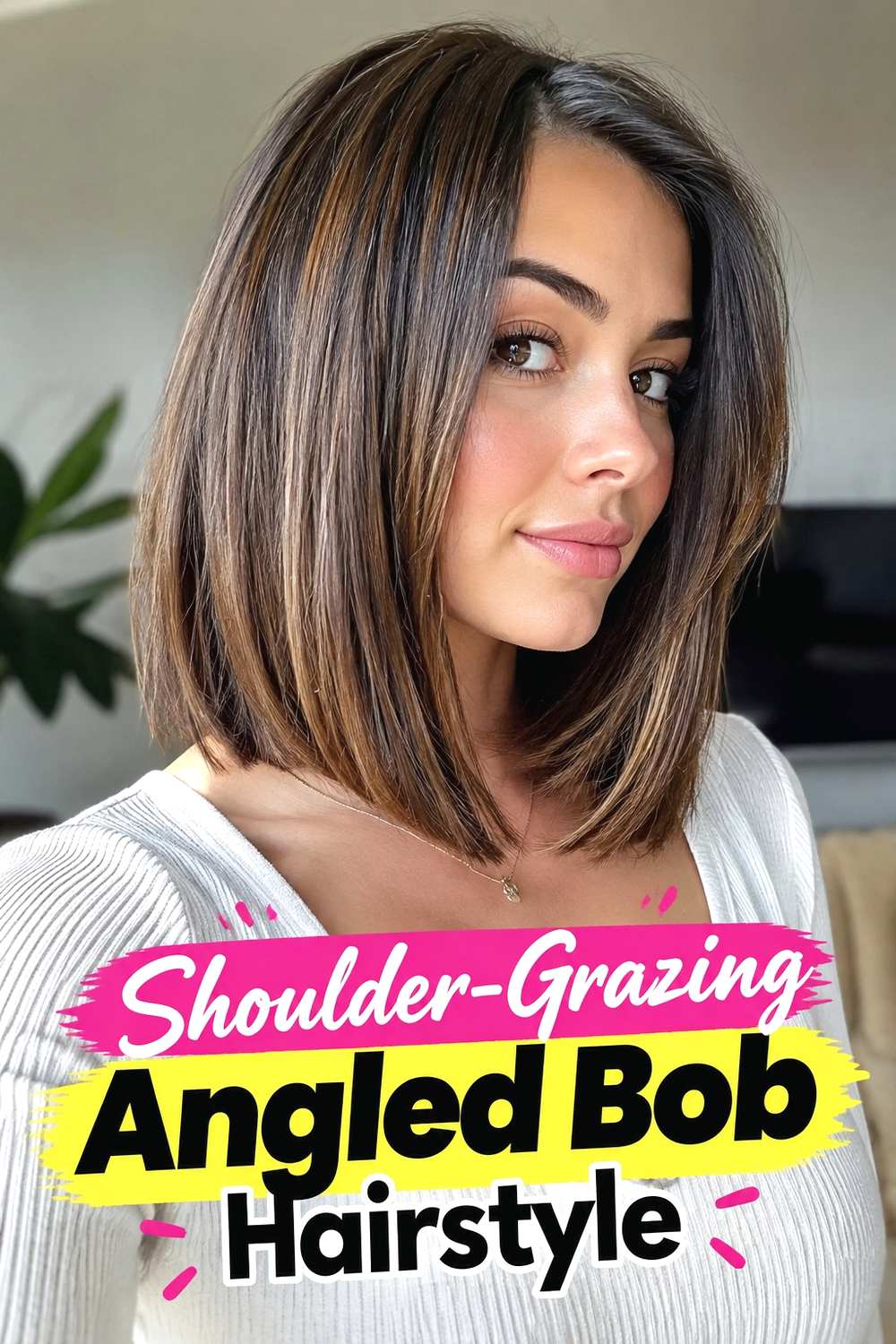
This longer interpretation stretches the angled bob closer to shoulder length while keeping enough graduation in the back to create lift. The front sections skim the shoulders or collarbone, giving the haircut more movement and styling flexibility than shorter versions. Because the length adds weight, the stacked effect tends to look softer and less rounded, making this a good transition option for someone who wants the angled shape without committing to a very short nape. Loose waves, smooth blowouts, and subtle bends all work well. The angle should remain gradual so the longer perimeter feels connected rather than sharply separated from the back.
Best For
Choose this version if you prefer longer face-framing pieces or want more flexibility for occasional half-up styling.
Wear & Maintenance
The longer shape generally tolerates growth more easily than a sharply cropped stacked bob, though the back still benefits from regular reshaping.
14. Soft Fringe Stacked Angled Bob Hairstyle
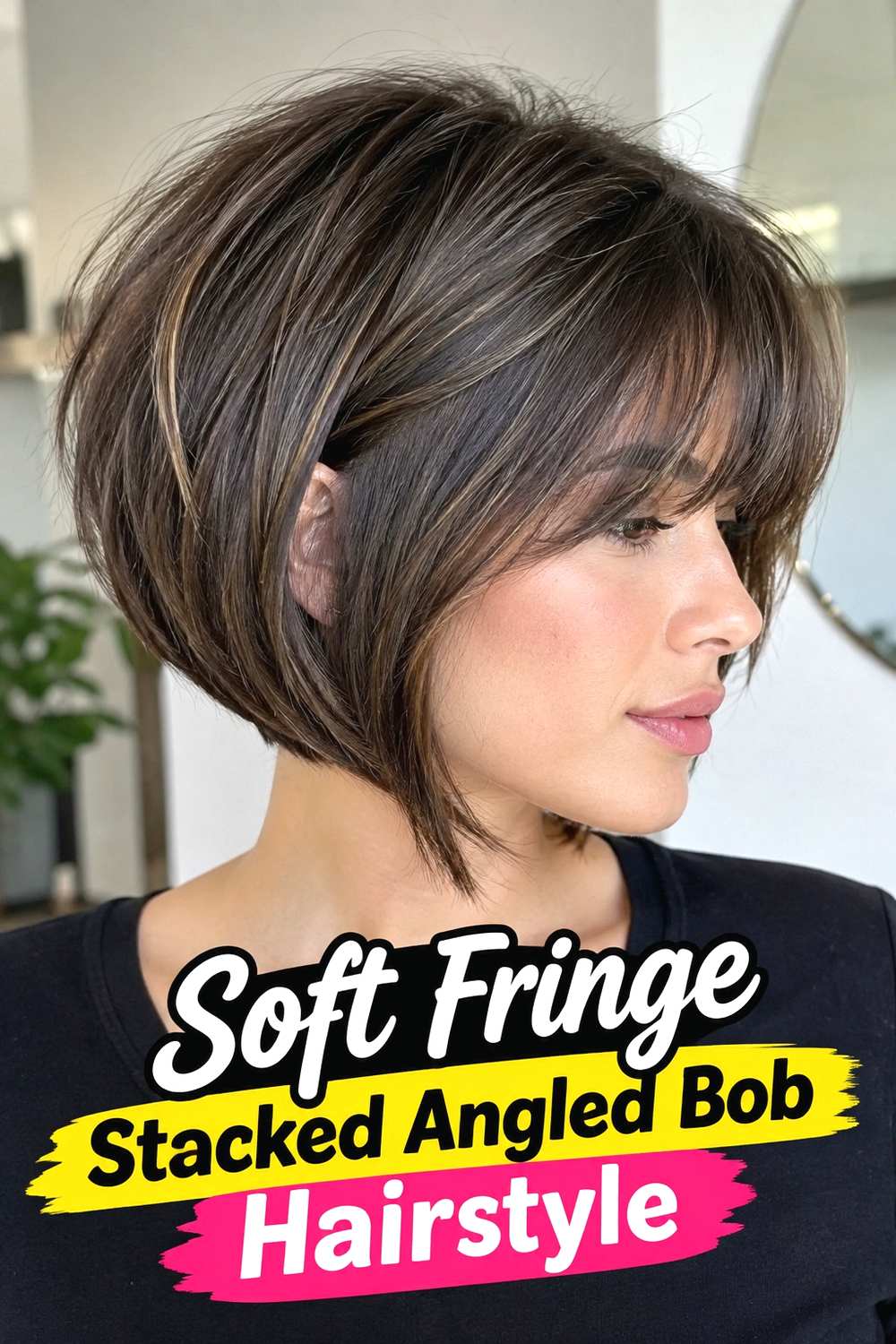
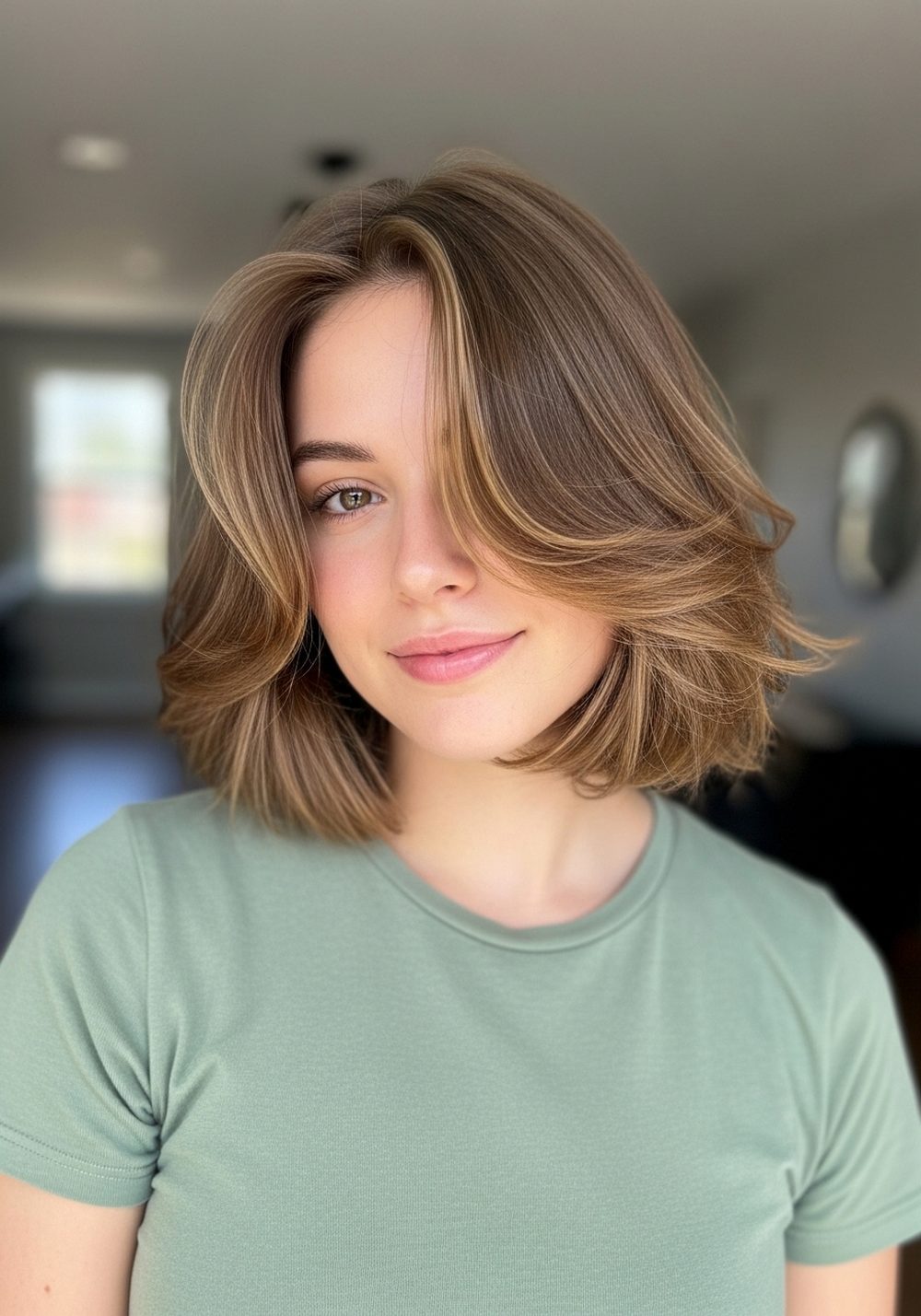
Adding a soft fringe changes the front focus of a stacked angled bob without taking away from its graduated structure. Wispy or lightly textured bangs can blend into the side sections, creating a gentler transition around the forehead while the longer angled pieces continue toward the jaw. The back remains lifted and rounded, preserving the classic stacked silhouette. This version can feel especially balanced when the fringe is airy rather than dense because the haircut already contains strong shape through the crown and perimeter. Bangs do add daily styling considerations, so think about your natural growth pattern and how much time you want to spend refreshing them.
Styling Notes
Dry the fringe early in your routine and move it gently from side to side to prevent a stiff or overly separated finish.
Wear & Maintenance
The fringe may need more frequent trimming than the rest of the haircut to keep its intended softness and length.
15. Polished Rounded Stacked Angled Bob Hairstyle
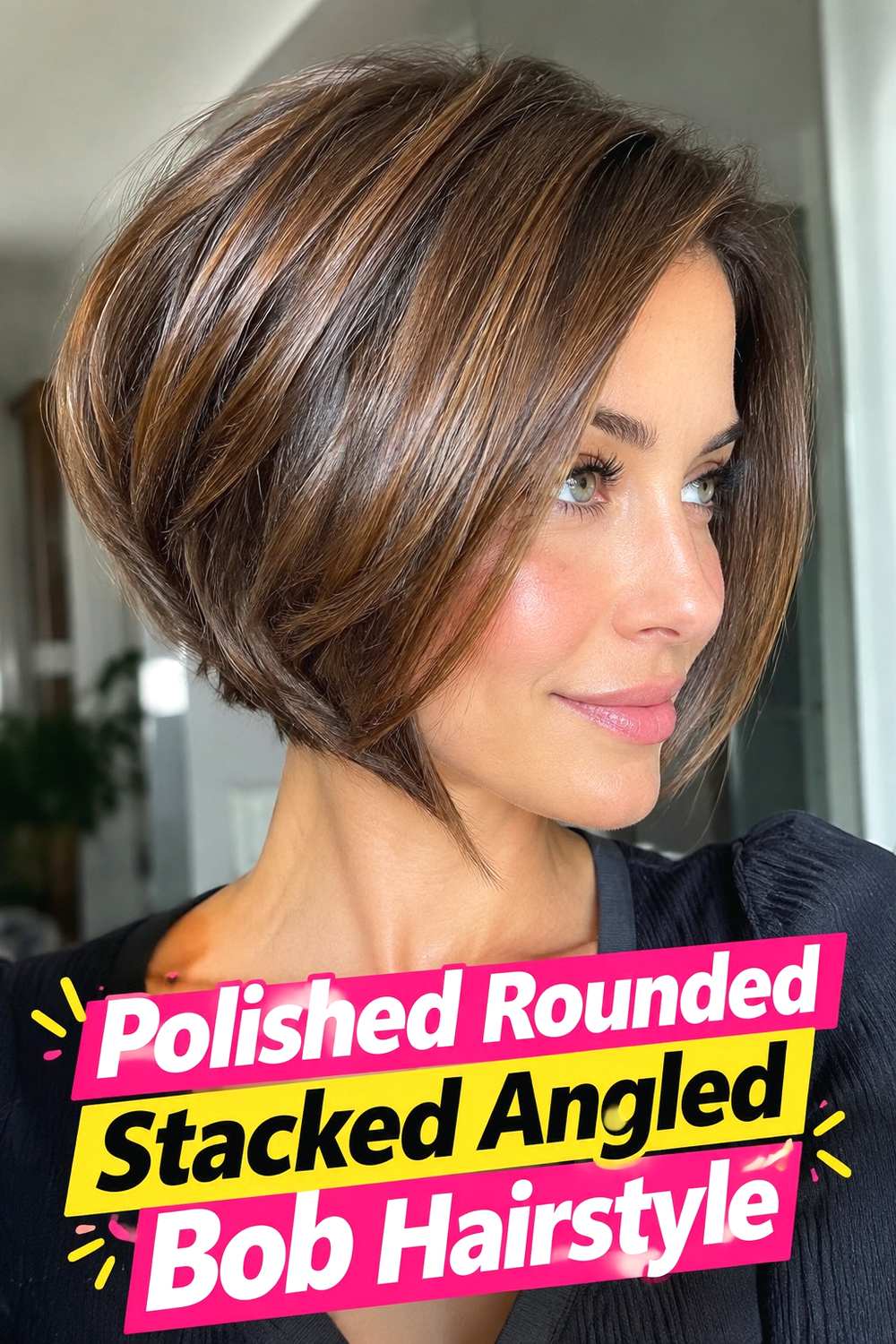
The polished rounded stacked bob emphasizes smooth curvature through the back before tapering into longer front pieces. Its shape is controlled but not severe, with the layers arranged to create a softly domed profile rather than a highly textured crown. A precise blowout makes the graduation especially visible, while lightly beveled ends keep the cut from appearing rigid. This look works well when you prefer a neat, salon-finished appearance and do not mind using a round brush or smoothing tool. The rounded shape depends heavily on the quality of the cut, so maintaining clean layers at the back is more important than adding large amounts of styling product.
Styling Notes
Direct the airflow downward for shine, then use a round brush beneath the back sections to reinforce the curved silhouette.
Why It Works
The smooth finish highlights the stacked architecture while the longer front sections keep the haircut visibly angled and contemporary.
How to Choose the Right Look
Start by deciding how short you want the back to feel. A short nape-stacked bob creates the strongest contrast and requires more frequent reshaping, while chin-length and shoulder-grazing versions give you additional length and a softer angle. If you want the most visible graduation, sleek and polished styles show the cutting lines clearly. Textured, wavy, feathered, and curly versions soften those lines and create more movement.
Hair density matters too. Fine hair often benefits from a stronger perimeter and controlled stacking rather than excessive layers. Thick hair may need internal weight removal so the back stays shaped without becoming heavy. Natural waves and curls require layering that respects shrinkage and movement.
Finally, think about styling time. Smooth, sculpted versions usually need more deliberate blow-drying, while textured and naturally wavy options can be easier to wear with an undone finish. Your ideal bob should balance the angle you love with a routine you can realistically maintain.
Final Thoughts
A stacked angled bob can range from sharply graduated and sleek to soft, wavy, feathered, or curly. The best version is the one that works with your natural density, preferred length, and everyday styling habits. Use these 15 ideas as a starting point, then adjust the angle, stacking, texture, and front length to create a cut that feels practical as well as polished.
FAQs
1. What is a stacked angled bob?
A stacked angled bob is shorter and graduated through the back, with layers that build shape and longer sections that angle toward the front.
2. How is a stacked bob different from a regular angled bob?
A stacked bob uses noticeable graduation through the back to create volume and curvature. An angled bob can have a sloped perimeter without as much stacking.
3. Can fine hair wear a stacked angled bob?
Yes. Fine hair can work well with controlled graduation, especially when enough weight is preserved through the perimeter to keep the ends looking substantial.
4. Can a stacked angled bob work with curly or wavy hair?
Yes, but the layering and front length should account for natural movement and shrinkage. The finished angle may look softer than it does on straight hair.
5. How often does a stacked angled bob need trimming?
Shorter, sharply graduated versions usually show growth sooner than longer, softer versions. Your preferred neckline and angle will determine how frequently the shape needs refreshing.
Save your favorite stacked angled bob ideas, share them for inspiration, and explore more hairstyle looks that fit your texture, length, and styling routine.