18 Sisterlocks Side Bun Hairstyle Ideas
Soft side placement, visible lock texture, and low-volume shaping give these Sisterlocks side buns an elegant finish without requiring a tightly pulled or overly structured updo.
A side bun is a useful way to change the silhouette of Sisterlocks while keeping their fine, individual texture visible. Positioning the bun near one side of the nape creates natural asymmetry, while twists, curls, rolls, and selective pinning can make the same basic shape feel casual, romantic, or formal.
The best version depends on your Sisterlocks length, density, maturity, and how much weight you want gathered into one area. Longer or denser locks may feel better with a broad, softly anchored bun rather than a compact tight knot. These ideas focus on comfortable placement, recognizable lock texture, and practical variations that range from simple everyday buns to more polished event-ready shapes.
Quick List
- Soft Side Part Sisterlocks Side Bun Hairstyle
- Low Side Sisterlocks Chignon Hairstyle
- Curled Sisterlocks Side Bun Hairstyle
- Twisted Sisterlocks Side Bun Hairstyle
- Half Up Sisterlocks Side Bun Hairstyle
- Braided Accent Sisterlocks Side Bun Hairstyle
- Voluminous Sisterlocks Side Bun Hairstyle
- Rolled Sisterlocks Side Bun Hairstyle
- Face Framing Sisterlocks Side Bun Hairstyle
- Wrapped Sisterlocks Side Bun Hairstyle
- Textured Sisterlocks Side Bun Hairstyle
- Side Swept Sisterlocks Knot Bun Hairstyle
- Double Twist Sisterlocks Side Bun Hairstyle
- Low Loose Sisterlocks Side Bun Hairstyle
- Curled End Sisterlocks Side Bun Hairstyle
- Minimalist Sisterlocks Side Bun Hairstyle
- Crown Lifted Sisterlocks Side Bun Hairstyle
- Soft Formal Sisterlocks Side Bun Hairstyle
1. Soft Side Part Sisterlocks Side Bun Hairstyle
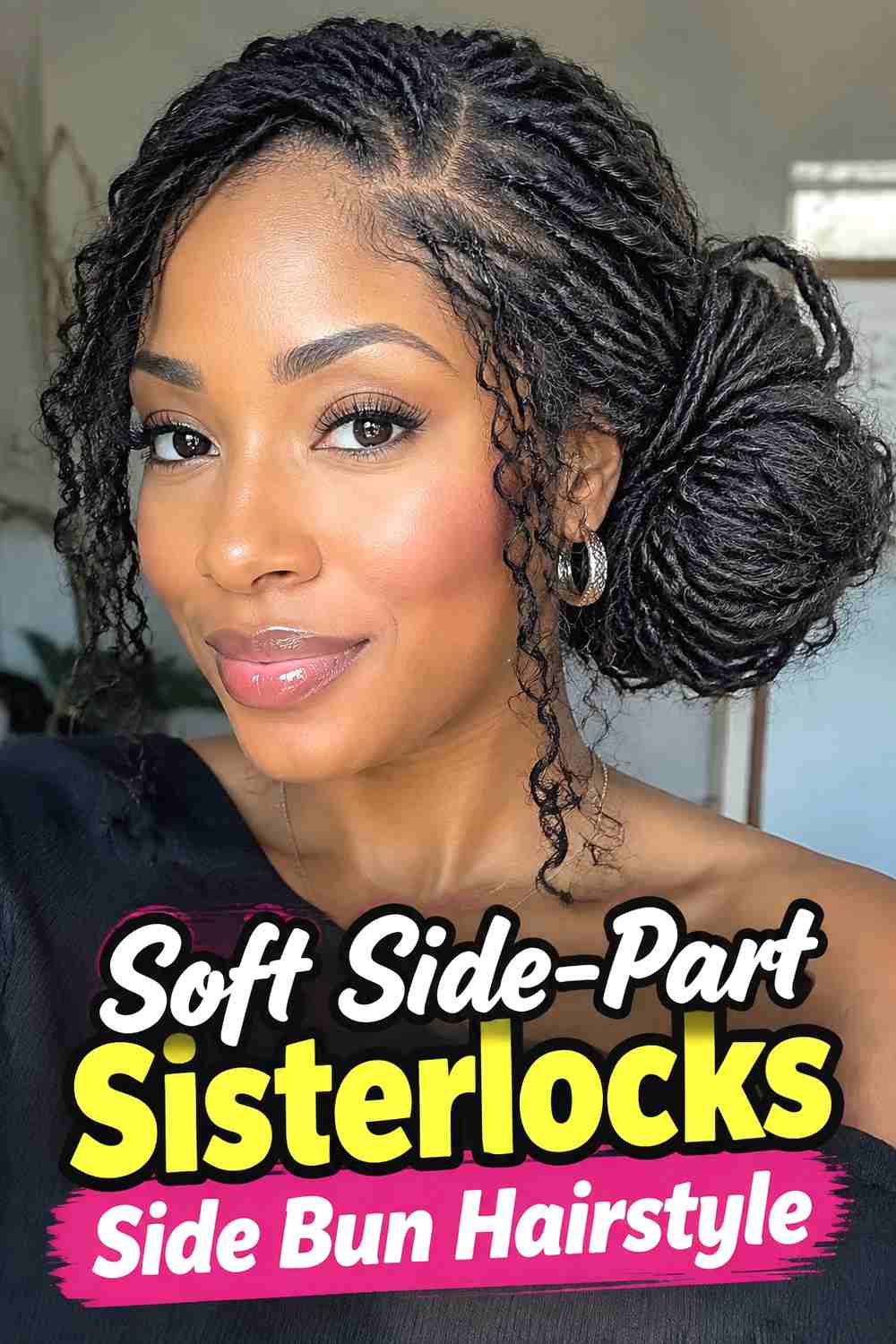
A soft side part creates a natural lead-in to a Sisterlocks side bun without requiring a tightly slicked crown. Direct the heavier section diagonally across the head and gather the lengths near one side of the nape, then form a rounded bun that still shows individual locks across its surface. The lighter side can be gently tucked behind the ear for a cleaner profile. This version works well when you want an elegant everyday style that does not feel overly formal. Keep the base broad enough to distribute the gathered weight comfortably, especially if your Sisterlocks are long or dense, and avoid pulling the part completely flat.
Styling Notes
Create the part first, then gather the locks gradually toward the side. A broad attachment point usually produces a softer silhouette than one tightly cinched elastic.
2. Low Side Sisterlocks Chignon Hairstyle
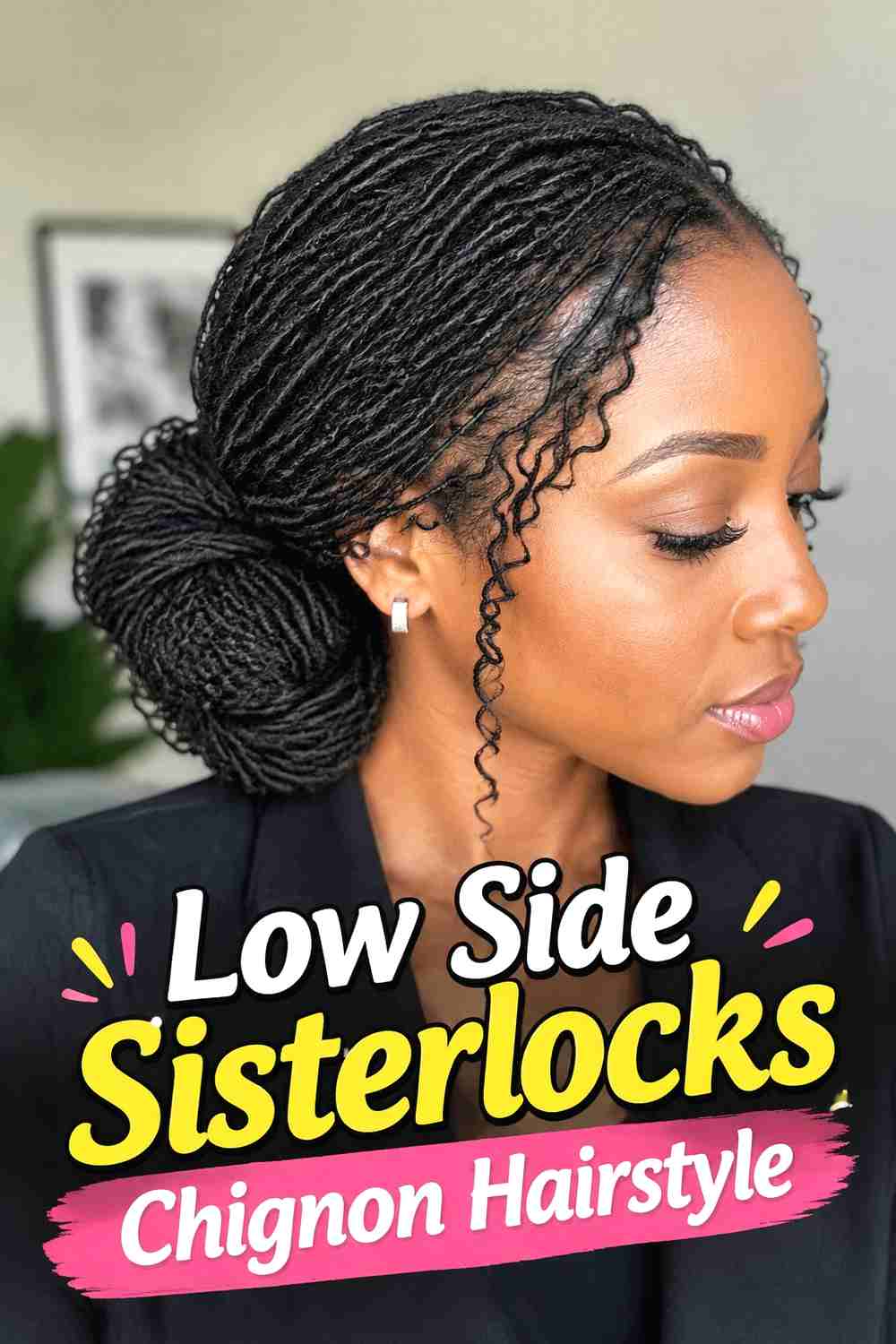
A low side chignon creates a wider, more folded shape than a traditional round bun. Sweep the Sisterlocks toward one side of the nape, fold the lengths inward, and anchor them so the chignon sits close to the neck rather than projecting outward. Let several locks remain visible across the outer fold to preserve the texture instead of creating a completely smooth surface. This style works particularly well with medium-to-long Sisterlocks because the extra length can be tucked inside the shape. Keep the crown softly controlled and allow a little natural lift around the part so the finished chignon looks polished without placing unnecessary tension along the hairline.
Best For
Choose this version for dinners, formal occasions, or professional looks when you want a side updo with a low, refined profile.
3. Curled Sisterlocks Side Bun Hairstyle
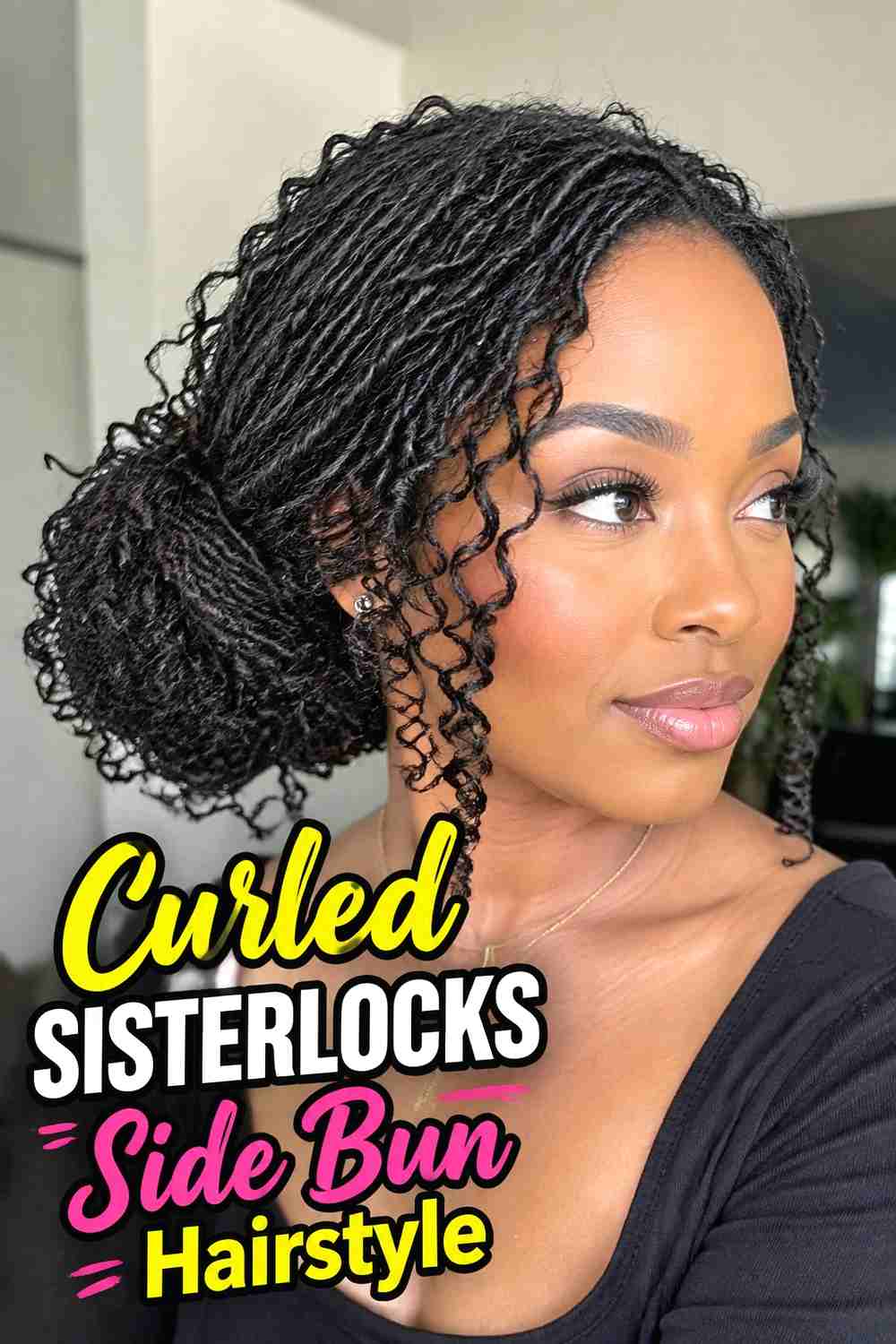
Curling the Sisterlocks before forming the bun adds volume and rounded movement to the finished shape. Set the lengths into soft bends or curls, then gather them to one side of the nape without brushing away their definition. Instead of winding everything into one tight coil, pin curled sections loosely around the base so individual arcs remain visible. This creates a fuller, romantic bun while keeping the Sisterlocks texture recognizable. Medium and longer locks give you the most room to display the curl pattern. Keep the attachment point comfortable and let the curls create the size of the bun rather than relying on aggressive pulling or excessive padding.
Pro Tip
Pin curled sections close to their bases instead of flattening their fullest curves. This helps the bun retain soft dimension while remaining secure.
4. Twisted Sisterlocks Side Bun Hairstyle
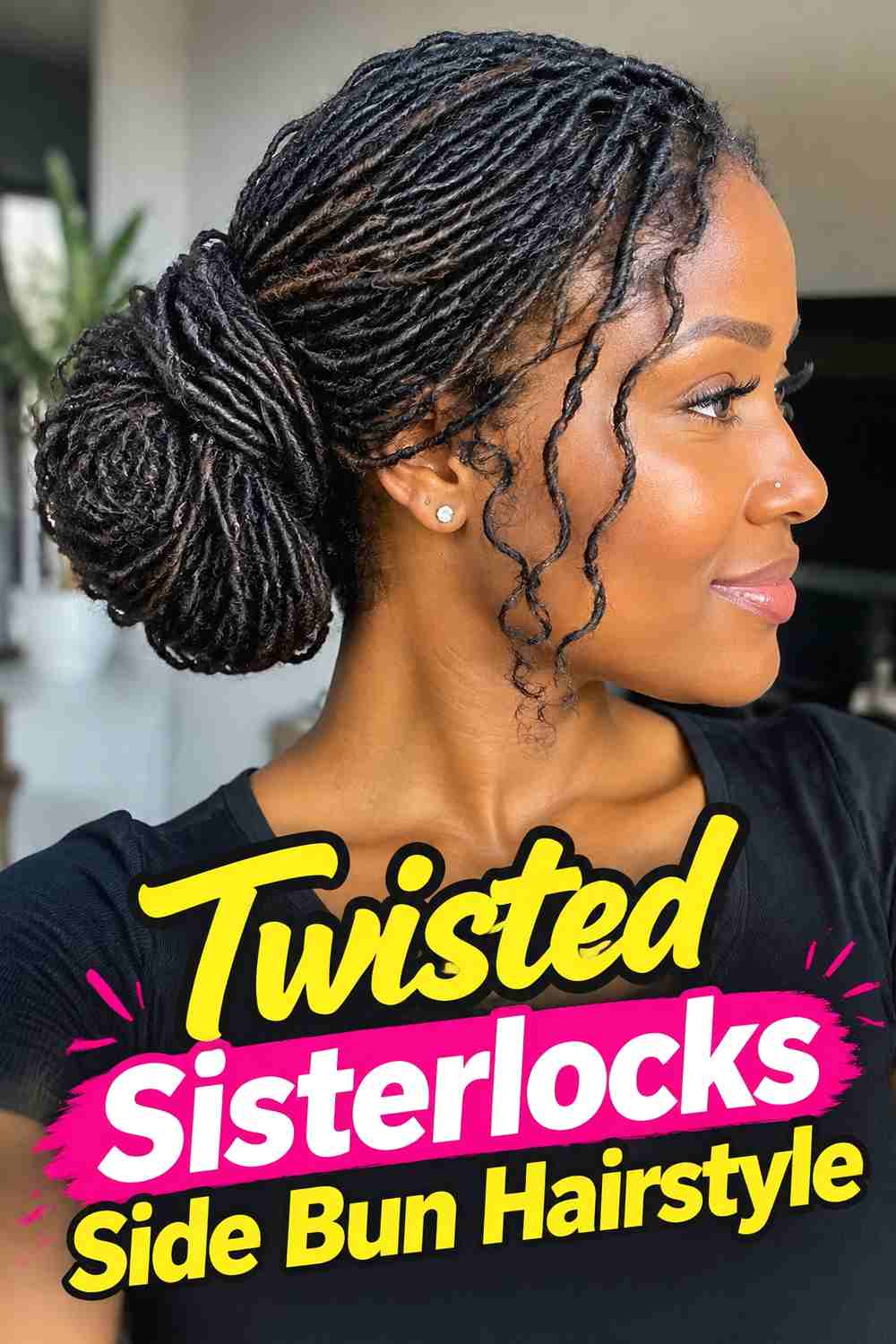
A twisted side bun uses grouped Sisterlocks to create visible directional texture before they are gathered at the nape. Divide the lengths into two or three broad sections, twist each group softly, and guide them toward one side before wrapping the remaining lengths into a compact bun. The ridges of the twists add interest without hiding the locks inside a conventional smooth updo. This style is especially useful when you want structure but prefer not to braid the hair again. Keep each twist broad and relaxed so individual locks are not sharply bent at the roots. A few hidden pins can stabilize the shape without making the bun feel overly tight.
Styling Notes
Start the twists farther from the scalp if your roots feel sensitive. The design can still look defined without twisting tightly from the base.
5. Half Up Sisterlocks Side Bun Hairstyle
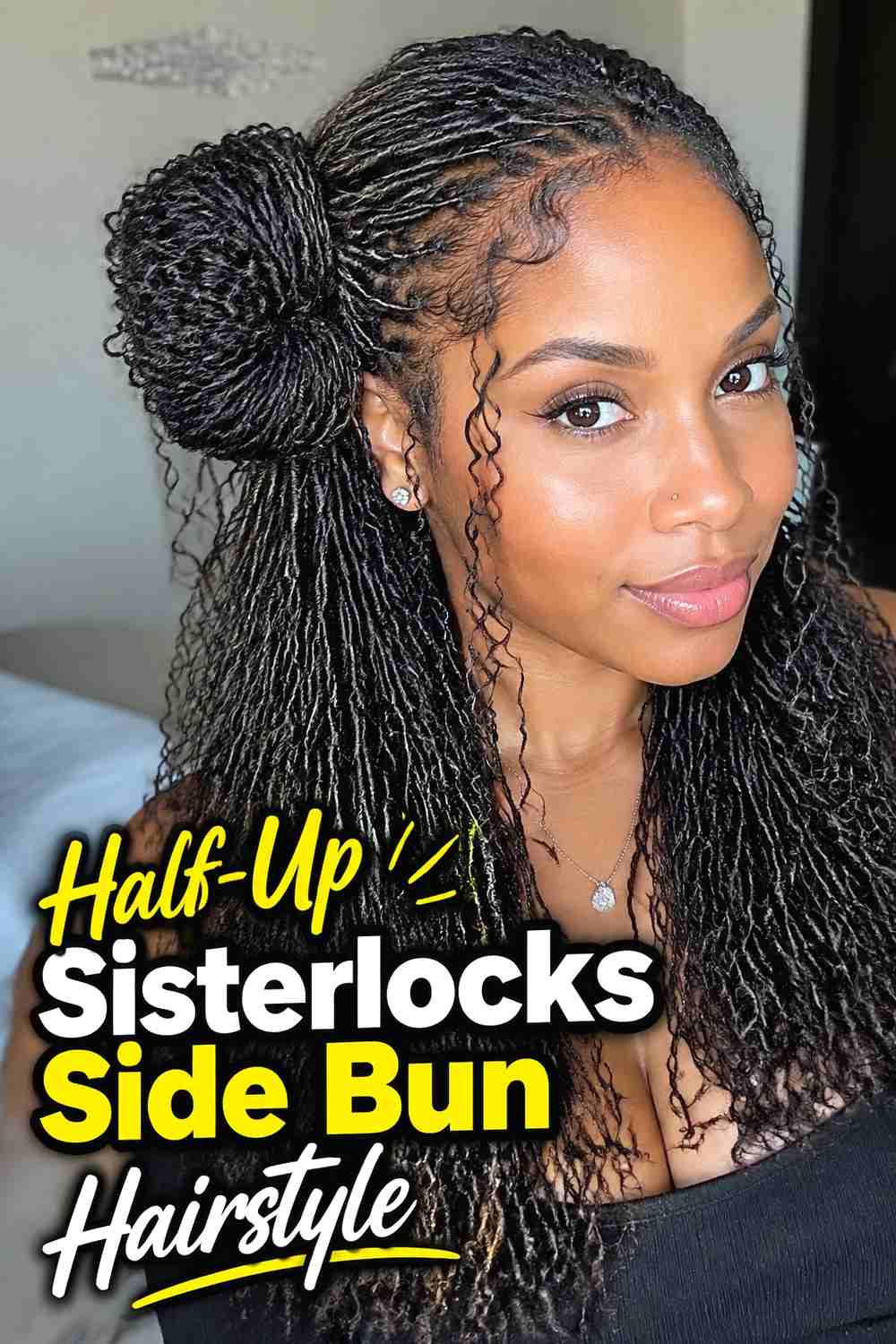
A half-up side bun keeps much of the Sisterlocks loose while giving the upper sections a controlled asymmetrical shape. Gather the locks from the crown and one side, direct them diagonally toward the opposite back section, and form a small bun slightly above the nape. Let the lower Sisterlocks remain loose down the back or over one shoulder. This gives the hairstyle the visual effect of a side bun without concentrating all the hair into one attachment point. It works especially well on long Sisterlocks and on days when you want your length visible. Keep the bun small enough that it does not overpower the loose lower sections.
Best For
This version is ideal when you want some updo structure while still showing most of your Sisterlocks length and movement.
6. Braided Accent Sisterlocks Side Bun Hairstyle
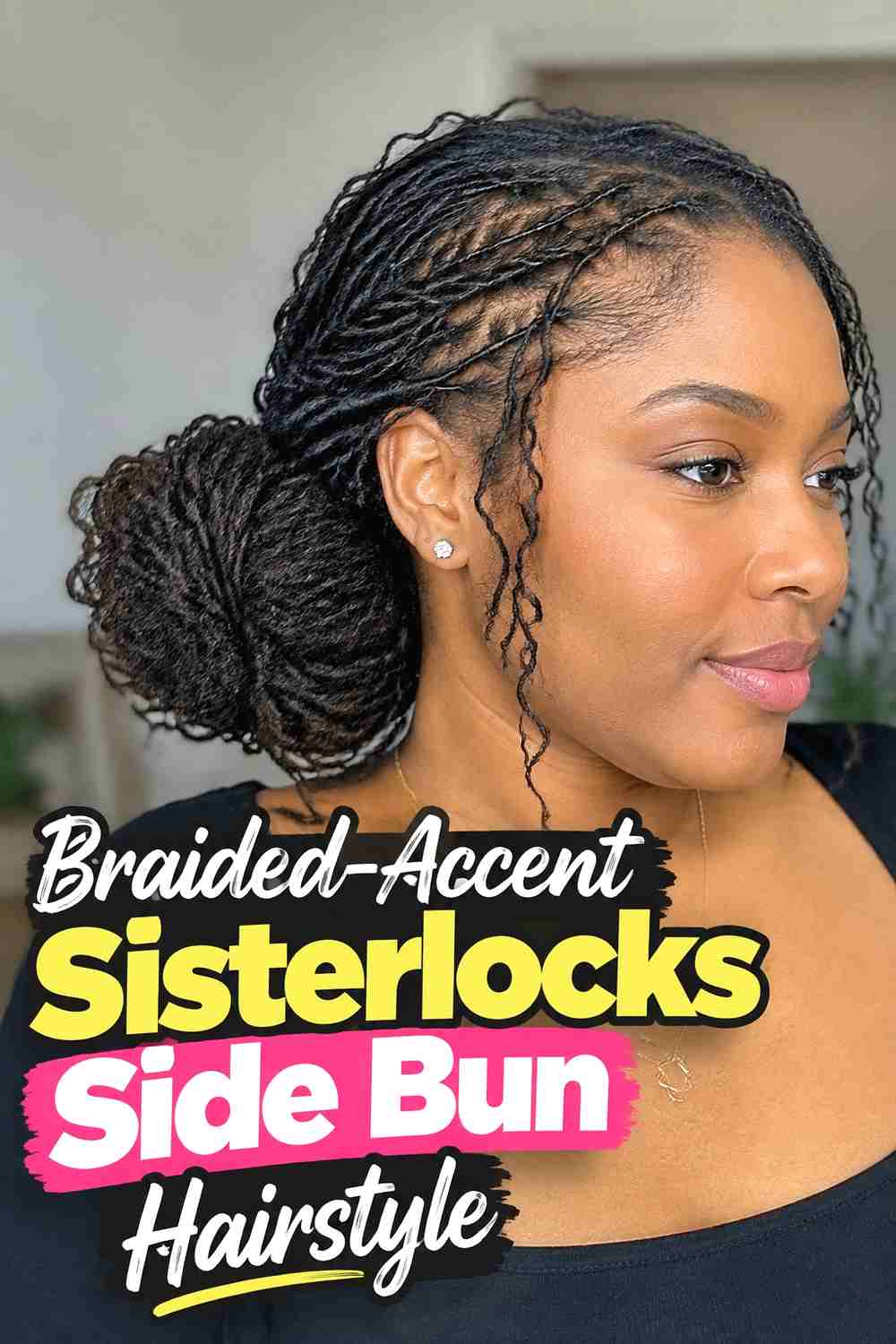
A braided accent can define the path toward a side bun without requiring the entire hairstyle to be braided. Take a small group of Sisterlocks from one temple or side section, braid them loosely as a unit, and direct that braid toward the opposite nape. Gather the remaining locks there and build a side bun around the endpoint. The braid creates a clear line across the head while the bun remains textured and full. Keep the braided section proportionate so it does not dominate the entire hairstyle. Because the individual locks are already structured, the accent braid should be gentle and decorative rather than tightly manipulated from the roots.
Why It Works
The braid visually guides the eye toward the side bun while leaving the majority of the Sisterlocks in their original individual form.
7. Voluminous Sisterlocks Side Bun Hairstyle
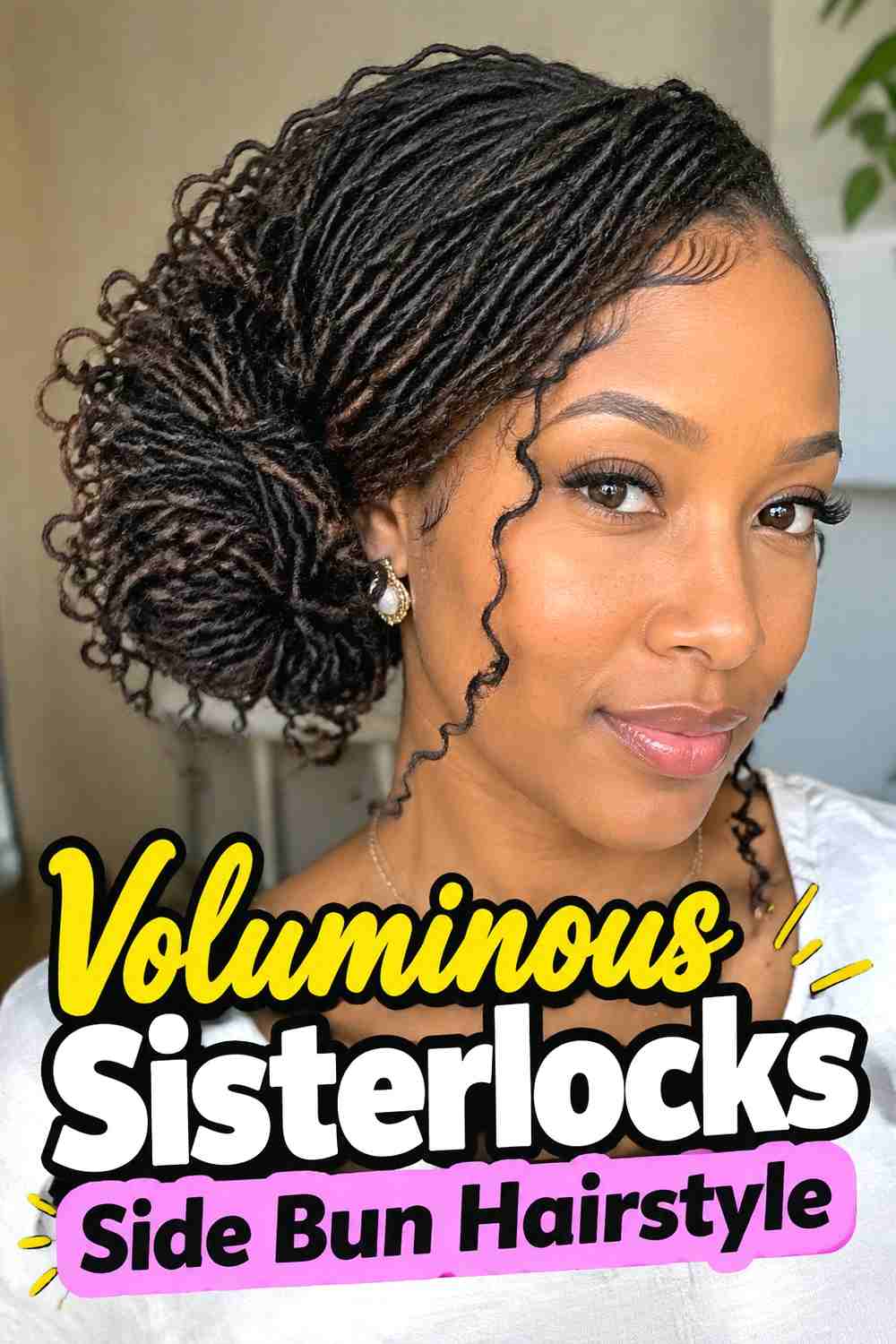
A voluminous side bun makes the gathered texture the main feature by spreading the Sisterlocks into a broad, airy shape near one side of the nape. Instead of winding the length into a dense coil, create loose loops and softly pinned sections so the bun has width and visible depth. The crown can retain a little natural lift to balance the fuller lower shape. This version works especially well on dense or long Sisterlocks because the existing quantity of hair naturally creates substantial volume. Keep the bun close enough to the head for comfort and distribute pins throughout the shape so one small area is not supporting the full weight.
Wear & Maintenance
If the bun begins to pull during wear, reduce its height or spread the base wider. A larger-looking bun does not need to come from tighter tension.
8. Rolled Sisterlocks Side Bun Hairstyle
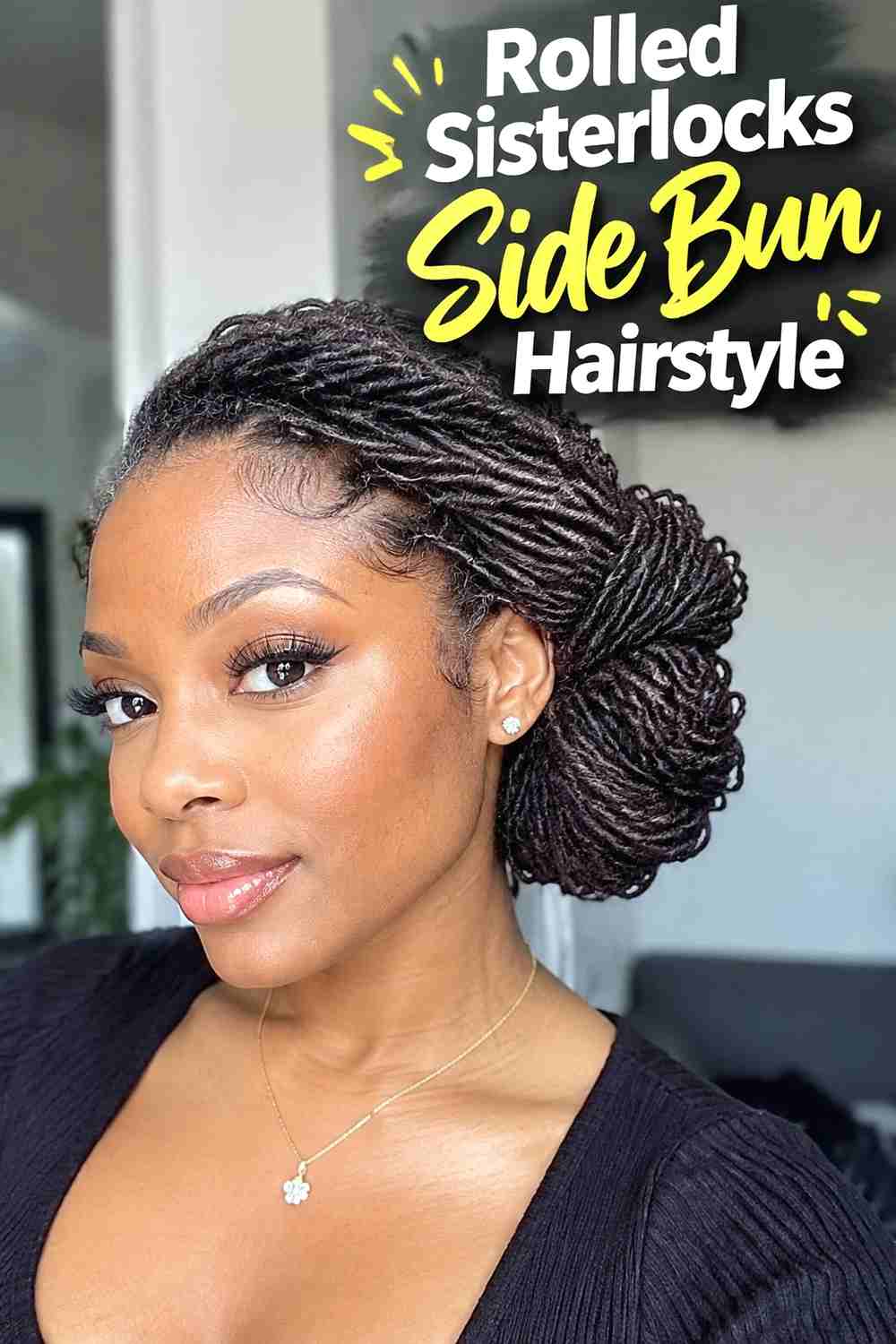
A rolled side bun creates a smooth directional ridge before the hair gathers at the nape. Begin on the lighter side of a side part and gently roll grouped Sisterlocks toward the back, adding more locks as the roll travels across the head. Once it reaches the opposite nape, fold the remaining length into a compact side bun. The roll adds structure across the back without hiding the fine lock texture, especially if the grouped sections remain slightly separated. This style works well for medium and long lengths and can feel more polished than a simple loose bun. Keep the roll broad rather than tightly twisted for better comfort.
Styling Notes
Pin inside the roll at a few strategic points instead of fastening every section. This helps the surface stay soft while giving the structure hidden support.
9. Face Framing Sisterlocks Side Bun Hairstyle
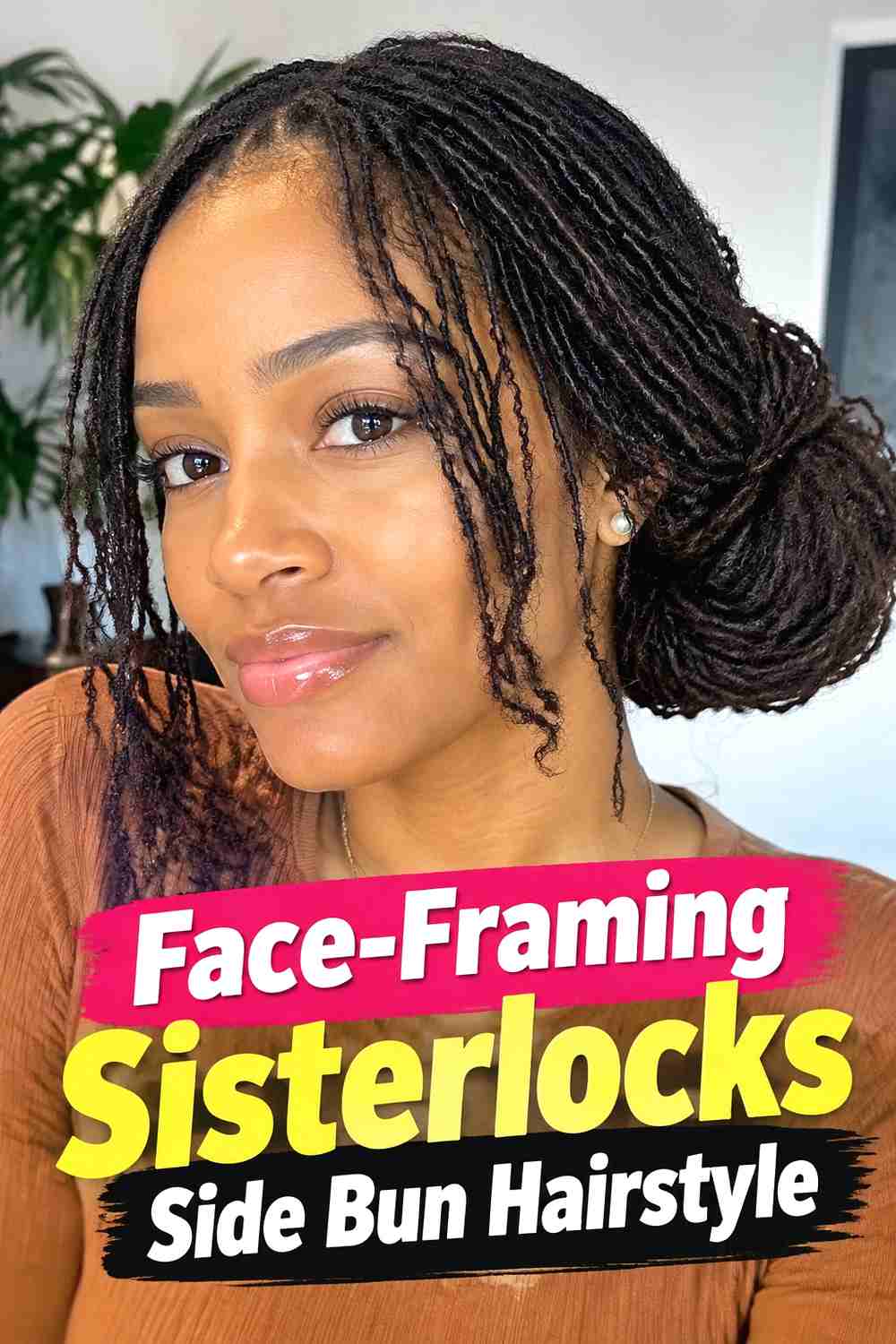
A few face-framing Sisterlocks can soften the asymmetry of a side bun and create movement around the temples and jawline. Select several fine locks before gathering the rest of the hair, then direct the main length toward one side of the nape and form a relaxed bun. The front pieces can remain straight, naturally curved, or softly curled depending on the finish you want. Keep the framing sections limited so the bun still looks intentional and polished. This version works especially well when a fully swept-back style feels too severe. The loose front locks also create visual balance against the bun sitting on the opposite side.
Pro Tip
Choose the face-framing locks before securing the bun so you do not have to pull them out later and disturb the finished shape.
10. Wrapped Sisterlocks Side Bun Hairstyle
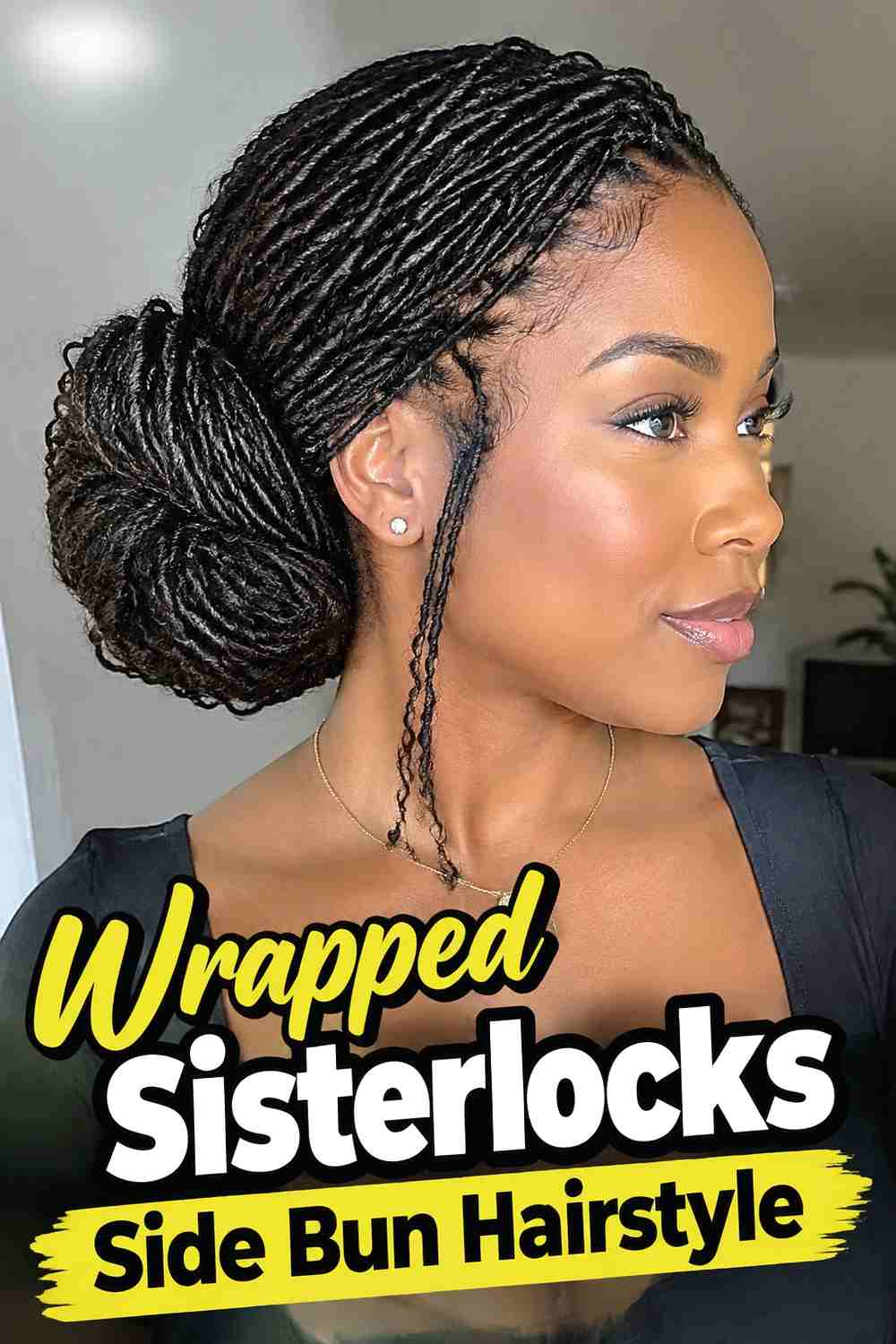
A wrapped side bun creates a clean outer border by using a small section of Sisterlocks to conceal the base. Gather the hair into a low side ponytail, form most of the length into a rounded or folded bun, then reserve several locks to wrap gently around the attachment point. Tuck those ends underneath with discreet pins so the foundation appears continuous. The wrapped detail gives the style a more finished look without removing the natural lock texture from the bun itself. Medium and long Sisterlocks are easiest to work with because there is enough length to create both the bun and the finishing wrap.
Why It Works
Hiding the attachment point makes the side bun look more intentional while allowing the individual Sisterlocks to remain clearly visible across the main shape.
11. Textured Sisterlocks Side Bun Hairstyle
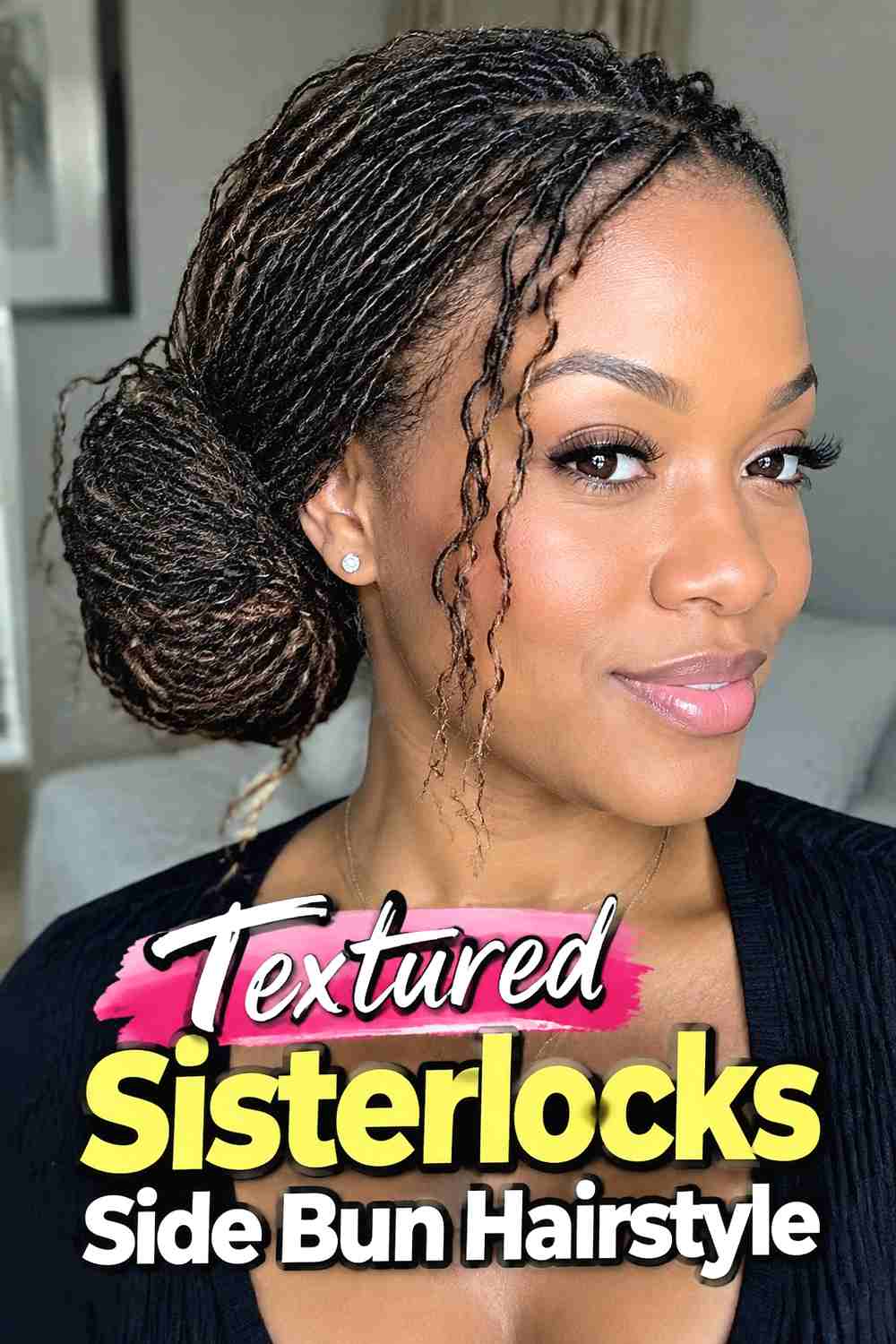
A textured side bun embraces bends, braid-out movement, or natural irregularity through the Sisterlocks instead of smoothing everything into a uniform surface. Gather the locks loosely toward one side, preserving visible movement through the crown and lengths, then pin the bun in several sections so the texture remains dimensional. Slightly different directions within the bun keep it from looking overly compact. This style works especially well when the locks already have a set or soft bend from previous styling. Keep the outer silhouette controlled enough that the result still reads as a deliberate side bun rather than a loose cluster of pinned hair.
Hair Type & Length
Medium-to-long Sisterlocks with existing bends or set texture make this version especially easy to build without excessive manipulation.
12. Side Swept Sisterlocks Knot Bun Hairstyle
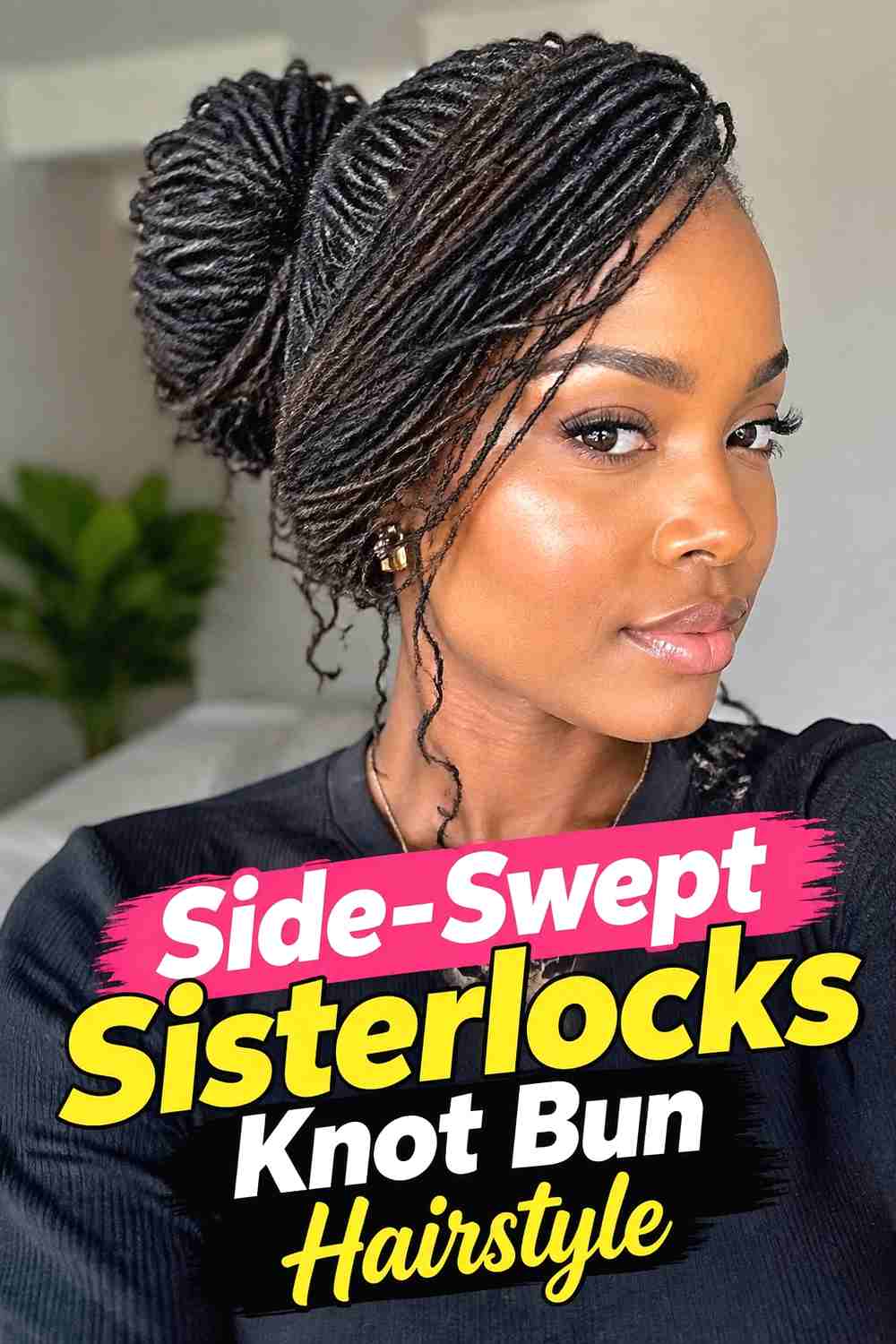
A knot bun gives the side placement a compact, sculptural finish. Sweep the Sisterlocks diagonally toward one side of the nape, divide the gathered length into broad groups if needed, and fold those sections into a knot-like shape rather than a traditional circular coil. Keep a few individual locks visible across the folds so the texture remains recognizable. This style can look especially elegant with a deep side part because the directional front section naturally leads into the knot. Medium and longer locks work best, while very dense hair may need the knot kept slightly broader so it does not become too heavy or difficult to anchor comfortably.
Styling Notes
Build the knot loosely first and secure its inner folds afterward. This gives you more control over shape and reduces the temptation to pull the base too tightly.
13. Double Twist Sisterlocks Side Bun Hairstyle
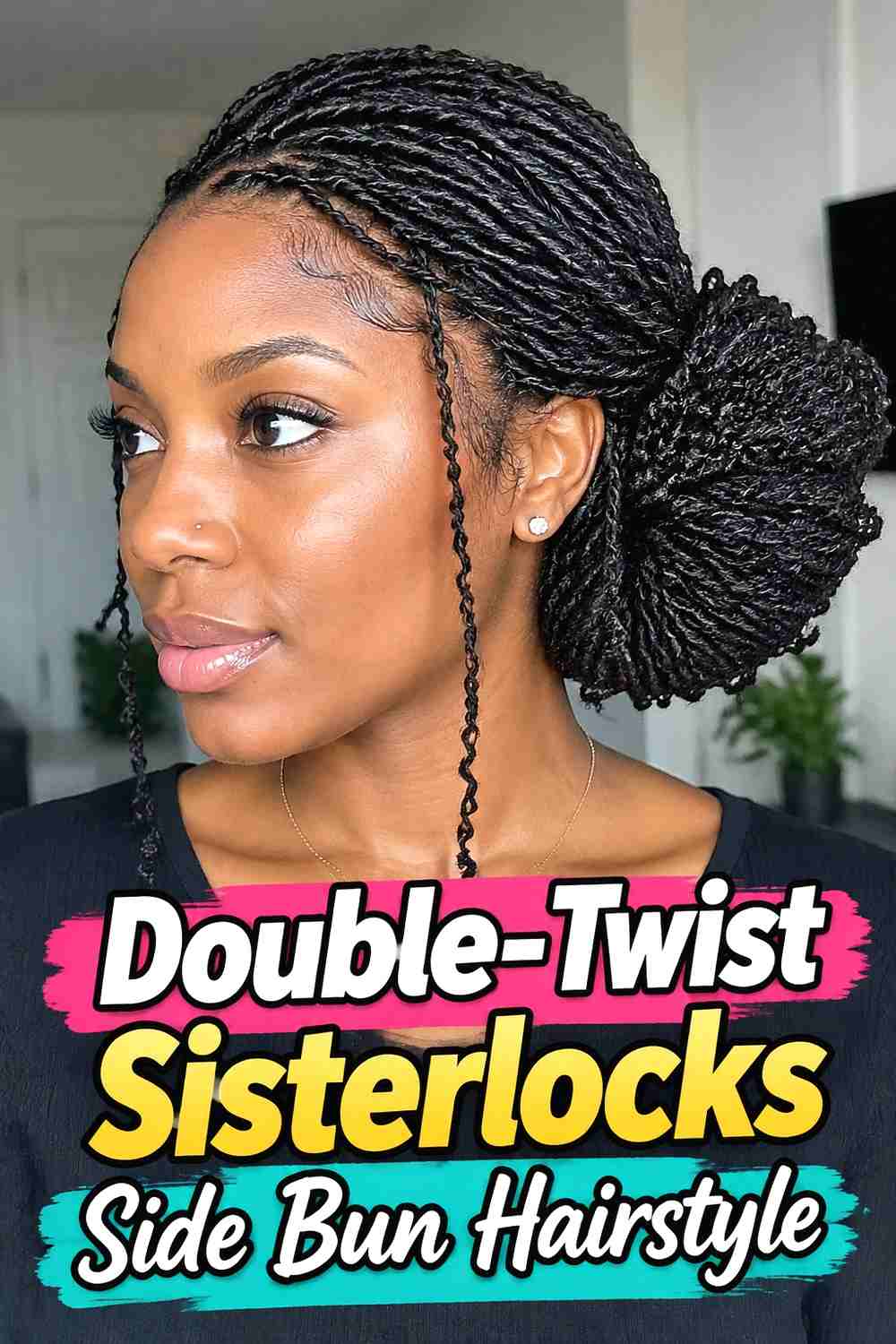
A double-twist side bun creates balanced texture by directing two broad sections toward one shared attachment point. Divide the Sisterlocks into upper and lower or left and right groups, softly twist each section, then bring them together near one side of the nape. Use the remaining length to form a rounded bun beneath the twists. The paired ridges make the hairstyle look more detailed from the back while still preserving the fine-lock surface. Keep both twists similar in tension so one side does not feel tighter than the other. This works especially well for medium and long Sisterlocks when you want more construction than a basic side bun.
Pro Tip
Secure the two twists together before forming the bun. A stable joining point makes the lower shape easier to build without repeatedly adjusting the roots.
14. Low Loose Sisterlocks Side Bun Hairstyle
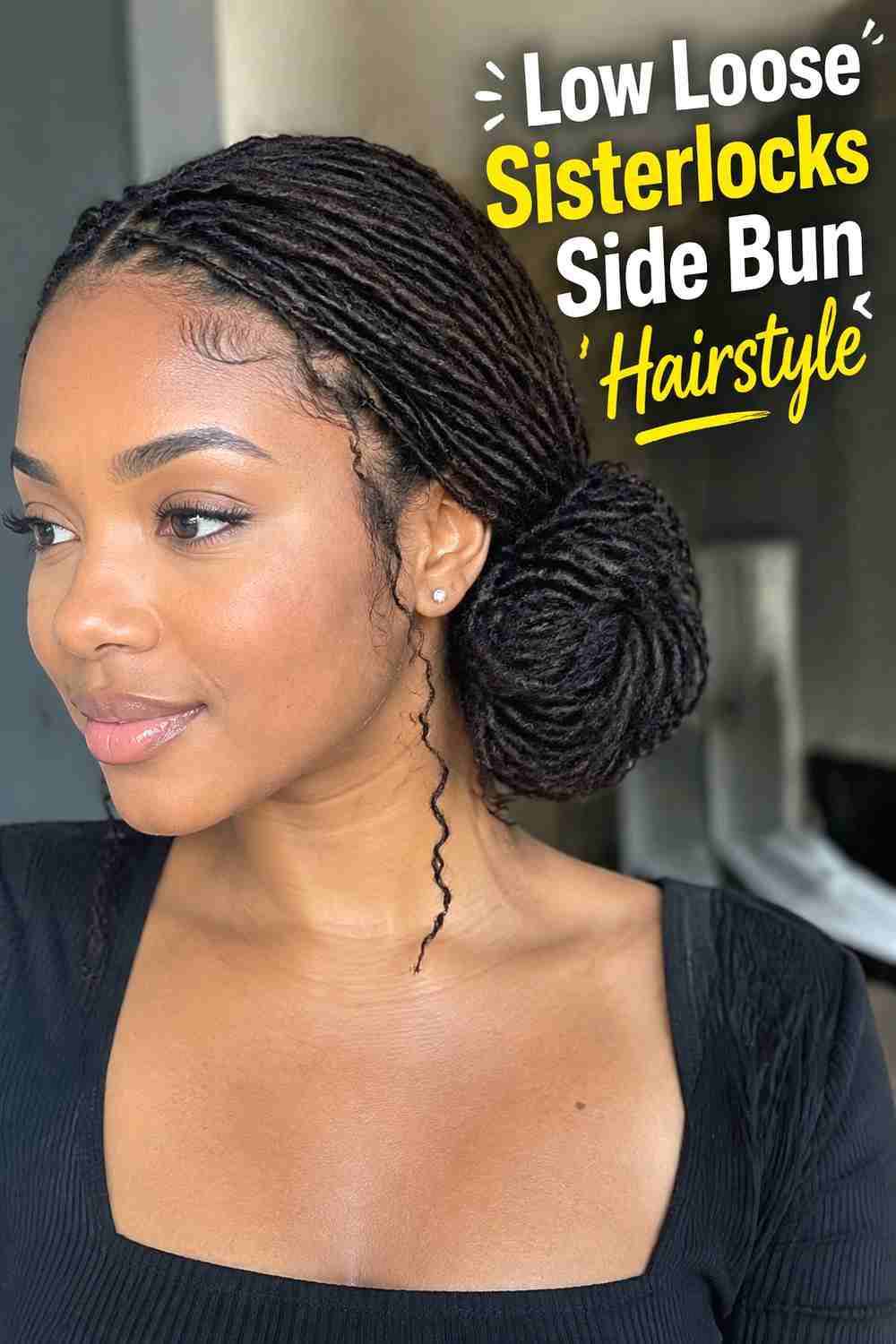
A low loose side bun is one of the softest options in the collection, sitting close to the nape with minimal tension and a slightly expanded shape. Gather the Sisterlocks toward one side using your hands rather than over-smoothing them, then fold the lengths into a loose bun with several visible loops. The crown can remain naturally full and a few shorter locks may sit softly around the edges. The goal is controlled relaxation rather than a deliberately messy result. This variation works particularly well for everyday wear when you want the hair off the shoulders but do not need a sharply polished finish.
Wear & Maintenance
Use enough pins or a soft tie to keep the bun stable without repeatedly tightening it throughout the day. Comfort should remain the priority.
15. Curled End Sisterlocks Side Bun Hairstyle
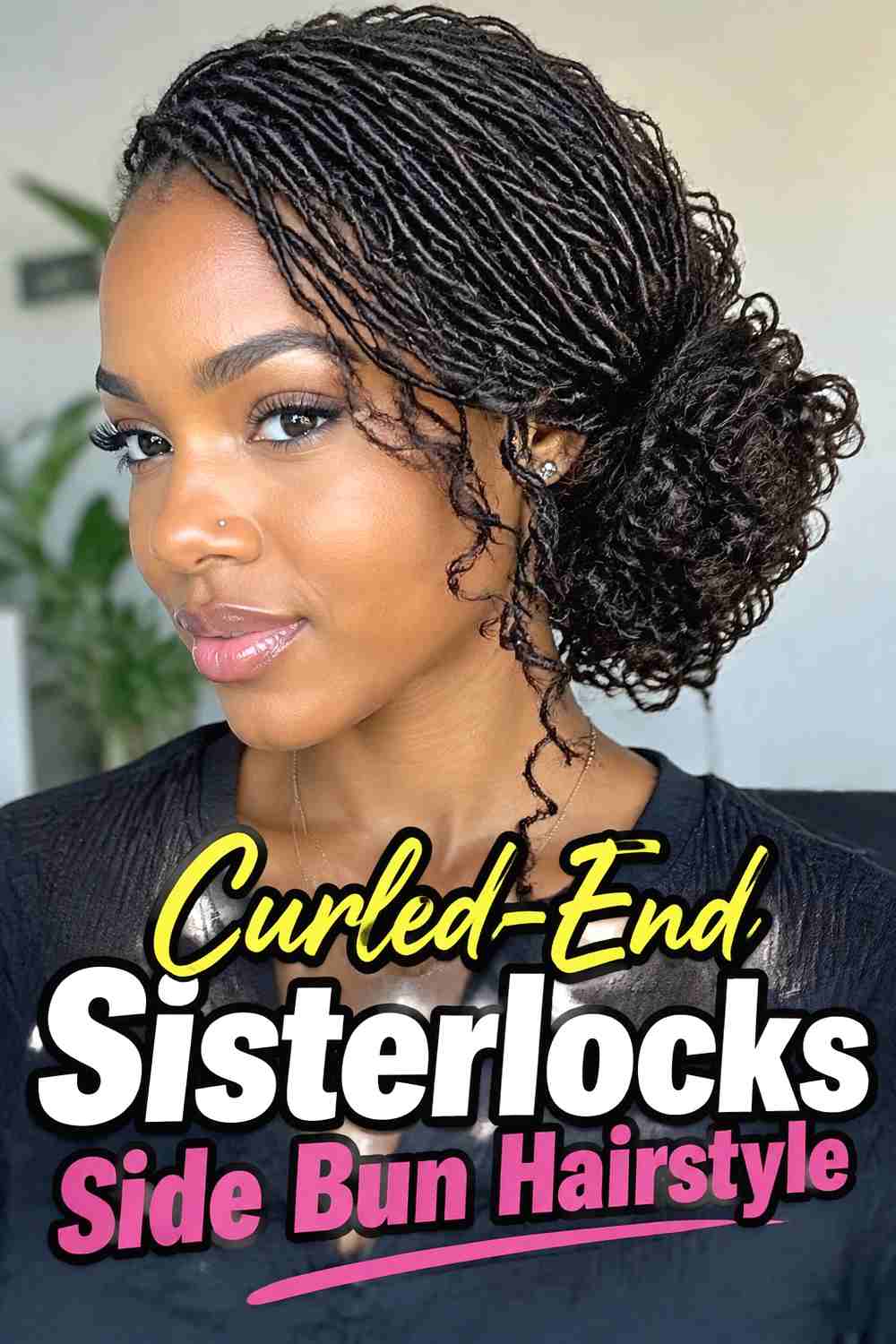
Curled ends can add decorative movement to a side bun without changing the texture of the entire length. Keep the upper Sisterlocks relatively natural, set only the lower portion into curls, then gather the hair toward one side of the nape. Form the bun loosely enough that several curled ends remain visible around the outer edge instead of disappearing inside the shape. This gives the bun a soft, petal-like finish while preserving a simpler crown. Medium and longer locks show the contrast especially well. Keep the curls varied in size so the bun feels dimensional rather than arranged into perfectly repeated loops.
Styling Notes
Reserve the most defined curled ends for the outer edge of the bun and use less prominent sections to build the hidden inner foundation.
16. Minimalist Sisterlocks Side Bun Hairstyle
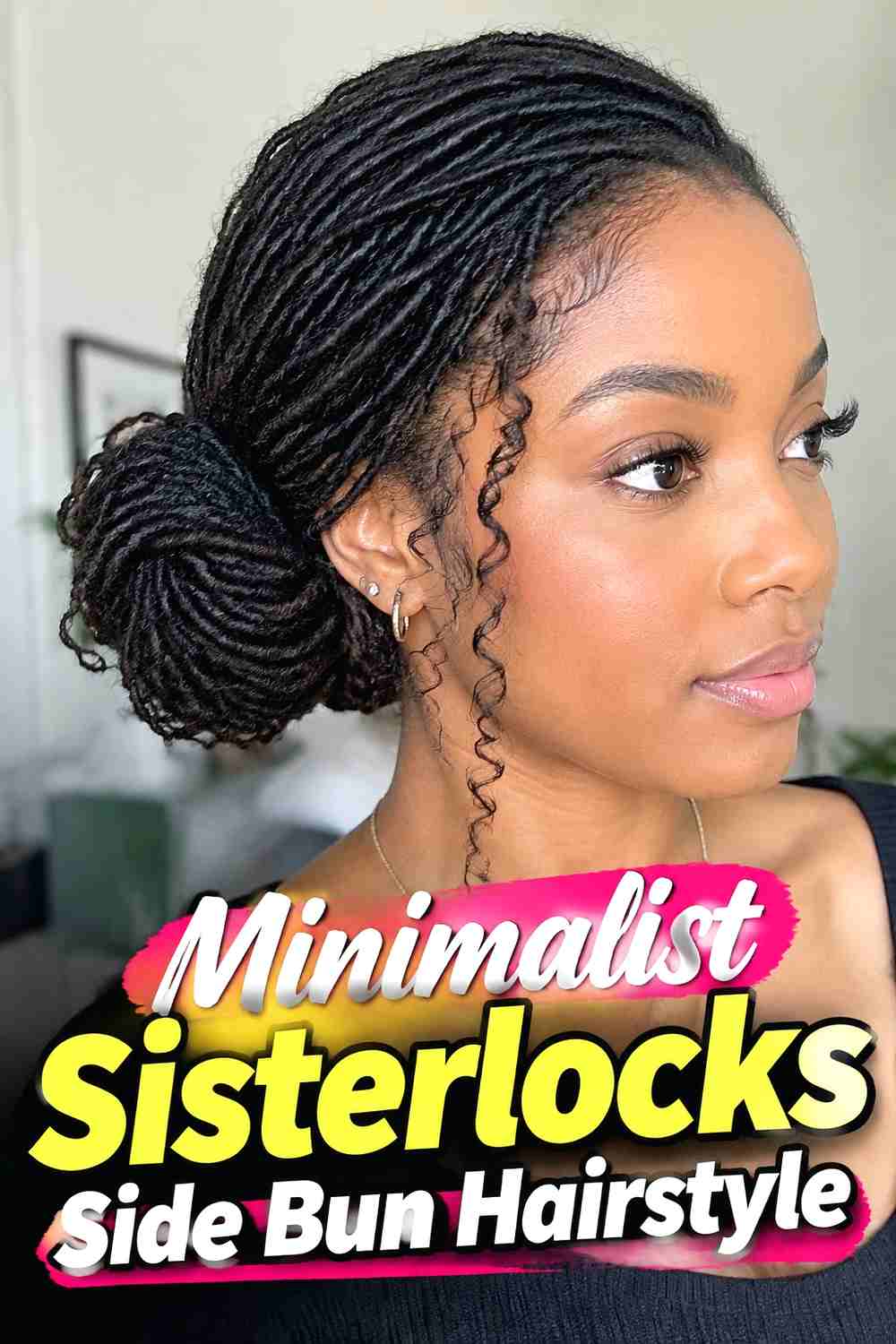
A minimalist side bun focuses on clean placement and visible Sisterlocks texture without curls, braids, accessories, or additional twists. Create a soft center or side part, direct the locks toward one side of the nape, and form a compact bun that sits close to the head. Keep the bun simple enough that individual locks remain easy to distinguish across the surface. This version works well for professional settings, understated events, or everyday styling when you want the asymmetry of a side bun without extra detail. A broad, comfortable base and a few hidden pins are usually more useful than trying to create an extremely tight or perfectly smooth result.
Best For
Choose this style when you want a quick, polished shape that lets the Sisterlocks themselves provide all of the visible texture.
17. Crown Lifted Sisterlocks Side Bun Hairstyle
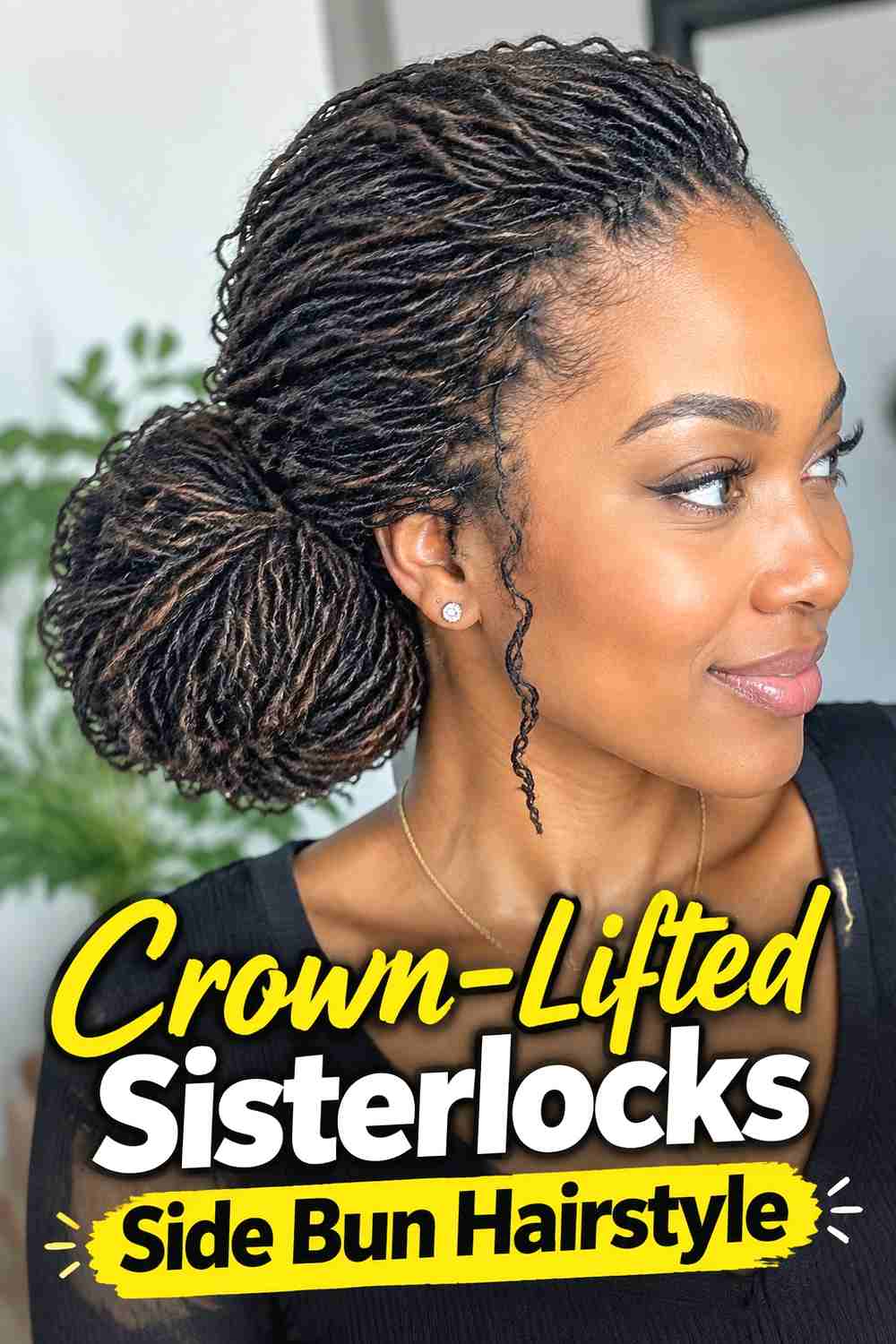
A crown-lifted side bun introduces gentle height through the top before the Sisterlocks travel diagonally toward the lower bun. Leave a little fullness at the crown, then guide the side sections backward with soft pinning rather than pulling them flat. Gather the remaining length near one side of the nape and form a medium-size bun that balances the raised upper section. This silhouette works particularly well for formal occasions because it creates dimension from the front, side, and back. Keep the crown lift broad and natural instead of creating one narrow puff, and distribute the bun’s weight so the elevated shape does not depend on strong root tension.
Why It Works
The lifted crown balances the low side bun vertically, creating a fuller formal silhouette without needing an oversized bun or elaborate accessories.
18. Soft Formal Sisterlocks Side Bun Hairstyle
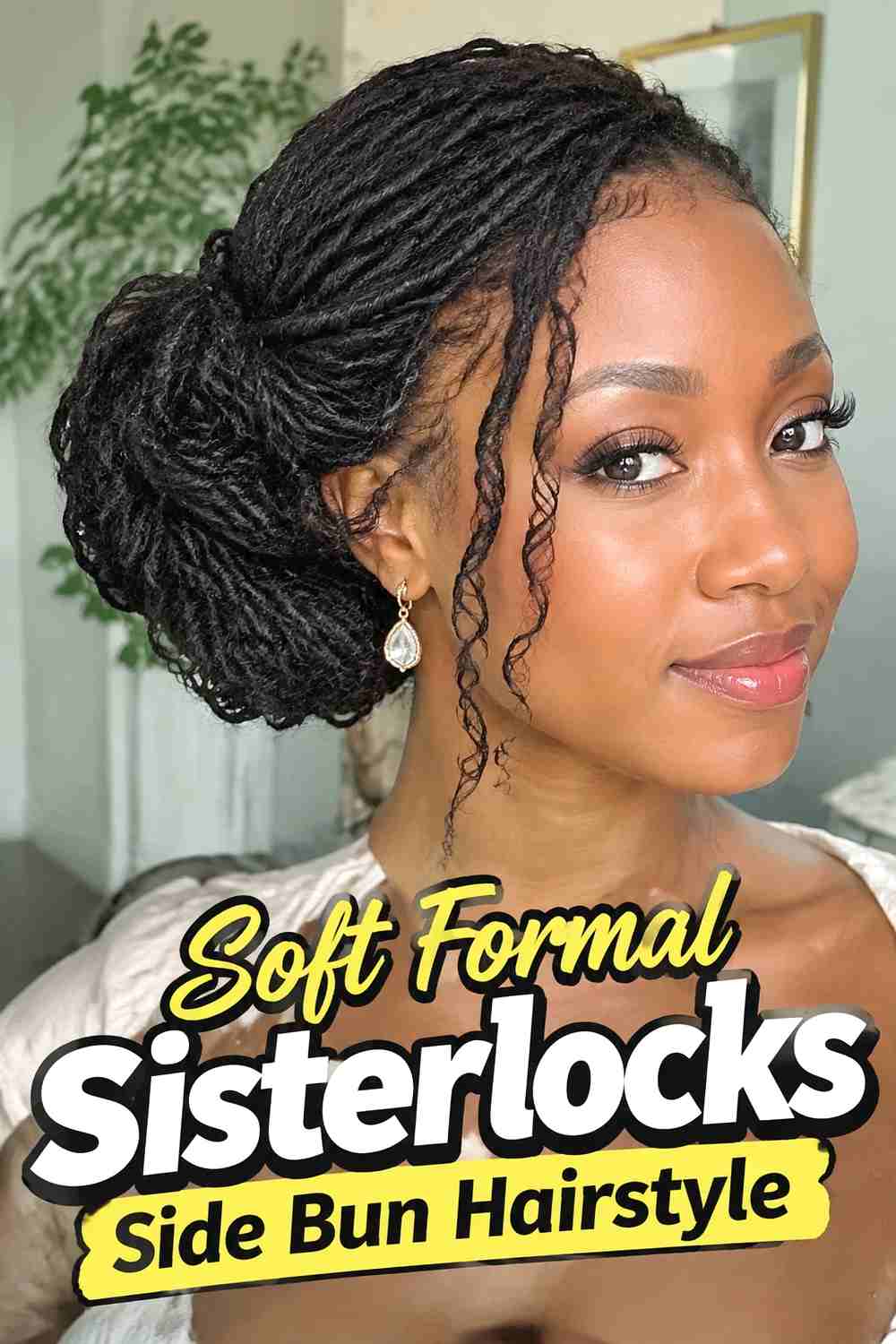
A soft formal side bun combines controlled crown styling, smooth directional placement, and a carefully shaped low bun without eliminating the natural Sisterlocks texture. Create a gentle side part, guide the front sections back with light volume, and gather the length beside the nape. Build the bun from broad folds and loops so it looks polished but not rigid. A few carefully placed locks can soften the perimeter while the main structure stays secure. This version is especially suitable for weddings, formal dinners, and celebrations where you want an elegant updo that still looks unmistakably like Sisterlocks rather than a completely smoothed conventional bun.
Styling Notes
Establish a secure internal foundation first, then refine only the visible outer sections. This allows the bun to stay stable without overworking the surface.
How to Choose the Right Look
Begin with the amount of hair you want gathered. A minimalist, low loose, or soft side-part bun keeps the construction simple, while curled, twisted, braided-accent, and formal versions create more visible structure.
Length matters as well. Medium Sisterlocks can form compact side buns, rolls, and smaller chignons, while longer locks provide more material for wraps, knot buns, double twists, and full voluminous shapes. If your locks are especially dense, a broad low base can distribute the weight more comfortably than a small, tightly cinched attachment point.
Texture changes the mood of the bun. Natural Sisterlocks create a clean, recognizable surface, while curls or braid-out texture add fullness and movement. Face-framing locks soften the front, and crown lift makes the style feel more formal.
For everyday wear, prioritize low tension and easy removal. For events, build stability underneath with soft ties or hidden pins, then shape the visible locks without repeatedly tightening the roots. The best side bun should feel secure while still allowing the locks to retain their natural texture and movement.
Final Thoughts
Sisterlocks side buns offer plenty of variety without requiring the locks to lose their distinctive texture. Changing the bun from compact to loose, curled, twisted, wrapped, or lifted can completely change the finished silhouette.
Choose a version that matches your length, density, occasion, and comfort level. A secure but softly anchored foundation usually creates a more wearable result than an excessively tight base, especially when longer Sisterlocks add noticeable weight.
FAQs
1. Can Sisterlocks be worn in a side bun?
Yes. Sisterlocks can be gathered, pinned, twisted, curled, and arranged into many updo shapes, including low side buns and chignons.
2. How do I keep a Sisterlocks side bun from feeling too heavy?
Keep the bun low, use a broad attachment point, and distribute pins or ties across the shape rather than relying on one very tight anchor.
3. Can I curl Sisterlocks before making a side bun?
Yes. Soft curls or curled ends can create extra volume and dimension. Let the set fully form before arranging the locks so the curl pattern remains visible.
4. Which side bun is easiest for everyday wear?
A low loose, minimalist, or soft side-part Sisterlocks bun usually requires less manipulation and can be easier to adjust during the day.
5. How can I make a Sisterlocks side bun look formal?
Add controlled crown lift, a deep side part, softly curled sections, a folded chignon shape, or carefully arranged twists while keeping the bun securely anchored underneath.
Save your favorite Sisterlocks side bun hairstyle ideas, share the collection for future inspiration, and explore more comfortable ways to create elegant lock updos.