20 Tanavoho Braids Crown Hairstyle Ideas
Crown-like braids, rounded textured ends, and expressive accessories make Tanavoho-inspired styling instantly distinctive while preserving the hairstyle’s recognizable sculptural character.
Tanavoho is a traditional Malagasy hairstyle associated with Sakalava women of Madagascar. Sources describing the style highlight its crown-like arrangement and voluminous rounded ends, and contemporary versions may also use beads, shells, extensions, or wrapped sections.
The ideas below are contemporary styling variations rather than claims about distinct traditional Tanavoho forms. They keep the recognizable crown direction central while exploring braid size, end texture, color, accessories, and shape. When choosing a version, consider scalp tension, extension weight, braid size, maintenance, and how much volume you want around the perimeter.
Quick List
- Classic Tanavoho Braids Crown Hairstyle
- Rounded Puff Tanavoho Braids Crown Hairstyle
- Beaded Tanavoho Braids Crown Hairstyle
- Shell Accent Tanavoho Braids Crown Hairstyle
- Mini Braid Tanavoho Crown Hairstyle
- Chunky Tanavoho Braids Crown Hairstyle
- Low Tension Tanavoho Braids Crown Hairstyle
- Side Swept Tanavoho Braids Crown Hairstyle
- Halo Shape Tanavoho Braids Crown Hairstyle
- Double Layer Tanavoho Braids Crown Hairstyle
- Copper Tipped Tanavoho Braids Crown Hairstyle
- Burgundy Accent Tanavoho Braids Crown Hairstyle
- Golden Highlight Tanavoho Braids Crown Hairstyle
- Natural Black Tanavoho Braids Crown Hairstyle
- Textured Puff Tanavoho Braids Crown Hairstyle
- Coiled End Tanavoho Braids Crown Hairstyle
- Spiral Detail Tanavoho Braids Crown Hairstyle
- Pearl Accent Tanavoho Braids Crown Hairstyle
- Geometric Part Tanavoho Braids Crown Hairstyle
- Sculptural Tanavoho Braids Crown Hairstyle
1. Classic Tanavoho Braids Crown Hairstyle
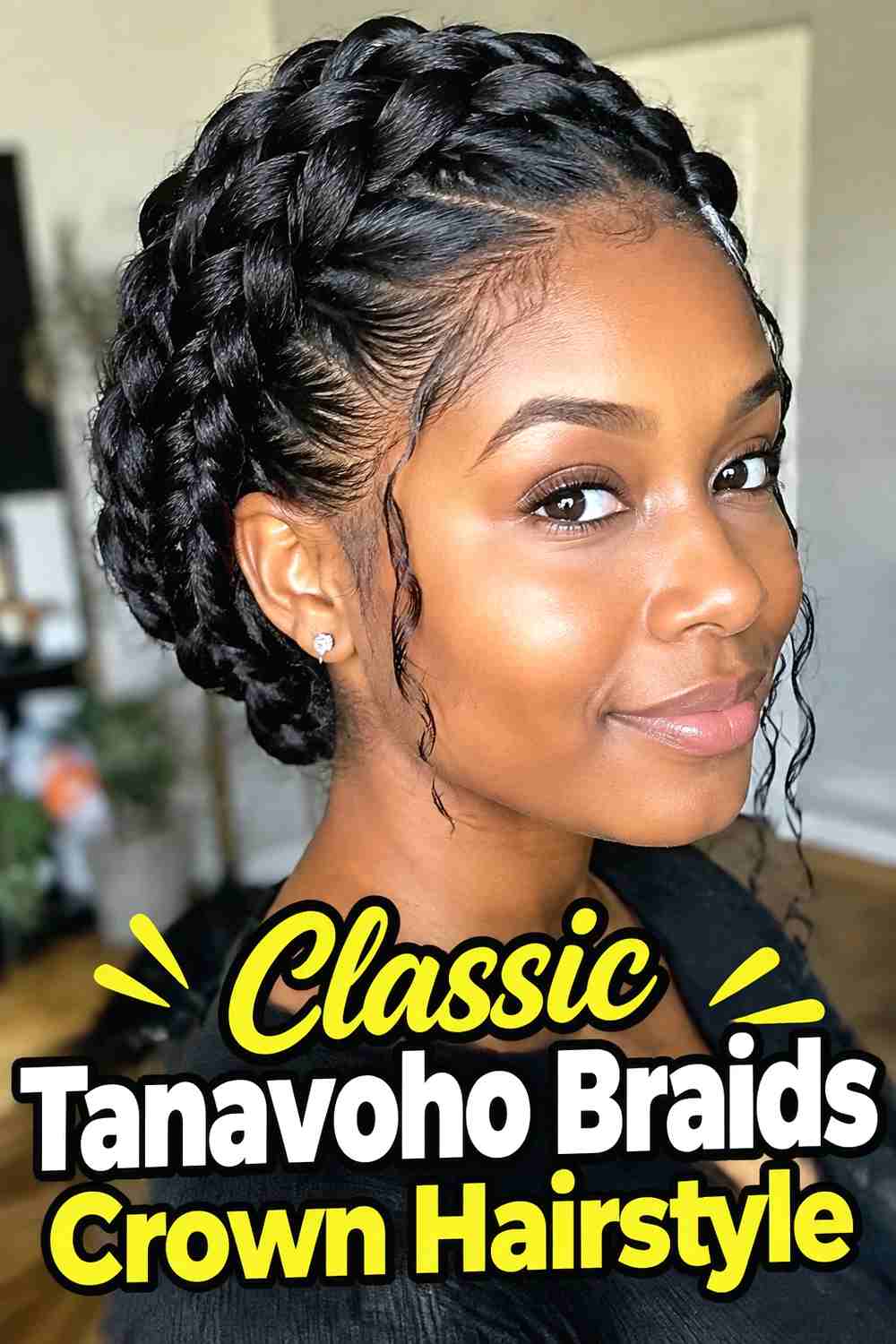
This version keeps the crown-like Tanavoho silhouette central, using short-to-medium braided sections arranged around the head with rounded, voluminous ends forming a distinctive perimeter. The braid roots should look neat but not painfully tight, while the textured ends remain full enough to create the recognizable sculptural effect. Keeping the color natural allows the pattern, braid direction, and puffed finish to take visual priority. From the front, the shape should frame the face rather than hang like conventional long box braids. From the side and back, the crown arrangement becomes clearer. Careful sectioning helps each braid sit intentionally without creating an overly rigid or artificial pattern.
Styling Notes
Keep the braid bases controlled while allowing the rounded ends to retain natural texture and variation rather than shaping every puff identically.
Best For
Choose this version when you want the recognizable Tanavoho-inspired crown silhouette to remain the main focus without extra color or heavy embellishment.
2. Rounded Puff Tanavoho Braids Crown Hairstyle
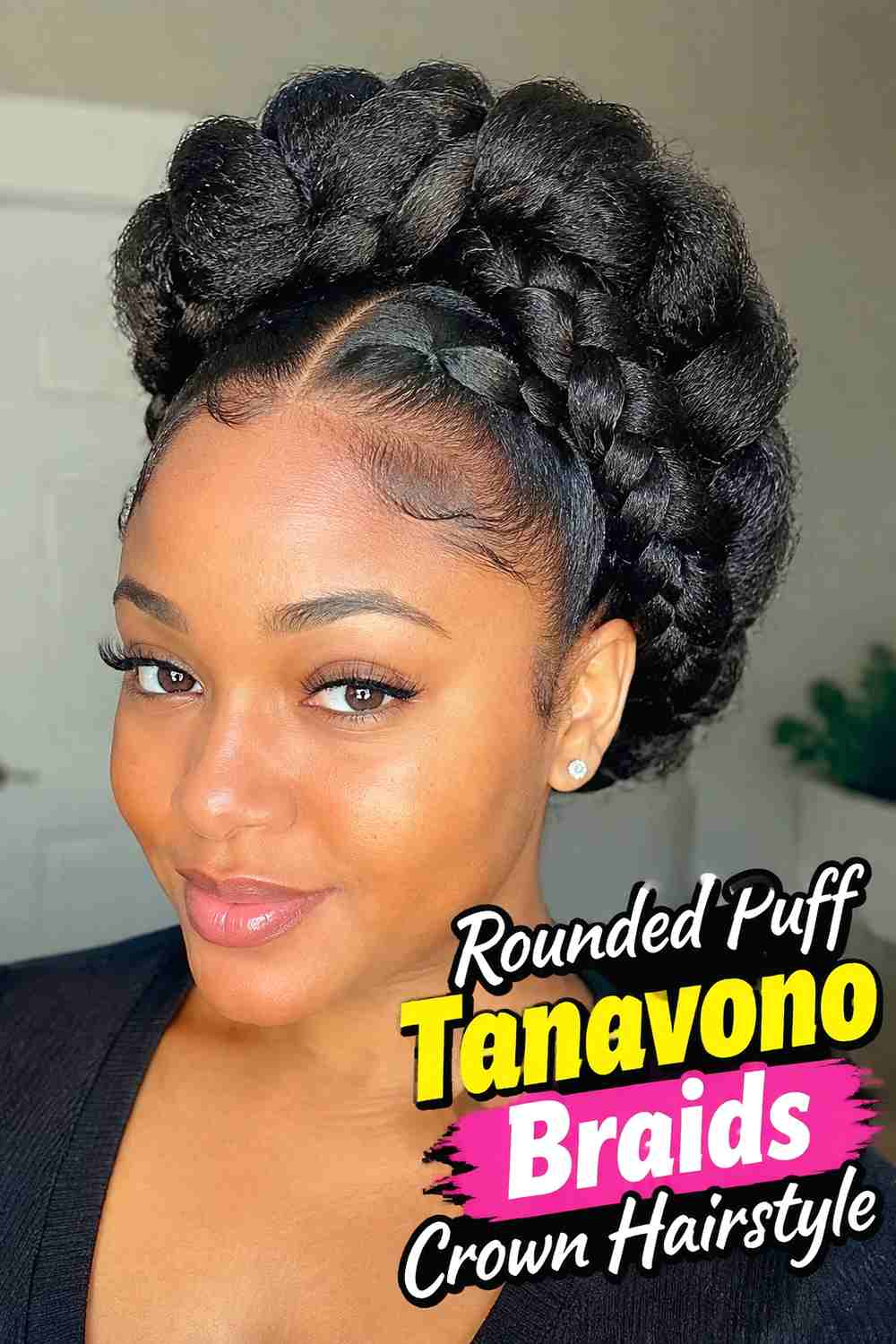
Rounded textured ends are emphasized in this variation, giving the crown perimeter a fuller and softer appearance. The braided sections remain relatively compact near the scalp and through their lengths, then transition into substantial puffs that create volume around the face and sides. Instead of making every puff perfectly spherical, allow slight differences in size and texture so the finish looks natural. The balance between braid and puff is important: ends that are too large can overwhelm the head, while very small ones may lose the sculptural effect. A lightweight approach to extensions, where used, can help preserve comfort while still building enough volume for the rounded outline.
Why It Works
The amplified ends make the crown silhouette especially visible while keeping the braided structure underneath easy to recognize.
Wear & Maintenance
Avoid repeatedly compressing the puffs when refreshing the style; gentle reshaping can preserve their texture without making the ends stiff.
3. Beaded Tanavoho Braids Crown Hairstyle
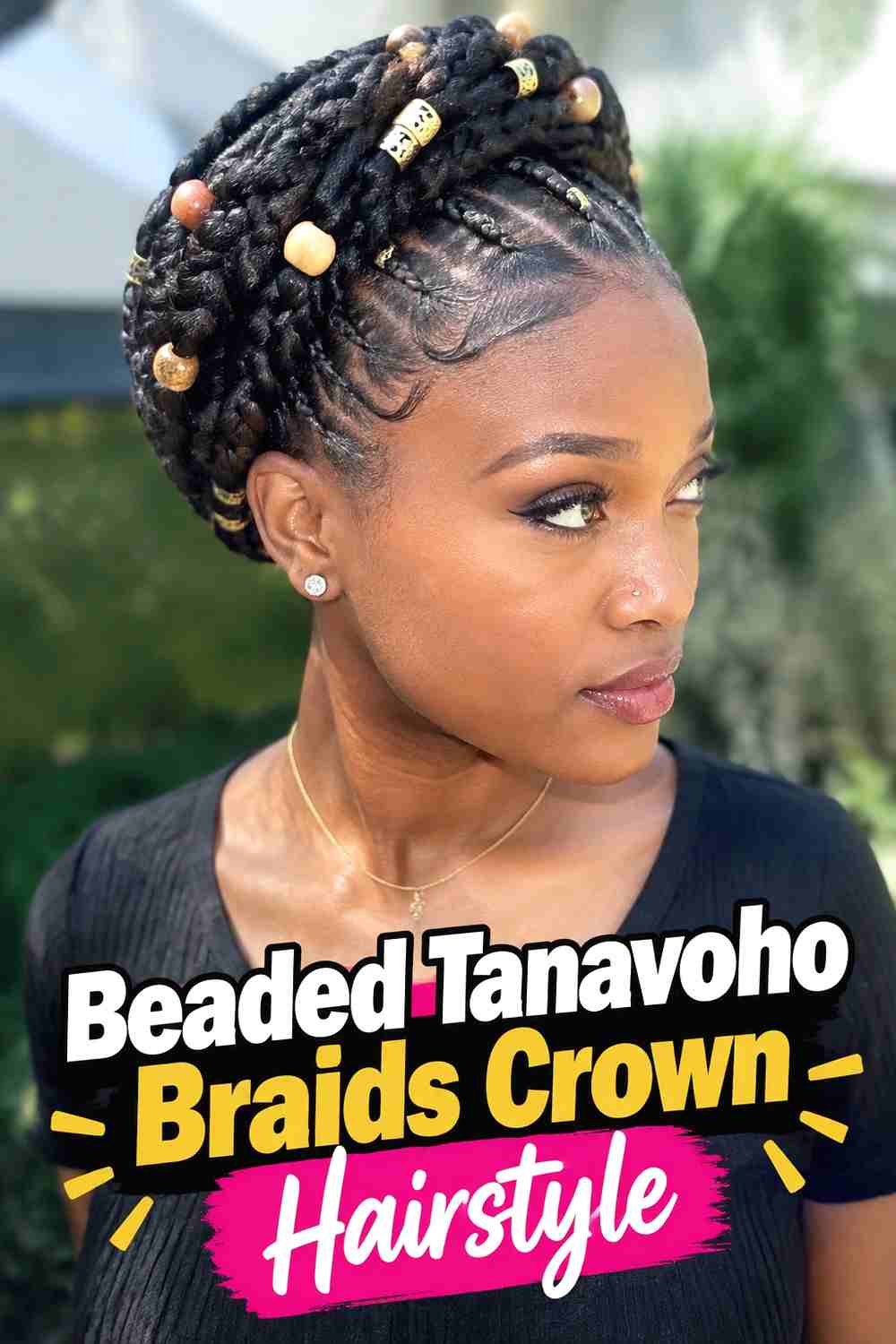
Beads bring additional rhythm to the crown by punctuating selected braided sections before the hair expands into textured ends. Rather than covering every braid, use small groups of beads at carefully chosen points so the overall pattern stays readable. Wood, neutral, metallic, or colorful beads can each change the mood, but their weight should remain appropriate for the braid size. Placing them closer to the lower braided section can keep unnecessary weight away from the roots. The rounded ends should remain visible below or beside the beads rather than disappearing behind them. This contemporary variation works particularly well when accessory colors complement the hair instead of competing with its crown-like silhouette.
Styling Notes
Distribute beads across several braids instead of loading many onto one section, which can create uneven weight and disrupt the overall shape.
Best For
This option works when you want stronger decorative detail while keeping the textured Tanavoho-inspired perimeter clearly visible.
4. Shell Accent Tanavoho Braids Crown Hairstyle
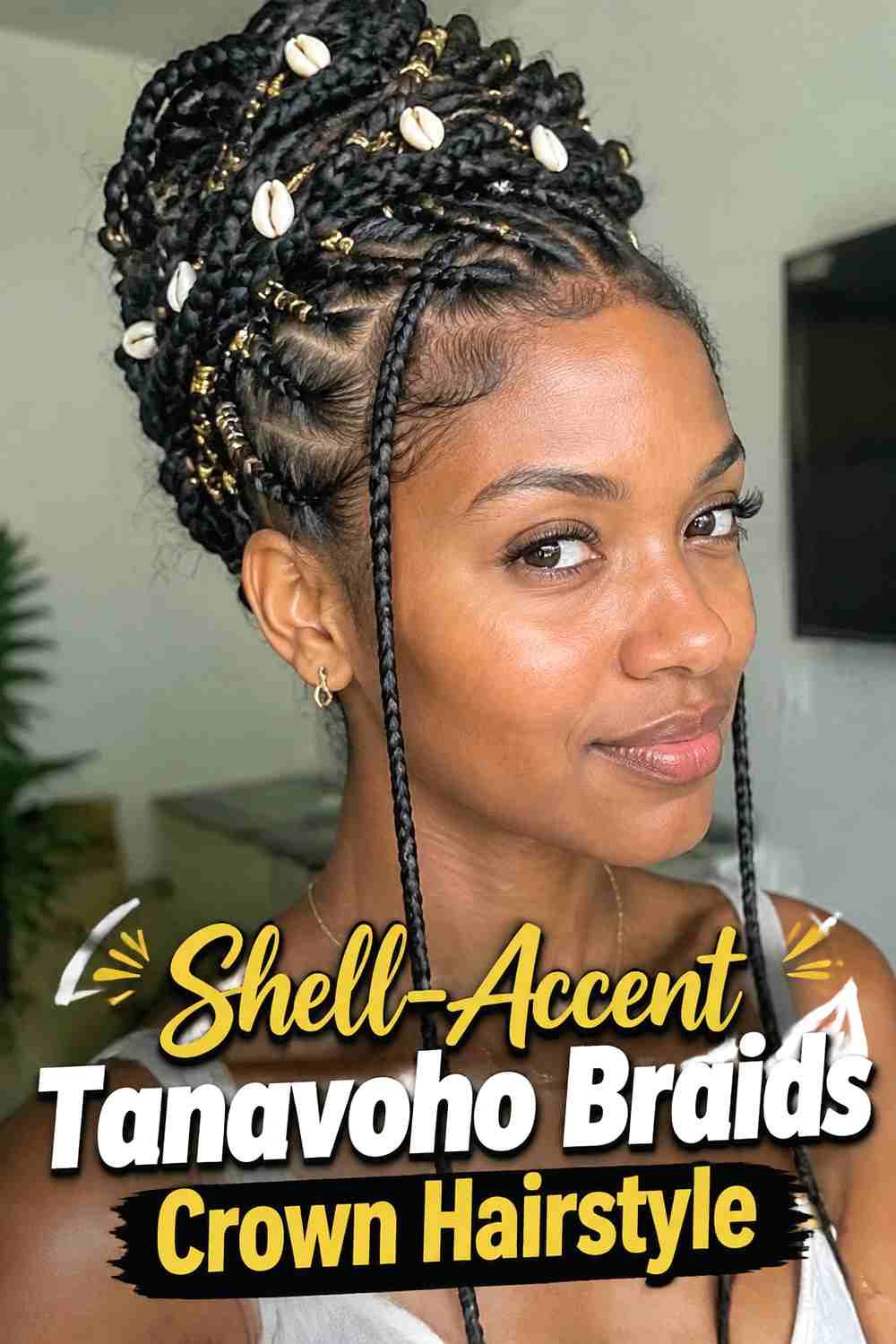
Small shell accents can add an organic decorative element when used selectively through a Tanavoho-inspired crown. Place them on a few braided sections rather than attaching them throughout every part of the hairstyle, allowing the braid direction and rounded ends to stay prominent. Shell size matters: compact pieces are generally easier to balance against shorter braids and create less visual weight around the face. The rest of the hair can remain natural black or deep brown so the pale shell accents stand out gently. Keep the puffs soft and textured, and make sure each shell is secured to a stable braided section rather than loose individual strands.
Why It Works
The pale accents create contrast against the braids while their organic shape complements the sculptural, textured crown.
Pro Tip
Use shells as focal points around two or three areas instead of spacing them mechanically across every braid.
5. Mini Braid Tanavoho Crown Hairstyle
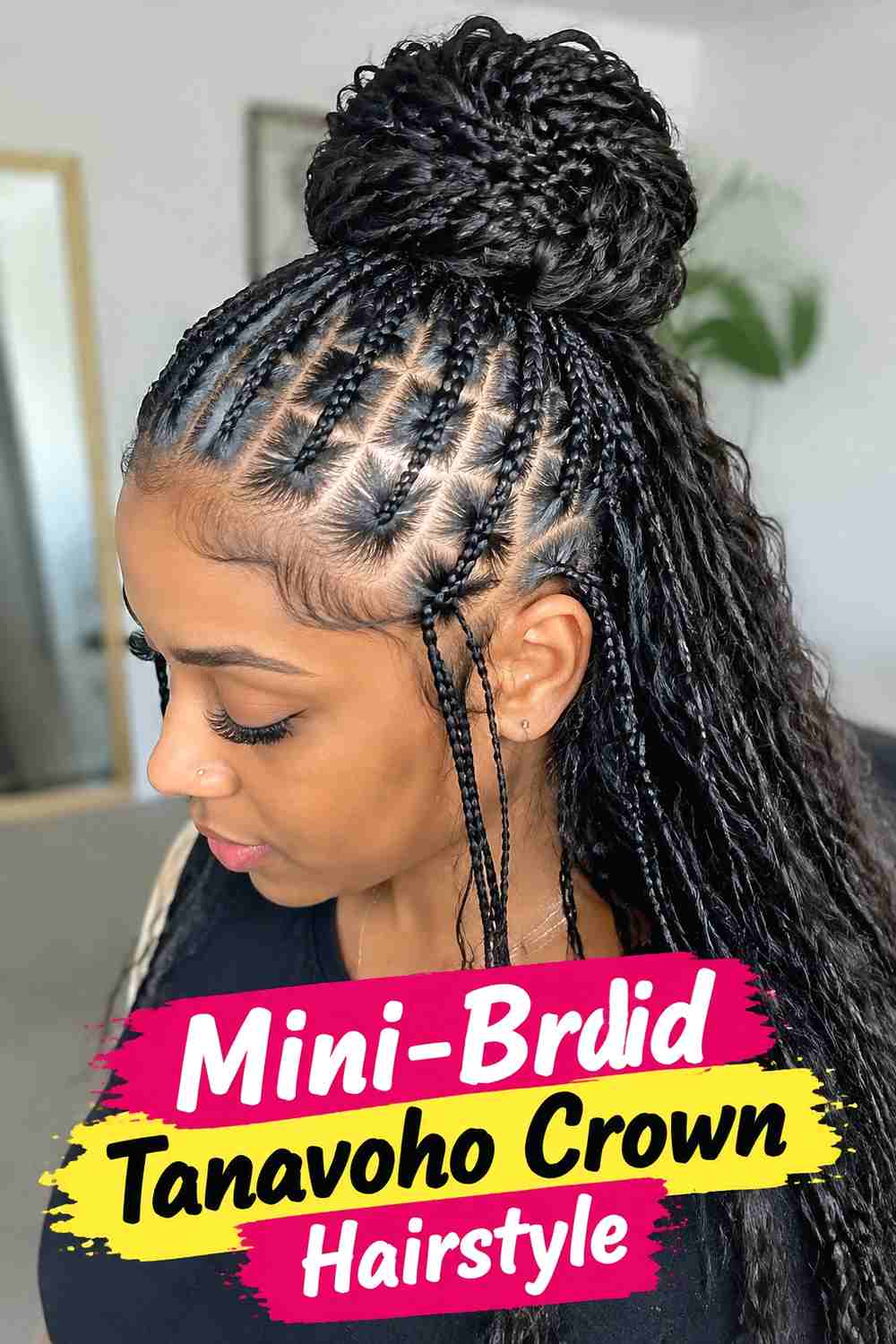
Finer braided sections give the crown a more intricate surface while preserving the fuller textured ends associated with the Tanavoho-inspired silhouette. Smaller braids allow more individual sections to radiate around the head, producing detailed movement near the roots before expanding into puffs. Because there are more braids, accessory use can remain minimal to prevent visual clutter. Root tension deserves particular attention: mini sections should be secure without being aggressively tightened. At the ends, combining several fine braid sections into visually fuller textured areas can prevent the perimeter from looking too fragmented. The result feels detailed and dimensional while still maintaining a clear crown-like shape around the face.
Hair Type & Length
This concept works best when the sections can be braided cleanly without making them so tiny that styling becomes unnecessarily heavy or time-consuming.
Wear & Maintenance
Keep the scalp accessible enough for normal care, and monitor any small sections that begin to feel more tense than surrounding braids.
6. Chunky Tanavoho Braids Crown Hairstyle
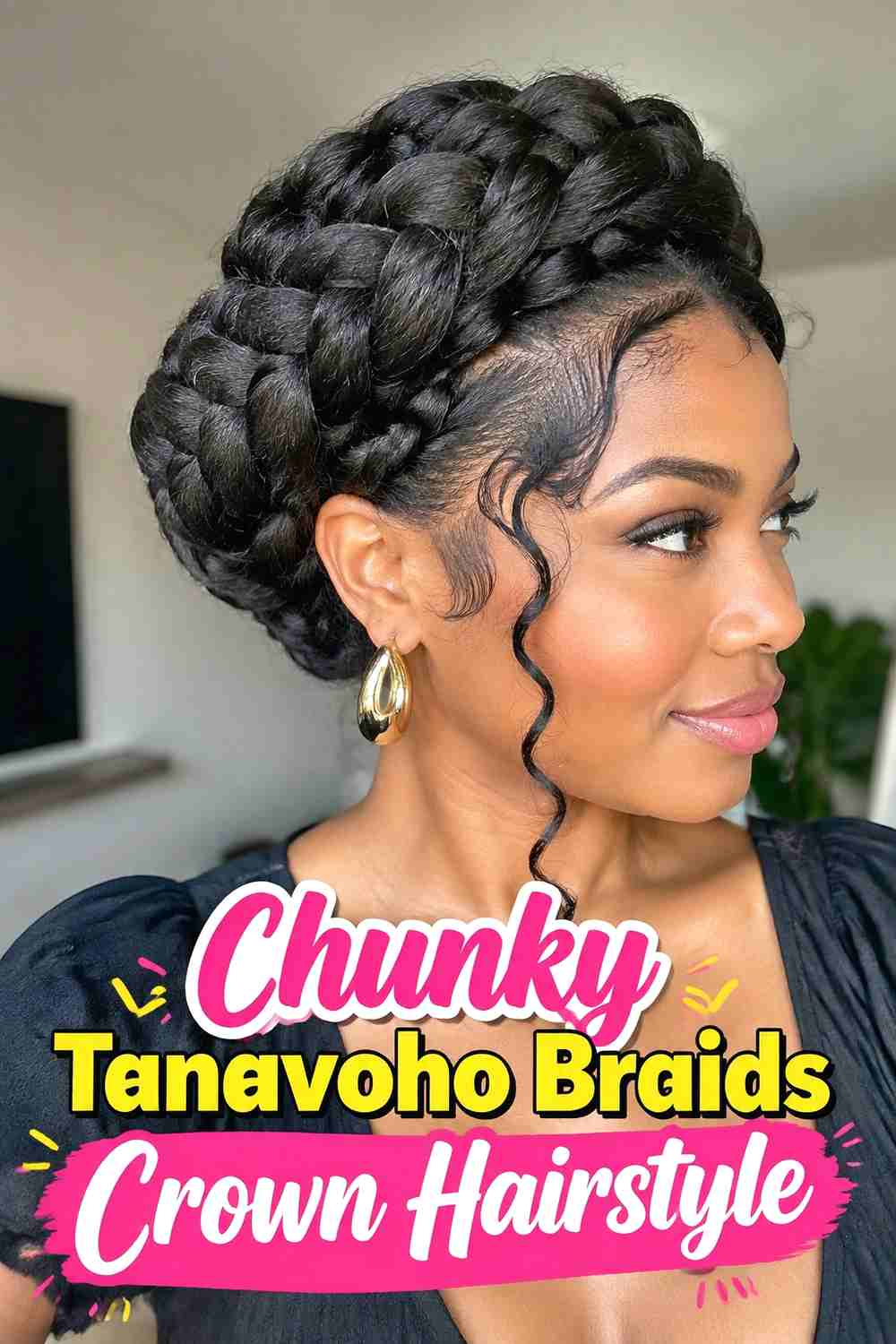
Larger braid sections create a bolder, more graphic interpretation of the crown. Instead of many small braids, fewer substantial sections radiate around the head and transition into full textured ends. The larger scale makes the pattern easy to see from a distance and can reduce the number of individual braids required. Proportion is essential: the braid width, extension amount, and puff size should work together so the finished hairstyle does not feel excessively heavy. Slightly irregular rounded ends can soften the graphic roots and keep the overall finish natural. This version works particularly well without numerous accessories because the braid size itself supplies enough visual impact.
Styling Notes
Use clean but not overly tight parting so the larger sections sit securely while maintaining a comfortable amount of movement at the roots.
Best For
Choose chunky sections if you prefer a bold crown silhouette with fewer individual braids and clearly visible structure.
7. Low Tension Tanavoho Braids Crown Hairstyle
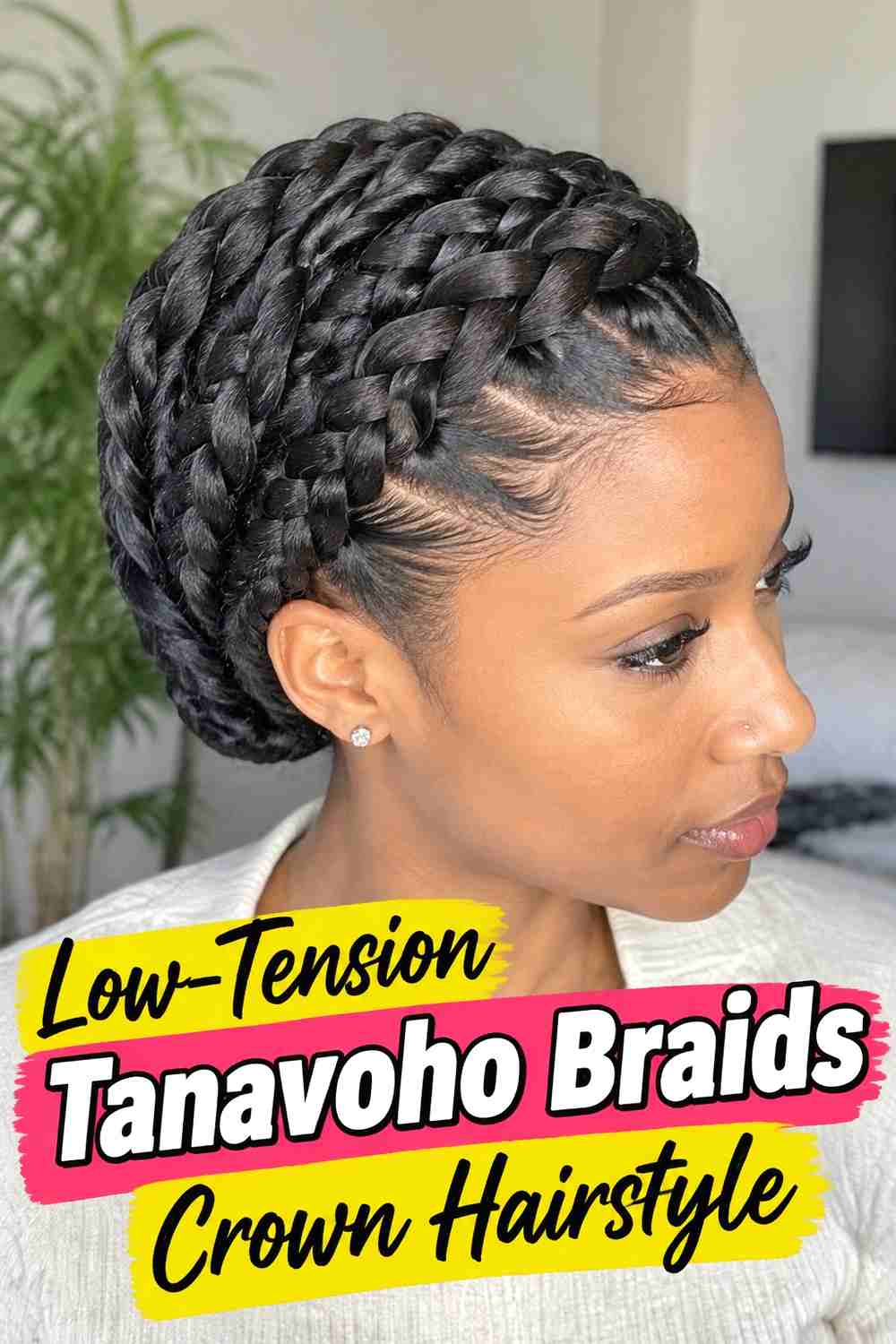
This contemporary variation prioritizes a softer root feel while maintaining the crown arrangement and rounded ends. Braids begin with controlled but moderate tension, allowing a little natural root texture to remain visible instead of pulling every section extremely tight. Current natural-hair trend coverage has also highlighted looser Tanavoho styling among lower-tension braid directions. The puffs can stay airy and moderately sized so extension weight does not undermine the relaxed approach. The finished hairstyle may look slightly softer around the scalp than highly polished versions, but the crown shape remains clear. This approach is useful when comfort and a lived-in finish are priorities.
Wear & Maintenance
If any section feels persistently painful or overly tight, adjusting that braid matters more than preserving a perfectly uniform root pattern.
Why It Works
The softer base complements the textured ends and gives the crown a more relaxed, natural-looking finish.
8. Side Swept Tanavoho Braids Crown Hairstyle
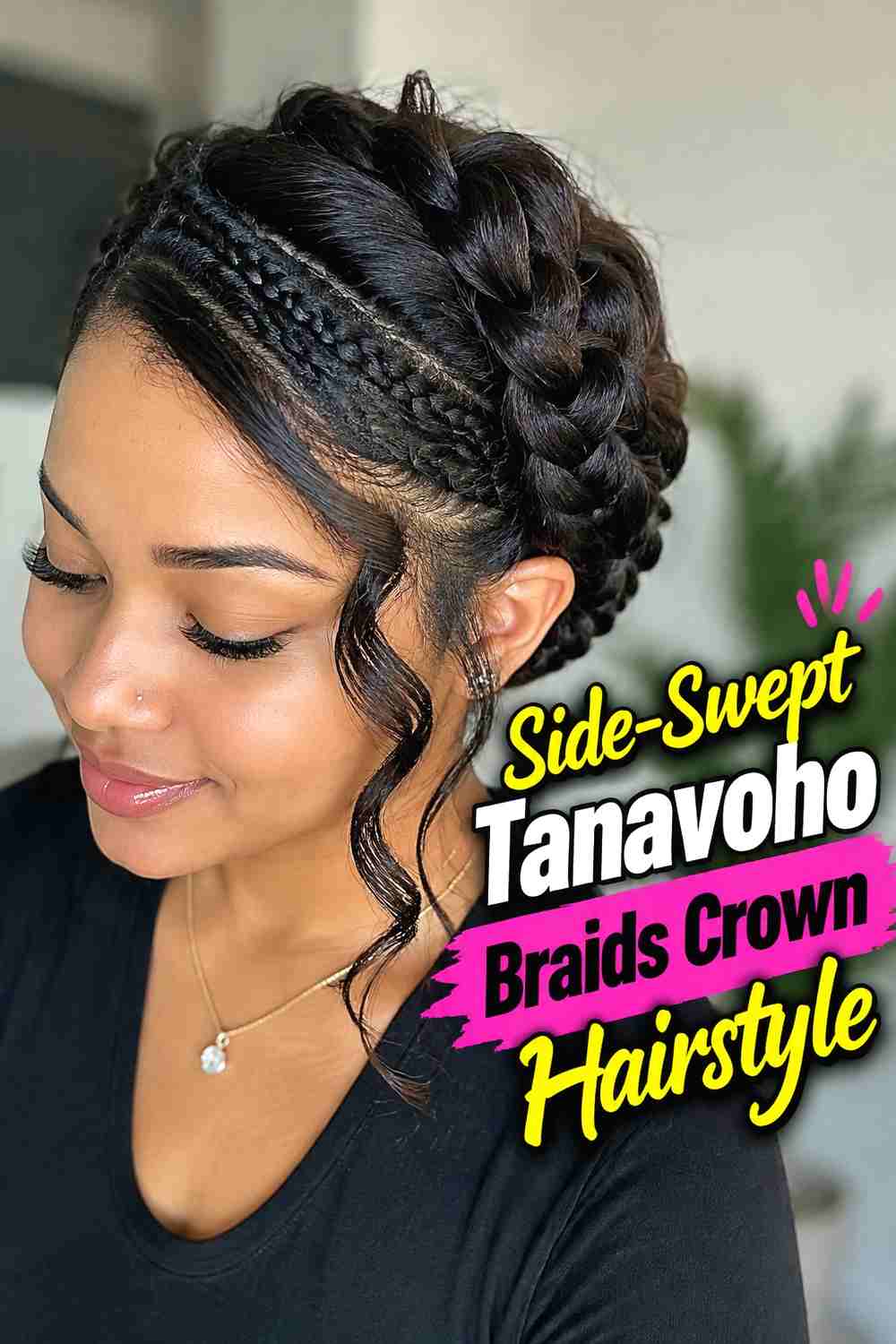
A subtle side emphasis changes the crown silhouette without replacing its core structure. More volume can be directed toward one side by arranging selected braids and puffs to create a gentle asymmetric sweep, while the opposite side remains slightly closer to the head. The effect should stay balanced enough that the style still reads as a crown rather than a conventional side braid. Keep individual braids connected visually around the full perimeter, using the asymmetric volume as an accent instead of an extreme shift. A few strategically placed beads can reinforce the heavier side if desired. The result feels contemporary and directional while maintaining the rounded textured ending.
Styling Notes
Adjust puff placement rather than pulling the root sections sharply sideways, which helps preserve comfort and keeps braid direction believable.
Best For
This is a useful variation when you want more asymmetry and movement without losing the Tanavoho-inspired crown shape.
9. Halo Shape Tanavoho Braids Crown Hairstyle
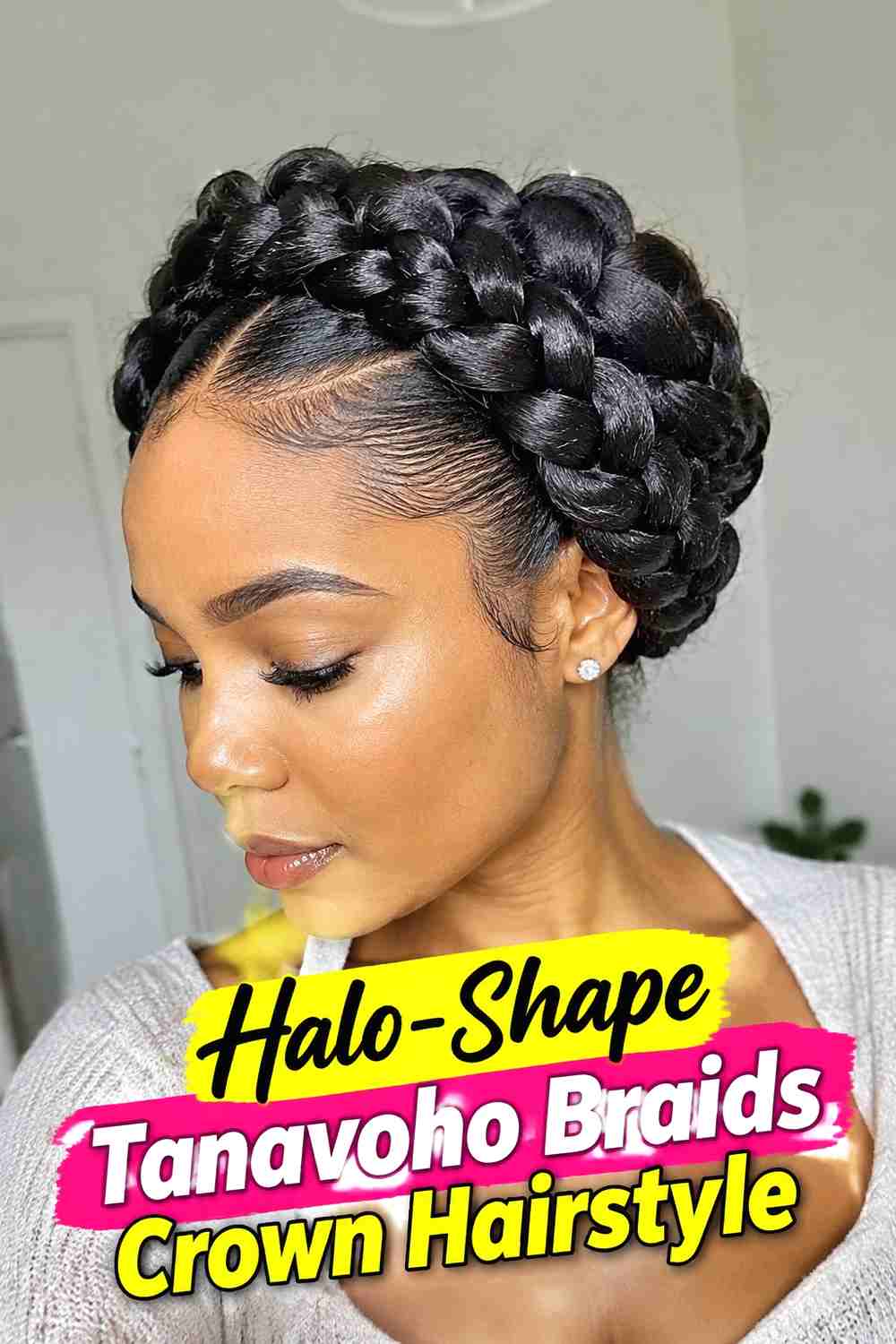
This version emphasizes a continuous halo-like perimeter around the head, with braided sections arranged so the textured ends create an especially cohesive circular outline. Individual puffs remain distinct at close range, but from farther away they visually connect into a broader crown shape. The braids should still be visible between the scalp and fuller ends so the hairstyle does not turn into one continuous mass of texture. Balanced sectioning around the head is particularly important for this version because uneven volume becomes more obvious when the overall silhouette is circular. Keep the front perimeter slightly open around the face so the halo shape frames rather than overwhelms facial features.
Why It Works
A consistent outer perimeter strengthens the crown effect and makes the overall Tanavoho-inspired geometry especially clear.
Pro Tip
Check the hairstyle from front, side, and back while shaping the ends so the halo remains balanced from every angle.
10. Double Layer Tanavoho Braids Crown Hairstyle
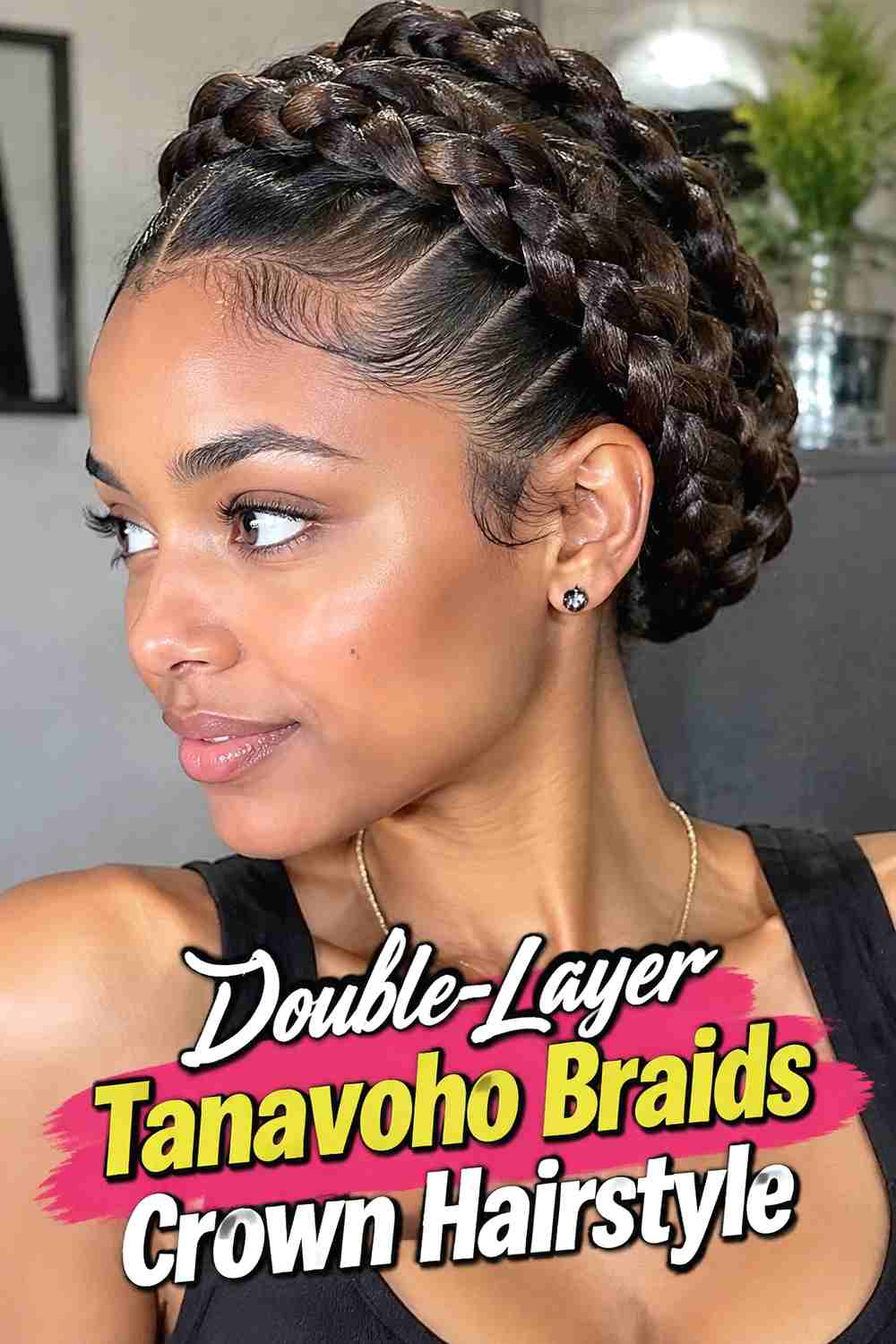
Two visual levels of braid and puff detail create a fuller crown without requiring every section to sit at exactly the same height. An upper layer of shorter braided sections can create volume nearer the crown, while a second set sits slightly lower around the perimeter. The effect should remain cohesive rather than resembling two unrelated hairstyles, so the textures and braid scale need to relate closely. Keeping the color consistent helps the layered structure remain readable without becoming too busy. This approach works best when the puffs are moderately sized, since oversized ends across two layers can quickly create excessive bulk and weight around the head.
Styling Notes
Plan the upper and lower braid positions before adding extensions or shaping the ends so the two levels remain visually balanced.
Hair Type & Length
The concept can work with natural hair or extensions when there is enough material to create two distinct levels without overloading individual root sections.
11. Copper Tipped Tanavoho Braids Crown Hairstyle
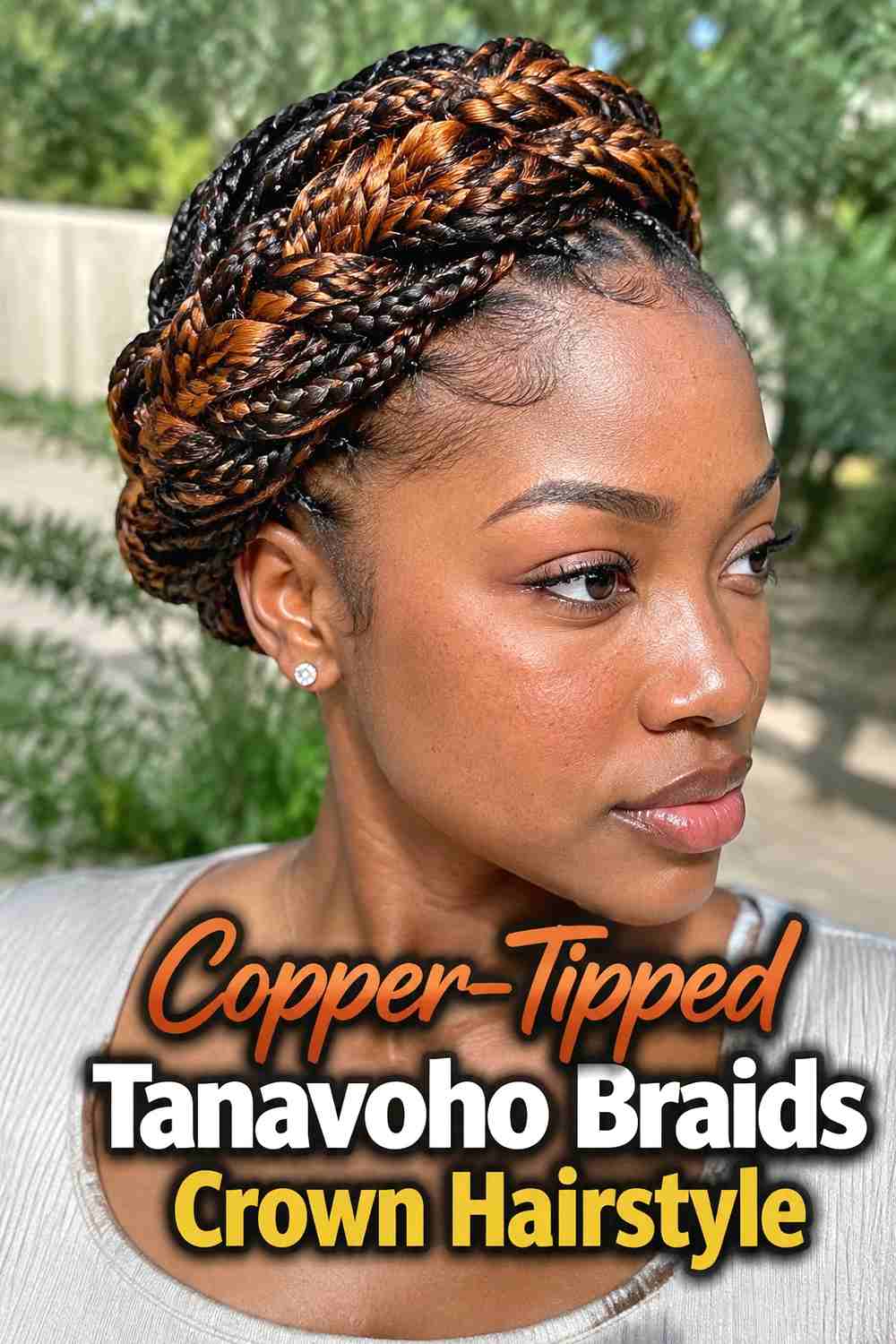
Copper color concentrated toward the braid ends adds warmth while preserving darker roots and a recognizable crown structure. The shift can begin gradually through the lower braided sections and become most visible in the rounded textured puffs, creating a glowing perimeter around the head. Keeping the root color natural makes the contemporary color treatment easier to distinguish from the braided foundation. Rich copper, cinnamon, or auburn tones can all work depending on the desired contrast. Avoid making every section transition at exactly the same point; slight variation can make the color blend feel more natural. The brighter ends also emphasize the crown shape whenever they catch daylight.
Why It Works
Concentrating color around the outer edge highlights the rounded silhouette while keeping the central braid structure visually grounded.
Wear & Maintenance
If colored extensions are used, keep their weight proportionate to the natural braid sections so the added color does not create unnecessary pull.
12. Burgundy Accent Tanavoho Braids Crown Hairstyle
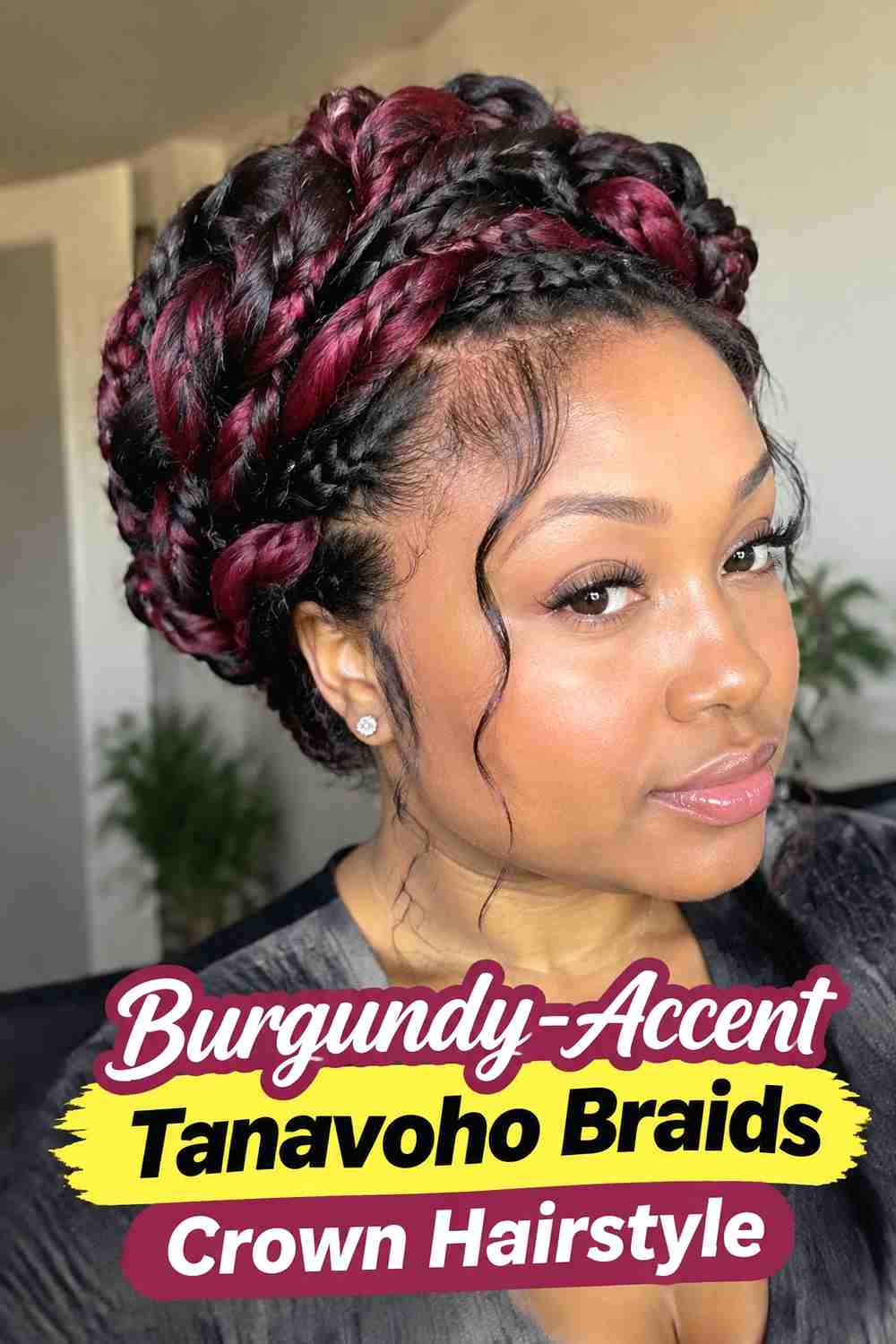
Burgundy accents create a deeper color variation by introducing wine-red or plum-toned sections among a predominantly dark crown. Instead of coloring every braid, use several burgundy pieces strategically around the perimeter so they appear as dimensional flashes between natural black or brown sections. The textured puffs can carry slightly more of the color, making the outer silhouette richer without overwhelming the roots. This controlled placement gives the hairstyle visual depth while preserving its crown-like form. Keep accessories understated if the burgundy contrast is strong, since the color already acts as decoration. Soft natural shine through the braid lengths helps the darker red tones remain visible.
Styling Notes
Distribute burgundy sections around several parts of the crown rather than clustering all the color on one side unless deliberate asymmetry is the goal.
Best For
Choose this option when you want noticeable color while maintaining a deeper, more subdued palette than bright copper or blonde accents.
13. Golden Highlight Tanavoho Braids Crown Hairstyle
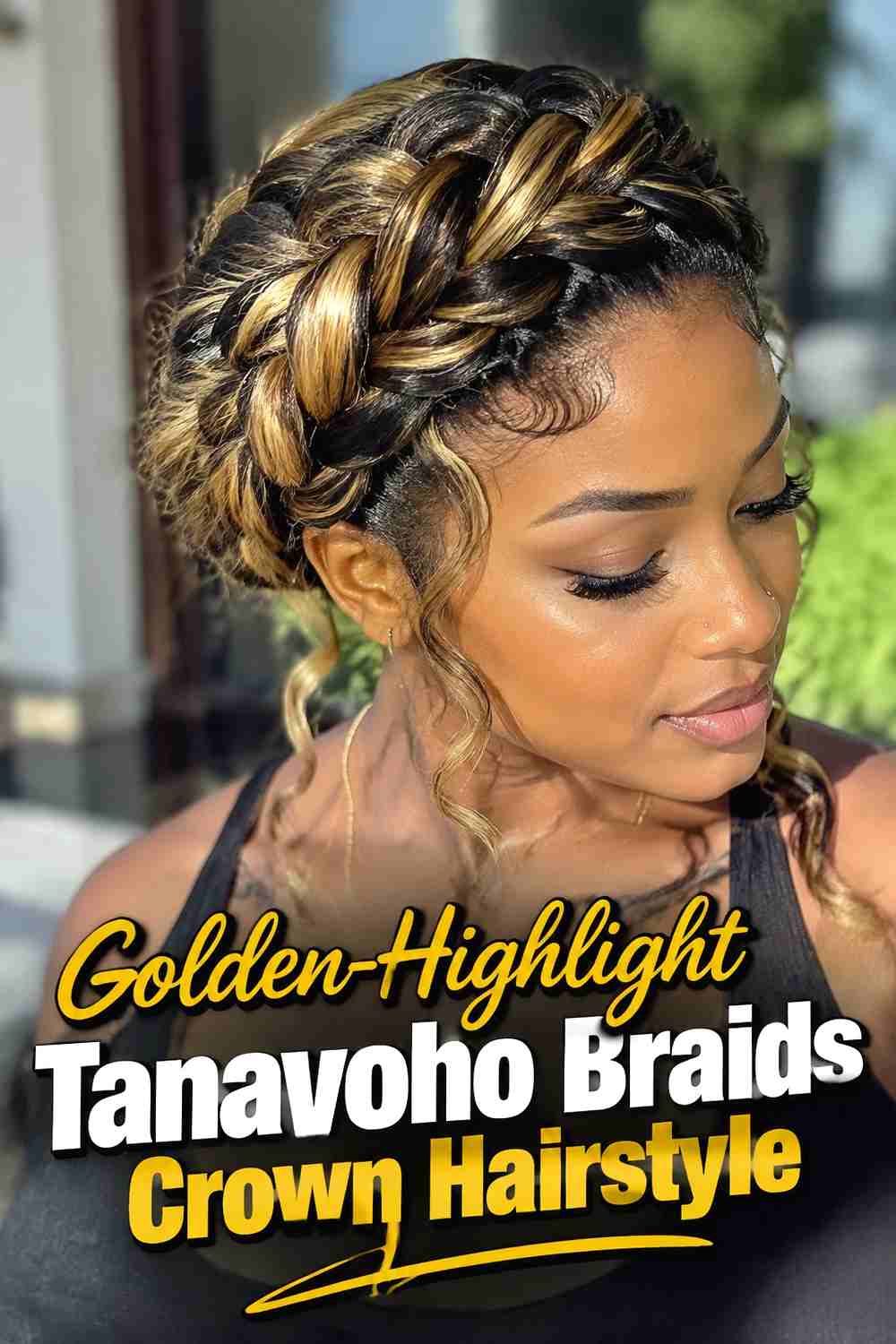
Golden or honey-toned braid accents brighten the crown through selective contrast rather than a complete color change. A few highlighted sections can start close to the roots or appear mainly through the lower lengths and puffs, depending on how dramatic you want the effect. Keeping most of the braids dark allows the golden pieces to stand out and also makes the crown arrangement easier to read. The highlight placement can alternate organically instead of following a perfectly repeated pattern. Warm golden tones look especially dimensional when they pass from tightly braided sections into textured ends, where the additional volume exposes more individual strands to the light.
Pro Tip
Use fewer highlighted sections than dark sections for a balanced result that keeps the Tanavoho-inspired silhouette stronger than the color contrast.
14. Natural Black Tanavoho Braids Crown Hairstyle
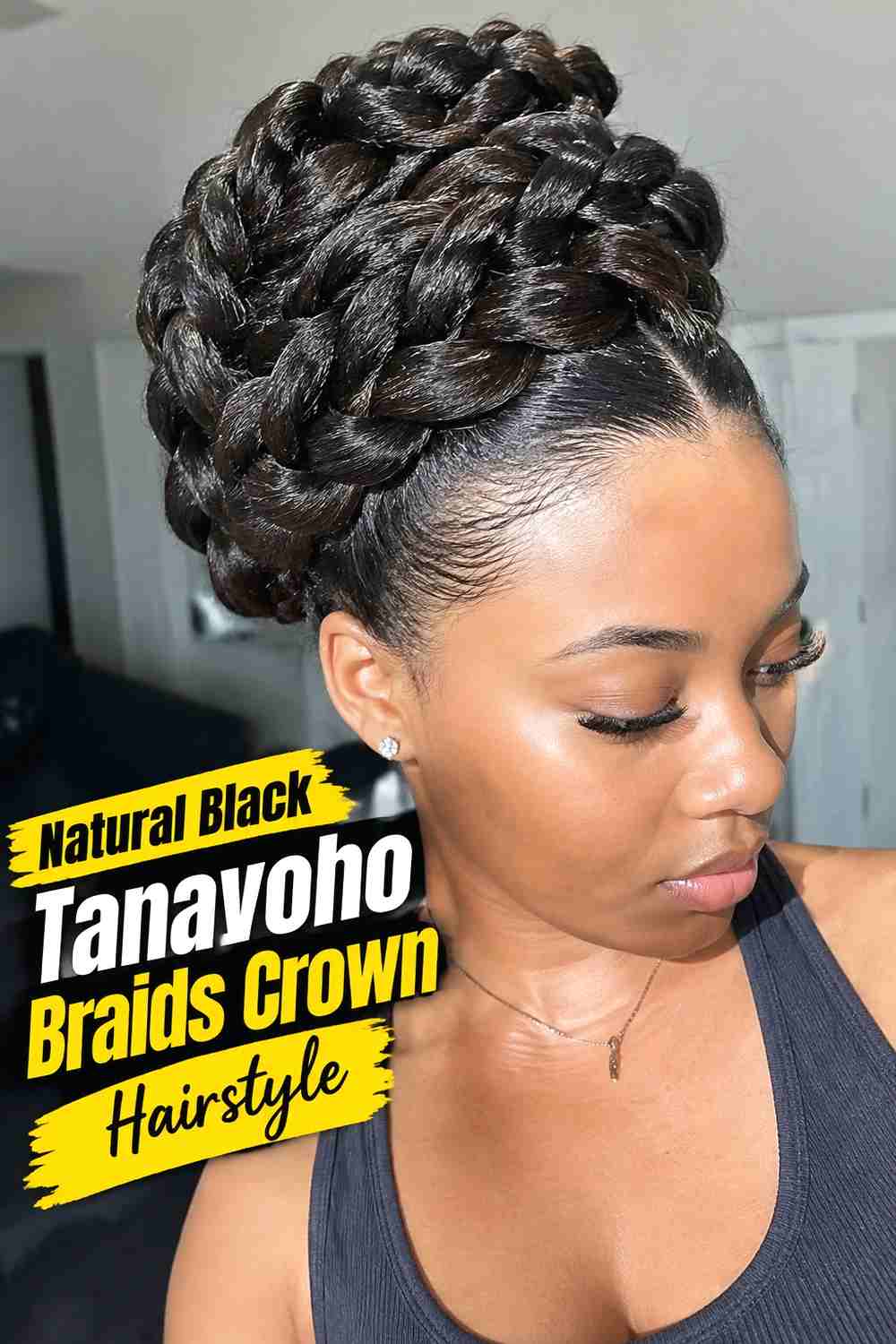
An all-black version places complete attention on braid geometry, root pattern, and the contrast between structured lengths and voluminous textured ends. Without color blocking or accessories, details such as braid thickness and puff shape become more important because they define the visual rhythm of the crown. Natural-looking variation in shine prevents the dark hair from becoming a flat silhouette, while visible strands through the ends keep the puffs realistic. This approach can feel especially striking when the crown is evenly balanced around the face. It is also adaptable: the sections can be finer or chunkier depending on density and the amount of volume desired.
Why It Works
A single deep color keeps the composition cohesive and lets the distinctive braided crown structure provide all the visual interest.
Styling Notes
Use natural light and controlled shine to reveal braid texture instead of relying on heavy product that can make dark hair appear artificially glossy.
15. Textured Puff Tanavoho Braids Crown Hairstyle
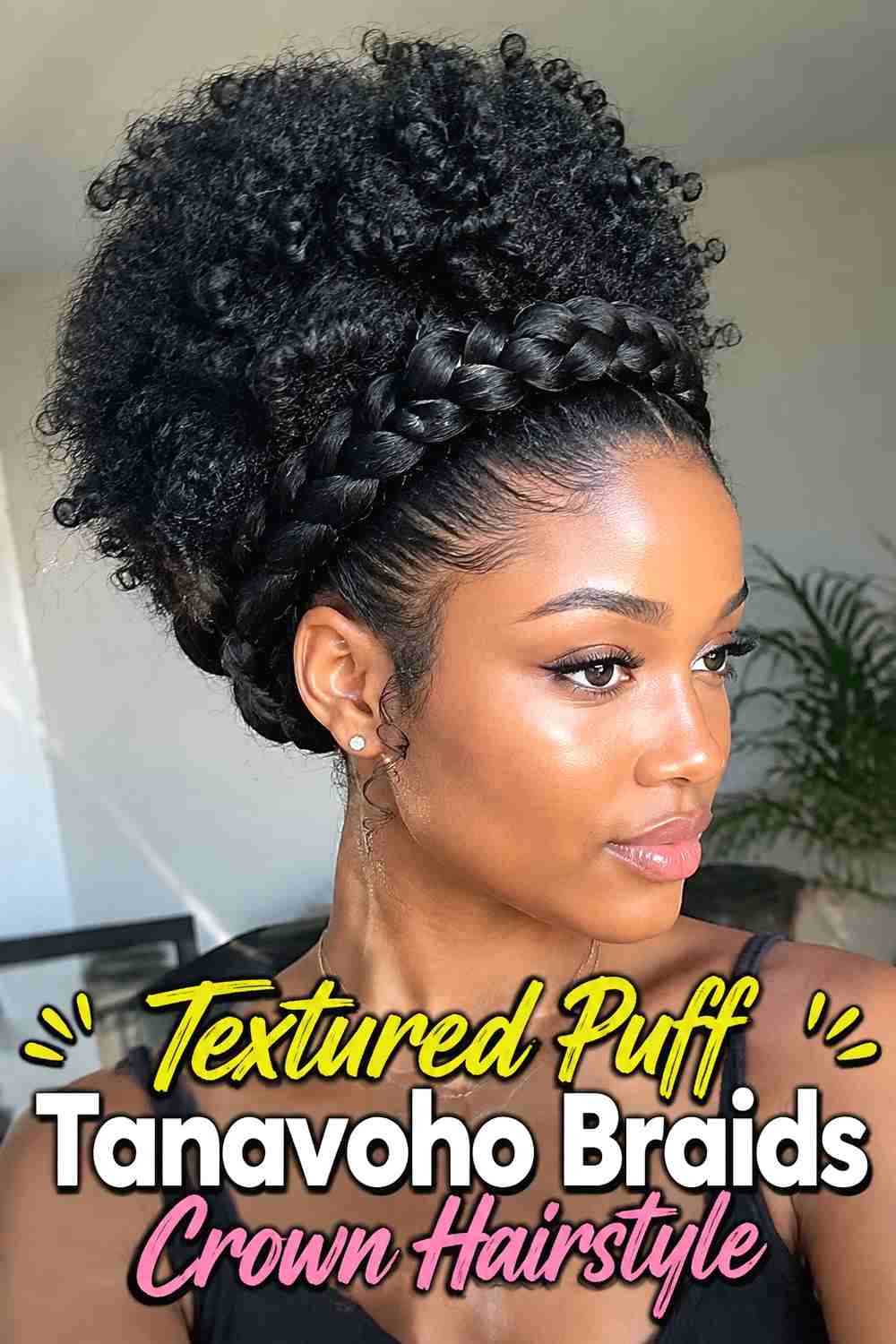
This variation keeps the braided sections neat while making the puffs intentionally more textured and irregular. Rather than smoothing the ends into identical rounded balls, allow coily, fluffy, or lightly separated strands to create organic volume. The result feels softer and more tactile, with each ending showing slightly different movement. The key is keeping enough overall consistency that the crown still looks intentional from a distance. Braids can remain medium in size so they provide a clear structural counterpoint to the airier ends. This version can be especially effective when natural texture is incorporated directly into the puffs instead of concealing every strand beneath extensions or heavy styling product.
Hair Type & Length
Coily and tightly textured hair can create beautiful natural volume at the ends, with extension use adjusted according to the desired scale.
Wear & Maintenance
Refresh puffs gently with minimal manipulation so their volume remains soft rather than becoming increasingly compact.
16. Coiled End Tanavoho Braids Crown Hairstyle
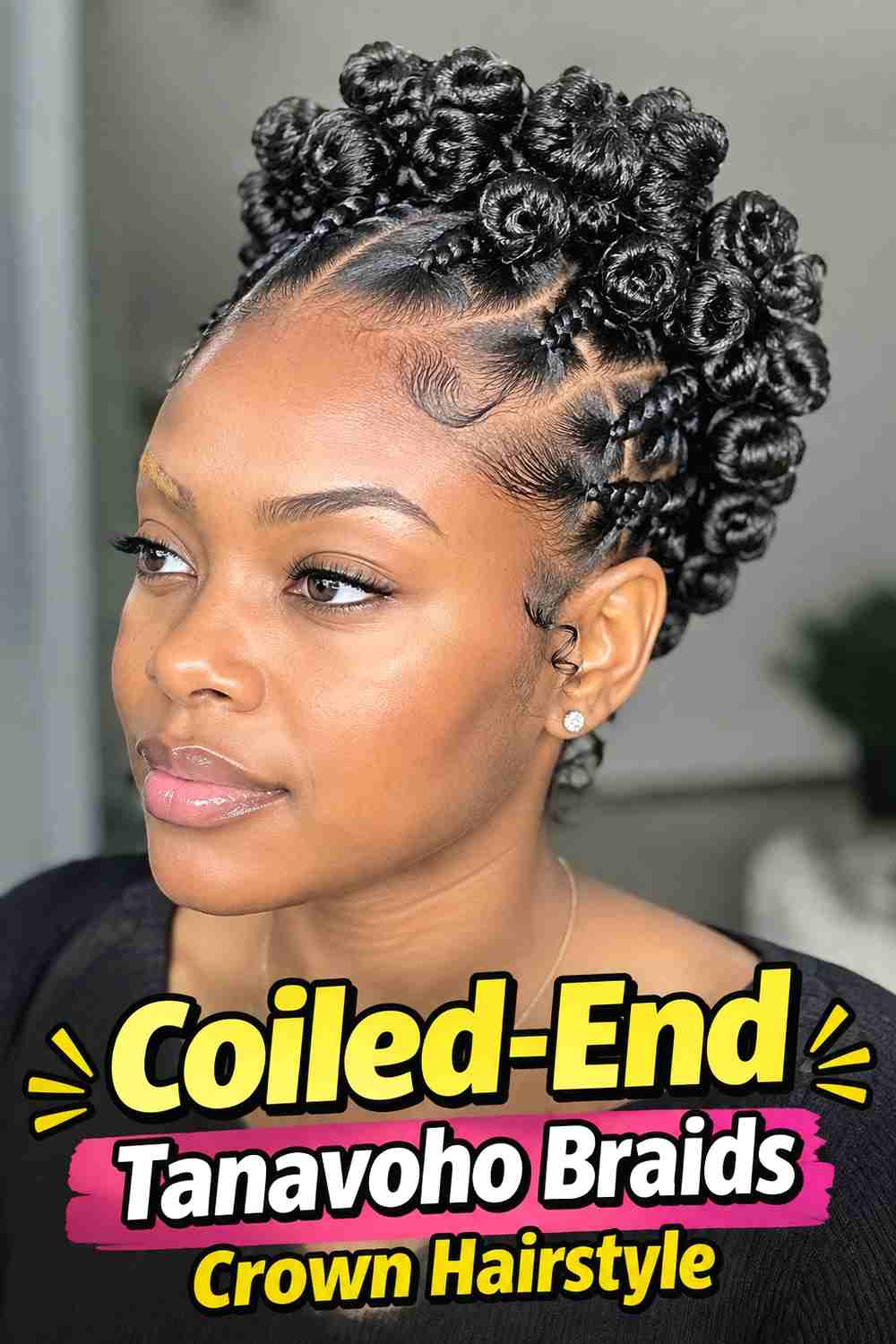
Defined coils give the ends a more structured texture while preserving the volume that makes the crown distinctive. Each braid transitions into a small cluster of springy coils rather than one fully brushed-out puff, creating a more detailed perimeter when viewed up close. Variation between coils keeps the texture believable, so avoid making every curl identical in size or direction. The roots and braid lengths can remain clean and simple, allowing the coiled ends to carry most of the visual interest. This contemporary interpretation works best when the coils still occupy enough space to maintain the crown silhouette rather than hanging downward like conventional loose curly braids.
Styling Notes
Shape the coils so they expand around the braid ending rather than stretching straight down, which helps preserve the rounded crown effect.
Best For
This option suits anyone who prefers more curl definition and visible texture detail instead of a fluffy puff finish.
17. Spiral Detail Tanavoho Braids Crown Hairstyle
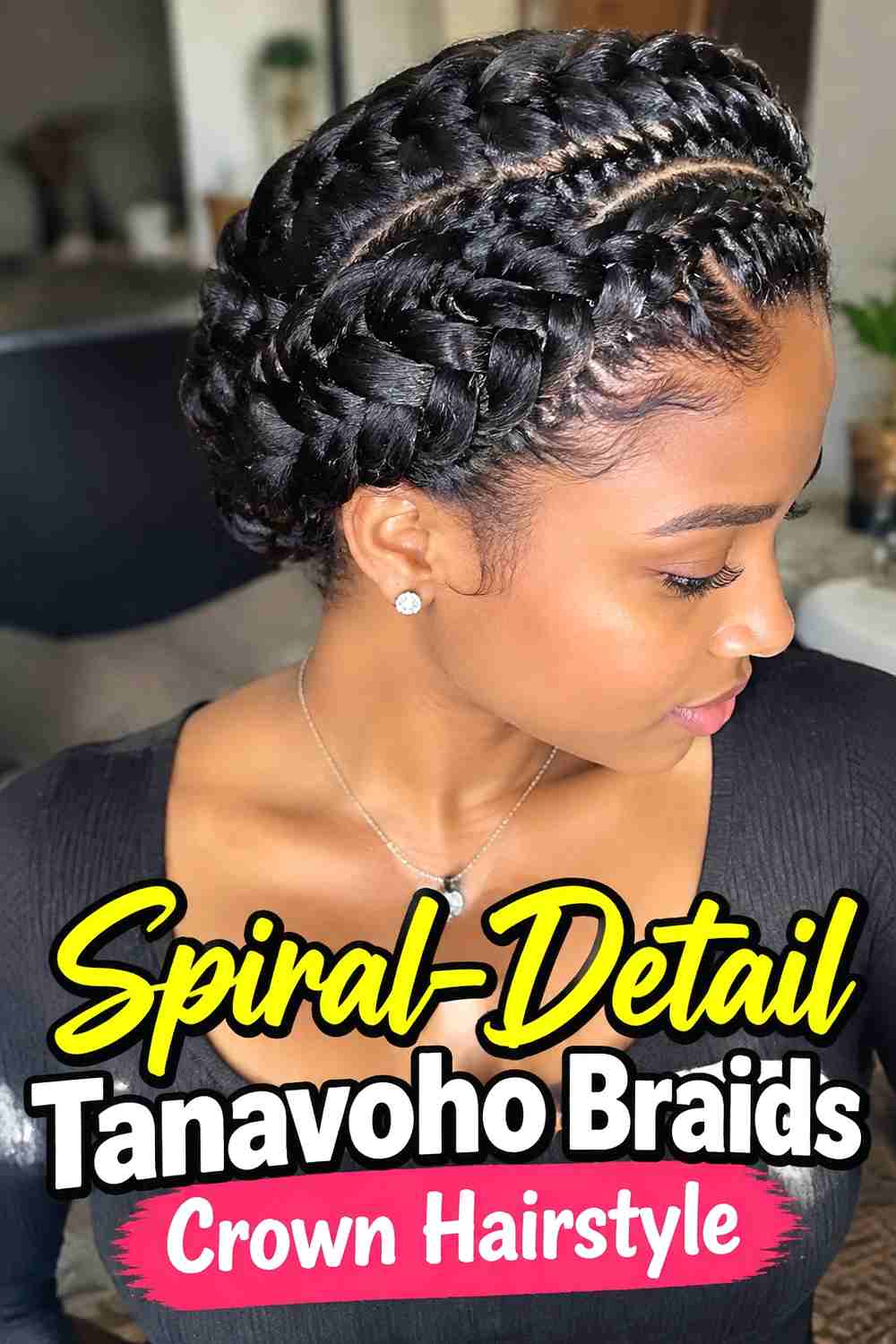
Spiral details add controlled movement to selected endings without changing every braid in the crown. Some sections can finish in sculpted coils or softly wrapped spirals while others maintain fuller textured puffs, creating contrast through the perimeter. The spiral elements should remain connected naturally to the braid ends and avoid appearing like separate floating decorations. Keep them proportionate to the surrounding puffs so the crown remains balanced from all sides. This is a contemporary styling variation that works particularly well when you want a more artistic finish without adding many beads or colored sections. A natural or monochromatic palette lets the changing textures remain easy to see.
Why It Works
The contrast between rounded volume and defined spirals introduces motion while preserving the crown’s overall sculptural outline.
Pro Tip
Limit spirals to selected sections so they function as accents rather than breaking the continuous perimeter into too many competing shapes.
18. Pearl Accent Tanavoho Braids Crown Hairstyle
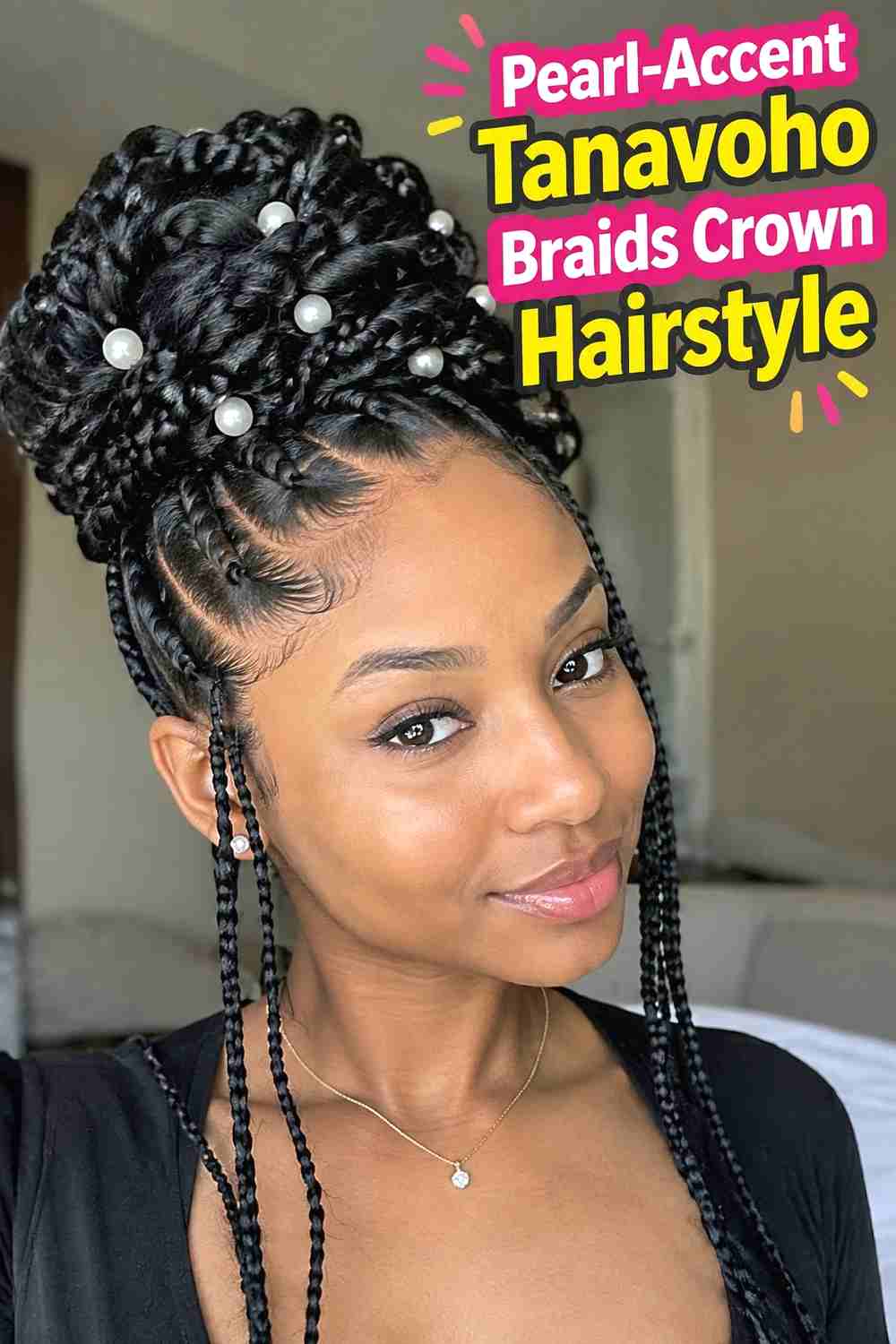
Small pearl details create a dressier contemporary interpretation while keeping the crown shape central. Pearls can be attached selectively to braided lengths near the ends, where they lead visually into the fuller textured puffs. Their round form echoes the rounded perimeter without needing to cover every braid. Keep the pearl scale modest and the spacing irregular enough to avoid a mechanical repeated pattern. A natural black or dark brown base provides strong contrast and helps the accessories remain visible in photographs. Because pearls add weight, they should be used sparingly and anchored to stable braid sections rather than fine loose strands near the puffs.
Best For
This variation works well for formal photography, celebrations, or creative event styling when a more embellished finish suits the occasion.
Wear & Maintenance
Check accessory attachment points periodically and remove any pearl detail that creates noticeable pulling on an individual braid.
19. Geometric Part Tanavoho Braids Crown Hairstyle
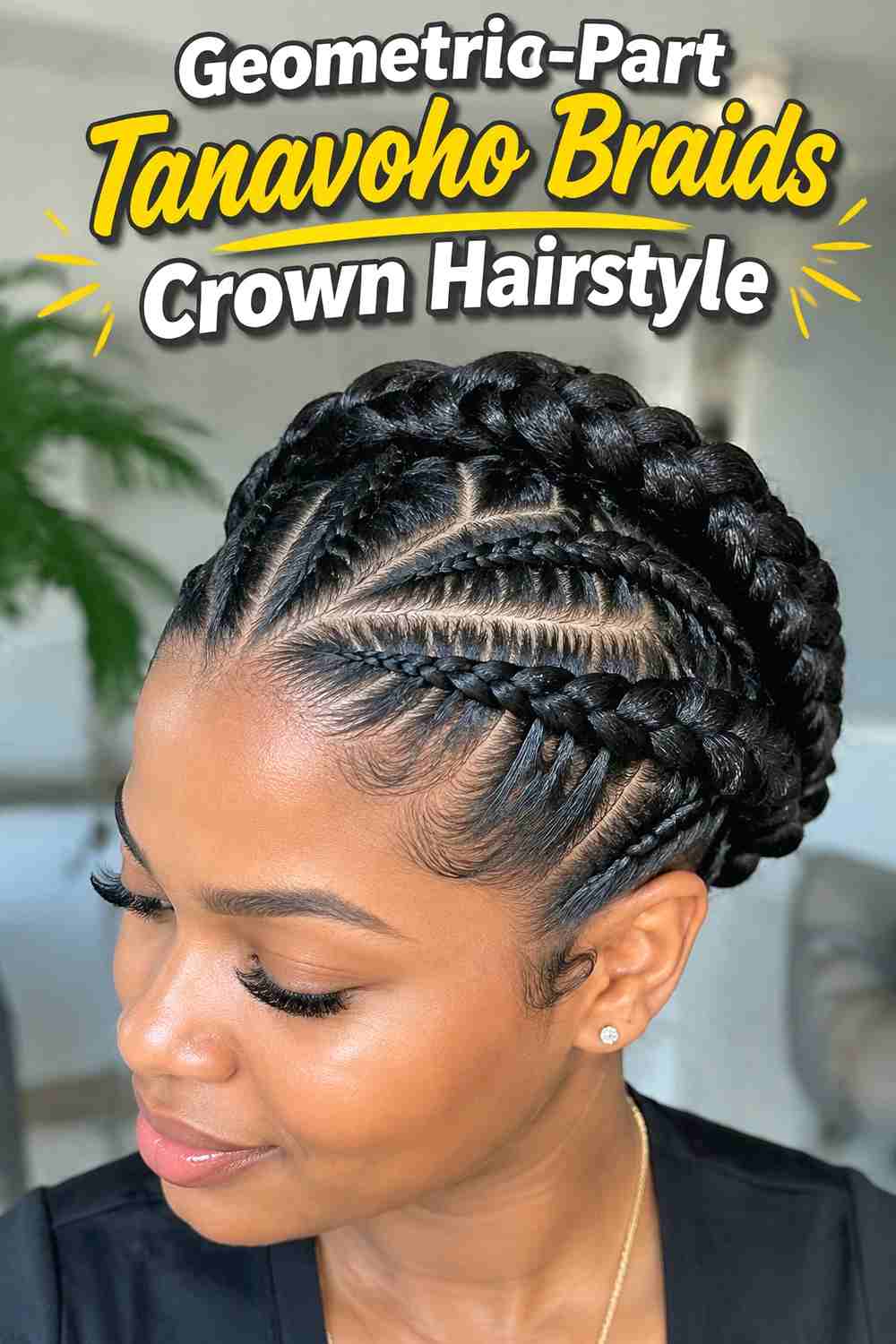
Geometric parting makes the root pattern a stronger feature by using clearly defined sections that radiate around the head. Diamonds, triangles, curved wedges, or clean offset sections can guide the braids outward before they transition into the rounded ends. The parting should support the crown construction rather than become so complicated that the hairstyle loses visual clarity. Moderate braid sizes often work well because there is enough scalp space for the geometry to remain visible. Keep the puffs relatively consistent in scale so the detailed roots and sculptural outer perimeter balance one another. This contemporary variation looks especially striking from elevated and back angles.
Styling Notes
Plan the entire section map before braiding so adjacent shapes connect cleanly and the crown maintains balanced braid distribution.
Why It Works
Defined root geometry adds interest to the center of the hairstyle while the textured ends preserve the recognizable crown-like outer shape.
20. Sculptural Tanavoho Braids Crown Hairstyle
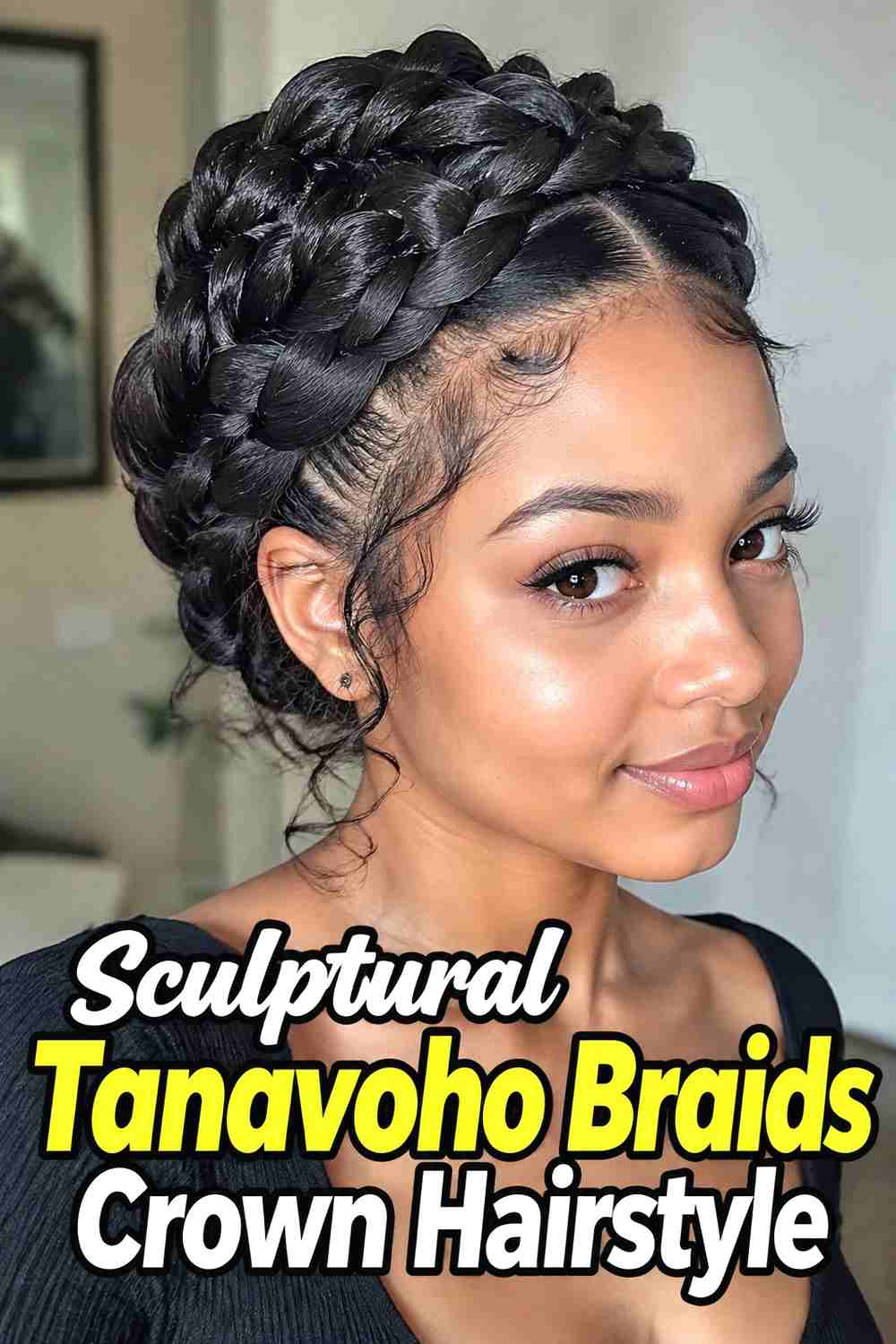
The sculptural version emphasizes carefully balanced braid angles and fuller textured forms to create a dramatic crown silhouette. Instead of making every section identical, selected braids can sit slightly higher or lower while the puffs vary subtly in scale, producing an artistic but cohesive perimeter. The structure must remain believable: each braid should originate naturally from a clear root section and every rounded ending should connect physically to its braid. Accessories can be minimal because the silhouette itself provides the statement. Medium or larger sections help keep the construction readable, while a controlled amount of asymmetry prevents the crown from feeling artificially perfect.
Best For
Choose this version for editorial styling, formal photography, creative events, or occasions where the hairstyle itself is intended to be a strong visual feature.
Styling Notes
Build the overall crown proportions first and treat individual puffs as parts of that larger silhouette rather than styling each ending in isolation.
How to Choose the Right Look
Start with the defining silhouette. Tanavoho is associated with a crown-like arrangement and voluminous ends, so decide whether you want the perimeter to feel compact, very rounded, layered, or more sculptural.
Next, choose braid scale. Mini braids create intricate detail but require more sections, while chunky braids produce a bolder pattern with fewer individual roots. Whichever size you choose, comfortable tension should take priority over an excessively tight appearance.
Then consider the endings. Fluffy puffs create the softest silhouette, coils add definition, and spiral details introduce a more artistic texture. Color can emphasize the perimeter as well: copper and gold brighten it, while burgundy provides deeper contrast.
Accessories such as beads, shells, or pearls should stay proportional to the braid size and should not create unnecessary weight. Traditional and contemporary descriptions of Tanavoho also reference decorative elements including beads and shells.
Finally, distinguish cultural reference from creative adaptation. Contemporary color, pearl, geometric, and sculptural ideas can draw visual inspiration from Tanavoho while still being presented as modern variations rather than separate traditional forms.
Final Thoughts
Tanavoho braids have a distinctive crown-like form rooted in Malagasy hairstyling tradition, with braided structure and textured volume giving the style its recognizable presence.
For a contemporary interpretation, start by preserving that overall silhouette, then adjust braid scale, puff texture, color, or accessories carefully. Keeping the construction comfortable and the cultural reference clear makes the styling feel both thoughtful and visually strong.
FAQs
1. What are Tanavoho braids?
Tanavoho refers to a traditional Malagasy hairstyle associated with Sakalava women. Contemporary descriptions commonly identify a crown-like arrangement of braids with substantial rounded or textured ends.
2. Where does the Tanavoho hairstyle come from?
Sources trace Tanavoho to Madagascar and associate it particularly with the Sakalava people.
3. Can Tanavoho-inspired braids include beads or shells?
Yes. Contemporary descriptions of the style note that beads, shells, and other decorative elements may be incorporated.
4. Can extensions be used for a Tanavoho-inspired hairstyle?
Contemporary tutorials and adaptations may use extensions to create additional braid structure or volume, while other versions use natural hair.
5. How can a contemporary Tanavoho-inspired crown stay comfortable?
Keep individual sections at manageable sizes, avoid unnecessary root tension, balance extension and accessory weight, and adjust any braid that causes persistent pulling or discomfort.
Save your favorite Tanavoho braids crown ideas, share them for hairstyle inspiration, and explore more culturally rooted braided looks with attention to their names and origins.