12 Soft Concave Lob Hairstyle Ideas for Chic, Modern Shape
Soft angles, glossy movement, and collarbone-skimming length make these concave lob ideas a polished way to refresh a long bob.
A soft concave lob combines the versatility of a long bob with a gentle graduated shape that sits slightly shorter at the back and gradually lengthens toward the front. Unlike a sharply stacked cut, the transition can be subtle enough to feel relaxed, modern, and easy to wear.
The biggest differences come from the finish. Sleek styling makes the angle more visible, while waves, feathering, face-framing pieces, and bangs soften the silhouette. When choosing a version, consider your density, natural texture, preferred styling time, and how strongly you want the front-to-back angle to show.
Quick List
- Sleek Center Part Soft Concave Lob Hairstyle
- Side Parted Soft Concave Lob Hairstyle
- Soft Concave Lob With Feathered Ends Hairstyle
- Wavy Soft Concave Lob Hairstyle
- Face Framing Soft Concave Lob Hairstyle
- Curled Under Soft Concave Lob Hairstyle
- Tousled Textured Soft Concave Lob Hairstyle
- Soft Concave Lob With Wispy Bangs Hairstyle
- Voluminous Blowout Soft Concave Lob Hairstyle
- Fine Hair Soft Concave Lob Hairstyle
- Thick Hair Soft Concave Lob Hairstyle
- Glossy Straight Soft Concave Lob Hairstyle
1. Sleek Center Part Soft Concave Lob Hairstyle
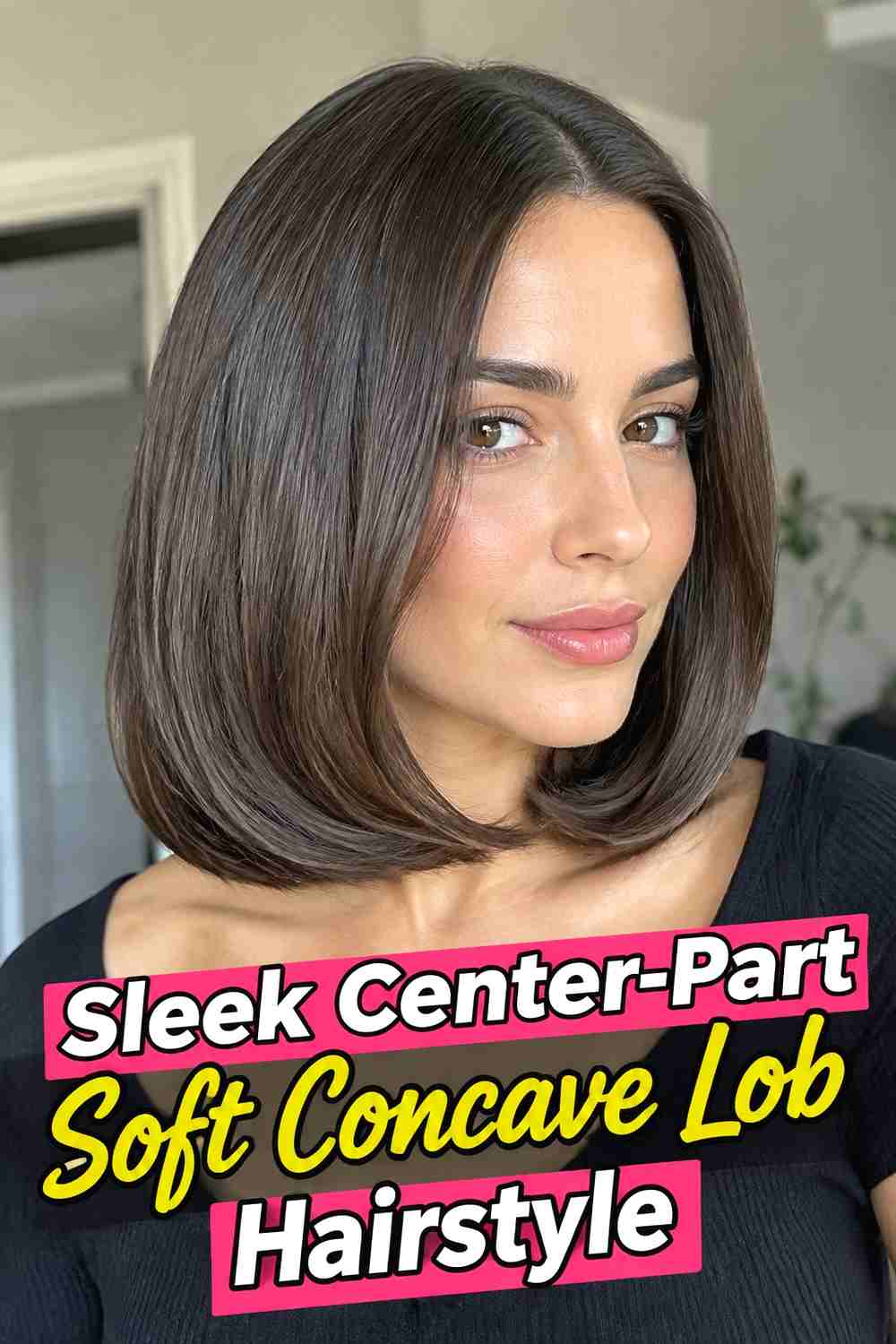
This version keeps the concave shape clean and understated, with a subtle rise through the back and longer front pieces that fall neatly around the collarbone. A center part makes the outline feel balanced and contemporary, while smooth styling lets the haircut itself provide the interest. It works especially well when you want a polished lob without a severe stacked effect. Straight or softly stretched hair will show the angle most clearly, though a light bend at the ends can keep the finish from looking flat. Ask for restrained internal layering so the perimeter stays full, then use a lightweight smoothing product instead of heavy oils that can collapse movement.
Styling Notes
Blow-dry downward with a paddle brush or large round brush, then refine only the areas that need extra smoothing. Keep the ends softly mobile instead of pressing them completely flat.
Best For
This version suits anyone who prefers a refined, symmetrical finish and wants the concave outline to remain clearly visible.
2. Side Parted Soft Concave Lob Hairstyle
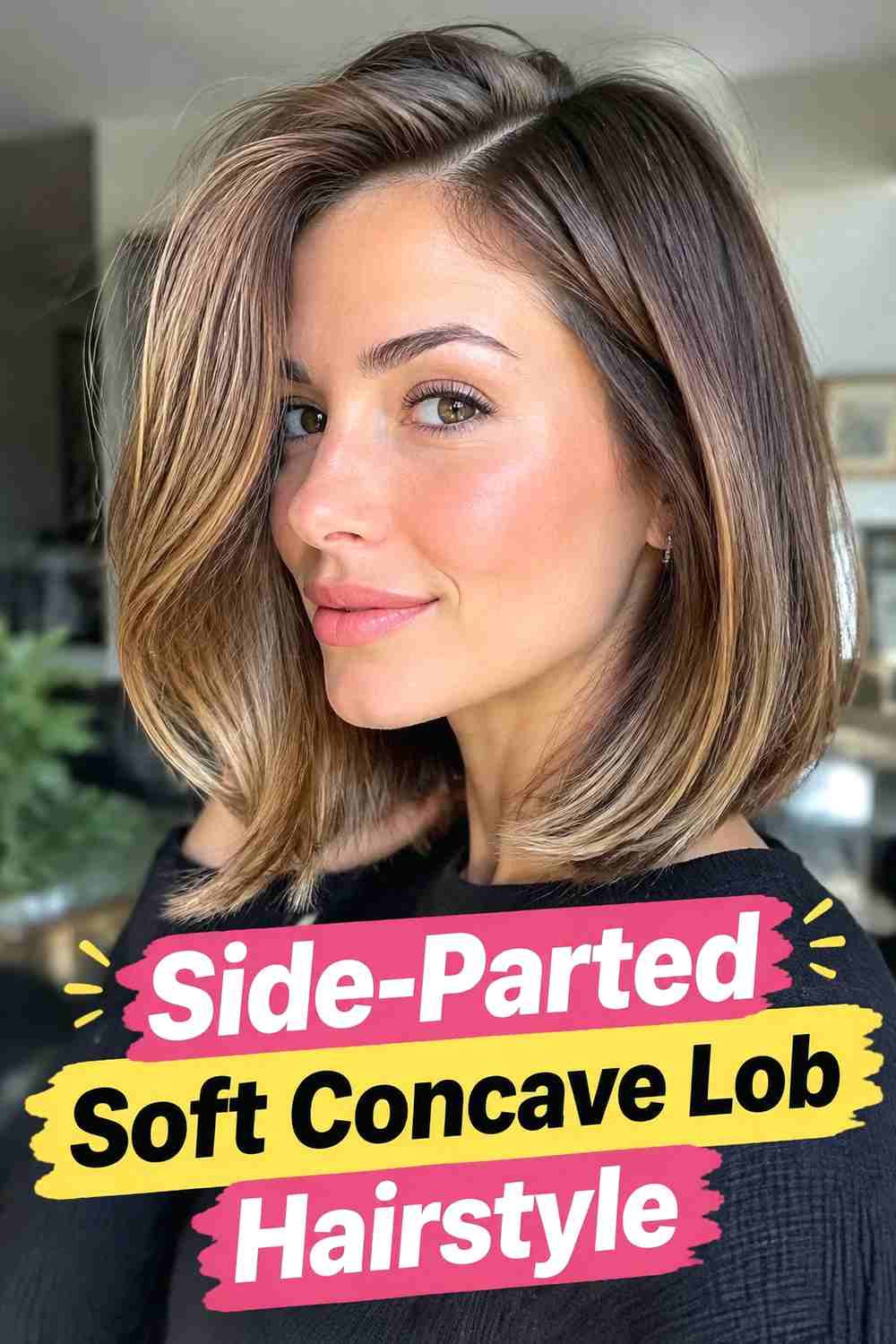
A deep or moderate side part gives a soft concave lob an easy sense of movement and makes the longer front section feel more noticeable without sharpening the cut too much. The back stays gently shorter, while the side with more hair can sweep across the cheek or tuck behind the ear. This is a useful choice if you like a lob that looks styled even when the finish is simple. A round-brush blow-dry can add lift near the part, while the ends should stay smooth and flexible rather than curled into a rigid shape. Keep the graduation subtle so the silhouette remains soft, wearable, and easy to refresh between trims.
Why It Works
Moving the part away from the center creates natural asymmetry and lift, which can make the soft front-to-back angle feel more dynamic without changing the actual haircut dramatically.
3. Soft Concave Lob With Feathered Ends Hairstyle
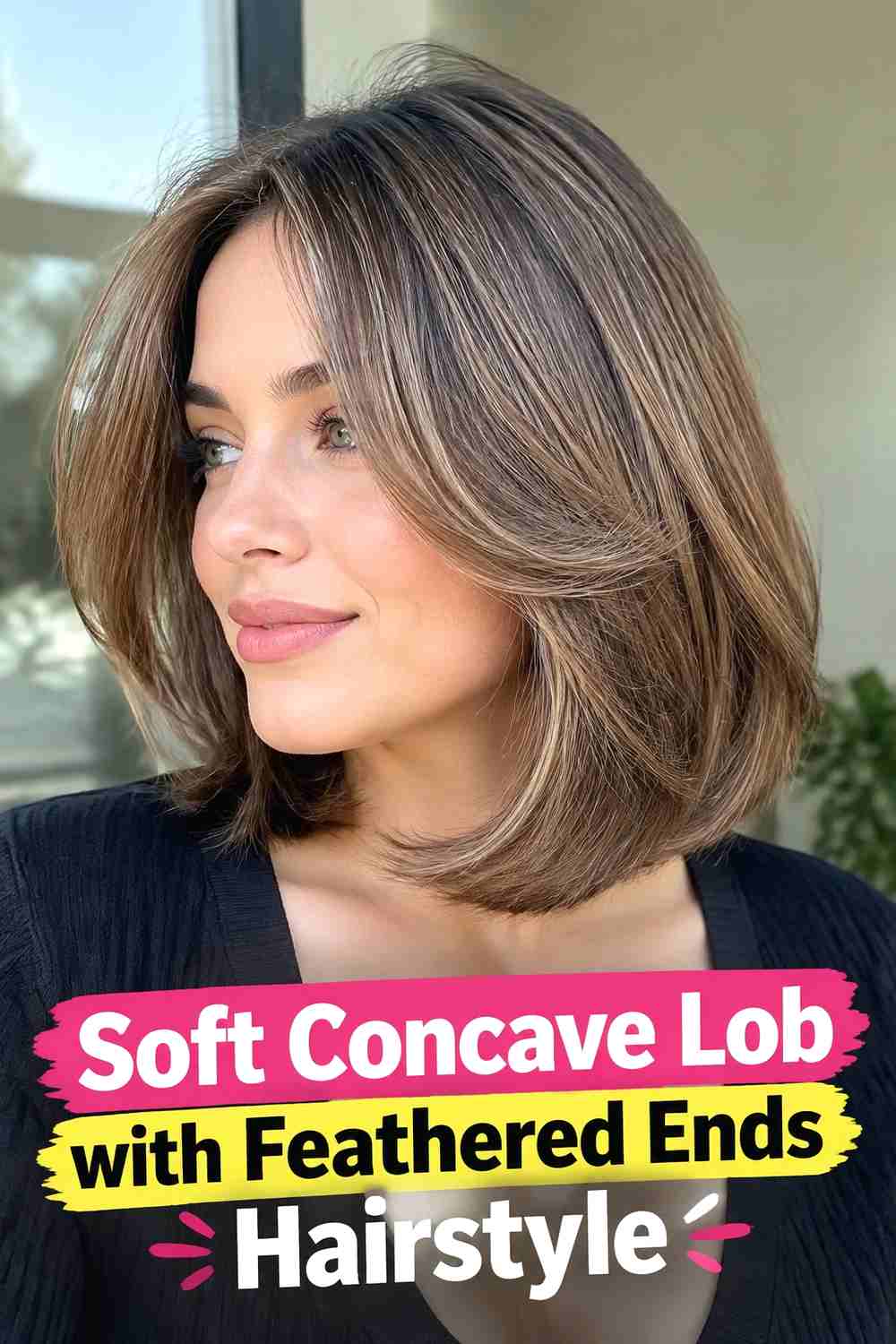
Feathered ends give the soft concave lob a lighter, airier edge while preserving the key longer-in-front silhouette. Instead of a blunt, dense perimeter, the lower lengths are delicately softened so they separate into fine pieces when the hair moves. This can be especially flattering on medium to thick hair that tends to feel heavy around the shoulders. The feathering should stay controlled; too much thinning can weaken the clean concave line. Style with a medium round brush or a wide flat brush, directing the ends slightly away from the face for movement. A small amount of flexible cream can define the feathered finish without making the ends stringy.
Hair Type & Length
Medium-density and thicker hair usually provide enough weight to keep the perimeter visible while allowing the ends to be softened. Collarbone or slightly above-collarbone lengths work especially well.
Pro Tip
Ask for feathering concentrated near the lower edge rather than aggressive thinning throughout the entire haircut.
4. Wavy Soft Concave Lob Hairstyle
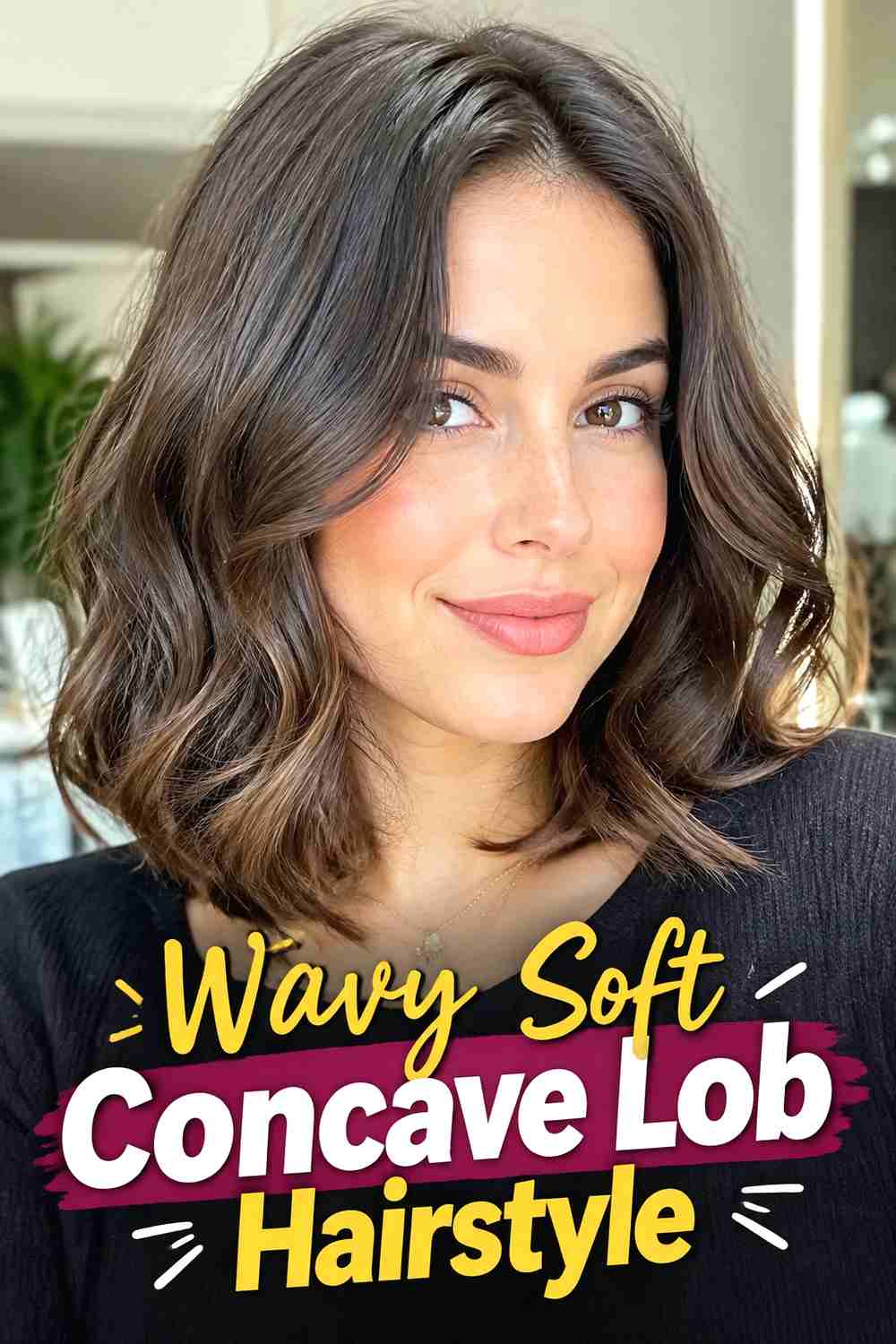
Loose waves make a soft concave lob feel relaxed and dimensional, especially when the haircut has only a gentle difference between the back and front lengths. The wave pattern breaks up the perimeter, so the angle appears softer and more natural while still giving the front pieces extra presence. This look suits anyone who wants movement without committing to heavy layering. Create alternating bends through the mid-lengths and leave the ends slightly straighter for a modern finish. If your hair is naturally wavy, encourage its pattern with a light mousse and diffuser instead of forcing uniform curls. The result should feel touchable, airy, and intentionally imperfect rather than overly polished.
Styling Notes
For heat-styled waves, alternate the curl direction and keep the final inch of each section relatively straight. Once the hair cools, loosen it gently with your fingers rather than brushing away all the definition.
5. Face Framing Soft Concave Lob Hairstyle
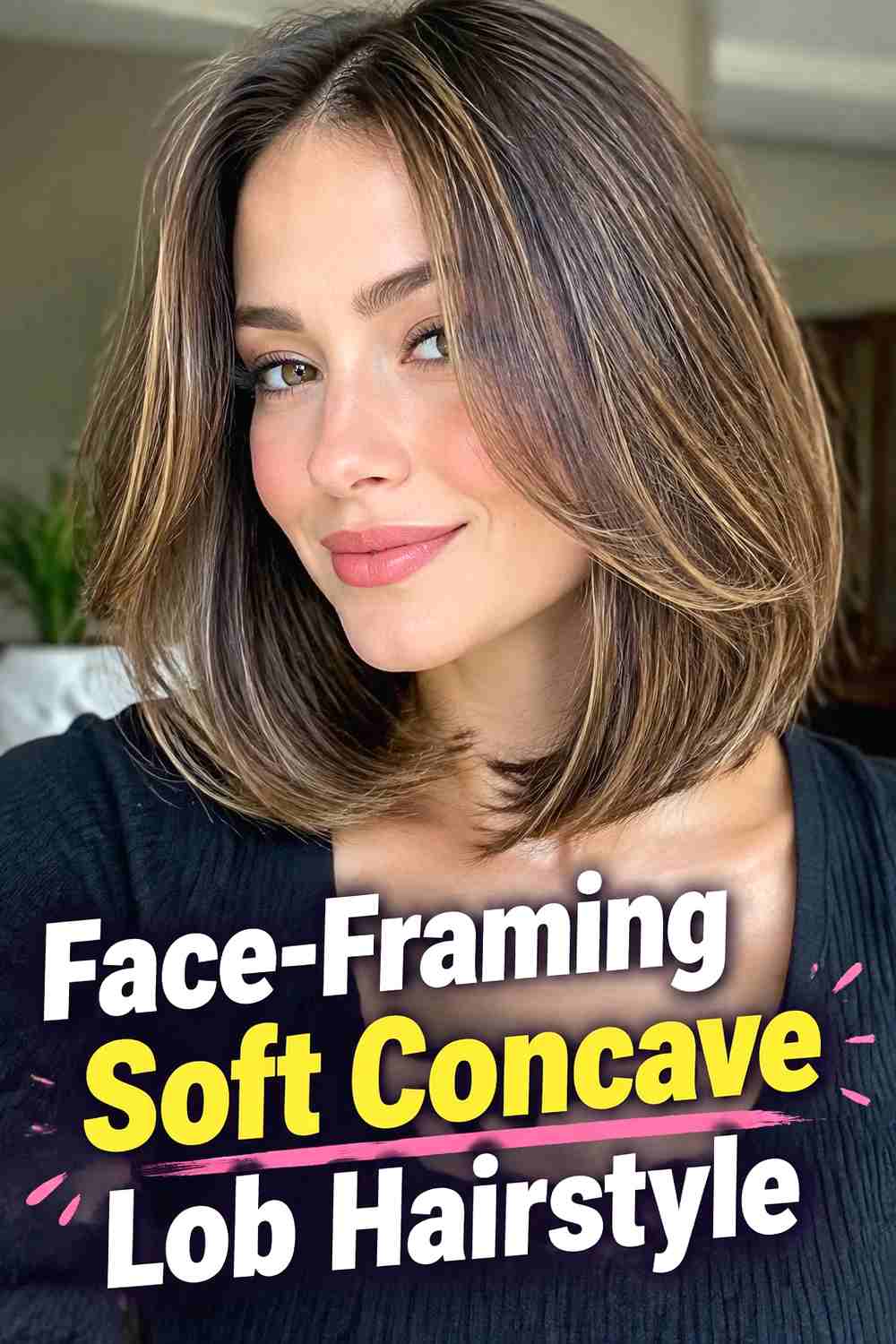
Face-framing layers add softness around the cheekbones and jaw while the main lob keeps its subtle concave shape. The front remains the longest area, but shorter blended pieces near the face create movement and prevent the cut from feeling too solid. This version is especially useful if you like wearing your hair down and want more shape around the front without adding dramatic layers throughout the back. Keep the shortest framing pieces long enough to tuck comfortably if versatility matters. For styling, direct the front sections away from the face with a round brush or large barrel, then let the lower perimeter stay smooth so the concave outline remains easy to see.
Best For
Choose this option if you want more visible movement around the face while keeping most of the haircut relatively full and uncomplicated.
Wear & Maintenance
Face-framing pieces can lose their intended shape sooner than the longer perimeter, so they may need light reshaping between major haircut changes.
6. Curled Under Soft Concave Lob Hairstyle
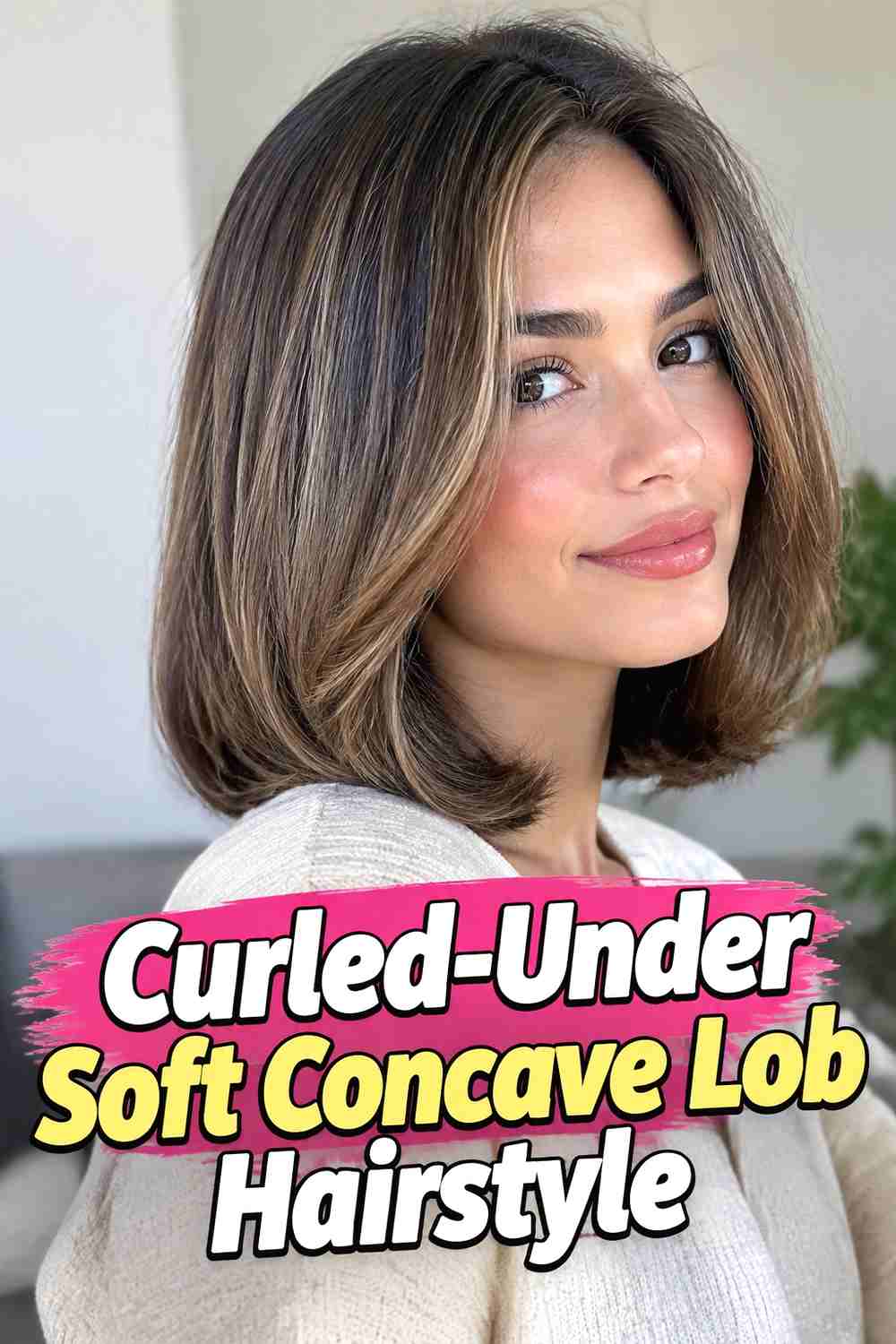
A curled-under finish emphasizes the rounded polish of a soft concave lob without turning it into a stiff retro shape. The back sits slightly shorter and can hug the nape or upper shoulders, while the front lengths curve inward near the collarbone. This styling works particularly well on straight or softly wavy hair because it highlights the clean perimeter and makes the ends appear fuller. Use a round brush to bend only the last inch or two of hair, keeping the roots natural and the mid-lengths smooth. The inward curve should be gentle, not tightly rolled. A light mist of flexible hairspray can help hold the shape while preserving movement through the longer front sections.
Styling Notes
Roll the brush inward only near the ends and let each section cool before releasing it. Concentrating the bend low on the hair keeps the silhouette modern and avoids excessive roundness.
7. Tousled Textured Soft Concave Lob Hairstyle
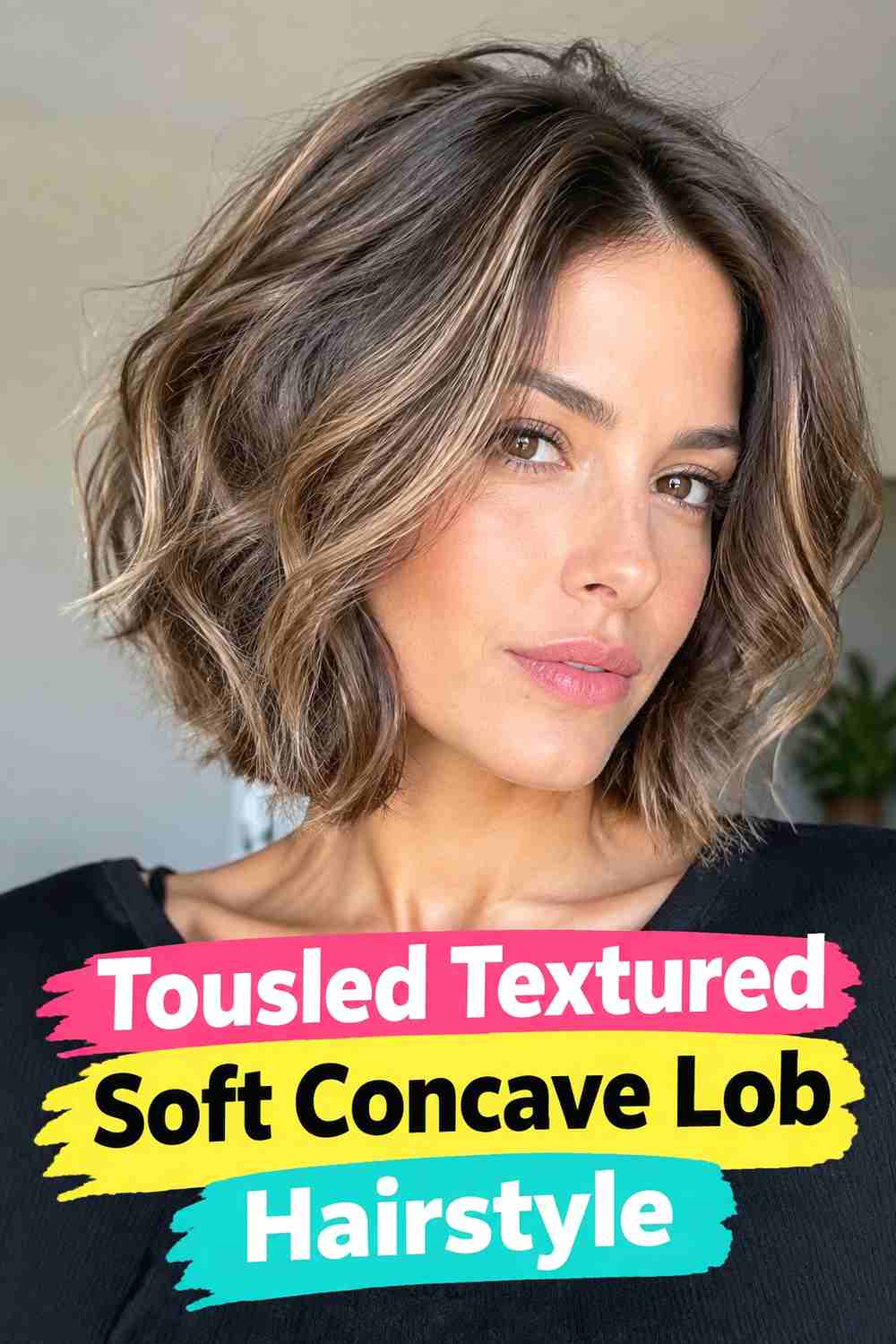
A tousled textured finish makes the soft concave lob feel casual, modern, and less structured while the haircut still retains its longer front line. Light internal layers or point-cut ends can help create separation through the mid-lengths without removing too much weight from the perimeter. This version is ideal if you prefer a slightly undone look or want styling that works with natural bends and irregular texture. Scrunch in a lightweight texture foam or mist, then air-dry or diffuse until the shape is mostly set. Finish by loosening sections with your fingers rather than brushing everything smooth. The goal is soft separation and movement, not roughness or excessive pieceiness.
Hair Type & Length
Natural waves, loose curls, and straight hair that holds a bend can all suit this finish. A lob around the shoulders gives enough length for texture without hiding the concave shape completely.
Pro Tip
Add texture gradually. Too much salt spray or dry texture product can make the ends appear rough and reduce the soft quality of the cut.
8. Soft Concave Lob With Wispy Bangs Hairstyle
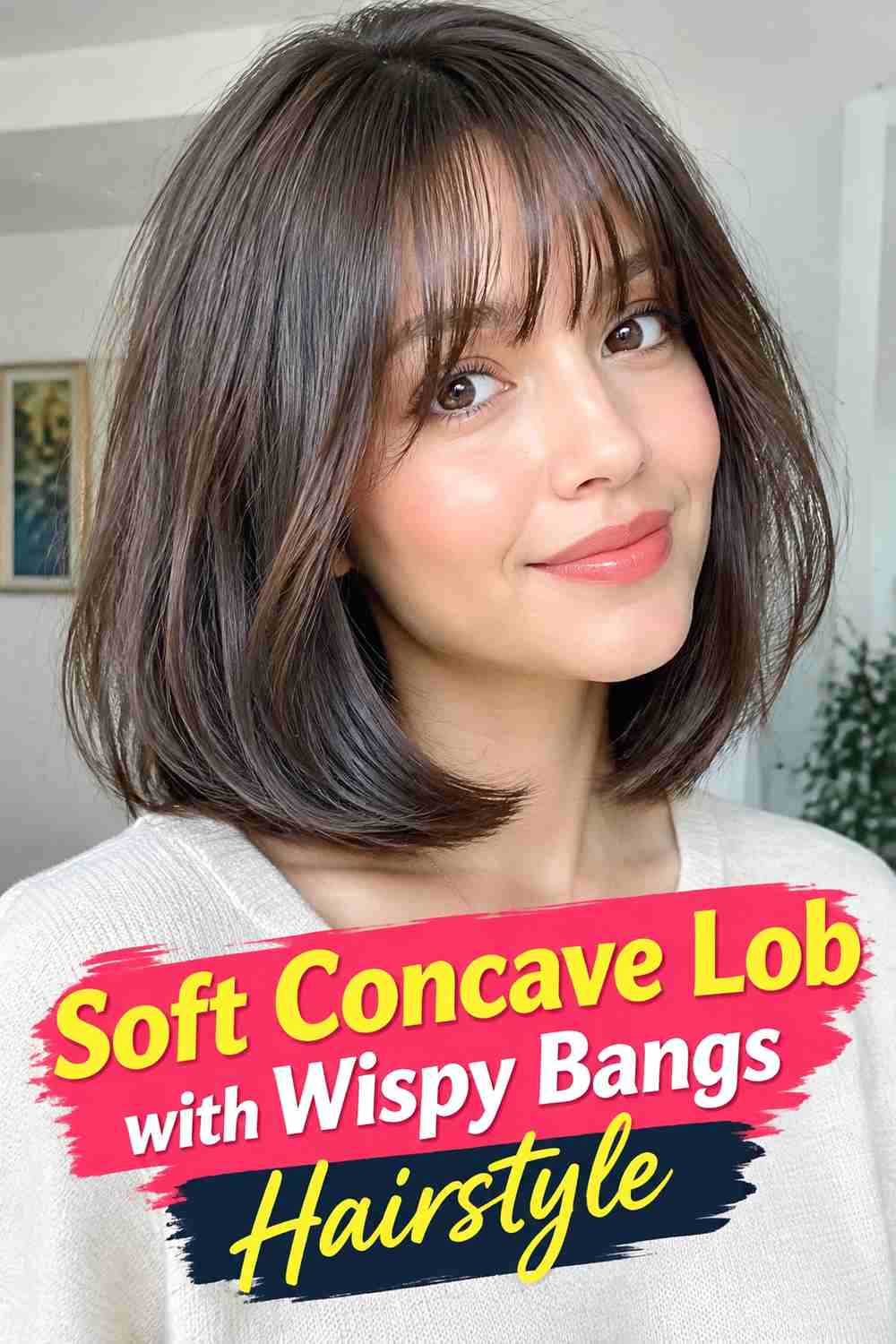
Wispy bangs bring a softer focal point to the front of a concave lob and balance the longer pieces that frame the jaw and neck. The fringe should stay light and mobile, with small gaps that let the forehead show through rather than forming a dense horizontal line. Because the main haircut is longer toward the front, the bangs create a useful contrast between short airy detail and a sleek elongated perimeter. This look can work with straight, wavy, or lightly textured hair, but the fringe will usually need a little more daily attention than the rest of the lob. Blow-dry the bangs first, moving them side to side to keep the roots relaxed and prevent a heavy split.
Wear & Maintenance
Wispy bangs generally require more frequent reshaping than the lob itself. They also respond quickly to humidity, oil, or sleep creases, so a brief morning restyle may be useful.
9. Voluminous Blowout Soft Concave Lob Hairstyle
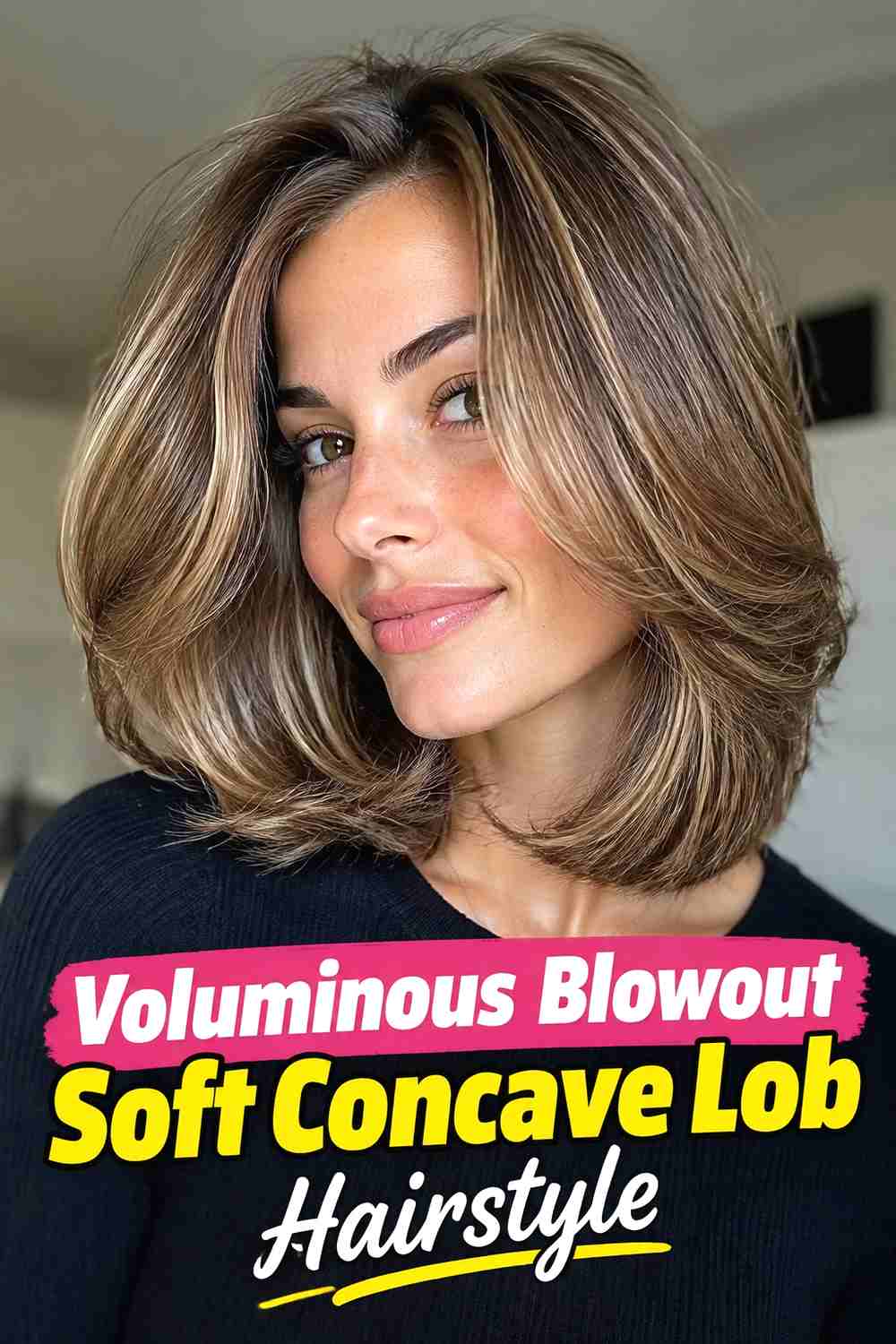
A voluminous blowout gives the soft concave lob a fuller, more glamorous finish while keeping the actual haircut refined. Root lift through the crown and smooth curvature through the lengths make the shorter back feel buoyant, while the longer front sections sweep around the face with soft movement. This style works best when the cut has enough internal layering to support volume without losing the strong lower edge. Use a medium or large round brush, lifting each section at the root and rolling the ends only slightly. Let the hair cool before separating it with your fingers. A light root spray or mousse can add support, but heavy finishing products may reduce the airy shape.
Styling Notes
Work in manageable sections and direct the crown upward while blow-drying. Velcro rollers placed through the top for a few minutes can help preserve lift as the hair cools.
Best For
This finish is a good choice for occasions or everyday styling when you want your soft concave lob to look fuller, bouncier, and more polished.
10. Fine Hair Soft Concave Lob Hairstyle
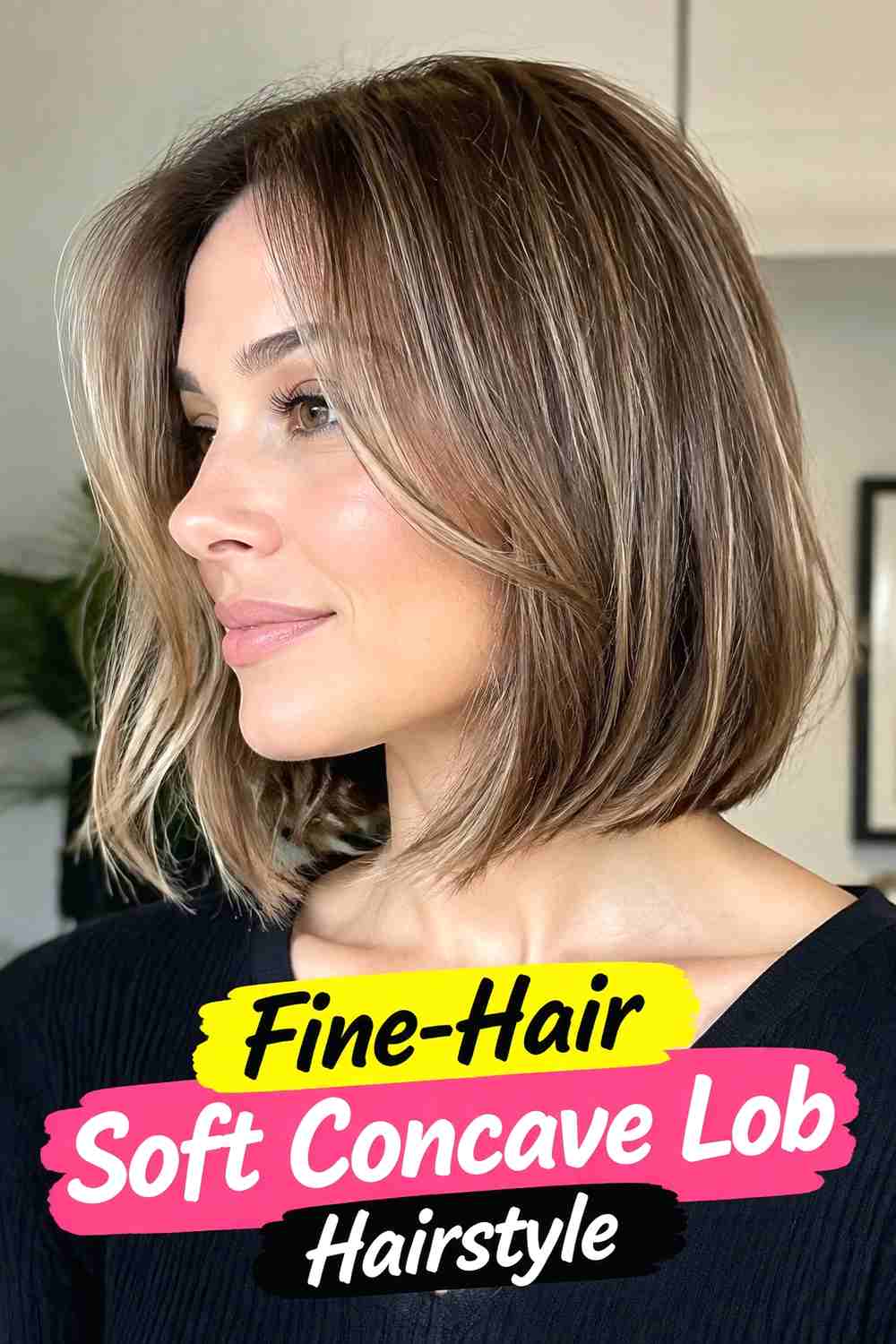
For fine hair, a soft concave lob looks strongest when the perimeter stays relatively full and the angle is created with careful shaping rather than aggressive layering. The back can sit just slightly shorter than the front, giving the cut visual direction without sacrificing too much density at the ends. A blunt-looking lower line paired with minimal internal layers can help the hair appear more substantial. Style with gentle root lift and a smooth bend through the lengths instead of overworking the ends. Dry shampoo or a lightweight volumizing spray can add texture between washes, while rich creams are best used sparingly. Regular trims help maintain the clean outline that makes this version effective.
Why It Works
Keeping more weight at the bottom preserves visible density, while the subtle concave angle gives the haircut shape without requiring lots of layers.
Pro Tip
Ask for a modest length difference between the back and front. A very dramatic angle can make finer ends look less substantial.
11. Thick Hair Soft Concave Lob Hairstyle
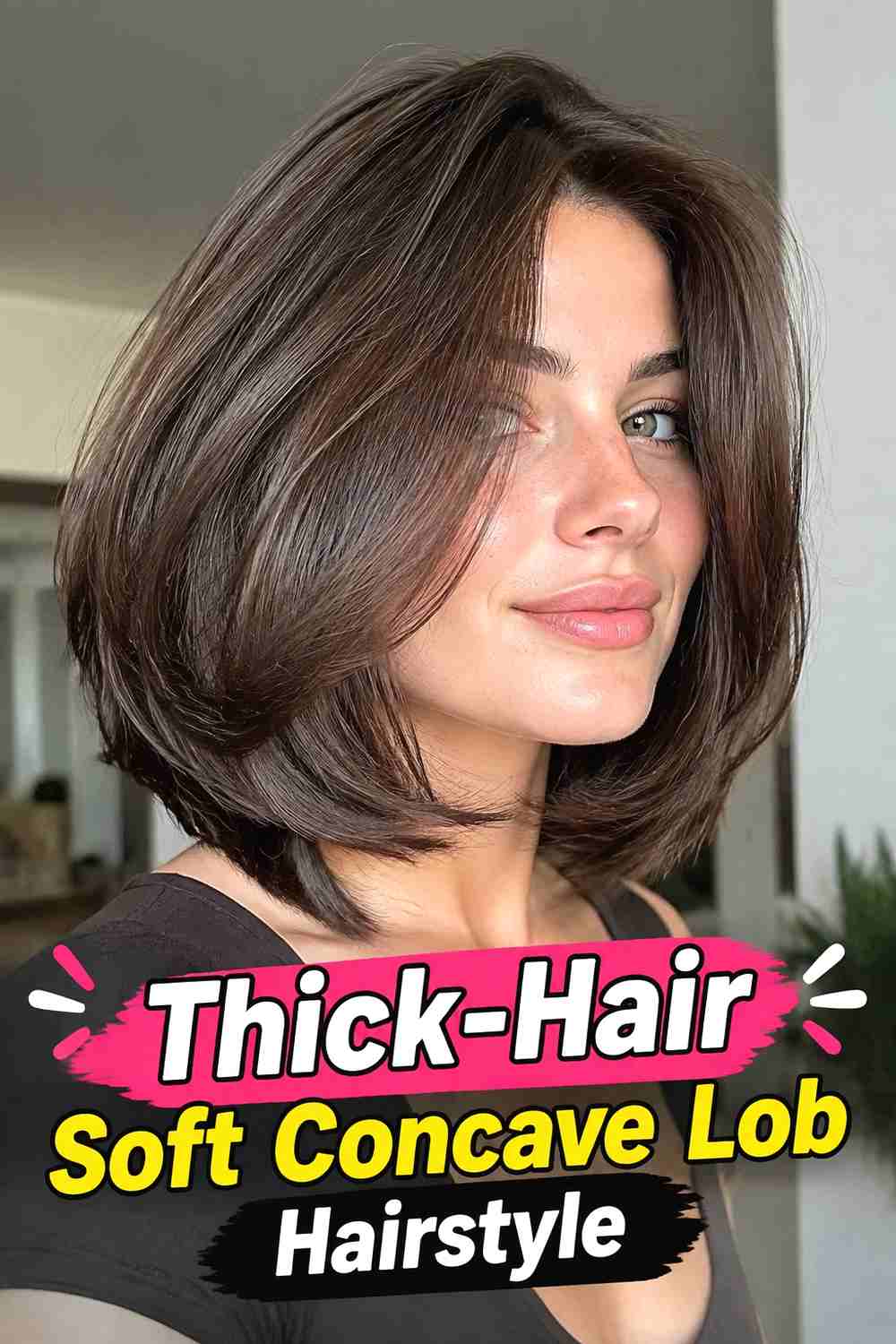
Thick hair can carry a soft concave lob beautifully when weight is removed from the interior rather than heavily thinning the visible perimeter. The slightly shorter back helps the shape sit closer to the neck, while longer front sections create a graceful line around the shoulders. Subtle long layers or internal debulking can reduce bulk and make the cut easier to style without creating frayed ends. A smoothing blow-dry shows the silhouette clearly, but loose waves also work well because the density gives them natural body. Ask your stylist to preserve enough weight around the bottom so the concave shape stays intentional. Anti-frizz cream can help control expansion while still allowing movement.
Hair Type & Length
Medium-thick to very thick hair can support the shape well, particularly when the lob falls between the upper shoulder and collarbone.
Wear & Maintenance
Because dense hair can expand as the cut grows, periodic reshaping may help keep the shorter back and longer front sections balanced rather than bulky.
12. Glossy Straight Soft Concave Lob Hairstyle
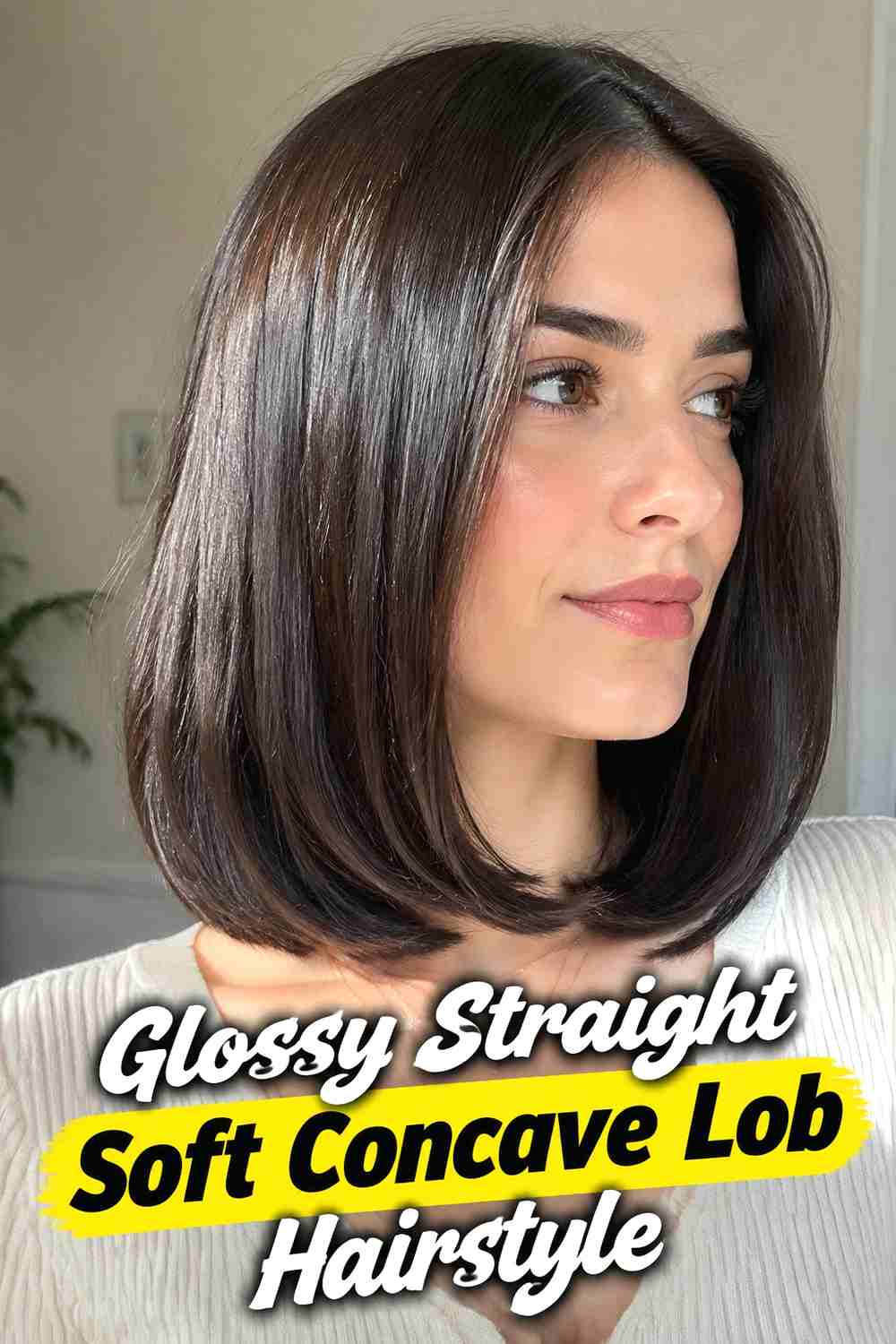
A glossy straight finish is one of the clearest ways to showcase the architecture of a soft concave lob. The smooth surface makes the gradual transition from shorter back lengths to longer front pieces immediately visible, while a full perimeter keeps the cut looking refined rather than razor-thin. This version suits anyone who enjoys a sleek, low-fuss appearance and does not need lots of visible layering. Blow-dry with a paddle brush and follow with a straightener only where needed, keeping the ends natural instead of pin-straight and rigid. A small amount of shine serum can enhance polish, but apply it mainly through the mid-lengths and ends so the roots remain fresh and lifted.
Styling Notes
Use heat protection before hot tools and work with moderate tension rather than repeatedly passing over the same section. The best finish is smooth and reflective while still showing natural strand movement.
How to Choose the Right Look
Start by deciding how visible you want the concave angle to be. Sleek center-parted and glossy straight versions show the shorter-back, longer-front structure most clearly, while waves and tousled texture make the graduation softer and less obvious.
Hair density matters too. Fine hair often benefits from a fuller perimeter and minimal layering, while thicker hair may feel more comfortable with internal weight removal. If you want extra movement around the face, consider face-framing pieces, a side part, or wispy bangs. Feathered ends can also reduce visual heaviness without dramatically changing the overall silhouette.
Think realistically about styling time. A textured or naturally wavy lob can be relatively relaxed, while a glossy straight finish, rounded blowout, curled-under shape, or fringe may need more deliberate daily styling. For lower maintenance, keep the angle subtle and choose a finish that works with your natural texture instead of against it.
Finally, consider how often you are comfortable trimming the cut. Concave shapes rely on a clear relationship between the back and front lengths, so regular reshaping helps preserve the intended silhouette as the hair grows.
Final Thoughts
A soft concave lob can range from sleek and architectural to airy, wavy, and effortless. The most wearable version is usually the one that respects your natural density, texture, and styling routine while keeping the front-to-back graduation gentle enough to move naturally. Use these ideas as a starting point, then adjust the angle, layering, fringe, and finish to suit the look you actually want to maintain.
FAQs
1. What is a soft concave lob hairstyle?
A soft concave lob is a long bob that is slightly shorter through the back and gradually longer toward the front. The word “soft” usually describes a gentle transition rather than a dramatic stacked or sharply angled shape.
2. Does a soft concave lob work with wavy hair?
Yes. Natural waves can soften the concave line and create extra movement. Keeping the layering controlled helps prevent the haircut from becoming overly rounded or losing its longer front shape.
3. Is a concave lob suitable for fine hair?
It can be. A subtle angle with a fuller perimeter and limited layering is often easier for fine hair because it preserves more visible density through the ends.
4. Can thick hair wear a soft concave lob?
Yes. Thick hair may benefit from internal weight removal or long blended layers so the cut does not become bulky through the back and shoulders.
5. How often should a soft concave lob be trimmed?
The ideal timing varies with growth rate and how precise you want the angle to remain. Once the shorter back and longer front begin losing their relationship, a reshaping trim can restore the silhouette.
Save your favorite soft concave lob hairstyle ideas and share them for your next haircut inspiration.