11 Voluminous Midi Shag Hairstyle Ideas for Full, Airy Movement
Airy crown volume, flowing layers, and lived-in texture make the midi shag an easy way to give mid-length hair more shape and movement.
A voluminous midi shag sits in the useful space between a shorter shag and long layered hair, usually landing around the shoulders or upper chest. Its personality comes from shorter crown layers, face-framing pieces, and longer lengths underneath, creating lift without sacrificing all of the weight through the ends.
The amount of layering matters. Fine hair often needs fewer, more strategic layers to preserve density, while thick or curly hair may benefit from extra internal shaping. You can also shift the mood dramatically with curtain bangs, feathering, natural waves, defined curls, or a polished blowout.
Quick List
- Classic Voluminous Midi Shag Hairstyle
- Curtain Bang Voluminous Midi Shag Hairstyle
- Wavy Voluminous Midi Shag Hairstyle
- Curly Voluminous Midi Shag Hairstyle
- Feathered Crown Voluminous Midi Shag Hairstyle
- Face Framing Voluminous Midi Shag Hairstyle
- Soft Wolf Inspired Voluminous Midi Shag Hairstyle
- Fine Hair Voluminous Midi Shag Hairstyle
- Thick Hair Voluminous Midi Shag Hairstyle
- Tousled Voluminous Midi Shag Hairstyle
- Glossy Blowout Voluminous Midi Shag Hairstyle
1. Classic Voluminous Midi Shag Hairstyle
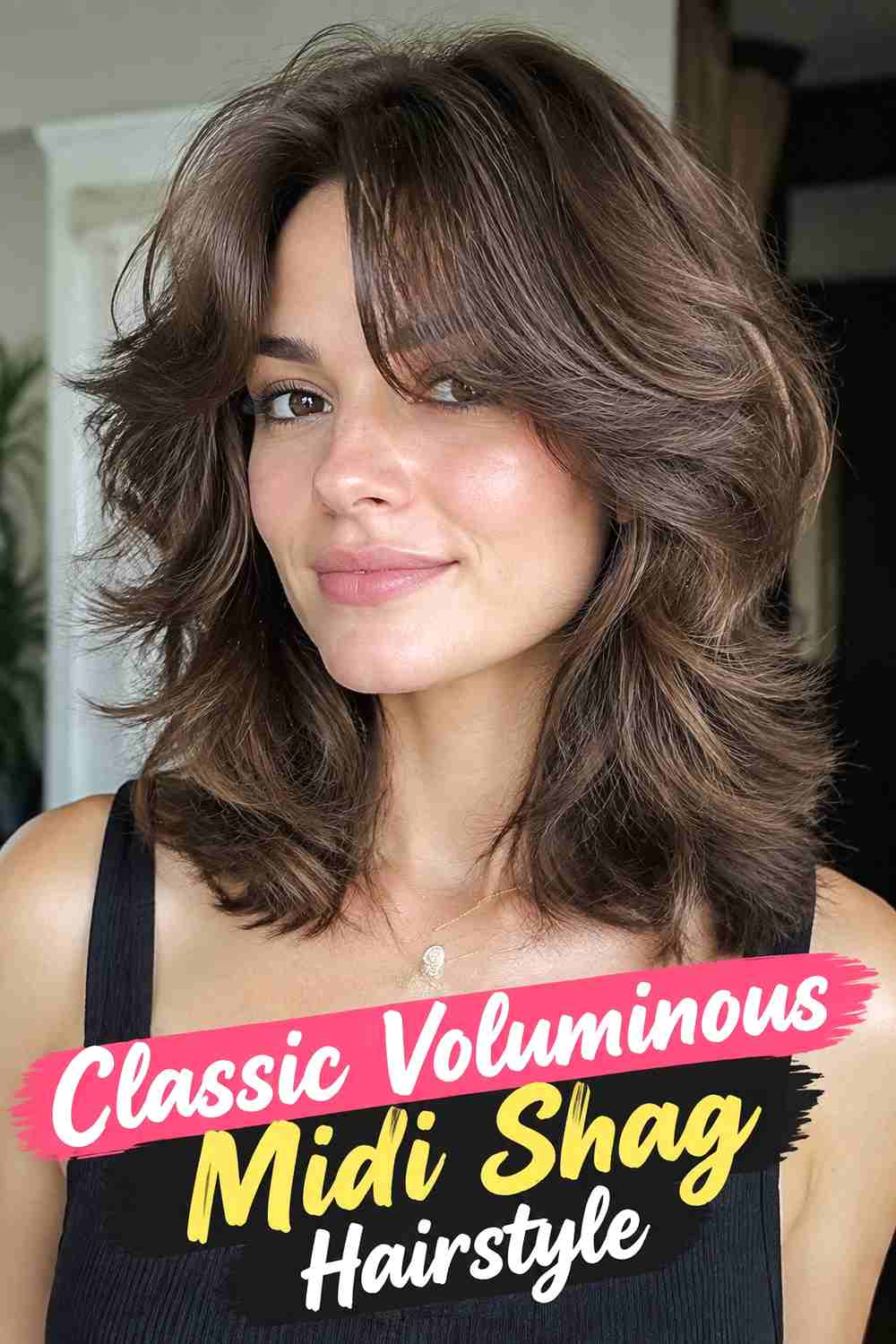
The classic voluminous midi shag uses graduated crown layers to create lift while keeping enough length through the bottom for a flowing mid-length silhouette. Shorter pieces around the upper head encourage natural movement, then blend into longer layers that fall around the shoulders and upper chest. The result should feel airy rather than heavily chopped, with visible separation between sections but no harsh gaps. A light blow-dry or natural wave can bring out the shape without requiring a complicated routine. This version works best when the layering follows your existing density, since too many short pieces can make finer ends look sparse while too few may leave thick hair feeling heavy.
Styling Notes
Lift the crown while blow-drying and direct the longer layers away from the face. Finish by separating the ends with your fingers rather than brushing everything smooth.
Best For
This is a versatile starting point if you want noticeable shag movement without an extremely short crown or dramatic fringe.
2. Curtain Bang Voluminous Midi Shag Hairstyle
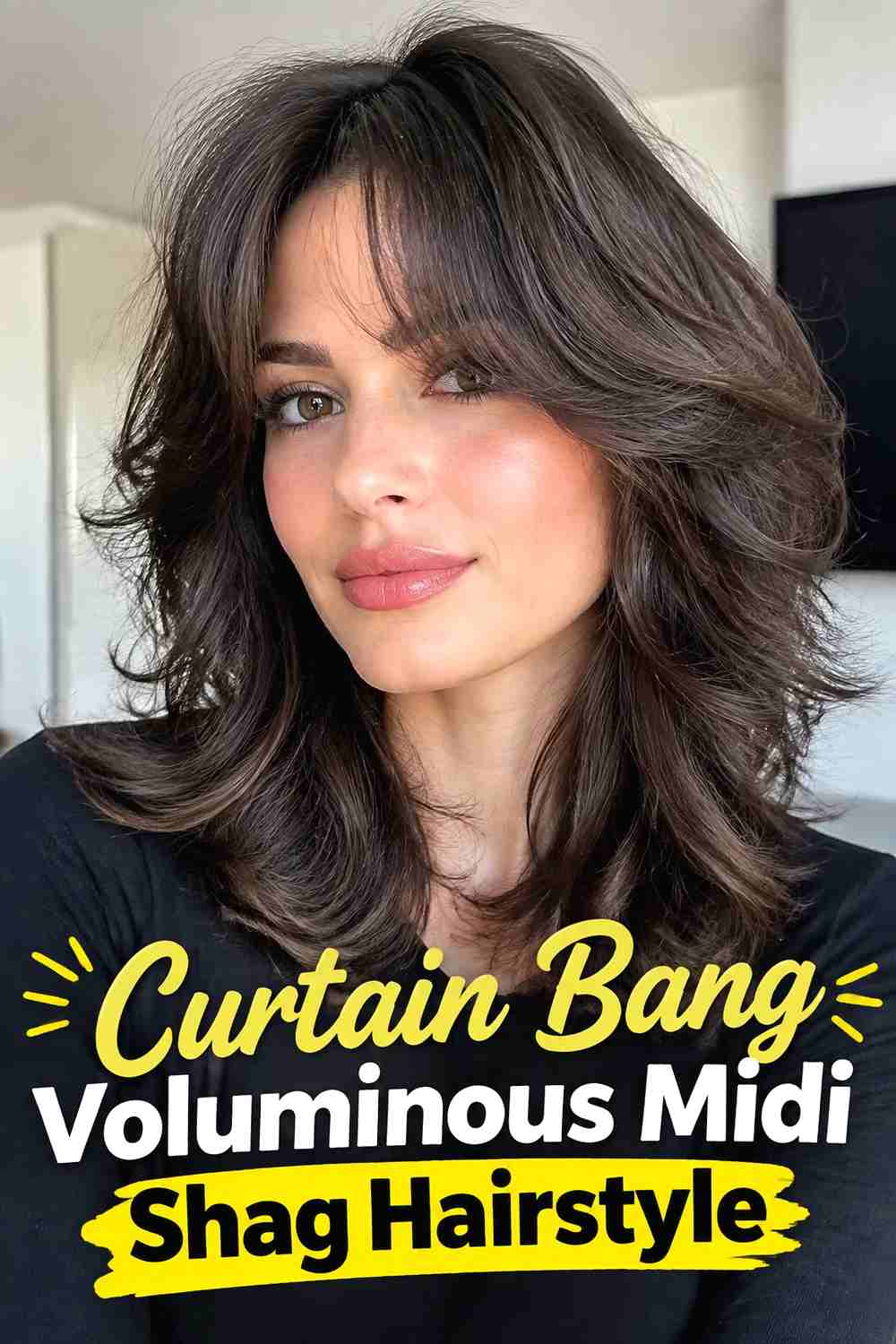
Curtain bangs fit naturally into a midi shag because their longer outer edges can blend directly into the face-framing layers. The fringe opens around the center, then sweeps toward the cheekbones before transitioning into progressively longer pieces around the jaw and shoulders. Crown layering gives the style lift behind the bangs, keeping the front from feeling heavy. A medium round brush can help shape the fringe away from the face, while the rest of the hair can stay softly waved or loosely blown out. Keep the bangs flexible rather than overly curled so they move with the shag. This version is especially useful if you want a prominent front detail without committing to a short, dense fringe.
Wear & Maintenance
Curtain bangs usually need reshaping more often than the longer midi layers, particularly if you want the center opening and cheekbone sweep to remain defined.
3. Wavy Voluminous Midi Shag Hairstyle
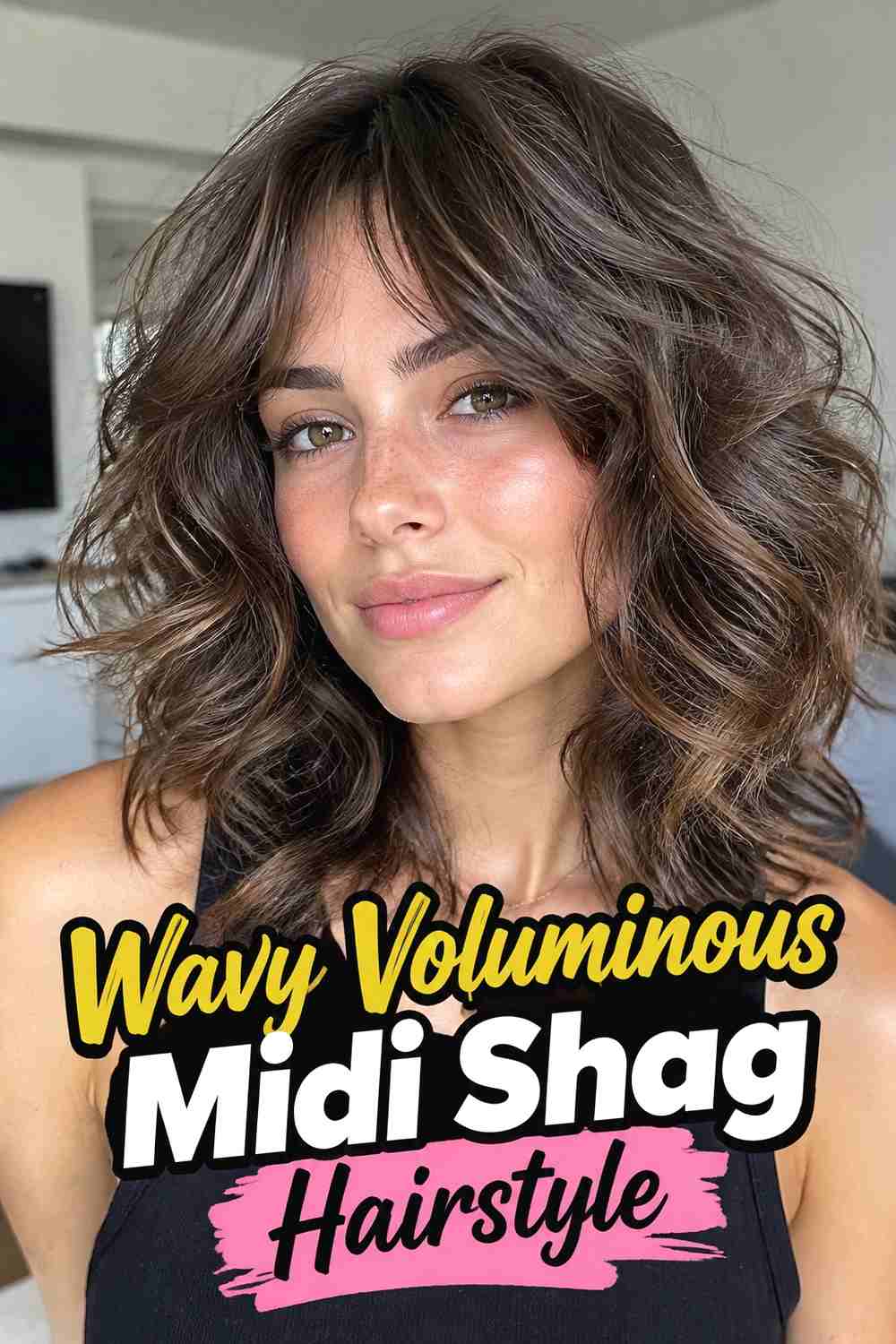
Loose waves make a midi shag look naturally full because bends through different layer lengths create visible separation and movement. The crown can stay softly lifted while shorter face-framing pieces curve around the cheekbones and longer layers move across the shoulders. Natural waves work particularly well with this shape because the haircut can encourage texture rather than forcing every section into an identical curl. If you style with heat, alternate directions and leave some ends straighter for a more relaxed result. A lightweight mousse or wave cream can provide definition without collapsing volume. The finished hairstyle should feel touchable and varied, with enough structure to reveal the shag layers but enough softness to keep the silhouette wearable.
Styling Notes
Diffuse natural waves with minimal handling, or create loose bends through random sections on straighter hair. Avoid making every wave perfectly uniform.
4. Curly Voluminous Midi Shag Hairstyle
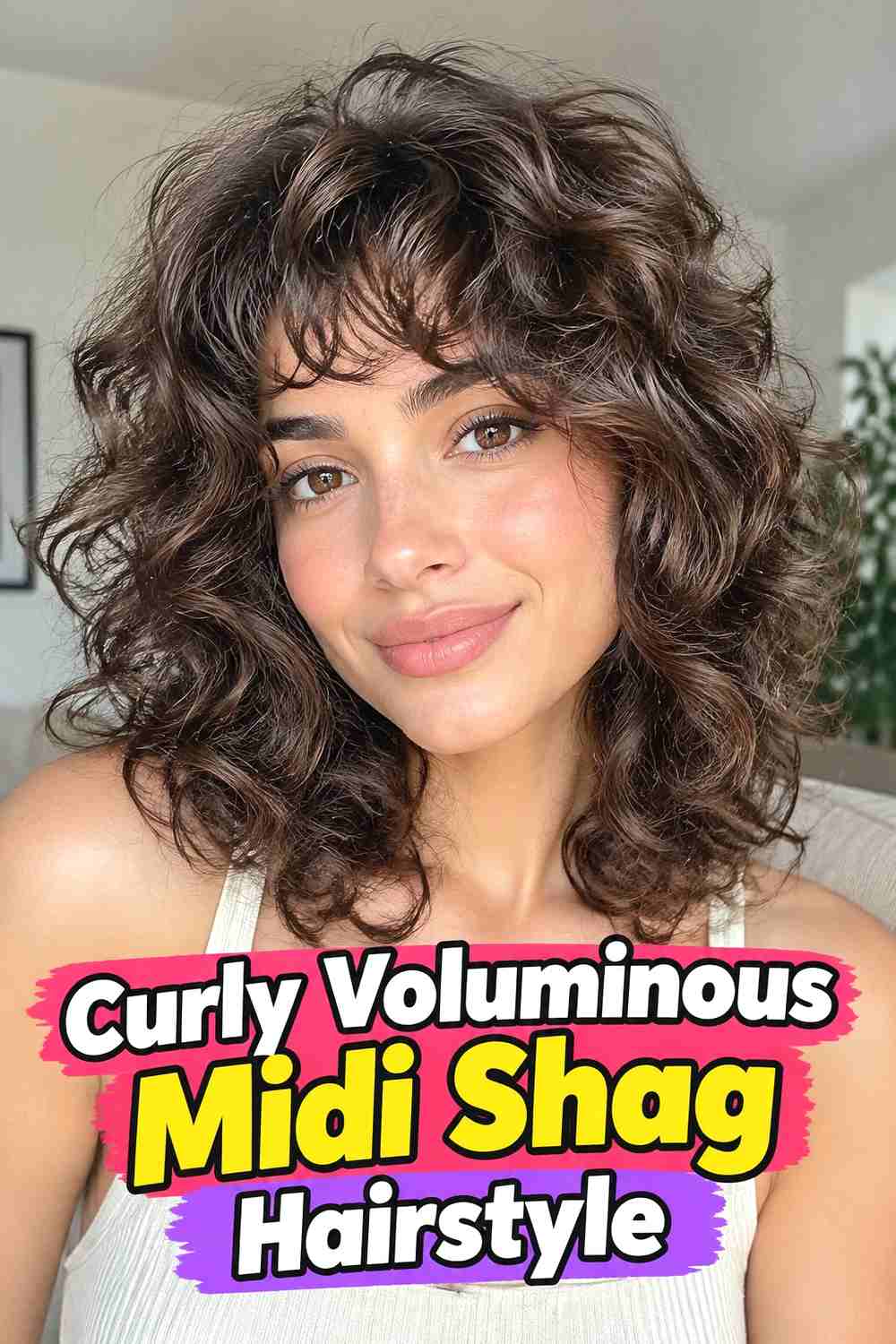
A curly midi shag uses layering to distribute volume rather than allowing all the density to collect around the lower lengths. Shorter curls through the crown can create lift, while gradually longer layers through the sides and back form a rounded but elongated silhouette. The exact layer placement should account for shrinkage and differences in curl pattern, especially around the front. Keep enough length through the bottom so the style still reads as midi rather than becoming a short rounded shag. Apply curl cream, mousse, or gel according to your preferred hold and diffuse gently or air-dry. Once fully dry, lift the roots carefully and separate only selected curls to increase volume without creating unnecessary frizz.
Hair Type & Length
This shape can work with loose curls through tighter curl patterns, but the cut should be planned around the hair’s natural dry length and density.
Pro Tip
Evaluate the crown layers after the curls have fully contracted before deciding whether additional length should be removed.
5. Feathered Crown Voluminous Midi Shag Hairstyle
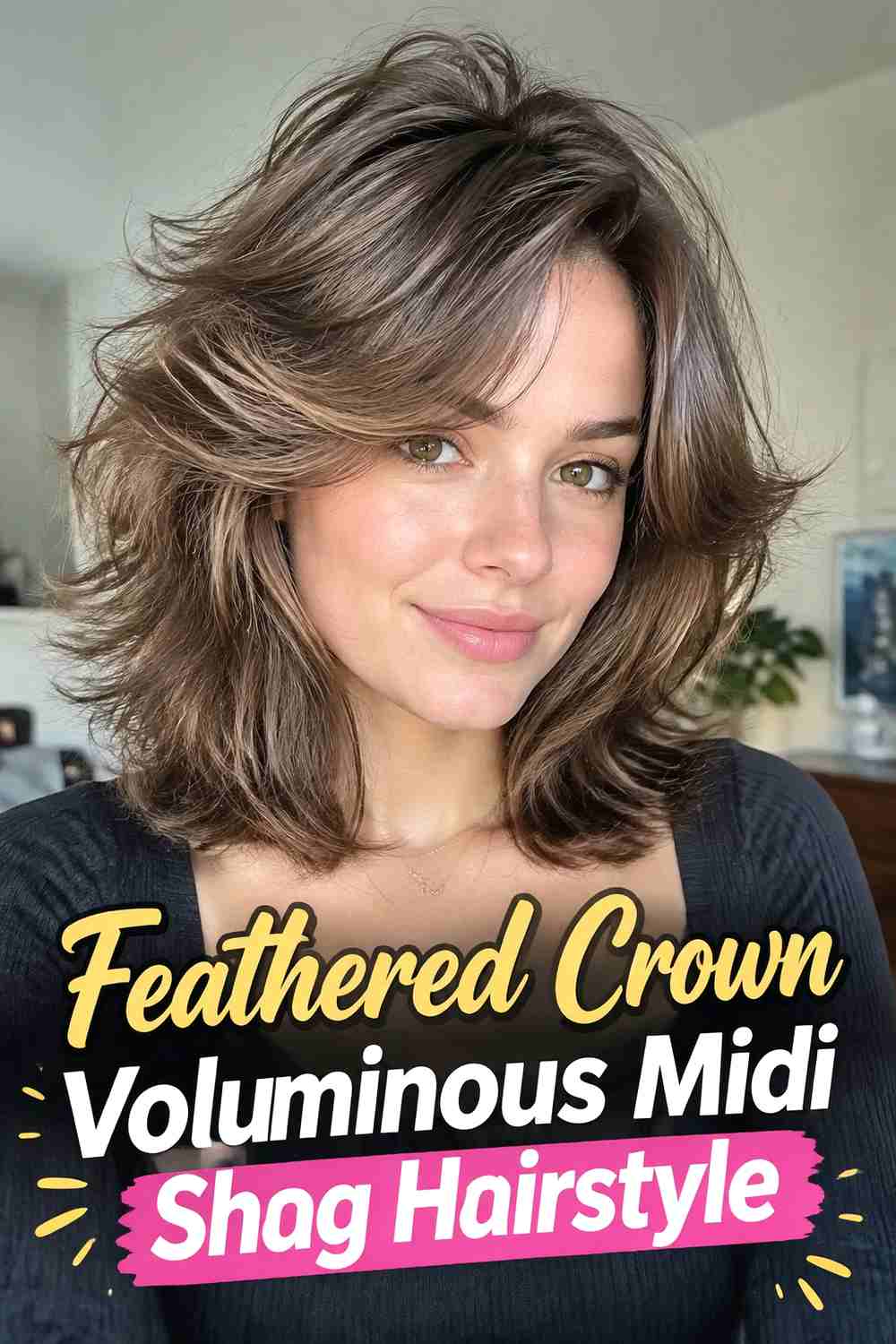
Feathered crown layers give the midi shag a lighter, more directional type of volume. Instead of forming a rounded mass at the top, the shorter layers sweep outward and gradually fall into longer pieces through the sides and back. The effect can feel slightly retro while still looking modern when the feathering remains soft and the overall length stays around the shoulders or below. Use a round brush to lift the roots and direct upper layers away from the head, then keep the longer ends flexible rather than heavily curled. Medium to thick hair often supports this shape particularly well because there is enough density to create several layers without sacrificing fullness through the lower perimeter.
Why It Works
The feathering separates the upper layers and creates visible height without requiring excessive teasing or heavy styling products.
Styling Notes
Focus the strongest outward movement around the crown and face, then let the longest sections fall more naturally to maintain balance.
6. Face Framing Voluminous Midi Shag Hairstyle
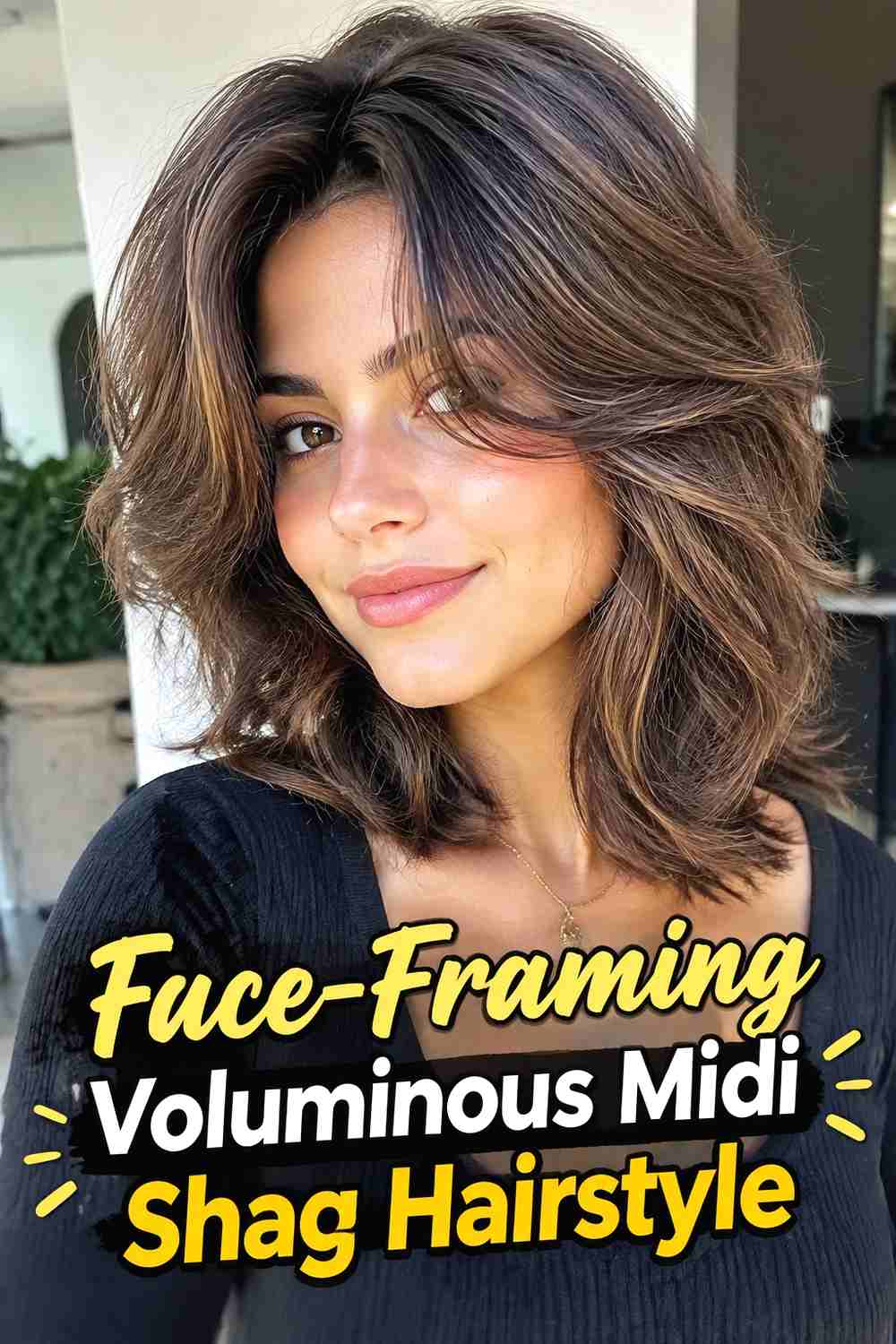
This version puts most of the visual interest around the face, using shorter pieces near the cheekbones or jaw that gradually cascade into longer midi layers. The crown still carries enough lift to maintain the shag silhouette, but the layering is less aggressive through the back. That makes the haircut useful if you want movement from the front while preserving more density elsewhere. Style the framing layers away from the face with a round brush or loose bend, then let the lower lengths remain relaxed. The shortest sections should connect smoothly to the rest of the cut rather than appearing like disconnected pieces. Keeping them long enough to tuck behind the ears can also make everyday styling more flexible.
Best For
Choose this option if you want a noticeable shag effect around the front without committing to extensive layering through the entire haircut.
7. Soft Wolf Inspired Voluminous Midi Shag Hairstyle
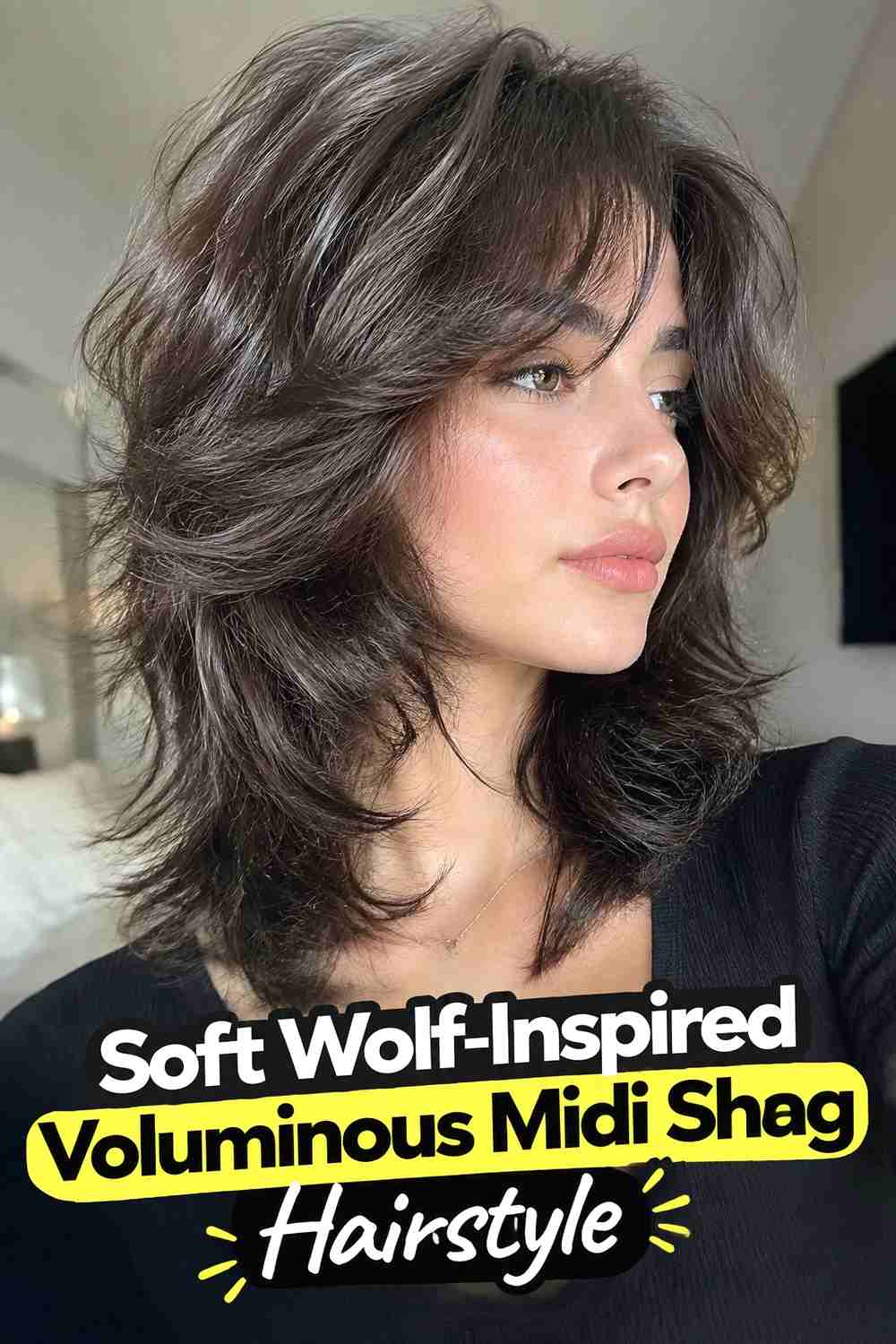
A soft wolf-inspired midi shag increases the contrast between crown volume and longer lower layers without taking the difference to an extreme. Shorter pieces through the top create airy height, while the sides and back taper gradually into shoulder- or chest-grazing lengths. Unlike a sharper wolf cut, the transitions remain blended so the hairstyle feels fluid rather than dramatically disconnected. A tousled blow-dry, diffuser, or a few loose bends can emphasize the layered shape. Keep the lower perimeter substantial enough to balance the crown, particularly on fine or medium-density hair. This variation is ideal if you like the energetic silhouette associated with a wolf cut but want something softer and easier to grow out.
Why It Works
The stronger crown-to-length contrast produces obvious volume and movement while the softened blending keeps the overall shape wearable.
Pro Tip
Ask for gradual transitions between the short crown layers and the longer lengths instead of a sudden shelf of layering.
8. Fine Hair Voluminous Midi Shag Hairstyle
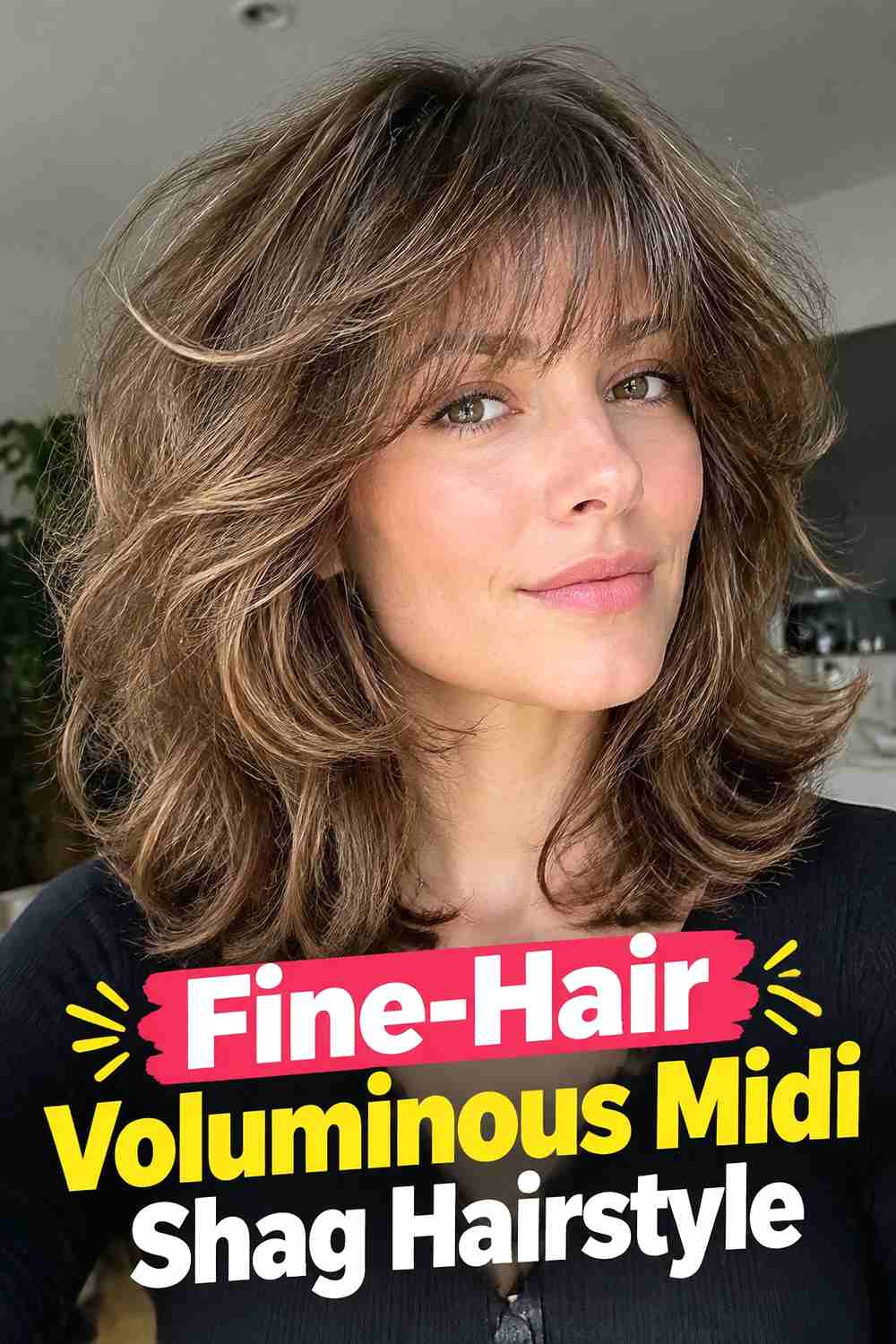
Fine hair can wear a voluminous midi shag when the layering is strategic rather than excessive. Keep the longest perimeter reasonably full and concentrate shorter layers around the crown and front, where they can create lift without removing too much density from the ends. Shoulder to upper-chest length is often practical because excessive length can weigh down the root area. Style with lightweight mousse or root spray, then lift the crown as you dry while directing the longer sections gently outward. Avoid heavy oils and thick creams that can collapse the airy shape. The goal is not to create dozens of visible layers, but to use a limited number of well-placed sections that make the hair move more freely.
Hair Type & Length
Fine straight, softly wavy, and lightweight textured hair can suit this approach when the lower perimeter remains substantial.
9. Thick Hair Voluminous Midi Shag Hairstyle
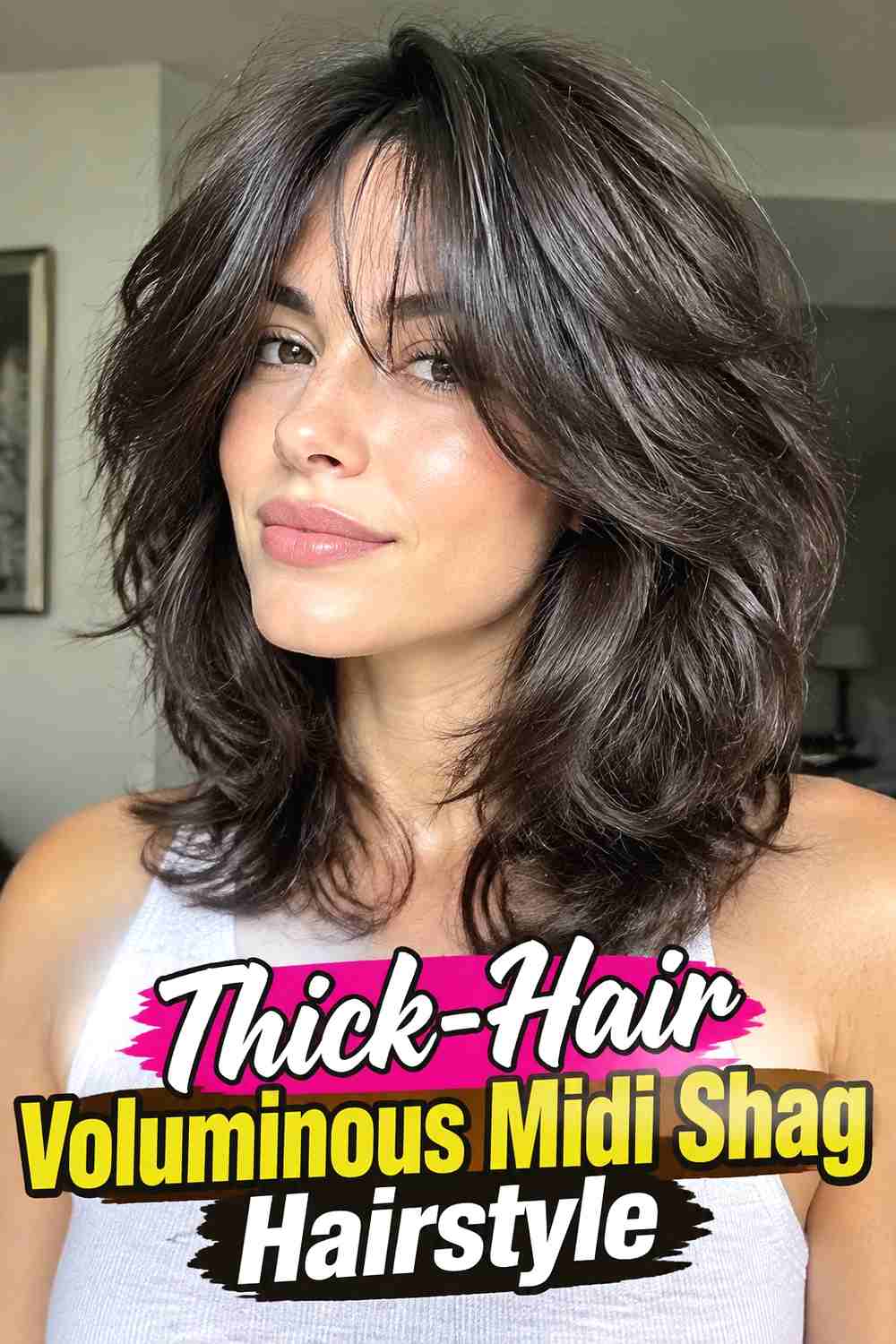
Thick hair can support stronger shag layering while still retaining fullness through the midi lengths. Shorter crown pieces reduce excess weight at the top, and graduated layers through the sides help prevent the haircut from expanding into a bulky triangular shape. Internal weight removal can also improve movement, but the visible ends should remain soft rather than aggressively thinned. Natural waves or a broad blowout can help show the different layer lengths while keeping the overall silhouette balanced. Use smoothing or defining products according to your texture, focusing them through the mid-lengths rather than coating the roots. This version works especially well when you want plenty of visible volume but need the haircut to feel lighter and easier to move.
Hair Type & Length
Medium-thick to very thick hair provides enough density for multiple layers, especially at shoulder to upper-chest length.
Wear & Maintenance
As the layers grow, bulk may begin returning through the sides, so periodic reshaping can help restore the intended movement.
10. Tousled Voluminous Midi Shag Hairstyle
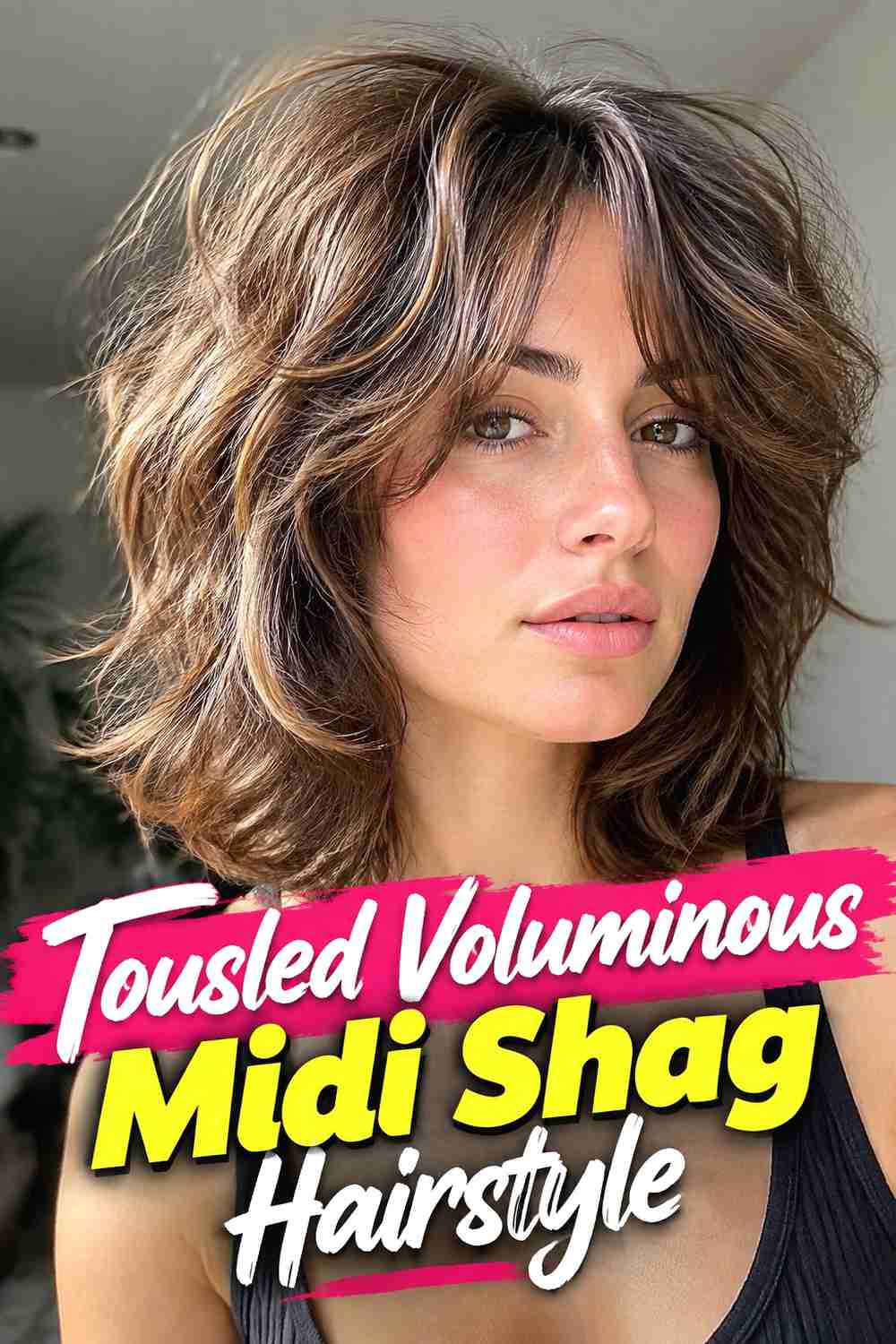
A tousled finish brings out the relaxed side of the midi shag, using irregular bends, soft separation, and controlled flyaways to create an intentionally undone look. Crown layers stay lifted, while the longer sections move freely around the shoulders instead of forming a polished curtain of hair. This styling works particularly well with natural wave or hair that easily holds texture. Apply a lightweight mousse or texture spray, then diffuse, air-dry, or add a few uneven bends with a curling tool. Finish by loosening selected pieces with your fingers rather than brushing through the entire style. The result should feel airy and lived-in, not rough, tangled, or overloaded with dry texture product.
Styling Notes
Use different-sized sections when adding bends so the finish stays varied. Too much uniform curling can make the shag look overly styled.
Best For
This version is ideal if you prefer casual movement and visible texture over a sleek or highly controlled finish.
11. Glossy Blowout Voluminous Midi Shag Hairstyle
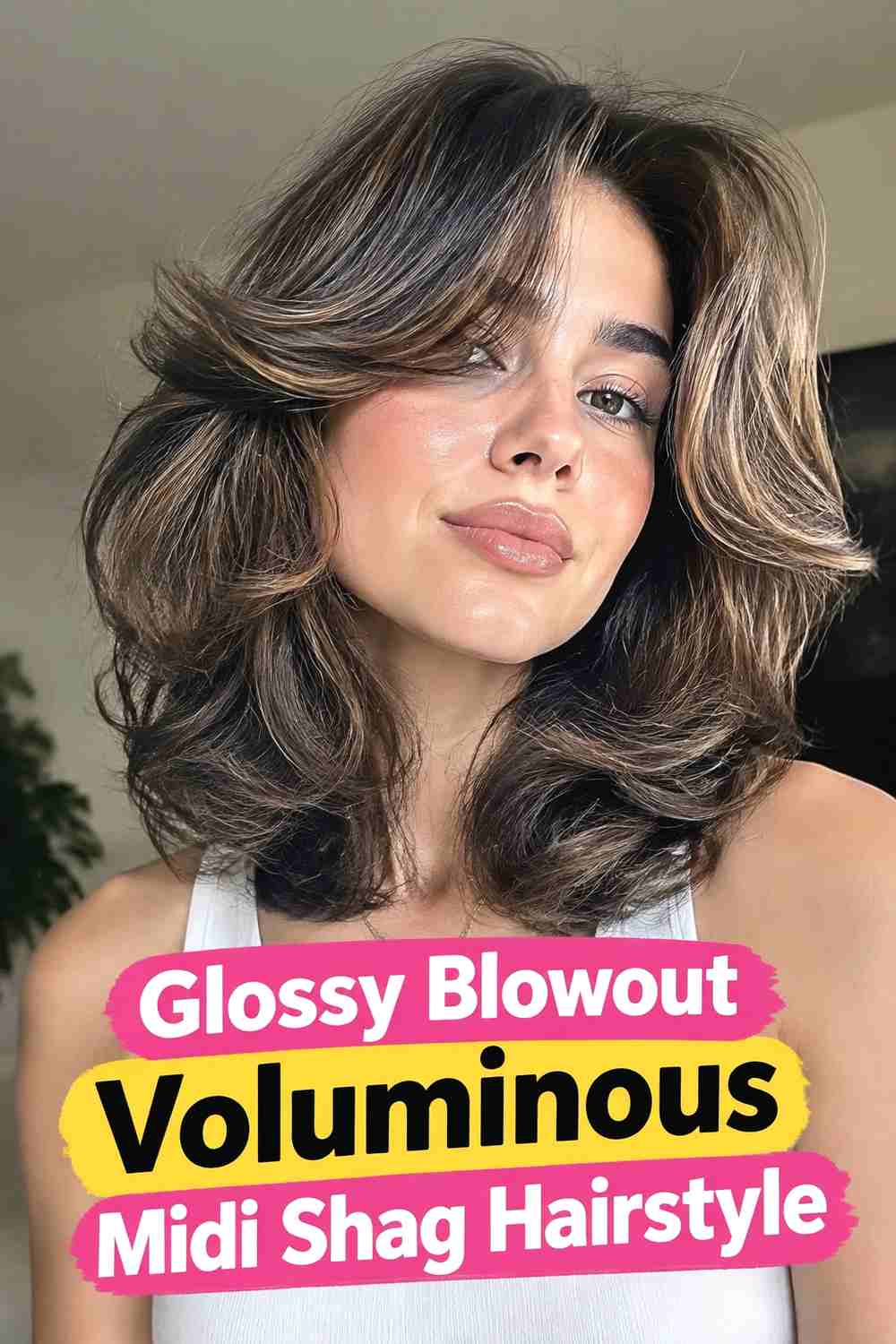
A glossy blowout gives the midi shag a more polished interpretation while still preserving its characteristic crown lift and flowing layers. Use a medium or large round brush to lift the roots, curve the shorter layers away from the face, and create broad movement through the longer lengths. The ends should remain flexible rather than curling into tight rolls. A small amount of shine serum through the mid-lengths can enhance reflection without weighing down the roots, while flexible hairspray can support the overall shape. This finish works particularly well when you want the shag structure to look intentional and refined for an event, dinner, or polished everyday look while still maintaining the softness and bounce that make the haircut distinctive.
Styling Notes
Allow each section to cool in its lifted shape before separating it. Cooling helps preserve volume without relying on excessive product.
Why It Works
The smooth surface highlights the haircut’s different layer lengths, while broad curves keep the shag from appearing flat or overly straight.
How to Choose the Right Look
Start with your natural density. Fine hair usually benefits from fewer crown and face-framing layers so the lower lengths stay substantial. Thick hair can handle more internal shaping and stronger layering, which helps distribute weight and create easier movement.
Texture should guide the finish as well. Natural waves pair easily with tousled and classic shags, while curls need layer placement that accounts for shrinkage. Straighter hair can show the structure clearly through a blowout, feathered crown, or curtain-bang finish.
Next, consider how much daily styling you want. A naturally wavy or curly shag may need only product and diffusing, while a glossy blowout or strongly feathered look requires more deliberate shaping. Bangs can also add maintenance because they generally need more frequent trimming and morning restyling.
Finally, think about volume placement. Crown-heavy styles create a stronger shag or wolf-inspired silhouette, while face-framing versions keep the shape softer and preserve more fullness through the back.
Final Thoughts
A voluminous midi shag can give mid-length hair significantly more movement without requiring an extremely short or heavily disconnected cut. The key is balancing crown lift with enough length and density through the bottom. Choose waves or tousled texture for a relaxed finish, curls for natural dimension, or a glossy blowout when you want the layers to look more polished.
FAQs
1. What is a voluminous midi shag hairstyle?
A voluminous midi shag is a mid-length haircut with shorter crown layers, face-framing pieces, and progressively longer sections that create lift, texture, and movement while keeping substantial overall length.
2. Is a midi shag good for fine hair?
It can be. Fine hair usually benefits from fewer strategic layers and a fuller lower perimeter so the haircut gains movement without losing too much visible density.
3. Can curly hair wear a voluminous midi shag?
Yes. Curly hair can work especially well with shag layering, but the cut should account for curl pattern, shrinkage, and density so the crown does not become shorter than intended.
4. Do you need bangs with a midi shag?
No. Curtain bangs complement the style, but face-framing layers, a center part, or a side part can create a strong shag shape without a separate fringe.
5. How can I make a midi shag look more voluminous?
Strategic crown layers, root lift, lightweight styling products, diffusing, round-brush styling, or loose waves can all increase visible volume without relying on heavy teasing.
Save your favorite voluminous midi shag hairstyle ideas, share them for haircut inspiration, and explore more layered mid-length looks for your next style.