18 Thin Headband Hairstyles with Natural Curls
Defined curls, airy volume, sleek puffs, and delicate thin headbands come together in these easy hairstyles designed to let natural texture stay beautifully visible.
Thin headbands work particularly well with natural curls because they create a clean line around the front without hiding the texture behind it. Depending on placement, a narrow band can gently guide curls away from the face, sharpen the shape of a puff, add polish to an updo, or simply become a small accent within a full wash-and-go.
The key is choosing a style that respects your natural curl pattern and preferred amount of volume. Flexible headbands generally work better than rigid pieces that squeeze the crown, and the finished style should not depend on excessive tension. From compact buns to full curly shapes, these ideas offer different levels of control, definition, movement, and styling time.
Quick List
- Defined Wash And Go Thin Headband Hairstyle
- High Puff Thin Headband Hairstyle
- Low Puff Thin Headband Hairstyle
- Curly Bob Thin Headband Hairstyle
- Half Up Curls Thin Headband Hairstyle
- Side Part Curls Thin Headband Hairstyle
- Pineapple Thin Headband Hairstyle
- Curly Low Bun Thin Headband Hairstyle
- Face Framing Curls Thin Headband Hairstyle
- Stretched Curls Thin Headband Hairstyle
- Curly Ponytail Thin Headband Hairstyle
- Twisted Crown Thin Headband Hairstyle
- Curly Fro Thin Headband Hairstyle
- Side Swept Curls Thin Headband Hairstyle
- Curly Updo Thin Headband Hairstyle
- Mini Twists Thin Headband Hairstyle
- Coily Puff Thin Headband Hairstyle
- Romantic Curly Chignon Thin Headband Hairstyle
1. Defined Wash And Go Thin Headband Hairstyle
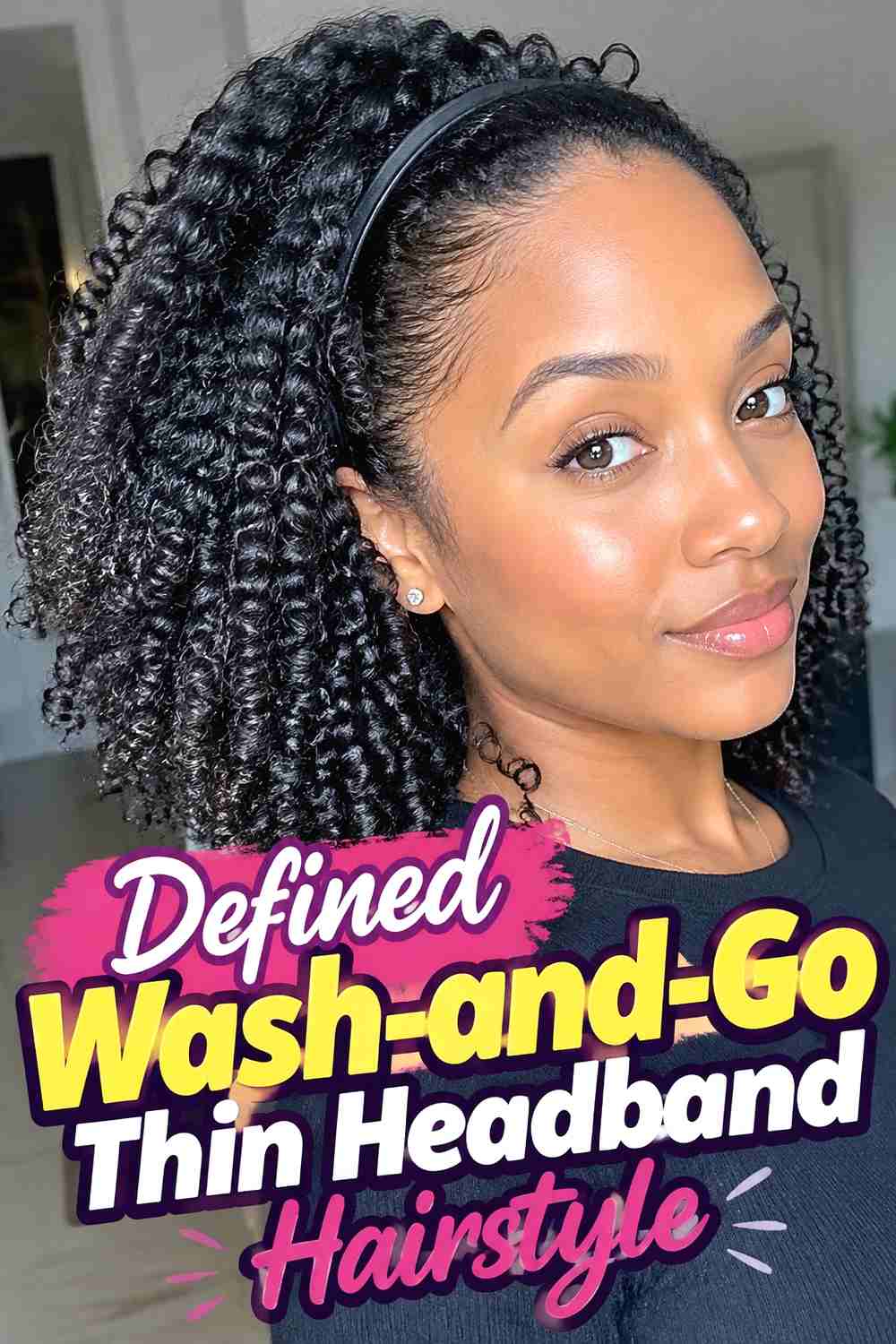
The Defined Wash-and-Go Thin Headband Hairstyle lets your natural curl pattern remain the main feature while adding a clean finishing detail near the hairline. Style and dry the curls as you normally would, then place a flexible narrow headband slightly behind the front curls rather than pressing directly against the edges. The band gently directs some volume backward while leaving most of the shape untouched. This approach works especially well when the curls are already defined and separated because the simple accessory does not compete with their texture. You can leave a few curls free around the temples for softness or sweep everything behind the band for a clearer, more structured outline.
Styling Notes
Wait until the curls are fully or mostly dry before placing the headband so you do not flatten freshly formed curl clumps.
2. High Puff Thin Headband Hairstyle
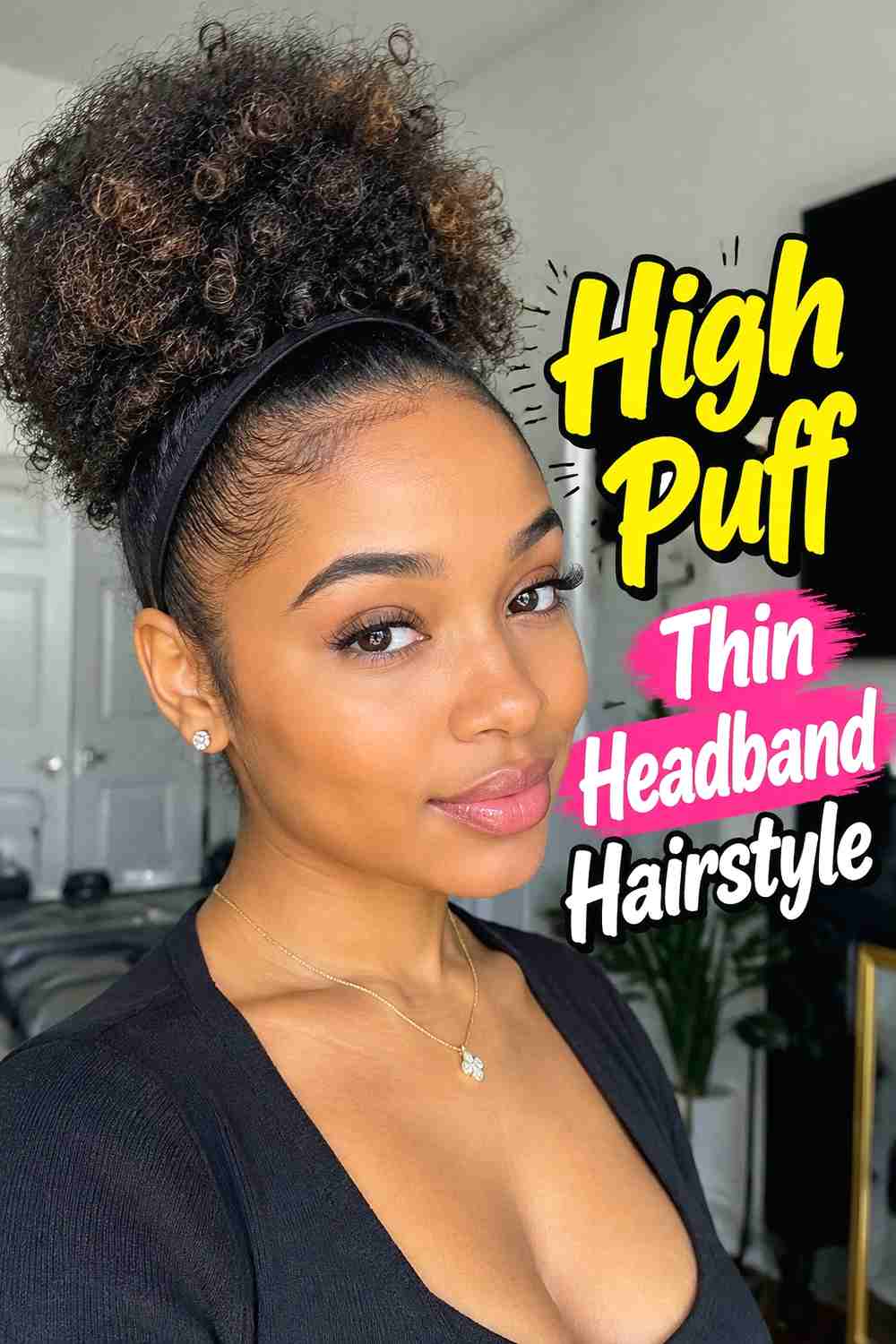
The High Puff Thin Headband Hairstyle combines dramatic natural volume with a slim accessory that helps frame the front. Gather the curls toward the crown using a soft tie, adjustable band, or another comfortable method that allows you to control the puff’s height without pulling excessively. Position a thin headband near the hairline or just behind the front section, keeping enough space between the band and puff for the silhouette to remain balanced. The contrast between the narrow accessory and full texture makes this style visually strong without requiring much extra decoration. Gently arrange the puff with your hands rather than over-brushing it, allowing individual curls, coils, and natural variation to remain visible.
Best For
This look suits casual outings, dinners, parties, warm-weather styling, or any day when you want your natural volume to become the focal point.
3. Low Puff Thin Headband Hairstyle
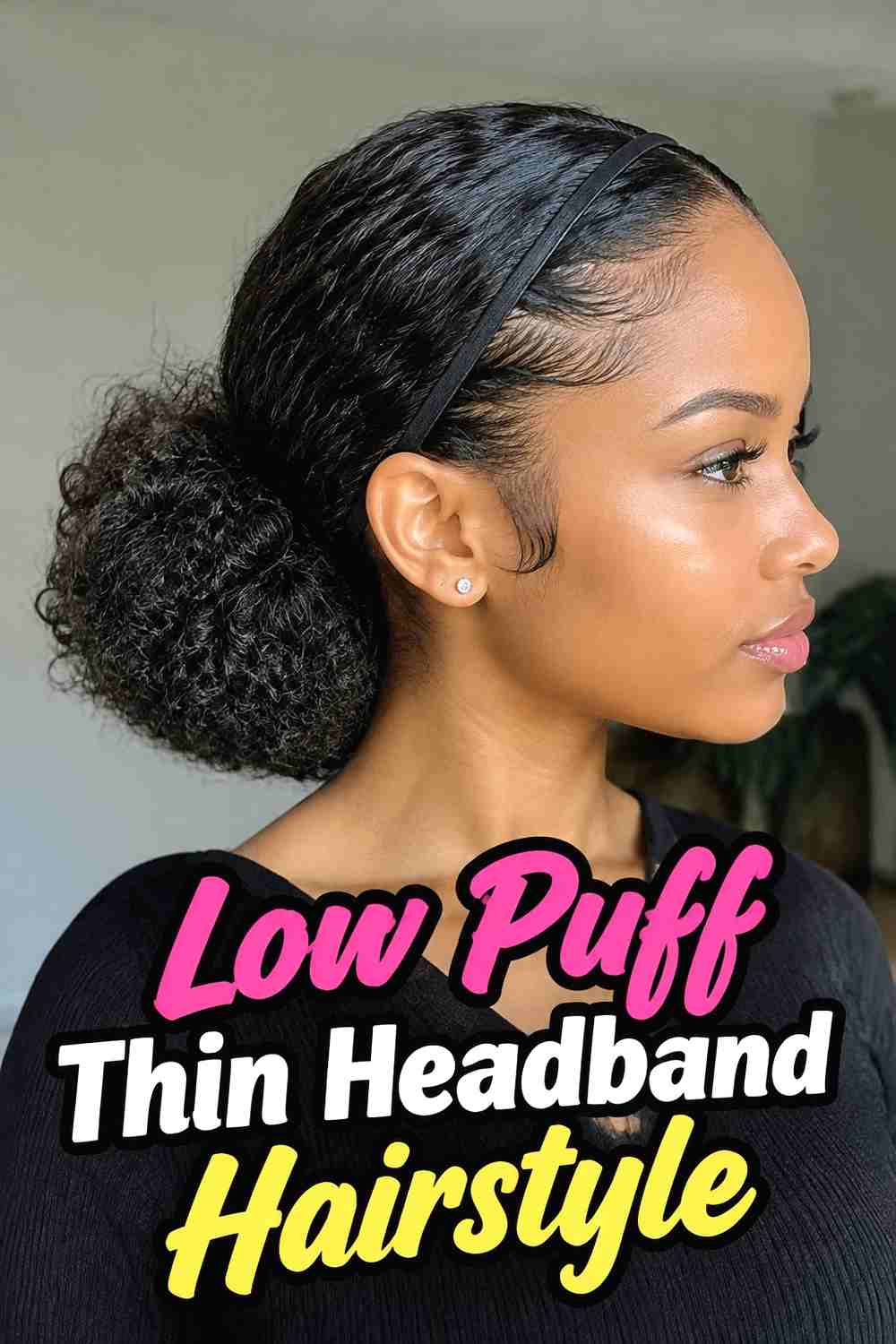
The Low Puff Thin Headband Hairstyle shifts the volume toward the nape for a softer and more understated shape. Smooth or gently guide the front and sides backward, then gather the curls into a low puff without compressing their texture. A slim headband placed across the crown creates a clear frame and can help shorter front pieces sit more neatly. This style works particularly well when you want natural fullness without the height of a high puff. The low placement can also feel comfortable with jackets, hats, or other accessories that leave room at the nape. Keep the base secure but not overly tight, allowing the puff to retain a rounded, dimensional appearance.
Wear & Maintenance
If the puff loosens during the day, adjust the base rather than repeatedly tightening the headband around the hairline.
4. Curly Bob Thin Headband Hairstyle
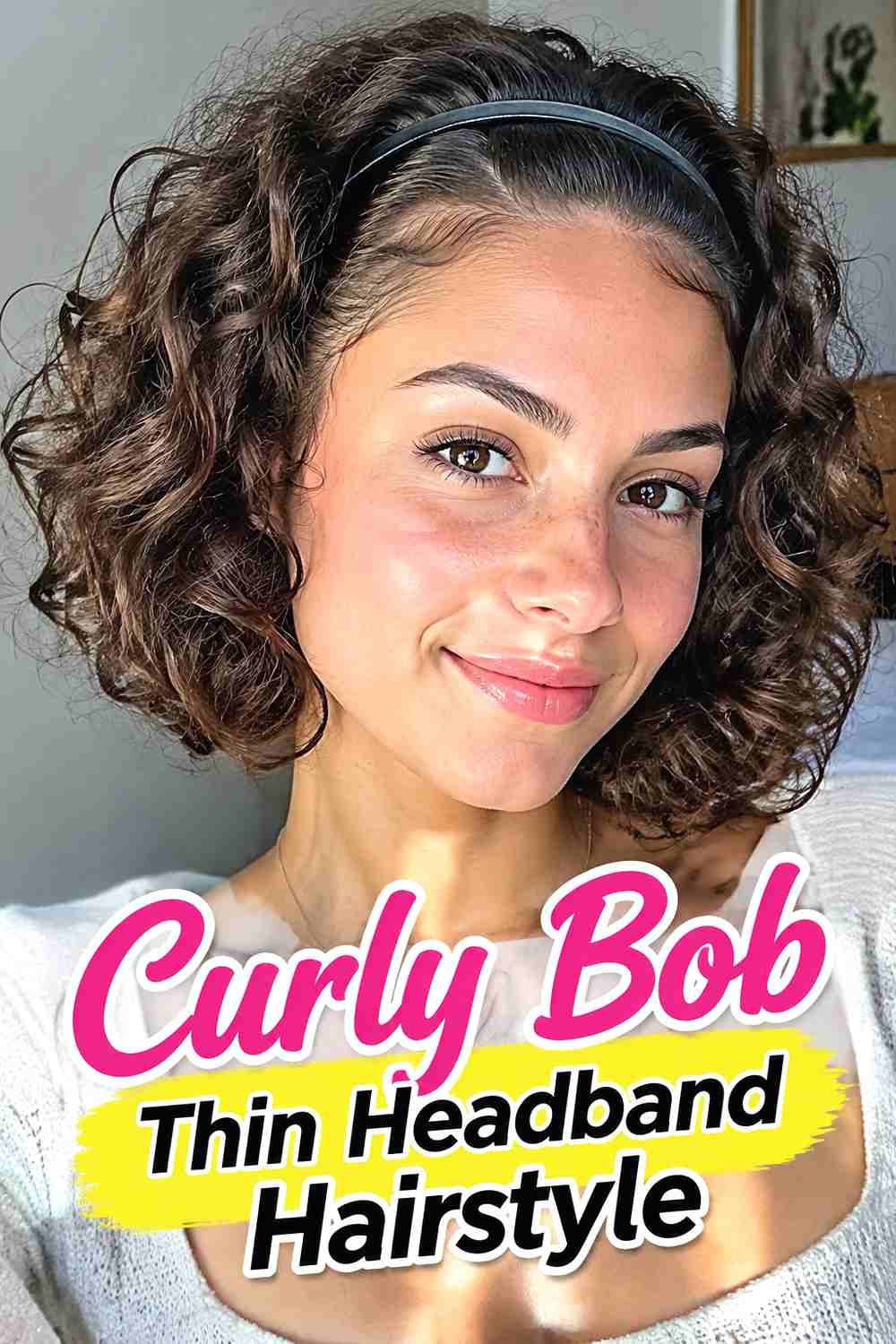
The Curly Bob Thin Headband Hairstyle emphasizes the rounded shape of shorter natural curls while keeping the front neatly defined. Style a chin-length or shoulder-skimming curly cut with your usual definition, then position a thin headband slightly behind the hairline. Leave several short curls in front if you want a playful, face-framing effect, or guide the entire front section backward for a more polished shape. Because a bob already has a strong silhouette, the accessory should stay narrow enough that it does not divide the hairstyle too heavily. This look works especially well when the curls have visible variation and spring, since the simple band provides structure without making the cut feel overly controlled.
Hair Type & Length
This style is ideal for curly bobs, shorter rounded cuts, and shoulder-length natural curls with enough volume to frame the band.
5. Half Up Curls Thin Headband Hairstyle
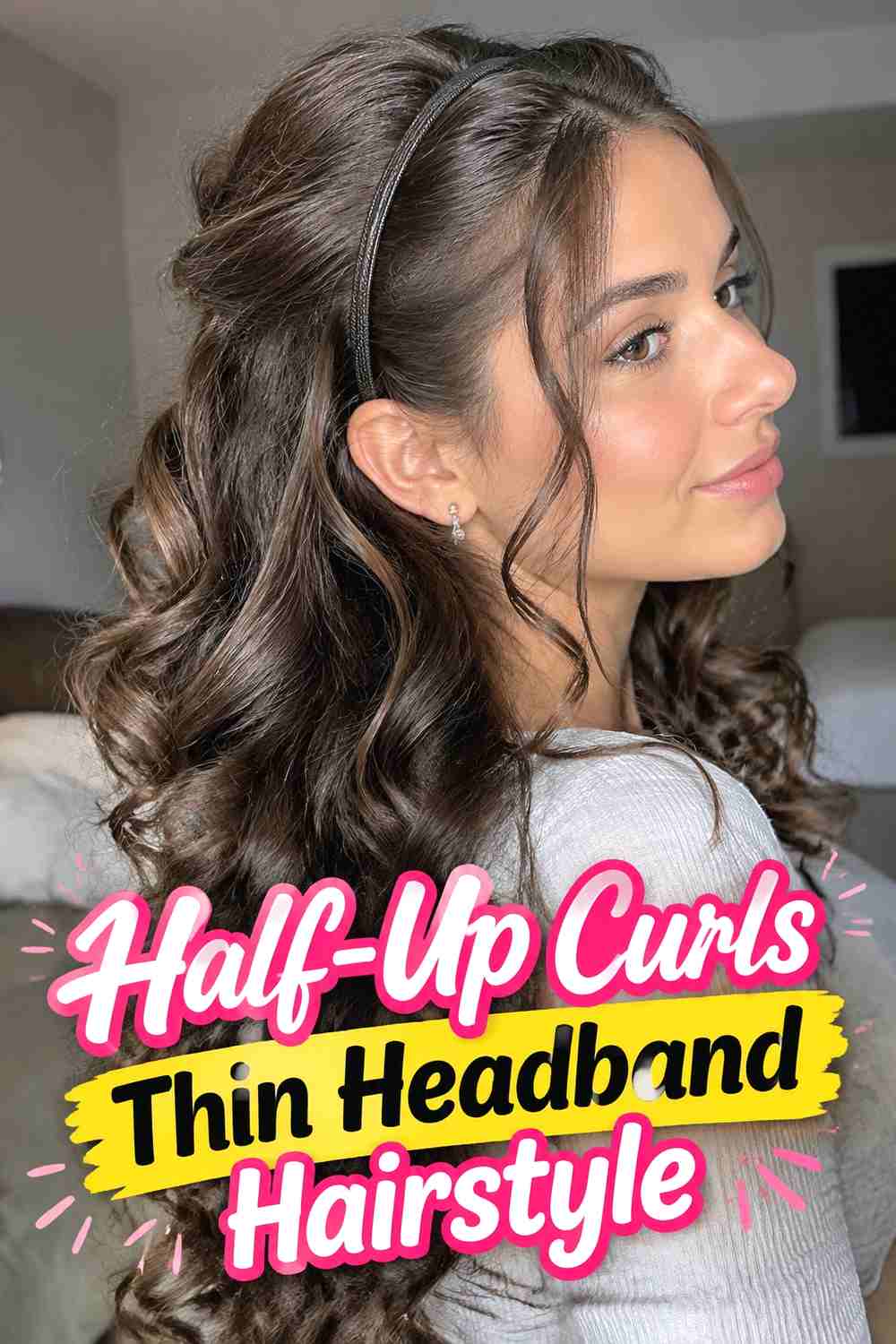
The Half-Up Curls Thin Headband Hairstyle keeps the lower texture loose while creating extra lift through the crown. Gather a portion of the upper curls into a small ponytail, puff, or pinned section and let the rest fall naturally around the shoulders. Place the thin headband near the front, where it can keep shorter curls away from the face without flattening the volume behind it. This arrangement creates clear separation between the accessory, raised crown, and loose curls, making the hairstyle look intentionally layered. It is particularly useful on medium and long natural curls because the half-up section adds height while preserving visible length and movement through the bottom.
Why It Works
The style provides control around the face while keeping most of the curl pattern free, making it a good balance between an updo and fully loose hair.
6. Side Part Curls Thin Headband Hairstyle
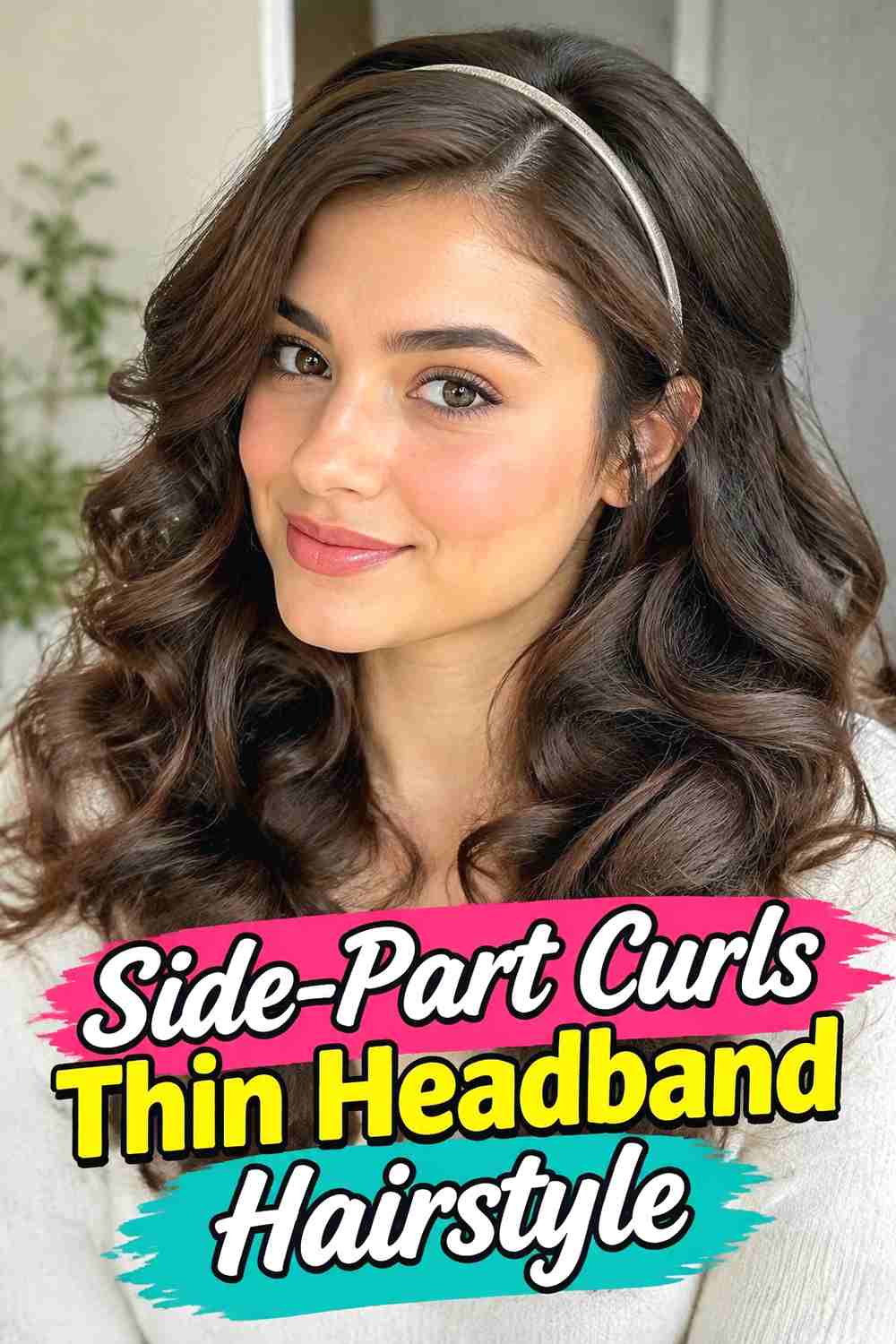
The Side-Part Curls Thin Headband Hairstyle uses asymmetry to give natural texture a more sculpted appearance. Create a comfortable side part while the hair is damp or already set, then arrange the larger section so curls fall with their natural volume. Position the thin headband just behind the front curls, keeping the part visible where possible. One side can be tucked or gently directed backward while the fuller side remains open and dimensional. The accessory creates a subtle line without interrupting the curl pattern. This approach works on short, medium, and long curls and can look either relaxed or polished depending on how defined the surface is around the part.
Styling Notes
Avoid forcing a perfectly straight part if your curls naturally separate differently; a soft part often looks more harmonious with textured hair.
7. Pineapple Thin Headband Hairstyle
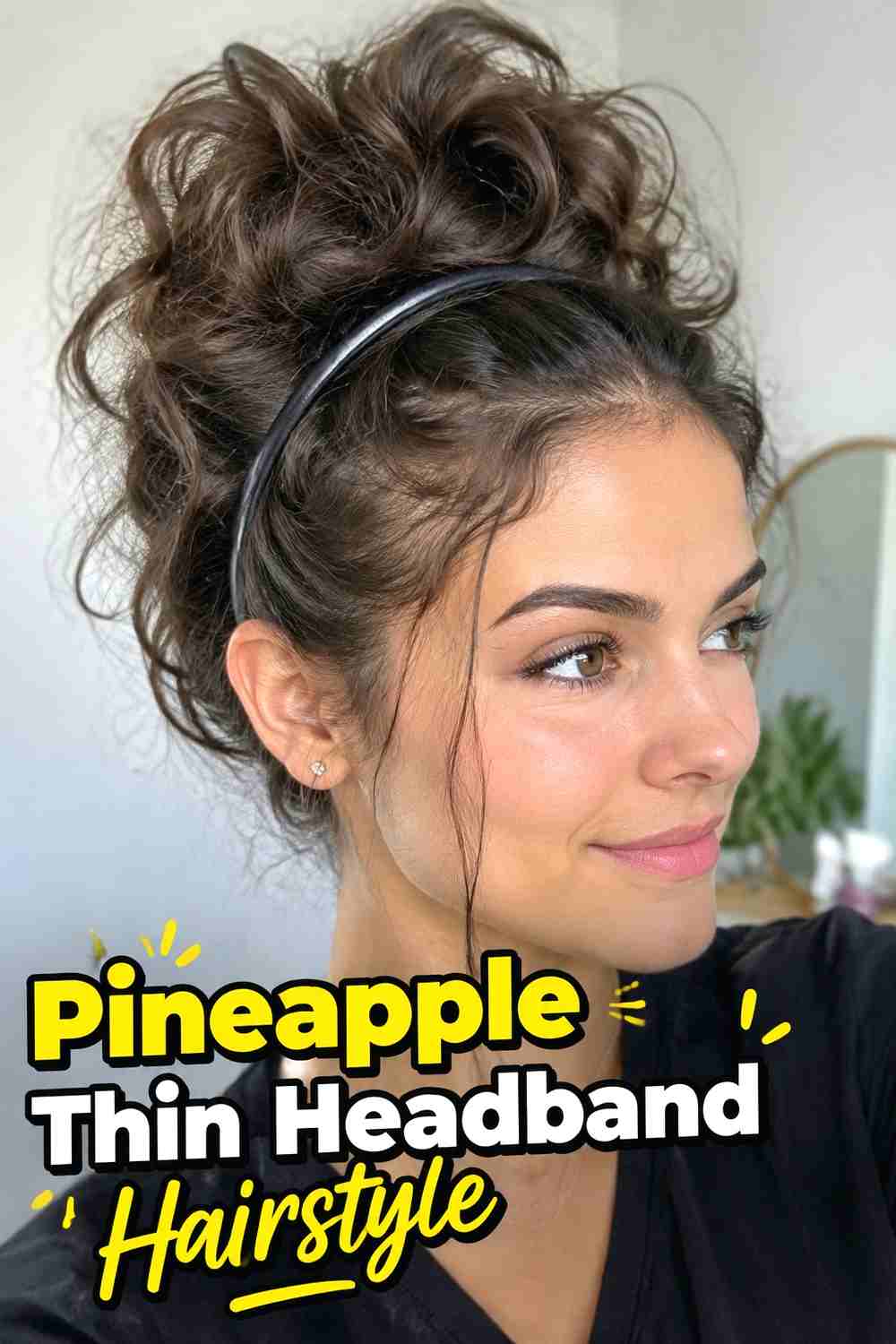
The Pineapple Thin Headband Hairstyle turns a high, loose curl gathering into a playful daytime look. Collect the curls near the top of the head using a soft tie or loose scrunchie, allowing the ends to spill forward and outward rather than forming a tight ponytail. Add a thin headband near the hairline to create definition below the cascading curls. This style works particularly well on medium-long and long natural curls that have enough length to fall around the crown. A few curls can remain free near the temples for softness. Keep the gathering point loose enough that the curl pattern remains recognizable instead of stretching every section tightly toward the top.
Pro Tip
Arrange the curls after securing the pineapple, moving individual sections rather than repeatedly tightening the base to change the overall shape.
8. Curly Low Bun Thin Headband Hairstyle
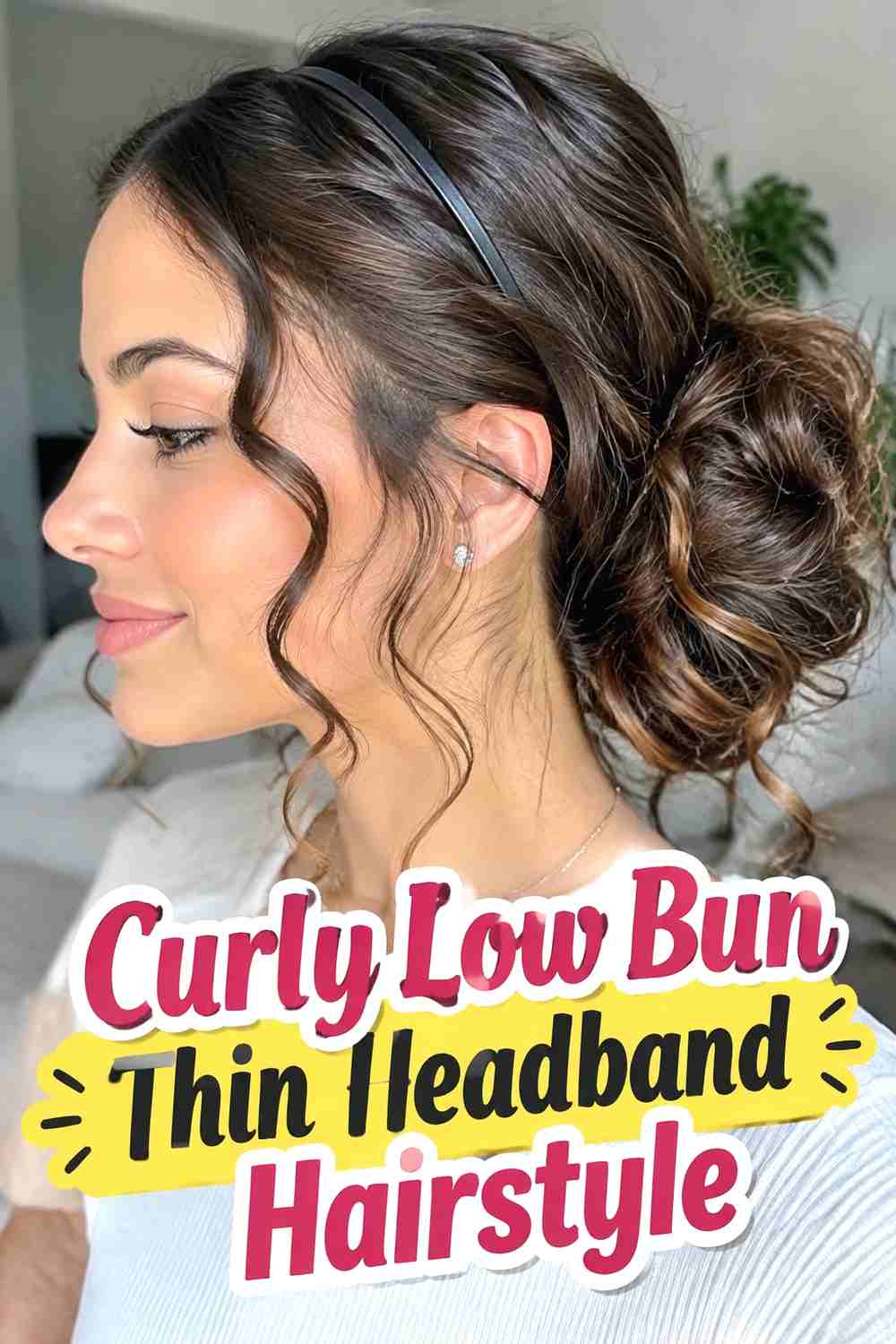
The Curly Low Bun Thin Headband Hairstyle offers a polished option while still allowing some natural texture to remain visible. Gather the hair at the nape and shape it into a soft bun, tucking and pinning sections rather than forcing every curl into a perfectly smooth coil. Position a thin headband across the crown to frame the face and give the front a cleaner finish. You can keep the hairline softly textured or guide the front backward depending on your preferred level of polish. A few curls near the ears or nape can be left loose for movement. The low position makes this a practical option for long curls or dense hair that may feel heavy in higher styles.
Best For
Choose this hairstyle for work, dinners, weddings, formal events, or any occasion where you want natural texture within a more controlled silhouette.
9. Face Framing Curls Thin Headband Hairstyle
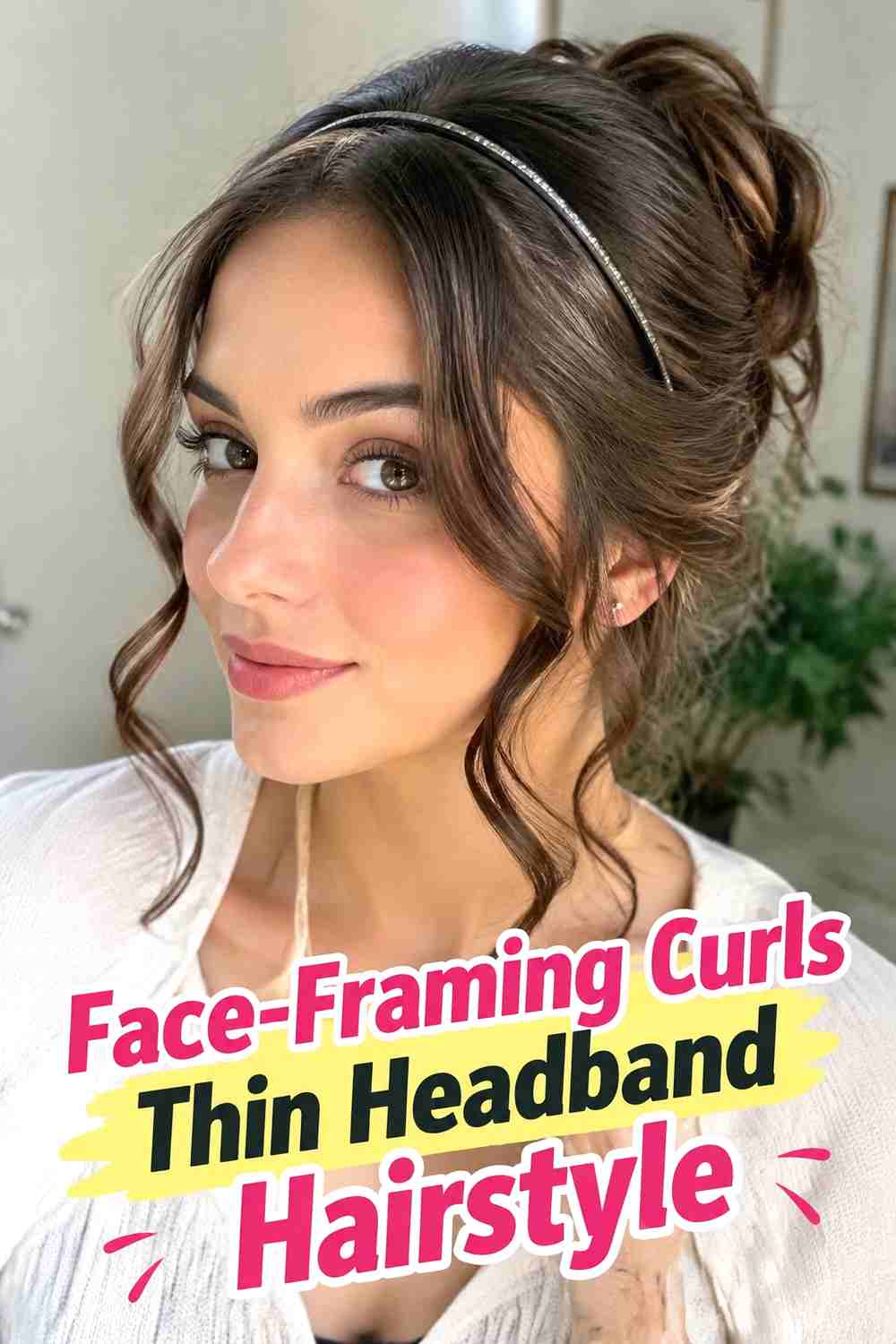
The Face-Framing Curls Thin Headband Hairstyle deliberately keeps selected curls in front of the accessory instead of sweeping every section away from the face. Separate a few defined curls around the forehead, temples, or cheek area, then position the thin band behind them. The remaining hair can stay loose, form a puff, or be gathered into a soft updo. This placement makes the headband feel integrated with the hairstyle rather than simply sitting on top of it. It works especially well when the front curls are slightly shorter than the rest because they naturally create dimension around the face. Keep the selected pieces intentional so the finished result looks balanced rather than randomly pulled apart.
Styling Notes
Choose the face-framing curls before putting on the headband; pulling them forward afterward can disrupt definition around the crown.
10. Stretched Curls Thin Headband Hairstyle
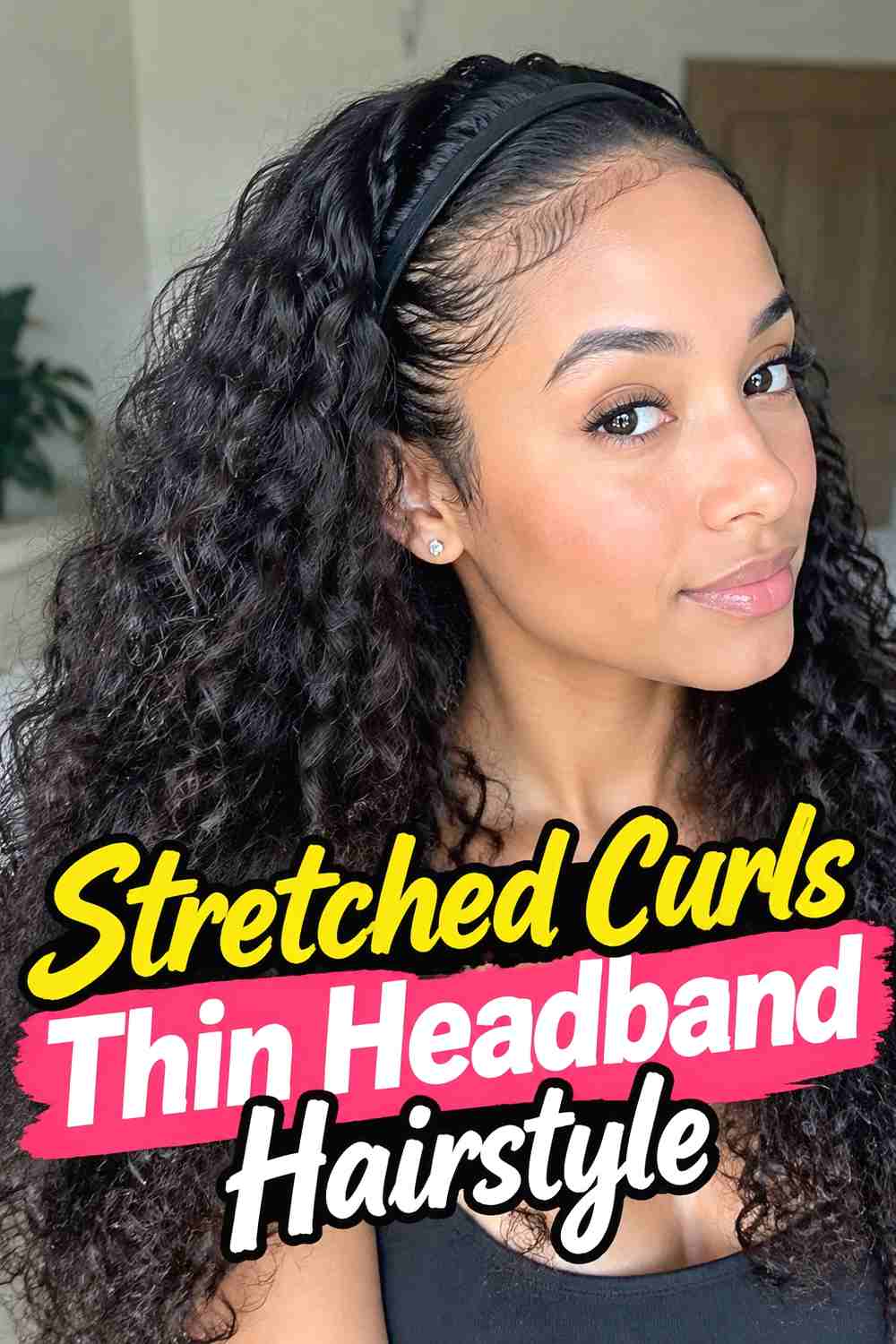
The Stretched Curls Thin Headband Hairstyle highlights elongated natural texture while preserving softness and body. Whether your curls are gently stretched through braiding, twisting, banding, or another preferred method, arrange the finished lengths so they retain visible texture rather than appearing completely straight. Add a thin headband near the front to create definition around the crown. The extra length produced by stretching can make layered shapes, rounded ends, and side volume especially noticeable. This style works well when you want a different silhouette from a compact wash-and-go but still want your natural pattern represented. Keep the band light and flexible so it does not create a harsh indentation in the stretched shape.
Why It Works
The narrow accessory adds structure while the elongated curls provide movement, giving the hairstyle a balanced mix of definition and volume.
11. Curly Ponytail Thin Headband Hairstyle
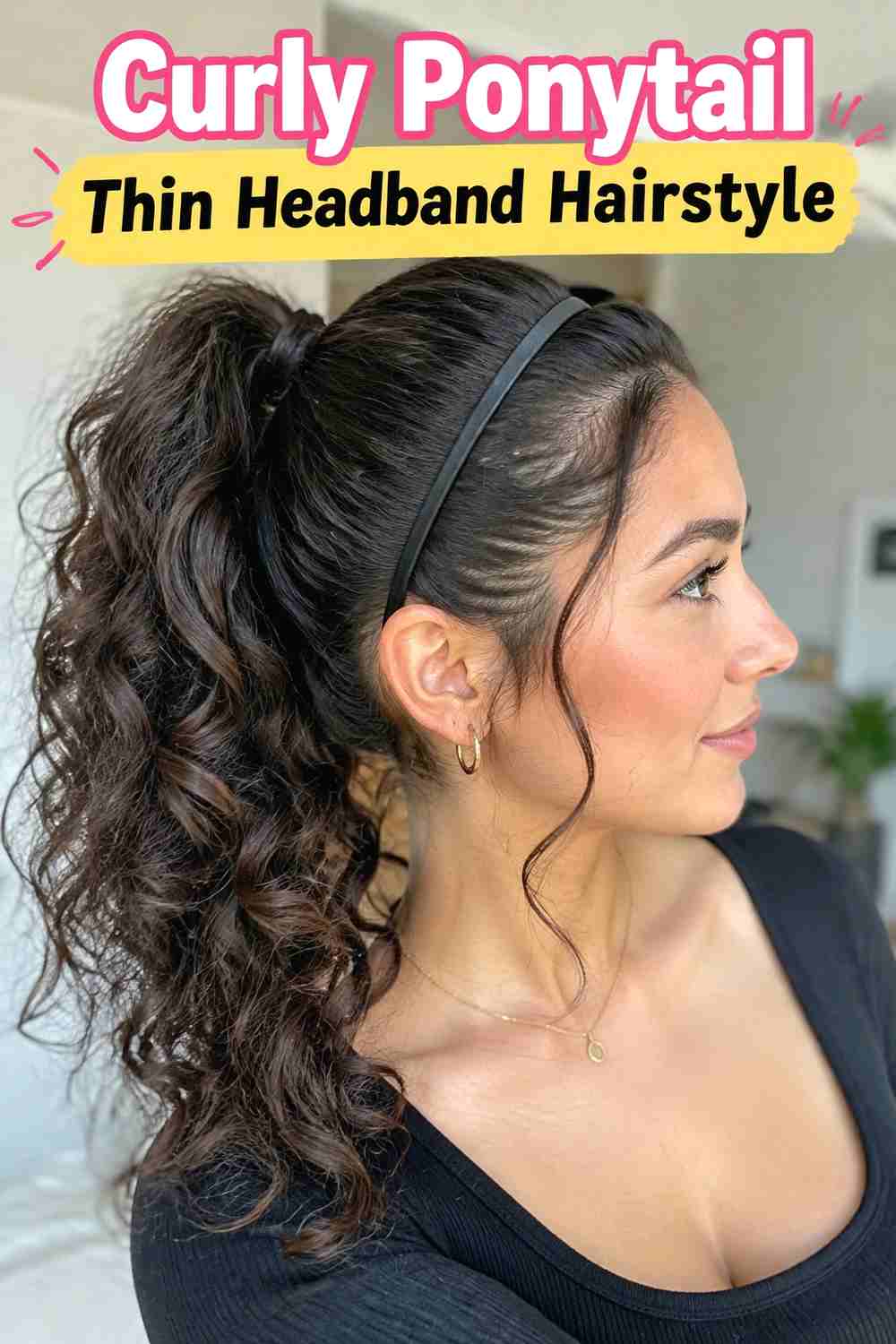
The Curly Ponytail Thin Headband Hairstyle combines a defined front with a full textured ponytail at the back. Gather the hair at low, mid, or higher placement depending on your length and comfort, keeping the ponytail loose enough that the curls retain their individual shape. Add a thin headband across the front to provide a clean transition between the face and gathered volume. For a softer look, leave a few small curls around the temples rather than smoothing every section backward. Medium and long curls usually create the fullest ponytail, although shorter textures can produce a compact version. The ponytail base should provide the actual hold so the headband remains a decorative, comfortable addition.
Wear & Maintenance
Use a soft tie that suits your density and adjust the ponytail instead of repeatedly tightening it if the style begins to shift.
12. Twisted Crown Thin Headband Hairstyle
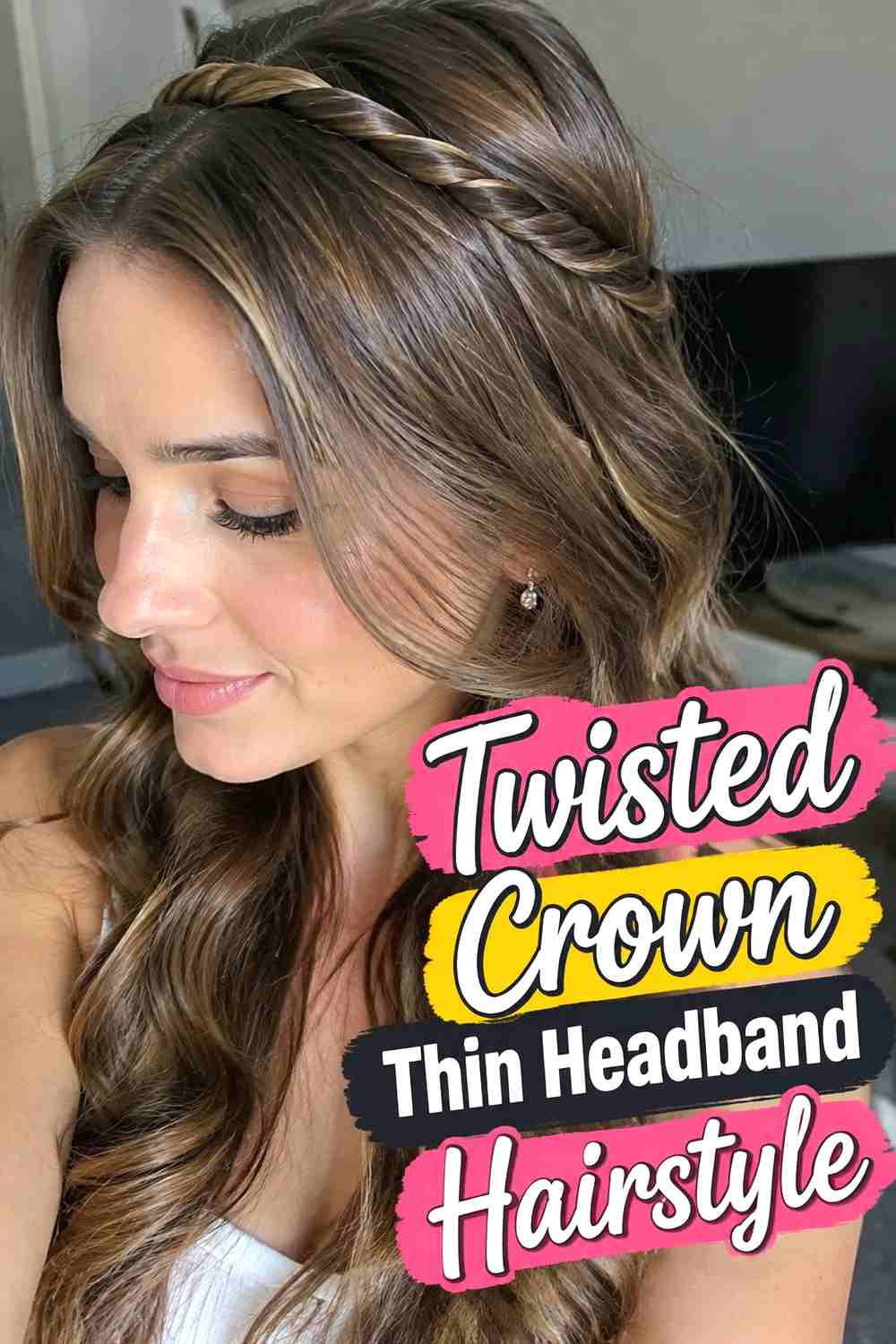
The Twisted Crown Thin Headband Hairstyle adds subtle detail beneath the accessory by incorporating flat twists or simple rolled sections near the sides. Twist a small section from each temple toward the back, secure them discreetly, and let the remaining curls stay loose or gather them into a low style. Position the thin headband so it sits just ahead of or between the twisted sections, creating visible layers of texture around the crown. This works especially well when you want more structure than a basic loose-curl style without creating a full protective arrangement. Keep the twists soft enough that they coordinate with the natural curl pattern and do not appear overly tight against the scalp.
Styling Notes
Build the twists first and place the band afterward so you can see exactly where it complements the crown detail without covering it.
13. Curly Fro Thin Headband Hairstyle
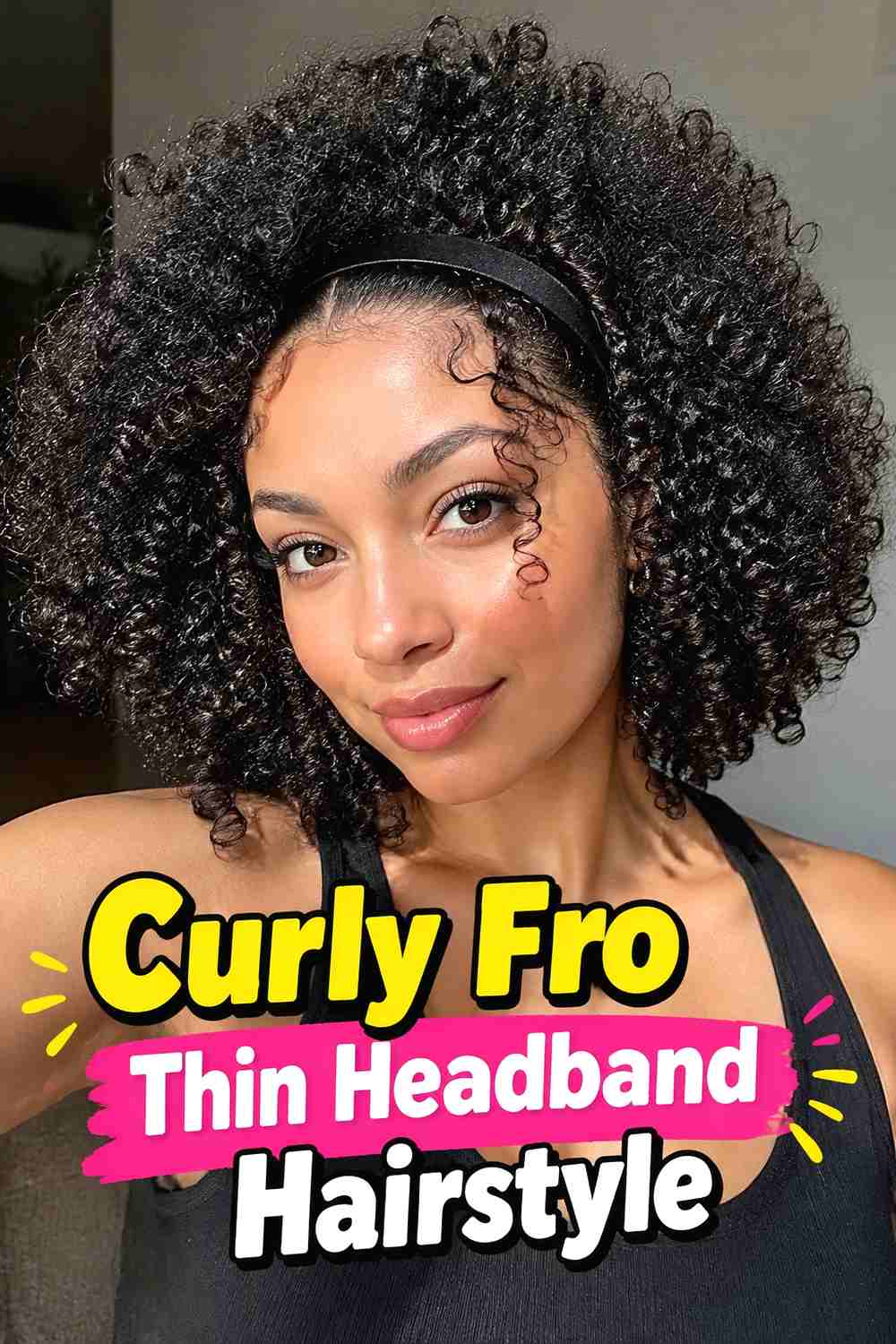
The Curly Fro Thin Headband Hairstyle celebrates a full rounded silhouette while using the accessory only to define the front edge. Shape the hair into your preferred fro, maintaining natural volume through the crown and sides, then slide a thin flexible band into place just behind the hairline. The goal is not to flatten the texture but to create a subtle contrast between the smooth line of the band and the fullness behind it. You can leave the front completely swept back or allow small curls to sit around the temples. This style works across different curl and coil patterns, with the final shape determined by density, length, shrinkage, and how much the hair has been picked or separated.
Best For
This look is ideal when you want to showcase maximum natural volume while adding just a small, polished accessory.
14. Side Swept Curls Thin Headband Hairstyle
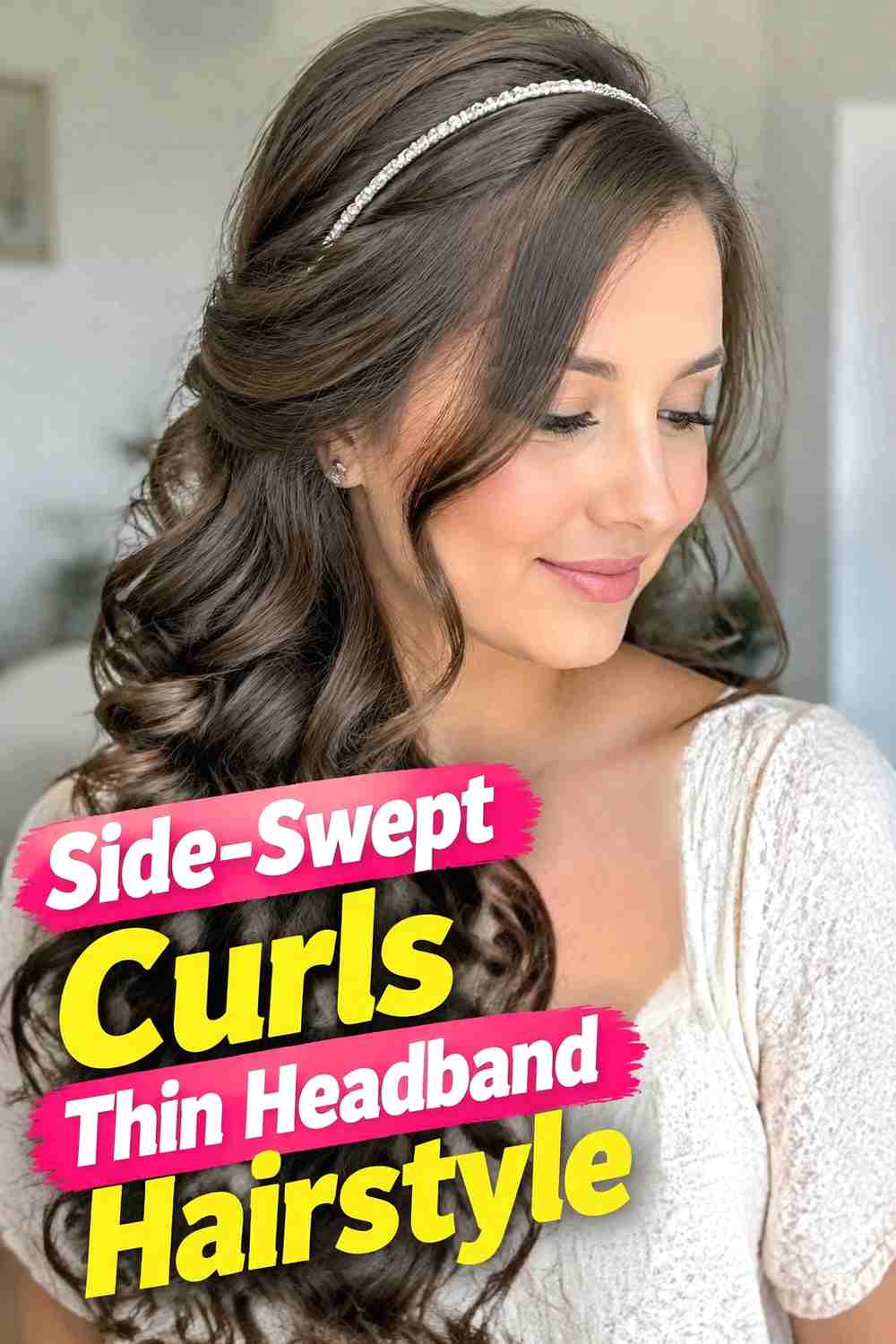
The Side-Swept Curls Thin Headband Hairstyle directs most of the texture toward one side, creating a dramatic but still wearable shape. Position the thin headband near the crown, then gently guide one side backward while allowing the opposite side to remain fuller. Longer curls can fall over one shoulder, while shorter textures can simply build more volume on one side of the head. Secure the swept section discreetly if needed rather than relying on the headband alone to hold heavy curls in place. The asymmetry adds movement and makes a simple narrow band look more intentional. A defined side part can strengthen the effect, but a soft natural separation works just as well.
Pro Tip
Anchor the less-full side with a hidden pin if necessary so the accessory can stay comfortable instead of being pushed tightly against the curls.
15. Curly Updo Thin Headband Hairstyle
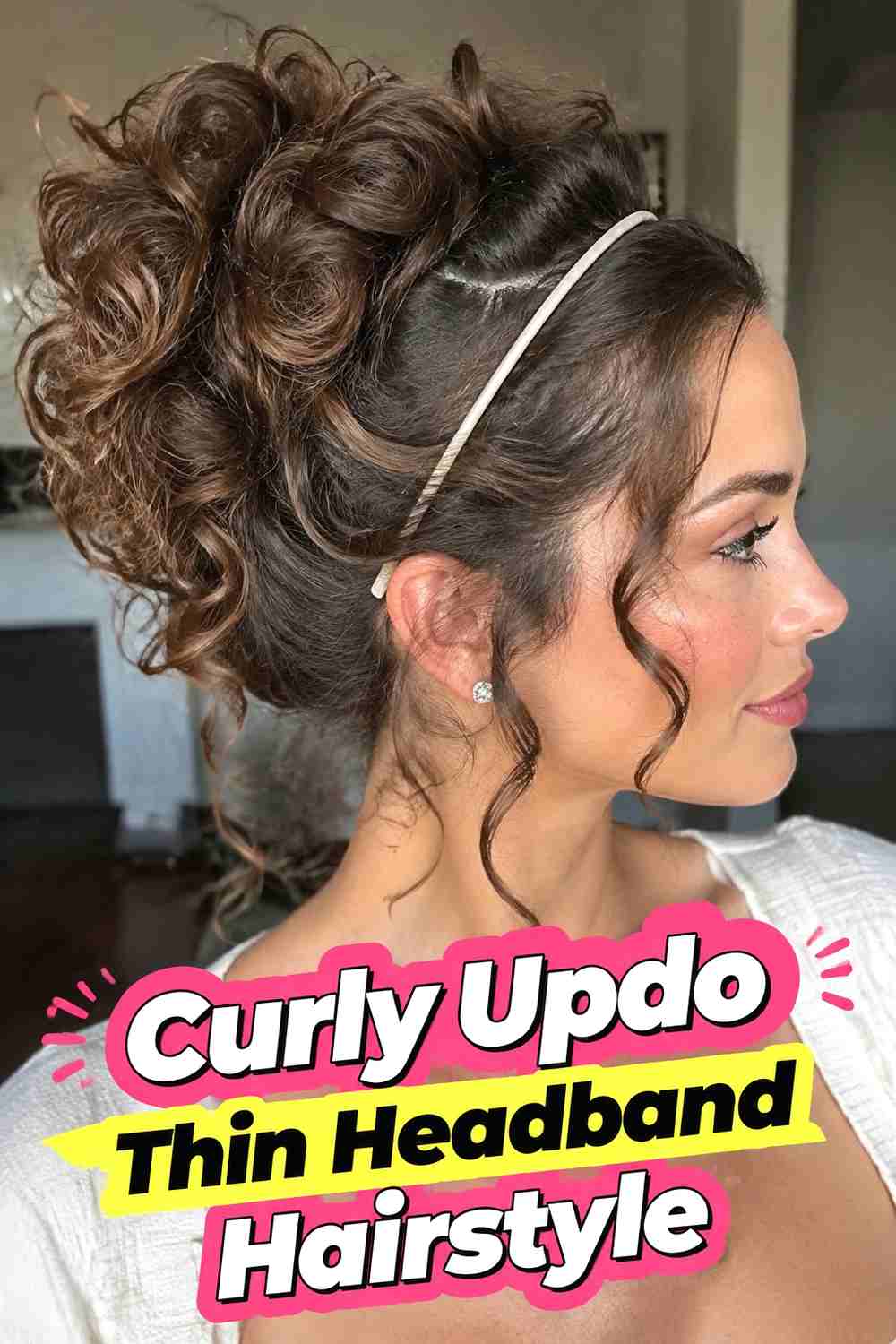
The Curly Updo Thin Headband Hairstyle gathers natural texture upward while preserving visible curls across the finished shape. Work in sections, loosely pinning curls toward the crown or center back so the updo feels dimensional rather than compressed into one smooth bun. Add a thin headband near the front to create a refined frame and keep shorter pieces organized. Several curls can remain free around the temples or nape for softness. This approach works particularly well on medium and long natural hair because there is enough length to build height while maintaining definition. The internal pins should provide the structure, allowing the headband to remain an accessory instead of carrying any meaningful weight.
Best For
This style suits weddings, dinners, celebrations, portrait sessions, and events where you want natural curls in an elevated, formal-looking arrangement.
16. Mini Twists Thin Headband Hairstyle
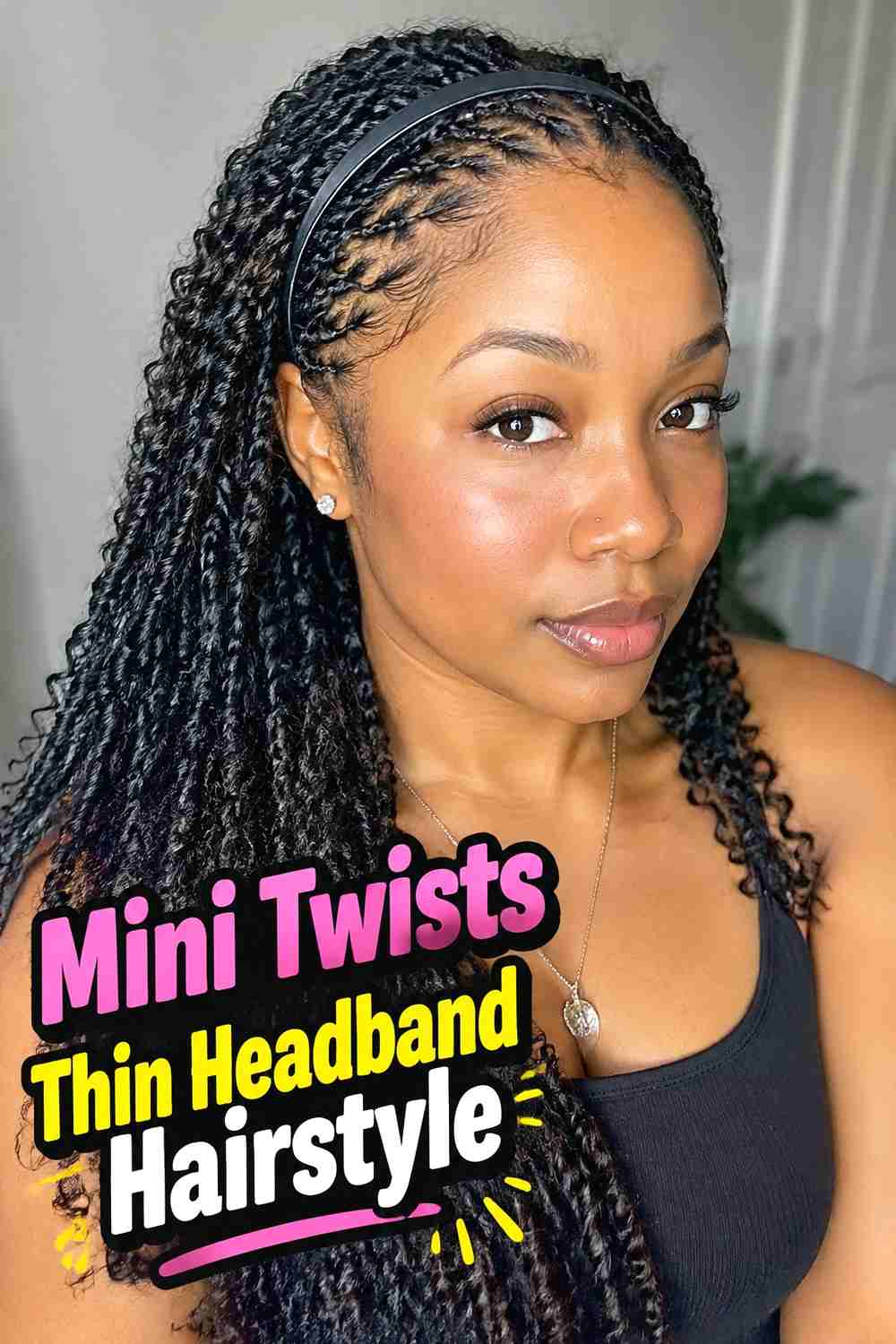
The Mini Twists Thin Headband Hairstyle pairs a slim accessory with a defined textured style that can be worn loose or partially gathered. Once the twists are established, position a thin headband near the hairline and arrange the front pieces around it according to the shape you prefer. The twists can fall freely, be tucked behind the ears, form a low ponytail, or be lifted into a half-up style. Because mini twists already provide plenty of visible detail, a simple headband usually looks more balanced than a heavily embellished one. The narrow accessory creates a clean line without hiding the twist pattern, making this an easy way to change the look without undoing the hairstyle.
Why It Works
The headband adds variation to an existing twisted style while allowing the length, parting, and texture of the twists to remain clearly visible.
17. Coily Puff Thin Headband Hairstyle
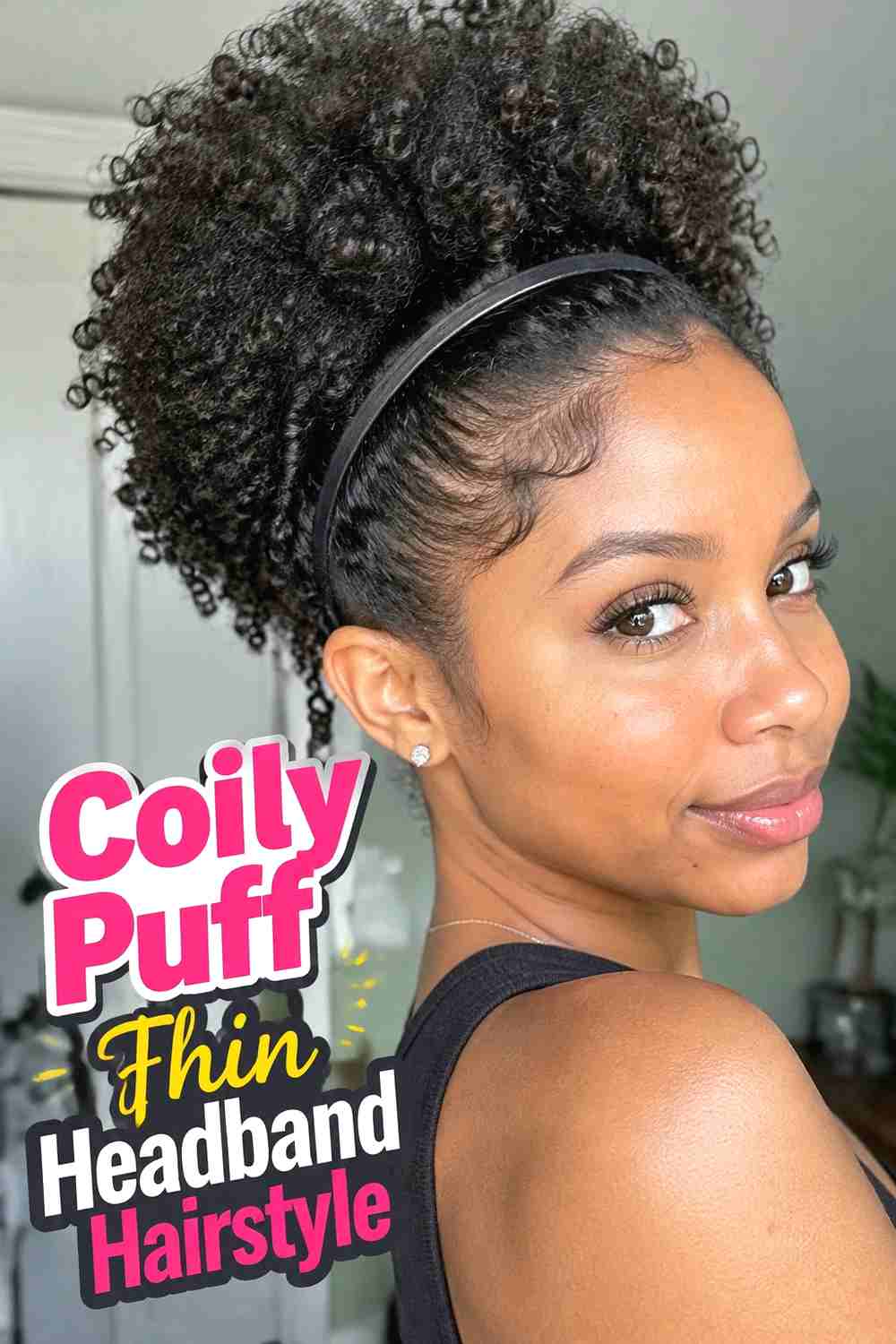
The Coily Puff Thin Headband Hairstyle showcases compact texture in a rounded puff while using the band to define the front. Gather coils upward or toward the back with comfortable tension, adjusting the shape with your hands so the puff remains full and balanced. Position a thin flexible headband a little behind the hairline, leaving enough room for the front section to retain natural texture. This look is especially effective on dense coily hair because the contrast between the delicate band and substantial puff creates a strong silhouette. Avoid forcing every short coil beneath the accessory; a few soft pieces around the perimeter can make the finish feel more natural and reduce the need for excessive tension.
Wear & Maintenance
Prioritize comfortable hold at both the puff base and hairline, especially if you plan to wear the style for several hours.
18. Romantic Curly Chignon Thin Headband Hairstyle
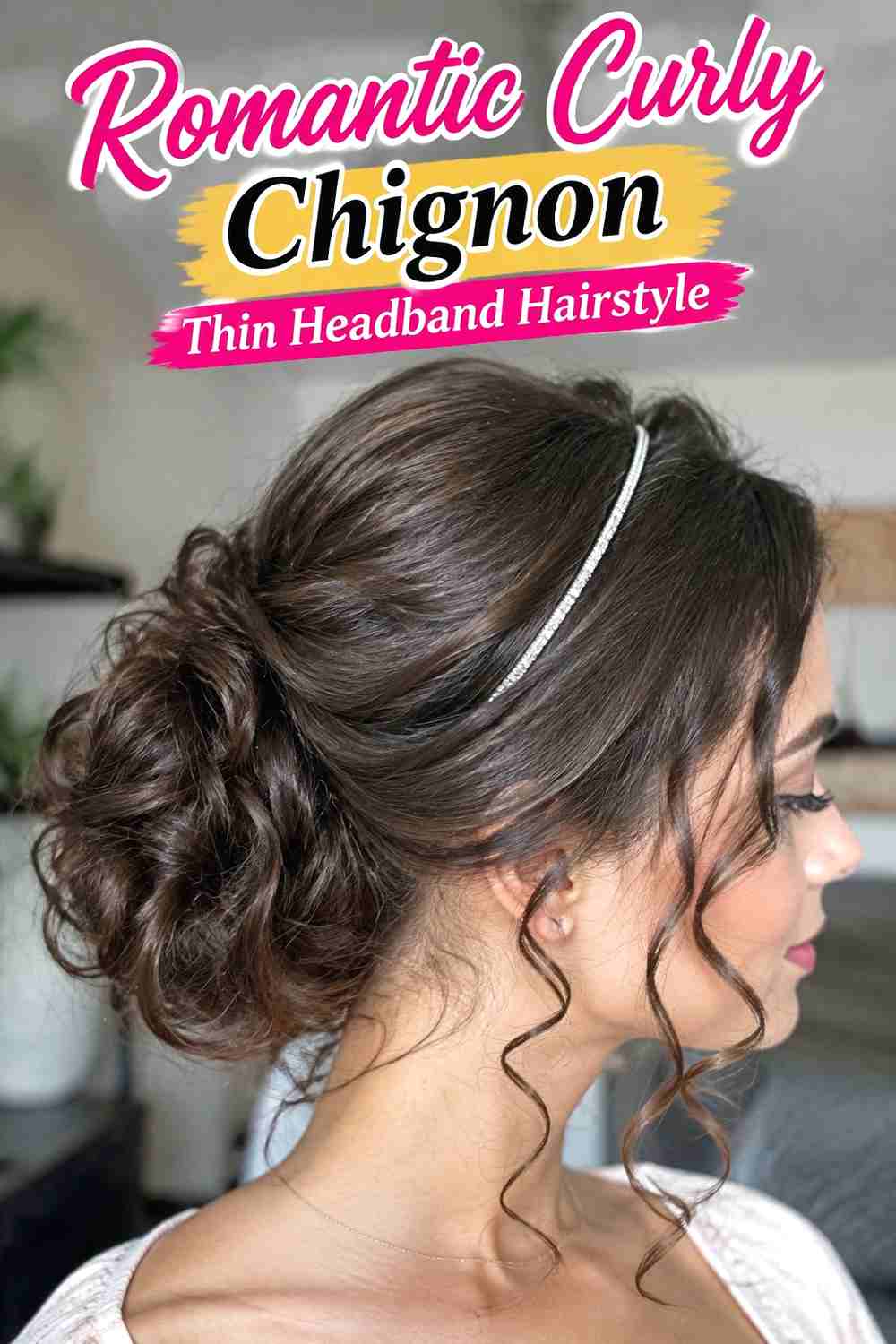
The Romantic Curly Chignon Thin Headband Hairstyle combines natural texture with a low formal shape and a delicate finishing accessory. Gather the curls near the nape and pin them into a broad chignon, allowing individual bends and coils to remain visible instead of smoothing everything into a solid bun. Place the thin headband slightly behind the hairline, then leave a few defined curls around the temples for softness. The low placement creates an elegant silhouette while distributing the hair’s weight close to the neck. This style can be adapted for medium or long natural hair, with additional pins used where needed to support density. A simple metallic or understated band keeps the finished look refined.
Best For
This is a strong option for weddings, formal dinners, romantic events, and occasions where you want your natural curl pattern included in a polished updo.
Wear & Maintenance
Secure the chignon independently with pins before adding the headband so both the shape and accessory remain comfortable throughout wear.
How to Choose the Right Look
Start with how much of your natural texture you want visible. A Defined Wash-and-Go Thin Headband Hairstyle, Curly Fro Thin Headband Hairstyle, or Side-Swept Curls Thin Headband Hairstyle keeps most of the curl pattern open, while puffs, ponytails, buns, and chignons provide more control.
Length and shrinkage will influence the final silhouette. Shorter curls work naturally with bobs, full fro shapes, and face-framing styles, while medium and long hair offers more flexibility for pineapples, ponytails, updos, twists, and low buns. Density also matters: fuller hair may need additional ties or pins so the headband does not become responsible for holding the hairstyle.
Think about comfort when choosing the accessory itself. A flexible narrow band should sit securely without excessive pressure, especially around the temples and edges. For soft styles, position it farther behind the hairline. For a cleaner finish, move it slightly forward while still allowing the natural texture to retain dimension.
Finally, match styling time to your routine. A wash-and-go or fro can need only accessory placement once the curls are set, while twisted crowns, chignons, and detailed updos require more sectioning and pinning.
Final Thoughts
Thin headbands can complement natural curls without hiding the volume, texture, and movement that make each curl pattern distinctive. Use one to sharpen a puff, frame a wash-and-go, finish an updo, or add structure to loose curls. The most wearable option is usually the one that maintains comfortable tension and lets your natural texture remain part of the finished shape.
FAQs
1. Can thin headbands work with natural curly hair?
Yes. Flexible thin headbands can frame curls, puffs, updos, and wash-and-go styles while leaving most of the natural texture visible.
2. How do I wear a thin headband without flattening my curls?
Place it after your curls have dried and position it slightly behind the hairline rather than pressing tightly through the fullest part of the hairstyle.
3. Which thin headband style is easiest for natural curls?
A defined wash-and-go with a simple headband is one of the easiest because the curl pattern remains unchanged and the accessory is added at the end.
4. Can I wear a thin headband with a natural hair puff?
Yes. High, low, and coily puffs all pair well with narrow headbands when the puff has its own secure base and the band is worn comfortably.
5. What kind of thin headband is best for curls?
Look for a comfortable, flexible band with enough grip to stay in place without squeezing the hairline or requiring the curls to be pulled excessively tight.
Save your favorite thin headband hairstyles, share the curl-friendly looks you love, and explore more natural-hair inspiration for your next style.