17 Under-Collar Hair Tuck Hairstyles With Oversized Cashmere Wraps
Hair tucked beneath a plush cashmere collar creates an effortless winter silhouette, balancing cozy volume with smooth roots, soft texture, and intentionally visible front pieces.
Oversized cashmere wraps naturally build volume around the shoulders and neckline, so tucking part or all of the hair underneath can make the styling feel cleaner and more intentional. The wrap temporarily contains the lower lengths while the visible crown, parting, and front pieces become the main hairstyle details. Sleek finishes look refined, while waves, feathered layers, and natural texture can create a softer, more relaxed effect.
The best version depends on how much hair you want visible, where your layers begin, and how comfortably the fabric sits around your neck. A loose tuck usually looks more natural than tightly trapping every strand. Consider static, hair density, the amount of movement you want around the face, and whether you prefer the ends completely hidden or softly peeking from beneath the wrap.
Quick List
- Center Part Sleek Under Collar Tuck Hairstyle
- Soft Wave Under Collar Tuck Hairstyle
- Deep Side Part Collar Tucked Hairstyle
- Straight Glossy Wrap Tuck Hairstyle
- Loose S Bend Under Collar Tuck Hairstyle
- Face Framing Front Piece Tuck Hairstyle
- Low Volume Natural Under Collar Tuck Hairstyle
- Airy Blowout Collar Tuck Hairstyle
- Ribbon Wave Under Wrap Tuck Hairstyle
- Feathered End Collar Tuck Hairstyle
- Soft U Cut Under Collar Tuck Hairstyle
- Tucked Layers With Open Front Hairstyle
- Brushed Out Wave Collar Tuck Hairstyle
- Minimal C Bend Under Collar Hairstyle
- Natural Texture Wrap Tuck Hairstyle
- Off Center Polished Collar Tuck Hairstyle
- Loose Ends Peeking Collar Tuck Hairstyle
1. Center Part Sleek Under Collar Tuck Hairstyle
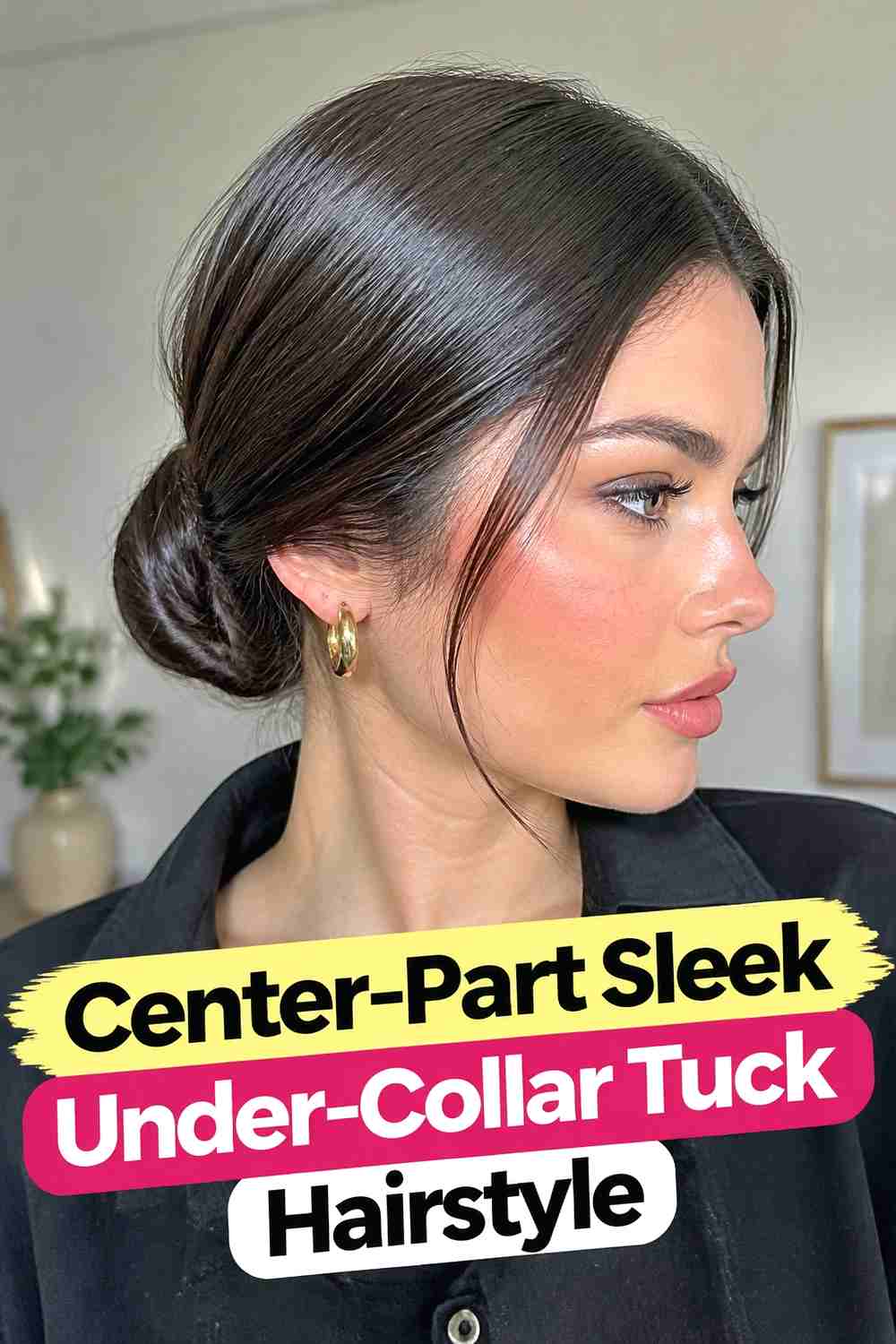
A precise center part and smooth upper lengths give the under-collar tuck a clean, minimalist character. Most of the hair disappears loosely beneath the cashmere wrap, leaving the symmetry of the part and the polished sections around the temples fully visible. The look pairs especially well with oversized wraps because the streamlined hair prevents extra volume from gathering around an already substantial neckline. Long straight or gently wavy hair can achieve the effect with minimal reshaping, and the tucked section does not need to be perfectly flat beneath the fabric. Allowing a little natural space at the nape keeps the hairstyle comfortable and helps it look casually styled rather than tightly secured.
Styling Notes
Smooth the visible crown and front sections first, then place the wrap around the hair instead of forcing the lengths into a compact bundle. A light finishing product can control flyaways.
Best For
This is a strong option for long, relatively straight hair when you want the cashmere wrap and clean center part to carry most of the visual impact.
2. Soft Wave Under Collar Tuck Hairstyle
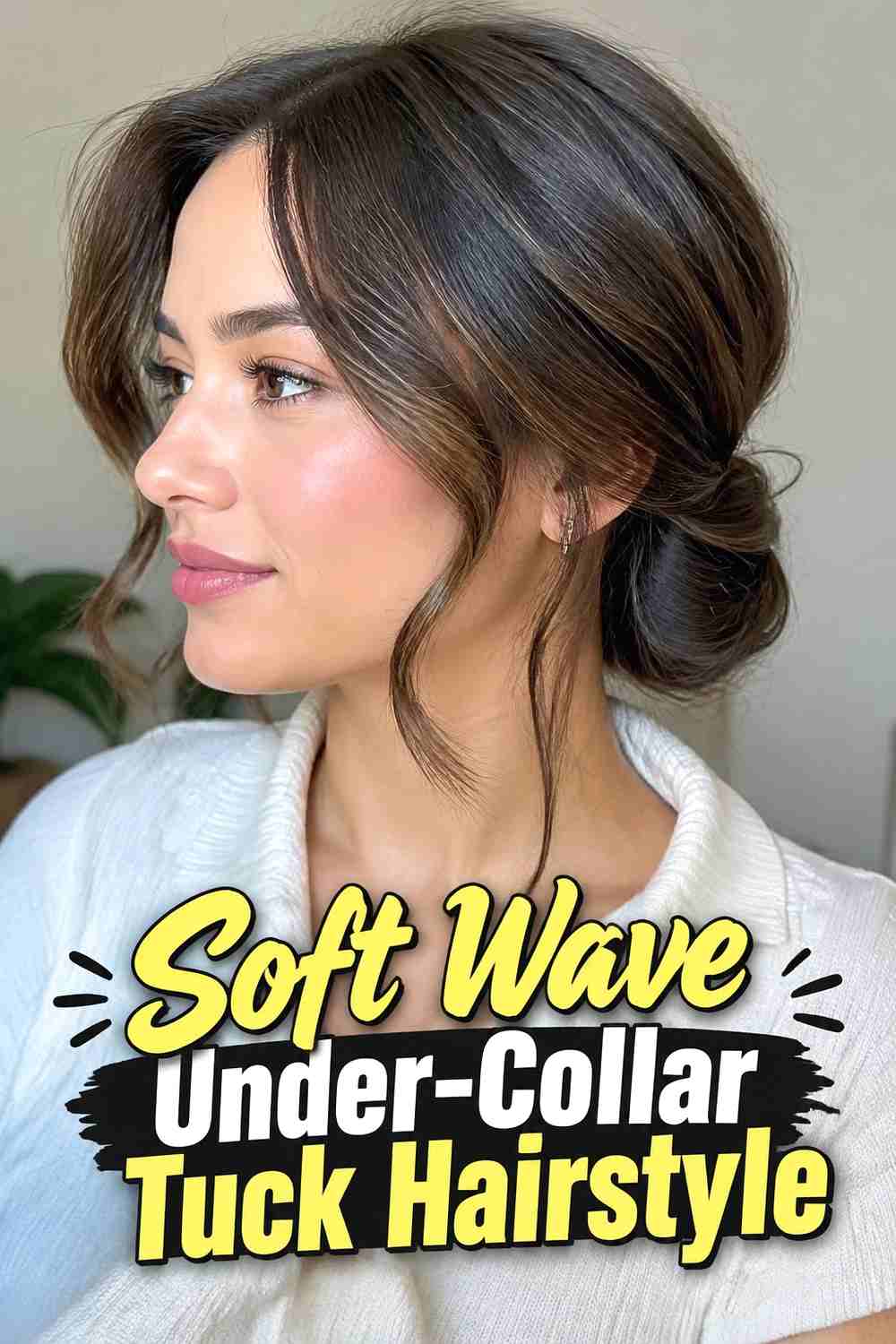
Soft waves bring gentle texture to an under-collar tuck without creating excessive fullness around the neck. The visible sections near the face retain a few relaxed bends, while most of the lower lengths are allowed to fall beneath the oversized wrap. Because the texture is partly concealed, the hairstyle feels effortless rather than elaborately curled. A few waved pieces near the cheekbones or jaw can soften the strong horizontal volume created by thick cashmere. This style works particularly well on naturally wavy hair or long hair that already holds loose bends. The goal is movement around the visible sections, not perfect waves from roots to ends, making the look relatively forgiving for everyday winter dressing.
Styling Notes
Concentrate wave definition around the front and upper mid-lengths that remain visible. There is little need to meticulously curl sections that will sit fully beneath the wrap.
Wear & Maintenance
After removing the wrap, gently separate the lower lengths with your fingers if they have compressed. A wide-tooth comb can help reorganize softer wave patterns without over-smoothing them.
3. Deep Side Part Collar Tucked Hairstyle
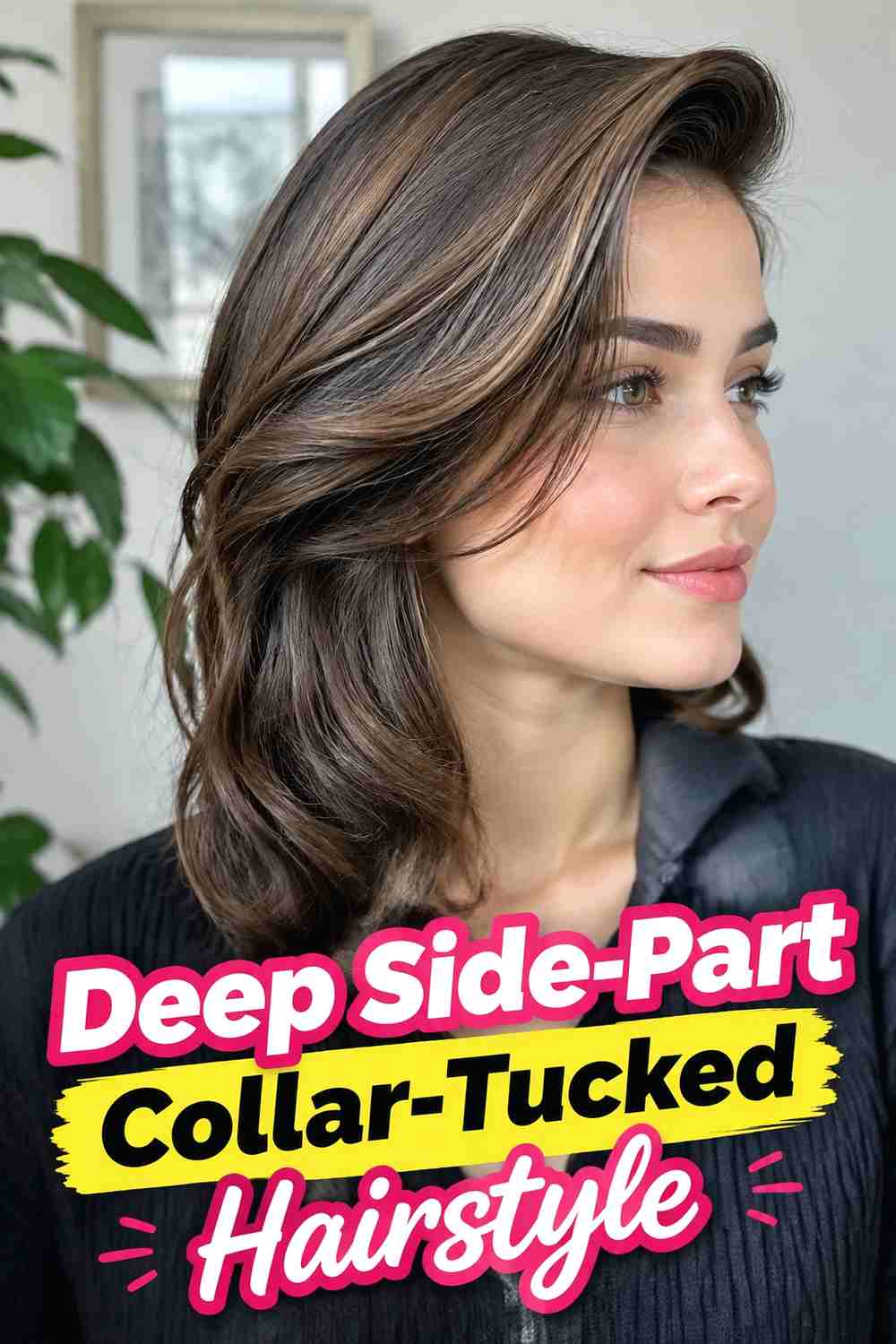
A deep side part adds direction and subtle crown lift while the lower hair stays tucked beneath the collar. The heavier side sweeps smoothly across the forehead before disappearing into the wrap, creating an asymmetrical line that contrasts with the generous volume of oversized cashmere. On the lighter side, the hair can sit behind the ear or remain close to the temple for a neater finish. This placement works especially well when the wrap is draped unevenly over the shoulders, since both elements share a slightly off-balance, styled quality. The look can be worn straight or with a faint bend through the visible front section, depending on how polished or relaxed you want it to feel.
Why It Works
The side part adds height and direction above a bulky collar without requiring extra overall hair volume, keeping the upper silhouette balanced.
Pro Tip
Establish the deep part before positioning the wrap. Once the lower hair is tucked, changing the root direction can disturb the smooth surface around the crown.
4. Straight Glossy Wrap Tuck Hairstyle
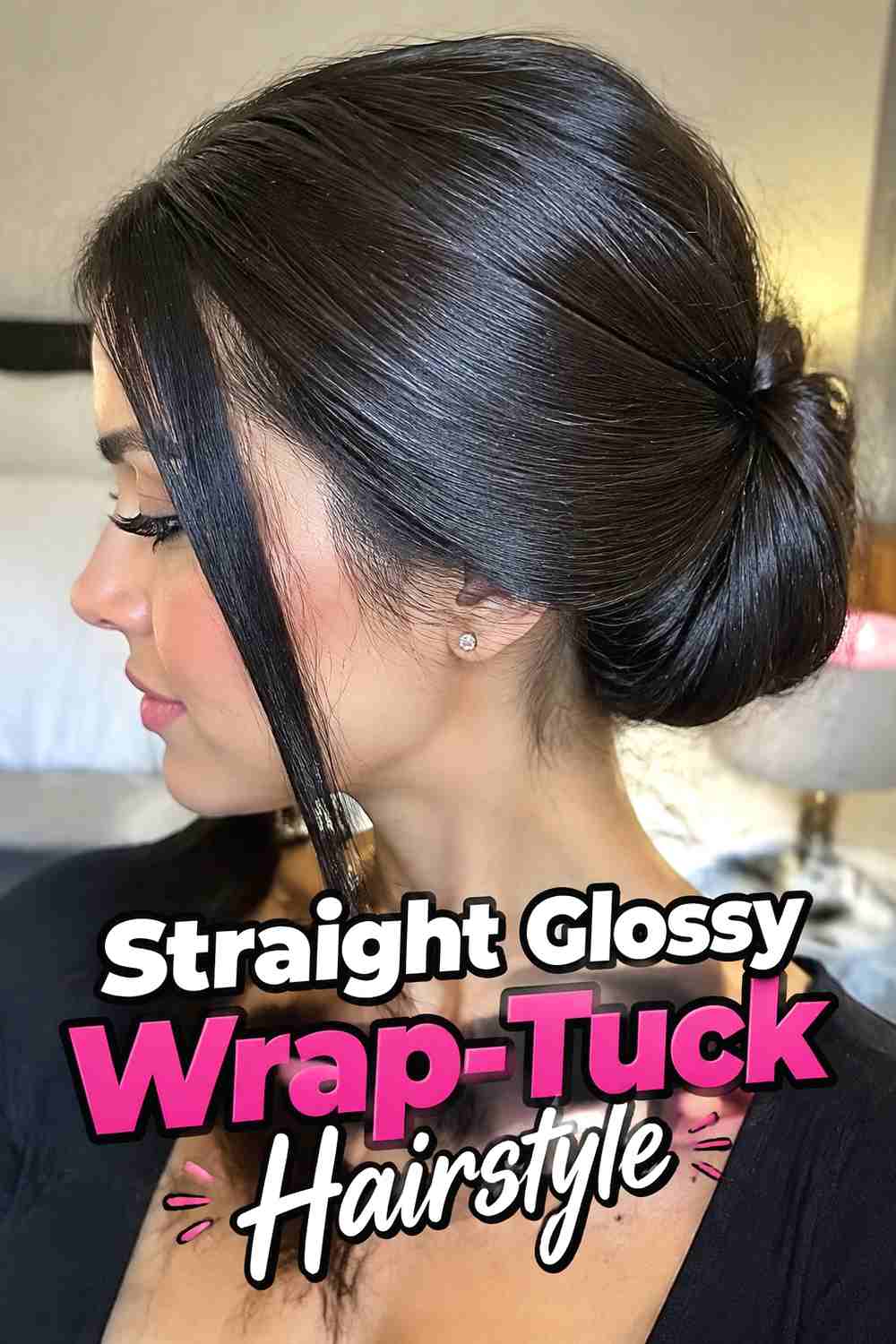
Straight, glossy hair creates a sleek surface above an oversized cashmere wrap while the hidden lengths keep the overall outline compact. The visible hair should retain natural strand detail and believable shine rather than looking heavily coated. A smooth part and controlled temple sections give the tuck a refined finish, while the soft fabric provides contrast through texture. This style is particularly effective with long hair that can feel visually heavy when worn fully over a large wrap. Tucking the lower section removes that extra layer of volume without requiring an updo. Leaving the hair slightly loose beneath the collar also allows it to shift naturally as you move instead of creating a rigid, flattened shape.
Hair Type & Length
Naturally straight and gently wavy hair can achieve this finish easily. Longer lengths create the most noticeable transformation when most of the lower hair disappears beneath the wrap.
Pro Tip
Keep shine products concentrated on the exposed mid-lengths and ends rather than the roots. Too much product near the scalp can make a sleek tuck appear unnecessarily flat.
5. Loose S Bend Under Collar Tuck Hairstyle
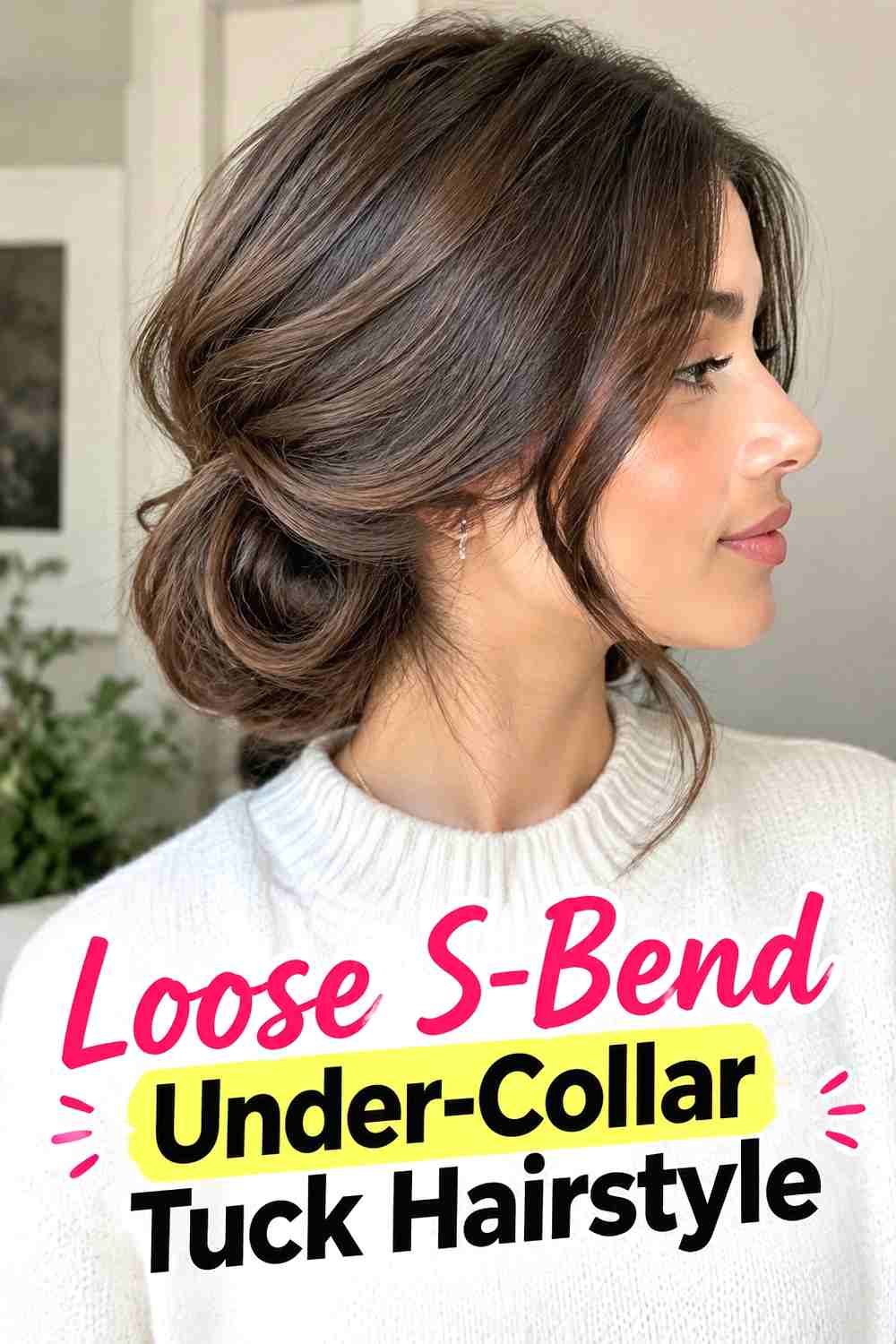
Loose S-bends add soft visual movement to the portions of hair that remain visible above the collar. Instead of forming full curls, the strands move through broad directional bends around the face and upper lengths before disappearing beneath the cashmere. The effect suits oversized wraps because it introduces texture without increasing the bulk around the shoulders. A center or softly offset part can keep the silhouette balanced, and slightly irregular bends usually look more natural than perfectly repeated waves. This is an appealing option when fully straight hair feels too severe but a voluminous blowout would compete with the wrap. The concealed ends also mean the wave pattern can stay relaxed rather than meticulously finished throughout the entire length.
Styling Notes
Shape only the visible sections into wide S-bends, alternating direction lightly. Let the bends cool before positioning the cashmere so the front texture remains defined.
Best For
Choose this style for straight or wavy medium-to-long hair when you want an understated texture that still reads clearly above a substantial collar.
6. Face Framing Front Piece Tuck Hairstyle
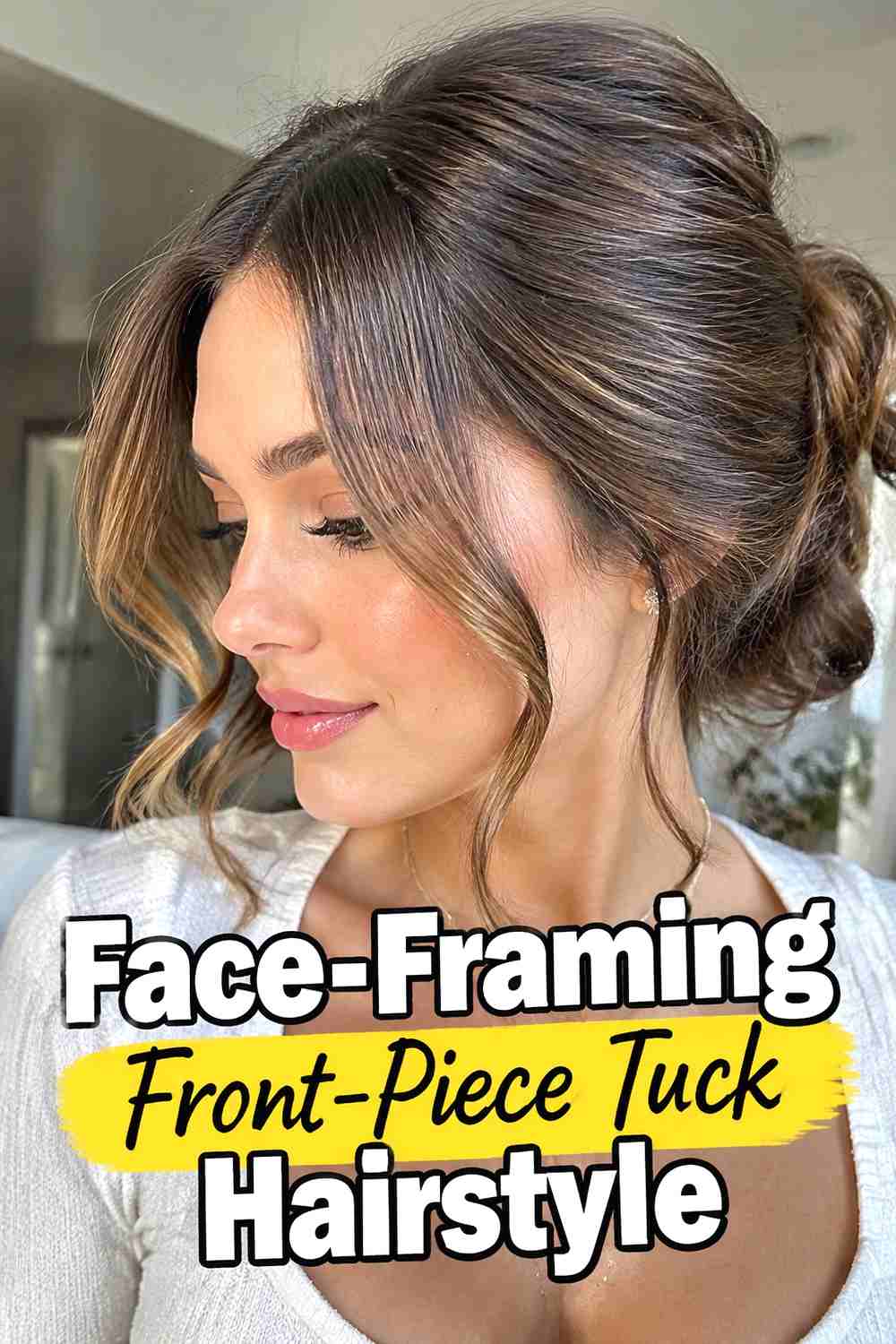
This tuck deliberately leaves a pair of face-framing pieces outside the cashmere while the bulk of the hair sits beneath it. The visible sections can begin around the cheekbones, jaw, or collarbone, depending on the haircut, and they prevent the wrap from making the face feel surrounded by fabric. Longer curtain layers are especially useful because they can curve naturally alongside the cheeks without behaving like short bangs. The rest of the hair stays controlled and largely hidden, creating contrast between the clean tucked shape and the softer front pieces. This approach also gives you flexibility: the framing strands can be smooth, gently waved, or bent outward while the hidden lengths require very little additional styling.
Hair Type & Length
Long layered hair is particularly suitable because the shorter front sections remain visible even when the lower lengths are tucked completely beneath the wrap.
Why It Works
Exposed face-framing pieces break up the strong collar line and create a clear transition between the face, hair, and oversized cashmere.
7. Low Volume Natural Under Collar Tuck Hairstyle
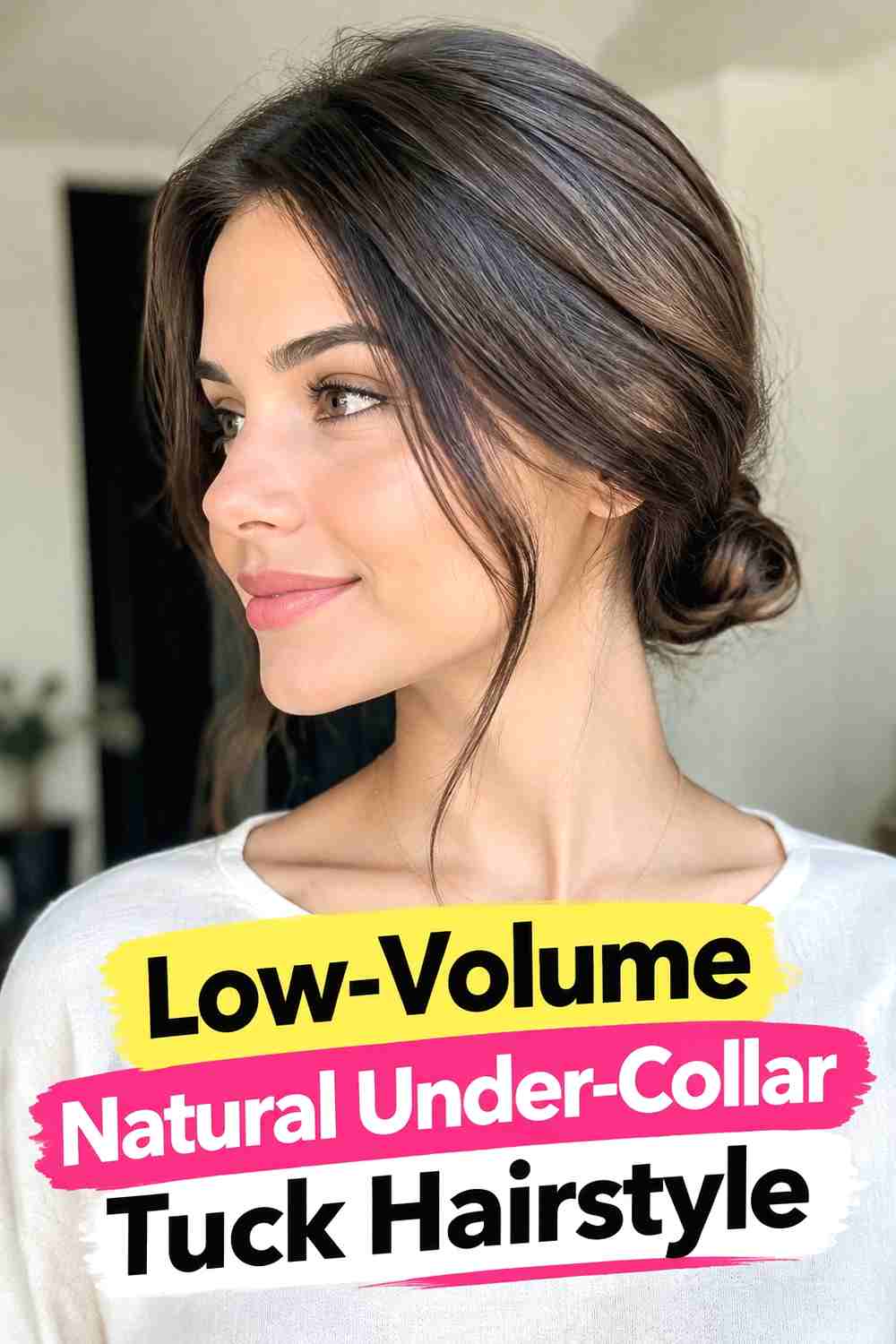
A low-volume natural tuck is one of the easiest ways to wear long hair with a large cashmere wrap. Instead of blow-drying the roots for height or smoothing every strand, the hair stays close to its natural shape and is loosely enclosed beneath the collar. Small flyaways, gentle bends, and subtle irregularities keep the finished look relaxed. This works especially well with casual oversized wraps because neither element feels overly styled. The most important detail is maintaining some organization around the part and face so the tuck still looks intentional. If the hair naturally separates or waves near the temples, allowing that texture to remain visible can make the style feel softer and more believable.
Wear & Maintenance
Avoid packing the hair too tightly beneath the collar. A little looseness allows the lengths to shift as you move and makes the tuck easier to release later.
Best For
This approach suits everyday dressing and anyone who prefers minimal styling, especially when the wrap itself is the dominant part of the outfit.
8. Airy Blowout Collar Tuck Hairstyle
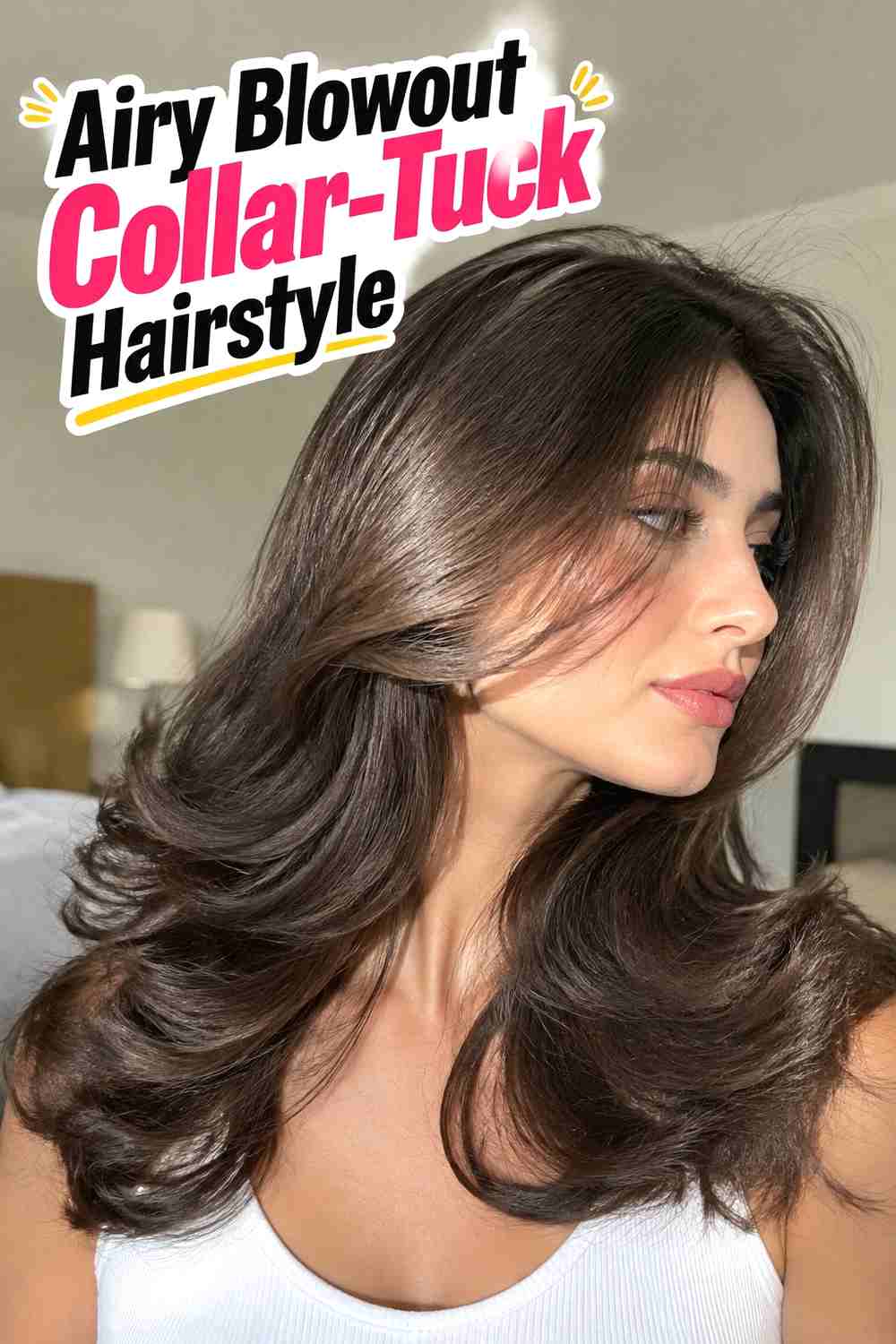
An airy blowout creates lift above the collar while the lower lengths remain partially hidden beneath the cashmere. The contrast is subtle but effective: the crown and face-framing sections have bounce and rounded movement, while the wrap contains the bulk of the length. This prevents a full blowout from becoming too expansive around an oversized neckline. Front layers can curve away from the cheeks, and a little height near the roots keeps the hairstyle visible even with a tall or folded collar. The effect works particularly well on layered medium-to-thick hair. Rather than tucking every strand, letting a few curved ends escape around the front can make the finish look natural and less deliberately arranged.
Styling Notes
Complete the blowout before adding the wrap, focusing on root lift and front-layer direction. Allow the lower sections to cool fully so their shape is not immediately compressed.
Pro Tip
Use the collar to contain volume rather than flattening the hair first. The slight fullness above the tuck is part of what makes this version distinctive.
9. Ribbon Wave Under Wrap Tuck Hairstyle
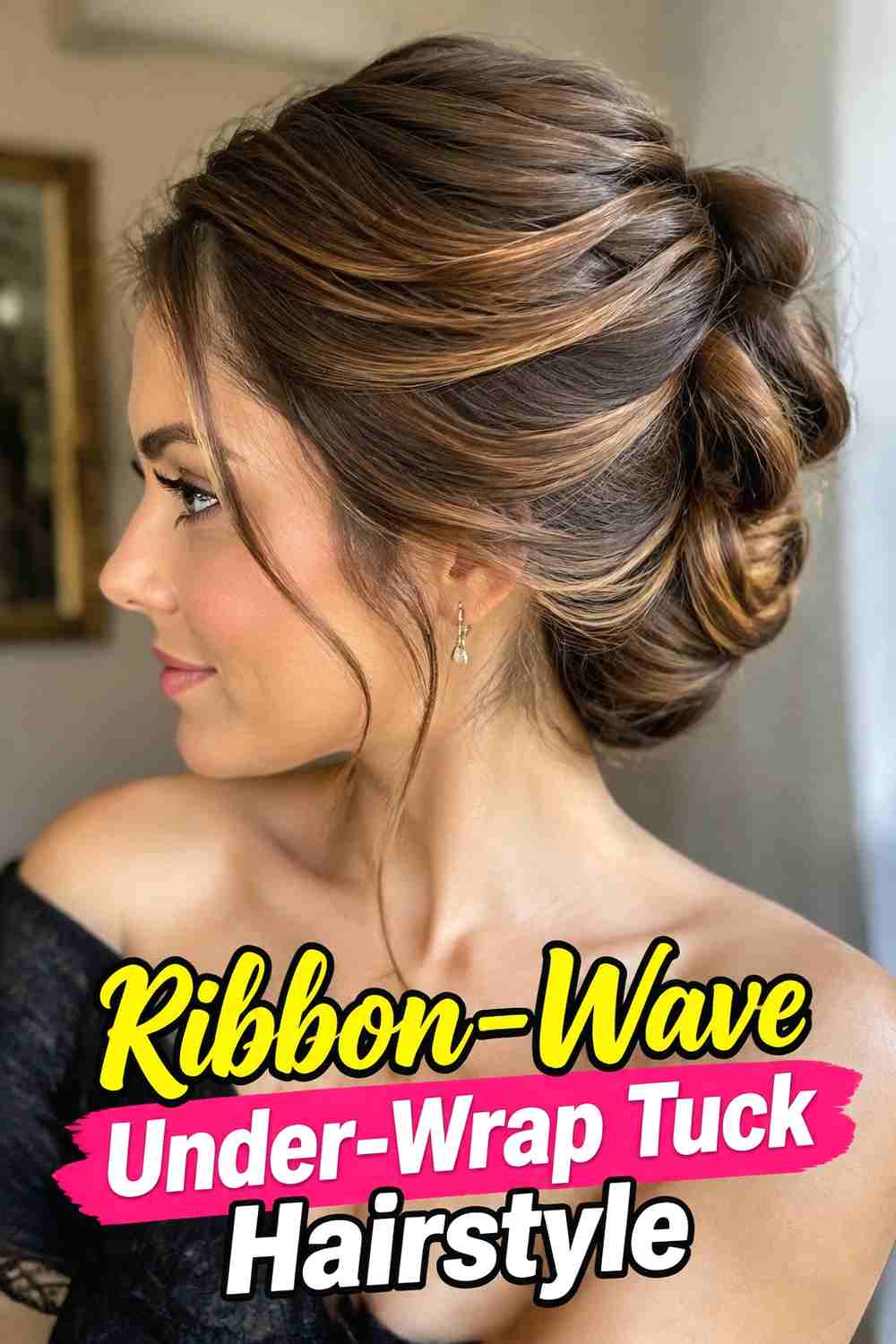
Ribbon waves create elongated curves through the visible lengths, giving the tucked hairstyle a graceful, flowing appearance. The waves can begin around the jaw or shoulders, with their lower portions slipping beneath the cashmere wrap. Because each bend is stretched rather than tightly curled, the texture does not build excessive width near the neckline. This makes it a useful middle ground between straight hair and a fuller curled style. The visible wave sections also add contrast against the soft, matte texture of cashmere, especially when the wrap is monochromatic. A few slightly different wave shapes keep the hairstyle modern and prevent it from looking too formal for an oversized, cozy winter layer.
Styling Notes
Use a large barrel or a gentle flat-iron bend to make elongated waves. Keep the roots smoother and avoid wrapping sections tightly enough to produce ringlets.
Wear & Maintenance
When removing the wrap, reshape any compressed lower wave by twisting it lightly around your fingers rather than immediately applying more heat.
10. Feathered End Collar Tuck Hairstyle
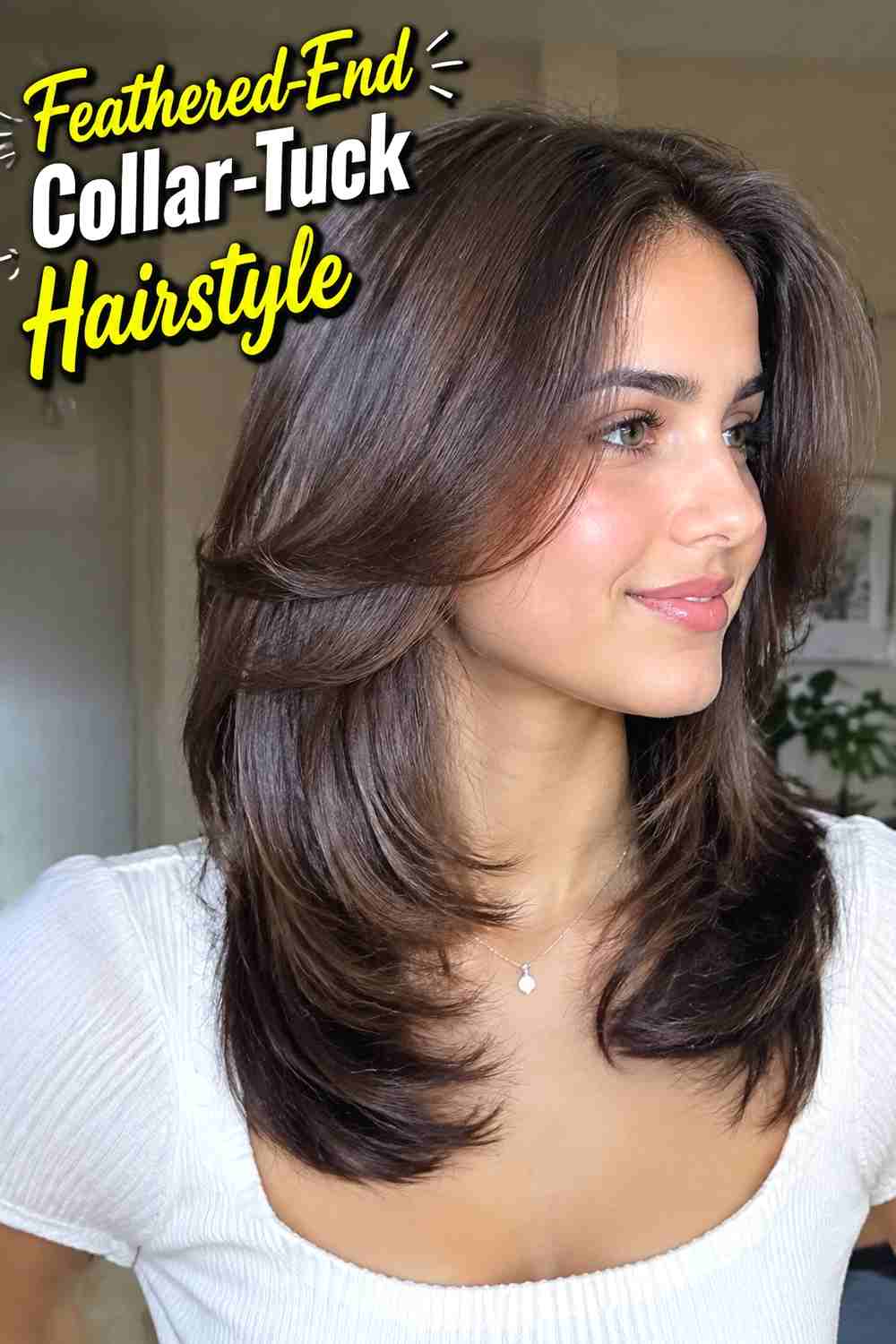
Feathered ends create subtle movement where the hair meets and disappears beneath the collar. The upper lengths remain smooth, while longer layers begin to sweep outward around the lower face and shoulders before being partially tucked into the cashmere. A few ends can remain visible at the front, giving the hairstyle a lighter finish than a completely concealed tuck. This works well when the wrap is very oversized because the feathered pieces stop the hair from looking like one solid section entering the collar. Medium and thick hair tend to show the separated ends clearly, while finer hair can use fewer layers to preserve fullness. The overall effect is polished but softer than a straight, uniform tuck.
Styling Notes
Use a round brush to curve the visible layer ends outward before arranging the wrap. Keep the movement broad rather than creating sharp flips.
Why It Works
Feathered separation breaks up the edge of the collar and helps layered hair remain visually distinct against thick cashmere.
11. Soft U Cut Under Collar Tuck Hairstyle
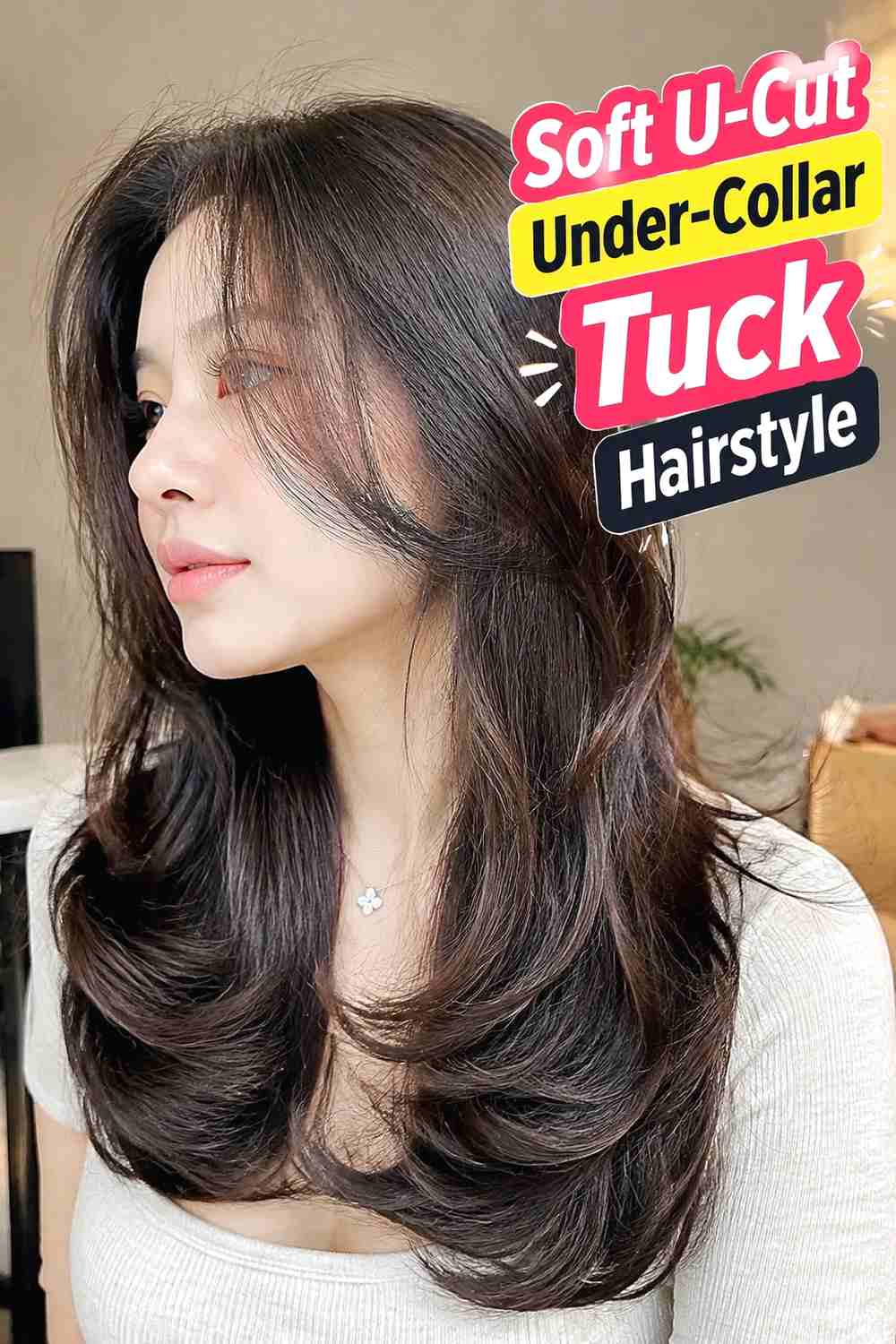
A soft U-cut gives long hair a rounded perimeter that remains useful even when much of the length is hidden beneath a wrap. From the front, the hair looks smooth and controlled, while slightly longer central sections settle naturally beneath the collar. If the wrap shifts or some ends become visible, the curved perimeter keeps the exposed length looking intentional rather than uneven. This tuck works particularly well for people who prefer minimal face layering and want the hairstyle to feel simple rather than highly textured. A center or soft side part can both work, and the hair may be worn straight or with a barely noticeable bend through the ends before it is positioned underneath the cashmere.
Hair Type & Length
Long straight, wavy, or softly textured hair can suit this shape. Keeping internal layers restrained helps maintain the full, smooth perimeter associated with a U-cut.
Wear & Maintenance
Arrange the lower hair loosely rather than folding it into a compact shape beneath the wrap, particularly if the cashmere sits close around the neck.
12. Tucked Layers With Open Front Hairstyle
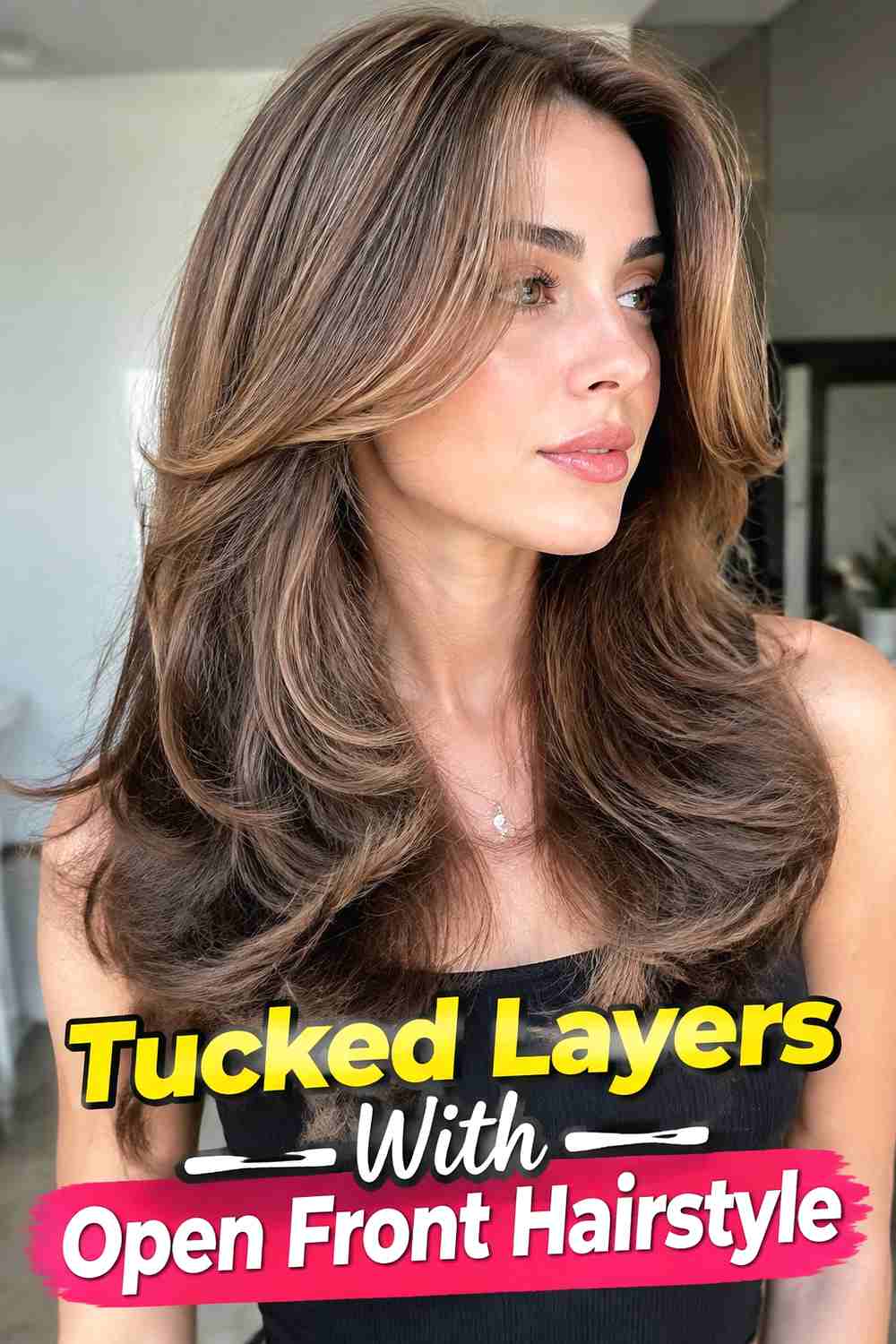
Tucked layers with an open front keep the hair away from the center of the face while allowing side layers to remain visible around the temples and jaw. The bulk of the length goes beneath the wrap, but front sections are directed outward or behind the ears to create a clear, airy frame. This can be particularly useful when an oversized cashmere piece rises high around the neck and cheeks. The open front stops the combined hair and fabric from feeling too enclosed. Long curtain layers or cheekbone-length pieces can add movement without requiring a fringe. Since the visible shape depends mainly on front-layer placement, the concealed back section can remain simple and naturally textured.
Styling Notes
Direct the front layers outward before putting on the wrap, then gently pull them free if the collar catches their ends. Avoid making the opening perfectly symmetrical.
Best For
This option suits layered hair and high-volume wraps when you want the face to remain visually clear without putting the hair into a ponytail or bun.
13. Brushed Out Wave Collar Tuck Hairstyle
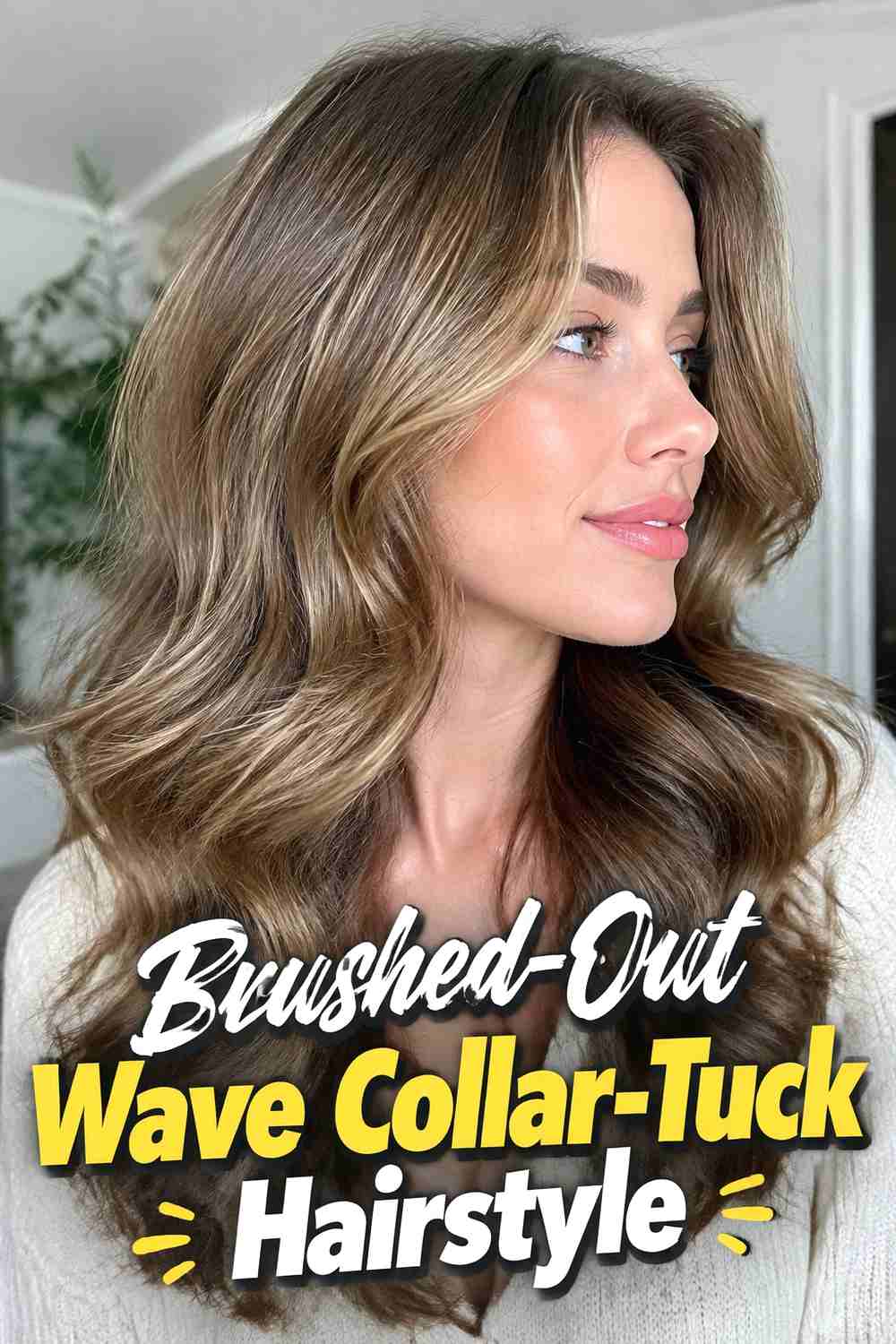
Brushed-out waves create a soft, continuous texture above the cashmere rather than visibly separated curls. Broad waves are formed first and then gently blended so the hair moves as one fluid shape. Once the lower lengths are tucked beneath the collar, the remaining texture around the cheeks and shoulders appears plush without competing with the oversized wrap. This style can feel slightly more polished than casual S-bends but less formal than sculpted vintage waves. It works especially well for dinners, seasonal gatherings, or dressed-up winter outfits where the cashmere is part of the complete look. Keeping the root area relatively smooth prevents the combined volume of hair and wrap from becoming overwhelming.
Styling Notes
Brush only after the waves are fully cool, then position the wrap beneath the lower lengths. Use your hands to restore any visible curve disturbed by the collar.
Why It Works
Blended waves create softness near the face while the tuck removes much of their lower volume, keeping the silhouette controlled.
14. Minimal C Bend Under Collar Hairstyle
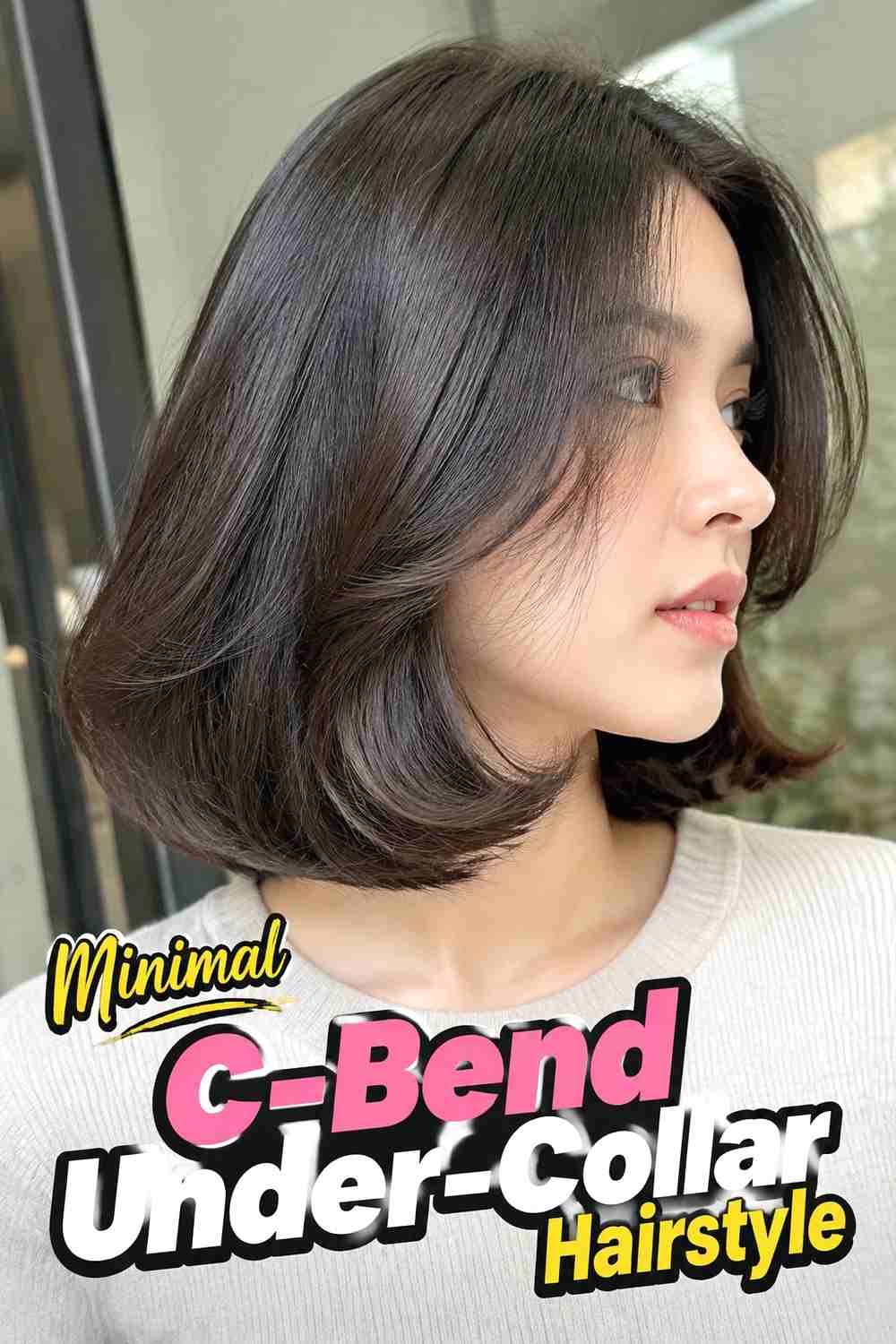
The minimal C-bend hairstyle keeps almost the entire visible section smooth, introducing only one broad curve as the hair approaches the collar. That subtle bend gives the tuck a deliberate finish without adding obvious texture. It is particularly well suited to minimalist cashmere wraps, tonal winter outfits, and haircuts with relatively clean long lengths. The hair can curve slightly inward toward the neck or outward before disappearing beneath the fabric, depending on the shape you prefer. Because the styling is concentrated near the lower visible section, the crown can remain natural and uncomplicated. The result feels polished but quiet, making it a useful everyday alternative to waves, curls, or a high-volume blowout.
Styling Notes
Use a large round brush or gently rotate a straightener through the lower visible length. One broad curve is enough; repeated bends will change the character of the style.
Best For
Straight and lightly wavy hair tends to show the simple C-shape most clearly, especially at medium to long lengths.
15. Natural Texture Wrap Tuck Hairstyle
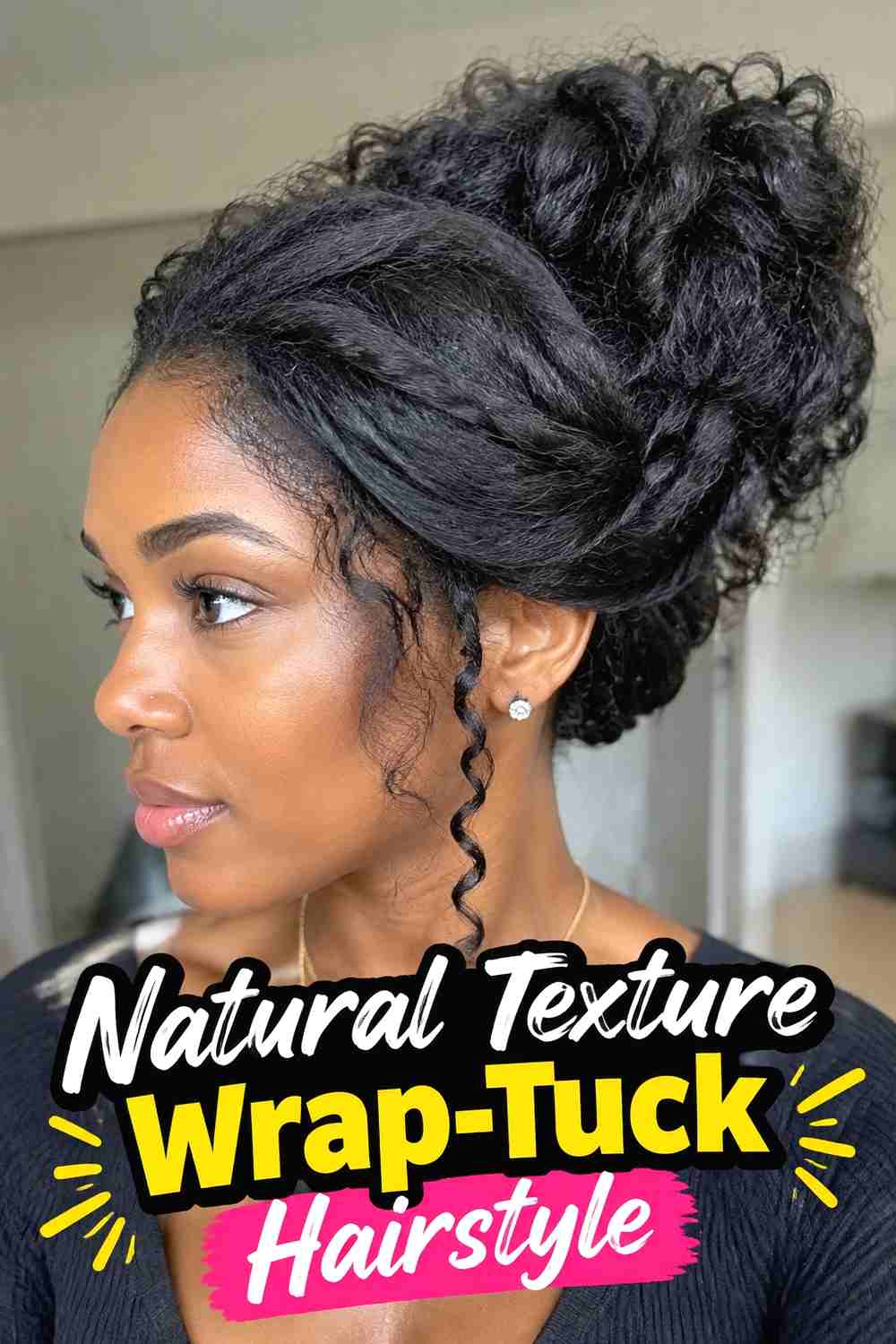
Waves, curls, and coils can all create a distinctive wrap-tuck when their natural texture is preserved rather than flattened beneath the collar. The visible crown and front sections retain their normal pattern, while some of the lower volume is guided loosely beneath the cashmere. Depending on density and shrinkage, it may be more comfortable to tuck only the back and lower sections instead of forcing the entire hairstyle under the wrap. A few curls or coils can remain free around the face to maintain balance and texture. The goal is controlled placement rather than uniformity. Allowing natural variation keeps the hairstyle believable and prevents the cashmere collar from visually overpowering the hair’s existing shape.
Hair Type & Length
This approach can work across wavy, curly, and coily textures. Adjust how much hair is tucked according to density, length, and how comfortably the wrap sits.
Pro Tip
Position the hair after it has settled into its natural pattern. Rearranging too aggressively once the wrap is on can disturb curl or coil definition around the visible areas.
16. Off Center Polished Collar Tuck Hairstyle
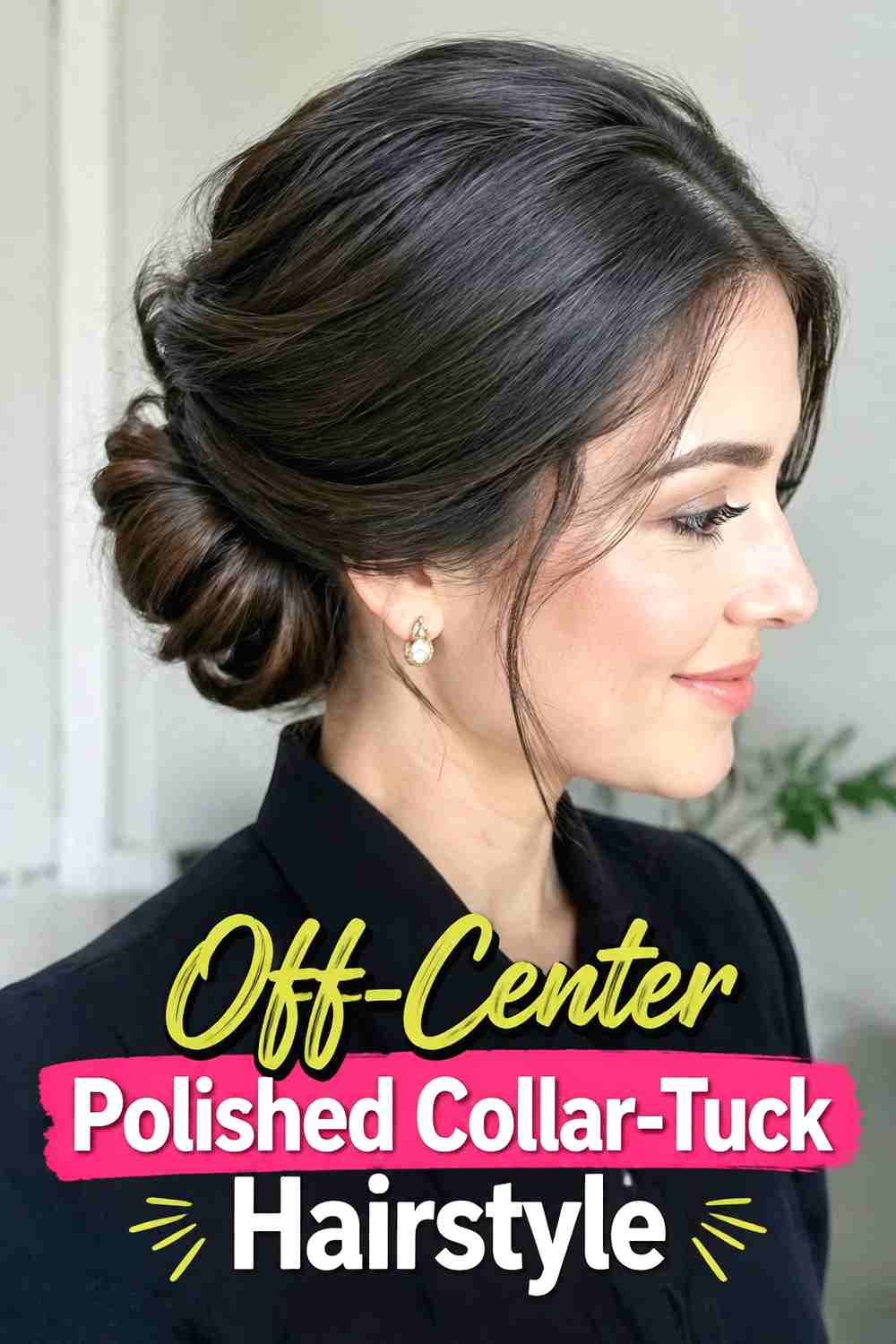
An off-center part offers a subtle change from strict symmetry while maintaining a refined finish around the collar. The slightly heavier side gains natural direction, but the difference is gentle enough to keep the hairstyle understated. Smooth lengths travel behind the shoulders and beneath the cashmere, while one or two soft front sections can remain visible. This works especially well when the wrap itself is loosely draped or folded asymmetrically, since the part quietly echoes that relaxed imbalance. The polished surface keeps the overall outfit from becoming too casual, and the minimal root volume prevents the hair from fighting with the scale of the wrap. It is an adaptable option for everyday or more elevated winter looks.
Why It Works
A small shift in the part adds movement around the face without creating the stronger volume associated with a deep side part.
Wear & Maintenance
If your hair naturally returns to a center part, use light directional blow-drying at the roots rather than heavy product to keep the off-center placement flexible.
17. Loose Ends Peeking Collar Tuck Hairstyle
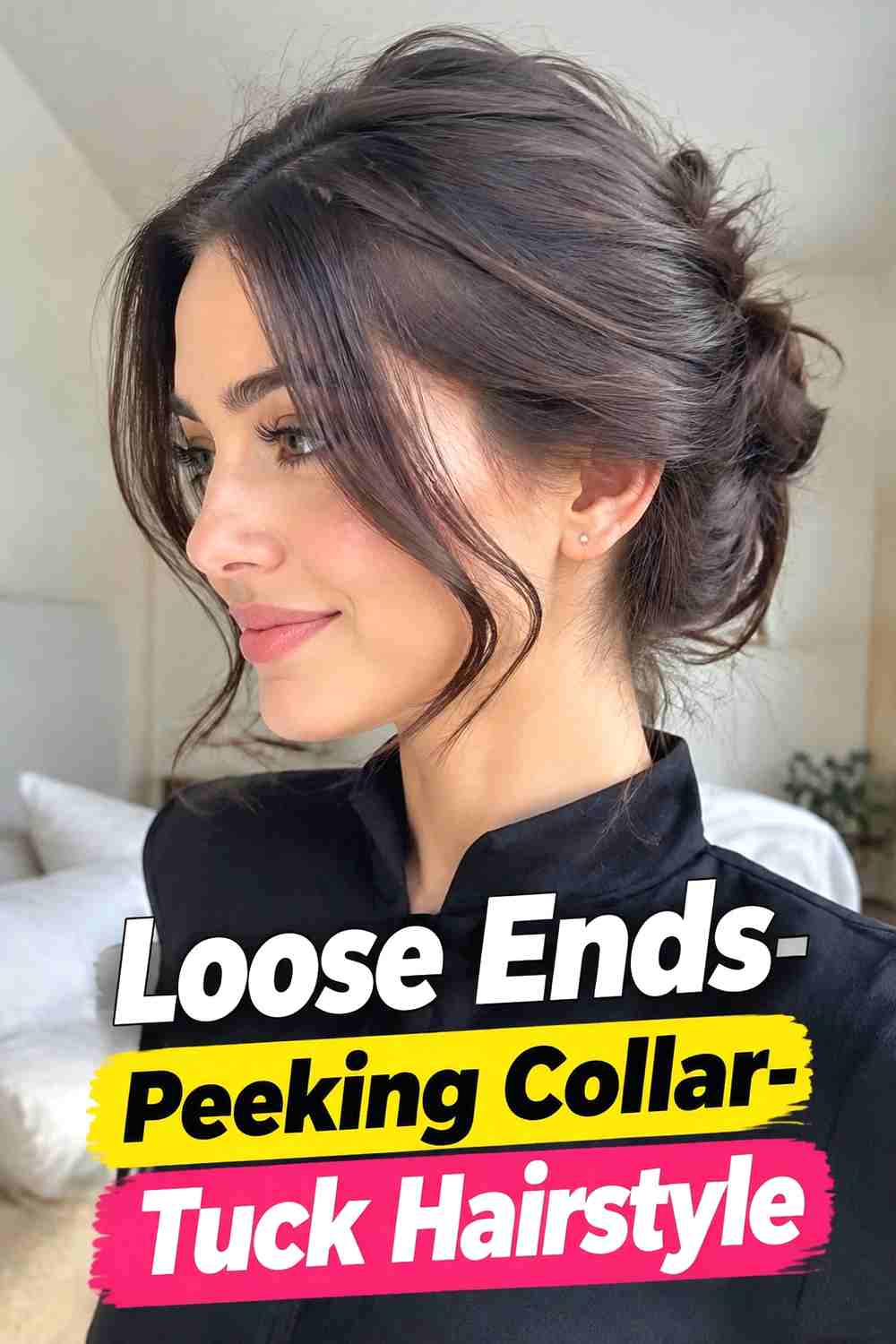
This variation intentionally allows a few lower ends to escape from beneath the oversized collar, creating the appearance of an imperfect, naturally settled tuck. Most of the hair remains hidden, but selected pieces emerge near the front or sides with a soft bend, wave, or straight finish. The exposed ends keep the hairstyle visually connected to its full length and prevent the cashmere from creating an abrupt stopping point. This can be especially effective with long layered hair, where shorter sections naturally slip free as you move. The key is restraint: a few visible ends look effortless, while pulling out too much hair can make the tuck lose its clear under-collar shape.
Styling Notes
Arrange the wrap first, then gently free only a few ends near the front. Let their placement remain slightly uneven instead of trying to mirror both sides.
Best For
This relaxed version works well for casual winter dressing and layered cuts that naturally resist staying completely contained beneath a large collar.
How to Choose the Right Look
Begin with your hair density and the amount of space inside the cashmere wrap. Fine or medium-density hair can usually sit comfortably beneath a collar with minimal adjustment, while very thick hair may feel better with only the back section tucked and some length left free. The goal is a relaxed placement, not tightly compressing all the hair around the neck.
Next, consider what you want visible around the face. Sleek center and off-center parts give the cleanest effect, while front-piece tucks and open-front layers create more softness. If you already have curtain layers, feathering, curls, or waves, allowing a few sections to remain outside the wrap can make the hairstyle feel more intentional.
Texture also changes the result. Straight hair emphasizes the clean line where the lengths disappear beneath the collar. S-bends and brushed waves add movement without requiring the full hair length to remain visible. Curly and coily textures may look best with a partial tuck that respects their natural volume rather than forcing every section under the fabric.
Think about comfort and practicality as well. A very tall or tightly wrapped collar may not leave enough room for a large amount of hair. Loose placement is usually more comfortable, and it makes it easier to adjust the hairstyle if the wrap shifts. Cashmere and other winter fabrics can also create static or disturb the lower lengths, so expect to lightly reorganize the hair after taking the wrap off.
Finally, match the finish to your styling time. Minimal C-bends, natural low-volume tucks, and sleek center parts require less detailed shaping, while airy blowouts, ribbon waves, and brushed-out waves provide a more styled appearance when you want the hair to remain a visible part of the outfit.
Final Thoughts
Under-collar hair tucks work especially well with oversized cashmere wraps because they turn the wrap itself into part of the hairstyle’s silhouette. Keep the tuck sleek for a minimalist finish, release a few face-framing layers for softness, or preserve waves and natural texture when you want more movement. The most wearable version should leave the hair comfortably placed rather than tightly trapped, with enough visible detail around the face to make the tuck look intentional.
FAQs
1. How much hair should I tuck beneath an oversized cashmere wrap?
There is no fixed amount. Fine hair may tuck comfortably in full, while thicker or more textured hair can look and feel better with only the lower or back sections beneath the collar.
2. Should the front pieces stay outside the collar?
They can. Leaving a few cheekbone, jaw, or collarbone-length pieces visible adds softness and keeps a large wrap from surrounding the face too completely.
3. Which under-collar tuck is easiest for everyday wear?
A low-volume natural tuck, sleek center-part tuck, or minimal C-bend style is relatively simple because each relies more on placement than elaborate curling.
4. Can curly or coily hair be worn in an under-collar tuck?
Yes. A partial tuck often works particularly well because it lets the visible curls or coils retain their shape while reducing some lower volume around the wrap.
5. How can I refresh my hair after removing the wrap?
Loosen the lengths with your fingers, gently reorganize any compressed waves or curls, and smooth visible static or flyaways with a small amount of suitable finishing product.
Save your favorite under-collar tuck, share these cashmere-wrap hairstyle ideas, and explore more cozy styling inspiration for polished cold-weather looks.