11 Face-Opening Long Layer Hairstyles for High-Neck Knit Dresses
Face-opening layers bring movement around the features while keeping long hair beautifully balanced with the cozy coverage of a high-neck knit dress.
High-neck sweaters and knit dresses create a strong visual line around the neck and shoulders, so the right long-layered hairstyle can keep the overall look from feeling visually heavy. Layers that sweep away from the face, lift around the cheekbones, or create movement through the ends help add softness and dimension while allowing the neckline to remain part of the outfit.
The best option depends on how much volume you enjoy, where you want the shortest layers to begin, and how much styling time you want to spend. Some of these looks rely on an airy blowout, while others work with natural waves, smooth finishes, or low-maintenance shaping. Compare the front-layer placement, parting, texture, and fullness to find the most wearable match for your hair.
Quick List
- Face Framing Butterfly Layers Hairstyle
- Center Part Curtain Layers Hairstyle
- Soft U Shaped Long Layers Hairstyle
- Cheekbone Skimming Front Layers Hairstyle
- Feathered Collarbone Starting Layers Hairstyle
- Long Layers With Wispy Curtain Bangs Hairstyle
- Sleek Face Framing Long Layers Hairstyle
- Voluminous Blowout Long Layers Hairstyle
- Soft Wave Face Opening Layers Hairstyle
- Side Swept Long Layers Hairstyle
- Airy Rounded Long Layers Hairstyle
1. Face Framing Butterfly Layers Hairstyle
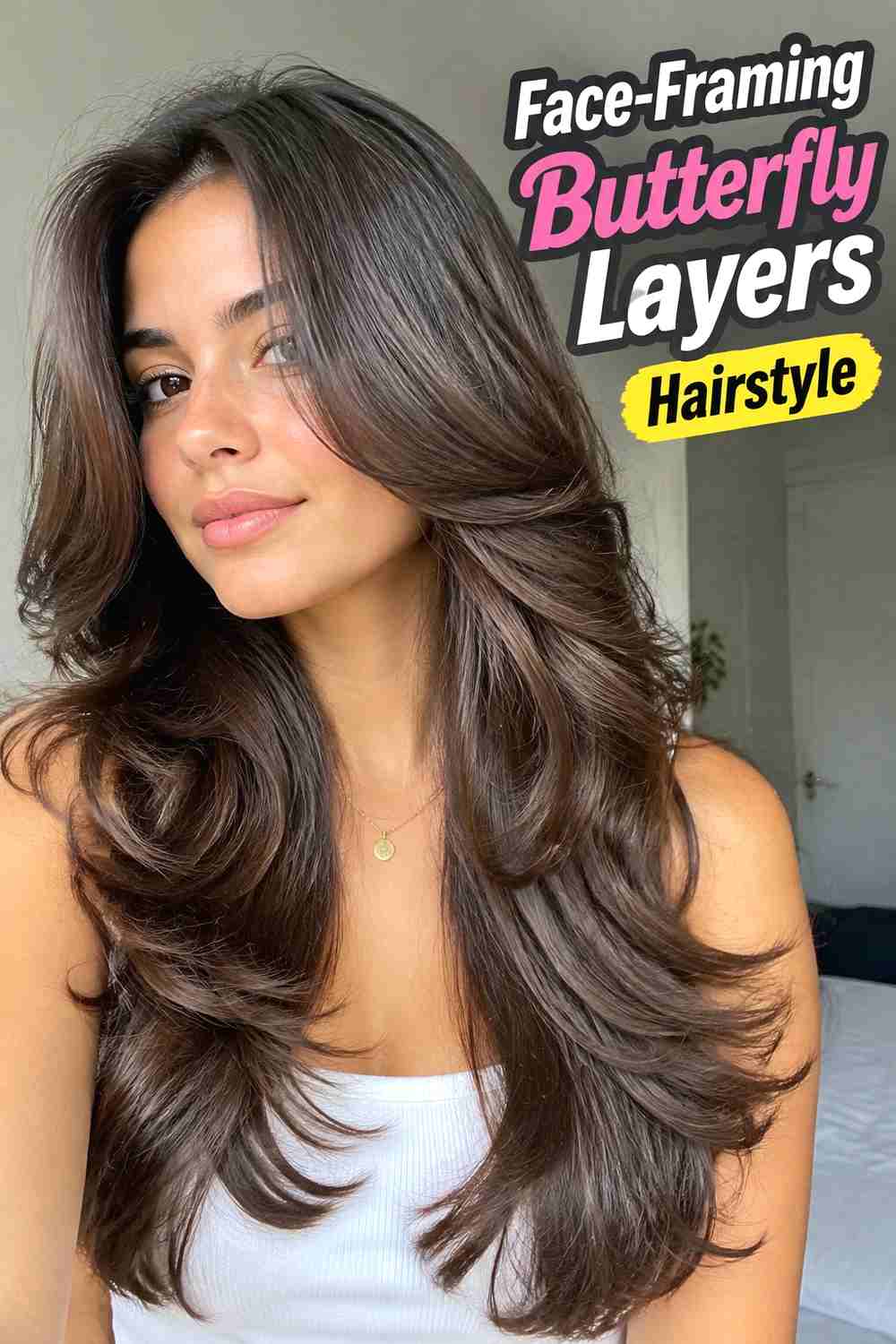
Face-framing butterfly layers create a light, sweeping shape that works especially well beside the structured neckline of a knit dress. The shorter front pieces open away from the cheeks, while longer cascading layers preserve length and movement through the back. A rounded blowout emphasizes the signature butterfly effect without requiring every section to be heavily curled. This style is especially appealing on medium to thick hair that can support visible layering without making the ends look sparse. Because the front pieces naturally lift away from the face, the hairstyle adds softness above a high neckline and keeps long hair from falling into one dense curtain over the shoulders.
Styling Notes
Direct the front sections backward with a round brush or large rollers. Let them cool away from the face before loosening them with your fingers for a softer, more natural sweep.
Best For
This look suits long hair with enough density to show several distinct layers. It is a strong choice when you enjoy volume around the crown and cheekbones but want to keep substantial length.
2. Center Part Curtain Layers Hairstyle
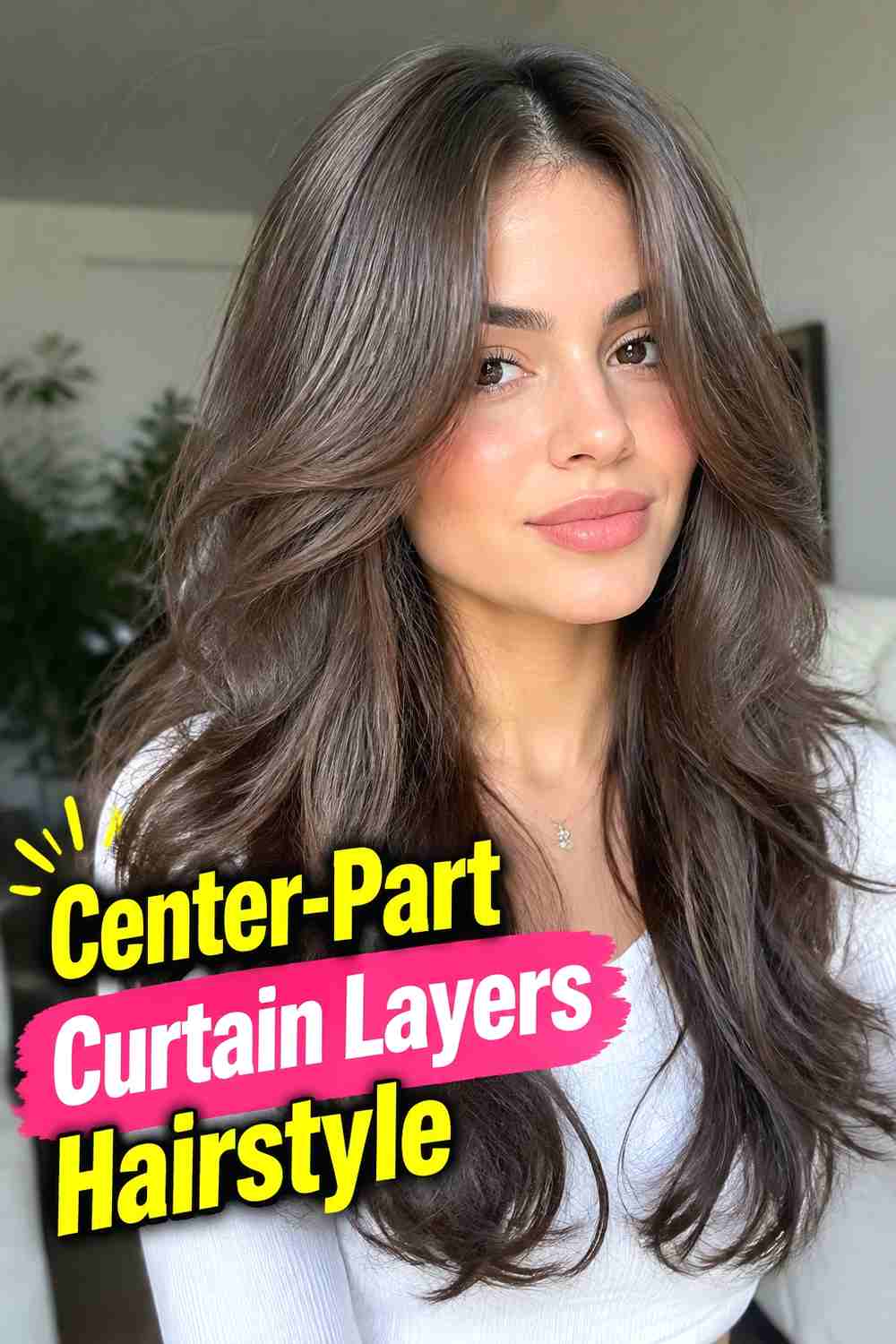
Center-part curtain layers create symmetry around the face while allowing long hair to remain relaxed and wearable. The shortest pieces can begin around the cheekbones or jaw, then gradually blend into longer lengths so the transition feels smooth rather than choppy. Paired with a high-neck knit dress, the center opening draws the eye upward and prevents the hair from completely hiding the neckline. The effect can be polished with a blow dryer or left slightly undone with natural movement through the ends. This option works particularly well for people who like the softness of curtain bangs but prefer longer pieces that are easier to tuck behind the ears or blend back into a ponytail.
Wear & Maintenance
Long curtain layers generally need less frequent reshaping than short bangs, but the face-framing pieces benefit from occasional trims to keep their curve and prevent them from becoming too heavy.
Pro Tip
Dry the front pieces forward first, then sweep them back from the face. This helps create lift at the roots without producing an overly stiff or exaggerated shape.
3. Soft U Shaped Long Layers Hairstyle
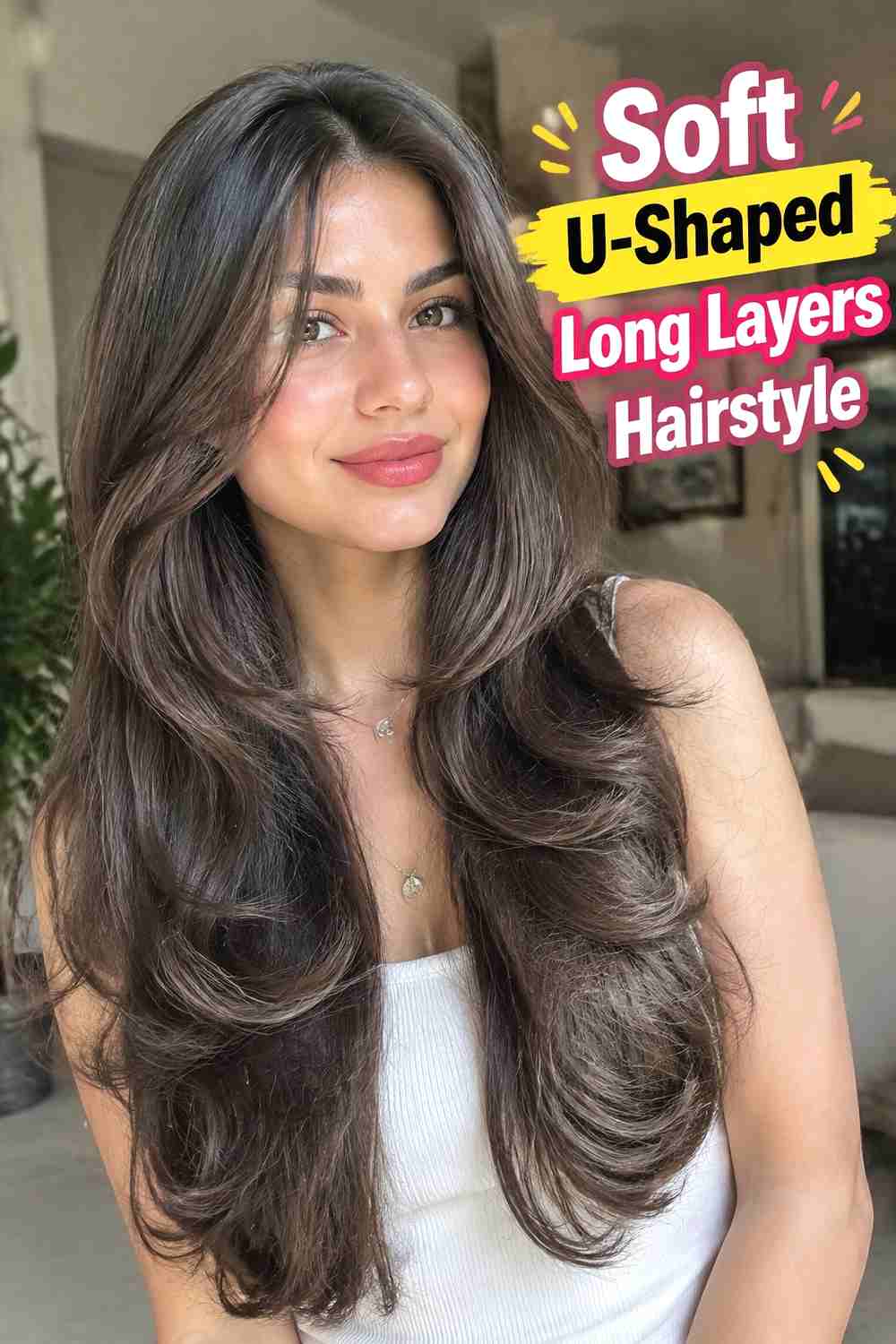
A soft U-shaped layered cut keeps the back length full while gradually opening the silhouette around the face. Instead of creating dramatic short pieces, the layers flow gently from the front into a rounded perimeter, making this a versatile choice for anyone who prefers subtle movement. With a high-neck knit dress, the curved outline keeps the hair looking fluid rather than blocky against the fabric. The style can be worn smooth, softly waved, or lightly blown out depending on the occasion. It is particularly useful for longer hair that needs shape without losing too much density at the ends, and the understated layering makes everyday styling relatively straightforward.
Hair Type & Length
This shape works especially well on medium to long hair with straight, wavy, or softly textured patterns. Fine hair may benefit from keeping the layering minimal so the lower perimeter remains visually full.
Why It Works
The rounded back shape mirrors the softness of knit fabric while the graduated front pieces add enough separation to keep the face and neckline from becoming visually crowded.
4. Cheekbone Skimming Front Layers Hairstyle
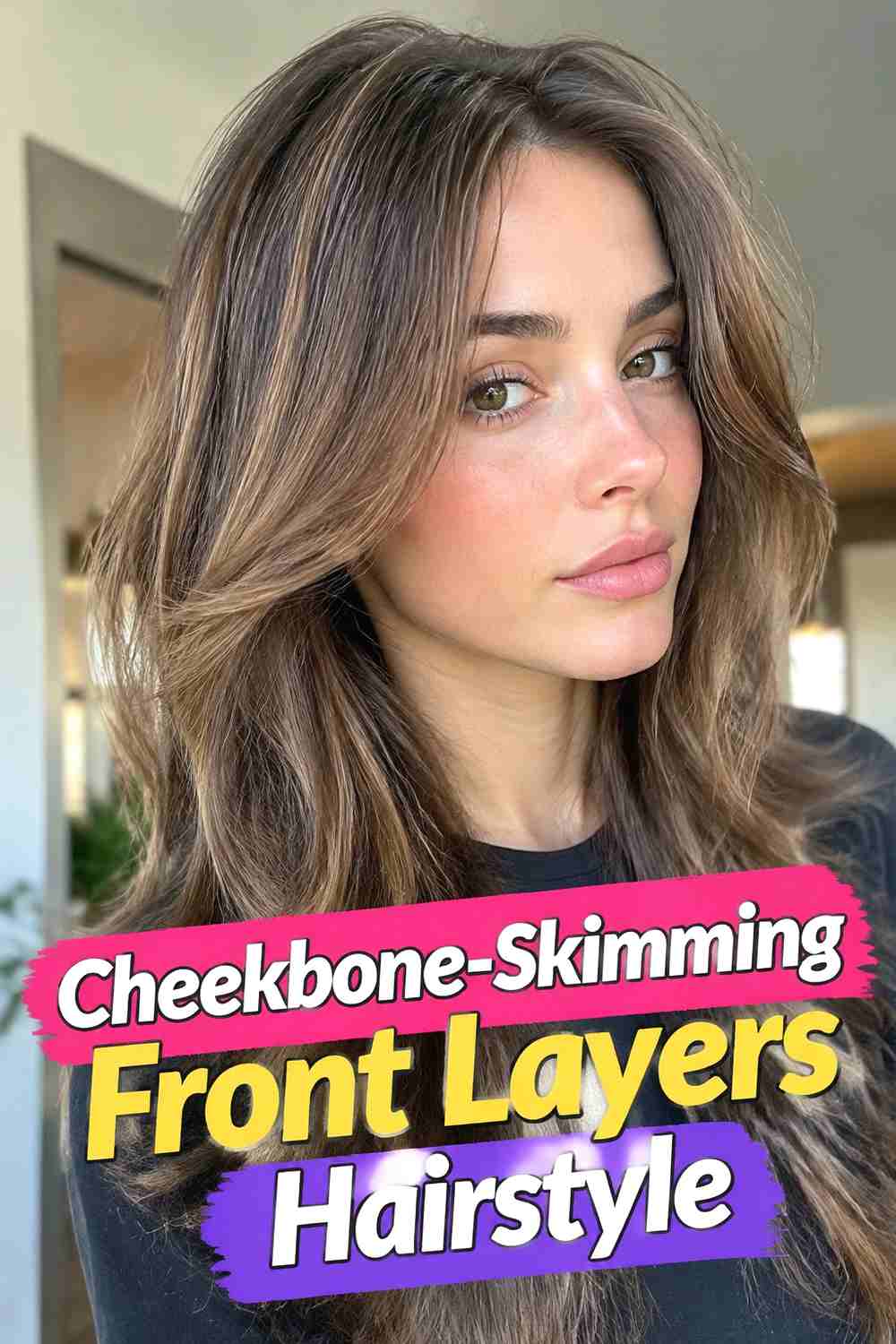
Cheekbone-skimming front layers place the most noticeable movement exactly where it can frame the upper face. The shorter pieces curve away near the cheeks before blending into long lengths, giving the hairstyle a defined but still wearable structure. This placement is especially effective with high-neck clothing because it creates visual space between the face and the heavier neckline below. The rest of the hair can remain mostly one length or include subtle long layers for movement. A smooth blowout highlights the shape, while soft bends give it a more casual finish. The cut can also work well for anyone who wants noticeable face framing without committing to a traditional fringe.
Styling Notes
Use a medium round brush around the front pieces and direct them diagonally away from the face. Avoid over-curling; a gentle bend usually keeps the layers looking more modern.
Best For
Choose this option if you want the shortest layers to make a visible difference around the face while still being long enough to blend naturally with the rest of your hair.
5. Feathered Collarbone Starting Layers Hairstyle
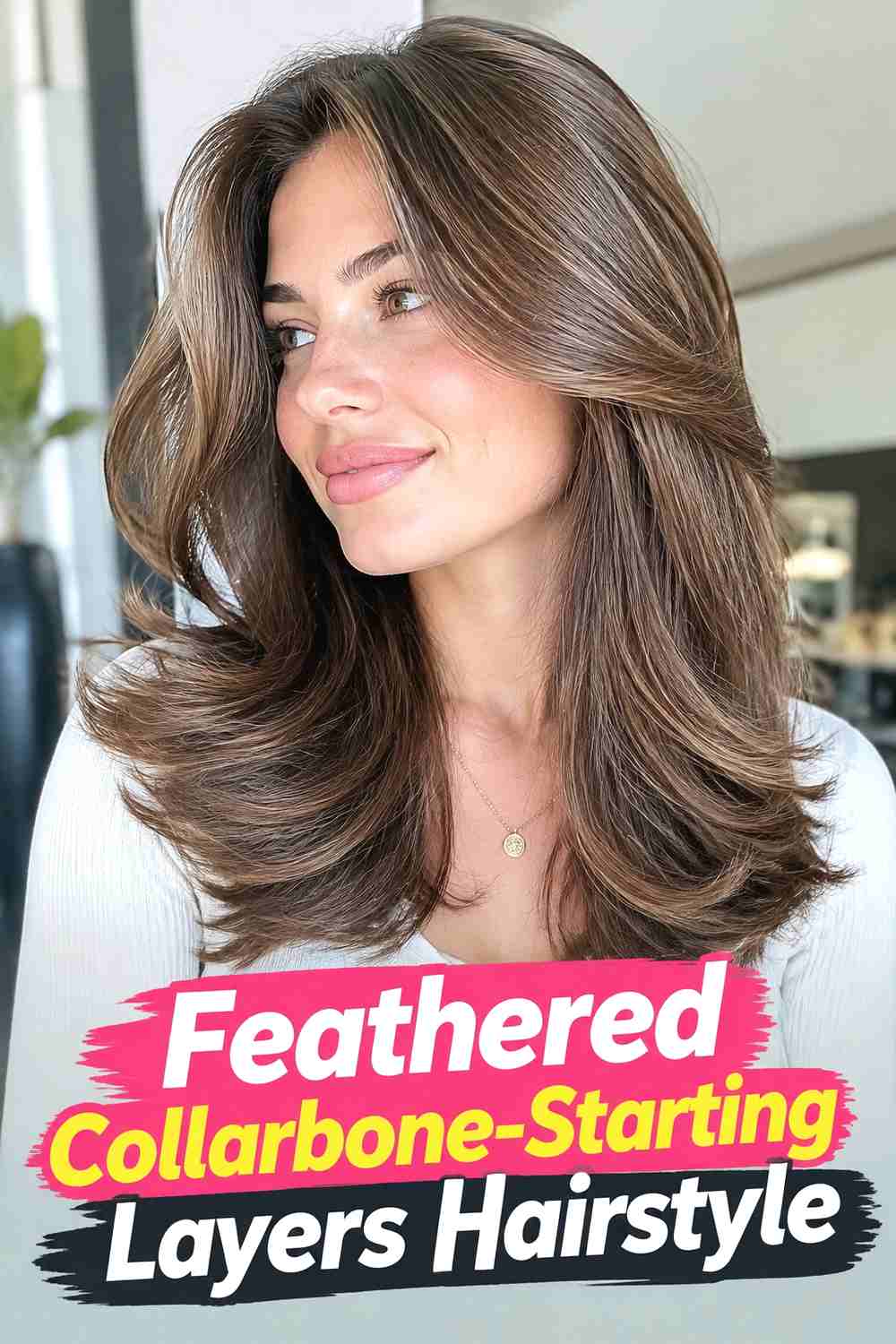
Feathered layers beginning around the collarbone offer movement without placing very short pieces around the forehead or cheeks. The front sections sweep outward and gradually become fuller through the lower lengths, creating an airy outline that sits attractively over or behind the shoulders. This can be particularly flattering with a high-neck knit dress because the feathered ends break up the solid line of fabric without overwhelming the neckline. The cut feels polished when styled with a smooth blowout, but its longer starting point also makes it easier to maintain. Medium and thick hair typically show the feathered structure most clearly, especially when the ends have enough weight to create a soft, flowing finish.
Wear & Maintenance
Because the shortest pieces start relatively low, this style grows out gracefully. Refresh the perimeter and face-framing sections when the feathered movement begins to feel heavy or loses definition.
Pro Tip
Keep the ends soft rather than sharply flipped. A broad outward bend gives the layers movement while maintaining a contemporary, relaxed finish.
6. Long Layers With Wispy Curtain Bangs Hairstyle
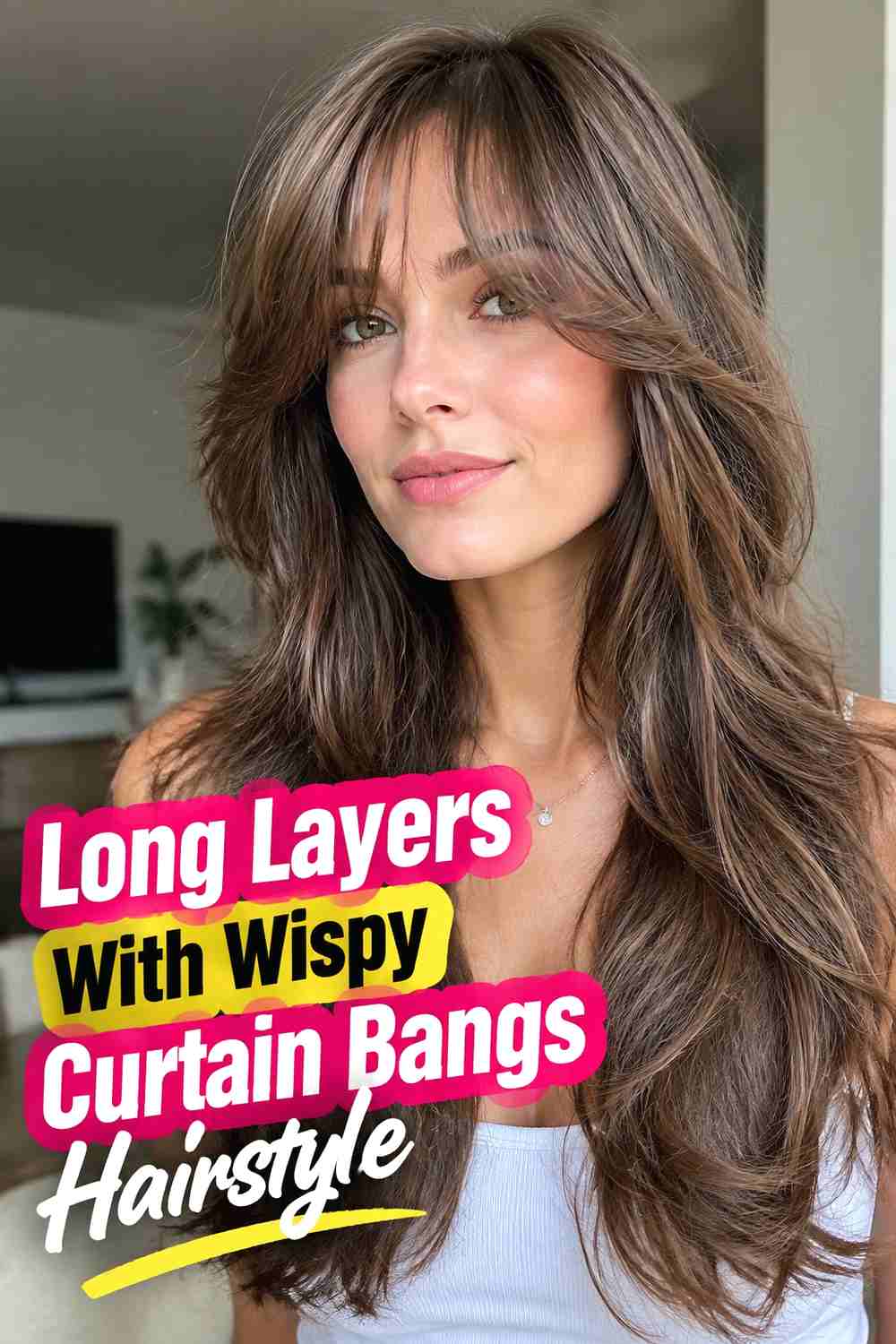
Long layers with wispy curtain bangs introduce softness at the forehead while maintaining generous length through the body of the hair. The fringe separates gently through the center and blends into longer face-framing pieces, creating an open effect instead of a dense wall of bangs. When paired with a high-neck knit dress, this lighter framing adds detail around the face without making the entire upper half feel covered. Long, subtle layers through the sides keep the silhouette fluid and prevent the style from looking top-heavy. This option does require more regular fringe styling than bang-free cuts, but the airy texture makes slight imperfections part of the relaxed look rather than something that needs to be perfectly controlled.
Styling Notes
Dry the curtain fringe from side to side before dividing it at the center. Finish by directing each side backward to create a soft opening instead of a flat split.
Wear & Maintenance
Wispy bangs usually need more frequent trimming than the longer layers. They are best for someone comfortable spending a few minutes refreshing the fringe after sleep, humidity, or hat wear.
7. Sleek Face Framing Long Layers Hairstyle
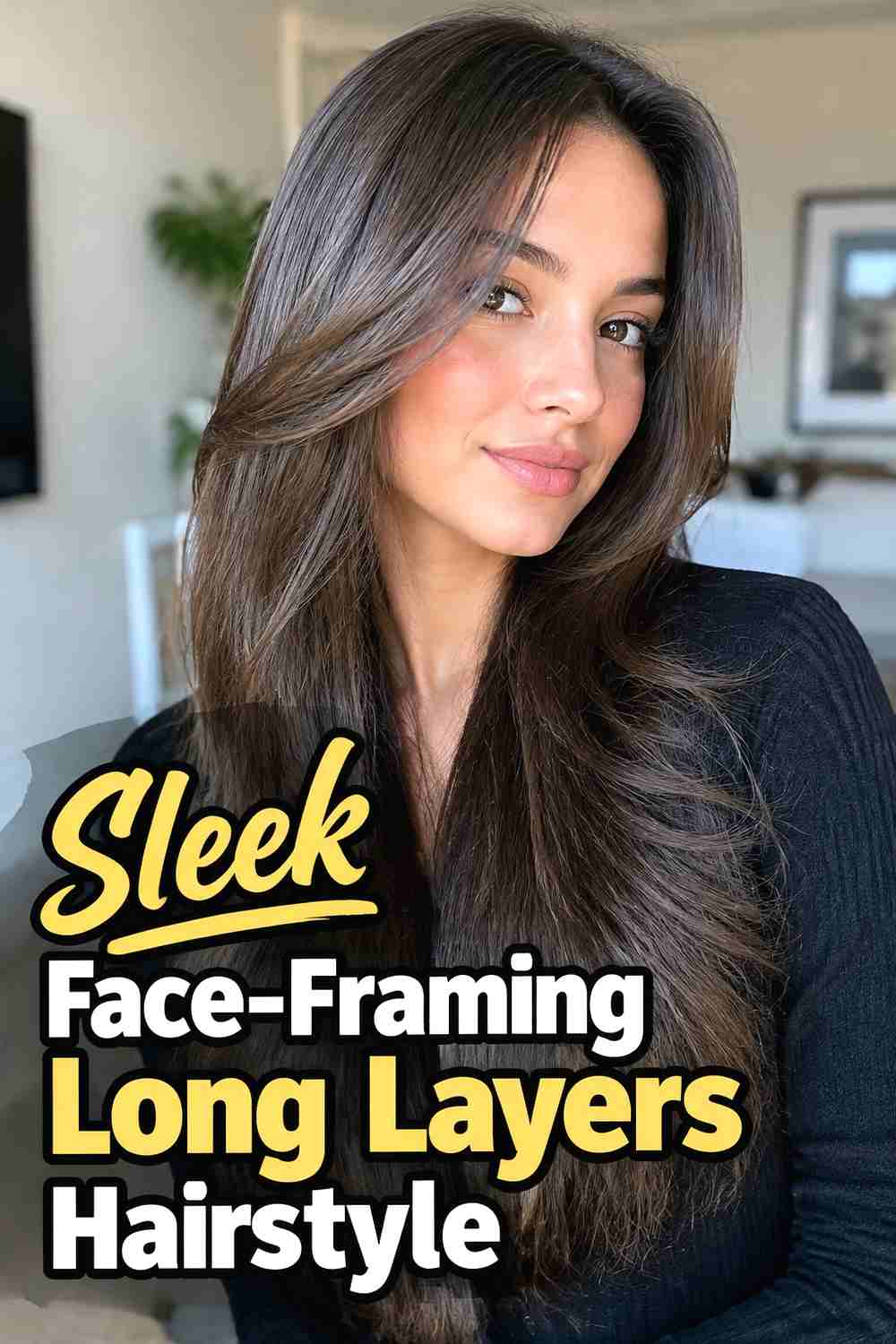
Sleek face-framing long layers prove that an open, flattering shape does not always require a voluminous blowout. Here, smooth lengths fall close to the head while subtle front layers angle away from the face, creating clean definition around the jaw and shoulders. The polished texture pairs beautifully with the tactile surface of a high-neck knit dress because it creates contrast between smooth hair and soft fabric. A center or slightly off-center part keeps the look modern, while the long layers provide enough movement to prevent the ends from appearing blunt or heavy. This hairstyle works especially well when the cut itself is precise, since the streamlined finish makes uneven layering more noticeable.
Hair Type & Length
Naturally straight and gently wavy hair can achieve this finish with minimal reshaping. Curlier textures can also wear the look when straightened, though styling time and humidity resistance will vary.
Pro Tip
Focus smoothing products on the mid-lengths and ends rather than saturating the roots. That helps preserve natural movement and avoids making the top look overly flat.
8. Voluminous Blowout Long Layers Hairstyle
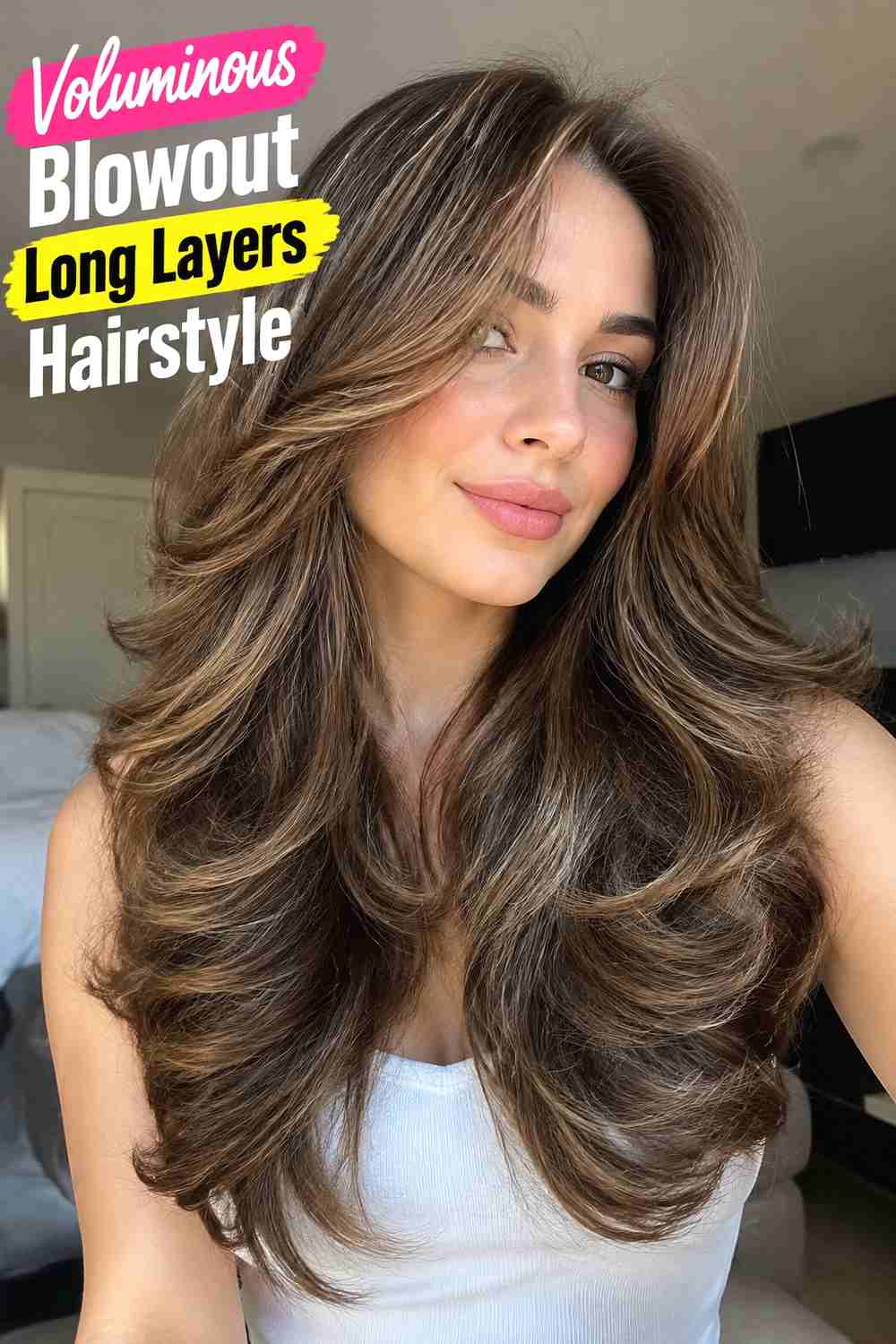
Voluminous blowout layers bring lift, bounce, and visible separation to long hair, making them a natural partner for fitted or substantial high-neck knit dresses. The face-framing sections sweep outward, the crown gains soft height, and the lower layers curve in alternating directions for a full but movable finish. Because the hairstyle carries volume above and around the shoulders, it balances the strong neckline without needing elaborate accessories. The look is especially striking on medium to thick hair, although strategic layering can also help finer hair achieve a lighter silhouette. The key is controlled volume: too much teasing can make the style stiff, while rounded roots and softly curved ends keep it wearable.
Styling Notes
Work in medium sections with a round brush, lifting the roots before rolling the ends. Large Velcro or heated rollers can help the shape cool with more lasting bounce.
Why It Works
The vertical lift and outward movement keep the hair visually separate from the dress neckline, creating a more balanced transition between the face, hair, and clothing.
9. Soft Wave Face Opening Layers Hairstyle
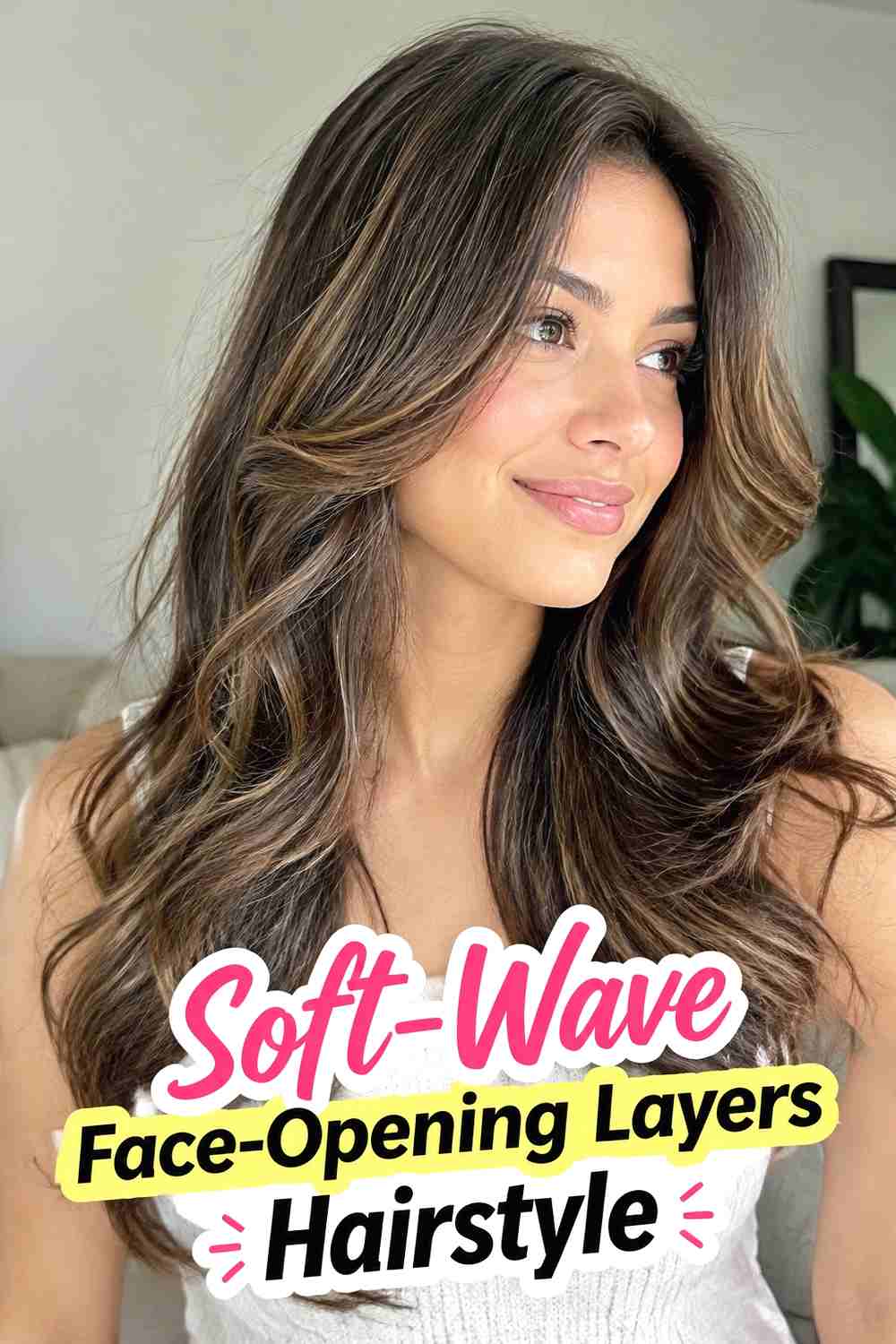
Soft waves give face-opening layers an effortless, dimensional finish that feels comfortable with cozy knit styling. The shortest front pieces curve away from the cheeks, while loose bends through the remaining lengths create gentle separation rather than uniform curls. This makes the hairstyle look relaxed but intentional and prevents long hair from sitting as one heavy mass over a high-neck dress. The waves can be created with a wide-barrel iron or encouraged from naturally wavy texture, depending on the hair type. Leaving the ends slightly straighter keeps the result contemporary. The style is also forgiving between trims because the wave pattern naturally disguises small differences in layer length as the cut grows.
Styling Notes
Alternate the direction of a few waves through the mid-lengths, but keep the pieces nearest the face directed outward. Break up the finished texture with your fingers instead of brushing it completely smooth.
Best For
This is a versatile option for anyone who prefers visible movement without the height and precision of a full blowout.
10. Side Swept Long Layers Hairstyle
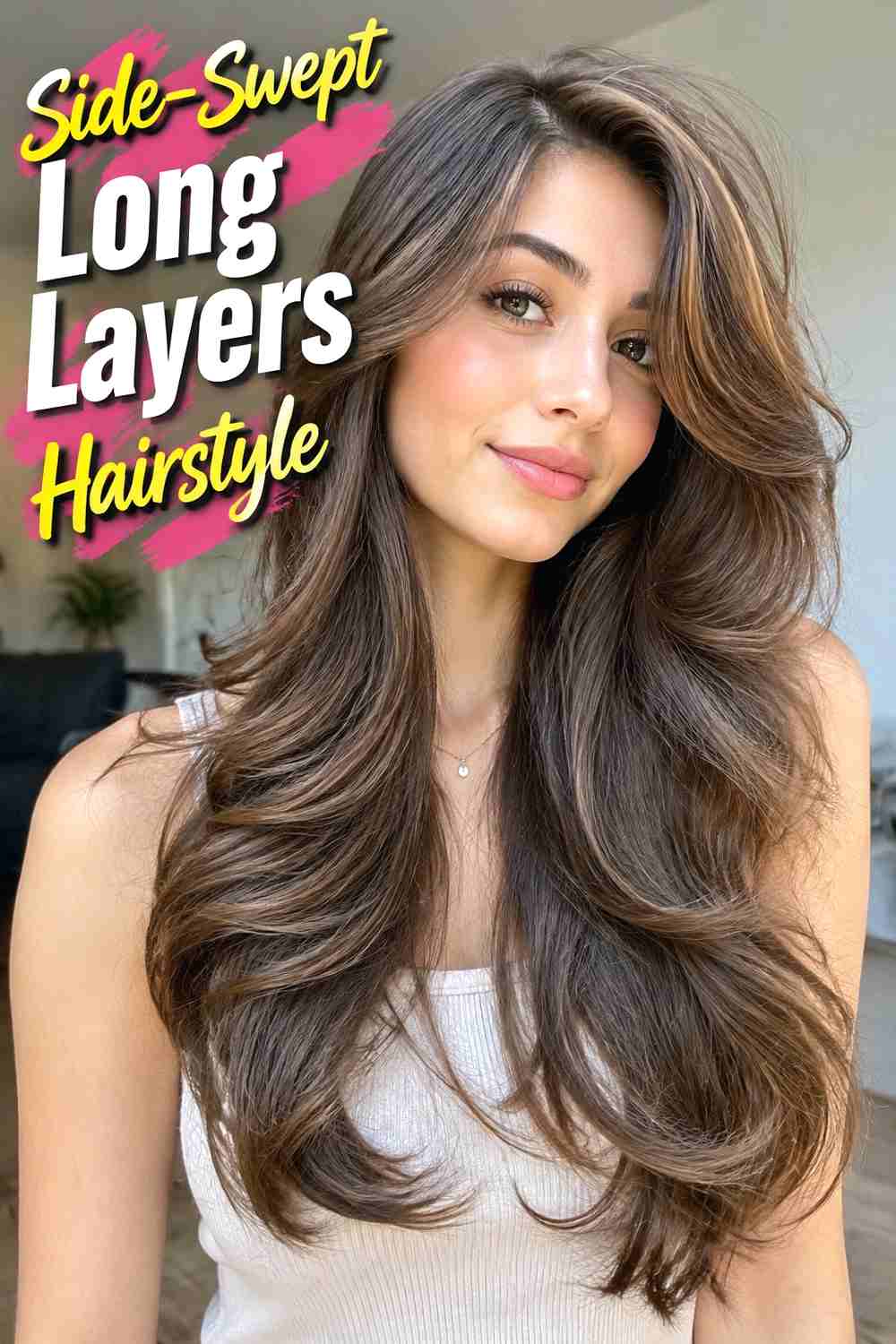
Side-swept long layers create an asymmetrical opening around the face, offering an easy alternative to centered curtain styles. A deeper part sends one side across the forehead before the hair flows outward and down into longer layers. The opposite side can sit behind the ear or remain softly tucked back, giving the high-neck knit dress more room to show. This arrangement works particularly well when you want a dressed-up finish without an intricate updo. Soft bends through the ends reinforce the sweeping motion, while a smoother finish makes the look feel more refined. Since the part itself contributes much of the volume, the style can also be useful when the crown needs a little extra lift.
Wear & Maintenance
Changing to a deeper side part may require some root training if your hair naturally separates elsewhere. Lightweight hold can help maintain the direction without making the front section stiff.
Pro Tip
For stronger lift, dry the roots briefly in the opposite direction of the final part before flipping the hair back into place.
11. Airy Rounded Long Layers Hairstyle
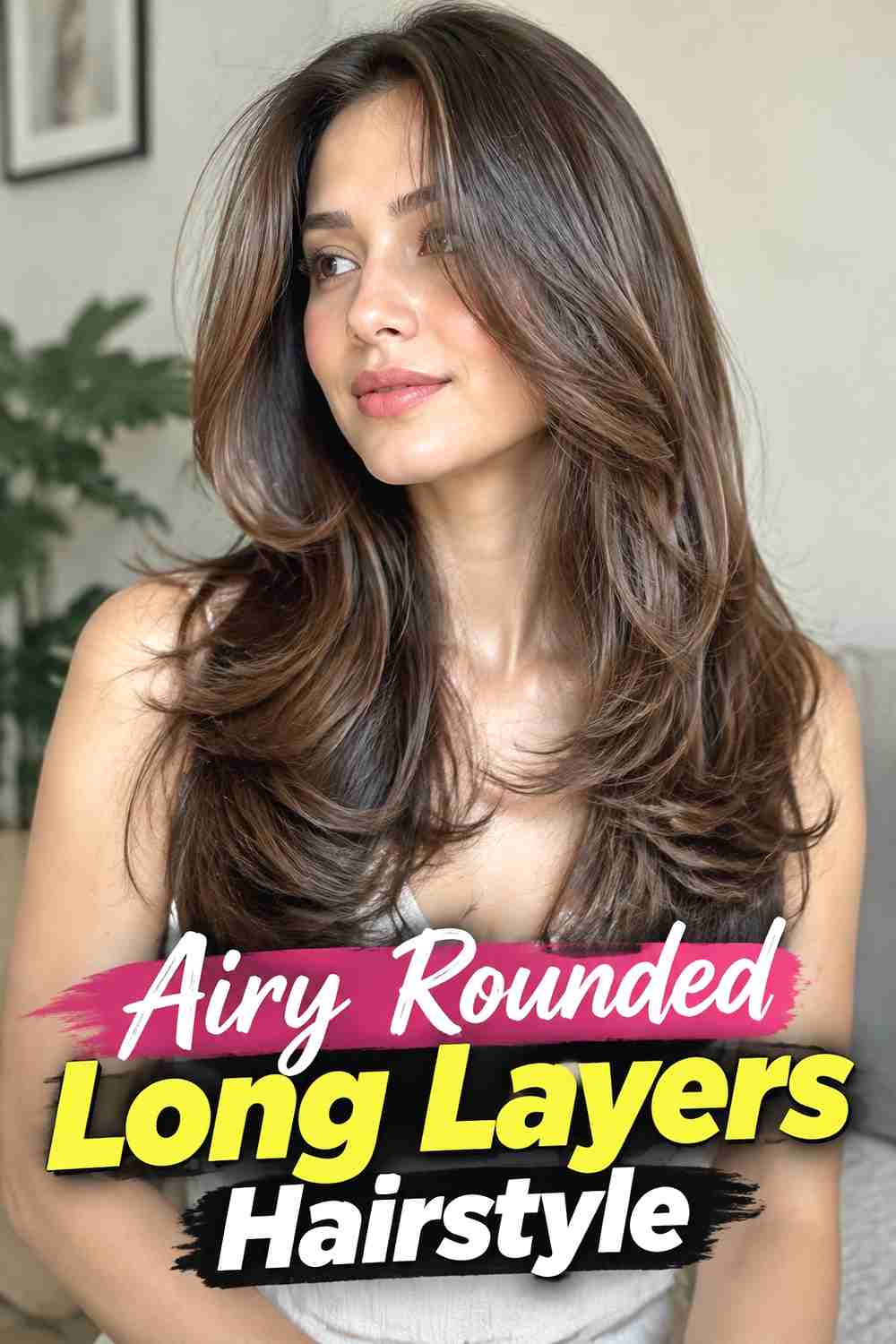
Airy rounded layers combine gentle crown volume, curved face framing, and softly shaped ends for a balanced finish that complements the clean line of a high-neck knit dress. Rather than using dramatic feathering, the layers blend gradually so the overall shape looks full and fluid from every angle. The front sections sit away from the face, while the lower lengths maintain enough density to feel polished rather than wispy. This style can be especially attractive for everyday wear because it offers noticeable movement without relying on a highly sculpted finish. A light blowout enhances the rounded silhouette, but the layers can also settle naturally into soft bends on hair that already has some movement.
Hair Type & Length
Medium-density and thick hair usually support the rounded silhouette easily. Finer hair can use fewer internal layers while concentrating the shaping around the face and perimeter.
Why It Works
The airy shape creates visual breathing room above the neckline while still preserving the softness and length that make long layered hair feel versatile.
How to Choose the Right Look
Start with the amount of face framing you actually want. Cheekbone-skimming layers and wispy curtain bangs create the most noticeable change around the face, while collarbone-starting or U-shaped layers offer a subtler effect. If you often wear your hair tied back, longer front pieces may be more practical because they can be tucked behind the ears or gathered more easily.
Next, consider your natural texture and styling routine. Butterfly layers and voluminous blowouts look their most defined with some root lift and curved ends, while soft-wave or rounded layers can feel more forgiving when worn with natural movement. Straight hair can showcase precise face framing particularly clearly, whereas wavy and curly textures may need layer placement adjusted to account for shrinkage and volume.
Hair density matters as well. Thick hair can often handle more internal layering to release weight, but very fine hair may look fuller when most of the density stays at the perimeter. With high-neck knit dresses, you can also think about where your hair will sit: outward-swept layers expose more of the neckline, while longer, softer layers create a cozy draped effect over the shoulders.
Finally, choose a finish that matches your available styling time. A sleek layered look may require smoothing, wispy bangs need regular attention, and a full blowout takes more effort than naturally textured waves. The most useful hairstyle is one that still feels appealing on an ordinary day, not only immediately after a salon appointment.
Final Thoughts
Face-opening long layers are a simple way to give long hair more movement when wearing high-neck knit dresses. Choose dramatic butterfly or blowout layers when you want visible volume, soft waves for a relaxed finish, or longer U-shaped and collarbone layers when easy maintenance matters more. The exact starting point of the front layers can be adjusted to your hair density, texture, and preferred styling routine, so the final result still feels natural and wearable.
FAQs
1. Which long layers work best with a high-neck knit dress?
Layers that move away from the cheeks and shoulders work particularly well because they create visual space around the neckline. Butterfly, curtain, and softly feathered layers are all useful options.
2. Do face-opening layers require bangs?
No. Cheekbone, jaw, or collarbone-length front layers can create an open effect without traditional bangs. Longer pieces are also easier to tuck back or tie into a ponytail.
3. Can fine hair wear long layers without looking thin?
Yes, but fewer layers are often more effective. Keeping density through the lower perimeter while adding selective face-framing pieces can preserve fullness and still create movement.
4. How can I keep long layers from falling forward over a high neckline?
Style the front sections away from the face with a round brush, roller, or gentle bend from a hot tool. A light flexible-hold product can help maintain the direction without making the hair rigid.
5. Which option is easiest for low-maintenance styling?
Soft U-shaped layers, collarbone-starting layers, and subtle rounded layers are generally easier to wear without daily precision styling because their longer transitions blend smoothly as the hair moves and grows.
Save your favorite face-opening layered look, share the ideas with your style-loving friends, and explore more hairstyle inspiration for your next knit-dress outfit.