15 Soft Root-Lift Layered Hairstyles With Open Duster Coats
Soft root lift and flowing layers create an easy, dimensional hairstyle that looks especially polished beside the long vertical lines of an open-front duster coat.
Open dusters naturally create movement as they fall from the shoulders, so hairstyles with gentle lift rather than stiff volume tend to complement them beautifully. A little elevation at the roots prevents long layers from looking flat, while face-framing pieces and softly shaped ends echo the fluid movement of the coat without overwhelming its clean silhouette.
The most wearable versions balance height, texture, and control. Some rely on a smooth blowout, others on natural waves or curl patterns, and several keep the lower lengths sleek while concentrating volume near the crown. When choosing between them, consider your natural texture, layer placement, styling time, and how much movement you want around the coat’s open neckline.
Quick List
- Center Part Root Lift Layered Hairstyle
- Side Part Airy Layered Hairstyle
- Face Framing Root Lift Hairstyle
- Long Feathered Layer Hairstyle
- Soft Blowout Root Lift Hairstyle
- Crown Lift Cascade Layer Hairstyle
- Curtain Layer Root Lift Hairstyle
- Sleek Length Root Lift Hairstyle
- Loose Wave Layered Duster Hairstyle
- Rounded End Layered Hairstyle
- Off Center Volume Layer Hairstyle
- Natural Texture Root Lift Hairstyle
- Polished Back Draped Layer Hairstyle
- Front Swept Layered Volume Hairstyle
- Minimal Root Lift Long Layer Hairstyle
1. Center Part Root Lift Layered Hairstyle
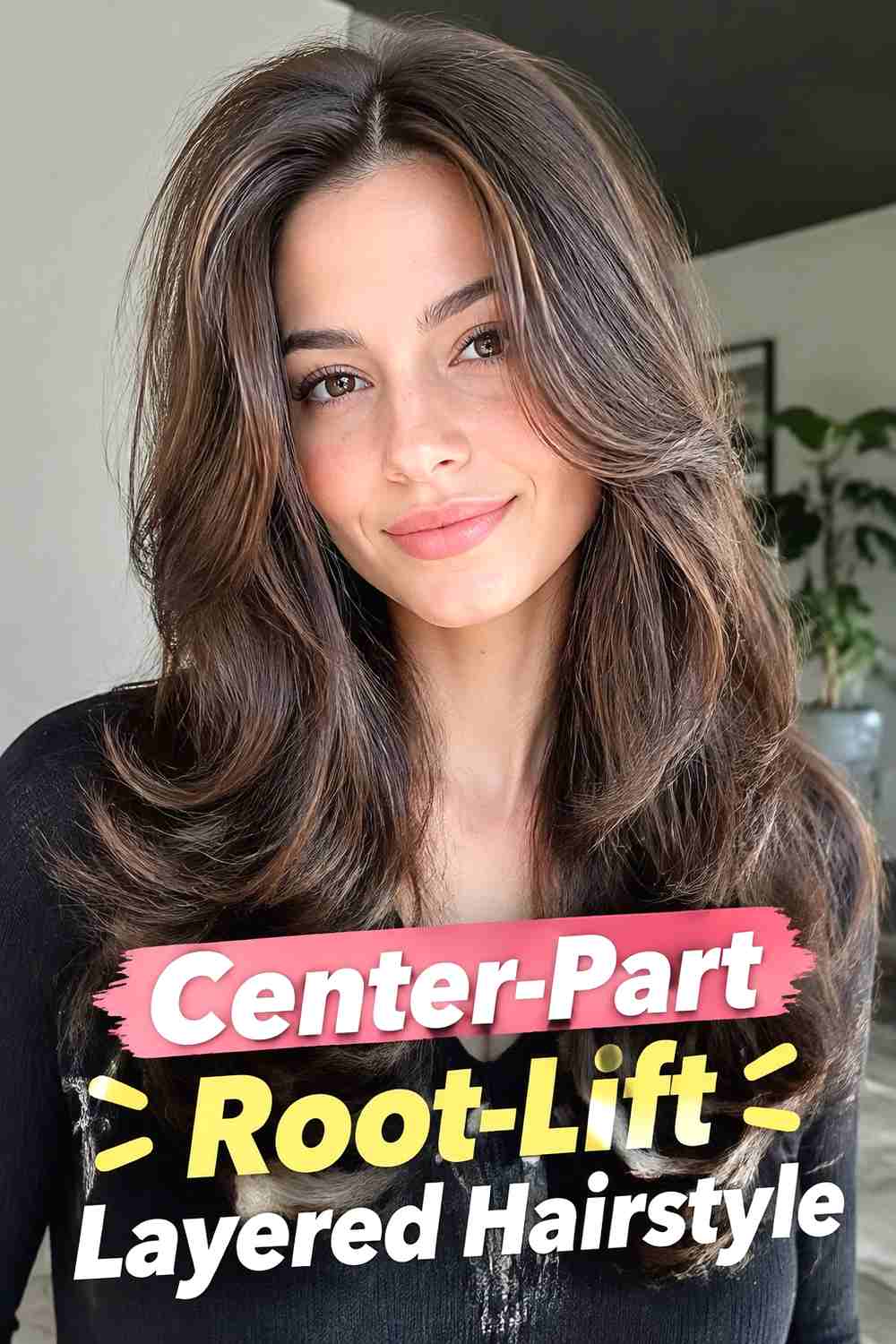
A center part paired with subtle root lift gives long layers a balanced, airy shape that works naturally with an open-front duster. The key is creating elevation close to the scalp without building a pronounced bump at the crown. From there, the layers can fall in soft sections around the cheeks, shoulders, and upper chest, leaving the coat’s open neckline visible. The symmetry of the center part complements the long vertical lines of a duster, while the lifted roots keep the hairstyle from looking heavy. This approach works especially well when the ends have a gentle bend rather than a strong curl, giving the hair movement that feels polished but still relaxed enough for everyday outerwear.
Styling Notes
Lift the roots while drying, then direct the mid-lengths downward so the volume remains concentrated near the scalp instead of expanding through the entire hairstyle.
Best For
This look is especially useful for straight to wavy hair with medium or long layers that need extra shape around the crown.
2. Side Part Airy Layered Hairstyle
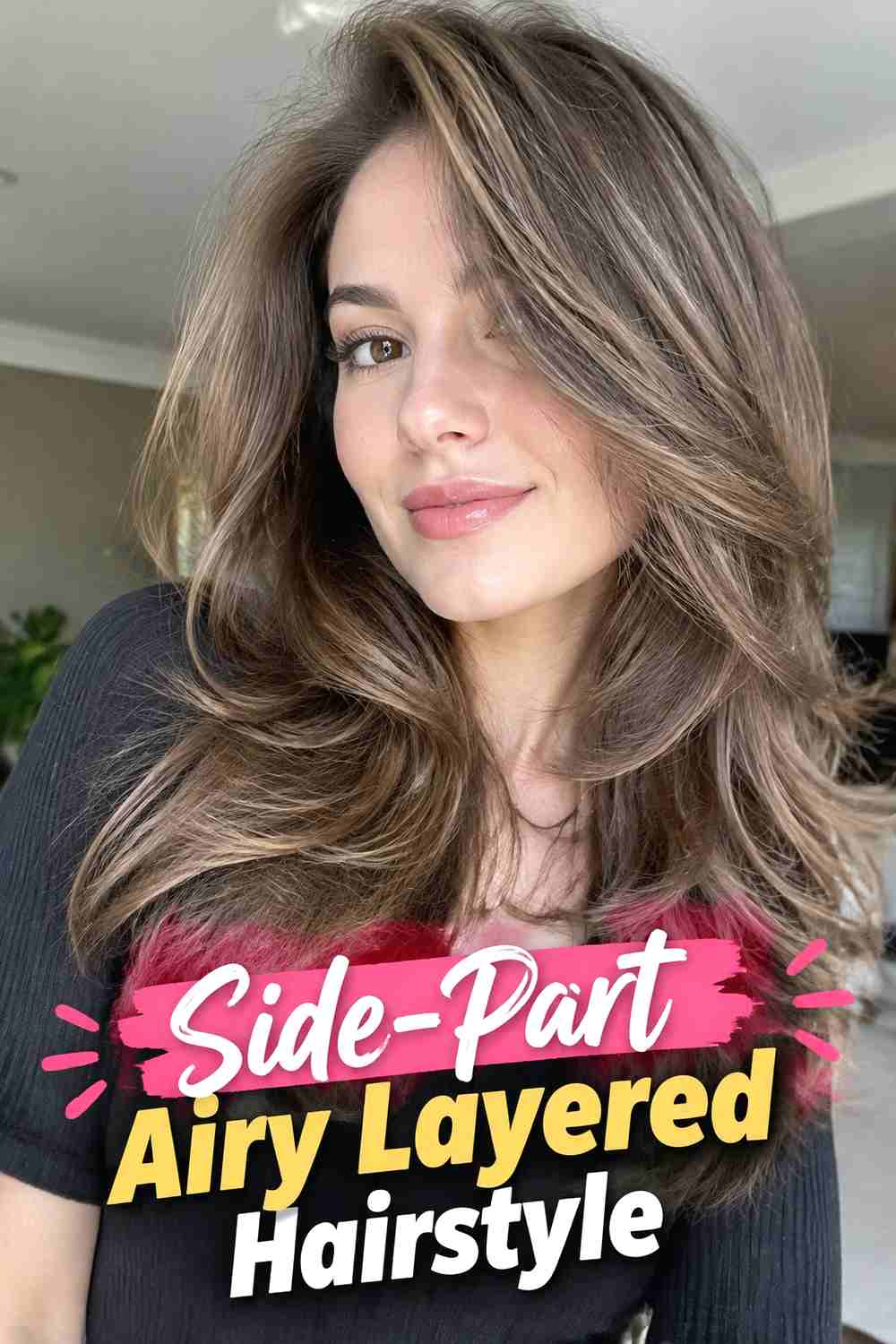
A soft side part creates instant height because more hair naturally falls toward one side, making it ideal when you want root lift without excessive styling. The layered lengths can sweep across the forehead and then open outward near the cheekbones before falling beside the duster’s lapel-free front. Keeping the opposite side slightly flatter prevents the overall shape from becoming too wide. Light movement through the ends reinforces the coat’s flowing silhouette and gives the style a polished, easy finish. Instead of brushing every section into the same curve, allow some layers to turn inward and others outward. That variation helps the hairstyle look believable, especially when the duster moves during walking or outdoor wear.
Why It Works
The asymmetrical part generates natural elevation while the open coat gives the fuller side enough visual space.
Pro Tip
Choose the part placement according to where your hair naturally lifts rather than forcing a deep line that repeatedly falls out of position.
3. Face Framing Root Lift Hairstyle
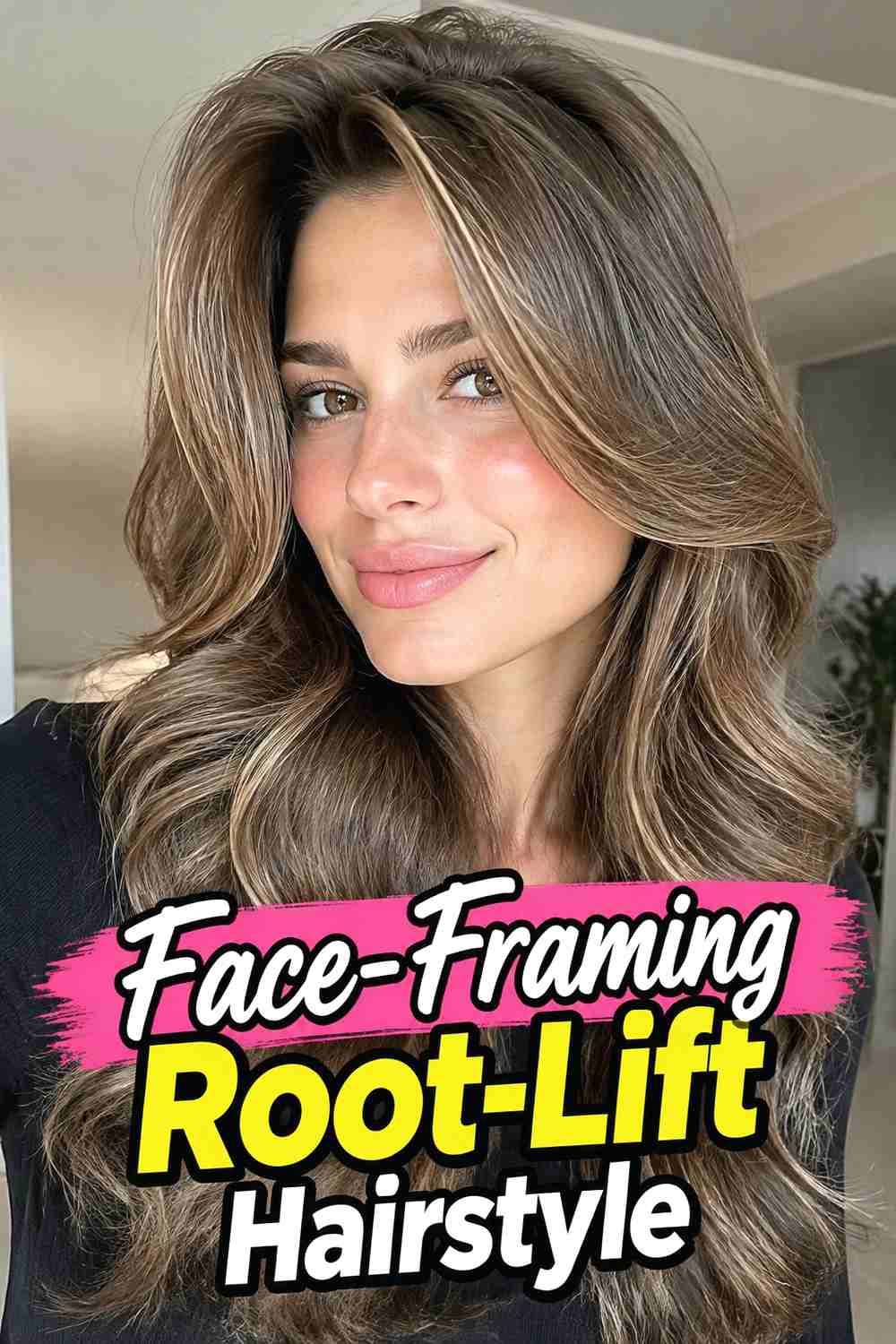
Face-framing layers give a root-lift style visible shape from the front, which makes them particularly effective with an open duster coat. Shorter sections beginning around the cheekbones or jaw can curve away from the face while longer pieces continue toward the chest and back. A little lift through the top prevents those layers from collapsing into the heavier lower lengths. Because the coat remains open, the front pieces stay visible instead of being hidden beneath a closed collar or bulky scarf. Keep the root volume soft and the layer edges blended so the hairstyle feels continuous rather than tiered. The finished effect is dimensional, flattering, and easy to adapt to straight, softly waved, or blown-out textures.
Hair Type & Length
Medium to long hair with existing front layers works best, although subtle face-framing pieces can also add movement to one-length hair.
Styling Notes
Direct the shortest layers away from the face while drying, then loosen them with your fingers rather than brushing them flat.
4. Long Feathered Layer Hairstyle
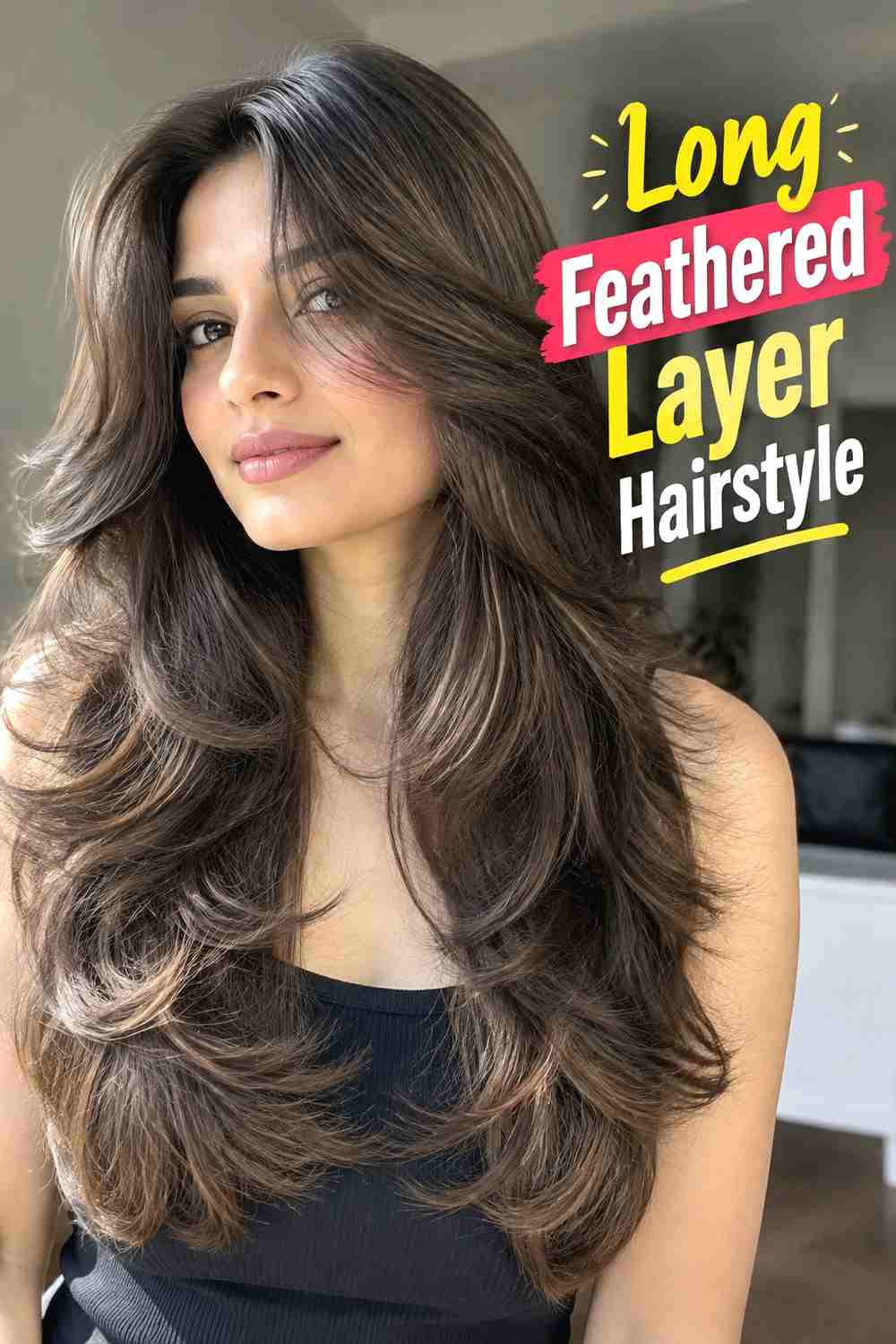
Long feathered layers create a flowing shape that pairs naturally with a lightweight or wool-blend duster worn open. Instead of concentrated curls, the layers sweep outward in broad sections, beginning near the lower face and continuing through the ends. A small amount of lift at the crown gives the feathered movement somewhere to begin and keeps the top from looking disconnected from the fuller lower sections. This style can feel retro-inspired without becoming costume-like when the bends stay large and soft. The longest layers should retain enough weight to hang smoothly beside the coat, while the shorter sections add movement around the shoulders. The overall silhouette feels expansive but controlled, making it ideal for simple monochrome outerwear.
Why It Works
The outward layer movement echoes the motion of an open duster without creating dense curls that compete with the coat.
Wear & Maintenance
The feathered bends may soften during the day, but that generally suits the relaxed shape; simply reshape the front pieces with your fingers when needed.
5. Soft Blowout Root Lift Hairstyle
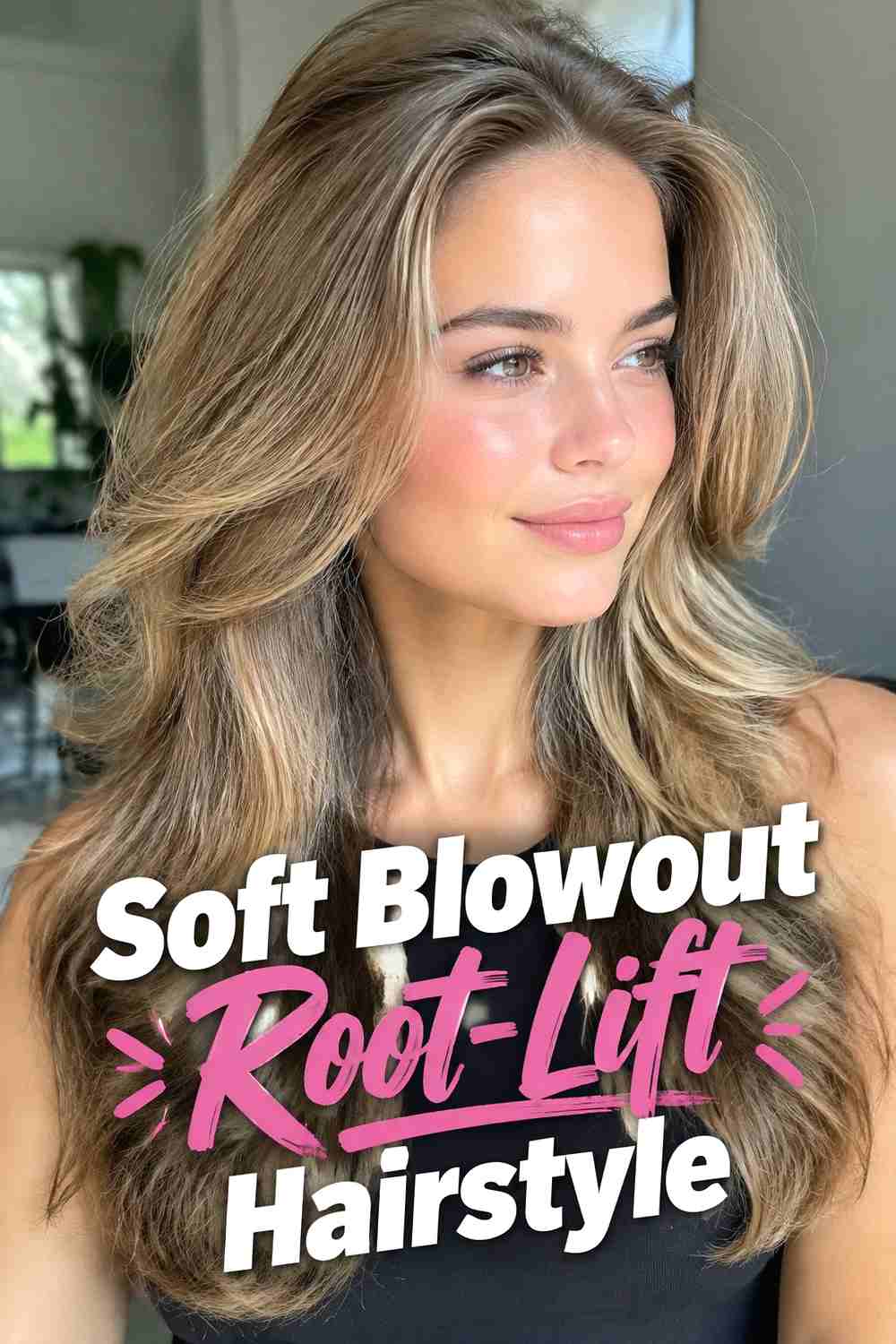
A soft blowout is one of the clearest ways to combine noticeable root lift with smooth, wearable layers. The top has gentle elevation, the mid-lengths remain polished, and the ends curve just enough to reveal the haircut’s shape. Against an open-front duster, this creates a clean beauty look without hiding the garment’s long lines. The blowout should still show natural strands and slight movement rather than looking overly rounded or lacquered. Concentrating lift near the forehead and crown gives the style presence, while keeping the sides relatively controlled prevents unnecessary width. This option is especially appealing when the coat itself is minimal, because the hair provides softness and dimension without needing decorative accessories.
Styling Notes
Work in sections and lift each root area before smoothing the lengths. Avoid repeatedly rolling the ends if you want a modern rather than heavily curled finish.
Best For
Straight, wavy, or easily smoothed hair with medium to long layers responds especially well to this shape.
6. Crown Lift Cascade Layer Hairstyle
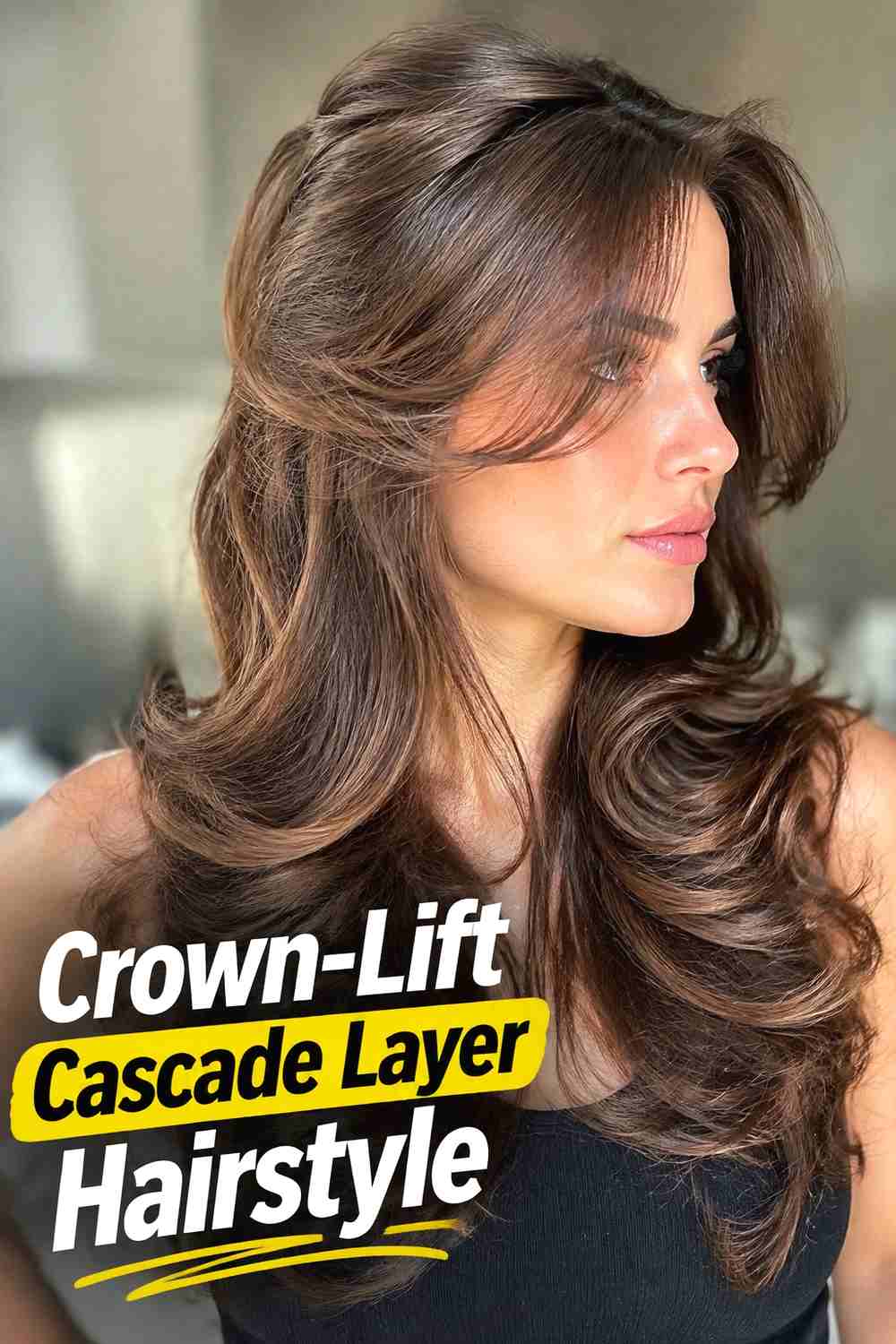
This style concentrates volume at the crown and allows progressively longer layers to cascade down the back and sides. The top stays softly elevated, while the lower lengths become smoother and heavier as they descend. That gradual transition creates a graceful silhouette beside an open duster coat, especially when the coat itself falls close to the body. The layers can remain mostly straight or include a slight bend through the ends, but the defining feature is the visible lift that begins above the back of the head. Avoid teasing the crown into a rigid mound; the elevation should look naturally supported by the haircut. Leaving a few front sections loose also prevents the back-focused volume from feeling disconnected from the face.
Hair Type & Length
This works especially well on medium-density to thick hair with enough layering to create separation through the upper and middle lengths.
Pro Tip
Build volume gradually across several root sections instead of concentrating all the lift in one small area.
7. Curtain Layer Root Lift Hairstyle
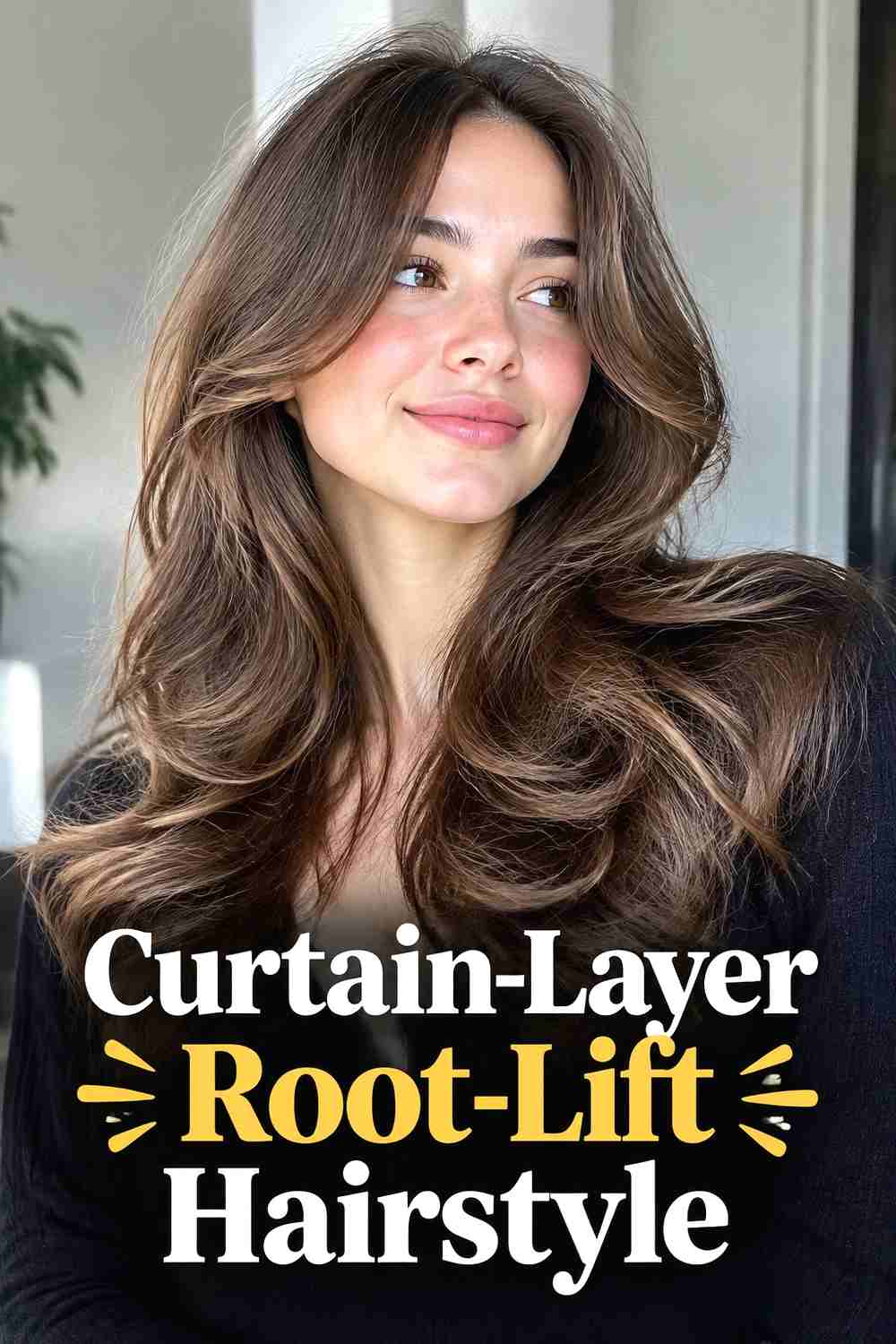
Curtain-like front layers add softness around the face while root lift keeps the upper shape open and airy. The shortest pieces can part near the center and sweep away from the forehead, creating a gentle frame before blending into longer layers around the collarbone and chest. Because an open-front duster leaves the neckline unobstructed, these front sections remain visible and become part of the outfit’s overall movement. The rest of the hair can stay smooth or softly waved, depending on texture. Keep the crown lift moderate so the front pieces remain the main feature. When styled well, the result feels balanced from every angle: elevated at the roots, light around the face, and fluid through the longer lengths.
Why It Works
The parted front layers visually open the face in the same way the duster’s open front creates space through the torso.
Styling Notes
Shape the curtain pieces while they are warm, then allow them to settle naturally instead of fixing them into a stiff curve.
8. Sleek Length Root Lift Hairstyle
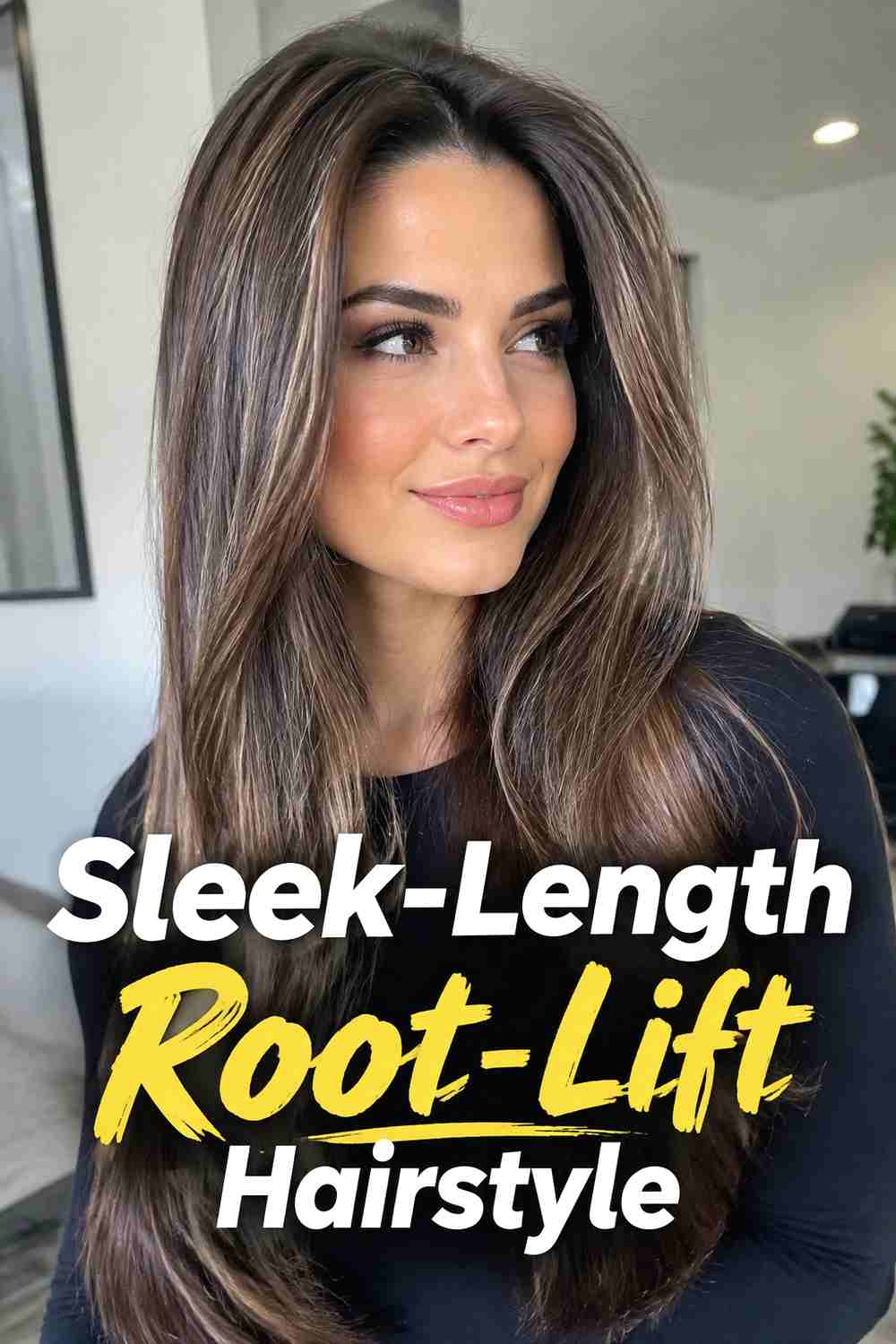
Sleek lengths do not have to mean flat roots. This variation keeps the mid-lengths and ends smooth while adding subtle elevation around the part and crown. The contrast makes the hairstyle feel more dimensional without introducing waves or visible curls. It works particularly well with sharply tailored dusters because both the hair and coat maintain long, clean lines. A center or slightly off-center part can be used depending on where the hair naturally falls. Keep the lift soft enough that it blends into the sleek surface rather than creating an obvious change in texture. The result is polished and restrained, with just enough volume to prevent long layers from appearing heavy or pressed tightly against the scalp.
Best For
This approach suits straight or easily smoothed hair and anyone who prefers minimal texture with a refined finish.
Pro Tip
Avoid applying heavy smoothing products directly at the roots, where they can reduce the lift that defines the style.
9. Loose Wave Layered Duster Hairstyle
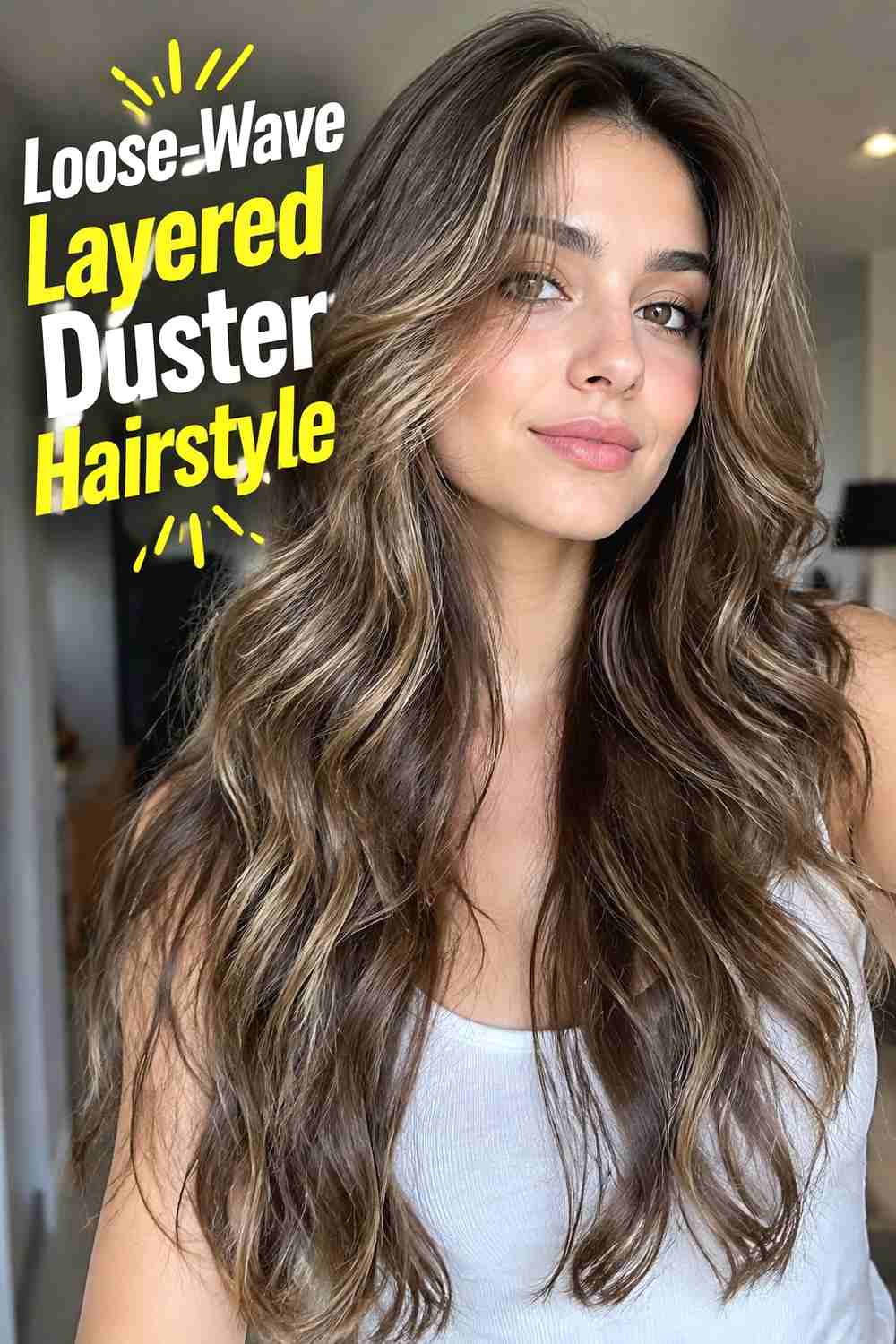
Loose waves give long layers movement from the shoulders downward while gentle root lift prevents the top from looking flat. The wave pattern should remain broad and irregular, with some sections bending more strongly than others. That variation makes the hairstyle look natural beside the relaxed movement of an open duster. Starting the waves below cheek level helps preserve a clean shape near the face and keeps the upper volume focused on the roots. When the coat moves, the layered waves can fall partly forward and partly behind the shoulders without losing their overall silhouette. This is a versatile option for casual outings, travel, or everyday winter dressing because it looks styled without requiring every section to remain perfectly arranged.
Wear & Maintenance
Use flexible hold rather than a firm finish so the waves can shift naturally as they move against the coat.
Hair Type & Length
Naturally wavy hair adapts easily, while straight hair can achieve the look with large, softly formed bends through the mid-lengths.
10. Rounded End Layered Hairstyle
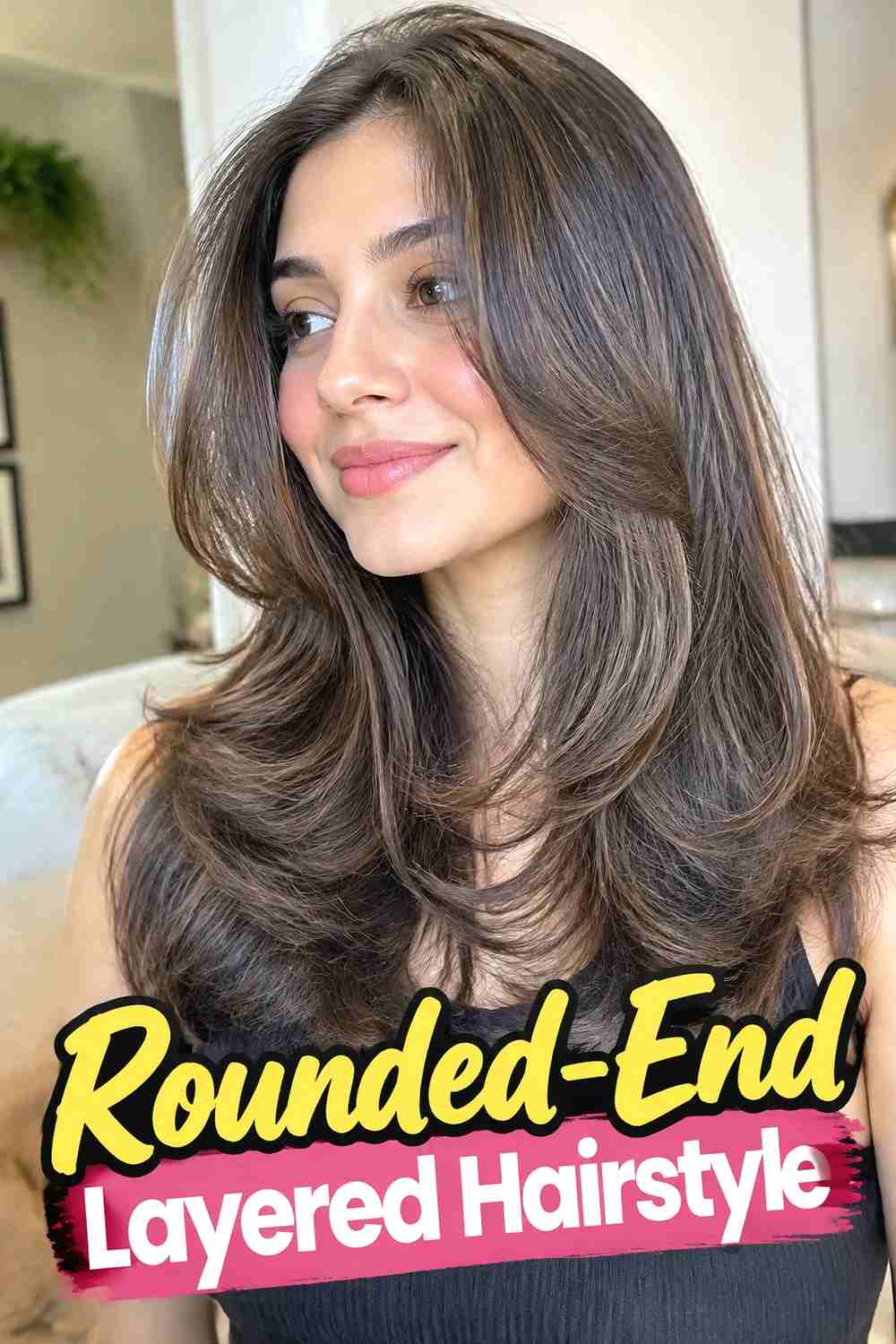
Rounded ends create a polished finish for long layers without introducing a full wave pattern. The roots stay softly lifted, the main lengths remain smooth, and the bottom sections curve inward or outward in broad, controlled shapes. This gives the haircut visible structure while maintaining a sleek enough silhouette for an open duster coat. Because the strongest movement sits near the ends, the neckline remains uncluttered and the coat’s front opening stays easy to see. The root lift keeps the style from appearing bottom-heavy, especially when the hair is dense. For the most natural effect, vary the direction slightly between sections rather than turning every layer into the same rounded shape. The finish should feel soft, not rigid.
Styling Notes
Use a large round shape through the ends rather than tight rolling, which can make long layers appear much shorter.
Why It Works
The curved perimeter adds controlled movement while preserving the duster’s clean vertical emphasis.
11. Off Center Volume Layer Hairstyle
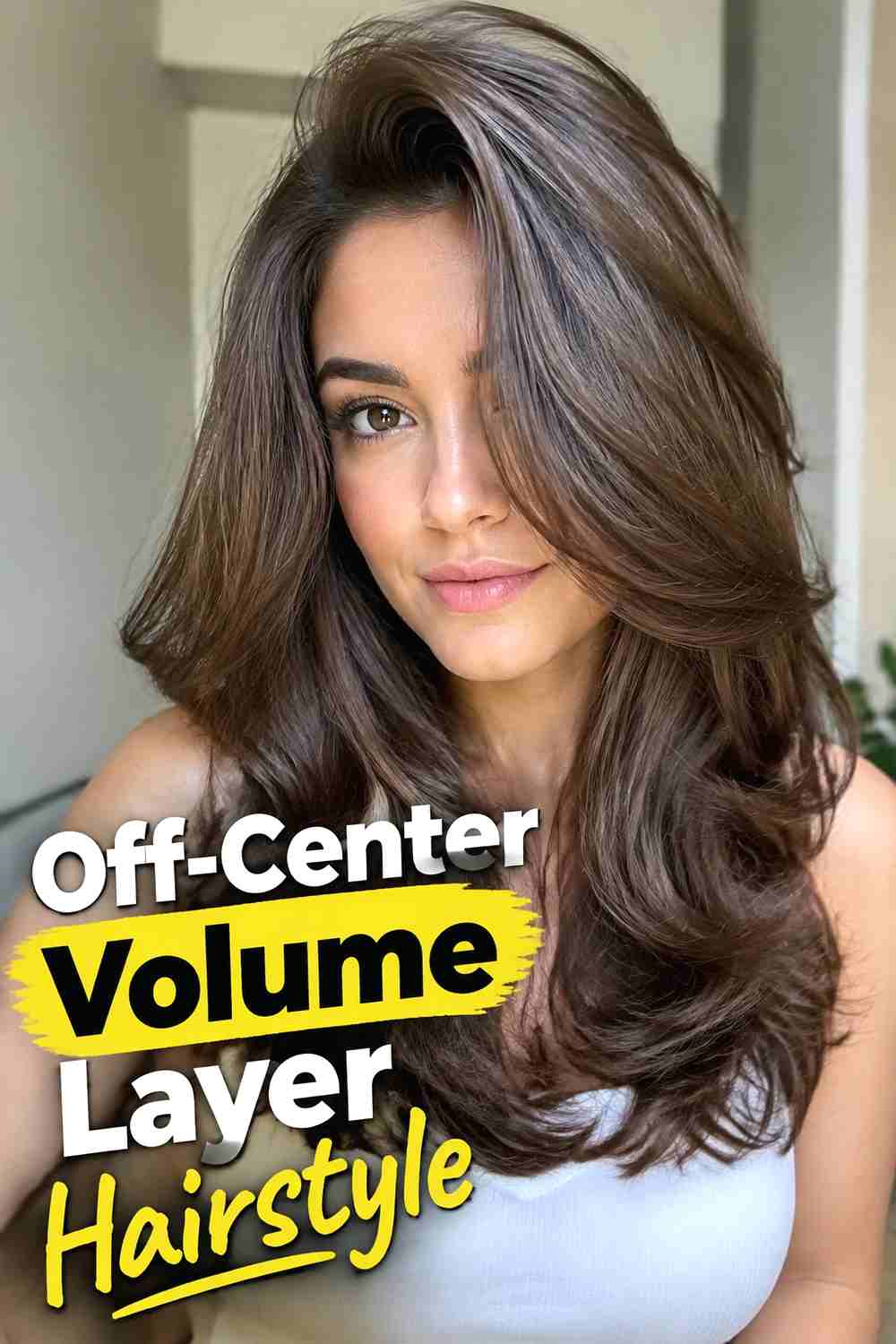
An off-center part offers a middle ground between balanced center-part styling and the stronger drama of a deep side part. It creates a little extra height on one side while still allowing layered hair to fall evenly around both shoulders. With an open duster, that subtle asymmetry adds interest without shifting the entire hairstyle to one side. The roots should look light and lifted, while the layers transition into broad bends or a smooth finish below. This placement is useful for hair that naturally resists a perfectly centered part or tends to flatten at one temple. The result feels effortless because the lift comes partly from the direction of the hair rather than from obvious teasing or heavy styling at the crown.
Best For
This works across many textures, especially when the hair has medium density and layered movement through the front and sides.
Pro Tip
Move the part only slightly away from center; a small adjustment is often enough to create visible root elevation.
12. Natural Texture Root Lift Hairstyle
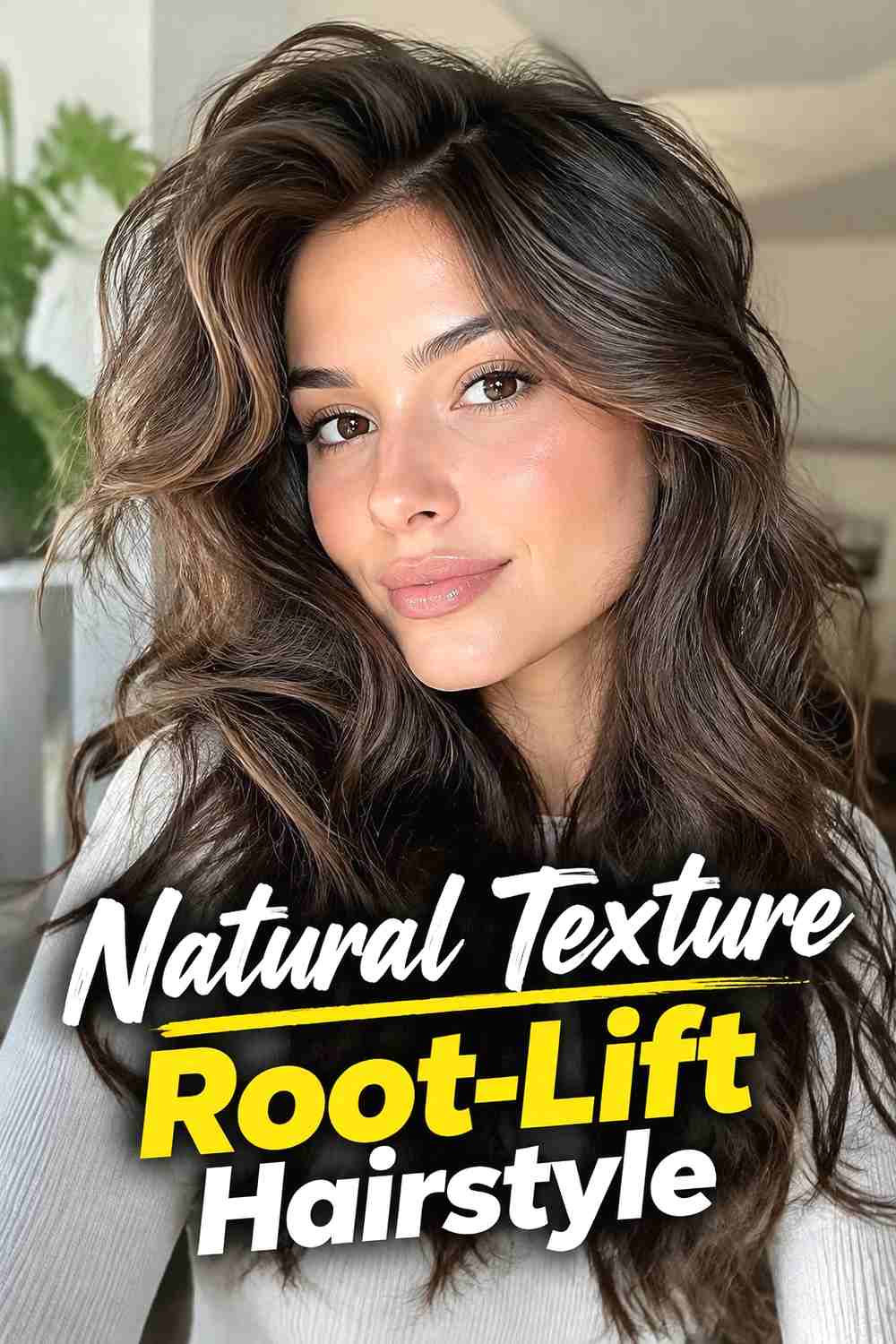
Natural waves, curls, or coils can create beautiful root lift without forcing the hair into a smooth blowout. The goal is to preserve authentic texture while making sure the roots retain enough freedom to avoid a compressed shape. Long layers can help distribute volume through the lengths, allowing the texture to expand gradually rather than becoming concentrated only at the bottom. With an open-front duster, this creates a striking contrast between structured outerwear and organic hair movement. Definition does not need to be perfectly uniform; slight differences in curl or wave pattern make the result more realistic. Keep the neckline comfortable by arranging some sections behind the shoulders if the natural volume becomes too dense around the coat opening.
Hair Type & Length
This approach works with naturally wavy, curly, and coily textures, especially when layering has been adapted to the hair’s shrinkage and density.
Why It Works
Natural root lift provides volume without requiring a separate rounded blowout shape.
13. Polished Back Draped Layer Hairstyle
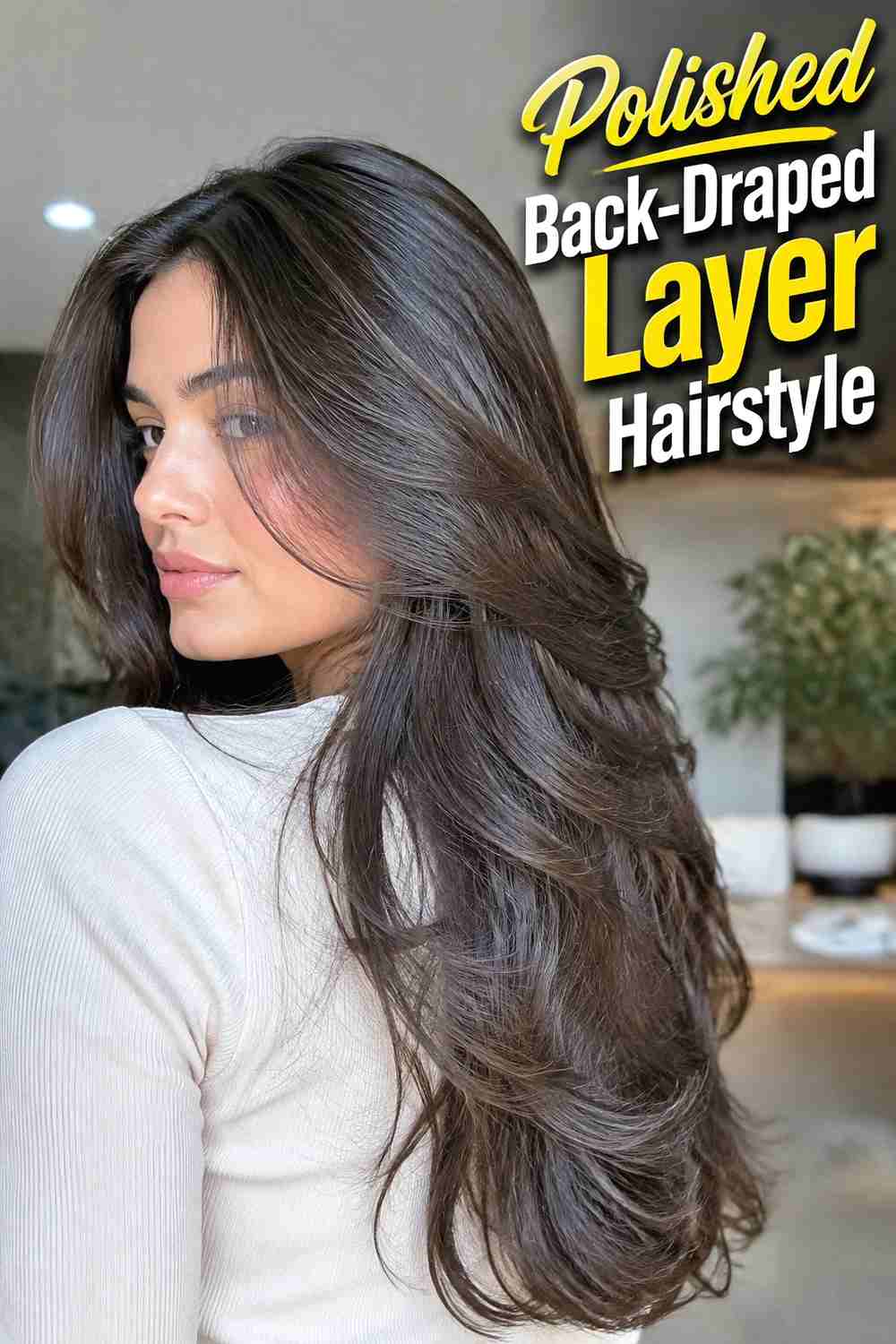
Draping most of the layered hair behind the shoulders keeps an open duster’s front completely visible while still showcasing length and movement from the back. A small amount of root lift gives the crown shape, then the layers fall smoothly down the back in separated, polished sections. A few shorter pieces may remain near the face to soften the front view, but the bulk of the hair stays away from the coat opening. This is especially useful when the duster has statement lapels, contrast trim, or a distinctive inner outfit you want to keep visible. The lower layers can be straight or softly curved, while the upper section should remain light enough to avoid collapsing against the back of the coat.
Styling Notes
Finish the roots first, then sweep the lengths behind the shoulders without overbrushing away the natural separation between layers.
Best For
Long, medium-to-thick hair works particularly well because the back-draped shape can display the layered perimeter clearly.
14. Front Swept Layered Volume Hairstyle
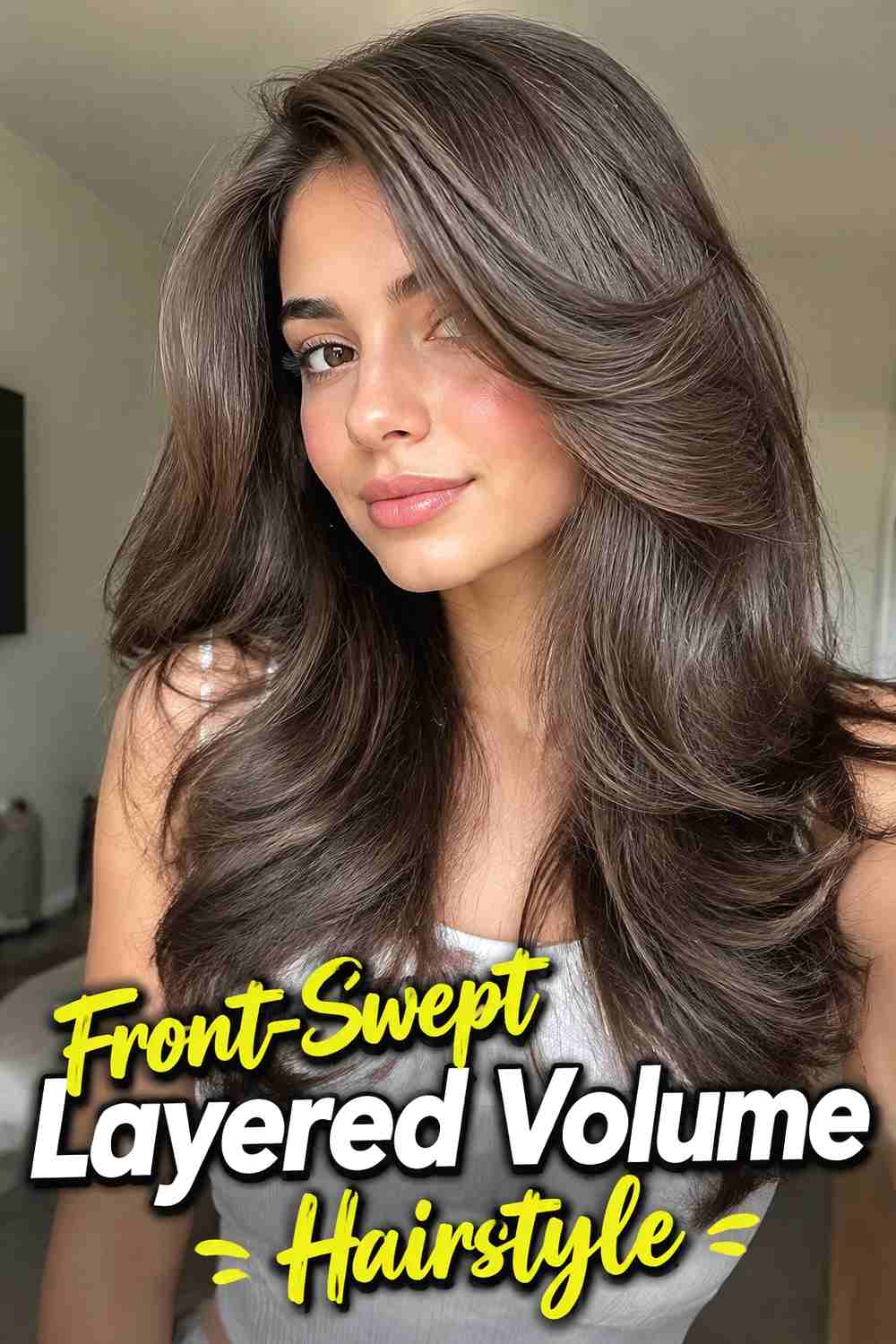
For a more visible front-facing style, bring the layered lengths over both shoulders while keeping soft lift at the roots. This creates a fuller frame around the open duster without completely covering the garment. The shortest layers can sit around the cheekbones or collarbone, while longer sections taper down the front of the coat. To avoid excess bulk, keep the roots elevated but the side widths controlled, allowing the layers to stack vertically rather than expand outward. A soft bend through the mid-lengths adds separation and stops the hair from forming two heavy curtains. This look is especially attractive for photography because the root volume, layer shape, and coat opening can all remain visible from the front.
Why It Works
Bringing the layers forward makes the haircut the focal point while the open coat still provides a clean vertical frame.
Wear & Maintenance
If the hair shifts backward during movement, simply redistribute the longer sections rather than repeatedly brushing through the root lift.
15. Minimal Root Lift Long Layer Hairstyle
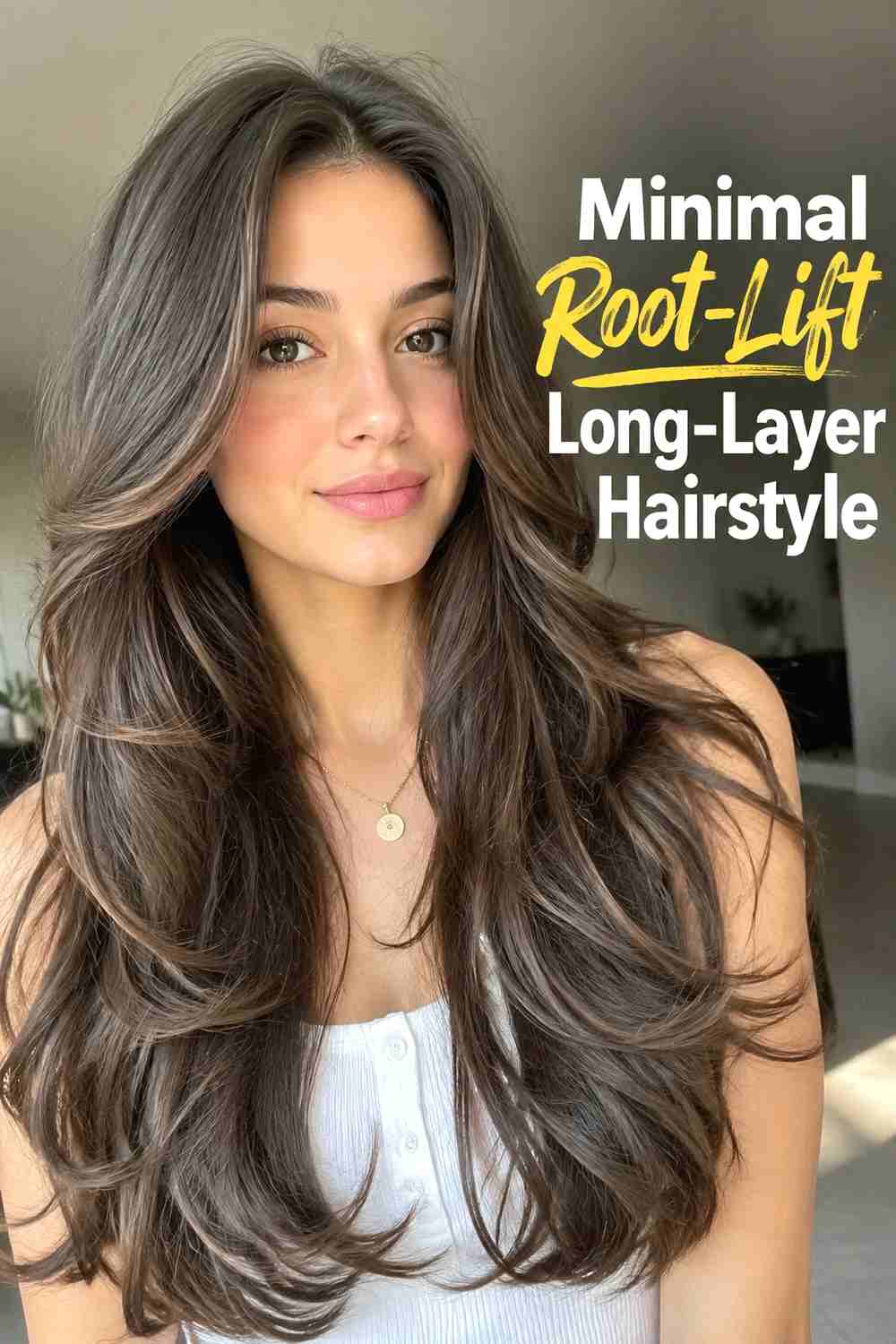
This understated version is ideal when you want only enough root lift to prevent long layers from lying completely flat. The crown and part receive subtle elevation, while the rest of the hair follows its natural direction with minimal reshaping. Long layers remain visible through slight separation at the ends rather than pronounced curls or feathering. Paired with an open-front duster, the simplicity feels modern and wearable, particularly for everyday outfits where elaborate styling would feel unnecessary. The hair can fall partly behind the shoulders and partly forward, creating an effortless balance with the coat. Because the shape is intentionally restrained, realistic strand texture, healthy-looking shine, and clean ends become more important than dramatic volume.
Best For
This style is useful for fine to medium-density hair, low-maintenance routines, or anyone who prefers natural movement over a full blowout.
Pro Tip
Concentrate effort at the roots and leave the lower lengths relatively untouched to preserve the relaxed finish.
How to Choose the Right Look
Start by deciding how much root lift suits your everyday routine. A soft blowout, crown-lift cascade, or side-part style gives more noticeable volume, while the sleek-length and minimal root-lift options provide a subtler effect. If your hair naturally holds wave or curl, working with that texture may require less manipulation than trying to create a smooth rounded finish.
Layer placement matters just as much as volume. Face-framing and curtain layers emphasize the open neckline of a duster, while back-draped layers keep the front of the coat unobstructed. Feathered and loose-wave styles create more movement, whereas rounded ends and sleek lengths feel cleaner and more controlled.
Also consider density, styling time, and weather. Thick hair may need less root encouragement but more control through the sides. Fine hair often benefits from concentrated root lift and lighter finishing products. Choose a finish that can move against outerwear without needing constant reshaping.
Final Thoughts
Soft root lift makes layered hair look lighter and more dimensional without requiring exaggerated volume. With an open-front duster coat, the strongest combinations preserve the coat’s long lines while allowing the hair to move naturally around the face, shoulders, and back. Pick the version that works with your existing layers and texture rather than fighting them, then adjust the part and finish to suit your preferred level of polish.
FAQs
1. How much root lift works best with an open duster coat?
Usually a soft, natural elevation is enough. The goal is to keep the top from looking flat without creating volume so large that it competes with the coat’s long silhouette.
2. Do layered hairstyles look better in front of or behind a duster coat?
Both can work. Front-swept layers highlight the haircut, while back-draped hair keeps the coat and outfit underneath more visible.
3. Can naturally curly hair wear a soft root-lift layered style?
Yes. Natural curls and coils often already have root volume, so the focus can be on preserving lift and distributing shape through well-placed layers.
4. Which option is easiest for everyday wear?
The minimal root-lift, off-center part, or sleek-length styles usually require less reshaping than a full blowout or feathered finish.
5. How can I stop long layers from looking flat at the crown?
Concentrate lightweight styling and drying at the roots, avoid heavy products near the scalp, and choose a part that allows your hair to lift naturally.
Save your favorite root-lift look, share these ideas for cold-weather style inspiration, and explore more layered hairstyles that pair beautifully with long outerwear.