17 Long-Hair Shoulder-Split Hairstyles With Tailored Coats
Long hair split neatly across the shoulders creates a polished winter silhouette while letting the structured lines of a tailored coat remain clearly visible.
Tailored winter coats already provide strong shape through the shoulders, lapels, and front opening, so the placement of long hair makes a noticeable difference. Dividing the lengths across both shoulders can soften that structure without completely hiding it. A balanced split feels polished, while an uneven or textured arrangement can make the overall look more relaxed and dimensional.
The most successful shoulder-split styles consider density, texture, part placement, and coat design together. Sleek hair creates strong vertical lines, waves add softer movement, and layers help prevent long lengths from looking like two heavy sections. These ideas focus on realistic placement, natural movement, and practical ways to keep the hairstyle intentional around structured cold-weather outerwear.
Quick List
- Center Part Even Shoulder Split Hairstyle
- Soft Side Part Shoulder Split Hairstyle
- Face Framing Layer Shoulder Split Hairstyle
- Sleek Straight Shoulder Split Hairstyle
- Loose Wave Shoulder Split Hairstyle
- Feathered Long Layer Shoulder Split Hairstyle
- Polished Blowout Shoulder Split Hairstyle
- Natural Texture Shoulder Split Hairstyle
- Off Center Draped Shoulder Split Hairstyle
- Soft Curl Shoulder Split Hairstyle
- Tucked Behind Ear Shoulder Split Hairstyle
- Low Volume Glossy Shoulder Split Hairstyle
- Airy Root Lift Shoulder Split Hairstyle
- Front Draped Long Layer Hairstyle
- Back And Front Split Hairstyle
- Wind Swept Shoulder Split Hairstyle
- Minimalist Straight Shoulder Split Hairstyle
1. Center Part Even Shoulder Split Hairstyle
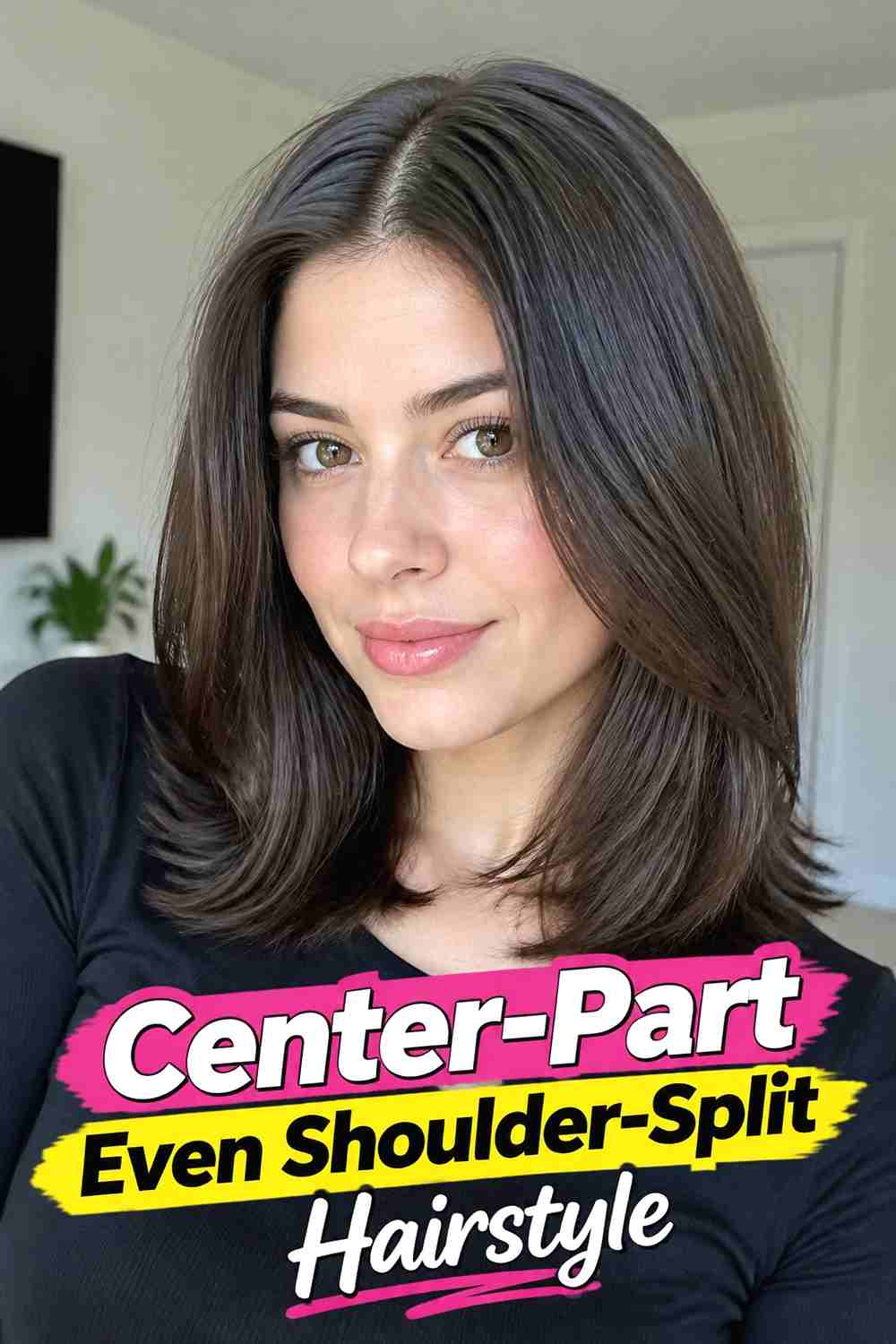
A precise center part makes it easy to divide long hair into two balanced sections, with one side falling over each shoulder of a tailored coat. The symmetry feels especially polished beside structured lapels and clean winter tailoring. Keep the roots relatively smooth so the part remains defined, then let the lower lengths retain a little natural movement rather than pressing them completely flat. The sections should be substantial enough to show the hair’s length but narrow enough that the coat front remains visible. This arrangement is particularly effective with single-breasted coats or streamlined double-breasted styles because the balanced hair mirrors their construction without obscuring buttons, lapels, or a defined waist.
Styling Notes
Part the hair before putting on the coat, then guide each section forward gently rather than repeatedly pulling strands across the collar.
Best For
Straight to softly wavy hair with medium density tends to stay divided evenly without creating excessive bulk on either shoulder.
2. Soft Side Part Shoulder Split Hairstyle
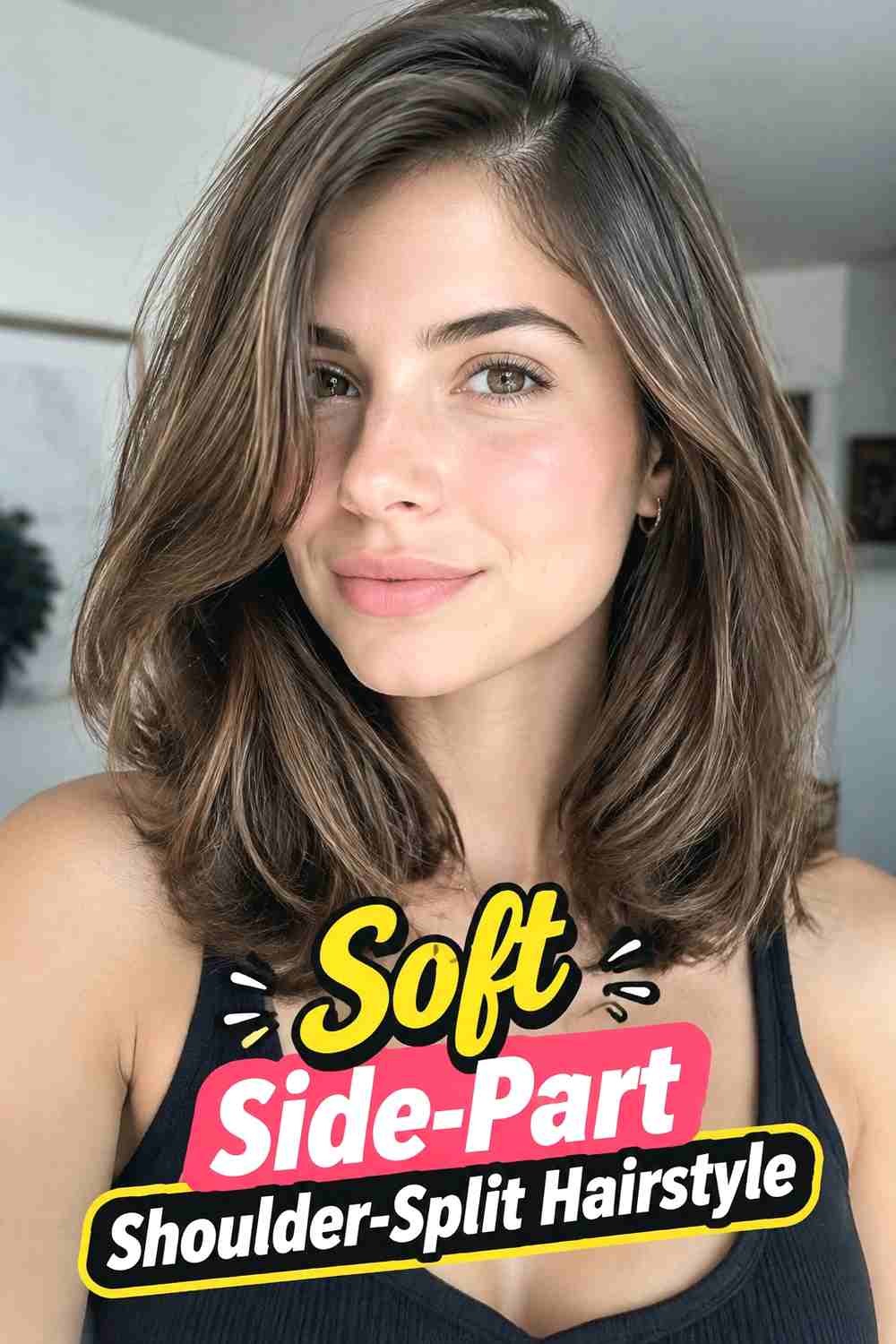
A soft side part creates a slightly fuller section over one shoulder while still keeping hair visible on both sides. This subtle imbalance can make long hair look more relaxed than a strict center split, particularly with tailored outerwear that already has strong symmetry. Allow the heavier side to sweep naturally across the forehead and fall beside one lapel, while a narrower section rests over the opposite shoulder. The lower lengths may stay straight or carry a soft bend depending on texture. Avoid making the side part excessively deep, because too much hair on one shoulder can hide the coat’s structure. The finished look should feel directional but still balanced enough for polished winter dressing.
Why It Works
The uneven distribution adds movement and keeps a structured coat from appearing overly formal.
Pro Tip
Use your natural part as a guide so the heavier side maintains lift without requiring excessive product or repeated repositioning.
3. Face Framing Layer Shoulder Split Hairstyle
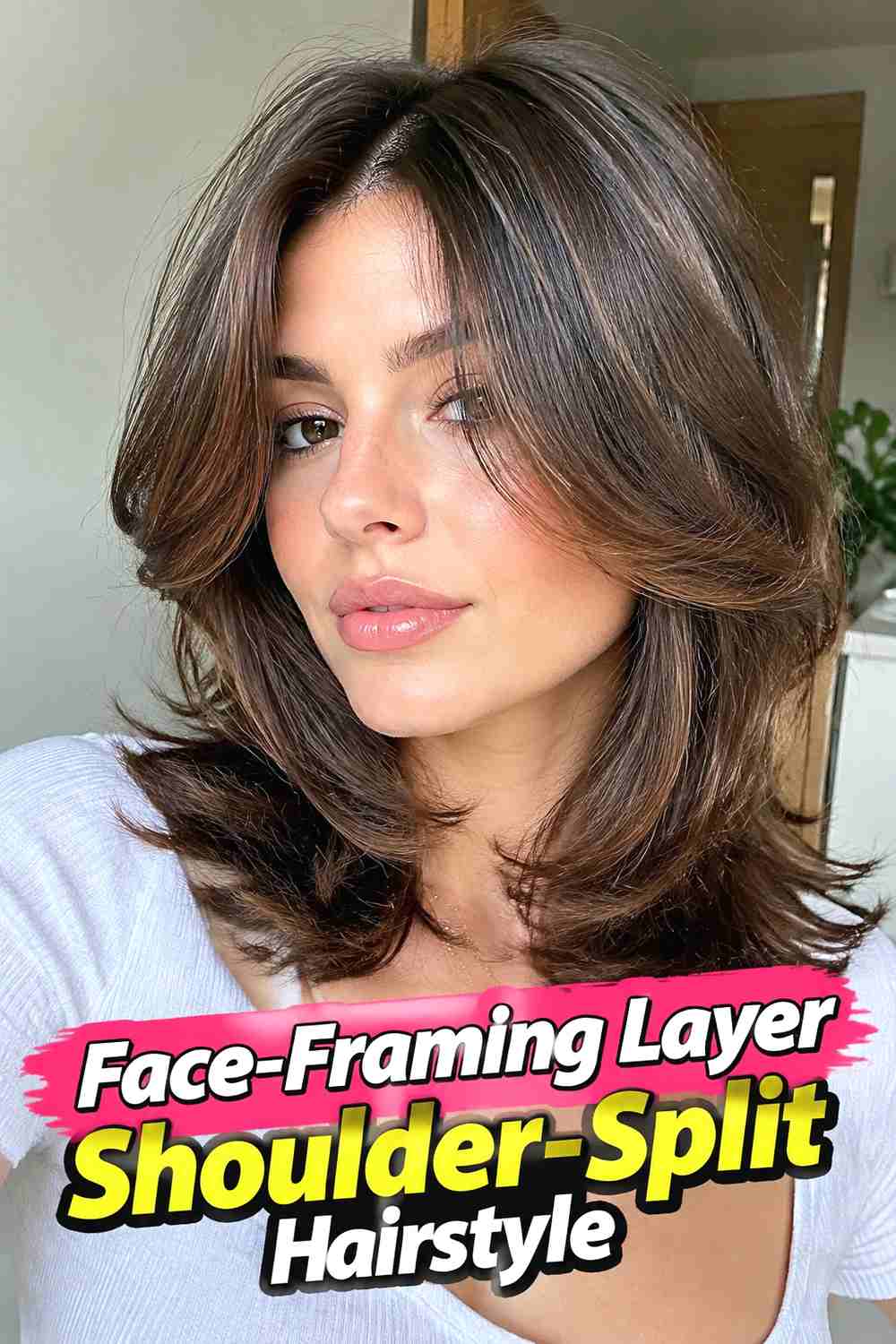
Face-framing layers help long hair transition naturally from the face into the two sections falling over the shoulders. Shorter pieces can curve around the cheekbones or jaw before blending into longer lengths along the coat front. This creates dimension and prevents the hairstyle from reading as two solid curtains of hair. The shoulder split works especially well when the coat has clean lapels because the shorter layers sit above them while the longer sections continue below. Keep the front pieces soft rather than heavily curled, and allow a few strands to move naturally. The style is useful for long hair that feels visually heavy when worn forward, since the layering creates separation without sacrificing overall length.
Hair Type & Length
Medium to thick long hair often benefits most from this layering, although fine hair can use fewer, longer face-framing sections.
Styling Notes
Direct the shortest layers away from the face, then let the longer pieces fall naturally onto the shoulders instead of forcing every layer into one shape.
4. Sleek Straight Shoulder Split Hairstyle
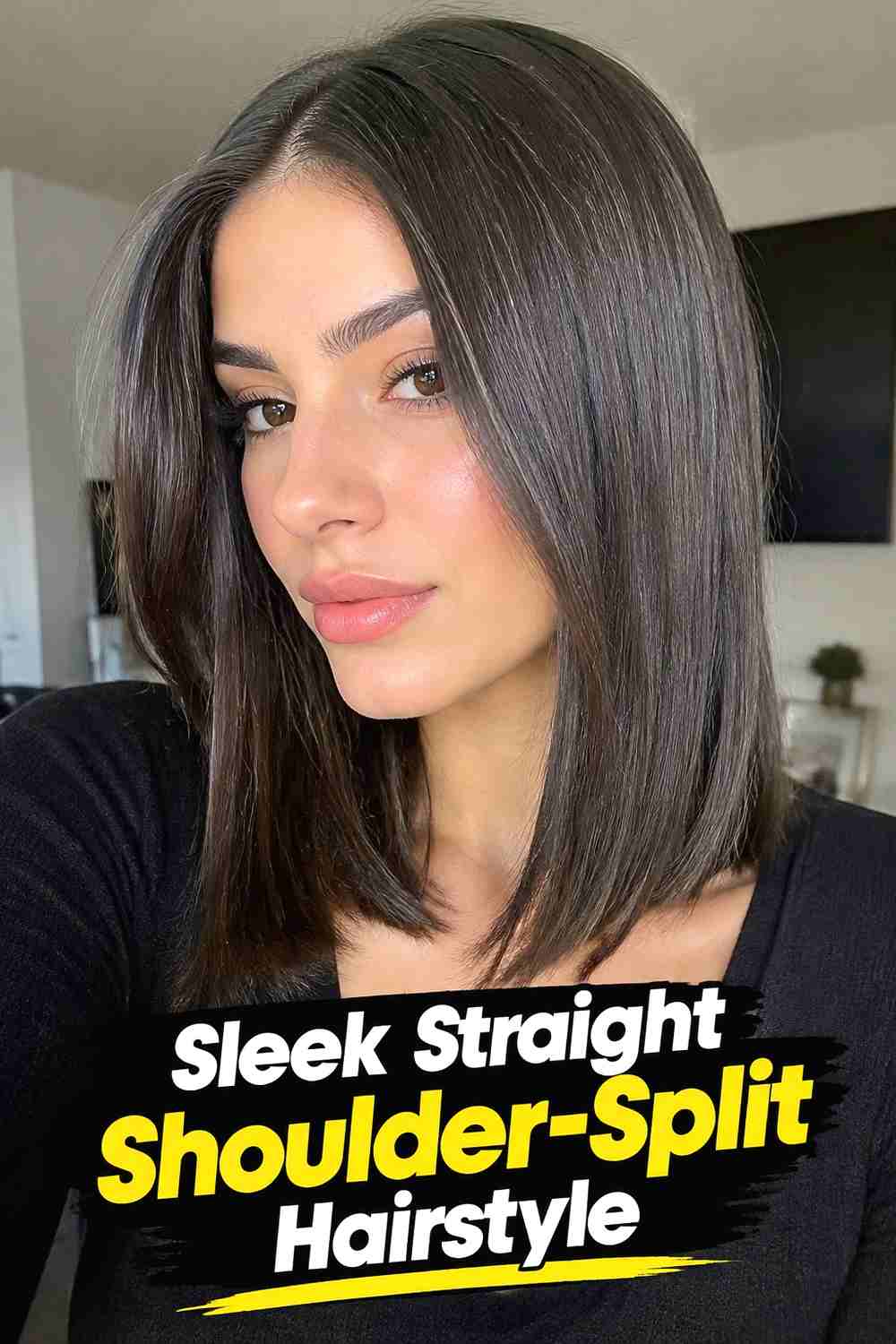
Sleek straight lengths create a sharp, modern contrast with the heavier texture of a tailored winter coat. A center or slightly off-center part can be used, but the key is keeping the two front sections smooth, narrow, and clearly separated. The hair should show realistic strand detail and natural weight rather than looking rigidly flat-ironed. Bringing equal or nearly equal lengths over each shoulder creates clean vertical lines that reinforce the coat’s tailoring. This style works particularly well with wool coats, fitted silhouettes, and minimalist outerwear because it keeps visual clutter low. A slight curve at the ends can soften the finish and prevent the long sections from appearing unnaturally stiff against the coat.
Why It Works
Smooth hair emphasizes the coat’s strong lines while the forward split adds softness around the face and chest.
Wear & Maintenance
Keep a small comb available for the lower lengths, since friction against textured wool may separate the sleek surface during the day.
5. Loose Wave Shoulder Split Hairstyle
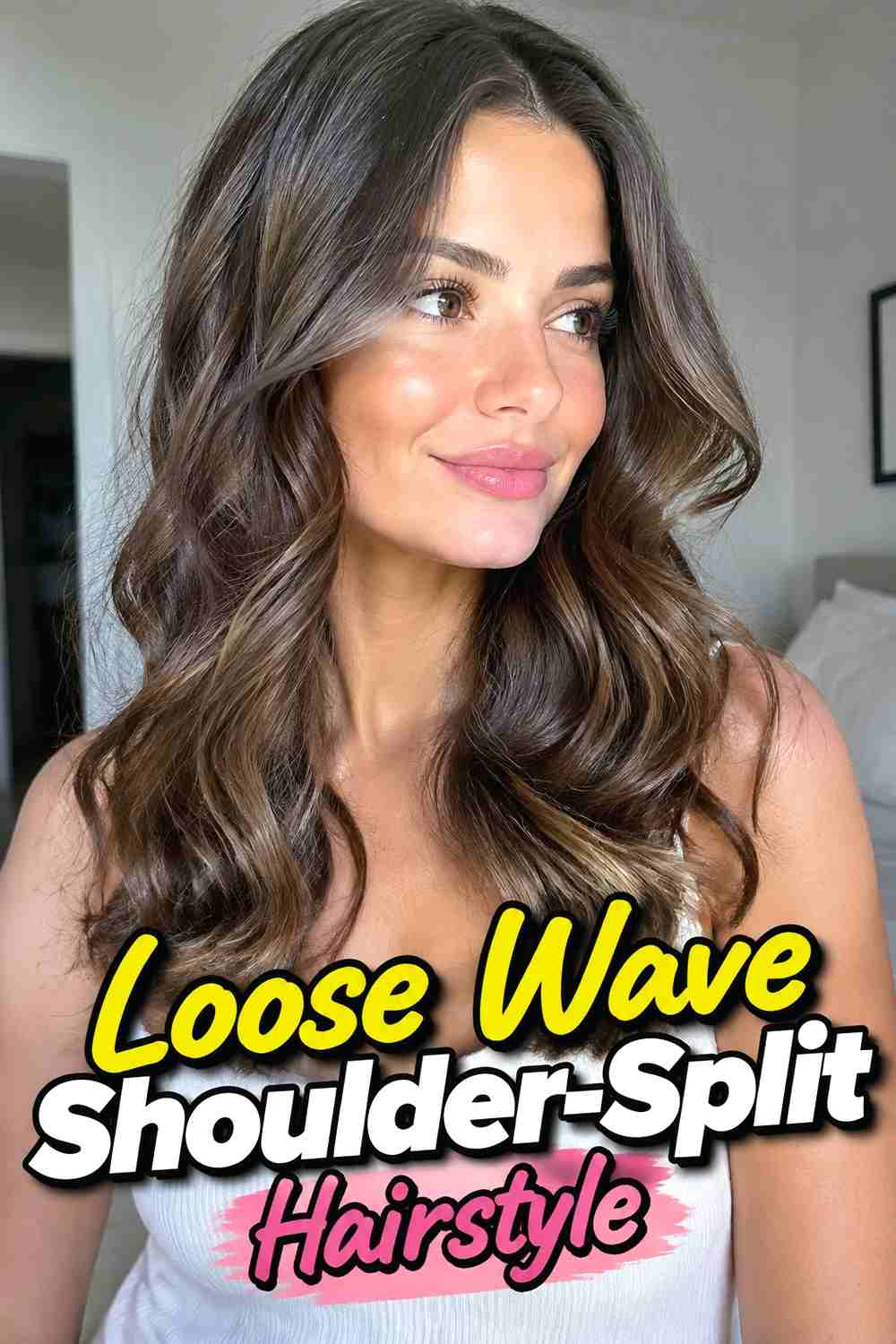
Loose waves soften the shoulder-split arrangement and make the hair appear fuller without requiring dramatic volume at the roots. Divide the hair into two front sections, then allow broad bends to fall naturally across each side of the coat. Starting the strongest wave below cheek or jaw level keeps the neckline relatively controlled while still showing movement through the longer lengths. Some sections can turn toward the face and others away from it, creating a realistic pattern rather than identical curls. With a tailored coat, this texture provides a pleasing contrast between flowing hair and structured outerwear. Keep the waves relatively open so the coat’s lapels, front closure, and shape remain visible instead of disappearing beneath excessive width.
Styling Notes
Use larger bends and loosen them with your fingers once cool to create natural separation through the lengths.
Best For
This look works well on naturally wavy hair or straight hair that holds a soft curl without becoming overly springy.
6. Feathered Long Layer Shoulder Split Hairstyle
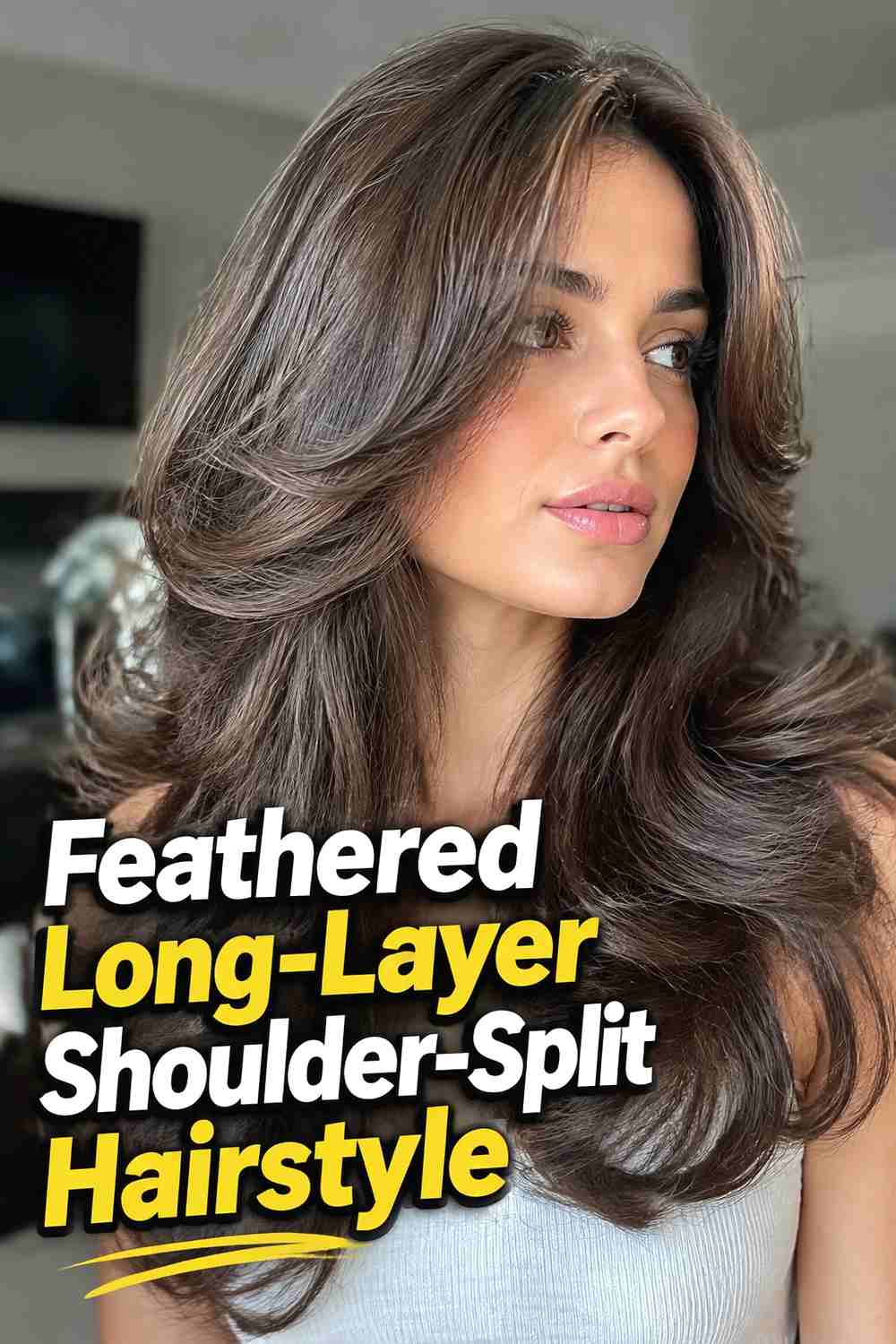
Long feathered layers give each shoulder section movement and visible shape instead of allowing the hair to hang in two dense panels. Layers around the lower face and collarbone can sweep outward, while the longest pieces remain relatively smooth and weighted. When divided over a tailored coat, the feathering creates soft separation around the lapels without completely covering them. The style feels polished but has more movement than a sleek straight finish, making it a strong choice for coats with simple, minimal construction. Keep the crown controlled and concentrate most of the airy movement through the sides and ends. This prevents the hairstyle from becoming too wide around structured shoulders while still showcasing the layered haircut.
Why It Works
Feathering visually lightens long hair, which helps the shoulder split look fluid rather than bulky.
Pro Tip
Turn some layers outward and leave others softly curved so the finish does not look overly uniform or set.
7. Polished Blowout Shoulder Split Hairstyle
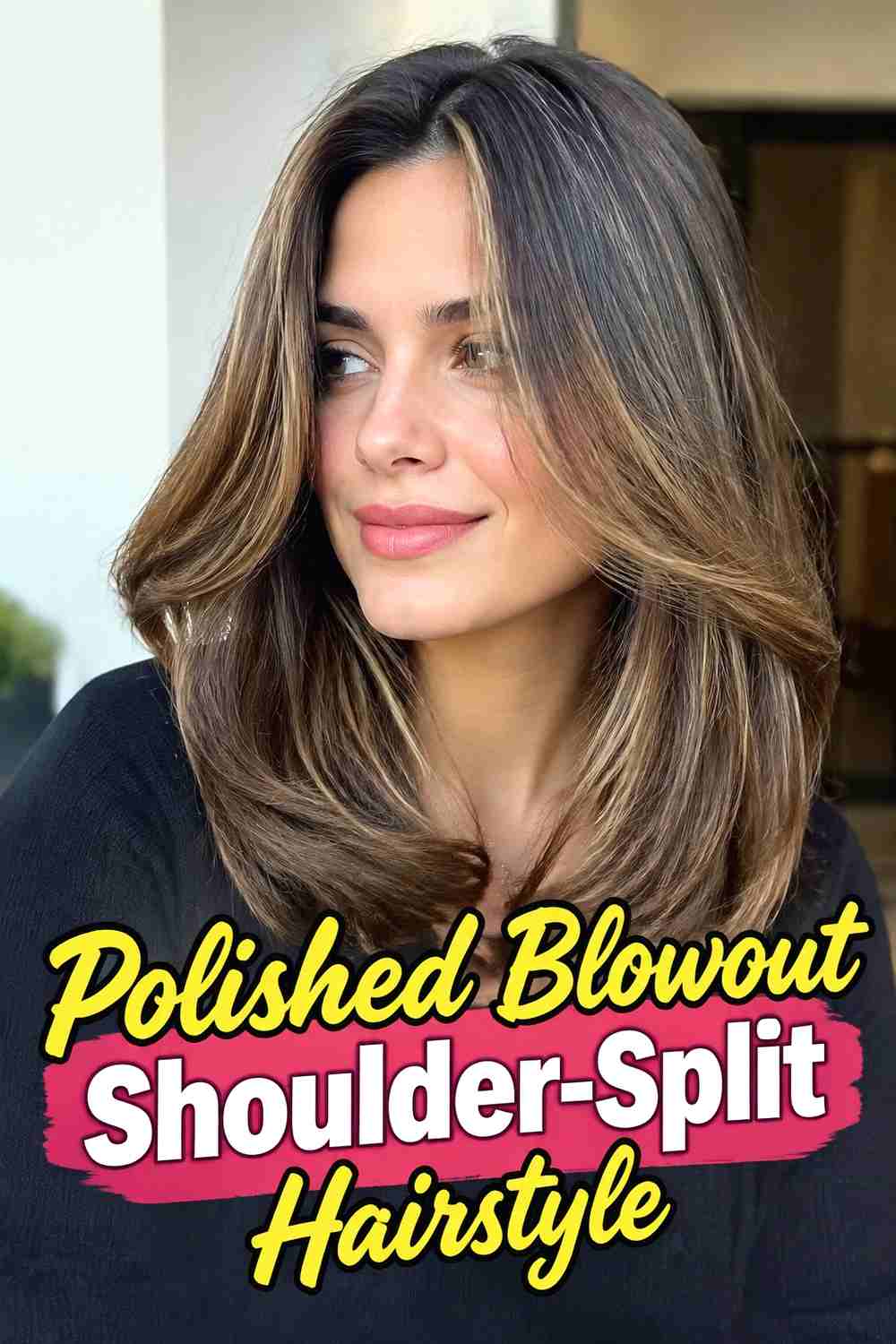
A polished blowout gives the shoulder-split look smoothness, lift, and controlled fullness. The roots can have gentle elevation, while the mid-lengths remain sleek and the ends form broad curves. Dividing the finished blowout across both shoulders makes the layering visible from the front and frames a tailored coat without completely hiding its construction. This style is especially attractive with classic wool coats because the soft volume contrasts with crisp lapels and defined seams. Keep the strongest fullness away from the coat collar so the neck area stays comfortable and visually clean. The goal is a flowing, touchable finish rather than exaggerated salon volume, with enough movement that each side shifts naturally when walking.
Styling Notes
Create the root lift first, then smooth the mid-lengths and gently shape the ends instead of repeatedly curling every section.
Wear & Maintenance
Flexible hold helps the blowout maintain shape while still allowing the lengths to move over heavier winter fabric.
8. Natural Texture Shoulder Split Hairstyle
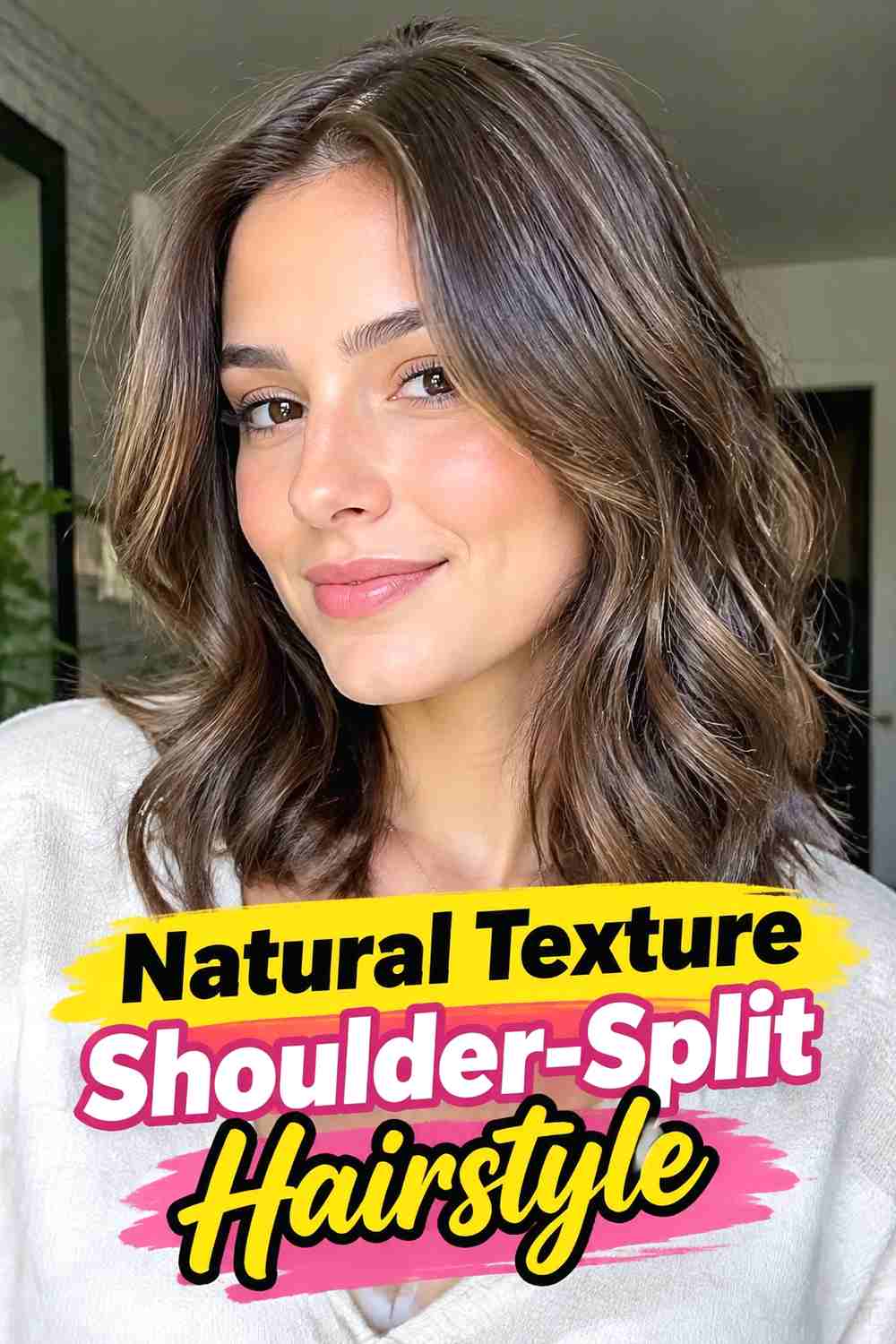
Natural waves, curls, or coils can be divided across both shoulders without forcing the hair into an unnaturally smooth shape. The key is controlling placement while preserving authentic variation in the texture. Arrange the front sections so each shoulder carries a comfortable amount of hair, then allow individual curls or waves to settle according to their natural pattern. A tailored coat provides a structured background that makes textured hair particularly striking, but very full hair may need part of the length positioned behind the shoulders to prevent crowding. Keep the hairline and roots natural rather than overly flattened. The result should feel intentional while still showing realistic volume, curl variation, and movement through the long lengths.
Hair Type & Length
This approach works for long wavy, curly, and coily textures, with the amount brought forward adjusted according to density and shrinkage.
Wear & Maintenance
Limit repeated rubbing against coarse coat fabric, especially at the ends, if your texture tangles easily.
9. Off Center Draped Shoulder Split Hairstyle
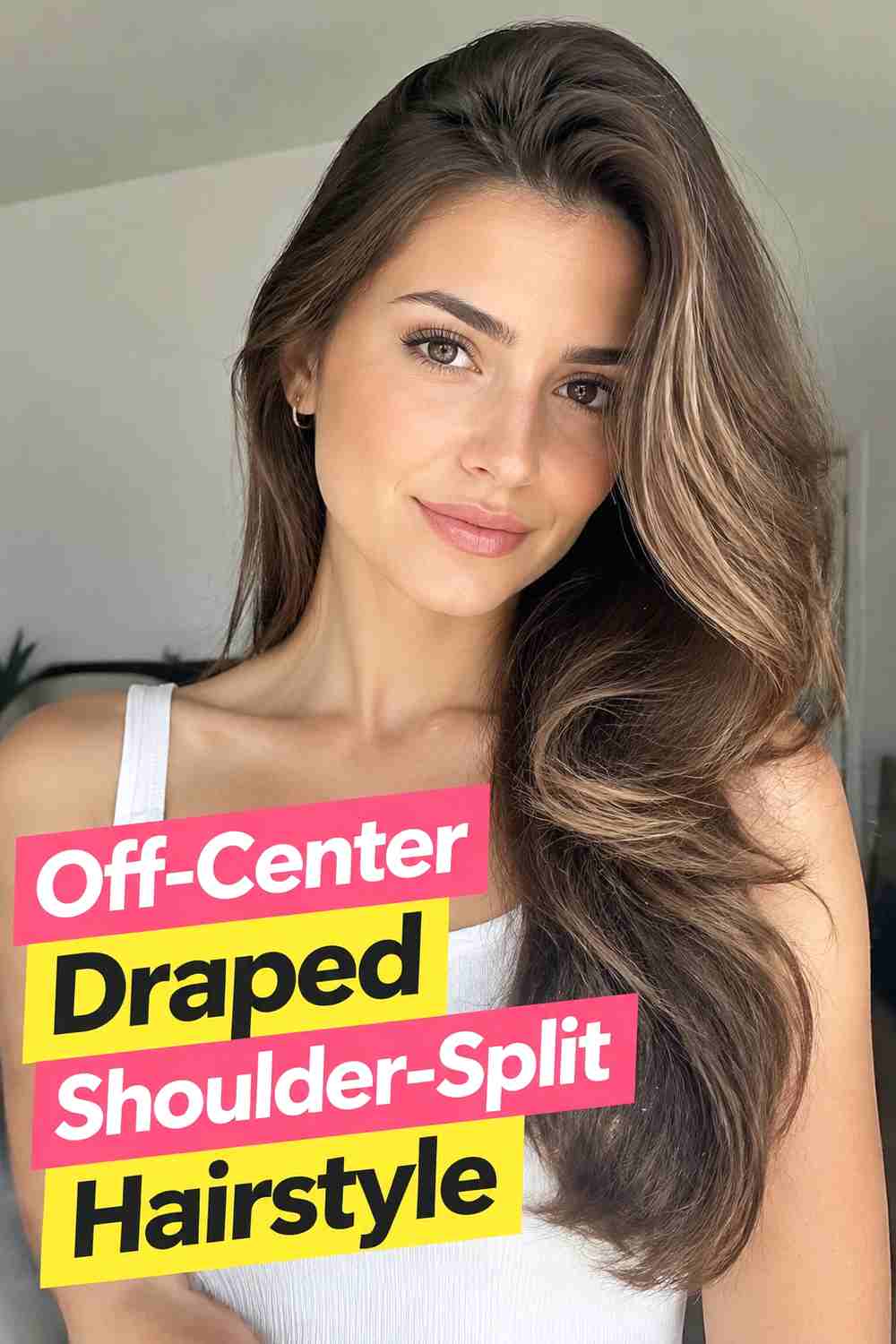
An off-center part creates a gentle asymmetry while preserving the two-shoulder drape. Slightly more hair falls toward one side, creating natural lift at the part and a fuller section over one coat lapel. The opposite side remains visible but lighter, preventing the hairstyle from feeling rigidly symmetrical. Long straight hair works beautifully with this arrangement, but soft waves can make the difference in density even more noticeable. Keep the front split deliberate by directing the hair before fastening or buttoning the coat. This style is especially useful when one side of the haircut has stronger face-framing layers or when your natural growth pattern makes a perfect center part difficult to maintain throughout the day.
Best For
This look suits people who want symmetry softened without committing to a dramatic side-swept style.
Pro Tip
Shift the part only a little from center; a small change can create enough imbalance to make the hairstyle feel more natural.
10. Soft Curl Shoulder Split Hairstyle
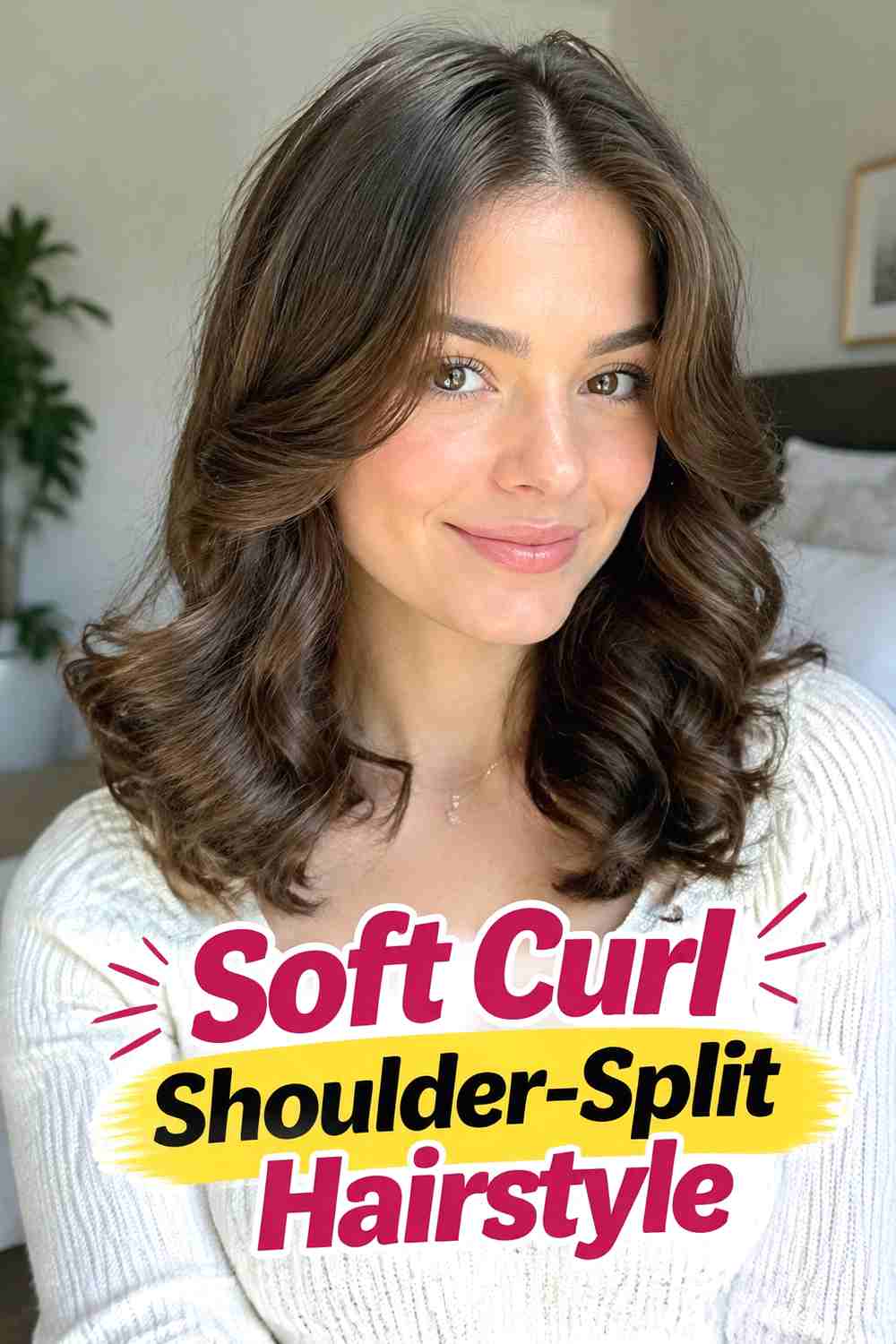
Soft curls add visible shape to long hair while a shoulder split keeps the fullness distributed across both sides of a tailored winter coat. Instead of curling from the roots, keep the upper section relatively smooth and introduce broader curls through the mid-lengths and ends. This prevents too much volume from collecting near the coat collar. The curls can fall loosely across the front, with a few sections resting behind the shoulders to maintain space around the lapels. Alternating curl direction creates believable variation and stops the hair from forming identical ringlets. The finished style feels romantic but still refined enough for structured outerwear, especially when the coat has a simple silhouette and understated hardware.
Styling Notes
Allow curls to cool before separating them, then use your fingers rather than a dense brush to preserve definition without excess width.
Why It Works
The split distributes curl volume evenly and gives each side room to move without overwhelming the coat.
11. Tucked Behind Ear Shoulder Split Hairstyle
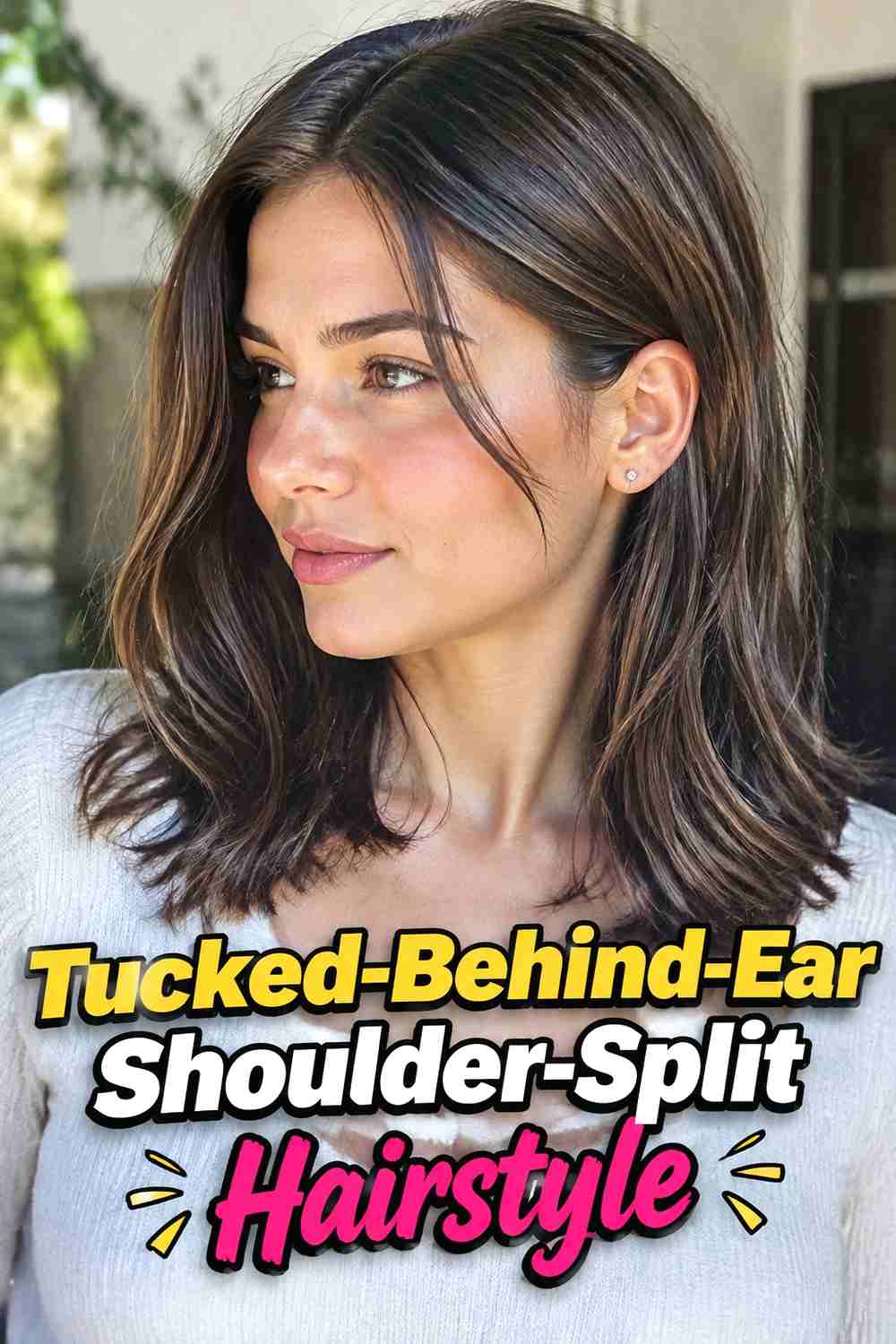
A small tuck behind one or both ears can give a long shoulder-split hairstyle noticeably more control. The hair still falls over both shoulders, but the upper sections remain closer to the head, keeping the coat’s neckline and lapels visible. This detail works especially well with straight or softly waved lengths because the contrast between controlled roots and flowing ends feels polished. You can tuck both sides for symmetry or only one side for a slightly more relaxed effect. Avoid forcing too much hair behind the ear, particularly with thick lengths; the goal is to secure the front pieces rather than compress the entire side. The remaining hair should fall naturally over the shoulders with visible movement.
Best For
This is useful for windy days, busy commutes, or anyone who prefers to keep long front layers away from the face.
Wear & Maintenance
If the tuck loosens, reposition only the small front section rather than repeatedly handling all of the hair.
12. Low Volume Glossy Shoulder Split Hairstyle
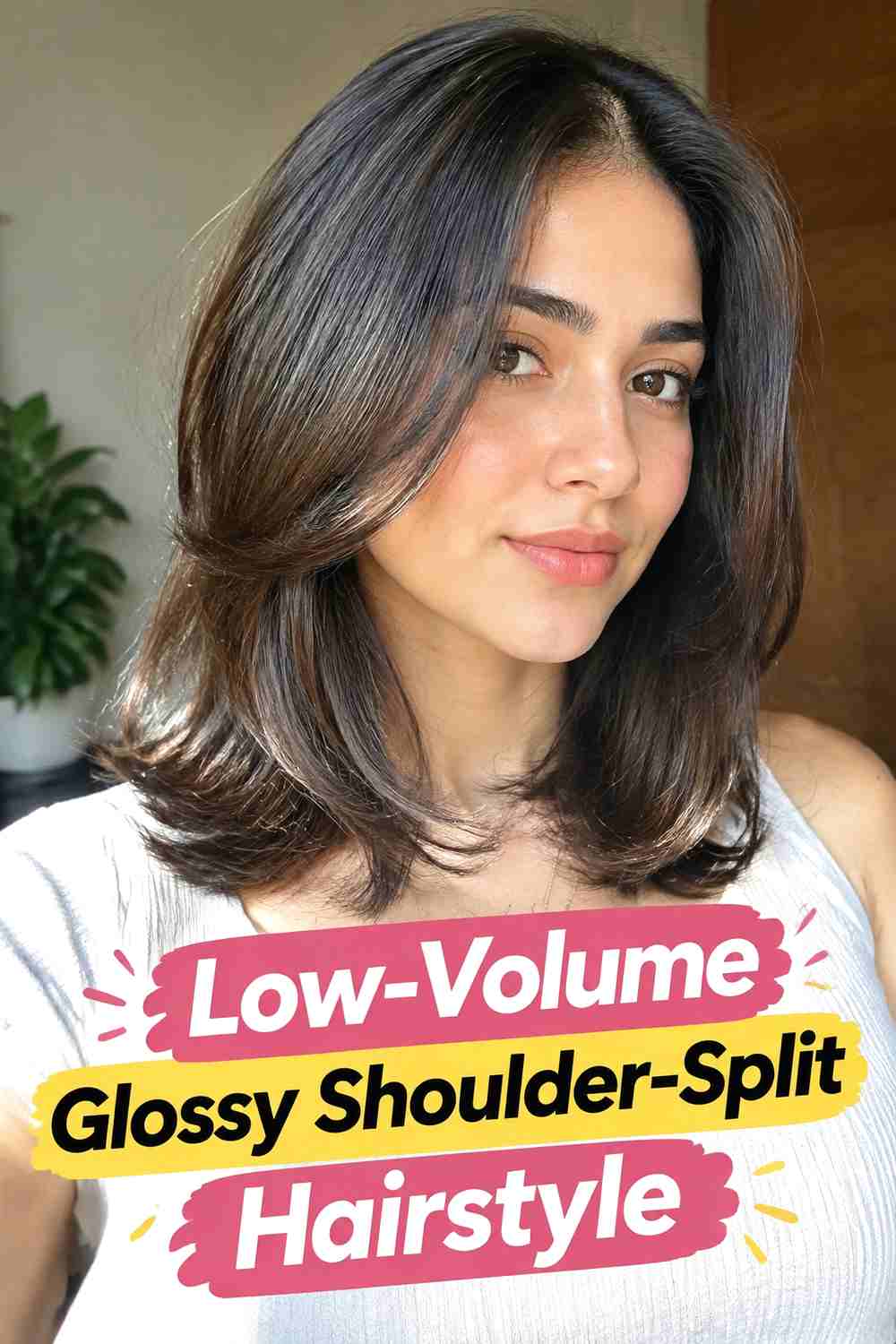
A low-volume glossy finish keeps long hair close to the body, making it an elegant match for sharply tailored winter coats. The hair is split across both shoulders, but each section remains smooth and relatively narrow so the outerwear stays prominent. Instead of creating height at the crown, focus on a clean part, controlled surface, and naturally reflective lengths. A tiny bend at the bottom can keep the hair from looking excessively flat. This style is especially effective with coats featuring strong shoulders, double-breasted fronts, or defined waists because the restrained hair does not compete with those details. Natural strand variation and slight movement are important, since too much polish can make extra-long hair appear artificial.
Styling Notes
Apply finishing product mainly through the lower lengths and ends so the roots stay fresh rather than oily or compressed.
Why It Works
Restrained volume makes it easier to display both the hair length and the coat’s tailoring in the same front-facing silhouette.
13. Airy Root Lift Shoulder Split Hairstyle
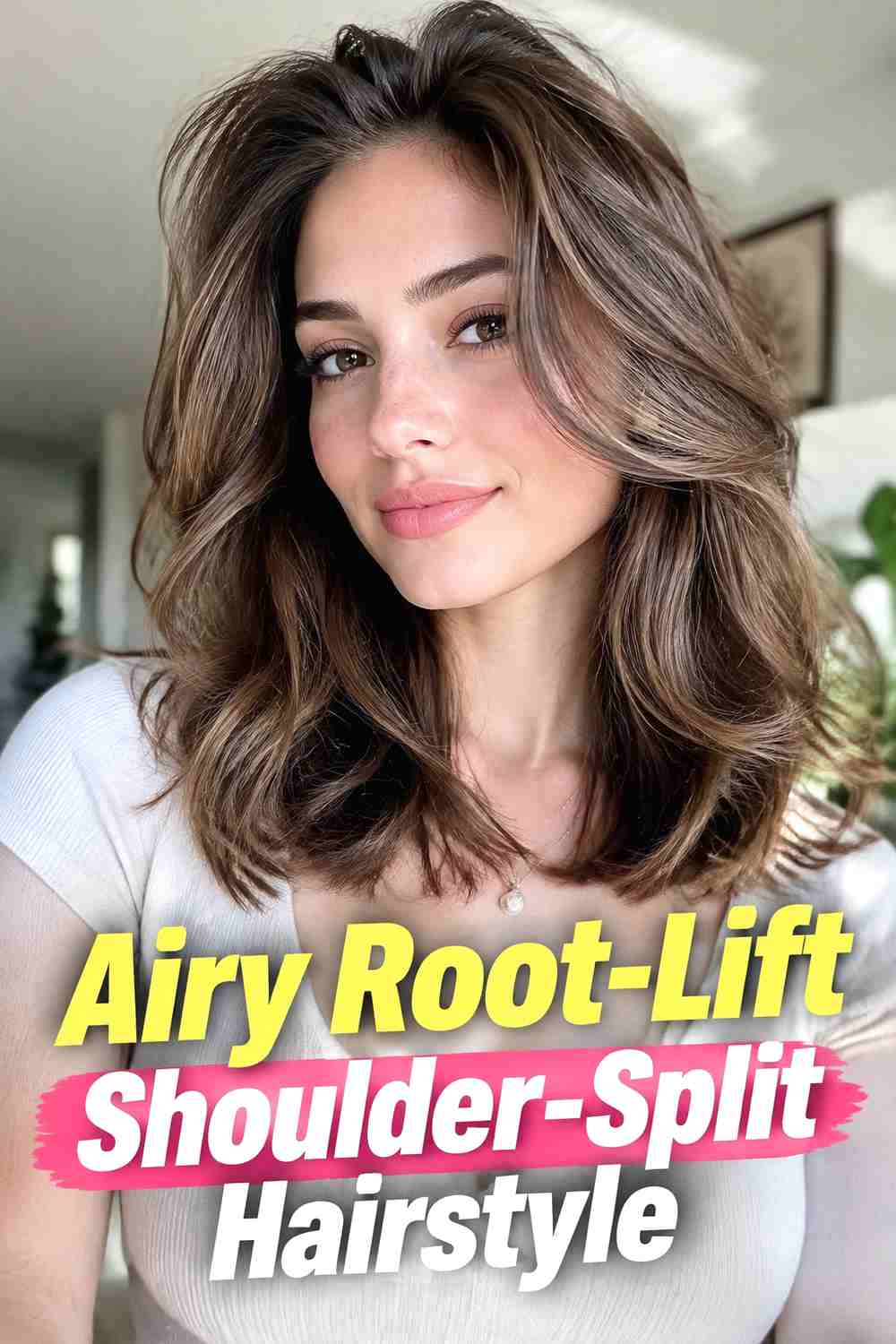
Soft root lift adds dimension above a shoulder split without increasing bulk through the lower lengths. The crown and part receive gentle elevation, while the long hair is divided into two smooth or softly textured sections over the coat. This works particularly well when the haircut has subtle layers near the face, since the lift helps those pieces separate naturally before merging into the longer lengths. Keep the sides controlled so the hairstyle does not expand outward over the coat’s structured shoulders. The finished effect feels light at the top and flowing below, creating a useful balance with substantial winter fabrics. A natural bend through the ends can add movement without turning the entire hairstyle into a full blowout.
Hair Type & Length
Fine to medium-density long hair often benefits most from this concentrated lift because it adds shape without requiring heavy styling through every section.
Pro Tip
Avoid heavy oils at the scalp, which can reduce the soft elevation that defines this look.
14. Front Draped Long Layer Hairstyle
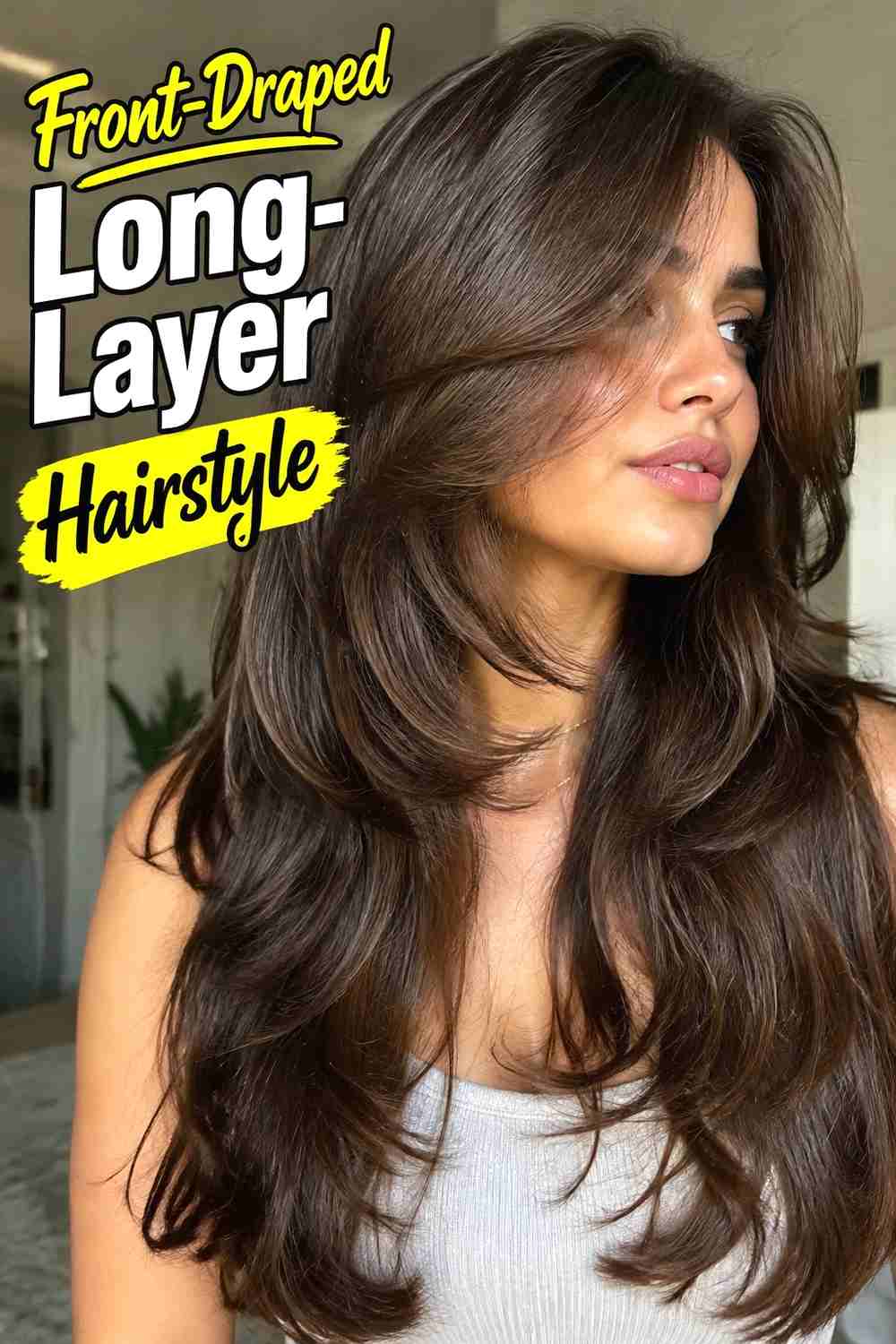
This style brings most of the long layered hair forward, but the layers keep the two shoulder sections from feeling overly dense. Shorter pieces can fall around the collarbone and upper chest, while the longest lengths continue down the front of the coat. The effect is especially attractive with a tailored coat worn partially or fully open because the layers create movement around the lapels without covering them in one solid mass. A soft center part gives the style balance, though a subtle off-center part can add variation. Keep the ends light and separated so the haircut’s different lengths remain visible. This arrangement showcases long hair prominently while still allowing the coat to frame the overall silhouette.
Why It Works
Layering breaks up the forward drape and creates negative space where parts of the coat can remain visible.
Styling Notes
Bring the hair forward in sections instead of sweeping everything over the shoulders at once, which helps preserve natural separation.
15. Back And Front Split Hairstyle
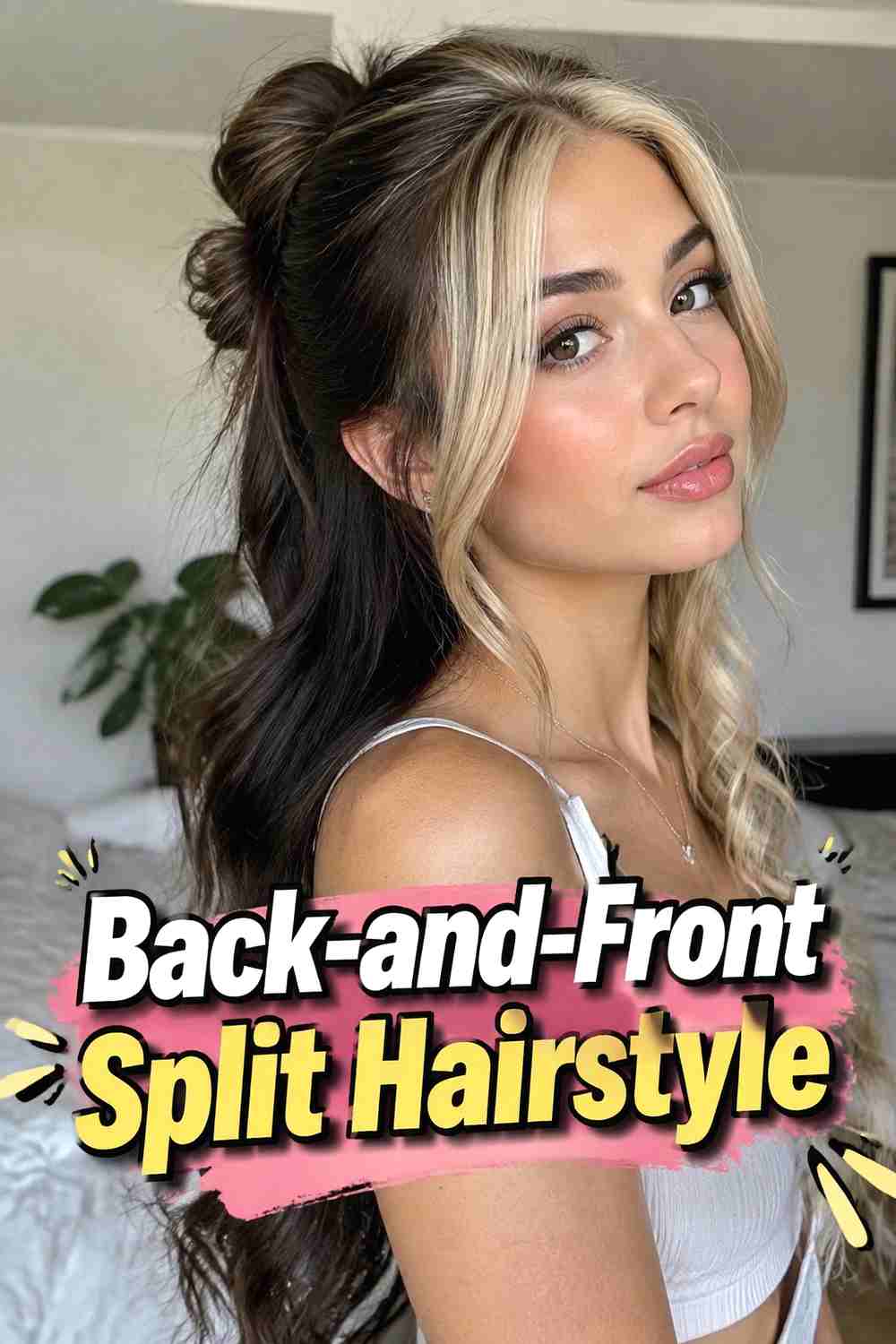
Not every shoulder split needs equal amounts of hair in front. This variation keeps a controlled section over each shoulder while allowing the majority of the length to remain behind the coat. The result gives the front view enough hair to frame the outfit without hiding the tailored details. It is particularly practical for very thick or extra-long hair because reducing the amount brought forward prevents excessive weight across the chest. Straight, wavy, and naturally textured hair can all adapt to this placement. The front sections should connect naturally to the hair behind rather than looking artificially separated. A clean part and smooth transition over the shoulders help the arrangement feel intentional from both the front and side.
Best For
This is one of the most practical choices for dense hair, oversized coats, or outfits where the coat’s buttons and lapels are important visual features.
Wear & Maintenance
Check the back lengths occasionally if the coat fabric creates friction, especially when sitting or carrying a shoulder bag.
16. Wind Swept Shoulder Split Hairstyle
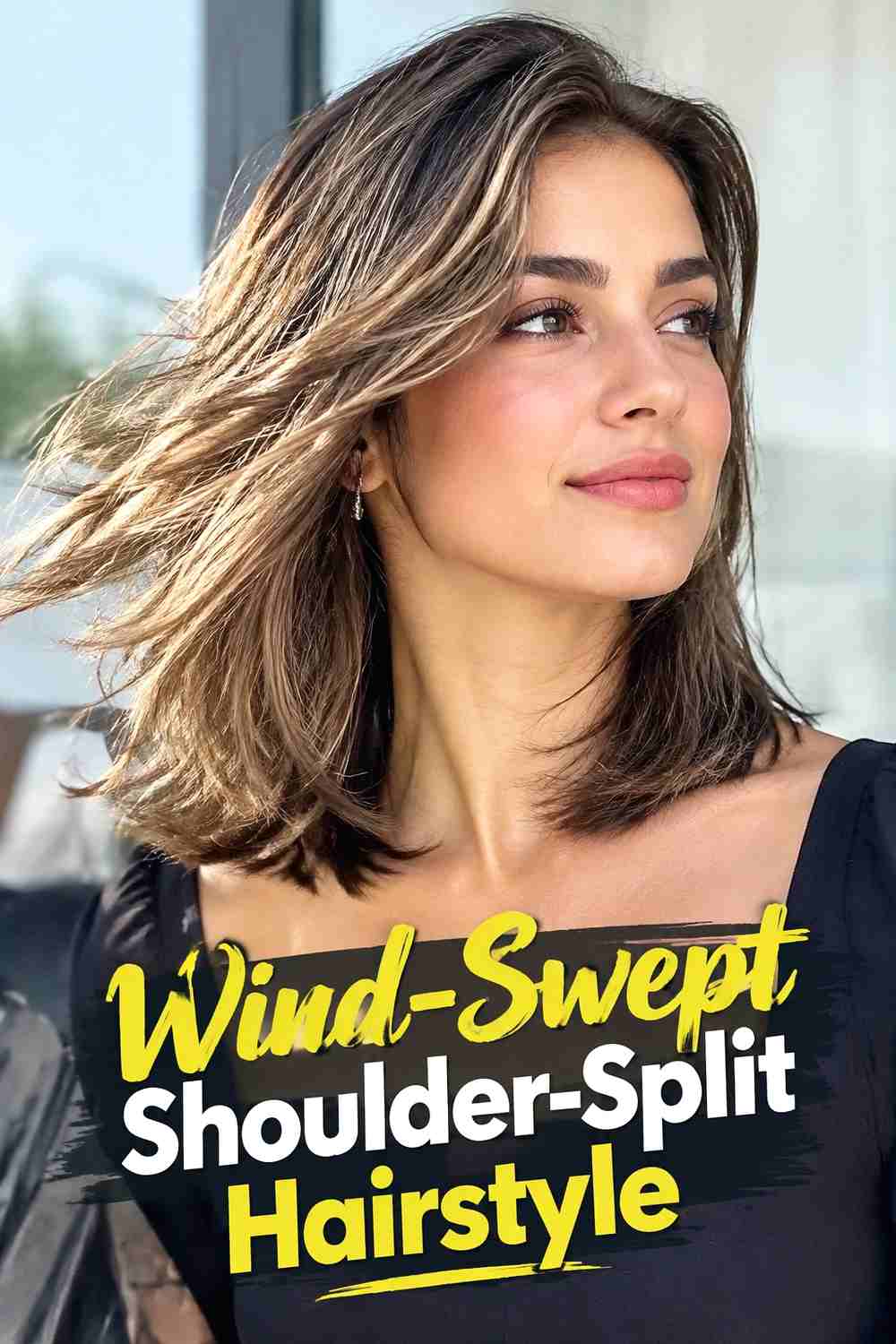
A wind-swept finish makes the shoulder split feel less exact while still keeping long hair distributed across both sides. One section can carry slightly more volume, with a few strands moving across the forehead or toward the opposite side. The lower lengths remain loose and mobile, creating an outdoor winter look that feels natural beside a tailored coat. This approach is especially appealing in photography because small irregularities suggest believable movement rather than a perfectly arranged studio style. Keep the overall direction controlled enough that the lapels and neckline remain identifiable. Soft waves or naturally straight hair work equally well, provided the hair retains realistic weight and does not appear to float unnaturally away from the body.
Styling Notes
Use flexible hold and allow a few fine strands to move naturally rather than fixing every piece into place.
Best For
This style suits outdoor walks, winter street-style looks, and occasions where a perfectly static finish would feel too formal.
17. Minimalist Straight Shoulder Split Hairstyle
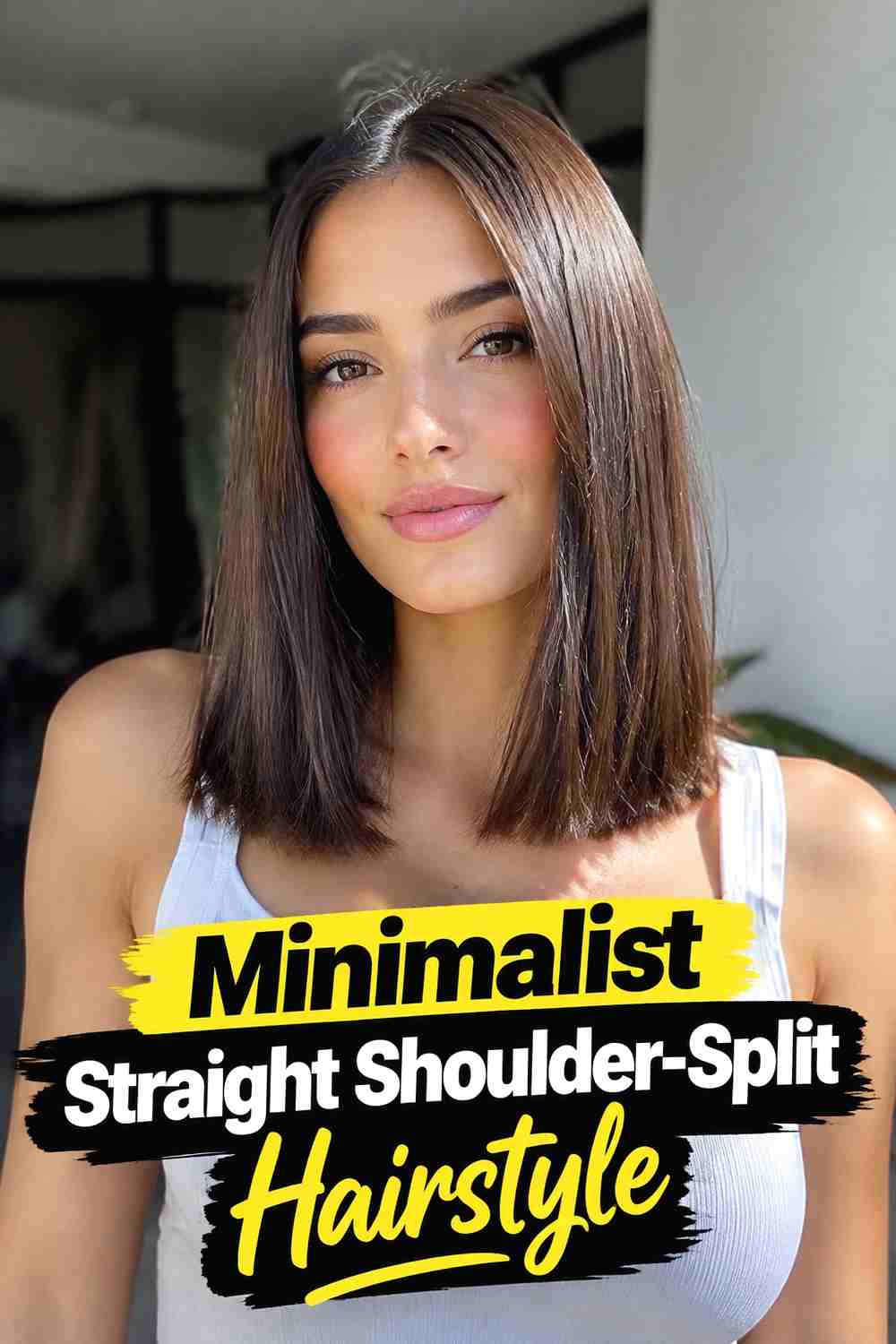
The minimalist version relies on clean placement rather than visible curls, lift, or elaborate layering. Long straight hair falls naturally from a simple part and is divided into two narrow sections over the shoulders. The lengths should retain realistic movement, individual strands, and softly finished ends so the style does not look severe. This approach pairs especially well with highly tailored winter coats because the hair reinforces the same uncluttered visual direction. Keeping most of the volume below the shoulders allows the coat collar and lapels to remain visible. It is also one of the easiest options to refresh throughout the day, since the style depends mainly on smoothness, detangling, and intentional placement rather than a precise wave or curl pattern.
Why It Works
The simplicity highlights quality, length, and shine while allowing the structured coat to remain an equally important part of the look.
Pro Tip
After putting on the coat, divide the hair once and avoid constant rearranging, which can introduce static and disturb the smooth surface.
How to Choose the Right Look
Begin with your hair’s natural density and texture. Fine or medium hair can usually be divided evenly across both shoulders without creating too much bulk, while very thick hair may feel more comfortable with the back-and-front split or a narrower front drape. Straight textures suit sleek and minimalist versions, while waves, curls, and layered cuts create more visible separation.
Next, consider the coat. Strong lapels and double-breasted fronts often look best when each hair section stays relatively narrow. Simpler coats leave more room for waves, feathered layers, blowout volume, or natural texture. If the coat has broad shoulders, avoid creating unnecessary width at the same level.
Styling time also matters. Sleek shoulder splits need smoothing and occasional detangling, while waves and blowouts may need flexible hold. Natural texture can require less reshaping when its existing pattern is preserved. For windy conditions, a tucked section or controlled front-and-back arrangement usually stays neater than completely loose lengths.
Final Thoughts
Long-hair shoulder splits work beautifully with tailored winter coats because they soften structured outerwear while keeping the hairstyle clearly visible. Choose a sleek split for a minimal look, waves or curls for movement, or layers when you want lighter separation around the lapels. The best result is one that respects your hair’s natural weight and texture while leaving enough of the coat visible to maintain its tailored silhouette.
FAQs
1. How much hair should fall over each shoulder?
There is no fixed amount, but medium-density hair can usually be divided fairly evenly. Very thick hair often looks cleaner when only part of each side is brought forward.
2. Do shoulder-split hairstyles work with double-breasted winter coats?
Yes. Keeping each section narrow helps preserve the buttons, lapels, and structured front that define a double-breasted coat.
3. How can I stop long hair from tangling against wool?
Start with smooth, detangled lengths and limit unnecessary rubbing or repeated rearranging. Keeping some hair behind the shoulders can also reduce friction.
4. Which shoulder-split style gives the most polished finish?
Sleek straight, glossy low-volume, and polished blowout versions generally create the cleanest appearance beside tailored outerwear.
5. Can naturally curly or coily hair use a shoulder split?
Yes. Divide the hair according to its natural density and curl pattern rather than forcing equal sections, and preserve realistic texture and volume.
Save your favorite long-hair shoulder split, share these winter styling ideas, and explore more hairstyle inspiration designed around polished seasonal outerwear.