19 Separated Long-Wave Hairstyles With Winter Vest Outfits
Separated long waves bring soft movement to winter vest-and-shirt outfits while keeping the neckline, shoulders, and layered clothing visible and polished.
Winter vests create a very different frame around long hair than heavy coats. Because the arms and much of the shirt remain visible, the hairstyle becomes a stronger part of the outfit. Separated waves work especially well because they create texture without forming one dense mass across the front of the vest. Individual sections can fall over the shoulders, behind the back, or along the shirt while still looking cohesive.
The most wearable variations balance wave definition with natural softness. Wide S-bends feel polished, brushed-out movement creates volume, and piecey layers give the hair lighter separation. Part placement and root lift also affect how much of the collar, shirt, and vest remain visible, so choose the version that complements your natural texture, density, and preferred level of styling.
Quick List
- Center Part Separated Long Wave Hairstyle
- Soft Side Part Separated Wave Hairstyle
- Face Framing Long Wave Hairstyle
- Airy Root Lift Long Wave Hairstyle
- Polished S Wave Separation Hairstyle
- Feathered Long Wave Layer Hairstyle
- Loose Front Draped Wave Hairstyle
- Defined Mid Length Wave Hairstyle
- Low Volume Glossy Wave Hairstyle
- Natural Texture Separated Wave Hairstyle
- Off Center Soft Bend Hairstyle
- Brushed Out Separated Wave Hairstyle
- Shoulder Split Long Wave Hairstyle
- Back Draped Separated Wave Hairstyle
- Deep Side Swept Long Wave Hairstyle
- Soft Curved End Wave Hairstyle
- Piecey Long Layer Wave Hairstyle
- Wind Swept Separated Wave Hairstyle
- Minimal Loose Wave Separation Hairstyle
1. Center Part Separated Long Wave Hairstyle
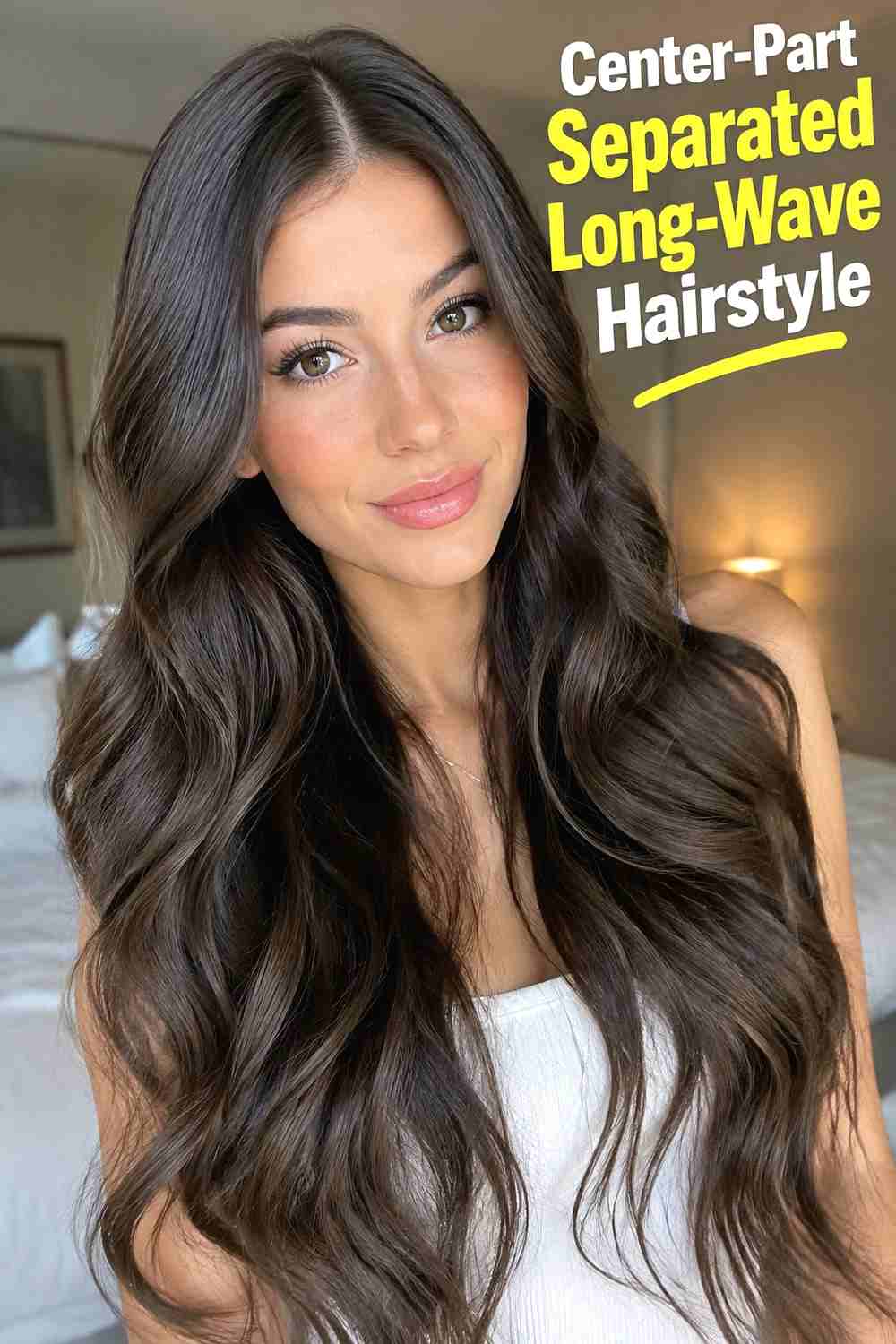
A clean center part gives long waves an organized foundation while allowing the textured lengths to separate naturally over a vest-and-shirt outfit. Keep the roots relatively smooth, then begin the stronger bends below the cheekbones so the hair does not crowd a button-down collar or high neckline. Each side can contain several visible wave sections rather than one continuous curl pattern, creating definition without stiffness. Bringing a portion of the hair forward over both shoulders makes the waves easy to see, while leaving a few longer pieces behind keeps the vest front visible. This style works especially well with simple quilted, wool, or padded vests because the balanced hair adds softness without disturbing the layered outfit’s clean structure.
Styling Notes
Alternate the direction of neighboring sections and separate them lightly with your fingers once cool.
Best For
Straight to wavy long hair with medium density is especially easy to divide into defined but natural-looking sections.
2. Soft Side Part Separated Wave Hairstyle
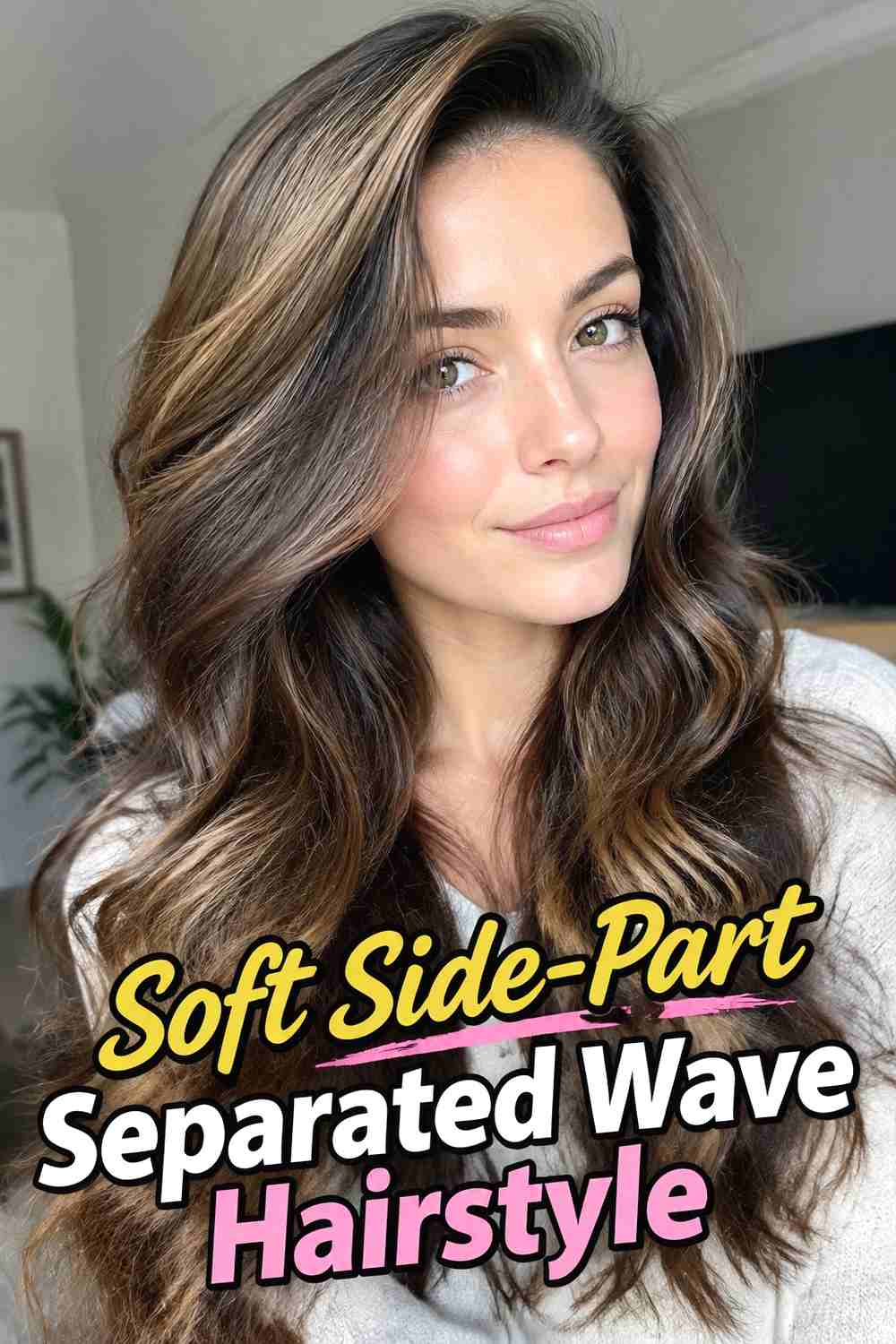
A soft side part creates natural lift and gives the separated waves a more directional shape. The heavier side can fall across one shoulder in several loose sections, while the lighter side stays closer to the shirt collar or behind the shoulder. This uneven distribution keeps the hairstyle visually interesting without hiding the vest. Broad waves beginning around jaw or collarbone level work better than tight curls because they preserve length and maintain a relaxed winter feel. If your vest has a high collar, keep the upper lengths controlled so the fabric and hair do not compete for space. The finished result feels polished but less symmetrical than a center part, making it useful for casual vest-and-shirt combinations.
Why It Works
The part naturally creates lift while separated lengths prevent the heavier side from becoming one bulky section.
Pro Tip
Follow your natural parting direction so the root volume stays believable throughout the day.
3. Face Framing Long Wave Hairstyle
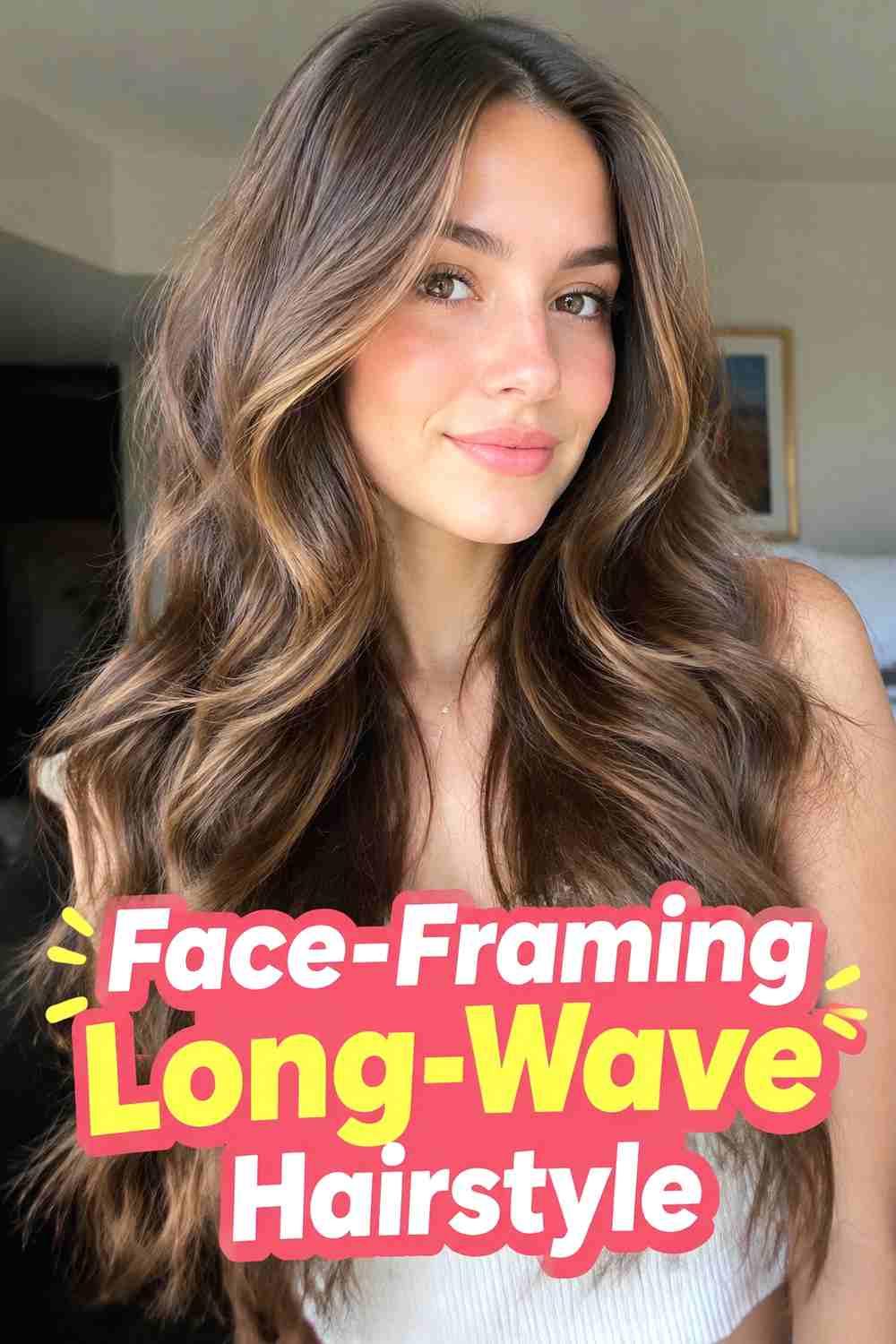
Face-framing layers give long waves a clear shape around the cheeks and jaw before they blend into the longer sections below. This is especially useful with winter vests because shorter layers can remain above the vest opening while the main lengths fall across the shirt and torso. The waves should stay soft and individually visible rather than merging into a thick curtain. A few front sections can bend away from the face, while the lower lengths alternate direction for natural variation. The overall style looks dimensional without requiring excessive crown volume. It pairs well with collared shirts, knit tops, and lightweight turtlenecks because the layered front pieces create softness around structured necklines.
Hair Type & Length
Medium to thick long hair often benefits from these front layers because they reduce visual weight around the face.
Styling Notes
Shape the shorter pieces first, then blend them into the longer waves instead of curling every section from the same starting point.
4. Airy Root Lift Long Wave Hairstyle
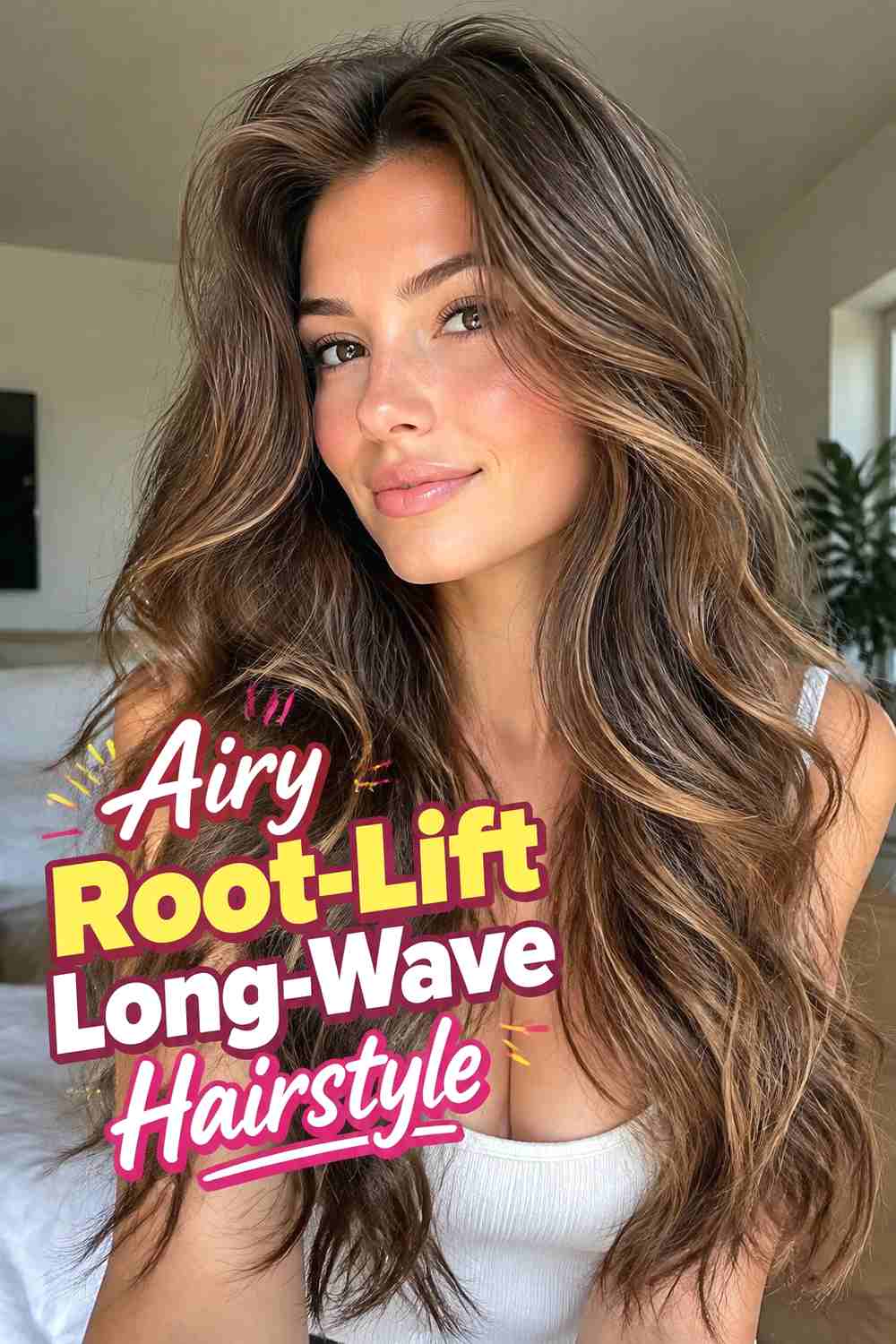
Soft root lift gives long waves more presence while keeping the movement through the lengths light and separated. Instead of building dramatic height, concentrate gentle elevation near the part and crown, then allow the wave pattern to begin farther down. This creates an airy top with flowing sections over the shoulders, which works especially well with open vest fronts and crisp shirts. The lengths can be divided loosely so small gaps remain between wave groups, preventing the hair from looking overly dense against padded or textured outerwear. A touch of lift also helps fine or medium-density hair avoid collapsing against the scalp when winter layers are added.
Best For
This style is particularly helpful for fine to medium hair that needs shape at the roots without full-volume curling.
Pro Tip
Keep smoothing products away from the scalp and apply them only through the mid-lengths and ends.
5. Polished S Wave Separation Hairstyle
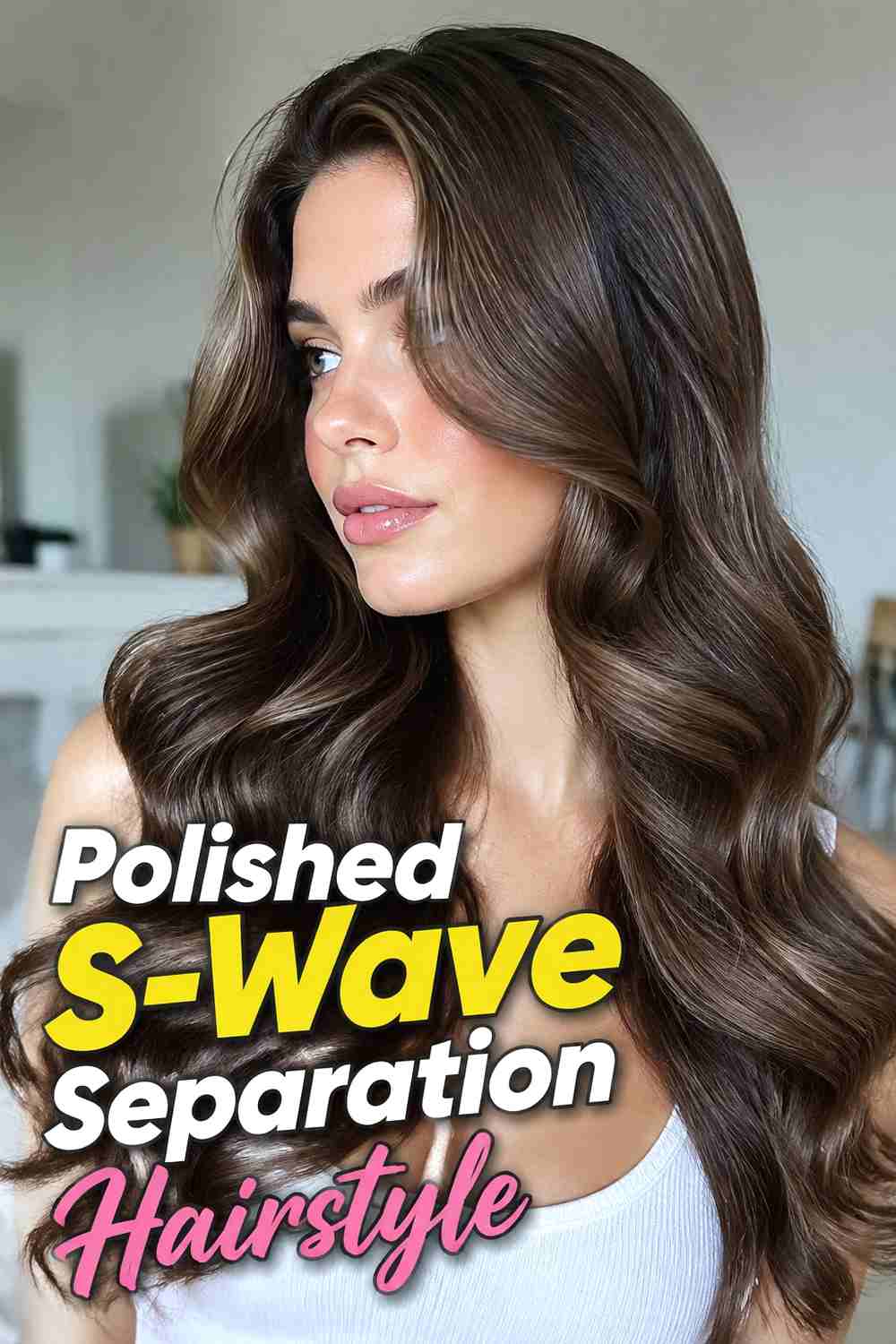
Long S-waves create a controlled pattern with enough spacing between sections to show both texture and length. Rather than curling the hair into spirals, shape broad alternating bends that travel gradually through the mid-lengths. The surface can stay glossy and polished, while slight separation at the ends prevents the waves from blending into a single block. Worn over a winter vest, the smooth pattern looks refined without becoming overly formal. Keep the strongest wave movement below the shoulders so a shirt collar or vest neckline remains uncluttered. This style looks particularly elegant with monochrome outfits, tailored vests, or simple button-down shirts where the hair becomes the main source of softness.
Styling Notes
Use larger sections to create elongated bends, then gently separate neighboring waves without brushing away their structure.
Why It Works
The repeating S-shape creates visible polish while the spacing keeps the hairstyle light enough for layered winter clothing.
6. Feathered Long Wave Layer Hairstyle
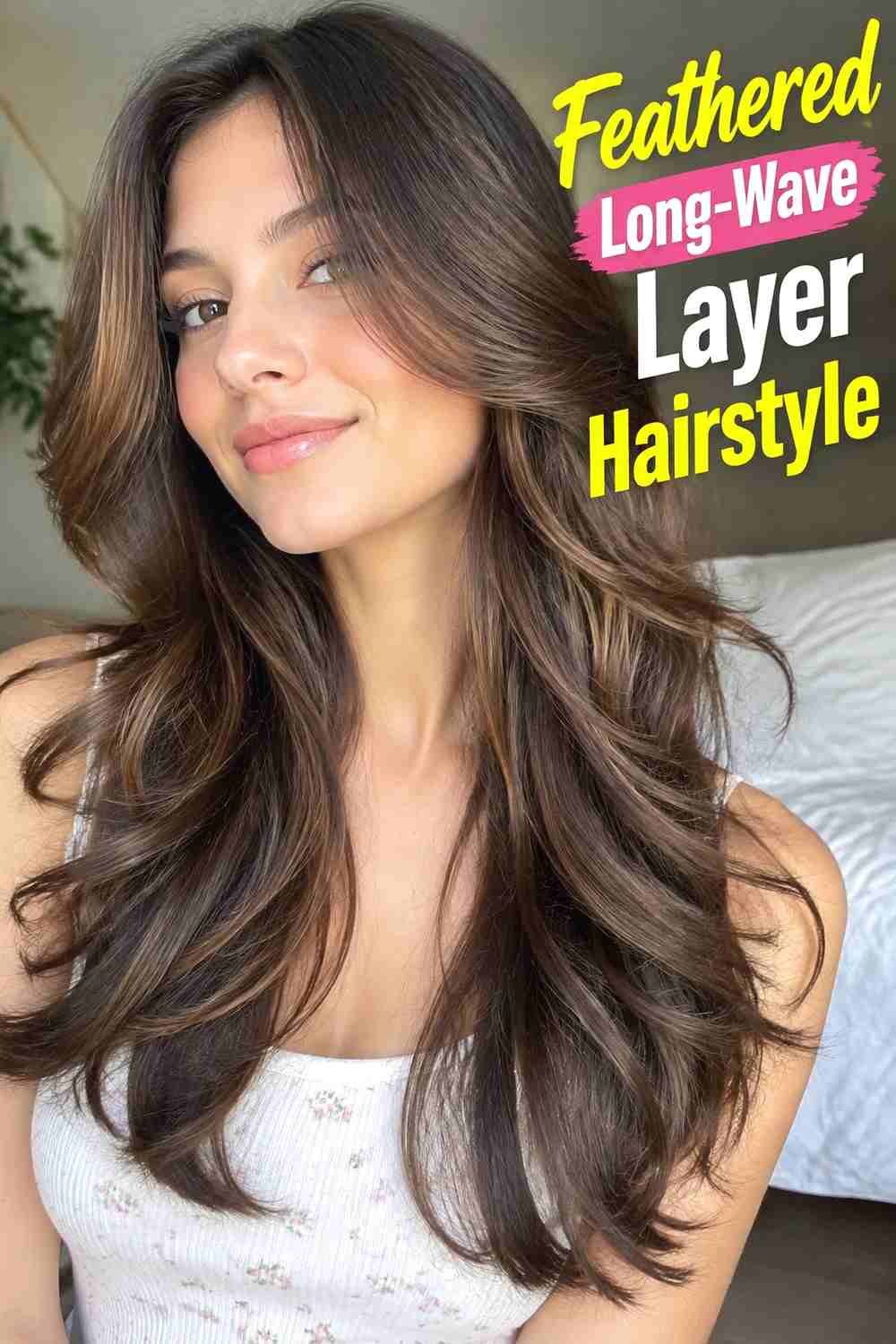
Feathered long layers add outward movement to separated waves, creating a style that feels airy from the shoulders downward. The shortest pieces can sweep away from the face, while longer sections form loose waves through the chest and back. This combination is useful with winter vests because it prevents long hair from hanging as one heavy shape over the outfit. The layered ends can turn in slightly different directions, producing visible movement without looking overly styled. Keep the root area controlled and let the fullness develop gradually through the lower sections. The result pairs especially well with simple shirts and smooth-finish vests because the textured hair provides enough visual interest on its own.
Why It Works
Feathering breaks up the perimeter of long hair and creates natural separation between neighboring wave sections.
Wear & Maintenance
If the layers flatten during the day, reshape the front pieces with your fingers rather than brushing through all of the waves.
7. Loose Front Draped Wave Hairstyle
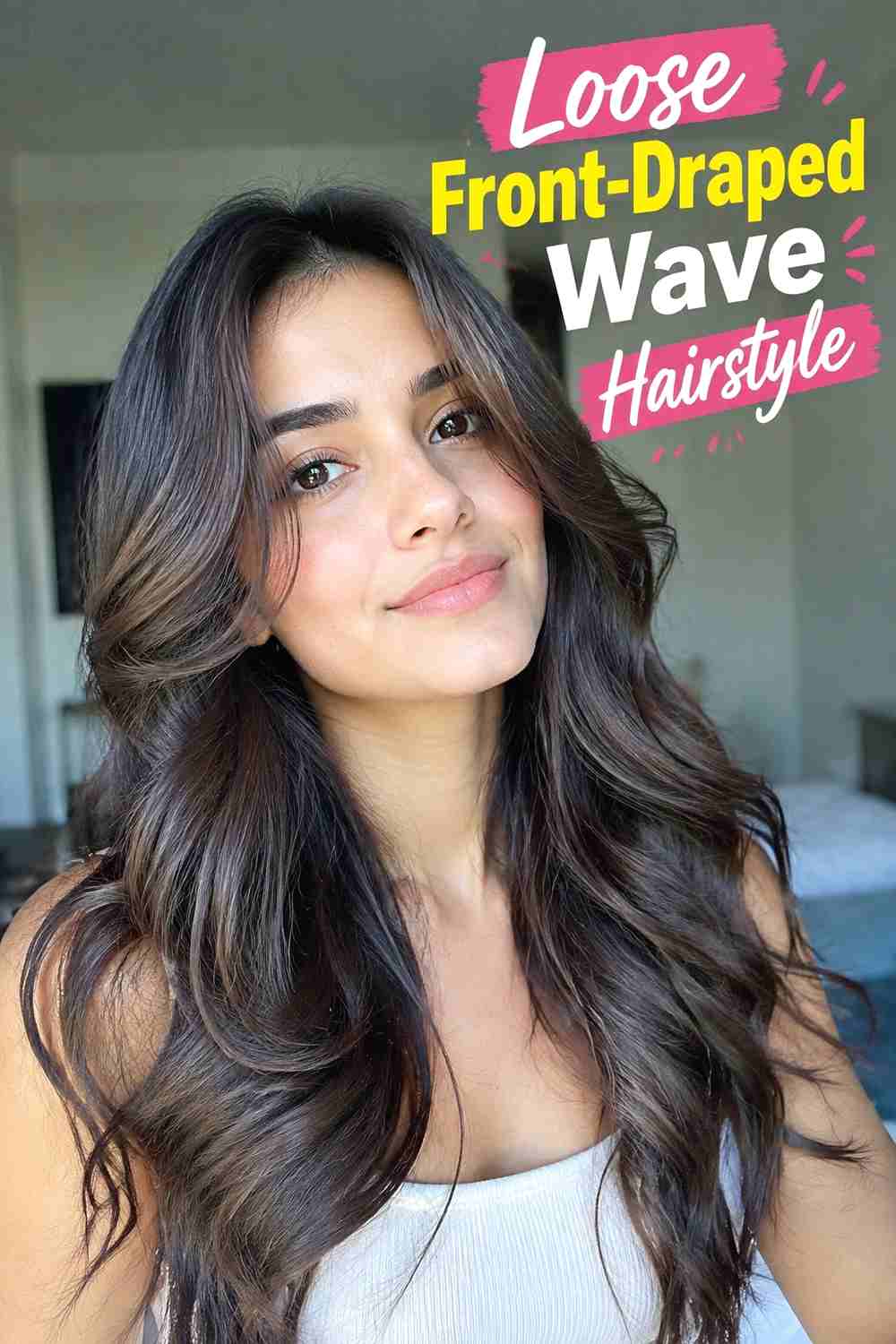
Bringing long waves forward over both shoulders makes the texture a strong part of a vest-and-shirt outfit. The key is keeping the two front sections separated enough that the shirt placket, buttons, or center of the vest can still be seen. Broad waves should begin below shoulder level, leaving the neckline smoother and easier to layer. Let some sections fall closer to the body while others sit slightly forward to create natural depth. The lower ends can stay loose and imperfect rather than finishing in identical curls. This front-draped arrangement works particularly well for long hair that you want fully visible in photos while still preserving the layered structure of a winter outfit.
Styling Notes
Bring the hair forward after the vest is on so you can control exactly how much coverage appears on each side.
Best For
Long medium-density hair is easiest to drape forward without overwhelming the shirt or vest front.
8. Defined Mid Length Wave Hairstyle
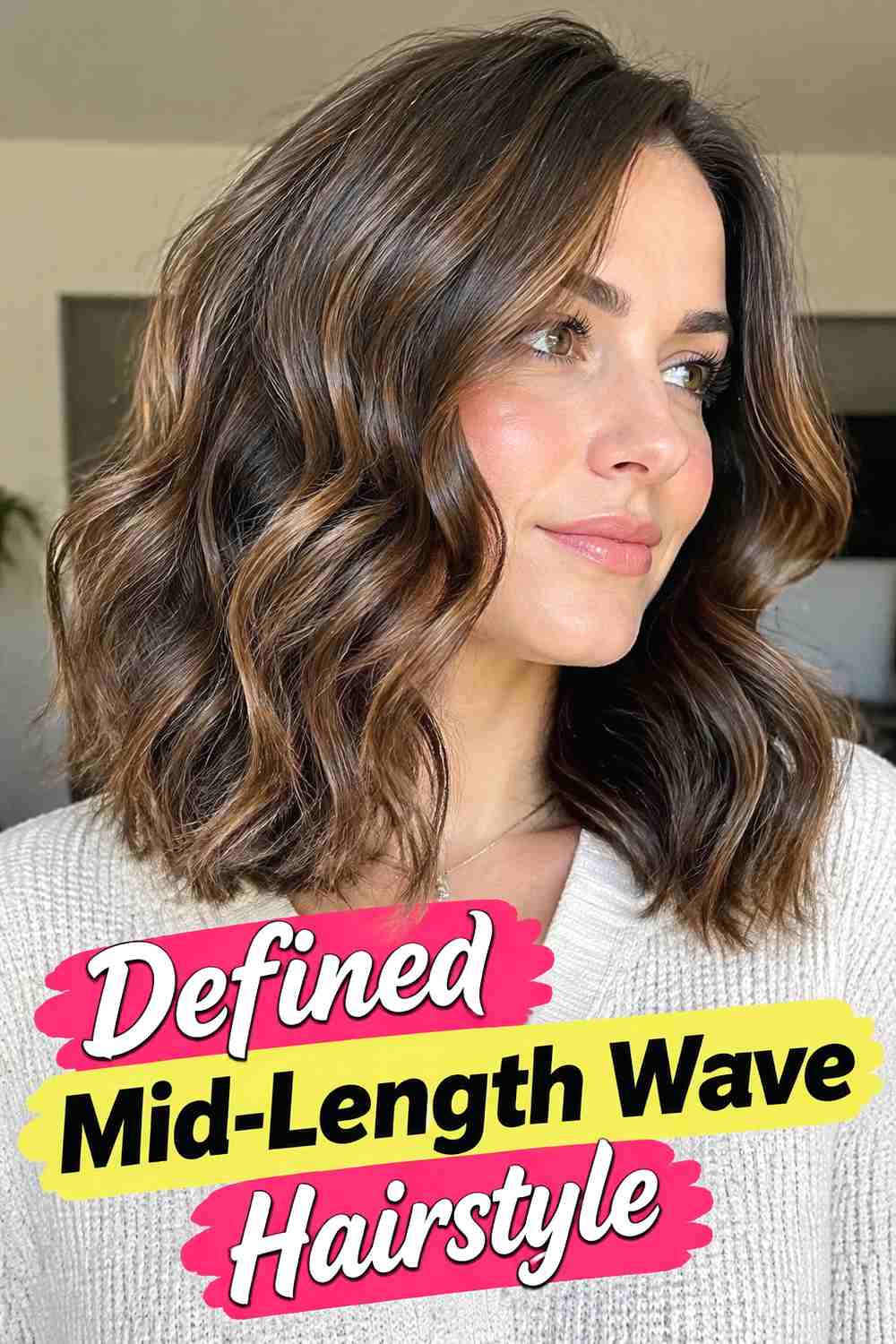
This variation keeps the roots and upper lengths relatively smooth, then introduces clearly defined waves through the middle portion of the hair. The ends can soften again, creating a gradual transition rather than an all-over curl pattern. Concentrating texture through the mid-lengths makes the waves visible over a winter vest while leaving the neckline clean. It also preserves the appearance of length, which tighter curls can sometimes reduce. Separate each bend lightly so the pattern does not fuse into thick sections. The style works well with simple white shirts, denim shirts, or fitted knit tops under a vest because the central wave placement adds movement where the hair crosses the torso.
Hair Type & Length
Long straight or gently wavy hair adapts particularly well to this controlled placement of texture.
Pro Tip
Focus the heat or styling effort on the central lengths and leave the roots and final few inches softer for a modern finish.
9. Low Volume Glossy Wave Hairstyle
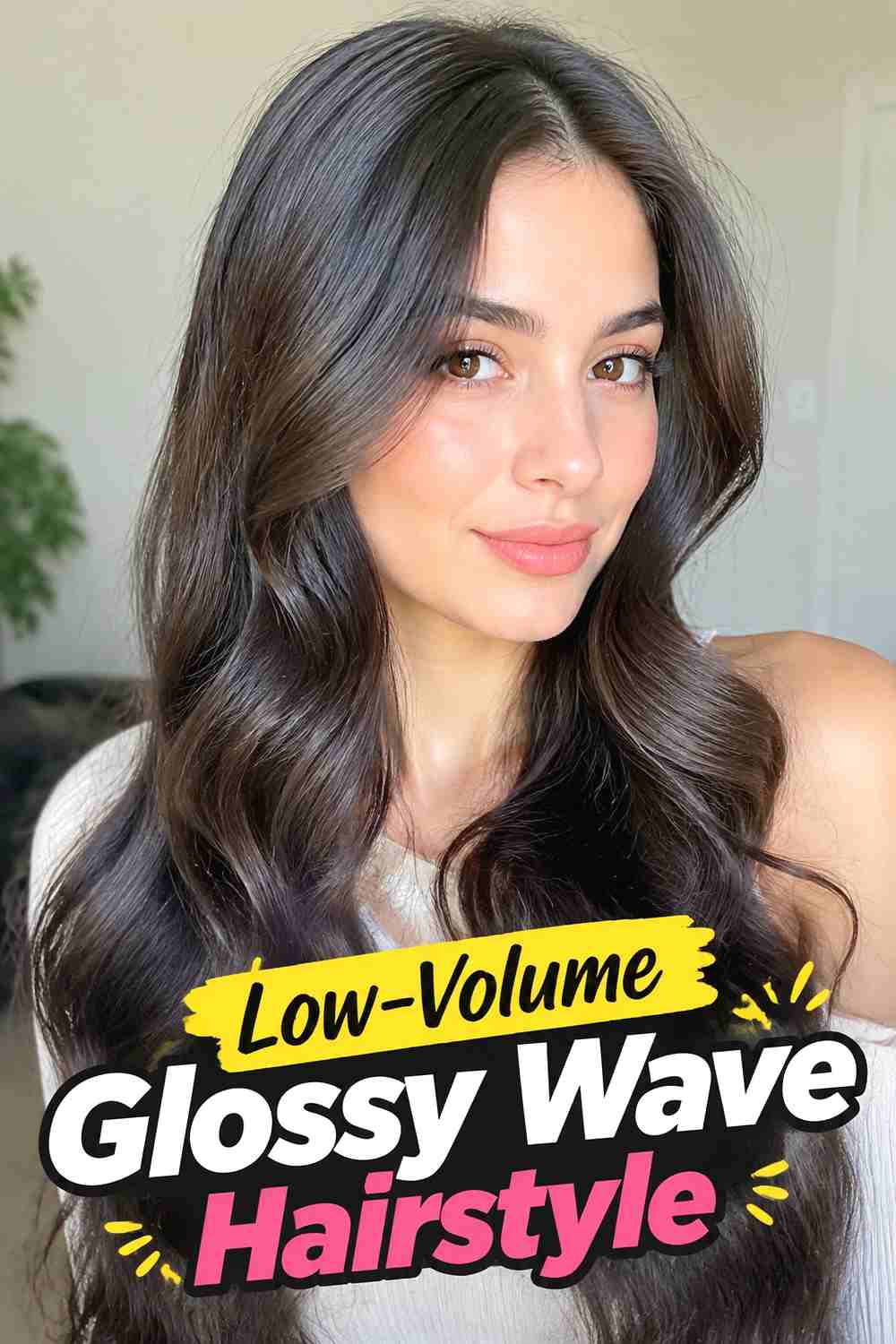
Low-volume waves offer a sleek alternative when you want texture without fullness. Keep the roots smooth and the bends elongated, allowing each section to follow the body closely. The glossy finish looks polished against quilted or wool vests, while the separated wave pattern prevents the hair from appearing flat. This style is especially useful with fitted shirts or high-neck knitwear because it does not add excessive width around the shoulders. A center or subtle off-center part both work well, depending on how you prefer the hair to frame your face. Keep the ends softly finished rather than sharply curled so the overall effect stays fluid and understated.
Why It Works
The restrained volume lets the shirt and vest remain visible while the wave pattern provides enough movement to keep long hair interesting.
Styling Notes
Apply only a small amount of shine product through the lower lengths so the hair remains reflective rather than oily.
10. Natural Texture Separated Wave Hairstyle
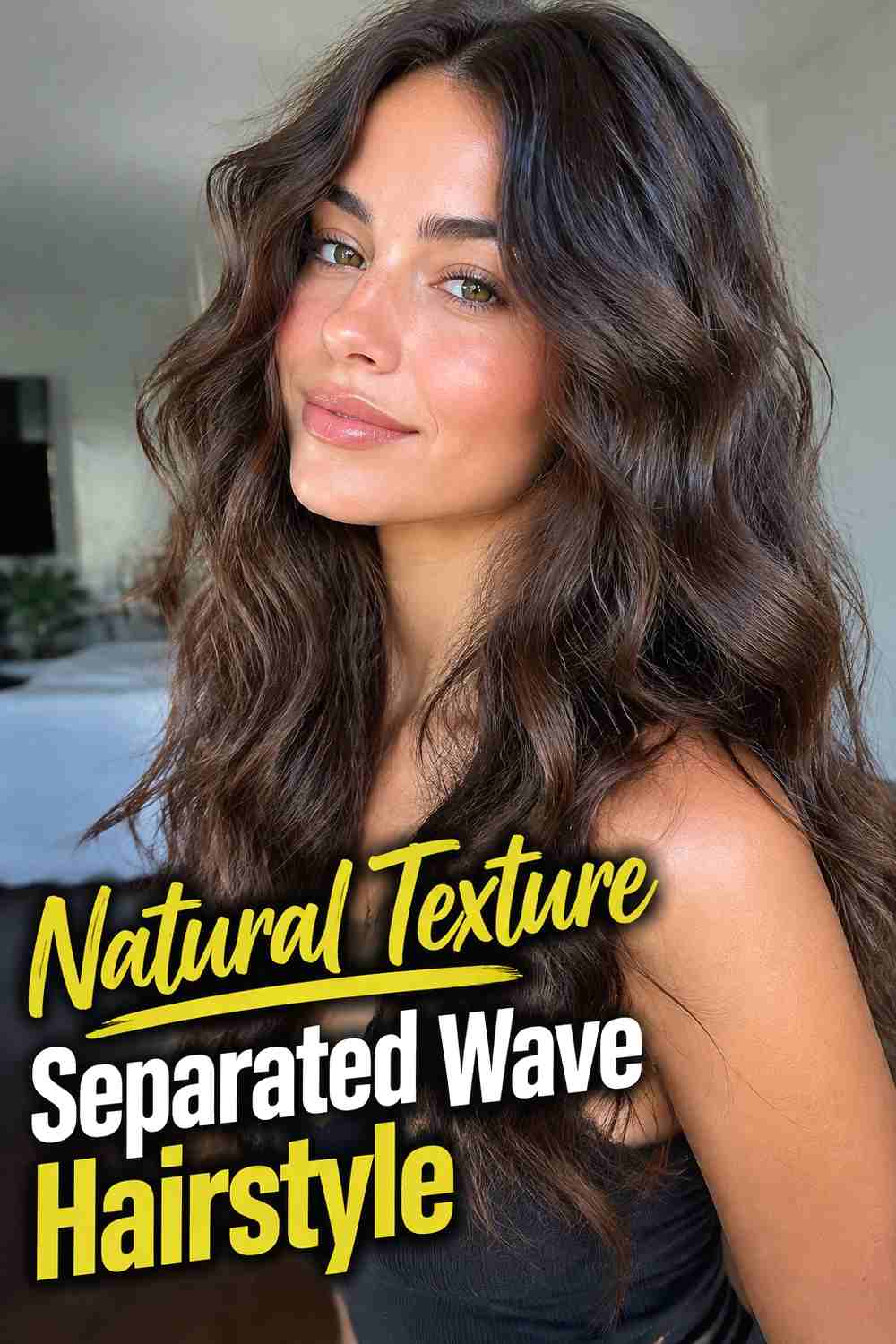
Naturally wavy hair already contains the irregular bends needed for a separated style, so the goal is to enhance rather than standardize the pattern. Encourage definition where waves naturally form, leaving slight differences in size and direction throughout the lengths. Some sections may appear broader and others more compact, which creates a realistic, dimensional result. With a winter vest, keep enough of the hair behind the shoulders to prevent very full textures from covering the entire garment. A natural or softly defined part can maintain an effortless feel, while selective front sections frame the face and shirt collar. This approach works best when the texture retains movement instead of being heavily coated with product.
Hair Type & Length
Naturally wavy and loosely curly long hair is ideal, particularly when the existing pattern varies throughout the lengths.
Wear & Maintenance
Refresh only the sections that lose definition rather than restyling the entire head.
11. Off Center Soft Bend Hairstyle
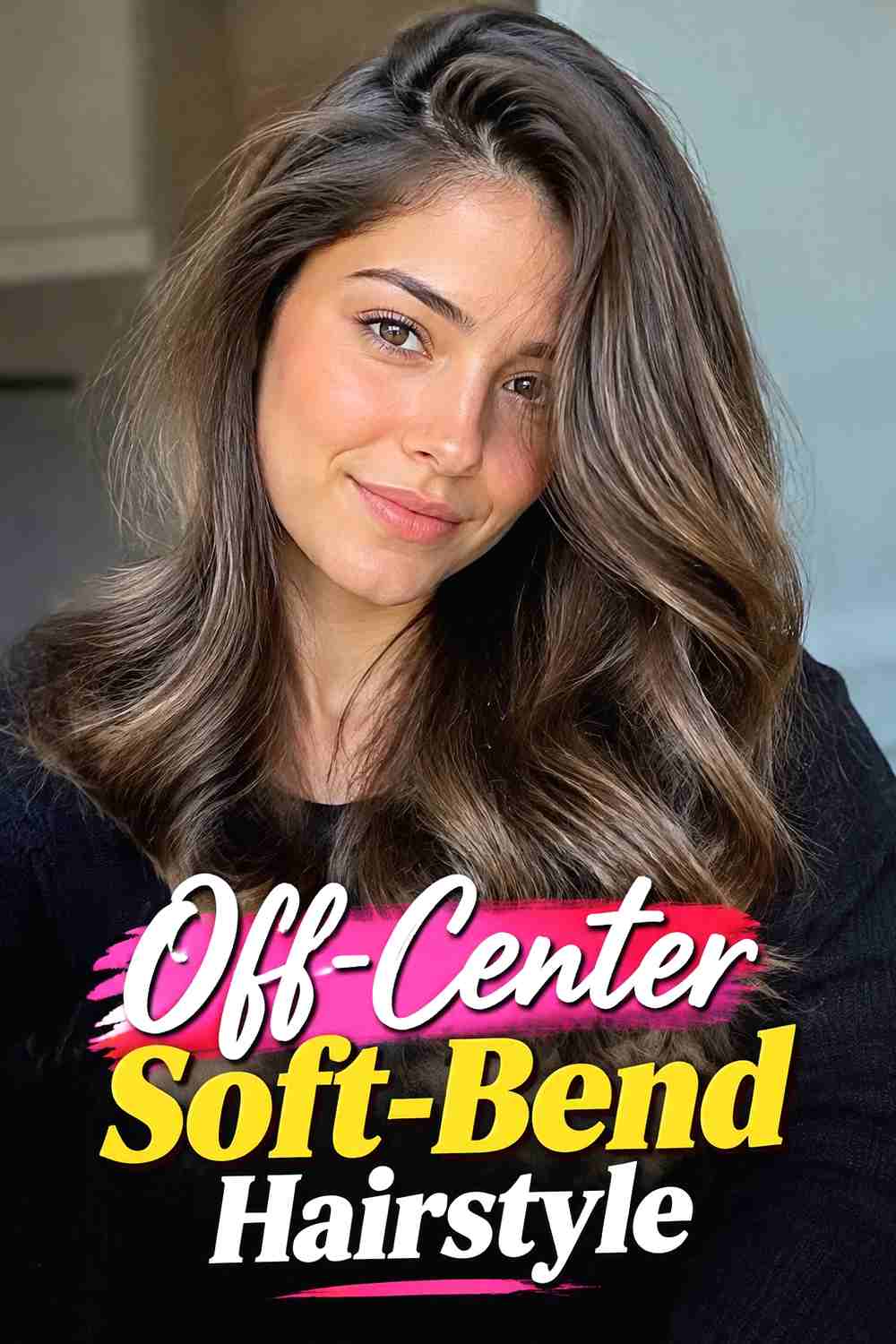
An off-center part gives long hair subtle asymmetry while broad soft bends create movement farther down the lengths. The top remains smooth and relatively low-volume, making the hairstyle comfortable with collared shirts and close-fitting vest necklines. One side naturally carries slightly more hair, but both sides remain visible to preserve balance. Rather than forming distinct curls, the bends should appear almost accidental, with gentle direction changes through the middle and lower sections. This is a strong option for minimalist winter outfits because it adds texture without becoming the dominant visual element. The hair can shift naturally as you move and still retain its overall separated shape.
Best For
This style suits long hair that already has a slight bend or does not hold highly structured curls for long periods.
Pro Tip
Move the part only a little from center to create lift without producing a dramatically heavier side.
12. Brushed Out Separated Wave Hairstyle
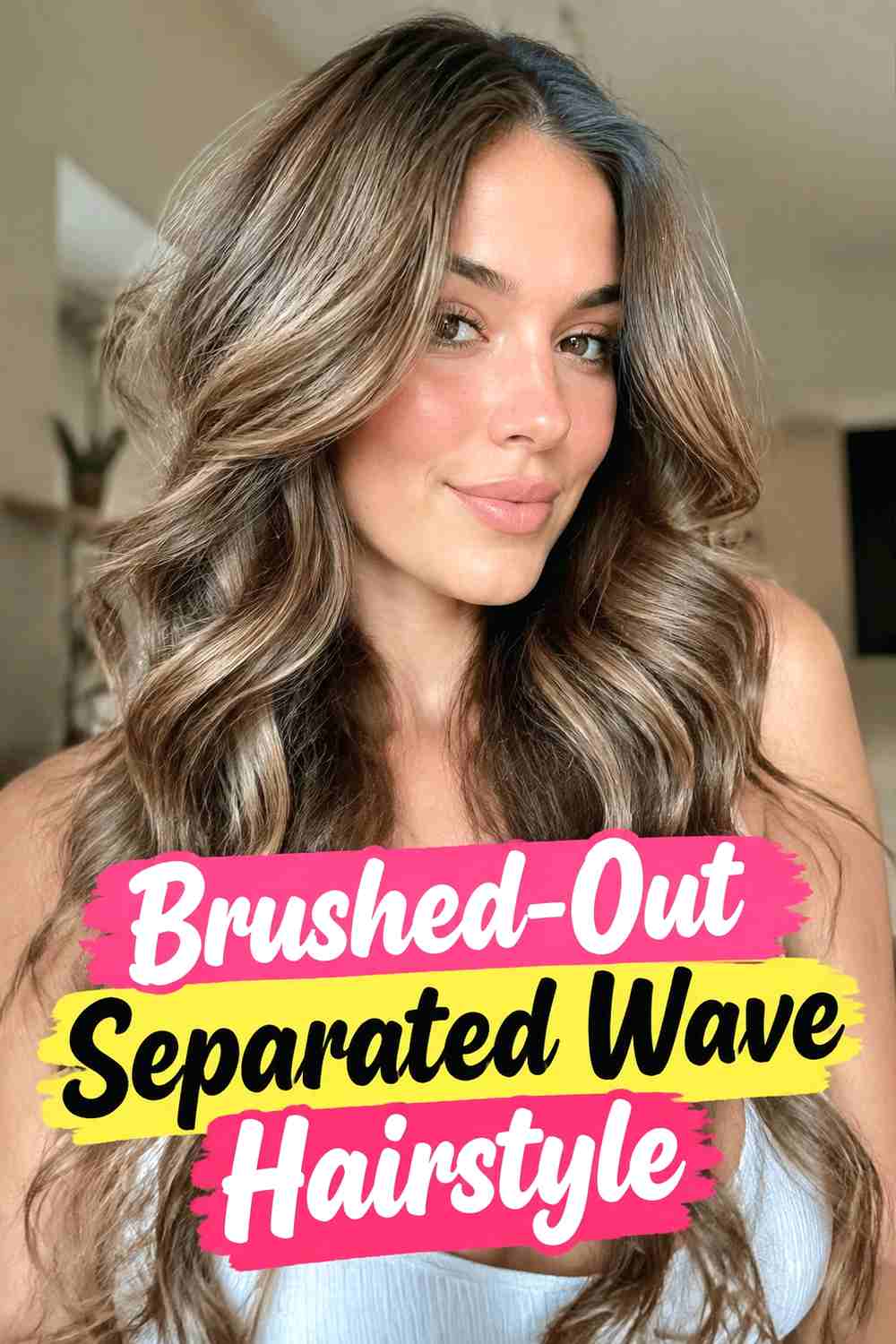
Brushed-out waves create a soft, plush appearance while visible separation keeps the style from becoming overly dense. Begin with larger curls or bends, allow them to cool, and brush gently until they merge into broader flowing sections. Then use your fingers to separate a few pieces so the final result shows natural variation rather than one uniform wave sheet. With a winter vest, the style can sit partly forward and partly behind the shoulders, which helps maintain visibility of both the hair and outfit. The finish feels polished enough for dressier shirt-and-vest combinations but still relaxed because the individual sections move freely instead of staying fixed.
Styling Notes
Brush gradually and stop once the waves begin to connect; overbrushing can remove too much shape.
Why It Works
The soft volume contrasts nicely with structured vest fabrics while the separated sections keep the overall silhouette wearable.
13. Shoulder Split Long Wave Hairstyle
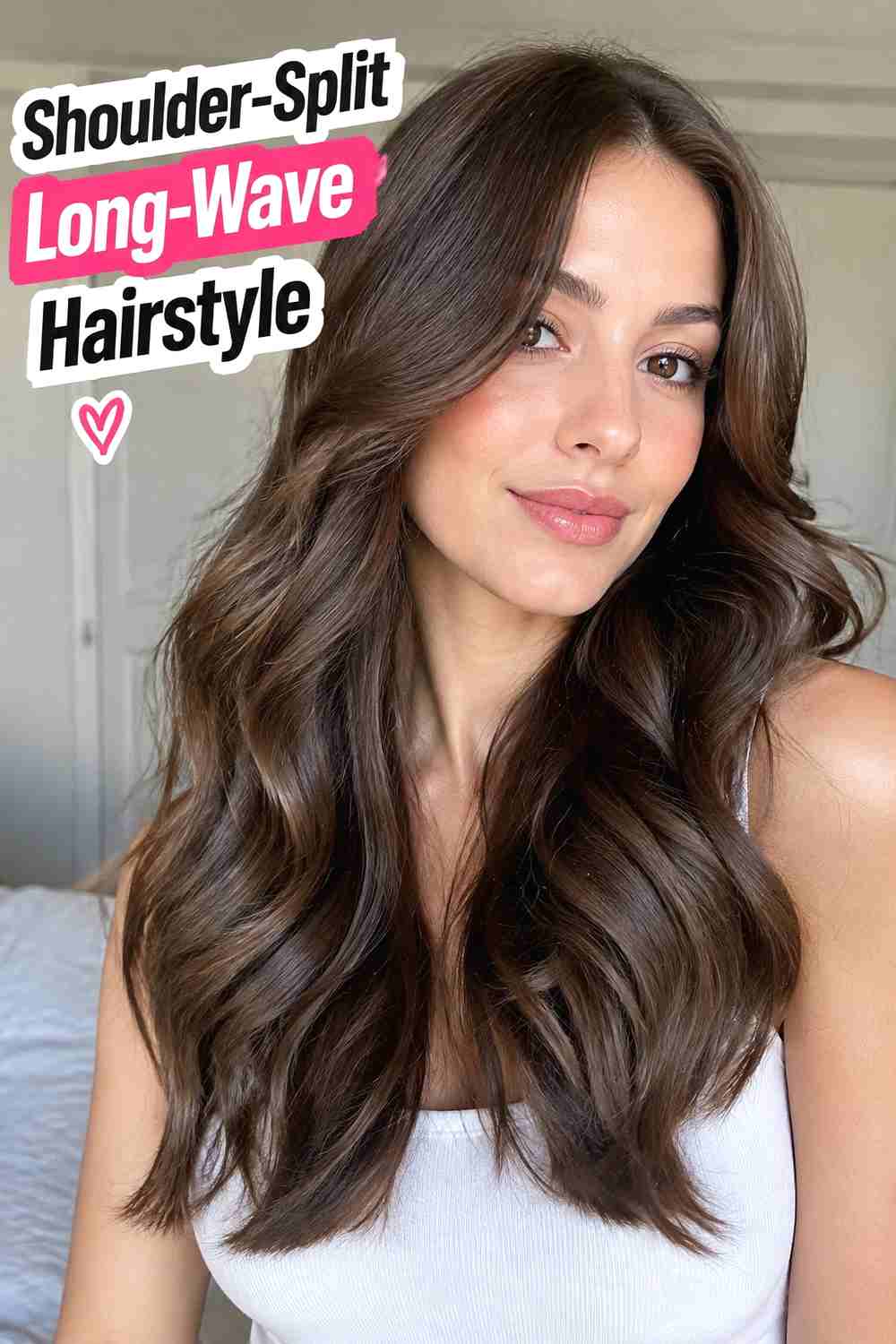
Dividing long waves across both shoulders creates a balanced front-facing look that works especially well with open or V-neck winter vests. Each side can contain several broad wave sections, leaving a narrow area through the center where the shirt and vest remain visible. The roots should stay relatively controlled so the strongest movement begins farther down and does not crowd the neckline. A center part emphasizes symmetry, while an off-center part can make one side slightly fuller. Keep the ends soft and separated rather than curling them into identical shapes. The shoulder split allows the full length to show while still making the layered winter outfit feel intentional.
Best For
Medium-density long hair works especially well because each shoulder can carry enough hair to show texture without becoming bulky.
Wear & Maintenance
Reposition the two sections after removing a coat or scarf so the waves do not remain flattened in random directions.
14. Back Draped Separated Wave Hairstyle
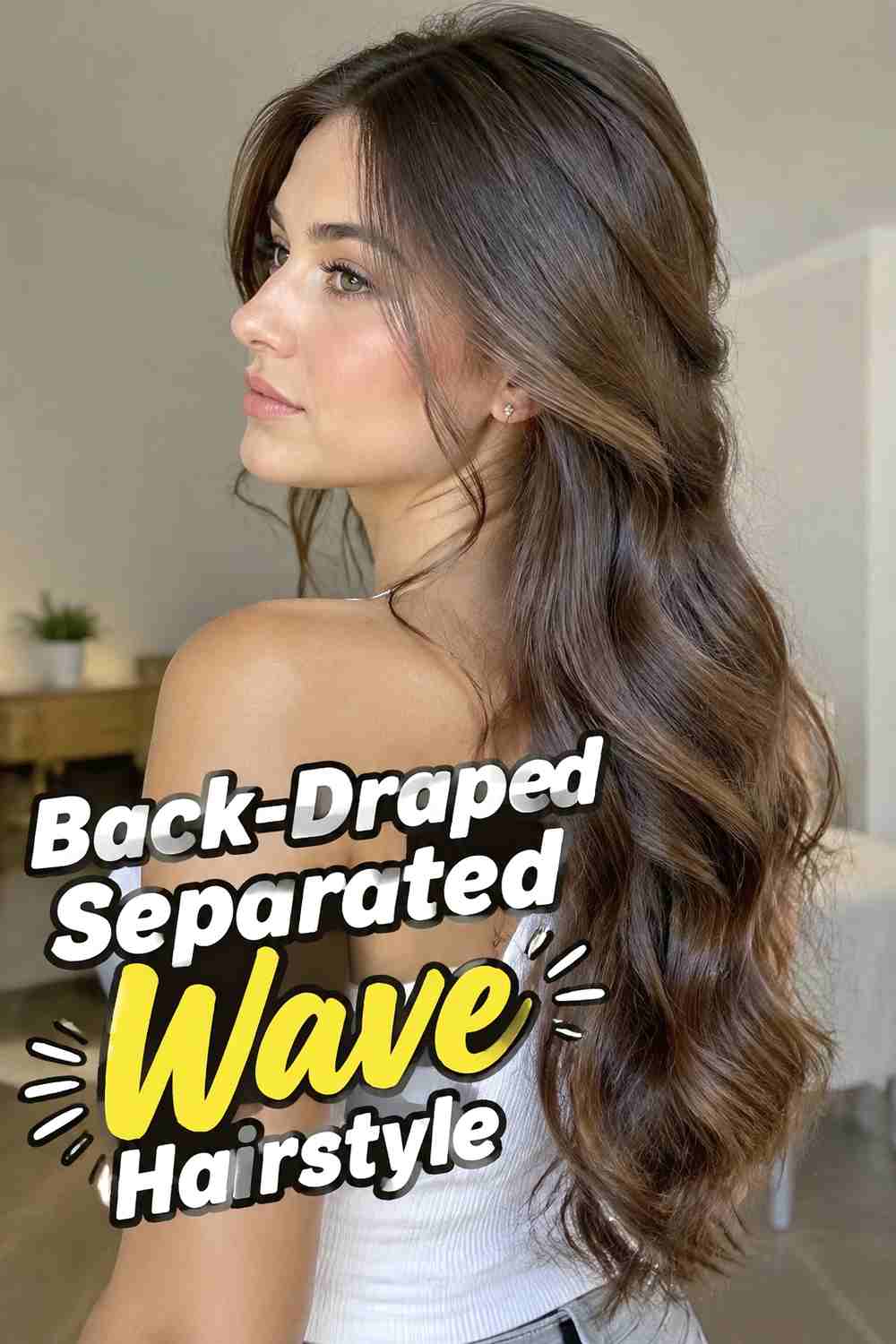
Wearing most of the long waves behind the shoulders keeps the entire shirt-and-vest combination visible from the front. A few shorter or face-framing pieces can remain forward, but the majority of the length falls down the back in clearly separated waves. This placement works especially well with statement shirts, patterned fabrics, or vests that have distinctive buttons and pockets. The waves should maintain enough definition to remain visible from the side and back without expanding excessively across the shoulders. A touch of root lift can stop the crown from appearing flat, but the overall silhouette should remain streamlined and controlled.
Why It Works
Moving the longest sections backward preserves the outfit’s front details while still allowing the texture to show from other angles.
Pro Tip
Arrange the hair over the vest rather than trapping it beneath the vest collar, which can flatten the upper wave pattern.
15. Deep Side Swept Long Wave Hairstyle
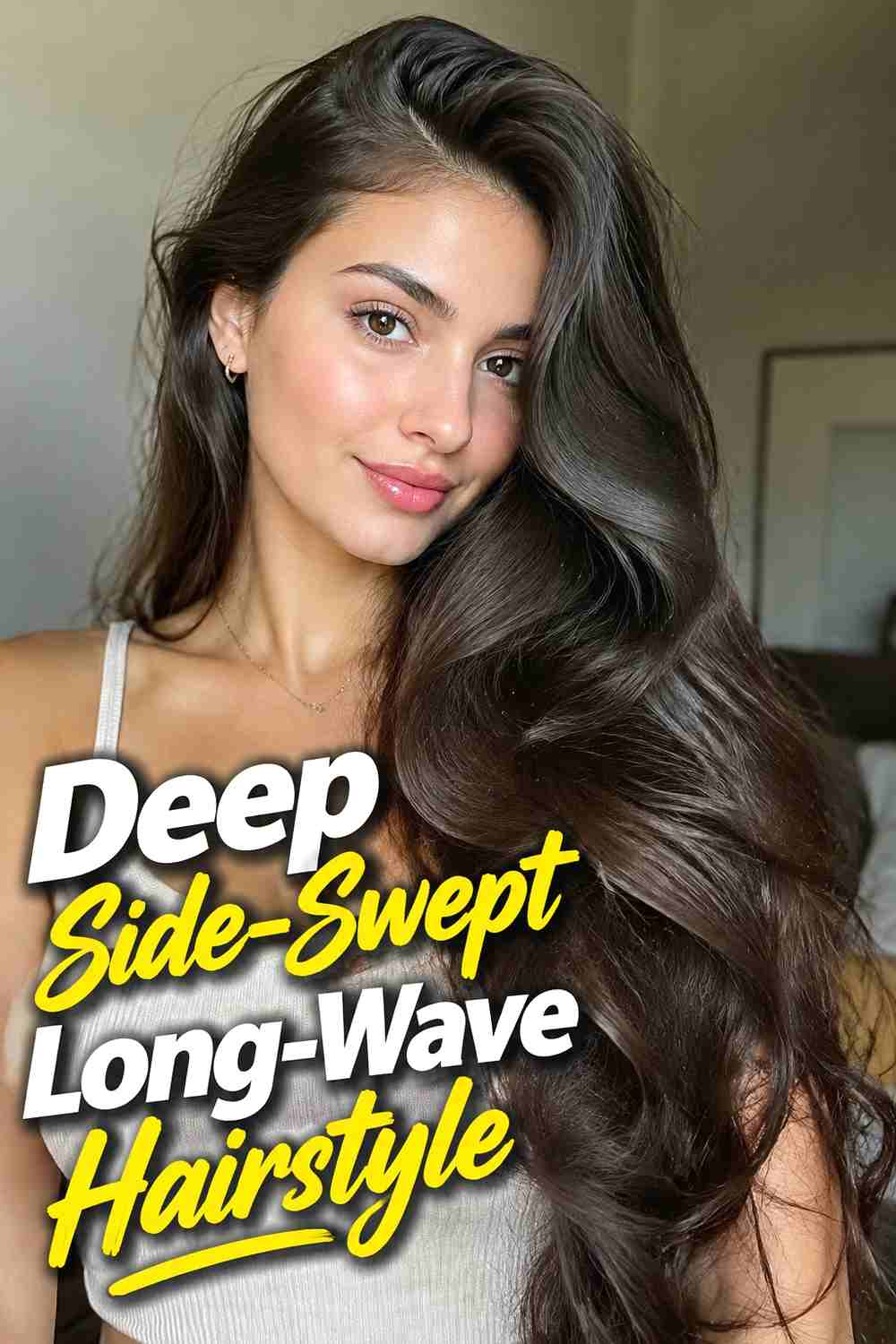
A deep side sweep gives separated long waves a dramatic directional finish without requiring a complex updo. Most of the hair falls over one shoulder in several distinct sections, while the opposite side stays tucked behind the shoulder or ear. This arrangement creates a strong asymmetry that looks particularly effective with simple winter vests and crisp shirts. Keep the roots smooth on the lighter side and allow moderate lift where the heavier section begins. Loose wave variation through the lower lengths prevents the sweep from becoming one solid mass. Because nearly all the hair sits on one side, this style also keeps a large portion of the vest front exposed.
Styling Notes
Guide the hair to one side before separating the waves so each section follows the same overall direction without becoming identical.
Best For
This option suits medium to thick long hair and occasions where a stronger, more editorial silhouette feels appropriate.
16. Soft Curved End Wave Hairstyle
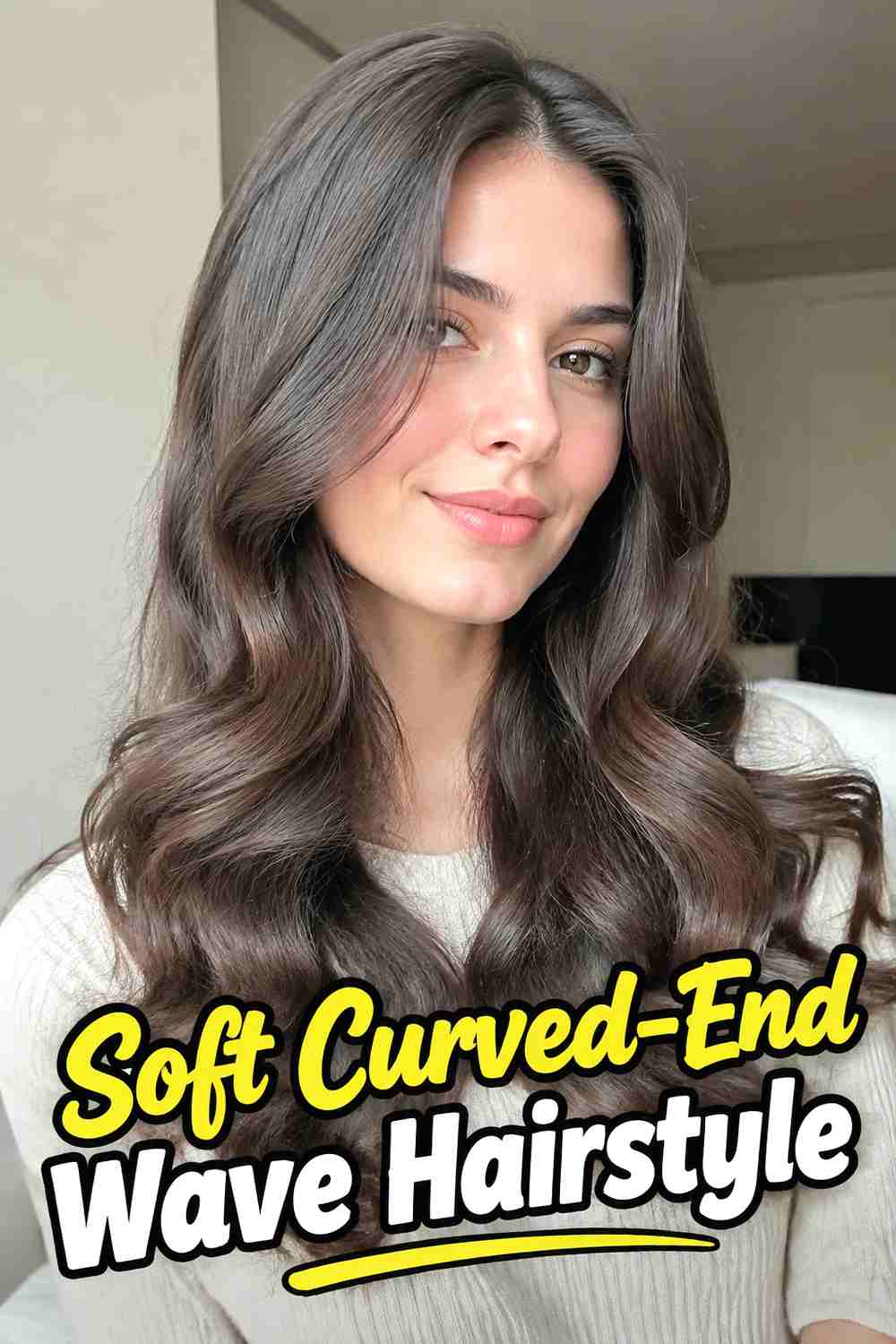
This style keeps the upper and middle lengths mostly smooth, then introduces soft waves and curved movement closer to the ends. The restrained texture near the shoulders means shirt collars and vest edges remain easy to see, while the lower sections still provide movement and separation. Each end can turn slightly differently, creating a natural finish rather than a uniform row of curls. The look is especially useful for long hair that tends to feel heavy when fully waved from top to bottom. A clean part and polished surface keep the overall style refined, making it a natural fit for tailored shirts, fitted knit tops, and simple padded vests.
Why It Works
Concentrating movement near the bottom preserves a sleek upper silhouette while preventing long hair from looking completely straight.
Wear & Maintenance
The curved ends are easy to refresh selectively, so you do not need to restyle the full length if a few sections flatten.
17. Piecey Long Layer Wave Hairstyle
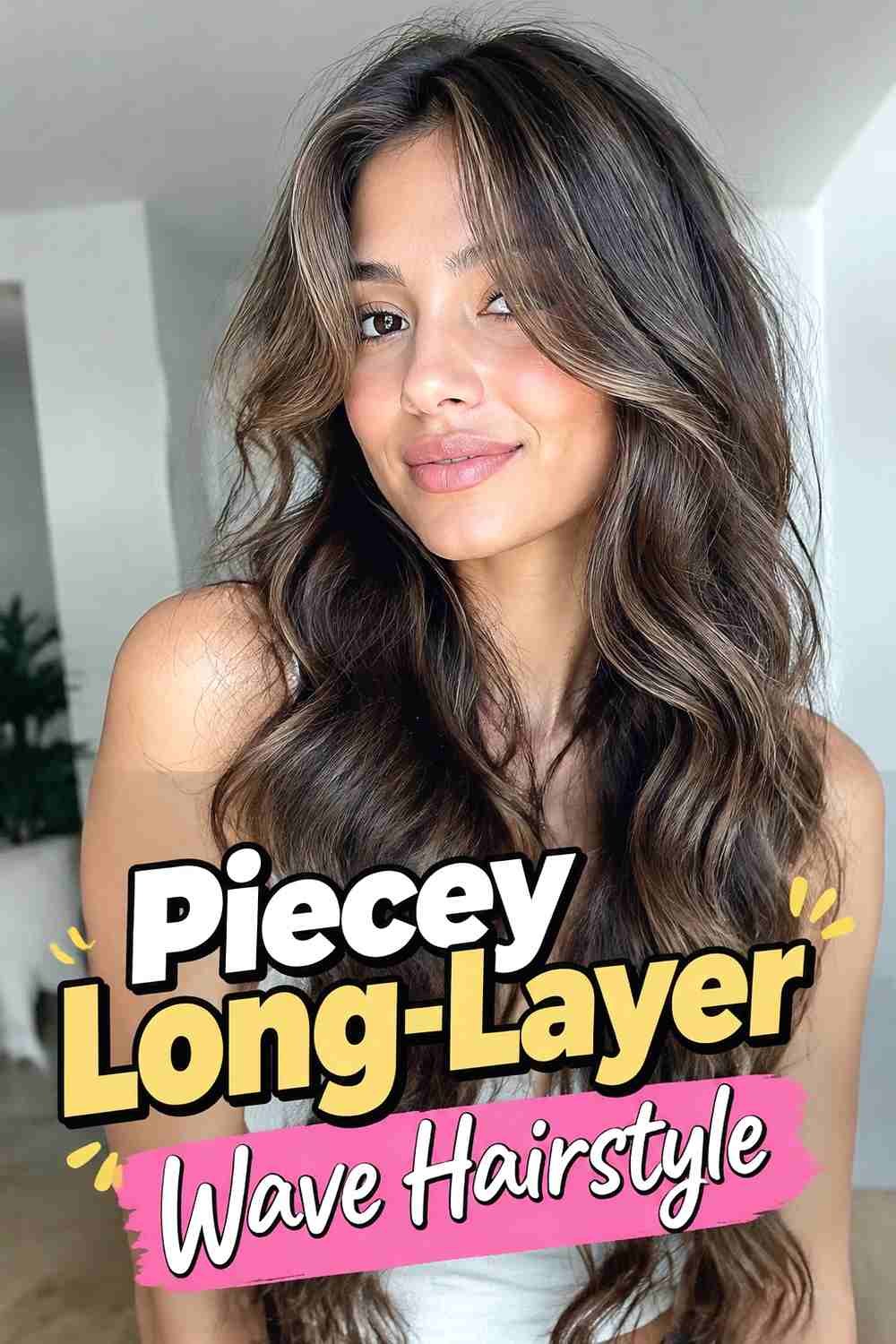
Piecey layers create deliberate separation through long waves, allowing individual sections to remain visible against winter clothing. The haircut itself provides much of the structure, with shorter layers breaking away from longer lengths around the chest and shoulders. Soft bends enhance that separation without turning every piece into a defined curl. This works especially well over plain shirts and solid-color vests because the layered hair creates texture and visual depth. Avoid coating the ends heavily with smoothing product, since too much weight can cause the sections to merge together. The finished style should feel light, slightly tousled, and clearly layered while still maintaining enough polish for a coordinated winter outfit.
Hair Type & Length
Medium to thick hair with long internal or surface layers tends to show the piecey effect most clearly.
Pro Tip
Separate the finished waves with your fingertips and leave small gaps between sections instead of fluffing the entire style.
18. Wind Swept Separated Wave Hairstyle
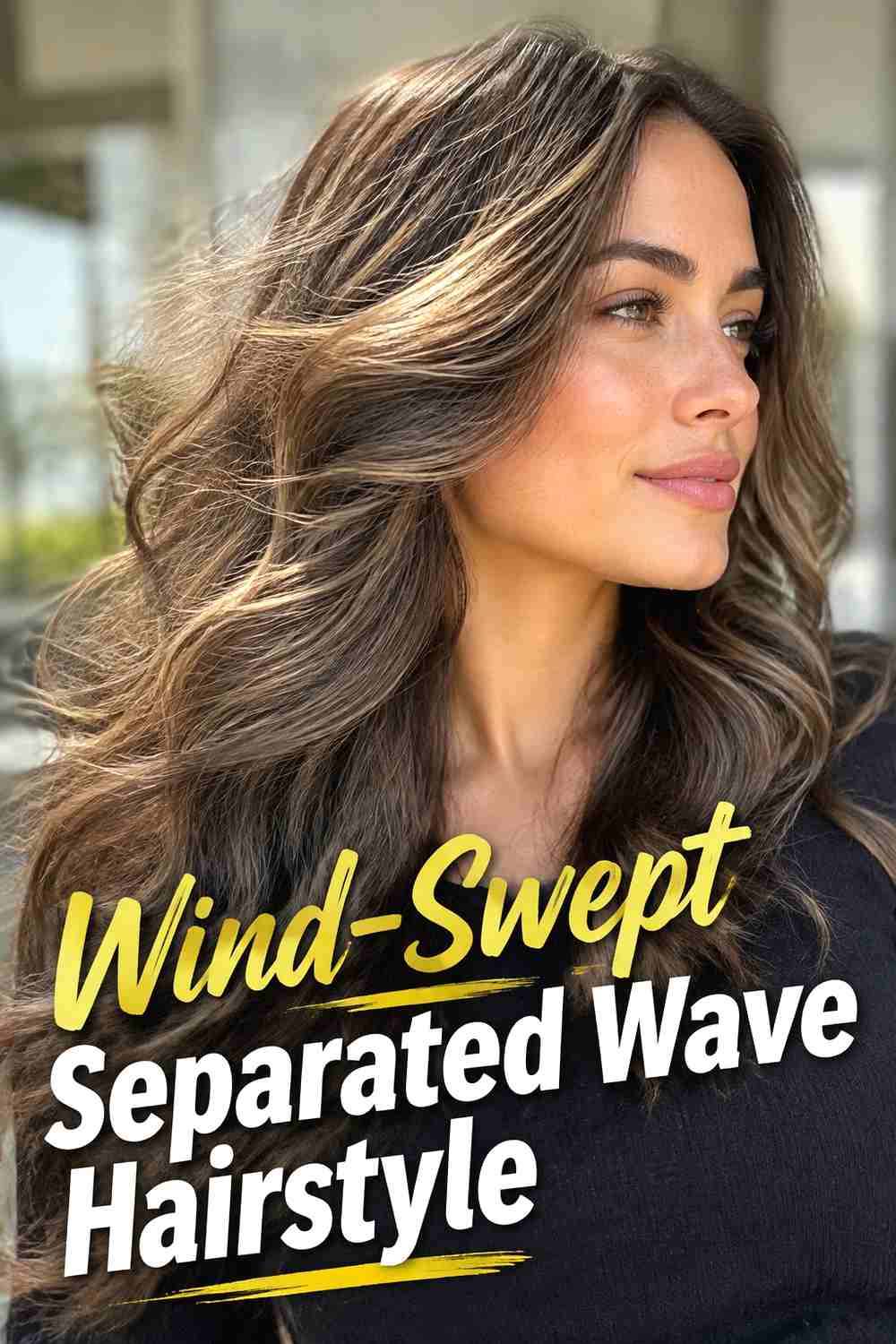
A wind-swept finish gives long waves a relaxed outdoor quality that suits casual winter vest outfits. The hair can shift slightly toward one side, with several visible wave sections moving independently rather than forming a perfectly symmetrical arrangement. Keep the overall direction believable and allow a few fine strands around the face to move naturally. The lower lengths should still show weight and gravity, avoiding exaggerated floating volume. This style looks especially appropriate with denim shirts, flannels, chunky knits, or utility-inspired vests because the imperfect movement feels intentional rather than overly styled. Flexible hold helps preserve the wave shape while allowing the sections to respond naturally to movement.
Styling Notes
Avoid firm hairspray that freezes the waves into place; this look depends on softness and slight irregularity.
Best For
Outdoor photos, casual winter walks, and layered everyday outfits suit this more relaxed finish particularly well.
19. Minimal Loose Wave Separation Hairstyle
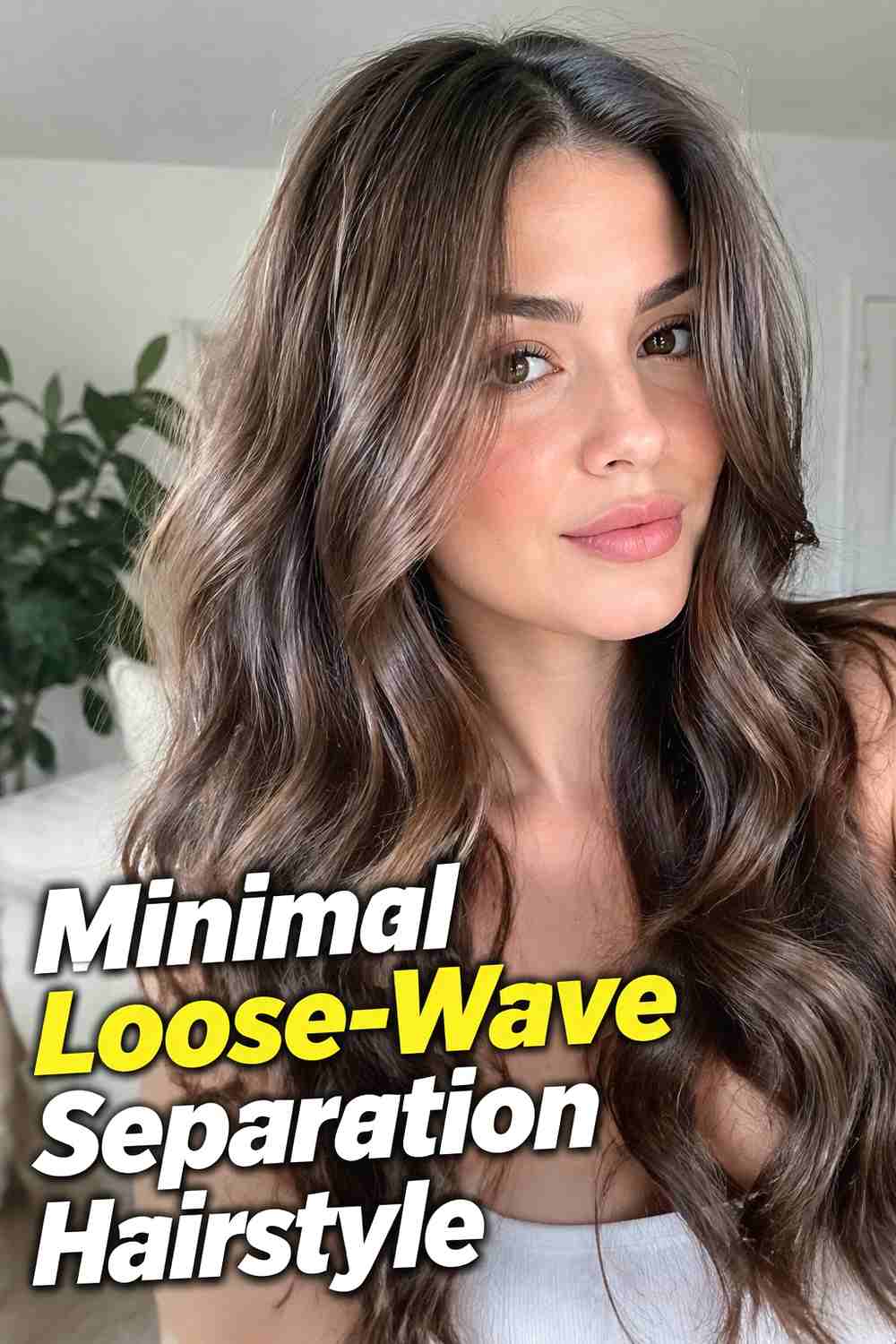
Minimal loose-wave separation is ideal when you want long hair to look naturally styled rather than obviously curled. The roots remain simple, the mid-lengths carry just a few broad bends, and the ends fall with soft movement. Instead of creating texture in every section, leave some pieces straighter so the final pattern feels varied and believable. Worn with a vest-and-shirt combination, the understated waves add softness without covering the outfit’s structure. The hair can sit partly over the shoulders and partly behind them, creating an easy balance that requires little rearranging. This style is especially practical for everyday wear because small changes in the wave pattern do not disrupt the overall look.
Why It Works
The limited amount of wave keeps the hairstyle light, modern, and compatible with layered winter clothing.
Pro Tip
Focus on only a few strategic bends through the visible front sections rather than styling every strand identically.
How to Choose the Right Look
Start with your natural wave pattern and hair density. If your hair already bends easily, natural texture, minimal loose waves, or soft off-center bends may need the least styling. Straighter hair can create clearer structure with polished S-waves, defined mid-length waves, or curved ends.
Think about the vest and shirt neckline too. High collars and bulky padded vests usually pair better with smoother roots and waves that begin below the shoulders. Open V-neck vests or lightweight tailored styles leave more room for front-draped, shoulder-split, or brushed-out volume.
For thick hair, moving some of the length behind the shoulders can prevent the outfit from disappearing underneath the waves. Finer hair may benefit from root lift or feathered layers. Choose flexible hold if movement matters, and reserve stronger definition for sections that need to stay separated throughout the day.
Final Thoughts
Separated long waves work especially well with winter vest-and-shirt outfits because they create texture without hiding the structure of the layers underneath. Choose polished S-waves for refinement, piecey or feathered layers for visible movement, or natural and minimal bends for an easier everyday finish. Adjust how much hair sits forward or behind the shoulders so both the hairstyle and outfit remain clearly visible.
FAQs
1. How do I keep long waves from blending into one large section?
Vary the wave direction, work with smaller groups of hair, and separate the finished sections lightly with your fingers rather than overbrushing them together.
2. Should long waves sit over or behind a winter vest?
Both can work. Bringing some waves forward showcases the texture, while keeping part of the hair behind the shoulders prevents the vest from being completely covered.
3. Which separated-wave style works best with a collared shirt?
Smooth-root styles with waves beginning below the jaw or shoulders usually leave a collared shirt looking cleaner and less crowded.
4. Can naturally wavy hair achieve this look without heat styling?
Yes. Enhance the existing wave pattern, encourage definition in selected sections, and avoid forcing every piece into the same shape.
5. How can I keep separated waves soft instead of stiff?
Use flexible hold, avoid excessive product, and maintain slight variation between sections so the waves can move naturally.
Save your favorite separated-wave look, share these winter outfit ideas, and explore more long-hair inspiration for polished layered styling.