20 Subtle Cornrow Parting Looks With Monochrome Knit Sets
Subtle cornrow parting gives monochrome winter outfits just enough graphic detail while keeping the overall hairstyle polished, wearable, and quietly dimensional.
Monochrome knit sets already create a smooth, coordinated look, so the most effective cornrow details do not need to cover the entire head. A narrow row beside a part, a curved temple braid, or a discreet diagonal accent can add structure while leaving natural curls, coils, twists, stretched texture, or a soft puff as the main feature.
The ideas below focus on believable cornrow construction, clean but not excessively tight parting, and styles that complement simple knit silhouettes rather than overwhelming them. The strongest results preserve realistic hair density, natural edges, and physically believable braid placement while using the cornrow as a deliberate design line.
Quick List
- Center Part Accent Cornrow Hairstyle
- Deep Side Part Cornrow Accent Hairstyle
- Double Side Part Cornrow Hairstyle
- Curved Temple Cornrow Parting Hairstyle
- Single Center Cornrow Parting Hairstyle
- Zigzag Accent Cornrow Parting Hairstyle
- Asymmetrical Side Cornrow Parting Hairstyle
- Parallel Temple Cornrow Hairstyle
- Hidden Side Cornrow Parting Hairstyle
- Crown Line Cornrow Parting Hairstyle
- Off Center Cornrow Accent Hairstyle
- Diagonal Cornrow Parting Hairstyle
- Twin Temple Cornrow Accent Hairstyle
- Low Side Cornrow Parting Hairstyle
- Soft Arc Cornrow Parting Hairstyle
- Fine Line Cornrow Accent Hairstyle
- Half Up Cornrow Parting Hairstyle
- Tucked Side Cornrow Parting Hairstyle
- Micro Row Parting Cornrow Hairstyle
- Minimalist Cornrow Frame Hairstyle
1. Center Part Accent Cornrow Hairstyle
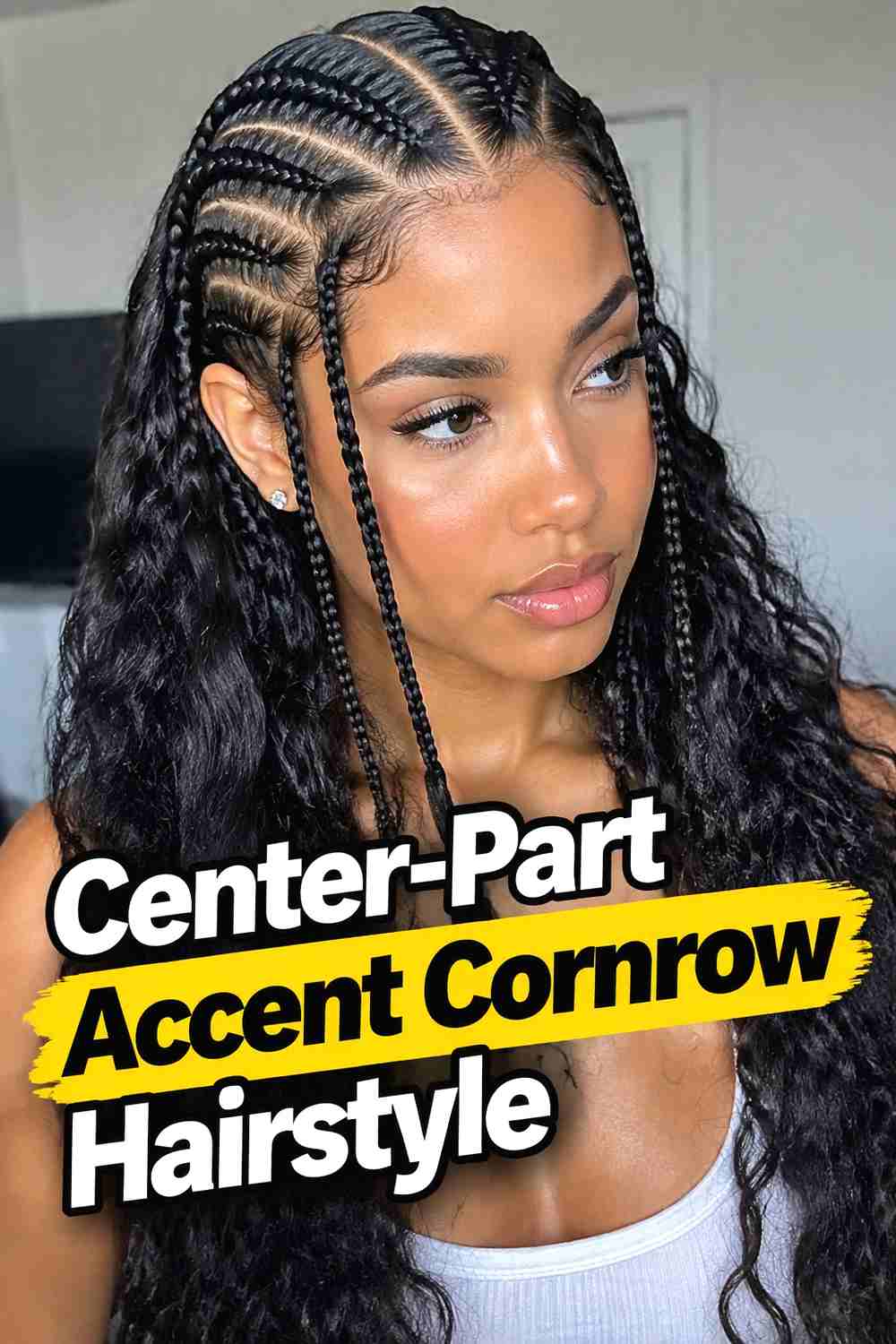
A center-part accent uses one narrow cornrow beside the main part while leaving most of the hair loose and textured. The subtle braided line adds definition without turning the hairstyle into a full cornrow set, making it a natural match for streamlined monochrome knits. Keep the center part precise but comfortable, then place the braid close enough to emphasize the symmetry without flattening the surrounding hair. The loose section can be worn in defined coils, a twist-out, or softly stretched texture depending on the finish you prefer. Because the outfit is tonal and minimal, the small braided detail becomes noticeable without competing with the overall look.
Why It Works
The single graphic line adds contrast to a symmetrical hairstyle while keeping the majority of the natural texture visible.
2. Deep Side Part Cornrow Accent Hairstyle
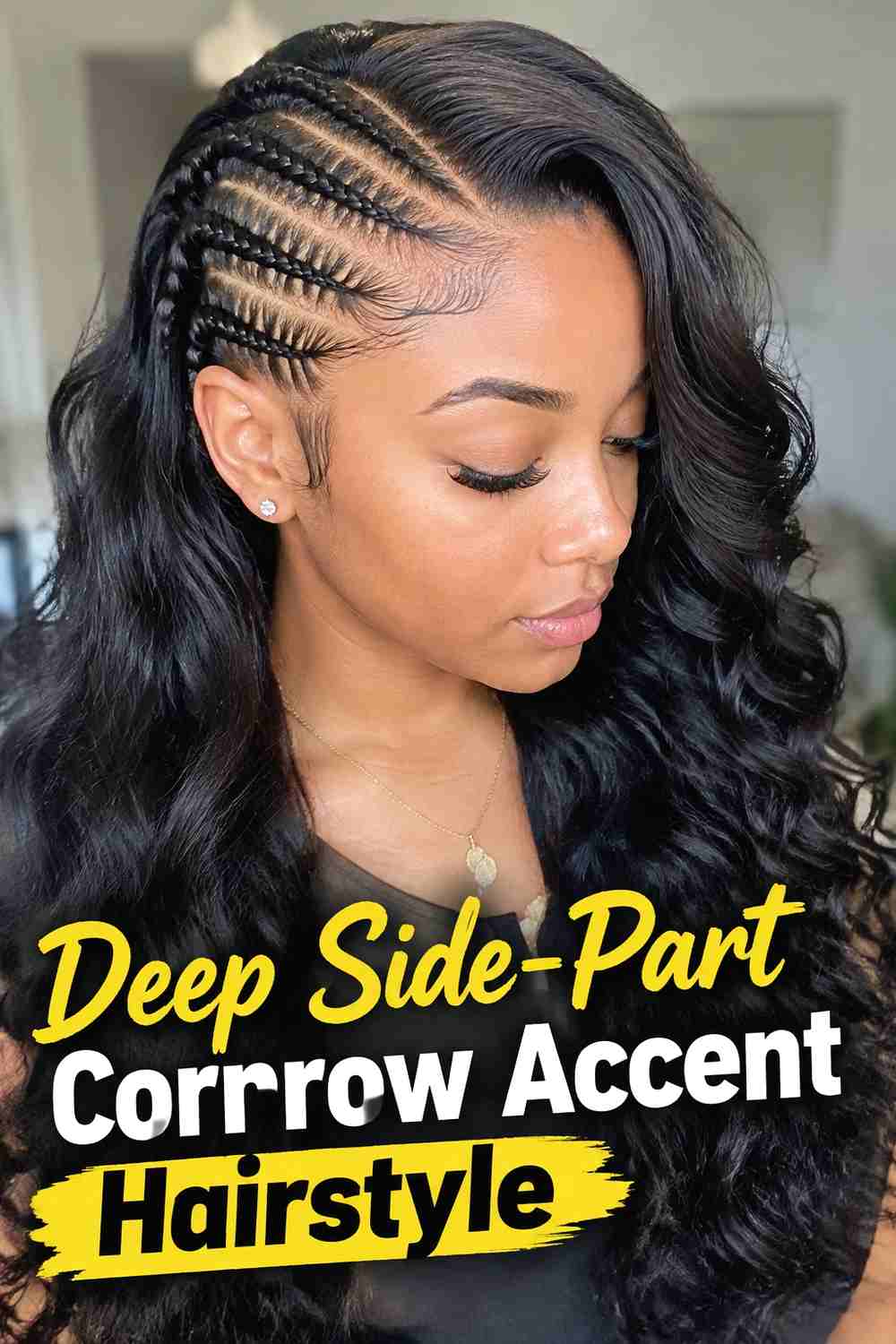
A deep side part paired with a slim cornrow creates an elegant asymmetrical shape. Position the braid directly beside the part on the smaller side, then allow the fuller section to sweep naturally across the opposite side of the head. This works particularly well with fitted monochrome turtlenecks or knit tops because the clean neckline gives the directional hair shape room to stand out. Keep the braid narrow and comfortably tensioned so it acts as an accent rather than a dominant element. The loose hair can remain coily, curly, or softly stretched, with most of the volume concentrated away from the braid for a polished contrast.
Styling Notes
Set the part before beginning the cornrow so you can keep the braided line crisp without repeatedly shifting the surrounding hair.
3. Double Side Part Cornrow Hairstyle
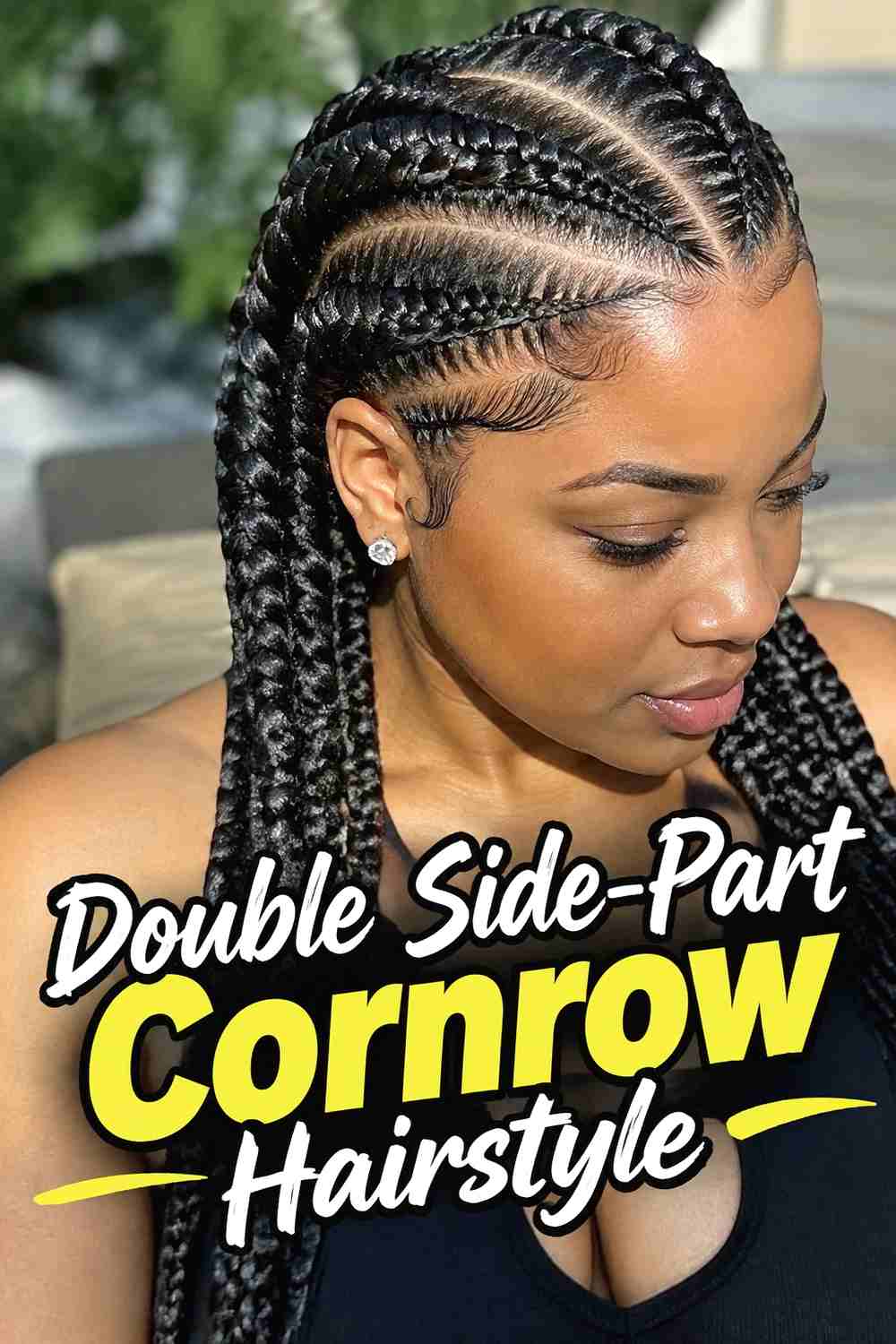
Two narrow cornrows placed beside a side part create more definition than a single accent while remaining understated enough for office or everyday winter styling. Keep the rows parallel and relatively close together, leaving generous loose texture around them so the style does not become overly braided. The rest of the hair can fall naturally or be gathered into a low puff depending on the knit neckline. This detail pairs well with monochrome sets because the repeated lines echo ribbed sweater textures and structured seams. Avoid making the two cornrows dramatically different in width; subtle consistency helps the design feel intentional and polished.
Best For
This is useful when one accent braid feels too minimal but you still want the overall hairstyle to remain predominantly loose.
4. Curved Temple Cornrow Parting Hairstyle
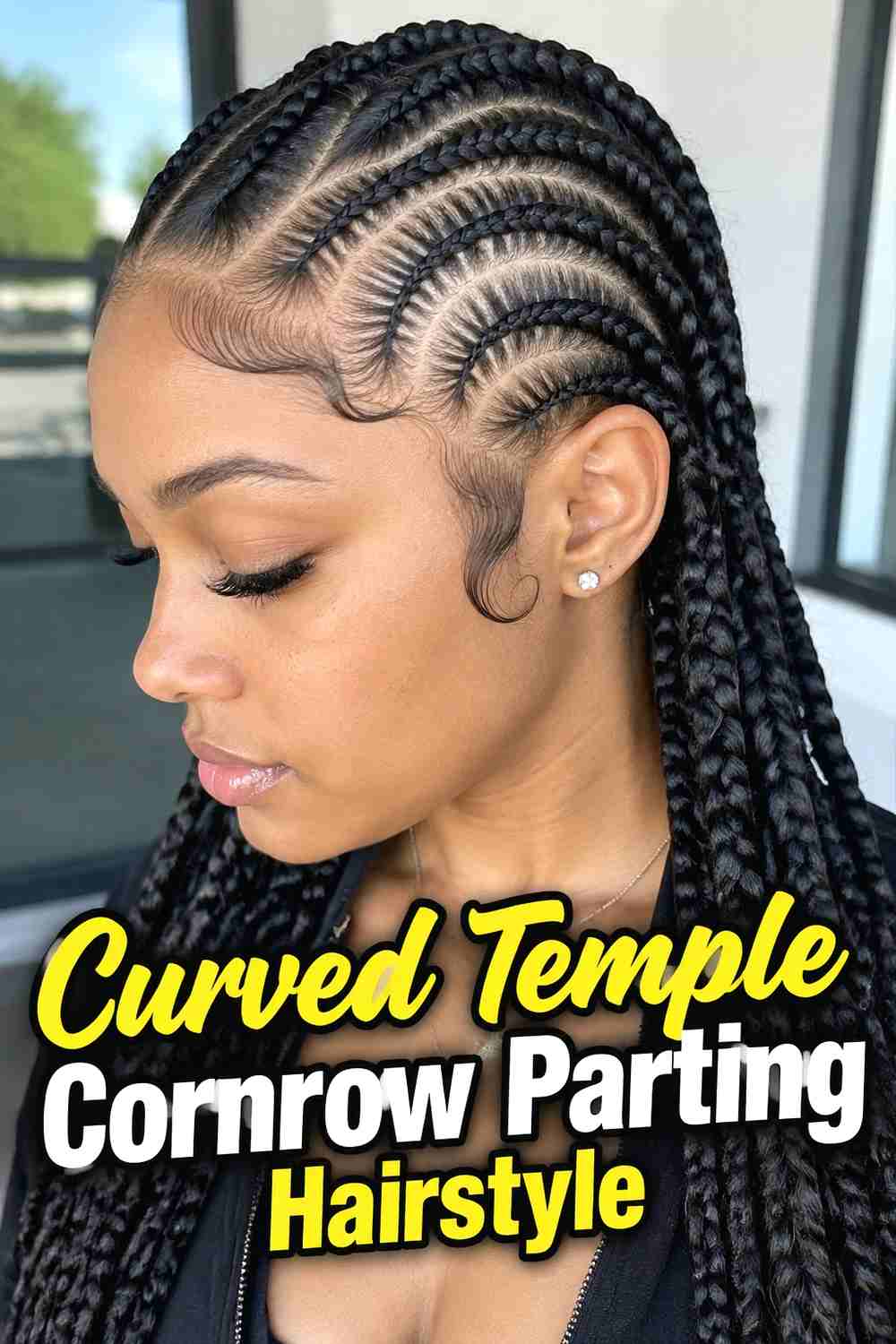
A curved temple cornrow follows the natural contour above the ear instead of running in a perfectly straight line. The soft arc creates a refined detail that looks especially elegant with monochrome knit dresses, matching sweater sets, and simple winter accessories. Keep the braid close to the scalp and allow it to disappear naturally into the loose hair or a low gathered section. Because the line curves with the head, it can feel softer than a geometric part while still giving the hairstyle structure. Defined curls or coils on the opposite side create a beautiful contrast between controlled braiding and natural volume without requiring additional decorative elements.
Why It Works
The curved braid introduces movement that softens the straight lines often found in coordinated knitwear.
5. Single Center Cornrow Parting Hairstyle
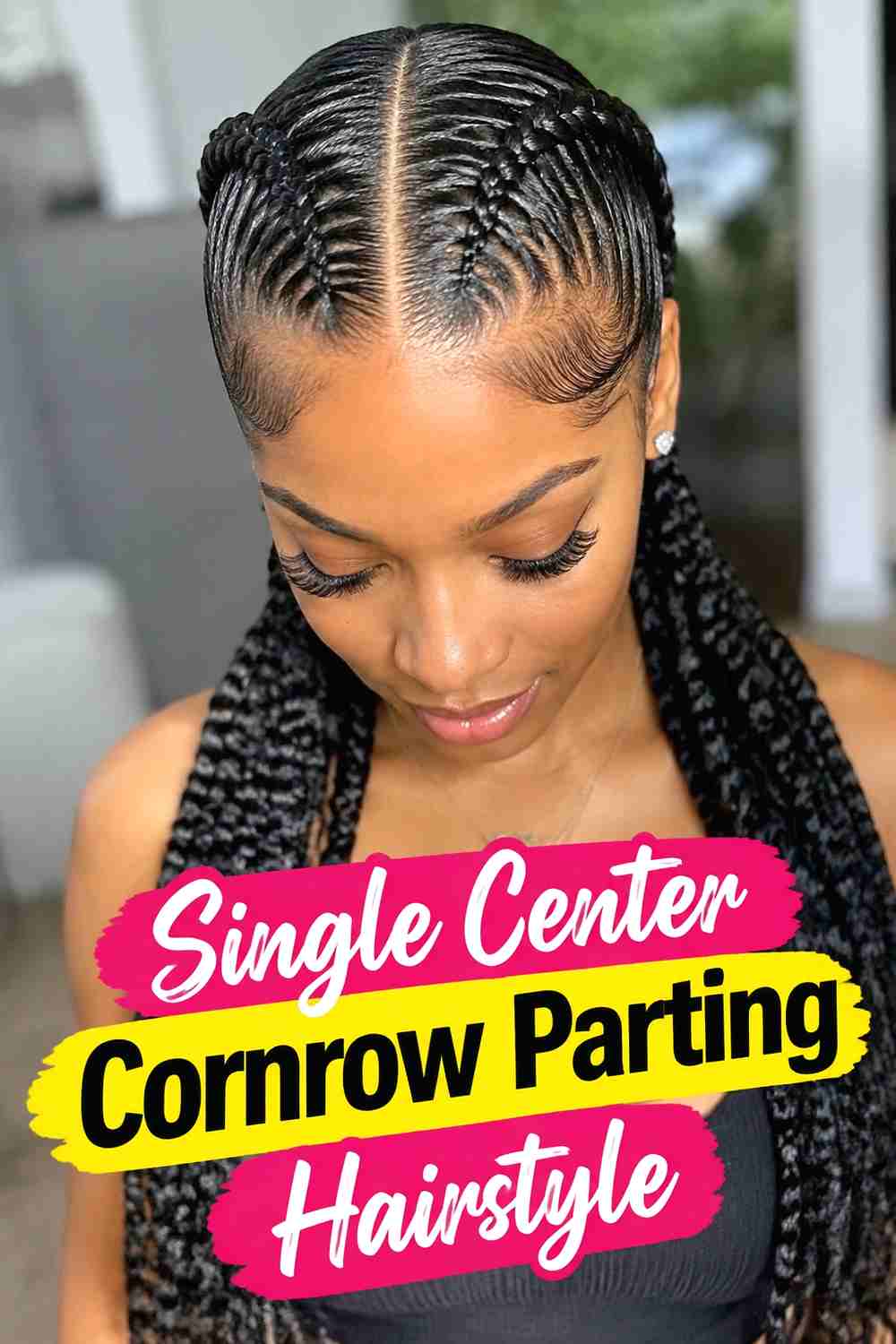
A single central cornrow can replace a conventional center part with a narrow braided line running backward from the front hairline. The surrounding hair stays loose on both sides, creating a symmetrical shape with one subtle structural detail at the top. This approach is particularly effective when the rest of the hairstyle has volume because the slim braid remains visible without dominating the silhouette. Pair it with a monochrome knit set in a simple tone and let the hair texture provide most of the visual interest. Keep the braid comfortably narrow and avoid pulling the front sections excessively tight simply to make the line appear sharper.
Styling Notes
Allow a little natural softness near the hairline so the braid looks integrated into the hairstyle rather than overly severe.
6. Zigzag Accent Cornrow Parting Hairstyle
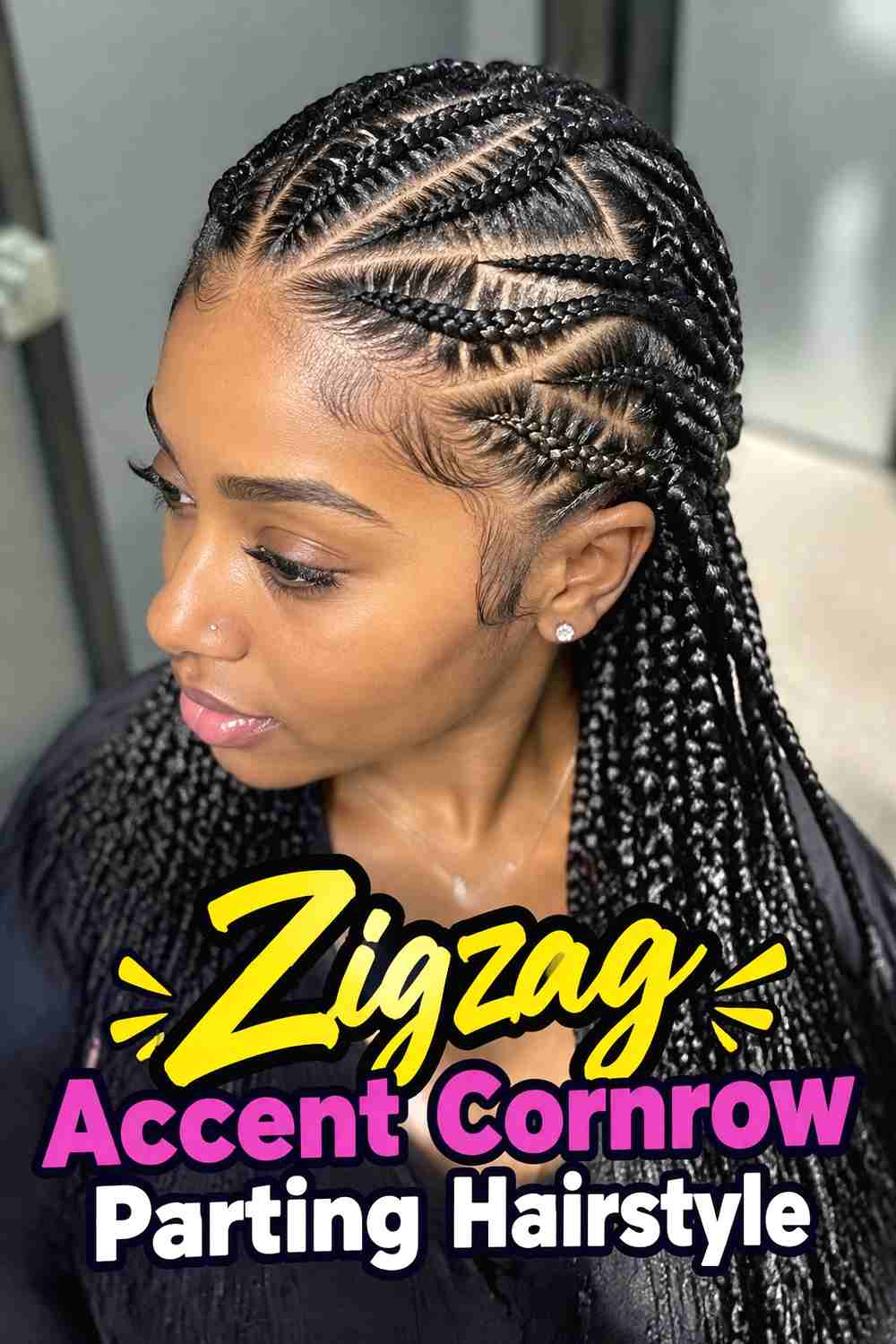
A small zigzag part introduces a slightly more playful detail while the actual cornrow remains narrow and understated. Use the zigzag only across a limited section near the temple or upper side, then transition into a simple cornrow that disappears into the loose hair. This keeps the pattern subtle enough to complement a monochrome knit outfit instead of competing with it. The design works especially well when the rest of the hair is smooth at the roots and fuller through the lengths, because the parting remains visible. Avoid creating an overly intricate zigzag; a few gentle directional changes are enough to give the style personality.
Pro Tip
Keep the zigzag section short so the pattern reads clearly without turning the entire hairstyle into a highly graphic design.
7. Asymmetrical Side Cornrow Parting Hairstyle
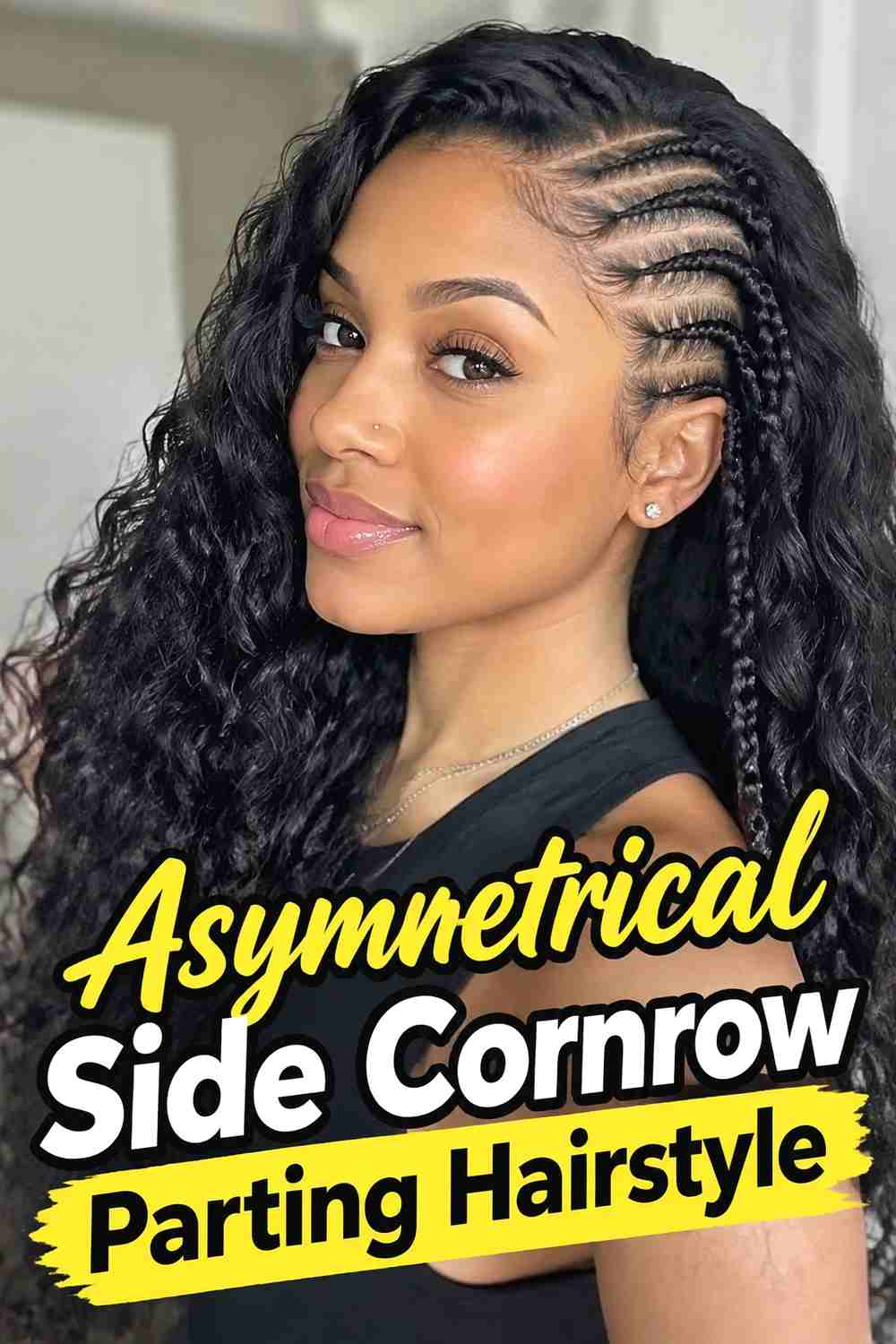
An asymmetrical side cornrow shifts the visual balance of the hairstyle without requiring multiple rows. Place one braid at a diagonal beside a deep part, then direct the remaining hair toward the opposite side for controlled volume. This creates a modern silhouette that pairs well with sleek monochrome knit sets, especially when the outfit itself has minimal embellishment. The braid can end near the crown or disappear into a puff, twist-out, or loose stretched section. Keep the braided side relatively compact while allowing the free side to show more texture. The contrast should feel intentional but still wearable for work, daytime outings, or understated evening styling.
Best For
Choose this look when you enjoy directional volume and want the cornrow to act as a subtle structural anchor.
8. Parallel Temple Cornrow Hairstyle
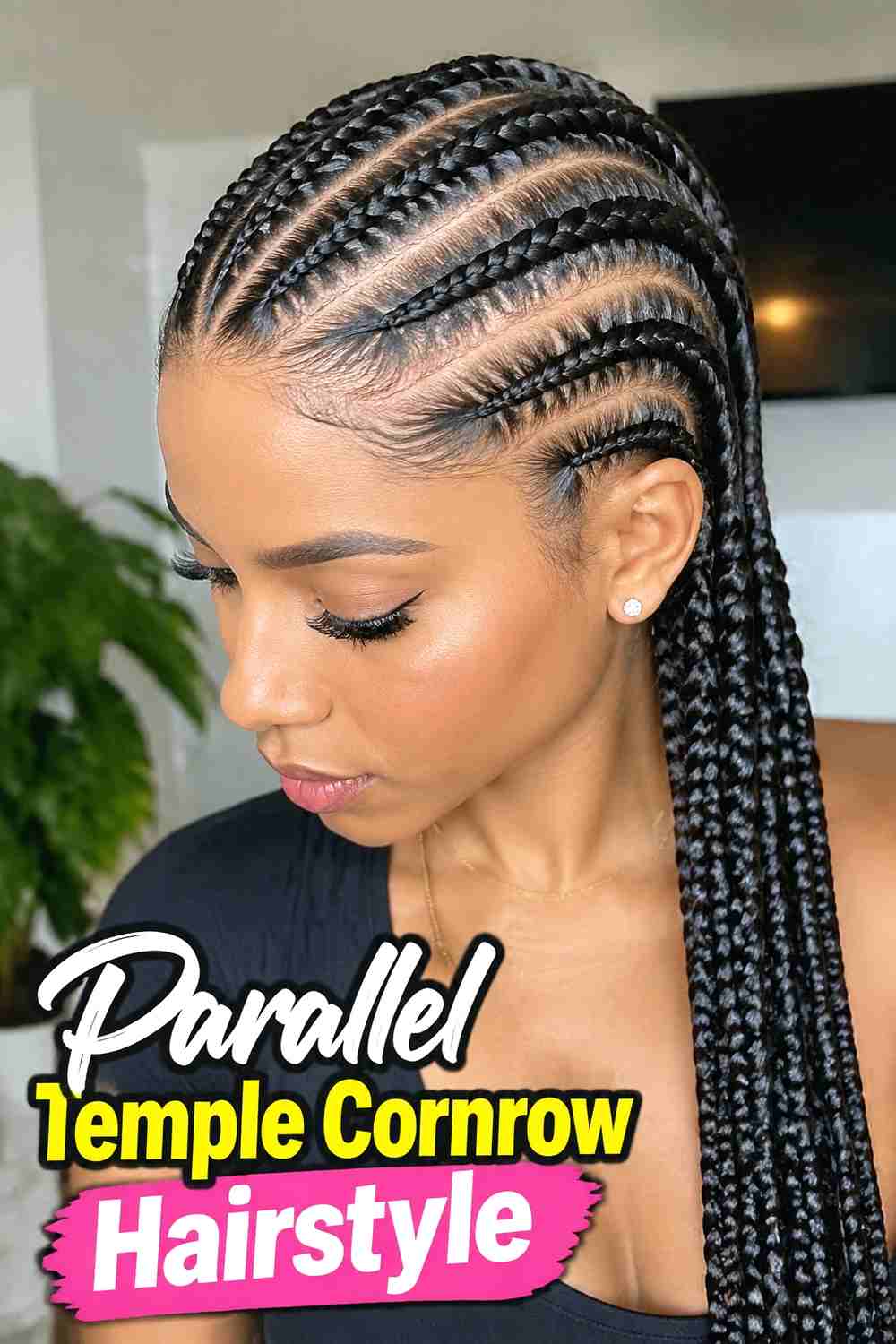
Parallel temple cornrows use two fine rows placed close together above one ear. The small spacing creates a neat linear detail while leaving the crown and most of the hair completely free. This works beautifully with softly textured hair worn down because the cornrows briefly reveal themselves when the hair shifts, rather than dominating the entire look. A monochrome knit set keeps the styling visually calm and lets the braid detail provide just enough interest. Position the rows where they can sit comfortably beneath a winter coat or headband if needed, and keep them narrow enough that the surrounding natural density remains the main feature.
Wear & Maintenance
Avoid placing bulky accessories directly over the rows, since repeated pressure can disturb both the braids and clean parting.
9. Hidden Side Cornrow Parting Hairstyle
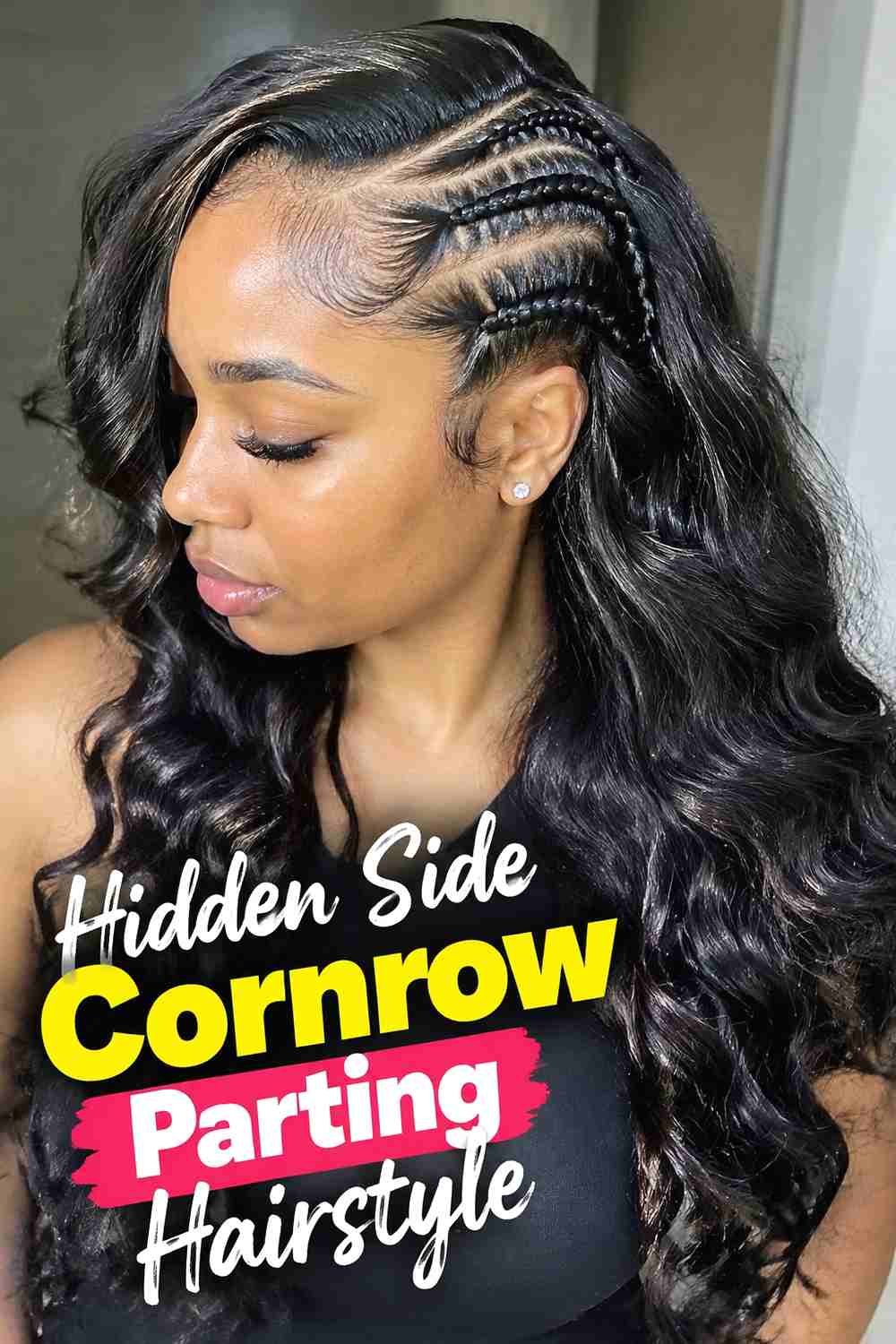
A hidden side cornrow is designed to reveal itself only when the loose hair is swept back or tucked behind the ear. Place a single narrow row beneath the upper side section, then let the surrounding curls, coils, or stretched hair fall over it naturally. The result feels understated and versatile, especially with monochrome outfits where small details can have more visual impact. At the office, the braid may remain mostly concealed; for dinner or an event, moving the hair behind the ear instantly exposes the parting design. Keep the row close to the temple and avoid removing too much density from the loose section above it.
Why It Works
The detail can shift from nearly invisible to clearly defined without requiring the hairstyle itself to be redone.
10. Crown Line Cornrow Parting Hairstyle
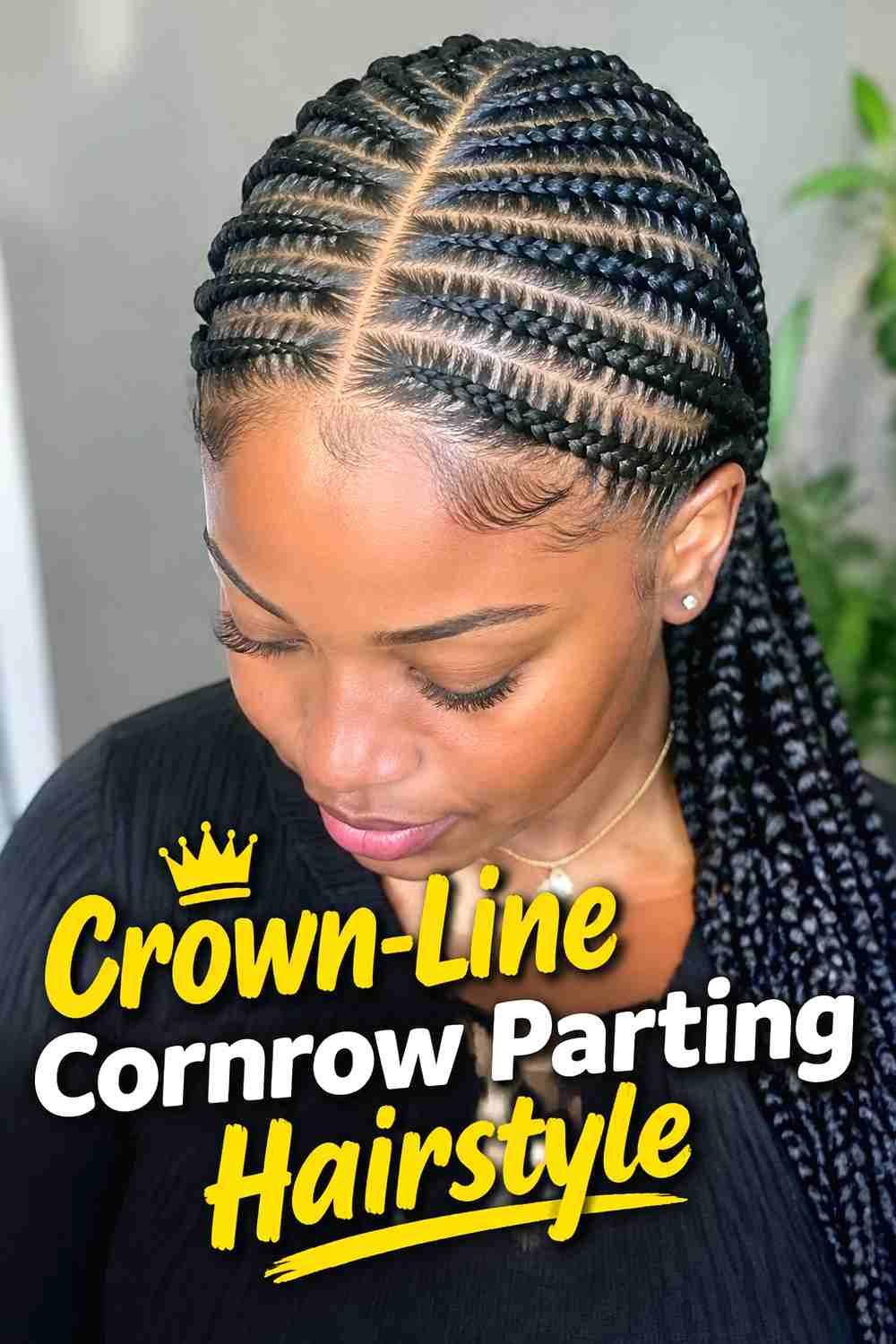
A crown-line cornrow follows a short path along the upper head, creating a subtle separation between two textured sections. Rather than braiding all the way from the forehead to the nape, keep the row localized around the crown so it behaves like a decorative part. The surrounding hair can remain loose, softly stretched, or gathered into a low puff. This design looks especially polished beside minimalist monochrome knits because it adds dimension from above and from side angles without crowding the face. Keep the braid slightly recessed into the texture so it feels integrated with the hairstyle rather than sitting dramatically on top.
Styling Notes
Create the surrounding shape after completing the cornrow so you can decide how much of the braided line should remain visible.
11. Off Center Cornrow Accent Hairstyle
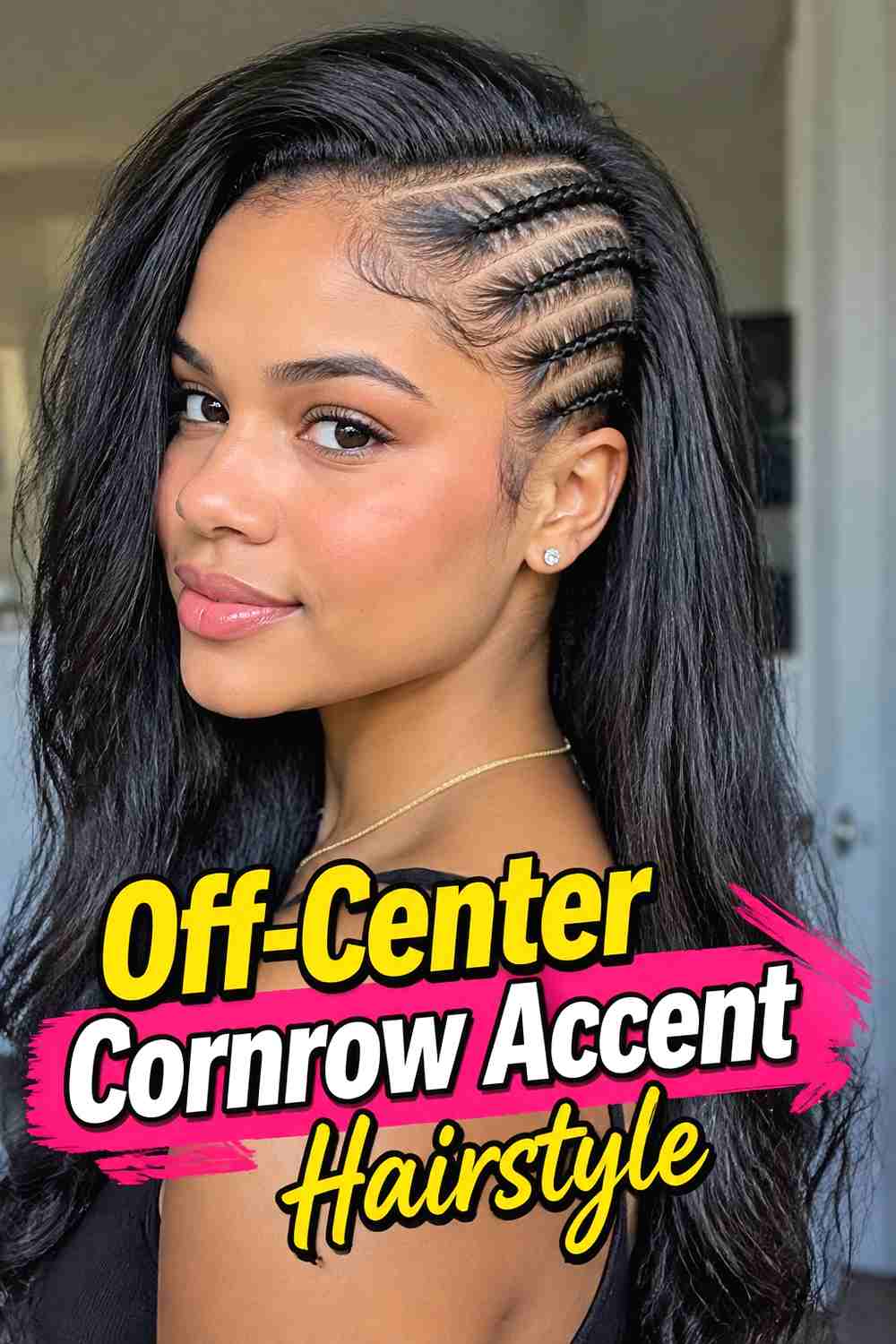
An off-center cornrow gives the balance of a middle-part style a subtle twist. Instead of placing the braid exactly down the center, shift it slightly to one side and allow the hair to fall naturally around it. The result feels less formal than strict symmetry while still maintaining a clean visual line. This approach works well with monochrome sweater-and-skirt sets or knit trousers because the styling remains simple and refined. The braid should stay narrow, with most of the volume coming from the unbraided hair. Defined coils, a soft twist-out, or stretched texture can all complement the line without requiring extra accessories.
Why It Works
The slightly shifted placement creates visual interest while preserving an overall balanced, easy-to-wear silhouette.
12. Diagonal Cornrow Parting Hairstyle
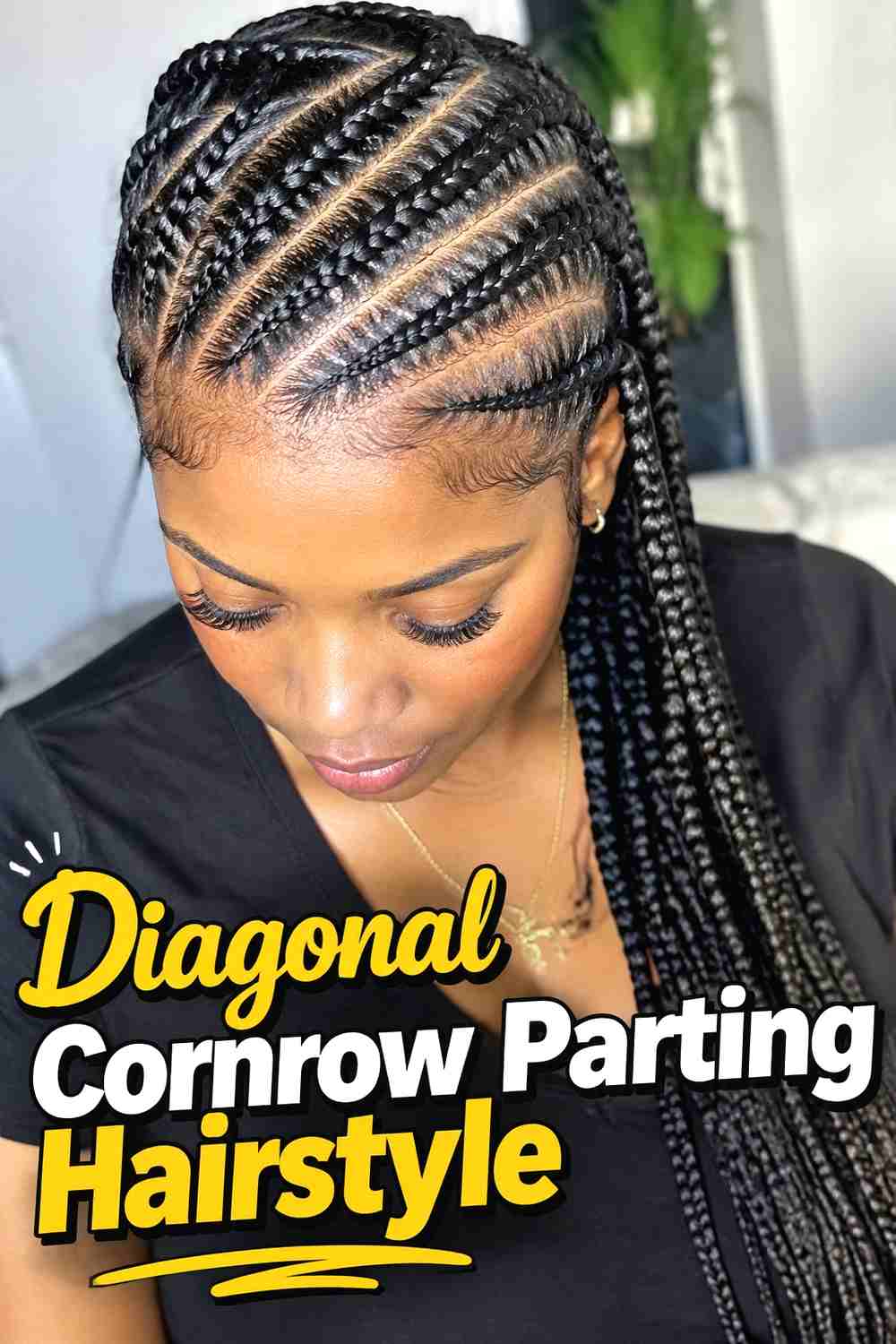
A diagonal cornrow creates a subtle line from the front or temple toward the crown, giving the hairstyle a gentle sense of movement. Keep the angle simple and the braid narrow so it resembles a deliberate parting detail rather than a full braided pattern. The remaining hair can be directed to one side, worn in a puff, or left loose with defined texture. This style works particularly well with monochrome knit sets that have clean necklines and simple silhouettes, because the diagonal detail breaks up the symmetry without adding visual clutter. Maintain comfortable tension through the row and let a little natural softness remain around the hairline.
Best For
This look is ideal when you want a graphic detail that feels slightly more dynamic than a straight side or center part.
13. Twin Temple Cornrow Accent Hairstyle
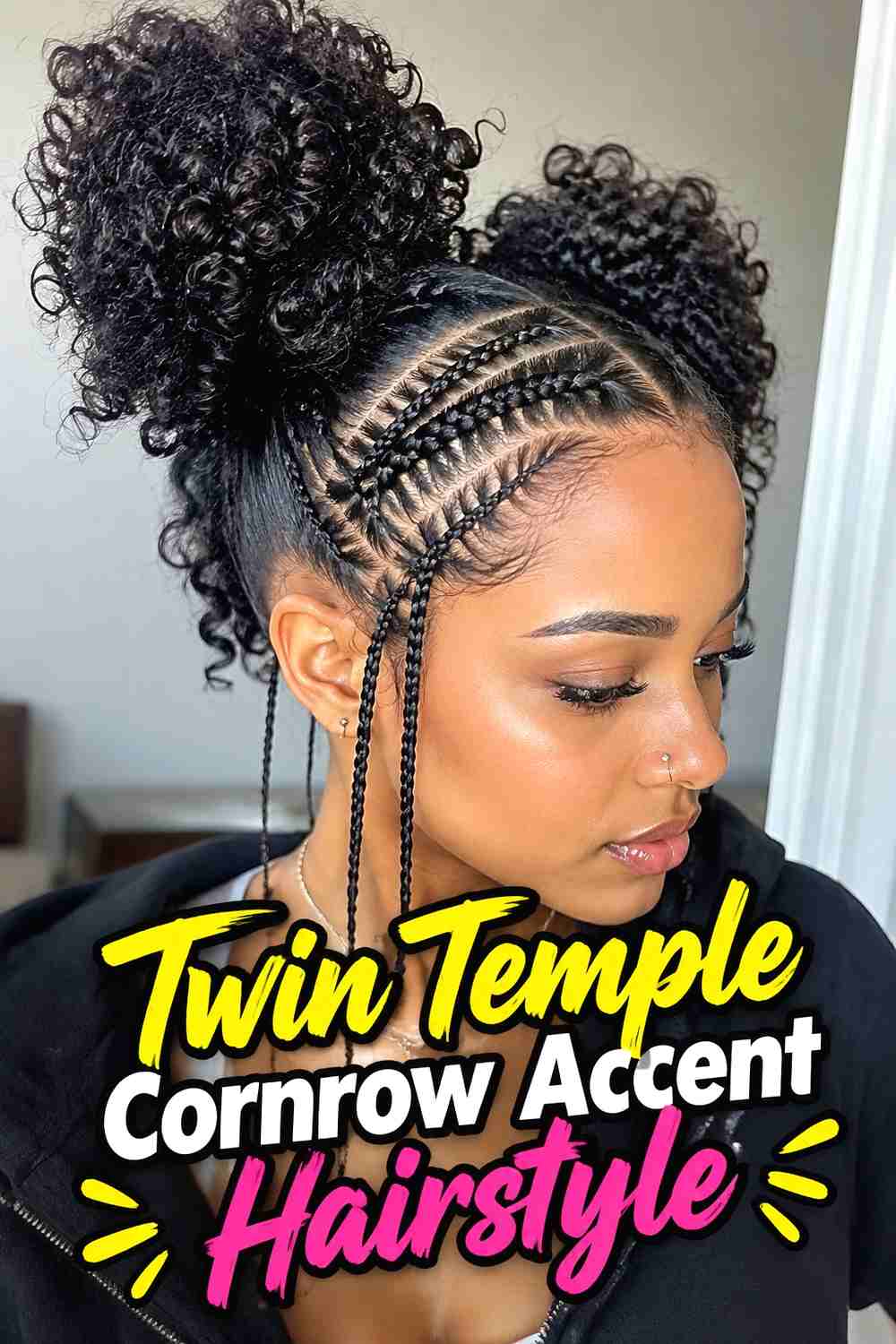
Twin temple accents use one slim cornrow on each side while leaving the center and crown loose. The result creates gentle symmetry around the face without covering the head in braids. Each row can begin near the temple and end above or behind the ear, allowing natural texture to remain full through the center. With a monochrome knit set, the paired braids frame the hairstyle in the same way coordinated seams frame an outfit. Keep both rows similarly sized but do not chase perfect mirror-image placement if your natural hairline differs from side to side. A little realistic variation helps the finished look remain believable.
Styling Notes
Shape the loose crown after both braids are complete so the central volume stays balanced between the two temple accents.
14. Low Side Cornrow Parting Hairstyle
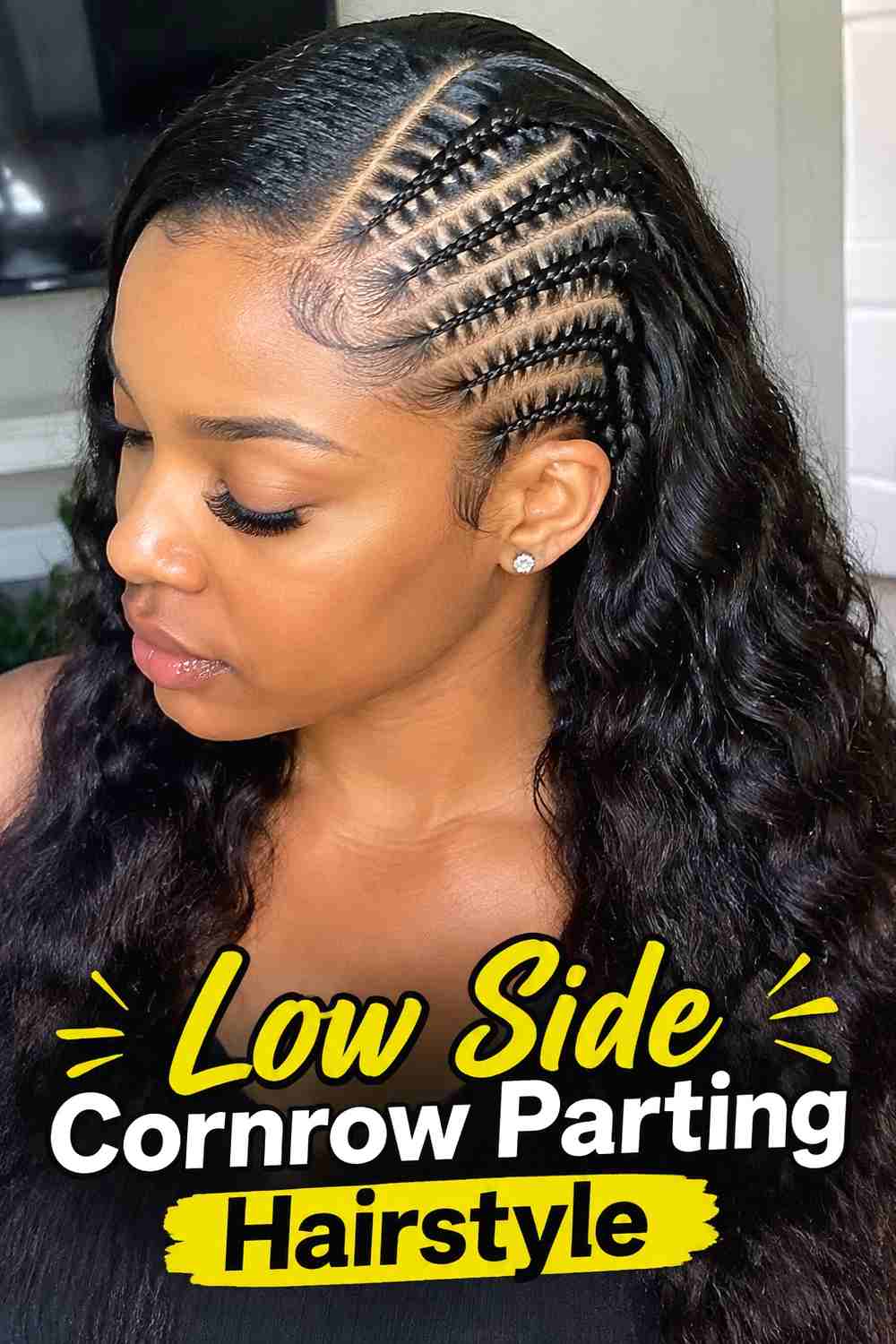
A low side cornrow sits closer to the ear than the temple, adding a discreet braided detail beneath the main body of the hair. This placement is especially attractive with side-swept curls or coils because the braid becomes visible along the lower edge without reducing too much volume at the crown. The low position also keeps the parting away from the most visible front hairline, producing a softer overall effect. With monochrome knitwear, the detail feels sophisticated rather than overly sporty. Let the braid end naturally into the loose section or a low gathered style, and keep the surrounding hair full enough to maintain balance.
Why It Works
Positioning the braid lower creates definition along the side while preserving softness through the crown and front.
15. Soft Arc Cornrow Parting Hairstyle
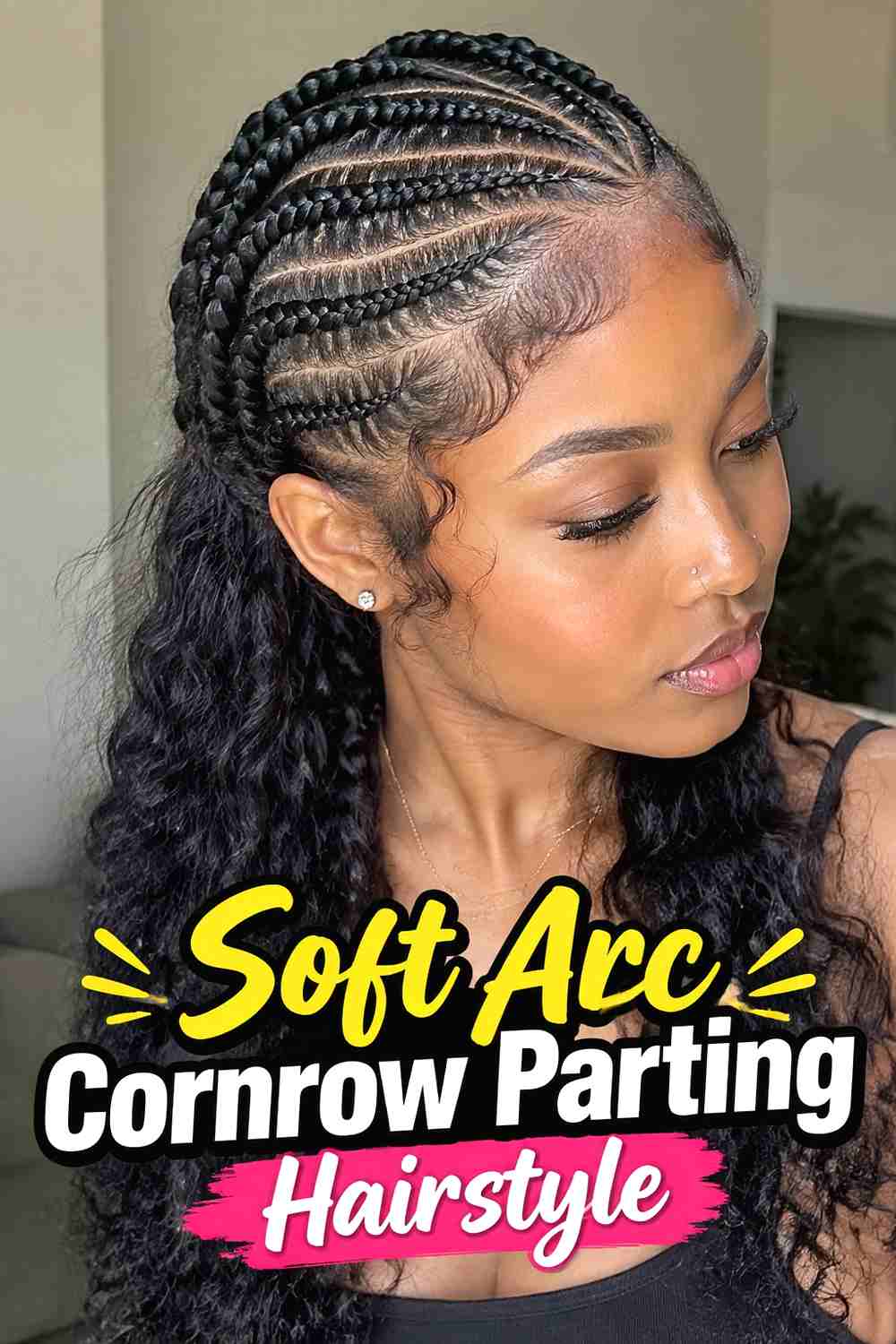
A soft arc cornrow curves gently from the front side toward the upper crown, forming a graceful line instead of a sharp geometric part. The shape works beautifully with rounded natural volume, since the braid follows rather than fights the hairstyle’s silhouette. Keep the row slim and let it disappear gradually beneath the loose texture so the effect remains understated. Monochrome knit sets provide an ideal backdrop because their uniform color allows the curved braid and natural hair texture to become the main visual details. The look can be worn with a twist-out, defined coils, or softly stretched hair, depending on how much volume you prefer.
Best For
This variation suits anyone who prefers softer parting shapes over straight or sharply angled braid lines.
16. Fine Line Cornrow Accent Hairstyle
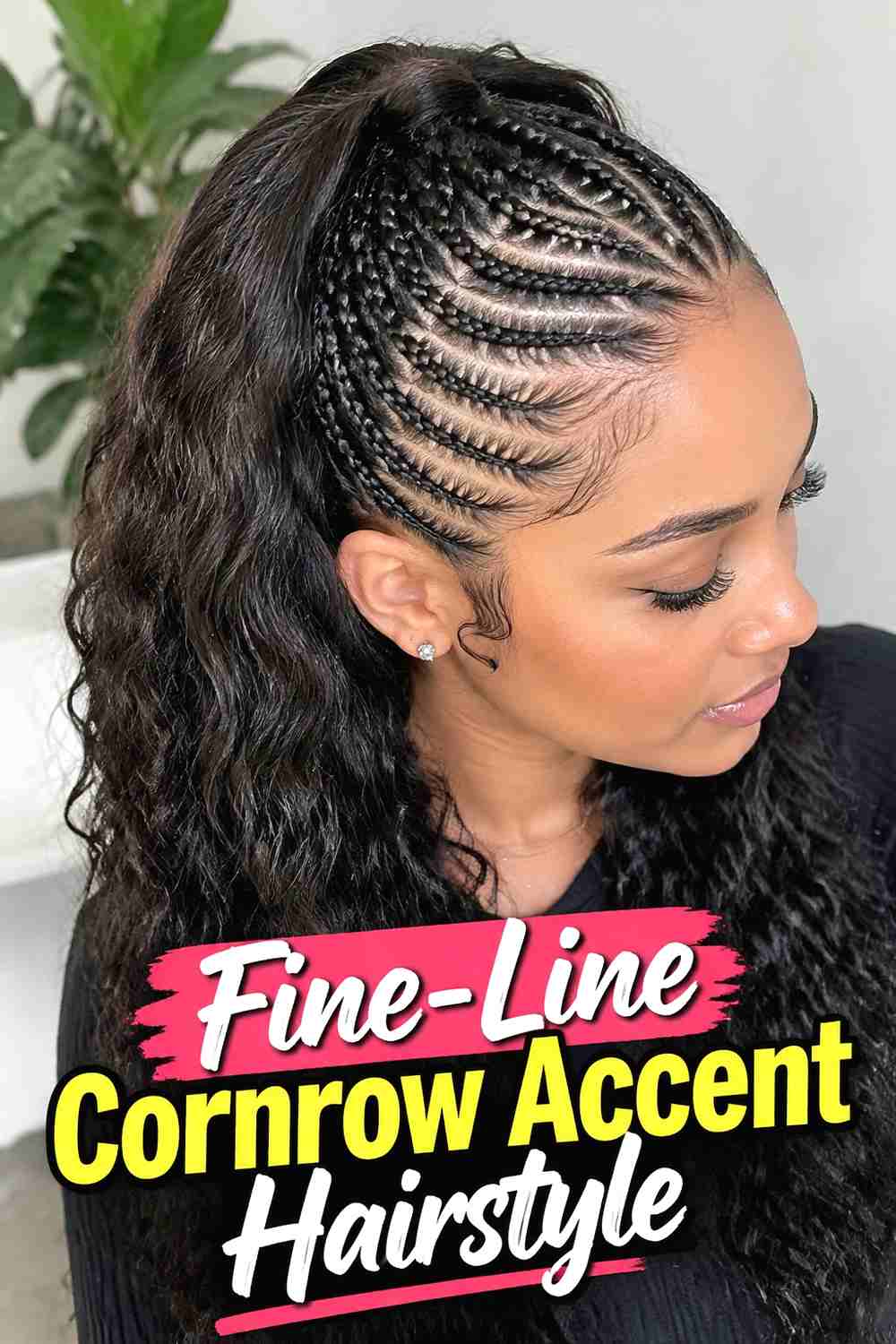
A fine-line cornrow uses an especially narrow section to create a delicate accent beside a part or around the temple. The braid is intentionally restrained, leaving nearly all of the hair available for natural texture, a puff, or a loose stretched finish. This minimalist approach pairs naturally with monochrome knit sets because both rely on small, considered details rather than dramatic contrast. The row should be neat but physically believable, with enough hair included to create a stable braid without forcing an impossibly tiny construction. Avoid excessive tension at the hairline and allow the surrounding roots to remain softly textured instead of completely slick.
Pro Tip
Keep accessories minimal so the fine cornrow remains the main detail rather than competing with clips, beads, or oversized jewelry.
17. Half Up Cornrow Parting Hairstyle
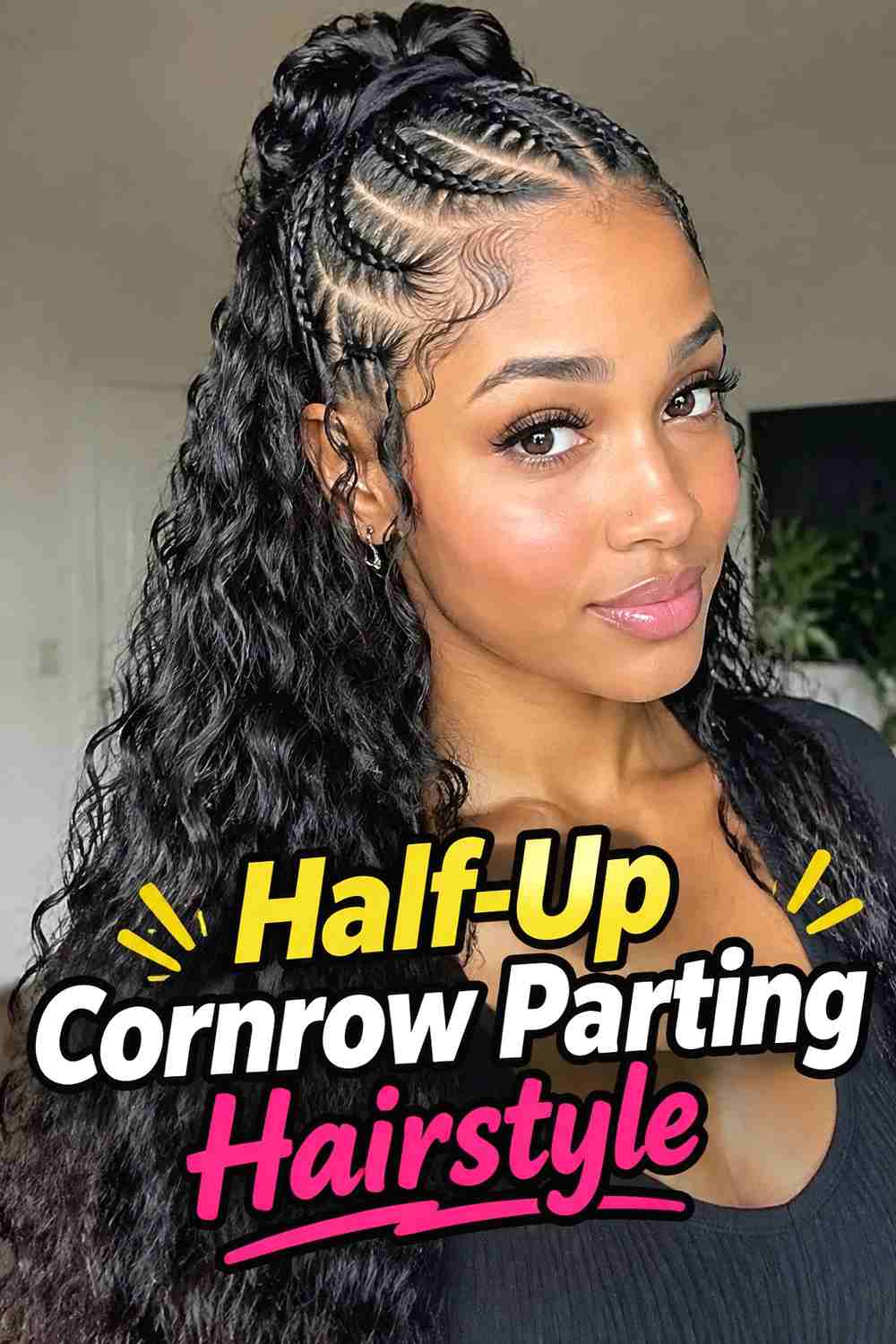
A half-up style uses one or two subtle cornrows to guide the upper section toward the crown while leaving the lower hair loose. The braids function as parting details and anchors rather than covering the entire top of the head. Gather the upper section softly into a small puff or textured ponytail, keeping the lower curls, coils, or stretched lengths visible over the shoulders. This combination works well with monochrome knit sets because it opens the neckline while preserving plenty of natural texture. Keep the braided sections relatively narrow and avoid pulling the gathered portion too tightly, especially if the style will be worn through a full workday.
Why It Works
The cornrows add structure to the half-up section while the loose lower hair keeps the overall look soft and dimensional.
18. Tucked Side Cornrow Parting Hairstyle
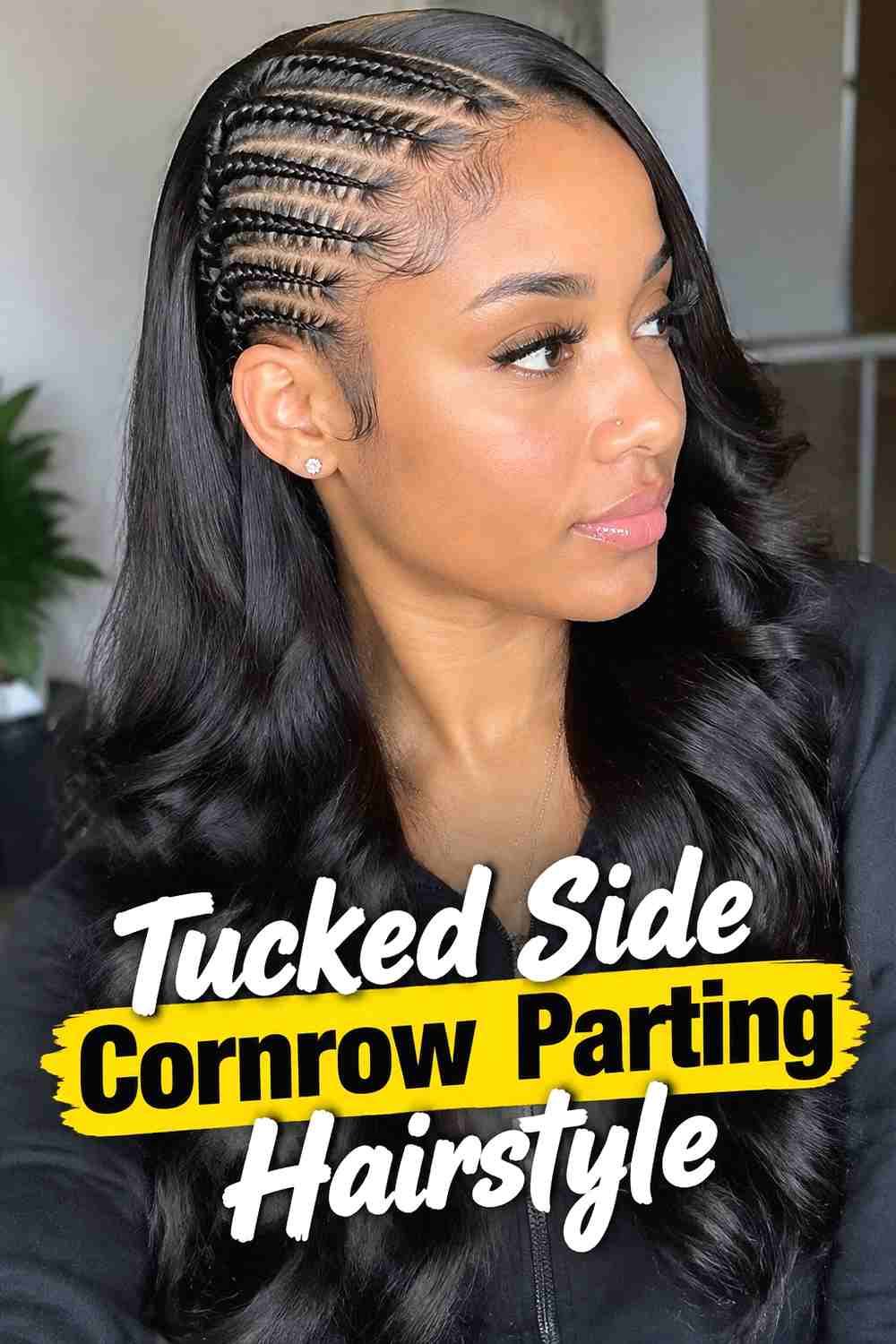
A tucked side cornrow combines a narrow braid with a clean ear-tucked finish. Place the row beside a side part, then guide the surrounding section behind the ear while allowing the opposite side to remain loose and full. The styling opens one side of the face and shows the knit neckline more clearly, making it especially effective with fitted monochrome turtlenecks. Because only one small section is braided, the look remains subtle and easy to adapt. Keep the tucked area softly textured instead of flattening it completely, and let the cornrow follow a natural line toward the upper ear rather than forcing an overly sharp angle.
Wear & Maintenance
Use a discreet pin behind the ear only if needed, keeping it away from areas where a coat or hat may press.
19. Micro Row Parting Cornrow Hairstyle
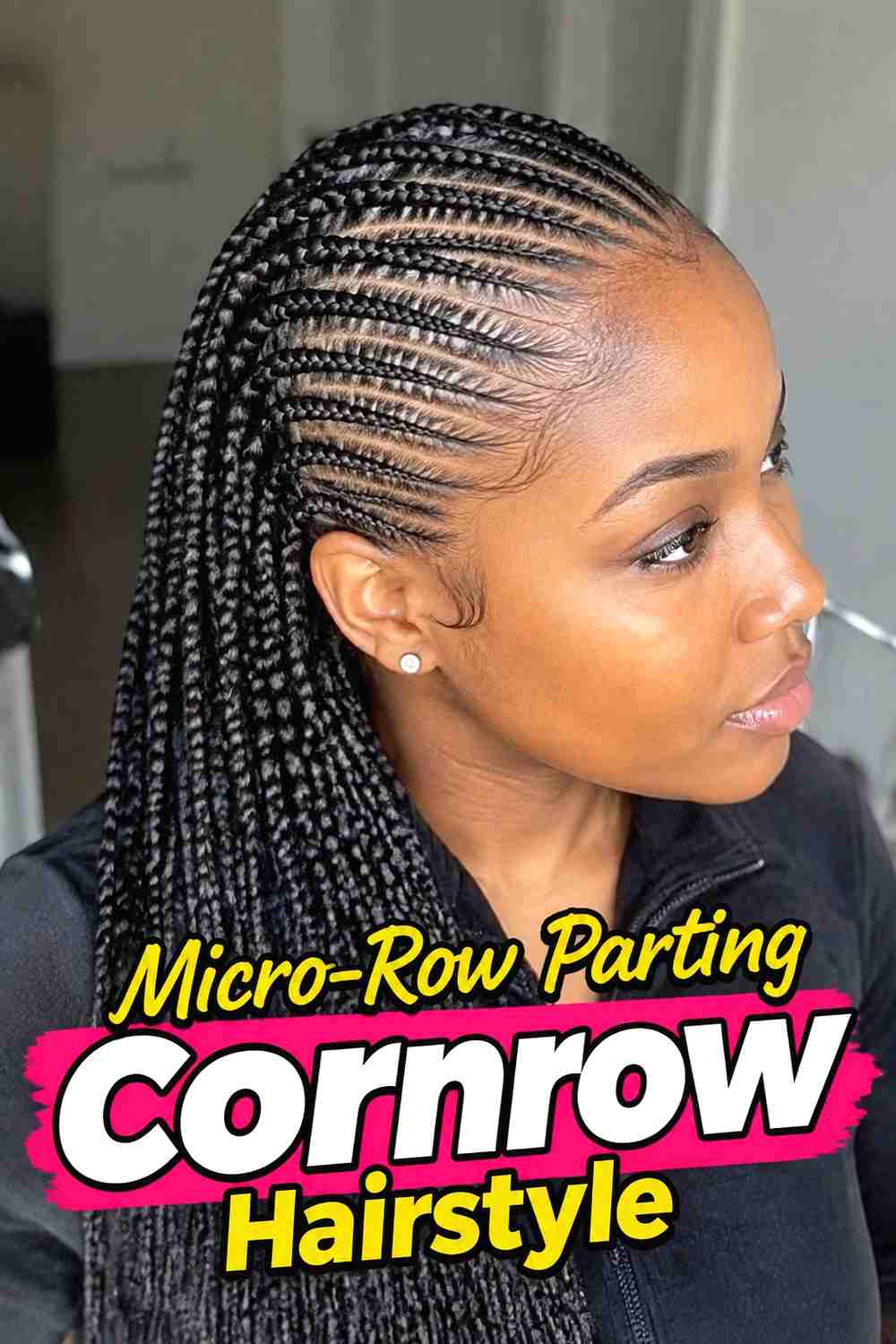
A micro-row parting design uses two or three very fine, closely spaced cornrows in a limited area of the hairstyle. Keep the rows concentrated near one temple or along a side part, leaving the rest of the hair free and textured. The repeated lines create a refined detail that looks especially sharp with monochrome ribbed knits, where the braid pattern subtly echoes the fabric. Because the rows are small, careful sectioning matters more than excessive tightness. The design should still show realistic braid thickness and scalp spacing. Pair it with a soft puff, twist-out, or stretched finish so the fine rows remain accents rather than the entire hairstyle.
Styling Notes
Keep the micro-row section narrow and localized so the overall style retains the understated mood of the collection.
20. Minimalist Cornrow Frame Hairstyle
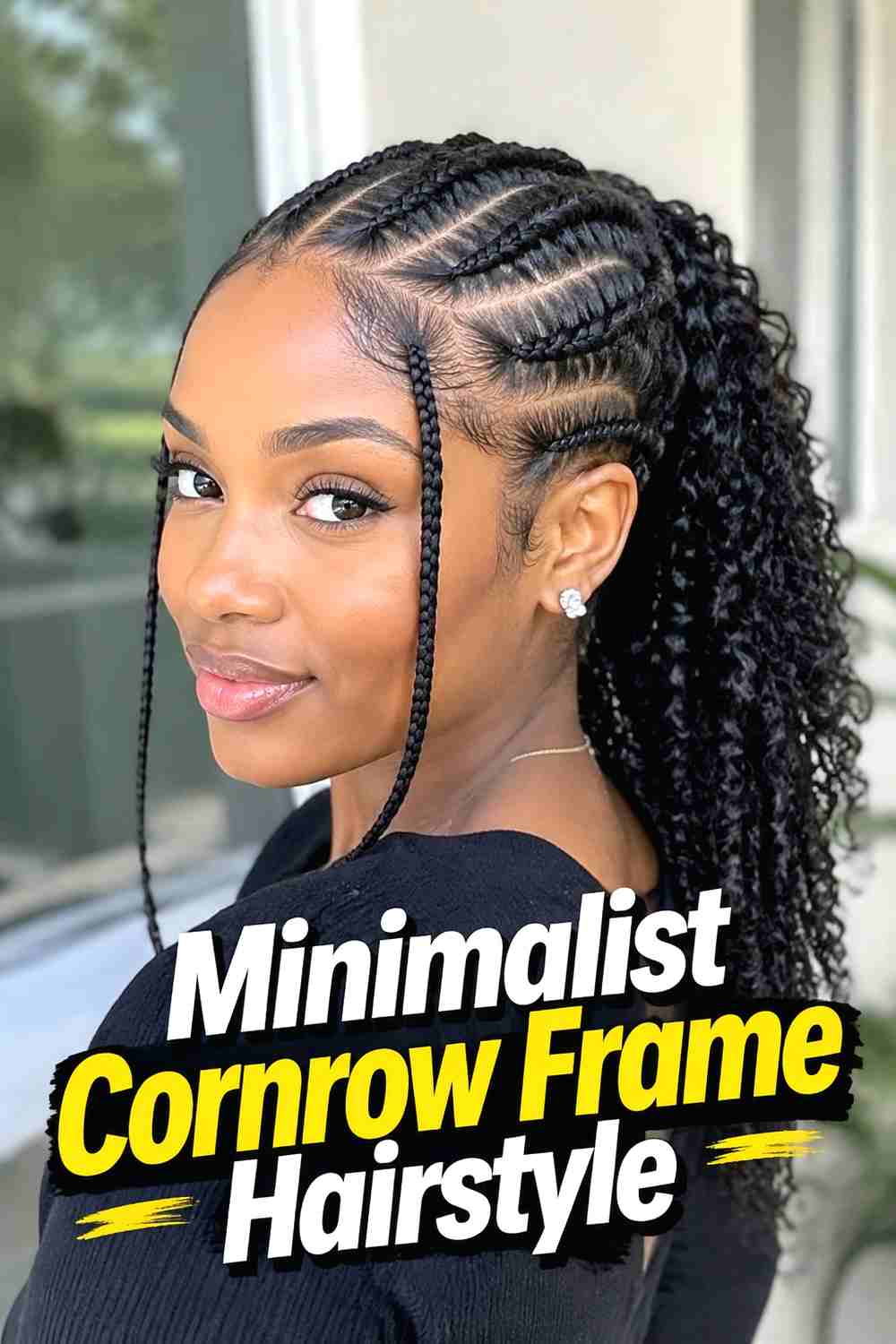
A minimalist cornrow frame uses one slim braid on each side of the face to create a clean outline around the central hair. The braids begin near the temples and travel backward, while the crown remains loose, textured, and naturally full. This creates just enough structure to define the hairstyle without removing the softness that makes coils, curls, or stretched natural hair visually appealing. Paired with a monochrome knit set, the balanced frame looks polished and intentional while still feeling relaxed enough for everyday wear. Keep both braids comfortably tensioned and allow the center section to follow its natural density rather than forcing an overly sculpted shape.
Why It Works
The two subtle rows act like a frame, giving the loose texture definition while preserving most of its natural volume and movement.
How to Choose the Right Look
Start by deciding how visible you want the cornrow detail to be. Hidden Side and Low Side Cornrow Parting Hairstyles reveal the braid more subtly, while Double Side-Part, Twin Temple, and Micro-Row styles create clearer linear detail. If you prefer symmetry, choose a center accent, twin temple frame, or single central braid. For more movement, diagonal, curved, and asymmetrical placements work better.
Your loose texture matters too. Full curls and coils can conceal very fine cornrows, while stretched hair or softly defined twist-outs make parting lines easier to see. Consider how much volume you want around the face and neckline, especially with turtlenecks or high knit collars.
Most importantly, cornrows should feel comfortably secure rather than painfully tight. Use believable section sizes, natural hairline placement, and styling that complements your density instead of forcing identical patterns on every head.
Final Thoughts
Subtle cornrow parting is an easy way to add structure to monochrome knit sets without making the hairstyle feel overly elaborate. One narrow row can sharpen a side part, a curved braid can soften a voluminous style, and paired temple accents can frame natural texture beautifully. Keep the braid design restrained, preserve realistic volume, and choose parting lines that work with your natural hair direction.
FAQs
1. How can cornrows look subtle rather than dramatic?
Use only one to three narrow rows in a limited area, leaving most of the hair loose, textured, or softly gathered.
2. Which cornrow parting style works best with monochrome turtlenecks?
Side-pinned, tucked-side, twin temple, and half-up cornrow accents work well because they open the neckline while keeping the detail visible.
3. Can cornrow accents work with loose natural hair?
Yes. Cornrows can be used only around the part or temples while curls, coils, stretched hair, or a twist-out remain loose elsewhere.
4. Do subtle cornrows need to be extremely tight?
No. The braid should be secure enough to hold its shape, but extreme tension is unnecessary and can make an understated style look overly severe.
5. Which parting pattern looks the most minimal?
A single center, fine-line side, hidden-side, or off-center cornrow typically creates the most restrained effect because only one narrow braided line is emphasized.
Save your favorite subtle cornrow parting look and pair it with a monochrome knit set for an easy mix of clean structure and natural texture.