14 Clipped-Back Face-Framing Layers With Smart Knit Dresses
Clipped-back face-framing layers keep smart knit dresses looking polished while preserving enough softness and movement around the hairline for an effortless finish.
Smart knit dresses often have clean necklines, fitted shoulders, and simple silhouettes, making them easy to pair with hairstyles that feel equally refined. Clipping the front layers away from the face keeps the neckline visible while allowing the rest of the hair to remain loose, textured, and softly dimensional.
The best version depends on your haircut, density, texture, and how much of the front you want secured. Small clips can simply control shorter layers, while a wider half-up placement creates more structure. Keep the fastening comfortable and choose accessories that hold securely without overpowering the hairstyle or the understated polish of the dress.
Quick List
- Soft Center Part Clipped Back Layer Hairstyle
- Side Part Clipped Back Layer Hairstyle
- Curtain Layer Clipped Back Hairstyle
- Collarbone Lob Clipped Back Hairstyle
- Soft Wave Clipped Back Layer Hairstyle
- Tucked Ear Clipped Back Layer Hairstyle
- Long Layered Clipped Back Hairstyle
- Fine Hair Clipped Back Layer Hairstyle
- Thick Hair Clipped Back Layer Hairstyle
- Curly Clipped Back Face Framing Hairstyle
- Half Up Clipped Back Layer Hairstyle
- Polished Bob Clipped Back Hairstyle
- Soft Blowout Clipped Back Layer Hairstyle
- Twisted Clipped Back Layer Hairstyle
1. Soft Center Part Clipped Back Layer Hairstyle
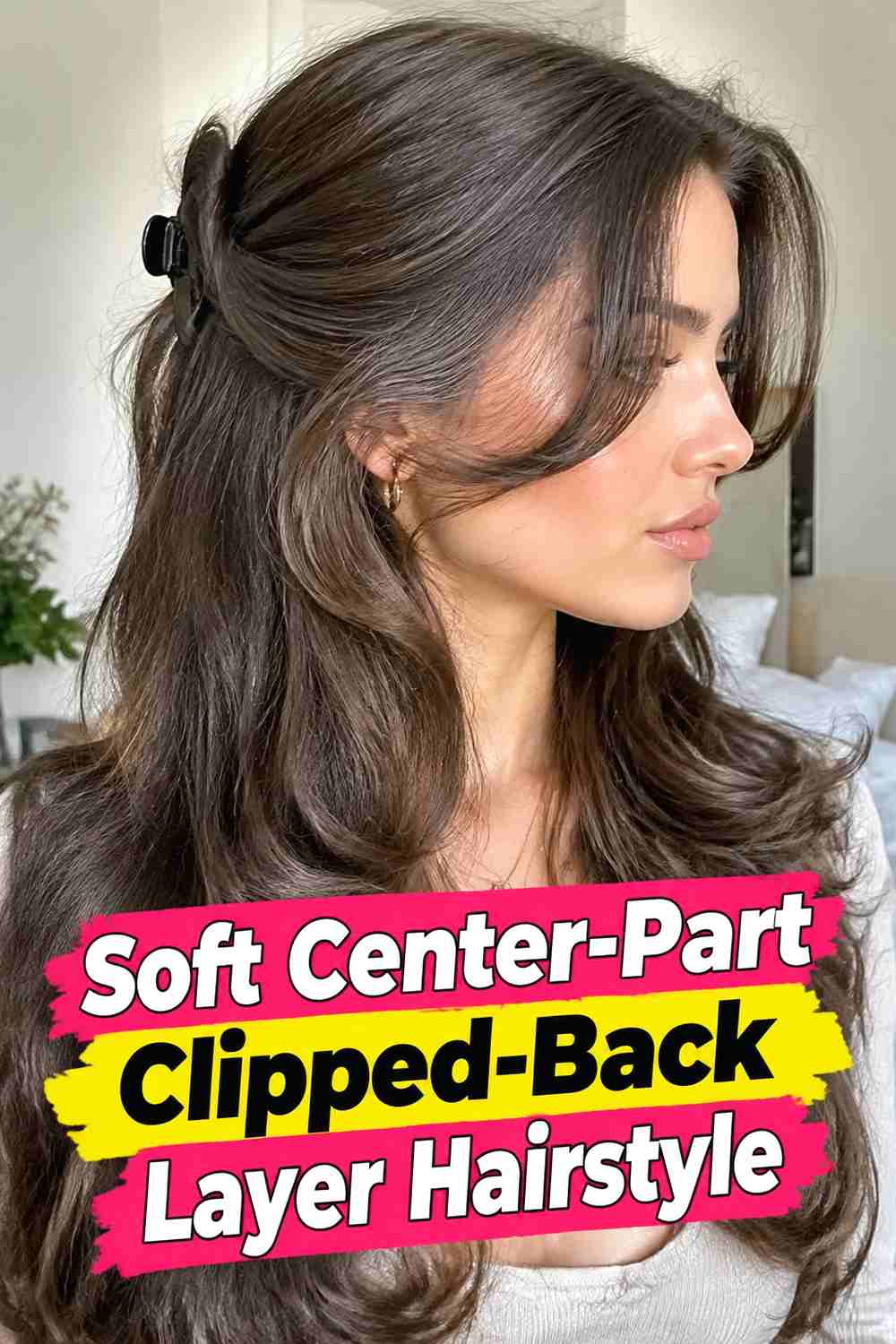
The Soft Center-Part Clipped-Back Layer Hairstyle keeps the front balanced while preventing shorter pieces from falling across the face or dress neckline. Create a clean middle part, then guide the face-framing sections slightly backward and secure them near the temples or just above the ears. The remaining hair can fall naturally through the shoulders with a smooth, softly waved, or lightly textured finish. Medium and long layered cuts work especially well because the clipped sections blend naturally into the longer lengths. Avoid pulling the clips too far backward, which can flatten the crown. Leaving a little root softness keeps the style modern and relaxed while still matching the polished character of a smart knit dress.
Styling Notes
Use small, secure clips that sit close to the head. Position them before applying finishing spray so you can adjust the tension without disturbing the surface.
2. Side Part Clipped Back Layer Hairstyle
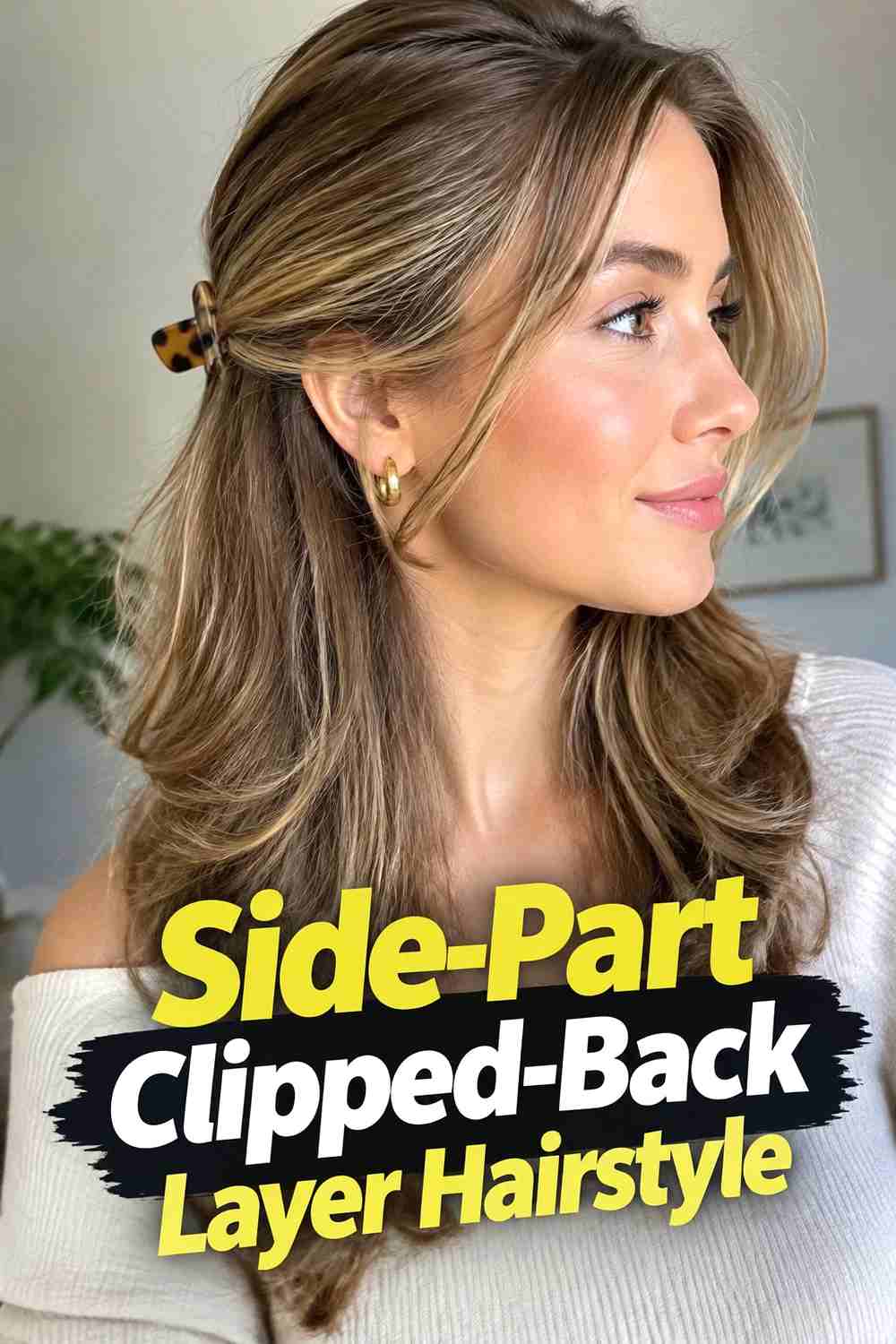
The Side-Part Clipped-Back Layer Hairstyle uses asymmetry to give a simple clipped style more direction. Create a defined side part, then secure the lighter side behind the temple while allowing the fuller side to retain soft movement around the cheek and jaw. This works particularly well with streamlined knit dresses because the hairstyle adds visual interest without covering the neckline. Medium and long hair give the front layers enough length to sweep backward comfortably, while a lob can create a more compact version. Keep the clip subtle and let the rest of the hair stay flexible rather than tightly styled. A little lift on the fuller side helps preserve balance and prevents the pinned section from making the style look flat.
Best For
Choose this look when you prefer asymmetry or want to keep one side particularly clean for earrings, neckline details, or a more polished work-ready profile.
3. Curtain Layer Clipped Back Hairstyle
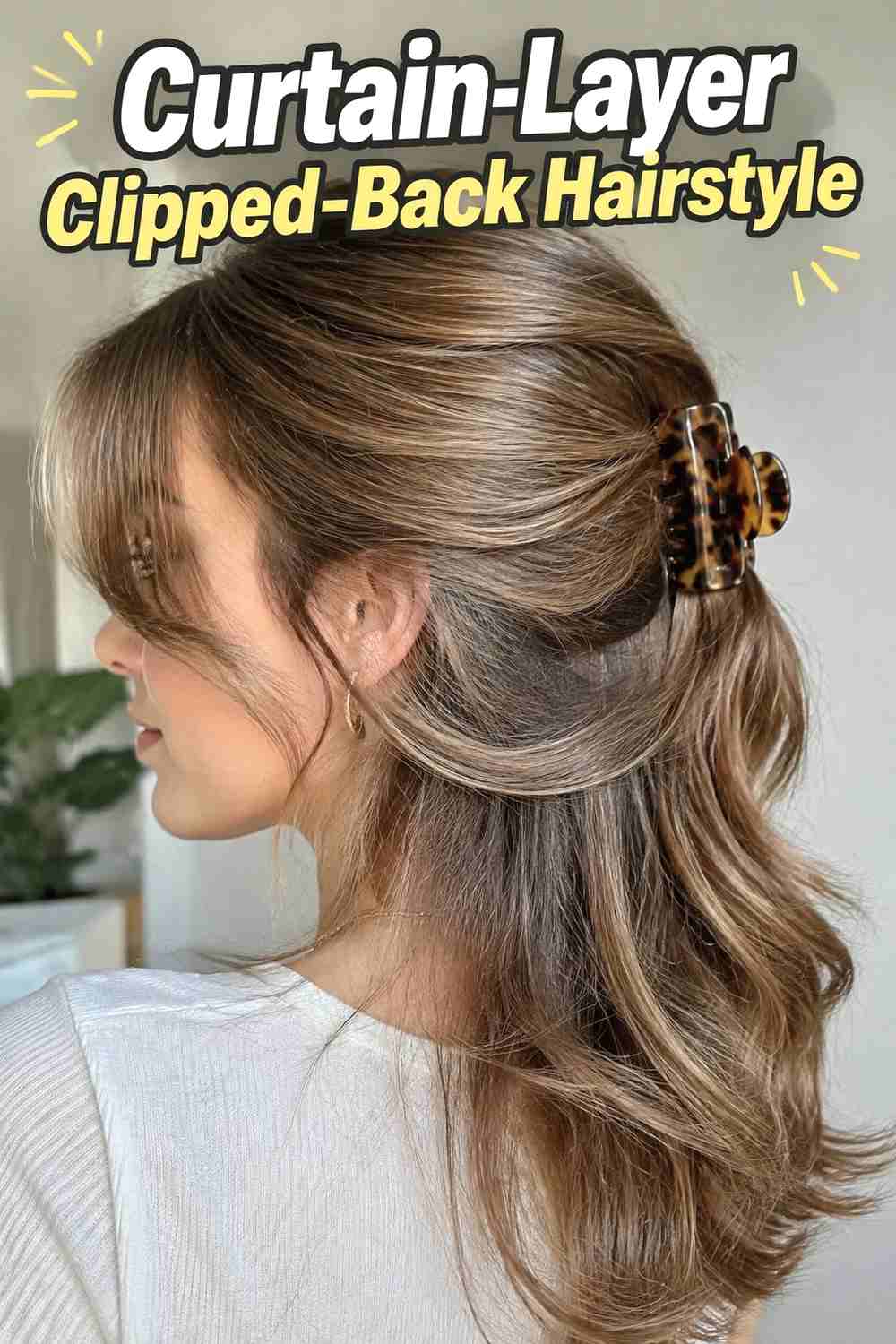
The Curtain-Layer Clipped-Back Hairstyle controls airy front layers without eliminating their face-framing effect. Instead of pulling every shorter section away, secure the outer portions near the temples while allowing a lighter inner layer to curve softly beside the cheeks. This keeps the hairstyle open around a knit dress neckline while retaining the movement that makes curtain layers appealing. Medium-long and long hair show the gradual layering most clearly, especially after a soft blowout. Keep the clips close to the head so they do not create obvious bumps beneath the hair. The loose pieces should have a broad bend rather than a tight curl, helping the finished style remain polished, modern, and easy to wear.
Pro Tip
Clip the outer layer first, then decide how much hair to leave around the face. This gives you better control than pulling pieces loose after the style is secured.
4. Collarbone Lob Clipped Back Hairstyle
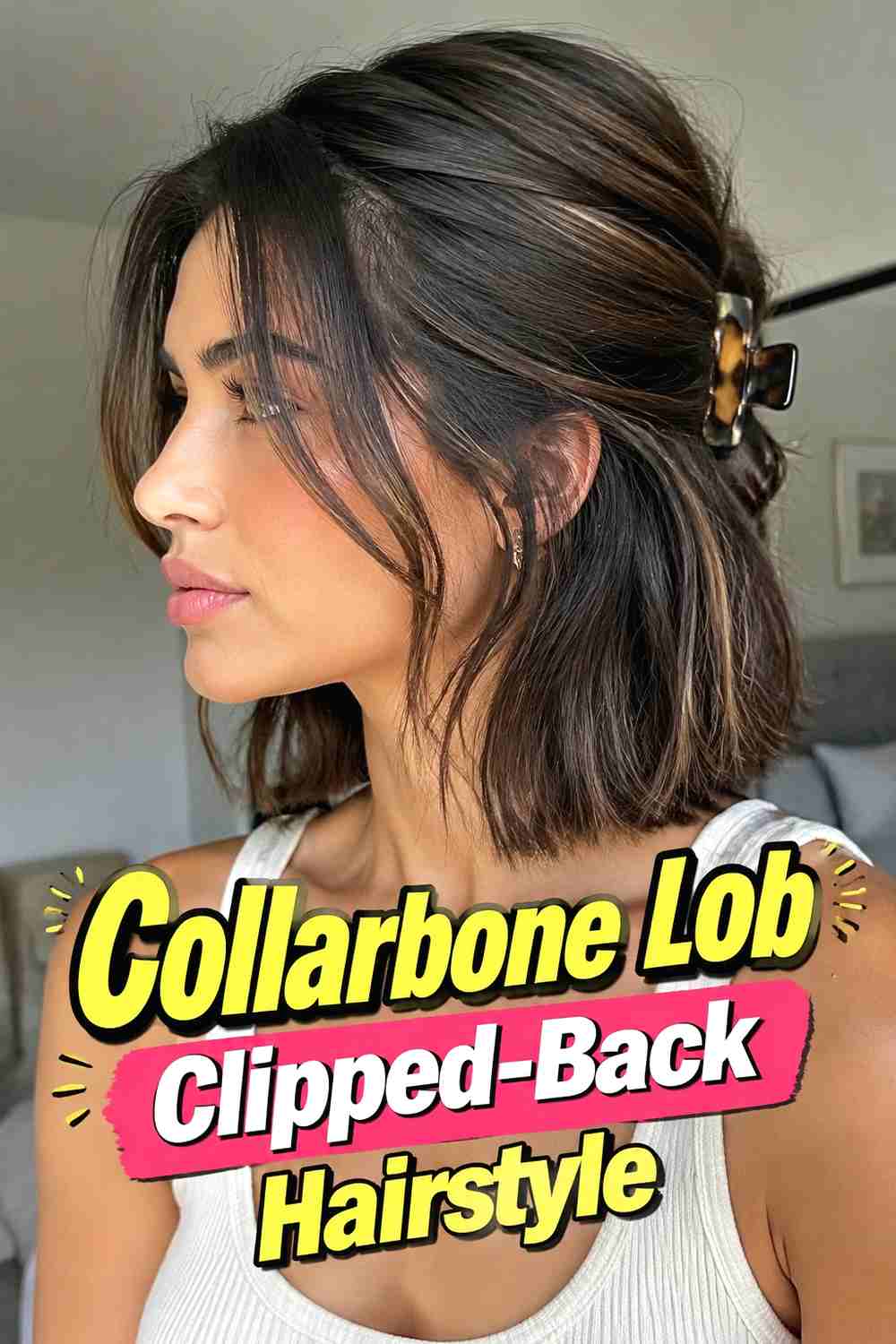
The Collarbone Lob Clipped-Back Hairstyle gives a medium-length cut a neat, office-friendly shape without sacrificing movement through the ends. Secure the shorter front pieces just behind the temples so the lob sits cleanly around the jaw, neck, and upper shoulders. This placement works especially well with smart knit dresses because the dress neckline stays visible while the haircut still frames the upper body. Straight and softly wavy lobs both suit the style, with subtle bends adding dimension through the lower sections. Keep the crown natural rather than overly smooth and avoid using clips that are too large for the shorter length. A slim barrette or small matching pair usually creates the cleanest proportion.
Why It Works
The clips keep shorter layers from repeatedly falling forward while allowing the lob’s shape and swing to remain visible around the shoulders.
5. Soft Wave Clipped Back Layer Hairstyle
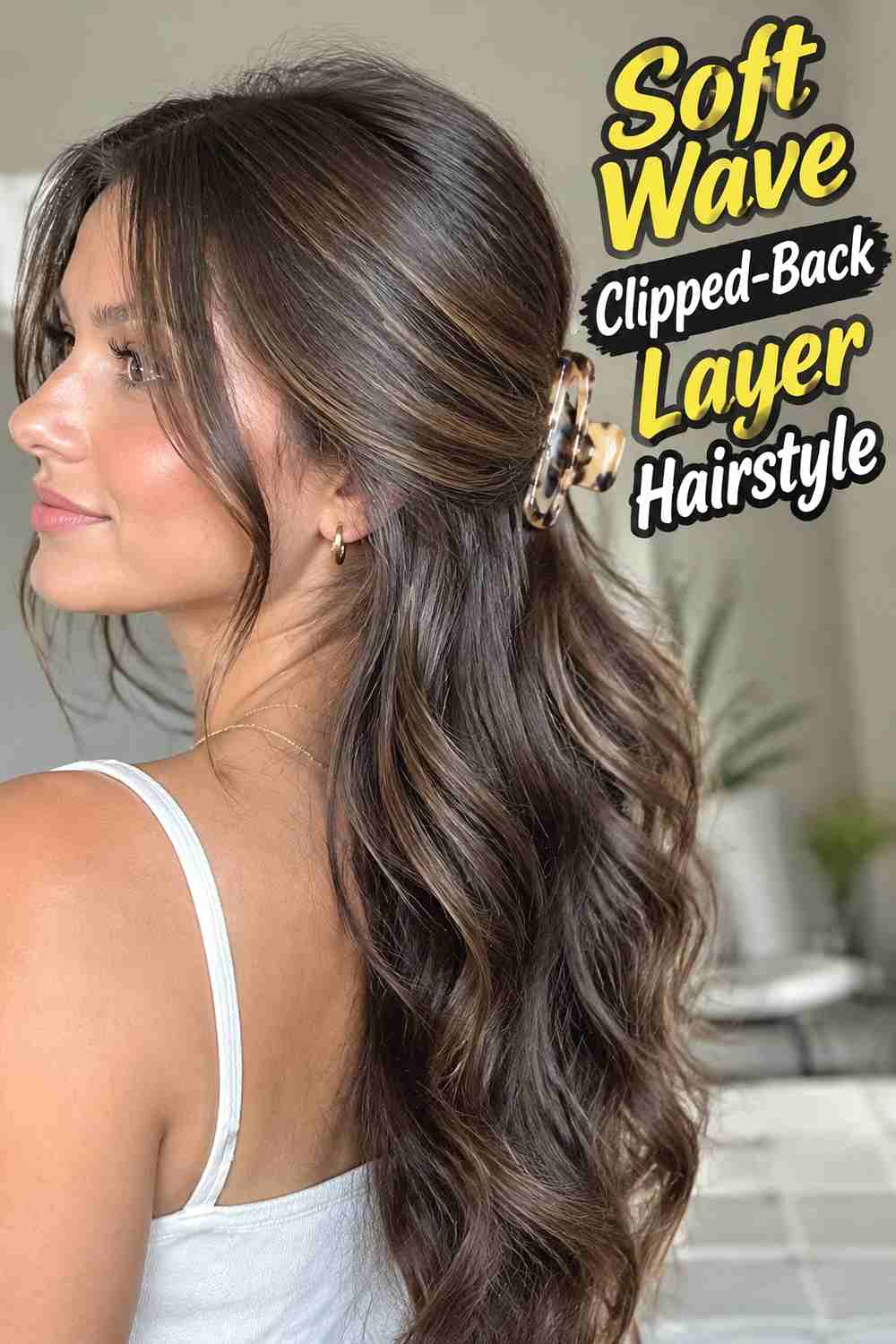
The Soft Wave Clipped-Back Layer Hairstyle combines controlled front sections with loose bends through the remaining hair. The front layers are directed gently backward and secured, while waves begin around cheek or jaw level and continue softly through the lengths. This creates an attractive contrast between the cleaner upper shape and the movement below. Medium and long hair give the wave pattern enough room to develop, while a knit dress provides a streamlined backdrop that keeps the hairstyle from feeling overly romantic. Avoid tightly curling the clipped sections before securing them, as this can create unnecessary bulk. Keep the clips discreet and let the wave texture become fuller gradually toward the ends.
Styling Notes
Form the waves first, let them cool, then clip the front sections. This preserves the lower movement while allowing you to control the hairline neatly.
6. Tucked Ear Clipped Back Layer Hairstyle
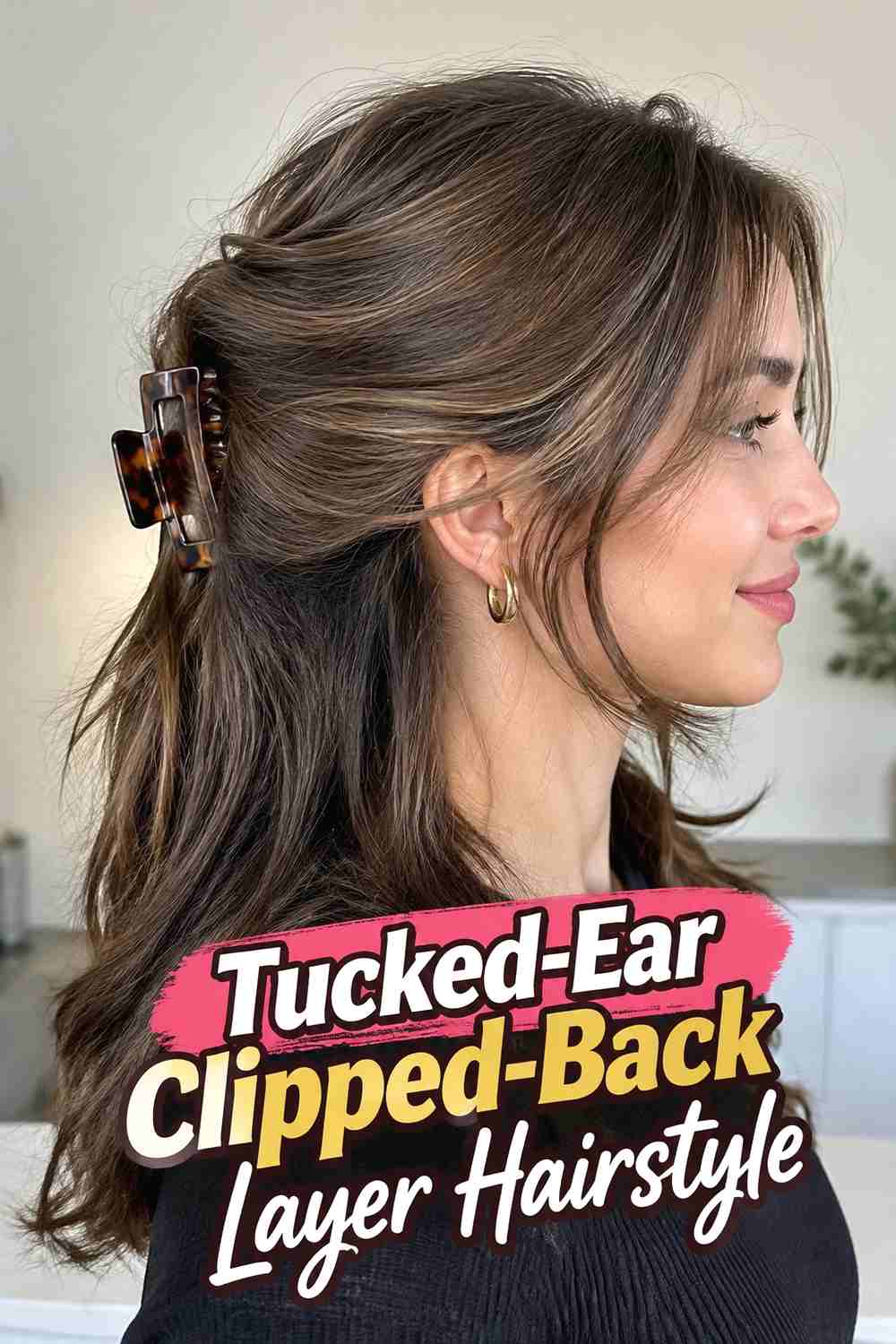
The Tucked-Ear Clipped-Back Layer Hairstyle combines a natural ear tuck with discreet clips for better hold throughout the day. Sweep the face-framing layers behind one or both ears, then place small clips just behind the ear line so the sections stay controlled without creating a visibly rigid style. This is particularly useful with knit dresses that have detailed necklines or statement earrings because the sides remain clean and open. Bobs, lobs, and medium-length hair work especially well, although longer cuts can use the same technique. Keep the rest of the hair loose and flexible, with a smooth or softly textured finish. The result should look polished without appearing heavily pinned or overly formal.
Wear & Maintenance
Place the clip behind the ear rather than directly above it when possible. This hides the fastening point and reduces pressure during longer wear.
7. Long Layered Clipped Back Hairstyle
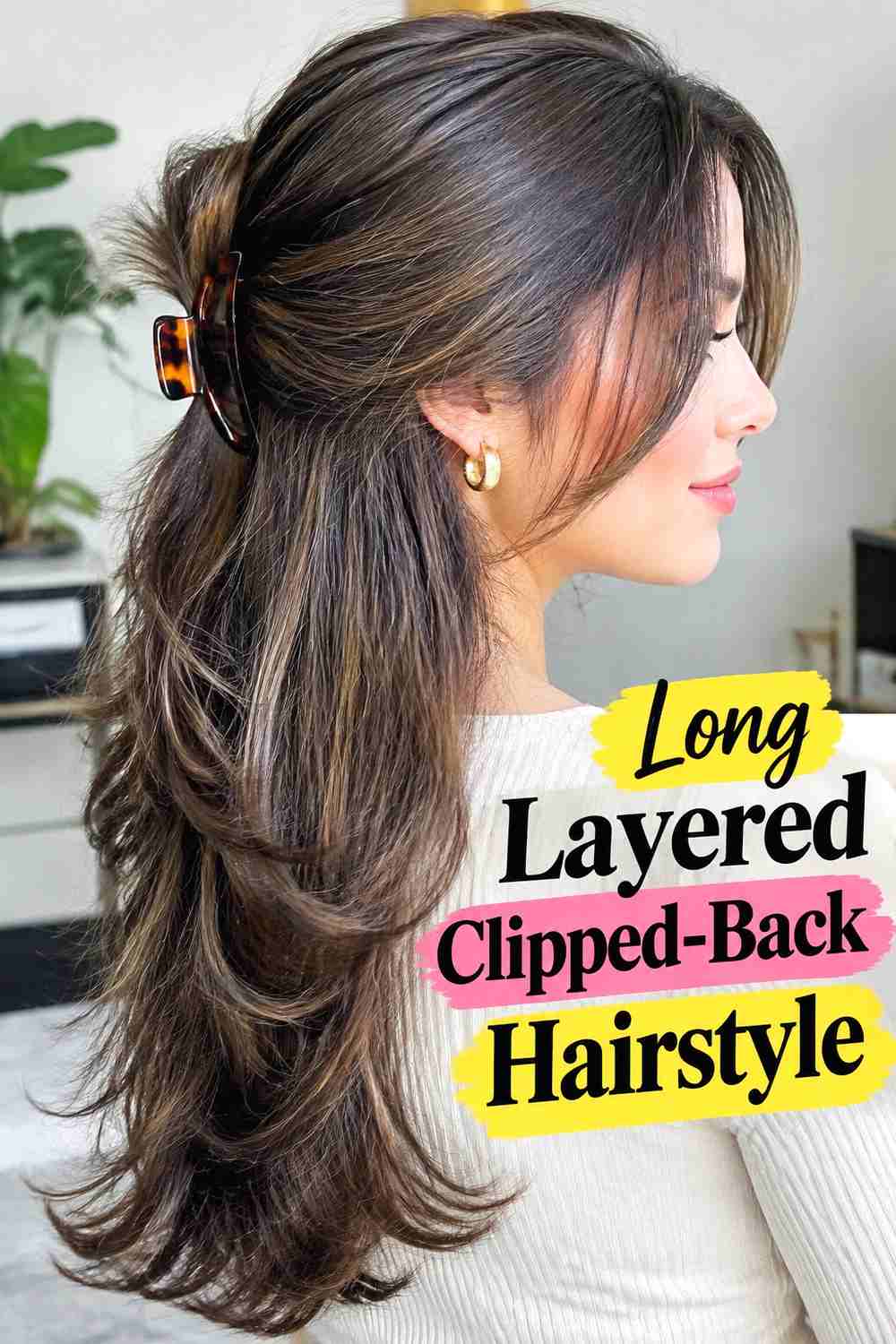
The Long Layered Clipped-Back Hairstyle keeps the shortest front sections controlled while allowing long lengths to remain loose and flowing. Secure the layers near the temples or slightly farther back depending on how much face framing you want to preserve. This makes long hair easier to wear with a smart knit dress because fewer strands fall across the neckline or become trapped beneath shoulder bags and outer layers. The remaining lengths can stay straight, softly wavy, or naturally textured. A little crown lift helps prevent the top from looking pulled flat by the clips. Keep the fastening lightweight enough that the hair can still move naturally, and avoid gathering so much hair that the style becomes a full half-up look.
Best For
This option is ideal for long layered cuts where shorter front pieces repeatedly fall forward but you still want most of the length worn loose.
8. Fine Hair Clipped Back Layer Hairstyle
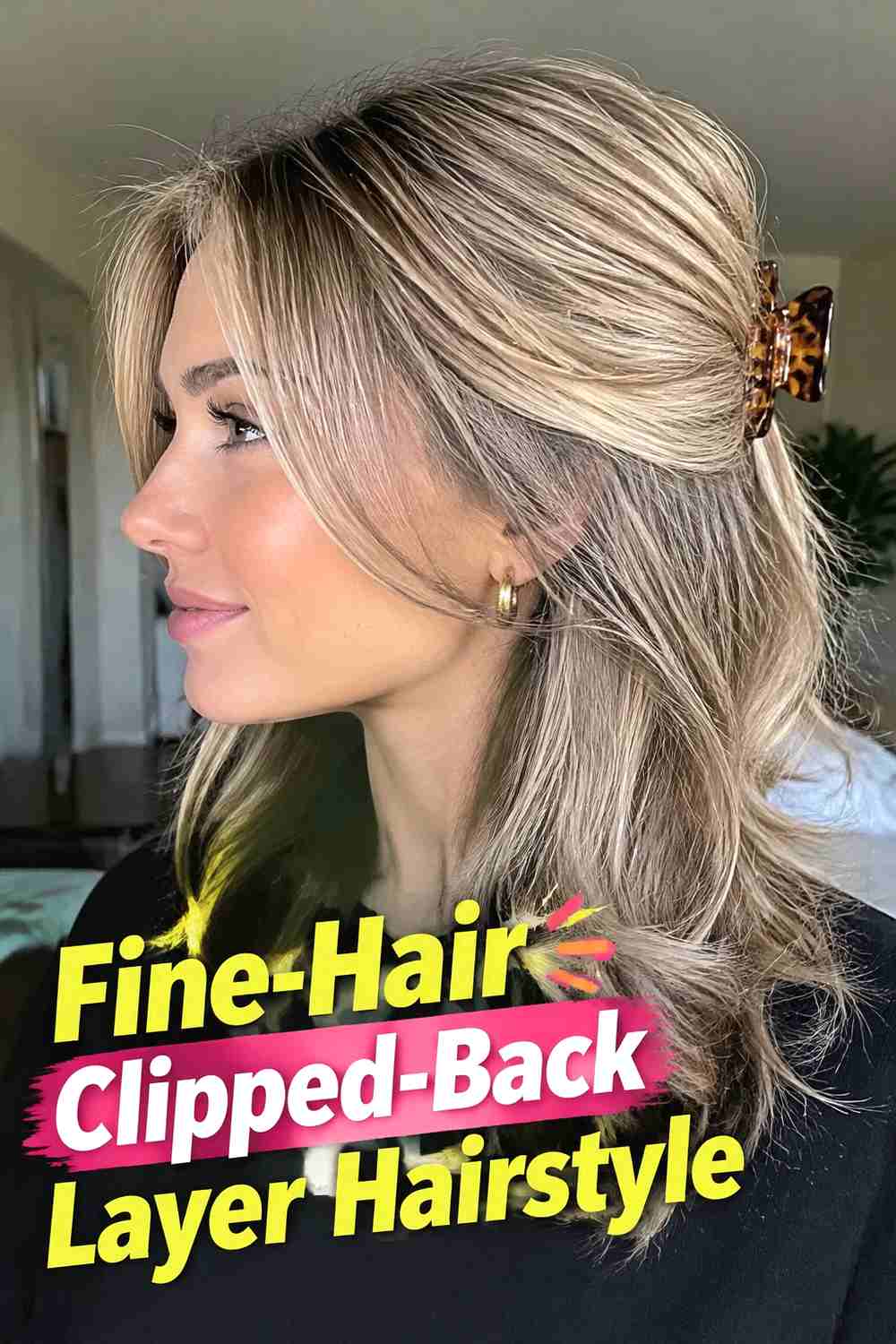
The Fine-Hair Clipped-Back Layer Hairstyle uses small sections and lightweight accessories so delicate hair does not look flattened or overwhelmed. Instead of clipping back a wide panel from each side, secure only the face-framing pieces that need control. Keeping the sections narrow preserves volume through the crown and sides while allowing the remaining hair to appear fuller. Shoulder-length through medium-long cuts often work particularly well because very long fine hair can lose lift more quickly. Use tiny clips with reliable grip rather than heavy barrettes that slide downward. A light root mist or gentle blow-dry can add support before clipping, while minimal product through the lengths keeps the finished hair soft and mobile beside a smart knit dress.
Hair Type & Length
Fine straight or lightly wavy hair from shoulder length to medium-long lengths is especially suited to this minimal, low-weight clipped-back approach.
9. Thick Hair Clipped Back Layer Hairstyle
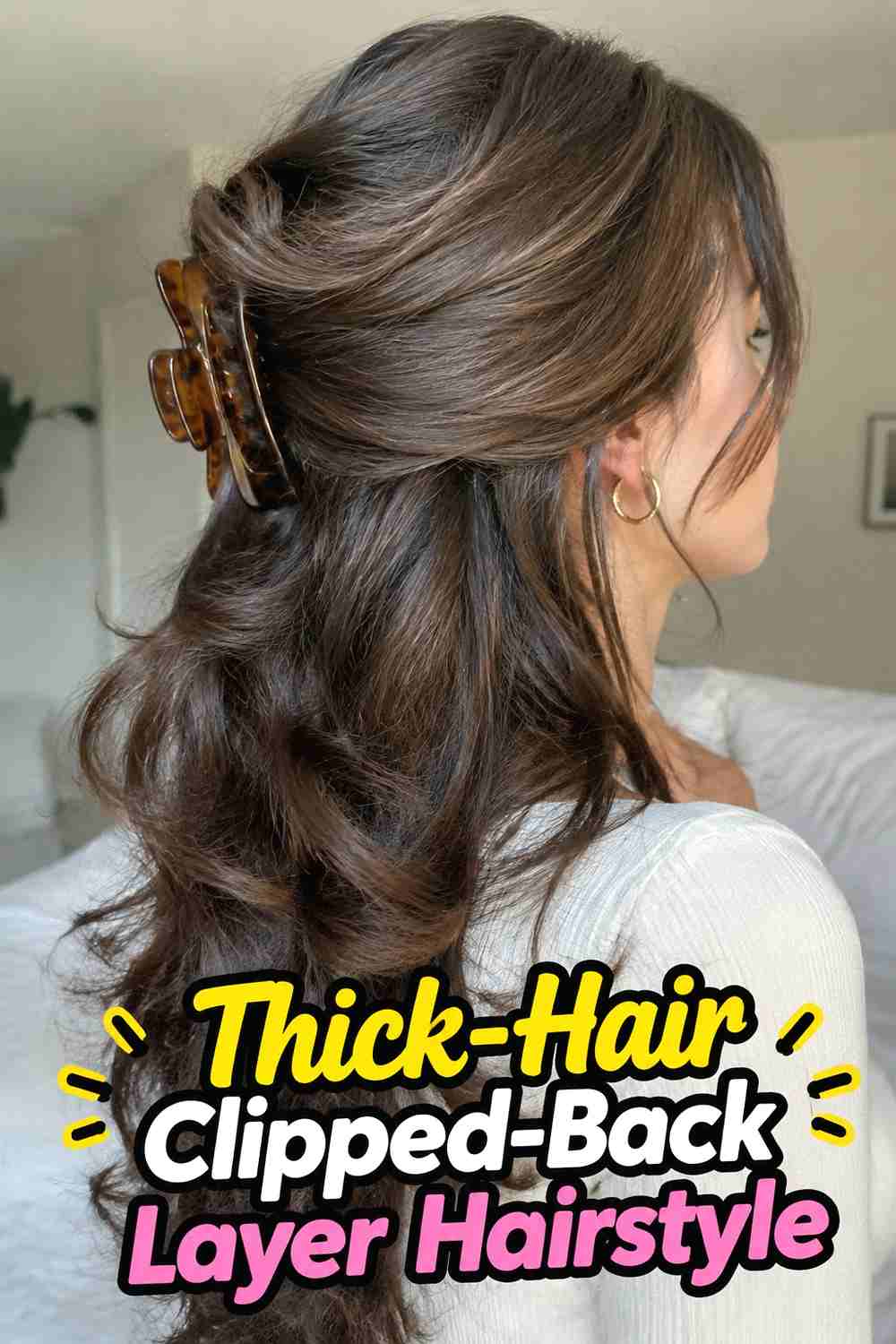
The Thick-Hair Clipped-Back Layer Hairstyle controls substantial front sections while allowing natural density to remain visible through the loose lengths. Use stronger clips or slim barrettes with enough grip for the section size rather than forcing thick hair into accessories designed for finer strands. Guide the front layers backward without pulling them tightly against the scalp, preserving a little crown and side volume for balance. Medium-long and long layered hair benefit most because the clipped areas reduce bulk around the face while the rest can fall naturally behind the shoulders. If the dress has a higher neckline, placing some of the loose length behind the body can further streamline the silhouette without reducing the richness of the hair.
Styling Notes
Divide thick front layers into manageable sections before clipping. This creates more reliable hold and prevents one overloaded clip from slipping or pulling uncomfortably.
10. Curly Clipped Back Face Framing Hairstyle
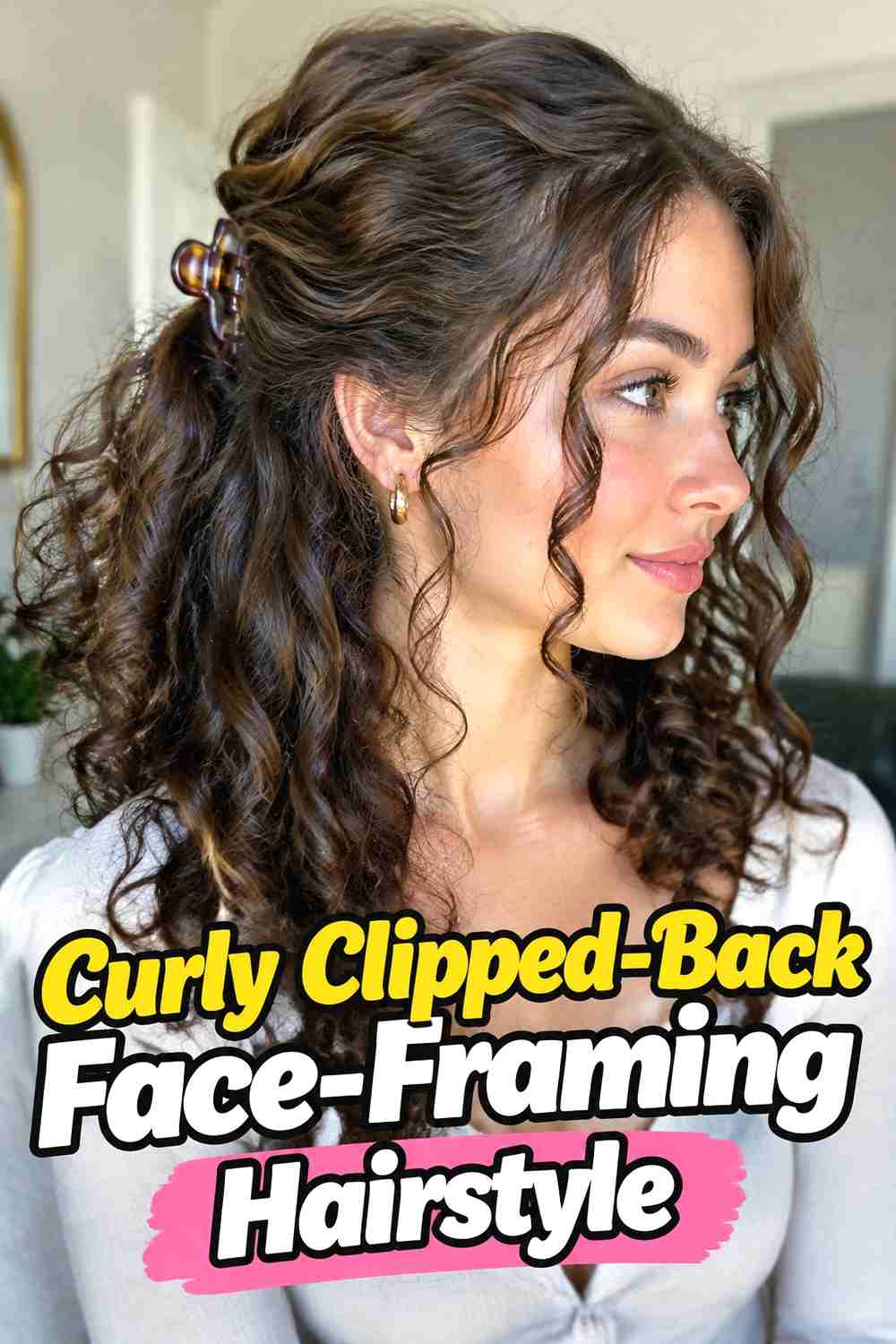
The Curly Clipped-Back Face-Framing Hairstyle opens the face while preserving natural curl definition around the crown and lengths. Select only the front curls that repeatedly fall forward, guide them gently toward the temples, and secure them without stretching the curl pattern completely straight. The remaining curls can retain their spring, volume, and natural variation, creating a textured contrast with the clean lines of a smart knit dress. Short, medium, and long curls can all adapt to the look depending on where the clips sit. Avoid brushing dry curls before fastening them, as this can disturb definition. Small clips placed beneath neighboring curls can provide secure hold while keeping the accessory visually subtle.
Pro Tip
Clip curls in their natural direction instead of forcing them backward. This helps preserve definition and reduces unnecessary tension around the hairline.
11. Half Up Clipped Back Layer Hairstyle
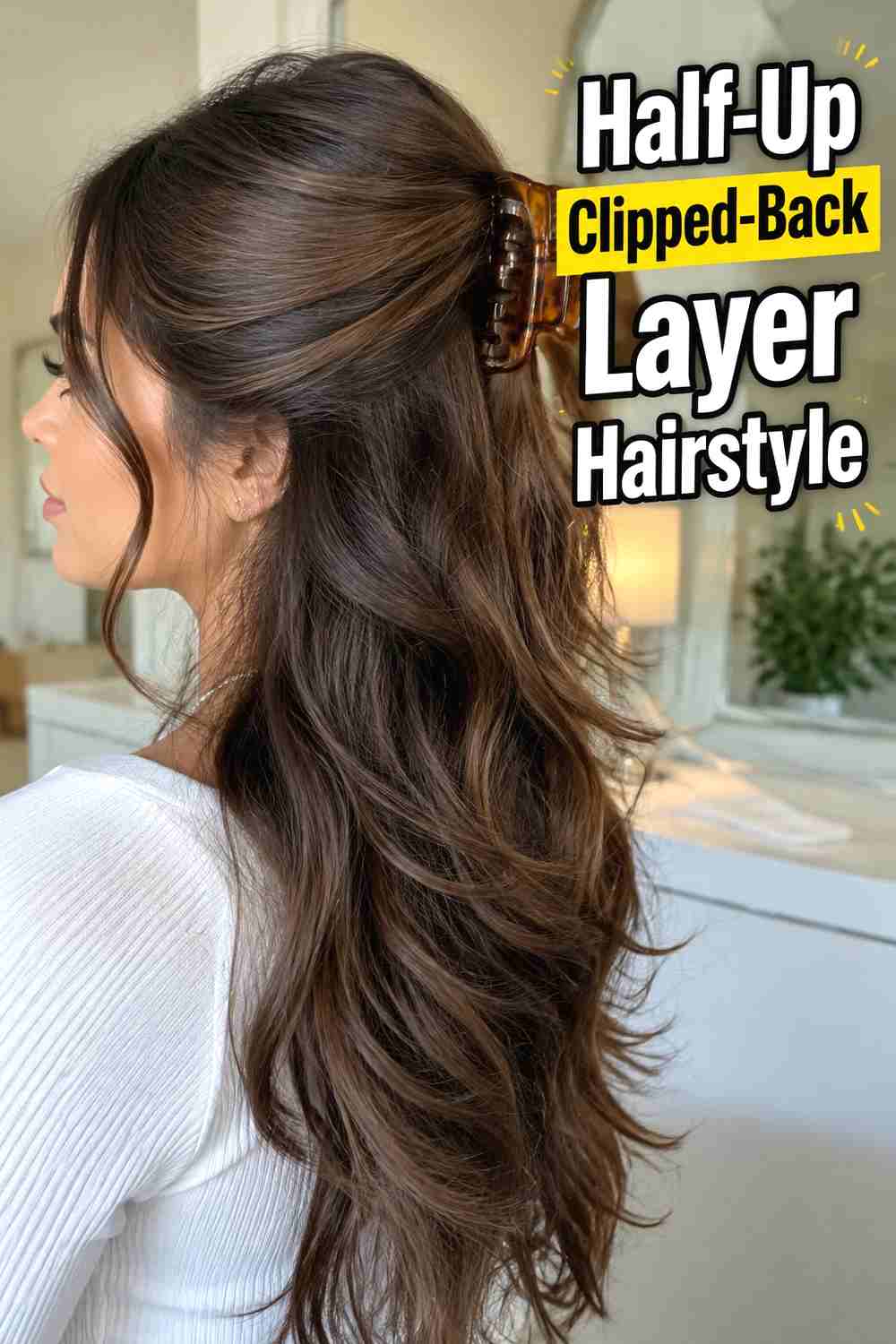
The Half-Up Clipped-Back Layer Hairstyle secures a slightly wider section from each side, creating more structure than a simple temple clip while keeping most of the hair loose. The upper layers meet behind the crown and can be held with a slim barrette, small claw clip, or hidden pins. This keeps the neckline and shoulders clearer, which works especially well with smart knit dresses that have a fitted or higher neckline. Medium-long and long hair provide the easiest proportions, and the loose lower section can remain straight, waved, or softly curled. Keep some volume through the crown rather than pulling the sides completely tight, so the style looks polished but still natural from the profile.
Why It Works
The wider clipped-back section offers reliable control for layered hair while preserving enough loose length to keep the hairstyle soft and versatile.
12. Polished Bob Clipped Back Hairstyle
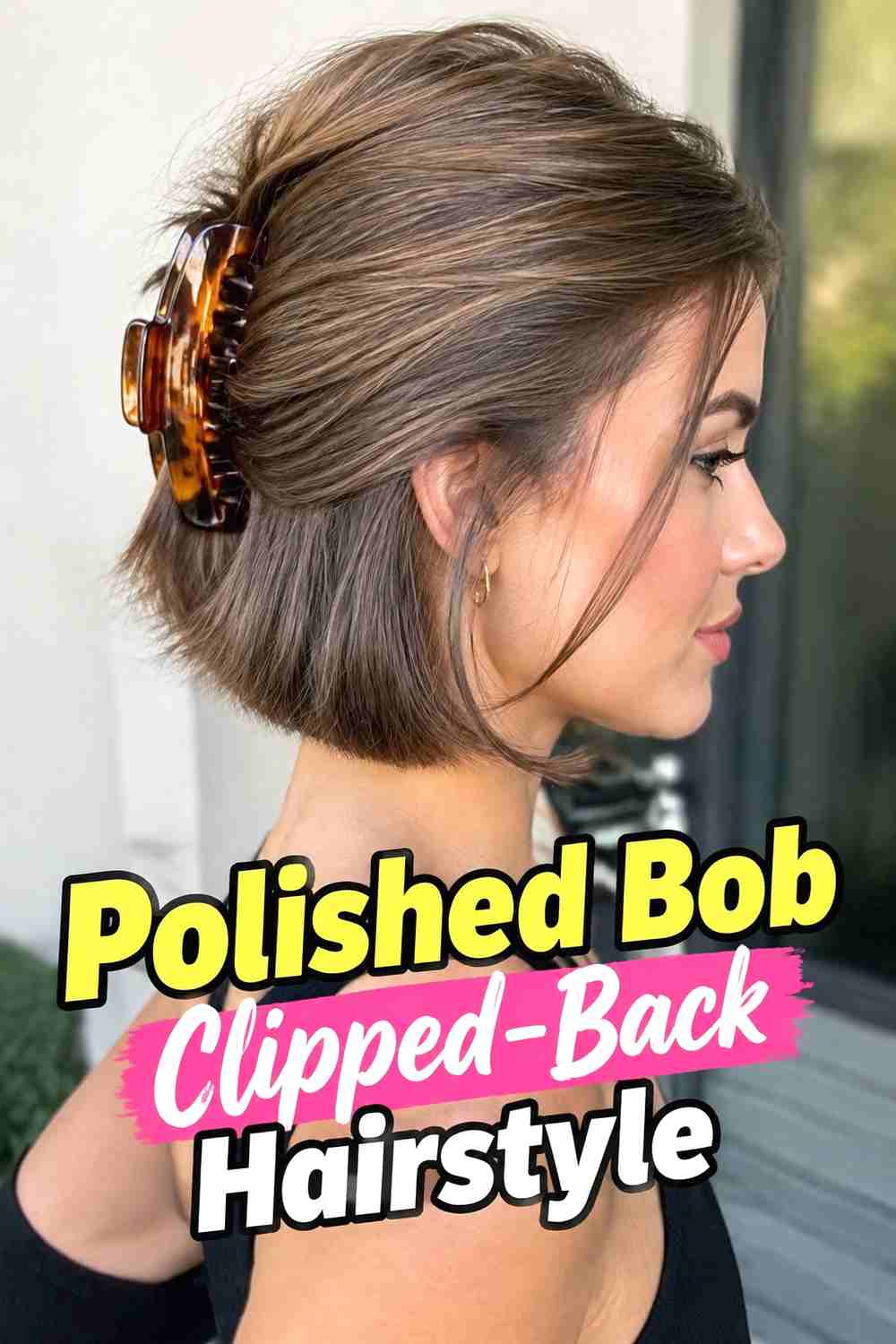
The Polished Bob Clipped-Back Hairstyle gives a jaw-length or chin-length cut a clean, graphic outline by securing the shorter front sections away from the face. One side can be clipped for asymmetry, or both can be secured for a more balanced finish. Because the haircut already sits above the shoulders, the clipped sections make a smart knit dress neckline especially visible. Straight and softly wavy bobs work beautifully, while curly bobs can use smaller sections to retain texture. Keep the ends natural and movable rather than overly tucked under. A little root lift at the top prevents the bob from appearing flat after clipping, while a discreet accessory keeps attention on the haircut itself.
Best For
This is a strong option for shorter cuts when you want a sharper work-ready silhouette without changing the bob’s natural length or perimeter.
13. Soft Blowout Clipped Back Layer Hairstyle
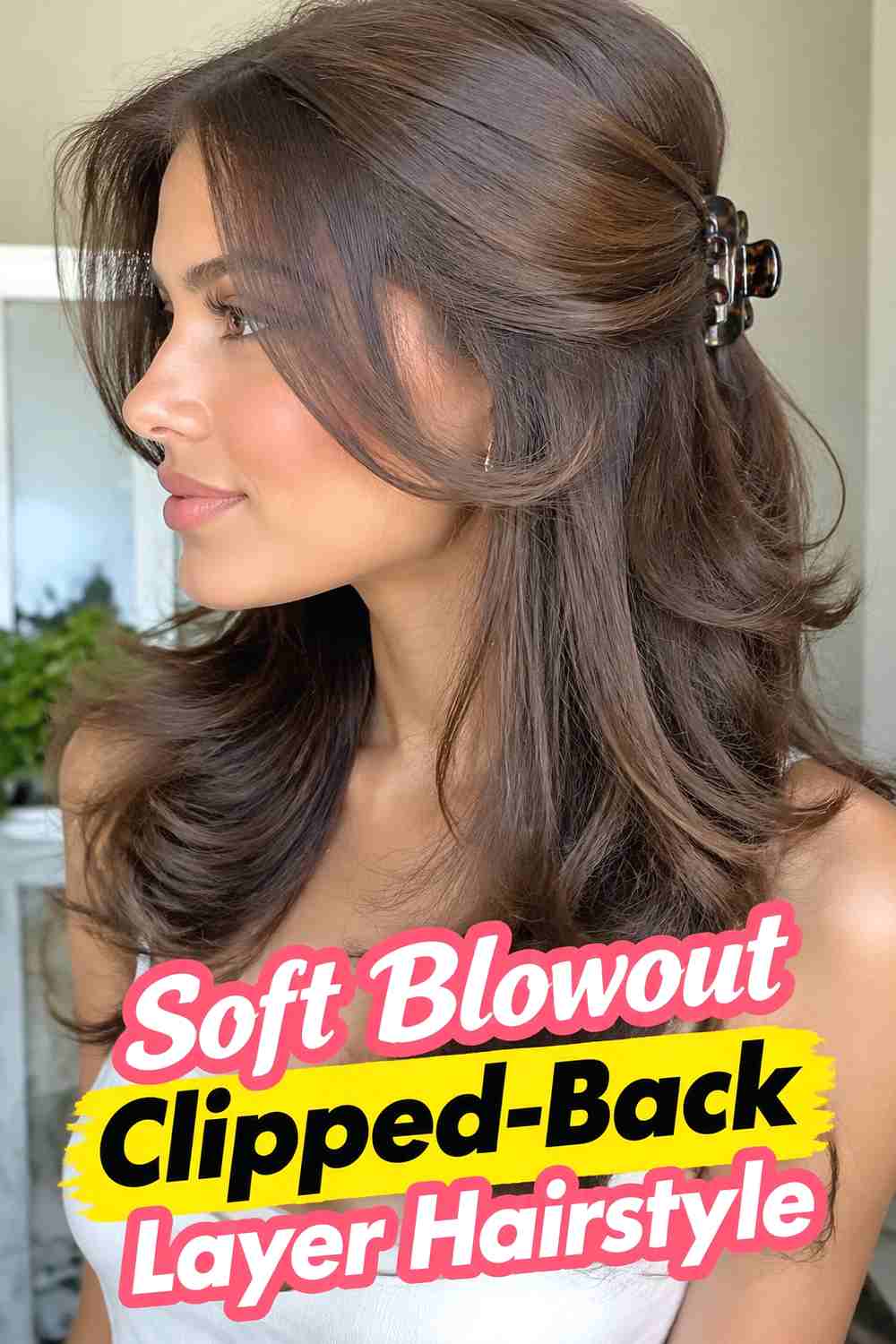
The Soft Blowout Clipped-Back Layer Hairstyle combines airy root lift, rounded movement, and controlled front sections for a particularly polished finish. Blow-dry the layers away from the face, then clip the outer front pieces near the temples while allowing some soft movement to remain around the cheeks. The lower lengths can keep broad bends and gently rounded ends, creating a refined look that pairs naturally with fitted knit dresses. Medium and long layered cuts show the contrast between the clipped upper sections and flowing blowout most clearly. Keep the fastening light so it does not crush the root volume, and avoid placing the clips too far back. The hairstyle should retain bounce even though the face-framing layers stay neatly controlled.
Styling Notes
Allow the blowout to cool before clipping. Warm hair can flatten easily when secured and may lose the airy root shape you created.
14. Twisted Clipped Back Layer Hairstyle
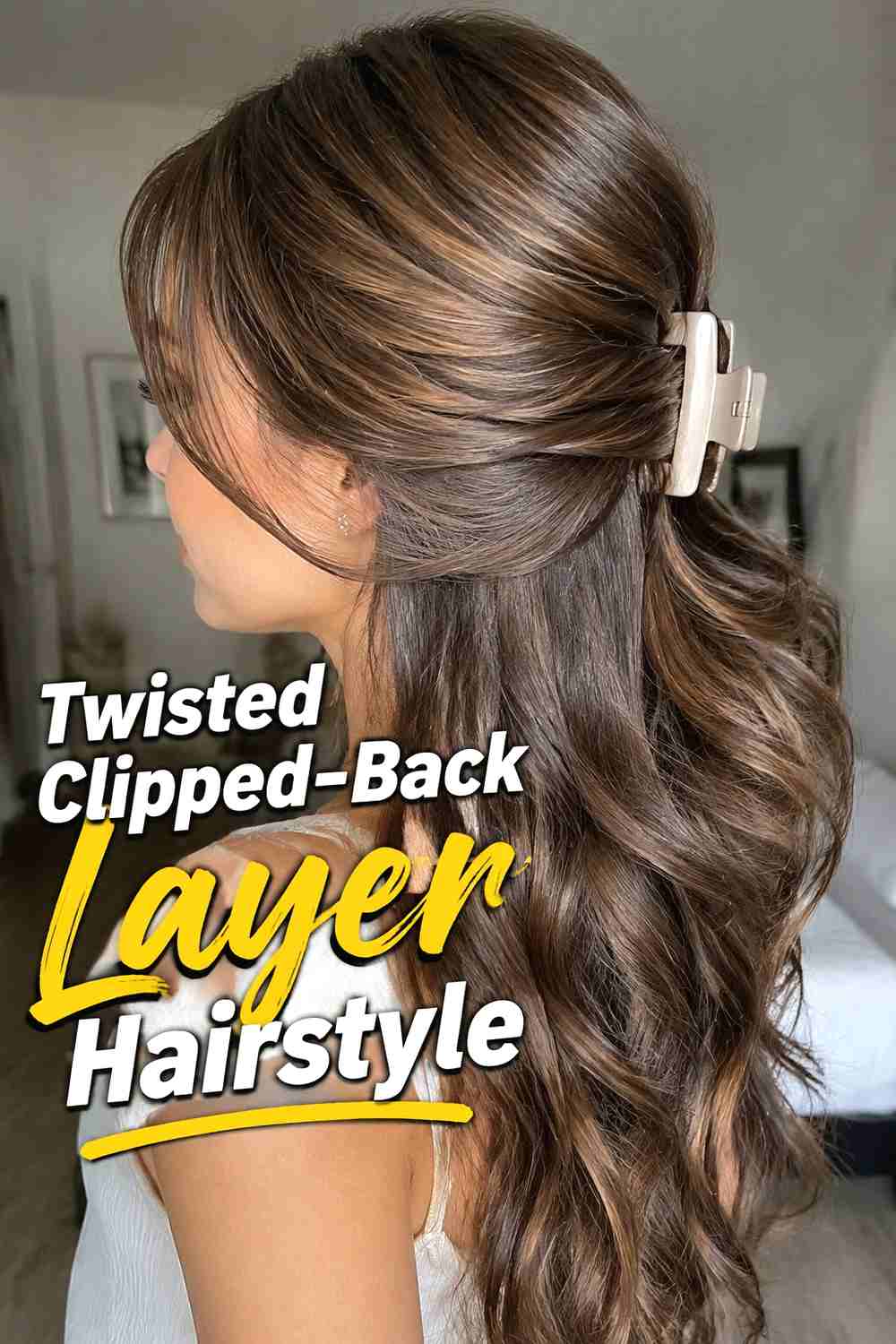
The Twisted Clipped-Back Layer Hairstyle adds subtle detail by twisting each face-framing section before securing it near the sides or behind the head. The twists should remain loose enough to show natural strand texture rather than forming tight ropes. This works particularly well for medium and long layered hair because the front pieces can be incorporated neatly while the lower lengths remain loose. Straight hair gives the twists a smooth finish, while waves and curls create more visible texture. With a smart knit dress, the style feels polished without becoming formal or elaborate. Keep the twists positioned above the neckline, and use small clips or pins that support the sections without creating bulky fastening points.
Pro Tip
Twist each section only a few turns before clipping. Over-twisting can shorten the section too much and create unnecessary tension around the temples.
How to Choose the Right Look
Start with the length of your face-framing layers. Shorter pieces usually need clips closer to the temples or ears, while longer curtain layers can travel farther backward into a half-up or twisted style. Avoid forcing short pieces into a fastening point they cannot comfortably reach.
Hair density also affects accessory choice. Fine hair usually holds best with lightweight clips that have strong grip, while thick hair may need larger barrettes, reinforced pins, or divided sections. Curly hair benefits from clipping individual curl groups rather than brushing several sections together.
Match the amount of structure to the knit dress. Sleek bobs and center-part styles feel especially polished with fitted work dresses, while waves, curls, and soft twists suit more relaxed silhouettes. Whatever you choose, keep the clips secure, comfortable, and proportionate to the hairstyle.
Final Thoughts
Clipped-back face-framing layers are an easy way to make smart knit dresses feel more polished without committing to a full updo. The technique keeps the neckline clear while preserving movement through the rest of the hair. Choose a placement that suits your layer length, density, and texture, then keep the fastening light enough that the hairstyle still looks natural from every angle.
FAQs
1. Where should I clip face-framing layers?
Temples, just above the ears, or slightly behind the ears are practical placement points. Choose the spot your layers can reach without excessive tension.
2. What clips work best for fine hair?
Small lightweight clips with firm grip are usually better than heavy barrettes, which may slide or flatten delicate hair.
3. Can curly hair wear clipped-back face-framing layers?
Yes. Clip selected curls in their natural direction and avoid brushing them dry first so the curl pattern remains defined.
4. How do I keep clipped-back layers from looking flat?
Leave a little root volume through the crown and avoid pulling the sections too tightly. Clip only as much hair as necessary.
5. Are clipped-back layers suitable for work outfits?
Yes. Sleek, discreet clips and controlled face-framing sections can create a polished look that pairs particularly well with simple knit dresses and office styling.
Save your favorite clipped-back looks, share the styles that suit your knit dresses, and explore more polished hairstyle inspiration for work and everyday outfits.