14 Soft Fringe-and-Bun Looks With Nordic Knit Pullovers
Soft fringe and neatly gathered buns balance the cozy texture of Nordic knits, keeping the neckline clear while adding gentle movement around the face.
Nordic knit pullovers often bring strong pattern, texture, and visual weight around the shoulders, so an updo can keep the overall look from feeling crowded. Adding fringe prevents the hairstyle from becoming too severe by leaving a controlled amount of softness around the forehead, temples, and cheekbones.
The best pairing depends on both the fringe shape and bun placement. Low chignons feel classic, compact mid buns offer extra neckline clearance, and looser textured buns complement chunkier knits. Consider your natural hair texture, fringe length, sweater collar, and how long you need the style to hold before choosing your favorite.
Quick List
- Wispy Fringe Low Bun Hairstyle
- Curtain Fringe Soft Chignon Hairstyle
- Piecey Fringe Textured Bun Hairstyle
- Side Swept Fringe Nape Bun Hairstyle
- Bottleneck Fringe Loose Bun Hairstyle
- Feathered Fringe Mid Bun Hairstyle
- Micro Fringe Compact Bun Hairstyle
- Long Fringe Twisted Bun Hairstyle
- Soft Arched Fringe Low Knot Hairstyle
- Airy Fringe Messy Bun Hairstyle
- Curly Fringe Rounded Bun Hairstyle
- Split Fringe Sleek Bun Hairstyle
- Shaggy Fringe Mini Bun Hairstyle
- Soft Full Fringe Braided Bun Hairstyle
1. Wispy Fringe Low Bun Hairstyle
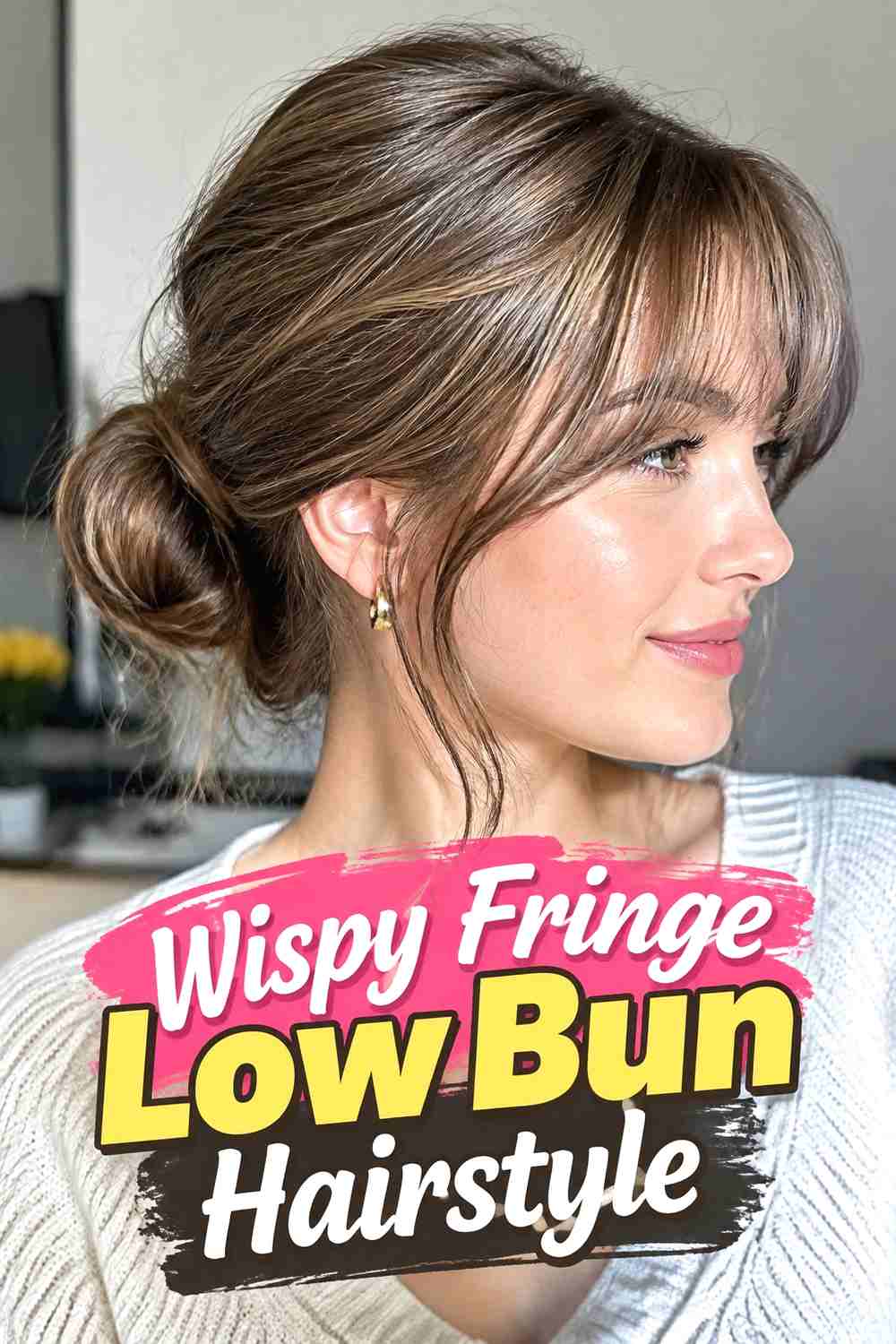
A wispy fringe softens a low bun without adding much visual weight around a patterned knit. Keep the bangs light and separated so small sections of forehead remain visible, then gather the remaining hair into a compact bun positioned just above the nape. The contrast between airy front pieces and a controlled back makes this style especially wearable with Nordic pullovers that already have bold motifs around the shoulders. A few subtle temple pieces can connect the fringe to the rest of the hairstyle, but avoid releasing too much hair near a high sweater collar. The bun can be smooth or lightly textured depending on whether you want a polished or relaxed winter finish.
Styling Notes
Shape the fringe before securing the bun, using light airflow or a small round brush to prevent the bangs from becoming too curved or stiff.
Best For
This style works well with straight, lightly wavy, or fine-to-medium hair and sweaters with crew, mock, or softly raised necklines.
2. Curtain Fringe Soft Chignon Hairstyle
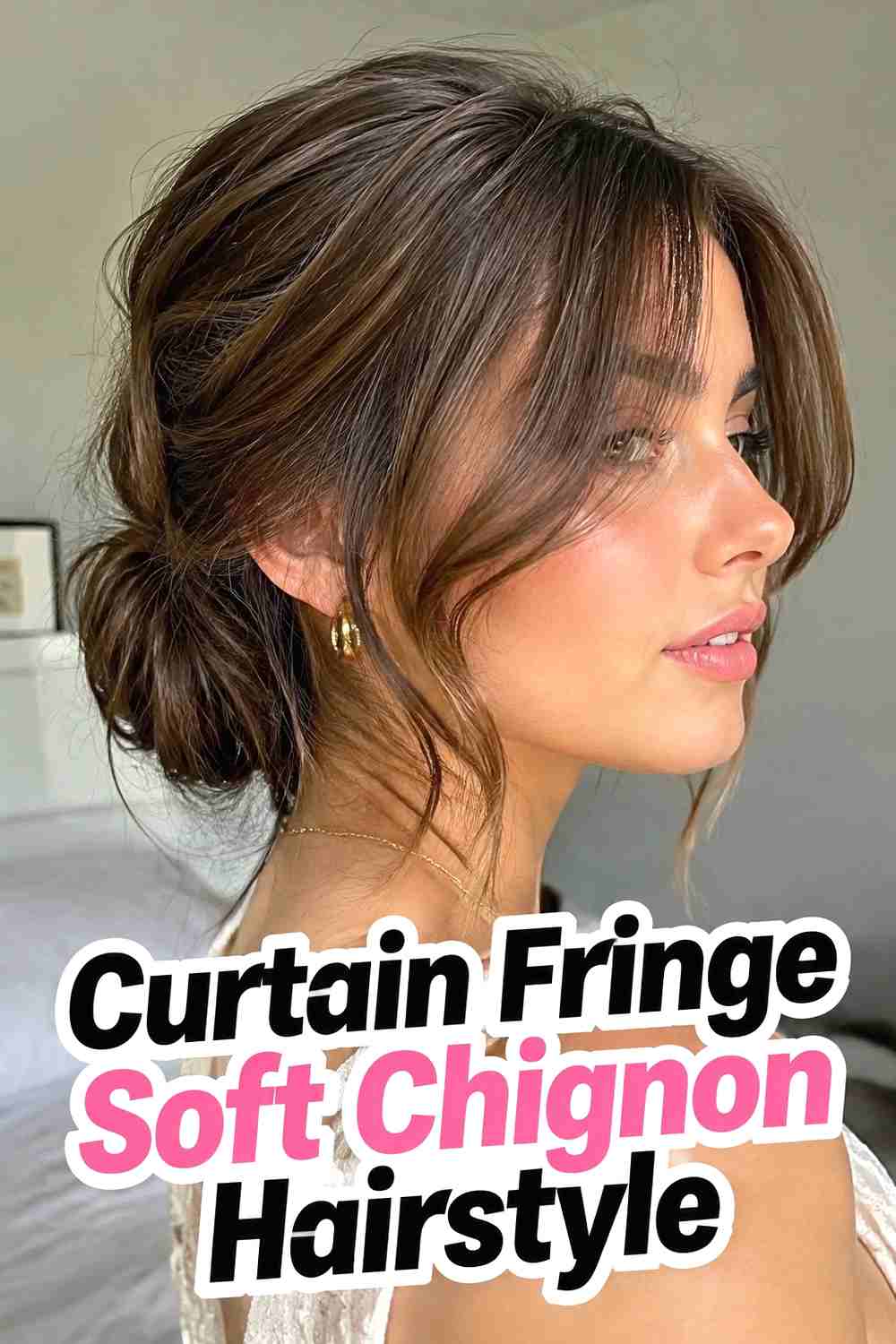
Curtain fringe and a soft chignon create a balanced combination of open facial framing and controlled length. Part the fringe near the center and direct each side outward, allowing the longest pieces to blend toward the cheekbones. Gather the remaining hair into a low chignon that sits neatly above the pullover collar rather than resting directly against it. The curved front pieces echo the softness of knitted texture without competing with Nordic patterns across the chest and shoulders. Medium to long hair works particularly well because there is enough length to form a secure chignon while keeping the front light. A little softness through the crown prevents the style from looking overly formal.
Why It Works
The curtain fringe creates movement above the sweater neckline while the chignon keeps the shoulders completely clear.
Pro Tip
Leave the longest fringe sections outside the bun so the transition from bangs to cheekbone-length pieces stays natural.
3. Piecey Fringe Textured Bun Hairstyle
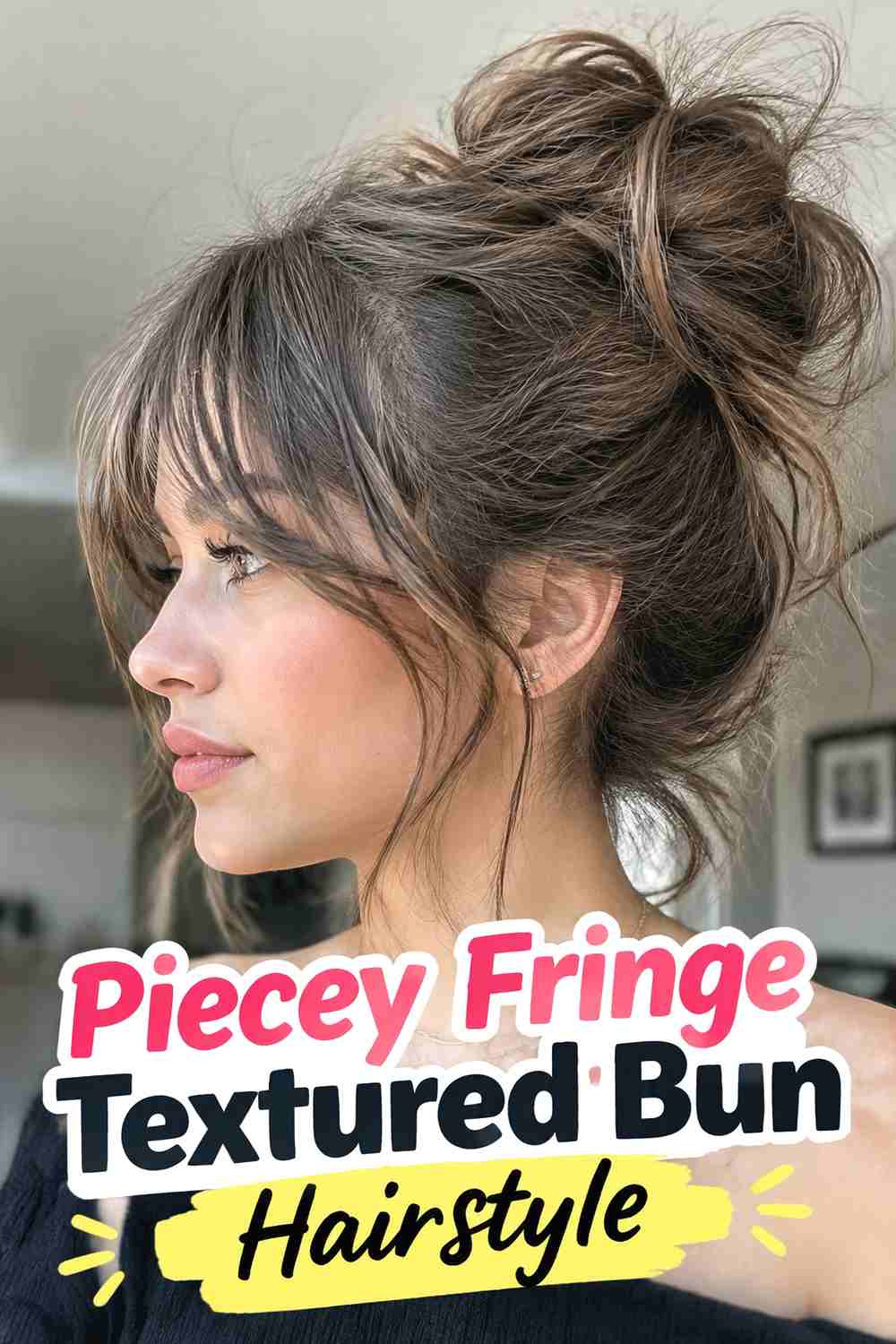
A piecey fringe pairs naturally with a textured bun because both elements rely on separated, imperfect-looking strands rather than a uniformly smooth finish. Keep the fringe light and defined, then gather the rest of the hair into a medium or low bun with visible twists and soft surface texture. The result feels casual enough for a chunky Nordic knit while still looking intentionally styled. This approach is especially useful for naturally wavy hair, since existing movement can provide texture without extensive heat styling. Keep the bun compact enough that it does not visually compete with broad sweater shoulders. A few controlled flyaways are fine, but the fastening point should remain secure.
Hair Type & Length
Wavy, lightly curly, or textured medium-to-long hair makes this style especially easy to achieve, though straight hair can be prepped with soft bends.
Wear & Maintenance
Use flexible hold rather than heavy spray so the fringe and bun keep their natural separation instead of becoming stiff.
4. Side Swept Fringe Nape Bun Hairstyle
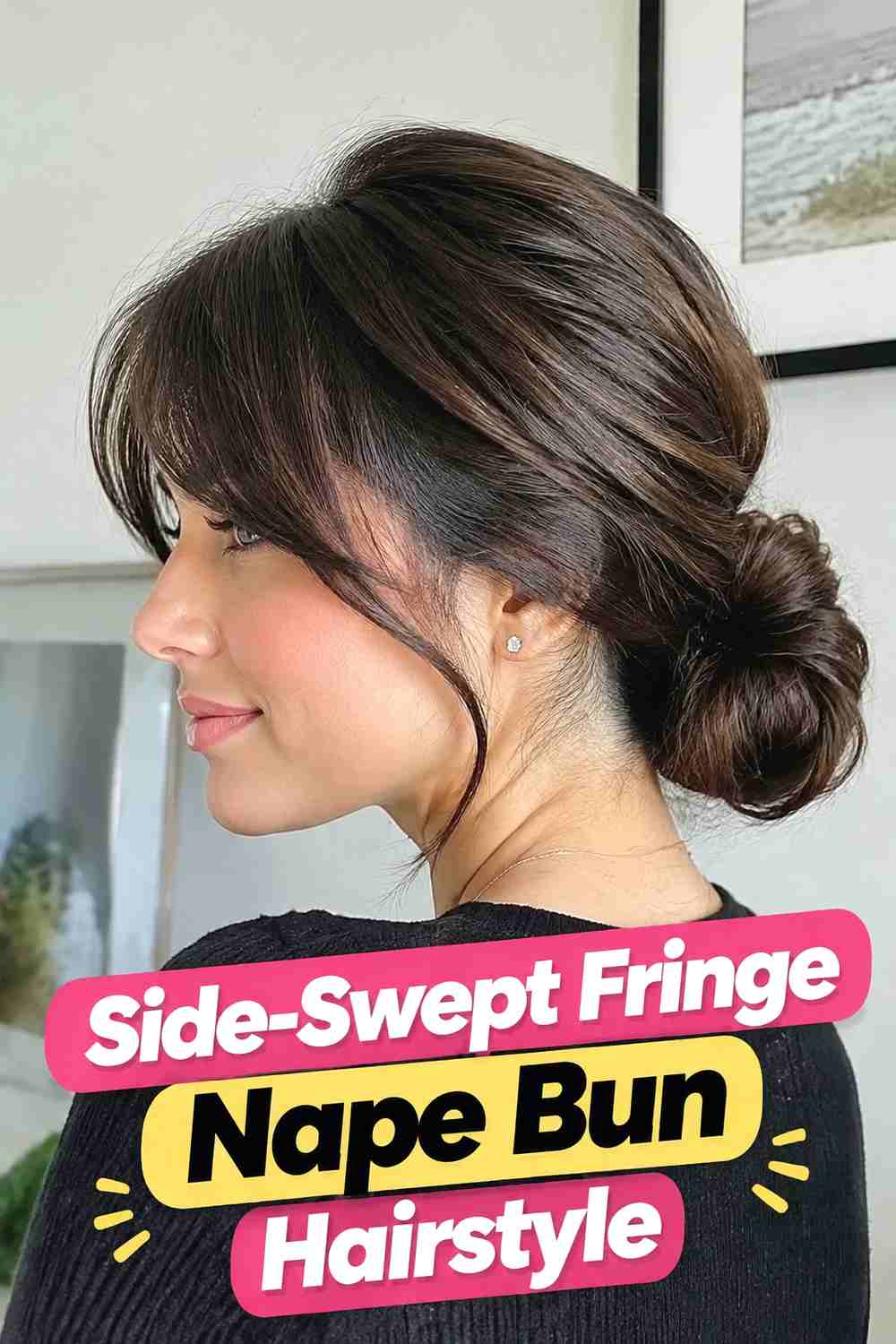
A side-swept fringe introduces asymmetry while a small nape bun keeps the rest of the hairstyle restrained. Sweep the fringe diagonally across the forehead, allowing the end to blend near one temple, then gather the remaining hair into a compact bun at the lower back of the head. This shape works particularly well with symmetrical Nordic knit patterns because the fringe creates a subtle counterpoint without adding another large design element. If the pullover has a raised collar, position the bun slightly higher so it does not rub against the knit. Keep the sweep soft rather than heavily sprayed, especially if you want the hairstyle to feel relaxed enough for everyday winter wear.
Styling Notes
Direct the fringe while drying rather than forcing it sideways after it is fully set. This gives the sweep more natural movement.
Best For
Choose this option when you want an understated bun with a little more facial framing than a center-part or full-fringe style.
5. Bottleneck Fringe Loose Bun Hairstyle
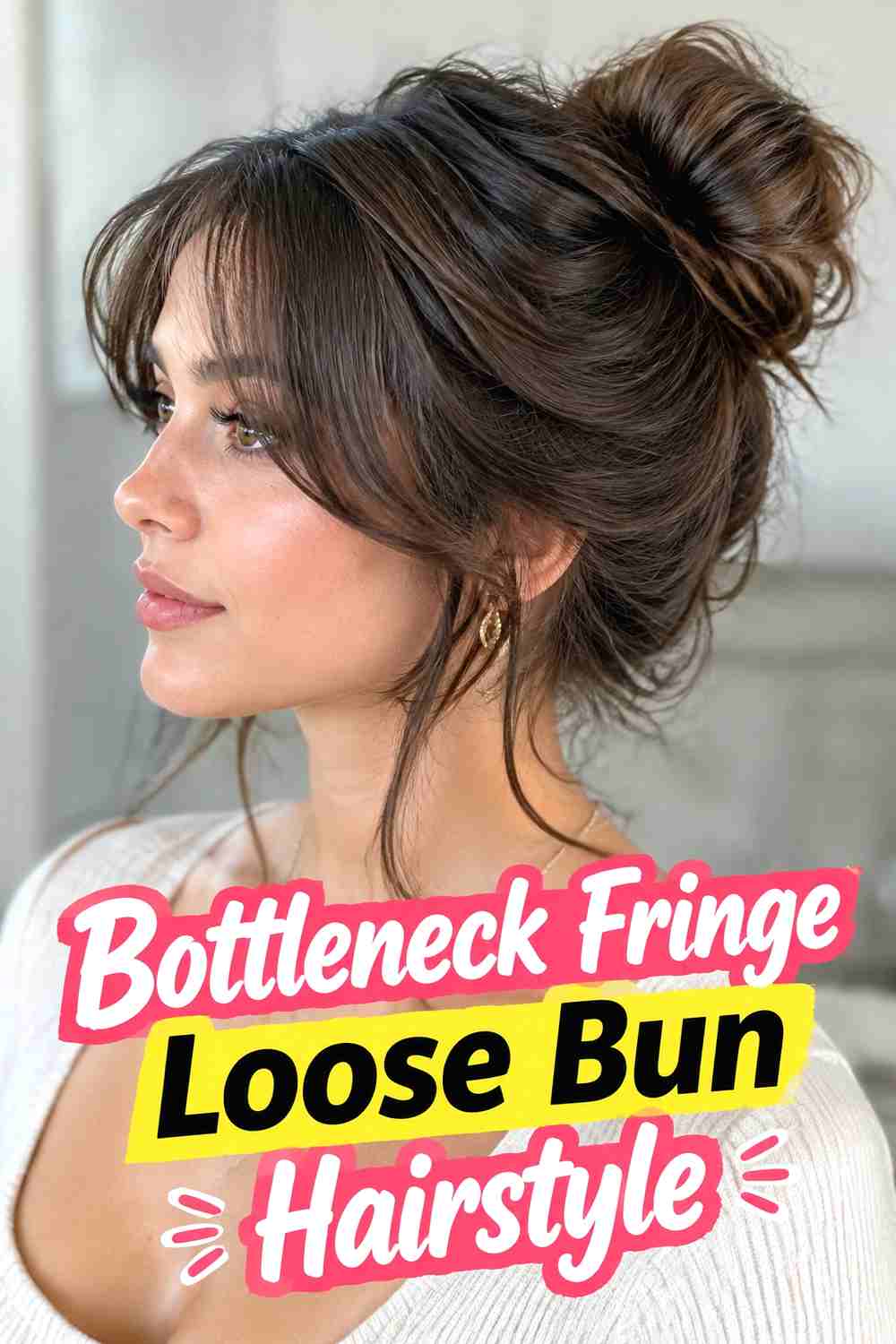
Bottleneck fringe gives a loose bun a beautifully tapered frame, with shorter sections through the center and longer pieces opening toward the cheekbones. That shape works well with Nordic knit pullovers because it keeps softness concentrated around the face while the hair at the shoulders remains completely controlled. Gather the lengths into a relaxed bun positioned at the mid-to-low back of the head, leaving the bun slightly imperfect rather than tightly polished. The wider outer fringe sections should blend naturally into the temple area instead of appearing disconnected. This is a particularly flattering option for layered hair because the changing lengths already support the bottle-shaped fringe silhouette and add movement without needing many loose strands.
Why It Works
The narrowing center fringe keeps the forehead open, while longer side pieces create softness above the textured sweater neckline.
Pro Tip
Avoid over-loosening the bun. A controlled shape makes the softer fringe look intentional rather than unfinished.
6. Feathered Fringe Mid Bun Hairstyle
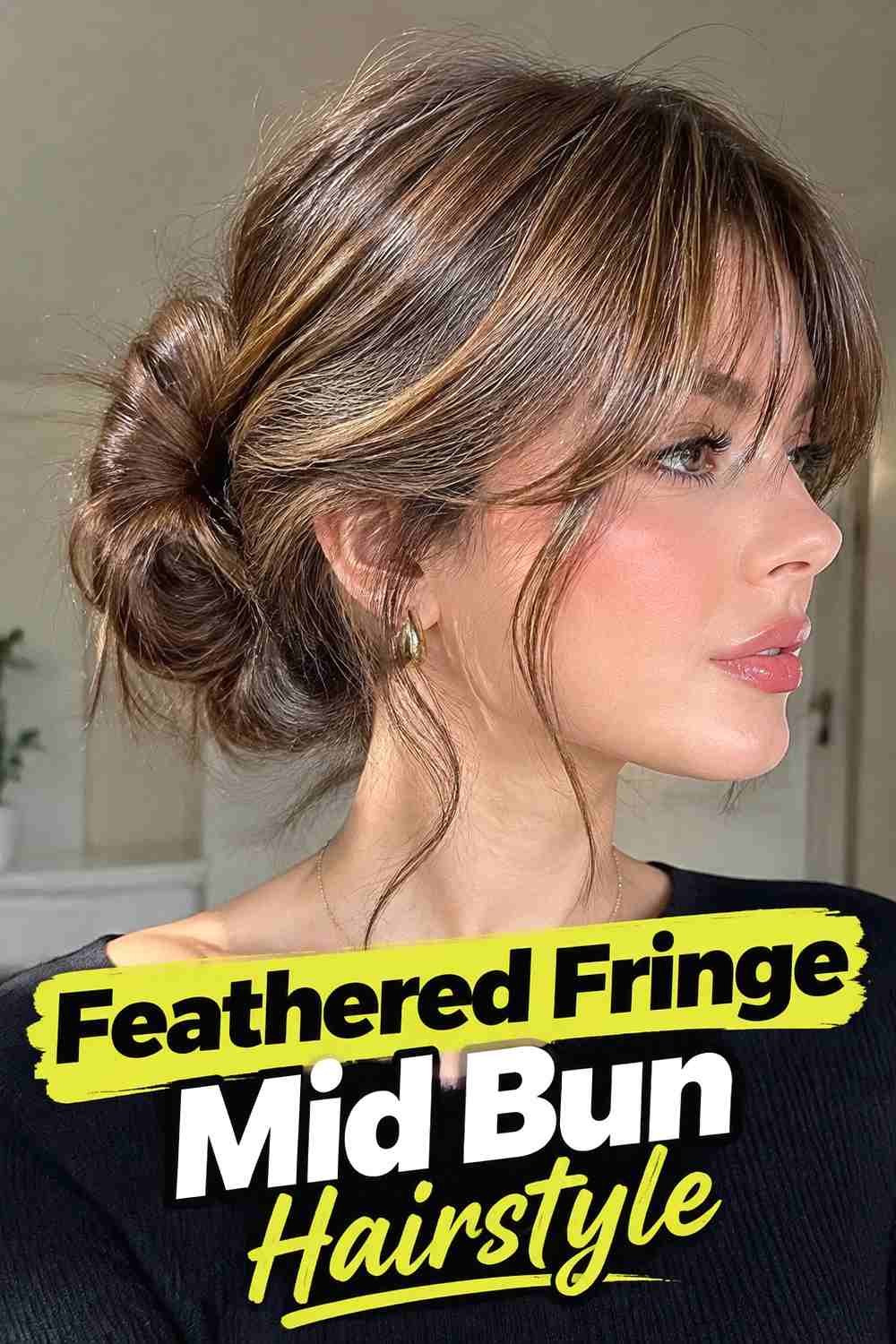
Feathered fringe adds light movement across the forehead, while a mid-height bun creates extra clearance above thick knitted collars. Shape the fringe with a soft outward bend so the ends separate slightly toward the temples, then gather the hair around the middle back of the head. The bun can be rounded or lightly twisted, but keeping it compact preserves the clean silhouette. This style works particularly well with heavier Nordic pullovers because the higher placement prevents the bun from rubbing against the sweater and gives the outfit more vertical balance. Medium to long layered hair suits the feathered front especially well, and a touch of crown lift can help the fringe flow naturally into the gathered sections.
Styling Notes
Use a small amount of lightweight styling cream through the fringe ends rather than heavy wax, which can make feathered pieces clump together.
Best For
This is a practical choice for bulky crewnecks, mock necks, and layered winter outfits where a low bun may feel crowded.
7. Micro Fringe Compact Bun Hairstyle
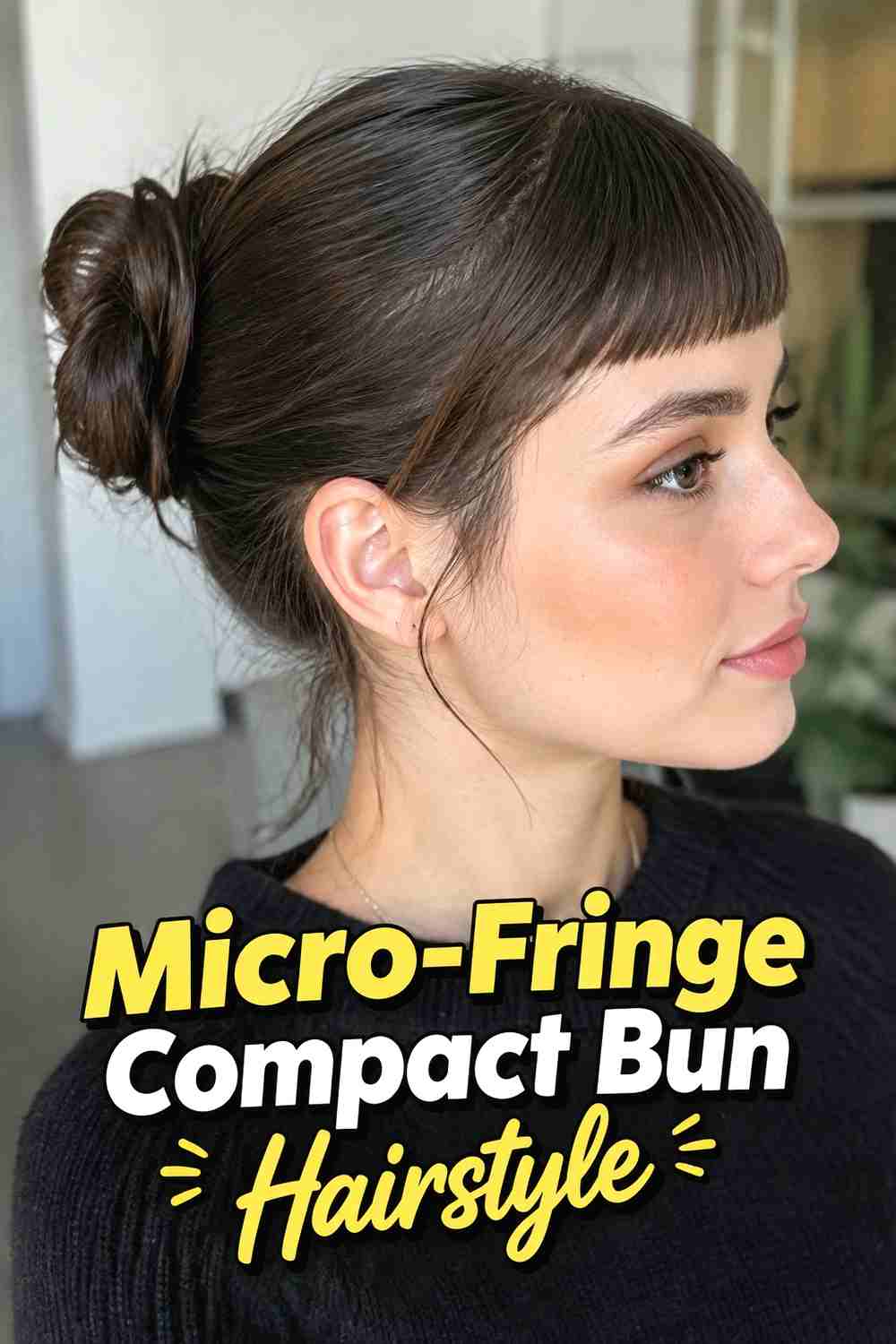
A micro fringe creates a sharper, more graphic contrast with the softness of a Nordic knit pullover. Keep the fringe short and clean across the forehead, then gather the remaining hair into a small, compact bun that sits clear of the sweater collar. Because the fringe already makes a strong visual statement, the bun should stay simple and controlled rather than oversized or heavily textured. This look works especially well on straight or smoothed hair where the short fringe can hold a defined shape. It can also suit naturally textured hair when the fringe is designed around the existing curl pattern. The exposed forehead and tidy neckline help prevent a patterned winter outfit from feeling visually overloaded.
Why It Works
The short fringe creates crisp detail above the face, while the compact bun keeps all additional volume away from the shoulders and knit pattern.
Wear & Maintenance
Micro fringe may need a quick refresh after wearing a hat, so keep the styling light enough that it can be reshaped easily.
8. Long Fringe Twisted Bun Hairstyle
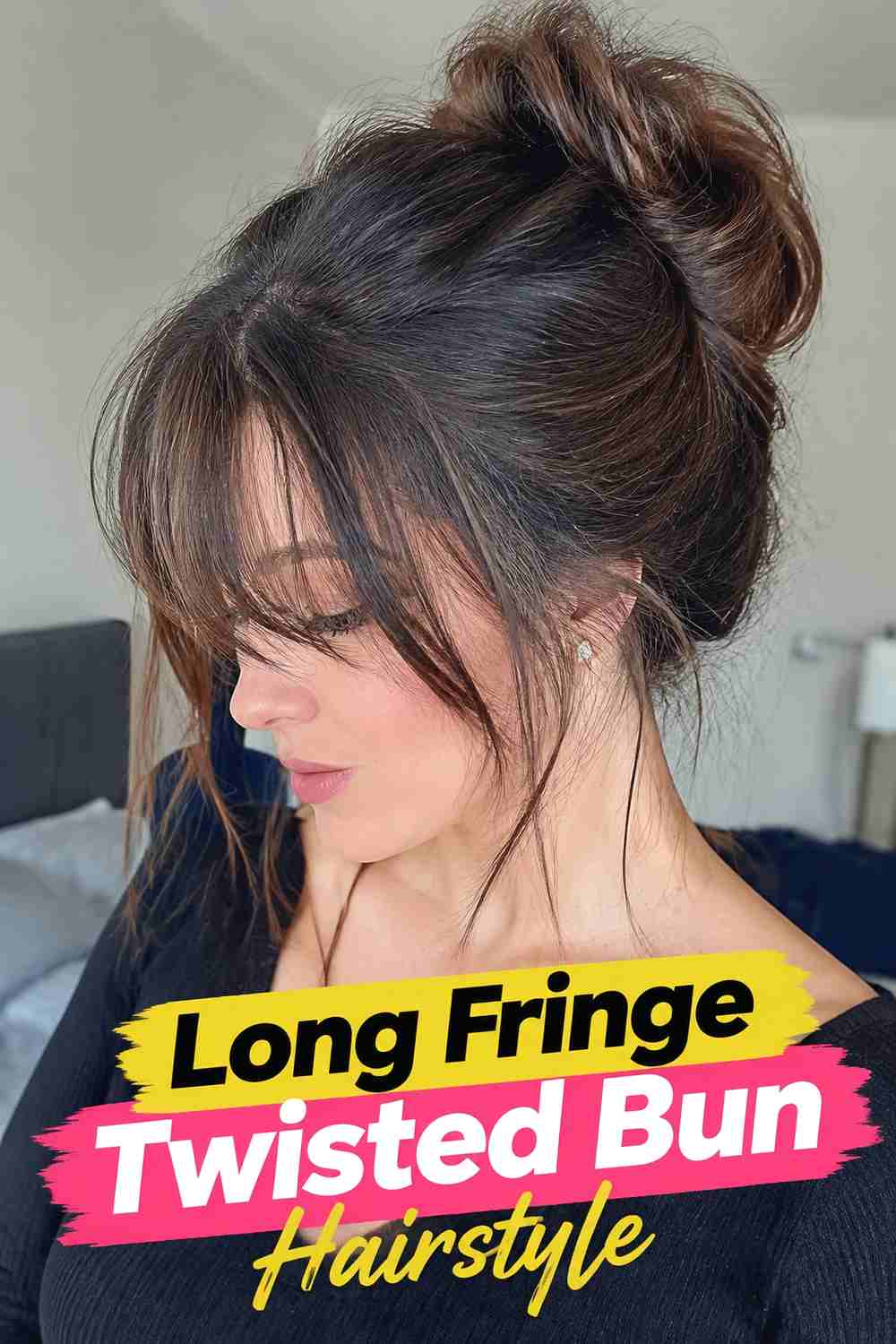
Long fringe offers soft cheekbone-level framing while a twisted bun provides a more structured finish at the back. Leave the fringe sections out before gathering the hair, then twist the remaining lengths into a compact bun around the mid or lower back of the head. The long front pieces can curve gently away from the face, creating movement without falling across the sweater’s neckline. This style is especially effective for grown-out bangs because the fringe can look deliberate rather than transitional. A Nordic knit with a bold yoke or patterned shoulder benefits from this controlled arrangement, since the bun keeps the outfit area clear while the longer fringe adds just enough softness around the face.
Styling Notes
Shape the fringe with a large brush or gentle bend rather than a tight curl. Long pieces look more modern when they move naturally.
Pro Tip
Secure the twisted bun firmly at its center so you do not need a large decorative clip that could compete with the sweater pattern.
9. Soft Arched Fringe Low Knot Hairstyle
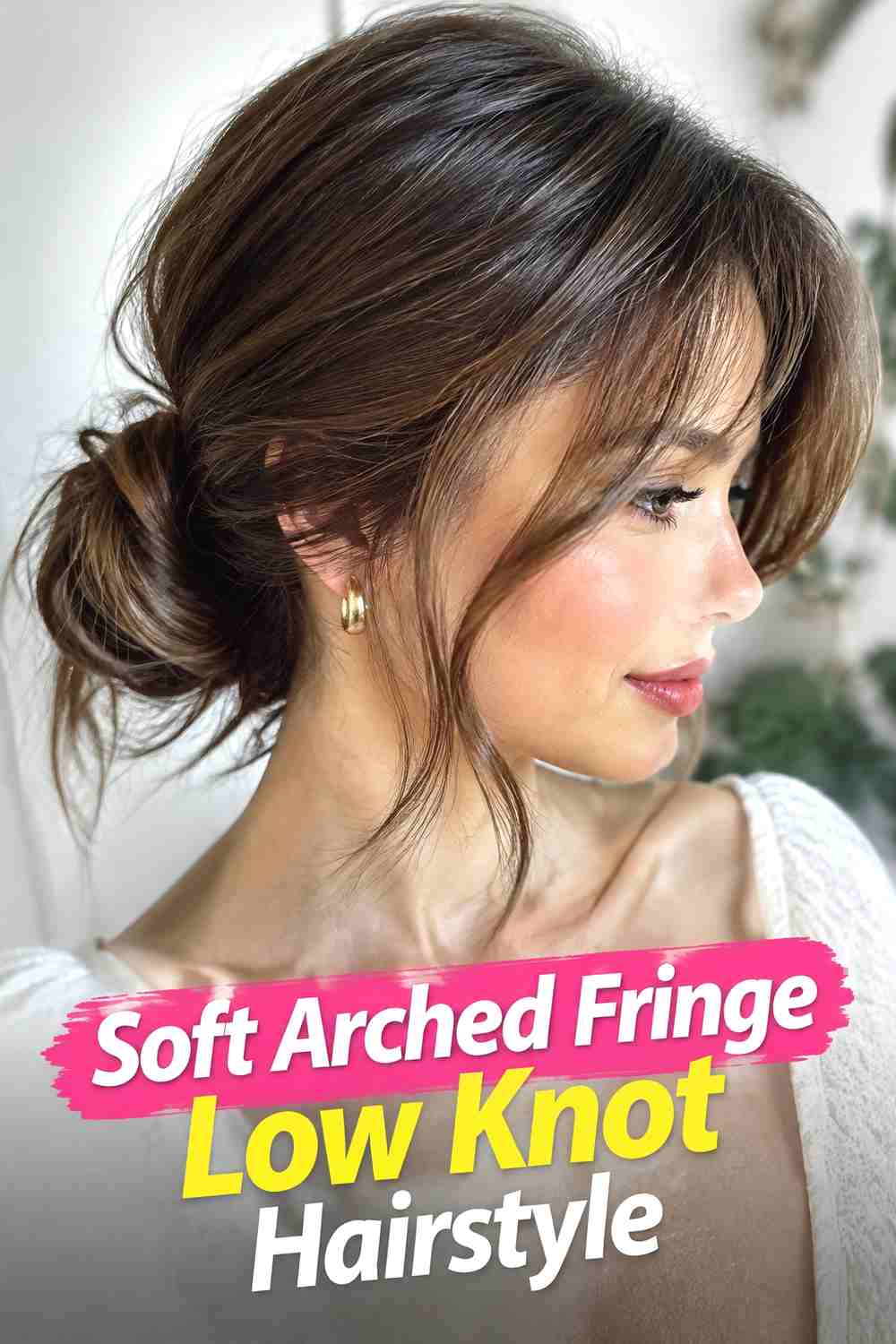
A soft arched fringe follows the curve of the brows and becomes slightly longer toward the temples, giving a low knot a classic, face-framing finish. Keep the fringe light enough to show movement, then gather the remaining hair into a narrow knot just above the nape. This creates a calm silhouette that complements the detailed surface of a Nordic knit without introducing too many competing textures. The knot should lie relatively flat so it does not catch on the back of the pullover, especially if the neckline rises slightly. Straight and softly wavy hair both suit the shape, and the longer fringe edges can blend into subtle temple pieces for a softer transition.
Best For
This style is especially useful for medium-length hair that forms a small knot easily without creating excess bulk.
Wear & Maintenance
Check the knot placement against the sweater collar before adding final pins so it remains comfortable during longer wear.
10. Airy Fringe Messy Bun Hairstyle
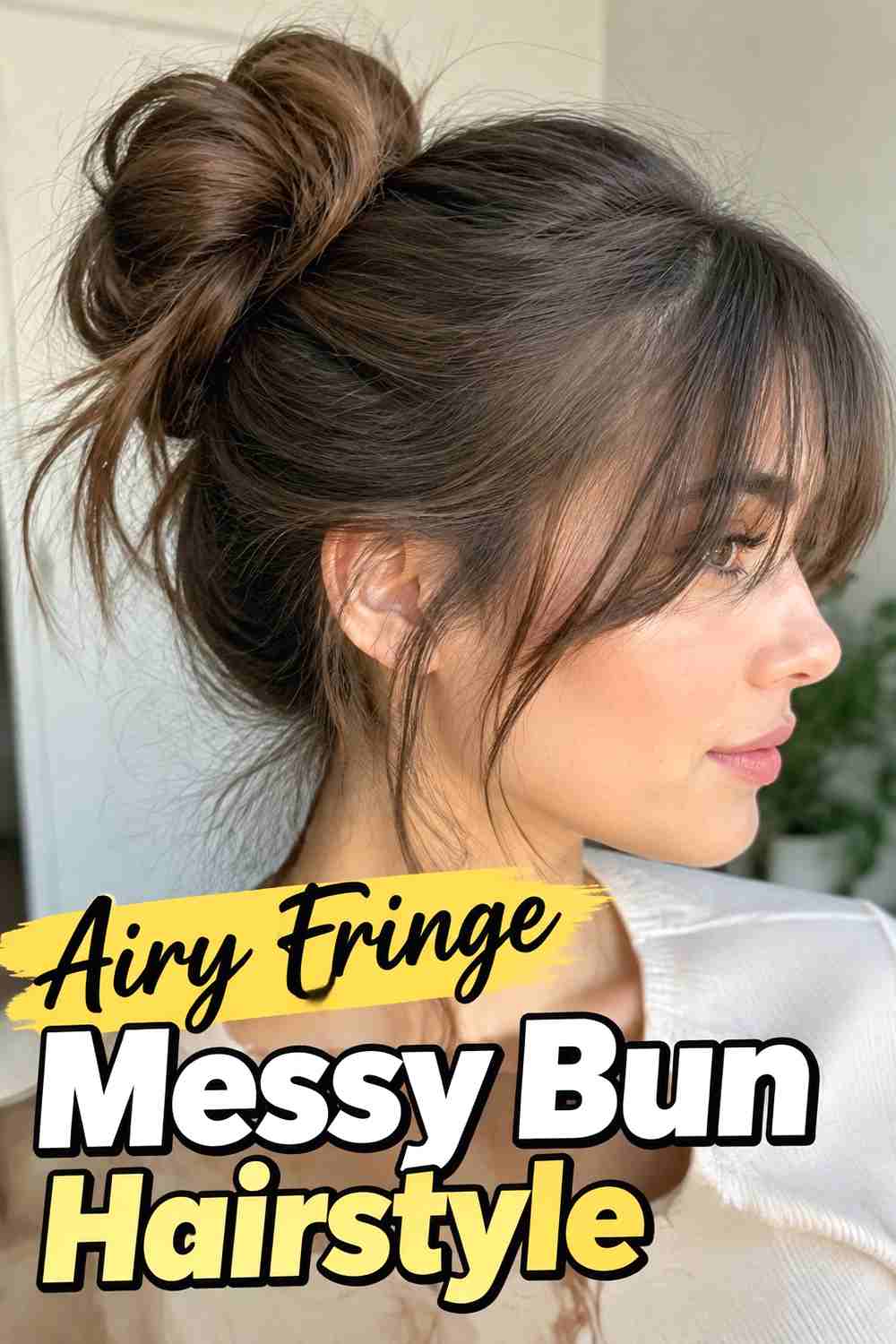
An airy fringe and messy bun create one of the most relaxed combinations in the collection. Keep the bangs soft, slightly separated, and gently lifted at the roots, then gather the remaining hair into a loose bun with controlled wisps and visible texture. The goal is casual softness rather than a deliberately undone pile of hair. This works especially well with chunky Nordic knit pullovers because the hair mirrors the sweater’s cozy character while staying off the shoulders. Position the bun at mid height if the knit has a higher neckline, or slightly lower with an open crewneck. A few irregular pieces around the temples are enough to connect the fringe and bun without overcrowding the face.
Styling Notes
Build texture into the hair before forming the bun. Pulling apart a smooth finished bun afterward can make the shape unstable rather than naturally soft.
Best For
Choose this for casual weekends, coffee outings, relaxed winter gatherings, or any Nordic knit outfit with an intentionally cozy feel.
11. Curly Fringe Rounded Bun Hairstyle
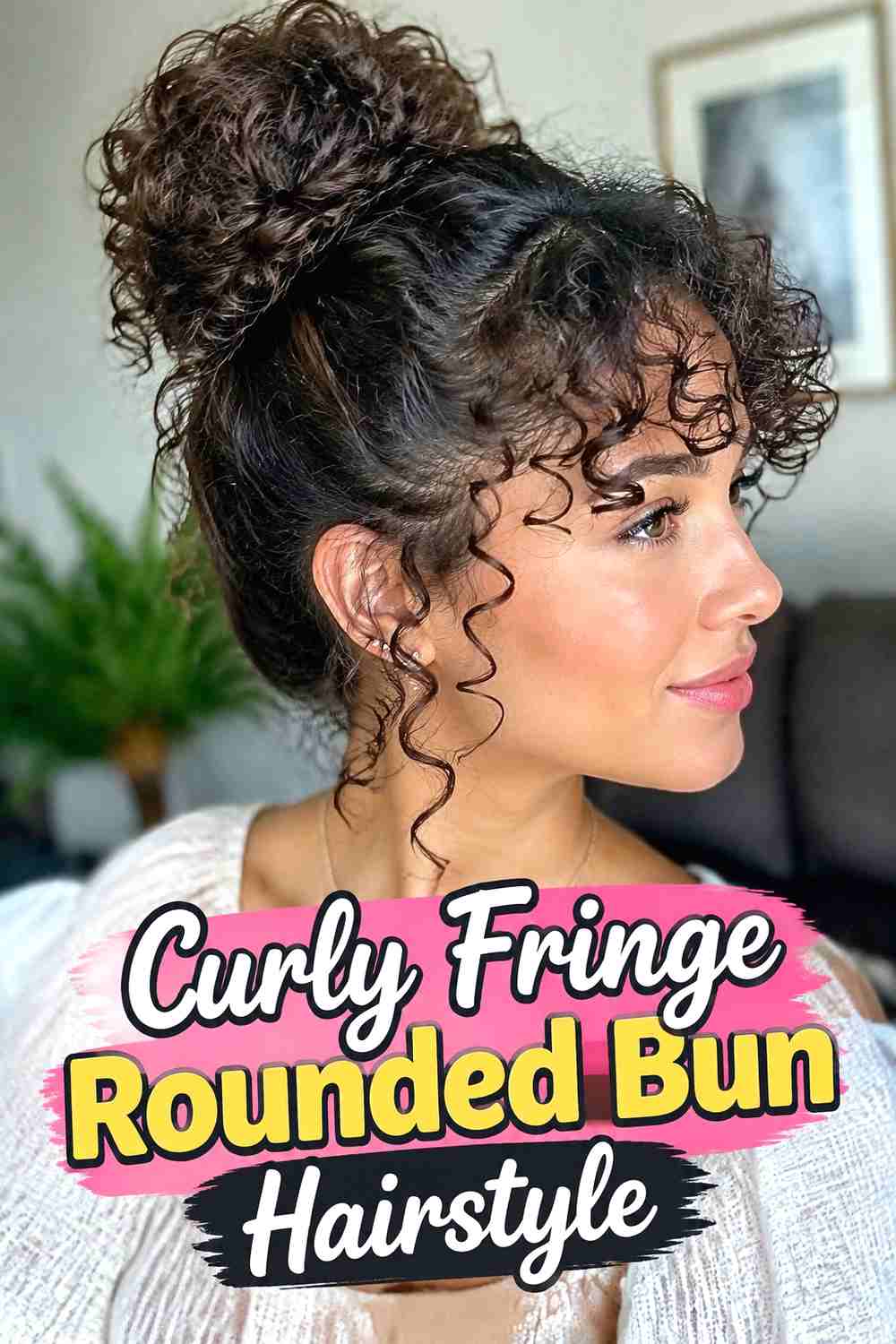
Curly fringe adds natural dimension around the face while a rounded bun keeps the rest of the texture contained. Preserve individual curl shapes across the forehead instead of brushing them into a straight fringe, then gather the longer hair into a compact rounded bun. Keep the front curls light enough that they do not form one solid band across the forehead. This hairstyle works especially well with ribbed or patterned Nordic pullovers because the curl texture brings softness without covering the sweater’s shoulder details. Bun placement depends on density: fuller curls may sit more comfortably at mid height, while finer curls can form a small low bun. Avoid excessive tension that stretches the front curl pattern.
Hair Type & Length
Naturally curly or coily medium-to-long hair can work beautifully, with the bun size adjusted according to density and shrinkage.
Pro Tip
Refresh only the fringe curls that need definition instead of wetting the entire front section, which can create uneven shrinkage.
12. Split Fringe Sleek Bun Hairstyle
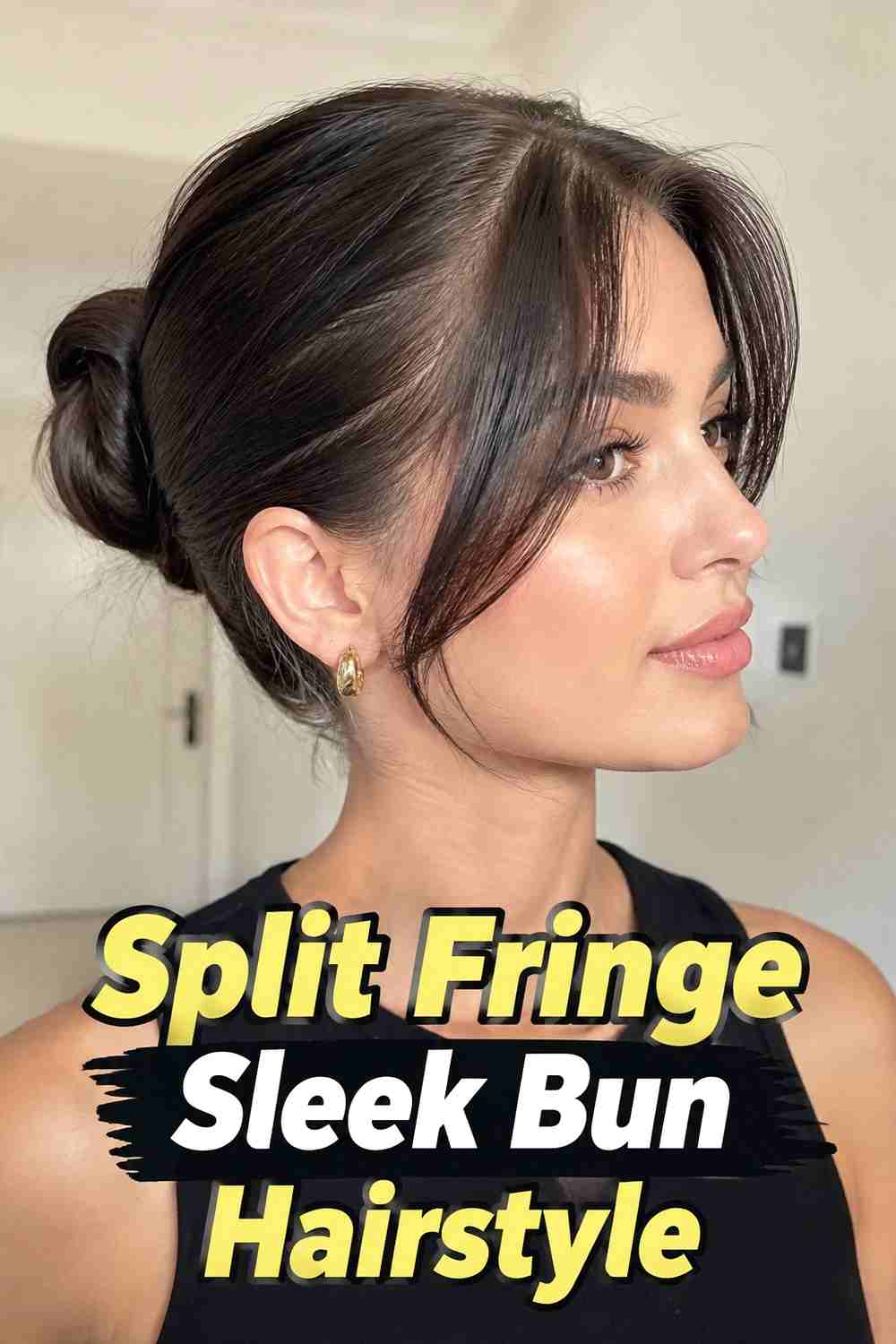
A split fringe creates a narrow opening through the center of the forehead while keeping soft sections on either side, making it a good match for a sleek bun. Smooth the longer hair back into a compact bun while allowing the fringe to fall naturally toward the temples. The combination gives you a polished silhouette without completely exposing the forehead or covering it with a full bang. Against a Nordic knit pullover, the sleek bun keeps the patterned neckline clear and lets the softer fringe prevent the look from feeling too strict. Straight and lightly wavy hair are both suitable, particularly if the fringe is long enough to sit neatly without constant repositioning.
Why It Works
The center opening adds visual space around the face while the smooth bun provides a clean contrast to the pullover’s textured knit.
Styling Notes
Keep smoothing product away from most of the fringe so the front pieces retain movement instead of sticking flat to the forehead.
13. Shaggy Fringe Mini Bun Hairstyle
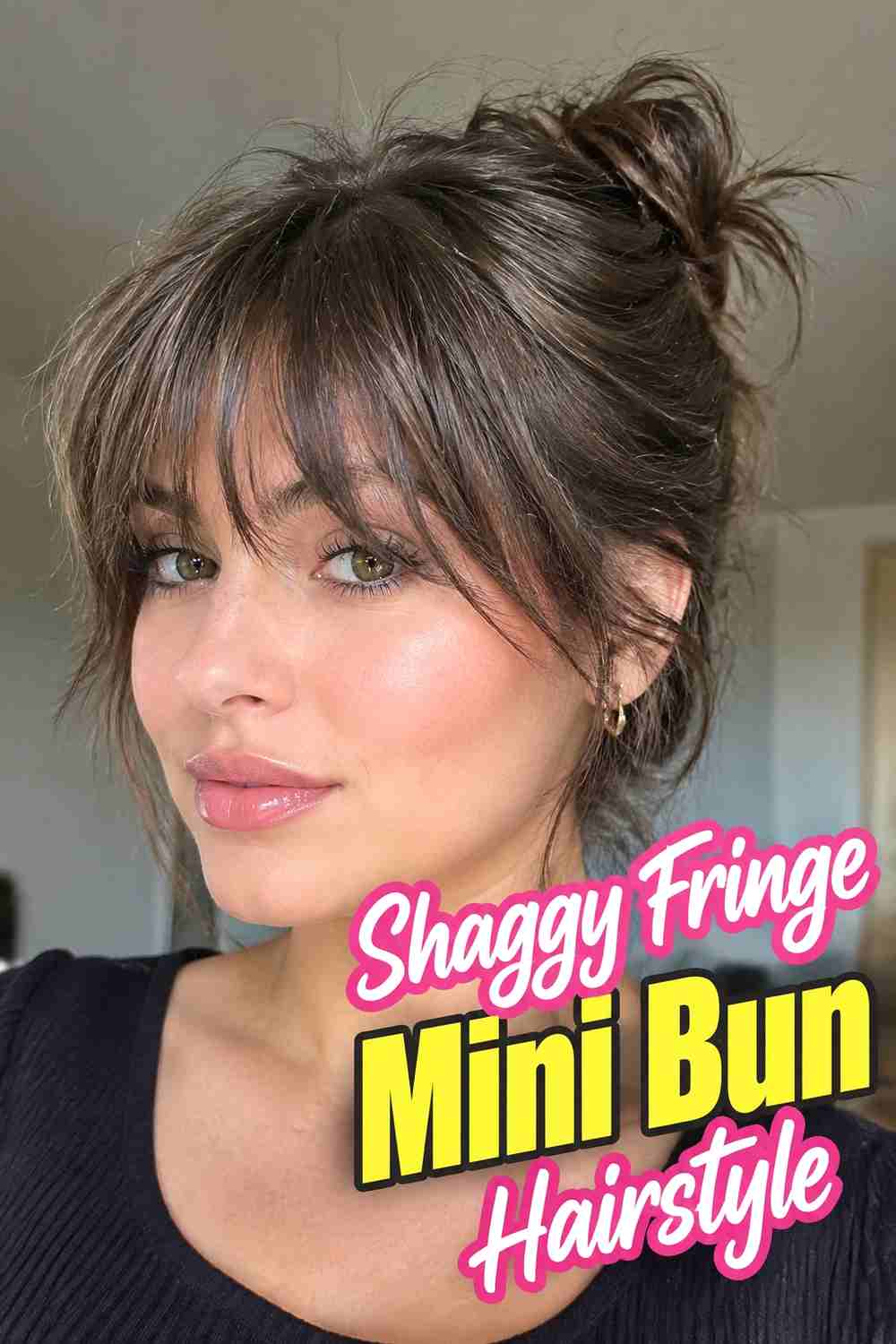
A shaggy fringe brings uneven, layered texture to the face, while a mini bun keeps the rest of the hairstyle compact. Let the fringe fall with its natural separation and slightly varied lengths, then gather the remaining hair into a small bun at the back of the head. This combination works particularly well with softer Nordic knits because both the fringe and sweater have an easy, tactile quality. Hair with shag-inspired layering may leave a few shorter sections outside the bun naturally; keep those pieces deliberate and away from the collar when possible. The bun does not need to be perfectly smooth, but it should remain secure enough that the style reads as intentional rather than unfinished.
Hair Type & Length
Layered straight, wavy, and softly curly hair can all suit this look, especially when the front already has natural shag-like movement.
Best For
This is a relaxed option for casual knitwear, denim, boots, and everyday cold-weather outfits where polished perfection is not the goal.
14. Soft Full Fringe Braided Bun Hairstyle
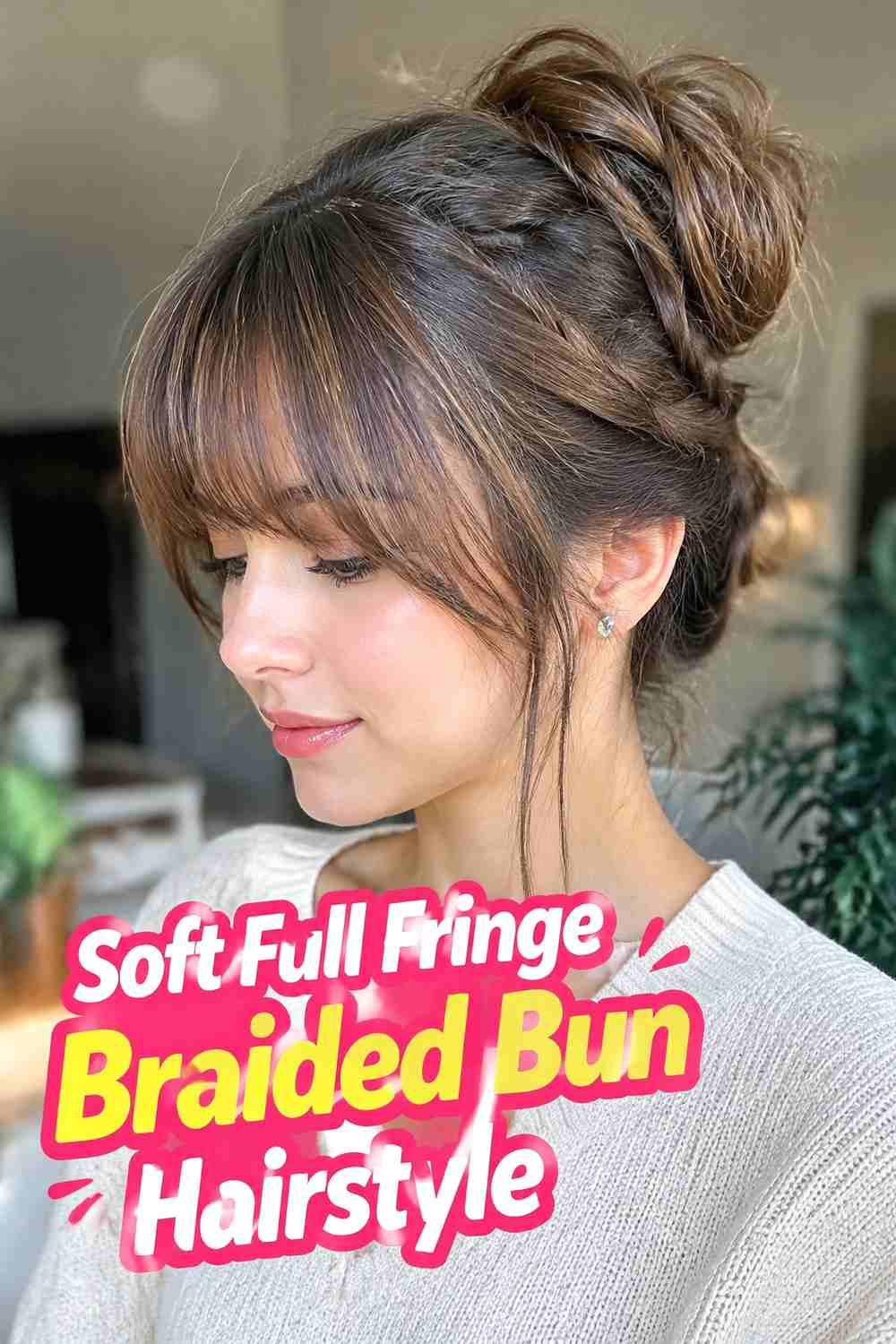
A soft full fringe paired with a braided bun gives the hairstyle clear structure at both the front and back. Keep the fringe full enough to create a defined frame but lightly textured at the ends so it does not look heavy against a patterned pullover. Gather the remaining hair, braid the ponytail, and wrap it into a compact bun positioned above the sweater collar. The woven texture adds detail without requiring loose lengths around the shoulders, which makes the style especially practical with substantial Nordic knits. Medium to long hair works best because there is enough length to create a visible braid before coiling. Keep the bun fairly flat so its texture remains clear without becoming bulky.
Styling Notes
Secure the braid before wrapping it into the bun, then pin around the outer edge so the woven pattern remains visible.
Why It Works
The full fringe balances the face while the braided bun provides controlled texture that complements, rather than competes with, the knit pattern.
How to Choose the Right Look
Start with your sweater neckline. A lower crewneck gives you plenty of room for low buns and nape knots, while mock necks and thicker collars are usually more comfortable with mid-height, compact buns. The bun should sit above the knit instead of being pushed upward by it.
Next, consider your fringe. Wispy and curtain styles create the lightest facial frame, while full, arched, and micro fringes make a stronger visual statement. Longer fringe is useful if you want softness around the cheekbones without leaving large sections of hair loose.
Texture matters too. Straight hair supports sleek buns and precise fringe shapes, while wavy or curly hair works naturally with textured buns, airy bangs, and softer silhouettes. If your hair is very dense, choose a twisted, braided, or slightly higher bun to distribute the bulk more comfortably.
Finally, think about styling time and hold. Loose buns are quick but may need occasional adjustment, while braided or compact buns offer more security. For cozy everyday outfits, a little movement is usually flattering; for polished winter dressing, choose a cleaner fringe shape and firmer bun structure.
Final Thoughts
Soft fringe-and-bun hairstyles work beautifully with Nordic knit pullovers because they keep patterned shoulders and textured necklines visible while preserving softness around the face. Choose a low chignon for classic polish, a messy bun for relaxed texture, or a braided bun for extra detail. The best pairing will keep the bun clear of the collar and let your natural fringe texture guide the finish.
FAQs
1. Which bun placement works best with a high Nordic knit collar?
A mid-height or compact bun usually works best because it sits above the sweater neckline and avoids rubbing against thick knit fabric.
2. What fringe looks softest with a chunky knit pullover?
Wispy, curtain, bottleneck, and airy fringes all create gentle movement that balances the visual weight of a chunky patterned sweater.
3. Can curly hair work with fringe-and-bun styles?
Yes. Keep the fringe curls naturally defined and gather the remaining hair without excessive tension so the overall texture stays balanced.
4. How do I stop a low bun from catching on my sweater?
Position it slightly above the collar and keep the bun compact. A flatter knot or chignon can also reduce friction against textured knitwear.
5. Which fringe-and-bun style is easiest for everyday wear?
A wispy fringe with a low bun, curtain fringe with a soft chignon, or airy fringe with a simple textured bun can all be relatively easy to style and refresh.
Save your favorite fringe-and-bun look for your next Nordic knit outfit, and share these ideas for more cozy hairstyle inspiration.