18 Natural-Texture Work Updos With Structured Long Coats
Natural texture brings beautiful dimension to polished work updos, balancing structured long coats with curls, coils, twists, waves, and softly controlled volume.
Structured long coats create strong vertical lines, defined shoulders, and substantial collars, so an updo can keep the neckline clean while allowing natural hair texture to remain visible. The goal is not to flatten every curl or coil, but to shape the hair into a secure silhouette that feels appropriate for work and comfortable beneath outerwear.
Placement makes a major difference. Low buns and chignons feel understated but should sit above the coat collar, while mid and crown placements offer extra clearance. Consider your natural texture, density, length, hold needs, and morning styling time before choosing a look. Secure construction matters more than excessive tension.
Quick List
- Textured Low Bun Hairstyle
- Natural Curl French Twist Hairstyle
- Soft Coil Chignon Hairstyle
- Twisted Nape Updo Hairstyle
- Natural Texture Braided Bun Hairstyle
- Defined Curl Low Knot Hairstyle
- Puff To Bun Work Updo Hairstyle
- Flat Twist Low Bun Hairstyle
- Natural Wave Tucked Updo Hairstyle
- Coily Crown Bun Hairstyle
- Rope Twist Chignon Hairstyle
- Side Part Textured Bun Hairstyle
- Soft Loc Low Bun Hairstyle
- Curly French Roll Hairstyle
- Double Twist Nape Bun Hairstyle
- Natural Texture Halo Updo Hairstyle
- Textured Mid Bun Hairstyle
- Sleek Front Natural Puff Bun Hairstyle
1. Textured Low Bun Hairstyle
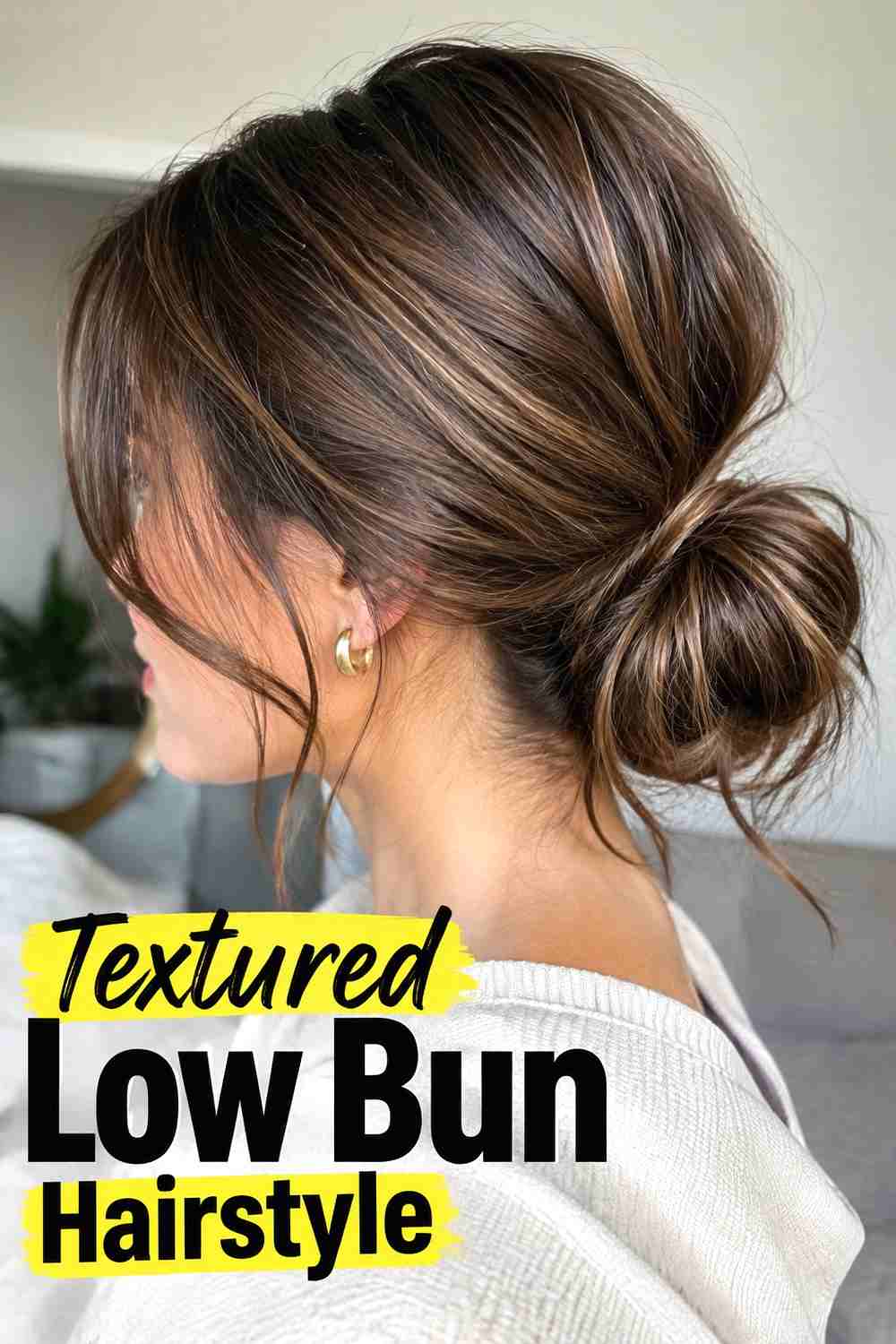
A textured low bun keeps natural movement visible while creating a compact silhouette that works well with tailored long coats. Gather the hair gently toward the lower back of the head without brushing every curl, coil, or wave completely smooth. Twist or fold the length into a bun that sits just above the coat collar, allowing subtle surface texture to remain around the crown. The finished shape should feel deliberate but not rigid, with a few natural variations rather than a perfectly lacquered surface. This style is especially useful for work because it controls the lengths while preserving character. Medium to long hair can be pinned securely without building excessive volume around structured lapels or high winter necklines.
Styling Notes
Check the coat collar height before fixing the bun position. Use enough pins to stabilize the shape without compressing the natural texture more than necessary.
Best For
This is a versatile choice for wavy, curly, coily, or textured hair when you want a polished everyday updo with minimal visual bulk.
2. Natural Curl French Twist Hairstyle
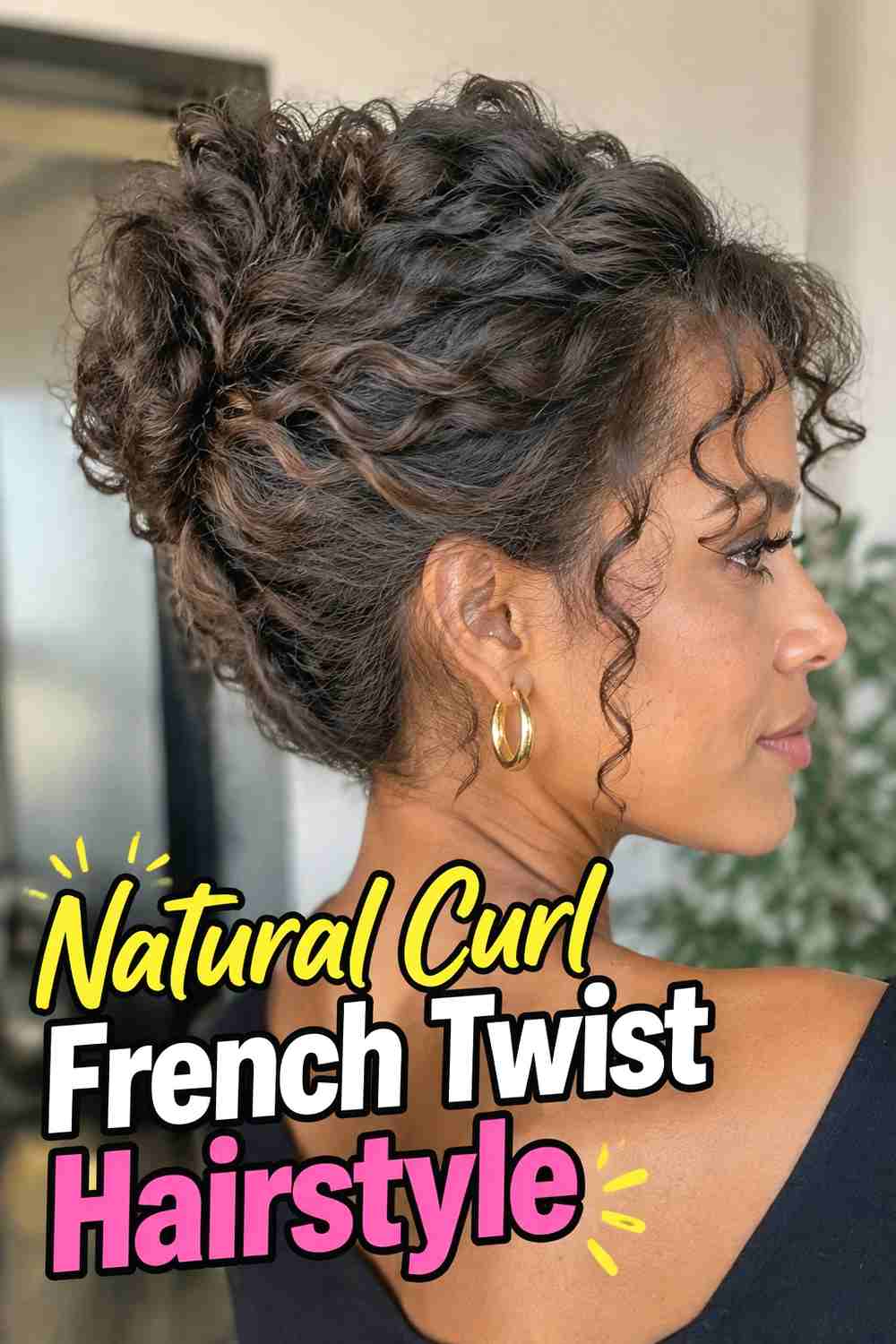
A French twist can look especially sophisticated when natural curls remain visible through the rolled structure. Instead of smoothing the hair into a perfectly uniform shell, gather the lengths toward one side and roll them upward while allowing controlled curl texture to show along the outer surface and top. The vertical shape complements a long structured coat by echoing its elongated line while keeping the shoulders completely clear. Position the roll high enough that the coat collar does not press against the lower pins. This style works well for medium to long curly hair, particularly when the texture has enough grip to hold without excessive product. A few soft curls near the hairline can keep the finish approachable.
Why It Works
The vertical roll balances strong coat tailoring while the visible curls prevent the updo from feeling overly strict or formal.
Pro Tip
Anchor the center of the twist before shaping the top so the updo stays narrow and secure throughout the workday.
3. Soft Coil Chignon Hairstyle
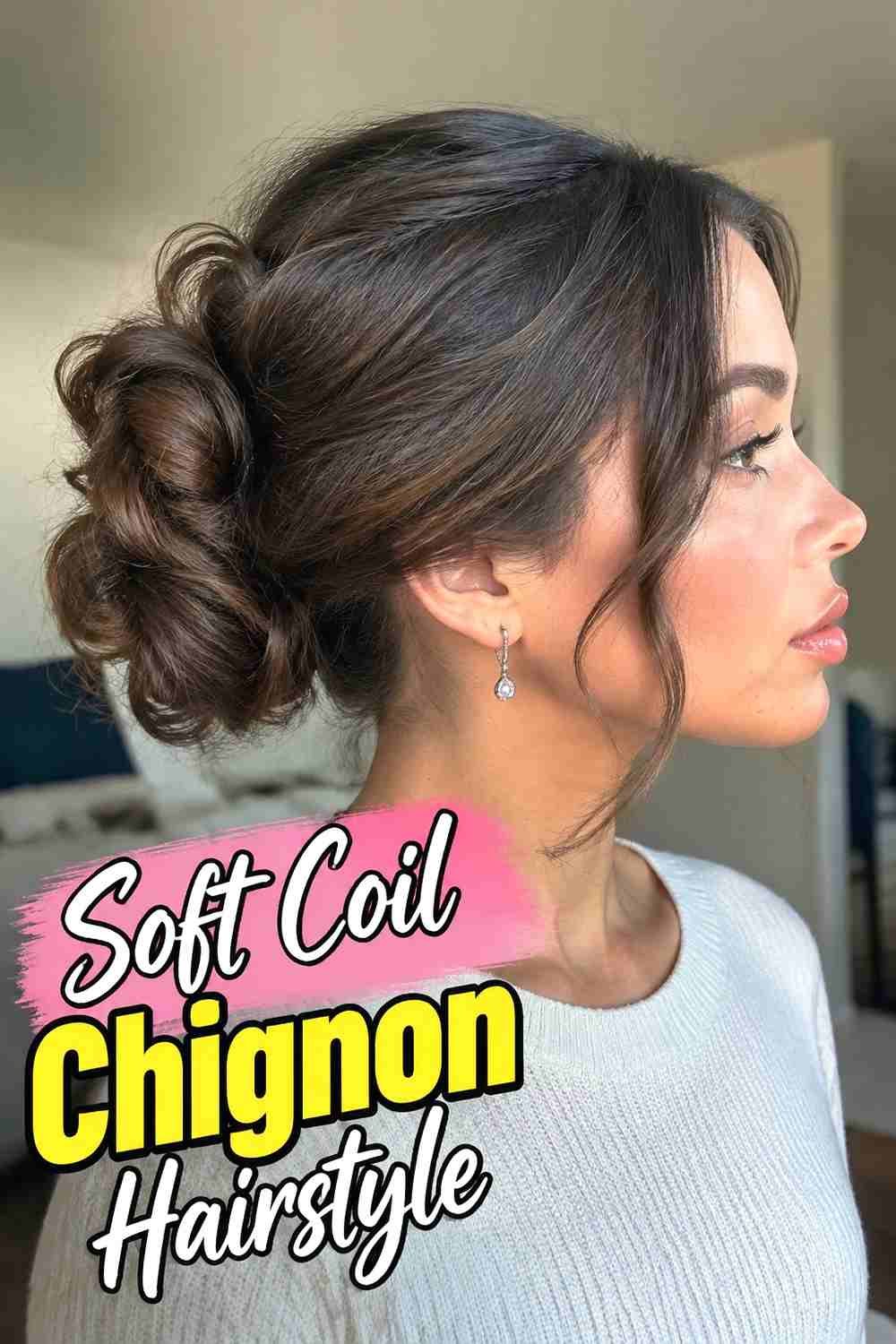
A soft coil chignon brings natural texture into a classic work silhouette without requiring the hair to look completely sleek. Gather coils toward the back with comfortable tension, then fold or wrap them into a shallow chignon just above the nape. The surface can remain softly defined, with individual coil character visible rather than brushed into one smooth mass. This creates an elegant contrast with a structured long coat, especially one with sharp lapels or a high collar. Keep the chignon relatively flat so it does not press awkwardly against outerwear. The style can work particularly well on medium-to-long coily hair, with pins distributed around the shape rather than concentrated in one tight fastening point.
Hair Type & Length
Medium to long coily or tightly curly hair can form this style well, with bun size adjusted according to density and shrinkage.
Wear & Maintenance
Secure the chignon before putting on the coat, then confirm the collar sits below the fastening point instead of pushing the updo upward.
4. Twisted Nape Updo Hairstyle
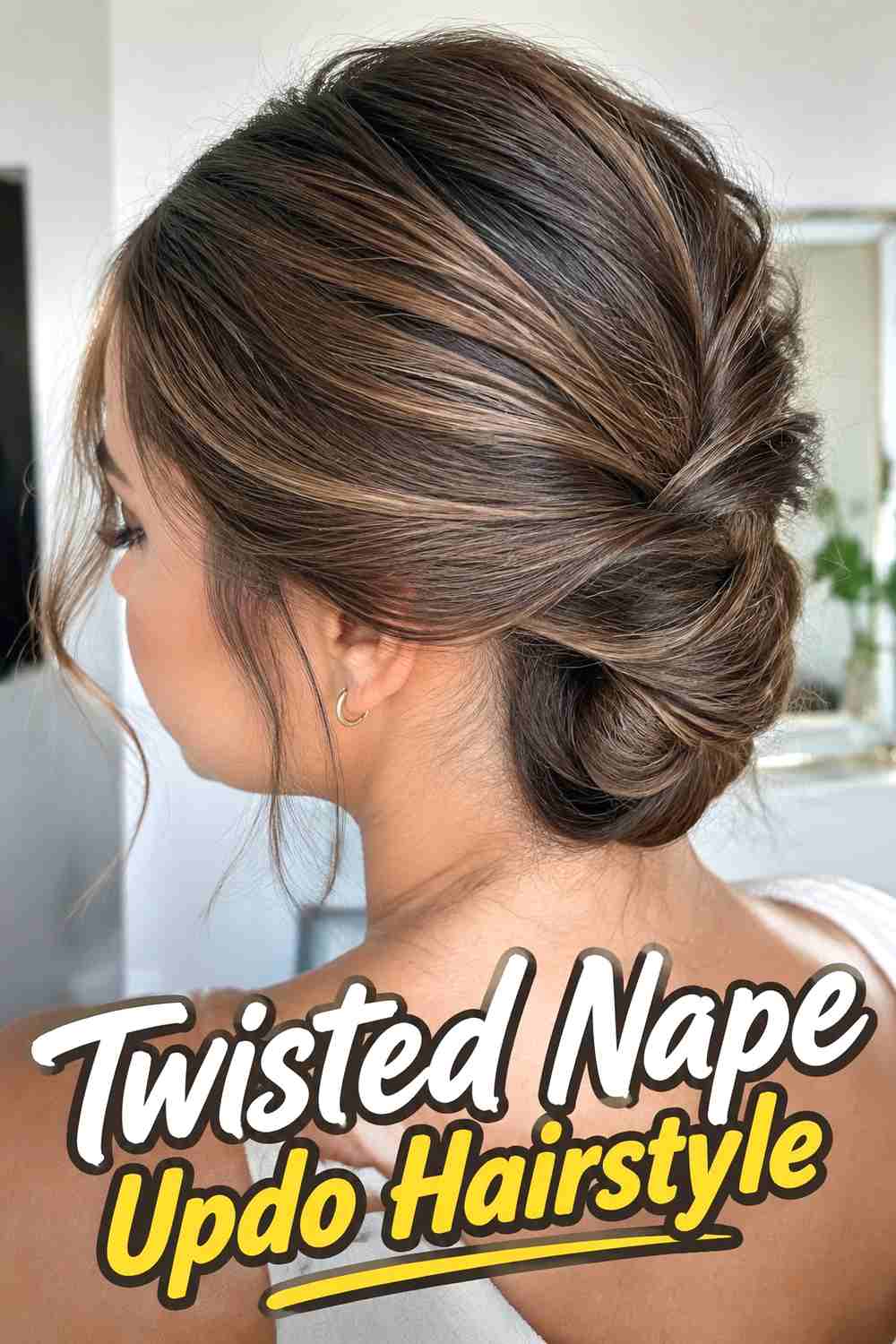
A twisted nape updo creates visible structure while keeping the overall profile close to the head. Divide the hair into two or more sections, twist them toward the center, and pin the ends into a compact shape just above the natural nape. The twists can stay softly textured rather than completely smoothed, allowing waves, curls, or coils to influence the finished surface. This is a practical option with structured long coats because the hair stays off the shoulders and away from lapels while still looking detailed from the back. If the coat has a high collar, move the updo slightly upward so the lower pins do not sit directly against the fabric.
Styling Notes
Use broad twists for a softer office finish and place pins underneath the rolled sections whenever possible.
Best For
This style works well on medium-length textured hair that may not have enough length for a large bun but can still be rolled and pinned securely.
5. Natural Texture Braided Bun Hairstyle
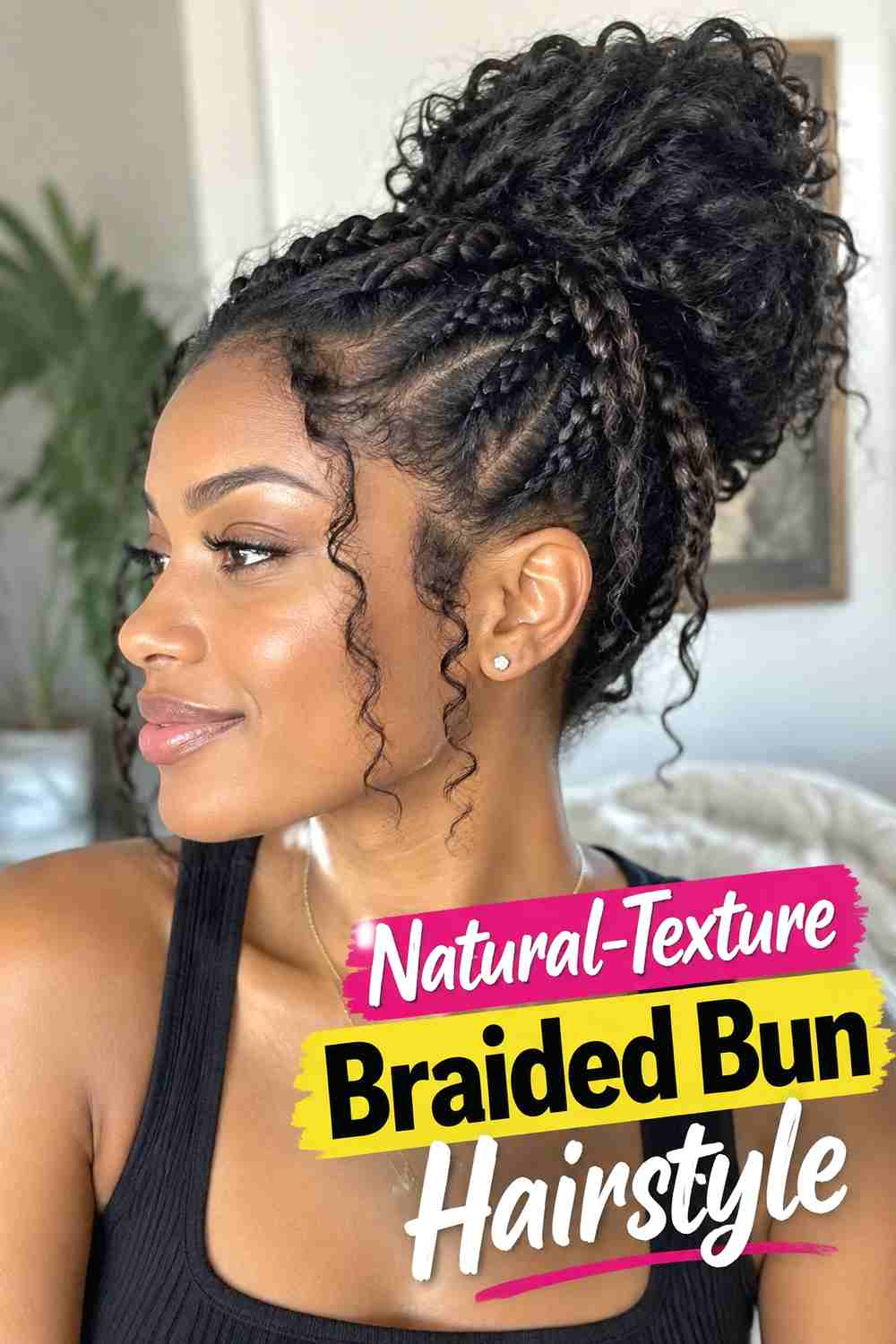
A braided bun adds dependable structure to natural-texture hair while still allowing the crown and hairline to retain their natural character. Gather the hair into a comfortable ponytail, braid the length, then wrap the braid into a compact bun positioned at the low or middle back of the head. Keep the braid firm enough to hold but avoid over-tightening the roots. With a structured long coat, the woven bun gives a neat focal point while clearing the collar and shoulders. This construction can also make dense hair easier to pin because the braid organizes the length before it is wrapped. Leave the surface softly controlled rather than forcing every strand into a perfectly slick finish.
Why It Works
Braiding reduces loose bulk before the bun is formed, creating a stable updo that still preserves visible texture around the upper hair.
Pro Tip
Choose the bun height while wearing the coat so the finished shape clears the collar without needing to be repositioned later.
6. Defined Curl Low Knot Hairstyle
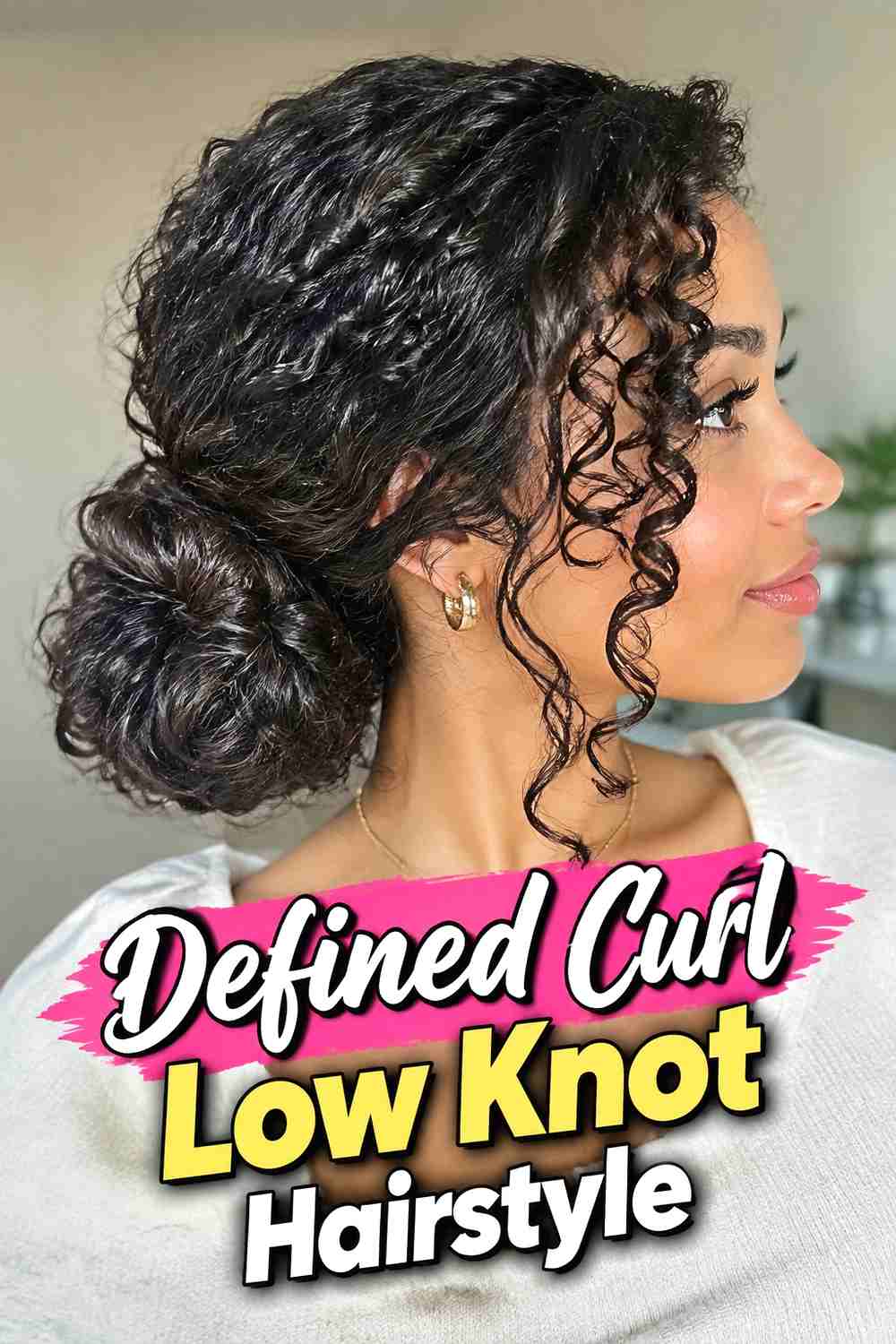
A defined curl low knot keeps the natural curl pattern visible while gathering the majority of the hair into a practical work shape. Preserve definition through the crown and sides, then bring the lengths together above the nape and fold them into a compact knot. Allow some curl texture to remain visible at the knot rather than stretching the hair completely smooth. This makes the style feel polished but still true to the hair’s natural movement. It pairs especially well with streamlined long coats because the controlled lower shape offsets the garment’s structured shoulders. Keep the knot close to the head and avoid placing bulky accessories where a high collar could create uncomfortable pressure.
Styling Notes
Refresh only the visible curls that need definition before forming the knot. Overworking the entire head can make the style take longer than necessary.
Best For
This is a useful work option for medium to long curly hair when you want a low updo without losing all visible curl definition.
7. Puff To Bun Work Updo Hairstyle
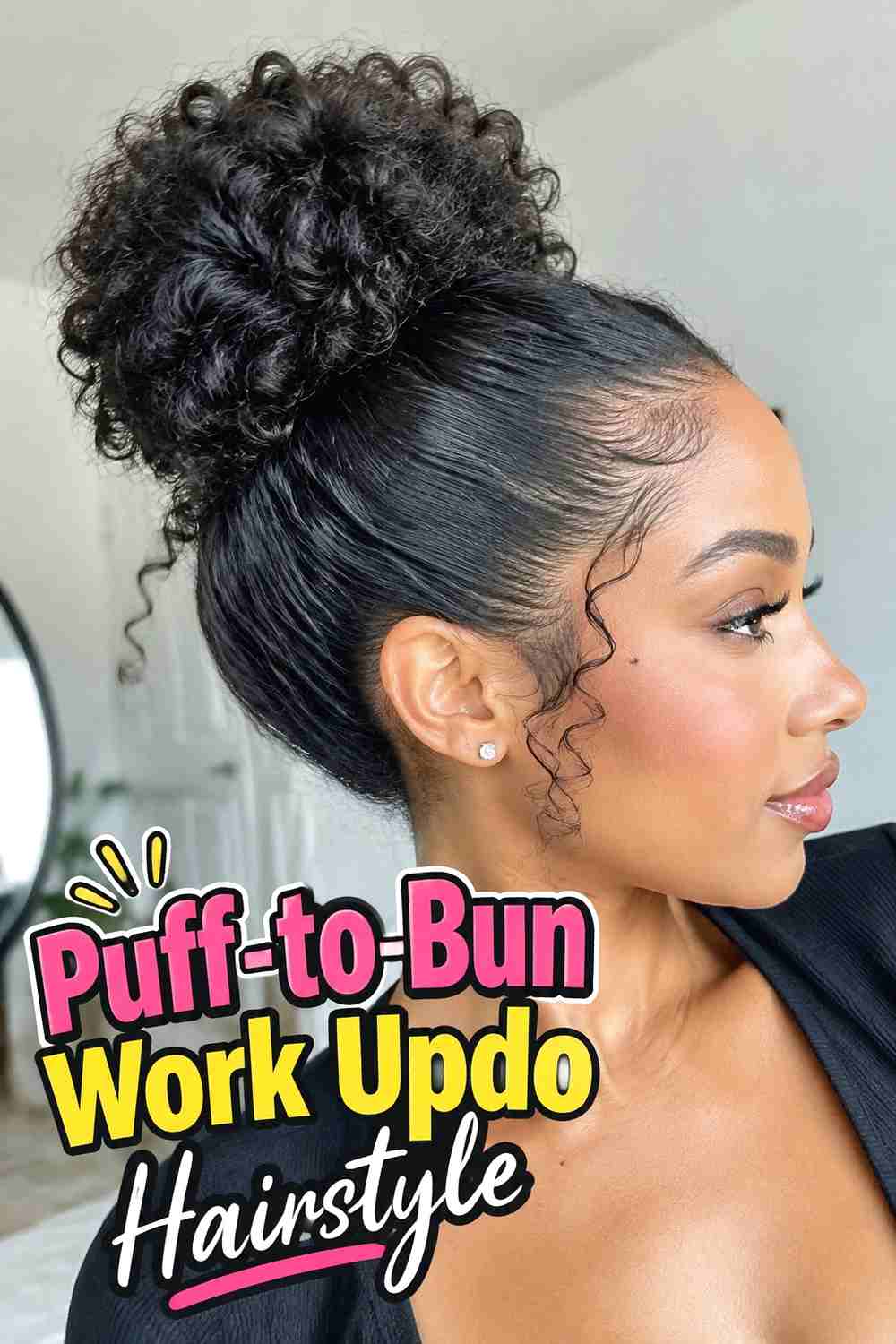
A puff-to-bun updo starts with the fullness of a natural puff but refines the shape into something more compact for work. Gather the hair at the middle or upper back of the head, secure it comfortably, then tuck and pin the outer sections inward until the puff becomes a rounded bun. Preserve enough texture at the surface that the shape still looks naturally dimensional rather than overly sculpted. The elevated placement works particularly well with structured long coats because the bun stays completely above most collars. This style is also adaptable for dense coily hair, where a lower bun might feel too bulky at the nape. Keep the front softly controlled for a professional finish.
Why It Works
The higher placement clears substantial collars while the tucked puff preserves natural volume in a more office-friendly silhouette.
Wear & Maintenance
Use pins around the perimeter rather than compressing the entire puff with one tight elastic or oversized accessory.
8. Flat Twist Low Bun Hairstyle
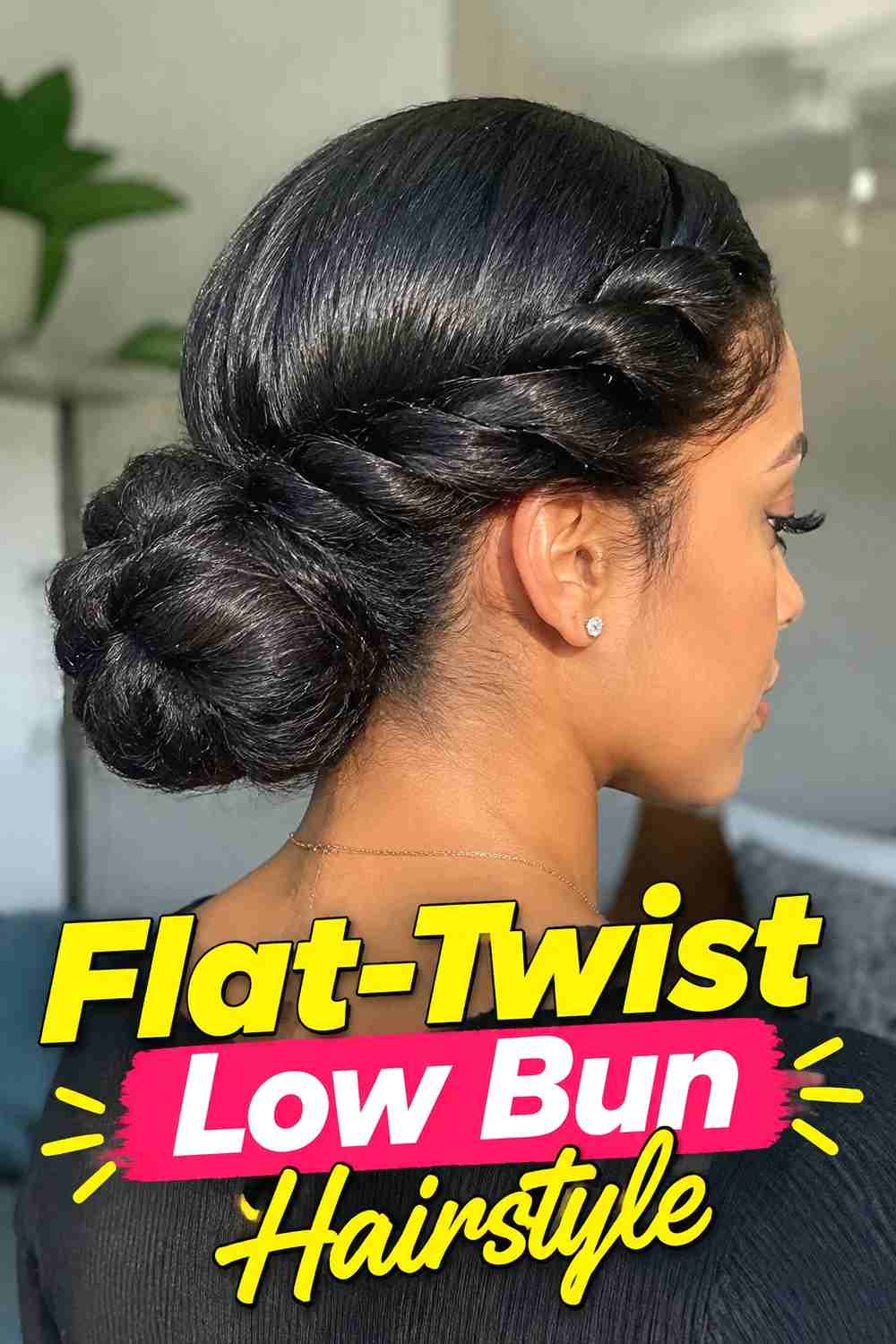
Flat twists can guide natural-texture hair neatly toward a low bun while providing visible structure across the scalp. Create two or more flat twists from the front or sides toward the back, then gather the remaining lengths into a small bun positioned above the nape. The twists control shorter sections and reduce flyaways without requiring the entire style to be slicked flat. Against a structured long coat, the design feels polished and intentional while keeping the shoulders clear. The bun can stay textured, braided, or softly coiled depending on the remaining length. Keep the flat twists comfortably tensioned and make sure the bun does not sit directly where the coat collar meets the head.
Hair Type & Length
Curly, coily, and tightly textured medium-to-long hair can work especially well because the twists offer grip and control.
Pro Tip
Plan the twist direction around the final bun position so the sections flow naturally rather than converging awkwardly at the back.
9. Natural Wave Tucked Updo Hairstyle
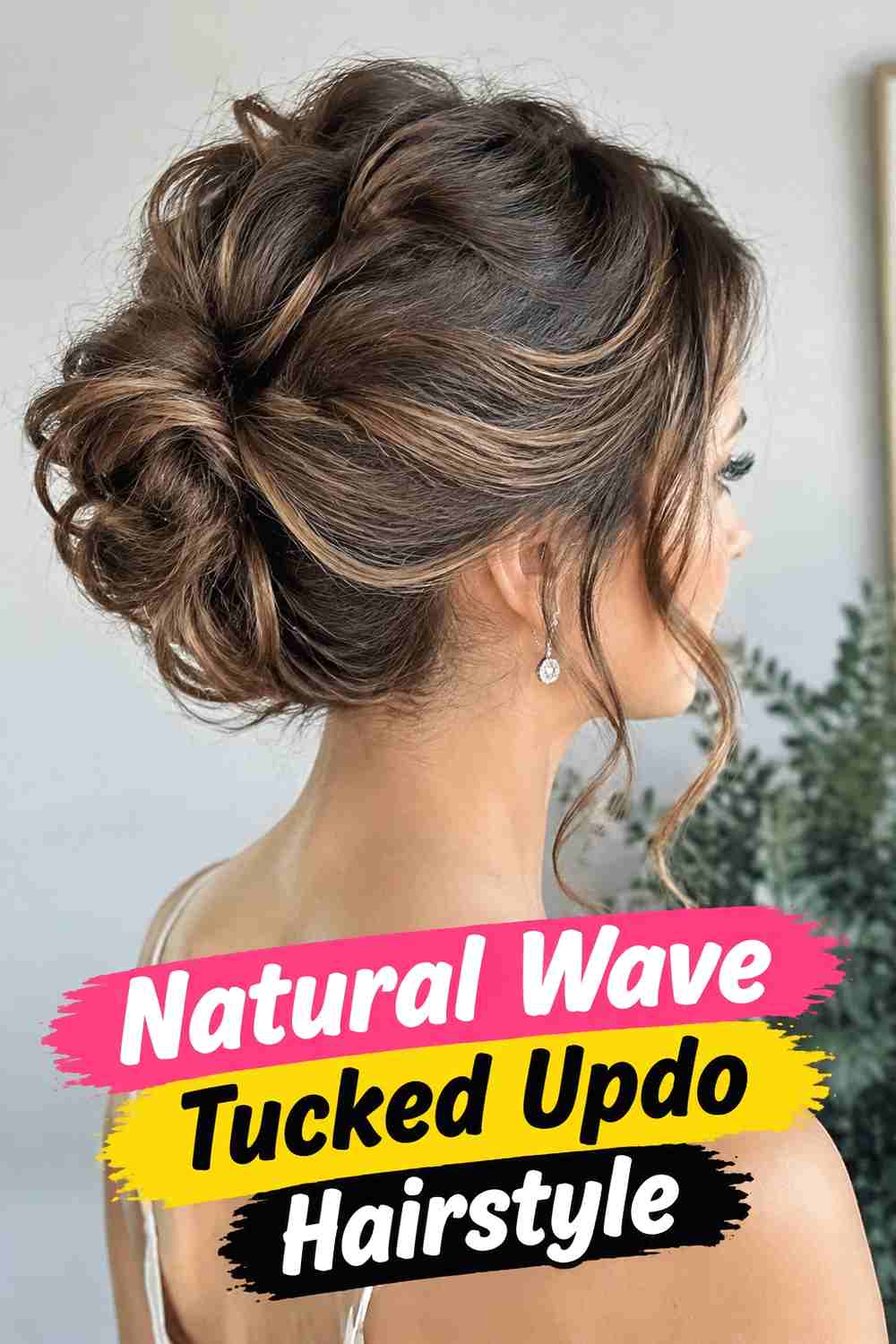
A tucked updo is a soft option for naturally wavy hair because it uses existing movement rather than forcing the lengths into a tightly wrapped bun. Gather the hair loosely toward the lower back, fold the ends inward, and pin them underneath to create a shallow rolled shape. Keep the crown smooth enough for work while allowing gentle wave texture to remain visible through the sides. This style suits structured long coats because the finished shape stays narrow and does not interfere with strong shoulders or lapels. Shoulder-length to medium-long hair is particularly easy to tuck without creating excessive bulk. A few subtle front pieces can remain free if the workplace and outfit allow a softer finish.
Styling Notes
Use the natural bend of the hair to guide the roll instead of brushing it completely straight before pinning.
Best For
This is especially practical for wavy medium-length hair that is too short for a full bun but long enough to fold into an updo.
10. Coily Crown Bun Hairstyle
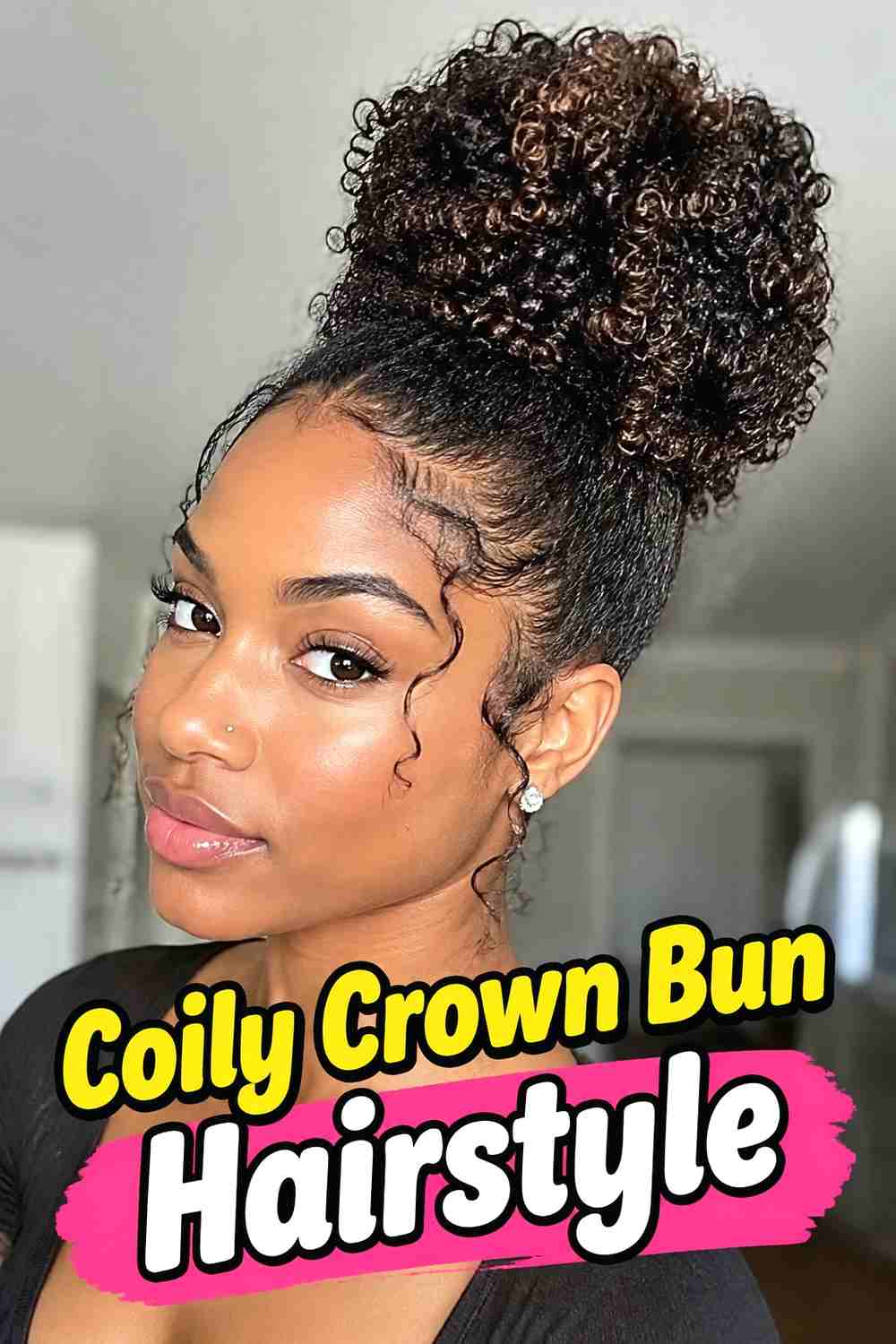
A crown bun moves dense coily hair well above the neckline, making it especially useful with high-collared structured coats. Gather the hair toward the crown with comfortable, even tension, then wrap, tuck, or pin the lengths into a rounded bun. Preserve natural texture through the bun itself rather than smoothing it into a perfectly uniform dome. The higher placement elongates the neckline and prevents friction between the hair and heavy outerwear. Keep the bun centered or slightly behind the crown so it remains balanced from the front. This style can suit both professional and after-work settings, particularly when the surface is neat enough to feel intentional without sacrificing the natural coil pattern.
Why It Works
The elevated shape provides maximum collar clearance while turning natural volume into a defined vertical focal point.
Wear & Maintenance
Avoid repeatedly tightening the base during the day. A secure initial anchor and well-placed pins usually provide better comfort.
11. Rope Twist Chignon Hairstyle
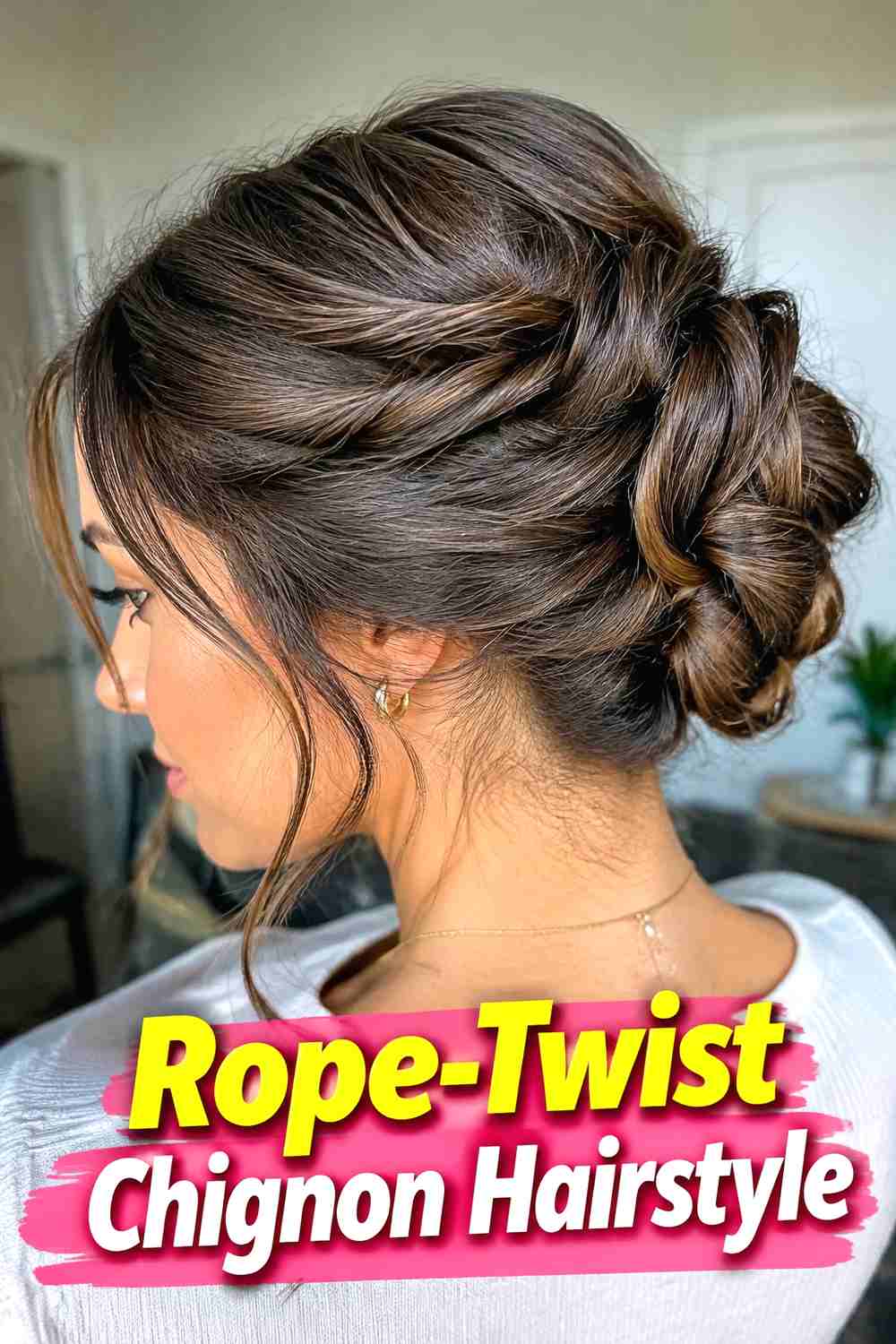
A rope-twist chignon organizes textured hair into a compact, polished shape while still showing visible strand direction. Gather the hair at the lower or middle back, divide the length into two sections, twist them, then wrap the rope into a shallow chignon. Natural wave, curl, or coil texture can remain visible through the twists, giving the updo more dimension than a completely smoothed bun. This style works nicely with structured coats because the spiral detail is concentrated at the back while the shoulders remain clear. Medium to long hair is easiest to manage, and denser textures may benefit from dividing the hair into two smaller rope twists before pinning.
Styling Notes
Keep the chignon relatively flat and pin around the perimeter so the shape does not project into the coat collar.
Best For
Choose this when you want more detail than a plain bun but still need a clean, professional silhouette for the office.
12. Side Part Textured Bun Hairstyle
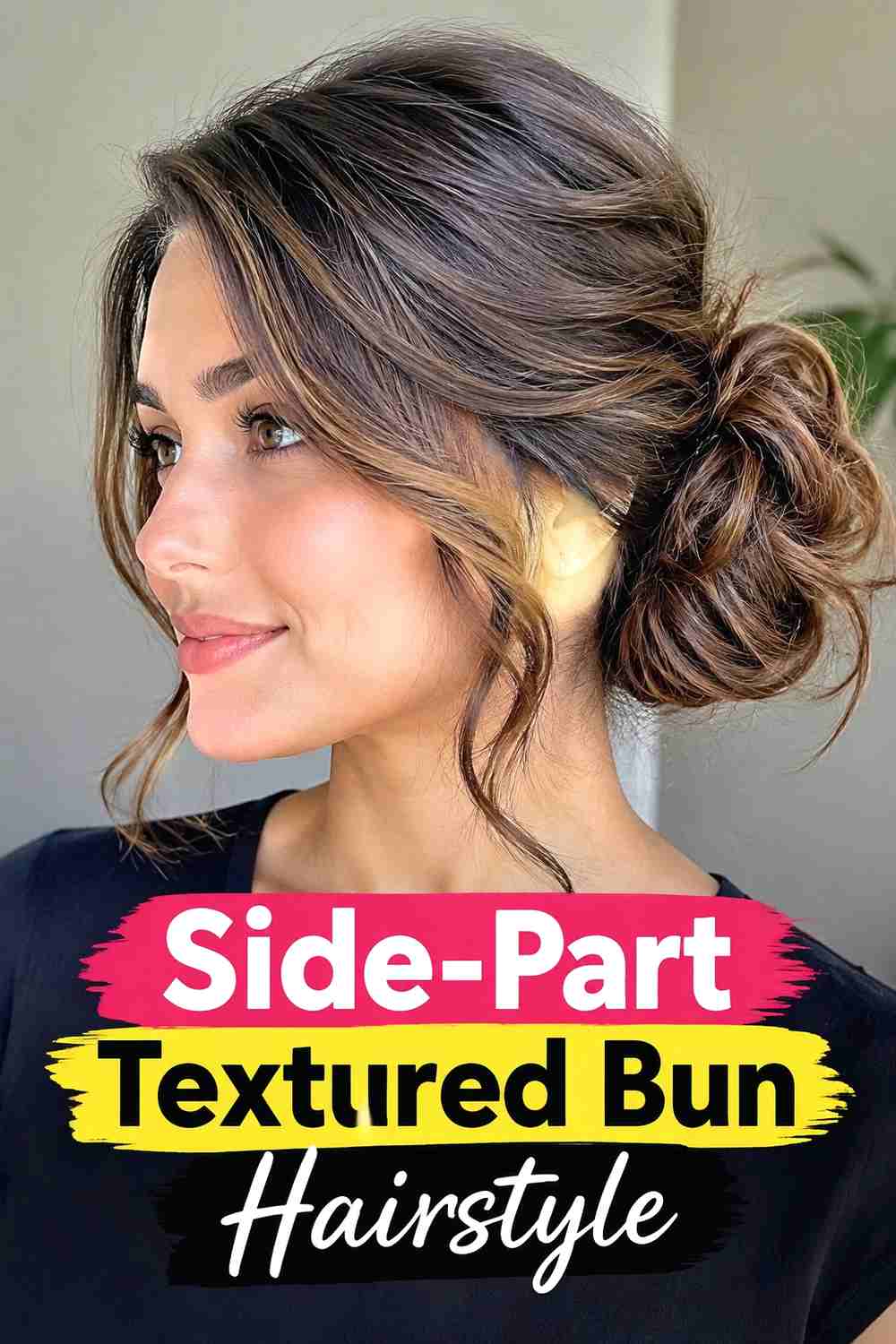
A side part brings polish to a textured bun without requiring a completely sleek finish. Create the part first, guide the heavier section back with light control, and gather the hair into a compact bun at the low or middle back of the head. Preserve natural texture through the bun and allow a little dimension at the roots so the style feels balanced rather than tightly pulled. The asymmetry around the face can soften the strong lines of a long structured coat, especially when the outfit includes tailored trousers or a fitted knit underneath. Keep the lighter side close to the head or tucked neatly behind the ear for a cleaner workplace finish.
Why It Works
The defined part gives the style intentional structure while the textured bun prevents it from feeling too severe beside formal outerwear.
Pro Tip
Set the side part before gathering so you do not need to disturb the finished bun while adjusting the front.
13. Soft Loc Low Bun Hairstyle
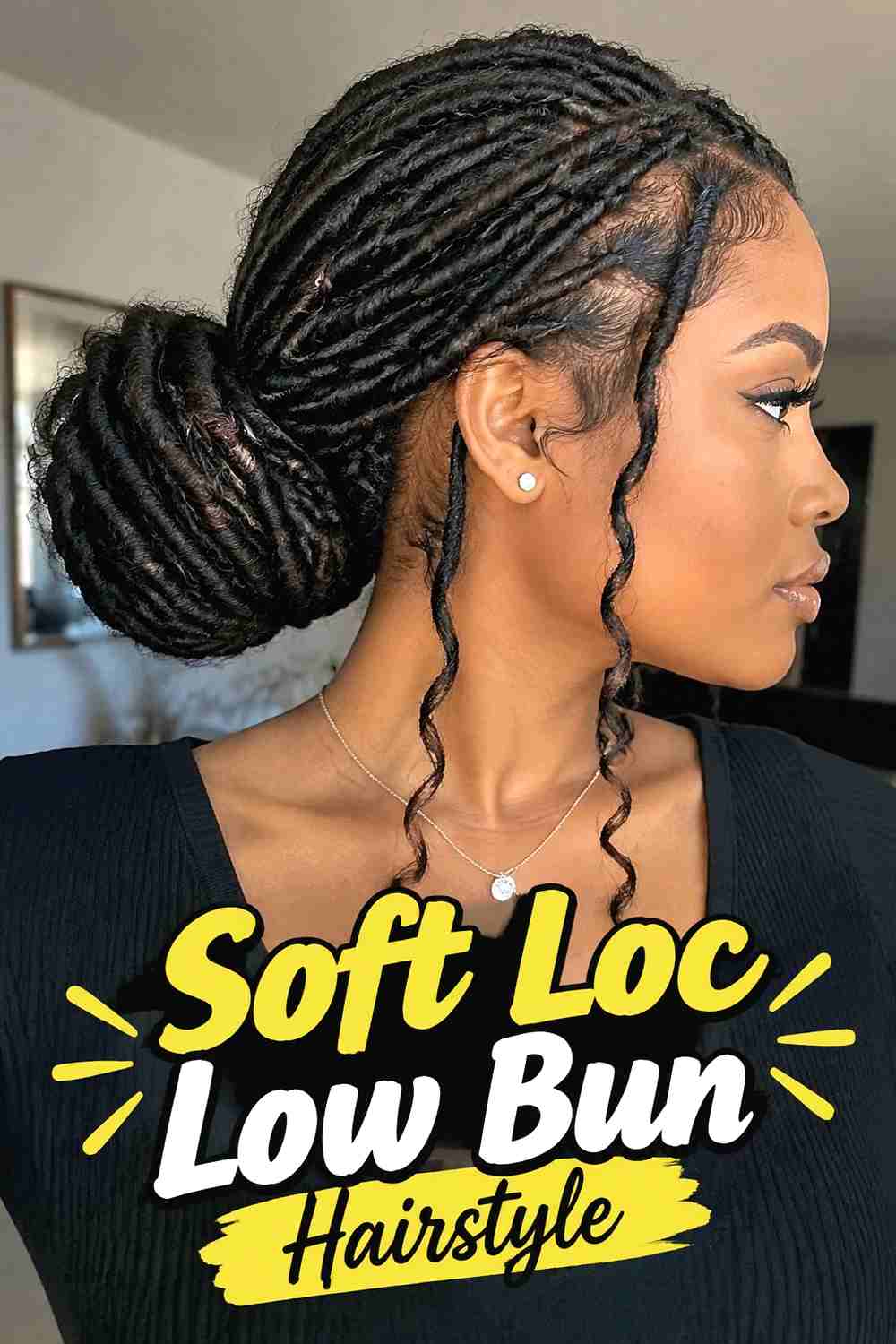
Soft locs can be gathered into a low bun that feels polished while respecting the natural weight and structure of the style. Bring the locs together above the nape, then wrap or fold them into a broad but controlled bun, securing the shape without forcing it excessively tight. With a structured long coat, positioning is especially important because a large bun can become uncomfortable if it sits directly against a raised collar. Moving it slightly upward often creates better clearance. Keep the front simple with a center or side part, and avoid adding bulky accessories unless the coat neckline leaves ample space. The finished look is clean, protective, and well suited to professional winter dressing.
Wear & Maintenance
Test the bun height with the coat on before final pinning, especially if the collar is stiff or heavily structured.
Best For
This works well for medium to long locs when you want the lengths contained and the coat’s lapels and shoulders fully visible.
14. Curly French Roll Hairstyle
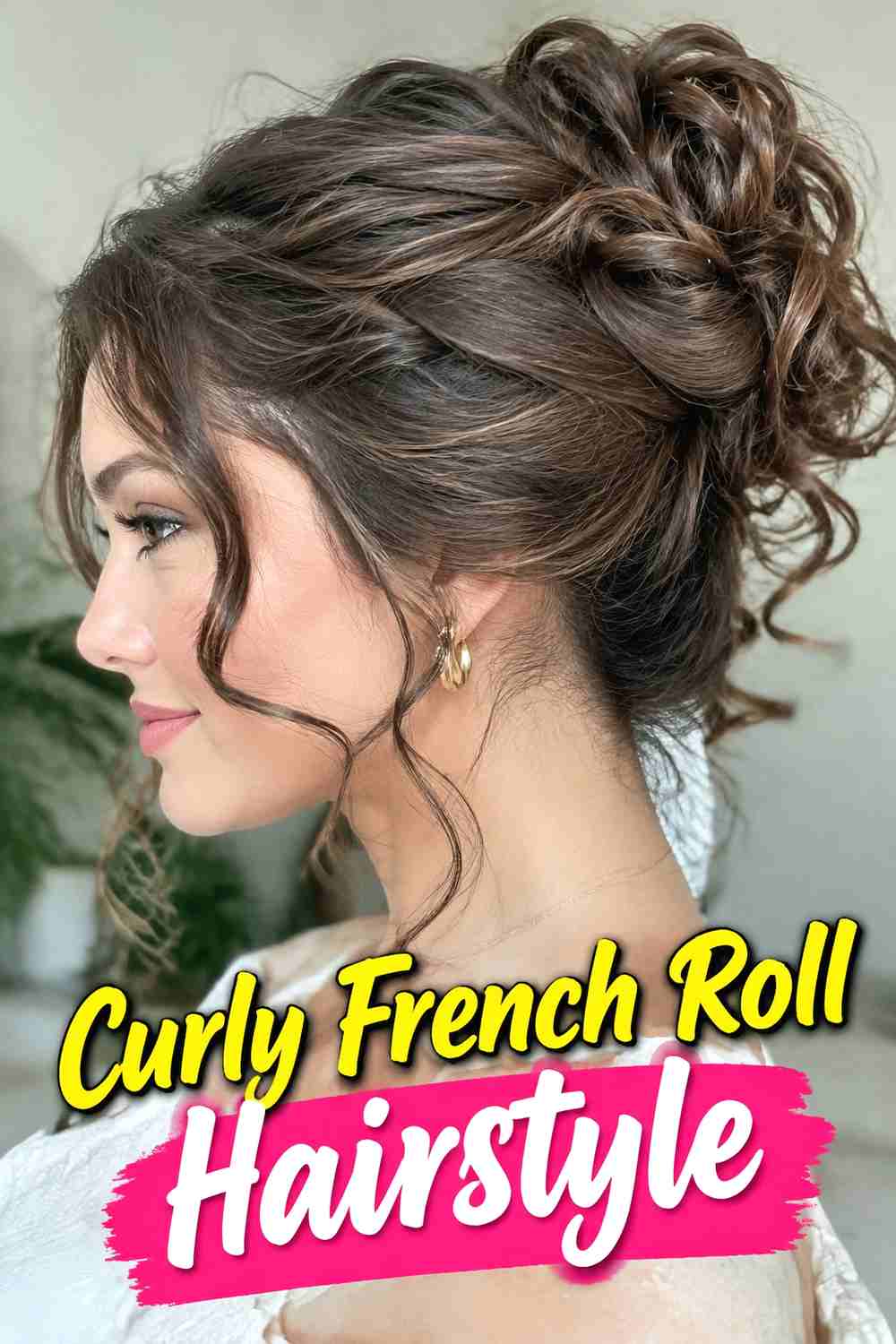
A curly French roll combines the elegant vertical shape of a classic roll with visible curl texture at the surface and top. Gather the hair toward one side, roll it inward, and pin vertically so the style stays narrow along the back of the head. Instead of concealing every curl, allow a few defined sections to remain visible near the upper roll or crown. The resulting shape feels polished enough for work while preserving natural texture. It works especially well with structured long coats because both the coat and hairstyle emphasize vertical lines. Keep the lower roll above the collar and avoid building too much volume directly at the nape.
Styling Notes
Anchor the roll securely through the center, then arrange the upper curls last so their definition is not crushed during pinning.
Why It Works
The narrow vertical silhouette complements tailored outerwear and keeps natural curl detail visible without spreading across the shoulders.
15. Double Twist Nape Bun Hairstyle
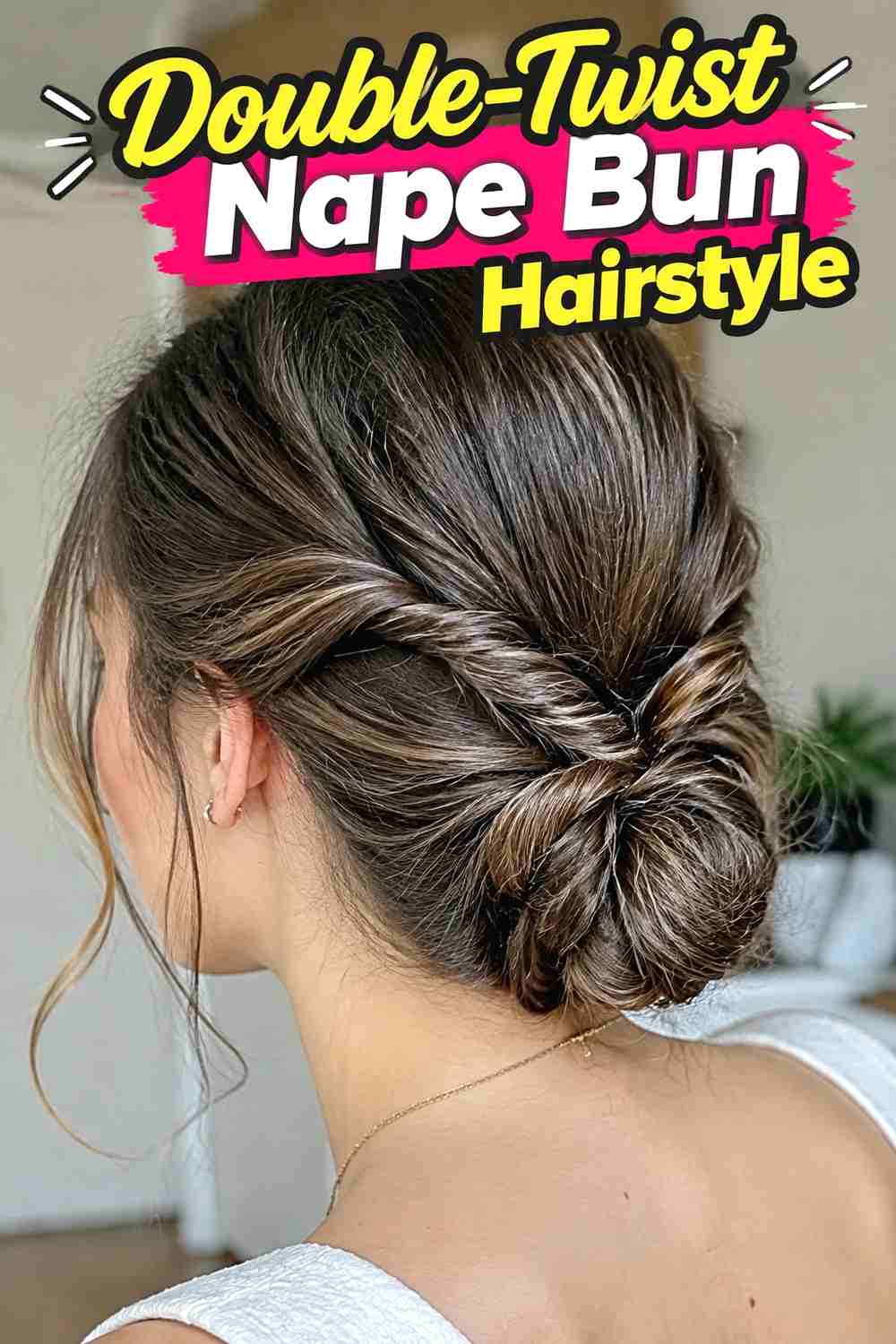
A double-twist nape bun divides the hair into two controlled sections before bringing them together at the back. Twist each side toward the center, secure the meeting point, then wrap or tuck the remaining lengths into a compact bun. The paired twists add structure across naturally curly, coily, or wavy hair while keeping the surface dimensional. This is especially useful for work because the style looks intentional from both the front and back without relying on a fully slick finish. With a structured long coat, position the bun slightly above the natural nape so the collar sits beneath it instead of pushing it upward.
Hair Type & Length
Medium to long textured hair works well, particularly when dividing the density into two sections makes the updo easier to control.
Pro Tip
Use similar tension on both twists so the back shape remains balanced and does not pull more strongly on one side.
16. Natural Texture Halo Updo Hairstyle
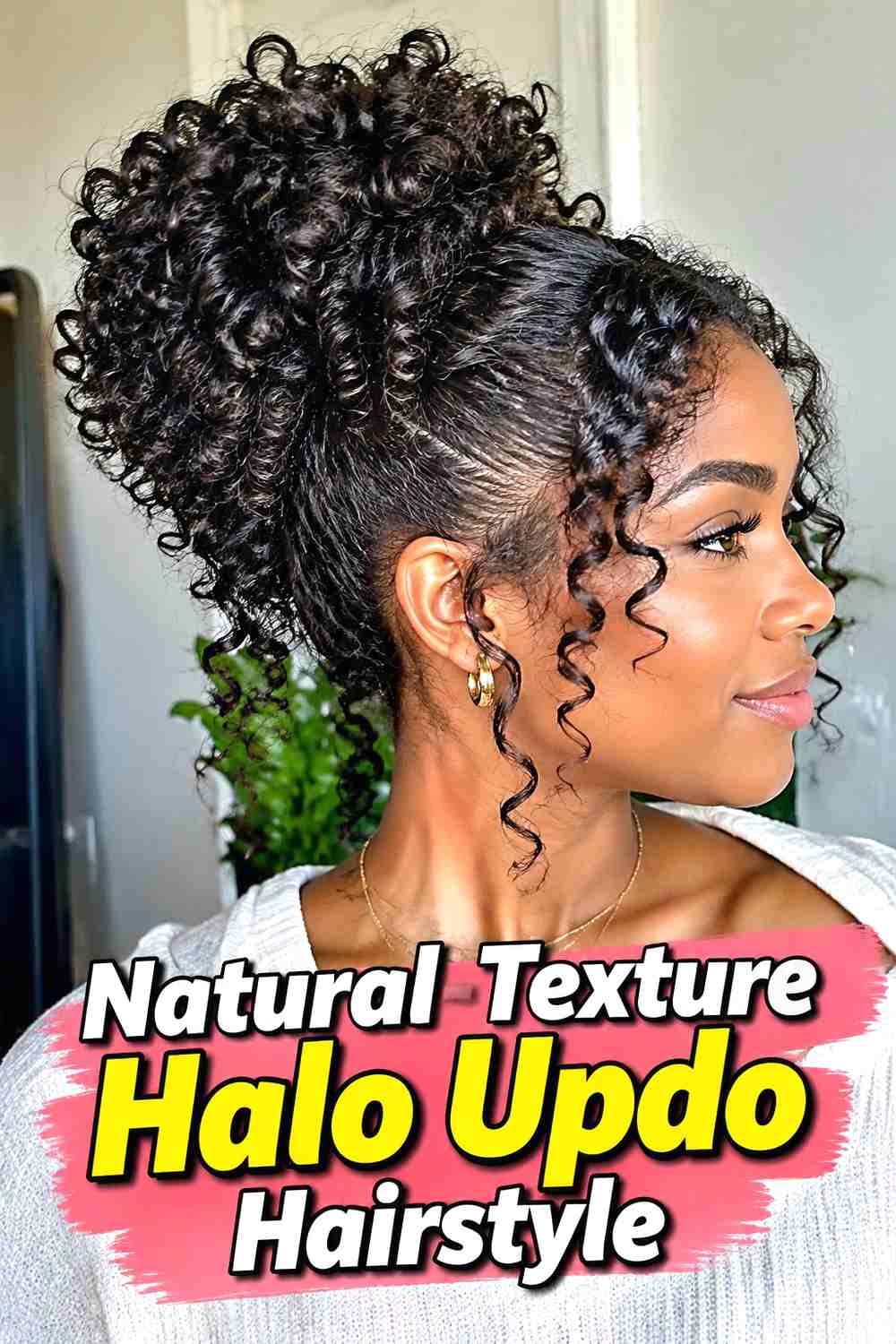
A halo updo moves the hair completely away from the collar while distributing texture around the head instead of concentrating it in one bun. Twist, braid, or roll sections around the perimeter and pin them into a continuous crown-like shape, keeping the profile relatively close to the scalp. The visible texture can remain soft and dimensional rather than heavily smoothed. This makes the style particularly practical with long structured coats that have high collars or scarves, since there is no large fastening point at the nape. Medium to long textured hair offers the most flexibility, and the halo can be adjusted to suit curls, coils, twists, or stretched natural hair.
Why It Works
The all-around placement clears the neckline completely while turning natural texture into a polished shape visible from every angle.
Wear & Maintenance
Distribute pins around the halo instead of relying on a few tight anchor points, which can make long wear less comfortable.
17. Textured Mid Bun Hairstyle
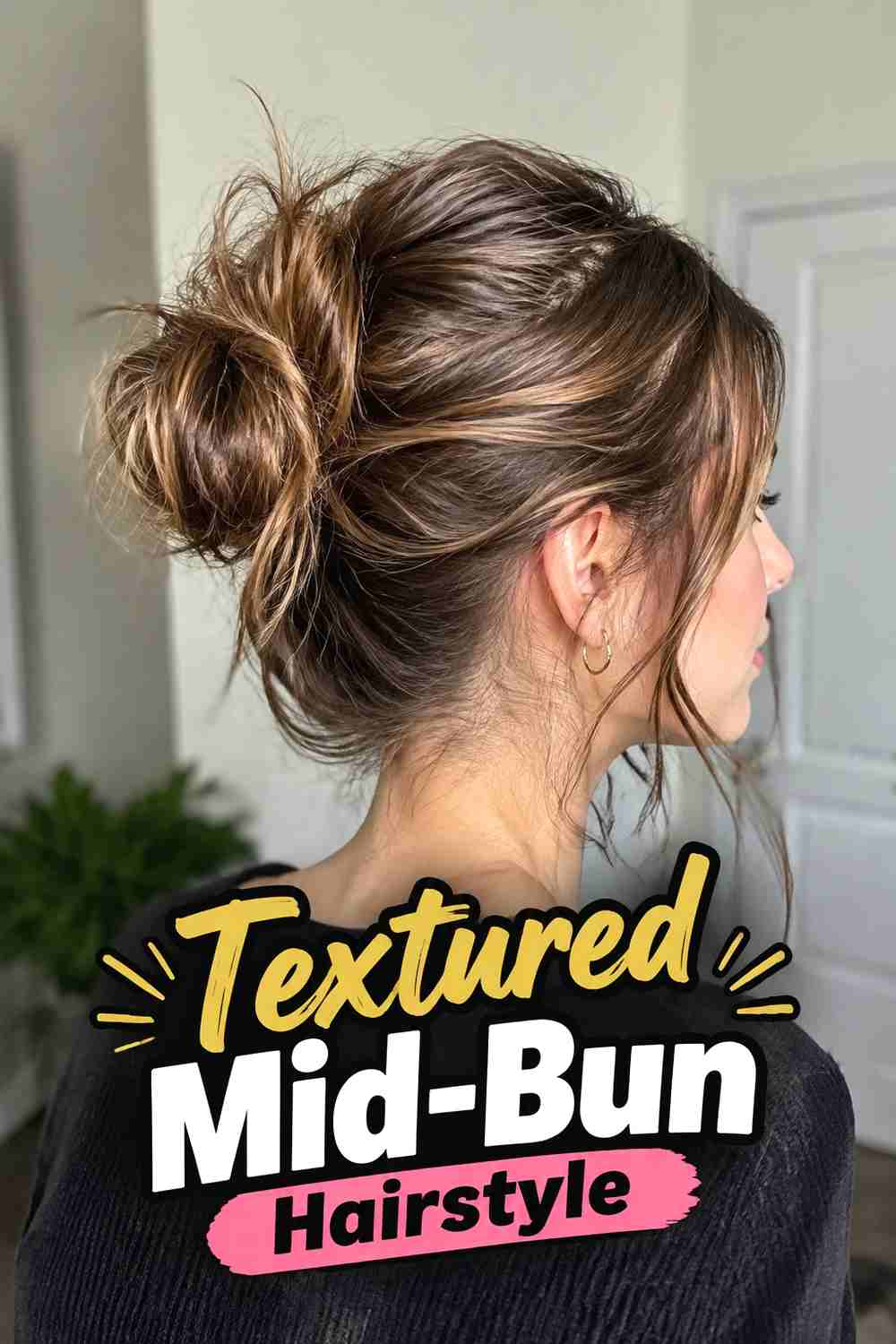
A mid-bun is a useful compromise between a low office bun and a higher crown style. Gather the hair at the middle back of the head, leaving enough natural texture through the crown that the hairstyle retains dimension. Twist, tuck, or loosely wrap the lengths into a rounded bun, then secure the perimeter without pressing the texture completely flat. The placement generally clears most long-coat collars while remaining understated enough for professional environments. Curly, coily, wavy, and textured hair can all work, with the bun size adjusted according to density. Keep the shape controlled rather than oversized so it complements structured tailoring instead of competing with strong shoulders or lapels.
Styling Notes
Choose the height after checking the coat collar and any scarf or high-neck layer you plan to wear underneath.
Best For
This is a versatile option for dense hair when a low bun feels crowded but a crown bun feels too elevated for your workplace.
18. Sleek Front Natural Puff Bun Hairstyle
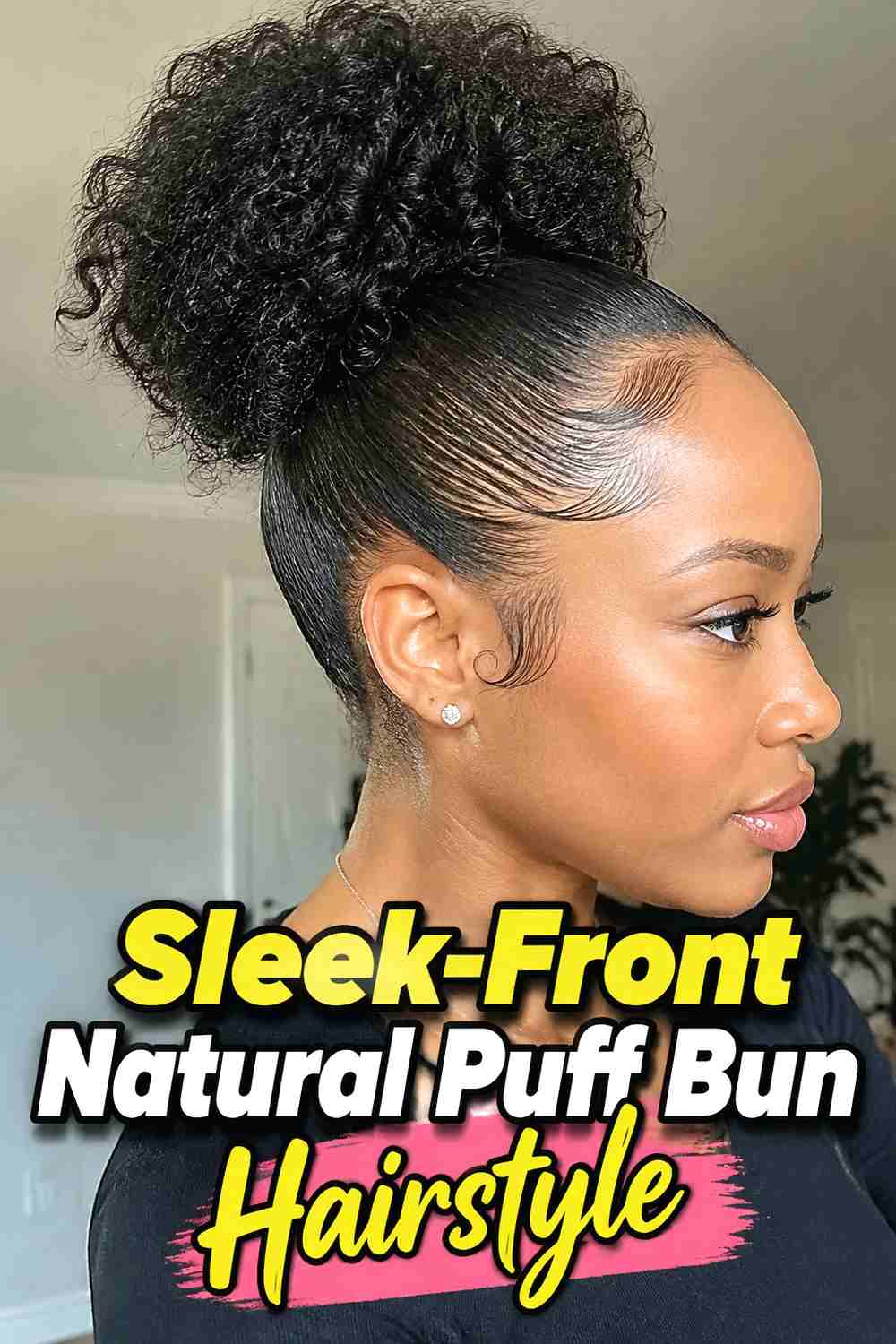
A sleek-front natural puff bun combines a polished hairline and front section with visible texture concentrated at the back or crown. Smooth the front gently using enough control to define the silhouette, then gather the remaining hair into a puff and tuck its outer sections inward to create a bun-like shape. The contrast between the refined front and textured bun feels especially effective with structured long coats, where clean tailoring benefits from an equally intentional hairstyle. Keep the tension comfortable and let the puff retain realistic volume rather than compressing it into a hard sphere. Mid or high placement usually provides the best clearance from substantial winter collars.
Why It Works
The smooth front creates workplace polish while the textured bun keeps the hairstyle dimensional and expressive.
Pro Tip
Focus smoothing product mainly around the visible front and sides, leaving the puff itself light enough to retain natural shape and separation.
How to Choose the Right Look
Start with your coat collar. A high, stiff, or heavily structured neckline usually works best with crown buns, mid buns, halo updos, and higher French rolls. Lower collars give you more freedom to wear low chignons, knots, and tucked nape styles.
Next, consider your natural texture and density. Wavy hair can fold easily into tucked updos, curly hair works beautifully in defined knots and French rolls, and coily hair can hold structured twists, buns, halos, and puff-based shapes. Locs may need more room at the fastening point, so bun height becomes especially important.
Styling time matters too. A textured low bun or mid-bun can be quick for busy mornings, while flat twists, braided buns, and halo styles require more preparation but may offer stronger control.
For work, prioritize comfort and reliable hold. The updo should stay secure without excessive scalp tension, and pins or elastics should not sit where a coat collar presses against them.
Final Thoughts
Natural-texture work updos can look polished without erasing the movement and dimension of curls, coils, waves, or locs. A low bun offers everyday simplicity, twists and braids add structure, and higher buns or halo shapes work well with substantial coat collars. Choose a placement that respects both your natural density and the outerwear you actually wear to work.
FAQs
1. Which natural-texture updo works best with a high structured coat collar?
A crown bun, mid-bun, halo updo, or higher French roll usually gives the collar the most clearance and reduces pressure at the nape.
2. Do natural-texture work updos need to be completely sleek?
No. A professional finish can still preserve visible curls, coils, waves, or textured strands. The important elements are intentional shape, secure construction, and comfortable control.
3. How can I keep a low bun from rubbing against my coat?
Move the bun slightly above the point where the collar touches the back of your head. Checking placement while wearing the coat is especially helpful.
4. Can medium-length natural hair work in these updos?
Yes. Tucked updos, twisted nape styles, compact buns, and pinned rolls can work well when there is not enough length for a large chignon.
5. What is the easiest natural-texture updo for a work morning?
A textured low bun or mid-bun is often one of the simplest options because it controls the lengths without requiring elaborate braiding or twisting.
CTA
Save your favorite natural-texture work updo for your next structured-coat outfit, and share these ideas for more polished, practical hairstyle inspiration.